Tag: 2021

  • Sadiq Khan – 2021 Comments on TFL Funding

    Sadiq Khan – 2021 Comments on TFL Funding

    The comments made by Sadiq Khan, the Mayor of London, on 30 November 2021.

    I agree with the Government and Mayors across the country when they say other regions should have “London-style” transport services.

    But the irony is that a failure to provide enough operational and capital funding for TfL means that it won’t be long before London itself will no longer have “London-style” transport services.

    Instead, we’ll be forced to move into managed decline – leading to run-down services reminiscent of the 1970s and 80s.

    This is no exaggeration.

    If the Government continues to starve TfL of funding, bus services would have to be reduced by almost a fifth, and Tube services would need to be cut by nearly 10 per cent.

    In practice, this could mean more than 100 bus routes being withdrawn and less frequent Tube timetables on a number of lines and branches. TfL is even having to look at potentially closing a whole Tube line to achieve the savings it may need to make.

    And that’s not all.

    There would also be an increase in road and tunnel closures due to a lack of money to maintain London’s key transport infrastructure.

    This combination of deteriorating public transport services and an increase in road and tunnel closures would cause wide-spread disruption and gridlock across the capital.

    Not only would this have a devastating effect on passengers, but it would put the national economic recovery at risk.

    Because there can be no national economic recovery without a London recovery, and there can no London recovery without a properly funded public transport network in the capital.

    On 11 December, the existing temporary funding deal between TfL and the Government comes to an end.

    So it’s time to remove short-term political thinking and to come together to call on the Government to provide the long-term funding TfL urgently needs.

  • Sadiq Khan – 2021 Comments on Homelessness in London over Christmas

    Sadiq Khan – 2021 Comments on Homelessness in London over Christmas

    The comments made by Sadiq Khan, the Mayor of London, on 1 December 2021.

    Since becoming Mayor, I have made tackling rough sleeping a personal priority. From City Hall we are doing everything we can with the resources at our disposal to keep rough sleepers safe and I’m confident Londoners will once again show their generosity by backing my winter fundraising campaign and helping to support young Londoners who find themselves homeless.

    Even so, the generosity of Londoners alone cannot end rough sleeping in our capital. This time last year we were hailing the remarkable success of the ‘Everyone In’ programme for saving the lives of hundreds of vulnerable Londoners. Despite seeing what can be achieved when we work together, ministers now appear unwilling or unable to confront the appalling reality that hundreds of young Londoners could spend this Christmas sleeping on the streets.

  • Anne Marie Morris – 2021 Speech on Patient Access to Medicines and Medical Devices

    Anne Marie Morris – 2021 Speech on Patient Access to Medicines and Medical Devices

    The speech made by Anne Marie Morris, the Conservative MP for Newton Abbot, in the House of Commons on 30 November 2021.

    I rise to address the challenging issue of access for patients to medicines and medical devices. We all believe absolutely passionately that we should have access to doctors and nurses, good hospitals and operating theatres, but I think the pandemic has shown beyond question that access to medicines and medical devices goes hand in hand, and without that we do not have the NHS that I think we all believe everyone deserves.

    What is the problem? The problem, I shall explain, is as follows. When a medicine is approved, it goes through two processes: first, with the Medicines and Healthcare products Regulatory Agency, which checks whether or not a drug is actually safe and does effectively what it says on the tin; and then it goes to a separate process run by the National Institute for Health and Care Excellence, which looks at cost-effectiveness and value for money. The theory goes that, once those two hurdles have been passed, the medicine is then accessible to anyone. It is very clear in the NHS constitution, which explains that there is a legal right for people to have NHS NICE-approved drugs if it is right for their particular circumstances. Indeed, the NICE guidelines say that there should be automatic adoption, if clinically appropriate and relevant, within 90 days of approval. So where is the problem?

    The problem is partly in the system and partly in the words. The words in the constitution are effectively caveated: people can have a medicine if it is right for their particular circumstances. Likewise, according to the NICE guidelines, it will be automatically adopted if clinically appropriate and relevant. The challenge is that, in the current system, NICE will approve medicines for the condition for which they are most cost-effective, so in this country we do not have the ability to approve a medicine for multiple conditions—multiple indications, in the jargon. It is what is most cost-effective that gets approved, and others do not, and there is not a system, either than paying privately, to ensure that the medicine that has been approved for the condition for which it is most cost-effective is available to those with other conditions, but that medicine may in fact still be the only possible solution.

    Assuming we get over that hurdle, there is a second hurdle, because not only must NICE have approved the drug, but it has to go on the approved list of drugs locally in the local health authorities—now integrated care systems. The problem is that to get on those formularies, somebody has to put it on those formularies. Currently, while in theory under the NHS NICE guidelines there is a system, it does not actually happen. There is currently a drug for multiple sclerosis, and research shows that people are still waiting after 150 days for it to go on the formularies in something like 25% of the local health systems across the country. So the system, fundamentally, does not work.

    What does this result in? It results in a postcode lottery. If someone has type 1 diabetes, it is absolutely crucial that they monitor their condition. There is a device, a flash monitor, that is state of the art, and research shows that the uptake across the country varies between 16% and 65%. What is most worrying is that those parts of the country with the greatest levels of deprivation have the lowest levels of uptake. We all think we have access to medicines for cancer given that we now have the highly innovative and very welcome cancer drugs fund. However, that drugs fund is only relevant when the particular drug is approved for a particular type of cancer. So there will be some drugs—Avastin, for example—which those with the appropriate cancer can get through the CDF, but those with a different type of cancer or who do not fit the profile again have to pay for it privately, costing £252 to £1,088 per cycle, which is every three months.

    Sadly, NICE does not approve much for those with skin conditions. For those with mastocytosis—blotches on the skin and boils causing vomiting and diarrhoea—the only solution is usually NICE-approved food allergy drugs, but they are approved for NICE allergies not skin conditions so they have to be paid for privately. For cystinosis, the accumulation of amino acids, which gives rise to kidney problems and kidney damage, the drug Procysbi has been approved by NICE but, bizarrely, there seems to be no uptake of that to date at all. That is important because that drug is, unlike the existing drug, a slow-release drug and therefore mums and dads do not have to keep waking up their kids in the middle of the night to give them the next dose, which, as we can imagine, takes a real toll on family life.

    For those with an obesity problem there is a good solution in Saxenda, but that is approved for diabetes. So those whose obesity does not give rise to diabetes will not get access except by case-by-case approval. I am pleased to say that Imperial has finally accepted and approved.

    How are we going to resolve some of these issues to make sure there is no longer a postcode lottery? First, let us look at the simple case of those drugs that are deemed to give the most health benefit and are therefore in theory approved and people can get hold of them. What can we do to make sure they do actually finally appear on those formularies and how can we then make sure the system for take-up is actually in place? One of the problems is that there is nobody sitting in these health bodies who monitors NICE drugs coming up, and therefore no one who looks to see whether in their health community they may be of benefit.

    Jim Shannon (Strangford) (DUP)

    I congratulate the hon. Lady on securing a debate on this topic. As she says, this is about NICE-approved products as well as drugs. One of those products is cognitive rehabilitation therapy, an important intervention for those with dementia, enabling them to live independently for longer. However, despite being listed in the NICE recommendations there is a barrier to delivery. Occupational therapists and other staff in memory clinics do not have the capacity to deliver programmes that are National Institute for Health Research and Alzheimer’s Society-funded. Does the hon. Lady agree that the NICE recommendations must address not just drugs but also products?

    Anne Marie Morris

    I could not agree more. It is crucial to realise we are talking not just about medicines and drugs but also devices and, as the hon. Gentleman says, the processes, which are often the connection between the medicine, the device and the patient.

    Within these health bodies, there is no training and nobody specifically focused on monitoring innovation, and there is no obligation to prescribe. Even more peculiarly, for these drugs there is an agreement between the industry and the NHS, the voluntary payment scheme or VPAS, under which manufacturers that are members of the scheme effectively agree with Government when the medicine or device is approved that it will be supplied at a well-discounted price. In addition, there is an agreement that sets a cap so that if, as it happens, more prescriptions are written for that particular drug, it is agreed that the extra cost that the NHS has incurred will be reimbursed by the manufacturer.

    So if there is excessive prescribing—we assume that is why there is an attempt to limit how much goes on to formularies—why is that a problem when we have the VPAS scheme? It is a problem because the scheme does not the pass the benefit, other than the reduced price, down to the local health authority. The money is put into a separate pot, and that pot is then used generally to support the NHS writ broadly; it is not ringfenced, either for medicines or to be used, as it could be, to support local health authorities—integrated care systems—when their budgets are put under pressure, which is why they do not want too many things on their formularies. This would help them pay the price.

    It seems to me, Minister, that there are some solutions here. You will be aware that I raised three of them in proceedings on the Health and Care Bill. To deal with the imperfections of the current arrangements, if those drugs that were approved by NICE—we are talking about the most cost-effective drugs—were mandated to be on formularies within 28 days automatically, so no one had to decide whether they went on or not, that would be a good system. It would also ensure that the decision was in the hands of the clinician and not of the bureaucracy of the health authority.

    It seems to me, Minister, that the second suggestion I made—

    Madam Deputy Speaker (Dame Rosie Winterton)

    Order. It is quite important not to address the Minister directly; he should be addressed through me.

    Anne Marie Morris

    Thank you for the correction, Madam Deputy Speaker.

    My second proposal is that there should be an innovation officer specifically appointed to look at and manage these issues. Failing all else, there should be a final provision that specifically puts an obligation on the health authority to provide any NICE-approved medicine. Then, as a matter of practicality that is not a matter for the Health and Care Bill, there should be a new arrangement under which the NHS would agree that this pot, rather than going into the general NHS coffers, is put aside specifically to reimburse local authorities.

    What about the second category—those drugs that are approved by NICE but not used for the most cost-effective indication? That is called off-label prescribing. We know that a drug in that category does what it says on the tin and we know that it is cost-effective, but it is not sufficiently cost-effective to have got a tick in the box from NICE. Access then is a matter for negotiation between the integrated care system, the NHS and the manufacturer. Often, the starting point will be the list price, but bear in mind that that list price is a lot more than the NHS is paying. The result is that in different health authorities and different hospitals, different patients are offered different costs to be able to access the drug.

    There is a real problem on top of all this. To ensure that there is no gaming of the system between access to private healthcare and state healthcare, someone cannot mix the two—quite rightly, we do not want gaming of the system so that people can effectively jump waiting lists—so there is an agreement to enable people to do a bit privately and then jump straight back into the NHS. If there is an episode where someone takes a drug and pays for it privately, technically they cannot then have the ongoing monitoring of their cancer—screening and so on—on the NHS. Individual health authorities recognise that that is rather absurd when we are talking not about a private patient with health insurance but about someone for whom the only way to get the drug is to pay for it, but that recognition is not universal.

    So what is the solution for this one?

    We need to look at NICE, supported by NHS England, accepting multi-indication approvals. That means a drug company can take a drug and apply, at the same time, for the drug to be approved for different health issues that have different ranges of health benefit. Clearly, the NHS will say, “Hold on a minute. I am not going to pay the same price for something which delivers less health benefit.” That means we need a system of differential pricing, so that a different amount is paid by the NHS for the drug, depending on the use to which it is to be put. That is entirely possible. It is done all over the world.

    The Office of Health Economics put out a report, an international study, just this month on “Payment Models for Multi-Indication Therapies”. It concluded:

    “Inflexible uniform pricing does not optimally support innovation and access. The most important consequence is lost treatment opportunities for patients.”

    I respectfully suggest that the NHS and the Department of Health and Social Care might sensibly look at that. I also suggest, given the clear importance of payment support through industry, that as we move to the next iteration and renegotiation of VPAS, the agreement under which the industry agrees reduced pricing for mass purchase above a certain cap, it will reimburse the Government. That renegotiation needs to include provision for the multi-indication approvals process and differential pricing. 2023 is not very far away and I urge the NHS and the Government to take it forward very quickly. Meanwhile, there should be agreed standard pricing which is effectively paid for and underwritten by the pot set aside as a result of the cap.

    There is one final area that needs to be addressed: drugs approved by NICE through a managed access agreement. For some treatments—typically gene therapy, where you are taking body fluids out, effectively changing the genetic make-up, and then putting them back in again—a hub needs to be set up in a hospital. Often, when drugs are approved, exactly how they are going to be delivered is not approved at the same time. Those drugs and processes need to be agreed not just in principle, but together with a package that ensures they can be implemented. As things stand, it can often take three years and much argument before hubs are established and the funding can then flow.

    In summary, I ask for a number of things. First, my three new clauses to the Health and Care Bill would require local health system formularies to include NICE-approved drugs within 28 days. Secondly, there ought to be included in the Bill an absolute obligation to provide NICE drugs. It would then be for the individual health authority to work out how to provide them, but there should be an underpinning payment mechanism provided by the NHS. Thirdly—again, I have tabled a new clause on this—we need an innovation officer to ensure the system runs smoothly and that the things that would give best benefit are put on those formularies.

    Fourthly—forgive me, Madam Deputy Speaker, there are eight of these—I would like the Government to look very closely at a multi-indication approval system, fifthly, at a differential pricing system and, sixthly, at an appropriate VPAS agreement for 2023. My last asks are about how the money is used. Seventhly, the pot of money, an accumulation of money paid by industry because more of the drug was prescribed, should be made available to local health systems, the integrated care systems, to cover the costs that are not in their mainstream budget. Finally, we should put in place a formal delivery mechanism for every managed access treatment to ensure that it is not just a promise, but actuality. I wonder whether it might therefore be appropriate for this Minister, the life sciences Minister—the Under-Secretary of State for Business, Energy and Industrial Strategy, my hon. Friend the Member for Mid Norfolk (George Freeman)—and the innovation Minister, Lord Kamall, to meet me, because all three have a critical role, given their involvement in access, industry and licensing. I wonder whether it might be possible to persuade them to accept my three amendments to the Health and Care Bill.

    It might also be helpful if these matters were raised with the National Audit Office, which could review the current system and look at whether it offers value for money. That would be a very good use of their time. I am sure that the doughty hon. Member for Hackney South and Shoreditch (Dame Meg Hillier), who chairs the Public Accounts Committee, might also be interested in looking at this issue. After all, value for money is critical.

    In conclusion, we have a world-beating system but, as it currently stands, it does not provide value for money for all. It does not serve the best interests of all patients, and it does not serve the best interests of delivering the UK life sciences strategy. Indeed, I have one constituent who moved house from Devon to Southampton so that he could get a medical treatment.

  • Sajid Javid – 2021 Statement on Covid-19

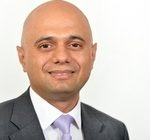
    Sajid Javid – 2021 Statement on Covid-19

    The statement made by Sajid Javid, the Secretary of State for Health and Social Care, in the House of Commons on 30 November 2021.

    The UK’s covid-19 vaccine programme continues to protect the nation against the virus. We continue to make the vaccine accessible to all those eligible and urge everyone to take up the vaccine and booster offer without delay. Over 17 million people have now received their covid-19 booster vaccine or third dose, ensuring the protection they have secured from their first two doses is maintained over the winter months.

    On 29 November, in response to a request from the Secretary of State for Health and Social Care for urgent advice in the light of the omicron variant, the independent Joint Committee on Vaccination and Immunisation (JCVI) published advice on the covid-19 vaccination programme. Additional data regarding the omicron variant will take some time to accrue and the JCVI has advised that waiting for such data before acting risks a suboptimal delayed response. Therefore, the JCVI has advised the following:

    Booster vaccination eligibility should be expanded to include all adults aged 18 years to 39 years.

    Booster vaccination should now be offered in order of descending age groups, with priority given to the vaccination of older adults and those in a covid-19 at-risk group. Booster vaccination should not be given within three months of completion of the primary course. This interval replaces the previous advice which was for a six-month interval.

    Severely immunosuppressed individuals who have completed their primary course (three doses) should be offered a booster dose with a minimum of three months between the third primary and booster dose.

    All children and young people aged 12 to 15 years should be offered a second dose (30-micrograms) of the Pfizer-BioNTech covid-19 vaccine.

    Her Majesty’s Government have accepted this advice and all four parts of the UK intend to follow the JCVI’s advice—the JCVI advice on the UK vaccine response to the omicron variant is on www.gov.uk.

    The overall intention of the measures advised is to accelerate the deployment of covid-19 vaccines to provide additional protection in the event it is needed as we come to better understand the risks posed by the omicron variant. There are currently no data to indicate that omicron infection is associated with a change in the pattern of susceptibility to serious covid-19 (hospitalisation and death). Persons of older age, or who are in covid-19 at-risk groups are likely to remain at higher risk from serious covid-19; therefore, vaccination should be prioritised accordingly. The JCVI will continue to review the programme and options for maximising health benefits alongside the rapidly evolving data on the omicron variant of concern.

    With deployment of the extended booster vaccination offer and additional doses to children and young people imminent, I am now updating the House on the liabilities HMG have taken on in relation to further vaccine supply via this statement and the departmental minute containing a description of the liability undertaken. The agreement to provide indemnity with deployment of further booster doses to the population increases the statutory contingent liability of the covid-19 vaccination programme.

    Given the urgency with which we required JCVI advice and now deployment, we regret that it has not been possible to provide 14 sitting days’ notice to consider these issues in advance of announcing the planned extension to the booster programme in the UK.

    Deployment of effective vaccines to eligible groups has been and remains a key part of the Government’s strategy to manage covid-19. Willingness to accept the need for appropriate indemnities to be given to vaccine suppliers has helped to secure access to vaccines, with the expected benefits to public health and the economy alike, much sooner than may have been the case otherwise.

    Given the exceptional circumstances we are in, and the terms on which developers have been willing to supply a covid-19 vaccine, we along with other nations have taken a broad approach to indemnification proportionate to the situation we are in.

    Even though the covid-19 vaccines have been developed at pace, at no point and at no stage of development has safety been bypassed. The MHRA approval for use of the currently deployed vaccines clearly demonstrates that these vaccines have satisfied, in full, all the necessary requirements for safety, effectiveness, and quality. We are providing indemnities in the very unexpected event of any adverse reactions that could not have been foreseen through the robust checks and procedures that have been put in place.

    I will update the House in a similar manner as and when other covid-19 vaccines or additional doses of vaccines already in use in the UK are deployed.

    HM Treasury has approved the proposal.

  • Ian Blackford – 2021 Speech on the Personal Conduct of Boris Johnson

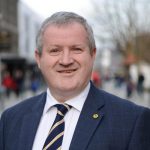
    Ian Blackford – 2021 Speech on the Personal Conduct of Boris Johnson

    The speech made by Ian Blackford, the SNP MP for Ross, Skye and Lochaber, in the House of Commons on 30 November 2021.

    I beg to move,

    That this House censures the Prime Minister, the Right Honourable Member for Uxbridge and South Ruislip, for frequently violating the sixth Principle of Public Life, for seeking to undermine the recommendations of the Standards Committee on Owen Paterson, for regularly ignoring independent advice on matters such as international treaties and breaches of the Ministerial Code by his ministers, for putting forward proposals to diminish the powers of the Electoral Commission, for ignoring independent advice concerning the granting of peerages to Conservative party donors and nominations to public bodies such as Ofcom; and further calls for his ministerial salary to be reduced by £41,567 per year.

    Thank you, Madam Deputy Speaker, for your guidance to the House on conduct in this debate. I am sure you will want to join me in wishing everyone a happy St Andrew’s Day.

    Madam Deputy Speaker

    For the avoidance of doubt, happy St Andrew’s Day.

    Ian Blackford

    Happy St Andrew’s Day to you, Madam Deputy Speaker, and to all hon. and right hon. Members.

    The Scottish National party tabled this motion of censure against the Prime Minister because we believe in a very basic principle, and we believe the public do, too: those in power deserve to face consequences for their disastrous actions, and they need to be held to account.

    The charge sheet against the Prime Minister is, indeed, damning. In the past few weeks alone, he ripped up anti-lobbying rules when one of his own was found guilty, he is attempting to restrict the right to judicial review and he is seeking to undermine the independence of the Electoral Commission. But it did not start there, and it definitely does not end there.

    Since coming into office a little over two years ago, the Prime Minister has been up to his neck in scandals involving cash for honours, cash for contracts, texts for tax breaks and even cash for curtains. As the motion states, he is constantly breaking the sixth principle of public life, the duty to be truthful.

    Month after month, scandal after scandal, the charge sheet gets longer and longer, but not a single person is held to account. If the public are to have confidence in this place, that needs to change, and it needs to change today. Because unless the Prime Minister faces consequences—unless he is censured—he will not just think he has gotten away with the mess he has made over the last few months; he will think he will be able to do it over and over again. Let us be very clear: if the Prime Minister is not properly censured today, it will also be final proof that the Tories really do believe that its one rule for them and one rule for everybody else.

    I remind Conservative Members that we have all been witness to events over the past number of weeks. They might want to forget what has happened, but the public definitely have not. The Tories marched through the Lobby—

    Mr Robert Goodwill (Scarborough and Whitby) (Con) rose—

    Ian Blackford

    I will give way in due course. The Tories marched through the Lobby to undermine our parliamentary standards process, to tear up the rule books, all in order to protect a friend of the Prime Minister who was found to have broken the rules. This whole sorry episode showed this Parliament at its very worst—and, trust me, that is saying something. The Government Chief Whip and the Leader of the House are easy scapegoats, but we all know that this was orchestrated by a Prime Minister who thinks he is untouchable, who thinks he can do as he pleases. This is a Prime Minister who thinks he can change the rules at will and who believes that if the rules become inconvenient, they can simply be changed. So the question stands today: how much does it really take for Tory MPs to say enough is enough?

    How far standards have fallen is shown by the fact that the charges I have made against the Prime Minister are not even in dispute—they are all matters of public record. The Prime Minister has even admitted that in managing these scandals he personally “crashed the car into the ditch”.

    It tells us all we need to know, though, that he did not even have the decency to admit that in the House of Commons. He only felt the need to admit his mistakes and apologise to his Back Benchers in the Tory 1922 committee, and it was only because they were muttering about mutiny. I am not sure that apology counts if he only did it to try to save his own skin.

    But no matter how much the Prime Minister tries to publicly wash his hands of responsibility for his actions, the public have already cast their verdict. The Tories may be sliding in the polls, but it is as nothing compared to the hammering the Prime Minister is taking in the court of public opinion. In the last week, his approval ratings have hit an all-time low, and there is one only simple reason behind it: the public know that that the Prime Minister is at the rotten core of all these scandals.

    A natural comparison has been drawn with the Major Government in the early 1990s, but even that comparison fails to properly get to the scale of corruption that has occurred, much of it in plain sight. The difference between this Prime Minister and John Major was that Major took action to address the sleaze and corruption. This Prime Minister is at the centre of the sleaze and corruption—he is orchestrating much of it. I am afraid corruption is the only proper word—the only honest word—for what has been going on. As I said at the weekend, the Leader of the Opposition—I do wonder where Opposition Members are—is now very fond of repeating the line that when it comes to the Prime Minister

    “the joke isn’t funny anymore”.

    But in truth it was never funny, and we are all now living with the consequences of having a man like this in Downing Street.

    It is also important to reflect on just how damaging recent weeks and months have been to the public’s faith in politics. Because each and every one of these scandals erodes standards, erodes trust and ultimately erodes democracy itself.

    In the middle of the Owen Paterson scandal, the Prime Minister said:

    “I genuinely believe that the UK is not remotely a corrupt country and I genuinely think that our institutions are not corrupt.”

    The problem for the Prime Minister is that the public disagree with him: a recent Savanta ComRes poll found that 54% of those asked thought that the UK Government were corrupt. If the Prime Minister wants to know why, he has only to look in the mirror.

    In the eyes of the public this is a UK Government who have normalised sleaze and are now trying to normalise corruption. This is the Tory Government’s attempt at a new normal in which no one is held responsible, no one is held to account and no one ever—not ever—resigns. That is exactly why consequences are so important and why this censure motion matters: it can only ever become a new normal if we all put up with it. [Interruption.] This is a debate that matters to people in the United Kingdom. We can hear the behaviour and the catcalling of Government Members and it sums up the attempt to shut down democracy and our right to raise these important matters in this House.

    A new normal becomes possible only if we do not hold the Government to account and do not make them answer for their actions. I genuinely ask Government Members, if they have any interest in maintaining some dignity and decency in public life, finally to hold the Prime Minister to account and censure him for his abuse of power.

    Let me take one example of that abuse of power: the cash-for-honours scandal. Fifteen of the Tory party’s main treasurers who happened to hand over £3 million to the party were somehow given life peerages in the House of Lords, as if by magic. Twenty-two of the Tory party’s top financial backers all happen to have been given peerages since 2010. In total, this group has stuffed Tory party coffers with £54 million— [Interruption.] “Hear, hear!” That sums it up. The Conservatives see it as a virtue that if someone gives multimillion pounds to the Conservative party, they end up in the House of Lords. My goodness! What price democracy?

    Let us take Lord Cruddas, a leading donor to the Vote Leave campaign who, let us not forget, bankrolled the Prime Minister’s Conservative leadership bid. He personally gave up to £4 million in donations to the Tory party and affiliates. His reward? An ermine robe and a seat in the House of Lords. What is worse is that the Prime Minister personally overruled the House of Lords Appointments Commission that advised against his appointment. That was the very first time that the watchdog’s recommendation has ever been ignored. Three days after Lord Cruddas was introduced to the House of Lords, what happened? He handed £500,000 to Conservative central office. I will gladly give way to anyone on the Tory Benches who wants to stand up and justify that level of sleaze.

    Madam Deputy Speaker (Dame Eleanor Laing)

    Order. I hesitate to interrupt the right hon. Gentleman, but I hope he will be very careful about precisely what he says about any Member of the House of Lords because, of course, any Member of the House of Lords is also a parliamentarian. It is of course in order for the right hon. Gentleman to examine the conduct of the Member who is the subject of the motion, but that does not extend to other Members of Parliament, including those in the Lords.

    Ian Blackford

    What I am reflecting on is the behaviour of the Prime Minister that puts Members in the House of Lords, when the House of Lords Appointments Commission has ruled against their appointment. I have given the opportunity to anyone on the Tory Benches who wishes to rise to defend the actions of putting Tory donors in the Lords. It is £3 million for a peerage in the House of Lords. What a price to be able to undermine our democracy!

    Tommy Sheppard (Edinburgh East) (SNP)

    Will my right hon. Friend give way?

    Ian Blackford

    I will happily give way.

    Hon. Members

    Oh!

    Tommy Sheppard

    I thank my right hon. Friend for giving way. As no Government Member wishes to intervene on him, I wonder whether he might agree with me on this: is it not somewhat ironic that SNP Members demonstrate more probity and more respect for the rule of democracy than does the current Prime Minister, and is this not yet another compelling reason why Scotland should be an independent country, so that we can have a system of governance that is fair, democratic and transparent?

    Ian Blackford

    I thank my hon. Friend for that intervention. Of course, he is absolutely correct. We are speaking about the House of Lords. The House of Lords is the second largest parliamentary Chamber in the world. The only Chamber that is bigger is the Communist Congress. My goodness, what an advert for democracy! The fact is that these unelected Lords have a say over our democracy. The juxtaposition—the point that is made by my hon. Friend—is an important one. Today, we are discussing the behaviour of the Prime Minister and why he should be sanctioned. Yet in Scotland, just seven months ago, the people of our country were given the right to have a say in their Government. Crucially, they were given a right to have a say on the future of our country as an independent country, because the SNP made it very clear in that election that it was about a mandate for an independence referendum. Indeed, the Conservatives made it clear that a vote for the Conservatives was a vote to stop Scottish independence, and what happened?

    We are talking about democracy and respecting democracy, so let us tell the Conservatives a few harsh truths. In the four elections that we have fought in the Scottish Parliament that we have won, we have increased our vote at every election. We received just short of 48% of the popular vote at that last election. That is a higher share of the vote than any party has had in any election in the United Kingdom for the past 50 years. On the topic of respecting democracy, of respecting the people’s sovereignty, then Boris Johnson must recognise that the Scottish Parliament, where there is a majority for Scottish independence, has the right to call that referendum.

    Madam Deputy Speaker (Dame Eleanor Laing)

    Order. Will the right hon. Gentleman please refer to the Prime Minister as the Prime Minister and not by his name? If he could just re-say that last sentence, I would be so pleased.

    Ian Blackford

    The point is that the Prime Minister must respect democracy. He denies democracy when he stuffs the Lords with his Tory donor friends, but he must respect democracy when people in Scotland have voted for a Parliament that has a right to call a referendum to take us out of this toxic Union and find a way back for us as an independent country in the European Union.

    Mr Goodwill rose—

    Ian Blackford

    I will give way.

    Hon. Members

    Hooray!

    Mr Goodwill

    I thank the right hon. Gentleman for giving way. He understands, I think, that a debate tends to be a two-way thing and not just a diatribe delivered to the House.

    May I politely suggest that, if he wishes to restore confidence in this House, he could have chosen a subject for debate today that was of relevance to the people of Scotland—global warming, education, health—and not this rather lame subject, which, I suspect, is something of no consequence whatsoever to most people working very hard in Scotland.

    Ian Blackford

    Really, really. We are talking about corruption and sleaze—about a Prime Minister who forces Conservative MPs to go through the Lobby to get one of their own off a charge against parliamentary standards, and who rewards those who give money to the Tory party. That is exactly a subject of importance to the people of Scotland.

    Dawn Butler (Brent Central) (Lab)

    Not only is it an important subject; how the Prime Minister behaves is fundamental to our democracy and to how Parliament works. [Interruption.] We have a Prime Minister who comes to the House and fails to tell the truth. That is fundamental to how our democracy works, so it is more than important—it is fundamental.

    Ian Blackford

    I agree. I will come to the subject of truth and honesty later in my speech. It is noticeable that when the hon. Lady, who speaks with some authority on these matters, is trying to speak, once again the Conservatives try to shout us down. What a look that is to the people watching this debate.

    Mark Jenkinson (Workington) (Con)

    The right hon. Gentleman is being incredibly kind in giving way, particularly on this subject. I just wondered if he might take the opportunity to update us on the missing donations and the fraud investigation into the First Minister’s husband—your party’s chief executive.

    Ian Blackford rose—[Interruption.]

    Madam Deputy Speaker (Dame Eleanor Laing)

    Order. Do not shout at the right hon. Gentleman. We all have to hear his answer. While I am on my feet, I would be grateful if the hon. Member for Workington (Mark Jenkinson) would in future use the word “he” and not “you” when referring to the right hon. Gentleman.

    Ian Blackford

    Let me respectfully say to Government Members that I will give a guarantee, a promise and a commitment right here and now that all moneys raised by the Scottish National party for the purposes of fighting an independence campaign—every penny—will be spent on independence campaigning, because that is what we are about. There is a big difference in those who fund the SNP and the independence campaign, because—I will make another promise—not one single member of the SNP who gives to us willingly will end up in the House of Lords; they will be funding the SNP and the independence movement to ensure that we deliver on our promise to take Scotland out of this Union.

    There is another important point about how deeply damaging all these scandals are. Every day that the Prime Minster spends concentrating on how he will somehow avoid scrutiny is a day not doing the basics of what his job demands. It is also becoming clearer just how damaging and dangerous it is that chaotic governance now defines Downing Street. That would be bad enough in normal times, but it is totally unforgivable in the middle of a pandemic.

    In the real world, away from the shambles in No. 10, people are suffering not only from the pandemic, but from a Tory cost-of-living crisis. Inflation is running at 5%. Rising day-to-day costs and rising household bills are the main focus for families. While all the political stories on sleaze have been going on and taking up time at Downing Street, the political decision to cut universal credit has been hitting homes hardest. The shameful cut to universal credit was not just the wrong policy; it came at the worst possible time for families this winter. We are left with a UK Government who are not only up to their necks in sleaze, but hitting families at the same time. In Scotland, I am proud that we have a First Minister who understands the pressures that family finances are under, and a Government who listen and respond. I am proud that at the very same time that the Westminster Government are cutting universal credit by £20 a week, the SNP Scottish Government are raising the Scottish child payment by £20 a week.

    One of the public’s real angers about these scandals is the deep dishonesty that has been so openly on display.

    The truth and the Prime Minister have always been strangers. I say that in sadness and not in any anger. Let me just take a few examples. On 4 March 2020, the Prime Minister said:

    “We have restored the nurses’ bursary”.—[Official Report, 4 March 2020; Vol. 672, c. 829.]

    That was completely and factually untrue. On 17 June 2020, the Prime Minister said that there were

    “400,000…fewer families living in poverty now than there were in 2010.”—[Official Report, 17 June 2020; Vol. 677, c. 796.]

    Both the Office for National Statistics and the Children’s Commissioner have confirmed that that is false. On 7 November 2019, the Prime Minister told Northern Ireland businesses, in person, that the protocol would mean

    “no forms, no checks, no barriers of any kind”—

    once again, completely untrue. It is right to be careful in terms of the language that we use in this House, but when it comes to language it is also right to be accurate and honest. On the basis of all the evidence, I can only conclude that the Prime Minister has repeatedly broken the sixth principle of public life. I can only conclude that the Prime Minister has demonstrated himself to be a liar.

    I think there is a misguided sense among those on the Tory Benches that they have gotten past the scandals of the past few weeks. The Prime Minister thinks that, if he blunders on, people might not forgive, but they will forget. Not for the first time, the Tories are badly wrong and badly out of touch, because they just do not get that the depth of anger among the public is very real and is not going away. I know that people in Scotland are looking on at a broken Westminster system that has never felt more remote, more arrogant and more corrupt.

    Liz Saville Roberts (Dwyfor Meirionnydd) (PC)

    Does the right hon. Gentleman appreciate, and do Conservative Members appreciate, the damage that has been done when to be able to use the word “liar” in this place is now passed as fair comment and accepted, and the damage that that is doing to our democracy?

    Madam Deputy Speaker (Dame Eleanor Laing)

    Order. Let us just be clear about that. It is preferable that such words should not be used in this place but, as I said before the right hon. Gentleman rose to his feet, this is a very specific and particular motion and the right hon. Gentleman is examining the conduct of a Member of this House—indeed, the Prime Minister. Therefore, I cannot stop him from using the word that he has just used. I would prefer it if he put things in different terms, but I do not think that he has strayed past the rules. I think he is perfectly in order. However, it would be better if other Members did not make comments such as those just made by the right hon. Lady because what she said is not actually quite correct. Please, let us just keep it as moderate as possible.

    Ian Blackford

    I was dealing with the sixth principle of public life. I have laid out for the House three examples—I could have given many more—of where the Prime Minister has not told the truth. I regret, in the context of where we are, that I had to make that point, which is important, because if we undermine honesty and truth in this place, what are we left with? That is why we have brought this motion today and that is what I am asking hon. Members right across this House to reflect on, because there is overwhelming evidence that the Prime Minister has broken that principle of public life. I am asking each and every Member in this House, particularly on the Government Benches, to examine their conscience on the basis of the evidence and think very carefully before they go through the Lobby tonight. The public are angry at what has happened in this place. The public are angry about the Member I mentioned earlier who had been sanctioned by the Standards Commission and who the Prime Minister sought to get off. There will come a time when the public will judge this House and this House should reflect very carefully on that tonight.

    Sarah Owen (Luton North) (Lab)

    I wholeheartedly agree that this is an issue of conduct, but it is also a question of leadership. We have a Prime Minister in the middle of a pandemic who has failed to learn. At the beginning of this crisis, he boasted about shaking hands with covid patients; now he is mask-less in a hospital and too weak to tell Members of his own party to put on a mask. We desperately need not just an improvement in conduct, but an improvement in clear communication and leadership from this Prime Minister.

    Ian Blackford

    I agree with the hon. Member. [Interruption.] Perhaps we should just calm down; there will be opportunities for people to participate in the debate. This issue of leadership and conduct is important. This saddens me, but when we are facing a new variant, and we do not know what the scale of that challenge will be, the obvious thing for everyone to do is to seek to protect themselves, but more importantly to protect others and to lead by example and show leadership. I commend colleagues across the House who are sitting here wearing masks today, but my goodness, there are far too many who still do not get it and do not accept the responsibility they have for each other, and they are even laughing about it as I say that. It comes from the Prime Minister.

    Drew Hendry (Inverness, Nairn, Badenoch and Strathspey) (SNP)

    Will my right hon. Friend give way?

    Ian Blackford

    Let me just carry on for a second, because this is important. The way we conduct ourselves and interact with others is important. I commend the previous Prime Minister, the right hon. Member for Maidenhead (Mrs May), for the courtesies she always showed to Opposition parties, for how the protocols were followed and for the way we had a relationship with No. 10. It grieves me that I can tell the House that we as the third party and, I believe, the Leader of the Opposition have no relationship with No. 10. We are disrespected and disregarded by a Prime Minister who does not understand his obligations to public life, and that is yet another example.

    Drew Hendry

    Is it not telling about how complicit those on the Government Benches are that, when my right hon. Friend was reading out the list of untruths peddled by the Prime Minister, there was deathly silence? The only time they were animated was when my right hon. Friend called it for what it was.

    Ian Blackford

    I ask Government Members to reflect. Most people in this House are decent people. People come here to provide a public service, and I say to hon. and right hon. Members on the Government Benches that they are being let down, we are being let down and these islands are being let down by a Prime Minister who simply does not know how to behave. On that note, it will be interesting to see how the Scottish Tories vote tonight, and we will be watching. They are a group who never fail to see conspiracy at Holyrood, but somehow always fall deathly silent when it comes to sleaze and corruption overseen by their own Prime Minister.

    In truth, this debate is not about the Scottish Tories—I will leave them to explain their own hypocrisy—but what the public expect when standards and rules are so clearly broken by their political representatives. They expect consequences, and they expect censure. Let us also be clear about this: if we fail to censure this Prime Minister today, we will have failed that public duty for accountability. Not only that, but it will reveal something very telling; it will show a Westminster system that is broken beyond repair and a Prime Minister who believes himself to be above the law of the land.

    The only comfort I take is that fewer and fewer people in Scotland can possibly look at the broken, corrupt, self-serving Westminster system and conclude that it produces a secure basis for the future of Scotland. We all know that Scotland can do much better than this; we can do better than this broken Westminster system and we can do better than this Prime Minister. We will do so much better when our country chooses independence. I commend the motion in the name of myself and my hon. and right hon. colleagues.


  • Sajid Javid – 2021 Statement on Covid-19 and the Omicron Variant

    Sajid Javid – 2021 Statement on Covid-19 and the Omicron Variant

    The statement made by Sajid Javid, the Secretary of State for Health and Social Care, in the House of Commons on 29 November 2021.

    With permission, Mr Speaker, I would like to make a statement on the omicron variant and the steps we are taking to keep our country safe. We have always known that a worrying new variant could be a threat to the progress that we have made as a nation. We are entering the winter in a strong position, thanks to the decisions we made in the summer and the defences we have built. Our vaccination programme has been moving at a blistering pace, and this weekend we reached the milestone of 17 million boosters across the UK. This means that even though cases have been rising, hospital admissions have fallen by a further 11% in the past week and deaths have fallen by 17%.

    Just as the vaccination programme has shifted the odds in our favour, a worrying new variant has always had the opportunity to shift them back. Last week, I was alerted to what is now known as the omicron variant, which has now been designated a variant of concern by the World Health Organisation. We are learning more about this new variant all the time, but the latest indication is that it spreads very rapidly; it may impact the effectiveness of one of our major treatments for covid-19, Ronapreve; and, as the chief medical officer said this weekend, there is a reasonable chance that our current vaccines may be impacted.

    I can update the House that there have now been five confirmed cases in England and six confirmed cases in Scotland. We expect cases to rise over the coming days. The new variant has been spreading around the world: confirmed cases have been reported in many more countries, including Austria, Belgium, the Czech Republic, Denmark, Germany, Italy, the Netherlands and Portugal.

    In the race between the vaccines and the virus, the new variant may have given the virus extra legs, so our strategy is to buy ourselves time and strengthen our defences while our world-leading scientists learn more about this potential threat. On Friday, I updated the House on the measures we have put in place, including how, within hours, we had placed six countries in southern Africa on the travel red list. Today, I wish to update the House on more of the balanced and proportionate steps we are taking.

    First, we are taking measures at the border to slow the incursion of the variant from abroad. On Saturday, in line with updated advice from the UK Health Security Agency, we acted quickly to add another four countries—Angola, Mozambique, Malawi and Zambia—to the travel red list. That means that anyone who is not a UK or Irish national or resident and who has been in any of those countries over the previous 10 days will be refused entry. Those who are allowed entry must isolate in a Government-approved facility for 10 days.

    Beyond the red list, we are going further to put in place a proportionate testing regime for arrivals from all around the world. We will require anyone who enters the UK to take a PCR test by the end of the second day after they arrive and to self-isolate until they have received a negative result. The relevant regulations have been laid before the House today and will come into effect at 4 am tomorrow.

    Secondly, we have announced measures to slow the spread of the virus here in the UK. We are making changes to our rules on self-isolation for close contacts in England to reflect the greater threat that may be posed by the new variant. Close contacts of anyone who tests positive with a suspected case of omicron must self-isolate for 10 days, regardless of whether they have been vaccinated or not. Face coverings will be made compulsory in shops and on public transport in England unless an individual has a medical exemption.

    The regulations on self-isolation and face coverings have been laid before the House today and will come into force at 4 am tomorrow. I can confirm to the House that there will be a debate and votes on the two measures, to give the House the opportunity to have its say and to perform valuable scrutiny. My right hon. Friend the Leader of the House will set out more details shortly. We will review all the measures I have set out today after three weeks to see whether they are still necessary.

    Thirdly, we are strengthening the defences we have built against the virus. We are already in a stronger position than we were in when we faced the delta variant: we have a much greater capacity for testing, an enhanced ability for sequencing and the collective protection offered by 114 million jabs in arms. I wish to update the House on our vaccination programme. Our covid-19 vaccination programme has been a national success story. We have delivered more booster doses than anywhere else in Europe and given top-up jabs to more than one in three people over the age of 18 across the United Kingdom. I take this opportunity to pay tribute to the NHS, the volunteers, the armed forces and everyone else who has been involved in this life-saving work.

    Our vaccines remain our best line of defence against this virus in whatever form it attacks us. There is a lot that we do not know about how our vaccines will respond to this new variant, but, although it is possible that they may be less effective, it is highly unlikely that they will have no effectiveness at all against serious disease, so it is really important that we get as many jabs in arms as possible. Over the next few weeks, we were already planning to do 6 million booster jabs in England alone, but against the backdrop of this new variant we want to go further and faster.

    I asked the Joint Committee on Vaccination and Immunisation, the Government’s independent expert advisers on vaccinations, to urgently review how we could expand the programme, and whether we should reduce the gap between second doses and boosters. The JCVI published its advice in the last hour: first, it advised that the minimum dose interval for booster jabs should be halved from six months to three months; secondly, that the booster programme should be expanded to include all remaining adults aged 18 and above; thirdly, that these boosters should be offered by age group in a descending order to protect those who are most vulnerable to the virus—priority will be given to older adults and people over 16 who are at risk; fourthly, that severely immunosuppressed people aged 16 or above who have received three primary doses should now also be offered a booster dose; and finally, that children aged between 12 and 15 should be given a second dose 12 weeks from the first dose. I have accepted this advice in full. With this new variant on the offensive, these measures will protect more people more quickly and make us better protected as a nation. It represents a huge step up for our vaccination programme, almost doubling the number of people who will be able to get a booster dose to protect themselves and their loved ones.

    I know that we are asking more from NHS colleagues who have already given so much throughout this crisis, but I also know that they will be up to the task. The NHS will be calling people forward at the appropriate time, so that those who are most vulnerable will be prioritised. I will be setting out more details of how we are putting this advice into action in the coming days.

    Our fight against this virus is a global effort, so I will update the House on the part that the UK is playing. We currently hold the presidency of the G7, and, earlier today, I convened an urgent meeting of G7 Health Ministers to co-ordinate the international response. We were unanimous in our praise for the leadership shown by South Africa, which was so open and transparent about this new variant. We were resolute in our commitment to working closely with each other, the World Health Organisation and, of course, the wider international community to tackle this common threat.

    Our experience of fighting this virus has shown us that it is best to act decisively and swiftly when we see a potential threat, which is why we are building our defences and putting these measures in place without delay. Scientists are working at speed, at home and abroad, to determine whether this variant is more dangerous. I can assure the House that if it emerges that this variant is no more dangerous than the delta variant, we will not keep measures in place for a day longer than necessary. Covid-19 is not going away, which means that we will keep seeing new variants emerge. If we want to live with the virus for the long-term, we must follow the evidence and act in a proportionate and responsible way if a variant has the potential to thwart our progress. As we do that, we are taking a well-rounded view, looking at the impact of these measures not just on the virus, but on the economy, on education, and on non-covid health, such as mental health. I am confident that these balanced and responsible steps are proportionate to the threat that we face.

    This year, our nation has come so far down the road of recovery, but we always knew that there would be bumps in the road. This is not a time to waver, but a time to be vigilant and to think about what each and every one of us can do to slow the spread of this new variant—things such as getting a jab when the time comes, following the rules that we have put in place, and getting rapid, regular tests. If we all come together once again, then we can keep this virus at bay and protect the progress that we have made. I commend this statement to the House.

  • John Glen – 2021 Statement on the Financial Conduct Authority Mortgage Review

    John Glen – 2021 Statement on the Financial Conduct Authority Mortgage Review

    The statement made by John Glen, the Economic Secretary to the Treasury, in the House of Commons on 29 November 2021.

    The issue of mortgage prisoners is one of my key priorities. I recognise the difficult position these borrowers are in and understand the stress that many experience as a result. I remain committed to examining what further can be done to assist borrowers and this is why I asked the Financial Conduct Authority (FCA) to conduct a review on mortgage prisoners to provide the further detail necessary to continue this important work. The Mortgage Prisoners Review [CP 576] has today been laid in Parliament.

    The review identifies that there are now around 47,000 mortgage prisoners—these are borrowers who are up to date with payments, who are unable to switch, and who could potentially benefit from switching if they were eligible for a new deal. Most mortgage prisoner loans originate from prior to the financial crisis, when lending standards were looser, and this means that many affected borrowers struggle to switch as a result of not meeting post-financial crisis risk appetite.

    The report is clear that the underlying reasons mortgage prisoners are unable to switch are complex, and it is therefore crucial to understand the facts and data around this issue in order to consider our approach. The FCA’s review provides important insight into the mortgage prisoner population which the Treasury will now examine to determine if any further practical and proportionate solutions can be found for affected borrowers who struggle to obtain a new mortgage deal.

    More widely the review shows that the number of borrowers with inactive firms has materially decreased since the FCA last collected data in this area in 2019. This partly reflects the ability of many borrowers in closed books to switch to an active lender if they so choose. I would encourage all mortgage borrowers to examine their switching options to ensure they are on as competitive a rate as possible for their circumstances.

    I am also encouraged to see that the interest rates paid by almost all borrowers in closed books are less than the rates they signed up to when they took out their mortgage, with a third paying at least 3.5 percentage points less.

    However, it is clear that challenges remain in addressing this issue. While there is evidence that some mortgage prisoners have switched as a result of significant regulatory interventions made to date, it is also clear that the number of borrowers who have benefited is small. This new report also makes clear that the reasons borrowers struggle to switch are complex and varied, and that there are no simple solutions to increase the number of borrowers who are able to switch to better rates with active lenders.

    Nevertheless, I remain committed to this issue, and am grateful for the work undertaken by the FCA on this review which provides the crucial insight necessary to consider any further action. I am also grateful to the industry partners who have committed to continue to work together on this issue and look forward to further engagement with them.

    With the data from this review, the Treasury will now target our work to determine if there are any further practical and proportionate solutions for affected borrowers, including consideration of means through which we can help borrowers better position themselves to meet lender risk appetite. While I am approaching this further piece of work with appropriate ambition and optimism, I am also keen to manage borrower expectations by emphasising that any solutions tabled must avoid the potential for significant risk of moral hazard to consumers in the wider mortgage market or those who aspire to obtain a mortgage and must be value for money for the taxpayer. Any announcements on this will be made when the Treasury has had sufficient time to examine the review’s findings and consider any options available to address this complex issue.

    Copies are available in the Vote Office and at: https://www.gov.uk/government/publications/mortgage-prisoner-review.

  • Michael Ellis – 2021 Statement on the Standard for Algorithmic Transparency

    Michael Ellis – 2021 Statement on the Standard for Algorithmic Transparency

    The statement made by Michael Ellis, the Paymaster General, in the House of Commons on 29 November 2021.

    My noble Friend the Minister for Efficiency and Transformation (Lord Agnew Kt) has today made the following written statement:

    The Cabinet Office’s Central Digital and Data Office (CDDO) has today published a cross-Government standard for algorithmic transparency. This move makes the UK one of the first countries in the world to make progress on developing a national algorithmic transparency standard. The CDDO was established in January 2021 as the new strategic centre for digital, data and technology for the Government.

    Several leading organisations in the field, such as the Centre for Data Ethics and Innovation (CDEI), Ada Lovelace Institute and Alan Turing Institute, as well as renowned academic and international institutions, including the Oxford Internet Institute, AI Now Institute and OECD, have called for greater transparency to help manage the risks associated with algorithmic decision making, bring scrutiny to the role of algorithms in decision-making processes and help build public trust.

    In the National Data Strategy, the Government committed to working with leading organisations in the field to explore what an effective mechanism to deliver greater algorithmic transparency would look like. It reiterated this commitment in the response to the National Data Strategy consultation, and announced that it was developing a public sector algorithmic transparency standard in the National AI Strategy.

    While designing the first version of the standard, CDDO has worked closely with the CDEI. It has convened stakeholders from across Government, civil society and academia, and conducted a deliberative public engagement exercise with the CDEI and BritainThinks, to ensure that a diverse range of views have been taken into account.

    Proactive transparency in this field is a natural extension of the UK’s long-standing leadership in data ethics and open data. Several public sector organisations will trial the standard in the coming months, and provide user feedback to CDDO. CDDO is also seeking further feedback from stakeholders outside of Government. Following the pilot, CDDO will iterate the standard based on feedback gathered and seek formal approval from the Data Standards Authority in 2022.

    This development comes after the Government have consulted on a proposal to introduce transparency reporting on the use of algorithms in decision making for public authorities, Government Departments and Government contractors, as part of the wide-ranging consultation on the future of the UK’s data protection regime. It sought views on the role that such reporting would play in building public trust, as well as what the key contents of mandatory transparency reporting should be and whether any exemptions should apply.

    I have deposited a copy of the standard and accompanying guidance in the Libraries of both Houses, and published both on www.gov.uk.

  • George Freeman – 2021 Statement on Horizon Europe

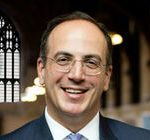
    George Freeman – 2021 Statement on Horizon Europe

    The statement made by George Freeman, the Parliamentary Under-Secretary of State for Business, Energy and Industrial Strategy, in the House of Commons on 29 November 2021.

    The Government are announcing today a guarantee to provide a financial safety net for successful UK applicants to Horizon Europe, while we push to formalise our association as soon as possible.

    We agreed terms for association under the EU-UK Trade and Co-operation Agreement. When the TCA was agreed in December 2020, the UK and EU signed a joint declaration on participation in union programmes and access to programme services. This sets out the parties’ shared commitment for the UK to associate to Horizon Europe alongside Euratom R&T, Fusion for Energy and Copernicus at the earliest opportunity. The Government remain committed to securing this outcome so that research collaboration can continue, and we stand ready to formalise our association, but disappointingly there have been persistent delays from the EU, which has led to uncertainty for the UK sector and their European partners.

    UK and EU researchers and businesses have a long history of successful collaboration. As Europe’s leading R&D and science centre with world-class universities, scientists and innovators, the UK will bring a significant amount to the programme. Further delays will benefit neither the EU nor the UK.

    The Government’s priority remains association to Horizon Europe. UK researchers, businesses and innovators have been able to apply to calls as “Associated Candidates” since early 2021. So to provide reassurance to UK-based applicants, the Government have decided to guarantee funding for the first wave of eligible, successful applicants to Horizon Europe who have been unable to sign grant agreements with the EU.

    The guarantee is a short-term measure intended to address the continued delays from the EU to formalise the UK’s association to Horizon Europe. The funding will be delivered through UK Research and Innovation, which will publish details on how the guarantee will work including eligibility, scope and how to apply in the coming weeks.

    The Government have always been clear that our priority is to support the UK’s research and development sector and we will continue to do this in all future scenarios. As announced in the 2021 spending review, in the event that the UK is unable to associate to Horizon Europe, the funding allocated to Horizon association will go to UK Government R&D programmes, including those to support international partnerships.

    The Government looked at the practicalities of handling such a situation in 2020 and developed a detailed set of alternatives plans, which included continued support for international research, innovation collaboration and domestic research support. This work is being refreshed and we remain ready to implement these plans should they become necessary. I have written an open letter to the sector to set out my early thinking on the policy priorities should we be unable to associate, and will be inviting their views over the coming weeks.

  • Dominic Raab – 2021 Comments on Tony’s Law

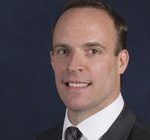
    Dominic Raab – 2021 Comments on Tony’s Law

    The comments made by Dominic Raab, the Deputy Prime Minister, on 30 November 2021.

    The law must provide maximum protection to the most vulnerable and no-one is more vulnerable than a young child.

    So, we are increasing the maximum penalty for child cruelty causing or allowing serious physical harm from 10 years to 14 years, and the maximum penalty for causing or allowing the death of a child from 14 years to life imprisonment.

    I pay tribute to the courage of young Tony Hudgell and his adoptive parents Paula and Mark.