Tag: 2021

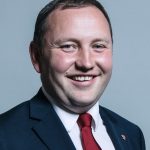
  • Brandon Lewis – 2021 Statement on Northern Ireland

    Brandon Lewis – 2021 Statement on Northern Ireland

    The statement made by Brandon Lewis, the Secretary of State for Northern Ireland, in the House of Commons on 13 April 2021.

    With permission, Mr Deputy Speaker, I would like to make a statement to update the House on the recent disorder in Northern Ireland.

    The main areas of unrest have been specific parts of Belfast, Newtownabbey, Carrickfergus, Ballymena, Cookstown, Coleraine and Londonderry. The 7 and 8 April saw an escalation in the violence at an interface area, commonly referred to as a peace wall, in west Belfast, with missiles being thrown by large numbers of mainly young people over interface gates, and police coming under attack. As a result of the unrest, a total of 88 police officers have been injured, 18 arrests have been made and 15 individuals have been charged. My thoughts and, I am sure, the best wishes of everybody in this House are with those police officers.

    On Friday 9 April, the incidents of public disorder were significantly reduced compared with previous evenings. There was, however, localised disorder in north Belfast. The remainder of the weekend and since has been much calmer, with only a few isolated incidents of disorder.

    The violence witnessed last week was totally unacceptable. Attacks on police officers are utterly reprehensible. Those engaged in this destruction and disorder do not represent the people of Northern Ireland. It is tragic and deeply concerning that young people have been engaged in, and encouraged into, this violence, and, as a result, will now end up with criminal records.

    It can be easy to look for a simplistic explanation for the recent disorder, but it is clear that the factors behind it are, in fact, complex and multi-faceted. People are frustrated after a year in which coronavirus has challenged all of us, and I do recognise how frustrating it has been, especially for young people in Northern Ireland facing the uncertainty around the lifting of lockdown restrictions without having the clear road map in Northern Ireland. There is also a perception that the rules and restrictions have not been enforced equally in Northern Ireland, and we all know that there are strongly held political views within and between communities that can be in tension with each other. I recognise that there are concerns about the implications of the Northern Ireland protocol—concerns that overlap with wider questions about national identity and political allegiance—and this comes at a time of economic uncertainty caused by the pandemic.

    Northern Ireland has made huge strides over the past two decades, but it is a post-conflict society and there do remain elements of fragility. Some sections of the community feel that their concerns are not understood. The reconciliation, equality and mutual understanding between the communities and traditions envisioned in the Belfast/ Good Friday agreement are not recognised or experienced by all. There is still work to do.

    The Belfast/Good Friday agreement, which was signed 23 years ago, highlighted the importance of progress in areas of social development, such as integrated education. These will be a vital part of Northern Ireland’s future, enabling even more young people to grow up in the reality of a shared society and able to effect positive change in their communities. The answer to all these issues and any others lies in dialogue, engagement and the democratic process, not through violence or disorder. It is incumbent on all of us engaged in political discourse to support Northern Ireland in leaving its divisive past behind and continuing instead to look ahead to all the opportunities of the future.

    Policing and justice matters are devolved under strand 1 issues under the Belfast/ Good Friday agreement. Despite this being a devolved matter, though, the Government have an important role to play in supporting the Executive to ensure that calm prevails and in offering the Police Service of Northern Ireland and all those committed to dialogue and democracy our fullest possible support. I have continued to meet with Northern Ireland’s party leaders and the Police Service of Northern Ireland over recent days to discuss the unrest. Our collective priority is to work together to ensure public safety.

    I very much welcome the statement from the Northern Ireland Executive on 8 April that set out a common position from all Executive parties against the violence and declares their support for law and order and policing. I want to express my gratitude to them for their efforts and to the PSNI for continuing to work to keep people safe.

    I also welcome recent statements from many across the community and beyond condemning the violence and appealing for calm. The Government respect the right to protest, but it must be done in a peaceful manner that fully respects the rule of law. On 10 April, we marked 23 years since the signing of the Belfast/Good Friday agreement, an achievement of which the people of Northern Ireland are justifiably proud and on which we can continue, and must continue, to work closely with the Irish Government as co-guarantors of that agreement. In that time there has been a transformative change in Northern Ireland. Peace has brought stability and opportunity. It has enabled Northern Ireland to develop into the vibrant, exciting place that it is today.

    The Government are resolutely committed to peace and prosperity in Northern Ireland. We have invested significantly in a wide range of programmes and initiatives to that end. The Belfast/Good Friday agreement provided the foundation for peace and a framework for prosperity and we are committed to it, as, I think, everyone in this House is. All of us across this House have a duty to support the people of Northern Ireland in shaping a peaceful and prosperous society for the future—a future that they can shape.I have seen at first hand an inclusive, prosperous and hopeful society that continues to build on that hard-won peace.

    We must all work together to resolve the tensions that are currently being faced. I know from my ongoing engagement with stakeholders, including the Irish Government, that that is a shared view. The only way to resolve differences is through dialogue, and in that regard we must all lead by example. I commend this statement to the House.

  • Stephen Kinnock – 2021 Speech on Chinese Government Sanctions on UK Citizens

    Stephen Kinnock – 2021 Speech on Chinese Government Sanctions on UK Citizens

    The speech made by Stephen Kinnock, the Labour MP for Aberavon, in the House of Commons on 13 April 2021.

    The Labour party stands in solidarity with the nine British citizens, including Members of both Houses, who have been sanctioned by the Chinese Government solely for calling out Beijing’s appalling human rights abuses against the Uyghur people in Xinjiang. We welcome the Prime Minister’s invitation to those who were sanctioned to meet him, and we hope that the Government are providing those individuals with adequate advice and support. However, we are deeply concerned about the rank hypocrisy and inconsistency in the Government’s actions regarding China.

    When Beijing introduced the Hong Kong national security law last summer, the UK withdrew from two UK-China Government investment forums: the joint trade and economic commission and the economic and financial dialogue. However, it is reported that those forums are now reopening. Will the Minister confirm that?

    On Hong Kong, does the Minister now agree with the Opposition that British judges who serve in Hong Kong are only lending a veneer of credibility to a broken system and that they should therefore withdraw? Lord Reed’s review was announced in November. When will its conclusions be published? Where are the Magnitsky sanctions against Carrie Lam and the human rights violators in Hong Kong?

    In January, the Foreign Secretary said that “we shouldn’t be” doing trade deals with countries committing human rights abuses

    “well below the level of genocide”,

    yet the Government whipped their MPs against the genocide amendment to the Trade Bill. Will the Minister explain that rank hypocrisy and why the Foreign Secretary says one thing in public and something else altogether in private? The Government claim to be alive to the threat that Chinese state-backed investment poses to Britain’s economic security and prosperity, so why on earth is the Business Secretary weakening our defences by watering down the National Security and Investment Bill? Today, Taiwan suffered the biggest Chinese military incursion into its airspace to date of 25 planes. What conversations is the Minister having with his counterparts about that worrying development?

    It is clear that the Government have no strategy on China at home and no strategy on China abroad. Will they now commit to an audit of every aspect of the UK-China relationship so that we can finally call time on the Conservatives’ failed golden era strategy and replace weakness, division and inconsistency with an approach that is instead based on strength, unity and consistency?

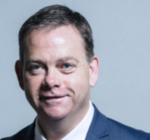
  • Tim Loughton – 2021 Speech on Chinese Government Sanctions on UK Citizens

    Tim Loughton – 2021 Speech on Chinese Government Sanctions on UK Citizens

    The speech made by Tim Loughton, the Conservative MP for East Worthing and Shoreham, in the House of Commons on 13 April 2021.

    Mr Deputy Speaker, I thank the Speaker for granting this urgent question and for his robust support, together with that of the Lord Speaker, the Prime Minister, the Foreign Secretary and the Minister today. I suppose I need to declare an interest as one of the five right hon. and hon. Members of this House who have been placed on the Chinese Government’s sanctions list, apparently for “maliciously” spreading “lies and disinformation”; in the language of the Chinese Communist party, of course, that is a euphemism for speaking the truth. As parliamentarians we have been singled out, together with Lord Alton and Baroness Kennedy of The Shaws, presumably for our vociferous calling out of the genocide against the Uyghur people by the Chinese Government, the industrial-scale human rights abuses in Tibet and the suppression of free speech and liberty in Hong Kong. That is what parliamentarians do, without fear or favour, in a democracy. To be sanctioned by a totalitarian regime is, therefore, not only deeply ironic and laughable, but an abuse of parliamentary privilege of this House, by a foreign regime.

    What further action are the Government considering against the Chinese Government to emphasise how unacceptable and unfounded their action is? Will the Minister assure the House that the Government will not be proceeding with any new agreements with the Chinese Government while these sanctions remain in place?

    The other individuals named were Newcastle University academic Dr Jo Smith Finley and Uyghur expert lawyer, Sir Geoffrey Nice QC. Does the Minister agree that this also represents an attack on academic freedom and the independence of the legal profession in the United Kingdom? What support are the Government offering to those two individuals?

    Given growing concerns about the malign influence of the Chinese Government in sensitive research projects in our universities, the sinister tentacles of the Confucius institutes on campuses and increasingly in our schools, not to mention the wide-scale buying of influence in UK boardrooms, will the Government commit to a detailed and transparent audit of Chinese influence in our education system, our military capability, our business and our infrastructure projects, and, if found to be acting against British interests, send them packing?

    Given the disgraceful recent dressing-down of our ambassador in Beijing for supporting on social media the role of a free press, will the Minister confirm that British diplomats will not be bowed and will be fortified in calling out abuses by the Chinese Government wherever they happen, as we sanctioned parliamentarians have been fortified to call out the abuses of the totalitarian Government in China by their badly-thought-out and counterproductive use of sanctions, which we will wear as a badge of honour? Will the Minister signal, clearly and firmly, that project kowtow is over and that Britain will not flinch from standing up and calling out Chinese Government abuses, which they have got away with for far too long?

  • Nigel Adams – 2021 Statement on Chinese Government Sanctions on UK Citizens

    Nigel Adams – 2021 Statement on Chinese Government Sanctions on UK Citizens

    The statement made by Nigel Adams, the Minister for Asia, in the House of Commons on 13 April 2021.

    The Government stand in complete solidarity with those sanctioned by China. As the Prime Minister and Foreign Secretary have made clear, this action by Beijing is utterly unacceptable and unwarranted.

    The House will recall that on 22 March, the UK, alongside the EU, Canada and the United States, imposed asset freezes and travel bans against four senior Chinese Government officials and one entity responsible for the violations that have taken place and persist against the Uyghur Muslims in Xinjiang. In response, China sanctioned nine individuals and four organisations, including Members of this House and the other place, who have criticised its record on human rights. It speaks volumes that while 30 countries are united in sanctioning those responsible for serious and systematic violations of human rights in Xinjiang, China’s response is to retaliate against those who seek to shine a light on those violations. It is fundamental to our parliamentary democracy that Members of both Houses can speak without fear or favour on matters of concern to the British people.

    The Prime Minister and the Foreign Secretary have made absolutely clear the Government’s position through their public statements and on 22 March. I also summoned China’s representative in the UK to the Foreign, Commonwealth and Development Office to lodge a strong, formal protest at China’s actions. This Government have been quick to offer support to those who have been sanctioned. The Prime Minister and the Foreign Secretary held private meetings with the parliamentarians named in China’s announcement. My noble Friend, the Minister for human rights, Lord Ahmad, met other individuals and the entities that have been targeted. Through this engagement, we have provided guidance and an offer of ongoing support, including a designated FCDO point of contact and specialist briefing from relevant Departments.

    Just as this Government will be unbowed by China’s action, I have no doubt that Members across this House will be undeterred in raising their fully justified concerns about the situation in Xinjiang and the human rights situation in China more broadly. I applaud the parliamentarians named by China: my hon. Friends the Members for East Worthing and Shoreham (Tim Loughton), for Tonbridge and Malling (Tom Tugendhat), for Harborough (Neil O’Brien) and for Wealden (Ms Ghani), my right hon. Friend the Member for Chingford and Woodford Green (Sir Iain Duncan Smith), the noble Lord Alton and the noble Baroness Kennedy for the vital role they have played in drawing attention to the plight of the Uyghurs and other minorities in Xinjiang.

    This Government have worked with partners to build the international caucus of those willing to speak out against China’s human rights violations and increase the pressure on China to change its behaviour. We have led joint statements at the UN’s human rights bodies, most recently joined by 38 countries at the UN General Assembly Third Committee in October, and we have backed up our international action with robust domestic measures. In addition to the global human rights sanctions announced on 22 March, the Foreign Secretary announced a series of targeted measures in January to help ensure that British businesses are not complicit in human rights violations in Xinjiang. The United Kingdom will continue to work alongside its partners to send the clearest possible signal of the international community’s serious concern and our collective willingness to act to hold China to account for its gross human rights violations in the region.

  • Anneliese Dodds – 2021 Speech on Greensill Capital

    Anneliese Dodds – 2021 Speech on Greensill Capital

    The speech made by Anneliese Dodds, the Shadow Chancellor of the Exchequer, in the House of Commons on 13 April 2021.

    I start by paying tribute to the Duke of Edinburgh, who was an extraordinary public servant. My thoughts today are with the Queen and the rest of the royal family as we all mourn his passing. They are also with the friends and family of Cheryl Gillan, and I would like to associate myself with the very moving tributes that we quite rightly heard a few moments ago.

    I welcome the Minister’s presence, but it was the Chancellor who needed to come to the House today; the Chancellor who told David Cameron that he would “push” his team to amend emergency loan schemes to suit Cameron’s new employer; the Chancellor whose officials met with Greensill 10 times; the Chancellor who took the credit for Government business loan schemes when they were in the headlines and, indeed, who personally announced those schemes. Yet the Chancellor is frit to put his name to those loan schemes today. He has just spent £600,000 on communications. I would have thought that that would extend to communicating with Parliament. In the Chancellor’s absence, let me ask: what was the alternative that the Chancellor pushed his team to explore after David Cameron texted him? What discussions did the Government have with the British Business Bank about Greensill’s access to CLBILS after it had already been rejected for the covid corporate financing facility? Were the criteria for CLBILS amended so that Greensill could access the scheme? Why was Greensill the only supply chain finance firm accredited for CLBILS, and what due diligence was done?

    Hundreds of millions of pounds of public money were put at risk by giving Greensill access to this scheme. With Greensill’s collapse, thousands of jobs—in Rotherham, Hartlepool and right across the country—have been put at risk. Those workers and taxpayers across the country deserve answers. The Chancellor said that he would “level with” the public. Why is he running scared of levelling with them on the Greensill scandal?

  • Paul Scully – 2021 Statement on Greensill Capital

    Paul Scully – 2021 Statement on Greensill Capital

    The statement made by Paul Scully, the Parliamentary Under-Secretary of State for Business, Energy and Industrial Strategy, in the House of Commons on 13 April 2021.

    Greensill Capital (UK) Ltd was approved by the British Business Bank for the coronavirus business interruption loan scheme and the coronavirus large business interruption loan scheme last year in accordance with the bank’s published guidance on accreditation. All decisions taken by the bank were made independently and in accordance with the bank’s usual procedure.

    The criteria by which the decisions were made were based on those used in the existing enterprise finance guarantee scheme, dating back from 2009, and were set out in the CLBILS request for proposals, which was a publicly available document. These criteria included minimum requirements such as the ability to demonstrate a track record of lending to larger enterprises, provision of evidence-based forecasts, the ability to demonstrate sufficient capital available to meet the lending forecasts, a viable business model, robust operations and systems, that the proposed lending will not have unreasonable lender-levied fees and interest, and that the lender has all the necessary regulations, licences, authorisations and permissions to operate the scheme. All accredited lenders are subject to regular audit by the bank to ensure their compliance with scheme rules.

    Following analysis of loan data as part of its standard due diligence, the bank opened an investigation into Greensill Capital’s compliance with the terms of the scheme in October 2020 and informed the Government of this on 9 October. That investigation is continuing and the Government’s obligations as guarantor under the CLBILS guarantee are suspended on a precautionary basis. It would not be appropriate to comment further on the investigation at this time.

  • Greg Clark – 2021 Speech on HRH The Duke of Edinburgh

    Greg Clark – 2021 Speech on HRH The Duke of Edinburgh

    The speech made by Greg Clark, the Conservative MP for Tunbridge Wells, in the House of Commons on 12 April 2021.

    Mr Speaker,

    “Everything that wasn’t invented by God was invented by an engineer.”

    So said Prince Philip, with characteristic economy. As Chairman of the Science and Technology Committee of this House, I would like to add a few words to yours, Mr Speaker, and to those of the Prime Minister, the Father of the House and other Members. I pay particular tribute to the characteristically energetic and galvanising role that the Duke played as a champion of science, particularly in its application in technology and engineering.

    As the Prime Minister alluded to, there is form for the consort of a long-serving and brilliant Queen choosing science and technology for encouragement and action. Indeed, one of Prince Philip’s first public speeches was in 1951, the centenary of the great exhibition, and explicitly drew on Prince Albert’s example. Appointed, like the previous prince consort, as president of the British Association for the Advancement of Science, he devoted his inaugural address to a clear-sighted and candid analysis of the need to improve the translation of scientific discovery into industrial application. He noted that he detected

    “a conservative attitude towards technical change”

    in the country, and that

    “existing institutions…do not produce anything like enough trained technologists to meet the urgent needs of scientific development in industry”.

    That was not merely a critique, but an agenda. Having become president of the Council of Engineering Institutions—the 12 societies that made up the then fragmented British engineering profession—the Duke wanted there to be a clear path for engineers, whatever their specialism, to reach professional status. This was achieved by the formation of the Engineers Registration Board and the creation of different professional levels, including chartered engineer.

    Prince Philip was concerned that the prestige of engineering was not high enough, and through what we now call soft power, helped by the scientifically unexplained effect of dinners at Buckingham Palace, the Prince prevailed with his own vision for a fellowship of engineering, which had its inaugural meeting in the Throne Room at Buckingham Palace in 1976. In 1992, it became the Royal Academy of Engineering, with the Duke as its senior fellow, and a very active one at that.

    The Prince was not just the senior fellow of the Royal Academy of Engineering, but, as we have heard in the debate, a fellow of the Royal Society and of the Royal Society of Edinburgh, and chancellor of many universities, and indeed polytechnics and colleges.

    Members of my Committee and others in the House know that the work of translating scientific discovery into practice, the enhancement of the prestige of technology and engineering and the improvement of technical education are matters that not only occupied Prince Albert and Prince Philip, but that occupy all of us today. We recognise and celebrate the decisive, practical achievements of the Duke of Edinburgh, helping to mass the strength of a fragmented and too-little-recognised profession.

    As Lord Browne of Madingley, a former president of the Royal Academy of Engineering, said,

    “Prince Philip saved engineering in the UK, ensuring that it has not merely a great history, but a great future too.”

    We give thanks for that lifetime of work.

  • Douglas Ross – 2021 Speech on HRH The Duke of Edinburgh

    Douglas Ross – 2021 Speech on HRH The Duke of Edinburgh

    The speech made by Douglas Ross, the Conservative MP for Moray, in the House of Commons on 12 April 2021.

    On behalf of the people of Moray, may I extend my deepest condolences to Her Majesty the Queen and to the entire royal family? The hon. Member for Edinburgh South (Ian Murray) has spoken about the city of the Duke of Edinburgh’s title; I will make some comments about Moray, the home of his school, Gordonstoun, which is just outside the village of Duffus.

    The Duke of Edinburgh was one of the first pupils at Gordonstoun in 1934. Over the weekend, I spoke to the current principal, Lisa Kerr, who shared some remarks about his time there. It was at Gordonstoun that the Duke of Edinburgh developed his lifelong love of Scotland, of the sea, of the outdoors and of sport. He took various positions in the school during his career there, culminating in becoming guardian, or head boy, in his final term—a role in which, to quote the school, he was

    “universally trusted, liked and respected”.

    On Prince Philip’s engagement to Princess Elizabeth in 1947, Gordonstoun’s founder, Kurt Hahn, wrote that the prince

    “enjoyed life…his laughter was heard everywhere and created merriness around him”.

    Those were clearly traits that he continued throughout his many decades of public service.

    Many right hon. and hon. Members have spoken about the Duke of Edinburgh’s Award, which of course also started in Moray: Kurt Hahn founded the Moray badge, a precursor to the Duke of Edinburgh’s Award, and in the autumn of 1938, in the Duke of Edinburgh’s final year at Gordonstoun, he was awarded the senior silver Moray badge. In 1954, Kurt Hahn sought to take the award to a national level; he consulted Prince Philip and persuaded him to give his name to what became the Duke of Edinburgh’s Award in 1956. That award has now supported and helped millions of young people, not just here in the United Kingdom but in over 140 countries. Young people across the world have benefited from their participation in the Duke of Edinburgh’s Award, and it is a fitting and lasting legacy.

    I would also like to share a comment that our lord lieutenant, Major General Seymour Monro, made about Prince Philip over the weekend:

    “He gave great leadership to so many, whether it was the young, whether it was encouraging technology and enterprise in business, or encouraging sporting activities and events…However, above all, it will be as The Queen’s enduring, loyal and supportive Consort that he will be remembered.”

    Today, we remember. We remember a life well lived, a life of dedicated service to his Queen and country. We extend our sympathies to the Queen and the entire royal family as they mourn the loss of a loving husband of more than 70 years and a caring father, grandfather and great-grandfather. Prince Philip held a special place for Scotland from his younger years and his many travels there, on holiday at Balmoral and visiting so many good causes and charities across the country. Today, as a nation, we mourn the loss of a great public servant who for more than seven decades did so much for Scotland and the entire United Kingdom. We join in the royal family’s mourning of their loss of a true champion.

  • Ian Murray – 2021 Speech on HRH The Duke of Edinburgh

    Ian Murray – 2021 Speech on HRH The Duke of Edinburgh

    The speech made by Ian Murray, the Labour MP for Edinburgh South, in the House of Commons on 12 April 2021.

    I am incredibly grateful for the opportunity to say a few words on behalf of my constituents in tribute and condolence this afternoon. As has been said already in the House and will no doubt be repeated throughout these tributes and for months and years to come, on Friday we lost an extraordinary public servant who dedicated his long life to our country, transformed the lives of millions of young people across the world and promoted the issue of global conservation well before it was widely understood by the vast majority of the population. For more than seven decades, he was a constant at the Queen’s side. We know from all that has been said and written how much the Queen cherished the support, counsel and love of her husband.

    Prince Philip, of course, had a long association with Scotland that dates back to his schooldays at Gordonstoun in the mid-1930s. But it is on my city—the city of his title, Edinburgh—that I would like to say a few words in tribute this afternoon. He was the patron of around 30 charities and educational institutions based in Edinburgh alone, not to mention the many thousands across the whole country that we have heard about today, including Heriot-Watt University, the Royal College of Surgeons of Edinburgh, the University of Edinburgh Graduates’ Association and the Botanical Society of Scotland; he was patron and a freeman of Edinburgh itself; Edinburgh chamber of commerce and enterprise, the Edinburgh Indian Association, the Edinburgh press club and, of course, the Edinburgh Royal Navy club—how could it not be? His beloved Royal Yacht Britannia, which he helped to design, is retired in Leith in Edinburgh.

    He was a friend of the Royal Scottish Academy of Art and Architecture and the Honourable Company of Edinburgh Golfers, a patron of the National Galleries of Scotland, the Rotary Club of Edinburgh, the Royal Society of Edinburgh and the University of Edinburgh athletics club, and of course, he was chancellor of Edinburgh University for nearly 60 years from the 1950s—a position that he accepted with the joke that

    “only a Scotsman could survive Scottish education”;

    I am not sure whether that was born of experience at Gordonstoun. He was heavily involved in all aspects of the university. He would preside over special graduation ceremonies. He would help to induct new professors. He attended long service awards for senior staff. He would attend the installation of the rector by students. He enjoyed the uproar of the rector’s ceremony and complained to former Professor O’Shea that he had made the event “too orderly”. He partook in the granting of fellowships to postgraduate students at the University of Edinburgh undertaking advance and complex research. However, he never shied away from engaging with the students on their complicated topics—everything from particle physics to Dolly the sheep. In fact, one recipient said afterwards:

    “I feel I’ve just been put through another exam, except it was much harder than the last one.”

    He had an official Edinburgh colour, Edinburgh green, which his team wore and which lined his private car, and his own official standard, featuring the lions and hearts of Denmark, a white cross on blue for Greece, two black pales on white for the Mountbatten family and the coat of arms of the city of Edinburgh. We have heard much this afternoon about the founding of the Duke of Edinburgh Awards in 1956, which he chaired until his 80th birthday. He regularly attended the gold ceremonies hosted at Holyroodhouse in Edinburgh. For many young people, those awards were the closest they would get to a traditional high school graduation, so the Duke of Edinburgh always took the time to individually speak to as many of the awardees as he could. It is a scheme that transformed the life chances of young people across the world, from the prince’s own school at Gordonstoun all the way to the school that I attended in Edinburgh.

    Many people recall anecdotes of his sharp wit and humour. Everyone who has paid tribute since Friday has talked of him as a funny, engaging, warm and loving man. He once joked, while stuck in a lift during a visit to Edinburgh’s Heriot-Watt University, that it

    “could only happen in a technical college.”

    He was not just the Duke of Edinburgh in name but the Duke of Edinburgh in his actions and public service too. His legacy to the UK, the Commonwealth overseas territories and the wider world will be celebrated and will live on for many generations. His contribution to my city of Edinburgh will be unmatched.

    Losing a loved one is always so hard. I lost my own father when he was just 39. His grandchildren will only know him by the stories that we tell and the anecdotes that we recall. But it does not matter whether you are 39 or 99, a duke or a cooper; the hurt and loss to those loved ones and friends never diminishes. On behalf of my constituents in Edinburgh South and the city of his title, we send our heartfelt condolences and thoughts to Her Majesty the Queen, his close and extended family and all who will miss him so much.


  • Theresa Villiers – 2021 Speech on HRH The Duke of Edinburgh

    Theresa Villiers – 2021 Speech on HRH The Duke of Edinburgh

    The speech made by Theresa Villiers, the Conservative MP for Chipping Barnet, in the House of Commons on 12 April 2021.

    I found it very moving to hear the tributes to His Royal Highness flooding in from people around the country, the Commonwealth and the whole world. I join them and everyone in the House in offering my sincerest condolences and sympathies to Her Majesty the Queen and her family at this difficult time.

    Clearly, our nation owes the Duke a great debt of gratitude for his bravery, defending our freedom during the war, and for his dedicated public service over seven decades. He played a central role in ensuring both that the monarchy adapted to the modern era and that it remains a well-loved institution at the heart of our national life. I had the honour of meeting His Royal Highness on a number of occasions, including the 2014 and 2016 visits to Northern Ireland that he undertook with Her Majesty the Queen during the period in which I was Secretary of State there. He was well into his 90s when I met him, and what always struck me was the incredible energy and enthusiasm with which he approached everything that he did. It is quite phenomenal that he only chose to retire at 96. He was always courteous and friendly, and I think that the light-hearted remarks about which we have heard so much over the past few days were always intended to put people at ease. He always expressed a genuine and well-informed interest in Northern Ireland and its future.

    The BBC has calculated that the Duke made 57 visits to Northern Ireland, and I especially remember his role in the 2014 visit, which broke new ground in the places visited and the proximity to the public. I recall his being solicitously at the Queen’s side, for example, as we visited St George’s market in Belfast. The market is right up close to many locations that saw more than their fair share of violence during Northern Ireland’s long years of tragedy, yet the biggest security scares that day were a Belfast teenager sneaking a quick selfie with Her Majesty and losing Prince Philip in the crowd, as he mingled happily with those who turned out to greet the royal couple.

    There was never a lack of spontaneity and unpredictability when it came to His Royal Highness the Duke of Edinburgh. He was, of course, a crucial part of the Queen’s historic state visit to Ireland in 2011. He suffered deep personal loss at the hands of the IRA, which murdered his uncle, Lord Mountbatten, to whom he was very close. Today, as well as his many other achievements, we should remember the part that the Duke played in reconciliation in Northern Ireland. After such a devastating loss, it could not have been easy to meet and shake hands with Martin McGuinness, but that it is what he and Her Majesty chose to do. What is more, during the state visit of President Higgins, they welcomed Martin McGuinness into their home at Windsor —someone identified with the organisation and at whose hands they had suffered such a terrible loss. In so doing, I believe that they played a personal role in helping to take Northern Ireland forward from its divided past to a better future, and for that we should all express our sincere gratitude to the man whose loss we are sadly mourning today.