Tag: 2020

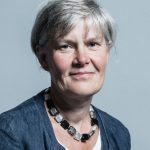
  • Kate Green – 2020 Speech on the Education System

    Kate Green – 2020 Speech on the Education System

    The speech made by Kate Green, the Shadow Secretary of State for Education, in the House of Commons on 1 September 2020.

    I thank the Secretary of State for his statement this afternoon, but, Mr Deputy Speaker, I am afraid I must complain that I did not receive advance sight of it until 4.36 pm. You will know that, under the ministerial code, I should have had it much, much sooner.

    I welcome the Secretary of State back to his place after a summer of chaos, incompetence and confusion that has caused enormous stress to children, young people, their families and their teachers. Ministers must now learn from their mistakes and ensure that keeping schools open and pupils learning is a national priority. Labour is absolutely clear: we want children back in school and we want them to stay there. I will always work constructively with the Secretary of State to achieve that and I hope he will hear my questions this afternoon in that constructive spirit, because while I am delighted that the vast majority of schools will reopen fully in the next few days, there remain many issues of concern.

    Let me start with the ongoing situation regarding this summer’s exam results. After days of confusion following A-level results day, the Secretary of State finally heeded calls from young people and from the Labour party and accepted the centre-assessed grades—the CAGs. While that was the right thing to do, it leaves many of the problems created by his previous flawed standardisation model unresolved.

    The Secretary of State should have known of the risks. It has been reported that a former senior official of the Department raised serious concerns, so can the right hon. Gentleman tell the House when he first knew of the potential problems with his approach and what he did about them? What advice was he given specifically about BTEC students, who faced more uncertainty and delay? Can he now assure us that all BTEC students have received their results?

    The Secretary of State alluded to external candidates, who do not have a CAG and who remain in a difficult situation. I do not think they will find the offer of resits sufficiently reassuring, but perhaps he can tell us what support they will receive as they undertake those exams.

    There are also significant consequences for higher education, as the Secretary of State rightly noted. Can he tell the House how many young people who missed their first-choice university because of his now discredited approach to awarding grades have now been granted those places? What assessment has he made of the impact on universities that will lose students because they can now take up their original choice? What discussions has he had with the Treasury about providing those institutions with additional financial support?​

    With the reopening of schools, we are all pleased to see children returning to class. School is the best place for them to be, not only for their learning but for their emotional and social wellbeing, and I pay tribute to the school staff who have worked through the holidays to welcome them back safely. The test now for the Secretary of State is whether pupils continue to receive a full education throughout the year and catch up on the learning they have lost. When will pupils begin to receive support through both the catch-up premium and the national tutoring fund? Why are early years and post-16 providers ineligible for the catch-up premium? Why is the funding available for just a single year, when the impact of any further disruption to education is so significant? Can he guarantee that every child will have full access to learning in the event of a local lockdown?

    Parents’ top priority as schools return is the wellbeing of their children. What plans does the Secretary of State have to provide additional pastoral support? What extra support will be available for children with special educational needs and disabilities? Parents will not be able to return to work without childcare and wraparound care. What plans does he have in place to ensure that every parent can access the care they need? Can he tell us a little more about how he will ensure that all children travel safely to school, including respecting social distancing on public transport? Finally, what additional financial support, if any, will schools receive to cover any additional covid-related costs this term?

    Looking at the year ahead, I was glad to read this morning that the Secretary of State has apparently once again listened to Labour and will delay exams in summer 2021. Pupils entering year 11 and year 13 have already experienced significant disruption to their learning, and the assessment process must recognise that, but schools, colleges and universities need time to plan. What discussions is he having with the sector and UCAS to ensure that workable arrangements are in place? Can he guarantee that a contingency plan will be put in place this month in case exams are disrupted again?

    Children and their families should have been the Government’s top priority, but for weeks their interests have taken a back seat while the Secretary of State U-turned on everything from CAGs to face masks and left officials to take the blame. He must now take responsibility for ensuring that a summer of incompetence does not descend further into an autumn of disaster and dismay. I implore him to listen to the concerns of parents, of teachers and of the Labour party. He must now make the education of our children and young people a national, and his personal, priority.
  • Gavin Williamson – 2020 Statement on the Education System

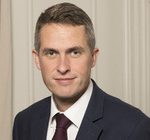
    Gavin Williamson – 2020 Statement on the Education System

    The statement made by Gavin Williamson, the Secretary of State for Education, in the House of Commons on 1 September 2020.

    With permission, Mr Deputy Speaker, I would like to make a statement about the full opening of our schools and colleges from this week, but before I do I would like to update the House on the current position regarding exam results for this year’s GCSE and A-level students.

    As the House will be fully aware, exams had to be cancelled this year because of the covid-19 outbreak. Students have now received results for GCSE, AS and A-levels, as well as vocational and technical qualifications, which will allow them to progress to the next stage of their lives. The independent regulator Ofqual had put in place a system for arriving at grades that was believed to be fair and robust. It became clear, however, that there were far too many inconsistent and unfair outcomes for A-level and AS-level students and that it was not reasonable to expect them to be dealt with through even a boosted and enhanced appeals process. Instead, students have been awarded the grades that schools and colleges estimated they would most likely have achieved, or their calculated grades if they were higher.

    The situation has, I know, caused a great deal of stress and uncertainty, and I am deeply sorry that those who have borne the brunt of it have been students themselves. I can only apologise to them again for that. We took immediate action to provide certainty as soon as it was clear that if we did not, too many students would have received grades that did not reflect their hard work and ability.

    For vocational and technical qualifications, the situation was different because most were not subject to standardisation like GCSE and A-level grades. Awarding organisations that used a similar model have, however, also reviewed their results to ensure that each student has been treated as fairly as possible. We recognise, however, that some students may still be unhappy with their summer grade, and that for some—such as home-educated students—there was not enough evidence for any grade to be awarded at all. To support those students, in the autumn we are running an extra exam series in all subjects at GCSE, A-level and AS-level. Additional opportunities will also be provided for some other vocational and technical qualifications that received calculated grades.

    We have been working with the further and higher education sectors to manage applications for this year’s places. To ensure that students can progress to higher education, we intend to remove the temporary student-number controls that had been introduced for the coming academic year. We set up the higher education taskforce and are working closely with the sector to create additional capacity and encourage it to be as flexible as possible. Providers have agreed to honour all offers to students who meet the conditions of their offer, wherever that is possible. If a course is full, universities will give students a choice of suitable alternative courses if they are happy to take one, or a deferred place if they would prefer to wait an additional year. This year, many more students have been successful in meeting the grades required to study medicine and dentistry. The Government have removed the caps on student numbers that were in place for both subjects.​

    The Ofqual board has agreed temporary arrangements with Ofsted to support the ongoing work on this summer’s GCSEs, A-levels and AS-levels, and on vocational qualifications, including appeals and autumn exams, as well as preparations for next year’s exam season. We are determined that exams and assessments will go ahead next year and are working with the sector to ensure that that is done as smoothly as possible.

    The former chief regulator, Sally Collier, decided that the next stage of the awarding process would be better overseen by new leadership. As a result, the Ofqual board has asked Dame Glenys Stacey to act as acting chief regulator until December 2020. I would like to take this opportunity to thank Sally Collier for the commitment that she has shown over the past four years and wish her well.

    Although none of this disruption is what we wanted for our students, I believe that they now have the certainty and reassurance they deserve and will be able to embark on the next exciting phase of their lives. I hope the whole House will join me in wishing them all the very best for their future.

    Let me now turn to the full opening of our nation’s schools and colleges. Welcoming pupils back will be a massive milestone for schools throughout the country. On 2 July, we published detailed plans for nurseries, schools, special schools and colleges that set out what was required to deliver full return as safely as possible for all our children. The guidance has been developed with medical and scientific experts and Public Health England and follows regular engagement with the education sector. The recent letter from all four UK chief medical officers, which emphasised the low risk of long-term harm from covid-19 due solely to attending school in comparison with the high risk of long-term harm from not attending school, particularly for more vulnerable children and young people, has, I hope, given parents extra assurance that with the protective measures in place, our pupils are returning to a safe environment, and an environment they will gain so much from.

    As they return, pupils will be kept in consistent groups and the older children will be encouraged to distance wherever possible. At a minimum, this will mean keeping whole year groups in schools and colleges separate. This is in addition to the other protective measures, such as enhanced cleaning and hand washing. We have also advised that pupils in secondary schools should wear face coverings in communal areas if there is a local lockdown in place, unless they are exempt.

    Strict hygiene protocols are in place and PPE has been distributed to every school to bolster their supplies for use in the unlikely event that a pupil develops covid symptoms on the premises. A small number of home-test kits are also being distributed for anyone who develops symptoms and who would not otherwise have access to testing themselves. All schools will also have access to direct support and advice from local health protection teams to deal with any cases that may occur.

    Together with colleagues from the Department for Transport, we have announced an additional £40 million in funding for local transport authorities to ease pressure on public transport. We have also published guidance for local authorities to manage capacity and reduce the ​risk of infection on school transport. We have urged all students and staff to walk or cycle to school or college if this is a suitable alternative for them.

    I know that these past few months have been some of the most challenging that schools, parents and, most of all, children have faced. I would like to take this opportunity to applaud all our dedicated education staff for the incredible efforts that they have made to keep children learning at this difficult time. I am confident that we have the necessary preparations in hand to ensure a successful return for all our pupils. I commend this statement to the House.

  • Jonathan Ashworth – 2020 Speech on Covid-19

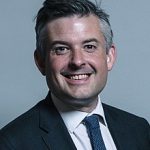
    Jonathan Ashworth – 2020 Speech on Covid-19

    The speech made by Jonathan Ashworth, the Shadow Secretary of State for Health and Social Care, in the House of Commons on 1 September 2020.

    We are indeed all on the same side in fighting this virus. I hope that the Secretary of State understands that when we raise issues, we do so because we urge the Government ​to improve their response to fighting this virus. This remains a lethal virus that leaves many with serious, debilitating sickness. Everything must be done to drive down and eliminate infections and suppress the virus completely.

    With that in mind, I hope that the Secretary of State can answer a few questions today. I am grateful for advance sight of his statement. First, to avoid a second national lockdown, which we all want to avoid, an effective test and tracing regime is vital. I listened carefully to the figures that he outlined, but he did not tell the House that the numbers going into the system have actually fallen in the past week, from 79% to 72%. This system is not yet world beating.

    Throughout questions the Secretary of State has rejected criticisms of the private sector contractors who are involved in delivering the system, so there is no point in me raising them again, but would it not be better if money was spent on investing in local public health teams, particularly in those areas where restrictions are in place, so that they can do more door-to-door testing, as we have seen, for example, in Leicester? Surely that would be a better use of public funding, for example, than paying for so-called influencers on Instagram to big up test and trace.

    On testing itself, the Secretary of State now supports mass testing as a policy aim. It is something I have been calling for, for some months. It is something the former Health Secretary, the Chair of the Health Select Committee, has been calling for. Indeed, we tried to persuade the Secretary of State of its merits before the summer when we asked him to introduce regular testing of NHS front-line staff. He whipped his MPs to vote against it, but will he now, given that he is in favour of mass testing, introduce regular weekly testing of all front-line NHS workers?

    To move to mass testing means evolving our testing regime from one that provides antibody tests and diagnostic PCR—polymerase chain reaction—tests effectively to a system of mass screening using more rapid, on-the-spot antigen tests. The Secretary of State referred to rapid tests in his statement. Can he tell us when rapid, on-the-spot antigen tests will be rolled out across society and which sectors of the workforce will be first in the queue to access those tests?

    Will the Secretary of State also look at introducing saliva testing, which is being used in Hong Kong, for example, and will he ensure the quick turnaround of tests? I wonder whether he has seen the study from Yale that suggests that saliva testing could be as sensitive as nose and throat swabs. What is his attitude towards pooled testing, which would surely increase the capacity in areas of low prevalence? Does he have a plan to introduce pooled testing? Will he allow GPs to carry out testing or, at the very least, to arrange a test for their patients directly? They currently have to ask their patients to log on to the national system, which is causing huge delays.

    On local lockdowns, the Secretary of State said that he wants to involve MPs and elected officials. What process will be used to properly consult local Members of Parliament? What can MPs expect? When a decision has been made to put a local area into restriction, will he publish the specific evidence behind that decision? ​Why is it, for example, that our constituents in Leicester are not able to gather in private gardens? Can he publish the scientific evidence for that decision?

    In Trafford, we have seen infections increase. The local authority leader and the director of public health felt that restrictions should continue, but the hon. Member for Altrincham and Sale West (Sir Graham Brady) felt that they should be lifted. Why did the Secretary of State overrule the advice of the director of public health and instead endorse the representations of the chairman of the 1922 committee? There was a similar story in Bradford, and in Bolton, where restrictions are due to be lifted tonight, infections are increasing. Is it still his plan to lift restrictions tonight in Trafford and Bolton, even though infections are increasing compared with last week, when he made his initial decision?

    The Secretary of State is right: in the end, a vaccine is our best hope to stop this pandemic. Vaccines save hundreds of millions of lives every year, and I repeat my offer to work with him on a cross-party basis to promote uptake and challenge the poison of anti-vax myths, including those that we witnessed at the irresponsible and dangerous demonstration this weekend in Trafalgar Square. We will work constructively with him on the proposals he brings to the House. Does he share my concerns about those leaders, such as Putin and Trump, who are trying to short-cut testing to rush out a vaccine, undermining safety and efficacy, potentially damaging millions of lives and giving succour to the anti-vax movement?

    Finally, health protection is built upon good population health. Poverty makes people sick. Ending cuts and tackling deprivation as a determinant of ill health is vital to improving and protecting people’s health. But the Secretary of State is now embarking on a risky, distracting restructuring of Public Health England in the middle of a pandemic. Tory MPs like to blame Public Health England—it is such rotten luck that these decent, hard-working, competent Ministers are always let down by the people who work for them—but is not the reality that this restructuring will sap morale and focus and should wait until the end of the pandemic? The UK has suffered the highest per capita death rate of any major world economy. To get through this winter safely, our NHS and public health services need resources, and staff need personal protective equipment, fair pay, security and support. I hope he can deliver that.

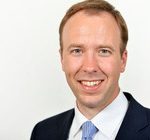
  • Matt Hancock – 2020 Statement on Covid-19

    Matt Hancock – 2020 Statement on Covid-19

    The statement made by Matt Hancock, the Secretary of State for Health and Social Care, in the House of Commons on 1 September 2020.

    With your permission, and indeed your encouragement, Mr Speaker, I would like to make a statement on coronavirus. The latest figures demonstrate how much progress we are making in our fight against this invisible killer. There are currently 60 patients in mechanical ventilator beds with coronavirus—that is down from 3,300 at the peak—and the latest daily number for recorded deaths is two. However, although those figures are lower than before, we must remain vigilant. I said in July that a second wave was rolling across Europe and, sadly, we are now seeing an exponential rise in the number of cases in France and Spain—hospitalisations are rising there too. We must do everything in our power to protect against a second wave here in the UK, so I would like to update the House on the work we are doing to that end.

    To support the return of education, and to get our economy moving again, it is critical that we all play our part. The first line of defence is, and has always been, social distancing and personal hygiene. We will soon be launching a new campaign reminding people of how they can help to stop the spread of coronavirus: “Hands, face, space and get a test if you have symptoms.” Everyone has a part to play in following the social distancing rules and doing the basics. After all, this is a virus that thrives on social contact. I would like to thank the British public for everything they have done so far, but we must continue and we must maintain our resolve.

    The second line of defence is testing and contact tracing. We have now processed over 16 million tests in this country, and we are investing in new testing technologies, including a rapid test for coronavirus and other winter viruses that will help to provide on-the-spot results in under 90 minutes, helping us to break chains of transmission quickly. These tests do not require a trained health professional to operate them, so they can be rolled out in more non-clinical settings. We now have one of the most comprehensive systems of testing in the world, and we want to go much, much further.

    Next, we come to contact tracing. NHS Test and Trace is consistently reaching tens of thousands of people who need to isolate each week. As I mentioned in answer to a question earlier, the latest week’s data shows that 84.3% of contacts were reached and asked to self-isolate, where contact details were provided. Since its launch, we have reached over 300,000 people, who may have been unwittingly carrying the virus. Today, we also launch our new system of pay to isolate. We want to support people on low incomes in areas with a high incidence of covid-19 who need to self-isolate and are unable to work from home. Under the scheme, people who test positive for the virus will receive £130 for the 10-day period they have to stay at home. Other contacts, including, for instance, members of their household, who have to self-isolate for 14 days, will be entitled to a payment of £182. We have rolled out the scheme in Blackburn with Darwen, Pendle and Oldham, and we will look to expand it as we see how it operates on the ground.​

    The third line of defence is targeted local intervention. Over the summer, we have worked hard to integrate our national system with the local response, and the local action that we are taking is working. In Leicester, as the hon. Member for Leicester South (Jonathan Ashworth) knows well, as a local MP, in Luton and in parts of northern England, we have been able to release local interventions, because the case rate has come down. We also now publish significantly more local information, and I put in place a system for building local consensus with all elected officials, including colleagues across this House, wherever possible. Our goal is that local action should be as targeted as possible. This combination of social distancing, test and trace and local action is a system in which we all have a responsibility to act, and this gives us the tools to control the virus while protecting education, the economy and the things we hold dear.

    Meanwhile, work on a vaccine continues to progress. The best-case scenario remains a vaccine this year. While no vaccine technology is certain, since the House last met, vaccine trials have gone well. The Oxford vaccine continues to be the world leader, and we have now contracted with six different vaccine providers so that whichever comes off, we can get access in this country. While we give vaccine development all our support, we will insist on safety and efficacy.

    I can update the House on changes to legislation that I propose to bring forward in the coming weeks to ensure that a vaccine approved by the Medicines and Healthcare Products Regulatory Agency can be deployed here, whether or not it has a European licence. The MHRA standards are equal to the highest in the world. Furthermore, on the development of the vaccine, which proceeds at pace, I will shortly ask the House to approve a broader range of qualified clinical personnel who can deploy the vaccine in order of clinical priority, as I mentioned in questions. As well as the potential vaccine, we also have a flu vaccination programme—the biggest flu vaccination programme in history—to roll out this year.

    Finally, Mr Speaker, in preparation for this winter, we are expanding A&E capacity. We have allocated billions more funding to the NHS. We have retained the Nightingale hospitals to ensure that the NHS is fully prepared, and we published last month updated guidance on the protection of social care. As well as this, last month, figures showed a record number of nurses in the NHS—over 13,000 more than last year—and record numbers of both doctors and nurses going into training. We are doing all we can to prevent a second peak to prepare the NHS for winter and to restore as much of life and the things we love as possible. As schools go back, we must all remain vigilant and throughout the crisis we all have a role to play.

    This is a war against an invisible enemy in which we are all on the same side. As we learn more and more about this unprecedented virus, so we constantly seek to improve our response to protect the health of the nation and the things we hold dear. I commend this statement to the House.

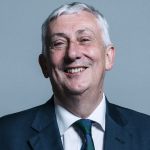
  • Lindsay Hoyle – 2020 Statement on MP Rape Allegation

    Lindsay Hoyle – 2020 Statement on MP Rape Allegation

    The statement made by Lindsay Hoyle, the Speaker of the House of Commons, on 1 September 2020.

    The House will know that a Member has been arrested in connection with an investigation into an allegation of a very serious criminal offence. I have received assurances from the Member and from the Government Chief Whip that the Member has voluntarily agreed not to attend the House of Commons for the period of bail.

    I, the House of Commons Commission and the House Service take the safety of our staff and of the parliamentary community as a whole very seriously and are ensuring that any necessary measures are taken in respect of MPs, employees and staff. All Members and staff have access to the Independent Sexual Misconduct Advisory Service by contacting the new single, independent ICGS helpline and should not hesitate to use it.

    While the investigation is ongoing, I believe that it would be wholly inappropriate for any further reference to be made to this matter in the House, including any attempt to name the Member concerned. I would appreciate your co-operation on this matter.

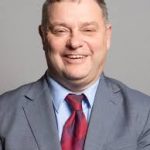
  • Mike Amesbury – 2020 Comments on CMA Decision

    Mike Amesbury – 2020 Comments on CMA Decision

    The comments made by Mike Amesbury, the Shadow Housing and Planning Minister, on 4 September 2020.

    Labour welcomes this enforcement action by the CMA and called for robust measures to be taken against scandalous practices from irresponsible property developers.

    This is a significant milestone in the campaign for leasehold justice but given this incompetent Government’s total inaction to reform leasehold, too many people remain trapped in this feudal system.

    This Government can no longer drag its heels: it must act now and legislate to end this broken system once and for all.

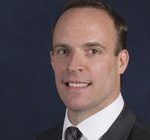
  • Dominic Raab – 2020 Comments on Alexei Navalny

    Dominic Raab – 2020 Comments on Alexei Navalny

    The comments made by Dominic Raab, the Foreign Secretary, on 2 September 2020.

    I am deeply concerned that Alexey Navalny was poisoned by Novichok, a nerve agent previously used with lethal effect in the UK.

    It is absolutely unacceptable that this banned chemical weapon has been used again, and once more we see violence directed against a leading Russian opposition figure.

    The Russian government has a clear case to answer. It must tell the truth about what happened to Mr Navalny. We will work closely with Germany, our allies and international partners to demonstrate that there are consequences for using banned chemical weapons anywhere in the world.

  • Catherine West – 2020 Comments on Alexei Navalny

    Catherine West – 2020 Comments on Alexei Navalny

    The comments made by Catherine West, the Shadow Minister for Europe, on 2 September 2020.

    Confirmation from German authorities that the nerve agent Novichok was used against the Russian opposition activist Alexei Navalny is a serious and alarming development. The Russian government has serious questions to answer.

    The despicable Salisbury attack in 2018 was a clear example of the willingness of the Russian state to use chemical weapons against opponents and critics anywhere in the world. We must be categorical in our condemnation of the use chemical weapons and support the referral of Alexei Navalny’s poisoning to the OPCW.

    The UK government must work with democratic allies in the EU and NATO to ensure that those responsible are held to account. There must be no impunity for the use of chemical weapons.

  • Lucy Frazer – 2020 Comments on New Glen Parva Prison

    Lucy Frazer – 2020 Comments on New Glen Parva Prison

    The comments made by Lucy Frazer, the Prisons Minister, on 2 September 2020.

    The new jail at Glen Parva is another milestone in our plan to transform the prison estate, providing the environment needed to steer offenders away from crime.

    As well as rehabilitating prisoners and keeping the public safer, the prison will be a major boost to the local economy. Hundreds of jobs will be created during and after construction, sending a clear signal that this government is committed to supporting communities and infrastructure across the country.

  • Anneliese Dodds – 2020 Comments on a Youth Unemployment Scheme

    Anneliese Dodds – 2020 Comments on a Youth Unemployment Scheme

    The comments made by Anneliese Dodds, the Shadow Chancellor of the Exchequer, on 2 September 2020.

    Labour has repeatedly called for a youth employment scheme that matches the scale of today’s jobs crisis, just as the Future Jobs Fund did at the time of the global financial crash.

    The Labour Government in Wales has done just that with its Jobs Growth Wales scheme: bringing local authorities, employers, trade unions and other stakeholders together to help young people into work without impacting older workers.

    But the Conservative government’s Kickstart scheme, which has been delayed, already looks like it lacks that cross-organisational coordination. It will only work if employers and jobseekers have clarity and confidence that the scheme will lead to meaningful work. The Government can’t afford to get this wrong.