Tag: 2020

  • Jonathan Ashworth – 2020 Speech on the Wuhan Coronavirus

    Jonathan Ashworth – 2020 Speech on the Wuhan Coronavirus

    Below is the text of the speech made by Jonathan Ashworth, the Shadow Secretary of State for Health, in the House of Commons on 11 February 2020.

    I thank the Secretary of State for advance sight of the statement and advance notice of the regulations and steps he was going to invoke yesterday.

    Our thoughts must be with all those diagnosed with novel coronavirus and those in quarantine, and I place on record again our thanks to NHS and Public Health England staff and all other staff involved in responding to the outbreak.

    On the specific issue of the quarantine arrangements, I understand the approach the Government have taken, and the Secretary of State will recall that in response to last week’s statement I asked him what would happen should an evacuee wish to leave Arrowe Park. In response he understandably reminded the House that evacuees had signed contracts that effectively offered passage back to the UK in return for compliance with the Government’s quarantine arrangements. However, given that questions were raised around how practically enforceable those contracts were, and indeed wider questions about what was allowed under human rights legislation, I understand why the Secretary of State has invoked the regulations that he is entitled to do under the Public Health Acts. He has our support.

    Quarantine arrangements must be seen to be necessary, proportionate and in accordance with law, and enforcement of those quarantine arrangements, including with powers of restraint where necessary, must be fully transparent, and the rights and freedoms of the quarantined evacuees must be fully understood so as to ensure they are treated with dignity and respect. We agree that a legislative framework for this is far preferable to the ad hoc contracts that were the original basis for the quarantines.

    In order to maintain public confidence in these arrangements, that framework must be understood and scrutinised by Parliament. With that in mind, on the instrument the Secretary of State laid before the House yesterday, at what point will the House get an opportunity to consider the regulations and will that be on the Floor of the House? I appreciate that the Secretary of State is not one of the business managers—although there is going to be a Government reshuffle so who knows by the end of the week—but if he can give us some clarity at this point on that, we will appreciate it.

    Turning to the UK response more generally, can the Secretary of State tell the House if he is asking clinical commissioning groups and trusts to make plans should this outbreak turn into a pandemic in the coming months? What work is he doing to ensure that the local plans are robust, and can he guarantee they will be fully resourced? What communications have directors of public health in local authorities received and how will they continue to be kept informed?

    Is the Secretary of State confident that NHS 111 has sufficient capacity to deal with increased numbers of calls? Will community health trusts, which I understand will be tasked with visiting suspected patients in their homes to carry our swab tests, be given extra resources to scale up capacity, or will they be expected to fund this extra work from their existing baselines?

    With respect to the capital facility the Secretary of State has announced, I understand that hospitals are being given specialist pods to quarantine patients and access to this facility. Can he tell us whether GPs have the necessary equipment and resources to cope with patients who may present with novel coronavirus? Will they be able to apply for this capital facility?

    I welcome the Secretary of State’s advice on travel arrangements, not least with school holidays coming up next week. Many people will want clarification. Can he assure us that Foreign Office advice is fully aligned with Public Health England advice, and tell us what monitoring arrangements are in place at airports for flights returning not just from China but other places across the world where there has been a coronavirus outbreak?

    Finally, can the Secretary of State update the House on international efforts to share research and intelligence, as well as attempts to find a vaccine, and a timescale? He will know that there is a World Health Organisation summit today, for example.

    On behalf of the official Opposition, we again thank all our hardworking NHS staff, particularly those on the frontline, some of whom have been diagnosed with coronavirus. We thank the Secretary of State for coming to the House, and reiterate our hope that he will continue to keep the House updated in the weeks ahead.

  • Matt Hancock – 2020 Statement on the Wuhan Coronavirus

    Matt Hancock – 2020 Statement on the Wuhan Coronavirus

    Below is the text of the statement made by Matt Hancock, the Secretary of State for Health, in the House of Commons on 11 February 2020.

    With permission, Madam Deputy Speaker, I will update the House on the response to the Wuhan coronavirus.

    I have laid an instrument before the House to confirm the power we have taken to isolate those at risk of spreading the virus, and if necessary to keep them isolated as part of our belt-and-braces approach to protecting the public. The powers are proportionate and will help us slow down transmission of the virus and make it easier for NHS and public health staff to do their jobs.

    The clinical advice about the risks to the public has not changed, and remains moderate. As of today, eight people in England have tested positive for coronavirus; all are receiving expert care from the NHS, which is well prepared and equipped to deal with this kind of situation. Contact tracing of the first four cases has been undertaken rapidly and is now complete, while tracing for the latest four cases is ongoing. This contact tracing itself identified five of the cases, a tribute to the skill and tenacity of Public Health England staff, as well as finding a further five British nationals in France, who have also tested positive for the virus. They are now receiving treatment, and the Foreign Office is following up with consular support.

    On Sunday, 105 more British nationals and dependants from Hubei province landed safely at Brize Norton. They are now in isolation facilities at Kents Hill park in Milton Keynes and are receiving all the necessary medical attention. I want to pay tribute to the Foreign Office and the MOD, as well as Milton Keynes Council and Milton Keynes hospital and my own team, for their hard work and efficiency in ensuring that this all went smoothly. These steps are, of course, in addition to those for people now reaching the end of their isolation on the Wirral.

    Turning to the efforts to contain the outbreak in China, the Foreign Office is advising against all travel to Hubei province and all but essential travel to mainland China. Last week, we issued new advice to all travellers returning to the UK from China, Hong Kong, Macau, Malaysia, South Korea, Singapore, Taiwan and Thailand. That advice is clear: if you develop symptoms of cough, fever or shortness of breath, you should call NHS 111 and immediately self-isolate for 14 days, even if symptoms are minor; if you have returned from Hubei, you should self-isolate and contact NHS 111 even if you have no symptoms.

    My officials discussed the incubation period with the World Health Organisation this morning. The current evidence shows that a 14-day incubation period remains appropriate. We will continue to monitor emerging evidence closely with our international partners.

    As I said last week, dealing with this disease is a marathon, not a sprint. The situation will get worse before it gets better. We will be guided by the science. Be in no doubt: we will do everything that is effective to tackle this virus and keep people safe. We are investing £40 million in vaccine research and are working with international efforts on therapeutics, and today I can announce to the House the immediate launch of a capital facility to support any urgent works the NHS needs for the coronavirus response, such as the creation of further isolation areas and other necessary facilities.

    Finally, there are actions each and every one of us can take—simple but effective steps like washing hands and using tissues. We will take all necessary precautions to keep the public safe, and I commend this statement to the House.

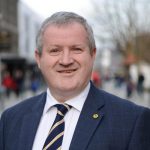
  • Ian Blackford – 2020 Speech on HS2

    Ian Blackford – 2020 Speech on HS2

    Below is the text of the speech made by Ian Blackford, the SNP MP for Ross, Skye and Lochaber, in the House of Commons on 11 February 2020.

    I thank the Prime Minister for an advance copy of the statement. Let me be mindful of one reality. No number of prime ministerial vanity projects will ever heal the economic damage and the damage to connectivity that this Tory Brexit will inflict.

    In terms of the HS2 announcement, enhanced rail infrastructure is obviously welcome, despite the indecision and waste that have been synonymous with the project. We will wait and see whether the Prime Minister is capable of getting this decision through his own party and past his own chief adviser. However, if the Prime Minister is truly committed to rail connectivity across these islands, will he engage with the Scottish Government to improve rail links from Scotland to the major cities of the north of England, such as Manchester, Newcastle and beyond? Will he also explore collaboration on the extension of the borders rail line, and what resources will be provided?

    The Prime Minister may talk about his priorities of one nation; we know what nation he is talking about, and it definitely does not include the Scottish nation. Can I further ask, given his previous opposition to the Barnett formula and his party’s repeated failure to implement it fully, whether he can confirm whether all the spending he is determined to engage in will be subject to Barnett consequentials? Yes or no?

    I welcome the fact that the UK Government are following the lead of the Scottish Government, who announced a £500 million bus infrastructure programme last September. Given the Prime Minister’s previous association with buses, however, can he reassure the House that false advertisements will be banned from the new bus fleet?

    Finally, on the bridge, this is a Prime Minister who could not even build a bridge across the Thames, so he will therefore have to forgive those of us who are sceptical that he can build one over the 20-mile expanse of the North sea. Will the Prime Minister therefore provide the estimated £20 billion for this project to the Scottish Government and the Northern Ireland Executive so they can spend those moneys on their own priorities?

    The Prime Minister

    I can assure the right hon. Gentleman that we will of course collaborate with the Scottish Government on projects that will be of massive benefit for the whole of our United Kingdom. On his substantive question about Barnett consequentials, yes, of course there will be Barnett consequentials as far as the buses are concerned. As for his plan to build a bridge across the North sea, I think he needs to look at the geography of the United Kingdom again. The only obstacle standing in the way of HS2 is the crackpot SNP plans to put an economic border between England and Scotland, break up the United Kingdom and have a border at Berwick.

  • Boris Johnson – 2020 Statement on HS2

    Boris Johnson – 2020 Statement on HS2

    Below is the text of the statement made by Boris Johnson, the Prime Minister, in the House of Commons on 11 February 2020.

    With your permission, Mr Speaker, I will make a statement on the transport revolution that we intend to bring about.

    There are all sorts of reasons why the city in which we now sit is the most productive region in the whole of Europe. We have the time zone, the language and the agglomeration of talents. Above all, we have a mass transit system that every day conveys millions of people efficiently and affordably, with tubes and trains and 8,600 buses, into the central activities zone in the morning and out in the evening, like the respiration of some vast undersea coelenterate. As the public transport network has expanded in the last 150 years, it has brought hope and opportunity and job prospects to people growing up in every part of the city and beyond. It is the ambition of this Government to employ that same utensil—fantastic transport infrastructure—to unite and level up across the whole country.

    Of course there is far more to do in London—frankly, the present Mayor needs to be shaken out of his complacency—but there is even more to do across the nation as a whole. Whether they are stuck in a jam on the A303 or on the outskirts of Lincoln, whether they are trying to get from Warrington to Manchester or toiling across the Pennines by rail, people know that this country is being held back by our inadequate infrastructure. So in the next few weeks this Government will be setting out more details of the transport revolution, because we all know the potential of transport to change people’s life and the life of their town or city. We know that efficient transport can clean the air and cut pollution and get cars off the road. We can simultaneously reach our ambition of net zero by 2050 and shorten people’s commute, giving them more time with their family, increase productivity and bring business and investment to left behind communities.

    That is why we are embarking now on a massive programme of investment in local transport, starting with a record-breaking £5 billion of new investment in buses and bicycles. That investment will mean bus passengers across the country seeing a dramatic improvement in their daily journeys, with more than 4,000 brand-new buses—zero-carbon, British-built buses—on the roads of places such as Ashfield, Barnstaple, Southampton, Manchester and many more towns and cities besides. There will be more services, including in the evenings and weekends, as well as simpler, cheaper and more convenient ticketing and properly designed priority schemes to speed passengers past the traffic jams. It is an investment that will also mean cyclists enjoying hundreds of miles of brand-new separated lanes, with “mini-Hollands” blooming like so many tulips in towns and cities right across the country.

    That £5 billion is just the start. My very good friend the Chancellor of the Exchequer will be making a full announcement in next month’s Budget, and I have no desire to steal his thunder, but I can signal today that we are taking forward transformative improvements from Cornwall to the A1 north of Newcastle, from south Salisbury to south Ribble, from Cheadle to Chiverton, with dual carriageways, roundabouts, bypasses and underpasses—and those are just the roads. We have already set out plans to explore new investments in the rail network across the north, developing proposals to reopen the Fleetwood line in Lancashire and the Ashington to Blyth rail line in the north-east, improving track and platform capacity at Middlesbrough station—

    Mr Simon Clarke (Middlesbrough South and East Cleveland) (Con)

    Hear, hear!

    The Prime Minister

    Thank you. We will be installing new signalling at Harrogate, one of North Yorkshire’s busiest stations. Further south, I can today announce that we will be upgrading the Bristol east junction, a major pinch point in the rail network of the south-west that limits access to the Brunel-designed Victorian splendour of Bristol Temple Meads station.

    This transport revolution is local, because it must be local. We can unite and level up across the country with fantastic local improvements: better rail; less congested roads; and beautiful, British-built buses that are cleaner, greener, quieter, safer and more frequent. Above all, we can improve the quality of life for people and improve their productivity. We can make places more attractive to live in and to invest in. But we cannot make these improvements in isolation from one another, because we will be doing only half the job; we will not fix the great musculoskeletal problem of UK transport. Yes, we must fix the joint between the knee bone and the thigh bone and the shin bone and the ankle bone. Yes, we must fix the arthritis in the fingers and the toes, but we also have to fix the spine, and our generation faces a historic choice. We can try to get by with the existing routes from north to south. We can consign the next generation to overcrowding and standing up in the carriageways, or we can have the guts to take a decision—unlike the party opposite—no matter how difficult and controversial, that will deliver prosperity to every part of the country. This will take 50 minutes off the journey time to Glasgow.

    When it comes to advocating HS2, it must be said that the task is not made easier by HS2 Ltd, the company concerned. Speaking as a Member of Parliament whose constituency is on the route, I cannot say that HS2 Ltd has distinguished itself in the handling of local communities. As everybody knows, the cost forecasts have exploded, but poor management to date has not detracted from the fundamental value of the project. The review recently conducted by Douglas Oakervee, copies of which will be placed in the Library of the House, leaves no doubt of the clinching case for high-speed rail: a vast increase in capacity, with hundreds of thousands of extra seats, making it much easier for travellers to move up and down our long, narrow country. That means faster journey times. It means not just more capacity, but faster journey times—extraordinarily fast journey times. Passengers arriving at Birmingham Airport will be able to get to central London by train in 38 minutes, which compares favourably with the time it takes to get from Heathrow by taxi, a point I just draw to the attention of the House.

    But this is not just about getting from London to Birmingham and back. [Interruption.] It is also considerably faster than the Piccadilly line. This is about finally making a rapid connection from the west midlands to the northern powerhouse—to Liverpool, Manchester and Leeds—and simultaneously permitting us to go forward with northern powerhouse rail across the Pennines, finally giving the home of the railways the fast connections they need. None of that makes any sense without HS2. The Infrastructure and Projects Authority considers that the first phase can be delivered for its current projected cost of £35 billion to £45 billion in today’s prices. The designs have been improved immeasurably thanks to the tireless contributions of campaigners, including my right hon. Friend the Member for Chesham and Amersham (Dame Cheryl Gillan), who I do not think is in her place.

    If we start now, services could be running by the end of the decade, so today the Cabinet has given high-speed rail the green signal. We are going to get this done, and to ensure that we do so without further blow-outs on either cost or schedule, we are today taking decisive action to restore discipline to the programme. I will be appointing a Minister whose full-time job will be to oversee the project, a new ministerial oversight group will be tasked with taking strategic decisions about it, and there will be changes to the way HS2 Ltd is managed. In line with Mr Oakervee’s recommendations, we will interrogate the current costs to identify where savings could be made in phase 1 without the costs and delays that would be associated with a detailed redesign, and so that the company can focus solely on getting phases 1 and 2a built on something approaching time and budget, I will create new delivery arrangements for both the grossly behind-schedule Euston terminus and phase 2b of the wider project.

    Before those designs are finalised and legislation is introduced, we will also present an integrated plan for rail in the north. Informed by an assessment from the National Infrastructure Commission it will, in line with the findings of the Oakervee review, look at how we can best design and integrate rail investments throughout the north, including Northern Powerhouse Rail between Leeds and Manchester. I have just spoken to the Mayor of Greater Manchester, who has warmly welcomed the project, which I committed to supporting, I seem to remember, during my first days in office.

    I want the plan to identify the most effective design and sequencing of all relevant investments in the north. For example, with many in the north crying out for better east-west links instead of improved north-south ones, which we have heard about many times in the House, some have suggested delaying or even cancelling HS2 in order to get Northern Powerhouse Rail done more quickly. I say to the House that it is not an either/or proposition: both are needed and both will be built as quickly and as cost-effectively as possible. To make sure that that happens we will, working closely with northern leaders, explore options for creating a new delivery vehicle for Northern Powerhouse Rail, and we will start treating HS2 north of Birmingham, Northern Powerhouse Rail and other local rail improvements as part of one integrated masterplan: high-speed north.

    Something has to change. Those who deny that—those who say that we should simply build phase 2b and Northern Powerhouse Rail according to the plans currently on the table—are effectively condemning the north to get nothing for 20 years. That would be intolerable, so as we draw up this plan, we are not asking whether it is phase 2b or not 2b. That is not the question; the question is how we can bring a transport revolution to the north sooner.

    Altogether, this revolution in local and national transport has the potential to be truly transformative for the entire country. Yes, it is ambitious, but ambition is what we have lacked for far too long. Two centuries ago our ancestors could have been content with breeding faster horses; instead, they invented the railways—they created the transport network on which the United Kingdom rose to economic pre-eminence. They looked to the future of transport and they made it happen. Today, it is our duty to do the same. Let us bring about a future where high-speed trains glide between our great cities, where electric buses convey us cleanly around our towns, where self-driving cars roam along roads that are free of the congestion that causes so much pollution, and where a new generation of cyclists pedal safely and happily to school and work in tree-dappled sunlight on their own network of fully segregated cycle paths—[Interruption.] As we did in London.

    This Government will deliver a new anatomy of British transport—a revolution in the nation’s public transport provision. It will be a sign to the world that, in the 21st century, this United Kingdom still has the vision to dream big dreams and the courage to bring those dreams about. I commend this statement to the House.

  • Ursula von der Leyen – 2020 Speech to the European Parliament on Brexit Negotiations

    Ursula von der Leyen – 2020 Speech to the European Parliament on Brexit Negotiations

    Below is the text of the speech made by Ursula von der Leyen, the President of the European Commission, in the European Parliament on 11 February 2020.

    Thank you, Mr President,

    Honourable Members,

    It is just two weeks ago that we bid farewell to our British friends by singing ‘Auld Lang Syne’. And I think it was the most emotional, a very powerful moment in this Parliament. A moment to celebrate the good old times and I thank you very much for the grace and the kindness of this gesture, this was extraordinary.

    Since then, we set our sights on the future of our relations with the United Kingdom. And we will enter these negotiations with the highest ambition. Because good old friends like the UK and us should not settle for anything less than this. Prime Minister Johnson said in Greenwich, earlier this month, that the United Kingdom will be ‘a global champion of free trade’. Frankly, this is music to our ears. Because in a moment when the rules-based trade system is so challenged, we need our partners to join us in making the system fairer and stronger.

    And this is what we Europeans have always fought for over the years. A trade system that is open on one side and that is fair on the other side. Because what do free trade agreements do? Free trade agreements must replace uncertainty with a sound set of rules. They create new markets for small and medium enterprises. Free trade agreements must benefit the people. And this is the rationale that is behind our trade agreements, for instance with Canada and Japan.

    They are not just increasing our bilateral exchanges of goods, services, people and ideas. They do that too, but not only. They also raise standards on a broad range of issues, from labour rights to the environment. This is what makes us proud of them. Ask our Japanese friends or ask our Canadian friends. They are glad that we have joined forces to put fairness into our globalised economic system. They are glad that they could join forces with the European Union because frankly, in today’s world, size does matter. And we have a Single Market of 440 million people! What I just described, this is the ambition we have for our free trade agreement with the United Kingdom.

    And when we agreed the Political Declaration with the United Kingdom, we ambitioned a zero tariffs and a zero quotas trade relation for all goods. Something we have never ever before offered to anybody else. A new model of trade, a unique ambition in terms of access to the Single Market. But of course, this would require corresponding guarantees on fair competition and the protection of social, environmental and consumer standards. In short: This is plain and simply the level playing field.

    We are ready to discuss on all different models of trade agreement. But all these models, whatever you chose, have one thing in common: They all come not only with rights but also with obligations for both sides. For example, if we take the Canada model – and this is a model the Prime Minister Johnson referred to – of course, our deal with Canada eliminates tariffs on a wide set of goods, but not on all. And of course, our deal with Canada eliminates most quotas, but certainly not all. For instance, there are still quotas on beef and sweetcorn. And of course: We still have our standards that have to be respected.

    And honestly, I was a little bit surprised to hear the Prime Minister of the United Kingdom speak about the Australian model. Australia, without any doubt, is a strong and a like-minded partner. But the European Union does not have a trade agreement with Australia. We are currently trading on WTO terms. And if this is the British choice, we are fine with that – without any question. But in fact, we are just in the moment where we are agreeing with Australia that we must end this situation, and we work on a trade deal with them. Of course, the UK can decide to settle for less. But I personally believe that we should be way more ambitious. And the Prime Minister’s speech in Greenwich is an encouraging starting point.

    He recalled everything the UK has achieved in terms of social protection, climate action and competition rules. And I commend the UK for all of that. Indeed, it is not the time to lower social protection or to be lukewarm on climate action. And it is not the time to decrease in terms of competition rules. I have heard ambition in Boris Johnson’s speech. Ambition on minimum wages and parental payments. And he has an ally in me, what that is concerned. I have heard ambition on cutting carbon emissions. Ambition on guaranteeing that our firms are competing in full fairness. This is what we also want. Let us formally agree on these objectives.

    We can trigger an upward dynamic competition that would benefit both the United Kingdom and the European Union. To our British friends I say: It is in our mutual interest. And most importantly – it would be consistent with the values we share. Values of openness, values of fairness and values of social justice and free enterprise. These are not only values for good old times. These are values to stay.

    Thank you very much for your attention. I just wanted to inform you that the Task Force is ready to start the negotiations. We are all set.

    Thanks a lot.

  • Stuart McDonald – 2020 Speech on the Windrush Compensation Scheme

    Below is the text of the speech made by Stuart McDonald, the SNP MP for Cumbernauld, Kilsyth and Kirkintilloch East, in the House of Commons on 10 February 2020.

    It is good to have the opportunity to take part in this debate. Of course we must pass this ​Bill, because the victims of the outrageous Windrush fiasco must be compensated, but it must be done fairly and fully, and compensation must accurately reflect the impact that this scandal has had on their lives. It must happen as quickly as possible, because the process has been slow and drawn out. I concur absolutely with the Chair of the Home Affairs Committee and the shadow Home Secretary about the operation of a hardship fund.

    I recognise that a lot of work and consultation has gone into designing the scheme, but although that work is welcome, it does not mean that we have to accept that the design is right. Indeed, the changes to the scheme announced last Thursday illustrate that changes can and should be made. Scottish National party Members think that those changes were steps in the right direction, but that others are required. The Bill gives us the opportunity to air those concerns. I will set out a few examples in a moment, but first it is important to put those concerns into context, and to reflect on what it is that we are compensating victims for and who the victims are.

    Windrush must be among the most outrageous acts of negligence by a Government Department impacting its own people in modern British political history. In fact, the word “negligence” probably does not do it justice at all. “Recklessness” would be closer to the mark. As we have heard, the consequences have been disastrous: people wrongly subjected to the hostile environment; homes and jobs lost; and healthcare, pensions and access to social security refused. Some victims were subject to immigration enforcement, including the serious trauma of immigration detention. Some were removed or deported. Some felt compelled to leave. Some were refused re-entry when they went abroad for what they thought would be short periods of time. People were prevented from travelling to visit dying relatives or to attend funerals.

    Why do we say that these harms were caused by recklessness on the part of the Government? Quite simply, because the Home Office knew that the implications of their ever more noxious hostile environment policies included that significant groups of people who were lawfully in the UK would be caught up in its tentacles. The Department was warned via inspectorate reports, by the 2014 “Chasing Status” report by the Legal Action Group, by high commissioners, by analysis of the right to rent carried out by the Joint Council for the Welfare of Immigrants, and by others. The National Audit Office was clear that there were briefings to Ministers about the many thousands of lawful residents who did not hold biometric residence permits from at least 2013. As the NAO said, outsourced hostile environment policies

    “predictably carried a risk of impacting on individuals who were, in fact, entitled to residence, but who did not have the necessary documents. The Department had a duty of care to ensure that people’s rights and entitlements were recognised…We do not consider that the Department adequately considered that duty in the way that it introduced immigration policy.”

    In short, it seems that all the warning signs were ignored or deemed acceptable collateral damage. People quite rightly ask, “If all these warnings had related to white middle-class people with a louder voice, would those warnings have been ignored?” Instead, it was not until ​they were shamed into action by journalists such as Amelia Gentleman that the Government actually started to respond.

    We also need to consider who these victims are. In the light of the history, I think it has already been accepted that there is little doubt that Windrush victims will have no trust in the immigration and nationality system or in the Home Office. In fact, they would be entitled to despise institutions that have heaped so much misery upon them. That is not the only thing we need to consider and remember about the victims when we go on to assess the design of the compensation scheme. Speaking to those who are working with and supporting the Windrush victims through the compensation scheme, it is repeatedly pointed out to me that we are often talking about fairly or even very marginalised, and sometimes vulnerable, individuals. Many are poor or not well off; hence there was no need for passports for foreign trips. Vulnerabilities can range from poor literacy all the way through to signs of post-traumatic stress disorder because of the ordeals that people have been put through. Many will have had other experiences of discrimination and racism in housing, employment and criminal justice.

    Against that background, the compensation scheme must be generous and comprehensive, and also designed to allow even the most marginalised, terrified and vulnerable to access it. There is a workable scheme on which we can build, but many have expressed concern about its design, and I hope the Government will listen. The Minister has already made changes, and I hope we will continue to consider possible improvements to the scheme.

    I will briefly mention a few concerns, many of which we will come back to in more detail in Committee. First, on the independence of the compensation scheme, it would surely be better for it to be operated independently of the Home Office. We are asking people to contact and apply to the same Department that caused them such misery in the first place. If the scheme must remain within the Home Office, then there must surely be strong, independent routes to challenge the decisions that it makes. We are far from convinced that the scheme has that feature.

    Secondly, we need to scrutinise the application process. Has enough been done to ensure that it is as simple as possible? The application form declares that the Home Office does not think that people will need an immigration lawyer to complete it, yet question 1 alone asks about lapsed status, settled status, whether people were ordinarily resident, and the right of abode. How many people in this Chamber could provide a coherent description of all those concepts?

    That leads me on to a further issue: funding for groups advising and supporting people to make applications. Funding for Citizens Advice is well and good, but it is not sufficient. People should have a choice. For some victims, Citizens Advice was one of the organisations unable to help them to rectify their terrible situations in the first place—not, I should say, through any fault of Citizens Advice. It is welcome that the Government are tendering for advice services, but I hope that it is possible for a range of different providers to be selected and not just one.

    Suella Braverman (Fareham) (Con)

    In 2018, the Government appointed Martin Forde, QC, to independently advise them on the compensation scheme, and the ​Government have also committed to having an independent adviser to oversee its delivery. Is the hon. Gentleman challenging the views of the independent expert who has made the recommendations, which the Government have largely followed?

    Stuart C. McDonald

    As I said at the outset, I welcome all the consultation that is happening. I also welcome the role that Martin Forde has played, but we do not have to simply take every chapter and verse of the design that he comes up with. Ultimately, we are the politicians and this is the Government, and we can do things slightly differently if we wish to. The Immigration Minister has already made some changes to the scheme. All I am saying is that there are changes that can make the scheme fairer and more generous, and I will continue to make that case. I absolutely respect the role that Martin Forde has played and I do not mean to diminish it in any way at all.

    As we speak just now, lots of folk are having to be helped through the system by pro bono lawyers, volunteers and even students. Not only are difficult concepts of immigration and nationality law involved, but the process of documenting losses and damages is often not easy. Given the significance of these applications to the people making them, as we heard from my hon. Friend the Member for Glasgow North West (Carol Monaghan), it is only right that legal aid funding be made available. Ultimately, is it not a bit rich for the Home Office, an institution that completely failed to understand its own immigration rules and laws despite employing an army of policy experts and lawyers, then to turn round and tell victims of those failures that they do not need legal advice? The Home Secretary herself referred in her speech to applications being complicated. That is why legal aid funding should be made available to all the victims.

    The fourth issue is the time limit. We welcome the Minister putting the deadline back—the original might even have been capable of legal challenge—but we suspect that there may need to be a further rethink in future. We are also concerned that if a deadline remains, there must be generous provision for those who miss it and a very low threshold for considering reasonable excuses. That is necessary, given the vulnerabilities and isolation that many victims will have suffered. It is also necessary because the Home Office has limited its proactive search for victims to Caribbean countries, despite being told by the NAO that its reasons for not proactively searching for victims elsewhere do not add up. That must be revisited.

    Fifthly, we share concerns that many of the limits, tariffs and caps in the scheme are wholly inappropriate. The range of immigration application fees that are recoverable is unduly restrictive, and so too are limits placed on legal fees related to those applications. Some of the lump sums seem surprisingly low. Right across access to social security benefits, housing, employment and education, we cannot accept restrictions on possible total awards. Why is the scheme not aiming to come closer to providing restitution for actual losses, rather than very limited broadbrush payments?

    Sixthly, we are concerned about provisions that allow for compensation to be restricted for what essentially seems to be a form of contributory negligence, as well as for serious criminality. On the first point, how can it ​be right for the Home Office to say, “If only you’d contacted us, things would have been sorted,” and use that as a reason to reduce compensation? For many, simply looking at the eye-watering application fees would have been sufficient to think that fixing the situation was impossible. Others who did try to contact the Home Office to remedy their status ended up the subject of enforcement action and in immigration detention.

    It seems that unsuccessful applicants were automatically placed in the migration refusal pool and therefore were at risk of removal, so who can blame people for not attempting the dangerous and seemingly insurmountable task of proving status and contacting the Home Office? After all, this Department was sending out “Go home” vans, but now we are saying in retrospect that at that same time, people suspected of being here illegally should have got on the phone to the Home Office to rectify their situation. That seems wholly unrealistic. The insistence that people would usually have contacted the Home Office within 30 days bears little resemblance to reality and could have severe implications for significant loss of earnings claims. We welcome the Minister’s announcement that the range of actions that the Home Office will accept as attempted mitigation is to be broadened, but we seriously question whether any such deductions are appropriate at all.

    On criminality, we are unconvinced by the appropriateness of the provisions. Part of the guidance on this has been redacted from public view, and another section refers to situations where the

    “offending was of such a nature that makes it inappropriate to make an award in whole or in part”,

    which is vague and lacks clarity. As a point of principle, the fact that someone has a criminal record surely does not mean that the person is not owed compensation when they are wronged by the Government.

    Finally, there is a huge issue over what caseworker guidance says about the standard of proof in certain cases. As a general rule, the guidance states that caseworkers should

    “take a holistic view of the claim where there is a lack of supporting evidence and decide the claim on a balance of probability.”

    That is welcome and as it should be, but a list of exceptions is then provided, including claims for loss of earnings, reimbursement of private medical fees, reimbursement of international student fees and loss of access to banking. The guidance demands that caseworkers

    “must be satisfied beyond reasonable doubt before making an award in these cases.”

    That is the criminal standard of proof. I cannot for the life of me see why a loss of earnings claim for a Windrush victim should require to be proved to the criminal standard of proof, rather than the usual civil standard. That seems pretty outrageous, and I look forward to hearing why that is in the guidance. Members have raised various other issues with the scheme, and I look forward to exploring those in Committee.

    Alison Thewliss (Glasgow Central) (SNP)

    My hon. Friend has laid out issues with the scheme as it stands and improvements that could be made. There are still ongoing cases with the Home Office where people such as highly skilled migrants have lost huge sums of money, had to fight in the courts to get their status proven and ​had decisions overturned in their favour. Does he agree that there needs to be a further look at compensation schemes where the Home Office has clearly got it wrong?

    Stuart C. McDonald

    My hon. Friend makes a perfectly valid point, and I fully support what she says about those individuals.

    That brings me nicely to the concluding part of my speech. The Secretary of State was right to say that compensation cannot be an end to the matter. As one victim, Judy Griffith, said:

    “I do think that we deserve compensation. But there is no amount that can truly reflect the fear and anxiety, frustration and ill health we have suffered.”

    Indeed, the way we respond to what has happened must go way beyond the compensation scheme. It is about completely overhauling the institutions and hostile environment policies that led to this situation in the first place. Instead of defending the right to rent scheme in court, the Government should be scrapping it. It is about asking whether the public sector equality duty, at 10 years old, is working properly, particularly when it comes to making immigration policy; I think it is self-evident that it is not.

    It is about listening to concerns that many EU citizens will face an even worse prospect if they miss the settled status scheme deadline; the shadow Home Secretary was right about that. It is about ensuring urgent publication of the Williams lessons learned review and responding. It is about no longer pricing people out of their rights, especially their right to British citizenship. And it is about a full-blown apology—not just for the fact that this all happened, but for the fact that Government caused it to happen.

  • Priti Patel – 2020 Statement on the Windrush Compensation Scheme

    Priti Patel – 2020 Statement on the Windrush Compensation Scheme

    Below is the text of the statement made by Priti Patel, the Home Secretary, in the House of Commons on 10 February 2020.

    I beg to move, That the Bill now be read a Second time.

    Members of the Windrush generation came to the United Kingdom to rebuild Britain after the war, and they have contributed so much to our country, our economy and our public services. It is no exaggeration to say that we would not be the nation we are today without the men and women who came here to build a life, to work hard, to pay taxes and to raise families. They included nurses and midwives, and their overall economic contribution helped to rebuild post-war Britain. That is why the whole country was shocked by the unacceptable treatment of some members of the Windrush generation by successive Governments over a significant number of years. They are people who have done so much for our country and who had in some cases arrived on these shores when little more than infants, yet they were effectively told that they were not welcome.

    This was a terrible mistake by successive Governments, and the implications will be felt for many years. Some suffered tremendous hardship and indignity as a result of an erroneous decision. They were denied a right to work, or to rent a place to live. Some individuals were even detained or removed, leading to families being broken up and left without parents or grandparents, and it is only right that those who have experienced hardship as a result are offered proper compensation. No amount of money can repair the suffering and injustice that some have experienced, and this Bill is therefore a vital and important step in righting the wrong, but there are still many issues to be addressed.

    The Windrush compensation scheme was formally launched on 3 April 2019, and it was designed to ensure that full and proper compensation could be made. The scheme rightly includes a personal apology to each person issued with the award of compensation and, most importantly, it allows those who suffered to avoid court proceedings in the pursuit of justice.

    Stephen Doughty (Cardiff South and Penarth) (Lab/Co-op)

    The explanatory notes for the Bill show the full scale of this scandal, and state that the estimated compensation cost based on 15,000 claimants would range from £120 million to £310 million. The Home Secretary was not in the Chamber for my question to the Under-Secretary of State for the Home Department, the hon. Member for Torbay (Kevin Foster), a few moments ago when I said that the wider issues with the immigration system and the failings of the Home Office, including unlawful detentions and deportations, are also costing millions of pounds. Will she commit to publishing the full cost of the wrongful deportations, outside the Windrush scheme, over the past few years and put that information before the House, so that we can see what has been going on in her Department? She is refusing to give that information at the moment.

    Priti Patel

    The hon. Gentleman has raised some significant issues here. We are still waiting for the lessons learned review from the independent—​

    Thangam Debbonaire (Bristol West) (Lab)

    When will it be published?

    Priti Patel

    If the hon. Lady will let me finish instead of jumping up in such a way, I will answer her question. [Interruption.] Let me just state this, and I will answer her question if she will bear with me. The lessons learned report has yet to be submitted to Ministers in the Home Office by the independent adviser, Wendy Williams. That is not a shock to anybody, and it is right that she should have the time to undertake her review. It is a fact that the review has been going on for two years, but she will bring it forward in due course and I will receive it when it is ready. It is fair to say—I do not think anybody can question this right now—that we want to know the full scale of what has happened and the background to it, and that is the purpose of the review. At the right time, we will be able to look at everything in the round. If I may say so, this is not about publishing pieces of evidence at this stage. It is important that we look at everything. The report will come to me once Wendy Williams has had the time and space to consider everything, because this is an independent review. It is not for the Home Office to dictate anything around that report. We will wait for that, and then of course we will look at everything that is required.

    Thangam Debbonaire

    I thank the Home Secretary for giving way. I know she is impatient with my impatience, but I am speaking on behalf of constituents of mine who died while waiting for their compensation. They were promised that compensation before they died, and their relatives are still unclear about whether any of this is ever going to be resolved. That is why I am impatient. Can she even tell us how many people have died while waiting for their compensation to be settled?

    Priti Patel

    Let me say a few things to all hon. Members about not just the compensation scheme but Windrush. Many of us, including me, have made representations to the Home Office on behalf of our constituents. That is a fact and we have all worked constructively in doing so. The hon. Lady mentions being impatient. If I may say so, these cases are complicated, as I am sure she recognises. [Interruption.] The hon. Lady is shaking her head, but the cases are complicated in terms of the provision of information, background, data and evidence, and this will take time. [Interruption.] They are complicated cases. They have to be looked at on a case-by-case basis. This is not about providing a carte blanche assurance or a cheque to people. It is right that there is due process. We want to get this right and I make no apology for that.

    Thangam Debbonaire rose—

    Priti Patel

    I have given way already. If I can just finish, it is important that we do this in the right way, provide the right amount of time and ask people to work with the Home Office to find whatever evidence is required.

    Lucy Powell (Manchester Central) (Lab/Co-op)

    I thank the Home Secretary for giving way. Some of the cases are, indeed, complicated, but does she agree with me and many of my constituents with whom I have spoken, that her Department has overcomplicated the issue? As she said at the beginning of her speech, we ​cannot put a value on some of these things. The approach being taken is arbitrary, but she could apply discretion and make it a lot simpler

    Priti Patel

    It is a fact that this is not about money. Money cannot compensate for the awful experience and hardship that people have been affected by. We should be very clear about that. [Interruption.] An hon. Lady says, “It helps.” There is a scheme and a process, which I will come on to as I make progress with my speech. It is right, however, that we have the right process, and I will explain how we will do that. We should never lose sight of the fact that this scheme has been established. It is difficult but there are ways in which we are going to make this simpler, undo some of the bureaucracy and make swift progress with some of the cases that have been raised.

    Simon Hoare (North Dorset) (Con)

    A moment ago my right hon. Friend used the word “mistake”, and I think it is right to remind ourselves that the Windrush scandal was not a conspiracy but a cock-up of the most enormous magnitude. Will she confirm that she is confident that her Department and ministerial team are now fully on top of these kinds of issues so that that sort of scandal will not happen again?

    Priti Patel

    My hon. Friend raises issues that go right to the heart of what happened in the Windrush scandal. No Government would want to preside over something so scandalous, and there has to be recognition that responsibility was attributed to successive Governments. It is right that we wait for the review from the independent adviser, Wendy Williams, which will have lessons for us all, including the Home Office and previous Governments. I think it will have plenty of information about what happened. We want to build on that and make sure that we learn the lessons.

    Many of the comments made thus far have reflected on the compensation scheme and its complexities and design. I will now focus on its design. The Home Office’s first priority was to ensure that the scheme was accessible to claimants. In doing so, it has considered some 650 responses to the call for evidence and nearly 1,500 responses to the public consultation. The Home Office held several public events across the country to give potential claimants the chance to make their voices heard. Martin Forde QC, himself the son of Windrush parents, has a wealth of experience and complex knowledge of public law and compensation matters, and he was appointed by the then Home Secretary in May 2018 to advise on the scheme’s design. Late last year, Martin and I launched the Windrush stakeholder advisory group and met key stakeholders and community representatives to hear their personal testimonies and views. Ministers and civil servants will rightly continue to work with them, and they will continue to listen to those who have been affected to ensure this scheme works for them. Their personal views and considerations have been taken into account in the development of this scheme, and the House should note that the views of stakeholders have been instrumental to its design. That is why, last week, the Home Office announced the scheme will be extended by two years so that people will be able to submit claims up until 2 April 2023.​

    The Home Office also announced amendments to migration policy to apply a more flexible approach to the cases under review, and rightly so. The Home Office will now consider all evidence provided on the steps an individual will take or has taken to resolve their situation, which is an important change.

    Yvette Cooper (Normanton, Pontefract and Castleford) (Lab)

    The Home Secretary is being generous in giving way.

    I welcome the extension for applications to the scheme, but the Home Secretary will be aware that, nearly two years ago, the Select Committee on Home Affairs also recommended a hardship scheme. We were concerned that, in practice, this compensation scheme would take too long for many people who are in urgent need of compensation and some sort of support following these shocking injustices. Our report mentioned four people: Anthony Bryan, Sarah O’Connor, Hubert Howard and Judy Griffith. Shockingly, two of them have still had nothing, despite facing great hardship, and the other two died before they could get any compensation or hardship support at all.

    Will the Home Secretary urgently consider a hardship scheme, as well as a compensation scheme, because this affects too many people? I have been contacted about someone today who is currently homeless and still struggling to get any support at all. Will she look at these cases urgently to see what hardship support can be given?

    Priti Patel

    I will look into those cases. Of course we have the exceptional payments scheme, which should stop anybody falling through—such people should receive those payments.

    Meg Hillier (Hackney South and Shoreditch) (Lab/Co-op)

    I was interested to read the updated impact assessment, which reduces the assumption that there will be 15,000 claims to 11,500 claims. Will the Home Secretary explain why that is the case and whether the Bill will cover the 160,000 Commonwealth citizens who could be affected, to which the Public Accounts Committee drew attention last year?

    Priti Patel

    The numbers were reduced in the impact assessment due to the fewer-than-anticipated claims thus far. I will come on to Commonwealth citizens because, of course, this is not specific to Caribbean nationals.

    Even though time has elapsed since individuals may have effectively been caught up in the Windrush issue—experiencing hardship, losing their job and, in some cases, also losing their home—I will, as I said to the right hon. Member for Normanton, Pontefract and Castleford (Yvette Cooper), look into any specific cases that hon. Members would like to raise with me. Our changes may help some people to qualify for a potentially higher award, particularly where it relates to the loss of employment.

    “Windrush” has been used to describe what happened to a specific group, but that term and this scheme are not limited to those of Caribbean nationality. The scheme, of course, is open to anyone of any nationality who arrived and settled in the UK before the end of 1988, and to anyone from a Commonwealth country ​who arrived and settled in the UK before 1973. The scheme is also open to the children and grandchildren of Commonwealth citizens who arrived and settled before 1973, and to other close family members of such a person who may have been affected. In the cases of those who sadly passed away before compensation could be paid, a claim can be made by their estate.

    Harriett Baldwin (West Worcestershire) (Con)

    I welcome the steps my right hon. Friend is taking in this Bill. Will she outline how the measures she has just described are going to be widely publicised, to make sure that everyone who might be entitled to claim under this legislation knows about it?

    Priti Patel

    I thank my hon. Friend for her question. I will come on to this issue, primarily because our stakeholder advisory group has a very important role to play in it and I will explain why that is shortly. Importantly, we will continue to work with third party stakeholders, such as Citizens Advice, and many other groups that we are engaging with. I am very mindful, of course, that we have to rebuild trust with the communities that have been affected.

    Several hon. Members rose—

    Priti Patel

    If I may, I will finish the point. To rebuild that trust, working with third parties and other stakeholder groups and organisations is vital, and we will continue to do that.

    Ms Lyn Brown (West Ham) (Lab)

    On that point of trust, the phone calls to my office today are about a flight tomorrow to Jamaica, and some of my constituents believe that this Bill is being used as some kind of flim-flam before that flight goes. Will the Home Secretary assure me that she will look carefully at every one of the cases that we bring to her to ensure that only those people who absolutely need to be deported are deported tomorrow?

    Priti Patel

    Let me make a few points on that. First and foremost, we should not be conflating this charter flight—the criminality—with the issue of the Windrush compensation scheme. The hon. Lady will know that the House has heard the Under-Secretary of State for the Home Department, my hon. Friend the Member for Torbay (Kevin Foster) respond to the urgent question earlier, and every person on the flight has been convicted of some of the most serious offences and has received a custodial sentence of 12 months or more. That means that under the UK Borders Act 2007, introduced by the Labour Government at the time, a deportation order must be made. These crimes cover manslaughter, rape, violence, the appalling scourge of drug dealing and sexual offences against children, with a total sentence for this group totalling more than 300 years. It is important to say that the suffering of their victims is incomprehensible, and these offences have a real impact on victims and their communities. It is important to recognise that the individuals being deported have criminal convictions, and that this is about the criminality of the acts they have participated in, not their nationality.

    Lucy Powell

    Actually, this point is not about criminality; it is about whether people are or are not regarded as British citizens. That is the key issue we are discussing this evening, because when the Windrush generation and their descendants came here before 1973, they ​arrived on British passports—they might have said “Jamaica” or “Trinidad and Tobago” on them, but they were British passports. We are now looking at whether their citizenship was valid from that point or not. We are not now deciding whether they are British citizens; we are saying that they have always been British citizens, so whether or not they have committed a crime is irrelevant to whether they are British citizens. If they have committed a crime, it is our problem. They are our citizens, and we need to deal with it. That is the key issue here, and the Home Secretary has completely missed that point.

    Priti Patel

    I do not think I have missed that point, because this is a charter flight for foreign national offenders—[Interruption.] Members are welcome to bring individual cases, but I can give the House the assurance, as my hon. Friend the Under-Secretary did earlier today, that—

    Mr David Lammy (Tottenham) (Lab)

    The right hon. Lady will understand that one of her predecessors resigned because she assured the House that the people involved were foreign nationals and they were not. I would urge her to tread more lightly if she wants to remain in post.

    Priti Patel

    I refer the right hon. Gentleman to the comments made during the urgent question by the Minister. The facts have been provided. I say again that if individuals wish to make representations to the Minister about cases in their constituencies, they are very welcome to do so.

    On the Windrush compensation scheme, simplicity and ease of use has been at the forefront of designing it. Requirements for evidence have been designed to be straightforward and easy to understand and, most importantly, not too onerous for the claimant. Our priority has also been to ensure that payments are made as quickly as possible. The first payment was made in July, within four months of the scheme being launched, and the Government want to ensure that all those who have suffered come forward and apply for compensation.

    Abena Oppong-Asare (Erith and Thamesmead) (Lab)

    Will the Secretary of State give way?

    Priti Patel

    No, I will not give way.

    As mentioned earlier, the Home Office is extending the length of the scheme by two years, so people will be able to submit claims up to 2 April 2023.

    I have outlined some positive steps, but we need to ensure that the scheme is underpinned by the necessary financial parliamentary authority, which is exactly what the Bill is designed to provide. Payments are currently made under the ministerial direction that was issued in July last year, but the Bill offers Parliament the opportunity to give its legislative authority for expenditure under the compensation scheme. Details of the scheme are set out in the non-statutory scheme rules, which give us freedom to amend the scheme swiftly where required. That freedom proved useful last October when, following feedback ​from stakeholders and claimants, the scheme was amended to allow a broader range of immigration fees to be refunded.

    For the scheme to be effective, it is vital that awareness is raised, as my hon. Friend the Member for West Worcestershire (Harriett Baldwin) pointed out, and that everyone who has suffered is given a fair chance to claim. Through the Windrush stakeholder advisory group, the Government are overseeing how to reach those who have been affected and hurt. There is no simple or straightforward way in which that hurt can be repaired or that trust rebuilt. It is a sorry fact that there are still members of the Windrush generation who do not have the documentation that they need. Some will not even know that they are entitled to apply for compensation. Others have been put off by false claims that funding for the scheme is capped at £200 million, or have been subject to much misinformation about the scheme, which of course needs to be addressed. We will of course work to correct those inaccuracies, rebuild trust through the advisory group and provide the compensation and justice that people deserve. The role of the stakeholder advisory group is to do exactly that and to find the best links to get back into the affected communities. In addition to that, the Home Office has, as I have already indicated, attended and hosted more than 30 engagement events to promote the scheme, and would welcome interest from Members who wish to support community events in their own constituencies.

    No compensation can ever hope to undo the injustice of someone being told that they are not welcome in their homeland. Nothing that we can do or say can ever wipe out the hurt and loss that should never have been suffered in the first place, but we hope that the Windrush compensation scheme can go some way towards easing the financial burden endured as a result, and that we can begin to do justice to those who have contributed much to our country. The United Kingdom is making a start on a new era of openness, and it is a home to everyone with the talent and tenacity to contribute to national life. It is only right that we do everything in our power to redress this historic injustice, so I hope that Members from all parties will take an important step forward in doing so and join me in giving the Bill the support that it needs. I commend the Bill to the House.


  • Luke Pollard – 2020 Speech on the Government’s Flood Response

    Below is the text of the speech made by Luke Pollard, the Shadow Secretary of State for the Environment, Food and Rural Affairs, in the House of Commons on 10 February 2020.

    I thank the Secretary of State for advance sight of her statement. I join her in sending our condolences to the family of the man who died in Hampshire.

    On behalf of the Opposition, I thank the emergency services, the Environment Agency, local councils, volunteers and communities who have worked tirelessly to protect homes and businesses, and to rescue people and animals ​from rising waters, fallen trees and debris, as well as all those who have worked to reinforce flood defences, not forgetting the RNLI and our coastguard too.

    The reality of the climate crisis is that more extreme weather will happen more often and with more severe consequences, especially for those who live and work in areas of high flood risk. As the climate breakdown escalates, we are seeing an increase in the frequency and intensity of deadly weather patterns. Much more needs to be done to prevent flooding, to alleviate carbon emissions through habitat restoration, and to return flood plains to a natural state. Building homes on flood plains must stop.

    The Government need to ask themselves: since Parliament declared a climate emergency, what are they doing differently on flooding—on protecting our communities? Austerity has had a devastating impact on our environment. There have been unprecedented cuts to our local authorities across the country, including the councils that have been most affected by the increased flooding and increased risk of flooding. The Environment Agency has seen its staffing levels fall by 20% since the Government came to power. I want Ministers to look afresh at what can be done now that Parliament has declared a climate emergency. A new plan for flooding should recognise the realities of the climate crisis, reverse the cuts to our frontline services, invest in comprehensive flood prevention, promote land use change, encourage habitat restoration, and acknowledge in the funding settlements for councils the higher risk in areas that face flooding so often.

    I recognise that some new flood schemes have been delivered, but the list that the Secretary of State gave out is of what she has done, not what she will do, in response to this flooding. Will she accept that a comprehensive plan for flooding is now needed? Is it now time for Ministers to recognise that requiring match funding for some flood schemes means that poorer communities lose out compared with richer areas? The Environment Agency said only last year that it needs £1 billion a year to protect our communities, and a new approach on flooding. When will Ministers listen to their own Government agency and fund flood protection properly?

    Does the Secretary of State have a date for the much-trailed flood summit that the Prime Minister promised last year? Will the trials of the new environmental land management scheme be targeted at the areas where flooding has been most severe this time? What action is she taking to ensure that homes and businesses that have been denied insurance and are still outside the current Flood Re scheme get the affordable protection that they so deserve?

    Water is incredibly destructive and can destroy homes, businesses and livelihoods. Many of those flooded this time have been flooded before. Can the Secretary of State give them an assurance that the warm words and Government press releases this time will result in more action than they saw the last time they were flooded?

  • Theresa Villiers – 2020 Statement on the Government’s Flood Response

    Theresa Villiers – 2020 Statement on the Government’s Flood Response

    Below is the text of the statement made by Theresa Villiers, the Secretary of State for the Environment, Food and Rural Affairs, in the House of Commons on 10 February 2020.

    With your permission, Mr Speaker, I will make a statement about the significant flooding caused by the heavy rain and severe gale force winds brought by Storm Ciara.

    First and foremost, I extend my condolences on behalf of the whole House to the family and friends of the individual who lost his life in Hampshire earlier today; our thoughts are with you.

    I also express my support and sympathy to all those whose homes or businesses have been flooded over the weekend. Flooding can have appalling consequences for each individual affected, and I want to provide the assurance today that the Environment Agency, local government and the emergency services are working hard to keep people safe in all the areas affected by this devastating storm.

    Storm Ciara brought rainfall ranging between 40 and 80 cm in 24 hours across much of northern England. The highest levels were recorded in Cumbria, with 179.8 cm of rain falling over the course of the day. Particularly severe impacts have been felt along the River Calder in Yorkshire, along the River Ribble in Lancashire, along the Irwell in Greater Manchester, and on the Eden in Appleby. Regrettably, four of these communities—the Calder valley, Whalley and Ribchester, the Rossendale valley and Appleby—were flooded in 2015.

    The current estimate is that more than 500 properties have been flooded, but this number is expected to increase as further information is collected. The latest number of properties confirmed to have been flooded are 40 in Cumbria, 100 in Lancashire, 150 in Greater Manchester and 260 in Yorkshire. Defences in Carlisle have held. There is local road disruption across the affected areas, and a shipping container is stuck under Elland bridge. One severe flood warning was issued over the weekend to communicate a “risk to life” along the River Nidd at Pateley Bridge. This has now been removed; flood defences were not overtopped and no properties were flooded. Our coastal communities have also been affected, in parts of the south-west and north-east of England, where high tides, large waves and coastal gales have occurred.

    The weather is expected to remain unsettled, and 97 flood warnings are currently still in place. Although river levels in West Yorkshire and Lancashire are now receding, we must expect high river levels further downstream in South Yorkshire over the next few days, so we urge people in at-risk areas to remain vigilant, not to take unnecessary risks and to sign up to receive Environment Agency flood alerts. Some coastal flooding is probable tomorrow, but it is not expected to be in the more serious category.

    Extensive work is taking place in the affected areas, including clearing debris that can block up river flow. Environment Agency teams have been deploying temporary flood barriers where necessary. I pay tribute to all the dedicated professionals who are working so hard on the emergency response to the situation—operating flood defences, supporting communities and keeping people safe. That includes the hard-working staff of the ​Environment Agency, along with local authority teams and, of course, the police and fire services. I also thank all the volunteers who are part of local flood action groups that are helping with the response effort.

    Every effort is being made to keep people safe, and I can confirm that the Government are today activating the Bellwin scheme, which will provide significant financial support to the local authorities in the areas affected by Storm Ciara, helping them to fund the cost of recovery. I encourage councils in the areas affected to consider applications to the Bellwin fund.

    In a changing climate, we all want our country and our communities to be better protected from flooding, and more resilient when severe weather occurs. In the areas hit by flooding over the weekend, at least 25,000 properties and businesses have been successfully protected by flood defences. But we know that more needs to be done, and we are determined to deliver.

    Since the events of Boxing day 2015, we have been taking action on a range of schemes to strengthen defences and improve resilience. We are investing more than ever before in these defences through a £2.6 billion programme up to 2021 to manage flood and coastal erosion risk. This will enable better protection of over 300,000 properties. Early in 2016, we committed an unprecedented £35 million to improve flood protection for homes and businesses in Mytholmroyd, Hebden Bridge and across Calderdale. Construction in Mytholmroyd is progressing and we expect the defences there to be completed in in the summer. We have built 25 new flood defences in Cumbria and Lancashire, protecting 23,100 homes, and 59 new flood defences in Yorkshire, protecting 13,200 homes. In the autumn, I announced an extra £60 million to boost flood schemes in the north, including £19 million for Calder valley. Our manifesto commits us to a further £4 billion of new funding in the five years up to 2026.

    In 2016, we introduced the Flood Re scheme to make insurance cover for flooding more affordable and more accessible. Following the flooding in November, I announced an independent review of the data on insurance cover to ensure that that scheme is working as effectively as possible. Since the incidents of 2015, we have strengthened and improved our system of flood warnings, and we have established a flood recovery framework to prepare for and guide flood recovery schemes.

    This Government are determined to maintain and enhance our readiness to respond when extreme weather hits our country. Our swift activation of the Bellwin scheme today, and our investment in the biggest ever programme of flood defence improvement, illustrates that determination. We stand ready to help communities to recover from flooding. We are investing in the defences needed in the warmer, wetter, less predictable climate that the scientists tell us we must expect in the years to come. I commend this statement to the House.

  • Rishi Sunak – 2020 Statement on Freeports

    Rishi Sunak – 2020 Statement on Freeports

    Below is the text of the statement made by Rishi Sunak, the Chief Secretary to the Treasury, in the House of Commons on 10 February 2020.

    Today the Government have launched a consultation on freeports policy, allocation and governance.

    A freeport is commonly defined as a place inside a country’s land border but where different customs rules apply. Countries around the world have successfully used freeports to drive investment and prosperity.

    The creation of up to 10 freeports around the UK was a flagship policy in the Government manifesto. Since the election, HM Treasury has moved at pace with the Department for International Trade, the Department for Transport and the Ministry of Housing, Communities and Local Government to develop an ambitious set of policy proposals. Freeports will boost trade, jobs and investment with a view to building innovative business clusters that benefit the local area and level up the economy across the UK.

    At the centre of our new freeports policy is an ambitious new customs model, drawing on international best practice. The model will improve upon both the UK’s existing customs facilitations and the freeports the UK previously had. We are also consulting on which tax incentives businesses in freeports could benefit from, potentially including business rates reliefs, capital allowances, research and development tax credits, and reductions in national insurance and stamp duty land tax.

    Ports consistently flag that planning regulations restrict their expansion. Both the Government and local planning authorities can support freeports through planning options including permitted development rights and zonal planning, which would help to simplify planning processes, accelerate development in relation to freeports and support the wider regeneration of nearby areas.​
    Freeports also have the potential to be dynamic environments which enable innovators, start-ups, businesses and regulators to generate and test new ideas and technologies. Freeports could be used as sandboxes in which innovative technology and processes could be trialled.

    Freeports will be a cornerstone of the Government plan to level up opportunity across the country, building on existing schemes such as the towns fund and the coastal communities fund, alongside other existing strategies across infrastructure, skills and dedicated trade and investment support. They will allow us to drive forward investment and regeneration in some of the most deprived areas in the UK, delivering highly-skilled jobs for people across the country.

    Freeports will be selected through a fair, transparent and competitive process, and will be expected to collaborate closely with key partners across the public and private sectors.

    The Ministry for Housing, Communities and Local Government is responsible for place-based strategy and regeneration in England and will lead on the domestic delivery of freeports, working alongside the Department for International Trade, which leads on attracting inward investment across the whole of the UK, and the Department for Transport, which leads on port strategy, policy, relationships and the wider transport network. HMRC will maintain control over the authorisation of customs sites within a freeport, to ensure sites are compliant with necessary security requirements. We will also work closely with the devolved Administrations to support the development of devolved policy proposals which allow the creation of freeports in Scotland, Wales and Northern Ireland.

    We now need to understand how these proposals can most effectively support ports, businesses and communities in all parts of the UK. The “Freeports Consultation: Boosting Trade, Jobs and Investment Across the UK” [CP222] has been laid in Parliament. Copies are available in the Vote Office and Printed Paper Office, and also at: https://www.gov.uk/government/consultations/freeports-consultation

    The Consultation will close on 20 April.