Tag: 2020

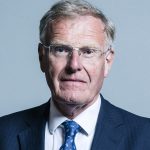
  • Christopher Chope – 2020 Speech on Proceedings in Parliament

    Christopher Chope – 2020 Speech on Proceedings in Parliament

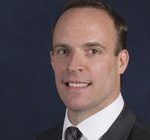
    Below is the text of the speech made by Christopher Chope, the Conservative MP for Christchurch, in the House of Commons on 2 June 2020.

    I begin by expressing my embarrassment on your behalf, Madam Deputy Speaker, that all your entreaties to the right hon. Member for Ross, Skye and Lochaber (Ian Blackford) fell on deaf ears. I think he shows little respect for you in the Chair.

    I wish to participate in the debate because I am a member of the Procedure Committee and I have a slight difference with my right hon. Friend the Chair of the Committee. Although I agree with the Committee’s plea for people to be able participate in the proceedings as far as possible, and I am delighted that my right hon. Friend the Leader of the House will table a motion tomorrow, I do not believe that remote voting is necessary.

    In normal times, my right hon. Friend the Member for Harlow (Robert Halfon) would be sitting here. He cannot be here today on medical advice. Ever since I was first elected to this House in 1983, no person who is away from the House on medical advice has been able to do anything other than get a pair. That system worked well in the 1983 and 1987 Parliaments. When I raised that in the Procedure Committee, my right hon. Friend the Member for Staffordshire Moorlands (Karen Bradley) said that the genie was out of the bottle and it was no longer possible to persuade members of the public that, if we were not physically present to vote and we were paired, we were going about our business. I think we have a big education job to do to explain to our constituents and the public that we can do a really good job as Members of Parliament without physically being here to vote every time. When Ministers go on trips or Select Committee members meet outside this place, they are often paired.

    There is something to be said for making that pairing arrangement more transparent, as the hon. Member for Blackley and Broughton (Graham Stringer) suggested earlier, but let us not demean ourselves by saying that pairing is a second-best arrangement. Pairing is a fair way of ensuring that people who are ill and unable to attend the House can have their votes counted. Under a pairing system, one person’s vote on one side is cancelled out by someone else on the other side. [Interruption.] The hon. Member for Rhondda (Chris Bryant) has been in the House almost as long as me and he knows that the system works well for those who are ill. It would be wrong to change it now. The Procedure Committee has an inquiry on the matter, but we cannot resolve that today. Let us therefore proceed with the motion in the name of the Leader of the House and allow ourselves to have real voting here. For those who cannot get here to vote, let us encourage pairing, while perhaps making the system more transparent.

  • Ian Blackford – 2020 Speech on Proceedings in Parliament

    Ian Blackford – 2020 Speech on Proceedings in Parliament

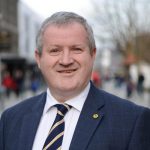
    Below is the text of the speech made by Ian Blackford, the SNP MP for Ross, Skye and Lochaber, in the House of Commons on 2 June 2020.

    It is a pleasure to be called in this debate and to follow the right hon. Member for Staffordshire Moorlands (Karen Bradley). I implore her to move her amendments this afternoon. They are important amendments. They are about the rights of all Members to participate in the process of Parliament, both in debating, speaking and holding the Government to account and, of course, in voting. The shadow Leader of the House is correct. We must remember that we are living in the middle of a pandemic. It is the responsibility we have as a Parliament, and our responsibility to all the nations we represent, to make sure all our constituents are not disenfranchised.

    I rise today in the absence of my hon. Friend the Member for Edinburgh East (Tommy Sheppard), who, because of the pandemic, cannot be here. I have to say that it is a considerable privilege to do so. The Leader of the House and I have known each other for a long time. I hold him in high esteem as a political opponent, but I have to say to him that on this matter I believe him to be wholly wrong. The decision by the UK Government to return Parliament has put parliamentarians in an impossible situation. A small number of us on the SNP Benches are here today—reluctantly—in order to ensure that the Government are held to account.

    I have to ask the question: why were we forced to come here? Why were we forced to come here today? Reference has been made to the journey I have made. I do not wish this to be about me, but I had to drive to Inverness and then get a sleeper train, because there are no flights from the highlands to London. As has been referenced, it is a 16-hour journey. I know the same is true for the right hon. Member for Orkney and Shetland (Mr Carmichael).

    Mr Carmichael

    Eighteen.

    Ian Blackford

    Eighteen hours for the right hon. Gentleman. Is the Leader of the House really suggesting that parliamentarians should spend over 30 hours a week travelling to have the privilege of representing their constituents, when over the course of the past few weeks we have had the opportunity and the ability to do our jobs of challenging the Government remotely and effectively? The shadow Leader of the House is correct. With the post bag we have had, the thousands of emails we have received, and the need and desire to be able to assist our constituents—we have had the time to do that—we are going to lose countless hours simply because the Leader of the House determines that on the basis of tradition we should be here–. Nothing to do with the circumstances we are in and the risks to our constituents in this pandemic.

    Mr Carmichael

    I am not going to spend 30 hours a week travelling. Not only is it logistically challenging, but it would be downright irresponsible for me to return to my community now. So I am down here now at the behest of the Leader of the House and I will be staying here until it is safe to go home.

    Ian Blackford

    I am grateful to the right hon. Gentleman for his intervention. The issue of safety is of paramount importance. We must go about our duties able to determine that not just all of us but our staff members and our constituents will be safe.

    The right hon. Gentleman may be making a personal choice to stay down here, but just think about that. The Leader of the House indicated that we may not go into recess towards the end of July, so it might well be that the right hon. Gentleman and others are committing themselves to being away from home—away from their families—for a prolonged period. Why? Why, when we know that the hybrid facilities, in the main, work?

    On this nonsense—and I have to say that it is nonsense—that Bill Committees have not sat, it is in the gift of the Government to bring forward a set of circumstances that will allow Bill Committees to meet. I must say to the Leader of the House that there is a responsibility on us to arrive at a consensus on these matters. This is not about the Government; this is about Parliament.

    It is fair to say that the Opposition parties, as well as a considerable number of Government Members, are strongly opposed to what the Government propose. I implore the Leader of the House on reflection to accept the amendments that have been tabled, which would allow us collectively to deal with the situation we are in and get to a set of circumstances in which Parliament can do its job. I am in the situation that very few of my Members are here today, because we did not want to expose more Members than necessary to the kinds of risks that the right hon. Member for Orkney and Shetland referred to. I pose the question again: why should we be in this situation?

    If I may say so, this is not just about Members of Parliament who have health concerns. Even if we arrived at a situation, as has been suggested, in which they could be excused or paired, anyone in that category would have been identified as having particular health circumstances. Is that right? But this is not just about Members of Parliament who have their own health concerns; it is about Members of Parliament who may have family members who are shielding. We are talking about a considerable number of Members of Parliament who risk being disadvantaged.

    Of course, in Scotland—it was the case in England as well—the public advice was to stay at home, to protect the NHS and to save lives. The Government’s official line was that if people could work from home, they should. Well, we can work from home. We should work from home, because that is the right thing to do, not just for Parliament but for our families, our colleagues and our constituents. We have asked employers to be flexible; the Commons should be too.

    MPs were working effectively. The hybrid system, though not perfect, was more efficient than the system we now have in place. The right hon. Member for Staffordshire Moorlands reflected on that. Look at the number of people who can be in the Chamber, and contrast that with those who could participate in our hybrid proceedings. The whole point about the hybrid proceedings is that Members who, for their own reasons, choose to come here can continue to do so, but those who need to, want to and should participate on a hybrid basis are not disenfranchised. Many colleagues across the House cannot come into work—Members who are shielding; Members who cannot travel—and the UK Government are willingly disenfranchising them and their constituents.

    Joanna Cherry (Edinburgh South West) (SNP)

    Does my right hon. Friend agree that if the Government get away with this today, we will be left with a situation where, although all MPs will be nominally equal, some will be more equal than others? Is not that very much a reflection of the pattern we saw last week, when the Government displayed such a cavalier attitude to that core principle of the rule of law, equal treatment before the law?

    Ian Blackford

    Absolutely. I agree with my hon. and learned Friend. I say to the Government that there are real questions that we as Opposition parties wish to put, but at the same time there is a recognition that we are in a real crisis. We are in a health crisis and we have an economic crisis on the back of that. Where appropriate, we must work together. There must be generosity of spirit from the Government in dealing with these issues.

    I have been prompted to speed up, so I will.

    Plans to shut down virtual participation in Parliament are a shambles. They are unworkable, unsustainable and are unravelling further by the day. For votes to take place, a queue of more than a kilometre would be needed through the building. Can Members imagine how the public must look upon this? We will be queuing right out of this place and we will be taking a considerable period of time.

    The Leader of the House raised the issue of how many times we might be voting, but there are times when we have multiple votes. We will be losing hours a day if we are to determine our right. [Interruption.] It is a bit ridiculous that Members on the Government Benches think that this is funny. Do they really think this is funny? This is serious. We are talking about the lives of our constituents.

    Andrew Griffith

    If this is serious, would the right hon. Gentleman like to give way?

    Ian Blackford

    No, I will not. You have lost your right to do that.

    The proposal for voting is ludicrous and a waste of our time. I am sure our constituents would wish us to use our time more effectively. The House of Lords will soon have a remote voting system in place where Members can vote via smartphone or tablet. For what reason is that the case for one Chamber but not the other?

    We know that asymptomatic carriers of covid-19 are the silent spreaders in the pandemic, and that the virus can spread on contact and lasts for hours, if not days, on hard surfaces. What efforts have been made to ensure that these Benches are cleaned between sittings? That is an important matter, because we know from evidence from Singapore that there was significant—

    Madam Deputy Speaker (Dame Eleanor Laing)

    Order. I can answer the right hon. Gentleman. Mr Speaker has taken care of that.

    Ian Blackford

    Well—[Interruption.] I can hear Members saying “Move on.” Really? I have to say that I find the attitude of some Members on the Government Benches quite deplorable. What I was going on to talk about was the situation in Singapore, where there is public evidence of people going into churches the day after other people—

    Madam Deputy Speaker (Dame Eleanor Laing)

    Order. I implore the right hon. Gentleman to talk about this Chamber, because we have little time left. There is plenty of other time for Singapore. Will he please conclude his remarks quite soon?

    Ian Blackford

    I am afraid I am going to take my time to ensure that I am putting the case of Members of the Scottish National party. The reason I mention Singapore is because people were going into church and getting covid-19 from people who had been there in the days before. These are serious matters and they deserve to be properly aired.

    The UK Parliament’s Select Committee on Procedure has called for remote voting and participation to remain an option for as long as the pandemic continues, and that should be the position we adopt. The Committee has outlined significant deficiencies in the plans and concluded that virtual participation should be allowed to continue while coronavirus restrictions are in place to allow MPs who are not able to come to Westminster, because of the continuing restrictions caused by the pandemic, to contribute to debates and represent their constituents.

    The Government’s decision to ignore the cross-party consensus to retain hybrid proceedings and to plough ahead with plans to force hundreds of MPs to physically return to Parliament was widely criticised. The Public and Commercial Services Union, which represents security, catering and support staff in Parliament, said that the part-virtual system had worked well. General secretary Mark Serwotka said that it was

    “strange why the government is in a rush to change course when a second covid spike is such a strong possibility”.

    The Electoral Reform Society branded moves for MPs to vote in Parliament “beyond a farce”.

    The Leader of the House argued that democracy would once again flourish, having been curtailed under the hybrid system. That is simply wrong. [Interruption.] I am getting a bit fed up with remarks from Conservative Members about this being “self-indulgent”. I will tell them what is self-indulgent: MPs being dragged here when we know that the hybrid system works, and MPs being disenfranchised by the Government. That is self-indulgent.

    While MPs are shielding and unable to travel to Parliament, we are experiencing a democratic deficit imposed by the UK Government. It is wholly wrong that we are in this position. I hope that we can achieve a resolution that will see us return to a hybrid Parliament that allows all our colleagues to participate in questions, statements, debates and voting from the security of their homes. We should be in a position whereby we can do our jobs and protect everyone else by staying at home and doing the right thing.

  • Valerie Vaz – 2020 Speech on Proceedings in Parliament

    Valerie Vaz – 2020 Speech on Proceedings in Parliament

    Below is the text of the speech made by Valerie Vaz, the Labour MP for Walsall South, in the House of Commons on 2 June 2020.

    I thank the Leader of the House for moving the motion. I note that the amendments in my name and those of other Members were not selected, so I speak in support of the amendments in the name of the Chair of the Procedure Committee and the other Select Committee Chairs. I thank them for their deliberations and their timely reports, which have helped to inform the debate.

    I do not know whether the Leader of the House is living in another universe, but the pandemic is still going on, and it is still very serious. The Government chose not to renew the temporary orders on 21 May. Those orders enabled every Member, wherever they are and whatever their responsibilities, to take part on an equal basis in all the proceedings of the House—and it worked.

    I know that the Leader of the House likes to say that we need to get back to work here, but I want to pay tribute to all my colleagues on both sides of the House who have worked incredibly hard and to their staff, who have ensured that we can deal with double the casework on behalf of our constituents. We are at work, so will he please stop peddling the myth that we only work when we are physically here? Please stop it.

    Where is the evidence? The Leader of the House said in the House on 20 May in response to the urgent question that there was a risk assessment, yet his article for PoliticsHome said that it was “being” done. Which is it? Has he inadvertently misled the House? If so, will he publish it for everyone to see?

    The Leader of the House will know that BAME staff are found in lower-paid and operational roles, where they cannot work from home. They are most at risk. Half the catering staff who have returned today are from the BAME community. Where is the risk assessment for them? He will know that the report on covid and BAME people has now been published, and we are twice as much at risk of dying from this disease. Science advisers are adamant: we are not over the virus. This is a dangerous moment.

    The Leader of the House talks about scrutiny, but Mr Speaker has always made it clear that Ministers and shadow Ministers are here in the Chamber. Hon. Members have done a fantastic job of holding Ministers to account, whether here in the Chamber or up there on the screens, so it is not about seeing the whites of Ministers’ eyes—we cannot do that from the Back Benches anyway—it is about the responses we get from them. Will he please look at whether Ministers can reply to the written questions to which hon. Members say they have not received responses?

    Let us turn to voting. House staff made a great effort to ensure a secure system for voting, and it worked: we had 15 minutes, we were told when to vote, we were told when we had already voted. I do not know whether the Leader of the House has done an assessment of how long it will take for us to queue all the way back to Westminster Hall, but I wonder if that is a good use of Members’ time, whether it is 650, 400 or 300 of us. It is easy for the Front Benchers—we go first—but what about the rest of our colleagues? There has been some talk about the possibility of hybrid voting. I hope we can do that.

    There is a fundamental flaw in the Leader of the House’s argument. Can he guarantee that Members and House staff will be safe? Parliament may be covid-19 secure, but there is movement, and the rate of infection is different in different parts of the country. We are all moving around; we could be silent spreaders. His proposal is also discriminatory. The Equality and Human Rights Commission has said so. If someone is able-bodied, they must come in—they have to ignore Government advice about shielding and the R factor and come in—and if, for whatever reason, someone is following the Government guidelines and cannot be here, they effectively lose their vote. A Member who pairs is not recorded as having voted. Members on maternity leave have faced torrents of abuse for not having voted, which is why we moved to proxy voting, and that is happening now. One of the Leader of the House’s own colleagues, the hon. Member for Stroud (Siobhan Baillie), is facing exactly the same thing—we congratulate her on the birth of her baby. Members are being put in an invidious position, having been told by the Government they are at risk, and now being told by the Leader of the House that they must come in or lose their vote.

    In conclusion, the Government have not lifted all the restrictions and the pandemic is still here. It is not right, just or fair to all Members. Members rightly demand parity. This is staggeringly arrogant from the Leader of the House. It is the same as when he said he thought the first Prorogation was lawful. He wants to demand and instruct; right hon. and hon. Members want to co-operate, discuss and agree a way forward that treats us all the same and is fair to everyone. Scientific advisers say this is a dangerous moment. The Leader of the House has shown that he just does not care.

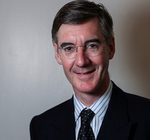
  • Jacob Rees-Mogg – 2020 Statement on Proceedings in Parliament

    Jacob Rees-Mogg – 2020 Statement on Proceedings in Parliament

    Below is the text of the statement made by Jacob Rees-Mogg, the Leader of the House of Commons, on 2 June 2020.

    I beg to move,

    That the resolution of the House of 21 April (Proceedings during the pandemic) be rescinded and the following orders be made and have effect until 7 July 2020:

    (1) That the following order have effect in place of Standing Order No. 38 (Procedure on divisions):

    (a) If the opinion of the Speaker or the chair as to the decision on a question is challenged, the Speaker or the chair shall declare that a division shall be held.

    (b) Divisions shall be conducted under arrangements made by the Speaker provided that:

    (i) Members may only participate physically within the Parliamentary estate; and

    (ii) the arrangements adhere to the guidance issued by Public Health England.

    (2) Standing Order No. 40 (Division unnecessarily claimed) shall not apply.

    (3) In Standing Order No. 41A (Deferred divisions):

    (a) At the end of paragraph (5)(a), insert “, provided that (i) Members may only participate physically within the Parliamentary estate; and (ii) the arrangements adhere to the guidance issued by Public Health England”.

    (b) In paragraph (5)(b) delete “two and a half hours” and insert “at least two and a half hours”.

    (c) In paragraph (5)(c) delete “after the expiry of the period mentioned in subparagraph (b) above”.

    (4) The Speaker or chair may limit the number of Members present in the Chamber at any one time and Standing Orders Nos. 7 (Seats not to be taken before prayers) and 8 (Seats secured at prayers) shall not apply.

    (5) Standing Orders Nos. 83J to 83X (Certification according to territorial application etc) shall not apply.

    The rationale for returning to physical proceedings is a straightforward one. Parliament is the assembly of the nation. The public expect it to deliver on the mandate provided by last year’s general election, and they expect it to conduct the kind of effective scrutiny that puts Ministers under real pressure. Neither expectation can be fully realised while we are not sitting physically. That is why we are returning to work safely at the first opportunity in order fully to conduct the essential business not possible from our homes. This assessment is based on the facts. The stopgap of a hybrid Parliament was a necessary compromise during the peak of the virus, but, by not being here, the House has not worked effectively on behalf of constituents. Legislating is a key function of Parliament, yet there has been no ability for legislative Committees to meet since 23 March. This means that, for 10 weeks, there has been no detailed line-by-line consideration of Bills that will affect people’s lives. I remind Members that, in the week commencing Monday 11 May, we had no debates on secondary legislation, no Public Bill Committees, and no Delegated Legislation Committees. There was significantly less time for debate—just 216 minutes of debate on primary legislation compared with the example of 648 minutes in a normal sitting week—and far less flexibility to ensure proper scrutiny of the Government.

    I should also like to remind Members that much of the business under the hybrid proceedings was deliberately arranged to be non-contentious. The time limits on scrutiny and substantive proceedings were also heavily restricted. This was to facilitate the smooth running of what was always a technically challenging arrangement. What was acceptable for a few short weeks would have proved unsustainable if we had allowed the hybrid proceedings to continue. This House plays an invaluable role in holding the Government to account and debating legislation, which can only properly be fulfilled when Members are here in person.

    Chris Bryant (Rhondda) (Lab)

    Will the right hon. Gentleman allow?

    Mr Rees-Mogg

    I was just about to talk about Members intervening time and again, so it is the perfect time for me to give way to the hon. Gentleman.

    Chris Bryant

    The Leader of the House will know, because he is an historian, that one of the ancient liberties of all Members of Parliament has been to attend.

    Such a liberty has been asserted even when the Crown has wanted to arrest people. The House has insisted that people should be allowed to attend, but at the moment, by law, there are many MPs who are banned from attending Parliament because they are shielding either themselves or others in their household. How can it possibly be right to exclude those people? How can it be a Conservative motion to exclude those MPs and thereby disenfranchise their communities?

    Mr Rees-Mogg

    Nobody is banned from attending Parliament by law. The ancient right of MPs, which dates back to 1340, entitles Members to attend. However, I accept that, for some Members with particular health conditions, it is very difficult to attend—

    Chris Bryant

    They are not allowed to attend.

    Mr Rees-Mogg

    No law exists that stops Members from attending Parliament.

    Chris Elmore (Ogmore) (Lab) rose—

    Mr Rees-Mogg

    I give way to the hon. Gentleman.

    Chris Elmore

    I am extremely grateful to the Leader of the House for giving way. Yesterday, in the public proceedings of the Procedure Committee, the question was asked directly of the Clerk, and the Clerk confirmed that Members are bound by the law outside of the particular Act to which the Leader of the House is referring. If, for example, a county, a part of the United Kingdom, or a nation was put into lockdown, the Member of Parliament would have to abide by that law, unless they were specifically exempt within that law—

    Madam Deputy Speaker (Dame Eleanor Laing)

    Order. We might have gone back to having interventions, but that does not mean that we can have long interventions.

    Mr Rees-Mogg

    The ancient right to attend Parliament goes back to 1340, and, as the hon. Member for Rhondda (Chris Bryant) pointed out, this is something that has been used against the Crown in the past. It is a most important and long-standing right. There must always be an exemption for Members to attend Parliament. What I was going on to elaborate is that I will be bringing forward, as I promised on 20 May, a motion tomorrow to allow Members who, on medical grounds, are unable to attend to continue to appear for scrutiny—questions, urgent questions and statements—remotely. That will be brought forward tomorrow, as I promised on 20 May when we discussed these matters in response to an urgent question.

    Mr Peter Bone (Wellingborough) (Con)

    As usual, the Leader of the House is making a strong statement, but on this particular point on voting, surely, as this is a recall of Parliament, every Member should have the right to vote today on whether to accept the new proceedings. Why, therefore, is today’s vote not being done remotely?

    Mr Rees-Mogg

    My hon. Friend is right. Every Member does have the right to vote. Members accepted that these measures would be temporary—that they would continue until they expired. One has to deal with these matters in good faith. It was put to Members, some of whom were very reluctant to accept remote voting, to agree to it on the basis that it was temporary. It expired, and therefore we come back automatically, without any motion, to physical voting.

    Andrew Griffith (Arundel and South Downs) (Con)

    Does my right hon. Friend agree with me that today there are low-paid clinical staff working in the NHS who are free of the surcharge as a result of this House having its voice heard? Does he therefore understand my incomprehension that Opposition Members want to continue with this “Coke Zero” Parliament for one more day, when we could resume our job of holding the Government to account?

    Mr Rees-Mogg

    My hon. Friend puts it extremely well. Lots of people are going back to work, and we have a role, as leaders within the country and within the community, to do that.

    Jim Shannon (Strangford) (DUP)

    Will the Leader of the House outline his intention with regard to ensuring that minority parties such as mine, the Democratic Unionist party, are able to speak directly from their constituency through the present system in this House on matters such as the upcoming debate on abortion? I would like to assume that at least some Northern Ireland MPs will be able to speak on this Northern Ireland legislation in Committee, as I understand it will be, ever mindful that this week the Northern Ireland Assembly will deliberate on this matter. Ministers, right hon. and hon. Members of this House want the Northern Ireland Assembly to make the decision, but if it has to be made in Committee here, it is important that we have an opportunity to have Northern Ireland MPs on that legislative Committee.

    Mr Rees-Mogg

    That is not really a point for today’s debate. I completely accept what the hon. Gentleman says about representation on Committees for minority parties, but that is really a matter for business questions rather than today’s debate. I might add that the voice of Strangford is always heard in this House, and that is our good fortune as Members of Parliament.

    Just before the hon. Member for Rhondda intervened, I was talking about having Members intervening, and we have seen in the past few minutes how that enhances, develops and evolves the debate. It ensures that Ministers are held to account, and allows the debating of amendments clause by clause in the Chamber, so that constituents’ views can be represented to Ministers; then to vote physically ensures that we are here, coming together as a single Parliament.

    Ian Paisley (North Antrim) (DUP)

    The Leader of the House is, of course, a strong advocate of the Union. He must appreciate that at the present time it is incredibly difficult and not at all straightforward for Members from Ulster to get here to the British mainland. As a result, I wonder whether he accepts that the social distancing queueing arrangements that are now to be trialled actually defeat to some degree the purpose of our having those debates, because they will eat so much into parliamentary time that we are eager to use for debate and cut and thrust.

    Mr Rees-Mogg

    The temporary measures that are to be used will mean that voting takes a little bit longer than using the ordinary Division Lobbies. That is true, but it will depend to some extent on how many Divisions right hon. and hon. Members demand—[Hon. Members: “Oh!”] I note a certain amount of caterwauling in the background, but I point out that a Division is not demanded on every item that comes before this House. If it were, the Budget resolutions would take a day to be passed. That is a perfectly routine matter. Members decide what they wish to vote on, and you, Madam Deputy Speaker, asked if notice could be given beforehand. Of course we will look for faster ways of providing for Divisions to take place.

    Why should Divisions be physical? Why is it important for votes to be physical? It is because we are coming here together as a single Parliament and voting on things that have a major effect on people’s lives. Every piece of legislation affects people’s lives one way or another. We should not vote quietly and secretly. Some people tweeted that they were doing it while going for a walk and things like that. Is that really the way to be voting on laws?

    Mr Alistair Carmichael (Orkney and Shetland) (LD)

    The principle in this House is that votes follow voices. The Leader of the House is telling us that tomorrow he will bring a motion to allow those who are medically not able to be here to have a voice. Why should they not have a vote to follow that voice?

    Mr Rees-Mogg

    The vote following the voice is the tradition that if you shout one way, you then cannot vote the other way. That is all that means in terms of that tradition. It means that if you shout “Aye”—

    Several hon. Members rose—

    Mr Rees-Mogg

    I will just explain this point and then of course I will give way. The votes follow the voice, in that if you have shouted “Aye”, you must not then vote No. You are allowed to move a motion and then vote against it, as long as you do not shout in favour of it. The hon. Member for Rhondda may be looking quizzical, but he might remember that the former leader of the Labour party—of Her Majesty’s Opposition—did exactly that within the past couple of years. This is a fairly routine procedure.

    Peter Kyle (Hove) (Lab)

    What we have seen from the Leader of the House’s performance today so far is the characteristic we have seen from the Government since the start: bending the rules to fit their own purposes. Anybody watching this debate impartially will now be confused about what this means for their own behaviour. He has said that tomorrow people can enter these debates virtually. If they have a medical reason not to be here but they can be here virtually, can he say precisely what is preventing their being able to vote virtually as well?

    Mr Rees-Mogg

    There are well-established procedures for people who cannot be here being paired, so that their opinion and that of their constituents has exactly the same effect as if they vote in person. The votes through pairing balance out, so the decision of the House remains identical.

    Patrick Grady (Glasgow North) (SNP)

    I assure the Leader of the House that right now there are lots of voices of Scottish National party Members he cannot hear because they are not in this Chamber and they will not be happy at all at the disenfranchisement of their constituents through what he is proposing. The Procedure Committee makes it clear that people should not have to disclose their medical condition in order to be able to participate in this House. What he is doing is embodying what people have seen as the practice of this Government in recent weeks: it is one rule for them and one rule for lots of other people.

    Mr Rees-Mogg

    The hon. Gentleman says that lots of SNP Members will not be happy. I have a nasty feeling that that is often the state of SNP Members, and I wish them every happiness. It is important that people follow the rules, and we are following the rules, because we said that people ought to go back to work if they cannot work effectively from home and that is exactly the position we are in.

    Jim Shannon

    Let me provide Members with an example. Flights for us from Northern Ireland to here are restricted. Two weeks ago, there were three flights out on a Monday but that was then reduced to two, and on other days there are no flights. Can Members have notice of when there will be debates in this House and when there will be votes in this House, because it is important that we are here to participate and actively vote when we can, and we need to know this in advance so that we can get a plane? The only plane over here for us yesterday left early in the morning, and that is to get us here for today.

    Mr Rees-Mogg

    Now that we are back to normal sitting hours, we will be sitting on Monday to Thursday with the usual sitting hours. A recess is scheduled, but I would not like to confirm that that date will be set in stone. It is at the end of July, so there will be plenty of notice if there is any change to it. We will have our normal sittings on Monday to Thursday. We are getting back to work. It is becoming business as normal.

    The temporary Standing Orders for remote voting were only ever temporary, and I do not think they would have been agreed had the scheme been put in place for longer; many people have always been opposed to remote voting, and we got a consensus for a brief period. I do not believe I would be acting in good faith if I were to extend it beyond the time that people understood when it was first introduced. It is important that we treat decisions of the House with the importance and accord that they deserve, and the decision was to do this on a temporary basis.

    Peter Kyle rose—

    Madam Deputy Speaker (Dame Eleanor Laing)

    Order. Before the hon. Gentleman makes another intervention, I should say that most people will not get to speak if there are lots of interventions. I will, however, allow him to make this one.

    Peter Kyle

    I am grateful, Madam Deputy Speaker, and this will be the last time. When the right hon. Gentleman introduced the motion that delivered the virtual Parliament—the hybrid Parliament—did he know then how long the coronavirus crisis would last?

    Mr Rees-Mogg

    I am not a prophet, so I would not dream of predicting those sorts of things.

    I have taken lots of interventions. In some ways I think this is a beneficial; it partly illustrates my argument about why Parliament needs to get back, and I appreciate that in a short debate interventions are sometimes just as useful for Members to be able to get in as getting half a minute at the end. If there are interventions, I will, by the leave of the House, carry on taking them.

    Every Division is important, and I would underline that. We should be confident that we are all individually doing the right thing and voting openly under the eyes of others; voting while enjoying a sunny walk or watching television does democracy an injustice. The solemn decisions we take together affect the lives of millions of people in this country. We ask Members to vote in person for a reason: because it is the heart of what Parliament is about.

    It remains essential that our work in this House is carried out in line with Public Health England advice. The Palace of Westminster we have returned to today is greatly changed from early March. The House authorities have carried out a risk assessment of the parliamentary estate to ensure it is a covid-19 secure workplace, in line with PHE guidance. Both its staff and its leadership, including particularly Mr Speaker, should be thanked and congratulated for the rapid progress that has been made.

    I understand the concerns of some hon. and right hon. Members about returning physically. Many Members have already passed on their views, but I want to make it clear to all those in the House, and those who are not here but are listening and maybe shielding at home, that I am always available to discuss and hear their concerns, and I will as far as possible—which is why I will be bringing forward the motion tomorrow—do what I can to help. It will be tabled today for approval tomorrow. Anyone who feels that they are required to shield because of age or medical circumstances should not feel under pressure to attend Parliament, and pairing and other mechanisms will be in place informally to facilitate this.

    Graham Stringer (Blackley and Broughton) (Lab)

    I agree with the Leader of the House about the nature of debate and response and making a decision at the end of that debate, but what argues against that is the practice of pairing, where the decision is taken before the debate. Many hon. Members want their constituents to know where they stand on issues. Why do we not put the pairing records on the record? [Interruption.]

    Mr Rees-Mogg

    I hear mutterings around the Chamber saying that that is a good idea. Unfortunately, neither the Chief Whip from the hon. Gentleman’s side or from my side is in the Chamber at the moment, and I think it might be useful to consult them before I make an off-the-cuff suggestion, but I can assure the hon. Gentleman, who is a wise and experienced parliamentarian, that I will pass his views on to the Chief Whip. Perhaps he would be so kind as to do the same to his own Chief Whip, and perhaps there could be a meeting of minds in that area.

    I have been working with the House authorities to see how MPs with underlying health conditions who have been told to shield or are receiving specific Government advice about their health may be able to continue to contribute to proceedings in this House. I mentioned this on 20 May and reconfirm that I will table a further motion later today on some virtual participation by hon. Members. As it happens, for this motion I have used some of the language in the amendment tabled by the shadow Leader of the House, to whom I give my thanks, and other Opposition Members to ensure that such participation is available for Members unable to attend Westminster for medical and public health reasons related to the pandemic.

    Turning to the motion itself, it may help if I briefly set out the Government’s approach. Today’s motion is the necessary paving step that gives the House the opportunity to signal how it wishes to conduct proceedings in the coming weeks. In response, I hope the House authorities will be able to complete the work already undertaken over the Whitsun recess, and I hope that hon. and right hon. Members will also find the explanatory note published alongside the motion helpful.

    The motion updates the House’s procedures relating to Divisions and attendance in the Chamber to ensure compliance with social distancing restrictions. These temporary changes to Standing Orders will be in force until 7 July 2020. The motion rescinds the resolution of 21 April, which provided an overarching framework for the temporary Standing Orders relating to hybrid proceedings. This resolution is no longer needed as the Standing Orders have now lapsed and we are returning to physical proceedings.

    Paragraphs (1) to (3) of motion 2 set out an approach to Divisions. If agreed by the House, Division arrangements will be set out by the Speaker and will adhere to Public Health England guidance—and I wonder if I may, through you, Madam Deputy Speaker, congratulate Mr Speaker on the work he has done to ensure and test a system for voting that meets the requirements of PHE; he has invested a lot of time in it to make sure that we have a system that will operate.

    Mr William Wragg (Hazel Grove) (Con)

    On this rather vexed issue of voting, could further consideration perhaps be given to the use of deferred Divisions? I understand the argument about consequential votes, but that could be dealt with quite simply by allowing them to drop away, and we would avoid any scenes that might bring us into a certain degree of disrepute.

    Mr Rees-Mogg

    I am grateful to my hon. Friend for the points that he has made. I assure him that the Government will listen carefully to any ideas that come forth from the Procedure Committee and from hon. Members in relation to how things can be improved and made more fluid in these difficult circumstances.

    The Government wish to ensure that the House continues to function in line with Public Health England advice. Paragraph (4) therefore ensures that the Speaker may limit the number of Members present in the Chamber at any given time, and disapplies the Standing Orders relating to the prayer card system. The Standing Order will be discontinued in order that the flow of Members in and out of the Chamber can be managed, but I reassure Members that Prayers themselves will take place at the start of each sitting day. Finally, paragraph (5) disapplies Standing Orders relating to English votes procedures, as double majority voting is likely to be incompatible with the arrangements for socially distanced Divisions.

    Let me now turn to the amendments tabled by the Opposition parties and the Procedure Committee. I reiterate my gratitude to the Procedure Committee—particularly my right hon. Friend the Member for Staffordshire Moorlands (Karen Bradley)—for its and her swift work, and welcome continuing discussions with that prestigious Committee. I used to be on it, which is why I think particularly highly of it; it is one of the most interesting Select Committees in the House.

    I hope that my commitment to bring forward tomorrow a Government motion to allow some participation in hybrid proceedings for those who are shielding demonstrates my commitment to ensuring safe participation for as many Members as possible, and that those amendments which seek to require some hybrid participation can be withdrawn on that basis.

    I have already set out the case against remote voting, but let me address the argument made by some Members that if a Member is not able to vote, they will be entirely disenfranchised. I do not accept that. There are many other ways in which MPs represent their constituents in Parliament, including through tabling written questions, writing correspondence, tabling amendments and attending hearings of Select Committees, which will continue. Select Committees can continue to meet remotely under the resolution that I brought forward in March and will continue to carry out their important work with Members participating from around the country. It is worth noting that the Liaison Committee very successfully quizzed the Prime Minister in this way, so scrutiny carries on in other ways too.

    I know that there has been concern about the operation of evidence sessions for Public Bill Committees. I hope that the House will welcome the fact that some specific witnesses to the Domestic Abuse Bill have been told that they will be able to give evidence remotely on Thursday, should they wish to. I was keen to ensure that this was possible. Some had assumed that it was not, but this concern turns out to be misplaced. The House has confirmed that under existing rules, witnesses can indeed give evidence remotely to Public Bill Committees in the same way that they have long been able to with Select Committees. It can therefore happen with no changes to the Standing Orders.

    I ask that the House agrees the motion today and considers the further motion that I will bring forward tomorrow. I have no doubt that the Procedure Committee will continue to keep our ways of working under review, and I welcome that. For my part, I very happily commit to continuing to do the same, in order that we can ensure that the House can continue to go about its business effectively and safely.

    Kevin Brennan (Cardiff West) (Lab)

    I apologise for not being here right at the beginning of the right hon. Gentleman’s remarks, but I did not know whether I would be able to get into the Chamber. If proxy voting is acceptable for somebody on maternity leave in principle, why is proxy voting not acceptable for somebody who is shielding in this extraordinary crisis?

    Mr Rees-Mogg

    The Procedure Committee is currently holding an inquiry into proxy voting and whether it is suitable to be extended. I am aware that the hon. Gentleman is asking me this question, but obviously this is a matter for consultation with the Procedure Committee. The drawback of proxy voting immediately is that the temporary system that we will be having will take longer anyway, and that would be particularly complicated by proxy voting. But is it a solution that is ruled out full time? No, I would say that it is not.

    It is important to emphasise that, with the hybrid Parliament, the commitments the Government made to the voters in December were clogged up. The Domestic Abuse Bill was not making progress—no Bill Committees were sitting—nor were the Fire Safety Bill, the Northern Ireland legacy Bill, the Fisheries Bill, the Trade Bill or the counter-terrorism Bill. What we do in this House is important and that we do it at a reasonable and efficient pace matters, and to do that we need to be here physically. I know, I understand and I sympathise that those Members who are shielding face difficult times. They are following advice that may prevent them from being here to vote, and that is difficult for them.

    Liz Saville Roberts (Dwyfor Meirionnydd) (PC)

    Could the right hon. Gentleman therefore confirm to me that the constituents of those MPs who have to shield are worth less and it is expected that they will be less well represented by this place?

    Mr Rees-Mogg

    I think the right hon. Lady makes entirely the wrong point. Parliament meets to represent the nation as a whole. We come here together not as ambassadors representing various powers; we come here as a United Kingdom Parliament. That is the nation—the United Kingdom—that we come here to represent, and we come here together. As a collective, we are a single United Kingdom Parliament and a strong legislative body that represents the whole people of the United Kingdom, and we each participate in that in our different ways on a daily basis.

    Ian Paisley

    The Leader of the House is absolutely correct on that point, but where it falls down is when Members are obstructed from actually getting here because there are not sufficient flights to bring Members to the House. That is where it falls down from Northern Ireland’s point of view. Will steps be taken, through the Government, with the airports and the airlines to ensure that Members from Northern Ireland can get here? Frankly, the issue of shielding, as far as I am aware, does not affect the eight Members who attend from Northern Ireland.

    Mr Rees-Mogg

    I am glad to see the hon. Gentleman in his place, and I absolutely appreciate that it is harder for some Members to get here than for others. I am very glad to see the Westminster leader of the SNP in his place, because his constituency is particularly far away from Westminster. I think he had a 16-hour journey to get here, and I think it shows a proper commitment to our parliamentary democracy that he is here. [Interruption.] Perhaps he is a secret Unionist, but it is a pleasure to see him here because we bring a Parliament together to have debate on the matters that are of concern to our constituents, and I absolutely accept that it is more difficult for some than for others.

    Justin Madders (Ellesmere Port and Neston) (Lab)

    Does the Leader of the House accept that we should be an exemplar of best practice, and when we are deliberately excluding people from portions of their responsibilities because of their disabilities we are in no position to tell employers who breach equalities legislation that they are in the wrong?

    Mr Rees-Mogg

    I have obviously looked at the equalities considerations in relation to this, and the Government and Parliament are completely in accordance with them, because it is necessary for us to meet here physically to do our business. That is in line with the Government’s guidelines. Which Bill does the hon. Gentleman not want us to have? Does he want to give up on the Domestic Abuse Bill? Does he want to give up on the Fire Safety Bill or the Northern Ireland legacy Bill? Are we going to get these Bills through?

    Steve Brine (Winchester) (Con)

    To introduce another subject, does the Leader of the House have a view about call lists during statements and urgent questions? Right now, it seems to me that they prioritise those who sit browsing MemberHub 24 hours a day, which I have to confess is not for me, to submit a request in a short window to be part of an urgent question or statement, as opposed to being here and persisting to catch the Chair’s eye.

    Mr Rees-Mogg

    I think the system of catching Mr Speaker’s eye is a preferable system, but needs must, because we can have only 50 Members in the Chamber at any one point. However, this is a temporary expedient, and some of the other courtesies and normalities are being suspended.

    Ian Blackford (Ross, Skye and Lochaber) (SNP)

    The Leader of the House just said that this was a temporary expedient, and that is absolutely right; we are living through a crisis. Difficulties have been expressed by our friends from Northern Ireland, myself—from Skye—and the right hon. Member for Orkney and Shetland (Mr Carmichael), and we should put that in the context of our having been able to participate over the course of the last few weeks and get on with our job of representing our constituents, when our mailbags have never been fuller. The likes of myself and the right hon. Gentleman are now having to give up 30 hours to get here and go back—what a waste of time when we could be acting professionally, staying at home, doing our job and questioning the Government remotely.

    Mr Rees-Mogg

    The problem is that we are not doing our full job. We are doing an important part of our job in dealing with constituents’ inquiries, but we are not doing the important job of legislating—of getting through the business that the Government committed to deliver in the general election. The right hon. Member for Walsall South (Valerie Vaz) says—[Interruption.] Don’t worry, I am saving up the hon. Gentleman. The right hon. Lady says that we are getting it done, but I remind her what I said at the beginning of the debate: we have had 216 minutes of debate on primary legislation compared with 640 minutes in a normal sitting week. We have been running at a third of normal legislative capacity. The job of Parliament is to deliver for the British people, and I ask again which Bill the hon. Lady would wish to sacrifice.

    Chris Bryant

    The Leader of the House has a very high Stuart understanding of what Parliament is here to do, which is, it seems to me, to do the Government’s bidding and legislate in the way that they want. But even the Stuarts, when King Charles II returned, in the Cavalier Parliament—of which the Leader of the House would have no doubt been a proud Member—insisted in the Treason and Seditious Practices Act that no MP should ever be denied

    “their just ancient freedom and privilege in debating any matters or business which shall be propounded or debated”.

    Even the Stuarts thought that there should not be anything put in our way in terms of participating. Why will he not just allow us to have remote voting until the summer recess?

    Madam Deputy Speaker (Dame Eleanor Laing)

    Order. Just before the Lord President answers the intervention, I am also concerned about the rights of as many Members as possible to participate this afternoon. Several Members have intervened more than once. Let us have a bit of restraint.

    Mr Rees-Mogg

    Sometimes the hon. Member for Rhondda makes the point for me more eloquently than I could have made it myself: there is an absolute right of Members to attend Parliament. It is a most antique right. It predates the Stuarts and, as I keep on saying, it goes back to 1340. Members may attend if they wish to.

    Ruth Cadbury (Brentford and Isleworth) (Lab)

    Has the Lord President done an estimation of the number of additional Members who will be kept away from this place if, after today, one of the people in this Palace tests positive? Therefore, any one of us—maybe all of us—may have to stay away for up to two weeks. Has he done that calculation and does he have a plan for what happens in that instance?

    Mr Rees-Mogg

    Well, the answer to that is: look around—if you seek a monument, look around. We are sitting six feet away from each other so that we are socially distanced, and therefore, if one right hon. or hon. Member has the coronavirus, in the track-and-tracing process we would not be notifying them about the people that we are sitting six feet away from. That is the whole point of social distancing. If we look on the floor, we see it says, “Please wait here until the person in front has moved forward”, and that goes back and back at six feet intervals all the way through, so that this can be done on a socially distanced basis, in line with Public Health England guidelines. I am very grateful to the hon. Lady for pointing out how well the House service has done in setting this out in a way that can continue to ensure that Members may turn up.

    Let me continue my conclusion. There are many things that make the lives of MPs difficult, and I am not trying to pretend that this is not the case, but we none the less have a duty to the country and voters to fulfil both our collective constitutional function and our individual roles. The collective of Parliament requires that we return physically so we can allow proper redress of grievance, hold the Government to account, deliver on the mandate provided at the election and pass the important Bills that I have listed. I have no doubt that there will be some teething problems with the voting system today. It may be some time until—

    Liz Saville Roberts rose—

    Mr Rees-Mogg

    How can I refuse the leader of the Welsh nationalists?

    Liz Saville Roberts

    The Leader of the House said earlier that witnesses giving evidence to the Domestic Abuse Bill Committee could attend from afar. I have contacted the witness I invited, who told me that he could not attend from afar because he could not contribute through video, which he takes as discriminating against people who have to travel to London because he cannot stay in a hotel here. I would like the Leader of the House to be clear on what the situation is.

    Mr Rees-Mogg

    The House authorities have made possible virtual participation in the Bill Committee’s proceedings, and it is up to individual witnesses whether they wish to take that up or not. That was always available under the ordinary systems used for some time by Select Committees. It applied to Public Bill Committees as well.

    As I was saying, I do expect some teething problems with the voting system today, and it will be some time before our proceedings are fully restored, but in the meantime we must act to minimise the disruption.

    Chris Bryant

    Have you ever been to Alton Towers?

    Mr Rees-Mogg

    Indeed I have—I took my sister Annunziata there many years ago. [Interruption.] Anyway, enough of my reminiscences. It is important that we protect, preserve and prioritise our parliamentary democracy. It has to continue, regardless of the disease that is afflicting the nation.

    Mr Bone

    On a point of order, Madam Deputy Speaker. I know that it is unparliamentary for someone to filibuster, but when there is a 90-minute debate and it has taken this long—

    Madam Deputy Speaker (Dame Eleanor Laing)

    Order. I thank the hon. Gentleman, but I do not need his point of order. I have been trying to move the debate forward, but Members are so excited at being back here and being allowed to intervene that they are doing it far too often. No more interventions.

    Mr Rees-Mogg

    The interventions prove my point: we need interventions to make Parliament work properly. We need proper debate. We need to be back. We need to have a proper, full-blooded democracy, and that is what we are getting.
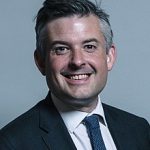
  • Jonathan Ashworth – 2020 Speech on the Covid-19 Response

    Jonathan Ashworth – 2020 Speech on the Covid-19 Response

    Below is the text of the speech made by Jonathan Ashworth, the Labour MP for Leicester South, in the House of Commons on 2 June 2020.

    There have now been 56,308 excess deaths since the beginning of March, 12,500 of which are not related to covid, but we do have one of the worst excess death rates in the world—why does the Secretary of State think that is? What does he believe is the cause of the non-covid excess death rate?

    With respect to the PHE’s findings, which I am pleased to see published today, we have always known that there is a social gradient in health. The poorest and most deprived have inequality in access to healthcare and inequality in health outcomes. What the Secretary of State has confirmed today is that covid thrives on inequalities. Yes, indeed, black lives matter, but it is surely a call to action that black, Asian and minority ethnic people are more likely to die from covid and more likely to be admitted to intensive care with covid. He has seen the findings. I note that the Equalities Minister is taking work forward, but what action will be taken to minimise risk for black, Asian and minority ethnic people?

    There are other vulnerable groups who are highly at risk. I am sure the Secretary of State will have seen today the Care Quality Commission report which shows a 134% increase in deaths of people with learning disabilities. Surely it is now time to expand testing to those under 65 in receipt of adult social care.

    On the easing of restrictions, the Secretary of State said that this was a sensitive moment—well, quite, Mr Speaker. Our constituents have concerns and are looking for reassurance, particularly those in the shielding group. They really should not have had to wake up on Sunday morning to find out that they could now leave the house once a day. They need clarity and details. And why were GPs not informed in advance?

    We are still at around 50,000 infections a week, so may I press the Secretary of State a bit further on the easing of restrictions? The biosecurity level remains at 4, but his own Command Paper from 11 May said that changes to lockdown

    “must be warranted by the current alert level”.

    At the Sunday news conference, the Secretary of State for Housing, Communities and Local Government said that all the proposed easing of restrictions had been modelled and showed that the R value remained below 1. That is, of course, reassuring, but will he now publish that modelling so that it can be peer-reviewed?

    The easing of restrictions was based on tests, so may I ask the Secretary of State a couple of questions? First, on NHS capacity, we know that the NHS has not been overwhelmed, but that has been on the back of cancelled planned surgery, delays to vital treatment, and the postponing of cancer screening. Arguably, it has been the biggest rationing exercise in the history of the NHS. Will he now publish the total number of planned operations that have been cancelled and detail them by procedure? As the lockdown is eased, is it his intention to step down some of that surge capacity so that this backlog of clinical need can start to be tackled?

    On managing the virus, one of the tests is on whether we can manage the virus, but, as the Secretary of State has said, that depends on testing and tracing. There is now capacity for more than 200,000 tests, but there is still a lack of clarity about how that figure is arrived at. The UK Statistics Authority has written to him today, saying that his figures are still

    “far from complete and comprehensible”,

    that the testing statistics still fall well short of standards in the code, and that it is not surprising that testing data is mistrusted. That is quite damning, I have to say to him. Will he start publishing again the actual numbers of people tested? Will he stop counting tests mailed to homes as completed? Will he detail what proportion of the 200,000 tests are diagnostic PCR, what proportion are antibody, and what proportion are surveillance? Can he tell us how many care home staff and residents have been tested? When will he start weekly testing of all NHS staff, as that is crucial for getting on top of infections in hospitals? Will he tell us what percentage of the Deloitte-run testing facilities have been sent to GPs?

    On test and trace, which is absolutely vital to safe easing out of the lockdown, the Prime Minister told the House before the recess that it would be “world-beating” and operational by yesterday, but it is not actually fully operational at a local level, is it? Can the Secretary of State confirm that local directors of public health have been told to prepare strategies for tracing with a deadline of the end of June, that they will not actually start receiving local individual data until next week, and that many have still not been told their allocations of the extra £300 million nor what they can spend it on? When will they get those allocations? Despite this, he said yesterday that test and trace is up and running. I am not sure how he can say that it is up and running when local directors of public health are still asking for that information. Will he publish the data and what percentage of infections have been contacted and how many contacts have been followed up? Will that data be published on a daily basis?

    This is a crucial week, given the easing of restrictions, and our constituents want reassurance and clarity, but I am afraid that trust has been undermined by the Dominic Cummings scandal. Our constituents want to do the right thing for their loved ones and their neighbours. Can he give them those reassurances today?

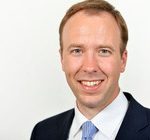
  • Matt Hancock – 2020 Statement on the Covid-19 Response

    Matt Hancock – 2020 Statement on the Covid-19 Response

    Below is the text of the statement made by Matt Hancock, the Secretary of State for Health and Social Care, in the House of Commons on 2 June 2020.

    With permission, I would like to make a statement on coronavirus.

    Thanks to the collective determination and resolve of the nation, we are winning this battle. We have flattened the curve, we have protected the NHS, and together we have come through the peak. Yesterday, I was able to announce that the level of daily deaths is lower than at any time since lockdown began on 23 March. Today’s Office for National Statistics data show that the level of excess mortality is also lower than at any time since the start of lockdown, falling on a downward trend. The ONS reports 12,288 all-cause deaths in England and Wales in the week ending 22 May. That is down from 14,573 in the previous week. That latest figure is still above the average for this time of year and we must not relent in our work to drive it down, but it is now broadly in line with what we might typically see during the winter. We never forget that each of those deaths represents a family that will never be the same again. This House mourns each one.

    We are moving in the right direction, but this crisis is very far from being over and we are now at a particularly sensitive moment in the course of the pandemic. We must proceed carefully and cautiously as we work to restore freedom in this country, taking small steps forward and monitoring the result, being prepared to pause in our progress if that is what public safety requires. So today I would like to update the House on two important aspects of the action we are taking.

    First, NHS Test and Trace is now operational. That means we have updated our public health advice. Since the start of the crisis, we have said to people that you must wash your hands, self-isolate if you have symptoms, and follow the social distancing rules. All those remain incredibly important, but there is a new duty—and it is a duty—that we now ask and expect of people. If you have one of these symptoms—that is: a fever; a new, continuous cough; a change in your sense of taste or smell—you must get a test. We have more than enough capacity to provide a test for anyone who needs one and we have more than enough capacity to trace all your contacts. So, to repeat: if you have symptoms get a test. That is how we locate, isolate and control the virus. By the way, I make no apology for this overcapacity. The fact that we have thousands of NHS contact tracers on standby reflects the fact that transmission of the virus is currently low. If we were in a position where we needed to use all that capacity, it would mean that the virus was running at a higher rate—something that no one wants to see.

    Secondly, I want to update the House on the work we are doing to understand the unequal and disproportionate way that this disease targets people, including those who are from black or minority ethnic backgrounds. This is very timely work. People are understandably angry about injustices, and as Health Secretary, I feel a deep responsibility, because this pandemic has exposed huge disparities in the health of our nation. It is very clear that some people are significantly more vulnerable to covid-19, and that is something I am determined to understand in full and take action to address.

    Today, I can announce that Public Health England has completed work into disparities in the risks and outcomes of covid-19, and we have published its findings. PHE has found the following. First, as we are all aware, age is the biggest risk factor. Among those diagnosed with covid-19, people who are 80 or older are 70 times more likely to die than those under 40. Being male is also a significant risk factor. Working-age men are twice as likely to die as working-age women. Occupation is a risk factor, with professions that involve dealing with the public in an enclosed space, such as taxi driving, at higher risk. Importantly, the data show that people working in hospitals are not more likely to catch or die from covid-19.

    Diagnosis rates are higher in deprived or densely populated urban areas, and we know that our great cities have been hardest hit by this virus. This work underlines that being black or from a minority ethnic background is a major risk factor. That racial disparity holds even after accounting for the effects of age, deprivation, region and sex. The PHE ethnicity analysis did not adjust for factors such as comorbidities and obesity, so there is much more work to do to understand the key drivers of these disparities, the relationships between the different risk factors and what we can do to close the gap.

    I want to thank Public Health England for this work. I am determined that we continue to develop our understanding and shape our response. I am pleased to announce that my right hon. Friend the Equalities Minister will be leading on this work and taking it forward, working with PHE and others to further understand the impacts. We need everyone to play their part by staying alert, following the social distancing rules, isolating and getting a test if you have symptoms. We must not relax our guard but continue to fight this virus together. That is how we will get through this and keep driving the infection down. I commend this statement to the House.

  • Lisa Nandy – 2020 Speech on Hong Kong

    Lisa Nandy – 2020 Speech on Hong Kong

    Below is the text of the speech made by Lisa Nandy, the Shadow Foreign Secretary, in the House of Commons on 2 June 2020.

    I thank the Foreign Secretary for coming to the House to make this statement and for advance sight of it. In particular, I thank him for the sentiment of solidarity that he expressed at the end of his statement.

    We are deeply concerned about events in Hong Kong. We share the Government’s opposition to the national security law. We want to see real action to address police brutality and the steady erosion of the joint declaration. We want the people of Hong Kong to know that the world is watching. We also want them to know that the world is prepared to act. Can I press the Foreign Secretary for more clarity on BNO passport holders? We welcome the announcement that visa rights will be extended. He says that they will be able to come to the UK if China continues down this path and implements this legislation. Will he tell us at which stage he envisages our taking action? When will these measures be brought before the House? I also ask him for more details about how this will apply. Will it apply to the 350,000 people who hold valid passports, or to the 2.9 million who are eligible? For this to be meaningful, surely it has to apply to people’s families. Will he confirm whether this is the Government’s intention, and what assessment he has done of the numbers?

    The first rule of any sanction against China must surely be that it does not harm the people of Hong Kong. Will he tell us what assessment he has made of the potential loss of millions of highly skilled people from Hong Kong; and what assessment he has done of the USA’s recent announcement, which I understand he supports, that Hong Kong is no longer autonomous? Will he therefore support the withdrawal of trade preferences and economic sanctions? There are implications for China and, of course, implications for the UK, but there are also serious implications for the people of Hong Kong, many of whom he does not appear to be offering safe haven to. What impact does he believe that that will have on them?

    We have been asking for concrete steps, and I welcome the fact that the Government are now signalling that they are prepared to take these, but the joint declaration has been repeatedly undermined since 2012. As the former Governor of Hong Kong put it, that has been met with only “tut-tutting” and “embarrassed clearing of the throat” from UK Ministers. Why has the Foreign Secretary not pressed for an independent inquiry into police brutality? Given the serious implications for human rights, does he welcome, as we do, the suggestion by former Foreign Secretaries that an international contact group should be established? He knows that the only long-term solution to this is universal suffrage. We must see pressure from Britain on the Hong Kong authorities to begin the process of democratic reform.

    I was astonished that, in his statement, the Foreign Secretary did not address how the UK intends to respond to the threat of countermeasures by China. It is increasingly clear that we need an alliance of democracies to ensure that we can maintain, as he says, a constructive dialogue with China on shared challenges, not least on climate change, while standing up to aggressive behaviour and clear breaches of international law. He referenced the statements by the UK, Australia, Canada and the US, which was welcome, and the additional statements from New Zealand, Japan and the European Union. It is time for an international democratic alliance to come together and speak with one voice. The G7 is now off. The G20 is not meeting. The discussion at the UN Security Council has been blocked by China.

    It is time for Britain to be far more proactive. In recent weeks, Australia has shown real leadership on the search for a vaccine for covid-19 and France has led the charge for a global ceasefire. On this of all issues, why is Britain not stepping up and showing the leadership the world needs?

    Finally, I am concerned that this exposes some serious, deep contradictions in the Government’s approach to China. For a decade, we have been told that we are in a “golden era” of Sino-British relations, whereas the right hon. Gentleman has said that we cannot go back to “business as usual” with China. What does any of this mean in practice? The Government have finally accepted that there are concerns about the threat the Huawei contract poses to national security and are reportedly working with other countries to explore an alternative, but will he rule out Chinese involvement in any new nuclear projects beyond Hinkley? With a long and deep recession likely, the need for a coherent approach is only becoming more urgent. We do not have a strategy abroad. We do not have a strategy at home. This needs a calm and sensible approach, to maintain a constructive dialogue and build far greater strategic independence; the two are not contradictory but go hand in hand. Now is the moment that Britain must step up, show global leadership and begin to take this seriously.

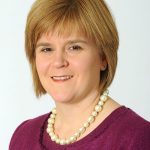
  • Nicola Sturgeon – 2020 Statement on the Coronavirus

    Nicola Sturgeon – 2020 Statement on the Coronavirus

    Below is the text of the statement made by Nicola Sturgeon, the Scottish First Minister, on 2 June 2020.

    Good afternoon everyone. Thank you for joining us.

    I’ll start as always with an update on the current position in relation to COVID-19.

    As at 9 o’clock this morning, there have been 15,471 positive cases confirmed – which is an increase of 53 from the figures I gave you yesterday. However, I need you to note today that this figure of 53 includes 40 older positive test results, which have only been received today and are being added to the overall total now.

    A total of 1,168 patients are currently in hospital with either confirmed or suspected COVID-19 and that is an increase of 122 from yesterday.

    However, please note that the number of confirmed cases in hospital actually decreased by 23 compared to the figures yesterday.

    A total of 34 people last night were in intensive care with confirmed or suspected COVID-19. That is an increase of 7 since yesterday – all 7 of those are suspected cases at this stage, not confirmed cases.

    I am also able to confirm today that since 5 March, a total of 3,721 patients who had tested positive and required admission to hospital for the virus have now been able to leave hospital.

    And unfortunately, in the last 24 hours, 12 deaths have been registered of patients confirmed through a test as having COVID-19 – that takes the total number of deaths in Scotland, under that measurement, to 2,375. Of course, tomorrow we will have the weekly report from National Records of Scotland which includes confirmed and suspected deaths from the virus.

    Each one of these of course is an individual whose loss is being grieved and mourned by many. I want again today, to send my condolences to everyone who has lost a loved one to this illness.

    Lastly, on statistics I can confirm that the latest report on delayed discharges has been published today. That includes details on the number of older people discharged from hospitals – where they had no clinical need to be – to care homes. In April that figure was 510. An additional 600 were discharged during April to their own homes.

    In addition to thanking our health and care workers – as I do again today from the bottom of my heart – there are two other groups I want to pay tribute to and these groups are relevant to the two substantive issues I want to cover today.

    The first group is our unpaid carers, who of course provide vital support to family, friends and neighbours at all times. This pandemic has been an especially stressful time for many of them, and I want to thank each and every one of them, you if you are watching, for your efforts.

    One of the ways in which the Scottish Government has already acted to support carers, is by establishing a Carer’s Allowance Supplement – worth £460 a year. The supplement is paid to around 83,000 people across the country who receive Carers’ Allowance – people who are on low incomes, and who provide 35 hours or more of unpaid care to a child, or to an adult on disability benefits.

    Last month, we announced that these carers will receive a further Coronavirus supplement of £230. Parliament approved our plans two weeks ago, and so people who are eligible will receive this payment at the end of this month, together with their normal Carer’s Allowance Supplement.

    The specific date of payment will be confirmed in the next few days. Let me stress now, if you are eligible, you don’t need to do anything to receive this Coronavirus supplement – it will be paid to you automatically at the end of the month.

    I know that this pandemic has been really hard for everyone but it has been very hard for carers emotionally – you are inevitably concerned about your own health, and the health of the people that you are caring for. However in many cases, it has also been very difficult financially. This extra payment is one way of providing you with some additional help – but is also an important way of us acknowledging the help and care that you provide to others.

    I also want to acknowledge that this week is Volunteers Week – that’s an opportunity for all of us to highlight and celebrate the service of volunteers in communities the length and breadth of the country.

    Of course, like unpaid carers, the efforts of volunteers are important at all times, but the Covid outbreak has demonstrated once again just how much they contribute. The Scotland Cares campaign, which you will recall we launched at the end of March, received more than 80,000 sign-ups in total. More than 60,000 of those were from people who wanted to volunteer through the British Red Cross or through Volunteer Scotland.

    Some have been shopping for their neighbours – making sure people get the food and prescriptions and other essentials they need – others have been making befriending calls, or providing emotional support, to isolated or lonely people.

    Some are directly helping with the response to COVID-19, and others are volunteering through long-standing community organisations.

    There are also some people who signed up who may not have been asked to volunteer yet, but you may well be needed in the future – for example in supporting people who are asked to self-isolate under the “test and protect” system.

    And of course, alongside the tens of thousands of people who have signed up under the Scotland Cares campaign, there are hundreds of thousands of people and many of you watching will be amongst that number who have been volunteering for years and in some cases for decades.

    There are also, I know, many of you who are maybe not formally recognised as volunteers, but who have been performing important acts of kindness for neighbours and friends for a long, long time. I want to say how grateful I am, and how grateful the Scottish Government is to each and every single one of you.

    Our national response to Covid depends on people being prepared to look out for each other and show solidarity with each other. Volunteers are an essential and highly valued part of that collective national effort.

    Of course, each and every one of us has a part to play in that effort. And it remains the case, that the best way in which each of us can show solidarity with each other, is by sticking to the rules and the public health guidance.

    That is the point I want to end on this afternoon.

    You should still be staying at home most of the time right now, and you should still be meeting fewer people than normal.

    I’d ask all of you to consider whether or not your life feels as if it is going back to normal? I’m sure that’s not the case but if it is, perhaps you should think about whether you are following all of the public health guidance because unfortunately, and regrettably, our lives shouldn’t feel completely normal right now.

    When you do meet people from another household, when you are away from home, you should stay outdoors at all times, and you should stay 2 metres apart from people in other households.

    Now you might be reading or hearing in the media today some voices saying that 1 metre is sufficient – so I want to take the opportunity today to stress that the clear and strong advice from the Scottish Government is to stay 2 metres apart from those in other households.

    Don’t meet up with more than one other household at a time, don’t meet more than one a day – and please keep to a maximum, and I stress, a maximum of 8 people in a group.

    Remember to wash your hands often. That is actually more important as you start to meet, albeit at a physical distance, with people from other households. So wash your hands often and thoroughly. If you’re away from your home, out and about, please remember to take hand sanitiser with you.

    Wear a face covering when you are in shops or on public transport. And again, I want to make a direct appeal to you here, if you haven’t been wearing a face covering so far when you’re in a shop or on public transport or in other enclosed spaces, I’m asking you to please think about doing so now. Because it can offer some protection to other people, it protects them from you transmitting the virus to them if you have it perhaps without knowing it and other people who wear a face covering are offering you some protection as well. So again, it’s something all of us can do to protect each other.

    Remember to avoid touching hard surfaces – and when you do touch a hard surface remember to clean it.

    And if you have symptoms of COVID-19 – a new, continuous cough; a fever; or a loss of, or change in, your sense of smell or taste – you should get tested, and follow the advice on self-isolation.

    I want to underline that point today as well. The success of our test, trace and isolate system – Test & Protect – depends on everyone with symptoms coming forward and getting tested.

    So if you do experience symptoms – please do not delay – do not do that thing that sometimes in normal times all of us do, wait to see if we feel better after a day or so. The moment you start to experience these symptoms, book a test at nhsinform.scot or you can phone NHS 24 on 0800 028 2816.

    It is really important that if you experience those symptoms, a cough, fever, a loss or change in sense of taste or smell then you come forward and book a test.

    Above all else, and this is my final point, please remember that the individual decisions that all of us take right now have an impact far beyond our own health and wellbeing – our individual decisions right now affect the wellbeing of our families, our communities, indeed they affect the wellbeing of the entire country.

    The Scottish Government’s responsibility to lead the country through this pandemic and to take all of the appropriate practical steps we need to take is a responsibility we and I, personally take very seriously.

    But the truth is that our success or failure in suppressing this virus and keeping it suppressed will also depend on all of us as individual citizens and it will depend on our collective efforts as a society.

    We must all continue to do the right thing by each other – by following all the rules and following all of the public health guidance.

    I want to stress today that if we all do that, we will continue to slow down the spread of this virus and we will save lives. So my thanks to each and every one of you for doing that so far and I ask you to continue to do the right thing.

  • Nicola Sturgeon – 2020 Statement on the Coronavirus

    Nicola Sturgeon – 2020 Statement on the Coronavirus

    Below is the text of the statement made by Nicola Sturgeon, the Scottish First Minister, on 1 June 2020.

    Good afternoon. Thanks for joining us for today’s briefing.

    I want to start by providing provide an update, as I always do, on the current position in relation to Covid-19.

    As at 9 o’clock this morning, there have been 15,418 positive cases confirmed – an increase of 18 from yesterday.

    A total of 1,046 patients are in hospital with confirmed or suspected Covid-19. That represents a total decrease of 27 from yesterday, including an increase of 3 in the number of confirmed cases.

    A total of 27 people last night were in intensive care with confirmed or suspected Covid 19. That is the same as the figure yesterday.

    I am also able to confirm today that since 5 March, a total of 3,695 patients who had tested positive and required hospital treatment for the virus have been able to leave hospital.

    And unfortunately, in the last 24 hours, 1 death has been registered of a patient who had been confirmed through a test as having Covid-19 – that takes the total number of deaths in Scotland, under that measurement, to 2,363.

    That figure should be treated with some caution. Although deaths can be registered at weekends, registration numbers are usually relatively low at the weekend and they can be especially low on a Sunday.

    For example, just to illustrate that point, last week I reported 3 deaths on Monday, but then reported 18 deaths on Tuesday. That should be taken into account when looking at today’s figure.

    And of course we must always remember that these numbers are not simply statistics. They represent unique and irreplaceable individuals whose loss is mourned by many. I want to send my condolences to everyone who has lost a loved one to this virus.

    I also want to express once again my deep thanks to our health and care workers. You are doing incredible work in exceptionally challenging circumstances, and all of us owe you a debt of gratitude.

    The statistics that I have just read demonstrate the real progress we have made together against the virus. There are now far fewer people in hospital and in intensive care than at the peak of the outbreak.

    But these statistics also demonstrate how fragile that progress is. There are still hundreds of people in hospital and suffering from this virus. There are still new infections in many health board areas. And it is still the case that every day, I have to stand here and confirm further loss of life.

    The fact is the virus is being suppressed – but it has not gone away, and it is still extremely dangerous. Indeed, our routemap out of lockdown expressly recognises that during phase 1, which we entered on Friday, there is still a high risk that the virus is not yet contained.

    We all must understand that and continue to remember it.

    I know that in the last three days, many of you have had long-awaited reunions with family, friends and loved ones. I really hope you enjoyed that – and enjoyed the lovely weather too.

    I also know that the vast majority of people stuck to the rules when having those reunions and I want to thank you sincerely for that – you stayed outdoors in small groups, and you stayed more than 2m away from other households. So again my thanks to you for that.

    However it is also clear that over the weekend not everyone stuck to the rules. I’m told by the police that on Saturday alone there were 797 dispersals and that is people being moved on for not complying with the rules. To give some content to that, that 797 is five times higher than the figure the previous Saturday.

    And there were clearly cases where, despite the guidance we have issued, people were driving more than 5 miles to beauty spots. In some cases, people were staying overnight in tents, caravans or motorhomes.

    Some of the early statistics we have from Transport Scotland are especially concerning.

    Overall, transport yesterday was 70% up from the previous Sunday. Transport on Saturday was 60% up on the week before.

    In some places – like Loch Lomond and Glencoe for example – the increase was even more dramatic.

    On Saturday, on the A82 by Loch Lomond, traffic was around 3 times higher than the previous Saturday. We saw a similar picture around Glencoe.

    I’m going to be blunt here – it is very hard to see how all of that can have been caused by local residents, or by people travelling a reasonable distance to meet loved ones.

    So we will be considering all of this as we continue to assess the impact of the Phase 1 changes.

    Last week we deliberately allowed some flexibility when we changed the lockdown restrictions. We recommended that people don’t travel more than 5 miles for recreation, but we left room for some discretion so that you could go further to visit family.

    And we strongly recommended that when two households meet, there should be no more than eight people in total in a group – but again, we put that into guidance rather than putting it in law, because we trust, and continue to trust, the majority to keep those groups small and to stay within the rules.

    But it is worth being clear, in fact I have a duty to be clear with you, that if there is continued evidence of even a minority not abiding by those guidelines and travelling unnecessarily – if people meet up in larger groups or make journeys which risk spreading the virus – we will have to put those restrictions, on group size and travel distance, into law. And we won’t hesitate to do so if we think it is necessary for the collective safety and wellbeing of the nation.

    I should make clear, of course, that the stipulation that no more than two households can meet at any one time is already the law, and if need be, it will be enforced.

    And I also want to remind you that the two households should keep 2 metres apart from each other, not share food or utensils, and not go inside each others’ houses.

    And the reason I’m stressing all of this – the real danger we still face – is not because I want to be imposing these restrictions but it is because the progress we have made so far in tackling Covid-19 is not guaranteed and it is not irreversible. Cases could increase again, it won’t take too much for that to happen, rather than continuing to decrease. And if that happens then that will result in more loss of life.

    And if all of that happens restrictions will have to be reimposed, rather than being relaxed. None of us want that. But the only way of avoiding it, is for all of us to comply with the rules.

    Unless you are an essential worker, or work in one of the categories now permitted to be at work – you should still be spending the majority of your time at home.

    You should still be seeing far fewer people than you might normally do. And those meetings you are now able to have – and your life more generally – still should not be feeling normal.

    That basic point applies to everyone. I know that young people, for example, will be hugely frustrated after weeks in doors, and will be desperate to spend more time with friends in the park or at the beach. Young people may also think they are generally less likely to become very seriously ill as a result of this virus.

    I want to say very directly to young people, this virus can still be harmful to you. And even if you yourself are not adversely affected, you can still pass the virus on to other young people, and then some of them may pass it on to others – for example parents or grandparents – who are at greater risk of becoming seriously ill. So please think about that wider interest when you are considering your own behavior in the days and weeks to come.

    All of us want to be able to lift more restrictions, so that we can meet friends in more normal circumstances. We also want to be able to restart NHS services, as the Health Secretary spoke about yesterday – and to allow people to get back to work, school or study.

    But we can only do this if we keep driving the overall level of Covid infections down, and if we continue to suppress the spread of the virus. And we can only do that, if people continue to stick to the rules.

    So please, if I can conclude again by reminding you of what we are asking everybody to do:

    Only meet people from other households outside – because the risk of transmission outside is lower than the risk of transmission indoors – and even outdoors stay 2 metres apart from the other household when you do meet.

    Don’t meet with more than one other household at a time, don’t meet more than one a day and keep to a maximum of 8 people in a group.

    Wash your hands often. Take hand sanitiser with you if you are out and about.

    Please wear a face covering when you are in shops or on public transport or other enclosed spaces where physical distancing might be more difficult.

    Avoid hard surfaces – and clean any you do touch.

    And if you have symptoms, get tested and follow the advice on self isolation.

    Above all, more generally – and this applies to each and every one of us – let’s remember that each decision we take as an individual, affects the safety and wellbeing of us all.

    I know that that’s difficult. I understand just as much as anybody does the desire to see more people, and to travel outside your local area.

    But if we all stick to these rules we are helping to suppress this virus. But if even just a few of you don’t stick to these rules, we are providing a chance for the virus to spread more quickly, and to spread to different parts of the country.

    We need to continue to do the right thing, and to do right by each other. I know that the vast majority of you are doing that. Again, I want to sincerely thank you for that.

    My appeal goes to everybody across the whole population. Let’s stick together and let’s all do the right thing for the benefit of ourselves and each other.

  • Dominic Raab – 2020 Statement on Hong Kong

    Dominic Raab – 2020 Statement on Hong Kong

    Below is the text of the statement made by Dominic Raab, the Foreign Secretary, in the House of Commons on 2 June 2020.

    I would like to update the House on the situation in Hong Kong. As all Members will know, Hong Kong’s historic success was built on its autonomy, its freedoms and the remarkable resourcefulness and determination of its people. We have long admired their prosperity and their values, respected through China’s own expression of the one country, two systems approach—an approach that China itself has long articulated and affirmed as the basis for its relations with Hong Kong. The UK, through successive Governments, has consistently respected and supported that model, as reflected both in China’s Basic Law and also the joint declaration, which, as Members will know, is the treaty agreed by the United Kingdom and China, registered with the United Nations, as part of the arrangements for the handover of Hong Kong that were made back in 1984.

    Set against this Chinese framework and the historical context, on 22 May, during a meeting of the National People’s Congress, China considered a proposal for a national security law for Hong Kong, and then on 28 May the National People’s Congress adopted that decision. China’s Foreign Minister, State Councillor Wang Yi, made it clear that the legislation will seek to ban treason, secession, sedition and subversion, and we expect it to be published in full shortly.

    This proposed national security law undermines the one country, two systems framework that I have described, under which Hong Kong is guaranteed a high degree of autonomy with Executive, legislative and independent judicial powers. To be very clear and specific about this, the imposition of national security legislation on Hong Kong by the Government in Beijing, rather than through Hong Kong’s own institutions, lies in direct conflict with article 23 of China’s own Basic Law and with China’s international obligations freely assumed under the joint declaration. The Basic Law is clear that there are only a limited number of areas in which Beijing can impose laws directly, such as for the purposes of defence and foreign affairs, or in exceptional circumstances in which the National People’s Congress declares a state of war or a state of emergency.

    The proposed national security law, as it has been described, in terms of the substance and detail, raises the prospect of prosecution in Hong Kong for political crimes, which would undermine the existing commitments to protect the rights and freedoms of the people of Hong Kong, as set out in the joint declaration, but also reflecting the international covenant on civil and political rights. Finally, the proposals also include provision for the authorities in Hong Kong to report back to Beijing on progress in pursuing national security education of its people—a truly sobering prospect.

    We have not yet seen the detailed published text of the legislation, but I can tell the House that if legislation in those terms is imposed by China on Hong Kong, it would violate China’s own Basic Law. It would upend China’s one country, two systems paradigm, and it would be a clear violation of China’s international obligations, including those made specifically to the United Kingdom under the joint declaration.

    Let me be clear about the approach that the United Kingdom intends to take. We do not oppose Hong Kong passing its own national security law. We do strongly oppose such an authoritarian law being opposed by China, in breach of international law. We are not seeking to intervene in China’s internal affairs, only to hold China to its international commitments, just as China expects of the United Kingdom. We do not seek to prevent China’s rise—far from it. We welcome China as a leading member of the international community, and we look to engage with China on everything from trade to climate change. It is precisely because we recognise China’s role in the world that we expect it to live up to the international obligations and the international responsibilities that come with it.

    On Thursday, working closely with our partners in Australia, Canada and the United States, the UK released a joint statement expressing our deep concerns over this proposed new security legislation. Our partners in New Zealand and Japan have issued similar statements. The EU has too, and I have had discussions with a number of our EU partners. The UK stands firm with our international partners in our expectation that China lives up to its international obligations under the Sino-British joint declaration.

    There is time for China to reconsider. There is a moment for China to step back from the brink and respect Hong Kong’s autonomy and respect China’s own international obligations. We urge the Government of China to work with the people of Hong Kong and with the Hong Kong Government to end the recent violence and to resolve the underlying tensions based on political dialogue. If China continues down this current path, if it enacts this national security law, we will consider what further response we make working with those international partners and others.

    I hope the whole House agrees that we, as the United Kingdom, have historical responsibilities—a duty I would say—to the people of Hong Kong. I can tell the House now that if China enacts the law, we will change the arrangements for British National (Overseas) passport holders in Hong Kong. The House will recall that the BNO status was conferred on British dependent territories’ citizens connected with Hong Kong as part of the package of arrangements that accompanied the joint declaration in 1984 in preparation for the handover of the territory. Under that status currently, BNO passport holders are already entitled to UK consular assistance in third countries. The British Government also provide people with BNO passports visa-free entry into the UK for up to six months as visitors.

    If China follows through with its proposed legislation, we will put in place new arrangements to allow BNOs to come to the UK without the current six-month limit, enabling them to live and apply to study and work for extendable periods of 12 months, thereby also providing a pathway to citizenship.

    Let me just finish by saying that, even at this stage, I sincerely hope that China will reconsider its approach, but if it does not the UK will not just look the other way when it comes to the people of Hong Kong; we will stand by them and live up to our responsibilities. I commend this statement to the House.