Tag: 2019

  • Matt Hancock – 2019 Speech on Air Pollution

    Below is the text of the speech made by Matt Hancock, the Secretary of State for Health and Social Care, on 14 January 2019.

    I’m here, as Health Secretary, because air pollution is a health emergency.

    When it comes to our health, there’s lots of things we can take personal responsibility for: what we eat, how we exercise and whether we smoke, for instance.

    And I’m no nanny state politician. I believe personal responsibility is important.

    But around a third of what determines the length of our healthy life is the environment we live in – the things we can’t, alone, do anything about.

    And of those environmental causes of healthy life expectancy, the biggest factor is the air we breathe.

    The biggest single environmental cause of death is air pollution. Air pollution causes chronic conditions, and shortens lives.

    In short: air pollution kills. Clean air saves lives.

    And it’s worse than that – because the impact of air pollution is even bigger on children, as their lungs are growing.

    I know this. I know more about air pollution than most people.

    For a decade, almost, I lived next to a very busy main road.

    I’d constantly have to clean the dirt – these horribly black specs that became a carpet – off my window sill.

    And to this day I feel guilty that I brought my children into the world living next to the A40.

    I’m delighted that I was able to move my family away, but I know not everyone is in a position to do that.

    And contrast that with my constituency in West Suffolk where you’re much likelier to breathe fresh, clean air blown in from the sea – it might as well be 2 different worlds.

    We are the fifth richest country in the world. We’ve just put an extra £20.5 billion into the NHS. Its budget will be £148 billion a year – £3,000 for every man, woman and child in this country.

    Yet air pollution causes around 36,000 deaths each year, and puts extra, preventable strain on the NHS through increased incidents of heart disease, stroke, lung cancer and child asthma.

    Surely we can afford to stop killing ourselves with entirely preventable filth, and give every child clean air, no matter where they live, so we can give every child the best possible start in life.

    Much of the technology exists, and where it doesn’t, let’s invent it.

    Every new development and new technology should be clean by design – like the NHS is leading the way on.

    We all have a part to play. Cycling or walking short journeys instead of driving not only helps our own health, it reduces the health risk to others by helping cut air pollution.

    But this isn’t something we can each do alone. It takes concerted, far-sighted government action, like the visionary action being proposed today by my brilliant friend Michael Gove.

    That’s why we are working so closely together. It’s why I feel so strongly about these plans. For your children and for mine.

    I’m very proud to do my bit, proud of this Conservative government demonstrating bold, progressive, energetic, popular action this day to improve the lives of millions, to deliver for our citizens, and make Britain fit for the future.

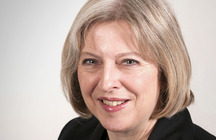
  • Theresa May – 2019 Speech in Stoke-on-Trent on Brexit

    Below is the text of the speech made by Theresa May, the Prime Minister, in Stoke-On-Trent on 14 January 2019.

    Tomorrow, Members of Parliament will cast their votes on the Withdrawal Agreement on the terms of our departure from the European Union and the Political Declaration on our future relationship.

    That vote in Westminster is a direct consequence of the votes that were cast by people here in Stoke, and in cities, towns and villages in every corner of the United Kingdom.

    In June 2016, the British people were asked by MPs to take a decision: should the United Kingdom remain a member of the European Union or should we leave?

    In that campaign, both sides disagreed on many things, but on one thing they were united: what the British people decided, the politicians would implement.

    In the run-up to the vote, the government sent a leaflet to every household making the case for remain. It stated very clearly: ‘This is your decision. The government will implement what you decide.’

    Those were the terms on which people cast their votes.

    If a majority had backed remain, the UK would have continued as an EU member state.

    No doubt the disagreements would have continued too, but the vast majority of people would have had no truck with an argument that we should leave the EU in spite of a vote to remain or that we should return to the question in another referendum.

    On the rare occasions when Parliament puts a question to the British people directly we have always understood that their response carries a profound significance.

    When the people of Wales voted by a margin of 0.3%, on a turnout of just over 50%, to endorse the creation of the Welsh Assembly, that result was accepted by Parliament.

    Indeed we have never had a referendum in the United Kingdom that we have not honoured the result of.

    Parliament understood this fact when it voted overwhelmingly to trigger Article 50.

    And both major parties did so too when they stood on election manifestos in 2017 that pledged to honour the result of the referendum.

    Yet, as we have seen over the last few weeks, there are some in Westminster who would wish to delay or even stop Brexit and who will use every device available to them to do so.

    I ask them to consider the consequences of their actions on the faith of the British people in our democracy.

    The House of Commons did not say to the people of Scotland or Wales that despite voting in favour of a devolved legislature, Parliament knew better and would over-rule them. Or else force them to vote again.

    What if we found ourselves in a situation where Parliament tried to take the UK out of the EU in opposition to a remain vote?

    People’s faith in the democratic process and their politicians would suffer catastrophic harm.

    We all have a duty to implement the result of the referendum.

    Ever since I reached an agreement with the EU on a Withdrawal Agreement and declaration on our future relationship I have argued that the consequences of Parliament rejecting it would be grave uncertainty – potentially leading to one of two outcomes.

    Either a ‘no deal’ Brexit, that would cause turbulence for our economy, create barriers to security cooperation and disrupt people’s daily lives.

    Or the risk of no Brexit at all – for the first time in our history failing to implement the outcome of a statutory referendum and letting the British people down.

    These alternatives both remain in play if the deal is rejected.

    There are differing views on the threat that a no deal exit poses.

    I have always believed that while we could ultimately make a success of no deal, it would cause significant disruption in the short term and it would be far better to leave with a good deal.

    Others in the House of Commons take a different view and regard no deal as the ultimate threat to be avoided at all costs.

    To those people I say this: the only ways to guarantee we do not leave without a deal are: to abandon Brexit, betraying the vote of the British people; or to leave with a deal, and the only deal on the table is the one MPs will vote on tomorrow night.

    You can take no deal off the table by voting for that deal. And if no deal is a bad as you believe it is, it would be the height of recklessness to do anything else.

    But while no deal remains a serious risk, having observed events at Westminster over the last seven days, it is now my judgment that the more likely outcome is a paralysis in Parliament that risks there‪‪ being no Brexit.

    That makes it even more important that MPs consider very carefully how they will vote ‪‪tomorrow night.

    As I have said many times – the deal we have agreed is worthy of support for what it achieves for the British people.

    Immigration policy back in the hands of people you elect – so we can build a system based around the skills people have to offer this country, not where they come from, and bring the overall numbers down. Sovereign control of our borders.

    Decisions about how to spend the money you pay in taxes back under the control of people you elect – so we can spend the vast annual sums we send to Brussels as we chose, on priorities like our long-term plan for the NHS. Sovereign control of our money.

    UK laws, not EU laws, governing this country – so the people you elect decide what the law of the land in our country is. Sovereign control of our laws.

    Out of the Common Agricultural Policy – with our farmers supported by schemes we design to suit our own needs.

    Out of the Common Fisheries Policy – so we decide who fishes in our waters and we can rebuild our fishing fleets for the future.

    Retaking our seat at the World Trade Organisation, so we can strike trade deals around the world that work for British businesses and consumers.

    The rights of valued EU citizens here guaranteed and reciprocal guarantees for UK citizens across Europe.

    The partnerships between our police forces and security services, that protect us every day from threats that know no borders, sustained.

    An implementation period that ensures our departure from the EU is smooth and orderly, protecting your jobs.

    And yes a guarantee that the people of Northern Ireland can carry on living their lives just as they do now, whatever the future holds.

    These are valuable prizes.

    The deal honours the vote in the referendum by translating the people’s instruction into a detailed and practical plan for a better future.

    No one else has put forward an alternative which does this.

    Compare that outcome to the alternatives of no deal or no Brexit.

    With no deal we would have: no implementation period, no security co-operation, no guarantees for UK citizens overseas, no certainty for businesses and workers here in Stoke and across the UK, and changes to everyday life in Northern Ireland that would put the future of our Union at risk.

    And with no Brexit, as I have said, we would risk a subversion of the democratic process.

    We would be sending a message from Westminster to communities like Stoke that your voices do not count.

    The way to close-off both of these potential avenues of uncertainty is clear: it is for MPs to back the deal the government has negotiated and move our country forward into the bright future that awaits us.

    I have always believed that there is a majority in the House of Commons for a smooth and orderly exit delivered by means of a withdrawal agreement.

    That is why the government tabled the motion for the meaningful vote last month.

    But it became clear that MPs’ concerns about one particular aspect of the deal – the backstop preventing a hard border between Northern Ireland and Ireland in the event that we cannot reach agreement on our new relationship before the end of the implementation period – meant that there was no prospect of winning the vote.

    So I suspended the debate to allow time for further discussions with the EU to address those concerns.

    Today I have published the outcome of those discussions in the form of letters between the UK government and the Presidents of the European Commission and European Council.

    I listened very carefully to the concerns that MPs from all sides expressed, particularly the concerns of my fellow Unionists from Northern Ireland.

    In my discussions with the EU we explored a number of the suggestions made by MPs, both about how the backstop would operate and for how long.

    The EU have said throughout that they would not renegotiate the Withdrawal Agreement or reopen its text for alteration, and that remained the case throughout my discussions at the December European Council and since.

    I also pursued in these discussions a proposal for a fixed date – with legal force – guaranteeing the point at which the future partnership would come into force. Because that is the way to bring an end to the backstop – by agreeing our new relationship.

    The EU’s position was that – while they never want or expect the backstop to come into force – a legal time limit was not possible.

    But while we did not achieve that, we have secured valuable new clarifications and assurances to put before the House of Commons, including on getting our future relationship in place rapidly, so that the backstop should never need to be used.

    We now have a commitment from the EU that work on our new relationship can begin as soon as possible after the signing of the Withdrawal Agreement – in advance of the 29 March – and we have an explicit commitment that this new relationship does not need to replicate the backstop in any respect whatsoever.

    We have agreement on a fast-track process to bring the free trade deal we will negotiate into force if there are any delays in member states ratifying it, making it even more likely that the backstop will never need to be used.

    We now have absolute clarity on the explicit linkage between the Withdrawal Agreement and the Political Declaration, putting beyond doubt that these come as a package.

    And finally the EU have confirmed their acceptance that the UK can unilaterally deliver on all the commitments made in our Northern Ireland paper last week, including a Stormont lock on new EU laws being added to the backstop, and a seat at the table for a restored Northern Ireland Executive.

    The legal standing of the significant conclusions of the December Council have been confirmed. If the backstop were ever triggered it would only be temporary and both sides would do all they could to bring it to an end as quickly as possible.

    The letters published today have legal force and must be used to interpret the meaning of the Withdrawal Agreement, including in any future arbitration.

    They make absolutely clear the backstop is not a threat or a trap.

    I fully understand that the new legal and political assurances which are contained in the letters from Donald Tusk and Jean-Claude Juncker do not go as far as some MPs would like.

    But I am convinced that MPs now have the clearest assurances that this is the best deal possible and that it is worthy of their support.

    Two other areas of concern raised and reflected in amendments tabled to the meaningful vote were on the protection of workers’ rights and on environmental standards.

    I could not have been clearer that far from wanting to see a reduction in our standards in these areas, the UK will instead continue to be a world leader.

    We have committed to addressing these concerns and will work with MPs from across the House on how best to implement them, looking at legislation where necessary, to deliver the best possible results for workers across the UK.

    This afternoon I will set out in greater detail to MPs what is contained in the correspondence I have published today and what it means for our withdrawal.

    And tomorrow I will close the debate.

    But as we start this crucial week in our country’s history let’s take a step back and remember both what is at stake and what we stand to gain by coming together behind this agreement.

    Settle the question of our withdrawal and we can move on to forging our new relationship.

    Back the deal tomorrow, and that work can ‪‪start on Wednesday.

    Fail and we face the risk of leaving without a deal, or the even bigger risk of not leaving at all.

    I think the British people are ready for us to move on.

    To move beyond division and come together.

    To move beyond uncertainty into a brighter future.

    That is the chance that MPs of all parties will have ‪‪tomorrow night.

    And for our country’s sake, I urge them to take it.

    Thank you.

  • Bernard Jenkin – 2019 Speech on Brexit

    Below is the text of the speech made by Sir Bernard Jenkin, the Conservative MP for Harwich and North Essex, in the House of Commons on 11 January 2019.

    I cannot help but reflect on the fact that the speech of the hon. Member for Glenrothes (Peter Grant) followed that of my right hon. Friend the Member for Mid Sussex (Sir Nicholas Soames), who called for calm and moderation in this debate. I am afraid that some of the language the hon. Gentleman used rather failed to rise to that challenge. For him now to call for a people’s vote when he never for an instant accepted the result of the people’s vote we have already had underlines the point about double standards raised by the hon. Member for Edinburgh South (Ian Murray).

    Peter Grant rose—

    Sir Bernard Jenkin

    No, I am not giving way; the hon. Gentleman spoke for a long time. But I will say this: like him, I believe in the sovereignty of the people, and in fact I believe in the sovereignty of the Scottish people, and the Scottish people spoke in 2014 and voted to be part of the United Kingdom. And then the Scottish people, as the British people, took part in the 2016 United Kingdom referendum and the British people spoke, and I believe in their sovereign right to be respected.

    So I will rise to the hon. Gentleman’s challenge and say that the benefits the Scottish people are getting from leaving the EU are that they are taking control of their own laws and money, and—something dear to his heart, I imagine—that the Scottish Parliament is going to have more power as a result of us leaving the EU. He seems to be very quiet about that.

    In the emergency debate on Tuesday 11 December I emphasised the democratic legitimacy of the referendum vote. The Commons voted to give the decision to remain or leave to the voters by 544 votes to 53, and then we accepted that decision and invoked article 50 by 494 votes to 122.

    Nobody could possibly question the courteous determination and sincerity of my right hon. Friend the Prime Minister, who has striven so hard to secure an agreement acceptable to this House from our EU partners, but it now looks most unlikely that this draft agreement will be approved, because it would leave the UK in a less certain and more invidious position than we are prepared to accept.

    Nevertheless, the EU withdrawal Act, which sets the exit date as 29 March 2019, did pass this House. It could have included an amendment that the Act should not come into force without an article 50 withdrawal agreement, but we approved that Act, which provides for leaving the EU without a withdrawal agreement—I think even my right hon. Friend the Member for Mid Sussex voted for that Act. Parliament has now spoken. The Act makes provision for the so-called “meaningful vote”, but not for any kind of vote in this House to prevent Brexit without a withdrawal agreement. Democracy has been served.

    For some MPs now to complain that they did not intend to vote for what the Act provides for is rather lame. They may have held a different hope or expectation, but the Government gave no grounds for that. The Government always said, and still say, that no deal is better than a bad deal. Parliament has approved the law and set the date. There is no democratic case for changing it, nor could that be in the national interest.

    The right hon. Member for Hackney North and Stoke Newington (Ms Abbott) reminded us of some of the less pleasant elements on the spectrum of British politics, but elsewhere in the EU, extremism is becoming far more entrenched than here, with AFD in Germany and the gilets jaunes on the streets of Paris, as well as Lega Nord, which has actually taken power in Italy. Popular revolt against the immovability of the established EU consensus in the rest of the EU cannot be blamed on Brexit. On the contrary, our broad and largely two-party democracy has proved to be the most durable and resistant to extremism because we absorb and reflect the effects of political and economic shocks. UKIP died at the 2017 general election because both the main parties pledged to implement the referendum decision without qualification.

    But what are some in this House trying to achieve now? What would be the consequences for the stability and security of our democracy if the Government let the politicians turn on the majority of their own voters and say, “The politicians are taking back control, not for Parliament but to keep the EU in control”? The voters did not vote to accept whatever deal the EU was prepared to offer. They voted to leave, whether or not the EU gave us permission. Ruling out leaving without a withdrawal agreement is not a democratic option. They did not vote to remain as the only alternative to a bad deal, they did not vote for the EU to hold the UK hostage, nor did they vote for a second referendum.

    Of course, a second referendum is what the EU really wants, which is why it will not give the UK a good deal. It is shameful that so many leading political figures from our country have been shipping themselves over to Brussels to tell the EU not to make concessions in the negotiations with their own Government, in order to try to get a second referendum. The EU is a profoundly undemocratic and unaccountable institution, whose biggest project, the euro, has inflicted far worse disaster on businesses, individuals and families in many countries than even the direst Treasury forecasts for the UK. The economic and political storm clouds are still just gathering over the EU. It is the EU that is on the cliff edge of disaster, not the UK. In the years to come, in the words of Mervyn King, the former Governor of the Bank of England:

    “If you give people a chart of British GDP and ask them to point to where we left the EU, they won’t be able to see it.”

    Our domestic policies, as well as our trade with the rest of the world, have already become far more important than our present trading relationship with the EU. We will have the freedom to develop them more quickly. Our EU membership does not just cost the net contribution of £10 billion per year and rising, which does no more than avoid some £5.3 billion of tariffs, but it has locked the UK into an EU trading advantage, leaving the UK with an EU trade deficit of £90 billion a year. Why are we trying to preserve such a disadvantageous trading relationship?

    Even if we leave without a withdrawal agreement, there will be immediate benefits. WTO is a safer haven than the backstop. Far from crashing out, we would be cashing in. We would keep £39 billion, which would immediately improve our balance of payments and could be invested in public services, distributed in tax cuts or used to speed up economic adaptation. That would boost GDP by 2% over the next few years. We would end uncertainty; the draft agreement would perpetuate it.

    Business needs clarity about trading conditions with the EU from day one. Jamie Dimon of J. P. Morgan campaigned for remain, side by side with George Osborne, the then Chancellor of the Exchequer. J. P. Morgan now says that extending article 50 is the “worst case scenario” because it does

    “not see what it provides us in reaching a clear, final outcome that provides certainty for businesses”.

    It adds that paralysis is

    “not good for the economy”,

    yet that is what the article 50 extenders are arguing for. We will not be caught in any backstop if we leave without a withdrawal agreement, nor will there be a hard border in Ireland. Even Leo Varadkar has said that

    “under no circumstances will there be a border. Full stop.”

    The EU and the UK Government have said the same.

    All of the more ludicrous scare stories are being disproved. There will be no queues at Dover or Calais. The president of Port Boulogne Calais could not have been more emphatic—[Laughter.] Labour Members laugh, because they do not want to hear the truth. The president of Port Boulogne Calais said:

    “We have been preparing for No Deal for a year….We will be ready….We will not check trucks more than we are doing today…We will not stop and ask more than we are doing today”.

    He added that the new special area for sanitary and phytosanitary checks was somewhere else, and would

    “not influence the traffic in Dover.”

    The Government and the pharma companies say that they can guarantee supplies of medicines, and the EU Commission has proposed visa-free travel for UK citizens in the EU for up to six months of the year. The EU statement of 19 December already proposes its own transition period of up to nine months, including no disruption of central bank clearing, a new air services agreement, access to the EU for UK road haulage operators and special regulations on customs declarations.

    Leaving on WTO terms is far preferable to the protracted uncertainty of either extending article 50 or this unacceptable withdrawal agreement. The leadership of this country—that includes the Government and the Opposition—should stop reinforcing weakness and start talking up our strengths and building up our confidence. History has proved that our country can always rise to the challenge, and our people will never forgive the politicians who allow the EU to inflict defeat. It saddens me greatly that even some in my own party are promoting such a defeat.

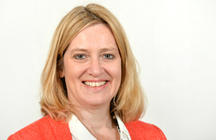
  • Amber Rudd – 2019 Speech on Universal Credit

    Below is the text of the speech made by Amber Rudd, the Secretary of State for Work and Pensions, at Kennington in London, on 11 January 2019.

    Introduction

    It’s great be here in Kennington this morning.

    I’m particularly pleased to be joined by frontline colleagues and work coaches in the audience today and I’d like to acknowledge the incredible work you do, each and every day, to ensure our claimants receive the payments and support they need. I’d also like to welcome Alok Sharma, the Minister for Employment who I’m pleased could join me here today.

    And I am delighted to be here to speak about Universal Credit – a vital reform delivering a fair and compassionate welfare system, which helps people into work.

    Let’s not forget that Universal Credit began with near universal support – across party lines, and from charities and stakeholders.

    Because everyone agrees with the principles of helping people into work, making work pay, and providing support in times of need.

    And I want Universal Credit to retain that support as we deliver it in practice.

    This means delivering it in a way that meets the needs of claimants, who come from every conceivable background and each with the potential to achieve their ambitions.

    In welfare, there is no one-size-fits-all solution, and Universal Credit offers the opportunity to move away from that.

    It must treat individuals as individuals – and I will set-out the first steps I will take to achieve this today.

    The principle of UC and why it matters

    Our welfare system is based upon 3 fundamental principles.

    First: work – those who can, should; and those who cannot should be protected from poverty.

    Second – work should always pay.

    And third, the system should be fair. Fair for taxpayers who pay for it and fair to those who receive it, and fair to future generations – who do not deserve to become trapped in it.

    As a nation, I believe we all want a decent safety net: if you’re facing a difficult moment in life, the state should be there to help you.

    Whether that’s becoming unemployed, falling ill, or facing bereavement – nobody should find themselves alone in desperate circumstances.

    But it is vital that people are supported by this safety net, not trapped beneath it.

    It is there to help people get through difficult times – it is not meant to be a mode of long term subsistence for those who can work.

    For the vast majority of people, it is ultimately work, not benefits, which provides the route to a better life. And the welfare system should clear a path for that route, not block it.

    Work gives purpose, dignity and security. The opportunity to provide for your family, progress in earnings, and build a fulfilling life.

    In this respect, the old system was broken; it is why we had to reform it.

    Despite what some people suggest, the legacy system – 6 different benefits administered by 3 government departments – was not a utopia that we should return to.

    Indeed, 700,000 claimants on that system are currently failing to claim their full entitlement because they find it so confusing. These people – some of the most vulnerable in society – are failing to receive, on average, £285 a month.

    Under the old regime, claimants who moved off benefits into full time work lost welfare payments almost immediately, which resulted in effective ‘tax rates’ of up to 90% on their income.

    As an MP, I frequently met people who wanted to earn more but were too scared to take-on extra hours, knowing they’d have so little to gain.

    In 2010, 1.4 million people in this country had been out of work for at least 9 of the previous 10 years.

    1.9 million children lived in households where nobody worked, making it more likely that tragically, they too would live a life on welfare – with little chance of any kind of progression.

    We have re-introduced fairness into the system.

    We have capped benefits – so that where the adults in a household are able to work, they cannot claim more than what many working families earn.

    We have taken millions of the lowest-paid out of income tax altogether.

    And we’ve introduced the first National Living Wage, giving many a much-needed pay rise.

    But by far the most important and crucial reform is Universal Credit.

    Let me explain why Universal Credit is a force for good. It is based on these principles:

    a social security system that provides a safety net, but doesn’t trap people in welfare
    certainty that every extra hour of work pays more than staying on benefits, with these being withdrawn at a consistent taper rate
    help to enter work – through increased, tailored support provided by work coaches at jobcentres like this one
    accuracy of benefits payments, with those made to in-work claimants responding in real-time, each month, to income earned. A digital system – where claimants can access information about their payments online, at their convenience

    These principles pumped much-needed fresh air into a failing system, and failed thinking on welfare.

    Which is why it is vital that we turn these principles into success in practice. We have steadily invested in Universal Credit, adding £4.5 billion in the last budget, following the extra £1.5 billion allocated in 2017 – giving claimants more money as they transition to Universal Credit.

    And in many areas we are succeeding. More people will enter work as a result of Universal Credit and work coach support.

    The provision of Universal Support – to provide tailored help for people to make and complete their Universal Credit claim – is a significant new step in creating personalised support for claimants.

    And it’s very exciting that from April this year, Citizens Advice will be working to deliver this new support across the country.

    But in other areas we can improve – in particular, we must ensure that Universal Credit always meets the different needs of different claimants.

    And today, I will outline 3:

    First – the delivery of the next phase of Universal Credit, known as managed migration, must be handled carefully so it works for all claimants.

    Second – flexibility in payments, especially on rent and frequency, should support people financially in a way that works for them.

    And third – the system must do even more to support women.

    A standard offer cannot work for everyone. People’s work patterns, the pressures they face, their families – everyone’s circumstances are unique.

    I want to make sure Universal Credit has enough flexibility to adapt to personal circumstances – particularly the needs of the most vulnerable.

    So let me set-out in detail the changes that I’m going to make.

    Delivering UC in a way that works for individuals

    In the first instance, I am not going to be rushed into the mass migration of existing claimants onto Universal Credit. My priority is to ensure that the transition is done well.

    As we embark on this next stage, I want to be absolutely sure that every person switched over to Universal Credit is getting a personalised service.

    I will tread cautiously – not rushing but instead proceeding with the utmost care.

    I want to ensure every individual is thoroughly supported to access Universal Credit quickly and successfully.

    We need to reach out to claimants – so the onus should be on us to deliver managed migration in a way that meets everyone’s needs.

    So I am going to change the current regulations, removing the powers government previously planned to migrate all legacy claimants onto the new system. The regulations will continue to uphold our commitment to protecting claimants receiving the Severe Disability Premium.

    Instead, I’m only going to seek powers for a pilot: the chance to support 10,000 people through the process. This is an opportunity to learn how we can best facilitate the transition – before returning to Parliament with the legislation which we will need for future managed migration.

    This will begin, as planned, from July 2019.

    These next 6 months will be a period of careful preparation, working closely with claimants and partners – many of them who are in the room today – to design our communications and support systems effectively.

    We want to ensure the process goes smoothly for claimants, so we will provide tailored communications, help with applications, and even home visits – with bespoke support for the most vulnerable claimants.

    From July, we will carefully migrate up to 10,000 claimants, monitoring and adjusting our approach as needs be, before reporting our findings to Parliament.

    The lessons from the pilot will inform our next steps, but there will be no overall delay.

    Universal Credit migration will be completed, as planned, by the end of 2023. However, I will consider carefully the results of the pilot, and its implications for scaling-up migration.

    It would not be sensible to move immediately from the pilot phase of 10,000, to full scale managed migration.

    Instead we should start small and build up over time, as we develop our processes and learn more. This is the approach any big organisation would take when delivering a complex project.

    I want to be clear: I will only proceed with this process when I know it can deliver the best possible service for everyone who relies on it.

    Alternative Payment Arrangements

    But equally, I don’t need to wait for the results of the pilot to see there are issues with Universal Credit’s implementation which can be fixed now.

    Much of the premise of UC, and the positive change it offers, is based on the fact that it mirrors the world of work. Payments are made monthly, in arrears, and all the money goes straight to claimants.

    For many people this is an advantage – providing financial independence and preparation for monthly bills and salary payments.

    But for others this approach does not work; managing their money month-to-month can be challenging, even impossible.

    That can cause difficulties for people who are already vulnerable, and I am determined to do more to help those claimants.

    There is already some flexibility in the system, thanks to the changes that we have already made.

    Around 60% of Universal Credit claimants apply for advances to tide them over the initial wait for their first payment.

    20% of claimants with housing costs have their rent paid directly to landlords, because a vulnerability or special need has been identified.

    And for people unable to budget, there are provisions to receive payments twice, or even four times, a month. But currently only 2% of claimants have taken this option.

    So although these ‘Alternative Payment Arrangements’ exist to provide people with the bespoke payments they need, they aren’t yet helping as many claimants as I believe they could.

    One third of UC claimants in social rented housing have their rent paid directly to their landlord. But in the private sector, that number is only 5%.

    People in the private rented sector already face a far higher risk of losing their tenancy, and I know from talking to claimants and landlords that the current system isn’t working for some of them.

    So we need to make it easier for tenants in the private sector to find and keep a good home, by giving landlords greater certainty that their rent will be paid.

    Therefore, I have asked the Department to build an online system for private landlords, so they can request (where necessary) for their tenant’s rent to be paid directly to them. And I will consider what else we can do, because I am determined to help keep people in their homes.

    I am also looking at what more can be done to support those who find monthly payments hard to manage.

    We need to go back to first principles: reviewing how we identify claimants who might struggle to manage on monthly payments, and ensuring work coaches are moving them onto more frequent payments where necessary.

    I have asked Jobcentre Plus to test how we can to improve the provision of more frequent payments for new claimants; these pilots will start shortly, and once we have evidence of what works, we will roll it out further.

    We must ensure that provision of frequent payments doesn’t slow the system for users who don’t require them – but I believe we can offer this facility more widely, so those in genuine need can take it up more readily.

    Women’s economic empowerment

    Indeed, some of the most exciting results we’ve seen from Universal Credit have resulted from personalised and targeted support reaching the right people.

    This is particularly true for groups who have historically been left out of the labour market.

    Women can never be truly free until they have economic independence.

    It is fantastic that 1.6 million women have entered employment since 2010 but for some women, economic empowerment remains the final frontier.

    Many women still don’t have access to the opportunities and independence that comes from earning their own money.

    This can be particularly true of communities that hold a more traditional view of gender specific roles.

    Under the old system, millions of women could be written off as “dependents” and left without any encouragement or support from the system. Under Universal Credit that won’t happen.

    For example, last week I visited our Jobcentre in Birmingham Yardley – which has piloted a brilliant project focusing specifically on how to support Bangladeshi and Pakistani women into work.

    It is early days, but projects like these suggest there are ways to free untapped female potential. And in doing so, we’ll benefit communities across the country, and inspire the next generation to understand the value of financial independence.

    Since taking office, I have also listened to a number of concerns – from Refuge, Women’s Aid and others – about how the current structure of household payments penalises women.

    Although one payment per household is an established feature of the welfare system (Housing Benefit, for example, has always been paid in this way) I recognise the validity of these concerns.

    This is why I am committed to ensuring that household payments go directly to the main carer – which is usually, but not always, the woman.

    For those couples currently claiming UC, around 60% of payments already go to the woman’s bank account. However, I am looking at what more we can do to enable the main carer to receive the UC payment, and we will begin to make those changes later this year.

    Childcare is essential to enable parents to work. Although UC’s provision of funding up to 85% of a claimant’s childcare costs is higher than its predecessor, this is paid in arrears only once actual costs are known.

    So I recognise that this can cause financial difficulty, with some claimants struggling to pay upfront or report their costs on time.

    Therefore I’ve instructed jobcentres that if the initial month’s childcare costs prevent a claimant from starting work, the Flexible Support Fund should be used to help smooth the transition for this priority group.

    Secondly, I’ve decided we should be flexible when parents are unable to report their childcare costs immediately, so that these costs will be reimbursed.

    Taken together, these improvements will help to drive the take-up of childcare, as we strive to close the lone parent employment gap and further boost female employment rates.

    I believe passionately that economic independence liberates women, and I will continue to look at what more Universal Credit can do to support them into work.

    Cancelling the extension of the Two Child policy

    There is one additional change I am going to make.

    I know that many people are concerned about the two-child limit in the welfare system.

    Most families make a conscious decision about how many children they have, considering in part their income and the additional costs each child will bring.

    I think it is fair that those on welfare are asked to make the same considered decision as other taxpayers, who support themselves solely through work. So I believe it was right to limit the number of children for whom support can be provided through Universal Credit – funded by the taxpayer.

    However, I believe it is unfair to apply that limit retrospectively.

    As it stands, from February the two-child limit will be applied to families applying for UC who had their children before the cap was even announced. That is not right.

    So I can today announce that I am going to scrap the extension of the two-child limit on Universal Credit for children born before April 2017.

    All children born before that date will continue to be supported by Universal Credit. And that will help approximately 15,000 families a year.

    And it means that by removing any retrospective application, the two-child policy retains its fundamental fairness.

    Conclusion

    I am determined to deliver Universal Credit’s vital principles in practice. A system that supports people into work, supports those in need and provides fairness to the taxpayer.

    So here’s what’s going to change:

    a more considered approach, so we can provide a better service for everyone moving onto Universal Credit from the old system
    greater flexibility on payments, so the benefit fulfils its promise to adapt to individual needs and circumstances
    more support for women: moving payments to the main carer, and making childcare payments more accessible
    and every child born before April 2017 will now be supported by Universal Credit

    I know there is more to be done to support the most vulnerable, and finesse the system – so that Universal Credit truly works for everyone.

    The goal is clear: a safety net, but also a system that can transform lives through work – not just financially, but in life chances, health and social wellbeing

    I am optimistic – because I know the basic principles are sound – which is why I am so excited to have the chance to get this right.

    A British welfare system should reflect the values of our country.

    We believe in fairness and compassion.

    We believe in standing-by people when times get tough.

    We believe in helping each individual reach their full potential.

    These values are at the heart of the Universal Credit I am determined to deliver.

  • Claire Perry – 2019 Statement on the Energy Council

    Below is the text of the statement made by Claire Perry, the Minister for Energy and Clean Growth, in the House of Commons on 10 January 2019.

    The Energy Council took place on 19 December 2018. The UK was represented by the Deputy Permanent Representative to the EU, Katrina Williams.

    Communication from the Commission: A Clean Planet for all

    Miguel Arias Cañete, Commissioner for Climate Action and Energy, introduced the European Commission’s Communication “Clean Planet for all: A European strategic long-term vision for a prosperous, modern, competitive and climate-neutral economy”. It stressed the need to achieve net zero greenhouse gas emissions by mid-century, and that the EU was well placed to lead efforts to mitigate climate change.

    All member states intervened, and all broadly supported the Commission’s communication. A number supported the Commission’s call for net zero greenhouse gas emissions by 2050. The importance for businesses and citizens to inform the debate on reducing emissions and for the transition to be realistic was mentioned, as was the need for Europe to reduce its dependency on coal and invest in renewables. The importance of interconnection and the need to take account of energy security and competitiveness was raised. The importance of gas infrastructure was also mentioned.

    In its intervention, the UK welcomed the communication and emphasised the urgency of addressing climate change. It pointed out that the UK Government had sought advice from the Committee on Climate Change on long-term targets. It also gave an overview of the action being taken to make the transition to a more flexible and smarter energy system.

    Some member states considered nuclear energy to be an important option for decarbonisation, and called for technology neutrality. The UK said that it is important that member states are able to choose from all routes to decarbonisation.

    Clean energy package

    The presidency reported that it had reached agreement with the European Parliament on all elements of the clean energy package. It noted that the European Parliament and Council had now formally adopted the directive on renewable energy (recast), the regulation on governance of the energy union and the directive on energy efficiency (recast). Publication in the Official Journal was expected on 21 December 2018.

    On the regulation on risk preparedness in the electricity sector, the presidency said that the regulation should give member states enough time to develop their plans for responding to risk. Regarding the regulation establishing a European Union Agency for the Co-operation of Energy Regulators (recast), it thought the outcome would allow the agency to function efficiently.

    The presidency informed Ministers that in the early hours of the 19 December it had closed the two most complicated files: the regulation on the internal market for electricity (recast) and the directive on common rules for the internal market in electricity (recast). It commented that the deal would allow the internal energy market to operate efficiently and that contracts awarded under capacity mechanisms will be subject to limits on ​emissions of carbon dioxide. Furthermore, consumers will be able to choose their suppliers freely, and request dynamic price contracts and smart meters.

    The Commission, congratulating the presidency, noted that completion of the energy union was one of President Junker’s 10 legislative priorities.

    Comments made by individual member states included recognition of the value of national energy and climate plans, but regret about the deal struck on limits on carbon dioxide emissions for contracts awarded under capacity mechanisms, and concern at the difficulties involved in opening up interconnector capacity and in meeting energy efficiency objectives.

    Any other business items

    The presidency informed the Council about the state of play on the revision of the gas directive. A number of member states, including the UK, called for faster progress and challenged the latest compromise proposals, but others expressed concern about proceeding with the revision.

    The presidency updated Ministers on the connecting Europe facility negotiations, saying that it had secured a partial general approach at the Transport Council. It then provided an update on the hydrogen initiative.

    The Commission provided an update on the status of marine energy and external energy relations. A number of member states supported the Commission’s calls for more action to make marine technology competitive.

    There was a brief discussion on the appointment of the director general for the International Renewable Energy Agency.

    Finally, the incoming Romanian presidency presented its work programme, stating its priorities to be formal agreement on the clean energy package, to make progress on the gas directive, the tyre labelling regulation and the mandate for changes to the energy community treaty.

    Ministers had an informal discussion over lunch on energy security and external dimensions of energy policy.

  • John Howell – 2019 Speech on the Europa School

    Below is the text of the speech made by John Howell, the Conservative MP for Henley, in the House of Commons on 10 January 2019.

    I am grateful for the Minister’s attendance. He and I have talked about the Europa School at some length on a number of occasions, and he was, of course, responsible for the reply from the Department for Education to a petition that I presented in the Chamber not so long ago. My purpose this evening is first to highlight the importance and the unique history of the approach to languages that is demonstrated at the school, secondly to highlight the approach to providing the European baccalaureate as the final qualification for those leaving it, and thirdly to ask some questions and make some comments arising from the Department’s response to my petition.

    The background to all this is, of course, the situation in which we find ourselves as a country in the context of our relationship with the European Union. I am sure we all feel the need to end the current uncertainty as soon as possible, but that is felt nowhere more keenly than at this school, where the educational future of children is at stake.

    The Europa School is one of the free schools created as a result of this Government’s initiative. It is in Culham, in my constituency, but it serves a wide area, mostly in Oxfordshire and in the surrounding areas of neighbouring counties. Under the terms of the free school, parents have agreed to the provision of a certain type of education that I will describe in more detail shortly, but let me first say something about the school’s importance and its unique history.

    The initial meeting to discuss the establishment of a free school in Culham took place in 2011 with the then schools Minister, my noble Friend Lord Hill. The meeting was sponsored by me and attended by representatives of parents and educationalists who wished to speak in favour of the proposal. The aim was to meet three demands. First, residents of the county had given the clearest possible support for the new school; secondly, its founders wanted to bring a new form of education into the state school system; and thirdly, we all wished to build on a secure and well-established foundation of education in the European Schools curriculum, which leads eventually to the European baccalaureate.

    At its core—this is the first of my major points—was a proposal to offer something that had not been offered before in the UK state system, and, indeed, had not previously been offered in the whole of the European School system. The proposers offered a complete, thoroughgoing commitment to full bilingual education from reception class onwards. Pupils would not simply learn the other language, but would learn through that language. They would learn the linguistic rhythm of that language. This was planned to be truly deep language learning, not just the acquisition of a second language overlaid on the first.

    The Europa School was set up as a free school because that is what the parents wanted, which is a key component of the free school movement. The parents wanted that particular type of education to continue through the free school. It was a way of approaching subjects in languages. The pupils were taught subjects ​through all those languages, so they could end up learning history in German or geography in Spanish, and so on. That is a valuable way of teaching. The parents wanted that system to continue in the school, and it is being continued.

    During education questions, I asked the Minister whether he accepted that the school was proving popular with parents of all types, including those from the UK, and that it was a good model of language teaching to follow. He replied that he shared my admiration for the Europa School, and I want to build on that today. I understand that we are anticipating an Ofsted report. I believe that everyone expects the school to have done rather well out of it, and I hope that that expectation is fulfilled. However, this approach needs to be set in the context of Brexit, and the difficulties of negotiating a Brexit that does not see the school become a casualty.

    The European School, Culham—not the Europa School—had for some time been destined for closure, as the resourcing for such a school at Culham could not be justified within the European Commission’s budget for European Schools. A closure date of 2017 for the European School had already been announced. A plan was therefore advanced for the new free school to grow year by year as the European School diminished, and for the two schools to share the use of the Culham site on an agreed basis. An important aspect of this is that the free school was oversubscribed by some 30% at its opening in September 2012 and it has remained significantly oversubscribed at every subsequent admissions round since that date.

    What promises and commitments has the school made? First, it sought to open multilingual education to all the residents of Oxfordshire. Secondly, it determined that the new school would have an important commitment to sciences and mathematics, particularly when the plans for the secondary school came into play. The school started with two stream languages, German and French, each joined with English, but it has recently added Spanish as a third stream language.

    Critically, the freedom offered by the free schools programme to allow free schools to set their own curriculum has been essential. The founders of the Europa School adopted the European Schools’ curriculum, modified by the mandatory elements of the English national curriculum. Thus, by the time of the all-important interview at the Department for Education, there was a distinctive offering to support the bid for pre-opening status. From the deep educational theory came the view that giving a child a second language from their earliest schooling was like giving them a second life—that is, an alternative cultural world in which they could immerse themselves. From the practical world came the view that multilingualism is in no way elitist: what the taxi drivers of many European cities achieve linguistically must be within the reach of schoolchildren, given the right environment and experiences.

    Robert Courts (Witney) (Con) My hon. Friend is making a fascinating speech extolling the virtues of the Europa School in his constituency. I have had correspondence from constituents expressing their admiration for the school and I would like to associate myself with those comments. Does he agree with me on two brief points? First, does not the success of the Europa School show the success of the free schools ​programme? Secondly, does that success not also illustrate that, while Britain may be withdrawing from the political structures of the European Union, she remains an enthusiastic participant in the culture, friendships and co-operation of Europe?

    John Howell I agree with both my hon. Friend’s points. The school’s success shows the importance of the free school movement and our commitment to continuing our co-operation in Europe. I thank him for making those points.

    I was particularly proud when the Europa School was specifically mentioned here in 2011 when the then Secretary of State for Education announced that the school was to open as a bilingual free school in 2012. That was not the first time that the residents of Oxfordshire had reason to be grateful for the support of the House in determining the educational provision available to their children. The quality of education at Culham through the European Schools programme had long been held in high regard. David Cameron had supported the unique educational offer provided at Culham, seeking to preserve and enhance it.

    I should like to praise the system of education offered under the free schools programme. We must not forget that in this case the school was principally set up to deal with parents of mainland European origin in the area. However, the approach to teaching languages has proved immensely successful—so successful that we are now in a situation where British parents are keen for their children to enter the school and be taught in that way. I ask the Minister to acknowledge this and to confirm that he will do all he can to encourage the continuation of this form of education.

    Moving on to the question of the European baccalaureate, the Europa School became an accredited European School in 2014. This means that the school has approval to continue offering the European baccalaureate and to teach the European curriculum. This accreditation was confirmed at a more recent inspection in 2018 by the European Commission. No money flows from Brussels to the school as a consequence of that status; it is simply a validation of the quality of teaching and assessment in the school.

    What is so valuable about that accreditation and affiliation? The European baccalaureate uniquely obliges all candidates to take written and oral examinations in at least two languages. The examinations do not just test competence in the additional stream language; the students, as I have pointed out, actually study history and geography through those languages, and use the stream languages as the mode of learning and assessment. As a result, students have a linguistic competence in their stream language on leaving similar to the linguistic competence of university undergraduates. At the same time, all students must study mathematics and at least once science subject to an advanced level. That outcome is not delivered by the UK A-level system. This free school also requires a leaving qualification that properly recognises the numerous years of education that are involved in becoming bilingual and studying diverse school subjects in two languages.

    As a responsible step in school governance, the principal and governing body of the school have explored whether the international baccalaureate could be adopted as an alternative qualification. However, there are significant ​limitations: examination and study of subjects through two languages is not mandatory; support for the English and German stream combination is weak; the middle years syllabus differs in significant ways; and, most of all, there is a risk of losing expertise among the teaching staff.

    The school wants to be able to continue offering the European curriculum and to offer the European baccalaureate as its qualification for school leavers, and I support it most strongly in that aim. In conversation, the Minister likened the situation to the owners of a copyright. In this case, the copyright is owned by the European Commission, not by the Department for Education. I understand from the Minister that the Department is happy for the school to continue teaching the European baccalaureate, but the problem lies in the attitude of the European Commission. In this situation, I would like to ask the Minister to ensure that the Department for Education can continue to be a friend to this free school, to negotiate strongly on its behalf, and to offer a no-holds-barred assessment of how the school can continue even if the UK is not a member of the EU. I urge the Minister to explore every avenue as a matter separate from Brexit. I hope that this excellent educational establishment may continue its development in the direction that the founders of the free school have planned.

    Finally, let me turn to the Department’s response to my petition. I was glad that the Government were successful in securing a provision in the withdrawal agreement that allows for Europa School’s continued accreditation as a European school until the end of August 2021. Beyond the withdrawal agreement, accreditation to deliver the European baccalaureate is available only to schools located in an EU member state. Continuing to deliver the European baccalaureate beyond that depends on a decision by European Union member states and the European Commission, through the European Schools board of governors, to change the rules on accredited schools. What are the Government doing to help the school talk to the European Schools board to try to get an agreement to include the school within its ambit after 2021? The Minister said:

    “At present that seems highly unlikely.”—[Official Report, 20 December 2018; Vol. 651, c. 16P.]

    This may be a lawyer’s view, but I note the term “at present” in his statement, so I ask him to set out the full position and the likely changes he expects, so as to provide the school with the degree of certainty it requires.

    As my hon. Friend the Member for Witney (Robert Courts) pointed out, there is something special about free schools, particularly in what they can teach and the way that they can teach it. The Europa School illustrates that above all, which is why I have spent the last few minutes telling Members about it. It is a good example of how free schools work, how they can take the attitudes of parents and make them a reality, and how they can, in this case, through the European baccalaureate, continue to offer something of enormous benefit to children. I would like to see the extent to which we can provide support for the school at this time.

  • Jeremy Hunt – 2019 Article on Japan

    Below is the text of the article written by Jeremy Hunt, the Foreign Secretary, on 10 January 2019.

    I sometimes find that foreign leaders are more aware of Britain’s national strengths than we are at home.

    So let me itemise a few of them.

    The UK has the fifth biggest economy in the world, the third biggest overseas aid budget, the second largest military budget in NATO, and a world-class diplomatic network, including permanent membership of the United Nations Security Council.

    Our friendships and alliances span the globe. Britain’s role is to use these connections to be what I call an ‘invisible chain’, linking the democracies of the world to uphold the post-1945 order.

    Today, the leader of a fellow democracy with the same objective will arrive in London.

    Shinzo Abe, the Prime Minister of Japan, represents a nation closely connected to Britain.

    Some countries are endowed with immense natural resources; others are located in the midst of great continents. Britain and Japan have neither of these advantages. We are both islands off the Eurasian landmass with modest natural resources and no option except to prosper through enterprise, innovation, and a global outlook.

    Although separated by distance, Britain and Japan have built a remarkable economic partnership. As I write, about 1,000 Japanese companies are operating here, directly employing over 150,000 people and many thousands more in their supply chains.

    In the last 4 decades, the ingenuity and expertise of Japanese management has helped transform vital sectors of the UK economy, from automotives to pharmaceuticals. All over Britain, people have benefited from the long-term, community-focused approach to business that is the hallmark of Japanese investment.

    British business, meanwhile, is increasingly successful in the Japanese market. In 2017 alone, UK exports to Japan rose by over 12% to reach £13.5 billion.

    I first visited the country in 1990 with the aim of learning Japanese. I was introduced to Japan and wonderfully looked after by Japanese families across the country. For almost 2 years, I lived in Kyoto, Nagasaki, and Tokyo.

    I learned Japanese with the aid of part-time jobs as a waiter in a French restaurant in Nagasaki and a coffee shop in Tokyo. I soon discovered the difference between the exceptionally polite form of Japanese we would use with customers and the informal conversation in the family home.

    This experience left me with a great admiration for Japanese politeness, perfectionism, and determination.

    At that time, Britain’s relationship with Japan was focused on economic ties. More recently, our friendship has gone a step further. At a time when the world order that we both wish to preserve is under greater strain than for many decades, Britain and Japan are cooperating in new fields.

    The Royal Air Force, the Royal Navy and the British Army have all been in Japan for joint exercises since 2016. Just last week, a British frigate, HMS Argyll, saw in the new year in Tokyo. We are working side by side to enforce United Nations sanctions on North Korea and help other countries against terrorism.

    Britain and Japan share the same values of human rights and the rule of law, and the same determination to uphold those values around the world.

    It is our friendship with other countries which share our outlook that is the vital building block for a confident post-Brexit future.

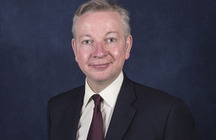
  • Michael Gove – 2019 Speech on Brexit

    Below is the text of the speech made by Michael Gove, the Secretary of State for Environment, Food and Rural Affairs, in the House of Commons on 10 January 2019.

    May I begin on a personal note, Mr Speaker? I am very, very grateful to Members on both sides of the House, from all parties, who very kindly contacted me or sent messages over the course of the Christmas holidays following my son’s accident. I am very grateful for the kind words that many sent. My son is recovering well and I just wanted to register my appreciation.

    A second brief point I want to make is that I want to ensure that as many colleagues as possible have the opportunity to intervene during my remarks. I recognise that we will be addressing a number of important issues today, not least the vital importance of maintaining environmental protection and the protection of workers’ rights, but I also recognise that many colleagues wish to speak, so I will try to keep my answers as brief as possible.

    It is perhaps appropriate, Mr Speaker, given that this is a debate on European matters, that we should be emulating what happens in European football competitions by having a second leg of this debate following the first one. In hotly contested European matches, strong views are sometimes held, not just about the merits of each side, but about the referee, but all I want to say is that I am personally grateful to you, Mr Speaker. You sat through the whole of the first leg of this debate and intend to sit through the second, which is an indication of how important this debate is and how seriously you take your responsibilities. Across the House, we all owe you thanks for how you have facilitated this debate.

    I also want to thank the many civil servants in my Department and elsewhere who have worked hard to secure the withdrawal agreement with the European Union. Officials, negotiators and others sometimes find themselves in the firing line but unable to speak for themselves, so let me speak for them: the dedicated public servants in the Department for Environment, Food and Rural Affairs, the Department for Exiting the European Union and other Departments have worked hard to honour the referendum result and to secure the best possible deal for the British people. I place on record my thanks and those of my Government colleagues for their wonderful work.

    As everyone acknowledges, the deal that we have concluded is a compromise. Those who are critical of it recognise that there are flaws, and those of us who support it also recognise that it has its imperfections, but how could it be otherwise? There are more than 600 Members, all with different and overlapping views on Brexit and its merits, and on how it should be executed. Some 17.4 million people voted to leave—a clear majority—and we must honour that, but we must also respect the fact that 48% of our fellow citizens voted to remain, and their concerns, fears and hopes also have to be taken into consideration.

    We are dealing in this negotiation with 27 other EU nations, each with legitimate interests, with which we trade and many of whose citizens live in this country. We consider them our friends and partners in the great enterprise of making sure that a rules-based international order can safeguard the interests of everyone. Inevitably, then, we have to compromise. I recognise that during this debate many principled cases for alternatives will be advanced. I will respect, and have respected, the passion and integrity with which those cases are made, but it is also important to recognise that those who support this compromise, including me, are passionate about delivering on the verdict of the British people in the referendum in a way that also honours the interests of every British citizen. That is what this agreement does. It honours the referendum result while also respecting the vital interests of every part of the United Kingdom and every citizen within it.

  • Luke Pollard – 2019 Speech on the Royal Marines

    Below is the text of the speech made by Luke Pollard, the Labour MP for Plymouth, Sutton and Devonport, in the House of Commons on 9 January 2019.

    t is time to put an end to the uncertainty over where our Royal Marines will be based in the future. At the outset, I pay tribute to all those who serve in the Royal Marines. As the UK’s high-readiness, elite amphibious fighting force, they offer the UK hard power options when diplomacy fails and when disasters strike. Their contribution to our country has been delivered in blood and sweat, and I want to thank the Royal Marines in uniform today; those veterans who have served for their contribution to our national security; and forces families for their support for those who have served.

    Tonight I want to focus specifically on the Royal Marines base in Stonehouse in Plymouth. In 2016 it was announced that this historic and spiritual home of the Royal Marines would close in 2023, but three years on we are still not certain where the Royal Marines will move to when Stonehouse barracks close.

    This is not the first debate today about the Royal Marines. Earlier my fellow Devon MP, the hon. Member for North Devon (Peter Heaton-Jones), made the case to keep open the Royal Marines base at Chivenor. MPs with Royal Marines on their patches are not fighting among ourselves; indeed, there is agreement that we need certainty for the Royal Marines’ long-term future, wherever that may be. Certainty is required for 40 Commando in Taunton, as well as for those Royal Marines at Chivenor and those in Stonehouse. As the Member of Parliament for Plymouth, Sutton and Devonport, I am proud to make the case for the Royal Marines—the pride and joy of our armed forces—to continue to be based in Plymouth, their spiritual home for more than 300 years.

    We all know that the Royal Marines are the UK’s finest fighting force, with unique and valued capabilities. I have seen that for myself at the Commando training centre at Lympstone, with the commando obstacle course and at passing out parades. I have seen it in Plymouth, with the Royal Marines at Stonehouse, the Royal Marines band school in Portsmouth, and, on a rather blustery day, on the back of an offshore raiding craft on the River Tamar with Royal Marines from 1 Assault Group.

    It is with great regret that I say that the morale of our Royal Marines is suffering, in part due to the uncertainty about their future basing. I know that from speaking to many of them off duty in bars around Plymouth and while door knocking in my city. The latest annual armed forces continuous attitude survey suggests there has been a significant fall in morale across the services. Two years ago, 62% of Royal Marines officers rated morale in the service as high; now, that figure is just 23%.

    Since 2010, Plymouth has been on the hard end of cuts to our Royal Navy and Royal Marines. With the cuts to 42 Commando, the loss of the Royal Citadel and the sale of our Royal Navy flagship, HMS Ocean, at a bargain price to Brazil, Ministers have cut more often than they have invested. That must not be the end of the story for the Royal Marines and their long and proud association with Plymouth.​

    Talk of further cuts continued last summer, when there was speculation that Devonport-based amphibious ships HMS Albion and HMS Bulwark could face the axe, too. If those cuts had gone ahead, there would have been a logical threat to the existence of the Royal Marines. Rumours last April that the Marines might be merged with the Paras only added to concerns that that was being lined up as a real possibility. Time after time, I have stood up in this place to demand answers but, unfortunately, Ministers have refused to rule out the loss of those capabilities. The petition I launched to preserve the amphibious ships and the Royal Marines attracted 30,000 names, the bulk of them from the far south-west.

    I am pleased to say, though, that in September, after a long, hard-fought campaign, we were relieved to hear that the Government had decided to save HMS Albion and HMS Bulwark. That was the right decision, and I thank the Minister for championing those ships and the Royal Marines.

    Dr Julian Lewis (New Forest East) (Con) I pay tribute to the hon. Gentleman for his work on saving our amphibious capability; I think he would acknowledge the work the Select Committee on Defence did, too. Does he agree that we all should acknowledge the contribution of my hon. Friend the Member for Plymouth, Moor View (Johnny Mercer), who is another local MP, and the willingness of the Defence Secretary to take on board the message we were trying to relay? He even announced his decision ahead of the modernising defence programme announcement—at the Conservative party conference, no less.

    Luke Pollard Sadly, I did not get an invitation to the Tory party conference this year. I appreciate the point that the Chair of the Defence Committee makes. Our campaigns as a city are best fought when they are cross-party, and I hope that in the future the hon. Member for Plymouth, Moor View (Johnny Mercer) will be here to make the case, too.

    Stonehouse barracks is the oldest operational military barracks in the country. Since the Corps of Royal Marines was formed in 1664, it has had a base in Plymouth, close to Devonport. Stonehouse barracks, which opened in 1756, was the Royal Marines’ first ever dedicated and purpose-built barracks. There were similar barracks in Chatham and Portsmouth, but Stonehouse is the only one remaining.

    Since world war two, Stonehouse has been home to elements of 41, 42 and 43 Commando, and it was home to 45 Commando until it moved to RM Condor in 1971, when Stonehouse became the headquarters of 3 Commando Brigade. I am pleased that the Minister confirmed yesterday that Condor is safe; I hope he will have similar good news in due course for the rest of the Royal Marines bases.

    The estate optimisation strategy, “A Better Defence Estate”, which was published in November 2016, announced the Ministry of Defence’s intent to

    “dispose of Stonehouse Barracks by 2023 and to reprovide for the Royal Marines units in either the Plymouth or Torpoint areas”.

    The promise to provide a “super-base” in Plymouth is much touted by Government Members, and I believe it is a good one, but we have seen little evidence of where that base will be built. As part of a major defence ​shake-up, the Army’s 29 Commando will also leave Plymouth’s Royal Citadel, which the MOD leases from the Crown Estate. In answer to a parliamentary question a few months ago, I was told:

    “Further assessment study work is being undertaken to inform the final decision.”

    It is right that decisions about basing are taken on the grounds of military strategy by those in uniform rather than for party political reasons, but Ministers need to take a decision to address the uncertainty.

    Kevin Foster (Torbay) (Con) I thank the hon. Gentleman for giving way—as Members know, I am a fellow Janner, having been born in his constituency. Does he agree that, much though many of us have great affection for places such as the citadel, which for historical reasons has more guns over the city than it has over Plymouth sound, we must ensure that modern facilities are provided? It will be sad to see these places with great histories go, but we want modern facilities for the Marines, who are a cutting-edge fighting force, rather than to defend a 300-year-old barracks.

    Luke Pollard The hon. Gentleman pre-empts a piece of my speech, and he is exactly right. We need to make sure that the facilities for our Royal Marines and all our armed forces are up to scratch, and 300-year-old barracks are not providing the quality of accommodation required. It is right that in repurposing and reproviding those facilities in Plymouth we provide the Royal Marines with the finest facilities. I agree with him on that point.

    Given the months and months of uncertainty, I was disappointed that a decision on basing the Royal Marines was not included in the recently published modernising defence programme. I said prior to its publication that if the MDP did not guarantee the future of the Royal Marines, it will have failed, and it did not even mention the words “Royal Marines”, let alone their future basing arrangements. That said, I am encouraged by the words of the Minister about news of their future coming soon.

    The lack of clarity is a cancer to morale. Falling morale hits the Royal Navy’s and the Royal Marines’ ability to recruit and retain the very best. It affects capability, and capabilities affect our strategic options in tough times. The logic of basing the Royal Marines in Plymouth, close to amphibious ships, Royal Marines Tamar and training grounds is sound, but if a base is to be operational by 2023, after Stonehouse barracks closes, work needs to begin this year.

    There is strategic importance in keeping the Royal Marines, Plymouth and Devonport together. When the defence review in 2010 reconfigured our defence capabilities, Plymouth was promised it would be the centre of amphibiosity for the Royal Navy. That is a promise that the Government must keep, and Royal Marines Tamar is a good sign that the MOD intends to keep that promise, but without a new home for the Royal Marines, it looks a hollow pledge. Plymouth and Devonport in particular must remain a centre of amphibiosity, in name as well as in strength, and that means not only having it set forth in a strategy but having the ships and the Royal Marines that make that capability what it is today: a world-leading capability that is a deterrent to our adversaries and a support to our allies.​

    In looking at what facilities can be reprovided for the Royal Marines after Stonehouse barracks closes, the Minister will know—because we have spoken about it several times—that I am also keen to look at the memorials in Stonehouse to Royal Marines who have died to make sure they are relocated sensitively or protected in their current location.

    As a proud Janner—someone born in Plymouth who lives in Plymouth—I feel I can say that Plymouth all too often hides its light under a bushel, and then hides the bushel.

    Jim Shannon (Strangford) (DUP) I congratulate the hon. Gentleman on securing this debate. Does he agree that it is essential that there remains a strong military presence that feeds into the local economy and community and that bases are not completely separate from but involved in and a help to the local area?

    Luke Pollard I agree entirely. Military bases might be surrounded by fences and razor wire, but they have bridges to the communities, connections to our economies and bonds deeper than any moat.

    Royal Marine bases, such as that at Stonehouse, are part of the social fabric of our city, and I think we should say loudly that we are proud of them, we value them and we want them to remain part of the vibrant fabric of our community, contributing economic activity, expertise and the commando spirit of cheerfulness in the face of adversity to all things Plymouth.

    A number of options have been or should be considered in the basing of this future super-base. Whether it is decamping 3 Commando Brigade to the Royal Citadel while Stonehouse barracks is refitted, building a new base at Devonport dockyard or Bull Point, expanding HMS Raleigh to accommodate the Royal Marines, building alongside Royal Marines Bickleigh or brownfield and greenfield options, Ministers must have a plan and make it public shortly.

    Plymouth City Council stands ready to work with the Ministry of Defence, especially in assisting in land purchase, if the suggested locations currently fall outside the 3% of the country the MOD already owns. I fear there is little logic in disposing of Stonehouse barracks if Ministers seek to make a profit from the land. It will not deliver any profit and will require a significant multi-million-pound dowry if any developer is to take it on.

    Royal William Yard, only a few hundred metres from Stonehouse, has shown that old military buildings can be repurposed beautifully but not without significant investment, ongoing capital support and massive public subsidy. I doubt the MOD is planning on such a scale of public subsidy for the Stonehouse site after it sells it. As a Grade II* listed building, it is not attractive to developers in its current form. Equally, the dated and historic facilities, lack of hot water, problems with heating and dormitory-based set up is not suitable for Royal Marines in the 21st century.

    In conclusion, when does the Minister expect to have a long-term base for the Royal Marines announced, and what plans does he have for the Royal Citadel after the departure of 29 Commando? The Royal Marines dedicate their lives to the protection of our country and our national interests. The least we need to do is ensure they have certainty about where they will be based, be ​it at Plymouth, Taunton or Chivenor. I welcome the announcement that Ministers will make an oral statement about the better estates strategy in the coming weeks, and I encourage the Minister to use all the energies of his office to ensure that Brexit does not bounce or bump this statement. The Royal Marines and their families, be they in Taunton, Plymouth or north Devon, all deserve certainty about where the Royal Marines will be based in the future.

  • Jeremy Corbyn – 2019 Speech on Brexit

    Below is the text of the speech made by Jeremy Corbyn, the Leader of the Opposition, in Wakefield on 10 January 2019.

    It’s a pleasure to be here in Wakefield and thank you to OE Electrics for kindly hosting us.

    We are now two and a half years on from the EU referendum and we are finally reaching the moment when the House of Commons will have its say on Theresa May’s Brexit deal.

    In those two and a half years many of the most pressing problems facing people in their daily lives, here in Yorkshire and across the country, have been ignored or relegated to the back of the queue by a Conservative Party consumed by its own internal battles over Brexit.

    Years of Tory failure have left our society more divided than ever:

    Poverty is growing, homelessness is up, personal debt is rising and crime is up too.

    The truth is, the real divide in our country is not between those who voted to Remain in the EU and those who voted to Leave. It is between the many – who do the work, who create the wealth and pay their taxes, and the few – who set the rules, who reap the rewards and so often dodge taxes.

    The Conservative Party’s main concern, as ever is to protect the interests of the few and is prepared to set everybody else against each other divide and rule style to stay in power.

    That’s why at every turn during the Brexit negotiations the Prime Minister has acted in ways that have exacerbated division.

    In fact her only success in bringing people together has been to unite both people who voted leave and those who voted remain against her botched and damaging deal.

    Now she is facing the inevitable consequence of that failure, defeat in the House of Commons.

    Let there be no doubt. Theresa May’s deal is a bad deal for our country and Labour will vote against it next week in Parliament.

    And remember, the only reason Parliament is having what has become known as the meaningful vote is because Labour secured that concession from the government.

    I would like to pay tribute to Keir Starmer and his team for all their hard work throughout this process.

    If the government cannot pass its most important legislation then there must be a general election at the earliest opportunity.

    A government that cannot get its business through the House of Commons is no government at all.

    It has lost its mandate so must go to the country to seek another.

    And the government defeat on Tuesday, after the amendment put down by Yvette Cooper was passed, is the first time a government has been defeated on a Finance Bill since 1978.

    So I say to Theresa May: if you are so confident in your deal then call that election and let the people decide.

    If not, Labour will table a motion of no confidence in the government at the moment we judge it to have the best chance of success.

    Clearly, Labour does not have enough MPs in parliament to win a confidence vote on its own.

    So members across the House should vote with us to break the deadlock.

    This paralysis cannot continue. Uncertainty is putting people’s jobs and livelihoods at risk.

    And if a general election cannot be secured then we will keep all options on the table, including the option of campaigning for a public vote.

    But an election must be the priority. It is not only the most practical option, it is also the most democratic option.

    It could give the winning party a renewed mandate to negotiate a better deal for Britain and secure support for it in Parliament and across the country.

    Defeat for the government’s central policy on Tuesday would be historic.

    It would not only signal the failure of Theresa May’s premiership but the failure of the Conservative Party as a party of government.

    This is after all a party that for decades claimed to be the natural party of government. A safe bet for the country.

    Now we see the reality.

    They don’t know what they’re doing. They have led us from chaos to crisis. And they have no answers or legislation to fix the many crises of their own making whether it’s the cost of living, housing, personal debt, escalating inequality, rising crime or collapsing public services.

    But there are solutions to these crises and Theresa May’s botched Brexit deal is not “the only deal possible.”

    It is a deal that reflects the kind of country that the Tories want to create.

    It should be no surprise that this Tory deal allows workers’ rights and environmental protections to fall behind minimum European basic standards.

    The government boasts that this will give the UK “flexibility.”

    But flexibility for whom?

    Flexibility for employers to exploit workers. Flexibility for big corporations to pollute our environment.

    Flexibility for multinational giants to undercut our neighbours and drive down standards everywhere.

    Meanwhile Theresa May’s refusal to countenance negotiating a new customs union is based on the Tory dream of a sweetheart trade deal with Donald Trump which could deliver chlorinated chicken to our dinner tables and open up our NHS to giant profit-seeking American healthcare corporations.

    Labour has very different priorities because we represent the interests of the many, not the few.

    We have given voice to policies that command majority public support but which the political class has long refused to endorse such as fair taxation and new forms of public ownership.

    When Labour goes into government we will support new high tech industries that will provide high wage secure jobs. And we will bring real investment and prosperity to areas such as Yorkshire and the Midlands, to Scotland and Wales which for too long have been held back by successive governments.

    And so the alternative plan that Labour has set out for a sensible Brexit deal that could win broad support is designed to enable us to fulfil those ambitions while respecting the democratic result of the referendum.

    Any political leader who wants to bring the country together cannot wish away the votes of 17 million people who wanted to leave, any more than they can ignore the concerns of the 16 million who voted to remain.

    I know people are genuinely scared by the prospect of no deal. I meet people who are frightened and going through real stress.

    I would like to take this opportunity to thank all the EU nationals who have enriched our society and made such a fantastic contribution to our industries and services. With Labour your future here is secure.

    And I know many people were appalled at the bigotry and racism that some politicians stoked during the referendum campaign and are still trying to exploit out of the small number of desperate refugees risking their lives to cross the English Channel.

    Let’s never forget that whatever circumstances people are living in whether in tents camps or trying to survive on dangerous dinghies, everyone is a human being and we must reach out the hand of humanity in all circumstances.

    And that is exactly what Labour’s Home team does, led so well by Diane Abbott.

    People want to live in a country that’s tolerant, that’s diverse, that’s open. We won’t let that openness, that generosity be crushed. Let’s not lower our horizons, let’s raise them up.

    I also know that in many places like Wakefield, people feel they’ve been ignored. They lost industries and no one seemed to care. They’ve been robbed of their future by a lack of investment.

    These are proud, generous communities that pull together and support each other. Communities that have real pride in their towns, in their cities, in their regions, but they know they could be so much more. I understand that many of them wanted to send the politicians a message in the referendum and I hear them. Labour is the party of the working class and we’ll stand up for you.

    That’s why our alternative plan prioritises jobs growth and rights.

    That is why we have called for a new customs union with a British say in future trade deals; a strong single market relationship; and a guarantee to keep pace with EU rights and standards.

    Combined with the election of a radical Labour government our alternative plan will allow us to make the fundamental changes that are so badly needed in our country, while respecting those who voted both leave and remain.

    Why is a customs union necessary?

    It’s because a new customs union and a radical Labour government with an active industrial strategy will allow a renaissance in our manufacturing sector, which will create good, secure jobs and help restore pride and prosperity to parts of our country that have been ignored for too long.

    Why do we need a strong relationship with the single market?

    It’s because frictionless trade and a radical Labour government with a plan to invest in every region and nation of our country, will give us the chance to kick-start real growth in our economy, allowing the wealth created by this country’s workforce to be shared more fairly.

    Finally, why are we absolutely insistent on at least keeping pace with EU rights at work environmental standards and consumer protections?

    It’s because with those guarantees and a radical Labour government that stands up for people against powerful vested interests, we can give workers and consumers more control over their lives.

    The alternative deal Labour has proposed is practical and achievable, and clearly has the potential to command majority support in parliament.

    But it is not an end in itself. The task of the Labour party and the Labour movement is the long-overdue transformation of our country.

    We will bring people together by addressing the deep-seated and common problems across our country and fulfilling the aspirations that led people to vote both leave or remain.

    I would put it like this: if you’re living in Tottenham you may well have voted to Remain.

    You’ve got high bills rising debts. You’re in insecure work. You struggle to make your wages stretch and you may be on universal credit, and forced to access food banks.

    You’re up against it.

    If you’re living in Mansfield, you are more likely to have voted to Leave.

    You’ve got high bills, rising debts, you’re in insecure work, you struggle to make your wages stretch and you may be on universal credit and forced to access food banks.

    You’re up against it.

    But you’re not against each other.

    People across the country, whether they voted Leave or Remain know that the system isn’t working for them.

    Some see the EU as a defence against insecurity and hostility. Others see the EU as part of an establishment that plunged them into insecurity and hostility in the first place.

    But it’s the failed system rigged against the many to protect the interests of the few that is the real cause of inequality and insecurity whether it’s in Tottenham or Mansfield.

    And, the real solution is to transform Britain to work in the interests of the vast majority by challenging the entrenched power of a privileged elite.

    That is how we can help to overcome our country’s divisions.

    Because for both sides the EU referendum was about much more than our relationship with our biggest trading partner and its rules.

    It was about what has happened to our people over decades and how to build a better future.

    The Conservatives are never going to tackle the burning injustices in our country or act to overcome the deep and growing inequalities.

    They are incapable of leading us out of a crisis they created.

    Britain deserves a government that can govern.

    The need for a government with a clear purpose and direction for the country could not be more urgent.

    A general election is the right answer and the best way to break the deadlock.

    Labour is ready to bring Leave and Remain voters together to rebuild Britain for the many not the few.