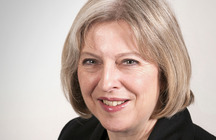
Below is the text of the speech made by Theresa May, the Prime Minister, in response to the No Confidence vote held in the House of Commons on 16 January 2019.
Last night, the House rejected the deal the Government have negotiated with the European Union. Today, it is asked a simpler question: should the next step be a general election? I believe that is the worst thing we could do: it would deepen division when we need unity, it would bring chaos when we need certainty, and it would bring delay when we need to move forward. So I believe the House should reject this motion.
At this crucial moment in our nation’s history, a general election is simply not in the national interest. Parliament decided to put the question of our membership of the European Union to the people. Parliament promised to abide by the result. Parliament invoked article 50 to trigger the process. And now Parliament must finish the job. That is what the British people expect of us and, as I find when speaking to my constituents and to voters right across the country, that is what they demand. But a general election would mean the opposite. Far from helping Parliament finish the job and fulfil our promise to the people of the United Kingdom, it would mean extending article 50 and delaying Brexit, for who knows how long.
Pete Wishart
The Prime Minister has lost a quarter of her Cabinet and 117 of her Back Benchers want her gone. She has experienced the biggest defeat in parliamentary history. What shred of credibility have her Government got left? For goodness’ sake Prime Minister, won’t you just go?
The Prime Minister
The hon. Gentleman might not have noticed that we are debating a vote of no confidence in the Government, so he has his opportunity to express his opinion in that vote.
Mr John Baron (Basildon and Billericay) (Con)
As someone who was defeated last night by only 230 votes, may I encourage the Prime Minister to KBO and never tire of reminding the country that our good economic and one-nation record will be put at risk by a very extreme left-wing and high-taxation party?
The Prime Minister
My hon. Friend is absolutely right. I shall speak about this later in my speech, but it is over the years since 2010, with Conservatives in government, that we have been able to turn the economy around, ensure that jobs are provided for people and give people a better future.
James Morris (Halesowen and Rowley Regis) (Con)
I totally agree with the Prime Minister that a general election would solve nothing—it is merely a tactical device used by the Opposition to cause chaos—but does she agree with me that we also need to rule out a second referendum on our membership of the EU, which would be highly divisive and would not resolve the issues we currently face?
The Prime Minister
My hon. Friend is absolutely right that a general election would cause the sort of delay that I have just been talking about. He is also right in that we had a referendum in 2016, and I believe it is incumbent on this Parliament to deliver on the result of that referendum and to deliver Brexit. As regards those issues, the choices we face as a country will not change after four or five weeks of campaigning for a general election, and there is no indication that an election would solve the dilemma that we now face. Not only that, but there is no guarantee that an election would deliver a parliamentary majority for any single course of action.
Mr Francois
I thank the Prime Minister for giving way; unlike some, she is clearly not afraid to debate. It is not exactly a secret that on European policy, she and I have not seen entirely eye to eye—
Simon Hoare (North Dorset) (Con)
She’s taller than you. [Laughter.]
Mr Francois
So is everybody else!
It is possible that the Prime Minister and I will continue to disagree, but I am Conservative first and last, and I know opportunism when I see it, so when the bells ring the whole European Research Group will walk through the Lobby with her to vote this nonsense down.
The Prime Minister
I thank my right hon. Friend for his intervention. I note what he said and I am happy to carry on discussing with him the different views we have had on the European issue. It is absolutely clear that what the right hon. Gentleman the Leader of the Opposition is trying to do is not going to help to resolve the issue of ensuring that we deliver on Brexit for the British people.
Seema Malhotra (Feltham and Heston) (Lab/Co-op)
In 2017, the Prime Minister went to the country and asked for a mandate; she lost her majority. Last night, she asked the House to back her deal; she saw the biggest Government defeat in a vote in the history of this House. She said last night that she wanted to open up dialogue with the whole House, yet she has refused to open up that dialogue with Labour’s Front Benchers. Does she agree that it looks like a strategy more to divide and conquer than to bring this House and the country together and work out how we move forward?
The Prime Minister
I said last night that we would be having discussions across the House. There are many different opinions in the House on the issue of how to deliver Brexit; indeed, there are some views in the House on how not to deliver Brexit. I believe that we should deliver Brexit for the people. I made it clear that, should the Leader of the Opposition table a motion of no confidence, the first priority would be to debate that motion. I am confident that the Government will retain the confidence of the House. When that happens, I shall set out the further steps that we will take on discussions with Members from across the House.
Several hon. Members rose—
The Prime Minister
If Members will just be a little patient, I have taken a number of interventions, so I will make a little progress. I will be generous in taking interventions; I think Members know from the number of hours that I have spent in the House answering questions that I am not afraid to answer questions from Members.
Stephen Doughty (Cardiff South and Penarth) (Lab/Co-op)
Will the Prime Minister give way?
The Prime Minister
If the hon. Gentleman had listened to what I said—it does help sometimes.
We do not even know what position the Labour party would take on Brexit in an election. It is barely 18 months since this country—
David Morris (Morecambe and Lunesdale) (Con)
On that point, will the Prime Minister give way?
The Prime Minister
If my hon. Friend would just allow me one moment.
It is barely 18 months since this country last went to the polls, in an election in which well over 80% of voters—almost 27 million people—backed parties whose manifestos promised to deliver Brexit. That is what the Government intend to do and that is what is in the national interest, not the disruption, delay and expense of a fourth national poll in less than four years.
David Morris
Does the Prime Minister agree that if the Leader of the Opposition himself wrote on a note exactly what he wanted, passed it to the Prime Minister and she adopted it, he would still vote against it?
The Prime Minister
My hon. Friend is absolutely right, because of course the position that the Leader of the Opposition took was that however good a deal for the United Kingdom the Government brought back, he would vote against it, and however bad a deal the EU offered, he would vote for it. He has no real national interest in getting the right answer for our country.
Stephen Doughty
My right hon. Friend the Leader of the Opposition is absolutely right to call for a general election today, because it is not only the Government’s record on Brexit that is at stake tonight. Let me ask the Prime Minister a direct question: is she really saying that her record on policing and crime is one that she is willing to stand on? We have seen more than 20,000 police officers cut since 2010, we see rising crime and rising knife crime, and we see money being diverted, instead of paying for police, to paying for a no-deal Brexit that nobody in this House wants to see happen.
The Prime Minister
The hon. Gentleman talks about paying for police; of course, we made more money available to police forces, and what did the Labour party do? Labour voted against that. [Interruption.] Yes, that is what Labour did—voted against it.
Several hon. Members rose—
The Prime Minister
I will make a little more progress, then take some more interventions.
Last night the House spoke clearly, and I heard the message that it sent. I heard the concerns of my colleagues and those from across the House, and I understand them. As I told the House last night and have just repeated, if the Government secure the confidence of this House, my first priority will be to hold meetings with my colleagues, with our confidence and supply partners the Democratic Unionist party, and with senior parliamentarians from across the House, but our principles are clear: a deal that delivers a smooth and orderly exit, protecting our Union, giving us control of our borders, laws and money and allowing us to operate an independent trade policy. These are what deliver on the will of the British people.
Stewart Malcolm McDonald (Glasgow South) (SNP)
I tried this with the Prime Minister earlier during Question Time, and I am going to give her one more chance: which of the red lines that she set, which caused her defeat last night, is she willing to compromise on to get the agreement through?
The Prime Minister
The hon. Gentleman will not be surprised to hear that I will give him the same answer as I have just given in my comments. I point out to him that the key thing that this House and this Parliament need to do is to deliver Brexit for the British people. That is what we need to do. We need to deliver a Brexit that respects and reflects the vote that was taken in the 2016 referendum.
Stewart Malcolm McDonald
I am trying to be helpful to the Prime Minister, believe it or not, but this is pure robotic fantasy. It is her deal that has to change, and her deal is a product of the red lines, so when she has that meeting with my right hon. Friend the Member for Ross, Skye and Lochaber (Ian Blackford), which of the red lines is she willing to give up on?
The Prime Minister
I repeat that we will approach the discussions in a constructive spirit. We want to hear from the House the detail of what it wants to see, such that we can secure the House’s support for a deal.
Mr Bob Seely (Isle of Wight) (Con)
I thank my right hon. Friend for giving way, unlike the Leader of the Opposition. Does she share my concerns that too many people in this House are trying to scupper the mandate given to us by the British people? For centuries, this House has taken arbitrary power from kings, queens, peers and grandees and put that power in this House for the public good, but it appears that we are now becoming an arbitrary power that is removing the mandate that we gave to the British people. Will my right hon. Friend fight to deliver on that mandate and to protect and preserve our democracy?
The Prime Minister
My hon. Friend puts his point very powerfully indeed. This Parliament voted to ask the British people, and to say to them, “It is your decision.” It was not to say, “Tell us what you think and we might decide afterwards whether we like it.” It was, “It is your decision, and we will act on that decision.”
Several hon. Members rose—
The Prime Minister
I will just make a little more progress.
That is what we want to do: deliver on the will of the British people. As I have said, I will approach the meetings in a constructive spirit, focusing on ideas that are negotiable and have sufficient support in this House. The aim is to identify what would be required to secure the backing of the House.
Peter Kyle (Hove) (Lab)
On that point—
The Prime Minister
I will make a little more progress. I have already been generous with interventions.
If those talks bear fruit, as I said earlier in Prime Minister’s questions, then be in no doubt that I will go back to Brussels and communicate them clearly to the European Union, and that is what Members asked for. The leader of the SNP MPs said that we should have talks with all the leaders of the Opposition parties and work together in all our interests. The Chairman of the Brexit Committee said that if the deal was defeated, “I would like to think that she would take a bold step—that she would reach out across the House to look for a consensus.” That is exactly what I propose to do. It would be a little strange for the Opposition to vote against that approach later today and in favour of a general election, as that would make that process of reaching out across Parliament impossible.
Ms Angela Eagle (Wallasey) (Lab) rose—
The Prime Minister
I will give way to the hon. Lady, as she has risen several times.
Ms Angela Eagle
I thank the Prime Minister for her generosity in giving way. With all due respect to her she has come to the House today, after suffering a very, very large defeat indeed, with the same lines and she is making the same assertions as she was making before the vote—it is as if the vote never happened. Her Downing Street spokesperson said that any discussions would have to start and proceed from the red lines that she herself established. Does she not realise, in all honesty, that the time has come for her to show some flexibility on those red lines and get us into a genuine discussion rather than just repeating the lines that we have heard for the past five months ad nauseam?
The Prime Minister
What I am doing is setting out what the British people voted for in the referendum in 2016, and it is our duty as a Parliament to deliver on that.
Mr Dhesi rose—
The Prime Minister
Again, I will just make a little progress.
I know that to serve in Government is a unique privilege. The people of this country put their trust in you and, in return, you have the opportunity to make this country a better place for them.
Maggie Throup (Erewash) (Con)
Will my hon. Friend give way?
The Prime Minister
In a moment.
When I became Prime Minister that is what I pledged to do. Yes, to deliver Brexit, but also to govern on the side of working people, right across the country, for whom life is harder than it should be and to build on the progress that has been made since 2010.
Yvette Cooper (Normanton, Pontefract and Castleford) (Lab)
I thank the Prime Minister for giving way. The problem is that she seems to be talking as if she lost by 30 votes yesterday and not 230. Her refusal even to consider changing any of her red lines, when the EU, the Irish Government and others made it clear that the deal that she got was dependent on those red lines, is making this impossible. May I ask her to clarify this: is she saying that she will rule out, in any circumstances, a customs union?
The Prime Minister
What I want to see is what the British people voted for—[Interruption.] No, this is very important. They voted for an end to free movement; they voted for an independent trade policy; and they voted to end the jurisdiction of the European Court of Justice. It is incumbent on this Parliament to ensure that we deliver on that.
Mr Kenneth Clarke (Rushcliffe) (Con) rose—
Kevin Hollinrake (Thirsk and Malton) (Con) rose—
The Prime Minister
I give way.
Mr Clarke rose—
The Prime Minister
If the Father of the House would allow me, I did say to my hon. Friend the Member for Thirsk and Malton (Kevin Hollinrake) that I would take him first.
Kevin Hollinrake
I thank the Prime Minister for giving way. She is being criticised for setting and sticking to red lines, but do not those red lines simply represent the promises that were made before the referendum?
The Prime Minister
That is the point that I have been making and repeating. When people voted to leave, they voted for certain things. They voted to ensure that we could have that independent trade policy and that we would end free movement, for example, and it is our duty to ensure that we deliver on those things.
Mr Kenneth Clarke
I have asked many people throughout this why they voted on one side or the other in the referendum, and I have got a very wide range of replies. I have to say, though, that no one has ever told me that they voted to leave in order that we could leave the customs union, or that they wanted us to erect trade barriers between ourselves and the rest of the Europe. As the Prime Minister is as committed to this as I am, I entirely support her aim of keeping open borders between ourselves and the rest of Europe. Is it not the case that there is nowhere in the world where two developed countries in any populated area are able to have an open border unless they have some form of customs union?
The Prime Minister
My right hon. and learned Friend refers to the fact that, obviously, there were various reasons why people voted to leave the European Union, but when they were doing so they did vote to ensure that we continue to have a good trading relationship with our nearest neighbours in the European Union and also to improve our trading relationships with others around the world. That is what we were searching for and that is what was in the political declaration for the future. That package was not voted through this House last night. I now will talk to parliamentarians across the House to determine where we can secure the support of the House.
Although delivering Brexit is an important and key element of government, it is also important that we build on the progress made since 2010 and lead this country towards the brighter, fairer, more prosperous future that it deserves.
Mr Dhesi rose—
Mr Paul Sweeney (Glasgow North East) (Lab/Co-op) rose—
Wera Hobhouse (Bath) (LD) rose—
The Prime Minister
I will make some progress before I take any further interventions.
I believe that this Government have a record to be proud of—a record that demonstrates that our policies and principles are more than words. In 2010, we inherited the gravest of economic situations: a recession in which almost three quarters of a million jobs were lost; a budget deficit of £1 borrowed for every £4 spent; and a welfare system that did not reward work. But in the nine years since, thanks to the hard work and sacrifice of the British people, we have turned this country around. Our economy is growing; the deficit is down by four fifths; the national debt has begun its first sustained fall for a generation; and the financial burden left for our children and grandchildren is shrinking by the day. That is a record to be proud of.
Mr Dhesi
I thank the Prime Minister for allowing me to intervene. Under her leadership, this Government have become the first in British history to be found in contempt of Parliament, and the first in British history to lose by more than 200 votes on a primary policy matter. Homelessness has spiralled out of control, the use of food banks has risen exponentially, and much more besides. Surely it is now time to act with humility and to do the right and honourable thing: resign and call a general election.
The Prime Minister
May I say again that the whole point of this debate today is to determine whether this House has confidence in the Government or thinks that there should be a general election?
I say that our record is one that we should be proud of, but I know that that is not enough. A strong economy alone is no good, unless we use it to build a fairer society: one where, whoever you are, wherever you live, and at every stage of your life, you know that the Government are on your side; where growing up you will get the best possible education, not because your parents can afford to pay for it but because that is what every local school provides; where your parents have a secure job that pays a decent wage and where they get to keep more of the money they earn each month; where, when you finish school, you know that you can go to university, whether or not your parents went, or you can have an apprenticeship; where, when you want to buy your first home, enough houses are being built so that you can afford to get a foot on the housing ladder; where, when you want to get married, it does not matter whether you fall in love with someone of the same sex or opposite; where, when you have children of your own, you will be able to rely on our world-class NHS; where both parents can share their leave to look after their baby and where, when they are ready to go back to work, the Government will help with the costs of childcare; and where, when you have worked hard all your life, you will get a good pension and security and dignity in your old age. That is what this Government are delivering.
Wera Hobhouse
I thank the Prime Minister for giving way. I acknowledge that she wants to paint a good picture of her Government, but is it not true that, precisely because so many people were unhappy, they also voted for Brexit? Is it not the case that we need to clarify with the British people what exactly they voted for? We need to put a precise deal in front of them, and not just make a general assumption about why people voted for Brexit. People also voted for Brexit because they were genuinely unhappy with the state of this country, so is it not the case that we now need to put a precise Brexit deal in front of the people so that everyone can say that, actually, Brexit will make a difference?
The Prime Minister
The hon. Lady might recall that I made exactly that point when I became Prime Minister—that there were various reasons that people voted for Brexit, but that some people wanted a change in the way in which politics delivered for them. They felt that politicians were not listening to them, which is precisely why it is so important that we listen to and deliver on the result of the referendum for the people of this country—and this Government are delivering in a whole range of ways.
Nigel Huddleston (Mid Worcestershire) (Con)
I appreciate the positive, confident and optimistic picture of the future of the UK painted by the Prime Minister. What a contrast with the Leader of the Opposition, who takes every opportunity to talk Britain down. How on earth can somebody claim that they aspire to be Prime Minister if they have such utter lack of confidence in Britain and the British people?
The Prime Minister
Absolutely. Anybody who wants to be Prime Minister should believe in this country and in the talents of our people; that is so important.
Rebecca Pow (Taunton Deane) (Con)
I know that there is so little time to get in all the achievements—[Laughter.] Colleagues may laugh, but it is this Government who are taking the environment more seriously than any other Government. We are putting sustainability first, and that is more important even than Brexit, because if we did not have a healthy environment—our record on this is second to none, including measures on microbeads, ancient woodland protection, the clean air strategy and more—we would be lost.
The Prime Minister
I thank my hon. Friend, who has set out an area on which this Government have been taking important action. I commend the work that she has done and the work of my right hon. Friend the Environment Secretary in this area. We are leading the way on the environment in a number of ways.
Mr Philip Dunne (Ludlow) (Con)
I am very grateful to the Prime Minister; she is giving way considerably more than the Leader of the Opposition did. She has just mentioned the stewardship of the NHS under her leadership. Would she like to remind the Leader of the Opposition that it is this Government who have just pledged, through the NHS long-term plan, 50% per annum more funding than he pledged at the last general election?
The Prime Minister
That is absolutely right. The biggest cash boost to the NHS in its history and a long-term plan that ensures its sustainability for the future—that is being delivered not by a Labour party, but by the Conservatives in government.
Several hon. Members rose—
The Prime Minister
If hon. and right hon. Members will forgive me, I am conscious that the time is getting on.
Mr Ben Bradshaw (Exeter) (Lab) indicated assent.
The Prime Minister
The right hon. Member for Exeter (Mr Bradshaw) is encouraging me not to take so many interventions and to get on with my speech.
We are building a country that works for everyone, but there is much more to do, including: investing in our industrial strategy so that we are creating the jobs of the future in all parts of our country, not just London and the south-east; delivering our long-term plan for the NHS, to which my right hon. Friend the Member for Ludlow (Mr Dunne) has just referred, so that our most precious institution is equipped for the future; tackling the lingering injustices that for too long have blighted the lives of too many people, including women being paid less than men, mental health not being treated with the same seriousness and resource as physical health, a criminal justice system that has poorer outcomes if you are black than if you are white, and an education system that has left white working-class boys as less likely to go to university than anyone else. These are issues that we need to tackle, and the mission of this Government will not stop.
This is a Government building a country that is more prosperous, a country that is fairer and a country that works for everyone. With the confidence of this House, we will go on delivering for Britain, driven by a passionate belief in doing what is right for our country and right for our people, acting not in self-interest but in the national interest. That is the simple mission that has underpinned our approach to the Brexit negotiations.
As we enter the next stage of that process, I have made it clear that I want to engage with colleagues across the House. The question now is whether the Labour leadership will rise to the occasion, but I fear the answer is no. As the Labour leader himself has indicated, Brexit is the biggest issue that the House and the country have faced for generations. It demands responsible leadership and pragmatic statesmanship from senior politicians. The Leader of the Opposition, as yet, has shown neither. His failure to set out a clear and consistent alternative solution to the Brexit question is the third reason that this House should comprehensively reject this motion.
The shadow Brexit Secretary has described Labour’s position on Brexit as one of “constructive ambiguity”. I think that the shadow Trade Secretary called it something slightly more succinct but definitely not parliamentary, and I therefore cannot repeat it. I call it not being straight with the British people. For more than two years, the Leader of the Opposition has been either unable or unwilling to share anything other than vague aspirations, empty slogans and ideas with no grounding in reality. When the President of the European Commission said that Labour’s Brexit ambitions would be impossible for the European Commission to agree to, the right hon. Gentleman simply shrugged and said, “That’s his view. I have a different view.”
Last night, just for a moment, I thought the Leader of the Opposition might surprise us all, because he told this House that it was not enough to vote against the withdrawal agreement and that
“we also have to be for something.”—[Official Report, 15 January 2019; Vol. 652, c. 1109.]
Surely that was the moment. That was the point at which, after months of demanding that I stand aside and make way for him, he was going to reveal his alternative. We waited, but nothing came.
The Leader of the Opposition still faces both ways on whether Labour would keep freedom of movement, and he will not even be drawn on the most basic point of all. In PMQs, I referred to the fact that on Sunday, when challenged as to whether he would campaign to leave the European Union if there were a general election, he refused to answer that question five times, and he has refused to answer that question in response to Members of this House today. The Government have no doubts about our position. Under this Government, the United Kingdom will leave the European Union and we will respect the decision of the people.
Chris Philp
The Prime Minister is quite right to point out the yawning chasm at the heart of Labour’s policy, but the problem is that she also said that we need to come up with a constructive alternative. Speaking to colleagues around the House, it strikes me powerfully that there is one element of the currently proposed deal that, if changed, would make it much more likely to pass: the backstop. Would the Prime Minister therefore consider contacting European Commission officials in the coming days and over the weekend to ask them to make legally binding changes to that backstop, which would mean that the deal would then have a very good chance of passing this House?
The Prime Minister
The purpose of the various discussions that we are going to have is to identify the issues that will secure the support of this House, and I will take those issues to the European Parliament.
Peter Kyle
Will the Prime Minister give way?
The Prime Minister
I will give way to the hon. Gentleman, and then I am going to make progress so that others can speak in this debate.
Peter Kyle
I am extremely grateful to the Prime Minister for giving way; she has been generous. She has talked about engagement with this House and yesterday she referred to this House as the “fulcrum of our democracy.” May I gently point out that she is the Prime Minister who went to the Supreme Court to stop her having engagement with this House, and that the vote that we had yesterday was on the back of an amendment that she voted against? She talks about engagement with this House, but we have experienced nothing but hostility from the Prime Minister. Going forward, will she put her words into action? If not, she does not deserve to have the job in the first place.
The Prime Minister
The hon. Gentleman has been present on many occasions when I have come to listen to and answer questions from the House. In fact, from October through to December, that amounted to a whole 24 hours spent answering questions in this House.
Vital though Brexit is, there is much more to being the Prime Minister of the United Kingdom. That is, after all, the job to which the Leader of the Opposition aspires.
Anna Soubry
Will the Prime Minister give way?
The Prime Minister
If my right hon. Friend will bear with me, I will make some progress, as I understand that a significant number of Members have put in to speak.
By putting forward this motion, the Leader of the Opposition is asking this House to accept that he could be the next Prime Minister. How would he have faced some of the big challenges that I have faced as Prime Minister over the last two and a half years? When Russia launched a chemical attack on the streets of Salisbury, I worked with our allies to degrade Russian intelligence capabilities and hold those responsible to account. His contribution was to suggest that we ask Russia to double-check the findings of our own scientists. When the Syrian regime used chemical weapons to murder innocent men, women and children in Douma, I stood with our allies to uphold the international consensus that the use of chemical weapons should not be tolerated. He wanted to give an effective veto on action to President Putin and the Russian Government—the very Government who were supporting the Syrian regime.
The leader of the party of Attlee called for the dismantling of NATO. The leader of the party of Bevan says that Britain should unilaterally disarm herself and cross our fingers that others follow suit. The leader of the party that helped to deliver the Belfast agreement invited IRA terrorists into this Parliament just weeks after their colleagues had murdered a Member of this House. His leadership of the Labour party has been a betrayal of everything that party has stood for, a betrayal of the vast majority of his MPs and a betrayal of millions of decent and patriotic Labour voters. I look across the House and see Back-Bench Members who have spent years serving their country in office in a Labour Government, but I fear that today, it is simply not the party that many of its own MPs joined.
If we want to see what the Leader of the Opposition would do to our country, we can do no better than look at what he has done to his party. Before he became Labour leader, nobody could have imagined that a party which had fought so hard against discrimination could become the banner under which racists and bigots whose world view is dominated by a hatred of Jews could gather, but that is exactly what has happened under his leadership. British Jewish families who have lived here for generations are asking themselves where they should go if he ever becomes Prime Minister; that is what has happened under his leadership. A Jewish Labour MP had to hire a bodyguard to attend her own party conference, under the leadership of the right hon. Gentleman. What he has done to his party is a national tragedy. What he would do to our country would be a national calamity.
Anna Soubry
I am grateful to the Prime Minister for being so generous and engaging in a debate. As ever, she could teach a few people lessons on that. The hon. Member for Hove (Peter Kyle) made a very important point. While the Prime Minister has been very generous in coming to this place and answering questions, the complaint is that we have been excluded in a meaningful way at the outset from helping to determine the principles upon which a Brexit deal should be negotiated.
In seeking to be true to our oath and promises to our constituents and voting for things against our own Government, many of us have been threatened with deselection or received threats against our safety and even death threats. I know how seriously the Prime Minister takes that, and I thank her for her kindness in the note she sent me last week. Will she now make it clear to those listening to this that it would be wrong for anybody—this applies also to Opposition Members, given the wise observations she has just made about the state of the Labour party—to be intimidated or bullied in any way simply for coming here and being true to what they believe in and what they believe is in the national interest?
The Prime Minister
What my right hon. Friend experienced last week was appalling. I understand that she has experienced other incidents more recently. I absolutely agree; everybody in this House holds their opinions and views with passion and commitment, and everybody in this House should be able to express those views with passion and commitment and not feel that they will be subject to intimidation, harassment or bullying. That is very important, and I am sure that that sentiment commands approval across the whole House. Once again, I am sorry for the experiences my right hon. Friend has gone through.
Liam Byrne (Birmingham, Hodge Hill) (Lab)
Will the Prime Minister give way?
The Prime Minister
I will give way to the right hon. Gentleman, and then I will conclude.
Liam Byrne
I am grateful to the Prime Minister for giving way. She must recognise that she has built a cage of red lines, which produced a deal that was overwhelmingly rejected by this House. We rejected the deal because we rejected the cage. This afternoon, she has yielded nothing about how any one of those red lines will change. If she is not prepared to change, how on earth can we in this House continue to place a shred of confidence in her?
The Prime Minister
The point I made last night and have repeatedly made today is that I will be talking to people across this House—to my own colleagues, to the DUP and to other parties, as there are different groups of people in this House who have different views on this issue—to find what will secure the confidence and support of this House for the way in which we deliver Brexit.
It was serendipitous that I allowed the right hon. Gentleman to intervene just at the point at which I was going to say that if the Leader of the Opposition wins his vote tonight, what he would attempt to do is damage our country and wreck our economy. Of course, it was the right hon. Member for Birmingham, Hodge Hill (Liam Byrne) who left that note saying, “There’s no money left” after the last Labour Government.
Liam Byrne
I was naive to honour a Treasury tradition that went back to Churchill with a text that is pretty much the same, but I was proud to be part of a team that stopped a recession becoming a depression. This is the Government who—[Interruption.]
Mr Speaker
Order. Stop trying to shout other Members down. Calm yourselves.
Liam Byrne
The Prime Minister was a member of the party that backed Labour’s spending plans up to late 2009, and she has presided over a Government who have doubled the size of the national debt.
The Prime Minister
We did see what was happening in terms of the financial crisis and its impact, but the Labour party in government had failed to take the steps to ensure that the country was in a position to deal with those issues.
What would we see if Labour won the vote tonight? It would wreck our economy, spread division and undermine our national security. As I said earlier, on the biggest question of our times, the Leader of the Opposition provides no answers, no way forward and nothing but evasion, contradiction and political games. This House cannot and must not allow it.
Clive Efford (Eltham) (Lab)
Will the Prime Minister give way?
The Prime Minister
I am about to conclude, so I will not take any more interventions.
We are living through a historic moment in our nation’s history. Following a referendum that divided our nation in half, we dearly need to bring our country back together. Last night’s vote showed that we have a long way to go, but I do not believe that a general election is the path to doing that, and I do not believe that a Government led by the Leader of the Opposition is the path to doing that either. We must find the answer among ourselves in this House, and, with the confidence of the House, this Government will lead that process.
This is the Government who have already delivered record employment, put more money in the pockets of ordinary working people and given the NHS the biggest cash boost it has ever received from any Government of any colour. This is the Government who are fighting the burning injustices of poverty, inequality and discrimination, which for too long have blighted the lives of too many of our people. This is the Government who are building a country that works for everyone.
As we leave the European Union, we must raise our sights to the kind of country we want to be—a nation that can respond to a call from its people for change; a nation that can build a better future for every one of its people; and a nation that knows that moderation and pragmatism are not dirty words, but how we work together to improve people’s lives. That is our mission. That is what we are doing, and, with the backing of the House, it is what we will continue to do. I am proud of what we have achieved so far, and I am determined that the work will go on. In that, I know that we have the confidence of the country. We now ask for the confidence of this House. Reject this motion.