Tag: 2019

  • Dominic Grieve – 2019 Speech on Brexit

    Below is the text of the speech made by Dominic Grieve, the Conservative MP for Beaconsfield, in the House of Commons on 29 January 2019.

    I cannot deny that I have found the process of Brexit one of the most wearisome and unpleasant periods of my time in this House, but the cloud has a little bit of a silver lining. I find this afternoon that an amendment I first proposed last summer, which was vehemently denounced by some of my hon. and right hon. Friends as being about to break the party apart, and that I brought back just before Christmas, and passed with the help of many hon. and right hon. Members, now appears to have something to commend it to the very people who denounced it then. I note with pleasure that amendment (n) appears to command some support among Conservative Members, and from my right hon. Friend the Prime Minister, but it could not even have been brought up for consideration if the system that had been devised for this House, simply to have motions in neutral terms be unamendable, had been followed. I derive some slight satisfaction from that.

    I now tempt the House to accept another amendment, amendment (g), and I will briefly explain why. We are mired in complete paralysis. The deal that my right hon. Friend the Prime Minister brought back, which I suspect is probably the best deal available, does not commend itself to many of my hon. and right hon. Friends. If they voted to leave, it does not meet their dreams at all. What about somebody like myself? When I look at the deal objectively, from the point of view of an ex-remainer, I simply cannot understand how we are going to be better off leaving on such terms than remaining in the European Union.

    Sir William Cash

    Will my right hon. and learned Friend give way?

    Mr Grieve

    No, I am going to make some progress, if I may.

    In those circumstances, we have to find a way forward. Throughout the times that I have tabled amendments for this House to consider, I have tried to avoid objectives ​and look at process. Frankly, we could do with more days of debate of this sort unless or until we reach agreement. Of course, if we do reach agreement, with this amendment we can have another business of the House motion and we will just drop the remaining sitting days. It is rather sensible to set aside six days between now and the end of March when this House can debate, free of the interference of government, which I have to say I am afraid has sought consistently to restrict debate into an absolute straitjacket of what it wanted to hear and nothing else. If we have those days, it will help us, just as we are actually starting to tease out this afternoon, to make a little bit of progress towards compromise.

    Of course my views are well known about the desirability of a further referendum, and I will come back to them right at the end, but I am perfectly aware that many Members in this House do not agree with that, even if they also share my regret at what we are doing in leaving the EU. But that in no way diminishes for me the value of these days, and I agree entirely with the Father of the House and with my right hon. Friend the Member for West Dorset (Sir Oliver Letwin) that the idea that this is some constitutional abomination simply does not bear scrutiny; we are in control of our Standing Orders and changing them in this way to get the debates we need is entirely in keeping with the traditions of this House and the fact that the Government, in this area, simply do not enjoy the majority that some Governments have normally used to suppress it.

    Sir William Cash

    Somebody who refers to national suicide, as my right hon. and learned Friend did the other day, is now moving towards a proposition that involves constitutional homicide, but let me put it another way. Does he agree that he voted for the European Union (Withdrawal) Act 2018, which states unequivocally that the European Communities Act 1972 will be expressly repealed? Therefore, is what he is now saying going to contradict that, because he does not want the 1972 Act to be expressly repealed—yes or no?

    Mr Grieve

    I say to my hon. Friend that he is familiar enough with the constitutions of this country and this House to know that this House can propose, debate, pass and revoke laws—we do it quite often sometimes, including laws that have never actually been implemented. So this House can do what it thinks is right at any given moment, and that is the flexibility we need. I tabled my amendment in the spirit of trying to reach some sort of understanding of where the majority might lie to bring this unhappy episode to a conclusion. I have also made it clear that in doing that one has to keep in mind and respect the decision of the earlier referendum, but that does not mean—I will come back to this in a moment as well—that one simply says that one is going to drag the country out on terms that nobody very much seems to support and towards a future that on the face of it looks pretty bad. To do that would be an abdication of our responsibility.

    My right hon. Friend the Prime Minister has also said that this House should say what it wants and what it does not want. May I say to her that knowing what one does not want can be quite a good starting place to understanding where compromise is reached over what one is prepared to accept? There are amendments down this evening on no deal that I shall support, because it is ​quite clear to me that this House utterly rejects no deal. Therefore, I will vote for those as well and I ask the House to vote for my amendment, which is neutral in objective but which will give us the opportunity we need to continue developing the debate we have to have if we are to resolve this matter sensibly.

    There is then amendment (n), which I have to say is quite tempting in some ways. Our party has deep divisions over Brexit, and we know the pleasure we get when, because of the respect and affection we have for each other, we can all vote together. We did it when we supported my right hon. Friend the Prime Minister on the motion of confidence. For that reason, it is very tempting to be told that we should just vote for amendment (n) and send some message that we might just be close to resolving our disagreements with the EU, and doing it collectively. I have some slight anxiety about this, however.

    The backstop is indeed a rather humiliating thing, which is why Democratic Unionist party Members do not like it. As a Unionist, I can understand that, to the bottom of my heart, because it highlights the fact that when we leave the EU, the EU is going to continue to have a hold constitutionally over some of the things that we do. But the truth is that the backstop is just the outward sign of a much more profound truth: that ever since we signed up to the Good Friday agreement to resolve, on a permanent basis, an outstanding constitutional issue of identity on the island of Ireland, we have bound ourselves to keep an open border. The unpleasant truth is that that is incompatible with the aim of some hon. and right hon. Friends, who want to take us to a future in which we diverge on tariffs and regulation, and which inevitably therefore leads to a hard border having to be introduced.

    I fear that our being asked to support amendment (n) this evening is a piece of displacement activity—something in which I am afraid the House has specialised in the past two and a half years, and which one often sees young children doing when they are asked to face up to something they do not like. That seems to me to be what the amendment is about because, first, it is quite clear that the EU will not negotiate on it—although I do accept that if you do not ask, you do not get—and secondly, even if we were to get the backstop removed, the trouble is that what some of my hon. and right hon. Friends are asking for is inevitably going to bring this conflict into the open once we are gone. If I may gently say so to them, this is one of the issues that we need to debate in those six days that I hope I may have set aside for the House. There is a lack of trust about future intention that makes 29 March completely irrelevant, because the truth is that the disputes about the nature of our state and how we relate to those around us will resume immediately afterwards.

    For those reasons, I am afraid I cannot support amendment (n), but I am delighted to have provided—if only by my previous amendment, at least—an opportunity to this House to start having a dialogue. I very much hope we can pursue that.
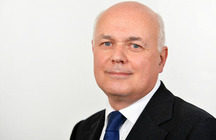
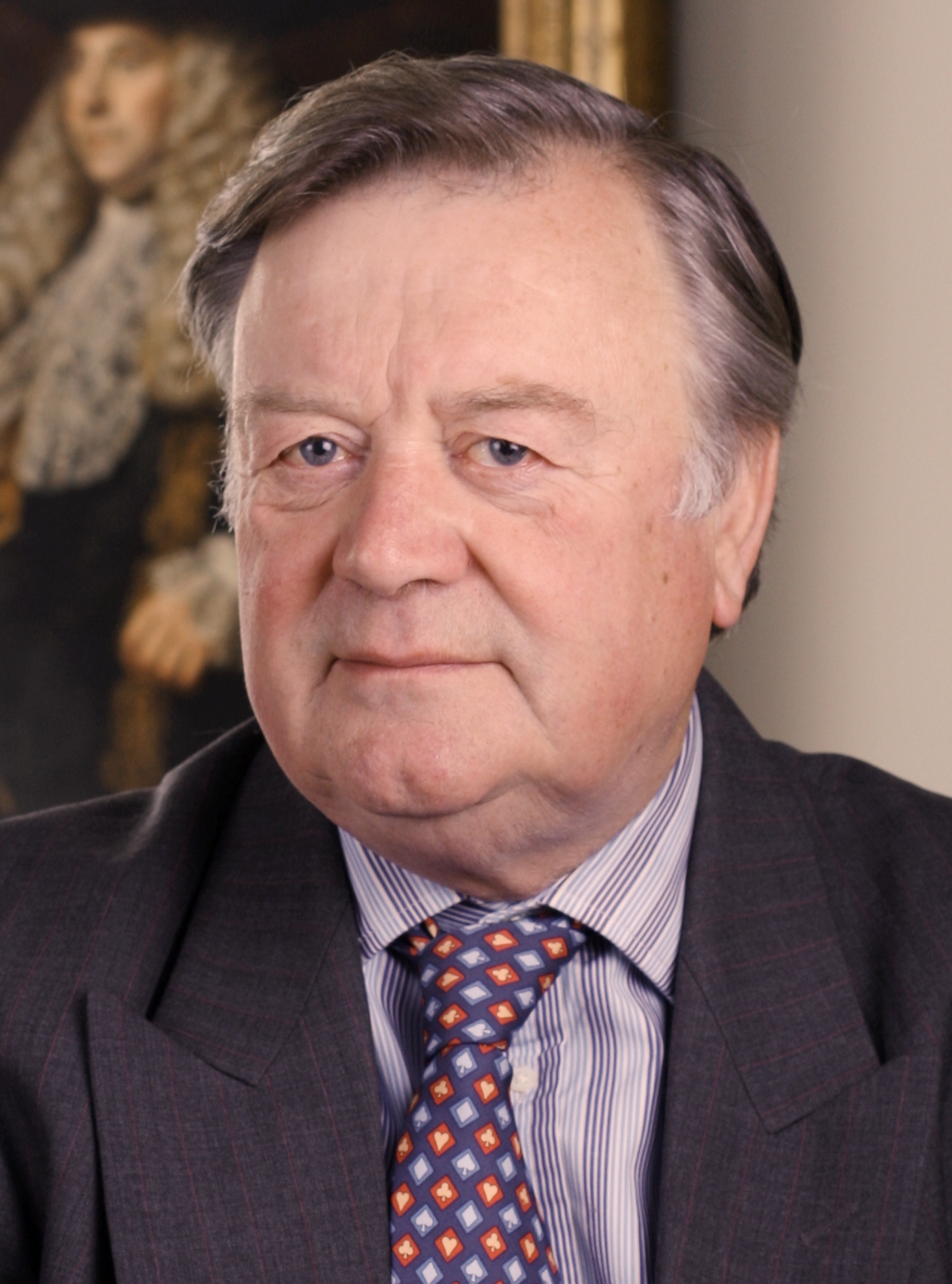
  • Iain Duncan Smith – 2019 Speech on Brexit

    Below is the text of the speech made by Iain Duncan Smith, the Conservative MP for Chingford and Woodford Green, in the House of Commons on 29 January 2019.

    I will accept your guidance, Mr Speaker.​

    It is a pleasure to follow the right hon. Member for Ross, Skye and Lochaber (Ian Blackford) for plenty of reasons, but specifically because he happens to have what I think is possibly the most beautiful constituency in the country—and my heart is there because both my parents are buried there, as are many of my ancestors. There are some links between us, beyond a wee drop now and then.

    In the limited time available to me, I want to respond to what was said by my right hon. Friend the Prime Minister. She gave us a challenge—quite rightly, I think—at the beginning of what was, I must say, an excellent speech. She said that we had spent a lot of time telling everyone what we were against, and that now we must say what we were in favour of. In accepting that challenge, I shall say what I am against, and then come on to what I am in favour of. I shall do that quickly, I hope.

    I shall oppose the amendment tabled by my right hon. and learned Friend the Member for Beaconsfield (Mr Grieve). He remains a friend, an honourable friend, and he is much admired: he was, I thought, an excellent Attorney General. However, I disagree with him on this specific issue. I do not think—this is my view, and we will have different feelings about it—that the House needs another process, or mechanism, to allow it to decide what it is in favour of or against. I think that all multiple motions of this kind end up with a place like this going nine ways from Sunday, and we do not end up with any kind of agreement. I think that the amendment process is a way of deciding what we are in favour of. My right hon. and learned Friend will push his amendment tonight, and I think we will then get an idea of whether the House really does think that.

    Let me comment in the same light, but for a different reason, on the amendment tabled by the right hon. Member for Normanton, Pontefract and Castleford (Yvette Cooper) proposing a delay. Like my right hon. Friend the Prime Minister, I do not think that, of all the things we need right now, we need to book a delay regardless of what we are actually delaying for. I am conscious of the way in which the Commission has responded to the idea of a delay in recent days. Its response has been, “We do not want you to delay, because we do not want you to crash into all our procedures that we have now allowed. For instance, you are not taking part in the European elections—we do not want those to be disrupted—and we do not know what it is that you want to delay for. ”

    The amendment contains no appendage, as it were, telling us what the delay might actually be about. I can understand someone saying, “We are near the end of an agreement, but we have run out of time a bit”, but that is different from simply crying out for a delay. I think that, ultimately, it comes down to the fact that, as many on the right hon. Lady’s own side have said, it will then become a reality that we are opposing the delivery of Brexit. Those who vote for the amendment tonight will have to face that challenge: perhaps the delay is really all about stopping Brexit. However, I will leave the right hon. Lady to deal with that herself. I admire her enormously, as I would, but on this issue, I disagree with her completely.

    As for the amendment tabled by my right hon. Friend the Member for Meriden (Dame Caroline Spelman), again, I just do not think that this one works. The issue ​of a delay—even expressed as it is in the terms of a motion—brings me back to where I was earlier. I hope that my right hon. Friend will forgive me, but I will not support her tonight. I shall go with the Prime Minister on this.

    I want to make two further points and then a comment about what I think I must support tonight. I voted against the agreement; I did so because I felt it was too full of problems and issues that would not be settled and would give a lack of clarity, and so I expressed my view. I have not voted against the Government for well over 20 years, and I did not particularly enjoy doing it, but I did so because I felt that we needed to rethink this and go back and make some changes. So I am pleased tonight that the Prime Minister has come back.

    I challenge those who say that the only thing available is the backstop as it is. That is not altogether true; it depends what question is being asked. An open border, which is the key question that Ireland wanted, can be settled by a much simpler backstop. I am in favour of a backstop; I think it is fair for Ireland and Northern Ireland to want guarantees that there will be an open border, so I am in favour of an open border and of that guarantee. I am just not in favour of the complexity and nature of the demands that left Northern Ireland separated in terms from this Union that we are in favour of keeping Northern Ireland in. That led to serious and significant problems. I believe that the protocol that we have, and that I have been to see the negotiating team in Brussels over, is the key to the way we go forward, and I believe its response to us was positive. I therefore think it would be good to take that process back to Brussels.

    This brings me to what has emerged overnight, which I have been involved with myself, although not absolutely in the frontline. It is an agreement between those of us who take different views about Brexit in my party. I am thinking in particular of my hon. Friend the Member for North West Hampshire (Kit Malthouse) and my right hon. Friend the Member for Loughborough (Nicky Morgan). I say absolutely genuinely to my colleagues that we might be divided about these issues, but we must now strive to find some kind of compromise. I say that as if it is somehow a discovery, but it is not really; I do genuinely think we have the prospect of moving towards that. So however we vote tonight, I hope we will, bit by bit, get behind the process that my colleagues have put forward with those of other colleagues who have taken a very different view about Brexit. I think this is wholly feasible, and I am in full support of this, given the nature of it. I therefore recommend that all of us, despite how we end up voting tonight, recognise that in delivering leaving the European Union in line with the vote that took place in the referendum, this offers a real opportunity not just for Members on my side of the House but for Members opposite who believe that it is right to deliver Brexit to get behind it.

    So now I come to what I am in favour of, which started with the issue of this internal agreement here. We need what the Prime Minister described today: we need to express that view. The Prime Minister was clear on a number of points that I particularly wanted to hear. I wanted to hear whether she was determined to ensure that, where necessary, we looked for legally binding change and that change therefore would change the complexion of the agreement that she had, and she said that today. I also thought she was very clear to the ​whole House that she is not going to assume that were a particular amendment to be passed it would mean we would all agree with whatever she came back with, and she has absolutely guaranteed that we will return with a chance to vote on that; I think that is clear.

    I am also pleased that the Prime Minister answered my hon. Friend the Member for Stone (Sir William Cash) on the question about the extent of the legal powers and the adjudication of the Court of Justice in the Bill to follow; I thought it was strong of her to do that. Many would have avoided that question, as it is complex. Most of my hon. Friend’s questions are quite complex, but she dealt with this one and dealt with it well.

    Trying to keep to the time limit for speeches, I shall now simply say that on that basis, having voted against the agreement, I am now going to support the amendment of my hon. Friend the Member for Altrincham and Sale West (Sir Graham Brady). I shall support it tonight, not because I give a blank cheque and not because I think that therefore we will have solved the problem; I give this support to him, and therefore to what the Prime Minister has said is the Government’s position, because I believe it is necessary for us now to send the Prime Minister back with a fair wind and a sense that this House has agreed that it wants her to go and renegotiate, and to take that change and that desire to deliver Brexit on time on 29 March with her over there to Brussels and achieve what I hope and believe, with strength and determination, she will be able to achieve in those negotiations. I wish her well, and I therefore will be voting tonight to support that amendment because I think it will be, for me, the greatest expression of my good will for a Prime Minister for whom, notwithstanding our disagreements sometimes, I have the greatest respect.

  • Ken Clarke – 2019 Speech on Brexit

    Below is the text of the speech made by Ken Clarke, the Conservative MP for Rushcliffe and the Father of the House of Commons, on 29 January 2019.

    None of us taking part in this debate is in any doubt that we are actually discussing an almost unique political crisis—one of a kind that has not happened for very many years. The crisis takes two forms: one is that we are trying to break a political deadlock over exactly what changes we will make to the great bulk of our political, security, intelligence, crime-fighting, trade and investment, and environmental relationships with the rest of the world, having turned away from the ones that we have put together over the past 47 years; the second is that we are also facing a constitutional crisis over the credibility of Government and Parliament in their ability to resolve these matters.

    I rather agree with what the right hon. Member for Birkenhead (Frank Field) said. I enjoy as much as any veteran parliamentarian the rowdiness of the House of Commons; it is a way of testing the arguments. However, we should also be aware that, at the moment, the public are looking on our political system with something rather near to contempt, as it seems to them that neither the Government nor the political parties, parliamentarians and politicians in general seem able to resolve a question that was first raised by a referendum. Referendums are designed by those who support them to bypass parliamentary decision making, parliamentary majorities and political parties deciding things. We really do need to settle down, and, perhaps if the Government get their way, we can do that in the next few weeks. We have fewer than 60 days to decide how we will come to conclusions about the way forward.

    I want to concentrate on just a few issues. I have put forward most of my views on these amendments in the many debates that we have had already, and many other people want to speak. I suspect that a high proportion of this House can guess which way I will vote on the amendments that Mr Speaker has chosen. Probably far too many of them have had to listen to my arguments. To take some encouragement from this debate—

    Frank Field

    Will the right hon. and learned Gentleman give way?

    Mr Clarke

    I will in a second. I wish to take up this question of the relationship between Parliament and Government, because I took some encouragement from my right hon. Friend the Prime Minister, who did seem to accept that the Government should give opportunities to the House to debate things that each Member regards as key matters of policy. Under our constitution, the Government have to pay regard to the views expressed by this House.​

    Frank Field

    I am very grateful to the right hon. and learned Gentleman for giving way. He and I tabled an amendment that was not called. It was to give this House the chance to vote on the various options. The Prime Minister, when she was speaking, talked of taking other amendments away and working on them with the hope of bringing them back to act upon. Might I, through this intervention, ask him to push on his own side that she does precisely that with our amendment?

    Mr Clarke

    Well, unless I take too long, I hope to touch on the arguments behind the right hon. Gentleman’s excellent amendment, because that is one of the things that we should do in one way or another over the next few weeks.

    Angus Brendan MacNeil (Na h-Eileanan an Iar) (SNP) rose—

    Mr Clarke

    Let me just deal with this question and then I will give way to the hon. Gentleman if his point is relevant.

    The question is, what is the role of this House vis-à-vis the Government and what are our procedures? I must admit that, in the past month or two, I have listened to what I, as a fairly experienced Member here now, have regarded as the most extraordinary nonsense about sweeping away centuries of tradition and distorting our procedures because people have objected to the Speaker selecting amendments where they think they might not be on the winning side. There is a rather fundamental, underlying problem here. This Government did not start this, but Brexit brought it to its head. I think that it started with the Blair Government, because Tony Blair, with the greatest respect, never could quite understand why he had to submit to Parliament so often. He started timetabling all our business and so on, but that is now water under the bridge. I say with respect that, mistakenly, this Government began by saying that they were going to invoke the royal prerogative, and, as it was a treaty, they felt that Parliament would not be involved in invoking article 50 or any of the consequences because the monarch would act solely on the advice of her Prime Minister, trying to take us back several hundred years. That was swept away. Then we had to have defeats inflicted on the Government last summer in order to get a meaningful vote on the outcome of any negotiations. This has gone on all the way through the process. Today’s debate and the votes that we are having tonight are only taking place because the Government actually resisted the whole idea of coming back here with any alternative to the deal that they were telling us was done and fixed and the only way of going forward. That has worried me all the way through.

    Now, I did take the Prime Minister today to be taking a totally different approach, and I hope that she will confirm that. It does now seem that, whatever course we decide on today, things are going to come back to this House. No deal of any kind is going to be ratified until we have had a vote in this House, approving whatever we are presented with. One problem is that we have not yet produced a consensus or a majority for any option, but if this House expresses a clear wish about the nature of the deal that it wants to see negotiated, the Government will consider—indeed, I believe that under our constitution, they are bound to follow—the wishes of the House of ​Commons, because British Governments have never been able to pursue these matters without the consent and support of a majority of the House of Commons.

    Angus Brendan MacNeil

    The right hon. and learned Gentleman said that the House must test the various options. Will he “join the (q)”, as it were? Amendment (q) aims to revoke article 50. Is that one of the ideas that he thinks should be tested in this House—even for nothing other than that the people of Scotland would at least know the folly of sticking with Westminster, which is taking them out of Europe against their will?

    Mr Clarke

    I do not wish to revoke article 50 for the same reasons as the hon. Gentleman, although I do share some of his views. If I was trying to exercise unfettered autocratic power in the government of the country, I would of course still believe that the best interests of the United Kingdom lie in remaining a member of the European Union. I do not share enthusiasm, however, for what the hon. Gentleman wants. After the pleasure of the first referendum and all that it has caused, he now thinks that we will automatically resolve things by having a second referendum, which could be even more chaotic in its effects than that the one we have had.

    As I have said, the Government of the day have got to give this House a far bigger role, which therefore means a much bigger responsibility on this House to create the intraparty, cross-party majority that is the only majority of any kind that might be available here for any sensible way forward.

    Anna Soubry (Broxtowe) (Con)

    Will my right hon. Friend give way?

    Mr Clarke

    Let me just finish my point. I will give way in a minute.

    I heard all the stuff when the Clerks were invoked—the advice of the Clerks to the Government to resist this approach. Of course it is true that the law can only be changed by legislation. That is a perfectly straightforward legal point. But in our constitution, in my opinion, the Government are accountable politically to the non-legislative votes of Parliament. It is utterly absurd to say that Opposition Supply days and amendments to motions of the kind we are addressing today are just the resolutions of a debating society that have no effect upon the conduct of daily government. If we concede that point in the middle of this shambles of Brexit, with all the other things we have to resolve, we will have done great harm to future generations because it is difficult to see how the concept of parliamentary sovereignty will survive such an extraordinary definition.

    Mr Mark Harper (Forest of Dean) (Con)

    May I humbly suggest that the Prime Minister is actually following the will of Parliament, because she is remembering that, two years ago, two thirds of MPs in this Parliament voted to trigger article 50, which leads to the unconditional leaving of the European Union on 29 March? That was the instruction that she was given by Parliament that she is trying to deliver, and our duty is to assist her.​

    Mr Clarke

    With the greatest respect to my right hon. Friend, I think that my approach throughout the last two years has demonstrated that I am prepared to be pragmatic in response to these things. I did not regard myself as bound by a referendum. In the British constitution, referendums are advisory—they are described as such in official pronunciations—but politically most Members of this House bound themselves to obeying the result. That was brought home to me in a parliamentary way, consistent with what I have just been saying, by the massive majority of votes cast for invoking article 50. I opposed the invocation of article 50, but since that time I accept—I have to accept—that this House has willed that we are leaving the European Union.

    With respect to my right hon. Friend, I do not concur that we agreed to leave unconditionally, whatever the circumstances, at a then arbitrary date two years ahead. We then wasted at least the first 18 months of the time, because nobody here had really thought through in any detailed way exactly what we were now going to seek as an alternative to our membership of the European Union, to safeguard our political and economic relationships with the world in the future. And we still have not decided that. It looks as though I am going to be remarkably brief by my own standards, but that is probably only in contrast with the frequently interrupted Front-Bench speeches, to which I have mercifully been only mildly, and perfectly pleasantly, exposed.

    Where does this leave me, given that I believe I have a duty to make my mind up on the votes that we are going to have today? I am one of those who voted for withdrawal on the withdrawal agreement. That was the first time in my life that I have ever cast any kind of vote contemplating Britain leaving the European project and the European Union. I thought that the agreement was perfectly harmless and perfectly obvious, and could have been negotiated years before, with citizenship rights, legally owed debts that we are obviously going to honour and an arrangement that protected the Irish border—the treaty commitment to a permanently open border.

    The independent hon. Member for North Down (Lady Hermon) is the only Irish Member we have who agrees with the majority of the Irish population, who would prefer to remain. Like me, I think that she accepts the reality, but I know that she thinks the backstop is an important defence of the interests of Ireland with an open border. It is quite absurd to reopen that question. I am glad to say that the Prime Minister is still very firmly committed to a permanent open border, and I congratulate her on that. She is not going to break our solemn treaty commitments and set back our relationship with the Republic of Ireland for another generation. I realise that the Prime Minister has been driven to this by the attitudes of quite a number of Government Members, but I personally cannot see what the vague alternative to a perfectly harmless backstop that we are now going to explore is; nor do I see what the outcome is going to be. Our partners—or previous partners—in the European Union cannot understand quite what we are arguing for either, so we move from having a deal to not having a deal.

    Let me just say what I will vote for. I am not going to go through it amendment by amendment, because Members are waiting to move those amendments. I shall vote for anything that avoids leaving with no deal on 29 March. It is perfectly obvious that we are in a state of such ​chaos that we are not remotely going to answer these questions in the 60-odd—fewer than 60—days before then. We need more time. The Prime Minister says that there are only two alternatives: the deal we have got, which she is now wanting to alter and go back and reopen; or no deal on 29 March. That is not true. A further option—and my guess is that the other members of the European Union would be only too ready to hear it opened up as a possibility—is that we extend article 50 to give us time to actually reach some consensus. I think that it would create quite some time, and there are problems over the European Parliament and so on. I have always said that we can revoke it, while making it clear to the angry majority in the House of Commons that they can invoke it again, with their majorities, once we are in a position to settle these outstanding issues, which, as we sit here at the moment, we are nowhere near to resolving, and we are right at the end of the timetable. The alternative to no deal is to stay in the Union for as long as it takes to get near to a deal that we are likely all to be able to agree on and that the majority of us think is in the national interest.

    Sir Oliver Letwin (West Dorset) (Con)

    I think that my right hon. and learned Friend will therefore be joining me in the Lobby in support of what is known as the Cooper amendment. Does he agree that in changing Standing Orders, the House of Commons, if it has a majority to do so, is doing something that the House of Commons has done since Standing Orders were created, and did before the Government took control of the Order Paper in 1906?

    Mr Clarke

    Absolutely. We will not debate the constitutional history, but people are trying to invoke the strictest interpretation of Standing Orders going back to attempts in the late 19th century to stop the Irish nationalists filibustering, which brought the whole thing grinding to a halt. Now we are saying that as this Parliament has the temerity to have a range of views, some of which are not acceptable to the Government, Standing Orders should be invoked against us to discipline us. Anyway, I will not go back to that, but I agree with my right hon. Friend.

    The other thing that I shall vote for is another thing that supports the Prime Minister’s stated ambition for the long-term future of the country: open borders and free trade between ourselves and our markets in the EU, as demanded by our business leaders, our trade union leaders, and, I think, most people who have the economic wellbeing of future generations at heart. I think the only known way in the world in which we can do that is to stay in a customs union, and also to have sufficient regulatory alignment to eliminate the need for border barriers. I do not mind if some of my right hon. and hon. Friends prefer to call the customs union a “customs arrangement” or if they care to call the single market “regulatory alignment”. I do not feel any great distress at their use of gentler language to describe these things. Nevertheless, something very near to that is required to deliver our economic and political ambitions.

    It is also the obvious and only way to protect the permanent open border in Ireland. We do not need to invent this ridiculous Irish backstop if the whole United Kingdom is going into a situation where it has an open border with the whole of the European Union in any event. The Irish backstop was only invented to appease ​those people who envisaged the rest of the British Isles suddenly deciding to leave with no deal before we had finished the negotiations in Europe. Well, let us forget that. Let us make it our aim—it will not be easy but it is perfectly possible—to negotiate, probably successfully, with the other 27 an open trading economic and investment relationship through the single market and the customs union.

    Lady Hermon

    I am very grateful to the Father of the House for allowing me to intervene. I just want to say ever so gently that in his very nice tribute to the hon. Member for North Down, I think he might have accidentally referred to the lady as an Irish Member of this House. No, I am very much a British Member of this House. However, he is absolutely right that I feel passionate about protecting the Belfast agreement—the Good Friday agreement—and the peace that it has delivered in the past 20 years across Northern Ireland and across the whole of the United Kingdom. The backstop was there to protect that peace, and I am very sorry that the Prime Minister has moved away from that today.

    Mr Clarke

    I apologise to the hon. Lady, but I must explain to her that I refer to her and her colleagues as Irish Members of Parliament in the same way that I would refer to myself as an English Member of Parliament, or perhaps to a colleague as a Welsh or Scottish Member of Parliament. [Hon. Members: “Northern Irish.”] She is Northern Irish. I can assure her that not only do I agree entirely with the views she just expressed about what we are seeking here, but I am as keen a Unionist as she is, and I do not wish to see the break-up of the present United Kingdom. I think that she and I are in total agreement.

    The other thing I would support, which arises in the context of one of the amendments we are talking about, is that the Government obviously should no longer resist this House having indicative votes. It is absurd that we have been trying to get a debate and a vote on some of the more obvious things for months now, and as time goes on, the Government are still trying to make it difficult to have a vote on them. When we have the votes, no doubt the Government and the Opposition will start imposing three-line Whips on everybody to take a narrow focus, trying to take us all back towards the failed withdrawal agreement or the rather confused Labour party policy and ensuring that we shoot down every other sensible proposition. There are quite a lot of sensible propositions flying around the House that are superior to the policy of the Government so far and certainly superior to the policy of the Leader of the Opposition. Indicative votes enable us in the time available—to shorten delay further—to give an expression of will and an instruction to the Government about the nature of the long-term arrangements that we want.

    To go back to where I started, the circumstances at the moment mean that we have to strive to restore confidence in our political system, our political institutions and, above all, this House of Commons and ensure that an outcome of that kind emerges, because if this shambles goes on much longer, I hate to think where populism and extremism will take us next in British democracy.

  • Theresa May – 2019 Statement to the House of Commons on Brexit

    Below is the text of the statement made by Theresa May, the Prime Minister, in the House of Commons on 29 January 2019.

    On a point of order, Mr Speaker.

    A fortnight ago, this House clearly rejected the proposed Withdrawal Agreement and Political Declaration with just 202 Members voting in favour.

    Tonight a majority of Honourable Members have said they would support a deal with changes to the backstop. Combined with measures to address concerns over Parliament’s role in the negotiation of the future relationship and commitments on workers’ rights, in law where need be, it is now clear that there is a route that can secure a substantial and sustainable majority in this House for leaving the EU with a deal.

    We will now take this mandate forward and seek to obtain legally binding changes to the Withdrawal Agreement that deal with concerns on the backstop while guaranteeing no return to a hard border between Northern Ireland and Ireland. My colleagues and I will talk to the EU about how we address the House’s views.

    As I said this afternoon, there is limited appetite for such a change in the EU and negotiating it will not be easy. But in contrast to a fortnight ago, this House has made it clear what it needs to approve a Withdrawal Agreement.

    Many Honourable Members have said that the continuing protection of workers’ rights after Brexit is something that needs to be strengthened, and my Right Honourable friend the Secretary of State for Business will intensify our work with Honourable Members from across the House and the trade unions this week.

    And my Right Honourable friend the Secretary of State for Exiting the European Union will do the same on how we engage this House further in our approach to negotiating our future partnership with the EU.

    As well as making clear what changes it needs to approve the Withdrawal agreement, the House has also reconfirmed its view that it does not want to leave the EU without a Withdrawal Agreement and Future Framework.

    I agree that we should not leave without a deal. However, simply opposing no deal is not enough to stop it.

    The Government will now redouble its efforts to get a deal that this House can support and to that end I want to invite my Right Honourable Friend the Member for Meriden, the Honourable Member for Birmingham Erdington, and all those that tabled amendments in opposition to No Deal to discuss how we can deliver that by securing a deal.

    In light of the defeat of the Right Honourable Member the Leader of the Opposition’s amendment I again invite him to take up my offer of the meeting to see if we can find a way forward.

    Mr Speaker, if this House can come together we can deliver the decision the British people took in June 2016, restore faith in our democracy and get on with building a country that works for everyone.

    And as Prime Minister I will work with Members across this House to do just that.

  • Damian Hinds – 2019 Speech at BETT Show

    Below is the text of the speech made by Damian Hinds, the Secretary of State for Education, at the opening of the BETT show in London on 29 January 2019.

    Welcome to Bett 2019 – the most amazing, brilliant showcase of education technology and innovation at its very best. Actually, not just its best, but its biggest. Here we are at the 35th Bett Show – bigger than ever – it just keeps on growing.

    Speaking of keeps on growing, we’re really proud that this show happens here in London because we’re very proud in the UK of our EdTech sector; the fourth largest in the world with a projected export value of around £170million (over $200million). And I want that to keep on growing as well.

    But of course, here at Bett you see products, innovations and services from right across the world, as well as from here in Britain. You might say it is an Aladdin’s cave for the education geek. Well ladies and gentlemen I have a confession to make to you; I am that geek – or at least I used to be.

    I wonder if any of you are old enough to remember this from your youth, I certainly am. This was one of my hobbies when I was growing up – coding, or as we used to call it programming. Sitting in your bedroom trying to get a game out of something as simple and straightforward as a commodore VIC-20. For any of you who are not old enough to remember what these types of technologies were, a commodore VIC-20 was something you used to plug into your telly and you would plug in a tape deck to load up programmes. It was something about the size of a small coffee table, with about the same amount of memory. I compare that now to something like ‘Fortnite’ which my children tell me does not actually take 14 days to play but does seem to take something like 14 gigabytes to download. It was hard writing a playable game with 3583 bytes of RAM; hard – but not impossible. In fact, in some ways, when technology was simpler life was simpler.

    When I took my first job at the age of 17 (or at least the first job I had to wear a suit for every day) it was at IBM in Manchester, and it was possible back in those days in 1987, as a 17 year old, to be taught in half a day how to take apart a PC and put it back together. If I reflect back to those times in the late 1980s, I am struck that actually we had all of the core ingredients of office productivity that we have today; we had spread sheeting, we had word processing, we had slide design, we had database and we had desktop publisher. There is the classic Lotus 1-2-3, who’s old enough to remember that?

    But I’m struck by the difference between having ground-breaking innovation and then having the sorts of great leaps forward that makes those innovations work at their full potential and their full scale in the mass market. Of course, today we still have spread sheeting, word processing, database technology and so on but it was the graphical user interface and ‘point and click’ technology which made it available to that mass market in an accessible way.

    Back in 1987, I was a bit weird because I worked at IBM I had an email address, but if I said that to any of my friends they had no idea what I was talking about, because it took a number of years and three more letters at the end of every email address to make it actually work for the consumer. It took the internet, the biggest leap forward of them all.

    Speaking of leap forwards, let’s leap forward to where we are today. We have some astounding examples of education technology available, you will see many of them in the halls out there and you can see many of them in very active and productive use in our schools in this country today.

    Such as at Bolton College where their chat bot called Ada, named of course after the great Ada Lovelace, is enabling personalised learning for 14,000 students but is also dealing with many routine and not so routine questions, to relieve the burden of administration on staff.

    Or Highfurlong School in Blackpool, where they are using technology in very innovative ways to support their students with special education needs and disabilities, to get the very most out of their education.

    Or Sandringham School, where they are using technology to create a generation of discerning consumers of information, being critical users of technology and searching out bias online.

    There are many, many encouraging and positive things happening in education technology. But EdTech also faces some particular challenges unique to the education sector. One of them is that EdTech sometimes gets a bit of a bad name because this is one of the few sectors where technology has been associated, for some people, not with a decrease in their work but an increase.

    One example of that is email. Email is great when it replaces other types of communication, to make things more productive, but in education what you often hear from teachers is that it hasn’t replaced anything, it has just added to it. To deal with this, we need schools and leaders to think in innovative ways and we also need the EdTech companies to come up with more solutions.

    Of course, one of the very best things about technology and one way in which it has changed remarkably since the 1980s is its ability to crunch large amounts of data, and often, though sadly not always, to turn that into informative analysis, charts and outputs. But of course the data have to come from somewhere and this is another way that EdTech, technology and IT can get a bad name in the world of education; the sheer volume of data that is required or is asked for to be inputted into these systems can create an additional burden on teachers.

    Then there’s the market itself and there’s probably no better example of an efficient market working well than here in the ExCel centre in January 2019 bringing together buyers, sellers, the interested, the curious to come together to taste and see what is on offer.

    But away from Bett, there can be some difficulties with how the market works for EdTech products.

    If you are a teacher, a school, a school leader or a head it can be very difficult to know from this vast range of what is on the market, what is good. From the point of view of a seller – particularly if you have a devolved system as we do in this country – and we are very proud of our devolved system in education and think it is a great strength. That can also make it hard for a seller to reach the buyer and to be able cost effectively to do their marketing and their product exposition.

    There can be a very understandable nervousness on behalf of schools dealing sometimes with brands and names that they are not familiar with and wondering if they can be certain that these will be around in a number of years’ time.

    Then there is the issue of making a commitment, once you have signed up for a particular piece of software or a particular programme, it can feel like you are locked in. That can both make people stick with things perhaps longer than they would have otherwise, but also make them more reluctant to take them on in the first place. That can mean some wastage which is a serious issue. A serious issue because EdTech is now big business, here in England, technology in general in schools now has a spend of some £450million per year, so we need to make sure that money is being spent effectively.

    So from this spring, we are going to be shaping our EdTech strategy for England and it has a number of different elements to it.

    One of them is our friends at BESA are running a number of roadshows around the country which have already started, bringing tech to teachers to enable more schools to see what is on offer and to see what is possible. They are free, happening right throughout the country and I would encourage you, if you haven’t already, to sign up to attend one.

    We also want schools to be able to see good tech in action. That’s why we are going to be rolling out a network of demonstrator schools and colleges where educators can get the peer-to-peer support and the training that they tell us is important to them, and raise their confidence level and skill in using some of these key products.

    We need to have a trusted single place, an education destination if you like, where people know where to go for education products and services. By the way this is not just for teachers but also thinking about parents and direct consumers of education services as well.

    Finally, because of those challenges that I mentioned with the way that markets work, we need to have an informed marketplace where people can buy with confidence and that also makes it more effective and more efficient for sellers to market their wares.

    An important part of that is this product, which is being trialled by BESA and launches today, called LendED. It is an opportunity with tech products to try before you buy. It also allows teachers to write reviews and you can see case studies and get hints, tips and advice on how to get the most out of these products. If you do go on to buy the product you have the reassurance of knowing that the companies involved have been vetted.

    So, I want to make sure that in our education system we are able to make the fullest use of the complete range of opportunities available through EdTech. But I also want to make sure that we are able to be specific in what problems we are trying to solve. We have set aside a £10 million innovation fund in order to help to drive this forward and part of that is about addressing some very specific challenges. These are real world issues that exist today that we can look for new solutions to. They cover everything from administration, assessments, learning at all stages, teaching practice itself and the professional development of teachers.

    I could have a lot more than ten things up here, if you look at special education needs this could be expanded into a number of different items. In different countries there will be different lists, for example there will be places where accessing remote or particularly sparse rural communities is a very important thing to develop. But I thought ten was quite a lot already and we wanted to have focus. So, these are the ten we are going to be focusing on. Each one has a very specific challenge attached to it and, in most cases, a measurable definable metric as well.

    For now let me just talk about three of them. First of all, on lesson prep, I want to see what technology companies can come forward with to help to cut the time that teachers spend on preparing and marking homework and in class assessments. Obviously this is absolutely vital work, it is at the core of what we do in school and is the core of what teachers are about, but it takes too long. I want to see what we can do through technology to cut the time doing that by two hours a week or more.

    Secondly, the engagement of parents, and obviously parents are crucial to children’s education. Again, I think there is an opportunity here to cut the amount of time it takes while enhancing the quality of interaction with parents. As an example, we already have some schools in the North East of this country where they have introduced an online learning journey which enriches the amount of information available to parents and their involvement in their child’s education and the progress they’re making, but without adding more pressure onto teachers.

    Finally, beat the cheats – we know that the growth of essay mills, the sub-contracting of work if you like, and the older problem of plagiarism – these things of course undermine the great work that students do at university. Over time this erodes the validity of qualifications themselves. Software exists and is widely used to try and identify plagiarism and abuse, but it seems the problem exists and in some cases is getting worse. For us to keep up with this, we need to make sure that we are not just up with the cheats but one step ahead of the cheats and we get smarter in the way that we do it.

    For all of these three and the other seven on the list, there are three further tests which I think need to be woven through them. The first is that things have to be cost effective, ideally to reduce the cost that schools are spending on these things to free up more resource for teaching and learning and the other important things that schools do.

    I also want it not only to involve a manageable amount of teacher workload, but to cut the amount of teacher workload that is being expended.

    Finally and most importantly, it’s all about outcomes and enhancing learning so that more children can do better and fulfil their full potential.

    I think you’ve all showed remarkable self-restraint sitting here listening to people doing PowerPoint presentations, I apologise for that, but there are some fantastic presentations coming up after mine which I hope you will enjoy. I know then you’ll want to get out into the Aladdin’s cave to see the full breadth of all that is on offer.

    I do believe we are truly on the cusp of amazing things in education technology and there are some truly amazing products and services. I say amazing in the truest sense; when you see them you are actually taken aback by what is possible.

    But in some ways I feel we are still in 1987; we have a lot of these brilliant innovations but we need to make more connections, we need to create conveyors to bring these things to their fullest potential throughout our system.

    And Bett, the opportunity you have today to be with colleagues and innovators in the system from around the world, is an unrivalled opportunity to do that.

    We must never think about technology for its own sake. Technology is an enabler and an enhancer. Ladies and gentlemen you in this room are a big part of that because we need a partnership approach between educators and innovators, between the technology companies, and the government has a role as well; to make sure we work together to forge those brilliant tools for a brighter future for all our children.

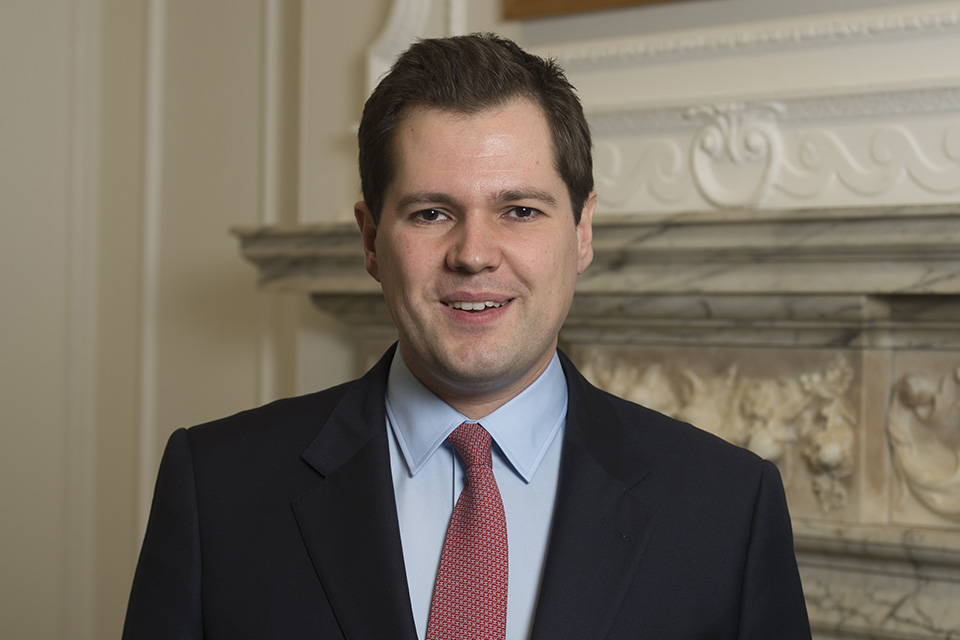
  • Robert Jenrick – 2019 Bio Industry Association Speech

    Below is the text of the speech made by Robert Jenrick, the Exchequer Secretary to the Treasury, on 24 January 2019.

    Good afternoon

    It was a pleasure to accept the Bio Industry Association’s invitation to attend your conference and to help launch the BIA’s financial report, which emphasises the strong position in which we begin 2019.

    The UK life sciences sector attracted an extraordinary £2.2 billion investment in the past year…

    …as with inward investment more broadly, this places us behind only the US and China in the world league tables.

    This country has long been the home of discovery.

    The academy where the likes of Crick, Darwin and Dorothy Hodgkin brought light into the darkest corners of human understanding.

    The lab where the first vaccines and beta blockers were developed.

    And the foundation for leading companies like AstraZeneca, GSK and Shire.

    Our extraordinary innovators and entrepreneurs continue to make Britain a world-leading force.

    Whether it’s potential new treatments for Alzheimer’s or fresh approaches to cell therapy.

    We’re home to four of the top ten medical sciences faculties in the world and some of the world’s largest research institutes.

    17 of the 24 best research universities in the country are outside of the ‘Golden Triangle’ of London, Oxford and Cambridge.

    And the brilliant minds are cited in publications more frequently than any other except the USA.

    We are leading the world in new fields such as genomics and artificial intelligence.

    In the weeks ahead, we in government, Parliament and individuals will, I hope, take critical decisions, to provide businesses with greater certainty and begin to chart the course ahead for our economy and country. But our success will not be defined by those decisions, but by our ability to support and harness the energy and entrepreneurship of sectors like yours. No one could attend a conference such as this or read your association’s report and not be optimistic about the future of the country.

    In 2016 there were over 660,000 UK start-ups, while in 2018 £1.8 billion in venture funding and public listings was raised for British tech firms.

    Our country has the highest number of Biotech start-ups in Europe

    And has seen the success of many incredible businesses including the hugely impressive University College London spin-out Autolus…

    that has recently raised over £120 million on the American stock-market to support its potentially life-changing research developing T-cell cancer therapies….

    ….the world-leading second-generation gene sequencing firm, Solexa, that began over a pint between Cambridge University researchers…

    And Purolite, who opened their new advanced bioprocessing factory in South Wales last October to fulfil rising global demand.

    Great ideas, developed in the UK and brought to life by British entrepreneurs, sometimes struggle to access the finance and talent they need to make it big.

    Part of the solution is to deepen the relationship between British universities and business.

    One of our government’s key responsibilities is to facilitate the flow of capital, skills and knowledge between research institutions and the economy.

    Without picking winners, or exerting too much control, the role of government should be to help reconnect British universities with the market.

    In some places this is already happening…

    You need only look at the growth of major new companies out of biotech hubs around the Universities of Bristol to see the potential for such partnerships.

    The growth of Ziylo Ltd., a company that targets new treatments for diabetes, out of the university to a firm now valued at more than £640 million is a great example of this.

    Areas like the Science parks at Oxford and Cambridge are incredible market places for the best research to meet the businesses that fund hypotheses into reality.

    But, we must do more…

    In the coming months, the Treasury will announce a new competition that will encourage Universities across the country to reach out to local entrepreneurs…

    We will offer incentives for the creation of a new generation of university enterprise zones that will open up great research to forward-looking British businesses…

    Our infrastructure investment plan for the Oxford Cambridge Arc, will provide fast East-West road and rail connections between these two hubs of technical research.

    And this will facilitate the faster movement of ideas, people and capital across an increasingly interlinked community of tech businesses and clusters.

    The £20 million invested in this project in last year’s Budget alone, stands for the creation of an ecosystem of exchange that will empower entrepreneurs to harness the skills of both institutions – and the communities that lie between.

    Through better links between our universities and stronger ties between academics and the market, we will build an environment for the tech industry that can rival, or even surpass, those of Boston Massachusetts and Silicon Valley in the United States.

    We will shortly announce a business champion for this initiative, who will work with me and the government to elevate the opportunity and attract global investment.

    I also want universities and charities to consider how they manage intellectual property, ensuring a free flow of ideas and productive interaction with entrepreneurs and businesses to ensure it is used to the greatest effect.

    We need to give British and international entrepreneurs who chose to do business here the finance and tax incentives to take risks and build businesses here.

    It is for this reason that we have established the British Business Bank to provide a new £2.5 billion programme of long term investments in high growth potential companies led by ambitious new leaders.

    UK biotech companies raised more than £1.5 billion of investment in the first eight months of 2018, surpassing the £1.2 billion total in 2017 but I know that we can do much more.

    We have pledged to remove regulatory barriers to investment in the industry and other illiquid assets by UK-based pension funds- to unlock some of the £1 trillion that may be managed by our defined contribution schemes.

    Our consultations with the Financial Conduct Authorities will seek to streamline the flow of capital from the City of London to innovative tech business. The onus is on pension trustees and managers to be part of the future and I suspect they will need to be, as millennial investors, saving through auto-enrolment will demand their pensions are invested in part at least in innovative industries. And technology will transform transparency so those investors can check at the touch of an App on their smart phone where their money is invested.

    Last December’s Industrial Strategy Second Sector Deal for the Life Sciences sketched a path towards a much faster flow of private sector money into research.

    And laid down further plans to secure a global lead in prevention, diagnosis and treatment of chronic diseases.   The Deal sets out a further £1.2 billion of new investment from industry, including a major £1 billion commitment from UCB to invest in one of their two global R&D hubs in the UK.

    It also includes a commitment to sequence 1 million whole genomes in the UK within the next 5 years – a world first that will truly make the UK the home of genomic healthcare.

    And enable the development of tools to speed up the accurate detection and diagnosis of disease.

    This government aims to see public and private R&D investment reach 2.4% of GDP by 2027 We have strong equity markets and a maturing VC industry, but we recognised there is more to do, not just to maintain our competitive position in Europe, but to challenge the US.

    Fewer UK firms receive follow-on funding than their US counterparts, and those that do receive less. Over the past 15 years, UK firms were half as likely to float as firms in the US or Europe.

    And only one quoted UK incorporated firm in the Life Sciences industry has grown beyond a £5 billion market capitalisation since 1999.

    In response, we have launched a plan to unlock over £20 billion of funding to finance growth in innovative firms. We are setting up a new investment fund within the British Business Bank with a £2.5 billion government investment.

    Underneath all this, we are creating an environment that encourages further investment…

    By keeping corporation tax low, and extending tax reliefs for knowledge intensive firms.

    Since coming to office in 2010 we have introduced the Patent Box, extended R&D tax credits, maintained SEIS, EIS and Entrepreneurs Relief as well as reducing Corporation Tax to 19% and now we have legislated to reduce it to 17%.

    Together these incentives for innovation and enterprise are world class and we intend to keep it that way.

    Maintaining that competitive tax and regulatory position will be more important than ever as we leave the European Union.

    Since the outcome of the referendum I have believed, that Brexit must be taken as an opportunity…

    Our departure from the European Union may in time offer the opportunity to draft a regulatory environment that more closely matches the demands of twenty-first century technology. We can be faster and smarter at regulating new industries than our European partners.

    Where European legislation has at times proved cautious or even hostile to research that investigates GM crops, AI development, and automation- I hope Britain can build a renewed system that understands risk and innovation. While the British Business Bank’s commitment of up to £200 million of additional investment in UK venture capital and growth finance in 2019-20 will tie over businesses in the short term, we will shortly be opening a review of longer term options to finance infrastructure and new technologies as we leave the EIB and EIF. Once again, I believe there are opportunities to deliver a comparable offer, faster and more tailored to the needs of the UK market.

    And a new immigration system that will not discriminate against talent from all over the world will bring new ideas to growth industries.

    Your industry requires access to highly skilled, highly motivated people from Europe and for beyond. We want our country to be open to the best and the brightest from all over the world.

    My colleague the Health Minister Matt Hancock is passionate about the benefit this new technology could bring to the NHS.

    He wants us to think of the world’s biggest health institution not as a barrier to innovation.

    But as a leader in it.

    The £20 billion we committed at the last budget to the NHS can be mobilised to reward the uptake of technology and innovation by those that need it most.

    In the NHS, we have one of the greatest databases for research,

    one of the strongest fields for life sciences innovation,

    and one of the most obvious beneficiaries of improved technology.

    The faster we can integrate biotech businesses with this service,

    the greater the benefits of new technology will be felt by all.

    Let me conclude on that point while we discuss new companies, technology, and investment…

    …the greatest beneficiaries of all of this change will be the public.

    Like almost no other, your industry is special because its benefits so clearly feed back to the communities it arises in.

    Your innovations literally save lives.

    And I know, that with the right incentives, Britain has a lot to gain.

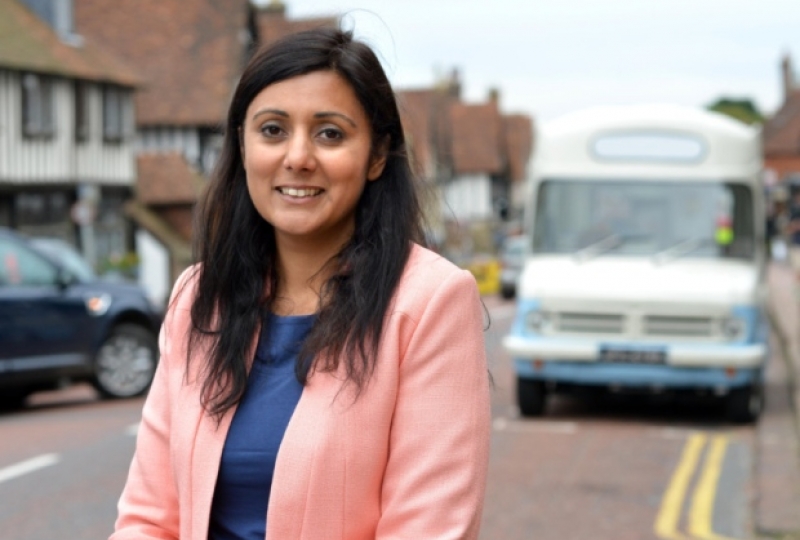
  • Nusrat Ghani – 2019 Speech on the Maritime Sector

    Below is the text of the speech made by Nusrat Ghani, the Parliamentary Under Secretary of State for Transport, on 24 January 2019.

    Good afternoon everyone,

    As I bring today’s event to a close I would like to thank you all for attending.

    And express my gratitude to our speakers.

    Whose contributions have informed us all.

    It has been wonderful to see so many representatives from all sectors of the maritime industry here today.

    Your presence underlines the strength of your commitment.

    Towards turning the vision for our sector’s future, laid out in Maritime 2050, into a reality.

    As the Secretary of State said at the start of this event.

    Our industry is on the cusp of an era of change.

    But I think today’s event has highlighted that it is also on the edge of a time of great potential.

    There will be many opportunities over the coming decades for our industry.

    And the document we have launched today outlines a clear vision of how together we will seize them.

    And chart an ambitious course for our sector.

    As we seek to harness the opportunities of technology.

    Strengthen our status as a global maritime leader in the fields of environment, security and trade.

    And give the next generation of seafarers the skills needed to meet the challenges of tomorrow.

    Today marks an important step in our journey towards those goals.

    And I hope it will prove to be a catalyst for action to turn our shared vision into a reality.

    But while Maritime 2050 examines nearly every aspect of our industry in its more than 300 pages.

    From trade to technology.

    Security to supply chains.

    And regulation to resilience.

    At its heart is the people who make up our great industry.

    And I’d like to talk about them today.

    Without the dedication, skills and talent of its workforce, the UK’s maritime sector quite simply would not be able to function.

    For while our industry provides fantastic career opportunities.

    And our top quality maritime education institutions — along with the renewed focus on providing high quality apprenticeships — mean that British training for the maritime industry is second to none.

    There is still much more we need to do.

    Particularly in ensuring that the great career opportunities the maritime industry has to offer are open to everyone. No matter their gender or background.

    Unfortunately at present that’s not the case.

    Just 4% of the 10,600 UK certified officers active at sea are female.

    The reasons for this are many and varied.

    But one thing is clear.

    This is a situation has got to change.

    Of course there is already some great work underway through the Women in Maritime Taskforce.

    Last year it launched both the Women in Maritime Pledge and the Women in Maritime Charter — challenging companies to make progress on diversity.

    I am delighted that there are already over 100 signatories to the pledge.

    And the charter is midway through its pilot phase, with 4 organisations, from across the breadth of the maritime industry taking part.

    They are making sure the charter works for all the diverse businesses within it. From training companies to law firms, to ports and marine manufacturers.

    But we need to go further still.

    This document lays out how we plan to dramatically overhaul the diversity of the maritime sector by 2050.

    And let me be clear — this is not a tick box exercise.

    Or an attempt at virtue signalling.

    It’s handing our sector a wonderful opportunity.

    That will serve it well into the future.

    Because no industry will reach its full potential if it only takes advantage of a tiny proportion of the talent pool.

    There are so many gifted people out there.

    And we want them to see all the great things our industry has to offer.

    So through Maritime 2050 we have pledged to.

    Build on the success of the Women in Maritime Taskforce and other great joint government and industry initiatives.

    To highlight the industry’s wide variety of career opportunities, both at sea and on land, to as wide an audience as possible.

    This includes funding a project called People Like Me — that will address the image of the industry and dispel myths.

    And explore harnessing technology, such as connected ships, to enable seafarers stay in touch with family on shore.

    Making periods away from home less isolating — improving mental wellbeing and making a career at sea a possibility for a wider variety of people.

    And it’s this theme of technology opening up new horizons for our industry, which runs through Maritime 2050.

    But to take advantage of these innovations our workforce must not only be equipped with the right skills.

    It must also be ready to adapt and keep pace with technological change.

    Over the next 30 years the importance of STEM skills will increase as jobs become more skilled and data driven.

    And industry roles will become multi-disciplinary.

    For instance in future it may not be simply enough to operate a technological system.

    You will probably have to be able to create and maintain it too.

    So through Maritime 2050 we have set out our plan to create a culture of continuous learning.

    By encouraging maritime employers to offer professional development and training to their workers throughout their careers.

    In addition we have committed to develop cutting-edge seafarer training. For instance by using virtual reality technology to enable workers to get to grips with new systems.

    And to ensure the industry is fully prepared for the changing recruitment pressures of the future we plan to help assess the needs of the industry through a Maritime Skills Commission.

    A body tasked with finding ways of addressing current maritime skills gaps and anticipating future trends.

    These are all steps that will not just improve the prospects of maritime workers.

    But those of their employers as well.

    Through a lower turnover of staff.

    Because a happy workforce is a highly motivated one.

    And Maritime 2050 recognises the pressures under which many seafarers are placed.

    Whether that’s long hours, hard work and periods away from home.

    All situations that can put a strain on workers’ mental and physical health.

    So a core part of this document focuses on what we can do to help with these issues.

    And ensure we are not so entirely absorbed with dealing with technological change that we forget about the human face of the industry.

    In the short term we will work with the maritime sector to develop a social framework — laying out the UK’s expectations for the welfare of its workforce.

    And work in the near future to finalise the introduction of a National Minimum wage for mariners in our waters, while producing guidelines that will help employers ensure that workers’ mental health is properly considered.

    And we will use our influence through the IMO and International Labour Organization to push to improve conditions for seafarers on a global level. For instance through a limit on hours by shift and eradicating modern day slavery.

    A diverse and highly skilled workforce.

    Incredible technology.

    And fantastic opportunities.

    Those are just some of the many things to which our industry has got to look forward over the coming decades.

    And Maritime 2050 lays out how we can make the most of this new world.

    I know that many of you in this room have contributed and shaped this document over the past year.

    And I thank you for your efforts.

    And I want us to continue in that spirit of collaboration and cooperation.

    Industry and government.

    Working together, sharing ideas, and building a better future for the maritime sector in this country.

    And it’s difficult to think of a better example than London International Shipping Week which will take place in September.

    When government and the UK maritime industry will join forces and showcase this country’s shipping industry to the world.

    I’m very much looking forward to seeing you all there.

    It should be a great event.

    And today was certainly another.

    So finally I’d like extend my thanks to the International Maritime Organisation for hosting us this afternoon.

    And helping to ensure the launch of Maritime 2050 was a success.

    I’d also like to take this opportunity to express my gratitude to everyone who has contributed to this document.

    In particular I’d like to thank staff at my department for their efforts and hard work over the past 12 months.

    Your time has been truly well spent.

    As this document is an important milestone in preparing our industry for the coming decades.

    For it’s clear that the future of maritime in this country will be different from its past.

    But no less exciting.

    And I hope today we have sparked your imagination and stoked your ambition.

    So we can harness technology to grasp the opportunities of the future.

    So that we can build a sector that is open to everyone.

    And so we can create a maritime industry ready to lead the world.

  • Chris Grayling – 2019 Speech on the Maritime Sector

    Below is the text of the speech made by Chris Grayling, the Secretary of State for Transport, on 24 January 2019.

    Good afternoon everyone, it’s a great pleasure to join you today.

    I’d like to thank the International Maritime Organisation for hosting this event.

    One hundred and eighty years ago this country marked a great maritime first when Isambard Kingdom Brunel’s Great Western steam ship — kicked off an era of transatlantic travel.

    The first vessel purposely designed to take passengers across the Atlantic, it travelled at a record speed — taking as little as 13 days to make the crossing.

    But there’s a little known story behind this great feat of engineering.

    Brunel was only inspired to build the ship after someone complained that his famous London to Bristol railway line was too long. Brunel hit back by saying:

    ‘Why not make it longer? Build a steamship to go to New York and call it the Great Western?’

    Well within just two years he had done just that and launched Britain on a trajectory which has resulted in the fast, efficient global travel we know today.

    It’s an anecdote which highlights not just this country’s maritime heritage, but also what can be achieved by ambition and by thinking outside the box, no matter how big the challenge.

    We need to apply that spirit of endeavour, imagination and fearlessness in our maritime industry today, as it faces 21st century issues such as climate change, the technological revolution and changing geo political trends.

    For if we are to meet these challenges and make the most of the opportunities of the coming decades we need a clear pathway.

    That’s why today we are launching Maritime 2050 — our shared vision for the industry over the next 3 decades.

    A vision for every area of our maritime sector, from giant container vessels and huge cruise liners, to leisure ships, like those run on the Thames by City Cruises, which I visited earlier this afternoon.

    And carbon fibre yachts — such as those of the Ineos Racing Team, which is aiming to bring the America’s Cup back to British waters in 2021 under the leadership of Sir Ben Ainslie, the most successful Olympic sailor of all time.

    But ultimately what underpins Maritime 2050 is a recognition of your sector’s fundamental importance to our country’s prosperity.

    That’s because you provide the international trade links on which the UK depends, with 95% of all British goods and exports moved by sea.

    You boost our economy by £14 billion a year and create hundreds of thousands of jobs on ships and in ports, as well as in our tourism industry and world leading maritime professional services sector.

    And as the UK withdraws from the European Union and seeks new trading relationships across the world it’s never been more crucial that maritime succeeds.

    For when it thrives, so does this country.

    I know it may seem like Brexit is the only show in town at the moment.

    But it’s also vital that we look further ahead.

    And this document does exactly that, examining how we can work together to further maritime’s success over the coming decades.

    For it’s important to stress that this strategy has not just been formed by officials working in a Whitehall office.

    It’s has been shaped by you, through ongoing discussions, regular meetings with industry and through the contribution of an expert panel.

    It’s a document that reflects your concerns, your ambitions and which is shaped by your experience.

    So we harness the considerable expertise we have in key disciplines like technology, safety and security, while also reaching out to our partners through cooperation on the international stage.

    And although there’s increasing competition from around the world Maritime 2050 calls for a bold approach to the future.

    A future in which we can continue to be a global leader in the crucial fields where there’s most growth potential.

    Take maritime technology, an area where we have a proud history of innovation.

    Back in the 19th century we created the first iron hulled armoured warships, played a crucial part in the development of the screw propeller and invented the plimsoll line.

    That’s of course to name just a few.

    And in the 21st, here in the UK, companies such as L3 ASV and Hushcraft, are leading the way in the field of autonomous vessels.

    While Artemis Technologies, led by double Olympic gold medallist yachtsman Iain Percy, has established itself as one of the world’s leading high performance maritime design and applied technologies companies.

    And our universities’ research in the fields of maritime technology is world renowned.

    But I want to encourage even greater ambition.

    This document lays out how we plan to develop a legal framework for the testing of autonomous ships in our waters and spearhead the creation of an international regulatory framework for these vessels.

    And today we are also publishing our Technology and innovation in UK maritime route map, which sets out our approach towards introducing this technology in more detail.

    But of course Maritime 2050 explores a host of other exciting developments, from developing a maritime innovation hub in a UK port by 2030 to helping maritime businesses seize the opportunities of digital technologies, and unlocking the economic potential of our waters through seabed mapping.

    Maritime 2050 also looks at what we can do to become a trailblazer for green technologies.

    Whether that’s exploring ways to nurture the growth of zero emission shipping, closer collaboration between industry and government through the Clean Maritime Council or by setting bold targets for the long term future — such as aiming for all UK ferries to be emission free.

    These are all steps that will not only help Britain meet its international environmental obligations.

    But also help the industry to enjoy the economic rewards of the move to cleaner technology.

    Of course shipping is already one of the greenest forms of transport.

    But the most recent figures from the IMO show it still accounts for 2.2% of global greenhouse gas emissions — equal to a country the size of Germany.

    So it’s vital we continue to up our game.

    And Maritime 2050 details how we will do that.

    As well as setting out how we will reduce greenhouse gas emissions and air quality pollutants from UK shipping, we will move to bring the UK’s penalties for ships breaking environmental law in our waters in line with international best practice, while encouraging the use of advanced technologies to help maritime environmental law enforcement.

    We have a duty to deliver on the international stage here too.

    So as well as ratifying treaties such as the Ballast Water Management and Hong Kong conventions that seek to lessen maritime’s environmental impact, this document underlines how we will work with our partners at the IMO towards a global target of cutting maritime greenhouse gas emissions by at least 50% by 2050.

    And we plan to use our international influence to tackle other environmental issues of global importance.

    Such as marine litter and plastics, illegal fishing and protecting biodiversity.

    While maintaining a regulatory framework which allows the UK to thrive and global trade to flow.

    Great innovations, new trade horizons and environmental challenges, will make the coming decades an extraordinary time for the sector.

    But to take full advantage of this exciting era — we need to make sure our workforce has the skills to keep pace with changing technology.

    I know that the sector is doing some great work on this front.

    And the government has launched its own initiatives, such as the Year of Engineering, to inspire the next generation of engineers.

    But there is still more to do.

    Maritime 2050 lays out some of our solutions to the recruitment and skills issues facing your industry in future. About which my ministerial colleague Nusrat Ghani will speak in more detail later.

    Enabling the maritime sector to attract the brightest minds and the best skills will help ensure this country remains one of the best places in the world to do maritime business.

    We have the largest global hub for maritime services in London and the lowest headline rate of corporation tax in the G7 and one which will fall to 17% next year.

    Combined with world class universities and a UK flag that is a symbol of the very best quality.

    But we can’t rest on our laurels.

    We have many global competitors who are quite capable of stealing a march on us.

    So Maritime 2050 lays out the action we need to take to secure our long term success.

    With a clear commitment to working and listening to industry, to further improve this country’s fiscal and regulatory environment for marine businesses, it’s vital too that the whole country can continue to benefit from a thriving maritime sector.

    It’s one of the industry’s strongest selling points that its attributes are spread across this country.

    With different areas boasting their own specialisms, whether in maritime services, shipbuilding or training and education.

    This document lays out how we will support these maritime clusters.

    And how we will use our influence in the international arena to exert positive change for the global maritime sector.

    We are of course delighted to be hosts of the IMO here in London.

    And I’d like to take a moment to express my gratitude to Secretary General Kitack Lim for all his hard work on behalf of the maritime industry around the world.

    Rest assured that in Maritime 2050 we have committed the UK to continue to maintain its leading role as an IMO member. Something that will continue long into future.

    And this theme of collaboration and cooperation runs right through Maritime 2050.

    If there is one message I’d like you to take home tonight it’s that the government is on your side.

    Whether that’s through our support of Maritime UK, creating the right environment for maritime SMES to flourish.

    Or showcasing Britain’s maritime industry to the world through events, such as London International Shipping Week, to be held in September this year.

    I look forward to seeing many of you there.

    So finally I’d like to extend my thanks to everyone who contributed to this document.

    The UK’s maritime sector may not always hit the headlines or get the attention it deserves, but it is one of this country’s great success stories, staffed by professional, dedicated and highly skilled people and part of a quality flag.

    Maritime 2050 will enable those achievements to continue and allow the sector to further flourish over the coming decades.

    So let’s take inspiration from Brunel and our proud maritime past, let’s harness the excitement of the innovation of today and be ambitious for our maritime future.

    Thank you.

  • James Brokenshire – 2019 Speech at Holocaust Memorial Day

    Below is the text of the speech made by James Brokenshire, the Secretary of State for Housing, Communities and Local Government, on 27 January 2019.

    Last Sunday, I had the privilege to join mourners from around the world to pay my respects to six unknown victims of the Shoah – including a child.

    It was an incredibly moving moment, not just for the Jewish community, but for our entire country.

    These holy souls or Kedoshim, were “torn from home” – somewhere that should have been a place of safety, comfort and security.

    They lived and died through one of the darkest chapters in human history, but rest today in the loving embrace of our Jewish community here in the UK.

    As I reflected on this, I was reminded of my father-in-law, who escaped Nazi Germany and came to Britain with the help of the MI6 agent, Frank Foley, who’s actions also saved the lives of thousands of other Jews.

    But as we honour the millions of victims of the Shoah today, we remember those families who weren’t so lucky.

    Those who never made it home.

    Those who were brutalised and murdered.

    Those whose lives were cut short and whose loss provides a stark and powerful legacy to us all.

    A legacy that demands we challenge hatred and bigotry wherever it exists.

    A legacy that requires that we say “never again” we really mean it.

    Sadly, this is a lesson that we are still learning.

    40 years ago, the Khmer Rouge claimed the lives of one quarter of the population through mass murder and starvation.

    25 years ago, almost one million Rwandans were murdered in 100 days.

    And horror returned to our continent as we witnessed the murder of over 8,000 mostly Muslim men and boys in Srebrenica.

    We still imagine that these barbarities belong in the history books.

    And yet today – 74 years since the Nazi death camps were liberated – antisemitism is on the rise, here and abroad.

    And Jewish communities are once again living in fear.

    This troubles me deeply and must trouble us all.

    I want to reassure our Jewish community that you are an intrinsic part of what makes Britain Great and the government will always stand by you to challenge bigotry and intolerance…

    …and reaffirm our commitment to ensuring that future generations never forget where hatred can lead, and that we will not walk by on the other side where it is present.

    Our new National Holocaust Memorial and Learning Centre will help us do that – a permanent reminder at the heart of our democracy.

    Because we all know: tolerance and reconciliation begins at home and that we all have our part to play to ensure home is truly a place of safety, security and of strength.

  • Alan Duncan – 2019 Speech on Venezuela

    Below is the text of the speech made by Sir Alan Duncan, the Minister for Europe and the Americas, at a UN Security Council Briefing held on 26 January 2019.

    Mr President,

    Thank you for convening this meeting.

    There are probably only a few moments in history when a country’s rate of inflation has to be measured in millions of percent. But in the case of Venezuela, this is such a moment. And beneath that stark statistic rests a scene of total economic collapse, and with it, a comprehensive picture of human misery and degradation from which only the corrupt Venezuelan elite are able to escape.

    People are starving, children are malnourished, essential items are absent from the bare shelves of bankrupt stores. And from this wretchedness, millions have fled to seek refuge in neighbouring countries where they have been rescued by an outpouring of human generosity.

    This inexcusable and wholly avoidable wasteland, Mr President, is entirely the creation of one man and his cronies.

    The ranting socialism of Nicolas Maduro has destroyed an entire country and despite his self-congratulatory moral posturing, his enduring legacy will be to have made the poor, not just poorer, but destitute.

    And it is our concern for the plight of Venezuela and the country’s people that motivates us here today, not the sentiments of anything that can possibly be described as colonial. How indeed can any self-respecting government possibly justify supporting the poisonous regime of the nation-destroying Mr Maduro?

    But, in addition to holding the opinion we do because of our concern for the people of Venezuela, this United Nations and we the Security Council are also here to resolve the world’s worst sins. And to do so we must all uphold the rule of law which we firmly believe should govern the affairs of all.

    And that rule of law has collapsed in Venezuela. Worse, it has been continuously eroded, undermined and eradicated by the dictatorial abuses of Nicolas Maduro.

    Hand in hand with economic devastation, caused by this man, has come the parallel removal of liberty, justice and freedom.

    We have seen the theft from the Venezuelan people of its very democracy. Maduro has attempted to delegitimise the National Assembly; he has created the artificial and illegitimate Constituent Assembly; and he has ruthlessly put an end to free and fair elections by stuffing ballot boxes and corrupting democratic decision.

    The political opposition has been suppressed and intimidated, its leaders have fled or been imprisoned, and we will never forget that the opposition activist Fernando Alban, mentioned just now by Secretary Pompeo, was detained and then found dead beneath the windows of the National Intelligence facility.

    The world can now see that the Presidency of Nicolas Maduro no longer rests on democratic foundations – the Presidency of Nicolas Maduro is not legitimate.

    We the UK unreservedly praise and support the extraordinary courage of Juan Guaidó in his stand against Maduro’s fraud, corruption and undemocratic status. We applaud Juan Guaidó’s decision to assert the legitimate authority of the National Assembly.

    Mr President, it is therefore right that we should now respond robustly to the courageous steps taken by the Venezuelan people and the political opposition by bringing this critical issue here to the Security Council. Council members must recognise their responsibility to ensure that the UN uses its leadership to help achieve positive change in Venezuela. Our efforts must now focus on finding a way out of the crisis that has devastated the country.

    Mr President, let me make our position clear.

    The UK stands with the EU in demanding urgent, free and fair elections at the earliest opportunity and in calling for a legitimate government to be established.

    We stand with the Organisation of American States and we stand with the Lima Group, whose members last September referred the Venezuelan Government to the International Criminal Court for crimes against humanity. Citing over 8000 extrajudicial executions, 12,000 arbitrary arrests, and the detention of 13,000 political prisoners, they made history by making it the first ever case in which an entire state has been referred to the ICC.

    Mr President, we stand shoulder-to-shoulder with the United States in saying that the National Assembly and its President, Mr Juan Guaidó, are best placed to lead Venezuela to the restoration of its democracy, its economy and its freedom.

    Therefore we believe that Juan Guaidó is the right man to take Venezuela forward and we will recognise him as constitutional interim President if new elections are not announced within 8 days.

    We should today all stand together against the tyranny of Nicolas Maduro and in support of legitimate democratic forces in Venezuela. Venezuela can and must recover from the depths of its current despair. To do so it needs an end to tyranny, an end to corruption, and an urgent return to freedom, democracy and the rule of law.

    This Security Council must make its view clear and we must urgently help pave the way to a brighter future for the Venezuela which Maduro has so culpably ruined.

    Thank you.