Tag: 2019

  • Michael Ellis – 2019 Speech at Walpole British Luxury Summit

    Below is the text of the speech made by Michael Ellis, the Parliamentary Under Secretary of State for Arts, Heritage and Tourism, on 5 February 2019.

    Thank you Michael and Helen for the lovely welcome and for inviting me to speak at your inaugural British Luxury Summit.

    It is a great honour to be in such august company, with so many heritage brands, august establishments, emporiums and boutiques which help make the British tourism offer such an impressive one.

    It is organisations like yours that attract our highest spending visitors. And higher spending visitors mean – quite simply – more money coming into the UK and its institutions. That spend creates jobs, contributes to UK taxes, and helps to drive further inbound investment.

    But it is also a mark of quality for which the UK is recognised around the world. It thus contributes to our soft power and how we are thought of by others.

    I want the luxury market to thrive long into the future here in the UK and the report you referred to just now shows that this part of the sector is growing at a tremendous rate.

    Today’s summit is all about the future, so with that in mind, I want to talk to you about three key words: confidence, challenge and ambition.

    Uncertainty has seemed like the word of the day for some time now, and I recognise that businesses like yours want certainty as a matter of priority.

    The biggest uncertainty – of course – has been our forthcoming Exit from the European Union. But I know our officials, across Government, have been working hard to prepare businesses and citizens for the potential impacts our exit could have on the industry.

    We have now published a series of technical notices about what no deal would mean for travellers, for passengers and for workers. Just last week the Home Secretary confirmed that arrangements for tourists and business visitors will not look any different.

    Although the underlying legal framework will change, EU citizens coming for short visits will be able to enter the UK as they can now, and stay for up to three months on each entry. Until 31 December 2020, EU citizens will be able to enter the UK by showing either a valid national identity card or a passport.

    But if anyone here feels uncertain on particular elements, please do contact my team – through my office – and they can provide as much guidance as possible.

    Make no mistake, the UK’s Exit from the EU has obvious challenges which require us to be at the very top of our game. I know that our tourism and hospitality sector will be able to demonstrate to visitors that the UK remains an open and welcoming place.

    Our relationship with the European Union may be changing, but our fantastic array of tourism products will not.

    From the whisky distilleries of Scotland to the Giants Causeway of Ireland, Caldicot Castle in Wales to the London Eye, we have a little bit of something for everyone. We always have and we always will.

    With the help of organisations like VisitBritain, a stalwart pillar of certainty for tourism in these uncertain times, I am confident that we can work together to resolve any concerns and grasp any opportunities.

    Which brings me to the challenge. Uncertainty brings opportunity, a chance for everyone to step up and take their work to the next level. In the case of tourism, our challenge is to turn our incredible soft power into hard cash for businesses, jobs for citizens and opportunities for inward investment and growth.

    So how can we do this? We need to ensure that our ambassadors have an outstanding stay whilst they are here, so that they promote our product to their friends and family – as well as their social media followers of course – and they therefore encourage more people to come and enjoy a holiday here in the UK.

    And who are these ambassadors? They are our visitors, your clients. In essence, our lifeblood. Their word of mouth can persuade so many more people that a holiday in the UK is better than anywhere else. And that investment in the UK makes more sense than anywhere else.

    In the luxury sector, we can provide them with the ultimate experience to talk about; the very best of customer service, accommodation, shopping and travel.

    One of my challenges to you is to keep pushing the boundaries of our luxury offer and keep exploring what we can do to give our customers an even more comfortable and luxurious time in our great nation, with amazing stories to share with their friends and family.

    Not only does it increase our draw as a nation, but it improves our prospects of investment, with figures showing that people who had a good time in the UK were 17% more likely to invest in British businesses. I think that is a pretty good statistic, but I would like to make it better.

    Currently, just under 1 in 5 people who visit the UK want to invest in us in the future. Well what if we could make that 1 in 4?

    Which leads me to my final word: ambition! Achieving the highest possible standards has long been a British ideal. And achieving these standards is increasingly important in an ever more competitive environment.

    So many of our global competitors are seeing the growth potential of tourism, and that means more choice for visitors. We need to make sure Great Britain is heard among that noise.

    You will have all, I hope, heard about the ideas being worked on for the proposed Tourism Sector Deal.

    For those of you that have not, what we would like to see is a deal, between us in Government and you in industry. You have come together and told us what you need from Government to boost your productivity and keep the UK competitive. On business visitors. On local tourism offers. On connectivity.

    But we – in turn – want to see equal ambition from the industry. Ambition to invest in training our workforces. As I saw at Gieves and Hawkes with their highly-skilled apprenticeship training. -Ambition to share the data you have, so that we can better target our overseas promotion. Ambition to make the UK the most accessible destination in the World.

    This is where I want to see Tourism’s ambition and drive shine through. Where you can all work together and, with Government, create something durable, that makes us more prosperous and a centrepiece in the UK’s economy.

    I encourage any of you who have not yet done so, to work with Steve Ridgway of VisitBritain – on this Sector Deal particularly – but also in preparing our sector for the future, expanding our markets and appeal and driving growth across the nation.

    I challenge you all to be even more enterprising, committed and pioneering.

    Working together, I believe we have an offer here in the UK that can continue to go from strength to strength. Continue to create those jobs. Continue to attract that tax growth. Continue to encourage investment.

    I thank you all for your attention and I look forward to working with you in the future.

  • John Glen – 2019 Speech at the Wealth of Diversity Conference

    Below is the text of the speech made by John Glen, the Economic Secretary to the Treasury, on 5 February 2019.

    Charles Babbage, the computer pioneer asked the following question in 1864: “if you put into the machine the wrong figures, will the right answers come out?”.

    Nearly 150 years later, this question is still being answered.

    By companies and industries of all shapes and sizes.

    Take the next frontier of commerce: Artificial Intelligence, the next innovation set to transform financial services.

    I was interested to learn that sophisticated programmes which employ AI operate much as we do as humans.

    For example, AI is increasingly being shown to produce similar biases to those in the workplace.

    A 2015 study showed that in a Google images search for “CEO”, just 11% of the people it displayed were women – even though 27% of the chief executives in the US are female.

    The world’s major technology companies are starting to recognise that machines learn from the input they receive – and the results that this input generates.

    Despite great intentions, seemingly subtle actions and moments can really entrench toxic or biased cultures.

    And in this vein, I want to extend a huge thank you to PIMFA – Liz and her team are doing a lot of work to push the need for diversity to the top of commercial agenda.

    Today I wish to speak to you about the business case for diversity and inclusion…

    …and give my two cents on the best way to get there.

    And the first step is welcoming diversity…as a matter of principle – and profit.

    We need an inclusive workforce for many reasons – and ethics is but one of those reasons.

    It is simply the right thing to do and to expect.

    And it is a hallmark of a civilised society.

    Ethics aside, there is more than anything, a strong commercial case for real diversity.

    Diversity of thought leads to better outcomes…

    …a happier workforce…

    …reflects shareholder values…

    …and is increasingly attractive to investors.

    A report by the CBI in 2016 concluded that diverse workplaces generate innovation and greater employee engagement…

    …employees said that they’re 84% more likely to innovate and more than twice as engaged in workplaces that are diverse and inclusive.

    And research by Forbes in 2017 found that inclusive teams make better business decisions than less diverse teams up to 87% of the time.

    McKinsey, the management consultant, has released research showing that closing the UK’s gender gap could create an additional £150 billion on top of business-as-usual GDP forecasts for 2025.

    Diversity – and inclusion – challenges group think, it strengthens an organisation from within – and, it gives you competitive advantage.

    The business case is irrefutable. And I know that you know that. That’s why you’re all here today. So I don’t want to spend my time here today convincing you why this matters – I want to focus on what needs to be done.

    Despite the strong commercial argument, Jayne-Anne Gadhia’s [the former CEO of Virgin Money] 2016 review into the representation of women in senior managerial roles in the financial services industry was revealing.

    One of the key findings from the report was that women make up just 14% of Executive Committees…

    …25% of the firms included in the review had no women at all on their Executive Committee…

    …and 17% had no women on their board.

    The Treasury decided to take action and in 2016 launched the Women in Finance Charter.

    And I’m pleased to say that the Charter has been an enormous success – I am delighted with the impact it has had…

    …both in terms of driving the debate…

    …and in giving firms a framework to set targets, and then develop and implement a plan.

    300 financial services firms have signed the Charter who together employ over 780,000 people…

    …close to 60% of the sector.

    It includes everyone from global banks to FinTech firms with just a few employees.

    We have also inspired other countries, like Brazil and China, to take action on improving gender balance, through their own Women in Finance Charters.

    The Financial Reporting Council’s review of board diversity reporting, published in September 2018, found that Charter signatories had a higher diversity reporting score than other FTSE 350 companies.

    And I’ve seen the impact the Charter can have within my own department. HM Treasury has set a target to increase the representation of women in the Senior Civil Service to 50% by 2020. In 2017 39 out of the 87 people in the Senior Civil Service were women, equating to 43%. This has now risen to 48.2%, and we are committed to building on this progress.

    As we have now generated a large amount of industry support for the Charter, the focus has shifted to maximising its impact…

    …by pushing ourselves to set and achieve more stretching targets through the use of evidence-based interventions.

    I’m delighted that so many organisations have signed up to the Charter, which demonstrates the enthusiasm across the industry to solve this issue.

    But for me the real measure of success is not just the number of organisations who sign up – I want to see firms taking this seriously and taking meaningful action, so we see a real shift towards gender parity.

    The second Women in Finance Charter Annual Review will be published in March this year, where signatories to the Charter will provide updates on their progress. I will be looking at these updates closely, to assess whether firms have made sufficient progress and are taking appropriately ambitious action. And I will be using this to inform Government action going forward.

    To have a real impact, it is important that we focus on what works, delivering interventions collaboratively and with a collective voice that promotes the progression of women.

    Across the whole spectrum of the debate, it is clear that evidence-based interventions to bring about the step change is needed, as progress is slow.

    Firms should make a habit of learning from one another, measuring their impact, and self-evaluating.

    I am pleased that when I talk to senior leaders in the finance world, diversity and inclusion is increasingly an important issue for them.

    Everyone has a role to play in creating a more equal working culture. And so I challenge everyone in this room to think about what you can do to drive change in your own organisation.

    If you are responsible for recruiting or promoting people, ask yourself –

    Could this job be done by someone working part-time, or someone working flexibly, or someone who is returning to work after taking time out?

    Are you using skills-based assessment or structured interviews, so that your decisions are driven by what candidates can really do, rather than a sense of whether they will ‘fit’?

    Have you included more than one woman on your shortlist?

    If you are a senior leader, ask yourself –

    Does your organisation know that you are committed to improving diversity?
    How are you communicating this, and how are you holding your team accountable? Are you treating this like any other business priority?
    Look at who you mentor and sponsor – does this reflect the widest pool of talent in your organisation?

    And whatever your role, ask yourself:

    Do you support and encourage difference in your team?

    Can you be a role model for someone else?

    And I put to everyone the same question I put to senior leaders – does your organisation know you care about this and how are you holding them accountable?

    On that note, let me wrap up my remarks this morning.

    Ladies and gentlemen – simply, a wealth of diversity will lead to a wealth of outcomes.

    The business case is irrefutable…

    …getting there is the hard part.

    Which is why I want us all, government and industry alike, to focus on action which will drive change – I don’t want us to be having this same discussion in five years.

    I hope that you can put the sessions today to good use…

    …and that they can be a starting point for pushing the agenda across the industry.

    Because although it is a tough discussion…

    …it is one that we need to have…

    …and it is an issue worthy of no less than national attention.

    Thank you very much.

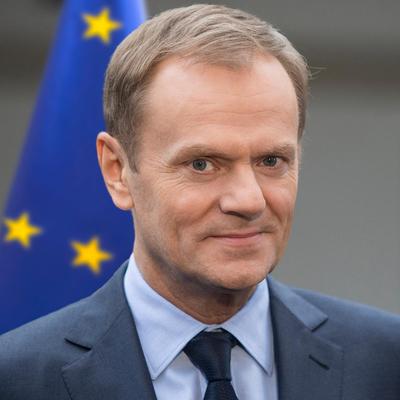
  • Donald Tusk – 2019 Speech After Meeting Leo Varadkar

    Below is the text of the speech made by Donald Tusk, the President of the European Council, following a meeting with Leo Varadkar, the Irish Taoiseach.

    There are 50 days left until the UK’s exit from the European Union, following the decision and the will of the UK authorities. I know that still a very great number of people in the UK, and on the continent, as well as in Ireland, wish for a reversal of this decision. I have always been with you, with all my heart. But the facts are unmistakable. At the moment, the pro-Brexit stance of the UK Prime Minister, and the Leader of the Opposition, rules out this question. Today, there is no political force and no effective leadership for remain. I say this without satisfaction, but you can’t argue with the facts.

    Today our most important task is to prevent a no deal scenario. I would, once again, like to stress that the position of the EU27 is clear, as expressed in the documents agreed with the UK government – that is the Withdrawal Agreement and the Political Declaration – and the EU27 is not making any new offer. Let me recall that the December European Council decided that the Withdrawal Agreement is not open for re-negotiation. I hope that tomorrow we will hear from Prime Minister May a realistic suggestion on how to end the impasse, in which the process of the orderly withdrawal of the UK from the EU has found itself, following the latest votes in the House of Commons.

    The top priority for us, remains the issue of the border on the island of Ireland, and the guarantee to maintain the peace process in accordance with the Good Friday Agreement. There is no room for speculation here. The EU itself is first and foremost a peace project. We will not gamble with peace; or put a sell-by date on reconciliation. And this is why we insist on the backstop. Give us a believable guarantee for peace in Northern Ireland, and the UK will leave the EU as a trusted friend. I hope that the UK government will present ideas that will both respect this point of view and, at the same time, command a stable and clear majority in the House of Commons. I strongly believe that a common solution is possible, and I will do everything in my power to find it.

    A sense of responsibility also tells us to prepare for a possible fiasco. The Taoiseach and I have spoken about the necessary actions in case of no deal; I know that you will also be discussing this shortly with the European Commission.

    By the way, I’ve been wondering what that special place in hell looks like, for those who promoted Brexit, without even a sketch of a plan how to carry it out safely. Thank you.

  • Lloyd Russell-Moyle – 2019 Speech on Immigration

    Below is the text of the speech made by Lloyd Russell-Moyle, the Labour MP for Brighton Kemptown, in the House of Commons on 28 January 2019.

    I guess I should declare an interest. My partner is Hungarian, my neighbour is Czech and my lodger was French. American Express has its European call centre in my constituency. I helped to push and worked on the legal base of Erasmus+. I have lived in Belgium and worked in Berlin, and I am an EU citizen with EU rights. At this critical time in our country’s history, it is of course disappointing, but not very surprising with this Government, that the Bill represents another colossal stealing of those rights from many EU citizens who might not happen to be here on the right date or at the right time.

    There are many problems with the Bill. It removes the right of EU citizens to enter the UK without the leave of the Secretary of State. Even if the process will be “simple and easy”, it fails to address honestly the open border in Northern Ireland; we will, of course, end up having a diverging EU immigration policy within the island of Ireland. It fails to give assurances against the exorbitant fees that we currently charge many people coming to the UK, and that we might now charge EU citizens. It fails to give reassurances to visitors who may come to the UK but want to change their status, and it might mean that they have to do the same ridiculous run around that non-EU migrants have to do when they have to leave the country of reapplying through a different immigration system and come back in. The system is currently farcical for non-EU migrants, and the Bill will introduce that farce for EU citizens as well. The Bill moves us to a race to the bottom on migration issues, rather than seeking the best, and that is the problem with it.​
    I want to draw particular attention to clause 4, which will give Henry VIII powers, allowing the Secretary of State swathes of power to make determinations without oversight by this place. Have we learned nothing from Windrush or the disregard with which the Government treat many migrants? I would not trust this Government—in fact, I would not trust many Governments—with the right to decide on immigration without being fettered by Parliament. How is it appropriate that the Government, who have shown themselves to be so inept, should give themselves these swingeing powers? They cannot be allowed to deny EU citizens their rights in this way.

    Of course, things have got so bad generally with immigration. When I write to the Immigration Minister about immigration issues, she does not bother writing back to me; she gets a civil servant in the liaison team to send me a bog-standard, pro forma letter. She will not even engage on the issue. That is what the Minister has come to, and that is what the Government have come to—dispassionate about individual issues, worrying only about the number on the visa or the number of migrants. It is wrong, but now they want to extend that system to others.

    My constituents speak of injustice. Last month, a man who had worked here for 20 years—he has an NHS pension and two medical businesses—was rejected for permanent residency by the Government. He was an EU citizen, but despite spending £1,000 on an immigration lawyer to fill in the paperwork, the Government said that the right boxes had not all been ticked. We will appeal that decision, and we will be successful, but he had 23-odd years of national insurance payments. The Government could have looked that up instead of worrying about which boxes were ticked. The Government do not worry about the people when they are what matter.

    Many people have lived in the UK for much of their lives, but spent three or four years away working. A German citizen, for example, might have been raised and schooled here but spent the last four or five years out of the country. They will now have to fulfil all the immigration checks, even though they see Britain as their homeland. I was granted EU citizenship in 1992, as were most of us. My brother was born an EU citizen. I fail to see why people who were born with citizenship rights should suddenly have them taken away. If we have to go down this route, we should at least say that everyone who was born before exit date will continue to have EU citizen’s rights for the rest of their lives. That is the only fair thing to do when people are being deprived of their rights.

    The other danger is the huge costs we are seeing. It can cost an employer and employee £8,000 if they are coming from outside the EU, with the NHS surcharge alone being £2,000, even though the person will pay taxes and contribute to the NHS. It costs only £127 for the Home Office to process the application, yet the charge for leave to remain is £1,220—a profit of 1,000%. It is disgraceful. The Minister is frowning, but those figures are from the Home Office.

    We must vote down the Bill tonight because it is wrong in principle and wrong in practice, and we must stand up for what is right.

  • Kate Green – 2019 Speech on Immigration

    Below is the text of the speech made by Kate Green, the Labour MP for Stretford and Urmston, in the House of Commons on 28 January 2019.

    First, may I draw the House’s attention to my entry in the Register of Members’ Financial Interests in relation to research support I have received in my office for work on immigration matters? May I also say upfront that I strongly endorse the remarks of my right hon. and learned Friend the Member for Camberwell and Peckham (Ms Harman) and the support she has from a number of other right hon. and hon. Members around the House for taking action on indefinite immigration detention, which I think we can all agree is an obscene reflection on our current system?

    It has been a pleasure to hear so many Members from around the House speaking so positively of the contribution and value immigrants have brought to our country over so many years, and it is true in my constituency, too: we are proud to be home to so many diverse communities, and I hope that the message that has gone forth from the House tonight to those who are here now or who might be considering making their home here in future is, “You will be welcome; you will be valued members of our community; and we will make sure that during your time spent in this country, you will be looked after well and can be happy.”

    This Bill is very light in detail, yet it offers very wide powers to Ministers to implement all sorts of potential changes via immigration rules. While I appreciate that that is the way that many immigration changes are brought in already under our present system, the Bill’s ending of free movement represents a seismic change in our system that I believe—and I think this belief is widespread—ought to be subject to careful parliamentary scrutiny.

    We also know that our existing immigration system, which is presumably to be transplanted across in some degree to EEA nationals in future, is already flawed, and we have rightly heard tonight about Windrush. I would also highlight the recent DNA debacle, which we do not want to be replicated for future immigrants coming to this country, as we fear.

    We are pleased that the Government have asked the Law Commission to look at how immigration rules might be simplified, but it seems premature or, indeed, ​inconsistent to ask it to do so while asking us to give powers to Ministers to make ongoing changes that the commission will not be able to take account of. The Henry VIII powers in this Bill are very inappropriate in the circumstances in which we find ourselves, especially in the light of the direction of travel laid out in the White Paper and in particular, as we have heard again and again tonight, the very significant concerns about the £30,000 income threshold to assess whether a migrant has the skills to mean that we would want them to make their home here. As we have heard tonight, income is not commensurate with skills, and qualifications are not commensurate with the skills we may need across a whole range of sectors. I hope that the Minister has heard the widespread concerns around the House and will look again at that threshold after tonight’s debate.

    I want to echo comments made, including by my right hon. Friend the Member for Hackney North and Stoke Newington (Ms Abbott) the shadow Home Secretary, about the Government’s proposal for short-term work visas. These have some place in an immigration system, but on a large scale they will be inefficient for employers, create insecurity for individuals, damage family solidarity since family members will not be eligible to come in with those on short-term visas and damage community cohesion and integration. I particularly say to the Minister that there is a serious risk of the exploitation of vulnerable migrant workers on these short-term visas, as well as the risk that they will undercut UK workers if unscrupulous employers choose to take advantage of this system.

    We will need strong protections at the very least to support a short-term workers visa scheme, yet today our labour market inspectorate is not well resourced. Indeed, Focus on Labour Exploitation tells me that we are at about half the global benchmark of inspectors to workers—it should be one inspector for every 10,000 workers. FLEX calculates that, given that benchmark, businesses face inspection on average once every 500 years. There is great concern about Ministers’ ability to make immigration rules that might increase the vulnerability of those workers without full parliamentary scrutiny.

    The Bill will allow Ministers to change rules on social security co-ordination, which is important in facilitating employment mobility. That is good for the economy and for individuals, but it is also a matter of fairness to individuals who have contributed and who have expectations about their entitlements going forward. I hope that the Minister will categorically rule out any possibility that the Government would in future unilaterally withdraw the ability to aggregate and passport pension and social security rights in the event of no deal or after the transition period.

    I also want to express concerns for those who do not or cannot regularise their status, including some of those applying for settled status, or those who might become irregular in future, such as overstayers. The current rules on income thresholds are particularly damaging for families, creating a risk of poverty and homelessness. In a number of debates about our Brexit plans over the past years, I have highlighted particular concerns about the wellbeing of children. Again, I underline that issue for the Minister tonight. The Refugee and Migrant Children’s Consortium has particular concerns about children, because both EEA and non-EEA children ​might become subject to rules under which they have no recourse to public funds, creating huge hardship and, as we have heard, shunting costs to local authorities, which will have to pick up the pieces as a result. I hope that tonight the Minister might commit to relaxing or at least looking at relaxing the exceptional circumstances criteria set out in the 2012 immigration rules changes, so that families with dependants under the age of 18 have access to the public funds they need.

    There are also concerns about the cost of regularising one’s status and the complexity of the process. There was a welcome U-turn on fees for applying for settled status earlier this month, but the system is still complex. We have to be worried when the Home Secretary has spoken about the 90% success rate for those going to the beta testing phase—even in a relatively limited control group, 10% of cases cannot easily or readily acquire settled status. There is great worry that that ratio might increase in future as more vulnerable individuals make their applications.

    I am concerned about exceptionally high fees and repeat fees for those who will not be applying for settled status, such as those who might arrive in future and will then go on to the 10-year path to citizenship. Will Ministers reconsider the impact of that, particularly on children and young people?

    What advice are the Government are offering to families to ensure that applicants can achieve the highest form of status to which they are entitled? For example, a child with a claim to British citizenship should be able to make that claim in their own right and not be expected simply to be reliant on the lower settled status that might be available to their parent. That leads me to ask the Minister about information and advice, and to ask her to consider the importance of ensuring legal aid and appeal rights.

    I do not welcome the Bill tonight. In many ways, it will be bad, especially for the most vulnerable in our country. It will have worrying equality impacts, as we have heard from a number of colleagues, and it leaves the future very uncertain for EEA and UK nationals alike. In those circumstances, I look forward to voting against the Bill because it does not give our country and the individuals living in it now and in the future the rights and good will that they deserve.

  • Jess Phillips – 2019 Speech on Immigration

    Below is the text of the speech made by Jess Phillips, the Labour MP for Birmingham Yardley, in the House of Commons on 28 January 2019.

    I, too, want to send my condolences. Maybe it is convenient that I am speaking after the hon. Member for Brentwood and Ongar (Alex Burghart), because I was born and raised, and both my children were born and raised, in Birmingham Hall Green. I am sure I express the feelings of everybody in Birmingham when I send massive condolences to the Member and his family. It does not matter what path we tread, we are all human in this place. Any man who loved the city that I love has my full and utmost respect. Best wishes to his family.

    I want to say a massive thank you to Members who have spoken throughout the debate about their support for Birmingham. They may not have noticed it, but many Government Members have been encouraging more spending in areas where there is high migration. I thank those Conservative Members who have suggested that Birmingham needs more resources. Perhaps the Minister could explain to me why so many of those resources have been cut when they feel that way about areas with high migration. It sticks slightly in the craw of a person who grew up in Birmingham to listen to people, who do not live among migrants and who do not live in diverse places, talk about how difficult it is for communities who have to live in places of high migration. Well, it is not difficult. It is not difficult at all. It is a total pleasure to live among migrant communities. My husband is very concerned. He believes he may be the only person in the entirety of Birmingham not to have heritage elsewhere that allows him a passport in these testing times. Pretty much everybody in Birmingham is from somewhere else. My Irish heritage has never felt closer to me than in these testing times. It is for my city that I stand here and I want to defend migration.

    Actually, I am not just standing here and saying, “I really love living in a diverse place.” I have real concerns about the Bill. I have spoken many times to the Immigration Minister about the real, deep-seated concerns I have about immigration: certain misuses of spousal visas, situations where we are not preventing problems such as forced marriage, and other issues that really need to be addressed. I see some of the worst elements of our immigration system, both on the part of the Home Office and on the part of the people who wish to ​abuse it. I am not here to say that everything is perfect, everything in the garden is rosy, and that we should just open our borders and let everybody in. I am not saying that for a second. But what worries me most about the Bill are the powers that will take away the scrutiny of this place.

    I will tell a little story, which Ministers have heard before and maybe the House has heard before, about how the scrutiny of this place makes a difference to our law—although we need to go much further. My constituent who rang the police to tell them that her husband had threatened to kill her ended up in Yarl’s Wood. She was not taken to a place of safety; she was taken to a place of detention. I am incredibly proud of her. She was one of the brave women who, with Southall Black Sisters and Liberty, asked for court action, as a result of which the Government have now stated that a firewall must be put in place between victims of domestic abuse and the detention system. However, what we are being offered currently is not good enough and we are about to extend it to millions more people, so we have to get it right. I will, through the various channels in this House, be seeking special immigration status for women and any victim of domestic and sexual violence. I am sure the Minister will want to work with me on that. But without that scrutiny, without people like me in this House standing up and telling these stories, those laws would not be changing.

    My deep worry is that the system proposed in the Bill will not be independent enough. Let us be honest. Those on one side of the House have far less experience of working with the immigration system and its pitfalls than those of us on the Opposition Benches. I imagine that I do more immigration casework in one day than some Conservative Members do in an entire year. It is only right that this place is the place of scrutiny for immigration. That should not be abandoned and given over in Henry VIII powers.

    Martin Whitfield (East Lothian) (Lab)

    My hon. Friend is making an incredibly powerful speech. We have heard the Government offer certain guarantees and protections in relation to the Henry VIII clause, but it is this place, with its broad and vast experience and its very different Members, where real life experiences can and should feed into Government policy, so that we do not risk damage in the future that will take months if not years to put right.

    Jess Phillips

    Absolutely. It is the best thing about this place and our democracy. We should be really, really proud of it. It is genuinely responsive. Migrant communities who live in my constituency sometimes come out door knocking with me. They cannot believe that I am walking around the streets knocking on people’s doors. They are like, “Gosh, in my home country, you’d be driving past in an SUV with blacked-out windows.” It is one of the best things and that is why this place should have to scrutinise every fundamental change that happens to our immigration system.

    I want to make a point that has been well made in the debate. The idea of a £30,000 limit providing a sense of what skill base there is is absolutely flabbergasting. The only job I have ever had that paid me more than £30,000 is the one I am doing right now. That is not unusual for people who live where I live. It is not unusual for people ​in Birmingham Hall Green, Birmingham Yardley or Birmingham anywhere. I was considered to be skilled and to be high management in the jobs that I did, and I did not earn that much money. It has been pointed out that there needs to be a massive equality impact assessment of how the £30,000 rule is meted out, because obviously men earn more than women and we need to know whether it will have a discriminatory effect on women workers. What about part-time workers? Will the £30,000 be pro rata? If somebody was only earning £5,000 but were only working one day a week, would that count as £30,000? How exactly will that work and how will it be fair to women? The idea that ordinary people are not skilled—we have to be careful with this language—and the idea that my constituents are not skilled because they do not earn over £30,000 is frankly insulting. It is insulting on every level to our care workers, our nurses, our teachers—there are so many people who do not earn over £30,000. I really think that that needs to be revisited.

    Perversely, since I was elected I have met many people who earn way more than £30,000 and have literally no discernible skills, not even one. I met none before—I thought I had met posh people before I came here, but I had actually just met people who eat olives. I had no idea of how posh a person could be. Waitrose is apparently not the marker for being really, really posh. There is a lovely Waitrose in Birmingham Hall Green; it is the one I like to frequent. I have not necessarily met such people in this place, although there is a smattering. I would not let some of those very rich people who earn huge amounts of money hold my pint if I had to go and vote while in the bar, because they would almost certainly do it wrong.

    I want to speak up for the ordinary people of Birmingham Hall Green and Birmingham Yardley, who are incredibly proud of the migration to their country, and are proud that people want to come here. Those people are skilled, and we should care much more about them than I think sometimes we do.

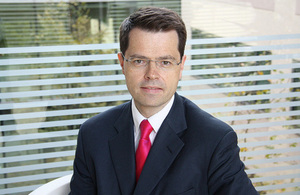
  • James Brokenshire – 2019 Statement on Local Government Finance

    Below is the text of the statement made by James Brokenshire, the Secretary of State for Housing, Communities and Local Government, to the House of Commons on 29 January 2019.

    Local government finance

    Today I laid before the House, the ‘Report on Local Government Finance (England) 2019-20’, the ‘Council Tax referendum principles report 2019-20’ and ‘Council Tax alternative notional amounts report 2018-2019’, which represent the annual local government finance settlement for local authorities in England.

    I would like to thank all colleagues in the House, council leaders and officers, who contributed to the consultation after the provisional settlement was published on 13 December.

    My Ministers and I have engaged extensively with the sector, including offering a teleconference to all local authorities, and holding meetings with representative groups including the Local Government Association and with councils and MPs. Representations from around 170 organisations or individuals have been carefully considered before finalising the settlement.

    This settlement is the final year of the 4 year offer which was accepted by 97% of councils in return for publishing efficiency plans. This settlement comprises a broad package of measures and confirms that Core Spending Power is forecast to increase from £45.1 billion in 2018-19 to £46.4 billion in 2019-20, a cash-increase of 2.8% and a real-terms increase in resources available to local authorities.

    Yesterday, I released £56.5 million across 2018-19 and 2019-20 to help councils prepare for EU Exit.

    Adult and children’s social care

    The government has listened and responded to the pressures local authorities are facing and announced at Autumn Budget in October 2018 that we will be providing additional resources across 2018-19 and 2019-20 to support social care. This funding includes £240 million in both 2018-19 and 2019-20 to support adult social care services to reduce pressures on the NHS, and an additional £410 million Social Care Support Grant for local authorities to support adult and children’s social care services. Having considered responses to the provisional settlement consultation, I can confirm that this will be distributed according to the existing Adult Social Care Relative Needs Formula.

    The additional resources announced at Autumn Budget, alongside the Adult Social Care council tax precept and the improved Better Care Fund, mean that councils will have been given access to £10 billion in dedicated funding that can be used for adult social care over the 3 years from 2017-18 to 2019-20. For 2019-20, local authorities will have access to £4.3 billion in dedicated resources for Adult Social Care, including £1.8 billion in improved Better Care Fund grant.

    Business rates growth, and the distribution of funds within the levy account
    In addition, every authority in England also stands to benefit from increased growth in business rates income, which has generated a surplus in the business rates levy account in 2018-19. I can confirm that £180 million will be returned to the sector and distributed based on each local authority’s 2013-14 Settlement Funding Assessment.

    This highlights the continued success of the business rates retention system, from which local authorities estimate they will gain an additional £2.4 billion in retained business rates growth in 2018-19 on top of settlement core funding.

    Business rates retention pilots

    As we move towards our aim of devolving additional grants to increase business rates retention to 75% from 2020-21, I will continue to test increased business rates retention with a range of local authorities across a wide geographical spread.

    At the provisional settlement I confirmed that 15 new pilots will get underway in 2019-20 in Berkshire, Buckinghamshire, East Sussex, Hertfordshire, Lancashire, Leicester and Leicestershire, Norfolk, North and West Yorkshire, North of Tyne, Northamptonshire, Solent Authorities, Somerset, Staffordshire and Stoke-on-Trent, West Sussex and Worcestershire. I will also be piloting 75% business rates retention in London and continuing ongoing pilots in 5 devolution deal areas.

    New Homes Bonus

    Local authorities are instrumental in ensuring the building of homes this country needs. As well as providing extra resources for social care, rewarding local authorities for economic growth and testing elements of future reform, I am keen to provide as much continuity and certainty to the sector as possible. As a result, I can confirm that the payments threshold for New Homes Bonus will be retained at 0.4%. To keep the baseline at 0.4%, I am investing an additional £18 million. The total budget for the Bonus this year is therefore £918 million.

    The consultation illustrated that the sector wants certainty on the future of the New Homes Bonus after next year. The government remains fully committed to incentivising housing growth and will consult widely with local authorities on how best to reward housing delivery effectively after 2019-20.

    Rural funding

    The 2019-20 settlement confirms that the Rural Services Delivery Grant will continue to be £81 million in 2019-20, maintaining the highest ever levels of funding provided in 2018-19. This has been welcomed by rural local authorities from particularly sparse communities. Our review of local authorities’ relative needs and resources will consider the specific challenges faced in all geographic areas, including rural areas, to inform the final distribution formula.

    Negative Revenue Support Grant

    Having listened to representations since the provisional settlement, this settlement also confirms that the government will directly eliminate the £152.9 million negative Revenue Support Grant (RSG) that occurs in 2019-20 using foregone business rates.

    Negative RSG is a direct consequence of the distribution methodology adopted for the 2016-17 settlement, whereby for less grant dependent authorities the required reduction in core funding exceeded their available RSG.

    The government’s decision will prevent any local authority from being subject to a downward adjustment to their business rates tariffs and top-ups that could act as a disincentive for growth, and I believe this is the most straightforward and most cost-effective means of dealing with this issue.

    Council Tax referendum principles

    Finally, I can confirm that in 2019-20 local authorities, with the exception of Police and Crime Commissioners, will retain the same flexibilities to increase council tax as in 2018-19, with a core council tax referendum principle of up to 3%. I have agreed with the Home Secretary that the referendum limits for Police and Crime Commissioners will be set at £24 to address changing demands on police forces.

    I have also decided to provide Northamptonshire County Council with an additional 2% Council Tax flexibility, to assist with the improvements to council governance and services after their serious issues. Use of the flexibility will ultimately be a matter for the authority’s cabinet and full council.

    During the consultation, many local authorities called for referendum limits to be removed. However, I believe the proposed limits allow local authorities to retain the flexibility to raise additional resources locally to address local needs, whilst protecting households from excessive increases in council tax, in line with the government’s manifesto pledge.

    Future of local government finance

    A strong theme during the consultation was calls for certainty on the future of local government finance. To meet the challenges of the future, we have published two consultations on future reform of the business rates retention system and on the assessment of local authorities’ relative needs and resources. These consultations close on 21 February.

    Alongside the 2016-17 local government finance system, the government announced a review to develop a more up-to-date and responsive distribution methodology for the sector. In December, I announced a new consultation, seeking views on the future assessment of relative needs and resources, and on principles for transitioning to new funding arrangements in 2020-21.

    Alongside the new funding methodology, in 2020-21 we will also be implementing the latest phase of our business rates retention programme that gives local councils the levers and incentives they need to grow their local economies. The consultation seeks views on how the business rates system can be reformed to: provide a strong growth incentive; strike a desirable balance between risk and reward; and reduce complexity and disproportionate volatility in local authority income where possible.

    Conclusion

    This settlement recognises the pressures that councils face in meeting growing demand for services and rewards their impressive efforts to drive efficiencies and help rebuild our economy.

    This settlement answers calls for additional funding in 2019-20, and it paves the way for a more self-sufficient and reinvigorated system of local government.

  • Liam Fox – 2019 Speech on Global Trade

    Below is the text of the speech made by Liam Fox, the Secretary of State for International Trade, on 1 February 2019.

    Good morning.

    The arguments around Britain’s exit from the European Union have been intense and passionate.

    Understandably, they have dominated the political agenda and consumed most – sometimes all – of our political bandwidth.

    On Tuesday the House of Commons voted to support a deal, with changes to the backstop. And the Government will now talk to the EU about how we address Parliament’s views.

    But, however we ultimately separate ourselves from the European Union, we must remember that there is a world beyond Europe and there will be a time beyond Brexit. That is what I would like to begin to focus on today.

    The UK’s future role

    The first question we must ask is a general one. What should Britain’s place in the world be? Where should we direct our great political, diplomatic and economic energies?

    What, if you like, is our mission?

    It used to be fashionable to quote Dean Acheson, US Secretary of State under Harry Truman, in saying that Britain had “lost an empire and not yet found a role”.

    That may have once been true. For some, the EU seemed to provide an answer. But the UK has been always an awkward member, unsuited politically and temperamentally to the demands and destination of ever-closer union.

    Our new relationship will be far better for both the UK and the EU. Now Britain is taking back ownership of our destiny. Where we share a common agenda, the EU will find a stalwart friend, and a close political and economic ally.

    We are emerging into a world that is crying out for leadership, and our country is uniquely placed to meet the global challenges of the 21st century.

    The 2015 Strategic Defence and Security Review sums up our position perfectly. As it says:

    “We sit at the heart of the rules-based international order. The UK is the only nation to be a permanent member of the UN Security Council and in NATO… the Commonwealth, the G7 and G20, the Organization for Security and Cooperation in Europe, the OECD, the World Trade Organization, the International Monetary Fund and the World Bank.

    We use our membership of these organisations as an instrument to amplify our nation’s power and prosperity. In all these organisations, we play a central role in strengthening international norms and promoting our values. We promote good governance, anti-corruption, the rule of law and open societies.

    We maintain and champion free trade, and we work with growing powers around the world to build a stronger and more resilient global economy.”

    It’s hard to put it better than that. As Britain takes up her role as a fully independent actor on the world stage, this is an enviable position from which to be starting.

    The Department for International Trade has, since its creation, been looking to that world beyond Europe and that time beyond Brexit.

    And in an era where globalisation and rapid technological advancement are fundamentally changing the face of global commerce, Britain will have a clear role in helping to identify and meet the challenges and opportunities ahead.

    In Davos last week, trade ministers considered a paper from the Global Future Council on International Trade and Investment. It set out a number of scenarios for the future trading environment.

    They started with the optimistic – where countries cooperate to address issues through a revitalised WTO and complementary international frameworks – then they had the less optimistic, where countries cooperate but are drawn into competing blocs, producing a Balkanisation of global trade.

    And finally they had the genuinely pessimistic where there would be a rise of protectionism and where countries could not cooperate, leading to prohibitive unilateral barriers with consequent inefficiencies, high economic risks and a decline in productivity and innovation.

    It is essential that Britain uses its new role to help push the global trading arguments in the right direction.

    Over the coming months I will be talking about the challenges we face in more detail such as the consequences of a protracted US – China trade dispute, the potential slowing of the global economy and the unmet challenges in the global trading system.

    Today I want to set out our general approach to the institutions that govern global trade and where we believe momentum is required.

    Opportunities of independent WTO membership

    Our first port of call has to be the WTO – the home of the rules-based international trading system that underpins our prosperity.

    Now we all accept that the WTO as it stands may be imperfect. Some of its rules may be outdated. But, as Spanish-American Philosopher George Santayana said: “Those who cannot remember the past are doomed to repeat it.”

    We have tried a world without multilateral institutions, where the economically powerful sought to defend their interests by erecting high tariff walls.

    It didn’t work out very well. Which is why, when the world came back together there was a strong desire to develop a framework where national governments could create collective solutions to shared challenges.

    Since the end of the Second World War, falling tariffs and an ever more integrated rules-based system – underpinned by the General Agreement on Tariffs and Trade and the World Trade Organisation – have brought great benefits, both to developed and developing economies, in terms of stability, predictability and openness, creating greater opportunities for exporters and lower prices for consumers.

    And it is important to remember at this juncture that we are committed to multilateral solutions not for altruistic reasons but because they best serve the interests of the UK and the wider world.

    The case for trade

    It is also important to remember and to remind our people that free enterprise and open trade have taken more than 1 billion people out of abject poverty in the last generation or, as Francis Fukuyama put it in his latest book “Identity”, the percentage of children dying before their fifth birthday has declined from 22% in 1960 to less than 5% by 2016.

    But we have never seen trade simply as an end in itself. Trade is a means by which we are able to spread prosperity. That prosperity underpins social cohesion. That social cohesion, itself in turn, underpins political stability and that political stability is the building block of our collective security.

    In the interconnected and interdependent world of globalisation, we cannot disaggregate these elements without risking profoundly unwanted consequences.

    Security, environmental concerns, trade, economic development, these are best tackled by countries working together. And not just two or three working together – but many, ideally all.

    Economic nationalism may look like an attractive shelter from the winds of change that have come with the era of globalisation and even more from the technological revolution in which we find ourselves, but it is a mirage.

    The alternative to an international rules-based system is at best a deals-based system that will suit only the strongest and at worst a free for all that will put at risk much of the progress we have made in recent decades.

    The principle of working through consensus is one held dear by WTO members – and the United Kingdom and the United States were key in forming that organisation. Decisions forced on countries by a larger group will not be legitimate, will not be respected and cannot ultimately be enforced.

    But consensus building can be, and indeed has been, painstaking and slow. In the WTO, as in many international arenas, finding that sweet spot has proved elusive. So many of our collective ambitions for the multilateral system remain unfulfilled.

    Now the WTO has, of course, had its successes such as the Government Procurement Agreement, the Information Technology Agreement, the Trade Facilitation Agreement, among others. But the reality is that we have not yet been successful in moving the system forward from the balance we achieved at the end of the Uruguay Round.

    The changing global economy

    Fundamental changes in the world economy have created an entirely new trading environment.

    The global economic centre of gravity is shifting, from North America in 1990 to China and the Far East in 2050. While we still expect North America and Europe to remain key trading partners for the UK, the growth in the East represents a huge opportunity for the UK to establish new, and grow existing, trading relationships.

    It is predicted that the share of global GDP of the seven largest emerging economies – including China, India and Turkey – could increase from around 35% to nearly 50% by 2050, which would mean that they overtake the G7.

    This is particularly relevant in the case of China, for example, which by 2050 will reach a projected $51.3 trillion at Purchasing Power Parity, from $21.4 trillion now, with India reaching $30.7 trillion by the same year.

    The Chinese bond market is expected to grow from around US $3 trillion to US $32 trillion by 2030, which is not a long time away, and by 2050, Asia’s financial sector is likely to be four times the size of that in the West.

    I often point out to those who are sceptical about the scale of change that China is expected to have 220 cities with a population of more than a million by 2030. The whole of Europe has just 35. This will be driven, in part, by a rapid expansion of the global middle class, which is expected to reach 5.4 billion people by 2030, up from 3 billion in 2015. Asia is expected to account for the vast majority of this growth.

    But as well as a fundamental shift in who we trade with, how we trade is changing too.

    The revolution in e-commerce is now a major component of world trade, from some of the world’s largest corporations, like Amazon, to the thousands of small companies who have never before been able to trade internationally.

    And such an upheaval requires a fundamental shake-up of the rules which govern international trade. We live in a world where there is an increasing blurring of what constitutes a good and what constitutes a service and yet the regulatory system is a long way behind the curve.

    Imagine what would have happened back in 1995 when the WTO was created if I had asked you the following question – “if I sell you code over the Internet to make something on your 3-D printer, have I sold you a good or a service?”

    In 1995 you would not have understood the terms of the question because the terms would not have been invented yet. Yet these are the terms in which we trade today in the real global economy, but the system of global governance has not kept up.

    Even if we ignore technological advances, patterns of international trade are still shifting rapidly.

    We live in a world where complex global value chains are an ever more important part of how we do business yet our trading system still applies taxes – for let’s be very frank that “tariff” is simply a more acceptable way to describe taxes – a nice euphemism, but they are taxes – multiple times before the creation of a final product. This locks up value and increases costs to consumers.

    Then we come to what we actually trade. Services are now a larger part of the world economy than ever before and Britain is the second largest services exporter in the world, behind the United States.

    A recent WTO report estimates that, while services comprise two-thirds of global GDP and employment – and nearly half of world trade on a value-added basis, the barriers to trade in services are about as large as those in goods were half a century ago.

    This has to change. Despite recent high-profile tensions, global tariff levels on goods have reached a historic low. But we have yet to achieve the same level of liberalisation for services.

    Pursuing trade policies that promote openness and better reflect these developments in the global economy would boost productivity, raise living standards and promote competitiveness.

    And these reforms will only become more vital as the interdependence of the global economy actually increases.

    Benefits of multilateralism

    So, recognising this, what is the correct response for governments like ours, which are committed to global solutions to global challenges?

    One option is bilateral or regional agreements. The Comprehensive and Progressive Agreement for Trans-Pacific Partnership, or CPTPP – much easier to say in the morning – is a good example, and of specific interest to a post-Brexit UK.

    Its 11 member states constitute some 13% of global GDP. As you will be aware, the United Kingdom will, potentially, seek accession to CPTPP upon our exit from the EU.

    I am delighted, Dean, that you mentioned that Policy Exchange endorsed this course of action in a paper last summer.

    And, as many of you will be aware, the EU-Japan Economic Partnership Agreement comes into force today.

    The UK was, naturally, deeply involved in the negotiation of this agreement. And, as both our Prime Ministers have made clear, this ambitious EPA will form the basis of our new economic partnership.

    Neither side intends to put up barriers where none now exist, and the UK-Japan Trade and Investment Working Group is striving to deliver this commitment.

    Agreements such as these can be useful complements to the multilateral core. Which is why, given certain conditions, they are recognised as a possible deviation from the Most-Favoured Nation principle. They are easier and they are quicker to negotiate.

    But they cannot tackle problems caused by widespread agricultural or industrial subsidies, they cannot adequately address unfair competitive practices, and ultimately the economic benefits unlocked by such agreements are relatively small compared to those of an agreement between all 164 WTO members.

    Now, that does not mean we should not pursue them vigorously as an adjunct to wider liberalisation agreements but, equally, we need to remember that true multilateralism is, and will remain, the gold-standard of international trade agreements.

    It minimises the risk of trade diversion. It lowers the costs for businesses, allowing them to take a common approach to non-tariff measures across a wide range of countries and markets.

    For nations themselves, multilateral agreements provide stability and predictability, as well as guarding against ad hoc protectionism.

    There is strong evidence of the trade creating effects of the GATT and WTO. In 2007 a paper was published that modelled the value of imports from 1950 to 2000. It found that world imports are higher by 120%, or $8 trillion in 2000, relative to a world without the GATT and WTO.

    And that is a truly historic achievement.

    Of course, it has not been without its issues. The same report highlighted that the benefits have sometimes been uneven amongst developing nations.

    Crucially, there is also evidence that sectors that have been mostly excluded from multilateral negotiations have not increased trade as a result of the GATT and the WTO.

    If Britain’s destiny is to be a global champion of trading freedoms, then these two challenges represent our global mission – a direction of focus and an opportunity to change the world for the better.

    Liberalisation of trade in services

    Our first priority must be the liberalisation of the global trade in services.

    Now I’m sure that this audience is familiar with the headline figures. The UK economy is one of the most services-intensive on earth, with services comprising 79% of our GDP.

    The sector employs some 26 million people in this country. Out of every five people in Britain with a job, four of them work in a service industry.

    And these are remarkable figures by any measure. And they mean that the UK has a vast amount to gain by working with partners to make services markets more open, more transparent and more competitive.

    And it must not be overlooked that, because so many aspects of the production of physical goods are in fact services – such as design, distribution, logistics and marketing, that liberalising services will also drive wider international trade.

    Currently, it is estimated that the trade costs for services are up to three times higher than those for goods.

    Between 1995 and 2005 trade costs for goods fell by around 15% – while the trade costs for services have remained, to this day, fairly constant.

    Research from the Bank of England suggests that if a large sample of trade partners lowered their services trade barriers to the level of the least restrictive country, the UK’s current account deficit could fall by up to 16%.

    Leaving the EU gives us the freedom to pursue an independent trade policy that reflects our unique strengths in services.

    A policy that is focused on our areas of competitive advantage – such as finance, insurance and business services.

    And together, these comprise 57% of our services exports.

    But it also gives us the opportunity to instigate international services liberalisation through fora such as the WTO.

    We will actively engage in current discussions to agree new rules in key areas such as e-commerce, and to ensure domestic regulations do not constitute unnecessary barriers.

    We are of course committed to TiSA, the ambitious, but currently stalled, agreement on trade in services.

    TiSA has the potential to set the international standard and deliver a significant boost to the global economy, and we will continue making the case for it. But it is not our only option.

    Digital trade

    I have already very briefly touched on the way that the digital economy is revolutionising trade. Digital and associated technologies are an area in which the UK is genuinely world-leading, and commands a significant competitive edge.

    The ability to send data across borders is the central requirement for international digital trade. And data flows are the life-blood of today’s digitalised economies.

    They are vital not only to high tech industries but also traditional sectors, good and services as well. And I believe that it is patently absurd to talk about moving goods and services but not data in a modern economy.

    And that is why obstacles such as data localisation must be tackled if we are genuinely to be able to take advantage of the digital era.

    And ensuring that such flows continue unimpeded is a top priority for the United Kingdom. But if we are to ensure that data is free-flowing, we must also see that cross-border data flows are governed responsibly with modern, liberal and ambitious regulations, including the safe handling and storage of people’s personal data.

    UK and the Commonwealth

    Now, working to liberalise the trade in services will be of vast economic benefit to the UK and our partners.

    But there is a greater mission that I alluded to earlier. The United Kingdom is uniquely placed to help redress the imbalance of the multilateral system, and to bring developing nations to the fore of the international trading community.

    In 2019 our work at the WTO will move forward apace.

    As the world’s fifth largest economy but also as a leading commonwealth nation, we occupy an exceptional place among the world’s biggest economic players.

    Not only do we have historic and cultural ties to many of the world’s developing nations, but we are also part of an existing community of nations that are eager and willing to deepen their trading ties.

    Britain has enormous scope to facilitate, and enact, change.

    We believe that the real story of the Commonwealth is its vast potential for trade and investment opportunities.

    The 52 member states boast a combined population of over 2.2 billion people, 1 billion of whom are under the age of 25.

    Their economies are wonderfully diverse, each with their own specialisations, industries and opportunities.

    Most importantly, Intra-Commonwealth trade has consistently grown faster than the global average.

    The Commonwealth Secretariat has calculated that bilateral trade costs for Commonwealth partners are, on average, a stunning 19% lower than between non-Commonwealth members.

    To date, Commonwealth nations have registered over 600 trade liberalisation measures with the WTO.

    Clearly, the potential is there, and so is the will.

    WTO engagement in 2019

    So 2019 will be a significant year for both the UK and the WTO.

    The UK is leaving the European Union. The WTO is facing many challenges to the ruled-based multilateral trading system.

    As an independent member, the UK will have greater freedom to advance our agenda – in line with the terms of the withdrawal agreement – and to take advantage of the opportunities that leaving the EU presents us with in respect of our presence and participation at the WTO.

    We will need to establish the UK as a credible, influential and creative WTO member – and there are a number of steps we need to take.

    Establishing our own independent GATT and GATS schedules… …accession to the GPA… … complying with our notification and other WTO obligations and participating effectively in WTO fora, such as in the 28 WTO sub-committees that cover all aspects of multilateral trade… And of course to bolster the rules-based multilateral trading system, with the WTO at its centre.

    We have the Global Dialogue on Trade, in which the CBI and our branch of the International Chambers of Commerce are strongly involved.

    This is assessing what needs preserving and what needs improving in the multilateral trading system, and how to equip the WTO with the tools needed to tackle new challenges and disruptions of the 21st century.

    The UK has world-class ‘soft power’ and we will be using this to hold meetings with developing countries, including in the Commonwealth, and maximising opportunities to promote and develop strong relationships to defend the interests of developing countries and the UK.

    And we want to partner with Commonwealth countries to engage in WTO reform discussions in the sectors of the future.

    We will encourage Commonwealth trade ministers at our next meeting, which Britain will chair, to set out ambitious thinking on how we can bring our trade and development policies closer together so that we can provide mechanisms for ever more countries to trade themselves out of poverty and into sustainable prosperity.

    We need to build alliances to update and enhance the WTO rulebook to tackle underlying trade tensions. These issues include industrial subsidies, state-owned enterprises, and tackling blockages in ongoing negotiations, such as over fishing subsidies. We also need to establish new regulations and norms to facilitate emerging regulatory needs – as I have mentioned, such as in digital trade and service liberalisation.

    But we also need to encourage trust and transparency in the WTO, in particular, modernisation of the dispute settlement system, improving WTO member compliance with notification requirements, and take another look at special and differential treatment.

    For, if we are to have an international rules-based system that inspires confidence, then it needs not only to be fair but transparent. We must know which industries genuinely belong to the private sector and which are simply a cover for state economic activity.

    We must redouble our efforts against overproduction, subsidy and dumping. We must protect intellectual property and strengthen our measures against IP theft and the restrictive treatment of foreign investors that are operated through mechanisms such as forced joint-venture requirements.

    It is clear that while there are enormous opportunities in the global trading environment, with both the changing global patterns of trade and the nature of what is traded itself, there will be considerable challenges to be faced.

    Security, environment, migration, trade and economic development. These things are related – part of the same continuum, as I described earlier.

    The WTO and other international institutions have their parts to play in producing stable conditions for progress and prosperity.

    But ultimately it is the responsibility of governments, of individual members, to provide the guiding vision. That vision needs to have not only a coherent intellectual and philosophical base but also practical solutions to some of the seemingly intractable problems that we face.

    Building consensus requires everyone to have a stake in the solution. It has to work for the smallest and most economically vulnerable as well as the strongest and most advanced economies. It has to provide confidence for those who face an era with an almost unprecedented rate of change, socially and technologically.

    And it will involve updating our global institutions so that they reflect the realities of the 21st century – not the political, economic and social patterns of the second half of the second half of the 20th century when they were created.

    I believe that together with our partners around the world, using all the advantages that I have set out, the United Kingdom can rise to this challenge as a modern, independent, free-trading nation.

    We are not passengers in our own destiny. It is time for us to have a clear direction and set a firm course for our future.

    A nation is a human thing. Influence is, at least in part, a reflection of our own self confidence.

    We have so much to offer – to ourselves and to the world around us.

    A confident Britain will help build a confident future for all.

  • Jesse Norman – 2019 Speech on Transport

    Below is the text of the speech made by Jessie Norman, the Minister of State for Transport, on 31 January 2019.

    Opening remarks

    Thank you very much. It’s a massive pleasure to be able to welcome all of you to this Transport Technology Innovation Showcase today.

    I’d also like to welcome the Government Office for Science and of course the work they’ve done on this new Foresight report.

    This is a terrific document. It is a very interesting and thought-provoking and subtle piece of work, and I think it’s going to make a big difference to how we think about mobility strategy in the years to come.

    A new era in transport

    The word “historic” is wildly over-used. But even so I think it is fair to say we are at a genuinely historic juncture for transport in this country.

    We can think of the 19th century in terms of the coming of the railways and the astonishing social and economic and cultural changes which that created. And we can also think of the effects of the motor car in the 20th century and the changes that created.

    But I want to suggest in the time-honoured fashion that we are on the cusp of something extraordinarily interesting, by way of a transport revolution for the 21st century.

    As you will be aware, technology often has its inflection points. Sometimes change is slower than people think. The Boeing 737 is more than 50 years old, after all. But there are moments of disruptive change, and this is one of those moments.

    It is not going to be dominated by a single invention or technological breakthrough.

    Rather it is the way in which a series of new technologies come together in a great turbulent confluence and play off each other, and play off other social trends and economic incentives that I think will transform the way in which we travel, plan, use, pay for and operate transport.

    Offering great opportunities for British business and industry to create new products, to conquer markets and ultimately to build economic value.

    Learning lessons from the car

    If we are going to do that, we’ve got to have foresight. But we’ve also got to have hindsight. We’ve got to learn from the past.

    In the years after World War 2, Britain embraced the motor car as emphatically as it abandoned rail travel. Between 1945 and 1970 the number of cars on our roads rose nearly tenfold.

    Cars were new, shiny and aspirational. For the British people, coming out of a wartime environment, filled with desire for the new and transformative, cars were everything that other modes of transport were not.

    As cars became more affordable, people enjoyed previously unimaginable levels of freedom and independence.

    They could live further from their place of work, consider jobs in other towns and cities, and still stay close to friends and family. In effect, cars created the suburbs and opened up the countryside.

    For businesses, cars meant they could exploit a wider labour market. They could build offices at more accessible and affordable locations. They could send their sales reps to meet clients face to face around the country.

    In short, travel was democratised.

    It’s important to note that the triumph of the motor car didn’t arise from any single public or private choice. It arose from countless smaller ones. No one, certainly not in government or outside, had more than a tenuous grasp on how exactly transport would evolve.

    Or how the growth of motoring would affect our society and environment and our wellbeing.

    The trends were noted in some quarters, but that doesn’t seem to have counted for much during the 1950s when cars were flying out of the showroom at a time when Britain was the second largest manufacturer of cars in the world, behind only the Unites States.

    These benefits were celebrated, and rightly so. But people were unaware of costs that only became apparent later.

    Traffic congestion. Falling use of public transport. Falling use of active travel. Air pollution. Greenhouse gas emissions. Wider health effects, especially the spread of obesity. Greater social separation.

    The point about separation really matters. As you will know, I am someone who thinks a lot about norms and values in people’s lives as well as economics and politics. One of the worries I have is this: what does it do to an already individualistic society when someone is in a car in their own demarcated space surrounded by their personal area of control and not mixing with other people? Does it serve to encourage individualism, and if so what does that mean?

    And of course this transition imposed huge externalities. Huge costs imposed on other people or other communities or other places, costs that were deferred or pushed onto others without any great recognition of what their effects might be.

    So it’s really important to maintain a sense of history, to continue to look backwards, and to reflect on previous lessons learned as we seek to do great things in the future.

    Transport’s wider impact

    So the 20th century motoring boom left us with a mixed legacy – something in many ways to be excited about and proud of, but something that also contained real worries for the future.

    But as we think now about the transport technologies of the future – electric cars, hydrogen power, autonomous vehicles, drones, the use of big data across the whole range of transport – we understand so much more about the complex interactions between transport and everything around it.

    Yes, we have the same practical need to achieve greater mobility, as we did in the past. And yes we still want new technologies to provide us with fast, reliable, safe, affordable transport connections. These things haven’t changed.

    Only this time, we can be much more explicit and self-conscious about the moral and political choices that come with those decisions.

    We are in a kind of Burkean moment. Burke talked about past, present and future, generations that have passed away, those that are living and still yet to come, society as an inheritance that we receive, that each generation must cherish, must improve and pass on to future generations.

    This is a Burkean moment for transport. We need to work out what we think about that, why it matters, what the drivers of change are, and how we can build a consensus that can sustain itself over time. And this is a huge challenge. A challenge for us in government, but also a challenge for you, a challenge for everyone.

    We will move, if we do it right, from siloed thinking to a more integrated approach – integrated in terms of technology, geography, economics, sociology and culture.

    To think about mobility in a different way.

    We will think of it in part as more of a service, but that’s just one part of it. When we travel today we think about whole journeys, but now we can use technology to plan every part of that journey. When I came here today, I came on my bike – I’m a bike-o-holic – but I also took the tube. We think about passenger information and payment being merged together.

    And when we do these things, we are seeing early signs of the future. We see mobility apps filling unused capacity, encouraging shared mobility, and reducing spikes in demand, so that we can all benefit from faster, more reliable journeys.

    The key lesson remains, transport is not, and has never been, just about transport. It’s about better connected cities, and better housing. It’s about rural areas and rural connectivity. It’s about loneliness, more inclusive communities and more productive businesses. It’s about society and culture.

    In government, we know that signing off a transport scheme today affects society in a vast number of different ways. This in turn raises questions of accountability, not just for use of public money but for the future – and whether we have thought about future generations and the impact of our choices. And it raises questions of how we support innovation – one of the things very close to the heart of people here.

    We’ve already placed some significant limits on the use of internal combustion engines in transport, to control its harmful side effects. Now we have to decide what we want from emerging vehicle technologies.

    What balance do we seek? What do we want in the way of efficiency? What do we want in the way of fairness? What do we want in the way of inclusivity?

    How can we use policymaking to support wider goals of clean air, higher productivity, and more sustainable economic growth? And how do we bring these new technologies to market?

    Foresight and government FOM strategy

    That’s the wider context in which this Foresight report is being launched. Foresight is a difficult thing to gain. Any help one can have in this area is important—to gain a foundation of understanding and evidence to inform our decisions and anticipate future trends.

    Thinking about the impact of change on different parts of society, younger people and old. Thinking about the economics of electric vehicles.

    Thinking about the changing cost of manufacturing, purchasing, running, repairing battery operated cars. All the things that it will mean for car owners, the motor trade, and those around them.

    These three foresight scenarios are a really helpful way of helping us look at the different trade-offs and the agendas that could potentially dominate the public discussion.

    Of course we intend to use the report, and indeed we will use it, as we reflect further on the Industrial Strategy we’ve launched. That strategy is an attempt to become self-conscious in some of the ways I’ve described today—about where we place our bets, and what we’re trying to achieve.

    Some countries claim not to have an industrial strategy. But believe me, any one who says that has a strategy -they just don’t know it.

    In the UK, we are investing nearly £1.5 billion‎ between 2015 and 2021 to support the growth of ultra low emission vehicles. But we have also spent £250 million up to 2021 to support more than 200 companies and research organisations developing technology for autonomous vehicles.

    Because we want to build that next generation, next century research base. And our new Future of Urban Mobility Strategy which will come out in the next few weeks will do that from the point of view of cities.

    Investment

    But one thing that is really exciting to me – I come from a family of entrepreneurs – is to look at the different companies that are actually driving the change.

    The car platforms which have historically been dominated by huge manufacturers are suddenly opening up. They are becoming platforms for technology on which smaller players, more entrepreneurial, more energetic players, can make a difference using better technology and communications.

    We’ve seen some fantastic examples of that just recently at the Future Aviation Security Solutions event last week. At today’s innovation showcase you’ll see some of that innovation and energy at work, and it is profoundly exciting.

    The Transport Technology Research Innovation Grant, and Innovation Challenge Fund have made a big difference in this area. We have funded 146 projects over the past five years.

    More than half of T-TRIG awardees have entered into subsequent collaborations, and raised over £25 million extra from the private sector and other funding sources. Not huge numbers, but a very useful start.

    For example, Tevva Trucks developed a system which allows diesel HGVs to switch to electric running in emission-controlled areas—a system which has secured a £12 million investment for Tevva from India.

    Other beneficiaries of early DfT funding include Wayfindr – a charity which has developed an indoor navigation technology for the visually impaired.

    And of course e-cargo bikes. We’re already thinking about how we can support and fund the growth of e-cargo bikes and a much greener and higher quality last mile.

    Conclusion

    Ladies and gentlemen, we have no time to lose. The pace of technology change can be very quick.

    The first main passenger rail line between Manchester and Liverpool was opened in 1830. But it took just 30 years to complete the whole of the rest of the British rail network—10,000 miles of rail track built right across the nation, in just three decades.

    Yes there was cut-throat competition and a certain amount of skulduggery. But there was also huge energy and creativity, and the great transport challenge we face is also going to be about creativity and energy, as well as nimbleness, imagination and technology.

    So I am delighted not just to welcome you today, but to thank Foresight for the fantastic work that they’ve done. If we think about it hard, and we do it well, we can transform mobility in this country.

    Thank you very much.

  • Chris Skidmore – 2019 Speech on Higher Education

    Below is the text of the speech made by Chris Skidmore, the Minister of State for Universities, Science, Research and Innovation, on 31 January 2019.

    Thank you for inviting me to the Royal Academy of Dramatic Art (RADA) to give my first speech as Universities Minister. As one of the oldest and most prestigious centres of dramatic art training in the UK, I’m delighted to see how RADA is not just producing exceptional talent for our world-leading dramatic art sector, but extending its reach far beyond the Academy’s walls through community partnerships and industry collaborations. And I know the same approach is true of many higher education institutions across the country.

    I may have only been Universities Minister for several weeks, but even in this short space of time I’ve seen plenty of instances of universities and colleges up and down the country acting as vital pillars of their communities: educating the next generation of students; feeding our world-leading industries with vital knowledge and skills; continually pushing the boundaries of what is possible with ground-breaking research; and working closely with local businesses to create jobs and help solve some of the greatest societal challenges of our time.

    I feel very privileged to be Universities Minister. My predecessors have said they felt it was the best job in government. And I have to agree. Having begun my career as a historian and university lecturer, I understand the power of higher education and want to use this occasion today to outline to you my early priorities and vision for the sector, and how we can work together to meet the opportunities and challenges that lie ahead.

    I understand I am speaking to you at an unprecedented time of change, what with Brexit coming ever closer and the uncertainties this causes in terms of future recruitment, staffing, student numbers and funding. I also understand the uncertainty caused by the ongoing Review of post-18 education, which is looking at how we can ensure post-18 study routes in England are joined up and supported by a system of funding that works for students and taxpayers alike.

    I want to reassure you today that I hear your concerns and I am keen to work with you during this difficult period. I have already started having conversations with many of you about these important issues and I am eager that these conversations continue over the weeks and months ahead. I know there is much to discuss. I am also certain there will be an appropriate occasion for me to address these issues in detail in the future. But, for the purposes of my speech today, I want to look at the broader themes unpinning higher education and their impact on the continued health of the sector.

    Let me start by start by taking a step back. Over the past few months, hundreds of thousands of prospective students have made some of the biggest decisions of their lives when preparing their UCAS applications to university. Twenty years ago, I was in the very same situation.

    Clearly, there have been many significant changes to higher education since my days as an undergraduate: the student finance system has evolved, student number controls dropped and a range of new regulatory instruments advanced and developed. The coming into effect of the Higher Education and Research Act in 2017 means plenty of changes are still afoot.

    As the first major regulatory reform of the English higher education sector in 25 years, the HERA created the Office for Students (OfS), a new body to regulate and fund higher education providers. It also created UK Research and Innovation (UKRI), which brings together the seven UK research councils, Innovate UK and Research England to take a strategic approach to research and development activities across the country. With these changes has come increased accountability. And it is now more important than ever that our higher education system delivers for students.

    This means providing value for money – not just for students and graduates, but also for government and taxpayers who contribute substantially to the way the sector is funded. It also means providing a first-rate student experience to ensure that all students, of all backgrounds and circumstances, receive a top-quality education and a fulfilling university experience that will enrich their lives and future careers.

    On that point, I would like to thank my predecessor for his invaluable work on enhancing student mental health support and helping to drive a significant step change in the way universities are looking out for student wellbeing.

    This includes the three pillars of the government’s new deal on student mental health. The first is the University Mental Health Charter led by the Charity Student Minds; the second is tackling the transition issues students face, especially when moving from school or college into university; and the third is looking at improving information sharing so that institutions can get better at involving families and friends in supporting students in difficulty.

    As a constituency MP, I have seen first-hand the devastation that is caused when a student slips through the net. So, I intend to continue my predecessor’s good work in this area. In March, I will be hosting a roundtable on University Mental Health Day, and I will correspond with the Chair of the information sharing task group to ensure meaningful improvements are being made. I am also interested in listening further to the wider issues around transition to university, including students’ experiences of the private rental market, and receiving the healthcare and support they need both in and out of term-time.

    My vision for our universities and colleges is a positive one. I’m not going to be a Minister who comes in and beats up or needlessly berates the sector. Instead, I want to restate my commitment to you today to work in partnership with you to ensure our higher education sector remains one that works for everyone and of which we can be proud in generations to come.

    Today in England, 18-year-olds are entering higher education at a record rate, including 18-year-olds from disadvantaged backgrounds. I celebrate the fact that more people are going to university. It may not be the right option for everyone, but anyone who can benefit from it should be supported to go. Just last week I responded to a tweet by a mixed-race girl questioning whether going to Oxbridge will be right for her. Of course, I tweeted straight back saying “yes, go and make the most of a wonderful opportunity”!

    Despite the evident progress that has been made, her hesitation shows there is still much more to be done to improve access to higher education. It is clearly not acceptable that, in this day and age, where you come from, or who you are, can still determine your life chances and likelihood of going to university. It is not acceptable that only 13% of white boys in receipt of Free School Meals go on to higher education. It is not acceptable that only 18% of pupils in the North East of England on Free School Meals go on to university. And it is not acceptable that only 28% of Black Caribbean boys in receipt of Free School Meals progress on to higher education, compared to 51% of Black African boys and 64% Chinese boys.

    There is clearly still much work to be done. I want to see a world where the percentage of students with disabilities is more reflective of the percentage in wider society. I also want to see more people going to university from care backgrounds, from military households, and from other currently under-represented groups. These are just some of the “burning injustices” that the Prime Minister pledged to tackle when she assumed office. And now that I am Universities Minister, I am determined to help her break down these barriers relentlessly.

    Given the extent of recent regulatory changes, I understand the prospect of increased government intervention may raise alarm bells in the sector. But let me reassure you today that, as a former academic myself, I fully appreciate the concept of institutional autonomy. And I believe so much of what is good about our universities today has come about because of the freedom they have been able to exercise.

    But we must be honest with ourselves and face facts: this government invests substantially in higher education and has a responsibility to see that it works for everyone. We cannot just sit back on our hands and wait for more progress – especially when there is a clear and urgent need to equip people with the skills this country needs for the future.

    With the UK’s departure from the European Union coming ever closer, all eyes are turning to creating a new vision for life in a post-Brexit Britain – a vision not just for jobs and our economy, but a vision for our future education, knowledge and skills. I want to reassure everyone in the sector today that I am committed to placing higher education right at the heart of this vision.

    Determining this vision comes down to the question of what we want our post-18 education system to look like – not just by next year, but by the end of the next decade, by 2030. To make real progress, it is imperative we have a long-term plan.

    Thanks to advancements in data collection and insights, we already have a very good picture of how far the sector has come. We have already published 10 years’ worth of Longitudinal Educational Outcomes (LEO) data and, by 2030, we’ll have published 10 years more. Through data such as this, we are becoming ever richer, and an advanced analysis of this data is going to be crucial as we shape the sector going forward.

    As Universities Minister, I recognise the power of LEO data to generate positive headlines and provide an important source of information for students who want to see how much they could earn after graduation. To improve students’ access to this information, as well as other open HE data, we are already running the Higher Education Open Data Competition, which supports the development of cutting-edge and innovative digital tools to help present this data to prospective students in an easily accessible and comprehensible way.

    I also realise the LEO data could be developed further. So I am keen to engage with the sector to explore how to make the most of this data going forwards. For one, I want to look at ways of making this data more readily available to the academic research community to allow for more in-depth analysis. I also intend to set up a Data Advisory Committee to help me ensure, as Minister, that we are making the most of the opportunities thrown up by these rich new datasets and that they are being used in the best way possible – to ensure they are reaching those who could benefit from them; that they are being used in context; and that their insights and implications are being fully understood.

    Having more data in higher education ultimately provides us with new and exciting opportunities. The Teaching Excellence and Student Outcomes Framework (TEF), which is leading the way in providing students with greater transparency and choice, is another example of positive change. We are now firmly in the throes of institutional TEF Year 4, as well as the first pilots of the subject-level TEF.

    Although I appreciate the TEF has raised questions, no university should shy away from it. The independent review of the TEF, which launched earlier this month and is chaired by Dame Shirley Pearce, provides an important opportunity to take stock of the TEF from a constructively critical perspective. As part of the review, I am pleased to note that Dame Shirley has commissioned the Office for National Statistics to carry out an analysis of the statistical information used in TEF assessments and its suitability for generating TEF ratings. This review gives us the best chance to look at the TEF from all angles, and I hope that you will take the opportunity to make your views known to Dame Shirley over the consultation period ahead.

    As much as I see the value of more data, I am also aware of concerns it has given rise to about the value for money of certain courses, disciplines and institutions. On this, I believe we need to take a step back and ask what exactly value for money means in the context of higher education. Successful outcomes for students and graduates are about much more than salary: if we are to define value purely in economic terms, based on salary levels or tax contributions, then we risk overlooking the vital contribution of degrees of social value, such as Nursing or Social Care, not to mention overlooking the Arts, Humanities and Social Sciences – the very disciplines that make our lives worth living.

    How you define value for money depends heavily on how you envisage the kind of world you want to live in. For my part, a society without people to care for each other; to support each other; to teach the next generation; or to step in selflessly in times of crisis is a very sad society indeed. Equally, although I am officially Minister for Science, I take great pride in wanting to be Minister for the Arts and Humanities as well – disciplines which enrich our culture and society, and have an immeasurable impact on our health and wellbeing.

    As we move forwards into the future, the last thing I want to see is value judgements emerging which falsely divide the Sciences and Engineering from the Arts, Humanities and Social Sciences. To do so would be a travesty. Our future success depends on all these disciplines being completely intertwined.

    The government has already acknowledged this fact in our approach to the Industrial Strategy. As a joint Minister in BEIS, I am taking forwards work to alleviate the grand challenges, whose success depends not just on advancements in science, but on a recognition of the human condition. To achieve our ambitions, we don’t just need scientists and engineers, but a whole host of people with the human and cultural skills to make the science work.

    Institutions like RADA are performing a key role in nurturing the creative talent this country needs. Just last week I met students enrolled on creative arts courses at Ravensbourne University and was struck by the power of their discipline to enhance other sectors and industries as well as fuel its own.

    The UK is a global leader in the creative industries. The UK video games industry, which combines the best of advancements in science and the Arts, is the largest in Europe, contributing over £1.5 billion to the UK economy. It is no coincidence that over 60 universities in the UK are offering courses to feed this booming industry. Innovation doesn’t distinguish between creative skills and scientific knowledge; indeed it thrives on it. So, we should be doing all we can to ensure our higher education sector continues to provide the pipeline of creative talent our research and development needs.

    This takes me on to my next point, which has to do with the breadth and depth of course provision. As knowledge progresses, so too does innovation. To be fit purpose in the future, it is vital the sector continues to develop not just the subjects people study, but the way in which they study them.

    Just this week, Parliament approved regulations to enable more universities and colleges to offer accelerated degrees. These are identical to conventional degrees in every way but one: they can be completed one year sooner than the standard equivalent. Accelerated degrees allow students to save significantly on tuition and living costs, as well as save on time, as students can start or return to work a year earlier than their counterparts on standard three-year courses.

    I realise accelerated degrees are not for everyone. But they certainly work for the students I met recently who are enrolled on two-year courses at both Middlesex University and St Mary’s University Twickenham. And they are just one way that the sector can expand its offerings for those who are looking for something different from their higher education experience.

    Three-year, classroom-based degrees are not necessarily the norm, and they certainly won’t be the norm in the future, as we strive to enhance graduate employability and tailor degrees to the needs of the future workforce. The rise in popularity of Degree Apprenticeships is certainly showing us that we can break the traditional mould around higher education, by giving people a chance to earn while receiving first-class degree-level education. Having held a roundtable with students on Degree Apprenticeships at Manchester Metropolitan University last month, I have seen for myself how Degree Apprenticeships can provide high-quality routes into sustainable careers.

    I know as well as you do that the work of our universities is not just about purely academic pursuits detached from the real world, and that being academic can also mean being technical and vocational. There is a strong track record of collaboration and joint working between universities and businesses in this country, and plenty institutions are now offering industry placements or sandwich years. Aston University, for one, has strong links to employers, and more than 70% of its students undertake a year in industry as part of their degrees.

    Our modern universities are particularly well-placed to be supporting businesses in their local areas – producing 63% of all graduate start-ups and supporting almost 23,000 SMEs. These institutions are key to our economy and key to unlocking people’s potential, with their wide range of high-quality Level 4 and 5 qualifications. Technical qualifications like these are crucial to meeting the skills requirements of industry, as well as giving students the flexibility and portability of qualifications they need. I am keen that universities are supported to develop their technical education offerings, and I have been delighted at the way in which universities have engaged so extensively in the current competition to develop a network of new Institutes of Technology (IoTs), which are set to play a key role in delivering the higher technical training our country needs.

    For too long, the university experience has been seen as something for the young. But I know not all undergraduates are under 20 and I have met many students over recent weeks returning to university later in their lives. As we head towards the future, we have an added imperative to ensure that higher education works for everyone and that mature students cannot just re-skill, but re-re-skill themselves at whatever point in their lives they choose to do so. We must never close the door on that dream.

    In my vision for the sector, people should be free to embark on higher education at any time that is right for them. We should build bridges to make this happen. By 2030, I want us to have built a post-18 education system that gives people the flexibility they need – so that no-one who has quit higher education, for whatever reason or circumstance, has to feel they have dropped out with no routes back in later in their lives.

    Building these bridges requires a ‘student-centred’ approach. This is why we should all be thinking about how to redouble our efforts to enhance participation in higher education to ensure all students have the best chance at staying the course.

    Higher education providers plan to spend over £860m this year on access and participation activities across the sector. This is a significant amount of money that could make a real difference to people’s lives. I want to ensure this money is being used in the right way, in the areas that need it most – not just to raise aspirations to get people into higher education, but to ensure university works for them while they are there. To continue the positive efforts my predecessor started in this area, I am keen to host a roundtable with leaders across the access and participation space to understand how we can work together to make this happen.

    The Office for Students (OfS) is also rightly taking the lead in this area, as well as in some of the big issues facing the sector at the moment, including grade inflation and the large rise in unconditional offer making. The high standing of UK higher education is in our gift. To preserve it, we must be guided by what is right for students. The OfS is guided by exactly that, and I encourage all of us to work with it as it makes sure the next generation of students can access higher education, participate and succeed.

    As Minister for Science and Research as well as Universities, I recognise that universities are not ‘big schools’. With research and innovation functions, I understand that higher education institutions are complex ecosystems, which rely on the success of post-graduates as well as undergraduates. For that reason, I want to ensure that Masters and PhD students are not lost from the access and participation debate, and I urge you all to look at how we support our thriving post-graduate communities to enhance our future prosperity.

    As part of the Industrial Strategy, the government has committed to achieving 2.4% investment in R&D by 2027. But this money is not going to make a difference without a strong talent base. That is why we need to be thinking now about how we can get more people staying on for PhDs in the future.

    I understand the present climate may be one of unpredictability. But let us not forget, today, that we share a common goal and a common mission to create and maintain the best, most innovative and most flexible higher education sector in the world. Let us be guided in creating this vision by what is best for the common good – and ultimately what is best for individual students and our country.

    So, I ask you now: by 2030, when we think about the higher education sector we want to see, will it still be appropriate to talk about academic education versus technical education; to talk about Science versus the Arts; or indeed to talk about FE versus HE? Will we still be thinking about undergraduates over postgraduates; about school-leavers over mature learners; and about those on traditional three-year degrees over other modes of study?

    By 2030, I hope not. And I sincerely hope, that when it comes to creating the higher education sector of tomorrow, we will no longer be talking about parity of esteem but, instead, be driven in our mission by a unity of purpose.