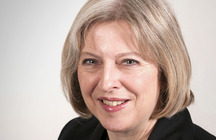
Below is the text of the statement made by Theresa May, the Prime Minister, at the European Council meeting held on 21 March 2019.
I have just met with Donald Tusk following the EU Council’s discussion on the UK’s request for the approval of the Strasbourg supplementary documents and for a short extension to the Article 50 process.
Firstly I welcome the Council’s approval of the legally-binding assurances in relation to the Northern Ireland backstop which I negotiated with President Juncker last week.
This should give extra assurance to Parliament that, in the unlikely event the backstop is ever used, it will only be temporary; and that the UK and the EU will begin work immediately to replace the backstop with alternative arrangements by the end of December 2020.
After a lengthy discussion, the council today also agreed, subject to a successful vote next week, that in order to provide time for the UK Parliament to agree and ratify a Brexit deal, the date of our departure will now be extended to 22 May.
If Parliament does not agree a deal next week, the EU Council will extend Article 50 until 12 April. At this point we would either leave with no deal, or put forward an alternative plan.
If this involved a further extension it would mean participation in the European Parliamentary elections.
As I have said previously, I believe strongly that it would be wrong to ask people in the UK to participate in these elections three years after voting to leave the EU.
What the decision today underlines is the importance of the House of Commons passing a Brexit deal next week so that we can bring an end to the uncertainty and leave in a smooth and orderly manner.
Tomorrow morning, I will be returning to the UK and working hard to build support for getting the deal through.
I know MPs on all sides of the debate have passionate views, and I respect those different positions.
Last night I expressed my frustration. I know that MPs are frustrated too. They have difficult jobs to do.
I hope we can all agree, we are now at the moment of decision.
I will make every effort to ensure that we are able to leave with a deal and move our country forward.
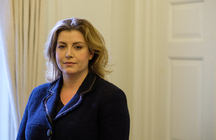
Below is the text of the statement made by Penny Mordaunt, the Secretary of State for International Development, in the House of Commons on 26 March 2019.
Cyclone Idai, one of the most severe cyclones ever to hit southern Africa, has devastated parts of Mozambique, Malawi and Zimbabwe, including many areas that were already affected by severe flooding. The UN estimates that over 2.6 million people have been affected across the three countries. The majority of them are in Mozambique—the country hardest hit by the disaster—where approximately 129,000 people are sheltering in accommodation centres, and where the UN estimates that 1.85 million people are in need of assistance. In Malawi, 87,000 people have been displaced. In Zimbabwe, initial UN figures estimate that 80,000 people have lost their homes entirely. On 25 March, the UN launched a $281.7 million funding appeal for the response in Mozambique.
The UK Government have made £22 million in aid available for the response to date, which is being led by the Governments of the affected countries and the UN. Some £18 million of this is in direct support to the response in the three affected countries and up to £4 million will be used to match the public’s generous contributions to the disaster emergency committee’s cyclone Idai appeal.
In expectation of the extreme weather, DFID-funded partner organisations pre-positioned essential supplies such as hygiene kits and medical supplies. UK aid funding is being used to send life-saving relief supplies and equipment, including 7,550 shelter kits and 100 family tents which are now in use in Mozambique. Following an assessment of need, further supplies are being flown into Mozambique on a charter aircraft from Doncaster Sheffield airport and an RAF A400M Atlas aircraft, which arrived in Mozambique on 26 March.
UK aid is also supporting the World Food Programme (WFP) to feed 400,000 people in the immediate aftermath of the cyclone through the distribution of emergency food and food vouchers. DFID has deployed 12 humanitarian experts to Mozambique, where they are assisting with the co-ordination of the international response. In addition, specialists in food security, nutrition, and water, sanitation, and hygiene from DFID’s Mozambique office are travelling to the affected area. A five-person UK medical assessment and co-ordination team also arrived in Mozambique on 25 March. The team will conduct a scoping visit to Beira and Chimoio this week to assess how the UK can assist in supporting emergency medical and health needs in affected areas. Four further logisticians, in addition to the three already on the ground, are due to arrive in Mozambique on 27 March, and DFID have contracted two airport handling operations experts to provide training to staff at Beira airport.
In Malawi, the UK’s package of emergency support is funding shelter, food assistance, health, and water, sanitation and hygiene (WASH). These will be delivered through the World Food Programme, UNICEF, and the Red Cross. The funding will target the most affected areas of Phalombe, Nsanje, and Chikwawa. Some 65,000 people will be provided with emergency shelter, 150,000 people will receive food assistance for two months, 250,000 people will be provided with WASH support and 130,000 people will be helped to access health services.
In Zimbabwe, UK aid funding has been provided for health, WASH, and child protection assistance in the worst-affected areas, including Chimanimani. DFID is also supporting the immediate provision of emergency latrines and sanitation equipment. DFID is working with leading flooding experts at the Universities of Bristol and Reading, as well as the European centre for medium-range weather forecasts, to forecast how the extent and impact of the floods might change up to 10 days in advance. With more heavy rains forecast over the coming days, and bad weather and access already posing challenges for those on the ground, this allows aid workers to plan ahead and prioritise their resources.
The UK is currently the largest bilateral donor to the response. The UN has allocated $20 million in funding from its central emergency response fund (CERF), to which the UK was the largest donor last year. In addition, the European Commission is providing €3.5 million in support, and a number of other donors have also made contributions. I am in touch with international counterparts to encourage others to contribute and ensure that sufficient funding is made available. Last week, I spoke with both Sir Mark Lowcock, the UN’s emergency relief co-ordinator, and Dr Tedros Adhanom Gebreyesus of the World Health Organisation and called on them to ensure that the UN mobilises quickly and effectively. Along with the Minister of State for Africa, I will be speaking with other senior figures and ministers from other donor countries in the coming days to encourage them to contribute to the international response.
Her Majesty the Queen, the Prince of Wales, and I have written to the Heads of State and Foreign Ministers of the affected countries to express condolences and to offer our support and expertise in disaster response.
The UK’s response to the cyclone is a whole-of-government effort both in the affected countries and in the UK. My Department has the overall lead on the response, with support from the Foreign and Commonwealth Office, the Cabinet Office, the Ministry of Defence, the Department for Health and Social Care, and Public Health England. The Foreign and Commonwealth Office has provided consular assistance to the small number of British nationals in the affected area and has updated its travel advice to advise against all but essential travel to the affected areas in Mozambique. We continue to monitor the situation closely and stand ready to deploy further support should it be required.
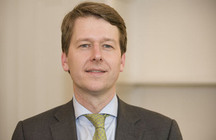
Below is the text of the speech made by Robin Walker, the Parliamentary Under-Secretary of State for Exiting the European Union, in the House of Commons on 26 March 2019.
Today the Department for Exiting the European Union and the Department for Work and Pensions are announcing that, if the UK leaves the EU without a deal, there will be no immediate changes to entitlements to access public funds for EEA and Swiss nationals coming to live in the UK after free movement ends and before the new immigration system is introduced in 2021.
“Public funds” is defined in immigration rules and includes a range of services and benefits that are provided by a number of Government Departments, local authorities and service providers. This announcement is pertinent to all spending and service Departments.
On 28 January 2019 the Home Secretary set out the immigration provisions for EEA and Swiss nationals coming to the UK after EU exit in the event of a no deal. The provisions will enable the Government to end freedom of movement but recognise the need for transitional arrangements.
In the event of no deal EEA and Swiss nationals arriving after free movement ends and wishing to stay longer than three months would need to apply for temporary leave to remain which, if granted, would be valid for 36 months.
Our announcement today provides details of the transitional arrangements for access to public funds for this group.
These arrangements will provide certainty to individuals arriving in the UK following the ending of free movement, will minimise disruption, and will ensure that changes are made in a sensible and sustainable way over a period of time.
It is important that, in a no-deal scenario, EEA and Swiss nationals who come to the UK after free movement ends know what their eligibility to access public funds will be. This will be on the same basis as for EEA and Swiss nationals now. They will continue to need to meet any eligibility criteria, for example demonstrating that they are exercising an EU qualifying right to reside, such as a worker or self-employed person. As now, those not exercising a qualifying right will not be able to access certain publicly funded services and benefits.
When an individual’s 36 months temporary non-extendable leave expires, a person wishing to remain in the UK will need to apply and qualify for leave under the new immigration system that will be introduced from 2021 onwards. When individuals move into the new immigration system, or if they otherwise change immigration status, their access to public funds may change. The details on the entitlements that will apply in these circumstances will be subject to further consideration. This may mean that some benefits will cease and that entitlements to some services may end. However, the Government are considering their options and announcements will be made in due course.
We are today publishing a paper entitled access to public funds for EEA and Swiss nationals arriving in the UK after EU exit in a no deal scenario, and I will be depositing copies in the Libraries of both Houses.
Below is the text of the statement made by Kelly Tolhurst, the Parliamentary Under-Secretary of State for Business, Energy and Industrial Strategy, in the House of Commons on 26 March 2019.
The UK consistently ranks as one of the most entrepreneurial nations in the world, but there is more we can do to break down the barriers that stop some of our best and brightest young people from all backgrounds starting their own business.
Our modern industrial strategy sets out our plan to make the UK the best place to start and grow a business. We want to ensure we are driving forward a thriving entrepreneurial culture across all corners of society. Harnessing untapped talent will be key to achieving this.
To help us realise this ambition, my Department has this month launched an independent review into how best to tackle the barriers facing aspiring young entrepreneurs, aged 18-30, in England. The review will look at issues including access to finance, access to advice, support and business networks so that we can close the gap between entrepreneurial ambition and reality.
It will also look at the support on offer to young entrepreneurs from disadvantaged and low-income backgrounds and adds to efforts by the Government to improve diversity in the business community, following the Rose review into female entrepreneurship published earlier this month.
The review will be led by Nick Stace, chief executive of the Prince’s Trust. To support the review, Government and the Prince’s Trust are bringing together a steering group comprised of entrepreneurs with experience and insight. Details of this group will be set out in the coming weeks.
The review will make recommendations to Ministers later this year about what can be done to ensure young entrepreneurs are properly supported as they start building the businesses of the future.
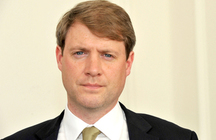
Below is the text of the statement made by Chris Skidmore, the Minister for Universities, Science, Research and Innovation, on 26 March 2019.
I am pleased to announce that I have commissioned Professor Sir Adrian Smith, Director and Chief Executive of the Alan Turing Institute, to provide independent advice on the design of UK funding schemes for international collaboration, innovation and curiosity-driven blue-skies research.
The UK is a world-leading research nation with a globally connected research base. Collaboration with European and wider international partners is key to our strength in science and research: more than half of the UK’s research output involves such collaboration. The UK is in the top four of global innovation nations and we draw in more internationally mobile research and development (R&D) than other large countries, with a total of 16% of UK R&D investment financed from abroad.
This Government are bringing forward the largest investment in R&D on record. As outlined in our modern industrial strategy, we are committed to reaching 2.4% of GDP invested in R&D by 2027, and 3% in the longer term. International partnerships and collaboration will play an important part in helping to achieve our ambitions, including in supporting the industrial strategy’s grand challenges to put the UK at the forefront of the industries of the future. Professor Sir Adrian Smith’s advice will help set the direction for the implementation of the Government’s ambition to ensure the UK continues to be a global leader in science, research and innovation, and an attractive country for individuals to study and work. Furthermore, Sir Adrian’s advice will help inform the upcoming spending review.
The terms of reference, outlining the scope, timescale and reporting of this work are below.
Terms of reference for the Commission of Professor Sir Adrian Smith
General
The Secretary of State for Business, Energy and Industrial Strategy has commissioned Professor Sir Adrian Smith to provide independent advice on the design of potential future UK funding schemes for international, innovation and curiosity-driven blue-skies research, in the context of the UK’s future ambitions for international collaboration on research and innovation. This document outlines the terms of reference for this work.
The global landscape for science and innovation is changing, and access to knowledge, markets, skills and partners now takes place on a global basis. Global research and development (R&D) capacity is expanding and non-Organisation for Economic Co-operation and Development (OECD) countries account for a growing share of global R&D, both in terms of researchers and investment. Better understanding is needed on whether the UK’s current funding mechanisms, resources and bilateral and multilateral partnerships will be fit for purpose when set against the projected trends in international research and innovation, and against new technology and industry roadmaps and the forecast social, economic and environmental trends.
The UK’s participation in Horizon 2020, the current European Union (EU) framework programme for research and innovation, has benefited the UK’s science, research and innovation landscape. It provides opportunities for UK entities to collaborate with EU and international counterparts and funding for multiple elements including innovation, international collaborations and partnerships, and curiosity-driven ‘excellence’ based research. Horizon Europe is the successor to Horizon 2020 and will run from 2021 to 2027. The UK remains committed to ongoing collaboration in research and innovation with partners across Europe. To this end the UK would like the option to associate to Horizon Europe and is continuing to actively shape the development of that programme. However, we are also exploring in parallel credible and ambitious alternatives to deliver positive outcomes for science, research and innovation in the event that the UK chooses not to associate.
Purpose
Professor Sir Adrian Smith has been invited to provide independent advice on how funding future international collaboration, from curiosity-driven ‘discovery’ funding through to innovation, can best be designed to positively impact science, research and innovation in the UK, and to support the Government’s strategic objectives, including the industrial strategy and its commitment to 2.4% of GDP invested in R&D by 2027.
In the immediate term, Professor Sir Adrian will be asked to advise on the design and delivery of elements of the potential alternatives to Horizon Europe association. This will include the Discovery Fund, which aims to provide a UK alternative to the curiosity-driven and excellence-focused elements of Horizon Europe.
On the Discovery Fund Professor Sir Adrian Smith will be asked to consider:
The design of UK alternative funds i.e. the scale, scope and any international elements of proposed funds, and how they could complement the current UK funding landscape;
The delivery of UK alternative funds i.e. how strategic direction could be determined, how proposals could be reviewed.
On international collaboration, Professor Sir Adrian Smith will be asked to consider:
How funding mechanisms, resources, and international partnerships can remain fit for purpose for our global ambition to support the international research and innovation strategy, which will be published in the coming months.
How international collaboration can best support the Government’s industrial strategy and 2.4% target.
Professor Sir Adrian’s advice will help inform the upcoming spending review (as announced in the spring statement) and longer-term value-for-money considerations on international collaboration for research and innovation.
Professor Sir Adrian will have the independence to engage with relevant stakeholders and seek expert advice as he sees fit.
Timescale
It is anticipated interim findings will be presented to BEIS Ministers in the summer of 2019.
Reporting
Professor Sir Adrian Smith will report to me as Minister for Universities, Science, Research and Innovation. Professor Sir Adrian will provide an update on progress on a regular (monthly) basis, to BEIS officials. A summary of his interim findings will be published by BEIS.
Below is the text of the speech made by Matt Warman, the Conservative MP for Boston and Skegness, in the House of Commons on 26 March 2019.
“You have a lot of misfortune in your family.” Those, Mr Speaker, are the words that a registrar spoke to me when I registered the death of my mother, who died 20 years ago today, aged 53. Kind, compassionate, understated, he said them because just six weeks previously I had registered the death of my father.
I was, Mr Speaker, 27. I was not a child, but I was, I think, too young to know how to bear some of the sadness that I felt in 2009. Some people have, by the age of 27, borne far more emotion: they have married, had families, served and sometimes died for their countries, and in many instances they have also buried both their parents. However, 27 is young to be an orphan in the western world. I struggled to admit it then and I struggle to admit it now, but I found it impossibly hard. I should have looked for help, because grief makes us all angry, irrational, upset and difficult.
Perhaps too many of us in the House think that that strength is incompatible with weakness. Perhaps too many of us are stubborn. It is often said that that which does not kill us makes us stronger; perhaps that which kills those closest to us can make us stronger still, but few can do it on their own. In this Adjournment debate, I want simply to say to those who struggle with the loss of loved ones—and even the loss of close family members who are not so obviously loved—that there is already help out there, and to say, “You are strongest when you take it up, and go to the doctor or just talk to friends.” However, it is also true that more can be done by Government and by others.
This week, we celebrate Mother’s Day. Mothers up and down the country will be appreciated through cards, breakfast in bed, and often questionable artwork from their children. For some, though—myself included—that day is a reminder of what we have lost. To use the modern jargon, it is a trigger. I thank you, Mr Speaker, for letting my personal circumstances have some influence on the parliamentary calendar. Changing it seems to be all the rage at the moment, but you know that MPs are surely at their best when we draw on our personal experiences.
The coming of Mother’s Day gives this debate a broader relevance, because I also want to raise the question of what more we can do in government to support those who have been bereaved, and how we can encourage wider society to make small, seemingly insignificant changes that can prevent immense upset for so many people. The bereavement charity Cruse currently claims on its home page that it can “help this Mother’s Day”, and that is hugely welcome, but such is the volume that the charity has suspended its email help service, and its phone lines are not open 24/7. It takes more than charity to tackle bereavement; it takes society, in all its little family platoons.
The Government have done great work in introducing bereavement counselling for parents who lose children, thanks in part to my hon. Friends the Members for Colchester (Will Quince) and for Eddisbury (Antoinette Sandbach), as well as other Members on both sides of the House. I am not calling for a similar kind of bereavement leave for everyone, because businesses, in truth, are largely respectful, and they are also hugely varied. However, I know from personal experience that many people do not feel the true impact of their loss for weeks, months, or even, in some instances, years after the person whom they have loved has passed away. Often they are in shock or trying to be strong for others, and that is on top of all the mundane considerations that have to be dealt with in such circumstances.
Paul Scully (Sutton and Cheam) (Con)
My hon. Friend is making an incredibly powerful speech, and I know how proud his parents would have been to witness him doing so. I know about the delay that he has mentioned. My father died 30 years ago this year, of mesothelioma, and I remember reading my mother’s diary, in which she was crying out for help nine months later. It is incumbent on us to recognise that delay, and I appreciate everything that my hon. Friend is saying.
Matt Warman
I thank my hon. Friend for that intervention, and that is why in some ways I am calling on the Government to have ongoing support for those who are recently bereaved and an open-ended offer of counselling on the NHS which can be accessed when they are ready, not at the easiest point for the NHS.
Jim Shannon (Strangford) (DUP)
I also commend the hon. Gentleman on securing this debate and telling his own personal story. Across the United Kingdom of Great Britain and Northern Ireland one in four people suffers from mental health issues, and many of them are a result of the grief from someone close to them leaving, especially when that is sudden. Early intervention is key, and I would like the Minister to respond on that. Does the hon. Member for Boston and Skegness (Matt Warman) agree that we should have early intervention through the use of Cruse and perhaps other groups—I am thinking of church groups and ministers who are on call if needed?
Matt Warman
I thank the hon. Gentleman for his intervention, and I agree with him and will mention that issue in a few moments.
There should be a dedicated mental health helpline provided through the NHS, which under the long-term plan will be accessed via 111. It is important that there is an understanding within that that bereavement for a long time is an exacerbating factor in loneliness, suicide and more; it is a red flag that should be recorded for a long time.
The importance of such ongoing support cannot be overstated. We have spoken in this House many times about the tragedy of the rise in male suicide; while things are improving there is still a huge stigma around men feeling unable to open up and show their emotions—although I am hopefully doing all right today.
This is why it is particularly important to normalise the support around bereavement, and we must not leave it solely to those affected to reach out to organisations such as the Samaritans or Cruse. That registrar who I spoke to 10 years ago should have been trained to offer a signpost—although I confess that if he was or if he did I was in no state to listen—and the NHS and our volunteering strategy should include better plans to encourage more people to train as volunteer bereavement friends and counsellors, as in the hugely valuable work we see with Dementia Friends, or, as Sue Ryder has called them, the bereavement “first aiders”.
Victoria Prentis (Banbury) (Con)
My hon. Friend is making a fantastic speech and a series of good points. I am not at all ashamed to say that I had bereavement counselling when my son died, and I can’t see why anyone wouldn’t; we go to the doctor when we are feeling unwell, and of course we go to the bereavement counsellor when we need help with grief. Does my hon. Friend agree that it is very important that we normalise this?
Matt Warman
I absolutely agree. There is also a role for us to play in opening up the debate and shining light on steps outside organisations can take to make bereavement in general more bearable, but also, on the theme of this debate, to make Mother’s Day or Father’s Day less difficult for those who have experienced loss.
Susan Elan Jones (Clwyd South) (Lab)
I wonder if there may be a role for funeral directors in this, given the links they have with families. I congratulate the hon. Gentleman on his moving speech.
Matt Warman
I thank the hon. Lady for her kind words. The Co-op has done interesting and very valuable work on this, and the Department can put some of these initiatives together.
One interesting example I would like to see introduced across the board is the new policy from an online flower company called Bloom & Wild. It has given customers the opportunity to opt out of Mother’s Day emails as it recognises that it can be a very sensitive time for some. If other companies were to follow suit, the dread—and I do mean dread—around this day might be mitigated for many people. I personally do not feel, for whatever reason, the same dread about Father’s Day marketing, but obviously it should be treated equally in case anyone is worried. Organisations such as the Advertising Standards Authority could perhaps make this part of a voluntary code around data. I am not a Tory asking for some enormous nanny state. I am saying that providing another tick box for when people sign up for yet more emails would be kind. Companies bang on about corporate social responsibility all the time, so why not try this?
This debate is important to me for three reasons. Yes, this is a sad anniversary, but I am lucky to have this platform to say that the Government are right to acknowledge that they need to do more to ensure that there is ongoing support for those who have lost someone they love. This is also a chance to open up the discussion on how everyone in society and business can play a role in increasing the sensitivity with which these difficult days, which last for many years, are handled. I hope that by securing this debate, through your good offices, Mr Speaker, we will move fractionally closer to ensuring that all men and women who, like myself, have not always felt comfortable discussing such emotional topics are able to do so more freely, to seize the help that is there and perhaps ultimately to need that help just a fraction less.
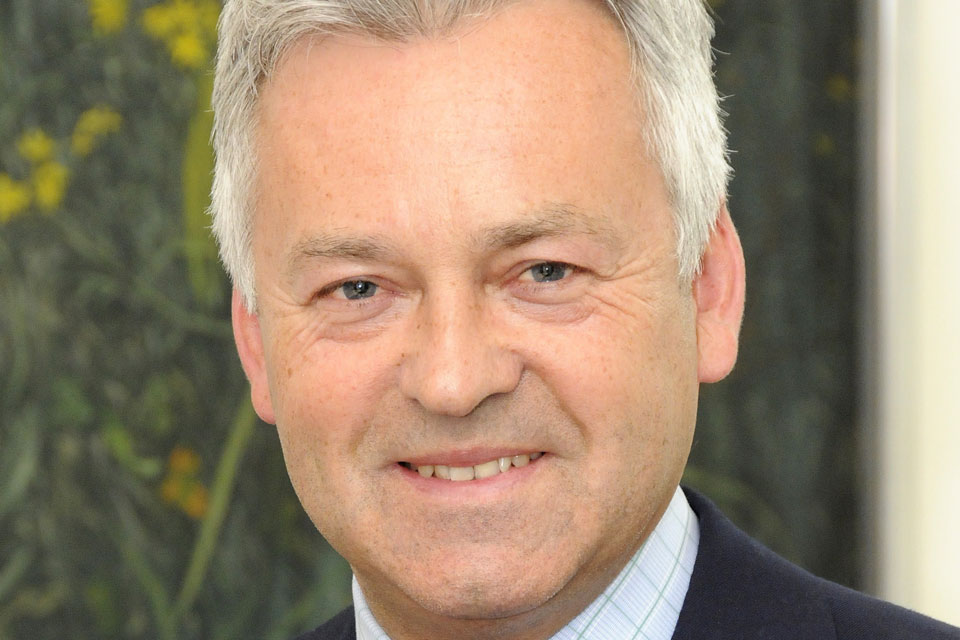
Below is the text of the speech made by Sir Alan Duncan, the Minister of State for Europe and the Americas at the Foreign and Commonwealth Office, on 28 January 2019.
Good evening ladies and gentlemen, and thank you Ambassador for giving me this opportunity.
This fine building has a habit of witnessing historic occasions. Both Houses of Parliament moved into Church House at some stage during the Second World War, and [as the Ambassador rightly said] the very first United Nations Security Council meeting took place here in 1946.
So this is absolutely the right place in which to be celebrating Kazakhstan’s successful first spell on the Council. Given Central Asia’s pivotal place at the centre of the world, it was about time that we saw it represented at the heart of the international system.
I hope that Kazakhstan’s obvious success in the UN over the last 2 years will encourage other states in the region to follow in your footsteps and become key players on the international stage in the way you have been. Your significant contribution to the workings of the UN is a good illustration of the way in which Kazakhstan, and the region, are attracting more and more attention and interest.
Kazakhstan’s more active role on the international stage is undoubtedly one of the reasons for that – their successful Caspian Summit was a good example, and that forged an agreement to settle the previously unresolved status of the Caspian after 20 years of negotiation. This represents a key step in unlocking future international investment in the Caspian Basin.
Two particular highlights I would like to commend are its work on promoting regional partnership between Afghanistan and Central Asia, and its success in organising the first visit since 2010 of a Security Council Delegation to Kabul.
Beyond its membership of the UN Security Council, Kazakhstan has also demonstrated its commitment to international peace and security by deploying peacekeeping troops in Lebanon. This is a significant contribution to the pursuit of peace in the Middle East.
In connection with that deployment, I am proud that the UK’s close partnership with Kazakhstan played a role in readying their troops for peacekeeping, by providing them with English Language Training and supporting what was called Exercise Steppe Eagle, which is an annual peacekeeping training exercise.
But our collaboration goes much further than the mere military. 2018 was a spectacular year for bilateral trade and investment. We saw the launch of the Astana International Financial Centre, with its associated Court, based on English Law. We also saw the successful dual listing of the Kazakh uranium company, KazAtomProm, for its IPO, in both London and Astana.
I really welcome these closer trade and investment links and look forward to collaborating on trade policy as Kazakhstan prepares to host the World Trade Organisation 12th Ministerial Conference in Astana in June 2020. Of course, every successful partnership ultimately depends on the bonds between its people, and especially its young people. And here, too there is a good story to tell. Many Kazakhs have deep connections with Britain, in part thanks to the ‘Bolashak’ higher education programme, which has brought thousands of students to the UK over the last 25 years. And overall, we issue 3,000 visas to Kazakh students every year; and I have to say, it’s nice to know that at least some visas can be issued without difficulty.
We plan to strengthen these personal links even further in 2019, which President Nazarbayev has helpfully declared the year of youth. And I have decreed that includes me. We will build on the successful model pioneered by the British Council’s ‘Creative Central Asia’ programme, to link up young leaders across a range of fields, from politics and business to culture and social engagement.
Our vision for Central Asia is of a peaceful, prosperous and well-governed region, whose countries are free to exercise their independence and sovereignty, and which are able to continue cooperating peacefully with each other and with the wider neighbourhood.
This is a vision shared by our partners in the region, including Kazakhstan, and by the EU. We want the EU to continue to take an ambitious role in the region and that is why we have remained an active participant in discussions on the new EU-Central Asia Strategy.
It is also why, regardless of the nature of our future relationship with the EU after we leave, we remain committed to cooperating with them and other partners in Central Asia, and to further developing our strong relationship with Kazakhstan and its neighbours.
I very much look forward to working with Kazakhstan’s new Foreign Minister to further develop our bilateral relationship, including by continuing to collaborate in the UN and other multilateral fora.
Your excellencies, Erlan, I offer my congratulations once more to Kazakhstan on your successful 2-year stint in New York, and I commend you all on your wider efforts to embrace international cooperation and the support you’ve given to the rules-based international system. In doing so, Kazakhstan has not only shown a determination to step up and play its part on the world stage; it has also set an example for the region to follow.
I believe that we share with the government of Kazakhstan a vision of a region working together for the common good, one that plays a positive role on the international stage, and most importantly one that realises its considerable potential, to the benefit of all its citizens and the wider world.
So we remain committed to supporting Kazakhstan to realise that vision, in 2019 and beyond. And once again I congratulate you for your service to the world over the last 2 years.
Below is the text of the speech made by James Brokenshire, the Secretary of State for Housing, Communities and Local Government, on 19 March 2019.
Introduction
Thanks, Andy [Cook].
I too would like to pay tribute to the work of the CSJ, the Centre for Social Justice. Through you and your founder Iain Duncan Smith you have provided powerful leadership on the issues of poverty and social breakdown; challenging assumptions as well as developing pragmatic, imaginative solutions but rooted in the experience of some of the most vulnerable people in our society.
From Free Schools to the Modern Slavery Act, your influence I think has been hugely significant and very far-reaching and there’s little doubt that you’ve succeed in your mission to put social justice at the heart of British politics.
As such, I’m hugely grateful to you for hosting us today and I very much look forward to seeing much more of your impressive work.
Now we’re obviously meeting at an important moment in our country’s history as we forge a new relationship with Europe and raise our ambitions for what kind of country we want to be – a country with a strong, outward-looking presence on the world stage, but also with a strong foundation of thriving communities at home.
That means renewing the cherished union not just between the four nations of our United Kingdom, but a new unionism between all our citizens – between the multiple units of solidarity; country, region, community and family that underpin it.
These units of solidarity, of identity and belonging, operate in many ways and on many levels.
But it’s clear that the most important and keenly felt of these is family.
Rich or poor, it’s the bedrock on which everything else is built – that teaches us the value of love and support, in good times and bad.
That determines our ability to form healthy relationships, our levels of resilience.
How well we do at school and into adulthood.
That connects us to the wider community and the world beyond.
I know I speak for many when I say that my family is the most important thing in my life – I would certainly have not have got through my illness last year without my wife and children by my side.
That’s why this government is championing families at every turn:
driving down the number of households where nobody works by almost a million
driving up the number of good and outstanding schools
extending free childcare
helping more families onto the housing ladder through Help to Buy and by
scrapping stamp duty for most first-time buyers
easing pressures on families by cutting income tax and introducing the National Living Wage
And let’s not forget milestones like the introduction of same sex marriage, measures to support flexible working and shared parental leave and now proposals to introduce blame-free divorce – important steps that to help somehow to strengthen the bonds of family further and protect them in difficult times but equally recognise the issues and structures that lie behind it.
Now it’s important to see how we can bond that unit of family together.
When families thrive, we all thrive.
But sadly, the reverse is also true.
As the CSJ’s latest research shows, young people who experience family breakdown under the age of 18 are more likely to experience homelessness, crime and imprisonment, educational underachievement, alcoholism, teenage pregnancy and mental health issues.
Quite apart from the dire consequences for communities, there’s the enormous personal toll – in wasted potential, in lives unlived.
It is a dangerous disconnection between these families and wider society – a society in which many feel they have no stake.
And in many ways I have the CSJ to thank for helping make that crystal clear to me.
Back in 2006, I took part in a CSJ Programme which saw MPs spending a week with a charity working on some of the toughest social problems.
I spent my week in Devonport in Plymouth with a charity supporting the adult survivors of childhood sexual abuse.
It gave me the chance to shadow some of those out on the frontline working to combat social exclusion, deprivation and antisocial behaviour.
One particular moment has guided and informed my thinking ever since.
Walking through one of the run-down estates, I asked one of the social workers why the families of the truanting kids they worked with didn’t actively encourage their children to go to school to improve the opportunities available and give them that step up.
The answer was as direct as it was bleak.
Well if they did that it would remind them of the inadequacies of their own lives.
This stark picture of the engrained challenges of inter-generational deprivation has stuck with me.
It made clear to me that you can’t tackle the complex and overlapping problems that struggling families face – worklessness, persistent truanting, health problems, crime and anti-social behaviour, domestic abuse and vulnerable children – in silos.
That you need to join up support and work with whole families, and not just individuals, to change lives.
None of this is especially revolutionary – it’s just common sense.
And that profoundly is what lies at the heart of the Troubled Families Programme.
The results – as seen in the latest national Programme evaluation being published today – I think speak for themselves.
When compared to a similar comparison group, the programme of targeted intervention saw:
the number of children going into care down by a third
the number of adults going to prison down by a quarter and juveniles in custody down by a third
10% fewer people claiming Jobseekers Allowance
There is of course, more to do, but I think this is a significant achievement and a tribute to the tireless efforts of family workers, local authorities and their many partners in our public services and the voluntary sector.
I’m hugely thankful to them.
What they’ve achieved adds up to more people back in work, often in families where unemployment was seen as the norm.
This isn’t just about the financial boost provided by a regular wage, but about the pride and dignity that comes from taking control of your own life. About children growing up with an example of hard work and aspiration.
Equally important for the next generation is the security and stability provided by more families staying together as the pressures on social care and criminal justice system ease.
This means a lot to the families who’ve benefitted.
People like 13-year-old Kyle whose anti-social, gang-related behaviour – developed against a backdrop of historic domestic abuse and the death of his father – had left him and his mum Sue facing eviction from their home.
Thanks to the wrap-around support organised by the Programme’s family worker, based in the Youth Justice Service, Kyle hasn’t been in trouble since, his behaviour and attendance at school has improved and Sue now has her own support network outside the family.
The Programme has also made all the difference for 16-year-old Daniel and his father John.
Following a difficult childhood, he had developed serious problems – self-harming, threatening suicide, regularly smoking cannabis – which had left John too scared to leave him on his own despite his desperation to get a job.
Again, the family worker’s intervention in organising parenting and employment support for John and counselling and specialist support for Daniel was instrumental in helping improve his mental health, encouraging him to apply to an art college and helping John find work as a security guard.
Just 2 examples.
And it underlines why we must never give up on people like them and the families that this Programme is designed to support.
The problems they face – tangled, entrenched, with deep roots – are among the most challenging in our society.
Before beginning the Programme, over half of the families were on benefits.
More than two fifths had at least one person with a mental health issue.
In 1 in 6 families, 1 person was dependent on non-prescription drugs or alcohol.
And in over a fifth, at least 1 person had been affected by domestic abuse.
One of these issues alone is enough to be dealing with.
When they’re multiplied, the effects are devastating – for the families concerned, affecting their ability almost literally to get through each day.
But also sometimes for their neighbours, their classmates and the wider community; who can find themselves on the receiving end of disruptive and distressing behaviour as a result.
In providing support, equally, we should not make excuses for behaviour which falls well short of what should be expected.
As their issues have burgeoned, these families have usually found themselves becoming the passive recipients of services and becoming more isolated and alone.
This is not, in any way, inevitable and there are plenty of examples of people who have beat overwhelming odds to succeed – and those who will say: “They did it by themselves, so everyone should be able to do it.”
But when you dig deeper, it turns out that there are usually people who had their back.
A loving parent who, even though money was tight, was not short on aspiration.
An inspirational teacher who lifted their sights and broadened their horizons.
A neighbour, a friend of a friend who helped secure a lucky break.
Because the truth is no-one ever does it alone. We are all the product of a multitude of small kindnesses done to us and done for us.
We all need support and commitment to achieve our full potential; to grow, branch out and reach our goals.
That starts with stronger families – as the cornerstone of stronger communities.
And that’s the spirit that runs right through this Programme.
Families working together to rise together.
Agencies across sectors working together to help them succeed.
This represents a fundamental shift in how the state supports those who depend on it; centred not on systems and processes, but on people and forging a common sense of purpose among all involved.
For families previously used to being shunted between a host of different, often disjointed services; all with their own assessments, thresholds, appointments and approaches, the role of the family worker, in particular, is a huge breakthrough.
Someone who builds trust and rallies everyone to agree a plan to rebuild their lives, based on their ambitions – and, who, then, crucially, is a single, consistent point of contact coordinating and mobilising all the necessary specialist services, such as mental health or debt advice.
The impact of this should not be underestimated.
Problems caught early before they escalate into a crisis.
People no longer having to go through the emotionally draining process of repeating and repeating and repeating their stories to multiple services.
A boost in confidence, new skills and resilience as families, as the extra help provided with practical issues – such as parenting and household budgeting – pay off.
We know families value this support – this second chance to not so much transform their lives as rediscover them.
To tap into their own power and agency to change them for the better.
And this is the point – the Programme doesn’t affect this change. They do.
But the benefits of the Troubled Families Programme don’t end there.
It’s changed the way people deliver services too.
Many of those working on the Programme have talked about silos breaking down and a marked change in culture and ways of working; with more sharing of information and discussion between partners as their eyes are opened to a fuller picture of a family’s circumstances.
We know that the improved use and sharing of data across agencies has also helped identify families most in need of help, helped target services and track family progress more effectively, with systems increasingly picking up early indications of need – paving the way for improved commissioning of services in the future.
But perhaps the biggest gain is a greater sense of solidarity among services who have worked with these families, who are among the hardest to help, for years, but who now grasp just how much more can be achieved for them when they come together.
According to the evaluation, over half of Troubled Families Coordinators agree all agencies have a common purpose – up from 43% the previous year (2016).
Moreover, just over two thirds of Coordinators say the Programme has been effective at achieving long-term positive change in wider system reform.
This is really encouraging to hear.
The Programme is breaking new ground in developing best practice and, as with anything new, you learn as you go.
And yes we’ve undoubtedly learned a lot from the first phase of the Programme; improving the way we evaluate it by not only drawing on data from more local authorities over 5 years instead of just 1 year, but also through surveys with staff, including family workers and specialist employment advisers, and by speaking to families who’ve been involved.
And we’re keen to continue to think about what we could do differently and better – and this is where it is fair to say that I think we need to look again at the name of the Programme.
I understand why we alighted on phrase ‘Troubled Families’, but, in reality, it obscures as much as it enlightens.
At its worst it points an accusing finger at people, who are already isolated, and says to them “you are the ‘others’ and you are not like the rest of us”.
When, in truth, they are like the rest of us, they’ve just had a little less help, been a little less lucky, and yes, made choices themselves that haven’t led to the best outcomes.
But we don’t give up on people in this country. People can make the most of a second chance.
That is the lesson of the Programme.
So we need something which better recognises its objective of creating stronger families.
Something that recognises where it might take us.
Because the implications for wider public service delivery are profound.
We had the new public management model under Margaret Thatcher in the Eighties.
Then the choice agenda, followed by the open public services agenda from 2010.
The Troubled Families Programme – with its model of services joining up around a whole family – I think suggests the next wave.
And fresh thinking is needed now more than ever to meet challenges we face.
I’m thinking especially of the horrors of knife crime, which is devastating families and communities.
This cannot go on.
Every violent incident, every injury, every young life lost is an absolute tragedy and we must act to ensure our children can grow up knowing they’re safe and have a great future ahead of them.
The Troubled Families Programme – with its emphasis on early intervention and its track record of tackling complex challenges – has a valuable role to play in this endeavour.
It’s why we’re making a £9.5 million fund available within the existing Programme to focus on supporting children and families vulnerable to knife crime and gang culture – with a further £300,000 available to train frontline staff on how to tackle childhood trauma.
The money will go to community-backed projects in 21 areas across England and I look forward to seeing it making a difference to families on the ground.
Conclusion
I have every confidence that it will make this difference because the real strength of the Troubled Families Programme – the real strength, too, of the CSJ’s approach – is that it’s not just trying to manage the challenges those families face. It’s changing lives in the long term.
In doing so, it’s addressing not just the symptoms, but the underlying issues that have held them back.
Just over three quarters of a century ago, in a similar spirit, Sir William Beveridge drafted the landmark report that laid the foundations for the welfare state.
The 5 “giant evils” he sought to eradicate – want, disease, ignorance, squalor and idleness – thankfully no longer loom so large, as attested by longer lifespans and better life chances.
But there is no denying that serious challenges remain.
And while we’re doing all we all can to ease pressures on families, we must also face up to new “giants” – such as, for example, increasing social isolation – the sense that while with the internet and social media we’ve never been better connected, many of us have never felt more alone.
And this perhaps is one of the biggest mountains that families on the Programme previously faced – the feeling they were battling multiple problems on multiple fronts on their own.
Not anymore.
At least 400,000 families have been helped by the Programme’s whole family approach as it goes mainstream; winning the confidence of councils and their partners alike with its proven ability to give people hope and a brighter future.
That’s why I believe in the Programme and want to see it go from strength to strength.
And why I will always do my utmost to champion these and other families – the principal units of solidarity that bind our communities and our country.
Put simply; whether as families or communities or as a country, we’re always stronger when we stand together.
And that simple but significant truth should guide our policy making for the future.
Below is the text of the speech made by Liz Truss, the Chief Secretary to the Treasury, on 19 March 2019.
2019 is a massive year for British politics
And not just because it’s the year I joined Taylor Swift’s squad.
As we leave the European Union, we have an opportunity to set out a new economic agenda.
We’re leaving the era of post-crash consolidation and recovery.
And we’re entering a new era of growth and opportunity for Britain.
When we reach out to a much wider world…
…we are friends and rivals pushing us all to greater heights.
This will be a year of change and renewal for Britain.
Leaving the European Union with the Prime Minister’s Brexit deal gives us back control over our money, laws and borders.
And we should use this opportunity to think about the future.
This year’s Spending Review, where we will set budgets from 2020 through to 2023, allows us to make a real and lasting impact.
We will have the power to modernise the state, making it sleeker, more effective and better value for the people it serves.
We have got a big opportunity to unleash economic growth, as well as the potential of everyone in the country – giving them the chance to take control of their own lives.
We should be guided by three principles.
First of all, we should focus on people’s priorities not the blob of vested interests.
Second, for a free market economy to succeed – everyone must have a shot.
Third, the state should help people on the margins take control of their own lives – not tell capable citizens what to do.
I start from the principle that every pound in the exchequer is money that somebody has worked hard to earn.
That means we have a responsibility to make sure that public money is spent on public priorities, not those of vested interests.
But there is a growing blob of lobbyists, corporations, quangos and professional bodies who ask again and again for Government favours – arguing that they are the exception, that their cause deserves special treatment.
But if we gave in to all their demands, what would we squeeze out? And should they be taking money from those on relatively low earnings, who could be spending it on a new car, a holiday, or a treat for their children?
I want to make sure that the Spending Review works for people right across our country, from Plymouth to Perth and Darlington to Dereham – people that go to work every day and don’t have the time or money or inclination to hang around Whitehall.
This should be the People’s Spending Review.
That’s why I’m travelling around the country asking the public what their priorities really are.
So far, I’ve been in Felixstowe, Walsall and Tadcaster.
People have told me they want money focussed on core public services – the police, education, roads, defence and the NHS
We have already started on this. The Prime Minister and the Chancellor increased spending on the health service – with a £33.9 billion annual cash increase by 2023/24 – making it the government’s No. 1 spending priority.
And we’re also making sure the health service reduces waste so that more money is spent on the front line.
That is the approach we’re going to take across the Spending Review – making sure we’re prioritising the core services that people want.
People are also very clear that they don’t want to see the government waste taxpayers’ money.
Let’s not forget how angry people get when politicians get this wrong. This waste betrayed contempt for the taxpayer, and damaged their faith in politicians.
We must never go there again. It’s still underappreciated in politics how much people hate their money being frittered away.
The public have little truck with the nanny state or with vanity projects.
They don’t want their hard-earned cash spent on announcements designed purely to get column inches.
Or on billboards that brag about the government’s generosity. They don’t want to hear that their money is used for corporate subsidies. Or to prop up zombie industries. Or to be told exactly how much to eat or how much to exercise.
Support for business spread over numerous government departments including tax credits, costing around £18 billion.
Across the board there were hundreds of opaque organisations with ill-defined aims demanding public money for their latest pet project…
…erecting barriers and piles of bureaucracy and admin.
We have reduced the number of quangos from 561 in 2013, to 305 in 2017.
But it is still the case that the administration budget of these bodies costs us £2.5 billion.
And that too many hard-working public servants and business people are spending their time filling in forms and applying for grants.
There are those prophets of doom who say the size of the state must inexorably grow. But, as we leave the EU, I’d point to some of those countries we are now competing with.
Countries like South Korea and Japan show that it is perfectly possible to fund the services people care about while keeping taxes low…
…the way to do it is to grow the economy – just as we have for the past nine years…
…so that we have more pie to share out.
And at the same time prioritise ruthlessly – keeping the people’s interests at heart.
We will do this during the Spending Review.
In the zero-based capital review, we will look at the major projects we are investing in, and asking whether they are really working for us – whether they are having positive effects on growth and the wealth and wellbeing of individual people.
We need to make sure we are upgrading and maintaining our public realm, while also focusing on the less sexy projects – the nitty gritty that has a high return on investment. One example is local transport around our cities and counties – the journey into work each day that really affects everyone’s lives.
It was one of the top priorities for people I met. They want the local roads fixed and not to have to sit in a traffic jam. They want a less crowded commute into work. They want the basics sorted.
British cities lag our continental neighbours in terms of local public transport connections. Leeds is the biggest city in Europe without a mass transit system. (Don’t I know it from my time spent on the no. 19 bus.) And the two most congested commuter lines in the country are the train lines going in to Manchester.
Birmingham, meanwhile, has a Metro with just one line, whereas Lyon, a city half the size, has four.
It means that the people in the city have to rely on slow buses that get stuck in traffic.
And in effect creates a barrier that stops people commuting in from the suburbs.
A study from CityMetric shows that Birmingham’s productivity is 33% lower than a city of its size should be – in large part because of its poor cross-city transport.
That’s why we have funded Andy Street, the inspirational Mayor of the West Midlands, to the tune of £400 million to improve and extend the city’s Metro.
Projects for commuter line improvements and local roads generally have a much higher return on investment than long distance routes. That’s why we created the £2.5 billion Transforming Cities fund – because we know that these are the sorts of projects that make a real difference to productivity, and to people’s lives.
By focusing on the core services that matter to the public, we can boost growth – both personal and economic.
And we can do so while keeping taxes low – which means that people have more freedom to spend on their own priorities, and more of a stake in their own future.
We’re opening up opportunities for people across Britain.
Thanks to our policies:
More children from low income backgrounds are now going to university.
More young people are setting up businesses.
We’ve got fewer workless households than ever before
And because we’ve cut stamp duty, over half of new homes are being bought by first time buyers
But we must go further, if we are to grow our economy.
To be a successful popular free market economy – everyone has to have a shot at success.
I came into politics because I want Britain to be a success story and that means everyone in the country being a success story.
Everyone, regardless of their background, has to believe that they can be a successful business person, a judge, or even a leading politician.
I came from a comprehensive, went on to Oxford University and became a Cabinet minister.
But I was very lucky in having great parents and good teachers – things in my early life that gave me the opportunity to go far.
Not everyone has that, and success in life should not be a fluke of circumstance.
A fully functioning free market depends on the success of new entrants generating new ideas.
So we have to crack down on any entrenched privileges that stop talented people coming through.
It’s still the case that eight schools get as many students into Oxbridge as three quarters of all schools put together.
It’s still the case that seven in ten senior judges are the product of a private education, ten times the proportion in the general public.
It’s still the case that 90% of Venture Capital funding deals in the UK go to all-male teams.
And it’s still the case that – because of our restrictive planning system people are paying a greater proportion of their income in housing than ever before.
In 1947 people were paying less than an eighth of their total expenditure on housing – now it’s over a quarter. And people who rent in London are spending half their income on rent.
If we don’t deal with these entrenched barriers, it will undermine people’s faith in our economic model.These barriers cost us all dearly.
They block people’s path to success, stopping them get the education, the job and the home that their efforts deserve.
And the public pay the penalty twice over.
Because they have to pay higher taxes to paper over the cracks:
Next year we will spend £34 billion on housing support, over £1 billion in support for the fuel poor, and over £17 billion on out of work benefits.
All of that comes from taxpayer’s pockets, so it’s in all our interests to eradicate these barriers.
Inside every one of us are aspirations and dreams.
And the role of government shouldn’t be doing things on people’s behalf like an overbearing helicopter parent. It should be clearing the barriers to their success.
So how do we do this?
Finland carried out a trial in 2017 to see if universal basic income could solve their high unemployment rate.
But, after giving a random sample of 2,000 people €560 a month to do what they liked, they found they were no more likely to find work.
The programme removed the incentive to work and earn.
And the OECD warned them that in order to expand the programme across the country, they would need to increase income tax by nearly 30%.
After all the fanfare, the promise of free money for all was revealed to be as expensive as it was ineffective.
In the UK, just as in Finland, the answer is to create a truly free market, in which everyone has a chance.
Where everyone has a chance to work – the best route out of poverty.
And not just work, but succeed – to move in and move up.
And that means identifying the barriers to success, and taking them away.
What people need is not handouts or Universal Basic Income, but the Universal Basic Infrastructure of life.
The foundations of living a full life in a modern free enterprise country.
Foundations that give people the chance to get where they want to go.
Access to good education…a good home with fast internet…and good transport links to get to a good job.
That’s why we have reformed the welfare system to get people off benefits and into work…
…and we’re also investing in capital at a 40-year high, as the Chancellor reiterated at the Spring Statement.
As we improve rail, roads and fibre right across the country, we’ll be guided by our industrial strategy, and use our zero-based review to make sure we are getting maximum value for the public.
We’re also transforming education with our academy and free schools programme.
And in housing, we’re reforming our planning system, just as places like France, Germany and Japan have.
I’m delighted that James Brokenshire is soon launching his planning green paper – I look forward to seeing what’s in there.
At the Spending Review we’re going to look at every bit of spending and make sure it is delivering for everyone regardless of their background.
To make sure that everyone has that Universal Basic Infrastructure to be successful.
There are people who talk down success.
They demonise profit.
They believe any one person’s triumph must come with another’s failure.
They are wrong and they damage the prospects for those one lower incomes by taking the ladder away.
Success is not a zero-sum game. If we get the conditions right, it’s there for everyone to grasp.
If we give everyone the platform for success, and the chance to run their own business, or work in someone else’s…
…we will help people achieve their potential, solve social problems, and increase economic growth.
But we also need to recognise that there are some people who will not yet be capable of using this platform.
Perhaps because they are struggling with health conditions or addiction. Or because they have missed out on a basic education.
Or because they have been traumatised and left in despair after suffering the consequences of crime.
And it should be government’s responsibility to prioritise support for these people – helping those on the margins move to a position where they can take control of their lives.
And to stop any more people getting into that position in the first place.
It’s a simple idea: that we should spend more on the areas which have the biggest impact, and less on those that don’t.
And it points towards the moral case for proper public spending control.
That every pound wasted on a pet project could have been used to change someone’s life.
Giving more children in care the best start in life.
Or more support to help disabled people get into work.
Additional focus on preventing grooming and child sexual exploitation, so that more girls in places like Rotherham and Oxford don’t see their futures taken away from them.
Targeting spending towards those who genuinely cannot do without the state’s help is the way to spend money well.
I saw how the No Wrong Door programme in North Yorkshire provides a loving family like environment for the children in their care. I spoke to a young man there who had now got a job but came back regularly because he knew they were looking out for him. This programme has reduced crime and improved health but most importantly it’s giving these children a lodestar in their life – encouragement to succeed.
We are rolling out up to 20 more programmes like this and will be looking at this area in the Spending Review.
I’m a great believer that we should not tell capable adults what to do. And that we all need the freedom to make decisions, good or bad, and live our own lives.
But we all have a duty of care to make sure that children growing up in Britain have the best start in life.
In this country, we spend just over £3,000 per pupil in early years, just under £5,000 in primary, just over £6,000 in secondary, and we contribute approximately £6,500 to students’ university education.
The academic evidence shows that when it comes to intervention the earlier the better. Professor James Heckman argues that focusing investment between birth and the age of five “creates better education, health, social and economic outcomes that reduce the need for costly social spending”.
Of course, shifting funding towards earlier intervention is difficult. This requires us to be patient. Too often we question why a policy hasn’t worked immediately.
Take our phonics scheme, which has helped our nine-year olds us rocket up the European literacy rankings, and proved one of our biggest policy successes of recent times – championed by Nick Gibb.
The benefits will be felt most in 10-20 years’ time, when these children are entering the world of work and starting their own families.
These children are not yet in secondary school, much less the jobs market.
But in the future, we’ll have more independent adults able to succeed.
And so this is exactly the sort of long-term policy the government should be supporting.
That’s why we we’re working with the Office of National Statistics on valuing Human Capital.
This sounds like a dry concept, but what we’re really talking about is how do we maximise everyone’s opportunities – how do we give everyone the best chance of living a healthy, successful life.
Using this as a lens for the Spending Review will help direct resources to improve people’s opportunities while keeping taxes low.
We will constantly ask ourselves the consequences of our spending decisions on people’s lives – not just in the here and now… but long into the future.
By cutting out unnecessary activities that drive up costs for the government…
…we can cut taxes so that people can keep more of their own money…
…make sure everyone in Britain has the basis of success…
…and afford to help the most vulnerable.
For the first time in many years, we have the power to make positive decisions. We’ve got choices.
We’re throwing off the constraints of the post-financial crash world.
And the constraints of the European Union.
We’re now in a position to make Britain a success story into the future.
By growing the economy, and realising the potential of everyone in our country.
Below is the text of the speech made by Matt Hancock, the Secretary of State for Health and Social Care, at the Royal Society on 20 March 2019.
I’m here at the Royal Society, perhaps the greatest institution of Enlightenment values in the world.
The Royal Society has supported progressive human endeavour for 350 years, from Wren, through Newton to Einstein and Hawking.
Today, we address a new scientific breakthrough: genomics.
And celebrate the world-leading achievement of the 100,000 Genomes Project.
100,000 whole genomes that have been sequenced to help diagnose and treat rare diseases.
So many families closer to a cure or a treatment.
And I know some of those families are here this morning. Renewed hope. Not feeling alone, but part of a community.
With the knowledge their genetic data has helped others.
That impulse to help others: someone we’ve never met before, someone we’re probably never likely to meet, caring about the fate of a stranger.
That inspires me.
I talk a lot, as Health Secretary, about the need to harness technology to improve and save lives.
This past week, that’s been brought directly home to me.
Last week I took part in a different genomic exercise – a predictive polygenic risk test.
I wanted to find out whether I was at high risk of any diseases, and how it would make me feel.
I was really looking forward to it. The process was simple and easy: spit in a tube, send it off. I waited a couple of weeks while my sample was analysed by a team at Oxford University.
On Friday, I got the results. And I have to admit, I started to feel pretty nervous.
It struck me that I was about to find out how likely I am to get 16 serious diseases.
I’d already chosen only to get tested for diseases I could do something about.
Even so, it’s a big moment.
First, they told me the good news. For most of the diseases, my risk was below average.
I’m particularly lucky with heart disease.
I’m in the 3% of the population with the lowest genetic risk. Maybe that’s why Grannie lived to 103.
Then the bad news. The test also showed that, despite no family history, I’m in the worst 20% for prostate cancer.
I have around a 50% higher risk than average.
I was obviously worried when I was first told this.
But while it’s not good news, it’s good news to have.
Death from prostate cancer is more treatable if diagnosed early.
But prostate cancer can be a silent killer, and tragically, so many men don’t find out until it’s too late.
But it doesn’t have to be.
It may sound weird but I’m now absolutely delighted.
Thank God for genomics!
I’ve already booked a blood test, and obviously I’ll be on alert as I get older.
I’m going to make certain I don’t miss any screening appointments in the future.
I also found out an important lesson: it really matters how the results are presented.
You need an expert to help you make sense of the data, and you need a clinician to tell you what it means medically.
And the reason it’s so important is that predictive genomics is not about absolutes. It’s about risk factors. And your genes are only one part, and usually not even the biggest part, of the risk.
Even more important, we’ve got to be crystal clear about the different role, different science and different ethics between predictive, polygenic tests like this and diagnostic whole genome sequencing.
I believe both have a huge role to play in the future of healthcare, but they are very different.
Predictive testing has big implications for screening: genomics can make cancer screening more targeted and more effective.
By using predictive testing we can help people at higher risk earlier.
I see it as a game-changer for cancer screening in the NHS, and I’m determined that we harness this technology to save lives.
So for me, it’s personal that we’re writing the first National Genomics Healthcare Strategy, which my brilliant Lords Minister, Baroness Blackwood, is developing.
I’m delighted Nicola has consented to my sharing her story.
Because Nicola’s life has been changed by genomics too, in a different way to mine.
Nicola has the rare disease Ehlers Danlos. But she wasn’t diagnosed for 30 years, going through test after invasive test from childhood into adulthood, being referred to doctors who each tried to do their best, but without much success.
Until finally, she was referred to a neurologist, with experience of EDS, who recognised the symptoms and was able to diagnose her.
Today, with whole genome sequencing Nicola could have been diagnosed within a couple of weeks.
Her story shows the power of the other type of genomics.
For rare diseases, whole genome sequencing is life-changing because it is a diagnostic test of absolute certainty, and early diagnosis can have a massive, immediate impact on improving someone’s chances.
So many people have felt there’s no way forward if they have a rare disease. That’s why whole genome sequencing has been so revolutionary – and it holds the key to unlock new cures and treatments.
Whole genome sequencing raises other, new ethical questions.
Imagine you discover you have a single gene disease that can be inherited.
Imagine the impact not just on that person but their children.
The positive potential on people’s lives is massive.
But the sensitivity of that information is so acute.
To make all this happen, there are 3 areas I want to address today, each vital to success.
First, rolling out the science.
I’m very proud we lead the world in genome technology.
This year we’ve started our Genomic Medicine Service within the NHS, and we have a new ambition of sequencing one million whole genomes, and 5 million partial genome tests like the one I’ve had done.
Our science budgets are growing, and rightly so.
And we’ve got to get the data rules right.
After all, genomic sequencing is really just revolutionary amounts of data.
It’s why I’m so frustrated at data blockage.
We can’t currently test for all cancers, because too often, the data is locked away.
Sometimes there are good ethical or scientific reasons, and strong privacy rules are vital.
But it’s outrageous that too often, anonymised data, paid for by taxpayers, donated by the public, can’t be used for research.
We will unlock that data because we know it saves lives.
Second, getting the ethics right.
Understanding the human genome raises profound new ethical questions, and we need to get the ethical rules right, both for diagnostic and predictive genomics, and even more so when it comes to the emerging science of editing the human genome.
Understanding our genetic code also raises issues around privacy and consent.
We’ve already made some progress here, when in October we updated the Code on Genetic Testing and Insurance to ensure people don’t wrongly have to disclose their genomic data when they take out life insurance.
For diagnostic genomics, the area most in need of ethical rules is how, and with whom, information is shared.
When it comes to editing the human genome, that raises major new ethical questions.
I don’t believe in a blanket ban on genome editing research.
Not when it offers the hope of tackling terrible genetic diseases.
But I fully understand, and recognise the real and genuine concerns and fears, that people have, and we must put in place an ethical framework to govern it.
These are just some of the vital ethical questions that we need to address together as a society.
After all, the reason we care about the science is so we can improve and save lives.
Science is founded on the noble Enlightenment principle of progress driven by rational inquiry and objective reality.
But we need to take people with us.
Proving something scientifically true is not the same as proving to people that it’s a good thing.
We must listen to concerns.
Understand rational, and sometimes irrational, fears.
We need a clear framework so that we, as a society, can make active choices over how the science is used.
I think our ability to do that in this country is one of our hidden strengths.
We often talk about how we are world-leading because of our universities, our open, outward-looking culture, our environment for enterprise.
But we are also world-leading in developing the ethical framework within which science can be applied with confidence.
And we build the institutions that make it real.
We reject the laissez-faire approach of some, and the authoritarian instincts of others.
Instead, we apply liberal values: open, enquiring yet sceptical, and with a firm focus on the benefit of mankind.
For Britain, ethics is a competitive advantage.
That is how Britain has forged our leadership role in so many areas of innovative science over the years, and we must do so once again.
The third thing we need to get right is operational.
I’m delighted we are taking up genomics in the NHS. The new Genomic Medicine Service is a world first.
And I’m very excited that the new £100 million children’s hospital we’re building in Cambridge will mean we can do even more to identify and treat children with rare diseases through whole genome sequencing.
But there’s more to do.
How do we train up doctors and nurses so they understand genetic data, including these new predictive tests, and are able to explain it in a way that helps people make the best decisions?
And we can’t just ignore it.
After all, thousands of people are already taking predictive tests, and many are now turning up at their GP surgery with their results in hand.
We need to harness the power of this new technology to diagnose and prevent illness, and that means using it right.
Some people say we shouldn’t encourage the ‘worried well’.
I feel that’s the wrong response.
We need to understand that people will have genuine concerns and we must give them the help and support they need to make sense of their genetic data.
Of course, that also means supporting our GPs and frontline clinical staff. We must get the right numbers in place – we now have record numbers of GPs in training, and we’re putting in the biggest rise in primary and community care in a generation.
If we encourage people to take better care of themselves, that means patients and clinicians, together, can prevent problems from arising.
This will save the NHS time and money in the long term.
It’s as Sir Nilesh Samani said:
Genomic medicine is set to revolutionise the prevention, diagnosis and treatment of many of the UK’s most devastating diseases…
Identifying someone’s genetic risk could lead to more personalised treatments that might stop a disease ever developing.
And I feel that very strongly, because I’ve now personally seen the potential benefits.
And this isn’t just about physical health, but mental health. For some people there will be a big psychological impact from finding out news they weren’t prepared for.
We already provide support and counselling to people, but we must ensure that provision keeps pace with the expansion of predictive testing.
Get all this right and I’m certain we can build consent and trust, and put genomic science on the strongest possible footing.
One of your esteemed Royal Society fellows, Bertrand Russell, once said:
To conquer fear is the beginning of wisdom.
Fear is the enemy of progress.
The Enlightenment – science and reason, allied with a mission to help people – led to the biggest ever leap forward for humanity.
We need to renew that spirit of progress.
And I believe we can defeat fear by building trust.
Listening, learning, improving.
Always wanting to make things better.
Progress that puts people first.
Caring about technology, because we care about people.