Tag: 2019

  • John Bercow – 2019 Statement on Yvette Cooper’s Bill

    Below is the text of the statement made by John Bercow, the Speaker of the House of Commons, in the Commons on 3 April 2019.

    If there are no further points of order on this matter, I will now give a definitive ruling on which, as I have been advised, no further points of order will arise. We will then proceed to the business before us.

    As the hon. Member for Stone knows, the view taken by the Clerk of Legislation, who decides these matters in the first instance, is that neither Queen’s consent nor any financial resolution is required for the private Member’s Bill presented by the right hon. Member for Normanton, Pontefract and Castleford (Yvette Cooper). Under the terms of the Bill, if enacted, the Prime Minister “must” move a motion agreeing that she should seek an extension of the negotiating period under article 50(3) of the treaty on European Union to a specified date. The Bill requires the Prime Minister to have the approval of the House before agreeing an extension of the negotiating period. An extension could come into effect only if the European Union 27 decided unanimously to agree an extension with the UK.

    As the House will recall, no Queen’s consent was required for the contents of the European Union (Notification of Withdrawal) Bill, which was introduced in January 2017 after the UK Supreme Court decision in the Miller case. My ruling is that as no prerogative consent was required for the Bill in 2017 giving parliamentary authority to the Prime Minister to take action under article 50 of the treaty on European Union, there is no requirement for new and separate prerogative consent to be sought for legislation in 2019 on what further action the Prime Minister should take under the same article 50 of the treaty on European Union.

    I recognise, colleagues, that extending the period under article 50 would, in effect, continue the UK’s rights and obligations as a member state of the EU for the period of the extension, which would have substantial consequences for both spending and taxation. I am satisfied that the financial resolutions passed on Monday 11 September 2017 give fully adequate cover for the exercise by Ministers of their powers under section 20(3) and (4) of the European Union (Withdrawal) Act 2018 to move exit day in order to keep in lockstep with the date for the expiry of the European treaties, which of course is determined by article 50 of the Treaty on European Union. This has been demonstrated by the European Union (Withdrawal) Act 2018 (Exit Day) (Amendment) Regulations 2019, with which I know the hon. Member for Stone is keenly familiar, and which were laid before this House on 25 March and approved by the House on 27 March. Accordingly, my ruling is that the European Union (Withdrawal) (No. 5) Bill does not require either a Ways and Means motion or a money resolution.

  • Ben Bradshaw – 2019 Speech on Brexit

    Below is the text of the speech made by Ben Bradshaw, the Labour MP for Exeter, in the House of Commons on 1 April 2019.

    While the headlines that greeted last week’s indicative votes, saying that they were a shambles and chaos, were patently ridiculous, given that it was the first time that we were given the opportunity to discuss these options after two and a half years of the Government failing to get a consensus, it would be helpful if we made progress today. As other Members have said, that will involve all of us not just sticking to our first preference but voting for our second preference and, indeed, any preference that we can live with. That is certainly something that I shall be doing. I will support Labour’s unanimously agreed conference policy in favour of a public vote, and I am minded to support the motion in the name of the Father of the House. However, I and other hon. Members have concern about that and about the length of the extension, because I do not want the Prime Minister to pocket it, add it to her political declaration and take us out of the European Union on 22 May. I do not think that would be acceptable.

    I have similar concerns about the motion in the name of the hon. Member for Grantham and Stamford (Nick Boles). It is better—it takes away all the stuff about the free movement of labour—but it still has only a temporary customs union and could still be bagged by the Prime Minister and added to the political declaration, and we would be out within in a few weeks.

    Sir Oliver Letwin

    I hope that the right hon. Gentleman will recognise that the only way in which the Government can carry this forward, if there is a cross-party consensus, ​is by bringing in something like the withdrawal agreement and implementation Bill, which would give his party the opportunity to seek to amend it, no doubt with much support around the House, to prevent the eventualities that he is talking about.

    Mr Bradshaw

    I very much hope the right hon. Gentleman is right, and I take his point on that. I also want absolutely to agree with my right hon. Friend the Member for Derby South (Margaret Beckett). If we get progress today and a majority on one or more of these options, my view is that basing the future of our country on a majority that has been agreed in Parliament among Members of Parliament, for whom it might have been not their first preference but their second or third, will lack not only long-term legitimacy but sustainability. It will be impossible for us as a House or for any Government to take this forward without it being ratified in a confirmatory vote by the British public. That is why, whatever happens tonight, I think we are going to have to accept the principle that the Brexit that is now on offer is so different from the Brexit that was offered in 2016 that it would be undemocratic and illegitimate not to give the people a final say on it.

    I want to say one last thing about the motion in the name of the hon. and learned Member for Edinburgh South West (Joanna Cherry). I will support that motion and, as I said earlier, I cannot see any reason for anybody—unless they actively want a no-deal Brexit—not to support it tonight. I hope that Labour Front Benchers might support it tonight and that they will support it on Wednesday, if it comes to that, because we have to have an insurance policy against a no-deal, crash-out Brexit. More than 6 million members of our community are demanding it, and I urge all hon. Members, on both sides of the House—it is only a recommendation for Opposition Members—to vote for the motion and to do so with enthusiasm.

  • George Eustice – 2019 Speech on Brexit

    Below is the text of the speech made by George Eustice, the Conservative MP for Camborne and Redruth, in the House of Commons on 1 April 2019.

    For some time, I favoured a simpler and swifter Brexit, based on our leaving the European Union but rejoining the European Free Trade Association, and in so doing, making our existing rights and obligations as a signatory to the treaty establishing the European economic area operable. It would mean that we would have no customs union and an independent trade policy. We would be outside the common fisheries policy and the common agricultural policy, but we would accept regulatory alignment to reduce border friction. My motion was not selected, but this evening, I will support motion (D) in the name of my hon. Friend the Member for Grantham and Stamford (Nick Boles)—the so-called common market 2.0 option—for reasons that I will come on to.

    There were two ways to address the issue of Brexit. One was to self-confidently resolve from the beginning that we would leave as a third country and prepare on that basis, and be willing to leave without an agreement if necessary. I would have supported the Prime Minister in that, had she seen that through. However, if the Cabinet always believed that we could not leave without ​a deal, it had to recognise that that would require significant compromise with the EU, which in turn would require the development of a cross-party consensus in this House. Now that the Prime Minister and her Cabinet have signalled that they are unwilling to leave under a no-deal scenario, we must try to secure a consensus.

    Last Friday, the Prime Minister’s withdrawal agreement was defeated for a third time, but the vast majority of Government Members voted for the withdrawal agreement, albeit unenthusiastically in many cases. My contention this evening is that hon. Members who were willing to take a second look at the withdrawal agreement should also take a second look at common market 2.0. Certainly, it envisages a temporary customs union, but so does the withdrawal agreement, first through the implementation period, then through a probable extension to the implementation period, and finally through the backstop. It also envisages some regulatory alignment through membership of EFTA and the EEA, but that would be dealt with expeditiously under the motion. Under the withdrawal agreement, the UK is already committed to aligning its regulations in relevant areas. The extent to which we have border checks would depend on any divergence from that.

    I believe that this option provides a way to compromise and a way forward for the House. It is far preferable to motion (C), the proposal for a customs union, which, as hon. Members have pointed out, does not make sense for an independent country such as this. It means that we would have our commercial interests traded away in the interests of other countries, and it would not solve the border issues.

  • Stephen Gethins – 2019 Speech on Brexit

    Below is the text of the speech made by Stephen Gethins, the SNP MP for North East Fife, in the House of Commons on 1 April 2019.

    This has been a good debate. I pay tribute to the right hon. Member for West Dorset (Sir Oliver Letwin) for his innovation, and to other hon. Members for the way in which they have engaged in the process.

    Let me be clear: every day I am more and more pleased that Scots voted overwhelmingly to remain in the EU. We could have walked away from all this, washed our hands of it and said that it was nothing to do with us, but we must engage and we have done so at every single step of this sad, sorry process. There are no winners in this tragedy of epic proportions. It is a horror show, and this process is all about us making things less bad, rather than better. However, there is one thing that has come out of this situation; this Government seem to be uniquely bad at minority government and at reaching out to other parties, and this process is forcing us to talk to one another in a more meaningful way.

    The Scottish National party did not vote for an EU referendum and we did not vote to trigger article 50, and we can see why. I am pro-European. The EU is a force for good that has made us wealthier, safer, greener and fairer. I have benefited from our membership—from freedom of movement, Erasmus, and the privileges and rights that we have as European citizens. But we have to engage in what you, Mr Speaker, were right to call “part of a process”, so let me turn to the motions before us.

    I congratulate my hon. and learned Friend the Member for Edinburgh South West (Joanna Cherry) on her proposal. It is a responsible proposal and frankly, anybody who is opposing it tonight is being irresponsible. No deal is a dangerous, damaging Brexit, and to those who call it a clean Brexit, I say this: it is the messiest Brexit possible. My hon. and learned Friend’s proposal is also the best option, and that is the reason we will back it. ​The motion would revoke article 50 as a reset clause and, frankly, I am astonished that the Labour party has not been able to support the motion tonight—I have to say, disappointed is the least I can say on that.

    We are also in favour of a people’s vote, and I support the motion from the hon. Member for Hove (Peter Kyle). As somebody who wants to campaign to remain in the EU, I would look forward to doing so.

    Let me make reference to the motion from the hon. Member for Grantham and Stamford (Nick Boles) and pay tribute to the way that he has engaged with us in this process. I hope that he does not mind me saying that I want to remain in the EU and he wants to leave, and that we disagree profoundly on many issues, but I am very grateful for the way in which he has tried to engage with us, and I know that my hon. Friends are very grateful for the way in which he has conducted this process. We would like a referendum. I also think that a long extension is the right way to take things forward, but his reassurances about freedom of movement and the particular situation in which Scotland finds itself have been incredibly important to us, and I would like to acknowledge that. That is not a wholehearted endorsement and, as he rightly pointed out, there will hopefully be a time further down the line when there are amendments and other proposals to that purpose.

    We can no longer be held hostage by a small band of Tory extremists on this. It is not the end of the line today. I appeal for Members to support the motion in the name of my hon. and learned Friend the Member for Edinburgh South West. We must find a way forward. We should right now be debating poverty, climate change and austerity, but instead, we are focused on the least worst options and damage limitation. We should not be doing that, and it is time for us to put this Brexit nightmare behind us.

  • Greg Hands – 2019 Speech on Brexit

    Below is the text of the speech made by Greg Hands, the Conservative MP for Chelsea and Fulham, in the House of Commons on 1 April 2019.

    I will begin by answering my right hon. and learned Friend the Member for Rushcliffe (Mr Clarke), who said that he had not heard a single argument against a customs union. I credit him for staying for the whole debate, because I am going to give him plenty. He also said that I had been involved in a filibuster, but my contribution to the business of the House motion lasted for one minute and 13 seconds. That must be the shortest filibuster that there has ever been. I did once speak for one hour and 43 minutes on beer duty, but I do not think that one minute and 13 seconds really counts.

    Why is a customs union a very bad idea? Broadly speaking, it would mean a huge loss of control over our economic policy, a decline in our foreign policy influence and a huge democratic deficit. Trade policy is not just about trade deals. It is about much more, which we would be handing over to the European Union without a seat at the table. There are tariffs, remedies and preferences as well as trade agreements, and these would all be given over. The House of Commons would abrogate its responsibility in relation to the UK’s trade policy. This is not Andorra or San Marino, which are currently in customs unions with the European Union. This is the world’s fifth largest economy.

    My right hon. and learned Friend the Member for Rushcliffe and I were on the same side in the referendum in 2016, so I am approaching this debate not as some kind of Brexiteer, but from the position of what makes sense for the UK’s trade policy. It makes no sense in our democracy for the House of Commons to vote tonight to hand over control of UK trade policy to Brussels. It would mean that a Maltese Commissioner, a Latvian MEP, a Portuguese Commissioner and a Slovene MEP ​would all have more say over UK trade policy than any elected politician, including the UK Prime Minister. That is not democratically sustainable, nor is it sustainable for our foreign policy.

    My right hon. and learned Friend and I served in the Government together. At that time, I went into various rooms in foreign countries to speak to foreign Governments, so I know that trade is one of the aspects of leverage that we have. As a member of the European Union, the UK has influence on EU trade policy. That will obviously be gone when we are no longer a member, but under a customs union we would also have no influence over our own trade policy. We would be unable to have those conversations with the Government of the United States when we can say, “Well, if we can do this on some other area, we will have a word in Brussels on this particular trade issue.” All of that would be gone.

    Mr Kenneth Clarke

    I am grateful to my right hon. Friend for giving way because I did not have time to give way to him in the end. I think he would acknowledge that it is a slight exaggeration to say that the British Government would have as little influence over deals being negotiated by the EU as a Latvian MEP if we moved into a customs union. As the right hon. and learned Member for Holborn and St Pancras (Keir Starmer) just said, a big economy such as ours would add to the attractions of the EU market for a negotiating partner, so surely we should put in place a structure giving us far more consultation and involvement in the negotiations than my right hon. Friend is describing—not as good as now, but perfectly adequate.

    Greg Hands

    I think that is wishful thinking. The European Union is highly likely to prioritise the interests of its members versus the interests of non-members. That has always been the case. There are also serious arguments as to whether European Union rules would even allow a non-member to have an influence on EU trade policy. I am afraid that that is just a fact.

    Entering into a customs union would be democratically unsustainable. Tariffs would be set by people who are not accountable to this House or to our constituents. That could be damaging for goods coming into the country, if those people were to set high tariffs on goods that our consumers would quite like access to. It could also happen the other way around with things such as trade remedies, as has been briefly mentioned. All these incredibly important aspects, including trade defences, would be handed over to Brussels. Now, Brussels might look after our trade remedies, but it would not give them priority. It would give the defence of its own industries—the fee-paying members of the European Union—priority over countries such as ours. This would mean that those all-important WTO investigations into, say, the ceramics industry, would be relegated below investigations to protect, for example, the German or Dutch steel industries.

    On trade deals, the Turkey trap has been mentioned; this is about the asymmetry. The EU would offer access to our 65 million consumers without necessarily being able to achieve anything in return. I can guarantee that the UK asks would be the ones that would be dropped first, and that the UK items of defence would be the ones that the EU would concede first. It is inevitable because we would not be a fee-paying member of the European Union, so we would not be a priority.​

    Steve Brine

    I am listening very carefully to my right hon. Friend. I have a lot of respect for him, I have read his article and I have listened to every speech so far during today’s debate, so I understand what he does not want, which is a customs union. But bearing in mind that Parliament has yet to decide what it does want—and has rejected all other options, and the Prime Minister’s withdrawal agreement and political declaration—what is he arguing for?

    Greg Hands

    I continue to argue for the Prime Minister’s agreement, and that is where I think we should head. People talk about a compromise; that is the best compromise, and it is the one that my hon. Friend and I have both voted for.

    I am astonished that the Labour Front Benchers are supporting the idea of handing over our trade policy. They were the people most passionately against TTIP, and other trade agreements, due to the access that it would supposedly have given foreign companies to the NHS. As it happens, I do not buy into that idea, but the idea that it will now be fine because we are handing over trade policy to the EU without having a seat at the table is for the birds. I think it was Senator Elizabeth Warren who said,

    “If you don’t have a seat at the table, you’re probably on the menu.”

    That is exactly what I fear will happen in an EU customs union if motion (C) is passed this evening.

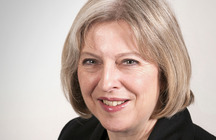
  • Theresa May – 2019 Statement on Extending Article 50

    Below is the text of the statement made by Theresa May, the Prime Minister, at 10, Downing Street in London on 2 April 2019.

    I have just come from chairing seven hours of Cabinet meetings focused on finding a route out of the current impasse – one that will deliver the Brexit the British people voted for, and allow us to move on and begin bringing our divided country back together.

    I know there are some who are so fed up with delay and endless arguments that they would like to leave with No Deal next week.

    I have always been clear that we could make a success of No Deal in the long-term.

    But leaving with a deal is the best solution.

    So we will need a further extension of Article 50 – one that is as short as possible and which ends when we pass a deal.

    And we need to be clear what such an extension is for – to ensure we leave in a timely and orderly way.

    This debate, this division, cannot drag on much longer.

    It is putting Members of Parliament and everyone else under immense pressure – and it is doing damage to our politics.

    Despite the best efforts of MPs, the process that the House of Commons has tried to lead has not come up with an answer.

    So today I am taking action to break the logjam: I am offering to sit down with the Leader of the Opposition and to try to agree a plan – that we would both stick to – to ensure that we leave the European Union and that we do so with a deal.

    Any plan would have to agree the current Withdrawal Agreement – it has already been negotiated with the 27 other members, and the EU has repeatedly said that it cannot and will not be reopened.

    What we need to focus on is our Future Relationship with the EU.

    The ideal outcome of this process would be to agree an approach on a Future Relationship that delivers on the result of the Referendum, that both the Leader of the Opposition and I could put to the House for approval, and which I could then take to next week’s European Council.

    However, if we cannot agree on a single unified approach, then we would instead agree a number of options for the Future Relationship that we could put to the House in a series of votes to determine which course to pursue.

    Crucially, the Government stands ready to abide by the decision of the House.

    But to make this process work, the Opposition would need to agree to this too.

    The Government would then bring forward the Withdrawal Agreement Bill. We would want to agree a timetable for this Bill to ensure it is passed before 22nd May so that the United Kingdom need not take part in European Parliamentary Elections.

    This is a difficult time for everyone.

    Passions are running high on all sides of the argument.

    But we can and must find the compromises that will deliver what the British people voted for.

    This is a decisive moment in the story of these islands.

    And it requires national unity to deliver the national interest.

  • Caroline Spelman – 2019 Speech on Brexit

    Below is the text of the speech made by Caroline Spelman, the Conservative MP for Meriden, in the House of Commons on 1 April 2019.

    It is a pleasure to follow the right hon. Member for North Norfolk (Norman Lamb), who was a very good Minister in the coalition Government.

    I am very keen that the voice of the world of work should be heard in this debate today. Last week, with the hon. Member for Birmingham, Erdington (Jack Dromey), I co-chaired an industrial coalition. A huge range of industries and trade organisations evaluated ​the options before us, and they are going to inform how I will vote this evening. The British brand has been badly damaged, they said. Brexit has changed international perceptions of our country.

    The CBI and the TUC were very clear that they want Parliament to compromise to find a way forward. No deal or a Canada-style relationship with Europe would not, in their view, be workable. They warned us that the trade we do with our near neighbours is very different from how we trade with more distant partners. Trading with Canada, for example, could necessitate the completion of up to 12 pages of customs forms. They estimate that that could cost British business an extra £2.5 billion annually, and that would of course hit small and medium-sized enterprises hardest of all.

    There are big problems, businesses said, with mini extensions of article 50, because they cannot properly function on such a short-term planning cycle. Car factories in our constituencies are shut down this month in anticipation of the disruption of Brexit, and the workers have been urged to take their annual leave this month. They cannot suddenly open the factories and shunt the annual leave three weeks later. The Society of Motor Manufacturers and Traders would prefer an 18-month to two-year delay to article 50 just to give business a chance to adjust. It said that we cannot keep marching up to the top of the cliff.

    The TUC and the CBI again made clear the threats of a no-deal brisket that would—[Laughter.] I had a go at cooking that yesterday, Mr Speaker. A no-deal Brexit would put thousands of jobs at risk. This is not just about jobs; I remind the House that it is about the thousands of Brits abroad who will not be able to fund their own healthcare in the event of a no deal and are receiving notice of that now. I appeal to the Government for contingency funding to help those vulnerable individuals, but again mini extensions do not help them much either.

    I have consistently supported the Prime Minister’s deal. Business says that it is workable and would give clarity. I will continue to support that deal if it comes back for another vote, but without enough support in Parliament we have to consider the other options. I will vote in favour of two options. I will support the proposal for “a” customs union. There is a big difference between “a” and “the”. The withdrawal agreement already provides elements of a customs union and that is something that both main parties supported in different forms at the last election. While the Conservative manifesto stated we would

    “no longer be members of the single market or customs union”

    we did commit to seeking a

    “deep and special partnership including a comprehensive free trade and customs agreement”.

    I will also vote for the proposals setting out common market 2.0, which builds on the EFTA model put forward by my hon. Friend the Member for Camborne and Redruth (George Eustice). We helped to set up EFTA: it offers preferential trade with the EU, recourse to an EFTA court for trade disputes and the right to pull the handbrake on migration.

    All the options have their critics. However, an agreement on customs with the EU would work for business and help to safeguard jobs—​

    Mr Fysh

    Will my right hon. Friend give way?

    Dame Caroline Spelman

    I am afraid I do not have time to do so.

    We must weigh up the pros and cons of all options before us. However, given the large manufacturing footprint in many of our constituencies, the impact on jobs must be a key factor. If jobs are lost—

    Mr Fysh

    Will my right hon. Friend give way?

    Dame Caroline Spelman

    No, I will not give way.

    If jobs were lost so that we could have a more flexible trade policy in the future, I would find that way forward very difficult to support. The critical issue for business is the need for frictionless trade with our principal market.

    Mr Fysh

    Will my right hon. Friend give way on that point?

    Dame Caroline Spelman

    No, I have now said three times that I will not give way.

    For the automotive industry, just-in-time manufacturing is critical. Some 1,100 lorries a day pass through Dover. Many firms do not have warehouses to store parts. The lorries are their warehouses. Any logistic disruption at the border is damaging. While I was out canvassing in my constituency, a small business owner explained how 15% of his trade is with the EU, and that is at risk. If he loses that trade, he has to make two of his people redundant.

    I agree with my right hon. and learned Friend the Member for Rushcliffe (Mr Clarke) that a customs union alone provides 90% of a solution for a frictionless border. People have been understanding on the doorstep, but they expect Parliament to come together now across parties and find a compromise. Our children’s future will depend on the quality of the compromise we achieve, and we must not let them down.

    The votes tonight will help to shape phase 2 of the Brexit process when we negotiate that future trading relationship. However, we cannot get to phase 2 without phase 1. That means accepting the treaty, which allows us to leave in an orderly fashion, and I urge more colleagues to do so.

  • Norman Lamb – 2019 Speech on Brexit

    Below is the text of the speech made by Norman Lamb, the Liberal Democrat MP for North Norfolk, in the House of Commons on 1 April 2019.

    It is a pleasure to follow the hon. Member for Bexhill and Battle (Huw Merriman), and I agree with the points that he made.

    This is the first time I have contributed to any of these debates—I have managed to avoid doing so until now—but I have worked with right hon. and hon. Members across this House. Incidentally, I pay particular tribute to the right hon. Members for West Dorset (Sir Oliver Letwin), for Leeds Central (Hilary Benn) and for Normanton, Pontefract and Castleford (Yvette Cooper) and the hon. Member for Grantham and Stamford (Nick Boles). It has been a pleasure to work with people who have been united in a desire to find a way forward, and united also in recognising that there is an absolute need to avoid leaving the EU with no deal.

    I believe it is essential now that we seek to build consensus, and I feel that for two reasons. First, we are in a perilous state: there is a real danger to this country. There is a high risk that, unintentionally, we could end up in just a few days’ time crashing out of the EU with no deal. The damage to the economy would be profound. The hon. Member for Birmingham, Erdington (Jack Dromey), with the right hon. Member for Meriden (Dame Caroline Spelman), has made very well the points about the absolute importance of protecting manufacturing industry, and the auto industry in particular. As Chair of the Science and Technology Committee, I should also say that the damage to our science community from crashing out with no deal would be profound, and it seems to me that we have to avoid that at all costs.

    The second reason why I think it is important to build consensus is that we live now in a horribly divided country, with entrenched positions and intransigence on both sides. This is deeply damaging to our country, and we risk damaging the social contract. I think we play with fire if we do not recognise the danger, and I do ​not think enough people have been seeking to find ways of bringing this country together again, rather than maintaining the divisions.

    I approach this as someone who campaigned for and voted for remain. It may be odd to say this, but I respect the alternative point of view. I have my own criticisms of the EU, and I always have done. It is massively over-centralised, and I think it needs substantial reform—it needs to be more dynamic and more flexible—yet I was clear in my mind that I should support and campaign for remain. However, I lost, and we now need to find a way forward out of this mess. No route is perfect and no route is risk-free; danger is everywhere.

    It is vital that Parliament today actually supports a way forward, rather than rejecting everything yet again. Another day of everything being defeated risks inflicting further enormous damage on this institution and of leaving the country feeling that it is without leadership. The country is crying out for leadership. I want this Parliament to agree on a Brexit deal that, as far as possible, protects jobs, the economy and the funding of public services, and maintains the closest possible relationship with the European Union—and then I want that settlement to be put to the people of this country in a confirmatory referendum.

    The Prime Minister opposes the single market and a customs union, and her red lines have stayed rigidly in place all the way through. She says she cannot support those because they were not in the manifesto, but in 2017 she failed to get a majority. Just as in the coalition the parties coming together had to make compromises—a party cannot get everything in its manifesto if it does not have a majority in Parliament—this necessitates compromise. The Government Chief Whip was absolutely right to say that the election changed everything, yet the Prime Minister has failed to recognise that. She has failed to reach out and has stuck rigidly to red lines that are inappropriate in a balanced Parliament.

    I will vote to support a customs union, the argument for which was put very succinctly and effectively by the right hon. and learned Member for Rushcliffe (Mr Clarke). Manufacturing industry in our country demands that we remain part of the customs union, and that is why I will support it. It is not sufficient on its own, but it is a building block. I will also support common market 2.0. It is not perfect, but it seeks to ensure the closest possible economic relationship, protecting the economy and jobs.

    I would say to the people who support a confirmatory referendum that motion (E) says that nothing in this House should be approved without a confirmatory referendum, but we have to agree what this House decides. They should please engage in that process, come together and support a deal that protects jobs and the economy—and then put it to the British people.

  • Margaret Beckett – 2019 Speech on Brexit

    Below is the text of the speech made by Margaret Beckett, the Labour MP for Derby South, in the House of Commons on 1 April 2019.

    I shall seek to be extremely brief, Mr Speaker, because I have been fortunate enough to catch your eye before on these matters.

    One of the merits of last week’s indicative vote process was that the arguments for each option, and also the prime concerns, have become much clearer. Discussions on the proposal for a confirmatory ballot devised by my hon. Friends the Member for Hove (Peter Kyle) and for Sedgefield (Phil Wilson) revealed considerable reluctance to contemplate the longer extension, and hence the delay, that would be needed. I completely understand that reluctance, especially if, as may be, it would lead into the holding of Euro elections. But to me, that would be a price well worth paying for the sake of achieving the settlement that a confirmatory vote could produce, as it did with the Good Friday agreement. It may also be the price that we need to pay to allow enough scrutiny of the different options before us to provide the basis for a stable majority, not just a fleeting majority, in this House.

    As it happens, I very seriously doubt that such a longer extension can be avoided in any event. The Government can only deliver either the Prime Minister’s deal or any other deal when the necessary legislation passes both Houses of this Parliament. That legislation is said to be ready, but, as the hon. Member for Stafford (Jeremy Lefroy) pointed out last week, the House has seen neither hide nor hair of it. I have heard that it is long, perhaps even 100 clauses, and that it is also complex—and it is obviously an extremely significant part of this process. But whenever it is mentioned, Ministers speak briefly and dismissively as if its passage is just a given thing that will be both brief and uncontentious. Frankly, I rather doubt that. So as we are likely to need a long extension anyway, for a whole variety of other reasons, why not take advantage of that reality to hold a confirmatory vote on the likely outcome of Brexit, whatever option ultimately emerges from these deliberations?

    Lucy Powell (Manchester Central) (Lab/Co-op)

    I agree with what my right hon. Friend is saying. Does she agree with me, though, that in order to get that long extension, the EU would need to be satisfied that this ​House has actually taken forward a view through a substantive, positive vote, and that otherwise—if we do not take that difficult step—we could just crash out with no deal?

    Margaret Beckett

    I agree that that would make it infinitely easier. The EU might be convinced of that on the basis of our wanting to hold such a vote, but I totally accept my hon. Friend’s point. This is all based on us trying, if humanly possible, to get such a deal.

    Dr Murrison

    Will the right hon. Lady give way?

    Margaret Beckett

    I am trying to be brief, but all right.

    Dr Murrison

    I am grateful to the right hon. Lady. This country has had half a dozen or so referendums in recent years, and we have honoured the outcome of those referendums on each occasion. She is suggesting that we do not honour the outcome of the June 2016 referendum. If we do not honour the outcome of that referendum, are the public not entitled to ask why we should honour the outcome of the referendum that she is advocating or any other?

    Margaret Beckett

    I am sorry, but I utterly reject the notion that what I am proposing does not honour the outcome of the 2016 referendum, and I will come to the reason why I do not accept that for one second. We should take the step of a confirmatory vote whatever the deal or option that is finally agreed, or even if none is agreed, because whatever the hon. Gentleman may say, not one of the options before the House tonight or over the last few weeks was on the ballot paper in 2016—not one of them, including the Prime Minister’s deal.

    Stephen Kinnock (Aberavon) (Lab)

    My right hon. Friend is making an excellent speech, and I agree with her, but for a confirmatory referendum to take place, there needs to be a viable leave option on the ballot paper versus remain. Does she agree that those campaigning for a second referendum should support the other motions on the Order Paper that present a viable leave option—namely, a customs union and common market 2.0?

    Margaret Beckett

    I am happy to agree with my hon. Friend about that, but I hope it cuts both ways. I heard the hon. Member for Grantham and Stamford (Nick Boles) say, “Of course, those who want a second referendum can come back to this some other time in legislation when all of this is done,” but it must be a two-way street.

    Nick Boles

    Will the right hon. Lady give way?

    Margaret Beckett

    I am sorry, but I really must go on.

    Nick Boles

    She has referred to me.

    Margaret Beckett

    I did; all right.

    Nick Boles

    I will be brief. I just want to reassure the right hon. Lady of one thing. Last Wednesday I abstained on her motion, and I will abstain on it again tonight, as a gesture of good will towards it.

    Margaret Beckett

    I am duly grateful to the hon. Gentleman.

    What is most often heard in these discussions is the argument that to hold a confirmatory vote would be not only wrong but undemocratic, which is the point ​that the hon. Member for South West Wiltshire (Dr Murrison) was trying to address. That argument is advanced both by those who believe that the view of the people has not changed and that they will still vote to leave—and, according to Mr Farage, by a bigger margin—and by those who fear that their view might have changed and who resist holding such a vote for that very reason. It seems to me that there is something mutually contradictory in those arguments.

    We have heard a great deal about the resentment that would be felt by those who voted to leave, but I again ask Members to carefully consider the position in which this House would place itself if it is the case—I do not know one way or the other—that the British people do not now wish to leave the European Union. We are being invited to vote to take the UK out of the European Union even if it is now against the wishes of the British people, and to do so while refusing to give them the opportunity even to express such wishes. I fear we may find such a refusal difficult to defend, especially if the basis of our decision ends up being the Prime Minister’s deal, which will itself have been presented to this Parliament for decision more than once.

    There is another dangerous argument being advanced: that we should leave, and if we do not like it, we can always rejoin. This House knows that if we leave, we lose the special opt-outs on the euro and Schengen that successive Governments have negotiated. Rejoining would put us in a very different place from remaining with the concessions that we have now.

    I accept that, in a variety of ways, the alternatives proposed on today’s Order Paper by the Father of the House and others offer advantages over the Prime Minister’s proposal. I could live with any of them apart from the option of no deal, but I repeat: none of them was before the British people three years ago, and for that reason, if for no other, they should be asked for their view on the reality that is before them, rather than the fantasies they were spun in 2016.

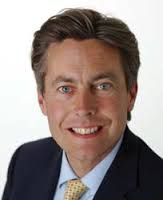
  • Dominic Grieve – 2019 Speech on Brexit

    Below is the text of the speech made by Dominic Grieve, the Conservative MP for Beaconsfield, in the House of Commons on 1 April 2019.

    Thank you, Mr Speaker. I will try to be brief.

    Of the four motions before us, two relate to substance and two relate to process, and they cannot be easily disaggregated. I have signed motion (E) and motion (G), motion (E) being that of the hon. Member for Hove (Peter Kyle). As I have said on many occasions, in view of the circumstances that have arisen, the idea that we can legitimately take the people of this country out of the European Union without consulting them as to whether the deal that we are offering them is one they want seems to me very odd indeed. The reality is that everything we have been talking about this evening, on the two substantive motions in particular, bears almost no relation to what was advanced by those advocating leave in the 2016 referendum campaign.

    Equally, this House has said repeatedly that it does not believe in a no-deal Brexit. That is why I support the motion of the hon. and learned Member for Edinburgh South West (Joanna Cherry)—because we have to do everything to stop it, given that the evidence is overwhelming that leaving without a deal would be catastrophic. I realise that this is sometimes a very difficult issue. On Friday night, I found myself giving an audience the Government’s own figures on the administrative burden on business of leaving without a deal, which is £13 billion per annum. That may be too high or it might be too low, but it is a reasoned estimate. That group of people, some of whom say they support my party and therefore the Government, were shouting “Liar” at me. This, I am afraid, is the point where reasoned debate has wholly evaporated. The House is very clear that what we have here is a real risk to this country’s integrity in future, and that is why no deal must be prevented.

    Let me now turn to the two substantive motions. Looked at straightforwardly, I think that both offer a better destination for this country than what the Prime Minister negotiated. That is first because they address the Northern Ireland issue, and do it a way that covers the integrity of the whole United Kingdom and does not separate Northern Ireland out from it, which seems to me to be an advantage; and secondly, because the concessions they make to our participation or deeper integration with our EU partners even after we have left do not come at a cost that people will notice when we are out. I agree entirely with my right hon. and learned Friend the Member for Rushcliffe (Mr Clarke) that, in reality, the trade deals that we were told we would have, and which were celebrated, are going to be absolutely marginal compared with the effect on our wellbeing now and what we are going to lose.

    For those reasons, I look with favour on both motions. They are both, as I said, very far removed from what was being trumpeted in 2016, which unfortunately was an utterly misleading vision that the United Kingdom could have its cake and eat it—could have the benefits of membership and all the freedoms that go with not being a member. That is the basic problem that this House is going to have to grapple with. I will not vote against the two motions of substance, which seem to me to be moving us probably in the right direction.​

    I am anxious about the risks of our concluding a political declaration and having a very limited timeframe—to 22 May, with probably no extension—to resolve fully the issues within it to the satisfaction of this House. I have a serious concern, first, that that can be done; and secondly, that it can be done to the satisfaction of the public. That is why there is a need for a linkage between the preferred option and consulting the public. I do not want to say any more about that now—I want to sit down and allow others to speak.

    However, I do want to emphasise my willingness to work with Members of this House who have promoted both these motions, in my determination to try to bring this sorry saga to an end. But in saying that, I want to emphasise that the House has to be very careful about simply jumping on something that it thinks we can all agree on without thinking through the consequences of the process and making sure that the process ends up satisfying the House itself and the electorate, and leading to the right outcome.