Tag: 2019

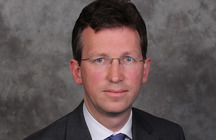
  • Robert Jenrick – 2019 Speech at Charity Tax Group Conference

    Below is the text of the speech made by Robert Jenrick, the Exchequer Secretary to the Treasury, on 4 April 2019.

    Good morning everyone, and thanks for inviting me back.

    I am delighted to be here once again at the Charity Tax Group conference, and have the opportunity to talk to you all again.

    Such is the transience of modern government, that I think that I am the first Exchequer Secretary for some time to still be in position a year on and able to return and report back to you.

    Treasury ministers don’t often quote Marx – well not this government’s ministers – but he said that “there are decades when nothing happens. And then there are weeks in which decades happen.”

    It seems we are living in times like that today (4 April 2019), at least in Westminster. In such a climate, the continuous creativity and contribution, including science and research, of charities, often low key, without fanfare or media attention, binding communities together and making society stronger, seems more important than ever. On behalf of government, thank you for all that you do.

    I’ve been a charity trustee. I’m President of one myself, the Friends of my local hospital in Newark, and through that I am proud to play a small part in helping the hospital provide wonderful care for the people that need it.

    As an MP, I’m constantly inspired and uplifted by charities and their donors and volunteers.

    From the smallest charities in our communities…

    …to the giants of medical research – Cancer Research UK, British Heart Foundation and the Wellcome Trust, where we meet today.

    Governments have long recognised the vital role that charities play in all corners of the UK.

    And this government is no different. We are firmly committed to supporting charities, and their donors who continue to donate generously to support the causes they care about.

    In 2017-18, tax reliefs were worth over £5 billion to charities altogether, including £1.3 billion from Gift Aid, £2 billion in business rates relief, and over £800 million on inheritance tax exemptions and reductions. Gift Aid is the most successful charity tax relief in the world.

    When I spoke at last year’s conference, and also met with the Charity Tax Group, you asked me to take a number of steps to improve government’s support for charities. I’m happy to say we have achieved much of it.

    Firstly, we have protected and enhanced Gift Aid, which I know is vitally important to you all. In total over £15 billion of Gift Aid relief has been paid to charities since 1990.

    After a visit to the British Paralympic Association, I was persuaded to clarify the guidance around bake sales, to make clear that charities could claim Gift Aid from the proceeds. I was very happy to promote the idea around the Macmillan Coffee Morning.

    Some of you may even have seen me in my kitchen on Twitter – the Mary Berry of the Treasury. I didn’t manage to persuade Philip Hammond to be my Paul Hollywood!

    We also announced at Budget that we would change the Retail Gift Aid Scheme so that charities will only have to issue letters once every three years – rather than every year – where a donor’s total donations in a tax year are less than £20.

    This will reduce the administration burden upon those operating charity shops and increase profit for good causes.

    We also increased the limit on Gift Aid Small Donation Scheme donations from £20 to £30, so that more Gift Aid-like ‘top-ups’ can be claimed on things like tin collections, where it is impractical to collect a Gift Aid declaration.

    We have continued to encourage charities to make use of Gift Aid and donors to ‘tick the box’, including writing to 50,000 charities last year to explain the scheme and urge them to ensure they benefit from it.

    Our final Budget measure specifically on charities taxation was to increase the Small Trading Tax Exemption, which allows charities to carry out limited amounts of trading not related to their primary charitable objectives, without incurring a tax liability. We have increased the upper limit from £50,000 to £80,000.

    These changes to Retail Gift Aid, the Small Donations Scheme and the Small Trading Tax Exemption were all suggestions from the Charity Tax Group, and I am delighted that we were able to take them forward at the Budget.

    When I spoke here last year, you raised Making Tax Digital, and I understand the concerns that charities have.

    On 1 April, the Making Tax Digital programme became law for over one million VAT-registered businesses earning more than £85,000.

    We appreciate that you will require time to become familiar with the new requirements. That was the feedback I received when I came here a year ago.

    As such, my colleague Mel Stride, the Financial Secretary, has announced that during the first year of VAT mandation, HMRC will take a light touch approach to penalties by not issuing filing or record keeping penalties where organisations are doing their best to comply with Making Tax Digital, and that may well be the case for many charities, especially small ones.

    And to be clear, the 1 April is not a cliff edge for signing up. The first returns under the new system for the majority of organisations, which file VAT quarterly, won’t be due until August at the earliest.

    We believe that our Making Tax Digital programme will make everything much easier for charities that are VAT registered in the long term, and ultimately save you time and energy that could be better spent elsewhere and achieving your goals and charitable objectives.

    We also recognise the value of charity shops on high streets up and down the country. At Budget, we created a £670 million Future High Streets Fund to create transformative packages of investments and I encourage charities with a particular presence on the high street to take part in that.

    There are already numerous business rates reliefs which benefit charity shops. At Budget we cut business rates by one third for all retailers in England with a rateable value below £51,000, which will help sustain our nation’s high streets as they evolve to meet changing consumer habits.

    Finally, at this event last year and in a later meeting at the Treasury, I was asked by ACRE – Action with Communities in Rural England – about funding for Village Halls, many of which were built a hundred years ago to commemorate the end of the First World War.

    The charity told me that they had been campaigning for an intervention akin to a time limited VAT rebate since they met with Gillian Shephard – I presume in the 1980s when I was still in short trousers!

    I was persuaded by their case and spoke to the Chancellor who was very supportive and as such we responded at the most recent Budget, providing £3 million pilot funding for grants equivalent to the VAT chargeable on such refurbishment projects. I am pleased to be launching that with ACRE on Friday (5 April 2019).

    It’s another example that shows we are listening to your needs.

    We have achieved a lot, but we know there is always more to do.

    One area we know we can work together on in the future is tax transparency, which is vital to maintain public trust in the extensive reliefs I have described today.

    As a start, I want all charities, led by the largest, to publicly report the amount of Gift Aid they receive.

    I have asked the Charity Commission to consider how this could be done, and there is also significant Parliamentary interest in this which expects action.

    That interest, like my own, is both to allow the public to understand the degree of support provided and to spur charities to make better use of the reliefs provided.

    We also want to look at the fees charged by donation sites. I acknowledge the important roles these platforms play in terms of crowding in donations, simplifying the process for charities and bringing them into the tech era.

    However, I was concerned by the lack of transparency, the lack of choice and, in some small cases, the scale of the fees.

    Again, there is clear Parliamentary interest here, for example from my colleague Neil Coyle MP, responding to disaster appeals like Grenfell and London Bridge – where significant fees were initially incurred when the public made generous donations.

    I am pleased Just Giving have announced they are taking action, and I hope we see further progress.

    In particular, it should be a clear choice for charities using such sites whether they wish to pay a fee for the site to administer the Gift Aid and that fee should be a reasonable one – so taxpayers money does not get diverted from the purpose to which we intended – charitable activities.

    I would also like to thank the Charity Tax Group for their advice and input on this matter.

    As I am speaking at the headquarters of the Wellcome Trust, I wanted to say something about the many medical research charities are driving scientific development and leading cutting-edge research.

    Over the last five years, the research they have funded has contributed to the development of 300 medicinal products including drugs, medical devices and diagnostic tools.

    Thousands of patients have benefited.

    But without the input of medical research charities, these new technologies would never have seen the light of day.

    Many of these research areas are simply too high risk or long term in development to attract conventional investment.

    In government, we know how important this is.

    Last year, the British Business Bank launched ‘British Patient Capital’ – a £2.5 billion fund to invest in innovative firms.

    And we invested £1.6 billion into our research and development base to strengthen the UK’s global leadership in science and innovation.

    But there’s a limit to what government can do.

    Which is why we need to work together with the private sector, and with charities to achieve our shared goals – in particular, unlocking the potential of our pensions to invest more than they do today, in patient capital, including that focused on medicines, life sciences, bio sciences and so on.

    We are taking action to encourage pension fund trustees to increase their focus in this area and working with the regulators to break down barriers which might inhibit action today.

    We want the charitable sector engaged in such projects or in social investment to be part of that.

    As we look to the future, I know that the NCVO Charity Tax Commission is reviewing the impact of the tax system on charities.

    It is due to be published in the early summer, and I look forward to reading its findings.

    We also recently launched a consultation on off-payroll working, commonly known as IR35.

    In the main, this is for businesses that employ workers through an intermediary, but that may well apply to some of your charities as well.

    It is right we do in the private sector and in charities what we have done in the public sector and ensure a fair tax system for all.

    Finally, in the coming months, the government will publish call for evidence documents on VAT partial exemption and capital goods scheme, the Social Investment Tax Relief (SITR), and the insurance premium tax operational review.

    All of which, I’m sure, you’ll be keen to read and digest.

    In closing, I want to thank the Charity Tax Group once again for inviting me back today.

    And thank them also for all their hard work in representing the charity sector.

    The focus and direction they bring is vital to the way we work together, and all that we have secured in the past year.

    And I hope that today I have shown that we as Government have a record of action in this area.

  • Matt Hancock – 2019 Speech at Royal Society of Medicine

    Below is the text of the speech made by Matt Hancock, the Secretary of State for Health, at the Royal Society of Medicine on 4 April 2019.

    It’s fantastic to be here to talk about apps and innovation because, as you know, this is a subject close to my heart.

    I’m pleased to say that together with Netflix, Spotify and Citymapper, the Matt Hancock app now has a combined user base of over 300 million people. And it remains the most popular app by a Member of Parliament on the App Store… as well as the only one. It’s not easy being a tech pioneer.

    Sir Tim Berners-Lee, inventor of the World Wide Web, said that 30 years on from his world-changing creation, he still believes it can be improved because: “The future is still so much bigger than the past.”

    I share Sir Tim’s optimism about the potential of technology because I believe in the potential of people.

    Since I’ve been Health Secretary, I’ve made it my mission to get the best technology available into the NHS for one simple reason: the right tech saves lives, and makes life easier for staff.

    And I’ve tried to eliminate outdated, old tech like fax machines, pagers, and dial-up because the wrong tech can make life more difficult for our NHS staff.

    Tech is merely a tool though, it’s people, who are, and will always be, our priority.

    Because it isn’t just frustrating to be asked for the umpteenth time: “Why are you here?” because medical records don’t follow people around the system. It isn’t just inconvenient for a doctor to be stuck trying to remember multiple logins so they can type up their notes, when they should be with a patient. It’s dangerous.

    And I was reminded of that this week by a lady called Dawn Wilson.

    Her daughter Tamara was diagnosed with asthma as a baby. Tamara was in and out of hospital with acute asthma as she grew up. She was seen 47 times in 4 years by medical staff.

    Almost every time, Dawn would have to tell the doctors and nurses Tamara’s medical history from the beginning because Dawn said: “Every time they were treating her like a new patient”. They didn’t know Tamara’s condition, what medication she was on, what her treatment plan was. Staff at 3 hospitals, 30 minutes apart, with no way of accessing the same records.

    Dawn told me she felt staff thought she was being an “overprotective mother”, but she was the only link they had with the previous clinician.

    On 10 April 2014 Tamara started experiencing breathing difficulties. An appointment was made to see her GP the following day but her condition deteriorated during the night. Paramedics were called, but sadly Tamara died. She was just 13 years old.

    Interoperability: a word we often use when we talk about healthtech. For most people that word means very little.

    The coroner said one of the factors in Tamara’s death was the lack of a “coordinating record”. Dawn told me that she believes it would have made a difference. That if our systems could speak to each other, and if Tamara’s records could have been safely accessed by all the clinicians treating her, it would have made a difference.

    So when I talk about interoperability, I’m not really talking about IT. I’m talking about saving the lives of people like Tamara. I mean “clinical memory”, a clear and comprehensive record of each individual’s health history and medical needs that can be shared, in absolute confidence, between medical teams across the NHS.

    It’s why getting the right tech, getting systems that can talk to each other in the NHS, matters so much. Because the only question when it comes to tech is this: does this tech save lives and improve lives?

    We must drive innovation and improvement across the NHS. Combining the best of the healthcare culture with the best of the tech culture. Seeking continuous improvement to save and improve lives.

    Better tech to give doctors and nurses the gift of time so they can focus on what really matters: caring for patients. Better tech to give faster and more accurate diagnosis and treatment so we can nurse people back to health sooner.

    Ensuring promising prototypes don’t get stuck in endless pilots. Ensuring successful ideas spread from one hospital to another, from one trust to the entire NHS. Building systems that can talk to each other and new developers can build on. And making sure we get the basics right like data infrastructure and patient records.

    So this is how we’re going to do it: NHSX.

    A new specialist unit that brings together all of our tech leadership from the Department of Health and Social Care, NHS England and NHSI into one place. Setting national policy for NHS tech, digital and data. Setting standards that work across the whole of health and care.

    It will be led by the government’s digital policy chief, Matthew Gould, who has a unique breadth of experience and a deep understanding of how to make digital transformation happen.

    Like so many people in the NHS, we’re lucky to have him, and I want more brilliant people like Matthew to come and be a part of NHSX and its exciting, bold mission.

    NHSX will have 3 early priorities:

    First: ensuring tech saves time for staff so they can focus on patients.

    Second: giving patients the tools to access information and services directly.

    And third: creating a system that means patient information can be accessed, safely and reliably, wherever it is needed.

    I want us to create a culture at NHSX that’s aspirational, hopeful, optimistic, and realistic. Full of people who respect one another and every single member of the NHS family. Fair, open, honest.

    With the door always open to new ideas and new people, creating a diversity of thought, constantly welcoming innovators with an outward-looking approach: a microcosm of what excellence looks like. Radically simplifying the system for developers and NHS decision-makers.

    Consistent language for all computers so patient records can be shared easily, time spent transcribing notes is cut, and human error is reduced.

    Unique barcodes for every piece of clinical equipment so essential kit can be tracked in real-time, cutting waste and saving hospitals up to £3 million a year.

    To test a new way of working, tech experts from NHSX will be embedded in national cancer, mental health and urgent care teams to bring the benefits of modern technology to every patient, clinician, and carer.

    We will empower the best digital minds in the NHS, and create an ecosystem where healthtech entrepreneurs are actually excited about working with this innovative, creative, forward-thinking organisation called the NHS.

    And the needs of our users will be at the heart of everything we do because the ‘X’ in NHSX stands for user experience.

    It’s why all of our standards will be designed and developed together. That means involving everybody that uses the NHS: patients, clinicians, our tech workforce, healthtech suppliers and wider civil society.

    All of our standards will be published on the web, so that anyone who wants to write code for the NHS can see what our needs are before they begin. Our regulatory approach will be designed for speed so apps can be improved quickly or removed quickly.

    There’s now more than 70 apps on the NHS Apps Library helping people with a range of conditions from diabetes to breast cancer, to mental health and pregnancy.

    There’s over a 100 new apps currently being assessed, including apps to help people with autism, to giving patients live information on A&E waiting times.

    And we’re continually learning and improving as we roll out the NHS App across England. Working with patients and frontline staff as we connect up the app with GP practices across the country.

    More than a million GP appointments a month are now booked through apps. More than 3 million repeat prescriptions are booked online now.

    And that’s only with a quarter of the population currently using online medical services. So the potential is huge.

    Just take diabetes: there’s 13 different apps available on the Apps Library, offering support on everything from blood glucose levels to diet, weight loss, and self-management for people with type 1 and type 2 diabetes. Living with diabetes can be incredibly tough, but the right technology can make a huge difference.

    This week we announced an expansion of wearable monitors for tens of thousands of people with type 1 diabetes, helping them to monitor their own condition, and save them unnecessary and stressful trips to hospital or their GP.

    So working with developers, to give people more choice over the apps and digital tools they can use, is crucial. Because ultimately this is all about people.

    We care about tech because we care about people. That’s the mindset we all need to have in the NHS.

    Well, imagine a future where the NHS App invites you to a cancer screening. You’ve been identified at risk because of medical information and lifestyle data you’ve chosen to share.

    You arrive at hospital and an algorithm takes seconds to compare your scan against millions of images. You get the results there and then. No waiting days for the post or checking your inbox nervously. You know exactly what the next steps is: working with medical experts to develop a personalised care plan. And this could happen years before you may have gone to the GP with your first symptoms.

    That’s the future I want to see in the NHS. And to get there we need something bigger than just a technological change: we need a culture change.

    For too many staff, outdated NHS tech is a hindrance rather than a help. It takes up time rather than saves time. And I understand the frustration. I know the systems of the past haven’t been good enough.

    If you’re a nurse, at the end of a long and taxing shift, and the thing that’s preventing you from getting home to your family is a computer that keeps on saying ‘no’, an IT system that won’t play ball, then of course, you’re going to feel like the tech is a hindrance rather than a help.

    But the right tech, working in the right way, can and does release time. Because good tech is seamless. It’s something staff shouldn’t even have to think about. The only thing staff should be thinking about is their patients.

    So it’s vital we get this right and I’m confident that with NHSX bringing together, driving forward, this tech transformation, we’ll start to create the culture change we need to see in the NHS: innovative, open to change, forward looking. Tech-focused only because we’re people-focused.

    Believing in the power of technology because we believe in the power of people.

  • Mark Field – 2019 Speech on UK and Bangladesh Partnership

    Below is the text of the speech made by Mark Field, the Minister of State at the Foreign Office, in Dhaka on 7 April 2019.

    I’m delighted to be back in Dhaka for the third time as Minister for Asia, and so soon after my colleague the Secretary of State for International Development. It’s a level of engagement that clearly demonstrates the UK’s strong commitment to our relationship with Bangladesh.

    This is a time of change for both our countries. For our part, the UK is leaving the EU and seeking new opportunities around the world, building on our strong historic, commercial, and cultural links.

    There are few places in the world where those links are stronger than here in South Asia, thanks to the thousands of personal connections between us. There are now some 600,000 British citizens of Bangladeshi heritage, many of them in my own constituency in London. We greatly value their contribution to all walks of British life.

    Here in Bangladesh I know you are looking forward to your 50th anniversary in two years’ time, and to celebrating your many achievements, from bringing over 50 million people out of extreme poverty since 1990, to increasing life expectancy and reducing infant mortality, to boosting your economy to one of the fastest growing in the world.

    We will be celebrating with you, remembering the part our country played in your liberation struggle.

    I myself remember the momentous days of the “Stop Genocide, Recognise Bangladesh” rally in Trafalgar Square; George Harrison’s benefit concert in New York; and reports in the British papers about Bangabandhu’s return via London to a newly independent Bangladesh.

    Today, Bangladesh can be proud of the huge progress it has made against the Sustainable Development Goals.

    With the pioneering work of Grameen Bank and BRAC, Bangladesh has shown how development best practice can be applied effectively for the benefit of your citizens. Your country has been able to make such huge strides thanks to a combination of good development policy, international partnership – including with DFID – and a resourceful private sector.

    Your just reward – of reaching Middle Income Status – is within your grasp. That is an exciting prospect, as are the growing opportunities for collaboration.

    We are already working together on climate change – a defining challenge for our times. As a challenge that particularly affects Bangladesh, you have valuable lessons on resilience to share with the rest of the world.

    We are also working together as fellow members of the Commonwealth. Her Majesty the Queen was delighted to welcome Prime Minister Hasina at the Commonwealth Heads of Government Meeting last year in London.

    Our nations are working together to tackle the evils of human trafficking, which is a particular priority for both our governments, and in which we are investing substantially.

    On a practical level, we have been pleased to help improve aviation security standards in Bangladesh, to the point where air cargo can once more travel directly from here to the UK.

    Something else we share is our diversity – in both Bangladesh and the UK, people of different backgrounds – Muslims and non-Muslims – live side by side. In our increasingly divided world, we must continue to promote this model of co-existence and inclusion.

    I should like to take this opportunity to offer my personal condolences, and those of the British government, to the families of those Bangladeshis killed in the appalling attack in Christchurch. Their deaths, and the narrow escape of your cricket team, were yet another tragic reminder of the dangers of hatred and extremism.

    But the response to the attacks – both from the local Muslim community, and wider society – has also been a reminder that people overwhelmingly reject this hatred, and instead want to bridge divides, heal divisions and promote understanding.

    We shall be discussing all these issues and more during the third UK-Bangladesh Strategic Dialogue later this month, along with our shared ambitions for our future partnership. I am confident that we can achieve those ambitions, if we stay true to our democratic values.

    It is often said that democracy was the worst form of government – apart from all the others; and events continue to prove him right.

    You will be well aware that the British Parliament is currently wrestling with the complexities of implementing the British people’s decision to leave the EU. Some have suggested that this lengthy process means democracy has somehow failed. As an elected parliamentarian, I can confidently say that the opposite is true: it is democracy in action, with all its imperfections.

    And as a friend of Bangladesh I profoundly hope that, as Bangladesh graduates to Middle Income Status, it will remain true to its democratic values.

    That means holding elections that are fair, and that present voters with a free choice. Again, as a friend of Bangladesh it gives me no pleasure to say this, but I fear the Parliamentary elections which took place here in December did not meet this standard – as I said at the time. I also pressed for a full, credible and transparent resolution of all complaints.

    I think we all recognise that the notion of choice is crucial in any healthy democracy. Without it, there is a risk that voters might seek other ways of achieving the changes they want. Ultimately, that could pose a much greater threat to stability than allowing them to express their views through democratic channels.

    That is why it is so important to have a political opposition in place, one that is able and willing to hold the government to account and offer an alternate view.

    And it is also why it is so vital to allow space for a vibrant civil society, through which the people – and especially young people – can channel their energies, and indeed their frustrations, within the law.

    That means upholding Bangladesh’s fine tradition of allowing people to voice dissent and express themselves freely.

    It also means allowing the media to do its job of holding the powerful to account, which as we all know is so crucial in upholding the transparency and credibility of our institutions, and bearing down on corruption. This really matters, because the strength and accountability of our institutions, and the confidence that they inspire in investors, are also crucial to our democracies – and to our economies.

    The UK stands ready to help invest in those young people I mentioned just now, as another crucial element in the future success of this country.

    Every time I come here, I am struck by the energy and talent of the people. I would very much like more of them to have the opportunity to benefit from the UK’s world class educational institutions. That is why one of the things I shall be discussing with my counterparts on this visit is the possibility of opening the local education market to greater competition. I am sure that this will be a win-win for Bangladesh – good for your talented young people, and good for the country.

    To conclude ladies and gentlemen, the bonds of history and kinship between our countries make our relationship particularly strong and deep.

    As a long standing friend, the UK welcomes the great strides that Bangladesh has made over the last half century, and recognises the great potential it has to achieve still more in the next. And as a close friend I can speak frankly and say that what we want to see is a confident Bangladesh, with strong, transparent and accountable democratic institutions.

    We want to see lively debate, a vibrant civil society, and competitive elections. And we want to see this flourishing democratic landscape carefully scrutinised and held to account by a free and vibrant media. That would be a wonderful vision for Bangladesh in its second half century, and it would also be the best way for it to realise its undoubted potential. The UK stands ready to help Bangladesh achieve that potential, in whatever way we can.

  • Jeremy Wright – 2019 Speech on Online Harms

    Below is the text of the speech made by Jeremy Wright, the Secretary of State for Digital, Culture, Media and Sport, at the British Library in London on 8 April 2019.

    Thank you all for joining us and thanks to the British Library.

    And for those of you who are wondering why we have come to the British Library to talk about the internet, let me offer an explanation.

    Until the internet arrived, this was the world’s great collection of human knowledge.

    In this collection are the products of the greatest innovations and innovators in our history – from some of the earliest works created by the printing press to letters from Ada Lovelace, often known as the first computer programmer.

    Elsewhere there are elements of our legal history, like one of the few remaining copies of the Magna Carta.

    And it is on the interaction between the technological progress that drives our economy and the rules that protect our society that the White Paper we have published this morning is based.

    Just as the invention of the printing press required new ways of thinking about copyright and the ownership of ideas, so the online world has produced its own challenges.

    The internet is a part of our lives – nearly 90% of adults in the UK are online and 99% of 12-15 year olds.

    In many ways it is a powerful force for good. It can forge connections, share knowledge and spread opportunity across the world.

    But it can also be used to promote terrorism, undermine civil discourse, spread disinformation, and abuse or bully.

    For the most vulnerable in our society, the effects are more acute and sometimes they are tragic.

    And the truth is that the more we do online, the less acceptable it is that behaviour which would be controlled in any other environment is not controlled online.

    How to preserve a dynamic and innovative internet, while keeping its users safe from serious harm, is one of the great policy challenges of our age.

    This White Paper is our response.

    So what does it say?

    We could have decided to continue as we are – to urge online companies, in louder and louder voices, to do more to tackle the damaging content on their platforms but leave it to them to decide what should be done and when.

    Or we could pursue a prescriptive system of rules-based regulations that would struggle to keep up with a fast-changing threat landscape.

    We have concluded that neither of these approaches would deliver the better, safer internet which is in the interests of both those who provide online services and those use them.

    So we have set out in this White Paper a different approach.

    We propose a duty of care for those online companies which allow users to share or discover user-generated content, or that allow users to interact with each other online.

    A duty to do all that is reasonable to keep their users safe online.

    That duty will be enforced by an independent regulator.

    The White Paper sets out in greater detail our expectations of online companies as to how they should meet that duty of care and we expect the regulator to reflect those expectations in new codes of practice it will develop.

    The regulator will also take account of the need to promote innovation and freedom of speech.

    It will adopt a risk-based approach, prioritising action where there is the greatest evidence of threat or harm to individuals or to wider society.

    It will also adopt a proportionate approach – taking account of a company’s size and resources.

    It will be regulation designed to be intelligent, but most of all designed to be effective.

    The regulator will have powers to demand transparency from online companies about the harms found on their platforms and what they are doing about them.

    And the regulator will have powers to impose meaningful sanctions.

    We are consulting in the White Paper not just on remedial notices and substantial fines, but also on senior management liability and the blocking of websites.

    But this will be a regulatory approach designed to encourage good behaviour as well as to punish bad behaviour.

    Just as technology has created the challenges we are addressing here, technology will provide many of the solutions and the regulator will have broader responsibilities to promote the development and adoption of the these technologies and to encourage safety by design.

    It is also important to recognise that we all need the skills to keep ourselves safe online and we will task the regulator with promoting those skills too.

    So we are proposing some significant changes and we believe they are necessary.

    I want to take the opportunity to thank the team of civil servants from my Department and the Home Office, and others across Government for the huge amount of hard work that has gone into producing this White Paper today.

    And I want to thank those of you here this morning who have campaigned for a safer internet, who already do so much to keep people safe online and who have added so much to our thinking on this subject.

    We hope you will continue to add to that thinking.

    We want you to tell us what you think of what you read in this White Paper, so we can get it right.

    CONCLUSION

    The last thing I want to say is this.

    There are those who say, and will say when they read this White Paper, that because the internet is global, no nation can act to regulate it unless every nation acts to regulate it.

    I don’t agree.

    I believe the United Kingdom can and should lead the world on this. Because the world knows we believe in innovation and we believe in the rule of law too. We are well placed to act first and to develop a system of regulation the world will want to emulate.

    This White Paper begins that process, and I am grateful for the strong support in its development of my friend and colleague the Home Secretary, to whom it is my pleasure to hand over to now.

  • Penny Mordaunt – 2019 Speech on Sexual Health Rights

    Below is the text of the speech made by Penny Mordaunt, the Secretary of State for International Development, at Canada House in London on 8 April 2019.

    Thank you everyone for being here and thank you to Canada for hosting us.

    A lot of people have thanked me for coming along today because they know the turmoil that Parliament is in, all the stresses and strains that are going on and it is difficult times that is for sure. And quite a lot of people say to me how do you keep going, why have you stuck with it, why have you stayed there. I say something like it is my duty, the country needs us to find a way through, we need to hold Remainers and Brexiteers together. But the real reason is that I want to stay in post to attend Women Deliver.

    It is fantastic today to be able to celebrate our partnership on gender equality, announced by our Prime Ministers in 2017.

    It is wonderful to be amongst so many amazing women who it is my privilege to know a few of you and the amazing work you do. And also some amazing men as well. Dom McVey, a CDC supported entrepreneur who has done fantastic work on women’s economic empowerment and now is launching some new initiatives to help end period poverty worldwide. Thank you to all the fellas who are also doing their bit too.

    And there is a lot to celebrate. In the UK the female employment rate is at a record high and the gender pay gap is at a record low. We’ve introduced new laws to protect women from domestic abuse, FGM, stalking, and forced marriage.

    My department, the Government Equalities Office, this month moved into the Cabinet Office, the hub and the heart of Whitehall to really ensure that we are delivering. And the only female mouser the Cabinet Office cat, has received a promotion too.

    Meanwhile, in Canada you have created a Department for Women and Gender Equality. You have made gender budgeting a mandatory part of the federal budget-making process, and delivering your strategy to prevent gender-based violence, and have recently passed into law protections for pay equality, based on the UK’s gender pay gap reporting, I am delighted at that.

    But all too often, in too much of the world, women’s rights are actually being rolled back. Britain and Canada has shown real leadership together on this issue and that leadership is needed now more than ever.

    Millions of girls and women are living in poverty, denied an education, have inadequate healthcare, are routinely assaulted, unable to live full and happy lives. And no country has yet achieved gender equality.

    The Sustainable Development Goals are a vital way to drive and measure change. This year, the UK will be reporting on our progress towards implementing them, as part of our Voluntary National Review.

    Global Goal 5, on gender equality, is critical in and of itself, but without it we will never be able to deliver on the other goals. Everyone, whatever their gender, has a stake in gender equality.

    Domestically and overseas, the UK is championing efforts to better understand the situation of the poorest and most marginalised women. Just last month, I announced vital new work to end period poverty and shame in the UK and overseas. I also announced our upcoming strategy to ensure that every woman in the UK has freedom, choice, capacity, resilience, support, and protection to do whatever she wants to do.

    Freedom and choice are guiding principles for all our gender equality work. There are people around the world who want to control women, who want to restrict their choices and deny them their rights.

    That’s why it is so important that we use platforms like Women Deliver continually to renew our commitment to women’s rights and specifically to comprehensive sexual and reproductive rights for all women.

    Leadership means not shying away from the issues of access to safe abortion, when the evidence shows us that these services save women’s lives.

    Comprehensive Sexual Reproductive Health Rights (SRHR) is an area where the UK and Canada are continuing to deepen our partnership as likeminded leaders in this field.

    In January this year, we co-hosted a multi sector Safe Abortion dialogue here in London to drive progress and momentum in this absolutely critical area.

    And at the Commission on the Status of Women last month we held a strong line together, resisting the “pushback” as the Secretary General called it.

    We are united in our efforts to work with the most complex and challenging issues that threaten women’s health and lives when others are shying away from them and I thank Canada for their leadership in this area.

    Everyone should have control over their own bodies and their own futures. That means every girl and every woman having access to the information they need, the freedom to choose what’s right for them, and the services and support they need to make their own decisions.

    I am proud that thanks to UK aid, millions of women in the world’s poorest countries are able access the desperately-needed sexual and reproductive health services they need and want to use. The UK has been a world leader in this area and will proudly continue to be one.

    My Department is also supporting the deepening of civil society partnerships through our UK aid Connect programme.

    A new £42 million programme looking at SRHR will support two consortia of NGO partners on this theme, and I am pleased to announce that these will be led by Marie Stopes International and the International Planned Parenthood Federation.

    This programme will drive innovation and learning by bringing diverse partners together to work on complex and neglected issues such as increasing access to safe abortion and improving the provision of SRHR in crisis settings.

    Some of the most marginalised women and girls in the world are those living in conflict and crisis areas. Together we are pushing for a humanitarian system that responds to women and girls’ specific needs, but also sees them as active agents of change.

    We worked closely with Canada to develop the landmark G7 Whistler Declaration on Gender Equality and the Empowerment of Women and Girls in Humanitarian Action.

    We are now teaming up to implement these commitments, including through the Call to Action on Protection from Gender Based Violence in Emergencies.

    Successful societies are those where women have control over their own bodies, are places where every mother can enjoy a wanted and healthy pregnancy, where every child can live beyond their fifth birthday, where no woman or girl is forced to marry before she is ready.

    Together with our partners, including Canada, we are supporting the UNICEF and UNFPA global programme, working to end child marriage, reaching millions of adolescent girls across 12 countries, and have co-sponsored every UN resolution on ending child marriage.

    We will continue to stand shoulder to shoulder with Canada on the international stage to realise the rights of all the world’s women and girls.

    This was demonstrated recently at a joint side event at the Commission on the Status of Women on LGBT rights. I look forwards to deepening our collaboration through Women Deliver and beyond.

    We must empower women to make their own decisions. We must give women the freedom to choose what is right for them.

    We must invest in them so that they can complete their education and fulfil their full potential.

    And we should recognise gender equality as one of the great human rights issues of our time.

    Thank you.

  • Graham Stuart – 2019 Speech on Exiting the European Union (Customs)

    Below is the text of the speech made by Graham Stuart, the Parliamentary Under-Secretary of State for International Trade, in the House of Commons on 8 April 2019.

    I beg to move,

    That the draft Trade in Torture etc. Goods (Amendment) (EU Exit) Regulations 2019, which were laid before this House on 15 March, be approved.

    I am pleased to be able to open this debate on the regulations. These regulations amend provisions of regulation (EU) No. 2019/125 of 16 January 2019 concerning trade in certain goods that could be used for capital punishment, torture or other cruel, inhuman or degrading treatment or punishment.

    The EU regulation divides these goods into three distinct categories. First, I will begin by explaining to the House that the regulation prohibits the import and export of goods that have no practical use other than capital punishment or torture. These goods include, among other things: gallows; guillotines; electric chairs; airtight vaults; electric shock devices intended to be worn on the body; cuffs for restraining human beings that are designed to be anchored to a wall; batons and shields with metal spikes; and whips with barbs, hooks and spikes. These are appalling instruments of torture, and the Government have a clear position that the trade in such goods from the United Kingdom is absolutely unacceptable. Their export and import are prohibited, and the only exception to this rule is if the items are to be displayed publicly in a museum.

    Mr Jim Cunningham (Coventry South) (Lab)

    What discussions has the Minister had with his EU counterparts, for example, about how we will enforce these regulations when we leave?

    Graham Stuart

    I thank the hon. Gentleman for that question. The aim of these regulations is to transpose the existing system, which is reliant on EU law, into purely UK law. However, he rightly identifies the issue of co-operation with other countries in the EU. We will have our own discrete regime. We have no intention of making changes to it. We will be looking to co-operate with our colleagues in the EU—and beyond—in making sure that these appalling goods are not trafficked around the world.

    Secondly, the regulation imposes controls on the trade in specified goods that have legitimate uses—for example, in law enforcement—but that also carry a risk of being used for torture. These goods with potential torture application include oversized handcuffs, shackles, gang chains, spit hoods, electric shock dart guns and pepper sprays.

    The third category involves those goods listed in annexe IV of the EU regulation. The annexe lists several short-acting and intermediate-acting barbiturate anaesthetic agents such as amobarbital, pentobarbital and secobarbital. These goods have a legitimate use in medicine, in research laboratories and in university chemistry departments, but they have also been approved for use—and, in some countries, actually used—either on their own or as part of a cocktail of drugs for execution by lethal injection. We will not help any country with capital punishment, and we will continue to lobby against and seek to influence countries that continue the practice, with a ​view to ending capital punishment. We do not license the export of these barbiturate products to countries that have not abolished the death penalty without an end-user assurance that they will not be used for capital punishment, and we will not do so after EU exit.

    All of us will have the immediate reaction that it is terrible that the UK should ever be involved in the trade of any goods that could be used for capital punishment or torture. I am confident that we can all agree that the United Kingdom does not want to be a country that makes its living trading in such possible tools of torture. These goods have been controlled by European Union regulations for well over a decade, and the United Kingdom intends to carry on with those controls in a similar way. Let me reassure the House that exports from this country of such goods have been minimal over the past decade, averaging 10 licences per year, and we do not expect that to change. The types of goods exported under licence include handcuffs for prison service use and pepper sprays for use by the police in places such as the Crown dependencies, Australia and New Zealand. We have also licensed barbiturate anaesthetic agents for medicinal use and laboratory testing. The quantities are low, and the export value is small. We do not envisage any growth in exports of those goods after EU exit.

    Let me be clear about the purpose of these amending regulations. In their absence, existing European Union law would not be effective in UK domestic law on the day we exit the European Union, and our ability to control these goods would be undermined. After EU exit, this legislation will enable the Secretary of State to control the export from the UK of the listed goods that could be used for capital punishment, torture or other cruel, inhuman or degrading treatment or punishment. As far as is possible, the legislation will operate as it does now, but controls on the goods will apply when they are exported from the UK rather than from the EU.

    I do not believe that UK exporters want to be involved in a trade in torture goods, and I do not believe that these are the sorts of goods that UK businesses want to make, sell or export. Nevertheless, our export controls have an important part to play in promoting and ensuring global security, by controlling the goods that leave our shores. The Government have a responsibility to be prepared for any exit-day scenario, and we need to ensure that these controls continue to function properly. These exit-related regulations are just a part of the necessary legislative building blocks to ensure readiness on exit day.

    The European Union (Withdrawal) Act 2018 enables a functioning statute book on exit day by providing Ministers with the tools to deal with deficiencies in domestic law arising as a result of our exit from the European Union. These regulations thus take another step towards completing the legislative part of controlling the export of strategic goods in preparation for a no-deal exit scenario. The Department for International Trade will continue to work to provide detailed advice and guidance about export controls and trade sanctions through EU exit and beyond. If these regulations are no longer required on exit day, we expect to revoke or amend them. Alternatively, commencement could be deferred to the end of an implementation period.

    I want to take this opportunity to remind the House that these regulations are solely about preparing for European Union exit and ensuring that we have a ​functioning statute book in any scenario. These amendments must happen because of EU exit, but EU exit is not happening because of these amendments. Parliament needs to ensure that the existing controls remain in place. Negotiations about the future relationship between the United Kingdom and the European Union or the wider world are a separate matter. They play no part in this debate today. Broadly, all the provisions applying to exports from the EU customs territory today will instead apply to exports from the UK. For this reason, the Government have made every effort to provide certainty for businesses and the public wherever possible. There is no new marketing opportunity for the export of the tools of torture.

    In August last year, we published a technical notice on export controls that explained our plans for post-EU exit export control licences. We will use our “Notices to Exporters”, which has 20,000 subscribers, to advise and communicate with UK businesses. We have also included EU exit advice in the export control training programme and at the annual export control symposium, as well as giving extensive advice to key sector trade associations.

    I hope that the House will work in the interests of the nation to ensure the passage of this legislation, which is essential to ensuring we are prepared for EU exit and that we continue the ban on the trade in torture goods and the control over the trade in goods with the potential for torture application. I commend the motion to the House.

  • Alistair Carmichael – 2019 Speech on the UK Fishing Industry

    Below is the text of the speech made by Alistair Carmichael, the Liberal Democrat MP for Orkney and Shetland, in the House of Commons on 8 April 2019.

    We are considering the matter of visas for non-European economic area citizens working in the UK fishing industry—sadly, not for the first time. In fact, I last brought this matter before the House on 11 July. Others have led Adjournment debates on the same topic on different occasions. It has been raised on multiple occasions at Home Office questions, most recently by me. Sadly, now, here at the beginning of April, we are no further forward.

    I will not rehearse the arguments around the necessity for our fishing skippers to be able to employ crew from outside the European Union or the EEA. I suspect that that has been done to death. If we were going to win the argument by raising the issues, we would have won it long ago.

    Tonight, I will gently remind the Minister of a couple of things that she told the House in July. I invite her, when she speaks, to give us something of a progress report. I will then consider the content of the Migration Advisory Committee report from September of last year which, according to the Minister when I last raised this with her, is now the basis on which the Government seek to resist the fairly sensible and, I would have thought, uncontroversial measures that we seek to have introduced.

    Jim Shannon (Strangford) (DUP)

    I commend the right hon. Gentleman for his fortitude in this issue. The Minister, too, knows the reasons why we are discussing it. Does the right hon. Gentleman not agree that highly skilled fishermen from the Philippines, for example, and other countries must have streamlined access to this incredibly dangerous profession? Does he agree that the future of our fishing sector depends on it?

    Mr Carmichael

    I do agree, and I thank the hon. Gentleman not only for his assiduous attendance at these debates and at other meetings but for his use of the term “highly skilled” fishing crews. Those who go to sea to bring the fish home to put on our plates are highly skilled. The root of the problem is in essence one of attitude, which somehow classes those brave, hard-working men as low skilled. Yes, I agree with him.

    Dr Philippa Whitford (Central Ayrshire) (SNP)

    Does the right hon. Gentleman agree that the problem seems to be that when skill is defined, it is always still defined in academic terms? Actually, skill is an inherent ability that someone has to do a task, not necessarily academic at all.

    Mr Speaker

    I have to notify the House, in accordance with the Royal Assent Act 1967, that the Queen has signified her Royal Assent to the following Acts:

    Animal Welfare (Service Animals) Act 2019

    European Union (Withdrawal) Act 2019.

    On resuming—​

    Mr Carmichael

    I am sure we will all sleep better for that—especially knowing that Her Majesty will now be in a position to give her full attention to the matter of visas for fishing crews.

    I cannot now remember the point that the hon. Member for Central Ayrshire (Dr Whitford) made, beyond the fact that I certainly agreed with it. [Interruption.] It was about academia—indeed. It is worth noting that those who serve on the Migration Advisory Committee and those who have been Ministers are all very learned people. I have long held the view that if we sent some of them out in fishing boats, and if we had more skippers in ministerial offices and in the Migration Advisory Committee, the problem would be solved next Tuesday.

    David Duguid (Banff and Buchan) (Con)

    This is a similar point to the one that the hon. Member for Central Ayrshire (Dr Whitford) just made. It is often argued that the crew members who are much sought after in the Scottish fishing industry and in Northern Ireland are often regarded as low skilled. We can argue about whether they are high skilled or low skilled, but does the right hon. Gentleman agree that we have a shortage of those very specific skills?

    Mr Carmichael

    That is absolutely the case. If the crews could be found in the fishing ports that the hon. Gentleman and I represent, we would not be here tonight because there would not be a problem. The fact is that for a whole variety of reasons, which have been rehearsed in the past, the crews are not there. It is difficult for the pelagic fleet and the whitefish fleet, because it pushes them out beyond territorial waters, but it makes the viability of the inshore fleet, which routinely fishes within the 12 mile limit, next to impossible.

    I remind the Minister that, in July last year, she said:

    “I recognise that the fishing industry will be best placed to take advantage of those future opportunities”—

    that is how she earlier described the post-Brexit situation—

    “if it has the workforce that it needs.”

    It is manifestly still the case today, as I can see from my mailbag and email inbox, that the industry does not have the workforce it needs. The fact that there are so many hon. Members in the Chamber tonight at gone 11 o’clock bears further testimony to that.

    The Minister went on to say:

    “Two key points will be to the fore when we consider the industry’s future labour needs. First, as we leave the European Union, we will take back control of immigration and have an opportunity to reframe the immigration system…In making sure that that happens, we will need the best evidence available, which is why we have commissioned the independent Migration Advisory Committee to report on the economic and social impacts of the UK’s departure from the EU and on how the UK’s immigration policy should best align with the Government’s industrial strategy. The committee will report in the autumn, and the Government will take full account of its recommendations when setting out their proposals for the future immigration system.”—Official Report, 11 July 2018; Vol. 644, c. 1082.]

    She went on to acknowledge the case that many of us made about the urgency of the matter—it was urgent in July last year.

    I now wish to turn the House’s attention to the Migration Advisory Committee’s report of last September. The section entitled “Productivity, innovation, investment ​and training impacts” on page 2 of the executive summary includes an interesting paragraph—paragraph 14—which states:

    “The research we commissioned showed that overall there is no evidence that migration has had a negative impact on the training of the UK-born workforce. Moreover, there is some evidence to suggest that skilled migrants have a positive impact on the quantity of training available to the UK-born workforce.”

    That is a very small point, but I mention it because in the debate in July several hon. Members said that there was a real problem with the training available, and that it was because of that that we had had to resort, in the short to medium term, to bringing in non-EEA nationals.

    One of the most disappointing parts of the committee’s report is that headed “Community impacts”, which is to be found on page 4 of the executive summary. It rates only nine lines, and the related part in the full report runs to some five pages only, most of which comprises graphs. It speaks about some of the issues, which the committee identifies as community impacts, and states:

    “The impacts of migration on communities are hard to measure owing to their subjective nature which means there is a risk they are ignored.”

    However, it goes on to talk about some things—for example, the impact on crime and on how people view their own communities—but there is not a word in that part about population levels, which is absolutely critical in most island and coastal communities to which the fishing industry is confined. There is nothing to be found about the fact that the inability of boats to go to sea has a massive impact on the shore-side industries, which in turn has a massive impact on the viability of schools, post offices and all sorts of local public services.

    Bill Grant (Ayr, Carrick and Cumnock) (Con)

    Following on from that aspect, the Department’s assumption that vessels can simply be crewed by locals is indeed just not true: it cannot be done. We must have a visa system that attracts multi-skilled individuals from beyond these shores and beyond the EEA to ensure we have a fully crewed fishing fleet to do the work required of it.

    Mr Carmichael

    That is the other reason why I thought I would not bother rehearsing the arguments—I anticipated plenty of people doing so in the Chamber this evening. The hon. Gentleman makes a very good point, and I congratulate him on it. It is one I have made in the past, as have other hon. Members. It is as true today as it was in July, and it all contributes to my and my constituents’ sense of frustration that now, getting into the middle of April, we are still no further forward.

    Douglas Ross (Moray) (Con)

    When the right hon. Gentleman held a debate last July, England was losing a World cup semi-final. I am pleased to say that the football fortunes are better this time, with Scotland’s women beating Brazil 1-0 tonight, so I congratulate him on any link there.

    Does the right hon. Gentleman agree with me that there is a simple solution? Previously, we had a scheme that allowed non-EEA workers to work within the fishing industry. It was successful, and it did what it was intended to do. There is a simple solution for the Minister, which is to stand up at the Dispatch Box and say we will revert back to that scheme.

    Mr Carmichael

    That has perfect simplicity. I will not get into a conversation, with the hon. Gentleman in particular, on the subject of football—there are very few people in this House who know less about the subject than I do—but he brings welcome news to the House. The point about the previous system is a good one because it also has a bearing on the conclusions of the Migration Advisory Committee about what they describe, I think pejoratively, as “low-skilled workers”.

    To quote from the executive summary again—I will look in a bit more detail at the substantive parts of the report in a second—at paragraph 36 on page 5, the committee states:

    “We do not recommend an explicit work migration route for low-skilled workers with the possible exception of a seasonal agricultural workers schemes.”

    In fact, such a scheme has subsequently, however inadequately, been introduced. It observes, quite drily:

    “This is likely to be strongly opposed by the affected sectors.”

    It goes on to say at paragraph 37:

    “If there is to be a route for low-skilled migrant workers we recommend using an expanded youth mobility scheme rather than employer-led sector-based routes.”

    This is quite telling about the work of the Migration Advisory Committee, because it seems to be suggesting, when looking at sector-based routes, that it rejects such a route because those coming to the UK for these, as it calls them, low-skilled jobs, should then be able to move from sector to sector. It is ridiculous: the idea that somebody is going to come from the Philippines to work in a whitefish or pelagic boat out of Lerwick, and then go and take a job in a bar or picking fruit or whatever, just shows how divorced it is from the reality of what it has been charged with considering. But probably the most insulting part of this piece of work is the reference to youth mobility and a cultural exchange scheme for people aged 18 to 30 from a number of listed participating countries.

    Hugh Gaffney (Coatbridge, Chryston and Bellshill) (Lab)

    Does the right hon. Gentleman agree that the fishing industry should be appealing to people on a career basis, but that, in the meantime, the Scottish fishing industry needs non-EEA fishermen, and the Government must recognise that and play their part?

    Mr Carmichael

    That is absolutely the case. It is going to take a long time to get back to having fishing as a career, because the fishing industry has been talked down by teachers, career advisers and the rest for years now. I understand the reasons for that, but I think they are misplaced. It will be a long time before we change that attitude—and it is attitude that is behind this.

    Dr Whitford

    Is that not an issue when, particularly up and down the west coast, where inshore fishing is hit, we have skippers who own boats and therefore should be really successful but are not at sea because they cannot get crew?

    Mr Carmichael

    Indeed. They cannot get crew, so they cannot land fish, which affects jobs in the processing sector. There is a ripple impact, which affects everyone from the shoreside suppliers right the way down the line.​

    Returning to the youth mobility scheme, the Migration Advisory Committee concludes, at paragraph 7.53 on page 118:

    “If the Government does want to provide a safety valve for the employers of low-skilled workers then an expanded Youth Mobility route could potentially provide a good option. The benefits of this option are that younger migrants are more likely to be net fiscal contributors (because the scheme does not allow dependants) and workers have freedom of movement between employers, which is likely to reduce the risk that employers will use migrants’ visa status to hold down their wages.”

    So, according to the Migration Advisory Committee, the answer to the crew shortages in our fishing ports is to crew boats using New Zealanders and Australians on a gap year. I just wonder what world these people live in. That is insulting, and it is not just an insult from the Migration Advisory Committee; since the Minister and her colleagues rely on the report as the basis for continuing to refuse the most modest and common-sense proposal, it is an insult from those on the Treasury Bench themselves.

    My plea to the Minister is simple. We have made this case time without number. Will she now please start to listen?

  • Caroline Nokes – 2019 Statement on the Windrush Compensation Scheme

    Below is the text of the statement made by Caroline Nokes, the Minister for Immigration, in the House of Commons on 8 April 2019.

    Yesterday the Home Secretary announced the launch of the Windrush Compensation Scheme. The Government deeply regret what has happened to some members of the Windrush generation and the launch of the compensation scheme marks a key milestone in righting the wrongs they have experienced.

    Detailed information about the compensation scheme, including the rules that govern the scheme, with the forms and guidance that people need to make a claim, are available online at: https://www.gov.uk/guidance/windrush-compensation-scheme. Our helpline is also open now on: 0800 678 1925 for those wishing to receive printed copies of the claim form or for any other queries, this is free if calling from within the UK. Those calling from outside the UK will be called back.

    I would like to clarify, further to questions raised with the Home Secretary on the Floor of the House, three issues in relation to eligibility to apply for compensation. The first is in relation to those who are not resident in the UK. A Commonwealth citizen outside the UK, who was settled in the UK before 1 January 1973, who has settled status, right of abode or is now a British citizen, or whose settled status has lapsed due to being absent from the UK for a period of two or more years is eligible to apply for compensation.

    Secondly, the definition of a close family member for the purpose of the compensation scheme is a spouse or civil partner living with the claimant, cohabitee for continuous period of two years or more, a parent, a child or a sibling. Close family members are entitled to ​claim regardless of whether a primary claimant chooses to make an application and whether said claimant is deceased.

    Thirdly, the definition of serious criminality for the purposes of the compensation scheme is defined as a conviction that received a sentence of imprisonment of four years or more, and that the offending was of such a nature that makes it inappropriate to make an award in whole or part. This provision does not apply to a conviction and sentence outside of the UK for conduct which on the date of the conviction was not an offence in the UK.

    The Home Office is committed to raising awareness of the scheme, and to encouraging eligible people of all nationalities to submit a claim. Eligibility for compensation goes beyond members of the Caribbean Commonwealth, and we are putting in place a programme of events with key stakeholders, faith and community organisations to promote both the scheme and the wider work of the Commonwealth citizens taskforce. The first of such events is scheduled for Lambeth town hall on Friday 5 April and full details are available via the gov.uk page.

    Regrettably, in promoting the scheme via email to interested parties, an administrative error was made which has meant data protection requirements have not been met, for which the Home Office apologises unreservedly.

    This occurred in emails sent to some of the individuals and organisations who had registered an interest in being kept informed about the launch of the compensation scheme, which included other recipients’ email addresses. Five batches of emails, each with 100 recipients, were affected. No other personal data was included.

    A recall was commenced as soon as the problem had been identified. The departmental data protection officer has been informed and an internal review will be conducted to ensure this cannot happen again. The Department has voluntarily notified the Information Commissioner’s Office of the incident.

    I am firmly committed to doing right by the Windrush generation. The compensation scheme is an important step towards that and I will ensure that action is taken to ensure the highest standards are met not only in the processing of cases, but also in continued efforts to publicise the scheme and ensure those entitled to redress receive it.

  • Sajid Javid – 2019 Statement on Serious Youth Violence

    Below is the text of the statement made by Sajid Javid, the Home Secretary, in the House of Commons on 8 April 2019.

    The Government are deeply concerned about the recent rise in serious violence, particularly knife crime, which is robbing too many children and young people of their futures. This is a challenge that affects all of society, and agencies must come together in a co-ordinated, wide-reaching and long-term effort.

    In order to ensure the strongest possible response, the Prime Minister hosted a serious youth violence summit at 10 Downing Street, with the support of the Home Secretary, from 1 to 4 April. The central aim of the summit was to ensure a shared understanding and commitment to a multiagency, “public health” approach to tackling knife crime and serious violence more generally.

    This approach involves partners across different sectors—such as education, health, social services, offender management services, housing, youth and victim services, working closely with community and faith leaders, and the voluntary and charitable sectors—taking joint action ​to address the underlying risk factors that increase the likelihood that an individual will become a victim or a perpetrator of violence.

    The Prime Minister opened the summit by chairing a roundtable meeting with a range of experts, representatives and practitioners from key sectors, community leaders, young people, and cross-party politicians. Alongside the Prime Minister, both I and other senior Ministers discussed with these experts what more can be done to tackle recent rises in serious violence. This was followed by a series of themed sessions chaired by Secretaries of State and Ministers during the week, aimed at harnessing expert knowledge and creating the conditions to boost joint working across sectors and organisations. I will place a full list of the attendees—of whom there were well over 100 over the course of the week—in the Libraries of both Houses.

    The full programme of thematic sessions, which took place over the course of the summit, included:

    Best practice in law enforcement, chaired by the Minister for Policing and the Fire Service;

    The role of education, chaired by the Secretary of State for Education;

    Investing in communities, chaired by the Secretary of State for Housing, Communities and Local Government;

    Positive activities for young people, chaired by the Secretary of State for Digital, Culture, Media and Sport;

    Creating opportunities for young people, chaired by the Minister for Crime, Safeguarding and Vulnerability;

    The role of the health sector, chaired by the Secretary of State for Health and Social Care;

    Effectiveness of the criminal justice system, chaired by the Secretary of State for Justice.

    The following coincided with this summit:

    I announced that Impetus, in partnership with the Early Intervention Foundation and Social Investment Business, will run the new youth endowment fund, which will support interventions with children and young people at risk of involvement in crime and violence, based on £200 million of new Government funding.

    The Government announced £100 million additional funding in 2019-20 to tackle serious violence, including £80 million of new funding from the Treasury. This will allow police to swiftly crackdown on knife crime on the areas of the country most affected by knife crime and will also allow for investment in violence reduction units.

    That I will be making it simpler for the police in the seven forces particularly affected by violent crime, to use section 60 (area-wide) stop and search powers where they reasonably believe that an incident involving serious violence may occur. This pilot will be for up to a year, with a review after six months—after which we will make decisions on next steps. The College of Policing will also work alongside forces to create new guidelines on how best the police can engage with communities on the use of stop and search.

    I launched a public consultation on a new legal duty to ensure that public bodies work together to protect young people at risk of becoming involved in knife crime. This would underpin the multiagency approach already being driven by the serious violence strategy, which stresses the importance of early intervention to tackle the root causes of violent crime. Similar approaches have been used in Scotland and Wales, and are designed to ensure that every part of the system is supporting young people with targeted interventions before they commit violence or are groomed by gangs.

    These announcements build on the significant progress we have made in delivering the commitments set out in the serious violence strategy published in April 2018. ​These include: the early intervention youth fund of £22 million, through which the Home Office is already supporting 29 projects in England and Wales; the new national county lines co-ordination centre; an antiknife crime community fund which provided £1.5 million in 2018-19 to support 68 local projects to tackle knife crime; and a national knife crime media campaign—#knifefree—to raise young people’s awareness of the consequences of knife crime; and the establishment of the serious violence taskforce, which I chair and which is attended by Members of Parliament, Ministers, senior police officers, representatives of agencies in the public and voluntary sectors and others, to drive action across a number of fronts.

    The summit has reinforced my view, shared across Government, that there is not one single solution to rising levels of serious violence, and that co-ordinated action is needed across a number of fronts. Attendees agreed on the need to understand the causes and consequences of serious violence, focused on prevention and early intervention, and informed by evidence and rigorous evaluation of interventions. To do this, we must bring together information, data and intelligence and encourage organisations and individuals to work in concert rather than in isolation, focusing on those identified as being most vulnerable to involvement in serious violent crime. Attendees identified many examples of good practice taking place in local areas and communities, and there was consensus on the importance of a shared approach to preventing and tackling serious violence.

    In particular, the summit has already enabled the following outcomes:

    The creation of a new ministerial taskforce, chaired by the Prime Minister, to drive cross-Government action. This will be supported by a new, dedicated, serious violence team in the Cabinet Office to support cross-departmental co-ordination.

    There is commitment to better data collection and sharing of appropriate data between the healthcare sector and other key organisations in order to protect children, and to make it easier for health professionals to play an enhanced role in reducing violence. This will be accompanied by the rollout of mental health support teams based in and around schools and education settings, to help vulnerable children within their community, some of which will be in areas most affected by knife crime. The teams will be available to support children directly or indirectly affected by knife crime as part of the school or college response.

    There is an expansion of the partnership with the Premier League to increase one of its flagship community programmes, Premier League Kicks, which uses football to inspire young people to develop their potential and build stronger, safer communities. Sport England, which invests more than £10 million in projects that use sport to support crime reduction, has also pledged to increase investment in sport and physical activity for children in hot spot areas.

    There is an extension of the support provided by the National Homicide Service to witnesses, as part of a raft of new measures, which will focus on supporting victims and witnesses of violent crime and directing youth offenders away from further violence. These include: extending emotional, practical, trauma and counselling support beyond victims to now include those who witness murder or manslaughter in London; specialist training for staff at youth offender institutions to spot signs of past abuse, exploitation or serious violence experienced by the youths in custody and help direct them to support services; and reviewing the victims’ code, which sets out what services victims are entitled to receive, to make it clearer what support witnesses of serious violent crime can access.​

    These deliverables represent the first step of an increased programme of work across Government—and beyond—to tackle serious youth violence. Once the ministerial taskforce has been established, it will agree a plan of action and then oversee its implementation going forward. We will continue to keep Parliament updated. The summit demonstrates the commitment from the Prime Minister, myself and Ministers across Government, setting a clear direction and galvanising action to tackle serious violence. Working together, this new approach will ensure we meet the scourge of youth violence head on, so that more families are spared the unimaginable suffering that has already been endured by so many.

  • Gavin Williamson – 2019 Statement on Daesh

    Below is the text of the statement made by Gavin Williamson, the Secretary of State for Defence, in the House of Commons on 8 April 2019.

    The House may welcome an update on the military campaign against Daesh in Iraq and Syria. Forces in Iraq and Syria now say that, with the support of the global Coalition, they have liberated all the towns and cities that were once occupied by Daesh. This is a huge achievement, and one in which UK forces should take great pride for the part they played in this success. The Global Coalition assesses there are currently not enough Daesh fighters remaining in Iraq and Syria to make any further significant territorial gains. Nonetheless, it is important to note that this is not the defeat of Daesh as an organisation. Daesh has dispersed into a cellular structure in order to maintain insurgency activity, planting improvised explosive devices, conducting extortion, kidnapping and mounting terrorist attacks. The UK, as a partner in the Coalition, is committed to defeating this ongoing threat, in order to guarantee the lasting defeat of Daesh’s ambitions, to build on the stability of the region and protect our interests and our national security.​

    The UK has contributed sophisticated intelligence, surveillance and reconnaissance (ISR) capabilities to find, identify and enable the Coalition to degrade Daesh’s military capabilities, which is as crucial to the air campaign now as it was at Daesh’s territorial height. ISR alone does not make a successful campaign, however; since the beginning of operations over Iraq and Syria, the UK’s Tornado, Typhoon and Reaper aircraft have released over 4,300 weapons against Daesh targets to reduce their military capabilities.

    In 2015, the then Secretary of State for Defence, Sir Michael Fallon, committed to providing Parliament with UK airstrike numbers from the Coalition’s datasets to allow us to compare our contribution with other Coalition partners. This was a move away from using a UK dataset and methodology to calculate our airstrike contribution to the Counter-Daesh fight. Following the House of Commons Defence Committee’s request to provide a biannual breakdown of our air contribution to the Counter-Daesh campaign in Iraq and Syria, I have reviewed the method by which our contribution to the Coalition’s air campaign are calculated and from this decided to discontinue reporting on airstrikes, which can be interpreted differently each time they are viewed, to focus on reporting the number of actual weapon release events.

    Under doctrine, an airstrike is one or more weapon releases against the same target by one or more aircraft. With this definition, two aircraft dropping weapons on the same target could be seen by one person as one airstrike, and as two airstrikes by another. We do not consider this a reliable method of reporting our contribution. A weapon release event is the employment of a single weapon system, by a single airframe, at one time, against a single target. As such, a weapon release event will always be calculated and reported in the same way and cannot be misinterpreted.