Tag: 2019

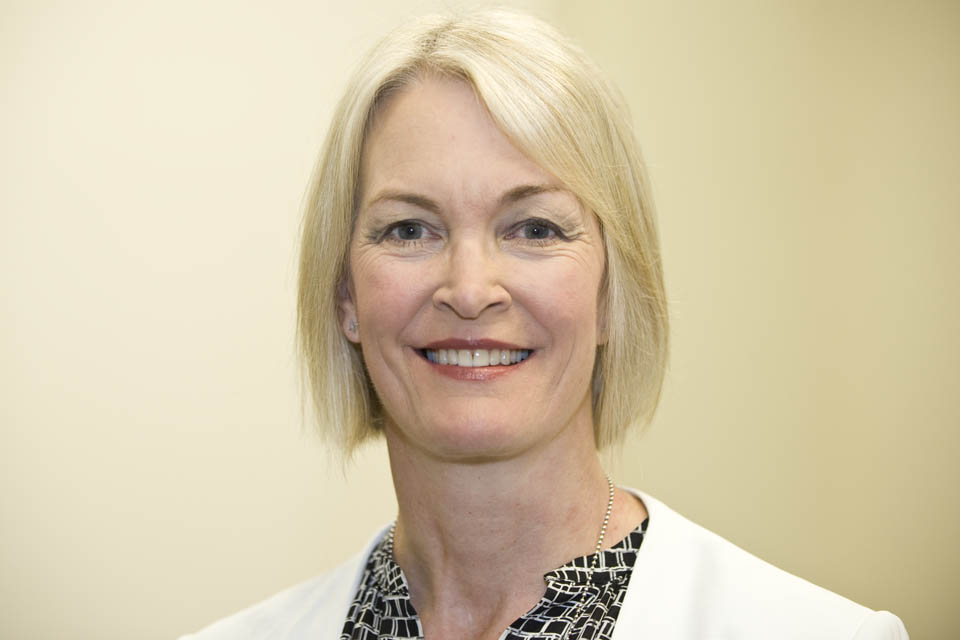
  • Margot James – 2019 Statement on Online Pornography Age Verification

    Below is the text of the speech made by Margot James, the Minister for Digital and the Creative Industries, in the House of Commons on 24 April 2019.

    On 17 April 2019, my Department announced that age-verification for online pornography will begin on 15 July 2019. This means that commercial providers of online pornography will be required by law to carry out robust age-verification checks on users, to ensure that they are aged 18 or over.

    The British Board of Film Classification (BBFC) will be responsible for ensuring compliance with this new regulation. Websites that fail to implement age-verification technology face having payment services withdrawn or may be blocked for UK users.

    Adult content is currently far too easy for children to access online. The introduction of mandatory age verification is a world-first, and we have taken the time to balance privacy concerns with the need to protect children from inappropriate content. We want the UK to be the safest place in the world to be online, and these new laws will help us achieve this.

    We have also listened carefully to privacy concerns and take the issue of data privacy and security extremely seriously. We are clear that age-verification arrangements should only be concerned with verifying age, not identity. ​In addition to the requirement for all age-verification providers to comply with General Data Protection Regulation standards, the BBFC has created a voluntary certification scheme, the Age-verification Certificate (AVC), which will assess the data security standards of age-verification providers. We feel that consumers should be able to choose age-verification solutions that meet an even higher privacy standard than is offered by GDPR if they wish to.

    The AVC has been developed in co-operation with industry and Government. Certified age-verification solutions which offer these robust data protection conditions will be certified following an independent assessment and will carry the BBFC’s new green ‘AV’ symbol. Details will also be published on the BBFC’s age-verification website, ageverificationregulator.com, so consumers can make an informed choice between age-verification providers.

  • John Glen – 2019 Statement on Bilateral Loan for Ireland

    Below is the text of the statement made by John Glen, the Economic Secretary to the Treasury, in the House of Commons on 24 April 2019.

    I would like to update Parliament on the loan to Ireland.

    In December 2010, the UK agreed to provide a bilateral loan of £3.2 billion as part of a €67.5 billion international assistance package for Ireland. The loan was disbursed in eight tranches. The final tranche was drawn down on 26 September 2013. Ireland has made interest payments on the loan every six months since the first disbursement.

    On 15 April, in line with the agreed repayment schedule, HM Treasury received a total payment of £407,843,097.02 from Ireland. This comprises the repayment of £403,370,000 in principal and £4,473,097.02 in accrued interest.

    As required under the Loans to Ireland Act 2010, HM Treasury laid a statutory report to Parliament on 1 April covering the period from 1 October to 31 March 2019. The report set out details of future payments up to the final repayment on 26 March 2021. The Government continue to expect the loan to be repaid in full and on time.

    https://assets.publishing.service.gov.uk/government/uploads/system/uploads/attachment_data/file/791132/Ireland_loan_statutory_report_April_2019_web.pdf

    The next statutory report will cover the period from 1 April to 30 September 2019. HM Treasury will report fully on all repayments received during this period in the report.

  • John Bercow – 2019 Statement on Chris Davies

    Below is the text of the statement made by John Bercow, the Speaker of the House of Commons, in the House on 24 April 2019.

    I have received a communication this afternoon from Southwark Crown court informing me that Chris Davies, the Member for Brecon and Radnorshire, has been convicted of providing false or misleading information for a parliamentary allowances claim. Since Mr Davies pleaded guilty, there can be no appeal against conviction. This notification accordingly triggers the provisions of the Recall of MPs Act 2015, and I will accordingly be writing to the relevant petition officer to inform that person that Chris Davies is therefore subject to a recall petition process. It will be for that officer to make the arrangements for the petition.

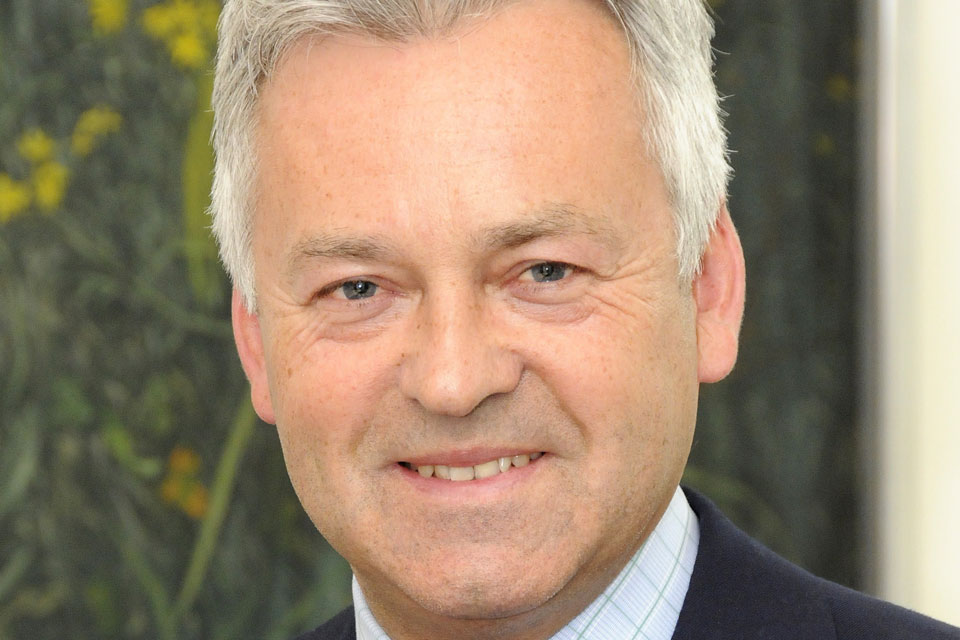
  • Alan Duncan – 2019 Statement on Mass Executions in Saudi Arabia

    Below is the text of the statement made by Sir Alan Duncan, the Minister of State at the Foreign Office for Europe and the Americas, in the House of Commons on 24 April 2019.

    We are very concerned by the executions of 37 men in Saudi Arabia, and the Foreign Office is working to establish the full facts. The Foreign Secretary will be raising this matter with the Saudi authorities at the earliest opportunity. The UK Government oppose the death penalty in all circumstances and in every country, including in Saudi Arabia. We regularly raise human rights concerns, including the use of the death penalty, at the highest levels with the Saudi Arabian authorities.

  • James Brokenshire – 2019 Statement on the Private Rented Sector

    Below is the text of the statement made by James Brokenshire, the Secretary of State for Housing, Communities and Local Government, in the House of Commons on 23 April 2019.

    You will have seen that last week I announced reforms to the legislative framework governing how private tenancies can be ended in England to improve security in the private rented sector for both tenants and landlords. This announcement followed my Department’s recent consultation on “Overcoming the Barriers to Longer Tenancies”. I also published the Government’s response to this consultation.

    The private rented sector has changed dramatically in the last 20 years, and the sector needs to keep pace with these changes. The number of people who live in the private rented sector has doubled, and it is home to more families with children and older people. These households need stability and security in their home.

    The current legislative framework leaves tenants feeling insecure. They can be asked to leave their homes, with as little as two months notice, without the landlord ​providing any reason, using eviction proceedings under section 21 of the Housing Act 1988. This sense of insecurity can profoundly affect the ability of renters to plan for the future, to manage their finances or to put down roots in their local communities.

    The Government intend to establish a fairer system for both tenants and landlords by legislating to repeal section 21 of the Housing Act 1988. Bringing an end to so-called “no fault evictions”, would mean that a tenant cannot be forced to leave their home unless the landlord can prove a specified ground, such as rent arrears or breach of tenancy agreement. It would provide tenants with more stability and protect them from having to make frequent and short notice moves. It would also empower tenants to challenge their landlord about poor property standards where this occurs, without the worry of being evicted as a result of making a complaint.

    The private rented sector must also remain a stable and secure market for landlords to continue to invest in. The legislation I intend to introduce will include measures that provide landlords with additional safeguards to successfully manage their properties. We will strengthen the existing grounds for eviction available to landlords under section 8 of the Housing Act 1988. This will allow the landlord to regain their property when they want to sell it or move into it themselves.

    It is important that landlords can have confidence that the court system works for them in instances when there is no other option but to seek possession of their property through the courts. That is why this announcement includes improvements to court processes, to make it quicker and smoother for landlords to regain their properties when they have a legitimate reason to do so.

    Removing no-fault evictions is a significant step. This announcement is the start of a longer process to introduce these reforms. We want to build a consensus on a package of reforms to improve security for tenants while providing landlords with the confidence that they have the tools they need.

    We will launch a consultation on the details of a better system that will work for landlords and tenants. The Government will collaborate with and listen to landlords, tenants and others in the private rented sector to develop a new deal for renting. Ministers will also work with other types of housing providers outside of the private rented sector who use these powers and use the consultation to make sure the new system works effectively.

  • Sheryll Murray – 2019 Speech on the Looe Flood Protection Project

    Below is the text of the speech made by Sheryll Murray, the Conservative MP for South East Cornwall, in the House of Commons on 23 April 2019.

    It is a pleasure to see the Under-Secretary of State for Environment, Food and Rural Affairs, my hon. Friend the Member for Suffolk Coastal (Dr Coffey) on the Front Bench to respond to my debate. The town of Looe, in my constituency, will be familiar to many right hon. and hon. Members, and to millions of people across the country, for its glorious scenery, fishing heritage and working port, and for summer holidays on a golden sandy beach. I know and love the town and its community. It was my late husband’s home port for his fishing business, and it is now a privilege to represent the people of Looe in this House. However, behind the picture-postcard image, the very existence of Looe is under serious threat from flooding.

    We will all be aware that many parts of the UK have experienced flooding in the recent past, but Looe is different. It is the most frequently flooded town in the UK. If scientists are correct about the impact of climate change, the risk to the town and its future prosperity can only be increased. Modelling for the Cornish south coast regeneration project has suggested that within a generation floods will be one metre worse, increasing the flooded area from 2.5 hectares to 16 hectares. That would be catastrophic for the town and the wider local economy.

    I can testify to the resilience of Looe’s residents and businesses in the face of regular, devastating floods, which I have witnessed. I have seen at first hand their remarkable fortitude and inventiveness in dealing with the aftermath of floods, including the awful foul water pollution. But the impact is now so severe that it is threatening the viability of the local economy, with damages amounting to £39 million over the past five years alone, deterring investment and reducing opportunities for growth.

    It is shocking that 65% of businesses in Looe have been flooded, costing each an average of £31,000. Many cannot get insurance so cannot, or understandably will not, invest further in their businesses. Worryingly, nearly a quarter of those businesses—the lifeblood of the local economy—have considered their future in the town. The flooding also deters new businesses from locating in Looe and shoppers and holidaymakers from visiting, and there is a detrimental effect on the wider community, as Looe’s economic footprint stretches far beyond the town and into communities, holiday parks and businesses right across South East Cornwall.

    Looe is located in what can only be described as a geographical perfect storm. It sits at the bottom of the narrowest part of the Looe valley, where the river meets the sea. Numerous storms and predicted rising sea levels, combined with high tides, are making flooding commonplace. Typically, flood events occur several times a year. During the 2013-14 winter season, the events were particularly severe, and considerable damage occurred to the quay walls as waves surged over the harbour. The frequency of floods and their severity are clearly getting worse.​

    Jim Shannon (Strangford) (DUP)

    I sought the hon. Lady’s permission to intervene. She referred to the winter of 2013-14; in my constituency of Strangford there are some 96 coastal erosion locations, including a number of villages. That indicates the severity of what is taking place. I have written letters to Westminster Ministers on this matter. Does the hon. Lady agree that it is essential that a UK-wide fund is set up to address this matter now, before it is too late and we end up losing villages, which is possible, down my Ards peninsula and in towns throughout the UK because of an inability to deal with the pressures from flooding?

    Mrs Murray

    I do agree with the hon. Gentleman and am sure that my hon. Friend the Minister has heard his concerns.

    Currently, flooding extends over 2.5 hectares. This at-risk area includes essential services and facilities such as the GP surgery, the police station, main food stores and cafes, as well as the fish market, which accounts for 10% of landings in Cornwall and is a national centre for the inshore day catch of high-quality, high-value fish, which is used to support many London restaurants. The fire station is also under threat—so much so that the fire engine has to be moved to the top of the hill during a flood. Essential transport links are at risk, including the main road bridge connecting east and west Looe, the railway station, and two miles of railway track, on which there have been 141 flooding incidents to date.

    According to Looe harbour commissioners, flooding because of high sea-water levels, possibly combined with wave action in the inner harbour, is the dominant cause of water damage. High sea levels can occur when high tides coincide with storm surges, causing water levels in the inner harbour to rise and sometimes overtop the quay walls and/or adjacent low-lying parts of the town. When flooding incidents occur, the owners of a lot of the fishing boats put a plank along their vessels’ fenders to prevent the staffs that hold the quay in place from staving in the sides of their vessels. Wave action can speed up the process of flooding by causing waves to overtop the quay walls to lower-lying areas of the town adjacent to the inner harbour. In addition, wave action can cause structural damage to the harbour walls and structures adjacent to the inner harbour.

    Also, surface water flooding from intense rainfall affects part of Looe. In addition, high tide levels prevent the discharge of water into the harbour, further exacerbating flooding associated with surface water. It is apparent from the surface water flood maps that floodwater accumulates on low-lying areas near the harbour. These risks are multiple and complex but must now be mitigated, and the huge potential for future investment and growth seized.

    A partnership-based approach in consultation with the local community has been key in developing an economically viable and environmentally friendly solution to the flooding challenges. I must put on record my thanks to the lead partner, Cornwall Council, the Environment Agency, Looe Harbour Commissioners, Looe Town Council and East Looe Town Trust for all their work on the proposal, which I will outline briefly later.

    I am also grateful to the commissioners and the council for funding the initial expert study, which has enabled the proposal to be produced, and it is supported ​by both the local community—with more than 95% of the respondents in favour of the scheme—and landowners and aligned with the Looe neighbourhood plan. The proposal, if fully developed, funded and delivered, will allow Looe to protect key infrastructure, including removing more than 200 properties from flood risk and creating opportunities for investment. It is anticipated that there will be in excess of £47 million of growth benefits.

    Briefly, phase 1 involves five projects: a tidal barrier installation to stop tidal flooding; an extension to the Banjo pier to improve river flow and bathing water quality; flood protection of east Looe beach to address wave action; an inner breakwater tidal barrier protection; and a new walkway from Pennyland in the town to Hannafore, restoring the missing link of the south-west coast path. Phase 2 will look to investigate the development of an outer breakwater and create a new working harbour.

    Given my very personal interest in sea safety, I am also delighted that Looe Harbour Commissioners believe that the proposals will improve health and safety in the port and support the work of the emergency services such as the RNLI. I am pleased that at the heart of the proposal is the improved access to water for all, including for children, disabled people and the elderly through an all states of the tide easy access landing stage. There is also massive potential for enhanced recreational facilities and marine biology innovations such as mussel beds or even a lobster hatchery such as the one at Padstow. The possibilities are endless.

    A further benefit from investment in flood defences will be to realise the growth of integrated travel and leisure opportunities. This includes a cycle network in the same vein as north Cornwall’s cycle links such as the very popular Camel Trail, which attracts half a million visitors a year. It is expected that the potential revenue from an integrated cycle network could be as much as £10 million per year. I am sure that many cycling businesses across south-east Cornwall would be delighted to get a spoke of this particular wheel.

    Now for the challenging aspect of funding, which is why I am delighted to have secured this debate with the Under-Secretary of State for Environment, Food and Rural Affairs, my hon. Friend the Member for Suffolk Coastal (Dr Coffey), responding. The cost of the overall scheme is currently estimated at £41 million. Further work is now required on the detailed design and bid for funding to integrate the Looe neighbourhood plan and develop plans for both the Looe Valley branch railway line and network of cycle paths. Cornwall Council has committed £2.3 million to undertake the detailed design and prepare the business case. It has also agreed terms to purchase land to increase the capacity of Looe railway station which links the town to the mainline at Liskeard. Cornwall and the Isles of Scilly Local Enterprise Partnership has also committed funding to assess the wider economic benefits of the project to south-east Cornwall. I want to put on record my thanks to the LEP for its financial commitments and work thus far.

    My hon. Friend will appreciate that the work to date has been a great example of cross-organisational working, financing and community engagement. I am aware that DEFRA’s flood defence grant in aid funding cannot be provided for this initial stage of the scheme, which is why funding from Cornwall Council and other local partners is so welcome. I accept that the delivery of the ​scheme is not a role for the Department and central Government alone. That is why I have been so keen to stress that this is about a partnership with all the authorities, as well as the local residents and businesses doing their bit every step of the way. However, given the significant economic, environment and social benefits, I hope that this approach can be replicated across Government Departments to secure the necessary capital funding for construction once the business case is submitted. This is expected to be in the next financial year of 2020-21. It is very encouraging that the Environment Agency has confirmed that £3.7 million of funding is eligible for a scheme that reduces flood risk in Looe, and has said that it will assess whether this can be increased to reflect the wider socioeconomic benefits of the project.

    The benefits of the project reach far beyond the key objective of flood prevention and protection. It will safeguard the entire town centre, fishing fleet and harbour. Without it, the town centre is unlikely to remain viable beyond 20 to 30 years due to persistent and recurrent flooding. It is envisaged that the project will be a regeneration hub for the wider area, forming part of the strategic coastal transport hub for South East Cornwall and beyond. It will enable homes and jobs for local people, with the development of around 670 homes and more than 1 hectare of employment land. The scheme will protect Looe for a generation as the focal point of the local area. It will be able to flourish and grow. According to the Cornish south coast regeneration project, it will also support the wider economy of Cornwall.

    Support and capital funding for the delivery of the Looe flood protection project will secure a sustainable future for Looe and harness the economic benefits for the town, surrounding communities, South East Cornwall and the wider county of Cornwall as a whole. I look forward to hearing what my hon. Friend has to say.

  • Emily Thornberry – 2019 Speech on Sri Lanka

    Below is the text of the speech made by Emily Thornberry, the Shadow Secretary of State for Foreign Affairs, in the House of Commons on 23 April 2019.

    I thank the Foreign Secretary for advance sight of his statement and for the tone of his words, with which ​I wholeheartedly agree. I join him in commending the work of the British high commission in Colombo. Once again, it has demonstrated that in the very worst of circumstances for British nationals abroad, our consular services offer the very best of support. I am sure the high commission will continue to ensure that the families of the British nationals who have so tragically been killed in the attacks get all the support they need at this time of unbearable shock and sadness.

    I have full confidence in what the Foreign Secretary has said about the assistance that the Government are ready to offer to the Sri Lankan authorities, whether in relation to security and intelligence, or in relation to help for the forensic services. He has our support and our thanks for that.

    I know that there are many questions to be asked about who was responsible for the attacks and what could have been done to prevent them, but today is not a time for those questions. On this day of national mourning in Sri Lanka, as the first of those who were killed are buried and as the death toll continues to mount, it is simply a time for this House and this country to stand with the people of Sri Lanka, with the British families and with those from around the world who have lost loved ones and to express our shared solidarity and grief at the devastation that they have suffered. It is a time to stand in admiration at the way in which the Sri Lankan people and their Government have responded to this attempt to divide them by instead coming together in peace and calling for the unity of all communities. We in the west must do our part to help Sri Lanka to recover from this horror by continuing to visit that beautiful country and showing the terrorists they will not win.

    It is sadly apt that on St George’s day, when we mark both the birth and the death of Shakespeare, we are confronted with the latest example of what he once called “mountainish inhumanity”. That is the unspeakable inhumanity and evil of men who would walk into a group of peaceful Christian worshippers at prayer or happy foreign tourists having breakfast and blow these innocent people up, killing at least 320 people, including 45 children and an eight-year-old cousin of our good friend the Member for Hampstead and Kilburn (Tulip Siddiq). Dozens are still fighting for their lives in hospital and hundreds more have received life-changing injuries.

    When we ask how anyone’s mind could become so warped and depraved as to commit such an act, just as we did about the attack on Muslims in Christchurch last month and on Jews in Pittsburgh last October, we must not make the mistake of blaming religion. There is no religion on this earth that teaches that the way to salvation is blowing up innocent children or shooting people at prayer. We must also not make the mistake of saying that one act of evil begets another, that somehow this atrocity happened because of the atrocity in Christchurch. I believe that that is an entirely false narrative, one that excuses terrorism. We should never indulge it. Instead, we should call it out for what it is: an act born of pure, vicious mind-polluting hatred perpetuated by sickening, despicable individuals who do not worship God but death; whose only religion is hate and whose fellow believers in hatred and in death must be wiped from the face of our earth.

    But in these dark and terrible moments, I see one shred of light and one piece of definite proof that the narrative that says that evil begets evil and we reap what ​we sow is indeed a false one. That was the deeply moving statement made by Ben Nicholson, confirming the loss of his wife and two children in the blast at the Shangri-La hotel. I do not think there is any one of us who could understand what that grief would feel like. We would all have understood if Mr Nicholson’s reaction had been one of anger and hatred towards the people who had destroyed his family, but instead his response was filled with love for his wife and for his beautiful children. He rejected hatred, the hatred that had killed his family, and he responded to it with mountainish humanity: a humanity that no act of evil could corrupt, because, as Shakespeare also wrote:

    “unkindness may defeat my life, But never taint my love.”

  • Jeremy Hunt – 2019 Statement on Sri Lanka

    Below is the text of the statement made by Jeremy Hunt, the Foreign Secretary, in the House of Commons on 23 April 2019.

    Today, the flags in Downing Street and on the Foreign and Commonwealth Office are flying at half-mast following the horrific Easter day terrorist attack in Sri Lanka. With your permission, Mr Speaker, I would like to update the House on the attack and the UK Government’s response.

    On Sunday, multiple terrorist suicide bombings were conducted across Sri Lanka. Six explosions occurred simultaneously—three in churches conducting Easter day services in Colombo, Negombo and Batticaloa, and three more in hotels in Colombo popular with foreign visitors. Information is still coming in, but we know that over 300 people have been killed, and we know that at least eight of those, sadly, are British nationals. They include mother Anita Nicholson with her 14-year-old son Alex and 11-year-old daughter Annabel, teenage brother and sister Amelie and Daniel Linsey, and retired firefighter Bill Harrop with his wife, retired GP Sally Bradley. The whole House will want to pass on our deepest sympathies and condolences, as we digest a truly heartbreaking situation.

    I spoke to James Dauris, the British high commissioner in Colombo, earlier this afternoon, and I want to put on record my thanks to him, his team and all the employees of the British Council for their dedication in extremely testing circumstances. One locally employed British Council employee is in hospital with his wife, both with serious injuries, and our thoughts are also with them and their family. Our travel advice has been updated and remains the best source of information for any British nationals or family members who have concerns about the situation.

    Yesterday, I spoke to my counterpart, the Sri Lankan Foreign Minister, to express my thanks for the work of the emergency services in Sri Lanka, as well as to pass on our condolences to all the bereaved families. I also discussed what further support the UK might be able to offer. Her Majesty the Queen, the Prince of Wales and other members of the royal family have sent messages of condolence to the President and people of Sri Lanka, and the Prime Minister is expected to speak with Sri Lankan Prime Minister Wickremesinghe later today.

    These attacks were a primitive and vile attempt to sow division between people of different faiths. Religious tensions have caused some of the bloodiest battles in human history, and it is sombre and sobering that even in the 21st century attempts continue to set believers of different religions against each other. Our response must be to deny the perpetrators the satisfaction of dividing us by being united in our condemnation of the attacks and united in our support for religious tolerance— ​surely one of humanity’s greatest achievements. Just as after the equally horrific attacks on the two mosques in Christchurch, New Zealand, we must respond by bringing people together; that is the exact opposite of what the perpetrators intended.

    It has to be said that the sheer brutality of the attacks was stark. One pair of attackers, after detonating their first explosives in a hotel, waited for people to try to escape before detonating a second device. The device destroyed by security services at Colombo airport was most likely designed to target fleeing civilians. The attack was complex, tightly co-ordinated and designed to cause maximum chaos, damage and heartbreak.

    The UK will never stand by in the face of such evil. Today, we stand in solidarity with the Government and people of Sri Lanka, who have made enormous strides towards stability and peace following the conclusion of the civil war almost exactly 10 years ago. The Metropolitan Police counter-terrorism command has dispatched a team of specialists to Sri Lanka, including family liaison officers, to support the families of British victims and assist with the repatriation of deceased British nationals. A recent programme run by Interpol involved the training of 30 Sri Lankan forensic specialists and police officers by UK experts in disaster victim identification. We hope that that will be of additional support.

    The Government of Sri Lanka have declared a state of emergency as the investigation continues. More than 20 arrests have been made, and there are likely to be more people who were involved in the planning of this attack still at large. A large amount of improvised explosive device material has been recovered, including 87 low-explosive detonators that were recovered from a bus station. There are no verified claims of responsibility as yet. So far, 40 arrests have been made, and counter-terrorism activity continues. The Sri Lankan Prime Minister and President have both said publicly that there will be a thorough investigation into the incident and whether information was handled correctly, and it is important to let that process follow its course.

    To attack Christian worshippers at Easter, which is a celebration of peace and the holiest day in the Christian calendar, betrays in the attackers an absence of the most basic values of humanity. Just two days ago, the Prime Minister and I both noted in our Easter messages the dangers facing Christians around the world, 300 of whom are killed every month. In response to such acts, we must redouble our efforts to protect the freedom of religious minorities to practise their faiths, wherever they are. For that reason, the FCO has asked the Bishop of Truro to do an independent report into what more can be done to protect persecuted Christians around the world.

    The British Government will continue to give their wholehearted support to the people of Sri Lanka, and I am sure the House will join me in once again expressing our deepest sadness and sympathy to everyone who has been affected by these monstrous attacks. I commend this statement to the House.

  • Andrew Jones – Statement on South-Eastern Rail Franchise

    Below is the text of the statement made by Andrew Jones, the Parliamentary Under-Secretary of State for Transport, in the House of Commons on 23 April 2019.

    In June 2017, the Department for Transport announced that the shortlisted bidders for the south-eastern franchise competition were: South Eastern Holdings Ltd; London and South East Passenger Rail Services Ltd, a wholly owned subsidiary of Govia and the current incumbent; and Stagecoach South Eastern Trains Ltd, a wholly owned subsidiary of Stagecoach Group plc.

    Subsequently, in December 2018, the Department exercised an extension with the existing south-eastern operator, London and South Eastern Railway, until 23 June 2019 to allow further time for the competition to identify the next operator for the franchise. The Department is now in the process of negotiating a further direct award which, subject to a successful negotiation, will run until 10 November 2019, with an option to extend the agreement until April 2020. We are taking these steps to ensure continuity of services for passengers. This additional time is necessary to deliver the best possible outcome for passengers and taxpayers alike. We will update the House in the usual way as soon as this work is concluded.

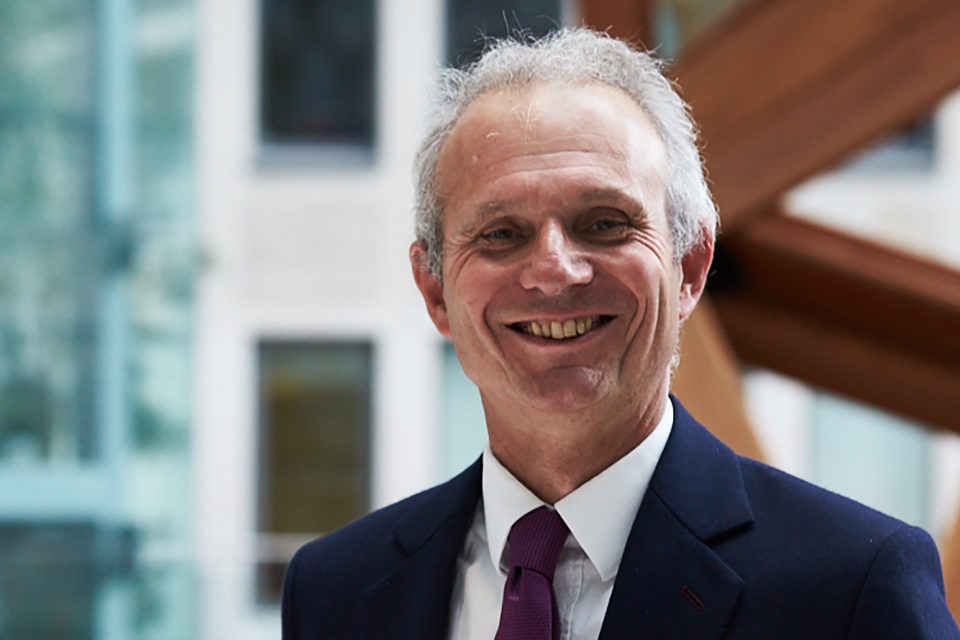
  • David Lidington – 2019 Speech at CYBERUK Conference

    Below is the text of the speech made by David Lidington, the Chancellor of the Duchy of Lancaster, at the CYBERUK Conference held in Glasgow on 25 April 2019.

    Good morning.

    It’s a pleasure to be with you in Glasgow, and it is appropriate that we’re meeting here. This is a city with a rich history of innovation, the home of the Scottish Enlightenment, the home of inventors like James Watt and the first Industrial Revolution. And today, Scotland is also home to a growing cyber community– there are three times as many cyber companies today than there were just a few years ago.

    So it’s fitting to be here in Glasgow, and to look at what’s coming next in cyber security. But I’d like first, I’d like to look back 30 years to November 2, 1988, when one of the first recognised cyber attacks, the Morris worm, wreaked havoc and crippled the fledgling internet for several days.

    Today, it seems a bit quaint to consider that a worm could take down a few thousand computers. It is two years ago since WannaCry, which affected over 100 countries and did an estimated billions of pounds in damage to the global economy. Although we’ve not seen anything quite on that scale since, there are a some concerning global trends that stand out.

    We’ve seen critical national infrastructure threatened by attacks like the short-term disruption at Bristol airport in September. We’ve seen private information comprised in large-scale data breaches of businesses like Marriott and Equifax. And we’ve seen consistent levels of attacks via company supply chains, like the infection of tens of thousands of Asus computers. And supply chains seem very much in the eyes of both criminals and hostile states as the soft underbelly of the private sector and providers of critical infrastructure.

    The threat continues to evolve rapidly. But thankfully, the UK is a global leader in the fight against cyber attacks. We have stood strong with our international partners to call out cyber attacks, to attribute where there is evidence so to do, and to set the standard for hardening national cyber defences.

    The National Cyber Security Strategy has revolutionised the UK’s fight against cyber threats as an ambitious, deliberately interventionist programme of action. During the last three years, we have put in place many of the building blocks to strengthen our cyber security and resilience, backed by an investment of £1.9 billion pounds.

    In 2016, we set up the world-leading National Cyber Security Centre to act as our single authority on cyber security. Countries around the world, including the US and Australia, have recognised NCSC as a global centre of excellence and many countries are now copying our model for cyber security.

    That also includes setting the standard in protecting our critical national infrastructure.

    I want to be very clear in the light of reports in the last 24 hours on one point in particular. The UK takes the security of our telecoms networks extremely seriously. We have rigorous and tested procedures in place today to manage risks to national security.

    Next generation networks like 5G raise security risks as well as opportunities for prosperity. That’s why the government commissioned a comprehensive review of the telecommunications supply chain. This is a serious study, based on evidence and expertise, not supposition or speculation.

    The government is committed to strengthen significantly this country’s security framework for telecoms. We will take whatever steps are necessary to ensure the secure roll-out of 5G and full fibre network. We will not countenance high risk vendors in those parts of the UK’s 5G network that perform critical security functions.

    The government’s approach is not about one company or even one country. It’s about ensuring stronger cyber security across telecoms, greater resilience in telecoms networks, and more diversity in the supply chain. We shall want to work with international partners to develop a common, global approach to improving telecoms security standards.

    As with any other review, certainly one of this complexity and this scale, the decisions will be announced in due course, and to Parliament first.

    We have also invested in cyber capabilities within law enforcement. National Cyber Security Programme funding has helped to train and equip staff at the National Crime Agency’s National Cyber Crime Unit, and has established dedicated cyber capability in all nine Regional Organised Crime Units.

    Meanwhile, our Active Cyber Defence programme is making good progress in automatically protecting UK internet users. Last year, it took down nearly 140,000 UK-hosted phishing sites.

    And we’re protecting the public sector, checking more than 4 billion queries to the internet every week, and blocking more than 1 million that are malicious. These are the kind of crude, high-volume attacks that have impact on people’s everyday lives, that compromise their identities and undermine the individual security of their bank accounts.

    So we’ve made considerable progress in government. More to do, yes, but considerable progress. But to build on this success, we need to demystify cyber security for the average citizen. We need to get away from the outdated image of WarGames and begin thinking more about botnets and malvertising.

    There remains a deep lack of awareness about these threats. Too often, in the corporate world, cyber resilience is seen as the responsibility of an IT department, when cyber security needs to be everyone’s responsibility.

    We saw, from WannaCry in particular, how a low-level lapse in cyber security can risk the compromise of a much wider network.

    The vast majority of cyber attacks can be prevented by putting basic cyber security measures in place. But nationally, only about a third of businesses and charities have a board member or trustee with specific, designated responsibility for cyber security. And even fewer have a system in place for when a cyber attack occurs.

    So all of us, including we in government, need to improve our efforts. That’s why, last month, I asked all government boards to appoint a representative for cyber security.

    Meanwhile, there are thousands of organisations outside government that can benefit directly from government expertise. So a few weeks ago I launched a new Board Toolkit designed by the NCSC to help FTSE 350 companies encourage discussions on cyber security between organisations’ board members and their technical experts.

    I also asked all boards to commit to achieving minimum standards in cyber security – and I’d encourage everyone here to do the same.

    We are partnering with nearly 600 private-sector organisations through our national Cyber Aware campaign to encourage citizens and small businesses to take simple protective steps that can prevent the majority of high volume, low sophistication attacks.

    And we’re already hearing great results from these programmes. We were recently contacted by the managing director of a small construction company who, thanks to advice from a cyber crime officer, was able to thwart an attempted invoice fraud. Doing that saved the company £125k and a contract that they had been negotiating for months.

    But there’s more we can do. That’s why, today, I am announcing that the NCSC will launch a new exercising initiative, called ‘Exercise in a Box’, designed to help organisations test their cyber resilience. This will be aimed at SMEs, at local government and the emergency services. It will be a free online tool, using scenarios based on common cyber security threats to enable organisations both to practice, and to test their responses to attacks in a safe environment.

    It will also provide bespoke guidance from the NCSC to help organisations to understand better the cyber risks they face, so that working together, we can build the UK’s cyber resilience to attacks, and target-harden ourselves against adversaries.

    But improving cyber security is not, and never will be, an exact science – it relies on partnerships to achieve lasting change. The geopolitical, technological and threat environment is constantly evolving. And we are seeking to meet these challenges, by building resilience regionally, nationally and internationally.

    Regionally, the UK government is working closely with the devolved administrations in areas like cyber skills and local government cyber resilience. That’s why, in the spirit of highlighting collaboration across the devolved administrations, I’m pleased to announce today that CYBERUK 2020 will take place in Wales. By sharing our expertise and helping to build vital skills together, we are working together to protect the whole of the UK from the threats of both today and tomorrow.

    We are working alongside FTSE 350 companies right across the UK to invest in pipelines of talent through our schools and universities. So far, more than 55,000 young people have participated in our Cyber Discovery and CyberFirst learning programmes, with a special focus on including more girls and more mid-career professionals.

    And internationally, we are promoting our cyber expertise. We have worked with allies to counter malicious cyber activity. And we’ve called out unacceptable behaviour, joining 19 countries, NATO and the EU, to attribute a range of cyber attacks to the Russian and the Chinese governments during the course of 2018.

    We are sharing best practices with allies. And across government departments, we are funding projects in more than 40 countries to help them defend themselves from emerging cyber threats.

    Now it’s time to look to the future. Our current National Cyber Security Strategy takes us to 2021. But, in the spirit of preparedness, we need now to consider our vision beyond then, and how we sustain long-term change.

    First, we want to reduce the risk from high-volume, low-sophistication cyber attacks. We need to build security right into internet-connected devices, systems and networks. And we must create a culture of cyber resilience among consumers themselves.

    Meanwhile, we must continue our work to tackle the most sophisticated and serious threats from hostile states and organised criminals alike. This means ensuring our agencies and law enforcement partners have the capabilities to counter malign activity, and modernising our deterrence posture so the UK is seen as a hard target. And we will continue to take a leading role in promoting a free, open, peaceful and secure cyberspace.

    Underpinning this, we want to build a sustainable ecosystem, with the companies, talent and research we need to remain world leaders in cyber security.

    It’s going to take time for our long-term investments to reap benefits. But with eight years of experience in national cyber security strategies, we can now focus government’s efforts where they’re going to be most effective, and move towards a more mature partnership in the public, private and third sectors.

    During the past four months, we’ve had three important reviews of the strategy from Parliament’s Joint Committee on the National Security Strategy, from the National Audit Office, and from the Infrastructure and Projects Authority. I want to say plainly that we do not shy away from constructive criticism. Criticism of that kind can only help us to strengthen the UK’s defences.

    These reviews rightly said that our approach can benefit from independent external expertise, particularly from industry and the academic world. This means inviting more critical challenge at working level. It means investing more into academic research. And it means looking at the ways industry innovates against emerging threats.

    One of the other points made by these independent bodies is the need for more transparency and reporting. So, in an effort to boost transparency while balancing that against the inherent restrictions that the national security considerations involve, we will be publishing an update at the end of May this year on the effectiveness and impact of our interventions under the strategy.

    As Alan Turing said, “We can only see a short distance ahead, but we can see plenty there that needs to be done.”

    The task in front of us is great. The threats are evolving every day. But this is the same country whose citizens invented programming, the first computer and the World Wide Web.

    We are up to the challenge. But we cannot do this alone. Partnerships at the key to UK’s cyber security. This government considers industry and academia to be the catalysts in delivering long-term, effective, cultural change.

    We need partners like the ones here today, to be engaged, open and willing to work with us for the safety and security of all. So thank you for all you have done, and for all you will be doing in the future, to ensure that we remain stronger, together.