Tag: 2019

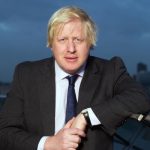
  • Boris Johnson – 2019 Speech on the Loyal Address

    Boris Johnson – 2019 Speech on the Loyal Address

    Below is the text of the speech made by Boris Johnson, the Prime Minister, in the House of Commons on 19 December 2019.

    This is the moment to repay the trust of those who sent us here, by delivering on the people’s priorities with the most radical Queen’s Speech for a generation. If there was one resounding lesson from this election campaign, and one message that I heard in every corner of these islands, it is not just that the British people want their Government to get Brexit done, although they do, but they want to move politics on, and move the country on, by building hospitals, renewing our schools, and modernising our infrastructure, as well as making our streets safer, our environment cleaner, and our Union stronger. This Queen’s Speech, from this people’s Government, sets in motion a vast interlocking programme to unite and level up across the whole United Kingdom, and unleash the potential of all our people.

    This one nation Government will enshrine in law record funding for our NHS, take back control of our borders with a wholly new immigration system, toughen our criminal justice system with longer sentences for the most dangerous offenders, double investment in basic science research, and protect our environment with a Bill so ambitious and so vast, that there is no environmentally friendly way of printing it off.

    This is not a programme for one year or one Parliament; it is a blueprint for the future of Britain. Just imagine where this country could be in 10 years’ time, with trade deals across the world creating jobs across the UK, and with 40 new hospitals, great schools in every community, and the biggest transformation of our infrastructure since the Victorian age. Imagine British scientists using new gene therapies to cure the hitherto incurable, and leading the dawn of a new age of electric vehicles—not just cars, but planes—and pioneering solutions to the challenge of climate change. I do not think it vainglorious or implausible to say that a new golden age for this United Kingdom is now within reach. In spite of the scoffing, in spite of the negativity, in spite of the scepticism that you will hear from the other side, we will work flat out to deliver it.

    Her Majesty’s Gracious Speech was expertly proposed by a beacon of our one nation Conservatism, my hon. Friend the Member for Chatham and Aylesford (Tracey Crouch). She is not only a football coach of great distinction who has done much to champion the female game, which will be a key part of this country’s bid for the 2030 World cup, but is so personally skilled at the game, with what has been described by her adversaries as a “take no prisoners” style, that according to The Daily Telegraph—if you cannot believe The Daily Telegraph, Mr Speaker, what can you believe?—she was once barred from playing against men to protect their egos. She has even used this Dispatch Box for an impromptu game of keepy-up, using it as a goalmouth in what was probably one of the less shocking innovations tolerated by the previous Speaker.

    My hon. Friend has also done pioneering work on tackling loneliness, improving dementia care, and, as we have heard, curbing the harms inflicted by gambling and alcohol. She is so dedicated to her job that she has regularly brought her son Freddie into the Lobby, so reducing the voting age to about six months. Chatham’s great parliamentary sketch writer, Charles Dickens, would himself confirm that her speech was in the very finest traditions of this House. [Hon. Members: “Hear, hear.”]

    My hon. Friend the Member for Chatham and Aylesford was followed with great style by my hon. Friend the Member for Walsall North (Eddie Hughes). When he addressed this House for the first time in 2017, he said:

    “the good people of Walsall North…have had to wait 41 years to hear a maiden speech from their Member of Parliament. You can only imagine how disappointed they will be”.—[Official Report, 3 July 2017; Vol. 626, c. 978.]

    My hon. Friend was being characteristically modest, but I cannot help noticing how the good people of Walsall North have taken drastic steps to avoid another maiden speech. They not only re-elected my hon. Friend, but they quintupled his majority just to be sure. As the right hon. Member for Islington North (Jeremy Corbyn) pointed out, you wait years for a Queen’s Speech then along come two in short order—something my hon. Friend will appreciate, as one of the growing number of bus drivers’ children on the Conservative Benches. He was elected—

    Ian Paisley (North Antrim) (DUP)

    Will the Prime Minister give way?

    The Prime Minister

    I know the hon. Gentleman wants to ask about buses, but I must make progress.

    My hon. Friend was elected as a blue collar Conservative from a traditionally Labour seat, a path that many have just followed. Since then, as he pointed out quite rightly, he has secured funding for a new A&E department at his local hospital and a new railway station for Willenhall. I know he comes from a Labour family. In fact, I think his brother is a Labour councillor. When he first declared himself a Conservative he felt, he said, like the black sheep of the family. All I can say is I bet that if they are watching today, they will feel nothing but pride in my hon. Friend’s brilliant speech.

    Let me also welcome to his place the right hon. Gentleman the Leader of the Opposition, a stickler, as we all know, for watching a Queen’s Speech at the right time. [Laughter.] Although I do not know what he has against coronation chicken, Mr Speaker. As our exchanges across the Dispatch Box come towards a close—alas—let me say that our personal relations have always been excellent. For all our disagreements, I have never doubted that the right hon. Gentleman’s beliefs are deeply held and his sincerity is to be admired. Certain members of his shadow Cabinet, on the other hand, are absolutely clear where the responsibility for the election result lies. The voters of the country have let his side down. They have forfeited the confidence of the Opposition and the time has come for Labour to take the only possible step: dissolve the electorate and replace it with a new one—at least, I think that is what the right hon. Member for Islington South and Finsbury (Emily Thornberry) said.

    For my own part, I feel a colossal sense of obligation to the electorate that I and we are humbled to serve. I say to those people who lent us their votes, however hesitantly, that this Government will now engage flat out on a programme of change for the better. Tomorrow is the day when we finally peel back the plastic wrapping, about which you have heard so much, Mr Speaker, and present our oven-ready deal. It will go into the microwave as the withdrawal agreement Bill—it works in both devices, this deal—taking back control of our money, our borders, our laws and our trade, clearing the way for an overarching programme of national renewal.

    Above all, it is time to invest in the institution that gives the country its cohesion and even our national spirit—the simple and beautiful idea that whoever you are, the NHS is there for you when you fall sick. As our NHS cares for us, so we will care for the NHS, delivering the biggest cash boost in a generation, and, for the first time, this Queen’s Speech guarantees a new funding settlement in law. What will that pay for? The biggest hospital-building programme in living memory, with 40 new hospitals, 50,000 more nurses—and their bursaries—6,000 more GPs and 50 million more GP appointments, and we will introduce a new NHS visa to fast-track talented staff from overseas. We will scrap those iniquitous hospital parking charges for all staff and vulnerable people, and we will guarantee dignity and fairness for everyone in their later years with a long-term and sustainable solution to social care. Indeed, I invite cross-party work on that solution, in the spirit of co-operation that I think is supported by many, many Members on both sides of the House.

    While many of these measures were indeed foreshadowed in the last Queen’s Speech, fortified by our new mandate we will go even further. We will give millions of tenants greater rights over their rented homes, abolishing no-fault evictions. We will help millions of commuters whose lives are made miserable by strike action by imposing minimum service agreements.

    Alan Brown (Kilmarnock and Loudoun) (SNP)

    Will the Prime Minister give way?

    The Prime Minister

    I will happily give way—if the hon. Gentleman is opposed to helping struggling commuters, I am delighted to hear from him.

    Alan Brown

    Earlier on, the Prime Minister used the slogan, the “people’s Parliament”, but the people of Scotland rejected his Government. If he really believes in the people, is it not right that the people of Scotland should have their say in a referendum?

    The Prime Minister

    I think it was Nicola Sturgeon herself who said that the referendum in 2014 was a “once in a generation” event. I do not know about you, Mr Speaker, but I feel that the Scottish Nationalist party should concentrate more on delivering on the domestic priorities of the people of Scotland and rather less on breaking up our United Kingdom.

    Stewart Malcolm McDonald (Glasgow South) (SNP)

    Will the Prime Minister give way?

    The Prime Minister

    I believe that if I gave way to the hon. Gentleman, I would be forced to repeat the point I have just made.

    We will abolish the threat of no-fault evictions, and we will take forward our plans to rejuvenate and, in many cases, to revolutionise the infrastructure of Britain, including Northern Powerhouse Rail. We will remedy the scandal that Leeds is the largest city in western Europe without light rail or a metro. We are dramatically improving local bus services, levelling up across the country to the standards set in London—at least, as they were set under a previous Mayor—and we are investing nearly £30 billion in our road network, including upgrading the A66 to be the first continuous dual carriageway across the Pennines since the 1970s.

    Above all, this one nation Government will strengthen our United Kingdom of England, Scotland, Wales and Northern Ireland—the most successful Union in history and a sacred inheritance that this Parliament will never allow anyone to rip up or rend asunder.

    We will stand by one of the greatest international symbols of British courage and daring: our armed forces—the men and women who sacrifice so much to safeguard our way of life. We will protect our protectors from unfair and vexatious legal claims that undermine their morale and confidence. We will spare no effort in addressing the profound concerns of millions about the state of our criminal justice system with the first royal commission for almost 30 years, and there will be action now to impose tougher sentences on the most serious offenders.

    Stephanie Peacock (Barnsley East) (Lab) rose—

    The Prime Minister

    If the hon. Lady wants to contest the need for tougher sentences for serious offenders, I am happy to hear her view.

    Stephanie Peacock

    The Queen’s Speech mentioned a sentencing Bill. Will that include provision for increasing the sentence for causing death by dangerous driving from 14 years to life imprisonment? If not, are the Government open to accepting an amendment?

    The Prime Minister

    The hon. Lady makes an important and valid point. I have no doubt that she reflects the concerns of her constituents, and we will certainly be looking at what we can do to make sure that people who are guilty of dangerous driving receive the penalties they deserve. I know that the Home Secretary will have listened very carefully to what the hon. Lady has said.

    We will also end the dangerous practice of early release of terrorists, but our reforms will only stand the test of time if our system of government here at Westminster meets the challenge of a new era. The steady erosion of faith in politics has poisoned our public life, so we will establish a constitution, democracy and rights commission to recommend proposals to restore trust in our institutions and our democracy. As a first step, we will repeal the Fixed-term Parliaments Act 2011 so that never again can we have the ludicrous spectacle of an Opposition party trying to defy the will of a majority of the House and running away from a general election. We will do everything in our power to restore devolved government in Stormont so that Northern Ireland is once again ruled by its own elected representatives.

    Ian Paisley

    Of course, we all look forward to devolved government being re-established in Northern Ireland fairly and equitably for all. Will the Prime Minister make good on his commitment for a golden age for all of the United Kingdom by making good on his promises for bus building and infrastructure in Northern Ireland so that we can all enjoy that golden age, and will he build a Boris bridge, not just the Boris bus?

    The Prime Minister

    I am grateful to the hon. Gentleman, and he can certainly be assured of my commitment to ensuring that the beautiful buses continue to be built in Ballymena. I will do everything we can to ensure that that continues to be the case. As for his desire for a bridge to connect the two biggest isles of the British Isles, all I can say is that it is a very interesting idea. I advise him to watch this space and, indeed, to watch the space between the islands, because what he has said has not fallen on deaf ears.

    When it comes to standing by our friends, whether in Northern Ireland or elsewhere, one innovation that this Queen’s Speech introduces is that we will stop public bodies taking it upon themselves to boycott goods from other countries and to develop their own pseudo-foreign policy against countries that, with nauseating frequency, turn out to be Israel.

    Liz Saville Roberts (Dwyfor Meirionnydd) (PC)

    Will the Prime Minister give way?

    The Prime Minister

    No.

    The scale of our programme is matched only by the sense of responsibility that now falls on all of us who have been elected. Again, I congratulate all new Members, and a huge responsibility now falls on all of us to redeem and repay the trust of the British people. I say to the people of this country that we owe you, we know it and we will deliver. We have now the energy, the ideas, the mandate and the people and we will spare no effort in fulfilling that mandate. As we engage full tilt now in this mission of change, I am filled with invincible confidence in the ability of this nation, our United Kingdom of Great Britain and Northern Ireland, to renew itself in this generation as we have done so many times in the past. After the dither, after the delay, after the deadlock and after the paralysis and the platitudes, the time has come for change and the time has come for action, and it is action that the British people will get from this Gracious Speech, this most Gracious Speech. I commend it to the House.
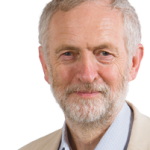

  • Jeremy Corbyn – 2019 Speech on the Loyal Address

    Jeremy Corbyn – 2019 Speech on the Loyal Address

    Below is the text of the speech made by Jeremy Corbyn, the Leader of the Opposition, in the House of Commons on 19 December 2019.

    It is the tradition at the beginning of each Session of Parliament to commemorate former Members of the House who have died. It has only been two months since the last state opening, but in that time we have sadly lost our great friend Frank Dobson, the former MP for Holborn and St Pancras. Frank was a very, very committed Health Secretary from ’97 to ’99, who began the rebuilding of our national health service after it had been so disgracefully run down by the Conservative Government at that time. He was always an incredibly friendly face, and always full of anecdotes and jokes that I cannot repeat here. He will be greatly missed by all of us on these Benches and, I suspect, by many others who knew him as a thoroughly decent Member of Parliament who was very committed to his constituents and to the cause of good housing across the country. We have also lost David Lambie at the magnificent age of 94. David was a Labour MP from 1970 to 1992, and I knew him very well as a committed peace campaigner.

    On Tuesday, the Prime Minister and I remembered Saskia Jones and Jack Merritt, the wonderful young friends who died in the appalling terror attack at Fishmongers’ Hall. It is right that we pay tribute to them again today for the way in which they lost their lives and the message they left behind.

    I would like to take this opportunity to welcome all new Members, on both sides of the House. Being a Member of Parliament is a massive achievement and a massive honour. I would imagine that, in witnessing our opening proceedings today, many must be thinking, “What on earth have I taken on? The pantomime season has come very early this year.” [Interruption.] Yeah, look behind you. [Interruption.] If I may continue, I would also like to pay tribute to the former Members who lost their seats in the general election. To serve in Parliament and then fight the election and not be returned is an amazingly traumatic experience, when they have put such a huge amount of work into their campaign as well as into the work they have done here. We should all think for a moment about the human side of what it is like to go through that experience, and the trauma they must all feel. I pay tribute to them and thank them all. I will not mention all the names, but I would just like to commemorate and thank Dennis Skinner for his amazing work and the presence he has been in this Parliament throughout all the years that he was an MP.

    I would like to congratulate the proposer of the Loyal Address, the hon. Member for Chatham and Aylesford (Tracey Crouch), who showed passion and integrity. That is what she became known for since her very principled resignation from the Government over their failure to restrict fixed odds betting terminals, and I thank her for that. But I am afraid that that is where we part ways, for if there is anything that can drive a wedge between two people even more than a Brexit vote in this place, it is the north London rivalry between Spurs and Arsenal. These things may seem trivial, but, as the great Bill Shankly once said:

    “Some people believe football is a matter of life and death. I am very disappointed with that attitude. It is…much more important than that.”

    To put it another way, to help the hon. Member, Arsenal won 13 league titles and Tottenham two—but we take our victories where we can find them. I compliment the hon. Member particularly on the last part of her speech dealing with the natural world and the environment: it was incredibly important and very well put.

    I also congratulate today’s seconder of the Loyal Address, the hon. Member for Walsall North (Eddie Hughes), on his speech and the spirit with which he gave it. I got a sense of the spirit of Walsall when I was in Walsall College recently—a wonderful place with wonderful students. Conservative Members are renowned for their membership of various clubs: the Bullingdon club, the Reform club and so on. There are many of those clubs. But I was absolutely overjoyed when researching the hon. Member to find that he is a member of one of the greatest and most prestigious clubs of them all—he is a trustee of the Walsall Wood allotment charity, which is a fantastic honour, I am sure everyone will agree. He will understand more than most the ecstatic pleasure that we allotment holders, including him, get from our allotments and the produce we get from them. I hope this will provide an opportunity for a genuine, bipartisan working relationship over the onions and the carrots.

    It was just two months ago that the Prime Minister made the Queen come here in the rain as part of a pre-election stunt. Since then, he has made many promises to many different parts of the country. He has promised to address problems that are the result of his own party’s actions in government and its political choice to impose austerity cuts on this country. There can no longer be any doubt that austerity has caused unnecessary suffering to millions of people all across this country. The communities to whom the Prime Minister made his promise will now judge him on whether he keeps them.

    In this Queen’s Speech, the Government have tried to mimic some of the priorities and, interestingly, much of the language of Labour policies, but without the substance. On austerity, on investment, on regional inequality, on the national health service, we can see how we forced the terrain to shift. They say that imitation is the sincerest form of flattery—even if it is a very pale imitation. But I fear that those who were swayed by the Prime Minister’s promises will be sorely disappointed, as this Queen’s Speech shows that what the Government are actually proposing is woefully inadequate for the scale of the problems that this country faces.

    Our NHS, the country’s most precious institution, is on its knees due to this Tory Government. The Government now talk about enshrining the funding settlement in law. Enough of the gimmicks—just fund it properly. I do not remember the last Labour Government having to pass a law to force themselves to invest in the NHS, yet they increased NHS funding by a rate of 6% per year. This Government are proposing little more than half that—less, in fact, than the historical average.

    The gap between the Government’s rhetoric on the NHS and the reality is enormous. Last week, for the first time ever, every single major accident and emergency unit in England failed to hit its four-hour waiting time target. Every major unit failed to meet the target—every single one—under this Government. The number of people in England waiting for operations is the highest since records began—4.4 million—and the number of unfilled staff vacancies has ballooned. The Prime Minister’s promise of 50,000 extra nurses was quickly revealed as a sham—19,000 of them already work for the NHS—and his promise of 40 new hospitals turned out to be a reconfiguration of just six. The public will remember this. They will not look kindly on promises that are not kept.

    This Government say that they will take action on hospital car parking fees, following our lead, but whereas we propose to abolish those fees, apparently only some people will be entitled to free parking under their plans. It was the disastrous Health and Social Care Act 2012, brought in by the Conservatives and the Liberal Democrats when they were in coalition, that flung open the door to privatisation, which is the cause of so many problems in our NHS, yet the Queen’s Speech says nothing whatsoever about the Health and Social Care Act and the privatisation that it has brought.

    Not so long ago, the Prime Minister stood on the steps of Downing Street and announced that he had a plan to solve the social care crisis, so where is it? It was not in his party’s manifesto, and all we have today are empty words about bringing forward proposals. Perhaps we should not be surprised—all we had in the last Queen’s Speech were empty words about bringing forward proposals. And in the Queen’s Speech before that, what did we get from the Conservatives? Empty words about bringing forward proposals. At least they have continuity on this. Cuts to adult social care are expected to reach almost £8 billion by the end of 2019-20, but the Government are only putting £1 billion back in. It is like taking £8 from someone and expecting them to be grateful when you give them back £1.

    When it comes to young people, the Government seem to have given up altogether. This is yet another Queen’s Speech that is miserably weak on education, with nothing for early years, nothing for colleges and nothing for universities. The Government clearly have not heard the anxious cry of parents and teachers about school funding, overcrowding and unqualified teachers. The funding promised for schools will still leave them hundreds of millions of pounds worse off in real terms than they were in 2010.

    When it comes to Brexit, the election result demonstrated a strong determination from many people across our country to end the mess and paralysis of the last three years. We understand that people are desperate to move on. That does not mean that we will just accept the Prime Minister’s reckless approach to how it is done. He has now deliberately resurrected the threat of no deal at the end of next year, which would decimate industry and destroy people’s jobs. That threat is now written into the withdrawal agreement Bill.

    The Prime Minister has shown time and again that his priority is a toxic deal with Donald Trump that will sell out our NHS and risk the safety of our food, our environmental protections and workplace rights. We do not want our NHS given over to US corporations, and we do not want expensive medicines with extended patents. We do not want food like chlorinated chicken on our dinner tables either. We know that the Prime Minister’s deal will not put Brexit to bed. It will just be the beginning of years of more drawn-out negotiations.

    It has been reported that the Government want to scrap the Department for International Development—a proud achievement of Labour in government. Will the Prime Minister confirm that this Government will not close DFID, and will he ensure that 0.7% of the UK’s spending continues to be used to help end global poverty and destitution? I note the commitment to develop a sanctions regime to directly address human rights abuses. That sounds like good news for Saudi Arabia. Should the Saudi regime be worried, or will the Government continue to ignore its human rights abuses and war crimes in Yemen, which have resulted in famine and humanitarian disaster? According to the UNHCR, the refugee commission, there are almost 71 million forcibly displaced people around the world. Where is the Government’s commitment to do anything for those desperate people fleeing war, violence and famine?

    Around the world, Britain should stand up for human rights and democratic rights, including the right of workers facing exploitation and abuse, so it is very worrying that here at home the Conservative Government are planning an assault on workers’ rights to withdraw their labour, beginning with the transport workers. No worker goes on strike lightly, but we will oppose any attempt to curtail that right. We have already seen some of the most draconian anti-worker laws, and now the Government seek to take us even further back in time—again, in breach of the conventions of the International Labour Organisation. In a country where pay is too law, work too insecure and bad employers too common, attacking the rights of the working people to stand up for themselves is a completely wrong-headed approach.

    On the subject of transport, with planned transport investment in the north less than half that in London, what assurances can the Prime Minister give that the commitments on investment in the Queen’s Speech are not just another failed gimmick, as the northern powerhouse was? We should take it as a form of flattery that, on investment, the words of the Queen’s Speech echo what Labour has long argued—that investment is desperately needed in every part of our country. However, the scale of investment planned by the Government falls woefully short of what is required.

    Speaking of falling woefully short, this Queen’s Speech contains nothing of substance to deal with the colossal challenge of climate and environmental emergency. Net zero carbon emissions by 2050, which is the Government’s target, is too late and, in any case, at the current rate of progress we will not reach net zero until 2099. Any target date will be fanciful if action does not start now. What are the Prime Minister’s plans on climate for this year and for each year after that? It is clear that COP 25 this year was a failure. Next year, Britain has the honour of hosting COP 26 and, frankly, I think it will be embarrassing for all of us to host such a vital conference if we are not doing enough to reduce our own carbon emissions and show we have made some real progress towards bringing forward the target date. The Government need to get serious and put young people’s futures before those of the big polluters, many of whom fund the Conservative party.

    This Christmas, thousands of people will be sleeping rough on the streets, thanks to this Government and their housing policy. Rough sleeping has doubled on the watch of the Conservative party in government. Everyone who sees people huddled in doorways in the cold—in the fifth richest country on earth—knows it is morally wrong. Shelter says that 280,000 people will be homeless on Christmas day in England alone, either rough sleeping or living in temporary housing or hostels, so can the Prime Minister explain why there is no mention of homelessness in the Queen’s Speech and why there is so little to address the housing crisis? Could it be that he does not want to upset the billionaire landlords who back his party? The Prime Minister has used Labour’s idea of offering discounted homes to first-time buyers. It is okay—it is more flattery—but let us see the substance of it. What reassurance can he provide that this will not go the same way as the failed starter homes programme? Remember when we were promised 200,000 starter homes in 2015? But, as yet, we have seen absolutely zero.

    The fire at Grenfell Tower exposed a housing system that is fundamentally broken. Yet two years later—two years later—319 of the 446 buildings covered in aluminium composite cladding have not had it removed. Imagine living in one of those buildings and feeling at risk. That is probably not something many Members of this House go through, but it is an experience that thousands of people go through every day, living with the fear of a burning inferno that is their home. Will the Prime Minister now set a hard deadline for all landlords to replace dangerous cladding? Will he fund the installation of sprinklers in high-rise social housing blocks, and reverse budget cuts to the fire service? We will look at the findings of the Government’s royal commission on the criminal justice process, but any changes to sentencing must be done in consultation with anti-terror experts, and not as a knee-jerk reaction to make political capital.

    This Queen’s Speech is notable for what is not in it. It does nothing for students who are being lumbered with huge debts, it does nothing for older people unable to pay their heating bills this winter, and it does nothing to address their levels of poverty in our country. This year, the United Nations—yes, the United Nations itself—had to take our Government to task over the shocking fact that 14 million people are living in poverty in this, the fifth richest country in the world. Should that not be a source of shame for this Government? Should not their Queen’s Speech contain something to address that? Why is there not even a mention of universal credit, the cruel policy that has ruined so many lives?

    Why is there no commitment to immediately raise the minimum wage to £10 an hour so that people no longer have to work their fingers to the bone yet still remain in poverty? These things are not in this Queen’s Speech because this Government, and that Conservative party, do not stand for the people on the receiving end of their policies. Despite all their promises, that is exactly what this Queen’s Speech shows.

    The central aim of my party, the Labour Party, is to stand up for working people and for every part of this country—for the many, not the few—and to deliver social justice, prosperity and a society that works for all. As this Government plough ahead with their programme of gimmicks and false promises, we will be holding them to account every step of the way. We will be campaigning inside and outside Parliament, and across the country, for the real change that sadly this Government will not deliver, but that our country so desperately needs.

  • Eddie Hughes – 2019 Speech on the Loyal Address

    Below is the text of the speech made by Eddie Hughes, the Conservative MP for Walsall North, in the House of Commons on 19 December 2019.

    I hope you will forgive me, Mr Speaker, if I look slightly bewildered to be called to address a full House of Commons Chamber: I have simply never had this experience previously. In fact, over the previous two and a half years, I have got used to being called at the end of a debate to address a Chamber that is almost completely empty, and then being given two minutes to make a 10-minute speech. If you like what you hear over the next few minutes, Mr Speaker, I would like to think you will call me early in debates, unlike your much-loved predecessor. For the moment, though, I am just going to relish this amazing opportunity to talk to all these people.

    It is an incredible privilege to be seconding the Humble Address, and it is also an incredible privilege to follow my dear and good friend, my hon. Friend Member for Chatham and Aylesford (Tracey Crouch). If I remember correctly, she won her seat in 2010 from a Labour Member. If my maths is right, some 50 new Conservative MPs in this Chamber won their seats from Labour Members, right across the country from Ynys Môn to Ipswich—[Hon. Members: “Not in Scotland.”] SNP Members had to ruin the flow, didn’t they? Come on guys—you are meant to be nice. [Interruption.] You are meant to be nice to me. Conservative MPs won Labour seats from Ynys Môn to Ipswich and from Kensington to Blyth Valley. Anybody who has a political bone in their body should just take a minute to remember how they felt when that Blyth Valley result came in.

    I won my seat from a Labour Member in 2017, but the Conservatives last won the seat in 1976, and they only managed to win it then because John Stonehouse, the Labour MP, faked his own death. While on a business trip to Miami, he left a pile of clothes on the beach, pretending that he had gone for a swim, never to be seen again, supposedly. I tell you what: he was a damn fine swimmer, because five weeks later he turned up 10,000 miles away in Melbourne, Australia. He was arrested and tried to apply to a couple of countries for asylum, but that did not happen, so he was deported back to the United Kingdom. Incredibly, while out on bail he continued to serve as a Labour MP. I am not sure, but I do not think the Home Secretary, my right hon. Friend the Member for Witham (Priti Patel), would allow such leniency these days. I found it amusing to read a line on Wikipedia that said:

    “Although unhappy with the situation, the Labour Party did not expel him.”

    That sounds like a familiar theme these days.

    For those of us who are 2017 MPs, this has felt like a very precarious innings—like we are never more than five weeks away from a general election. I was getting a bit concerned, because my Conservative predecessor, who is now Baron Hodgson of Astley Abbotts, managed to serve 910 days as the MP for Walsall North. When Parliament was dissolved on 5 November, I had served for 881 days—[Hon. Members: “Ooh!”] I thank my hon. Friends for playing their part—so I knew I had to win the election to beat the baron.

    The good omen for me and for this incredible Conservative victory should have been apparent to me on 27 April this year. With just a few days to go before the local elections, I was visited by a man who was at that time a humble Back Bencher: my right hon. Friend the Member for Uxbridge and South Ruislip (Boris Johnson); he was not the Prime Minister then. The blond bombshell was unleashed on the unsuspecting people of Bloxwich, and the result was truly magnificent to behold. Everybody who asked for a selfie was greeted with a beaming smile and an occasional tussle of those famous blond locks. When our tour reached its inevitable destination, the Bloxwich showman—the future Prime Minister—obviously pulled a pint of Thatchers Gold. I know what you are thinking, Mr Speaker: you are thinking, “So what? What was the consequence of this great visit?” The consequence for me was that, in those local elections a few days later, we won two more council wards against the national trend and, for the first time in 20 years, the Conservatives took outright control of Walsall Council.

    Perhaps that should not have been a surprise because, over the past three years, we have had a blue-collar revolution. The working people—the working class—of Britain have sent two shock results and who led both those campaigns? It was one man who completely understands that, actually, what the public want—what ordinary working people want—are a Government who will stay out of their way, but will ensure that they have safe streets, a good standard of education for their children, and a great national health service when they need it. We now have a Government and a Prime Minister who understand that and will deliver. People lent us their vote in this election. We cannot let them down; we must not let them down; we will not let them down.

    Mr Speaker, I think you know the answer to this question. What is the first priority for this country? [Hon. Members: “Ah!”] Members are supposed to say, “Get Brexit done.” Anyway, get Brexit done. Indeed, in an interview immediately after the election result, I think I heard the right hon. Member for Hayes and Harlington (John McDonnell), the shadow Chancellor, say that he now understood that the public want to get Brexit done, but Labour had not been listening.

    In my constituency of Walsall North, 74% of people who voted in that referendum voted to leave, but that was not the interesting thing for me during the general election. When I was telephone canvassing, I spoke to lifelong Lib Dem voters who voted remain in the referendum, but who were now voting Conservative because they said that they were real democrats. They knew how important it was for this country to deliver on the result of that referendum.

    Walsall North is like many of the constituencies that we have just won. It is among the most deprived constituencies in the country, but now we have a Prime Minister who completely understands that, although ability is equally distributed across the country, opportunity is not. That is why we are going to transform the further education system by investing in a huge new rebuild programme worth £1.8 billion.

    Investment in infrastructure is also incredibly important. There are towns such as Willenhall in my constituency where the manufacturing base has been decreased over recent years. I was delighted to work with the Mayor of the West Midlands and secure the money for a new train station for Willenhall, because that train station will be a lifeline for that town. It will allow the people of Willenhall to travel to Birmingham and to Wolverhampton more easily for job or education opportunities. It will also allow people to travel into Willenhall, so if we can continue to remediate those old industrial sites, we will automatically free up new opportunities. I am imagining a time when we have a robotic factory in Willenhall, making goods that would otherwise be brought over from the other side of the world, therefore also reducing our carbon footprint for free.

    Mr Speaker, I know what you are thinking. You are thinking—

    Kevin Brennan (Cardiff West) (Lab)

    Sit down!

    Eddie Hughes

    I will look at the camera to see who said that. That is not what you were thinking, Mr Speaker. I know you. You were thinking, “What about the NHS? Is it safe in this Conservative Government’s hands?” Let me tell you, it certainly is in Walsall North, because thanks to the Health Secretary my constituency has got £36 million for a new A&E department, which is going to increase capacity and improve conditions for staff and patients alike.

    What about the rest of the country, though? I do not know where to begin: 50,000 extra nurses; 50 million extra GP practice appointments a year; and 40 new hospitals. And what about the future of our great nation? Well, I am delighted to read that this Conservative Government will be investing a stonking £3.2 billion a year in research and development by the end of this Parliament, although I completely agree with my hon. Friend the Member for Harborough (Neil O’Brien), who said that we simply cannot continue to spend half that money in just three cities—London, Oxford and Cambridge—but that we need to spread it throughout the country.

    From my point of view, it certainly looks like the future of the whole United Kingdom is incredibly bright with this Conservative Government. As we look to 2020 with a new-found spirit of optimism and ambition, it is my privilege, on behalf of the great people of the Black Country, to commend this Gracious Speech to the House.

  • Tracey Crouch – 2019 Speech on the Loyal Address

    Tracey Crouch – 2019 Speech on the Loyal Address

    Below is the text of the speech made by Tracey Crouch, the Conservative MP for Chatham and Aylesford, in the House of Commons on 19 December 2019.

    I beg to move,

    That an humble Address be presented to Her Majesty, as follows:

    Most Gracious Sovereign,

    We, Your Majesty’s most dutiful and loyal subjects, the Commons of the United Kingdom of Great Britain and Northern Ireland, in Parliament assembled, beg leave to offer our humble thanks to Your Majesty for the Gracious Speech which Your Majesty has addressed to both Houses of Parliament.

    Mr Speaker, despite the fact that this is quite possibly the most terrifying thing that I have ever done, it is, of course, a great honour to move the Address as the re-elected and proud Member for Chatham and Aylesford. This speech is usually a gift reserved by the Whips for those thought to have had their best times. The Chief Whip, a man well known for his elegance, charm and wit, has clearly clocked that it is panto season, for asking me to do this speech is the equivalent of shouting, “Your career is behind you!” [Hon. Members: “Oh no it isn’t.”] I think we can do a bit better than that and, frankly, I would feel a bit more reassured if the Prime Minister could join in. The Chief, a man well known for his elegance, charm and wit, has clearly clocked that it is panto season, for asking me to do this is the equivalent of shouting, “Your career is behind you.” [Hon. Members: “Oh no it isn’t!] [Laughter.]

    Instead of “Cinderella” or “Puss in Boots”, let us raise the literary tone and note that today is the anniversary of “A Christmas Carol” being published in 1843. Charles Dickens was a son of Chatham, so this old has-been speech makes me feel like the ghost of Christmas past; my hon. Friend the Member for Walsall North (Eddie Hughes) will presently play the ghost of Christmas future; and the Prime Minister is oven ready for the role of the ghost of Christmas present.

    Scrooge would have been brilliantly played by the former Chancellor, Philip Hammond, but he was sadly pipped for the part by the last Speaker, who auditioned powerfully for the role for many a bleak year. Old Marley sits on the Front Bench opposite, chained and regretful—and that is just about Arsenal’s recent performances. But who is our Tiny Tim, so valiant and small, the object of universal pity? It could be none other than the hon. Member for Westmorland and Lonsdale (Tim Farron), whom we welcome back to the House; we wonder whether he will have another go at his party’s leadership.

    I had thought of continuing the “Love Actually” election theme by delivering my speech on bits of card, with the parliamentary choir singing carols in the background, but: one, we are not allowed to bring props into the Chamber; two, I think Hugh Grant has suffered enough; and, three, it would be simply impossible to fit in all the names of the new Conservative intake.

    I note that the last Kent MP to propose the Loyal Address was Bob Dunn, the long-serving Member for Dartford, who started his speech by mentioning that he had been

    “returned as its Member in four successive general elections—at each election, the Conservative vote has been significantly higher than the time before.”

    Thanks to this Prime Minister, I now know how he felt. This legislative programme outlines plans for a Bill authorising the construction and operation of High Speed 2, but it was in the Queen’s Speech of November 1994 that the legislation for High Speed 1 was proposed. Along with the constituency of Dartford, High Speed 1 travels through mine and many others in Kent. Bob Dunn spoke of its potential virtues, predicting

    “the economic benefits associated with it”.—[Official Report, 16 November 1994; Vol. 250, c. 7-9.]

    And he was right. Thanks to that Bill, 25 years ago, parts of Kent have seen major regeneration thanks to a much-reduced travel time to London, and there is still even more potential to unlock.

    I am privileged to be the Member for Chatham and Aylesford, a diverse constituency with a strong naval history. A friend and mentor of mine, my right hon. Friend the Member for North Thanet (Sir Roger Gale), mentioned to me earlier this week that he is now the only Kent MP to have been serving while the Chatham dockyard was still operational, but rumour has it that he is also the only Kent MP to have been here the last time a Thanet MP proposed the Loyal Address: in 1937—[Laughter.] Sorry, Sir Roger.

    Although the dockyard, while not within the boundary of my constituency, has always been of critical significance to the town, it ceased operation in 1984. However, its regeneration has been remarkable, paying tribute to its heritage through housing, employment and tourism.

    Another female member of the 2010 intake to have proposed the Loyal Address is, of course, my right hon. Friend the Member for Portsmouth North (Penny Mordaunt). Like Chatham, her constituency is built very firmly on the foundations of the Royal Navy and, of course, she famously littered her speech with bits of the male anatomy as a dare from her colleagues in the reserves. I thought I would seek her advice, given that I knew I would feel sick to the core and would be shaking with fear, whereas she has served with great calmness and tranquillity during tough times at the highest level. She looked at me, took my hand and said, “Tracey, you’ll be fine. Just don’t cock it up.”

    I note that the last Loyal Address after a December election was proposed by a Mr Reginald Mitchell Banks from Swindon. Hansard notes that he delivered his speech in court dress, a tradition I am grateful no longer exists, although if Hansard wishes to note that I am wearing high-street chic, it is of course welcome to do so. Mr Banks spoke of the importance of trading with our friends abroad, and of course the bonds of commerce and enterprise between the United Kingdom and countries both near and far have only strengthened since. The famous Watling Street—a trading route used by ancient Britons, Vikings, Saxons and Romans—runs through Chatham. It was on that road that famous battles were fought against Roman invaders, but I am delighted to say that things have changed, and it is on that road, now known as the A2, running through Aylesford, along with the M20, that goods come and go from the port of Dover, which, as the Foreign Secretary now knows, is a rather important trading point.

    It is in that spirit of being open to the world that, 96 years on from that election and its subsequent Humble Address, we have proposed legislation that, by delivering on Brexit, creates new and exciting trading opportunities—and it starts in this House tomorrow with the European Union (Withdrawal Agreement) Bill. That Bill and other Brexit legislation announced this morning will unlock and unleash Britain’s potential. We stand ready to build a new relationship with our friends in the EU and elsewhere based on free trade and co-operation. Thanks to the legislative programme announced today, we can raise our own standards in areas such as agriculture and of course—my personal passions—animal welfare and environment.

    The reintroduction of the Environment Bill will protect and restore our natural environment for generations to come, set ambitious, world-leading but achievable programmes to tackle pollution, and enable us to make the most of our much loved landscapes. For those of us with densely populated, polluted constituencies, whose last pockets of green space are threatened by inappropriate and strategically ill thought through planning proposals, demonstrating that those fields provide not only a haven for wildlife but a breathing space in urban areas that enhances the health and wellbeing of our residents is our last remaining hope.

    As well as other extremely important pieces of legislation, I know from my campaigning throughout the election that my constituents will warmly welcome plans to enshrine in law increased funding for the NHS, greater access to GP appointments, fairer funding in education, more police officers and tougher sentences for serious criminals. They will also be delighted to hear of further commitments to support those with poor mental health. Members of this House, including me, have spoken powerfully and personally about their own brushes with various mental health conditions. It is right that we help to remove the stigma around mental health by talking about it, but it is actions, not words, that matter. It is paramount that we ensure that our constituents, whose voice may not be as loud as our own, receive the treatment they need by guaranteeing that mental health will be treated with the same urgency as physical health.

    I was proud that our manifesto included commitments to improve the overall wellbeing of the nation. Although measures such as investing in grassroots sport, enhancing physical education in schools and reforming the out-of-date gambling legislation may not be in the legislative programme outlined today, the Prime Minister should know that there is wide cross-party support for such improvements beginning the laborious Whitehall process, and I hope that will happen soon.

    I made my maiden speech during a debate on poverty. Part of my constituency suffers enormously from deprivation, and I work alongside many organisations to support those who find themselves unable to cope. Charles Dickens chronicled vividly the poverty of Victorian Britain and the inequalities alleviated in the ensuing 180 years by moderate, enlightened Governments of all colours. Mercy and altruism must remain our mission in today’s one nation Conservative party. I have worked with many MPs from other parties in this House on various issues. Of course I welcome and congratulate my new colleagues on the Conservative Benches, but there are friends who sat on the Opposition Benches whom I will miss enormously. Although we have not covered ourselves in glory in the past few years, new MPs will soon discover that this place is at its best when we work together, and that relationships and friendships will be formed over issues that need cross-party consensus if progress is to be made.

    Chatham’s hero, Dickens, may have been a great social reformer, but he also observed that there is nothing in this world so irresistible as laughter and good humour. Perhaps that would be no bad guide for us, as we repair this House of Commons in the coming months. Let laughter and good humour replace recent rancour; let friendships thrive through adversity; and let us respect our differences but not let them divide us. And of course, let Tottenham finish above Arsenal in the league this year. As I finish my humble offering to Her Majesty, I take this opportunity to wish colleagues and all the hard-working House staff a very merry Christmas, a happy Hanukkah and a peaceful holiday season. In the words of Tiny Tim at the end of “A Christmas Carol”, God bless us everyone!

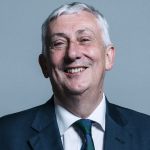
  • Lindsay Hoyle – 2019 Speaker’s Statement

    Lindsay Hoyle – 2019 Speaker’s Statement

    Below is the text of the statement made by Lindsay Hoyle, the Speaker of the House of Commons, on 19 December 2019.

    Colleagues, I want to begin this Session by marking the terrorist attack in London on 29 November during which Saskia Jones and Jack Merritt lost their lives. I am sure the whole House will join with me in sending our condolences to their families.

    The House has directed the Speaker to make a statement at the beginning of each Session about the duties and responsibilities of hon. Members. I begin by reminding hon. Members of their duty to observe the code of conduct agreed by the House and to behave with civility and fairness in all their dealings. We all have duties to our constituents, but we are also part of a wider parliamentary community. I consider it essential that all hon. Members, both new and returning, undertake the Valuing Everyone training. The behaviour code applies to Members as it applies to others who visit or work in Parliament, and provides clear guidance. Unacceptable behaviour will be dealt with seriously, independently and with effective sanctions.

    The House asserts its privilege of freedom of speech. It is there to ensure that our constituents can be represented by us without fear or favour. It is an obligation upon us all to exercise that privilege responsibly. Members must be mindful of the impact of what they say, not only on other Members but on others who follow our proceedings, and Members should be heard courteously, whatever their views. That privilege is enjoyed by Members of Parliament only in their work in this House: as private individuals, we are equal under the law with those whom we represent.

    Parliament should be open to those whom it represents. We should seek to explain its work to those who elect us and to make them welcome here. The security of this building and those who work and visit here depends upon us all. We have a duty to be vigilant and to assist those whose job it is to maintain this place as a safe place to work.

    Before moving to the first business of the new Parliament, I would like to express my very best wishes to all hon. Members, those newly elected and those returning, and all those who work in this House.

    Outlawries Bill

    A Bill for the more effectual preventing Clandestine Outlawries was read the First time, and ordered to be read a Second time.

    Chairman and Deputy Chairmen

    Ordered,

    That, for the period up to the first sitting day following the election of the Deputy Speakers under Standing Order No. 2A, Sir Roger Gale be Chairman of Ways and Means, Sir George Howarth be First Deputy Chairman of Ways and Means and Sir Gary Streeter be Second Deputy Chairman of Ways and Means.—(Mr Rees-Mogg.)

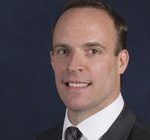
  • Dominic Raab – 2019 Statement on 35th Anniversary of Sino British Joint Declaration

    Dominic Raab – 2019 Statement on 35th Anniversary of Sino British Joint Declaration

    Below is the text of the statement made by Dominic Raab, the Foreign Secretary, on 19 December 2019.

    This agreement between the UK and China made clear that Hong Kong’s high-degree of autonomy, rights and freedoms would remain unchanged for 50 years. The undertakings made by China, including the right to freedom of expression, an independent judiciary and the rule of law are essential to Hong Kong’s prosperity and way of life.

    Hong Kong is experiencing its greatest period of turmoil since the handover. As a co-signatory of the Joint Declaration, the UK takes these commitments seriously and supports their implementation through the ‘One Country, Two Systems’ framework. The only way to guarantee Hong Kong’s future success and stability is by respecting these and addressing the legitimate concerns of the people of Hong Kong through meaningful political dialogue.

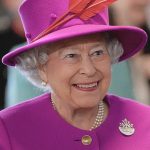
  • Queen Elizabeth II – 2019 Queen’s Speech

    Queen Elizabeth II – 2019 Queen’s Speech

    Below is the text of the speech made by HM Queen Elizabeth II, in the House of Lords, on 19 December 2019.

    My Lords and Members of the House of Commons.

    My Government’s priority is to deliver the United Kingdom’s departure from the European Union on 31 January. My Ministers will bring forward legislation to ensure the United Kingdom’s exit on that date and to make the most of the opportunities that this brings for all the people of the United Kingdom.

    Thereafter, my Ministers will seek a future relationship with the European Union based on a free trade agreement that benefits the whole of the United Kingdom. They will also begin trade negotiations with other leading global economies.

    The integrity and prosperity of the United Kingdom is of the utmost importance to my Government. My Ministers will work urgently to facilitate talks to restore devolved Government in Northern Ireland.

    My Government will embark on an ambitious programme of domestic reform that delivers on the people’s priorities. For the first time, the National Health Service’s multi-year funding settlement, agreed earlier this year, will be enshrined in law.

    Steps will be taken to grow and support the National Health Service’s workforce and a new visa will ensure qualified doctors, nurses and health professionals have fast-track entry to the United Kingdom. Hospital car parking charges will be removed for those in greatest need.

    My Ministers will seek cross-party consensus on proposals for long term reform of social care. They will ensure that the social care system provides everyone with the dignity and security they deserve and that no one who needs care has to sell their home to pay for it. My ministers will continue work to reform the Mental Health Act.

    A modern, fair, points-based immigration system will welcome skilled workers from across the world to contribute to the United Kingdom’s economy, communities and public services.

    My Government will bring forward measures to support working families, raising the National Insurance threshold and increasing the National Living Wage. To ensure every child has access to a high-quality education my Ministers will increase levels of funding per pupil in every school.

    Measures will be brought forward to encourage flexible working, to introduce the entitlement to leave for unpaid carers and to help people save for later life. New measures will be brought forward to protect tenants and to improve building safety. My Government will take steps to support home ownership, including by making homes available at a discount for local first-time buyers. My Ministers will develop legislation to improve internet safety for all.

    My Government is committed to a fair justice system that keeps people safe. My ministers will establish a Royal Commission to review and improve the efficiency and effectiveness of the criminal justice process. New sentencing laws will ensure the most serious violent offenders, including terrorists, serve longer in custody. New laws will require schools, police, councils and health authorities to work together to prevent serious crime. My Government will ensure those charged with knife possession face swift justice and that the courts work better for all those who engage with them, including victims of domestic abuse. Legislation will be brought forward to support victims of crime and their families. Measures will be developed to tackle hostile activity conducted by foreign states.

    My Ministers will bring forward measures to ensure that every part of the United Kingdom can prosper. My Government will invest in the country’s public services and infrastructure whilst keeping borrowing and debt under control; maintaining the sustainability of the public finances through a responsible fiscal strategy. My Government will prioritise investment in infrastructure and world-leading science research and skills, in order to unleash productivity and improve daily life for communities across the country. It will give communities more control over how investment is spent so that they can decide what is best for them.

    To support business, my government will increase tax credits for research and development, establish a National Skills Fund, and bring forward changes to business rates. New laws will accelerate the delivery of gigabit capable broadband. To ensure people can depend on the transport network, measures will be developed to provide for minimum levels of service during transport strikes.

    My Government will continue to take steps to meet the world-leading target of net zero greenhouse gas emissions by 2050. It will continue to lead the way in tackling global climate change, hosting the COP26 Summit in 2020. To protect and improve the environment for future generations, a bill will enshrine in law environmental principles and legally-binding targets, including for air quality. It will also ban the export of polluting plastic waste to countries outside the Organisation for Economic Co-operation and Development, and establish a new, world-leading independent regulator in statute.

    A Constitution, Democracy and Rights Commission will be established. Work will be taken forward to repeal the Fixed-term Parliaments Act.

    My Government will continue to invest in our gallant Armed Forces. My Government will honour the Armed Forces Covenant, which will be further incorporated into law, and the NATO commitment to spend at least two per cent of national income on defence. It will bring forward proposals to tackle vexatious claims that undermine our Armed Forces and will continue to seek better ways of dealing with legacy issues that provide better outcomes for victims and survivors.

    My Government will work to promote and expand the United Kingdom’s influence in the world. An Integrated Security, Defence and Foreign Policy Review will be undertaken to reassess the nation’s place in the world, covering all aspects of international policy from defence to diplomacy and development. My Ministers will promote the United Kingdom’s interests, including freedom of speech, human rights and the rule of law. My Government will work closely with international partners to help solve the most complex international security issues and promote peace and security globally. It will stand firm against those who threaten the values of the United Kingdom, including by developing a sanctions regime to directly address human rights abuse, and working to ensure that all girls have access to twelve years of quality education.

    Members of the House of Commons

    Estimates for the public services will be laid before you.

    My Lords and Members of the House of Commons

    Other measures will be laid before you.

    I pray that the blessing of Almighty God may rest upon your counsels.

  • Caroline Lucas – 2019 Speech in Commons Following General Election

    Caroline Lucas – 2019 Speech in Commons Following General Election

    Below is the text of the speech made by Caroline Lucas, the Green Party MP for Brighton Pavilion, in the House of Commons on 17 December 2019.

    I join those who have paid tribute to the two young people who were tragically killed on London bridge.​
    Mr Speaker-Elect, on behalf of an admittedly small party, but one with a lot of ambition, I should like to add my congratulations to you. I know from my own experience just how serious you are when you say that you will champion the interests of all of us from smaller parties. With our democracy being tested to its limits in recent months, I look forward to seeing your strong sense of fairness prevail, so that we can ensure that we hold the Executive to account, especially by continuing to uphold your long tradition of giving Back Benchers the opportunities to be heard and to play our part, no matter the size of the political party from which we hail.

  • Liz Saville Roberts – 2019 Speech in Commons Following General Election

    Below is the text of the speech made by Liz Saville Roberts, the Plaid Cymru MP for Dwyfor Meirionnydd, in the House of Commons on 17 December 2019.

    Diolch yn fawr, Mr Darpar-Lefarydd, a llongyfarchiadau i chi yn eich parchus, arswydus swydd newydd. Thank you, Mr Speaker-Elect, and congratulations to you on your respected, sublime new role. I and many people here were present on 22 March 2017, and there is no doubt in my mind that the leadership and care that you showed us on that day have inevitably given us the faith to return you with pleasure today. Of course, we sympathise with all the victims of terrorist attacks in the intervening time.

    Let me take the opportunity to call on you, Mr Speaker-Elect, to work with the Llywydd in our Senedd in Wales, the Presiding Officer in the Scottish Parliament and the Speaker of the Northern Ireland Assembly in the spirit of equality and mutual respect. I call on you also to continue to develop the principles of equality, including equality of voice and equality of opportunity, much of which was upheld in the Speaker’s intern scheme, an excellent scheme that has brought people into this place who would not otherwise have had the opportunity.

    I close by saying that all Members here were returned in exactly the same way: by their—our—constituents. Those constituents all stand equal, regardless of whether their MP is a member of the Government or the Opposition; of a large party or a small party; or, indeed, the single representative here. All those constituents are equal and they deserve respect. I have every confidence, Mr Speaker-Elect, that you will ensure that their representatives here will have that equality of voice so that they can best represent their constituents.

  • Jeffrey Donaldson – 2019 Speech in Commons Following General Election

    Below is the text of the speech made by Jeffrey Donaldson, the DUP MP for Lagan Valley, in the House of Commons on 17 December 2019.

    On behalf of the Democratic Unionist party, Mr Speaker-Elect, I want to associate ourselves with the remarks of the Prime Minister. Coming from Northern Ireland, we know all too well the impact that terrorism can have and the devastation it wreaks on families, and our thoughts and prayers are with the families of the victims of that atrocity.

    I congratulate you, Mr Speaker-Elect, on your re-election as Speaker. We regard you as someone who is fair and upholds the rights of all Members in this House, and we look forward to working with you.

    I also congratulate the Prime Minister and the Conservative party on their victory in the election. We look forward to working with them going forward, particularly in relation to the matters that the Prime Minister spoke of—the Union of our United Kingdom of Great Britain and Northern Ireland. As the Prime Minister takes forward his proposals on Brexit, we want to ensure that Northern Ireland’s place within the United Kingdom is secured and that the economic, political and constitutional integrity of the United Kingdom is respected.

    May I, Mr Speaker-Elect, pay tribute to my colleagues the former Members for Belfast North, Nigel Dodds, and for Belfast South, Emma Little-Pengelly, who are not with us but who made a massive contribution to the work of this House in the last Parliament—and indeed, in the case of Nigel, over many years? I welcome my hon. Friend the Member for Upper Bann (Carla Lockhart) to our ranks, but also the other Members from Northern Ireland who are today taking their seats for the first time in this House. We welcome the fact that they are here and take their seats—unlike others—and will no doubt make a contribution to this House and to the democratic process.​

    So, Mr Speaker-Elect, we wish you and all colleagues well in this Parliament. We look forward to outlining the voice of Northern Ireland along with our colleagues and ensuring that our place in this Union is secure.