Tag: 2019

  • Liam Fox – 2019 Speech at Global Trade Review Conference

    Below is the text of the speech made by Liam Fox, the Secretary of State for International Trade, at the Global Trade Review Conference held on 8 May 2019.

    Introduction

    I’d like to start with an exercise. Who here has an iPhone with them?

    Take it out, turn it over and tell me what it says on the back. The writing’s minute so you’re going to need pretty good eyesight, but I can assure you that I’m not here to give you an eye test.

    It reads: “Designed by Apple in California. Assembled in China.”

    iPhones are just one example of the complex and integrated supply chains across the global economy, where design and build can take place across a range of countries, with each step along the way adding value to the final product.

    If you measure trade merely in gross terms as a single transaction based on the final price you are missing the point. If you do not understand the complexity and importance of global value chains you will fail to set the appropriate policy frameworks. It is part of the challenge we face in a rapidly changing world of trade.

    For example, we are in the middle of a revolution in e-commerce, and the digital economy is now a major part of global trade.

    This has changed the game for everyone, from the largest corporations, to the thousands of small companies who have never before been able to trade internationally.

    Services are now a larger part of the world economy than ever before. And regulation has not kept pace. The WTO estimates that while services comprise around two-thirds of global GDP and almost half of employment – and nearly half of world trade on a value-added basis – the barriers to trade in services are around as large as those in goods half a century ago.

    For the UK, as a services-orientated economy – and the world’s second largest services exporter – this clearly needs to change if we are to realise our potential as a truly Global Britain.

    If we are make the most of the opportunities for future global prosperity in front of us, it’s essential that we draw up a new set of rules governing key areas such as e-commerce and cross-border data flows, and tackle head-on the obstacles to digital trade such as data localisation. We need to redouble our efforts to promote an open, efficient and transparent trading environment.

    The dangers of protectionism

    Somewhat alarmingly, we appear to be moving in precisely the wrong direction.

    For the first time in decades, the system of free, fair, rules-based international trade which underpins our global prosperity is under attack.

    Ever since the financial crisis of 2008, G20 countries have been taking steps which limit market access.

    Tariff and non-tariff barriers have been thrown up as countries try to defend or support domestic industries. Economists rarely agree on anything, but there is a near-universal conclusion that protectionism of this nature only ever leads to a dead-weight loss.

    The consensus is clear: open and competitive markets are the most efficient vehicle for delivering the prosperity we all want.

    Tariffs are a nice euphemism, but in truth are simply a tax on imports – an impediment to that prosperity, with far-reaching consequences. Tariffs are taxes. You can’t like tariffs but hate taxes.

    Tariffs mean people at home pay more for the things they use every day, and the businesses that we rely on to drive our economy will pay more to manufacture products with components from overseas.

    Tariffs hold back growth, hitting the poorest among us hardest.

    And what is worse, broad-based protectionism provokes retaliation driving up costs further.

    Drawing on data from more than 150 countries, the IMF recently concluded that tariff increases had an overall negative impact, reducing productivity, income and welfare.

    This has led to higher unemployment, higher inequality, and, incidentally, negligible effects on the trade balance. These barriers have the potential to dampen export orders and reduce manufacturing output, causing lost growth and kindling inflation.

    Protectionism in history

    Throughout history, attempts to protect domestic industries through tariff barriers – such as the Long Depression of the 1870s and the Great Depression of the 1930s – failed and failed miserably.

    In contrast, the reversal of these policies after the Second World War had the opposite effect.

    People talk about the moon landings or the climbing of Everest as the pinnacle of human achievement, but when you look at the broader benefit both pale in significance compared to the liberalisation of trade.

    For the impact this can have goes way beyond any story that GDP data can tell; it’s about something far, far more precious than that.

    A study by the IMF found that a change in the real income of the bottom 20% of the population in developing countries was strongly linked with a change in trade openness.

    In the past 25 years, trade has helped lift one billion of our fellow human beings out of abject poverty by creating jobs and raising incomes.

    As Francis Fukuyama put it in his latest book “Identity”, the percentage of children dying before their fifth birthday declined from 22% in 1960 to less than 5% by 2016.

    This unprecedented transformation in living standards has been made possible by the General Agreement on Tariffs and Trade, the World Trade Organisation, and our acceptance of a global rules based system driving one of the greatest of mankind’s achievements to date.

    Of course there are those who do not share this interpretation of events, who cannot channel their inner Adam Smith and who argue for intervention and protection.

    The infant industries fallacy

    It is certainly the case that some countries have historically developed their industries while simultaneously having high tariff barriers.

    Some have argued that this is the way forward for industries which require protection from more established competitors.

    However, this is not the case. As the OECD has laid out, there is a clear link between Global Value Chain integration and economic transformation for developing economies.

    The boom in international trade since the Berlin Wall fell – growing at 8% a year – has seen developing economies as some of its biggest beneficiaries.

    Whereas in the past some nations may have used tariffs to protect infant industries in a world where production and value chains were principally within that country, this model no longer works.

    As we have seen with my iPhone example earlier, we now live in a world where complex global value chains that cut across national boundaries are an ever more important part of how we do business.

    The use of imported intermediate goods and services has become dramatically more important for global exports.

    It is estimated that such trade has doubled, with the value added of imports as a share of exports rising from 10% in 1990 to around 20% in 2015.

    Imposing tariffs and non-tariff barriers in this globalised world threatens to fragment these supply chains, often damaging the very industries they seek to protect.

    Trade statistics

    A failure to understand the complexity of these global supply chains is also causing other problems.

    All too often, we hear about how a reduction of our trade deficit is an improvement and an increase a worsening. This is only half the story.

    The way the statistics are currently calculated does not capture the value added by each stage of the production process, nor the role of subsidiaries abroad.

    This has led several economists to argue that some notional trade balances – most notably between China and the United States – are very misleading.

    So, returning for the last time to the iPhone example: US import data will show an iPhone purchased in the US as an import at the retail cost, which is recorded as a trade deficit for the US, and a trade surplus for China.

    This does not reflect the fact that only a fraction of its value is added in China. Most of its value was added in California.

    And of course, Apple is a US company meaning much of the profit will ultimately end up there.

    The deficiencies in measurement tend to make the trade deficit of industrialised economies like the UK and the US – which excel at things like design and software coding, activities that not reflected in most trade metrics – appear larger than they are.

    Hal Varian, Google’s chief economist, has argued that the value of software in worldwide smartphone sales alone cuts the US trade deficit in half.

    WTO reform

    But a free and open system also has to be a fair one. Free trade does not have to mean a ‘free for all’. Despite its many successes, the international trading system is clearly not perfect and we must do everything we can to ensure that rules are applied fairly, universally and transparently.

    We cannot tolerate illegal dumping or subsidy or the inability to determine whether a business is in the state or private sector.

    In any dispute, our first port of call has to be the World Trade Organisation – the home of the rules-based international trading system that underpins our prosperity. For all its faults, it represents the best hope of retaining a global consensus on how we operate our trading system.

    The United Kingdom will soon take its seat around the table as an independent member for the first time in over 40 years. It is an opportunity for us to help shape the global debate.

    Working alongside our allies, we are making the case to update the WTO rulebook to tackle underlying trade tensions, which include industrial subsidies, state-owned enterprises and forced technology transfer.

    We must encourage trust and transparency in the WTO by updating the dispute settlement system and improving members’ compliance with notification requirements.

    And we need to ensure that the system of special and differential treatment for developing countries is fit for purpose.

    Levelling the playing field involves carefully considering poorer countries’ individual needs, and ensuring that every country from the poorest developing nation to the world’s richest economies reap the benefits of a liberal but rules based system.

    Conclusion

    Britain is a great and historic trading nation, but we have never seen this trade simply as an end in itself. Trade is a means by which we are able to spread prosperity.

    That prosperity underpins social cohesion and that social cohesion, in turn, underpins political stability, which is the building block of our collective security.

    It is a win-win system.

    But this system cannot be taken for granted and those of us who genuinely believe in free trade and competition have a duty to recommit ourselves to the multilateral system with the WTO at its centre.

    Yes let us recognise its faults and weaknesses but let us act collectively to make it work for all members – large and small, rich and poor, for today and for tomorrow. As we prepare to leave the EU, the United Kingdom has a Department of state for International Trade, dedicated to helping businesses like the ones in this room export, driving inward and outward investment, negotiating market access and trade agreements, and championing the concept and benefits of free trade.

    It is why we have a network of Her Majesty’s Trade Commissioners, with the experience and autonomy to drive our trading performance in specific markets, from China to North America to Africa. You will hear from some of them later.

    However, this is not a mission Government can ever fulfil alone.

    Businesses – like the ones represented here today – have a crucial role to play.

    We want everyone who understands the vast opportunities that free trade represents, and the prosperity it brings, to help make this case.

    To be a voice, promoting the benefits of the global multilateral trading system – and making that case throughout the UK and internationally.

    We want you to make the case for international trade in practical terms – how it benefits your businesses, your communities and makes a real difference to people’s lives.

    It is this case that will win the battle against the siren voices of protectionism. We should not be by-standers in our future. We should set a firm course to shape the coming era. For Britain and the world.

    And we must success for the price of failure would be too high.

    Thank you.

  • Sajid Javid – 2019 Statement on Police Pursuits Consultation

    Below is the text of the statement made by Sajid Javid, the Home Secretary, in the House of Commons on 2 May 2019.

    Last year, we published a public consultation on the initial findings of a review of the legislation, guidance and practice surrounding police driving in England, Wales and Scotland. As we said last May, this Government are determined to get ahead of and tackle emerging threats like motorcycle-related crimes, including those involving mopeds and scooters. People must be able to go about their daily lives without fear of harassment or attack and criminals must not think they can get away with a crime by riding or driving in a certain way or on a certain type of vehicle.

    Since this work commenced, we have already seen an impact on offending behaviour through operational responses, such as ensuring that merely removing a crash helmet will not result in the police discontinuing a pursuit. The Government will continue to work closely with the police in England, Wales and Scotland, the ​College of Policing and other organisations to clarify driver training standards, including the requirements for refresher training.

    I am grateful to the 383 individuals and organisations that responded to the consultation, including 222 police officers, forces and other related organisations. We will be publishing a full response later today on gov.uk. I am pleased to confirm that the overwhelming majority of responses were supportive of the proposals set out in the consultation, either in full or in principle. In addition, during and since the consultation period, we have also continued to work with the Independent Office for Police Conduct, the Crown Prosecution Service, the Police Federation, the National Police Chiefs Council and others in order to refine our proposals.

    The Government will seek to introduce a new test to assess the standard of driving of a police officer when parliamentary time allows. This new test will compare the standard of driving against that of a careful, competent and suitably trained police driver in the same role rather than use the existing test which compares driving against a standard qualified driver who would not normally be involved in police action.

    As a result of the responses to the consultation and the related work, the Government have also decided to examine how we can best:

    Make clear that police officers should not be regarded as being accountable for the driving of a suspected criminal who is attempting to avoid arrest by driving in a dangerous manner, providing the pursuit is justified and proportionate.

    Review the various emergency service exemptions to traffic law to ensure they remain fit for purpose.

    We have been clear from the beginning of this review that we must ensure that the outcome of these changes enables the police to do their job effectively and keep us safe while ensuring that we continue to keep our roads among the safest in the world. I believe that the action we intend to take will do just that, while giving police officers greater confidence that they will be appropriately protected by the law if they drive in accordance with their training with a view to protecting the public.

    We would like to develop a uniform approach across Great Britain and will engage with the devolved Administrations in recognition of devolved interests.

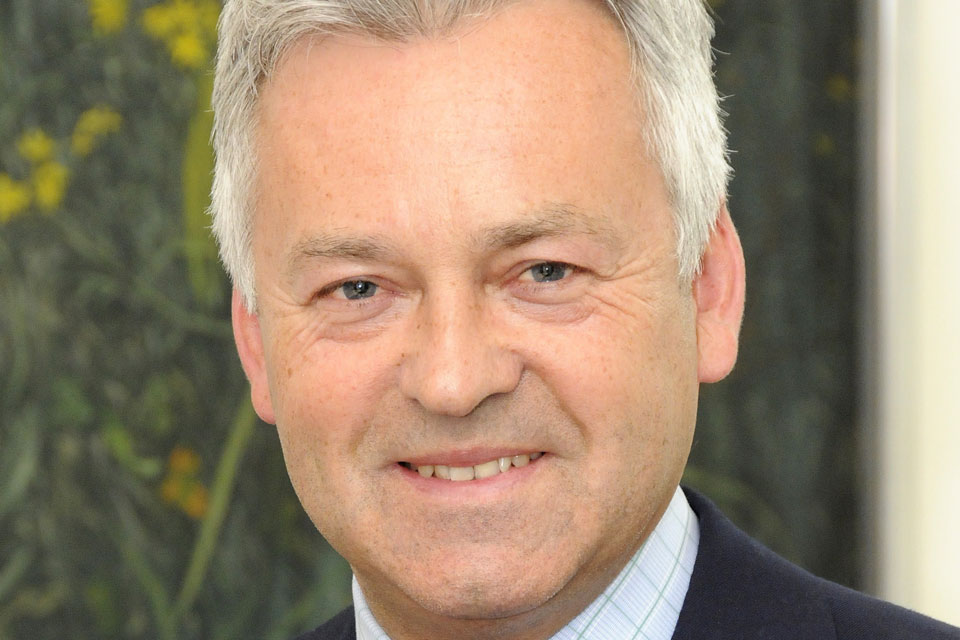
  • Alan Duncan – 2019 Statement on the Foreign Affairs Council

    Below is the text of the statement made by Alan Duncan, the Minister for Europe and the Americas, in the House of Commons on 2 May 2019.

    My right hon. Friend the Secretary of State for Foreign and Commonwealth Affairs and I attended ​the Foreign Affairs Council (FAC) on 8 April. It was chaired by the High Representative of the European Union for foreign affairs and security policy (HRVP), Federica Mogherini. The meeting was held in Luxembourg.

    Current affairs

    The High Representative and Foreign Ministers had an exchange of views on the most pressing issues on the international agenda. In particular, they expressed their concern over developments in Libya. They urged all parties to implement immediately a humanitarian truce, refrain from any further military escalation and return to the negotiations. They reiterated their full support for the efforts of the UN Special Representative Ghassan Salamé in working towards peace and stability in Libya.

    Foreign Ministers also referred to the implementation of the penal code order in Brunei and expressed their strong opposition to cruel and degrading punishments, prohibited by the convention against torture and other cruel, inhuman or degrading treatment or punishment, which was signed by Brunei in 2015.

    In relation to the 1996 Helms-Burton Act, the Council reiterated the EU’s strong opposition to the extraterritorial application of unilateral restrictive measures, which it considered contrary to international law.

    Afghanistan

    Ministers discussed the situation in Afghanistan. They focused on how the EU could best contribute to current peace efforts. The High Representative debriefed Ministers on her visits to Islamabad on 25 March and Kabul on 26 March.

    Eastern partnership

    Ministers discussed the eastern partnership (EaP) in view of the EaP ministerial meeting (13 May) and the high-level event (14 May) to mark the EaP’s 10th anniversary. Ministers highlighted the importance of the partnership, which is based on shared values and principles, and an approach combining inclusivity and differentiation.

    Ministers welcomed the progress achieved with eastern partnership countries within the “20 deliverable for 2020” framework, and in particular the tangible and concrete results in trade, people-to-people contact, transport, connectivity, infrastructure and economic reform. They agreed that implementation of reforms in sectors such as governance, anti-corruption and the judiciary require additional efforts.

    Informal lunch on Venezuela

    Foreign Ministers exchanged views on Venezuela. They discussed the outcome of the second meeting of the international contact group (ICG) on 28 March in Quito. They agreed to step up work on the two tracks of the ICG: facilitating humanitarian access, and creating the conditions for free, fair, transparent presidential elections.

    Council conclusions

    The Council agreed a number of measures without discussion:

    The Council adopted conclusions on the Afghanistan’s peace process.

    The Council endorsed the framework on counter-terrorism, developed jointly by the UN and the EU. The framework identifies areas for UN-EU co-operation and priorities until 2020.​

    The Council endorsed the 2018 progress report on the EU strategy against the proliferation of weapons of mass destruction.

    The Council concluded the agreement establishing the EU-Latin America and the Caribbean international foundation.

    The Council adopted conclusions on the European Court of Auditors’ special report No 15/2018 entitled “Strengthening the capacity of the internal security forces in Niger and Mali: only limited and slow progress”.

    The Council authorised the signature of the EU-Pakistan strategic engagement plan on behalf of the EU.

    The Council endorsed the continuation of the EU’s action in support of the UN verification and inspection mechanism for Yemen (UNVIM), from 1 April 2019 to 30 September 2019. The EU is contributing €4.9 million to UNVIM for one year.

    The Council authorised the opening of negotiations with Vietnam for an agreement to establish a framework for its participation in EU crisis management operations.

    The Council adopted conclusions on an EU strategic approach to international cultural relations and a framework for action (ST 7749/19).

  • Robert Goodwill – 2019 Statement on the Agriculture and Fisheries Council

    Below is the text of the statement made by Robert Goodwill, the Minister for Agriculture, Fisheries and Food, in the House of Commons on 2 May 2019.

    I represented the UK at the Agriculture and Fisheries Council in Luxembourg on 15 April.

    The main item on the agenda was the reform of the common agricultural policy (CAP) post-2020, with a focus on the proposed new green architecture. Ministers highlighted their willingness to commit to higher levels of overall ambition such as spending 30% of pillar 2 funding on climate change actions, and endorsed the new policy design. However, some member states also pressed for large chunks of the Commission’s proposals to be optional, including some of the Commission’s eco-schemes.

    This was followed by a ministerial lunch debate which focused on the impact of large carnivores and other species on agriculture. The Commission’s position that 100 % state aid was permissible to compensate for attacks on livestock did not satisfy several member states, who wanted greater latitude for farmers to shoot wolves and other predators.

    Council reconvened with an exchange of views on the task force in rural Africa, with the final report proposing a new alliance between the EU and Africa. I intervened on the item, highlighting the importance of developing countries in the global food supply and giving examples from UK projects that increase smallholder inclusion in the value chain and empower women economically.

    Commissioner Hogan also provided an update on the market situation, describing a stable and positive picture overall with concerns in sugar, apples and pears, and olive oil.

    A number of other items were discussed under “any other business”:

    The Netherlands informed Council about EU action against deforestation and forest degradation. I intervened, stressing our support for the proposal and encouraged the Commission to prepare an ambitious communication to step up action against deforestation.

    Slovakia presented its joint declaration with the Czech Republic and Poland on the renewable energy directive post-2020.

    The presidency informed the Council of the outcome of the research and agriculture conference held in Bucharest on 5 April.

  • John Bercow – 2019 Statement on Fiona Onasanya

    Below is the text of the statement made by John Bercow, the Speaker of the House of Commons, on 1 May 2019.

    Before I call the next speaker, I must advise the House that I have received notification from the petition officer for the constituency of Peterborough, in respect of the recall petition for Fiona Onasanya. The recall petition process for the constituency of Peterborough, established under the Recall of MPs Act 2015, closed today at 5 pm. As more than 10% of those eligible to sign the petition have done so, I advise the House that the petition was successful. Fiona Onasanya is no longer the Member for Peterborough, and the seat is accordingly vacant. She can therefore no longer participate in any parliamentary proceedings as a Member of Parliament. I shall cause the text of the notification to be published in the Votes and Proceedings and in the Official Report.

  • Karen Bradley – 2019 Statement on the Northern Ireland Executive

    Below is the text of the statement made by Karen Bradley, the Secretary of State for Northern Ireland, in the House of Commons on 1 May 2019.

    This statement is issued in accordance with section 4 of the Northern Ireland (Executive Formation and Exercise of Functions) Act 2018 (EFEF Act). Section 4 of the Act requires that I, as Secretary of State for Northern Ireland, report on a quarterly basis on guidance issued under that section of the Act. It also required me to report on how I plan to address the impact of the absence of Northern Ireland Ministers on human rights obligations within three months of the day the Act was passed.

    The Act received Royal Assent on 1 November 2018. Following careful consideration of the sensitive issues section 4 deals with, and in consultation with the Northern Ireland civil service, guidance under section 4 was published on 17 December 2018.

    The first report required under section 4 was published as a written ministerial statement on 30 January 2019. It is again worth reiterating that abortion and same sex-marriage are devolved matters in Northern Ireland, and neither the EFEF Act nor the section 4 guidance change Northern Ireland’s law in relation to these issues or enable the law to be changed by way of guidance issued in my capacity as Secretary of State.

    I appeared before the Women and Equalities Committee on 27 February 2019 to provide evidence as part of its enquiry into abortion law in Northern Ireland. I welcome the Committee’s work on this important issue and the report it published on 25 April 2019. The Government will carefully consider the Committee’s report and recommendations and respond in due course.

    As before, I have consulted the head of the Northern Ireland civil service in the preparation of this report. He has advised that the Northern Ireland Departments continue to note the guidance and comply with their legal obligations when exercising any relevant functions in relation to abortion and same sex-marriage. He has also confirmed that relevant Departments are also considering the Women and Equalities Committee’s report.

    I continue to believe that the current absence of devolved government in Northern Ireland should not dislodge the principle that it is for the devolved administration to both legislate on, and ensure compliance with, human rights obligations in relation to such devolved matters. I would encourage a restored Executive to progress legislation on these issues as a matter of priority.

    Restoring the Executive remains my absolute priority. As I announced on Friday 26 April 2019, the Government have agreed, together with the Irish Government, to ​establish a new process of political talks, involving all the main political parties in Northern Ireland, in accordance with the three-stranded approach. The aim of these talks, commencing on 7 May 2019, is to quickly re-establish the democratic institutions of the Belfast agreement so that they can effectively serve all of the people for the future. I am firmly of the view that the people of Northern Ireland need their elected representatives back in government to take important decisions on the issues that matter most to them.

    As I have previously stated, I will keep the Government’s position on abortion and same-sex marriage under review in the light of the UK Government’s legal obligations, and in the light of any relevant emerging legal judgments, as appropriate.

  • Caroline Dinenage – 2019 Statement on Health and Social Care

    Below is the text of the statement made by Caroline Dinenage, the Minister for Care, in the House of Commons on 1 May 2019.

    Yesterday, 30 April 2019, Four Seasons healthcare group announced that they have appointed Richard Fleming, Mark Firmin and Richard Beard (Alvarez and Marsal) as administrators to Elli Investments Limited (EIL Guernsey) and Elli Finance (UK) Plc (EFUK). These two companies between them hold £625 million of the company’s debt. It has also announced the launch of an independent sales process of the operational parts of the group, Four Seasons healthcare, Brighterkind and the Huntercombe group, which will continue to deliver care as normal.

    The group has been going through financial restructuring negotiations with its main creditor H/2 Capital Partners since December 2017 with a standstill agreement on its interest payments in place. This agreement has been extended several times, with the latest of these having expired at 23:59 on 29 April. The planned sale of the operating businesses, through an independent, court appointed administrator, will now bring greater certainty to those in care, their families and the 22,000 people employed by the company.

    I would like to update the House on the steps being taken to assure people with care and support needs currently being met by the Four Seasons healthcare group that they should not see a gap in their care service—no matter how their care is funded.

    I have met with the company and the administrator to seek assurance that they are putting the continuity of care at the forefront of this process and that there will be no sudden care home closures. I am pleased to confirm that they have provided both me and the Care Quality Commission with this reassurance.

    In the event that a buyer is not found for any of the care homes, the company has undertaken to manage any future plans around the transition of care with great sensitivity, taking time to ensure that residents are supported to find a new home.

    In 2014, the law was changed giving the CQC a new responsibility to monitor the financial sustainability of the largest and most-difficult-to-replace care providers across the country. That means the CQC has a legal duty to notify local authorities if it considers there to be a credible risk of service disruption (stage 6 notification) as a result of business failure so that they have more time to prepare their plans to protect individuals. The CQC is clear that there is no current risk of service disruption and is not issuing a stage 6 notification to local authorities at this time.

    The Care Act 2014 also places duties on local authorities to intervene to protect individuals where their care provider is no longer able to carry on because of business failure. There should never be a gap in the care that an individual receives. Local authorities have a statutory ​duty under section 48(2) of the Care Act to meet the needs of individuals temporarily if their care provider is no longer able to carry on. Business failure is a normal part of a functioning market and local authorities have appropriate plans in place to minimise disruption of services

    The CQC and my Department are closely monitoring the situation. They are also working closely with the Local Government Association, the Association of Directors of Adult Social Services, NHS England and Four Seasons healthcare group to ensure that individuals’ care and support needs continue to be met.

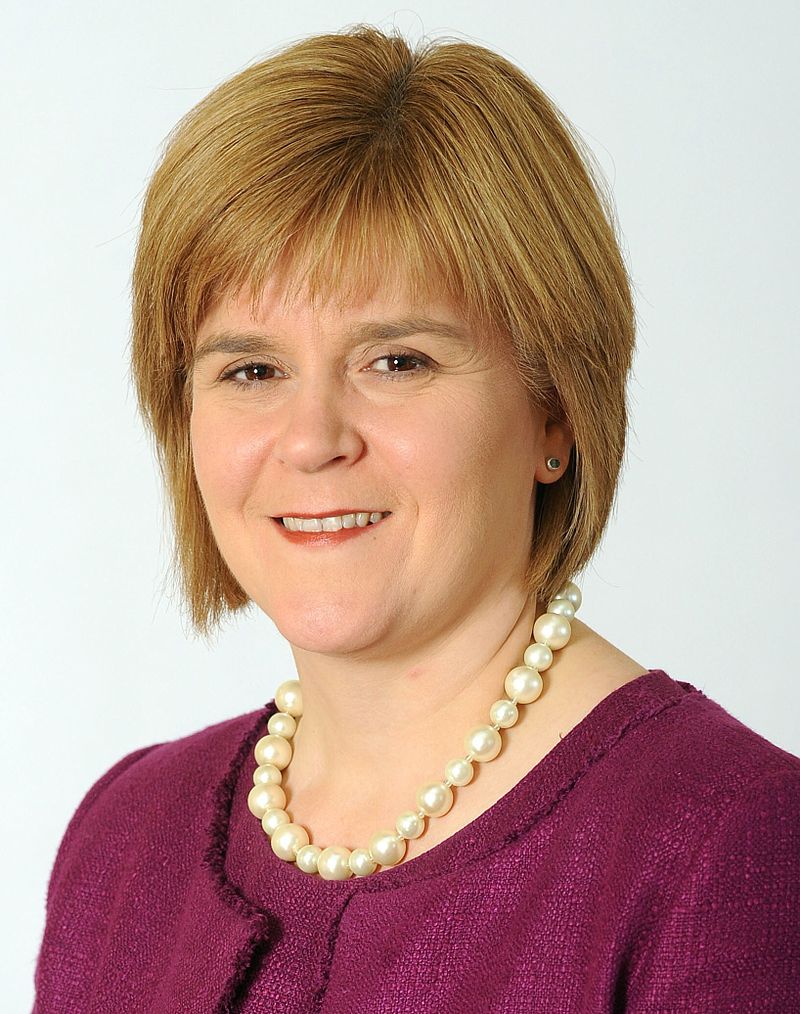
  • Nicola Sturgeon – 2019 Speech at SNP Conference

    Below is the text of the speech made by Nicola Sturgeon, the First Minister in Scotland, at the SNP Conference held in Edinburgh on 28 April 2019.

    Conference, we gather here in Edinburgh, our beautiful capital city.

    Soon to be, we hope – and how good does this sound – the capital city of an independent Scotland.

    And as we meet today, our party has plenty of reasons to be cheerful.

    Yesterday, an opinion poll showed levels of support for the SNP that would make any party leader smile.

    A 23 point lead in Westminster voting intentions, a 24 point lead for the Scottish Parliament and a 26 point lead for the Euro elections.

    That is truly extraordinary.

    But enough of polls. What about elections?

    Two weeks ago people here in Edinburgh got to vote – the result of the council by-election in Leith was stunning.

    With all due apologies to The Proclaimers – and don’t worry, I’m not about to sing – the result went something like this:

    My heart was broken for the Tories. Sorrow, sorrow for Labour.

    And for the SNP and independence – it was Sunshine on Leith all the way.

    That win came hard on the heels of another success, with the Labour vote down and SNP support up.

    So let us congratulate our two newest councillors – Jane McTaggart in Clackmannanshire and Rob Munn, our new councillor for Leith Walk.

    Friends, here in Edinburgh we are surrounded by history.

    History that offers inspiration for the future.

    This is the birthplace of the enlightenment.

    It was in this city, in our small country on the edge of Europe, that an intellectual flowering transformed the way humanity thinks about the world.

    Thomas Jefferson, the author of America’s Declaration of Independence, wrote this:

    “So far as science is concerned, no place in the world can pretend to competition with Edinburgh”.

    The contribution Scotland has made to the modern world is unparalleled.

    That should make us proud, but it should also be determined.

    Proud that the Scottish independence movement is defined by progressive, inclusive internationalism.

    And determined that we will never allow our nation’s place in the world to be sacrificed by the likes of Nigel Farage, Jacob Rees-Mogg or Boris Johnson.

    Scotland’s enlightenment legacy is not just about our history.

    The search for knowledge, invention and innovation is the foundation on which we will build our future too.

    Few countries are better placed than Scotland to help lead the world into a new age.

    We are one of the best educated nations anywhere.

    Today, we have more top universities per head of population than any other country in the world, bar one.

    Our universities are part of a golden thread.

    That thread runs from the Scotland of David Hume and Adam Smith, to the country of John Logie Baird, Alexander Graham Bell and Marion Ross, and onto our modern day nation of Peter Higgs and his Nobel Prize winning discovery.

    Our nation values education – that’s why I will always make this commitment to Scottish students.

    As long as the SNP is in government, there will be no tuition fees.

    Education will always be based on your ability to learn, not your ability to pay.

    Our universities today face a grave Brexit threat.

    European Research Grants at risk, collaboration damaged, European academics leaving.

    The end of free movement – and Theresa May’s deplorable hostile environment – will make it harder to attract the world’s best minds to Scotland.

    So I make no apology for taking the opportunity again today to send a message to all our fellow EU citizens.

    Whether you are studying or working in our universities, saving lives in our health service, creating wealth in our business community, catering for our tourists or harvesting our food – wherever you are in Scotland and whatever you do – you are part of us.

    And with all our hearts, we want you to stay.

    We stand up for Scotland in Europe as well.

    When the history of the SNP is written, there will be a special place for Winnie Ewing, and the late Allan Macartney and Neil MacCormick.

    Not just giants of our movement, but formidable figures who advanced Scotland’s interests on the international stage.

    In recent years, Alyn Smith and Ian Hudghton have continued that tradition.

    Ian has championed Scotland’s cause in the European Parliament for more than 20 years – he has been a passionate advocate for Scotland’s interests.

    As he steps down, we thank him for all he has done for our party, for independence and for Scotland.

    Alyn, we hope, will be going back to Brussels.

    Our job is to make sure he is taking others from our fantastic group of candidates with him.

    Number 2 on our list is Christian Allard, a native Frenchman.

    What a wonderful statement of Scotland’s intent to stay part of the European family of nations.

    Conference, as voters go to the polls for the European elections on May 23 our message will be clear and direct.

    And unlike Labour’s, it will be unambiguous.

    Scotland’s not for Brexit, Scotland’s for Europe.

    If you want to keep Scotland in Europe, vote SNP.

    Conference, Brexit is an unforgivable act of Tory sabotage on our country.

    Having failed to force her disastrous plan through Parliament, the Prime Minister is now looking for help from Labour

    Let me be blunt – I don’t trust Theresa May.

    But on Brexit, I don’t trust Jeremy Corbyn either.

    So today, I make this clear.

    The SNP will not vote for a Tory Brexit and we will not vote for a Labour Brexit. Our policy is no Brexit.

    That is what the people of Scotland voted for, and that is what should happen.

    At Westminster, Ian Blackford has led our MPs in fighting Scotland’s corner.

    And they have been simply magnificent.

    It’s not just on Brexit that they do sterling work.

    Our MPs represent the interests of their constituents day in and day out.

    Recently they forced a vote on Trident renewal.

    Lifelong CND member, Jeremy Corbyn, and most of his MPs refused to oppose Trident. What an utter disgrace.

    Labour’s defence spokesman derided the very idea that Scotland should have any say.

    He said that it was “blindingly obvious” that the decision should be taken at Westminster.

    Well, let me tell you what I think is blindingly obvious – a Labour Party that supports Trident missiles on the Clyde has lost its moral compass.

    A country with one in four children growing up in poverty should not be spending £200 billion on nuclear weapons.

    Conference, the UK Government is paralysed by Brexit and broken by infighting. It is no longer a functioning administration.

    There are no policies to tackle the big issues the UK faces – inequality, access to housing, climate change.

    An end to austerity turned out to be just another promise Theresa May didn’t keep.

    Where there should be action to address the underlying reasons for Brexit, there is a just a vacuum – a vacuum filled by incompetence.

    Incompetence that can be summed up in two words: Chris Grayling, or Failing Grayling as he’s better known.

    A buccaneering hard Brexiteer, he signed a ferry contract with a company that had no ferries.

    Though that’s probably just as well – because they didn’t have access to a port to dock them in either.

    In the not-too-distant past, any Minister would have been sacked for such shocking ineptitude.

    But with these Tories, there’s more chance he’ll be running for Prime Minister by next week.

    There is now no level of incompetence that is a disqualification for a place in this Tory government.

    They lack vision, policies and ability. They can’t even be trusted not to leak sensitive information from the National Security Council.

    This Tory government is a disgrace. It needs to go, and it needs to go now.

    Conference, every government faces challenges.

    But unlike the UK government, our Scottish Government is getting on with the job.

    A recent editorial in an Irish newspaper put it rather well.

    Scotland, it said, ‘is a beacon of sense in a sea of madness’. How true that is.

    Let me share with you just a taste of what our Scottish Government has been doing in the last few weeks.

    While Westminster has been turning the UK into an international laughing stock, we have extended free personal care to everyone who needs it, regardless of age.

    We’ve introduced the world leading Domestic Abuse Act.

    Invested millions of pounds in low carbon projects.

    And millions more to tackle fuel poverty.

    We’ve announced new funding to make sure children don’t go hungry during school holidays.

    And we have achieved the lowest Scottish unemployment rate on record.

    Conference, we’ve done something else too.

    To show the strength of our commitment to those who choose to make our country their home, we have extended free university tuition for EU citizens studying here in Scotland.

    On the NHS, investment and staffing are at record high levels with the SNP.

    When the UK Government short-changed our health service, we used our tax powers to protect it.

    When it comes to a choice between a tax cut for high earners or investing in our precious NHS – we will always put patients first.

    The Scottish Tory tax plans would mean a cut of £650 million to public services – that’s the equivalent of 16,000 nurses.

    And it shows that this cast-iron rule of politics is as strong as ever – you cannot trust the Tories with Scotland’s NHS – not now, not ever.

    Conference, as Westminster sinks deeper into the Brexit mire, let me also give you an insight into what your Scottish government will be doing in the days and weeks to come.

    Action we will be taking on those very issues the UK government is ignoring – housing, inequality, climate change.

    Technology is one of the key drivers of Scotland’s economy, and this city is now the best location anywhere in the UK to start up a tech company.

    We must embrace the potential of technology, but we shouldn’t shy away from the challenges.

    Let me give an example – for many people, accommodation provider Airbnb has enabled cheaper, more flexible travel.

    It’s one of the reasons Scotland’s tourism industry is booming.

    But for others – particularly in tourist hot spots, like the centre of this city – it is making it harder to find homes to live in.

    So today, we are setting out new plans to help cities like Edinburgh and islands like Arran get the balance right.

    We are asking for views on a new system of regulation to make short term lets subject to the same controls as other accommodation.

    And give councils the power to control the number of lets and ensure they make a contribution to the services they use.

    Conference, the SNP will always back Scotland’s tourism industry.

    But we will also help people find places to live in the communities they want to call home.

    We will also take fresh steps to help people own their own home.

    We already provide Help To Buy for new-build houses and support shared equity for lower income home owners.

    But there is a wider issue. An issue of generational fairness.

    Some first time buyers trying to get onto the property ladder can call on the financial help of relatives or friends – the famous bank of mum and dad.

    But for those who can’t, the average age of a first-time buyer is now 35.

    The simple truth is that for many young people, even those on decent incomes, saving for a deposit takes so long it has become a distant dream.

    Many are paying more in rent than they would pay for a mortgage, so they don’t have the money left at the end of the month to save for a deposit.

    In a fair and equitable country that cannot stand.

    And so we will act – we will help young people with the deposits they need.

    I am announcing today a new £150 million scheme.

    If buyers can find just 5% of the value of their new house from their own funds, we will do the rest.

    Starting later this year and running until the end of this parliament, we will offer first-time buyers loans of up to £25,000 to fund or top up their deposit.

    Conference, that is your SNP government – building a fairer Scotland for the next generation.

    Scotland’s new social security system is now a year old.

    In that time, nearly £200 million has been paid to carers and families across the country.

    One of the new benefits we introduced is the Best Start Grant.

    Since December, low income families have been eligible for a payment of £600 on the birth of a first child, and £300 on the birth of any siblings.

    And do you know this – in just the first two months of the Best Start Grant, the Scottish Government got more money into people’s pockets than the DWP had managed under the old system in an entire year.

    Now, we will go further. I can announce today that low income families will get a further £250 when their child starts nursery. Applications open tomorrow.

    And from June they will get the same again when their child starts school.

    And let me be crystal clear: there is no two child cap or rape clause in the Scottish welfare system – and with the SNP, there never will be.

    Conference, our obligations to the next generation are the most important we carry.

    A few weeks ago, I met some of the young climate change campaigners who’ve gone on strike from school to raise awareness of their cause.

    They want governments around the world to declare a climate emergency.

    They say that’s what the science tells us.

    And they are right.

    So today, as First Minister of Scotland, I am declaring that there is a climate emergency.

    And Scotland will live up to our responsibility to tackle it.

    We are already a world leader and our new legislation commits us to being carbon neutral by 2050. It contains some of the toughest targets in the world.

    But many are urging us to do more and go further.

    I am listening.

    So I am making this public promise to the young people I met, and to their entire generation.

    If that advice says we can go further or go faster, we will do so.

    Scotland will lead by example.

    Friends, that commitment to future generations has been the hallmark of your SNP government.

    It’s why I made education our number one priority.

    It’s why we’re taking action to reduce the attainment gap in schools – action that is now delivering results.

    It’s why we are doubling childcare.

    And, friends, it is why 80,000 children have now benefited from Scotland’s wonderful baby box.

    The rights of children and young people must be embedded in everything we do.

    This year is the 30th anniversary of the United Nations Convention on the Rights of the Child.

    The UN is campaigning for all nations to commit to it.

    Conference, I want Scotland, one day very soon, to take our place as an independent member of the United Nations.

    And when we take that place, we must make sure we are meeting the UN’s gold standard on children’s rights.

    So I can confirm today that next month, we will launch our consultation on exactly how to achieve it.

    Our plan is this: by the end of this Parliament we will have incorporated the UN Convention on the Rights of the Child into Scots law.

    Children’s rights will be enshrined in statute in time for Scotland to re-join the family of independent nations.

    Friends, it is time.

    It is time for Scotland to become independent.

    The last three years have shown, beyond any doubt, that for Scotland the Westminster system is broken.

    And do you know what else has been broken?

    The promises Westminster made to the people of Scotland.

    They have been broken too.

    They promised us in 2014 that if we voted No we would stay in Europe.

    They promised 13 new frigates would be built on the Clyde.

    They promised to protect the vulnerable.

    They promised “strength and stability”.

    They promised us an equal partnership.

    Each and every single one of these promises has been broken.

    And the people of Scotland will never, ever trust their promises again.

    Remember what the No campaign called themselves back then? Project Fear.

    Well today, I can reveal their new slogan.

    A Tory minister – anonymous of course – told the BBC why they believed the UK Government should not agree to an independence referendum.

    “Once you’ve hit the iceberg” they declared, “you’re all on it together”.

    So there you have it – we’ve gone from Project Fear to Project Iceberg.

    Never has there been a more dismal offer from Westminster to the people of Scotland.

    Friends, I have a different suggestion.

    We should do everything we can to stop the UK hitting that iceberg.

    I do not want to see that fate for any part of these islands.

    But if the UK can’t be persuaded to change course, Scotland must – we must have the choice of a better future.

    Scotland must have the choice of an independent future.

    Next month, we will introduce legislation for a referendum.

    And we plan to pass it by the end of this year.

    The UK government says it will block Scotland’s right to choose.

    A right to choose mandated in not just one but two elections and endorsed by the Scottish Parliament.

    The Tories – they want to veto Scottish democracy.

    Their only friends in Westminster are the Democratic Unionist Party.

    Well, if they’re not careful, this generation of Tories will go down in history as the Undemocratic Unionist Party.

    On Thursday, they tried to justify their position by saying there was no upsurge in support for independence.

    Two days later the latest opinion polls have proved them wrong.

    Support for independence is already up – our job now is to get support for independence surging.

    And make sure that no Westminster government can ever stand in the way of Scotland’s right to choose.

    Conference, I am setting out today our strategy to win our country’s independence.

    We must recognise that these are different times and new circumstances – this isn’t a re-running of 2014.

    The UK that existed then does not exist any more, so our approach must be different.

    We should not enter this campaign thinking of people as No voters or Yes voters, Remainers or Leavers, but as fellow citizens who all want the best for ourselves, our families and for Scotland’s future.

    We must acknowledge the ties of family and friendship across the UK, and step up to the challenge of answering people’s questions.

    And conference, we must always make our case with the decency, respect and dignity that we want to be the hallmark of our independent country.

    I am acutely aware of the responsibility of all politicians, especially leaders, to bring people together not drive them apart.

    To work as hard as we can to find agreement – that’s why earlier this week I reached out to other parties at Holyrood.

    They are as much a part of Scotland as we are.

    And to those parties, let me say this: I know you haven’t said yes yet, but my door is open.

    You may not share the SNP’s view of Scotland’s destination as an independent country.

    But in Scotland’s journey of change, we can still travel a fair way together.

    If you want to be part of that journey, we will welcome you with open arms.

    But be in no doubt – if your only offer is a failed and broken Westminster system, Scotland’s journey will completely pass you by.

    Conference, we will also reach beyond parliament and political tribes.

    We are establishing a non-party Citizens’ Assembly, so that people from across Scotland can guide the conversation.

    Independence, after all, is about the future of everyone who lives here.

    It was once said: “Don’t think about what you want to be, but what you want to do.”

    Friends, that should be our guiding principle.

    Independence is about the children we can lift out of poverty.

    And the fairer, more equal society we can create.

    That starts with building confidence in the economic case.

    Answering people’s questions, addressing their concerns, and inspiring them about the future.

    The conversation we have had within our party is one we must now have with the country.

    Yesterday, in endorsing our new economic plan, we took a big step – the right step.

    And in the process, we demonstrated what a vibrant, engaged and democratic party we are.

    Over ten years ago, we won the right to govern by demonstrating credibility with the financial powers of devolution.

    And make no mistake about this: if we can now show what is possible with the economic powers of independence, we will win a referendum.

    We have set out an ambitious, optimistic and realistic way forward for these new times.

    And so I can announce today that we will now launch the biggest campaign on the economics of independence in our party’s history.

    From this summer, we aim to get information on Scotland’s potential into the hands of every voter.

    Our plan is to distribute “An independent Scotland – a household guide” to every home across the country – all 2.4m of them.

    So friends, you know what that means… it is time to get your jackets on.

    We will set out an alternative to the inevitable economic decline of Brexit.

    We will tell people about Scotland’s strengths.

    The extraordinary success of our food and drink industry.

    Our renewable energy, our advanced manufacturing, technology, life sciences, creative industries, tourism.

    Above all, we will show that Scotland has a talented and educated people.

    As an independent nation we will face challenges, as all independent countries do. We must be responsible with our finances.

    But few countries on earth can match our resources and our potential.

    So never let anyone tell you that Scotland doesn’t have what it takes to be a prosperous, independent nation.

    Because our country most certainly does – our new economic plan demonstrates the potential of an independent Scotland.

    It stresses the importance of social justice and equality.

    The point is this: a strong economy is the bedrock of a fair society.

    And a fair, inclusive society leads to a strong economy – that is the case we must make.

    That is why I am announcing today the next step for the SNP in setting out our vision of a fairer, independent Scotland.

    Building on the foundation of Andrew Wilson’s work on the economy, I am now setting up a Social Justice and Fairness Commission.

    It will set out how the proceeds of economic growth in an independent Scotland can be shared much more fairly.

    It will demonstrate how we can use the powers of independence to end poverty, achieve full employment, and drive equality for all.

    It will look at how we can deliver fairness for pensioners, be a nation that sets a gold standard for equal pay, and create opportunity for all of our young people.

    All of that is what independence is for.

    The fact is this – independence will mean little if it does not ensure a safe, warm home for everyone to live in. A fair chance for everyone to get on in life.

    And bring an end to the shameful Westminster system which in 21st century Scotland leaves people without enough money to feed their families at the end of the week.

    We are one of the wealthiest countries in the world.

    But we will only be a truly rich society when we ensure that not a single man, woman or child has to rely on a food bank to eat.

    That is the prize of independence.

    Conference, our economic and social ambitions can best be realised if Scotland is a member of the European Union.

    I do not, for a single second, dismiss those who voted to Leave – I understand the desire for change and the sense that political institutions can feel remote.

    The EU is far from perfect, but membership is not just about economic and social benefits – substantial though those are.

    It is also about the values we cherish – freedom, democracy, the rule of law, equality, respect for human dignity and human rights.

    In our world today, these values are under attack from the forces of intolerance and extremism.

    But they are values that we must fight for and stand up for – and our party will always do so.

    Conference, for independent countries of our size, the EU does not curtail sovereignty – it enhances and amplifies it.

    If ever we needed proof of the power of small nations in Europe, think about this.

    At the last summit, the leaders of 27 other countries decided the UK – and Scotland’s – fate.

    12 of those countries have populations similar to or smaller than Scotland’s.

    Very small nations such as Luxembourg and Cyprus.

    Countries that have long enjoyed independence: Denmark, Finland and Ireland.

    And others who have regained their independence much more recently.

    All of these nations have come together to share sovereignty for mutual benefit, and on the basis of equality and common values.

    Conference, the respect, support and solidarity they receive in return stands in stark contrast to the contemptuous treatment of Scotland by Westminster.

    That is why it is now time for Scotland to become a truly equal partner in the British Isles.

    It is time to take our place among the family of independent European nations.

    Conference, the SNP is not an ordinary political party.

    We do not represent just one section of society or one group of people.

    We are the national party.

    Our aim is to represent everyone who lives here.

    That comes with a big responsibility.

    Because we are building a nation.

    And what is that nation?

    It is our extraordinary landscape. Our villages, towns and cities – like this one with the castle on the hill.

    It is our history – of independence, of union, of social advancement, of industrial and high-tech revolutions.

    It is what our former Makar, Edwin Morgan, called a “thread of pride and self-esteem” that can never be “broken or forgotten”.

    It is our innovators and our wealth creators.

    Our writers, our poets and our artists – it is all of our people.

    Those who have been here for generations. And those who have just arrived.

    Scotland is everyone who chooses to make this country their home.

    So when we speak of building a nation, what we mean is that we are building a better future for all those who live here and for the generations yet to come.

    A society founded on compassion, on kindness and love.

    A nation that people will come from all over the world to see, to experience, and to be part of.

    So let’s always take the time to dream a little.

    To dream of that better country.

    For those of us privileged to carry the SNP flame today, our task is to turn the dream – that message of hope – into reality.

    So let’s get on with our task.

    Let us win our independence.

    Let us build that fairer nation.

    And let Scotland – an independent Scotland – play our part in building the better world that we know is possible.

  • Rushanara Ali – 2019 Speech on Removal of Cladding on Private Tower Blocks

    Below is the text of the speech made by Rushanara Ali, the Labour MP for Bethnal Green and Bow, in the House of Commons on 29 April 2019.

    Thank you, Madam Deputy Speaker.

    I secured this debate to highlight the grave danger facing thousands of people living in privately owned high-rise blocks in my constituency and up and down the country. I am referring, of course, to the presence of aluminium composite material—ACM—cladding on tower blocks that are owned by private companies, not council or housing associations. The danger is real and deeply worrying but can easily be alleviated if Ministers decide to take action. I hope that the Minister will today set out a firm plan of action with a clear set of deadlines to put the situation right.

    It is unlikely that many of us would have been aware or known what ACM cladding was were it not for the terrible tragedy of the Grenfell Tower fire. On the terrible night of 14 June 2017, 72 people lost their lives, and many more were injured, lost their homes and suffered a trauma that they are likely to carry with them for the rest of their lives. It was a trauma shared by the whole nation, which watched this needless tragedy.

    It is clear that ACM cladding contributed to the speed with which the fire spread up and down the building, and to the loss of life. This was an avoidable, man-made disaster. Shockingly, the nation then discovered that this kind of cladding and similar flammable cladding is present on hundreds of blocks and other buildings around the country. In the immediate aftermath, Ministers promised swift action to replace ACM and other flammable materials on high-rise blocks, but instead, we have seen unacceptably slow progress, and 22 months later, 345 high-rise buildings with ACM panels are yet to be made safe.

    Jim Shannon (Strangford) (DUP)

    I thank the hon. Lady for giving way and congratulate her on securing a debate on this issue, which has elicited the emotion and interest of the House over a period. Does she agree that it is imperative that the cladding is removed quickly and that a Government-aided scheme would ensure that owners do the right thing and we see the prevention of another Grenfell tragedy? That has to be our goal. It is good to see the Minister in his place; we are all appreciative of him and look forward to his response. I add that the hon. Lady has another two and a half hours for her debate.

    Rushanara Ali

    I thank the hon. Gentleman for his contribution, and I very much hope that the Minister will say something concrete about legislation and about other steps that he and his Government will take to rectify this appalling problem.​
    This is deeply worrying for families living in those blocks, and is causing huge anxiety, fear and insecurity. Many of my constituents have raised serious concerns. One of them said that

    “we are trapped with crippling fire warden charges and have an unsaleable flat. My wife is now taking anti-depressants.”

    The UK Cladding Action Group, established by residents in these unsafe blocks, has run a survey showing the impact on the mental health of these residents, and 88% stated that their mental health was worse than before. One resident said:

    “I feel as though I could burn alive at any minute. I live in constant fear, my physical and mental health has taken a huge impact. My financial situation is unbearable, I cannot sell my property or remortgage. I am stuck in a nightmare”.

    Another said:

    “The massive £18,500 charge bestowed upon me is completely un-payable in my current financial situation. I have put everything on hold in the hope of a solution to present itself but currently nothing.”

    Another said:

    “I was made redundant and can’t get a loan, can’t remortgage or sell my property. I feel trapped and the anxiety of this is affecting me getting another job”.

    Another said:

    “The constant stress and worry has destroyed the relationship with my long term partner and as a result we have terminated our relationship. She could not handle living in a building that could kill us”.

    Another said:

    “The financial stress and feeling unsafe in my own home is taking a huge toll on our lives—we are also getting married in two months and this huge cladding bill has overridden everything. We want to move so we can start a family but are unable to as the flat is not sellable, and we can’t raise a family in such a flammable building.”

    Others have listed many examples of struggle and trauma. One resident said:

    “My partner and I need to sell our property to buy a bigger place because I am pregnant and expecting our first child in 1 month. However, we have been unable to do this due to the cladding. This has caused immense amounts of anxiety and stress. We have also had to put our wedding plans on hold.”

    Another said:

    “I can’t sleep very well. I think about my unsafe property daily. I can’t believe that I bought it in good faith, thinking I’d live in a safe and happy home. I’m stressed every day.”

    Others have talked about their health issues. One resident said:

    “I suffer from an auto immune condition. Stress and working long hours can make the symptoms worse. This is a stressful situation as I feel I may not be able to sell/remortgage my property. And now I’m not only worried about my family’s safety, I’m worried about our financial security. So now I’m working harder than ever.”

    Another said:

    “My boyfriend has moved to Italy without me as I cannot sell my flat… I have had to take a second job as I am unable to sell the property and release capital”.

    Another of the residents said:

    “This has been the worst 21 months of my life. I am struggling to get through each day. Gone is the enjoyment of life.”

    There are hundreds of these testimonies, and I have highlighted just some of the experiences of anxiety and fear, as well as devastation, that living in ACM-cladded properties has caused people up and down the country, as well as in my own constituency.​

    On 8 May, the UK Cladding Action Group will host a meeting to share its findings and concerns. I hope the Minister will be able to meet us at this very important meeting, and that Members from across the House will join the residents attending that meeting.

    Sandy Martin (Ipswich) (Lab)

    Does my hon. Friend share my anxiety for the leaseholders who, even when the freeholder has done the right thing and removed the cladding, are left in a negative-equity situation, where the value of their flat is actually less than the bill hanging over their head for the removal of the cladding?

    Rushanara Ali

    Absolutely. I fully agree because the leaseholders bought the properties in good faith; they did not know that these blocks had ACM cladding. If anyone is responsible, it is the Government because the ACM cladding should never have been used—it was dangerous—and that is why it is important that the Government deal with this issue to protect people from this predicament.

    Paul Girvan (South Antrim) (DUP)

    On that very point, a lot of the retrofitting that used this type of cladding was actually done to comply with EU regulations on the energy efficiency of those buildings. As a consequence, those involved fell through the loophole of having to obtain an energy efficiency certificate for a building to comply legally with the associated legislation without, unfortunately, the safeguard of putting on something that met all the fire regulations and complied accordingly.

    Rushanara Ali

    I thank the hon. Gentleman for his comments. He has weaved in the European perspective, but I would say to him that, fundamentally, the duty of care is with our Government—of whichever political colour—and there was nothing stopping the Government making sure that flammable cladding was not used, so to revert to blaming the EU is frankly unhelpful and not in the spirit of the purpose of this debate. This is about how we protect our citizens in this country, and how we learn from what has happened with the failure of regulation in our country to protect people in the future and deal with what is happening now for those who have dangerous cladding covering their blocks of flats.

    Last summer, after vociferous campaigning, Ministers announced £400 of funding for urgent fire safety repairs in social housing blocks that are at risk. This is welcome, but it did not come easy. The Grenfell survivors, having been through the most horrific trauma, campaigned with charities, local authorities and Members of Parliament. We had to fight tooth and nail to secure this funding, and it took a year. It should not have taken so long; the Government should have done it immediately. Now, we have to fight tooth and nail for a similar pledge for people to be protected in privately owned blocks. I hope the Minister will say something positive today about additional funding because this has gone on for two years, and it should not be like that.

    Of the 345 buildings that I have mentioned are awaiting repairs, 226 are in private hands, and Ministers have done too little to make them safe. Of course, fire does not discriminate between private and public ownership. There is no logic in safeguarding social housing while ignoring private housing. Ministers have said that they expect private building owners to pay for these measures, ​although this has been backed only by an appeal to their good will and good nature, rather stipulating it through legislation. The Government should make this a legal requirement.

    Where repairs are being carried out, some private owners, as the Minister is fully aware, are passing on the costs to the people living in the flats as a service charge under the terms of their leases. This can amount to thousands of pounds, and it is simply unacceptable. As we know, freeholders who own these blocks are often in the shadows, obscured by front companies, and under data protection laws they can remain anonymous because of the risk of arson. If there is no law to compel freeholders and no public scrutiny, it is hardly surprising that many will fail to act.

    In January, the Minister said that he could guarantee that people in high-rise flats with ACM cladding were safe to sleep at night, but thousands living in flats in high-rise buildings, encased in cladding that could spread fire with rapacious speed, do not feel safe and there is no good night’s sleep. The sleepless nights will continue until Ministers get a grip and move fast to take down the cladding.

    My local authority, Tower Hamlets, is among those with the highest number of blocks with dangerous ACM cladding in the country: 41 are privately owned blocks, and nine are social housing blocks. Victoria Wharf in my constituency, which has been in the press, has ACM cladding like that at Grenfell. Residents have been charged nearly £7,000 per flat for temporary safety measures, such as 24-hour fire wardens. They are very concerned that no real action has been taken yet, despite the fact that the dangers are well known. The freeholder is Vuillard Holdings, which is registered offshore.

    Currently, there are no legal means of forcing the owners to meet their obligations—and if there are any, they are not affordable for my constituents. Perhaps the Government could take legal action against these companies if they are not prepared to legislate to make the companies pay. Time and again, when Ministers have heard the anguished cries of people in this situation, they have offered no solace. Indeed, the Minister for Housing told the Housing, Communities and Local Government Committee that he was “sorry to be opaque” when he was pressed on making funding available for private ACM-clad plots. I am sorry, too. This evening, instead of being opaque, I hope he will be transparent and demonstrate the urgency of the matter by announcing practical action backed by resources.

    Specifically, I ask the Minister to address the following. Will his Department commit to creating new national funding for the removal of dangerous cladding from private blocks, administered by either national or local government? That would mean that works could start straight away. The funding must be additional, given the crisis in local government finance. Will he agree a series of deadlines along a clear timeline to remove all dangerous cladding? Will he amend existing legislation to force freeholders to pay for repairs?

    I hope that we are about to hear an action plan about these important issues—making money available now, setting a timetable and making freeholders pay. In last year’s Budget, the Chancellor made £420 million of extra funding available to fix potholes. Do not get me wrong: fixing potholes is important—I tripped on one and had an injury—but the issue that we are debating is ​a matter of life and death for thousands of people up and down the country. For many in my constituency and the constituencies of Members across the House, urgent action is required.

    After Grenfell, the Prime Minister said:

    “My Government will do whatever it takes to…keep our people safe.”

    Two years on, her Government have completely failed to honour that commitment, even when people are living in utter fear and despair for their and their family’s safety and are trapped in properties with no end in sight. In fact, I would go as far as to say that if one more fatality like those at Grenfell occurs in a block with ACM cladding because of this Government’s failure to act, this Government will be absolutely liable. They will have blood on their hands if they do not take action and if some other disaster happens.

  • Nick Hurd – 2019 Statement on Disclosure of Evidence in Rape Cases

    Below is the text of the statement made by Nick Hurd, the Minister for Policing and the Fire Service, in the House of Commons on 29 April 2019.

    There is widespread recognition that disclosure in criminal cases must be improved. As the right hon. Member for Broxtowe (Anna Soubry), whom I still call my friend, knows, disclosure of evidence is crucial for ensuring the public’s confidence in the police and in our criminal justice system. It is important to note that police forces have been using forms to request victims’ consent to review mobile phones in investigations, including sexual assault cases, for some time. What is new is the national form that was introduced today, which attempts to distil current best practice and to replace the individual versions being used by the 43 police forces, to ensure that there is consistency and clarity for complainants. That is the intention of the police.

    In considering seeking such consent, the police must consider what is a reasonable line of inquiry and ensure that their approach avoids unnecessary intrusion into a complainant’s personal life. In July 2018, the Director of Public Prosecutions issued advice on investigating communications evidence, making it clear that the examination of the mobile telephones of complainants should not be pursued as a matter of course and that, where it was pursued, the level of extraction should be proportionate.

    This Government have made protecting women and girls from violence and supporting victims and survivors of sexual violence a key priority, and it is encouraging that more victims than ever before have had the confidence to come forward. However, it is surely critical that victims are not deterred from seeking justice by a perception of how their personal information is handled. They can and should expect nothing less than that it will be dealt with in a way that is consistent with their right to privacy and with the interests of justice.

    This is clearly a complex area, and while disclosure is an important component of the criminal justice system in ensuring a fair trial, the police have acknowledged that the use of personal data in criminal investigations is a source of anxiety. They will continue to work with victim groups and the Information Commissioner’s Office to ensure that their approach to this issue strikes the necessary, if difficult, balance between the requirement for reasonable lines of inquiry and the victim’s right to privacy. I can assure the House that the Government will continue to work with partners in the criminal justice system to deliver the recommendations in the Attorney General’s review designed to improve the efficiency and effectiveness of disclosure.