Tag: 2018

  • Jo Johnson – 2018 Resignation Statement

    Below is the text of the resignation statement of Jo Johnson, the Conservative MP for Orpington.

    Brexit has divided the country. It has divided political parties. And it has divided families too. Although I voted Remain, I have desperately wanted the Government, in which I have been proud to serve, to make a success of Brexit: to reunite our country, our party and, yes, my family too. At times, I believed this was possible. That’s why I voted to start the Article 50 process and for two years have backed the Prime Minister in her efforts to secure the best deal for the country. But it has become increasingly clear to me that the Withdrawal Agreement, which is being finalised in Brussels and Whitehall even as I write, will be a terrible mistake.

    Indeed, the choice being presented to the British people is no choice at all. The first option is the one the Government is proposing: an agreement that will leave our country economically weakened, with no say in the EU rules it must follow and years of uncertainty for business. The second option is a “no deal” Brexit that I know as a Transport Minister will inflict untold damage on our nation. To present the nation with a choice between two deeply unattractive outcomes, vassalage and chaos, is a failure of British statecraft on a scale unseen since the Suez crisis. My constituents in Orpington deserve better than this from their Government.

    What is now being proposed won’t be anything like what was promised two years ago.

    Hopes for “the easiest trade deal in history” have proved to be delusions. Contrary to promises, there is in fact no deal at all on our future trading relationship with the EU which the government can present to the country. Still less anything that offers the “exact same benefits” as the Single Market, as David Davis promised, or the “precise guarantees of frictionless trade” that the Prime Minister assured us would be available. All that is now being finalised is the agreement to pay the EU tens of billions of pounds. All that may be on offer on trade is the potential for an agreement to stay in a temporary customs arrangement while we discuss the possibility of an EU trade deal that all experience shows will take many years to negotiate.

    Even if we eventually secure a customs arrangement for trade in goods, it will be bad news for the service sector — for firms in finance, in IT, in communications and digital technology. Maintaining access to EU markets for goods is important, but we are fundamentally a services economy. Many in Orpington, for example, are among the two million Britons employed in financial services, commuting into the centre of London to jobs of all kinds in the City. Countries across the world go to great lengths to attract financial and professional services jobs from our shores. An agreement that sharply reduces access to EU markets for financial services — or leaves us vulnerable to regulatory change over which we will have no influence — will hurt my constituents and damage one of our most successful sectors.

    While we wait to negotiate trading terms, the rules of the game will be set solely by the EU. Britain will lose its seat at the table and its ability to amend or vote down rules it opposes. Instead of Britain “taking back control”, we will cede control to other European countries. This democratic deficit inherent in the Prime Minister’s proposal is a travesty of Brexit. When we were told Brexit meant taking back powers for Parliament, no one told my constituents this meant the French parliament and the German parliament, not our own. In these circumstances, we must ask what we are achieving. William Hague once described the goal of Conservative policy as being “in Europe, but not run by Europe”. The government’s proposals will see us out of Europe, yet run by Europe, bound by rules which we will have lost a hand in shaping.

    Worse still, there is no real clarity about how this situation will ever end. The proposed Withdrawal Agreement parks many of the biggest issues about our future relationship with Europe into a boundless transitionary period. This is a con on the British people: there is no evidence that the kind of Brexit that we’ve failed to negotiate while we are still members can be magically agreed once the UK has lost its seat at the table. The leverage we have as a full member of the EU will have gone. We will be in a far worse negotiating position than we are today. And we will have still failed to resolve the fundamental questions that are ramping up uncertainties for businesses and stopping them investing for the future.

    My brother Boris, who led the leave campaign, is as unhappy with the Government’s proposals as I am. Indeed he recently observed that the proposed arrangements were “substantially worse than staying in the EU”. On that he is unquestionably right. If these negotiations have achieved little else, they have at least united us in fraternal dismay.

    The argument that the government will present for the Withdrawal Agreement ‘deal’ is not that it is better for Britain than our current membership. The Prime Minister knows that she cannot honestly make the claim that the deal is an improvement on Britain’s current arrangements with the EU and, to her credit, refuses to do so. The only case she can try to make is that it is better than the alternative of leaving the EU with no deal at all.

    Certainly, I know from my own work at the Department of Transport the potential chaos that will follow a “no deal” Brexit. It will cause disruption, delay and deep damage to our economy. There are real questions about how we will be able to guarantee access to fresh food and medicine if the crucial Dover-Calais trade route is clogged up. The government may have to take control of prioritising which lorries and which goods are allowed in and out of the country, an extraordinary and surely unworkable intervention for a government in an advanced capitalist economy. The prospect of Kent becoming the Lorry Park of England is very real in a no deal scenario. Orpington residents bordering Kent face disruption from plans to use the nearby M26, connecting the M25 to the M20, as an additional queuing area for heavy goods vehicles backed up all the way from the channel ports. This prospect alone would be a resigning matter for me as a constituency MP, but it is just a facet of a far greater problem facing the nation.

    Yet for all its challenges and for all the real pain it would cause us as we adapt to new barriers to trade with our biggest market, we can ultimately survive these difficulties. I believe it would be a grave mistake for the government to ram through this deal by once again unleashing Project Fear. A “no deal” outcome of this sort may well be better than the never ending purgatory the Prime Minister is offering the country. But my message to my brother and to all Leave campaigners is that inflicting such serious economic and political harm on the country will leave an indelible impression of incompetence in the minds of the public. It cannot be what you wanted nor did the 2016 referendum provide any mandate for it.

    Given that the reality of Brexit has turned out to be so far from what was once promised, the democratic thing to do is to give the public the final say. This would not be about re-running the 2016 referendum, but about asking people whether they want to go ahead with Brexit now that we know the deal that is actually available to us, whether we should leave without any deal at all or whether people on balance would rather stick with the deal we already have inside the European Union.

    To those who say that is an affront to democracy given the 2016 result, I ask this. Is it more democratic to rely on a three year old vote based on what an idealised Brexit might offer, or to have a vote based on what we know it does actually entail?

    A majority of Orpington voters chose to leave the EU in 2016 and many of the close friends I have there, among them hard-working local Conservative Party members, are passionately pro-Brexit. I respect their position. But I know from meetings I have had with local members that many are as dismayed as me by the course of negotiations and about the actual choice now on offer. Two and a half years on, the practical Brexit options are now clear and the public should be asked to choose between the different paths facing our country: we will all have different positions on that choice, but I think many in my local party, in the Orpington constituency and around the country would welcome having the last word on the Government’s Brexit proposals.

    Britain stands on the brink of the greatest crisis since the Second World War. My loyalty to my party is undimmed. I have never rebelled on any issue before now. But my duty to my constituents and our great nation has forced me to act. I have today written to the Prime Minister asking her to accept my resignation from the Government. It is now my intention to vote against this Withdrawal Agreement. I reject this false choice between the PM’s deal and “no deal” chaos. On this most crucial of questions, I believe it is entirely right to go back to the people and ask them to confirm their decision to leave the EU and, if they choose to do that, to give them the final say on whether we leave with the Prime Minister’s deal or without it.

    To do anything less will do grave damage to our democracy.
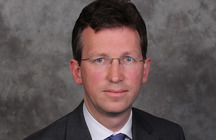
  • Jeremy Wright – 2018 Speech on the Centenary of the Armistice

    Below is the text of the speech made by Jeremy Wright, the Secretary of State for Digital, Culture, Media and Sport, in the House of Commons on 6 November 2018.

    I beg to move,

    That this House has considered the centenary of the Armistice.

    In May 1915, my grandfather arrived in France to fight for his country. Three years later, he came back. Millions of others did not or, if they did, came back terribly damaged, visibly or invisibly. They went to fight in what they knew as the great war: four years of blood, mud and misery in which humanity found new ways to kill and injure on a previously unimagined scale. When the cost and enormity of it could be better grasped, they came to call it, in shock, horror and, sadly, unrealistic optimism, the war to end all wars.

    On Sunday, the nation will come together as one to pause and remember all those who died during this conflict and all those that have happened since. This year’s act of remembrance will be particularly special and poignant, however, as we mark the centenary of the end of the first world war. We have sought to commemorate the war in many ways over the past four years. For everyone, different events will stand out, but I will always remember the commemoration of the battle of Amiens at Amiens cathedral, which I was fortunate enough to attend. I sat in that magnificent cathedral with representatives of many countries that fought on both sides of the battles that marked the beginning of the end of the war, and I listened to the words of those who experienced them. Their emotions were deeply felt by those in the cathedral and, I am sure, by the millions watching on television and online.

    Sir Edward Leigh (Gainsborough) (Con)

    I remember that I prepared a scrapbook of cuttings at the 50th anniversary for my grandfather who had fought in the first world war, but I was rather embarrassed in front of him because the coverage in the 1960s was relentlessly negative. Will my right hon. and learned Friend confirm that historiography has now changed? Most people realise that it was a sacrifice worth making, that the alternative would have been militarism and that the soldiers were actually well led in 1918.

    Jeremy Wright

    It is undoubtedly right that the vast majority of people in this country will come together on Sunday, as they have come together on many occasions over the past four years, to remember the sacrifice of those who gave their lives and who did so without a thought to their own interests and in the service of their nation.

    Mr Jim Cunningham (Coventry South) (Lab)

    Many Members will have had a family member who was involved in the first world war in one way or another, and some of us will have family memories of different battles. Like the Secretary of State’s grandfather, my grandfather took part in the battle of Loos, which is not ​as well remembered as other battles. Does the Secretary of State agree that we should not forget such battles and the people who fought in them?

    Jeremy Wright

    I agree with the hon. Gentleman. We have not remembered every single battle over the past four years, but we have tried to remember a number of them. However, our collective effort to commemorate what happened is designed to encompass all battles and all those who fought in them.

    Paula Sherriff (Dewsbury) (Lab)

    I thank the Secretary of State for his generosity in giving way. In common with many other Members, I will be joining remembrance events in my constituency on Sunday. I understand that the event held at Mirfield is the biggest and most well attended outside of London, so will he join me in welcoming the people in Mirfield who attend that event?

    Jeremy Wright

    I join the hon. Lady in welcoming that occasion. I am sure that it will be a particularly special year for her and for all those who attend.

    The high-profile ceremonial events that I mentioned have been complemented by an extensive and engaging programme of cultural and educational activities. In 2012, the Government established the 14-18 NOW cultural programme to work with artists to tell these important stories through the mediums of culture and art. There has been a particular focus on engaging children and young people, with events including the great war school debate series and school battlefield tours, in which nearly 6,000 students and teachers visited the battlefields of northern France.

    The groundbreaking 14-18 NOW programme has used its remit to enthral people from all walks of live. More than 35 million people have engaged with the centenary, including 7.5 million young people under the age of 25. It has clearly demonstrated that contemporary artworks in public places can attract large, diverse audiences. Whether it was turning the country dark as part of the “lights out” programme or the ghost soldiers that appeared across the country to mark the centenary of the battle of the Somme, these events have all captured the public’s imagination and have given remembrance prominence in our daily lives.

    The ceramic poppies at the Tower of London were another moving tribute, bringing the programme to one of our most popular and cherished attractions. The poppies have since travelled to 19 locations, from Belfast to Southend and from Orkney to Plymouth, and have been visited by more than 4 million people. From next year, they will be part of the collection of the Imperial War Museum, where they can be viewed for many years to come.

    As part of our programme, we have sought to highlight the enormous contribution made by those who came to our nation’s aid from across the world. Some 2.5 million men and women from the Commonwealth answered the call to fight, with 200,000 laying down their lives. They left their homes thousands of miles away to serve the allied cause with unstinting bravery, often in unimaginable conditions, and they must not be forgotten or overlooked.

    Works by an extraordinarily diverse range of artists from the UK and abroad have helped us to highlight those contributions. Poets from the Caribbean diaspora, visual artists from India and Bangladesh, performers ​from South Africa, musicians from Syria and many more have all highlighted the global reach and impact of the war. That was shown vividly in March 2015, when an event commemorating the second battle of Neuve Chapelle took place at the Imperial War Museum North. The event was co-ordinated by British Muslim, Hindu and Sikh organisations, supported by the Government. It compellingly showed the partnerships and friendships that we hold so dear and that were so instrumental during the war.

    We have seen all too well how history can divide, but one clear and ambitious goal throughout this centenary period has been to seek to use history to bring us together. The Government have worked closely with the Irish Government, for example, over the past four years to mark these events. That was most clearly demonstrated in the shared approach to the battle of Messines Ridge commemoration in June 2017, which was attended by both His Royal Highness the Duke of Cambridge and the then Taoiseach, Enda Kenny. The battle has considerable historic and symbolic significance for the UK and Ireland, as it was the first time that the 36th (Ulster) and 16th (Irish) Divisions fought alongside each other during the great war. The event provided a valuable opportunity to remember the service and sacrifice of those who fought, as well as to explore our shared history and support efforts to build a peaceful future.

    Mr Gregory Campbell (East Londonderry) (DUP)

    Will the Minister join me in welcoming the changing attitude, particularly in the Irish Republic, where for many decades there was little or no appreciation of that contribution? Does he agree that that should continue and, in fact, increase over the coming years?

    Jeremy Wright

    I agree with the hon. Gentleman. The co-operation and full support we have received from the Irish Government has been most welcome, and I hope it will set a new tone for future commemorations. It is deeply appreciated by those on both sides of the border who have been involved in these commemorations.

    Albert Owen (Ynys Môn) (Lab)

    Another way to commemorate the shared interest between Ireland and the UK is through the merchant navy. Many vessels sailed constantly through the great war between Ireland and Welsh ports, and there were many casualties. We have had commemorations of that this year, so will the Secretary of State put on record his thanks to the merchant seafarers of Ireland and Wales and the rest of the United Kingdom?

    Jeremy Wright

    I will certainly do that. I am sure the commemorations that will take place in the hon. Gentleman’s constituency will make particular reference to those people, and that is entirely as it should be. It is also important to say that the German Government have been hugely supportive of our commemorations. Germany has been represented at very senior levels at all our events, and German military representatives have participated extensively.

    One hundred years ago, the news of the Armistice was celebrated on these shores. On Remembrance Sunday this year, out of respect for living veterans, and the service’s wider purpose in remembering the fallen of all conflicts, we will share our usual sombre moment of ​remembrance, with the customary two minutes’ silence. Wreaths will be laid at the Cenotaph, including, uniquely, one by the President of Germany. In recent months, there has been an unprecedented amount of commemorative activity up and down the country, leading up to that day. The nation is truly coming together, because 11 November 1918 is a significant day in our history. In dispatches from the frontline, soldiers often struggled to articulate how they felt when the guns stopped firing. They reported a mixture of joy, relief, numb disbelief and grief. For many, there was also a sense of achievement and justice.

    Bob Stewart (Beckenham) (Con)

    Let me remind my right hon. and learned Friend of the words of Geoffrey Studdert Kennedy—“Woodbine Willie”:

    “There are many kinds of sorrow in this world of love and hate but there is no keener sorrow than a soldier’s for his mate”.

    Jeremy Wright

    Those words put it well. It is evident in all the commemorations we have witnessed how much of what was done and sacrificed by those who fought was done in fellowship for those they went to fight with. I agree with my hon. Friend.

    After the service of remembrance this year, we will give our thanks for the end of the war and show our support for those who returned. The traditional Royal British Legion parade of veterans will this year be followed by an additional procession of 10,000 members of the public paying personal tribute and giving thanks to the generation who served then. The procession will be complemented in the afternoon by the nationwide ringing of bells, across the UK, and throughout the rest of the world, echoing the bells that rang out after many years of silence 100 years ago. In the evening there will be a national service of reflection and thanksgiving in Westminster abbey, with similar services taking place across the UK. This will be a moving and inspiring day that will unite us all.

    I am sure we will hear plenty more reflections on these events during this debate. Many people have been involved in making these commemorations a success: charities, including, of course, the Royal British Legion; civil society groups; officials from across the Government, including, in particular, those from my Department; and the Commonwealth War Graves Commission. They all deserve our thanks and congratulations. I would also like to thank the first world war advisory group for its guidance throughout this process. I want to make special mention of my hon. Friend the Member for South West Wiltshire (Dr Murrison), who has acted throughout this period as the Prime Minister’s special representative for the first world war. I hope the House will hear from him this afternoon, and I think it true to say these commemorations would not have had the same shape and resonance as they have had without his considerable efforts. I would also like to pay tribute to the work of the hon. Member for Barnsley Central (Dan Jarvis), whom I am also delighted to see in his place this afternoon. I know he has also been passionate in wanting these commemorations to have the widest possible reach.

    The first world war started more than a century ago, yet these commemorations have brought that war to life in ways that feel tangible and within our grasp. It is so ​important that future generations have the opportunity to hear these stories. This was a war not about monarchs or generals, but about people like us. In fact, 264 Members of this House served in that war, 22 of whom were killed. We remember the remarkable challenges faced by all those who fought, but we also remember that they came from our cities, towns and villages. They were people like us, and that should give us hope, as well as pride and sadness, because in those whom we remember, we see the huge capacity for service, for sacrifice, in people just like us, just when history needed it. They went off to war with friends and neighbours and workmates, or contributed in other ways, not because they thought they were special, but because they thought they were ordinary. They did what they thought everyone did for their country in its hour of need, but we remember them, and honour them, 100 years later, not because we know they were ordinary but because we know they were special.

    Over the past four years, we have done our best to remember them all. I believe that we have done it well and that we can be proud not just of the people whom we have remembered, but of the way in which we have remembered them, and this House, and this nation, will always remember them.

  • Chris Grayling – 2018 Statement on the EU Transport Council

    Below is the text of the statement made by Chris Grayling, the Secretary of State for Transport, in the House of Commons on 6 November 2018.

    I attended the informal meeting of members of the Transport and Environment Councils in Graz, Austria on 29 and 30 October.

    The programme for the informal meetings included separate sessions for transport and environment Ministers and a joint session for both Ministers entitled “Starting a new Era: clean, safe and affordable mobility for Europe”.

    On 29 October, Transport Ministers were invited to discuss the Commission’s proposal on “Discontinuing seasonal changes of time (summer time)”. My noble Friend the Parliamentary Under-Secretary for the Department for Business, Energy and Industrial Strategy, Lord Henley, represented the UK at this session and explained that the UK Government do not support the proposed directive. He also noted the Commission had fallen short on the principles of subsidiarity and proportionality as has been highlighted by the decision of the House of Lords to issue a reasoned opinion. (The House of Commons European Scrutiny Committee has subsequently recommended that the House of Commons also issue a reasoned opinion on this matter.)

    There was broad consensus in Council that the timetable proposed by the Commission was too short and thus there was widespread support for the presidency’s intention to provide for an extension. A small minority of member states were notably critical of the proposal while the majority welcomed the initiative, albeit noting its deficiencies. Several member states advocated the need to co-ordinate across borders in order to know the final time zone arrangements before taking the decision to abolish daylight saving.

    Environment Ministers were then invited to discuss “The future of European environmental policy”. The Secretary of State for the Environment was represented by officials from the Department for Environment, Food and Rural Affairs. Ministers broadly agreed on the need for an eighth environment action programme (EAP) with a consensus that it should take full account of climate change given the report from the Inter- governmental Panel on Climate Change (IPCC) on global warming of 1.5 °C published last month.

    At the joint session for Transport and Environment Ministers on 30 October, interventions were wide-ranging with common themes being the need to move towards zero emissions vehicles and enabling people to choose sustainable ways to travel. These themes were reflected in the presidency’s “Graz declaration” published after the meeting. For the UK, I stressed the importance of ambition to accelerate the development and introduction of zero emission vehicles, recalling that the Prime Minister had hosted the world’s first zero emission vehicle summit in Birmingham recently.​
    The subject for the afternoon session was road safety. Transport Ministers shared experiences with progress to date in reducing casualties and their perception of the challenges in making more progress. In my intervention I noted that human error was a factor in over 85% of road accidents, and that connected and automated vehicles offered opportunities to make our roads safer.

    In the margins I met with a number of EU Transport Ministers to discuss current EU transport business and how relationships will evolve as the UK leaves the EU.

  • James Brokenshire – 2018 Statement at Locality Convention

    Below is the text of the speech made by James Brokenshire, the Secretary of State for Housing, Communities and Local Government, on 7 November 2018.

    Thanks, Tony I’m delighted to be here – as, I understand, the first Secretary of State to attend this conference for some time.

    All I can say is that my predecessors didn’t know what they were missing!

    You and your organisations represent some of the most exciting work going on in our communities and I’m so pleased to be here to thank you for everything you’re doing and to be inspired by your example.

    Because as this year’s theme – “the power of community” acknowledges – you know, better than anyone, why strong communities – well-integrated, socially and economically robust communities – matter so much. In good times and bad, they are glue that binds us.

    We saw this most powerfully, recently, in the aftermath of the tragedy at Grenfell Tower and the terror attacks in Manchester and London.

    And who can forget the glorious celebrations around the London 2012 Olympics and the Queen’s Jubilees?

    In this week alone, we’re marking the centenary of the Armistice and, from today, Diwali, with its hopeful message about the “victory of light over darkness”.

    Underlining the rich diversity and the immense contributions from all communities that makes our country what it is.

    But it’s not just the big milestones that count.

    It’s the infinite daily interactions, the endless web of interdependencies, the collective memory of shared history and values that ultimately make a place more than a group of people living side by side and make it a community.

    That, and a real sense of pride and belonging.

    Despite the daily pressures we all face, that pride continues to shine through.

    We see, for example, that 82% of those who responded to the Community Life Survey agreed that people from different backgrounds get on well in their area.

    And 59% said that people in their neighbourhood pull together to improve it.

    The benefits for communities that boast this pride and solidarity are clear.

    The higher the levels of integration, the higher our sense of wellbeing and the less likely we are to suffer from anxiety and health problems.

    If our children grow up in neighbourhoods where they have access to inclusive spaces like parks and activities such as arts and sport they’re less likely to turn to crime.

    The wider our social network, the greater our prosperity as we share information more readily about job prospects.

    But, in truth, that’s not how it often feels on the ground.

    We live in a world that can feel increasingly divided and polarised, leaving us feeling that the world around us is changing, but that we have little control over our lives.

    Making it harder to hold onto to what unites us rather than divides us.

    As I said earlier, we’re all the stronger for our diversity as a country and all parts of our community should be able to take advantage of everything that modern Britain offers – to realise their potential and play a full and active part in our society.

    And this, in many ways, is the defining challenge of the age for all modern, mature democracies: how to harness change and the opportunities that flow from it for the benefit of all and ensure that no-one is left behind.

    There are no easy answers to this conundrum and many communities are, unsurprisingly, feeling the strain.

    Hate crime is at worrying levels, here and – as we saw all too tragically in Pittsburgh – abroad.

    As are issues around loneliness and social isolation, affecting young and old alike.

    Our high streets, too, are under severe pressure.

    And there’s a pressing need for more decent, affordable homes, but also worries about the impact of new development.

    So there are some huge challenges facing our communities – challenges that I know many of you are meeting head-on; drawing on your invaluable local knowledge, networks and the latest technology and, in the process, empowering local people as never before.

    And I want to pay tribute to your incredible efforts and the very real impact they’re having.

    Here, in Bristol, for example, we can see how Knowle West Media Centre is harnessing digital technologies and the arts for the benefit of the community by supporting people to draw on them when developing their own enterprises and tackle the community issues that they care about.

    There’s also the very commendable work of community-led groups like the Community Security Trust, Tell MAMA and Galop who are standing up to hatred and bigotry, wherever it exists, and supporting victims. I’m proud to stand with them.

    Faith communities – such as the Al-Khoei Islamic Centre in London, which threw open its doors during the Jewish festival of Sukkot and built a Sukkah – are also making a real difference.

    As is local government, which has a vital role to play in strengthening communities – in its own right and also while working in partnership with community groups and the voluntary sector.

    I saw for myself what this means when I recently visited Cornwall – where a lot of my family came from – which has fully embraced the devolution agenda and is working with parish and town councils and a range of community groups to devolve assets, services and influence.

    One such example was a much-loved running track in Par, which, coincidentally, I’d used in my youth, that had been taken over by a community group when it faced closure.

    It was wonderful to see it in such good hands and the group’s high ambitions for its future, which included a skate park, café and a new children’s area.

    And we can see that other authorities like Durham and Wiltshire are also stepping up to deliver this kind of “onward” devolution in service delivery – which puts local communities in the driving seat to decide their own priorities and find local solutions that suit local circumstances.

    And which helps them take control and ownership of the spaces and assets that will help their neighbourhoods flourish – something that my department is championing in partnership with Locality through a Community Enabler Fund.

    One of a number of projects on which I’m pleased to see that we’re collaborating.

    This shift in power from the state to the citizen is true localism, a much-needed renewal of our democracy, in action.

    And I want to see much more of it.

    Cornwall, Wiltshire and Durham all became unitaries nearly a decade ago and they have shown that local reorganisation should not lead to services being sucked up to a more distant central authority on high.

    Quite the reverse.

    They have been able to drive services and decisions down to communities on the ground.

    The benefits speak for themselves – tailored, more effective services, stronger local economies and more engaged, more confident communities.

    Communities in which the conversation is happening, not official to official, but between local leaders and the people they serve.

    It’s essential that we do much more to celebrate and learn from their example and from the communities who are leading the way – and that’s exactly what we’ll be doing through the fantastic Communities Roadshow being launched today.

    Because it’s clear that we all need to play our part.

    Councils, faith leaders, community groups, businesses, the voluntary sector.

    And, yes, government – in doing what we can to support you and to create the conditions where local communities are truly free to determine their own destinies and removing the barriers that stand in your way.

    To that end, I’m working with colleagues across government on projects such as the Integrated Communities, Civil Society and Loneliness Strategies as well as the Hate Crime Action Plan.

    I have also launched the Building Better, Building Beautiful Commission to reinforce the central role of communities in shaping our built environment.

    Because decisions about the way we use space, about the quality of design and style of our buildings are inextricably linked to our sense of identity and sense of pride in the places we call home.

    This is what creates strong neighbourhoods and all our spaces and places should embody this aspiration for, yes, beauty, and buildings that are in keeping with their surroundings and that are built to last.

    In addition, I recently agreed an ambitious Mission Statement for the Ministry of Housing, Communities and Local Government that demonstrates why communities are at the heart of everything we do as a department – be it our quest to build more homes, support quality public services or drive local growth.

    This Statement is centred on 4 themes.

    Firstly, we’re giving communities more control over the decisions that matter to them.

    Nowhere is this more evident than on housing.

    We’re giving local people a bigger say over the future of their communities through for example, neighbourhood plans.

    Residents all over the country – including here in Bristol – are seizing the powerful opportunity they offer to decide where new homes, green spaces and other facilities should go and how they should look and feel.

    And I’m delighted that we’re backing them with more money – an extra £8.5 million, announced at Budget, which takes our current investment in neighbourhood planning to £34.5 million.

    Then there’s the £163 million of funding we’re making available for community housing – housing for the community delivered by the community to meet local need.

    Giving communities more control also means giving them a role in policy development through initiatives such as the Community Partnership Board that I’ll be attending for the first time later this month.

    Secondly, we’re giving communities a sense of safety and pride by ensuring that they’re economically and socially resilient in changing times.

    Businesses have a major role to play in this endeavour.

    And so I’m pleased to announce that my department will be working more closely with Business in the Community to provide practical support to businesses on volunteering opportunities for their employees and to promote better integration between people from different backgrounds.

    Business in the Community has an impressive track record in this area and I look forward to seeing what more we can achieve together.

    We’re also working closely with businesses to revive our high streets which, in so many ways, represent the heart of our communities.

    We know how much people value them – and how worried they are to see them struggling as technology changes the way we shop and do business.

    Which is why the £1.5 billion package of support unveiled in the Budget for high streets is so welcome.

    This spans not just vital short-term relief for small retailers – that will bring their business rates down by a third.

    But also a long-term vision for our high streets that goes with the grain of our changing lives and flexes with technology to pave the way for the “smart cities” and “tech towns” of tomorrow.

    A vision that will be underpinned by a £675 million Future High Streets Fund – which will help councils innovate and improve their town centres – and a relaxation of planning rules that will see more people living on our high streets and more mixed-used businesses.

    There are currently over 27,000 premises lying vacant in England’s town centres.

    If we turned just a fraction of these into homes, thousands more people could have a roof over their head.

    And research shows that higher numbers of residents on our high streets can generate higher footfall and, in turn, higher demand for shops and services.

    And there will be other imaginative, creative approaches – that will differ from area to area -–that will help our high streets reinvent themselves and thrive again – and I’m looking forward to celebrating these trailblazers and the incredible people behind them at the upcoming Great British High Street Awards.

    We need to pull out all the stops to support communities to create many more of these vibrant, thriving hubs – hubs that make the most of the human interactions and experiences they offer that no online competitor can hope to replicate.

    The action we’re taking is an important step towards this.

    Which brings me to the third theme: inclusive community spaces.

    These obviously include our high streets as well as parks and other assets and are crucial for many of the same reasons – their ability to bring people from different backgrounds together in a meaningful way that breaks down mistrust.

    Plus their ability to combat social isolation and give people a sense of belonging.

    As such, their value is beyond measure.

    And so I’m delighted to be launching a new project, Open Doors, that will see empty shops being opened up to community groups offering services to younger and older people. The aim is to reduce loneliness whilst increasing footfall on our high streets and town centres.

    We’re calling today for landlords, public and private, to come forward and play their part in this exciting initiative and help truly transform their communities.

    We need to be bold and imaginative in tackling the challenges we face and ensure that – in line with the fourth and final theme – no communities are left behind.

    This is especially important as we leave the European Union and chart a new course to a brighter future.

    I want to ensure that all parts of our country can seize the opportunities that will be unleashed.

    It’s with this in mind that our UK Shared Prosperity Fund will focus on tackling the inequalities between communities by driving up productivity, particularly in those areas whose economies are lagging furthest behind.

    I want communities across the country to have a voice in determining their economic destiny.

    This Fund will give them that voice and help bridge the divides between the places that are prospering and those that are struggling.

    Now, this mission to build a more inclusive society also very much extends to people living in social housing.

    The terrible events at Grenfell shone a light on their experiences which, for too long, had been overlooked by successive governments.

    And before I go on, I want to condemn in the strongest terms the appalling video, on social media, showing an effigy of Grenfell Tower being burned on a bonfire.

    It beggars belief that anyone would do this, given everything that the bereaved and survivors have been through. We will always stand by them – as a community and also with other people living in social housing.

    To that end, we recently published a social housing green paper, informed by the views of around 8,000 residents from across the country, which focuses on the issues that matter most to them.

    Many spoke of their pride in their home and communities, but also about the disgraceful stigma that they face – and creating a new contract on social housing.

    We’re determined to stamp this out and are renewing and deepening our commitment to these communities to deliver a new generation of social housing.

    Conclusion

    Because the only way we will build a stronger, fairer Britain, the only way we can bridge the divides that hold us back, and renew our democracy is by building stronger, fairer communities.

    Communities in which everyone has the opportunity, security and dignity to build a better life.

    And that with a renewed focus on community we can create a country which works for everyone – and recognise that intrinsic connection between us.

    Of family, of faith, of neighbourliness, of community.

    That as we chart a positive new direction for our country through Brexit and beyond, we can create strong, confident communities socially and economically.

    Which celebrates our rich diversity as a strength which defines the country, the people we are. That there is so much more that unites us than divides us.

  • Jeremy Hunt – 2018 Speech on Britain and France

    Below is the text of the speech made by Jeremy Hunt, the Foreign Secretary, in Paris, France on 8 November 2018.

    t is a great pleasure to be here in Paris this morning, in this historic setting.

    This is – to use a little English understatement – an important moment in the future of the relationship between our countries.

    There have been many such moments in the long sweep of our history, and we know, without a doubt, that there will be many more in the decades to come.

    What matters is what we decide to do with those moments.

    Those decisions fall to each generation.

    To plot their own course and determine their destiny and that of their countries.

    What is unique about the relationship between Britain and France is the extent to which those decisions, those destinies, have been, are, and will be, entwined.

    That long history has, as we all know, had…let me put it diplomatically… its high and its lows.

    And it is a relationship of competition and cooperation, similarity and difference.

    Indeed my view is that it is precisely that mix which gives it its strength – because we have made a choice – for nearly 200 years – to work together.

    And it is my contention that the relationship between our countries – born of shared geography, history and culture, and forged through joint struggle and sacrifice, is as important today as it has ever been; that our fortunes are as bound together as they have ever been; and that the case for the closest possible partnership between Britain and France is as strong as it has ever been.

    But how that partnership evolves depends on the decisions we make now.

    So today I want to look at things in the round – to consider our past, our present and our future – the future that, yes does mean getting Brexit right, but which goes beyond that and will be for the next generation to build.

    The Past

    But I want to start with the past.

    This week – of all weeks – our shared past has particular resonance and weight.

    This Sunday, at 11 o’clock, it will be 100 years exactly since the guns fell silent on the Western front.

    At the Arc de Triomphe here in Paris and at the Cenotaph in London, and in towns and villages across France and Britain, our countries will commemorate the end of the War.

    Tomorrow, the French President and the British Prime Minister will be together in the battlefields of the Somme – scene of some of the bloodiest fighting.

    They will remember our shared sacrifice. The British Army lost 20,000 dead in a single day on 1 July 1916. The Somme was our Verdun.

    This was a war which changed our countries and our continent forever.

    It was a war in which our destinies as nations were yoked together – in which we fought and bled side by side for over four years – and in which, in the end, we prevailed.

    We sometimes forget that in the closing months of that war, the two million soldiers of the British Army fought under French command for the first time.

    The British Prime Minister, David Lloyd George, said that Marshal Foch was the ‘only general in the field with the necessary decision and vision to plan out such a campaign’.

    After the Armistice, Foch said ‘I am conscious of having served England as I served my own country’ – words carved in stone beneath his statue near Victoria Station in London.

    But the victory that Franco-British cooperation made possible came at a terrible price.

    Across France, 575,000 British and Commonwealth soldiers lie buried, alongside 1.4 million French comrades who fell alongside them.

    Row after row of silent white headstones speak more eloquently than we ever could on the strength of our alliance, and the depth of our shared sacrifice.

    I am fortunate to come from a generation which has never known such horror, and which has been blessed by the peace and friendship we have built with Germany, something we will also mark this weekend.

    But if our shared history has taught us anything, it is surely to value peace – and never to take it for granted.

    Of course, our history goes back much further than a hundred years.

    Britain’s long and complex relationship with France is one of the most important that we have with any country in the world.

    We are approaching 1,000 years since William the Conqueror landed near Hastings, and the Duke of Normandy became the King of England.

    The Bayeux tapestry – which chronicles the story of William’s arrival in England – turns out to have been just the opening chapter in the Franco-British story.

    If we brought the tapestry up to date, it would stretch all the way from Paris to London and back.

    It would tell of our highs and our lows, our friendships and our enmities, our triumphs and our defeats.

    That is why President Macron’s decision to lend the Bayeux tapestry to Britain – announced at the Sandhurst Summit earlier this year – so captured the public imagination on the other side of the Channel.

    It represents – literally – the common thread of our shared history, going to the heart of both countries’ identity.

    That sense of similarity and difference runs through the next nine centuries.

    And it extends into the most recent period of our story during which – for nearly 200 years now – Britain and France have not only been at peace, but in alliance, standing together against danger and when, twice in a century, the very existence of our nations was threatened.

    The Present

    Why does all this matter?

    Because it is not the stuff of books and museums.

    It is the underpinning of the world we built – together.

    And in that world our countries are as closely connected, our story is just as interwoven as it has ever been.

    Geographical neighbours; separated by 33 kilometres of what Churchill called that ‘strip of salt water’, but joined now by a tunnel through which 57,000 pass every single day.

    Hundreds of thousands of our fellow citizens choose to live in each others’ countries, where they make such a valued contribution.

    I would like to take this opportunity to repeat the Prime Minister’s commitment to the French people in Britain – and all EU citizens – protecting their rights after we leave the EU. And I am sure that the same assurances will be offered to British citizens living here in France.

    About 12 million Britons visited France last year – and more French people visited the UK than any other nationality.

    It is a relationship that is underpinned by human ties of friendship.

    And at a Governmental level, by the fact that Britain and France are both European nations with a global vocations, who share the same values, and who see the world in broadly the same way. We helped fashion the global order, and we share an interest in defending it.

    We face the same terrorist threats, and we know that we must work hand in hand to defeat them.

    We both know that sometimes to defend the peace, you need to be ready to use military force.

    We know that the threats to European peace and security are more serious than they have been for a generation, and that as Europe’s only two major military powers, we need to confront those threats together.

    We both believe in nuclear deterrence, and in maintaining our deterrents for our own defence and the defence of our allies.

    That is why we so often form joint positions, including on the Security Council where we both have permanent seats, to deal with an increasingly unstable world.

    That is why when our countries have been attacked by terrorists, there was such an outpouring of mutual solidarity.

    We will never forget the moment after the Manchester attack when President Macron walked from the Elysee Palace to the British Embassy to express France’s solidarity, and the crowd at the Stade de France sang the British national anthem – nor, when, after the Bataclan attack the crowd at Wembley sang the Marseillaise.

    That is why, after the chemical weapons attack in Salisbury in March, France rallied to the UK’s side, leading a robust European response, working together to expel scores of Russian diplomats from our continent.

    And in April, British and French aircraft, with our US allies, acted together to strike chemical weapons installations in Syria, and to enforce the global ban on the use of chemical weapons which was itself born out of the suffering in the trenches 100 years ago.

    That is why our defence cooperation – rooted in the Lancaster House accords – is so deep.

    RAF Chinook helicopters are flying missions in the Sahel, transporting French troops as part of Operation Barkhane.

    Together we have forged a combined joint expeditionary force, which will be combat capable by 2020.

    This year our warships have both upheld freedom of navigation by sailing through the South China Sea.

    And our cooperation extends far beyond the security domain to genomics, artificial intelligence, cyber and space.

    The scale and breadth of cooperation is probably closer than it has ever been.

    The Future

    Which brings us back to Bayeux.

    Now, as President Macron said at Sandhurst, we are weaving a new tapestry.

    What path will it follow, what scenes will it depict?

    Because we are at a moment of decision, and the answers we give in the coming weeks and months could determine the shape of Franco-British relations, and of relations between Britain and her European partners, for many years, perhaps decades to come.

    Which brings me, of course, to Brexit.

    And here our history is again relevant: for all our similarities, we are also different.

    I understand that for so many in France that the outcome of the referendum result was disappointing.

    I know that in France the Brexit vote is often seen as Britain pulling up the drawbridge, turning its back on Europe and reaching out for ‘le grand large’.

    But that is not how we see it.

    And this is where our peculiar mixture of similarity and difference is important.

    France sees the EU as vital to its destiny, to the stability of the continent and above all to its relationship with Germany.

    We recognise that. We understand it. We value it.

    But Britain has never felt quite the same, for the simple reason that our experiences have been different.

    Yes, we are similar in that we are both European countries who cherish our global role.

    But we differ, I believe, in our view of the process and goals of EU integration. The reality is that our public has always been reluctant about the political character of the Union and uncertain about its ultimate destination.

    That made the experience of the pooling of sovereignty which the EU entails uncomfortable for us – and I think that goes a long way to explaining the result of our referendum.

    Indeed for most British people, their concept of Europe has never been synonymous with the European Union.

    Whereas for so many people in France, I believe, the European Union is at the heart of their notion of Europe.

    Why does this matter?

    Because so far in our recent history we have been able to draw strengths from our similarities, but recognise and respect our differences in the choices we have made together.

    And we have now reached another such moment of decision, and the decisions we take as Governments will have far-reaching consequences.

    Our people have voted in a referendum to leave the EU and its decision-making bodies.

    We must respect their democratic choice.

    But we intend to remain a European power into the future, as we have always been in the past.

    A European power, whose values remain European values.

    A European power committed to the security of the European continent.

    A European power with a European economic model, with universal public services and the highest standard of consumer and environment protection.

    A European power, whose children continue to do exchanges with each other and get to know and treasure each others’ countries – as I did at the age of 7 in Angers, in France; whose students study together; whose scientists and researchers and Nobel Prize winners continue to push forward the frontiers of human knowledge together.

    That is the strategic choice we have made in our approach to these negotiations. From our perspective we see no contradiction in wanting to continue to work together even as the institutional relationship changes.

    And so?

    What does this mean for our future, and for this negotiation, which is now entering its crucial endgame?

    I would suggest three things.

    First, our shared past, does not, of course mean that we do not remain two nations, each pursuing our national interests as we judge them, in the interests of the people we are elected to serve.

    But, having thought deeply about these issues, my view is that just as our interest and choice is to remain close to Europe, the EU’s interest lies too in close cooperation – for our security, our economies and our peoples.

    So I hope that we can redouble our efforts to reach an agreement.

    Second, we each need to make a particular effort to understand the other’s perspective.

    I know there are concerns that a deal which allows the UK to have the advantages of membership without the obligations, could lead to unfair competition and ultimately to the unravelling of the EU.

    I want to be 100 percent clear. We have heard those concerns, and we believe that we can address them. Indeed that the only way to address them is for an ambitious agreement that provides the kind of guarantees necessary.

    Remember this basic fact.

    From 29 March next year, we will be on the outside, not the inside.

    There will be no British Prime Minister turning up at European Council meetings, no Ministers deciding new legislation, no British MEPs, no British judges on the European Court of Justice.

    So we are not, as is sometimes suggested, even occasionally here in France, trying to have our ‘cake and eat it’.

    But we have offered a framework for our future relationship which should give you confidence that we are not going to pursue a race to the bottom, and which would allow our economic and security relationships to continue, not as they were before – but on a dependable basis on which we could continue to build in the years ahead.

    A relationship in which the UK will be a third country – but would remain tied by bonds of friendship and commerce for decades to come.

    The alternatives do not deliver that certainty. They make a choice for friction – at our border with queues at Dover and Calais, in the exchange of information between our security services and in greater divergence in our rules and regulation.

    That choice would seem to me to be a mistake.

    My last point is this.

    This is not a dry, technical discussion, although sometimes it can seem that way – with all the talk of regulatory standards and implementation periods and the like.

    At heart, it is about the destiny of our ancient nations – and of our ancient continent – and how best we shape our future as European nations.

    About how we weave the next chapter of the tapestry and what story it will tell.

    That is why I feel so passionately that we need to get this right, that we need to make the right choices in the weeks to come.

    So that the generations who come after us and look across the Channel will see that in 2019 Britain left the European Union, and a chapter ended.

    But the story of the European Union continued, and that the story of Britain’s friendship and alliance with Europe and above all with France not only endured, but grew in strength.

    In other words the end of a chapter did not mean the end of the book. Far from it. It mean the beginning of a new chapter, in which we found new ways to work closely together.

    Those future generations will see, I hope, that confronted with the common threats before us, and which are growing, we faced up to them together.

    That together we defended the post-war international order and institutions that are today under threat.

    That we together stayed true to our values and democratic principles that are being challenged – in practice and in theory – as never before in my lifetime.

    That we together adapted to the challenges and opportunities that globalisation is posing to our economies and more importantly our societies.

    I know it is not easy but that is my hope.

    That is Britain’s hope.

    I believe that is France’s hope, and that of our European partners.

    Let’s find the political will – as friends, as allies, as partners – to turn that hope into reality.

  • Theresa May – 2018 Speech at Women MPs of the World Conference

    Below is the text of the speech made by Theresa May, the Prime Minister, at a reception of the Women MPs of the World conference on 7 November 2018.

    Good evening everyone, and a very warm welcome to Downing Street for what is a very special event.

    The women here tonight come from many nations, many cultures and many backgrounds. We have lived very different lives, we hold different political beliefs, but each of us have answered the unique calling that is public service. And we all have the privilege of serving our communities and our countries in our national legislatures.

    Here in the UK, women have been allowed to do that for just 100 years – later this month will see the centenary of the law being changed to allow women to stand for Parliament. A year from now we will also mark the 100th anniversary of Nancy Astor becoming the first woman to take her seat in the House of Commons.

    Celebrating is something we should be doing this evening. Because today, 2018, we see more female members of parliaments and legislative assemblies around the world than there have ever been.

    And that is good news for all of the citizens we serve.

    More women in elected office means a greater voice speaking out on issues that affect women, certainly. It also means a greater focus on preventing gender-based violence, on girls’ education, on childcare and on women’s health.

    One of my proudest achievements as Home Secretary was passing the Modern Slavery Act, which makes a real difference in the fight to protect women and girls.

    And as Minister for Women and Equalities I was delighted to change the law on parental leave so that both parents are able to take on caring responsibilities for their child – something I’d long campaigned for in opposition.

    But the benefits of a more equal parliament are also felt more widely. After all, if half the population is systematically excluded from politics them you’re excluding half the talent.

    A parliament where women are a rare sight is a parliament working with one hand tied behind its back; a more representative parliament leads to better decision making, better politics and ultimately better government.

    So we should absolutely celebrate the progress that has been made, and the number of women who now have a place in their nation’s parliament. And we should remember that it has not come about by accident. It is the result of many years of effort by people around the world.

    That includes one of the women who has been instrumental in helping to deliver tomorrow’s conference, Harriet Harman MP.

    Harriet has been an MP for 36 years – she won’t mind me saying. She has spent much of that time battling to make Parliament a better, more accessible workplace for women. And although we certainly have our differences, Harriet, I want to thank you for all you have done –and continue to do – to support the cause of women in politics.

    In 2010 I took over from Harriet as Minister for Women and Equalities. And I want to thank the present Minister, Penny Mordaunt, for everything she has done in making tomorrow’s conference possible – and for everything she is doing, as Secretary of State for International Development, promoting women’s participation in politics at home and around the world.

    While we celebrate how far we have come, we should not lose sight of the fact that there is still a long way to go. Women make up half the world’s population but barely a quarter of its nationally elected representatives.

    If we want to see that improve in our lifetimes, then it’s not enough to simply stand by and wait for change to happen. We have to make it happen. And I’m absolutely committed to doing just that.

    Back in 2005, here in the UK, I co-founded an organisation called Women2Win, aimed at giving more women the tools and networks they need to be selected as candidates in my party.

    It’s not about positive discrimination, but creating a level playing field – and it’s making a real difference.

    When I first entered the Commons I was one of only 13 female MPs in my party. Today there are 67 of us, and I’m immensely proud at how many have benefited from the support of Women2Win’s.

    As a government, we are funding nationwide programmes aimed at getting more women and girls interested in politics here in the UK.

    And worldwide our Department for International Development is working to empower women in political life.

    In Sierra Leone we’ve worked with groups including the Westminster Foundation for Democracy to run a voter education campaign for women.

    In Nigeria, the Women in Politics programme has helped establish a Women’s Caucus in Abuja’s National Assembly.

    And in Pakistan, a UK-funded voter registration drive signed up more than 400,000 women ahead of this year’s general election.

    By doing so we’re helping to give women in the UK and around the world a greater voice – and we’re not alone in such efforts. From Ireland’s Inspire to India’s Girls Parliament, people and programmes are working to get more women and girls interested in politics, asking them to stand, and supporting them to win.

    Getting elected is only half the battle. We also have to make the system work once we are a part of it – and doing so in what is often a male-dominated and male-oriented environment is not always easy.

    So I hope that tomorrow’s conference, by giving you the opportunity to share ideas and insights, will enable you to learn from one another. Because, together, we can overcome challenges, and can get on with what we got into this business to do: contributing to society, responding to the needs of local constituents and making a real difference to people’s lives.

    It’s the ability to do that – to make a difference – that makes being an member of parliament the best job in the world. It’s a privilege we all enjoy, and one I’d like many more women and girls around the world to aspire to.

    In the words of the great British suffragist Millicent Fawcett, whose statue took its rightful place in Parliament Square this year, she said, “courage calls to courage everywhere”. So regardless of affiliation or ideology, let’s all work together, let’s learn from each other, let’s build the networks that will allow us to succeed.

    And let’s make sure women and girls know that whatever their views, whatever their party, whatever others may say, a woman’s place is in elected office.

  • Matt Hancock – 2018 Speech to the King’s Fund

    Below is the text of the speech made by Matt Hancock, the Secretary of State for Health, to the King’s Fund on 6 November 2018.

    I love my job. I get to see brilliant doctors and inspirational nurses, courageous paramedics and committed carers. I get to meet people who save lives each and every day.

    Yet, there were some perks to being Culture Secretary. You’d get to go to the Tate, the National, the Royal Opera House for work. You’d get to rub shoulders with the likes of Grayson Perry, Anthony Gormley and even the legendary Ronnie Wood.

    Although, when Ronnie offered me a little pick-me-up at the Brits, I was surprised, and mightily relieved, when he handed me a mini Babybel.

    “Minister caught in cheese scandal” isn’t quite a career ending headline.

    We know what the NHS does is life-saving. But what the arts and social activities do is life-enhancing. You might get by in a world without the arts, but it isn’t a world that any of us would choose to live in.

    As the great Chinese philosopher Confucius said: “Music produces a kind of pleasure, which human nature cannot do without.”

    And as the great Rolling Stones said: “I can’t get no, oh, no, no, no, I can’t get no satisfaction.”

    Music and the arts aren’t just the foods of love. They’re not just right in their own terms as the search for truth and expression of the human condition.

    We shouldn’t only value them for the role they play in bringing meaning and dignity to our lives. We should value the arts and social activities because they’re essential to our health and wellbeing.

    And that’s not me as a former Culture Secretary saying it. It’s scientifically proven. Access to the arts and social activities improves people’s mental and physical health. It makes us happier and healthier.

    So that’s what I want to talk about today: how we can harness the incredible power of the arts and social activities to improve the nation’s health and wellbeing.

    How the arts and social activities can help us move to more person-centred care and a focus on prevention as much as cure. And how social prescribing can shape our health and social care system in the future.

    First: the power of the arts and social activities.

    Now, I must pay tribute to Ed Vaizey for all his work in this field, and the All Party Parliamentary Group on Arts, Health and Wellbeing for their Creative Health report, which applied some much needed rigorous analysis to the research.

    And what they found is:

    the arts and social activities can help keep us well, aid our recovery, and support longer lives better lived

    the arts and social activities can help meet major challenges facing health and social care – ageing, loneliness, mental health, and other long-term conditions

    and, the arts and social activities can help save money for the NHS and social care system

    One project, a collaboration between the Royal Philharmonic Orchestra and Hull’s stroke recovery service, used music sessions to help people after they’d had a stroke.

    And what they found is through learning to play instruments, trying conducting, and eventually performing as part of an orchestra, nearly 90% of stroke patients felt better physically, with fewer dizzy spells and epileptic seizures, less anxiety, improved sleep, improved concentration and memory, better morale and more confidence.

    That was just one study. Others across the country have seen similar successes.

    In Lambeth, in south London, The Alchemy Project used dance as an early intervention against psychosis. The young people, who worked with dance experts, showed major improvements in concentration, communication, and wellbeing.

    In Gloucestershire, hospitals are now referring patients with lung conditions to singing sessions. Sounds counter-intuitive? But no. Singing helps people, even with chronic lung conditions.

    In my home county of Cheshire, Halton has now created a “Cultural Manifesto for Wellbeing”. Sounds grandiose, but it’s simple ideas like connecting school choirs to every local care home in the borough.

    Simple ideas like the Southbank Centre using working poets to run a poetry course for people with dementia and their families.

    Or the music therapy charity Nordoff Robbins, which helps children with autism communicate, people with dementia feel less anxious, and provided comfort to people facing terminal illness. Last year alone, they helped almost 8,000 people.

    So those are just some of the examples of how the arts have benefited health. And we must remember this is still a very new medical field. Social prescribing only really started about 5 years ago.

    Just the other day, Canada announced that it was going to start prescribing free museum visits to patients. Well, we’re lucky enough to have some of the world’s best museums for free, here in London.

    But we need to ensure that the people who may benefit most, are aware of what’s available and that they’re accessible.

    As Culture Secretary, one of the biggest challenges remains to change the perception of the arts as elitist or inaccessible, something I know is a personal priority for the new Culture Secretary Jeremy Wright.

    And, I think this is a challenge we also have to overcome with arts and health and social prescribing. The arts are for everyone. And what pleased me most about Lord Howarth’s work with the APPG, what had the biggest positive effect, the common theme running through all the creative fields from literature, to music, to art is: personal creativity.

    Taking part. Having a go. Dusting off forgotten skills. Or learning new ones.

    So social prescribing isn’t about prescribing tickets to Hamilton or seeing a Titian at the National Gallery, as fun as they both may be. It’s about what’s right for you. What fits.

    Don’t like opera? Fine. The doctor isn’t going to force you to sit through 17 hours of Wagner’s Ring Cycle. Unless that doctor happens to be Michael Gove.

    It’s about what works for you. How you can participate in the arts to improve your health. It’s about moving from patient-centred care to person-centred care. Stopping people from becoming patients in the first place. Which is the second thing I want to talk about today.

    Right now, my department is working with the NHS to draw up a long-term plan for the future of our health and social care system.

    The reasons are twofold:

    we’re putting a record £20.5 billion extra a year into the NHS over the next 5 years, so we have to ensure we get the best possible return, and every penny of taxpayer’s money is well spent

    and, society is changing ‒ we’re living longer, our needs are becoming more complex, our expectations of public services are growing; at least 20% of GP consultations are now due to things like housing, employment and relationship breakdowns

    Now, those things may appear unrelated to health, but they’re not. It’s why yesterday I launched a new focus on prevention for our health and social care system. It’s one of my top 3 priorities, along with technology and workforce.

    Because if we want to get prevention right, we must move to person-centred care. And this is how we do it:

    by giving people the knowledge, skills and confidence to take responsibility for their own health

    by using new digital technologies to help people make informed decisions, work with healthcare professionals, to choose the services they need, when they need them

    So, I see social prescribing as fundamental to prevention. And I see prevention as fundamental to the future of the NHS.

    For too long we’ve been fostering a culture that’s popping pills and Prozac, when what we should be doing is more prevention and perspiration.

    Social prescribing can help us combat over-medicalising people. Of dishing out drugs when it isn’t what’s best for the patient. And it won’t solve their problem.

    Social prescribing is a tool that doctors can use to help them, help patients and help the NHS cut waste.

    It’s the Goldilocks approach to medication: the right amount at the right time. No more, no less.

    So under my vision for prevention, I see social prescribing growing in importance, becoming an indispensable tool for GPs, just like a thermometer or a stethoscope may be seen today.

    And, together with a greater focus on diet, exercise, stopping smoking and excessive alcohol consumption, and greater mental health support, how we move to more person-centred care, and build a health and social care system for the future.

    So, finally, let me turn to the social prescribing ideas that we’re looking at together with the Arts Council and DCMS.

    First, social prescribing through libraries. There are nearly 3,000 libraries in England. Many of them already do great work in helping people become better informed patients so they can better manage their own health.

    What we’re looking at is if more libraries can offer health services, and if we can expand the existing health services libraries already offer.

    Norfolk’s Healthy Libraries Initiative is a great example of libraries being used for stop smoking and healthy living sessions.

    But if we can connect even more libraries to GP surgeries and primary and community care services, and increase training for librarians on social prescription referrals, then we could reach even more people, and make libraries even more vital and valued to their local communities.

    So things like: dance classes for elderly people, choirs for loneliness and mental health reading groups. Using our libraries and librarians to intervene earlier and improve public health.

    Second, we’re looking at how music can help people with dementia. How it can reduce the need for medication. How it can reduce agitation and combative behaviour. How it can reduce the need for restraints and help people with dementia, and their families, cope better with symptoms.

    And I must pay tribute to the pioneering work of the charity Playlist for Life. Their work creating personal playlists for people with dementia led to a 60% reduction in the need for psychotropic medication at one care home.

    This is the kind of cheap, easy-to-use social prescription that I’m fully behind. Because dementia is one of the major health challenges we face for the future. The number of people with dementia is set to rise from 850,000 today to more than a million in less than a decade. Personal playlists could offer a simple solution to this growing problem.

    And third, we will create a National Academy for Social Prescribing to be the champion of, build the research base, and set out the benefits of social prescribing across the board, from the arts to physical exercise, to nutritional advice and community classes. A resource which GPs and other frontline health workers can draw on for guidance and expertise. Where they can learn what works, and what’s available in their communities.

    Because social prescription reduces over subscription of drugs. It can lead to the same or better outcomes for patients without popping pills. And it saves the NHS money, because many of these social cures are cheaper or free.

    Now, drug companies may not like that. And you can bet this multi-billion pound industry will use every tool at their disposal to lobby for the status quo and convince us drugs are better than free social cures. That’s why we need a National Academy for Social Prescribing to be a champion for non-drug treatments. And it’s the role of the state to sponsor the treatments that are often cheaper, better for patients, and better for society.

    Now, I remain open to any idea. I’m not wedded to any one model. What’s most important is what’s proven to work. And my department will work with NHS trusts, providers, staff and with colleagues from DCMS and Arts Council England, so we can share our expertise and learn from each other.

    Social prescription is about making better use of what we already have. About making the arts and social activities more accessible.

    We’re the country of Shakespeare, The Beatles, Harry Potter and Harry Kane’s right foot.

    But we’re also a country of community choirs, reading circles and the Bury St Edmond’s Amateur Operatic and Dramatic Society, which you’ll find in my wonderful constituency of West Suffolk.

    People coming together. Taking part in arts and social activities, getting involved in something that’s good for our health and good for society.

    Arts, social activities and health in action. Life saving, life enhancing, making life worth living. So let’s work together to make it happen.

  • Prince Charles – 2018 Commonwealth Speech

    Below is the text of the speech made by Prince Charles, the Prince of Wales, in Accra, Ghana, on 5 November 2018.

    Mr. President, Distinguished Guests, Ladies and Gentlemen.

    It gives me particular pleasure to be able to speak to all of you this morning and apart from anything else to be back in Ghana after all these years. My wife and I have had the most special time in the country here over the past few days and we have been so deeply touched by the wonderfully warm welcome we have received wherever we have been. In fact so warm it’s taking some time for my blood to thin.

    And I can scarcely believe that so much time has passed since I first set foot in this fascinating land back in 1977 when, believe it or not, I was only twenty-eight years old and Ghana, too, was young, having just completed her first two decades of independence.

    Although I am afraid it has taken me far too long to return, I can assure you that I have been following Ghana’s story closely and, like so many other people, I have been profoundly impressed by the remarkable course that Ghana has taken.

    Over these past years, your country, ladies and gentlemen torment if I may say so, has become an example to other nations. It has given its citizens stability and security, with strong democratic institutions, free and fair elections and the peaceful transition of power, in a vibrant multi-party, multi-faith democracy. At the same time, Ghana’s civil society has thrived and its N.G.O.s, its trades unions and professional associations are now among the most active and engaged in the region. I know, too, that Ghana’s traditional leaders – some of whom, including the Asantehene and Okyenhene, I have had the great pleasure of meeting again on this visit – continue to have a vital and influential voice in your national discourse.

    Underpinning all of this, it seems to me, are Ghana’s deeply-held values of tolerance and inclusion which are embedded in your traditional culture and enshrined in your constitutional protection of free speech and freedom of religious expression. While, elsewhere, diversity has fuelled division and conflict, in Ghana it has been an enduring source of strength and national pride.

    Ghana has also become a force for good in the world. For over fifty years she has made a much-valued contribution to United Nations Peace-keeping operations, with Ghanaian armed servicemen and women, police officers and civilians making a vital difference to the maintenance of international peace and security and helping to create the conditions for sustainable development in countries stricken by conflict.

    Here, Mr. President, if I may, I would like to take the opportunity to pay a special tribute to the memory of that proud son of Ghana, Mr. Kofi Annan, whose recent loss has been so keenly felt by people throughout this country and indeed across the World. I had the particular pleasure of meeting Mr. Annan on numerous occasions, and have the greatest respect for his moral conviction, his strong sense of justice and his quiet determination to confront the world’s most urgent challenges. He will long be remembered by all those who knew him, and by countless others whose lives he touched.

    Mr. President, Ladies and Gentlemen, the histories of our two nations are, I know, closely intertwined, and while today we enjoy shared opportunity, we can never forget that our past has sometimes borne witness to tragedy and loss and, at times, profound injustice. At Osu Castle on Saturday, it was especially important to me – as indeed it was on my first visit there forty-one years ago – that I should acknowledge the most painful chapter of Ghana’s relations with the nations of Europe, including the United Kingdom. The appalling atrocity of the slave trade, and the unimaginable suffering it caused, left an indelible stain on the history of our world.

    While Britain can be proud that it later led the way in the abolition of this shameful trade, we have a shared responsibility to ensure that the abject horror of slavery is never forgotten, that we abhor the existence of modern slavery and that we robustly promote and defend the values which today make it incomprehensible, to most of us, that human beings could ever treat each other with such utter inhumanity.

    At other points in our history, our two nations have suffered and toiled alongside each other. At the Commonwealth War Graves Cemetery on Friday afternoon, I was honoured to join you, Mr. President, in remembering the bravery and sacrifice of troops from Ghana, and from across West Africa, who made such a vital contribution in the First and Second World Wars. In the First World War alone, a staggering 200,000 soldiers from West Africa supported the Allied effort and 30,000 of them lost their lives. During the Second World War, some 65,000 Ghanaians served in the Royal West African Frontier Force, in operational theatres stretching from East Africa to modern day Burma. I need hardly say, therefore, how special it was for my wife and I to meet some of those surviving veterans during this visit.

    Now as we mark the Centenary next month of the end of the First World War, it is so very important that we remember all those who fought – wherever they came from and wherever they served – and that we honour the immense sacrifice that so many of them made.

    Today, Ladies and Gentlemen, the United Kingdom and Ghana enjoy a dynamic partnership of equals, anchored in our shared experience but looking to a shared future. We share the same language, the same legal system, the same values – and a strong trading relationship that is worth over one billion dollars.

    You will not be surprised to hear that I have been very pleased to see, over these past few days, the many ways in which the United Kingdom has been helping to make a difference in Ghana whether through the private, government or N.G.O. sectors. But this is a two-way relationship, and the influence of Ghana, and of people of Ghanaian heritage, in the United Kingdom is extensive and vital too – whether in the arts, fashion, music, technology, business, academia or, of course, sport.

    There is, it seems to me, no greater example and demonstration of the bond between our two countries than the 250,000 men and women of Ghanaian descent who live in the United Kingdom and make such an indispensable contribution to our society and our economy.

    Many of these tremendously successful individuals are both British and Ghanaian and play active roles in the lives of both our countries. They act as a bridge between us, across which travel the ideas, creativity and talent that fuel our shared prosperity and help shape our identity.

    Shortly before we set off on this Tour, my wife and I were delighted to host a Reception, at St. James’s Palace in London, to celebrate the contribution to British life of the West African diaspora communities in the United Kingdom. We were joined by many famous faces and leaders in their fields, but also by nurses, police officers, armed forces personnel, teachers and other men and women who make such an indescribable difference to our country.

    These diaspora communities – as with the British Asian communities, or those whose roots are in the Caribbean – are one of our contemporary society’s greatest assets – and one in which I have nothing but the most enormous pride. They offer a powerful demonstration of Britain’s place within our remarkable Commonwealth family, of the shared opportunities it represents, and of everything that binds us together in a changing world.

    Next year of course we will celebrate the Commonwealth’s seventieth birthday. The Commonwealth, therefore, is just a few months younger than I am myself and has lasted a great deal better – as you can probably see for yourself ladies and gentlemen – and therefore so has been a fundamental feature of my life for as long as I can remember. Over these seven decades, the Commonwealth has built upon its firm foundation of shared experience and common values to strive for a more prosperous and more secure future for the 2.4 billion people who call the Commonwealth home. The past seventy years have brought global change on an unprecedented scale, with challenges and opportunities that could never have been anticipated in 1949. All the while, the Commonwealth has been a constant – a common point of reference by which its members have navigated the ever-changing tides of an uncertain world.

    Ghana has played an active and influential role in the Commonwealth ever since becoming, in 1957, the first newly independent African country to join. President Kwame Nkrumah, of whom I have vivid memories of meeting when he visited the U.K. in the 1960’s, played a key role in the forced withdrawal of apartheid South Africa from the Commonwealth in 1961 and, later, was instrumental in the establishment of the Commonwealth Secretariat in 1965.

    Today, Ghana continues to play an influential role. At the Commonwealth Heads of Government Meeting in London in April, during which I had the great pleasure of sitting next to you, Mr. President, at The Queen’s Banquet, Ghana lent its voice to commitments, among other things, on education, gender equality, clean oceans, cyber security and more.

    I know, Mr. President, that you share my determination that the Commonwealth should strive for renewed relevance in the lives of its citizens and should draw upon its unparalleled networks of professional expertise to offer practical solutions to some of the most pressing challenges of our time, many of which are increasingly deep-seated and deeply integrated.

    No issue is more pressing, it seems to me, than that of climate change.The recent report of the Intergovernmental Panel on Climate Change, which provided stark and alarming evidence that even 1.5 degrees of warming will mean catastrophic damage to the planet’s ecosystems, sent a clear signal that we must all surely heed. The impact of such alarmingly dangerous climate change is, of course, a really major risk multiplier for it exacerbates the increasing fragility of the world’s natural capital, on which we are all totally dependent and the resilience of which has been substantially undermined by decades of over-exploitation.

    I am afraid, Ladies and Gentlemen, that the impacts of climate change global warming are already being felt by far too many Commonwealth citizens, not least through the devastation that is wrought, ever more frequently, by the terrifying hurricanes and cyclones to which our small island states, in particular, are so horrifyingly vulnerable. In November last year I visited the Caribbean islands of Dominica, Antigua and Barbuda, and the British Virgin Islands, after previously visiting Malaysia Singapore and Indonesia, to show my support to those communities as they struggled with the aftermath of Hurricanes Irma and Maria; and earlier this year, I visited Vanuatu, in the Pacific, to see how they were recovering from Cyclone Pam, which wreaked havoc across that archipelago. Although, in each of these island states, I encountered a strength of spirit and resilience that was profoundly humbling, with the existential threat of climate-induced catastrophe growing ever more real, one has to wonder what the future holds.

    I know, of course, that the effects of climate change are being felt every day by people across this continent as well, with increasingly erratic weather patterns representing a growing threat to food security and triggering the mass migration of millions of people. It is profoundly worrying, for instance, that Lake Chad is today just one tenth the size it was only a few decades ago – a catastrophic shrinkage which, combined with the Southward spread of the Sahara desert, is displacing whole populations and fuelling bitter conflict.

    With such different parts of the Commonwealth, thousands and thousands of miles apart, facing such depressingly similar challenges, there is, it seems to me, tremendous potential for the Commonwealth to share best practice and co-ordinate its response to these kinds of disasters. Earlier this year in Darwin, in Australia’s Northern Territory, I visited the highly impressive National Critical Care and Trauma Response Centre, which deploys world-class medical teams and facilities in rapid response to disasters overseas, on behalf of the Australian Government. To my mind, at least, it offered a compelling example of the sort of co-ordinated response that could be replicated elsewhere in the Commonwealth to offer practical assistance to people in their times of greatest need.

    Although, tragically, it is essential that we prepare for the effects of climate-induced disasters in this way, we must, at the same time, work together to tackle the underlying causes – which surely means, among other things, establishing a proper price for carbon and addressing the global problem of perverse subsidy regimes and the continuing lack of the “polluter pays” principle. In addressing the fundamental and most pressing challenges that our planet faces, I have long felt – for what it is worth – that this can be done, at least in part, by developing a truly circular economy in which we design products so that little or nothing is wasted in recycling and put in place the planning systems, infrastructure and incentives to ensure that every effort is made to minimise our environmental impact.

    It is becoming evident that not following such an approach has disastrous consequences, as is witnessed by the fact that 8 million tonnes of plastic enter the Ocean every year, that soon there will be one tonne of plastic for every three tonnes of fish in the sea, and that the dead zones in the Ocean, now numbering over 400, are continuing to grow. Given this, ladies and gentlemen surely, surely we must find a way to protect and conserve our ocean and develop a truly sustainable circular approach to the Blue Economy, as we must to the rest of our economic activities? Such an approach will not only protect our eco-systems but will also generate new jobs and will stimulate economic growth.

    Now I know you agree, Mr. President, that Ghana can play a vital role in all of this, helping to lead the way in Africa and, indeed, in the Commonwealth at large. In this regard, I was delighted to see that Ghana has joined the High Level Panel for a Sustainable Blue Ocean Economy, which is co-chaired by the Prime Minister of Norway and the President of Palau, with the World Resources Institute, of which I recently became Patron, providing the Secretariat.

    I am utterly convinced of the potential for the Commonwealth to be part of the solution to these challenges and the Commonwealth Clean Oceans Alliance, announced at this year’s Commonwealth Heads of Government Meeting in London, is an important example of how it can do so. The Alliance brings together Commonwealth countries around a commitment to preventing plastic entering the marine environment. A key part of the Alliance is the Global Plastics Action Partnership, established by the World Economic Forum and World Resources Institute, as a global public-private delivery mechanism to tackle the terrible plastic pollution of our rivers, deltas and oceans. I am delighted, therefore, that Ghana has been included among the first three country beneficiaries, alongside Indonesia and Vanuatu.

    In the same way that taking an integrated approach to Ocean issues – resolving the problems of wastage, plastics, over-fishing, illegal, unreported and unregulated fishing and the absence of adequate Marine Protected Areas, is vital to protect the Ocean’s health, so too, it seems to me, is an integrated landscape approach to the rural economy in order to protect our ecological, social and economic security. And, in this regard, I can only applaud Ghana’s leadership on the Cocoa and Forest Initiative, the inaugural meeting of which I was happy to host, with my then International Sustainability Unit in London last year, and am shortly to attend a follow-up meeting after I’ve finished this speech. As I am sure you are more aware than ever, Ladies and Gentlemen, we are entering the era of a ‘triple threat’ – that is to say one where the effects of climate change, rapid urbanisation, unsustainable population growth and natural resource depletion are compounding to make the perfect storm.

    It is already beyond most people’s comprehension that in the last twenty-five years the number of people living in towns and cities has almost doubled. But by the year 2050, the world’s urban population is projected to increase by an additional 2.3 billion people – which in context is the total current population of the Commonwealth.

    Even more concerning is that on current trends, this doubling of the world’s urban population would result in a tripling of the world’s urban footprint – placing enormous strains on ecosystems and directly challenging the carbon reduction strategies that are so vital in the context of climate change. Across the Commonwealth the impact of these frightening trends is, as I’ve said, only, too evident, with urban sprawl and informal settlement dislocating millions of people from basic services and jobs.

    Recent studies show that in the Commonwealth urban growth will be greatest in the places with least professional resource to plan for it – which is critical if it is to be sustainable. Invariably, current tools and policies for planning urban settlements are just not rapid enough to get ahead of the rate of urban development.

    And unless our growing towns and cities are planned, even at the most basic level, to protect main arterial routes, farmland and natural ecosystems, then we will not realise the potential benefits of economic growth and the opportunity that sustainably planned urban expansion can undoubtedly deliver. My own Foundation therefore has been working with the Commonwealth Local Government Forum, the Commonwealth Association of Planners and Commonwealth Association of Architects to develop an online toolkit that will help shape growth in secondary cities, where most of the projected urbanisation is expected to occur.

    Given the challenges in the Commonwealth to address this rapid urbanisation – across sub-Saharan Africa, India and through to the small Island States – there is also a huge opportunity through the diversity of the Commonwealth to share tools, techniques and best practice for planning walkable, mixed-use, mixed-income human settlements that can play such a vital role in the reduction of poverty, mitigation of the impacts of climate change and reversing damage to finite ecosystems.

    There are, it seems to me, Ladies and Gentlemen, so many ways in which the Commonwealth can draw on its unparalleled store of talent and professional expertise, and sheer diversity of experience, to find solutions to the enormous challenges we face, and seize the opportunities from which we can all benefit. An astonishing sixty per cent of the Commonwealth’s two billion citizens are now under the age of thirty – the potential, therefore, is immense, but so are the risks – especially from unemployment and alienation, we therefore need to empower young people through personal development programmes, skills-training and assistance with business enterprise development. In all of this lies tremendous opportunity for the people of this continent.

    Every young person, in Ghana just as in the U.K., has the potential to make a difference in their communities and to their country. Helping young people to unlock their potential is something to which I know you are committed, Mr. President. In the United Kingdom I set up my Prince’s Trust some forty-two years ago and, since then, it has helped nearly a million young people to get into jobs, education and training or to start their own enterprise and to create brighter futures for themselves and those around them. Now, through Prince’s Trust International, we are taking the experience and expertise that my Trust has built up since 1976 and, with local partners, are helping to change young lives in other parts of the world. I am therefore delighted to be able to announce that Prince’s Trust International is now looking to bring their programmes to Africa for the first time, starting here in Ghana. It will, I hope, offer a further connection between our countries, in some small way, at least, whereby we can contribute to your priority, Mr. President, of fuelling youth employment and diversified economic growth.

    Your Excellencies, Ladies and Gentlemen.

    It is clear to me that the Commonwealth remains as vital today, as it has ever been. It brings us together, building bridges between our governments and our people, and offering the practical means to work together for a better future. In such an uncertain and changing world, none of us can know what kind of a planet our grandchildren, and great grandchildren, will inhabit, but the Commonwealth, it seems to me, offers us a vital mechanism to help ensure that it is not poisoned and polluted and that its vitality is not compromised.

    Therefore, we owe it to them – and to every one of our 2.3 billion fellow Commonwealth citizens – to renew and strengthen the partnerships between us, and use them to give life to the aspirations of each generation. I have nothing but the greatest confidence that Ghana will play an essential part in that, just as it always has, and that the bonds between our countries will remain strong and indispensable to us all.

    Thank you ladies and gentlemen.

  • Theresa May – 2018 Speech at MS Society Reception

    Below is the text of the speech made by Theresa May, the Prime Minister, at an MS Society Reception held at 10 Downing Street in London on 5 November 2018.

    It is wonderful to welcome you all to 10 Downing Street today to celebrate the MS Society and the amazing work that you do in so many different ways, as has just been outlined. The work you do to raise money to fund research into new treatments, to support people who are living with MS, raising public awareness of the condition. I think one of the key issues is people understanding what MS is about and the effect it has and campaigning to stop MS.

    None of that would be possible without the tireless dedication of MS Society volunteers – and I am delighted that we have so many of you here today.

    I also want to thank all those who raise money and provide care for those with MS.

    I know just how vital that support can be because my own mother lived with MS.

    Just the other day I received a touching letter from a nurse – Nicki Murray – who helped to support my mother when I was younger.

    The way Nicki remembered my mother after all these years speaks volumes of the extraordinary care and compassion of our health workers.

    I’d like to thank them all for everything that they do for us.

    From my mother’s experience, I know how incredibly tough living with MS can be.

    You all know it changes lives profoundly.

    The shock of a diagnosis. The fear of a relapse. The anxiety over what might be ahead – and how that might affect your family and loved ones.

    And of course many volunteers and supporters first get involved with the Society precisely because they saw a loved one go through it.

    Indeed, we’ve just heard that the first branch was founded 65 years ago by a husband who watched his wife live with MS, and was frustrated by the lack of treatment and support available.

    The situation today is unrecognisable from where we were then, or even 25 years ago – not just in terms of care and support but in terms of treatment too.

    We know infinitely more about how to manage symptoms. More treatment options are available than ever before, particularly for relapsing forms of the condition. And the pipeline of treatments has never been stronger.

    I think we are now at a crucial point.

    Your ‘STOP MS’ campaign reflects your ambition for us to make the next research breakthrough. And I want you to know that you have an ally in this government.

    Earlier this year I announced the single largest cash commitment to our public services ever made by a peacetime Government – an £84 billion five year deal for our NHS.

    In return, the NHS will produce a long-term plan to ensure that investment makes a difference on the front-line, including to people living with MS.

    But of course the real breakthroughs will come in the laboratory.

    We are already putting £7 billion of new public funding into science, research and innovation – the largest increase for 40 years.

    And more broadly, across our whole economy, we have set the most ambitious goal for total research and development investment in our history – making it up to 2.4% of our economy – with government and the private sector working together to meet it.

    Those investments will pay real dividends in the years ahead. I know that the MS Society is working closely with the National Institute for Health Research on a number of promising treatments – I want that close partnership to continue.

    You’ve achieved a huge amount as a Society and as a wider MS community over many years.

    Thank you all for that you have done.

    Now you rightly have your eyes set on the greatest prize – stopping MS and bringing an end to the pain and suffering it causes to so many people.

    So thank you for all that you have done and let’s work together to make that, stopping MS, a reality.

  • Jeremy Wright – 2018 Speech at Society of Editors

    Below is the text of the speech made by Jeremy Wright, the Secretary of State for Digital, Culture, Media and Sport, on 5 November 2018.

    Good morning.

    Appearing at the Society of Editors is a challenging prospect for most politicians.

    But I was keen to come here today both to celebrate our press and to contribute to this critical debate about its future.

    Today’s theme is ‘The Trust Factor and how to fund it’, and every day in my role I see the importance of trust in our communities.

    And I see the vital work that all the different elements of our civil society do to reinforce it.

    Our press has a level of trust and freedom that is rightly envied and respected across the world.

    But a free and trusted press must also be a sustainable press.

    A benefit of the digital revolution is that so many people from around the world can now see your content.

    But I recognise there is a real problem in converting that interest into revenue.

    And the strength and sustainability of our press is something that should concern us all.

    Especially when we look at this in a global context.

    Across the world, we are seeing journalists under threat and state sponsored disinformation drowning out the free and open press.

    And the risks of a diminished press are very real. A less informed public, a democratic deficit and less of a spotlight on vital public institutions. Institutions like the courts.

    In my previous role as Attorney General, I was always impressed by the diligence of the journalists who informed the public about complex and challenging cases.

    And the careful way in which they, most of the time, combined accurate reporting with respect for the law so everyone is able to get the fair trial they deserve.

    It is a good example of the importance of a healthy and sustainable free press.

    A Press that gives people not just what they want to read but what they ought to read, makes our society is stronger.

    And helping you to deliver that is one of my big priorities in my new role as Secretary of State at DCMS.

    Cairncross Review

    As many of you know the Government has set up a Review under Dame Frances Cairncross in recognition of the pressing need to sustain high quality news.

    Thank you for your engagement with it, whether it’s through our expert panel or through sharing your views in the consultation. We are on course to publish the review early next year.

    Now, this is an independent review and it wouldn’t be appropriate for me to speculate on or pre-judge its findings.

    But it is clear that the days of print sales and print advertising meeting the costs of producing quality journalism are largely behind us.

    And that the trend for consumers to seek news content online will not be reversed, but will, if anything accelerate.

    But I am confident that the review will show there are ways for quality journalism to go from strength to strength in the digital era.

    It is undeniable that the digital revolution has led to a world in which the value of quality content is not sufficiently rewarded.

    This means an understandable but harmful trend towards cheaper to produce content, which endangers the investigative journalism that needs time and resources to do well.

    There is an urgent need to turn this around. On the one hand, I firmly believe that technology is a force for good and that social media platforms have brought great opportunities.

    But many of these platforms are powered by the sharing of news, and it is vital that the producers of this news are recognised and rewarded.

    I have urged Dame Frances to look carefully at this point.

    Of course, whilst I believe the Cairncross Review will be an important step in setting out a new future for our quality press, it will not be a silver bullet. Nor will it produce one single model for every publisher to follow.

    And so it is important that we all look at what is within our gift to change, as we strive to strengthen our free press and democratic engagement.

    Representation

    The government is thinking long and hard how to support a vibrant press industry in the years ahead.

    But the press must also look at itself. Not only in terms of testing new business models, but in terms of remaining relevant to our discourse as a society in representing and reflecting the communities that you serve.

    In Edinburgh I spoke of how our Public Service Broadcasters are national institutions, and today as I speak to another group of institutions that are vital to the fabric of our nation, my message is the same. The transfer of trust from generation to generation can no longer be taken for granted. But neither is it unachievable.

    The shift to online presents opportunities to engage new audiences. And proper representation is vital to winning and maintaining their trust.

    That means greater ethnic and gender diversity and greater diversity in the background of those who work in the press industry, and drawing on the talents of more of the country’s geography.

    We are currently in Manchester, where the BBC and ITV now produce much of their output.

    And whilst it will of course be disappointing for this great city that it was not announced as the new home for Channel 4’s National Headquarters, I must congratulate Leeds, and indeed Glasgow and Bristol for securing new Channel 4 creative hubs.

    And I congratulate Channel 4 for seeing the value of getting beyond the capital and using the creativity that can be found in all parts and communities of the UK and I am delighted that they have committed to commission more content outside London too.

    Proper representation can be achieved in a variety of ways. And I would urge you, just as you ask probing questions of others, to ask probing questions about the make up of your own organisations.

    Not simply because it is the right thing to do, but because it makes good business sense.

    A more representative press is more likely to reach more people.

    Investigative journalism

    And there are some areas in which we should all want more people to read what you produce.

    And finally I want to touch on an area in which I think our press is the best in the world – the exceptional quality of investigative journalism.

    Some of this has been through traditional sources, like the Guardian and Channel 4’s excellent work on Cambridge Analytica.

    Standing side by side with first class investigative journalism online.

    Like BBC Africa’s excellent online investigation into the killing of civilians by soldiers in Cameroon, which went viral worldwide on Twitter, showing there is still appetite for dogged and forensic investigative journalism.

    It has been encouraging to see new outlets like Buzzfeed working with traditional media to break headline hitting stories, and I am sure we will see more of these in the coming years.

    I really wanted to come here today and applaud the importance of what you do.

    British journalists regularly produce stories that drive major changes for the better in politics and society more broadly.

    And you have been sharing your investigative skills with others too. There has been some excellent work on media literacy by publications represented in this room, helping young people to develop the critical thinking skills they need.

    These initiatives are so important, especially in an era where disinformation is prevalent, and often commercially lucrative.

    Thank you for this work, and the Government is looking at how we can complement it to help people of all ages separate fact from fiction.

    Because high quality investigative journalism holds our institutions to account and makes our country, and public life, a much better place.

    And it’s the kind of journalism that can and must be part of the antidote to so called ‘fake news’.

    Conclusion

    So, at a time when trust is in short supply, our media is as important as it has ever been.

    The fight against disinformation and the sustainability of our press are two sides of the same coin.

    You help guarantee a society with rigour and accuracy at its core. And you do excellent work. We might not always like what you write about us. But your right to report and publish freely is critically important for us all.

    Thank you very much and I’m looking forward to taking your questions.