Tag: 2018

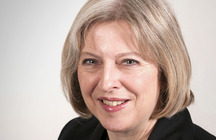
  • Theresa May – 2018 Speech at Antisemitism Reception

    Below is the text of the speech made by Theresa May, the Prime Minister, at an anti-semitism reception held in Downing Street in London on 26 November 2018.

    Good evening everyone and welcome to Downing Street. As always at events like this it’s a real pleasure to share this remarkable house with some truly remarkable people. But I confess that, tonight, my emotions are somewhat mixed.

    Throughout 2018, I’ve had the privilege of taking in part in many celebrations of women and women’s rights.

    Events marking the centenary of British women winning the vote. The unveiling of the Millicent Fawcett statue. An unprecedented gathering of women MPs from around the world.

    But the joy of those occasions has been tempered by the resurgence of two age-old hatreds that many had dared to hope were becoming a thing of the past.

    2018 was the year in which Claire Kober, who is here today, stepped down as a council leader after facing a torrent of personal abuse in which, as she said, “the only thing worse than the sexism was the antisemitism”.

    It was the year in which journalist Karen Glaser felt compelled to write that “When my … mother came to Britain in the Sixties she stopped feeling scared of being Jewish. But now, 50 years later, she was feeling frightened again.”

    And it was the year in which Parliament heard women MPs, many of whom are here today, describing the deluge of vile misogynistic and antisemitic threats they receive on a near-daily basis.

    The research published at today’s conference, showing that Jewish women politicians are more likely to attract the attentions of far-Right hate groups, was deeply disturbing. But I doubt it came as much of a surprise to those who have been on the receiving end.

    In both data and anecdote, the evidence is clear: in 2018, in the United Kingdom, Jewish women are increasingly coming under dual attack. Abused for being women and abused for being Jewish.

    These attitudes are not limited to the far Right. As is so often the case with antisemitism, bigotry directed at Jewish women also comes from those who would never consider themselves to be racist, including within the women’s rights movement itself.

    Some Jewish women have been told that they’re not “real” feminists unless they publically disavow Israel’s right to exist, or been thrown off pride marches for flying rainbow flags that feature the Star of David. And as one British Jew put it earlier this year, “Going on a … women’s rights march can be a tricky affair when you find yourself marching alongside people carrying banners merging the Israeli flag with a swastika”.

    This kind of double-standard is often justified by the old canard that antisemitism isn’t really racism, as racism can only “punch down” and Jews are universally wealthy and powerful – an argument that is, in itself, deeply antisemitic.

    I have no time for equivocation. Antisemitism is racism – and any “equality” movement that indulges or ignores it is not worthy of the name.

    Because hatred and discrimination must be tackled wherever and however it rears its head. And I’m proud to lead a government that is doing so.

    We’re making sure courts have powers they need to deal with those who peddle hatred, asking the Law Commission to undertake a full review of hate crime legislation.

    We’re working to stem the rising tide of online bigotry, establishing a new Annual Internet Safety Transparency Report. The report will provide comprehensive data on what offensive content is being reported, what is being removed, and how social media companies are responding to complaints.

    We’re standing up for women’s rights at home and abroad– forcing companies to reveal their gender pay gaps, cracking down on modern slavery, backing the Women’s Business Council and more.

    We’re removing all hiding places for antisemitism, becoming the first government in the world to adopt the IHRA’s working definition – and all its examples.

    And we’re protecting Jewish people from the kind of violent attacks their community has experienced in the United States and Europe, which is why we continue to provide more than £13 million of funding to the Community Security Trust each year.

    But tackling the visible symptoms of hatred is only half the battle. To eradicate a noxious weed you must also remove its root, which is why we are also committed to educating people about where bigotry can lead.

    Standing in the heart of our democracy on a site right next to Parliament, the National Holocaust Memorial will be accompanied by an education centre that will lead a national effort to fight hatred and prejudice in all its forms. As the Chancellor announced in last month’s Budget, we will also provide £1.7 million for school programmes marking the 75th anniversary of the liberation of Bergen-Belsen.

    And we are continuing to support the Holocaust Educational Trust, not just backing its Lessons From Auschwitz programme but extending it to cover universities. The first students and university leaders to take part in the new scheme travelled to Poland just last week.

    The HET is just one of many bodies working hard to tackle the kind of prejudices you discussed at today’s conference.

    John Mann and the APPG on antisemitism have also done so much not just to highlight the scale of the problem but also to explore solutions, particularly with their work around online abuse – so thank you, John, for all your work.

    I’d also like to thank Sir Trevor Pears and everyone at the Antisemitism Policy Trust, who made today’s world-first conference happen… And the three women who chaired it: Luciana Berger, Theresa Villiers, and Dr Lisa Cameron – a trio that demonstrates how this is an issue that truly transcends party lines.

    But most of all, I’d like to thank each and every one of you.

    As Claire Kober said when she was bombarded with abuse, “to be tolerant is to be complicit”.

    So thank you for refusing to tolerate antisemitism and misogyny in any form.

    Thank you for refusing to be complicit and look the other way when confronted with bigotry of any kind.

    And thank you for lending your voices to the growing chorus that will drown out the sound and fury of the racists and the sexists.

    Freedom of thought and freedom of speech have never meant freedom to abuse and freedom to threaten.

    Antisemitism and misogyny have no place in this country.

    Hatred can be defeated.

    Hatred must be defeated.

    And, when I look around this room and see so many brave, dedicated men and women, I know that hatred will be defeated.

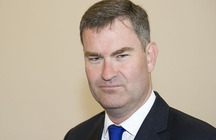
  • David Gauke – 2018 Speech on the Advocates Graduated Fee Scheme

    Below is the text of the speech made by David Gauke, the Lord Chancellor, at the Annual Bar and Young Bar Conference on 24 November 2018.

    Thank you Lucinda [Orr, Chair, Annual Bar and Young Bar Conference]

    And I am very pleased to have this opportunity to address you at your annual conference.

    Everyone in this room will have their own reasons for choosing a career in law:

    To give a voice to the voiceless. To improve lives. To help right wrongs. To pursue justice and fairness. To bring certainty and clarity to a complex world. To rise to the intellectual challenge.

    Fittingly, you are called to the Bar – for many, it is a calling.

    I recognise not just the contribution that comes from pursuing that calling but the importance of an independent Bar itself.

    For my own part, when I was studying law and as a trainee solicitor back in the 1990s, it was clear to me that the law shapes every aspect of our lives and of our country – our families, our relationships, our environment, our trade, the decisions of government.

    For example, when I worked on legal contracts, I saw just how important a clear and fair framework of rules is for businesses to make decisions, to invest and to resolve disputes.

    I thoroughly enjoyed my time working in law. What I learned helped me shape my politics and sharpen my desire to protect and influence those rules that govern us so they better help everyone fulfil their potential and support a prosperous economy.

    So I stand before you today as a proud former lawyer. When I started my career with Richards Butler more than 20 years ago, I never imagined that I would be the first solicitor to become Lord Chancellor.

    Without wanting to dwell on quite how long ago that was, it’s fair to say that the legal world I experienced then as a trainee solicitor is very different to the one I see today as Lord Chancellor. In the 1990s, the internet was in its infancy. Concepts like AI and machine learning were the preserve of science fiction. Today, they are a reality.

    The digital and technological revolutions are making waves across the legal sector, fundamentally changing the way we access and use services.

    The profession is also more diverse, open and inclusive – the theme of your conference this year.

    Given my legal background, I’m pleased to see more solicitors joining the Bench.

    Visible and vocal role models like Anne Molyneux at the Old Bailey and Lord Justice Hickinbottom, who I believe is the fourth solicitor to be appointed to the High Court, and who last year was appointed to the Court of Appeal.

    As Anne Molyneux herself has said: “I do not think of myself as a solicitor judge or a woman judge. I am a judge who is a woman and used to be a solicitor. These characteristics should not make a difference.” I agree. And I think there are important strides being made on diversity. For the first time, we have three female justices in the Supreme Court. And there is now a greater proportion of female pupils compared to male pupils.

    That represents good progress and much promise and potential for the future – but there is much more we need to do. Just 37% of barristers currently practising are women and just under 15% of QCs are women.

    Of people practising at the Bar, just under 13% are from a black, Asian and minority ethnic background. That falls to just 7% of QCs.

    I am committed to working with the Lord Chief Justice and members of the Judicial Diversity Forum to increase the overall diversity of the judiciary.

    To do that, we must also make sure there is proper support in place for potential judicial office holders. Programmes like the Judicial Mentoring Scheme ensures there are role models for lawyers looking to apply for their first judicial appointment.

    And the Bar Council, as a key member of the Judicial Diversity Forum, led on the development of the Pre-Application Judicial Education programme.

    Launching in spring next year, it will help ensure talented people from all backgrounds in the legal profession are given more support to apply to become a judge. This is positive action carefully designed to make a real difference.

    I am grateful to the Bar for their work on this and their ongoing commitment alongside the senior judiciary, Judicial College, Judicial Appointments Commission and the other legal professional bodies.

    But of course, as well as promoting access to the legal profession, it is ensuring access to justice itself that is so important.

    The ability for everyone to be able to access justice and receive representation is vital for a just society. That includes having access to criminal defence.

    Criminal defence advocates carrying out publicly-funded work in the Crown Court play an enormously important role in our justice system.

    I want to say to you that I do understand and recognise your concerns about the sustainability of criminal advocacy. I also recognise the work which goes into conducting complex cases.

    I know there are strong concerns and that feelings and passions have run high this year as we have sought to improve the current legal aid scheme.

    I have always believed that, given the importance of this criminal advocacy to our justice system, it is important to get any reform right.

    In August, we launched a consultation on proposals to spend an additional £15 million on a range of fee increases across the scheme.

    As throughout this process, we have been working with representative bodies of the legal professions, including the Bar Council, the Criminal Bar Association and The Law Society, and have carefully considered the consultation responses.

    I can announce today that on top of the £15 million we have already proposed, the government will commit a further £8 million of additional funding to the scheme. That brings the total increase to £23 million.

    This extra money will be mostly targeted at cases conducted by junior advocates to support continued investment in the profession.

    We will also bring a proposed 1% increase to all fees forward so that the rise comes into effect alongside the planned introduction of the new scheme, rather than from April next year.

    I also think it’s important to recognise that whilst these improvements must be given time to bed in, there is scope to further improve the way criminal advocates are paid so that we better reflect work done in an evolving and modernising justice system.

    Our best chance of succeeding in that task – in designing schemes which incentivise efficient and effective proceedings, in improving access to justice – is if the government and the legal professions work together.

    Because of that belief, I am committed to working closely with the legal profession to ensure that criminal defence advocacy is fit for the modern age, and is sustainable, so that people from all backgrounds can enjoy a decent career doing such important work.

    Now, as part of, and alongside access, the experience people have of justice and our courts is also important – for the public and legal professionals alike.

    It clearly isn’t right that some of our court buildings have leaking roofs, peeling paint, broken doors and out of order lifts. The impact of this isn’t just on the physical functioning of our courts, it has an impact on the morale of those who work in them and on the experience of those who use them.

    That’s why over the last two years, we have spent significantly more than in previous years on our court estate. Last month, we also secured an extra £15 million from the Treasury for maintenance and security of our court buildings.

    I am under no illusion that this is one step in a longer journey to make our courts fit for the future. But spending more this year on our courts will help to make some improvements to the estate as we continue with our wider programme to modernise services and move more of them online so they are easier to use and more efficient.

    We must ensure the justice system embraces the huge changes that are happening now and that are coming down the track in how people access services. That’s why we are looking to the future at how we can best empower people to access justice in ways that fit with how we live and work today.

    For example, the digital divorce service launched in May is reducing the stress faced by couples applying for a divorce.

    And reforms in the criminal justice system are making it work better for everyone too – from making pleas online for low-level offences to piloting a new digital system for the police, CPS, courts, judiciary and defence to allow a single shared view of case information online.

    I am grateful to the Bar for the contribution you are making to the court reform programme. I know there are strong feelings on this and we won’t agree on everything, but your insight is invaluable. I hope that many of you will be participating in the session led by Susan Acland-Hood later today.

    We also need to realise the huge opportunity that exists from harnessing the powers of new technology and innovation for our legal services.

    Our growing LawTech industry has the potential to open up the justice system and legal services sector like never before, not to mention the opportunities for those working in it.

    Technology is changing our world.

    If our justice system and our legal services sector is to remain internationally competitive, it can’t stand still. It needs to continue to change and embrace the technological revolution, as well as respond to the way people expect to be able to access justice and legal services.

    Today, lawyers must not only advocate, they must innovate. By doing this, I believe the UK can not only remain a world-leading provider of legal services but a powerhouse for new and innovative legal technologies, such as for SMART contracts.

    New technologies – underpinned by English law – and nurtured by a government committed to helping this burgeoning sector.

    Our £20 million Next Generation Services Fund is supporting innovation across the legal, accountancy and insurance sectors.

    I’m pleased to say we will be announcing the successful bidders for that investment shortly. This is on top of the £700,000 recently awarded to the Solicitors Regulation Authority to support AI innovations within the legal services sector.

    Alongside that investment, it’s important we also focus on the education and skills of the lawyers of today – and tomorrow – to ensure they not only survive, but thrive, in this new world of AI, Big Data and Smart Contracts.

    I was reading recently about an experiment you may be familiar with where 20 experienced lawyers in the US and an artificial intelligence system went head to head.

    The lawyers came armed with their brains, the AI system with machine learning and deep technology.

    The challenge was to spot risks in every day contracts. I’m afraid to say that AI won with an accuracy level of 94% compared to 85% across the human lawyers. But arguably more importantly, the AI system took just 26 seconds compared to 92 minutes.

    Now, you can either see that as a threat, or as an opportunity. It’s how we use this new technology that will be important. The lawyers of today – and tomorrow – will need the right skills in order to do that.

    The LawTech Delivery Panel I announced earlier this year, as well as acting as an international champion for the UK’s LawTech industry, will provide the strategic direction we need, for example on education, which will be covered by one of taskforces established by Panel.

    Realising the potential of the LawTech revolution here in the UK will be important to the competitiveness of our legal services on the world stage, particularly as we look to new markets after we leave the EU.

    On Brexit, as you will have seen, the UK and the EU have agreed the terms of the UK’s smooth and orderly exit from the EU. In parallel, both parties have also been working to set out a vision for a close and mutually beneficial future relationship.

    A draft of the Political Declaration was published on Thursday, and the Prime Minister is meeting the EU today ahead of leaders putting the deal to final agreement at the special November European Council on Sunday.

    The negotiations have been tough, and we have pushed the EU hard. We have not got everything we would want, but we have secured important commitments in a number of areas.

    The Political Declaration includes a commitment to conclude ambitious arrangements for services and investment, alongside new arrangements on financial services.

    Nevertheless, we know that leaving the Single Market will have implications for market access and that some UK and EU service suppliers will not enjoy the same rights as they do today.

    On civil judicial cooperation, the UK and the EU have agreed to explore a bilateral arrangement on matrimonial, parental responsibility and other related matters. In addition, the UK intends to apply to accede to the Lugano Convention.

    This deal provides certainty for the UK and avoids the very significant disruption associated with a no-deal exit. The precise details of our future relationship with the EU will be the focus of further negotiations once the UK has left on 29 March 2019, and we will continue to press for the best outcome for the UK justice system.

    The saying goes that ‘the wheels of justice turn slowly’.

    The transformation in the way people use and work in the justice system, as well as the white heat from the LawTech revolution, means those wheels are speeding up.

    Yes, there are challenges we need to overcome in the justice system – including challenges for the legal profession. I want to overcome them by working with you. It is important that the reforms we need to make to our justice system carry the general support of those who work in them.

    Within the context of that reform, I want to work with you to support and strengthen the legal profession, to make it more inclusive, more diverse and to put it on a sound footing for the future so it can continue to thrive in a rapidly changing world.

  • Michael Gove – 2018 Speech on Climate Change

    Below is the text of the speech made by Michael Gove, the Secretary of State for the Environment, Food and Rural Affairs, on 26 November 2018.

    I want to begin on a personal note. I am fortunate as Secretary of State for the Department of the Environment, Food and Rural Affairs to work alongside some of the most gifted, dedicated and impressive public servants in the country.

    Given the strength in depth of the departmental team, and their willingness to work so hard for the common good, it is invidious to single any one out.

    But there is one individual, and one team, to whom I, and we all in this country, owe a special debt.

    And that is to Professor Ian Boyd, Defra’s Chief Scientific Adviser, and his team.

    Everything we do at Defra has to be rooted in science. Whether it is reflecting on the future of food, farming or the marine environment, considering what our approach should be to the chemicals we use in agriculture, revising how we should manage our water resources, reviewing how we enhance biodiversity, assessing where the greatest productivity gains from new technologies might accrue or in a countless number of other different areas, policy must be shaped above all by evidence, reason and rigour. And there are few people more adept at assessing the evidence, deploying reason to make sense of it and applying the lessons for public policy with real rigour than Ian and his team. I want to take this opportunity today to put on record how profoundly grateful I am for his leadership.

    And there is perhaps no area of public policy where scientific rigour is required in shaping policy making than in dealing with the challenge of climate change.

    THE EVIDENCE ALL AROUND US

    Today, as we launch the fourth generation of our UK Climate Projections, it is clear that the planet and its weather patterns are changing before our eyes.

    Sea levels, for example – which we are becoming more accurate at measuring, thanks to advances in instruments and monitoring systems. In the 20th century the oceans rose around 15cm and the rate of increase has since quickened. Just since 2000, levels have risen around six centimetres, based on a global-average rise of 3.2mm a year. Our seas are storing increasing amounts of heat: around half of all ocean warming has occurred since 1997. Even as we take action to slow carbon dioxide pollution now, physics dictates that the climate will keep heating up for decades to come.

    Peer-reviewed scientific research states that the rapid warming is substantially due to the methane, nitrous oxide, and fossil fuel emissions we produce.

    The great ice sheets of Greenland and some parts of Antarctica are increasingly unstable. Rising seas are rendering the storm surges not only of hurricanes but also regular high tides more of a threat.

    THE IMPACT ON THE EVERYDAY

    Food and water security are affected, as is national security. Across the planet, people, plants, animals and also diseases are on the move, searching for habitats in which to thrive, escaping erratic and extreme weather events which deliver too much rain, too little rain, searing summer temperatures, colder winters.

    Science is clear that there will be changes in ecosystems caused by the climate. WWF’s recent Living Planet report revealed a 60% fall in global wildlife populations in just over 40 years. One of the main causes of this devastating decline is climate change.

    We cannot predict the net effects to ecosystems, but the likelihood is that many will be negative. Some native flora and fauna will struggle. Marine ecosystems will experience warmer and more acidic seas. New pests and diseases could thrive. Deteriorating soil quality and moisture, coupled with less reliable water supply, will reduce agricultural yields, as we have already seen this summer.

    Around the world, fears are growing for the existence of some low-lying countries – most of the 1,000 or so Marshall Islands, covering 29 slender coral atolls in the South Pacific, are less than six feet above sea level – and the future of a great number of coastal cities, including Miami, New York and Venice.

    And while climate change cannot be blamed for growing wealth inequality, it is the case that it disproportionately affects nations with the least resources to cope – nations which have also contributed least to emissions in the first place. In the coming years, they will expect the developed world to deliver what Mary Robinson, the former Irish president and environmental campaigner, calls ‘climate justice’ – sharing fairly the burdens and benefits of climate change and its impacts.

    Still Time to Act

    In all, 91 authors from 40 countries, including the UK, spent two years developing the recent report by the Intergovernmental Panel for Climate Change into the impact it is having on the natural world. They assessed over 6,000 scientific papers and received 42,000 expert comments.

    The final report – an impressive display of international collaboration – makes clear that the 1.5˚C warming limit is still within reach – if nations can act together. Panel members argue that in order to stay within the limit, global net greenhouse gas emissions produced by human activity need to be zero by the middle of the century.

    By 2050, we are committed to reducing greenhouse gas emissions by at least 80%, compared to 1990 levels. Since 1990 we have cut emissions by 42% – faster than any other G7 nation – and our economy has grown by two-thirds. Tackling climate change is not a binary process which requires us to champion the planet over national prosperity. Indeed market mechanisms, like reverse auctions for new clean energy capacity and the carbon price on electricity generation, have been hugely successful in delivering these cuts in emissions.

    You will know that reducing emissions in order to mitigate climate change in the UK is the responsibility of the Department for Business, Energy and Industrial Strategy, under the excellent leadership of my colleagues Greg Clark, the Secretary of State, and Claire Perry, the cabinet minister with responsibility for climate change. Their Clean Growth Strategy, published last year, set out a comprehensive suite of policies to meet our climate targets and to capture the industrial opportunities from clean growth. I also welcomed Claire’s letter to the Committee on Climate Change last month requesting advice on a net zero emissions target.

    Defra’s particular brief is to help adapt to a warming planet, supporting the developing world to do the same, and contributing to global diplomatic and scientific initiatives to understand climate change’s effects.

    But because we are also responsible for sectors of our waste policy, agriculture, landscapes and f-gases – Defra necessarily has a significant role in mitigation as well.

    In a moment, I will go into greater detail about the opportunities we have identified – within domestic agriculture and wider land use, our approach to storing and managing water, our reforms of resources and waste cycles plus international action to support other countries cope with climate change – to ensure that we are even better placed to manage future risks, adapt to threats and increase resilience and preparedness.

    First, however, I want to look at how climate change is reshaping our environment in slightly greater detail.

    FACTS ON THE GROUND

    Insurance data shows that between 1980 and 2016, the number of climate-related natural catastrophes, like flooding, rose several times faster than disasters with a geological source: erupting volcanoes, tsunamis, or severe earthquakes.

    In Africa, the Sahara Desert has grown in size by 10 per cent since 1920. Scientists believe that about two-thirds of the change might be down to natural cycles, and the rest to climate change. The Desert’s edges – defined by rainfall, or the lack of it – have crept northward and southward, reducing some countries’ ability to grow food. The Sahara has encroached 500miles into Libya for example, in winter months.

    Just recently in America, Hurricane Michael made landfall in the Florida panhandle in October with winds of around 155mph, making this the strongest storm to hit the continental United States since Hurricane Andrew in 1992. At least 32 people died as the hurricane tore through Georgia, North Carolina and Virginia, and more than a million people were left without power. Barely a month later and California’s wildfires are the deadliest in the history of the state, which in the past five years has experienced four of the five warmest summers on record. Towering ‘firenadoes’ engulfed brush, trees and scrub which was bone-dry because autumn rainfall again arrived late – and there has been up to 30% less rain than average. Tragically, for those who lost their lives and homes, the season of strong offshore winds began on schedule – fanning flames that would have spread less easily in damper conditions.

    It’s not only in typically hot, dry countries where extremes of weather are felt. Climate change is warming polar regions twice as fast as other parts of the world. In July this year, wildfires spread across Arctic regions in Sweden. While not unprecedented, the fires have become bigger over the past 15 years as boreal forests, tundra and peatlands dry up, meaning the fires are harder to put out.

    In the UK, we have experienced our own share of extremes. Nine of the 10 warmest years have occurred since 2002 and the mean sea level around the UK, corrected for land movement, has risen by about 16cm since the start of the 20th century.

    Already, the winter of 2013-2014 was the wettest on record for the UK. And then, between November 2015 and January 2016, we experienced the most rain ever in that period, saturating the ground and causing some of the most severe floods in a century.

    It will take a long time for people in Northumberland, Cumbria, Lancashire and Yorkshire to forget the devastation caused by Storms Desmond and Eva. Around 16,000 houses were inundated and some river levels were up to a metre higher than previous records. Communities were devastated, infrastructure was damaged, and for many families and businesses the financial hardship and emotional distress lasted long after the floodwaters had receded.

    As for 2018, during a six-week spell in summer, daytime temperatures consistently topped 30C. Wildfires burned for weeks on Saddleworth Moor and Winter Hill as well as other areas, damaging precious peat bogs and harming nesting birds such as curlews, the golden plover and lapwings. Crops wilted in parched fields and farmers had to dig into their winter silage to feed livestock struggling in poor grazing conditions.

    Now it is, of course, impossible for anyone to predict the future with absolute certainty. But we are in the UK fortunate to have climate scientists whose knowledge and experience are world-leading. In producing this first major update of climate projections for nearly 10 years, they have given governments, local authorities, land managers, national infrastructure bodies and other businesses an invaluable set of tools with which to assess the nature and scale of challenges, and take decisions accordingly. The projections – based on a range of emissions scenarios – will enable them to make sensible, practical choices based on scientific evidence that will save time, hardship and money when the storms do come.

    For the first time, there are international projections as well as regional projections. This means other nations will be able to use the data – to gauge the risks for food supply chains, perhaps, or check rainfall projections for the likelihood of localised flooding.

    The projections show quite clearly the benefit of limiting emissions.

    Under the highest emission scenario, warming by 2070 is in the range 0.9˚C to 5.4°C in summer, compared to the recent past (1981-2000).

    Sea levels are projected to continue to rise around the UK to the year 2100 – and reach higher levels than were forecast in the 2009 data. For London, under the high emissions scenario, levels are likely to be at least 53cm higher, and could be as much as 1.15m. That was not unexpected, however, and I can confirm that it has already been factored into our flooding adaptation planning.

    It is because we know further climate changes are inevitable – notwithstanding strenuous international efforts to limit their extent – that we are planning for a wide range of possible futures. It would be irresponsible in the circumstances to do otherwise. This is why we are aiming to limit warming to well below 2 degrees – but the environment agency is preparing for 4 degrees when planning flood defences. We know that every half a degree makes an enormous difference to outcomes. Keeping warming to 1.5˚C rather than 2˚C, as the Paris Agreement urges us to attempt, spares up to 10million people from being exposed to the risks of rising seas, according to the IPCC.

    CLARITY BEGINS AT HOME

    So what is Defra doing to meet this global challenge?

    Climate change will manifest itself most acutely in our hydrologic system: the intense rainfall of the winter, the arid heat of the summer, and rising sea levels will be how we experience climate change most immediately in our everyday lives. Using the best scientific evidence from our projections, we are taking action to improve our resilience.

    Flooding and coastal change

    Successive Governments have made good progress on mitigating flood risk, protecting lives and reducing the damage to our homes and businesses. Between 2015 and 2021, this Government is investing a record £2.6 billion in flood defences, maintained by colleagues from the Environment Agency. And we are on track to meet our manifesto commitment of better protecting 300,000 homes from flooding by 2021.

    We are also pioneering ‘natural flood defences’, which support biodiversity and sequester carbon while lowering the risk of flooding. In Pickering, in North Yorkshire, we have slowed the water flow from the uplands by planting trees, restoring heathland, and installing leaky dams. And in Medmerry, in West Sussex, the EA has actually realigned the coast, by allowing the water to breach the sea walls (creating new wetland habitats for wigeons and snipes): a new defence has been built to protect individual homes.

    But as the risk of flooding and coastal erosion increases, we need a new long-term approach. Government will publish a long term policy statement next year, and the Environment Agency will issue a new 50-year strategy, also next year. I believe these should explore new philosophies around flood and coast management.

    First, the need to achieve a balance between limiting the likelihood of flooding and upgrading our resilience to it when it happens. In other words, exploring how much to spend on reducing the risks that homes and businesses will flood, and how much to spend on helping people to cope if and when they are flooded. It will not always be possible to prevent every flood. We cannot build defences to protect every single building or reinforce every retreating coast line. We will be looking at ways we can encourage every local area to strive for greater overall resilience that takes into account all the different levers from land use planning to better water storage upstream, and tackles both flood prevention and response. We need our communities and infrastructure to be better prepared for floods and coastal change, so that they recover more quickly from the damage and disruption and, where necessary, to help people and communities move out of harm’s way.

    Second, the need for communities and businesses to work alongside government to reduce their own flood risk. We want to see more businesses designing in resilience when they invest in new buildings. The climate projections provide high-quality data about the nature of the risks to help steer these new flood investments.

    Droughts

    In the UK, we take for granted a plentiful supply of clean water. Yet our high population density means the available water per person is actually less than in many Mediterranean countries. And the experience of this summer, and the evidence of the projections, underscore the need to make our water supplies more resilient to a warmer climate in the future.

    We have a twin-track approach. On the supply side, we need to capture and store more rainwater. And on the demand side, we must conserve and use the water more efficiently once we have caught it.

    Since privatisation, water companies have invested around £140 billion in our water infrastructure. Earlier this year, I challenged them to focus more on investing in improved performance than on shareholder dividends. I am pleased to see that their latest business plans for the next spending period indicate good progress, with proposals for more than £50 billion of investment between 2020 and 2025. Ofwat will now scrutinise water companies’ business plans to make sure they have responded adequately to this challenge.

    Climate change, coupled with a rising population, will require new water supply infrastructure. In part because of company behaviour, in part because of regulatory barriers, we have not built any major new reservoirs in this country since the industry was privatised. So this week we are laying before Parliament a new draft National Policy Statement, setting out how we will expedite the construction of new infrastructure, like water transfers and reservoirs.

    Relying solely on new water infrastructure would prove expensive for bill payers and create pressures on the natural environment. So we will also tackle waste and excessive consumption of water. Since privatisation, leakage has fallen by a third. But we still lose three billion litres of water to leaks every day. That’s why I am setting water companies a stretching new target to halve leakage by 2050.

    Land

    The need to address climate change means we must also change how we use and manage our land, and do more to protect and restore our carbon-rich natural habitats and the wildlife they support.

    Agriculture

    On our agricultural land, more extreme weather will harm crop yields and make market prices more volatile. Some parts of the world will cease to be able to produce food because of rising sea levels or a lack of rainfall. UK farmers have the opportunity to play an even more important role in global food production as a result.

    And at the same time as managing these impacts, farmers must also be supported as we move towards a carbon neutral economy.

    We will use the powers in the Agriculture Bill to reward farmers who mitigate and adapt to climate change on their land through our new Environmental Land Management scheme. There are a range of potential measures which we can support farmers to implement that tackle climate change and improve productivity.

    Planting cover crops reduces carbon emissions from soil, improves soil health, and reduces runoff into watercourses. Agroforestry provides shelter for livestock from harsh weather, while improving soil and water quality and storing carbon. And since 2010, Defra has supported the industry-led greenhouse gas action plan for agriculture. This voluntary action has made an important start to emission reduction in agriculture. As our emissions targets become more stringent, we have to support farmers in their efforts to ensure emissions fall further.

    We are exploring how to reform fertiliser use, which will reduce climate-warming greenhouse gas emissions as well as biodiversity-harming ammonia emissions. And next year, we will start developing a new emissions reduction plan for agriculture, in which we will set out our long-term vision for a more productive, low-carbon farming sector.

    New technology will play a critical role in enabling the farming industry to meet these challenges. Precision farming will enable farmers to cut back on expensive, energy-intensive, and environmentally-harmful inputs, such as fertilisers. Vertical farming will effectively eliminate emissions from soil, while making more efficient use of land and increasing the resilience of crops to extreme weather.

    Land use

    Peatlands are our largest terrestrial carbon store and a precious habitat for wildlife. Yet despite some successful rewetting projects in recent years, just 13% of England’s peatland is in near natural condition. Next year, we will publish a new England Peat Strategy. This will explain how, over the next 25 years, we will improve the condition of our peatlands, so that they function better for the climate, wildlife, and people.

    Through this strategy, we want to restore our blanket bogs in the uplands. And for the first time we will aim to improve the condition of agricultural peat in the lowlands. These peatlands, which were drained centuries ago to enable productive agriculture, produce the highest emissions of all our peatlands. The East Anglian Fens are estimated to have between 30 and 60 harvests left before the peat is gone. Their degraded condition is bad both for the climate and for farmers who rely on these fertile soils.

    Universal restoration will not be possible given the importance of the land for food production. So I am today announcing a new task force, to generate new solutions for repairing lowland peat and build consensus among farmers, conservationists, and academics.

    Woodland is another critical natural asset for our response to climate change.

    Protecting our ancient woodlands and bringing more woodland into active management will help to improve the resilience to climate change of the wildlife that inhabits our forests. And planting more trees is a highly cost-effective method for storing additional carbon from the atmosphere.

    Through Countryside Stewardship and the Woodland Carbon Fund, we are making progress towards our target to plant 11 million new trees in this parliament. And we have supported the planting of over 15 million trees since 2010. But to meet future carbon budgets and our long-term target to increase woodland cover from 10% to 12% in England by 2060, we will need to significantly increase planting rates. That’s why next year, we will consult on a new English Tree Strategy in which we set out what benefits we value from trees and how we will accelerate woodland creation.

    We are also improving our package of incentives for forestry. In the Budget, the Chancellor announced a £50 million Woodland Carbon Guarantee scheme. This will pump prime the woodland carbon offset market, helping to stimulate private sector demand for offset units and driving more investment into forestry.

    We are looking at the opportunities to increase demand for domestic carbon offsets from compliance markets. We also announced a new £10 million fund for urban and street trees, which will sequester carbon emissions and bring these wondrous natural assets closer to people. And from 2024 our new Environmental Land Management scheme will reward land managers for the benefits provided by woodland creation and management.

    Resources

    As well as working with water companies, farmers and land managers to help meet the challenges of climate change we are also developing a new Resources and Waste Strategy.

    We will set out measures to improve resource productivity, maximising the value of products by increasing reuse and recycling, and minimising waste. We are determined to create a more circular economy.

    I have made it a particular priority of my department to end the environmental, economic, and moral scandal of food waste.

    Sent to landfill, food decomposes producing methane, a potent greenhouse gas. So we want to ensure more councils collect food waste separately and send it to anaerobic digestion plants to create green biogas for heating our homes and fertiliser to improve the soil.

    We should also try to prevent nutritious and healthy food being thrown away in the first place. That’s why, last month, I announced a new £15 million fund to redistribute surplus food that would otherwise have been wasted to go charities who help those most in need.

    International leadership

    Alongside the domestic action we are taking, we can also help other nations be more ambitious.

    We are a world-leader in supporting international development, both financially and through technical assistance. The UK is the third largest aid donor in the world, after the United States and Germany, and one of a handful of countries committed to, and also achieving, spending 0.7% of gross national income on official development assistance.

    Climate change and other interrelated environmental impacts are exacerbating poverty and erasing – or increasing the fragility of – development gains. And the crisis facing our natural world is growing.

    Protecting and restoring nature is essential for securing genuinely sustainable development. That is why we need to ensure that our funding for international development supports work to deal with climate change and biodiversity loss.

    The government has committed nearly £6 billion of funding between 2016 and 2020 to help developing countries both reduce emissions and build resilience to the impacts of climate change. Defra is spending part of this and my department, working with DFID, BEIS and the FCO, is prioritising projects and activities that can deliver benefits for sustainable development, poverty alleviation, and biodiversity, as well as climate mitigation and climate adaptation.

    An example of this is mangrove conservation and restoration. Mangroves are important habitats for a variety of important species. They are vital nurseries for many key commercial fisheries thereby supporting livelihoods. They sequester carbon emissions contributing to climate mitigation and do so up to six times as much as some tropical forests. And they reduce the impacts of climate change, by absorbing the energy of storms, hurricanes, and typhoons that will increase in frequency and severity as a result of climate change. This is essential for managing climate impacts facing coastal communities across the tropics.

    Many of these mangroves have been degraded and do not provide the full range of potential benefits. That is why I am today announcing an additional £13 million to fund mangroves restoration. This will support projects in small island developing states like Jamaica and those with high rates of deforestation like Colombia. We plan to scale funding to mangrove and other win-win nature-based solutions in the future.

    We need to make societies around the world much more resilient to climate change. The UK is leading international efforts on climate resilience for the UN Secretary General’s Climate Summit in 2019. We are also helping gather evidence on the actions needed to adapt to climate change ahead of the 2019 summit by co-convening the new Global Commission on Adaptation, co-Chaired by Ban Ki-moon, the former UN Secretary General; Bill Gates; and Kristalina Georgieva, CEO of the World Bank. Emma Howard Boyd, Chair of the Environment Agency – and our de facto climate resilience ambassador – is one of the commissioners.

    The 2019 summit is important and is intended to help build momentum in advance of the UN Framework Convention on Climate Change (UNFCCC) Conference of the Parties (COP26) in 2020.

    This will be five years after the Paris Agreement on Climate Change and levels of climate ambition will be reviewed and revised with the aim of closing the gap between current climate commitments and the well below 2°C objective. Key to securing these commitments will be significantly improving the availability of finance for climate adaptation in developing countries. That is one of the reasons why the UK has decided to prioritise climate resilience in 2019.

    Between now and 2020 it is also critical that we better connect the international climate negotiations with those focused on nature and biodiversity. It is impossible to meet climate mitigation and climate adaptation objectives without the natural environment, and we can’t save nature without tackling climate change.

    In 2020 China is hosting the Convention on Biological Diversity Conference Of Parties 15. This is an opportunity to push for a new international agreement, similar in scale and scope as the Paris Agreement on climate change, but focused on halting and then reversing the crisis facing the natural world. We will work closely with international partners and allies to secure the highest possible ambition agreement at CBD COP15.

    The UK has also been at the forefront of international efforts to control F-gases, a greenhouse gas found in some refrigeration and heating appliances. In 2016, we supported the Kigali amendment to the Montreal Protocol, which will introduce controls on the use of hydrofluorocarbons, a type of F-gas, from the start of next year. Estimates suggest this could avoid up to 0.5 degrees of warming by the end of the century.

    However, as countries develop economically, the growth of air conditioning is a major challenge for reducing emissions. So, as well as taking action domestically to implement the amendment, we’re supporting higher ambition internationally by making available an additional voluntary contribution of $2m to incentivise energy efficiency improvements alongside reductions in hydrofluorocarbons.

    Conclusion

    Collectively, collaboratively, we have the potential to protect and enhance our environment.

    The answers lie in support for greater scientific investment and innovation.

    Throughout history, the endeavour and imagination of scientists has redefined the limits of what is possible, and it is only by heeding scientific warnings more keenly than ever before and supporting scientific research more strongly than ever before that we can safeguard our planet and our species’ survival.

    Scientific knowledge is, always, a good in itself. In that sense, there can never be too much information. The more we know, the greater our ability to shape events for the better. But also the heavier the responsibility to act. When it comes to climate change we now, thanks to the efforts of the UK’s scientists know more than ever before the urgency of acting. Which is why not just I, but future generations, are so much in their debt.
  • David Lidington – 2018 Speech on Responsible Capitalism

    Below is the text of the speech made by David Lidington, the Chancellor of the Duchy of Lancaster, on 24 November 2018.

    I really welcome the foundation of Onward and hearing about the work that this new think tank plans.

    It seems to me when I look back on those days, growing up and going to university in the late 1970s and early 1980s, it was a time of really exciting intellectual ferment on the centre right of British politics.

    I think what all supporters of a liberal free enterprise society – a responsible society that cares about the values expressed in communities – needs now is a resurgence of that intellectual energy.

    In those days that was brought about through the Centre of Policy Studies, the Institute of Economic Affairs, and the Adam Smith Institute. Today Onward is contributing to that renewal of ideas.

    That is important as today those of us who support free enterprise and the market economy are confronted by a paradox.

    On the one hand, living standards globally are higher than they have ever been in human history. That is largely down to the success of capitalism, free markets and free trade.

    Generations of people in Asia, South America and in many countries in Africa…

    … men and women whose parents and grandparents lived with the real fear of food running out if the harvest failed…

    … are now able to look forward to greater prosperity and security than ever before.

    In 1950 three-quarters of the world were living in extreme poverty; by 2015, fewer than a tenth were in that condition, despite a massive increase in the global population in that period of time.

    The global poverty rate is now lower than it has ever been in recorded history.

    That progress has led to knock-on improvements:

    Global illiteracy rates have fallen from a third in 1930 to less than one-fifth today.

    And child mortality – measured in terms of the percentage of children dying before their fifth birthday – has fallen tenfold since 1800 to 4.3% today.

    There have been real improvements in the developed world, too.

    We probably all know this from talking to our own parents or grandparents, but if you look at household goods – things like fridges, freezers, washing machines, dishwashers – which in the 1950s were considered luxury products are now seen as standard.

    Things that were once counted as the exceptional rewards for high living standards are now seen as a measure of the ordinary expectations.

    We carry smartphones in our pockets – giving instant access to information from every part of the world – which carry in them greater computing power than that of a mainframe computer a few decades ago.

    Customers are now able to get what they want, often the next day, after shopping from the comfort of their homes.

    Online retailing has cut costs and delays.

    One might have expected that this unprecedented rise in human prosperity should cause people to celebrate the success of free enterprise and of market economies.

    Yet that is not the case.

    Rather here in the United Kingdom, and in much of the developed world, what we see is a level of scepticism higher than for many years. Not just about the conduct of individual businesses or particular sectors, but about the virtues of the free enterprise system itself, on a scale that we haven’t seen for about 40 years.

    Citizens today are better informed than previous generations and young people today are increasingly motivated. They want and expect businesses to behave responsibly.

    And as they look at the world they conclude that that is not what they are seeing.

    Polling by the Legatum Institute shows that a majority of the British people now view capitalism as ‘greedy’ and ‘selfish’.

    That research actually found remarkable consistency across the generations on economic issues – and shared by Labour and Conservative voters alike.

    When asked for their top three word associations with capitalism, 32% of the public said ‘corrupt’ and only 7% said ‘for the greater good’.

    And earlier this year another poll found that 61% of ordinary working people feel they don’t get their fair share of the nation’s wealth.

    There are reasons for this scepticism.

    There is no doubt that the crash of 2008 and the downturn which ensued damaged people’s confidence in the virtues of free and open markets.

    Making matters worse has been the contrast between high profile examples of corporate excess or malpractice, and the reality for many families of squeezed living standards.

    Effective competition in markets – something that underpins public trust in those markets – has in too many markets stalled.

    Data from The Economist this week shows that over the last 20 years market concentration has risen in two-thirds of US industries; in Europe the trend is similar, with the average market share of the biggest four firms in each industry having risen since 2000.

    But of course, underlying this widespread public concern and to some extent public anger lies not just the events of the last ten years…

    … but the profound long-term changes in our economy and in assumptions about work and careers, changes being driven by globalisation and digital technology.

    Both those phenomena present us with great opportunities.

    Tens of millions of new customers around the world heading towards the kind of consumer expectations that are taken for granted in Britain or Germany or the United States.

    And new jobs and firms – indeed entirely new professions and occupations – being created by digital technology.

    So there is a paradox. Higher living standards around the world than ever before. A triumph of capitalism. Yet at the same time we see deep public discontent, for understandable reasons, with the very system that has made this prosperity possible.

    So how do we respond to this challenge?

    I want to touch on three ways we can go about doing so.

    Our philosophical approach, how we think about free enterprise and capitalism…

    … what government should do in its words and its actions…

    … and what business itself ought to be doing in order to restore its public reputation.

    In part what we need to do is to rediscover and renew the arguments that we made and won in the 1970s and 1980s about the success of a market system at meeting human needs and wishes, when compared with a model that looks instead to extensive state control.

    Debates that we thought perhaps had been won conclusively, but have now been reopened.

    To do that we have to engage with a generation for whom talk about the stagflation of the 1970s, or Trade Union power or the Soviet model, is at best a matter of remote history.

    For those of us who are older, we think back to the 1970s. The great impersonator of that time, Mike Yarwood, had a big show on Saturday evenings. He could take off six trade union leaders in a show and everyone would instantly know who those people were. You could not do that today.

    We have to deliver the key messages once again. You cannot distribute wealth unless it has first been created. Individuals and businesses are better at spotting opportunities and pursuing innovations than is government. A modern economy, in all its complexity and diversity, is something that no government, however good its intentions, will be able to micromanage successfully.

    And putting politicians in charge of everything from railways to electricity to water supplies, as some advocate, would mean there would be nowhere else to turn when things went wrong.

    We have to re-establish in the minds of today’s opinion formers and today’s public the principle that free enterprise, far from being incompatible with ethical values, is actually rooted in and depends upon a moral framework.

    This actually is something where we can look to history for guidance.

    The Harvard scholar David Landes in his book The Wealth and Poverty of Nations and the Cambridge historian and anthropologist Alan Macfarlane in The Culture of Capitalism have written about how it was the moral and cultural environment of European nations which enabled a capitalist economy to take off and to thrive.

    Indeed the father of free enterprise, Adam Smith, recognised that markets were, as my colleague Jesse Norman puts it in his recent biography, “living institutions embedded in specific cultures and mediated by social norms and trust”.

    Political stability, a sound currency representing a reliable store of value and medium of exchange, independent courts to resolve disputes, effective mechanisms to deter and punish corruption: these all help provide the essential foundations on which a market economy can flourish and grow and command public trust.

    And of course these foundations are made possible by governments and by parliaments – in other words by effective, but limited, state action. Indeed, many of the things upon which businesses rely – limited liability, patents, copyright, enforcement of contracts – are embodied in law.

    Over the centuries, as trade and markets have grown, governments have been at their most successful in reforming and renewing capitalism when they drive effective competition and recognised the social dimension of free enterprise.

    We saw that with the impact of the Factory Acts of the mid-nineteenth century and in the trust busting drive of Teddy Roosevelt in the United States.

    Roosevelt’s concern was not with big business per se – rather, he wanted to act to enforce what he termed a “rule of reason” on companies that grew through unfair practices rather than through reasonable means.

    Today we are acting with measures such as the proposed digital services tax, our work to implement the Taylor Review, our push for regulators to do more to protect vulnerable consumers, and our legislation to outlaw the practice of unscrupulous freeholders charging onerous ground rents.

    I cannot emphasise hard enough: these reforms are about restoring the reputation of the free market system by demonstrating that it can and it should work for everyone.

    This is not a task that government can undertake on its own.

    Part of the reason why the Government is responding is that companies themselves do not always act in a way that benefits the public good or delivers for working people.

    But increasingly, I sense that businesses are willing to rise to the challenge of strengthening faith in capitalism. Working with Jeremy Wright, I have introduced ways to use the Government’s buying power on public procurement to drive social value and promote a more diverse market…

    … and I have been heartened by the welcome that those proposals have had from many of the Government’s major suppliers.

    But there are habits too that need to change. The detailed information now held about consumers can be used by suppliers both for and against customers.

    Consider the loyalty penalty – where consumers who stick with their suppliers find themselves placed on the highest tariffs and actually end up subsidising other consumers.

    The Government has acted to stop this behaviour in the energy sector and we are willing to act in other markets too to make them work for people.

    The increased shareholder activism that we have encouraged in recent years, especially around executive pay, is also a vital element in renewing the public standing of free enterprise.

    Scrutiny by shareholders of the decisions of companies is making a real difference.

    It was after all the vocal opposition of shareholders that persuaded Unilever to abandon its plans to make Rotterdam its HQ.

    And it was condemnation, not just from politicians or even from campaigners but ultimately also shareholders, that led to the departure of Persimmon’s chief executive following the controversy over his bonus payment.

    By encouraging stewardship, active and diligent shareholders can improve the reputation of capitalism and I believe have a responsibility so to do.

    It is not enough to fix broken markets – we have to fix public perceptions of them too.

    We have to do so in a way that recalls the Prime Minister’s first speech on the steps of Downing Street – reaffirming the Government’s commitment to championing responsible capitalism and asking businesses for their part to accept their share of social and moral responsibility.

    So we should celebrate businesses that create wealth and provide jobs and livelihoods in communities across the country…

    We should drive effective competition – removing barriers to entry, making sure our competition powers are fit for purpose to regulate digital markets, and promote innovation.

    We should be clear about our expectations of businesses because public support for their licence to operate depends how they act.

    I think these are the steps that will help to break this paradox of capitalism.

    Business done right is a force for good.

    The best businesses play a highly positive role in society, not just by reacting to social or environmental problems, but by driving innovation and delivering products or services that meet consumer needs.

    The best businesses – whether that’s manufacturing or finance or technology – lead the way in putting social and environmental impact at the heart of what they do.

    The best businesses also lead the way on promoting diversity, tackling injustices, and encouraging talent regardless of people’s background.

    By taking these steps we can help raise standards, stimulate investment and drive long-terms returns, and continue that improvement in living standards which has been free enterprise’s greatest achievement.

    Companies acting more responsibly and markets working more competitively are the twin pillars of restoring trust in those free markets.

    Thank you very much.

  • Theresa May – 2018 Statement on Brexit

    Below is the text of the statement made by Theresa May, the Prime Minister, in the House of Commons on 26 November 2018.

    With permission, Mr Speaker, I would like to make a Statement on the conclusion of our negotiations to leave the European Union.

    At yesterday’s Special European Council in Brussels, I reached a deal with the leaders of the other 27 EU Member States on a Withdrawal Agreement that will ensure our smooth and orderly departure on 29th March next year; and, tied to this Agreement, a Political Declaration on an ambitious future partnership that is in our national interest.

    Mr Speaker, this is the right deal for Britain because it delivers on the democratic decision of the British people.

    It takes back control of our borders. It ends the free movement of people in full once and for all, allowing the government to introduce a new skills-based immigration system.

    It takes back control of our laws. It ends the jurisdiction of the European Court of Justice in the UK and means instead our laws being made in our Parliaments, enforced by our courts.

    And it takes back control of our money. It ends the vast annual payments we send to Brussels. So instead we can spend taxpayers’ money on our own priorities, including the £394 million a week of extra investment into our long-term plan for the NHS.

    By creating a new Free Trade Area with no tariffs, fees, charges, quantitative restrictions or rules of origin checks, this deal protects jobs, including those that rely on integrated supply chains.

    It protects our security with a close relationship on defence and on tackling crime and terrorism, which will help to keep all our people safe.

    And it protects the integrity of our United Kingdom, meeting our commitments in Northern Ireland and delivering for the whole UK family, including our Overseas Territories and the Crown Dependencies.

    Mr Speaker, on Gibraltar, we have worked constructively with the governments of Spain and Gibraltar – and I want to pay tribute in particular to Gibraltar’s Chief Minister Fabian Picardo for his statesmanship in these negotiations.

    We have ensured that Gibraltar is covered by the whole Withdrawal Agreement and by the Implementation Period.

    And for the future partnership, the UK government will be negotiating for the whole UK family, including Gibraltar.

    As Fabian Picardo said this weekend:

    Every aspect of the response of the United Kingdom was agreed with the Government of Gibraltar. We have worked seamlessly together in this as we have in all other aspects of this two year period of negotiation. Most importantly, the legal text of the draft Withdrawal Agreement has not been changed. That is what the Spanish Government repeatedly sought. But they have not achieved that. The United Kingdom has not let us down.

    Mr Speaker, our message to the people of Gibraltar is clear: we will always stand by you. We are proud that Gibraltar is British and our position on sovereignty has not and will not change.

    Mr Speaker, the Withdrawal Agreement will ensure that we leave the European Union on 29th March next year in a smooth and orderly way.

    It protects the rights of EU citizens living in the UK and UK citizens living in the EU, so they can carry on living their lives as before.

    It delivers a time-limited Implementation Period to give business time to prepare for the new arrangements. During the Implementation Period trade will continue on current terms so businesses only have to face one set of changes. It ensures a fair settlement of our financial obligations – less than half of what some originally expected and demanded.

    And it meets our commitment to ensure there is no hard border between Northern Ireland and Ireland – and also no customs border in the Irish Sea – in the event that the future relationship is not ready by the end of the implementation period.

    Mr Speaker, I know some Members remain concerned that we could find ourselves stuck in this backstop.

    So let me address this directly.

    First, this is an insurance policy that no-one wants to use.

    Both the UK and the EU are fully committed to having our future relationship in place by 1st January 2021.

    And the Withdrawal Agreement has a legal duty on both sides to use best endeavours to avoid the backstop ever coming into force.

    If, despite this, the future relationship is not ready by the end of 2020, we would not be forced to use the backstop. We would have a clear choice between the backstop or a short extension to the Implementation Period.

    If we did choose the backstop, the legal text is clear that it should be temporary and that the Article 50 legal base cannot provide for a permanent relationship.

    And there is now more flexibility that it can be superseded either by the future relationship, or by alternative arrangements which include the potential for facilitative arrangements and technologies to avoid a hard border on the island of Ireland. There is also a termination clause, which allows the backstop to be turned off when we have fulfilled our commitments on the Northern Ireland border. And there is a unilateral right to trigger a review through the Joint Committee and the ability to seek independent arbitration if the EU does not use good faith in this process.

    Furthermore, as a result of the changes we have negotiated, the legal text is now also clear that once the backstop has been superseded, it shall “cease to apply”.

    So if a future Parliament decided to then move from an initially deep trade relationship to a looser one, the backstop could not return.

    Mr Speaker, I do not pretend that either we or the EU are entirely happy with these arrangements. And that’s how it must be – were either party entirely happy, that party would have no incentive to move on to the future relationship.

    But there is no alternative deal that honours our commitments to Northern Ireland which does not involve this insurance policy. And the EU would not have agreed any future partnership without it.

    Put simply, there is no deal that comes without a backstop, and without a backstop there is no deal.

    Mr Speaker, the Withdrawal Agreement is accompanied by a Political Declaration, which sets out the scope and terms of an ambitious future relationship between the UK and the EU.

    It is a detailed set of instructions to negotiators that will be used to deliver a legal agreement on our future relationship after we have left.

    The linkage clause between the Withdrawal Agreement and this declaration requires both sides to use best endeavours to get this legal text agreed and implemented by the end of 2020.

    And both sides are committed to making preparations for an immediate start to the formal negotiations after our withdrawal.

    The declaration contains specific detail on our future economic relationship.

    This includes a new Free Trade Area with no tariffs, fees, quantitative restrictions or rules of origin checks – an unprecedented economic relationship that no other major economy has.

    It includes liberalisation in trade in services well beyond WTO commitments and building on recent EU Free Trade Agreements.

    It includes new arrangements for our financial services sector – ensuring market access cannot be withdrawn on a whim and providing stability and certainty for our world-leading industry.

    And it ensures we will leave EU programmes that do not work in our interests: so we will be out of the Common Agricultural Policy that has failed our farmers and out of the Common Fisheries Policy that has failed our coastal communities.

    Instead as the Political Declaration sets out, we will be “an independent coastal state” once again. We will take back full sovereign control over our waters. So we will be able to decide for ourselves who we allow to fish in our waters.

    The EU have maintained throughout this process that they wanted to link overall access to markets to access to fisheries. They failed in the Withdrawal Agreement, and they failed again in the Political Declaration.

    It is no surprise some are already trying to lay down markers again for the future relationship, but they should be getting used to the answer by now: it is not going to happen.

    Finally, the declaration is clear that whatever is agreed in the future partnership must recognise the development of an independent UK trade policy beyond this economic partnership.

    So for the first time in forty years, the UK will be able to strike new trade deals and open up new markets for our goods and services in the fastest growing economies around the world.

    Mr Speaker, as I set out for the House last week, the future relationship also includes a comprehensive new security partnership with close reciprocal law enforcement and judicial co-operation to keep all our people safe.

    At the outset we were told that being outside of free movement and outside of the Schengen area, we would be treated like any other non-EU state on security.

    But this deal delivers the broadest security partnership in the EU’s history, including arrangements for effective data exchange on Passenger Name Records, DNA, fingerprints, and vehicle registration data, as well as extradition arrangements like those in the European Arrest Warrant.

    And it opens the way to sharing the types of information included in the ECRIS and SIS II databases on wanted or missing persons and criminal records.

    Mr Speaker, this has been a long and complex negotiation.

    It has required give and take on both sides. That is the nature of a negotiation.

    But this deal honours the result of the referendum while providing a close economic and security relationship with our nearest neighbours and in so doing offers a brighter future for the British people outside of the EU.

    And I can say to the House with absolute certainty that there is not a better deal available. My fellow leaders were very clear on that themselves yesterday.

    Mr Speaker, our duty – as a Parliament over these coming weeks – is to examine this deal in detail, to debate it respectfully, to listen to our constituents and decide what is in our national interest.

    There is a choice which this House will have to make.

    We can back this deal, deliver on the vote of the referendum and move on to building a brighter future of opportunity and prosperity for all our people.

    Or this House can choose to reject this deal and go back to square one. Because no-one knows what would happen if this deal doesn’t pass. It would open the door to more division and more uncertainty, with all the risks that will entail.

    Mr Speaker, I believe our national interest is clear.

    The British people want us to get on with a deal that honours the referendum and allows us to come together again as a country, whichever way we voted.

    This is that deal. A deal that delivers for the British people.

    And I commend this Statement to the House.

  • Jonathan Allen – 2018 Statement on Ukraine

    Below is the text of the speech made by Jonathan Allen, the UK Deputy Permanent Representative to the UN, at the Security Council Briefing on Ukraine, on 26 November 2018.

    Thank you Mr President. May I just start by saying that I was disappointed by the Russian Representative’s explanation of vote in the previous round, as he himself stated he did not actually make an explanation of vote, but a substantive statement. In so doing Russia showed contempt for the Security Council and its Members by not accepting a procedural vote by this Council. Russia has regularly discussed Ukraine here under a different agenda item. In this instance Russia deliberately chose a provocative title for the meeting which they knew they would lose. I ask myself why. And I assume that Russia knows how weak its position of substance is and so hoped to turn attention on process and play victim.

    Well, it will not work Mr President, because yesterday – by Moscow’s own admission – Russian vessels opened fire on and seized three Ukrainian vessels approaching the Sea of Azov. We are deeply concerned about the six injured Ukrainians and 23 Ukrainians who have been detained by the Russian Federation and we call for their immediate release.

    Mr President we condemn Russia’s deplorable use of military force. This further demonstrates Russia’s ongoing contempt for Ukraine’s sovereignty and territorial integrity and its contempt for the global rules-based international system which this organisation serves to uphold. It follows on from Russia’s illegal annexation of Crimea in 2014 and its construction of Kerch Bridge in May this year which constitutes a further violation of Ukraine’s sovereignty and territorial integrity.

    Yesterday’s action follows months of Russian harassment of international shipping in the Sea of Azov, presumably aimed at destabilising the Ukrainian economy. Russia’s actions are not in conformity with the United Nations Convention on the Law of the Sea and the 2003 Russia-Ukraine Bilateral Agreement which provides for freedom of passage for each state’s vessels in the Sea of Azov including military ships. Russia’s actions must stop immediately. International shipping must be allowed free passage in the Sea of Azov. All parties must exercise restraint.

    Mr President we have seen this game before. Russia wants to consolidate its illegal annexation of Crimea and annex the Sea of Azov. Russia seems to hope that the international community will simply acquiesce and accept this as a new reality. Well we will not. The United Kingdom’s position is clear: we do not and will not recognise the illegal annexation of the Crimean peninsula by Russia.

    The General Assembly made its position clear in its resolution of the 27 March 2014 and we continue to fully support Ukraine’s sovereignty and territorial integrity within its internationally recognised borders and territorial waters. This is why on 31 July the European Union sanctioned six new entities in connection with Russia opening the Kerch Bridge. We continue to work closely with international partners to ensure that sanctions remain in place as long as Russia’s control of the peninsula continues.

    Russia’s illegal annexation constitutes a deliberate violation of a number of international agreements and commitments including Article 2 of the United Nations Charter, the Helsinki Final Act, the Budapest Memorandum and the 1997 Russia-Ukraine Treaty of Friendship. But this is just the start. Russia’s actions are also causing human suffering. Appalling human rights abuses in the Crimean Peninsula continue with the widespread persecution of minority groups such as the Crimean Tatars. The Crimean Tatars face regular harassment and risk arrest, detentions and threats to seize their property. They have had their rights of worship, assembly and expression restricted. The Crimean Tatars are not the only people suffering at the hands of Russia. Anyone who expresses even mild discontent or voices their opposition to this illegal annexation risks being charged with extremism and given a lengthy prison sentence, forcing many into exile. Russia continues to ignore calls by the General Assembly for the United Nations High Commissioner for Human Rights to visit Crimea.

    Mr President we remain clear in our support of the rules-based international system which Russia continues to flout. Russia must not be allowed to rewrite history by establishing new realities on the ground. But this is sadly not the first time Russia has indulged in such reckless and provocative acts this year. Russia was responsible for a chemical weapons attack on British soil and its agents were caught red-handed in The Hague. Russia has steadily increased tension in the Sea of Azov and has now – by its own admission – fired on Ukrainian ships, injuring sailors on board. These are not the actions of a responsible country dedicated to the maintenance of international peace and security and to upholding the United Nations Charter. As my Prime Minister recently made clear, like others here today we remain open to a different relationship with Russia: one where Russia desists from these attacks that undermine international treaties and international security and desists from actions which undermine the territorial integrity of its neighbours and instead acts together with the international community to fulfil the common responsibilities we share as Permanent Members of the United Nations Security Council. And we hope that the Russian state chooses to take this path. However, Russia’s actions over the weekend do not give much ground for hope.

    Thank you Mr President.

  • David Gauke – 2018 Speech on Diversity in the Legal Profession

    Below is the text of the speech made by David Gauke, the Lord Chancellor and Secretary of State for Justice, on 7 November 2018.

    Introduction

    Thank you, Jo.

    It is such a pleasure to be here today, supporting Spark21’s Levelling the Playing Field event. As we lead into the centenary of the Sex Disqualification (Removal) Act 1919 – which took the first steps in breaking down the barriers to the involvement of women in civic life, including in practising the law – I think it is important that we consider what ‘celebrating the past to the shape the future for women in law’ really means. It is an opportunity for each of us to re-examine and renew our commitment to a strong, equal and diverse legal profession.

    Gender inequality is an issue that affects all people and is not just “a struggle for women by women”, men need to be agents for change too.

    The trailblazers on this have of course been representatives of diverse groups themselves. From Eliza Orme – the first woman in England to gain a law degree, to Baroness Hale – the first woman Law Lord and later first woman President of the Supreme Court, the people who have led the way on this have done so by demonstrating the breadth of their talent.

    I think perhaps ‘champion’ is too grand a word but if I as the Lord Chancellor and a former solicitor myself can play a part in championing diversity in the legal profession then I will do so. And I don’t say that for its sake. I don’t say it because it’s trendy or because it is ‘the done thing’. I say it because I think it would be foolish not to do so.

    In fact, I would go so far as to say that maintaining the status quo could damage our potential as a nation. In that sense, this isn’t just an issue for the 47% of the UK workforce who are women – it’s one that 100% of us are invested in.

    In terms of the huge pool of female talent that exists in this country, McKinsey estimate that bridging the gender gap in work could add £150 billion to the UK economy by 2025 – £150 billion! That is a figure that we simply cannot afford to ignore.

    What’s more, companies in the top quartile for gender diversity are 15% more likely to have profits above their industry average. Those are astonishing figures and should serve as a call to arms to all of us that committing to gender equality – becoming champions for change – is the smart thing to do.

    A diverse justice system is a healthy one

    I’m pleased to say that there is much for us to celebrate in terms of diversity in the legal profession. It is important we remember that for the first time in the UK’s history the Presidents of the three Law Societies are all women. It is encouraging to see our Law Societies not only lead in this area, but practice what they preach!

    More than 50% of all practising solicitors are women; while BAME lawyers now account for 21% of lawyers working in law firms. These figures surpass the UK generally where women make up 47% of the workforce; and BAME people make up 11% of the workforce.

    And this isn’t just encouraging because of the financial benefits it no doubt brings, it’s also crucial to maintaining healthy outcomes in justice – because a well-functioning justice system should accurately reflect the society it serves.

    Despite some encouraging progress in the legal profession, we can aim for more.

    The figures show us that the diversity of entrants to the profession is not where the problem is – it’s in the senior roles and leadership that gaps appear. When we look at the senior leadership in law firms, while women make up 59% of non-partner solicitors, they account for just a third of partners.

    In the biggest firms that figure falls to just 29%. And while figures at the Bar have been moving in the right direction over the last few years – with a greater proportion of female pupils than males – just 37% of barristers currently practising are women. And just under 15% of Queen’s Counsel are women.

    Judicial diversity

    That means fewer women in the pipeline of candidates to join the judiciary. Appointing by merit is, of course, the most important criterion for retaining the quality, independence and impartiality of our judges. But we should remove the barriers to talented women and other under-represented groups applying to join the judiciary. That’s why government, alongside the legal professional bodies, judicial representatives and the Judicial Appointments Commission, supports the work of the Judicial Diversity Forum. At its heart, the forum aims to remove the barriers to talented women and other under-represented groups applying to join the judiciary.

    I am particularly pleased that we’ve gone from having just one female justice in the Supreme Court to now having three. However there is more to do.

    I know the Lord Chief Justice shares this view. That’s why the Judicial Diversity Committee, chaired by Lady Justice Hallett, run a number of schemes to encourage and support under-represented groups. As well as pre-application seminars, the Judicial Work Shadowing Scheme provides insight into the work of judges and the Judicial Mentoring Scheme ensures there are role models for lawyers intending to apply for their first judicial appointment. They also run an annual support programme for women and other under-represented groups interested specifically in applying to the Deputy High Court Judge selection exercise.

    In April this year I announced Ministry of Justice funding for the Pre-Application Judicial Education Programme. The programme is the first joint initiative of the Judicial Diversity Forum, designed to support and encourage lawyers from under-represented groups to apply for judicial roles.

    We are working with the senior judiciary, Judicial College, Judicial Appointments Commission and the legal professional bodies to develop an online learning platform and judge facilitated discussion groups which will launch in the Spring.

    And I do think it is absolutely right that we encourage people from across the legal professions – including solicitors and other non-barristers – to apply for judicial roles. The government will therefore be doing everything it can to promote people from all legal backgrounds bringing their talent and skills to strengthen the judiciary. To this end we are working with the Law Society, who have kindly agreed to chair and host a joint roundtable for senior partners and law firms to explore what support is needed to encourage more solicitors to apply for judicial office.

    Broad leadership will bring lasting change

    Ultimately, turning the dial on diversity in the legal profession requires a joined up and wide-ranging response from us in government and the profession itself.

    Some of the figures highlighting the disparities in the profession are stark but I think the legal profession has a real opportunity to blaze a trail on this. And I’m pleased to say that it is already doing some amazing work to address the issue head on.

    The Law Society’s recently published ‘Women in Leadership in Law: Toolkit’ is one example of that work and I would encourage anyone who hasn’t seen it to contact the Law Society for a copy. It not only brings together research and key statistics on female diversity in the law, it also gives practical advice on the challenges – in unconscious bias, the gender pay gap, flexible working, and best practice – that the profession faces in tackling the diversity question.

    I want to pay tribute to Christina Blacklaws, President of the Law Society, not just for getting the Toolkit published, but in her wider leadership on this issue, where she is making women in leadership in law a key theme of her tenure. That drive for change should inspire others to follow suit.

    As one of the oldest and most recognised professions in the world, it would be fitting for the legal sector to lead the way on this more generally in our country – in making progress on diversity not just for its sake but in the interests of excellence.

    We must all promote diversity throughout the law. I really want to see things change so that it’s the norm to see women at the very top of their professions, rather than a rarity.

    Conclusion

    As we head into 2019 and mark the centenary of women being able to practise law in this country, I think it is absolutely right that we renew our commitment to diversity within the legal profession. My message is clear – this isn’t a ‘nice to have’ and we should not be paying lip service to it. A truly diverse legal profession is absolutely crucial to maintaining and improving the performance of our sector.

    When we consider that legal services is currently worth £24 billion every year to our economy, it would be remiss of us to ignore how that figure could grow if we encouraged a more diverse workforce. The potential for adding billions to the economy by 2025 is too big a prize to pass up – certainly not for the sake of maintaining a tired and outdated status quo.

    By making sure that the profession mirrors the make-up of our society as it exists today, we can build trust in a system that works for all people – no matter their gender, ethnicity, sexuality or any other factor.

    Together we can show real leadership on this issue, demonstrating its practical benefits to become one of the leading lights on diversity in our country as a whole. I know that’s what our legal profession is capable of and I am committing myself anew to doing everything I can to support it in that endeavour.

  • Mark Field – 2018 Speech at the Future of ASEAN-UK Cooperation

    Below is the text of the speech made by Mark Field, the Minister for Asia and the Pacific at the Foreign Office, in Singapore on 8 November 2018.

    Good morning and thank you to Chatham House and the Singapore Institute of International Affairs for hosting this expert gathering. I know a great deal of time and effort has gone into arranging it, and it could not have been better timed.

    The UK is making greater efforts than ever to broaden our international horizons and deepen our global partnerships, preparing the way for a new approach once we have left the EU. Strengthening our relationship with the ASEAN community is a really important part of that, so I am delighted to have the chance to hear your thoughts on how we might go about it.

    There is an excellent range of topics on your agenda today. Over the next 15 minutes or so I should like to touch on just some of them, to offer some food for thought.

    Since being appointed as Minister for Asia and the Pacific almost 18 months ago I have made it my personal mission to visit as many countries of the region as humanly possible, and to engage, face to face, with my ministerial counterparts.

    Within the first year or so I achieved my key ambition of visiting all ten members of ASEAN at least once.

    This is already my second visit to Singapore, and over the course of two frantic weeks in August, I visited Indonesia, Philippines, Brunei, Thailand, Laos and Cambodia.

    In Jakarta I set out our ‘All of Asia’ policy, through which we are engaging actively with all countries in the region, working with them to promote regional security, to build prosperity, and to strengthen the values which underpin the links between our people. Today I hope that we can substantively build on this work – as I say, taking the opportunity to discuss and explore together the ways in which the UK can remain the strongest of partners to ASEAN – maintaining and strengthening our common areas of interest – after we leave the EU.

    Our vision is of a genuine deep, comprehensive partnership – one that builds up our already excellent cooperation right across the board. I will say more about that in a moment. It is really up to all of us – the UK and all the ASEAN community – to decide how we go about it.

    I would like us to be really ambitious – to see where the UK-ASEAN relationship is now, to imagine how it might look in the future and to chart a course towards that goal.

    Let’s start with education – for the university academics among you, surely a subject close to your hearts.

    I’m sure you don’t need me to tell you how open ASEAN as a whole is to education opportunities of all kinds.

    I am pleased to say that UK institutions and qualifications seem particularly popular: more than 42,000 students from the region attended UK universities in 2016/17.

    That includes some 8,000 Singaporeans and 17,000 Malaysians.

    In fact Singapore, Malaysia and Thailand all rank in the top 10 countries from outside the EU for sending students to the UK.

    However, more and more of your young people do not even need to leave home to get UK qualifications. Approximately 130,000 young people are pursuing UK certified higher education courses right here in the region.

    Respected British universities such as Nottingham, Newcastle, Herriot Watt and Coventry are all expanding their partnerships here.

    I saw evidence of this first-hand in Vientiane earlier this year, when I had the pleasure of opening a new International Education Center at Panyathip School, hosting not one, but three UK institutions: Nottingham University, the Wimbledon School of English, and the Royal Academy of Dance.

    It showed that our links are not just at tertiary level education – more and more schools across the ASEAN region are now teaching the British international school curriculum.

    Education is a significant part of our relationship with ASEAN and I can see it really taking off over the coming years.

    The same goes for research and innovation – where the ‘Fourth Industrial Revolution’ offers huge opportunities for collaboration.

    Some of you may be familiar with the work that has flowed from our Newton Fund for science and innovation, which has been running since 2014.

    The UK is investing £735 million in the Fund worldwide through to 2021, with matched funding from partner countries. In ASEAN we are partnering with Indonesia, Malaysia, the Philippines, Thailand and Vietnam, and these partnerships are delivering results.

    They have already produced some outstanding research on sustainable rice production and food security, and we are working together to strengthen the resilience of vulnerable communities, improve forecasting of extreme weather, and tackle common diseases.

    The range of our collaboration is truly out of this world. Through our Space Agency we are supporting research into the use of satellite technology to help our partners tackle problems ranging from illegal fishing in Indonesia to early warning of dengue outbreaks in Vietnam, and reducing illegal logging in Malaysia.

    It may sound like science-fiction, but together with Singapore we are now firmly pushing the frontiers of ‘science fact’, with a £10 million joint initiative to build and fly a satellite quantum key distribution test-bed.

    I won’t try to explain in detail what that is, I can’t claim to match Canadian Prime Minister Trudeau’s knowledge of quantum theory .

    However I can say that it is a significant commitment to cyber technology and will open up a global market estimated to be worth more than £11 billion over the next ten years.

    Research and innovation is already an integral part of the UK-ASEAN relationship and this latest project demonstrates just how far-reaching the opportunities could be in the future.

    Trade is another area where I see huge scope for cooperation and two-way growth – and for using our departure from the EU as an opportunity for us all to redesign and strengthen our existing relationships.

    It is something that our Prime Minister Theresa May was keen to emphasise at the recent Asia Europe Meeting in Brussels, which I also attended. Take our investment in Singapore for instance. Over 4,000 British companies have a presence here, employing over 50,000 people.

    The UK is the second largest European investor in Singapore, and sixth largest overall. There is a similarly positive picture across the ASEAN region.

    In 2017, trade between the UK and the region was worth over £36.5 billion.

    The UK remains ASEAN’s second largest source of investment, and we invest three times as much as Germany or France in wider Southeast Asia.

    UK goods exports to ASEAN grew by 19.9% between 2016 and 2017. Our overall exports were more than double those to India.

    More than ever, we are urging and supporting UK companies to take advantage of opportunities overseas, and we are attracting inward investment into the UK too – not least for UK Smart Cities projects and align ourselves with the ASEAN Smart Cities Network.

    We are also helping countries of the region to make themselves more attractive to foreign investment – using our Prosperity Fund programmes to cut red-tape, tackle corruption and promote a fair business environment. From within the EU we have been a cheerleader for its Free Trade Agreements with Singapore and Vietnam.

    We are determined to ensure that these trade benefits are transitioned into bilateral arrangements immediately after we leave.

    Alongside our bilateral agreements, we are also exploring accession to the CPTPP and ways to further develop trade and investment between us. We are doing all this with one goal in mind, to strengthen our partnership economically, diplomatically and politically with ASEAN.

    Alongside all these areas of positive collaboration, we recognise that there are also challenges.

    I make no bones about our concern over the direction some countries are taking on democratic values or human rights.

    The ‘war on drugs’ in the Philippines and the recent flawed elections in Cambodia are two such causes of concern.

    The despicable treatment of the Rohingya community by the Burmese military also remains high on the agenda of the UK and indeed many other nations the world over, not least here in South East Asia.

    We do not hide our views on these subjects or row back from our firm commitment to uphold a rules-based international system, upon which prosperity, security and freedom for us all depends.

    We continue to encourage others to remain equally committed, and my colleagues and I continue to press for positive change. We will continue to do so after we leave the EU.

    Of course many of the challenges we face are shared, and they are challenges that we shall face together, because the UK is committed to the security of this region.

    We demonstrate that commitment in a number of ways – including our permanent military presence in Brunei, our participation in the Five Power Defence Arrangements and the deployment of Royal Navy ships to the region – three this year alone. All of them have participated in joint exercises – a key part of our support for the development and integration of the region’s defence capabilities and our commitment to help address future security challenges.

    Even in the defence sphere, our education links shine through. In the last five years, just under one hundred officers from ASEAN member states have graduated from UK defence establishments.

    Today, the active Service Chiefs in four ASEAN countries studied in Britain.

    It is not all ships, planes and people in uniform though. Our security cooperation is much broader than this, and cyber is a key element of it.

    As you may know, Singapore, as the Chair of ASEAN, is spearheading an initiative to strengthen the cyberspace capabilities of all ASEAN states.

    I am delighted that they have invited us to take part – we will be the only non-Dialogue Partner involved.

    Counter Terrorism is another important element of our security collaboration.

    We have established a regional Counter-Terrorism Unit to enhance the links between agencies and governments.

    We have done extensive work in this area with Indonesia. We were a critical part of the JCLEC process that led to hundreds of arrests – by Indonesian officers drawing on skills learned from the UK.

    I hope that I have given you a good idea of the breadth and depth of the UK’s engagement in ASEAN.

    Not only that – I hope you have also got a sense of our ambition for our future relationship. I have seen first-hand what it is like now, and I know there is a huge appetite from both sides to maintain and strengthen this precious relationship after we leave the EU.

    I believe we can afford to think ambitiously and I hope today’s discussions allow you to do that.

    I wish you a productive day and I look forward to hearing how you have got on when I come back this evening!

    Thank you.

  • Emily Thornberry – 2018 Speech at the International Parliamentary Conference

    Below is the text of the speech made by Emily Thornberry, the Shadow Foreign Secretary, at the International Parliamentary Conference held in Paris on 8 November 2018.

    Thank you, your excellencies, ladies and gentleman. It is a very great privilege to stand before you today representing Jeremy Corbyn, the leader of the United Kingdom’s official opposition, and to say without equivocation – to Keith Vaz, to Kamal Jendoubi, and to all of the Parliamentarians and NGOs here today – that we not only agree with every word of the pledge you will agree today, but that a future Labour government in Britain will commit to implement every word of that pledge from the first day we are in power.

    I want to thank Kamal Jendoubi, and the panel of UN experts he has chaired, for blowing through the smoke which so often clouds these discussions, and making clear that every single day which passes in Yemen is another day when blatant crimes against humanity are allowed to continue, and are going uninvestigated and unpunished.

    I want to thank all the NGOs gathered here today for the tireless, dangerous and all too thankless work you do to help the innocent victims of this war, especially the nine million adults and five million children not just facing starvation, but before the eyes of the world, now dying of starvation.

    And I want to thank all the Parliamentarians here today, who for the last three years have been trying to turn the heads of the world and the heads of their governments towards this brutal, awful war, and saying: “Do not look away, stop ignoring this war, stop allowing this war, and stop arming this war”.

    But I make no apologies for singling out one man, one son of Yemen, who has led that effort in my own country, who I know has inspired others across Europe and around the globe, and who is responsible for gathering us all here today. I want to thank Keith Vaz, who has done so much to drag the crisis in Yemen from two column inches on Page 26 onto the front pages of newspapers all across our world.

    But Keith would be the first to admit one thing. The eyes of the world would not be so much on this conference, and the pledge that will be agreed today, if it were not for the murder of Jamal Khashoggi, and the spotlight that murder has shone on the current government of Saudi Arabia and its total disregard for human rights, the rule of law, and the sanctity of human life.

    And this is something that many have been willing to comment on and express outrage about in the last few weeks, but which so many of us in this room have been warning was happening not just once or twice, not just a hundred times over, or a thousand, but millions of times over, during the blockade and assault on Yemen.

    And that is why, amid all the acres of news coverage, all the commentary and quotes, that have followed the murder of Jamal Khashoggi, there is one sentence that I cannot erase from my mind. It was spoken to reporters from The New York Times, by Dr Mekkia Mahdi, who works in a health clinic in Northern Yemen crammed with malnourished children escaping the bombardment of Hodeidah. A doctor with dozens of children starving and dying all around her every day as a result of this brutal war and the criminal closure of the supply routes from Hodeidah.

    And Dr Mahdi said this: “We’re surprised the Khashoggi case is getting so much attention, while millions of Yemeni children are suffering and nobody gives a damn about them.” And as she said those very words, she sat by the bed of a 7-year old girl – a girl named Amal Hussain – and according to the New York Times reporters who brought the images of Amal’s suffering to the world, Dr Mahdi stroked Amal’s hair, but also tugged at the skin covering her emaciated body and said to the reporters: “Look, no meat. Only bones.”

    As many of you will know, Amal Hussain, that 7-year old girl, died last weekend and her mother Mariam said it was not just that her heart was broken by losing Amal but she now had to worry about her other children suffering the same fate.

    And yes, we can feel deep sorrow for Amal and her mother just as we did for the parents of the 40 children killed by a Saudi air-strike on their school bus in August, but I have to tell you this: I am sick and tired of sorrow. I am exhausted by crying over what happens one month only to see even worse happen the next.

    And when it comes to Parliamentarians and NGOs like us, the children of Yemen have a right to demand more than sorrow and sympathy and tears. They are calling out for action. And we must listen to those voices. We must demand action.

    And we must all stand up and condemn governments like Britain’s, governments all around the world, and the UN Security Council as a group, for not listening to the Expert Panel, for not taking action immediately, for not doing everything they can – for not even trying! – to bring this war to an end, and get relief to the children who need it.

    Because wherever we are in the world, for all of us who have been involved in these debates for the last three years, the true questions we must all start to ask are these: how bad do things need to get before our governments will take action? And what does the Saudi coalition need to do before our governments will say ‘Enough’.

    Because we cannot continue with the same debates that we have been having for the last three years and hearing exactly the same answers, seeing the carnage and the famine get ever worse, and seeing more and more children die, whether from air strikes, from the fighting in their streets, or from starvation.

    But that is why today’s gathering matters so much. Because when facing situations like this, it is very easy to become jaded in our horror at what is happening and become pessimistic that it will ever change, pessimism that eventually leads to inaction, and inaction that eventually gives way to inattention.

    And yes, the essential role that we must all play: Keith and Kamal, all the Parliamentarians and NGOs, and the journalists who are here today, is to stop our governments, and our parliaments from ever simply turning away. But we must also continually confront our governments and the UN Security Council with the individual faces and stories of the children whose blood will be on their hands if they delay action any longer.

    Amal Hussain’s face will live long in my mind but I am also haunted by the story of an 8 year old called Imad interviewed by PBS in America a few months ago. He was just five years old when a missile hit his home and took both his legs above the knee. A year later, he was given prosthetic legs but he finds them too heavy and painful to wear so, he has had to learn to walk on his hands instead.

    And PBS talked as well to young girls like 14 year old Gamaa, who had to leave school last year after her father died, and left the family without support. “I loved everything about school,” she said, “but teachers asked for money that I didn’t have. So I had to drop out.”

    To try and help her family, she married a 16 year old boy. “I thought that, if I left, maybe it will help.”, she said, “but then I discovered that my husband doesn’t have a job.” Her new husband is kind to her, she says, but his family is just as poor as hers. A 14-year old girl.

    And we all know that for every Imad and Gamaa, there are millions more children with stories just like theirs and thousands of others whose stories ended when the air strikes came, or they picked up a cluster bomb, or when the Houthis put a rifle in their hands, or like Amal Hussain, when the deprivation of food became too much.

    And when we say there is no military solution to this crisis, let’s be clear what we mean. Because I sometimes say that to people: “There is no military solution”, and they say “Well actually, look at the Saudi advances”. But what we really mean is there is no possible military solution without unthinkable human costs for Yemen’s civilians, the innocent people who ask no more than to be allowed to live their lives.

    So, we desperately need an alternative. We desperately need a political solution. And that is why the pledge we will make today is so important. And this is no counsel of despair. This is no retreat into pessimism. If anything, it is the exact opposite. Because the pledge we can agree on today and carry back to all our parliaments and governments is a blueprint for effective action to stop the humanitarian crisis, to achieve a lasting ceasefire, and to enable a long-term political solution: six clear, pragmatic, achievable steps.

    And of all the countries represented here today, there is a special responsibility on the United Kingdom as the pen-holder on Yemen at the Security Council, as the country that has had a draft resolution along exactly these lines sitting on ice for the last two years, to immediately stop ducking that responsibility and bring forward that resolution.

    So Keith and I will continue to make demands inside the UK Parliament for our government to do its job, and bring that resolution to the table, and I hope you will support us in that.

    Because frankly, if we do not, if we do not act on this pledge as a world, then I am afraid we face the prospect of being gathered here again in another year, when tragically it may all be too late, and what Keith has always warned about will have come to pass: Yemen will have been allowed to bleed to death. That is a prospect, which – to me and to all of you – is I believe not just unthinkable, but utterly unacceptable.

    The pledge we will sign today sets out the alternative, and it is one we must all embrace together.

  • Therese Coffey – 2018 Speech to Chatham House Forest Governance Forum

    Below is the text of the speech made by Therese Coffey, the Parliamentary Under Secretary of State for the Environment, on 9 November 2018.

    Thank you Chatham House for inviting me to speak today. I am delighted to be here, to welcome you to the United Kingdom from so many corners of the world, and to say a few words about our renewed ambition to work in partnership to tackle what remains a huge global challenge of fighting forest crimes and promoting sustainable forest-friendly commodity production – whether for timber, cocoa, soy, or palm oil.

    The broad range of representatives, delegates and contributors here, and the scope of your agenda, certainly illustrate the global reach of the Forum, from new science on isotopes, to regulations in Korea and new partnerships in Honduras and Guyana.

    Over the last two years, we have been focused on addressing the impact of deforestation and illegal logging. During my recent visits to Mozambique, Uganda and Kenya, and last month’s Illegal Wildlife Trade conference here in London, ministers and officials reaffirmed the destructive effects of deforestation and illegal logging – on people’s lives and livelihoods, in terms the loss of revenues, the links to organised crime, and the destructive impact on wildlife habitats. But I have also been impressed by the determination with which these countries are fighting these threats, for example by protecting mangroves in Mozambique. Addressing the challenges of environmental and forest crime, and promoting good governance of our natural resources really does matter – for me, for the UK Government, for all of you here today, for planet Earth.

    You know the scale of forest crime is a major global challenge. According to recent World Bank research, in some countries almost 90 per cent of timber production is illegal. World-wide, exports of illegally logged timber are worth at least $20 billion a year, and that is probably an under-estimate. These illegal practices undermine the rule of law and fuel corruption, lose billions in potential tax revenues, deter investment and prevent the growth of sustainable businesses. We also know that the livelihoods of over 1 billion poor people and rural communities depend on forests. For forests to contribute to sustainable economic growth and biodiversity conservation we need to see massive improvements in how they are protected and managed.

    Efforts to curb illegal logging are also critical to the global fight against climate change and biodiversity loss. Deforestation and land use change cause around one quarter of greenhouse gas emissions impacting on the functioning of ecosystems and contributing to the loss of species. So we cannot ignore this.

    The UK is one of the largest global importers of timber, and we recognise our shared responsibility to tackle this problem. For the last twenty years we have been at the forefront of international action against illegal logging. We successfully argued for the inclusion of the topic in the 1998 G8 Action Programme on Forests, we worked together with the G8 and developing countries to organise a series of ministerial conferences, and we played a major role in formulating and implementing the EU’s Forest Law Enforcement, Governance and Trade Action Plan – FLEGT, to use its rather clunky acronym.

    We have worked together with businesses in the international timber trade, such as those dealing in construction, furniture and paper, to exclude illegal, high-risk timber from the British market. We have encouraged the development of company responsible purchasing policies and through using public procurement policy – the government’s own buying power – to source legal and sustainable wood products. Since 2013 our implementation of the EU Timber Regulation has ensured that all companies placing timber on the UK market have been required to scrutinise their supply chains to minimise the risk of their handling illegal products.

    And we have supported forest-rich developing countries to put in place their own systems for tackling illegal logging.

    Two years ago Indonesia became the first country to ensure that all its timber exports can affirm, through a license, that they are verified as legally produced. The EU now requires all timber imports from Indonesia to be accompanied by a license – from construction timbers through to furniture and paper.

    Since 2016, the relevant UK authority – the Office of Product Safety and Standards – has verified more than 8,000 licences accompanying Indonesian exports, reassuring British companies that the timber products they put on sale are legal throughout the entire supply chain.

    The UK has benefited from these changes. The UK is the largest importer of timber in Europe, so these transformational reforms in Indonesia open up an important source of high-quality, legal wood for UK companies.

    Creating the governance systems to regulate, track and assure legality has been a massive achievement, particularly for such a large and diverse country, and I want to pay tribute to the dedication and determination shown by our partners in Indonesia, government, business and civil society alike. It gives a strong, positive message for other countries working to bring an end to illegal logging.

    Even where the licensing system has not yet been put in place, the agreements have led to measurable improvements in forest governance: reforms to the framework of laws, policies and institutions, the inclusion of business and civil society in decision-making, improvements in transparency, and much else besides. These help lay the foundations for deep-seated, lasting progress in the fight against illegal logging.

    Measures to reform governance are at the heart of our efforts to combat illegal logging and the trade in illegal timber.

    Critical ingredients for these governance reforms have included:

    Recognising the need for clear legal frameworks that set out responsibilities of people living with forests, of businesses and governments. In particular we need to ensure indigenous people and forest communities have secure rights and access to the forests they need for both their livelihoods and, indeed, their identity. Embedding these rights in law is a pre-condition to effective enforcement of their rights.

    As well as clear rights and responsibilities, we need mechanisms that bring people together to design, oversee and enforce these legal arrangements. These mechanisms require access to information and increased capacity of community and private sector representatives to engage in policy processes. It is the shared understanding of policy that gives legitimacy to sector governance. DFID’s Forest Governance Markets and Climate programme, which sponsors this event, is at the forefront of this agenda.

    We need the active involvement of the private sector to ensure that the reforms support their efforts to see responsible practices right down through their supply chains.

    We need transparency to help us monitor what is working and what is not, and to hold us, and our partners to account. This transparency helps us to communicate and promote the results of these efforts in our own and international markets which in turn we hope will improve the incentives for good governance and responsible business.

    l look forward to learning from your efforts to improve governance. In this room you have a tremendous richness of experience and Forums like this one today are important for us, to take stock, learn and adapt as we work to scale up efforts to stop illegal logging and its associated irresponsible trade.

    We know illegal deforestation is not limited to the forest sector. Globally, high demand for agriculture commodities such as palm oil, soya, rubber and cocoa are also driving illegal forest clearance and undermining the rule of law. As you no doubt will be discussing in greater depth at this meeting, this forest clearance is now the greater source of illegal timber on the market. So it cannot be ignored.

    Earlier this year, the UK Government set out our ambition in a 25 year Environment Plan to support and protect the world’s forests, supporting sustainable agriculture and enhancing sustainability, and supporting zero-deforestation supply chains.

    My department, alongside DFID and BEIS, is supporting work to promote sustainable supply chains of other commodities, such as palm oil and soya that may put forests at risk. We are actively engaged with international efforts to promote sustainable supply chains, with other countries in the Amsterdam Group that aims at promoting zero-deforestation commodity supply chains, with the Tropical Forest Alliance and other business-led initiatives promoting responsible investment. And a few weeks ago, I held a roundtable discussion with my Ministerial colleagues from DFID and BEIS and leaders in the financial and commodities sector on establishing a Global Resource Initiative, to improve the sustainability of key commodities and reduce deforestation.

    We will continue to nurture sustainable trade and harness its potential to drive sustainable development, supporting our developing country partners, and working in partnership with UK businesses, to drive growth and tackle climate change.

    But, let me be clear, without sound governance arrangements in place in both tropical producer countries and consumer countries, private and public finance will struggle to slow down deforestation. The returns to cutting down and capturing the capital locked in standing forests, whether by corporate business, small holders or organised criminals, is just so high that we will not succeed without legal and social measures that reward the good guys and exclude the bad.

    Investment and finance are important in our fight to preserve forests and habitats but without bringing together coalitions of interested parties to establish new rules and norms, we will forever be fighting against the tide. That is why meetings such as the one today are important: you help sustain the momentum that drives the challenging governance reforms forward.

    The UK cannot tackle illegal deforestation and illegal logging alone. This is a global agenda.

    The UK was instrumental in establishing the EU Timber Regulation and we are now making arrangements to put this into UK law, for after we leave the EU.

    Other consumer countries have also established legislation to exclude illegal and high risk products from their markets: the US, Australia, Japan, Switzerland and, recently Korea – I see in the agenda that you have a session reviewing this welcome development

    However, the global lockdown on illegal trade is not yet complete. There is one big hole in the fence. About 60% of the trade in tropical hardwoods now goes through China, with over 60% being consumed inside China. I recognise the difficulties for China in finalising mandatory regulations and enforcement arrangements, given the scale of demand from consumers domestically, in China and from other consumer markets, such as the UK.

    Unfortunately, no-one from the Chinese government is here today, but we know, through our forest partnership with China, that they are well aware of their global responsibility and are keenly aware of the potential damage resulting from deforestation, as they witnessed first-hand with devastating floods in the 1990s. They appreciate, based on their own experiences, the technical challenges and the huge costs associated with reforestation. But unregulated production and unregulated trade, as you will be exploring at this meeting, has already brought irreversible damage on many tropical forests.

    We will continue to encourage China to put in place and enforce their own mandatory regulations. We look forward to an announcement from China, closing this gap in the global market – perhaps at a future Chatham House event.

    As the UK exits the EU we are determined to grow our ambition as framed by the policies of the FLEGT action plan – to encourage other markets to better regulate their imports and to work with producers to recognise their national systems of legality assurance. We are very keen to promote the principles of our work under EU FLEGT policies to a global level – building actions that link consumer markets with producer country efforts to regulate and ensure full compliance with their environmental and social laws

    In 2020, the UK, along with 196 other countries, will agree and adopt a post-2020 strategic framework for biodiversity under the Convention on Biological Diversity. This is a key moment to bend the curve away from biodiversity loss and shape a positive future for nature and people. All sectors have a role to play, including the forestry sector, and it is critical that the industry are part of that discussion from the start.

    Finally, for this audience, and in these days where the UK’s exit from the EU remains in the headlines, let me return to the UK commitment to climate change, deforestation and illegal logging.

    We remain committed to the environment, to mitigating climate change, to reducing deforestation and to preventing illegal logging

    The EU Timber Regulation will be brought into UK law and the UK will put in place mechanisms to recognise the licensing systems of producer countries currently engaged in Voluntary Partnership Agreements with the EU

    We remain committed to supporting the governance reforms of developing countries that underpin their legality assurance systems that will eventually result in licences for exports

    We continue to promote responsible, legal and sustainable trade in agricultural commodities, such as palm oil, soya, beef, cocoa, and rubber – now more damaging to tropical forests than illegal logging

    These UK commitments extend beyond this government and, in broad terms, across all parties in Parliament.

    They resonate with concerns about the environment, fair trade and international development that go beyond “insiders and committed activists” and excite wider interest in our society.

    Our commitment is not just to stand-alone programmes to mitigate climate change and arrest deforestation. This commitment aligns with other initiatives, including:

    Tackling organised crime, the green washing of illegal proceeds;

    Promoting rule of law; and

    Encouraging democratic decision-making that brings citizens, communities, interest groups, the private sector and government together to formulate and enforce laws, based on transparency and public access to information.

    I wish you well and I look forward to hearing of the outcomes of this the 28th illegal logging forum at Chatham House.