Tag: 2018

  • Mark Tami – 2018 Speech on Cancer Treatment

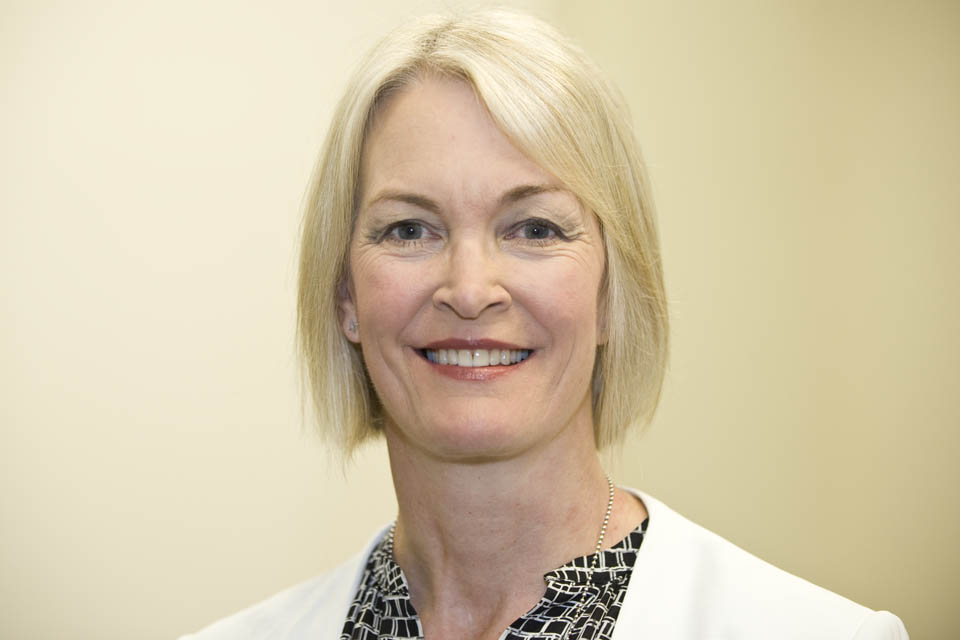
    Below is the text of the speech made by Mark Tami, the Labour MP for Alyn and Deeside, in the House of Commons on 22 November 2018.

    I am grateful to be granted this debate on psychological support after cancer treatment. I recognise that there will probably be fewer Members here than there have been in the last few hours, but I thank anyone who stays to hear what I have to say.

    When we talk about cancer, the conversation often starts with survival. Overall, survival has doubled in the last 40 years in the UK, but we lag behind the best in Europe, and survival rates for certain cancers—such as lung, brain and pancreatic cancer—continue to be extremely low. That means there is, rightly, a drive towards earlier diagnosis and access to new and innovative treatments. However, for most patients, just living is not enough. They want to live well, and that is why we must do more to ensure that patients receive the best possible psychological support after cancer treatment.

    It goes without saying that cancer can take a huge emotional toll on patients and those close to them, right from the moment of diagnosis. Less well understood are the consequences of cancer treatment, which can affect patients’ lives on a daily basis and leave them needing support for many years afterwards. No group illustrates that better than stem cell transplant patients.

    Every year in the UK, around 2,000 blood cancer patients need a stem cell transplant from a donor to save their life. It is usually their last hope. One third of patients will be lucky to find a matching donor in their families, but the remaining two thirds of patients will require an unrelated donor. The search for a donor can be extremely stressful. Despite the fact that there are more than 1.4 million incredible individuals on the UK stem cell donor register, there are still patients who miss out on the life-saving transplant they need because either no donor is available or a donor cannot be found early enough.

    My experience with my son was that we were very fortunate to find a donor. That donor then failed his medical, which was a traumatic experience for the family. Not only were we concerned about what the problem was for the donor, but we did not know whether the donor would return to fulfil that pledge. We will be eternally grateful that he did.

    Even when a patient does find a match, this is not the end of their journey. Tellingly, the day of the stem cell transplant is commonly referred to as day zero. First, the patient must spend a number of weeks in hospital isolation to protect them from infection. This alone can be a very difficult experience, with patients often feeling very cut off from the outside world. Things such as patchy wi-fi, poor facilities and rooms without windows do not exactly help with this experience. Hopefully, the patient then begins their recovery, which brings with it entirely new physical, emotional and practical challenges. In fact, of all cancer treatments, stem cell transplant patients experience some of the most severe long-term effects, and it is for that reason that they are often described as patients for life.

    To give hon. Members some idea of what it can be like for those living with the long-term effects, approximately half will suffer from graft versus host disease, which is ​when their new immune system attacks their own body. I can certainly say that this is not a particularly pleasant experience, and in the worst cases it can actually kill the patient as well. Patients can also experience infertility, premature menopause, sexual dysfunction, fatigue and problems with their eyes, bones, teeth, joints and muscles, and they are at higher risk of infections and second cancers. In addition, it is not unusual for patients to be left with a range of psychological effects, including depression and post-traumatic stress disorder. All of this can have an impact on patients’ ability to study and work, and with that can come financial issues and even a loss of their identity. It can be completely and utterly overwhelming.

    With all this in mind, it is perhaps not surprising that in response to a survey of more than 300 stem cell transplant patients conducted by Anthony Nolan, the UK’s stem cell transplant charity, nearly half—47%—said that they needed emotional and psychological support, such as counselling or group therapy. It is surprising and even shocking that only half—54%—actually received it.

    Let us take some individual cases. Joanna received a stem cell transplant in 2016 to treat acute myeloid leukaemia. It saved her life, but when she got home to her family, she could not get off the sofa or out of bed. It was the worst she had felt since the actual diagnosis. Her daughter was only a teenager at the time, and the caring role of mother to child had to be reversed. In Joanna’s own words:

    “I think my lowest emotional time was after transplant. I questioned why I’d gone through this experience and just couldn’t see an end in those first three to four months… I wish there had been more psychological support for me and my family—even though staff tried their best, when I really needed help, it just wasn’t there.”

    Joanna’s story is not unique.

    Ruth, a teacher from Yorkshire, also received a stem cell transplant in 2016. In the two years since, she has experienced many ups and downs, and she is still dealing with chronic graft versus host disease. For her, this means her eyes are constantly dry, she cannot perform fine motor skills too well and her feet are in constant pain because of nerve damage. Ruth says:

    “The biggest downside of my whole transplant experience has been the complete lack of support since leaving hospital. It felt like I was on my own—my GP has offered me nothing. I’m on the waiting list for a counsellor, but it’s very long… I’m surprised you’re not referred to a counsellor as soon as you’re diagnosed.”

    As well as those patients who have received transplant, the charity Macmillan has provided me with some other brief personal stories. Let us take Frances, who finished treatment for Hodgkin’s lymphoma five years ago. She says:

    “Emotionally, in the first year after treatment I think I was shell-shocked because you’re trying to catch up with everything that has happened to your body. You feel like you’re a failure and you’ve failed to bounce back in the way you think you should have done.”

    Ciara, who finished treatment in 2016, says:

    “The fear of cancer never leaves you but I’m trying now to think, if it comes back, it comes back. I can’t live under that shadow. But it is so difficult to mentally recover.”​

    Finally, Chris, who finished his treatment for head and neck cancer in 2016 stated:

    “People say to me, ‘I bet you wake up every morning feeling glad to be alive.’ You know, it can’t be further from the truth.”

    The stories from Joanna, Ruth, Frances, Ciara and Chris affect all cancer patients—they cover everybody.

    So what do we need to do? First, psychological support is for everyone, not just those with diagnosed mental health conditions. Secondly, the families of patients should also be offered psychological support, and thirdly, it seems that patients and their families are not getting the psychological support they need. Let me address those points in turn.

    First, psychological support is for everyone, not just those with diagnosed mental health conditions such as depression or post-traumatic stress disorder. That includes patients who are feeling anxious, worried or frightened, and those who are having trouble adjusting to their “new normal”. The fear of cancer returning can be particularly difficult to manage. For example, some blood cancers relapse, which can be a common occurrence. Even if someone is doing physically well, that sense of dread never goes away for them or their family members.

    Because of patients’ varied needs, psychological support can take many forms. Clinical psychologists and others working in improving access to psychological therapies services are able to help those with the most complex needs. Clinical nurse specialists, who we know are hugely valued by patients, can enhance overall wellbeing by providing general emotional support based on skilled communication and effective provision of information. The third sector, meanwhile, provides a wide range of services, including helplines, online forums and peer support. There is no silver bullet, however, and many different actors have a role to play.

    Secondly, patients’ families should be offered psychological support because they too feel the consequences of cancer treatment. If someone is acting as their loved one’s carer, that can affect their relationship and ability to go about their daily life. They might have suddenly become the family’s main breadwinner, which could be a source of enormous stress. Family members will often feel as if they have to put a brave face on things and somehow do not deserve help because they are not the ones who are ill. In reality, however, patients regularly say that they worry more about their family than themselves and that in turn can affect their recovery. I know from personal experience that the CLIC Sargent nurse who came to us on a weekly basis to give my son chemotherapy was somebody to talk to who understood, and that side of the process was just as important to us as the medicine being given.

    Thirdly, patients and those close to them are not getting the psychological support they need. According to the most recent results from the national cancer patient experience survey, only two thirds of patients felt that they were able to discuss their fears or worries, and I hope the Minister will respond to that.

    In many cases, this comes down to workforce—either not enough specialists are available who properly understand the consequences of cancer treatment, or the demands on staff time are so great that it is impossible to provide patients with adequate psychological support.​

    In response to a 2017 survey of GPs and nurses, 31% of respondents said that workforce pressures mean patients are not being supported to regain a good quality of life after treatment. In other cases, the right support existed but patients are not being appropriately signposted. I have heard of many patients having to be proactive and find help for themselves. Patients should certainly be empowered to take control of their own care, but I think we all agree that this should be a choice and not a necessity. They should not be let down by poor communication and co-ordination, but in many cases they are.

    The Minister may refer to the recovery package in her response. It consists of four main interventions: a holistic needs assessment and care plan; a treatment summary; a cancer care review; and access to a health and wellbeing event. This can certainly help to identify patients’ psychological needs and I welcome the fact that NHS England has committed to rolling out the recovery package nationally by 2020. However, does the Minister agree that identifying patients’ needs is only one piece of the puzzle and that more needs to be done to ensure they actually receive the right psychological support?
  • Marcus Fysh – 2018 Speech on Planning in South Somerset

    Below is the text of the speech made by Marcus Fysh, the Conservative MP for Yeovil, in the House of Commons on 28 November 2018.

    It is a great pleasure to speak this evening on the planning situation in South Somerset, where my constituency lies. I declare an interest, in that my family own a house in the district. I will talk about a planning saga a little less than a mile away that has been going on for a long time.

    Essentially, the community to the south of Yeovil, in the Cokers, as it known, has time and again felt left out of the planning process going on around it. Some might know that the Liberal Democrats have been in power in South Somerset for a very long time. Yeovil was Lord Ashdown’s constituency from 1983. He won the seat having built up a power base in local government. One way or another, many of the individuals in local government are still around in the council. Essentially, South Somerset District Council, which is the planning authority, now has a plan in place, but many people say that it is failing because it does not have a five-year housing land supply. As a result, speculative development has been coming forward.

    As a district councillor, I was partly involved in the deliberations around the creation of the local plan and in the planning inspector’s process, so I know the detail of it very well. It was always quite odd to me that the council wanted to push through a higher number of houses than there was evidence for—as I showed at the time—but the planning inspector let the council do so, because the guidance says that if a council wants to do something, we broadly let it. As a result, many people in the district feel that their voice is not being heard very well. The Yeovil area has an area committee system—Area South is the committee that makes planning decisions there—and many of the key committees are heavily dominated by the Liberal Democrats, although we are trying to do something about that and have had quite a lot of success getting Conservatives involved in recent years.

    The district council has been seeking bolt-on development to existing towns that often do not have the infrastructure required to cater for such development. The council has not thought more holistically about the potential for new towns on, for example, the A303. It could capitalise on the investment we will be making in the A303 corridor scheme to dual the road all the way between the M3 and the M5. That kind of plan would be a logical way of trying to achieve these ambitious housing numbers. I favour providing enough housing for a new generation to be able to own their own homes, which could also provide business opportunities. There is a huge amount that we could do if we took that holistic approach and looked at ambitious schemes such as garden towns in appropriate locations such as the one I have suggested.

    Jim Shannon (Strangford) (DUP) rose—

    Mr Deputy Speaker (Sir Lindsay Hoyle) I am just trying to think—the link between the hon. Gentleman and this topic must be the Irish sea.

    Jim Shannon The link is the planning department. I congratulate the hon. Member for Yeovil (Mr Fysh) on securing this debate and telling us about the problems ​with the planning department in his area. My local council planning department also takes its own interpretation of planning law as gospel, without giving appropriate weight to job creation and the local economy. Does he agree that weight must be given to the letter of planning policy, but also to the spirit of its aims, such as improving town centre facilities and aiding job creation? With that in mind, I support the hon. Gentleman’s argument.

    Mr Fysh I am grateful for the hon. Gentleman’s intervention; it would not be an Adjournment debate without a strong contribution from Northern Ireland. I agree that focusing on and intensifying development in town centres is one of the answers both to finding more housing and to getting more people living in town centres, which means they will be there for the businesses in those locations. Having more eyes on the street makes town centres safer and more people will want to visit them. He is absolutely right. I would love Yeovil to be that kind of town, and part of that virtuous circle.

    Not so very long ago, the Conservative party manifesto included the idea of a community right of appeal. There is an understandable impetus not to make things too onerous for developers and to ensure that decisions can be made in a timely fashion. I support that, but it is also key that proper evidence is used to make these decisions in the right way. It is my opinion that, unfortunately, evidence in South Somerset has been cooked up for various outcomes—pre-cooked over decades to make certain things happen that, frankly, the Liberal Democrats have wanted to happen for one reason or another. The community has completely lost confidence in the Liberal Democrats’ ability to make the right decisions on its behalf.

    Mr Ian Liddell-Grainger (Bridgwater and West Somerset) (Con) It is so nice to see you in the Chair, Mr Deputy Speaker.

    My hon. Friend is making some very good points. I have been the MP for Bridgwater and West Somerset for 17 years, and I have never seen South Somerset in the mess that it is now in. The Liberals left us a terrible legacy that started with the noble Lord Ashdown and continued up until David Laws, who has now left the House. Does my hon. Friend agree that it has been a catalogue of disaster over that terrible period for south Somerset? Yeovil is a town that should be thriving—doing really well—but I am embarrassed to say, as a great supporter of my hon. Friend, who is doing a fantastic job, that it does not seem to be.

    Mr Fysh I thank my hon. Friend. He is certainly right that Yeovil has its challenges. Part of the problem has been sprawling development, and not particularly good development, that has been approved over the decades that I am talking about. We need to get a virtuous circle working in the other direction. The town has enormous potential and it has great industries in it. It needs a Conservative leadership in the district council next year to be able to achieve its potential and really contribute to the south-west’s growth.

    I want to spend a little time going through some of the big saga that happened to the south of Yeovil. Essentially, at the back end of the ’80s, or very early in ​the ’90s, there was a graded asset near a farmhouse that was falling down. The district council, being responsible for such things, did not want to spend the money on it and got its friend who was a developer to buy it, in an area that was not scheduled to have development around it. Who knows what really happened, but I suspect very strongly that the council made commitments to him that they would get him planning permission and on that basis he would do the renovations to keep the building standing. That, I think, is the origin of the problem that is down there.

    This area is a really, truly special part of the country with international and international heritage value. It has the village of East Coker, where T.S. Eliot is buried in the church. He wrote one of his most famous poems about the village and the landscape. There are ancient Roman ruins throughout. There are two of the closest together Roman villas, which is a very unusual archaeological configuration, apparently. Those two villas became the manors of East Coker and West Coker in later times. They have a tremendously rich and fertile soil and history.

    William Dampier was born in the village. He was an extremely important person in botany, science and literature. He cut his teeth investigating why different plants grew in different parts of the Vale of Coker, which he was farm managing for various of his boss’s tenants. That is what got him thinking about why certain things grow differently in certain places. Then, when he did his second navigation of the world later in his life, he made all his drawings in his botanical notebooks and wrote about them. That was the inspiration that Charles Darwin took with him when he went around the world in the Beagle doing exactly the same thing, so there really is a very strong heritage in evidence there.

    Yet the district council has never, ever ascribed any value to that whatsoever. When it did its landscape and heritage assessments of this area for development, it gave absolutely no value to the farm that was next to the graded asset or to the whole setting, including those Roman villas. There was no drawing together of the threads and the context. Frankly, that is a disgrace, because we are talking about proper national heritage. T.S. Eliot was the most famous poet of the 20th century. His words in that poem will live for as long as the English language lives. People absolutely should go and visit the church in East Coker to see where his memorial is, and to see the memorial to William Dampier. It is an extraordinary place.

    The council got the developer to buy that land and said that it would give him planning permission. When the A37 was being expanded to the south of Yeovil, it then gave him a roundabout that was contiguous with the land he had bought, in order to get access to the putative development that it had in mind. That was done entirely at the behest of the county councillor for the area at the time, who is now in the House of Lords—Baroness Bakewell. She suggested that roundabout, which was going to benefit the developer to a huge financial degree, and she made it happen through her friends in the county council. The leader of the district council at the time was having an affair with the chair of the environment committee in the county council.

    There are wheels within wheels in South Somerset, and this has been going on for an awfully long time. There is the evidence of the roundabout. The developer ​made a contribution of £100,000 to the county council to get it done under a section 278 agreement—that is in black and white. Unsurprisingly, the community was more than upset and confused at how unusual that was when it found out.

    The council has continued to give favours to this developer over time. It tried initially to promote a big logistics park on the site. That did not go forward because the community opposed it, but the council then came up with the idea of developing the site for housing. When it was assessing the site in the process leading up to the more recent local plan, it decided to give a zero rating on the community infrastructure levy, so that it would not have to pay anything to the community. The whole point of the Localism Act 2011 was that development in the community would give some benefit to the community, to spend in ways that it wanted. None of that will happen if this site gets developed, because of that CIL derogation, which benefits this developer substantially.

    In the planning process, the council gamed the highways evidence. It gamed the housing demand evidence, to ensure that this site would be one of those that it had to consider. It gamed the landscape evidence, and then it gamed the historic environment assessment evidence by not taking account of the settings of all the graded assets. There is a higher concentration of graded assets in that valley than almost anywhere else in the country. It is so rich and has such a history; it is quite an extraordinary place.

    The district council made a statement of common ground with the developer, and it was only on that basis that English Heritage allowed it to remove its objection from the local plan process for the whole site, and that was on the basis that it was going to be a reduced size and only up in the corner. The council said that it would not develop on a field that is adjacent to one of the scheduled ancient monuments—the Roman villa, which was on the at-risk register at the time because of development potential. On the basis of that statement of common ground, the council got English Heritage to remove it from the at-risk register.

    Then the council got the planning inspector to change his final report on the local plan. I have copies of the documents. His original report was basically going to say that he was approving the local plan allocation for the whole site because it was not in proximity to the scheduled monument. However, I have in writing, too, the council saying to him that the field is in fact adjacent to the monument. That was taken out, which materially changes the meaning of the report.

    I personally think that this closeness between councils and the Planning Inspectorate is a structural problem that the Ministry should look into. It is not appropriate for these sorts of things to go on behind closed doors. No information was released, even under the Freedom of Information Act, until after it was judicially reviewable, which is a disgrace. It is understandable that, in this context, the process does not smell right at all and I would support the community in saying that.

    The council is now trying to get its friends on the county council—because it is all about politics from way back when—to shift the school site to the very field adjacent to the scheduled ancient monument. I am very pleased to say that Historic England has just submitted an objection to the planning application, on the basis that that is absolutely not what it agreed when it released ​all these things, given all the reliance placed on the statement of common ground that allowed the site to come forward in the first place.

    Essentially, on a policy basis, we need to look at how communities can challenge the substance of some of this stuff, other than with the normal route of politics. Everyone says, “Well, just vote people out”, but that is not realistic in a place where there is a safe seat or a safe council. In these sort of incidents, it is only on a procedural basis—if there is something wrong with the actual process—that individuals can bring a judicial review. If the council has not divulged the information about the material way in which decisions were made by the decision maker, which it did not do, and we are out of time, what do we do?

    Both because it is a nationally important heritage asset and because there are public policy grounds, including the very welcome new powers to protect heritage in the national planning policy framework––we should try to elucidate and clarify some of these things––this planning application is a very good candidate for calling in. I would like it to be called in and, to put my hon. Friend the Minister in the picture, I will be making an application to do so in the coming days. I have taken more time than I promised I would, but I thank hon. Members for listening.

  • Mel Stride – 2018 Speech on Leaving the European Union

    Below is the text of the speech made by Mel Stride, the Financial Secretary to the Treasury, in the House of Commons on 28 November 2018.

    Today the Government published the analysis of the economic and fiscal effects of leaving the European Union, honouring the commitment we made to the House. It is important to recognise that the analysis is not an economic forecast for the UK economy; it only considers potential economic impacts specific to EU exit, and it does not prejudge all future policy or wider economic developments. The analysis sets out how different scenarios affect GDP and the sectors and regions of the economy against today’s arrangements with the European Union. Four different scenarios have been considered: a scenario based upon the July White Paper; a no-deal scenario; an average free trade area scenario; and a European economic area-type scenario. Given the spectrum of different outcomes, and ahead of the detailed negotiations on the legal text of the deal, the analysis builds in sensitivity with effectively the White Paper at one end and a hypothetical FTA at the other.

    The analysis shows that the outcomes for the proposed future UK-EU relationship would deliver significantly higher economic output, about seven percentage points higher, than the no-deal scenario. The analysis shows that a no-deal scenario would result in lower economic activity in all sector groups of the economy compared to the White Paper scenario. The analysis also shows that in the no-deal scenario all nations and regions of the United Kingdom would have lower economic activity in the long run compared to the White Paper scenario, with Northern Ireland, Wales and Scotland all being subject to a significant economic impact.

    What the Government have published today shows that the deal on the table is the best deal. It honours the referendum and realises the opportunities of Brexit. [Interruption.] It is a deal that takes back control of our borders, our laws and our money. [Interruption.] Let me be very clear to the House and to those who say that the economic benefits of staying in the EU mean that we should overturn the result of the referendum: to do so would open up the country to even further division and turbulence, and undermine the trust placed by the British people in our democracy. What this House and our country face today is the opportunity presented by the deal: a deal that honours the result of the referendum and safeguards our economic future; or the alternative, the risk of no deal or indeed of no Brexit at all. [Interruption.]

    Mr Speaker Order. Somebody said something about “dishonest”. No Member should accuse another Member of being dishonest in this Chamber. I am not quite sure who I heard, but that must not be repeated. This is a disagreement between right hon. and hon. Members, and colleagues must remember that.

    John McDonnell The Chancellor promised us that the House would have a detailed economic analysis of the options ahead of the meaningful vote on Brexit. ​The least we could expect is that, instead of touring the broadcast studios, the Chancellor would be here himself to present an oral statement on the information.

    Let us be clear. We are now in the ludicrous position of seeing an analysis produced today on the economic implications of Brexit, which is in fact largely an assessment of the Chequers proposals abandoned months ago. What the analysis produced by the Treasury today shows us is that if a no-deal scenario with no net EEA migration comes to pass—something the Government have recklessly, if incredibly, been threatening—we could see GDP almost 11% lower compared to today’s arrangements. Under the hard Brexit some Government Back Benchers have been promoting, it would be 7% smaller. Only a Chancellor who talks about “little extras” for schools would talk about this kind of effect as being “a little smaller”.

    Can the Minister confirm that no deal is not an option the Government will allow to happen? Does the Minister agree that the one thing this document shows is that the deal on the table is even worse than the abandoned Chequers deal? Have the Government done any analysis whatsoever of the actual proposed backstop arrangements and will they be published in advance of the vote in a few days’ time? What fiscal assumptions is the Department making about extending the transition period, given that there may be no limit to what the European Union could ask for in return for such an extension? To be frank, if the Minister’s Government are not prepared to put jobs and the economy first in their Brexit negotiations, is it not time that they stepped aside and allowed Labour to negotiate that deal?

    Mel Stride Let me deal first with the point the right hon. Gentleman made about the Chancellor. The Chancellor is of course accountable to this House. He will be appearing before the Treasury Committee on Wednesday to give full account of the arrangements we are discussing today. Indeed, the Prime Minister herself will be appearing before the Liaison Committee.

    The right hon. Gentleman raised the Chequers deal and the fact that analysis is being based around that in this paperwork. That is entirely appropriate given that, as he will know, the political declaration suggests a spectrum of possible outcomes for the arrangements. That is why we not only analyse the Chequers proposal, but have a sensitivity analysis around that proposal as well.

    The right hon. Gentleman raises the issue of a no-deal scenario. It is the Labour party that is pushing us more in the direction of a potential no-deal scenario by—I have to say it—deciding for its own political reasons to object to the deal we have put forward. To be clear, that deal is good for safeguarding the economic future of our country and it delivers on the 2016 referendum, giving us control of our borders, our money, our laws and ensuring we protect the integrity of the United Kingdom, while allowing us to go out and make future trade deals. This Government are totally committed to achieving that.

  • Rory Stewart – 2018 Statement on Prison Operator Services Framework Competition

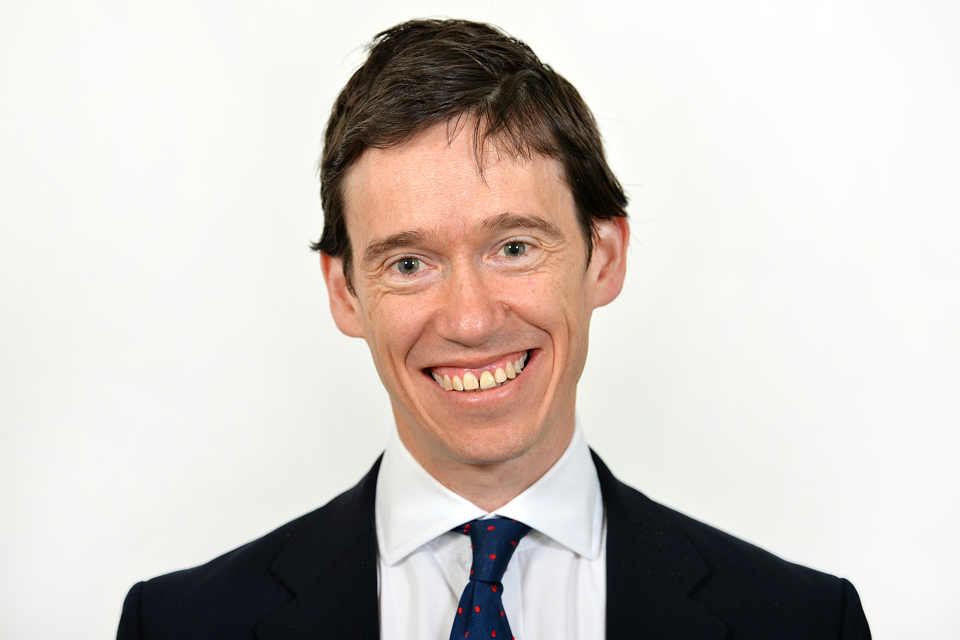
    Below is the text of the statement made by Rory Stewart, the Minister of State at the Ministry for Justice, in the House of Commons on 29 November 2018.

    At the Justice Select Committee on 26 June, I reaffirmed the Government’s commitment to building up to 10,000 modern and decent prison places to replace old, expensive and unsuitable accommodation, modernising parts of our prison estate.

    Also at the Committee, I confirmed the intention to launch a competition to appoint a framework of prison operators from which we could select the operator for the new prisons including further prisons following expiry of current private sector contracts.

    Today I can announce the launch of the Prison Operator Services framework competition through a notice which will be published in the Official Journal of the European Union (OJEU) within the coming days.

    Securing a framework of operators should reinvigorate the prison market by encouraging new providers to enter the custodial arena. It will also enable MoJ to more effectively and efficiently manage a pipeline of competition over the next decade. Once part of the framework, operators can choose to compete in shorter ‘call off’ competitions for the operation of individual prisons.

    The first of these call-off competitions will be for the operation of the new build resettlement prisons at Wellingborough and then Glen Parva. These are being built using public capital, with construction expected to begin in late 2018 and late 2019 respectively.

    HMPPS will not bid in the competition but will provide a ‘public sector benchmark’ against which operators’ bids will be rigorously assessed. If bids do not meet our expectations in terms of quality and cost, HMPPS will act as the provider.

    This competition is not about the difference between the public and private sector. It is about driving quality and innovation across the system. I am clear that through this competition we expect bidders to provide high quality, value for money bids that deliver effective regimes to meet the specific needs of prisoners. Our aim being to help them turn their lives around to prevent reoffending.

    This Government remains committed to a role for the private sector in operating custodial services. The competition launched today will seek to build on the innovation and different ways of working that the private sector has previously introduced to the system. The sector has an important role to play, and currently runs some high-performing prisons, as part of a decent and secure prison estate.

    We will ensure, through the procurement and contract management processes, that we have sufficient measures in place to have confidence in the delivery and maintenance of the contracted prisons over their lifetime.

    A balanced approach to custodial services provision, which includes a mix of public, voluntary and private sector involvement has been shown to introduce improvements and deliver value for money for taxpayers.

    The launch of the Prison Operator Services Framework underlines this Government’s commitment to reform the prison estate, build much-needed prison places, improve standards of decency across the estate, and reduce reoffending.

  • Matt Hancock – 2018 Speech on Health Technology

    Below is the text of the speech made by Matt Hancock, the Secretary of State for Health, on 28 November 2018.

    It’s great to be in a room full of fellow tech enthusiasts. Not least because I imagine most of you will have downloaded the Matt Hancock app?

    Some of you? Anyone? Well, it’s currently rated 3.5 out of 5 on the App Store and if you need any convincing, just listen to the top-rated review:

    Due to low storage I had to delete my Facebook app, Twitter app, photos app, camera and phone to make room for this. Worth it! It’s the only app I’ll ever need from now on.

    From hearing about what Matt Hancock thinks about the OAP utility bill allowance, to hearing about what Matt Hancock thinks about the OAP free bus fare allowance, this really does satisfy my needs for constant global information as a millennial in the Digital Information Age. Delete your phone, get this app instead. You won’t regret it!

    It’s great to have a satisfied customer. So, you’re welcome, ‘The Gruesome Twosome’. Although, I’m not sure the app’s sarcasm filter is working quite as it should.

    So, yes, hello, I’m Matt Hancock the app IRL (in real life). And yes, I know my love of tech is sometimes a source of amusement, but let me tell you why I believe in the power of tech – and here I want to borrow from the great Steve Jobs.

    Steve said, and this was in 1994, long before Apple changed the world:

    It’s not a faith in technology. It’s faith in people. Technology is nothing. What’s important is that you have a faith in people, that they’re basically good and smart, and if you give them tools, they’ll do wonderful things with them.

    A faith in people. A belief that, given the power, people want to make their lives better and make other people’s lives better too.

    I share Steve’s optimism. Because, throughout history, almost every technological leap has made people’s lives better:

    From the printing press, to the electric light, to the internet. From the discovery of penicillin, to x-ray machines, to keyhole surgery. We’re better off and healthier because of technological progress. Because someone had faith and a vision.

    That’s why I believe in tech, because I believe in people. And I’m optimistic that with the right tools in the NHS we can improve people’s lives by improving people’s health.

    So today I want to talk to you about 3 things:

    personalisation
    predictive prevention
    personal responsibility
    That’s a lot of ‘Ps’ so let me take each in turn.

    First: personalisation.

    The digital revolution of the past couple of decades has unleashed our imaginations and our creativity like never before, ushered in much, and often profound, cultural and social change. From how we work, to how we shop, to how we date.

    If there is any one overriding theme of the digital revolution it’s increased choice. You don’t walk into a record shop to buy a top-40 single. You click a button to listen to any record ever made.

    But all that choice can be overwhelming. And in the past few years we’ve seen a move to increasingly personalised services from the likes of Amazon to Netflix to Apple to many others. Suggestions based on our past behaviour, but not limited to what we’ve already done, as algorithms have become more intelligent.

    Now, there are legitimate concerns about privacy and the sharing of data, and it is absolutely right that government should ensure there is adequate and sensible legislation in place, and that laws are followed.

    But I’m a firm believer in looking at what people actually do, rather than what they say they do. And if you look at people’s everyday behaviour, they like personalisation. They use personalised services.

    Over a third of Amazon purchases are recommendations. Around 80% of what Netflix viewers watch are recommendations made by algorithms.

    And I’m sure Doug (Beck, Apple VP) would be able to share some similarly impressive data from Apple on the popularity of personalisation.

    People are choosing personalised services to help them narrow down and make the best choice. They’re opting in because personalisation offers more tailored, more targeted services.

    And in a hyper-connected, digital world with limitless choice, with endless opportunities, people still want to feel like individuals. They don’t want to feel like they’re part of the crowd. They want to be treated as individuals.

    That’s why I believe, if you scratch the surface, most millennials share my political outlook of liberal conservatism – even if they don’t know it yet.

    So how does personalisation relate to health? Well, we know that more than 80% of 16 to 24-year-olds would prefer to access the health service through an app.

    But personalised healthcare is more than just meeting people’s expectations of increased choice – as important as that is. It’s what’s best for them. It’s giving people better outcomes.

    In the 20th century, when the NHS was born, it made sense to view the population as one homogeneous mass when designing health programmes because the margin of victory was so great.

    Even with a one-size-fits-all approach, you were going to see improvement. And we have seen huge improvements because of the efforts of our hugely talented and dedicated NHS staff. Heart disease is down, strokes are down, people are living longer and healthier lives.

    But if we look to the future, that approach isn’t going to work because the margins are becoming smaller, the challenges are changing.

    So the focus of the system has to move from treating single acute illnesses to care for multiple chronic conditions and promoting the health of the whole individual. The 21st century NHS must try and prevent people from becoming patients in the first place.

    To get the best possible return on the record £20.5 billion a year we’re putting into the NHS, we must change the focus to prevention and empower people to take more care of their own health. Because all the evidence proves that prevention is better than cure.

    So let me turn to predictive prevention because this is where the possibilities offered by tech get really exciting.

    We know that genetics and lifestyle choices make up around a half of what determines an individual’s likelihood of good health.

    Right now, in Cambridge, we’re on the cusp of sequencing the 100,000th genome, on our way to a target of 5 million genomes.

    What this means is we will be able to predict who is vulnerable to which disease and how we can prevent it, or best design a drug or a treatment to give them the best possible chance of recovery. Cutting-edge healthtech in our NHS.

    And we must stay at the forefront of this and other emerging technologies like digital medicines because their potential is so huge.

    In the US, the FDA has approved the first ever digital pill. Fit with a tiny sensor, smaller than a grain of sand, it uses a smartphone app to transmit to the doctor when the pill has passed through the patient’s system.

    A nice extra? No. Because the pill is used to treat schizophrenia and bipolar disorder, so being certain a patient has taken their medication is absolutely vital.

    Now, Andy Thompson of Proteus Digital Health, one of the firms behind the pill, forecasts that by 2030 patients will be diagnosed at home using medical sensors built into their mobile phones.

    Doctors will be able to use digital devices and medicines, wearables and AI to predict, prevent and treat people with precision. Specific and accurate not general and variable – that’s the medicine of the future.

    And it’s not far off in the future. It’s here and now. Thousands of patients have already used digital medicines. Within the next decade most drugs will be smart drugs. So we must get ready. We must make sure the NHS is ready for the healthtech revolution.

    That’s why we’re developing new digital approaches to prevention programmes. We’re looking at how we can improve NHS health checks, using patient-generated real-time data to spot early signs of stroke, heart disease, diabetes, kidney disease and dementia, and create personalised, targeted interventions to treat people and help them change behaviours to cut risk factors.

    Public Health England is looking at how we can use referrals through social media and incentives delivered through digital platforms to promote physical activity and help people quit smoking and lower alcohol consumption.

    So that could mean personalised incentives such as free gym and swimming pool access, cinema tickets or discount vouchers for healthy food.

    And the Good Thinking mental health project in London is analysing social media usage and search history to identify people who may be at risk of, or are already suffering from anxiety, depression and low-level mental health conditions. That way they can be helped through digital apps, online cognitive behavioural therapy, or face-to-face and we can prevent their condition becoming more serious.

    These are just some of the new and emerging ideas on predictive prevention that we’re looking at in the NHS.

    And I welcome the insights from the RAND study on how we can promote better behaviours. I am open to any idea, from anyone, and will look anywhere for what works. What’s best for the NHS is what’s best for patients.

    And we have to be honest: we don’t have all the solutions within the NHS. So we have to be open to working with others and open to change because, ultimately, predictive prevention is a conscious decision not to stand still.

    The public’s expectations of public health services have increased as technology has advanced.

    More than half the British public have searched online for health information from diet and nutrition, to exercise and fitness, to concerns about an illness or an injury, and how to treat it.

    Now, we all know about the perils of Dr Google and how a stubbed toe can be misdiagnosed as a terminal condition, but what it shows is that people are increasingly taking an active interest in their health and fitness.

    People want to take greater personal responsibility for their health. And they must take greater personal responsibility for their health. Because at the heart of our NHS there’s a social contract, which is the third and final thing I want to talk about.

    Think of it as the terms and conditions that few of us ever read. We know they’re important. We know we agree, but what do they actually say?

    The social contract that underpins the NHS is this:

    We, the citizens, have a right to the healthcare we need, when we need it, free at the point of use.

    But, we have a responsibility to pay our taxes to fund it, and to use the health service carefully, with consideration for others, and to comply with medical advice to look after ourselves.

    Rights are important. But equally important are responsibilities. And we all have a personal responsibility to ensure the NHS is there for future generations.

    So, I will protect your rights and work with the NHS to build a better and more sustainable health and social care system. Government has guaranteed your rights and is putting the single, largest cash injection into the NHS ever to build a better and more sustainable health and social care system.

    But the final component, the most important part, is the public.

    Only by every citizen taking personal responsibility for managing their own health, by making full use of the predictive prevention and personalised health services we’re introducing, can we build a better and more sustainable health and social care system.

    One that’s at the forefront of new technology. One that can rise to the challenges of an ageing society. And one that’s there for our children and our grandchildren.

    In short, an NHS that’s fit for the future.

    And we achieve that not by penalising people, but by empowering people. By giving them the right tools and trusting them to make the right decisions.

    Not Big Brother and more nanny state, but an equal partner with a shared stake.

    Rights and responsibilities go hand in hand with having faith in people. A faith to do what’s best for them, what’s best for others, and what’s best for our NHS.

  • Matt Hancock – 2018 Speech on NHS Leadership

    Below is the text of the speech made by Matt Hancock, the Secretary of State for Health, at the King’s Fund on 28 November 2018.

    I want to talk to you today about how we create the right leadership culture in the NHS. So I’ve been looking at what we can learn from other organisations. But the truth is, there’s nowhere like the NHS.

    No other nation has what we have in the NHS. No other healthcare system is as comprehensive or as big. There’s no organisation on earth on the scale of the NHS that deals with life and death decisions every single day, often in highly pressurised and challenging conditions. So there’s probably a lot the NHS has to teach others.

    But that doesn’t mean we should be complacent or that we can’t learn from others – particularly when it comes to leadership. The only organisations that come close to the NHS in size is the US Department of Defence, McDonald’s, Walmart and the Chinese People’s Liberation Army.

    Missiles, cheeseburgers and groceries. On the surface of it, not a lot in common with the NHS. But look at McDonald’s, for example: they’re nowhere near as important as the NHS. What they do is spectacularly less complex. Yet they start leadership training at shift manager level. They drive leadership training through every level of their company.

    Restaurant managers learn how to develop a culture of continuous improvement, how to hold their teams and themselves accountable and how to apply best practice to their outlet. General managers learn how to create and execute business plans and analyse and improve performance. And then there’s apprenticeships, university degrees, a leadership institute and accelerated leadership development programmes.

    All that training, all that leadership development, just to sell more burgers. What the NHS does is so much more valuable, but can we honestly say that we place as much time, effort and importance on identifying, developing and supporting leaders? That we value it?

    Surely, the life-saving business requires at least as much emphasis on good leadership as the fast-food business? And it’s so important in the NHS. The best led trusts have the best performance; clinical, financial, staff and patient satisfaction.

    There’s no trade off ‒ there’s a correlation with leadership. So we need to have an open and honest conversation about how we get the right leadership in the NHS. Because leaders create the culture, and so many of the problems of the NHS can be solved by a just culture.

    So I want to focus on 3 things today: training, tech leadership and diversity.

    First: training. We need to train more people to be leaders in the NHS. I welcome today’s review by Sir Ron Kerr into how we can empower NHS leaders to lead.

    We need more clinicians becoming chief executives, so we need a pipeline of talent from the frontline to the boardroom.

    And we also need new people and new ideas from outside the system so we need more porous borders into the NHS.

    More outsiders, more insiders, more trained on their way up. What matters is we get the best leaders. And how we do it is by making sure they get the right, tailored training so clinicians learn how to lead, and external recruits at all levels learn how the NHS works.

    Every leader, from the ward to the boardroom, must get training and development throughout their careers. Now there’s some brilliant leaders and good stuff happening with, for example, the new Clinical Executive Fast Track scheme, the expansion of the NHS Graduate Management Training Scheme, and the Leadership Academy growing and moving to NHS Improvement.

    And I also welcome what’s happening outside the system with charities like The Staff College taking the best of what the military, business and education do on developing leaders and adapting that training for the NHS.

    I want to learn from The Staff College and embed it much more in how we develop our leaders. And from what people like Professor Stefan Scholtes is doing at Cambridge University’s Judge Business School, running a hugely popular MBA programme, taking mid-career clinicians and turning them into top-tier leaders.

    If there’s a golden thread running through all of them, it’s that we need to create leaders who are comfortable with challenge and change. Leaders who will create a ‘learn, not blame’ culture.

    A culture that’s less hierarchical, with greater autonomy at all levels. Where staff can challenge without fear. Where complaints are an opportunity to improve, not a need for cover-up and denial. Where whistleblowing is encouraged, patients are listened to and there is shared learning through training in teams.

    This matters. And it particularly matters in a high-risk job like healthcare, because everyone makes errors. Making mistakes is acceptable. It’s OK, everyone does it. What’s unacceptable is bad behaviour and failing to learn from mistakes.

    And because culture change comes from the top, I want to give you one small example of a mistake I made last week. I shared a link to NHS workforce figures on Twitter showing the numbers of GPs had risen by 1,000. The fact I shared is true, but I used figures that weren’t comparable.

    I was accused of deliberately trying to mislead people. I wasn’t, and the policy consequences are unchanged: we still need more GPs. But those figures were not the best way to show what was happening in the system so I deleted the tweet. I’ve learned from my error; I’m very enthusiastic about sharing good news about the NHS. That’s OK, but my lesson is to read the statistical footnote before you tweet and give a full representation of the facts.

    Now, I recognise that for you, correcting a mistake is not as simple as hitting delete. The consequences can be much more serious. But mistakes will happen despite our best efforts. What matters is that we admit mistakes, learn the right lessons and that we improve. And nowhere is a ‘learn, not blame’ culture more important than patient safety.

    The work Dr Aidan Fowler is currently doing to cement the right culture, one of continuous improvement, in the long-term plan, is vital to the future of the NHS. It is vital to creating the systems leadership I want to see embedded at every level across the NHS.

    So let me turn from training to tech, because this is another area where leadership has a crucial role to play.

    Now, you know tech is one of my 3 priorities, and there is a tech revolution happening across health as we speak.

    Improving technology is only a small part about the technology. It’s mostly about culture. Leaders must ensure their staff have the right skills to constantly innovate and continuously realise the benefits that technology can bring, from basic, good IT to the huge opportunities such as genomics, AI and digital medicines will bring to the NHS.

    That means we must have the right skills and capability in management and leadership. And technology is no longer just another department but is at the core of how every good organisation works.

    So if you’re a chief executive, I don’t expect you to know everything about tech, but I do expect you to have a chief information officer on the board who does. Because the best leaders know their own shortcomings and take action. They’re not afraid to seek out support, surround themselves with good people and empower others to take decisions if they have more expertise.

    In fact, Dr Eric Topol’s tech review is looking equally at the new technologies we want to see within the NHS, and the leadership and training we must see within the NHS to make best use of those new technologies.

    How are technological developments likely to change the roles and functions of clinical staff over the next 10 or 20 years?

    What are the implications for the skills required?

    What does it mean for the selection, training and development of current staff and future NHS workforce?

    Those are all questions he is asking and will report on in the new year to help NHS leaders plan and prepare for change.

    But there’s another major change I want to see in the NHS. So, third: I want to talk about diversity. And here I want to borrow a phrase from Idris Elba: what we seek is diversity of thought.

    Now, one of the most obvious form of diversity is what people look like. And if we look at racial equality, our leadership within the NHS looks spectacularly un-diverse, uniform in fact.

    40% of hospital doctors and 20% of nurses in the NHS are from a black or ethnic minority background. Yet, BME representation on NHS trust boards is only 7%. More than half of all NHS trusts in England have no black or ethnic minority staff at the very senior manager (VSM) level.

    Diversity of thought comes from gender too. Over 75% of the NHS workforce are women, yet at board level that figure is just 40%. We need 500 more women on boards to make them gender balanced.

    But it’s not just a question of fairness and justice. Diversity of leadership is a diversity of experience, a diversity of perspectives. Different ways of thinking, fresh ideas, new solutions to old and seemingly insurmountable problems.

    Diversity of thought is essential to the future of the NHS. It is essential to make the best, and most intelligent use, of the £20 billion a year extra we’re putting into the NHS.

    And this applies to outsiders coming in as much as it does to insiders moving up. It’s about the right attitude to training, to tech and to diversity. Because, at the moment, we don’t have enough leaders. At the moment, nearly 1 in 10 chief executive positions in the NHS aren’t permanently filled.

    That can’t continue. We need to support our leaders more, manage their careers better. We need to be able to plan for the future with confidence. We need to find 20 more people right now with the skills, grit and ambition to be an NHS CEO, and 30 more people to be a chief operating officer, just for us to stand still.

    So, we must embrace better training, tech leadership, and diversity of thought. Because the NHS is changing, society is changing, expectations are changing.

    The health and social care system of the future is going to more joined up and better integrated. It’s going to be less command and control, less top-down, less hierarchy. More autonomy. More about relationships and building a transformative culture. More about us, than me.

    What does that mean? Well, let me illustrate it with 2 stories that both involve janitors.

    The first ‒ and I have Scott Morrish to thank for putting me onto Margaret Heffernan’s book ‘Beyond Measure’ ‒ is the ‘paradox of organisational culture’ and how culture makes a big difference, but it’s comprised of small actions.

    She writes: ‘We measure everything at work except what counts…but when we’re confronted by spectacular success or failure, everyone from the CEO to the janitor points in the same direction: the culture.’

    The solution to creating a more ‘just’ culture isn’t to think big, she says, but to think small.

    ‘Small changes, listening, asking questions, sharing information…each of those small things generates responses that influence the system itself. And everyone, from the CEO to the janitor, makes an impact.’

    So good leadership starts with getting the small things right.

    And the second story involving a janitor is from when President Kennedy visited NASA after setting them the mission of reaching the moon. Kennedy stopped a janitor and talked to him. And the President said to that janitor: ‘Thank you for helping put a man on the moon.’

    Good leadership means making sure everyone feels valued and vital to the mission. Leadership is listening to people, empathising. Being open to challenge and change. Empowering people and being humble enough to admit you don’t know everything and you make mistakes.

    That’s the culture I want to see across the NHS. That’s the culture we must work together to create across the NHS. Only then can the NHS truly be the very best, which is what our citizens deserve.

  • Shami Chakrabarti – 2018 Speech to the Annual Bar and Young Bar Conference 2018

    Below is the text of the speech made by Shami Chakrabarti, the Shadow Attorney General, to the Annual Bar and Young Bar Conference in London on 24 November 2018.

    Friends, it’s a daunting privilege to speak to this conference at such a pivotal moment and to address my profession as the Shadow Attorney General for England and Wales. Some years ago the Sun newspaper called me “the most dangerous woman in Britain”. This, for attempts to defend the Rule of Law for everyone, even in times of adversity. That label was the gift that kept on giving with audiences around the country, with the prospect of standing ovations in Liverpool in particular, where people well understand the dangers of abuse and corruption without access to justice.

    So thank you for this opportunity to talk about what the bar represents to me, what it remains still – despite perhaps – all odds, and what it might yet and better be soon, and in the years ahead.

    I’m not the greatest valuer of possessions, but amongst the few that really matter to me, I cherish a framed photograph of me with my late mother in the autumn of 1994 when I was called to the Bar at Middle Temple. Middle Temple remains my Inn and a place that I will always regard as a second home.

    My parents were not lawyers, but hailing as they did from the Commonwealth, they saw the Rule of Law – as epitomised by the historic buildings of the Inns and Royal Courts – as one of the great treasures of the United Kingdom to which they came in the late 1950s and which was to become their permanent home. In their youth, before the advent of cheap and accessible long distance airline travel, they came to Britain via ocean voyages lasting weeks. The only members of each of their families to do this, they would have thought of themselves as great adventurers and hard workers. In the received language and wisdom of today’s “hostile environment”, they would no doubt be denigrated as “migrants”.

    I was raised on a literary, TV and cinematic diet of Rumpole of the Bailey, Twelve Angry Men and To Kill a Mockingbird. There was no doubt that some kind of career in the law was for me and neither I nor my parents were the slightest bit put off by our lack of connections with the professions.

    For just as we lived in a country of universal state primary and secondary education and with a National Health Service free at the point of use and envied all over the world, we lived in a land where if something of dangerous significance was going to happen to you, the prospect say of losing your liberty, home, job, child or right to stay in this country, you would have access to ultimately high quality legal advice and representation, regardless of your means.

    I read law just down the road at the London School of Economics, undeterred and unencumbered by tuition fees of any kind. What’s more, I received a full student maintenance grant which paid for my food, travel, rent and law books. Part time and holiday jobs paid for extras and I left college in 1991 with virtually no debt. Then things got trickier. There were fees for the Inns of Court School of Law – minuscule by the standards of today, but still more than I or my parents could readily afford – so it was two years before I could take up my place. Nonetheless, soon after I did, I was fortunate enough to obtain a funded pupillage that amongst other things, placed me on the housing ladder in central London, a stone’s throw from where I now live.

    So far so good – except imagine my embarrassment when I talk to the law students of today and remember that it was many of my generation in British politics who enjoyed similar advantages, only to pull the ladder up from underneath them in the form of introducing tuition fees, reducing student support and deregulating legal professional education.

    My learned friend Nick Thomas-Symonds is the MP for Torfaen in South Wales, Shadow Solicitor General and Labour rising star. Once more, he did not come from a legal or privileged family. After a distinguished academic career at Oxford, he was called to Lincolns Inn in 2004 with the benefit of a Lord Denning scholarship, a Thomas More bursary and a Hardwicke entrance award. Writing in the Times earlier this year, Nick signalled our intention under the next Labour Government, not just to end university tuition fees, but to end the racket of bar courses that offer too many places for too high fees to too poor students, many of whom have no prospect of the pupillage that remains the gateway to the profession:

    “The Bar, a small profession, requires high-quality entrants. It needs to be more reflective of the public it serves, and in doing so provide a more diverse pool of candidates for future judicial appointments. Nobody should be locked out of the profession because they cannot afford course fees. Nor should people who can afford the fees be charged thousands of pounds to train with no prospect of a career at the Bar.”

    He went on:

    “…there is an obvious solution that has the advantages of being radical and building on the fine traditions of the Bar. Let the Inns become the course providers. Let them train the smaller number of students who do have a genuine chance of pupillage, expand their scholarship and bursary programmes and build a profession of barristers from many different backgrounds. While the Inns are in London, there is no reason why they could not establish regional centres. For all the years of consultation, the best means to create the profession we all want to see was staring us in the face the entire time.”

    I repeat my colleague’s words for those who did not read the article, to put the profiteers on fair notice that change is coming and to promise to work with the Bar and the Inns enthusiastically and creatively on the best way to invest in the best future of the profession.

    That must of course include a radical reversal of the cold hand of Coalition austerity politics on legal aid and the court system. LASPO is a national scandal on a par with universal discredit and the hostile environment for migrants.

    It may not yet command the same newspaper coverage, but it is a similar agent of delivering misery. In contrast with the claims of politicians from all sides in the past, the law is not a bourgeois luxury but an absolute essential for everyone and especially the most vulnerable in society.

    Access to justice is a fundamental human right and the bridge between the civil liberties I sought to defend for most of my career, and the social and economic rights that are of my greatest concern today.

    Without accessible advice and representation, all other laws no matter how beautifully imagined and crafted, are as a dead letter in a sealed book. Housing, benefits, employment, family and immigration and refugee law cannot do the job of providing protection – whether against the state or other actors – without the legal services that the vulnerable so desperately need. Even the Human Rights Act, twenty years old this autumn – and still in tact despite Conservative manifesto pledges for its repeal – cannot do its work without lawyers to unlock it for all the people of this country.

    And whilst all austerity is a political choice, I cannot help but suspect that the particularly savage treatment of the Ministry of Justice with its 40 per cent cuts is especially ideological in leaving abuses of power unchecked.

    When younger, I never thought that I would see food banks next to investment banks in one of the wealthiest countries on Earth. Nor did I think I would see doctors, lawyers and teachers having to take to the streets like the industrial and agricultural workers of previous generations.

    But just as our country has become more unequal and polarised, our legal system is fast coming to resemble the Michelin starred restaurant next to the soup kitchen. The international super rich still have a taste for British justice, seeking to strike their deals with a view to settling their disputes here, or better still, in shadowy arbitrations in glamorous offshore tax havens with the aid of some of the finest and most expensively trained minds in our country.

    Meanwhile on the ground, several miles down from the Learjet and penthouse suite, the proportion of litigants with legal representation fell from 60 per cent in 2012 to just 33 per cent in the first quarter of last year.

    That means endless contested civil cases where one side has a lawyer and the other does not. That means domestic violence victims being cross-examined in person by their alleged abusers in the family courts.

    That means judges who remember the highest standards of justice, demoralised as they attempt the impossible task of being social worker, lawyer and adjudicator in one.

    And what does our Government offer by way of leadership, and hope to guide the profession through these present dire straits?

    As with Brexit rows concerning the Irish border, we are told the answer lies in technology. The same magical thinking that tells us that differing customs regimes can be established without a hard border, informs us that computer programmes and online courts can replace the hard yards of legal professional training and provision for all except the wealthiest amongst us.

    I would not dream of trying to patronise lawyers any more than I would TV presenters. Of course new technology can play a significant part in the preparation, presentation and delivery of the law. Let the robots come and do the brain numbing, back breaking work of document management and routine administration. But there are still some things that humans do better for other humans, some things that require empathy, experience and wisdom, whether in the tax haven, board room, Parliamentary chamber, police station or court room.

    The next Labour Government will seek to invest in the caring and professional infrastructure of the future and that includes the law. That means access to justice for everyone in this country and not only those who want to use the City of London as a boutique money laundering service off the coast of Europe. This is about improving equity and fairness amongst all our people of course. But also about providing high quality and rewarding employment for our children.

    Richard Burgon is our Shadow Justice Secretary and Lord Chancellor, and the MP for Leeds East. A trade union lawyer by background, he knows very well that far from being alien to working people, the law can be a vital tool in achieving social progress. At the South West London Law Centre on Thursday night, he promised that the next Labour Government will

    “usher in a golden age of law centres as engines of empowerment for working class communities in all their diversity.”

    I also want us to provide better support for the vital but often thankless work of the CPS, Serious Fraud Office and Law Commission in the years ahead. Unlike with the NHS – an almost universally popular socialist experiment that politicians can only do down by stealth – most people never think they are going to need the law until that dreaded day comes. So it has been too easy for too long for politicians of all persuasions to do the legal system and all those who work in it – down – and to do so in thought and word and deeds- culminating in obliterating cuts and so called reforms.

    I am proud to sit alongside Richard in a diverse Shadow Cabinet, one quarter of whom are lawyers, with half of them from the Bar – including a former and indefatigable Director of Public Prosecutions. Many of those who are not lawyers – including our Leader, Shadow Chancellor and Shadow Home Secretary – have long campaigned for human rights causes and are personally passionate about legal aid in particular.

    So our Government will never sit back whilst senior judges are branded “enemies of the people”. Even media barons of the page and screen should remember how quick they are to resort to the courts when they feel wronged and that as judges do not command armies, their authority can become dangerously fragile in the face of the worst kind of short sighted, self-serving populism.

    Nor, on my watch, will Ministers personally and constitutionally attack judges for decisions that go against them and which are for the time being inconvenient, unhelpful or even – in their view – wrong. We will never take pot shots at the judiciary for being “unelected” as has become too prevalent amongst even Prime Ministers with elite educations and who ought to have known better. Instead, we will celebrate the legitimacy that comes from independence for the referees of the Rule of Law.

    However in the face of so many critical forces, that same legitimacy and efficacy can only in my view, be enhanced by far greater diversity in background, not least in relation to the representation of women.

    This year, many have been celebrating one hundred years of some largely privileged women obtaining the vote. Some celebrate with statues and they surely have their place. However I prefer statutes, even to statues, if they can honour past struggles with real improvement in women’s reproductive, economic and legal rights today.

    Next year will mark 100 years of the Sex Disqualification (Removal) Act and the first women being allowed into the profession of which, we at this conference are so proud to be a part.

    For my part, I would like to see Lincolns Inn posthumously admit Christabel Pankhurst, perhaps even to the Honorary Bench, of her father Richard’s Inn. But even more importantly, I would like us to begin a less complacent and more radical conversation about the representation of women in the senior echelons of the legal profession, and in particular, in the senior judiciary. For the avoidance of doubt, I do not see diversity and merit as being in tension but as marching hand in hand. I do not see the status quo on the planet, in this country and inevitably therefore in the law, as constituting a genuine meritocracy. That is why I want to serve in the most radical pro human rights and social justice Government since the Second World War.

    It is of course ideally wonderful when progress comes organically, consistently and without struggle. But sometimes it needs a positive kick start. So Labour legislated for all women shortlists for candidates. That’s why Labour has promised to look again at judicial appointments alongside legal education and legal aid. That is how I want to be able to celebrate next year – my twenty fifth anniversary of being called – and honour both the first home that my mother made for me and the second home that I found here with you all in the pursuit of the law.

    Thank you for listening.

  • Lucy Frazer – 2018 Statement on Enforcement Agents

    Below is the text of the statement made by Lucy Frazer, the Parliamentary Under-Secretary of State for Justice, in the House of Commons on 26 November 2018.

    The Secretary of State for Justice and I have launched a call for evidence on the implementation of reforms contained in the Tribunals, Courts and Enforcement Act 2007, introduced by the Government in 2014.

    The Government are committed to ensuring that all enforcement agents (formerly known as bailiffs) treat debtors fairly and operate in a responsible and proportionate way. We also recognise that the enforcement of debt is necessary for both the economy and the justice system and that enforcement agents carry out a difficult role in often challenging circumstances. However, we have heard accounts of a minority of enforcement agents who use aggressive tactics and make people’s lives a misery. We are determined that such rogue practices should be stopped. To this end the Government will be actively examining the case for an independent regulator as part of the call for evidence.

    The 2014 reforms aimed to provide protection to debtors from the aggressive pursuit of their debt from enforcement agents, while balancing this against the need for effective enforcement. They introduced a set of rules which detail what goods an enforcement agent can and cannot take, how and when they can enter premises and what fees they can charge. They introduced mandatory training and an enhanced court-based certification process for enforcement agents. They also provided safeguards for vulnerable people so they are able to get assistance and advice, and required enforcement agents to be trained to recognise vulnerable people.

    The information gathered from our call for evidence will inform the Ministry of Justice’s second post-implementation review of these reforms.

    The Government published the first post-implementation review on 2 April 2018. They found that the reforms had led to many positive changes. This included improved transparency and consistency, both in terms of the enforcement process and the fees charged by enforcement agents. The report noted, however, that some enforcement agents were still perceived to be acting aggressively and not complying with the new rules.

    The paper includes questions about the complaints process following concerns raised that debtors are experiencing difficulties in making complaints about ​enforcement agents. We want to improve our understanding about the volume and nature of complaints about enforcement agents and how they are handled. We are also seeking views about whether the regulations around complaints sanctions need to be improved and if so how.

    The paper also asks questions about the implementation of the regulations concerning: safeguards to protect vulnerable debtors; the new training and certification process for civil enforcement agents; the requirement for enforcement agents to send standardised letters to debtors; and the regulations about the recovery of commercial rent arrears.

    A key part of the 2014 reforms was the introduction of a fee structure which clearly sets out what a debtor can be charged at each stage of the enforcement action. The fee structure was designed to incentivise debtors to settle their debt at the earliest stage possible. The paper includes questions about the impact of those reforms.

    The Government intend to complete the review of the implementation of the 2014 reforms before making a decision about whether further reform is necessary. Any prospective policy options will be presented in a public consultation.

    The call for evidence will collect evidence about the operation of both High Court Enforcement Officers and civil enforcement agents (also known as certificated enforcement agents or private bailiffs).

    It will run for 12 weeks to 17 February 2019.

    A copy of the call for evidence will be placed in the Libraries of the House and will be available online at www.gov.uk.

  • Alistair Burt – 2018 Comments on Ukraine

    Below is the text of the comments made by Alistair Burt, the Minister for the Middle East at the Foreign and Commonwealth Office, in the House of Commons on 27 November 2018.

    I thank my right hon. Friend for his question. As my right hon. Friend the Foreign Secretary stated yesterday, we condemn Russia’s aggression against the Ukrainian vessels that sought to enter the sea of Azov on 25 November. We remain deeply concerned about the welfare of the Ukrainian sailors detained by Russia and call for their release urgently. Russia has again shown its willingness to violate Ukraine’s sovereignty, following the illegal annexation of Crimea and the construction of the Kerch bridge.

    The United Kingdom remains committed to upholding the rules-based international system, which Russia continues to flout. Our position is clear: Russia’s actions are not in conformity with the United Nations convention on the law of the sea or the 2003 Russia-Ukraine bilateral agreement, which provides free passage in the sea of Azov, including for military ships. The United Kingdom ambassador reiterated that position at emergency meetings held yesterday at NATO, the European Union, the Organisation for Security and Co-operation in Europe and the UN Security Council.

    In response to Russian aggression, the Ukrainian Parliament agreed to impose martial law in 10 Ukrainian regions for 30 days, commencing at 09:00 local time on 28 November. We welcome President Poroshenko’s reassurances that martial law will not be used to restrict the rights and freedoms of Ukrainian citizens, and that full mobilisation will be considered only in the case of further Russian aggression. We also welcome the Ukrainian Parliament’s resolution confirming that presidential elections will go ahead on 31 March 2019.

  • Margot James – 2018 Speech at Government Innovation Conference

    Below is the text of the speech made by Margot James, the Minister for Digital and the Creative Industries, at the Government Innovation Conference held on 27 November 2018.

    May I say what a wonderful venue we are in today.

    My predecessor in the role of Minister of State for Digital and Creative Industries – Matt Hancock – told the House of Lords AI Committee last year that there is ‘a need in government for people who are at the vanguard…champions for the technology…alongside people who know the ins and outs of policy.’

    I look around the room today and am delighted to see people all around government departments who are ‘in the vanguard’.

    Since then, there has been a report from that Committee, a government response that I delivered with my colleague Sam Gyimah, and a debate – where it was stated that Departments themselves need to understand AI better.

    The same goes for Ministers by the way.

    We need to take those ideas from the vanguard, and make them mainstream for Departments across government.

    And there is already great work being done in government.

    The Department for Transport runs DfT Lab – which develops proofs-of-concept in agile 6-week sprints. They have used machine learning to identify road freight from satellite imagery in locations where there aren’t cameras, and built a system to optimise transport patterns of the future.

    The DWP are using AI to crack down on large-scale benefits fraud. Their system uses algorithms to reveal fake identity cloning techniques that are common among criminal gangs.

    The Home Office and ASI Data Science worked together to develop technology which can automatically detect terrorist video propaganda on any online platform, so that the majority of this content could be prevented before it ever reaches the internet.

    And I hope that same technology can be used in the fight against child abuse images online.

    A year ago the UK topped Oxford Insights’ Government AI readiness index – indicating we are the best-placed OECD country to implement AI in public service delivery, thanks to your great work on data, on fostering a vibrant environment for startups, and on the digitalisation of government.

    So today is very important. All of us, collectively, need to share with each other what we are doing.

    That means government working together with industry to seize the prize of a reported additional £232bn by 2030 – 10% of GDP.

    And it’s not all about economic value, but also the benefits it brings to individuals and families – from healthcare, to improving road safety.

    Earlier this year government and industry collectively committed to nearly £1bn of investment in the Industrial Strategy AI Sector Deal.

    Tabitha Goldstaub – who chairs the AI Council – is here today. The Council will have the important task of making sure that Sector Deal delivers. It’s important that we mention this today – not just because it’s about AI – but because it’s the one year anniversary of the Industrial Strategy this week.

    I was very proud as Business Minister to have had a part in developing it, and I’d like to pay tribute to my former boss, Greg Clark, an outstanding Secretary of State – who lives and breathes the Industrial Strategy and has really developed it so well.

    That £1bn is intended to kickstart how we address the Grand Challenge on AI and Data – to remain at the forefront of this revolution.

    To address the Grand Challenge, the whole of government, industry and civil society will need to work together.

    Artificial Intelligence holds the promise to transform productivity. The government has set the ambition to place the UK at the forefront of AI in its Industrial Strategy. We should also seek to seize this opportunity for public service to become more efficient and effective.

    To do so, the recent Budget initialised a review across government to understand where the biggest potential lies for adoption of these new technologies, to identify where combined investment can yield the greatest benefit.

    It will be led by the Office for Artificial Intelligence – a joint unit between DCMS and BEIS – working with the Government Digital Service.

    We established the Office for AI earlier this year following last year’s AI review led by Professor Dame Wendy Hall and Jérôme Pesenti.

    The Office for AI exists to be a central hub of policy expertise in AI across government. It delivers against commitments made in the Sector Deal around increasing access to data for AI startups, improving AI skills provision for the workforce, and driving adoption through missions and by other targeted means – all of which contribute to addressing the Grand Challenge on remaining at the forefront of the AI and Data revolution.

    So, today I’d like us to focus on the role data has in creating opportunities for AI. But equally important is driving adoption of AI and upskilling our workforce, to be able to use data and AI better.

    I’ll begin with adoption of AI.

    The full benefits for society and the economy that can come from AI can only be realised if it is widely used.

    We have used a Mission-driven approach to set out an aspiration to drive adoption of AI. Earlier this year we announced how we would use AI to improve the early diagnosis and treatment of chronic diseases, which pulls together effort across DCMS, BEIS and DHSC, the NHS, private sector and civil society.

    I’m so proud that the first Mission we announced was to deliver a transformation in the diagnosis of chronic diseases by Artificial Intelligence up to 2030.

    Cancer Research UK estimates that by 2033, if late stage diagnosis were reduced by 50% across four common cancers 56,500 more people diagnosed would be diagnosed at an early stage, resulting in 22,500 fewer deaths within 5 years of diagnosis, per year.

    It’s important to realise that’s not just an extra five years, but for many people they could have as much longer as if they’d not had the disease.

    It’s important to work with the expertise we have in government and the wider public sector to embed a culture of being intelligent customers when it comes to AI in public service delivery. We have engaged Office for National Statistics’ Data Science Campus and GDS to help us do this.

    DCMS has also seconded an official to work as a researcher at the World Economic Forum’s San Francisco-based Center for the 4th Industrial Revolution towards a framework for responsible public procurement of AI. This is intended to mesh with the Data Ethics Framework which has a new home in DCMS after moving from GDS and provide a set of steps a decision maker could follow to decide on how to best implement AI solutions. The team is also working to ensure everyone benefits from the opportunities presented by AI, to ensure that businesses have access to the AI talent they need to operate, and in order to support and drive economic growth.

    This currently involves the development of a new industry funded AI Masters programme, beginning with around 200 new AI Masters students in 2019 with expansion of this talent pipeline continuing year-on-year.

    In addition it involves work to attract, recruit and retain world-leading talent by creating a fellowship programme that is globally respected and attractive for researchers around the world to congregate in the UK – recognised with £50m of funding that was announced in the Budget.

    We are also supporting work towards an additional 200 PhD places in AI and related disciplines a year by 2020 to 2021. By 2025, we will have at least 1,000 government supported PhD places in AI at any one time.

    Our work is in partnership with employers and universities, through our UK AI Skills Champion Dame Wendy Hall and the AI Council.

    We are committed to increasing diversity in the AI workforce to ensure that everyone with the potential to participate has the opportunity to do so and will support upskilling, reskilling and lifelong learning to reach our aims.

    That’s why we doubled the number of Exceptional Talent visas to 2,000 to attract the brightest and best to live and work in the UK as well as training our own population.

    Now, onto data.

    There has been a huge programme of work in recent years to make sure we are promoting the open and transparent use of data.

    This goes back at least 10 years.

    In the government we are in a privileged position, as we collect a vast quantity of untapped data as part of the services we run.

    And as the UK moves rapidly towards a data driven economy, it means that we have a real opportunity to make the most of this.

    The government has already published over 44,000 datasets on data.gov.uk. This unprecedented level of openness has created so many benefits.

    This is one of several reasons we ranked top of Oxford Insights’ Analysis last year.

    We believe that innovation with data requires public trust. That’s why government has established the Centre for Data Ethics and Innovation as another key part of addressing the Grand Challenge on AI and Data, the board of which was announced just last week – they held their first meeting yesterday.

    Leading public debate on this is crucial. There’s a great danger – if we get ahead of ourselves in government and industry, and allow public debate to fall behind, we fail to build the trust that is absolutely vital for the success of this endeavour. So, I think that the role of the new Centre for Data Ethics and Innovation is absolutely crucial in building that trust.

    The Centre is a world-class advisory body to make sure data and AI delivers the best possible outcomes for society, in support of its innovative and ethical use.

    And that Centre will become independent – it’s our intention to put it on a statutory, independent footing, as soon as we can get the necessary legislation in train.

    Innovation and ethics are not mutually exclusive. The Centre will work to deliver innovation with data, as well as ensuring its use – including for AI – is ethical.

    Data is a critical part of our national digital infrastructure – and fundamental to AI. It enables all kinds of services we use everyday from maps on our smartphones, to social media and payment processes. Without access to good quality data from a range of sources, AI technologies cannot deliver on their promise of better, more efficient and seamless services.

    Government is committed to opening up more data in a way that makes it reusable and easily accessible.

    However, of course not all data can, or should, be made open.

    Organisations looking to access or share data can often face a range of barriers, from trust and cultural concerns to practical and legal obstacles.

    It is extremely important that we address these.

    Last week, it was announced at the ODI Summit that ‘the Office for AI will work with the Open Data Institute to run a number of pilot data trusts – frameworks to enable safe, fair and ethical data sharing between organisations to solve common problems and bring societal and economic benefit.

    The Office for AI is working with the ODI to identify potential pilots – including unlocking sales data towards facilitating a circular economy by making packaging recycling more efficient, and around using data to bolster conservation efforts, among other examples.

    The ODI are also working on a further pilot project to prototype a data trust with the Mayor of London and the Royal Borough of Greenwich. City Hall is working on data trusts as part of its Smarter London Together Roadmap to support AI and protect ‘privacy by design’ for Londoners.

    This Greenwich project will focus on real time data from the Internet of Things, and will investigate how this data could be shared with innovators in the technology sector to create solutions to city challenges. Our ultimate aim is that Data Trusts encourage data sharing where it is not currently happening to deliver economic and societal benefit.

    Finally, onto the AI Council.

    Work is under way developing the AI Council, following the announcement of Chair Tabitha Goldstaub earlier this year – and Tabitha, we’re very grateful to you for the work you’ve put in to get the AI Council almost up to launch, and also to Skills Champion Professor Dame Wendy Hall.

    The AI Council is intended to be government’s ‘way in’ to industry – a partnership body. Just as in the public sector, where Office for AI works across government to address the Grand Challenge, we need industry – with government’s help – to take on some of this task.

    We want to make sure that the public sector can work hand-in-hand with the private sector to deliver more solutions that are truly transformative and revolutionise public service delivery.

    That’s a really great prize.

    Together, we can work drive adoption across public and industry sectors.