Tag: 2018

  • Christopher Cocksworth (Bishop of Coventry) – 2018 Speech on Religion in Iraq

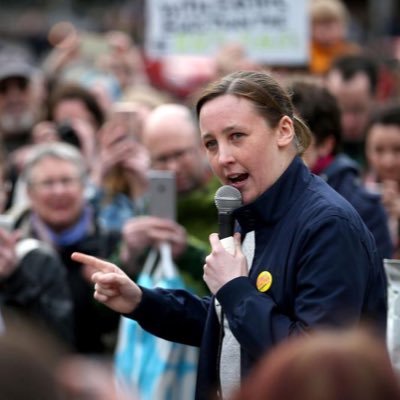
    Below is the text of the speech made by Christopher Cocksworth, the Bishop of Coventry, in the House of Lords on 11 January 2018.

    My Lords, imagine what it was like, having been hounded out of one’s home when Daesh took control of Mosul, to be back there on Christmas Eve among 2,000 worshippers for the first celebration of the Mass in three and a half years. But then imagine the scene only hours afterwards— ​not only the church but also the city again almost entirely bereft of Christians because it is still not safe enough for them to return permanently.

    What can be done to give Christians, Yazidis, Turkmen, Sabeans, Yarsanis, Shabaks and other vulnerable religious and ethnic communities in Iraq confidence that they have a future in their own land—and why is it vital for that land and that region that their confidence is regained? I will make three contentions. First, the recent military victory over Daesh is only the first step of its defeat. As General Paul Funk, commander of coalition forces in Iraq, recently said, Daesh’s,

    “repressive ideology continues … The conditions remain present for Daesh to return, and only through coalition and international efforts can the defeat become permanent”.

    That is exactly the fear of minority communities in Iraq—that unless the causes of the violence are rooted out, it will return and, as before, minorities will be the first victims. They look not only to the chaos that ensued after the 2003 invasion, and the reduction in the Christian population, for example, by some 75% by 2014, but back to earlier cycles of violence which, wave after wave, eroded their security and forced former generations to flee.

    Secondly, the UK has both a moral responsibility and a strategic interest to help secure a stable and flourishing Iraq. The UK’s deep involvement with Iraq, right up to its part in the military coalition, places a moral burden on us for a long-term commitment to a coalition of reconstruction. Success in Iraq, so long a land marking the failure of British foreign policy, is of vital strategic importance. Daesh might be like a Hydra, with heads surfacing across the world, but if it could be fatally wounded in the country of its birth, it would be starved of vital sources of energy, morale and inspiration.

    Furthermore, Iraq may have become a land where Yazidis, Christians, Turkmen and other minorities have suffered unspeakable brutality, where tensions between Shia and Sunni Muslims have spilt blood that has run deep into the soil of the nation, and where the aspirations of Kurds and Arabs divide the country. But it is also a land with a longer history of religious and ethnic coexistence. If that tradition could be harnessed in a renewed political and civic culture that builds an equitable, just and participative society in which all communities can flourish, the region will see that its religious and ethnic diversity can be a source of its strength, not a cause of its collapse, and the world will become a safer place.

    My third contention follows on from these two. The protection of religious and ethnic minorities is critical to the future of a secure and politically stable Iraq. Their presence in Iraqi society is a barometer, both of whether the conditions which give rise to violent extremism have been dealt with and of whether it is the sort of society where the capacities of all its citizens can contribute to the common good and to the flourishing of every community.

    A basic need that minority communities share with others is the material reconstruction of cities and villages devastatingly damaged by conflict. Her Majesty’s Government have already dedicated resources for ​“immediate repairs”. However, this week the US substantially increased its financial contribution to Iraq, and the EU announced its long-term commitment, both financial and strategic. Can the Minister therefore say what are the long-term, post-Brexit intentions of Her Majesty’s Government to lead and to shape an international effort to help the Iraqi authorities to rebuild the infrastructure of their land, on which a settled future depends, and how will this leadership be demonstrated at next month’s Kuwait conference? Given Daesh’s targeting of property owned by minority communities, some 50% of whose houses have been damaged or destroyed, will the Government use their influence to ensure that Christian, Yazidi and other communities receive a fair share of that aid?

    Material construction will be of use to Iraq and the region only if it is accompanied by social reconstruction, and that depends on the reconstruction of trust. For the minority communities, trust will be hard to rebuild. In my own visits to Iraq, it is the almost total breakdown of trust that has struck me as the greatest threat to the future of minority communities: trust in the international community, trust in the Iraqi and Kurdish Governments and their ability to deliver on their promises and truly to enact Article 14 of the constitution, with its commitment to equality of all before the law, and trust between neighbours where, for example, Christians found themselves betrayed by Muslims with whom they had lived for years. In meetings with Ministers of the Baghdad Government, including the Prime Minister and the President, I was impressed with the commitments they voiced about the necessity of religious and ethnic minorities to the future of Iraq. But the contrast with the doubt in the communities themselves that the Government would turn their words into action was very marked.

    Security, of course, is an urgent need, as well as a fundamental right. With this in mind, I ask the Minister whether Her Majesty’s Government will use every effort to empower the Iraqi and Kurdish Governments to ensure that the forces under their control work together to protect all members of their society, especially the vulnerable communities residing in the liberated areas of the Nineveh Plains and Sinjar, and that they do not rely on Shia militias?

    Despite the terrible tears in the fabric of Iraqi society caused by betrayals of trust, there are already remarkable examples of civic society beginning to repair it—a symbol of which was the way that the cross on the church at the Mosul Mass was erected by a group of young Muslims. Yet there are interventions that the Iraqi and KRG Governments could make, though their exercise of the law and shaping of culture, to support and quicken these efforts.

    The high proportion of young people in Iraq means that there is great potential to create a new culture of understanding and respect through education. The Iraqi Government can play an important role by reforming and policing how minorities are spoken of in educational curricula and course materials in state and in non-governmental religious schools, and also through all forms of media, including media used by religious bodies. How will Her Majesty’s Government encourage the Iraqi authorities to take bold steps to create a ​culture, through education and media, that celebrates the diversity of its people, affirms the historic place of its ancient minority communities in the nation, and addresses the legal and administrative systems that reinforce the sense of vulnerability and discrimination, such as the proposed registration of children as Muslim if either parent converts to Islam?

    I conclude with the words of a priest of the Assyrian Church of the East administering in Dohuk spoken to me just a few days ago. I asked him what he would particularly like to convey to this House today. His reply was hauntingly realistic but inspiringly idealistic. “We may not be able to restore the Christian demography that we had in the past”, he said, “but we can preserve for the future a presence and role for the Christian community in our society so that through our schools, our skills and our hospitals we can serve all the people of this land”. My hope for this debate is that it will play some part in fulfilling the prayer of that priest and of others from the array of Iraq’s ancient, small, suffering communities who long for a future in their own homeland.

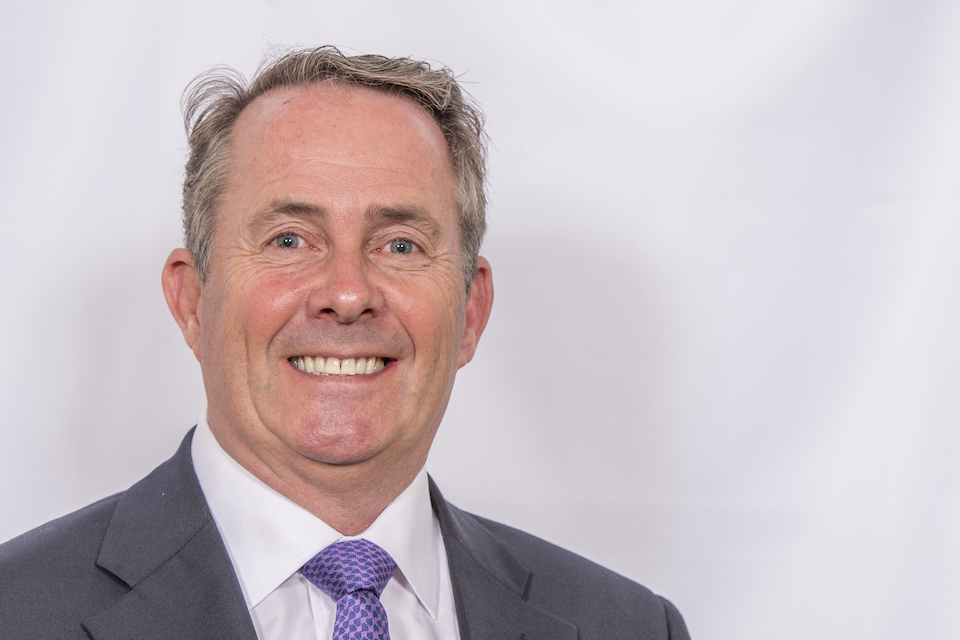
  • Liam Fox – 2018 Speech in India

    Below is the text of the speech made by Liam Fox, the Secretary of State for International Trade, in India on 11 January 2018.

    Thank you Richard [Richard Heald],

    Honourable Minister Prabhu, distinguished speakers, ladies and gentlemen.

    I am delighted to welcome you all here today, at the 12th meeting of the India-UK Joint Economic and Trade Committee (JETCO).

    I look forward to what promises to be an insightful discussion with business leaders of both countries.

    I would also like to welcome Minister Prabhu to London, for his first visit as Minister of Commerce and Industry – and thank him for the fascinating and productive conversation that we have held.

    I would also like to thank the chairs of the joint working groups on smart cities and advanced manufacturing and engineering. I look forward to hearing the outcomes from the business-led joint working groups shortly.

    And I would particularly like to welcome the visiting delegation from Pune led by Municipal Commissioner Mr Kunal Kumar. I very much enjoyed my own visit to the city last year.

    The United Kingdom is a champion of free trade – and it is the task of my department to work with our most important partners to remove barriers and promote commercial freedoms across the world.

    Today is an opportunity for India and the UK to work together, not only to strengthen our own partnership, but to rise to meet the challenges of the future.

    UK-India trade and investment

    India and the UK are, in PM Modi’s own words, an “unbeatable combination”.

    Both countries have a shared interest in each other’s prosperity, generating jobs, developing skills, and enhancing the competitiveness of the two economies.

    Our vibrant business communities are instrumental in maintaining and strengthening the partnership between our two countries, building upon strong ties encompassing trade and culture.

    Bilateral trade between the 2 countries has grown over the last 10 years and was £15.4 billion in 2016.

    And trade grew by a remarkable 15% in the first 3 quarters of 2017, compared to the same period in 2016.

    Our commercial links span a wide variety of sectors, from life sciences and medical technology, to food and drink, energy, defence and culture.

    Our trade in services includes not only IT and professional services – but significant trade in financial services, with the City of London playing a key role in raising capital to support India’s infrastructure growth.

    I was delighted to open the London Stock Exchange last year with Finance Minister Jaitley. Over 80% of masala bond issuances to date have taken place in London, to a value of more than $3.9 billion.

    We also have exceptionally strong investment links. The UK has been the largest G20 investor in India over the last 10 years, more than any other EU country. There are over 270 British companies operating there, employing nearly 800,000 people.

    The CBI estimates that UK companies are creating one in every 20 jobs in India’s organised private sector. This includes well known investors such as Vodafone, BP, HSBC, Standard Chartered, G4S and Unilever – but also new investors such as Dyson, who plan to launch their products in India in 2018.

    I welcome yesterday’s announcement by Prime Minister Modi to further liberalise FDI policy, especially for single brand retailers.

    And I welcome the reforms that Minister Prabhu and his team are taking to improve the ease of doing business in India – leading to a 30 point jump in the World Bank’s Index this year. The UK is proud of its partnership with India on the ease of doing business, including co-hosting a national conference in 2016.

    With a vote of confidence in the unshakeable strength of the UK economy, India is also the source of significant investment and jobs in the UK.

    In 2016, approximately 800 Indian companies were operating in the UK, accounting for around 110,000 jobs and recording combined revenues of £47.5 billion.

    In the same year, India established 127 new investment projects in the UK, adding 4,000 new jobs and safeguarding more jobs than any other country.

    What is particularly pleasing is the size and range of Indian investors who already consider the UK their home.

    This includes well-known companies such as Tata Sons, owners of TCS and Jaguar Land Rover, Wipro, Infosys and Genpact alongside many others.

    This government is putting its money where its mouth is in response to India’s technology investment demands. In 2016, I was delighted to attend the UK-India Tech Summit in Delhi, along with the Prime Minister.

    The UK boasts some 58,000 technology firms. In the last year, more venture capital was invested in London than in Germany, France, Spain and Ireland combined.

    And last November, with the support of the Indian High Commission and UKIBC, DIT ran the India-UK ‘Future Tech month’ where more than 60 of India’s most innovative tech companies and buyers criss-crossed the UK’s regional tech and manufacturing centres of excellence set out in the Industrial Strategy.

    This will be followed by the UK-India Createch Summit in Mumbai.

    People to people links

    Our business links are strengthened by the people to people links between our countries – what Prime Minister Modi has described as a ‘Living Bridge’.

    I noted with pride that 33 people of Indian origin were recognised in the UK’s New Year’s Honours list, including Professor Pratibha Laxman GAI who grew up in India and studied in the UK and went on to pioneer electron microscopy applications in chemistry.

    Our 2 governments want to do more to encourage these innovative links between people and industry in both countries.

    Ambitions for UK-India trade

    All of this shows that we already have a strong base to build on.

    However, Minister Prabhu and I both believe that there is scope for us to go further.

    We share a vision for a deep and dynamic partnership in which the 2 governments and business work hand-in-hand to achieve shared prosperity for India and the UK.

    In particular, as we leave the European Union, there is the opportunity for both countries to enhance this partnership – opening up new sectors for business and minimising barriers to trade.

    The UK will deepen its support to India, helping the country continue its positive trajectory on ease of doing business. In particular, we aim to strengthen our relationships in the areas of energy, smart cities and financial services, whilst at the same time addressing the critical issue of skills.

    And it is to help achieve this joint prosperity, that – at the 11th meeting of the UK-India JETCO in Delhi at the end of 2016 – we agreed to set up a new Joint Working Group on Trade.

    We tasked this working group with identifying practical ways to broaden and deepen the trade relationship between both countries, both now and as we leave the EU.

    The joint working group is therefore undertaking a joint trade review, an evidence-based assessment of the trading relationship, and the first report came back to Minister Prabhu and myself today.

    The review, and its next phase, will provide an important platform, identifying those key sectors where more progress can most readily be made.

    We also welcomed the news that UK Export Finance will increase its support for trade with India. This will provide an additional £2.75 billion in support for UK companies exporting to India and for Indian buyers of UK goods and services, and be available in Indian Rupees.

    Visas

    Minister Prabhu raised Indian concerns about last year’s changes to the UK’s Tier 2 visa route and I have heard feedback that business stakeholders have shared on this issue.

    The UK issues more work visas to India than to all of the other countries in the world combined, and we will continue to welcome skilled workers to the UK.

    We have to get the balance right and ensure the process is as transparent and smooth as possible.

    Our Immigration Minister visited India in November to open a new visa application centre in Bangalore and today I am pleased that the UK government also welcomes India’s Minister of State for Home Affairs, Shri Kiran Rijiju to the UK where he will meet FCO Minister Mark Field.

    CHOGM

    The kind of dialogue harnessed by these JETCOs provides an ideal opportunity for us to identify where UK-India collaboration can help continue this trend.

    I look forward to the Commonwealth Heads of Government Summit in April as a key opportunity to progress the UK-India trade relationship and boost intra-commonwealth trade.

    With intra-Commonwealth trade in goods and services estimated at $687 billion and projected to surpass $1 trillion by 2020, we are committed to working with our friends and allies in the Commonwealth to remove barriers and liberalise the global trading environment.

    India is home to more than half the population of the Commonwealth and we recognise the nation’s central role in reenergising the organisation. Now more than ever, it’s time for us to build on our links, to reject protectionism and insularity to embrace an interconnected world.

    Final call to businesses

    But to achieve a step-change in our trading relationship, your role – the role of business – will continue to be crucial.

    My officials will be in touch over the coming months – however, in the meantime, I would like to issue a call to you, as those businesses who already have a lot invested in the UK-India relationship, to get in touch with the Department for International Trade.

    We want to understand not only the challenges that you face in increasing trade and investment – but also to work with you to overcome them.

    Your ideas today can become our policy tomorrow so, please, let us know what you believe the challenges and opportunities to be.

    And by working together to meet these challenges, as governments, as business communities, and as people, we can build a brighter, more prosperous future for India, the UK and the world.

    Thank you.

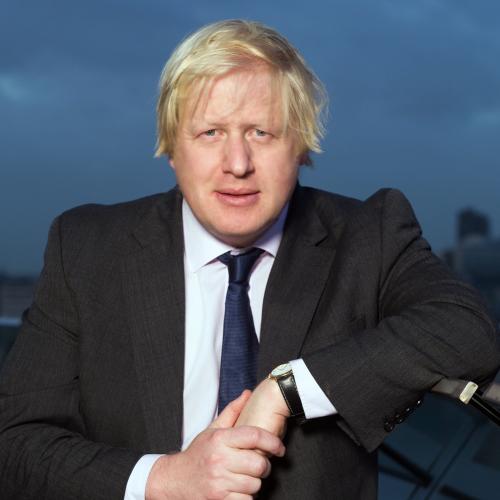
  • Boris Johnson – 2018 Speech on Iran Nuclear Deal

    Below is the text of the speech made by Boris Johnson, the Foreign Secretary, on 11 January 2018.

    Thank you very much. I’m really going to echo what [German Foreign Minister] Sigmar Gabriel and [French Foreign Minister] Jean-Yves Le Drian have already said. This was a very important meeting. It’s very important that as Europeans we come together to express a common view.

    That is, number one, that we greatly value the JCPoA [Joint Comprehensive Plan of Action], the nuclear deal with Iran, we think it is a considerable diplomatic accomplishment. It’s a way of stopping Iran from acquiring nuclear weapons. As my colleagues have said, Iran is in compliance with this agreement according to the International Atomic Energy Authority, and that is very, very important to us.

    But it is also clearly important to build worldwide support for this deal and that Iran should be able to show, as my colleagues have said, that it is a good neighbour in the region. That’s why it’s legitimate and right that we should, in parallel, not connected with the JCPoA, but in parallel, focus on what Iran can do to resolve the appalling crisis in Yemen, to help push forward a peace in Syria and to help resolve other questions in the region.

    I want to stress, just in conclusion, that I don’t think anybody has so far produced a better alternative to the JCPoA as a way of preventing the Iranians from going ahead with their acquisition of a nuclear capability. I don’t think anybody has come up with a better idea. And I think it is incumbent on those who oppose the JCPoA to come up with that better solution, because we haven’t seen it so far.

    I also think that if we can keep the deal going, which I very much hope that we can, that the Iranian people should see the economic benefits that will flow from the JCPoA. And that’s why the UK government together with our friends and partners in France and Germany, and of course other EU countries and [EU High Representative] Federica Mogherini, will continue to work for the continuation of the JCPoA.

  • Theresa May – 2018 Speech on Environment

    Below is the text of the speech made by Theresa May, the Prime Minister, at the London Wetland Centre in Barnes on 11 January 2018.

    It is wonderful to be here at the Wetland Centre – a true oasis in the heart of London.

    In our election manifesto last year we made an important pledge: to make ours the first generation to leave the natural environment in a better state than we found it.

    As we leave the European Union, which for decades has controlled some of the most important levers of environmental policy, now is the right time to put the question of how we protect and enhance our natural environment centre-stage.

    And it is a central priority for this government.

    Our mission is to build a Britain where the next generation can enjoy a better life than the one that went before it.

    That means tackling the deficit and dealing with our debts, so they are not a burden for our children and grandchildren.

    It means building the houses that people need, so that the dream of home ownership can be a reality.

    Ensuring every child has a good school place and can get the best start in life.

    And it also means protecting and enhancing our natural environment for the next generation, so they have a healthy and beautiful country in which to build their lives.

    Making good on the promise that each new generation should be able to build a better future is a fundamental Conservative principle.

    And whilst every political tradition has a stake in our natural environment, speaking as the Leader of the Conservative Party, I know I draw upon a proud heritage.

    Because Conservatism and Conservation are natural allies.

    The fundamental understanding which lies at the heart of our philosophical tradition is that we in the present are trustees charged with protecting and improving what we have inherited from those who went before us.

    And it is our responsibility to pass on that inheritance to the next generation.

    That applies to the great national institutions which we have built up as a society over generations, like our courts, our Parliament, the BBC and the NHS.

    And it applies equally to our natural heritage.

    Value of our natural environment

    Britain has always been a world leader in understanding and protecting the natural world.

    From Gilbert White’s vivid descriptions of the ecology of his Hampshire village in the first work of natural history writing, in the eighteenth century, to Sir David Attenborough’s landmark TV series in the twenty-first century, which have opened the eyes of millions of people to the wonder of our planet and to the threats it faces – the appeal of our natural world is universal and has caught the imagination of successive generations.

    In the United Kingdom, we are blessed with an abundance and variety of landscapes and habitats.

    These natural assets are of immense value.

    Our countryside and coastal waters are the means by which we sustain our existence in these islands.

    They are where we grow and harvest a large proportion of the food we eat. Where the water we drink comes from.

    Our green and blue places have inspired some of our greatest poetry, art and music and have become global cultural icons.

    Shakespeare’s Forest of Arden has been recreated on stages across the globe.

    Beatrix Potter’s stories and William’s Wordsworth’s poetic descriptions of ‘the calm that Nature breathes among the hills’ has made the Lake District world-renowned.

    The Suffolk landscapes of John Constable, and the beautiful depictions of the River Thames in my own constituency by Sir Stanley Spencer, are iconic.

    People from every continent are drawn to our shores to enjoy these beautiful landscapes, supporting hundreds of thousands of jobs in tourism.

    Industries which directly draw on our environment – from agriculture and forestry to aquaculture and fishing – support hundreds of thousands of jobs and contribute billions to our economy.

    The natural environment is around us wherever we are, and getting closer to it is good for our physical and mental health and our emotional and spiritual wellbeing.

    Millions of us visit the countryside, the seaside, a local park or places like this, every week to recharge our batteries, spend time with friends and family, and to exercise.

    So the environment is something personal to each of us, but it is also something which collectively we hold in trust for the next generation.

    And we have a responsibility to protect and enhance it.

    Conservation and growth

    It is sometimes suggested that a belief in a free market economy which pursues the objective of economic growth is not compatible with taking the action necessary to protect and enhance our natural environment.

    That we need to give up on the very idea of economic growth itself as the price we have to pay for sustainability.

    Others argue that taking any action to protect and improve our environment harms business and holds back growth.

    Both are wrong. They present a false choice which I entirely reject.

    A free market economy, operating under the right rules, regulations, and incentives, delivering sustainable economic growth, is the single greatest agent of collective human progress we have ever known.

    Time and again, it has lifted whole societies out of abject poverty and subsistence living, increased life expectancy, widened literacy and improved educational standards.

    More than this, it is in free economies and free societies that the technological and scientific breakthroughs which improve and save lives are made.

    The innovation and invention of a free enterprise economy will help to deliver new technology to drive a revolution in clean growth.

    Around the world, economies at all stages of development are embracing new low-carbon technologies and a more efficient use of resources to move onto a path of clean and sustainable growth.

    And our Industrial Strategy puts harnessing the economic potential of the clean growth revolution at its heart, as one of its four Grand Challenges.

    From how we generate power, and transport people and goods, to our industrial processes and how we grow our food – new clean technologies have the potential to deliver more good jobs and higher living standards.

    The UK is already home to around half a million jobs in low carbon businesses and their supply chain.

    We are a world-leader in the manufacture of electric vehicles.

    We are the biggest offshore wind energy producer in the world.

    And we must continue to press for sustainable economic growth, and the immense benefits it brings.

    Of course, for a market to function properly it has to be regulated.

    And environmental protection is a vital part of any good regulatory regime.

    So where government needs to intervene to ensure that high standards are met, we will not hesitate to do so.

    That is the approach which underpins our corporate governance reforms and our plans to make the energy market work better for consumers.

    Government stepping-up to its proper role as an engaged and active participant defines our Industrial Strategy.

    And it is the approach we are taking in this Environment Plan too.

    Together, they combine to form a coherent approach to boosting economic productivity, prosperity and growth, while at the same time restoring and enhancing our natural environment.

    Our record

    Conservative Governments have always taken our responsibility to the natural environment seriously.

    In the nineteenth century it was Benjamin Disraeli’s Conservative government which passed the River Pollution Prevention Act, providing the first legal environmental protections for our waterways.

    A Conservative government in the 1950s passed the Clean Air Act, making the Great Smog of London a thing of the past.

    Margaret Thatcher was the first world leader to recognise the threat of global warming and helped to protect our ozone layers through her work on the Montreal Protocol.

    And David Cameron restored environmentalism to a central place in the Conservative agenda.

    The measures set out in this plan build on this proud heritage, and the action which we have taken in office since 2010.

    We have seen some notable successes.

    Thanks to concerted action over many years, our rivers and beaches are now cleaner than they have been at any time since the Industrial Revolution.

    Otters are back in rivers in every English county.

    We are releasing beavers to the Forest of Dean, to help reduce the risk of flooding and enhance biodiversity.

    Action at the EU level – of which the UK has consistently been a champion – has helped drive these improvements.

    Because we recognise their value, we will incorporate all existing EU environmental regulations into domestic law when we leave.

    And let me be very clear. Brexit will not mean a lowering of environmental standards.

    We will set out our plans for a new, world leading independent statutory body to hold government to account and give the environment a voice. And our work will be underpinned by a strong set of environmental principles.

    We will consult widely on these proposals, not least with many of the people in this room.

    But be in no doubt: our record shows that we have already gone further than EU regulation requires of us to protect our environment.

    Thanks to action we have taken, 7,886 square miles of coastal waters around the UK are now Marine Conservation Zones, protecting a range of nationally important, rare or threatened habitats and species.

    Our ban on the use of microbeads in cosmetic and personal care products is another positive step towards protecting our marine environment.

    And we want to further restrict neonicotinoids to protect our bees.

    We will use the opportunity Brexit provides to strengthen and enhance our environmental protections – not to weaken them.

    We will develop a new environmental land management scheme which supports farmers who deliver environmental benefits for the public.

    And once we’ve taken back control of our waters, we will implement a more sustainable fishing policy that also supports our vital coastal communities.

    Animal welfare

    That is action for the future – but we are also acting in the here and now.

    When animals are mistreated, our common humanity is tarnished.

    So we are pursuing policies to make Britain a world-leader in tackling the abuse of animals.

    Here at home we are introducing mandatory CCTV into slaughter houses, to ensure standards of treatment are upheld.

    We are increasing the maximum sentence for the worst acts of animal cruelty in England and Wales ten-fold.

    We recognise that animals are sentient beings and we will enshrine that understanding in primary legislation.

    We have consulted on plans to introduce a total ban on UK sales of ivory that contribute either directly or indirectly to the continued poaching of elephants.

    In 2014, we convened the London Conference on the Illegal Wildlife Trade, the first of its kind, to help eradicate an abhorrent crime and to better protect the world’s most iconic species from the threat of extinction.

    In October we will host this conference again and will press for further international action.

    Whether they are pets, livestock or wild fauna, animals deserve the proper protection of the law and under a Conservative government that is exactly what they will receive.

    Enhancing our natural environment

    I am proud of the progress we have made but recognise that the challenges we face remain acute.

    In England, changes in patterns of land use have seen habitats lost and species threatened.

    Since 1970 there has been a significant decline in the numbers of woodland and farmland birds.

    Pollinating insects have declined by 13% since 1980.

    And while the water in our rivers and beaches are cleaner than ever, around the world eight million tonnes of plastic makes its way into the oceans each year.

    The problem was vividly highlighted in the BBC’s recent Blue Planet II series, which was public service broadcasting at its finest.

    And I also pay tribute to the Daily Mail for its tireless campaigning on this issue.

    The 25 year environment plan for England, which we are publishing today, sets out the action government will take to tackle all of these challenges, and I pay tribute to Michael Gove and his team for their work on it and the energy and enthusiasm they have brought to this.

    Its goals are simple: clean air, clean and plentiful water, plants and animals which are thriving, and a cleaner, greener country for us all.

    These are all valuable in themselves, but together they add up to something truly profound: a better world for each of us to live in, and better future for the next generation.

    We have worked closely with the devolved administrations as we have developed this plan, and we want to work closely with them on these issues in the years ahead.

    This is a plan for the long-term: as our environment changes, our plan will be updated to ensure we are continuing to deliver on our commitment to deliver a healthy natural environment.

    Northern Forest

    Nothing is more emblematic of that natural environment than our trees.

    A tree is a home to countless organisms, from insects to small mammals.

    They are natural air purifiers. They act as flood defences.

    We have committed to plant millions more trees, in urban and rural locations.

    We also support increased protections for England’s existing trees and forests, both from inappropriate developments and from invasive pests and diseases.

    To make more land available for the homes our country needs, while at the same time creating new habitats for wildlife, we will embed the principle of ‘net environmental gain’ for development, including housing and infrastructure.

    And as we pursue our Northern Powerhouse, connecting the great cities of the North of England to promote their economic growth, we will also create a new Northern Forest.

    It will be a new community woodland for Cheshire, Lancashire and Yorkshire, provide a new and enduring amenity for the growing population of the north of England, and act as a carbon sink for the UK.

    Decades from now, children as yet unborn will be exploring this forest, playing under the shade of its trees and learning about our natural world from its flora and fauna.

    Access and participation

    But today, more than one in ten young people do not spend time in the countryside or in large urban green spaces, meaning they are denied the benefits which spending time outdoors in the natural environment brings.

    These young people are disproportionately from more deprived backgrounds and their effective exclusion from our countryside represents a social injustice which I am determined to tackle.

    The National Park Authorities already engage directly with over 60,000 young people a year in schools visits, and they will now double this figure to ensure that even more young people can learn about our most precious environments.

    I have seen for myself this morning the excitement and enthusiasm of children learning about these wetlands and the birds that inhabit them.

    And to help more children lead happy and healthy lives, we will launch a new Nature Friendly Schools programme.

    Targeting schools in disadvantaged areas first, it will create improved school grounds which allow young people to learn about the natural world.

    It doesn’t have to be big, difficult or expensive.

    It could be planting a garden, growing a vegetable patch, or setting up a bird feeder.

    Whatever form it takes, it will be putting nature into the lives of young people, because everyone deserves to experience it first-hand.

    And this work with schools will be supported by £10 million of investment.

    Plastics

    We look back in horror at some of the damage done to our environment in the past and wonder how anyone could have thought that, for example, dumping toxic chemicals untreated into rivers was ever the right thing to do.

    In years to come, I think people will be shocked at how today we allow so much plastic to be produced needlessly.

    In the UK alone, the amount of single-use plastic wasted every year would fill 1,000 Royal Albert Halls.

    This plastic is ingested by dozens of species of marine animals and over 100 species of sea birds, causing immense suffering to individual creatures and degrading vital habitats.

    1 million birds, and over 100,000 other sea mammals and turtles die every year from eating and getting tangled in plastic waste.

    This truly is one of the great environmental scourges of our time.

    Today I can confirm that the UK will demonstrate global leadership.

    We must reduce the demand for plastic, reduce the number of plastics in circulation and improve our recycling rates.

    So we will take action at every stage of the production and consumption of plastic.

    As it is produced, we will encourage manufacturers to take responsibility for the impacts of their products and rationalise the number of different types of plastics they use.

    As it is consumed, we will drive down the amount of plastic in circulation through reducing demand.

    Government will lead the way by removing all consumer single use plastic in central government offices.

    And I want to see other large organisations commit to doing the same.

    Supermarkets also need to do much more to cut down on unnecessary plastic packaging, so we will work with them to explore introducing plastic-free aisles, where all the food is sold loose.

    And we will make it easier for people to recycle their plastics, so less of it ends up in landfills or our waterways.

    But I want us to go a step further.

    We have seen a powerful example over the last couple of years of the difference which a relatively simple policy can make for our environment.

    In 2015 we started asking shoppers to pay a 5p charge for using a plastic bag.

    As a direct consequence, we have used 9 billion fewer of them since the charge was introduced.

    This means the marine-life around the shores of the UK is safer, our local communities are cleaner and fewer plastic bags are ending up in landfill sites.

    This success should inspire us.

    It shows the difference we can make, and it demonstrates that the public is willing to play its part to protect our environment.

    So to help achieve our goal of eliminating all avoidable plastic waste, we will extend the 5p plastic bag charge to all retailers, to further reduce usage.

    And next month, we will launch a call for evidence on taxes or charges on single use plastics.

    We will also use the United Kingdom’s international influence to drive positive change around the world.

    When we host the Commonwealth Heads of Government Meeting in April we will put the sustainable development of our oceans firmly on the agenda.

    We will work with our partners to create a Commonwealth Blue Charter and push for strong action to reduce plastic waste in the ocean.

    And we will direct our development spending to help developing nations reduce plastic waste; increase our own marine protected areas at home; and establish new Blue Belt protections in our Overseas Territories.

    I want the Britain of the future to be a truly Global Britain, which is a force for good in the world.

    Steadfast in upholding our values – not least our fierce commitment to protecting the natural environment.

    Climate change

    You can see that commitment in our work on climate change.

    Since 2012, the carbon-intensity of UK electricity has fallen by more than twice that of any other major economy.

    In 2016 the UK succeeded in decarbonising at a faster rate than any other G20 country.

    And last April, the UK had its first full day without any coal-fired electricity since the 1880s.

    We are supporting the world’s poorest as they face up to the effects of rising sea waters and the extreme weather events associated with climate change.

    Last month I attended the One Planet Summit in Paris, where I announced new support for countries in the Caribbean, Asia and Africa to help them build resilience against natural disasters and climate extremes.

    We will continue to lead the world in delivering on our commitments to the planet, from fulfilling the environmental aspects of the UN Sustainable Development Goals to complying with the Paris Climate Agreement.

    Our Clean Growth Strategy set out our commitment to phase out unabated coal fired electricity by 2025, and through the Power Past Coal alliance, which the UK established with Canada, we are encouraging other countries to do the same.

    26 nations have already joined the alliance – and I will carry on pressing others to join too.

    We can be proud of our success in facing up to the reality of climate change.

    But as the plan we are publishing today demonstrates, we are not complacent about the action needed to sustain that success in the future.

    Air quality

    And we are not complacent about the action we need to take here in the UK to improve the quality of the air in our towns and cities.

    Since 2010, air quality has improved, and will continue to improve, as a result of action we are taking, but I know that there is more to do.

    That is why we have committed £3.5 billion to support measures to improve air quality.

    We are investing in electric vehicle infrastructure and new charging technologies, supporting the roll-out of low carbon buses, and expanding cycling and walking infrastructure.

    In July we published our plan to tackle traffic pollution and we will end the sale of new conventional petrol and diesel cars by 2040.

    In the last Budget we announced a £220 million Clean Air Fund, paid for by tax changes to company car tax and vehicle excise duty on new diesel cars.

    This year, we will set out how government will support the transition to almost all cars and vans being zero emission vehicles by 2050.

    And the UK will host an international zero-emission vehicle summit, driving innovation towards cleaner transport.

    I am determined that we will do what it takes to ensure our air is clean and safe for the future.

    Conclusion

    The New Year is a time to look ahead.

    The UK is making good progress in our discussions on EU withdrawal – and I am determined that we will keep up that progress in 2018.

    We are pursuing a modern Industrial Strategy which will help promote sustainable growth in our economy and deliver greater prosperity across the country.

    We are improving standards in schools, investing in our National Health Service and helping more people to own their own homes.

    And in our comprehensive 25 year environment plan, we are setting out how we will protect and renew our natural inheritance for the next generation.

    How we will make our air and water cleaner, and our natural habitats more diverse and healthy.

    How we will create a better world for ourselves and our children.

    It is a national plan of action, with international ambitions.

    But what it really speaks to is something much more personal for each of us as human beings.

    That is: the impulse to care for and nurture our own surroundings.

    To protect what is vulnerable and precious.

    To safeguard and improve on our inheritance, so we can pass on something of value and significance to those who come after us.

    It is what Roger Scruton has described as: ‘the goal towards which serious environmentalism and serious conservatism both point – namely, home, the place where we are and that we share, the place that defines us, that we hold in trust for our descendants, and that we don’t want to spoil.’

    Our goal is a healthy and beautiful natural environment which we can all enjoy, and which we can be proud to pass on to the next generation.

    This plan is how we will achieve it.
  • Jo Johnson – 2018 Speech on Toby Young

    Below is the text of the speech made by Jo Johnson, the Minister for Universities, Science, Research and Innovation, on 8 January 2018.

    The Office for Students came into being on 1 January and will be operational from April. It will put quality of teaching, student choice and value for money at the heart of what it does. It will be helped in that regard by a remarkably broad and strong board bringing together a wide range of talents and backgrounds, including vice-chancellors, graduate employers and legal and regulatory experts, as well as a student representative mandated by statute. The board also brings a diversity of views: its excellent chair, Sir Michael Barber, was a senior adviser to a former Labour Prime Minister; and several of its members have declared themselves to be past or present members of the Labour party. This is clearly not a body of Conservative stooges, but one that draws on talent wherever it can be found.

    The Opposition have called this debate to discuss one of the board’s 15 members, Toby Young. They would have us believe that he is not qualified or suitable to be on the board. Yes, Mr Young is not a university insider, but a board made up only of university insiders would be hard pressed to provide the scrutiny and challenge to the sector that students and taxpayers deserve. Indeed, the Higher Education and Research Act 2017 requires the Secretary of State to have regard to the desirability of the board’s members having, between them, far wider experience, including experience of promoting choice for consumers and encouraging competition. Mr Young has real experience of both as the founder of the West London Free School, and now as director of the New Schools Network, helping parents around the country to set up schools of their own. That experience will be important to a new regulator that will be charged with creating a level playing field for high-quality new providers to offer degrees alongside established universities.

    At the West London Free School, which Mr Young set up, 38.5% of children receive the pupil premium, and they have done better than the national average for those on the pupil premium this year and last. A parent-governor at the school described him this week as being

    “committed to public education, academic excellence, and greater opportunities for kids from lower incomes”.

    He has won praise for supporting diversity by making the school a safe and supportive place for LGBT+ students. He is also an eloquent advocate of free speech, a value that is intrinsic to successful universities and which the OFS has undertaken to uphold. He has served with credit on the board of the US-UK Fulbright Commission, where he has been a strong supporter of the commission’s work with the Sutton Trust to help disadvantaged young people to attend US universities. Indeed, the chair of the Fulbright Commission, Sir Nigel Sheinwald, described Mr Young as an effective, committed and energetic commissioner, saying that he had seen no evidence that any of Mr Young’s remarks had influenced him in despatching his duties as a commissioner.​

    The hon. Member for Brent Central (Dawn Butler) has called today’s debate to discuss tweets and remarks, some of which go back to the 1980s. These were foolish and wrong, and do not reflect the values of the Government, but I am not aware that anything Toby Young has said in the past has been found to have breached our strong discrimination laws, which are among the toughest in the world. In future, of course, he will be bound to comply with the Equality Act 2010 when performing all his functions for the Office for Students. Regardless of the legal position, it is of course right that Mr Young has apologised unreservedly to the OFS board. It is also right that he has said that he regrets the comments and given an undertaking that the kind of remarks he made in the past will not be repeated. So be in no doubt that if he or any board member were to make these kinds of inappropriate comments in the future, they would be dismissed.

    As the Prime Minister said yesterday, since these comments and tweets, Mr Young has been doing “exceedingly good work” in our education system, and it is for that reason that he is well placed to make a valuable contribution to the work of the board of the Office for Students, where he will continue to do much more to support the disadvantaged than so many of his armchair critics.

  • Michael Gove – 2018 Statement on Waste and China

    Below is the text of the speech made by Michael Gove, the Secretary of State for Environment, Food and Rural Affairs, in the House of Commons on 8 January 2018.

    On 1 January 2018 China imposed a ban on the import of certain types of waste including mixed paper and post-consumer plastics (plastics thrown away by consumers). In addition, some other types of waste, including all other paper and plastics exports, will have to meet a reduced acceptable contamination level of 0.5% from March 2018.

    China’s decision has a global impact, including in the UK. 3.7 million tonnes of plastic waste are created in the UK in a single year. Of that total, the UK exports 0.8 million tonnes to countries around the world, of which 0.4 million tonnes is sent to China (including Hong Kong). In comparison, other countries including Germany (0.6 million tonnes), Japan and the US (both 1.5 million tonnes) export more plastic to China for reprocessing than the UK. The UK also exports 3.7 million tonnes of paper waste to China (including Hong Kong), out of 9.1 million tonnes of paper waste in total. In comparison, the US exports 12.8 million tonnes of paper waste to China.

    Since China announced its intentions on 18 July 2017, Ministers have worked with industry, the Environment Agency, WRAP, the devolved Administrations and representatives from local government to understand the potential impact of the ban and the action that needs to be taken. We have engaged internationally to understand the scale and scope of China’s waste restrictions. The UK Government raised the issue with the EU in September. Alongside four other members, the EU subsequently questioned the proposals at the WTO in October.

    Domestically, the Government and the Environment Agency took steps last year to ensure that operators were clear on their duties to handle waste in the light of China’s proposals. The Environment Agency issued fresh guidance to exporters, stating that any waste which does not meet China’s new criteria will be stopped, in the same way as banned waste going to any other country. There is evidence that some operators have already been finding alternative export markets in response to the Chinese restrictions. Data for the third quarter of last year showed increases in exports of plastics to Turkey, Taiwan, Vietnam and Malaysia and increases in exports of paper to Turkey, Taiwan and Vietnam.

    Operators must continue to manage waste on their sites in accordance with the permit conditions issued by the Environment Agency. Where export markets or domestic reprocessing are not available, the process chosen to manage waste must be the one that minimises the environmental impact of treatment as fully as possible and follows the waste hierarchy. This requires operators to ensure that where waste cannot be prevented or reused it is recycled where practicable, before considering energy recovery through incineration or the last resort of disposal to landfill.​

    I recognise that China’s decision will cause some issues in the short term for recycling in the UK. We will continue to work closely with industry, the Environment Agency, local authorities and all interested parties to manage those issues. The Government remain committed to maximising the value we get from our resources, and is already assessing how we handle our waste in the UK in the longer term.

    Tackling waste has been a top priority for the Government. In July, I announced in my speech at the World Wildlife Fund our intention to publish a new Resources and Waste Strategy later this year. The Clean Growth Strategy, published on 12 October 2017, set out our ambition for zero avoidable waste by 2050 and announced we are exploring changes to the producer responsibility scheme. In December I chaired an industry roundtable on plastics and outlined my four point plan for tackling plastic waste: cutting the total amount of plastic in circulation; reducing the number of different plastics in use; improving the rate of recycling; supporting comprehensive and frequent rubbish and recycling collections, and making it easier for individuals to know what goes into the recycling bin and what goes into general rubbish.

    This builds on action the Government have already taken to reduce waste. Our 5p charge on plastic bags has taken 9 billion bags out of circulation, reducing usage by 83%. On Tuesday 9 January, our world-leading ban on the manufacture of personal care products containing plastic microbeads comes into force. In October 2017 we announced a call for evidence on managing single use drinks containers and our working group will report to Ministers early this year. We are working with HMT on a call for evidence in 2018 seeking views on how the tax system or charges could reduce the amount of single use plastics waste. And under the Waste Infrastructure Delivery Programme the Government will have committed £3 billion by 2042, supporting investment in a range of facilities to keep waste out of landfill and increase recycling levels.

    China’s decision underlines the need for progress in all these areas. In particular, we must reduce the amount of waste we produce overall and in particular the amount we export to be dealt with elsewhere. We will set out further steps in the coming weeks and months to achieve these goals, including in our forthcoming 25 Year Environment Plan.

  • Gavin Newlands – 2018 Speech on Insurance and Genetic Conditions

    Below is the text of the speech made by Gavin Newlands, the SNP for Paisley and Renfrewshire North, in the House of Commons on 8 January 2018.

    May I wish you a happy new year, Mr Speaker? I hope you had a restful festive period. I know that, like me, you will have spent the time wondering why Paisley did not win the city of culture in 2021, and why Coventry still has not won it. I am grateful that you are in the Chair this evening.

    I am delighted finally to fulfil a promise that I made to John Eden, the chief executive of the Scottish Huntington’s Association, to bring to the Floor of the House a debate on the difficulties that both individuals currently suffering from genetic conditions and those with a high likelihood of developing such a condition in the future have in securing insurance. Those with complex neurological conditions, such as Huntington’s in particular, have real trouble in trying to access affordable and fair insurance that allows them to secure a range of services that the rest of us, quite frankly, take for granted.

    From the outset, I readily admit that this is not an easy issue: there is no easy fix. It is not a black-and-white issue, but the barriers facing those affected remain deeply unfair. In highlighting this problem, I intend to look at some of the problems that exist with genetic testing, as well as at how many insurance companies are able to bypass the voluntary concordat and moratorium on genetics and insurance by demanding that any applicant provides their full family history before they decide whether to insure someone.

    This issue was brought to my attention by the Scottish Huntington’s Association, which is based in my constituency. The SHA is the only charity in Scotland that is exclusively dedicated to supporting families affected by Huntington’s disease. As well as providing a range of specialist support services for those who suffer from this condition, including a world-leading team of specialist youth advisers and a financial wellbeing service, the SHA campaigns to help improve the life chances of those who suffer from this complex neurological condition.

    Across the UK, Huntington’s affects between five to 10 people per 100,000, but Scotland has one of the highest rates of prevalence, with about 20 in every 100,000 in Scotland having HD, and 5% to 10% of cases develop before the age of 20. Huntington’s is one of life’s most devastating illnesses. People with it can suffer from repetitive involuntary movements resulting in mobility, balance and co-ordination problems, as well as difficulties with speech and swallowing. Huntington’s can also develop a type of early-onset dementia that affects an individual’s ability to process information, make decisions, solve problems, plan and organise. Those affected by HD can also experience a decline in their mental health and may eventually lose the ability to walk, talk, eat, drink, make decisions or care for themselves, requiring support for most or all of their activities on a 24-hour basis.

    Despite the challenges that those with Huntington’s have to live through each and every day, they still need to live their lives, and that requires access to insurance. That particular issue is not new to this House, as it has been debated and discussed in the past, although it has ​not been raised as often as it should have been. The use of genetic testing in insurance can be traced back to debates held in this House in 2000. Unfortunately, as I will discuss later, it appears that not enough has been done by the UK Government or the insurance bodies to help rectify the matter properly.

    Individuals need to secure insurance on many different aspects of their lives. We need insurance to be able to drive a car. Most of us will require home insurance if we want to secure a mortgage, and families who want to go on holiday will need to secure travel insurance before setting off. Many of us will take out life insurance to protect us and our family and cover any tragic or unplanned event.

    Securing insurance is the responsible thing to do, but many individuals and families are prevented from doing so, as they are either unfairly refused outright or priced out of the market. Trying to find the right insurance is never fun, but it has never been easier. With the advent of comparison websites, five minutes is all it takes for most of us to access the most suitable and cheapest insurance. However, there are thousands of people out there who dread the thought of even trying to access insurance, because for them it is not the simple and straightforward task that it is for most of us. It is an extremely time-consuming experience, often fruitless and always very expensive.

    A survey completed late last year by Genetic Alliance UK found that 65% of respondents had problems accessing insurance. I am certain that that figure would have been higher had the survey asked questions only of Huntington’s sufferers.

    Jim Shannon (Strangford) (DUP)

    I congratulate the hon. Gentleman on securing this debate. I asked him for permission to intervene. I am a member of the Northern Ireland Rare Disease Partnership, an organisation that focuses on many rare diseases including Huntington’s. As the number of those with rare diseases and genetic conditions continues to increase and insurance cover becomes a greater problem for a greater number of people, does the hon. Gentleman agree that it is time for the Government to review the insurance situation and ensure that the problem he has outlined, which I know about in my constituency, is addressed urgently?

    Gavin Newlands

    I thank the hon. Gentleman for his intervention, and I wholeheartedly agree with him. I will come on to discuss the particular review relating to Huntington’s, but I totally agree with him.

    The reasons cited by survey respondents for not being able to access insurance included affordability, lack of understanding of the condition and the length of time the process takes to complete. Insurance policies by their very nature are designed to assess the level of risk before they choose to insure someone. We all know and accept that. If someone has previously crashed their car or had a bad credit rating, the chances are that they will either be denied insurance or face paying higher premiums for accessing insurance. It has always been thus. However, we should not equate having a bad credit rating to having a certain health condition, but that is exactly what is happening at the moment. Individuals with certain health conditions are experiencing great challenges to be able to access affordable insurance.​
    Genetic testing will be one of the ways in which insurance companies try to determine whether someone is destined to develop Huntington’s.

    Dr Philippa Whitford (Central Ayrshire) (SNP)

    Does my hon. Friend feel that we will require legislation? Here, people with Huntington’s chorea are picked out because of a family history, but as we move into the era of genomics, if we allow insurance companies to force Huntington’s people to take genetics tests, we could all be forced to take genomic tests to see our risk of heart attack, cancer and so on. We need to deal with this now.

    Gavin Newlands

    I wholeheartedly agree with my hon. Friend. This is only the tip of the iceberg. We will have to come back to the issue under discussion and address the much wider issue in years to come.

    Insurance companies believe that information derived from genetic testing is of relevance to assessing risks, and they argue that it provides

    “a reliable indication of increased susceptibility to medical conditions which require expensive care.”

    However, individuals who face the brunt of these tests and are either denied insurance or face ridiculously high premiums believe that they are being discriminated against.

    An individual with a positive predictive genetic test for Huntington’s will find it extremely difficult to receive insurance, and I have received numerous emails from people throughout the UK sharing their experience of trying to secure insurance. Indeed, one contributor to the Huntington’s Disease Association Facebook page stated that they had tested negative but were still quoted over the odds because they had been tested.

    Those obstacles also affect the family members of those with Huntington’s. Another sad aspect of the disease is that it is hereditary, so it impacts on entire families over generations. People with HD often have children before developing symptoms of the disease. If someone carries the defective HD gene, each child they have has a 50% chance of having Huntington’s.

    An individual with a diagnosis of Huntington’s is not ordinarily able to obtain life, critical illness or income protection insurance, so families are unable to protect themselves from the future financial impact of this horrible disease. Not being able to access insurance compounds the huge negative economic impact of the disease. Those with HD almost always have to give up their employment, as do many of their family members, who have to act as carers for their loved ones. They also incur greater expenses arising from the health condition and many have to live on benefits—something that is proving impossible due to Tory austerity. If people are lucky enough to find insurance, they are very unlikely to be able to afford it, given the impact I have just described.

    One of the emails I spoke of earlier came from a family who have struggled to access basic holiday insurance. The Kitching family have two young children, one of whom has a rare genetic condition. Before their son was born, the family had no problem acquiring insurance and were able to cherry-pick the insurer they used. These days, it is a very different story. Last summer, they had to navigate numerous hurdles and obstacles, including spending nearly eight hours on the phone, to finally secure a basic travel insurance policy. Despite their best efforts, the Kitchings’ insurance bill increased by 900%, ​which is surely beyond what any of us would deem acceptable. Unsurprisingly, for a number of reasons, the Kitchings did not have a wide selection of providers to choose from. Not only were they met with a brick wall and a refusal to even discuss the possibility of insuring them, but they found that many companies lacked the necessary basic knowledge to assess the risks posed by certain health conditions.

    Those were the obstacles the Kitchings had to navigate to go on a simple family holiday to France. I am sure that hon. Members can only begin to imagine what that family and the many others like them would have to go through if they wanted to acquire life insurance.

    The experience of the Kitchings is not unique. According to Genetic Alliance UK, a national charity working to improve the lives of patients and families affected by all types of genetic conditions, 59% of people who responded to its 2017 survey said that they decided to change or cancel their holiday plans altogether because they would not be able to access basic holiday insurance. The Kitchings believe that the current system lacks any transparency and that greater clarity is required for them and families like them. They want the system to be much more closely regulated to ensure that individuals and families are not discriminated against by insurance companies because they lack the necessary medical knowledge to understand genetic conditions such as Huntington’s.

    Insurance companies recognise to some degree that individuals and families experience financial distress when trying to access the correct level of insurance. The UK Government and the Association of British Insurers therefore believe that the relationship between medical data and insurance underwriting should be proportionate and based on sound evidence. However, their definition of proportionate is, to say the least, at odds with what the families affected would consider to be fair and affordable.

    There are several reasons why many individuals are reluctant to take a genetic test, such as the financial black hole that can be caused by restricted access to affordable insurance or not wanting to live their lives under the cloud of diagnosis. According to Genetic Alliance UK, less than one in five people at risk of Huntington’s disease choose to have the predictive genetic test. To try to combat that, the concordat with insurance companies who are members of the ABI states that insurers will not seek the results of genetic testing for insurance with a value less than £500,000. In practice, that would mean that individuals and families had a far greater chance of accessing affordable insurance to go on holiday, buy a car or purchase a house.

    In reality, the moratorium provides little protection people for people with Huntington’s or similar neurological conditions because instead of the insurance companies mandating that someone complete a genetic test, they will get around it by demanding that any individual hoping to secure insurance provides other forms of information, including a full family history. As I mentioned, each child of a Huntington’s disease sufferer has a 50% chance of inheriting the condition. Therefore, the information that is gathered by bypassing the genetic testing can lead to an individual’s access to affordable insurance being restricted. As such, the current moratorium does not provide enough protection for individuals and makes securing insurance a near-impossible task to accomplish.​

    The SHA believes that the business model that many insurance companies use to calculate risk is limited and does not collect all the genetic information available to calculate more precisely an individual’s health conditions. In other words, if we must use genetics, let us use them properly. This point is reinforced by an email that I received from Trish Dainton, whose husband sadly passed away from Huntington’s. She highlighted the unfairness of a system that can increase an individual’s premiums to ridiculously high levels on the assumption that they might have the HD gene but might not start developing the symptoms for 40-plus years.

    It is no surprise, then, that so many people are avoiding being tested for HD, given that it could force them to pay a lifetime of sky-high insurance premiums. In addition, according to the 2017 survey by Genetic Alliance UK, 50% of respondents have avoided applying for insurance altogether, stating that concerns over premiums would prohibit them from accessing insurance. It should concern us all—certainly the Government—that too many people do not feel they can access any form of insurance. After hearing the stories from those who have lived with Huntington’s disease and how it affects their everyday lives, I think that it is clear that the insurance companies and the Government have to do a lot more to understand conditions such as HD.

    In preparing for tonight’s debate, I have been sent numerous emails from individuals affected who say that most people do not truly understand the disease. The insurance companies state that the development of genomics is crucial to helping to guide the industry, as mentioned by my hon. Friend the Member for Central Ayrshire (Dr Whitford), but the system should be guided by medical knowledge and not by what a pre-programmed computer screen tells the operator to do.

    As I have said, it has never been easier for most of us to quickly secure the insurance we need, and the insurance free market caters for the vast majority. For those with HD, however, shopping around means not a 30-second comparison website search but hours and hours of phone calls and being asked probing questions by someone who does not actually understand the condition. The Genetic Alliance UK report confirmed that the length of the process is one of the common complaints made by people and that there is a real desire for more action to be taken to reduce the time it takes to try and acquire insurance. That seems to be one way the insurance companies, whether at the Government’s behest or voluntarily, could work with stakeholders to design a process that prevents them from having to repeat the same information over and again.

    If we do not develop a system that better understands neurological conditions, we risk creating a genetic underclass of people excluded from accessing affordable insurance due to misleading and inaccurate information gathered by insurance companies. The UK Government have a key role in changing this system to help make life that bit easier for those who have HD. The insurance companies self-regulate who they will and will not provide coverage to. That is not fair, and it is not good enough.

    The current arrangements for insuring people who have or might have HD have not been reviewed since 2012, despite the fact that they should have been reviewed in 2014 and again in 2016. Indeed, the UK is out of step ​internationally in the way it treats those with genetic conditions. In 2000, the UK became the first nation to approve the commercial use of gene technology to allow insurers to refuse insurance cover or to push up premiums for those born with genes that could lead to fatal conditions later in life. Furthermore, unlike many other developed countries, such as Canada, the USA, Sweden, Luxembourg, Belgium, Denmark and the Netherlands, the UK does not have specific legislation that prevents genetic discrimination. Let us be clear: despite the fact that equalities legislation supposedly provides this protection, those affected believe that they are being discriminated against by the insurance companies.

    The Government have a duty to respond to the thousands of people across the UK who have been waiting for action to be taken against the insurance companies. There is plenty that can be done on this issue, but I would start with the HD insurance review that is now nearly four years overdue. The Government could get tougher on the insurance companies, offer to help with a Government-backed insurance scheme for those with Huntington’s or put a realistic cap on premiums. I am not asking the Minister to commit to any specific actions this evening beyond urging him to confirm a new review and requesting a meeting with me, the Scottish Huntington’s Association and others so that he can hear at first hand of the very real and systemic problems.

    In conclusion, I cannot—I am sure that none of us can—begin to understand how tough life is for those suffering from Huntington’s and the huge impact it has on the families caring for them. These families are not asking to change the world; all they want is to be able to access affordable insurance to allow them to go on holiday, buy a house, purchase that new car and protect them from the worst of the financial impact resulting from the condition. In short, they want to live their lives as best they can. We, as a society, should be doing all that we can to make life easier for those with genetic conditions, not putting further barriers in their way. I hope that the Minister can join me, and thousands of families up and down the country, in helping to create a fairer, more accessible and more affordable system for the individuals and their families who are currently in this invidious position.

  • Sajid Javid – 2018 Speech to the LGA Local Government Finance Conference

    Below is the text of the speech made by Sajid Javid, the Secretary of State for Communities and Local Government, to the LGA Local Government Finance Conference on 9 January 2018.

    Thank you, Gary, and good afternoon everybody. As I’m sure you can imagine, it’s been a busy start back since the New Year!

    It’s great to see the Local Government Association back home at Smith Square. As I said when I helped with the reopening, I got a little paranoid when you moved to the other side of London right after I arrived just around the corner!

    But it’s also good to have you back here in the heart of Westminster because that is where local government deserves to be. You’re not the junior partner, a democratic afterthought. You’re a vital part of British life, as important as any ministry, playing a huge and growing role in the daily lives of millions of people.

    Speaking of ministries, as you know, my department has a new name – the Ministry of Housing, Communities and Local Government. A name that reflects the fact that this government is absolutely committed to building the homes our country so desperately needs.

    I’m delighted to have been reappointed to lead on this. I’ve been clear that fixing our broken housing market is my number one priority. Great places for people to live and put down roots.

    I recognise that local government has a vital role in helping us deliver on this.

    The people of this country rely on you, put their faith in you. And you, in turn have to be able to put your faith in central government. You have to know that we’re here for you, that we’re standing up for you, that we’re doing all we can to get you the resources that you need.

    That’s why, in the 5 years to 2020, we’re giving English councils access to more than £200 billion in funding. And that’s why, through our reforms to business rates, we’re giving you greater freedom to raise and retain revenue in your areas.

    After all, you know your communities better than anyone else. You understand the challenges, the pressures, the opportunities and more. And if you’re going to really make the most of that knowledge, you need the freedom and flexibility to be truly local government, not merely local administration.

    That’s the thinking behind this year’s finance settlement. Now, I know that last month’s draft wasn’t greeted with wild enthusiasm in the sector. Mind you, I don’t think ANY local government finance settlement has ever been greeted with wild enthusiasm!

    This year’s was particularly special. I had one of those days when the press office phone up and say “Well, Secretary of State, the good news is you’ve made the front pages…”

    Unfortunately I wasn’t here before lunch to hear my Labour counterpart’s verdict, so I’m going to assume he warmly welcomed the whole package… Is that right? I know he’s a big fan of mine!

    But look, it’s important to remember that this is part of a broader and continuing process to establish what local government needs to continue to deliver excellent public services. There are plenty of discussions still to be had, I know the incoming Local Government Minister will be doing little else over the next month or so. Building on the excellent work that Marcus Jones has already done over the last 3 years. I want to take this opportunity to thank him for all of his work, and to reassure you, that he will still be working with local government in his new role.

    So I’m going to run through some of the highlights of the settlement, talk a little about what we’re doing and why. And then I’m looking forward to hearing what you have to say, hearing your thoughts.

    Local government finance settlement

    I’ll start with the future of the whole system of local government finance. Over the years, the current formula of budget allocations has served councils and residents well.

    But we live in a changing world. Shifts in demographics, lifestyles and technology lead to changes in the different pressures facing different councils, and new risks emerge all the time What’s right today may not be right tomorrow, and the system of financing local government needs to reflect that, and help manage risks as well as providing opportunities.

    We need an updated and more responsive way of distributing funding. One that gives councils the confidence to face the challenges and opportunities of the future. That’s why I was pleased to launch a formal consultation on a review of relative needs and resources. It’s not just a paper exercise, it’s going to be used to create a whole new system, one that more fairly reflects modern needs. And I hope to have that system in place in 2020 to 2021.

    We’re building a country fit for the future, and this review will ensure we have a local government finance system that’s also suited to the challenges and opportunities of the years ahead.

    Alongside the new methodology, in 2020 to 2021 we will also be implementing the latest phase of our business rates retention programme, a scheme that gives local councils the incentives they need to grow their local economies.

    As you know, our aim is for local authorities to retain 75% of business rates from 2020 to 2021. That will be through incorporating existing grants into business rates retention including Revenue Support Grant and the Public Health Grant. And you’ll be able to keep 75% of the growth in your business rates from the new baselines in 2020 to 2021, when the system is reset. And we will continue to work with you to identify other opportunities to increase business rates retention further when it is right to do so.

    Business rates retention encourages growth in your local economies. So it’s no surprise that our 100% retention pilots have proved so popular with councils. We were originally planning on running an extra 5 pilots in 2018 to 2019, but when we asked councils to apply to take part we were almost overwhelmed by the reaction. More than 200 authorities put themselves forward.

    Picking just 5 areas was never going to be easy, which is why we’re now going to do 10 pilots instead, covering 89 authorities. The 10 that we’ve selected, taken alongside the existing pilots, give a broad geographic spread. North and south, urban and rural, small and large. This is no accident, we want to see exactly how the system works in all circumstances, and the pilots will make sure that happens.

    The expansion of the pilots – and our plan to do more piloting in 2019 to 2020 – is a great example of this government listening to local councils and responding to what we hear.

    And that has also been the driving force behind a number of other elements in the settlement.

    For example, rural councils have expressed concern about the fairness of the current system, with the Rural Services Delivery Grant due to be reduced next year. In response to that, we’re increasing Rural Services Delivery Grant by £15 million in 2018/19 so that the total figure remains at £65 million for the remainder of the 4-year settlement.

    We’ve also responded to concerns about proposed changes to the New Homes Bonus. To date we have made almost £7 billion in NHB payments to reward the building of 1.4 million homes. Over £946 million in NHB payments will be allocated in 2018 to 2019, rewarding local authorities for their work in fixing our broken housing market.

    It has been a huge success, but I’m a hard man to please, I always want to know if we can do even better. That’s why, last year, I asked the sector for its views on proposals to link NHB payments to the number of successful planning appeals, further rewarding councils who don’t let the bureaucracy slow down housing growth.

    But the appetite for change wasn’t there. The sector wanted continuity and certainty and that’s what it’s getting, no changes to the NHB this year and a baseline maintained at 0.4%.

    Then there’s “negative RSG”. I know this has been a concern for several of you over the past few months, it’s something that crops up again and again in my regular meetings with councillors from right across the country.

    Although we won’t see the effects until 2019 to 2020 I want all of you to know that it is on the radar and it is being looked at. My department is developing fair and affordable options for dealing with the issue. We’ll be formally consulting on these in the spring, so that we have plenty of time to reflect on what you tell us ahead of next year’s settlement.

    Of course, I couldn’t talk about local government finance and not mention social care. It’s one of the biggest single issue facing councils today, one of the biggest challenges facing the whole country in fact. That’s why, over the past 12 months, we’ve put billions of pounds of extra funding into the sector.

    At Spring Budget, an additional £2 billion was announced for adult social care over the next 3 years. And with the freedom to raise more money more quickly through the use of the social care precept that I announced this time last year, we have given councils have access to £9.25 billion more dedicated funding for adult social care over 3 years.

    Since 2014 the government has also invested more than £200 million in innovation and improvement in Children’s Social Care, and before Christmas I announced an additional £19 million to support councils develop their capacity to care for unaccompanied asylum seeking children. The detailed allocations, together with the successful proposals for supporting unaccompanied asylum seeking children that will receive Controlling Migration Fund money, will be announced shortly.

    I know you’d like me to stand here today and say I’m turning on the spending taps, writing the big cheques, throwing taxpayers’ money at the problem. But this is a long-term challenge. The challenge of social care is not going to go away. We need long-term systemic change. And I very much hope that this summer’s green paper on future challenges within adult social care will set us on the path to securing that.

    Finally, of course, there is Council Tax. And this is an issue that requires a serious balancing act. While we all want to ease growing pressure on local government services, none of us want to see hardworking taxpayers saddled with ever-higher bills. That’s particularly important at a time when inflation is growing faster than wages, when people are already feeling the effects on their pockets.

    This settlement aims to keep taxes low whilst also raising the revenue you need. In addition, we are continuing to ensure that council taxpayers can veto excessive increases via a local referendum if they choose to do so. The referendum threshold has been set in line with inflation, and so we are setting the core council tax referendum principles at 3%.

    Conclusion

    Our homes talk to us about who we are. So what does the refurbished, refitted Local Government House tell us about local government?

    Well, its location, in the heart of our democracy speaks volumes about its importance. The building itself, a historic site, talks about local government’s deep roots in our society. And the building’s modern new interior speaks of a sector that is fit for and looking to the future.

    There are challenges in that future, yes. But there are opportunities too. Opportunities that we will only be able to make the most of by working together. By listening to each other. And I’m confident that, by working together, we can deliver reforms to the financial system that work for national government, for local government and – most important of all – for the millions of people we all seek to serve.

    Thank you.

  • Matt Hancock – 2018 Speech on the Creative Industries

    Matt Hancock

    Below is the text of the speech made by Matt Hancock, the Secretary of State for Digital, Culture, Media and Sport, at the third anniversary of the Creative Industries Federation on 9 January 2018.

    It’s fantastic to be here tonight; thank you to the Creative Industries Federation for inviting me this evening.

    I’ve been privileged enough to start my new year with a new job and I’m delighted that this is my first speech as Secretary of State at DCMS.

    And what a fantastic place to do it, here at the Natural History Museum — featuring one of the world’s finest collections of artefacts, from the T-Rex to the woolly mammoth.

    And I see only one mammoth. And that’s the mammoth that is our creative industries.

    The creative industries are one growing faster than ever, contributing almost 100 billion pounds to the UK economy every year.

    John, I want to give credit to you and the CIF for helping to give the creative industries a powerful voice over the past three years.

    This includes the work you have done with DCMS on the Sector Deal, which is due to be published in the next few weeks.

    Your input and insight is really important to us and I’m thrilled that we can continue working together now that I am Secretary of State.

    Greg Clark and I were both really keen to come here tonight to underline the Government’s commitment to this fantastic industry and the exceptional work that you all do.

    Looking back

    Tonight, of course, is about celebration. And we have lots to celebrate.

    Of course there were difficulties and moments of uncertainty last year. Not least for me….But 2017 really was a year of remarkable creative success.

    The thought I really want to leave you with today is that the UK’s creative industries are getting their mojo back.

    And I’m not just talking about London. Across the length and breadth of Britain, the power of culture and creativity is bringing people together like never before.

    Just look at Hull’s landmark year as UK City of Culture. It not only led to a boost of around 60 million pounds to the local economy, but also saw nine out of ten residents taking part in a City of Culture event. I know that city and it changed it for good.

    And Hull won’t be just a one hit wonder. The cultural legacy that has been left for the region will inspire future generations and foster waves of new talent.

    We were also able to give much-needed reassurance to the creative industries when we reached an agreement on the first phase of Brexit.

    I know that the issue of citizens’ rights is very important for everyone in this room tonight. EU citizens enrich every part of our economy, our society and our cultural life.

    We have now reached a deal that protects the rights of EU nationals in the UK and UK citizens in the EU, which I hope will provide valuable certainty.

    This agreement has shown that as a country we can strike a good deal with the EU. This means we can forge a strong future with our cousins across the Channel but also remain open to the wider world.

    I believe Britain’s future is bright, and that we can be an open, gregarious, optimistic nation, engaged with the world. Culture transcends boundaries and we have a strong track record of working with other countries to produce artistic brilliance.

    But I know that sometimes things get in the way. For example, we want to support the industry in its fight against rogue ticket touts.

    I was lucky enough to see the phenomenal Hamilton last week and I was impressed at the measures they are taking to put real fans first.

    And I’m also immensely proud of the work we did together with the music industry to persuade the Met Police to abolish Form 696.

    Looking ahead

    As I said earlier, 2017 was a year of success. The creative industries have their mojo back – I have great optimism that they will motor on in 2018.

    The creative industries give a massive boost to our economy. Everyone deserves to be able to access them — regardless of your ethnicity, gender, background or taste.

    I am committed to doing this, whether it’s through lifting restrictions on performing that could hold back the next Skepta, or making sure that fans are being treated fairly and get to see the artists they love.

    You may have noticed the blue whale skeleton above us in this magnificent room. She’s called ‘Hope’ and she was installed as a symbol of humanity’s power to shape a sustainable and positive future.

    Numbers of blue whales had been declining for centuries, until there were just 400 left in 1966. Since then, enlightened people worked hard to protect blue whales and helped to restore the population to 20,000. It’s the perfect backdrop for tonight’s celebration.

    It shows that through concerted action and creative solutions we can create a better future.

    The same applies to culture. The passion, creativity and talent here in this room will help ensure a positive future for our creative industries and for our country.

    Let’s take our inspiration from Hope and not the dinosaurs and embrace the opportunities that lie ahead in 2018.

    Thank you and have a fantastic evening.

  • Mhairi Black – 2018 New Year’s Message

    Below is the text of the speech made by Mhairi Black, the SNP MP for Paisley and Renfrewshire South, on 1 January 2018.

    Happy New Year! As you read this – maybe like me – you are thinking about some New Year’s resolutions. In politics, politicians make resolutions all the time.

    Pledges and promises – the difference is these are made to the electorate, so it’s more important they’re actually kept. I’m looking at you, Ruth Davidson.

    In June 2017 the Scottish Tory Leader said she would make sure her 13 MPs would “make Scotland’s case forcefully” at Westminster.

    She also said she wanted “to ensure that we can look again at issues like Brexit, which we know we are now going to have to get cross-party support for – and move to a consensus within the country.”

    Well, where do I start? What a load of nonsense.

    Ms. Davidson, here’s a list of resolutions for your MPs- it’d be a good place for them to start.

    1) Stand up for the Single Market. Unlike the SNP, not a single Scottish Tory voted to protect the UK’s membership of the single market and customs union – putting hundreds of thousands of jobs, and people’s incomes and livelihoods under threat.

    2) Actually look again at Brexit. Not a single Scottish Tory MP voted to ensure a meaningful parliamentary vote on the Brexit deal. So much for ‘looking again’ at Brexit- you should have joined the SNP in the lobby.

    3) Don’t give away Devolution. Unlike SNP MPs, not a single Scottish Tory MP voted to safeguard Scotland’s devolution settlement in the recent EU bill. Instead, you voted to give UK government ministers unfettered powers to amend or repeal the Scotland Act and retain devolved powers. Ignoring devolution is hardly acting in Scotland’s best interests.

    4) Halt the roll-out of Universal Credit. While thousands of people in Scotland are facing poverty and crisis as a result of Universal Credit cuts, delays and errors, not a single Scottish Tory MP voted for the successful motion to halt the roll-out. One Scottish Tory, Douglas Ross MP, missed the vote entirely to earn almost £2000 in his second job as a referee. Unbelievable.

    5) Make pensions fair. Unlike SNP MPs, twelve of the thirteen Scottish Tory MPs failed to vote to improve Pensions for women who have been affected by UK government moves to speed up increases in the state pension age and who will lose out financially.

    6) Don’t forget that DUP deal. When Theresa May gave Northern Ireland £1billion in exchange for DUP support, the Scottish Tories broke their promise to speak out and secure a deal for Scotland. Where’s our billions, eh?

    7) Protect Scotland’s Budget. Unlike SNP MPs, Scottish Tories backed the cuts to Scotland’s budget in the last UK budget.

    8) End Austerity: Scottish Tory MPs have backed the continued austerity cuts in the UK Budget in November, including the benefits freeze, the rape clause, and the public sector pay cap – pushing more families in Scotland and across the UK into poverty, debt and destitution.