Tag: 2018

  • David Lidington – 2018 Statement on Carillion

    Below is the text of the statement made by David Lidington, the Minister for the Cabinet Office, in the House of Commons on 23 January 2018.

    On Monday 15 January 2018 I notified the House of the steps taken by the Government in regards to the compulsory liquidation of Carillion plc.

    Throughout this unfolding situation the Government have prioritised the continued delivery of public services. Taxpayers should not, and will not, bail out a private sector company for private sector losses or allow rewards for failure.

    The failure of this company has understandably caused concern for many people over their jobs, their pensions and their local services. The court has appointed an official receiver from the Insolvency Service who has taken control of the delivery of public services contracts and we are supporting them to do so. We will support the official receiver to provide these services until a suitable alternative is found, either through another contractor or through in-house provision.

    I would like to provide further reassurance that all employees working on public services should continue to turn up to work, as they have been doing since the announcement of the liquidation, confident in the knowledge that they will be paid for the work they are providing.

    In order to safeguard our public services, we have been implementing contingency plans that have been developed since July 2017. Since I last updated the House, there has been no significant disruption to service delivery in schools, hospitals, prisons, defence and other public services as staff have continued to provide services. We have been engaging with all devolved Administrations with exposure to Carillion to ensure that robust contingency plans are being implemented.

    A number of Carillion’s joint venture partners such as Kier, Eiffage, Balfour Beatty, KBR, Amey and Galliford Try have committed to stepping into the respective public sector contracts to ensure continuity of these vital services. Public sector construction sites have been secured and construction will begin following the appointment of a new contractor. I would like to express my thanks to all those who have worked hard to ensure the continuity of public services.

    Over 90% of Carillion’s private sector facilities management service customers have indicated that they will provide funding for the official receiver to maintain interim services while new suppliers can be identified to deliver these, ensuring the retention and employment of staff on these contracts. In addition, we are making sure the usual level of support from Government to affected employees is available from Jobcentre Plus, the Department for Business, Energy and Industrial Strategy, the Pension Protection Fund (PPF), HMRC and also dedicated websites from the Insolvency Service.​

    At present, seven Carillon pensions schemes, covering 6,000 members, have moved to the pensions protection fund assessment period, this occurs automatically when all the sponsoring employers become insolvent. The remaining 21,000 members are in schemes which have at least one sponsor not in insolvency, and are therefore not in the Pension Protection Fund (PPF).

    Where pensions have moved into the PPF, the PPF is making sure current pensioners continue to receive their pensions at 100% of their usual rate, and are assessing the eligibility of Carillion’s pension schemes to enter the PPF to protect current employees’ future pensions. We have also set up a special additional helpline with the Pensions Advisory Service for members of Carillion’s pension schemes (0800 7561012). We have responded to over 500 calls to the Pensions Advisory Service line since it opened last week.

    The Construction Industry Training Board (CITB) has worked with the Education and Skills Funding Agency to ensure funding is available to support former Carillion apprentices. Over 1,400 apprentices have been contacted and the CITB is offering every former Carillion apprentice a face-to-face session with CITB Apprenticeships to find out their individual learning needs. To date, the CITB have matched 400 Carillion apprentices to new employers, and they continue to assess the industry offers they have received to find placements for the remaining Carillion apprentices.

    HMRC will provide practical advice and guidance to affected businesses in Carillion’s supply chain through its business payment support service (BPSS). The BPSS connects businesses with HMRC staff who can offer practical help and advice on a wide range of tax problems, providing a fast and sympathetic route to agreeing the best way forward and addressing immediate concerns with practical solutions. HMRC has also offered to provide affected families with cash support through the tax credit system and has published details on how to contact them to arrange.

    The Secretary of State for Business, Energy and Industrial Strategy (Greg Clark), the Economic Secretary to the Treasury (John Glen) and the Parliamentary Under-Secretary of State for Business, Energy and Industrial Strategy (Andrew Griffiths) met with several banks on 17 January 2018 to seek assurances that they will support small businesses affected by Carillion’s liquidation. Lenders are contacting customers and, where appropriate, are putting in place emergency measures, including overdraft extensions, payment holidays and fee waivers to ensure those facing short-term issues can be helped to stay on track. Three lenders have made a fund of £225 million available to support small businesses exposed to Carillion’s liquidation. Furthermore, the Secretary of State for Business, Energy and Industrial Strategy has set up a taskforce to monitor and advise on mitigating the impacts of Carillion’s liquidation on construction firms, particularly SMEs and those working in the sector. He chaired the first meeting of the taskforce on 18 January 2018 and will be holding a further series of meetings with stakeholders in the coming weeks.

    The official receiver has also taken immediate action to stop severance and bonus payments to former directors. The Secretary of State for Business, Energy and Industrial Strategy has written to the Insolvency Service and the official receiver asking that the statutory investigation into the conduct of Carillion’s directors is fast-tracked ​and extended in scope to include previous directors. He has also asked the Financial Reporting Council to conduct an investigation into the preparation of Carillion’s accounts past and present, as well as the company’s auditors.

    Officials in my Department have been in touch with various Members’ offices last week following their queries through the dedicated helplines we set up. I shall be holding drop-in sessions for Members to meet with Cabinet Office Ministers and relevant officials to answer any further queries. Alongside ministerial colleagues, I will keep the House updated on this ongoing situation.

  • Matt Hancock – 2018 Speech at Charity Commission

    Matt Hancock

    Below is the text of the speech made by Matt Hancock, the Secretary of State for Digital, Media, Culture and Sport, at the Charity Commission on 23 January 2018.

    It is wonderful to have had The Duke of Cambridge supporting this event today. He has been a superb ambassador for the sector, and his passion for the welfare of our armed forces, for young people and for the environment has given a huge boost to charities in the UK.

    I would also like to offer my appreciation for everything that William Shawcross has done in his time as Chair.

    It can be a difficult job, which involves making some courageous judgements. And William, you have certainly not shirked from making those.

    William, you have greatly improved the standing of the Commission, preserved the independence of the sector and laid the foundations for the growth in strength and size which we will see for years to come.

    You have been unafraid to identify the big challenges and then have acted to tackle them, bringing the sector with you. I have no doubt that British charities under your leadership are a bigger force for good than ever before.

    I’m absolutely thrilled to be leading DCMS. The Department does many things but basically it’s the Department for the Things That Make Life Worth Living.

    This means the arts, culture, sport, and also the ties that bind us in our communities; the charities, faith groups and neighbourhood projects that hold our society together.

    It’s also the Department for Digital and for me this is equally crucial to the things that make life worth living. Tech isn’t just transforming the economy.

    It’s changing how communities work and opening up new opportunities for our civil society to become yet more effective.

    The same goes for innovations in finance – the new world of social impact investment, bringing new approaches and new forms of finance to tackle social problems.

    We’re also seeing innovations in policy which push power and responsibility away from Whitehall and towards local communities, especially local mayors.

    So I’m starting this job with a huge sense of possibility. I know from my five years as a minister across many departments that a charity is often better equipped to tackle a social problem than the government.

    And I think there’s a huge amount more we can do in finding opportunities for government, civil society and business to work together.

    The Charity Commission deserves major credit for developing this sense of possibility, despite tough times.

    Six years ago the National Audit Office published a pretty tough review of your work and the then chair of the Public Accounts Committee questioned whether the Commission should be thrown on the bonfire.

    Well, phoenix-like, under William’s leadership, you have risen – last year the NAO hailed ‘significant progress’, which coming from them is like a Nobel Prize.

    I want to congratulate you for everything that you are doing to maintain the reputation, the independence and the success of the sector.

    I also want to welcome the work of the Fundraising Regulator. Charities depend on public trust and it is right we challenge those few charities whose bad behaviour endangers the reputation of all.

    The Fundraising Regulator is also working with other partners to develop simple guidance for small charities on the new GDPR data protection requirements, which I know some of you have questions about.

    I believe we are on the path towards a more transparent charity sector with higher standards of integrity. And this is important. Because I see an opportunity for the sector to make a major step up in its role.

    These improvements to governance and funding must continue. Because I want us to focus on our time ahead as an opportunity to work together and improve people’s lives.

    Whether in public service or service through charities, that is what it’s all about. I believe to my core in the value of public service and the deep integrity of dedicating your working life to improve the lives of others.

    This is what we do in government, both politicians and civil servants. And it’s what you do in the charitable sector, directly addressing some of the gravest challenges to the human condition and lifting the lives of people across the country and the world. I want this to be the focus of our work together.

    I commend those charities that are working to fix problems and responding to need, usually on a small, local scale.

    I also commend the charities which are playing a role in preventing social problems and not just fixing them.

    This might be through setting the framework for action by other charities, the public sector and businesses. Or it could be bringing together everyone involved on an issue to coordinate their work, pool finance and agree common goals.

    All charities that operate on the ground make a valuable contribution. Often the life-blood of our communities, I pledge today that I will always fight to protect and promote you. But I also want to see charities playing a strategic role in our social policy and practice.

    Likewise, I want the Charity Commission not just to be known for challenging badly operating charities, as important as this is, but for actively supporting all charities to be the best that they can be.

    My brilliant colleague Tracey Crouch has recently been appointed ministerial lead on loneliness and social isolation.

    This is one of the most pressing social issues of our time, with research showing that nine million people say they always or often feel lonely.

    I know that charities and civil society will play a crucial part in our cross-government strategy on loneliness. We are looking forward to working with you to develop and implement it.

    Tracey also recently announced a review of civil society in the UK, with the objective of publishing a government strategy later this year.

    We both see this as a major opportunity to set a new direction for UK civil society and to put charities centre-stage in local communities and public services.

    This is of course not entirely new. Britain has a unique tradition of philanthropy and of social innovations which began through charitable activity.

    Everything from hospitals and hospices to insurance and pensions have their roots in the independent initiative of individuals and communities, developing mutual solutions to the challenges of the time.

    In 1948, William Beveridge followed his famous report on a new health and welfare system with another report called Voluntary Action. He saw the work of charities as vital to a strong and free society.

    I could not agree more and I very much intend to maintain that tradition.

    I’m looking forward to working with all of you to help our nation’s incredible charities to strengthen and grow.

    I pledge that I will be by your side all the way.

    Thank you very much.

  • Nick Gibb – 2018 Speech at Education World Forum

    Below is the text of the speech made by Nick Gibb, the Minister of State for School Standards, at the Education World Forum on 23 January 2018.

    How can and should policy be developed to ensure education equity? A knowledge-rich curriculum should be at the heart of all schools. We believe that is key to ensuring education equity. Endowing pupils with knowledge of ‘the best that has been thought and said’ and preparing pupils to compete in an ever more competitive jobs market is the core purpose of schooling.

    And ensuring that pupils from disadvantaged backgrounds have the same opportunities as their more affluent peers to benefit from the cultural capital of a stretching and rigorous curriculum is key to addressing the burning injustices in our societies and driving forward social mobility.

    Designing and implementing these curricula should follow a thorough interrogation of the research. It is right that debates are had about what knowledge we wish to ensure all pupils possess. It is understandable that there are differing opinions about how best to prepare pupils for the challenges of the 21st century. But opinions must change as the facts change.

    In 2010, the government came to office in Britain. We inherited a curriculum that was not fit for purpose. The national curriculum had been stripped of knowledge, leaving pupils without the cultural literacy they needed.

    England was stagnating in the international league tables and too many pupils were leaving school ill-prepared to compete in our increasingly globalised world. Data from 2012 shows we were the only OECD country where the numeracy and literacy of our 16-24 year olds was no better than that of our 55 to 65 year olds.

    We reformed the national curriculum, restoring knowledge to its heart and clarifying what we expected children to be taught. The issues with the 2007 National Curriculum were best summed up by the statutory requirement of secondary chemistry pupils to understand ‘that there are patterns in the reactions between substances’.

    In ‘Could Do Better’ Tim Oates used this example to highlight the vagueness of the 2007 curriculum, writing:

    This statement essentially describes all of chemistry. So what should teachers actually teach? What are the key concepts which children should know and apply?

    The new maths national curriculum for primary schools provides many examples of the specificity and detail needed for a successful curriculum, such as the structured sequence of efficient written methods of calculation that pupils are expected to have mastered at different ages.

    But the curriculum does not sit in isolation. The government also embarked on an ambitious reform of our national qualifications. Grade inflation was rife under the previous government and too many pupils – particularly from disadvantaged backgrounds – were being entered into low quality qualifications. Public confidence in the education system had been knocked.

    The government put an end to grade inflation and is introducing new GCSEs and A levels that put England’s exams on a par with the best in the world. These changes are breathing life back into the country’s education system.

    However, the introduction of new assessments has also been important. The government has announced the introduction of a multiplication tables check for year 4 pupils – a short online assessment designed to support the curriculum stipulation that pupils should know their tables by age 9. The government is determined that no child leaves primary school without securing the basics of mathematics.

    Already, the government has had success thanks to another curriculum change supported by a short assessment. Conscious of the overwhelming research in favour of teaching children to read using systematic synthetic phonics, the government embarked on a campaign to ensure every child is taught to read using the most effective methods. As well as requiring schools to teach using an evidence based phonics programme, the government introduced the phonics screening check – a short assessment of a pupil’s ability to decode simple words.

    The phonics screening check was introduced for the first time in 2012. That year, just 58% of 6-year-olds could correctly read 32 or more words from a list of 40. Thanks to the hard work of teachers and the government’s drive for phonics, there are 154,000 more 6-year-olds on track to be fluent readers this year. The proportion passing the phonics screening check in year 1 has risen to 81%, with 92% having passed the check by the end of year 2.

    The success of this policy has been confirmed by international results. The PIRLS international study of 9-year-olds’ reading ability in 50 countries around the world showed that England has risen from joint 10th place in 2011 to joint 8th place in 2016, thanks to a statistically significant rise in our average score. And the data is clear on the role that the phonics reforms played in these results, with the report accompanying the results concluding that:

    The characteristics that were most strongly predictive of PIRLS performance included prior achievement in the Year 1 Phonics Check.

    Thanks to the hard work of teachers and by twinning carefully sequenced, knowledge-rich curricula with wider support, the government is raising standards in our schools.

    In carrying out the reforms implemented since 2010, the government was careful to pursue evidence based policies. In the world of education, there are many voices who argue that the 21st century has somehow changed how education must be done. They conclude that the technological age necessitates a different approach to education. With the support of some in the business world, they encourage teachers to turn their attentions to developing the creativity, problem solving and critical thinking skills of their pupils.

    Around the world, many educationists – and I see one or two of them here – promote skills-based curricula as the way to prepare pupils for life in the 21st century. Often, knowledge-rich curricula are derided as an impediment to helping pupils to become creative critical-thinking problem solvers, but this is to confuse means with ends.

    The mistake made by these influential voices in education is to believe that creativity is a skill independent of subject domain-specific knowledge; that critical thinking can be taught discretely from the subject being thought about, or that one becomes a better problem solver simply by practicing solving problems.

    Just as musicians become proficient by learning their scales, it is as important that pupils build up the underlying knowledge they will need. We cannot expect a pupil to think critically about the causes of the First World War without an understanding of the delicate balance of power that existed at the turn of the 20th century. And we will not prepare pupils to be the creative, problem solving mathematicians of the future without giving them a firm grounding in the foundations of mathematics.

    This government in the UK is determined that the new national curriculum endows pupils with the knowledge they need, so that they are best prepared for the rigours of a globalised 21st century jobs market. But doing so must be done with due regard for the evidence. There are too many examples of governments around the world that have mistaken ends with means in the hope of preparing pupils for the 21st century, damaging educational standards in the process.

    Writing for the London School of Economics, Professor Lindsay Paterson of the University of Edinburgh has been a vocal critic of movements calling for skills-based curricula, writing of the underlying philosophy:

    It belongs to that strand of curricular thinking sometimes known as constructivism. The essence of this view is that studying bodies of knowledge is pedagogically ineffective. Knowledge goes quickly out of date, and learning it is dull. Children emerge allegedly unable to think for themselves, unskilled for work in the new economy, and unprepared to act as democratic citizens. Instead, children should be enabled to construct knowledge for themselves.

    This description exemplifies the belief system behind such changes. But this view is not supported by the international evidence. As Professor Paterson goes on to say, referencing teachers who are leading the knowledge-revolution in England:

    It is increasingly clear from international comparisons that neglecting knowledge is educationally disastrous. One body of international evidence for that is assembled by E. D. Hirsch in his 2016 book Why Knowledge Matters. Especially cogent arguments in the same vein have come from two teachers in England who have become eloquent writers – Daisy Christodoulou’s ‘Seven Myths About Education’ (2013) and David Didau’s ‘What If Everything You Knew About Education Was Wrong’ (2015). The critique does not deny that skills matter, but rather says that the best way to acquire skills is through gaining knowledge.

    This nuanced understanding of the relationship between knowledge and skills is crucial to approaching curriculum design. In particular, the importance of subject domain specific knowledge to skill acquisition and transferability should be more widely understood.

    A successful curriculum should enable pupils to participate in the great conversations of humankind, and it should prepare pupils to thrive in an ever more globalised and competitive economy. Both of these ambitions require a curriculum designed to give pupils access to the best that has been thought and said. Pupils deserve a rich and stretching knowledge-based curriculum that provides them with cultural literacy and a foundation of knowledge to use and apply in a variety of contexts.

    We should judge our curricula by their success in achieving these aims.

    Thank you.

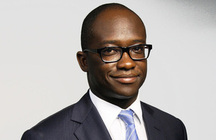
  • Sam Gyimah – 2018 Speech at the Royal Society

    Below is the text of the speech made by Sam Gyimah, the Minister for Higher Education, at the Royal Society on 22 January 2018.

    Thank you to the Royal Society for hosting us today. Speaking as a new science minister, there is nothing that reminds you of Britain’s awe-inspiring history of scientific excellence like a visit to the Royal Society.

    The photos of generations of distinguished fellows evoke the UK’s great tradition of research. The current fellowship is a list of global stars in discipline after discipline – a reminder that British science has a remarkable present as well as a great past. The sheaf of stats that you receive as a new minister bears this out – and I have rapidly learnt about exotic data like Field-Weighted Citation Indices – the moral of which is that when it comes to science, Britain continues to punch above its weight.

    I’ve also learnt that our research strengths go beyond the scientific remit of the Royal Society to fields of arts, humanities and social sciences. If the watchword of principle of 21st Century innovation is STEAM – Science, Technology, Engineering, Arts and Maths – then the British research base is well positioned for success. After ten days in the job, it’s hard to think that if you are going to be a science and research minister anywhere, Britain is the place.

    But I’m also well aware that when it comes to research and innovation, the UK faces its fair share of challenges.

    Already I have heard some clear messages from you and your scientific colleagues about areas that need more work.

    Importance of achieving a good result for science from Brexit, both in terms of European research funding and in terms of the welcome the UK offers to the world’s best minds.

    Despite concerted efforts over a decade to improve business-university links, business R&D remains disappointingly low by international standards. (Some say we lack the critical mass of institutions that sit between business and research that are more common in countries like Germany or Korea.)

    A strong suspicion that we are not making the most of the country’s potential when it comes to research talent. Whilst the total number of women professors are growing, HESA stats shows that in one third of universities the proportion of women professors has declined in the last five years. There are more black cleaners and porters than lecturers and professors.

    And of course, at a global scale there are a different set of challenges, ones crying out for solutions grounded in technology, science and research: from climate change to how to deploy automation and AI to antimicrobial resistance.

    To shape the future, we need a plan

    I am of the view that if you want to shape the future, you need to do more than worry. You need to act, and for that you need a plan.

    Part of having a plan involves having goals. This is why in the government’s Industrial Strategy has set out a number of grand challenges: areas of societal, global importance where we believe technology and innovation can help us solve some of the most pressing problems facing the world.

    It is also why we have set out a commitment to encourage investment in R&D. In other fields, the government has set clear targets as a sign of our aspiration. We show our commitment to our country’s security by spending the NATO target 2% of GDP on defence. We show our commitment to our international obligations by spending the UN aid target of 0.7% of GDP. And now, in the Industrial Strategy White Paper, we are signalling our commitment to the future of our country and the world through our goal to increase UK R&D spending to 2.4%. This is an ambitious target: an increase of two-thirds. We have begun this process with the biggest increase in public R&D funding for 40 year, ensuring that public spending on R&D will rise in every year of this parliament to around £12.5 billion in in 2021/22.

    As part of this investment in R&D, I’m pleased to announce – in addition to the launch of the Infrastructure Roadmap – the allocation of £70m through the ‘Accelerating innovative healthcare and medicines’ challenge of the Industrial Strategy Challenge Fund. This investment from government and industry will speed up patient access to new medicines and improve treatments for our ageing society. It will also support new virtual reality projects to help patient recovery. This will see three new Advanced Therapies Treatment Centres opened across the UK in Birmingham, Newcastle and Manchester.

    We will be announcing further details of the second wave of challenges within the Industrial Strategy Challenge Fund shortly. This new funding will support challenges to allow us to:

    Prosper from the energy revolution

    Transform construction and food production

    Use data improve early diagnosis of disease

    Develop the technologies and services to support a society that ages healthy

    Use technology to create the audiences of the future for our creative industries

    Pioneer technologies in Next generation services and quantum technologies

    And we will continue this new approach to mission-driven innovation by launching an expression of interest for Wave 3 of the ISCF.

    Openness the world

    To tackle these challenges effectively, we will need to work together with the best and brightest from around the world. Science and innovation are global enterprises. Bill Joy, the founder of Sun Microsystems, famously said “no matter who you are, the smartest people mostly work for someone else”; this is true for companies, but it is also true for countries. British science is at its best when we collaborate deeply with other countries, and welcome researchers to the UK.

    To this end, we are working to deepen our research and innovation ties to other countries – such as the historic agreements we have recently signed with the US and China.

    It also means securing the best possible relationship with the EU after Brexit. I am deeply conscious of the importance of Horizon 2020 and future framework programmers to research in the UK and the huge benefits we have reaped from participation in programmes like the ERC. We are working hard to secure a good research and innovation agreement with the EU after Brexit, and I can confirm that I have already had cordial discussions with Commissioner Carlos Moedas, and will be sitting down with him and other EU science ministers in Bulgaria next week, as my first foreign trip in the job.

    UKRI and its strategic role

    Having goals is a necessary part of having a plan, but not a sufficient one. You also need to capacity to carry out the plan, and to work out how you are doing. This is where UK Research & Innovation comes into the picture.

    The establishment of UKRI was, from the point of view of science and research, the central part of the reforms set out in the Higher Education and Research Act. (At this point, I must acknowledge my great debt to my predecessor in this role Jo Johnson, for stewarding this major reform through Parliament, and to discussing it with so many of you here.)

    UKRI matters because it can fund research and innovation in a mindful, considered and strategic way. Because it brings together the seven Research Councils, it will be better able to bridge the gap between the sciences, social science, and arts & humanities. Because it connects Innovate UK together with the Research Councils, it will improve the links between research and innovation. The first two waves of the Industrial Strategy Challenge Fund, which is financing R&D in fields with important business applications, suggest that these links are already bearing fruit.

    And by linking Research England to the research councils, it will enable us to carefully consider and better align our funding for specific research projects with the quality related research funding stream. Research England’s work with the other UK funding bodies and the Office for Students will help UKRI in its consideration of the sustainability of the research base, a joined up skills and talent pipeline and an approach to innovation which captures the strengths of each of the devolved nations.

    Just as important will be UKRI’s ability to make strategic funding choices. Sir John Kingman (who I was delighted to see appointed as substantive UKRI chair last week) argued that UKRI should aspire to provide a “strategic brain” for research funding, looking right across the UK landscape. This strategic brain would complement the existing processes of the research councils and Innovate UK, and would help ensure that funding opportunities were not overlooked because they fall afoul of disciplinary boundaries, and that important emerging areas are prioritised.

    The infrastructure roadmap – an example of what UKRI can do

    A good example of the kind of prioritisation that UKRI makes possible is the Infrastructure Roadmap that we are here to initiate today, an initiative where the UK will want and need to play on a global scale. As you know far better that I do, good science and effective innovation depend not just on brainpower and funding but on the right infrastructure.

    Some of this is big, imposing physical kit: from linear accelerators and data centres to research stations, Met Office super-computers and, of course, Boaty McBoatface. Some of it is rather more intangible: such as carefully-collected longitudinal data sets or institutions like the Catapult centres, which are as much about networks and know-how as they are about physical buildings.

    The roadmap will survey the state of the UK’s research and innovation infrastructure, and use this mapping to inform the prioritisation of future investments.

    This matters. If we let our infrastructure decay, research and innovation suffer. In his superb book, “England and the Aeroplane”, historian of science David Edgerton describes how a lack of appropriate wind tunnels and testbed was one of the factors that caused Britain’s aerospace industry, which was at the cutting edge of technology at the end of WW2, to fall behind that of the US. But if we can invest strategically in new infrastructure, we can open up new vistas for research, especially as digital technologies are changing the way research works in discipline after discipline. An example of this is the Structural Genomics Consortium, based at the University of Oxford, is a great example of how open science has been used to spur on innovation in drug discovery. Currently funded by 13 public and private organisations, the consortium takes an open and innovative approach to intellectual property, which allows the industrial partners to collaborate and maximise the impact of the research

    I hope that the Infrastructure Roadmap will be a sign of things to come from UKRI. There is huge potential for UKRI to build on the promising work that has been done by the Research Councils, Innovate UK and HEFCE in recent years to improve how we use data to understand the research base, to investigate promising areas, and to record the impact both of research itself and of the ways we fund research. There is also a great opportunity for UKRI to improve how we communicate research and its benefits to the general public, who after all pay for what we do and have a right to know about it – especially if we want to win popular support for greater public funding of research.

    This work will be led by Professor Mark Thomson, the new Executive Chair of the Science and Technology Facilities Council. I am delighted to announce Professor Thomson’s appointment today; he will be a great asset to STFC, reinforcing the UK’s reputation as being world-beating in this exciting and ever-evolving area of science.

    Mark will take over from STFC Chief Executive Brian Bowsher at the beginning of April when UKRI comes into being. I’m sure we would all like to take the opportunity to thank Brian for his sterling work at the helm of STFC over the last year and congratulate him for his OBE in the New Year Honours.

    Sir Mark and I will be speaking more about the future of UKRI in the weeks and months leading up to its formal launch on 1 April. I am hopeful that it will live up to its promise of being the most exciting research funder in the world.

    Encouraging optimism, and the limits of planning

    Having spoken about the importance of having a plan, I’d like to conclude with a few words of humility. One thing I know is that plans that are too rigid generally don’t survive contact with reality.

    The best plans are dynamic, not dictatorial, and allow room for chance and for change. The same is true when it comes to the government’s vision for research and innovation.

    To encourage innovation, it is not enough to increase investment and to set challenges. We also need to provide the freedom that innovators and optimists need to thrive. In the world of business, this means creating the conditions for new entrants to and competing with old established firms. It means improving access to finance for the best new businesses to scale up.

    It means making sure that our regulators and the rules they make are tech-savvy, and responsive to new ways of doing things. We should draw on examples like the Human Fertilisation and Embryology Authority, where informed, proportionate regulation, devised with public consent, created the conditions where research and investment could flourish, safe from both over-zealous legislators and public backlash.

    And it also means ensuring there is space for serendipity in research. As the sociologist Robert Merton pointed out over sixty years ago, major breakthroughs arise unexpectedly or obliquely. No doubt many of you will recognise this from your own research. Shatterproof glass, penicillin, cancer chemotherapy, and vulcanized rubber are just a few examples of how the most important discoveries are sometimes the most unexpected. Alongside challenge-led funding pots like the Industrial Strategy Challenge Fund, we believe it is essential to continue to fund curiosity- driven research generously. And we will continue to support a diverse funding system, which values the role of the UK’s impressive research charities, and recognises the importance of QR funding in allowing institutions to invest in their own ideas and capabilities.

    Providing freedom and encouragement for innovators and independent thinkers is essential for the future of research and for the future of the country.

    Conclusion

    Let me conclude by congratulating UKRI beginning their infrastructure roadmap.

    Rising to Global expectations – It will be welcomed in much, if not all, of the UK’s S&R community; but there are global expectations, and we are being watched carefully to see how this great new organisation works – just what will be different for those wanting to work with UK researchers and innovators that will be ensure the UK is hugely attractive to others?

    As we celebrate rising R&D spend from HMG, how will UKRI balance the need to clear accountability (which suggests plenty of process and rules) with creating the space I have just referred to for creativity and invention?

    Launching in April 2018, UKRI will be critical – ensuring the UK maintains its world leading position in research and innovation. It will catalyse a more strategic, agile and interdisciplinary approach to addressing global challenges and play a key role in helping the UK strengthen its competitiveness as part of the new Industrial Strategy.

    If you want to shape the future, it helps to have a plan. UKRI and its infrastructure roadmap is part of that plan.

  • Damian Hinds – 2018 Speech at Education World Forum

    Below is the text of the speech made by Damian Hinds, the Secretary of State for Education, at the Education World Forum on 22 January 2018.

    Good afternoon ladies and gentlemen. How wonderful to see such a wide variety and such a large number of colleagues from around the world here at the Education World Forum – the world’s coming together of ministers and policy makers from the world of education, and of course ahead of BETT that follows it – the world’s largest education and technology trade show.

    There is so much we can learn from each other and I want to start with thanking the people who have organised this – this will be the fifteenth that there has been – for all their work they put into it. Some of them have worked on all fifteen of those forums and have brought close to a thousand ministers from around the world to London to share their expertise and share their experiences. And the feeling that they have today, of preparing students for success in the fourth industrial revolution, can hardly be more apt or more timely.

    If you think about all the changes going on all over the world, whether that’s artificial intelligence, advanced robotics, face recognition, voice computing, autonomous vehicles – any one of these things on their own has the power to be revolutionary. Taken together, they certainly do constitute something of the sort of magnitude to turn a revolution.

    And of course in this country, having learnt lessons from earlier industrial revolutions, we are very conscious of the effects that can be. Of course we’ve been here before and on the screen you see some of the various changes that have happened throughout the ages, and there have often been predictions that long swathes of people will find themselves out of work as a result.

    Now of course in the end people found new jobs, whether they would be the stable hands or the scribes, they found other work – or their work evolved to take account of those new technologies. But of course there was often, in these previous big changes, a great deal of upheaval along the way. And the reason why they say that the theme of preparing students for success is the fourth industrial revolution is because of course there is nothing guaranteed about preparing us for these changes and being able to make the very best of the opportunities that present themselves.

    The other thing that is very noticeable from this timeline is that when things accelerated, the pace of change is so much greater than it had been in the past. So we need to make sure – as our economies evolve, as society evolves – we need to be sure that in the world of education we are absolutely there and on top of it.

    So what does it mean for education? Well with all the things that are changing in the world I believe there are some things that don’t change, apart from, they may just be more important than ever they have been. And I do believe this more than ever, that our young people complete their formal education coming away with the knowledge and with the qualifications that they need to make the best success of their lives.

    So these core academic subjects are at the heart of that. In this country, in the United Kingdom, before 2010, our focus had slipped away somewhat from those core subjects and we found that we were experiencing results which were apparently improving year on year. Even while our standing in international comparisons – objective measures of performance – was stagnated. So we had year on year grade inflation.

    All too often, the expectations for the results that would be achieved by young people from disadvantaged backgrounds were not high enough. There was a shift toward alternative qualifications, often targeted toward those people. But it turned out those qualifications were not as highly regarded and did not have the same worth in the jobs market and in society as the more traditional qualifications. And so that could unfortunately limit the possibilities that those young people would have.

    So, the government after 2010 set about addressing those issues. Firstly, by reforming our national curriculum, by bringing renewed rigour to our qualifications, to our GCSEs and A-Levels and bringing in a new suite of subjects, a new measure to really focus on those core subjects that we know are the enabling subjects that open up so many possibilities – English, Maths, Science, the Humanities and languages.

    Nobody, of course, has all the answers and the British government didn’t believe that it had all the answers. In fact, unashamedly, we looked right around the world for where we can learn from. For example, from East Asia, learning approaches to teaching primary mathematics, and that approach has continued. Just last week we welcomed another 36 teachers from Shanghai in a continuation of our teaching partnership with China that has gone on since 2014.

    There’s so much else for all of us to learn from one another, and so many challenges that we share in our different countries. For example, closing the attainment gap, spreading education opportunity ever wider to disadvantaged groups.

    There is no practical limit to the educational world. With organisations like Ofsted and ARK, some of the great names in higher education. What the British Department for International Development has done, particularly in supporting education for girls in developing nations. Some of the great innovators of educational technologies, some of whom you have a chance to meet hear and at BETT. And indeed my experience on change programmes, on school autonomy, on the early years and on phonics.

    We want, like you, we want our students to have an international perspective and very wide horizons. Hence the continuing importance of exchange programmes, particularly for us with European countries but also looking further afield. For example, with the British International Citizenship Service and the Generation UK China programme – and indeed not just with students but also with teachers and headteachers. And we are pleased to have just celebrated the 10th anniversary of our head teacher exchange with Singapore.

    But now that point about international global perspectives helps to highlight the way in which exams and qualifications – the most important things you take with you into life – but they are not the whole picture when it comes to what we will achieve outside the realm of qualifications, which matters a great deal as well.

    That you believe you can achieve, that you stick with the task at hand, that you understand the link there is between the effort you make now and the reward that may come in future – albeit distant and uncertain – and the resilience, the ability to bounce back from the knocks that inevitably life brings to all of us.

    Now I was, until I became the Education Secretary, I was the Minister for Employment and in that role I also heard a lot from businesses about the importance of work place skills, sometimes called ‘employability skills’. Sometimes, by way, also called ‘soft skills’ but I would suggest to you, ladies and gentlemen, there is nothing soft about these skills.

    The hard reality of soft skills is that actually these things around the workplace and these things around character and resilience are important for what anybody can achieve in life, as well as for the success of our economies. They’re not exactly the same thing, character and workplace skills, but there obviously is some overlap.

    I don’t suggest they can just be taught, but clearly what happened the ethos of the school, the expectations that are set for students, and the support that’s given, alongside what happens in extra-curricula activity and sport, public speaking, voluntary work will all have an effect on character resilience or workplace skills that our young people take with them.

    There’s something else about the needs of the modern economy, and that’s digital skills. Something like nine in ten of the new jobs being created require digital skills to some extent and we are blessed in having, coming through now, what you might call the generation digital. Those who have grown up with computers, tablets and phones who can do stuff that when I was young was unimaginable.

    But we want to go further than just having young people who are just able to work with technology and we are taking every chance to make sure we make technology work for us. So, in our new computing curriculum, we are going beyond the ability to use apps, to write apps. We are investing quite heavily – £84 billion over five years – to improve the teaching of computer science. That includes the additional training to a higher level for 8,000 existing teachers of that subject.

    But of course, throughout the economy, throughout society, you can’t predict exactly what the future is going to be. I suggest to you, ladies and gentlemen, that is even more true when you talk about the development of technology. We need to be flexible and we need to be open minded about what may come in the future. And that, of course has a knock on effect into what happens in the Labour Market as a whole, and there are academics throughout the world about what the future shape of the Labour Market may be.

    The truth is, no one really knows what exactly the future of work and what the future of the Labour Market may be and we will need to be able to flex and adapt and adjust.

    Now for too long in this country, the level of adult training has been at a too low paid level. For decades, in this country as I know in others, we’ve talked about the importance of lifelong learning – that’s the ability to take on new knowledge and new skills that shouldn’t stop when your education ends.

    It is a well worn theme I know in many of our systems. I think we are now at the point where we have to really make this a reality. In Britain, we are launching a national retraining scheme to make sure those opportunities are available throughout peoples’ lives. We’re starting in construction and in digital skills and particularly with the digital skills part of the national retraining scheme, it is an opportunity for us to pilot how educational technology can help to deliver digital skills to people right throughout the country in a new innovative way.

    That point about the possibility, the potential of technology leads me to the last thing I wanted to say, and that is about the role of technology in education itself. I know there is trepidation in schools, quite often colleges, about the role of technology. And let me be clear about one thing, in the research that the Department for Education in the UK has done on classroom teaching and how it works, it is absolutely clear that direct instruction is of paramount importance. Teaching education is a people business and it is the inspirational teacher at the front of the class that makes the child’s education. That is the bit which famously and repeatedly they say they will never and do never forget.

    But technology must have a role in our sector, as it does in other sectors, to be able to ease workload – which is a matter I know is of great importance for teachers in this country, and quite rightly so. And I share their drive to wish to work around but also to be able to track and monitor the progress of pupils – and where there are further opportunities to bring new types of content to students and effectively introduce them to whole new worlds.

    And in parts of the world where school is too distant – or perhaps too dangerous – to reach, technology gives an opportunity to reach out with education to people, whether they are children or indeed adults, who might otherwise not have had the opportunity to benefit from it at school. And at the BETT conference that follows this Forum there will be the opportunity to look into those classrooms and those virtual classrooms of the future, and I know colleagues will look forward to that very much.

    Ladies and gentlemen most of what is good in this world comes from our ability to share knowledge. The great inventions, the everyday conveniences – it’s all about coming together and working together. This Forum – the Education World Forum – is a fantastic example of that. It’s about coming together to make sure we can replicate our successes but also, just as important, to make sure we can avoid avoidable and costly failures.

    Decisions that are made here can change lives. Again, I want to thank the organisers for putting on this Forum and all of you for being here. I welcome you to this city and wish you a very successful, enjoyable and productive conference.

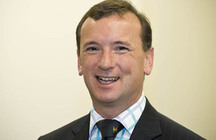
  • Alun Cairns – 2018 Speech on the Opportunities of Cross Border Growth

    Below is the text of the speech made by Alun Cairns, the Secretary of State for Wales, at the Severn Growth Summit on 22 January 2018.

    Introduction

    Good morning I’m delighted to welcome you here to Newport and this superb venue today for the first ever UK Government Cross-border Growth Summit.

    It’s wonderful to see such a packed audience – I have been truly overwhelmed with the response to this Summit and the fact that this event is sold out shows the appetite for a new way working between the great cities of Newport Cardiff and Bristol.

    I’d like to start by thanking all those that helped make this event happen, particularly Business West and the South Wales Chambers of Commerce.

    This Summit was born out of an appreciation for what this great region has to offer.

    The Welsh economy is going from strength to strength – last year, Wales was the fastest growing country in the UK and Cardiff was the fastest growing capital city.

    And Bristol is the only city in England outside of London with productivity above the UK average.

    Together, it’s clear this region is a true powerhouse of the UK economy.

    But the real driver behind this event today has been our commitment to abolish the tolls on the Severn Crossings.

    This was my first objective when I became Secretary of State for Wales because I recognise the symbolic and economic barrier the tolls represent to the prosperity of Wales and the South West.

    As many of you in this room will know these iconic landmarks have served commuters, businesses and local communities in Wales and England for over 50 years.

    60,000 journeys are made between England and Wales on the M4 each day – that’s almost a fifth of all road journeys between England and Wales.

    By ending the tolls for the 25 million annual journeys across the Severn, we will create a natural economic growth corridor spanning Cardiff through Newport to Bristol.

    This commitment will save commuters £1,440 a year, equivalent to £115 per month.

    And hauliers will no longer pay £20 for every truck transporting goods – this will be profound change to the economic landscape.

    This sends a direct message to businesses, commuters and tourists alike that we are committed to strengthening the links between England and Wales.

    And we must ensure we capitalise on this opportunity – that’s why I wanted to bring you all together today.

    And to emphasise how important this is, can you imagine if there was a £6.70 charge between Cardiff and Newport and the impact this would have on the local economy? Or if there was a £6.70 charge between Bristol and Bath?

    The barriers this would create to business and communities would be devastating. And so we must not forget that this barrier has been in place for 50 years between Wales and the South West, and this is now our opportunity to transform this great region.

    It’s clear that underpinning everything we do should be an understanding that economic opportunities do not stop at political or administrative boundaries.

    So my ambition for today is simple, I want us to seize the new opportunities abolishing the tolls creates and work together to grasp the potential of this great region.

    Synergies

    So, what are our strengths?

    We know there is already some excellent cross-border work despite the tolls – from businesses and universities who collaborate across the Severn, to the work Cardiff, Newport and Bristol Councils have begun through the Great Western Cities initiative.

    I look forward to building on this work and develop the synergies that exist between the economies in Bristol, Newport and Cardiff.

    There are many strengths in this great economic region and part of the work my department is doing is to establish what sectors have the greatest growth potential.

    From the world famous Aardman animations in Bristol, to Cloth Cat in Cardiff, the creative industries sector is thriving and represents one of the largest sectors in the region outside London – we must take advantage of this talent.

    There are over 4,000 creative businesses in Bristol, with a further 1,700 creative businesses in Cardiff.

    Together, there are almost 50,000 creative jobs in Cardiff and Bristol, and with employment in the sector growing at four times the rate of the UK workforce as whole, this region is set to prosper.

    And I’m pleased that there are already companies in the creative industries sector who operate in both Cardiff and Bristol.

    Plimsol Productions is one such company and will be discussing their experiences of cross border working later this morning.

    Between Bristol, Newport and Cardiff we also have one of the strongest digital corridors in the UK.

    And it’s great to see Doopoll, one of Wales’ leading digital companies, here today supporting this event.

    High tech industries and advanced manufacturing are central to this digital growth and companies like Airbus are already leading the way in Aerospace and Defence with operations in Filton and Newport.

    There are also 450 law firms registered in Wales, including top international law firm Eversheds Sutherland, operating around the world from its Cardiff office.

    And we shouldn’t forget the importance of the financial and professional business services sectors to Cardiff, Newport and Bristol.

    Companies such as PricewaterhouseCoopers have a presence in Cardiff and Bristol, and both cities have been identified as Financial Centres of Excellence by UK Government.

    Financial services in Cardiff contribute almost £1.2billion to the UKs economy and in Bristol contribute over £1.3billion, higher than the contribution made by the sector in cities such as Sheffield, Liverpool, and Aberdeen.

    This reinforces the status of Cardiff and Bristol as an emerging powerhouse in the financial and professional services industry.

    Universities

    But is it not just about business.

    Our universities and higher education institutions also have extensive research links on either side of the Severn.

    With specialisms in areas including life sciences, digital, engineering and energy, Welsh and South West universities are contributing to the innovation potential of this growth corridor.

    And there is further opportunity for collaboration here too. Take for example the world leading work that is happening on Compound Semi-Conductors at Cardiff University and the potential for joint working with the Quantum Technology Innovation Centre.

    Colin Riordan from Cardiff University will talk more about this collaboration potential in our panel session later this morning.

    Industrial Strategy

    The tolls were clearly a priority but they are one part of a broader approach to driving economic growth throughout the whole of the UK.

    Underpinning policies like the tolls is our UK-wide Industrial Strategy which focuses on developing the natural growth corridors to spread prosperity and enable us to compete on a global stage.

    City and Growth Deals are the building blocks of the Industrial Strategy and I want us to capitalise on the success of the Cardiff Capital Region City Deal and the West of England devolution deal – both of which have huge potential.

    I look forward to hearing more about both regions during the course of the morning.

    Cross border regions

    And we must learn from others.

    The Mersey-Dee alliance in North Wales shows what can be achieved when MPs from both sides of the political spectrum, as well as organisations from both sides of the border collaborate for the benefit of the region.

    And on the international stage the parallels to the Oresund region in Scandinavia are clear.

    This region, which spans parts of Denmark and Sweden, is linked by a bridge between Copenhagen and Malmo, not dissimilar to our own Severn Crossings.

    Whilst differences to our own cross-border region exist, it is clear that we can learn lessons and benefit from others’ experience.

    Connectivity

    I wanted to highlight one area of particular interest which is clearly central to increasing cross-border collaboration – connectivity.

    One of the key drivers behind the Northern Powerhouse initiative was the significant number of people commuting between Liverpool and Manchester, however there are actually more people commuting between Bristol and either Cardiff or Newport.

    This shows that this region has huge potential, potential that rivals that of the Northern Powerhouse or Midlands Engine.

    And where there are challenges there will also be opportunities, so for example, removing the tolls from the Severn Crossings has already raised concerns about congestion on the M4, whilst I understand these concerns I also believe we have an opportunity to look how we improve our rail offer between Cardiff, Newport and Bristol.

    And to support this ambition I want to highlight one particular issue: last Month, the Transport Secretary launched a consultation into the future of the Great Western franchise.

    This franchise delivers services which are invaluable to Wales’ economy, its passengers and commuters, and plays a crucial role in connecting communities in the Severn Growth corridor.

    The consultation offers the ideal opportunity to have your say on how we can maximise the potential of the franchise to benefit passengers in Wales – I encourage everyone here to contribute and if you look inside your brochure, you will find details on how to respond.

    Conclusion

    I am sure that everyone here today will agree that the value of connectivity between Cardiff, Newport and Bristol is clear beyond doubt.

    I want this event to be the catalyst to the forging and strengthening of partnerships with innovators, inventors, job creators, local leaders, the devolved administrations, workers and consumers as we work together to make our country fit for the future.

    As we move closer to our departure from the EU, more decisions about our economic future will be in our own hands – and it’s vital that we take them.

    Our individual strengths are many.

    But by pooling our resources, expertise and experiences, we can deliver ideas and projects that will not only benefit the cities of Bristol, Cardiff and Newport but the wider South Wales and South West England regions as well.

    I started by talking about the Severn Crossings, and so it seems fit to end my speech with reference to a Welsh proverb which I hope our English colleagues in the audience will appreciate:

    A fo ben, bid bont, which translates to ‘if you want to be a leader, be a bridge’ – so let’s use our bridge, our new-found connectivity to lead together and champion this great region.

    I hope this event will give us all a stronger voice to promote our joint ambitions, and allow us all to take forward future economic and cultural opportunities that will deliver prosperity for the whole of the UK.

    Thank you.

  • Matt Hancock – 2018 Speech at Alliance for Intellectual Property Reception

    Below is the text of the speech made by Matt Hancock, the Secretary of State for Digital, Culture, Media and Sport, on 17 January 2018.

    As new Secretary of State, I wanted to set out my views on intellectual property early and clearly.

    Imagine there was no James Bond.

    Imagine there was no Harry Potter.

    Imagine there was no Imagine.. by John Lennon.

    Who can say what cultural brilliance would have been robbed from our nation if artists couldn’t reap the rewards of their creation?

    As your report acknowledges, we have one of the best intellectual property regimes in the world.

    We were one of the first countries in the world to realise the need for laws to protect the work of creators. The Statute of Anne from 1710 is widely seen as the first copyright act, and influenced similar legislation across the world.

    Of course a lot has changed since then.

    Rather than copyright simply concerning what comes off the printing press, there are now international video and streaming platforms which host colossal amounts of content. Four hundred hours of video is uploaded to YouTube every minute.

    Of course the internet means distribution is easier than ever. Both legal and illegal.

    And the viral nature of social media means ownership can be harder than ever to enforce.

    To paraphrase Mark Twain, a stolen joke is no laughing matter.

    You understand this. IP rules may be technical but their importance can’t be overstated.

    Intellectual property is vital to encouraging creativity and as a Government we are committed to protecting it.

    We remain fully committed to addressing the transfer of value from the creative industries and closing the value gap that fails to reward our creators.

    We are making some real progress in this area. Research shows there has been a drop in infringement levels from 17% to 15% since 2013, partly due to the increased availability of legal content.

    But there is much more to do. The research also shows that pirates are increasingly turning to illegal streaming devices and websites. You have told me this.

    This must be stopped and there is a lot of work taking place to do this.

    Our Digital Charter is the framework which will develop the policies and frameworks to make the UK the safest and fairest place to be online. We have a good track record on this.

    The Government has helped to broker a ground-breaking code of practice through the Search Roundtable.

    This helped search engines and the creative industries to work together so consumers aren’t being led to copyright infringing websites.

    Thank you to the Alliance and its members for the vital part you all played in this. These partnerships between tech firms and the creative industries are crucial and we want to see even more of them.

    The Government has also confirmed that it will continue to fund the Intellectual Property Crime Unit, helping it to build on its impressive record fighting online counterfeiting and piracy.

    While we remain members of the EU, we will support work in Brussels to tackle the value gap.

    And as we leave the EU we will import EU rules into UK law and then maintain and strengthen the protection of intellectual property.

    We want to go further than just maintaining the status quo.

    Brexit will provide the opportunity to strike trade deals independently with new markets.

    And I want to make it perfectly clear tonight; intellectual property will be at the heart of these discussions.

    The Government wants Free Trade Agreements to support innovation, market entry and consumer choice.

    And as we look to expand the potential of new markets, we want to ensure rewards for creators, along with support and investment for the creative industries.

    Breaches of IP are not a new concern for artists; Jimi Hendrix once said “I’ve been imitated so well that I’ve heard people copy my mistakes.” This is true for me too…

    But the scope and the nature of it is changing and we need to be well equipped to combat it.

    Britain has historically been world-leading in helping artists get the value they deserve from their books, plays, films or music.

    The Alliance for IP has played a big part in this. Thank you for all the work you’ve been doing on behalf of artists across the UK – and for producing this valuable report.

    It is my profound belief that throughout history, civilised society has been based on the respect of property.

    That is the basis of any market economy. And the market economy in turn is the greatest force for prosperity ever invented by man.

    And as technology marches on, the property that really matters is increasingly the ideas, the designs, the art and the concepts. In short, the IP.

    It is therefore no exaggeration to say that respect for IP underpins this nation’s prosperity. And you are its most effective voices and guardians. Britain understood this first. And we will lead the world once more.

    Our commitment to IP is unwavering. We will remain an open, confident, forward looking nation that will be a haven for the brightest creative talent. For that is where this country’s future lies.

    Thank you and have a wonderful evening.

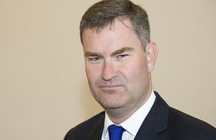
  • David Gauke – 2018 Lord Chancellor Swearing-In Speech

    Below is the text of the speech made by David Gauke, the Lord Chancellor, at his swearing-in ceremony on 18 January 2018.

    Mr Attorney, I’d like to thank the Lord Chief Justice for that warm welcome and I look forward to working with you and other members of the bench.

    I’d also like to start by thanking my predecessor and Cabinet colleague, David Lidington, who I think quickly established himself as an effective Lord Chancellor and Secretary of State. I very much hope to emulate his speedy grasp of such an important constitutional role.

    Being appointed as Lord Chancellor is a huge honour and deeply humbling. Dare I say, it is also a little daunting, especially when you look back at some of the previous custodians of this historic title over the centuries.

    In light of such an illustrious rollcall of historical figures, I think it is only natural for a new incumbent to look for a familiar reference point.

    As the Lord Chief Justice has reminded us, a former Lord Chancellor from my home town of Ipswich was none other than Cardinal Wolsey. An auspicious connection given he went on to serve as Lord Chancellor for 14 years!

    My enthusiasm was however a little tempered when I recalled how Wolsey’s time as Lord Chancellor was made fraught through dealing with Henry the Eighth and his powers: stripped of his title and his wealth, he faced charges of treason after an unsuccessful attempt to negotiate a settlement with a powerful European supra-national organisation.

    Thankfully, not all the duties exercised by Cardinal Wolsey continue to fall on the shoulders of the Lord Chancellor!

    So, let me turn to the specific responsibilities I have affirmed to uphold today.

    The Rule of Law

    Defending the independence of the judiciary and respecting the Rule of Law, that is the foundation of our democracy, our way of life, and the safeguard of fairness and freedom in our society.

    The pomp and the pageantry may be centuries old, but what they represent, forged from 900 years of history, remain relevant and important today.

    You, the judiciary, are at the heart of the Rule of Law. You uphold and exercise that every day in the judgements and decisions you make and in being called upon to make decisions on some of the most difficult moral and technical issues of our time.

    It is a job that requires expertise and deep knowledge. But your task also requires independence from the other branches of the State. You must be free to make decisions without fear or favour and without undue influence.

    That’s why I take seriously the solemn affirmation I have made today to defend that independence and to respect the Rule of Law.

    Efficient and effective courts

    This commitment also includes ensuring efficient and effective support for courts. I want people to have confidence in every part of their justice system.

    That means crimes being properly investigated. It means effective prosecutions where there is sufficient evidence and it is in the public interest. It means courts handing down sentences that fit the crime.

    It also means a justice system that supports victims and ensures a smooth and efficient process for litigants, for example, through new technology and greater innovation.

    I look forward to working closely with the Lord Chief Justice and senior judiciary to build on the important work that is already underway to reform and modernise our courts and tribunals system and to make this a reality.

    UK legal services and English Law

    Whether in criminal or civil law, the UK’s legal system is respected around the world, something that I have seen for myself having worked in corporate law.

    As a trainee solicitor over 20 years ago, I was struck working on a shipping litigation case, it was an English Tribunal applying English law that was determining a dispute involving cargo being shipped across the Pacific on a Greek-owned ship with, if I recall correctly, an Indonesian crew.

    The only apparent connection to the UK was that the contracts were under English Law and determined by English tribunals.

    That was the case then, it’s the case now, and it will continue to be the case after we leave the EU. Because, the UK leads the way in global legal services. English Law and UK courts provide the certainty, clarity and flexibility that clients from around the world want.

    I know just how important this sector is, not just for London, but for cities and regions across the UK. That’s why I want an outcome from our negotiations with the EU that is good for our legal system and good for our position as a provider of legal services around the world, one that protects and promotes a strong and successful legal services sector.

    That means ensuring close and comprehensive arrangements for civil judicial co-operation with the EU after Brexit. It means a legal services sector that benefits from and serves as a catalyst for future trade.

    I want to see London continue to be an international hub for finance and legal services, but also see legal services continue to grow and thrive in regional centres serving as specialist hubs.

    I look forward to working with the legal services sector and the judiciary to build on our ‘Legal Services are GREAT’ campaign launched last year to promote the UK’s legal services on the world stage.

    A final word on the judiciary

    The reputation of our legal services is underpinned by our world-leading judiciary, respected for its expertise and its independence.

    As Lord Chancellor, I look forward to working with you, Lord Chief Justice, and other senior members of the judiciary, to ensure we continue to attract exceptional and talented people in order for it to remain strong, free from improper influence and truly independent – indeed, to remain the envy of the world.

    Conclusion

    I mentioned that Cardinal Wolsey managed 14 years as Lord Chancellor. With seven years at the Treasury, seven months at DWP and having just completed my first seven days at the Ministry of Justice, that may be an ambitious record to match.

    Although, I have read on Twitter and elsewhere that I may have set a record of my own by being the first solicitor to be appointed Lord Chancellor. I’m pleased that, so far at least, this record remains intact even after such careful and scrupulous deliberation from you, Lord Chief Justice! They do say that the law is an iterative process, so, I await to be revised.

    But what I can commit to today is that during my time as Lord Chancellor I will be ambitious for our country’s legal services. I will be steadfast in my commitment to defend the independence of the judiciary and respect the Rule of Law, and I will be determined in our work to create a justice system that is open to all, a justice system that everyone in the country can have confidence in, and one that lives up to the deep-rooted sense of justice and fairness the United Kingdom is known for around the world.

    Thank you.

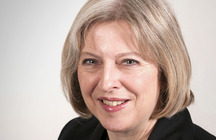
  • Theresa May – 2018 Speech at the UK – French Summit

    Below is the text of the speech made by Theresa May, the Prime Minister, on 18 January 2018.

    Prime Minister Theresa May

    Président Macron, je suis très heureuse de vous accueillir aujourd’hui pour votre première visite au Royaume-Uni en tant que Président.

    President Macron it gives me great pleasure to welcome you here today for your first visit to the UK as President.

    There can be no more fitting venue than Sandhurst for these talks. For we are gathered here at one institution to celebrate and strengthen another – the enduring alliance between the UK and France.

    Ours is a uniquely close relationship between two of the world’s oldest and greatest democracies.

    We meet in the year that marks a century since the end of the First World War, when our troops fought side-by-side in defence of our shared belief in freedom and resistance against aggression.

    And we have been clear again today that as global, outward-looking nations we remain committed to defending our people and upholding our values as liberal democracies in the face of any threat, whether at home or abroad. But our relationship has always gone far beyond defence and security.

    Hundreds of thousands of British citizens live in France and a similar number of French nationals have made the UK their home.

    And today we have agreed ways in which we can build on these ties for the benefit of all our citizens.

    While this Summit takes place as the UK prepares to leave the EU, we are and will remain a steadfast partner to our friends and allies.

    And a strong and deep relationship between the United Kingdom and France remains in both of our interests.

    Defence

    The President and I agree on the importance of the UK-France relationship, not just to our security but to European security.

    We are the only European countries who are permanent members of the UN Security Council as well as members of the G7, G20 and NATO.

    And we are Europe’s two foremost military powers.

    It is incumbent upon us to demonstrate leadership in meeting the great challenges of our time, and upholding the international rules-based system.

    We have agreed that UK-France co-operation remains critical to European defence and that together we will continue to play a full role to improve the security of the continent.

    And today we can confirm that the UK-France Combined Joint Expeditionary Force will be ready to deploy up to 10,000 troops quickly and effectively to face any threat by 2020.

    The shared interests of the UK and France and indeed Europe itself extend far beyond our immediate borders. Africa’s security and prosperity is vitally important to us all. In recent years the UK and France worked side-by-side to combat the global threat posed by the Ebola epidemic.

    And today I can announce that in the same spirit of co-operation we will step-up our efforts in the Sahel to prevent Islamist extremism breeding instability and insecurity, fuelling the migration crisis.

    The UK will deploy three UK Chinook helicopters and their crews to the Sahel, and we will continue the support we offer through our heavy lift transport aircraft, increasing the ability of French troops to manoeuvre effectively in their battle against extremists.

    During our discussions today the UK and France have also agreed to work together to ensure EU African Peace Facility funding for AMISOM in Somalia, as part of a comprehensive approach on the continent.

    Closer to home we will stand together in the face of Russian aggression in eastern Europe, where France has agreed to commit troops to the UK-led NATO battlegroup in Estonia in 2019.

    This commitment will build on the successful joint deployment which we visited together last year.

    Security

    Since the last UK-France Summit we have seen appalling and cowardly terrorist attacks in both our countries, in which British and French citizens have died side-by-side.

    There is no circumstance in which we could envisage the vital interests of either the United Kingdom or France being threatened without the other one being affected.

    To tackle this shared threat, for the first time in history all of the heads of UK and French intelligence agencies were brought together ahead of this Summit in a single meeting, underlining our unique co-operation in this field. This afternoon they briefed the President and me on the work they do together.

    It is clear that this co-operation is preventing loss of life on both sides of the Channel and around the world.

    And today we have discussed ways in which we can increase and enhance our collaboration to continue to keep our citizens safe.

    Migration

    The UK and France share a belief in a comprehensive approach to mass migration. And as our efforts in the Sahel and across Africa demonstrate, we will work together to address the instability which fuels it.

    President Macron and I have both confirmed that the UK and France remain committed to the principles of the longstanding Le Touquet agreement, under which the UK is able to carry out full border checks on French soil.

    And today we have agreed additional measures which will work in the best interests of both France and the UK, increasing the effectiveness of our co-operation.

    We will reinforce the security infrastructure with extra CCTV, fencing and infra-red technology at Calais and other border points.

    In 2016 more than 56,000 attempts by clandestines to cross the Channel were stopped at the UK’s juxtaposed border controls.

    The further investment we have agreed today will make the UK’s borders even more secure.

    The UK and France also share a determination to tackle the people traffickers and migrant smugglers who exploit the misery of those making the perilous journey to Europe.

    We are committed to working closely together to close down the networks of smugglers who seek to profit from the misery of others.

    Prosperity

    UK-French economic co-operation is vital to our shared prosperity.

    We share £71billion in trade, making France the UK’s third largest trading partner and the UK France’s fifth largest.

    And our trade relationship continues to thrive following the vote to leave the EU.

    Airbus, a company whose supply chain and ownership spans Europe, have today announced a multi-billion pound deal to provide Emirates Airlines with 36 A380 passenger aircraft, parts of which will be built in both the UK and France, providing a boost to both our economies.

    And just down the road from here in Farnborough UK and French engineers at the company are working side-by-side on the cutting edge Zephyr high-altitude surveillance drone.

    This collaboration on innovation runs through our relationship, and today we have agreed to strengthen the global competitiveness of our world-class researchers and innovators, deepening co-operation between our research agencies.

    People-to-People

    But the UK-France relationship is about far more than a balance sheet.

    Both President Macron and I believe that everyone in society deserves the same opportunities regardless of where they come from.

    And we will use our relationship to make this happen, supporting children from disadvantaged backgrounds to develop their employability and language skills.

    We will create a new fund for exchanges between our schools and revitalising the Entente Cordiale programme with new financing, so that our students can study across the Channel.

    Our shared history will also be reflected in the loan of the Bayeux Tapestry to the UK in 2022, the first time it will be on British soil in more than 900 years.

    The loan of the Tapestry will form part of a wider cultural exchange taking place between Britain and France over the next four years.

    I am honoured at the loan of such a precious piece of our shared history which yet again underscores the closeness of our relationship.

    We have agreed to build a new generation of links between our people, with an ambitious programme of twinning towns and regions, bringing together mayors, leaders of City Regions and others as they address today’s challenges and harness the potential of emerging technologies.

    The UK and France are forever neighbours, united in friendship, and by our common belief in freedom and justice, both at home and in the world.


    President Emmanuel Macron

    Thank you very much Madame Prime Minister. Thank you Theresa for welcoming us.

    Ladies and gentlemen I would like to thank the PM for welcoming us here in this magnificent Royal Academy of Sandhurst for this 35th Franco-British Summit. You perfectly reminded us of the historic and deep link which is ours. At the outset of our discussions today I reiterated the two things that nothing can change, be it a vote or a political decision: our history and our geography. These place us together before a common destiny, common geostrategic threats and there is a common destiny which lies there. And it is that which we need to understand today – both the links which exist between the women and men of our two countries, many of whom live and have got used to living on both sides of the Channel, and our shared stories.

    You [PM] stated it perfectly: the first axis of this bilateral relationship and what we have to construct together is to continue to have a common reading and commitment in the realm of foreign policy. The foreign and development policy compact was signed today by ministers which enacts the holding of regular meetings and permanent exchanges on the major issues. Be it Iran, Libya or the Sahel, we are both very attached to working closely together and that all of Europe can work together, in particular on Iran – an issue of considerable concerns to us. This is our wish. And as we have done from the start, we will do so on the one hand by respecting the commitments we made in signing an international agreement because it is the basis of our international credibility; and on the other hand, by reinforcing the collective security in the region via a resolute action to reduce ballistic activities and Iran’s regional influence and also by respecting the framework we gave ourselves.

    On Africa and the Sahel we took several major decisions. I’ll come back to the military plan. We have confirmed your [the UK’s] participation in the alliance for the Sahel which we launched in Bamako last July. It is, I think, an important gesture which is coherent with our strategy aiming to have a common action where we lead together on major issues, particularly in Africa, with common development goals in areas like education and particularly education for young women, health and the fight against global warming. I consider this investment, which was agreed today in the alliance for the Sahel, as an important gesture which contributes to this wider dynamic. When you have this shared policy or at least this convergence or shared outlook on foreign policy, this community of views and interests we give ourselves the means to create a strategic and defence community.

    This is the sense of our relationship with the Lancaster House agreements which date from 2010 and which are in no way called into question by the British vote and the organisation of Brexit. We forcefully reiterated and we continue to invest content in them via the defence relationship which is unique between our two countries. For me, it is one of the elements of credibility for our joint commitments in numerous theatres of operation and testifies to the excellent operational dynamic between our armies.

    You [PM] reminded us we know how to react quickly and with force when we have ascertained a common objective. We had the opportunity to evoke at length our strategic relationship. The main points of our engagement are in the communiqué but I would like to insist on the importance of that relationship.

    Our cooperation in our common arms programme is vast and includes future air combat with our cutting-edge technology, combat drones for which we have asked our defence ministers to perfect a work programme from now until Spring, a project to counter submarine threats and the development of the future generation of missiles which make MBDA one of the international leaders in this area.

    All these projects have been confirmed and reinforced with an agenda which now renders them completely operational.

    Our cooperation in military matters are not just limited to capability development but depends just as much on operational cooperation. The Prime Minister described the UK’s support to the Barkhane mission in the Sahel and I would like to now underline the importance of this commitment to provide Chinook helicopters, the military and support staff. This strong commitment on Barkhane is for us a strong signal of our common view and the will to fight terrorism together in the Sahel-Saharan region. It constitutes a real effort which we wanted.

    Last September we were together in Estonia to visit the deployed British and French troops under British command as part of the NATO advanced presence. I have decided to deploy a new French military detachment in 2019 within the British tactical group. This French commitment to NATO will allow us to further deepen the interoperability between our armies and is also the manifestation of our shared will in this geographic region and a country dear to us.

    We also discussed European defence which has recently undergone major changes with the launch of the permanent structured cooperation project and the creation of the European defence fund. These proposals will prosper within the EU but I think it is indispensable that the very strong relationship between our two countries can continue to contribute to the development of a European defence structure on the basis of procedures developed with our European partners. But already we have built the framework such that this can happen. In the immediate future we agreed that the Franco-British defence relationship could contribute to the European intervention force initiative which will strengthen the links between the armies of a group of countries which are particularly advanced at the operational level.

    We then talked at length about the question of the management of our shared border and in particular the situation in Calais where I was two days ago with several ministers present here today. It’s an issue which you know well, Prime Minister, via your current and previous responsibilities in which you have had to manage it with France. I want to say here today that we saw on the ground two days ago all the difficulties which exist. The history in the region is well known – what was done with the destruction of La Jungle and the shortcomings of the current situation because what the population is experiencing today by the Calais population cannot be considered satisfactory.

    That’s why, and I thank you, the Ministers of the Interior signed a new treaty in front of us—the Treaty of Sandhurst—that will allow us to improve the relationship and management of our common border. It’s the first time in 15 years that we sign a common treaty on this subject. This treaty will allow us, as you have reminded us, to improve the technical and operational cooperation of the common border control, to better the work on transit, and on origins, to prevent movements of population. But it will also allow us to be smarter and more efficient in our cooperation in dealing with this common border. It’s a common challenge which we have to meet together. A new important point for this Sandhurst Treaty is the issue of unaccompanied minors. This treaty will allow us to drastically reduce waiting time for all of those who want to cross the Channel from six months to 30 days for adults and from 6 months to 25 days for unaccompanied minors. It’s about our joint capacity to deal with the issue of unaccompanied minors who have family in the UK, and this will be a major element of this treaty: allowing for a more humane but also a more efficient procedure. I think this treaty will allow us to really change things, whilst also providing a response on the subject of so-called vulnerable minors, who are those unaccompanied minors not covered by the Dublin procedure.

    For me this is a huge step, it’s what I promised in front of the elected leaders and representatives of all the state institutions and the NGOs, and I think it’s a new form of organising our response that will allow us to have a more human approach and efficient system on this issue. This treaty will also help to preserve the quality of our common border and the economic link which it represents, since you [PM] have reminded us of it its importance. I think on both sides of the border we want to continue to develop economic exchanges, relations between our companies, and we have an existing trade that is very intense. But we need a secure border and we need to put an end to this situation, which has been going on for some years.

    Our Ministers of the Interior also agreed on some common projects with common governance that will accompany this situation. I will not list all the common projects we have agreed on here today and that our ministers will have to set up, but they are very varied. They show our deep relationship on nuclear, our research cooperation where we have agreed two important partnerships on space and genomics, our cooperation as economic actors in all sectors, our cooperation on sports and especially in the organisation of major sports events for which a letter of common intention was signed only a few days ago.

    The vast array of subjects covered includes lots of different sectors of the economy, both traditional and cutting-edge. Our cooperation on renewable energy and against global warming shows our willingness to commit together on these strategic issues at both a diplomatic level and on a concrete level with business projects. Before you ask me, I want to say something about Brexit, which hasn’t occupied the majority of these discussions, far from it. I respect the choice that the British people made, even though I regret it as everyone knows. I think that we’ve shown here today, and we will continue to show that, whatever the outcome of the negotiations, they will be managed in an established and organised framework with one unique European negotiator whose mandate we will discuss with him in March at the next European Council. But those discussions should never make us doubt the intensity and the quality of our bilateral relationship.

    Brexit will never stop us from having a very high level of cooperation between our two countries. It can create uncertainty on some subjects in the short term, but I think that our responsibility is to be able to manage this complexity and to be determined to improve the situation on each side of our border.

    This summit illustrates our common will to do just that. Because our relationship is based on this history and this geography that I mentioned earlier, it is also based on extremely strong human ties. We will have the occasion to witness this tonight with several personalities who illustrate the diversity and the quality of this bilateral relationship at the V&A in London, with people from the academic, business and sports sectors and young people. This generation exists already. It is a generation that will continue to grow the bilateral relationship.

    This relationship is based on this unique history that I was talking about, which resonates particularly in this the year of the centenary of the First World War, that saw so many French and British perish side by side. I have in my own family history, traces of not only the war but also of this Franco-British link from that period. But all this dates back even further, this history of almost a thousand years old, can also be seen in the exchange of the Bayeux Tapestry.

    This tapestry is unique, it is a source of pride for France and for Bayeux. There is a lot of work ahead for our ministers, local officials, and all the actors involved in this project. But I wish, as I said in Athens during my Pnyx speech, that we can bring to life this Europe of culture and of cultural heritage because it reminds us all of what precedes us and the responsibilities it entails. And this Bayeux Tapestry invites us to be very humble. Not towards William The Conqueror’s feats, but because of its creative genius and because of the story it tells. There will be a lot of scientific cooperation going on beyond the tapestry as this exchange is subject to very strict conditions that neither of us are part of, but it will be a matter for the experts as the tapestry is extremely fragile. The tapestry has never left French soil in almost 1000 years and it embodies the link between our two countries. I am hoping that the tapestry will open a chapter of reinforced cooperation at cultural and scientific levels. This will allow us to exchange even more artwork as well as allowing our citizens to enjoy this shared history, and also facilitate an on-going intellectual and creative exchange for our contemporary artists and the construction of a borderless imagination based on common stories which keeps them alive.

    This is what, ladies and gentlemen, I wanted to say in front of us all in order to remind us of our exchanges today and their implications whilst thanking again the Prime Minister, dear Theresa, for her welcome and our discussions.

    Q&A

    Question: PM – Many people will look at the Calais deal and think it looks a lot like you are sending money to France while taking migrants from France. Is this the thin end of the wedge? Mr Macron – After Brexit do you think UK PMs are more or less influential figures on the world stage? And is the loaning of the Bayeux Tapestry a sign you think you can win us back?

    PM: No. What we are doing is working with French authorities and providing support to ensure we enhance the security of our border. It is in our national interests, as well as those of the French. But, as you’ve heard, there is a question over unaccompanied minors. We have over time taken a number. We need to ensure for those with family in the UK, that the process is as smooth as possible, and that is what we have agreed, new ways to work together. And also agreed how we can provide support to France to reduce the flow of migrants to Calais and the UK, and that includes working together in Sahel and against human traffickers. So it is in our interests and those of France.

    Emmanuel Macron: it isn’t for me to assess the importance of one PM or another. But I know the UK is a permanent member of UN Security Council and that won’t be affected. We have shared interests, as seen in countering terror attacks, and in Middle East and Africa. The choices made today, in particular on Sahel and Iran, show we are working together, with a country that is a neighbour and a friend. We can of course sometimes have different views but we always agree when it comes to these topics which is why we can work together and why I am so determined in remarks on foreign policy and defence to ensure no changes on this because we are stronger together. For a number of centuries we have decided to wage war together and that has been beneficial to both countries. Next generations will enjoy peace between our countries and hopefully around the world. It requires diplomacy and peace building. We will do this together, creating a new tapestry together.

    Question: PM May – how many isolated minors or other migrants from France will be admitted to British soil and which time frame? And why accepting this French request? Do you expect any return in terms of Brexit. Mr Macron – in March 2016 you told FT that in case of Brexit, no more migrants in Calais. Why did you change your mind?

    PM: As I said before, the UK border in Calais is in UK and French interests. We all want to ensure we don’t see a return to migrant numbers in Calais seen in previous years. French action, together with UK support, has been effective but there are still migrant there. We must work together upstream to reduce numbers coming to Calais and seeking to get through to the UK. We have consistently accepted unaccompanied minors in the UK for some time. We have accepted those without families in the UK and those with families. Today we have agreed that we make that process as smooth as possible. We are working together also to ensure a secure border that will reduce the numbers going to Calais seeking to reach the UK.

    Emmanuel Macron: Le Touquet has nothing to do with Brexit. It is a bilateral agreement. I never said the Agreement should be torn up. To those who call for it, I suggest we remember the situation before, which was possibly worse. We have a shared border and must cooperate. Otherwise it would lead to a humanitarian disaster and one that is bad for both sides. I said we needed a major change and couldn’t have the situation in Calais that we had at the time. We are implementing that. I would commend work done in Calais to dismantle the Jungle. A lot of work has been done with Britain to deal with many topics. That said, the topic is not over and we have taken domestic decisions that have been implemented to aid the situation. Decisions made nationally and agreements today provide framework to bring about a concrete answer in coming months, so no more migrants living in Calais.

    Question: President Macron – why are you so keen to exclude financial services from future trading agreement? To punish Britain? To take British jobs? Or because you think the UK wants to ‘have its cake and eat it’, as Boris Johnson has said? PM – President Macron and others have said financial services will not be included in a deal. What will you do to change the EU’s mind?

    Emmanuel Macron: I am here neither to punish nor reward. I want to make sure the single market is preserved, as that is at heart of the EU. The choice is on the British side but no differentiated access to financial services. You can have access to single market but that means paying into the EU budget and accepting ECJ jurisdiction.

    PM: As set out at Lancaster House and Florence speech, we have a desire to negotiate a comprehensive FTA with EU-27 for a deep and special partnership in the future. We recognise we will no longer be full members of the single market. A different relationship in the future. But I believe it is in the interests not just of the UK but also of the EU to continue to have a good economic relationship and partnership with the UK and believe that should cover goods and services. City will continue to be a major global financial centre, which is good for UK and EU. We will enter negotiations looking for a deep and special partnership, comprehensive trade agreement, and also a strong security partnership. Once again, this is in the interests of all of us. We are leaving the EU, not Europe.

  • Theresa May – 2018 Speech at V&A Reception

    Below is the text of the speech made by Theresa May, the Prime Minister, at the Victoria and Albert Museum in London on 18 January 2018.

    I am delighted to welcome you to the world-famous V&A this evening – a jewel in the crown of Britain’s culture. And now, like so much of Britain, further enriched by a French contribution – with Alice Dietsch as Project Director for the development of the stunning Exhibition Road Quarter which opened last Summer. And I am very pleased that Alice joins us here this evening, together with British architect Amanda Levete, whose practice delivered the whole project.

    This evening marks the culmination of the 35th Franco-British Summit.

    Traditionally this Summit has focused on our security and defence partnership. And it is right that today we have deepened that partnership further.

    And of course we meet in the year that marks a century since the end of the First World War, when our troops fought side-by-side in defence of our shared belief in freedom and resistance against aggression.

    And today we stand together against new threats to that same shared belief in freedom. And as I said in my very first speech as Prime Minister in the British Parliament – in the aftermath of the appalling terrorist attack in Nice – “the values of liberté, égalité and fraternité will prevail.”

    But tonight is about even more than the defence of our shared values. It is about celebrating those values and the extraordinary depth of the people to people links between our countries.

    Here in this Gallery tonight we have partners in business that make up just some of the £71 billion of trade between our countries every year.

    Partners in science – from joint space programmes to joint working on genomics in the fight against cancer.

    Partners in culture – for example, with your wonderful offer to bring the Bayeux Tapestry to our shores. The first time in almost a thousand years that people right here in Britain will have the opportunity to see a piece of French art that is so important to both our national stories.

    Partners in sport – sharing ideas and expertise about major sporting events ahead of the 2023 Rugby World Cup and the 2024 Paris Olympics.

    Innovative charity partners like Street League and Sport Dans La Ville – working together to use the power of sport to help young people into jobs and training.

    Local partners – with mayors and school leaders who have built links across the Channel, like the new twinnings between Guildford and Versailles, and Tetbury and Chatillon.

    And the leaders of the next generation – including representatives from the young leaders’ programme of the Franco-British Council which launched last year and which I know is looking for new candidates for its second cohort – so please help them find the very best of British and French talent.

    All of us are here because we believe in the profound importance of the historic friendship between our countries – and because we want to strengthen it further for the future.

    Now as the United Kingdom leaves the European Union, I know there has been some uncertainty about that future and what it might mean for French people living here in Britain.

    So let me say this:

    En tant que Première Ministre du Royaume-Uni, je suis fière que plus de trois millions de citoyens européens y compris des centaines de milliers de nos amis français aient choisi de faire leur vie et de construire leur foyer ici, dans notre pays. J’attache une grande valeur à votre contribution à notre pays – vous enrichissez tous les secteurs de notre économie, de notre société, de notre culture, de nos vies. Je sais que notre pays serait plus pauvre si vous le quittiez, et je souhaite que vous restiez.

    [Translation: As Prime Minister of the United Kingdom, I am proud that more than three million EU citizens [including hundreds of thousands of our French friends] have chosen to make your homes and livelihoods here in our country. I greatly value the depth of the contributions you make – enriching every part of our economy, our society, our culture and our national life. I know our country would be poorer if you left and I want you to stay.]

    I know that Emmanuel feels the same about the British community in France.

    And we are proud that the agreement we secured at last month’s EU council means that French people living here and Brits living in France can carry on living their lives as before.

    But the ambition that we share for the future relationship between the UK and France is so much greater.

    So today, more than a century on from the “entente cordiale” let us celebrate our own “entente chaleureuse”.

    And let us show just how much this friendship matters to us all – today and for the generations to come.