Tag: 2018

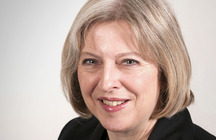
  • Therese Coffey – 2018 Statement on Local Government in Suffolk

    Below is the text of the statement made by Therese Coffey in the House of Commons on 8 February 2018.

    On 7 November and 30 November respectively I told the House that I was minded to implement, subject to parliamentary approval, locally-supported proposals I had received from the respective councils to merge district councils in east Suffolk and in west Suffolk, and I invited representations before I took my final decisions on these proposals.

    Having carefully considered all the representations I have received and all the relevant information available to me, I am today announcing that I have decided to implement, subject to parliamentary approval, both proposals—that is to merge Suffolk Coastal and Waveney ​district councils to become a new single district council named East Suffolk, and to merge Forest Heath District Council and St Edmundsbury Borough Council to become a new single district council named West Suffolk.

    I have reached my decisions having regard to the criteria for district council mergers I announced to the House on 7 November. I am satisfied that these criteria are met and that both new district councils are likely to improve local government and service delivery in their areas, command a good deal of local support, and that each council area is a credible geography.

    I now intend to prepare and lay before Parliament drafts of the necessary secondary legislation to give effect to my decisions. My intention is that if Parliament approves this legislation the new councils will be established on 1 April 2019 with the first elections to the councils held on 2 May 2019.

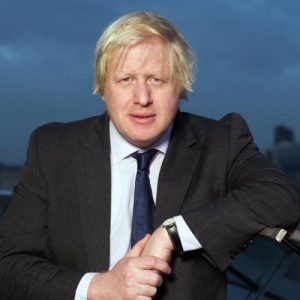
  • Boris Johnson – 2018 Speech on Brexit

    Below is the text of the speech made by Boris Johnson, the Foreign Secretary, on 14 February 2018.

    The other day a woman pitched up in my surgery in a state of indignation. The ostensible cause was broadband trouble but it was soon clear – as so often in a constituency surgery – that the real problem was something else.

    No one was trying to understand her feelings about Brexit. No one was trying to bring her along. She felt so downcast, she said, that she was thinking of leaving the country – to Canada. It wasn’t so much that she wanted to be in the EU; she just didn’t want to be in a Britain that was not in the EU.

    And I recognised that feeling of grief, and alienation, because in the last 18 months I have heard the same sentiments so often – from friends, from family, from people hailing me abusively in the street – as is their right.

    In many cases I believe the feelings are abating with time, as some of the fears about Brexit do not materialise. In some cases, alas, I detect a hardening of the mood, a deepening of the anger.

    I fear that some people are becoming ever more determined to stop Brexit, to reverse the referendum vote of June 23 2016, and to frustrate the will of the people. I believe that would be a disastrous mistake that would lead to permanent and ineradicable feelings of betrayal. We cannot and will not let it happen.

    But if we are to carry this project through to national success – as we must – then we must also reach out to those who still have anxieties.

    I want to today to anatomise at least some of the fears and to show to the best of my ability that these fears can be allayed, and that the very opposite is true: that Brexit can be grounds for much more hope than fear.

    There are essentially 3 types of concern about the momentous choice the nation has made.

    Strategic

    The first is that this is simply a strategic or geo-strategic mistake. On this view Britain is an offshore island comprising fewer than 1% of humanity, and we need to be bound up in the European Union for protection – partly for our protection, and partly so that Britain can fulfil its historic role of providing protection for the other countries of the European continent. I come across quite a few people who think that Brexit has cast us adrift – made our geostrategic position somehow more vulnerable, while weakening the security of the whole of Europe.

    Spiritual

    The second anxiety is essentially spiritual and aesthetic – that by voting to leave the EU we have sundered ourselves from the glories of European civilisation. People believe that we have thrown up a figurative drawbridge, made it less easy to live, study, work abroad; and decided to sacrifice the Europeanness in our identities. They fear that the Brexit vote was a vote for nationalism and small-mindedness and xenophobia. They think it was illiberal, reactionary and the British have shown the worst of their character to the world; indeed that it was in some sense un-British.

    Economic

    And the third objection is the one that occupies most of the debate – the economic fear that we have voted to make ourselves less prosperous; that membership of the EU is vital for UK business and investment, and that the panoply of EU legislation has helped to make life easier for companies and for citizens. People fear the disruption they associate with change, and that our friends and partners in the EU may make life difficult for us. Sometimes these economic anxieties are intensified by the other fears – about identity or security – so that hitherto recondite concepts like the single market or the customs union acquire unexpected emotive power.

    Well I believe that whatever the superficial attractions of these points, they can be turned on their head.

    I want to show you today that Brexit need not be nationalist but can be internationalist; not an economic threat but a considerable opportunity; not un-British but a manifestation of this country’s historic national genius.

    And I can see obviously that I’m running the risk in making this case of simply causing further irritation. But I must take that risk because it is this government’s duty to advocate and explain the mission on which we are now engaged; and it has become absolutely clear to me that we cannot take the argument for granted.

    We cannot expect the case to make itself. That was the mistake of the pro-EU elite in this country when they won the last referendum in 1975.

    As the Guardian journalist the late Hugo Young points out in his book, This Blessed Plot:

    The most corrupted trait I kept encountering was the sense – so prevalent among the Euro-elite, that having won the decision they had won the argument. Many exhibited the unmistakable opinion not only that the battle was over but that the other side, however loud it shouted, had simply lost and should now shut up.

    And he went on to say:

    The noisier the contest became during the early 1990s, the heavier the silent gloating that accompanied it, from the class that knew it commanded every operational forum from the ante-chambers of Whitehall to the boardrooms of big business, from Brussels committee rooms where a thousand lobbyists thronged, to the outposts of the Commission.

    Well the boot is now on the other foot, at least in theory. For all their power and influence – every major political party, the CBI, Barack Obama and so on – those voices did not prevail.

    But is this the time now for the referendum winners to gloat? Should we sit back in silent self-satisfaction? I don’t think we should.

    It is not good enough to say to remainers – you lost, get over it; because we must accept that the vast majority are actuated by entirely noble sentiments, a real sense of solidarity with our European neighbours and a desire for the UK to succeed.

    All I am saying is that by going for Brexit we can gratify those sentiments – and more.

    So let me take the 3 anxieties in turn.

    Security: a strong Britain and a strong EU

    To all who worry about our strategic position and the supposed loss of Britain to European security I can offer this same vital reassurance that the Prime Minister has made so many times and that I believe is welcomed by our partners.

    Our commitment to the defence of Europe is unconditional and immoveable. It is made real by the 800 British troops from 5th Battalion The Rifles I saw recently at Tapa in Estonia, who have since been relieved by 1st Battalion The Royal Welsh.

    Already this country is the single biggest spender in the EU both on aid and defence. Although we represent only 13% of the EU’s population, we contribute 20% of defence spending – and the RAF’s giant C17 transport aircraft represent 100% of the heavy lift capacity of the whole of Europe – as well as 25% of the overseas aid budget.

    It makes sense for us to continue to be intimately involved in European foreign and security policy. It would be illogical not to discuss such matters as sanctions together, bearing in mind that the UK expertise provides more than half of all EU sanctions listings.

    We will continue to be Europeans both practically and psychologically, because our status as one of the great contributors to European culture and civilisation – and our status as one of the great guarantors of the security of Europe – is simply not dependent on the Treaty of Rome as amended at Maastricht or Amsterdam or Lisbon.

    Spiritually British, European and global

    So let us next tackle the suggestion that we are somehow going to become more insular. It just flies in the face of the evidence. It was my Labour predecessor Ernie Bevin who said, “my foreign policy is to go down to Victoria station and go anywhere I damn well please.”

    That is pretty much what the British people already do. We have a bigger diaspora than any other rich nation – 6 million points of light scattered across an intermittently darkening globe.

    There are more British people living in Australia than in the whole of the EU, more in the US and Canada. As I have just discovered we have more than a million people who go to Thailand every year, where our superb consular services deal with some of the things that they get up to there.

    The statistical trajectory suggests that this wanderlust is most unlikely to abate. In 2016 the British people paid 71 million visits to other countries – and that is a 70% increase since the mid-1990s, and now more than one foreign trip per person per year.

    If we get the right deal on aviation and on visa-free travel – both of which are in our mutual interest – this expansion of UK tourism will continue, not just beyond the EU, but within the EU itself; and we will continue to go on cheapo flights to stag parties in ancient cities where we will, I’m sure, receive a warm welcome and meet interesting people, fall in love, struggle amiably to learn the European languages – knowledge of which, by the way, has suffered a paradoxical decline during our membership of the EU.

    There is no sensible reason why we should not be able to retire to Spain or indeed anywhere else (as indeed we did long before Spain joined what was then called the common market). We can continue the whirl of academic exchanges that have been a feature of European cultural life since the middle ages, and whose speed of cross-pollination has been accelerated by the internet as well as by schemes like Horizon or Erasmus – all of which we can continue to support, and whose participating scholars are certainly not confined to the EU.

    For those who really want to make Britain less insular, and we all want to make Britain less insular don’t we – the answer is not to submit forever to the EU legal order, but to think about how we can undo the physical separation that took place at the end of the Ice Age.

    Fly over the Channel at Dover and you see how narrow it is, the ferries plying back and forth like buses in Oxford street, and as you measure the blue straits with your fingers you can see that this moat is really an overgrown prehistoric river that once flowed down from the mountains of Norway and was fed by its tributaries, the Thames and the Seine and the Rhine. Indeed Britain and Holland used to be joined in the old days by a territory known as Doggerland.

    In 1986 Margaret Thatcher and Francois Mitterrand had the vision to heal the rupture with a first dry crossing; and it is notable that Eurotunnel is now calling for both sides of the Channel to prepare for a second fixed link. It does indeed seem incredible to me that the fifth and sixth most powerful economies in the world, separated by barely 21 miles of water, should be connected by only one railway line.

    I accept that the solution is still a few years off – though the need will be upon us fast – but I say all this to signal something about the attitudes that should inform Brexit.

    It’s not about shutting ourselves off; it’s about going global.

    It’s not about returning to some autarkic 1950s menu of spam and cabbage and liver. It’s about continuing the astonishing revolution in tastes and styles – in the arts, music, restaurants, sports – that has taken place in this country, in my lifetime, not so much because of our EU membership (that is to commit the fallacy known in the FCO as post hoc ergo propter hoc) but as a result of our history and global links, our openness to people and ideas that has brought 300 languages on to the streets of London, probably the most diverse capital on earth.

    In that sense Brexit is about re-engaging this country with its global identity, and all the energy that can flow from that.

    And I absolutely refuse to accept the suggestion that it is some un-British spasm of bad manners. It’s not some great V-sign from the cliffs of Dover.

    It is the expression of a legitimate and natural desire for self-government of the people, by the people, for the people.

    It is to fulfil the liberal idealism of John Stuart Mill himself, who recognised that it is only the nation – as he put it, “united among themselves by common sympathies which do not exist between themselves and others”. Only the nation could legitimate the activities of the state.

    It was only if people had this common sympathy that they would consent to be governed as a unit, because this feeling of national solidarity would “make them cooperate more willingly than with other people, desire to be under the same government, and desire it should be government by themselves or a portion of themselves exclusively.”

    And there is good reason for insisting on this national solidarity, or common sympathy, because government involves tremendous impositions, by which we collectively agree to taxation that pre-empts half our income, and obedience to laws not all of which we think are necessarily sensible.

    If we are going to accept laws, then we need to know who is making them, and with what motives, and we need to be able to interrogate them in our own language, and we must know how they came to be in authority over us and how we can remove them.

    And the trouble with the EU is that for all its idealism, which I acknowledge, and for all the good intentions of those who run the EU institutions, there is no demos – or at least we have never felt part of such a demos – however others in the EU may feel.

    The British people have plenty of common sympathies with the people of France, of course we do – but it is hard to deny that they also share common sympathies with plenty of non-EU people – the Americans, the Swiss, the Canadians, the Pakistanis; Thais, and that is one of the reasons why we in the UK have had such difficulty in adapting to the whole concept of EU integration.

    To understand why EU regulation is not always suited to the economic needs of the UK, it is vital to understand that EU law is a special type of law, unlike anything else on earth. It is not just about business convenience. It is expressly teleological. It is there to achieve a political goal.

    The aim is to create an overarching European state as the basis for a new sense of European political identity. British politicians, Labour and Tory, have always found that ambition very difficult. It is hard to make it cohere with our particular traditions of independent parliamentary and legal systems that go back centuries.

    And in spite of many sheep-like coughs of protest from the UK, the process of integration has deepened, and the corpus of EU law has grown ever vaster and more intricate, and ever more powers and competences were handed to EU institutions, culminating in the Treaty of Lisbon.

    We now have arrangements of such complexity and obscurity that I ask even my most diehard of remainer friends if they can explain their Spitzenkandidaten process – which has genuinely delighted the MEPs in Strasbourg but has mystified us in the UK; or the exact relationship between the EU’s Charter of Fundamental Rights, justiciable in Luxembourg, and the European Convention on Human Rights whose court sits in Strasbourg. Starter for ten: how many people in this room actually know the answer to those questions – I think very few. I think the answer to the second one is unknowable. How many know the name of their Euro-MPs?

    And that is the point I sometimes make when I get the chance to throw the ball back over the net, to those who hail me in the street with cheery 4-letter epithets.

    That’s the point, isn’t it. At least they know roughly who I am and roughly what I do, generally speaking.

    If we wanted to find the person responsible for drafting the next phase of EU integration – in which Tony Blair and others would presumably like us to take part – we wouldn’t know where to find them, who they are, let alone how to remove them from office.

    That is why people voted Leave – not because they were hostile to European culture and civilisation, but because they wanted to take back control.

    That is why it is so vital that we don’t treat Brexit as a plague of boils or a murrain on our cattle, but as an opportunity, and above all as an economic opportunity.

    The Brexit economic opportunity

    Which brings me to the last crucial reassurances that my side of the argument must give.

    We would be mad to go through this process of extrication from the EU, and not to take advantage of the economic freedoms it will bring.

    We will stop paying huge sums to the EU every year and as the PM herself has said, this will leave us with more to spend on our domestic priorities, including, yes, the NHS.

    We will be able to take back control of our borders – not because I am hostile to immigrants or immigration. Far from it. We need talented people to come and make their lives in this country – doctors, scientists, the coders and programmers who are so crucial to Britain’s booming tech economy.

    It was my proudest boast as Mayor of London that we had 400,000 French men and women in the British capital – high-earning and high-spending types – while only about 20,000 UK nationals went the other way and were living in Paris. And we must stay that way, we must remain a magnet for ambition and drive.

    But we also need to ask ourselves some hard questions about the impact of 20 years of uncontrolled immigration by low-skilled, low-wage workers – and what many see as the consequent suppression of wages and failure to invest properly in the skills of indigenous young people.

    We do not want to haul up the drawbridge; and we certainly don’t want to minimise the wonderful contribution they have made and certainly don’t want to deter the international students who make such a vital contribution to our HE economy, with 155,000 Chinese students alone.

    But we want to exercise control; and if we are going to move from a low-wage, low-productivity economy to a high-wage, high productivity economy – as we must – then Brexit gives us back at least one of the levers we need.

    And the contrast in this country is very striking with some of the other countries and the Schengen countries, where no such control is possible, and where the far right is alas on the rise.

    And as the PM has repeatedly said, we must take back control of our laws. And it would obviously be absurd, as Theresa May said in her Lancaster House and Florence speeches – which now have the lapidary status of the codes of Hammurabi or Moses – it would be absurd if we were obliged to obey laws over which we have no say and no vote.

    As the PM said at Lancaster House remaining within the single market “would to all intents and purposes mean not leaving the EU at all.”

    The British people should not have new laws affecting their everyday lives imposed from abroad, when they have no power to elect or remove those who make those laws. And there is no need for us to find ourselves in any such position.

    To those who worry about coming out of the customs union or the single market – please bear in mind that the economic benefits of membership are nothing like as conspicuous or irrefutable as is sometimes claimed.

    In the last few years there have been plenty of non-EU countries who have seen far more rapid growth in their exports to the EU than we have – even though we pay a handsome membership fee, as I have mentioned many times.

    In spite of being outside the stockade, the US has been able to increase its exports twice as fast. I think there are 36 countries around the world that have done better than us in exporting into the EU, even though they are not members.

    And for those of us within the stockade, the cost of EU regulation was estimated at 4% of GDP by Peter Mandelson and 7% by Gordon Brown. Authorities which for the purposes of this argument I do not propose to dispute.

    It is only by taking back control of our laws that UK firms and entrepreneurs will have the freedom to innovate, without the risk of having to comply with some directive devised by Brussels, at the urgings of some lobby group, with the specific aim of holding back a UK competitor. That would be intolerable, undemocratic, and would make it all but impossible for us to do serious free trade deals.

    It is only by taking back control of our regulatory framework and our tariff schedules that we can do these deals, and exploit the changes in the world economy.

    It is a striking fact that our exports to the EU have grown by only 10% since 2010, while our sales to the US are up 41%, to China 60%, to Saudi Arabia 41, New Zealand 40, Japan 60, South Korea 100%. Those figures reflect the broader story that the lion’s share of the growth is taking place outside the EU, and especially in the Asia-Pacific region.

    In a world that demands flexibility and agility, we should be thinking not of EU standards but of global standards, and a regulatory framework to suit the particular needs of the UK, a country that already exports a higher share of its GDP outside the EU than any other EU country.

    We already boast an amazing economy, diverse and very different from rest of EU. We are the nation that has moved highest and furthest up the value chain of the 21st century economy.

    We are a nation of inventors, designers, scientists, architects, lawyers, insurers, water slide testers – I met one in my constituency, Toblerone cabinet makers – all the Toblerone cabinets in Saudi Arabian airports are made in Uxbridge I am glad to tell you. There are some sectors, such as AI or bulk data where we really excel, we are streets ahead and in the future we may want to do things differently.

    Of course we will need to comply with EU regulation in so far as we are exporting to the EU. (though we should realise that the single market is not quite the Eden of uniformity that it is cracked up to be: you try becoming a ski instructor in France, not that I have tried myself; and I discovered the other day that we have totally different standards in this country for flame retardant sofas, to say nothing of plugs).

    But in a global marketplace, where we are trading in products that hadn’t been conceived even 5 years ago, serving markets that were poverty stricken 20 years ago, it seems extraordinary that the UK should remain lashed to the minute prescriptions of a regional trade bloc comprising only 6% of humanity wonderful as it may be – when it is not possible for us or any EU country to change those rules on our own.

    In so far as we turn increasingly to the rest of the world – as we are – then we will be able to do our own thing.

    We will be able, if we so choose, to fish our own fish, to ban the traffic in live animals, end payments to some of the richest landowners in Britain while supporting the rural economy; and we will be able to cut VAT on domestic fuel and other products.

    We can simplify planning, and speed up public procurement, and perhaps we would then be faster in building the homes young people need; and we might decide that it was indeed absolutely necessary for every environmental impact assessment to monitor 2 life cycles of the snail or to build special swimming pools for newts – not all of which they use in my experience – but it would at least be our decision to do that.

    Freed from EU regimes, we will not only be able to spend some of our Brexit bonus on the NHS; but as we develop new stem cell technology – in which this country has long been in the lead – it may be that we will need a new regulatory framework, scrupulous and moral, but not afraid to be different. The same point can be made of innovative financial services instruments, where the FCA already leads the way.

    We will decide on laws not according to whether they help to build a united states of Europe, noble goal that that may be, but because we want to create the best platform for the economy to grow and to help people to live their lives

    And the crucial thing is that when we are running ourselves – when all these freedoms open before us – we will no longer be able to blame Brussels for our woes, because our problems will be our responsibility and no-one else’s.

    And indeed no one should think that Brexit is some economic panacea, any more than it is right to treat it as an economic pandemic. On the contrary, the success of Brexit will depend on what we make of it

    And a success is what we will make of it – together.

    And that very success will be the best thing for the whole of continental Europe – a powerful adjacent economy buying more Italian cars and German wine than ever before. I never tire of telling you we are the single biggest consumers not just of champagne but of prosecco as well and we want to go on in that role.

    And so I say to my remaining Remainer friends – actually quite a numerous brunch – more people voted Brexit than have ever voted for anything in the history of this country.

    And I say in all candour that if there were to be a second vote I think it would be another year of turmoil and wrangling and feuding in which the whole country would be the loser. So let’s not go there.

    So let’s instead unite about what we all believe in – an outward-looking liberal global future for a confident United Kingdom. Because so much of this is about confidence and self-belief.

    We love to run ourselves down – in fact we are Olympic gold medal winners in the sport of national self-deprecation.

    And in the current bout of Brexchosis we are missing the truth: that it is our collective job to ensure that when the history books come to be written Brexit will be seen as just the latest way in which the British bucked the trend, took the initiative – and did something that responds to the real needs and opportunities that we face in the world today. That we had the courage to break free from an idea – however noble its origins – that had become outdated, at least for us.

    Konrad Adenauer said that every nation had its genius, and that the genius of the British people was for democratic politics. He was right, but perhaps he didn’t go far enough.

    Yes, it was the British people who saw that it was not good enough for Kings and princes to have absolute power and who began the tradition of parliamentary democracy in a model that is followed on every continent.

    It was also Britain that led the industrial revolution and destroyed slavery and the British people who had the wit to see through the bogus attractions of protectionism and who campaigned for free trade that has become the single biggest engine of prosperity and progress.

    And so I say to my constituent – don’t go to Canada, or anywhere else, lovely though Canada is.

    This, the UK, is the country that is once again taking the lead in shaping the modern world. And it is our stubborn attachment to running ourselves that will end up making our society fairer and more prosperous.

    In its insistence upon democracy, in its openness, its belief in the rights of the individual, in its protection of our legal system; its scepticism about excessive regulation; its potential for devolving power downwards; and in its fundamental refusal to discriminate between all the other peoples of the earth. And in its central distinction between a political loyalty and obedience to the EU institutions, and our eternal love for European culture, and values, and civilisation.

    Brexit is not just the great liberal project of the age, but a project that over time can unite this whole country. So let’s do it with confidence together.

    Thank you very much.
  • Penny Mordaunt – 2018 Speech at End Violence Summit

    Below is the text of the speech made by Penny Mordaunt, the Secretary of State for International Development, on 14 February 2018.

    I’d like to say thank you to End Violence, the Swedish government and WePROTECT Global Alliance for hosting today’s important event.

    One of the objectives of this summit is that we all leave today believing that we can end violence against children – and I believe we can.

    And to help that I was going to talk about what DFID had done, what works, our future plans and to talk about the announcement we’re making today of new funding to protect children from physical and sexual abuse.

    But with apologies for my hardworking team and to you, because I know I’m preaching to the choir, I think my time here is better spent delivering another message.

    The sexual exploitation of vulnerable people, vulnerable children, is never acceptable. But when it is perpetrated by people in positions of power, people we entrust to help and protect, it rightly sickens and disgusts. And it should compel us to take action.

    The recent revelations about Oxfam, not solely the actions perpetrated by a number of those staff but the way the organisation responded to those events – should be a wake up call to the sector. They let perpetrators go, they did not inform donors, their regulator or prosecuting authorities. It was not just the processes and procedures of that organisation that were lacking but moral leadership.

    We cannot end violence against children unless zero tolerance means something.

    I will be guided in my decisions about Oxfam depending on the charity’s response to requirement and questions I have raised with them, and by the Charity Commission’s investigation.

    But no organisation is too big or our work with them too complex for me to hesitate to remove funding from them if we cannot trust them to put the beneficiaries of aid first.

    I’ve held meetings with charity bosses, regulators and experts over the last few days and tomorrow I will be meeting with the National Crime Agency. While investigations have to be completed and any potential criminals prosecuted accordingly, what is clear is that the culture that allowed this to happen needs to change, and it needs to change now.

    I am writing to every single charity which receives UK aid, demanding full transparency and set out assurances about their safeguarding procedures. If our standards are not met, then the British taxpayer will not continue to fund them.

    Unless you safeguard everyone in your organisation that comes into contact with you, including beneficiaries, staff and volunteers – we will not fund you.

    Unless you create a culture that prioritises the safety of vulnerable people and ensures victims and whistleblowers can come forward without fear – we will not work with you.

    And unless you report every serious incident or allegation, no matter how damaging to your reputation – we cannot be your partners.

    The same message goes out to any organisation or partner – whether they are in the public, private or third sector which receives UK aid – and this includes the component parts of the UN.

    We want procedures to change. We want leaders to lead with moral authority. We want staff to be held accountable for their actions, no matter where they are.

    Sexual abuse and exploitation is an issue the entire development sector needs to confront.

    The UN reported that there were 300 incidents of sexual exploitation and abuse, including child rape, carried out by UN peacekeepers and civilian staff in 2016. That figure is as morally repugnant and it is unacceptable.

    We will not wait for the UN and other organisations to step up. The British government will take action now.

    My department has created a new unit to review safeguarding across all parts of the aid sector, both in the UK and internationally. Among other things, we will urgently look into how we can stop sexual abusers and predators from being re-employed by charities, including the possibility of setting up of a global register of development workers.

    Secondly, we will step up our existing work with UN Secretary-General to stop abuses under the UN flag. There will be no immunity for rape and sexual abuse and I welcome the recent statement from the UN to that effect and note the recent work that Unicef has done. We cannot let the UN flag provide cover for despicable acts.

    Thirdly, my department and the UK Charity Commission will hold within a month a safeguarding summit, where we will meet with representatives across the aid sector, and discuss new ways of vetting and recruiting staff, to ensure protecting vulnerable people is at the forefront of our minds.

    We are all taking necessary actions to ensure criminals are brought to justice, organisations are held to account, and procedures to change and stop sexual exploitation, abuse and rape.

    And today, I’m calling on all of us to work together to do this. It is only through working together that we can achieve our shared goal of ending violence against children. And everyone in this room has a duty to ensure change within their own organisations. We must ensure we all have the highest safeguarding standards.

    This past week has to be a wake up call. If we don’t want the actions of a minority of individuals to tarnish and endanger all the good work that we do, then we must all respond quickly and appropriately.

    We must regain the trust of the public.

    We must make staff aware of their moral responsibilities as well as their legal duties.

    But above all else, we must strive to ensure that no child, no one is harmed by the people who are supposed to be there to help.

  • Boris Johnson – 2018 Speech in Bangladesh

    Below is the text of the speech made by Boris Johnson, the Foreign Secretary, in Bangladesh on 14 February 2018.

    Thank you your Excellency, it’s wonderful to be here in Bangladesh on my first visit. This is a relationship that is incredibly important for the UK. It is hard to overstate the cultural, commercial and personal links between Britain and Bangladesh. We are proud to have I think 500,000 people of Bangladeshi origin in our country and I want to convey an important message, which is that once we are leaving the European Union, we will want to intensify our bilateral relations and do more in trade together, as well as of course trading with the rest of the Europe.

    I also want to congratulate Bangladesh and the people and the government of Bangladesh on the way they have handled one of the biggest humanitarian crisis we have seen in the last few decades. I think that the government of Bangladesh has shown immense compassion, speed and mercy in dealing with a challenge that I think any government would have found very daunting indeed. I am going tomorrow to Cox’s Bazar to look at the camps, to look at some of the contribution that the UK is able to make to helping with that extraordinary Bangladeshi humanitarian effort.

    And the third thing I want to say is that, we had an excellent meeting, I thought, with the Prime Minister. It went, it was very long and very friendly, and we discussed all the issues of cooperation between the UK and Bangladesh, the success of Bangladesh, as it rises up inexorably and the population grows more successful, we also discussed the importance of a free press and free, fair and democratic elections.

    And I am delighted that the Prime Minister Sheikh Hasina will be coming to our Commonwealth Summit in April where she is going to be majoring on female education, 12 years of quality female education which is again one of the areas where Bangladesh has got an absolutely outstanding track record.

    So, thank you again for having me along today, see you all soon!

  • Theresa May – 2018 Statement at Stormont House

    Below is the text of the speech made by Theresa May, the Prime Minister, at Stormont House in Northern Ireland on 12 February 2018.

    Today I have been meeting the leaders of the main parties involved in the talks and I have urged them to make one final push for the sake of the people here in Northern Ireland.

    It has been thirteen long months since we last saw devolved government here and I think we are now at the point of where it is time for the locally elected representatives to find a way to work together and to deal with and tackle the many pressing issues facing Northern Ireland.

    I have had full and frank conversations with the five parties. I’ve also met with the Taoiseach.

    And while some differences remain I believe that it is possible to see the basis of an agreement here. There is the basis of an agreement and it should be possible to see an Executive up and running in Northern Ireland very soon.

    The DUP and Sinn Fein have been working very hard to close the remaining gaps. But I would also like to recognise the contribution of other parties here in Northern Ireland too.

    What I am clear about is that we are all fully committed to doing everything we can to support this process – and as far as Westminster is concerned we stand ready to legislate for the re-establishment of an Executive as soon as possible after an agreement.

  • Jo Johnson – 2018 Speech on a Greener Railway

    Below is the text of the speech made by Jo Johnson, the Minister of State for Transport, on 12 February 2018.

    Good morning.

    It’s a pleasure to be here today.

    And where better to discuss the knowledge economy than the British Museum?

    A place ‘full of unassailable facts’, according to Trollope.

    And a fitting backdrop for this Knowledge Quarter conference.

    Since this kind invitation was extended, I have moved from being Universities and Science Minister to being a Minister in the Department of Transport and Minister for London

    And the invitation followed me.

    In fact, it was clear to me that even as I entered the world of bus lanes, cycle-superhighways and high-speed trains, there was no leaving the knowledge economy.

    Our hard infrastructure of roads, railways and airports and our soft infrastructure, in the form of our human capital and the institutions that cultivate it, are of course intimately connected and mutually dependent.

    And one of the reasons for the Knowledge Quarter’s success as a cluster is certainly its hyperconnectedness, so obvious in its extraordinary transport links.

    St Pancras, gateway to continental Europe, now restored to its Victorian splendour.

    King’s Cross Station, transformed in recent years and now catering for 50 million passengers a year.

    Euston about to be transformed by HS2, with faster connections to Birmingham, Manchester and Leeds.

    Multiple bus routes.

    Six different underground lines, as well as the Elizabeth Line and, eventually, Crossrail 2.

    The Knowledge Quarter is networked – a quality that’s vital for the transmission of knowledge into practical applications in our economy.

    Transport and travel have always been fundamental to the development and diffusion of knowledge.

    We can see that in the collection that surrounds us at the British Museum today….

    With its countless stories of exploration, adventure and discovery.

    And it’s that relationship – between transport and knowledge – that I’d like to discuss today.

    During the 19th century, Britain developed from an agricultural economy to an industrial one.

    But today, our economic performance is increasingly dependent on our human capital.

    Skills, creativity and innovation are more likely to provide a competitive advantage than access to mass labour or natural resources.

    At the same time, the relationship between the state, business and citizens is changing.

    It was Sir Francis Bacon who said ‘Scientia potestas est’ – knowledge is power.

    Today, we all have unprecedented access to information and knowledge.

    Tweets and videos go round the world in an afternoon – and sometimes old ones come back to bite too.

    Higher education, once rationed to a narrow elite, is now a mass undertaking.

    Whereas only 19% of young people went to university in 1990, the proportion is now close to 46% – and this includes more people from disadvantaged backgrounds than ever before.

    Technology and political devolution are combining to rebalance power away from the centre – and towards the region, the community, and the individual.

    This might sound like a threat to some.

    But it’s actually an opportunity.

    It’s an opportunity that’s at the heart of the government’s Industrial Strategy.

    In our support for hard and soft infrastructure – from HS2 to broadband to our universities and our world-leading science base.

    In our creation of elected mayors and devolved authorities.

    Building and supporting the knowledge economy across the Northern Powerhouse and Midlands Engine – areas that were global leaders when the industrial economy was thriving, and that are now diversifying into new sectors.

    We want the rest of the country to be as hyperconnected as you are here in London’s Knowledge Quarter.

    The new industries taking hold in these regions depend increasingly on innovation and specialist knowledge.

    Sustainable energy and cyber security in Northern Ireland.

    Manchester’s media sector and science parks.

    Digital hubs in Leeds and Newcastle.

    And fast-growing creative industries in Wales.

    But although new knowledge clusters depend on modern skills and innovation, something about them never changes.

    Their reliance on good transport links and communications.

    The Knowledge Quarter is itself actually part of a much bigger geographical network – sometimes known as the Golden Triangle – linking Oxford, Cambridge and London.

    And containing one of the world’s great science and innovation hubs.

    Even within this extraordinary Golden Triangle, there is scope for better connectivity.

    Which is why we’re reviving the rail line between Oxford and Cambridge.

    This route survived the Beeching cuts of the early 1960s, but was torn up a few years later by British Rail.

    The closure of the line was one of the most regrettable acts of transport vandalism of the era.

    Today, the corridor from Oxford to Cambridge is one of the fastest-growing areas of the country.

    It contains not only brilliant universities, but also a great concentration of science and technology employers.

    But transport connections between Cambridge, Milton Keynes and Oxford are so poor they create a barrier between hubs of knowledge-based growth.

    So we are restoring the old line.

    And we aim to have it fully open by 2030.

    By reconnecting the two university cities with rail services, and by linking up Milton Keynes, Bedford, Bicester and Bletchley in the Golden Triangle, we aim to create a knowledge corridor that will drive growth and jobs for generations to come.

    To develop more of these hubs across the country, we’re carrying out place-based Science and Innovation audits.

    To build new consortia and smart regional specialisations.

    We also want to deepen connections between knowledge hubs across the UK.

    From Scotland to Cornwall to Northern Ireland.

    It’s vital we stimulate the knowledge economy by improving transport throughout the country.

    That’s why we’re working with Transport for the North on its important plans for Northern Powerhouse Rail.

    And it’s why we’re transforming connections between Yorkshire, Lancashire and the Midlands by building HS2, linking 8 of our 10 biggest cities.

    The biggest investment in the country’s railways since the Victorian era.

    But there’s a clear problem with hypermobility that we must also acknowledge.

    We’re travelling twice as much as we did in 1970.

    We’re driving more than ever before.

    And flying more than ever.

    Many thought transport would become less necessary as the Internet grew.

    But in fact the opposite has happened.

    And while this mobility spurs economic growth, there’s a price to pay.

    In congestion.

    Overcrowded trains.

    Pollution.

    And carbon emissions.

    In fact there comes a point when too much travel undermines its benefits.

    When congestion clogs the network and pollution destroys our planet.

    We’re at that tipping point today.

    Congestion plagues the Knowledge Quarter and every major city in the country.

    The average speed of vehicles in the centre of London is now just 8 mph during the day.

    Trollope would recognise these paltry speeds.

    That’s a slow trot for a horse. If it carries on declining, we’ll before long reach equine walking pace.

    However, occasionally, an opportunity arises to make a breakthrough.

    To invest in and roll out technologies that are true game-changers.

    Providing completely new solutions to old problems.

    And we have one of those opportunities today.

    To rethink the way we plan and deliver transport services.

    To end our reliance on fossil fuels.

    With self-driving vehicles and smart infrastructure.

    With digital communications that design transport services around the user.

    Our opportunity – if we grasp it – is to make travel easier and more reliable.

    To clean up transport emissions.

    To diversify our transport industry into new markets, and stimulate knowledge-based growth in our economy.

    All while continuing to enjoy the special advantages that good transport connections have always brought.

    That’s the challenge.

    The pace of innovation in the automotive sector, with driverless vehicles about to change our lives in ways we are only now just grasping, is breathtaking.

    So let me instead take rail as my example.

    Here there has been less innovation.

    Certainly – train services have grown at a remarkable rate since privatisation in the 1990s.

    Particularly considering that our railway infrastructure was designed and built for a Victorian economy – not a 21st century one.

    As a result we now have one of the most intensively used networks in Europe.

    This government is injecting record levels of investment in the railway to help it cope with these pressures and to grow further.

    But alongside increased funding, the industry also needs to modernise and to innovate.

    Compared with other forms of transportation, progress has been palpably slow.

    Yes, we’ve got real-time platform information.

    Better train management allowing more services to run on existing tracks.

    And big improvements in safety.

    But the railways of today are ones that in many respects Trollope would again have no difficulty in recognising.

    The pace of innovation needs to find a new gear.

    Sometimes, those innovations can be relatively modest.

    That’s why in October we launched the ‘First of a Kind’ programme…

    With Innovate UK and the Knowledge Transfer Network…

    To speed up the delivery of new ideas and improvements to rail services.

    Today I can announce that the winning ideas from the programme’s first £3.5 million competition include:

    A system to guide passengers to available seats when boarding.

    Apps that will improve the travel experience for disabled passengers.

    And programmes which will educate and inform long distance passengers about the sights they see from their window.

    But other innovations have to be on a much bigger scale.

    And that’s why I am today announcing a new ambition.

    I would like to see us take all diesel-only trains off the track by 2040.

    If that seems like an ambitious goal – it should be and I make no apology for that.

    After all, we’re committed to ending sales of petrol and diesel cars by 2040.

    If we can achieve that, then why can’t the railway aspire to a similar objective?

    Rail may be less carbon intensive than road transport.

    That’s why modal shift’s so important.

    Getting freight and passenger vehicles off the roads onto greener forms of transport.

    But that does not absolve the rail industry from cleaning up its own act.

    You may have seen stories recently about transport becoming the most polluting sector of our economy.

    And the fact that rail emissions have actually increased in absolute terms.

    Up 33% since 1990.

    This cannot go on.

    Now – we are making progress on modernising rolling stock.

    For example, the much derided Pacers are going.

    Along with other long-standing members of the fleet like Intercity 125s….

    Old diesels being replaced by much cleaner trains featuring low carbon and NOx technology.

    But we need to go further…

    By decarbonising rail, we’ll reduce pollutants and improve air quality, particularly in our semi-enclosed stations.

    We will tackle this with the urgency it deserves by setting tough new environmental performance goals in each rail franchise which the train operators will have to meet.

    Total electrification of our tracks is unlikely to be the only or most cost-effective way to secure these vital environmental benefits.

    New bi-modes trains are a great bridging technology to other low emission futures.

    Bi-mode trains fitted with modern diesels – which we started introducing last autumn on the Great Western line and on the East Coast Main Line in 2018 – are less polluting than the trains they replaced.

    And as battery technologies improve we expect to see the diesel engines in bi-modes replaced altogether.

    With batteries powering the train between the electrified sections of the network.

    Or maybe in the future we could see those batteries and diesel engines replaced with hydrogen units?

    Alternative-fuel trains powered entirely by hydrogen are a prize on the horizon.

    I’d like to see hydrogen train trials on the UK railway as soon as possible.

    Hydrogen offers an affordable – and potentially much cleaner – alternative to diesel.

    And the technology has developed fast in recent years.

    To the extent that Alstom is now testing a train which only emits steam and condensed water – yet is capable of 140 km per hour and a range of up to 800 kilometres.

    Which matches the performance of regular regional trains.

    Rolls Royce is also looking at this technology

    So the next generation of trains is just around the corner.

    To speed our journey towards a zero-carbon railway, the government is investing record amounts in public R&D to improve our knowledge base.

    Through the environmental performance goals we are setting in each rail franchise, we will hold the train operators to account for progress.

    These include reducing energy consumption of trains, depots and many stations.

    We have tasked Arriva – the operator of the Northern franchise – to deliver an electric/battery hybrid on the Windermere branch from 2021.

    But the drive to decarbonise must come from all sectors of the industry.

    So today I am calling on the railway to provide a vision for how it will decarbonise.

    And I expect the industry to report back by the autumn.

    I want to see a clear, long term strategy with consistent objectives and incentives.

    I want to see options like lighter rolling stock and alternative sources of power considered and analysed.

    I want barriers to innovation removed, so ideas can be brought to market more rapidly.

    And I want to see the railway industry show a lead on this crucial issue.

    With train operators, Network Rail, and the companies that supply them – all working together as one team.

    So let me finish this speech on a positive note.

    Despite the challenges I’ve outlined today, I hope I’ve also communicated my optimism about the prospects for the future of transport in this country.

    The organisations here in the Knowledge Quarter have a role to play in developing technologies and know-how that will help Britain to enjoy an even bigger advantage from transport in the future:

    Increased mobility for every part of the community – yet less congestion.

    More intensive use of the infrastructure – and yet more comfortable travel.

    Faster journeys – yet fewer transport emissions. These goals are within our grasp.

    A knowledge economy more innovative than ever.

    So let’s raise our ambitions – and realise them.

    Thank you.

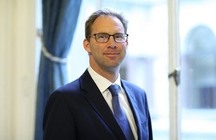
  • Tobias Ellwood – 2018 Statement on the National Memorial to British Victims of Overseas Terrorism

    Below is the text of the statement made by Tobias Ellwood, the Parliamentary Under-Secretary of State for Defence, in the House of Commons on 8 February 2018.

    I am pleased to inform Parliament that the National Memorial to British Victims of Overseas Terrorism has now been completed at the National Memorial Arboretum in Staffordshire, and is open to the public to visit.

    The process to select the artist and design for the memorial began with a public online consultation in 2016. This consultation identified strong public support and set out what was important to those with an interest ​in the memorial. I am grateful to Baroness Chalker of Wallasey and the other members of the independent panel which took forward the selection of the artists and design for the memorial. They based their decisions on the results of the consultation in 2016.

    The overarching themes of the consultation were that the memorial should be a place of remembrance, where people could pay their respects to those who had lost their lives. It was also clear that the memorial should be a place of contemplation and reflection, with many respondents suggesting that the memorial should be a place of tranquillity and quiet reflection, and a place for families to visit and sit. I am pleased with the way that the artist, Alison Wilding, and maker and sculptor, Adam Kershaw have responded to these themes through their work, “Still Water.”

    I am grateful also to the Secretary of State for Digital, Culture, Media and Sport, whose officials have delivered this project on my behalf. Those Departments that have a direct responsibility for supporting the families of victims of overseas terrorism will now work together to ensure that the families of future victims of terrorism overseas are connected with the memorial sensitively, and by the most appropriate part of Government at the time. The new, cross-Government Victims of Terrorism Unit is well-placed to consider this work.

    On 17 May 2018, on behalf of Her Majesty’s Government, I will host a dedication ceremony at the site of the memorial for families that have successfully applied online to attend. Further information, including how to apply to attend the event, can be found at: https://www.gov.uk/government/publications/national-memorial-dedication-ceremony.

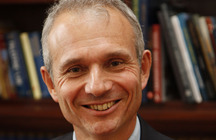
  • David Lidington – 2018 Statement on the Infected Blood Inquiry

    Below is the text of the statement made by David Lidington, the Minister for the Cabinet Office, in the House of Commons, on 8 February 2018.

    I am announcing today the appointment of Sir Brian Langstaff to head the public inquiry into the infected blood scandal. The inquiry will be established under the 2005 Inquiries Act, with full powers, including the power to compel the production of documents, and to summon witnesses to give evidence on oath.

    In relation to the appointment of the chair, the Lord Chief Justice was asked to recommend a judge who, in his view, would be best suited to the task. The Lord Chief Justice recommended Sir Brian Langstaff: a highly respected and hugely experienced High Court judge. I have accepted the Lord Chief Justice’s recommendation.

    Sir Brian will be the full-time chair of the inquiry from 1 May following his retirement from the High Court. However, in order that those who have been affected by this tragedy face no further undue delay, he will use the intervening period to conduct a further consultation on the inquiry’s terms of reference.

    The infected blood scandal of the 1970s and 1980s was an appalling tragedy that should never have happened. The victims of this tragedy who have endured so much pain and hardship deserve answers. It is crucial that their views are properly reflected in the inquiry’s terms of reference. Sir Brian will want to listen carefully to the voices of those that have suffered before making a recommendation to me on what the scope of the inquiry should be. I will return to Parliament with the final terms of reference as soon as this process has been completed.

    The Government will ensure that the inquiry has the resources that it needs to complete its work. The inquiry will, of course, also be independent of the Government.

    It is very important that the inquiry can identify why and how this tragedy occurred and provide answers for all the victims who have suffered so terribly, and can identify lessons to be learned so that a tragedy of this scale can never happen again.

  • Harriett Baldwin – 2018 Statement on Same-Sex Marriage in Bermuda

    Harriett Baldwin

    Below is the text of the statement made by Harriett Baldwin, the Minister of State at the Department for International Development, in the House of Commons on 8 February 2018.

    We are obviously disappointed about the removal of same-sex marriage in Bermuda. The Domestic Partnership Act, to which the Governor of Bermuda assented yesterday, ensures that Bermudians who have been legally married in Bermuda since the Supreme Court decision will retain their married status and enjoy the same legal rights as those in domestic partnerships.

    Less than a year ago, same-sex couples had no legal recognition at all under Bermudian law. While the Act withdraws the entitlement for same-sex couples to marry, it replaces it with a provision for domestic partnerships for all couples, regardless of gender. The intent of the Act is to provide domestic partners with the same benefits as married couples, including provision for pensions, inheritance, healthcare, tax and immigration.

    After full and careful consideration of Bermuda’s constitutional and international obligations, the Secretary of State decided that in these circumstances, it would not be appropriate to use the power to block legislation, which can only be used where there is a legal or constitutional basis for doing so, and even then, only in exceptional circumstances. It is important to recognise that the regime for domestic partnerships implemented by Bermuda in its Domestic Partnership Act can also meet the European Court of Human Rights requirement for legal recognition of same-sex relationships.

    The Government are committed to promoting lesbian, gay, bisexual and transgender equality globally through projects, partnerships and persuasion. In engaging with the British overseas territories, we have to respect that they are separate, self-governing jurisdictions with their own democratically elected representatives and the right to self-government.

  • Nusrat Ghani – 2018 Speech on Cleaner Buses

    Below is the text of the speech made by Nusrat Ghani, the Conservative MP for Wealden, on 8 February 2018.

    Opening remarks

    Thank you David [Begg, Chair] for that welcome.

    It’s a real pleasure to join you for today’s (8 February 2018) summit.

    This is my first formal speech since joining the Department for Transport in the recent reshuffle, and I was delighted to take on responsibility for government bus and coach policy.

    Importance of industry

    I’m a huge advocate for buses.

    Catering for over 5 billion passenger journeys a year.

    That’s two thirds of all public transport trips.

    Buses are the most effective and affordable way to keep busy towns and cities moving.

    And we’re very fortunate to have such excellent coach services in this country too.

    Providing a comfortable, reliable and great value alternative to long distance train and car travel.

    Put simply, this industry is indispensable.

    No other form of public transport offers anything like the benefits that you offer.

    Whether it’s capacity, geographical coverage, ease of use, cost, efficiency – I could go on.

    For me most importantly, buses provide a unique answer to most of the local transport challenges that we face.

    Yet so fundamental are they to British life that they’re often taken for granted.

    That’s something that I want to change, with your support.

    I want to champion buses and coaches.

    To shout about the benefits of bus travel.

    How they bind our towns and cities together.

    How they provide essential links for rural communities, such as the one I represent in Wealden, East Sussex.

    And how they’ll become even more vital in years to come.

    Congestion and air pollution

    Of course, one of the biggest obstacles to growth is road congestion.

    And that’s nothing new.

    Buses have been hampered by congestion since the days of the horse-drawn omnibus.

    But I want to use the Bus Services Act as a way of encouraging authorities and bus companies to make services more attractive, and create a shift away from car use.

    I know it’s a big challenge.

    But road transport is going to be revolutionised over the next 3 decades.

    New vehicle technologies.

    New infrastructure.

    The phasing out of fossil fuels.

    And digital communications transforming the way passengers plan and use transport….

    All of which provide an unprecedented opportunity for buses.

    We have to hammer home our message:

    That rather than contributing to the problem of nose-to-tail traffic and harmful pollution.

    Buses and coaches are a part of the solution.

    You’ll certainly have the government’s support.

    We have already committed £3.5 billion for measures to improve air quality.

    Last year we published plans to tackle traffic pollution, and announced a £220 million Clean Air Fund in the Budget.

    Later this year we’ll be unveiling our Clean Air Strategy.

    And hosting an international zero-emission vehicle summit.

    The opportunity here is to position the bus industry as a leader in environmentally friendly transport.

    As a catalyst for greener, smarter travel.

    And as the most practical answer to the long term mobility needs of our towns and cities.

    Low emission buses

    Britain is already a pioneer in low carbon buses.

    And the industry can be proud of what it’s achieved in recent years.

    We’ve got great companies like ADL, Wrightbus and Optare manufacturing green buses.

    We have almost 6,000 low carbon buses in service.

    The highest number of electric buses in Europe.

    And we also have the largest hybrid fleet of over 3,000 vehicles.

    And in 2015, our Low Emission Bus Scheme helped put more 300 green buses on roads across Britain.

    And that was followed in November 2016 with a further £100 million investment.

    We welcome further interest and participation in these schemes.

    The sooner we get more low emission buses on the road, the faster we’ll reap the benefits.

    So today I’m pleased to announce that we’ll be awarding nearly £40 million of that funding to 20 local authorities as part of the Clean Bus Technology Fund.

    This will be used to retrofit buses with technology to reduce tailpipe emissions of nitrogen dioxide.

    Originally we invited authorities to apply for a funding total of £30 million now and £10 million in 2 years’ time.

    But we received a large number of strong applications for this round.

    And we wanted to start realising the air quality benefits as quickly as possible.

    So we’ve made the full amount – just under £40 million – available now to fund two-year projects.

    It will enable older vehicles to meet the minimum standards in the Clean Air Zone Framework, particularly in areas exceeding statutory limits.

    And I am going to announce the successful bidders:

    West Yorkshire.

    Bristol and Bath.

    Gateshead.

    Leeds City.

    Transport for West Midlands.

    Leicester City.

    Oxford City.

    Coventry.

    Nottinghamshire.

    Transport for Greater Manchester.

    North Tyneside.

    Nottingham City.

    Transport for London.

    Sheffield City.

    Sefton MBC Air Quality.

    Southampton City.

    Derby.

    Essex.

    South Tyneside.

    And finally, Newcastle City.

    I’m grateful to all the bus companies who had a hand in the applications.

    Ultimately, we see dedicated ultra low emission buses as the long-term answer – but retrofitting offers a very attractive alternative for now.

    Not all local authorities were successful with their bids.

    But there will be further opportunities for councils to receive money for retrofitting through the Clean Air Fund.

    As local authorities prepare to set out their initial plans for reducing nitrogen dioxide concentrations by the end of March, retrofitting technology will help ensure that more buses help clean up the air in our cities.

    And as we look to the future, technology will give us other opportunities to improve the efficiency of buses.

    For example, if we know how much passenger demand there is for a particular route or service, we can look at providing the appropriate size of vehicle for the job…..

    Not just cutting the number of empty seats.

    But cutting costs and emissions too.

    Bus Services Act

    I’ve already mentioned the Bus Services Act, and how it’s designed to make bus services more attractive to the travelling public.

    That’s something I will be focusing on in the months ahead.

    New enhanced partnership powers will enable local authorities and bus operators to work together to improve services.

    And new franchising powers, replacing the existing Quality Contract Scheme, will also improve the management of buses in the regions where they apply.

    I’m keen to see the open data provisions in the act benefit passengers too.

    One of the existing barriers to passenger growth is that it can be difficult to obtain information on bus fares, routes or times.

    Where the information does exist – on the web, for example – it can be inconsistently presented, or be buried in unwieldy and hard-to-decipher timetables.

    But by making data open and accessible, software firms can create apps that package and deliver the relevant information to smartphones at the click of an icon.

    So the open data should make it easier for passengers to use the bus network.

    We published guidance on implementing the measures in the Act last November.

    And we’ll publish further regulations and guidance this year.

    Conclusion

    So – to sum up – I see the future as full of opportunity.

    If buses are crucial to our transport system today….

    Then as road transport is transformed over the coming decades….

    They will become more important than ever.

    And I’ll be doing everything I can to spread the message.

    I’ll be getting around the industry over the next few months, and meeting as many of you as possible.

    To hear your views on how we can best support growth.

    But one thing is absolutely clear.

    The key to success is partnership. Government and bus industry, local authorities and operators working together. For the benefit of the passenger, for the benefit of bus operators, and for the benefit of Great Britain.