Tag: 2018

  • Rishi Sunak – 2018 Comments on Broadband

    Rishi Sunak – 2018 Comments on Broadband

    The comments made by Rishi Sunak, the then Local Government Minister, on 5 April 2018.

    From the country’s most rural locations, to our big cities, we want everyone to benefit from fast, affordable and reliable broadband.

    With this new legislation now in place, people can expect the rapid installation of new fibre, paving the way for better connectivity across the country.

    From making it easier to work from home to allowing digital businesses to flourish, our measures are creating the right conditions for more high-skilled, high-paid jobs of the future.

  • Rishi Sunak – 2018 Comments on Empty Housing

    Rishi Sunak – 2018 Comments on Empty Housing

    The comments made by Rishi Sunak, the then Local Government Minister, on 28 March 2018.

    It is simply wrong that, while there are 200,000 long-term empty properties across the country, thousands of families are desperate for a secure place to call home.

    This new power will equip councils with the tools they need to encourage owners of long-term empty properties to bring them back into use – and at the same time tackle the harmful effect they have on communities through squatting, vandalism and anti-social behaviour.

  • Rishi Sunak – 2018 Comments on the Troubled Families Programme

    Rishi Sunak – 2018 Comments on the Troubled Families Programme

    The comments made by Rishi Sunak, the then Local Government Minister, on 27 March 2018.

    This report details the hard work that’s been happening across the country over the past year to help families with a variety of challenging problems improve their lives, reduce their dependency on local services, and in doing so deliver better value for taxpayers.

    Adults who were once far from the job market are now moving into work. Children are getting the right support they need and local leaders are encouraging and challenging all services working with children and their families to act early and offer whole family support, to stop their problems becoming worse.

  • Rishi Sunak – 2018 Comments on the Litter Innovation Fund

    Rishi Sunak – 2018 Comments on the Litter Innovation Fund

    The comments made by Rishi Sunak, the then Communities Minister, on 9 March 2018.

    The Litter Innovation Fund is part of our wider strategy to deliver a substantial reduction in litter and littering while leaving a cleaner, greener and tidier environment for the next generation.

    I am looking forward to seeing these projects supporting that strategy while helping communities make a real difference in their area.

  • Queen Elizabeth II – 2018 Christmas Broadcast

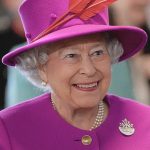
    Queen Elizabeth II – 2018 Christmas Broadcast

    Below is the text of HM Queen Elizabeth II’s Christmas Broadcast which was shown on 25 December 2018.

    For many, the service of Nine Lessons and Carols from King’s College, Cambridge, is when Christmas begins. Listened to by millions of people around the world, it starts with a chorister singing the first verse of Once in Royal David’s City.

    The priest who introduced this service to King’s College chapel, exactly one hundred years ago, was Eric Milner-White. He had served as a military chaplain in the First World War. Just six weeks after the Armistice, he wanted a new kind of service which – with its message of peace and goodwill – spoke to the needs of the times.

    2018 has been a year of centenaries. The Royal Air Force celebrated its 100th anniversary with a memorable fly-past demonstrating a thrilling unity of purpose and execution. We owe them and all our Armed Services our deepest gratitude.

    My father served in the Royal Navy during the First World War. He was a midshipman in HMS Collingwood at the Battle of Jutland in 1916. The British fleet lost 14 ships and 6,000 men in that engagement. My father wrote in a letter: “How and why we were not hit beats me”. Like others, he lost friends in the war. At Christmas, we become keenly aware of loved ones who have died, whatever the circumstances. But of course, we would not grieve if we did not love.

    Closer to home, it’s been a busy year for my family, with two weddings and two babies – and another child expected soon. It helps to keep a grandmother well occupied. We have had other celebrations too, including the 70th birthday of The Prince of Wales.

    Some cultures believe a long life brings wisdom. I’d like to think so. Perhaps part of that wisdom is to recognise some of life’s baffling paradoxes, such as the way human beings have a huge propensity for good, and yet a capacity for evil. Even the power of faith, which frequently inspires great generosity and self-sacrifice, can fall victim to tribalism. But through the many changes I have seen over the years, faith, family and friendship have been not only a constant for me but a source of personal comfort and reassurance.

    In April, the Commonwealth Heads of Government met in London. My father welcomed just 8 countries to the first such meeting in 1948. Now the Commonwealth includes 53 countries with 2.4 billion people, a third of the world’s population. Its strength lies in the bonds of affection it promotes, and a common desire to live in a better, more peaceful world. Even with the most deeply held differences, treating the other person with respect and as a fellow human-being is always a good first step towards greater understanding. Indeed, the Commonwealth Games, held this year on Australia’s Gold Coast, are known universally as the Friendly Games because of their emphasis on goodwill and mutual respect.

    The Christmas story retains its appeal since it doesn’t provide theoretical explanations for the puzzles of life. Instead it’s about the birth of a child and the hope that birth — 2,000 years ago — brought to the world. Only a few people acknowledged Jesus when he was born. Now billions follow him. I believe his message of peace-on-earth and goodwill-to-all is never out of date. It can be heeded by everyone. It’s needed as much as ever.

    A very happy Christmas to you all.

  • Jared O’Mara – 2018 Maiden Speech in the House of Commons

    Below is the text of the maiden speech made by Jared O’Mara, the then Labour MP for Sheffield Hallam, in the House of Commons on 24 July 2018.

    Mr Speaker, thank you. In fact, everybody, thank you—you have all been terribly patient.

    I am delighted today to finally be able to make my maiden speech as the MP for the constituency where I grew up, Sheffield, Hallam. I was elected a year ago as Hallam’s first Labour MP, but due to mistakes I made when I was young, and for which I am truly sorry as they hurt a lot of people, I have been unable to speak in the House with confidence until now. I currently speak in the capacity of an independent Member. I am also Parliament’s very first autistic MP, as well as having cerebral palsy and other disabilities. This fills me with immense pride. It is an honour for me to have the chance to represent our country’s disabled people in addition to serving my constituents.

    I would like to give praise to my predecessor for his admirable and steadfast belief in the value of our membership of the European Union and for his commitment to multiculturalism, both of which I share. He shall be remembered fondly as a hard-working and capable constituency MP, and for that he has my respect.

    I may, of course, be biased, but Sheffield, Hallam is quite possibly one of the most beautiful and greenest constituencies in the country. On the cusp of the Peak ​District national park, it contains districts including Fulwood, Lodge Moor, Ecclesall, Stannington, Wadsley Park Village—where I lived for a number of years—Loxley, Crosspool, Dore, Bradway and Totley. It is home to too many great schools to mention, including the two I went to, Bradfield and Tapton, and we have the world’s second-oldest football club, Hallam FC, who play their home matches at Sandygate Road.

    On the subject of sport, our schools and villages have given rise to some of the nation’s greatest sports people, including Joe Root, Michael Vaughan, Dame Jessica Ennis-Hill, the best right back in world football Kyle Walker—even though I am an Owl and he is a Blade—and gold medal-winning Special Olympian Nathan Hill.

    My constituency gets unfairly typecast as one of the least diverse and most wealthy in the north, yet I have had the privilege of meeting and speaking to people from all walks of life in Hallam in this past year, be it our sizeable student community, people from humble beginnings and blue-collar professions—much the same as my own background—successful white-collar workers, academics and business people, inspiring and compassionate representatives of our 300-strong Jewish community, the many graceful and civic-minded British Muslims, or the plethora of bright young people from our local schools, who have impressed me no end. Hallam is in fact the epitome of multiculturalism, as is my city of Sheffield as a whole, and I am very proud to call it home.

    In my constituency and my city, I have also met many wonderful Christian people. Indeed my parents, who have been at my side through thick and thin, are Christians themselves. While I consider myself a man of science and more aligned with atheism and humanism, I have the utmost respect for all religious people, and I feel specifically that we can all learn from the teachings of Jesus. He was a man who forgave those who truly repented, and he shared my belief that our utmost human priority should be helping those who are the most disadvantaged and vulnerable amongst us—chiefly, our poor and underprivileged, our senior citizens, our children, people with disabilities and illnesses, and people who want to find the right path again after making mistakes.

    I ask my constituents, all parties in the House, and everyone in the country at large to join me now in prioritising those principles, and I thank Members very much for listening to my speech. I promise that I will do my utmost to help all those who are in need of help in my constituency, and to champion the cause of equality. When I return to Parliament in September, I shall do so with renewed vigour and an unwavering commitment to social justice. I look forward to being the best MP that I can possibly be.

  • Fiona Onasanya – 2018 Message to Parliamentarians After Being Found Guilty of Perverting the Course of Justice

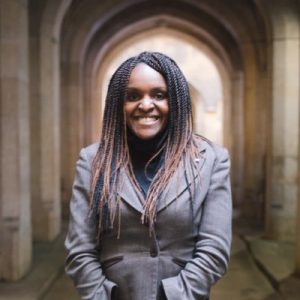
    Below is the text of the comments made by Fiona Onasanya, the then Labour MP for Peterborough, on 19 December 2018, following her conviction for perverting the course of justice.

    I campaigned for justice and for the interests of ordinary people throughout my entire working life to date. Regardless of what you believe or suspect, the fact remains that I, Fiona, sought to be the choice and voice of change – but this may now take a different path. More than ever before, I am asking that you commit time in prayer for my family.

    In times like these, the natural inclination of believers is to ask God: why? I personally do not, because in my experience the answers are usually far above and beyond my reach. What I do know is that I am in good biblical company, along with Joseph, Moses, Daniel and his three Hebrew friends, who were each found guilty by the courts of their day.

    While God did not save them from a guilty verdict, he did save them in it and ensured that their greatest days of impact were on the other side of a guilty verdict. Of course this is equally true of Christ, who was accused and convicted by the courts of his day and yet this was not his end but rather the beginning of the next chapter in his story.

  • Sir John Major – 2018 Speech at the Inaugural Albert Reynolds Memorial Lecture

    Below is the text of the speech made by Sir John Major at the inaugural Albert Reynolds Memorial Lecture held in Longford, the Republic of Ireland, on 10 December 2018.

    An invitation to deliver the Inaugural Albert Reynolds Memorial Lecture was irresistible to me, for Albert was a friend I cared about, an ally who mattered, and a man I miss.

    I’m so sorry that, due to ill health, Kathleen cannot be with us today, but I am delighted that so many members of the Reynolds family are here….

    I have to tell you that walking into Albert and Kathleen’s home in Dublin was like being wrapped into a warm and cosy blanket – while enjoying hot tea and cakes. It was always a treat. And delivering this lecture is a tribute to a very special man.

    Albert was never a run-of-the-mill politician. Some thought he’d strayed into politics by accident, but I don’t agree with that at all. Certainly, his background was atypical – for Taoiseachs.

    Albert ran dance halls, and thrived on the back of 1960s pop music – but he was always fully prepared, fully equipped for politics: he was a deal-maker supreme, a “bottom line man”, a man who demanded an outcome, a solution, to every problem.

    His background – far from being a drawback – was an asset. Albert knew people: how they lived, how they thought, what they cared about.

    And, in my experience, he liked people – forever an asset in a politician.

    He had no illusions about how some could go astray, but no doubt about what they could achieve if given the opportunity.

    And he was an optimist – far more inclined to say “we can do this”, than to rule anything out. To Albert, a deal not made was a failure.

    Some people in politics are no more than ambitious concoctions. But Albert was the real deal – in practice and in spirit. The world saw just how authentic he was at his funeral service at Donnybrook Church, when symbols of his life were carried to the altar by members of his family.

    The Downing Street Declaration was, of course, laid on the altar. But then so was a pack of cards, and a tin of dog food. Even in death, Albert could shock the politically correct. During that Service I may have had tears in my eyes, but I knew that – watching from afar – Albert was chuckling.

    At the very core of Albert was Kathleen and their family, about all of whom he was inordinately proud, and often spoke. I once teased him that “I know you love children because you have so many”, and he replied, “Not enough, John. Not enough.”.

    And that is true, too, of his time as Taoiseach. Not long enough. Not long enough by a long chalk.

    But Albert left an indelible mark on Irish history and will, I believe, be remembered long – and fondly. I know the memory of Albert will always bring a smile to my face.

    In five days’ time it will be the 25th Anniversary of the Downing Street Declaration, which led to paramilitary ceasefires and, ultimately, the Good Friday Agreement. It would never have happened without Albert.

    The Declaration didn’t come easily. In negotiation, you give to gain. Albert and I had a common objective, but came at it from different directions. There were many proposals, many drafts.

    There were advances and setbacks. Mini triumphs and mini disasters. There were frustrations and rows, gains and concessions. And, of course, we both had critical – often hostile – opponents to persuade or to cajole.

    But, with help and advice from many quarters – officials, politicians, the Church – we got there and, for Albert’s sake, I’m delighted you have remembered his own vital contribution to this document, and also honoured me by your invitation.

    It is one of the greatest disappointments of my life that I wasn’t able to complete the Peace Process, but I applaud Tony Blair and Bertie Ahern for doing so. They met all the challenges successfully.

    The Irish Ambassador to the UK, Adrian O’Neill – who is a superb representative of your country – quoted aptly from the Declaration in a recent speech.

    The Declaration had a range of objectives: to heal past enmity; to ensure a peace that lasted; and to encourage the economic and social co-operation that was, and is, and always will be, essential for mutual understanding and, with it, peaceful prosperity.

    The Declaration was born during a private conversation with Albert in the White Drawing Room of Downing Street. As I recall, we were talking of our respective children over a drink, and then – more widely – the children of the Troubles.

    Albert said, “No child should have to face this”, and I agreed, adding “If it were in Surrey or Sussex it would not be tolerated; nor should it be accepted in Northern Ireland.”. So, together, we agreed to try and end it, and I could never have had a more dedicated partner than Albert Reynolds.

    Were we together this evening, Albert and I would be concerned about Brexit; the Irish border; the protection of the Peace Accord; and – perhaps most important of all – the long-term relationship between our two countries.

    As the Peace Process advanced in the 1990s – and especially after the Good Friday Agreement was signed – the Anglo-Irish relationship blossomed.

    Our joint history is chequered, but it was put behind us: not forgotten, perhaps, but no longer used as a weapon with which to attack one another.

    In the last two decades, the Anglo-Irish relationship has been better – and closer – than at any time in our history. Now, once again – as the UK leaves the EU – there is reason to be concerned.

    The Republic – as well as the UK – needs the power-sharing executive to return to its duties in Northern Ireland. It needs to ensure that now – and in the future –there is no hard border dividing the island of Ireland; and it needs a future that embraces what Ireland and the UK have in common.

    Some opinion – including many who believe themselves to be Unionists – has shown a breath-taking ignorance of the likely impact that unsettling the Good Friday Agreement will have on Ireland, both North and South.

    To them, the Irish demand for a “backstop” is a bogus ploy to keep the UK in a Customs Union: in truth, a backstop is of vital national interest for Ireland and for the UK.

    As our own Prime Minister has said, this is not a demand imposed on the UK by Dublin or Brussels – it is an interest we all share.

    Furthermore, the Brexiteers claim that the backstop damages the Union is wholly misguided. The greatest danger to the Union would be a hard border that damaged jobs and prosperity in Northern Ireland, and undermined the Good Friday Agreement.

    If the people of Northern Ireland see a border returned – together with no power sharing at Stormont – will they not look once again at a United Ireland?

    The plain truth is this: the future of the Union is protected, not undermined, by avoiding a hard border.

    If the House of Commons defeats Mrs May’s plans tomorrow, the risk of a hard border once again becomes possible.

    Even if her plans are approved, the problem is not solved, but temporarily put on hold – until a “frictionless” border moves from myth to reality; or until a long-term deal is reached that removes the need for any border at all.

    A hard border – now, or at the end of a long transition period – would be disastrous. That said – whatever may happen at Westminster this week or later – I do not believe a majority of Members of Parliament will permit a hard border to become a reality.

    The reckless few, who are careless of its likely effect, are a clear minority. And with good reason.

    Of course, a new border would not remotely resemble its hated predecessor – with its barbed wire, its listening posts and its Army check-points.

    But any new border – however gentle its intent – would become a symbol, and thus a target. Both physically and emotionally it would present not only a barrier between North and South; between Unionist and Nationalist; but between the UK and her nearest neighbour.

    The fear – that must not be forgotten – is this: any border, be it now or in the future, risks creating an impediment to the excellent bilateral relations of recent years. That, truly, would be a tragedy.

    Peace is at risk if we erect barriers that remind people of ancient disputes: it will only be a way of life we can rely if we create a future in which old protagonists can live and work together.

    Peace is not secure – it never is – and any new border would be a focus for the wild men on the fringes to reactivate old disputes and hatreds that should be laid to rest – for good. Until sectarianism is ended, that will never be fully achieved.

    Some hardline pro-Brexit voices have claimed that European and Irish opposition to a “hard” border is merely a means of frustrating Brexit. Nothing could be further from the truth. They are blind to the reality.

    As Sir Hugh Orde, former Chief Constable of the Police Service of Northern Ireland, has said – the political consequences of Brexit “will play into the hands of those who are still determined to destroy the relative peace we have enjoyed”.

    “Customs Posts”, Sir Hugh added, “would be a target for dissident paramilitaries”. Sadly, such dangerous people are still around – in both communities.

    Those who mock and disparage the “backstop” should reflect on the risks of destroying it, and stop relying on uninvented, fanciful, technical alternatives that, for now, exist nowhere.

    At stake is not only community relations, but security – and, with it, lives as well. We should not forget that the “Troubles” began in the 1960s with the murder of Customs Officials at the North/South border.

    A “no deal” scenario would have many damaging repercussions for the UK and Ireland.

    If – by accident or design – the UK was forced to trade under WTO rules, both sides would be forced to apply customs tariffs on imports from the other.

    This would not be optional. Under WTO rules, the UK and Ireland could not reach a bilateral “sweetheart” deal of low tariffs – even if they wished to do so.

    The UK would have to charge the same tariffs to Ireland as to any other member of the WTO worldwide.

    And Ireland would have to reciprocate. The impact on business – and farming – would be instant and profound. This is no way for friends and neighbours to treat one another.

    But, once again – for what it is worth – I do believe wise counsel will prevent this outcome.

    I have made no secret of my own view that the UK leaving Europe is a colossal error. It is a lose-lose decision for both sides. It betrays the internationalist past of the UK, and undermines her future.

    Most of the world believes we have taken leave of our senses, and so, I believe, will future generations. However, that is an argument I would prefer to make in the UK – and not here this evening.

    But what of Europe? How are they affected? That is an argument for now – and for Ireland as a member of the European Union. Is the whole of Europe, including the UK, better off with a strong European Union or a weak one?

    Across Europe, some extreme nationalists believe it would be better if the European Union collapsed and we returned to a Europe of nation states. I believe they are profoundly wrong in that judgement.

    We live in a world in which America – so long the guarantor of European safety – is turning her interest increasingly towards Asia-Pacific.

    China – with the largest navy in the world – is now growing both in economic and military power, and is prepared to use that power for political gain. Russia is, once again, behaving as a rogue nation.

    In the light of these developments, is Europe better or worse off being united rather than divided? Undoubtedly, it is better united.

    Are we all at greater risk if Europe is weakened? Undoubtedly yes – both economically and militarily.

    Is the world order better balanced with America, China and a strong European Union broadly economically equal, or with the European Union minus Britain falling below the economic authority of their two rivals? The answer is obvious.

    And yet the British departure will not only weaken the UK but – certainly more important to the wider world – diminish the role of the EU. The EU will lose:

    Sixty five million citizens, and its fastest-growing economy; potentially, the largest economy in Europe;

    It will lose one of only two powers with a nuclear capacity and a significant military capability;

    It will lose the nation with the longest and deepest foreign policy reach; and

    It will also lose the only buffer the EU has had to hold back policies promoted by Germany and France in partnership.

    British pragmatism and caution will be sorely missed by smaller EU countries: on many occasions, the UK was their protector.

    Time and again, it has not been unusual for the UK, alone, to oppose a European policy – while other member states remained silent – and later be thanked for having done so.

    The UK’s departure means that, for the first time, the European Union is contracting and not expanding. This will weaken the EU – especially when set against the superpowers of America or China.

    The British departure is likely to hasten European reform – which will involve Ireland as a Member of the Eurozone.

    Over the next few years, I expect members of the Eurozone to further align fiscal policy to protect the Euro even though – at present – that is not politically acceptable.

    I do not believe – after the Greek experience – that the Eurozone will hurry to admit new members and, if that assumption is correct, a distinct inner and outer core is likely to take shape.

    Other changes – opting in to policies rather than opting out – may be sought by the less consensus-minded countries from Central and Eastern Europe.

    Nothing is certain but – ten years from now – the Union may look very different. Ironically, it may be a Union that would be much more amenable to the UK.

    The Anglo-Irish relationship will change when the UK leaves the EU – but we need to cherish it, and I will talk of that at greater length tomorrow.

    For now, let me simply assert that the relationship should remain precious to us both, and our duty is to ensure that it is.

    My working assumption is that the UK will leave the EU in good order and not in chaos. If so, she has a robust political and economic structure – and should be able to weather the almost inevitable economic turbulence upon leaving.

    However, as many independent assessments have set out – as well as the Bank of England and the UK Government itself – I do anticipate lower growth, lower inward investment, and – subject to the terms of any future trade deal with the EU – a range of practical (and costly) obstacles for British commerce.

    No-one can be certain how long such a trade deal will take to negotiate: or even if aggrieved nations will hold back – or refuse – their consent to any, or all, of it.

    What we can be sure of is that the right deal will be tough to get; and an imperfect deal will be hard to sell – and harder still to justify. But, as grievances cool, a deal is in the best interests of both sides.

    The City of London is powerful, innovative and pre-eminent. But, post-Brexit, we can assume other financial centres in Europe will wish to challenge its present dominance. That is an unavoidable consequence of the British exodus.

    Although I don’t believe the EU can hope to replicate the City in any foreseeable timescale, I do expect they will move towards focusing more financial activity within their own Borders – politics will dictate this as well as long-term self-interest.

    Dublin itself may be a beneficiary of this trend.

    The wider trade implication of leaving the EU is that the UK not only loses her free trade deal with the European market of 500 million people, but also free trade deals with 53 other nations that were negotiated by the European Union – but only for its Members.

    Over time these can be replaced, but, for now, there is a very, very long way to go – and the question arises: are 65 million Britons really likely to get the same favourable treatment as 500 million Europeans?

    The UK lives by her trade – so, we must try. But this process will not be swift – or straightforward.

    Let me summarise. Barring a sudden outbreak of common sense, and a reality check on national self-interest, the UK will be the first nation to leave the EU.

    This will be yet another irony, as the first proposal for a European Union came not – as is generally supposed – from the French cognac salesman, Jean Monnet, but from an Englishman.

    Three and a quarter centuries ago, in 1693, William Penn advocated a European “Diet or Parliament” as a policy to end perpetual military conflict on the Continent. It took 280 years and two world wars to convince his fellow Britons that unity was better than division.

    Forty three years later, the British people reversed that decision.

    It is in the interests of both Ireland and the UK that wise negotiators can now minimise the downside and maximise the opportunities.

    Let us hope they will – and they can.

    Many futures depend on it – both in my country and in your own.

    As I speak, I can hear Albert’s lilting voice pushing us on towards a sensible deal.

    We must all do everything we can not to let him down.

  • Karen Bradley – 2018 Statement on the Security Situation in Northern Ireland

    Below is the text of the statement made by Karen Bradley, the Secretary of State for Northern Ireland, in the House of Commons on 17 December 2018.

    This is the twelfth written statement to Parliament on the security situation in Northern Ireland since the Independent Monitoring Commission concluded its work in July 2011. It covers the security situation and threat from Northern Ireland related terrorism, rather than from international terrorism, which Members will be aware is the responsibility of my right hon. Friend the Home Secretary, who updates the House separately.

    In the 13 months since the last statement on Northern Ireland’s security situation, a small number of violent dissident republican terrorist groups have continued to pursue a campaign of violence. Violent dissident republican terrorists are relatively small, disparate groupings. They remain intent on killing and undermining the will of the vast majority of the people of Northern Ireland who have repeatedly and consistently expressed their desire for peace. These groupings choose to pay no heed to this and continue to plan attacks with the purpose of murdering and maiming those who work on a daily basis to uphold the rule of law and protect the whole community. In attempting to impose their unwanted control on people across Northern Ireland, these groupings also choose to ignore democracy, principles that have been, and will continue to be, central to the political process in Northern Ireland.

    In 2016, dissident republican terrorists murdered prison officer Adrian Ismay while in 2017 they again demonstrated their lethal intent, including one attack where a petrol station forecourt was sprayed with gunfire and two police officers were wounded. There have been two attempts to murder police officers since the last written statement, with numerous other plots identified and prevented by the Police Service of Northern Ireland (PSNI) and MI5. These included shots fired at police officers during rioting in Londonderry in July of this year. This incident, like many dissident republican terrorist attacks, posed a risk to members of the public in the immediate area as well as the police officers who were targeted while they were working to keep communities safe.

    I wish to pay tribute to all the agencies, including the PSNI, MI5 and the bomb disposal teams, who work on a daily basis to keep people safe. In many cases their work can make them the target of dissident republican terrorists. I applaud the work they do across Northern Ireland, their professionalism and the personal sacrifices ​that so many of them make in support of this vital work. I also commend the work undertaken by An Garda Siochana, and the excellent relationship they have with their counterparts in Northern Ireland. This has had a significant impact on dealing with the threat. The commitment of such a wide variety of agencies to public service and to the communities they serve, stands in stark contrast to the acts of dissident republicans.

    While terrorist attack planning continues, law enforcement pressure has reduced the number of national security attacks. Since the start of 2018 there has been one national security attack, compared to five in 2017, four in 2016 and a total of 16 attacks in 2015 and 40 in 2010. Although there has been a reduction in the overall number of national security attacks in recent years, vigilance in the face of this continuing threat remains essential and the threat level remains

    Since October 2017, MI5 has identified a number of violent dissident republican attack plots; two attacks were attempted, but were ultimately unsuccessful, and others were disrupted. This success is in no small measure due to the continued close working between PSNI and MI5, as well as with the authorities in Ireland. Each of the main violent dissident republican groups has suffered significant disruption including the loss of personnel and weapons in the past 12 months. During the past 12 month period (1 October 2017-30 September 2018) in Northern Ireland, there have been 143 arrests under the Terrorism Act, with 16 people subsequently charged. During the same period, 45 firearms, 0.74kg of explosives and 3157 rounds of ammunition have been seized. This pressure, and other interventions, is a barrier to, and a brake on dissident republican activity of all kinds, although I assess that, in the coming months, dissident republican terrorist groups will continue to seek to attack officers from the PSNI, prison officers and members of the armed forces.

    As a consequence of violent dissident republicans’ actions and intent, the threat from Northern Ireland Related Terrorism in Northern Ireland remains SEVERE, which means an attack is highly likely. In Great Britain, the threat from Northern Ireland Related Terrorism was reduced in March this year from SUBSTANTIAL to MODERATE, which means an attack is possible, but not likely.

    The Government have consistently made it clear that terrorism, including Northern Ireland Related Terrorism, will not succeed and tackling it continues to be of the highest priority. We are determined to keep people safe and secure across the United Kingdom. To support this effort over this Parliament we have provided £160 million of additional security funding to the PSNI to tackle the enduring threat from Northern Ireland Related Terrorism. This is significant funding. They recognise the severity of the terrorist threat; it demonstrates our unwavering commitment to the brave men and women in the police and intelligence agencies, and it is helping to keep people safe.

    Paramilitary groups, both republican and loyalist, continue to carry out violent criminal attacks against members of their own communities. So far this year there have been 64 such attacks. This includes one paramilitary related death, 16 casualties of paramilitary style shootings and 47 casualties of paramilitary style assaults. The hypocrisy of paramilitary-linked criminals claiming to act to defend their communities from anti-social ​behaviour and drug dealing, while at the same time profiting from this activity is not lost on affected communities. They are targeting the most vulnerable members in their communities as they try to exert control and fear.

    This Government continue strongly to support ongoing efforts to tackle paramilitarism and organised crime in Northern Ireland through the delivery of the commitments made in the executive’s action plan on tackling paramilitary activity, criminality and organised crime. This work is, by design, a collaborative endeavour being taken forward by a partnership of more than 24 organisations, including executive departments, statutory bodies and voluntary and community sector partners. Delivery is being achieved through four connected and mutually reinforcing approaches, aimed at developing long term prevention measures; building confidence in the justice system; building capacity to support communities in transition; and putting in place the strategies and powers to tackle criminal activity. Supporting the move away from paramilitary activity and promoting a culture of lawfulness are key underpinning are providing £25 million over five years to support a Northern Ireland executive programme of activity. This resource is being matched by the executive, giving a total of £50 million. The Independent Reporting Commission (IRC) is charged with reporting on progress towards ending paramilitary activity, and its first report was published on 23 October 2018.

    In the last year significant progress has been made. For example, key initiatives already making a difference include outreach programmes aimed at supporting young people in areas particularly vulnerable to paramilitary activity; a programme delivering mentoring support for young men; and one for women aimed at building their capacity to be involved in community transformation. Work also continues on the speeding up justice programme, and the PSNI is working with communities to implement training and interventions in collaborative problem solving, as well as local initiatives to address issues of visibility and engagement. Young people have also been taking part in a programme on lawfulness being run by the Attorney General for Northern Ireland, and a number of other pilot projects on the theme of promoting a culture of lawfulness are being delivered by a range of partners.

    In addition, since the Paramilitary Crime Task Force, which comprises the PSNI, the National Crime Agency (NCA) and Her Majesty’s Revenue and Customs (HMRC), became fully operational in 2017, it has carried out a number of high profile operations against organised crime groups linked to paramilitaries. During 2017-18 the Task Force carried out over 110 searches and made over 47 arrests, including 44 people charged or reported to the Public Prosecution Service. In addition, 21 paramilitary-related organised crime groups were frustrated, disrupted or dismantled.

    Conclusion

    In conclusion, the SEVERE threat from dissident republican terrorists remains and paramilitary activity continues to have an impact in certain communities in Northern Ireland. Considerable progress has been made but the need for vigilance remains. There are a relatively small number of people who wish to continue to commit acts of terror and who want to control communities ​through violence for their own criminal ends. Through the excellent work of PSNI, MI5 and other law enforcement agencies including An Garda Siochana, we will continue to bring to justice those who seek to cause harm in our society. There never has been, and there never will be any place for terrorism or paramilitary activity in Northern Ireland. We all must play our part so that we can continue to allow Northern Ireland to flourish and ensure a stronger Northern Ireland for everyone free from this harmful and malign activity.

  • Caroline Nokes – 2018 Statement on the Justice and Home Affairs Council

    Below is the text of the statement made in the House of Commons by Caroline Nokes, the Minister for Immigration, on 17 December 2018.

    The final meeting of EU Interior and Justice Ministers during the Austrian presidency took place on 6 and 7 December in Brussels. I represented the UK for Interior day. The Lord Chancellor and Secretary of State for Justice, my right hon. Friend the Member for South West Hertfordshire (Mr Gauke), represented the UK on Justice day. Scottish Government Minister for Communities, Ash Denham MSP, also attended.

    Interior day began with the Council agreeing a partial general approach on the amendments to European border and coast guard regulation. The presidency concluded that further discussion was needed on the numbers of border guards in the European border and coast guard standing corps, as well as in relation to issues of national sovereignty related to deployments. Member states also expressed concerns over aligning capacity with finances. The Immigration Minister did not intervene as the UK does not participate in this Schengen-building measure.

    The Council also discussed the returns directive. Member states expressed significant differences of opinion on detention while a claim was processed and on clarity as to the risk of absconding. The Commission encouraged member states to finalise this file by the end of the legislature. The UK does not participate in this measure.

    The Council then discussed the regulation on preventing terrorist use of the internet. Several member states were not able to support the text due to the regulation’s conflict with their own national constitutions and concerns on the balance between the removal of content and fundamental rights. Some member states sought further consideration of the measure. However, the presidency concluded support for a general approach, judging the proposal to be a good and responsible compromise text. The Immigration Minister intervened to support the general approach, emphasising the importance of this legislation in tackling terrorist content online. The presidency stated that it would seek to address various points of concern in future trilogue negotiations.

    The Commission urged member states to finalise those proposals of the common European asylum reform package where agreement was in reach. However, in discussion over lunch, member states remained split on the issue of solidarity and burden sharing. The Immigration ​Minister intervened to emphasise the importance of the comprehensive approach to migration, and specifically on the issue of developing more sustainable general solutions to tackle migratory flows, including tackling the drivers of migration.

    After lunch, the Council approved an action plan to tackle migrant smuggling.

    The Council then discussed JHA priorities for the 2021-27 MFF. The EU JHA agencies set out their priorities. The UK did not intervene as these programmes will commence after the UK’s exit from the EU and the end of the envisaged implementation period. The UK will, therefore, not be participating in any future programmes as a member state.

    On Justice day, the Council reached a general approach on the sale of goods directive. There was a wide divergence of views on the value of maximum harmonisation of law to set common contractual requirements for consumer purchases by consumers. The UK and other member states argued for the maintenance of member states’ flexibility to guarantee higher levels of consumer rights. Member states expressed desire to continue the discussion on this issue during the trilogues with the European Parliament.

    The Council also reached a general approach on the recast of Brussels IIa regulation on family matters and parental responsibility. The Justice Secretary welcomed the text, as well as the presidency’s work to accommodate UK concerns on the hearing of the child. He also noted UK ambition for civil law co-operation after our EU exit, which elicited positive statements from member states not just on family co-operation, but across civil law, and on future security co-operation.

    The Commission and the presidency noted progress on the assignment of claims directive at working level, which deals inter alia with the third-party effects on assignments of claims. Member states cautioned that the directive should be careful not to disrupt existing and functioning market systems.

    The presidency, supported by the Commission, sought to reach a general approach on e-evidence, about law enforcement access to data held by communications service providers. A number of member states voiced strong opposition to the text on the basis that it did not adequately protect member states’ fundamental interests nor the fundamental rights of citizens.

    The presidency concluded there was enough support for a general approach and the measure would proceed to trilogues where further discussions would aim to resolved other member states’ concerns.

    The Commission indicated that they will finalise the draft negotiating mandates for the second additional protocol to the Budapest convention and for discussions with the US.

    On data retention, the presidency updated on continuing working level discussions on the preservation of law enforcement capabilities and other public authority tools that would also meet the requirements of recent, stricter CJEU case law. The Commission noted that it would be difficult to restrict data retention to certain persons or geographic areas but nonetheless proposed to undertake additional targeted consultation. Member states called on the Commission to ensure continued attention to data retention in the future, noting likely developments in CJEU case law expected in 2019.​

    The Council adopted conclusions on mutual recognition, mutual trust and the principles underlying mutual recognition instruments such as the European arrest warrant. The Justice Secretary underlined UK commitment to future co-operation with the EU on this basis to enable continued joint working to tackle the challenges of transnational crime.

    The Commission updated Ministers on significant progress made in answering points raised by the CJEU on EU accession to ECHR. It was agreed that amendments to the draft accession agreement would be strictly limited to what was required by the Court. The importance of accession was highlighted as a priority for the EU and its citizens and swift resolution encouraged.