Tag: 2018

  • Matt Western – 2018 Speech on Council Housing

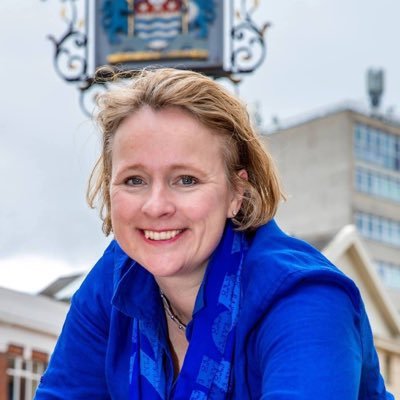
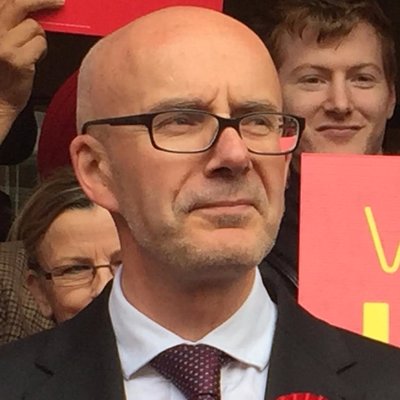
    Below is the text of the speech made by Matt Western, the Labour MP for Warwick and Leamington, in the House of Commons on 27 March 2018.

    We are all agreed: the UK has a housing crisis. No matter which party is speaking, there is universal recognition of the desperate need to urgently increase the supply of housing. So there is no debate, then, is there? The global financial crash had a catastrophic impact on the house building industry in this country. Given that much of the credit crunch was down to bad debts, particularly those resulting from bad lending in the US domestic housing market, this was perhaps to be expected. In just two years, the number of homes built crashed by 30%, and with this the supply of housing just dried up. That economic shock forced the then Labour Government to drive for affordable house building as part of an economic stimulus programme to help the country through the deep recession.

    By 2009, the foundations for a new era of affordable house building were laid, with a £4 billion annual affordable housing programme, backing for councils to receive grant funding and build new council housing, full localisation of council housing finance agreed with the Treasury to boost building still further, and a programme of progressively higher standards agreed with industry to make all new build homes zero carbon by 2016. It was a comprehensive programme.

    Since the change of Government in 2010, public policy has been perceived as at best indifferent and at worst hostile to affordable housing. One of the first decisions made by Conservative Ministers after the 2010 election was to cut back new housing investment by more than 60%. As a result, the number of new Government-backed homes for social rent started each year has plummeted from almost 40,000 homes to fewer than 1,000 last year. The number of new low-cost ownership homes being built has halved. The plans that Labour left to get councils building 10,000 homes a year were undermined, dashing any hopes of councils being able to build at scale again.

    At the same time as the number of new homes being built has fallen, there has been a huge loss of existing social homes. In 2012, right-to-buy discounts were hiked to a massive £100,000.

    Jack Lopresti (Filton and Bradley Stoke) (Con) On a point of information, is the hon. Gentleman aware that since 2010 more than three times as many council houses have been delivered than in the previous 13 years —the golden era of Labour government that he talks about?

    Matt Western Yes, the figures do show that, but if one drills down into the number, one will find that they were provided by Labour authorities, and that is despite the borrowing cap that has been placed on them. Without that cap, to which I shall refer, far greater supply would be available.

    Despite a promise that there would be one-for-one replacements, in some areas only one in five homes sold under the right to buy has been replaced. A new kind of publicly funded housing was introduced. Ministers branded ​it “affordable rent”, with rent set at up to 80% of the market price and thereby directly linked to often unaffordable private market rents.

    Siobhain McDonagh (Mitcham and Morden) (Lab) I feel sure that my hon. Friend is likely to come to this point, but does he agree that the term “affordable rent” is an offence to the English language, because affordable clearly does not mean affordable if it is 80% of market rent?

    Matt Western I thank my hon. Friend for her informed intervention. My very next sentence was going to address that point. If something is already expensive, making it 80% of expensive is still expensive. That is where we find ourselves.

    Mark Tami (Alyn and Deeside) (Lab) My hon. Friend mentioned right to buy. Some of the right-to-buy houses that were originally bought by their renters have now been sold on, often to landlords. Some of those properties are not in the best of care and on many estates they are the ones that really stick out, often because rogue landlords are not looking after them.

    Matt Western I thank my hon. Friend for his timely intervention. He is of course absolutely correct. One issue we have had over recent decades is that so much of this property has fallen into the hands of landlords and others, the investment has not been made, and they are now charging extortionate rents. Had it been left to local authority provision, those renting would be able to afford the properties more readily.

    Organisations that bid for Government grants were told to re-let homes for low-cost social rent at the new so-called “affordable rent”. It is now estimated that 150,000 homes for social rent have been lost in the past five years. More recently, the Government proposed to add to the sell-off by extending the right to buy to housing association tenants, funded by an extraordinary forced sell-off of council housing to the highest bidder.

    Matt Rodda (Reading East) (Lab) I associate myself with my hon. Friend’s points and the genuine and deep concern that he shows for the needs of tenants throughout the country, many of whom are struggling with high housing costs, as indeed they are in my constituency. Does he agree that it was an outrageous mistake and serious error by the Conservative Government to stop many local authorities from building council houses when they had fully costed schemes that were ready to go and, indeed, shovel-ready? Reading had a plan for 1,000 new council houses, but unfortunately it was stopped by George Osborne in 2015.

    Matt Western My hon. Friend is, of course, absolutely correct. There is a suppression of building low-cost rental properties by local authorities. Those local authorities know that there is a need, and we must allow them to have that responsibility. Preventing them from supplying that housing has had a huge social and economic cost in our communities.

    Siobhain McDonagh Does my hon. Friend also agree that preventing councils from building housing means that it is unlikely that the Government will achieve their ​target of building 300,000 homes a year? The last time those figures were reached was in 1969 when both councils and housing associations were building, as was the private sector.

    Matt Western I thank my hon. Friend once again. Not only is she very well informed, but she is very experienced in this matter. She is absolutely right. The high levels of housing that we have needed over the decades have been delivered by a mix of providers. The crucial element that is now missing is the housing that is provided by local authorities. In its absence, we will never achieve the objective that has been set by the current Government. If we look through the decades, we can see how, in the post-war periods of the ‘20s and then the ‘50s and ‘60s, the local authorities were allowed to ensure a good supply of housing, which they recognised was needed because of the constraints in the private sector.

    It is worth looking at this matter in the round. Over the past 10 years, the overall supply of new homes has seen an under-delivery of at least 80,000 to 100,000 homes a year. The result is that the UK faces a desperate shortage of at least 1 million homes. The Royal Institution of Chartered Surveyors now forecasts that we will reach a shortage of 1.8 million low-cost rental properties—that is just low-cost rental properties—by 2022.

    All areas of the UK need housing, both public and private, but there is particular and desperate need for low-cost housing for rent. In my constituency there are more than 2,400 people on the housing waiting list. Homes are being built, but not enough are under construction to satisfy this social need. Once again, it is the wrong mix of housing that is being delivered. So, what is the answer? Of course, opinions vary, and the solutions presented before the electorate in last year’s election showed clear blue water between the main parties.

    Recognising the critical importance of the housing shortage in its 2017 manifesto, Labour committed to the creation of a new department for housing. Importantly, on house building, we promised at least 1 million new homes over the next Parliament, which, as we now know, can be a very short time, and a new target of 250,000 new homes a year being built by 2022. Of those, at least 100,000 per year, or 40% minimum, would be genuinely affordable homes to rent and buy per year, including the biggest council house building programme in more than 30 years. If I am honest, I would personally like to see a lot more.

    Subsequently, at the autumn party conferences, much time and debate were given over to this challenge, and the Prime Minister announced that she was committed to delivering 300.000 new homes. Specifically, she stated that £2 billion would be committed to helping the delivery of affordable housing, but, of course, that equates to just 25,000 properties. Clearly, housing is rising up the political agenda, and it is now one of the biggest domestic issues that we face.

    My contention is that we now face a social crisis that is without precedent in the past 50 years. We have thousands of families without their own homes, waiting desperately for accommodation. We have record numbers of people rough sleeping. In my constituency of Warwick and Leamington, we have the highest number in terms of people per 1,000 of the population in the whole of ​the west midlands. Over the decades, the overall supply of housing has not delivered. Now must be the time to change that.

    I am convinced that council housing was, is and will be the answer to our housing crisis. The Government need to release local authorities from the bounds of their borrowing cap and allow them to use their pension funds to invest in their communities. The use of public land holds the key to unlocking the potential to deliver this. Simply selling public land to the highest bidder will not solve anything. Land is the fundamental denominator in the cost equation of UK housing, and the planning process surrounding it needs urgent, radical reform.

    Building more council housing solves at least two key problems: first, the lack of genuinely affordable housing for those who cannot afford market rents; and secondly, the chronic under-supply of housing that is the root cause of our housing crisis. As I said, there is a lack of genuinely affordable housing, with historically high waiting lists of 1.16 million households nationally. The easiest way to help those in need is to provide council housing. If we fail to do this, the result will be increasing homelessness, which we have witnessed more than doubling nationally since 2010. Another, less frequently made, argument is that building more council housing is the key to boosting overall supply, thereby addressing the root cause of the UK’s housing crisis.

    The Government’s own target is to build 300,000 new homes each year, but the number of additional homes delivered in 2016-17 was 217,000, falling well short of their target. Although last year was the first year since the financial crisis in which over 200,000 homes were added—and I do applaud that—it was not enough, and the wrong mix of homes is being built. It is now stated that 300,000 houses would just about keep up with demand. Even if the Government hit this target, it is unlikely to bring down house prices and rents significantly. Also, in order to deliver those 300,000 houses, we need all providers to be supplying into the process.

    History provides important lessons. It is no coincidence that house building rates reached their post-war peak during the 1950s and ’60s, when successive Governments were committed both to private sector and public sector house building. At the time, housing was plentiful and house prices stayed low, so that many on low to average incomes could afford to rent or buy their own homes. The success of the ’50s and ’60s shows that prioritising council housing need not be a partisan issue. Harold Macmillan, the Conservative Housing Minister from 1951 to 1954, initiated some of the greatest council house building programmes in order to meet his target of building 300,000 homes a year. During those Macmillan years, local authority housing made up 87%, 84%, 77% and 69% of completed dwellings per year respectively. This compares with just 1% in each of the past four years under this Government—or about 20% each year if we include housing associations as well as councils. Importantly, as I have illustrated elsewhere—I want to give credit where it is due—post-war Conservatives recognised that the public sector must build the homes that the private sector will not build during a housing crisis, which is where we find ourselves.

    So why will this Government not do that? I would like to believe that it is not simply ideology that says that the state is bad while the private sector is good and will solve all our problems, because this crisis is holding ​back our country socially and—I cannot stress this enough—economically. I believe that there is a duty on one-nation Conservatives to come forward and urge the Government to commit to a mass council house building programme if they are serious about solving our housing crisis. In this light, I have recently relaunched, with my hon. Friend the Member for Stroud (Dr Drew), the parliamentary campaign for council housing. I invite all MPs to get involved with this cross-party initiative that aims to see more council houses being built.

    Central Government policy currently acts as a disincentive for councils to build more council homes: first, because, there is next to no funding from central Government for the provision of council housing; and secondly, because there has been just £5.9 billion gross investment in social housing in 2015-16 compared with £10 billion in 2009-10, and the vast majority of this will be directed to housing associations.

    This compares with the £22 billion forecast to be spent on housing benefit in the 2017-18 financial year, which is a direct result of not building the housing we need. Is that not ironic? Surely the Government would rather not line the pockets of landlords in the private sector, but prefer to invest long term in the council housing that we need. Is that not pragmatic? The additional £2 billion investment announced by the Prime Minister at the conference was welcome, but it will only provide a few thousand homes by 2021, including the affordable homes that can be anything up to 80% of the market rent. The money is not ring-fenced for genuinely affordable social rents.

    As I said earlier, the borrowing cap stifles a council’s ability to build where councils can currently only borrow up to a certain amount to invest in council housing. I welcome the announcement in the Budget that the Government will raise the cap by a total of £1 billion for areas under high affordability pressures, but more needs to be done. If the Government accept that the cap stifles building, why will they not lift it entirely for all areas, as has been done in Scotland?

    Matt Rodda Does my hon. Friend agree that there is a considerable need for greater house building in high-cost areas, and that there is actually a lot of available land in many of those areas? There certainly is in Reading. In our case, it is brownfield land from our light industrial past, and I assume that that may also be the case in Warwick and Leamington. Does he agree that urgent Government action is needed to free up that land in order to support the local economy in those areas and to support local public services? There is a particular pressure on local schools and the NHS in my constituency, as people move to lower-cost areas. Will he endorse my points?

    Matt Western I thank my hon. Friend for his informed and relevant intervention. He is of course absolutely right that this essentially leads to what may be described as social cleansing. We may actually be creating ghettoes of particular types of community, when we should be striving for sustainable, balanced communities for our economic and social good. I totally endorse my hon. Friend’s points.

    It is estimated that lifting the cap would allow £7 billion to be injected over five years, providing an additional 60,000 council homes. Even the Treasury Committee, ​chaired by the right hon. Member for Loughborough (Nicky Morgan), has called for this and stated:

    “raising the cap would have no material impact on the national debt, but could result in a substantial increase in the supply of housing.”

    The Local Government Association agrees. In my view, we should lift the cap entirely and take borrowing to invest in council housing off the country’s balance sheet, as is standard in other European countries. Why not?

    Returning to the use of land and its availability, there is clearly much land available, but it is questionable in terms of its efficient use. As my hon. Friend the Member for Reading East just alluded to, there is land—including public sector and brownfield land—but it is all about the planning process and how that land is brought into the equation in order to deliver affordable housing. The current planning policy framework makes it prohibitively expensive for this to happen. The whole process needs radical reform.

    Councils are currently incentivised to sell off the overpriced land that they own to highest bidder, rather than to use it for the common good. This needs to be reconsidered urgently. I am calling for us to recognise this national crisis in housing by legislating for all unused local authority and public sector land to be used exclusively for council housing. That is the nature of the crisis we face.

    The inflated land prices across the country are preventing local authorities from being able to assemble the land to build on. Land is currently priced at its potential future development value, rather than at its existing use value, as is done in other countries. This pushes up the cost of undeveloped land that would be suitable for housing development, making investment in council housing more expensive. Bizarrely, it also rewards landowners for housing and infrastructure developments to which they do not contribute.

    The homelessness charity Shelter has argued that a few small reforms to the Land Compensation Act 1961 and associated legislation on compulsory purchase orders would enable local authorities to purchase land at a fair market value—one that reflects both the current value of the land and reasonable compensation, and allows for the delivery of high-quality, affordable developments. This is not rocket science; it is not complicated. That is what they do in other countries in Europe and elsewhere. It is just about changing the planning approach so that it favours the local authorities.

    Mike Amesbury (Weaver Vale) (Lab) Does my hon. Friend agree that the current section 106 arrangements and the community investment levy have failed to deliver affordable housing for our local communities?

    Matt Western My hon. Friend is absolutely correct, as ever. This needs radical reform. The section 106 moneys are understood by few, and the provision of those moneys for housing is not being realised. This goes back to my point about how the planning process and the planning policy framework need urgently to be addressed.

    Councils currently retain only one third of receipts from homes sold through right to buy, while the rest goes to Treasury coffers. Why should that be? Surely it ​should be in the gift of the local authorities. They are ones that are adding the value to this process, not the Treasury and not the developer. That means that council housing is lost and never replaced, with 40% of that stock now in the hands of private landlords who, in some cases, are charging up to 50% more rent than is being charged for comparable local authority-owned housing.

    It also acts as a disincentive for councils to build. Why risk building new council homes when they could be bought three years later, and two thirds of the receipts will then go to the Treasury? Right to buy in its current form must be scrapped, or at the very least radically reformed, if we want to build the new homes we need. At the very least, councils must be allowed to retain 100% of the receipts from the homes that they lose.

    We urgently need to change the language around housing in this country. For 40 years, the sector has become dominated by talk of assets and investment, rather than provision for people’s essential needs for security, refuge and living. Housing also meets the needs of our society more widely and determines the communities in which we live. Housing is so simple, so fundamental and so basic. It provides a sense of place and connectedness in our communities. What is rarely discussed is the vital importance of low-rent council and social housing to the UK economy and how that has been ignored by recent Governments. High rents contribute to pressure on household budgets, lead to lower savings and lower consumption and may lead to poorer health.

    The time has come to address this failing and the urgent need to restore much needed balance to the UK housing sector by allowing local authorities to build council housing on a scale not seen since the 1970s. That would mean 120,000 new council homes being delivered per year across the UK. Council housing was and is the answer to our housing crisis—I have absolutely no doubt about that. It is about time the Government recognised that and got on with the job of building it.

    Dr David Drew (Stroud) (Lab/Co-op) I am delighted to make a short contribution, which I am sure the Minister will be pleased to hear. I congratulate my close colleague on this issue, my hon. Friend the Member for Warwick and Leamington (Matt Western), on securing the debate. What he said was well worth listening to. I wish to make a couple of observations that relate largely to my locality of Stroud. I come to help the Minister, not in any way to criticise, because we have to recognise that this is not about party politics. It is about the fact that we need to deal with the housing problem, and we need to deal with it now.

    I am making this plea following a letter that was sent by my local authority, Stroud District Council, on my behalf and that of the hon. Member for The Cotswolds (Sir Geoffrey Clifton-Brown). He does not necessarily sign up to everything in the letter, but we felt it was important to send it to the Department so that it understands some of the issues we are facing. This is about the way in which the housing revenue account is now, bizarrely, almost acting against the very thing the Government want, which is to build more houses and make sure that they are fit for the people who desperately need rented accommodation.​

    The letter makes two pleas: first, as my hon. Friend the Member for Warwick and Leamington has said, to adjust or possibly remove the current borrowing cap so that Stroud District Council can undertake further prudential borrowing consistent with its 30-year business plan; and, secondly, to enable the council to use 100% of its right to buy capital receipts to build those new council homes. Stroud District Council is not unique, but it is unusual in that it now owns its own stock. We bid £98 million for the self-financing regime that the Government kindly made available, so this is a question of the council wanting to use its own resources in the most appropriate ways.

    Stroud District Council has had a five-year capital programme to build some 236 council homes, which for a small area such as Stroud is a not insignificant commitment and contribution. That has not in any way crowded out the private sector, but has been in addition to it. These homes are of a high standard, and they are taking people out of fuel poverty, while lifetime arrangements mean that these quality homes are ones that people want to live in. It is a myth that people end up in council housing because they have no alternatives. These are very much sought-after homes, and ones that we want to see alongside other forms of affordable homes.

    Local business is very supportive, and it has highlighted the need for housing to be given a very high priority for the simple reason that that is how people can live and work in the Stroud district. We estimate locally that we need 425 new units per annum, which, at the moment, is in effect all the units being provided. However, of the 430 new homes built in 2015-16—the last year for which we have figures—only 120, or 28%, were affordable, which is well below our level of need. This is a question of our not meeting the current demand.

    There are 2,525 households on the housing register, with about 440 new lettings of social and affordable housing each year. Rent levels in the private sector are increasing much more quickly than we want, which leads people to look for alternatives to the private sector—one of those alternatives is council housing—and that is particularly true of younger people. In Stroud, the average wage to house price ratio is now 1:10, which is above the national average of 1:8. That means fewer people are becoming owner-occupiers, which is another reason why they are looking for alternative rented accommodation.

    Dare I say it, but the private rented sector in Stroud is not necessarily good, which again drives people to look at ways in which social housing, particularly council housing, can provide an answer. There are elements we always want to provide, such as extra care. That needs to be mentioned, because this is not just about younger people or younger families, but about providing a social care element. It is only really the council that can do so, because it recognises that it must supply such support. We have also had a 30% increase during the past year in homelessness applications, which is another driver.

    One thing for the Minister to address is the local housing allowance. In a previous debate, I argued that the simple fact that Stroud is included with Gloucester and the Forest of Dean causes us problems. We are an area with higher rents, which means that, because the local housing allowance is based on an average, people paying rent have to make good the difference between what they are allowed and what the benefit system permits them.​
    I appeal to the Government to work with us to allow us to carry on with our council housing programme. The local plan allocates over 5,000 homes, but sadly too few are coming forward. If the local authority could play a bigger part we would be able to bring forward those homes and ensure we deal with the housing shortage, which I am sure Members on all sides of the House agree is real and pertinent. We need a range of housing, including council housing. This is a cross-party agreement. We are a hung council. The local Conservatives support the programme and were instrumental in it, and they have been willing to stay with it over a long period of time. We need help to either remove or relax the housing revenue account, so we can get back on with the programme.

    Sadly, the cap means it is likely that we will have to pay back to the Government £1 million in unapplied right-to-buy receipts for 2016-17. The Minister looks a bit curious, but that is the reality. If we do not have the ability to match fund, we pay back the money from receipts. I do not expect the Minister to say he has a magic solution, but perhaps he could look at that to ensure we do not have such anomalies in the system which mean that the very people who want to build are being prevented from doing so. The 1% rent reduction makes matters worse, because of its impact on the flexibility that councils need for their business plans—in our case, a 30-year business plan. Overall, that has a negative impact of some £10 million, which is a huge influence on the number of houses—we reckon 100—that we want to build but have not been able to.

    I hope the Minister has listened. I do not expect him to come up with all the answers, but we will work with him. We are a good authority. We want to overcome the problems of the lack of affordable housing, particularly council housing. I hope he has heard us and will be able to say that the Government are at least willing to contemplate looking at the borrowing requirement and how right to buy affects authorities like Stroud.
  • Chris Grayling – 2018 Speech on West Coast Partnership

    Below is the text of the speech made by Chris Grayling, the Secretary of State for Transport, in the House of Commons on 27 March 2018.

    With your permission I would like to make a statement about the future of the West Coast Main Line, about our plans for the integration of track and train on our railways and our plans for the transition to the operation of HS2 as it opens up in 2026.

    I have already set out for the House our plans to bring the operation of track and train together on a day to day operational basis around the country, with the creation of new alliances between Network Rail and the train operators on South Eastern and Midland Mainline, and the strengthening of the existing alliance arrangements on South Western and Southern.

    I have also set out our plans for a new partnership between the public and private sectors to operate the East Coast mainline.

    Today I want to explain how this approach could start to inform the development of the West Coast Mainline and HS2. I am also today publishing the invitation to tender to be the new West Coast Partner which – subject to them delivering on their commitments – will operate the route until 2031 and which will work with HS2 to pave the way for the opening of HS2.

    The West Coast mainline is one of the busiest mixed rail routes, if not the busiest in Europe. It carries commuter traffic to 6 of our biggest cities, it carries express trains between them, it provides essential intermediate services to places like Milton Keynes, Coventry, Warrington and Preston. It is an essential link to North Wales, Scotland and Ireland. And it is also one of our busiest freight routes.

    It is this complex mix of traffic which is a key part of the case for building HS2 so that we have the capacity to meet these growing needs in the future.

    The West Coast franchise has been very successful in recent years, with high passenger satisfaction and substantial revenue growth for the taxpayer. It is my intention that the new contract will build on this up to and including 2026. There is already a close working relationship between Network Rail and the train operator, and I intend that this should be deepened under the new contract with the new operator.

    After that, though, Mr Speaker, the way we run this railway will change. After 2026 the express services will start to move off an increasingly congested part of the existing network and onto the new HS2. Brand new and more frequent trains will provide additional capacity on faster services. Space will be freed up on the existing routes for improved services to other destinations.

    This will require a carefully managed transition, as initial services begin to Birmingham and then gradually the HS2 network provides more and more of the intercity service.

    I want to explain today how this new contract will ensure that this smooth transition takes place and set out what we are working towards. I should emphasise that final decisions on the transition and the operational details are years away, but I do think it’s right that as we publish this new invitation to tender that we start to look towards what that end point could be.

    For example, one option could be an integrated railway operation, in charge of both its infrastructure and its services, akin to some Japanese high-speed lines, and in line with the government strategy of bringing together track and train. It could also be structured as a public-private partnership and there will also be other options that we should explore before any final decisions are made.

    While the exact shape and end-state of the organisation does not need to be decided now, I am very clear of one thing, I want HS2 to become a strong, British organisation, potentially capable of not just building but also operating a successful railway here. It should also become a strong international champion for the UK – in the way, for example, that the organisation that runs Manchester Airport has.

    Manchester Airports Group is a strong and effective public private partnership organisation that has expanded in the UK running first great operations in the UK, and is now doing so internationally. It has proved itself effective at managing major projects and delivering good customer service.

    Today’s announcement is not about creating a long term organisational model for HS2, though.

    As we get into the 2020s we will need to prepare for the introduction of services. So through this new arrangement my department is paving the way for that introduction.

    The winner of this new competition will help design the new HS2 services and develop a new customer offering to take advantage of 21st century technology to revolutionise the way we travel on high speed rail, and provide input to my department and to HS2 Limited.

    They will run the existing West Coast Mainline services until HS2 passenger services are introduced.

    After that they will continue to run successor services on the West Coast main line until 2031, albeit to a different set of timetables and priorities, with a refocused service aimed at those intermediate locations.

    During the period between now and the start of HS2 services they will also help plan the introduction of the express trains to the new line, the move from one line to the other, and put in place all of the customer facing resources needed to deliver an excellent service on day one.

    If they perform strongly, they will also operate on behalf of HS2 services for a limited period after 2026.

    During this period, my department will be closely involved with operations to ensure that the envisaged connectivity benefits of HS2 are realised.

    What the contract also includes a number of safeguards such as restrictions on branding, transfer of intellectual property and collaboration requirements with HS2, which mean that while we will harness the innovative thinking of the private sector no bidder will be able to create something that only they could run in the future.

    During this period, the operator will also work with the department and HS2 to consider the options for the end state, including what would be required for fully integrated operations to be undertaken by an eventual combined organisation.

    This short term arrangement will be very similar to the modus operandi that which will be operating on Crossrail next year after it formally begins services as the Elizabeth line for Transport for London.

    Throughout this period, the new operator will also deliver a high quality experience for passengers and continue to drive growth on the existing West Coast Mainline route.

    Passengers will benefit from enhanced compensation for delays of greater than 15 minutes, simpler to understand fares and ticketing. And also a more accessible railway, we are introducing an accessibility panel to advise on all aspects of how this railway is operated.

    I want to ensure that passengers are placed firmly at the heart of all planning decisions.

    So what I am setting in train today for the West Coast Partnership is our plans to:

    keep industry leading services on the West Coast until HS2 enters operation
    ensure that the first HS2 services are delivered by an experience operator that has been working hard to plan for their introduction and use this approach to help inform decisions on what the future shape of the organisation should be

    I believe that this is the best way of ensuring a smooth transition to what will be an exciting new future for our railways

    I commend this statement to the House.

  • Alun Cairns – 2018 Speech on Welsh Innovation

    Below is the text of the speech made by Alun Cairns, the Secretary of State for Wales, in Hong Kong on 23 March 2018.

    Thank you for that introduction and a very good morning to you all.

    It’s a pleasure to be here today and to be at this GREAT Festival showcasing the very best of British innovation.

    I may have only been here for 24 hours but in that short amount of time I have been truly inspired by the conversations I’ve heard about our shared ambitions, and energised by the opportunities we have to work together to shape the future of global trade.

    There is no denying that there is a real buzz about the place.

    At every turn I am seeing:

    British and Asian visionaries forging new links and strengthening existing relationships.

    Businesses enthusiastic to show that they are capable, cutting edge and confident to embrace global markets.

    And innovators making the connections that will put them in pole position to benefit from the opportunities this important market provides.

    It truly is a meeting of brilliant minds and I am very much looking forward to seeing businesses reap the benefits of the valuable relationships that they will forge here.

    And I’m delighted to have the opportunity to talk to you today about Britain’s trading future and how our global reputation for innovation excellence places us on a firm footing for the future.

    INNOVATION

    If your experience abroad has been anything like mine, you will know that British innovation is deeply valued around the world.

    In our distilleries and on our factory floors; in our tech hubs and our research facilities: ideas, goods, and services are being produced that are coveted right across the globe.

    Indeed, innovation in in the fabric of Britain’s DNA.

    Game changers invented by the Brits include items as diverse as penicillin and the pencil, the jet engine and bungee jumping.

    We invented the telephone and text messaging. We can claim evolution, gravity, longitude and the Higgs Boson particle. And, perhaps the most important breakthrough of all – a Brit invented the chocolate bar.

    And from a personal point of view, I am particularly proud to say that the world’s first ever wireless broadcast took place in my own constituency the Vale of Glamorgan. And the message was, ‘are you ready’?

    Ironically, a message which is equally relevant to today’s challenges.

    Yet there can be no denying that having the capability and capacity to innovate is still the way to prosper in the 21st century.

    And – as Welsh Secretary – I’m delighted that Wales is playing its part.

    How many people know, for example, that the wafer semiconductor technology for more than half the world’s smart phones is manufactured in south Wales in what is becoming a hub of hi-tech excellence and innovation?

    I’m delighted to see IQE – the company helping to drive this innovation forward – here at this festival this week.

    And Swansea University is already exploring how 5G technology can be used for smart bandages which can detect how a wound is healing and send a message back to doctors in real time.

    They – and the thousands of other Welsh companies breaking overseas markets – are making a huge contribution to the value of Welsh exports which totalled £16.4 billion last year – an increase of 12.3% on the previous year.

    So you know, as well as I, that we have world class innovations and services to offer to the world.

    But what is the UK Government doing to help British innovators to thrive abroad?

    Well, everything that the Department for International Trade does is designed to help you on every step of your exporting journeys.

    From financial backing, export advice, trade missions or access to the 1,200 advisers in 108 countries worldwide, there is a world class resource that you can tap into.

    EU EXIT

    I understand that every business here at this Festival will be hoping for a glimpse of what that trading potential with the rest of the world will look like once we leave the EU.

    I know that businesses value certainty and stability above all else.

    But what I also know is that this Festival shows that the connections that we have around the world can become more varied, become stronger and become more enticing as we leave the EU.

    We are living in a time of historic opportunity with great prizes at stake for our economy if we only have the courage to grasp them.

    But we must, as a country, set our sights on this future.

    And our future must be global.

    Because the pattern of our trade is changing.

    Dynamic trading has shown that over 50% of Britain’s exports are now to outside the EU, compared with only 46% in 2006.

    So in the wake of Brexit, we must become more not less international in our outlook.

    We need to make sure that Britain will always be open for business, will be open to collaborative partnerships with like-minded countries, institutions and firms right around the world.

    INDUSTRIAL STRATEGY

    But to encourage innovation, it is not enough to simply increase investment and to set challenges.

    We also need to provide the freedom that innovators and optimists need to thrive.

    And that is what our Industrial Strategy is all about.

    A strategy that has been developed in full partnership with the innovators, investors and job creators of the British economy.

    It is a strategy sets out how we are building a Britain fit for the future and how we will respond to the technological revolution taking place across the world.

    CONCLUSION

    It is another example of how we have set out a positive vision of an optimistic, open, outward looking, free trading, buccaneering Global Britain.

    It is a vision of a country back in charge of its trading destiny.

    But to realise that vision, we know that Government and businesses need to work hand in hand.

    The UK Government will continue to lay the foundations and develop the international relationships – opening doors and taking down barriers.

    But it is ultimately our enterprising businesspeople like you who will make the most of those new opportunities.

    I want you to know that the UK Government will be backing British business all the way – doing all we can to help you realise our vision of a prosperous, truly Global Britain.

    I look forward to experiencing what the rest of this Festival has to offer, and to continuing to celebrate with you the success of British innovation now and in the future.

    I’ll now hand over to the Permanent Secretary to the Department for International Trade, Antonia Romeo.

    Thank you.

  • Sajid Javid – 2018 Statement on Northamptonshire County Council

    Below is the text of the statement made by Sajid Javid, the Secretary of State for Housing, Communities and Local Government, in the House of Commons on 27 March 2018.

    Mr Speaker, with permission, I wish to make a statement about the independent inspection report on Northamptonshire County Council.

    Everyone in this House, regardless of party, appreciates the crucial role that local government plays as the frontline of our democracy.

    Delivering vital services on which we all depend and helping to create great places to live.

    And, in doing so, making the most of every penny they receive from hard-pressed taxpayers to secure better outcomes.

    All of which builds confidence and trust between local authorities and those they serve.

    Which is why the situation in Northamptonshire is of such concern.

    Prior to my instigation of the report, there were signs that Northamptonshire’s situation was deteriorating.

    External auditors at Northamptonshire had lodged adverse value for money opinions in audit reports…

    …suggesting that the council was not managing its finances appropriately.

    The former leader resigning in May 2016, also signalled the need for change.

    As late as last year, the Local Government Association conducted a financial Peer Review…

    …which concluded there were issues with delivering the Next Generation reforms and, again, with the mismanagement of its finances.

    The then Chief Executive Paul Blantern resigned in October 2017.

    These reports, along with the concerns raised by district councils in Northamptonshire…

    …and by Hon Members of this House with local constituencies…

    …prompted me to act, as I was concerned that there were potentially fundamental issues within the authority.

    On 9 January 2018, I informed the House that I had concerns regarding the financial management and governance of the council.

    I therefore decided to exercise my powers under section 10 of the Local Government Act 1999 to initiate a Best Value inspection of the council.

    And I appointed Max Caller, an experienced former Chief Executive and Commissioner, to conduct this…

    …and report on whether the council was complying with its Best Value duty.

    Mr Caller submitted his report on 15 March.

    And I placed a copy in the library of this House so that everyone could see what he had found and see his recommendations.

    And before I go any further, I would like to thank Mr Caller, and his assistant inspector, Julie Parker…

    …for their dedication and focus in conducting such a thorough and prompt review.

    When I commissioned the Best Value inspection, I asked the Inspector to consider 4 things in particular:

    First, whether the council has the right culture, governance and processes to make robust decisions…

    …on resource allocation and to manage its finances effectively.

    Second, whether the council allowed adequate scrutiny by councillors.

    Third, whether there were strong processes and the right information available to managers and councillors…

    …to underpin service management and spending decisions.

    And fourth, whether the council was organised and structured appropriately to deliver value for money.

    Mr Speaker, I have reflected on the contents of the Caller report.

    It is balanced, it’s rooted in evidence and compelling.

    The Inspector has identified multiple apparent failures by Northamptonshire County Council in complying with its Best Value Duty.

    Failures on all counts.

    Whilst I recognise that councils across England have faced many challenges in recent years, the Inspector is clear that…

    … Northamptonshire’s failures are not down to a lack of funding or because it is being treated unfairly or is uniquely disadvantaged compared to other councils.

    In fact, his report says that:

    “for a number of years, NCC has failed to manage its budget and has not taken effective steps to introduce and maintain budgetary control”.

    Furthermore, the complex structure of financial support meant oversight was difficult and accountability blurred.

    This report says that Northamptonshire’s Next Generation approach – which envisaged outsourcing many of the council’s functions – had no:

    “hard edged business plan or justification to support these proposals”.

    This “…made it difficult to ensure a line of sight over costs and operational activity”…

    …and “made it impossible for the council, as a whole to have any clarity or understanding as to what was going on”.

    Similarly, the inspector found that Northamptonshire County Council used capital receipts to support revenue spend…

    …without documentary evidence demonstrating compliance with the Statutory Guidance and Direction.

    Furthermore, until this February, there was no report to full council on the proposed projects and their benefits.

    He says that “Savings targets were imposed without understanding of demand, need or deliverability…

    …and it is clear that some Chief Officers. did not consider that they were in any way accountable…

    …for the delivery of savings that they had promoted.”

    On the question of scrutiny, the report says that:

    “The council did not respond well, or in many cases even react, to external and internal criticism…

    …Individual councillors appear to have been denied answers to questions that were entirely legitimate to ask…

    …and scrutiny arrangements were constrained by what was felt the NCC executive would allow.”

    Mr Speaker, I want to emphasise that the report also indicates that the hardworking staff of Northamptonshire County Council…

    …are not at fault and have worked hard to provide quality services.

    With all of this mind, it is clear that I must consider whether further action is necessary to secure compliance with the Best Value duty.

    In doing so, I want to reassure the residents of Northamptonshire that essential services will continue to be delivered.

    The Inspector is clear that “the problems faced by NCC are now so deep and ingrained that it is not possible to promote a recovery plan…

    … that could bring the council back to stability and safety in a reasonable timescale.”

    He recommends that “a way forward, with a clean sheet, leaving all the history behind, is required”.

    I am therefore minded to appoint Commissioners to oversee the Authority…

    …using my powers under section 15 of the Local Government Act 1999.

    From day 1, I propose that they take direct control over the council’s financial management and overall governance.

    Getting these basics right must be the first step in stabilising this authority.

    I also propose giving them reserved powers to act as they see fit across the entirety of the authority’s functions…

    …if they consider that they must step in.

    My officials are writing to the council and district councils today to this effect and they can make representations on my proposal.

    I will consider any representations carefully before reaching a final decision.

    The Caller report makes a clear recommendation on restructuring, and notes there are a number of options available.

    So, in addition, I’m inviting Northamptonshire County Council and the district and borough councils in the area…

    …to submit proposals on restructuring local government.

    I would like those councils to think about what is right for their community and the people they serve…

    …and to come forward with proposals.

    This invitation and the letter to Northamptonshire that I mentioned earlier have been published today and copies placed in the Library.

    It is clear to me that any proposals from the councils should seek to meet the criteria for local government restructuring…

    …that I have previously shared with the House.

    Namely, that proposals should:

    improve local government

    be based on a credible geography

    and command a good deal of local support

    I will be particularly interested in hearing how the councils have consulted with their communities…

    …to ensure that Northamptonshire’s future is truly locally-led.

    Mr Speaker, the findings of Mr Caller’s inspection report on Northamptonshire County Council are extremely serious.

    Which is why this government is prepared to take decisive action…

    …to ensure that local people receive the high quality services they need and deserve.

    And to restore faith in local government in Northamptonshire.

    I commend this Statement to the House.

  • George Howarth – 2018 Speech on Cable Standards and Fires

    Below is the text of the speech made by George Howarth, the Labour MP for Knowsley, in the House of Commons on 26 March 2018.

    Mr Speaker I am about to call the right hon. Member for Knowsley (Mr Howarth). It seems to me quite inexplicable that significant numbers of Members are leaving the Chamber, but if they feel inclined to do so—[Interruption.] It is no good the right hon. Member for New Forest East (Dr Lewis) chuntering that he has been here for several hours; he could stay here another half an hour and indulge the right hon. Member for Knowsley. If people wish to leave the Chamber, they should do so quickly and quietly, so that the rest of us can attend to the intellectual oratory of the right hon. Member for Knowsley.

    Mr George Howarth (Knowsley) (Lab) I will try to live up to your splendid introduction, Mr Speaker.

    Last year’s Grenfell Tower tragedy was, without doubt, one of the most shocking and disturbing building safety failures in living memory. As we know, the likely cause was a shocking failure of our building control regulations, and as a result, the Government established an independent review of building regulations led by Dame Judith Hackitt. A long-overdue national debate about buildings and safety has been taking place alongside the review. In her interim report, Dame Judith rightly stated that Britain’s building regulations are “not fit for purpose”.

    I would like to place on record my thanks to the Safer Structures campaign, Electrical Safety First, the Association of British Insurers, the Fire Brigades Union and the Merseyside fire and rescue service for providing me with a briefing for the debate.

    The focus for Grenfell Tower is on the specification and installation of the cladding used on the building. This debate concerns the need to eradicate substandard cabling from the market, because there is an overwhelming argument that our existing regulation is too weak and, as a consequence, exposes structures and those who live and work in them to unacceptable levels of risk.

    Jim Shannon (Strangford) (DUP) I congratulate the right hon. Gentleman on securing this salient debate. Does he agree that, with electrical fires being the cause of 20,000 fires in United Kingdom homes per year, we have a duty to ensure that people are able to check their cabling and understand how to do so to ensure that it is safe, for not only the people themselves but the councils, which have responsibility?

    Mr Howarth I am grateful to the hon. Gentleman for his intervention, and I will be giving some statistics that exemplify what he just said.

    According to the Approved Cables Initiative, more than 27% of all electrical fires are attributable to faulty wire and cables, and there are serious concerns about the risks in our built environment that need to be urgently addressed.

    A related concern is that current regulation is not being sufficiently well enforced. For example, in October 2017 the BBC published evidence from an investigation it carried out which exposed the fact that a now-defunct Turkish cable manufacturer, Atlas Kablo, has sold ​11 million metres of cable to the UK that pose a deeply concerning fire risk. The Health and Safety Executive, which labours under severe resource restrictions, decided against a compulsory recall of all 11 million metres of that cable. Consequently, as far as I am able to ascertain, so far only 7 million metres has actually been recovered. That poses a real fire safety threat in cases where that cable is still being used.

    Interviewed by the BBC, Sam Gluck, the technical manager at the electrical fire consultants Tower Electrical Fire & Safety, said that this approach had

    “planted a bomb in the system”.

    Mr Gluck added that

    “if it overheats, it will ignite anything that touches it. If it’s against a plasterboard wall that will ignite”.

    Dr Maurizio Bragagni, chief executive of Tratos—it has a factory in my constituency—and a founder of the Safer Structures campaign, added that

    “it could be in any shopping centre, any venue, any building”.

    Even where cable regulation is properly enforced, the standards are too weak. By way of background—the Minister will be aware of this—on 1 July 2017, the European Union introduced the construction products regulation. As a result, all cables sold in the EU now have to adhere to common standards, which should result in safer, more consistent building regulations and much improved public safety. The EU, however, has not been prescriptive in specifying which classification of cable performance should be used for buildings and infrastructure in each country. Instead, it is the responsibility of each EU member state’s regulator to decide this, and in the UK, this is the Ministry of Housing, Communities and Local Government.

    At present, the Department has not specified which class of cable should be used for buildings, and instead requires all electrical installations in buildings to comply with British standard 7671—a minimum requirement equivalent to European class E. This means that flames can spread through a cable to 3 to 4 metres in under five minutes, and the fire will continue to propagate at the same rate, while at Euro class C, for example, the fire growth rate is limited to below 2 metres. On the range of Euro classes A to F, the A standard is virtually fireproof. Adoption of a higher standard at Euro class A, B1, B2 or C would lead to much greater resistance for permitted cables. In short, it would mean much improved levels of fire safety.

    The official statistics on domestic fires make for sober reading. In 2016-17, 14,821 primary fires were caused by electrical distribution, space heating appliances and other electrical appliances. These three categories resulted in 44 fatalities and 1,353 non-fatal casualties. Another cause for concern is the electrical safety of white goods such as dishwashers, tumble dryers and fridge freezers, which are a major cause of electrical fires. In 2016, 1,873 fires were caused by domestic electrical white goods.

    As you will recall, Mr Speaker, on 1 November 2017 there was an excellent Westminster Hall debate on the subject of product safety and fire risk in residential premises, led by my hon. Friend the Member for Poplar and Limehouse (Jim Fitzpatrick). I will not go over that ground again, other than to say that this is a serious problem and it needs to be addressed urgently.​
    Analysis by the Fire Brigades Union indicates that the number of fires and fire deaths is increasing. In the year ending September 2017, there were 346 fire-related fatalities compared with 253 in the previous year, which is a 37% increase—and it was even up by 9% if the tragic deaths at Grenfell Tower are not included. An improvement in standards must, by definition, lead to reduced fire deaths, less property damage and lower demands on already overstretched fire and rescue services. We should bear in mind that, since 2010, more than 11,000 firefighter jobs have been cut across the UK, and that represents one in five frontline firefighter jobs.

    There are, as I have highlighted, genuine concerns about buildings such as Grenfell Tower and fire safety. I also have serious concerns about the growing private rented sector, which is far too lightly regulated. Electrical Safety First recommended that properties in the private rented sector should be subject to mandatory five-year checks and the fitting of residual current devices. This would enable substandard cabling to be identified, rather than, as at present, leaving it undetected until it causes serious property damage, injury or even death.

    The post-Brexit landscape for regulation and compliance must, at the minimum, maintain the current protections afforded to consumers. There should be no deregulation of the product safety standards currently implemented. Following our exit, the UK should continue working closely with European friends to ensure that products entering the UK market are safe, and dangerous products are intercepted and reported.

    One further point I want to make before I move to a conclusion concerns regional variations. Merseyside had 53% of its fires recorded as being electrical in origin, which is below the national average. During the same time, Manchester had 61%, and Norfolk, the Isle of Wight and Cornwall had in excess of 70%, of dwelling fires recorded as electrical. Of the 628 incidents defined as electrical fires on Merseyside, 133 were deemed to be “structural/fixtures/fittings”, and cables would fall into that category.

    To conclude, I ask the Minister to consider the following questions. First, Dame Judith Hackitt’s review of building regulations must inevitably go through all the evidence thoroughly, and I accept that that will take time. However, in the case of cabling, would the Minister consider introducing immediate measures to properly regulate cable standards along the lines I referred to? The evidence is already there.

    Secondly, will the Minister consider providing the resources to enable the Health and Safety Executive to identify the remaining 4 million metres of Atlas Kablo cable so that it can be recalled? Thirdly, will she undertake to see what further action can be taken on white goods to more fully identify the risks and any action that could be taken to eradicate those risks?

    Fourthly, will the Minister carry out a review of the regions most prone to electrical fires to identify the common characteristics and what more can be done to deal with the problem? Finally, following our exit from the EU, will she commit to ensuring that there is no deregulation of cable standards in the UK?

    I hope the Minister will accept that this is a very serious issue and that it is in need of urgent attention ​from her Department. I hope she will inject some energy into the work the Government need to do to combat it.

  • Theresa May – 2018 Statement on European Council

    Below is the text of the statement made by Theresa May, the Prime Minister, in the House of Commons on 26 March 2018.

    Introduction

    Mr Speaker, before I turn to the European Council, I am sure the whole House will join me in sending our deepest condolences to the families and friends of those killed in the appalling terrorist attack at Trèbes on Friday.

    The House will also want to pay tribute to the extraordinary actions of Lt-Col Arnaud Beltrame who, unarmed, took the place of a hostage and gave his own life to save the lives of others. Son sacrifice et son courage ne seront jamais oubliés.

    Mr Speaker, just last week we marked the first anniversary of the attack on Westminster and remembered the humbling bravery of PC Keith Palmer.

    It is through the actions of people like PC Palmer and Lt-Col Beltrame, that we confront the very worst of humanity with the very best.

    And through the actions of us all – together in this Parliament and in solidarity with our allies in France – we show that our democracy will never be silenced and our way of life will always prevail.

    European Council

    Mr Speaker, turning to the Council, we discussed confronting Russia’s threat to the rules-based order. We agreed our response to America’s import tariffs on steel and aluminium, and we also discussed Turkey and the Western Balkans, as well as economic issues including the appropriate means of taxing digital companies.

    All of these are issues on which the UK will continue to play a leading role in our future partnership with the EU after we have left. And this Council also took important steps towards building that future partnership.

    Russia

    First, on Russia, we are shortly to debate the threat that Russia poses to our national security – and I will set this out in detail then.

    But at this Council, I shared the basis for our assessment that Russia was responsible for the reckless and brazen attempted murder of Sergei and Yulia Skripal in Salisbury – and the exposure of many others to potential harm.

    All EU leaders agreed and as a result the Council conclusions were changed to state that the Council “…agrees with the United Kingdom government’s assessment that it is highly likely that the Russian Federation is responsible and that there is no alternative plausible explanation.”

    Mr Speaker, this was the first offensive use of a nerve agent on European soil since the foundation of the EU and NATO.

    It is a clear violation of the Chemical Weapons Convention and – as an unlawful use of force – a clear breach of the UN Charter.

    It is part of a pattern of increasingly aggressive Russian behaviour – but also represents a new and dangerous phase in Russia’s hostile activity against Europe and our shared values and interests.

    So I argued that there should be a reappraisal of how our collective efforts can best tackle the challenge that Russia poses following President Putin’s re-election.

    And in my discussions with President Macron and Chancellor Merkel, as well as other leaders, we agreed on the importance of sending a strong European message in response to Russia’s actions – not just out of solidarity with the UK but recognising the threat posed to the national security of all EU countries.

    So the Council agreed immediate actions including withdrawing the EU’s ambassador from Moscow.

    And today 18 countries have announced their intention to expel more than 100 Russian intelligence officers from their countries.

    This includes 15 EU Member States as well as the US, Canada, and the Ukraine.

    And this is the largest collective expulsion of Russian intelligence officers in history.

    I have found great solidarity from our friends and partners in the EU, North America, NATO and beyond over the past three weeks as we have confronted the aftermath of the Salisbury incident.

    And together we have sent a message that we will not tolerate Russia’s continued attempts to flout international law and undermine our values.

    European nations will also act to strengthen their resilience to chemical, biological, radiological and nuclear-related risks as well as bolstering their capabilities to deal with hybrid threats.

    We also agreed that we would review progress in June, with Foreign Ministers being tasked to report back ahead of the next Council.

    Mr Speaker, the challenge of Russia is one that will endure for years to come.

    As I have made clear before, we have no disagreement with the Russian people who have achieved so much through their country’s great history.

    Indeed, our thoughts are with them today in the aftermath of the awful shopping centre fire in Kemerovo in Siberia.

    But President Putin’s regime is carrying out acts of aggression against our shared values and interests within our continent and beyond.

    And as a sovereign European democracy, the United Kingdom will stand shoulder to shoulder with the EU and with NATO to face down these threats together.

    US steel tariffs

    Turning to the United States’ decision to impose import tariffs on steel and aluminium, the Council was clear that these measures cannot be justified on national security grounds, and that sector-wide protection in the US is an inappropriate remedy for the real problems of overcapacity.

    My Rt Hon Friend the Secretary of State for International Trade travelled to Washington last week to argue for an EU-wide exemption.

    So we welcome the temporary exemption that has now been given to the European Union, but we must work hard to ensure this becomes permanent.

    At the same time we will continue to support preparations in the EU to defend our industry in a proportionate manner, in compliance with WTO rules.

    Brexit

    Turning to Brexit, last week the Secretary of State for Exiting the European Union reached agreement with the European Commission negotiating team on large parts of the draft Withdrawal Agreement.

    This includes the reciprocal agreement on citizens’ rights, the financial settlement, aspects of issues relating to Northern Ireland such as the Common Travel Area, and crucially the detailed terms of a time-limited Implementation Period running to the end of December 2020.

    I am today placing copies of the draft agreement in the House libraries and I want to thank the Secretary of State and our negotiating team for all their work in getting us to this point.

    The Council welcomed the agreement reached – including the time that the Implementation Period will provide for governments, businesses and citizens on both sides to prepare for the new relationship we want to build.

    As I set out in my speech in Florence, it is not in our national interest to ask businesses to undertake two sets of changes.

    So it follows that during the Implementation Period they should continue to trade on current terms.

    Whilst I recognise that not everyone will welcome continuation of current trading terms for another 21 months, such an Implementation Period has been widely welcomed by British business because it is necessary if we are to minimise uncertainty and deliver a smooth and successful Brexit.

    For all of us, the most important issue must be focussing on negotiating the right future relationship that will endure for years to come.

    And we are determined to use the Implementation Period to prepare properly for that future relationship – which is why it is essential that we have clarity about the terms of that relationship when we ask the House to agree the Implementation Period and the rest of the Withdrawal Agreement in the autumn.

    Mr Speaker, there are of course some key questions that remain to be resolved on the Withdrawal Agreement – including the governance of the Agreement, and how our commitments to avoid a hard border between Ireland and Northern Ireland should be turned into legal text.

    As I have made clear, we remain committed to the agreement we reached in December in its entirety.

    This includes a commitment to agree operational legal text for the “backstop option” set out in the Joint Report – although it remains my firm belief that we can and will find the best solutions for Northern Ireland as part of the overall future relationship between the UK and the EU.

    I have explained that the specific European Commission proposals for that backstop were unacceptable because they were not in line with Belfast Agreement and threatened the break-up of the UK’s internal market. And as such they were not a fair reflection of the Joint Report.

    But there are many issues on which we can agree with the Commission and we are committed to working intensively to resolve those which remain outstanding.

    So I welcome that we are beginning a dedicated set of talks today with the European Commission – and where appropriate the Irish Government – so that we can work together to agree the best way to fulfil the commitments we have made.

    We have also been working closely with the Government of Gibraltar to ensure that Gibraltar is covered by our EU negotiations on withdrawal, the Implementation Period and future relationship.

    I am pleased that the draft Agreement published jointly last week correctly applies to Gibraltar, but we will continue to engage closely with the Government of Gibraltar and our European partners to resolve the particular challenges our EU withdrawal poses for Gibraltar and for Spain.

    Mr Speaker, following my speeches in Munich and at the Mansion House setting out the future security and economic partnerships we want to develop, the Council also agreed guidelines for the next stage of the negotiations on this future relationship which must rightly now be our focus.

    While there are of course some clear differences between our initial positions, the guidelines are a useful starting point for the negotiations that will now get underway.

    And I welcome the Council restating the EU’s determination to “have as close as possible a partnership with the UK” and its desire for a “balanced, ambitious and wide-ranging” free trade agreement.

    For I believe there is now an opportunity to create a new dynamic in these negotiations.

    The agreements our negotiators have reached on the Withdrawal Agreement and the Implementation Period are proof that with political will – and with a spirit of co-operation and a spirit of opportunity for the future – we can find answers to difficult issues together.

    And we must continue to do so.

    For whether people voted leave or remain, many are frankly tired of the old arguments and the attempts to refight the referendum over the past year.

    With a year to go, people are coming back together and looking forward.

    They want us to get on with it. And that is what we are going to do.

    And I commend this Statement to the House.

  • Theresa May – 2018 Statement on National Security and Russia

    Below is the text of the statement made by Theresa May, the Prime Minister, in the House of Commons on 26 March 2018.

    Mr Speaker, I beg to move the motion on the order paper standing in my name.

    Three weeks ago, the Russian Federation was responsible for an attempted murder here in our country.

    This was not only a crime against Sergei and Yulia Skripal.

    It was an indiscriminate and reckless act against the United Kingdom, putting the lives of innocent civilians at risk.

    It was an assault on our fundamental values and the rules based international system that upholds them.

    And it was part of a pattern of increasingly aggressive Russian behaviour, but which – with the first offensive use of a nerve agent on European soil since the foundation of NATO – also represents a new and dangerous phase in Russia’s hostile activity within our continent and beyond.

    So this debate is taking place, Mr Speaker, because there is no greater responsibility for this House – for this government and for me as Prime Minister – than recognising threats to our national security and acting to meet them.

    So let me set out for the House what we now know about the recklessness of this act and its exposure of innocent people to potential harm, the evidence that Russia was indeed responsible, the wider pattern of Russia’s illegal and destabilising actions within our continent and beyond, the extensive actions this government has already been taking, and our determination to work with our international partners to confront the evolving nature of this threat, to defend the rules based international system and to keep our people safe.

    Mr Speaker, let me start by updating the House on the situation in Salisbury.

    Sergei and Yulia Skripal remain critically ill in hospital.

    Sadly, late last week doctors indicated that their condition is unlikely to change in the near future and they may never recover fully.

    This shows the utterly barbaric nature of this act – and the dangers that hundreds of innocent citizens in Salisbury could have faced.

    An investigation continues into all the locations where the Skripals had been present on Sunday 4th March.

    As a result, we now have a fuller picture of the recklessness of this act against our country.

    While Public Health England have made clear that the risk to public health is low – and this remains the case – we assess that more than 130 people in Salisbury could have been potentially exposed to this nerve agent.

    More than 50 people were assessed in hospital, with Detective Sergeant Nick Bailey taken seriously ill.

    I know everyone in the House will welcome the news that he has been discharged and continue to hold him and his family in our thoughts as he makes his recovery.

    Mr Speaker, we are quite clear that Russia was responsible for this act.

    As I set out for the House in my statements earlier this month, our world-leading experts at the Defence Science and Technology Laboratory at Porton Down positively identified the chemical used for this act as a Novichok – a military-grade nerve agent of a type developed by the Soviet Union.

    We know that Russia has a record of conducting state-sponsored assassinations – and that it views some former intelligence officers as legitimate targets for these assassinations.

    And we have information indicating that within the last decade, Russia has investigated ways of delivering nerve agents probably for assassination – and as part of this programme has produced and stockpiled small quantities of Novichoks.

    Clearly that is in contravention of the Chemical Weapons Convention and so it is right that we have been working closely with the Organisation for the Prohibition of Chemical Weapons whose team arrived in the UK last week and collected samples.

    This is a normal part of us discharging our obligations under the Convention, although we are clear as to what the evidence is.

    As a Permanent Member of the UN Security Council, upholding these non-proliferation regimes with our partners is central to our international security, while Russia has recklessly undermined and violated them.

    In conclusion, as I have set out, no other country has a combination of the capability, the intent and the motive to carry out such an act.

    There is no other plausible explanation.

    And that is not just the view of the UK government.

    It was the unanimous view of every single leader at last week’s European Council.

    And the view of our Allies in NATO and around the world.

    Mr Speaker, I know there are some who question whether there could be alternative explanations.

    So let me be absolutely clear.

    We have been led by evidence not by speculation.

    And when faced with the evidence we gave the Russian government the opportunity to provide an explanation.

    But they did not do so.

    They provided no explanation as to why Russia has an undeclared chemical weapons programme in contravention of international law.

    No explanation that could suggest they had lost control of their nerve agent.

    And no explanation as to how this agent came to be used in the United Kingdom.

    Instead they have treated the use of a military grade nerve agent in Europe with sarcasm, contempt and defiance.

    Incredibly, they have deployed at least twenty-one different arguments about it.

    They have suggested that they never produced Novichoks; or that they produced them but then destroyed them.

    They have tried to claim that their agents are not covered by the Chemical Weapons Convention.

    They have pointed the finger at other countries – including Slovakia, Sweden and the Czech Republic – and even tried to claim that the United Kingdom was responsible for a chemical attack on our own citizens.

    For a nation state like Russia to resort again to peddling such preposterous and contradictory theories is unworthy of their people and their great history.

    It is merely an effort to distract from the truth of Russia’s violation of international law.

    And this unlawful use of force by the Russian state against the United Kingdom, is a clear violation of the Chemical Weapons Convention and a breach of the UN Charter.

    This act against our country is the latest in a pattern of increasingly aggressive Russian behaviour attacking the international rules based system across our continent and beyond.

    Russia’s illegal actions in Crimea were the first time since the Second World War that one sovereign nation has forcibly annexed territory from another in Europe.

    Since then Russia has fomented conflict in the Donbass, repeatedly violated the national airspace of several European countries, and mounted a sustained campaign of cyber espionage and disruption.

    It has meddled in elections and hacked the Danish Ministry of Defence and the Bundestag among many others.

    It is seeking to weaponise information, deploying its state-run media organisations to plant fake stories and photo-shopped images in an attempt to sow discord in the West and undermine our institutions.

    During his recent State of the Union address, President Putin showed video graphics of missile launches, flight trajectories and explosions, including the modelling of attacks on the United States with a series of warheads impacting in Florida.

    And of course Russia used radiological substances in its despicable assault here in London on Mr Litvinenko.

    Russia is also failing to honour its responsibilities in the international community as a permanent member of the UN Security Council.

    In particular, Russia has covered up for the Assad regime’s use of chemical weapons in Syria – especially in its attempts to impede the OPCW’s Joint Investigative Mechanism. This has allowed the Syrian Regime to continue to perpetrate atrocities against the Syrian people.

    For the last month, in contravention of UNSCR 2401, Russian airpower and military coordination has enabled the Regime offensive in Eastern Ghouta, causing more appalling suffering and impeding the heroic efforts of the humanitarian relief agencies.

    Indeed, over the course of many years of civil war, hundreds of thousands of Syrians have died and many times that number have been displaced. Yet Russia has repeatedly failed to use its influence over the Syrian Regime to bring an end to this terrible suffering.

    Mr Speaker, from the outset, the UK has been at the forefront of the European and transatlantic response to these actions.

    In response to the annexation of Crimea, we led the work with our EU and G7 partners in constructing the first sanctions regime against Russia.

    We have stepped up our military and economic support to Ukraine, including directly training almost 7,000 Ukrainian Armed Forces personnel.

    We are the second largest contributor of monitors to the OSCE Special Monitoring Mission.

    We are driving reform of NATO to better deter and counter hostile Russian activity and our commitment to collective defence and security through NATO remains as strong as ever.

    Indeed, our armed forces have a leading role in NATO’s Enhanced Forward Presence with British troops leading a multinational battlegroup in Estonia.

    In the Western Balkans, we stepped up our support to our newest ally, Montenegro, when it suffered an attempt by Russia to stage a coup.

    While our Western Balkans Summit in July will enhance our security co-operation with all our Western Balkans partners, including on serious and organised crime, anti-corruption and cyber security.

    We are building up our defences against Russia’s cyber threat more broadly – investing almost £2 billion in our National Cyber Security Strategy and have opened a new National Cyber Security Centre which is actively working with international partners, industry and civil society to tackle this threat.

    We are also working with our European partners to support the Centre of Excellence for Countering Hybrid Threats in Helsinki.

    We are calling out Russia’s malign behaviour in cyber space – as we did last month when together with the US and other allies we attributed the NotPetya cyber-attack to the Russian military.

    And we are investing millions in countering Russian disinformation efforts – including more investment in public service and independent media operating in the Russian language, both through projects in the Baltic States, Ukraine, Moldova and Georgia. And through reinvigorating the BBC Russia Service as an independent source of news for Russian speakers.

    As the House knows, we already have the largest Defence budget in Europe and second largest in NATO, meeting the 2% standard and set to increase every year of this Parliament.

    We have also commissioned the National Security Capability Review, which will report shortly, and the Modernising Defence Programme to ensure that our Defence and Security capabilities are optimised to address the threats we face, including those from Russia.

    Following the incident in Salisbury we have of course taken further measures.

    We are dismantling the Russian espionage network in our country and we will not allow it to be rebuilt.

    We are urgently developing proposals for new legislative powers to harden our defences against all forms of Hostile State Activity.

    This will include the addition of a targeted power to detain those suspected of such activity at the UK border; and considering whether there is a need for new counter-espionage powers to clamp down on the full spectrum of hostile activities of foreign agents in our country.

    We are making full use of existing powers to enhance our efforts to monitor and track the intentions of those travelling to the UK who could be engaged in activity that threatens the security of the UK and our allies.

    This includes increasing checks on private flights, customs and freight and freezing Russian state assets wherever we have the evidence that they may be used to threaten the life or property of UK nationals or residents.

    We are also cracking down on illicit and corrupt finance, bringing all the capabilities of UK law enforcement to bear against serious criminals and corrupt elites – neither of whom have any place in our country.

    We have given our law enforcement agencies new powers in the Criminal Finance Act and we will table an amendment to the Sanctions Bill to ensure that the UK cannot be a home for those who trade illicit finance or commit human rights abuses.

    And crucially, Madam Deputy Speaker, because this threat from Russia is an attack on the whole international rules based system and the collective security of the UK and its allies, so we must continue to work closely with all our international partners.

    That includes through the new security partnership we want to build with the European Union as part of our new relationship after we have left.

    And as I said in my speech in Munich, when we leave the EU it is right that the UK will pursue an independent foreign policy. But around the world the interests that we will seek to project and defend will continue to be rooted in our shared values.

    And nowhere is this more true than in standing up to Russia’s hostile actions and refuting its attempts to undermine the international rules based order.

    As President Macron said on Friday, Russia’s actions in Salisbury were “…an act of aggression against the sovereignty of an ally, which demands a reaction.”

    And as I set out in my statement earlier, the EU and its Member States have already taken some immediate actions, including withdrawing the EU’s ambassador from Moscow.

    And as I announced today, 18 countries have announced their intention to expel more than 100 Russian intelligence officers, including 15 EU member states as well as the US, Canada and the Ukraine.

    And this is the largest collective expulsion of Russian intelligence officers in history.

    Madam Deputy Speaker, if the Kremlin’s goal is to divide and intimidate the Western Alliance then their efforts have spectacularly back-fired.

    Today’s actions by our allies clearly demonstrate that we all stand shoulder to shoulder in sending the strongest signal to the Kremlin that Russia cannot continue to flout international law and threaten our security.

    As I argued at last week’s European Council, we must reappraise how our collective efforts can best tackle the challenge that Russia poses.

    But we must and will proceed on a rigorous and legally sound basis, which is why the Council mandated Foreign Ministers to consider how best to proceed and to report back ahead of the next Council.

    Madam Deputy Speaker, as I have made clear before, we have no disagreement with the Russian people who have achieved so much through their country’s great history.

    Indeed, our thoughts are with them today – and especially the friends and families of those who died in that awful shopping centre fire in Kemerovo in Siberia.

    Neither should we wish to be in a permanent state of perpetual confrontation with Russia.

    Many of us looked at a post-Soviet Russia with hope.

    We would much rather have in Russia a constructive partner ready to play by the rules.

    But while we should continue to keep open this possibility, we must also face the facts. President Putin’s regime is carrying out acts of aggression against our values and interests within Europe and beyond.

    The challenge of Russia is one that will endure for years to come.

    As a European democracy, the United Kingdom will stand shoulder to shoulder with our allies in the European Union and NATO to face down these threats together.

    We will defend our infrastructure, our institutions and our values against attempts to undermine them.

    And we will act to protect our national security and to keep our people safe.

    And I commend this motion to the House.

  • Vicky Ford – 2018 Speech on Phenylketonuria and Kuvan

    Below is the text of the speech made by Vicky Ford, the Conservative MP for Chelmsford, in the House of Commons on 22 March 2018.

    I would like to bring to the House’s attention the condition known as phenylketonuria and the drug sapropterin, which is known under the trade name Kuvan. I very much thank my hon. Friend the Member for Spelthorne (Kwasi Kwarteng) for being here today; he raised the same matter in an Adjournment debate six years ago. I also thank the Minister—another fantastic Essex MP—for being present, as well as the hon. Member for Strangford (Jim Shannon), who has a constituent with the condition. I co-chair the all-party group on rare, genetic and undiagnosed conditions, but I raise this issue primarily as a constituency MP.

    This is my first Adjournment debate, and I would like to discuss the case of one of my youngest constituents. It was at one of my first constituency surgeries that I met Natasha Cotter, who told me about her daughter, Cait. Cait and her father are in the Gallery. Cait has phenylketonuria, otherwise known as PKU. It is very, very rare.

    I am sure that all of us who are parents remember those first moments when we hold our new-born baby in our arms before it is taken away and given the heel-prick test. For the vast majority of children, that test is clear, but for one in 10,000 babies, it will show that the child has PKU. Without treatment, these children can become very suddenly and very seriously ill.

    People with PKU cannot metabolise phenylalanine, an amino acid found in protein. Without correct treatment, the amino acid can build up to levels that are toxic to the brain. If PKU is unmanaged, it results in severe and irreversible brain damage. The treatment for children affected is to remove almost all natural protein from their diet.

    My constituent Cait is 10 years old. She can metabolise only 11 grams of protein a day. She is restricted in every eating experience of her life. Her day is ruled by limited food and constant protein supplements—those drinks taste foul and smell unpleasant. When other children are sharing a meal, or perhaps a birthday cake or chocolate, Cait can only have her protein drink. Her parents tell me that she is permanently hungry. They say that every day since she was born has been filled with the joy that she brings, but also the misery associated with the daily management of her lifetime condition.

    The severe restrictions of a PKU diet place a great burden on patients and their families. The phenylalanine content of all food needs to be carefully restricted, including with vegetables such as potatoes and cauliflower. Cait’s grandmother has given up work to care for her. In fact, research shows that more than half of the carers of a child with PKU have stopped working, reduced their hours or changed their job so that they can help to manage the child’s diet. Unsurprisingly, the constant worry about what their children are eating, and whether brain damage may be caused by everyday food, puts a huge emotional strain on families. A recent study found that 59% of mothers caring for PKU children had clinical levels of psychological distress themselves. Furthermore, problems with learning difficulties are ​frequently reported in children with PKU. A survey of families found that 43% of children had problems staying focused at school, with 30% of families reporting that their child had depression or anxiety.

    But there is hope. For one month, Cait was put on a trial of sapropterin, a drug made by BioMarin and marketed under the name Kuvan. During that trial, Cait’s ability to metabolise phenylalanine increased threefold from 400 mg to 1,200 mg a day—the equivalent of 24 grams of protein—which allowed Cait to eat a normal vegetarian diet. Her parents told me that she was a different child and so happy to be able to eat real food. Even a visit to the supermarket was a real adventure. Her mood lifted, the nightmares stopped and she increased in alertness. Her teacher asked what had changed, because she was a different pupil at school.

    Sapropterin is the only licensed non-dietary treatment for PKU. It does not work for all genetic variants of the condition, but it benefits about 20% to 30% of sufferers. That is a tiny number of people: about 150 children in the whole country, or, including adults, fewer than 350. These people are so rare, but for those such as Cait, the drug is life changing.

    Sapropterin is available in Austria, Belgium, Bulgaria, the Czech Republic, Denmark, Estonia, France, Germany, Hungary, Italy, Latvia, Lithuania, Luxembourg, the Netherlands, Norway, Portugal, Romania, Russia, Slovakia, Slovenia, Spain, Sweden, Switzerland, Turkey and Ukraine, as well as the United States of America. However, except for a small number of women during pregnancy, it is not available in England on the NHS.

    I have written to the Secretary of State for Health and Social Care to draw Cait’s case to his attention. I have also written to my local NHS clinical commissioning group, which sent me to NHS England. NHS England recommended an individual funding request, but for such a request to be successful, the patient has to be considered exceptional. So far, only those with additional conditions have been able to access the drug via that route. The patient has to prove that they have PKU and another condition, but how likely is that? PKU children are exceptionally rare—there are only 150 of them in the country—so they are already exceptional. For patients such as Cait, this is an impossible barrier. In fact, I have been told that only three patients have ever successfully managed to be prescribed the drug through an individual funding request.

    Last summer, NHS England said that it would review the decision on sapropterin. Last month, it wrote to the patient organisation, the National Society for Phenylketonuria, to say that the decision would now be made by the National Institute for Health and Care Excellence. Last week, the patient organisation wrote back to NHS England because it is not clear what process will be used or when the decision process will begin.

    I understand that funding for all treatments is not unlimited and that decisions do need to be made in a rational manner, but patients with PKU believe that, as well as the positive health benefits, there would be positive financial benefits to the public purse from commissioning this drug. The NHS estimates that Kuvan could cost between £14,000 and £45,000 per patient per year, but BioMarin, the manufacturer, has told the patient organisation that it is willing to make substantial discounts.​

    Furthermore, the price needs to be weighed against the costs of not having the drug. For adults, the protein-restricted diet alone costs the NHS £12,000 a year. The average cost to the taxpayer of each parent who gives up work to care for their child is another £5,500. A third of children need additional help at school, the cost of which varies, but the typical notional budget for a child with special educational needs is another £6,000.

    Jim Shannon (Strangford) (DUP) I am not normally in the Chamber for the Adjournment debate on a Thursday afternoon, but I am here today because of the timing of this debate and because, as my party’s spokesperson on health, I am very interested in this subject. The hon. Lady has very passionately, and in a forensic and detailed way, outlined the case for making this drug available. Not only does the individual need the drug, but the family sometimes need it as well, because of the mental and physical impact the situation has on them. I support the hon. Lady’s request that the Minister makes this happen. For 150 people, it is a small price to pay. As the hon. Lady said, when we add it all up, the good health of a child or an adult is worth such a price.

    Vicky Ford I thank the hon. Gentleman very much for his comments. I completely agree that we need to look at the wider issues. In fact, we should also look at what happens if the condition is not successfully managed, because that can be even more expensive. For example, if a woman with PKU gets pregnant and the condition is not well managed, the child she bears will be at very high risk of having substantial long-term disabilities. If a child with PKU does not manage to stick to their diet, they are at risk of permanent brain damage. All those wider costs should be taken into consideration when making this assessment.

    The patient organisation is concerned that NICE may decide to restrict the drug and offer it only to those it considers to be high-need patients. The drug might be given only to patients who have refused to follow the strict diet, so it would actually discriminate against those who have done the right thing and worked so hard to maintain that very difficult dietary control. I say the Minister: let us to try to break this deadlock. BioMarin and NICE need to engage with each other in a transparent way that has the full support of the patient organisation. The whole patient population should be considered, and those who do the right thing with their diet should not be put at a disadvantage.

    There is a bigger issue. This is not just a debate about one patient or one drug, but a wider one about how we in Britain approach new medicines and treatments, especially for rare diseases. Britain is a world leader in science, especially the life sciences, and we are home to the human genome campus. The amazing, visionary 100,000 genomes project has set us at the forefront of the global revolution in medical research. Our unique NHS gives researchers the ability to access large quantities of reliable and detailed patient data, which helps them to identify very, very specific genetic divergences. That means that medics can increasingly pinpoint the exact cause of a rare condition, and discover specifically which one of a new generation of personalised medicines will give the most effective treatment for an individual’s condition. Life sciences lie at the heart of the Government’s industrial policy. However, if we are to ​stay at the forefront of world medical research, it is vital that discoveries are not only made here, but trialled, tested, and prescribed here.

    NICE is a world leader in assessing medical health technology, and many other countries have chosen to follow its approach. Nevertheless, the world of medical research is changing exponentially, and if NICE is to continue to hold the confidence of researchers, physicians and patients, it must prove that it can evolve and evaluate even the most innovative treatments, and especially advanced medicines such as cell and gene therapies. When NICE approves a new treatment, we must ensure that the NHS can commission it effectively. Today the NHS cannot commission a drug unless it has been to NICE. Before a drug is granted marketing authorisation, there is the option for the company to make it available through the early access to medicines scheme, but after that marketing authorisation, and before NICE approval, there is no route to funding except through individual funding requests.

    As the Minister knows, most rare diseases are very, very rare—at least some of them are—and the overall cost of treating them is a small part of the NHS budget. We must find a better way for all parties to work together to facilitate the passage of orphan drugs for rare conditions through NICE and the commissioning process.

    I thank colleagues and the Minister for listening to my remarks, and I thank the Cotter family for being here today. Britain is a world leader in medical research, so let us ensure that British patients, such as my constituent, Cait, can be among the first in the world, not the last, to benefit from medical discoveries.

  • Mark Field – 2018 Speech at Global FinTech Investor Forum

    Below is the text of the speech made by Mark Field, the Minister of State for Asia and the Pacific, at the Global FinTech Investor Forum on 21 March 2018.

    Thank you Nikhil and thanks to your team here at the London Stock Exchange for the opportunity to address so many Fintech pioneers.

    FinTech sits at a crossroads of my professional responsibilities and my personal interests:

    As Foreign and Commonwealth Office Minister, I have responsibility not only for nurturing our relationships with the countries of the Asia-Pacific region, but also for international economic diplomacy, including the financial services sector. As MP for the constituency of the Cities of London and Westminster for the last 17 years, I know better than most just how important the City is for this country’s economy, and just how important innovation is to maintaining the UK’s global prominence in financial services.

    And as a politician and father, I am very conscious that the success and prosperity of our children’s generation will in large part be determined by how we seize the opportunities that new technologies offer, and how we adapt to the disruption they cause.

    The current generation of Fintech entrepreneurs in the UK has risen to the challenge; continuing a long-standing tradition of financial innovation in this country. They have come a long way in a very short time. The dynamism and growth of the sector is envied by much of the world.

    I would like to think that this Government, through being responsive to the needs of the sector, and by creating the conditions in which the sector can thrive, has also played its part in this success story.

    So today I want unashamedly to make the case for London and the UK as a pre-eminent global hub for financial services in this fast evolving digital age; and I want to demonstrate how this Government is backing UK Fintech all the way.

    Emergence of Fintech

    New technologies are transforming lives in ways that could not have been imagined even a decade ago. They are connecting people who used to be isolated; they are democratising information, education and opportunity; and they are creating jobs and industries that didn’t previously exist.

    Innovation has been a big part of the success of the UK’s financial services industry, ever since it was unleashed by the reforms of Margaret Thatcher’s government in the 1980s. Its pioneering of Islamic and Green Finance is a case in point. In 2013, London was the first capital of a non-Muslim majority country to host the World Islamic Economic Forum. Soon after that we became the first Western nation to issue a sovereign sukuk – or Sharia-compliant bond.

    Today, this place, the London Stock Exchange, is seen as the global hub for these bonds, with 65 issues to date – worth over $48 billion dollars. In 2017, the Financial Conduct Authority authorised the first Sharia-compliant FinTech company – Yielders – and more are expected to follow. The City of London is also a natural hub for Green Finance, offering access to unrivalled liquidity and professional services with expertise in the sector.

    The falling cost of renewable energy, in part driven by the competitive investment environment, and demand for ethical investments in centres like London, is driving the global shift to a low carbon economy at a faster pace than many had imagined.

    That same foresight which made London an early adopter of sukuk and green finance also meant it was quick to identify how new technologies could be used to deliver new financial services, and refine old ones. We have rapidly emerged and grown into a Fintech superpower.

    I could not put it better than Deloitte, who last year ranked London as the world’s best FinTech hub, and said – I quote:

    London has the world’s largest financial services sector, supported by a booming tech sector. The ecosystem has the “Fin” of New York, the “Tech” of the US West Coast and the policymakers of Washington, all within a 15 minute journey on public transport. These factors make London one of the greatest connected global cities in the world, with the key ingredients for digital success: capital, talent, regulatory and government support and demographic diversity.

    You will have heard my ministerial colleague Robert Jenrick talk about some of these ingredients for success this morning. I am going to focus on two more: first, the regulatory environment, and secondly, what this Government is doing to support UK Fintech thrive beyond these shores.

    Regulatory environment

    The success of the UK’s FinTech industry has been enabled and supported by a policy and regulatory environment which has innovated in almost equal measure to the industry itself.

    In the Financial Conduct Authority, we have the first regulator in the world to introduce a regulatory “sandbox” in which businesses can test products and ideas in a live environment. Such was its success that it has been widely replicated elsewhere.

    Alongside this inspired regulation, HM Treasury have been on the front foot in promoting an environment here in the UK in which innovative businesses can apply technology to deliver efficiencies and benefits to both business and consumers. The roll-out of the world-leading Open Banking-standard enables the sharing of data making it easier for consumers to use third parties to access their accounts to improve financial information and payment services, allowing greater competition and security.

    HMG promotion of UK Fintech

    To maintain the UK’s position as a world-leader in FinTech, the Government has entered into bespoke agreements with some of the key Fintech early adopters and markets. These agreements will reduce barriers to trade and link companies in both nations with opportunities for international trade and investment. We call these agreements ‘FinTech Bridges’.

    We began by building bridges eastward, to some of the most dynamic economies on my patch as Minister for Asia and the Pacific. We already have FinTech Bridge agreements in place with Singapore, Hong Kong, China and Republic of Korea. These are soon to be joined by a fifth – with Australia.

    Each Bridge is governed by an agreement signed by the Financial Conduct Authority and establishes links between government, regulators and the private sector, with the aim of attracting international capital investment into the UK’s FinTech sector and foreign direct investment as international firms choose the UK.

    The UK’s comparative advantage for investing in FinTech is not just about regulation. As I am sure you know, this country boasts one of the most competitive business environments in the world, and consistently ranks in the top 10 for ease of doing business.

    We are a low taxation economy with corporation tax that is the lowest in the G20 at 20% and will be reduced to 17% by 2020. The UK also offers tax incentives for R&D, low social taxation, a competitive location for holding companies and the most flexible labour regulations in Europe.

    Conclusion

    To conclude ladies and gentlemen, it is not surprising that the FinTech sector is thriving here in the City of London. It has all the right ingredients:

    Not only is it a financial capital of the world, the largest exporter of financial services, and an unparalleled centre of excellence, offering stability, predictability, ingenuity and integrity. It also boasts talented software developers, supportive regulators and a reliable supply of investment finance.

    That is why we in Government never miss an opportunity to promote the qualities of the City, and the UK’s financial services sector more broadly – including its particular FinTech strengths – both at home and overseas.

    And that is why I would strongly encourage potential investors here today to come on board. I am confident that the growth we have seen in the sector so far is just the start. London is leading the way: come and join us.

  • Andrea Leadsom – 2018 Speech on Violence Against Women in Politics

    Andrea Leadsom

    Below is the text of the speech made by Andrea Leadsom, the Leader of the House of Commons, on 20 March 2018.

    ‘Deeds, not words’.

    That, as you all know, was the motto of the suffragette Emmeline Pankhurst.

    In 2018, these remain symbolic words for us all, as the UK celebrates 100 years since the first women were able to vote.

    A century later, and the topic of this conference is a stark reminder that whilst we have achieved so much, we still have a long way to go in the fight for equality.

    I’d like to pay tribute to the work of the Westminster Foundation for Democracy, who for over 25 years now, have shared the UK’s expertise in those two vital institutions of democracy – political parties and parliaments.

    The Foundation has played a vital role in promoting women’s rights around the world through the promotion of democracy.

    From the Coalition of Women MPs from Arab Countries Combating Violence Against Women to the Women’s Parliament in Uganda and the support for women candidates in Bosnia and Herzegovina, the Foundation has achieved so much.

    And that phrase – deeds, not words – resonate with us all to this day – reminding us that for everything we say, it is ultimately what we do that counts.

    So I hope this conference has motivated everyone to go back and take action in their jobs, and in their communities – in whichever way they can –

    To ensure we can meet the 21st century challenges to gender equality.

    My role as leader

    Now, many of the steps we can take as parliamentarians and as parties are closely related to my own work as Leader of the House of Commons in the UK.

    The role of the Leader is unique, and I wear two ‘hats’ on a daily basis.

    My first ‘hat’ is as a representative of the Government in Parliament.

    It is my responsibility to oversee the Government’s legislative agenda – which, as we prepare to leave the European Union, is a particularly significant and challenging task.

    My second ‘hat’ is as a representative of Parliament in Government.

    That means ensuring that Parliament strikes the right balance between giving the opposition, and backbenchers, the chance to conduct robust, effective scrutiny of the executive, whilst also ensuring the Government has the opportunity to deliver its manifesto.

    In practice that means encouraging ministers to engage with Parliament in a responsive and consultative fashion.

    Steps have been taken over the decades to make Parliament a more accessible place for women and families – including changes to the sitting hours, and even an on-site creche –

    But we also owe a great deal to fantastic candidacy campaigns such as Women2Win – a Conservative group which helps identify women to stand as MPs. I know other parties have similar initiatives.

    Even now though, as Leader of the Commons in 2018, there are still practical challenges for women in politics such as formal baby leave for new mothers.

    A number of cross-party MPs have been looking at how we can make the system of baby leave more effective for all parents in parliament.

    And I am pleased that the Procedure Committee are now looking closely at the options and solutions available.

    Sexual harassment

    In my role, I have taken on an important additional responsibility in recent months, which I would like to tell you about in more detail.

    In the late autumn of last year there was widespread shock as allegations emerged of sexual harassment and bullying in Westminster.

    Whilst this is clearly a problem that affects many in parliament, a majority of the complainants are women.

    A fundamental part of the challenge was that it was felt existing procedures for dealing with problems like this are just not good enough.

    That was leading some to feel they had no option but to go to the press.

    Others were deterred from escalating their cases precisely because of the risk that they would find themselves on the front pages of national newspapers –

    so their solution was to deal with the unhappiness by resigning.

    The Prime Minister moved quickly to bring all the political parties in Parliament together to address this problem.

    She asked me to chair a cross-party working group across both the House of Commons and the House of Lords which aimed to establish a new independent process in which complainants could place their confidence.

    Our proposals have been approved by both Houses – and they include establishing:

    a behaviour code that will cover all those working in or visiting Parliament;

    two separate processes to deal with cases of bullying and of sexual harassment – with the appropriate support provided for each;

    a review of the sanctions available to the the Parliamentary Commissioner for Standards – who deals specifically with complaints against Members of Parliament and Members of the House of Lords;

    and the right to confidentiality and representation for all involved.
    My ambition throughout this whole process has been to bring about a fundamental change to the culture of Westminster – so that we can make this one of the best parliaments in the world in which to work.

    Staff and parliamentarians alike deserve to be treated with respect and dignity.

    And our work to achieve that will not stop there.

    Report on violence against women in politics: global perspectives of a global issue

    Harassment in workplaces like Westminster, is of course just one of the contributing factors to a world where women and girls experience violence on daily basis, and it came as no surprise that in a survey of female parliamentarians across 39 different countries, 44% of women have received death threats or threats of rape, assault and of abduction.

    And it saddens me that I, and far too many of my colleagues, are included in these statistics.

    A woman in politics should not have to pay this price.

    From trolling and the echo-chamber of social media – through to the shocking and violent deaths of female politicians, like our own Jo Cox, and just a few days ago, Brazil’s Marielle Franco.

    Violence against women, particularly during elections, is not confined to one country or society – it is a global problem.

    In recent UK elections, we have seen shocking levels of intimidation and abuse – including swastikas graffitied onto campaign posters, as well as vitriolic homophobia, sexism, and antisemitism.

    There was even a coffin delivered to the constituency office of one of my colleagues.

    In a speech last month, the Prime Minister stated that ‘the ideal of a truly plural and open public sphere, where everyone can take part, is in danger’.

    We have introduced steps to tackle this:

    The Government will consult on a new electoral offence of intimidating candidates and campaigners;

    The Conservative Party has published its Respect Pledge covering all candidates who are standing for election – and we have encouraged all parties to do the same;

    We are introducing a new Domestic Abuse bill, which will challenge the acceptability of abuse and address the underlying attitudes and norms that perpetuate it;

    We have established a new, Annual Internet Safety Transparency Report, to provide data on offensive content and the response to it;

    We are doing more to protect candidates by changing the requirement to publish a home address on ballot papers.

    In parliament I am working closely with the security teams to upgrade the security of members in their London and constituency homes.

    The threats faced by prospective candidates, for either local or national office, are driving potentially brilliant public servants away from politics.

    We cannot allow this sort of behaviour to jeopardize our long-standing tradition of free speech and inclusive politics – the hallmarks of what make us a proud democratic

    What we need to do domestically and globally within parties and Parliament
    So, I am delighted to see such a diverse representation of people here today.

    Delegates from different countries, different societies, different histories and different political systems.

    Everyone will have a sense of how far their own political culture has come on the journey to a better parliamentary democracy – one that serves the interests of women as well as men – and how much further there is to go.

    But we are all bound by the need to tackle violence against all women in politics.

    Not only is it unacceptable, and often criminal, and not only does it lead to wider exclusion of women in public life, but it has a detrimental impact on the people we represent.

    Women around the world need women in politics.

    It gives them a voice, and a seat at the table.

    We can make our democracies a welcome place for women by creating the most inclusive environment possible:

    One that educates our young people to respect the views of others, and to value women equally;

    One where our electoral laws are respected and upheld;

    One where women are given equal pay for equal work;

    And one where opportunities for women open up across all sectors – from the engine room to the boardroom.

    Whether working in parties or in parliaments, as elected representatives or the officials who support them –

    Women make an enormous difference to our democratic life.

    That is as true in the United Kingdom as it is in every other country around the world.

    So when I look at the recommendations this conference has produced, I see real lessons for the UK –

    Particularly in what our political parties can do to stop violence against women.

    We’ve got to stamp out this pervasive culture of bullying and harassment, which so often deters women from working in politics –

    And it is my sincere hope that the new independent complaints policy I am implementing in the UK will provide the support, confidentiality, and most importantly the sanctions –

    That will fundamentally change our parliamentary culture for the better.

    Conclusion

    Before I finish, I would like to take a moment to share with you some of the lessons I have learned in the work that I have been doing.

    The first is, when women speak out, and say ‘there is a problem’, the answer is not ‘no there isn’t.’

    Even if we worry about what that answer might mean, the response cannot be to close ranks.

    And when women speak out, and say ‘these processes aren’t working for me’, the answer is not ‘yes they are’.

    Just because things have always been done ‘a certain way’ does not mean that is ‘the right way’, particularly as the scale of the problems becomes clear, and the evidence that the responses to it have failed in the past.

    All parties have got to recognise that changing the way we respond to bullying, harassment, and sexual violence is not just inevitable, but it is the right thing to do.

    These issues transcend politics.

    When I became Leader of the House I did not expect my job to become so focused on tackling the darker side of the culture in parliament, but I think it’s important that it has, and I hope the groundbreaking changes we are making will support women working in parliaments in the decades ahead.

    This conference holds important lessons for all of us who want to change society for the better.

    Your actions, your deeds, will make the world a better place, just like the suffragettes before us, and for that, you should all be immensely proud.

    Thank you very much.