Tag: 2018

  • Matt Hancock – 2018 Statement on Sky/Fox Merger

    Matt Hancock

    Below is the text of the statement made by Matt Hancock, the Secretary of State for Digital, Culture, Media and Sport, in the House of Commons on 3 April 2018.

    Mr Speaker, I am here in my new capacity as the quasi-judicial decision-maker in relation to the proposed merger between 21st Century Fox and Sky Plc to update the House regarding the CMAs interim report that they issued today.

    The decision-making role is one that my Rt Hon Friend, the Member for Staffordshire Moorlands discharged having met her commitment – given many times on the floor of this House – to the greatest possible transparency and openness the process allows.

    And while I come to this fresh I intend to follow that process of being as open as possible while respecting the quasi-judicial nature of the decision.

    Background and referral

    As this House well knows, after the proposed acquisition was formally notified to the competition authorities last year, my Rt Hon Friend the Member for Staffordshire Moorlands issued an Intervention Notice on media public interest grounds – namely of media plurality and genuine commitment to broadcasting standards. This triggered a Phase 1 investigation of the merger, requiring Ofcom to report on the specified public interest grounds and the CMA on jurisdiction.

    Having received advice from Ofcom and from the CMA, in September she referred the proposed Sky / Fox merger to the CMA for a Phase 2 investigation on both grounds.

    CMA’s final report

    The original statutory deadline for the final report was 6 March but the CMA has, today, confirmed that this will be extended by a further eight weeks and that the revised deadline is 1 May.

    Once I have received that final report I must come to a decision on whether – taking into account the specified public interest considerations of media plurality and genuine commitment to broadcasting standards – the merger operates or may be expected to operate against the public interest.

    Following receipt of the final report, I will have 30 working days in which to publish my decision on the merger – so if I receive the CMA’s report on 1 May that would be 13 June.

    CMA’s provisional report

    To be clear the publication today is the CMA’s provisional findings. I have placed a copy in the House Library.

    With regards to the need for a genuine commitment to broadcasting standards – the CMA provisionally finds that the merger is not expected to operate against the public interest.

    On media plurality grounds the CMA provisional finding is that the merger may be against the public interest. It cites concerns that the transaction could reduce the independence of Sky News and would reduce the diversity of viewpoints available to, and consumed by, the public. It also raised concerns that the Murdoch Family Trust would have increased influence over public opinion and the political agenda.

    The CMA has identified three remedy approaches and seeks views from interested parties on them. These remedy approaches are:

    Firstly, to prohibit the transaction.

    Secondly, undertake structural remedies – either to recommend the spin-off of Sky News into a new company, or to recommend the divestiture of Sky News.

    Thirdly, behavioural remedies which could for example include enhanced requirements around the editorial independence of Sky News.

    The CMA also recognises that the proposed acquisition of Fox by Disney could address concerns set out in the provisional findings; however the uncertainty about whether, when, or how, that transaction will complete means the CMA has also set out potential approaches which include introducing remedies which would fall away subject to the Disney / Fox transaction completing.

    The CMA has invited written representations on the provisional report’s findings, and the potential remedy approaches, with 21st Century Fox and Sky – as well as other interested parties – before producing a final report.

    As such, and given the quasi-judicial nature of this process, I hope the House will understand that I cannot comment substantively on the provisional report before us and I must wait for the final report before I comment.

    Debate

    I am, however, aware of the keen interest of the House on this important matter. I know that Right Honourable and Honourable Members will be closely scrutinising the CMA’s provisional findings and will have views on them.

    The CMA’s investigation will continue over the coming weeks – it has set out the process for making representations on the remedy options outlined, and on the provisional findings, with deadlines of 6 February and 13 February, respectively. I feel sure that today’s debate will provide helpful context for that work.

    Next steps

    What I am able to confirm today is that – I will undertake to keep the House fully informed, and follow the right and proper process considering all the evidence carefully when the time comes to make my decision on receipt of the CMA’s final report.

    I commend this statement to the House.

  • Theresa May – 2018 Easter Message

    Below is the text of the speech made by Theresa May, the Prime Minister, on 1 April 2018.

    Easter is the most important time in the Christian calendar.

    A time when we remember Christ’s sacrifice on the cross, and give thanks for the promise of redemption afforded by his resurrection.

    Over the last year, Britain has faced some dark moments, from the terrorist attacks at Westminster Bridge and London Bridge, at Manchester Arena and Finsbury Park, and the fire at Grenfell Tower.

    I know from speaking to the victims and survivors of these terrible events how vital the love and support they have received from their friends, family and neighbours has been to them as they begin to rebuild their lives. In the bravery of those facing adversity, the dedication of our emergency services, and the generosity of local communities, we see the triumph of the human spirit.

    The Easter story contains an inspiring promise of new life and the triumph of hope.

    For Christians around the world facing persecution, the message of the Cross and the resurrection help them to stand firm in their faith.

    Here in Britain, Easter arrives with the coming of spring – a time of rebirth and renewal.

    It is a chance for families to come together, to share a meal, to be outdoors and to enjoy the first stirring of nature after winter.

    However you are spending this Easter, I hope that you have a happy and peaceful time.

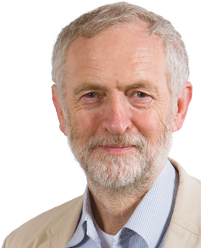
  • Jeremy Corbyn – 2018 Passover Message

    Below is the text of the Passover message issued by Jeremy Corbyn, the Leader of the Opposition, on 30 March 2018.

    Passover is a time to celebrate a journey from oppression to freedom.

    We remember all our Jewish brothers and sisters, who have battled against discrimination and faced the most horrific acts of violence and mass murder.

    This year marks 75 years since a group of Jewish partisans in Warsaw, on the first night of Passover, discovered that the Nazis intended to destroy their ghetto.

    They decided to stay and fight, holding out against the Nazi war machine for a month.

    We think also about rising levels of anti-Semitism around the world.

    In Poland, the government has passed laws making it illegal to acknowledge Polish complicity in the Holocaust. They have frozen the law that returns property looted by Nazis to Holocaust survivors.

    In France, the neo-fascist National Front is on the rise and just days ago 85-year-old Holocaust survivor Mirielle Knoll was brutally stabbed to death in an anti-Semitic attack. In the US too, we see the far-right extremists gathering support for their hateful ideology.

    It is easy to denounce anti-Semitism when you see it in other countries, in other political movements. It is sometimes harder to see it when it is closer to home.

    We in the labour movement will never be complacent about anti-Semitism.

    We all need to do better.

    I am committed to ensuring the Labour Party is a welcoming and secure place for Jewish people.

    And I hope this Passover will mark a move to stronger and closer relations between us and everyone in the Jewish community.

    In the fight against anti-Semitism, I am your ally and I always will be.

  • Theresa May – 2018 Passover Message

    Below is the Passover message issued by Theresa May, the Prime Minister, on 30 March 2018.

    Today marks the beginning of Passover, as Jewish families around the world come together at the seder table to tell the story of their ancestors’ deliverance from slavery.

    Here in the UK, we can all take the opportunity to celebrate the incredible and enduring contribution made by our Jewish community, in every corner of the country and in every walk of life.

    Of course, the Exodus from Egypt did not mark the end of anti-Semitic persecution. For millennia, the descendants of those Moses led to freedom have continued to face hatred, discrimination and violence. It’s a situation that continues to this day, including, I’m sad to say, here in Britain.

    It’s something I have consistently taken action to tackle, both through investing in security to protect our Jewish communities and through education, with the creation of a National Holocaust Memorial to remind us all where hatred can lead if left unchecked.

    The story of Passover teaches us that, while wrong may triumph for a time, the arc of history always bends to the righteous. So, at this special time of year, let us all pledge to stand up and make our voices heard in the face of anti-Semitism.

    After all, as Elie Wiesel said, “Silence encourages the tormentor, never the tormented.”

    I wish you all a very happy and peaceful Pesach – chag kasher v’sameach.

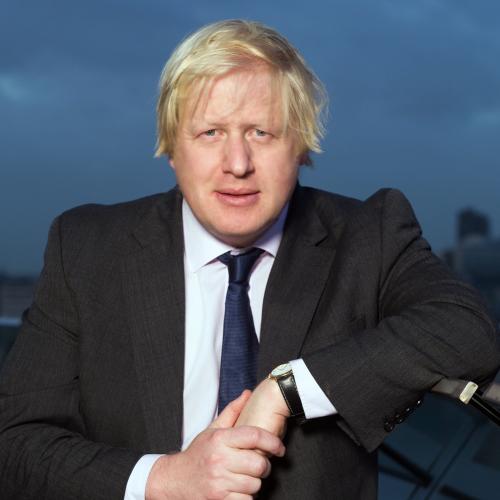
  • Boris Johnson – 2018 Passover Message

    Below is the text of the Passover Message issued by Boris Johnson, the Foreign Secretary, on 30 March 2018.

    Passover is a time of coming together, when Jewish communities commemorate the liberation of the people of Israel from slavery in ancient Egypt. It is a time to celebrate freedom as a basic human right.

    Pesach Sameach to all Jewish families both in the UK and around the world. I wish them a happy and peaceful holiday.

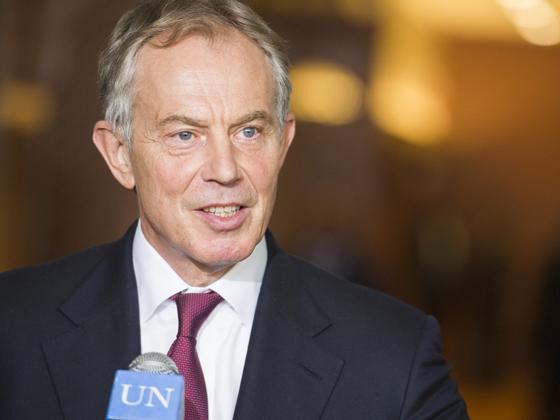
  • Tony Blair – 2018 Speech to the European Policy Centre

    Below is the text of the speech made by Tony Blair, the former Prime Minister, to the European Policy Centre on 1 March 2018.

    Brexit is momentous and life-changing for Britain. The British people should be given a final say on whatever deal is negotiated. If they are allowed that say, then Brexit can be averted.

    I and many others will work passionately for that outcome.

    But today I want to say here in Brussels why Brexit is also bad for Europe, and why European leaders share the responsibility to lead us out of the Brexit cul-de-sac and find a path to preserve European unity intact.

    For the first time since its inception, a nation, and a major one at that, will have disrupted the onward march of European cohesion, left the European Union and will have done so apparently for reasons of principle at odds with the whole rationale for the Union’s existence.

    Britain without Europe will lose weight and influence. But Europe without Britain will be smaller and diminished. And both of us will be less than we are and much less than we could be together.

    In politics, there is a kind of fatalism which can often overwhelm what is right by making the right course seem hopeless or even delusional.

    So it is with Brexit. In the UK, we are told ‘the people have spoken’ and to interrogate the question further is treachery. The ‘will of the people’ is deemed clear and indisputable, though what that ‘will’ means in practice given the complexity of Brexit, the multiple interpretations of it, and the differing consequences of each version, is – with every day which passes – not clear at all.

    But nonetheless we are told we must just do it.

    And in Europe there is often a sorrowful shaking of heads and a shrugging of the shoulders, when what we need is strong engaged leadership to avoid a rupture which will do lasting damage to us both.

    I understand European reticence. Until Europe sees real signs that there could be a change of mind in Britain, why should it contemplate the possibility of change in Europe?

    However, the argument in Britain is far from over. It is in flux. See the speech of Jeremy Corbyn this week.

    What I call the ‘Dilemma’ of the negotiation – close to Europe to avoid economic damage but therefore accepting its rules or free from Europe’s rules but therefore accepting economic damage – is finally prising open the discourse.

    It is a binary choice. The cake will either be had or be eaten but it will not be both.

    The Dilemma divides the Brexit vote. Many of those who voted Brexit want a clean break from Europe even if there is economic difficulty as a result and even if it soured the politics of Ireland. But many others would not want it if there were an economic cost; and would certainly believe that peace in Ireland should be protected.

    Outside commentary under-estimates the fact that at some point this year the Government have got to put a vote to Parliament and win it. They will of course try to fudge, but as we are seeing this cake is quite resistant to fudge. After last June’s General Election, winning this vote will be much tougher than is commonly understood. For once, Parliament in this equation can be more decisive than either Government or Opposition.

    There are three legs to the stool upon which could sit a reconsideration of Brexit. The first is to show the British people that what they were told in June 2016 has turned out much more complex and costly than they thought. This leg is looking increasingly robust as time goes on.

    The second is to show that there are different and better ways of responding to the genuine underlying grievances beneath the Brexit vote, especially around immigration. This leg is easy to construct but needs willing workers.

    The third is a openness on the part of Europe to respond to Brexit by treating it as a ‘wake-up’ call to change in Europe and not just an expression of British recalcitrance. This is the leg to focus on today.

    The stool needs all three legs.

    For Europe, the damage of Brexit is obvious and not so obvious.

    In obvious terms, though the economic pain for Britain, especially of a clean break Brexit, is large, the cost to Europe is also significant and painful.

    One in seven German cars is sold in Britain and goods exports in total are worth 3.5% of its GDP; the figure for Ireland is 14% of GDP and for Belgium over 7%; Britain is a huge market for French produce of many kinds; and a top three export partner for 10 EU members including Italy and Spain.

    Around 200,000 Dutch jobs are involved in trade with the UK. There are around 60 direct flights between London and Amsterdam every day. According to the Dutch Government agency CPB a hard Brexit could make every Dutch person around 1000 euros poorer.

    A Europe in which Britain finds it harder to be a financial centre for European business will be deeply damaging for Britain but it will also impede the economy of Europe.

    Estimates of the long term effect on European growth vary depending on the version of Brexit chosen, but they vary from bad to very bad.

    In short, no one I have spoken to in the investment community from the USA to China thinks this is a good idea for Britain or for Europe.

    Because of these effects, some in Britain believe that therefore Europe will bend in its negotiating stance and allow Britain largely unfettered access to Europe’s Single Market without the necessity of abiding by Europe’s rules.

    This won’t happen because quite simply it can’t. To do so, would risk unravelling the Single Market and a return to precisely the system that was in place before Europe wisely and in the interests of its economy and with of course the full urging of successive British Governments decided to create the Single Market.

    But the damage to Europe of a political nature is to my mind more deleterious.

    For Schuman and other founding fathers, the project of European unity was a project of peace, cooperation in Europe being the alternative to the wars which had ravaged Europe and the world in the first half of the 20th century.

    They looked back at the long history of European nations and saw centuries of conflict punctuated by all too brief epochs of relative harmony. From the time of Charlemagne, Europe had come together periodically, but mainly through religion, force or transitory necessity.

    There had been an uneasy balance of power arrangement towards the end of the 19th C but then the rivalries of the great European nations pitched them into a war no one ever thought would prove as devastating as it did. The attempt out of it to produce a new political settlement fell victim to the competing totalitarian ideologies of communism and fascism and the descent into the darkness of World War Two.

    Then, standing on the rubble of destruction, they decided to approach European unity with renewed vigour and vowed to give it institutional and practical meaning.

    Thus, began what has now become the European Union.

    The rationale for Europe today is not peace but power.

    For almost 300 years, the world has been dominated by the West. At the beginning of that time the great powers were European, with colonies and Empires. Japan and China were of course major nations, but they were not shaping the world.

    By the end of WW1, the United States had emerged as the most powerful nation, steadily eclipsing the United Kingdom and stayed that way through the 20th century.

    But today, the world is changing again. China is today the second largest economy, the biggest global trader and as holder of huge amounts of American debt intimately important to global prosperity.

    If we look back at the top economies in the year 2000, Europe dominates the top ten. Germany’s was 4x the size of India’s and larger than China’s. Mexico, Brazil and Indonesia were distant specks on the horizon far behind.

    By 2016, the situation changes dramatically. India is now almost as large as the UK and France.

    By 2030, India’s economy will be larger than those of Germany or Japan. Brazil, Indonesia and Mexico are narrowing the gap. China becomes the largest global economy and 7 or 8 times the size of the UK.

    Look ahead to 2050 and India is several times the size of the German economy and no European economy is in the top 6.

    With this economic change, will come political change.

    The West will no longer dominate. And Europe, to retain the ability to protect its interests and values, will need to form a strong bloc with the power collectively to do what no European nation alone will be able to do individually.

    Regard the regions of the world today. Everywhere, in reaction to this fundamental shift in geo-politics, countries are banding together: from South East Asia to the continent of Africa.

    Nations are in a desperate scramble to find their place in a world in which no one wants to be forced to choose between the big powers or unable to withstand their demands.

    For Europe much more is at stake than trade or commerce.

    Take defence. Yes, NATO remains the cornerstone of Western security policy. But in an era in which the United States (and not only under this Administration) is signalling the limits of its appetite for military commitment, and where current events in Turkey show the fragility of some of the assumptions of alliance within NATO, it is foolish, indeed dangerous, for Europe not to have the independent capacity to protect its interests.

    If the SAHEL erupts who will bear the brunt of the eruption? Europe. But who will we be obliged to call upon? The USA.

    Of course, Britain can maintain a close relationship on defence even outside the EU. It still represents 25% of European defence spending. I welcome the British PM’s speech to the Munich conference and the excellent paper recently from the German Council on Foreign Relations.

    But how much more effective would such cooperation be if we were still part of Europe’s decision-making structure? Instead we are in the surreal position of proclaiming our desire for tighter European cooperation in defence just as we withdraw from Europe’s political framework for doing so.

    How can we police our borders except through common strategy; or fight terrorism but through enhanced integration of intelligence and surveillance; or protect our privacy from either foreign Governments or corporate behemoths other than by the strength which comes from size?

    Do we seriously believe that if we had approached negotiation on climate change as individual countries, rather than as Europe, we would have driven the agenda in the way we did?

    Our values are also in play.

    Brexit is happening at a pivotal point in Western politics. Parts of our politics are today: fragmented, polarised, occasionally paralysed, with visceral cultural as well as economic rifts; with politicians who strive for answers swept aside by those riding the anger; a sterile policy agenda focusing on who to stigmatise, and barely touching the real forces of change which are technological; and conventional media locked in an ugly embrace with social media to create a toxic, scandal driven, rancorous environment for debate which risks destruction of democracy’s soul.

    Meanwhile there are new powers emerging who look sceptically at Western democracy today and think there may be a different, less democratic model to follow.

    For the first time, not just our power but our value system is going to be contested.

    We need at this moment for Europe to regain its confidence, take courage and set a course for the future which re-kindles the spirit of optimism.

    I believe firmly in the trans-Atlantic alliance. Despite what it may sometimes seem, so do most Americans.

    In the new geo-politics, we need each other for reasons just as compelling as those which thrust us together in the early 20th century.

    Especially at a time when America appears pre-occupied with its own political upheaval and is hard to read and easy to parody, Europe should be far-sighted enough to keep the alliance strong, to be determined in defending our values from those who would de-stabilise us, and to send a message to the rest of the world that Europe will grow in power in the 21st century precisely because of those values.

    None of this can in any way be advanced by Britain’s departure from Europe.

    It rips out of Europe one of the alliance’s most sustained advocates.

    It weakens Europe’s standing and power the world over.

    It reduces the effectiveness of the Single Market by removing from it Europe’s second largest economy.

    And Britain out of Europe will ultimately be a focal point of disunity, when the requirement for unity is so manifest. No matter how we try, it will create a competitive pole to that of Europe, economically and politically to the detriment of both of us.

    More contentiously, I believe it risks an imbalance in the delicate compromise that is the European polity.

    Britain supports the nation-state as the point of originating legitimacy for European integration. Others are more comfortable with the notion of ever closer Union leading over time to a more federal structure.

    The truth is that the anxieties which led to the Brexit vote are felt all over Europe. They’re not specific to the British. Read the latest Eurobarometer of public opinion. In many countries, similar referendums might have had similar results.

    I know from experience that Britain is often the argumentative partner who speaks up, but there is frequently a large group of others sheltering behind us, glad there is a voice in the room articulating what others think but are shy of saying.

    Even the famed Franco-German motor can need British spare parts and lubricants even if they come with the odd bit of grit; and from time to time, British mechanics can work with others to create a back-up engine.

    President Macron has sensibly proposed a series of Europe wide debates on Europe’s future in recognition of the strains in Europe’s politics.

    These will not work, however, if they become merely a way of explaining to Europe’s citizens why their worries are misplaced.

    It should be a real dialogue.

    The populism convulsing Europe must be understood before it can be defeated.

    Immigration is a genuine fear with causes which cannot be dismissed.

    Many feel the European project is too much directed to the enlargement of European institutions rather than to projects which deliver change in people’s daily lives.

    There is much good work done by this and the previous Commission to reduce regulation and bureaucracy, unfortunately usually ignored or over-shadowed. But we should recognise this is still an issue for people all over Europe.

    The things Europe is doing to build its capability to make the lives of Europeans better – in energy, digitalisation, infrastructure, education, defence and security need to be driven forward with much greater intensity.

    And the difference between those in the Euro zone and those outside it will require different governance arrangements.

    Europe knows it needs reform. Reform in Europe is key to getting Britain to change its mind.

    There should surely be a way of alignment.

    A comprehensive plan on immigration control, which preserves Europe’s values but is consistent with the concerns of its people and includes sensitivity to the challenges of the freedom of movement principle, together with a roadmap for future European reform which recognises the issues underpinning the turmoil in traditional European politics and is in line with what many European leaders are already advocating, would be right for Europe and timely for the evolving British debate on Brexit.

    If at the point Britain is seized of a real choice, not about whether we like Europe or not – the question of June 2016 – but whether on mature reflection the final deal the British Government offers is better than what we have, if, at this moment, Europe was to offer a parallel path to Brexit of Britain staying in a reforming Europe, that would throw open the debate to transformation.

    People will say it can’t happen.

    To which I say in these times in politics anything can happen.

    In any event, it depends on what magnitude of decision you think this is.

    There are errors in politics of passing significance.

    And there are mistakes of destiny.

    If we believe and I do, that this is of the latter kind, we cannot afford passive acquiescence.

    Those whose vision gave rise to the dream of a Europe unified in peace after centuries of war and whose determination translated that dream into practical endeavour, their ghosts should be our inspiration.

    They would not have yielded to fatalism and neither should we.

    We have months, perhaps weeks to think, plan and act.

    Let’s be clear. Even if Brexit is Britain’s future, and yours is a European Union without Britain, we can’t alter our geography, history or manifold ties of culture and nature.

    This is a divorce that can never mean a physical separation.

    We are consigned to co-habiting the same space, trying to get along but resenting our differences and re-living what broke us apart, awkward silences at the breakfast table, arguing over the rules with no escape from each other.

    But – and here is the supreme irony – with so much in common and still liking each other.

    Better to make our future work together.

    If we don’t, a future generation will; but their verdict on ours will be harsh for time wasted and opportunity spurned.

    It doesn’t take a miracle. It takes leadership. And now is when we need it.

  • Tony Blair – 2018 Speech on Brexit

    Below is the text of the speech made by Tony Blair, the former Prime Minister, as part of the Speaker’s Lecture series on 26 March 2018.

    On one thing everyone is agreed: Brexit is the most important decision this country has taken since the end of World War Two and the commencement of modern British history.

    It was taken by referendum, on one day in June 2016, with a simple majority of those voting and by a margin of 52–48.

    At that point, self-evidently, there was no knowledge of what the alternative to life outside the EU would look like. But the country voted to leave, and the Government was mandated to negotiate the terms both of exit and the new relationship.

    Since 23rd June 2016 as the negotiation has proceeded, so has our appreciation of what Brexit entails. The negotiation is complex. The future relationship around trade is technically fraught. There are many different versions of what Brexit will mean in practice, ranging from staying in the Single Market and Customs Union to going out without an agreement and trading on WTO terms.

    One other thing has emerged: there are different views about what is an acceptable Brexit outcome in Parliament, in the Opposition Party and not only in the governing Party but in Government itself and even the Cabinet.

    So, in a rational world, this would result in an active and thorough debate about the mandate the June 2016 vote bestowed. Was it a mandate to leave on whatever terms in whatever circumstances? Or can we read into the mandate some qualification relating to the effect of different Brexit outcomes?

    If it is the first, then there can be no revisiting of the decision irrespective of what it means for the national interest or the economy.

    If it is the second, then plainly it is logical, once we know the terms of the negotiation, that the people have a right to judge whether they want to proceed with that negotiated version of Brexit.

    It is a matter which reflects in the most profound way on the state of our politics, that it is that official position of both main parties in Britain that the first is the correct interpretation of the referendum decision. i.e. the British people voted to leave on any terms or indeed on no terms such was the vehemence of their dislike of the European Union.

    In other words, this decision on that day by that majority in that way has had the consequence of bringing into being a mandate which is comprehensive, all-encompassing, and eliminates further discussion of the wisdom of the decision.

    Just roll that round your mind for a moment. In no other dimension of life let alone politics, in no personal decision that any of us take in the myriad of different situations which require decision in our lives, would we take such an all defining direction to a new future in this manner. We wouldn’t move jobs on that basis, move home, marry or divorce with such a ‘whatever the terms’ abandon as we apparently have chosen to do in this case of the most momentous decision for the direction of our country in modern times.

    And what is more, in circumstances where the decision was only a small margin to the side of 50/50.

    How on earth have we come to such an extraordinary and definitive reading of the mind of the British people? That not merely do we insist that they have insisted that we leave whatever the facts we now discover or the terms our Government can negotiate, but that – even more extraordinary – the same British people would resent deeply being given an opportunity to pass judgement on these terms once they know them?

    By a combination of a pitiful lack of leadership and the bludgeoning of that part of the media dedicated to Brexit at any cost, we have taken the British people to the point where we consider it a betrayal to allow them to re-visit the most important political decision of their lifetime once they are in possession of the full facts which will determine the nation’s destiny for generations to come.

    If we proceed with Brexit future historians will naturally focus on the impact of the Brexit decision; but I predict that one major part of their inquisition will be how we as a country were persuaded that we should take such a decision so irrevocably in such a fashion.

    The case that I and others make is not that we ignore the referendum and reverse Brexit by a simple act of Government or Parliament.

    It is rather that we honour the Brexit result but say that the process of decision-making by the people should not cease to exist after 23rd June 2016, but should continue up to and until a final judgement on membership of the EU when set against the new relationship our Government has negotiated once we know it.

    If the people are to be trusted with the decision to leave before we know the terms of exit, why, once we have that knowledge, are they now disqualified and seemingly incapable of making the decision on whether the terms of exit meet their approval?

    Yet this is where we are.

    It is for this reason that Parliament today assumes such a special significance. We cannot rely on the Government. It has been plain for a long time that their primary interest, given the divisions, is to keep the façade of unity.

    Unfortunately, we cannot rely on the Opposition because its leadership believes – whether for reasons of opportunism or covert opposition to the EU – that they must commit to doing Brexit but pretend that they would secure a better Brexit deal.

    The truth is that the case for letting the people make the final decision is common sense if it is considered rationally and free of pressure.

    Think of all the things we know since 23rd June 2016. Think of how much greater is our understanding of the various options, the intricacies of our trading relationships, the impact on each sector of business and industry. Add up all the aspects of the negotiation – from EURATOM to fishing rights to security cooperation – and think how much more we know about corners of national policy which seem settled in bureaucratic obscurity but now require analysis, investigation and painstaking accord.

    Take Northern Ireland. I recall the visit I made with John Major during the referendum. Let’s say we didn’t exactly set the campaign on fire. The warning we gave was dismissed with ease by the Secretary of State for Northern Ireland, almost with contempt. Today, Northern Ireland is the issue which stands between the Government and a successful conclusion to the withdrawal agreement and no one is dismissing it now.

    Everyone says they want a frictionless border between North and South. In the past this was easy. For 100 years since partition, there was an agreement for the free movement of people and commerce across the border. The Republic of Ireland and the UK were always in the same relationship to Europe as each other. They joined the EU on the same day in 1973.

    Now the border will become the border between the UK and the EU.

    It is, frankly, obvious that the border can only remain frictionless if the North stays in the same relationship to Europe for trade and free movement of people as the South. This means not just a Customs Union but a Single Market arrangement.

    We can solve part of the puzzle by turning a blind eye to free movement of people, though of course it makes a nonsense of ‘taking back control’ of our borders for immigration purposes.

    But for trade, Europe will insist that if we are out of the Single Market, then there will have to be some form of checks. We can argue about how many and at what cost, but the border cannot be frictionless. Yet that is what we were promised.

    Northern Ireland is a metaphor for the entire negotiation.

    In all areas – from pharma to cars to financial services, what I call ‘the Dilemma’ will become manifest. Either we keep to Europe’s rules – however we call it, equivalence or alignment – in which case we have not fulfilled the central Brexit promise of absolute control over our laws; or alternatively we are free to diverge from those laws in which case the disruption to trade and consequent economic damage will be large.

    At some point the Dilemma will have to be confronted and overcome. The question is when.

    Here is where Parliament is vital.

    The resolution of the Dilemma can only be made by a choice. At this point we will know what Brexit really does mean, which of the very different versions of Brexit the Government has negotiated and whether the one negotiated satisfies the wishes of the people.

    The Government’s whole approach up to now has rested on the hope that the Dilemma can be avoided, that Europe will agree that Britain can stay roughly in line with Europe but nonetheless have the freedom to set our own rules and that, on this basis, we will have largely frictionless trade; not absolutely as we have now but near it.

    This is what is now known as ‘cakeism’.

    Here is the thing. Having our cake and eating it, is not negotiable. Europe is not going to agree this. They might – and I stress might – agree to cherry-picking i.e. in some areas we align and keep Single Market rules and in others not; but they are never going to agree to ‘cakeism’.

    The Government half recognise this. This was the meaning behind the Prime Minister’s recent speech which did try to differentiate between different sectors. But the most she felt able to offer in the areas where we want to stay close to Europe was something short of alignment; and the result was an immediate rebuff from the European side.

    It is a measure of the frailty of the public discourse around Brexit that the ‘deal’ the Government struck last week on transitional arrangements, was accepted as some sort of victory. The reality is that Britain conceded that, during the transition, we will remain bound fully by European rules, though we will have lost our say over them. It was not a compromise but a capitulation. Meanwhile the resolution of the Dilemma, including on Northern Ireland, was postponed.

    As time goes on, the Government will recognise fully that if they put a proposition to Parliament which clearly resolves the Dilemma, and before March 2019, the risk is it will not pass. Either it will mean divergence from Europe in which case, the business community will protest the damage and MPs will take notice of that. Or it will mean alignment with Europe in which case the diehard Brexiteers will cry foul and the British people will wonder why we are leaving.

    So, the Government will turn to fudge.

    They will understand – and the Brexiteers will assist them – that they have somehow to get past March 2019 without a defeat and they can only do that if the terms of the new relationship are sufficiently vague to let the fiction of ‘cakeism’ continue.

    Then once past March 2019 and when we are irreversibly out of Europe, they can negotiate safe in the knowledge that then the issue will be whatever deal they do versus no deal.

    Before we leave we have at least some limited negotiating leverage. Not much. We constantly forget that, even though Brexit dominates our news cycles, it is largely absent from those of the rest of Europe, except Ireland.
    But once we have left and are in the ‘transitional’ period, there is nothing. We can say that Europe will suffer if there is no deal or their companies are excluded from our markets, but the reality is that the pain we would suffer from being shut out of theirs is so disproportionately greater, this is a bluff that will never work.

    Basically, we will have to take what we are given. By the end of 2020, the transition will end. The cliff edge will beckon. We can navigate a harder or easier descent; but retreat will be impossible.

    It is this strategy that Parliament has a duty to foil. It has demanded a ‘meaningful vote’. The vote is only meaningful if it is on a proposition which allows us to know with precision what our future path looks like before we take it.

    Exposing the strategy of fudge and preventing it, should be the overriding aim of the Labour Party in Parliament. I understand, though don’t agree, with its decision to go along with Brexit. But it is the duty of Opposition MPs to thwart a strategy designed to place the country in a position where it puts beyond reach of reconsideration a decision of this fundamental importance whose full consequences we do not know.

    Failure to stand against the fudge would be unforgivable.

    As for the Conservative Party, I understand why they feel they must deliver Brexit as ‘the will of the people’. I understand also why they believe that delivering it is the best inoculation against a Corbyn Government.

    But in politics the difference between tactics and strategy is everything. Tactics are about the politics of the moment. Strategy leaps over the moment and tries to imagine the long term.

    Think ahead. Before the end of 2020 we will know the real deal. I suspect we will have a Canada type deal with not much plus. And if we don’t, we will have a deal which will leave a big number of Brexiteers feeling hoodwinked.

    There is then another 18 months to an election. Think June 2022. Will the economy be stronger? Will the Brexit news be better? Will people be feeling that Brexit has really delivered all that ‘control’ we say we don’t have now? Will the NHS be on the mend? Will the Free Trade Agreements be stacking up?

    Brexit happening in this sequence will be a Tory Brexit, fully owned, exclusively and completely by the Conservative Party.

    The 17m who voted ‘Leave’ may be short on gratitude. The 16m who voted ‘Remain’ will be unlikely to forget. Remember that 13m wins an election.

    Brexit is not the route to escaping a Corbyn Government; it is the gateway to having one.

    The sensible strategic course for the Tories is to share the responsibility. Resolve the Dilemma before March 2019.

    Put the proposition to Parliament. Even better let the MPs have a free vote.

    Then let the people make the final judgement on whether the British people prefer the terms for leaving Europe to what we have now inside Europe.

    If Brexit passes in these circumstances then that is the end of the matter. We leave. If it doesn’t then the people have decided. The Government has done its best.

    In 2022, the Conservative Party can fight an election not on responsibility for Brexit but on the normal domestic issues of the day.

    When I was growing up in politics the Tories were always the pragmatic folk. They eschewed ideology. They were business minded and prided themselves on common sense. They stood out against being railroaded by shouty activists.

    These are the qualities which have deserted them in pursuit of Brexit. At every stage decisions have been made driven by short term politics driven by loud-mouthed rhetoric. We triggered Article 50 before the French and German elections before we had any clear idea of our negotiating position thus pushing ourselves up against a very tough timetable for such a complicated negotiation.

    We put down red lines around the Single Market and Customs Union with little thought as to how that would be compatible with the interests of business and thus shut down our negotiating room for manoeuvre.

    We made a series of demands about money, transition and the rights of EU citizens all of which we were obliged to surrender.

    The Europeans, having at first thought that there was some truly cunning plan from the best brains of the British system now frankly think it is the product of the brain of Baldrick.

    Only by dint of the barrage of pro Brexit propaganda from the usual quarters are we spared a proper sense of indignity from the way we have conducted this negotiation.

    It is not too late for our politicians to grip our nation’s destiny and approach this issue differently.

    I return to the magnitude of the decision.

    Much has focused on the economics of Brexit. It is often said that the predictions of economic calamity turned out to be false.

    We can argue about the degree and the timescale.

    But there is no serious disagreement among serious people about the economic consequence of Brexit. Growth estimates for the next 5 years are the worst in over half a century. Quite apart from everything else, this will mean billions less in revenue to spend on public services. Every economic forecast says the same including that of the Government.

    Speak to those familiar with the international investment community and the sentiment on Britain has turned severely negative. Investment in the motor industry alone is down 40%.

    We are utterly and wrongly complacent about the damage to financial services if we lose access to Europe’s Single Market. Short term, the losses will be limited because of course it is hard for Europe to re-adjust from London as a financial centre for European finance. Short term.

    Long term, the City should be under no illusion: European regulators and even more so, European politicians, will not find it acceptable to have the centre for European finance outside the purview of European regulation.

    Frankfurt, Paris, Dublin are setting out their stall. Over time, we are going to haemorrhage jobs and business.

    But the political damage, the damage to Britain’s geo-political standing is the missing dimension to the Brexit debate.

    The most alarming characteristic of the Brexiteers is their confusion of delusion and patriotism. To recognise Britain’s position in the global hierarchy of nations and how it is changed over the past 70 years is not to be unpatriotic.

    The world of geo-politics is undergoing a revolution.

    China will become, if not the dominant power, a power to rival America.

    By 2030 India’s economy will be bigger than Germany’s; by 2050 several times the size.

    Population and GDP, through the mobility of capital and technology, are becoming re-aligned.

    Britain will be medium sized in a land where there are some very tall people and three giants.

    Like France or Germany, we will be obliged to advance our interests through alliance. On our own, we are weaker when dealing with trade, China, Russia, or even Facebook and the other global corporate behemoths.

    In alliance, we gain strength.

    That is the modern case for the European Union.

    To say this is not to diminish British pride in what we have achieved or confidence in what we can achieve. It is just to say that reality, not fantasy, is a better guide to statecraft. It is not to dishonour our past, it is simply to understand that the future will be different.

    The qualities which lighten our path have not changed. But we should recognise what they are. They include stoic resistance to bullying; standing firm and being prepared to stand alone where right to do so.

    But they also include creativity, innovation, openness and engagement with the world.

    The more intellectual proponents of Brexit can pretend that these latter qualities drove the case for Brexit. But, come on. The pretence is ludicrous. Sure, there are those who believe Brexit will herald a new ‘Global’ Britain. But the coalition which delivered the Brexit vote had, as its base, sentiment that was anti-globalisation, isolationist and particularly anti-immigration. And this sentiment was ruthlessly exploited by the Leave campaign. I am not complaining. That’s politics. But don’t tell me that the Brexit mandate derived from a desire to intensify globalisation.

    And this of course is the terrible long-term risk of Brexit. People say that there will be disillusion if Brexit doesn’t happen. Personally, I doubt this if it is the result of a fresh ‘say’ on the final deal.

    But even if true, the bigger disillusion will be when those who voted for Brexit because they feared the future shaped by free market globalisation, realise they are now conscripts in an adventure to embrace it more fully.

    This is the awesome responsibility which now rests with Parliament.

    This is a moment when every MP is a Leader. This is a decision like no other. It requires each Member to sit the test of leadership. Passing doesn’t mean voting this way or that. It means voting according to conviction and not according to the whip.

    Only Parliament can change the direction of this process. Only Parliament can ensure a meaningful vote on the terms of the new relationship with Europe before we leave by demanding that those terms are written with clarity and not with fudge. Only Parliament can give back to the people the final ‘say’ on the terms the Government negotiate. Members of Parliament: each, and every, one of you holds in your hands the responsibility to insist that these decisions of such importance to our country are taken before March 2019, before we cross over irrevocably to life outside Europe, before it’s too late.

    To each MP the question: do you really believe Brexit is the answer to the challenges facing Britain? Do you believe Britain will be stronger or weaker outside of Europe? If you left everything aside other than your own conviction, would you continue or find a way out? And if it is the referendum alone which persuades you to follow, is not worth examining the arguments which permit you to lead, to say to the people in the light of what we know we should have the right to think again?

    Last week, we had a small but perfectly formed example of how we have fallen as a nation into the vice of a false patriotism. Our passports.

    We want to change them from magenta to blue and it appears that it is a Franco-Dutch company which has won the contract for the new passports. Outrage. A ‘national humiliation’ one Brexiteer called it.

    The national humiliation is not that we have chosen a foreign company over a British one.

    The national humiliation is we think the colour of our passports defines our sense of nationhood.

    There is time, but not much time, to restore a proper patriotism, one which concentrates on building the nation’s strength to handle the challenge of a changing world, not taking refuge in the vain hope of escaping it.

    Here in this Palace of Westminster, in the birthplace of democracy, in the forum where so many decisions have been taken which have shaped not only Britain but the world, our fate will be decided by Members of Parliament.

    I say to them: think of our history. Think of our future. Think of the true meaning of both. And make that decision according to conscience and belief.

  • Boris Johnson – 2018 Easter Banquet Speech

    Below is the text of the speech made by Boris Johnson, the Foreign Secretary, at the Mansion House in London on 28 March 2018.

    My Lord Mayor, Your Excellencies, Ladies and gentlemen.

    I’m going to talk about Britain’s global role and our work with our allies around the world but I turn first to the events of this remarkable week because never before has there been a collective expulsion of Russian diplomats on the scale that we have seen over the last few days.

    As I speak there are now 27 countries that have themselves taken the risk of kicking out people whose presence they deem to be no longer conducive to the public good.

    Of course there are many more that have chosen to act in other ways, countries that have issued powerful statements or downgraded their representation at the World Cup.

    But by your leave my Lord Mayor and without wishing to be in any way invidious I want to remind you of the full roll of honour:

    Albania
    Australia
    Belgium
    Canada
    Croatia
    Czech Republic
    Denmark
    Estonia
    Finland
    France
    Germany
    Hungary
    Ireland
    Italy
    Latvia
    Lithuania
    Macedonia
    Moldova
    Montenegro
    Netherlands
    Norway
    Poland
    Romania
    Spain
    Sweden
    Ukraine
    United States

    And NATO has either expelled or denied accreditation to 10 Russian officials.

    And it seems clear that the Kremlin underestimated the strength of global feeling: if they thought that the world had become so hardened and cynical as not to care about the use of chemical weapons in a peaceful place like Salisbury, if they believed that no one would give a fig about the suffering of Sergei and Yulia Skripal or that we would be indifferent to the reckless and contemptuous disregard for public safety that saw 39 others seek medical treatment, if they believed that we had become so morally weakened, so dependent on hydrocarbons, so chronically risk averse and so fearful of Russia that we would not dare to respond, then this is their answer, because these countries know full well that they face the risk of retaliation and frankly there are countries that have taken action that are more vulnerable to Russia than we are, whether through geography or their energy needs, and I pay tribute to them because they know that their own Russia-based diplomats, and their families, must now deal with the possibility of their own lives being turned upside down.

    That is a huge commitment and sacrifice for one country to make – let alone 27 – and I thank them from the bottom of my heart.

    But of course I know that these thanks are in a sense impertinent because I do not for one moment believe that this global wave of revulsion has been prompted solely by Salisbury, let alone a sentimental love or affection for the UK, though I don’t exclude the possibility of such feelings somewhere in the mix.

    It wasn’t about us: it was about all of us and the kind of world we want to live in.

    Because I believe these expulsions represent a moment when a feeling has suddenly crystallised, when years of vexation and provocation have worn the collective patience to breaking point, and when across the world – across 3 continents – there are countries who are willing to say enough is enough.

    After the annexation of Crimea, the intervention in the Donbas, the downing of MH17, the cyberattacks, the attempted coup in Montenegro, the concealing of chemical weapon attacks in Syria, the hacking of the Bundestag, the interference in elections, there are now just too many countries who have felt the disruptive and malign behaviour of the Russian state.

    And Salisbury has spoken not just to Salisbury in South Australia and Salisbury in Pennsylvania, in North Carolina, in Maryland, but to all the tranquil cathedral cities across Europe that could have suffered a similar fate and where people deserve to live free from fear and after all these provocations, this week was the moment when the world decided to say enough to the wearying barrage of Russian lies, the torrent of obfuscation and intercontinental ballistic whoppers.

    First they told us that Novichok never existed, then they told us that it did exist but they had destroyed the stocks, then they claimed that the stocks had escaped to Sweden or the Czech Republic or Slovakia or the United States.

    And the other day they claimed that the true inventor of Novichok was Theresa May.

    In the last few days we have been told that Sergei Skripal took an overdose, that he attempted suicide and therefore presumably tried to take his daughter with him, that his attempted murder was revenge for Britain’s supposed poisoning of Ivan the Terrible, or that we did it to spoil the World Cup.

    In fact the Foreign Office has so far counted 24 such ludicrous fibs – and so I am glad that 27 countries have stood up to say that they are not swallowing that nonsense any more.

    It is rather like the beginning of ‘Crime and Punishment’ in the sense that we are all confident of the culprit – and the only question is whether he will confess or be caught.

    And in these last few days it is our values – and our belief in the rules based international order – that have proved their worth.

    Not only has there been a strong and speedy multilateral response from NATO and the EU Council but countries that are members of neither have come forward to show that this country is blessed to be part of a broader community of ideals.

    And I believe there are many British people who have found it immensely reassuring to learn we may be leaving the EU in exactly a year but we will never be alone, and in part that commitment to Britain reflects Britain’s reciprocal commitment to our friends, whether through the work of our peerless intelligence agencies or our armed forces or our development budgets.

    And that is what I mean by Global Britain, and so I repeat the prime minister’s unconditional and immoveable commitment: that we will stand by you as you have stood by us.

    We will continue to work with you – bringing as we do 20% of EU defence spending, 25% of the aid budget, 55% of the tonnage of the supply and replenishment vessels needed to keep warships at sea, 100% of the heavy lift capacity.

    We are with you in Estonia, we are with you in training the armed forces in Ukraine, we are there in Nigeria and in the Middle East, where the fight against Daesh goes on and where the UK has delivered the second biggest number of air strikes after the US.

    We are with you in the Sahel – or we will be with you shortly – and HMS Sutherland is now in the Pacific, exercising alongside our Australian friends, and the UK has forces deployed in more countries than any other European power.

    And I have last week announced that we are expanding our FCO network, with another 250 British diplomats overseas and another ten UK embassies or high commissions in another ten sovereign posts – with the Commonwealth as a priority especially as we will be hosting its summit next month – so that Britain will have more diplomatic missions than any other European country – exceeding the French by one, news that I am told was received with rapture in the Quai d’Orsay, since there is no more compelling case for more funding than news of expansion in King Charles Street.

    We believe in that expansion – and we will go further, especially in Africa, because we believe that a Global Britain is fundamentally in the interests of the British people because it is by being open to the world, and engaging with every country, that the British people will find the markets for their goods and services and ideas as we have done for centuries in that great free trade revolution that made this city the capital of the world and built the Mansion House in which we meet tonight.

    When we leave the EU next year, we will re-establish ourselves as an independent member of the WTO and we will be the world’s leading proselytiser for free trade.

    And it is symmetrically by being welcoming to talent from abroad – as we must and will be – that we have brought to our shores for generations people who want to live their lives without fear of judgment or persecution, to do as they choose provided they do no harm to others, and it is that ethos of generosity that has made this city not just the most diverse in the world but also the most productive region of Europe.

    And today the UK is the biggest destination for FDI after the US, our unemployment is at the lowest for 43 years (I seem to remember some people predicting that it would rise by 500,000), we have the biggest tech sector, the best universities.

    And Cambridge University alone has won more Nobel prizes than every university in Russia and China added together and multiplied by 2.

    We have the most vibrant and dynamic cultural scene, with one venue – the British Museum – attracting more visitors than ten whole European countries that it would not be tactful to name tonight.

    And out of this great minestrone, this bouillabaisse, this ratatouille, this seething and syncretic cauldron of culture, we export not just goods – though we certainly do – but ideas and attitudes and even patterns of behaviour.

    I am delighted to say that in both the Czech Republic and in Iceland they mark Jan 7 with silly walks day in honour of Monty Python.

    There are now 9 countries that have their own version of David Brent, and it is an astonishing fact that both of the two highest grossing movies in the world last year was either shot or produced in this country:

    Beauty and the Beast and Star Wars.

    And what is the principal utensil of violence in Star Wars?

    And where was the light sabre invented?

    In which part of London? In Uxbridge and South Ruislip.

    And that tells you all you need to know about the difference between modern Britain and the government of Vladimir Putin.

    They make Novichok, we make light sabres.

    One a hideous weapon that is specifically intended for assassination.

    The other an implausible theatrical prop with a mysterious buzz.

    But which of those two weapons is really more effective in the world of today?

    Which has done more for our respective economies?

    Which has delighted the imaginations of three generations of children and earned billions?

    Which one is loved and which one is loathed?

    I tell you that the arsenals of this country and of our friends are not stocked with poison but with something vastly more powerful: the power of imagination and creativity and innovation that comes with living in a free society, of a kind you see all around you today.

    And it is that power that will prevail and it is in that spirit of absolute confidence and security that it is our job now not just to beware the Russian state, but to reach out, in spite of all our present difficulties, to extend the hand of friendship to the Russian people.

    Because it cannot be said too often that the paranoid imaginings of their rulers have no basis in fact, they are not ringed by foes but by countries who see themselves as admirers and friends, who have taken this action this week because they want nothing so much as to have an end to this pattern of disruptive behaviour, and who want to live in peace and mutual respect and who hope one day that it will be possible to see ever greater commercial and cultural co-operation between us and the Russian people.

    And I believe that day can and will come.

    I hope it does.

    And if and when it does I believe it will be thanks to the resolution of all the countries that acted in their different ways this week.

    We will have to keep that resolve because there is no doubt that we will be tested again and I can assure you that in that test the resolve of the British government and people will be unflinching.

  • Matt Hancock – 2018 Speech at DCMS Diversity Forum

    Below is the text of the speech made by Matt Hancock, the Secretary of State for Digital, Culture, Media and Sport, on 28 March 2018.

    It’s brilliant to be here at this incredible venue.

    We look around at the great artists that are on the walls. I can just imagine the Fab Four right in front of me. It is electric to be here.

    Of course, it’s not just The Beatles. This place is associated with Elgar, Pink Floyd, Amy Winehouse, Elton John, Kanye West, Kate Bush, Stevie Wonder – anyone who’s anyone in music, from Adele to Zucchero.

    And the reason I mention all of these is because of the range. The range of genders, of ethnicities, of sexualities and people from all parts of Britain and all parts of the world.

    I just want to introduce this morning’s session and say why I care about this, and why I’m so glad that so many of you have given up your time to come here.

    You can be forgiven for being sceptical as to why a straight, white man in a suit cares so much about diversity. But this is a moral imperative for everyone, from whatever background.

    I have always thought that talent – in music, in sport, in tech, in the arts, in design – can be found anywhere.

    And we need to look for the thing that everyone can do as an achievement. Look into every human heart for what they can bring to the party. And unless we look for that everywhere, and open up opportunities to everyone in this country, then we all risk losing out.

    It’s not just that we miss out on amazing ideas and amazing work and that people miss the chance to shine. As well as a moral imperative it’s a business imperative too.

    I have never been in a room making a decision where a less diverse group could make a better decision.

    Diversity of thought improves the way things are done, and the way things are run, and creates the spark of creativity that makes for progress.

    Anything, whether it’s a TV script or a business plan for a sports team, can be improved by discussion with a diverse group.

    And then there’s the national debate – the mood music of our country – which is impoverished when we don’t have a wide range of voices contributing, reflecting the rich diversity of our nation.

    Some of our most exhilarating creative moments have been when diversity takes centre stage.

    Take the first lesbian kiss on Brookside or Channel 4’s groundbreaking, brilliant coverage of the Paralympics.

    One of my passions is grime and one the great strengths of it is that it’s produced by people demanding to be heard.

    I apologise for saying this in a Universal venue… But grime climbed its way up the outside of the music business, not through the traditional record labels. But demanded to be heard.

    Now, having said that, not everyone is Skepta and not everybody can make that climb. Some people need help and encouragement to make the most of their gifts. We’ve seen some great progress in the last few years years, but there’s much more to do. The Arts Council has announced millions of pounds to develop work by disabled and BAME talent and address the lack of diverse leadership in the arts. The Tech Talent Charter that Margot is championing has seen hundreds of tech firms sign a pledge to improve gender diversity. And there’s millions of pounds been allocated through Sport England’s investment funds, with a specific focus on under represented groups. I’ve just come from the Roundhouse, another legendary music space, and we launched a Creative Industries sector deal.

    And as part of this, announced 2 million pounds of support to encourage a more diverse intake of talent and more routes into the creative industries.

    But there is much, much more to do. Not just in the workplace, but in participation. It is a truth that participation in culture and sport is consistently below the national average for those with disabilities, those who are not white and those on lower incomes.

    And that needs to change. And the Diversity Forum is a crucial step in putting these concerns right.

    What we want to do today is bring together the leading organisations – like you in this room – to share best practice, to find new ways to make the industry more diverse.

    We’ve all got the same objective, and we all gain when we work at it together.

    So we are as much enthusiasts, as also in listening mode.

    We are saying, with a resounding voice, from the bully pulpit of Government that a lack of diversity will not stand. And everybody has a role to solving the problems that we face. And we want to do this working together, and listening, and making sure that we come forward with solutions that work.

    Our digital, our creative, our sporting industries are world leading and they showcase our country at its best.

    But they will be so much stronger, and better represent who we are as a nation, when they are open to all. When they are not just opening the door but inviting people in and actively recruiting from across our whole society.

    One our greatest authors wrote: “To thine own self be true. And it must follow, as the night the day, Thou canst not then be false to any man.”

    And Shakespeare was right. Everyone has the right to be themselves and tell the world their story.

    And we need to do our part in supporting everyone to do that. Thank you very much.

  • Matt Hancock – 2018 Speech at Cultural Industries Sector Deal

    Below is the text of the speech made by Matt Hancock, the Secretary of State for Digital, Culture, Media and Sport, at the Roundhouse in Camden on 28 March 2018.

    It’s great to be here at this iconic venue, which has attracted the cream of creative talent for years – Bob Dylan, The Clash, The Rolling Stones.

    So it is the perfect venue to be celebrating the creative industries, which contribute over £90 billion to the UK economy every year.

    And it’s great that this is a combination of initiatives between Government and the industries as a whole.

    I was just on the Today programme, talking about this launch today and the first question I was asked was “Why do we need Government to help an industry to grow?”

    I said that at the core of our Industrial Strategy is the insight that if we in Government get alongside industry, in a sensible way, where we don’t get in the way but we help to underpin them, then we can all do better together.

    And it’s Greg Clark’s insight, in this modern Industrial Strategy, that the way to do that is through individual sector deals. Where we don’t say what we think ought to happen, and we don’t say “Here is the Government funding”, we say “What can we do together?”.

    And we challenge you. And we say “Between us, what rules do we need to change and what expert investment can we bring to bear?”

    I want to pay tribute, very directly, to Greg’s leadership on this. Because his insight that we must do this together, even though that’s not the traditional way of how Government operates, has been absolutely core to its success.

    So for instance we have Josh here from Warner Brothers, breaking ground on two new sound stages at Leavesden, just one example of the Government and the private sector making things better.

    This is about making sure our creative industries are successful right across the UK.

    Whether it’s making the agreement with Channel 4 to have a new National HQ outside London, or building on the success of the BBC’s move to Salford, we want to make sure that the benefits of our creative industries are shared right across the country.

    The new Cultural Development Fund will allow towns and cities to bid for a share of £20 million, specifically where we know that cultural investment and cultural institutions strengthen communities and strengthen local economies.

    We’ve seen the transformative impact this investment can have. For example, in the Bristol Temple Quarter, Government funding got it going but it has delivered thousands of jobs – far in excess of what Government funding could have done on its own.

    And in today’s Strategy, we’ve also announced that the British Business Bank is setting out a major commercial investment programme to unlock finance for IP-rich small businesses outside London and the South East.

    But this extra money is no use if it can’t be accessed. So we’re also announcing support for new business support for high-growth creative firms.

    And this will in turn create jobs. And we can’t do all this without a diverse mix of talented people to fill them.

    We don’t want organisations limiting themselves to a smaller pond of talent or input, because then they’re missing out and can’t possibly reflect, represent or serve the country as a whole.

    Now right after this event, I’m going to the DCMS Diversity Forum at Abbey Road Studios, which was set up to share best practice and find ways to solve some of the issues that exist around promoting diversity.

    So it seems a fitting moment to announce that two million pounds of support will be made available through the Deal, to encourage a more diverse intake of talent and a greater number of routes into the creative industries, which is something that we really care about and where more needs to be done.

    It’s also, of course, about us having the right environment for creative firms to show that the UK is a place where they can flourish and where they will get value for what they produce.

    Anybody who knows me knows that I care deeply about this. Property rights underpin a strong and healthy market economy, and in the twenty-first century intellectual property rights underpin a strong market economy. And that is more important in the creative industries than anywhere else.

    Because it’s making sure that the creativity can be paid for is, of course, really critical to making sure that you can produce more of it.

    So in the Deal we set out measures to strengthen further intellectual property rights. As technology advances, the property that really matters is the ideas, the designs, the art and the concepts.

    And so the Deal includes £2 million towards ‘Get it Right’ campaign to tackle online piracy and educate consumers on the value of copyright.

    And also a crackdown on copyright infringement. Last year, we brokered a code between main search engines and the industry to reduce the prominence of illegal sites. I want to pay tribute to everybody from both sides who worked on that.

    Now we want to work with rights holders and platforms, towards a similar approach to online advertising, social media, and online marketplaces.

    And the measures in this Sector Deal will strengthen our world-leading creative industries, to make sure that we can thrive both here and around the world.

    There is one final thing I want to say. This is not a document, it is a process.

    This is only the beginning. We want to build on it and the make the deal even more ambitious over time. Because our creative industries show our country at its best.

    And as the Minister not just for Culture but also for Digital, I know that ensuring we have the jobs of the future is really critical.

    You can’t get a machine to write a play, or to direct a film. And you can’t code empathy and creativity, and that’s what lies at the heart of everything you do.

    So this is the industry of the future, and that’s why we’re going to back it every step of the way.