Tag: 2018

  • Theresa May – 2018 Statement on EU Exit Negotiations

    Below is the text of the speech made by Theresa May, the Prime Minister, in the House of Commons on 15 October 2018.

    With permission, Mr Speaker, I would like to update the House ahead of this week’s European Council.

    We are entering the final stages of these negotiations. This is the time for cool, calm heads to prevail, and for a clear-eyed focus on the few remaining but critical issues that are still to be agreed. Yesterday, the Secretary of State for Exiting the European Union went to Brussels for further talks with Michel Barnier. There has inevitably been a great deal of inaccurate speculation, so I want to set out clearly for the House the facts as they stand.

    First, we have made real progress in recent weeks on both the withdrawal agreement and the political declaration on our future relationship. I want to pay tribute to both negotiating teams for the many, many hours of hard work that have got us to this point. In March, we agreed legal text around the implementation period, citizen’s rights and the financial settlement, and we have now made good progress on text concerning the majority of the outstanding issues. Taken together, the shape of the deal across the vast majority of the withdrawal agreement—the terms of our exit—is now clear. We also have broad agreement on the structure and scope of the framework for our future relationship, with progress on issues such as security, transport and services.

    Perhaps most significantly, we have made progress on Northern Ireland, on which the EU has been working with us to respond to the very real concerns we had about its original proposals. Let me remind the House why this is so important. Both the UK and the EU share a profound responsibility to ensure the preservation of the Belfast/Good Friday agreement, protecting the hard-won peace and stability in Northern Ireland and ensuring that life continues essentially as it does now. We agree that our future economic partnership should provide for solutions to the unique circumstances in Northern Ireland in the long term, and while we are both committed to ensuring that this future relationship is in place by the end of the implementation period, we accept that there is a chance that there may be a gap between the two. This is what creates the need for a backstop to ensure that if such a temporary gap were ever to arise, there would be no hard border between Northern Ireland and Ireland, or indeed anything that would threaten the integrity of our precious Union.

    This backstop is intended to be an insurance policy for the people of Northern Ireland and Ireland. Previously, the European Union had proposed a backstop that would see Northern Ireland carved off in the EU’s customs union and parts of the single market, separated through a border in the Irish sea from the UK’s own internal market. As I have said many times, I could never accept that, no matter how unlikely such a scenario might be. Creating any form of customs border between Northern Ireland and the rest of the UK would mean a fundamental change in the day-to-day experience for businesses in Northern Ireland, with the potential to affect jobs and investment. We published our proposals on customs in the backstop in June. After Salzburg, I said that we would bring forward our own further proposals, and that is what we have done in these ​negotiations. The European Union has responded positively by agreeing to explore a UK-wide customs solution to this backstop, but two problems remain.

    First, the EU says that there is not time to work out the detail of this UK-wide solution in the next few weeks, so even with the progress we have made, the EU still requires a “backstop to the backstop”—effectively an insurance policy for the insurance policy—and it wants this to be the Northern Ireland-only solution that it had previously proposed. We have been clear that we cannot agree to anything that threatens the integrity of our United Kingdom, and I am sure that the whole House shares the Government’s view on this. Indeed, the House of Commons set out its view when agreeing unanimously to section 55 in part 6 of the Taxation (Cross-border Trade) Act 2018 on a single United Kingdom customs territory, which states:

    “It shall be unlawful for Her Majesty’s Government to enter into arrangements under which Northern Ireland forms part of a separate customs territory to Great Britain.”

    So the message is clear not just from this Government but from the whole House.

    Secondly, I need to be able to look the British people in the eye and say that this backstop is a temporary solution. People are rightly concerned that what is only meant to be temporary could become a permanent limbo, with no new relationship between the UK and the EU ever agreed. I am clear that we are not going to be trapped permanently in a single customs territory unable to do meaningful trade deals. So it must be the case, first, that the backstop should not need to come into force; secondly, that if it does, it must be temporary; and, thirdly, while I do not believe that this will be the case, that if the EU were not to co-operate on our future relationship, we must be able to ensure that we cannot be kept in this backstop arrangement indefinitely. I would not expect the House to agree to a deal unless we have the reassurance that the UK, as a sovereign nation, has this say over our arrangements with the EU.

    I do not believe that the UK and the EU are far apart. We both agree that article 50 cannot provide the legal base for a permanent relationship, and we both agree that the backstop must be temporary, so we must now work together to give effect to that agreement.

    So much of the negotiations are necessarily technical, but the reason why this all matters is that it affects the future of our country. It affects jobs and livelihoods in every community. It is about what kind of country we are and about our faith in our democracy. Of course it is frustrating that almost all the remaining points of disagreement are focused on how we manage a scenario that both sides hope should never come to pass and that, if it does, will only be temporary. We cannot let that disagreement derail the prospects of a good deal and leave us with the no-deal outcome that no-one wants. I continue to believe that a negotiated deal is the best outcome for the UK and for the European Union. I continue to believe that such a deal is achievable, and that is the spirit in which I will continue to work with our European partners. I commend this statement to the House.

  • Chloe Smith – 2018 Speech on Democracy

    Below is the text of the speech made by Chloe Smith, the Minister for the Constitution, in Brussels, Belgium on 15 October 2018.

    Introduction

    We agree democracy is essential for free, well-governed societies to prosper.

    We in the UK, along with you, are part of a community, extolling the virtues of democracy.

    But as the leaders of the G7 agreed earlier this year in the Charlevoix, “democracy and the rules-based international order are increasingly being challenged by authoritarianism and the defiance of international norms”.

    It’s up to all of us to work together to defend our democracy and preserve it for future generations. In my view we must respect it, protect it and promote it – those are the themes I will be working on in the UK, Europe and around the world.

    As the Minister for the Constitution in the UK Government, today, I will set out what we are doing to defend the UK’s democracy. We are committed to:

    – maintaining transparency, fairness and equality for parties, campaigners and voters

    – we want to protect the safety and security of the electoral process, free from fraud and interference

    – and we want to build on our democratic traditions to remain world leaders in maintaining confidence in our democracy

    Transparency for digital campaigning

    Starting with one of the challenges we face – for the last three decades the internet has not only revolutionised the way we interact with each other, it has revolutionised the way we do politics, too.

    Information is only a moment away, and on the whole those changes are positive.

    Thirty years ago, voters also didn’t also have to worry about whether their choice was being influenced by misleading political ads on social media.

    The digital landscape poses challenges which we can’t afford to shy away from addressing.

    On international affairs – we know that certain states routinely use disinformation, bots and hacking as foreign policy tools. It’s not surprising that they should try to influence other countries democratic systems to further their own agendas.

    Democracy is based on citizens being confident that the elections they vote in are fair and transparent.

    Governments must act to meet the pressures of digital campaigning so this confidence is assured, in terms of foreign-originated content, but of course also domestic content and debate too.

    We are working to protect the news environment so accurate content can prevail and has a sustainable future.

    We have to be alive to the fact that traditional news outlets aren’t the main source of information anymore.

    We must give everyone the skills they need to distinguish between fact and fabrication.

    In the UK, we are publicly consulting on how to require digital campaigning material to include the details of who has produced it.

    Because voters need to see which organisation or individual is targeting them.

    Salisbury

    People need to be informed about the threats facing our country. I am immensely proud of the work done by the National Security Communications Team and the government’s Russia unit in revealing the role of the GRU in the despicable Salisbury attack.

    The actions of the GRU are genuinely a threat to all our allies in democracy.

    We are working together by sharing information about their activity with our international partners so that others can learn more about the threat they pose.

    Safety and security of elections

    In the UK, we have seen no evidence of successful interference in our democratic processes. We are vigilant.

    I am confident that our voting system is secure.

    Whilst UK voting systems do not lend themselves to direct electronic manipulation because our ballots are conducted with paper and pen.

    But we recognise that confidence in the electoral system, and participation in it, are very much linked.

    In the UK – there’s a reform we’re doing – you only need to say your name and address to get your ballot paper – a test based on a 19th century assumption that people knew their neighbours at the polling station.

    Clearly, this process can be open to abuse and needs to be updated for our more modern, populous society.

    One approach is to bring the UK in line with other European countries such as the Netherlands, France and Germany and many others where people can confirm their identity when they vote.

    Conclusion

    We know it is vital that everyone has confidence that their vote is theirs, and theirs alone.

    Not only that – they have to feel that their vote matters, and that their voice is being heard, too.

    I want the reputation of the UK’s democracy to be absolutely solid:

    – known for its transparency and fairness

    – known for being a safe and secure electoral system, untainted by misinformation

    – I want it known for being a democracy that genuinely does work for every voter

    – and known for the willingness of its government to work hard to increase confidence in our democracy for the people it serves

    As I said, we must respect, protect and promote our democracy for the next generation.

    That work has a vital task for our times.

  • James Brokenshire – 2018 Speech at Royal Institute of British Architects Stirling Prize Award Ceremony

    Below is the text of the speech made by James Brokenshire, the Secretary of State of Housing, Communities and Local Government, on 10 October 2018.

    Thank you for inviting to me join you this evening.

    It’s a real privilege to be here.

    The Stirling Prize is a wonderful opportunity to celebrate British Architecture and since 1996, when it replaced the less august sounding ‘Building of the Year Award’, it has consistently showcased the immense talent coming out of this country.

    When James Stirling won the Royal Gold Medal in 1980 he did so not only for his achievements but also for the potential of those ideas never realised.   That connection between accomplishment and promise, between the past and the future, is embodied each year in the Stirling Prize and its shortlisted nominees.

    Helping to honour the legacy and inspire future generations of architects.

    Thank you for your contribution to our country, our economy and our cultural life.

    And it is to the role of the architect I wish to turn.

    You are the guardians of quality.

    So often the difference between the ugly and the beautiful isn’t because of ‘good architect vs bad architect’ but rather a case of there being little or no architect at all. What I know is we need more of your expertise involved in how we build and create communities, not less.

    And ultimately, for me at least, that is why we build.

    To create communities.

    To create great places to live, work and spend time in.

    To create please we are proud to call home.

    To create that connection between the built environment and our identity.

    At the core of this should be an aspiration for beauty.

    Whilst we may debate its precise nature, its existence is beyond doubt.

    And our spaces and places should embody this value.

    As Secretary of State for Housing and Communities, these issues are an important part of my role.

    And something I will be returning to in the coming weeks.

    From the individual home through to the new settlements we need to build I pay special attention to the quality of design and style.

    We need to build homes which fit with the world around them.

    Helping to give confidence to people that development will be sympathetic to its surroundings. Helping grow a sense of community, not undermine it.

    Helping to ensure our places are fit for the future, casting our eyes on the coming innovations in technology whilst keeping our feet firmly grounded in what communities want and need.

    That’s why tonight is so special.

    In recognising and celebrating the essential role of style, design and yes, architecture.

    I’d like to congratulate all those shortlisted for this prestigious award.

    You have all earned rightful plaudits for your work. Tonight we celebrate not just the winner – but all of you.

    Thank you all for what you do.

    And the very real contribution you are making in creating communities we can be proud of.

    Thank you.

  • Theresa May – 2018 Speech at World Mental Health Day Reception

    Below is the text of the speech made by Theresa May, the Prime Minister, on 10 October 2018.

    I’m really pleased to be able to welcome you here to Number 10 on World Mental Health Day.

    And I want to say a huge thank you to everybody here for everything you are doing to transform how we look after mental health, here in Britain but also around the world.

    Because as I’ve been discussing with a number of you and with some young people earlier – for too long, too many people have suffered in silence in fear of the stigma surrounding mental health conditions.

    While those who have sought help haven’t had the access to care they would have for a physical ailment.

    Putting right that historic injustice is – I think – one of the defining challenges of our time.

    We all know someone who has been affected by mental health problems – whether a family member, a colleague or a friend.

    Yet average global spend on mental health is just 2.8 per cent of government health spending worldwide.

    And we have to change this.

    For we are not looking after our health if we are not looking after our mental health.

    And we need that true parity between physical and mental health, not just in our health systems but elsewhere as well – in our classrooms, our workplaces, in our communities too.

    That is why we were so pleased this week to host the first ever Global Ministerial Summit on mental health.

    And in this landmark agreement we see more than 50 countries have supported the declaration to achieve equity for mental health in the 21st Century.

    And I am delighted that we have representatives from many of those national delegations here with us this afternoon.

    Now we must turn those words into action.

    Here in the UK, as you’ve just heard, I have made parity of care a priority for our long-term plan for the NHS.

    And as a result, our record investment in the NHS will mean record investment in mental health.

    For the first time ever, the NHS will work towards standards for accessing mental health services that are just as ambitious as those for physical health.

    The Independent Review of the Mental Health Act, led by Simon Wessely, will enable the government to bring forward historic new legislation – and it is amazing that it has taken so long for us to review our mental health legislation – to help ensure that all people treated under the act are treated with dignity and respect.

    We are investing more than £220 million over the next decade in the mental wellbeing of our brave armed forces – changing the culture, so those in need are not stigmatised but rather encouraged to step forward and then helped to return to the frontline. And we are ensuring that we have the right mental health support for our veterans too.

    Our new campaign – Every Mind Matters – will train 1 million people in mental health awareness, with the first pilot beginning today in the West Midlands ahead of a national launch next Spring.

    But I want us to go further, in particular in two areas: how we prevent the tragic loss of too many lives from suicide and how we support the mental wellbeing of our young people.

    I think it’s utterly heart-breaking that suicide is the biggest killer of men under 50 and most likely to occur among those who are disadvantaged in our society today.

    And we cannot stand by and allow this injustice to continue.

    But to tackle it we need to focus on the full range of challenges that those at risk of suicide are so often facing – from ill-health to debt or unemployment; from family breakdown to bereavement or loneliness; from drugs and alcohol dependency to homelessness.

    And we need to break the stigma that so often prevents people from talking when they are at their most desperate.

    For this to happen we need to give suicide prevention the priority it deserves.

    So I am today appointing Jackie Doyle-Price as the first ever Ministerial Lead for Suicide Prevention.

    And what Jackie will be doing is bringing together a national effort to tackle this injustice – working with all of you here – across national and local government, with suicide and self-harm prevention experts, clinicians and those personally affected by suicide. This will include charities like one whose representatives I’ve just met – the Campaign Against Living Miserably – who have campaigned so tirelessly on this issue.

    Jackie will also explore how we can harness the latest technology – such as predictive analytics and artificial intelligence – to identify those at risk of suicide.

    She will be looking at the support offered to families affected by suicide.

    And she will also help to ensure there are effective suicide prevention plans in every local area – and we’ll be publishing a national progress report by Spring next year.

    As we do all of this, we are committing up to £2 million for the Zero Suicide Alliance over the next two years to improve suicide awareness and training across the NHS and beyond.

    And we will ensure that when people do want to talk, there is someone there to listen.

    So we are also committing up to £1.8 million for the Samaritans’ helpline over the next four years, to ensure that it remains free for everyone who needs it, when they need it, 24 hours a day.

    As I said, I also want us to do more to support the mental wellbeing of young people.

    Half of all mental illness, as we know, begins by the age of 14 – and with young people spending more time online, the strains on mental wellbeing are only going to increase.

    So it’s critical that we not only deliver parity of care between mental and physical health – but that we do the same for prevention too.

    That is why we are making education about mental health and resilience a mandatory part of the national curriculum.

    And we are developing an entirely new mental health workforce that will support schools to get the right help early to young people with mild to moderate mental health needs.

    Recruitment has just begun for the first cohort of trainees. They will begin studying in January and be fully trained working in schools by the end of next year.

    But we need to go even further in ensuring that mental wellbeing and resilience is at the forefront of our whole approach to supporting young people.

    For generations, we have measured our children’s physical health throughout their childhood.

    And we have done the same with their academic attainment.

    But we haven’t done this for their mental wellbeing.

    That not only sends the wrong message about the importance of mental health but it also denies us vital data that can help transform the support we provide for generations to come.

    So we are going to change this.

    From next year, we will publish an annual State of the Nation report every World Mental Health Day to highlight the trends and issues in young people’s mental wellbeing.

    And we will provide schools with an approved framework which can help them with measuring all aspects of their students’ health, including their mental wellbeing.

    Now, when I first became Prime Minister, I stood on the steps of Downing Street and pledged to fight the burning injustices in our society.

    I think there are few greater examples than the injustice which faces those with mental health conditions.

    But working together we can change that.

    We can end the stigma that has forced too many to suffer in silence.

    We can prevent the tragedy of suicide taking too many lives.

    And we can give the mental wellbeing of our children the priority that it so profoundly deserves.

    So let’s do that. And let me thank you all again for everything that you are doing to support that vital mission.

    And let’s go forward together, determined to ensure we improve people’s mental health and give help and support to those that need it.

  • Jeremy Hunt – 2018 Speech to the Illegal Wildlife Trade conference

    Below is the text of the speech made by Jeremy Hunt, the Foreign Secretary, on 11 October 2018.

    On behalf of the Foreign and Commonwealth Office – and our co-hosts, the Department for International Development and the Department for Environment, Food and Rural Affairs – I’m delighted to welcome you to this conference.

    Our task simply is to address one of the greatest challenges facing humankind. How can we protect the magnificence of the natural world from the criminal gangs who threaten human beings just as surely as they plunder the planet?

    The world’s population now stands at 7.5 billion human beings, that’s a fivefold increase on a century ago, reflecting humanity’s remarkable progress against poverty and disease. Since 1990, the global infant mortality rate has fallen by over 50 per cent. Almost everywhere, people are living longer and healthier lives – and we should give thanks for that cardinal achievement.

    Yet as we have succeeded, other species have gone dramatically into decline. It was Yuval Noah Harari, from Hebrew University in Jerusalem, who described homo sapiens as the “deadliest species in the annals of Planet Earth”. By about 12,000 years ago – long before our ancestors invented the wheel or iron tools – we human beings had already exterminated about half of the world’s large mammals.

    Today, the process has gone still further. If you placed all the people in the world on a giant set of scales, they would weigh about 300 million tonnes. But if you gathered all the surviving wild animals – of every size and species – and placed them on the other end of the scales, their combined mass would be less than 100 million tonnes, three times less than us.

    The global population of vertebrate animals has fallen by almost 60 per cent since 1970. It’s even worse news for particular animals: forty years ago, Africa had about 1.3 million elephants. Today, the figure is down by two thirds to 415,000. In Asia, the population of wild tigers has dropped by 95 per cent since 1900.

    The illegal wildlife trade is not the sole cause of the disappearance of wildlife, but we all suffer from its malign effect.

    The same criminal networks that smuggle tusks and horns and hardwood also traffic in guns and drugs and people. They launder money, engage in modern slavery, fund conflict and thrive on corruption. By one estimate, the illegal wildlife trade is the fourth most profitable criminal enterprise in the world, generating as much as $23 billion.

    Last year, the authorities in Hong Kong achieved the biggest ivory seizure in history, intercepting a shipment of tusks weighing 7.2 tonnes. For that one consignment, the smugglers or their accomplices will have killed at least 700 elephants.

    In the process, these bandits were looting the natural wealth of Africa. From Mongolia to Laos, from Angola to the Amazon, the illegal wildlife trade robs sovereign nations of their resources and deprives some of the poorest countries in the world of the revenues of their biodiversity.

    The World Bank estimates that governments lose as much as $15 billion every year from illegal logging. Money that could be spent on schools and roads and hospitals; instead much of it goes to criminal gangs who harm people even as they despoil nature.

    If anyone asks why we devote effort and resources to combating the illegal wildlife trade when millions of human beings still endure war, hunger and disease, then here is the answer. This trade threatens some of the poorest people in the world, destroying livelihoods, empowering criminals, and depriving governments of the means to provide essential services.

    The interests of humanity cannot be separated from the interests of the natural world. The one depends on the other.

    So we are all here today because of our common resolve to combat this trade – and we are all looking for the most effective methods. Let me share some of the actions that Britain has taken, and where we think they could be more effective alongside a global coalition.

    My predecessor, Lord Hague, called the first London Conference on this subject in 2014 and the framework we agreed then provides the best guidance for our response.

    Firstly, we need to eradicate the market for illegal wildlife products. Secondly, we must ensure our laws are strong enough to deter the criminals. Thirdly, we must rigorously enforce those laws. Finally, we need to provide sustainable livelihoods for those who might otherwise be tempted by the short term gains of poaching.

    Last year, the British Parliament passed the Criminal Finances Act, strengthening our powers to combat money laundering and freeze unexplained wealth. Since then, we have placed another law before Parliament that would ban domestic ivory sales.

    We are now testing our legislation and enforcement capabilities using the methods developed by the International Consortium on Combating Wildlife Crime. Britain will be the first G20 country to go through this exercise and put our own house in order.

    We will also contribute £250 million to the UN’s Global Environment Facility by 2022. Along with other donors, we secured agreement for a 30 per cent increase in the budget of the UN’s Global Wildlife Programme.

    The Department for International Development is working alongside many of the governments represented here today in order to help provide alternative livelihoods for poor communities.

    We are helping countries to improve their governance, strengthen the rule of law and achieve sustainable economic growth. I was pleased to announce another £3.5 million of technical support to help countries “follow the money” behind the grand corruption associated with the illegal wildlife trade.

    The criminals don’t respect borders; if one nation toughens its laws, the smugglers will move into a neighbour. If we improve the protection of one endangered wildlife population, they will target another species – or the same species in a different country.

    Our response has to rest on international cooperation and it’s so fantastic that 85 governments are represented here today. We welcome the trans-frontier approach to conservation – including “Green Corridors”- which we will do everything we can to support.

    This conference will complement our joint work at the UN and CITES, which is the right forum to agree international rules and identify any species in need of extra protection.

    But we know that governments and international organisations can’t address this problem alone. That’s why this conference includes businesspeople, NGOs, scientists, law enforcement experts and youth organisations.

    We have brought the Interpol Wildlife Crime Working Group to London because we need to ensure that seizures result in prosecutions and convictions.

    I offer a special welcome to the game rangers who are present. In the last year, over 100 brave rangers have been killed in the struggle to protect wildlife. We must do more to equip and safeguard the courageous people who risk their lives to guard the natural majesty of their homelands.

    I welcome the representatives of communities who live alongside wildlife. I know how easy it is to romanticise that experience if you happen to reside in the safety of London so we all look forward to hearing more about how to reduce human-wildlife conflict from people who understand the issue best.

    Yesterday, His Royal Highness the Duke of Cambridge launched a new private sector Financial Taskforce, designed to bolster the struggle against the illegal wildlife trade.

    I hope that we all will use this conference to create new networks and learn from what has gone right as well as what has gone wrong. Nepal, for example, has doubled its tiger population since 2009; in fact not a single rhino or tiger has been poached in Nepal for the last four years.

    Let me close by repeating my welcome to London. Let us all leave this conference with a renewed determination to thwart the criminal gangs who inflict grave injury on people with deadly consequences for animals. If we fail to act, quite simply we will never be forgiven.

  • Theresa May – 2018 Speech at Regions Drinks Reception

    Below is the text of the speech made by Theresa May, the Prime Minister, on 11 October 2018.

    Thank you all for coming today. I know some of you had to travel some considerable distance.

    We all know that free, plural and vibrant media is the backbone of this country’s democracy. This is a belief that I and the government hold very strongly. Your coverage, be it in print or broadcast, is a reflection of the rich diversity of the views that can be found right across the United Kingdom.

    I think it is true to say, regional and local media is fearless. It is independent and we are committed to safeguarding its future.

    I know from the discussions I have with my own local paper the significant pressures that are on regional and local press at the moment. Nowhere is this more true than in print journalism where the rapid changes in consumer behaviour and technology have led to falling circulations and advertising revenues. As we know, a quarter of local papers have closed in the past decade.

    That is why we launched the Cairncross Review, to examine what more we can do to improve the long term sustainability of high quality journalism, because it is that high quality journalism, at a local and regional level, that is so important in underpinning our democracy.

    Obviously, we’ll wait for the review’s findings and recommendations before we make specific policy decisions but nothing is off the table. This commission was launched because we see that there is a problem there and we need to have those voices looking into it for us and coming forward with their recommendations.

    I have already heard of one group that has been sending in not just comments on the challenges but also some solutions. And I am sure that you all will be talking not just about the challenges you face but how you are also reacting to those challenges, to the digital age and what you are doing to improve sustainability. And I am sure you all have ideas on what the government might do to help in this area.

    As a member of parliament, I have often seen that it is regional and local media which is a trusted source of news for millions of citizens. It keeps all politicians alive to what really matters beyond the Westminster bubble – understanding what is happening out there is so important for us all. Of course, we see it in our own constituencies but getting that wider reflection of what happens is important.

    When that trusted local news comes under threat, then I think democracy suffers and people become ever more vulnerable to disinformation. So this is our local press, it is your profession, it is imperative that we work together to ensure it has a very good and viable future.

    So thank you for all that you do to maintain those local independent voices, and we want to work with you so that we continue to see that vibrant local and regional press. That is an important element, underpinning our democracy.

  • Damian Hinds – 2018 Speech at the Confederation of School Trusts Conference

    Below is the text of the speech made by Damian Hinds, the Secretary of State for Education, on 11 October 2018.

    Good morning everyone. I am delighted to be able to join you for this historic conference – the official launch of the Confederation of School Trusts.

    Together you have long been a strong and essential voice for the power of setting school leaders free when it comes to raising school standards.

    As the Freedom and Autonomy for Schools National Association, for some years now you have worked alongside government to make sure more schools and school leaders have the freedom to make the best decisions on behalf of their pupils and their communities.

    Under the leadership of Leora Cruddas, I know the next few years will be just as productive. And I know – new name aside – you will continue to be an important voice for the autonomy and for the benefit of multi-academy trusts.

    Today, it is more clear than ever that your voice is needed.

    Our country has a long and complex history when it comes to the status and structure of our schools.

    If you just look at the last few decades we’ve had the introduction and then ending of grant maintained status followed by the City Technology Colleges – really the genesis of academies, then the first academies under Tony Blair, followed by their massive expansion under this government.

    Slowly and surely, most have come to accept a fundamental point: it is heads and school leaders that should be in the driving seat for deciding what is best for their schools, accountable to their pupils and parents.

    Today I want to re-make the case for freedom, for diversity, and for accountability in our school system.

    For going forwards, not backwards, as we strive to achieve a world-class education for every child, whatever their background.

    It’s worth, first of all, underlining just how far we’ve come on improving our schools these last eight years. Thanks to the hard work and dedication of our teachers and school leaders.

    There are 163,000 more six-year-olds now on track to be fluent readers than in 2012.

    A reformed curriculum and qualifications.

    We have seen the attainment gap between disadvantaged pupils and their peers narrow across all stages of education.

    But the job isn’t finished.

    I want every child, in every classroom, in all parts of the country to have a world-class education.

    No one left behind, whatever their background. That is what I will strive to achieve.

    And I’ve said many times since I took this job that education is a people business. There are no and there can be no great schools without great teachers and great leaders…

    As you know, in everything we’ve been doing to improve education these last few years, we have put a strong focus on handing power back to schools, back to school leaders – recognising that you are the ones best placed to make the right decisions for your pupils, your communities.

    It’s when you give good people the power to make their own decisions that you unleash their creativity, allow them to drive improvements based on what they know works.

    To this end we have opened hundreds of new Free Schools, drawing in talent and expertise from different groups and backgrounds, giving local communities and parents more freedom and choice, so every child can go to a good local school that suits their needs.

    Take the Reach Academy, Feltham, a small school set up in an area of high deprivation by a group of teachers who felt that pupils don’t always flourish in larger educational settings.

    The size of the school allows teachers to work closely with parents and pupils they have high expectations for what every child can achieve. And the results are impressive, Ofsted rated the school ‘outstanding’ in 2014, and the school was one of the top performing schools nationally for progress in 2017.

    We have also helped many more schools become an academy and join a Multi Academy Trust.

    The vision behind Multi Academy Trusts is a simple one. It’s about schools coming together to achieve more than they can on their own.

    Whereas in the past schools could be trapped in poorly-performing Local Authorities that lacked the capacity to help them improve. Now there is real choice for schools – they’re not just prisoners of their geography they can join a Multi Academy Trust and get the support they need to improve.

    And the support they need to innovate.

    Take WISE Academies in the North East, which – since 2012 – has taken on nine sponsored academies all of which previously had significant performance concerns.

    This trust has reduced teacher workload through more efficient lesson planning and the creation of shared learning resources they have introduced new ways of teaching such as maths mastery techniques brought over from Singapore.

    What is the result? Every school that has been inspected since joining the trust has been judged as ‘good’ or ‘outstanding’.

    Going back further, there are schools like King Solomon Academy, which opened as a new academy as part of the Ark network in 2007.

    Serving a highly diverse community in one of the most economically disadvantaged wards in London, Ark King Solomon has twice been judged ‘outstanding’ by Ofsted. While the Academy’s Progress 8 scores in 2016 and 2017 were among the best in the country.

    Are there examples of trusts where things have gone wrong and children have been let down? Yes.

    Should we accept that? No, not for a moment. Rare as these cases are, I’ll be talking more about how we prevent them from happening again in a moment.

    Each and every year there are new examples of leading Multi Academy Trusts turning around languishing schools and improving results.

    And, in addition, we’re seeing trailblazing schools and school trusts seizing the chance to innovate. It should not surprise us that the majority of academy schools choose to become so.

    But let’s step back a moment. What would happen if this was reversed? And we took power away from heads and school leaders?

    At the end of key stage 4, pupils in secondary free schools have made more progress on average than pupils in other types of state-funded schools.

    Today, in the Academy Programme, more than half a million children now study in a good or outstanding sponsored academy, which typically replaced underperforming schools. Of the schools taken out of local authority control and made into a sponsored academy, by the end of last year, 65 per cent of those which had been inspected saw their grades improve from inadequate to either good or outstanding.

    The other great thing about our system today is that it addresses failure. In the past, schools that failed were allowed to stay under local authority control for far too long. The academies changed all that.

    Consider Beaver Green Primary School in Ashford, Kent – a school judged Inadequate by Ofsted in 2013 and with a long history of underperformance. It became an academy in 2015 and last year the school was Ofsted-rated Good in all areas, with the Early Years Provision being rated as outstanding.

    Or how about Newfield Secondary School in Sheffield – it was inadequate from 2006 until October 2010.

    But when the school became an academy it really started to improve.

    And it was inspected in March 2017 for the first time as an academy and was judged Good.

    What I hope is clear from me is that my strategy is to trust you to get on with the job.

    Let me give you an example. Take mobile phones.

    We heard a couple of months ago how France would be banning mobile phones in schools.

    Please be in no doubt what I think about mobile phones.

    I firmly believe that kids in schools should not be on their phones. I strongly support schools that ban phones.

    But when people asked me if I was going to follow the example of France and impose a national ban – I said no.

    Because that’s autonomy in practice. Heads know best how to run their schools and achieve the objectives they want without any unintended consequences. And meanwhile we have given teachers the powers to confiscate phones if necessary, and also to investigate cyber bullying that goes on beyond the school gates.

    There are other areas where I want to proactively stress schools’ autonomy.

    One thing I’ve realised doing this job is that too often schools get told that my department or Ofsted expect them to follow the latest fads and fashions in the sector, no matter how time-consuming for teachers and how little evidence there is that they actually benefit the child…

    I’m talking about things like excessive progress monitoring, annotated seating plans, triple marking, deep marking, DIRT marking, colour coded marking, you-name-it marking. All things that have added, quite unnecessarily, to teacher workload over the years.

    That’s why I asked Professor Becky Allen to chair a workload advisory group, to understand why schools are drowning in data and make recommendations to change this. Their report will be published soon, and will set out actions to give schools greater flexibility in the choices they make about how data is used.

    And that’s why Amanda Spielman, myself and others recently made a video stressing that schools are free to follow their own judgement when it comes to lesson plans, the data they collect, the marking policies. I say it again: you don’t need to do any of this for me, for DfE, for Ofsted.

    So what next for our school system?

    Earlier in the year I launched our latest round of applications to become a free school – specifically targeting areas where there is a real demand for good schools.

    And yet again we’ve had a great deal of interest… I’m looking forward to launching the next wave soon.

    And from Monday we will start receiving bids to open special and alternative provision free schools. We are also inviting applications from our best universities to open new maths schools.

    In 2015, there were around 3,200 Academies and Free Schools in Multi Academy Trusts. We have now around 6,200 this year and I think that’s a trend which will continue. In the last 12 months, we have received 600 applications to convert to an academy.

    At the same time there will still be diversity – this is one of the strengths of our education system.

    Ultimately a good school is a good school – and that’s what we’re encouraging, whether academies and free schools, the maintained sector, comprehensives, grammar schools, faith schools and more.

    We’re also encouraging more people from different professions and backgrounds to sign up to be governors and trustees.

    We have already had some success in recruiting trustees from business and industry through our Academy Ambassadors programme to sit on boards.

    And in June I issued a call to arms, urging individuals to sign up, and their employers to let them… At the same time the National Governance Association launched their Everyone on Board campaign.

    And since then we’ve seen the number of people registering their interest to be a governor through our Inspiring Governance programme double – with over 200 signing up every month.

    I also want to say a few words about accountability.

    Of course, autonomy can never be absolute. Otherwise we’re talking about autocracy.

    Clearly, accountability remains vital.

    And, as I said earlier, children only have one chance at an education – they all deserve the best.

    That’s why we have Ofsted, inspections and performance measures.

    We now have a better assessment system for schools.

    Whereas once we measured a school’s performance by its A-C pupils – now, through progress 8, everyone’s progress counts, everyone’s performance is measured.

    This stops a disproportionate focus on the C/D borderline, to the detriment of others at both ends of the scale.

    And it’s fairer to those schools with the challenging intakes. It properly captures the progress they actually make on behalf of their pupils – by taking into account where they started.

    There’s still improvements we can make.

    First and foremost, I don’t want our accountability system to stifle schools and drive workload – I want it to be supportive, helping schools that need it to improve, intervening only where there’s failure, and leaving the rest to get on with it.

    To this end, I recently published a statement setting out key principles for how I see the accountability system working in the future, which we will be consulting on shortly. In the future, an Ofsted Inadequate judgement alone would lead to hard action to convert a Local Authority maintained school to an academy. And schools will no longer face those visits from Regional Schools Commissioners’ advisers that can feel a lot like inspections.

    On those rare occasions when a school is failing – be in no doubt – we will intervene fast and take the serious action necessary. We will also offer support to schools that need it sooner – preventing failure before it happens.

    What about MAT accountability?

    Trusts clearly have an increasingly important role in our system and we need to make sure that our system of oversight and decision-making keeps up with this. Of course, as this audience is aware, we already hold MATs to account in many ways.

    When it comes to finances, academies are in fact more transparent in their reporting than other schools, for example independent scrutiny of annual accounts.

    It’s because we have this transparency we know all about it when there are failures – and we are well-placed to take swift action.

    For example, recently strengthening the requirements in the Academies Financial Handbook on related party transactions and executive pay.

    There’s more we can do however. I want you to have confidence that our assessments are transparent and fair. And I want to make sure that schools and parents can easily access vital information about a particular trust, and the performance of the system as a whole.

    I have also been clear that I do not want to introduce anything that would create more workload for teachers, leaders, and governors.

    It’s about getting the balance right between effective assessment – without imposing new burdens with little benefit.

    That is why I am working with the sector to figure out how this will work.

    In particular I want to hear proposals from MAT and school leaders; your views are crucial.

    So during this term we will be getting out and talking to the sector, unions and, importantly, school leaders themselves. We are convening roundtables and meetings with trust chairs and CEOs across the country.

    I know that CST are thinking about what a new model of MAT assessment might look like and will be sharing that with us, so as members I encourage you to contribute to that.

    Freedom. Diversity. Accountability.

    That is the school system I believe in.

    And I think it’s the system you believe in too.

    I have met many headteachers and many school trusts since taking on this job including those serving some of our most disadvantaged communities. And I know they are driven by a deep sense of mission and a moral desire to provide equality of opportunity to all pupils, wherever they are born and whatever their background.

    To them, to you, I have a simple message: thank you.

    Looking back on all the reforms we’ve made these last eight years – we’ve come a long way. In particular, narrowing the attainment gap between children from different backgrounds. And yet – that gap is still too wide.

    Some places have seen dramatic gains, but others still need extra help.

    We must keep going, spreading opportunity to the parts of the country where children are still let down by the depth and breadth of education available. Every child should be able to go to a great school.

    I want us to move forwards, together, working with organisations like yours. Listening to you and, yes, being challenged by you.

    Working together to offer every child a world-class education.

    Thank you.

  • Sajid Javid – 2018 Speech at Conservative Party Conference

    Below is the text of the speech made by Sajid Javid, the Home Secretary, at the Conservative Party Conference held in Birmingham on 3 October 2018.

    Thank you conference for that welcome.

    It’s a huge privilege to be standing here as Home Secretary.

    Now I know the question on your mind.

    So let’s just deal with it upfront.

    Yes, I did watch Bodyguard.

    No, it wasn’t very realistic…

    For a start, my codename is not Lavender…

    And she didn’t even do the power stance!

    But let me tell you about another story.

    A story which started in the 1960’s.

    Abdul-Ghani Javid left Pakistan and landed in Heathrow.

    He spent what little he had on a coach ticket…

    had his first night here in Birmingham,

    then continued up north to Lancashire to find work in a cotton mill.

    After standing outside the mill for weeks, he got that first job, and started a family.

    Eventually, there were seven of us living in a two-bedroom flat…

    on what the papers called “Britain’s most dangerous street”.

    That’s my story.

    And if you’d have told me back then what I’d be doing now…

    …I’d have told you that it was less believable than any TV drama.

    That makes me proud not just for myself and my family – but for my country.

    So, what does the Conservative party offer a working class son-of-an-immigrant kid from Rochdale?

    You made him Home Secretary.

    This new challenge is one that I am giving absolutely everything to.

    So I’m especially grateful to have one of the best ministerial teams.

    We’ve got Caroline Nokes, Ben Wallace, Nick Hurd, Victoria Atkins, and Susan Williams.

    Backed up by our parliamentary team Simon Hoare, Rachel Maclean, Paul Masterton, Paul Maynard, and Zahida Manzoor.

    So thank you to my whole team at the Home Office.

    There is something profound about that word ‘home’.

    Most of my counterparts around the world run ‘Ministries of the Interior’.

    Interior ministry – it has a cold, brittle feel to it.

    Home – is where you feel safe, comfortable and in control.

    It reflects your identity and your values.

    And it is your base for going out into the wider world.

    That’s exactly the kind of place we want the UK to be.

    Here’s the pledge of this Party:

    Britain, a home for all its citizens.

    Together, we will build a stronger home.

    Beyond Britain, outside our home…

    the winds of division and extremism are blowing strong.

    All over the world,

    we see the appeal being made to intolerance,

    to closed societies,

    to aggressive nationalism,

    to autocracy.

    Well not here.

    Not in Conservative Britain.

    It might not always feel like it, but our mainstream cultural values unite us all.

    We are – and will continue to be –

    the home of the rule of law,

    of civil liberties,

    of firm but fair immigration rules,

    of racial equality,

    of respect for every citizen.

    We will fight fear with optimism,

    prejudice with tolerance,

    hate with hope.

    That’s our Conservatism.

    We choose the path of Modern Britain.

    Tolerant Britain.

    Global Britain.

    That is the opportunity and challenge that leaving the European Union represents.

    And to meet our best potential, we need to bring the country together.

    The worst way to do that, would be to backtrack on the referendum result.

    If Brexit feels like a dividing line in our country now…

    just imagine what it would feel like if we didn’t follow-through with the result of the referendum.

    There’s something very ‘Liberal Democrat’ about saying…

    “That referendum was a total nightmare, let’s have another one!”

    We all agreed to honour the result.

    So let’s get on with it.

    No second-guessing.

    No best-of-three.

    One vote…

    one mandate…

    one nation moving forwards together.

    This is the time to reaffirm our identity and values as a country.

    To renew our sense of citizenship – what it means, who is part of it.

    And to do whatever we can to protect our society and its values in the years to come.

    So I want to talk today about how we keep our home safe…

    How we should and will continue to welcome people into our home…

    And how we will make sure that our rules and values are upheld, for the good of everyone.

    We are going to get these things right.

    We are going to heal those divisions.

    And we will build that stronger home.

    The first duty of government is keeping our nation and our people safe.

    Security underpins our liberty and our prosperity.

    Last year, we experienced five terror attacks on British soil.

    This year, we’ve seen a brazen attack in Salisbury by a hostile state.

    For every successful attempt that makes the news, many other plots are disrupted.

    Many cyberattacks neutralised.

    Many journeys to radicalisation cut short.

    I’ve been deeply impressed by the smart, committed people who spend their careers protecting us.

    And I want to pay tribute to both Amber Rudd and the Prime Minister.

    What dedication, firmness and integrity they brought to this role.

    They deserve our profound thanks.

    But I’d like to add something else.

    Something that’s a little uncomfortable, but it needs to be said.

    Not all threats come from outside.

    Anything that undermines our response to threats is a threat itself.

    Imagine having someone in no.10 who has voted against vital counter-terrorism legislation.

    Someone who refuses to condemn the Kremlin over an attack on our soil.

    Someone who seriously suggested sending a nerve agent sample to Vladimir Putin, to see if the Russians could tell us what it was.

    Who compared the actions of the US military, our closest ally, to Daesh.

    Who voted against banning Al Qaeda.

    This is the truth. These are the facts.

    And on these facts alone:

    Jeremy Corbyn is a threat to our national security.

    And let me tell you something else, this isn’t a party political point.

    Because a vast number of Labour MPs know this is right.

    If Mr Corbyn were ever to be prime minister this behaviour wouldn’t just be naïve,

    it wouldn’t just be misguided, it would be downright dangerous.

    And it is our duty to stop him.

    Keeping our liberal, tolerant democracy safe is about more than national security.

    Threats to our law-abiding society are evolving quickly.

    We must evolve with them and step-up our response.

    Online there are new threats to cyber security and keeping our children safe.

    I won’t flinch in responding to these challenges.

    That includes standing up to the tech giants and demanding that they take their responsibility seriously.

    And they should be in no doubt: we will legislate.

    How we legislate will be influenced by the actions they choose to take now.

    Offline, the scandal of child grooming gangs is one of the most shocking state failures that I can remember.

    I will not let cultural or political sensitivities get in the way of understanding the problem and doing something about it.

    It is a statement of fact – a fact which both saddens and angers me – that most of the men in recent high profile gang convictions have had Pakistani heritage.

    This behaviour is a disgrace to that heritage.

    So I’ve instructed my officials to look into this unflinchingly.

    And where the evidence suggests that there are certain cultural factors driving this…

    I will not hesitate to act.

    Just as there is damage in insensitive words or actions…

    these cases have shown the cost of being over-sensitive.

    As well as the awful cost to victims, if problems like this are left unchecked, they will also give fuel to those who want to stoke division between our communities.

    This is how the seeds of destructive populism are sown.

    I’m in a position to deal with this confidently – and I will.

    Those who break the law undermine the foundations of our home.

    That’s why Conservatives will always be the party of law and order.

    I know that some people are starting to feel a sense that law enforcement is becoming too detached from day-to-day crime…

    … too distant from rural areas.

    Faced with increasing demands and finite resources, our police forces do a fantastic job …

    … and I will always support them.

    The rise in serious violence in London and our cities is especially worrying.

    There’s no time for sitting around when young people are dying on our streets.

    We need to bring everything – and everyone – to bear on this.

    Through our Serious Violence Strategy we have already brought together all the key parts of government, law enforcement and society.

    And now we will do more.

    We will take steps to introduce a statutory duty for all agencies to tackle this problem together.

    That means those in health, education, social services, local government, housing – the whole lot.

    I’m also pleased to announce today a new £200 million endowment fund, that will target young people at risk of starting a life of crime and violence.

    We know that one of the causes of the rise of serious violence is changes in the market for illegal drugs.

    We need a much better understanding of who drug users are, what they take, how often they take it, and so much more.

    So I will launch a major review of the market for illegal drugs.

    Armed with this evidence, I will step up our fight against drugs gangs that prey on our children.

    On my watch, illegal drug use will never be tolerated.

    It is fundamental to our sense of security that the homes and streets we live in feel safe.

    I do have a confession to make, though.

    It’s a confession I had to tell the Police Federation.

    When I was younger, I was in a gang.

    A gang of two.

    It involved me and my brother Bas.

    I was eleven, he was nine.

    We called ourselves The Crime Busters.

    Our mission: to find crime and stop it.

    Our equipment: two knackered old bikes, and two cheapo walkie-talkies.

    Years later, my little brother is still a crime buster – only this time, for real.

    He’s a Chief Superintendent – right here, in the West Midlands.

    I am so so proud of him.

    And I know we are all grateful to West Midlands police, and to supporting forces, for keeping us safe here at conference.

    So you can believe me when I say:

    I will be the champion of giving police the tools and protection they need to do their job.

    We must trust our police to do that job.

    They are the enforcers of our rules.

    If those rules break down then so does a sense of fairness, mutual trust, and security.

    It doesn’t matter who you are, how old you are, or where you are from.

    In Britain everybody plays by the same rules.

    Because we all share the same home.

    Sometimes you have to be tough in enforcing shared rules.

    But being strong and safe doesn’t have to mean being closed and unwelcoming.

    We are so lucky to live in an open, welcoming society.

    I’m proud of the welcome we give to people from other countries…

    And the openness to the world that has helped us to thrive.

    If you look at some countries across Europe, populist, nationalist – even outright racist – parties have won significant numbers of seats.

    Not here.

    We see people from diverse backgrounds succeeding in all walks of life, and at all levels.

    This progress is happening in our politics too.

    That requires role models and pioneers.

    People on all sides.

    Including people we wouldn’t normally praise in our Party conference.

    People like Diane Abbott.

    Yes, Diane Abbott.

    We might disagree with the Shadow Home Secretary on almost all her policies.

    But it takes guts and determination to become the first black woman to be elected to the House of Commons.

    And we should pay tribute to that.

    As Conservatives:

    we focus not on where you’re from, but on where you can go.

    We believe in opportunity for all.

    We believe in respect for all.

    And I mean all.

    Every individual and every community must feel safe to live their lives in our society.

    But at this moment that is not true.

    That’s something I never expected to say in 21st century Britain.

    It is deeply shocking to see an entire community – our Jewish community – united in their fears and concerns about a major political party.

    And to see that party – especially its leader – repeatedly failing to respond to those concerns with the seriousness that’s required.

    This party will root out antisemitism wherever and whenever we find it. Anti-Muslim prejudice is also completely unacceptable.

    It is a prejudice that is sometimes turning into violence.

    I know from many friends, and family, that the Muslim community needs reassurance.

    We stand with them too.

    Together, for all our citizens, we will build a stronger home.

    This is my view of what it means to be British.

    Following the decision to leave the EU,

    we have both the need and the opportunity…

    to define our country once more.

    To define ourselves at home and abroad.

    So I want to talk about our shared British values.

    And what we should be as a country.

    Britain at its best is open, welcoming and tolerant.

    And Britain has high expectations too of the behaviours, standards and values of which we are all proud.

    I stand before you as the first Home Secretary in a generation…

    that is actually able to define an immigration system, without being constrained by the EU.

    This is an incredible opportunity.

    And it falls to us to ensure that these rules are not just a technocratic exercise.

    But that they are an expression of our values – our British values.

    We shouldn’t brush aside the legitimate concerns that many people – most people – have had about the way immigration has been managed, especially the anxieties of those on low pay or in low skilled jobs.

    The irresponsible way Labour increased immigration, without any real mandate, has understandably undermined the public’s trust.

    They lost faith that politicians will manage immigration sustainably.

    But that doesn’t mean they are hostile to individuals.

    Just look at the reaction to difficulties faced by Afghan interpreters who helped our troops.

    Or Caribbean families who started coming here in the 1950’s.

    When the British public cries out for decency, they’re usually right.

    The Windrush scandal was a public policy failure many years in the making.

    These were people who rightfully settled here from the Commonwealth decades ago and became pillars of our communities.

    The way the system had been treating them – over many years – deeply offended our sense of fairness.

    So we are doing everything to put it right.

    Our eyes were opened in a different way by the tragedy of Grenfell.

    That fire affected a truly diverse community of residents.

    For me, even responding to it was the most moving and harrowing experience of my life.

    And it laid bare how some communities have not been given the same standards and opportunities that we all expect.

    We have to put that right too.

    But there is a wider, more positive story here.

    It is my strong belief that immigration has been good for Britain.

    We have adopted many of the best bits of other countries.

    It has made us a global hub for culture, business and travel.

    It has broadened our horizons and boosted our economy in so many ways.

    It has made our home stronger.

    And after Brexit we will still need it to stay strong and prosperous.

    We want to welcome people to this country.

    And I say to those EU citizens, who have already made the UK their home…

    You have benefited our country.

    You are part of our country.

    Part of many of our families.

    Part of our home.

    So let me be very clear:

    Deal or no deal…

    We want you to stay.

    We need you to stay.

    You can stay.

    Thanks to the referendum we now have a unique opportunity to reshape our immigration system for the future.

    A skills-based, single system that is opened up to talent from across the world.

    A system that doesn’t discriminate between any one region or country.

    A system based on merit.

    That judges people not by where they are from, but on what they can do.

    What people want – and they will get – is control of our own system.

    With a lower, and sustainable level of net migration.

    And above all, that has to mean one thing: an end to freedom of movement.

    A safe home.

    An open, welcoming, tolerant home.

    And finally, a home of shared values.

    A home where all the different residents and guests come together under one roof.

    With one common set of values to live by, for everyone’s benefit and comfort.

    We welcome newcomers.

    In turn, we expect them to live by our British values.

    And it is only right that we make it clear to all new citizens what we are for, and what we are against.

    The existing “Life in the UK” test for new citizens is not enough.

    Maybe it is helpful for people to know the name of the sixth wife of Henry VIII.

    But far more important to me, is that they also understand the liberal, democratic values that bind our society together.

    Citizenship should mean more than being able to win a pub quiz.

    We need to make it a British values test – and that’s exactly what I will bring in.

    It’s about signing up to those values that we share and live by together.

    It’s about starting as you mean to go on.

    It’s about integration, not segregation.

    And I’m determined to break down barriers to integration wherever I find them.

    Take for example, the most basic barrier of all: language.

    When I was the Communities Secretary, we found that over 700,000 people in the UK cannot even speak a basic level of English.

    700,000.

    How can we possibly make a common home together if we can’t even communicate with each other?

    That’s why I created a new Integrated Communities Fund, to work with people already in our country.

    And now, as Home Secretary, I will apply these principles to those who arrive in our country.

    So not only will there be a new values test…

    …but we will also strengthen the English language requirements for all new citizens.

    Getting integration right also means breaking down barriers to our values.

    I think especially of oppressive, medieval practices affecting women like forced marriage, female genital mutilation, and so-called honour-based violence.

    We already have some of the toughest laws in the world against these crimes.

    But we need to do more.

    So we will consult on making it a mandatory duty for professionals to report forced marriage whenever they come across it.

    And when women have the courage to come forward …

    … and inform us that they have been forced to sponsor a spousal visa against their will …

    … we will not only protect their anonymity …

    … but we will do everything we can to deny or revoke that visa.

    It is not liberal to stay silent about illiberal practices – that’s just weakness.If we see people undermining our values and don’t do anything about it, we undermine our values still further.

    We cannot allow that.

    We will not allow that.

    And we will not stand back when some people go absolutely against everything we stand for.

    If you leave our home to go abroad to join Daesh or other terrorist groups, you are rejecting our values, and endangering our security.

    That’s why, in the Counter-Terrorism and Border Security Bill, we will introduce a new Designated Area offence.

    This gives the Home Secretary the power to criminalise travel to terrorist hotspots – like Daesh’s so-called caliphate.

    You have to have a damn good reason to go somewhere like that.

    If you don’t, you will be prosecuted.

    And if you are actively engaged in fighting for these groups…

    you should also know that you’re putting your citizenship at risk.

    The Home Secretary has the power to strip dual-citizens of their British citizenship.

    It is a power used for extreme and exceptional cases.

    It should be used with great care and discretion – but also determination.

    In recent years we have exercised this power for terrorists who are a threat to the country.

    Now, for the first time, I will apply this power to some of those who are convicted of the most grave criminal offences.

    This applies to some of the despicable men involved in gang-based child sexual exploitation.

    So our message to the very worst criminals is clear:

    If you grossly abuse the laws of this country.

    You will no longer be welcome in our home.

    It is when we’re comfortable in our own security, identity, and values…

    that we are also comfortable being open with others…

    whether at home or abroad.

    That means building that safe home…

    That tolerant and welcoming home…

    That home where everyone plays by the same rules.

    We are the party that can make this happen.

    Driven by a patriotic belief in what our country is about…

    and what we are capable of.

    Proud of who we are.

    Proud of what we do.

    And proud of where we’re going.

    I speak with feeling about this country…

    because for my family, Britain was a choice.

    They came here for freedom, security, opportunity and prosperity.

    It is because of these strengths that I have always been an optimist about Britain’s future.

    And now it is my duty as their son, and a child of this country,

    to help secure for this generation –

    and for future generations –

    all of the things that make this country a beacon for the world.

    Together, we will build that stronger home.
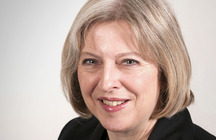
  • Matt Hancock – 2018 Speech to Conservative Party Conference

    Below is the text of the speech made by Matt Hancock, the Secretary of State for Health and Social Care, at the Conservative Party Conference held in Birmingham on 3 October 2018.

    It’s a real privilege to be Secretary of State for Health and Social Care.

    I love the NHS, and I want to talk about what we’re going to do to make sure it’s always there for you and your family…

    …in the way it’s always been there for mine.

    Last year, my sister Emily had a near-fatal brain injury.

    Her life was saved by the NHS at Southmead Hospital in Bristol.

    Last month, I had the chance to go, with her, back to Southmead and say thank you.

    They took us in from the helipad, where she’d been taken off the air ambulance …

    … in through A&E where they’d stabilised her…

    … and into the Intensive Care Unit.

    And as we went in, standing there, directly opposite, was the consultant who’d looked after her.

    Until that moment, she couldn’t remember anything about it.

    But when she saw him, she knew exactly who he was and went over and gave him a great big hug.

    It was an incredible moment.

    And when she thanked him, his reply will always stick with me.

    He said “It wasn’t just me, it was the whole team.”

    And that sums up our NHS.

    I love my sister, and the NHS saved her life.

    So when I say I love the NHS, I really mean it.

    But the truth is, they would have done this for anyone.

    For my sister – for yours.

    And what an honour it is to be in a position to be able to say thank you to the guy who saved your sister’s life.

    So my heartfelt thanks is not just from one brother to one doctor, or from one family to one hospital.

    No.

    The NHS is there for us all.

    And I want to say this,

    From everyone in this nation,

    To every person who works in the NHS:

    We salute you.

    We value you.

    And from the bottom of our hearts:

    Thank you.

    I’m proud of the NHS for what it’s delivering today.

    Cancer survival rates are at a record high.

    Strokes are down by a third.

    Deaths from heart failure down by a quarter.

    And the NHS is doing more than ever.

    39,000 more clinicians looking after patients than in 2010.

    12,000 more nurses on our wards.

    14,000 more doctors.

    1 million more seen by cancer specialists each year.

    2 million more operations.

    3 million more treated in A&E.

    And, the result of all this:

    At every age and every stage of life, people are healthier than ever.

    That’s what our NHS is delivering under this Conservative Government.

    But anyone who knows the NHS…

    … also knows there are serious pressures, because our population is ageing and we’re treating more people than ever before.

    I know this.

    It’s clear to anyone.

    Social care is under pressure too.

    I know the pressures.

    And we’re going to address them.

    Because I want us to make the NHS the best health service in the world.

    And today I want to talk a bit about how.

    First of all, it can’t be done without more money.

    The Prime Minister has committed an extra £20 billion over the next five years.

    £20 billion.

    It’s the largest, longest financial settlement in the entire history of the NHS, and it’ll underpin the NHS for the long term.

    And when people ask that we spell out our domestic agenda – you tell them this.

    We’ve taken this decision.

    We have made our choice.

    We have responded to the public mood and the clear needs of the service…

    …with boldness.

    Let me say: this policy is not without cost.

    I know that.

    And I know it’s audacious.

    But I profoundly believe it to be right, and I’m proud to serve a Prime Minister who believes it to be right too.

    This money comes on stream next year.

    But I want to help the NHS through this winter too.

    I’ve already provided funding for hospitals to make upgrades to their buildings to deal with pressures this winter.

    And I can announce that today I am making an extra £240 million available to pay for social care packages this winter to support our NHS.

    We’ll use this money to get people who don’t need to be in hospital…

    …but do need care…

    … back home…

    …back into their communities…

    …so we can free up those vital hospital beds…

    … and help people who really need it, get the hospital care they deserve.

    But money alone isn’t enough.

    We need to make sure that money’s well spent, by reforming the NHS and social care system too…

    … to make sure it’s always there for you and your family.

    So, along with the NHS themselves, we’re writing a long term plan to guarantee its future.

    And I’m hugely grateful to my departmental team who are working together with me on these reforms:

    Steve Barclay,

    Caroline Dinenage,

    Jackie Doyle-Price,

    Steve Brine,

    James O’Shaughnessy,

    Wendy Morton,

    Alex Chalk,

    and Maggie Throup.

    It’s great working as part of this team, pulling together.

    And I tell you this, as a party, we’ve got to pull together.

    Because we saw with Labour last week the frightening prospect for our country if we fail.

    They’ve got nothing new and every time their programme’s been tried, it’s failed and brought misery on millions.

    It’s our duty to make sure it doesn’t happen again.

    One of the major reforms we need to see is bringing new technology across the health and care system.

    And obviously I’ve been able to consult widely about this in the last few days…

    … because CCHQ’s given everyone my phone number.

    Of course introducing new technology can be bumpy.

    But the potential benefits are huge.

    But the NHS is still the biggest buyer of fax machines in the country…

    …maybe even the world.

    And this is putting even greater pressures on our NHS staff.

    In some hospitals a nurse still goes round with a clip board to find out where beds are in use and where they’re empty.

    It doesn’t have to be that way.

    In Derriford Hospital in Plymouth where I was on a nightshift with Johnny Mercer last week…

    … they’ve developed an in-house programme so everyone knows where the empty beds are all the time.

    Patients get better treatment and it’s so much easier for staff.

    So we’re going to sort out the technology in the NHS, because our NHS deserves better.

    Of course, it’s not just about sorting the IT.

    It’s about seizing the huge cutting edge opportunities.

    Let’s take one example.

    Today, it takes on average more than 5 years to diagnose rare diseases with endless tests and trial treatments.

    But thanks to the 100,000 genome project, now, by combining your own gene sequence with machine learning on others, you can be diagnosed in days.

    And what’s more, from just a swab of saliva, there’s the potential to design a drug specifically to treat your unique biological code.

    In this city, the university hospital is growing replicas of people’s cancers in the lab to test individual drugs to see if they destroy the cancer before subjecting the patient to that drug.

    It increases the chance of cure and it reduces the agony of unsuccessful treatments.

    It’s unbelievable and it’s happening right here in Birmingham.

    And I’m so proud that it’s thanks to a decision by David Cameron and this Conservative Government that this is happening at all.

    I want to go further.

    So I can announce today that we’re expanding our 100,000 genome project so one million whole genomes will now be sequenced…

    … with a long term vision of 5 million…

    … and I want to make it available to all.

    And what this means in practice for you and your family is this.

    From today, our brand new NHS Genomic Medicine Service will roll out access to genomic testing.

    So for everyone with a rare cancer, and for all seriously ill children, it’ll be available on the NHS…

    … so we’ll have tailor made treatments and tailor made drugs that are the best fit for a patient not a best guess.

    We’re leading the world, and I’m incredibly excited about this technology because of its potential to change lives for the better.

    It’s just one example. But it shows the kind of reform we need to make sure the NHS is the best health service in the world.

    But new technology is not enough to make the health and social care system sustainable.

    We need other reforms too.

    We’ve got to reform the system…

    …so we spend more time on prevention not cure…

    …with more integration between health and social care…

    …and more treatment closer to home.

    What I mean by this, is that the era of moving all activity into fewer larger hospitals…

    …and blindly, invariably, closing community hospitals…

    …that era is over.

    I want more services closer to the communities they serve.

    And I want us to empower people to have more control over their own health too.

    Whether it’s the rising risk of obesity, the scourge of gambling addiction, or the growing challenge of mental illness…

    …these problems, and the increasing demands they put on our health service, can only truly be solved by prevention as much as cure.

    We can’t go on treating them just as medical problems.

    We need to look after people as people, not just as patients…

    …and foster a culture less popping pills and Prozac…

    …and more prevention and perspiration.

    That includes acting on new evidence and interventions to support people with obesity and other conditions…

    …whether it be through prescribing exercise, the arts, or nutritional advice…

    …rather than yet more drugs and medical interventions.

    Or in the language I prefer to use – it’s common sense.

    We need reforms of social care too, to make it sustainable for the long term.

    So people don’t have to fear the risk of losing everything…

    … if for a reason outside their control they end up needing care when they’re old.

    Reform of social care is long overdue…

    … and we’ll publish a paper later this year setting out the progress we can make to give all people confidence and dignity in old age.

    And of course, we can’t do any of these reforms without our GPs.

    Our GPs are the bedrock of the NHS.

    They’re everyone’s first port of call.

    We need more of them, better supported, and better equipped.

    Prevention of ill health is nothing without primary care.

    So we back our nation’s GPs every step of the way.

    Now, I believe that this need for reform…

    …does not simply lie with the NHS or our social care system.

    We too, as a party, must be driven by this imperative of reform.

    We’ve always been at our best when we’ve been reforming…

    … when we look to the future.

    Who abolished slavery in the 19th century?

    Who delivered equal votes for women in the 20th?

    Who brought in equal marriage in the 21st?

    Not the Whigs, or the Liberals, or the Labour party.

    It was the Conservative party.

    Throughout history we’ve shown we’re at our best when we’re in favour of the future…

    … not fixated on the past.

    But it’s more than that.

    We can’t just be comfortable with Modern Britain.

    We’ve got to be the champions of Modern Britain.

    Pro jobs, pro business, pro prosperity…

    … helping everyone who wants to achieve…

    …to achieve their potential.

    We can’t fear the future…

    … we’ve got to embrace the future.

    We embrace the future or we embrace defeat.

    The Conservative party is the party that’s always understood the spirit of this great nation.

    That spirit today calls for opportunity for all…

    …without fear or favour.

    Now more than ever…

    … we’ve got to give it all we’ve got…

    … because our opponents are not resting either.

    So let us unite together.

    Let us embrace our NHS…

    … let us embrace reform…

    … and with everything we have…

    …let us serve this great nation we love.

  • Damian Hinds – 2018 Speech at Conservative Party Conference

    Below is the text of the speech made by Damian Hinds, the Secretary of State for Education, at the Conservative Party Conference held in Birmingham on 2 October 2018.

    Good afternoon everyone and thank you James for that introduction. James said a good education can do amazing things, and I certainly agree with that sentiment.

    You know whenever I ask anyone to think back to their education, what really made a difference for them when they were at school, you know I have yet to come back – to get the answer back – “it was a smart board” or “a text book” or “an exam” or “a scheme of work”. The answer that comes back is always about a person. People talk about Miss Smith, Mr Jones, Mrs O’Neil. Because education is all about that person standing at the front of the class. Those inspiring individuals, those 450,000 teachers that we have out there, they deserve and they have our admiration, our respect and our thanks.

    And you know since 2010, those teachers have made some amazing things happen. Assisted by the reforms initiated by my predecessors, by Nicky Morgan, Justine Greening and of course Michael Gove. We are back in the international top ten for primary reading. We have a reformed curriculum and examinations. We have thousands of schools that have been set free as academies. We’ve got 1.9 million more young people studying in good or outstanding schools. And the gap has been narrowed. The gap between the rich and the poor in attainment has narrowed at every stage and every phase from nursery school to university entry.

    Now, that is a record of which you can be proud. You should be proud. But you shouldn’t be satisfied. We should not be satisfied until we can say that we truly have a world class education for everyone. Wherever they come from, wherever they’re going and whatever route they’re taking through our education system. Until we have made sure that in every region and in every group of our society, opportunity is truly equal.

    And of course a world class education depends on our investment in the future. I say investment, because education spending isn’t just public spending. It is an investment. An investment in the future of those children going through our schools. Also an investment in the future of our country. And as you can see, we are strong investors in education when you look at us compared to other key comparator nations like the G7.

    We have also been investing heavily in the capacity of our system to ensure we have a good supply of good and outstanding places in our schools. In contrast to Labour, who cut 100,000 places in our school system in the years running up to 2010, by the end of this decade, we will have added a million school places to our system. And we think that when a school is a good school, when it’s giving a good education, and when it’s popular with parents, that school should be able to expand so that more young people can benefit from what’s on offer. That includes if it is a grammar school. And we also believe that there is and always has been a very important role in our system for faith schools and we will continue to invest in free schools that have brought such diversity and innovation to our system and I was proud to see another 53 free schools opening this term for the new academic year as well as the hundreds already open.

    I can see in the front row and – just give me a moment to introduce and to thank them – the brilliant DfE ministerial team, starting with Nick Gibb who has been there from the very start and has done so much to drive academic standards in our schools, and particularly the focus on early reading and phonics. Anne Milton with her infectious dedication to building up the skills base in our country, to apprenticeships and to colleges. Sam Gyimah, working alongside our excellent higher education sector and being such an effective voice for the student. Nadhim Zahawi, looking after early years and special needs and how we look after those children who are the most vulnerable in our society, those who are in care. And Lord Agnew, our minister in the Lords, who has brought his own expertise from a leading multi- academy trust to his role as Minister for the school system. We are also very lucky to be supported in Parliament by our team of David Morris, Jack Brereton, Anne-Marie Trevelyan, our Commons Whip Amanda Milling and James Younger in the Lords.

    Now, we are all spurred on by three key imperatives. The first is progress. Because we think and I know you think that it is self-evident that every generation should have better opportunities than the last. And you think that every year we need to raise our sights higher and we need to reach wider to make sure we unlock the talent and potential in every child in our country.

    Secondly, we know that on the education of this generation of children lies the future prospects and prosperity of our country. Because it’s productivity growth that allows people to be paid a little bit more each year and allows us to afford more for the excellent public services which we all value so much.

    Third, preparedness: being ready for whatever comes in an uncertain world. Part of this is about being ready to seize the opportunities that will come in global trade after we leave the European Union. But it is also about preparedness for the change that’s happening in the world as we speak. If you think about the technological advances that are happening at the moment. If you think about artificial intelligence, voice computing, the internet, advanced robotics. Any of these on their own could constitute a revolution. But right now they are happening all at the same time. And so we’ve got a pace of change that is truly unprecedented. Now, people sometimes talk about all this technological change in the world as a threat and something to be overcome and there are issues to deal with. But it is an opportunity for those who are ready, those who are equipped to take advantage of this change and we need to make sure that this country is one of the countries that seizes technology and makes it work for us, not one of the countries that technological change gets done to.

    So to deal with these challenges, to take the maximum advantage of these opportunities, now more than ever before, we need a focused and sustained plan for education and skills.

    That starts with academic standards. And the way that the knowledge economy has developed and with the emerging superpowers of the economies of the east, we can’t afford any let up on academic standards and we need to go further and we need to make sure we are putting enough emphasis on the subjects of future, for the global Britain of the future in this changed world. So we need to think about the languages of mankind and the languages of machines.

    We also need to make sure that all our young people leave our education system with the basic essential skills that they’re going to need with them in life whatever path they end up taking, whatever job they ends up doing. Central to that is English and Maths. We have made a lot of progress on English and Maths. But we need to go further. Today, I’m announcing 32 primary schools and 21 colleges which will act as centres of excellence to spread best practice respectively for early literacy teaching and the teaching of Maths aged 16 and above.

    We also know and any teacher will tell you that good teaching and learning relies on a calm classroom. Pupil behaviour is absolutely essential. And so I’m also announcing today a further £10 million to support the spreading of best practice and knowledge on behaviour management and classroom management so that can be very widely deployed.

    Now, I think we can say that there are genuinely large parts of our academic system which are truly word class. Many of our state schools, large parts of our university sector, are world class but there is another area which in years gone by has not had enough focus. I’m talking about technical and vocational education, which for decades has not had as much attention as it should. We have already made great strides forwards increasing the quality level of apprenticeships and with more people starting on higher level apprenticeships and even degree level apprenticeships.

    You will have heard the announcement yesterday that we’re going to accelerate the process of moving on to these higher standards, employer-set apprenticeships that young people benefit from so much.

    You have all heard of A Levels right? Tell me yes. You’ve all heard of A Levels but you may not yet have heard of T Levels? Who has heard of T Levels? Good, well those of you who haven’t yet, you will do soon, because within a couple of years we are bringing in this new qualification for 16 to 18 year olds called the T Level. It will be a direct alternative to A Levels, but focused on those key vocational subjects. Today I’m announcing a £38 million capital pot to make sure that the colleges teaching those first T Levels from 2020 can do so with really world class equipment and facilities.

    And you also know how important careers advice is and guidance for young people and the key role that is played by careers advisers in schools, and so we are also going to be doubling the number of trained careers leaders in schools so young people are aware about all those different routes. So they don’t think there is only one route they can take to success and they are aware of all the different career options available to them.

    We are also going to be reviewing the higher level qualifications, those at so-called level four and level five, that are the direct alternative to going to university for young people at 18, and we carry on our design work on the national retraining scheme, so that all throughout their lives people have the opportunity to upgrade and change their skills, so that lifelong learning stops being a phrase and starts being a reality.

    Now, qualifications are clearly an absolutely essential part of education. They are, if you like, the paper passports that you leave school or college or university with, and take with you into your career and into your life. But they are not the whole of the story, and I invite you now to think back to the kids you were at school, and see if you can remember one that left school with nothing or next to nothing, by way of GCSEs or possibly, in some cases, O levels, depending on our age. Someone who came away with almost nothing in qualifications, but they still went on and did something really quite amazing in life. Can anyone think of that person? I am going to suggest to you that quite often what makes the difference is something that we might call character. Something that you will never see on a certificate of education, but you know it when you see it. I mean things like determination and drive. I mean the tenacity to stick with the task at hand, and the ability to bounce back from the knocks that life inevitably brings. Now these character traits are closely connected with something I hear all the time about from employers. So-called workplace skills. Things like teamwork. Commitment. The ability to look at the customer in the eye, and want to make the sale. Character is also connected to general health and well-being, and we are much more aware of this area, and rightly so, in the education sector now than in decades gone by. That’s why I am pleased that we are going to be introducing mental health education into schools within the next couple of years.

    Now actually, I don’t think you can just walk into a class of 28 kids one day and say today, we are going to learn about character. Today we are going to do drive and determination. Of course you can’t, but these are things you pick up a lot from what happens at school, and in particular, I think, extracurricular activities play an important part. So I’m going to be working closely with Jeremy Wright on the new youth performance partnerships, and working with Gavin Williamson to make sure that more young people can get involved with the cadets. And for many young people, it is sport that really unlocks their talents and potential. In the last few years, we have been able to commit, to vote over £900 million to the primary sports premium. And now, working together with Tracy Crouch, the Sports Minister, we are going to be bringing in a new cross Government initiative for a school sports action plan, to make sure that sporting opportunities, and we will do this together with bodies like the RFU, with the Premier League, and with England netball, making sure that those opportunities are spread as widely as possible and that every child is able to benefit from what sports can bring.

    Ladies and gentlemen, like many of you, I have been coming to this conference for many years, and in all those years that I have been coming, as a YC, an activist, a Parliamentary candidate and more recently as an MP, I think around the corridors and conference centres like this, and around the fringe events, and the cafes and the bars, I think I have heard more conversations about education than I have about anything else, because we Conservatives know that education is the key to the future.

    It was the first One Nation Conservative, the original, Benjamin Disraeli who said, “Upon the education of the people of this country, the fate of this country depends.” Since then, it has been Conservatives who have most resolutely acted upon that. From Balfour to Butler, from Baker to Gove.

    But you know as we stand here today in 2018, we can’t take for granted what has been achieved since 2010. Because we learnt from Liverpool last week, that the Labour Party wants to put it all at risk. They want to undo our reforms and turn back the clock. I was thinking about what a parent would think as they heard the speech of the Shadow Education Secretary, when she said she wanted to take all publicly funded schools back into Council control, back into what she called the ‘mainstream public sector’ with what she called a ‘common rule book’. Well you know, for a parent whose child has been thriving at a free school or an academy, how they must have shuddered when they heard those words. But ladies and gentleman, we will stand up for those families, we will defend the right for those children to have an outstanding education, because while Labour go off on their ideological journeys, that child only has one chance at their education and they deserve the very best.

    So far from going backwards, ladies and gentleman, we need to move forwards with our reforms. We need to ensure that the vocational and the technical, are absolutely on a par with the academic. We need to make sure that we extend our reforms in all regions, in all parts of the country. That all parts of our society have equal opportunity, that everywhere we see raised expectations and raised aspirations, and when that happens, then we will be able to say, this is a world class education for everyone. Thank you.