Tag: 2017

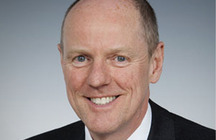
  • Nick Gibb – 2017 Speech at the Policy Exchange

    Below is the text of the speech made by Nick Gibb, the Minister of State for School Standards, at the Policy Exchange on 30 November 2017.

    Over the past 7 years, the school system has seen dramatic improvements. Teachers and headteachers have been given greater control than ever before; leading free schools and academies are shining a light on what works; and a renewed focus on the importance of core knowledge has seen the first signs of a return to textbooks.

    Since 2010, there has been a transformation of England’s education system. The quality of education received by England’s pupils has improved dramatically, with 1.9 million more pupils taught in good or outstanding schools than in 2010.

    The proportion of pupils studying at least two science GCSEs has risen from 62% to 91% since 2010, better preparing them to compete in a global 21st century marketplace.

    And the accountability system has been overhauled, turning attention away from an obsessive focus on the C/D borderline towards ensuring that all pupils make as much progress as possible. The focus pre-16 has rightly returned to ensuring that all children are taught a broad and balanced academic curriculum.

    Whilst the government is determined to ensure that there is a stretching and prestigious technical route for pupils post-16, we know that a knowledge-rich academic curriculum pre-16 is the best preparation for success whatever route a pupil chooses to go down. That is why 96% of non-GCSE and IGCSE qualifications have been removed from the school performance tables since 2010.

    As well as removing qualifications that do not serve the best interests of pupils, we have incentivised greater take-up of GCSEs that do prepare children for the next phase of their education. Thanks to the EBacc, we have seen dramatic increases in the proportions of pupils studying core academic GCSEs.

    We know that lower participation from disadvantaged pupils in these core academic subjects can negatively affect social mobility. Yet overall, disadvantaged pupils remain almost half as likely to be entered for the EBacc subjects as their non-disadvantaged peers, and the gap in EBacc subject entry persists even among the most academically able disadvantaged pupils.

    That is why the government has announced plans to have 75% of Year 10 pupils working towards the EBacc by 2022 and 90% of Year 10 pupils working towards the EBacc by 2025.

    A recent paper from the Institute of Education found that:

    Students pursuing an EBacc-eligible curriculum at 14-16 had a greater probability of progression to all post 16 educational outcomes, while taking an applied GCSE subject had the opposite effect.

    There were no social class differences in the advantages of pursuing an EBacc-eligible curriculum which suggests that an academically demanding curriculum is equally advantageous for working class as for middle class pupils.

    The government has been determined to drive up standards since taking office in 2010. In order to do so, there needed to be a focus on the system-wide options available to government, such as the accountability system.

    But real change in education is driven by what happens in the classroom. In particular, what is taught to children and how effectively it is taught. Incentivising subject choices that leave open a wide array of technical and academic options post-16 is an important component of this. But so is the content of each subject.

    The past decade has seen the emergence of a teacher-led drive to put ‘core knowledge’ at the heart of the curriculum. Influenced by the work of the great American educationalist E. D. Hirsch – who spoke at Policy Exchange in 2015 – the concept of ‘cultural literacy’ has gained currency.

    Classroom teachers concerned about the deleterious effects of the 2007 skills-based curriculum expressed their dismay at the unsubstantiated ideological drive to focus on supposedly transferable, cross-curricula competencies.

    In ‘7 Myths About Education’, Daisy Christodoulou expertly dissected the commonly held belief that teaching transferable skills is desirable and possible. It is neither. As a result of her concise and devastating assault on the edu-myths that pervaded so much of education, the importance of domain knowledge is now much more widely understood.

    Rob Peal documented the history of progressivism’s expansion and domination of all corners of the education system in his polemic ‘Progressively Worse’. From Plowden and the later sweeping aside of the Black Papers, to the subversive takeover of the national curriculum project and the ideological conformism demanded by so many local education authorities, the damage inflicted on children was laid bare.

    This teacher-led movement continues today. A vocal minority has formed an online community, fighting back against those who seek to return to the past. Winning converts as they go, these teachers have set the stage for important changes in classrooms all over the country. They have shifted the Overton window, as can be seen from the changing narrative of those whose influence they continue to push back.

    The review of the national curriculum – led by Tim Oates – took place in this wider context. It overhauled a curriculum that was not fit for purpose, raising the bar for what was expected and putting knowledge back at the heart of schooling.

    The new national curriculum insists that children should know their times tables by the end of Year 4. This is being supported by the introduction of the multiplications tables check, announced in the primary assessment consultation response earlier this year.

    Work is underway to ensure that the Key Stage 2 reading assessment draws from the wider curriculum to help ensure that all children are being taught a broad and balanced, knowledge-rich curriculum that builds their wider vocabulary and best-prepares them for the rigours of secondary school.

    From the high bar set by the national curriculum, innovative academy chains and leading free schools have built and are iterating demanding curricula. Take the Harris Federation, which recorded some outstanding results this year; 3 of their schools registering progress 8 scores above 1.

    Time and again, when the strongest multi-academy trusts take over a failing school they turn it around. A stretching knowledge-rich curriculum and high behavioural expectations for all does work.

    And there are a growing number of academy trusts and free schools demonstrating that academic excellence need not be reserved to London. This year, Dixons Trinity Academy in Bradford registered a progress 8 score of 1.22, putting it in the top 10 for progress achieved, demonstrating that geography need be no barrier to academic achievement.

    Leading academies and free schools show what it is possible to achieve. They provide an evidence base for other schools to learn from. Year on year, as new secondary free schools reach their fifth year and their first set of GCSE results are published, it is becoming ever clearer what works in education.

    Leading free schools and academies ensure a meticulous focus on developing coherent, well-functioning systems that save time and money, so that teachers can focus on what is important. In turn, greater focus is given to the detail of what is done in lessons.

    Too often, those seeking to inform national education policy and those commenting on it miss the lessons that can be learnt from what the leading schools are doing. There is a pre-disposition to discuss the education system at the level of school-accountability or school structures. In turn, too little focus is given to what happens in the classroom, where so much attention is paid by these leading multi-academy trusts.

    The reading revolution that has occurred in this country over the past 7 years has dramatically improved the education of hundreds of thousands of children. This year, there are 154,000 more children on track to be fluent readers than in 2012 thanks to the introduction of phonics.

    The success of this policy is a victory for evidence over dogma. And it is a policy that other countries are seeking to replicate; as a result of the success enjoyed in England, Australia is looking at adopting the same evidence-based approach to early reading instruction.

    However, appreciating the true scale of what has been achieved thanks to the phonics reforms requires an understanding of what difference has been made in the classroom.

    We supported teachers to adopt evidence-based approaches to teaching early literacy by providing matched-funding for phonics resources and through the dissemination of best practice across the country. Consequently, the views of teachers about reading instruction slowly began to change.

    By 2013, about two-thirds of primary teachers surveyed by the government agreed that using systematic synthetic phonics was important. Our reforms have been successful only because the intervention we are promoting – systematic synthetic phonics – works, and has decades of international evidence behind it.

    Without the drive to promote the evidence in favour of phonics and change perceptions and practice in the classroom, the policy would not have been such a dramatic success.

    The question that should be at the forefront of a policymaker’s mind is: how is this going to change what happens in the classroom? This question is certainly at the centre of my thinking, as can be seen from the adoption of two important policies from top performing jurisdictions in the Far East:

    The introduction of Teaching for Mastery, adopting and adapting Shanghai’s approach; and

    The re-introduction of textbooks into classrooms, drawing on the success of Singapore.

    Thanks to the work of the teacher-led maths hubs, we now have 281 Mastery Specialists, working in 789 schools. By 2023, we expect 11,000 primary and secondary schools to be involved in the Teaching for Mastery programme. This teacher-led programme takes important aspects from the pedagogy that characterises the successful East Asian approach to maths teaching and translates it to English classrooms.

    The national curriculum has raised expectations for primary schools and the evidence-based Teaching for Mastery approaches provide teachers with the tools they need to meet these expectations, exemplifying the important relationship between system-level and classroom-level in delivering successful policies that change what is happening in the classroom.

    A key lesson that we have taken from the success of the Far East is the importance of textbooks. We know – thanks to the work of Tim Oates – that top performing jurisdictions have high-quality textbooks that work coherently with the curriculum.

    In Why Textbooks Count, he makes clear the stark differences in our approach to textbooks and those of the highest performing jurisdictions. In England, only 10% of pupils’ teachers use maths textbooks as the basis for their teaching compared to 70% in Singapore.

    Textbooks provide the detailed knowledge implicit in the national curriculum programmes of study, which are succinct and broad descriptions of the content that needs to be taught. For example, the Key Stage 2 Science Curriculum requires 9-year-old pupils to be taught that “unsupported objects fall towards the Earth because of the force of gravity”. This could be taught superficially or in a way that conveys a genuine understanding of the science involved. Herein lies the power of textbooks.

    But despite their importance, textbooks have been on the decline for a long time in England’s classroom. Ideological hostility to the use of textbooks, particularly in primary schools, developed in the 1970s. Their replacement with work sheets and hundreds of thousands of bespoke written lesson plans has added to teacher workload, detracted from coherence and negatively affected standards. But this long term movement away from the use of textbooks might be about to go into reverse.

    Thankfully, the last few years has seen a number of high quality textbooks come to the market to support the new national curriculum. Responding to the demands of the new national curriculum and demands from primary schools for Teaching for Mastery materials, publishers are again writing knowledge-rich textbooks.

    The latent demand for textbooks has grown over the past few years. The online curriculum debates centred on the role of knowledge organisers – led by the likes of Jon Brunskill and Joe Kirby – is evidence of interest in how knowledge can and should be sequenced and presented to pupils.

    And increasingly, teachers like Robert Orme and Robert Peal have taken to writing their own textbooks. Drawing on the international evidence, these materials – honed in their own classrooms – are returning the textbook to the heart of schooling.

    History and Religious Education have such a wealth of stories, characters, events and places that should be common currency for all. Textbooks are crucial for translating the framework of knowledge outlined by the national curriculum and bringing it to life.

    The best textbooks do not recommend activities, prescribe schemes of work, take up space with enormous images, or offer guidance on writing style or exam technique. Those are all things teachers can do, and often enjoy resourcing.

    Instead, they provide something teachers will always struggle to create on their own – high quality, considered, extended prose pitched ambitiously, but not unrealistically, which can form the basis for lessons and schemes of work.

    The textbooks being launched tonight do just that. They are a bridge from the national curriculum that enables teachers to build the cultural literacy of their pupils and introduce them to the ‘best that has been thought and said’.

    The new national curriculum was crucial for raising the bar and returning knowledge to the heart of schooling, but the teacher-led move back towards textbooks will be integral to ensuring that the national curriculum is as effective as we hoped.

    They are yet another example of the focus that is needed on what is happening in the classroom. The government recognises the importance of textbooks, and will continue to support the development of high-quality, knowledge-rich resources. Already, work has begun on the curriculum fund announced in the manifesto, which will encourage Britain’s leading cultural institutions to develop knowledge-rich materials for our schools.

    By focusing on how to support teachers to further improve what is happening in the classroom as well as the macro issues of the school system – such as the accountability system – the government is determined to build on the success of the past 7 years and ensure Britain is fit for the future.

    Thank you.
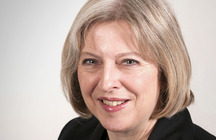
  • Theresa May – 2017 Speech on World Aids Day

    Below is the text of the speech made by Theresa May, the Prime Minister, on World Aids Day on 1 December 2017.

    On this thirtieth World AIDS Day, I am proud to wear the red ribbon in support of everyone living with HIV.

    Since the first World AIDS Day in 1988, treatment and care for people with HIV has been transformed.

    Men and women who a generation ago would have been lost are today leading happy and productive lives, and making an enormous contribution to our world.

    Valued colleagues and neighbours, much-loved children, friends, and partners are a living testament to how far we have come.

    And if we can succeed in making testing and treatment available to all, a final end to HIV transmission and the reality of an AIDS free generation is within our grasp.

    As we continue our work towards that goal, we must also bring an end to the stigma which still blights the daily lives of many people with HIV.

    This stigma leads to social isolation, lowers self-esteem, and damages mental health.

    No one should have to face it – and we all have our part to play in stamping it out.

    So on this World AIDS Day, as we remember all those we have lost, and redouble our efforts to end HIV transmission, let’s vow to support everyone who is living with HIV.

    And together, let’s end the isolation and end the stigma for good.

  • Paul Maynard – 2017 Speech on Transport Investment in the North

    Below is the text of the speech made by Paul Maynard, the Parliamentary Under Secretary of State for Rail, at the North of England Transport Summit at the Royal Armouries on 30 November 2017.

    Introduction

    I’m really pleased to have been asked to deliver the closing address at today’s conference.

    And what a choice of venue.

    I hope there is no deliberate symbolism in asking a Westminster politician to talk to a northern audience about investment in the north in a building devoted to medieval warfare, hunting and instruments of torture.

    Before anyone gets any ideas, let me make absolutely that clear I am a northerner as well – both in terms of where I grew up and who I represent in parliament.

    And very glad I am too that these days we decide which regions get what resources through sensible means, such as consultation exercises, elections and civil dialogue.

    Investment debate

    Even so, the truth is that anyone who follows the debate about transport investment in the north might have got the impression that, of late, things have become somewhat gladiatorial.

    Well, my view is that that, in itself, is no bad thing.

    In fact, one of the reasons that the government pushed hard for metro mayors, and for the creation of sub-national transport bodies like TfN, and why we’re making good progress on giving statutory status to TfN, is because we want regions across the UK to speak with a more powerful voice.

    So if we’re hearing free and frank debate, including at conferences like this one, something’s going right.

    Our record

    But no one should mistake that debate for a divergence from our shared goals – that of building a transport-fuelled Northern Powerhouse.

    Or still more serious a mistake – that the government is somehow washing its hands of transport in the north.

    Because speaking as a northern MP who now has a seat in government, it’s incredibly exciting to have a hand in delivering the things I called for when I was a backbencher.

    When I took up the rail brief 17 months ago, there was already good progress underway.

    In 2014, 15 minutes had been knocked off the journey between Liverpool and Manchester by upgrading the track.

    In 2015, electrification of the route between Liverpool and Wigan was completed, securing quicker, more reliable journeys.

    We upgraded Manchester Victoria, and built new stations at Kirkstall Forge and Apperley Bridge.

    In 2016, we awarded new Northern and TransPennine Express rail franchises, which will deliver new trains, 500 new carriages, over 2,000 extra services, and room for 40,000 more passengers per week.

    These new franchises mean that, by 2020, rail travel in the north will have been transformed.

    All the trains will be brand new or completely refurbished, and all the Pacer trains will be gone.

    Also in 2016, we committed £60 million for TfN to develop plans for Northern Powerhouse Rail.

    And this year, we opened the Ordsall Chord, connecting Manchester’s three main railway stations for the first time; all part of the Great North Rail Project, on which we are spending over a billion pounds to deliver better services across the north, with more seats and faster journeys.

    Still to come

    And there are many more important rail projects underway right now.

    The upgrade of Liverpool Lime Street station.

    The extra services between Blackburn and Manchester, Bishop Auckland and Darlington – starting next month.

    Next year, upgrades between Manchester and Blackpool via Bolton and Preston will be complete.

    Followed by a new fleet of Azuma Class 800 trains on the East Coast Main Line.

    And we’re working with Network Rail and Rail North on options for upgrades between Manchester, Leeds and York to deliver more seats and faster journeys.

    I could go on – but I think the point is clear.

    That’s the to-do list of a government taking very seriously its responsibilities towards northern transport.

    And I haven’t even mentioned the billions we are spending on northern roads.

    Recent announcements

    Now, I hope these projects will be familiar to most people in the room.

    But I’d also like to touch on some recent announcements that might be less familiar.

    Such as the Rail Strategy we announced yesterday.

    The HS2 productivity report also out today.

    The Transforming Cities Fund, announced in last week’s budget.

    And the new Nexus rolling stock announcement for Newcastle, Gateshead and Sunderland.

    Rail strategy

    Let me take the rail strategy first.

    It’s a story that begins with privatisation, over 20 years ago.

    On all the measures that matter most, privatisation has succeeded.

    We have one of the most improved railways in Europe, and the safest.

    Passenger numbers have more than doubled.

    In the north, too, whether one is looking at journeys within the different regions of the north, or to and from the north and elsewhere in the country, passenger numbers are all significantly up over the last 20 years.

    Today, for instance, TransPennine Express is one of the country’s fastest growing operators.

    But just because something has worked, doesn’t mean it can’t be improved.

    I understand why the railways were privatised in the way they were, with the trains and the tracks split into separate companies.

    But the railway of the mid-1990s is very different from that of today.

    And delivering the kind of improvements I’ve been talking about on a working railway is tough.

    Doing so across different teams with complicated contracting arrangements is even tougher.

    And when things go wrong, a lack of a joined up approach can make things much worse for passengers.

    Solutions can take too long.

    Communication with passengers is poor.

    Train companies take the blame for the failings of Network Rail.

    And Network Rail as an infrastructure company has not always been incentivised to focus on the best possible customer service.

    So last year we announced that we would start bringing back together the operation of track and train on our railways.

    And today I am very pleased to announce that, as part of our reforms, the first line on which track and train operations will be jointly run will be the East Coast Main Line, connecting London, Yorkshire, the north east and Scotland.

    From 2020, we’re going to introduce a new generation of long-term partnerships between the public sector and a private partner.

    Both track and train will be operated by a single management, under a single brand and overseen by a single leader.

    It will mean a better railway, better able to meet today’s challenges.

    Whether it’s planning essential repairs, putting in place improvements that can squeeze in an extra service to meet demand, or responding quickly to a problem on the network – the line should be much better run by one team of people working together.

    HS2

    Let me move on to talk about HS2.

    Today we’re publishing a report written following discussions with 100 employers, local authorities and universities across the country.

    It sets out how HS2 will improve northern productivity by raising regional growth, leading to a wider range of jobs and careers, which in turn will make it more attractive for graduates to stay in the north – among many other benefits.

    But one thing that is very clear is that both central government and local public bodies of all kinds need to work together and plan ahead for HS2 if we are to maximise its benefits – whether to housing, education, local businesses or anything else.

    HS2 is coming.

    It’s going to transform travel in our country and in the north.

    And local areas need to get HS2-ready.

    Nexus trains

    That’s some of what we’ve announced today and yesterday.

    But there were also some big announcements for the north in the budget last week.

    Foremost among which is our commitment to spend £337 million replacing the 40-year-old trains on the Tyne and Wear Metro.

    The Metro was Britain’s first light rapid transit system and first step-free railway.

    Today it remains the second largest metro system in the country.

    But its trains are showing their age.

    So Tyne and Wear is going to have a new fleet, with the first deliveries coming in 2021 – creating a state of the art Metro once again.

    Transforming Cities Fund

    The other big announcement in the budget was the government’s new Transforming Cities Fund.

    And it’s an idea inspired by this city.

    Leeds has long had ambitions to improve transport across the city – ambitions the government shares.

    So when a proposed a trolleybus scheme didn’t get the approval it needed last year, we pledged to put £173 million into an alternative.

    First Group and local leaders since raised an extra £100 million on top.

    Now Leeds is getting:

    – new buses

    – new park and ride sites

    – real-time information for passengers

    – and accessibility improvements

    The aim is to double bus patronage in Leeds within 10 years.

    And what’s worked in Leeds can work elsewhere, so last week the Chancellor unveiled our new £1.7 billion Transforming Cities Fund.

    Half to be shared by the 6 areas with elected metro mayors.

    With other cities in England to bid for the remainder.

    Liverpool City Region will get £134 million.

    And Greater Manchester £243 million.

    Just like in Leeds, we want the money to drive productivity and spread prosperity, by improving local transport links and making it easier for people to get around and access jobs.

    And we want changes that benefit every citizen, especially those struggling at the margins.

    It will be up to cities to tell us what improvements they want, but we want truly transformational changes.

    Conclusion

    So I hope those remarks are sufficient to suggest that the government hasn’t quite given up on the north just yet.

    In fact, we’re only just getting going.

    But suffice it to say, for now, that in coming months and years, we are going to be working with the north and for the north.

    There’ll be plenty of debate and discussion on the way.

    But during my time in the job, I’ll be focused on deeds.

    On delivery.

    That’s how we’ll all be judged in the future.

    On what we, working together, do for the north.

    Thank you for your time.

  • Justine Greening – 2017 Speech at Skills Summit

    Below is the text of the speech made by Justine Greening, the Secretary of State for Education, at the department’s skills summit on 30 November 2017.

    I’m delighted to welcome you all to this inaugural Skills Summit here at the Department for Education.

    It’s fantastic to see businesses of all sizes and sectors, from up and down the country, representing all kinds of industries here today. As well as some key players from across the education sector.

    I’d like to thank the CBI for their support in organising this event, and particularly to Carolyn Fairbairn for her leadership on the skills agenda.

    On Monday, we launched an Industrial Strategy aimed at making a Britain that’s really fit for the future for our country and our economy, competing on the global stage, and thriving in the 21st Century.

    This strategy recognises that while we must invest in machinery, in buildings, in roads and in technology…this will count for nothing unless we also invest in our biggest asset and that the investment works – for our own people, our home-grown talent that we have in this country.

    Because, of course, in the end it’s the people who get in the cars on those new roads, who log on to the 5G network, who operate that high-tech machinery and it is their wherewithal that will make the difference to this infrastructure and as to whether the investment really counts or not.

    It’s no secret that this country needs more skilled workers. And if you look at digital skills alone, businesses will need an estimated 1.2 million new workers by 2022. Whether that’s experts on cyber security, mobile and cloud computing or big data.

    And, if we’re honest, this country’s historic failure to address these skills shortages has meant that too often we’ve imported talent and people – instead of building up our own.

    And that has to change.

    Because we’re not just talking about a skills shortage for the economy it’s more than that – it’s millions of opportunities missed for people.

    And the real tragedy here is all those people who could have been that engineer, that doctor, that computer programmer…who, perhaps, could have been another James Dyson or Tim Berners-Lee. They’re not – not because they didn’t have that potential – they absolutely did, but because we didn’t have a country that connected them up with that opportunity.

    The human story of what might have been is why the skills gap also matters hugely for the left-behind communities in this country, where young talent so often languishes or leaves.

    Britain has talent and it’s spread evenly across the country – the problem is that opportunity isn’t.

    Where you are born, live, go to school and work still directly affects where you get to in life and how well you do.

    Like for many people, when I was growing up in Rotherham. My parents lived where their parents lived…I grew up with them being round the corner. But I always knew it would be difficult for me to stay in the same place to get the opportunity I wanted. But people shouldn’t have to move miles away from their families. That’s how it was for me, and worst of all that’s still how it is today. Again, that has to change. Opportunities have to be on people’s doorstep.

    And if we’re going to make the most of ourselves as a country, and make Brexit a success then we have to make sure every person and every place is fulfilling its potential. It’s a social imperative as well as an economic one.

    Social mobility. Equality of opportunity. This is my and my department’s guiding mission and we will soon be launching an overarching plan setting out the concrete, practical actions we will take on key areas.

    I’m clear that, ultimately, we tackle the skills deficit when we tackle the opportunity deficit. This is how we build a Britain that is fit for the future and a Britain that works for everyone.

    So we need to make a new offer to our young people – a universal offer on opportunity, so that everyone can reach their potential, regardless of their background or where they live.

    And I feel the opportunity deficit is at its biggest on skills. Here in this room, I believe there is both the power and the intent to help deliver a much needed skills revolution for Britain…a revolution that could transform the social landscape of this country, by bringing opportunity to every doorstep and finally, at the same time, delivering the skills British business needs.

    Of course, this is not something government can do alone… and we need business and education to form a new alliance – a deep, strategic, mutually beneficial partnership between business and education, educators and employers: this will be one team for skills.

    This government is investing in education and skills, and in fact today there are new stats out that showed now 1.9million more children are in good or outstanding Primary or Secondary schools in England. Crucially, we have committed to building a first class technical education system for the first time in the history of Britain…

    We kicked this off already with our major overhaul of the apprenticeship system. And in fact, even since May 2015, we’ve had 1.1million people starting on apprenticeships. They go right up the ladder.

    We’ve introduced new degree-level apprenticeships where you earn while studying for a degree.

    Through the levy we are also giving employers greater control over the training an apprentice gets, and we want employers to become demanding customers in the training market to develop quality candidates better and faster.

    I want this government to continue to work closely with you to help you make the most of the opportunities the levy can bring for you and your workforces – but also to make sure that the levy works effectively and flexibly for industry, as we set out in the budget.

    In the greatest shake-up of further education in 70 years we are introducing new T Levels for 16 to 19 year olds, an alternative to A Levels focused on practical, technical skills which will include a mandatory three month work placement.

    Indeed, today we are also publishing a full consultation on the detailed design and implementation of these T Levels, and we’re also announcing the full list of our T Level panels, for the first 6 T Level routes.

    Today we’re also announcing the launch of Institutes of Technology, with a funding pot of £170million pounds to draw on.

    We want successful bids to be a successful collaboration between employers and education, as well as local further and higher education providers

    We are also launching the first of our Skills Advisory Panels in regions across the country, they’ll be in Greater Manchester, West Midlands, Cornwall and the Scilly Isles, Greater Lincolnshire, Lancashire, Leeds and Thames Valley.

    We are introducing a National Retraining Scheme and we have so far committed over £100million to career learning pilots and initiatives on digital and construction skills.

    Today we’re announcing £10 million for a set of pilots in areas including Leeds, Devon and Somerset, Lincolnshire, Stoke-on-Trent and the West Midlands, to test the best ways of incentivising adults to train in the skills that their local economy needs.

    I think all of this is adding up to a fundamentally different offer to young people and to everyone in the workplace – to develop the skills they need and we need to play their part in Britain’s high tech future.

    I know that this isn’t the first time a government has promised to solve Britain’s perennial skills problem.

    So why have these well-intentioned efforts always failed?

    Well, maybe part of it’s been too much chopping and changing on policy. But most of all, I think it’s because previous efforts never fully got employers on board…and there were too many employers who were happy to let government try to fix the skills problem and didn’t want to be part of the solution as well. That approach didn’t work, and couldn’t work.

    And this didn’t, couldn’t, work.

    So that’s why we are putting you, the employers, at the heart of the reform.

    To be frank, everything I’ve set out today and the discussion we have today lives or dies on the strength of your involvement and commitment, to work in partnership.

    It’s businesses – big and small – that can uniquely motivate and inspire people in our schools, its businesses that can show people the path into careers, like Mamuda set out, that never thought were for people like them. All are crucial for the skills revolution and our policies need to help the global multi-national and the one-man start up.

    Today is your chance to help us do that. Our workshops will focus on: how we can make T Levels work for business, delivering the important T Level work placements, Further Education teaching we want you to look at how you can work with us and improve that quality and consistency, and of course we do what workshops on apprenticeship reforms and adult learning. This is your chance to challenge and offer ideas, as our Permanent Secretary just said, on how we can do better.

    But in return I want you to make a commitment – to work with us, to sign up to a new skills partnership and to make a better offer to young people, whatever their background.

    So far 36 leading companies have done this and I hope that more will follow and sign up to our statement of action. We recognise that partnership can’t just be about words though, it has to be about actions. What I want to see is a race to the top, companies showing leadership on skills.

    Actions like GF Tomlinson who give children in Derby insight into careers in construction through mock interviews, site visits and work experience.

    Actions like Kier who have an army of more than 200 volunteers working with young people to help them decide what career path they want to follow.

    This is about a culture change for business, a mindset shift. And if we really are to have a skills revolution it cannot be business as usual.

    It’s about providing high quality apprenticeship,

    It’s about providing high quality work placements. We talk to them and they are crying out for this. Many of you are the converted already, but we want to talk to you to have that discussion and debate. I want young people to see business as the solution to get the education and opportunities they want.

    Employers always say practical work experience – but not enough businesses offer it. How can we work together to change that? Today is your chance to tell me and my team.

    Later this year we will publish our new careers strategy to help young men and women get practical advice and experience of the widest possible jobs and workplaces so their choice of a career is really based on what they know and experiences, not some wrong preconceived notion of what they are and what they aren’t capable of. I never thought I could be a lawyer or do a law degree, as I had never met a lawyer. You are the credible voices that can bring this to life for them.

    This is how you can get the biggest and the brightest candidates. Take engineering – according to Engineering UK, just one in eight roles are filled by women – you won’t plug the skills gap in this industry without tapping into the other half of the population. It’s probably one of the easier way to get more people into that job where there is a shortage.

    I’d also like to see more industry experts actually going into colleges and teaching. What more credible voice is there for a young person in a college that a person who is part of the industry they are interested in. That’s what the skills training and T Levels is all about – bringing those things together.

    Finally, we need every business to instil a culture of lifelong learning through their organisation, to invest in learning and development, from the people already at the top all the way down the organisation. We all know the changes the economy and technology will have. Which is why we must look at the national training scheme – and that starts with businesses. From people at the top right through the way down. It’s a lot isn’t it, what I’ve set out? And this is out of the comfort zone of many. I get that as much as anyone sat round the Cabinet table – and I know that has to change, and businesses have to step out of the comfort zone if we’re really going to plug the skills gap for good.

    In conclusion, I wanted to bring you here to Sanctuary Buildings today to send a direct message to employers –at DfE, our doors are open to you.

    This government believes in business – we see you as the solution. Business has helped to make our 21st century lives longer, more connected, more convenient. We see you as the solution and we want more young people to see you as a solution.

    So we’re throwing down the gauntlet to you today: Come with us on this journey. Bring the innovation, the creativity, the commitment that has made British businesses the best in the world and help us develop apprenticeships, T Levels, careers advice schools and adult learning…

    Join a skills partnership to create the workforce this country needs.

    This is about people, it’s about places – it’s about all of us doing better and ending the opportunity deficit in this country.

    We all have a part to play in that – and we all need to rise to the challenge.

    Thank you.

  • Theresa May – 2017 Speech in Jordan

    Below is the text of the speech made by Theresa May, the Prime Minister, in Jordan on 30 November 2017.

    Thank you very much for that introduction and it is a great pleasure to be back in Amman and to be making my second visit to Jordan this year.

    From the Great Arab Revolt a century ago – when British Forces fought alongside the Hashemite Army of Sharif Hussein, with the help and support of the region’s local Bedouin tribes – to the establishment of the Emirate of Transjordan under British Mandate in 1921 and the independent Hashemite Kingdom of Jordan in 1946, our two countries and our two peoples have stood resolutely alongside each other.

    His Late Majesty King Hussein was crowned one month to the day before our own Queen was crowned in Westminster Abbey. And over the nearly 18 years of His Majesty King Abdullah’s reign, we have continued to stand firmly side by side, including as partners in the Global Coalition against Daesh.

    It is true to say that – by virtue of both our shared history and our shared values – there is no country in this region with which the UK feels instinctively closer.

    So this further visit is a sign of the priority I have placed on deepening the special friendship between our countries – and the strength of my commitment to supporting the security, stability and prosperity of this entire region.

    From trade treaties stretching back to the 17th Century to our alliance in defeating Daesh, the rich and historic relationship between Britain and its allies in the Middle East has been the bedrock of our shared security and prosperity for generations.

    And I believe that relationship is every bit as important for our future as it has been for our past.

    Today as extremists plot terrorist attacks from this region, they are not only targeting people here in the countries of the Middle East, but targeting people on the streets of Britain too.

    As unresolved conflicts and tensions fuel instability across the Middle East, it is not only security here that is threatened, but the whole international order on which global security and prosperity depends.

    And as countries here in the Middle East face the generational challenge of creating opportunity and prosperity for all your people – it is in all our interests that your efforts succeed. Not only because your prosperity affects the prosperity of us all – but also because that prosperity is a vital foundation for the long-term stability on which our security depends.

    To those who ask if the United Kingdom is in danger of stepping back from the world, I say: nothing could be further from the truth.

    We understand that we best defend our values, our interests and our way of life by working together with our international partners to uphold the international rules-based system.

    I have a clear message today – for our allies here in Jordan; and for our allies across this region:

    We will support you as you confront the threats to your security – and back your vision for societies and economies that will prosper today and play a positive role in the world tomorrow.

    And to do this, we are making a new, ambitious and optimistic offer of partnership to support that strength and resilience for the long-term.

    A partnership that supports your security, helping you defend and protect your borders and your people from external aggression. A partnership that goes further in seeking to resolve the ongoing violence and political tension across the region. Not just containing current conflicts – but resolving them and in so doing increasing the resilience of the region.

    And a partnership which helps you deliver the social and economic reforms that will address many of the underlying causes of this tension and create transformative opportunities for your people – and with it economic security and regional stability.

    Security

    Our security partnership builds on a strong foundation. Most recently, the UK has been proudly at the forefront of the international coalition that is defeating Daesh in Iraq and Syria.

    We have conducted more than 1600 air strikes against Daesh targets, second only to the United States – and we have more than 1450 personnel supporting counter-Daesh operations in the wider region, including over 600 deployed in Iraq. We have trained over 60,000 Iraqi Security Forces on everything from countering IEDs to engineering, logistics, and combat medical support.

    And under my leadership we remain profoundly and unequivocally committed to supporting the security of this entire region – for example, with our Royal Navy continuing to patrol the Gulf as it has done for decades.

    Yesterday I was in Iraq – where I was the first British Prime Minister to visit in nine years. This visit was a clear statement that while we must draw lessons from our history of engagement in the region, we will not let the challenges of the past prevent us from doing what is right for the future. I am determined that Britain will engage in the most pressing regional and global issues, in our interests, in the region’s, and in line with our responsibilities as a Permanent Member of the UN Security Council.

    I made it clear in my discussions with Prime Minister Abadi that for as long as the Iraqis want and need it, the UK will continue to be a fully committed security partner.

    This includes continuing to train Iraqi forces and investing a further £10 million over the next three years in strengthening Iraqi counter-terrorism capabilities. And it involves working with partners across the region – including Jordan – to develop the capabilities that can help to counter the dispersal of foreign fighters as Daesh is squeezed out of its so called ‘caliphate’.

    We will also continue to support the Iraqi government as it seeks to deliver the reforms needed to rebuild public trust in a unified and sovereign Iraqi state, while at the same time recognising that the UK has a long-standing relationship with the Kurds as vital partners in the fight against terrorism. We encourage the Iraqi government to respond positively to the new Kurdish leadership, and we encourage the Kurds to respect the Iraqi Federal Court ruling that the referendum was unconstitutional.

    We call on both sides to move quickly to negotiations of outstanding differences on the basis of the constitution – and I welcome the reassurance that Prime Minster Abadi gave me that this dialogue was already underway. And we urge the Iraqi people to ensure that next year’s crucial elections contribute to reconciliation and the creation of a more representative political landscape that can unite Iraq against all forms of extremism and hatred.

    Today I want to assure you that my commitment to Jordanian security will be at the heart of our efforts in this region.

    So far this year, we have seen four major UK military exercises with over 3,000 UK personnel in Jordan and over 350 Jordanian personnel taking part in 19 different military courses in the UK.

    Jordanian police trained by UK-funded experts are patrolling the streets in Mafraqand in the refugee camps in Zaatari and Azraq, helping to keep communities safe.

    And on my visit to the headquarters of the Quick Reaction Force with His Majesty King Abdullah in April, I was delighted to announce an uplift in the UK’s security assistance including additional support to help deliver an expansion of that Force to three units.

    Following that visit we have also invested in better air land integration; in further enhancing Jordanian intelligence; and in helping Jordan to meet its ambition of a fully co-ordinated National Threat System. And over the next few months we will be working to help improve security in tourist areas and developing new strands of police co-operation.

    As we move towards the collapse of the so-called caliphate of Daesh in Iraq and Syria, so we need to adapt our response as they move to new battlefields. We have to defeat the ideologues who fuel the hatred of Islamist extremism wherever they are found. So I very much welcome the development of your national strategy to counter violent extremism. And I pay tribute to His Majesty King Abdullah for his leadership in confronting the ideologies of extremism, as well as the latest in the series of conferences that His Majesty is hosting this weekend in Aqaba this weekend to ensure that we in the international community combat terrorism in a coordinated way.

    We must also step up our efforts to crack down on terrorist use of the internet. Tech companies have made significant progress on this issue, and I welcome Facebook’s recent announcement on the use of artificial intelligence to improve the detection of terrorist content and speed of its removal. But we need to continue our efforts to go further and faster to reduce the time it takes to remove terrorist content online, and to stop it being uploaded in the first place.

    And, we must confront new and increasingly diffuse threats as foreign fighters disperse and Daesh becomes increasingly active and turns to insurgency within the region – as we saw so tragically only last week, with the despicable murder of more than 300 Muslims who were praying in a Mosque in Egypt. A sickening attack that showed once again how this evil extremist ideology which we face together takes no account of race or religion – and indeed has murdered more Muslims than people of any other faith.

    Addressing instability in the region

    However, as we see Daesh seeking new ungoverned spaces from which to plot and carry out attacks, it will not be enough alone to deepen our security cooperation. We must also renew our partnership to address the ongoing conflicts in the region which they and others exploit.

    Here in Jordan, we see clearly the challenges that the instability from Syria poses. You have the admiration and respect of the whole world for the extraordinary compassion, generosity and humanity that you have shown towards the hundreds of thousands of Syrian refugees who have fled into your country.

    As Her Majesty Queen Rania remarked recently in an important speech: “without compassion, we weaken the foundations of our common humanity”.

    I am proud of the contribution that the UK has made in helping you provide this compassionate response. We have provided over three quarters of a billion dollars in Jordan – both for vital health and education facilities for those displaced by the fighting and also to address the needs of host communities. And we will continue to play a full role in supporting you to protect refugees.

    Of course we must strengthen your security and support you in dealing with the effects of instability, which is why we are spending £25 million to help stabilise the Southern Syria De-Escalation Area on the Jordanian border and why we must continue to support the UN agencies to deliver aid across the border to the millions in desperate need. But ultimately only a lasting political solution in Syria will neutralise this terrorist threat and allow the refugees you are hosting to return home. That is why the international community must stop creating rival processes, and unite behind a single UN-led process in Geneva that will bring about an end to the conflict through a genuine transition to a new democratic, inclusive​ and legitimate government. After having overseen the deaths of hundreds of thousands of his countrymen, women and children, surely none of us can imagine that a government led by Bashar Al Assad could claim such legitimacy.

    But it is not just Daesh and Asad’s regime that are a threat to Syria’s stability. Iran is showing that it is more interested in bolstering its role in the region, and that of its proxy Hezbollah, than finding a lasting peace in Syria.

    And Iran’s destabilising activity goes beyond Syria. Their previous attempts to acquire a nuclear weapon posed a threat to the international non-proliferation system on which wider international security depends. That is why we must stand firm in our support for the nuclear deal. This deal was the culmination of 13 years of diplomacy and a major step towards ensuring that Iran’s nuclear programme is not diverted for military purposes. It is vitally important for our shared security.

    Equally I am clear that the JCPoA only addresses one aspect of Iran’s threat in this region. We must therefore strengthen our response to Iran’s ballistic missile programme and its proliferation of weapons. This includes in Yemen, where it is unacceptable for the Houthis to fire missiles at Riyadh. In my meeting in Riyadh last night with Crown Prince Muhammed bin Salman I agreed that we would increase our work with Saudi Arabia to address this. I welcome the ongoing UN investigation into the source of the missiles and the international community must be resolute in its response to the findings.

    However, as we and our allies seek to protect ourselves, we cannot lose sight of the millions of Yemenis experiencing appalling suffering for a war that has little to do with them. For decades the people of Yemen have suffered through civil wars, through Al Qaeda in the Arabian Peninsula using their country as a launch-pad for attacks across the world, and most recently through renewed internal power struggles. The people of Yemen must no longer be caught in the crossfire.

    Today almost a third of Yemen’s entire population is at risk of deep food insecurity. This dire situation must end. The UK will work with our partners to do everything possible to achieve this.

    We will continue as the third largest humanitarian donor to the crisis in Yemen, increasing our contribution to £155 million for 2017/18 and pressing the whole international community to do more.

    But I am also clear that the flow of commercial supplies on which the country depends must be resumed if we are to avoid a humanitarian catastrophe. During my discussions with Crown Prince Mohammed bin Salman in Riyadh last night, we agreed that steps needed to be taken as a matter of urgency to address this and that we would take forward more detailed discussions on how this could be achieved. And, following the Foreign Secretary-hosted talks in London this week, we will also intensify efforts with all parties to bring a political settlement that will bring sustainable security for Saudi Arabia and for Yemen.

    The price of failure to resolve such conflicts is nowhere more apparent than with the Middle East Peace Process. With over 2 million Palestinian refugees living here in Jordan, you understand better than anyone the vital importance of getting the peace process back on track and the impact this would have on enabling all of our partners in the region to come together to face their common threats.

    The UK has an historic role in the search for a just and lasting settlement. We remain absolutely committed to doing everything we can to support both sides to achieve a peace deal which must be based on a two-state solution, with a viable and sovereign Palestinian state alongside a safe and secure Israel.

    And in this centenary year of the Balfour declaration, I have acknowledged that this remains a sensitive issue for Palestinians and many other people today. But just as I have been clear that we are proud of Britain’s role in the creation of the State of Israel – so I have also been clear that we must address the suffering of Palestinians affected and dislodged by Israel’s birth.

    Just as we urge countries to stand up against threats to Israel and we are clear that incitement to violence and denial of Israel’s right to exist must stop, so I am clear that those actions of the Israeli government which create an obstacle to peace – not least illegal settlement construction – must also stop.

    Across all these sources of instability in the region, we will work with you: not trying to impose Western solutions, but reliant on you and key partners across the Middle East and North Africa to show the bold leadership that can resolve these issues, and backing your efforts to deliver the political solutions that are so essential to solving the conflicts in this region.

    Long-term prosperity for the region

    These efforts to bolster your security and resolve today’s conflicts will not alone bring the long-term stability that we all want to see. So finally, we must also build our partnership to create economic prosperity now and into the future.

    Across the Middle East, populations are growing rapidly to the extent that well over 50 per cent of the population is now made up of the under 24s. Here in Jordan your population has grown from 2 million in the 1980s to 10 million today; with over 40 per cent under the age of 15.

    At the same time, the revenue streams of many states have been significantly reduced with the declining value of fossil fuels. All of this places immense strain on governments, social structures and services across the region. Inevitably tough choices have to be made, and these in turn risk creating political instability and provide fertile ground for extremism to prey on the most vulnerable.

    Leaders across the region are recognising and stepping up to meet these challenges.

    Yesterday I discussed Saudi Arabia’s ambitious reform programme: Vision 2030 with His Majesty King Salman and Crown Prince Muhammed bin Salman.

    There are similarly ambitious visions across much of the region including in Qatar and the United Arab Emirates.

    And, of course, here in Jordan King Abdullah has set out his 2025 vision – seeking to build self-reliance, as he told your Parliament earlier this month, and making your economy more competitive and better able to provide jobs and to give hope to the next generation.

    A fundamental part of the United Kingdom’s new offer is a step-change in our support for these reforms.

    Drawing on the full capability of the government and our private sector, we will back your visions for social and economic transformation with the potentially far-reaching benefits they bring. And in doing so, we will champion steps towards greater rights and openness, while also being realistic about the speed at which lasting change can happen and the necessary balance between stability and progress.

    Think of the new trade you that can pioneer across the world, the new jobs for your young people, and the impact that Jordan and its partners can have in shaping the future.

    And think of the opportunities for Jordan to become a focal point for new business, new services and new investment to assist the reconstruction of Syria when that longed-for political solution is finally achieved.

    The potential for transformative change is very real if we get this right.

    But, as His Majesty King Abdullah himself has said, we have enough visions and strategies. We now need to get on with delivering them – implementation is key.

    So the United Kingdom will offer all we can to support you in doing exactly that.

    The sustained economic partnership I am proposing today goes far beyond our role in supporting you to protect refugees. I come here today to propose a new long-term partnership to support your economic, social and political resilience, to improve education and to empower the private sector in helping to deliver jobs and opportunities for people across Jordan.

    The Jordan Compact we agreed at the London Conference on Syria two years ago not only provided significant humanitarian assistance but also put in place a new approach harnessing the private sector and concessional financing to create jobs for refugees and Jordanians alike and boost Jordan’s economy. Building on this approach, we want to do more to support Jordan’s resilience. We will use the full breadth of our international relationships and our position in multi-lateral financial institutions such as the IMF and World Bank to leverage the largest possible global financial backing for your vision 2025 reforms.

    We will mobilise partnerships between British and Jordanian businesses, focusing on our shared expertise in services, and working to deliver an ambitious post-Brexit trade deal between our two countries.

    And we will set up a joint senior policy dialogue on economic reform to maintain the momentum that we begin today.

    For our own part, I am today committing an initial £94.5 million to support Jordan’s economic resilience – including £60 million in investment grants, support for critical infrastructure projects, essential skills training and support to improve the quality of education.

    And this is just the start of a significant increase in our funding for Jordan’s resilience, which will go on to include support for the reform of government, the growth of private sector investment and the creation of safety nets to ensure that no-one loses out from these reforms.

    We will also continue to support the educational reforms that King Abdullah and Queen Rania have so bravely pioneered, and which I saw first-hand when I met the Minister for Education here in April.

    Of course, all of this is built on the principle that Jordan will deliver the political, social and economic reforms that His Majesty King Abdullah has set out.

    But with His Majesty’s leadership I am confident that you can do so. His Majesty has talked of incremental reform – but it is no less ambitious or important for that.

    At its heart is tolerance for different views, active citizenship, equal access to justice, fighting corruption and deepening democracy. These are the principles that His Majesty the King has set out. Our partnership is not about reinventing those principles but supporting them.

    These are reforms made in Jordan, by Jordan and for Jordan. And we want them to succeed.

    Conclusion

    In conclusion, the challenges facing Jordan – and many of the countries in this region – are possibly some of the greatest that you have faced in many years.

    But I believe that if you see through the reforms you have set out, there is every reason to be optimistic about the future ahead.

    Optimistic that you can build economies and societies that generate opportunity and prosperity for your people.

    And optimistic that you can deliver the stability in this region on which the security and prosperity of the wider world depends.

    And throughout it all, you can be sure of one thing above all else: Britain will be a partner you can depend on – with you every step of the way.

    Thank you.

  • Penny Mordaunt – 2017 Speech on Disability Inclusion

    Below is the text of the speech made by Penny Mordaunt, the Secretary of State for International Development, in the House of Commons on 30 November 2017.

    I am delighted to be here to mark International Day for Persons with Disabilities in advance of this Sunday.

    I want to start by saying a huge thank you to Microsoft for hosting us today and also a big thank to you to BOND Disability and Development group for arranging this event.

    Thank you Microsoft for your leadership as well and the example that you are setting.

    You recognise that employing people with disabilities is not just the right thing to do, but the smart thing to do.

    You recognise the virtuous circle that comes from employing people with disabilities.

    The insight they bring to your workforce. Their ideas and entrepreneurial skills. Their drive to raise expectations around what is possible.

    And that sends a powerful message.

    You are inspiring other organisations and businesses and in turn you are benefitting from the talents and gifts of so many people.

    And so it is fitting that the message I have today is delivered under your roof.

    I worked with Microsoft in my previous role as Minister of State for Disabled People.

    And in handing over the baton to my successor the wonderful Sarah Newton who is down the end I said to the sector that they were not losing a Minister, just gaining another one because I am committed to this agenda.

    We need to tackle the extra costs of disability. We need to push money into healthcare and early interventions and use the data from that to stop doing assessments on people. We need to enable people to become economically active. Just because all of that is in our in tray domestically, it doesn’t mean we should ignore how we can help the rest of the world raise their game too.

    One of the most memorable meetings I had in that role was with a young man who taught coding to people with autism and Tourette’s.

    He did this in the UK and overseas. When I met him he had just returned from a trip to Bangladesh. He was eleven years old. Eleven.

    He himself had a disability. But he was using his talents uninhibited by physical or mental obstacles.

    I often think about what the world will be like when he is older. What will he be doing in the years to come?

    I think about his care for others around the world, his hunger to share what he knew with them, and the power of the message he was sending to those around him.

    What a force for good he was. And what a force for good he will continue to be, if given more opportunity.

    Today the UK Government has launched the Health and Work roadmap, a new plan to transform disability employment over the next ten years. to get one million more disabled people, and people with long term illnesses, into work in the UK.

    Its premise is simple: unless every one of our citizens can reach their full potential, our nation never will.

    Whatever a person’s abilities, whatever their talents, whatever their gifts, all of them have something to offer.

    And it is our job to ensure that they can. To ensure that they thrive, fulfil their ambitions, make their ideas a reality and contribute to their community.

    That makes complete sense, doesn’t it?

    It makes sense not just in the UK, but in every nation on earth.

    If we are in the business of helping nations prosper, and if we want them to succeed, then people with disabilities must be central to all that we do.

    They are the group most discriminated against in society.

    Too often, people with disabilities are forgotten.

    Too often, their needs are unfulfilled.

    Too often, the opportunities they bring are not fully appreciated.

    In many parts of the world, people with disabilities simply don’t count.

    They are neglected and isolated. They are attacked and abused. They are invisible.

    Waldah, a four year-old Ugandan girl with cerebral palsy, became isolated from her family and her wider community because of her disability.

    This forced her mother Lucy to hide her away. For Lucy, the strain was too much. She became depressed and ended up losing her job.

    All this because of society’s refusal to accept a four year-old girl for who she is.

    There are countless stories like this all over the world, and much worse.

    Stories of people with disabilities who are denied the love, the support, the education, the healthcare services and the opportunities that they have a right to.

    Stories of people with disabilities in developing countries fighting every day just to survive. Their resilience is as impressive as it is humbling.

    It is harder, often impossible, for children with disabilities to go to school.

    When they grow up, it is more difficult for them to find a way to make a living.

    In many instances, they are completely cast out from the rest of society.

    And in conflict zones, these problems are compounded.

    There are one billion people in the world living with disabilities.

    That’s more than one in eight of us.

    1 in 8 being excluded from the workforce.

    Facing discrimination at every turn. Being unrepresented.

    Being unable to build a business. Being precluded from bringing your problem solving skills, your insights, and your resilience to bear.

    Imagine not having the tools to contribute to your household, your family, the world, and thrive as a human being.

    For many, this is the reality. It short-changes humanity. And it must stop.

    We need to break down the barriers that people with disabilities face in their everyday lives.

    People with disabilities must have the opportunity to fulfil their true potential and to help their countries prosper.

    As Secretary of State for International Development, this will be one of my top priorities.

    As a department, we will put disability at the heart of everything that we do. We know that we all have a long way to go, but we are determined to get there.

    As our commitment to the Sustainable Development Goals promises, we will leave no one behind.

    My vision is that people with disabilities are consistently included in, and benefit from, the opportunities that are available to everyone in society.

    I want to see a world where people with disabilities can access a quality education, productive employment and the chances in life that they deserve.

    I want to eliminate the appalling stigma and discrimination that they face.

    I want to ensure that the international system delivers for people with disabilities.

    And crucially, when it comes to finding solutions to these challenges, I want to ensure we learn more about what works, where, and why.

    Good data is essential.

    We must use the power of evidence and reason to ensure that we unearth solutions that don’t just do good – but do the most good possible for every penny spent.

    And there is a lot to do, but DFID has already made a good start.

    UK Aid is crowdsourcing new ways to make societies more inclusive for people with disabilities.

    We have supported over 40,000 girls with disabilities, helping them access an education in Kenya and Uganda.

    In Bangladesh, we are providing jobs and skills for people with disabilities in the garment industry and in small businesses.

    We are also helping people to start their own businesses.

    Sok Khoen is a young woman in Cambodia who now owns her own grocery shop thanks to a programme run by ADD International and funded by DFID. She has been steadily growing her business ever since.

    Vision for a Nation, a UK-based charity, has distributed innovative adjustable glasses for those with visual impairments in Rwanda. The glasses cost just £1 for patients, and are giving some of the world’s poorest people back their sight.

    D-Rev, a small business supported by UK Aid through its Amplify programme, is developing and scaling up a ground-breaking low-cost prosthetic knee for young adults in rural Africa and Asia.

    Thanks to funding received through the Google Impact Challenge, Bristol-based charity Motivation is exploring how 3D printing can be used to develop and produce tailored mobility solutions for wheelchair users in the developing world.

    It is exactly this kind of invention and creativity that UK Aid wants to encourage.

    That is why we will be matching pound-for-pound donations to Motivation’s Ready, Willing and Able appeal, launching this Sunday.

    It will help reinforce the British public’s efforts to help people with disabilities live with dignity, earn a living and create lasting opportunities for themselves.

    These inspiring organisations are leading the way. Now we must all match their ambition and entrepreneurial spirit.

    We must also expand the circle of people working in this area, and build a wider and even more ambitious movement for change.

    That’s why today I am proud to announce that the UK Government will host its first ever Global Disability Summit in London this summer.

    We will work with disabled people’s organisations, governments, companies and charities to find creative and lasting ways to help transform the lives of all people living with disabilities around the world.

    And crucially, we will work with the International Disability Alliance to ensure that people with disabilities are at the centre of this work. – from its planning and focus, right through to delivery.

    At the Summit, we will need to tackle the big questions.

    How can we help people with disabilities build a livelihood in the world’s poorest countries?

    How can we make proven solutions available as widely as they are needed?

    How can we all – governments, businesses and civil society around the world –share our experiences?

    How can we make use of the new opportunities that technology brings?

    And how can we challenge discrimination and stigma, so that people with disabilities live with dignity, and become the leaders we need them to be?

    I am asking these questions to you. All of you.

    DFID wants to hear from you.

    We must all share our best ideas, and put them to the test. Then we must share what we learn.

    It is vital that we harness the smartest solutions from every sector – from government and business through to civil society and academia.

    As well as getting the basics right for all people with disabilities – access to healthcare, livelihoods, a good education and freedom from fear and violence – I know that technology will be at the heart of many solutions that we create.

    Thanks to technology, we have opportunities that previous generations did not.

    We have the power to eradicate poverty.

    To enable a person to participate fully in society.

    To overcome barriers.

    To be connected.

    To be empowered.

    Technology reduces our costs, extends our reach, and helps us realise our dreams.

    It will take this, and all of us, to ensure that people with disabilities are at the heart of all we do in development.

    It will take ingenuity and creativity.

    And it will take resolve.

    At DFID, we are resolved.

    I believe in the power of aid to tackle the problems we face – to end disease, hunger and extreme poverty.

    And when it comes to supporting people with disabilities, I believe they must have the freedom and opportunities they need to thrive.

    There is a long way to go for us all. But with the work the UK is doing, we are beginning to fulfil the promise to leave no one behind.

    I now call on others to follow suit. Governments, companies and civil society must join us, and step up their commitments.

    Together, we will ensure that all people with disabilities fulfil their potential.

    Unless they do, humanity will not.

    Thank you.

  • Adam Holloway – 2017 Speech on the Lower Thames Crossing

    Below is the text of the speech made by Adam Holloway, the Conservative MP for Gravesham, in the House of Commons on 28 November 2017.

    Thank you, Mr Speaker, for selecting this matter for debate. I am very sorry that the Chamber has just cleared, because if Members had stayed, they would have heard how a historic opportunity to fix the M25 at Dartford—as we know, it is broken there—has been missed, therefore condemning our constituents to another two or three decades of gridlock at Dartford.

    I guess that the Minister knows my views on this subject, so I will try to keep this short and sweet. Later, I will discuss our concerns about the new crossing, but before that, I think that I need again to go through the uncomfortable truths about what is behind this.

    It is a fact that any crossing to the east of the existing crossing will do nothing to ease the long-standing congestion and pollution at Dartford. For many years, all of us have spent hours sitting in traffic there. The people of Dartford have experienced years of gridlock, pollution, lung disease and everything else. The crossing has been stretched beyond capacity for years, leading to an absolute nightmare for the people of Dartford. In my view, they have been let down by their elected representatives, who should have been begging for the crossing to be fixed.

    What is the cause of the situation at Dartford? All of us have been on this road, most of us sat in traffic. Only at Dartford do a little local road, regional roads and the busiest motorway in Europe—the M25, which goes around London—collide. We have three types of traffic—local, regional and long-range national—and the gridlock is caused not by the crossing itself, but by the fact that one of the tunnels is unsuitable for vehicles such as fuel tankers. If a fuel tanker tries to go into the tunnel without an escort, all the traffic has to be stopped, so it builds up. Going from north to south, the M25 is just as good or bad as the rest of it, but that is the cause.

    For the last 12 years or so, I have thought that because the M25 will always run through Dartford, the only answer to fixing the broken traffic at Dartford is to fix the M25 at Dartford, not seven miles down the road. I thought that the only solution would be a new bridge or, better, a very long seven-mile tunnel from north of the A13 to south of the A2. The fact that that is not going to happen is inexplicable, and all the more so because Highways England estimates that the new crossing will remove only 14% of the traffic from Dartford.

    What needs to happen now? The new crossing to the east of Gravesend is being built but, as I am sure my hon. Friend the Member for Dartford (Gareth Johnson) will agree, mitigation is urgently needed around the tunnel approaches. About 50 million journeys are made through the tunnel annually, and it is closed briefly more than 300 times a year. When that happens, it results in the gridlock that we have all experienced.

    This decision has condemned millions to spending decades more in traffic jams. A project that was initially designed to fix the problem at Dartford has bizarrely morphed into an economic development project that will undoubtedly benefit the people of Kent and Essex, but will condemn the people of Dartford to decades of ​further ill health, pollution and gridlock. The constituents of everyone in this House, including hon. Members from north of the border, will, from time to time, spend huge amounts of time in that traffic. I once spent an hour and a half in it, but I have been visited by people who have been in it for two hours. A couple of years ago, there was a complete blockage and people waited there for 12 hours. Closer to home, thousands of my constituents’ homes will effectively be blighted over the years that it takes to build the crossing.

    The decision comes at a time when we are thinking about the future. Autonomous vehicles are no longer the realm of science fiction, and some car manufacturers say that they will have autonomous cars on the road within the next decade. There will be an awful lot of growth in the movement of goods by autonomous vehicles. What does that mean? The big thing about autonomous vehicles is that they can travel much closer together and optimise the road system. If there is gridlock, all the other cars can be switched off and a road train can clear a whole area of traffic very quickly before another road train is released across it. That technology will, if anything, make our roads considerably easier to use.

    It is possible to argue the other way. Autonomous vehicles will allow us to get in our car and trundle up to Scotland or travel to work without the stress of driving, allowing us to go to sleep, read a book or whatever. I accept that there is an argument that such vehicles may make more journeys likely, but I do not think that that is the case, given the internet and moves towards home working. I believe that autonomous vehicles will greatly optimise our existing road infrastructure.

    If we look at the skyline of Dartford from the traffic jam, we see houses that have chimneys and plenty that do not. The reason why those houses do not have chimneys is that we no longer all heat our homes by burning coal or wood. As with many other areas of public spending, we must therefore look at the effects that a new disruptive technology will have on massive infrastructure projects such as this one, which will cost at least £6 billion. In mitigation of the terrible traffic, it really would not be rocket science to look at channel tunnel freight trains. Why do all the trucks have to unload at Folkestone? If they went on up north, it would make the south of England a rather better place to be.

    Even if we accept that Highways England will ignore the irrational aspects of building a crossing east of Gravesend, which will not help Dartford, there are many problems with its latest plans for the lower Thames crossing that I and my constituents want addressed. The main purpose of this debate—I will end quite soon—is to outline my concerns and those of the Lower Thames Crossing Association. I and Mr Bob Lane from the association had an excellent meeting today with Tim Jones, the project director from Highways England, and we are very grateful to him for the intelligent and constructive way in which he is approaching this project. I hope that the Minister has a map of the crossing in front of him, but if not, I can provide one—[Interruption.] He does; excellent.

    I will return to the crossing, but before I do so, let me quickly outline the concerns of my hon. Friend the Member for South Basildon and East Thurrock (Stephen ​Metcalfe). He apologises for not being in the Chamber—it is my fault, because I did not inform him about this debate until yesterday—but he has four points, which I will read verbatim for the benefit of the Minister. The first is:

    “Will not fix problem at existing crossing. Remain convinced that the current plans will do little or nothing to alleviate actual problem at existing crossing.”

    Secondly, he wants more “Cut and cover” and says that

    “wherever possible the route should be ‘cut in’ and below existing road, not above ground on stilts.”

    Thirdly, he wants:

    “Minimize footprint of”—

    ugly—

    “junctions wherever possible and put in place full mitigation.”

    Finally, on “Air Quality”, he says:

    “Demonstrate BEFORE construction how new LTC WILL improve already poor air quality experienced in Thurrock.”

    I have three main requests. First, I want Highways England to remove the proposed junction on to the A226. On a positive note, I see that it has now removed that junction, which is extremely important for us if we are to avoid people using the rat runs through Gravesend and local villages when the Dartford crossing is gridlocked, as it will continue to be because building this crossing will not solve the problem at Dartford.

    Secondly, given that there will not now be an exit at the A226—I apologise to people who do not have a map—I want Highways England to move the southern portal to the south of the A226. This would make a great difference to people living in the village of Chalk. It would also get my friend the rector of Chalk, Rev. Nigel Bourne, off my back, as the current proposals separates the village from his beautiful medieval church, so doing this would be a personal help to me.

    Thirdly, I want to maximise the use of what Highways England calls green corridors. As much as possible should be done to reduce noise, pollution and environmental impact where the road will cross Thong Lane for the community at Thong and the community up at Riverview Park. This development will be 100 metres from those residents, and doing that, which we should consider in relation to the massive overall cost of the scheme, would generate enormous good will which, frankly, is in short supply. I also hope that as much as possible of the spoil from the great big boring machine can be dumped so that people do not have to look at this eyesore.

    What started as a roads project has, in my view, bizarrely morphed into an economic one. Of course it will bring wider economic benefits to Kent and Essex, but we are again at risk of having another big disconnect between the people who make decisions and those who suffer from them. I am not just concerned about several thousands of my local residents who will be very badly affected over the next 10 years or so while the crossing is being built, and some of them once it has been built, although they are obviously my main concern. This is a disaster for the people of Dartford, for every one of us in this Chamber and for every one of our constituents, because the traffic jams will go on and on, and we will be paying over £6 billion for that.

    Even staff at Highways England admits that however many new crossings are put to the east of the existing crossing, at some stage they will have to come back to ​Dartford to fix the problem there. There is no getting away from the simple fact that the M25 runs through Dartford. We will fix the problem at Dartford only by separating the long-range national traffic from the local and regional traffic. To be frank, I fear that in 20 years’ time, when people wake up to this missed historic opportunity to fix Dartford, some of us will be seen as the guilty men and women.

  • Robin Walker – 2017 Speech After Release of EU Sectoral Papers

    Below is the text of the speech made by Robin Walker, the Parliamentary Under-Secretary of State for Leaving the European Union, in the House of Commons on 28 November 2017.

    This House passed a motion on 1 November asking that impact assessments arising from sectoral analyses be provided to the Select Committee on Exiting the European Union. This Government take very seriously their parliamentary responsibilities, and have been clear that they would be providing information to the Committee.

    In the past three weeks, Departments have worked to collate and bring together this information in a way that is accessible and informative. I am glad to be able to confirm that this information has been provided not only to the Select Committee on Exiting the European Union but to the House of Lords EU Select Committee and, indeed, to the devolved Administrations. I can also, Mr Speaker, with your permission, inform the House that we have initiated discussions with the parliamentary authorities to make this information available to all colleagues through a reading room.

    We were clear from the start that we would respond to the motion, but also that the documents did not exist in the form requested. Indeed, I made it clear to the House during the debate on the day that

    “there has been some misunderstanding about what this sectoral analysis actually is. It is not a series of 58…impact assessments.”—[Official Report, 1 November 2017; Vol. 630, c. 887.]

    As I said, the sectoral analysis is a wide mix of qualitative and quantitative analysis contained in a range of documents developed at different times since the referendum. The House of Commons itself has recognised that, although Ministers should be as open as possible with Parliament, the Government also have an obligation to consider where it will be in the public interest for material to be published.

    Furthermore, it is important to recognise that, in some cases, there is commercially confidential information in the analysis and that, in many cases, the analysis was developed to underpin advice to Ministers on negotiation options in various scenarios. It is well understood, as has been the case under successive Administrations, that such advice to Ministers must remain private.​

    In the light of all that, my right hon. Friend the Secretary of State for Exiting the European Union made a statement on 7 November in which he explained that, given the documents did not exist in the form requested, it would take

    “some time to collate and bring together this information in a way that is accessible and informative to the Committee.”—[Official Report, 7 November 2017; Vol. 630, c. 1333.]

    He committed that the reports would be provided within three weeks. In providing the information to the Committee yesterday, we have met that commitment. Parliament has endorsed the responsibility of Ministers not to release information that would undermine our negotiating position. Contrary to what has been asserted in some places, the Committee did not give any firm assurances that what was passed to it would not subsequently be published in full. Where there are precedents for Government agreeing to pass information to Select Committees in confidence, these have been on the basis of assurances received before material is shared or a clear set of rules, such as those governing intelligence material.

    When he met the Secretary of State, the Chairman of the Select Committee did say that he was willing to enter into a dialogue—after the Select Committee had received documents from the Government. But that is not the same as an assurance that, if we provided confidential or sensitive material, it would not be published, and it is not in keeping with the usual practice of Committees on these sensitive issues. As such, the sectoral reports provided do not contain information that would undermine the UK’s hand in negotiations or material that is commercially or market sensitive. But the House should be in no doubt that this has been a very substantial undertaking. We have been as open as possible, subject to the overwhelming national interest of preserving our negotiating position. We have collated more than 800 pages of analysis for the Committees, less than a month from the motion being passed, and this covers all the 58 sectors. We now consider the motion of 1 November 2017 to have been satisfied.

  • Robin Walker – 2017 Statement on Release of Brexit Sectoral Reports

    Below is the text of the statement made by Robin Walker, the Parliamentary Under-Secretary of State for Leaving the European Union, to the House of Commons on 28 November 2017.

    Following the Opposition day debate motion on 1 November, the Government committed to making arrangements to respond to the motion which called on the Government to provide the Committee on Exiting the European Union with impact assessments arising from the sectoral analysis they have conducted with regards to the list of 58 sectors referred to in the answer of 26 June 2017 to written question 239.

    On 27 November the Department for Exiting the European Union provided analysis covering these 58 sectors of the economy to the House of Commons Committee on Exiting the EU and the House of Lords European Union Committee. The reports were also shared with the devolved Administrations on the same terms.

    As the Government have previously made clear, the information requested in the motion does not exist in the form requested. During the Opposition day debate I told the House “there has been some misunderstanding about what this sectoral analysis actually is. It is not a series of 58 impact assessments.” The Secretary of State for Exiting the EU also made this clear before the House of Lords EU Committee on 31 October and to the House at DEXEU oral questions on 2 November.

    The reports cover:

    i. a description of each sector;

    ii. the current EU regulatory regime;​
    iii. existing frameworks for how trade is facilitated between countries in this sector, and;

    iv. sector views.

    We now consider the motion of 1 November 2017 to have been satisfied.

  • Alok Sharma – 2017 Speech on Community-Led Housing

    Below is the text of the speech made by Alok Sharma, the Housing Minister, on 27 November 2017.

    Introduction

    Thank you, Sophie.

    The BBC folk seem to get the best gigs in town.

    I am speaking at an event being compered by Mark Easton next.

    I am absolutely delighted to be here at what is a landmark moment for community-led housing.

    Today’s event – the first ever conference to bring the sector together – is testament to just how far you have come.

    With half of the 225 plus Community Land Trusts in England and Wales having been set up in the past 2 years, the momentum is clearly growing.

    And I want you to know that I am behind you all the way.

    Benefits

    Because the strengths of community-led housing speak for themselves.

    You know your local areas better than anyone.

    And are better placed to make things happen.

    To see the potential of small sites.

    Difficult sites.

    Sites that are off limits or of no interest to developers.

    You are not waiting for someone else to step in and just take what you are offered.

    You are designing and developing houses that you and your neighbours are proud to call home.

    Homes that, from the word go, are an integral part of your communities.

    Homes that are not just affordable now, but are affordable forever.

    That are models of high quality design, energy efficiency and innovation.

    And it’s not just the people in those homes who benefit.

    Because your work raises the bar for the entire housing market.

    Pushing up expectations of design quality.

    Powering the growth of modern methods of construction.

    And, by supporting smaller-scale building companies making the house building industry more diverse and resilient.

    But the benefits go further still.

    By giving people a hand in the conversion or refurbishment of empty properties you are equipping them with new and highly transferrable construction skills.

    You are sustaining local economies by giving young home-grown talent affordable places to live and a reason to stay.

    You’re not just building better homes.

    You’re building better communities.

    Barriers

    And I certainly don’t underestimate what that takes.

    You face significant barriers, such as access to pre-development grants, loans or mortgages and a lack of understanding or resources at a local policy level.

    But the biggest barriers are almost certainly cultural.

    It is a simple idea: if you need a home, why not build it?

    Yet most people in our country never even consider it seriously.

    And, if they do, they might think of either Grand Designs or some kind of flat-pack nightmare on an epic scale.

    I know, from living and working in Europe that homes built by local communities are a normal part of the landscape in countries like Germany and Sweden.

    People there may be somewhat surprised that we need to have a conference about it at all.

    Yet here in Britain, the term “community-led housing” is likely to be met with blank looks.

    Well, outside this room anyway!

    And, even when explained, it’s seen as a heroic endeavour that is only for the most extraordinary and adventurous of individuals.

    Of course you are extraordinary people. And I don’t normally like to single out individuals from a sea of excellence.

    But on this occasion I must.

    There’s Maria Brenton, who for 18 years and counting has committed herself to the Older Women’s Cohousing project in Barnet.

    There’s Geoff Pook, from the Beer CLT, who formed a group, secured funding, secured Registered Provider status and built 7 homes – and did it all in just 2 years.

    Two years!

    I’ve had flat-pack furniture in garage still not assembled after 5 years!

    And let’s not forget one of the first innovators, David Brown, who has just stood down as Chair of High Bickington Community Property Trust after almost 2 decades.

    Maria, Geoff and David are truly inspirational, and I take my hat off to them, and indeed to all of you.

    But I want community-led housing to be a realistic option not just for exceptional people but for all people.

    Even politicians!

    Realising the sector’s potential

    This is vital if we are to realise the true potential of this sector.

    To empower more communities.

    To, ultimately, see community-led housing playing a much bigger role in delivering the houses our country desperately needs.

    Delivering these houses is an overriding priority for this government.

    Recent figures showed that the number of homes in England increased by more than 217,000 last year – the highest level of net additions since the depths of the recession.

    But you saw in February’s housing white paper, and again in last week’s ambitious Budget, that we want to go further still.

    That we want to build more of the right homes, in the right places, at the right prices.

    And I believe that community-led housing has a huge role to play in helping us to do just that.

    Announcement

    A year ago we backed the sector with the launch of the Community Housing Fund.

    Since then, we’ve awarded £60 million in grants to help 148 local authorities support more community-led projects

    The grants, which ranged in size, were paid to authorities that had the least affordable homes or the highest density of second homes.

    Alongside the money, we gave advice on how to spend it in order to deliver the best results.

    And we wanted the grants to help build capacity and support local projects, now and into the future.

    Some fantastic work has been happening as a result .

    Many councils – such as in Sussex, Hampshire and London – have pooled these resources to provide and information and support hub for community groups.

    Others – such as Cornwall and West Dorset – have already used the money directly to help get the projects off the ground.

    In short, this funding has been a success.

    So today I can today announce that we will launch a new programme of funding to help build thousands more homes.

    Worth £60 million in the first year alone, it will provide both capital and revenue funding, with flexibility to meet demand.

    A significant element of the funding will also go towards developing an advisory network that supports community groups to bring forward projects.

    We will shortly publish a prospectus setting out criteria for bids.

    And, from January, we will invite applications from community groups, registered providers and any other appropriate organisations.

    Bids will be assessed by the experts at Homes England, our new national housing agency.

    And we hope to announce the first allocations as soon as Easter.

    It is vitally important to me that we continue to work closely with the sector in delivering this programme, just as we have done in the design phase.

    Many of you have had a hand in shaping this new programme of work. And I hope you will reap the rewards.

    And I also hope you will come together to share your vast experience and expertise.

    I want to ensure that our investment in the sector makes a real difference and your contribution will be invaluable in helping us achieve this.

    That’s why I will be setting up an advisory group to steer the Department of Communities and Local Government on the delivery of the programme.

    Conclusion

    Some will say this just small fry.

    That community-led housing currently accounts for just a few hundred units a year – under half a per cent of total housing output in England.

    That the scale of the challenge before us – building 300,000 homes a year – dwarfs the capacity of the community-led sector.

    But when the community-led movement began it was producing just a handful of homes each year.

    First that grew to a few dozen, then to a few hundred.

    Now, with government on your side, there is no reason why those hundreds cannot become thousands.

    No single measure will fix our broken housing market.

    But with action on many fronts, with the dedication of many people, we can get there.

    It will take time.

    But I know that we can do it.

    And community-led housing has a serious contribution to make.

    There are few sectors that boast the combination of talent and passion that we have here today.

    People who are totally committed to making their communities better places to live.

    So let’s do everything we can to get even more people involved in community-led housing.

    Together with you I want to make the idea of communities building the homes they need not a radical departure, but an everyday reality.

    And for the sector to play its part in getting Britain building.

    Thank you.