Tag: 2017

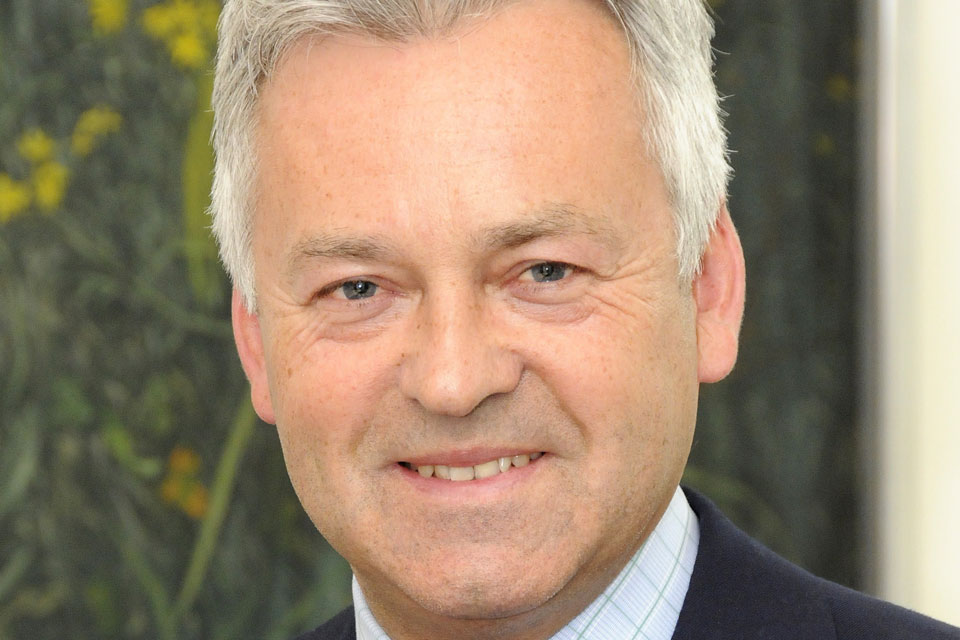
  • Alan Duncan – 2017 Speech in Astana

    Below is the text of the speech made by Sir Alan Duncan, the Minister of State for Europe, in Astana in Kazakhstan on 31 August 2017.

    Good morning, and thank you Timur for that warm welcome. It is a privilege for me to have arrived in Astana yesterday in time to mark the 22nd anniversary of adoption of Kazakhstan’s constitution. So I wish you all, one day late, a very happy Constitution Day.

    I am particularly delighted to be speaking to you in this impressive library dedicated to President Nazarbayev, who has done so much to shape Kazakhstan since its independence. Indeed, I think I am the first Foreign Minister to speak in this library, so I am honoured.

    As I look around, I am stunned by the sight of a gleaming new capital city arising from the eternal steppes. Astana is a truly magnificent achievement, which the nation should be rightly proud of. Everything I have seen so far – from the Baiterek, through to EXPO, through to this magnificent library, shows me a country which has made massive strides since your independence just over a quarter of a century ago.

    This year we are also celebrating 25 years of diplomatic relations between Kazakhstan and the United Kingdom. I am pleased to say that today, that relationship has never been stronger. It is a relationship that our leaders have recognised as an important one and so they have strengthened our ties through engagement between our peoples. Indeed David Cameron visited in 2013, the first visit to Kazakhstan by a serving British Prime Minister, and President Nazarbayev, visited the UK just eighteen months ago. I look forward to our two countries continuing to build on that relationship over the next 25 years and beyond that. Indeed, our bilateral relationship stretches from cooperation on the international stage, through to helping Kazakhstan realise its own ambitious programme of reform.

    Now, I myself had a fascinating meeting with your Foreign Minister yesterday and I look forward to meeting Prime Minister Sagintayev after this speech. During my meeting with Foreign Minister Abdrakhmanov, we discussed the cooperation between our two countries and I conveyed a clear message and that message was that the UK remains committed to developing this dynamic bilateral relationship, which has already achieved a great deal in the last five years but still has scope for further development.

    Now, there is no doubt that the biggest policy issuing focusing minds in the UK is our departure from the European Union. But let me be clear, the UK will continue to engage with the world. As we leave the European Union, we are not leaving Europe. We also want to strengthen our relationships and build stronger partnerships with countries such as Kazakhstan as we look to the future.

    So as Kazakhstan and the UK look to the future together, and as the UK looks to develop a new role outside of the EU, both continuity and the future are the themes for my comments. Both Britain’s continuing place in the global community, and looking forward with optimism to a future outside of the EU.

    Some of you may be familiar with the name Alexander Graham Bell, he was the Scottish inventor who invented the telephone. He once said that when one door closes another one opens. We have a word for that in English – opportunity.

    And I think that he was right, not only in saying that when one door closes another opens, but also in his assertion that sometimes we spend so long looking at the door that is closing, we see too late to notice the one that is open.

    And so, as the UK prepares to leave the European Union, we may be closing the door on our EU membership, but there will be many, many more doors across the world opening up.

    Over the next 18 months, we will negotiate the manner, the nature of our departure from the EU, and we will construct a new relationship with our European neighbours.

    Now this will represent a fundamental change in our legal relationship with the European Union, but not to our outward looking view of the world. What you will not see is the UK closing all our doors. We are not leaving Europe and we are not pulling back from the world.

    Instead, we will embrace the opportunities that lie before us and build a truly global Britain. One which strengthens our relationships and reaches out to build new partnerships across the world.

    International stage

    When the British people voted last year to leave the EU, they did not choose to withdraw the UK from the UN Security Council or from NATO. They did not pull the plug on our membership of the G7, the G20 or the Commonwealth. They did not sign away Britain’s long-standing and hard-won commitment to the values of freedom, of democracy, and of the rule of law.

    So we will continue to work tirelessly with our partners, including Kazakhstan, in international organisations to promote and defend global peace and security, and to protect the rules based international system.

    The UK has always been, and will remain, an outward-facing sovereign nation, and, I hope, a force for good, with a diplomatic network that is respected across the world. Looking forward, we will continue to put that network to good use, reaching out to new trading partners and working with our international partners to find solutions to some of the world’s most complex challenges. Our commitment to our extensive security cooperation with our allies remains solid.

    In this, Kazakhstan is an important partner.

    And until the end of next year, Kazakhstan will sit on the United Nations Security Council, as a non-permanent member. I echo the words of your own Foreign Minister, that it was high time that a Central Asian country joined the Council. These two years present Kazakhstan with a unique opportunity to play a major role in tackling the most serious security issues facing the world. It will allow you to bring your unique geographical, historical and cultural perspective to the work of the Council.

    Global challenges

    Now security is just one of the challenges we face together. There are aspects of this we must consider and we can address these challenges as international partners on the UN Security Council.

    Now, consider Syria for instance. The UK condemns the use of chemical weapons, by anyone, anywhere. It is vital that the international community does all it can to rid the world of chemical weapons attacks once and for all.

    Also, the UK is the second largest donor country of bilateral humanitarian aid in response to the crisis in Syria, having committed over £2.46 billion to vulnerable and displaced people inside Syria and to refugees in neighbouring countries. We are also leading international support for the Syrian White Helmets, whose volunteers have saved over 95,000 lives.

    And then there’s Afghanistan – where the UK is committed to creating security and prosperity. In June, the UK announced an increase in its commitment to Afghanistan, with additional troops to support NATO’s Train, Advise and Assist Mission in the country. And that uplift will add to the significant contribution of 500 troops the UK already makes to NATO efforts in Afghanistan. We are proud to work in close partnership with the Afghan Government to help it deliver the economic opportunities and security that the Afghan people are looking for and to create an Afghanistan that is less dependent on external support. I know that Kazakhstan is also committed to finding a solution to the ongoing conflict there. I hope that we can work together to help Afghanistan create and shape its own political settlement.

    And there’s North Korea. It is important to maintain strong international pressure on North Korea, both diplomatically and through sanctions. Their latest missile launch over Japan is a reckless provocation. So I am pleased that both the UK and Kazakhstan supported Security Council Resolution 2371 earlier this month, which imposed the toughest measures ever adopted by the Security Council on North Korea. The focus of both our countries has to be on ensuring that sanctions are rigorously implemented and enforced by all UN Member States so that they are effective at limiting the regime’s ability to pursue its illegal nuclear weapons programme.

    The UK will continue to play its part on the world stage to tackle all of these challenges head on.

    And it is in that same spirit that we welcome Kazkahstan’s vital contribution in developing the Low Enriched Uranium Bank, which was opened this week. It will play an important role in ensuring that there is a safe, secure and assured source of Low Enriched Uranium to generate nuclear energy for peaceful purposes. The Kazakh Government has shown great leadership in taking this important issue forward, and I am pleased that the UK was able to make a financial contribution through the European Union to this project.

    Defence / International aid

    So, as we look forward towards our future as a force for good outside the EU, we also have the means and the ambition to play a broader positive role in the world.

    That is demonstrated in our commitments on defence spending and on international aid. The UK is the only country in the world that meets both its NATO pledge to spend 2% of its GDP on defence, and we also meet the UN target of spending 0.7% of our Gross National Income on development. And these together ensure that we defend our values, work to tackle poverty and conflict, and help to protect the most vulnerable people in our world.

    We also remain a passionate advocate for supporting the right and power of women to play a vital role in building a fairer and more just society for future generations. We know that building prosperity for all is vital for long-term stability, and that is why we are working hard to increase women’s participation in all areas of life.

    Peace is vital to that agenda. That is why I am pleased to say that the UK is sixth largest financial contributor to UN Peacekeeping – some 700 British peacekeepers are deployed in six missions around the world. We support Kazakhstan’s commitment to develop its peacekeeping capacity in support of UN operations. We have worked together to sharpen that capacity, through the Steppe Eagle peacekeeping training programme, which is the UK’s largest bilateral defence exercise. I eagerly await Kazakhstan’s first deployment on UN Peacekeeping Operations.

    Values

    So, the UK is, and will remain, a committed and engaged player on the global stage, championing the values we have always held dear, which are the values of freedom, democracy and the rule of law.

    But, the real test of any partnership of equals is a willingness to be honest with each other. I recognise that Kazakhstan has made real progress on implementing human rights protections, in accordance with internationally recognised standards. As you make ever greater strides to secure an even more prosperous, ever more developed future for your nation, it is important to remember that the foundations for this future rest on a society where human rights and the equality of all citizens under the law is guaranteed and enshrined. So we will continue to take forward our dialogue on reform, including freedom of expression and religious choice.

    Together we have worked closely on the President’s reform programme. One important area of collaboration is judicial reform. In June, the UK Law Society, in partnership with Astana International Financial Centre and the Supreme Court of Kazakhstan, ran a training project to provide Kazakh judges with an understanding of the English common law system and the rule of law.

    I was also delighted that we welcomed a high-level delegation from the criminal justice system to the UK, to learn about how our system works. And I am pleased to announce today, UK investment of about US $100,000 for a new project. The NGO, Penal Reform International will work in partnership with the Ministry of Internal Affairs and the Kazakhstan Government’s Anti-Corruption Agency to train prison officers to attain international standards in your prisons, thus contributing to President Nazarbayev’s ambitious programme of reforms in the judicial and rule of law sectors.

    Trade

    The UK has a proud history as a trading nation, and we have long been one of the strongest advocates of free trade. Kazakhstan will continue to remain a key partner for the UK. We are currently the sixth largest investor here. Since Kazakhstan’s independence in 1991, we have invested more than £20bn. Once we leave the EU we will look to remove barriers to trade, and so ensure continuity in our trade and investment relationships.

    Kazakhstan remains an attractive market for UK companies. There are now over 500 British companies registered here. Many are active in the oil and gas and mining sectors. But there is also increasing collaboration between the new Astana International Financial Centre (AIFC) and the City of London. The Lord Mayor of London’s visit in July highlighted our close cooperation in developing the Centre and I welcome Kazkahstan’s decision to use English Common Law as the basis for the Financial Centre including its Court of Arbitration.

    I am also delighted that we are taking part in EXPO 2017. It is an excellent opportunity for the UK to show that it is open for business. I had a fantastic time when I visited yesterday. And whilst, as a British Minister, I am obliged to say that the UK pavilion was of course the best at EXPO, I was amazed and impressed by the scale and imagination of the Kazakh pavilion – which truly captured both the history and culture of Kazakhstan and at the same time, your collective vision for the future.

    EXPO shows too that Kazakhstan is taking its place in the world, with 115 countries and 22 international organisations taking part. I hope that EXPO will open new doors and new opportunities for Kazakhstan – such as modern trading routes along the old Silk Road.

    As this takes shape there will be considerable opportunity for cooperation between the UK, China and Kazakhstan. Our Embassy here in Astana is working closely with the Kazakhstan Ministry of Investment and Development to identify potential joint projects that would be delivered here. We hope to hold an event soon with participants from all three countries, aimed at identifying a new consortium to deliver the first belt and road project in Kazakhstan

    So to end where I started: the UK is not looking, in mood of regret, on closed doors. To quote the famous US astronaut, Buzz Aldrin, a man who inspired generations, including possibly our own British astronaut, Tim Peake, “There are always door openings. And gradually, the opportunities open up in front of you.”

    We will always be a committed and engaged player in the global community, and we look forward, optimistically, to the opportunities brought by our exit from the EU. I personally look forward to building further on the UK’s relationship with Kazakhstan as we open new doors and build a prosperous future together.
  • Chris Grayling – 2017 Statement on EU Transport Council

    Below is the text of the written statement issued by Chris Grayling, the Secretary of State for Transport, on 28 June 2017.

    The only Transport Council under the Maltese Presidency (the Presidency) took place in Brussels on Thursday 8 June. The UK was represented by the UK’s Deputy Permanent Representative to the EU, Katrina Williams.

    The council adopted a general approach on lorry and bus driver training (Driver CPC Directive) as well as council conclusions on road safety and the EU’s maritime priorities. All 3 were widely supported by member states. The UK intervened to support the road safety conclusions, welcoming the elements related to safer road infrastructure and connected and autonomous vehicles, and highlighting the UK’s Safer Road Fund.

    Under any other business, a range of items were discussed. The Commission presented its new mobility package of proposals which aims to modernise the road transport framework and strengthen the competitiveness and social standards of the EU road haulage sector. Some member states supported stronger social standards in the road transport sector while others felt the Commission’s proposals did not sufficiently support liberalisation in the sector. A number of member states called for the political and geographical balance of the proposals to be carefully considered.

    The Presidency provided information on the progress of the trilogue discussions with the European Parliament on a Professional Qualifications in Inland Navigation Directive and the European Aviation Safety Agency (EASA) Regulation. Overall member states welcomed the substantial efforts of the Maltese Presidency in negotiations to date with the European Parliament.

    The Commission presented an overview of the ‘open and connected Europe’ aviation package which was published on the morning of the Transport Council. The package includes a proposal to revise Regulation (EC) No. 868/2004, guidelines on airline ownership and control, guidelines on public service obligations and best practice on minimising air traffic control disruptions.

    Sweden provided information on her approach to protection against acts of terror in road transport in light of the terrorist attack that occurred in Stockholm in April. The UK intervened to express its solidarity and emphasise the importance of this issue and of sharing best practice, supported by other member states. Those who intervened offered condolences to the UK following the London Bridge attack on 3 June.

    In addition, the Commission updated the council on recent developments on aviation security and the Netherlands asked the Commission to provide information on their work on social issues in aviation. Luxembourg urged member states to speed up the implementation of the European rail traffic management signalling system (ERTMS) and presented the work she had done to develop a blue-print EU cycling strategy. Germany flagged the high-level dialogue on connected and autonomous driving that would take place in Frankfurt on 14 and 15 September and the Estonian Presidency presented its work programme for its presidency beginning 1 July 2017.

    Over lunch Commissioner Bulc led a discussion on an initial strategy at the International Maritime Organisation (IMO) on reducing greenhouse gas emissions from ships.

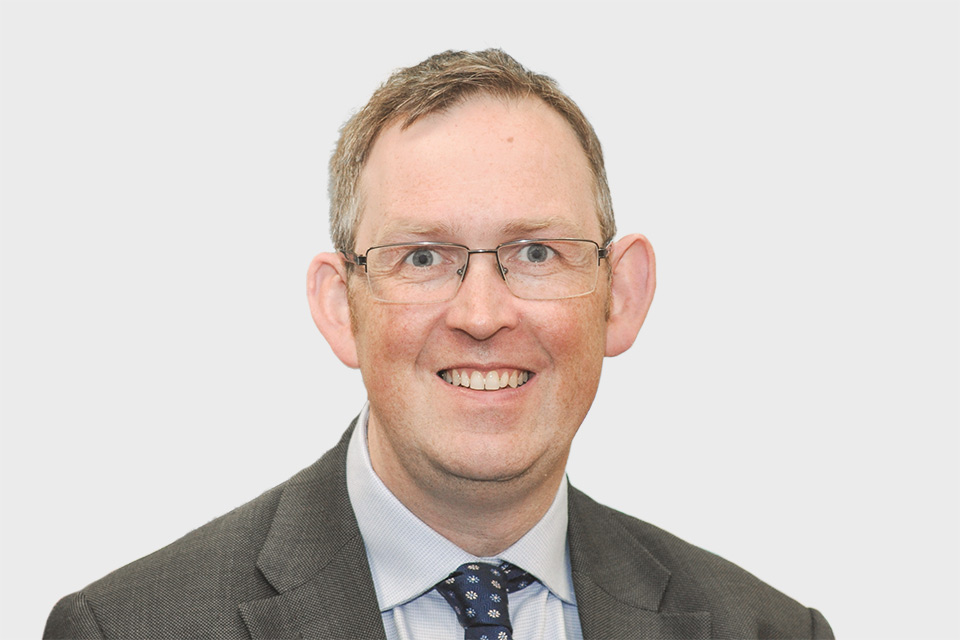
  • Paul Maynard – 2017 Statement on Crossrail

    Below is the text of the statement made by Paul Maynard, the Parliamentary Under Secretary of State for Rail, Accessibility and HS2, in the House of Commons on 29 June 2017.

    I am pleased to report that earlier this month, the first new Class 345 train entered passenger service on the TfL rail line between Shenfield and Liverpool Street. Although the trains were due to enter service in May 2017 some of the testing, assurance and approvals took a little longer than originally expected. The successful introduction of the train marked the first stage of the 5 staged Crossrail opening strategy. The service will be named the Elizabeth line when the central section opens in central London from December 2018.I am pleased to report that earlier this month, the first new Class 345 train entered passenger service on the TfL rail line between Shenfield and Liverpool Street. Although the trains were due to enter service in May 2017 some of the testing, assurance and approvals took a little longer than originally expected. The successful introduction of the train marked the first stage of the 5 staged Crossrail opening strategy. The service will be named the Elizabeth line when the central section opens in central London from December 2018.

    Stage 2 of the Crossrail opening strategy which will see TfL rail services operating with the new trains between Heathrow Terminals 2, 3 and 4 and Paddington (high level station), is due to start from May 2018. A major step forward in delivering this new service was the installation of new digital signalling in the Heathrow tunnels in April 2017. Testing and commissioning of the new signalling system is now underway, ahead of the new trains commencing testing later this year.

    I am pleased to report the Crossrail project’s health and safety indicators demonstrate strong performance over the year with all the key indicators exceeding the corporate objectives for the year 2016 to 2017.

    In the past year significant progress has been made across the project. The Crossrail programme is approaching 85% complete. In the central tunnel section all platforms have now been completed, track installation is over 90% complete, power and ventilation installation have reached 70% and 30% complete respectively, and installation of platform edge screen doors has commenced at Bond Street and London Paddington. Architectural finishes are being applied and escalator and lift installation has commenced across the central stations. Testing of the new central section infrastructure and systems will commence by the end of 2017, with the new central section stations being completed during 2018.

    The critical works for the stabling facility at Ilford depot was completed in May 2017, to support the introduction of new trains into passenger service. Further work at Ilford depot to support stage 4 (Paddington to Shenfield) opening continues and is expected to be delivered by May 2019. Works continue at Old Oak Common depot to support stages 2 and 3 (Paddington to Abbey Wood).
    Major surface works were delivered by Network Rail on the existing rail network this year. During the Christmas 2016 blockade an unprecedented level of works were successfully delivered on the Great Western and Anglia railways. These works included the entry into service of the new Acton Dive Under and the Stockley Flyover, both of which will improve capacity and reliability between Heathrow and Paddington. Christmas 2016 also saw the start of the remodelling of tracks at Shenfield, which was completed during May 2017.

    Manufacturing of the new trains is progressing. Trains will be progressively introduced over the next few months, with 11 in service by autumn, replacing just over half the existing train fleet. In preparation for the operation of the Elizabeth line services a purpose built facility has been commissioned to simulate the operation of passenger services and ensure key components and software are tested. The Crossrail integration facility is an essential element to support the next stages and success of the Crossrail opening strategy.
    Training of the new operations workforce is well underway. Drivers are familiarising themselves with the new trains and route. There are now circa 700 apprentices who have gained experience across the project. Crossrail’s purpose built training facility, the Tunnelling and Underground Construction Academy has now become part of Transport for London and will continue to offer apprenticeships and training to support the next generation of skills for rail and tunnelling projects.

    The Crossrail Board forecast that the cost of constructing Crossrail will be within the overall £14.8 billion funding envelope (excluding rolling stock costs). Cost pressures are increasing across the project and Crossrail Ltd is identifying and implementing initiatives to deliver cost efficiencies until completion in 2019. Crossrail’s joint sponsors (Department for Transport and Transport for London) will continue to meet regularly with Crossrail Ltd to ensure that the project is being effectively managed and will be delivered within funding and on schedule.

    During the passage of the Crossrail Bill through Parliament, a commitment was given that a statement would be published at least every 12 months until the completion of the construction of Crossrail, setting out information about the project’s funding and finances.

    In line with this commitment, this statement comes within 12 months of the last one, which was published on 30 June 2016. The relevant information is as follows:

    Total funding amounts provided to Crossrail Limited by the Department for Transport and TfL in relation to the construction of Crossrail to the end of the period (22 July 2008 to 29 May 2017) £10,860,539,046

    Expenditure incurred (including committed land and property spend not yet paid out) by Crossrail Limited in relation to the construction of Crossrail in the period (30 May 2016 to 29 May 2017) (excluding recoverable VAT on land and property purchases) £1,636,471,000

    Total expenditure incurred (including committed land and property spend not yet paid out) by Crossrail Limited in relation to the construction of Crossrail to the end of the period (22 July 2008 to 29 May 2017) (excluding recoverable VAT on land and property purchases) £10,886,978,000

    The Amounts realised by the disposal of any land or property for the purposes of the construction of Crossrail by the Secretary of State, TfL or Crossrail Limited in the period covered by the statement. Nil

    The numbers above are drawn from Crossrail Limited’s books of account and have been prepared on a consistent basis with the update provided last year. The figure for expenditure incurred includes monies already paid out in relevant period, including committed land and property expenditure where this has not yet been paid. It does not include future expenditure on construction contracts that have been awarded.

  • Theresa May – 2017 Press Statement in Tokyo

    Below is the text of the press statement made by Theresa May, the Prime Minister, in Tokyo, Japan on 31 August 2017.

    Thank you, Prime Minister Abe, for welcoming me to Kyoto and here to Tokyo.

    The close cooperation between our two countries is particularly important at this critical juncture, with North Korean provocation presenting an unprecedented threat to international security.

    I want to begin by expressing the UK’s strong sense of solidarity with the Japanese people at this time.

    The UK and Japan are natural partners. We share common interests as outward-looking, democratic, free-trading island nations with global reach.

    We are committed to the rules-based international system, free and open international trade and the fundamental values of freedom, democracy, human rights and the rule of law.

    And today we have committed to elevating the UK-Japan partnership in a number of areas.

    Security and Defence Cooperation

    As two outward-facing countries with many shared priorities and shared challenges, Japan is a natural partner for us on defence and security issues. We are each other’s closest security partners in Asia and Europe.

    And today we have agreed a “Joint Declaration on Security Cooperation” to enhance our collective response to threats to the international order and to global peace and security, through increased cooperation on defence, foreign policy, cyber security, and counter-terrorism.

    Our defence cooperation is already particularly strong, with our Typhoon fighter jets exercising in Japan last year – the first time that a country other than the US has done so.

    And we are now taking this even further with the deployment of HMS Argyll to the region in December 2018, and UK troops exercising jointly with their Japanese counterparts next year in Japan for the first time ever.

    And we must also tackle new and emerging threats together, from counter-terrorism through to cyber security. And today we have agreed a new programme of cooperation to ensure a safe and secure Rugby World Cup and Olympic and Paralympic Games here in Japan.

    We have highlighted our opposition to any actions on the South and East China Seas likely to increase tension. Stability in this region is of global concern and we encourage all parties to resolve their disputes peacefully and in accordance with international law.

    Of course, I am here at a critical time. North Korea’s missile launch this week was an outrageous provocation and an unacceptable threat to Japan’s national security. We condemn North Korea in the strongest terms possible for this reckless act, which was a clear violation of United Nations Security Council Resolutions.

    In response to this illegal action, Prime Minister Abe and I have agreed to work together and with others in the international community to strengthen pressure against North Korea, including by increasing the pace of sanctions implementation and working towards the adoption of a new and effective resolution at the United Nations Security Council.

    Trade and Investment Relationship

    Japan is also a natural partner for the UK on the economy: in building a rules-based international system, and encouraging WTO reform to ensure a global economy that works for everyone.

    Japan is the world’s third largest economy and we benefit more from Japanese investment than any other country in the world apart from the US.

    Japanese companies already invest more than £40 billion in the UK and over 1,000 Japanese companies including Honda, Hitachi, Fujitsu and Sony employ 140,000 people in the UK.

    And we welcome the commitment from Japanese companies to a long-term presence in the UK. Nissan, Toyota and Softbank in particular have made commitments to the UK since the EU referendum, in a powerful vote of confidence in the long term strength of the UK economy.

    I have had the opportunity to meet a number of major Japanese investors here in Tokyo, who have reiterated to me their belief in the strength of the UK economy and their commitment to a mutually beneficial partnership.

    And Prime Minister Abe, it was good to hear you reaffirm your continued faith in the UK economy, including after Brexit, as we addressed business leaders earlier today.

    As we announced earlier this month, our intention is that the UK will be free to sign new bilateral trade agreements with partners around the world in any interim Brexit period.

    And we have agreed here today that we want to see a swift conclusion of the ambitious EU Japan Economic Partnership Agreement. Prime Minister Abe and I have agreed that as we exit the EU, we will work quickly to establish a new economic partnership between Japan and the UK based on the final terms of that agreement.

    We will set up a new joint working group to examine how we can unblock remaining barriers to trade and take steps to build the closest, freest trading relationship between the UK and Japan after Brexit.

    And we have agreed to build cooperation in industrial policy across science, innovation, and energy, to ensure thriving and competitive economies.

    Conclusion

    So thank you, Shinzo.

    My first visit to your country has been a memorable one. I have seen your rich traditional culture and the modern dynamism of Japan.

    And our personal friendship reflects the deep friendship and bonds between our two countries.

    This visit marks a great step forward not only in enriching our existing ties, but agreeing our shared vision of even deeper cooperation in the future.

    And I know that we both believe these steps will not only increase our own security and prosperity, but also see us together playing a unique role as standard-bearers for the open, liberal, innovative and secure world order both our great nations rely upon.

  • Theresa May – 2017 Opening Remarks in Japan

    Below is the text of the opening remarks made by Theresa May, the Prime Minister, and Shinzo Abe, the Prime Minister of Japan, in Japan on 31 August 2017.

    Shinzo Abe, Prime Minister of Japan

    I’d like to once again welcome Prime Minister May on her very first visit to Japan. When I visited the United Kingdom in April of this year, she gave me a special welcome by inviting me to the Chequers. As I return a favour, I had the pleasure to invite Prime Minister May to Kyoto and it was a delight that we were able to enjoy tea in a very traditional Omotesenke. And of course, at the Kyoto State Guest House, it’s a very traditionally Japanese architect, unlike here at the Akasaka Guest State House, but we did have a very candid and deep conversation together over dinner.

    And in that sense, I very much was delighted that we were able to have a very candid conversation about the regional issues together. At a time of change and unpredictability, I put great and ever more importance with the United Kingdom as a global strategic partner that shares fundamental values such as freedom, democracy, respect for human rights and the rule of law.

    I also would like to offer my respect to Prime Minister May’s leadership as she steers her country towards the departure from the European Union. Taking the opportunity of, Theresa, your visit to Japan, I hope to make it a huge step forward to elevate our relationship to a new level and would like to work hand in hand with you to robustly develop our bilateral ties between Japan and the United Kingdom.

    Theresa May, UK Prime Minister

    Thank you, thank you very much, and I am delighted to be able to be here in Japan, and I would like to thank you for the welcome that you have given me. And I was particularly pleased on, as you say, my first visit to Japan, to be able to sample some traditional Japanese culture, as well as some very productive meetings.

    As you say, this is an important time for the United Kingdom as we are preparing and negotiating for our exit from the European Union. And as we do so, we are looking to enhance our partnerships, our ties and our links with countries around the world with whom we have had good longstanding relationships, but with whom we can build further cooperation in the future, and Japan is a key country for the United Kingdom. And we already have good cooperation and partnerships in investment between our two countries, with – between businesses, and the Business Forum today was a very good opportunity for further links to be made.

    And there will be further work for us to do on enhancing our trade relationship, but also in security and defence, as we both see the same challenges and threats around the world. And as two nations, island nations, that believe in the rule of law, in the rules-based international order, and have the same values, I believe it is important that we work together. And I look forward to our further discussions.

  • David Davis – 2017 Statement Following Third Round of Brexit Negotiations

    Below is the text of the statement made by David Davis, the Secretary of State for Leaving the European Union, in Brussels on 31 August 2017.

    Thank you Michel.

    And can I start by adding my compliments to both teams, to yours. They’ve both worked incredibly hard this week. It’s been as ever with an important negotiation quite a high-stress week, in terms of their work. So they deserve our compliments and our thanks.

    This week we have had long and detailed discussions across multiple areas and I think it is fair to say, that we have seen some concrete progress. I mean, Michel referred to one, but I think there’s been more than that.

    However, as I said at the very start of this week, it is only through flexibility and imagination that we’ll achieve a deal that truly works for both sides.

    In some areas we have found this from the Commission’s side, which I welcome, but there remains some way to go.

    Talks this week have once again focussed on citizens’ rights, on financial matters, on Northern Ireland and Ireland, and on issues relating to our separation. I’m pleased to say we have engaged in detail on all of those areas.

    Now, when I met Michel here on Monday to open this third round of negotiations I set out the need for us to drive forward the technical discussions.

    I wanted us to establish the areas where we agree, and work through the areas where we disagree, to ensure that we make further progress on a whole range of issues.

    I think we’ve delivered that.

    The UK’s approach has been informed by a series of detailed papers – on customs; on Northern Ireland; on goods; on civil judicial cooperation; on data; on enforcement and dispute resolution; and on technical matters regarding our separation, such as ongoing confidentiality obligations.

    These papers represent the hard work and detailed thinking that has been going on behind the scenes across Whitehall over the past twelve months.

    They offer pragmatic and innovative solutions to issues related to our withdrawal and the future deep and special partnership that we want with the European Union. They do not aim to dictate a single approach, but rather considered options for us to work on.

    As I have said all along, issues around our withdrawal and our future relationship are inextricably linked.

    Our approach of setting out positions on them both is designed to progress the current negotiations as swiftly as possible.

    And I note on what Michel just said on that, and I’ll come back to that in a moment.

    And that approach is already bearing fruit.

    But beyond the debates around process, and technicalities, at the heart of this process must be a desire to deliver the best outcome for the people and the businesses of the European Union and the United Kingdom.

    Citizens Rights

    The most obvious area for that is on citizens’ rights which remain a top priority.

    This week we have discussed a wide range of issues which will have a significant impact on people’s lives. In particular, both sides have agreed:

    To protect the rights of frontier workers.

    To cover future social security contributions for those covered by the Withdrawal Agreement.

    That we should at least protect existing healthcare rights and arrangements for EU27 citizens in the UK and UK nationals in the EU. The EHIC arrangements.

    That is good news for example, for British pensioners in the EU: it means that they will continue to have their health care arrangements protected both where they live and – when they travel to another Member State – to be able to use an EHIC card.

    On economic rights, we have secured the right of British citizens in the EU27 to set up and manage a business within their Member State of residence, and of course visa versa.

    On mutual recognition of qualifications, we have made progress in protecting the recognition of qualifications for British citizens resident in the EU27 and EU27 citizens in the UK.

    For every one of these, of course, in fact every single thing I’ve said, all of these are reciprocal, they work for Brits in the EU and the EU27 in the UK.

    To that end, we will shortly be publishing a comparison of the UK-EU-positions.

    And we have had further discussions on the governance of the citizens’ rights agreement – and the wider withdrawal agreement. We have shown a willingness to discuss creative solutions in this area and now is the time for the Commission to match it.

    Financial Settlement

    On the financial settlement – the central point, I think, of Michel’s comments – the Commission has set out its position and we have a duty to our taxpayers to interrogate it rigorously.

    At this round we presented our legal analyses. On on-budget issues, on off-budget issues and on the EIB (the European Investment Bank).

    It is fair to say, across the piece, we have a very different legal stance. But as we said in the Article 50 letter, the settlement should be in accordance with law and in the spirit of the UK’s continuing partnership with the EU, and I repeat the phrase, in accordance with the law and the spirit of the UK’s continuing partnership with the EU.

    Michel and I agreed in the last round, it is clear we won’t be making incremental progress on the final shape of a deal on this in every round, and I think this round demonstrates that.

    I think we have succeeded in building mutual understanding, but it is also clear that there are still significant differences to be bridged.

    Ireland

    On Ireland and Northern Ireland, Michel gave credit to this, our coordinators have met again to build on discussions in July.

    We had a good discussion on maintaining the Common Travel Area and on safeguarding the Good Friday Agreement, on the basis of the UK paper.

    We think there is a high degree of convergence on these key issues, and we agreed to work up shared principles on the Common Travel Area.

    We also agreed to carry out further joint technical work on cross-border co-operation under the Good Friday Agreement.

    Separation Issues

    On Separation Issues, we have had good discussions on the detail of papers the UK published ahead of the round.

    We have reached almost complete agreement on our approach to post-exit privileges and immunities which benefits both the UK and EU to maintain after we leave, and on our mutual approach to confidentiality requirements on shared information post-exit.

    On Euratom and other institutional issues we have built upon discussions in July and are well placed to make even more progress in the next round.

    We remain committed to making as much progress as possible on those issues that are solely related to our withdrawal, but our discussions this week have exposed yet again that the UK’s approach is substantially more flexible and pragmatic than that of the EU as it avoids unnecessary disruption for businesses and consumers.

    We have proposed pragmatic solutions to prevent this disruption and we urge the EU to be more imaginative and flexible in their approach to withdrawal on this point.

    However, I remain of the view that on this as with many areas there is an unavoidable overlap between withdrawal and the future and they cannot be neatly compartmentalised.

    Conclusion

    To conclude the third round of talks have been productive and are an important stepping stone and key building block for discussions to come.

    We are peeling away the layers, one by one, working through many issues at speed, and moving towards the core of these important matters.

    We have locked in points of agreement and unpicked areas of divergence.

    Being dynamic is integral to driving forward these talks at pace and to providing the best outcomes for people and businesses – not just in the UK, but in the EU as well.

    Michel referred to the issue of time, the 29th of March 2019 midnight. I’ve said from the beginning of this process, some parts will be turbulent, hard, difficult, and of course, we will see that because there are differences of view that have to be resolved.

    But both sides, and this was very apparent this week, both teams aim to be constructive, aim to get an outcome which is to the benefit both of the European Union and of the United Kingdom. That’s the aim of both teams.

    So my message to Michel and his team as we turn our heads to the next round of talks is: Let’s continue to work together constructively to put people above process.

    As discussions in June, July and again this week have shown – our separation from the European Union and our future relationship is inextricably linked. We can only resolve some of these issues with an eye on how the new partnership between us will work in the future.

    This is not about skipping ahead or trying to reopen previous discussions, it is about pragmatically driving the progress we all want to see.

    To that end my team will publish further papers in the coming weeks – continuing to set out our ambition for these negotiations, and the new deep and special partnership the UK wants to build with the EU.

    I look forward to the next round of talks.

    Thank you.

  • Theresa May – 2017 Message at Eid al-Adha

    Below is the text of the message sent by Theresa May, the Prime Minister, at Eid al-Adha on 31 August 2017.

    I send my warmest wishes to Muslims around the world, and here in the United Kingdom, who are celebrating Eid al-Adha this week. And I congratulate everyone who has performed the Hajj this year.

    At this special time, British Muslims will gather together with family, friends and neighbours to pray, to exchange gifts and to share meals.

    Amidst these celebrations, they will also remember those in need, by extending a hand of friendship and compassion to those less fortunate than themselves.

    That generosity towards others is shown all year round by British Muslims, through charitable giving and service in the community.

    Indeed, British Muslims, and people of Muslim origin, make a huge contribution to all walks of life in the United Kingdom. They help to enrich the successful multi-racial, multi-faith democracy that is twenty-first century Britain.

    As we celebrate this happy occasion here in the United Kingdom, we will also keep in our thoughts and prayers those around the world who will be marking this festival in places of conflict and insecurity.

    This festival’s commemoration of Abraham’s willingness to sacrifice for his faith is a reminder of the shared roots of the world’s great Abrahamic faiths.

    And in their warm spirit of neighbourliness and compassion, the Eid celebrations demonstrate common values in which we can all share.

    So Eid Mubarak. I hope that this will be a wonderful occasion for everyone who is taking part.

  • Theresa May – 2017 Speech on Women in Sport

    Below is the text of the speech made by Theresa May, the Prime Minister, at a reception in 10, Downing Street, London on 29 August 2017.

    I am delighted to welcome you all to Downing Street today – and to have this opportunity to celebrate what I believe has been a watershed for women’s sport in our country this summer.

    In doing so, it is a great honour to welcome two of our teams whose achievements have been such an important part of this breakthrough moment.

    Our England Women’s cricket team whose dramatic nine-run victory over India at a packed out Lords secured the Cricket World Cup.

    And our England women’s rugby team who earlier this Summer beat New Zealand in New Zealand to become the world’s No1 team – and whose breath-taking World Cup final in Belfast on Saturday night had the nation on the edge of its seat.

    And while I know our rugby team will be disappointed with the result on the pitch, your result off the pitch, the legacy of everything you have achieved – together with our cricketers, our footballers, athletes, hockey players and of course Jo Konta’s spectacular run at Wimbledon – will change the way that women’s sport is seen in our country for years to come.

    So I am delighted that you are all here today – and not just the players who have worked so incredibly hard – but also the coaches and backroom teams who have supported you, and some of your families and friends too, whose own sacrifices have been such an important part of everything you have done.

    I am incredibly proud that, with you, our nation can call on such wonderful ambassadors for young women and girls today.

    And I hope that with your support we can seize this opportunity to grow women and girls’ sport in communities across the length and breadth of the land.

    We have got lots to build on.

    Our Sports Strategy is already targeting resources at those less likely to be physically active, with Sport England setting out seven new investment programmes that I hope can really help increase women’s participation in sport.

    While Sport England’s award-winning campaign called This Girl Can has already seen 11,000 organisations register as supporters and 1.6 million women saying they have now started or restarted sporting activity.

    And I am seeing some of this growth in women’s grassroots sport in my own role as Patron of the women’s team at Maidenhead and Bray Cricket Club and as President of the Wargrave Girls Football Club.

    But if we are really going to seize the opportunity of this moment I believe we need to go further in two key areas.

    First, we need to improve the representation of women on the governing bodies of our sports.

    This isn’t just right in terms of creating better governance for any organisation – it is also right in terms of growing women’s sport.

    For too long, in too many sports, there hasn’t been enough attention paid to the women’s side of the sport – and more women on boards can help to change that.

    So our sports governance code now includes a target of at least 30 per cent gender diversity on boards.

    And it is now mandatory and applies to any organisation of any size or scale seeking funding from Sport England or UK Sport.

    As of last year, just under half of NGBs did not yet meet this requirement.

    But they are going to have to set out a plan to do so by October 31st this year.

    Second, we need a radical change in the status and profile of our women’s sports – especially team sports – so that women’s sporting success is routinely held in the same high esteem as that of men’s.

    Developments like the Women’s Premier League in football and the growing professionalisation of team sports are important steps forward.

    And it is welcome too that the gender prize money gap in sport is closing with 83 per cent of sports now rewarding men and women equally.

    But 83 per cent isn’t good enough.

    We need to go further – and broadcast and news coverage has a key role to play.

    And again your achievements this summer can be a major catalyst for progress.

    Channel 4’s hugely successful coverage of the Euros helped to galvanise support for the Lionesses – just as the BBC’s coverage of the World Cup had done in 2015.

    The Cricket World Cup Final at Lords was sold out and had a global television audience of over 100 million.

    While the Rugby World Cup Final saw another packed stadium in Belfast on Saturday night and the largest ever TV audience for women’s rugby in the UK – with the game rightly shown in a prime time slot on ITV1.

    This has generated huge momentum – and I hope we can capitalise on it, so that women’s sport on TV and on the back pages of our newspapers becomes the norm and not the exception.

    Today we celebrate two teams, and two fantastic sets of athletes, but you are much more than that.

    You are trailblazers, ambassadors, pioneers and now a part of British sporting history.

    So together, let’s ensure that your legacy is not just in Britain’s sporting history – but also a fundamental part of shaping Britain’s sporting future – for millions of young women and girls, for generations to come.

  • Liam Fox – 2017 Speech in Bogota

    Below is the text of the speech made by Liam Fox, the Secretary of State for International Trade, in Bogota, Colombia on 23 August 2017.

    Good morning everyone,

    It is a pleasure to be here today in Bogota.

    More than two centuries ago Simón Bolivar came to London to seek British support for Colombian independence; he returned with seven thousand British soldiers, who fought for Colombia, along with substantial financial and technological support for the cause.

    British engineers constructed Colombia’s network of railways and other heavy industry, stimulating economic development.

    The United Kingdom supported Colombia from its very first days as a fledgling nation, and it is from these bonds of friendship that the UK and Colombia have built a great partnership that endures to this day, as our two nations remain key partners on the world stage.

    Last year, soon after I was appointed Secretary of State, I had the honour to speak alongside President Santos during his very successful state visit to the United Kingdom.

    I talked then about how the bonds of history have continued to unite our two countries.

    We have remained close partners on defence and security. According to your own official figures, the UK has been Colombia’s third largest foreign investor over the past decade, and our trading relationship was worth over one billion pounds in 2015.

    But it is also fair to say that British business has not developed and nurtured this relationship as well as we might have done.

    Our trade in goods with Colombia is behind the likes of France, Germany and Spain.

    So today my message to British business is this; we need to redouble our efforts to re-forge this close bond, for Colombia is in the process of implementing an historic peace agreement which could transform its economic performance.

    At our country our own painful experiences of the troubles in Northern Ireland have taught us that peace processes are never easy. They take courage and resilience, but that the rewards that come for a lasting and sustainable peace are worth the years of negotiations and reconciliation.

    I am here today because the United Kingdom wants to partner Colombia, helping your nation to realize the dividends of peace, and working to transform the country.

    We are supporting Colombia reach its full potential and generate prosperity. During last year’s state visit we announced the creation of a £25m Prosperity Fund to promote prosperity and economic development in the areas affected by the conflict, and to support Colombia in reaching the full benefits of peace.

    The programme will focus on urban development, transport infrastructure, capacity building, anti-corruption and increasing the agricultural competitiveness.

    Our trading relationship continues to expand. Total trade in goods and services between the UK and Colombia totalled £1.3bn in 2015 – an 11.8% increase from the year before.

    Like the UK, Colombia is committed to fiscal prudence, sound governance, and a commitment to free trade. With 16 free trade agreements already in place, your economy is among the most open in Latin America.

    Combined with a 4% average growth rate over the past decade, and it is easy to see why Colombia is widely seen as one of the brightest prospects in the Americas.

    When British companies arrive in Colombia, they can be transformational. KPMG has recently been awarded a contract to undertake financial structuring of the new Metro here in Bogota, a project that will have a very real impact on the lives of 10 million Colombians.

    Holtrade have recently reached an agreement with Fenoco, the central rail concession, to become the first private operator in recent history to transport freight across the Central and Caribbean regions, revolutionising Colombian freight capacity.

    Red Leopard and Cerromatoso, a subsidiary of the UK company South 32, have both announced major new expansions in their coal and nickel mining projects.

    And Currie & Brown have been awarded the contract to undertake the technical structuring of Bogota’s largest and most ambitious health project – the regeneration and construction of 6 hospitals through Public Private Partnership. This is the first project of its kind in Colombia.

    And it is not just the physical infrastructure of Colombia that UK companies are investing in. For more than 80 years, the British Council Colombia has supported the development of quality education, and promoted English language proficiency across the country.

    Moreover, the British Council it´s currently working with young people across Colombia to build upon the opportunities brought by peace.

    These examples are only the tip of the iceberg, yet they illustrate how some of the UK’s strongest areas of expertise – financial services, transport, mineral extraction, healthcare, and education – have the capacity to rapidly transform the lives of Colombian citizens.

    Despite all this, we want to maintain and expand such relationships, the United Kingdom itself must continue to be a sure and stable commercial partner to Colombia.

    As I’m sure you will all be aware, the United Kingdom is currently negotiating our withdrawal from the European Union.

    There has been speculation in some sections of the media, here in Colombia as well as in the United Kingdom, that last year’s vote to leave was a symptom of insularity, and that the United Kingdom would be withdrawing from the world stage, abdicating our international responsibilities and severing ties with Europe and the world.

    I am here to tell you that nothing, absolutely nothing, could be further from the truth.

    Last year’s vote was about looking beyond the boundaries of Europe to the wider world. The government’s ambition is not to create a ‘little England’, but a truly Global Britain.

    Our country will become, once again, the greatest champion of global free trade, renewing our partnerships with new friends and new allies alike to spread prosperity to every corner of the world.

    What lies at the heart of this vision? Why have we made it our mission to champion global free trade?

    There are, of course, the macroeconomic benefits of free trade. Making it easier for UK businesses to sell overseas, and for foreign companies to operate in the UK, stimulates the economy.

    Analysis by the OECD has indicated that a 10% increase in economic openness is associated with a 4% increase in output per head of the working population.

    Yet the case for free trade is much wider. A better availability of products has brought cheaper goods and services to consumers across the world, raising living standards and making incomes go further.

    Economic interdependence reduces the risk of conflict, as prosperity weakens the grip of authoritarian leaders and commercial ties remove the incentives to have conflicts with one another.

    And, perhaps most importantly, liberalised trade practices have lifted millions from poverty across the globe. There has been no greater liberator of the world’s poor than free and open international trade.

    It is perhaps true that businesses have been more adept at seeing the inherent opportunities of free trade, while governments have tend to see the risks.

    That is why the UK intends to lead by example in promoting free trade from the highest levels of government. For those countries like the UK who have grown rich from global trade, there is a moral duty to ensure that those same freedoms are extended to developing nations.

    Soon, the UK will be in a unique position to influence the spread of global free trade.

    For the first time in more than four decades, we will have a fully independent trade policy.

    Crucially, this will allow us to negotiate free trade agreements with new partners across the world, including those rapidly developing and expanding economies that will drive the global economy and global growth in the 21st Century.

    The UK will become a global trade hub, leading by example to ensure that the world economy remains open and interconnected.

    We will also regain our independent seat at the World Trade Organisation in Geneva.

    As one of the world’s largest economies, this will not only allow us a new forum in which to promote and protect free trade, but gives Britain a role in safeguarding the rules-based international order which drives global prosperity.

    My own department for International Trade is a symbol of these ambitions.

    Created mere weeks after last year’s referendum, our task is to build these relationships, and to ensure that the United Kingdom remains open, outward-looking, and internationalist.

    Yet this vision for Britain does not mean turning our back on Europe. Indeed, we want nothing more than to be the closest partners of a successful and prosperous European Union, maintaining those mutually beneficial commercial relationships upon which many international companies, including those from Colombia, rely.

    Throughout the period of our withdrawal, our watchwords will be stability, continuity and transparency. We know how important certainty is to the global trading environment, and we will strive to ensure that consistency is maintained at all times.

    That is why, as we leave the European Union, it is our strongest desire to maintain the same privileged relationship that our countries currently enjoy under the EU FTA, replicating as far as possible our existing trading terms. If Britain is to be a global leader in free trade, then we cannot, and will not, begin by erecting barriers that do not exist today.

    So I am here today to reassure you that the UK will continue to be prosperous. The UK will continue to be at the heart of global trade. And the UK will continue to be the premier destination for Colombian investment.

    The Department for International Trade is taking steps to ensure that these ambitions that we have are supported by our actions.

    I am pleased to announce that support from UK Export Finance for trade with Colombia will increase to £4.5 billion.

    This makes billions of pounds of additional financial support available to both UK exporters, and buyers of UK goods and services in Colombia, opening vast opportunities for British and Colombian businesses alike.

    As globalisation and new technology continue to eliminate the barriers of distance and time, the UK stands ready to help Colombia harness this power.

    Technology, Data, FinTech and Scientific Research are areas in which the UK excels. Firms across Britain are ready to bring their expertise to bear, expanding new industries across Colombia and South America.

    IT services company Endava has just opened a new Software Development and Innovation Centre in Bogota, with plans to grow to at least 500 staff over the next few years, a training programme that invests in Colombia’s future.

    And Genius Sports, one of the fastest growing sports data and technology companies in the world, have decided to establish their South American Tech Hub in Medellín, to capitalise, they say, “on the enormous wealth of highly qualified tech workers available there”.

    They also freely admit that “the inspiration behind this investment came from President Santos’s ‘Legacy of Peace’ Speech in 2016”.

    Across almost every industry, UK companies stand shoulder-to-shoulder with Colombia. Yet there is always more for us to do.

    So I am here this morning not only to celebrate the past strength of the UK-Colombia relationship, but also to embrace the opportunities of the future.

    As Colombia marks the transition to peace, the United Kingdom too is opening a new chapter in our future, one that will be founded upon economic openness, free trade, and a firm embrace of global opportunities.

    It is an ambition for Britain which cannot be realised without the support and friendship of our allies. Those nations who recognise and embrace the importance of free trade must work tirelessly to strengthen the argument, leading by example and showing a world a path to prosperity that lies not in the protectionism, but in economic openness.

    In this, the UK and Colombia are natural partners.

    There may be challenges ahead, but if we remain true to these principles then we can build a safe and prosperous future for Britain, Colombia, and the rest of the world.

    Thank you.

  • Theresa May – 2017 Statement on Barcelona Terror Attack

    Below is the text of the statement made by Theresa May, the Prime Minister, on 17 August 2017.

    I am sickened by the senseless loss of life in Barcelona today. The Foreign Office is working to establish if any British nationals were involved in this appalling incident and we are in close contact with the authorities in Spain, who have our full support.

    Following the attacks in Manchester and London, Spain stood alongside the British people. Tonight, Britain stands with Spain against the evil of terrorism.