Tag: 2017

  • Greg Clark – 2017 Speech to Institute of Energy Economics

    Below is the text of the speech made by Greg Clark, the Secretary of State for Business, Energy and Industrial Strategy, to the Institute of Energy Economics on 31 October 2017.

    Introduction

    So Charles, thank you very much indeed and thank you for staying despite the extensive introduction from Charles. I am sure Charles explained that we have had a series of votes on the Finance Bill and we have just finished so I am here with you and looking forward to questions and the discussion.

    But can I say to Charles what a pleasure and privilege it is to be here under Charles’ chairmanship. As I am sure Charles said to you, when I was hotfooting it over Parliament Square, Charles and I worked on energy policy extensively in opposition and I can see many familiar faces in the room who we got to know and were advised by then.

    I think that the conclusions and the analysis that we drew during that time – looking forward to a low carbon economy and putting Britain on a path to a prosperous low carbon future in which we could benefit industrially as well as economically from the changes that were in prospect – what we were on to there has stood the test of time and I was very grateful for Charles’ advice and support throughout all of it.

    Now, this is billed as a lecture. I am not one that believes in lecturing an audience as distinguished as this rather the other way round.

    I think rather than telling you how things should be this is a particular point in the development of our policy not least after Dieter Helm’s review published a few days ago just in time for Halloween I know that much of the industry was debating whether this was a trick or a treat.

    But the discussion is being launched inviting your thoughts and reflections on what Dieter has had to say and I will say a bit more about that in a second.

    But it seems to me that the energy challenge that is facing us is an important one and one replete with opportunities; it is an opportunity for those of us serving in public life to look at how we can make life easier for businesses, and for consumers today and in the future. And energy is one of these areas where I think we can make a very big difference.

    So I want to talk today about Government’s role in responding to what is a very rapid pace of change in the energy sector and if you just think about what has happened in the last 12 months…

    For the first time in 135 years the UK did not use coal to generate electricity in a 24-hour period…

    And against many predictions, the price of offshore wind has almost halved in our most recent auction, achieving a price that most people did not expect to see even a few years ago until the 2030s…

    Large-scale, low cost batteries started outbidding some more conventional generation in our capacity auction. And the list of innovations goes on across the energy sector:

    Proliferation of new models of electric vehicles;

    Cost transformations that we have seen for oil and gas operators in the North Sea, a very crucial sector that continues to be vital to our industrial future;

    Smart technologies to help people save money in their homes.

    Much of this entrepreneurship and innovation we rightly celebrated in last month’s Clean Growth Strategy.

    And so no one can doubt this is a time of extraordinary change in the energy market.

    And during a time of change, Government’s job is to make sure that the possibilities and technological transformation in particular is made available for people across the economy.

    Energy and Industrial Strategy

    And that should mean lower bills for consumers; families who want to heat their homes for less, businesses large and small who want to reduce their energy bills.

    It means taking the opportunity to enhance our energy security, particularly in our electricity market, through a smarter, much more responsive system.

    It means continuing to reduce our carbon emissions and to make sure that this transformation benefits our wider economy.

    It seems to me that by investing in innovation and encouraging further the creativity that has long characterised the energy sector in this country, we can create new businesses and provide good jobs.

    And high value industries will help to improve people’s earning power right across the country.

    Now these are goals for the long-term; and we are thinking not just about the next few years but about the next twenty years as a strategic view of energy should.

    So we need a long-term plan to work towards those goals.

    And that is why the place of energy and clean growth is so important in our Industrial Strategy. We published a green paper earlier in the year and very shortly we will be responding to the consultation with a white paper in which again the role of energy will be absolutely pivotal in the proposals that we set out because the pipes and the wires, the power stations and the heating systems are obviously a crucial part of our economic infrastructure as a country.

    But beyond that, the challenges and opportunities for our energy sector match many of those for our wider Industrial Strategy: building on those strengths that we have in this country by creating new jobs in the energy sector with a challenge to make sure that we equip ourselves with a skilled workforce able to discharge some of the tasks and duties that will be required.

    And to make sure that this sector alongside our other areas of national strength continues to be and is even more in the future a hotbed of innovation and ideas, and with public engagement by government crucial to that.

    Now some people were surprised when Theresa May made an Industrial Strategy so central to the economic agenda of the country.

    But in my view every country has an industrial strategy, whether they are called one or not. Think back to the early 1980s: the assessment that was made of the challenges and the weaknesses of the British economy.

    And so to be explicit and to be deliberate about an industrial strategy to consider what are the challenges of the future?

    How well we are equipped to meet them? And what we need do to best to prepare to get the most out of them? It seems to me is an essential function of government, not an option.

    So it seems we should set out our plans for each. But a strategy is not a strategy if it is a short-term set of measures, if it is an ephemeral set of policy directions.

    It seems to me that if you are to have a strategy it needs to be there for the long term and in a context of public policy and public life that has elections every 5 years, and sometimes more frequently.

    It seems to be all the more important that you embed the longevity of a strategy by making sure that it is done in a way that commands support right across the economy and right across the county and political divides.

    And so the approach that we have taken in our consultation on the industrial strategy has been a very extensive consultation with the aim to produce – as we will in our white paper – a document, but more than that an approach.

    I think it will endure because it captures the challenges that we face for the future and sets out an approach to them that if it does not enjoy total consensus on everything it does then at least there will be I think a substantial respect for the policies and steps that we are taking.

    And of course nowhere is this more important than in energy where questions as diverse but substantial as how the consumer welfare is protected?

    What is the role of technologies like nuclear power?

    The future of the gas grid?

    How we make use of our experience in the North Sea in terms of future exploration but also our expertise in decommissioning and in services around the world?

    These are big challenges and opportunities that I intend to make absolutely central to our strategy. So let me say something about the Government’s role in energy markets.

    This was of course one of the key questions in Dieter’s Cost of Energy review, which we published – all 242 pages of it – last week.

    Anyone who knows Dieter Helm – I suspect everyone in this room knows – that Dieter is completely independently minded, is rigorous in his approach and is unflinching in his analysis, and I commissioned him precisely on that basis.

    The work that he has done during the summer resulting in his publication last week is a tremendous commitment of his brain power, his experience and his conversations with many people in this room.

    And I am very grateful for what is a comprehensive and radical piece of work just as we – certainly I – hoped and expected.

    I wanted him to ask awkward questions and to challenge the status quo.

    And the reason for that and the reason that I commissioned the review and the reason that I commissioned Dieter to do it was to start with a formidable set of evidence and prescriptions, a debate about the future of our energy, and in particular our electricity sector in the light of the radical and exciting changes in technology I described earlier.

    Now our intention in responding to Dieter’s report and the context of our industrial strategy is to lay out – as we are doing through the strategy as a whole – a clear set of policies and institutions that we intend to endure.

    So when faced with that challenge, as Dieter’s review points out, we have to ask ourselves a set of questions:

    How can we reduce complexity in our energy markets and what is the role for Government?

    How can we harness the potential of distributed energy and smarter energy systems?

    What will the role of system operators be in the future?

    What is the future of our energy networks and how we regulate them?

    And what do we do about the rise of zero marginal cost technologies?

    These are significant challenges and thorny questions but they could not be a more exciting set, it seems to me, of challenges and opportunities to move from a world in which energy was a precious resource that was strictly rationed in to the prospect of a world in which energy is abundant and available for a much wider set of uses across the economy.

    Now I am sure that many people – I dare say everyone – in this room will have strong views about whether Dieter was right in his contributions or whether a different approach should be taken; whether his vision of the future of the power market was right or whether there was a different approach that should be taken.

    We are keen to hear those views and so I am going to launch, in the next few days, a call for evidence in response to Dieter’s arguments and I would hope that this society and its members will contribute.

    It is not just your written responses that are important though they are, we want to make sure that we understand and discuss and debate your views and recommendations.

    Retail

    I just wanted to say something in this context about an important part of the industry that has been garnering a lot of attention recently which is the retail side of the market.

    It was evident from the election campaign that almost every political party in the country reflected the view of constituents up and down the country that there is a concern in the current working of energy markets for consumers in the retail sector, at least in the short term.

    Our work to cut costs and drive investment will be taking forward our existing commitments for further Contracts for Difference and Capacity Market auctions.

    We remain committed to nurturing the kind of low carbon economy that we set out in the Clean Growth Strategy. But in particular, a commitment to keeping bills low means ensuring the retail market is fit for purpose.

    Since privatisation, as many people in this room know, this market has displayed some of the strengths and also some of the weaknesses that markets can produce.

    On the “up” side, we have a hugely competitive business-to-business market with razor thin margins and a growing number of sophisticated intermediaries who can and do help optimise how businesses use their energy.

    For example, today, a hospital might use its own backup combined heat and power generation to sell energy back to the grid at times of higher prices.

    Another “best-of-the-market” example comes in the competitive section of the domestic sector.

    The CMA found that about one in three customers is an active participant in the competitive segment of the market.

    It is full of new dynamic firms bringing innovation, better service and a different offer to customers.

    It has also developed a supporting and innovative array of switching sites and collective switch providers who work out better ways for consumers to save money.

    And so at its best, the competitive parts of energy supply are comparable with some of the best in the world.

    Unfortunately, at the moment, the gap between the best and the worst in domestic retail is too large.

    This is a theme that we find in many parts of the economy today, a kind of emerging polarisation, with the savviest and those consumers who suppliers can identify a repeated pattern of behaviour that makes them prone to switch getting good service, good prices and feeling that the future opening up for them is bright and competitive.

    While others whose behaviour can be discerned by their suppliers to be irresponsive to prices who increasingly know behaviour of consumers often better than those consumers know their own behaviour.

    They can and do use that information to provide a service and a set of prices that is not the equal of what is available in the competitive side of the market.

    And as a result, in my view, too many customers, often more vulnerable, are punished for their loyalty, as the CMA in its report made clear.

    They found that as a result, an average of £1.4 billion a year was being paid over recent years more than competitors would pay in what the CMA described as a truly competitive market.

    As you know the CMA proposed robust action to protect customers on prepayment meters.

    But in my view, just like the minority report of the enquiry, the CMA’s remedies did not go far enough.

    This view again was confirmed by some of the price rises on the standard variable tariffs that we have seen over the last 12 months that even Ofgem at the time had cause to question and criticise.

    I also judged that the degree of harm identified by the CMA, given the time it will take for the market to transform, and the uncertain impact of the CMA’s remedies, required an earlier response.

    As you know this was the view of one of the panel members, Martin Cave.

    But I think it was also a more basic and philosophical difference in that a well-functioning market and I think consumers look to policy-makers to ensure that the market serves all customers.

    I do not think it is compatible with a positive view of the market in which consumers are forced to enter a suspicious, defensive relationship with their suppliers, the requiring to be ever-attentive to the risk of being overcharged, and where a loyalty that some consumers want to place in their suppliers is rewarded with much higher bills than if they did not take that approach.

    And so I think that as government and regulators we should be working to ensure that markets emerge that do enjoy the confidence of customers and where companies care for their long-term reputations and where it is possible for consumers to place their trust in their suppliers confident that trust will not be abused.

    We are entering, as I said earlier, an exciting new world across the energy sector but in particular it seems to me in the domestic energy sector where decentralised energy production… where the potential use of electric vehicles as storage on the system can take us.

    But in order to take most households on this journey, people will need to feel that they are in the hands of trusted and trustworthy organisations and to achieve this objective is going to take a mixture of rapid reaction by Ofgem… … publication of our draft bill to impose a temporary wider price cap on SVTs is there to address that…

    and, I would hope, more voluntary and unilateral measures from the energy companies themselves.

    Ofgem as everyone knows is an independent regulator and has the legal powers that are required to cap prices in consumers’ interests.

    The quickest way in my view to get that price protection in place is for Ofgem to use these powers.

    So, I welcome the Ofgem board’s decision to consult on extending the CMA price cap to more of the most vulnerable households this winter: a further million this winter and a further two million next winter is an appropriate use of those powers.

    In all, between the pre-payment meter cap and Ofgem’s proposed extension of it, five million households will be shielded from paying excessive prices to stay warm this winter over and above what was intended, what was made the case on publication of the CMA’s report.

    But it is well known and I have said in public that I believe Ofgem could and should have gone further within their powers, but I respect their independence and I welcome the quick solution that they have put in place and are taking for the most hard-up households.

    But my view is that the limited cap is not in itself sufficient to eradicate the detriment that was identified in the CMA report.

    Therefore we published draft legislation that will require Ofgem to design and set a price cap for all customers on standard variable tariffs and default tariffs that will be in place until 2020, with the option to extend it to 2023.

    It requires Ofgem to find a design that addresses the harm without undermining the long term competitive nature of the market.

    The cap is a temporary staging post while we – and the industry – move to a better deal for all households.

    Now it seems to me that in setting that cap Ofgem will want and I know that they intend to make sure that the vigorous competition that exists in the competitive part of the market will continue and indeed this has happened since the imposition of the cap in the prepayment meter market.

    As Ofgem pointed out in its State of the Market report just today, suppliers are still in that section of the market offering tariffs below the cap – the cheapest across the market was £70 below the prepayment meter cap in August.

    As you know in Northern Ireland, where price controls are currently in place, the incumbent has lost 40% of its market share since 2010.

    The other concern that some commentators have raised with price caps is that they can be set at a sufficiently low level that suppliers no longer want to supply.

    I think that this can easily be avoided in the careful design of a cap. A well-designed cap needs to be responsive to the market but also to give consumers comfort that they are getting a fair deal. That their loyalty is not being exploited.

    It seems to me that this is a role for sensible government and regulation – to be actively engaged in a market until it has settled into the equilibrium that everyone contributing to the CMA report the majority and the minority foresaw.

    And so it is to Ofgem to design the right cap.

    Dermot Nolan, the Ofgem CEO, has given a speech recently in which he considers various design ideas.

    Dieter, of course, has developed his own ideas in the course of the Energy Review.

    I welcome this – this is exactly why we wanted to publish a bill that could have the scrutiny that is required.

    And it is important that energy companies themselves should wholeheartedly participate in this thinking.

    And indeed, be trying to solve this problem unilaterally by getting their customers off these tariffs that have been identified by the CMA as being at the detriment to consumers.

    Clean Growth

    So we are taking action to protect consumers, but it is important not to lose sight of the medium-term changes that will be needed to respond rapidly to changing technologies.

    And it is important to invest for the long term, too.

    If we get our approach right – combining competition with particular interventions where needed; ensuring that markets are working for all consumers; making sure as Dieter suggests that we are alive to the possibilities, innovation and change that are replete in this country.

    If we have an energy system where renewables, nuclear, gas and other technologies are working together to ensure security of supply.

    If we have strength through diversity.

    And if we target affordable bills for businesses and households, where we are helping people to stop wasting energy and improving the productivity of our businesses.

    And where we champion very explicitly the prospects for clean growth – which is the last point I want to focus on this evening – where we are not just decarbonising our economy, but our businesses and innovators are capturing commercial opportunities of the low carbon transition.

    That seems to me to be an area of promise for this country.

    One estimate suggests that the UK’s low carbon economy could grow in the region of 11 per cent per year up to 2030…

    … meaning that in just 13 years it could support as many as two million jobs…

    … and export billions of pounds in low carbon goods and services each year.

    So, by focusing on clean growth, we have big opportunities:

    We can cut the cost of energy…

    We can cut how much carbon we generate…

    We can drive economic growth…

    We can drive the creation of high value jobs across the UK…

    And we can improve our quality of life.

    This is precisely what our Clean Growth Strategy is all about – and it is great to see so many people here that were at the launch of the Clean Growth Strategy – it is about making a positive change to how we live.

    For businesses, the largest pool of contributors to emissions, we will help them improve how they use their energy, aiming to improve their energy productivity by at least twenty per cent by 2030, saving businesses £6 billion a year…

    …and we will make sure through our innovation approach that we support areas in which we have excellence and in which the UK has a commercial and technological opportunity.

    One example of that is the work that we have been doing on battery technology and ultra-low emission vehicles. We have launched the Faraday challenge – designed to ensure that the UK is the place in the world where new battery technology especially in combination with the auto sector is not just developed but is commercialised.

    Part of the Clean Growth Strategy of far-reaching goals and priorities, setting the scene for the long-term plans that will be relevant across government …

    such as the upcoming 25 year plan from my colleagues at DEFRA…

    …and the Department for Transport’s Road to Zero…

    …and as I said the Industrial Strategy that will be published during the weeks ahead.

    So the common denominator is clear: the model of clean growth, of innovation and industrial opportunity that this energy sector has needs to be at the heart of the thinking and the strategy for our whole economy.

    Conclusion

    To capture that prize we need a strategic approach.

    Over the past year, we have been setting out some of the building blocks of that approach, we published the Smart Systems Plan, we published just a couple of weeks ago the Clean Growth Strategy, we set out the Faraday challenge for battery storage, the decision to restart our civil nuclear energy programme, the Helm Review of the Cost of Energy, and our Industrial Strategy Green Paper.

    During the months ahead the conversation that we will have with everyone in this room will I hope put in place a set of institutions, policies and practices across the economy that will restore to this country the position of leadership in the future of energy that we have enjoyed at various times through our industrial history.

    We have in this country the ingenuity, the expertise, the heritage but also the current practice to be able to make us I think one of the most important foundations of the economy of the future.

    Thank you very much indeed for inviting me to come belatedly this evening I look forward to your initial questions and to the conversation that will I hope take place vigorously.

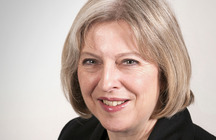
  • Priti Patel – 2017 Speech at BICOM Jewish News Conference

    Below is the text of the speech made by Priti Patel, the Secretary of State for International Development, to the BICOM Jewish News conference on 2 November 2017.

    Introduction

    Lords, ladies and gentlemen; distinguished guests and friends.

    Theresa, thank you for your introduction. It is a pleasure and a privilege to be speaking here today, at this event to mark the centenary of the Balfour Declaration, in the presence of esteemed colleagues. I am extremely grateful to BICOM and Jewish News for hosting this important event and for inviting me to speak – it is an honour.

    100 years on from the Balfour Declaration, Britain is proud of the role we played in helping to make a homeland for the Jewish people – after so many centuries of persecution.

    As the Prime Minister said last week in Parliament, we are proud of the role that we played in the creation of the State of Israel and we will certainly mark the centenary with pride. The Prime Minister said she is pleased about the good trade and other relationships we have with Israel which we are building on and enhancing.

    She also said that we must be conscious of the sensitivities that some people have about the Balfour Declaration.

    I agree.

    It is also vital to look forward towards establishing security and justice for both Israelis and Palestinians through a lasting peace. We believe the best way to achieve this is through a two-state solution based on a negotiated settlement that leads to a safe and secure Israel living alongside a viable and sovereign Palestinian state.

    Today, the United Kingdom remains a close and reliable friend of Israel.

    From the strong and enduring bilateral relationship, built on decades of cooperation in education, technology medical research, business, arts and culture to the trade relationship which between our two countries is at record levels.

    Within the region in particular, Israel is an important strategic partner for the UK. Britain’s commitment to Israel’s security remains unwavering as is our support of Israel’s absolute right to defend its citizens. During meetings with Prime Minister Netanyahu earlier this year, the Prime Minister reiterated the UK’s commitment to building on the strong ties that already exist between our two countries and to continue to build upon our people to people ties.

    I believe there is great potential for our two countries to work together, as we work to set the foundations for a more stable and prosperous future.

    A changing world

    As International Development Secretary, I see and make decisions everyday about our changing world and about some of the poorest and most troubled places.

    It is staggering but true that there are more refugees and displaced people now than at any time since World War Two – with over 15 million in the Middle East region in particular.

    In fact, the Middle East and North Africa is the only region in the world where poverty rates are expected to rise in the coming years… if nothing changes, the number of people living in extreme poverty will continue to escalate.

    There are already 29 million children living in poverty in the region and many countries in the region also have a poor track record on women’s rights; development is going into reverse.

    The Middle East is therefore not just a security challenge, but a development challenge too.

    Violence and conflict are pulling people back into poverty.

    We are seeing the enormous potential of people squandered – because governments and leaders have failed to create the conditions for stability, opportunity and growth…conditions where fairness and human endeavour can flourish.

    As a result some areas of the world have become fertile territory for extremist groups and organisations and their poisonous ideologies.

    Extremist groups are seeking to control schools and what they teach by repressing all freedom of thought and a secular education.

    Which is why we must invest in those people and communities so that we can end the hateful ideology that seeks to create division across countries, communities and people.

    And let me say, that 100 years on from the Balfour Declaration, it is deplorable that anti-Semitism has once again raised its ugly head in our country.

    We will fight it wherever it appears.

    And speak out against intolerance, hatred and bigotry in all its forms.

    And together we must ensure that it appears no more.

    UK development

    The UK has a critical role to play in development and in helping to tackle the root causes of terror and violent extremism.

    Education is a critical part of this.

    Education is critical to breaking down barriers, in attitudes, perceptions about people and cultures.

    By investing in education and education systems we are able to go across boundaries, in a world where physical borders have less and less meaning.

    Today across the Middle East in particular, we see over 10 million children out of school in a region that is experiencing the largest reversal of education progress in history.

    In the Middle-East, Britain has led a global campaign to ensure there is no lost generation of Syrian children. Last year, we helped get over 700,000 children into formal education.

    Protecting and educating a generation of vulnerable young people is critical to development to turn them away from the toxic messages of extremists and instead providing new opportunities through education, skills and work.

    As believers in the two state solution, DFID’s work is focussed on building the institutions of a future Palestinian State through our work in education and in providing basic services from water to health.

    This includes job creation through economic growth opportunities for women and young people.

    But also to build and support people to people ties across communities through co-existence programmes and support.

    And we are working across communities and across the region to support peace and stability.

    I have seen for myself the very best of Jewish organisations and charities around the world including here in the UK doing such amazing work by investing in people.

    Because education, skills and jobs are crucial to opening up opportunities and widening horizons… bringing hope and the possibility of a better future.

    The case for open markets, private sector investment and technology has also never been stronger in development.

    This is how we can transform the poorest and most unsecure parts of the world, and help countries stand on their own two feet.

    It is to no country’s benefit if we leave millions of people without hope or aspiration… another generation locked into the vicious cycle of the politics of hate and repression.

    Working with Israel

    I have always been struck by the exceptional achievement that is the state of Israel.

    A country that has turned desert into fertile and plentiful land.

    A country that started with nothing, in a struggle for subsistence and survival and is now a world leader in technology and innovation.

    A country that despite the challenges of a turbulent region has become a democratic success story.

    A country that is at the forefront of the skills revolution, whether in technology, life skills, vocational skills and is creating the most practical solutions to enhance the lives of the poorest and most marginalised in the world.

    The desire and responsibility to want to help others, coupled with a can do attitudes, is Ladies and Gentlemen, precisely the sort of Jewish Homeland that was dreamt by Herzl and was of course was supported by the historic letter – the Balfour Declaration.

    I have long admired Israel’s extraordinary ingenuity and leadership in technology and innovation, and I am delighted that the UK is working so closely with Israel, in so many ways.

    For example the Israel/UK Tech Hub helps the UK to ally with Israel’s status as the “Start-Up Nation” – with more start-ups per capita than anywhere but Silicon Valley – and with its incredible innovative and entrepreneurial culture.

    And in turn Israel is partnering with the UK’s world-leading science, research and the fast growing tech sectors.

    In my role as Development Secretary I am keen that we continue this collaboration and work together to help create jobs and opportunities in the poorest parts of the world and also to provide essential support to the most vulnerable and marginalised in society.

    The UK is also committed to deepening our partnership – across trade, security, and cultural interests – and working together to tackle pressing global issues.

    This is important for security and stability in the UK, and across the world.

    Conclusion

    On this Centenary, it is fair to say that the Balfour Declaration was indispensable to the creation of a great nation.

    In the decades since its birth, Israel has prevailed over what has sometimes been the hostility of neighbours to become a liberal democracy and a dynamic hi-tech economy.

    In a region where many have endured authoritarianism and misrule, Israel has always stood out as a free society.

    Britain will stand by these values and stand by Israel.

    And by doing so we stand up to tackling this region’s challenges in the short-term and for the long-haul – working to build a more prosperous, more stable future for us all.

    These values were precisely the sort of values that were central to the historic letter we commemorate today.

  • Theresa May – 2017 Speech at Balfour Centenary Dinner

    Below is the text of the speech made by Theresa May, the Prime Minister, at the Balfour Centenary Dinner held on 2 November 2017.

    Lord Rothschild, Prime Minister Netanyahu, Chief Rabbi, distinguished guests, Lords, Ladies and Gentlemen, I am so pleased to be here with you tonight – and to be with you Lord Balfour on this special evening – as we mark the centenary of the letter written by your great-Uncle: which I believe to be one of the most significant letters in history.

    A letter which gave birth to a most extraordinary country.

    And a letter which finally opened the door to helping make a Jewish homeland a reality.

    It was a letter that is all the more remarkable when you consider its length, its context and its sensitivity.

    First, it was exceptionally concise – just 67 words and one single sentence.

    In my experience such brevity is not typically a feature of letters from the Foreign Office!

    Second, we should consider the context in which this letter was written.

    Let us cast our minds back to the time of 1917. In an era of competing imperial powers and with Britain still embroiled in the midst of the First World War, the idea of establishing a homeland for the Jewish people would have seemed a distant dream for many; and been fiercely opposed by others.

    Yet it was at this very moment that Lord Balfour had the vision and the leadership to make this profound statement about restoring a persecuted people to a safe and secure homeland.

    Third, this was a letter that remains very sensitive for many people today – but it was not ignorant of those sensitivities.

    Indeed, Balfour wrote explicitly that: “nothing shall be done which may prejudice the civil and religious rights of existing non-Jewish communities in Palestine, or the rights and political status enjoyed by Jews in any other country.”

    So when some people suggest we should apologise for this letter, I say absolutely not.

    We are proud of our pioneering role in the creation of the State of Israel.

    We are proud to stand here today together with Prime Minister Netanyahu and declare our support for Israel. And we are proud of the relationship we have built with Israel.

    And as we mark one hundred years since Balfour, we look forward to taking that relationship even further.

    As Prime Minister Netanyahu and I discussed in Downing Street earlier today, we want to deepen our links in areas where Israel is leading the world – in areas like agriculture, health, science, technology and innovation.

    Israel is the true start-up nation and we are proud to be your partner.

    We also remain absolutely committed to Israel’s security.

    For it is only when you witness Israel’s vulnerability that you truly understand the constant danger Israelis face – as I saw on my visit in 2014, when the bodies of the murdered teenagers Naftali Frenkel, Gilad Shaer and Eyal Yifrah were discovered.

    So I am clear that we will always support Israel’s right to defend itself.

    And in a world where Britain and Israel increasingly face the same shared challenges and threats, I am just as clear that our security services will continue to deepen their already excellent co-operation to keep all our people safe.

    So I believe we should gather here tonight with a great deal of pride in all that we have achieved – and all that Israel stands for as a symbol of openness, as a thriving democracy; and a beacon to the world in upholding the rights of women and members of the LGBT community.

    But marking this centenary is not just about what has been achieved.

    We must recognise how difficult at times this journey has been – from the Jews forced out of their homes in Arab countries in 1948 to the suffering of Palestinians affected and dislodged by Israel’s birth – both completely contrary to the intention of Balfour to safeguard all of these communities.

    And we must, I believe, seize this opportunity to renew our resolve on what is still to be achieved.

    For sadly, Balfour remains unfinished business – as his fundamental vision of peaceful co-existence has not yet been fulfilled.

    And I believe it demands of us today a renewed resolve to support a lasting peace that is in the interests of both Israelis and Palestinians – and in the interests of us all.

    So I am delighted to see US Secretary of Commerce Wilbur Ross here with us this evening and, Wilbur, you can be assured of the full-hearted support of the United Kingdom for the efforts that the Trump administration is making to bring the parties together to reach that peace deal.

    A peace deal that must be based on a two-state solution, with a safe and secure Israel alongside a viable and sovereign Palestinian State.

    And let us be honest with each other: there will need to be compromises from each side if we are to have a realistic chance of achieving this goal – including an end to the building of new settlements and an end to Palestinian incitement too.

    But as we work together towards Balfour’s vision of a peaceful co-existence we must be equally clear that there can never be any excuses for boycotts, divestment or sanctions: they are unacceptable and this government will have no truck with those who subscribe to them.

    Neither can there ever be any excuse for anti-Semitism in any form. Just as there is no excuse for hatred against Muslims, Christians, or anyone based on the peaceful religions they choose to follow, the place of their birth, or the colour of their skin.

    And yes, this means recognising that there is today a new and pernicious form of anti-Semitism which uses criticism of the actions of the Israeli government as a despicable justification for questioning the very right of Israel to exist.

    This is abhorrent and we will not stand for it.

    That is why the United Kingdom has been at the forefront of an international effort to create a new definition of anti-Semitism which explicitly calls out this inexcusable attempt to justify hatred.

    So let me be clear. Criticising the actions of Israel is never – and can never be – an excuse for questioning Israel’s right to exist, any more than criticising the actions of Britain could be an excuse for questioning our right to exist.

    And criticising the government of Israel is never – and can never be – an excuse for hatred against the Jewish people – any more than criticising the British government would be an excuse for hatred against the British people.

    Put simply, there can be no excuses for any kind of hatred towards the Jewish people.

    There never has been – and there never will be.

    And let me say this too. We will never forget where that hatred and prejudice can lead.

    That is why it is right that the United Kingdom will have a permanent and fitting National Memorial to the Holocaust standing next to Parliament together with a learning centre that will teach the lessons of the Holocaust for society today and act as a voice against hatred in the modern world.

    And I am delighted that just last week, the cross-party United Kingdom Holocaust Memorial Foundation announced that Sir David Adjaye, Ron Arad and the landscape architects Gustafson Porter and Bowman have won the international design competition for the memorial and learning centre with their evocative concept design for this new national landmark at the heart of our democracy.

    In saying all of this I do not underestimate the scale of the challenges we face together.

    The challenge of fighting hatred in all its forms.

    The challenge of bringing people together.

    The challenge of fulfilling Balfour’s vision of peaceful co-existence.

    But neither do I underestimate the scale of the prize that is at stake.

    I saw a glimpse of that prize just last Saturday when I attended a charity concert with the West-Eastern Divan Orchestra on London’s South Bank – an orchestra that brings together young Israeli and Palestinian musicians as well as those from several other Arab countries to promote co-existence and intercultural dialogue.

    They were performing together raising money for the Jacqueline du Pre Tribute Fund which helps fund MS research.

    And through their shared love of music they escaped the divides of their history to come together for a united cause.

    In their actions, and in many others like it, the spirit of Balfour lives on.

    So let us tonight be inspired by that spirit.

    Let us recognise the contribution of Balfour in fulfilling what was once little more than a two-thousand year old dream for a persecuted people.

    Let us take inspiration from the vision he showed as we work together for that future where Arabs and Jews can live in peaceful co-existence.

    And as we look to that future, let us mark with pride what has been achieved with the creation of the State of Israel and – in Balfour’s own words – “a national home for the Jewish people.”

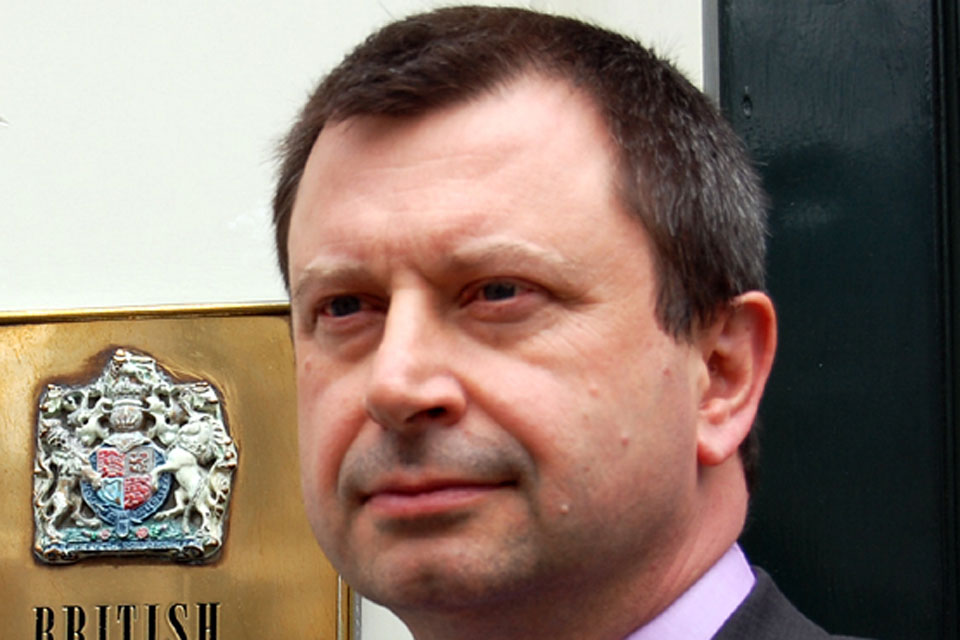
  • Paul Thomas Arkwright – 2017 Speech on UK-Nigerian Relations

    Below is the text of the speech made by Paul Thomas Arkwright, the British High Commissioner to Nigeria, on 3 November 2017.

    We all know Nigeria’s great potential: largest economy in Africa; set to be 3rd most populous nation in the world by 2050; Africa’s largest oil producer; fertile land; abundant natural resources; a large internal market; and a young, energetic population, with a deserved reputation for creativity and entrepreneurial spirit.

    That spirit is particularly strong here in Oyo State, and in Ibadan – home of Nigeria’s oldest University, and the first TV station in Africa; the 5th most populous state in the country; an important link in the South West prosperity hub that extends from Lagos, with the potential to serve as a hub for West Africa.

    UK-Nigeria prosperity relationship is strong. UK companies (Unilever, Shell, PZ Cussons, British Airways, Diageo/Guinness, etc.), are among the longest running international businesses in Nigeria. Prudential plc recently purchased a majority stake in Zenith Life – the first such market entry from the UK into Nigeria. The UK is usually in the top 5 of Nigeria’s trade partners, and is the largest source of capital inflows into Nigeria – including investment from the City of London.

    Nigeria edged out of recession in the second quarter of this year – with year on year growth of 0.55%. This is clearly better than staying in recession, but is far from sufficient to generate the 2m+ jobs required each year just to keep pace with population growth.

    The government’s Economic Growth and Recovery Plan sets out an ambitious range of targets for ensuring that Nigeria builds back better from recession. We are working with the Nigerian government and other development partners to support these efforts – but the challenges are great, and we hope to see accelerated progress in tackling structural reforms, especially in power and infrastructure.

    There are some positives to report. DFID has been supporting the implementation of the Action Plans for improving the Business Environment, which have delivered results in reducing bureaucracy, streamlining processes, and enhancing capacity. These reforms have helped Nigeria leap up 24 places in the World Bank’s Ease of Doing Business rankings, released this week – one of the top 10 most improved countries on the list. 145th is still not high enough for Nigeria’s longer term ambitions – regulatory reform will need to turn into more attractive reality. But it is a start. And should give encouragement to stand against those who say that nothing can be done.

    Encouraging greater investment is key to the work that the UK government is supporting in Nigeria. Whether that’s DFID’s programming supporting state-level investment promotion; the UK’s global Prosperity Fund supporting further Business Environment reform, trade, and investment capacity; CDC (the UK’s development finance organisation) investing in projects like the Azura power plant; or British companies opening new facilities – as Guinness Nigeria has done in Edo State, or as Reckitt Benckiser is planning in Ogun State.

    Our broader relationships are also strong – the UK is home to a large Nigerian diaspora, is one the largest source of remittances into Nigeria, and we share historical, cultural and sporting ties, with heavyweight champion Anthony Joshua celebrated as much here in Nigeria as he is in the UK. I understand he credits part of his power to the pounded yam of his Nigerian family roots.

    Last week the London Stock Exchange hosted a forum Nigerian Capital Markets and Banking. Our Secretary of State for International Development spoke of the UK’s commitment to harnessing capital market tools to boost investment that can create jobs, increase tax revenues, and deliver inclusive growth.

    In the past two months our Department from International Trade team has hosted two large delegations from Nigeria – on infrastructure and agriculture, two major priorities for both the UK and the Nigerian governments where we see great potential for cooperation, investment, and growth.

    His Excellency, Abiola Ajimobi, the Governor of Oyo was one of six state Governors and Deputies who joined the Federal Government Minister for Agriculture for the agricultural investment roadshow hosted in London. We heard great interest from investors in the City of London, as well as agri-tech and processing innovators in the UK about partnering with Nigerian states and companies to boost a priority sector for growing incomes, jobs, and exports in the future. The substantial poultry farming and maize production in Oyo State provide great opportunities, and we are working hard to encourage UK firms to partner with Nigerian producers, to help develop the processing value chains here.

    The UK’s Trade Envoy, John Howell MP will be visiting Lagos next week to take forward those talks and build on the exchanges to help drive further cooperation as we work together to build on the great potential that Nigeria has. Because we have to turn that into reality.

    Several things will help us achieve this: coherent and consistent policy making at the federal and state level – businesses manage risks all the time, but too much uncertainty and they cannot plan their investments; reliable and transparent legal and administrative processes – the confidence that the property and prosperity they build will be protected; and long-term relationships of trust and cooperation – not only with government, but with banks, suppliers, producers, educational and training institutions, and host communities.

    This is why UK-Nigeria relationship is one of partnership – of governments, officials, businesses, and most fundamental of people. Working together to tackle shared threats and also to build shared prosperity.

    As a final reminder – the deadline to apply for our fully-funded masters programme Chevening Scholarships is next week, Tuesday 7 November. In the last year, we awarded 43 scholarships to future leaders from Nigerian to study a one year Masters courses at the best universities in the UK.

  • Stephen Barclay – 2017 Statement on Money Laundering

    Below is the text of the statement made by Stephen Barclay, the Economic Secretary to the Treasury, in the House of Commons on 26 October 2017.

    The UK is one of the world’s largest and most open economies. The Government are committed to tackling the risk of illicit financial flows from money laundering and terrorist financing, and to protecting the UK as an attractive country for legitimate business and a leading global financial centre. As the threats from illicit finance and terrorist financing continue to evolve, so must our understanding of the risks and our response.

    Today, the Government are publishing the UK’s second national risk assessment of money laundering and terrorist financing. This 2017 assessment, jointly published by the Treasury and the Home Office, shows how our understanding of and response to money laundering and terrorist financing have developed since the first assessment in 2015.

    The key findings of the 2017 assessment are as follows:

    High end money laundering and cash based money laundering remain the greatest areas of money laundering risk to the UK. New typologies continue to emerge, including money laundering through capital markets and increased exploitation of technology.

    The distinctions between money laundering typologies are becoming increasingly blurred. Criminal funds are progressing from lower level laundering and are being accumulating into larger sums to be sent overseas using more sophisticated methods.

    Professional services are a crucial gateway for criminals looking to disguise the origin of their funds.

    Cash, alongside cash intensive sectors, remains the favoured method for terrorists to move funds through and out of the UK.

    A wide-ranging set of reforms by Government and law enforcement over recent years is still in its early days, but is starting to take effect.

    The UK has been at the forefront of recent global efforts to shut down money laundering and terrorist financing. The 2016 London anti-corruption summit led to over 600 specific commitments made by more than 40 countries and six major international organisations.​
    In 2015, the UK published its first ever national risk assessment of money laundering and terrorist financing. This set out candidly the areas where action was needed. In 2016, the Government published an action plan and committed to the most significant reforms to our anti-money laundering and counter-terrorist financing regime in over a decade.

    Many of the actions in this plan have now been delivered or are underway. The Criminal Finances Act 2017 will provide tough new powers such as unexplained wealth orders. The Money Laundering Regulations 2017 bring the latest international regulatory standards into UK law. The publicly accessible register of people with significant control (PSC) was introduced in 2016, and records the beneficial owner of a company, thus improving corporate transparency. Progress continues with reforms to the suspicious activity reporting and supervisory regimes.

    This 2017 assessment provides a critical component of continued partnership and prioritisation between Government, law enforcement, supervisors and the private sector.

    A copy of the report has been deposited in the Library of the House.

  • Paul Beresford – 2017 Speech on the A3 and RHS Wisley

    Below is the text of the speech made by Sir Paul Beresford, the Conservative MP for Mole Valley, in the House of Commons on 26 October 2017.

    I offer special thanks to the Minister. I know from my own past experience that notice arriving on a Minister’s desk saying that they are answering the last debate of the week is met with a groan; he is smiling now, but there might have been a groan at the time.

    As the Minister is aware, M25 junction 10 is where the A3 and M25 link. The growth of traffic on both roads is such that this is probably the busiest interchange in the UK; it has the highest accident record, I believe, and experiences frequent disruption and car jams in both directions on the A3, contributing to M25 jams. There are delays for miles around. As a main link between the south-east and London, the demand pressure on the A3 and the junction is growing and will continue to do so.

    On the western border of the A3, just south of junction 10, is the world-famous Royal Horticultural Society Garden, Wisley. To those without a compass—or any understanding of a compass—it is on the left of the A3 after Ockham, just before the M25 as one drives to London. Access is currently off the A3, either directly if driving towards London on the A3, or via the Ockham roundabout. There is a slip road off the A3 to the entrance and a similar slip road on to the A3 on exiting. It is adequately, but not obtrusively, signposted.

    I am sure the Minister is aware of the importance of the gardens. RHS Wisley is the United Kingdom’s centre of excellence for horticultural science, research and education. I am referring not only to the world-class high-standard horticultural education and research, but also the annual influx of 18,000 schoolchildren from over 450 schools and the 1.2 million of the general public who flood in annually. I suggest to the Minister that if he ever visits, he gets there and parks his car early, because he will walk for about half a mile to get in, such is the demand. I must declare an interest, as most of my family belong to the RHS and visit regularly. They find the miniature insects absolutely fascinating, and they tear around the garden and try not to fall into the pools and ponds.

    Wisley is a grade II-listed park and garden of about 240 acres of historical and horticultural delight. It employs 400 full-time staff and about 250 volunteers. The RHS is a third of the way through a £160 million investment development programme; £160 million for a charity in this country is some programme. That will lift the number of full-time jobs at Wisley by 60 and the anticipated visitor numbers will lift to not far short of 1.5 million annually. That will bring an accumulated benefit impact locally of about £1 billion over 10 years.

    Because of the garden’s location, there is no public transport and no realistic prospect of public transport. As one drives, or often crawls, along the A3 one could be forgiven for not knowing the gardens are next to the A3. The gardens and their ancient woodlands are buffered by a well-planted shield with over 500 mature trees, many, if not most, over a century old.

    I accept that major improvements to junction 10 and the A3 are a necessity; that is glaringly obvious. The RHS accepts this, and Highways England engineers ​have been working on plans to sort the problem out. The plan that it appears most likely to favour, however, will hit Wisley gardens hard and dramatically. The buffer provided by all the trees will go, and the entrances and exits will be complicated, adding about 7.5 miles to the round trip per visitor car. I believe, as does the RHS, that this complicated entrance will be a deterrent for visitors. Just as the investment is expected to increase, and just as it is going to help to fund the attraction, the deterrence will come in. The need for direct access and exit from the A3 is obvious. The effect on local traffic through our local villages and surrounding countryside will be significant if the possible preferred plan goes ahead.

    There has been considerable discussion with Highways England, which is still meeting and discussing the prospects with the RHS. That is very helpful. Indeed, Highways England has told me that it is not against what the RHS and I see as the required south-facing slip roads at Ockham, which would meet many of the problems. However —this is where the crunch comes for the Minister—that would apparently be outside the geographical perimeters of the current scheme: the A3 road improvement scheme. New funding would be required—compared with the size of the programme that we are looking at, which is not great—as well as a business case and further consultation with local authorities and perhaps landowners. It is a further problem, but it offers a solution that goes with the grain, rather than against it. A relatively small delay to produce a sensible scheme is better than blundering on and then looking back in time and asking why we did not do this right when we had a chance.

    I was going to ask the Minister if I could bring a couple of RHS representatives to his office, but I have changed my mind. Better than that, I am inviting him to come down to Wisley to see it for himself. If necessary, I will personally drive him from his office, or better still—for a Minister in the Department for Transport—from the local station. We will arrange an on-site visit with free entry, a short tour with a photo opportunity, and a cup of coffee with an RHS bun. Actually, because it is an old charity of long standing, we will get some Victoria cream sponge sliced for him. Seriously, though, an on-site visit is the only way for him to put this whole problem in perspective. Looking at maps is not the same as looking at the trees. I want us to get this right for generations to come, over the next decades and running into the next century, bearing in mind that Wisley gardens have already been going for a century. I would hate my hon. Friend the Minister to be the one to be named by Wisley visitors as they ask why he did not get it right when he had the chance.

  • Justine Greening – 2017 Speech at Teach First Conference

    Below is the text of the speech made by Justine Greening, the Secretary of State for Education, at the Teach First conference on 24 October 2017.

    I very much share the common mission that you have today, which is social mobility – and it’s something that has very much shaped my own life.

    You’ve just heard from the ComRes poll, and the problem is that poll is correct. Where people start still overwhelmingly does define how the rest of their life will play out, and today is all about tackling that head-on and saying that none us should accept a country that works that way.

    But also, I think you can challenge the impossible because I think we can change and we can shift the dial and I think we can, finally, make our country a country where there really is equality of opportunity for young people wherever they’re growing up.

    Of course, I started off my journey in Rotherham. I went to my local comprehensive and I had amazing teachers that really did help me to think that I could aim high, that I could possibly make something of the opportunities that were waiting for me in the rest of my life if I was able to study at school and work hard.

    The thing that I have never forgotten, and that I passionately believe, is that talent in our country is spread evenly. There isn’t this one community that is creating these amazing children that are going to go on and do brilliant things – those young people are all over, and we have to have an education system that allows them to make the best of themselves wherever they’re growing up.

    So I want to talk briefly today just about some of the things that we’re doing, to be clear with you about how important social mobility is for me and for the Department for Education now, and perhaps to start off by saying I agree with the speaker that introduced Muzoon [Almellehan, UNICEF Goodwill Ambassador] – we do need to go for it. But I think part of the problem is that it’s very hard to aim for an opportunity and to go for it if you don’t really know what that opportunity is and what it looks like.

    For me, growing up I never thought about becoming a lawyer or doing law at university because I’d literally never met a lawyer in my life. I’d heard about lawyers, but I’d no idea what that job entailed, what the career would be like. And I think this isn’t just about education. It’s about connections, aspirations and I think the session after me will help really get into how that is absolutely vital, alongside what we’re doing in our education policy.

    We know, as Russell [Hobby, Teach First] said, that for some communities poor social mobility has become entrenched. So people are growing up in parts of the country where actually they’re likely to have worse outcomes and then they’re likely to have worse career opportunities for them, even when they leave school.

    There are some people for whom those opportunities are there, for whom that education is there, for whom those networks are there. For them, they’re pushing at open doors. But for other young people, other children, they don’t even know that the doors exist in the first place.

    I think that teaching and the teaching profession is one of the biggest levers we’ve got to level up opportunity in our country. It’s part, of course, of the solution. Not the whole solution, but it’s a crucial one and it’s probably why many of you are here today as people who went into the teaching profession and I remember, just after I got elected, being approached by Teach First to come into parliament and to talk to me about all the work that this still quite new charity was doing, even then. I remember being blown away by how fantastic it sounded.

    I can also remember, I have to be honest, thinking that had it been there at the time when I was thinking about doing my career choices after going to university that actually it’s something really would have appealed to me.

    I think the early days, that first stage, of Teach First where you really ran towards some of the burning education issues of the time, which were often the plight of underperforming inner city comprehensives, many of them right here in London. And these were schools that, for those children in them, just weren’t getting the start that would mean they could benefit from a better education and more than that, they were disproportionately young people coming from more disadvantage backgrounds. So this sense of an education system that was actually exacerbating people being able to get on, in some respects, rather than levelling up the opportunity.

    But schools like Hackney Downs and the rise of new academies that Labour actually first brought in then, of course, championed and pushed forward by us in government, like Mossbourne. Those sorts of reforms really started, I think, a race to the top and were very much pushed forward by an amazing teaching profession.

    You’re going to hear from another amazing head, David Benson of Kensington Aldridge Academy – a school that has faced huge challenges over recent months but risen to them incredibly and is inspiring.

    So, Teach First teachers are making a huge difference but they’ve gone beyond just teaching to setting up their own schools. I think alongside much of the work that has happened in cities like London, in particular, we’ve seen the real fruits of those benefits for levelling up opportunity. And now London and its education results probably give Singapore a run for its money because of the changes that have come in.

    But they’ve been changes that have been pushed forward and pulled through by amazing teachers and I think we’re here today because this was almost phase one. But there’s a much bigger phase that we now need to really get into because if the task before was around inner city comprehensives and looking at places like London, actually now it’s about looking at the regional disparities that we have still in our education outcomes and the fact that if you’re a child in London, the fact that you want to look at how many children in London have got, say, three outstanding primary schools that are within three miles of their homes, in other words outstanding schools and great choice, that’s actually 90 per cent of children growing up in our city here.

    But if you go to Bradford, do you know what the percentage is? It’s three. And I think that statistic, if nothing else, really shows how we now need to take all of the learnings – and all of your learnings in many respects – that we’ve seen over the years in education, particularly how we’ve changed things here, and make sure that we now lift up the results for children in many other different parts of the country.

    I personally think that, as we go through Brexit, one of the things that we need to change in our country is that it needs to feel different in terms of opportunity and we need to make sure that we tackle the opportunity deficit that exists for far too many of our young people that are growing up around Britain today.

    I think you know how hard this will be because actually if we could all fix it by talking and doing speeches it would have all been sorted a very long time ago. I think if it had just been about goodwill we’d have fixed it a very long time ago, but in the end my view is that you’re not going to shift the dial on social mobility with some grand visions.

    Actually fixing social mobility, delivering on equality of opportunity is something that’s more complex, more gritty, quite local in many respects, very long-term. It requires a persistence that I think sometimes is hard to deliver in government and I think you need to build a strategy brick by brick – and that’s precisely what we’re determined to do.

    We’re going to start in early years. We’re going to work with you in schools. We’re going to make sure that young people post-16 for the first time really have outstanding choices, not just on academic routes but on technical, applied education routes too. And we’re going to make sure that our young people going into university really know what the outcomes are after they invest in those courses.

    I think underneath all of that needs to be two things. Firstly, a willingness to work in in partnership together – which I’ll come onto in a second – but secondly, something that I think Teach First is all about, which is innovation. When you look at what Teach Firsters have gone on to do, whether it’s Frontline, Brilliant Club, The Access Project, Jamie’s Farm, the Institute for Teaching, Right to Succeed. These are all programmes that are doing so much now to create opportunities for young people.

    That innovation and willingness to challenge and change needs to come from government as well. I think when you look around our country there are so many areas where we know what works, not just in London, but outside too. And it’s now time to capture to what works, to have an evidence-based approach on that, and really spread it to the areas that can benefit from in the most.

    The Education Endowment Foundation, I think, is a lynchpin in enabling us to make sure that we catch that evidence – that we marry it up with things like research schools and we really use it to drive policy and policy development over the coming years. But at the heart of all of this, for me, is teachers and an amazing teaching profession. It’s teachers that changed my life for the better, like most people at school if you point to the people that shape you most in life, it will almost certainly be your parents and your teachers.

    So what we’re going to be doing is investing in home-grown talent in the parts of the country and the communities where we really want to lift up our teaching and lift up our schools, the teachers who are already there, who work in these challenging schools, who have already got the close connections with the communities. But I also think it’s about attracting more great teachers into those areas as well. I think this is an instinct that many, many teachers already have.

    Teaching is a vocation and I think that’s why all of you have gone into it – you want to make a difference and I think we’ve got to make it easier for you to follow the grain of your human nature, to follow your gut instinct, to be able to go into those schools and really work as teams and lift them up. So, yes, we want to have a look at this in a much more systematic way because it requires a more systematic approach if we’re really going to make things different.

    I want to make sure that teachers know that when they go into more challenging schools that they will get the full credit for having done that rather than simply going to a school where they’re brilliant but maybe it’s with children who are already able to access great teaching. I think that means we’ve finally got to get a grip on managing workload, we’ve got to have an accountability regime that doesn’t create barriers for teachers going to work in those schools where they’re needed most.

    The reason that it’s so crucial to me to put this in place is that I want to carve out some space to really focus much, much more on teachers’ professional development. I realise that until we crack the workload nut that’s much, much harder.

    Of course, the work that Amanda Spielman and Ofsted is doing in this area is also absolutely vital if we’re going to shift the system so that you can do what you want to. Our number one goal, I think, is lifting teaching as a career and I think helping shout about the fact that actually it’s probably one of the most rewarding careers anyone can go into.

    We want to make sure that the best graduates think seriously about it as an option when they come out of university but that does mean, I think, improving the offer for existing teachers and that starts with strengthening QTS [Qualified Teacher Status]. For me it’s about making sure that as our teachers leave Initial Teacher Training that, when they finally get into the schools that they’re going to be teaching in, that actually that’s the next stage of their development not just the end of it.

    Focusing on CPD [Continued Professional Development] in the early stages of a young teacher’s career is absolutely critical. That’s why I want to strengthen QTS. We’ve had a fantastic group of people, many of them teachers, all of them education experts, working with us at the DfE to pull together how we can do this best and we’ll be launching a consultation shortly to what all of you think good looks like.

    I really do want to see this move on and I want it to be a stronger, better, more powerful QTS that can really turbocharge teacher’s development and beyond that, then making sure that the National Professional Qualifications and the reforms there. We’ve set aside £10 million to really incentivise those being taken up in the areas where we think we want to work hardest on improving leadership.

    It’s about steadily building a whole career path and there’s much, much more of course to do on all of this but it’s fantastic for me to see the role that Teach First is going to play in all of that and certainly you will be one of the first 42 providers of those new, reformed NPQs.

    All of that work sits alongside the broader work that’s underway on using an evidence base to really understand how we can help develop, professionally, teachers in our more challenging areas. Whether it’s the Teaching and Leadership Innovation Fund, including programmes from that – one of which is also led by a Teach First ambassador. Those programmes are launching in schools next year.

    I’m keen to look at how we can strengthen the pipeline of teachers going into parts of our communities that would most benefit from great new teachers. That’s why we’ve announced that we’ll be piloting the teacher loan reimbursement scheme in more difficult parts of the country so that we can really improve not just retention, through a stronger career path, but critically recruitment as well.

    That pilot scheme will focus on new science and modern foreign language teachers. We’re going to launch it in 25 very different local authorities whether it’s Derby, Oldham, Northumberland, Middlesbrough, Norfolk, and it will cover those early years of student loan payments.

    Of course, Russell mentioned Opportunity Areas, and we’ll continue all of the work that’s well underway there. And I think what we were trying to achieve with the Opportunity Area strategy was to have, again, a more systematic look and recognise that many of the challenges that are faced inside schools, and faced by teachers trying to do their role inside schools, actually need solutions not just within the schools themselves but to work much more broadly with communities, with charities, with businesses outside schools too.

    That’s precisely what we’re doing. And the second piece of this really, for me – I talked about innovation – is partnership. I think the knowledge that Teach First will be on that next stage of the journey with us, looking at how we can really shift the dial on tackling the regional disparities that are still there in our education system, I think is a huge prize for all of us to aim for.

    Teach First was never called just Teach London, or Teach south-east, and for me I think it’s going to be fantastic for you to be so clearly on this next phase of our journey of raising education standards across our country.

    Just to finish, I think absolutely everybody wants the same objective here. There are 4,000 people in this room but one objective, which is raising social mobility. Achieving a country where we have equality of opportunity, finally. I think we should recognise that Britain’s never been a place where there has been equality of opportunity. We’re not alone, that’s pretty much the same for overwhelmingly pretty much every single country in the world.

    But I think if you believe, as I do, that any country – whether it’s Syria, or whether it’s Britain – any country’s greatest asset is people. Enabling those people, every single individual, to be able to flourish and reach their potential and thrive, surely is the biggest step we can take to making sure that our country’s a successful one in the long-term – but also a happy one too where people can truly feel fulfilled.

    We’re looking across my department at how we can tilt our programmes, how we can focus our efforts, how we can make sure that across all of our policy areas and teams things are joined up. How we can make sure that all of those things are joined up with organisations, including Teach First, that are doing so much work every single day on exactly the same issue.

    I believe that things can absolutely be different in our country in the future than how they’ve been in the past. I think it will take huge effort. I think it will take long-term effort. But I really do believe that if we work together we can achieve a first for Britain – and that’s a Britain that really does have equality of opportunity for all. Thank you.

  • Liz Truss – 2017 Speech on Public Services

    Liz Truss

    Below is the text of the speech made by Liz Truss, the Chief Secretary to the Treasury, on 26 October 2017.

    When I arrived in the Chief Secretary’s office in June, I was expecting to find a note telling me how much cash there was.

    Instead all I got was a few pieces of cricket memorabilia and a rather sweet cat.

    But what I did inherit were public finances in much better shape than in 2010. The deficit is down and the economy has enjoyed years of sustained growth.

    On every street corner, I can see untapped potential. I see the ambition to succeed from the founders of firms to the leaders of social enterprises. In every business, school and hospital, we have huge talent.

    I know that the best days of Britain are ahead of us.

    In order to turbocharge our success, we need to unleash this potential within our economy.

    And for that we must look to public services.

    Why?

    Because around a fifth of the economy is in the public domain.

    And because:

    Education

    Infrastructure

    Health care

    Planning

    Regulation

    …are all under the control of the government.

    Unlocking our potential is not about increasing the size of the state.

    It’s not about what you spend – it’s about how you spend it.

    We’ve made good progress over the last seven years, reducing the deficit while improving front-line services. Some say we can’t go any further, but I don’t accept that defeatism.

    I know we can: it’s about unleashing a new era in technology, creativity and ideas.

    In Britain we have some of the best public servants in the world.

    But we need to give our public sector leaders new freedom…

    Robustly measure our output…and make sure we spend every penny well.

    Achievements to date

    We’ve made huge progress since 2010:

    – 4 years of uninterrupted economic growth

    – a record number of start-ups created: we rank 3rd, with over 650,000 founded in 2016 alone

    – we now have 22 billion-dollar tech companies based in the UK, from St Ives to Inverness

    – the unemployment rate at its lowest since 1975

    – millions more children in good or outstanding schools, and more student choosing to pursue maths at A-level

    – historically high cancer survival rates

    We didn’t achieve all this by losing control of the public finances.

    We did it by harnessing the creative, innovative spirit that has driven Britain’s success for centuries…

    By shifting money to the front line in health, policing and education…And by giving those on the front line the power to transform what they do.

    Moving from inputs to outputs

    So why is so much of the public spending debate just about how much money there is?

    No company would measure its performance by its cost base.

    You don’t see Sainsbury’s saying we’re doing better this year because we’re spending more money on products we’re buying to sell to our customers. Deliveroo didn’t come up with their new operating model by deciding what the budget was first and then buying up bikes.

    The reason we’ve got such a high number of start-ups and our businesses are so successful is because they are constantly finding new and better ways to deliver their services.

    Why do we only ask:

    How big is her Budget?

    How much are we spending?

    Is it more this year or last year?

    Is it more in Manchester or Bristol?

    What number is attached to that announcement? And to be clear, there aren’t any spending announcement here today.

    Of course, public services do require money. So let me set out the facts:

    – public spending is currently 38.9% of GDP

    – this year, it will hit £800 billion for the first time – that’s around £29,000 per household, and in line with what other major economies are spending

    – on education, we spend more as a percentage of GDP than countries like Germany or Japan, and our health spending is 9.7% of our GDP, more than the EU average

    – our public services are important. We value them highly. And that is exactly why they have been, and will continue to be, well invested in

    How do we make public services better?

    Hard working taxpayers want to know that every penny that they pay is going to good use.

    Lower productivity means less value achieved for every pound spent: fewer operations conducted, fewer children educated well, fewer bins collected.

    And the result? A substantial budget deficit on the eve of the UK’s biggest financial crisis in 80 years.

    Let me be clear – there are some things only government can do.

    But allowing the state to grow squeezes out the freedom and enterprise of the private sector.

    It raises the tax burden on both individuals and businesses, slowing and stifling the innovation which drives our economy and our success.

    If we want to make sure our public services continue to lead the world, we shouldn’t be losing control of the public finances or wrecking the economy.

    We need a balanced approach – investing while driving productivity and value for money.

    Productivity doesn’t mean we’re expecting people to work harder – people already work hard.

    It’s about giving people the means and the freedom to maximise the impact of what they do. And making sure public services are having the greatest impact on people’s lives.

    We have commissioned Sir Michael Barber to look at how we do exactly this.

    For me there are three key areas:

    Firstly, we need to continue to move towards a system that rewards the impact money has, rather than the amount of money spent.

    Secondly, we must cultivate leadership in public services. We know what we want to see, but we should give those on the front line freedom to deliver.

    And, finally, we must open up more of our public services to new ideas and disruptive innovation. We need to think big.

    1. Impact

    Firstly: we must rigorously measure the impact each pound spent has. If we can’t measure results, people will talk about what they always talk about: money.

    We’re now much better at investing in economic infrastructure. With more sophisticated analysis we’re making better decisions than ever about where we invest taxpayers’ money. This means families and businesses see maximum gain when we spend money on roads or railways.

    For example, in 2015, we were able to prioritise the dualling of the A11 to Norfolk, because it had a very high cost-benefit ratio compared to other projects.

    Now we need to go beyond concrete and steel and use this approach to look at how government spending affects people.

    We’re already doing this in higher education. We’ve recently published data measuring the impact of a university course on students’ prospects. It’s a new tool for comparing the return on investment at different institutions and courses.

    It shows, for example, that students taking engineering at the OU can earn well over £50,000 five years after graduating.

    And our Teaching Excellence Framework is incorporating earnings data, and providing a measure of the overall value-add that universities and courses provide.

    However, effective measurement is not just about holding ourselves to our own standards, it is also about benchmarking our performance against other countries – noting where we are better and when we are not, so we can improve. We know how to benchmark. We simply need to do it more.

    Prioritisation

    This measurement can help us prioritise.

    We are already doing this by rebalancing public spending. For example, by helping people into work, we’ve reduced the Jobseekers Allowance bill by £2.1 billion since 2010. And we are increasing public investment to around £1 in every £8, as opposed to £1 in every £14 in recent decades. And we are reprioritising within out Budgets.

    On Education, our prioritisation of funding to the front line has meant that we’ve been able to put £1.3 billion extra into core schools funding. The evidence shows that high quality teaching that is the key factor of educational performance.

    But we need to go further.

    We need to back brave leaders, like Simon Bailey of Norfolk Constabulary, who is reshaping his force to deal with the changing nature of crime: making difficult decisions so he can invest in the IT required to deal with increasingly complex crimes such as adult and child abuse, sexual offences and cyber-crime.

    2. Leadership freedom

    As Charlie Mayfield identified in his report industry productivity, leadership is an area where the UK has much to learn.

    To use his exact words: While we have world class, high performing businesses, in far too many UK firms of all sizes, management performance falls behind the best international standards.

    Our public services are no different.

    We need to move away from the idea that great leadership and management is something that you are born with. That someone is either Winston Churchill or David Brent.

    Some of our most successful innovations like academies, foundation trusts and reform prisons have been about enabling and empowering leaders: giving them the freedom to lead and the accountability that comes with that.

    Take the Michaela School, run by Katharine Birbalsingh, that I visited in Wembley.

    Katherine has reorganised the school day to eliminate the time normally lost moving from classroom to classroom.

    Over time, it means hours – days – of time spent in the classroom instead of wasted in the corridor.

    Taken together, seemingly insignificant changes can have a huge impact on children’s lives.

    The Michaela School was recently rated ‘outstanding’ in every category by Ofsted.

    Or take Worthing Hospital, where trust leader, Marianne Griffiths, has embraced the Japanese concept of Kaizen – continuous improvement.

    This has been adopted by the brilliant team on Beckett Ward, led by deputy Sister Sue Grace.

    Instead of lodging a complaint to senior management and waiting six weeks for a response, the team gather each day for an “improvement huddle”.

    One such improvement was a nurse’s suggestion to move admin desks onto the patient bays. This would mean nurses could supervise patients while doing paperwork. Otherwise known as “BayWatch”.

    Once put into practice, falls by frail patients dropped by 80%. We know our nurses are working their socks off.

    The problem is, there are often too many barriers to making the small changes that have a big impact.

    As a government, we must do more to empower our public servants, remove these barriers and provide them with the means and support to unlock their potential.

    In the way we design frameworks and spending controls, the Treasury – whilst protecting public money – must make sure we are allowing leaders to lead and giving them freedom over how to achieve results.

    3. Disruption is good

    Finally, I want to take on this notion that the public sector should resist outside influence.

    The public sector does not exist in a bubble and business should not be treated as the enemy.

    Don’t critics realise that the cheap flights they take – the lattes they sip – and the smartphones they post their dubious comments from are all results of free enterprise.

    Rather than ignoring or denying the virtues of enterprise we should be harnessing it for the public good.

    Both of my parents worked in the public sector in Leeds, my dad as a university lecturer and my mum as a nurse and then teacher. In fact, my father is still working as a mathematics lecturer today.

    The institutions that they worked in – Leeds University and the Infirmary – emerged in the city’s days as a wool town, and were paid for and heavily influenced by the industrialists of the day.

    Fast forward to today, and we can easily see the huge contribution made by entrepreneurs and business people – like Lord Harris and Paul Marshall – to our public service. Both have brought their energy and drive to the academies and free schools movement, where performance is outstripping other schools in the state sector.

    Public private partnerships, like the Docklands Light Railway, are some of the most effective and popular public services in the UK.

    From Ask the Midwife, an app which is helping expectant mothers to access NHS services quicker and more effectively…

    …to the brilliant IT company Reveal Media that supply bodyworn cameras to police, saving time and speeding up prosecutions

    …to the transformative effect that digital flood information is having on coastal towns and villages vulnerable to flooding – technology only available because of the innovations of world leading software companies.

    We must champion a rich, vibrant, creative, enterprising public sphere where all ideas are welcome.

    Looking forward

    We want to see new ideas challenging the status quo of our public services.

    Government doesn’t always have the answers, but we can create structures to empower people – liberating our public servants and making the most of those opportunities.

    This idea that some monolithic planned state will solve Britain’s problems in our rapidly changing and incredibly diverse world is ludicrous.

    The best ideas often come from those on the front line. We need a public sector open enough to harness new ideas for the public good.

    Conclusion

    We’ve come a long way in understanding how to get the most from public services.

    It’s not about spending money we don’t have.

    It’s about championing the ambitious and the enterprising.

    It’s about rigorous measurement of what we do and being willing to reprioritise.

    It’s about opening up more of the public sector to new ideas and innovation, unleashing creativity in the way we approach our day to day delivery of public services.

    In this way, we can harness the untapped potential of the public sector and its people to help drive our economy and put us in a strong position to thrive.

  • Michael Fallon – 2017 Statement on Franklin Wrecks

    Below is the text of the speech made by Sir Michael Fallon, the Secretary of State for Defence, in the House of Commons on 23 October 2017.

    I have today laid before Parliament a Ministry of Defence departmental minute detailing a gift which the UK intends to make to the Government of Canada. This reflects our long shared history and the closeness of our current bilateral relationship.

    Sir John Franklin set sail from England in 1845 with two ships, HMS Erebus and HMS Terror, in search of a Northwest Passage through the Arctic. Sadly, the ships and all their crew were lost.

    In 1992, the wrecks were designated as a national historic site by the Canadian Government under the Canadian Historic Sites and Monuments Act—despite neither shipwreck having been found at that time. This significant step was taken as a result of the ships’ association with Franklin’s final expedition, and their role in the history of exploration of Canada’s north and the development of Canada as a nation.

    Recognising the significance of these ships to the people of Canada, a Memorandum of Understanding (MOU) was signed between the UK and Canadian Governments in 1997 assigning custody and control of the wrecks along with their contents to the Government of Canada (Parks Canada) with certain conditions should they be discovered.

    Many attempts were made over the years to locate the ships, but only artefacts were found. The ships remained undiscovered until September 2014 when an expedition led by Parks Canada discovered the wreck of HMS Erebus. In September 2016, HMS Terror was also found.

    Both wrecks are under relatively shallow Arctic Waters to the south of King William Island. The expeditions that located them brought together the Government of Canada as well as public, private and non-profit organizations. The use of state-of-the-art technology combined with Inuit knowledge made these historic discoveries possible.​

    During her recent visit to Canada, the Prime Minister made clear the importance of recognising our shared past. As the wrecks are of great historical and cultural value to Canada and recognising the historical significance of the Franklin expedition to the people of Canada, the Government believe the 1997 MOU should be replaced with an appropriate updated MOU, giving full ownership of the wrecks to Parks Canada. It is intended that the new MOU will include a clause to allow the UK to retain ownership of a small representative sample of artefacts. This exceptional arrangement will ensure that these historically significant wrecks and artefacts are appropriately conserved and allow items to be displayed for future generations in both Canadian and United Kingdom museums.

    The transfer of ownership is expected to be undertaken over the coming weeks, subject to completion of the departmental minute process.

  • Theresa May – 2017 Speech at Emergency Services Reception

    Below is the text of the speech made by Theresa May, the Prime Minister, at a Downing Street reception held on 23 October 2017.

    Good evening everybody and it is a great pleasure to welcome you all to Downing Street today.

    I host a number of these receptions, and when I host events here it is normally to celebrate an anniversary or to recognise the success of a good cause.

    And of course today is different. Because the events that have brought us together are some of the most tragic our country has had to face in recent times.

    Four dreadful acts of terrorism and a catastrophic fire, which all occurred over a 3 month period this year; they united, I think, the whole country in both shock and in grief.

    Just to recap, on 22 March, the Westminster Bridge attack killed 5 innocent people, including PC Keith Palmer, and injured 49.

    On that day, Metropolitan Police officers responded immediately to neutralise the terrorist and the London Fire Brigade rescued a person from the River Thames.

    On 22 May, in the attack at the Manchester Arena, 22 people were killed and at least 250 were injured.

    Officers from the British Transport Police and Greater Manchester Police and the North West Ambulance Service were on the scene within minutes, entering the arena without hesitation to help survivors.

    On 3 June, on London Bridge and at Borough Market, eight people were killed and nearly 50 were injured. Armed police arrived and shot the attackers dead within just 8 minutes of being called.

    Officers from the British Transport Police, the Metropolitan Police and the City of London Police worked together at the scene administering first aid and comforting the injured, evacuating the area, and gathering evidence.

    On 14 June, at the Lancaster West Estate in Kensington, the devastating Grenfell Tower fire killed whole families – adults and children – and made hundreds of people homeless.

    The first fire crews were on site in less than 6 minutes. Over 200 firefighters and officers attended, working in extremely difficult conditions to bring the fire under control and rescue scores of people.

    Officers from the Metropolitan Police secured the scene, while the London Ambulance Service treated the victims.

    And then in the early hours of 19 June, a man was killed and ten people were injured in a cowardly attack outside Finsbury Park mosque.

    The alleged attacker was detained by members of the public until police officers, including an armed officer, arrived at the scene, again within just a few minutes.

    Firefighters and the Ambulance Service supported the police and treated casualties.

    What linked all these terrible events was not simply the loss of life and the suffering inflicted, but also the inspiring responses of the people in this room today – our emergency services.

    You see the worst of us, but represent the best of us.

    You are the ones who run towards devastation, while others run as fast as they can the other way.

    And every day you go to work knowing you could be called on to face things which most of us would never want to confront.

    On each of those five days this year, and again at times like the Parson’s Green bombing, that’s exactly what you had to do.

    To bear witness to horrific and heart-breaking scenes.

    To do your jobs, in the most difficult of circumstances, with professionalism and courage.

    And to risk your own lives to protect others and to serve your country.

    And then, when your shift was over, to go back home to your families, to try to put what you’ve experienced into perspective, and to get on with your lives.

    I have to say I know from my experience, and also as Home Secretary, one of the most inspiring things when I meet members of the emergency services, both in general, but particularly those who have been responding to incidents like this, is the way everybody says they ‘were just doing their job’. But as I say that is a job that most people wouldn’t want to do and it is a job that matters and is so important to all of us.

    And I know that doing that and then returning to, if you like, normality, with your families and life generally can be enormously difficult.

    And you will of course be supported and sustained by the camaraderie and mutual support of your colleagues. By the love and affection of your families and friends.

    And by your own sense of duty and public service.

    But the country you have served has a responsibility to support you and your families too and the government takes that responsibility seriously.

    We have a responsibility to ensure that you have access to the right occupational health services, with proper mental health support.

    And we announced over the summer that we are making available a further £1.5 million to support the delivery of Mind’s Blue Light Programme, which provides mental health support for all emergency service staff and volunteers.

    And we are also supporting Chris Bryant’s private members’ Bill, which will double the maximum sentence for common assault from six months to a year if committed against an emergency worker while they are on duty. Now it is my privilege to host you here today; to be able to invite you here to Downing Street. And I want to thank you, on behalf of the whole county, for your bravery, for your professionalism and for your dedication.

    At all times, you command the respect and admiration of the British people.

    And you represent the values and qualities which we all look up to.

    You are truly an example to us all.

    Thank you for being here today, thank you for everything that you did in relation to these incidents, and for some of you are continuing to do in relation to these incidents.

    Thank you for what you do every day when you go to work.

    Thank you for being here and enjoy the rest of the evening.