Tag: 2016

  • Andrew Jones – 2016 Speech on Low Emission Vehicles

    andrewjones

    Below is the text of the speech made by Andrew Jones, the Parliamentary Under Secretary of State for Transport, at the Lancaster Hotel in London on 21 January 2016.

    Introduction

    I am really grateful for the chance to speak today.

    And thank you to Chargemaster for hosting today’s conference.

    It’s great to hear about your work and ideas for the future.

    There’s a real buzz around the electric vehicle market nowadays.

    And I mean that figuratively, as well as literally.

    The shift we are seeing reminds me of the spread of the internet in the 1990s.

    The internet started small, as a niche interest, but then it snowballed, and now it’s hard to imagine being without it.

    I think we are seeing a similar picture emerging for ultra low emission vehicles in Britain today.

    ULEV sales are not just growing rapidly.

    They are rocketing.

    Plug-in vehicle registrations reached a record high in 2015, as 28,188 new ULEVs arrived on UK roads, more than the past 5 years’ totals rolled into one.

    The UK now has the most comprehensive rapid chargepoint network in Europe, and home-grown companies such as Chargemaster are making the UK’s ULEV industry a private sector success story.

    Ambition

    That’s a success story the government wants to see continue.

    And that’s why in the last Spending Review we increased our support for the British ULEV market to £600 million over the next 5 years.

    Since 2011, more than 50,000 plug in grant claims have been made, and our new grants will ensure a further 100,000 people will get financial support when purchasing ULEVs.

    And we are continuing the highly valued home charge scheme under which home-owners can receive a grant for most of the cost of installing a home chargepoint.

    And we are working with local authorities to increase numbers of on-street chargers for owners who don’t have off-street parking.

    By 2050, we want virtually every car and van on the road to be zero emission.

    Councils in the capital and across the country have similar objectives, and we will shortly announce the winners of a £40 million Go Ultra Low Cities scheme.

    The successful local authorities have clear plans for their own city-wide ultra-low emission vehicle revolutions, and will receive funding to achieve those plans.

    The rationale for this kind of local funding is clear.

    It’s often in the local area that the benefits of ULEV vehicles are most plainly felt — as contributing to cleaner air, healthier lungs and lower noise pollution.

    But this transformation won’t be limited to the areas covered by our Go Ultra Low Cities scheme.

    ULEVs are an opportunity — and an increasing necessity — for everywhere in the country.

    Anyone who was in London yesterday will have seen the pall of smog over the city.

    Installing the right ULEV infrastructure in London is challenging.

    After our Plugged in Places funding there are more than 1500 chargepoints in London.

    But greater progress is possible, and necessary.

    So I am pleased that Transport for London have high ambitions for their ULEV delivery plan, which is moving towards implementation.

    Challenge

    What is so important about the charging network is that growth in ULEVs can only continue if the public’s confidence in their ability to charge is maintained.

    The vehicles on display here offer everything a driver could want.

    They look fantastic, and drive well.

    There are now more than 29 models on sale in the UK — enough to suit all needs, and the choice is increasing all the time.

    Some cars be fully charged in as little as 20 minutes — not much more than the time it takes to drop the kids off at school.

    So chargepoint technology is improving and reliability is getting better and better.

    But drivers need to know that the chargepoint network in their area is comprehensive, expanding, and well-maintained; so that they can drive with confidence to the supermarket, the high street, or the local primary school.

    And there’s lots that local authorities can do to improve their chargepoint network.

    Such as requiring new building developments to include chargepoints, providing dedicated parking bays for local ULEV car clubs or allowing preferential access for ULEVs in low emissions zones.

    And when drivers have invested in a ULEV, they need the right information so they can set out with confidence; to know where their nearest chargepoint is, and that it’s in good working order.

    Good information doesn’t help just existing drivers, it also helps newcomers take their first plunge into the ULEV market.

    Through measures such as these, local authorities have a strong hand in encouraging the uptake of ULEV vehicles, and I’m really keen to see them play that hand well.

    Conclusion

    The internet only really snowballed when internet users, providers, website retailers and investors came together in sufficient numbers to create a tipping point

    We’re reaching that tipping point with the ULEV market.

    But the closer we can work together — across government, manufacturers, chargepoint hosts and network operators.

    The quicker we can transform our neighbourhoods.

    And deliver the cleaner air and quieter streets we need.

    That collaboration is our task in 2016.

    And we are making a great start at today’s conference.

    Thank you.

  • David Cameron – 2016 Speech in Davos

    davidcameron

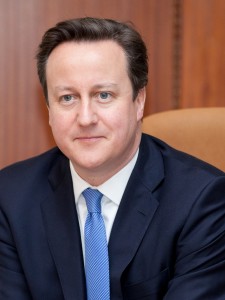
    Below is the text of the speech made by David Cameron, the Prime Minister, in Davos, Switzerland on 21 January 2016.

    Thank you ladies and gentlemen for that welcome. It’s very good to be back in Davos. It’s good to be back being able to report on a British economy that is growing at more than 2% last year and this year. A British economy where we’ve taken an 11% budget deficit that I inherited in 2010 and we’ve cut it by 2 thirds. And to report back on a British economy where we’ve created, since I’ve been Prime Minister, 2.3 million more people in work.

    Yesterday we announced that there are more people in work in the British economy than ever before in our history and more women in work than ever before in our history. So we’ve got some economic challenges that, of course, everyone is talking about here in Davos, but we’re going to continue to deliver the strong and resilient economy that we were elected to deliver.

    And it’s good to be back in Davos with a new political mandate. We held an election and I have a mandate, a majority government, with a mandate to complete the job that we set out in terms of our economy. A mandate to deliver security for the people who elected us and for the British people as a whole. But also crucially a mandate to deliver reform in Europe and to put the question of Britain’s place in Europe and answer that question comprehensively during this Parliament. And that’s what I want to speak about today before trying to answer your questions.

    And I want to be absolutely clear about the aim that I want us to achieve. I want to be clear about what needs to change in order to make that happen and I want to be clear about the debate that I think we need to have, including business and non-governmental organisations and others who care about this issue.

    So let me start with the aim. My aim is absolutely clear. I want to secure the future of Britain in a reformed European Union. I believe that is the best outcome for Britain and the best outcome for Europe. Now, some people ask me, ‘Well, why are you holding a referendum?’ Let me explain why I believe this referendum is so crucial. For years Britain has been drifting away from the European Union. The European Union has become increasingly unpopular in Britain. And added to that, the succession of politicians, after treaty after treaty after treaty has passed, have promised referendums, but never actually delivered them. And I think it’s absolutely essential to have full and proper democratic support for what Britain’s place should be in Europe and that’s why we’re holding the referendum.

    And we also need the referendum in order to address the concerns that people have in Britain about Europe. The idea that there is too much rule‑making and bureaucracy. The idea that this could become too much of a single-currency-only club. The idea that Europe is really about a political union, a political union that Britain has never been comfortable with. So I believe holding the referendum, answering these questions, but with the end goal of securing Britain’s place in a reformed European Union, can give Britain and can give Europe the best of both worlds.

    Now let me explain what it is that I think needs to change. And I’ve set out the 4 things, the 4 areas that I think are so crucial. And just want to run through them. First of all, it is about competitiveness. When I look at the single market of 500 million people, I think it is an absolute thrilling prospect. This is a quarter of the global economy. But we have to be frank when we look at Europe’s single market. We’re still lagging behind America in technology; we’re lagging behind in productivity. We could be doing so much more to add to the competitiveness of our businesses and our economies rather than taking away from it.

    And that’s why what I want to see, what I believe we will see, is clear measures to cut the bureaucracy that there is in Europe and to cut the rule‑making. I want to see clear measures to complete the single market in digital, in services, in energy which will be of huge benefit to countries like Britain, but right across Europe in terms of jobs and prosperity.

    And crucially, I want to see Europe sign trade deals with the fastest-growing parts of the world. For instance, our trade deal with Korea has been fantastically successful for Korea, but even more successful actually for the countries of the European Union. And people will want to know in Britain that the European Union is signing trade deals as fast as and more significant than we could ever sign on our own. So I want to hardwire competitiveness into the European Union so it benefits countries; not just Britain, but I think it will benefit all of Europe and that’s why I think it’s important that we put this on the table.

    Now the second area I want to see change is I want to make sure that this organisation is good for those countries that are members of the eurozone, but also good for those countries, like Britain, that don’t want to join the euro. Because the truth is this: for many, many years, and in Britain’s case, I suspect forever, the European Union is going to have more than one currency. And we should be frank about that. And let me be clear: I want the eurozone to succeed. The eurozone is our biggest trading partner. I don’t want to stand in the way of things that need to be done to make the eurozone a success. Indeed, I would encourage eurozone members to take those necessary steps. But in a sentence, what we need is an organisation that is flexible enough so that you can be a success if you’re not in the euro, or a success if you are in the euro, and fair rules between the two.

    Let me give you just one example of what I mean. During last summer, in order to help with the Greek situation, there was a moment when the eurozone countries were going to spend money out of a fund to which Britain contributes, to help bail out Greece. That’s completely unacceptable, to use the money of a non-eurozone state to solve a eurozone crisis. Now, we fixed that problem, but frankly we shouldn’t have to fix problems like that on an ad hoc basis. What we need is a clear set of rules and principles, so that if you’re not in the eurozone, you suffer no disadvantage, you’re not discriminated against, and there’s proper fairness between the systems. I think that is achievable, and again, I think that will be good for Britain, but I also think it will be good for all the countries of the European Union, whether they are in the eurozone or not.

    Now the third area I think we need to see change, change for Britain, but again I would argue, good change for Europe, and that is in the area of sovereignty. Britain has never been happy with the idea that we are part of an ever-closer political union. We’re a proud and independent country, with proud, independent, democratic institutions that have served us well. We’re also bound up in the European continent, of which we are an important part, and we need to get that relationship right. And sometimes people think Britain is a very reluctant European. And I would say, no. If you look at things like completing the single market, you will find no more dedicated a country than Britain to get the job done. If you look at issues like coming together on foreign policy challenges to make sure we take robust action, it was Britain that led the charge on sanctions against Russia because of its actions in Ukraine. It was Britain that led the charge on making sure we had those crucial sanctions against Iran that helped to bring Iran to the table that brought about that non-nuclear deal. So we’re not reluctant in that sense, but if Europe is about ever-deepening political union, with ever-deepening political institutions, then it’s not the organisation for us. So I want to be absolutely clear that we want to carve Britain out of the idea of a closer union. We will be enthusiasts for the economic cooperation, for foreign policy cooperation, for working together on challenges like climate change, but we’re never going to be comfortable in something that insists that Britain should be part of an ever‑closer union. We’re not comfortable with that, and we need to sort that out.

    The fourth and final area is perhaps the most difficult of all, and that is this issue of migration and welfare. Now Britain is, I would argue, one of the most successful multi-racial, multi-faith, multi-ethnic democracies anywhere on Earth. We are a very diverse nation, a very diverse and successful nation, but the pressures that we face from migration in recent years have been too great. Our population is growing anyway, even before this migration is taken into account, but the figures are simple. Today, net migration into Britain is running at 330,000 a year. That means adding as many as 3.5 million people to our population across a decade. And that’s what the concern is about. It’s not a concern about race, or colour, or creed. It’s a concern about numbers and pressure. And it’s the British people’s number one concern. And I don’t think for one minute they’re being unreasonable having this concern, indeed I share this concern because the pressure on public services, the pressure on communities has been too great. Now, of course, we need to do more to control migration from outside the European Union, and we’re doing that. But we do need to look at the situation within the European Union. Now I want to be clear: I support the idea of free movement. Many British people take advantage of free movement to go and live and work in other European countries. But I think where this has gone wrong is that the interaction of our welfare system with free movement has actually set up very large pressures on our country, and that is what needs to change.

    And that is why I put on the table the idea, the proposal that you should have to live or work in Britain for 4 years before you get full access to our in‑work benefits system. Because the way it works today – because Britain has a non-contributory system, one you can access straight away – you can train as a nurse in Bulgaria, and actually it would pay you to come and work in manual labour in Britain because of our top‑up welfare system. And in the end, that isn’t really right for Bulgaria and that isn’t really right for Britain.

    And I think, when enthusiasts for the European Union look at this issue, they should stand back and look at the facts and the figures. When the founding fathers of Europe came together, did they ever really believe that a million people were going to move from Poland to Britain, or that 1 in 20 Lithuanians would make their home in Britain? Now, those people make an incredible contribution to our economy, and I welcome that, but the scale of the movement, the scale of the pressure, is something that we need to address. And I think, when in Europe we look at the issues we face today – whether it’s the migration crisis, whether it is the issues that Britain’s putting on the table – it would be far better to address these issues, to try and solve these problems, rather than try and look our electorates in the eye and say we’re simply not going to listen to what you’re doing.

    So what I’ve tried to set out is 4 things; not outrageous asks that can’t be achieved, but 4 practical sets of steps that, if achieved, would actually answer the concerns that Britain has about Europe.

    Now, let me just say a last couple of words on the debate I think that we need to have on the timing of how this should work, and what I believe the end point of all this should be.

    Now, in terms of the timing, I very much hope that we can, with the goodwill that is clearly there, reach an agreement at the February European Council; I would like that. I want to confront this issue, I want to deal with it, I want to put that question to the British people in a referendum, and go out and campaign to keep Britain in a reformed European Union. If there is a good deal on the table I will take it, and that’s what will happen.

    But I do want to be very clear: if there isn’t the right deal, I’m not in a hurry. I can hold my referendum at any time up until the end of 2017, and it’s much more important to get this right than to rush it. But of course, I think it would be good for Europe and good for Britain if we demonstrated that we can turn the goodwill that there is into the actions that are necessary to put this question beyond doubt, and get the answer from the British people.

    Now, in terms of the debate I think we need to have, obviously the politicians are going to play a big role in this debate, and I hope to play a big role myself. But I hope that business, NGOs and other organisations won’t hold back. I would say: don’t hold back right now. Even though the question isn’t settled, I think that if business backs my reforms – if you want to see the competitive Europe; if you want to see the flexible Europe; if you want to see a Europe where you can be in the eurozone and win or out of the eurozone and win – I would argue: get out there and support those things.

    I think it’s important that with this, which is such a massively important generational question for Britain and for Europe, the sooner you can start to look at your own businesses, and come up with the examples and the ideas about the benefits, and the problems, that there are with Europe, the more that you are able to help to explain and set the context for this vitally important question for Britain and for Europe.

    Now, where do I hope this all ends? Well, let me just say this: even if I’m successful in getting this reform package and holding this referendum, and Britain decides to stay in a reformed Europe, at no stage will you hear me say, ‘Well that is perfection; this organisation is now fixed.’ There are many things that are imperfect about the European Union today, and there will be many things that will be imperfect about the European Union even after this negotiation. We do need reform in Europe: to make sure Europe works for the countries of Europe, for the peoples of Europe, for the businesses of Europe; for all the people who want to work and have security, and get on and make something of their lives. The reform will not be finished.

    Second thing I’d say about the end of all this, is you’re never going to hear me say that Britain couldn’t succeed outside the European Union. Britain is the fifth largest economy in the world. We’ve got a huge amount of talent and resources and brilliant people and we’re members of many important organisations in our world. I’m never going to talk Britain down, but I think the question is not: could Britain succeed outside the European Union? The question is: how will we be the most successful? How will we be the most prosperous? How will we create the most jobs? How will we help the most number of livelihoods in our country? And how will we keep our country the most secure? Those are the questions that, to me, are absolutely vital.

    Now the end of all this, for me, I think, is quite simple: that there is an enormous prize for Britain and for Europe if we can achieve these reforms and win in this referendum. And it will be having that single market of 500 million people; having that sense of cooperation and working together on common problems and recognising that when a country like Britain has problems and issues that need to be addressed, we get out there and sort them out and address them. And to British people I would say, there is the prospect of the best of both worlds. And let me explain by that what I mean by that.

    Britain’s membership of the European Union is already different to many other countries, for important reasons of history and politics and our approach to certain issues. And by the best of both worlds I mean that we will be in the single market, and benefitting from that, but not in the single currency, keeping our own currency, the pound; that we’ll be benefiting from being able to travel and move around Europe, but we will maintain our own borders. We never went for the approach of taking down our borders and we never should, and in my view, we never will. And we’ll have more of the best of both worlds because we would be part of an organisation where we can bring benefits to it and benefits to us, but we would not be part of an ever-closer union. We would be absolutely clear that, for us, Europe is about independent nation states coming together to cooperate, to work together for their mutual benefit, but it is not an ever-deepening political union which the British people do not want and would not sign up to. I think that is a huge prize. I think that is a prize worth fighting for; it’s a prize worth negotiating for; if necessary, it’s a prize that we will have to be patient in order to achieve, but it’s a prize I’m determined to deliver in this, my second term as Prime Minister. Thank you.

    Question

    As it stands with the renegotiation deal, has the EU moved at all in terms of demands on immigration? And, as it stands right now, would you accept it? Because the French Prime Minister [inaudible] on it this morning.

    Prime Minister

    Well look, I would say we’ve made good progress. I mean some people said to me – first of all, people said before the election, ‘You’ll never actually legislate on the referendum. That’s just a promise that a politician won’t keep.’ Well we’ve kept our promise and it’s the law of the land. The next thing people said is, ‘Well, you’ll never actually get a proper renegotiation going, that won’t be possible.’ Well there is the proper renegotiation going and already it’s made very good progress. Are we there yet? As my children say when we’re driving to some long lost destination, no, we’re not there yet but I think there is the prospect, there is the possibility of getting these issues sorted by the February Council, if there’s goodwill and real movement on all sides. So I think it is achievable, it is doable, but we are certainly not there yet but I’m satisfied that my European partners and everyone is working hard to get this done.

    And the crucial thing is not whether I’m happy with the deal now. Of course I’m not happy, we haven’t done it yet, but the crucial thing will be: is there a deal that I think answers the questions that the British people have put? That’s the question and we’ll know that in February. And, as I say, if there’s a good deal on the table, I’ll take it, and I will campaign for that with everything I’ve got. But if there isn’t, I’m patient.

    Question

    Prime Minister, you couldn’t have chosen a more receptive place to give this speech about staying within the EU. I mean, I can’t imagine there’s anyone in this audience, or indeed in Davos in general, who is in favour of Brexit. But doesn’t that underline the gap between what you have in places like Davos, and in places like Brussels, where people do believe in internationalism? And then what a lot of people are feeling in the UK: they feel disenfranchised, they feel there’s a big distance from what is being decided here and what they’re feeling in their pockets, both with the EU and with the economy. What do you say to them?

    Prime Minister

    Well, what I would say to everybody is the same thing; I don’t make one speech in Davos and another speech if I’m in rural England. I say the same thing, which is: if we can get the right deal, it’s right to stay in a reformed European Union. And if we don’t, then I rule nothing out, because you’re right, there is a disconnection. People feel that they want a European Union that is on their side. They want one that is going to help business, jobs and prosperity in our country. They want one where you don’t have to join the single currency, but your interests are protected. They want one which understands that the pressure of migration in Britain recently has been too high. Now I would say these aren’t purely British issues and British problems. I think you’re much better in politics – rather like in business, if you’ve got issues you need to resolve, have a strategy and a plan to resolve them, rather than just pushing them away and hoping they’ll go away.

    Now that is my approach, and I think that is one that I’m grateful my European colleagues have answered the need for these changes, but I think if we make these changes, it will actually bring Europe closer to people and it shows that this is an organisation that’s flexible enough to solve problems that people have.

    And I think we’re going to need more of that frankly, if we look at what’s happening with the Syrian refugee crisis. Again, we’re going to need to look at new answers. And I think that’s going to be crucial to demonstrate that Europe is flexible enough to respond to people’s concerns.

    Question

    Prime Minister, I think most people completely agree about your reform agenda and the British option. But don’t we also have to stress a little bit about the common values within the European Union? That together we can do things, not just economically, but on security, like the sanctions against Russia which you were at the forefront of that we couldn’t do by ourselves and that actually, does quite a lot of good in the European Union.

    Prime Minister

    I only had half an hour, so I gave you the speech about the 4 things that need to change. But there are 2 things I’d add to what you’ve said. First of all, you know, Britain is a country that has incredible connections, relations with all of the other European nations in the European Union. And there’s a lot that we have in common. You know, we believe in democracy, in tolerance, in rights, in freedoms, and those things, we are better able to promote if we try and promote them together.

    And while, when you sit in the European Council, as I’ve done 43 times, I think, there are times when you can have frustrations and arguments, but you never forget that this is group of countries that used to fight each other and kill each other, and have actually now come together in a common endeavour based around some values that we in Britain are very proud of, in terms of committing to democracy and freedom and rights and all the rest of it.

    The second thing I would say is that, I think, for many, Europe has, in Britain, has been principally an economic argument – and there are very strong economic arguments, including the ones I put across today. But I think in recent years, there are quite strong security arguments too. When you’ve got Russia acting as it did, destabilising Ukraine and trying to re‑write the borders of Europe; when you’ve got, in the Middle East, the death cult of Daesh, and the terrorist threat that we see on our own streets and in our own cities, then actually there is a strength and safety in numbers.

    There is an important element of working together against these foes, not just in terms of a solidarity that we should show to each other as we face down these threats, but there are also some practical steps. You know, we’ve recently got the victory of having proper passenger name records in Europe, so when people get on planes between European countries and try to come to Britain, we can find out where they bought the ticket, what credit card they used, whether they might be linked to some problem organisation, all the rest of it. That action makes us safer.

    And you know, I would just say, I think for years, many in Britain thought, well, the economy – that’s connected to the European Union. Security, that’s about NATO and our partnership with America, and the Five Eyes intelligence partnership. I think that view is still valid – those things are absolutely vital. But actually, there are things that we can do with European partners in terms of finding out when criminals are crossing borders, being able to chuck them out of our countries when they come, having better intelligence in the exchange on terrorism, and facing up to some of the threats that we face in our world.

    So I think there is a security argument – a strong security argument – but all these things are going to rely on us getting an agreement to the problems and the issues that I’ve put on the table. And as I say, I don’t think any of the things I put on the table are impossible to achieve. I’m a practical person. I don’t want to go into a negotiation with 8 things I want and settle for 4; I’m very practical. These are the things that we need to fix. And I think we’re on our way to fixing them, but we haven’t got it sorted yet.

    Question

    Prime Minister, I wonder what you’d say to your critics who suggested this is a dangerous and cavalier question to be asking [inaudible] going on [inaudible] you know, terrorism, to the refugee crisis, to the [inaudible] global economic recovery.

    Prime Minister

    Well, I’m a believer in democracy. I’m a believer that my authority comes from the people who elect me. And I set out very clearly, three years ago, that it was time for a renegotiation; it was time to put this question beyond doubt, and hold that referendum. I set out that proposal. I talked all round Europe about it. I put it in my manifesto. The British people elected me on that basis, and I’m going to deliver exactly what I promised. And I think, in the end, think how Europe has changed since we last had a vote in 1975. You know, the single currency has been a huge driver for change in Europe. Now we’ve got to show that you can have that driver for change that’s going to change what the single currency countries do. And frankly I think they do need closer integration and more steps and measures to make a success of that currency. But Britain is not going to join that currency. If we’re going to work inside this organisation, we need the relationship between the two fixed.

    As I say, I don’t think you do your country, or indeed Europe, a service by pushing these issues to the margin and hoping they go away; I think the right thing is to confront them by having a strategy, by having a plan, by working with your partners, by being very clear about what you’re going to do, and then going out there and doing it. I think we’re well on the way to doing that and I will accept the judgement of the British people when I put that question before them.

    But I’ve always felt, many people in Britain are – so we’ll just hold a referendum. Just have – you know, put it in front of the people now. I would argue that’s a terrible choice to put to people: stay in an organisation that has got flaws and faults and need to be sorted out, or leave altogether. I want to put the question in front of the British people, here is a reformed European Union, and a European Union that’s addressed specific challenges that Britain’s put on the table. Now you can choose between staying in that or leaving. That’s what we’re doing. So I would say it’s the opposite of what my critics would suggest. I’d say it’s a very carefully thought through plan, and one that can bring great benefits not just for Britain, but for Europe.

    Question

    Prime Minister, you said that migration is the most important issue for the British people. If there is no deal on welfare curbs for immigrants from the EU into Britain, is there no deal at all?

    Prime Minister

    I’ve always said we need to have action on all 4 of the areas I’ve identified, and so this migration welfare question is absolutely crucial. People want to see progress on that.

    I made 4 promises in the election on this front. I said that if people came to Britain, came to Britain from Europe, looking for a job, they couldn’t instantly access unemployment benefit. We’re well on the way to fixing that; you don’t get the benefit for the first 6 months.

    The second thing I said is that if after 6 months you can’t find a job, then you have to return to the country you came from. This is a freedom of movement to work, not a freedom of movement to claim. And we’re well on the way to achieving that. The third thing I said is you can’t come to Britain, leave your family at home, and get British levels of child benefit. And again, I think we’re well on the way to solving that one. The fourth thing I said is that you should have to wait 4 years before you get full access to our in‑work welfare system.

    And as I’ve said, that proposal remains on the table. I know that some other countries have difficulties with it. I’ve said that if there are alternatives people can come up with that are equally potent and powerful and important, I’m prepared to look at them. But we do need action on this front if we’re going to get the reform that Britain needs, that Europe needs, and bring this question successfully to a conclusion.

  • David Gauke – 2016 Speech on Economic Security

    davidgauke

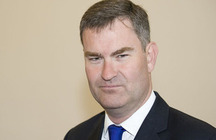
    Below is the text of the speech made by David Gauke, the Financial Secretary to the Treasury, in London on 20 January 2016.

    Good evening. It’s a pleasure to be here with you tonight.

    In my office in Whitehall there’s a framed cartoon, showing a man leaving the house in the morning to go to work. His son calls after him: “Have a great day at the Treasury, Dad. Be brave. Try not to cry.”

    Well, I can assure you that as a lifelong Ipswich supporter I’ve had to build up a fair bit of bravery over the years.

    But I think that cartoon is illustrative of two aspects of my job as a Treasury Minister since 2010.

    First, that the Treasury is a department which has been … how shall I put this … not always the most loved department, within as well as outside Whitehall.

    And second, that the past six years have seen us operating under exceptionally difficult conditions.

    The reasons for this are relatively simple. Even in good economic times, it tends to be the Treasury who says “sorry, no, we can’t afford to do this”.

    That’s part of the normal tension of government. If you have the power of the purse, then it’s also you who has to exercise restraint in using that purse.

    But the situation in May 2010 was anything but good economic times. We were a country living well beyond our means, borrowing one pound for every four we were spending, and lacking a credible plan to turn that situation around.

    Because we had not been sensible during the boom years, the 2008 financial crisis caught us unprepared. The tide went out and it turned out that we were the ones who were skinny dipping.

    It fell to the Treasury to sort it all out.

    Today, I will talk about how we went about that task. But before I do that, I’d also like to talk a little about the philosophy behind our actions.

    A defence of the free market economy

    When I became an MP in 2005, there was a certain degree of consensus about the right way to run an economy.

    We had moved away from the polarised arguments of the 70s and 80s and had, more or less, agreed on certain fundamentals.

    For instance, that the big state doesn’t have all the answers.

    That in normal times, a country shouldn’t spend more than it earns.

    That excessive tax acts as a disincentive.

    That it’s businesses who drive national growth.

    That more power to the centre doesn’t necessarily mean greater efficiency.

    That before distributing wealth, you have to create it.

    And that the free market has, by and large, been an overwhelming force for progress.

    It seemed, for a while, as if the planned economy versus free market argument had been won – and I’m sure that the very visible collapse of the Soviet Union hammered the final nail in the coffin.

    I’m not so sure that’s the state of political discourse today.

    We’ve seen a lot of people in recent years come out against those fundamentals.

    We’ve started hearing the old calls for greater taxes on the highest earners, renationalisations, and trade protectionism.

    Now of course, it’s legitimate – indeed important – for all policymakers to take a step back and ask themselves “are our policies delivering for the people of this country”.

    But there is a reason why we study history: to learn from the follies and successes of the past.

    Time and again, it has been proven that the free market, and private-sector driven growth, and taxation which encourages ambition, and a State which accepts it can’t do everything, does lead to national prosperity.

    We have the system we have because it works. Other systems, to put it bluntly, historically haven’t worked. And in the modern, interconnected world we live in, they are even less likely to work.

    If you remove the disincentives for doing well – whether that’s for individuals or companies – then those individuals or companies will simply move away and take their aspirations elsewhere.

    And when a country stops doing well, it is only a matter of time before the people living in that country begin to suffer. Inevitably, those who have the least are hit the hardest.

    In other words, it’s not a game. Livelihoods – and indeed lives – depend on the government of the day getting the economy right. Aside from the defence of the realm, there is no more important task for a government to do.

    What that means is that you cannot use the economy as some sort of a safe space in which to try out abstract theories. That is for the university debating society. We have the fifth biggest economy in the world to run.

    When I entered the Treasury in 2010, alongside George Osborne and the rest of the ministerial team, we had one ambition: to pull Britain’s economy back from the brink, and to set it on a path to recovery.

    That meant restoring stability; reining in excessive spending; and putting in place the right policies and incentives for growth.

    So I’d like to talk a little more about how we created, and implemented, our strategy for economic success.

    In the 1970s, one of the then Chancellors’ private secretaries casually remarked to a journalist that “I have no idea what a deficit is”.

    These days, I can assure you that everyone in the Treasury knows what a deficit is!

    Reducing the deficit is the task we were asked by the British electorate to do – and it’s the task we have to keep a relentless focus on.

    Back in 2010, we inherited a deficit of £153bn, which was around £5900 for every household in Britain.

    We’ve made a huge amount of progress since then; but even this financial year, we are still having to borrow £3,300 for every household in the land.

    That’s simply a reflection on the size of the ship we’ve had to turn round.

    The good news is that we are succeeding. We have a credible path for deficit reduction, backed by the independent Office for Budget Responsibility, which will take us into running a surplus in the 2019/2020 financial year.

    Perhaps equally importantly, public sector net debt is set to fall every year, from 82.5% of GDP this year to 71.3% in 2020-21.

    That’s important for two reasons:

    First, because it gives us room for manoeuvre in exceptional economic times. If the situation is such that an additional stimulus is required from Government spending, then we’ll be able to afford it.

    And second, because servicing the interest on debt diverts funds from where they could be better used.

    It’s an experience familiar to anyone who has put too much on a credit card!

    Servicing our public sector debt cost us over £45 billion in the last financial year. That is more than we spend on schools or defence. And that’s in an era of extremely low interest rates.

    It won’t come as a surprise to many in this room that making cuts in public spending is never a pleasurable activity.

    Even if you do believe there are things the state shouldn’t be doing…

    Even if you do believe that subsidies can cause harm as well as good…

    There is little fun in standing up and announcing spending cuts!

    Yet it is necessary. That is why in the first year of Government we carried out a comprehensive spending review. We followed that up in 2013. And, following the election last May, we repeated the exercise.

    “Do more with less” has been the mantra.

    A significant part of the savings were simply due to making better use of our existing resources – pooling functions, harnessing technology, cutting down on our use of external consultants wherever possible.

    Part of the savings came from reducing the cost of government – in particular, making the Civil Service a more cost-effective organisation.

    Some of the savings came from reductions to the welfare bill – which, under the Blair and Brown administrations, had been allowed to expand to unsustainable levels.

    And some of the savings came from reviewing capital projects which weren’t providing adequate value for money.

    I chose the word “review” specifically, because it’s easy to categorise spending cuts as simply saying “take this off the shopping list”.

    In reality, it is much more complicated than that. The conversation will typically be along the lines of “Are we doing this project in the most cost-effective, joined up way? Is it the most important thing to be doing right now? Could we be more innovative about how we fund or design it? Is there a cheaper option that could achieve the same outcome?”

    In many ways, that is the point of what we do in the Treasury. Believe it or not, the first guide to how to run the UK economy was written over 800 years ago, in 1178. It says: “The highest skill at the Exchequer does not lie in calculations, but in judgements on all kinds”.

    The central “judgement” involved in public spending is where to cut – and where to invest.

    Everyone knows that if you don’t water a plant enough, it will wither away.

    Conversely, give it too much and it won’t do very well either.

    But what works in the desert doesn’t work in the paddy field.

    The same rules apply when it comes to government spending.

    There have been significant areas where we have maintained spending or actually increased it.

    Health and schools are the most major areas in terms of cash – but there are many others. National security. Police. Science and research. Energy innovation. Transport. Overseas aid. Pensions.

    We’ve made it a priority to improve the quality of our infrastructure, and reverse the decades of underinvestment our roads and railways suffered from.

    Above all, we have never shied away from investing in things that will improve our national growth.

    If keeping hold of the purse strings is the first function of the Treasury, then the second is pulling the levers for economic growth.

    So today I’d like to talk about three specific levers.

    The first of these levers is the taxation system.

    That’s my particular field, as Minister responsible for tax.

    Our policy is extremely straightforward. We know that one of the best ways of attracting talent to your economy is through competitive taxes. And that one of the best ways of making sure that talent goes elsewhere is by making your taxes too high.

    It’s not rocket science – but it’s astonishing how often people forget this basic principle.

    Further to competitive, low taxes, there’s one other things which helps businesses prosper, drives job creation, and supports economic growth: the certainty of having a fair and properly working tax system in place.

    Low taxes; fair rules which are followed. Those are the two principles we’ve followed since 2010.

    Back then, our rate our rate of corporation tax was 28%; and it was a fact that one of the factors pushing businesses away from the UK was our tax regime.

    So, even at a time of deficit reduction, we made it a priority to cut the corporation tax rate.

    Since 2010 we have cut it from 28% to 20%. These cuts will save businesses £10 billion a year from 2016.

    This was part of a range of pro-business reforms, including the introduction of the Patent Box, and reform of R&D credits to make them more generous.

    We’re going further along the same route, so that by 2010 the rate of corporation tax will be 18%, the lowest in the G20.

    These cuts will benefit over a million businesses.

    They will help attract more overseas investment.

    And they will help support UK businesses, allowing them to retain more of their profits and use that money to invest in plant and machinery or to hire more people.

    We’ve increased the level of the Annual Investment Allowance to eight times what it had been previously.

    And, to provide the stability and certainty that businesses need, we have committed to publish a Business Tax Roadmap in March this year, setting out the government’s tax plans for the rest of the parliament.

    The second lever you can pull is more of a diplomatic one: opening yourself up to some of the world’s fastest growing and most exciting economies.

    Over the years, this has been a nation that has reaped the rewards of being open to the world around us.

    The benefits of free trade have been proven time and again. And it’s not just businesses who benefit: the evidence suggests that an increase in our trade to GDP ratio is associated with an increase in per capita income.

    So if we want to secure our economic success, then it’s important to be active all over the world – with the fastest-growing economies in Asia; with the United States; as well on our doorstep, with the nations of the European Union.

    That’s what we’ve been doing over the past six years: building partnerships and signing deals with India, China, and the Far East; making London a Western hub for renminbi and Islamic finance; and helping our world-leading financial services sector gain business worldwide.

    And, closer to home, we’ve consistently called for, and proposed, measures to improve the EU’s competitiveness: from a Capital Markets Union to a free trade agreement between the EU and the US, giving British businesses improved access to a market six times the size of our own.

    The third lever is putting in place policies to improve our national productivity, one of the key drivers of a nation’s prosperity.

    For too long, we have had a so-called “productivity gap”, between our economy and that of countries such as Germany and the United States.

    There are no easy solutions to the productivity gap. It is due to a large number of factors – some of them negative; some of them, such as our record levels of employment, positive.

    But there are actions we can take to resolve the problem – and, for the first time, last year we published a Productivity Plan setting out precisely how we do that.

    I’ve already mentioned our national infrastructure, and the problems caused by the fact that for several decades, we failed to invest enough in it.

    We’re now turning that around – indeed, we’ve committed to spend £100bn on infrastructure over the course of this Parliament…

    We’ve set up a National Infrastructure Plan with an infrastructure delivery pipeline…

    We’ve published a specific plan for the skills we need…

    And, so we can look more clear-sightedly at the future, we’ve also set up the National Infrastructure Commission, to take a long-term, depoliticised approach to major projects. It will set out its initial ideas in time for the March Budget.

    Improving our national infrastructure will also help deliver a key part of our long-term economic plan: regional rebalancing.

    London and the South East has been an enormous economic success story over the past few decades. But as the cricketers in this room will know, you can’t rely on just the one batsman if you want to field a world-class side.

    Our ambition is therefore to enable cities outside London and the South East to display equally impressive growth – and help the country’s economic recovery.

    Michael Heseltine showed the way forward back in the 1980s, when he said government policies for cities such as Liverpool needn’t be one of managed decline.

    Today, that’s what we mean by the Northern Powerhouse: a combination of more funding and greater devolution, to help cities in the North reach their fullest potential.

    We’re particularly interested in developing capability in areas where a competitive advantage can be created.

    One example is science and innovation, where some of the most exciting developments are happening in Northern cities. Manchester, for example, is home to the new supermaterial graphene – and we’ve supported the National Graphene Institute in Manchester with almost £40 million of funds.

    Great transport created the first Northern Powerhouse nearly 2 centuries ago. And it can create the second one today – which is why we’re investing £13billion in transport in the North over the course of this Parliament, including the creation of Transport for the North, a new, dedicated body.

    Alongside that, we’re putting in place a new and exciting programme of regional devolution – not just in the North, either, but across the country.

    As a government, we wholeheartedly believe that the best decision making often happens at the regional or even the local level.

    That shouldn’t come as too much a surprise, perhaps; because when local decisions are made at the local level, they tend to be made by people who know the area extremely well, and have the greatest incentive to implement policies effectively. It is, after all, their patch. We should work with that rather than against it.

    So the offer we made to local leaders was as follows:

    If you want that greater responsibility, if you can live with that greater accountability, if you have an ambition for what your city can achieve, then we will look at giving you those powers.

    These powers could be quite significant: control over major budgets; managing housing, health, and skills; running city-wide transport networks.

    Giving those levels of powers away carries a risk, of course. That is why we asked leaders to demonstrate that they were are capable of implementing that ambition, and could live with the increased responsibility.

    So if a large city wants control over major powers and budgets, it must have a directly elected, executive person covering the whole metropolitan area, in the form of a Mayor – just like many of the world’s greatest cities, including London.

    Already, we’ve signed some exciting deals with a host of regions including greater Manchester and Cornwall, and many more discussions under way.

    We’re clear that this is not just a programme for the North. There should be no monopoly on Powerhouses – we want a Western, Midlands and Southern Powerhouse too.

    Because if all regions can mirror the tremendous success of London and the South East, then that will be a long-term gamechanger for the British economy.

    So there is still a lot to do over the course of this Parliament. But we shouldn’t forget quite how far we have come over the past 5 ½ years.

    With growth leading the G7, record levels of people in work, living standards and wages rising, our economy is truly delivering for the British people.

    We made the tough decisions and we’ve been getting the results.

    But good times in the future aren’t a given. Worldwide, there are still plenty of risks out there.

    They are risks we have to insulate ourselves against – and the best way we can do that is to make sure we have our own house in order, start running a surplus and reducing our debts, and continuing to create economic security.

    The worst thing to do, right now, would be to throw away the fruits of our hard work.

    I spoke earlier about the resurgence of voices asking us to do exactly that.

    We’re not going to – because this country’s economic security is much too important.

    What we will do is continue down the path we took in 2010:

    One which gets us living within our means as a nation;

    One which helps people and businesses prosper, expand, and create growth;

    And one which will make the UK fundamentally stronger, and more able to withstand any storms in the global economy.

    It hasn’t been an easy path in the past, and it may not be an easy path in the future either.

    But that makes it all the more important to stick to it.

    Thank you – and I’d be delighted to take some questions.

  • Nicky Morgan – 2016 Speech at Floreat School

    nickymorgan

    Below is the text of the speech made by Nicky Morgan, the Secretary of State for Education, at Floreat School in Wandsworth, London on 21 January 2016.

    Thank you for that kind introduction. It is a pleasure to be here.

    And it is a pleasure to be hosting the Department for Education’s first character symposium, alongside Floreat Education and Lord O’Shaughnessy – pioneers of what excellent character education looks like.

    It’s inspiring to see so many people debating this issue so passionately.

    I know that Major Tim Peake has tweeted about this symposium all the way from the International Space Station – so that’s definitely a badge of honour!

    As the Prime Minister said in his life chances speech just last week, our aim in politics should be: “To give every child the chance to dream big dreams, and the tools – the character, the knowledge and the confidence that will let their potential shine brightly.”

    So this government has made it clear that character matters.

    And, as many of you will know, the development of character and mental wellbeing are personal priorities of mine.

    As a backbench MP I called for a debate on mental health in the main House of Commons chamber for the very first time and was privileged to lead that debate in 2012.

    I was the first Secretary of State to give a minister specific responsibility for mental health – a role Sam Gyimah is carrying out with distinction.

    And let me thank Edward Timpson, the minister in my department responsible for character, for his considerable work on this – I know you will hear from him later.

    Good character is welcomed by schools, by businesses and by parents alike. It impacts both on educational outcomes and life chances, and I have seen first hand the impact it can have.

    Just last week I attended an event being held by the Transformation Trust which gives disadvantaged young people the chance to participate in character-building activities which they otherwise wouldn’t have access to.

    I heard from 2 young women, Camila and Rihanna, both only 18 years old, who were articulate, ambitious and accomplished.

    They were the embodiment of the impact character education can have on young people.

    For too long, character has been seen as ‘soft’ and ‘a nice thing to do’.

    I am pleased to say that the debate is shifting and there is greater awareness than ever before of just how important this is.

    I firmly believe character education prepares our young people for life in modern Britain, regardless of their background or where they grew up.

    A truly one-nation government cannot accept that only some people deserve the opportunities that will help them to get on in life.

    Every single child deserves that chance.

    And we’re not promoting character on a whim.

    Evidence clearly shows that character matters.

    Carole Dweck’s work at Stanford, Angela Duckworth’s work on Character Lab, as well as the evidence collected by the Early Intervention Foundation, all point to success being closely linked with character.

    This is evidence showing that developing excellent character traits in young people can help them to realise their true potential.

    People often ask what we mean when we talk about character.

    For me character traits are those qualities that enhance us as people: persistence, the ability to work with others, to show humility in the joy of success and resilience in the face of failure.

    Character is about being self-aware, playing an active role within communities. It’s about selflessness and self-discipline as well as playing a full role in society.

    It’s fair to say that’s a long list of traits!

    But that goes to the very heart of this debate – there is no one clear definition of character.

    There is no one easy list of boxes to tick.

    We don’t want to set down rigid guidelines on this because character isn’t a one-size-fits-all concept.

    It isn’t just one thing.

    It’s a combination of the traits that set people apart so they can achieve their dreams.

    Business leaders – big and small – tell us time and time again that character is a key component to success.

    And we welcome a diverse approach to teaching character.

    Our reforms over the last 6 years in education have been about liberating schools to innovate and have the freedom to deliver what really works.

    We want schools to choose how best to deliver character education in ways that suit their pupils, their teachers and their communities.

    We’ve heard this morning from Janet, and the inspiring work done here in Floreat to instil these traits in their pupils.

    We’ve also heard from Ali about the difference the ReachOut mentoring programme has had on his life, and from Danielle – who spoke about the determination that has helped her achieve her goals both academically and in sport.

    One of the other myths I’m keen to dispel is that character education, and academic attainment are mutually exclusive. Far from it.

    For me, they are 2 sides of the same coin.

    Consider for a moment the student who reads aloud for the first time and gets tongue tied – will they rush to do it again without encouragement?

    What about another who is asked to recite times tables in front of their class and gets stuck – will they fall over themselves to repeat the exercise?

    Probably not.

    But with character comes the confidence and determination not to be beaten.

    It’s that attitude that says “dust yourself off and try again”.

    We know that some of the best schools are already prioritising good character education.

    Whenever I go to visit schools – and I’ve visited my fair share – I always make a point of asking what they do to promote character, mental health and wellbeing.

    And at the Department for Education my officials talk to those schools doing it well – to understand the key to their success. And the one thing I’ve heard over and over again is that the best schools embed character in everything they do – from their ethos, to their curriculum, to the extra-curricular activities they offer.

    Oakthorpe Primary School in Derbyshire has developed an ethos that’s focused around reciprocity, reflection, resourcefulness and resilience.

    Haywood Academy in Stoke-on-Trent offers a range of character-building activities through motivational speakers, army cadet units and theatre programmes.

    I have had the pleasure of visiting the Birmingham University Free School where character education runs through everything they do, as well the Goldbeaters Primary School in London, where we launched the On the Front Foot programme with elite rugby coaches.

    And also Redhill School in Stourbridge where students are encouraged to play a positive role in the life of the school and the wider community through fundraising, work experience and sports.

    Pupils were invited to speak at the Conservative Party Conference and talk about why character education matters to them – and let me tell you, they received one of the biggest standing ovations of the day.

    I want every single pupil to benefit from that kind of character education.

    That’s why we are building the evidence base so we can develop the best approaches and make sure all schools have access to this information.

    That’s why we will provide an online digital platform where teachers can share best practice about character education, evaluate new ideas and find online professional development materials – as well as sharing their own data to build a proper evidence base.

    And we will look to the Character Awards as a gold standard as to what works in character education.

    Today is a celebration of the excellent work already being done. To those schools whose efforts are to be applauded – thank you.

    But also to the businesses who are building lasting partnerships with schools and doing their bit to further the building of character in our young people – thank you, too.

    I think it’s vitally important that businesses take a role here because the character traits we instil in young people should reflect the type of workforce our modern economy wants and needs.

    That includes companies like Barclays, which has developed a Life Skills programme to develop the skills young people need to increase employability, and British Gas, which is supporting the fantastic Duke of Edinburgh scheme.

    We have sought, like no government before us, to bring business people into the education system.

    That’s why we now have businesses sponsoring schools, becoming governors and offering work experience.

    We want this relationship between business and education to continue to go from strength to strength.

    That is why we will be launching, as the Prime Minister set out, a new business mentoring programme, led by the Careers and Enterprise Company.

    I know their chief executive, Claudia Harris, is here today and will be leading the conversation on how we can make sure all young people develop the skills they need to thrive in the workplace.

    And that’s just one of the many conversations happening today.

    We want to give you the opportunity to influence our thinking on character and, ultimately, our policies.

    So we’ll be asking for your views on how we can work with voluntary and charitable sector organisations to really expand this agenda.

    And there are plenty of avenues for our young people to go down in the pursuit of character building.

    For example, the National Citizen Service, which gives children the chance to benefit from character education no matter their background, and no matter where in the country they live.

    We want every child to be able to access this, and that’s why the Prime Minister announced we’ll be expanding funding to the programme by more than a billion pounds so that 60% of 16 and 17 year olds will be able to take part.

    We are keen to work with as many partners as possible and make sure that schools can access the best evidence possible.

    Because, as I have said, I want excellent character education to be the norm across schools – so that every single child in every single school knows that they are getting the education they deserve and so that when they leave school, they are truly prepared for the next steps they take.

    I hope you enjoy the rest of your afternoon and I look forward to seeing how we can work together to put character education to the top of the agenda and make sure it benefits all young people.

    Every single child deserves the best education possible, and we owe it to children everywhere to make sure that character is at the heart of that.

    Thank you.

  • Nicky Morgan – 2016 Speech at BETT

    nickymorgan

    Below is the text of the speech made by Nicky Morgan, the Secretary of State for Education, at the BETT trade show held at ExCel, London, on 20 January 2016.

    I spoke 2 days ago at the Education World Forum and in opening this session of BETT I officially close the forum until 2017.

    I hope ministers from around the world found it as constructive as I – and my ministers – did and I’m sure we are all looking forward to sharing our ideas again next year.

    It is such a treat to be here at BETT again.

    This showcase of education technology continues to go from strength to strength. There is no doubt that British exports of ICT products are stronger than ever with a more than 5% increase last year alone.

    It’s brilliant to have the best minds from Britain and around the world here and I’m really keen to see some of the stalls when I get the chance to have a walk round.

    Broadband in schools

    I’m excited by the possibilities for the education profession opened up by technology. The creativity and passion of so many in this sector is irresistible.

    But it’s the inevitable nature of it that some ideas will flourish while others fall by the wayside. So whilst we’re not in the business of picking winners we do want to make sure every young innovator in this country has the access to the sector they need.

    That’s why, as part of our long-term economic plan, we’re backing broadband to the tune of £1.3 billion. So that it doesn’t matter where our children are – at home or at school, inner-city academies or countryside schoolhouses – they will have that access.

    Big brains are big brains no matter where they come from.

    I’m concerned much more with where they’re going and if we are serious about being a world leader then we have to nurture all our talent. And this drives to the heart of our mission to spread educational excellence everywhere. Because a one nation government must open doors to all students, of all talents.

    Computing in the curriculum

    I want our next generation to have the skills to compete in the global jobs market. That’s why we have put in place a computing curriculum that gives them the basic building blocks but also seeks to give them specialist knowledge too.

    So we are championing the teaching of coding throughout each key stage. Last month I had the pleasure of attending an Hour of Code initiative at Downing Street where the Prime Minister and I had a tutorial alongside children from Eastlea.

    I won’t say which one of us picked it up quicker! But I will say that getting these foundations in place early on is vital.

    I’ve just had a look at the BBC’s codeable micro:bit computers I saw at Downing Street that day. They are a fantastic way to spark an initial interest in technology in our young people.

    We are committed to world-class computer science qualifications to give our students, as well as employers, the confidence they really need. That’s why computer science is at the heart of the new computing curriculum and I’m pleased to say that our reformed Computer Science GCSE and A level are on a par with the best in the world.

    But I must stress that equipping the future workforce is not a mission for government alone. Employers have a role to play too.

    Last week I visited the Fashion Retail Academy – a vocational college founded and led by giants of fashion retail. They offer courses designed to give students the skills employers really want, including a suite of digital qualifications to complement their more traditional ones.

    It is these kinds of partnerships that will lead Britain to be the very best at vocational training because they are focused on what the economy needs.

    Technology not a substitute

    We have made it clear over the last 6 years in government that knowledge is the key to excellent educational outcomes. A rigorous curriculum, putting the right foundations in place, alongside high quality assessments are the embodiment of that.

    Probably the worst attitude we can take is that access to search engines is somehow a substitute for knowledge.

    It isn’t.

    That’s why we have put in place the EBacc – a core set of qualifications – to ensure that all our children are getting a firm basis of knowledge on which to grow their skills. A set of qualifications that – let’s not forget – include Computer Science as an option.

    The best teachers

    And we’ve made it clear that teachers are our greatest resource because you can’t have an excellent education system without the highest quality teachers at its frontline. Which is why we have committed to bringing the very best candidates into the teaching of Computer Science as well as developing the talent already there.

    The Computing At School Network of Excellence has provided over 56,000 instances of professional development to teachers since the autumn of 2012, in part due to DfE funding and with thanks to funding from our partners in the private sector, such as Microsoft. This includes formal training events, mentoring, coaching, peer observation, peer partnering to develop resources and co-teaching.

    What’s more, with 10 universities now providing regional coordination for the network, the level of support to teachers has doubled year on year. We also know that the professional development teachers receive has a tremendous impact in the classroom.

    Technology as an aid to running schools

    So we see teachers as our greatest resource but there are plenty of ways in which we see technology as an aid. As a starting point there are things that ease the smooth running of school days like capturing data for class registers, attainment and pupil progress. The paper trails that create work for teachers already rushed off their feet and we are keen to see what innovations the sector can come up with on this. Then there is the use of data to better plan technology strategies in schools.

    I know that the British Educational Suppliers Association and Naace have done a really interesting piece of work on this in their ‘Leadership briefing paper’ which seeks to guide system leaders on how to make the best use of the technology they have and make smarter use of other technology, allowing them to plan ahead using previously unavailable evidence and research.

    This advice is being given out for free here at BETT and I hope schools make good use of it.

    Open Standards principles

    While we’re talking about data I should mention our Open Standards principles. Too often it is difficult to get data out of systems used in education without considerable effort.

    As a consequence people re-key information or send similar data to different people using different systems. This wastes money and constrains the power of data. Put simply, systems need to be able to talk to each other better.

    Within our daily lives system integration allows information to flow seamlessly behind the scenes to benefit users. It requires 2 things: a will to improve, and commitment to implementing common standards.

    Common data standards will help us overcome this.

    My department intends to begin prototyping new systems for data collection – data exchange – in 2016. It will implement common data standards and work with the Access 4 Learning Community who have achieved great things locally and internationally.

    This will make it easier for schools to share data with us. It will reduce our data burden on the sector and provide, and enhance both what we know, and how quickly we know it.

    Better system integration should allow education technology firms to enable easier data movement within and between schools.

    Adaptive assessments

    So where do we see technology impacting teaching outcomes?

    One exciting area is assessments. The instant nature of online and computerised testing has obvious potential to lighten teacher workloads as well as collect data. The analysis of that data can be invaluable to teachers and system leaders in their pursuit of excellent educational outcomes. Informing them which parts of the curriculum they are teaching well and signalling where there is room for improvement.

    What’s more is that these assessments are becoming more intelligent, allowing the tests to grow with the students. This is really exciting because it means assessments can be tailored in real time to the needs of students. Benefiting high-performing students by stretching them to the very top of their abilities. And, for lower-performing students, tailoring assessments to shepherd them away from misapprehensions toward more accurate understanding of a given subject.

    There are established market leaders in this area such as GL Assessment and the Centre for Evaluation Monitoring but there are exciting new prospects, too.

    Just last week, the Minister of State for Schools, Nick Gibb, met with a new player in this field.

    Colin Hegarty, an award winning teacher, has created a website which combines maths tutorials and formative assessments. Constantly growing, his website currently has 1000 tutorials and 400,000 questions covering every area of the national curriculum at key stages 2, 3 and 4. The website is already being trialled in 70 schools and Colin Hegarty expects to be able to market it later this year. And this is just one example of the exciting education technology prospects in Britain right now.

    Security and cyber bullying

    So there are plenty of ways in which we see access to technology improving the running of schools as well as educational outcomes. But it isn’t just access our children need. They need that access to be safe and appropriate too.

    And we want parents to have confidence in the way their children are using technology. There are excellent examples at the moment such as the Family First app by Group Call. It uses GPS in mobile phones to help parents keep track of their children’s whereabouts, allowing them to check that they have arrived safely to school, alerting them if they stray from their usual schedule.

    As a parent I think Family First is fantastic example of how we can take technology we are already using and combine it with clever software to make something that really works.

    But we know of the dangers technology poses to our children too. That’s why we announced a consultation in December on measures requiring schools to take the strongest possible action to protect children from harm online – including cyber bullying, pornography and the risk of radicalisation – and teach them about safeguarding too.

    Government is doing all it can to harness technology in this area, including just yesterday launching the Educate Against Hate website. The site offers advice based on our own resources and the work of charities who seek to protect our young people from the influence of radicalism.

    And it isn’t just our children who need to be kept safe online. Anyone who shops or banks online needs to be protected too.

    In Britain cyber security contributes over £17 billion to the economy with a 39% increase in the years 2013 to 2014.

    In November the Chancellor announced a Cyber Security Programme for schools.

    Utilising our homegrown experts, it will use classroom as well as extracurricular activities to instruct and mentor our best young minds to become the cyber security professionals our country really needs and ensure Britain is leading the way in this vital sector.

    It is so inspiring to see the many wonderful innovations on show here today and I hope you all enjoy the rest of BETT 2016.

    This government is excited about education technology and wants to see the sector grow but we are also thoughtful about how it should be used. We see education technology as an aid to excellent schools and excellent teachers, not a replacement for them.

    We believe that in, line with our long term economic plan, education technology must represent good value for money in our education system. Where technology is evidence based and outcome driven – where it really works – we will back it all the way.

    And we believe that all our children can benefit from innovations in technology that will help them develop both the knowledge and the skills they need to succeed in modern Britain and the modern world.

    Thank you.

  • Claire Perry – 2016 Speech on Women Delivering Crossrail

    claireperry

    Below is the text of the speech made by Claire Perry, the Parliamentary Under Secretary of State for Transport, at the House of Commons in London on 19 January 2016.

    Introduction

    Thank you, everyone, for coming today.

    I’m really pleased to have this chance to celebrate what Crossrail is doing for women.

    Or, more accurately, what women are doing for Crossrail.

    Often when I tell people that Crossrail is being dug by Sophie, Jessica, Ada, Victoria, Elizabeth, Mary Ellie and Phyllis, they are impressed that we’ve managed to find some female construction workers.

    They are wrong, of course.

    Those are the names of some of Crossrail’s tunnel boring machines (TBM), named after 8 women important to London’s history.

    Yet standing behind those machines, and throughout Crossrail’s 45 construction sites, are thousands of women designing, building and fitting out this great railway.

    In every way, Crossrail is breaking new ground.

    It’s the largest infrastructure project in Europe.

    The most technically challenging.

    The most ambitious.

    In little over 3 years, working through night and day.

    The Crossrail team has dug 26 miles of tunnels under London.

    The wider industry has a problem

    Yet Crossrail is breaking ground in other ways, too.

    As Terry Morgan has always said, Crossrail is more than a transport project.

    It’s a blueprint for how infrastructure should be built in the future.

    For women in particular, Crossrail is opening doors of opportunity.

    Because across the construction industry, only 11% of employees are women, even including those in office-based roles.

    Of engineers, only 6% are women.

    And of those working in manual or operational roles, women make up a mere 2%.

    These figures reflect a world in which women can benefit from new infrastructure, but that they cannot build it.

    Whether it was the ‘closed shop’ policies used by the unions to protect male jobs, or the prejudice that says women don’t have what it takes for demanding work, female talent has been underused.

    Change cannot come too soon.

    Because thanks to massive government investment, the infrastructure industry is set for decades of growth.

    Crossrail is just the beginning.

    We are also renewing our existing railways and many of our most important stations.

    We are investing £15 billion in our roads.

    We are building new power stations, the Thames Tideway Tunnel, new flood defences.

    And next year we start building HS2 — a project that will do for the country what Crossrail is doing for London.

    Together, these projects are creating opportunities for tens of thousands of new infrastructure professionals for decades into the future.

    So if we accept the status quo, we will find ourselves excluded from one of the UK’s most important growth industries, and the industry itself will lack the people we need to get the work done.

    That is why what Crossrail is doing is so important.

    It is leading the way for the whole industry.

    Crossrail must now become the model, not just the exception.

    And for me, 3 things that Crossrail has done differently stand out.

    Changing the face of infrastructure

    First, Crossrail is changing the image of infrastructure.

    As my colleague Nicky Morgan put it in one of her speeches last year.

    For many, a job in construction conjures up an image of a man in a high-vis jacket wearing his trousers slightly lower than is strictly decent.

    If women are seen on site at all, they’re in the calendar on the wall of the foreman’s portakabin.

    But Crossrail is changing things.

    As I’ve seen on my site tours, proper-fitting PPE equipment is provided for men and women — and low-slung jeans aren’t on offer.

    Lewd material is banned.

    And although the last time we built a railway on the scale of Crossrail the tunnels were dug more by brawn than by brain.

    On Crossrail they were dug by Phyllis, Jessica and Sophie and their 5 high-precision, mechanical sisters

    And that’s a vital point.

    Because although not all projects need a TBM.

    Today’s infrastructure construction sites are increasingly-sophisticated places, requiring communication skills, the ability to manage complex projects, team working, and a knack for winning the trust of clients and site neighbours.

    They’re all skills that women tend to have in bucket-loads.

    Through Crossrail, they’re steadily becoming a hallmark of modern construction.

    And when you do get women on board, they can instigate their own changes.

    Sometimes the simplest changes are the most powerful.

    Such as changes to language.

    When I visited the Farringdon site recently, I was escorted by Khouloud El Hakim.

    Khouloud shared with me that since Linda Miller has been working as the project manager on the Farringdon tunnel.

    She has banned terms such as ‘man rider’, previously used to describe the access lift.

    Now it’s just a basket.

    A more appealing term all round.

    These changes are small, but they start to add up.

    They improve how the workplace is perceived…

    And make it more welcoming for women.

    Role models

    After changing infrastructure’s image, the second lesson that Crossrail can teach us is on the importance of role models.

    Crossrail’s support for initiatives such as National Women in Engineering Day helps make links between women working on Crossrail and girls planning their careers.

    In particular, Crossrail used Women in Engineering Day to offer training and speed-networking with women already working in the industry.

    And Crossrail certainly has some great role models.

    I’ve mentioned Linda Miller and Khouloud El Hakim, but there are thousands like them.

    Many of whom echo the words of the inspirational Ground Settlement Engineer who said that:

    This has changed my life”.

    And you don’t have to be famous to be a role model, either.

    Anyone can inspire a friend or relative to consider a new career.

    And prove that infrastructure offers jobs for women just like them.

    Outreach

    The third lesson we can learn from Crossrail is on the importance of outreach — actively seeking to hire and promote women, but also talking to people who have not yet chosen their careers.

    Under the Young Crossrail programme, Ambassadors from Crossrail — of whom over half are women — have visited schools and careers events to promote careers in engineering, construction and railway infrastructure and to influence exam choices leading to careers in these fields.

    Crossrail has also offered work experience, and supported contractors on their own school engagement work.

    In total, 277 schools, colleges and universities and over 36,000 young people, parents and teachers have been directly engaged by Crossrail.

    And in October I visited Farringdon to celebrate a new partnership between Crossrail and Women into Construction.

    Women into Construction is a not-for-profit organisation which aims to recruit women into all areas of construction.

    And over the last 6 months this partnership has meant 18 women — including some who had never considered careers in construction before — have been placed into roles on Crossrail.

    Results

    The results of all these changes are clear.

    Of those who have undertaken work experience on Crossrail, over a fifth are women.

    Of those taking part in Crossrail’s graduate programme, many of whom will go on to be the future leaders of the industry, women make up almost a quarter.

    And in total, of the 10,000 people working on Crossrail, nearly one third are women.

    So through Crossrail, women are forging careers they never thought possible.

    Achieving things that would have been unthinkable even 10 years ago.

    Yet for all the thousands of individual women for whom Crossrail has opened doors, it is also having a much wider effect.

    On attitudes.

    And on society.

    Crossrail is proving that a project can reach out to female talent not despite the challenge of running to time and budget.

    But in order to run to time and budget.

    Conclusion

    So it’s great to be able to celebrate what women are doing on this project.

    Crossrail is set to change London’s transport landscape.

    But it’s already changing lives.

    Tonight, I am looking forward to discussing what more we can do.

    Thank you.

  • Mark Carney – 2016 Speech at Peston Lecture

    Text of speech

    Above is a PDF of the speech made by Mark Carney, the Governor of the Bank of England, at the Peston Lecture held at Queen Mary University of London on 19 January 2016. The text of the speech is also below but doesn’t include the charts which are in the PDF version.

    markcarney

    It is a pleasure to be at Queen Mary University of London to give the 2016 Peston Lecture. Fifty years ago Lord Peston was invited to take up a Chair in Economics at Queen Mary and to found the forerunner of today’s School of Economics and Finance.

    Anniversaries provide the opportunity to look back and plan ahead. When doing so, it is sometimes helpful to recall Shimon Peres’ definition of a young person as someone whose future ambitions exceed their past accomplishments. So while Queen Mary can take justified pride in its long-standing commitment to community engagement and widening local participation, what is most striking are your plans for the future, including to push forward translational research in population-scale genomics, with the potential to bring health benefits to people across the UK and beyond.

    Queen Mary is clearly a young institution.

    The turn of the year is also a time for reflection and planning. The beginning of 2016 in the UK is significant in that it marks a turning of a page in banking regulation and a turn in financial conditions. At the same time, in the MPC’s judgment, it did not yet herald a turn in the stance of monetary policy.

    I would like to expand on these developments today, including what they mean for the UK’s economic prospects.

    Since the Bank’s full powers came into force a few years ago, we have pursued a strategy:

    To rebuild the resilience of the banking system;

    To maintain an accommodative stance of monetary policy to achieve the inflation target and support the recovery; and

    To develop and deploy a macroprudential toolkit to prevent the emergence of new vulnerabilities that could derail that recovery over the medium term.

    We’ve made determined progress in all respects. In particular, we’ve reached inflection points in micro and macroprudential policies, and are able to set out the requirements for one in monetary policy. In doing so, we have increased the prospects of a durable expansion.

    But the path of policy is not preordained, and continued progress will require both vigilance and dexterity. That’s because private and public balance sheets remain stretched. The global environment is unforgiving. And the supply side of our economy is still healing.

    Let me expand.

    1. A resilient banking system

    I will begin with the foundation upon which strong, sustainable balanced growth is built: a resilient financial system. The combination of a radical overhaul of the regulatory framework and years of determined effort has significantly strengthened the UK banking system. Consequently, last month the Financial Policy Committee (FPC) was able to send two signals that the system had turned the corner.

    First, it has clarified the overall capital framework for banks, providing much needed certainty to the sector. While there are details still to be finalised and complexities to be reduced, there is no new wave of capital regulation coming. There is no Basel IV. Indeed, last week, central bank Governors and Heads of Supervision agreed that work to address the problem of excessive variability in risk-weighted assets – one of the final parts of the post crisis capital framework – would be completed by the end of 2016 without significantly increasing overall capital requirements.

    Second, the FPC now judges that the system is already within sight of the amount of capital it needs to have by the end of the decade and has the capacity to continue lending to the real economy even under severe stress.

    The Bank’s most recent stress test underscores these improvements. It focused on an emerging market stress, centred on a sharp slowing of Chinese growth, which prompts reassessments of global economic prospects, falls in asset and commodity prices and increased global deflationary pressures.

    Sound familiar?

    Despite challenging conditions abroad, the UK financial system can continue to take the types of prudent risks needed to grow jobs and incomes here at home.

    In short, the efforts of banks over the past seven years to rebuild their balance sheets and improve risk management are paying off. Mortgage rates are at all-time lows. Corporate credit availability has recovered solidly. Lending to small firms is growing again having fallen sharply in the wake of the crisis (Chart 1).

    2. Financial conditions and macroprudential policy

    The improvement in the price and availability of credit is one sign of the normalisation of the UK financial environment. Another is that, after seven years of deleveraging, aggregate credit to the UK private non-financial sector has begun to grow again (Chart 2).

    This has not been a debt-fuelled recovery. Aggregate private credit growth is modest compared to pre-crisis conditions, and is just now coming into line with nominal GDP growth (Chart 3).

    That said, increased vigilance is merited given the softness in nominal GDP growth, the still-elevated levels of household debt relative to income, the large current account deficit and pockets of more buoyant activity in areas such as Buy-to-Let mortgages, unsecured consumer credit and commercial real estate.

    More fundamentally, it doesn’t take a genius to recognise that a prolonged period of low and relatively predictable interest rates could encourage the build-up of excessive risks. That’s why the Bank is monitoring risks closely and has taken action where appropriate. Targeted measures include:

    limits on high Loan-to-Income mortgages introduced last year, which contributed to the share of households with very high mortgage debt to income ratios falling back to levels last seen in the 1990s (Chart 4);
    requirements for banks to assess whether borrowers could still afford their mortgages at much higher levels of Bank Rate; and
    the current review of underwriting standards for Buy-to-Let being conducted by the Bank’s prudential supervisors.

    In addition, given the financial system has moved out of the post-crisis period of heightened risk aversion, the FPC has made clear its intention to set the Countercyclical Capital Buffer above zero before the level of risk becomes elevated.

    With active macroprudential policy, monetary policy can focus on its primary job of inflation control. It is that to which I will now turn.

    3. Objectives, strategy and outlook for monetary policy

    The obvious question is, if the turn of the year heralded the normalisation of bank regulation and macroprudential policy, why not the start of normalisation of monetary policy? After all, the Federal Reserve raised rates in December. Might the ‘special relationship’ extend to monetary matters?

    Of course there is nothing particularly special about foreign central banks’ policy rates. What is most important is whether the shocks to which others are responding are similar to those with which the MPC must contend. To my mind, there are some important differences in this regard:

    First, cost pressures are stronger in the US. American unit costs have increased by 3% in the past year and are growing above historical averages, while unit costs in the UK are currently rising by around half that rate or at a speed notably below that consistent with the inflation target.
    Second, the UK economy is twice as open as the US and is therefore more exposed to global weakness, dragging on exports.

    Third, this also means that pass-through of weak global inflation, compounded by exchange rate appreciation, is likely to exert a greater and more persistent drag on UK inflation. Partly as a result, after adjusting for one-off factors, core inflation is firmer in the US than the UK.

    Fourth, the stance of fiscal policy differs markedly. The UK is undergoing the largest fiscal consolidation in the OECD, with the structural deficit projected to decline by around 1 percentage point a year on average over the next four years, having fallen only 1/3 percentage point on average over the past three. In contrast, US fiscal policy is expected to loosen notably over next three years.

    Finally, the Bank of England’s control over macroprudential policy reduces the need to use monetary policy to address financial stability considerations.

    Recall that, despite an expansion that started two years before our own, the Fed has only raised rates to our lofty level of ½ %. This last point is not facetious. As my MPC colleague Jan Vlieghe argued in a speech yesterday, a variety of structural factors have likely depressed the so called equilibrium interest rate, or the rate consistent with the economy operating at full employment and inflation at target. Bank staff have estimated many of these drivers. In my long-held view, rate rises, when they come, are likely to proceed at a gradual pace and to a limited degree for some time.

    Most economics is at the margin, and the tightening of monetary policy – once warranted – is likely to be marginal for some time.

    Given all of that, what are the prospects for a rate rise in the UK?

    Last summer I said that the decision as to when to start raising Bank Rate would likely come into sharper relief around the turn of this year.

    Well the year has turned, and, in my view, the decision proved straightforward: now is not yet the time to raise interest rates. This wasn’t a surprise to market participants or the wider public. They observed the renewed collapse in oil prices, the volatility in China, and the moderation in growth and wages here at home since the summer and rightly concluded that not enough cumulative progress had been made to warrant tightening monetary policy.

    The outlook for monetary policy depends on three things: the MPC’s objectives, its strategy, and the UK’s economic prospects.

    Our objective is clear: to return inflation to the target in a way that avoids undue volatility in output and employment.

    The MPC’s strategy for achieving the inflation target varies over time, and it depends on the nature of shocks hitting the economy and the risks facing the economy.

    For conventional demand disturbances, including modest changes to households’ consumption plans, or for one-off shocks to the price level, such as a one-time fall in oil prices, a relatively rapid return of inflation to the target, such as in twelve to eighteen months, would usually be appropriate.

    When there are large trade-offs between returning inflation to target and avoiding undue volatility in output and employment, this horizon can be extended. In February 2011, in response to a series of shocks to VAT, the past fall in sterling, and increases in commodity prices, the MPC decided to seek to return inflation to target in around two to three years. Extending the policy horizon made sense given the substantial slack in the economy, which a faster return to target would only have increased.

    At present, the MPC is seeking to return inflation to the target in around two years and to keep it there in the absence of further shocks. We don’t want an overshoot of inflation.

    This two-year time horizon reflects the need to balance the strength of private domestic demand growth against the sustained headwinds from a weak world economy and ongoing fiscal consolidation. External factors – including a strong exchange rate and subdued global price pressures – can be expected to exert a persistent drag on UK inflation.

    To offset this drag from abroad, domestically-generated inflationary pressures must rise. But this process must be sustainable; that is, it should not come at the expense of future, excessive volatility in employment and output.

    The MPC’s current policy horizon of around two years reflects our judgment of how best to balance these persistent forces while implying a slightly tighter stance of monetary policy, all else equal.

    Since monetary policy operates with a lag, it must be forward looking. As a result, monetary policy will continue to depend on economic prospects not the calendar.

    The UK’s prospects must be assessed in the light of an unusually uncertain supply side of the economy. The financial crisis upended the certainties of the pre-crisis years when productivity progressed predictably and labour supply expanded at a steady pace. Productivity growth fell markedly after the crash and, though recently picking up, now seems to be oscillating around a rate below its historical average. And there have been sharp increases in labour supply caused by peoples’ need to work to help pay down debts and rebuild retirement savings. More recently, net migration has been higher. Most of these shifts are still playing out and haven’t settled into more predictable trends.

    To make forward-looking policy today in light of such uncertainties about tomorrow, tracking a broad range of indicators helps not just to give a picture of how the economy is evolving in real time but also to update, in a ‘Bayesian’ fashion, an assessment of prospects ahead. In this manner, being data driven isn’t akin to driving by looking in the rear-view mirror but more like adjusting your speed to the terrain ahead.

    Although different indicators will merit focus at different times, as I highlighted last summer, three types warrant particular attention at present:

    The prospects for growth momentum in excess of trend consistent with eliminating spare capacity in the economy;

    Evidence of and expectations for a sustainable firming in domestic cost pressures; and

    Developments in core inflation consistent with a reasonable expectation that total CPI inflation will return to the target in around two years’ time.

    Progress in all three, both realised and prospective, will increase confidence that the initiation of limited and gradual rate increases will be consistent with returning inflation sustainably to the target.

    In this light, let me turn to recent developments.

    Momentum and slack

    After gaining momentum in 2013 and peaking around 3% in 2014, output growth has been steady during 2015, at rates close to 2%, a little below pre-crisis norms (Chart 5).

    The average quarterly growth rate for 2015 of around 0.5% has disappointed compared to the MPC’s summer expectations of 0.7%. This shortfall reflects much weaker net trade, the absence of a rebound in housing activity, and less robust consumption growth.

    Nonetheless, private domestic demand is still solid, and household consumption has been resilient. Consumption growth accelerated to 3% in the third quarter of 2015 (Chart 6), underpinned by the strongest real income growth since the crisis and highest consumer confidence in a decade. Excluding the understandable weakness in North Sea oil, business investment grew strongly throughout 2015. Surveys suggest investment intentions remain robust and, consistent with a stronger banking system, accommodative monetary policy, and very supportive credit conditions. Such solid private domestic demand growth can be expected to continue.

    The same cannot be said of the global economy, which has slowed even relative to the MPC’s modest expectations in the summer. There are some positives. The broadening of euro-area growth has offset the effects of a moderation in US growth on UK-weighted demand (Chart 7). In addition, to the extent that renewed sharp declines in oil prices are predominantly supply driven, they should support growth, though sustained spillovers to tightening financial conditions would mean to a lesser degree than usual.

    Since August, downside risks to growth in emerging market economies have begun to crystallise. This has triggered sharp drops in risky asset prices, rises in risk premia, and falls in the expected path for policy rates across advanced economies, including the UK.

    Further downside risks to the global outlook remain, reflecting the ongoing challenges in China, fragilities in other major emerging market economies, and the potential for financial contagion. Chinese trade has been strikingly weak recently, possibly reflecting rebalancing there, as softer investment reduces demand for imported capital goods. This process has hit advanced economy exports to China, particularly those from the UK which dropped by one third in the year to November. Global difficulties are likely to continue to suppress world demand relative to our expectations in August. In addition, possible spillovers to domestic demand via wealth and cost of capital channels bear close monitoring.

    As one consideration in setting monetary policy, the MPC must evaluate how much of the moderation in output growth reflects slower supply growth. Slack ultimately matters for inflationary pressures, though sizing it requires careful judgement, particularly after a supply shock.

    A simple read can be taken from the unemployment rate, which has continued its solid downward trend since the autumn of 2013, falling more rapidly than we had expected in August and its historical relationship with GDP growth would have suggested (Chart 8). Short-term unemployment is now below its pre-crisis average rate, though longer-term unemployment has further to go (Chart 9). In addition, the vacancy to unemployment ratio – a simple measure of labour market tightness – is at its highest observed level since August 2005.

    In the wake of the crisis, one reason that headline unemployment has not been a sufficient summary statistic for slack in the labour market is because of underemployment of those in work. Employees wanted to work more – perhaps to make up for lost income. This gap between actual and desired hours widened significantly (Chart 10). Since the start of 2013, it has been closing and most recently, rather sharply so. As overall employment growth remains strong (Chart 11), this may reflect a normalisation of working patterns, with desired average hours returning to their pre-crisis level, rather than an unwelcome decline in labour demand.

    An additional source of labour supply is net migration, which has recently been running above past averages. This is likely the product of both ‘pull’ and ‘push’ factors: many UK firms report skills shortages which foreign workers can help to fill; while weak wage and employment prospects abroad raises foreign workers’ willingness to migrate to the UK. The implications for inflation are likely to be relatively small as migrants not only supply labour – raising supply – but also spend their incomes – raising demand.

    On balance I read these labour market indicators as pointing to a further normalisation of the labour market and broadly consistent with our expectations last summer for a modest decline in slack.

    What could these developments mean for domestic cost pressures?

    Domestic cost pressures

    As the economy continues to expand and slack diminishes, the resulting pressure on resources would be expected to bid up wages.

    Recently, despite falling unemployment and the MPC’s expectations in the summer, wage growth has moderated from rates around 3¼ % to around 2 ½ % (Chart 12). This could reflect a range of influences, some of which are more relevant to the overall inflation outlook than others. For example, in the past year, there is likely to have been some dampening effect on measured wage growth owing to changes in the composition of the workforce with more younger, less experienced workers entering employment. In addition, when measured on an hourly basis, the moderation in wage growth has been less marked, consistent with the fall back in average hours being a normalisation of working patterns.

    Nonetheless, the slowdown in wage growth gives pause to the inference that the labour market is as tight as would be suggested by the drop in unemployment alone.

    It is possible that the rate of unemployment at which the economy can operate without generating accelerating inflation is lower than previously thought, meaning less pressure on wage growth at any given jobless rate. This could be, for example, because job matching has become easier with new technologies or with greater labour mobility afforded by a recovery in housing market liquidity. Equally, changes to unemployment insurance could have encouraged more intensive job search by those out of work. Set against that, analysis by Bank staff suggests a decline in matching efficiency in the past two decades, suggesting balanced risks to our assessment that merit continued monitoring.

    A final possibility is that the moderation in wage growth reflects the low headline inflation rate. With widespread recognition that there is literally no inflation at present, bargaining over real pay is more straightforward. Indeed, there is some anecdotal evidence from the Bank’s Agents that slower increases in households’ living costs have been a significant driver of lower pay awards. A simple estimated Wage Phillips Curve suggests a similar conclusion.

    If this is occurring, this will slow the build-up of cost pressures. The MPC must remain vigilant for signs that low inflation is having second-round effects in the wage bargain, possibly via inflation expectations. The mechanical return to higher rates of inflation as past falls in energy prices begin to drop from the annual comparison should in time reverse this effect and support wage gains. More fundamentally, falling joblessness and a high ratio of vacancies to unemployment should support wage growth. At a minimum, such dynamics suggest the need to continue to eliminate slack smartly.

    Of course, what matters for inflation is not wage growth in isolation, but pay relative to productivity. Growth in output per worker has been around 1% recently and is likely to have fallen a little further towards the end of 2015. The result is that the levelling off in pay growth has had smaller implications for unit cost growth. In the third quarter of 2015, these grew at around 1½ to 2% on a range of measures, and seem likely to grow at rates a touch below what we expected in August. Stepping back, there is little indication of accelerating unit costs we had expected. And certainly, given the scale of foreign disinflationary pressures, current domestic cost growth is not yet consistent with a firming in underlying inflation.

    This brings me to the final set of factors, core inflation measures.

    Core inflation measures

    Around one third of the inflation basket is accounted for by non-energy imported goods whose prices depend on their world prices and the sterling exchange rate. Measures of core inflation, which strip out the direct impact of volatile CPI items like energy and food prices, help to give a read on how developments in these variables combine with domestic cost pressures to drive underlying inflation trends. They also tend to give a sense of headline inflation once the effects from volatile items drop out of the annual comparison. Put differently, total CPI is more likely to move towards core than the reverse, suggesting, as a rule of thumb, that inflation is likely to pick up but not to overshoot core CPI a year ahead.

    Measures of core inflation have been below 2% since the middle of 2014 (Chart 13), and weaker than projected in August. This mainly reflects weaker goods price inflation, which, in turn, is likely the product of sterling’s past appreciation (Chart 14). Those dynamics will continue to weigh on core inflation for a while, since around two-thirds of the effects of a currency move are estimated to appear in CPI inflation at horizons beyond one year, making them relevant for monetary policy strategy. Of course, the recent weakness in sterling, if it persists, will moderate these effects somewhat.

    Conclusion

    The three factors I have described are guides to monetary policy decisions, but there are no magic thresholds. This journey doesn’t have a set timetable; only an expected direction of travel.

    In my opinion, we need to see cumulative progress in these three areas to have reasonable confidence that inflation is on track to return to the target and that a modest tightening in monetary policy will be necessary to ensure it does so sustainably. This means: sustained momentum relative to trend; domestic cost growth resuming a path consistent with headline inflation at 2%; and core inflation measures moving notably towards the target.

    It is clear to me that, since last summer, progress has been insufficient along these dimensions to warrant a tightening of monetary policy. The world is weaker and UK growth has slowed. Due to the oil price collapse, inflation has fallen further and will likely remain very low for longer. This may mean modestly weaker cost growth through this year, with the likely path for inflation, both headline and core, softer as a result. In short, recent developments suggest that the firming in inflationary pressure we had expected will take longer to materialise.

    It has always been the case that, because the economy is subject to unforeseen disturbances, the precise path for Bank Rate cannot be preordained. But “data driven” means more in the post-crisis world. The economy’s performance will, over time, reduce some of the uncertainty about its supply side and underlying inflation dynamics. Although great uncertainties remain, we are arguably better informed about the dynamics of exchange rate pass through, the prospects for some recovery in productivity growth and the resilience of the UK financial system.

    Risks to the outlook and uncertainties about the economy are occupational hazards of monetary policy making. The MPC’s job is to assess them constantly and set policy accordingly. There will be no pre-commitments beyond an unwavering focus on conducting policy in a manner consistent with our remit.

    That means we’ll do the right thing at the right time on rates.

    Doing the right thing requires taking into account a powerful set of forces, part secular, cyclical, domestic, and global. These forces have kept interest rates depressed throughout the recovery and into the expansion, and include demographic change, slower potential growth, higher credit spreads, lower desired investment and a lower relative price of capital, changes in income distribution, private deleveraging and lower public investment.

    Given the likely persistence of these forces, our expectation is that the path for the real interest rate that balances demand and supply, will recover only gradually and to a limited extent compared to the pre-crisis era.

    The journey to monetary policy normalisation is still young.

  • Nicky Morgan – 2016 Speech on Extremism

    nickymorgan

    Below is the text of the speech made by Nicky Morgan, the Secretary of State for Education, at Bethnal Green Academy in London on 19 January 2016.

    It really is a pleasure to speak here at Bethnal Green Academy

    A school that as we’ve just heard, knows all too well the devastating impact that extremist ideology can have on young people, schools and whole communities.

    I know that this has been an immensely difficult time for everyone involved here, but I want to commend Mark [Keary – Principal of Bethnal Green Academy and CEO of Green Spring Education Trust] and his staff for the leadership that they’ve shown in the face of this tragedy.

    I spoke to Mark shortly after the girls fled and was impressed then by his determination to ensure that other students’ education was not interrupted.

    And for the whole school’s commitment, as he outlined to me at the time, to ensure that pupils here continue to thrive in a safe, tolerant environment where the fundamental British values of democracy, the rule of law, individual liberty, mutual respect and tolerance are enshrined in everything you do. Thank you to Mark, and all of your staff and leadership team.

    If you’d been drawing up the job description for Secretary of State for Education, just 5 years ago, I’d doubt that tackling extremism would have featured at all. How different things are today.

    In fact, my first task as Education Secretary was to respond in Parliament to Peter Clarke’s report on the Trojan Horse affair in Birmingham.

    Since then I have led a department which has found itself at the forefront of the fight to protect and safeguard young people from the threat of extreme and fundamentalist ideologies.

    And that threat is like no enemy we have faced before – an enemy not defined by physical geography, but by a shared set of warped beliefs.

    An enemy that thanks to new technology has a potential channel from camps in Syria to homes right here in the United Kingdom – an enemy determined to take away our future by focusing their efforts to target the next generation.

    Defeating such an enemy requires a co-ordinated response. Not just from the police, intelligence and security services, but from civil society – from schools and from parents.

    Because left unchecked those that seek to destroy our way of life start to do so, by, as the Prime Minister said at the Conservative Party Conference last year, putting poison in the minds and hatred in the hearts of impressionable young people.

    It’s hard to comprehend that promising, bright girls from this school took the decision to leave their homes, families and country to join a brutal terrorist group.

    But I do know this, they didn’t take that decision alone – instead they were systematically targeted and groomed.

    Daesh has developed sophisticated social media strategies to allow them to spread their lies and propaganda on an unprecedented scale.

    They prey on and exploit young people’s vulnerabilities – claiming to offer them an identity and a sense of belonging, which is nothing more than a fiction built on lies and manipulation.

    That’s why, just as we so proactively take steps to safeguard children from sexual exploitation, the threat of gangs, drugs or FGM [female genital mutilation], we must all of us here today stand together as government, parents, teachers, heads, charities and civil society groups.

    All of us must work to protect children from the threat that Daesh poses.

    Doing that isn’t easy.

    Far from it. I absolutely understand the concerns of teachers and school staff who’ve said to me, this isn’t our role, this isn’t why I came into the profession, it’s not what schooling should be about.

    But to those teachers and staff I say this – the most powerful thing that you can do to keep young people safe, are the things that you do every single day:

    engaging, broadening horizons and challenging young minds
    ensuring young people leave school as well-rounded young people – ready to be active citizens, able to participate in society, with an understanding of the responsibility that brings
    That is why our work to tackle extremism – and specifically the Prevent duty are absolutely not about shutting down debate in schools – in fact they’re about reinvigorating it.

    Because what defines every extremist organisation throughout history is that more than anything else their mission is to close and narrow young minds – to indoctrinate, instruct and inspire hatred.

    That’s what we saw in the Birmingham schools at the heart of the Trojan Horse Affair: a concerted attempt to limit young people’s world view and spread poisonous views which had no place in our education system.

    That’s why we are taking action to remove those responsible from our classrooms and have put robust measures in place to prevent anyone else from being able to do the same again.

    But that action alone will not be enough to keep young people safe. Alongside tackling extremists directly, we must also ensure that young people understand British values – that they have the tools and arguments they need to challenge extremism and to deconstruct the false claims of groups like Daesh.

    It means that schools and universities need to be able to recognise the difference between a debate involving an academic controversialists like Germaine Greer and some of the events hosted by groups like CAGE, which have no place on our campuses and certainly not in our schools.

    That isn’t easy, there’s no hard and fast rule, age appropriateness matters, as do the motivations of the speakers.

    It requires judgement – but just as we must be absolutely clear that we should never give those who peddle extremist ideologies entry in to our schools or colleges, so too we must guard against inadvertently hiding young people from views which we simply think are wrong and disagree with.

    We will not do young people any favours by wrapping them in cotton wool or subscribing to a definition of safe spaces that makes young people more fragile, and that seeks to protect young people from offence rather than from extremism.

    The difference matters.

    I hold no truck with the move on some campuses to limit debate and ban those with offensive rather than extremist views.

    Far better, I think, to tackle Germaine Greer’s wrong-headed views about gender identity in open debate.

    Because it’s the resilience that young people develop through that challenge and debate which will be their best defence should they ever then find themselves confronted by the truly hateful views of extremist groups.

    I hope that all of you as educators will agree with me that our approach to protecting young people must be twofold.

    We must continue to root out those who peddle extremism in our schools, but at the same time we must equip young people with the mental agility, arguments and insight to see through and overcome the propaganda of extremist groups, be it the Islamist extremism of Daesh or the fundamentalism of the far right.

    As a government we are determined, and I am determined, to provide schools with the support they need to do this.

    That is why I am delighted to be launching the Educate Against Hate website today alongside the Minister for Security [John Hayes MP].

    The site brings together the best advice, support and resources available for parents, teachers and school leaders who want to learn how to protect young people from extremism and radicalisation, and that really is the result of successful collaboration between the Department for Education, the Home Office, the NSPCC, Internet Matters, Childnet, ParentZone, UK Internet Safety Centre, and the many other organisations who have contributed resources.

    What’s so important about this resource is that it doesn’t just offer information for teachers and schools – but parents as well.

    While schools may be able to spot the signs of radicalisation, the truth is much of it takes place beyond the school gates, in families or friendship groups, in communities and increasingly online.

    That means parents must be equipped to help protect their children from extremism.

    They need to understand the threat that extremist organisations pose, how radicalisation happens, what the warning signs look like and who to turn to for support if they are ever worried.

    The information and advice available on Educate Against Hate will be an invaluable resource in helping them to do that and I encourage all parents to visit the site and familiarise themselves with the information it provides.

    But as I said, schools also play a key role in spotting the signs of radicalisation – just as they do when young people experience other threats or difficulties, such as CSE [child sexual exploitation], eating disorders, mental health problems or drugs.

    Schools can pick up those behavioural changes which may signal that a student is being radicalised before their peers or even their parents have spotted those signs.

    That is why it is so important that schools see protecting children from radicalisation as part of their safeguarding duties. I know that the vast majority of staff in schools do this already and want to play their part.

    And I want Educate Against Hate to become a tool that helps them do that.

    It provides up-to-date, practical advice that will help heads and governors understand the procedures their school should have in place to robustly tackle the threat, and will help teachers facing these issues in the classroom to understand radicalisation, its warning signs, and crucially where they can get further support.

    Further resources, particularly those that help teachers to build children’s critical thinking skills, will be added over the coming months.

    And as the threat evolves, as we know it will, the site will be updated so that it continues to be a live and relevant source of support.

    Alongside this, I want to make sure that wherever children are being educated they are safe. I have said before, and I reiterate today, I fundamentally support the right of parents to decide where and how to educate their children.

    Our duty as the government is to make sure that those children are safe from harm. So when children are taken out of school and taken off the register, we must know where they end up to ensure they are safe not just from radicalisation, but also from female genital mutilation, forced marriage and child sexual exploitation.

    That is why, today I am also launching a consultation on improving communication and co-ordination between schools and local authorities to help them quickly and effectively identify children who are missing from education.

    By strengthening regulations and allowing local authorities to obtain the information they need, we will ensure that they don’t waste time filling information gaps, but instead focus efforts and resources on children who are at risk.

    Finally, alongside protecting children who are missing in education, we will take action to tackle those institutions where children are being educated in illegally operating unregistered schools.

    And let me be clear what I mean by an unregistered school, I mean an institution that is operating and educating young people full time and therefore should be subject to the same requirements as any other school.

    These unregistered schools often fail to meet even basic safety and educational requirements – putting young people at risk, and in some cases evidence suggests subjecting them to extreme and intolerant views.

    For too long these illegal schools have been operating under the radar. No more.

    Let me be clear if you operate an unregistered school, you are committing a criminal offence and will face the consequences.

    We have been working closely with Ofsted and local authorities to identify and tackle these schools, and the Chief Inspector has powers to make unannounced visits to any institution that he suspects is operating unlawfully as an independent school.

    Indeed, these powers have already allowed Ofsted to work with the local authority to secure the closure of several unregistered schools operating in Birmingham.

    But we must do more to take tough action against those who disregard the law in this area, and so I have agreed to give Ofsted additional resources so that they can go out on the ground to locate and investigate unregistered schools.

    I have also instructed Ofsted to start preparing prosecutions against the proprietors of these schools.

    Britain’s classrooms have for centuries shaped great minds, who in turn have gone on to shape the course of history.

    That is why it is so important that we do everything we can to ensure they remain places of enquiry and engagement, not breeding grounds for intolerance and indoctrination.

    There will be no single knockout blow against those who seek to corrupt young people, but the action we are taking, to protect children inform parents and support teachers will put us firmly on the front foot.

    It demonstrates our total commitment towards ensuring that we prevail in the battle against hateful extremist ideologies.

    Because we want to ensure that every single child is where they should be – receiving a great education that will help them to build a bright future.

    Thank you.

  • Robert Goodwill – 2016 Speech at Intertek

    robertgoodwill

    Below is the text of the speech made by Robert Goodwill, the Minister of State at the Department of Transport, at Intertek in Milton Keynes on 14 January 2016.

    It’s a real honour to open Intertek’s new testing facility today.

    And I am really pleased that Intertek will be using its expertise in a new field.

    The UK automotive industry is a genuine economic success story.

    Last year Britain built 1.5 million cars.

    One and a quarter million of which we exported to over a hundred different countries.

    Almost 800,000 people are employed in an industry that in 2013 turned over £64 billion.

    In 2014, a single plant – Nissan in Sunderland – made more cars than the whole of Italy.

    That makes you feel proud.

    And it means Britain’s transport manufacturing sector has passed its pre-recession peak and continues to grow.

    But that success is dependent on British-made cars being not just reliable, safe, clean and efficient, but verifiably so.

    The effect that cars have on our air quality has been in the news a lot recently.

    That focus won’t go away.

    Poor air is a real health danger in many towns and cities and CO2 standards for new cars are continually being tightened.

    Meanwhile, car manufacturers are facing global competition, unpredictable commodity prices and exchange rates, and ever-increasing consumer expectations.

    I have no doubt that the UK’s automotive sector will rise to these challenges, but only if research and development keep pace.

    And that’s where Intertek’s fantastic new facility comes in.

    It’s a vital addition to the UK’s testing capability, and it means we can test more of our cars here, in the UK, rather than sending them abroad.

    That’s convenient for manufacturers, and it keeps the commercial advantage here, too.

    We need to develop our expertise in testing electric vehicles, because by 2050 we want virtually every car on the road to be an ultra low emission vehicle.

    To help us achieve our target, the government is spending over £600 million to support the ultra low emission vehicle market.

    We have funded more than 50,000 Plug-in Car and Van Grants to help motorists buy ultra low emission vehicles.

    We have invested in refuelling infrastructure, including charging points for electric, hybrid and hydrogen fuel cell vehicles.

    We are running the Go Ultra Low communications campaign, supporting cleaner buses and taxis and working with Innovate UK and the Advanced Propulsion Centre to develop new technology.

    This investment will ensure that the low emission vehicles of the future are designed, developed and tested here in the UK.

    So Intertek’s investment makes perfect sense.

    You are helping us on the way to low emission vehicles being increasingly commonplace on our roads, offering drivers all the convenience of internal combustion engine vehicles, but with cheaper running costs and cleaner, quieter engines.

    It means that we have come a long way in 120 years. On the 7th and 8th of May we will celebrate the 120th anniversary of the first horseless carriage exhibition, with a recreation of the event at Imperial College.

    I hope to see some of you there.

    But I would like to end my remarks by saying thank you.

    Thank you for your vote of confidence in the UK’s car manufacturing sector.

    And thank you for your commitment to the future of motoring.

    Your work here helps make the UK a global leader in the design, production and testing of cutting-edge vehicles, and will do nothing less than revolutionise personal transport.

    Thank you.

  • Nick Gibb – 2016 Speech on Enterprise and Entrepreneurship

    nickgibb

    Below is the text of the speech made by Nick Gibb at the Education World Forum at Westminster Hall, in London, on 19 January 2016.

    Can I start by saying thank you for inviting me to be part of this panel. Since coming to office in 2010, entrepreneurship and enterprise have been cornerstones of this government’s long term plan for the economy.

    We have saved businesses £10 billion in red tape, and have extended the doubling of small business rate relief until April 2017. Over 34,000 start-up loans worth £187 million have been provided to people starting their own business. Compared with 2010, there are now 900,000 more small businesses, and employment in small businesses has increased by 1.6 million. Today, business in Britain is flourishing and growing.

    Such measures have created a fertile garden for new enterprises to grow, but the extent of such growth is ultimately determined by the number of knowledgeable, skilled and ambitious young people leaving our schools. Highly qualified school leavers are an irreplaceable component of a strong economy.

    But what actually constitutes being ‘highly qualified?’ Since 2010, the government has focused on increasing the challenge, and the academic ambition, of our national examinations and qualifications. We have overturned a culture of low expectations that discouraged generations of capable pupils, predominantly from disadvantaged backgrounds, from studying the core academic subjects that would open doors to their future.

    It is our belief that all schools should introduce their pupils, up to the age of 16, with an understanding of the world around them. To be given the best chance of success in later life, all pupils should know the rules of mathematics and the natural sciences, great historical events, geographical landmarks, a language other than their own, and enduring works of art and literature. In short, they should be given the gift of knowledge.

    Such a message is, perhaps, at odds with the message often delivered at international education forums such as this. There is a common view amongst some educationists that the internet, and the advent of google in particular, makes the teaching of knowledge redundant.

    One educationist who is well known on the international stage recently wrote a book promoting ‘new pedagogies’. Chief amongst them was ‘learning to learn.’ He wrote of today’s education, ‘the goal is not to master content knowledge; it is to master the learning process.’

    Indeed, the Director of Education at a leading global think tank wrote in a 2010 report: ‘Educational success is no longer about reproducing content knowledge… Education today is much more about ways of thinking which involve creative and critical approaches to problem-solving and decision-making.’

    Though such a view may seem forward-thinking and persuasive, I believe it to be profoundly misguided. Those who are most adept at problem solving and decision making, and most easily master ‘the learning process’, are those with a well of background knowledge to draw upon.

    An educationist who has shaped my thinking on this more than any other is Daniel Willingham, professor of cognitive science at the University of Virginia. With reference to robust scientific evidence, he explains how the ‘thinking skills’ most prized by schools and employers are dependent upon background knowledge.

    In mathematics, pupils can only solve complex problems once they have achieved fluency in the use of algorithms, and memorised their number bonds and multiplication tables. Communication in a foreign language is impossible without having mastered its grammar, and learnt an extensive vocabulary. In studying a historical period, a knowledge of the events is vital before attempting to analyse evidence or explain causes.

    One memorable example Daniel Willingham cites is an experiment where good readers with a low knowledge of baseball, and poor readers with a high knowledge of baseball, were both asked to read a text about baseball, and tested for understanding. In this instance, the ability to read was not enough: poor readers with high knowledge performed much better than good readers with low knowledge.

    Does this mean that schools should aim to teach all information that pupils are likely to encounter in the working world? No, such an aim is impossible. Schools can equip pupils, however, with a framework of knowledge which enables them to learn more in the future. This framework is what an academic curriculum provides.

    It is the consensus of most cognitive psychologists that an individual can only hold 5 to 7 new pieces of information in their working memory at any one time. All other information must reside in long term memory for new knowledge to be understood – or else ‘cognitive overload’ is experienced. This is why, for someone with no background knowledge, browsing the internet is such a barren and fruitless means of learning.

    Say, for example, a young tech entrepreneur wants to find out about the advantages of cloud computing. The first paragraph on the Wikipedia page suggests that sharing resources achieves ‘economies of scale’, an unfamiliar term. So the young entrepreneur looks it up, but the definition for ‘economies of scale’ uses another unfamiliar term: ‘variable cost’. The definition of which in turn contains the terms ‘fixed’ and ‘marginal costs’, and so on and so forth in an infinite series of google searches which take the young entrepreneur further and further away from the original term ‘cloud computing’.

    The internet is a wonderful tool for those who already possess considerable knowledge. As a means of initial instruction it is not so useful.

    In 2013, we reformed the national curriculum in England to put in much of the subject knowledge that previous governments – under the influence of the 21st century skills movement – had taken out. Our mathematics and science curriculum content was based in part on the curriculums of far eastern education systems such as Shanghai and Singapore, where schools still place great value on the mastery of academic subject knowledge. It is no coincidence, to my mind, that their pupils top international league tables such as PISA and TIMSS.

    Of course, many argue that whilst pupils in the Far East do well in tests, their formal style of education limits creativity and independent-mindedness. One look at the skyline of Shanghai, or the commercial district of Singapore, should put such arguments to rest. According to the World Intellectual Property Organisations, China, Japan and Korea provided 3 of the 4 top patent offices for the number of patent applications in 2014. Remarkably, China contributed 89% of the worldwide growth in patents filed in 2014, compared with 2013. So much for a formal, academic education limiting a country’s potential to innovate.

    And it is this formal, academic education which best equips pupils for work in the modern world. The 2012 PISA survey of financial literacy in 13 OECD countries contained a very interesting finding. Pupils completed financial literacy tasks, on areas such as variable interest rates and inflation. There was a strong correlation between pupils’ performance in numeracy and literacy tests, and pupils’ financial literacy. However, there was no clear relationship between states which offer lessons in personal finance, and pupils’ financial literacy. For pupils from Shanghai, which topped the financial literacy table by quite some margin, mastering mathematics appeared to be the best means of becoming financially literate.

    In opposition to the idea that a formal education is the best means of fostering enterprising and entrepreneurial citizens, the individual cases of well-known school or university drop outs are often cited. ‘Bill Gates and Mark Zuckerberg both dropped out of Harvard,’ it is claimed. ‘Richard Branson never completed school,’ they add. Less often is it mentioned that prior to university, each of them received an academic education at an elite private school.

    Indeed, 2 Swedish academics recently took on the myth of the untutored business genius in their Centre for Policy Studies paper ‘SuperEntrepreneurs …and how your country can get them’. They analysed the educational background of around 1000 self-made men and women who have earned at least $1 billion. Only 16% of such ‘superenterpreneurs’ from the USA lacked a college degree, compared to 54% of salaried workers.

    In addition, superenterpreneurs in the USA were 5 times more likely to hold a PhD degree as the general population. One third of American superentrepreneurs have degrees from one of the top 14 American universities, compared to 1% of the general population. The exceptional stories of Bill Gates, Steve Jobs, Richard Branson and the Rausing brothers are well known precisely for that reason: they are exceptions. When it comes to producing a new generation of entrepreneurs, an investment in an academic curriculum will always pay dividends.

    This brings me to my second point. Any discussion of enterprise and entrepreneurship must consider the great advances in technology that are transforming the world. Schools must respond positively to these advances, but they should do so in a thoughtful and judicious fashion.

    As part of our national curriculum reforms, our government has introduced a new computing curriculum into schools, which moves away from everyday computer use – ICT, and focuses instead on understanding how computers work. The curriculum has been developed by teachers and sector experts, led by the British Computer Society and the Royal Academy of Engineering, with input from industry leaders like Microsoft, Google and leaders in the computer games industry.

    From primary school until the age of 14, pupils will be taught programming languages, computational thinking, and Boolean logic – making this country, I believe, the first in the G20 to teach such a curriculum.

    Secondly, instead of proclaiming that educational technology will ‘disrupt’ traditional schooling, we should focus instead on how technology can supplement what teachers already do well. For example, educational technology has the potential to bring enormous efficiencies to the important but time-consuming process of marking pupils’ work.

    In this country, the Centre for Evaluation and Monitoring at Durham University and the company GL Assessment offer well-honed computerised assessments. These allow a teacher, with minimal effort in terms of marking, to assess a pupils’ understanding with great accuracy, and diagnose areas for further work.

    One of the 3 British teachers nominated for the Varkey Foundation’s Global Teacher Prize is Colin Hegarty, who left his accountancy job in the city to teach mathematics at a London secondary school. I met him last week, and he demonstrated the website he has been developing, which combines instructional videos in mathematics with sophisticated computerised assessment, based on a bank of 400,000 carefully designed questions. Such programmes have the potential to improve radically the way in which teachers assess the strengths and weaknesses of their pupils.

    Similarly, computer apps provide excellent tools for quizzing pupils about key facts and information. As cognitive scientists such as Robert Bjork have demonstrated, frequent quizzing reinforces the place of knowledge in our long-term memory. No longer do pupils revising for examinations have to use flashcards: they can use computer apps such as Quizlet or Memrise on their smartphone instead.

    One highly successful UK educational technology export is Show My Homework, a cloud-based homework software, which allows teachers to post homework assignments online so that children (and perhaps more importantly parents!) can check what work they should be doing. It is now used in over 1000 schools, and has 2.5 million users worldwide.

    In the cases of computerised assessment, quizzing apps, and useful teacher tools, educational technology is used to supplement what teachers already do. This does not mean, however, that computers can replace the work of teachers. Teaching is an unavoidably human activity. A computer may supplement the work of a teacher, but it will never supplant it.

    One well-known educationist shot to fame a few years ago with a popular TED talk, extolling the ability of pupils to learn from the internet independently. He asked in his talk: ‘if there’s stuff on Google, why would you need to stuff it into your head?’, and added ‘I decided that groups of children can navigate the internet to achieve educational objectives on their own.’

    There is considerable empirical evidence from classroom studies, however, that web-based learning does not improve pupil outcomes. Professor John Hattie from the University of Melbourne published ‘Visible Learning’ in 2009. This seminal book brings together 800 meta-analyses of academic research in order to judge the impact of 138 different teaching methods and school interventions.

    Amongst all 138 interventions, web-based learning was in the bottom quintile of effect sizes, ranking well below Professor Hattie’s threshold for an effective intervention. By contrast, teacher-led interventions, such as Mastery Learning or Direct Instruction scored very highly. Teachers will always remain the pre-eminent means of ensuring that a pupil succeeds: a teacher not only brings knowledge to the classroom: she brings motivation, personality, and ongoing support.

    Last year’s OECD report into school computer use appeared to confirm that, whilst an extremely important aspect of modern schooling, computers are not the magic bullet of education reform. The 5 countries where pupils spend the least time using the internet in school – Poland, Japan, Hong Kong, Shanghai and South Korea – are all amongst the world’s highest achieving jurisdictions.

    No education minister should fill schools with the latest technologies and expect that they, on their own, will spark an education revolution. Such practices will not provide a country with a new generation of entrepreneurs. In fact, by allowing educational technology to crowd out the timeless benefits of a knowledge-based curriculum and high-quality teacher instruction, it may well mitigate against such an aim.

    The optimal mixture of knowledge, attitudes and character traits which will produce an enterprising and entrepreneurial population will always be a subject of debate. As school ministers, however, we underestimate the importance of knowledge at our peril.

    We must draw the entrepreneurs and business leaders of tomorrow from all quarters of society, irrespective of birth or background. And that is why all children should be taught the core academic curriculum which will enable them to carry on learning for the rest of their lives.