Tag: 2016

  • David Cameron – 2016 Speech at Supporting Syria Conference

    davidcameron

    Below is the text of the speech made by David Cameron, the Prime Minister, at the Queen Elizabeth II Conference Centre in London on 4 February 2016.

    A warm welcome to London – and on behalf of my co-hosts Chancellor Merkel, Secretary General Ban Ki-moon, Prime Minister Solberg, and His Highness the Emir of Kuwait – thank you for your support today.

    We could not have a stronger gathering to address one of the worst humanitarian crises of our time. World leaders from 30 different countries, delegations from 60. Non-governmental organisations and civil society – the majority from within Syria. UN agencies, international financial institutions, multilateral development banks, and more – all here with us today.

    And if ever there was a moment to take a new approach to the humanitarian crisis in Syria – surely it is now. We are facing a critical shortfall in life-saving aid that is fatally holding back the humanitarian effort.

    And after years of conflict we are witnessing a desperate movement of humanity, as hundreds of thousands of Syrians fear they have no alternative than to put their lives in the hands of evil people-smugglers in the search for a future.

    Meanwhile Syria’s neighbours are struggling under the strain of hosting huge numbers of refugees, and trying to maintain services, and create jobs for their own people.

    Of course, the long-term solution to the crisis in Syria can only be reached with a political transition to a new government that meets the needs of all its people. And we must continue to work towards that, however difficult it may be.

    But while we pursue a solution to this horrific conflict, we can also take vital steps now which will make a real difference to people’s lives, both today and long into the future.

    We can provide the help that Syrians need now – with pledges of aid – food and medical supplies – that will quite literally save lives.

    We can provide refugees with the opportunities and skills they need to make a life for themselves and their families in host communities – giving them a viable alternative to remain in the region, and equipping them for the day they can eventually return home to rebuild their country.

    And, critically, we can support those host countries and communities which are showing such enormous generosity in providing refuge to Syrians with no choice but to flee destruction.

  • Theresa May – 2016 Speech on Police and Crime Commissioners

    theresamay

    Below is the text of the speech made by Theresa May, the Home Secretary, at the Policy Exchange in London on 4 February 2016.

    It is a pleasure to be here today and to stand on a Policy Exchange platform – a think tank that has long argued for localism and democratic accountability in public services. It is fitting that I should be able to give this speech here.

    It is now more than 12 years since Policy Exchange first proposed popular elections to improve police governance, and three and a half years since more than five million members of the public went to the polls to elect their local police and crime commissioners.

    In fewer than 100 days time voters up and down the country will go to the polls again and pass judgement on the pioneering generation of police and crime commissioners for the first time.

    With that vote they will be exercising the right to have their say on how policing is run in their area. The right to influence their local policing priorities. To ensure that crime in their neighbourhood is taken seriously and does not go unpunished. To scrutinise spending decisions with their taxes and the management of their force’s multimillion pound budget. To make their voice heard about police misconduct. And to ensure that a chief constable who is not delivering for local communities can be removed and someone who can do better appointed in their stead.

    Now it’s easy to take these rights for granted now. The ability to influence local policing priorities and hold someone to account for delivering them feels indisputable. But we shouldn’t forget that up until recently the idea of proper local accountability in policing was not just neglected in England and Wales – but outright rejected by the other mainstream political parties.

    Labour and the Liberal Democrats have only come around to PCCs since the general election last May. But the fact they no longer want to go back to the dark days of indirectly elected policing boards is welcome. It is good for democracy and I think shows the power of the police and crime commissioner model.

    Because whatever you might think of individual police and crime commissioners, whatever you might think of the decisions they have taken, or the priorities they have set – there is no denying that direct democratic accountability through the ballot box has brought real scrutiny, leadership and engagement to local policing in a way that never existed before.

    The dark days of police authorities

    When I first became Home Secretary, the system of police governance was broken. Back then, police forces were supposedly held to account by police authorities – invisible committees of appointed councillors. Theoretically they acted on behalf of the public and had a duty to engage local people and businesses in setting priorities and local taxes – but in practice they did nothing of the sort.

    Just one in 15 people knew that police authorities even existed. Public meetings were barely attended, if at all, and decisions taken were communicated only in obscure minutes in forgotten corners of their websites. In 2010, an inspection by Her Majesty’s Inspectorate of Constabulary found that only four of the 22 police authorities inspected were judged to have performed well in two of their primary functions – setting strategic direction and ensuring value for money for taxpayers.

    So – as I have said before – how police authorities were supposed to convey the concerns of the local public, how they were supposed to provide a link between police leaders and the people, how they were supposed to have legitimacy in making important decisions and holding their forces to account – when they had no contact with the public, when they did their business effectively in secret, and when they were installed rather than elected – is beyond me.

    That is what went before. Opaque, bureaucratic and undemocratic. And it needed to change. That’s why we brought in PCCs – and their purpose was clear.

    They’d be elected, visible, well-known in their communities and accountable to the electorate. They’d provide an impetus to reform, innovate and deliver policing more efficiently. They’d be powerful figures, with responsibility for writing the police plan, setting the police budget and precept, and hiring and firing chief constables. And they would focus relentlessly on the job of cutting crime and keeping communities safe. In short, they would bring – for the first time ever – real local scrutiny of how chief constables and their forces perform and real energy to the important task of policing – keeping families, neighbourhoods and businesses safe and secure.

    Proving the critics wrong

    But when I first set about introducing police and crime commissioners, I was met with a barrage of criticism. I was told that PCCs would politicise the police and operational independence would be undermined. The Police Federation, the Association of Chief Police Officers and former chiefs of the Metropolitan Police all said that politically motivated commissioners would interfere with investigations.

    I was warned by some critics that the job was too much for one person to handle and, by others, of the risks of putting too much power and influence into the hands of a single individual.

    I was cautioned that giving PCCs the power to hire and fire chief constables would lead to professional relationships between the two that were either too fractious on the one hand, or too close and corrupt on the other.

    And, the other mainstream parties reacted with cynicism. The Labour Party opposed police and crime commissioners in principle, but nominated candidates to stand in practice. And despite being part of the Coalition Government that introduced PCCs, the Liberal Democrats delayed the vote until November, when less people would cast their ballots.

    So in 2012, you could be forgiven for thinking that we were creating a monster. And I’d be lying if I said there weren’t times over the last three and a half years when I thought we might have done just that…

    As I told Policy Exchange two years ago, there has been good and bad over the last three and a half years. We all remember the incidents that have given PCCs a bad name.

    In South Yorkshire, Shaun Wright’s initial refusal to resign following damning revelations of child sexual abuse in Rotherham and the failure of the police, local authorities and other agencies to confront that abuse.

    The appointment of a youth commissioner in Kent with no background checks, only for her to have to stand down after it was revealed she had posted offensive tweets as a teenager.

    And in Surrey, the decision of Kevin Hurley to attack the leadership of his former chief constable and now Director-General of the National Crime Agency, Lynne Owens, despite proposing pay rises for her over successive years.

    These episodes have been disappointing and there’s no doubt that some of them have brought the office of the PCC into disrepute.

    But unlike police authorities, police and crime commissioners are accountable to the people and in May each and every PCC will be judged individually at the ballot box.

    And every single one of the doomsayers’ predictions in 2012 have been proven wrong.

    There has not been a single established case of a PCC influencing a police investigation or undermining the operational integrity of their police force. Having sworn the Oath of Office to protect operational independence when they took up office, PCCs have respected the historic division between policing and politics in this country.

    Far from being too great a workload for a single individual, PCCs have used their personal mandate to drive positive change not just in policing and crime, but criminal justice, mental health, and the wider emergency services. In doing so, they have faced up to the limits of their own direct influence and used partnership not overbearing to drive collaboration and joint working.

    And while there is no doubt that PCCs and Chiefs have clashed on occasion, both privately and publicly, the relationship between chief constable and elected official has by and large been one of healthy tension and respect for one another’s positions.

    As Sir Peter Fahy told the Home Affairs Select Committee in November 2013, and I quote: “I would have to say that on the whole having one person who holds you to account and you can work with very closely and is able to provide a lot more local flexibility has worked very well.”

    And – as I have said – there is now political consensus that police and crime commissioners are valuable and that they are here to stay.

    The benefits of police and crime commissioners

    So the case for PCCs was a hard fought reform and it has been hard won by the pioneering first generation of PCCs.

    In the last three and half years, PCCs have engaged with the public in ways that police authorities never did or could. Collectively police and crime commissioners are getting upwards of 7,000 pieces of correspondence every month, and their websites are being visited by over 85,000 people, every month. And through web-casts and public accountability meetings, like those pioneered by Katy Bourne in Sussex, you are involving the public in the practice of holding the chief constable to account.

    PCCs have commissioned reviews when there are specific areas of concern to local people. For example in Devon and Cornwall, PCC Tony Hogg commissioned a review of call handling following complaints about the service from the public. And in Greater Manchester, PCC Tony Lloyd’s decision to commission the Coffey Report into child abuse demonstrated firm action on this difficult and sensitive issue.

    PCCs have worked together to protect vulnerable people and make sure they get the help and support they need and deserve. In Northumbria, Vera Baird is tackling violence against women and girls through a range of initiatives, including encouraging door staff to adopt a duty of care towards all those in the night time economy and partnering outreach workers with police officers on domestic violence callouts.

    They have delivered value for money for taxpayers by finding efficiencies and ensuring sense in how police budgets are spent. Some, like Chris Salmon in Dyfed Powys, have managed to keep taxes down by freezing the police precept element of council tax year on year.

    And locally and nationally, PCCs are providing leadership that was simply non-existent four years ago. As the Home Affairs Select Committee recognised in their 2014 report, and I quote: “PCCs have provided greater clarity of leadership for policing within their areas, and are increasingly recognised by the public as accountable for the strategic direction of their police force.”

    The range of initiatives is broad. The ideas are fresh and innovative. And the benefits to the police and the public tremendous. In sum, PCCs are doing things that police authorities could never have imagined, and could never have hoped to achieve.

    Overall, PCCs have presided over a reduction in crime of more than a quarter since their introduction – according to the independent Crime Survey for England and Wales – at the same time as police funding has reduced by a fifth. And they have done so while maintaining public confidence in the police.

    And these accomplishments matter. They matter to local people and they matter for the integrity of the policing system as a whole.

    But, most importantly, if members of the public haven’t been impressed, or they think their PCC hasn’t achieved what they said they would, in just a few weeks’ time they can say in the strongest terms possible – by voting for someone else at the ballot box.

    The next stage of reform

    So PCCs have brought leadership, scrutiny and engagement. They have helped cut crime. And they are working closely with local partners to protect the vulnerable and keep communities safe and secure.

    But two weeks ago the latest set of crime statistics revealed that there are still 6.6 million crimes in this country. That is down from 9.3 million in 2010 but still far too high and the growth of fraud and cyber related crime will require a new response.

    And there are still huge opportunities to improve capability between police forces, collaborate with other emergency services, and drive better joint working with the criminal justice system.

    These are the challenges that the next generation of PCCs, elected in May, will need to tackle. And this Government is committed to helping them do so.

    As I announced in Hampshire three weeks ago, we will introduce legislation to allow chief constables to use specialist volunteers – financial analysts and ICT experts – in the fight against complex fraud and cyber crime. In Hampshire, £1.5 million of funding from the PCC is already helping to make such a model a reality, bringing together academics, cyber specialists and police forces to improve its skills in preventing and solving cyber crimes.

    As the Government will be announcing in the Police Grant Settlement today, on top of the overall protection for police force budgets over the Parliament, we are also investing hundreds of millions to transform police capabilities to face modern crime demand. That includes £34 million next year to support firearms training and resources to ensure we can respond to a Paris-style attack, and further funding dedicated to digital investigation and digital justice.

    Because as many forces have shown, we should be thinking strategically about where capabilities are delivered. Bedfordshire, Cambridgeshire and Hertfordshire, for example, have joined together to share specialist policing units such as armed policing, roads and dogs units, and the support services that underpin them, with estimated savings in the region of £15 million, and have announced plans to save at least £4 million a year through merging control rooms across the three forces, as well as a further £11 million planned by 2019 through collaboration of criminal justice, custody, ICT functions and continuing to improve their existing collaborations.

    And in the Policing and Crime Bill, we will introduce measures to enable PCCs, where a local case is made, to take on responsibilities for fire and rescue services locally. Further, we will enable them to take an additional step to create a single employer for the two services and bring together back office functions.

    And I am pleased that the Home Office has taken on responsibility for fire and rescue, and I am delighted that my colleague Mike Penning MP the Policing Minister has agreed to add fire to his portfolio.

    Collaboration between the police and fire service is tried and tested, pioneered by PCCs and offering huge opportunities for savings and more effective emergency services. In Northamptonshire, for example, Adam Simmonds has developed a joint operations team between the police and fire service, responsible for the Multi-Agency Incident Assessment Team, and bringing together three experienced members of staff and their own specific operational knowledge from the relevant emergency service. In Staffordshire, Matthew Ellis has created a tri-service neighbourhood centre at the site of the existing fire station, with specific space for each service plus a shared service area.

    And we will give PCCs a greater role in the handling of complaints against the police – to bring accountability and independence to that process too.

    But in the future, I would like to see the PCC role expanded even further still. Together with the Justice Secretary, Michael Gove, I have been exploring what role PCCs could play in the wider criminal justice system. This is something that I have long believed in and which a number of PCCs have shown interest in. As they say, there is a reason that we included the words “and crime” in PCC’s titles.

    So after the May elections, the Government will set out further proposals for police and crime commissioners. Because as a number of PCCs have argued, youth justice, probation and court services can have a significant impact on crime in their areas and there are real efficiencies to be had from better integration and information sharing. We have yet to decide the full extent of these proposals and the form they will take, but I am clear that there is significant opportunity here for PCCs to lead the same type of reform they have delivered in emergency services in the wider criminal justice system.

    And there are other opportunities too. As Adam Simmonds has argued, I believe the next set of PCCs should bring together the two great reforms of the last Parliament – police reform and school reform – to work with and possibly set up alternative provision free schools to support troubled children and prevent them from falling into a life of crime.

    And alongside the expansion of PCC responsibilities, the development of powerful directly elected mayors provides a fantastic opportunity, where there is local agreement and boundaries make sense, to bring together policing with local transport, infrastructure, housing and social care services under a single directly elected mayor. I know many PCCs have engaged with local proposals, and I would encourage them to continue to do so – because I am clear that PCCs’ consent is a prerequisite for the inclusion of policing in any mayoral deal.

    But today, as we look forward to the elections in May, and back upon the progress that has been made, I believe we can be pleased with what has been achieved, and the role police and crime commissioners are playing in making policing more accountable and more effective.

    They do so as one important element of the reformed policing landscape I have put in place since becoming Home Secretary more than five and a half years ago.

    Alongside democratic accountability through PCCs, I gave operational responsibility for policing back to the professionals – to chief constables. I restored professional discretion for police officers by scrapping all national targets, freeing them up from unnecessary bureaucracy and by giving the police a single mission – to cut crime. And I made sure information on police performance and efficiency is now more independent and robust, enabling PCCs to better hold forces to account, and in turn for the public to hold PCCs to account.

    This Government is working to improve police standards, training and skills, so I have established the College of Policing as a proper professional body. We are opening up policing and bringing fresh perspectives and expertise through schemes such as Police Now and Direct Entry. And we have established the Police Innovation Fund so that PCCs and forces can bid for funding to improve policing and deliver greater efficiency.

    We established the National Crime Agency so that can get to grips with serious and organised crime. And we have published the Strategic Policing Requirement which PCCs must have regard for, establishing a clear principle of local to national coordination, and through a reformed National Police Chiefs’ Council enabled forces to work together effectively on national priorities.

    So police and crime commissioners are an invaluable part of the programme of police reform we have introduced since 2010. They have shifted power away from Government to the public, and replaced the bureaucratic accountability of police authorities with democratic accountability.

    And in doing so they strengthen the principle that sits at the heart of the British model of policing – policing by consent.

    A principle summed up by Sir Robert Peel when he founded the Metropolitan Police, and declared that the police must maintain a relationship with the public “that gives reality to the historic tradition that the police are the public and that the public are the police.”

    Conclusion

    We must not kid ourselves that PCCs are yet universally understood. Nor that their potential has been completely fulfilled. More than 5 million people voted last time, but that turnout was disappointing and needs to improve in May. And as I have said today, there are improvements that can and will be made to policing in England and Wales.

    But over the last three and half years, Police and Crime Commissioners have proved that they matter. They have hired and fired chief constables. They have set local priorities and they have overseen budgets of hundreds of millions of pounds. They have helped to ensure that crime continues to be cut and that people in this country continue to be kept safe.

    And they are here to stay.

    So I want to end by paying tribute to the first generation of police and crime commissioners – and to thank them for their hard work over the past three and a half years. They have been the pioneers in this new policing landscape. They can be proud of what they have achieved, and I look forward to seeing what the next generation of PCCs will do.

    Police reform is working. Today policing is more accountable, more transparent and more efficient than it was before 2010. And today, the historic principle of policing by consent is stronger than ever before.

  • Nicky Morgan – 2016 Speech on the Importance of Partnerships in Education

    nickymorgan

    Below is the text of the speech made by Nicky Morgan, the Secretary of State for Education,held at  Leicestershire Academies Group Spring Conference held at Stamford Court, Leicester University on 4 February 2016.

    Thank you, Maxine [Adams, Chair – Leicestershire Academies Group].

    It’s a real pleasure to be here today at the Leicestershire Academies Spring Conference and let me wish you a happy anniversary on a year of collaboration!

    It’s great to be here as a member of the government – as Secretary of State for Education. And as MP for Loughborough too.

    But actually I’m also just a local resident – a local mum, the wife of a school governor, and I feel privileged to be addressing you this morning.

    This government has been very clear about its priorities for education in this Parliament, building on the work of the coalition government in the last. Putting it simply, we want to see excellence in education everywhere.

    Our reforms have sought to unleash the potential in our schools and give them the freedom to operate in the best interests of their students and their communities.

    The academies programme has been at the forefront of that work and under this government we expect to see it grow and expand until all schools become academies. And that isn’t because of some ideological slavishness to the idea of the academies programme.

    As you all know – academies really work. We now have 5,500 academies with 65% of all secondary schools as academies and 18% of primaries.

    We know that unfortunately too close to home there are authorities and unions who oppose conversion to academy status – the city council tried hard to block the conversion of Rushey Mead, meaning pupils stayed in an under-performing school for over 2 years.

    They were prepared to put children’s education to the background by calling strike action at Uplands School and orchestrating the mass resignation of staff.

    I think it is wholly wrong to play politics with children’s education.

    It shows the importance of our Education and Adoption Bill, which will allow us to intervene swiftly where schools are failing, to bring in new sponsors and I’ll be saying more about the bill in a few moments.

    If we are to be a truly world-class education system then we need to make sure that academies performing well are able to share their knowledge and collaborate with each other.

    I’m talking about schools like Humberstone Juniors. An academy converter in 2013 that has seen standards rise year on year with pupil attainment moving from 77% of pupils achieving level 4+ at key stage 2 in English and maths in 2012 to 95% achieving it last year.

    That’s a massive increase and something to be celebrated but what’s even more impressive is that Humberstone Juniors is taking its approach to driving up standards and now helping other schools to do the same.

    If academies are driving excellence in our schools then partnerships are the way to make sure it spreads.

    I want to see all our young people – no matter where they are or what their background – accessing high-quality education which helps set them up for their futures.

    I think the best way to improve the education system is through school-to-school support and it has become increasingly clear that the best way to do that, the most sustainable, the most accountable, the most efficient way to do that is through multi-academy trusts.

    MATs have so many benefits. These range from sharing best teaching practice to the economies of scale. Then of course there are staffing arrangements which can be more flexible, allowing MATs to develop and retain the best teachers who have well defined careers paths which lead them to school leadership roles much sooner.

    These benefits are already being seen here in Leicestershire.

    I mentioned Humberstone Junior School a few moments ago and I am pleased to say that the Humberstone Multi-Academy Trust was approved as a sponsor last year and Humberstone Infant School is planned to join the trust this year.

    New MATs are forming all the time.

    Another example in Leicestershire is Wigston Academies Trust, formed less than a year ago when Abington Academy merged with Bushloe High School and took on sponsorship of Guthlaxton College. It had been judged as ‘requires improvement’ by Ofsted in 2014 with 2014 attainment results below expected standards. Wigston Academies Trust was able to implement an improvement plan which included staffing, leadership and the curriculum. Now called Wigston College, it is already showing impressive signs of improvement and what an exciting time it must be for the school.

    That is the power MATs can have and we are offering various incentives to join them including the primary academy chain grants and the sponsor capacity fund which gave out over £11 million to 155 sponsors in the last year.

    What is required is the vision for a grouping of schools collaborating in the pursuit of high performance and the leadership to make that vision a reality.

    Leadership is so important in our schools and in our schools system. It is something DfE is very focused on. It is the impetus that keeps our schools on the path to success. We know that brilliant leadership teams can turn schools around at pace.

    That’s why we are investing in the Future Leaders MAT CEO Course; in governors for schools; and Inspiring the future – an active programme to recruit more governors.

    School governors are so important because of the skill, expertise and wisdom they bring to running schools.

    We believe that the best run schools are those with highly skilled governors who can hold schools to account; play an active role in the path the school takes; and support heads and system leaders to create and sustain excellent educational outcomes.

    We want those governors to have access to specific training too, so we have invested, through the National College of Teaching and Leadership, in governor training to help them understand key areas – like data.

    If interpreted correctly it can have a huge impact on the success of a school or MAT.

    We have local examples of fantastic leadership like the chief executive and head of Kibworth Church of England Primary, Paul Stone – a national leader of education.

    Kibworth is a national support school and the lead school in the Affinity Teaching School Alliance. The alliance of 69 schools directly employs 6 national leaders of education, 8 local leaders of education and 40 specialist leaders of education.

    Kibworth is part of the Discovery Schools Academy Trust – a strategic partner with the Flying High Trust and Candleby Lane Teaching School Alliance in Nottinghamshire.

    Together they have formed, Inspiring Leaders, a not-for-profit partnership company which holds a licence to deliver National College of Leadership programmes, including the national professional qualifications for middle and senior leadership and for headship.

    There’s no denying the wealth of talent that is being so widely shared and how amazing to think it is in our county.

    Our Education and Adoption Bill, currently making its final passage through Parliament, seeks to create new powers to tackle failing and coasting schools – be they maintained schools or academies.

    And that’s because our young people shouldn’t have to accept an education which doesn’t give them access to the kind of future they really want.

    Should we stand by and allow any school to fail young people? Absolutely not.

    The Education and Adoption Bill puts a duty on me, and my successor secretary of states, to make an academy order for all inadequate maintained schools, ensuring that swift action will always be taken where a maintained school has failed.

    Crucially, the Education and Adoption Bill removes the requirement for consultation on whether a school should become an academy – to prevent the unnecessary, prolonged debates that have often prevented a school from being transformed quickly.

    We have sought, however, to place a duty on sponsors to communicate with parents about their plans to improve the school, ensuring that – in all cases – parents are given the opportunity to understand just how a sponsor plans to transform their child’s school.

    The Education and Adoption Bill, if passed by Parliament, will create a clearer path for all failing schools to be brought under new leadership and ensure that coasting schools are challenged to improve.

    It is simply unacceptable that any young person should be held back from fulfilling their potential because their school was unable to provide them with the tools they needed to succeed.

    We fully expect the Education and Adoption Bill to become law this year and we are excited about how it will feed into our priorities for the education system. We envisage a school-led system where schools voluntarily convert to become academies, form or join MATs, learn from teaching schools through teaching alliances and – where possible – join collaborative groups like yours.

    We are all working towards the same goal and I believe government’s role is to support you in building that collaboration and capacity – because we know how difficult this is.

    But where performance is unacceptably low we will use new powers to intervene to change leadership in schools.

    We owe it to our young people – whose futures depend on it.

    It really has been a pleasure to be here today. Conferences like this are in the spirit of collaboration we see as the future of our education system.

    The Leicestershire Academies Group and others like it are crucial to realising that by sharing ideas and bringing together best practice on what really works for young people. This government believes that it is through partnerships like yours that our education system can become truly school-led and truly world-class.

  • Nick Gibb – 2016 Speech on Storytelling

    nickgibb

    Below is the text of the speech made by Nick Gibb, the Schools Minister, at St Andrew’s Primary School, Soham, Cambridgeshire on 3 February 2016.

    People of my generation will remember the late comedian Max Bygraves and his famous catchphrase, “I wanna tell you a story”.

    The reception Bygraves’s catchphrase always gained demonstrates the timeless pleasure of being told a good story. This is a pleasure that National Storytelling Week celebrates, and I am delighted to be a part of the events today.

    Over the years I have spoken a lot about the importance of initial literacy, and how all the evidence, both in this country and internationally, points to systematic synthetic phonics as the best way to teach young children to decode and read words.

    Learning to decode words is the vital first step in becoming a confident reader. It is a necessary condition without which children will spend years struggling with reading, but it is only a first step. Today, I want to talk about the importance of storytelling, of children being read to and told stories, not only in the years before they start school but throughout their education.

    A 2003 American study called ‘The early catastrophe’ by Professors Hart and Risley, found that an American child from a professional family will experience 2,153 words an hour by the age of 3. This compares to a child from the most disadvantaged background who will experience only 616 words an hour.

    That amounts to a 30-million-word gap between the least and most advantaged 3-year-old.

    Similar findings exist in the UK. According to Department for Education data on early years pupils, the widest attainment gap, when comparing pupils eligible for free school meals and all others, is in reading and writing.

    Why does this matter? Because conversation and storytelling widen a child’s vocabulary, and a wide vocabulary is decisive in becoming a confident reader. As the cognitive scientist Daniel Willingham has written, it is possible to read a text slightly pitched above your understanding, as the meaning of unfamiliar words can be deduced from the context. However, as the number of unfamiliar words increases, your ability to ‘get the gist’ drops rapidly.

    So, the more words a child knows at an early age, the greater their ability to read challenging texts. This in turn increases their ability to learn more words, and so on and so forth, in a positive feedback loop of vocabulary accumulation. The word gap which researchers identify amongst children aged 3, can be a gulf by the time pupils take their GCSEs.

    The reading expert Keith Stanovich has dubbed this positive feedback loop ‘the Matthew effect’, after the verse in the Gospel of Mathew telling the parable of the talents: “to those who have, more shall be given, but from those who have not, even what they have shall be taken away.”

    As a government, we are dedicated to improving the life chances of young people. All pupils should be given the best start in life by their schooling, irrespective of birth or background. If you believe in social justice then you will want state education to do all that it can to remedy the education gap between those from advantaged, and those from disadvantaged backgrounds.

    Nick Gibb at St Andrew’s Primary School, Soham, Cambridgeshire
    It is difficult to overstate the benefits of instilling a love of reading in a child. According to research by the OECD, reading for pleasure is more important than a family’s socio-economic status in determining a child’s success at school.

    This finding is supported by the work of Dr Alice Sullivan and Matt Brown at the Institute of Education. From analysing the educational outcomes of around 6,000 children who participated in the 1970 British Cohort Study, they found that reading for pleasure is more important for a child’s cognitive development between 10 and 16 than their parents’ level of education.

    Remarkably, the combined effect of reading books often, going to the library regularly and reading newspapers at 16 was 4 times greater than the advantage children gained from having a parent with a degree. These findings show that given the gift of reading, a child’s life chances need not be limited by their social or economic background. Deprivation need not be destiny.

    And let us not forget the immeasurable benefit that stories can have in widening a child’s imagination, transporting them to entirely new and unfamiliar places – geographically, historically and emotionally. Getting lost in a good story can allow you to discover more about the world, more about humankind, and more about yourself.

    We are living through something of a golden age of children’s books, with ‘Percy Jackson’ novels transporting young readers to mythology of ancient Greece, and ‘The Hunger Games’ landing them in a dystopian future. It is extremely reassuring that, according to the latest annual survey from the National Literacy Trust, enjoyment and frequency of reading amongst 8- to 18-year-olds are both at their highest levels for 9 years.

    Reading independently, being read to, and engaging in conversation are all vitally important for a child’s development. But today I would like to make a particular case for the importance of being read stories.

    Research has shown that the vocabulary of general conversation is surprisingly impoverished, compared to the vocabulary we find in written material. This was demonstrated by 2 American reading experts who ranked 86,000 word forms in the English language according to the frequency with which they occurred in written English.

    The word ranked first is ‘the’. ‘It’ is ranked 10th. ‘Amplifier’ is ranked 16,000th – you get the drift.

    Using this data, the researchers then measured different forms of written and spoken English. In children’s books, the average word is ranked 627th most frequent. The average word used in conversation between university graduates, however, ranks only 496th most frequent.

    In other words, even highly educated people use less sophisticated vocabulary when speaking than the words used in a typical children’s book. Which is why it is so important not just to talk to children but to read to them as well. Story time is a crucial part of any primary school’s timetable, as it has such power to build a child’s vocabulary. The type of story or book being read can be more challenging than a book the child chooses to read for him or herself.

    Of course, National Storytelling Week celebrates the oral tradition of storytelling: fables, folk tales and fairy lore. As long as human civilisation has existed, we have shared stories. For those looking to communicate a message, encapsulating it in a well told story has long been the most effective method.

    Would the teachings of the Bible have been so powerful had Jesus never told the story of the Good Samaritan, but simply instructed his followers to care for all humankind? Would children the world over know that ‘slow and steady wins the race’, had the ancient Greek slave Aesop not parcelled that message in his fable ‘The Hare and the Tortoise’?

    Aesop and Jesus were not just good storytellers, they were expert cognitive psychologists. Humans are hard-wired to remember stories, to the point that psychologists have referred to stories as ‘psychologically privileged’ in the human mind.

    The best teachers have always based their lessons, knowingly or unknowingly, on this insight. As some psychologists suggest, a good story encourages the listener to be continually making small inferences, working out how the narrative is going to develop and resolve, thus keeping their attention throughout.

    For mathematics teachers introducing pupils to the concept of volume, you can do a lot worse than retelling the story of Archimedes in the bath. Few children can forget the image of Archimedes running through the streets of Syracuse naked, exclaiming ‘Eureka!’.

    If a history teacher wants pupils to learn about the African-American struggle for civil rights, the stories of Emmet Till and Rosa Parks can capture attention and aid memory like little else. If a science teacher wants pupils to remember the properties of antibiotics, then the story of how Alexander Fleming first discovered penicillin is ideal.

    I understand that Snail Tales are currently undertaking their own controlled trial looking into the benefits of storytelling for long-term memory, and I look forward to hearing their findings.

    But to return to the question of ensuring all pupils become confident readers.

    Mastering the mechanics of decoding has to be the first objective – it is the gateway towards being a successful reader. This is best achieved through structured schemes of systematic phonics, with plenty of practice reading books that are consistent with the level of phonic knowledge the child has been taught.

    The second objective of the English curriculum is practice – encouraging children to improve the fluency and speed of their reading by reading large numbers of books. The more you read, the more vocabulary you acquire and the easier it becomes to comprehend.

    For this reason, I would like to see every pupil in years 3 to 6 of primary school reading at least 1 book a week. ‘A book a week’ should be the mantra for anyone hoping to eliminate illiteracy in this country.

    The third objective of the English curriculum is to help pupils read more challenging books. Teachers should set for their classes those books that are slightly more challenging than the ones pupils would elect to read on their own. And that too involves teachers reading to their pupils.

    From my own education I remember being read to throughout my time at school: from ‘Stig of the Dump’ at junior school, to Alastair MacLean, Hammond Innes, and L P Hartley’s ‘The Go-Between’ in the third year of secondary school. After the first couple of pages read to us by the teacher, pupils would take it in turns to read aloud the next sections. We did this, I remember, with ‘The Mayor of Casterbridge’ in the fourth year, ‘Great Expectations’ in the fifth year and even on into the sixth form where we read together as a class D H Lawrence’s ‘The Rainbow’ and Steinbeck’s ‘The Grapes of Wrath’.

    This process gave me the confidence to take on challenging books, that were much more difficult than those I would otherwise have chosen. And it worked – I went on to read many more MacLean, Dickens, Lawrence and Steinbeck books thanks to my teachers.

    I do question why, when I am on school visits, I see teachers in the first 3 years of secondary school already using English literature lessons to prepare for GCSE-style questions. Instead of GCSE-style analysis of the text, should those lessons not be used to spread the sheer enjoyment of reading, through introducing pupils to a wide and varied diet of English and world literature? I am sure this would be far better preparation for their eventual examinations than a premature obsession with exam technique.

    And this brings me to the fourth and final objective: the canon. It is important that schools introduce pupils to the great works of English literature, that lend pupils an intellectual hinterland to draw upon for the rest of their lives. Of course, the exact make-up of the canon will always be a matter of debate and disagreement, but the existence of the canon should not be.

    Through our reforms to the English literature GCSE, children are being encouraged to read more challenging titles in years 10 and 11. Prior to our reforms, around 90% of pupils in the English literature GCSE delivered by one exam board answered questions on a single text: ‘Of Mice and Men’. Now, John Steinbeck is a great author – ‘East of Eden’ is my all-time favourite book – it’s the Great American Novel – but even I doubt this short novella was deserving of such overwhelming attention.

    Since September, pupils have been studying the reformed English literature GCSE for the first time, including the study of both a 19th century novel and a modern book. Instead of a strict diet of Steinbeck, pupils can read George Orwell and Jane Austen, Kazuo Ishiguro and Charlotte Bronte – and they will be reading the whole novel, not just extracts.

    For now, the important point is – as Max Bygraves might have said – children wanna hear a story. If we are to deliver an education that closes the word gap, closes the reading gap, and thus closes the achievement gap, we need to introduce our children to as many stories as we can.

  • David Cameron – 2016 Speech on EU Renegotiation

    davidcameron

    Below is the text of the speech made by David Cameron, the Prime Minister, in the House of Commons on 3 February 2016.

    With permission, Mr Speaker, I would like to make a statement on progress of our renegotiation.

    The House has now had the chance to study the documents published by the European Council yesterday.

    I believe this is an important milestone in the process of reform, renegotiation and referendum that we set out in our manifesto and which this government is delivering.

    We have now legislated for that referendum and we are holding that renegotiation. So let me set out the problems that we are trying to fix and the progress we have made.

    Ever closer union

    First, we don’t want to have our country bound up in an ever closer political union in Europe.

    We are a proud and independent nation – with proud, independent, democratic institutions that have served us well over the centuries.

    For us, Europe is about working together to advance our shared prosperity and our shared security.

    It is not about being sucked into some kind of European superstate. Not now. Not ever.

    Mr Speaker, the draft texts set out in full the special status according to the UK and clearly carves us out of further political integration.

    And they actually go further to make clear that EU countries don’t even have to aim for a common destination.

    This is a formal recognition of the flexible Europe that Britain has long been arguing for.

    In keeping Britain out of ever closer union, I also wanted to strengthen the role of this House and all national parliaments.

    So we now have a proposal in the texts that if Brussels comes up with legislation we don’t want, we can get together with other parliaments and block it with a red card.

    And we’ve proposed a new mechanism to finally enforce the principle of subsidiarity – a principle dear to this House which states that as far as possible powers should sit here in this Parliament, not in Brussels.

    So every year, the EU has got to go through the powers they exercise, to work out which are no longer needed and should be returned to nation states.

    Competitiveness

    Second, I said we wanted to make Europe more competitive and deal with the rule-making and the bureaucracy that can cost jobs here in Britain and across the European Union.

    We asked for commitments on all the areas central to European competitiveness. We want international trade deals signed, the single market completed and regulation stripped back. All of these things are covered in the draft texts.

    There is a new proposal for specific targets to reduce the burdens on business in key sectors – this will particularly help small and medium sized businesses – and there is a new mechanism to drive these targets through and cut the level of red tape year-on-year.

    Single currency club

    Third, we are absolutely clear that Britain is going to keep the pound, in my view, forever.

    But we need to be just as clear, that we can keep the pound in a European Union that will be fair to our currency.

    Put simply: the EU must not become a euro-only club. If it does it would not be a club for us.

    So we called for a series of principles to protect the single market for Britain.

    We said there must be no discrimination against the pound. No disadvantage for businesses that use our currency, wherever they are located in the EU. And no option for Britain ever again to be forced to bail out eurozone countries.

    All of these principles are reflected in the draft text which is legally binding. And again there is a mechanism. Britain has the ability to act to uphold these principles and protect our interests.

    Now Mr Speaker, we should be clear British jobs depend on being able to trade on a level playing field within the European single market, whether in financial services or cars, or anything else.

    So this plan, if agreed, will provide ‎the strongest possible protection for Britain from discrimination and unfair rules and practices.

    For instance, never again could the EU try its so-called ‘location policy’. That the settling of complex trades in euros must only take place in eurozone countries. These principles would outlaw that sort of proposal.

    Now Mr Speaker, these are protections we could not have if Britain were outside the European Union.

    Immigration

    Now fourth, we want to deal with the pressures of immigration which have become too great.

    Of course, we need to do more to control migration from outside the European Union, we are doing that and we will be announcing more measures on that front.

    But we need to control migration from within the EU too.

    Now the draft texts represent the strongest package we have ever had on tackling the abuse of free movement and closing down the back-door routes to Britain.

    It includes greater freedoms for Britain to act against fraud and prevent those who pose a genuine and serious threat from coming to this country.

    It includes a new law to overturn a decision by the European Court which has allowed thousands of illegal migrants to marry other EU nationals and acquire the right to stay in our country.

    And it has been a source of perpetual frustration that we can’t impose our own immigration rules on third country nationals coming from the European Union.

    But now, after the hard work of the Home Secretary, we have a proposal to put that right.

    Mr Speaker there are also new proposals to reduce the pull factor that our benefits system exerts across Europe by allowing instant access to welfare from the day someone arrives.

    People said that Europe wouldn’t even recognise that we had this problem.

    But the text explicitly recognises that welfare systems can act as an unnatural draw to come to this country.

    Now Mr Speaker, our manifesto set out 4 objectives to solve this problem. I mentioned these at Prime Minister’s Questions. We had already delivered on 2 of them within months of the general election.

    Already EU migrants will no longer be able to claim Universal Credit – the new unemployment benefit – while looking for work.

    And if those coming from the EU haven’t found work within 6 months, they can now be required to leave. Now in these texts we have secured proposals for the other 2 areas.

    If someone comes from another country in Europe leaving their family at home, they will have their child benefit paid at the local rate, not at the generous British rate.

    And crucially, we have made progress on reducing the draw of our generous in-work benefits.

    People said it would be impossible to end the idea of something for nothing.

    And that a 4 year restriction on benefits was completely out of the question. But that is now what is in the text.

    An emergency brake that will mean people coming to Britain from within the EU will have to wait 4 years until they have full access to our benefits.

    And the European Commission has said very clearly that Britain qualifies already to use this mechanism.

    So with the necessary legislation we’d be able to implement it shortly after the referendum.

    Finally, let me be absolutely clear about the legal status of these changes that are now on offer.

    People said we would never get something that was legally binding. But this plan – if agreed – will be exactly that.

    These changes will be binding in international law, and will be deposited at the UN. They cannot be changed without the unanimous agreement of every EU country – and that includes Britain.

    So when I said I wanted change that is legally binding and irreversible, that is what I’ve got.

    And in key areas, treaty change is envisaged in these documents.

    So, Mr Speaker, I believe we are making real progress in all 4 areas. But the process is far from over.

    There are details that still need to be pinned down and intense negotiations to try and agree the deal with 27 other countries.

    It will require hard work, determination and patience to see it through.

    But I do believe that with these draft texts – and with all the work that we have done with our European partners – Britain is getting closer to the decision point.

    It is of course right that this House should debate these issues in detail.

    So in addition to this statement – and of course a statement following a Council later this month – the government will also make time for a full day’s debate on the floor of this House.

    Mr Speaker, as we approach this choice let me be clear about 2 things.

    First, I am not arguing – and I will never argue – that Britain couldn’t survive outside the European Union.

    We are the fifth largest economy in the world. The biggest defence player in Europe with one of the most of extensive and influential diplomatic networks on the planet.

    The question is not could Britain succeed outside the European Union, it is how will we be most successful? How will Britain be most prosperous? How will we create the most jobs? How will we have the most influence on the rules that shape the global economy and affect us? How will we be most secure?

    And I’ve always said the best answers to those questions can be found within a reformed European Union.

    But let me say again, if we can’t secure these changes, I rule nothing out.

    And second, even if we secure these changes, you will never hear me say that this organisation is now fixed. Far from it.

    There will be many things that remain to be reformed and Britain would continue to lead the way.

    We would continue to make sure that Europe works for the countries of Europe, for the businesses of Europe, for the peoples of Europe and crucially for the British people who want to work and have security and get on and make the most of their lives.

    So if we stay, Britain will be in there keeping a lid on the budget, protecting our rebate, stripping away unnecessary regulation and seeing through the commitments we have secured in this renegotiation.

    Ensuring that Britain truly can have the best of both worlds, in the parts of Europe that work for us, and out of those that don’t.

    In the single market. Free to travel around Europe.

    Part of an organisation where co-operation on security and trade can make Britain and its partners safer and more prosperous.

    But with guarantees that we will:

    – never be part of the euro

    – never be part of Schengen

    – never be part of a European army

    – never be forced to bail out the eurozone with our taxpayers’ money

    – and never be part of a European superstate

    That is the prize on offer.

    A clear path that can lead to a fresh settlement for Britain in a reformed European Union.

    A settlement that will offer the best future for jobs, security and strength for our country.

    A settlement which, as our manifesto promised nearly a year ago, will offer families in our country security at every stage of their lives.

    That is what we’re fighting for.

    And I commend this statement to the House.

  • Matt Hancock – 2016 Speech on Government Property

    Matt Hancock
    Matt Hancock

    Below is the text of the speech made by Matt Hancock, the Minister for the Cabinet Office, on 3 February 2016.

    Good morning, and thank you all for coming.

    Nearly a thousand years ago we made history in this country when William the Conqueror sent officials all over England to survey for the first time who owned how much land, property and livestock and what it was worth.

    I’ve seen the Doomsday Book myself. And the logic of what he did then still holds more than a millennium later. The principle still stands, that you can only manage what you can measure. Though he may not be flattered to hear me say this, in many ways, William the Conqueror was the forefather of the modern surveyor.

    But this is about more than just bricks and mortar – it’s about making sure we’re equipped with the environments and technology our people need to deliver excellent front line services. If we’re going to achieve this we need to find new ways to collaborate, new ways to make our estate work for us, and a new, more commercial mindset.

    And William the Conqueror had it easy – he managed what you might call a minimalist estate and built a few castles. We want to boost jobs and growth, boost the housing supply, all the while keeping tax low.

    But the opportunity is huge. We can not only make huge savings, but also make big improvements. We want more bang for our bricks. To do this we’re going to have to make some big changes, spearheaded by the efforts of the Cabinet Office’s brilliant Government Property Unit.

    It will involve a wholesale change of culture within government, focusing on 3 things: collaboration, a commercial mindset, and putting our estate to work for us as a country.

    Collaboration

    First let’s talk about collaboration. Today we’re presenting the progress we’ve made in making the central estate more modern and effective. The State of the Estate report we launch today shows that last year we saved over £840 million from selling empty buildings and exiting expensive rentals – money we can spend instead on front line services like health and police. Since 2010 we’ve exited 2.4million square metres of surplus property – an area larger than Monaco.

    We’re making the central estate leaner and smarter, with plans to release £5 billion in property over this Parliament, including unused airfields and barracks, surplus prisons and long-abandoned labs on which we can build the homes of the future. The average space per person in a government office building is now just 10.4 square metres – a 9% reduction in a single year. And we have an even more ambitious target to bring that down to just 8 square metres by March 2018.

    The government estate is under the microscope like never before. And I don’t think any department should be given special privileges when it comes to scrutiny – especially when they’re responsible for thousands of square kilometres of land.

    That’s why I can announce today that for the first time, we will be extending our reporting to include the vast Ministry of Defence estate, with the normal cross-government security considerations, making sure the same rigorous scrutiny is applied across the board and supporting the defence services in reaching their target of disposing of £1 billion of property and land over the next 5 years.

    And we’ll be asking local authorities to report on the utilisation of their assets in the same way, and both central and local government will have to publish details of their surplus assets when these have been sitting unused for more than 2 years – or 6 months in the case of housing.

    At a time when budgets are being squeezed more than ever, none of us can afford to hide empty rooms behind closed doors. We all need to pitch in to make our estate leaner and smarter, and to make our assets an opportunity, not a burden.

    We’ve already shown what we can do when central and local government work together. Since 2013 our One Public Estate programme has supported 32 of the largest land and property owning councils in England in boosting growth and designing more integrated services by collaborating on property. Over 5 years, in partnership with the Local Government Association, we’re set to create 20,000 jobs, 9,000 homes, raise £129 million in capital receipts and save £77 million on running costs through these existing partnerships.

    Like Place Partnership in the West Midlands, where 6 councils, police and fire authorities have grouped together to create the first property company of its kind. By pooling 1,000 buildings across 4 counties, they will save £110 million, as well as boosting economic growth and unlocking land that can be used for housing.

    With a small investment then we can unlock so much value by working together. But this programme can deliver even more – and we announced a £31 million funding boost in December that will allow us to triple the number of partnerships benefiting from One Public Estate. We want to extend the programme to cover all local authorities in England over the course of this Parliament.

    We are boosting One Public Estate. And to help local authorities more, we’ll introduce a new priority purchaser status for councils wishing to buy central government land, where there is a clear case for doing so. Giving planning permission is a transfer of value. So let’s keep the value for the taxpayer as we release this land.

    We all have to pull our weight. And to build an estate that works for us and is fit to deliver excellent public services that meet today’s demands, we need to take every opportunity to harness ingenuity, be dynamic and be open to constant improvement. I want us all to be part of this effort regardless of your sector or background, striving to make our country better as a common purpose.

    And we’re not ducking our own responsibilities in central government – through our Right to Contest and Government Property Finder website we’re inviting you all to challenge us. We’re not hiding away in our ivory towers and vanity buildings, you’re the experts and we want to hear from you – if there’s a site or a property you think is underused or surplus to requirements, we want you to tell us. If someone is blocking it, I want to know.

    Putting our estate to work

    We want departments to work closer together, but this isn’t just about reducing space – it’s about creating workspaces and an environment that facilitates discussion, collaboration and the delivery of excellent front line services.

    So through our government hubs, we’ll provide the Civil Service with more cost-effective and higher quality workplaces, and reduce our 800 office buildings to less than 200 by 2023, saving £2 billion over 10 years. In central London, where some of our most expensive buildings are located, we’ve already slimmed down the estate from 181 properties in 2010 to 54 now. We want to take this figure down even further to fewer than 20 efficient, fit for purpose buildings by 2025, supported by the latest in smart working technology.

    We’re going to be looking all over the country for strategic sites where we can build these hubs – If you think you’ve got a site that makes the grade, at a price we’ll find attractive, now’s the time to let us know about it.

    This programme will enable departments to break down silos and boost productivity, and attract and retain the best talent, all while boosting regeneration and economic growth by freeing up unneeded land throughout the country so others can put it to use for homes and jobs.

    I make no apology for putting technology at the heart of this reform through our smart working programme – The Way We Work. We’re right at the start of a revolution in the way people connect to one another. We can use new technology to do the old things for less money, sure. But we must also use it to completely redesign how we serve citizens, delivering faster, more accessible and more secure services. This agenda isn’t just about property, it’s about changing the whole way our people do their jobs.

    We’ll keep the historic core estate, but we’ve got no intention of keeping gems as the exclusive domains of civil servants. Take Blythe House in West Kensington – itself made famous in espionage circles as the MI6 headquarters in Tinker, Tailor, Soldier, Spy. By moving out we can release a fabulous site in prime London, with great potential for much needed housing, and open up the collections of the Victoria & Albert, Science and British Museums to the public once more.

    Or Admiralty Arch, no longer home to the presence of admirals, but to hotel guests from around the world. You’ll recognise it from the films Children of Men and Howard’s End – leasing it out has raised £60 million for the taxpayer and opened up a historic landmark to be brushed up and reopened to the public. We’re putting the crown jewels of public property on public display so that the public they belong to can enjoy them.

    It’s all part of our drive to make our estate work for us. Henry VIII is said to have rented out part of the modern-day Cabinet Office, now used for my private office, for use as tennis courts. We might not have an awful lot in common, but this is one area where we see eye-to-eye.

    Creating a commercial mindset

    So that’s how we want to collaborate more with our public and private sector partners, and how we plan to get the best possible value out of the estate. But we also need to up our game and be more commercial about our approach to property if we’re going to build an estate that’s right for the 21st century.

    To this end, we announced in the latest Autumn Statement that in 2017 we’ll be setting up a new central body to take ownership of all relevant government land and property. Not only will this new property model support departments’ operational and business needs, but it’ll allow us to take a more commercial, cross-government approach to managing our portfolio. It will incentivise departments to be as efficient as possible, and help us to see all the opportunities for alternative use and extracting value for taxpayers.

    We want to change the mindset from seeing property as an asset to seeing space as a running cost. And with this birds-eye view of the whole government estate we’ll be able to do even more to identify surplus sites, boost economic growth and release land for housing. We’ll also be drawing on the best and brightest from the public and private spheres – as a fine example of this we’re delighted that Liz Peace has agreed to be Shadow Chair of the new organisation.

    This is an agenda with huge potential. But we can’t do this alone. We can only lay out a blueprint for the future; to achieve our goals we need to be collaborating with all of you sitting here today.

    Times are moving forward. Gone are the days of William the Conqueror, and we’re doing away with departmental fiefdoms operating only within their silos. You can already notice the difference walking through government buildings and seeing colleagues from different departments working together. We do all this, in service of our country. Through collaboration, a commercial mindset and a cost-effective estate, we can achieve so much more.

  • David Cameron – 2016 Speech on EU Reform

    davidcameron

    Below is the text of the speech made by David Cameron, the Prime Minister, at Siemens in Wiltshire on 2 February 2016.

    It is great to be with Siemens, a business that believes so much in Britain and has invested so much in Britain and we want you to go on doing that.

    And as you say, today, I want to talk to you about this vital issue of Britain and Europe because we have had some difficult years in our economy in the years gone past, it hasn’t been easy, but we have been working to a plan, to get Britain to keep moving forward.

    We have got our economy growing, we have got the deficit coming down, we have got 2.3 million more people in work than when I became your Prime Minister, but it is a tough, difficult and dangerous world out there, and that is why it is so important we get this argument about Britain and Europe right and I am determined that we do.

    And as we do, I am very clear about the aim I have got in all this. My aim is for a country that is more prosperous, that is more secure, that gives people the chance to live that secure and decent and good life. That is what it is all about and my aim is to give Britain the chance to be in a reformed European Union.

    That is the aim.

    Why?

    Well, because Britain is a trading nation. We have got this market of 500 million people in Europe, the single market, a quarter of the world’s economy, and Britain has always needed those markets to be open and to play a part in those markets.

    So, if we can secure that future and deal with the problems we have had with Europe, that I think would be the best of both worlds. But we have had real problems, with the European Union and our membership of the European Union and so I think the right thing is to deal with those problems and give people the choice about whether to stay in a reformed European Union or leave and as Jurgen said, “go it alone”.

    That is the choice. But we have got to deal with the problems, deal with the issues.

    Now, what do you think?

    What do we think are the real problems we have got with Europe?

    Well, I would say there are 4, 4 that stand out the most clearly.

    The first is a question of sovereignty.

    Britain is a strong, proud and independent country with a great history, with strong institutions, and people believe – I believe – profoundly in our country and its institutions and its independence.

    So, for us Europe should always be about cooperation for prosperity and cooperation to make sure we are sure.

    Cooperation to make sure we can have a growing economy in the jobs and the prosperity that we want.

    It should never be about losing ourselves in some kind of European superstate.

    That might be for others but that is not for us.

    And I think that has not been clear enough up until now, that is problem number 1.

    Problem number 2 is we are a country, as I have said, that lives on its trade, its enterprise, its business, its industry, and so it is absolutely essential that Europe is open for business and as we work in Europe we are not adding bureaucracy and problems and lack of competitiveness to our businesses, we are taking them away and making sure that our businesses can succeed the world over.

    And let’s be frank, up until now yes, Europe has had some success economically, but there has been too much bureaucracy, too much regulation and too many rules.

    So, that is problem number 2 we have to deal with.

    Problem number 3 is that I think it is right for Britain to keep the pound as our currency, not just now, but frankly forever.

    The fifth largest economy in the world, and that’s what we are, should have our currency, to have our own flexibility to set our own economic policy.

    Now one of the biggest things to change in Europe in the last 30 years, has been the arrival of the euro.

    What we need to know in Britain is not just that we can keep our currency and we can keep it forever, but we can keep our currency while being in a European Union that will be fair to that currency.

    I think, that there has been a danger in recent years that this has looked a bit too much like a euro-only club.

    And so we need to fix that problem, not just keep our currency, but make sure we are treated fairly inside the European Union. That’s problem number 3.

    Problem number 4 is something that I think we all feel quite strongly about, which is that in recent years the pressures of migration from overseas and movement of workers from inside the European Union has put a lot of pressure on our public services, on schools, and on hospitals and on communities and look we are country that is in favour of people that come here who work hard, who make a contribution.

    Britain has succeeded through immigration not in spite of immigration and we do believe, I think, in the free movement within the European Union, that the British people get the chance to go to work and study and sometimes even retire in other European countries and we want those things but the pressure has been too great and we want that pressure to be dealt with.

    So that’s what I would say, the 4 things that need to be sorted out in Europe.

    We want to have a Europe where we are not subsumed into a superstate but that we can be proud and independent, we want a Europe that is competitive, we want a Europe that respects our currency and treats us fairly.

    Now I am sure that other people have other things that they would like to sort out, and maybe we can have a seminar on that in a minute, but I think that those 4 things go to the heart of what we need to fix.

    So that is why I said, “let us have a renegotiation, if I am elected”, as I said before the election we will start a renegotiation in Europe to reset these rules and get reform in Europe and then we will hold a referendum and give the British people a real choice if you want to stay in this reformed organization or would you want to go.

    And when I said let’s have a referendum I know there was a lot of scepticism, people sort of said “well these things are always promised, but politicians never actually deliver them”.

    Well, we have.

    We have legislated for a referendum, it’s the law of the land. It has to happen by the end of 2017 and my view, if we can get the deal we need, it should happen a good deal earlier.

    People also said, “you’ll never actually get a renegotiation, these other countries, they won’t really sit down and negotiate with you about these changes you want to make”.

    Well, that is exactly what has happened. We have had a series of discussions and negotiations and today the European Council has issued a whole set of documents about the things that should change in Europe, and pressing these British issues that we put on the table.

    Now of course, some people said to me, “don’t start a renegotiation being reasonable and being diplomatic, just kick over the table, storm out of the room and wait until they call you back in”.

    Well, I didn’t take that. I took the view that Britain, as the second biggest contributor to the European Union, a major player in the European Union, we should go about this in a proper, planned, measureable, measured and sensible way and that is what I have done these last 7 months, going to the individual European countries, meeting with the Prime Ministers, meeting with the Presidents, explaining the issues that Britain has, putting them on the table and saying we want to, with your consent, your agreement and consensus, we want to fix these issues.

    And I think that has been the right way to do it. So how have we got on?

    Today this document is coming out, it has come out now and you can get it online, you can see how we got on.

    So let’s go through those 4 problems that I identified.

    Problem number 1, Britain being a proud, independent country and not wanting to be in a superstate.

    Well for the first time ever, we have got now a specific carve out that says, while the other European countries might want to have an ever-closer union, that is not the path we are pursuing.

    We are carved out of ever-closer union in terms of the future. It even says very clearly we do not have to aim for the same destination.

    We are there for trade, we are there for cooperation, we are there to work together on the things that can make us more secure, we are there to work on things when there are problems like crime, or environment like pollution that crosses borders.

    We are not part of an ever-closer union.

    And we didn’t just get that we got something else.

    I said I wanted the national parliaments, our Parliament to be able to work with other national parliaments, to block measures they didn’t like.

    And if Brussels comes up with some crazy scheme, we can get hold of other parliaments and work together with ours and put a red light up and it doesn’t go any further.

    People told me I would not get that, and it is there in black and white in the document. I also said we wanted something else.

    For years Brussels has talked about this idea that the power should be flowing from Brussels back to the member states, rather than the other way around.

    They have a fancy word for it, its called ‘subsidiarity’, nobody knows what it means and I promise not to use it again but it is a very simple idea, Europe should look at what its powers are and if it is not using them is should give them back to nation states, that again is in the document.

    That is going to happen and there is going to be an annual discussion about powers that they are not using that should come back to Britain.

    So, that is the first issue, the sovereignty issue we were fussed about. I think, pretty good measures in this document.

    Now let me be clear.

    This is not finished yet, we have still got to negotiate and we still have to fill in all the details and have everyone else agree but I think that those proposals in that first area are pretty strong.

    The second area, making sure Europe is competitive, making sure we are helping our businesses not holding them back.

    How have we done there?

    Well I said what I wanted was for Europe to hardwire into its DNA, into its very make-up, the idea of being more competitive, to sign trade deals with the fastest growing countries in the world, not being a ‘fortress Europe’ but getting out there and helping business. How have we done on that one?

    Well there is a separate declaration about competitiveness with all the ideas that Britain has been pushing contained within it.

    Saying, ‘we have got to complete these single markets in Europe, these digital services, in services like legal services and others, in energy’, that is all there and there is something else as well, which is for the first time we are going to have targets to cut, not to decrease but to cut Brussels bureaucracy, in the key areas and they will be returned to year after year, after year.

    So, I think in terms of making Europe more competitive, that second key demand we had in Britain, we have made good progress.

    The third area, this issue of the euro and Britain wanting to keep the pound.

    Let me be absolutely clear, we want the euro to succeed.

    The eurozone countries are our biggest market, we want them to sort out economic problems, we want their economies to grow, we want to be able to trade and sell to them at the same time as keeping our own currency.

    Now the issue here is just making sure that there is fairness, making sure that Europe recognises that you can have more than one currency in the European Union and for the first time in these documents that is properly recognised.

    But more important than that there is a set of principles, that the European Union will have to stick to, and its says that when it comes to having another currency, like the pound sterling, there’s no discrimination, no disadvantage, no chance of us being asked to pay for eurozone projects, and if people think if this is somehow a fiction I have conjured up, last summer the eurozone countries got together and tried to use British money, to help bail out Greece.

    Now, we managed to stop it through some very hard diplomacy.

    But if this document is being published today becomes the law of the European Union that can never happen again, so these principles, no discrimination no disadvantage, no costs for non-euro countries to pay towards the euro are very important and added to that there is a mechanism, so if we are not happy with what is happening we can pull a brake, the issues get discussed properly, and Britain’s concerns as a country outside the eurozone will be properly taken on board.

    So that is the third vital area where we need change.

    What about the fourth one? This issue of migration and the pressure that has been put on Britain’s public services, health, education, housing.

    I think a real concern, it was at the election.

    You felt it on every doorstep, on every street.

    People want us to fix this issue.

    They don’t want no immigration, they want balanced immigration, and that’s what I want.

    Now of course, we have to take more action from outside the European Union, and we will, but inside the European Union, we do need to take action.

    Now what I said we needed to do, was to address the fact that our welfare system is something of a draw for people coming to work in the United Kingdom.

    That up to now we have given instant access to our in-work welfare system, to people that want to come here and work and make a contribution.

    So what have we got in this document?

    What we have got is basically something I asked for which is that people shouldn’t be able to come here and get instant access to our in-work welfare system.

    We should end ‘something for nothing’.

    What is proposed is an emergency brake, that means we don’t have to pay full rates of welfare for 4 years in the United Kingdom.

    Now I was told that I would never get a 4-year proposal, and yet that is what is in the document.

    That we don’t have to pay welfare in full for 4 years.

    And that the European Commission has said that as far as they are concerned, Britain qualifies for this emergency brake, right now.

    So, I think that is a very big change, something we were told we would not be able to achieve, it wasn’t possible but there It is in the document and that is not the only thing.

    I also said, I don’t think it’s right if people come and work here, but they leave their families at home that we should pay British rates of child benefits, to their families that might be staying in a much lower cost country.

    And so in this document is the proposal that if someone comes from another country in Europe, that they get the child benefit paid at the local rate, not at our very generous British rate.

    Now in the election, what I said was that I think there are 4 things in this welfare area that needed to be sorted out.

    Very simple, very straightforward and I think everyone will understand.

    I said firstly, if you come to Britain looking for work, you don’t get paid unemployment benefit.

    You come because you are going to get a job.

    If you haven’t got a job after 6 months you have to return to the country you came from.

    If you come and you work, you get the child benefit but paid at local rates and fourth you don’t get instant access to our welfare system, it takes 4 years before you do.

    Now, if you look at those 4 things; the first we have already done, you don’t get that unemployment benefit instantly; the second, if you don’t have a job after 6 months you have to go home.

    The third, yes there will be child benefit but only at your local rate, not at our national rate and fourth there is a 4-year waiting period before you get full in-work British benefits, so I think that is a very strong and powerful package.

    Now as I said none of this is agreed yet, none of the detail is fixed and there is more work to be done.

    This European Council doesn’t meet and discuss and debate all this for a couple of weeks but I think we have secured some very important changes, which go directly to the issues we raised as a member of the European Union.

    One last thing on this immigration and welfare basket as I have called it and that is for too long we have allowed sham marriages to take place, we have allowed people who come to our country that turn out to be criminals to stay in our country.

    We have allowed people to get married or use the system to get around our immigration controls and in this document is a very clear set of measures to put a stop to all of those processes.

    So I think if you take those 4 areas: is Britain a proud, independent country not part of superstate? Yes.

    Are we going to be in a more competitive Europe that helps us create jobs? Yes.

    Are we dealing with this potential unfairness between eurozone countries and non-eurozone countries? Yes.

    And are we taking the pressure off our immigration system through these welfare changes? Yes, I think we are.

    As I said, this is not a done deal and there is more work to be done over these next couple of weeks but I think strong, determined and patient negotiation has achieved a good outcome for Britain and sometimes people say to me, ‘if you weren’t in the European Union would you opt to join the European Union?’

    And I today that I can give a very clear answer.

    If I can get these terms for British membership, I sure would opt in to be a member of the European Union because these are good terms and they are different to what other countries have.

    A couple of last things from me before we have any questions.

    First thing and this is something our host said today. As we get into this referendum campaign, and I hope which will start soon.

    You will never hear me argue that Britain could not survive outside the European Union, of course we could, we are the fifth largest country in the world, in terms of our economy.

    We have got networks all over the world, we have great business, universities, of course we could succeed. The question is not whether we could succeed it is how we could best succeed, how will we maximise our prosperity, our jobs. How will we maximise the investment into our country.

    That is the question we have to address.

    The second and final thing from me. I am not going to argue, even after these changes, as important as they are, that somehow the European Union is a perfect and unblemished organisation.

    That is not the case.

    There is still the need for reform.

    There is still the need for Britain to be driving that reform.

    There will still be many imperfections and many frustrations that we will have with this organisation.

    But I think that if we can secure what is in this document, finish off the details and improve it still further that we will be able to show that on balance, Britain is better off, more secure, more prosperous, better chance of success for all our families and all our people inside this reformed European Union.

    Here is why.

    I think Britain will be better able to argue that Britain will have the best of both worlds.

    Because of course, after this agreement, after these changes, Britain will be a full member of the single market, better able to argue for all the things we need for our businesses to succeed.

    Britain will still be a full member of the European Council sat around the table making sure we take the tough action against Iran in order to stop them getting a nuclear weapon, or against Putin to make sure they don’t try and redraw the boundaries through force.

    We will still be a full member of the things that matter to us, but we will never be in the single currency, that is not for us.

    We will never be in the Schengen no borders agreement, that is not for us.

    We are going to keep our borders. We are never going to sign up to things like a European army.

    We are never going to sign up to an ever-closer union, we are going to make sure we maintain our independence as a country and I think we will be able to argue the best of both worlds.

    So we have only got now potentially a few months before we hold this referendum, if we get this agreement.

    If it goes through and we name the date for the referendum.

    And I think this best of both worlds, out of the single currency, out of the Schengen borders agreement, out of the ever-closer union but in the things that work for Britain, that give us jobs, that give us security, that give us the ability to make sure we have stronger and safer world, I think that is something worth fighting for, and I am delighted to come here today to tell you about that and to answer your questions, thank you.
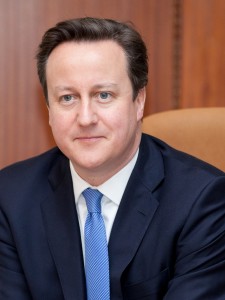

  • Nicky Morgan – 2016 Speech at Lord Glenamara Memorial Prize Giving

    nickymorgan

    Below is the text of the speech made by Nicky Morgan, the Secretary of State for Education, at King’s College in London on 2 February 2016.

    Thank you Professor Byrne [Professor Edward Byrne, President and Principal, King’s College] for that warm welcome and to King’s College too for hosting us today.

    My lords, ladies and gentlemen, what a pleasure it is to be here at the Lord Glenamara Memorial Prize giving, to honour amazing young people from the north-east of England.

    Honouring them for their excellent academic achievement and outstanding contributions to their schools and communities – things really embodied by the man for whom this prize is named – Edward Short, the Lord Glenamara – one of my predecessors as Secretary of State for Education.

    And I am so pleased that we have with us this afternoon Lord MacGregor and Baroness Williams – two former Secretaries of State for Education; and we are also joined by Lord Beecham, another famous son of the north-east and friend to the Short family.

    It was in the north-east that Lord Glenamara was a student at the Venerable Bede College, Durham University; a teacher and head at Blyth; a councillor on Newcastle City Council; a Member of Parliament for Newcastle Central; and later named a Member of the House of Lords, taking Glenamara of Glenridding in the county of Durham, as his title.

    I think it is fair to say that the prize is awarded in the very spirit of a man who loved the north-east and worked tirelessly throughout his life on behalf of the region.

    As Lord MacGregor, Baroness Williams and I can tell you, being the Secretary of State for Education is a huge honour but an enormous responsibility too.

    Lord Glenamara was the first former headteacher to take up the role and is said to have regarded leading the Department for Education as his greatest achievement.

    He displayed a high regard for academic rigour and early years provision as well as a commitment to education as a tool to achieve social justice – all things on which we agreed, despite hailing from different political traditions.

    He was a deft politician, helping to steer his party through times of tribulation and was, at one time, regarded as a potential leadership candidate.

    That wasn’t to be, but as a parliamentarian he gave us Short Money and the Register of Members’ Interests – 2 things which are now ingrained in our modern legislature.

    I think it is fair to say that he was one of the north-east’s most famous sons and a true giant of British politics.

    His commitment to academia, his contribution to the region and his huge presence in the mainstream of British public life are undeniable.

    When he passed away in 2012 at the age of 99 this memorial prize was established to celebrate his achievements and to ensure that his legacy inspires younger generations to come.

    Now in its fourth year, the number of high-quality candidates this time made it really tough for the judging panel to pick a winner.

    The nominees’ hard work and commitment to their communities make them shining examples to their peers and they should all be congratulated.

    And I believe there is something that sets these young people apart.

    During my tenure as Secretary of State for Education I’ve talked a lot about character.

    I think there are many attributes that make up great character, including perseverance, determination and having a strong sense of community – to name just a few.

    These traits so often set apart the people who succeed in life from those who don’t.

    I believe it is vital that our young people are helped to grow and develop their character and I think Lord Glenamara would have agreed with me on that.

    What is obvious is that the young people here today have character in bucket loads.

    I’m talking, of course, about the school councillors, the charity volunteers and fundraisers, the prefects, the head girls and head boys, the Members of the Youth Parliament, the mentors and coaches, the youth group leaders and so much more.

    It takes great character to offer so much to your community knowing that often there will be little thanks or praise for it.

    It’s clear that all the nominees have exciting futures ahead of them and that the north-east will be enriched by the many things they will no doubt go on to achieve.

    And our winner – George Hunter – President of his school, elected by his peers and his teachers from a strong field of candidates.

    A volunteer, willing to give up his free time, not just to 1 but 2 charities.

    A campaigner, taking on one of society’s most taboo subjects, mental health, and encouraging people to engage with it.

    An academic, so committed to learning that he has not only won awards himself but tutored other students too.

    So it comes as no surprise that despite his heavy workloads both in and out of school, he was able to achieve As and A*s across the board in his GCSEs.

    What an exciting future he has ahead of him.

    I look forward to welcoming him to my department for his work experience placement very soon.

    It has been a delight to be here today – to celebrate these amazing young people from across the north-east.

    I would like to thank all of the schools who nominated their students and I really look forward to next year’s prize.

    Professor Byrne will now read out the runners-up in alphabetical order and I will present them with their certificates.

    Then we will ask the winner to come up so I can present the Lord Glenamara trophy.

  • Matt Hancock – 2016 Speech on Addressing Inequality in the Public Sector

    Matt Hancock
    Matt Hancock

    Below is the text of the speech made by Matt Hancock, the Minister for the Cabinet Office, on 2 February 2016.

    Today, I want to talk about inequality in the public sector – and beyond – and why it matters for building a society in which all can reach their potential.

    We meet as guests of Mary Ward House – in the room that a hundred years ago was the site of the famous debate on women’s suffrage between Mary Ward and Millicent Fawcett.

    And while we celebrate the advances they secured – we are still very far from being the fair society we need to be.

    A hundred years later indefensible inequalities still exist in this country.

    Inequalities of income, inequalities of opportunity, inequalities rooted in prejudice, inequalities imposed by social injustice and we see the consequences of these inequalities in the professions, the media, the arts, sport – and in public service.

    The specific nature of the problem we face in public service is laid out in the Bridge report into inequality in the Civil Service Fast Stream published today. The Bridge report is a call to action on my part as Paymaster General.

    But the fight against inequality is a struggle that engages us all across government.

    The brute facts of inequality demand a strong and united response.

    In Britain today around 13% of people are from an ethnic minority.

    Yet only 7% of judges, 6% of FTSE 100 leadership, and just 4% of the Senior Civil Service are.

    On another measure, only 4.4% of successful applicants to the Civil Service Fast Stream are from working class backgrounds, in comparison to the third of the population in employment who are working class.

    Money can’t buy me love, but it still buys a golden ticket into the heart of the establishment. And that’s just not fair.

    And why am I speaking out about this?

    After all, I’m white and male, I went to both Oxford and Cambridge, I’m from the north, and even then I’ve lost my accent.

    But the reason I’m in public service now is because I believe that everyone should have the chance to reach their potential, whatever their background.

    That no one should be defined by the circumstances of their birth, no one should be held back by poverty, or ethnicity or culture.

    And that each individual has something precious to give, and it is our task to unlock that gift.

    For me, a commitment to making opportunity more equal isn’t just an ethical imperative. It makes sound business sense.

    All the evidence shows that organisations work better when they are diverse.

    Publicly traded companies with male-only executives perform worse than those with both male and female executives, and higher ethnic diversity is linked to increased earnings.

    We need to think about diversity not just in terms of legally protected characteristics – gender, sexual orientation, race, disability – but in terms of making sure institutions are full of people from different backgrounds, experiences, and attitudes, who approach the same problem in different ways.

    That way you get better decisions, more interesting solutions, and ideas you simply don’t have in a monochrome team.

    In the most dynamic societies, there is a fluidity between bottom and top, and talented, hard-working people have the chance to get on, whoever they are and wherever they come from.

    So should inequalities – of race and gender and income – should they bother us?

    My answer is emphatically yes. We should care about people getting filthy rich. Why?

    First of all, because we care deeply about social mobility, and there is clear evidence that countries with higher income inequality have lower levels of social mobility.

    As Miles Corak has eloquently put it, there is a ‘Great Gatsby Curve’ that links inequality and social mobility.

    It’s harder to climb the ladder of opportunity if the rungs are further apart.

    We’ve got to put more rungs in that ladder.

    Second, because we should care that rewards for effort are fair. When 2 people with the same talent work just as hard, isn’t it fair they get the same reward?

    Fairness, of course, is different to equality. The pursuit of equality of outcome alone can be deeply unfair, and lead to an unjust, something-for-nothing system.

    Rather, fairness is about just rewards: the idea that what you get out should be proportional to what you put in. After all, society rests on consent, and social solidarity is good in itself.

    Everyone should get a fair crack of the whip.

    But even on this basis, inequality matters, because, yes, in a fair society individuals should face the consequences of their choices and efforts; but, no, people should not be punished or held back for circumstances beyond their control.

    And we are making progress.

    In Britain, according to the ONS, looking at the numbers, inequality is falling.

    Our relentless focus on supporting people who want to work hard and get on – with 2 million extra jobs and apprenticeships, nearly 4 million of the lowest paid taken out of income tax altogether, and incentives to make sure it always pays to work – has helped to ensure inequality has fallen. In fact the Gini coefficient, the standard measure of inequality, went down from 33.2 to 32 over the last Parliament.

    And our radical reforms to drive school standards up will help in the longer term.

    Across the world, the story is the same.

    In his inaugural speech, President Kennedy said that “man holds in his mortal hands the power to abolish all forms of human poverty and all forms of human life”.

    Much of Kennedy’s presidency was taken up with trying to avoid the latter, but more recently we have been making extraordinary progress on the former.

    In the last quarter century, the number of people living in extreme poverty around the world has fallen by half, from almost 2 billion to less than a billion, and the proportion of the world’s population in absolute poverty has collapsed by 3 quarters in my lifetime.

    The proportion of the world’s population that are illiterate has fallen from around half in Kennedy’s time to just 18% today.

    In fact, the extension of the free market economy and the extension of free education has brought billions of people out of poverty. It is the most progressive policy with the biggest impact on the well-being of humanity in history.

    But while incomes between the bottom and the middle have become more equal, asset price rises and increased returns on skills to mean the gap in wealth between the very top and the rest have risen.

    When Kennedy entered the White House, the share of income going to the top 1% in the UK was around 3.5%.

    By the time of the financial crisis in 2007 to 2008, it had reached 8.3%.

    In the UK, we have taken steps to make sure the broadest shoulders bear the greatest burden. Our overhaul of the Stamp Duty system ensures those at the very top pay their fair share. And we are abolishing permanent ‘non-dom’ status.

    The top 1% of earners now pay a higher share of income tax – projected to be 27.5% this year.

    But there is more to do. So we should continue to act, in a way that tackles injustice and protects people’s economic security from those who would use this concern to practice the destructive politics of envy.

    I want to see an end to inequalities in the public sector too.

    The Civil Service

    The Civil Service is engaged in a mission to improve the lives of the entire country.

    In my very first speech as Minister for the Cabinet Office, I said that to govern modern Britain, the Civil Service must be more like modern Britain.

    The Bridge Group report we commissioned then pulls no punches.

    Yes, the Civil Service has improved. And it compares favourably to many other organisations in the public and private sectors.

    The proportions of people from ethnic minorities or declaring a disability are at historic highs; and women represent 54% of the Civil Service.

    But the representation of all these groups at senior levels is still far too low.

    And when you look more broadly at social background, this is where we find the most glaring inequality.

    It finds the Civil Service Fast Stream – still the most prestigious route in – is ‘deeply unrepresentative’ of the lower socio-economic groups in our society.

    One in 3 people employed in Britain today are working class.

    But only 8% of applicants to the Civil Service Fast Stream are from working class backgrounds, and only 4% actually receive offers.

    This makes the Fast Stream less diverse than Oxbridge, where the equivalent figure is 7.2%.

    In fact in every group of universities from which the Civil Service recruits, Fast Steam applicants are less likely to come from lower socio-economic groups.

    This amounts to a huge pool of talent that we are not tapping into. And this must change. As the report says, we are ‘losing out on many other talented individuals, who would flourish if given the opportunity’.

    We need to cast the net wide – not fish in a small pond.

    The Civil Service can set this example for others to follow.

    It would not be the first time it has done so.

    Until 1855, access to the Civil Service was riddled with cronyism and corruption. Following the blunders of the Crimean War, the case for reform was unanswerable.

    So in 1855 the Civil Service Commission was set up to oversee recruitment on the basis of fair and open competition, and drag Whitehall kicking and screaming into the 19th century. It would oversee a new system of recruitment based on fair and open competition. This was the beginning of a permanent Civil Service: a meritocracy, guided by the vital principles of integrity, honesty, objectivity and impartiality that have sustained it ever since.

    If that was the birth of the modern Civil Service, then another modernisation is long overdue.

    We have to deal with the perception that the passport to public service is stamped with privilege.

    So what are we going to do about it?

    The report

    The independent research by the Bridge Group was commissioned by me and Jeremy Heywood, the Cabinet Secretary and Head of the Civil Service.

    We commissioned it because we, and the whole senior leadership of the Civil Service, are determined to tackle the issues it exposes – head on.

    I think it’s a tribute to the Civil Service that far from being defensive about these concerns, the Civil Service is embracing the challenges it faces.

    The response

    We will be setting out our full strategy on boosting social mobility in the Civil Service in the spring, but I want to sketch out some of the action we are taking.

    The report calls for a root and branch overhaul to the way the Civil Service recruits talent.

    And we need to make promotion fair and based on talent not time serving.

    I want to end inequalities of access and progress.

    Some of this has started, and needs rocket boosters.

    Other parts will be new.

    First, we need to measure the problem.

    We will collect postcode and school-attended data so we can measure the problem real time.

    And from this year we are giving permanent secretaries specific social mobility objectives within their single departmental plans.

    Next, whether we are recruiting from outside or promoting from within, we need to make the selection process as transparent and fair as possible. There must be no barriers that might exclude talented people from underrepresented groups.

    So, we are tackling bias, conscious or otherwise. We have this autumn introduced name-blind recruitment across 75% of the Civil Service, on the way to name-blind as standard across the public sector.

    We want a more porous boundary between public service and private endeavour, so it becomes the norm not the exception to have a career switching between.

    Today we commit to publishing pay ratios in the Civil Service for the first time.

    And crucially, we’re changing the way people apply to join the Civil Service, so we spot potential not polish.

    The report finds barriers in the application process, including its intimidating length and London-centric focus. Yes, our grand buildings in Whitehall are splendid and spectacular, but they aren’t exactly designed to make you feel comfortable. So we’ll change how and where selection is done. We are shortening the application process and wherever possible, aligning apprenticeship and graduate recruitment.

    The report finds a lack of adequate outreach on university campuses. We’re going to send out existing Fast Streamers to campuses across Britain, so we look for talent at a wider range of universities.

    The report also finds ‘minimal outreach to schools’. So we will radically increase mentoring.

    Earlier this month, the Prime Minister announced the launch of a new national mentoring campaign in schools.

    We’ll lead by example, sending people to mentor pupils from disadvantaged backgrounds over an academic year. They aim to raise aspirations, increase confidence, inform and encourage. We’re already supporting in 20 schools, but I want to see that expanded to at least 200.

    Apprentices too are central to our task.

    In 2013 we launched the Apprenticeship Fast Track. It has proven hugely successful. Almost 1,000 have come through so far, with all the verve, diversity and energy that apprentices represent.

    In the Civil Service I want to see, future leaders are as likely to come from the ranks of Fast Track Apprentices as they are from Fast Stream graduates.

    I want the Cabinet Secretary of 2050 to be someone who came into the service as an apprentice. You may be sitting in this room.

    So I can announce today that we will radically expand our apprenticeship scheme. We will recruit at least 750 new Fast Track Apprentices in September – and 200,000 across the public sector – by 2020.

    All these measures together add up to the most significant shake-up of Civil Service recruitment in a generation.

    Yes, the public sector can provide leadership. But as the Bridge report says, its findings ‘have implications for the way all professional firms could recruit for diversity and excellence’.

    So today, I’ve written to the 200 companies who signed up to our social mobility business compact, and I’ve urged them to read the Bridge research and consider its lessons for their own businesses.

    Conclusion

    This is our goal: a Britain, fair to all, where effort is rewarded.

    Where all have the chance to succeed, and to serve their country.

    Where we fulfil that dream held by the seekers of equal opportunity here a century ago.

    That every one of the citizens we serve has the opportunity to reach their God-given potential.

  • Patrick McLoughlin – 2016 Speech to Rail Delivery Group

    Patrick McLoughlin
    Patrick McLoughlin

    Below is the text of the speech made by Patrick McLoughlin, the Secretary of State for Transport, at the Rail Delivery Group annual conference on 2 February 2016.

    Opening remarks

    Thank you.

    And good afternoon everyone.

    It’s a pleasure to be here – and to have this opportunity to address an expert rail audience.

    20 years ago this Thursday, the 05.10 early morning service pulled out of Twickenham station on its way to London Waterloo.

    As far as train journeys go, it was unremarkable.

    But it was in fact a landmark in the history of the British railway.

    The first scheduled service run by a private operator in this country for almost half a century.

    Looking back, not even the most fervant advocates of privatisation could have predicted its impact on the railway.

    20 years in which passengers have doubled.

    Investment’s increased.

    Costs come down.

    And in which standards have improved to such a degree that we now have the safest railway in Europe.

    Something we never take for granted.

    And something we always have to guard and watch.

    Continued progress

    But as you’ve heard this morning, things are going to change even faster over the next 20 years.

    We’re only at the start of a unprecedented construction and modernisation programme, which will make Britain the leading rail investor in the western world.

    Who would have thought that a few decades ago.

    And it’s in this Parliament when we really get cracking with that programme.

    Finishing Crossrail.

    Starting HS2.

    Completing Northern Hub.

    Getting rid of old train like Pacers.

    And introducing new ones – like Intercity Express on the Great Western and East Coast lines.

    All evidence of how we’re investing to transform journeys for passengers.

    But building a better railway is not just about investment.

    It’s also about changing poor public perceptions.

    Being more transparent.

    And treating passengers as valued customers, like the very best service providers do.

    The challenge is to create a culture that’s relentlessly focused on the customer.

    It’s also about controlling costs more effectively.

    Delivering more for less.

    Like industries across the economy were forced to do in one of the longest and deepest recessions in our history.

    And it’s about joined up thinking.

    The railway coming together.

    Speeding up and improving long term planning.

    Setting clear objectives.

    And being accountable for achieving them.

    The industry is at a stage in its evolution where there are huge opportunities to do all these things.

    But it needs better leadership and direction.

    And the Rail Delivery Group is absolutely fundamental to that process.

    The Shaw Report may provide some answers.

    But we need to face up to the fact that there may still be challenges ahead.

    And we need to be ready to meet them.

    Learning lessons

    Some of these issues came to a head last year.

    For example when we had to pause the electrification of the Midland Main Line and Transpennine.

    But then we worked together, with particular credit going to Sir Peter Hendy and his team, to get Network Rail’s infrastructure programme up and running again.

    Delivery of that full programme on time and on budget is crucially important.

    Not just for rail users.

    But for the industry itself.

    This is about making the railway more professional and answerable.

    If challenges crop up, then the industry must confront and tackle them.

    My first job as Secretary of State was to sort out the West Coast franchise mess.

    The first step was to accept responsibility on behalf of the department.

    The next was to take swift action.

    And 3 years on, franchising is in a much better place.

    In fact it’s at the heart of improving our railway.

    So the key objective now for us all I hope is to learn lessons, and make the railway more resilient.

    That’s why we’re looking at regulation and structure.

    Network Rail has a capability plan, which reflects the changes made to the enhancement programme.

    And which will take into account feedback from Colette Bowe’s review, and the ORR.

    We’re currently consulting on that.

    And in the light of the Bowe Review, it’s also a timely chance to consider the duties of the ORR again, to make sure they’re appropriate for regulating Network Rail – so improvements can be made reliably.

    We’ll consult with the industry again on options for structural change after the Shaw Report is published.

    And we’ll provide clarity on our plans as early as possible.

    Supply chain and skills

    Improving resilience takes many forms. But there are 2 I’d like to highlight today, which I believe are immensely important to Network Rail’s programme, and in which the Rail Delivery Group has a direct interest.

    First, the supply chain.

    Yesterday I attended the launch of the Rail Supply Group’s sector strategy, the first agreed plan for how the supply chain will grow as we modernise the railway.

    I know the RDG has excellent links now with the Rail Supply Group and the wider supply chain.

    And that relationship is going to get stronger as we progress.

    Second, the skills challenge.

    Training the workforce is the single biggest construction and engineering challenge of this age, with huge implications for the railway.

    We need a new generation of rail engineers, designers and construction professionals.

    And highly skilled people to operate the networks once they’re open.

    That’s why last week we announced our transport skills strategy.

    Led by Terry Morgan, chairman of Crossrail, the strategy sets out how we’ll provide 30,000 apprenticeships in roads and rail up to 2020, and I hope leave a legacy of skills for the next generation.

    We’re also investing in new training centres like the National Training Academy for Rail and the National College for High Speed Rail as well.

    And in 2018, to coincide with the finishing of Crossrail, we’re going to have a period of celebrating engineering, to excite a new generation of brilliant minds.

    Franchises and ticketing

    I’ve spoken mainly about the big rail issues today.

    But we must also keep focused on the things that matter most to passengers in their daily journeys.

    And one of the areas where’s there’s massive potential for improvement is ticketing.

    Frankly, the process is still impossible to fathom out.

    The railway is still light years behind other industries on this issue.

    Though some good progress has been made.

    For example on smart ticketing through the South East Flexible Ticketing programme.

    What’s important is that we’ve now reached a point where future development can be led by the private sector.

    Now we need to see more operators coming together.

    Getting different IT systems to talk to each other.

    Providing a seamless travel experience across boundaries.

    That’s why we made smart ticketing an integral part of franchise competitions.

    So we can expect to see some exciting proposals from bidders in the months and years ahead – starting with the competition for Southwestern and the West Midlands in the spring.

    We cannot claim to have truly modernised our railway if we don’t also transform ticketing.

    And I know that’s something the Rail Delivery Group is working on.

    Conclusion

    So to sum up.

    Two decades since the railway entered a new era of enterprise and competition – yet also 2 decades in which rising demand has tested the capacity and resources of the industry like never before – we are now in a position to complete the job of modernising the railway.

    For an industry that was in decline for so long, our objective is to make Britain’s railway the equal of any in the world.

    It will take several Parliaments to achieve.

    But it will be this Parliament.

    And this period of opportunity.

    When the future course of the railway is irreversibly set.

    So now is the time to show the industry is changing.

    Controlling costs.

    Putting customers first.

    Conquering problems every day.

    Uniting as one industry, but serving the public in different areas.

    In partnership with government. Inspired by the leadership of the Rail Delivery Group.

    Grasping the opportunity together.

    Thank you.