Tag: 2016

  • John Kerry – 2016 Speech on the Future of the European Union

    johnkerry

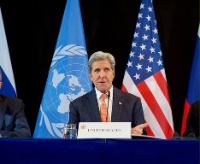
    Below is the text of the speech made by John Kerry, the US Secretary of State, at the Bayerischer Hof Hotel, Munich in Germany on 13 February 2016.

    Thank you, Wolfgang. Thank you very much. Well, Wolfgang, thank you for reminding me that everything I’m doing now is a last. (Laughter.) It’s a little – depending on what I decide to do, so maybe not. (Laughter.) I am really happy to be back in Munich and I’m very happy to share thoughts with this, the 52nd edition of the Security Conference.

    And I think if you all think back, 1963, the first year of the Munich Security Conference, this forum has always been about the pursuit of peace. And back then, here in Germany as elsewhere, the Cold War actually felt pretty hot. The wall was a concrete indication of a new reality. Barbed wire was strung across the heart of the country – indeed the heart of Europe. And that was the year that President Kennedy spoke at Rudolph Wilde Platz, and said to all who doubted the courage and resolve of free people: “Let them come to Berlin.”

    Many of us here remember the starkness of that period of time very, very well. I was a kid. My dad was the legal advisor to the high commissioner of Germany in Berlin, then James Conant. And I was privileged to be dumped off at a school in Switzerland. I didn’t know where I was at age 11 or 12. And I saw firsthand what Europe was like in those years emerging from the war. Everything you talked about was the war and the remnants of the war. I used to ride my bike down Kurfurstendamm and see the church and the steeple and the burned our Reichstag. So I knew very well what that was about.

    And it is clear that today that, while the Cold War is long over, the need for the same qualities that brought people through that – for the courage and the resolve in defending liberty and in pursuing peace is absolutely as vital today as it was half a century ago.

    Now, obviously, everyone in this room doesn’t need a Secretary of State or secretary of state of the – of Great Britain or Frank Steinmeier, the foreign minister of Germany, or anybody else to come in here and do a long list of the litany of the crises we face. It’s pretty obvious that probably never in history have we been dealing with as many hotspots, as many failed or failing states all at one time, not to mention a Kim Jong-un and a nuclear program and other challenges all at the same time. So everybody here understands that. You wouldn’t be here otherwise.

    And Daesh’s campaign of terror now extends its reach well beyond Iraq and Syria. And the Syrian civil war, which has now claimed more than 250,000 lives, still rages. We are facing – we, together – the gravest humanitarian crisis in Europe since World War II, as innocent people – many of whom are just women and children – are either trapped inside a country without access to medicine and food, or they have been forced to flee.

    And the flood of desperate migrants has now spread well beyond the Middle East. As we know, 50 percent of the people now knocking on the door of Europe – with a whole industry that’s been created to try to help move them and some very perverse politics in certain places that turns the dial up and down for political purposes – half of them now come from places other than Syria. Think about that – Pakistan, Bangladesh, Afghanistan. So the burdens of Europe, which is already facing a complex economic, political, and social strain, is now even more intense. And I want to make it clear to all of you: We in the United States aren’t sitting across the pond thinking somehow we’re immune. We’re not sitting there saying this is your problem, not ours – no. This is our problem. The United States of America understands the near existential nature of this threat to the politics and fabric of life in Europe – and that is why we are joining now in enforcing a NATO mission to close off a key access route, and that is why we will join with you in other ways to stem this tide because of the potential of its damage to the fabric of a united Europe. ‎

    And the truth is that in every decade since its founding, the EU has been tested by forces –internal and external – that benefited from a house divided. We know many Europeans right now feel overwhelmed by the latest round of challenges, including concerns about the UK’s potential exit from the EU. Here again, however, I want to express the confidence of President Obama and all of us in America that, just as it has so many times before, Europe is going to emerge stronger than ever, provided it stays united and builds common responses to these challenges. Obviously, the United States has a profound interest in your success, as we do in a very strong United Kingdom staying in a strong EU. (Applause.)

    Now, let me underscore – let me underscore that those who claim that our transatlantic partnership is unraveling – or in fact, those who hope that it might unravel – could not be more wrong. They forget – or they never understood – why we came together in the first place: not to just to sail along in the best of times – but to have each other’s backs when the times are tough. They forget, as well, that the ties that bind us are not some kind of fragile strings of momentary convenience. They are rugged, time-tested cords of democratic values – liberty, decency, justice, rule of law.

    And nowhere is that more clear than in our joint, unwavering support for a democratic Ukraine. Our European partners, you, deserve enormous credit for showing the resolve you have shown and the common purpose you have summoned, in order to stand up to Russia’s repeated aggression. And I am confident that Europe and the United States are going to continue to stand united, both in sustaining sanctions for as long as they are necessary and in providing needed assistance to Ukraine until the sovereignty and integrity of Ukraine is protected through the full implementation of the Minsk agreement.

    Now, again and again, we have made it clear, and I make it clear again here today: Sanctions are not an end unto themselves. Witness what we succeeded in doing in the context of the Iran nuclear agreement. But we shouldn’t forget why they were imposed in the first place: to stand up for Ukraine’s fundamental rights – rights of international norms that have been accepted ever since World War II, that were part of what that great battle was about. Russia has a simple choice: fully implement Minsk or continue to face economically damaging sanctions. And the path to sanctions relief is clear: withdraw weapons and troops from the Donbas; ensure that all Ukrainian hostages are returned; allow full humanitarian access to occupied territories, which, by the way, is required by international law and by several United Nations resolutions; support free, fair, and internationally-monitored elections in the Donbas under Ukrainian law; and restore Ukraine’s control of its side of the international border, which belongs to it. Put plainly, Russia can prove by its actions that it will respect Ukraine’s sovereignty, just as it insists on respect for its own.

    By the same token, after two difficult years, Ukrainians still have work to do as well. And President Poroshenko who is here knows that and accepts that. Neither the people of Ukraine nor their partners in the international community believe that enough has happened in Ukraine either. Ukraine has responsibilities with respect to Minsk – and it’s critical that Kyiv upholds its end of the bargain. But Ukraine’s democratic potential is clearly far brighter today than it was when we met here several years ago, far brighter even than it was before the brave protests in the Maidan. And with our transatlantic support, 2016 has all the potential possible – all the groundwork laid through the good work of Germany and France and the Normandy format and though the support of other countries – to be able to make 2016 the year that Ukraine proves reform can triumph over corruption. And we call on all of the country’s elected leaders to demonstrate the unity, the integrity, and the courage that their people are demanding.

    Now, in addition to our joint focus on Ukraine, the United States has significantly upgraded our commitment to European security with a planned fourfold increase in our spending on the European Reassurance Initiative, from just under $790 million to $3.4 billion. This will allow us to maintain a division’s worth of equipment in Europe and an additional combat brigade in Central and Eastern Europe, making our support – and NATO’s – more visible and more tangible.

    Meanwhile – and I think everybody here knows this – that’s not the only way we have to approach the challenge of what is happening in Europe and in the rest of the world of failed and failing states, of millions of young people in countries where they don’t have hope and they don’t have food and they don’t have a job and they don’t have education and they don’t have a future. And if we leave that unattended to, then we are simply turning our backs on what we know is a responsibility for how we are going to stem the tide of violent extremism.

    So we will continue to build on our unparalleled economic partnership. We will support new jobs and spur growth on both sides of the Atlantic. And concluding negotiations on the Transatlantic Trade and Investment Partnership, my friends, this year will strengthen our economies, and let me be absolutely clear: Nothing in TTIP – T-TIP – nothing requires Europe to reduce or undo important regulations or weaken existing standards. That is false. On the contrary, the agreement will underscore our support for the inclusion of high environmental and labor standards in trade agreements, just as we have done in the Trans-Pacific Partnership, which encompasses 40 percent of the planet’s GDP. We have encompassed in that agreement, in the four corners of the agreement, the highest labor standards and the highest environment standards enforceable by law.

    So T-TIP can showcase the dynamism of our form of democracy, of our marketplace, of free markets, and demonstrate the preeminence in the global conversation about the economic standards and the defense of free trade.

    Now, perhaps most urgently, the United States and Europe are at the forefront of facing what has become the defining challenge of our generation: the fight against violent extremism.

    The terrible attacks in Paris, Brussels, Ankara, Beirut, the Sinai, San Bernardino, and so many other places have only reinforced our determination to defeat Daesh as soon as possible. And I am absolutely convinced we will do just that. Every day our military is meeting. Every day the coalition is working. Every day we are taking additional steps forward. And the global counter-Daesh coalition that we began some 17 months ago includes every NATO and EU state – and that, my friends, is the very definition of solidarity.

    We have known from the very beginning that defeating Daesh is not an overnight proposition. It’s going to take time. But I’ll tell you this, President Obama is determined that it will not take too much time. And he is every day pushing our military and every other sector – and there are many other sectors that are involved in this broad nine lines of effort. He is pushing them to come up with new propositions, new ways to push this fight. We welcome the announcement of countries in Europe that have decided, and other countries, to join this fight.

    We are going to defeat Daesh. I have no doubt about it. But even as we do that, there’s a lot of work that we have to do on a measurable – in a measurable manner.

    First and foremost, we are going after their fighters. Our coalition has launched more than 10,000 air strikes. We, the United States, and France, a couple of other countries, have put special forces on the ground in Iraq and Syria in order to better enable a number of operations, while also providing increased amounts of training and equipment to our local partners. Together, we have pushed terrorists out of about 40 percent of the territory that they once controlled in Iraq and 20 percent in Syria. We’ve liberated Tikrit – 100,000 Sunni have returned to rebuild their homes in Tikrit, an extraordinary story that doesn’t get enough attention or credit. We’ve liberated Sinjar, Ramadi, Hasakah, and Kobani. We’re hammering Daesh’s heavy weapons, its training camps, its supply routes, its infrastructure. And the military campaign to end Daesh’s terrorism is, in fact, expanding by the day.

    But it’s not enough just to knock them down militarily, which we are doing. You have to also ensure that they can’t get back up. And that’s why the second line of effort that we’re pursuing is also critical: destroying their economic lifeline. In recent months, we have learned more about Daesh’s sources of income, which has allowed us to be more strategic in targeting and hitting their oil production, their refineries, tanker trucks, cash centers, illicit banking facilities. For Daesh, lower revenues means fewer resources to finance military action, and smaller paychecks to lure and sustain new fighters. Already, we are seeing the results of this. They’ve had to cut their paychecks to their fighters by 50 percent – and in some cases, they’ve had to cut it off entirely. And they don’t have the ability, as a result, to continue this expansion.

    This also gives a boost to our third line of attack, which is to reduce the number of terrorist recruits. And because of tighter airport and border security, fewer terrorists are now getting into Syria and Iraq. And in fact, because of lower pay and constant danger, we know that more are, in fact, trying to get out.

    Meanwhile, with Arab states in the lead, we are doing more every day to minimize the impact of terrorist propaganda; to fight back against Daesh’s apocalyptic distortion of Islam and its rhetoric; to prevent the incitement of so-called lone-wolf attacks. In the United States, we recently opened the Global Engagement Center at the State Department, to help dispel extremist groups’ hateful lies in all forms of media, to take the people who were once the captives and exploited by Daesh and put them in the media to tell the stories to deter others from joining. We have a center opened up in Abu Dhabi. We have a new center that the Saudis – they will be starting and we will be working with them. And the Malaysians are following so that those who really can talk with authority about what Islam means in the languages and in the – each individual nation where it makes the difference, will have the opportunity to speak to people in ways that they haven’t yet.

    The global coalition has also reinforced our commitment with respect to the fifth effort: providing humanitarian relief to the millions who have suffered at the hands of Daesh as a result of the larger conflict in Syria.

    Now, the region, entire region, is responding to this challenge, my friends. And that is essential, because the needs are absolutely staggering. I see the prime minister of Norway here, others who were London the other day – extraordinary contributions by countries around the world to put $10 billion on the table. Tukey has taken in more than 2.5 million men, women, and children since the war began, and Lebanon and Jordan are giving refuge to a million people each.

    In Europe, you know better than anybody how the staggering humanitarian crisis is affecting the life, the daily life, of politics and of the social fabric of Europe – unprecedented challenges. And with characteristic resilience, I’m proud to say and grateful for the fact that Europe is stepping up to meet these challenges. Chancellor Merkel and other leaders have demonstrated remarkable courage – I know it’s difficult. Last night at dinner, I heard people telling me how it has cost her; we all understand. That’s the nature of political courage – in helping so many who need help. And across this continent, communities are taking in those who are fleeing violence, and saying “no” to the voices of intolerance and racism within societies. Now, I know how difficult it is to live our values. It is hard. But we do try. It’s one of the things that binds us together. It’s one of the great things that brings us here to Munich, is our common commitment to those values which in the end make the difference in defining what life is really all about. (Applause.)

    In the United States, we recognize that, while this crisis is not as real on our shores on a daily basis, we have a moral obligation to stand with our partners and to do more to assist in the relief effort. And that is why I was able to announce in London that we will contribute an additional $925 million to the already $4.5 billion we have contributed to Syrian refugees, making us, I think, the largest donor specifically to this plight of Syrian refugees – providing emergency care, education, and job help.

    And I think everybody understands, and this is perhaps the most important point, and this is what motivated us to go to Vienna twice with the great help of all the partners sitting here – the EU, Federica, others – everybody came together in commonality with the recognition that writing checks is not going to solve the problem. We can’t just endlessly be writing checks. We can’t be endlessly fighting about whether Schengen is alive or dead or what’s going to happen. We have to end this war. And the only way to do that is somehow to bring about the quickest possible political settlement, because almost everybody has agreed that if all one side does is escalate, the other side will to. And we could have an endless escalation between Iran, between Shia, between Sunni, between Saudi Arabia or Turkey or Qatar or – any country of interest has the ability to blow this apart – one country. It takes every country coming together in order to hold it together.

    So the war in Syria has now lasted for more than five years. And right now I have to tell you, even with the success we had the other day at the table, it doesn’t yet show the signs we want of burning out. And that is why we are so focused on this political track. If the international community and the Syrians themselves miss the opportunity now before us to achieve that political resolution to the conflict, the violence, the bloodshed, the torture, the images of children – women, children, the bombing, the anguish is going to continue. And all the talk that will take place here and has taken place to date will mean nothing except an increase in the cynicism of people of the world who look to their leaders to deliver. The tragedy is that if this flounders, the call to jihad will increase.

    And that is why the diplomatic initiative we launched in Vienna last year is so important. The 20-plus member ISSG includes every major country with a direct stake in Syria. Parties as diverse as Iran and Saudi Arabia sat at that table constructively trying to move forward. And they have agreed on a list of principles, unanimously reflected in the UN Security Council, and these principles reflect the way toward a stable, sovereign, inclusive, united, nonsectarian Syria that we all seek, but which the vast majority of people believe can never be achieved with President Assad at its helm. You cannot stop the war that way.

    Yesterday we made progress advancing two of the major components of the UN Security Council resolution: the burning need for humanitarian access not in months, not in weeks – now, immediately. And the trucks are lined up and the permissions are being granted and they should flow today or tomorrow.

    In the wee hours of Friday morning, we agreed that the sustained delivery of humanitarian aid will begin this weekend, first to the areas where it is most urgently needed, and then to all the people in need throughout the country, particularly in the besieged or hard-to-reach areas. And the UN has now said that the trucks are loaded, ready to go. And we also established a task force, which has met already for the first time in Geneva and will report regularly on the progress to be able to guarantee the delivery of this aid.

    The ISSG also agreed to implement a nationwide cessation of hostilities to begin in one week’s time. Why in a week? Why not yesterday? For the simple reason that the modalities have to be worked out and for the simple reason that people have to be communicated to in order to not have it start with failure. And this will apply to any and all parties in Syria with the exception of the terrorist organizations Daesh and al-Nusrah.

    Now, there is a lot of work to do before this effective cessation can commence, and to that end, we have established another task force with Sergey Lavrov – who is here, the foreign minister of Russia – and I will chair together with other ISSG members, and we will work on the modality of how we deal with this. And to date, the vast majority, in our opinion, of Russia’s attacks have been against legitimate opposition groups. And to adhere to the agreement that has been made we think it is critical that Russia’s targeting change. And the entire ISSG, including Russia, has agreed to work to make that happen.

    Now, let me be very clear about this. Foreign Minister Lavrov has said that we need to work together as a group to determine who should be attacked, who is qualified as a terrorist, who isn’t. And I will say bluntly that there is no way to properly put a humanitarian access as ambitious as the one we’ve embraced in place, and there is no way to adequately deal with the cessation of hostilities, unless we do sit down and work together on every aspect of this from the political to the humanitarian to the military also. And we are doing that now.

    So we’re not approaching this with some sense of pie-in-the-sky hope. We will work through where this targeting should take place, where it shouldn’t, how we work together in order to be effective so we don’t drive people away from the table, because obviously, if people who are ready to be part of the political process are being bombed we’re not going to have much of a conversation. So that’s what we’re working on.

    And the Security Council Resolution has demanded that “all parties immediately cease any attacks against civilians.” That, too, has not happened to date. And indeed, the violence by the regime, as we all know, went up. Free-fall bombs are being used, which are not precise. We all know civilians are being killed. So we hope this week can be a week of change.

    Now, some have argued that the reason humanitarian access has been denied and has – and there’s been this bombing is because Assad and his allies, including Russia, might believe that by defying the will of the international community, they can win the war. That is a proposition that is being discussed. If that is what Russia and Assad think, then I believe they would be missing the lessons of the last five years. The Syrians who have rejected Assad have endured four years of shelling, barrel bombs, gas, Scud missiles, chemical attacks, torture; and they may be pushed back here or there, but they are not going to surrender. I don’t believe there’s anybody who believes they will. And the countries that have supported Assad and the countries that have opposed him say they’re both committed to continuing that. That is not a recipe, obviously, for a resolution.

    So it is critical for all of us to take advantage of this moment to make this cessation of hostilities work. And one thing I would say is that the more successful people are in standing up Assad, at the same time, the more successful they will be in attracting more jihadis to the fight. That’s the perverse reality of what has happened there.

    So whether one side or another has an advantage today, this conflict will still require a political solution at some point in time in order to make peace, no matter what happens.

    This is the moment. This is a hinge point. Decisions made in the coming days and weeks and few months could end the war in Syria – or it could define a very difficult set of choices for the future.

    Everyone here knows what we have to do to get this right. Putting an end to the violence and the bloodshed is essential, but also providing Syrians with the humanitarian aid they need is critical. And ultimately, the end of this conflict will come when the parties agree on a plan for a political transition that was accepted as the standard for this in 2012 in Geneva with the Geneva communique.

    So let me just close by saying to everybody that at dinner last night, it was interesting. I was listening to a conversation, and I’ve listened and chatted with a lot of colleagues over the last few days. It’s pretty clear that the uncertainty, even the fear, of what’s happening to Europe with these refugees of Syria, of terrorism, it’s different. And everybody feels that. And as a result, in some quarters there is a pessimism in the air. I believe we have good reason, actually, to be optimistic about the future. And the reason is the size, the durability, the capacity, the talent, the extraordinary resilience of this alliance in one form or another that has been expressed not just in the formality of this alliance since it came into being since World War II, but throughout the last century.

    Yeah, there’s violence in the world; you better believe it. But you know what? It’s changed. The 20th century was defined by state-on-state violence and millions upon millions of people dying. There are actually fewer people dying in conflict today than ever before. And despite the challenges we face, between 1990 and 2015, remarkable things have happened that changed life for hundreds of millions of people. The rate of child mortality fell by over one-half. Life expectancy has increased dramatically around the world, particularly in developing countries. In 2001 there were less than a million kids going to school in Afghanistan and all of them were boys. Today there are almost 8 million kids going to school and 40 percent of them are girls. More than two-and-a-half billion people have gained access to clean water in the last few years and the number of people living in extreme poverty has declined by more than one-half. It is for the first time in history below 10 percent. I could run a longer list of things, and you know them, that we’re doing – productivity, the changes of technology.

    A century ago, the numbers of people brought into the near middle class or middle class in China and India and many other countries – a century ago this month, the battle of Verdun was just beginning – the most excruciating chapter of a horrific war that would cause 37 million casualties and kill one German and French man out of every five.

    Seventy years ago – seventy-five years ago, to be precise, millions of refugees were streaming not into Europe, but out of Europe – seeking refuge from a confrontation with fascism that would climax in unprecedented savagery and the Holocaust.

    Fifty years ago, half of Europe lived behind the iron curtain.

    A quarter of a century ago, Europe was witness to a brutal campaign of ethnic cleansing that would rage for years.

    My friends, we cannot come to Munich to a security conference and ignore the underlying message of this history. This moment is not as overwhelming as people think it is. We know what needs to be done, and most importantly, we have the power to do it.

    The transatlantic community is not strong because we’ve somehow been exempt from tragedy or strife. We’re strong because we are resilient; because in a decade after decade we have stood together to defend our security, our prosperity, our values; and because we have resisted attempt after attempt to divide and make us turn on one another; and above all, we are strong because of the core beliefs that hold us together.

    We need to heed the advice of President Kennedy on his trip to Berlin the year this Munich Security Conference began: “Lift your eyes beyond the dangers of today,” he said, “to the hopes of tomorrow.” If we do that – if we remember the values at the heart of our partnership, if we take the lessons of history, of what we’ve been able to accomplish and what this incredible alliance means – I have absolutely no doubt whatsoever we’re going to get this right, we’re going to get through this moment, and we’re going to build the prosperity and the security and the stability that every single one of us wants. We are going to do just fine.

    Thank you. (Applause.)
  • David Cameron – 2016 Speech in Hamburg

    davidcameron

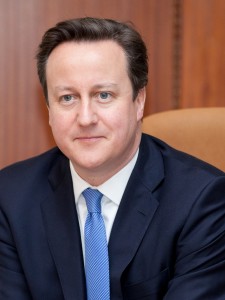
    Below is the text of the speech made by David Cameron, the Prime Minister, in Hamburg, Germany on 12 February 2016.

    Mayor Scholz, it’s a great honour to be here in Hamburg, at this, the oldest feast in the world.

    And it’s also a huge pleasure to be here with my good friend Chancellor Merkel.

    When Angela said she wanted to take me out for dinner in the city where she was born I had no idea she would go to so much trouble.

    In making my first visit to this historic city, let me also pay tribute to a great son of Hamburg.

    Chancellor Helmut Schmidt believed deeply in the Hanseatic tradition of service to others.

    His dedication was an example to us all.

    And he will always be remembered for his leadership in a defining era for Germany and for Europe.

    My first visit to Hamburg also provides an opportunity to celebrate the many historic ties between Britain and this wonderful city.

    Hamburg has the reputation of being Germany’s most British city.

    And it is certainly true that Britain has made its mark here.

    The official representative of the British merchants sat as a guest of honour when these banquets began over 600 years ago.

    And today, at the annual Queen’s Birthday Party, the citizens of Hamburg enjoy British food, British music and – more often than not – British weather.

    And this is just part of a far wider cultural exchange between our countries.

    You gave us Goethe, Handel, and Christmas trees. We gave you Shakespeare, the Beatles and – let’s be frank about it – far too many World Cups!

    You gave us a German to lead the British Museum. And we gave you his British predecessor for the Humboldt Forum.

    And right here in this room, we gave you the gift of King Edward VII’s cup – still in pride of place in front of us today.

    While it could be said that – with the arrival in Britain of the House of Hanover in 1714 – you actually gave us King Edward VII!

    The strongest part of our relationship is our shared values and beliefs.

    We all believe in the importance of trade.

    And that has been the case for centuries.

    Go back to the time of the Hanseatic League.

    And it was the merchants of Hamburg who won the right to sell their wares across England when they were granted a Charter by King Henry III in 1266.

    If you like, they created one of the world’s first trade deals.

    And it is no co-incidence that 750 years on, it is Britain and Germany leading calls for the completion of the world’s biggest trade deal – between Europe and America.

    And just as British trade with Hamburg all those years ago helped to build this very hall, so today just across the River Elbe, is the Airbus factory where German engineers are manufacturing planes with wings made in Britain.

    It is our shared commitment to enterprise that means that time and again at European Council meetings it is Britain and Germany working together, standing up for cutting bureaucracy, standing up for growth and standing up for jobs.

    And it is Britain and Germany – with our belief in sound finances who are at the table arguing that you cannot spend your way out of problems and that you have to deal with your deficits.

    And I am proud of the way that Chancellor Merkel and I worked together to secure that historic deal to cut the European budget in real terms for the first time.

    Because that means lower taxes for our citizens and lower taxes for our businesses too.

    And it is British and German leadership that is driving the co-operation across Europe to enhance our security.

    From leading the sanctions against Russia and Iran, to responding to the crisis in Syria.

    Just last week Chancellor Merkel and I co-hosted the Syria Conference in London, raising over $11 billion – the largest sum ever raised in one day in response to a humanitarian crisis.

    And through the work Chancellor Merkel led to engage Turkey and all our efforts to support the growth of business and jobs across the region, we are ensuring that millions of Syrian refugees have a viable alternative to making that perilous journey to Europe.

    And we are ready to work together again to help the Schengen zone strengthen its external border.

    So whether through trade, enterprise or security co-operation, Britain and Germany are leading the way in Europe – promoting our values and enhancing the prosperity and security of us all.

    So when it comes to the question of Britain’s place in Europe, I have always been confident that together we can secure the reforms that address Britain’s concerns and also work for Europe as a whole.

    Some may say that Britain is sometimes seen as argumentative and rather strong-minded.

    And I make no apology for that. That is who we are.

    We have the character of an island nation – independent, forthright, passionate in defence of our sovereignty – and of institutions that have served us well for many hundreds of years.

    We stood apart when the original Six signed the Treaty of Rome in 1957.

    And the need to protect our sovereignty has always been paramount for us.

    But we are also an open nation.

    That openness drove the decision to join in 1973.

    Just as it drives our approach in so many other ways, including our role in bringing down the Iron Curtain and championing the entry into Europe of countries that lost so many years to communism.

    We have always been a country that reaches out.

    And I never want us to pull up the drawbridge and retreat from the world.

    So when it comes to the question of Britain’s future in Europe, my aim is clear: I want to keep Britain inside a reformed European Union.

    So I have thought hard about the changes that are needed to address the concerns of the British people and I am fighting hard to secure them.

    And I also believe that the changes I am arguing for will help deliver the more competitive, outward-looking, dynamic Europe that Britain and Germany both want to see.

    When Britain says it is time to complete these trade deals, that’s not just good for Britain – it’s good for Germany too.

    When we ask for clear rules for both those in the Euro and those like Britain who are not going to join, again these changes are in our shared interests.

    We need a successful Eurozone – and success for those who choose not to join.

    And when Britain says we need to have a Europe that respects nation states and that says we should be able to run our own welfare systems – those are calls that I believe resonate around Europe.

    So if by working together we can achieve these changes, then I will unequivocally recommend that Britain stays in a reformed European Union on these new terms.

    Of course, if we can’t then I rule nothing out.

    But I believe we can – and if we do, I believe we can win that referendum and that will be good for Britain, good for Germany and good for the whole of Europe.

    Because just as I believe that Britain will be safer and more prosperous in a reformed European Union, so too will Europe benefit from keeping its second largest economy, its largest defence power, a major diplomatic force in the world, and, of course, its second largest financial contributor.

    And let me conclude by saying this.

    Even if we secure the changes I am arguing for, the job will not be done.

    There will be many things that would remain to be reformed, and Britain would continue to stand alongside Germany in leading the way.

    Because at the end of all this, the reason why I believe it is so vital to keep Britain in a reformed European Union is that when I look at the world today and where it is going I am convinced more than ever that we need Britain and Germany working together to shape a European Union that can deliver prosperity and security for us all.

    In a world where some countries claim you can be a great economic success but bypass democracy, restrict the free press and go without the rule of law, we need to stand together, and show that – far from holding our countries back – these things – the free press, the democracy – make us stronger.

    In a world where Russia is invading Ukraine and a rogue nation like North Korea is testing nuclear weapons, we need to stand up to this aggression together – and bring our economic might to bear on those who rip up the rulebook and threaten the safety of our people.

    And in a world where people look at the threat of Islamist extremism and blame poverty or the foreign policy of the West, we need to say: no, it’s about an ideology that is hijacking Islam for its own barbaric purposes and poisoning the minds of young people.

    And just as Europe has faced down dangerous and murderous ideologies in the past.

    So again we must stand together in this, the struggle of our generation.

    We must confront this evil – and we must defeat it.

    Standing together.

    For our values. For our security. For our prosperity.

    That is the Europe that we want to see.

    And that is the Europe that Britain and Germany can deliver, together.

  • Nick Gibb – 2016 Speech on Mathematics

    nickgibb

    Below is the text of the speech made by Nick Gibb, the Schools Minister, at Elmhurst Primary School in London on 11 February 2016.

    It is a delight to be back here at Elmhurst Primary School. During my time as Schools Minister, I have learnt a great deal from both Elmhurst Primary School and your inspiring head Shahed Ahmed, and I have enormous admiration for the academic outcomes that your pupils achieve.

    I’m sure he won’t mind me saying, Shahed and I share a belief in the importance of getting the basics right in primary education, be it phonics, arithmetic or handwriting. But that is not the only thing we share. My sources tell me that in a previous life Shahed, like me, worked as a chartered accountant – though I believe that I lasted a little longer in the profession than Shahed.

    Now, as accountants, we belong to a small minority of people in England for whom it is not socially acceptable to say ‘I can’t do maths’. Sadly, for many others in this country, such a claim is commonplace. It is extraordinary that in a country which produced Charles Babbage and Bletchley Park, a deficiency at mathematics has come to be seen as a defining national feature.

    The idea that maths is something some people can do, and some people cannot, is cognitively untrue for all but a tiny minority of people. It is also of dire consequence for adult’s livelihoods, and our country’s economy.

    According to the international PISA tests carried out every three years by the OECD, 22% of fifteen year olds in this country are functionally innumerate. This means they are unable to carry out simple tasks such as recognising that travelling 4km in 10 minutes means going at the same speed as travelling 2km in 5. Such a record places us well behind countries such as Korea and Singapore, and cities like Hong Kong and Shanghai in China, where the percentage of innumerate 15-year-olds is below 10% in each.

    The PISA survey which produced those results was carried out in 2012. Since then, the situation may, perhaps, have been changing for the better. Today, I want to celebrate a renaissance in mathematics teaching that is taking place in our schools. Currently happening on a small scale, it has the potential to revolutionise the teaching of the subject in this country.

    Elmhurst Primary School’s fantastic results, where 60% of pupils last year achieved a level 5 or above in their key stage 2 mathematics – is an example of the excellent standards English schools can achieve. Due to its strong track record on mathematics, Elmhurst was made one of England’s 35 maths hubs in 2014. The maths hubs have been funded by the Department for Education to disseminate expert mathematics teaching throughout this country’s schools.

    In particular, teachers at maths hubs are finding out what we can learn from international leaders, such as Singapore and Shanghai. Over the past 2 years, the maths hubs have arranged for 127 teachers from Shanghai to teach in English schools for 3 weeks, and 131 teachers from England to teach in Shanghai.

    Through visiting maths hubs and talking to their teachers, I have been consistently impressed by how positively teachers are engaging in this project. The Maths Hub programme will continue into 2016 to 2017 and hub budgets will be confirmed in March 2016.

    One of the most inspiring teachers I have met since becoming Schools Minster is Bruno Reddy. As head of mathematics, he helped found King Solomon’s Academy in 2009. As a maths specialism school, it developed a mathematics curriculum which focuses on depth of understanding before breadth of study. In the school’s most recent results, 82% of its pupils gained a GCSE in mathematics at B or above, and 95% at C or above – an astonishing achievement for any school, let alone an inner-city school with a proportion of disadvantaged pupils around 3 times the national average.

    At A level, pupils appear to be gaining, not losing, an enthusiasm for mathematics. Due in part to this government’s emphasis on the importance of STEM subjects, there has been, since 2010, a 15% increase in pupil entries for physics, an 18% increase in pupil entries for maths, and a 27% increase in pupil entries for further maths.

    2014 saw the opening of the Kings College London Maths School in Lambeth, a small free school for sixth formers where all of the pupils study mathematics, further mathematics and physics. This summer, the school reported that 72% of pupils attained AAB or better, and 97% of pupils attained an A-grade in mathematics. Such exemplar schools show what can be achieved by pupils in this country. The challenge now is making sure that the approach to mathematics that characterises the best of our schools, can spread to the rest of our schools.

    I do not believe that outcomes in mathematics are low for many pupils in this country because of bad teachers, or bad schools, or bad parents. Where pupil outcomes are low, I believe it is because of bad ideas.

    What ideas am I talking about? I am talking about the idea that sustained practice is too boring to engage pupils. I am talking about the idea that teacher led instruction and worked examples in mathematics are passive. I am talking about the idea that memorising your multiplication tables is antiquated in the age of the smart phone. For half a century, these ideas have been propagated by a romantic belief that the discipline can be taken out of mathematics, and the learning can remain. But as our best schools know, this is not possible. Memory, testing and teacher instruction are all vital components for success in the subject.

    Take the last example – multiplication tables. This government has pledged to introduce a computerised multiplication check for all year 6 pupils at the end of primary school. The announcement was received positively by many parents and teachers. But some influential voices within education remain opposed.

    One English educationist, now residing at an American university, appeared in the TES in December arguing she would ‘ban’ times table tests, and told the Telegraph that they have nothing to do with mathematics. Earlier last year, Conrad Wolfman wrote in the Financial Times that calculation is an ‘obsolete skill’, thanks to technological advances of the 21st century.

    That last comment reminded me of an influential pamphlet about the future of mathematics entitled ‘I do, and I understand’, which suggests that in the age of the computer and the ‘simple calculating machine’, mental arithmetic has become a thing of the past. That pamphlet was written in 1967. Its romantic view was wrong then, and it is wrong today.

    Five decades of research by cognitive psychologists, as reviewed by the American psychologists James Royer and Loel Tronsky, shows that there is a positive relationship between computational automaticity and complex mathematical problems solving skills.

    For example, a 2001 study gave 200 American pupils aged 7 to 11 a battery of tests assessing basic skills, followed by a mathematics test involving complex problem solving. Speed at basic arithmetic in 4th grade still had a small but statistically significant relationship with complex problem solving ability 1 year later, when controlling for a child’s verbal IQ, processing speech, and reading ability.

    In 2013, a controlled trial was carried out where 195 first grade pupils in America who were struggling with mathematics were given 16 weeks of specific tutoring where they practiced simple sums. The pupils were then tested on areas such as word problems, arithmetic and 2-digit calculations. Compared to the control group who received no such tutoring, these pupils had a statistically signification improvement in all 4 areas tested. Revealingly, those children who practised simple sums in timed conditions using flashcards, improved even further, showing that repeated practice aids memory.

    And there is absolutely no reason why such practice has to be dull and dispiriting. Just look at the ‘Rolling Numbers’ chants developed at inner-city American charter schools to learn multiplication tables, or the wildly successful Times Tables Rock Starts programme developed by Bruno Reddy. You will see children delighted with the sense of achievement which comes from mastering mathematical knowledge.

    Of course, mathematics is not limited to number knowledge, just as reading is not limited to decoding words. Memorising sums and times tables is simply an important gateway for achieving the far more valuable prize of conceptual understanding in mathematics. When your working memory is freed of having to make simple calculations, it can think more fully about the conceptual underpinnings of a problem. As the American cognitive scientist Daniel Willingham has written, ‘This automatic retrieval of basic math facts is critical to solving complex problems, because complex problems have simpler problems embedded in them.’

    A lovely example of this was provided by the mathematician Hung-Hsi Wu, in the magazine American Educator. Being able to carry out long division can open the door of understanding as to why some fractions, such as one third, are repeating decimals. You keep on dividing, and you keep on getting 3!

    A large body of evidence from cognitive scientists demonstrates that knowledge and understanding in mathematics proceed in tandem, and should be taught together. This insight is well understood by mathematics teachers in the Far East.

    I have been most impressed by the focus teachers from Singapore and Shanghai place, not just on basic skills, but also on developing clear conceptual understanding. From the maths hubs, I have learnt about the importance of using real life illustrations of mathematical problems to give pupils a clear understanding of the concepts that underlie procedures. Lessons move from concrete examples, to pictorial examples, to abstract procedures. From sharing biscuits, to dividing up a shape, to simple division – as an example.

    And a huge amount of thought goes into finding examples which will resonate with pupils. One teacher joked with me that whilst household pets may be an excellent analogy for gathering like terms, it is much better to discuss splitting a journey along a road into thirds, than a kitten.

    Crucially, the knowledge, examples and questions which underlie successful teaching in the Far East are embodied in a detailed curriculum, and high quality resources. An enormous amount of thought and care goes into the construction of mathematics textbooks in Shanghai and Singapore, planning in great detail every step of the algorithm or calculation. No pupil’s understanding is left to chance or accident: every step of a lesson is deliberate, purposeful and precise.

    It is revealing that, according to the 2011 TIMSS international survey, 70% of Singaporean pupils in year 5 are taught by teachers who use textbooks as a basis for instruction in lessons. In England, that figure was 10%.

    This is not to say that the common curriculum and textbooks in the Far East constrain teacher creativity. Quite the opposite: high quality resources provide a foundation upon which creative and imaginative teaching can be built. I am delighted that England’s maths hubs are currently trialling 2 English adaptations of Singapore mathematics textbooks, entitled ‘Maths No Problem’ and ‘Inspire Maths’.

    In addition, Shanghai teaching methods depend upon whole class instruction from the teacher. As Charlie Stripp from the National Centre for the Excellence in the Teaching of Mathematics has observed, this does not mean reducing pupils to being passive recipients, as some caricatures of Chinese teaching suggest. Shanghai teaching is teacher-led, but not teacher-dominated, with constant questioning and interaction between the teacher and the class.

    In 2014, a fascinating piece of research was published by Professor David Reynolds of Southampton University, and his Chinese postgraduate research student Zhenzhen Miao. They videoed lessons in both countries, to find out what teaching methods were being used to such great success in the Chinese classroom. The answer was clear: in Chinese classrooms, interactive whole-class teaching made up 72% of lesson time, compared with only 24% of lesson time in England. In England, almost half of the time – 47% – was used up on pupils working individually or in groups, compared with only 28% of the time in China.

    But perhaps most importantly of all, Shanghai mathematics teaching is based upon the principle that, if taught well, all pupils can master the content of a lesson. Differentiated teaching is not common in Shanghai, as it reinforces the performance gap between pupils. Across the OECD as a whole, the use of differentiating by ability whilst teaching has a negative relationship with pupil outcomes – an insight provided by the maths teacher and education blogger Greg Ashman.

    There appears to be no conception in Shanghai that some pupils can ‘do’ mathematics, whilst others cannot. Instead, the focus is on all pupils mastering a concept before moving to the next part of the curriculum sequence, allowing no pupil to be left behind.

    The benefits of a good understanding of mathematics for pupils’ life outcomes are unarguable. The phrase ‘I am not good at maths’ should be banished from English schools, as it implies current difficulties are fixed within a child, suggesting that there is no hope of these difficulties being overcome.

    The way that we are going to improve maths in this country is simple: improved curriculum, quality resources, and better teaching methods.

    I am delighted to be here today to open the new building at a maths hub which is leading the way in these developments. Through Shahed’s travels to Shanghai, and Elmhurst Primary School’s involvement as a maths hub, this school is an inspiring example of how we can learn from international best practice.

    I hope that where Elmhurst Primary School leads, the rest of this country will follow. If so, we may one day have a country where mass innumeracy is a thing of the past, and all pupils – not just the future accountants – know they have it within them to ‘do maths’.

  • Theresa Villiers – 2016 Speech on Northern Ireland

    Below is the text of the speech made by Theresa Villiers, the Secretary of State for Northern Ireland, at Ulster University in Belfast on 11 February 2016.

    This morning I want to talk about this Government’s approach to the past, and set out our proposed way forward on delivering the legacy bodies in the Stormont House Agreement.

    It is evident that for many people in today’s Northern Ireland, the legacy of the past continues to cast a very dark shadow over the present.

    And it’s not hard to see why.

    Over the period of the so-called Troubles, broadly speaking from 1968 to 1998, over 3,500 people were killed, mostly, though not all, here in Northern Ireland.

    Thousands more were maimed or injured.

    Businesses and livelihoods were destroyed, pre-existing sectarian divisions were deepened and entrenched.

    Widespread disruption, either as a result of terrorist activity or the security presence needed to counter it, was a daily fact of life.

    And of course of those who might not have suffered physically, many still carry the mental scars of what happened.

    Bearing in mind that for much of this period the population of Northern Ireland was around 1.5 million, it follows that a large proportion of those living here were directly touched by the Troubles.

    And even those not directly affected themselves will invariably know someone who was.

    So I never underestimate the continuing impact of the Troubles today, not just on individuals, but also on society more widely.

    For all that’s been achieved in moving Northern Ireland forward, public housing and education is still very segregated, interface barriers loom over many streets, and disputes over flags and parades retain the capacity to spill over into serious public disorder.

    Moreover the costs of division are an additional financial burden on an already stretched public purse.

    So as the representative of the sovereign Government here I am acutely aware that we have a responsibility to do all that we can to tackle the legacy of the past in this part of the United Kingdom.

    The Government fully recognises that it will be much more difficult to achieve our objective of building a genuinely shared future for everyone in Northern Ireland unless and until we can find some way of coming to terms with a divided past.

    Of course people’s opinions on the past will always differ sharply, shaped by their own background and experiences.

    It is not an area where we can ever achieve a consensus view on what happened, though we might at least be able to come to some common understanding of key facts through initiatives like the historical timeline project envisaged in the Stormont House Agreement.

    For the record I want to set out the position of this UK Government.

    The first and most fundamental point is this.

    In our view terrorism was wholly wrong.

    It was never and could never be justified,from whichever side it came, republican or loyalist.

    No injustice, perceived or otherwise, warranted the violent actions of the paramilitary groups.

    The terrorist campaigns caused untold misery and suffering.

    And we will never agree with a version of history that seeks to legitimise them.

    We wholly reject any suggestion of equivalence between the security forces and those who carried out acts of terrorism.

    And I believe that there is a real risk that those who seek to justify the terrorist violence of the past risk giving a spurious legitimacy to the terrorist violence of the present.

    Ultimately, of course, terrorism did not succeed here.

    And I believe there were three main reasons for that.

    First, there was the sheer resilience of the people of Northern Ireland, supported by the overwhelming majority of citizens throughout these islands.

    In this I include those involved in politics, business, and wider society who even in the darkest days, and often at great personal risk, helped to hold this place together.

    Second, there was the insistence of successive UK Governments that the future of Northern Ireland would only ever be determined by democracy, and never by violence.

    The consent principle enshrined in the 1993 Downing Street Declaration which went on to form such a key part of the 1998 Belfast Agreement.

    And third, there was the remarkable dedication, professionalism and courage of the Royal Ulster Constabulary and the Armed Forces.

    Over 1,000 members of the security forces lost their lives over the period of Operation Banner – the longest continuous military deployment in our country’s history.

    Around 7000 awards for bravery were made and, quite simply without the dedication of the security forces to keeping people here safe, the circumstances that enabled the peace process to take root would never have happened.

    Yet today we face a pernicious counter narrative.

    It is a version of the Troubles that seeks to displace responsibility from the people who perpetrated acts of terrorism and place the State at the heart of nearly every atrocity and murder that took place – be it through allegations of collusion,misuse of agents and informers or other forms of unlawful activity.

    For some, every allegation of wrongdoing by the State – or those working for it – is treated as fact,however unsubstantiated or whatever the source, and whatever the consequential distress to victims.

    Let me be clear.

    I am not going to say that over a period of thirty years there were no instances where members of the police and armed services fell below the high standards we expect of them.

    Sadly we know that there are some truly shocking instances where they fell drastically short of those standards.

    That includes the appalling murder of Patrick Finucane, the anniversary of whose death takes place tomorrow.

    And like the Prime Minister I will never seek to defend the security forces by defending the indefensible.

    Where there is evidence of wrongdoing it will be pursued. Everyone is subject to the rule of law.

    Yet we need to be mindful of the context in which the security forces were operating.

    While we will always judge our security forces against the highest standards of integrity and professionalism, both then and now, we do need to recognise that policing practice and methodology has changed radically over the intervening years, right across the UK.

    We should therefore be wary of expecting modern investigatory practices to have been applied in past decades, lest we become guilty of historical anachronism.

    We should also be conscious that gathering and assessing intelligence is not, and never will be, an exact science.

    It varies greatly in quality, clarity and reliability.

    Assessing its credibility can frequently involve finely balanced judgements.

    What might seem to have a certain meaning with hindsight, at the time could well have been just one of a long list of conflicting and vague reports all pointing in different directions.

    As a government, we have been more forthcoming than any of our predecessors in accepting where the State has failed to live to the highest standards, and in apologising where that is the right thing to do.

    The Prime Minister’s ground-breaking statement on Bloody Sunday is the most obvious example of that, but it’s not the only case.

    We also issued full and clear apologies in the Patrick Finucane and Claudy cases.

    And where it is warranted we will continue to do this.

    But to suggest that misconduct by the police and our Armed Forces was somehow rife or endemic is, in the view of this Government, a deliberate distortion and a narrative of the Troubles that is not justified by the facts.

    Of all the deaths that occurred during the Troubles, 60 per cent were caused by republican groupings, 30 per cent by loyalists, and 10 per cent by the State.

    I don’t for one moment dismiss the scale of the tragedy which that 10 per cent involves.

    It includes many terrible losses for which families still grieve to this day.

    But over 250,000 men and women served in the RUC and the Armed Forces in Northern Ireland during the Troubles.

    I am convinced that in the vast, vast majority of cases they carried out their duties with exemplary professionalism, fully within the law.

    Remember this.

    It wasn’t the RUC or the Army who planted the bombs at La Mon, Enniskillen, or the Shankill, or pulled the triggers at Loughinisland or Greysteel.

    But it was the RUC and the Army who, often at great personal danger , foiled countless terrorist plots and attacks and in doing so saved hundreds of lives.

    So as we said in our manifesto we will always salute the RUC and our Armed Forces for the role they played and the sacrifice they made.

    We will never forget the debt of gratitude that we owe them.

    Today of course Northern Ireland is a very different place.

    While we continue to face a severe and lethal threat from dissident groupings, the overall security situation has been transformed.

    We have inclusive, power sharing devolved government, with parties taking their place in the executive as of right and according to their mandate.

    Because of the Stormont House and Fresh Start Agreements I believe devolution is now on a more secure and stable footing than for some time.

    Thanks to the UK Government’s long term economic plan, and to the hard work of the people of Northern Ireland and the Executive they elect, the economy is growing and unemployment is falling.

    But as I said at the outset of my speech, legacy issues have a continuing capacity to disrupt that hard won political progress.

    There is a pressing need to make progress because it is clear that the current structures for dealing with legacy cases are not working as they should.

    They are not working for victims and survivors – as I know at first hand from my many meetings with their representatives.

    They currently focus disproportionately on cases where the State was involved or alleged to be involved, leaving families in other cases feeling overlooked and disregarded.

    And the legal aid bill continues to grow, diverting resources which could be used for policing the present rather than the past.

    I fully understand the concern felt about delays in the inquest system and would emphasise that the UK government and its agencies and the PSNI are working hard to fulfil the disclosure requirements placed on us.

    I do not accept the argument that the problems with inquests stem from lack of commitment on the part of the Government or the police.

    The PSNI holds over 9 million documents relating to the Troubles and they and the MoD have between them disclosed thousands of documents through inquests and other legal processes.

    Rather, it’s a simple fact that the current system was never designed to cope with a large number of highly complex and sometimes linked cases involving very sensitive information.

    So we will continue to seek a workable reform of the system of legacy inquests.

    I understand the concern felt about resources and if reforms go forward, of course the UK Government would look very seriously at whether some of the Stormont House legacy funding could be released early to support inquests.

    But even the problems with inquests are tackled, it is clear that additional mechanisms are needed.

    So we are committed to establishing the legacy bodies set out in the Stormont House Agreement – the Historical Investigations Unit, the Independent Commission on Information Retrieval and the Implementation and Reconciliation Group, along with the Oral History Archive and the Historical Timeline project.

    We have an express manifesto commitment to deliver them.

    And in our view, they offer the best way forward if we are to achieve better outcomes for victims and survivors, the people who suffered more than anyone else as a result of the Troubles.

    They also come with an additional £150 million of funding from the UK Government – just one part of the financial packages supporting the Stormont House and Fresh Start Agreements which give the Executive around £2.5 billion in extra spending power to reflect the unique circumstances faced by Northern Ireland.

    So the Government shares the widespread disappointment felt that the Fresh Start talks last year were unable to deliver the new structures set out in the Stormont House Agreement.

    And today I re-affirm the Government’s determination to do all that we can to remedy that -working with victims’ groups,with the Northern Ireland parties and with the Irish Government on seeking a way forward.

    In fact this Government has taken this issue further forward than any of our predecessors.

    Very significant progress was made in both sets of cross party talks thanks to the hard work of the participants, including dedicated input from Charlie Flanagan and the Irish Government.

    I believe we are closer than ever before to finding a way forward.

    We have listened very carefully to those who fear that any new bodies will have a disproportionate focus on the State and the security forces, and others who fear they might not be independent enough.

    So we would write into legislation in the clearest terms the requirement that these bodies are under an obligation to carry out their functions in ways that are fair, equitable, balanced, proportionate and transparent.

    We have sought to remove the politics from sensitive appointments – for example the director of the Historical Investigations Unit.

    And, crucially, any legislation we bring forward will make absolutely clear that there will be no amnesties or immunity from prosecution.

    This Government believes in the rule of law – and we will not countenance amnesties.

    And although the cross party talks did not result in sufficient consensus to enable legislation to be introduced, we did establish common ground between the participants on a significant number of important questions.

    The most difficult outstanding issue relates to how the Government fulfils its duty to protect national security.

    I accept that for some this is a loaded term.

    But what it means in practice is the Government’s duty to protect its citizens from harm.

    As the text of Stormont House Agreement recognises, it is the Government’s duty to keep people safe and secure, and to ensure no individuals are put at risk.

    All the participants accept that this vital responsibility must be upheld.

    The remaining issue is how best to do so, and how any necessary decisions can be reviewed and appealed.

    National security is not an open-ended concept which can be used to suppress information about whatever actions the State does not want to see the light of day.

    In fact, as I have said, over recent years the State and its security forces have already disclosed several thousand of documents on Northern Ireland’s Troubles.

    During the talks, I listened carefully to those who were worried that the UK government might misuse its powers relating to national security.

    And we agreed that the Government and its agencies would give full disclosure of all relevant documents to the HIU without any redactions – that is everything – all we have which relates to the cases HIU will investigate.

    The dispute is not about whether the HIU will have access to all the information it needs, It will.

    The dispute is about onward disclosure from the HIU.

    And it is an inescapable fact that there is information which would put lives at risk if it were put into the public domain.

    There are notorious examples of where people accused of being informants have been hunted down and murdered.

    I do not want to be explaining to inquests in years to come why I failed to protect the information which led to more such tragedies in the future.

    And there are techniques and capabilities available to our security services that if known would be of value to terrorists.

    That’s not just violent dissidents in Northern Ireland, but also Islamist terrorists who want to attack our whole way of life.

    No responsible government could allow this to happen, and we must retain the power to prevent it.

    This has led some to assume that the Government will be constantly seeking to block the onward disclosure by the HIU of information to victims’ families and the public.

    This is simply not the case.

    The fact that disclosure of information may be embarrassing or difficult is not a justification to withholding it and no one is suggesting that it should be.

    In order to offer re-assurance we stretched ourselves during the talks and offered a significant compromise.

    I was able to agree with Government colleagues that where material or information is withheld on national security grounds, families would be told this.

    And then they or the HIU director would be given an automatic right to challenge it in the High Court.

    We believe this to be both fair and reasonable.

    Anyone who doubts the independence of the High Court should consider the regularity with which it rules against the UK government.

    So I would like to conclude my speech on a note of optimism.

    I do not believe that the remaining differences which exist in relation to establishing the new legacy bodies are insurmountable.

    That is why I am determined to do all I can to resolve them as soon as possible.

    We owe victims and survivors nothing less.

    I’m not for a moment suggesting that the new structures will be perfect, or that they will provide all of the answers to all of the questions posed by victims and survivors.

    Unfortunately there is no set of proposals which could ever deliver that or make up for even a fraction of the pain and loss suffered over the thirty years of the Troubles.

    But I am confident that they will be a significant improvement on what we have now.

    For that reason I believe that they are worth pursuing – as part of our commitment to do more for victims and survivors, and as part of our broader commitment . As a One Nation government dedicated to bringing our country together, to build a more stable, peaceful and prosperous Northern Ireland and create a brighter, more secure future for everyone who lives here.

  • Lord Bourne – 2016 Speech on Investing in Green Innovation

    lordbourne

    Below is the text of the speech made by Lord Bourne, the Parliamentary Under Secretary of State for Climate Change, on 11 February 2016.

    It is fantastic to be with you today at Cleantech Innovate.

    I am really pleased to be partnering here with the Swiss Federal Office of Energy.

    And Doris Leuthard the Swiss Government Minister for Energy and Climate Change, will be giving her own perspective on cleantech innovation immediately after me.

    This fourth London showcase event promises to be a real celebration of ground-breaking, green innovation.

    How fitting that it is taking place at the Royal Institution, where so many pioneering, great British scientists made their own historical, ground-breaking discoveries that ‘changed the world’:

    – Michael Faraday, with his advances in steel alloys, electro-magnetism and electricity,

    – Humphry Davy and his pioneering work, including on optical glass and the miners’ safety lamp

    – And John Tyndall, who identified the ‘greenhouse effect’, so significant in a world that faces the biggest change of them all – global climate change.

    Why green innovation is crucial

    Modern day innovators need to make their own ground-breaking discoveries to tackle climate change, and in my Ministerial role I have already seen impressive progress, including the ‘SPECIFIC’ project near Port Talbot.

    Work being done there – by Swansea University’s Innovation and Knowledge Centre – is developing functional coated steel and glass products.

    These can improve the energy performance of buildings and even build a surplus, turning them into mini power stations.

    Potentially a disruptive technology break through, and the very innovation we need to tackle the status quo and the challenge of climate change.

    Paris

    That is why the deal secured in Paris in December was so important.

    For the first time ever the world committed to work together to limit global temperature rises, to avoid the worst impacts of climate change.

    The outcome of Paris certainly gives a strong signal for investment in green innovation.

    And other initiatives are reinforcing that message.

    The Prime Minister joined 19 other world leaders to launch ‘Mission Innovation’ in Paris.

    All 20 member nations of Mission Innovation pledged to double clean energy research and development investment over 5 years.

    Doubling our investment means the UK public sector as a whole will spend over four hundred million pounds in 2020/2021 on clean energy R&D.

    What is being done to invest in green innovation?

    DECC and Innovate UK

    As part of that commitment, DECC will double our 5-year budget for clean energy research, development and demonstration.

    Our new innovation programme will be worth over five hundred million pounds.

    Our investment will stimulate and leverage private sector investment in the most promising technologies and systems.

    And our investment in new ideas will go hand-in-hand with breaking down barriers to market entry, creating the right environment for innovation and helping new ideas flourish.

    Others in the public sector are also investing in green innovation. Innovate UK – fellow sponsors of today’s event – will be introducing new finance products to support companies to innovate.

    These products will replace some grants, and will be worth one hundred and sixty five million pounds by 2019-20 – across a range of innovation activities, including energy.

    Wider UK Government

    Our public sector innovation partners are working with us, investing in green, innovative technologies that will take-off at scale, bring about system change, and bring down costs.

    But we must also use public money wisely and invest where we can make a difference – remembering that subsidy should be short-term, not for ever.

    We know we do not have all the low carbon innovation answers, yet we must develop technologies that are both cheap and green.

    We know prices can fall from the examples of onshore wind power and solar. We must aim for a balance between supporting new technologies and being tough on subsidies, to keep bills as low as possible.

    For those reasons, we are looking to enhance the way public sector organisations supporting green innovation work together, sharing resources and expertise and refining our existing shared evidence base.

    Prioritising technology support

    DECC has already used evidence to choose technology areas we will support, that we can make work at scale. Progress that was made on energy technologies in the past – such as nuclear here, and shale gas in America – did not happen by accident.

    Spending on energy research and development needs to be better targeted; and we need to be tough on how we spend it – on areas that will help the UK.

    So we are targeting offshore wind and nuclear. We are world leaders in both these areas, and globally we can make a lasting technological contribution.

    On current plans, we expect to see 10GW of offshore wind installed by 2020.

    This is supporting a growing installation, development and blade manufacturing industry, with around 14,000 people employed in the sector.

    For nuclear, too, our expertise is already world leading.

    But innovative new technologies could offer energy security and economic benefits – such as small modular reactors.

    These are small nuclear power stations – up to 300 megawatts in size – that could be factory-made in the UK.

    Each one could supply the total annual electricity needs of around 500,000 households.

    A detailed study currently taking place will help assess these benefits.

    From DECC’s five hundred million innovation budget, we have set aside two hundred and fifty million pounds to invest in nuclear innovation in general, including small modular reactors.

    We will ensure that our clean energy technology priorities fit with our wider Departmental goals on decarbonisation, smart systems, heat in homes and in industry, and energy efficiency.

    And they will fit with our top priorities of keeping the lights on, keeping bills low, and reducing emissions in the most cost effective way.

    Innovation in energy

    It is becoming increasingly clear that investing in green innovation is crucial and cross-cutting right across the energy agenda. From community energy, biogas, hydrogen and heat pumps, to digital platforms and demand side response and storage.

    Not only is green innovation in energy technologies vital, but so are radical new models or business ideas, and price-lowering competition and novel approaches in the energy markets.

    Such as Moixa Technology’s Maslow Energy Storage System – supported by DECC’s Energy Storage Demonstrator.

    This is a platform for smart control of distributed battery energy storage for homes and offices.

    It stores spare solar or night-time electricity to reduce peak demand and costs – giving user cost savings, but also bringing grid benefits.

    Cleantech Innovate

    The list of 36 finalists presenting here later today is equally impressive.

    As is the engagement in this area of all attending Cleantech Innovate – whether you are inventors, entrepreneurs, investors or related service providers. Just by being here you are ‘investing’ your time and commitment in this important area.

    Let’s not forget that one of the aims of today is to give investors exclusive access to innovators building fast-growth commercial green solutions.

    We can build upon the UK’s success in green innovation investment.

    Cleantech Clusters

    The UK already has Europe’s largest cleantech innovation cluster, incubating green technology business start-ups.

    And cleantech clusters are particularly clever at capitalising on innovation through collaboration.

    Collaboration will become increasingly important, both within the UK and beyond these shores.

    We are not alone in transforming our energy system.

    The scale of the challenge faced to develop new and improved technologies for low carbon transition, is larger than any single country’s budget can afford.

    Horizon 2020

    In Europe, Horizon 2020, the EU’s Research and Innovation funding Programme, has a budget of around €6billion for energy innovation between 2014 and 2020.

    Despite strong competition, provisional results for 2015 indicate that UK organisations have been allocated €85m, the second largest share of 40 countries at 15% of the budget. A great result for the UK.

    We now need to build on this success. For 2016, there is around €340m available in the current Horizon 2020 Energy Call. Let’s make sure UK innovators obtain a good share of this and its future business opportunities.

    Our Swiss fellow sponsors of this event are also actively looking for collaboration opportunities. I know that some Swiss and British innovators met up yesterday to look for links and synergies between their work. And we are keen for collaboration to deliver for both our countries.

    Worldwide investment

    But UK and European investment in green innovation is not enough on its own.

    We need to leverage worldwide investment through existing and new international initiatives, for mutual benefit – and we hope UK innovators will be a part of this.

    Through international collaboration, risks can be shared; new knowledge, skills, research facilities and funding can be accessed; and new business networks developed.

    Mission Innovation, which I mentioned earlier, is an exciting new opportunity to stimulate increased investment – both from the public and the private sectors.

    Conclusion

    Increased investment in green innovation is absolutely critical. The International Energy Agency recently stated that:

    “Innovation support for technologies across all energy sectors provides the greatest potential to keep the 2 degree climate goal achievable.”

    So, in conclusion, thank you for what you are already doing – learning by linking up, collaborating together, engaging internationally – but most of all, please carry on investing in green innovation – your involvement really does have the power to change and transform our world.

  • Andrew Jones – 2016 Speech on Buses

    andrewjones

    Below is the text of the speech made by Andrew Jones, the Parliamentary Under Secretary of State for Transport, at the Queen Elizabeth II Conference Centre in London on 11 February 2016.

    Introduction

    It’s a real pleasure to open the Transport Times UK Bus Summit 2016.

    I’m really grateful to the Transport Times for running the event and to everyone here for coming.

    I’ve chosen as my topic this morning (11 February 2016) the government’s forthcoming Buses Bill.

    I want to set out clearly, and in more detail than the government has done before, why we are introducing a Buses Bill, what the bill will do, and what we expect to change as a result.

    Context and aim of the bill

    But first, I would like to provide some context.

    In preparing this bill, we have one clear aim, which is this: to increase bus passenger numbers.

    Buses help people get to the shops and to work, boosting our economy.

    Buses enable people to visit friends and family, providing great social benefits.

    And buses can reduce congestion and air pollution, offering great benefits to our environment.

    So it is a matter of concern that over the years there has been a general decline in passenger numbers. And it explains the overriding aim of our bill; to get more people using buses.

    What the bill will not do

    But second, I would also like to dispel a few misconceptions by setting out what the bill will not do.

    The bill will not impose any particular arrangement on local authorities or on bus operators.

    Neither will the bill give local authorities new powers to take bus operators’ assets, such as vehicles or land.

    Oversight of anti-competitive behaviour will be left to the Competition and Markets Authority — exactly where oversight lies at the moment.

    And nor does the bill impose wholesale re-regulation.

    Instead, the Buses Bill is an enabling bill.

    It gives local authorities new choices.

    Choices about how they can improve bus services in the interests of their residents, and, I believe, in the long-term interest of the bus industry too.

    So, why are we introducing a Buses Bill?

    After all, the government is plainly on the side of free enterprise.

    We are in favour of cutting red tape, and giving the private sector the space it needs to grow.

    And there’s so much about today’s de-regulated bus industry that works well.

    The latest Transport Focus survey shows that nearly 9 out of 10 customers are satisfied with their bus services. In my own area I can see good practice, with Transdev launching new state-of-the-art buses on route 36 between Leeds, Harrogate and Rippon.

    At the same time, a challenger operator — Connexions buses — is pioneering new routes and reaching new markets.

    Across the country, commercial operators are introducing smart cards, installing Wi-Fi, co-ordinating timetables, and making great strides in improving accessibility — 89% of buses comply with accessibility standards, and we are on track for virtually 100%.

    All this progress is down to operators taking decisions in the interests of their passengers.

    It shows that the de-regulation of the industry has been a success.

    But it would be wrong to pretend that there’s no room for improvement.

    We only have to look to the streets outside this building to see how, in some circumstances, things can be done differently.

    And just as in London, passengers right across the country want Oyster-style ticketing, better access to information about timetables, better information on fares before they travel, and real-time data about when the bus is going to arrive at their stop.

    There are many other opportunities for improvement, too.

    To make sure that bus routes reflect and support local economic development, such as new housing, and new business parks.

    As things stand, areas that want these improvements have a choice.

    They can enter into voluntary partnerships with bus operators.

    They can agree quality partnerships, which have the backing of law.

    Or they can propose quality contracts, under which local authorities take on responsibility for services. But each of these choices have drawbacks.

    Voluntary arrangements are only as good as the personal relationships between those involved.

    Statutory partnerships force local authorities, by law, to spend public money on new infrastructure, even when everyone agrees it isn’t needed.

    While the quality contract scheme process — introduced in 2000 — has proved more time consuming, costly and challenging than anybody could ever have imagined.

    So we believe there’s room for some additional choices.

    Choices that keep the best features of a de-regulated market, but that give local areas greater say over bus services.

    What the bill will include — open data

    So, first, our bill will address passengers’ need for better information.

    It is in everyone’s interests for people to know as much as possible about the bus services in their area. So our proposal is that all operators will be required to make data about routes, fares and times open and accessible.

    It will allow app makers to develop products that passengers can use to plan their journeys, and give people the confidence to leave the car at home and take the bus instead.

    What the bill will include — new partnerships

    Second, the bill will introduce new arrangements for local authorities and bus operators to enter into partnership.

    We will remove the requirement that a quality partnership scheme must always involve new infrastructure. And we will introduce new, enhanced, partnerships that allow local authorities and bus operators to agree their own standards for all services in their area — perhaps focusing on frequency and reliability along a particular route or transport corridor, or setting emissions standards to improve local air quality, or introducing common branding, marketing and ticketing rules over a wider geographical area.

    In this way, the bill will build on the strengths of existing partnership arrangements while addressing their weaknesses, including the weakness that allows a small minority of operators to block improvements that have been agreed by the majority.

    This new partnership approach won’t be right for every area. In many cases it may be better to leave things just as they are. For those cases, our message will be — if it isn’t broken, don’t fix it. The status quo is acceptable too.

    Yet sometimes there will be a case for more radical change. For example, some of the things that Londoners have come to expect can be difficult to deliver in a fully de-regulated bus market, such as a single fare structure across different operators and transport modes.

    What the bill will include — franchising

    So the bill will honour our devolution deal commitments to give local authorities the choice to use new powers to franchise bus services in their areas.

    I want to keep the good parts of the quality contract scheme process, which at least forces people to think things through properly, but I want to lose the parts which don’t work, such as the excessive cost, the bureaucracy and the second-guessing.

    The decision to take up those powers will for local areas to make.

    Local areas will need clear arrangements for ensuring the powers are used accountably, the capability to meet their promises to passengers, and a system that does not disadvantage bus services that cross local authority boundaries.

    Operators will need to play their part too.

    This will an important decision for local areas to make, and it must be made on the basis of solid information, provided in a timely way.

    We certainly do not foresee a one-size-fits-all approach in every area.

    Some local authorities may want to introduce newly-integrated, uniformly branded networks of services just as you see in London.

    Others will just want to build and improve on what’s already there.

    Whatever approach is chosen — and that will be a local decision — we want to ensure that bus operators and the wider supply chain have as much notice of change as possible.

    And that the effects on small operators are considered properly.

    In every case, local authorities will need to work closely with the operators in their area to manage the process in the best interest of passengers, particularly during periods of transition which will need to be handled with care.

    Conclusion

    So in conclusion, I hope that’s given everyone plenty to talk about.

    I can’t yet tell you exactly when the bill will be introduced into Parliament, save to say that the finest minds are working on it and you will see it very soon.

    We are hoping for Royal Assent by early next year.

    But we are certainly not at the end of the road just yet.

    Everything in the bill will be subject to Parliamentary scrutiny.

    And it won’t become law until Parliament is satisfied.

    So there’s plenty of opportunity to shape the content.

    And I look forward to much debate and discussion in the months ahead.

    Thank you.

  • Justine Greening – 2016 Statement on Situation in Madaya

    justinegreening

    Below is the text of the speech made by Justine Greening, the Secretary of State for International Development, in London on 11 January 2016.

    I am grateful to the honourable Lady and to you, Mr Speaker, for the chance to discuss this important matter today.

    No-one who has seen the pictures coming out of Madaya can say it’s anything other than utterly appalling.

    This atrocious situation is deliberate and man-made. The Assad regime has besieged the town since July, causing horrific suffering and starvation.

    I should remind the House that the UK has been at the forefront of global efforts to help people suffering inside Syria from day one, day in day out, for the last 4 years.

    The House will be aware that a humanitarian convoy is delivering enough food to all those in Madaya for the next month. The aid on this convoy is UK funded.

    We have allocated £561 million to help people specifically inside Syria. This is partly delivered out of Damascus – which is around 40km from Madaya – with the consent of the regime, as well as across borders from neighbouring countries without regime consent.

    This sits alongside all the work the UK is doing to help Syrian refugees across the region. Our overall response of £1.12 billion for Syria and the region represents our largest ever response to a single humanitarian crisis and makes us the second largest donor after the US.

    We lobbied hard for UN Security Council Resolutions 2165 and 2191 – superseded by Resolution 2258 – which now enable the UN to deliver aid across borders, without the consent of the regime. This is pivotal in order to get to people we need to.

    But we must remember the people of Madaya are not alone in facing these horrors. They represent just 10% of people in besieged areas and 1% of people in so-called hard-to-reach areas in Syria. There are 400,000 people now live in besieged areas like Madaya and around 4.5 million in hard-to-reach areas in Syria.

    Across Syria, Assad and other parties to the conflict are wilfully impeding humanitarian access on a daily basis. It is outrageous, unacceptable and illegal to use starvation as a weapon of war.

    The most effective way to get food to people who are starving and to stop these needless and horrific deaths is for Assad and all parties to the conflict to adhere to international humanitarian law.

    So, right now, I call on the Assad regime and all parties to the conflict to allow immediate and unfettered access to all areas of Syria, not just Madaya.

    We will not stop in our fight – whether through hard work on a political solution that will deal with the root cause of this problem, or humanitarian efforts that provide immediate life-saving relief.

    This shocking situation underlines the vital work of aid agencies and the importance of them knowing they have the resources to keep going, and the importance of next month’s Syria Conference in London which we are co-hosting.

  • Anna Soubry – 2016 Statement on the UK Steel Industry

    CBI Conference

    Below is the text of the speech made by Anna Soubry, the Minister for Small Business, Industry and Enterprise, on 18 January 2016.

    This morning, Tata Steel announced plans to make over 1,000 redundancies across its UK strip business as part of its continuing restructuring plans. The proposals involve 750 job losses at Port Talbot, 200 redundancies in support functions at Llanwern, and 100 redundancies at steel mills in Trostre, Corby and Hartlepool. This will be a difficult time for all the workers and their families, and our thoughts must be with them. Our immediate focus will be on helping any workers who lose their jobs back into employment as quickly as possible. We will also continue to support the steel industry.

    Given the United Kingdom’s devolution settlement, much of the support that can be offered in south Wales, both to the workers and to Tata Steel, will come from the Welsh government, but the UK government want to ensure that Port Talbot has a commercial and sustainable future. It is encouraging that the Welsh government are to launch a taskforce this week – I believe that it is to meet for the first time on Wednesday – to support those affected by today’s announcement. We have offered our support to the chair of the taskforce, Edwina Hart, and we will continue to work with the Welsh government. I welcome the commitment that the First Minister made today to work closely with the UK government. I am confident that the Welsh government will accede to our request to play a full part in the taskforce. I can assure hon. members that we are also working closely with the Secretary of State for Wales – he is there today, which is why he is not in the House.

    It is important to remember that the fundamental problem facing our steel industry is the fall in world prices, caused by the over-production and under-consumption of steel. We know, for example, that the price of slab has almost halved over the past 12 months, and that Tata has been losing £1 million a day as a result of the slump in prices. All that the industry has asked for – this includes the unions – is a level playing field, and that is what we are achieving. The government have been working closely with Tata to do all we can to ensure a sustainable future for Tata Steel in the United Kingdom, both at Port Talbot and at Scunthorpe. We have offered our assistance to Tata as it seeks to find a buyer for its long products division. It is encouraging that it has announced that Greybull Capital is its preferred bidder. We remain in close contact with Tata as its commercial negotiations continue. The government stand ready to play our part to help secure Scunthorpe’s long-term future.

    Returning to today’s announcement, the same offer is there for Port Talbot. Tata is currently working with consultants to develop a plan to address the near-term competitiveness of its business at Port Talbot. We and the Welsh government are in regular dialogue with Tata. This dialogue includes my right hon. Friend the Business Secretary, as well as my officials and, of course, me. While the future of Port Talbot must be commercially led, we will help where we can within the parameters of state aid rules. I want to make it absolutely clear that, in the words of the Prime Minister, we are unequivocal in saying that steel is a vital industry. This government are determined that steel is produced not just at Scunthorpe but at Port Talbot, and that it has a sustainable future.

    As I say, we are creating the level playing field that the industry has asked of us. It set out 5 asks when we had our steel summit back at the end of last year. On dealing with lower energy costs, in December we secured state aid approval to pay further compensation to energy-intensive industries (EIIs), including steel, to include renewables policy costs. We have already paid about £60 million to the steel industry to help to mitigate the costs of existing energy policies. The new state approval will enable us now to extend the scope of compensation. It will go live tomorrow, enabling steel and other energy-intensive industries to apply. That will save the steel industry about £100 million over the financial year – roughly 30% of its energy bills – but we are going to go even further and exempt EIIs from most of these costs. Our support for these industries will save them hundreds of millions of pounds over the next 5 years.

    The sector asked for flexibility over EU emissions regulations, and that is exactly what we have secured. Derogations for Port Talbot have already been agreed by Natural Resources Wales. The Environment Agency has accepted Tata Steel’s proposals for derogations for improving emissions from Scunthorpe, subject to a current public consultation. Once approved, this will give it a further 6 years to improve emission levels from the coke ovens. Both of Tata Steel’s major power plants have been included in the UK transitional plan that the UK has submitted to the European Union. This gives it until June 2020 – a further 4 years – to meet the emission requirements. These actions will save the industry millions of pounds.

    We have further updated and published, specifically and properly, new guidance about procurement, of which mention was made during Defence questions. We are the first country in the European Union to take advantage of and implement these new flexibilities, so social impact, job impact and staff safety can now be taken into account. In short, there is no excuse not to, and every reason to, buy British steel. Having just met the Aluminium Federation, I want to make it clear and put it on the record that those procurement rules include aluminium.

    I have heard it said that the government have blocked the reform of trade defence investigation, but they have not. I can assure the House that the government have been acting decisively to safeguard the United Kingdom’s steel interests in Europe. In July last year, and again in November, we voted in favour of anti-dumping measures on certain steel imports. The United Kingdom lobbied successfully in support of industry calls for an investigation into imports of reinforcing steel bar. I hope that we will have an announcement soon on the result of those actions under the excellent leadership of the Business Secretary. The European Commission has taken this forward swiftly, including responding quickly to industry requests to register imports. The United Kingdom secured an extraordinary meeting of the EU’s Competitiveness Council and agreed faster action. Next month I will return to follow that up at a stakeholder conference where I will push for further progress.

    The review of business rates in England will conclude this year. Of course, the Welsh government, because this is devolved, have responsibility for business rates in Port Talbot and other parts of Tata’s workings in Wales.

    We have seen today that the steel industry remains subject to unprecedented global pressures. While the immediate causes of these are beyond the government’s control, I can assure the House that we continue to do all we can to help this industry, and we will stand by all the workers who face redundancy in south Wales and other parts of the United Kingdom.

  • Shailesh Vara – 2016 Speech on Family Justice

    shailehsvara

    Below is the text of the speech made by Shailesh Vara, the Parliamentary Under-Secretary of State, Minister for the Courts and Legal Aid and Parliamentary Under Secretary of State, on 21 January 2016.

    Just prior to the Christmas recess, an error was identified in an online version of Form E.

    This is the form provided by Her Majesty’s Courts and Tribunals Service (HMCTS) in order to enable people to disclose financial information during divorce and similar proceedings.

    This fault meant that the automatic calculator in the form calculated the wrong total for an individual’s net assets by failing to deduct certain liabilities.

    The Ministry of Justice (MOJ) was alerted to the fault on 10 December 2015 and a corrected version of the form was put online on 14 December. However the wider implications of the faulty form were not immediately recognised.

    As soon as I was made aware of this issue on 16 December, I ordered an urgent investigation.

    The investigation found the faulty formula was present in versions of Form E which were online between April 2014 and mid December 2015 and between April 2011 and January 2012.

    A total of 36,527 cases contain a version of Form E filed from these periods. HMCTS staff have now reviewed all these cases and found that 3,638 files – 10% – contained the faulty calculator version of Form E with an incorrect figure for net assets figure in the summary table.

    1,403 of these cases are still live, allowing HMCTS to intervene immediately to clearly flag these cases to the courts in order to avoid the error affecting the final orders in these cases.

    The remaining 2,235 files – 6.1% – were closed cases. Although the faulty form was used in these cases, it will not necessarily have had any effect on the ultimate outcome. Form E is only a part of the material used by the parties and the court and is used at an early stage, so the information is often disputed or superseded by further information introduced during proceedings.

    Following the error coming to light, HMCTS established a dedicated email address which people could use if they were concerned about their own case: formE@hmcts.gsi.gov.uk. This email address was advertised on our website and also in all responses to media enquiries. As of 21 January, 51 members of the public have emailed us about their case.

    I have instructed HMCTS to write to all parties in the 2,235 closed cases. The letter expresses our sincere regret for the error, sets out what happened and explains that, although Form E is just one part of the evidence used in their case, there remains a possibility that the error affected the final outcome.

    The letter sets out options available to people involved in these cases. Some may wish to do nothing, if, for example, they know that the error was corrected during the proceedings or they do not wish to re-open their cases. If people think they have been affected by this error then they can apply to the court to vary or set aside their order. My officials consulted the President of the Family Division about the court rules and procedures that would apply to such applications or for any other proceedings that might be open to the parties. My officials also consulted the President on the development of a specific form for such applications. We have provided a link to the new form in our letter to the parties, as well as guidance on how to complete the form.

    I have instructed that no court fee will be charged for making this application, and this is also made this clear in the letter from HMCTS.

    We are also uploading a new version of Form E which makes clearer how the calculation of net assets should be made. We will also consider the future of Form E as part of our broader court reforms and the automatic calculator function will be disabled during this process.

    This failure should not have happened. Divorce proceedings can be very difficult and I sincerely apologise for this situation and any distress it may have caused.

  • Jane Ellison – 2016 Speech on Infected Blood

    janeellison

    Below is the text of the speech made by Jane Ellison, the Parliamentary Under Secretary of State for Public Health, on 21 January 2016.

    In the urgent question on 16 December I committed to publishing the consultation on infected blood scheme reform in January. I am therefore pleased to be here today to announce the launch of that consultation.

    I recognise that for some this will come too late, Mr Speaker, I can’t right the pain and distress of 30 years and the truth is that no amount of money could ever make up for the impact this tragedy has had on people’s lives.

    For legal reasons, I should be clear that, in the majority of cases, it is not appropriate to talk about compensation payments. I have made that point before. But Mr Deputy Speaker, I would like to echo what has been said before in this House and say sorry on behalf of the government to every person affected by this tragedy.

    Scheme reform is a priority for me and for this government, and for this reason I can announce today that the Department of Health has identified £100 million from its budget for the proposals set out in the consultation. This is in addition to the current spend and the £25 million already announced in March 2015. This will more than double our annual spend on the scheme over the next 5 years. This is significantly more than any previous government has been able to provide for those affected by this tragedy.

    I know all too well of the ill health and other impacts on many of those affected by the tragedy of infected blood. I have corresponded with many of those affected, and their MPs; they each have their own story to tell. I have reflected carefully on all of this in developing the principles upon which the consultation is based.

    These are that:

    – we focus on those who are infected

    – we are able to respond to new advances in medicine

    – we provide choice where possible

    – we maintain annual payments to everyone currently receiving them

    This consultation is an opportunity for all those who have been affected to have their say, and it’s really important this extends to those quieter voices who we hear from less often.

    It would not be appropriate for me, nor will I have the time Mr Deputy Speaker, to go through the whole consultation document today but I would like to highlight some of the key components.

    The infected

    There is a large population within the infected blood community who currently do not receive any regular financial support, these are the people with hepatitis C. I believe it is important that everybody receives support from the new scheme, and that this is linked to the impact that infection has on their health.

    I therefore propose that all those registered with the schemes with hepatitis C at current stage 1 would be offered an individual health based assessment. Completion of this assessment would determine the level of annual payment received. This would also apply to anyone who newly joins the scheme.

    The consultation document outlines our proposal that those who are currently receiving annual support would have their payments uplifted to £15,000 a year. Those who are co-infected and currently receive double payments would continue to do so.

    Mr Deputy Speaker, I often hear that people are unhappy about applying for discretionary charitable payments and it is my hope that the introduction of new regular annual payments will remove this requirement. I am keen that those who respond to the consultation take the opportunity to answer all the questions about the support proposed for the infected so that I can make informed final decisions on the shape of a new scheme once all the responses are collected and analysed.

    Treatment

    During the urgent question on 16 December I said that I was interested in the opportunities offered by the advent of simpler and more effective treatments that are able to cure some people of hepatitis C. The NHS is at the start of its programme to roll out the new hepatitis C treatments recently approved by NICE. As members of this house will know, the NHS must prioritise treatment on clinical need and not on route of infection. While this will mean that some in the infected blood community will be eligible for treatment right away, others may have to wait.

    More than anything I want, if we can, to give the chance to limit the impact of hepatitis C on this affected community. Over recent months I have received many letters from people expressing a wish to halt the progress of their infection. One of many letters that particularly struck me, Mr Deputy Speaker, asked simply: “please make me well.”

    So my intention is that through the new scheme we can provide an opportunity to enhance access to treatment, especially for those who fall just short of the current criteria for the NHS. I would hope that we could treat more people if finances allow.

    That is why the consultation is seeking views on offering treatment to those with hepatitis C in the infected blood community who will not yet be receiving treatment on the NHS.

    The bereaved

    In keeping with the principle of offering choice where possible I am pleased to announce that we are consulting on a choice of options for the bereaved.

    Currently bereaved partners or spouses are eligible to apply for means tested support from the charities. As I have said I have heard concerns from many people who do not like having to apply to charities. With that in mind the consultation offers the choice of continued access to discretionary support or a one-off lump sum payment for the bereaved, based on a multiple of their current discretionary support.

    There are questions on this in the consultation document and I am keen to hear from those affected so that I can understand their preference.

    One scheme

    Having listened to the concerns about the complex nature of the 5 schemes, the consultation proposes that, following reform, there will be one scheme run by a single body. That body will have access to expert advice including from NICE, so that we can keep pace with any new advances in treatment, for hepatitis C and HIV which emerge.

    Next steps

    The consultation published today will run until 15 April. This is a 12-week consultation to ensure that all those who wish to respond have time to do so. Those who read the consultation document will see that there a number of questions on the proposals on which I would welcome views.

    I recognise that there has been disappointment that we have not consulted sooner. The outcome of the consultation will be crucial to inform our final decisions about how to proceed and I give the house, and those affected, my commitment that we will proceed as rapidly as possible to implementation thereafter.

    We need, as a priority, to make progress in rolling out the health assessments as quickly as possible; ensuring people get access to the support and clinical advice they need. However, I should be clear that my intention is that annual payments for the current stage 1 cohort be backdated to April 2016 regardless of when each individual’s assessment takes place.

    This is the first time that government is consulting fully and widely with the entire affected community, and all those who may have an interest, on the future reform of the scheme. In developing proposals to include within the consultation I have taken account of points I have heard during debates in the house, correspondence sent to me, as well as my discussions with the APPG and views gathered during pre-consultation engagement.

    The consultation is now open and it is my hope, Mr Speaker, that all those affected by this tragedy will respond and that we can move forward from here. I commend this statement to the house.