Tag: 2016

  • Nicky Morgan – 2016 Speech on a World Class Education System

    nickymorgan

    Below is the text of the speech made by Nicky Morgan, the Secretary of State for Education, at the Guildhall in London on 23 February 2016.

    My Lord Mayor Locum Tenens (The Lord Mayor Locum Tenens, Alderman Sir David Wootton), ladies and gentlemen.

    It’s such a pleasure for me to be back in the City [of London], where I worked from 1994 to 2010, and with Sir David who is a partner at one of my previous firms, Allen and Overy.

    We live in an ever-changing world. Globalisation means that we are competing with economies old and new.

    Emerging economies continue to grow and developed economies continue to be adaptive and productive. Despite the fact that Britain was the fastest growing economy in the G7 in 2014 to 2015, it is still sadly true that the productivity gap between the UK and the other G7 countries is currently 17%.

    We have to make sure that we are harnessing all our talent because, in 21st-century London, our children compete for jobs with the best and brightest from across the world.

    The smartest European graduates work for British banks. Talented coders come from American universities to Aldgate, to work for Über. And if we are going to prepare the next generation to succeed in that global race we need to give them a great education.

    But before I go on to talk about the education system we are trying to build, I also want to talk about another major issue that will, I believe, define the opportunities available to the young people of today when they reach adulthood.

    And that is Britain’s membership of the European Union.

    One of the key reasons I will be campaigning for a remain vote, is that I believe the next generation will be stronger, safer and better off in a reformed Europe.

    I want our next generation to be able to take advantage of the opportunities access to the single trade free market brings: jobs, investment, lower prices and financial security.

    The alternative is to take a leap in the dark – risking our economic security with years of damaging uncertainty when our young people are looking to take their first steps in life, but also, a Britain cut off from the world, where the next generation’s prospects are limited and their opportunities end at our shores.

    Of course, we could survive outside of the EU, but given the benefits it brings for businesses and employers and the security and safety it offers, why would we risk the years of uncertainty that would follow a vote to leave?

    Now, ultimately, the decision won’t be taken by me or any other politician, because the Prime Minister has delivered on his commitment to hold an in/out referendum, where the British people will decide whether to remain or to leave.

    But there is no doubt that the result will clearly have significant consequences for the City of London and I would urge you to make sure your voice is heard on 23 June.

    But even more important than our role in Europe – and I know with the 24-hour rolling media coverage it’s hard to imagine there could be anything else going on in our country – is how we prepare the next generation to compete with their peers from across the world.

    And I’m afraid to say that our record as a country was, until very recently, simply not good enough.

    When we entered government 6 years ago the gap between our highest and lowest performing pupils was substantial compared to other countries; our secondary school leavers performed poorly in internationally benchmarked tests; and performance in England was more strongly associated with pupil background than in many other countries.

    What is more, according to the 2013 OECD survey of adult skills, England was the only country in the developed world where the literacy and numeracy levels of 16- to 24-year-olds were no better than amongst 55- to 65-year-olds.

    In all other nations, the basic education of the general population had improved between the generations – but not ours.

    To put it bluntly: we just weren’t keeping up. And we knew why.

    In 2010, we inherited an education system which was more concerned with league tables than times tables; which offered low-quality vocational qualifications that didn’t lead to a job simply because they boosted performance on poorly designed measures; where an ‘all must have prizes’ culture prevented the pursuit of excellence; and where the centralised structure and bureaucratic control of schooling stifled the sort of leadership and classroom innovation necessary to drive improvement.

    That’s why when we came to office in 2010 we embarked on one of the boldest and most radical reforms of the education system in our history.

    Because we owed it to our young people to tackle the soft bigotry of low expectations, and to give them the education they deserve – an education that would help them to realise every ounce of their potential.

    For years, the proportion of pupils taking core academic subjects to GCSE had been in decline. To combat this, we introduced the English Baccalaureate measure in 2010, which shows the proportion of pupils in a school being entered for a combination of GCSEs in English, mathematics, science, history or geography, and a foreign language.

    The proportion of pupils entering this EBacc combination of subjects nationwide has risen from 23% in 2012 to 39% in 2015 and we are now setting an ambition to get that number to 90% – not because other subjects aren’t important, far from it – but because we think that every child who is able should benefit from studying that rigorous academic core that will help them succeed in further study or the world of work.

    For me this is a matter of social justice.

    I don’t want to hear about young people for whom certain careers were taken off the table because they were never offered the subject options they should have been.

    Just imagine the talent we could be missing out on if we limit the capacity of our young people to succeed in what they are good at.

    At the same time we stripped 3,000 low-value qualifications from the performance tables and replaced them with new courses which have been designed in conjunction with employers – the people who know what young people really need when they leave education.

    And London has led the way on rigour from the very start, with its schools adapting their curriculums faster than nearly all other regions.

    By 2014 London was the top region in England for take up, with almost 50% of students taking all the EBacc subjects – what a fantastic achievement that is!

    Of course we know that exam success and qualifications alone are not enough.

    Business leaders – big and small – told us time and time again that they wanted young people to enter the world of work with the character traits that were an essential component to success.

    So we have encouraged schools to develop pupils who are confident, motivated and resilient, and who will get on better in both education and employment.

    Many schools already work to develop character among their pupils.

    Schools like School 21 in Newham which is developing the attributes of grit, spark and eloquence in its pupils through an intense focus on speaking skills and coaching.

    And the Elizabeth Garrett Anderson School in Islington which has partnered with the Hogan Lovells law firm and Crossrail to develop a programme of character-building challenges from years 7 to 9.

    To support other schools to follow their example we have invested £5 million in character education and supported projects to help build resilience and grit, from competitive sport to work experience and links with local business.

    We have developed the Character Awards to celebrate those schools which excel in moulding confident and self-assured young people.

    But perhaps the most important ingredient of our school reforms hasn’t come from government at all, it’s come from the heads and teachers on the frontline – the people who know best how to run their schools.

    That’s why at the heart of our reforms has been a determination to liberate schools to innovate and deliver what really works.

    The hugely successful academies programme has freed schools from the bureaucratic one-size-fits-all approach of the past.

    And schools have embraced the freedom and trust that we have given them with extraordinary results.

    Were I to ask you where you would find the best non-selective state secondary school in the country today, according to the 5 A* to C GCSE measure, you may assume the answer would lie in a middle class suburb, or a pleasant rural town.

    But you would be wrong.

    According to this measure, the best school in England is situated in one of the most disadvantaged London wards for child poverty where 41% of the school’s pupils are eligible for free school meals – almost 3 times the national average.

    Yet at this school, King Solomon Academy, 95% of pupils gained 5 good GCSEs in 2015, and 77% of pupils passed the EBacc, an achievement which would have been branded impossible at the time of their opening in 2009.

    The school was founded by a 28-year-old head named Max Haimendorf, and from its inception he has used academy freedoms to break from the standard practices of English state schooling.

    The behaviour and ethos of King Solomon Academy is modelled on the ‘no excuses’ approach of American charter schools, and this is coupled with a deep concern for the well-being of the pupils.

    As our free school and academy reforms mature, I am certain that we will see, and in fact we are already seeing, more brave and free-thinking school leaders, like Max, whose pupils achieve previously inconceivable feats under their charge.

    In turn, these schools act as beacons to others – providing a model of improvement that they can follow.

    I am delighted that we now have 5,500 academies in this country – with 65% of secondary schools and 18% of primary schools having the freedom that academy status brings – able to shape education in their own vision in line with what their parents want and their pupils need.

    That’s why we have committed to ending the role of the local authority in our schools.

    And because we wanted to empower parents even further to demand more for their children – and to give brilliant teachers and local communities to open their own schools, we have introduced the free schools programme – not only to address the shortfall of places we inherited, but also to drive up standards and unlock innovation.

    And we know they work.

    Despite half of all the 304 open free schools being located in the most deprived communities in our country, 25% of those inspected are rated outstanding by Ofsted, compared to 19% of all inspected state schools.

    That’s why the Prime Minister and I have committed to creating 500 more free schools by 2020.

    And I am excited to see that the City of London Corporation will be contributing to this number with Galleywall Primary set to open in Southwark in September, closely followed by the City of London Primary in Islington in 2017.

    Two more schools to add to add to their current 4 – all of which are rated ‘good’ or ‘outstanding’ by Ofsted.

    To date, there are now 1.4 million more children in good or outstanding schools compared with 2010, but we aren’t complacent about what is left to do.

    With our mandate in government we want to spread educational excellence everywhere.

    We believe passionately that if our education system is to succeed as a whole, then the features that currently define the best of our schools must become the norm in the rest of our schools.

    London has made truly astounding leaps and bounds in the quality of its education in recent years – but our belief in social justice must drive us to make sure every child gets access to an excellent education, no matter where they are or where they come from.

    We have to harness every ounce of talent that our children have if we want to compete on the global stage, whether they come from Hackney or Hartlepool, Battersea or Bradford.

    Other countries won’t be leaving their talent to flounder, simply because of where a child happens to be born, and neither should we.

    We have done more than any government before us to bring the best from the outside world into our education system.

    Inspiring charities, great British institutions and successful businesses are all rolling up their sleeves to get involved in this national mission.

    You can play an important role in shaping, leading and focusing our schools and colleges, and in helping young people to enter the world of work with the knowledge, skills and character traits that allow them to prosper.

    I know that many of you here today are already involved and I can’t thank you enough – but we need more of you and your friends and colleagues to come forward.

    We already have great headteachers in the system, but what we need is the skill that comes from running a successful organisation: clear mission and purpose, strong governance, innovation, sharp accountability and excellent finance and risk management.

    This is what Sir Clive Bourne brought to Hackney when he decided to sponsor one of the first city academies back in 2004.

    Clive, an Eastender who left school at 15 and built up a successful overnight parcels business, desperately wanted to bring educational opportunity to the area in which he grew up.

    As a magistrate in Newham, he often saw the dire consequences of there being so little.

    This combination of moral purpose and business acumen led to the creation of a school which would combat the low expectations, poor behaviour and dumbing down that had so long been synonymous with inner-city schools.

    Named after Clive’s father Moss, Mossbourne is now one of the best schools in the country, sending a steady stream of pupils every year from east London to Oxbridge and other Russell Group Universities.

    Sadly, Clive Bourne died before he was able to see the full flowering of his efforts, but what a wonderful legacy to have left London.

    Speak to others involved in the academies programme, and they will all tell you of the immense fulfilment that comes from taking the skills and knowledge gained in other walks of life, and applying them to improving our schools system.

    There are two clear ways that I am asking you to come forward and play a role in the renewal of England’s education system:

    – As a fully-fledged sponsor directly involved in the running of schools following the example set by organisations like Dixons, BAE and Rolls Royce or Lord Harris of Peckham and Ian Livingstone of Games Workshop.

    – Or, as a non-exec director on the board of a multi-academy trust through our Academy Ambassadors programme.

    As an non-exec you will push existing trusts to succeed and give them vital advice and support. We’ve already placed 150 business leaders on boards in this way but the team are ready to place hundreds more.

    Ladies and gentlemen we now have a system with academic rigour at its core; with the freedom for teachers and school leaders to innovate; with new qualifications that are pegged to the highest-performing nations in the world; and with higher levels of numeracy and literacy than ever before.

    With exceptional heads and principals, excellent teaching practice and business leaders and British institutions doing their bit – we cannot fail.

    When our education system is able to unlock the true potential of every child, Britain will realise its true potential as a nation.

    So let’s – all of us – commit to making that a reality.

    Thank you.
  • James Duddridge – 2016 Speech at UK-Guinea Trade and Investment Forum

    jamesduddridge

    Below is the text of the speech made by James Duddridge, the Parliamentary Under Secretary of State at the Foreign and Commonwealth Office, on 24 February 2016.

    Thank you very much for that kind introduction. I would also like to thank Developing Markets Associates and all the sponsors for making this event happen and being at the cutting edge of Guinea-UK trade.

    I am delighted to be here, and honoured to be sharing the stage with His Excellency the Prime Minister of Guinea, Mr Mamady Youla, and with Madame President of the Mano-River Union.

    Mr Youla knows the private sector and indeed the mining sector well. I am sure he will be a strong advocate for the huge potential that Guinea offers, and will show how that potential might be turned into real business. I am particularly pleased that this Forum is taking place today, as it had been previously postponed due to Ebola, which caused terrible human suffering. The declaration of the end of Ebola in Guinea on 29 December 2015 was an important step forward, although continued surveillance will remain essential. I commend the Guinean people and government for their work to beat the disease, including the crucial decision to trial the vaccine.

    Guinea has such incredible potential. It deserves to be far more than just an Ebola story. The opportunities that were beginning to take off in 2012/13 are still there.

    So this conference is timely. It is an opportunity for Guinea to remind us of those opportunities. Let me offer you a taste of what you might find in Guinea.

    It is almost exactly the same size as the UK, but with a population 6 times smaller. It is a young and aspirant population with 60% under the age of 25. It is a country of great beauty and remarkable biodiversity.

    Many of you here will be well aware of Guinea’s incredible natural resource wealth. It has the world’s largest reserves of bauxite; the world’s highest quality – and among the most extensive – deposits of iron-ore; diamonds, gold, and many other minerals. The government of Guinea is talking of increasing production of bauxite to 50 million tonnes by 2020 through a number of existing and new projects.

    We are pleased that the UK company Alufer have just signed a new mining convention with the government of Guinea, and will be contributing to this conference. Alufer hope to begin production in 2017, and to produce 5 million tonnes of bauxite per annum in the first phase.

    Hydro-electricity is another area of huge potential. It’s not for nothing that Guinea is known as “the water-tower of Africa”. Four major rivers, including the Niger, rise in the Guinean mountains. Over 6,000 kilometers of rivers flow through the country. Properly harnessed, it could make Guinea a major electricity exporter throughout West Africa. The 240 megawatt Kaletta Dam is a first illustration of that potential. It opened last year, and is already bringing more regular, more reliable power to more of Guinea’s capital and elsewhere.

    Guinea is also a hugely fertile country. It was once the biggest exporter of bananas and pineapples in Africa. Today, it exports coffee, cocoa and palm oil. In fact, with only a 10th of potentially irrigable land currently developed, there is tremendous scope for more growth in agriculture.

    So the potential is obvious. We know the government of Guinea is keen to move from potential to progress. This will be a challenge given the political, economic and most recently Ebola-related obstacles, which are now being overcome.

    However, 2016 is a fresh start for Guinea. President Alpha Conde’s appointment of Prime Minister Youla, with his experience of the mining sector as Head of the Guinean Alumina Corporation, shows commitment to a new era. Other new ministers in the government with key portfolios such as Mines, Budget, and Finance come with similarly strong technical expertise and international experience.

    Mr Youla’s new government is working to make the changes needed to attract investors. It has some tough political and economic decisions ahead. But having spoken to the Prime Minister this morning, I am confident these issues are being gripped. Further reform, and work to increase transparency of the business environment, will be essential to strengthen the economy, to pull Guinea up the Ease of Doing Business Index, and to reassure investors. Evidence of continued surveillance against Ebola and other diseases will also be important.

    The United Kingdom is very much present in Guinea, not just Alufer but of course also through Rio Tinto’s interest in the Simandou iron-ore mega project. This will involve significant infrastructure investment. New roads and railways to carry the ore to the coast. A new port to ship it to market. The Simandou partners will be seeking around $20 billion investment in this. Other UK companies such as Stellar Diamonds, Avocet Gold and Tullow Oil are all exploring in Guinea.

    The United Kingdom is also supporting Guinea through multilateral and bilateral funding. Our support focuses particularly on governance, civil society, countering sexual violence, and of course Ebola, alongside supporting the business environment. Other activities include our support for Kew Gardens in their partnership with the University of Gamal Abdul Nasser in Conakry to set up a Masters in Environmental Development, and to preserve Guinea’s extraordinary biodiversity.

    I’m glad to say that, in addition to this scientific collaboration, we also have a forthcoming cultural one, as a Globe Theatre production of Shakespeare’s Hamlet will shortly be taking to the stage in Conakry. Particularly apt perhaps, if you are pondering whether your investment is “to be or not to be”.

    I know that our Ambassador in Conakry, Catherine Inglehearn, and her team, together with UKTI and with support from UK Export Finance are already working hard to advise potential UK investors. She would be happy to speak to you today if you would like to find out more about the opportunities available in Guinea. I hope UKTI will be taking a trade delegation to Guinea and I hope the Prime Minister will invite me to lead the delegation – if my diary permits.

    In conclusion, I urge you to pay close attention to what you hear today. Guinea has huge potential. Its government is making efforts to tackle obstacles to investment and to deliver measures which will support the economy, though still more will be needed. There are real and immediate opportunities. The UK package is about quality and long-term value for money. Some UK companies are already investing and working in Guinea. There is considerable interest from other countries too.

    I will finish there, because, to quote Hamlet again, “brevity is the soul of wit”. It is my great pleasure to introduce the Prime Minister of Guinea, Mr Mamady Youla.

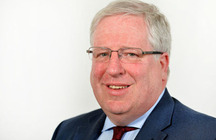
  • Patrick McLoughlin – 2016 George Bradshaw Address

    Patrick McLoughlin

    Below is the text of the speech made by Patrick McLoughlin, the Secretary of State for Transport, at Great George Street in London on 24 February 2016.

    Good evening.

    It is a great honour to be asked to give this lecture.

    I would like to start by recognising the hard work of everyone who makes the railways work. From cleaning staff. To drivers. Civil engineers. Managers.

    People working long, unsocial hours. Often out in awful weather conditions.

    Thank you.

    When the invitation came I thought about what I should say.

    It was easy to think of the things I don’t need to tell an expert audience like this.

    Railways matter.

    The railways are – by and large – growing.

    The passenger expects more.

    More services, more reliability, more choice.

    And that the government backs all this with a record investment programme.

    And will continue to back it.

    I am now in my fourth year as Transport Secretary.

    Some think this is a record. However Alistair Darling did longer and went on to be appointed Chancellor of the Exchequer.

    So I will not be sending a copy of this speech to George Osborne.

    It is however 27 years since I first came to the department as a junior minister.

    Today I want to reflect on the difference between then and now.

    And between now and where we will be in a decade’s time.

    Back in 1989, the railways were seen as yesterday’s industry.

    Remember what it was like.

    A difficult safety record.

    Managers struggling against the odds with minimal, unsustained, investment.

    Government’s attention – elsewhere.

    What a difference today.

    It is an absolute pleasure to be able to work with a confident, expanding rail industry and supply chain.

    Something that would have been unimaginable to many of my predecessors.

    So there is a positive future for the railways.

    And today I want to talk a bit about how we might best shape the future.

    About how future ministers might look back and see where we are – not just as a high point for the railways.

    But part of a route to something better still.

    This starts with a challenge.

    All of us here face it.

    The challenge of growth.

    It is a great challenge and opportunity to have.

    So how do we deal with it?

    The answer, I think, is that we need to see the opportunities.

    Be honest about the things that aren’t working.

    And change things, where that’s required.

    And that’s the difficult bit.

    Finding this confidence to change can be hard.

    Mark Carne touched on this in his speech last year.

    The railways, in particular, like to look back not forward.

    You can see this in the title of this lecture: the George Bradshaw address.

    Named after a map-maker who began his life drawing canals but saw an opportunity in the confusing new technology of the railways.

    Who realised the companies themselves were failing to give out passenger information properly and produced an independent solution… today we would call it an open-data app… a timetable so detailed that it spurred the sales of reading glasses in Victorian England.

    Now we like to talk of Bradshaw’s time as the golden age of the railways.

    A period described vividly in Simon Bradley’s recent book on the social impact of the rail system.

    And it was an amazing time.

    Today, though, we’re not competing with the Victorians. We are competing in a global market to attract investment to this country.

    With countries such as China building amazing networks of fast lines.

    And our past has only 1 lesson to teach us about that.

    About the speed of change.

    As Simon Bradley’s book shows, the Victorian railways kept reinventing themselves.

    With new technology: proper brakes, safer signals, more powerful engines, and even paper tickets.

    A journey in 1838 was utterly different to one in 1862 or 1912.

    And the answer to our challenge, the challenge of growth, must be change too.

    Of kinds we can’t even imagine today.

    Because as our railways grow, we’re not trying to restore them to a lost glory.

    But build something even better, doing a very different job.

    Back in the 1970s passenger numbers hit rock-bottom and the network had shrunk to its smallest extent.

    I’ve had a look at Hansard for that period.

    Ministers faced a barrage of complaints.

    Rail fares from some commuter stations into London trebled between 1974 and 1979 – way ahead of inflation.

    Everyone thought trains were cold, dirty, slow, delayed and late.

    Stations were grim places too.

    You mostly didn’t travel by train if you had a choice of something else.

    So no, we’re not going back to that. Not back to the past. Forward to the future.

    Just as countries across Europe are moving towards models we pioneered in Britain.

    Including private operators and open-access.

    It’s great that companies such as Go Ahead and National Express are winning contracts in Germany.

    But though much about the way we run the railways in Britain works, there are things that we need to change.

    Speak to passengers and they are clear about it.

    I want to focus on 3 areas in particular.

    All 3 are linked.

    And all 3 will take change from the government, as well as the industry.

    The first is to be much more flexible and respond to the people who want to use the system.

    Opening up new markets. Communicating better. Testing new ideas.

    Not just doing things the same way because the rules require it.

    And being more representative. Employing more women and more young people. Being part of the communities they serve.

    The second is to work with technology better.

    In obvious things like ticketing where it is absurd we still require people to print out bits of paper when almost no other part of the transport industry does so.

    But also in making the system more reliable and cost effective.

    Getting the most from HS2.

    And perhaps most of all in understanding that even if railways don’t adapt to new technologies, others will anyway.

    That a system which feels modern today could quickly seem as dated as the steam engine if it doesn’t adapt.

    Finally the third area in which I think change is needed is the way in which we join all this up.

    Today, there is confusion as to who is responsible for what.

    That holds things back.

    And it adds cost and inefficiency.

    The answer isn’t to lump everything together, let alone put the state in sole charge.

    But common sense reform, so that a system which works today can work even better.

    Untangling the knots so that… we can bring in new ways of finding more funding and use it better to cope with growth.

    So having set out what I see as the challenges let me touch on each of these areas in turn.

    First, flexibility.

    The truth is that we have only begun to touch on the possibilities for growth in the railways.

    Where the system has been adaptable enough to provide something new, we’ve seen an extraordinary hunger to use it.

    That’s true of things like the direct electric service from Manchester to Scotland, run by TPE, which has gone from virtually nothing to being some of the busiest trains in Britain.

    Or Chiltern’s innovation, with fast trains to Birmingham and now Oxford from Marylebone station in London which British Rail thought so redundant it wanted to close it down.

    Or intermodal freight, from ports such as Felixstowe to new hubs such as DRIFT (Daventry International Rail Freight Terminal).

    Or, to take an example from my own constituency.

    The railway from Derby to Matlock has seen traffic more than double since it got a proper hourly service.

    But getting change like this is often painfully slow, and there are lots of opportunities which aren’t taken.

    For instance online shopping has created a massive new market for the express delivery of packages from distribution hubs.

    So why do the railways, with a reliable express network and stations through which millions of people pass, play little part?

    We’ve seen a welcome increase in frequency on many routes.

    So why are journey times are often no better than they were 20 years ago?

    And why do we insist on doing engineering works often in winter, at night, over a very long period?

    Rather than putting in place quicker, ambitious plans for major reconstruction with proper alternatives and information for passengers?

    Like the successful project at Nottingham station in 2013.

    Now, it is not for a government minister to spell out in detail what might be done differently. The industry has to look after its customers.

    The point is that the industry needs more confidence and more freedom to respond.

    And also the confidence to admit that building for the future isn’t an excuse for below-standard service today.

    However, I have to acknowledge that when work is being done, it is not possible without inconvenience.

    But the industry can work together better to respond.

    I know there have been a lot of reviews in recent years.

    Leading up to Nicola Shaw’s review, coming out soon.

    But these reviews are making a difference.

    For instance Richard Brown’s review of franchising.

    And I am delighted with the way franchising has improved since then.

    We have seen successful, creative bids for routes such as the East Coast and both franchises in the north.

    Making a real difference to places like Huddersfield, which will soon be able to enjoy a direct service to London, for the first time since the 1960s.

    And brilliant proposals for services to places which in the 1960s and 70s were in danger of losing their rail links altogether.

    Places like Buxton, Saltaire or Chester-le-Street.

    It’s this sort of creative intelligence that is both going to support growth and bring growth about.

    Working, at the local level with community rail partnerships which are a way for users to get involved in running the services they want.

    Working, too, with powerful city regions that can take the responsibility of shaping their transport systems far more effectively than Whitehall ever could.

    That’s the way, for instance, that we have seen a reversal of some of the Beeching cuts.

    Finding ways to bring trains back to towns that should never have lost them and whose growth requires them.

    Like the Chase Line project did for Rugeley, Cannock and Hednesford.

    Or for places such as Tavistock and Wisbeach, which have well-advanced plans.

    And to do all this, I think we need to think about a second kind of change – in technology.

    We’re on the brink of big things.

    Autonomous vehicle technology is going to affect the way goods are distributed, cars are driven, cities are run.

    Mobile data has produced very rapid change in the choices and information available to travellers.

    With things like the rapid growth of ride sharing in countries such as France.

    There are lots of opportunities for our railways in this.

    But if they aren’t taken others will gain instead.

    Because the demand is there.

    This year, our national transport system carried more people than ever before in its history.

    And next year it will carry even more people still.

    Every advance in communication technology has increased demand for travel.

    But if the railways are to make the most of this they will have to use technology better too.

    That’s obvious in ticketing.

    Passengers carry computers in their pockets that are far more powerful than the ones in ticket machines.

    Constantly online, aware of their location, able to communicate.

    So we can use that technology to create a better system, not for the sake of it, but because it make journeys easier.

    I know that there is a huge amount of good work being done in the industry to overcome this.

    But as this happens it’s important that we don’t end up with isolated, competing systems.

    We need to use technology to make travel simpler.

    Citymapper, a transport app founded in London, does a great job of getting you from one place to another using all kinds of transport, with live information on costs and performance.

    But though there’s some brilliant work being done there’s nothing yet like it for the national rail network.

    I’m sure there will be soon… And the opportunities are great.

    Things like door-to-door ride sharing from commuter stations, so that people don’t have to leave their cars in busy, expensive car parks.

    But of course to make the most of this technology we also need to invest in infrastructure.

    There’s been some good progress on Wi-Fi on trains.

    But as anyone who has tried to use it knows, the demand is much greater than the system supports.

    So we need to press on with plans to sort that out.

    Just as we need to press on with using better technology to sort out the physical constraints on the system.

    More efficient, in-cab signalling has transformed the Northern and Victoria tube lines.

    It’s going to do the same on Thameslink – where it is already being tested.

    And on Crossrail, or as I will be proud to call it from now on, the Elizabeth Line.

    And of course on HS2.

    That is a nation-changing investment which will link up our cities, free up capacity and which is on track with legislation progressing well.

    But technology isn’t just about big projects.

    Heavy rail isn’t always the answer. We need more innovation, affordable alternatives too.

    And that takes me to the third challenge I’ve mentioned, of joining things up better.

    This isn’t a crisis. Our railways work well. Better, sometimes, than we say.

    They are safe and growing.

    But also under strain because of demand and because of the age of the system.

    The structure has been built up over a long time, sometimes almost by chance.

    But as the recent overspends and delays on Network Rail’s electrification programme show, the structure isn’t perfect.

    I think everyone here would agree with that.

    And we are now at the point where HS2 is about to become a reality, and part of the day-to-day planning and then operation of the network.

    It’s a massive, transformational opportunity but to make the most of it we are going to need new ways of working.

    Because HS2 isn’t going to be an alternative to the current rail network but part of it.

    To make the most of all this we need a structure that’s clearer.

    Fewer competing sources of authority.

    Quicker decision making.

    More responsibility with fare payers’ and taxpayers’ money.

    A structure which can build a partnership of the public and private sectors working together, and draw in greater investment from both.

    Because a growing industry, with a long term future, strong revenues and solid, physical infrastructure should be able to attract that investment.

    Nicola is carrying out her review.

    She will say more in a few weeks.

    But her thinking is straightforward and right.

    She’s talked to passengers, the unions and operators.

    She wants to put the people who run your train back in charge of your train.

    So they can make the decisions that are right for their route.

    A clear, accountable system where you know who’s in charge and who needs to put things right when they go wrong.

    And a system where money can be spent where it’s really needed.

    Not poured in by a distant central structure or misguided regulatory rules.

    This isn’t, by the way, a revolution.

    It’s common sense.

    And a lot of it is starting to happen already under Mark and Sir Peter Hendy.

    Network Rail has already begun to give more power to its routes, working more closely with operators.

    It is clear that while some things need to change, it is in no one’s interest to rip everything apart.

    We must improve what is working already.

    I’m confident that we can do that.

    A system where the routes answer to customers and the centre doesn’t call all the shots.

    Not fragmentation.

    But keeping a common system in order to support local strengths not to hinder them.

    Take what’s happening in the north.

    Already the Northern and Transpennine franchises bring with them over £1.2 billion of private sector investment in those railways.

    And decisions are being made not just at the DfT but by Transport for the North, responding to passengers, too.

    I want to see that not just in the north but the south west, East Anglia, the Midlands too.

    The network is a key public service.

    But to make the best of it we need to draw on wider sources of funding.

    So whatever Nicola returns with when she reports, the future will need to create more opportunity for private investment alongside public funding.

    This is essential in helping us maintain a balanced rail economy while we continue to invest in our future and at the same time safely manage the public debt.

    And put together these things – responsiveness, technology, investment and reform – will make the next few decades the most exciting, ever, for our railways.

    I began this speech by reflecting on the railways when I first came to the Department, in the 1980s.

    By the time the George Bradshaw lecture is given in 2026, by another Transport Secretary, perhaps, who will be able to reflect… not just on the success of the Elizabeth Line, the transformation of services in the north, electric trains to the west and the Midlands, and the impending opening of the first part of HS2… but also a massive shift in the experience of using the transport system, through technology… and an industry which is more prosperous, more self-confident and more efficient.

    The challenge for all of us in this room it to ensure that we have a railway which will serve the nation in the generations to come.

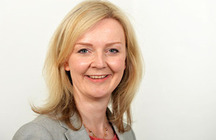
  • Elizabeth Truss – 2016 Speech at the National Farmers’ Union Conference

    Liz Truss
    Liz Truss

    Below is the text of the speech made by Elizabeth Truss, the Secretary of State for the Environment, Food and Rural Affairs in Birmingham on 23 February 2016.

    Farmers here in Britain have faced a tough year.

    We’ve seen:

    – World demand hit by slowing Chinese growth and the continuing Russian import ban.

    – The highest wheat yields on British farms for 25 years and milk production at a 20-year high – but sharply falling prices.

    – Pork prices at their lowest for eight years; lamb, poultry and sugar all down a long way.

    – The strong pound pulling in imports and magnifying those global trends.

    – Farmers’ incomes have been squeezed; they are expected to be down by half in dairy.

    And in the north of England, farmers are still coping with the consequences of the serious flooding.

    In the face of these challenges, we could just take cover and hope things get better soon.

    But I know that is not the attitude of British farming. Despite the fact prices are low, every week I meet people full of new ideas for taking forward this great industry – and ideas for managing the volatile world we face.

    I share their confidence in a positive future for British farming – and with very good reasons.

    – New talent, innovation and science are energising farming.

    – New opportunities are emerging as international markets open up and consumers change their tastes.

    – We are reducing the burden of regulation.

    – We are investing more in building our resilience against the threats of flood and disease.

    Action in all these areas and confidence in the future are at the heart of the 25-year plan for food and farming we will be publishing shortly. It will detail how we will attract even more skilled people to the industry, build the British brand and increase exports. And it will give farmers the tools to improve productivity and competitiveness so the future is sustainable, profitable and world-leading.

    I would like to thank the NFU and everyone in the industry who is supporting and contributing to this long-term vision for success.

    Science and innovation

    We know Britain already has some of the world’s most innovative farmers and scientists. Their breakthroughs are what will make this industry a world leader – and we want to turbocharge their ideas.

    That is why over the next five years, we are doubling Defra’s capital investment in science to £130million.

    And we are investing another £80million across government to develop research centres for livestock, crop health, data and precision engineering. The Agrimetrics data centre, which we launched in October, is working on projects like predicting and monitoring cereal crops and pest risks.

    The Food Innovation Network, announced by the Prime Minister last summer, will bridge the divide that too often exists between businesses and researchers so the latest innovations lead directly to improvements on farms and production lines.

    Talent

    There is a new generation excited about farming. It is the fastest-growing subject at university, with a 4.6% increase in student numbers last year. There are now more than 19,000 people studying agriculture and related subjects.

    Farming can be proud of what it is doing to attract these ambitious people – what a massive vote of confidence in the future.

    I met students at Cirencester earlier this month. They told me about the opportunities they see in farming – like new technology, increasing sustainability and adding value through the food chain.

    Growth at the Royal Agricultural University is being driven in large part by a 44% increase in female students. Nationally, we are seeing more and more women come into the industry. By opening itself to the widest pool of people, this great industry is harnessing all the available talent.

    Developing the skills the industry needs is central to our 25-year plan. One of our manifesto commitments is to treble the number of apprenticeships by 2020. The Food and Drink Federation have already committed to this target. I hope the farming industry will follow suit.

    Currently, there are 1,000 apprentices in farming and 2,100 in horticulture. The government’s new levy which comes into force in April 2017 will bring the biggest funding for apprenticeships ever seen and I strongly encourage people in the audience today to make sure their businesses benefit.

    New opportunities

    We will need the experience and the expertise of today’s and tomorrow’s farmers to take advantage of the new opportunities.

    The market-access deals I signed in China in 2015 will bring our farmers around £40million a year of potential sales for barley and pig’s trotters.

    And after a painful 20 years following the disaster of BSE, we are putting British beef back where it belongs, at the top of menus around the world.

    Last October, Canada announced it was lifting its ban. And we are making good progress with the US and Japan, which together would bring an estimated £40million a year in beef exports.

    In January, we launched the Great British Food Unit, bringing together expertise from Defra and UKTI in a single location to give advice and practical help to exporters.

    Our Great British Food campaign is championing the industry in Britain and across the world. Farmers are at the forefront of this campaign – people like Robert Craig, dairy farmer of the year in 2014 and Patrick Harte of Cornerways Tomatoes.

    The AHDB is now able to celebrate the British provenance of our food in its campaigns and will be running promotions for home-produced meat over the coming months, supporting the 2016 Year of Great British Food.

    Government is now buying more British food as a result of the Bonfield reforms. The Ministry of Justice’s new £500million contract for prison meals will use the balanced scorecard, creating a level playing field for British producers.

    And from this April all 30 million cartons of UHT milk served annually to prisoners will be British rather than from overseas for the first time in years, thanks to the supplier, Bidvest, using the balanced scorecard.

    Across the public sector – places like schools, hospitals, military canteens and government departments – we will be able to buy around an extra £400million of British food every year that we used to source overseas.

    Changing tastes

    The opportunities ahead are about changing tastes as well as new markets.

    The Family Food survey, which we released last week, shows how what we eat has moved on since the 1970s.

    As a great fan of British butter, I’m very happy at the revival in its fortunes which the survey shows – we now eat far more butter than all the low-fat spreads and margarine put together. Fruit juice, fresh fruit and veg as well as breakfast cereal have all surged – as has yoghurt, up more than five-fold since the 1970s.

    Businesses like Yeo Valley in Somerset are responding to these changing tastes. It now produces 2 million yoghurts a week, adding value for its own farms and for 90 others in the south west.

    Thanks largely to the efforts of the NFU, closely supported by George Eustice, more supermarkets are buying British – like Tesco, who will be sourcing all the milk for their own-label yoghurt from British herds. And Marks and Spencer’s will be sourcing all of its cheddar from Britain.

    Our go ahead businesses also include vegetable growers like Hammond Produce, who set up a Garden of Innovation in Nottinghamshire jointly with Bakkavor to provide a showcase for their novel produce to go into ready meals.

    Investment and managing volatility

    The British flair for innovation helped the food industry attract more foreign investment in 2014 than the rest of manufacturing put together.

    We have also seen strong investment in farming. Thanks to high-quality management, this is starting to show through in rising productivity.

    And although we cannot control market volatility, we can give farmers improved tools to manage it.

    Last year, the NFU had two major budget asks – certainty around the annual investment allowance and improved tax averaging.

    Because this government backs British farming, we have delivered those reforms. From April this year, farmers can average profits over five years instead of two. Also from this year, we are introducing a permanent annual investment allowance of £200,000.

    There are other actions that could help smooth out volatility. We are drawing up practical options for creating new derivatives markets. That means cooperating closely with the AHDB’s volatility forum, with farming, processors and the finance sector.

    Reducing the burden of regulation

    We are fundamentally re-engineering the way we work with farmers to reduce the burden of regulation.

    As we re-shape Defra and its organisations, the Environment Agency and Natural England will be working to the same boundaries so it will be much clearer for farmers who they need to talk to.

    By the end of this parliament, we will have saved businesses £470million of unnecessary costs.

    We have already got rid of lots of unnecessary blockages in the planning system and we will go further with the Rural Planning Review we launched earlier this month. It is looking at how we can streamline the development process in areas like farm shops, polytunnels and farm reservoirs.

    Our new Single Farm Inspection Taskforce will start work in June. By better use of data and technology like satellite imagery and by coordinating visits, we will reduce the number of inspections by at least 20,000 a year in this parliament. Added to the 34,000 cut since 2010, that will mean we have reduced the number of visits by over 50,000 a year.

    The single farm helpline, which we set up in September, is saving farmers hassle. Over 60% of queries are now dealt with by the first person the caller talks to– they do not get shoved from team to team.

    Europe

    As I have said previously, the current CAP is the most complicated ever. I want to see simplification in ecological focus areas, cross-compliance and inspections and far better use of technology.

    And I want the three-crop rule abolished. I have heard from farmers in Hampshire and Northamptonshire how it is adding 10% to their costs – all for a scheme that does virtually nothing for the environment.

    I want to see more decisions made at national and local level in areas like pesticides and environmental stewardship.

    I believe that by voting to remain we can work within a reformed EU to reduce bureaucracy and secure further reform while still enjoying the significant benefits of the single market which gives us access to 500 million consumers. We are able to export our high quality products freely without the trade barriers we deal with elsewhere and with a say in the rules.

    Food and farming is our largest manufacturing industry employing 3.8 million people. Sixty percent of our food and farming exports are to the European Union, bringing in £11billion.

    At a time of severe price volatility and global market uncertainty – I believe it would be wrong to take a leap into the dark. The years of complication and risk caused by negotiating withdrawal would be a distraction from our efforts to build a world-leading food and farming industry that brings jobs and growth to Britain.

    The new settlement the Prime Minister has secured gives us the best of both worlds and I am proud to be part of the Government that it is delivering on its commitment to have an in out referendum.

    I believe we would be stronger, safer and better off in a reformed Europe but ultimately it will be for the British people to decide.

    Rural Payments

    The complexity of the CAP has unfortunately caused real problems in the basic payment scheme. The Commission were still making changes in February 2015, which was far too late.

    When farmers are already facing price pressures, I fully understand the concerns of those who have not yet received payments.

    It is vital we do the calculations properly or we could face huge fines from the EU. Disallowance is already running at £70million a year, money we should be investing to improve the growth prospects of British food and farming.

    I have been regularly monitoring progress with Mark Grimshaw and making sure he gets all the support he needs.

    Under his leadership, the RPA has been working seven days a week with between 800 and 1,000 staff processing applications. They have entered and checked more than 80,000 claim forms.

    As a result of their efforts, by last weekend we had paid over £1billion to nearly 71,000 farmers, four fifths of those eligible.

    We are on course to make almost all payments by the end of March.

    For farmers who have not been paid, we will continue to work with the banks so they are able to access finance.

    We also have a hardship fund, which has advanced BPS payments to 268 farmers, worth an average of £16,400.

    I know there have been issues in areas like allocating land across commons and in cross-border claims, which will be speeded up when new systems for exchanging data with Scotland and Wales go live in April.

    Now that we have entered all the data on our system, the 2016 application round will be much simpler, particularly for people who do not need to make any changes. Farmers will be able to apply online this year, and that will include land and entitlement transfers. And of course, for those who need it, we’re retaining a paper option.

    The window opens in early March and farmers will have until May 16th to finalise claims.

    We have been making separate payments to those facing exceptional difficulties, including £26.2million in one-off support for the dairy sector.

    The Farming Recovery Fund to help flood-hit businesses get up and running again is processing more than 80% of applications in less than 10 working days. So far, it has approved nearly £1million of claims at an average of £9,100 per farmer.

    Resilience

    While we are getting payments out as quickly as possible and helping those facing immediate challenges, we will not lose sight of the need to continue building confidence in the future.

    The 12% increase we secured in Defra’s capital budget means we can invest more in flood defences and resilience against animal and plant disease.

    We are strengthening protection for a further 420,000 acres of farmland by 2021. On top of the 580,000 acres we protected in the last parliament, this will mean 1 million acres better defended in a decade.

    We are upgrading laboratories and other facilities at Weybridge to fight animal disease – something too many people in this hall have had to confront, whether it is avian flu or, 15 years ago this week, foot and mouth.

    Bovine TB is the biggest threat we face and I am 100% committed to defeating it. Our comprehensive 25-year strategy is making real progress – in fact, we’re on course to declare half of England TB-free by 2019.

    That success is in large part due to the efforts of farmers who have gone out night after night, often in the face of blatant intimidation, to make the badger cull a success. Thanks to them, all three culls – in Dorset, Gloucestershire and Somerset – met their targets in 2015. It is these farmers who are giving hope to a whole industry.

    But this is no time to ease off. I want to see culling expanded across a wider number of areas this year. The Chief Veterinary Officer’s advice is that this is the only way to secure the full benefits of our comprehensive strategy.

    And we will fund an expanded TB advisory service that farmers have been calling for so it is available throughout the high-risk and edge areas.

    Whatever our opponents may say, we know we are doing the right thing. We are pursuing a strategy that has worked in Australia and is working in Ireland and New Zealand.

    We will not rest until we have eradicated this devastating disease.

    Conclusion

    Bovine TB is one of the many challenges this industry faces. And I recognise these are not easy times. That is why this next year is such a vital period. We will need to work closely together to make sure farming has the confident and profitable future it deserves.

    British food and farming is a fantastic brand, recognised and admired around the world. The opportunities it offers talented people have never been greater.

    It is central to this country’s future – to our economy, to our environment, to a thriving countryside – to making sure Britain remains a fantastic place to live.

    Thank you.

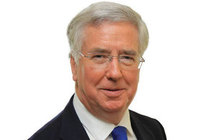
  • Michael Fallon – 2016 Speech in the Falkland Islands

    michaelfallon

    Below is the text of the speech made by Michael Fallon, the Secretary of State for Defence, on board HMS Clyde at Stanley in the Falkland Islands on 16 February 2016.

    I’m delighted to be here.

    One of the most important parts of my job is visiting our troops and civilian personnel around the world, and meeting the local people where they are based.

    I have been trying to come here for some time and I’m pleased to have made it. It is over a decade since a Defence Secretary has visited the Islands so it is long overdue.

    It is a pleasure to have had the opportunity to spend time with you and to hear about life and the issues on the Islands, and to remember those who lost their lives in the conflict.

    This morning I laid a wreath at Liberation Monument and tomorrow I will be visiting Blue Beach Cemetery, and the Argentinian cemetery. It is very moving to be here to reflect on those events.

    I want to start with a simple message, we will always defend your right to determine your future. That matter was settled over 30 years ago, and reaffirmed in the 2013 referendum.

    Last year I reaffirmed that commitment with a £180 million investment over the next decade to modernise the military infrastructure. And I am pleased to announce that I expect to announce a contract for the work to upgrade Mare Harbour next month, and to award a contract for the new Power Station in May with work starting this year.

    And this visit is an opportunity to hear about the success story of these Islands.

    Over the last 3 decades your efforts have developed a thriving, self sufficient, self governing democracy that has enjoyed remarkable growth and economic development.

    And I’ve already experienced the strong community and identity that exists here.

    Today I have been hearing about the opportunities for future economic development. There are plenty of prospects, whether from development of onshore activities, diversification of agriculture, science and technology research, development of exports markets, or increasing the already successful tourism sector.

    The British government wants to help you realise those economic opportunities.

    Our position on sovereignty will not change but as the Prime Minister has said, we want a more positive and productive relationship with the new Argentinian government.

    We are determined that doing that should translate into new economic opportunities and prosperity.

    This means an end to the measures that are damaging your economy, so that you are free to trade, to travel and to welcome all into the wonderful Islands.

    What it will not involve is any question of the position of the Falkland Islands changing.

    If we can achieve it, then a more stable South Atlantic is in all our interests.

    With the support of the UK, I am confident that the Falklands Islands can look forward to an even brighter future.

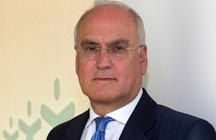
  • Michael Wilshaw – 2016 Speech at IPPR

    michaelwilshaw

    Below is the text of the speech made by Sir Michael Wilshaw, the Chief Inspector of OFSTED, at the Institute for Public Policy Research (IPPR) on 23 February 2016.

    I’m making this speech in London, but I would have preferred to make it in Manchester. Unfortunately, logistical difficulties made that impossible. But the irony of pronouncing on education in the North from the smug South isn’t lost on me.

    My last Annual Report in December painted a stark picture of a nation divided at the age of 11. Too many children in the North and Midlands, I reported, are being taught in schools that are not good enough. Nearly 1 in 3 secondaries there requires improvement or is inadequate compared to 1 in 4 elsewhere. Of the 16 local authorities nationally with the poorest performing secondary schools, 13 were above a line from the Bristol Channel to the Wash.

    It is fair to say that not all parts of the North and Midlands perform poorly. Many are good and a few are exceptional. It’s also the case that there are areas in the South that are educational laggards. But overall there is a significant discrepancy in performance between North and South. According to the Sunday Times schools guide only a third of the best state schools are in the North and Midlands.

    Manchester and Liverpool illustrate the scale of the problem. Three in 10 secondary schools in Manchester and four in 10 in Liverpool require improvement or are inadequate compared to 1 in 10 in inner London. The situation in some of their satellite towns is even worse. A third of the schools in Rochdale are not good enough, as is a similar proportion in Salford. In Oldham, 6 in 10 secondaries require improvement or are inadequate and in Knowsley not a single secondary school is good or better.

    Fewer than half of all children in these 6 local authorities achieved 5 good GCSEs last year, compared to a national average of 57%.

    Pupils from disadvantaged backgrounds fared particularly badly. In inner London, almost half of pupils eligible for free school meals were awarded five good GCSEs last year. In Greater Manchester, just under a third were successful. In Liverpool it was around a quarter and in Knowsley, only 1 in 5 pupils eligible for free school meals achieved 5 good GCSEs.

    Manchester and Liverpool are at the core of our ambitions for a northern powerhouse. They are the engines that could transform the prospects of the entire region. But as far as secondary education is concerned, they are not firing on all cylinders. In fact they seem to be going into reverse. The proportion of Manchester’s pupils gaining good GCSEs declined from 51.4% 2 years ago to 47.5% now. In Liverpool, the percentage fell from 49.9 to 48.6% over the same period.

    Is poverty the culprit?

    Since I spelt out Ofsted’s concerns late last year, several commentators have argued that disadvantage explains the difference. The North is relatively poor and the South rich.

    But if poverty is the culprit, why are primary schools in the North and Midlands doing so well? There is little difference in inspection outcomes for primaries in these areas and those in the rest of the country. How can deprivation explain disappointment at secondary school yet fail to impede progress at primary? Poverty doesn’t wait to kick in at 11.

    I do not underestimate how difficult it is to educate children who are poor and who lack all the advantages a middle-class background confers. I have spent most of my professional career trying to enthuse children whom others had written off. It isn’t easy for schools to compensate for social disadvantage. But never make the mistake that because it’s difficult, schools cannot make a difference. They can.

    Does ethnicity explain London’s success?

    Others claim that it isn’t poverty but ethnicity that accounts for the discrepancy. London has outperformed the rest, so the argument goes, because children of immigrants tend to be more ambitious. London benefits disproportionately because 37% of its citizens were born overseas. Whereas the rest of the country has higher proportions of the lowest performing ethnic group, white Britons on free school meals.

    Yet parts of inner-city Liverpool and Manchester are no strangers to immigration. Some 25% of residents in Manchester were foreign-born. While Leicester, which has a minority white British population, is one of the worst performing local authority areas. Only half of its pupils achieved 5 good GCSEs.

    Conversely Newcastle, where 85% of secondary schools are good or better and where on average 57.3% students achieved 5 good GCSEs, has far fewer immigrants – only 6% of its citizens were born overseas. Clearly, school progress or decline cannot be explained solely by ethnic background.

    Is it then a question of funding? Inner-London boroughs historically benefited from much higher-per-pupil funding than elsewhere because they were among the most deprived. But Manchester and Liverpool also do relatively well, especially when the effects of increased London pay are stripped out. Around two-thirds of any extra money London receives is spent on higher wages for staff.

    Higher spend doesn’t automatically lead to better performance. Nottingham, which has one of the highest-per-pupil funding settlements in the country outside London, has one of the worst records at secondary – only 42.4% of its youngsters got 5 good GCSEs, including English and maths, last year.

    What needs to be done?

    Yes, London has advantages that other cities lack, but what of Liverpool or Manchester? Are you really telling me that they lack swagger and dynamism? That they cannot succeed in the way London has succeeded? These are the cities that built Britain. They pioneered a modern, civic education when students at certain other universities spent most of their time studying the New Testament in Greek.

    Today, Manchester and Liverpool boast 8 universities between them, 2 of which are among the top 200 in the world. They are beacons of higher educational excellence. But if these cities can provide a world-class education for youngsters at 18, why on earth are they failing to do so for too many at 11?

    At some point, we have to accept that our children’s education can be better – or worse – because of the choices we make. At some point, politicians in Manchester and Liverpool will have to accept that the Northern Powerhouse will splutter and die if their youngsters lack the skills to sustain it.

    Back in the early nineties, the prospects for schools in Hackney, where I taught, seemed as bleak as many areas in the North and Midlands seem today. Only 14% of youngsters in the borough gained a good GCSE in 1990.

    Leadership turned things around. But school leaders didn’t do it by themselves. They had recognizable local champions, politicians like Jules Pipe in Hackney and Robin Wales in Newham who took responsibility for the performance of their local schools – all schools, not just those under their direct control.

    They expected results and refused to accept excuses from any of them. Their priority was, and remains, the better education of children. They did not allow varying school structures to deflect them from that objective. All children in every school were their children and all schools would be held to account for their performance.

    This is what needs to happen now in Manchester and Liverpool. I appreciate that it isn’t easy and I accept that improvement can’t happen overnight. I understand that it’s a lot easier to teach children who don’t come to school hungry, who live in homes filled with books, who have parents who are employed let alone university educated.

    Nor am I calling for a return to micro-management of schools by town halls or for new local educational powers. But I am talking about political will and vision. I am calling on local politicians, be they mayors, council leaders or cabinet members, to stand up and be counted, to shoulder responsibility for their local schools, to challenge and support them regardless of whether they are academies or not. I’m calling on them to be visible, high-profile figures that people can recognize as education champions. I am calling on them to make education in general – and their underperforming secondary schools in particular – a central target of their strategy for growth. I am asking them to better understand that unless there are high standards in the major cities of our country then good practice will not radiate out to the satellite towns and communities outside those cities.

    Unless they do, I fear Manchester and Liverpool will never become the economic powerhouses we want them to be. We cannot fight for social mobility with political immobility. Politicians need to act. It requires grit, imagination, faith and bloody mindedness – qualities that, fortunately, I really don’t think are less common in the North than they are down South.

    Thank you.

  • David Cameron – 2015 Statement on Muslim Brotherhood Review

    davidcameron

    Below is the text of the statement made by David Cameron, the Prime Minister, in the House of Commons on 17 December 2015.

    I have today laid before both Houses the main findings of the internal review I commissioned in the last Parliament to improve the government’s understanding of the Muslim Brotherhood; establish whether the Muslim Brotherhood’s ideology or activities, or those of individual members or affiliates, put at risk, damaged, or risked damaging the UK’s national interests; and where appropriate inform policy.

    The review involved substantial research and wide consultation including Muslim Brotherhood representatives in the UK and overseas, and an open invitation to other interested parties to submit written contributions.

    It is a complex subject: the Muslim Brotherhood comprises both a transnational network, with links in the UK, and national organisations in and outside the Islamic world. The movement is deliberately opaque, and habitually secretive.

    Since the authors completed their initial research in 2014, and during the course of the government’s examination of the findings, further allegations of violence carried out by supporters of the Muslim Brotherhood have surfaced, which the government will continue to investigate, taking action as appropriate.

    As the Muslim Brotherhood continues to evolve, so must our understanding of it. The findings have revealed much that we did not know but work will continue to ensure we keep up to date with developments.

    The government considers the following the most important findings.

    The Muslim Brotherhood’s foundational texts call for the progressive moral purification of individuals and Muslim societies and their eventual political unification in a Caliphate under Sharia law. To this day the Muslim Brotherhood characterises Western societies and liberal Muslims as decadent and immoral. It can be seen primarily as a political project.

    Parts of the Muslim Brotherhood have a highly ambiguous relationship with violent extremism. Both as an ideology and as a network it has been a rite of passage for some individuals and groups who have gone on to engage in violence and terrorism. It has stated its opposition to al-Qaida (AQ) but it has never credibly denounced the use made by terrorist organisations of the work of Sayyid Qutb, one of the Brotherhood’s most prominent ideologues. Individuals closely associated with the Muslim Brotherhood in the UK have supported suicide bombing and other attacks in Israel by Hamas, an organisation whose military wing has been proscribed in the UK since 2001 as a terrorist organisation, and which describes itself as the Palestinian chapter of the Muslim Brotherhood.

    Moreover, despite the Egyptian Muslim Brotherhood’s public condemnation of violence in 2012/13 and afterwards, some of their supporters have been involved in violent exchanges with the security forces and other groups. Media reports and credible academic studies indicate that in the past 12 months a minority of Muslim Brotherhood supporters in Egypt have engaged alongside other Islamists in violent acts. Some senior leaders have publicly reiterated the Muslim Brotherhood’s commitment to non-violence, but others have failed to renounce the calls for retribution in some recent Muslim Brotherhood statements.

    Muslim Brotherhood-associated and influenced groups in the UK have at times had a significant influence on national organisations which have claimed to represent Muslim communities (and on that basis have had a dialogue with government), charities and some mosques. But they have also sometimes characterised the UK as fundamentally hostile to Muslim faith and identity; and expressed support for terrorist attacks conducted by Hamas.

    Aspects of the Muslim Brotherhood’s ideology and activities therefore run counter to British values of democracy, the rule of law, individual liberty, equality and the mutual respect and tolerance of different faiths and beliefs. The Muslim Brotherhood is not the only movement that promotes values which appear intolerant of equality and freedom of faith and belief. Nor is it the only movement or group dedicated in theory to revolutionising societies and changing existing ways of life. But I have made clear this government’s determination to reject intolerance, and to counter not just violent Islamist extremism, but also to tackle those who create the conditions for it to flourish.

    The main findings of the review support the conclusion that membership of, association with, or influence by the Muslim Brotherhood should be considered as a possible indicator of extremism.

    We will therefore keep under review the views that are promoted and activities that are undertaken by Muslim Brotherhood associates in the UK, in Arabic as well as English. We will consider whether any action under the Counter-Extremism Strategy or as part of our wider work may be appropriate, including action in line with the new engagement policy the government will develop to ensure central and local government does not inadvertently provide legitimacy or a platform for extremists. We will challenge extremists’ poisonous narratives and promote positive alternatives that show vulnerable people that there are better ways to get on in life.

    We will continue to:

    – refuse visas to members and associates of the Muslim Brotherhood who are on record as having made extremist comments, where this would be conducive to the public good and in line with our existing policy guidelines and approach to extremism in all forms

    – seek to ensure charities that have links to the Muslim Brotherhood are not misused to support or finance the Muslim Brotherhood instead of their lawful charitable purpose

    – strengthen liaison arrangements with international partners to ensure that allegations of illicit funding or other misuse of charities are robustly investigated and appropriate action taken

    – enforce the EU asset freeze on Hamas

    – keep under review whether the views and activities of the Muslim Brotherhood meet the legal test for proscription

    We will also intensify scrutiny of the views and activities that Muslim Brotherhood members, associates and affiliates (whether based in the UK or elsewhere) promote overseas. As our Counter-Extremism Strategy makes clear, insights from our overseas posts will help the government better understand drivers, networks and ideologies. We will continue to consult, and share information and analysis with, governments in the Middle East and North Africa as appropriate. We will then take further decisions and actions as needed.

  • David Cameron – 2016 Speech on EU Reform

    davidcameron

    Below is the text of the statement made by David Cameron, the Prime Minister, in the House of Commons on 22 February 2016.

    With permission, Mr Speaker, I would like to make a statement on the agreement reached in Brussels last week.

    But first let me say a word about the migration crisis which was also discussed at the Council.

    We agreed that we needed to press ahead with strengthening the EU’s external borders to ensure that non-refugees are returned promptly and back the new mission to disrupt the criminal gangs working between Greece and Turkey, who are putting so many people’s lives at risk.

    And I made clear that Britain will continue to contribute in all these areas and will step up contributions.

    Turning to Britain’s place in Europe, Mr Speaker, I have spent the last 9 months setting out the 4 areas where we need reform and meeting with all 27 other EU heads of state and government to reach an agreement that delivers concrete reforms in all 4 areas.

    Let me take each in turn.

    Financial protection

    First, British jobs and British business depend on being able to trade with Europe on a level playing field.

    So we wanted new protections for our economy to safeguard the pound, to promote our industries – including our financial services industries, to protect British taxpayers from the costs of problems in the eurozone and to ensure we have a full say over the rules of the single market, while remaining outside the eurozone.

    And we got all of those things.

    We have not just permanently protected the pound and our right to keep it, but ensured that we can’t be discriminated against.

    Responsibility for supervising the financial stability of the UK will always remain in the hands of the Bank of England.

    We have ensured that British taxpayers will never be made to bail out countries in the eurozone.

    We have made sure that the eurozone cannot act as a bloc to undermine the integrity of the free trade single market.

    And we have guaranteed that British business will never face any discrimination for being outside the eurozone.

    So, for example, our financial services firms – our number 1 services export employing over a million people can never be forced to relocate inside the eurozone if they want to undertake complex trades in euros, just because they are based in the UK.

    And these protections are not just set out in a legally-binding agreement.

    All 28 member states were also clear that the treaties would be changed to incorporate the protections for the UK as an economy that is inside the EU but outside the eurozone.

    We also agreed a new mechanism to enable non-eurozone countries to raise issues of concern – and we won the battle to ensure this could be triggered by one country alone.

    Of course, Mr Speaker, none of these protections would be available if we were to leave the EU.

    European competitiveness

    Second, we wanted commitments to make Europe more competitive, creating jobs and making British families more financially secure.

    Again we got them.

    Europe will complete the single market in key areas that will really help Britain.

    In services – making it easier for thousands of UK service-based companies like IT firms to trade in Europe.

    In capital – so UK start-ups can access more sources of finance for their businesses.

    And in energy – allowing new suppliers into our energy market – meaning lower energy bills for families across the country.

    We have secured commitments to complete trade and investment agreements with the fastest growing and most dynamic economies around the world including the USA, Japan and China as well as our Commonwealth allies India, New Zealand and Australia.

    These deals could add billions of pounds and thousands of jobs to our economy every year.

    And, of course they build on the deals we already have with 53 countries around the world through which Britain has benefitted from the negotiating muscle that comes from being part of the world’s largest trading bloc.

    Mr Speaker, of course country after country have said to me that of course they could sign trade deals with Britain.

    But they have also said that their priority would be trade deals with the EU.

    By their nature these EU deals would be bigger and better.

    And a deal with Britain wouldn’t even be possible until we had settled our position outside the EU.

    So Mr Speaker, for those members who care about signing new trade deals outside the EU, we would be looking at years and years of delay.

    Last but by no means least on competitiveness, one of the biggest frustrations for British business is the red tape and bureaucracy so we agreed there will now be targets to cut the total burden of EU regulation on business.

    This builds on the progress we have already made – with the Commission already cutting the number of new initiatives by 80% and it means that the cost of EU red tape will be going down, not up.

    Of course, if we were to leave the EU but ultimately achieve a deal with full access to the single market – like Norway – we would still be subject to all of the EU’s regulation when selling into Europe.

    As the former Europe spokesman for the Norwegian Conservative Party Nikolai Astrup said:

    If you want to run Europe, you must be in Europe. If you want to be run by Europe, feel free to join Norway in the European Economic Area.

    Migration

    Third, we wanted to reduce the very high level of migration from within the EU by preventing the abuse of free movement and preventing our welfare system acting as a magnet for people to come to our country.

    After the hard work of the Home Secretary we have secured new powers against criminals from other countries including powers to stop them from coming here in the first place, and powers to deport them if they are already here.

    We agreed longer re-entry bans for fraudsters and people who collude in sham marriages.

    And an end to the frankly ridiculous situation where EU nationals can avoid British immigration rules when bringing their families from outside the EU.

    Mr Speaker, this agreement broke new ground – with the European Council agreeing to reverse decisions from the European Court of Justice.

    We have also secured a breakthrough agreement for Britain to reduce the unnatural draw that our benefits system exerts across Europe.

    We have already made sure that EU migrants cannot claim the new unemployment benefit, Universal Credit, while looking for work.

    And those coming from the EU who haven’t found work within 6 months can now be required to leave.

    At this Council we agreed that EU migrants working in Britain can be prevented from sending child benefit home at UK rates.

    This will apply first to new claimants – and then to existing claimants from the start of 2020.

    And we also established a new emergency brake so that EU migrants will have to wait 4 years until they have full access to our benefits.

    Mr Speaker, people said it was impossible to achieve real change in this area.

    And that a 4-year restriction on benefits was completely out of the question.

    And yet that is what we have done.

    And once activated, the emergency brake will be in place for 7 years.

    So if it begins next year, it will still be operating in 2024 and there will be people who won’t be getting full benefits until 2028.

    Mr Speaker, all along we have said that people shouldn’t be able to come here and get access to our benefits system straightaway.

    No more something for nothing.

    And that is what we have achieved.

    Mr Speaker, I’m sure the discussion about welfare and immigration will be intense.

    But let me make this point.

    No country outside the EU has agreed full access to the single market without accepting paying into the EU and accepting free movement.

    In addition, these new safeguards lapse if we leave the EU.

    Powers for UK Parliament

    The fourth area where we wanted to make significant changes was to protect our country from further European political integration and to increase powers for our national Parliament.

    Ever since we joined, Europe has been on the path to something called ‘ever closer union’.

    It means a political union. We’ve never liked it. We never wanted it.

    And now Britain will be permanently and legally excluded from it.

    The text says that the treaties will be changed to make clear that – and I quote:

    …the Treaty references to ever closer union do not apply to the United Kingdom.

    So Mr Speaker, as a result of this negotiation, Britain can never be part of a European superstate.

    The council also agreed that ever closer union, which has been referred to in previous judgements from the European Court of Justice does not offer a legal basis for extending the scope of any provision of the treaties or of EU secondary legislation.

    Mr Speaker, people used to talk about a multi-speed Europe.

    Now we have a clear agreement that not only are different countries able to travel at different speeds, they are ultimately heading to different destinations too. And I would argue that is fundamental change.

    We have also strengthened the role of this House and all national parliaments.

    We have already passed a Referendum Act to make sure that no powers can be handed to Brussels without the explicit consent of the British people in a referendum.

    Now, if Brussels comes up with legislation we don’t want, we can get together with other parliaments and block it with a red card.

    And we have a new mechanism to finally enforce the principle that – as far as possible – powers should sit here in Westminster, not in Brussels.

    So every year the EU now has to go through the powers they exercise and work out which are no longer needed and should be returned to nation states.

    In recent years we have also seen attempts to bypass our opt-out on justice and home affairs by bringing forward legislation under a different label.

    For example, attempts to interfere with the way the UK authorities handle fraud were tried under the guise of legislation on the EU budget.

    The agreements at last week’s Council ensure this can never happen again.

    Mr Speaker, the reforms we have secured will be legally binding in international law, and will be deposited as a treaty at the UN.

    And they cannot be unpicked without the agreement of Britain and every other EU country.

    And as I have said, all 28 member states were also clear that the treaties would be changed to incorporate the protections for the UK as an economy outside the eurozone – and our permanent exclusion from ever closer union.

    Mr Speaker, our special status means that Britain can have the best of both worlds.

    We will be in the parts of Europe that work for us, influencing the decisions that affect us, in the driving seat of the world’s biggest single market and with the ability to take action to keep our people safe.

    But we will be out of the parts of Europe that do not work for us.

    Out of the euro. Out of the eurozone bailouts.

    Out of the passport-free, no borders Schengen area and permanently and legally protected from ever being part of an ever closer union.

    Of course, there is still more to do.

    I am the first to say that there are still many ways in which this organisation needs to improve – and the task of reforming Europe does not end with last week’s agreement.

    Referendum

    But with the special status this settlement gives us, I do believe the time has come to fulfil another vital commitment this government made – and that is to hold a referendum.

    So, Mr Speaker, I am today commencing the process set out under our Referendum Act to propose that the British people decide our future in Europe through in-out referendum on Thursday 23 June.

    The Foreign Secretary has laid in both Houses a report setting out the new settlement that the government has negotiated.

    This fulfils the duty to publish information set out in section 6 of the European Union Referendum Act 2015.

    And as the Cabinet agreed on Saturday, the government’s position will be to recommend that Britain remains in this reformed European Union.

    Mr Speaker, this is a vital decision for the future of our country. And we should also be clear that it is a final decision.

    An idea has been put forward that if the country votes to leave we could have a second renegotiation and perhaps another referendum.

    Mr Speaker I won’t dwell on the irony that some people who want to vote to leave – apparently want to use a leave vote to remain.

    But such an approach also ignores more profound points about democracy, diplomacy and legality.

    This is a straight democratic decision – staying in or leaving – and no government can ignore that.

    Having a second renegotiation followed by a second referendum is not on the ballot paper.

    And for a Prime Minister to ignore the express will of the British people to leave the EU would not just be wrong, it would be undemocratic.

    On the diplomacy, the idea that other European countries would be ready to start a second negotiation is for the birds. Many are under pressure for what they have already agreed.

    Then there is the legality. I want to spell out this point very carefully. If the British people vote to leave there is only one way to bring that about – and that is to trigger Article 50 of the Treaties and begin the process of exit.

    And the British people would rightly expect that to start straight away.

    Let me be absolutely clear how this works. It triggers a 2-year time period to negotiate the arrangements for exit.

    At the end of this period, if no agreement is in place then exit is automatic unless every 1 of the 27 other EU member states agrees to a delay.

    And we should be clear that this process is not an invitation to re-join, it is a process for leaving.

    Sadly, Mr Speaker, I have known a number of couples who have begun divorce proceedings.

    But I do not know any who have begun divorce proceedings in order to renew their marriage vows.

    We should also be clear about what would happen if that deal to leave wasn’t done within 2 years.

    Our current access to the single market would cease immediately after 2 years were up.

    And our current trade agreements with 53 countries around the world would lapse.

    This cannot be described as anything other than risk, uncertainty and a leap in the dark that could hurt working people in our country for years to come.

    And this is not some theoretical question, this is a real decision about people’s lives.

    When it comes to people’s jobs, it is simply not enough to say that it will be all right on the night and we will work it out.

    And I believe that in the weeks to come we need to properly face up to the economic consequences of the choice to leave.

    Mr Speaker, I believe Britain will be stronger, safer and better off by remaining in a reformed European Union.

    Stronger – because we can play a leading role in one of the world’s largest organisations from within, helping to make the big decisions on trade and security that determine our future.

    Safer – because we can work with our European partners to fight cross-border crime and terrorism.

    And better off – because British businesses will have full access to the free trade single market, bringing jobs, investment and lower prices.

    Mr Speaker, there will be much debate about sovereignty – and rightly so.

    To me what matters most is the power to get things done for our people, for our country, and for our future.

    Leaving the EU may briefly make us feel more sovereign – but would it actually give us more power, more influence and a greater ability to get things done?

    If we leave the EU, will we have the power to stop our businesses being discriminated against? No.

    Will we have the power to insist that European countries share with us their border information so we know what terrorists and criminals are doing in Europe? No.

    Will we have more influence over the decisions that affect the prosperity and security of British families? No.

    We are a great country – and whatever choice we make we will still be great.

    But I believe the choice is between being an even greater Britain inside a reformed EU or a great leap into the unknown.

    The challenges facing the west today are genuinely threatening.

    Putin’s aggression in the east. Islamist extremism in the south.

    In my view this is no time to divide the west.

    When faced with challenges to our way of life, our values and our freedoms, this is a time for strength in numbers.

    And Mr Speaker, let me end by saying this.

    I am not standing for re-election.

    I have no other agenda than what is best for our country.

    I am standing here today telling you what I think.

    My responsibility as Prime Minister is to speak plainly about what I believe is right for our country.

    And that is what I will do every day for the next 4 months.

    And I commend this statement to the House.

  • Harriett Baldwin – 2016 Speech at Fintech Week

    Harriett Baldwin
    Harriett Baldwin

    Below is the text of the speech made by Harriett Baldwin, the Economic Secretary to the Treasury, at an event held by the Association of British Insurers on 22 February 2016.

    It is great to be here to kick off Fintech Week.

    Fintech Week has two key aims.

    The first is to celebrate our status as a leading global Fintech hub.

    The second is to look at what we need to do if we want to become, and remain, the leading global Fintech hub.

    Part of that is, of course, what more government, or regulators, can do to support UK Fintech.

    But it’s also about what this event highlights – what we can do to foster greater collaboration between Fintechs and traditional financial services firms.

    It feels particularly apt for this event to be held in this historic part of London, right next to Shoreditch and Hoxton, the hubs of innovation and technology in London.

    It’s an area which has become a byword for innovative technology.

    The buzz in this historic corner of London shows how important it is to us as a country to be open to new things and new ideas.

    And that effect isn’t just local or regional – it’s national. Across the UK the Fintech market generated over £6.5 billion in revenue last year. Our Fintechs attract significant investment, with around £550 million in capital invested in 2015. It is clear that we have a strong pool of talent and the right government and regulatory regimes to help Fintechs thrive.

    I’ve been particularly encouraged by seeing start-ups from across the world choosing the UK as their home and developing their businesses here.

    As an example, Startupbootcamp’s new accelerator programme based in London, called InsurTech, offers funding and mentoring to companies from across the world.

    And aside from the positive economic effects, Fintech also helps normal people in their daily lives. It gives them extra choices; it makes their everyday tasks simpler; it improves their quality of life. In the 21st century, Fintech is quite simply essential in making financial services work for the customer.

    So Fintech is something we want to see grow ever stronger in the UK – because the technologies you have or are developing have huge economic benefits for the UK and beyond.

    And as a government, we are determined to ensure that we’ve got the right environment to nurture businesses and really boost technological innovation, supporting the sector in any way that we can.

    We’ve made a strong start in making the UK an attractive environment in which to be a Fintech business.

    In 2014, the Financial Conduct Authority launched Project Innovate and subsequently established the Innovation Hub – a support unit for innovative businesses to help them understand the regulatory framework and apply for authorisation.

    The FCA has continued this good work with a number of other initiatives. One of the most exciting is the FCA’s regulatory sandbox which will be open to applications for testing from firms this coming spring.

    Though “regulatory sandbox” is certainly a contender for the “jargon of the year award”, what a regulatory sandbox does is provide a safe space for innovative firms to test out new ideas at an early stage, with real consumers, but with oversight from the regulator.

    As an additional benefit, a sandbox also ensures the regulator is close to innovations in financial services and understands both the risks and benefits they may pose.

    I know that the ABI has been supportive of this and has been working closely with the FCA to ensure that companies developing insurance products can benefit – I hope that this will continue going forward.

    It’s not just the FCA who have been busy working in this space. As a government, we’ve also been working on how Fintechs can make better use of bank data on behalf of customers, by creating an Open Application Programming Interface (API) standard in UK banking.

    This would, for example, enable Fintechs to design phone apps which help customers manage their money better.

    Earlier this month, the Open Banking Working Group published a framework for how the open API standard can be designed and delivered. My thanks go to the Group’s chairs and all those involved in this important work.

    In addition, we recently appointed Eileen Burbidge as the UK’s Special Envoy for Fintech. In this role she represents UK interests in Fintech, at home and around the world, and leads the Treasury’s engagement with industry.

    But the work doesn’t stop here. We know we have to build on our successes if we are to maintain our position as the leading global FinTech hub and compete with the likes of Silicon Valley. There is fierce international competition for this growing industry, so it’s vital that we don’t stand still.

    As I mentioned at the start, greater collaboration with traditional financial services firms, such as those in the insurance sector, can play a crucial role here.

    How the insurance sector can contribute and what they have done so far

    The UK insurance industry has long been a pioneer in insurance innovation, with a long and proud history stretching back to the 17th century.

    UK insurers have always been among the first to take on exotic new risks created by evolving technology – such as the first cars and aeroplanes – and to sell insurance in new ways – such as over the phone or on online.

    And this readiness to innovate has helped keep the insurance industry a leader in Europe, and one of the great assets of the UK’s financial services industry. That is certainly something we are determined to see continue.

    In this rapidly changing society and technological landscape, the challenge for industry is how best to adapt to these fast-paced changes. Customers want and expect more from service providers – everything has to be quicker and better!

    We’ve already seen companies like ‘Cuvva’ step up to this challenge where, once signed up, you can purchase short term insurance for a car within minutes, even seconds if you’re quick enough, just by using an app and a smartphone camera.

    I believe that UK financial services are nothing if not adaptable – so I know that the industry will thrive in this changing environment, spot new opportunities – and continue growing, and serving your customers.

    Much innovation in financial services comes from start-ups and from other non-conventional players. This is why collaboration between start-ups and the larger institutions is key. Both can learn from each other; both, ultimately, stand to benefit from working closely together.

    There have already been some exciting developments in the insurance tech industry, such as within the telematics and ‘big data’ sphere.

    For instance, we are seeing the advent of ‘social insurance’, whereby some brokers are accessing a greater client base through social media to disrupt the sector.

    The government’s open data initiative, along with general progress in ‘big data’, is helping transform how underwriters price risk. As an example, some have made use of the publicly available DVLA data when designing new products in relation to motor insurance.

    And the government’s continued support is also clear from our commitment to organisations such as the Alan Turing Institute, which will ensure that we continue to remain at the forefront of digital and technological advances.

    Other opportunities include ‘block-chain’, which has been heralded as revolutionary by some, particularly for the insurance sector, owing to its potential to reduce insurance fraud.

    It is great to see the insurance industry take advantage of opportunities such as these, and others. And I’ve been particularly pleased to see some insurers creating dedicated spaces, to test new ideas and collaborate with tech start-ups.

    The Aviva Digital Garage is an excellent example – and I know there are many more companies that are also investing in similar initiatives, such as AXA who announced that they would be funding a new €100 million InsurTech incubator, dedicated to designing and launching novel disruptive products and services for insurance clients.

    I hope that, in the future, we will see many more combinations like these, between well-known institutions, with their knowledge and expertise, and start-ups, with exciting new ideas to bring to the table. These sort of partnerships can only be win-win.

    Events like this are excellent ways of forging such relationships:

    You come together, you discuss your challenges, you think of ways to overcome them, you throw around ideas. You collaborate. You grow.

    When that happens, everyone stands to benefit. And we, as a government, will be on your side.

    So I hope today discussion – in this amazing venue – proves fruitful and constructive, and I hope you will all continue to engage with one another, and help make – and keep – the UK the leading Fintech hub in the world.

  • Sajid Javid – 2016 Speech on Inspirational Businesses

    CBI Conference

    Below is the text of the speech made by Sajid Javid, the Secretary of State for Business, Innovation and Skills, at the London Stock Exchange on 22 February 2016.

    Thank you, Xavier, for that warm introduction.

    And thank you for letting me have the honour of the opening the world’s greatest stock exchange a few moments ago.

    I’m sure we all agree that if the FTSE closes up today, it will be because of the uniquely skilled way the market was opened this morning!

    And if it goes down…

    Well let’s just say I was never here!

    Seriously, it’s great to be back in the City.

    My 20-odd years with Chase Manhattan and Deutsche Bank took me all over the world.

    But whenever I found myself in their Square Mile offices, it really felt like I’d come home.

    And it’s a particular pleasure to be here today of all days.

    Because this morning I get to see for myself some of the wonderful, inspiring British businesses in the LSE’s latest 1,000 companies list.

    Too often politicians get dazzled by the big brands.

    The household names.

    The multinationals employing tens of thousands of people.

    But even the biggest company started life as nothing more than one or two people with an idea.

    And the small- and medium-sized companies of today, the ones listed in this report, are the big names of tomorrow.

    That’s not just rhetoric.

    The thousand companies in this list are experiencing average annual growth of 50%.

    That’s an incredible figure, one that really shows how SMEs are powering the economic recovery.

    The diversity of the companies listed here is inspiring too.

    For one thing, they represent the whole of the UK.

    This isn’t London navel-gazing.

    There’s more than 100 in the North West of England, almost 200 across the Midlands.

    We’ve got companies in Aberdeen, in Bristol…

    And I wouldn’t be doing my job as a constituency MP if I didn’t highlight that there are 2 in Bromsgrove: Crown Domestic Appliances and Oakland International.

    So well done to everyone who has made it onto this year’s list.

    But particularly those 2!

    The spread of companies isn’t just geographical.

    They also cover a huge range of sectors, from IT to advertising to financial services.

    And about a quarter of them are involved in some kind of manufacturing or engineering.

    A lot of people think that industry is a thing of the past, that it’s all about the service sector now.

    But these fast-growing, dynamic innovative companies show that Britain still has a real future in skilled manufacturing.

    And that’s great to see.

    For all that diversity, there are a few common threads linking these firms together.

    One of those is their commitment to innovation and investment.

    That’s what makes the difference in achieving such high growth returns year-on-year.

    And that’s something the government, and my department in particular, are really serious about supporting.

    Last summer, you may have seen, we launched a plan called ‘Fixing the foundations’.

    It’s our cross-government plan for increasing productivity right across the economy.

    Our vision for increasing long-term investment in people, capital and ideas, and making markets more dynamic.

    That includes everything from increasing the quality and quantity of apprenticeships, to reforming the planning system, to changing the way the government supports growing companies who want to export.

    But that’s not all.

    With the right support, the inspired ideas of today can become the businesses of tomorrow.

    So, at the Spending Review, the Chancellor announced an investment of almost £7 billion as part of the national science capital commitment.

    He also protected today’s annual £4.7 billion resource funding in real terms.

    Together, this underlines our commitment to keeping the UK a world leader in science and research.

    We have also created Catapult centres that help business and researchers turn great ideas into commercial reality.

    They cover 11 new and emerging technologies in areas where there are world-leading research capabilities in the UK.

    Building on this, we’ll shortly be publishing a National Innovation Plan to ensure the UK remains an international beacon for bright ideas.

    The plan will bring together ideas, levers and investment from across government, so we can create the right conditions for businesses to innovate and grow.

    Of course, as Anthony Browne from the BBA says in today’s report, ambitious companies need finance in order to grow.

    Banks provide a lot of that.

    But bank lending isn’t the only way to go for innovative SMEs.

    So I’d like to pay tribute to the UK’s Angel, Venture Capital and Public Market investor community for the role they are playing in helping innovative companies to start up and scale up.

    Xavier and his team here at the LSE are also doing a lot to help strengthen the equity ladder, with the AIM, the High Growth Segment, and the ELITE Programme.

    You’re giving innovative businesses access to both finance and expertise, and that should be applauded.

    And I’m pleased to say the government is doing its bit too.

    The British Business Bank is working alongside private lenders and investors to support a large number of innovative companies.

    It’s part of our ambition – my ambition – to make the UK the best place in the world to start and grow a business.

    That’s why all the specific support for innovative SMEs I’ve talked about today is underpinned by a passionate understanding of and support for businesses of all shapes and sizes.

    We’ve slashed £10 billion of red tape for business, and are committed to cutting another £10 billion by 2020.

    We’re extending the doubling of small business rate relief until 2017.

    We’re cutting corporation tax to the lowest level of any major economy.

    We’ve lifted hundreds of thousands of businesses out of Employer National Insurance Contributions.

    We’ve set the highest ever permanent level for the annual investment allowance.

    We’ve got R&D tax credits, the Patent Box and Entrepreneur’s Relief.

    We’ve got tax schemes like the Enterprise Investment Scheme to encourage individuals to invest in small growth companies.

    And the Enterprise Bill, currently before Parliament, will create a new Small Business Commissioner to give SMEs a stronger voice.

    I was at Davos last month, where all the talk was of a future in which successful companies would be lean, agile, innovative and fast-growing.

    Well, when I look in this report and look around this room that’s exactly what I see.

    That means you are the future not just of British business, but of the global economy.

    It’s a big weight to bear, but I’m sure you can take it.

    The work you’re doing really is inspiring.

    And I’m very pleased to say that you’ve got a Business Secretary and a government that’s going to support you every step of the way.

    Thank you.