Tag: 2016

  • Theresa Villiers – 2016 Speech in Washington

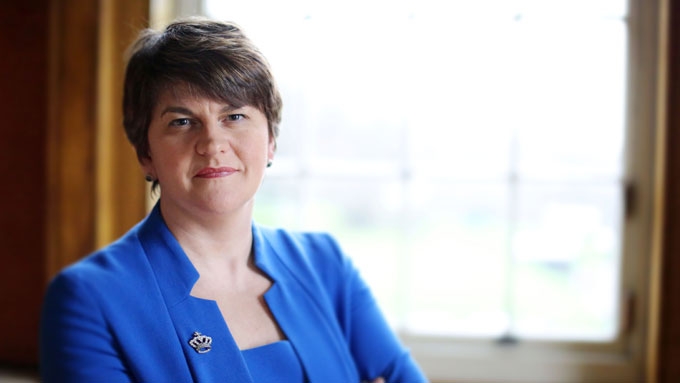
    Below is the text of the speech made by Theresa Villiers, the Secretary of State for Northern Ireland, in Washington, United States on 16 March 2016.

    It’s a great pleasure for me to be back here in Washington and to participate in my fourth St Patrick’s celebrations since becoming Secretary of State in 2012.

    And on behalf of Her Majesty’s Government I’d like to wish you all a very happy St Patrick’s Day tomorrow.

    I’m delighted to be addressing you in happier political circumstances for Northern Ireland than I was this time last year.

    When I spoke here to this reception twelve months ago, the implementation of the Stormont House Agreement was stalling.

    Matters deteriorated over the summer.

    The impasse over the Northern Ireland Executive’s budget and welfare reform seemed intractable.

    This was putting increasing pressure on funding for public services and was also preventing other aspects of the Stormont House Agreement from going ahead.

    Political relationships within the Executive became increasingly strained and by early autumn the position looked perilous.

    There was a real danger of ministerial resignations and early elections.

    That could have led to the collapse of the devolved institutions and a return to direct rule from Westminster.

    I need hardly point out that after everything that’s been achieved what a serious setback this would have been … and I was determined to do everything I could to avoid it.

    Around the same time two murders in Belfast raised the spectre of continuing paramilitary activity and its malign influence on society.

    Against this difficult backdrop we acted decisively.

    First I made it clear that if the budget issues remained unresolved, Westminster would be left with no option but to legislate for welfare reform, even without Assembly consent.

    We could not stand by indefinitely and see the finances of the Executive become increasing dysfunctional with the corresponding damage to public services and political relationships that would have involved.

    Secondly, we called a fresh round of cross party talks with the five main Northern Ireland parties and the Irish Government.

    Two objectives were set; implementation of the Stormont House Agreement and dealing with continuing paramilitary activity.

    Those talks lasted ten week, with hundreds of meetings, countless hours of negotiations, and some late nights.

    Finally, on 17 November we were able to announce the Fresh Start – Stormont Agreement and Implementation Plan.

    And I’d like to thank all those who contributed to a successful outcome; including Senator Gary Hart and US Consul General in Belfast, Dan Lawton.

    The Agreement makes real progress on both our two objectives, including taking the Northern Ireland political parties further before in their determination to see a complete end to paramilitary activity.

    The Fresh Start Agreement was underpinned by up to half a billion pounds of extra spending power on top of the £2 billion in the Stormont House Agreement.

    I’m happy to report that implementation is going well.

    At the Executive’s request, primary legislation was passed at Westminster on welfare reform within 10 days of the Agreement being reached. And intensive work is underway on the package of secondary legislation needed to bring the changes into operation.

    Last week, a further Bill went through the House of Commons on other key parts of the Agreement … including measures to tackle paramilitary activity.

    The Executive is taking steps to cut the number of government departments and reduce the size of the Assembly.

    The Commission on Flags and Identity is being established.

    In December the UK and Irish Governments, along with the Executive, established a Joint Agency Task Force to tackle cross jurisdictional organised crime.

    And of course the Agreement takes us a big step closer to the final stage of the devolution of corporation tax powers, with the Executive committed to a date and a rate of 12.5 per cent by 2018.

    I’m delighted that it was the Conservatives who put this issue back on the agenda, convinced Whitehall that it was the right thing for Northern Ireland and legislated for it this time last year.

    Northern Ireland is already a great place to invest and do business, as many US companies know to their advantage, but I believe that further reductions in corporation tax can provide a major boost to Northern Ireland economy.

    And that in turn will help us tackle other long-term problems of economic and social disadvantage, underpinning our efforts to embed security and political stability through prosperity.

    So the Fresh Start Agreement was a really positive step forward.

    I’m very conscious, of course, that some important issues are not covered by the Agreement. In particular the new bodies designed to deal with the legacy of the past.

    We came very close – the differences really were down to a few quite narrow areas – but in the end there just wasn’t quite enough consensus to bring forward the legislation.

    But the UK Government remains determined to resolve the outstanding differences. Not least because we believe these new institutions would deliver better outcomes for victims and survivors of the Troubles than existing mechanisms.

    So working with Northern Ireland’s leaders and with victims groups that is what we’ll continue striving to achieve.

    Amongst the other challenges we face in the weeks and months to come are further commemorations in this decade of centenaries now well underway

    Events such as the Somme and the Easter Rising will always have contrasting meaning and significance for different people, shaped in many cases by their community background.

    But I believe that handled with good sense and mutual respect, these centenaries can be marked in a way which promotes greater shared understanding and reconciliation, rather than division.

    I know that’s what the Irish Government are seeking to do as we get closer to the centenary of the Easter Rising next week, and I also welcome that same constructive approach from groups organising events north of the border as well.

    We also know there’s more to do to build a genuinely shared society and I look forward to working with the Executive to deliver our respective commitments towards achieving that goal.

    And we never forget the continuing lethal threat from terrorism, an illustration of which took place just days ago with the attack on prison officer Adrian Ismay.

    I would like to take this opportunity to reiterate my sympathy and condolences to the family of Mr Ismay.

    He had a long and distinguished record of public service in a role which is crucial to protecting the whole community.

    His loss is a tragedy and I know that the attack will only strengthen the resolve of the people of Northern Ireland to ensure their future is only ever determined by peaceful and democratic means, and never by violence.

    I pay tribute to the Chief Constable, George Hamilton, and the brave men and women of the PSNI.

    Working with partners like An Garda Siochana – they do an incredible job in keeping people safe.

    As they set out last week, they foil plots to murder by Dissident Republicans on a regular basis.

    But despite this, I believe that the outlook for Northern Ireland looks bright.

    As a result of the Fresh Start and Stormont House Agreements politics in Northern Ireland is now on a more stable footing than since before the flag protests of just over three years ago.

    And the working relationship between the new First Minister, Arlene Foster and the deputy First Minister, Martin McGuinness, has begun very positively.

    In May Northern Ireland will go to the polls giving us a third Assembly term since devolution was restored in 2007 … and the longest period of continuous devolved government since the 60s.

    In this political climate, there is a real chance for the new Executive to make significant progress on their priority issues such as health and schools and the economy, without being held back by disputes over identity, culture and the past.

    On the economy too things are looking up – with 51,000 more people in work than in 2010 and the unemployment register down by over 40 per cent since its peak.

    And Northern Ireland will continue to benefit from the UK Government’s long term economic plan which in 2015 helped make the UK along with the United States, one of the two fastest growing major advanced economies.

    At the end of the Fresh Start talks I reflected with my team that we’d spent five of the previous twelve months in political negotiations.

    It certainly wasn’t an easy process, but I believe that collectively with the parties and the Irish Government we have managed to move things on, avoiding possible collapse of devolution and helping to make the institutions stronger and more stable.

    I welcome your continuing support for our efforts and for your determination to see the political process in Northern Ireland work for the benefit of the whole community.

    And for our part be assured that as a One Nation Government we will continue to play our full role in delivering our manifesto commitments to build a brighter, more secure future for everyone in Northern Ireland.

    Thank you.

  • Nick Boles – 2016 Statement on Apprenticeships

    CBI Conference

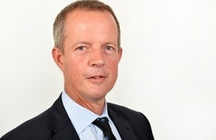
    Below is the text of the statement made by Nick Boles, the Minister of State for Skills, in the House of Commons on 10 March 2016.

    With permission Mr Speaker, I would like to make a statement about apprenticeships. As you know, Mr Speaker, I am evangelical about apprenticeships. We do not always agree with each other on every question, but I know that to a woman and to a man, all my right hon. and hon. Friends share this passion.

    We believe in apprenticeships, because they are one of most powerful motors of social mobility and productivity growth. An apprenticeship represents opportunity, aspiration, ambition—things that we Conservatives cherish. Apprenticeships make our companies more competitive. Some 70% of employers report that apprentices help to improve the quality of their product or service. They offer people a ladder to climb, with both higher pay and a sense of personal fulfilment at the end of it. A level 2 apprenticeship raises people’s incomes by an average of 11% three to five years later. A level 3 apprenticeship delivers a 16% boost.

    Apprenticeships improve the diversity of the workplace: 53% of the people starting an apprenticeship in 2014-15 were women; 10.6% were from a black or other minority ethnic background, up from 8% in 2009-10; and 8.8% had a disability or learning difficulty. An apprenticeship can take you anywhere. Sir Alex Ferguson did one. So did Jamie Oliver. And Karen Millen. And Sir Ian McKellen. So, too, did the chairmen of great businesses such as Crossrail, WS Atkins and Fujitsu.

    The Government have great ambitions for our apprenticeships programme. In the previous Parliament, 2.4 million people started an apprenticeship; by 2020, we want a further 3 million to have that opportunity. We do not just want to see more apprenticeships; we want better apprenticeships in more sectors, covering more roles. The first thing we need to do is persuade more employers to offer apprenticeships. At the moment, only about 15% of employers in England do. In Germany, the figure is 24% and in Australia 30%.

    We are therefore introducing a new apprenticeship levy that will be paid by all larger employers—those with an annual payroll bill of £3 million or more. This will help us to increase our spending on apprenticeships in England from £1.5 billion last year to £2.5 billion in 2019-20. Employers who pay the levy will see the money they have paid for English apprenticeships appear in their digital account. They will be able to spend it on apprenticeship training—but only on apprenticeship training—and as my right hon. Friend the Chancellor has emphasised, employers will be able to get out more than they put in.

    We are also making sure the public sector pulls its weight and follows the fantastic example of our armed forces, which, between them, employ 20,000 apprentices at any one time. We plan to introduce a new target for public sector organisations employing over 250 people in England. They will be expected to ensure that at least 2.3% of their staff are apprentices. We are using the Government’s power as a customer too. Procurement rules now stipulate that bidders for central Government contracts worth more than £10 million and lasting over 12 months must demonstrate their commitment to apprentices.

    We are not only committed to greater quantity; we want to see better quality too. We have already stopped the short-term, low-quality, programme-led apprenticeships developed by the last Labour Government. They made a mockery of the concept and tarnished the brand. We are now asking groups of employers to develop new apprenticeship standards that will help them fill the skills needs created by new jobs and new industries. Some 1,300 employers are involved in this process, and we have published 210 new standards so far. A further 150 are in development. We are also establishing a new employer-led institute for apprenticeships to approve these new standards and ensure that quality is maintained.

    Sixty of these new standards are higher and degree apprenticeships. We want everyone making a choice about their next steps after the age of 16 or 18 to know that the decision to do an apprenticeship is not a decision to cap their ambition or turn down the chance of a degree. It is simply a decision to progress in a different way—to learn while they earn and to take a bit more time, to bring home a wage and avoid large student loans. Next week is National Apprenticeship Week. I hope that the House of Commons will today speak with one voice. Apprenticeships are for everyone and can take you anywhere. I commend this statement to the House.

  • David Cameron – 2016 Speech at Vauxhall on EU

    davidcameron

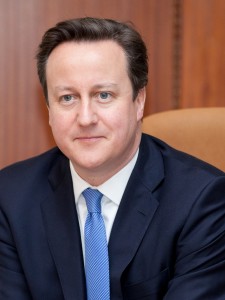
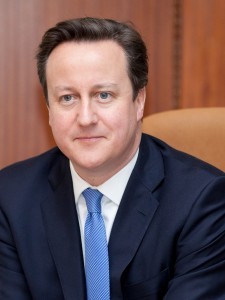
    Below is the text of the speech made by David Cameron, the Prime Minister, at Vauxhall on 10 March 2016.

    Introduction

    There is going to be lots of debate about Europe over the next 3 and a half months.

    But the biggest issue on the ballot paper on June 23rd is this: our economic future.

    And as I’ve said before, the question isn’t whether Britain could still be a great country outside Europe. Of course we could.

    The question is: where will our economy be stronger; where will our children have more opportunities; where will families have the most security; where will Britain be better off – in or out of a reformed Europe?

    I know that as people make up their minds, what they want – more than anything – are the facts and arguments.

    But I know people also want to understand more about Europe, and in particular the single market.

    So today, I want to explain what this market is, how it works, and what its advantages are – and crucially how it should change in the future, under the agreement I negotiated and what that means for you, in terms of jobs, prices, investment in our economy, and your family’s financial security.

    At the same time, I want to challenge those who advocate leaving to be equally clear about the alternatives that they propose for our relationship with this single market.

    Because if there’s one thing lacking in all they have said so far, it is specifics, particularly about this issue.

    What trade relationship would Britain have with Europe? What deals would we sign with the rest of the world? What tariffs would British business have to pay?

    There are so many people in this country who need answers.

    The farmer wondering if his beef will be subject to duties.

    The factory worker wondering if his company will cut investment.

    The young graduate wondering whether she’ll be able to get a job.

    That to me is the difference in this referendum.

    On the one side, we have facts about how a single market in a reformed Europe makes Britain better off, all drawn from experts’ projections, and other countries’ experiences.

    On the other side, we have unanswered questions.

    So as you make what will be the most important decision for this country in a generation, let me take you through the three big advantages of the single market:

    First, how it allows businesses, like this one, to trade tariff-free with the European Union.

    Second, how it removes the barriers that not even the best free trade agreements can completely tackle.

    And third, how it enables the European Union to strike the most ambitious and comprehensive trade deals with the world.

    And as I do this, I want to turn to the big questions that leave campaigners need to answer.

    Remain: Tariffs

    So first, selling to a continent full of customers – 500 million people – tariff-free.

    Before we joined, we faced extremely high tariffs:

    14 per cent on cars.

    17 per cent on bicycles.

    32 per cent on salt.

    37 per cent on china.

    Even, oddly, 20 per cent on gloves – but only 13 per cent on socks.

    This all meant higher costs for businesses and for consumers – and less choice on our supermarket shelves.

    Today, there is one tariff in the single market: and it is zero per cent.

    And what it means is this:

    A British businesswoman can sell her goods in Berlin as easily as she can in Birmingham.

    A lorry that sets off from Sunderland doesn’t have to deal with layers of bureaucracy in every country as it heads towards for instance Salzburg.

    And industries that were once struggling to survive are now thriving.

    Let’s take your industry: cars.

    For every 100 cars we make, 23 stay here in Britain, 33 are sold beyond Europe – but the biggest proportion, 44 of that 100 cars, they go to the continent.

    Why? Not just because of our proximity.

    But because those cars – made inside the single market – are around 10 per cent less expensive than if they had been subject to the tariffs that are imposed outside the single market.

    And it’s not just the selling that depends on Europe; it’s also the making.

    Because in the single market, components are tariff-free, too.

    And that is vital to Britain, where 59 per cent of car parts by value are imported.

    So as you look at the cars that are lined up here, ready to be shipped, you’re looking at an industry that is completely integrated with the single market.

    And that’s good for the people of this country – it creates 140,000 jobs in the car industry; supporting an extra 300,000 jobs; and generating £12 billion a year for our economy.

    So many industries benefit from a tariff-free Europe.

    Look at chemicals and pharmaceuticals – nearly 140,000 jobs; worth over £22 billion pounds; selling over 50 per cent of their exports to Europe.

    Look at food industry – 370,000 jobs; worth almost £20 billion; selling over 55 per cent of exports to Europe.

    So when I hear people argue that, by being in this single market, we are “shackled to a corpse”, I say: you won’t find the people in these industries saying that; or the towns whose employment depends on them.

    It’s by being in the single market that so many of our companies are growing.

    And it also helps us attract a huge amount of investment to the United Kingdom.

    Of course, businesses invest in Britain for many reasons – our skilled workforce, our flexible labour market and low taxes.

    They invest because of our effective but low regulation – one of the least restrictive in the OECD, in fact, despite our membership of the European Union.

    And they invest because our economy is strong.

    That’s worth thinking about for a moment.

    When we entered the European Community, back in the 1970s, with high inflation and frankly zero confidence in our economy.

    Today, 40 years later, our country is much stronger and better off – with one of the fastest growth rates and lowest unemployment rates in Europe.

    Now of course, we have turned round our country’s fortunes through our own efforts – not least through fundamental reforms in the 1980s.

    But when you consider the country Britain is today compared to when we joined the EU, it is hard to sustain the argument that being in has hobbled us or crippled our ability to do well.

    Far from holding us back, our membership of the EU is one reason why countries want to invest.

    And every day, foreign companies invest £142 million here in Britain, companies like BMW, Bosch, Ikea, Nissan and Siemens. And of course General Motors.

    That doesn’t just create jobs; it helps us to finance what economists call our current account deficit – meaning we can pay our way in the world.

    And it’s small businesses that are affected as well.

    Nearly a third of Federation of Small Businesses members import or export overseas, and 80 per cent of those who export sell to Europe.

    And it’s not just those trading directly with Europe; it’s those connected to that process – in the jargon, in the supply chain: the factory that makes the components for the car company; the local printer who makes leaflets for the factory; the sandwich shop that caters for the printers.

    So many businesses succeed, directly and indirectly, because of this free-trade system.

    Indeed, 3 million people’s jobs in our country are already linked to it.

    And, because of the changes and reforms I’ve secured in Europe, I’m determined that many more businesses will succeed, too.

    During that renegotiation I got some clear commitments: to complete the single market in services, in digital and in energy.

    This really matters for a country like ours because over three quarters of our economy is made up of the service sector, and we are one of Europe’s leaders in technology and renewable energy.

    So the result is clear: more jobs, more investment, lower prices, greater economic security – and hardworking families better off.

    Leave: Tariffs

    Those who want to leave aren’t clear about what sort of access that we’d have to the single market after we’d left.

    Clearly there would be a strong case for trying to secure full access.

    But as the German finance minister made clear last week, if you want that you must pay into the EU and accept complete the free movement of people – two of the reasons many people cite for wanting to leave the EU in the first place.

    Norway is one example of a country we could follow. They have almost full access to the single market.

    But they pay into the EU; accept nearly double the number of EU migrants per head that we do and still have to put up with tariffs on some of their goods.

    Crucially, they have no say on the rules of the single market, whereas we do.

    Now others will say: let’s sign a free trade agreement like Canada is doing. And yes of course – perhaps we could.

    But their free trade agreement is not anything like being in the single market and it retains a number of tariffs and quotas.

    Will Canadian farmers have unrestricted exports for their produce? No.

    Will Canadian car makers be able to sell their cars in Europe without cumbersome rules on the origin of each part? No.

    Their agreement with the EU is over 1,400 pages long – 700 of which are exemptions from free trade demanded by either side.

    Now that might work for Canada, which sends around a tenth of its exports to Europe.

    But it wouldn’t work for Britain, with around half our exports going to Europe.

    Then there are those who will argue that we could pull out of the EU and fall back on World Trade Organisation rules.

    But that wouldn’t mean tariff-free trade.

    Even with the WTO Most Favoured Nation treatment, we’d be exposed to tariffs of 10 per cent on our cars, 11 per cent on clothes and 36 per cent on average for dairy products. What would happen to jobs in those sectors?

    Of course, each of those three outcomes, access to the Single Market, but accepting fees and migration; a free trade agreement; or WTO rules, all of these are do-able. And people who want to leave the EU should decide which they favour.

    But there is another key question. Would Britain get a good deal?

    Now here I want to cut through some of the rhetoric.

    Because we have the leave campaigners saying any hint that you think Britain may not get a good deal is somehow “talking Britain down”.

    And we have remain campaigners saying it’s all very difficult and all very hard.

    So I just need to present you with the facts, so you can make up your own mind.

    If Britain was to vote to leave, we would have to enter discussions with the EU on what our trade relationship should be like.

    And these will be the negotiating dynamics:

    One nation negotiating with 27 nations.

    Britain’s market of 60 million negotiating with a European market of 440 million.

    Britain, a country which sells 50 per cent of its goods to a European bloc, compared to a European bloc which sells only 7 per cent of its goods to us.

    Those are the facts. I will leave it to you to judge who the balance favours.

    Remain: Non-tariff barriers

    Now the second big advantage of the single market is that it doesn’t just eliminate tariffs, it eliminates other barriers to trade – things that are known as non-tariff barriers.

    These are the often more technical rules but they impose hidden costs on businesses.

    Things like refusing to recognise the professional qualifications of your staff.

    Or saying that your company has to set up a separate legal entity in every single country you want to trade in.

    This is particularly important for Britain, which relies less on goods, which are hindered by tariffs, and more on services, which are hindered by these non-tariff barriers.

    We’ve already demonstrated how effective we can be at bringing down the barriers.

    In the 1980s, a lorry load of goods setting off from Manchester to Milan would be carrying 88 separate documents.

    Today, thanks to this internal market which we drove forward, they have been replaced with just one piece of paper.

    Before the 1990s, airlines could be blocked by other countries from flying where and when they wanted.

    Britain helped end that, and that spawned EasyJet, Ryanair and Jet2.com, and opening up the continent to British businesses, students and holidaymakers, making travel much, much cheaper.

    Of course it’s not always easy.

    There are times when changes to these non-tariff rules can cause us problems. But frankly that’s no surprise when you have an organisation of 28 different members.

    But on the big questions, we have a seat at the table to help shape those rules and promote Britian’s industries.

    One of the biggest non-tariff barriers is the ability of countries to ban your product on the basis of often spurious concerns.

    With a seat at the table and enforceable rules, we are able to challenge those things.

    And that’s what we did in 2001 when the European Court of Justice overturned France’s bogus ban on British beef.

    Without the single market, there are obstacles to selling meat for instance to some of our biggest trading partners – even our friends, like America.

    How much British beef do you think we sell in America? None. All because of restrictions that are nearly 20 years old.

    That shows just how important it is to be able to shape the rules to suit our interests, which the single market in the EU enables us to do.

    Then there’s for instance the financial services, employing 1.1 million people in this country and adding £133 billion pounds to our economy.

    This industry goes way beyond London; two-thirds of financial sector jobs are based outside the capital.

    All have the benefit of being able to trade in the single market of 500 million people without having to set up an office anywhere else other than the UK, because we are in the EU.

    Recently, there was move that could’ve forced UK-based companies that clear euros – a bedrock of our financial services, to move inside the Eurozone.

    That could’ve been deeply economically damaging for our country.

    But we had our seat at the table, and we were able to stop it.

    And through my renegotiation I’ve made sure a proposal like that can never happen again.

    And let me be clear: I am the first to say that there needs to be further reform of the EU.

    My renegotiation isn’t the end of the road for reform.

    It’s another important milestone in our ongoing mission to make sure the EU works for us.

    Leave: Non-tariff barriers

    Now what about the alternatives?

    We need to be clear.

    If we voted to leave, we could sign the best possible free trade agreement in the world with the European Union, but it still would not come close to giving British companies the access they get to the world’s largest free trade area from the single market.

    Why?

    Because – and this is really important point – even the best free trade agreements leave many of these non-tariff barriers in place.

    For British firms like this, it would be a return to the bad old days of endless forms and burdensome bureaucracy and, along with losing out on the benefits of a more complete single market, it could cost Britain over £50 billion, according to the London School of Economics.

    That’s not all. Those who want to leave Europe claim we would be repatriating powers.

    But leaving Europe would in many ways give us less control:

    We’d still be affected by its rules if we wanted access to the single market – we just wouldn’t have any influence over them.

    Just ask Switzerland.

    There’s a reason their banks base substantial operations inside the UK: they have no agreement that guarantees their access to the single market.

    And then there is Norway.

    As their prime minister said only last week: “We lack influence in important decision-making processes in the EU. We have special arrangements on some issues, but basically we have lost our sovereignty.”

    That is what the Norwegian Prime Minister is saying outside of the EU because of the relationships they’ve signed with the EU. Now that’s a really important point.

    Remain: Trade deals

    The third big advantage of the single market is that it actually helps us to trade the world over.

    Those who imply there is some sort of choice, between trading with Europe on the one hand and trading with the rest of the world on the other hand, are wrong.

    It’s not either/or. We’ve got to do both.

    Indeed, the fact that we are part of such a huge market – of 500 million people – means our companies have the platform to grow, scale up quickly and take on the world.

    But on top of that, our membership of the single market means we are able to trade with many more countries beyond Europe, on a preferential basis, because the EU has free trade agreements with them.

    Adding those countries – like Mexico and South Korea – to EU member states means we can trade more easily with a third of the entire world.

    This really matters.

    The EU-South Korea trade deal may not sound like a big deal for Britain, but ask the people who work in this industry.

    Since it was implemented, car exports from Britain to South Korea have nearly quadrupled.

    And this is just the beginning.

    I put at the front and centre of my renegotiation clear commitments to complete more preferential trade and investment deals right across the world.

    There are another 9 on the way – from Japan to India and America.

    Take the EU-US trade deal, known as the Trans-Atlantic Trade and Investment Partnership.

    When complete, it will make it easier for one of the world’s richest economies to buy British products.

    But it isn’t just about the big industries that benefit. It’s also the small ones.

    A company like Amtico flooring – they could be free from tariffs of up to 12.5 per cent if they are allowed to send their stock between their Coventry and Atlanta plants.

    Think of Five Point Plus, who make car harnesses for children. They could sell their products to many more people.

    So we should see British business after business break into America – thanks to our deal through the EU…

    …which could make our economy up to £10 billion a year better off.

    Leave: Trade deals

    If we vote to stay in a reformed Europe, we know we get these preferential trade deals.

    But again, a vote to leave is a vote for huge uncertainty.

    Leave campaigners say countries would queue up to sign trade deals with us, and sign them quickly.

    But I believe that is guesswork. And guesswork at a time when we need facts.

    One fact is this: it can take years to strike trade deals. The Canada-EU deal took 7 years and it’s still not implemented.

    And that’s ignoring the fact that many of these countries may not even start negotiations until they know what relationship we have with Europe once we’ve left.

    What would happen to British jobs and business in that time?

    Here’s another fact: if Britain voted to leave, there’s a process under Article 50 of the European Treaty which would give us two years before all the trade deals we have through the EU – with over 50 countries – would fall away.

    Are those who advocate leaving saying they would’ve sorted out individual replacements with each territory and each bloc in that time?

    Fact number 3: countries like America have said they would much rather do regional trade deals like the one we are currently negotiating.

    As the US Trade Representative put it: the United States is “not particularly in the market for free trade agreements with individual countries”.

    Now look what happens to those countries who do such deals.

    When Switzerland signed a trade deal with China, they had to scrap tariffs on nearly all their Chinese imports, while some Chinese tariffs would only be dismantled over 10 or even 15 years.

    So this is the question: if we left Europe, who would we sign trade deals with? How long would that take? What would be the terms? How can we be sure no jobs would go in the meantime?

    We can’t.

    A vote to leave is a leap in the dark.

    Families’ finances

    So that’s what our membership of a reformed Europe offers: certainty.

    Tariffs abolished. Non-tariff barriers eliminated. A deeper single market completed. Trade deals with the rest of the world signed.

    Again, as Mark Carney has said, our continued membership reinforces our economic dynamism and leaving as he put it would be “the biggest domestic risk to financial stability”.

    When it comes to the single market, we can chart the sort of positive gains we will be looking at as it completes the reforms I’ve secured.

    The single market in services could see GDP increase by 2 per cent, action on e-commerce through the digital single market could be worth 1.7 per cent of EU GDP and those forthcoming trade deals could boost our GDP, too.

    These gains cannot be dismissed.

    Every one per cent increase in GDP is equivalent to more than an additional £275 per person.

    And this extra growth could also mean billions more in tax receipts to spend on our schools, our hospitals, our army and our police.

    So this is the bright future we could have in a reformed Europe.

    Let me be clear: this isn’t the whole economic case for membership; it is just the gains we can get from staying in a reformed single market – there will be fuller Treasury analysis in the coming weeks.

    But it does show the sort of gains our membership of a reformed European Union could deliver.

    And compare that to the alternatives.

    We’ve had some of the key leave campaigners admitting various things about leaving Europe in the last few weeks.

    They’ve said it might lead to job losses.

    That there would be dislocation, uncertainties and costs.

    That there would definitely be some problems, even pain.

    That they cannot offer any guarantee that jobs wouldn’t be lost.

    That there could be higher tariffs.

    And that there would be an economic shock.

    It’s worth remembering what a shock really means.

    It means pressure on the pound sterling. It means jobs being lost. It means mortgage rates might rise. It means businesses closing. It means hardworking people losing their livelihoods.

    For those who advocate leaving, lost jobs and a dented economy might be collateral damage, or a price worth paying.

    For me, they’re not. They never are. Because there’s nothing more important that protecting people’s financial security.

    That’s why I believe we are better off in.

    Conclusion

    And it’s not just me. So many who create jobs and growth in this country agree.

    Look back over the past 3 weeks.

    Carmakers, like BMW, Ford, and yes, Vauxhall.

    Telecoms companies, like BT and Vodafone.

    Aerospace manufacturers, like Rolls Royce and Airbus.

    Retailers, like Asda and Mothercare.

    Pharmaceutical companies, like AstraZeneca and GSK.

    Travel firms, like EasyJet and Tui.

    And our biggest investors, like O2 and General Electric.

    Together, along with a whole host of other businesses, all have said we are better off in.

    Now those on the other side may plead it’s all a conspiracy of scaremongering.

    I would ask yourself: is it?

    Because these companies are actually making a positive case – positive arguments about jobs and investment but they also know how fragile the global economy is – and how perilous it would be for Britain to burn bridges with our biggest trading partner.

    So this is the message I want to go out – to the eurosceptic and the agnostic; the floating voter and the first-time voter:

    Taking advantage of the single market is one of the ways this country has made itself great.

    As I’ve said before, I don’t love Brussels; I love Britain – and my mission is to make it greater still.

    Looking at what the experts say and the way the evidence points and viewing it all in the light of our financial security, and what makes our people better off, I believe the best way to do that is by remaining in a reformed Europe.

    And I hope that’s what we’ll do – for the sake of every family in our great nation.

    Thank you.
  • Dan Jarvis – 2016 Speech on Inequality

    ????????????????????????????????????

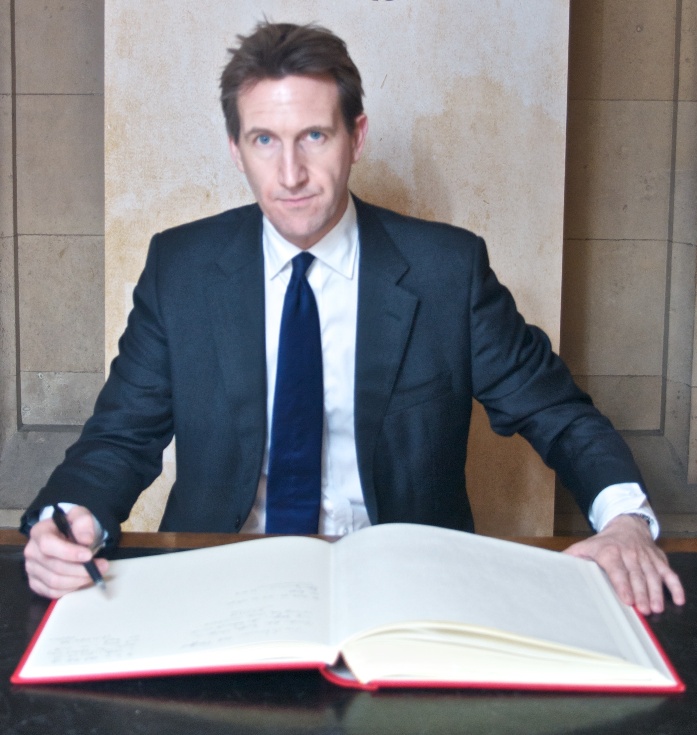
    Below is the text of the speech made by Dan Jarvis at Demos in London on 10 March 2016.

    Thank you Phil and thank you Demos for inviting me to join you today.

    I recently celebrated – if that’s the right word – five years since I was elected to Parliament in the Barnsley Central by-election.

    I suppose it would be impossible to swap the trenches of Helmand for the green benches in Westminster and not experience a few surprises.

    The working conditions for a start. When you once spent two weeks in which every single meal consisted of the same British Army ration pack – what was described – somewhat optimistically – on the packet as ‘pork casserole’ – you can find it hard to sympathise with complaints about the food in Westminster!

    Or the hours, for that matter.

    Or the cramped offices.

    Trust me, it could be worse…

    But hey – at least in the modern dynamic institution that Parliament is, I still have somewhere to hang my sword!

    But there has been one way in which my civilian life has proved harder than the military life.

    The training in the Army prepares you to deal with the emotional impact of what you see.

    There is a job to be done and you get on and do it.

    I went to war three times in three different places and managed to do it without shedding a tear… other than on the 14th day of being handed pork casserole rations!

    But I don’t mind telling you that when I first heard the Barnsley Youth Choir sing, I struggled to hold it together.

    It wasn’t just the music that got to me, although it was amazing.

    It was the thought of those talented young people, full of the joy of life, full of hope, full of ambition.

    It was the sorry thought that at least some of these young people, or others like them, will be let down.

    It was a sense of shame that we do not do more to secure the future for the kids in Barnsley.

    More than half of the youngsters in my constituency leave school without five good GCSEs. And my constituency is by no means unique.

    All over the country there are people getting little or nothing from the political process.

    It sounds hollow to these people when we talk about how prosperous Britain has become, what a great recovery it has made.

    I do not wish to suggest that it is not true or indeed to begrudge anyone their success.

    But the purpose of my party, the Labour party, is to give a voice to those who have not yet seen their fair share of the rewards.

    Those who feel no one is listening.

    Now, I do not have as good a voice as those in the Barnsley Youth Choir, but I will do my best.

    ROOTING OUR POLITICS

    The Labour party was founded to improve the lot of working people. There is no mystery to what it was about.

    Labour. Work.

    Keir Hardie said that the British are a practical people, not given to chasing bubbles.

    The people I meet, the people I am talking about, don’t attend economic seminars.

    They don’t follow the doctrinal discussions of the Labour party.

    They want to vote for a party that doesn’t just oppose the government. They want a party that beats the government.

    A party that gets into power for a purpose: to work on their behalf.

    Because make no mistake they are working hard themselves.

    I know a woman called Catherine in Barnsley whose story is distressingly common.

    Catherine is a cleaner and housekeeper. She juggles six different jobs in six different locations. She works more than 50 hours a week on the minimum wage.

    Despite working very hard, Catherine struggles to make ends meet.

    When I asked her how she was getting on she said she’d cut down on what she described as “luxuries.”

    But by “luxuries”, what she actually meant was things like new clothes.

    “I just work to exist,” she said.

    I know for a fact that Catherine doesn’t have the time to take much notice of what we do here.

    But the government we choose will shape her life more than most.

    This is why I became an MP. To listen to people like Catherine, to talk her language, and to act on her behalf.

    One of the most painful experiences in the 2015 election campaign was talking to people on the doorstep who didn’t really know what we stood for.

    Work. Family. Community.

    Those are the three ways in which most of us think about our lives.

    What did Labour have to say about those three things?

    What story did we have that combined the three?

    Even when people knew what our policies were they did not trust us to deliver them.

    We were talking a language from another planet.

    So that is why I am rooting my remarks today in a place and an experience 175 miles from here.

    THE ECONOMY UNDER GEORGE OSBORNE

    George Osborne is quick to take credit for economic growth.

    But look behind the headline figures and you see that this growth is a mirage for many people.

    To understand why, you just need to ask two questions.

    First, where is the growth coming from?

    The Chancellor promised an export-led recovery. He talked about the ‘march of the makers’.

    But as Iain Wright, Labour’s Chair of the BIS Select Committee has pointed out, George Osborne’s exports target to hit £1tn by 2020, is simply “pie in the sky”.

    Exports as a share of our national income have actually fallen from 29% to 27%.

    And rather than a regional rebalancing, we remain too dependent on financial services in the south east.

    Second, who is benefiting from the growth?

    Working people are not gaining. Their real wages fell by £1,600 a year in the last parliament.

    Recent research from the Centre for Cities found that only one in four British cities are delivering on Osborne’s plan for a ‘higher wage, lower welfare’ economy.

    And let’s be clear, whilst we welcome any increase, this is not a Living Wage which is being introduced this year; it’s a new Minimum Wage.

    Mr Osborne is fond of telling us he has fixed the roof while the sun is shining.

    Well, it’s not the roof I’m worried about, it’s the foundations.

    People talk about Westminster politics.

    Well this Chancellor gives us Westminster economics.

    Budget gimmicks. Deficit reduction targets missed. Promises broken.

    When you hear George Osborne say ‘long term economic plan’, what he really means is ‘short term political gain’.

    That is why people across the country, regard politics as a trade in illusion and self-interest.

    Cabinet Ministers who want David Cameron’s job are lining up to blame the European Union for every conceivable economic problem.

    But rather than his scare tactics on the EU, Boris Johnson might have a quicker route to No10.

    Because it’s not the EU that is leading the country into an economic mess it’s his leadership rival, George Osborne.

    With the Budget looming, I’m going to give him some advice:

    Stop gazing at the stars and start focusing on the foundations.

    And deliver a budget that’s in the National interest not your own.

    LABOUR AND THE CRISIS

    Now, the Tories have made things worse, no doubt about it. But let’s not pretend that all was well until 2010.

    It wasn’t.

    Labour dealt well with the immediate crisis of 2008 but it did not begin to get to grips with the longer term economic crisis that affects Britain.

    That is why, when we get back into power – we will need to be more radical than anything that went before.

    I became an MP less than a year after the Labour government left office.

    Many in our party felt passionately about defending the record of the last Labour government, others less so.

    And of course the Tories sought to blame that government for everything that was wrong in the country.

    And they did so with a ruthless clarity.

    The 2008 crisis was, in the words of the Treasury Permanent Secretary, Nick Macpherson,

    “a banking crisis pure and simple.”

    Labour did not cause the crash. But the place I represent suffered the consequences.

    A crisis, which began in the Deep South of America had deep effects in every corner of Britain.

    Small businesses found it harder to get credit.

    Employers began laying off workers.

    Homeowners struggled to pay the mortgage.

    The queues at the Jobcentre got longer.

    Families struggled to pay for food or fuel.

    I defy anyone to tell me it was wrong for Labour to step in and help those people.

    Of course it was the right thing to do.

    THE DEEPER CHALLENGE

    But if we keep fighting the battle of the 2008 crash we are in danger of missing the central point.

    To understand where Labour needs to change, I think we need to look more closely at what was going on before the crisis.

    In the good years. When the economy was growing, when inflation was low and when home ownership was up.

    Even in the good years the benefits weren’t being shared equally.

    Because the economy was changing in ways that at the time we didn’t fully understand.

    People in Barnsley saw on the news that Britain was booming but they didn’t notice it in their own lives.

    In too many cases, work didn’t pay – despite the minimum wage.

    For the average worker, their earnings growth was slowing four years before the crisis hit.

    Too often they had to rely on debt to get that car or new kitchen – unaware that more difficult times were round the corner.

    That was for people who were lucky enough to be in work.

    People who previously held steady, often skilled, jobs in manufacturing or mining have struggled to find employment as good since.

    In my part of the world, the Coalfield Regeneration Trust found that there are only 50 jobs for every 100 working age adults in the old coalfield communities.

    And what are the jobs? To many people in Barnsley, it can feel as if the growth industries are call centres or care homes.

    The pay was and is too low. The opportunity to develop skills is too rare.

    MOVING ON FROM NEW LABOUR’S APPROACH

    New Labour didn’t ignore these problems. In government, their approach had three elements.

    The first was flexible labour markets. By keeping regulation as light as possible, it would be easier for jobs to be created in Britain, rather than overseas.

    The second was skills so that workers could compete.

    Just down the road from my constituency in Orgreave where the old coking plant used to sit, there is now an Advanced Manufacturing Park.

    The fruit of partnerships between Boeing, Rolls-Royce, the University of Sheffield and others.

    It is one of the leading hubs for hi-tech manufacturing – trialing new technologies, taking on apprenticeships and training a highly skilled workforce.

    The third was tax credits. Even if people could only find jobs that were low paid, they would benefit from a top-up to their income.

    I am not saying this approach wasn’t without its successes, because it was.

    You will be glad to hear that I am going to spare you the usual litany of statistics setting out the investment the Labour government made in the public realm.

    However, if anyone thinks that government did nothing, I can certainly do it for you.

    But let’s be frank. It wasn’t enough.

    It didn’t get at the root causes.

    New Labour were intensely relaxed about things they shouldn’t have been intensely relaxed about.

    New Labour didn’t see – with sufficient clarity – the downsides of globalization.

    They knew it meant cheap consumer goods. But, they didn’t recognize that too often, it meant cheap labour too.

    Research from the TUC found that although we boosted the incomes of the poorest, the wage gap between the top and the bottom continued to rise in the years before the crisis.

    And today the average income in Barnsley is still over £100 a week less than the average income in Barnes in London.

    I believe this gap matters.

    It’s bad for our economy.

    It’s bad for our communities.

    And it’s bad for our politics too. If people feel the system works against them, they will turn away from us, or from politics altogether.

    To think otherwise reflects a poverty of ambition for a progressive party.

    It’s a false choice to say we must either champion Labour’s record in government or denounce it.

    The truth is we should defend our achievements and learn from our mistakes. To anyone outside Westminster, that’s common sense.

    LABOUR: THE PARTY OF WORK

    But another truth is that insecurity and inequality on the scale we see today do not help our economy.

    If businesses are not prepared to invest, it does not matter how cheap the labour is. If firms can’t raise the capital, even skilled young people will struggle to find work.

    And if businesses want to invest in one industry, but the local workforce is skilled in another, the investment and jobs will go elsewhere.

    And that is why the next Labour government must take a more radical economic approach – more radical than we had under Tony Blair, Gordon Brown and Ed Miliband.

    Labour must always be the party of work and jobs, so that nobody is left behind.

    If we do not share the proceeds of growth fairly then the moral foundations of our economy are called into question.

    Put simply, Labour needs to be tough on inequality, tough on the causes of inequality.

    So our challenge now is to turn this into the practical action that people outside Westminster want to see.

    That means many things and I cannot cover all of them today.

    But I do want to make three suggestions to contribute to this debate:

    We need a government that is more active.

    We need businesses that look to the long term.

    And we need trade unions that stand up for our workers.

    ACTIVE GOVERNMENT

    The first change relates to the role of government.

    In 2009, the Labour government of Gordon Brown led the way in coordinating action through the G20 and in a fiscal stimulus at home. The case for a more active government could not have been stronger.

    But there are areas where we weren’t ambitious enough. Take capital investment, which was due to fall as the last Labour government left office.

    At a time when borrowing costs are so low, this is the right time to make productive investments.

    Not least in the Northern Powerhouse, which will struggle to get off the ground without a proper transport infrastructure.

    A worker in the North on average has to work 18 months to generate the same economic growth that a worker in London produces in a year.

    And recent research from Demos found that three in five English towns are falling behind their neighbouring city on socioeconomic indicators.

    Overcoming these regional challenges is not a provincial question – it should be a national priority.

    Part of the answer may lie in greater devolution of both powers and investment.

    That’s why I commend the work our Labour Councillors are doing to fight for devolved power to address this inequality.

    Industrial strategy cannot be limited to, or made purely by people within, the M25.

    Part of the answer undoubtedly lies in greater R&D. The Institution of Mechanical Engineers, where we are today, was founded in Birmingham with the following mission statement:

    ‘To give an impulse to invention likely to be useful to the world’.

    I am not sure we are yet living up to that ambition.

    At the moment, Britain spends less than France, less than Germany, and less than half of what South Korea spends on R&D.

    And part of the answer will be found in supporting and nurturing our home grown talent and industries.

    British businesses and entrepreneurs lead the world in many areas – from the Creative Industries, to car manufacturing, to aerospace.

    These are industries we can be proud of. Industries we should back so that they can compete and win in the global market.

    Industries where we can be proud to say:

    ‘Made. In. Britain.’

    And when it comes to infrastructure, I know that political realities often make big infrastructure decisions extremely difficult.

    Let’s be honest – MPs who represent areas along the HS2 route or in the Heathrow flight path have a tough call about whether to vote for these schemes.

    So let’s take out the politics.

    Let’s look at new powers that allow the government to refer major infrastructure decisions to the National Infrastructure Commission for an independent decision on whether projects should go ahead.

    BUSINESS FOR THE LONG-TERM

    The second change relates to the role of business.

    People in Barnsley know they won’t get a pay rise if the company isn’t doing well.

    So I want businesses to do well. I want them to make profits. I want them to be able to use those profits to pay dividends to their shareholders – including employee owners.

    Where that system works well, we all benefit. As customers, we benefit from the production of new goods that we want to buy.

    As employees we benefit from higher wages. And as savers we benefit from the dividends being paid into our pensions.

    That is how the capitalist system should work.

    As servant, not as master.

    With a deep-rooted moral imperative, supplying goods that people want.

    In Britain today, that is not how the system works. In particular, too many companies are focusing on the short-term buck rather than long-term value.

    Fifty years ago the average share in a British company was held by an investor for 8 years. By the crisis it was down to 8 months. With high frequency trading, it could be just 8 seconds.

    In this environment, shareholders aren’t long-term investors. They’re more like ‘punters at the races’.

    They aren’t putting in patient capital in the hope of a steady income or a long-term reward. They’re looking for a quick rise in the share price.

    And if that is what investors want, that is what CEOs will find themselves pressured to deliver.

    In that situation it’s no surprise what happens. Businesses cut back on long-term investment so they can manage the short-term numbers instead.

    That is why we must act to encourage long termism in business.

    That means considering some radical options – like rebalancing our corporate tax system, which favours risky debt over equity.

    And it might mean looking at the rights of shareholders, so that those who own the shares for longer have greater rights and those who buy in during a takeover bid don’t get an unfair say.

    Rachel Reeves has argued persuasively for these and other measures to be considered to encourage long termism.

    I think she is right and I think we need to make this debate a priority.

    ROLE OF TRADE UNIONS

    The third and final change relates to the role of trade unions.

    At a time when workers feel weak, those who stand up for them must be strong.

    This does not mean a return to the 1970s.

    You only need to look at my constituency, the headquarters of the National Union of Mineworkers, to see that the world has moved on.

    And even the remaining super unions are bound by ever-tighter legislation as a result of successive trade union reforms – not least the undemocratic Trade Union Bill currently going through Parliament.

    A Bill, which if passed under this Tory government, should be repealed by the next Labour government.

    Today the nature of work and the types of jobs available are changing.

    A labour market which has changed beyond recognition in my lifetime, will change again as a result of automation.

    Our Deputy Leader, Tom Watson, is leading important work on how we address the challenges this creates. As he told the EEF last month, 35% of today’s UK jobs have a high chance of being automated.

    Jobs we often take for granted as being there – jobs like checkout assistants, cleaners and truck drivers – may no longer exist.

    That’s where I believe the trade union movement can play a pivotal role. Because since their foundation, trade unions have both protected and educated workers.

    That work continues today across the trade union movement.

    In my own town, Northern College works with Unison, the Bakers, Food & Allied Workers Union, the RMT and UNITE to provide education and training to adults wishing to learn new skills.

    One of the best and most recent examples refers to the steel industry.

    The trade union Community has fought relentlessly in recent years to save Britain’s steel industry and to protect those working in it.

    But with significant job losses now taking place across the country, Community aren’t just shrugging their shoulders and giving up.

    They’re working with the people who have lost their jobs to retrain them so that they can reskill and secure a bright future for themselves and their families.

    And they’ve recently launched The Changing Work Centre in partnership with The Fabian Society.

    Chaired by Yvette Cooper this will look at how we can create a progressive agenda in the modern world of work – one that has the interests of workers at its heart.

    And we must put the interests of workers at the heart of the most important economic decision facing this country in a generation.

    Alan Johnson is brilliantly leading Labour’s campaign. He is making clear that the UK’s continued membership of the European Union is vital to British jobs, investment and exports.

    And the Trade Unions are working hard to defend important workers’ rights that would be at risk if we left the union.

    As Tim Roache, General Secretary to the GMB stated:

    “Does anybody actually believe that the European laws on things like maternity and parental leave, health and safety protections, equal rights for part time workers, TUPE, paid holidays and so much more would be protected by the Conservatives…Dream on if you do.”

    Trade unions can help us make the modern economy work.

    That’s going to involve government working in partnership with trade unions – not punishing them.

    It’s going to mean expanding collaboration between government and unions in the areas of learning, skills and education; adopting a culture of lifelong learning.

    CONCLUSION

    That culture is what I want for the young people in the choir who brought a tear to my eye.

    I want them to go out into the world charged not just with the hope that they can make a difference but the expectation.

    Our country is not set up to receive them at the moment.

    Our task is to make it so.

    To provide the dignity of work.

    Support for the family.

    Prosperity for the community.

    We are a practical people, not given to chasing bubbles.

    We are a party of work. A party of Labour.

    I think about the young voices that moved me and I realize that I have fought many battles in my life, but none so important.

    Thank you very much.

  • Jeremy Hunt – 2016 Speech on a Blame Culture in the NHS

    jeremyhunt

    Below is the text of the speech made by Jeremy Hunt, the Secretary of State for Health, at Lancaster House in London on 3 March 2016.

    Every year an estimated million patients die in hospitals across the world because of avoidable clinical mistakes.

    It is difficult to confirm the exact number because of variability in reporting standards, but if it is of this scale it sits alongside hypertensive heart disease and road deaths as one of the top causes of death in the world today.

    In the US they estimate it at up to 100,000 preventable deaths annually and in England the Hogan, Darzi and Black analysis says that 3.6% of hospital deaths have a 50% or more chance of being avoidable – that’s potentially 150 avoidable deaths every week. Holland and New Zealand make similar estimates.

    So today is historic.

    Distinguished guests, health ministers from across the world, Director General Chan from the World Health Organisation thank you for attending this first ever ministerial-level Global Patient Safety Summit. A special welcome to my friend and colleague the German Health Minister Hermann Grohe with whom I am jointly hosting the summit and who will organise a follow up summit in Berlin in a year’s time. And a warm thank you to the many people who have travelled long distances to be here as we aim to make a decisive step towards improving standards of safety in healthcare.

    In 1990 a bright 24-year old medical school graduate started his first job in medicine. He was a pre-registration house officer looking forward to a glowing career in surgery.

    In his first month he was attending to a 16-year old boy undergoing palliative chemotherapy. The boy needed two different injections, one intravenously and a second by lumber puncture into the spine.

    The intravenous drug was highly toxic – indeed fatal – if administered to the spine. But it arrived on the ward in a nearly identical syringe to the other injection. Both syringes were handed to the young doctor for the lumber puncture procedure and both injected into the patient’s spine.

    As soon as the doctor realised what had happened, frantic efforts were made to flush out the toxic drug from the boy’s spine. But it was to no avail and tragically he died a week later.

    So what happened next?

    You might think the most important priority would be to learn from what went wrong and make sure the mistake was never repeated. But instead the doctor was prosecuted and convicted for manslaughter. He and a colleague were given suspended jail terms.

    In this case the convictions were eventually overturned at the Court of Appeal. But the real crime was missed: as the legal process rumbled on, exactly the same error was made in another NHS hospital and another patient died because our system was more interested in blaming than learning.

    The blame culture doesn’t just create fear for doctors. It causes heartbreak for patients and their families as I discovered when I met the parents of 3-year old Jonnie Meek.

    Jonnie tragically died unexpectedly in hospital in 2014. His parents found their grief at losing Jonnie compounded several times over by the immense difficulty in establishing what actually happened. An independent report found: ‘Two different [hospital] trusts… Both responded in the same closed, unhelpful manner…[Jonnie’s parents] on the outside, unable to find a way in to ask simple questions. [NHS employees] blocked by fear…expectation of blame lead[ing] to defensive behaviours.’

    We are now working with Jonnie’s family to seek an order for a second inquest.

    But it shouldn’t need an inquest to find out the truth. Instead we need to ask what is blocking the development of the supportive, learning culture we need to make our hospitals as safe as they should be.

    Too much avoidable harm and death

    In England we have made much progress in improving our safety culture following the Francis Report into the tragedy of what happened at Mid Staffs.

    According to the Heath Foundation the proportion of patients being harmed in the NHS dropped by over a third (34%) in the last 3 years. MRSA bloodstream infections have fallen by over half in the last 5 years. We have introduced a new and much tougher peer-led inspection regime which has led to 27 hospitals being put into special measures, 11 of whom have now come out. The law has changed placing on all hospital trusts a statutory duty of candour to patients and their families when things go wrong. The government was elected on a firm commitment to make NHS care safer across all 7 days of the week and we are making good progress.

    But today I want to talk about the profound culture change necessary if we are to complete this journey: the change from a blame culture to a learning culture.

    A learning culture not a blame culture

    In his book Black Box Thinking, Matthew Syed talks about how that same blame culture used to exist in the airline industry.

    He tells the tragic story of United Airlines flight 173, where 10 people died in a crash that happened in December 1978. The pilot, Captain Malburn McBroom, was trying to rectify a potentially dangerous problem with the landing gear but failed to notice that the plane was dangerously low on fuel. When he was forced to crash land the plane, he did so with extraordinary skill saving the lives of over 150 passengers. But because of his mistake, he got tied up in a 7-year long court case, came close to suicide, lost his pilot’s licence, and ultimately died a broken man.

    But that tragedy had a surprisingly positive ending.

    Because it became the moment the airline industry realised that if it was going to reduce airline fatalities, it needed to change its culture. They realised that ‘human factors’, rather than technical or equipment failure had been at the heart of the problem. Anyone could have failed to notice low fuel levels when they were trying to fix the landing gear. Why didn’t other crew members spot the problem and speak out? The issue was not that particular person, but what could have happened to any person in the same situation.

    As a result the airlines transformed their training programmes. They mandated reforms that required pilots to attend group sessions with engineers and attendants to discuss communication, teamwork and workload management. Captains were required to encourage feedback, and crew members were required to speak up boldly.

    And the result? There were dramatic – and immediate – reductions in the number of airline fatalities. The number of deaths overall halved over 30 years – at the same time as air travel increased nine fold. 10 people died in the United 173 crash, but experts are unanimous that the learning that resulted has saved thousands more.

    Healthcare is of course very different to aviation.

    When someone dies in an airline accident you know there has been a mistake – whereas with over 1,000 deaths every year in the average hospital it is not always so clear. And while modern airplanes are undoubtedly highly complex, they are nowhere near as complex as the human body.

    But the airline industry did change its culture. And so can we.

    How? In my speech to the Kings Fund last June I talked of the 3 stages necessary.

    Intelligent transparency

    The first step is intelligent transparency.

    Intelligent transparency leads to action – and that means we need to understand the scale of the problem not just nationally but where we actually work.

    So following a request to NHS hospitals by Dr Mike Durkin, NHS National Director of Patient Safety, the NHS in England will this month become the first country in the world to publish estimates by every hospital trust of their own annual number of avoidable deaths. Methodologies vary, so the numbers cannot be compared, but it is a major step forward for every hospital trust to make their own estimate of avoidable mortality and be open about what they find.

    What you can compare, however, is the quality of reporting culture. Just how easy is it to speak about things that have gone wrong? Do hospitals listen to doctors raising genuine concerns or do they punish them as we saw happened to Dr Raj Mattu and other whistleblowers? So we yesterday published a table that grades the openness and honesty of reporting cultures in our hospitals. Chief Inspector of Hospitals Sir Mike Richards and NHS Safety Director Mike Durkin have looked at a range of indicators including staff survey measures of how supported frontline staff feel if they raise safety concerns, whether staff feel able to contribute towards improvements at work, and how effectively a trust uses the national reporting and learning system. On the basis of these indicators every trust has been graded as having an outstanding or good reporting culture – or as requiring improvement.

    Once we have validated both sets of data, the CQC will include them in a new annual report on the state of hospital quality which will be published from this year.

    The world’s largest learning organisation

    The second stage in changing culture is to use intelligent transparency to turn the NHS into what I have long wanted it to be: the world’s largest learning organisation.

    There is of course a huge amount of learning that goes on every day in our NHS. One study found doctors take 158 clinical decisions every day and we should never diminish their efforts to extract every possible piece of learning from daily work.

    The government too, has played its part by introducing the new CQC inspection regime; legislating for a statutory duty of candour; making progress – not always smoothly – towards a 7-day NHS; asking every trust to appoint independent freedom to speak up guardians so clinicians can relay concerns to someone other than their line manager; launching the Sign up to Safety campaign and recently the campaign to halve the number of stillbirths and neonatal deaths.

    But if we really are to tackle potentially avoidable deaths, we need culture change from the inside as well as exhortation from the outside. A true learning culture must come from the heart.

    And this means a fundamental rethink of our concept of accountability.

    Time and time again when I responded on behalf of the government to tragedies at Mid Staffs, Morecambe Bay, Winterbourne View, Southern Health and other places I heard relatives who had suffered cry out in frustration that no one had been ‘held accountable.’

    But to blame failures in care on doctors and nurses trying to do their best is to miss the point that bad mistakes can be made by good people. What is often overlooked is proper study of the environment and systems in which mistakes happen and to understand what went wrong and encouragement to spread any lessons learned. Accountability to future patients as well as to the person sitting in front of you.

    The rush to blame may look decisive. It may seem like professionals are being held accountable. In fact, the opposite can happen. By pinning the blame on individuals, we sometimes duck the bigger challenge of identifying the problems that often lurk in complex systems and which are often the true cause of avoidable harm.

    Organisational leadership is vital if we are to change this – and we can see world class organisations inside and outside healthcare have a very different approach. They have the boldness to probe more deeply, thus learning precious lessons. They see a medication error as an opportunity to make labelling clearer, a mistake in an operating theatre as a chance to improve teamwork and communication, just as airlines did after the crash of United 173.

    Which is why we need a new mindset to permeate the entire ethos of the NHS, where blame is never the default option. Justice must never be denied if a professional is malevolent or grossly negligent. But the driving force must be the desire to improve care and reduce harm – fired by an insatiable curiosity to pursue improvement in every sphere of activity. This is what I mean by the world’s largest learning organisation.

    And when we give patients an honest account of what happened alongside an apology, what is the impact? Countless academic studies have shown there is less litigation, less money spent on lawyers and more rapid closure, even when there have been the most terrible tragedies.

    Resources

    Some say that is all very well, but with hospitals in deficit what happens if you can’t afford to implement the lessons you learn about how to improve the standards of care?

    Even after the significant rise in the NHS budget announced at the autumn statement, the resources to tackle these deep-rooted issues are finite. But as Sir Mike Richards and many others have pointed out, it is quite wrong to make out there is a choice between safe care or balanced budgets because the evidence shows that hospitals with better care usually have better balance sheets as well.

    Of course there are times when safer care requires more resources, but unsafe care is even more expensive – in fact we know from the 2014 Frontier Economics report it costs the NHS up to £2.5 billion a year due to longer hospital stays, repeat visits and expensive litigation.

    A compensation culture costs money – £1.4 billion of the NHS budget – but it also costs lives by creating a culture of defensive medicine which means avoidable harm remains stubbornly higher than it should be because we make it so hard for frontline clinicians to speak openly and honestly about how to learn from mistakes.

    Next steps

    That means a profound change in culture.

    The recommendations from Sir Robert Francis’s Freedom to Speak Up review have not yet taken effect and there are still too many stories of whistleblowers being bullied or hounded out of their jobs.

    We must go further.

    Just as the Carter process announced last month will harness the power of transparency to improve our use of resources, so today I want to harness that same power to bring down the rate of avoidable deaths by turning the NHS into a true learning organisation.

    Following the commitment I made to Parliament at the time of the Morecambe Bay investigation, we will from 1 April set up our first ever independent Healthcare Safety Investigation Branch. Modelled on the Air Accident Investigation Branch that has been so successful in the airline industry, it will undertake timely, no-blame investigations.

    Harvard Professor Dr. Lucian Leape has said that ‘the single greatest impediment to error prevention in the medical industry is that we punish people for making mistakes’. So just as the Air Accident Investigation Branch gives a legal ‘safe space’ which protects those cooperating with its inquiries, we will bring forward measures to give similar legal protection to those who speak honestly to HSIB investigators so that the principle of a ‘safe space’ is at the heart of what the Healthcare Safety Investigation Branch does.

    Affected patients or their families will need to be involved as part of the safe space protection. And while the findings of investigations will be made public, the details will not be disclosable without a court order or an overriding public interest, with courts being required to take note of the impact on safety of any disclosures they order. This legal change will help start a new era of openness in the NHS’s response to tragic mistakes: families will get the full truth faster; doctors will get support and protection to speak out; and the NHS as a whole will become much better at learning when things go wrong. What patients and families who suffer want more than anything is a guarantee that no-one else will have to re-live their agony. This new legal protection will help us promise them ‘never again’.

    I have asked the new organisation to consider focusing initially on maternity and neonatal mortality investigations to give us time to examine and understand its effect before rolling it out to other areas of clinical activity. It is intended to make a major contribution to our new ambition to halve still births, neonatal injury and death and maternal death rates where we still rank unfavourably to many other high income countries.

    But it will not be limited to maternity. And as we create the legally safe space for learning that has long benefited the airline industry, we will in the words of NHS National Director of Patient Safety Dr Mike Durkin be taking ’the biggest single step in a generation to foster a positive learning culture that will support NHS hospitals to become safer for patients.’

    I can also announce some other important steps to help foster a true learning culture.

    The GMC and NMC guidance is now clear – where doctors, nurses or midwives admit what has gone wrong and apologise, the professional tribunal should give them credit for that, just as failing to do so is likely to incur a serious sanction. As in the airlines, doctors, nurses and other health professionals need to know that they will get credit for being open and honest and the government is committed to legal reform that would allow professional regulators more flexibility to resolve cases without stressful tribunals, where professionals have admitted their mistake.

    NHS Improvement will ask for this to be reflected in all trust disciplinary procedures and ask all trusts to publish a Charter for Openness and Transparency so staff can have clear expectations of how they will be treated if they witness clinical errors.

    From April 2018, we will be introducing the system of medical examiners recommended in the Francis Report. This will bring a profound change in our ability to learn from unexpected or avoidable deaths, with every death either investigated by a coroner or scrutinised by a second independent doctor. Grieving relatives will be at the heart of the process and will have the chance to flag any concerns about the quality of care and cause of death with the independent clinician.

    NHS England is working with the Royal College of Physicians to develop and roll-out across the NHS a standardised method for reviewing the records of patients who have died in hospital.

    The objective of these changes is to make it unnecessary for anyone ever to feel they have to ‘blow the whistle’ on poor care. But as we make this transition, it is vital that we offer whistleblowers protection wherever they are in the NHS so if we discover that there are any gaps in the law protecting whistleblowers, we will act to close them.

    Conclusion

    Karl Popper said true ignorance is not the absence of knowledge but the refusal to acquire it. So now is the time to use the power of intelligent transparency to make sure that we really do turn our healthcare systems into learning organisations – and offer our patients the the safe high quality they deserve.

  • Arlene Foster – 2016 Speech on Becoming First Minister

    arlenefoster

    Below is the text of the speech made by Arlene Foster in the Northern Ireland Assembly after she became First Minister. The speech was made on 11 January 2016.

    Mr Speaker, it was with great humility, an enormous sense of responsibility and the imagination of endless potential for Northern Ireland that I affirmed the pledge of office and take up this post today.

    I can think of no greater honour than to have the opportunity to serve my country and the people of Northern Ireland as their First Minister.

    I am truly humbled by the trust and confidence which has been placed in me and grateful for all those who have kept me in their prayers in recent days.

    As a young girl growing up in rural Fermanagh, the most westerly constituency in the whole of the United Kingdom, in the days when we were plagued by terrorism and decisions affecting our fates and our futures were taken far away, I could not have dreamt that I would be in this position today.

    Is it any wonder that in politics I believe that nothing is impossible.

    But the real measure of success is not in obtaining the office but in how it enables me to help others realise their dreams, ambitions and aspirations.

    For my part I want to make sure what is possible for me is possible for any young boy or girl growing up in Northern Ireland.

    For so many reasons, this is an historic moment.

    I take great pride in the fact that since Northern Ireland was created almost a century ago I am the first woman to hold such a post.

    It was with even greater trepidation still that I learned I am also the youngest person to have assumed this post.

    I hope that I can bring the perspectives that both these attributes have to the office.

    Indeed, at this turning point in our country’s history, as we seek to address the challenges of the future, I believe the moment is right for the next generation to assume leadership.

    The challenges that this generation face are very different to those that our forefathers did a century ago, but our fundamental values remain the same.

    The challenges in just five years time will be different again.

    Though I may be the youngest holder of this post I am not new to Ministerial office.

    Mr Speaker, you will be aware that this is not the first time that I have taken this Pledge of Office but over the past eight years have done so as the Environment Minister, the Economy Minister and most recently as the Finance Minister.

    I have learned much in all these roles that I will bring to my new office.

    I will be forever grateful for the opportunity that both Dr Paisley and Peter Robinson gave me to serve the community in Ministerial office and the rich legacy that I am inheriting in this office.

    That experience has prepared me for the challenges that will undoubtedly lie ahead.

    Last autumn we published the Fresh Start Agreement; and today we make a new start with our eyes focussed firmly on the future.

    But in looking to the future we will never forget the past.

    I am conscious of those who have not lived to see this day.

    Of course, I think particularly of my father who would have been so proud of what has been achieved.

    I also think of all of those who served the community in the security forces during the dark days of the Troubles and those whose lives were cut all too short.

    I make this promise: In all I do I will honour their memory.

    We are all shaped by our history and our experience.

    Many of us live with the scars, emotional and real that we have endured.

    Far too often during my earlier years I saw the devastating effect that terrorism and violence had on our community.

    We cannot allow the past to forever blight our future.

    That’s why I want to make sure that we never ever go back to the bad old days.

    I believe that the duty on me to make Northern Ireland work is all the greater for the sacrifice that they have made.

    The reward and legacy of those who gave their lives defending the Country is a stable and secure Northern Ireland within the United Kingdom.

    I also pay tribute to those who have served our community so well in positions of leadership over the last decades.

    It is because of what they have done that we have the hope for the future that we do.

    They have laid the foundations for the new Northern Ireland that we are seeking to build.

    But at this moment in our country’s history it is time for a new generation to step forward.

    To build on all that has been achieved and to move our country forward.

    Abraham Lincoln once said, “The best way to predict your future is to create it.”

    That is our responsibility now… to create a better future than the past and one where we can live together in a society free of strife and conflict.

    The challenges of our time are great, but they are different than in the past.

    The challenges of our time are great, but the opportunities for the next generation are greater still.

    The challenges of our time are great, but there are none that we cannot overcome.

    With Northern Ireland’s position in the United Kingdom secure, with devolution safeguarded, and with the economy growing again, we can have hope for the future.

    Over the years people from this small corner of the world have done remarkable things.

    We can do that again.

    In my role as the economy Minister for seven years I travelled the world seeking to bring jobs and investment home.

    In that time I am proud that we created more jobs from international investment than at any time in our past.

    One thing made that easy. It was the quality of our young people.

    When I travel across Northern Ireland I see people with abundant gifts and talents … sometimes held back by nothing but a lack of confidence and a poverty of ambition.

    The only thing that they lack is belief.

    I want to use this office to restore that belief and to give new hope.

    I want to instil a new confidence in our people and a pride in our Province.

    I want everyone to love this country with the same passion that I do.

    Leadership has many facets and many responsibilities but there is no greater challenge than to motivate and to encourage and to inspire.
    I want to bring hope to those who lack it and help to those who need it.

    I want us to live in a more harmonious society where we seek accommodation with one another and not conflict.

    Those in positions of responsibility in Government cannot do everything but we can act as an example to others.

    If only we believe in ourselves all things are possible.

    Mr Speaker, I make no apology for being a unionist but my role as First Minister calls on me to serve the whole community.

    I see that not just as a legal duty but a moral imperative.

    I want the same opportunities for every child in Northern Ireland as for my own.

    I want no section or part of the community in Northern Ireland to be isolated, marginalised or left behind whatever their background or way of life. That was Edward Carson’s vision of the Union and it is mine too.

    The best way to safeguard our history and culture and traditions is to make sure that we create a society in which everyone can have a say and play a part.

    That is why it is no coincidence that support for our constitutional position has never been stronger.

    I believe in Northern Ireland and the people of Northern Ireland. I believe we are a special people.

    People ask me what I want to do in office and what I want to achieve.
    My answer is simple. Like every mother, I am a practical person.

    Above all else, I want to look to the future and I want to get things done, I want to make Northern Ireland a better place and I want to strengthen our United Kingdom, I want to give our young people the future that has been denied to so many for so long.

    I want Northern Ireland to be a beacon to the world of how, by working together with political opponents and old enemies we can create a Northern Ireland we can all be proud of.

    I want to do all of that not in spite of my own past but because of it.

    I will work with anyone who can share that ambition of hope and will oppose anyone who would deny our people the future that they deserve.

    The people we represent deserve no less.

    I’m tired of Stormont being a watchword for arguing and bickering. That’s not why our people elected us. They did so to provide a better future for us all.

    I will do all I can to change the political culture of this place but I can’t change that alone. We can only do it by working together.

    I know from experience it won’t be easy. Real change never is.
    But I ask today that we find a new way of doing business, one that places a greater premium on consensus than on conflict.

    Mr Speaker, it is with great honour that today I accept the nomination to become First Minister.

    It is truly humbling that the girl who was raised and reared in Fermanagh has been given the opportunity to lead the country and the people she loves so much.

    Today is a new chapter in Northern Ireland’s story but when the history of this time comes to be written let it be said of all of us that we fought the good fight, we finished the race and we have kept the faith.

    Thank you.

  • Peter Robinson – 2016 Retirement Speech

    peterrobinson

    Below is the text of the retirement speech made by Peter Robinson when he stood down as the Northern Ireland First Minister. The speech was made on 11 January 2016 in the Northern Ireland Assembly.

    Mr Speaker,

    I am grateful for the opportunity to make this statement. It is typical of the fairness and courtesy you have demonstrated during your time in office that you provided me with this opportunity and made all the necessary arrangements. I can assure you that I do not intend to trespass on your generosity by speaking too long.

    Mr Speaker, it has been a great privilege to serve the people of Northern Ireland for almost forty years – with nearly eight of those years as First Minister.

    In this Assembly we have had our share of trials and ordeals but through them all we have emerged stronger. Every new institution composed of politicians who have known nothing other than being in opposition will have a learning curve while members mature, develop and adapt to taking responsibility – and while the more sensible ones – adjust their ambitions to fit the politics of what, with effort, is achievable. Crucially, after centuries of division, we had to outlive the growing pains of learning to work together, fashion shared policies and create a more inclusive society.

    It is a feature of every societal transformation that some will be displeased at the pace of change – some believing it to be too fast and others feeling it is too slow. Yet so much has been achieved and the platform now exists to do even more.

    Politics by its very nature is a combative endeavour and we don’t always take time to recognise the role that others play.

    I differ with some in this House on many issues but in my long experience in politics there are very few who are not well motivated and who do not act in the best interests of society as they see it. In whatever capacity they serve I admire those who devote their lives to public service.

    When we take a step back and with the perspective of history we can see just how far we have come. We now live in a new era.

    You only have to look around to see the progress that there has been not just in the physical structures that didn’t exist a decade ago, but in the lives of our people.

    Though we don’t always fully appreciate it, devolution underpins the level of peace and stability we enjoy today. After thirty-five years of stop-go government, devolution with local people taking the decisions, is once again the norm.

    That has allowed us the platform to recast Northern Ireland’s international image and to bring in more jobs than at any point in our history. Whereas once tourists avoided coming here we now attract people from all over the world.

    We not only provided for partnership government but we agreed the devolution of policing and justice functions. In recent months we have resolved the welfare reform issue and put the Assembly’s finances back on a stable footing. We have secured the devolution of Corporation Tax and agreed a rate and a date for commencement.
    We have agreed significant reforms to the way government operates with a reduction in the number of Departments and MLAs and the creation of an official opposition.

    In politics there is never a full stop, and much remains to be done but I believe that this is the right moment for me to step aside and to hand over the burden and privilege of Office.

    Dealing with the legacy of the past is a work in progress and reconciliation will be an ongoing enterprise but even here real progress has been made.

    The foundations have been laid and it will be for others to continue building.

    It would be remiss of me not to thank the deputy First Minister and all of those I have served alongside in the Executive over these past years.

    Through good times and bad we have worked together despite our many differences in background, temperament and outlook.
    Strangely we were at our strongest when the threat from outside the political institutions was at its greatest. The collective revulsion across the community and across this chamber following the murders of Sappers Mark Quinsey and Patrick Azimkar, as well as Constables Stephen Carroll and Ronan Kerr was the surest sign that we were never going back to the past.

    I thank my party colleagues for the opportunities they have given me and I wish all of them well for the future. I am absolutely certain that in Arlene, I have a worthy successor.

    I can assure her that I will not interfere in her work but that if she ever needs a word of encouragement or advice I will always be there to offer it.

    Mr Speaker, consistent with the terms of my letter of last Monday, I hereby resign the office of First Minister with confidence that the political institutions we have together created will be here for generations to come.

    Thank you.

  • Nick Gibb – 2016 Speech on Social Mobility

    nickgibb

    Below is the text of the speech made by Nick Gibb, the Schools Minister, at the Sutton Trust in London on 9 March 2016.

    Introduction

    Thank you, Sir Peter. Since you established the Sutton Trust almost 20 years ago, no organisation has done more to highlight educational inequality, develop the evidence on how disadvantage can be overcome, and demonstrate the decisive role schools can play in unlocking pupils’ potential.

    Every event you hold, every study you publish, contributes to a powerful, but simple argument: that for too many children the circumstances of their birth still determine the quality of education they receive and their life chances, but that this need not be inevitable.

    Moral purpose

    This view has not always attracted widespread support. Over 200 years ago, the Parochial Schools Bill of 1807 proposed a moderate expansion of the availability of basic education by increasing state funding.

    It was controversial – there was no agreement that this was a legitimate role for government or a worthwhile use of resources, and the bill failed to pass.

    But one MP, Davies Giddy, went further than the others in opposing the very principle of broad access to education. He said: “Giving education to the labouring classes of the poor… would teach them to despise their lot in life, instead of making them good servants in agriculture and other laborious employments to which their rank in society had destined them.”

    Thankfully, such offensive views are now so far outside the mainstream – and rare – that they would attract ridicule if repeated today.

    A welcome consensus has begun to emerge that schools can – and must – be engines of social mobility.

    This commitment to extend opportunity and ensure that every child receives the best possible start in life is at the heart of the government’s plan for education.

    It’s also a moral purpose around which the teaching profession is united. A survey of teachers last year found that the single most popular motivation for joining the profession was a desire to make a difference to pupils’ lives – cited by a staggering 93% of those polled.

    But a shared moral purpose is not enough – on its own it will not deliver the transformation in the life chances of the most disadvantaged children which we all hope to see.

    Attainment gap

    Last year, 57.1% of all pupils in state-funded schools achieved 5 A* to C grades at GCSE, including English and mathematics. But just 33.1% of pupils entitled to free school meals achieved the same standard.

    This underperformance has a clear financial impact. Department for Education analysis has found that pupils who achieve 5 or more good GCSEs (including English and maths) as their highest qualification are estimated to have lifetime productivity gains worth around £100,000 compared to those who fail to reach that level.

    But this blighted potential also has a social cost. When we fail to ensure that disadvantaged young people reach their potential, we perpetuate their under-representation in the most senior ranks of our professions and public service and diminish their voice in our democracy.

    Two weeks ago, the Sutton Trust published the latest in its long series of analyses looking at the proportion of senior figures educated in state and private schools.

    It found that 74% of our most senior judges attended private school, 71% of our top generals attended private school, and 51% of leading print journalists were educated privately. Just 7% of the population as a whole is privately educated.

    Progress

    The disparity between the educational opportunities open to disadvantaged pupils and their peers has become entrenched and expected over generations. Addressing this unfairness, so that every young person receives the preparation to fulfil their potential, will take many years.

    But the urgency with which we have pursued the goal of social mobility since 2010 is already showing promising results.

    In 2011, we introduced the pupil premium – a total of around £2.5 billion this year, allocated to schools for each disadvantaged pupil they admit. The pupil premium gives teachers the resources they need to provide additional support to these pupils, and the flexibility to adopt the specific interventions likely to have the greatest impact.

    We have funded the Sutton Trust and Impetus-PEF to establish the Education Endowment Foundation to provide teachers with the evidence on which to base their decisions. The EEF has helped to debunk failed teaching methods, including learning styles, and promoted effective approaches, including maths mastery. And the Sutton Trust’s report ‘What Makes Great Teaching’, produced by Professor Robert Coe and colleagues, has been invaluable to teachers.

    The department has recognised the overwhelming evidence that the most effective approach to teaching early reading is systematic synthetic phonics. In 2012, we therefore introduced the phonics screening check to help schools identify pupils struggling to master the basics of reading so that any difficulties can be quickly addressed.

    Since the check was introduced, the proportion of pupils reaching the expected standard has increased from 58% in 2012 to 77% last year – equivalent to more than 120,000 pupils reading more effectively. That’s 120,000 more pupils better prepared to develop a love of reading, and more likely to enter secondary school ready to succeed.

    And our ‘gap index measure’ shows that the gap between disadvantaged pupils and their peers has already narrowed by 7.1% at key stage 2 and 6.6% at key stage 4 since 2011.

    Our reforms to the primary curriculum are challenging and demanding, but the rewards colossal.

    They include our focus on phonics. As increasing numbers of schools adopt high-quality systematic synthetic phonics in the early teaching of reading, imagine the effect of ensuring every child leaves primary school as a fluent reader.

    And our new primary maths curriculum and plans for a multiplication tables check in year 6. Imagine if every child left primary school knowing their tables by heart.

    And the new grammar requirements, ensuring that every primary school is teaching English grammar – the first time for a generation.

    We have much further to go in building an education system which is truly the engine of social mobility it needs to be. But no government has done more, or made greater progress, than we have since 2010.

    More good places

    The most fundamental feature of an education system which promotes social mobility is one in which every child is able to attend a good school.

    Today, over 1.4 milion more children attend schools judged by Ofsted to be ‘good’ or ‘outstanding’ than in 2010, thanks to the hard work of teachers and the reforms introduced by government.

    The success of schools in London shows the way forward. In the capital, 60.9% of pupils achieve 5 A* to C at GCSE, including English and Maths; across England, the figure is 57.1%. Most strikingly, the attainment of pupils eligible for free school meals in some local authorities in London, including Tower Hamlets, exceeds the average performance of all pupils across England.

    But though schools in England have secured significant improvements, and some areas are achieving remarkable progress, we need to do more to ensure that every child attends a school which gives them the best possible start in life.

    The Secretary of State has characterised this challenge as the need to secure educational excellence everywhere – so that a pupil, in whatever circumstances, wherever they live, and in any school, receives the highest possible standard of education.

    Last year, I challenged the leaders of one local authority in the North West to address the entrenched underperformance in their secondary schools.

    Last year, 37.4% of pupils in Knowsley achieved 5 A* to C at GCSE, including English and Maths. This was 19.7 percentage points lower than the national average. The figure was even lower for pupils eligible for free school meals – at 20.5% – 12.6 percentage points lower than the national average.

    In response, the leader of the council wrote a public letter to me. He described my intervention as “distasteful and opportunistic”, and suggested that I should be reassured by the increase in their LA’s GCSE results last year: from 35.4% achieving 5 A* to C, including English and Maths, to 37.4% – still 19.7 percentage points below the national average.

    This council leader’s excuses for the underperformance of schools in his area represent an unacceptable complacency which prioritises maintaining a comfortable status quo for adults over protecting the life chances of children.

    The Education and Adoption Bill, shortly to receive royal assent, will give the department new powers to address failing and coasting schools.

    Failing schools, those judged by Ofsted to be inadequate, will automatically become academies, so that they can benefit from the expertise and support of a strong sponsor.

    Schools identified as coasting will be assessed by the relevant regional schools commissioner. Those with a credible plan to improve will be helped to do so; those with greater challenges will be eligible for intervention so that they become a sponsored academy.

    And the free schools programme, including studio schools and university technical colleges – which has created 380 new schools and 190,000 new places since it was established in 2010 – will continue to bring fresh ideas and new approaches into areas in need of additional high-quality places.

    We will deliver our manifesto commitment to open at least 500 of these new schools over this Parliament, so that more communities can benefit from the excellent standard of education now offered by free schools, such as Michaela Community School in Brent or Dixons Trinity Academy in Bradford.

    A rich curriculum

    These structural changes – through additional powers for RSCs and new free schools opening in response to demand – will contribute to higher standards for all pupils, and especially the most disadvantaged.

    Just as important, though, is ensuring that schools have the freedom and resources to offer a curriculum which stretches all pupils and equips them for further study and employment.

    For children from relatively advantaged backgrounds, the curriculum they follow at school has always been less material – their parents will ensure they have the background knowledge and cultural literacy to read widely and pursue their interests.

    Disadvantaged children, though, perhaps without the benefit of educated parents at home, are more likely to rely upon their school curriculum to provide the intellectual foundation they need to grow into confident, articulate young adults able to advance to an apprenticeship, university or a rewarding career.

    As literary critic and education expert ED Hirsch has powerfully argued, and cognitive psychologists such as Daniel Willingham have proved, a vague ‘skills-based’ curriculum, light on knowledge but heavy on fads and wishful thinking, provides scant hope to disadvantaged children hoping to build a brighter future.

    The new national curriculum, introduced in September 2014, has carefully sequenced knowledge at its heart. And the new GCSEs and A levels, the first of which began to be taught in September 2015, set higher expectations and reflect the advice of leading subject experts.

    Ensuring that individual subject curriculums are appropriately designed would, in isolation, be insufficient. There is clear evidence that disadvantaged young people have also been less likely to take the subjects most valuable to further progression.

    Some schools simply did not expect disadvantaged pupils – even when highly able – to study the most academic subjects. Without these subjects, university and many careers fall further out of reach.

    Last year, the Sutton Trust published analysis which looked at the GCSE performance of pupils who had previously scored in the top 10% nationally at the end of primary school. They found that, even within this group, pupils who had received free school meals were significantly less likely to be taking history, geography, a language, or triple science at GCSE than their peers.

    In the last Parliament, we announced that we would introduce the Progress 8 accountability measure to replace the existing 5 A* to C GCSE metric. From this year, schools will be held to account for the progress their pupils make, rather than simply their final attainment. They will be incentivised to stretch their most able pupils and support their weakest, rather than focusing on a narrow C/D grade threshold.

    And last year we set out proposals to implement our manifesto commitment for 90% of pupils to study the English Baccalaureate. For many schools, this will be a significant change as they reconfigure their curriculums and establish new expectations.

    Government must also do its part to support the change, especially by helping to recruit the additional teachers needed in subjects such as modern foreign languages.

    But the prize is worth it – virtually all young people studying subjects which keep options open, so that they can choose their future path on the basis of hope and aspiration rather than elimination of options already closed to them.

    The best teachers in the right schools

    The report you are publishing today provides more detail on the final, crucial element of an education system with social justice at its heart – ensuring that we have the best teachers working in the schools which need them most.

    As you all know, teacher recruitment in England has become more challenging as the economy continues to strengthen and pupil numbers rise.

    The data show that we have more teachers working in our schools than ever before, that the overall vacancy rate in schools has remained broadly stable over the past 15 years, but that recruitment is tightening in specific subjects and regions.

    Your survey also suggests that schools in the most challenging circumstances may be finding it more difficult to recruit experienced teachers.

    We have heard schools’ concerns, and are doing everything possible to support the recruitment and retention of teachers. There is no single solution, but I believe that the department does have a strong plan.

    We are reforming initial teacher training, giving schools greater flexibility to train their own teachers. We have increased bursaries, launched a television advertising campaign, and are investing up to £67 million to recruit additional teachers in maths and physics.

    We are also taking action to tackle excessive teacher workload. The OECD’s TALIS survey from 2013 showed that teachers in England work 8 hours longer than the OECD average each week, but their time in front of a class is in line with the average.

    We are working with the teaching unions and others from the profession to identify unnecessary tasks, so that teachers can focus on what they do best. Three working groups – on marking, planning and management data – will shortly report their findings.

    We are also introducing a new National Teaching Service, which will recruit excellent teachers and place them in challenging schools – the teacher will gain valuable new experience, and the school will benefit from their expertise and the confidence that they will perform to a high standard. Underperforming schools in areas that struggle to recruit the best teachers will be key beneficiaries of the NTS, fulfilling our commitment to delivering educational excellence everywhere.

    But, alongside this work, I believe all of us have a responsibility to highlight the opportunities now open to teachers, to build rewarding careers and make a lasting difference to the lives of young people.

    Conclusion

    I hope that we will be setting out further details on these priorities in due course, and will have more to say about the next steps in placing social mobility at the heart of our education system.

    Taken together, I am confident that our approach amounts to an ambitious plan which follows the evidence, builds on our shared moral purpose, and will transform the life chances of our most disadvantaged young people.

    Thank you.

  • Jeremy Hunt – 2016 Statement on Mistakes in the NHS

    jeremyhunt

    Below is the text of the statement made by Jeremy Hunt, the Secretary of State for Health, in the House of Commons on 9 March 2016.

    With permission, Mr Speaker, I would like to update the House on the steps the government is taking to build a safer 7-day NHS. We are proud of the NHS and what it stands for and proud of the record numbers of doctors and nurses working for the NHS under this government. But with that pride in the NHS comes a simple ambition: that our NHS should offer the safest, highest quality care anywhere in the world. Today we are taking some important steps to make that possible.

    In December, following problems at Southern Health, I updated the House about the improvements we need to make in reporting and learning from mistakes. NHS professionals deliver excellent care to around 650,000 patients every day, but we are determined to support them to improve still further the quality of the care we offer. So this government has introduced a tough and transparent new inspection regime for hospitals, a new legal duty of candour to patients and families who suffer harm and a major initiative to save lives lost from sepsis. As a result of these measures, according to the Health Foundation, the proportion of people suffering from the major causes of preventable harm has dropped by a third in the last 3 years.

    But still we make too many mistakes. Twice a week in the NHS we operate on the wrong part of someone’s body and twice a week we wrongly leave a foreign object in someone’s body. The pioneering work of Helen Hogan, Nick Black and Ara Darzi has estimated that 3.6% of hospital deaths have a 50% or more chance of being avoidable, which equates to over 150 deaths every week.

    We should remember that, despite this, our standards of safety still compare well to many other countries. But I want England to lead the world in offering the highest possible standards of safety in healthcare so today I am welcoming to London health ministers and healthcare safety experts from around the world for the first ever ministerial-level summit on patient safety.

    I am co-hosting the summit with the German Health Minister, Hermann Grohe, who will host a follow-up summit in Berlin next year. Other guests will include Dr Margaret Chan, Director General of the World Health Organisation, Dr Gary Kaplan, Chief Executive of the renowned Virginia Mason Hospital in Seattle, Professor Don Berwick and Sir Robert Francis QC.

    In the end, Mr Speaker, no change is permanent without real and lasting culture change. And that culture change needs to be about 2 things: openness and transparency about where problems exist, and a true learning culture to put them right.

    With the new inspection regime for hospitals, GP surgeries and care homes, as well as a raft of new information now published on My NHS, we have made much progress on transparency. But as Sir Robert Francis’s Freedom to Speak Up report told us, it is still too hard for doctors, nurses and other frontline staff to raise concerns in a supportive environment.

    Other industries – in particular the airline and nuclear industries – have learned the importance of developing a learning culture and not a blame culture if safety is to be improved. But too often the fear of litigation or professional consequences inhibits the openness and transparency we need if we are to learn from mistakes.

    So following the commitment I made to Parliament at the time of the Morecambe Bay investigation, we will from 1 April 2016 set up our first ever independent Healthcare Safety Investigation Branch. Modelled on the Air Accident Investigation Branch that has been so successful in reducing fatalities in the airline industry, it will undertake timely, no-blame investigations.

    As with the Air Accident Investigation Branch, I can today announce that we will bring forward measures to give legal protection to those who speak honestly to Healthcare Safety Investigation Branch investigators.

    The results of such investigations will be shared with patients and families, who will therefore get to the truth of what happened much more quickly. However, unlike at present they will not normally be able to be used in litigation or disciplinary proceedings, for which the normal processes and rules will apply. The ‘safe space’ they create will therefore reduce the defensive culture patients and families too often find meaning mean the NHS can learn and disseminate any lessons much more quickly so that we avoid repeating any mistakes.

    My intention is to use this reform to encourage much more openness in the way the NHS responds to tragic mistakes: families will get the full truth faster; doctors will get support and protection to speak out; and the NHS as a whole will become much better at learning when things go wrong. What patients and families who suffer want more than anything is a guarantee that no-one else will have to re-live their agony. This new legal protection will help us promise them ‘never again’.

    Fundamental to this is getting a strong reporting culture in hospitals where mistakes are acknowledged and not swept under the carpet. So today NHS Improvement has also published a Learning from Mistakes ranking of NHS Trusts. This draws on data from the staff survey and safety incident reporting data to show which trusts have the best reporting culture and which ones need to be better at supporting staff who wish to raise concerns. This will be updated every year in a new Care Quality Commission (CQC) State of Hospital Quality report that will also contain trusts’ own annual estimates of their avoidable mortality rates and have a strong focus on learning and improvement.

    Furthermore, the General Medical Council and the Nursing and Midwifery Council guidance is now clear – that where doctors, nurses or midwives admit what has gone wrong and apologise, the professional tribunal should give them credit for that, just as failing to do so is likely to incur a serious sanction. The government remains committed to further reform that would allow professional regulators more flexibility to resolve cases without stressful tribunals.

    This change in culture must also extend to trust disciplinary procedures. So NHS Improvement will ask for a commitment to openness and learning to be reflected in all trust disciplinary procedures and ask all trusts to publish a Charter for Openness and Transparency so staff can have clear expectations of how they will be treated if they report clinical errors.

    Finally, from April 2018, the government will introduce the system of medical examiners recommended in the Francis Report. This will bring a profound change in our ability to learn from unexpected or avoidable deaths, with every death either investigated by a coroner or scrutinised by a second independent doctor. Grieving relatives will be at the heart of the process and will have the chance to flag any concerns about the quality of care and cause of death with an independent clinician, meaning we get to the bottom of any systemic failures in care much more quickly.

    Taken together, I want these measures to help the NHS to become the world’s largest learning organisation as part of our determination to offer the safest, highest quality standards of care.

    An NHS that learns from mistakes. One of the largest organisations in the world becoming the world’s largest learning organisation – that is how we will offer the safest, highest quality standards of care in the NHS and I commend this statement to the House.

  • Sajid Javid – 2016 Speech on Iran

    Below is the text of the speech made by Sajid Javid, the Secretary of State for Business, Innovation and Skills, in London on 9 March 2016.

    Good morning everyone.

    I’d like to start by thanking Lionel for inviting me to come and speak today.

    It means a lot to me for 3 reasons.

    First, because Iran offers all kinds of exciting and intriguing possibilities for British business.

    Second, because I feel a slight connection with Iran – Javid is, after all, a Persian name.

    I’m told that it means ‘eternal’, which is a good thing if you’re a politician who has got to be re-elected every 5 years!

    And third, because I can’t tell you how happy it makes me to talk about something other than the EU referendum!

    Twenty-five years ago and straight out of university, I suddenly found myself working in the New York HQ of Chase Manhattan Bank.

    I’d only ever been on a school coach trip to Paris before that, and suddenly here I was – a Bristol boy working in the Big Apple.

    The USA was actually quite a culture shock for me.

    For starters they had more than 4 TV channels!

    But since then work – first in finance and in then in government – has repeatedly taken me around the world.

    I’ve been to plenty of familiar western places, but also lots of emerging markets and frontier economies too.

    And if there’s one thing that’s taught me it’s that the familiar and the safe are all well and good.

    But that if you really want to find new opportunities, you have to step outside your comfort zone.

    A culture may be hard to get your head around, but the greater challenge brings with it greater rewards.

    So if Britain is going to continue to thrive as a trading nation, we shouldn’t just engage with the easy and familiar trading partners.

    Regardless of how June’s referendum goes, our future lies beyond the usual suspects and our traditional Anglophone allies.

    We can’t afford to stick with what we know.

    We have to secure new markets for British goods and services, and attract new sources of investment.

    Which, of course, brings us to Iran.

    Now I know that, just a few years ago, the idea that the UK and Iran could co-operate on anything, let alone trade, would have been seen as quite fanciful.

    But the past is the past.

    Economic sanctions have been lifted.

    Our embassy has reopened.

    And Iran’s nuclear programme is under international supervision.

    The time is now right to build stronger commercial ties between our 2 nations.

    Persia is of course the cradle of civilisation, the place where the modern world began.

    The people there have been trading for centuries.

    The bazaar at Tabriz, I’m told, dates back to at least the 13th century.

    But more than that, modern Iran is home to an economy that some people believe will grow faster than China this year.

    It’s home to a potential market of almost 80 million people.

    And it’s home to an almost unlimited range of opportunities for British businesses.

    Now I’ve already made sure that UK Trade and Investment, our export promotion agency, is providing support and assistance to British companies that want to do business in and with Iran.

    They will be playing an important role in the months ahead, both here at home and in through our Tehran embassy.

    UK Export Finance, our export credit agency, reintroduced cover to support exports to Iran the moment that sanctions were lifted.

    And earlier this morning, it announced that it has signed a memorandum of understanding with Iran’s export credit agency, the Export Guarantee Fund of Iran.

    The 2 organisations have committed to promoting the financing of contracts and projects involving exports between our nations.

    Now partnerships such as this will help British businesses seize the opportunities that economic re-engagement brings.

    And it will give them the opportunity to play a part in realising Iran’s plans for rapid economic and infrastructure development.

    But to really build those ties that bind, to really get to know a country, there’s no substitute for going there in person.

    I visited Iran myself back in my Deutsche Bank days.

    I took home a couple of beautiful paintings.

    One of them still hangs on my wall, up in my bedroom.

    But I also came back with a sense of Iran’s history and its potential.

    Of the appetite that local traders have for doing business with the rest of the world.

    So today I’m delighted to announce that I plan to personally take a UK trade mission to Iran later this year.

    It will see some of our leading companies seeking out new opportunities across the country.

    And it will give me the opportunity to talk face to face with Iranian officials and with Iranian business men and women, so we can remove some of the remaining barriers to trade between our countries.

    Obviously not all of those barriers are located in Iran.

    Even though many EU sanctions have been relaxed or lifted, there is still a certain reluctance to engage.

    It’s particularly true in the financial sector, where multinational banks have to worry about regulations in a host of countries that they operate in.

    And let me reassure everyone here that ministers and officials across Whitehall are working with their international counterparts to resolve these problems.

    There remain areas where the UK and Iran disagree, of course, and areas where we would like to see change.

    But stronger business links are not a sign that such issues are being ignored.

    In fact it’s quite the opposite.

    Trade and industry are part of the solution.

    I want the UK and Iran to have the kind of relationship where you can discuss issues by being frank and open with each other.

    And trade opens doors.

    It provides a platform on which to build diplomatic relations.

    It creates influence and leverage when it comes to negotiation.

    And it builds a bulwark against political instability.

    Last year our embassy in Iran reopened.

    Last month, we received the first bilateral visit from an Iranian foreign minister in well over a decade.

    Just 2 weeks ago, we started offering a full visa service out of our visa application centre in Tehran.

    Relations between our 2 countries are thawing.

    Suspicions are being dropped.

    And the flow of people and ideas is beginning again.

    I want British business to be at the forefront of this new wave.

    I want the people of Iran to see for themselves what British industry looks like, and how it can make a very a real difference to their lives.

    For a thousand years British traders have reached out around the world and travelled where others feared to tread.

    As Iran opens up to the west, I want Britain in pole position.

    And I will be doing everything I can as Business Secretary to make it so.

    Thank you very much.