Tag: 2016

  • Eric Pickles – 2016 Speech on Anti-Semitism

    ericpickles

    Below is the text of the speech made by Eric Pickles, the United Kingdom Special Envoy for post-Holocaust issues, in Berlin on 21 March 2016.

    It’s a great pleasure to be here. It was a great honour to be at the Bundestag yesterday when Chancellor Merkel delivered a very important speech. I’d like to thank the organisers for putting together such a good programme.

    We are just about to build a new monument to the Holocaust in the United Kingdom, it’s going to go next to the House of Commons, right next to Victoria Tower. And there’s going to be a learning centre.

    As part of trying to understand what’s necessary for this, the Imperial War Museum invited me to look around their exhibition, which they are about to revamp. I was looking around, and there are various objects there relating to the build up to the Shoah, and I came across something, about the size of a drinks coaster. It would be handed to somebody, and it said this: ‘You have been seen going in to a Jewish shop. No true German would support a Jewish shop’.

    In other words, a boycott on Jewish goods. So what’s the difference between that, and the BDS campaign?

    The answer is very straight forward – time. There’s nothing complicated to it, it’s the same thing happening 70 years later. It’s the same ideology, it’s the same language, it’s the same threats. After all the BDS picket and threaten people who are trading with Israel – it’s the same thing.

    The only difference between now and 70 years ago, is that bigots don’t have to get out of bed. Seventy years ago, they had to buy themselves some whitewash and a bucket, they had to go down the street and paint all this anti-Jewish language. Now, they can do it from the comfort of their own home. They don’t even have to move the duvet to do it.

    If Twitter and Facebook had been available in Nazi Germany, Goebbels would have been an enormous hit. This guy exploited film, he exploited newly-invented radio, you bet he would have worked hard at Facebook and Twitter.

    When you go to the darker fringes of those websites, Joeseph Goebbels’ spirit lives on.

    It is unacceptable, for citizens of any European country not to be able to walk the streets without fearing abuse or something more serious. And it is a dereliction of duty by Governments to allow this to go on unchecked.

    It’s clear to me that the broader problem of tackling extremism in our society cannot be advanced without integrating antisemitism into that policy. Antisemitism and extremism are like DNA, they run together. You can’t come up with a coherent policy relating to one, without tackling the other.

    Now Michael Gove spoke earlier about the number of incidents in Britain, 924 last year, a drop from almost 1,200 the year before. Absolutely we need to understand that these incidents are not often violent – we understand that – but there is a coarseness, there is a nastiness, that didn’t exist in the United Kingdom twenty years ago.

    We have a conference for our political parties, we all have conferences – the last one was in Manchester, a beautiful town in the north of England. We had outside a group of privileged and expensively dressed left-wing activists. They used this occasion to spit and shout abuse at delegates going into the conference.

    One young lad came past, very smart, wearing a Kippur, and the chant went up: ‘Hey you not-very-nice-description-of-a-Jew, why don’t you go back to Auschwitz, why don’t you go up the chimney?’

    This is Britain! I couldn’t believe it. And there were our policemen, just standing by. That is unacceptable.

    When a Jewish person can’t walk in to a political conference, without fear of being spat at and abused, then there is something deeply wrong in society.

    We know from attacks elsewhere – be it in Paris or Denmark – that there are more serious threats, and it’s only natural that we want to ensure our population should be safe. The first duty of a Government is to ensure the safety of its citizens, and of course British Jews are a vital part of the British identity. If British Jews were to leave the United Kingdom, part of our identity would go with that process.

    The Government funds the security of Jewish institutions, including schools both private and public. This year this that commitment is worth 17.2 million Euros. Children deserve to go to school without fear.

    The Government is also preventing those who profess antisemitic views from entering the country, like the self-described comedian Dieudonne M’Bala M’Bala. My view is that a comedian should make people laugh, it should be a joyful thing. I can’t see how anyone can describe themselves as a comedian when they peddle hate and encourage others to despise their fellow man.

    Obviously tougher security only helps to tackle the symptoms, and not the causes of antisemitism. It can’t be right in the long term that children have to go to school guarded by police. We need to work for other solutions.

    Importantly the Government works with the community to build trust and shows that we are on the same side. You heard from colleagues this morning about the various working parties on antisemitism, and my colleague Luciana [Berger] also talked about the publication of this new pamphlet, and she said that I would talk to you about it. I must confess that at that point I hadn’t read it!

    But I now have, it takes fifteen minutes, it makes ten recommendations, it tells you how to get organised in dealing with antisemitism, it will be on the web, and I urge to read it, I urge you to use it – it’s only got twenty two pages, you can read it between here and the airport! By the time you return home, you can get yourself organised.

    The antisemites are organised, and we’ve got to be better organised. And it’s free!

    It’s important that communities not only see Government tackling antisemitism, but that the community can also raise concerns. We have a very high level of data sharing, between community organisations and the police, who take issues extremely seriously.

    We’ve been talking about the working definition, relating to the state of Israel, but our police have already adopted that working definition, and we’ve found it extremely useful in order to be able to define incidents of antisemitism.

    We’ve taken those lessons that we’ve learnt in terms of fighting antisemitism, to also apply them to those seeking to persecute Muslim groups. We’ve used the same techniques, the same definitions, and we’ve found it was very easily transferable, and all this would have been very difficult to set up without the active work of the British Jewish community.

    Fundamentally our efforts to tackle antisemitism need to be building more integrated communities, one where antisemitic views, and prejudiced views of all kinds, are shunned. It starts by having zero tolerance to discrimination. For example the United Kingdom is privileged to have one of the best football leagues in the world, but we need to make sure that their fans behave reasonably.

    Some clubs’ fans have a reputation for using antisemitic slogans. We had a law that said that if you had a process of due diligence, you weren’t responsible for your fans. We changed that. There is now no defence, even if you have been diligent. You are responsible for the way in which your fans behave, and that has made a big difference.

    It also means breaking down barriers, and helping people to get to know one another, because when people work together they realise that their preconceptions were totally wrong.

    The UK Government sponsors the Anne Frank Trust, which uses the story of Anne Frank to teach the dangers of prejudice while also encouraging aspiration and achievement in many deprived areas of the United Kingdom. We have a Near Neighbours fund, a programme that offers grants to local faith organisations to carry out small projects that reach across faith boundaries.

    But we’ve got to do a lot more.

    With 900 reports of antisemitic incidents in a single year, antisemitism continues to present a real problem, particularly on our university campuses, often under the cover of opposition to Israel.

    Of course, we need to preserve freedom of speech, but we also need to ensure that Jewish students can get an education without fear. The internet is too often a place where bigots can give free rein to their dreadful and abhorrent opinions.

    We need to redouble our work with internet companies to make sure they deal with prejudiced views on their sites.

    We need to continually work to combat antisemitism, and its new disguises and means of expression. In the UK we’re determined never to let our guard down and to be ever-vigilant.

    We’ve had some really fine speeches over the last couple of days. You’re not going to remember everything. So I want you to make a special effort with me, and remember just one thing.

    This is it: do not be seduced with the idea that education is the cure to antisemitism. If it was, there wouldn’t be a problem. There has been lots of very good education in dealing with antisemitism over the last 70 years. The lesson of Auschwitz itself is a brutal piece of education.

    But antisemities are completely immune to education, to facts and to tolerance. They live by bigotry, so while education can be a good foundation, constant vigilance is required. Antisemitism is like the cockroaches that creep out from under the oven after Armageddon. It will always be with us. We must always be vigilant, and we must not allow free speech to masquerade as a defence to this wicked, evil, doctrine.

    Thank you.

  • Nicky Morgan – 2016 Speech on Educational Excellence

    nickymorgan

    Below is the text of the speech made by Nicky Morgan, the Secretary of State for Education, at King’s College School of Mathematics, London on 17 March 2016.

    Thank you David [Laws, former Schools Minister].

    Good afternoon, ladies and gentlemen.

    Thank you so much for taking the time to be here today.

    I’m thrilled we’re launching our vision for education in this white paper here at King’s College Maths School.

    It’s a real pleasure to see how the school has progressed since I was last here in 2014 and its success really speaks for itself when more than 70% of students achieve AAB in their A levels.

    And it’s no wonder because the approach they take is innovative, inclusive and inspiring. Its head, Dan Abramson, is exactly the kind of leader we need in the education system if we are to make that sort of approach a reality everywhere.

    I have to applaud the whole school – students and teachers alike for what they have achieved here in such a short space of time.

    Raising our sights

    You’ll often hear politicians talking about the future.

    In part that’s because we all like to see ourselves as visionaries plotting a path for the nation’s future. Because we want to change our country for the better. And the way to change our country is to have a clear plan for what the future looks like.

    The administrations which have been most successful – from Asquith and Lloyd George overseeing the People’s Budget, to Attlee’s formation of the welfare state to Thatcher’s economic reforms – are those which didn’t let themselves get buried in the day-to-day busy-ness that fills up every Minister’s diary and red box; they worked out what was important and focused on the reforms which set our nation up to succeed for tomorrow. And their success is that we take those radical reforms for granted.

    But a desire to look and build for the future runs deeper and wider than politics. If the history of human progress is bound by one common thread it is that most human of all instincts – the desire that the next generation should be happier, healthier, wealthier than we are. We want them to benefit from our work and effort, and to be ready to take the next step forward.

    The Prime Minister made this point eloquently, in his life chances speech in January. Education is at the heart of this government’s mission – because a good education transforms a child’s future. I’m convinced that no aspect of public policy can be more focused on the future than our education system.

    That’s why in a time of austerity, when public spending faces ongoing reductions, the Chancellor chose yesterday to invest more in our education system and put the next generation first. He did that, because he, like me, and like the whole of this government recognises that education is the best investment that we can make in the future of our country.

    And we have to make this investment. Because the latest data from OECD showed us that in 2012 our children were no more literate or numerate than their grandparents’ generation. Because in other parts of the world from Germany to Hong Kong, we see our competitors in the global economy, surging ahead, demanding more of their children and reaping the rewards.

    And so today’s white paper is about raising our sights – taking pride in the huge steps that schools, teachers and children have made over the last 5 years, but also setting our sights on the future. It is about:

    – making the most of the fact that we have the best generation of teachers ever – giving them the same status as other professions such as those in law, medicine and science, and the freedom to drive forward the future of their own profession

    – giving every school the freedoms that come with being an academy, and the support to make the most of those freedoms
    putting an end to the inequality that means that there are some areas where parents – frankly – have no chance of getting their child into a good school – and making a reality of educational excellence everywhere

    – equipping parents with the knowledge and influence to play an active, informed role in their child’s education

    – A new model – and a new approach to change

    My white paper isn’t just about a new set of ideas about the future – it is also a radical departure from the approaches to education policy of government’s past.

    From Butler’s 1944 Act, to Baker’s national curriculum, to Blunkett’s national strategies, major interventions in education have always been top down.

    All have seen the state asserting more control and management – right down to the level of individual classrooms.

    That approach is understandable. After all, the concept of universal state education to 16 is actually a relatively new one to our country, and standardisation was necessary to guarantee every child received that core entitlement.

    But such an approach can only take you so far. As Michael Barber and Joel Klein have said: “You can mandate adequacy but you cannot mandate greatness; it has to be unleashed.”

    It is greatness that we want to see everywhere in our education system today.

    That desire for greatness has underpinned all of our reforms since 2010 – and it is why we chose to free teachers and school leaders from the shackles of central government diktats, allowing them instead to innovate, challenge orthodoxies and tread new ground.

    This is what has made our education reforms so transformational – they are devo-max in the truest sense of the world.

    They were founded on the core belief that the future of our education system was best served in the hands of professionals on the frontline, not politicians and bureaucrats in Whitehall or town halls.

    This white paper is the next stage on that journey.

    It does not propose another big idea to be imposed on schools – instead it lays out how we will give schools, school leaders, and the education profession the power, incentives and accountability to give every child an excellent education. And it sets out the underpinning infrastructure that will equip schools to succeed and build an adaptive, dynamic school system, which rewards innovation, spreads excellence and is intolerant of failure.

    The vision you will read in the white paper is the vision for a truly future-facing education system, based on learning from the best systems around the world, and designed not just to deal with the challenges of today but of years to come.

    Autonomy not abdication

    Reading the white paper should leave you with no doubt that we are strong proponents of school freedom. But let me be clear that giving every school autonomy does not mean the government will be abdicating its responsibilities. I am not so naïve as to believe that academy status in itself is a magic wand.

    There is and always will be a role for government in education. The public rightly expects their elected government to hold schools to account for the outcomes young people achieve and the investment tax payers put in.

    This white paper outlines a radically different role for government to play – my job is to create the conditions for autonomy to succeed right across the country.

    The past 5 years have demonstrated incontrovertibly that autonomy and freedom in the hands of excellent leaders and outstanding teachers delivers excellence. We also know that excellence can be delivered in the most challenging of environments.

    Just ask the pupils at Lowedges Junior Academy in Sheffield where 45% of pupils are eligible for free school meals. Aston Community Education Trust, an experienced sponsor with a track record in turning around primary schools became its sponsor in 2014. With the trust’s support the school has managed to bring about a 36% jump in pupils achieving level 4 in reading, writing and maths at key stage 2 from 45% when it took over to 81% now.

    And it’s not just a few isolated examples. We have 1.4 million more pupils in ‘good’ and ‘outstanding’ schools since 2010 because our reforms, translated into reality on the ground by the hard work of school leaders and teachers, really do work.

    But, for all that we have unlocked excellence, as I have said many times before, we do not yet have that excellence everywhere and for me, the everywhere is non-negotiable.

    Pockets of excellence are fantastic and act as trailblazers for the system, but their impact will be marginal if we cannot find a way for the rest of the system to learn from their success. Because we’re not asking schools to do any more than the best schools are already doing.

    Our country can’t afford a 2-tier education system with London streaking ahead and areas like Knowsley and Medway lagging behind. It’s morally wrong and economically self-defeating.

    Instead we have to enable every area to excel. And I do mean enable – we will not be directing and driving from Whitehall. But we will do more to ensure that autonomous leaders across the country have the tools they need to succeed. We know that schools improve fastest when they work together – and we will focus on helping that to happen, through MATs and teaching school alliances. And all the more so in areas that have seen entrenched educational failure for generations.

    Dynamism

    One of the first acts of the coalition government was to turbo-charge Lord Adonis’ academy programme.

    We saw how autonomy gave strong sponsors the freedom and flexibility they needed to turn around failing schools, and we saw no reason why ‘good’ and ‘outstanding’ school leaders shouldn’t have that freedom as well.

    I’m talking about schools like Harris Academy in Peckham which runs a year round academic Saturday school for key stage 4 and key stage 5 pupils or King Solomon Academy which runs an extended school day for its students or Kings Leadership Academy in Warrington which teaches character through weekly public speaking, philosophy and ethics classes.

    We now have well over 5,000 schools as academies, the majority of secondary schools and increasing numbers of primary schools.

    Our Education and Adoption Act, which received royal assent yesterday takes that approach a step further, allowing us to turn around not just failing schools but those that have coasted over a period of time and failed to stretch pupils to reach their potential. It also gives us the same powers to intervene in those academies which have, for whatever reason, fallen behind.

    And yesterday at the budget the Chancellor announced the next phase of the academies programme, which will see every school on the path to become an academy.

    Why have we done this? Because it’s abundantly clear that academy status leads to a more dynamic, more responsive and ultimately higher-performing education system, it allows successful school leaders not just to consolidate success but to spread that excellence right across the country.

    I can hear the howls of derision from opponents of academies – asking “what about this one or that one that struggled?”

    It’s true some academies have been weaker than others, some haven’t met the high expectations that we’ve set for them. But here’s the crucial difference, when a local authority school failed, it was stuck with the local authority, end of story.

    Under a system of academies and multi-academy trusts we have the power not just to intervene swiftly, but to actively move schools to new management to turn them around.

    Rather than the perverse situation which persisted before in which schools were islands and stronger heads were unable to spread their reach and influence and weaker schools were left to languish under the monopoly of LA control. We now have a system where the best leaders can take control of those weaker schools, turn them around and in doing so transform the life chances of young people that attend them.

    Outstanding sponsors, great heads, successful trusts aren’t constrained by geographical borders; they can extend their reach to wherever they’re needed, wherever they can make a difference.

    For that reason, this white paper places a premium on the growth of multi-academy trusts – because they allow for strong governance, sharing of resources, true collaboration and better opportunities for staff development.

    There will always be a role for schools which can make it on their own, but we want to see more schools embracing the benefits of partnership that only multi-academy trusts can offer.

    And to ensure that the system remains responsive we will allow new entrants to come in where there is basic need, educational need or a demand for innovation.

    That is what the free school programme gives us; it allows parents to demand more for their children and for pioneering visionaries to establish schools that bring in cutting edge ways of engaging and inspiring young people.

    A system based on academies and free schools working dynamically together can’t stagnate, because where schools are struggling, they’ll be able to benefit from collaboration and support, and where they simply aren’t delivering the school can be re-brokered to a new MAT or parents and teachers will be free to set up new schools. This system of collaboration and competition which lies at the heart of a MAT-based system means that schools will continue to strive for excellence and be firmly focused on the future.

    Supported autonomy

    But before that system of collaboration and competition can really work, we need to tackle those areas where there has been entrenched failure and there simply isn’t the capacity to take advantage of the promise that autonomy offers.

    Autonomy cannot be a recipe for allowing the highest performing areas of our country to grow in strength, while the weaker ones fall further behind.

    That means we must take a smarter approach to autonomy with a clearly defined role for the government within an autonomous system and that is the second theme of this white paper – supported autonomy.

    Let me be clear what that means. It means that the government fund schools fairly, and hold them to account by setting clear but ambitious expectations for outcomes.

    Where schools are meeting those expectations and performing well, government will get out of the way, and let schools get on with delivering for young people.

    But where capacity is lacking, for whatever reason, we will make sure that schools and trusts get the support they need to improve.

    We’ll ensure the schools that need it most can draw on the support of other ‘outstanding’ schools and leaders by approving 800 more national leaders of education and 300 more teaching schools where they are needed, resulting in full coverage across the country.

    We’ll ensure they can benefit from great leadership and challenge by developing sponsor capacity, from other schools, businesses and the third sector right across the country.

    And we’ll ensure that they can attract and retain the great teachers and leaders they need through schemes like Teach First, the National Teaching Service, and Teaching Leaders and our forthcoming senior leadership development programmes in the areas that need them most.

    Crucially all of these interventions are about making sure the best elements of our education system get to those schools that need them the most – ensuring that no school is an island.

    It is not about the government itself doing improvement, it is certainly not about regional schools commissioners interfering in the day to day running of schools. Instead, RSCs will act to ensure that those with a proven track record of improvement can support those schools most in need.

    When I spoke about educational excellence everywhere in November, I highlighted those areas where underperformance is most entrenched, where educational standards are not just low, but where a culture of aspiration is almost entirely lacking.

    This white paper proposes new measures firstly to identify those areas, but secondly to create new achieving excellence areas, including coastal and rural areas where a history of chronic underperformance is coupled with a lack of capacity to improve.

    We won’t be reasserting top-down bureaucratic control in these areas – but instead targeting and directing our programmes of support intensively on particular areas and making sure they have the great teachers, leaders, system leaders and sponsors the need to succeed.

    Empowered leaders

    The best schools that I have visited have leaders with a vision and ethos for their school which is evident in everything they do. They have a sense of purpose for their school and that is not about pleasing me or pleasing Ofsted. It’s about getting the best possible outcomes for the young people. These reforms are about giving more power and responsibility to those excellent school leaders. In fact the system I am outlining today depends entirely on strong school leaders, which is why we will place a premium on ensuring leaders have the tools that they need to succeed, and that we have a strong pipeline of future leaders to steward our schools for years to come.

    Multi-academy trusts have a key role to play in this, because of the fast track opportunities and a clear pathway they create.

    Within a MAT you can move from subject teacher, to head of that subject across 30 schools, to head of a school, but at the same time have the support of an executive head above you and a MAT CEO who takes responsibility for overall governance, letting school heads focus on the day to day management of their individual schools.

    This is a total break from how we have viewed school leadership in the past, with a linear route that stopped at school head and often took many years. In the future we will see multiple pathways, better support and faster progression.

    We’ll support MATs to develop strong leaders, by bringing the best educational leaders together to develop new professional leadership qualifications. To be clear these will not be mandatory, nor do we expect them to be the only qualifications, but rather they will act as a standard against which MATs, and others can benchmark against – ensuring school leaders receive world class preparation and support to run schools well.

    And most crucially, we will give our backing to leaders who step forwards to help turn round a struggling school. We will remove the perverse incentives which stopped the best leaders from working in our most challenging schools. It is unacceptable that our accountability and inspection regime actively discourage school leaders from taking up a challenge – because they’ll be penalised for the prior attainment of the pupils they’ll teach, or because they’ll face inspection before they’ve had time to really make a difference.

    The measures in this white paper will start to change that, introducing inspection holidays and reinforcing our commitment to holding schools accountable for pupil progress as well as attainment.

    Outcomes focused

    And because we trust professionals from school leaders to classroom teachers this white paper makes clear our focus will be on outcomes not methods.

    What I care about, and what any government should care about are the outcomes that young people achieve. We want our schools to produce knowledgeable, skilled and confident young people and we should hold schools to account for getting them there.

    But how can they do it?

    That is for teachers as professionals to decide on the basis of evidence.

    No matter how well intentioned it might be micromanaging classrooms from Westminster doesn’t work and at its very worst it can stamp out the very innovation that drives pedagogy forward.

    And when I see the outputs of conferences like ResearchEd and read blogs by countless teachers it’s abundantly clear that this is not a profession that needs me to tell them how to do their job.

    We have not only the best qualified workforce in history, but also a workforce that is increasingly focused on constant self-improvement, that is driven by the evidence and which like other professions is breaking new boundaries, sharing what works, challenging one another and unleashing greatness.

    This white paper recognises this, and goes further than any government has done to recognise teachers as the professionals they are.

    It reaffirms our commitment to support an independent College of Teaching.

    But more fundamentally it also proposes a radical shake up of how we accredit excellent teachers. We will replace the outdated QTS mark, and instead introduce a more meaningful accreditation.

    Rather than being an almost automatic award to staff who complete ITT and a year in the classroom, the new accreditation will be awarded when teachers have demonstrated deep subject knowledge, and the ability to teach well.

    Most fundamentally of all – as in other mature professions like medicine and law – it will be for the teaching profession itself to decide when a teacher is ready to be accredited. This will ensure that the decision is made by those who know best what makes a great teacher: outstanding schools and heads.

    And because we respect teachers as professionals, we’ll do all that we can to reduce the central prescription and bureaucracy and workload that distracts from their core job of teaching, engaging and inspiring young people.

    Shortly our workload review groups will report on planning, marking and data collection. But in the meantime this white paper also proposes that Ofsted will consult on removing it’s judgement for quality of teaching – because we know it both drives workload and because, and I’ll repeat it again, it’s outcomes that matter. If pupils are achieving well and making sufficient progress they are being taught well, end of story.

    So this white paper envisions an increasingly confident, highly-skilled workforce driving forward their own development.

    I believe that this will make teaching an even more attractive profession for potential new entrants, who’ll see the opportunities that teaching offers and will know that they’ll enter a profession which is not only rewarding and engaging but where they’ll be respected and trusted to lead their own development.

    Yes we will continue to do all we can to bolster recruitment, particularly as there are more graduate opportunities, and to keep the excellent teachers we have through our package of support ranging from bursaries to support for returners.

    But ultimately we know that the best way to get more people into teaching is to make the career itself more attractive and ensure teachers are treated as the professionals they are

    High expectations

    And while we will not prescribe the methods, the outcomes we expect will be based on the highest of expectations.

    That’s why our reforms to the curriculum and qualifications place these high expectations at the heart of what pupils learn:

    – through a knowledge-based curriculum that ensures young people master the basics, and then introduces them to all of the very best that has been thought and said

    – through a rigorous academic core, which see all young people who are able study the EBacc combination of maths, English, 2 sciences, a humanity and a language up until the age of 16

    – through gold standard qualifications, that might not allow politicians to trumpet ever higher pass rates, but do command the respect of employers and academics and so set young people up to succeed in the global race

    – and through a new grading system, that gives every child in primary school the chance to attempt more stretching questions, and distinguishes better between the most exceptional candidates at GCSE level

    But ensuring high expectations, means ensuring them for all pupils and this white paper identifies 2 groups of pupils who have often been neglected by our current system.

    Firstly the most able, who in some cases, were ignored because they weren’t a worry and were sure to bank that C grade. As a result their vast talents and promise were lost. This isn’t the approach they take in competitor countries in the Far East – in Shanghai and Singapore and South Korea, they make sure that every child is stretched to the very bounds of their ability.

    So we will engage in a new programme of work, to fund new and innovative approaches to stretch the most able, ensuring our country benefits from the very brightest achieving their full potential.

    At the same time we are determined to improve outcomes for young people who, for whatever reason have fallen out of mainstream education and ended up in alternative provision. By many objective measures, pupils who have spent time in alternative provision do considerably worse than their peers.

    I will not tolerate a situation where we effectively give up on a whole group of young people and where alternative provision becomes a dumping ground.

    So the white paper proposes a number of measures to transform AP – most fundamentally, changing accountability arrangements so that a pupil’s mainstream school will retain accountability for their educational outcomes, reversing the incentives, creating a drive towards high-quality provision and encouraging MATs to set up their own alternative provision.

    Parents and pupils at the heart of everything we do
    We know that parents have high expectations for their children and we believe they have a real role to play in realising them. But the truth is that for too long parents have been side lined in our education system.

    Slots for parent governors gave a handful of informed parents the chance to express concerns, but that isn’t a real parental voice.

    Parents I speak to often tell me the biggest barrier is to their involvement in their children’s education is that they don’t know what to expect, what to demand and what they can do to help.

    For a self-improving, school-led system to work it needs to allow parents to challenge the system and ultimately to vote with their feet, and that means giving them the information they need. So far, we’ve helped parents to do that by expecting new academies to display important information about their curriculum and offer to students on their webpages, and reformed performance tables to allow parents to compare local schools.

    Now we’ll go further, with the creation of a new parent portal. This portal will provide parents with everything they need to understand their children’s education, it will cut through the jargon we’re all guilty of using and explain what they should be able to expect and when, it will show them how to raise complaints and what the options are available to them.

    At the same time we’ll create a new mechanism for parents to raise complaints, ultimately right up to the new Public Sector Ombudsman.

    And empowering parents means a new role for local authorities as well. Rather than running schools, local authorities will instead play a role in ensuring the system works for parents, focused on ensuring there are enough places, overseeing admissions complaints and commissioning support for children with specific needs.

    Alongside this, the opportunities provided by local devolution give local authorities the opportunities to act as champions and advocates for the education their community wants and deserves.

    This white paper sets out our vision for schools, but it is just one strand of my department’s work to transform life chances for the next generation.

    I am also publishing the department’s overall strategy, which sets out how we will work towards achieving our vision of world class education and care during this Parliament.

    I’m occasionally accused of being a zealot when it comes to our education reforms.

    Well to tell you the truth I am a zealot about our education reforms.

    I’m a zealot because I believe in social justice, I’m a zealot because nothing makes me angrier than wasted potential, I’m a zealot because children get one shot at their education, and it’s my job to give them the best one possible.

    And I can be a zealot about the reforms I’ve outlined today, because we know they work, we’ve seen them work across the country and around the world.

    My promise to the hardworking professionals in schools up and down the country is this: like you, this government won’t shy away from seeking the best for every child, wherever they are.

    But we do understand how hard it is to deliver the high standards that our children really need and deserve – especially in our toughest schools, colleges and communities. We’ll do more to offer support where it is most needed. And we’ll be disciplined in resisting the temptation to make changes from the centre.

    Each part of the strategy I have outlined must work together. It relies on a number of actors playing their part: autonomy demands accountability; a system led by the front-line only works if there’s sufficient capacity where it’s needed.

    But just think about the prize if we succeed – a fairer society, a more productive society, a society where reward is based on talent and effort, where potential is unleashed, where young people’s dreams can be realised.

    All of us in education, from politicians and civil servants in Westminster to our phenomenal teaching workforce in classrooms across the country do what we do, because we believe in the potential of the next generation.

    This white paper is about ensuring that all of us can play the role that we do best, it’s a blueprint for how we can work together, not just to improve standards, important though that is, but to create a fundamentally different education system – an education system fit for the 21st century, an education system which is truly focused on putting the next generation first.

    Thank you.

  • Caroline Dinenage – 2016 Speech on Gender Equality

    carolinedineage

    Below is the text of the speech made by Caroline Dinenage, the Parliamentary Under Secretary of State for Women, Equalities and Family Justice, at the UN General Assembly in New York on 15 March 2016.

    Good afternoon chair. It’s my great pleasure to speak on behalf of the United Kingdom delegation.

    When our world feels ever-smaller, yet its peoples often feel far apart; when challenges multiply while certainties shrink; when gender equality feels almost within our grasp and yet so far away – these are the times when it feels vital for us to come together and work together. So I feel immensely privileged and honoured to be here with you today.

    We are stronger together and CSW provides us with the valued opportunity to share our successes and learn from those of others; to reflect on the areas where we have failed; and to strengthen our partnerships.

    This is, beyond doubt, a critical time for gender equality. Across the globe, women are constantly achieving new firsts: running multinational corporations, becoming heads of state, even exploring space.

    But they are also at the eye of the storm of conflict and repression, their bodies the site of social and cultural battles and the object of aggression and contempt. This makes our destinies interlinked, and the importance of working together for women’s freedom and equality all the more vital. Gender equality is at the heart of the Global Goals for Sustainable Development, and those Goals are just the beginning of what the Head of UN Women has described as ‘a massive and relentless drive towards a world of equality: a Planet 50-50 by 2030’.

    That is what makes CSW so important; it is why we are all here today; and it is why everybody in this room has a key role to play in ensuring that gender equality is at the top of the international agenda.

    We are certainly lucky in the UK to have a good story to tell about progress towards gender equality.

    I agree with Gloria Steinem that, “Nothing changes the gender equation more significantly than women’s economic freedom”. So we have given very high priority to maximising women’s life chances in the workplace.

    · Now in the UK, we’ve more women in work and more women-led businesses than ever before

    · We’ve helped to achieve the lowest ever gender pay gap on record

    · And we’ve more than doubled women’s representation on the boards of our biggest companies since 2011.

    But economic freedom must go hand in hand with social freedom, and in particular the right to live without fear.

    Last week we launched the new cross-government Violence Against Women and Girls strategy, which sets out ambitious plans for building on our work to prevent violence, to support victims, and to take action against perpetrators. This includes tackling the challenges facing women in the age of technology and social media

    We have also announced that we will be extending the Convention on the Elimination of all forms of Discrimination Against Women to the Cayman Islands and Anguilla. Almost 40 years after it was adopted in this place, it remains as relevant as ever.

    We need to share the good news about all we have achieved. But I am also looking forward to learning at CSW – learning from you, and from our international partners, about what works elsewhere. And I am hoping for fresh ideas, new ways of thinking, creative risk-taking, ways to raise girls and boys free from stifling stereotypes, ways of engaging men to champion gender solidarity, ways of unlocking the power and resourcefulness of women.

    There is no time to be complacent. It is over twenty years since the Beijing Declaration and Platform for Action was agreed and yet people continue to be disadvantaged, abused and even killed for simply being born female. We, in this room, need to show determination against forces that are hindering progress: discrimination, regressive ideas, and harmful social norms.

    Last week, on International Women’s Day, I reflected on how it was 150 years since the ladies of the Kensington Society presented a petition on the women’s right to vote to the UK Parliament. It started the suffragette movement.

    I wish we could bottle the courage and the vision of those early campaigners and use it to counter the tiredness and cynicism of much public debate on gender equality. But while I am here at the CSW, surrounded by wise, passionate and committed women, I realise perhaps we already have.

  • Andrew Jones – 2016 Speech on Vision for Transport

    andrewjones

    Below is the text of the speech made by Andrew Jones, the Parliamentary Under Secretary of State for Transport, in Milton Keynes on 17 March 2016.

    Good morning.

    Thank you for that welcome.

    I’m delighted to join you today for what is set to be a fascinating event.

    And what better place to host a smart travel conference than Milton Keynes – a city with a growing reputation for transport innovation.

    Not only home to the Transport Systems Catapult centre.

    But also recently confirmed as one of our ‘Go Ultra Low’ cities.

    That means we’ll be providing £9 million to boost the use of green vehicles here through measures like free parking and priority lanes, and to support a new Electric Vehicle Experience Centre.

    So it’s a real pleasure to join you today.

    Smart travel is about getting us to think about the transport choices we all make.

    It’s also about considering how those decisions impact on families, communities and the environment we share.

    And making use of new technologies and ideas to keep our towns and cities moving efficiently.

    Our ultimate objective is to make all transport ‘smart’.

    So everyone takes for granted the smarter travel options we are discussing today – to reduce congestion on our streets, cut pollution and CO2 emissions, and make transport as safe and affordable as possible.

    So smart travel becomes the norm – wherever we live.

    Admittedly, we’re some way from achieving that at the moment.

    While most people acknowledge that the growth in car ownership we’ve seen in recent decades is unsustainable, many drivers are resistant to alternatives, or have no other choice.

    So the challenge we face is not just to make vehicles cleaner.

    And build environments that make it easier to walk or cycle.

    It’s also to encourage behavioural change by developing attractive and affordable options.

    And show how that will meet people’s travel needs, while benefiting our society and economy.

    Certainly, we are a nation of car lovers.

    Often owning 2 or more vehicles in 1 family.

    Many local journeys are taken by car, often with just 1 occupant.

    Clearly, this isn’t a ‘smart’ use of precious road capacity.

    In fact it’s the opposite.

    It causes congestion.

    It makes parking spaces very challenging to find in many towns and cities.

    And it contributes to poor air quality.

    Never mind the cost.

    It’s not our job to tell people how to travel.

    But what we can do is give people real alternatives to car ownership.

    In fact we’re already seeing a shift in attitudes, particularly among young people, with the growth of car clubs, and other services which give people the opportunity to share rides.

    Many companies now have schemes so staff can drive to work together.

    While other demand-responsive projects combine vehicle sharing with more personalised and tailored options.

    The DfT has invested £1.5 million in a car clubs programme since 2014, helping clubs launch and expand, supporting demonstration projects, and developing better links between shared transport and public transport.

    Since 2014, we’ve funded 23 schemes.

    And we are sponsoring a feasibility study into a new initiative in Manchester called Simply Connect, which aims to help local people and businesses make smarter travel choices by improving data and information about different forms of transport.

    This is via the Transport Technology Research Innovation Grant.

    New technologies are also helping us change the way we use the road network.

    Smart motorways are reducing congestion, and improving journey times by smoothing traffic flow.

    In fact, during this Parliament, Highways England will add over 400 lane miles of smart motorways.

    There’s a huge array of technologies which will profoundly change the way we drive and manage traffic.

    And we’re only just starting to test their potential.

    While it’s difficult to predict the future of technology, we know further change will come.

    Being in Milton Keynes and sharing a stage with Steve Yianni from the Transport System Catapult, I have to mention the groundbreaking work that’s being done in this country on autonomous vehicles.

    The projects range from autonomous shuttles and pods to vehicles carrying visually-impaired passengers using advanced sensors and control systems.

    All of which will benefit from the government’s £100 million Intelligent Mobility Fund.

    Trials to test driverless cars on the streets are being carried out in several locations around the country.

    And autonomous vehicles are also being used in Heathrow to move passengers before real world tests start in Greenwich this summer.

    Roads, bridges and tunnels are also starting to join the ‘Internet of Things’.

    Indeed, wireless connection between vehicles and the wider environment is already helping warn drivers about hazards, weather and traffic patterns.

    The systems we use today to bring music and entertainment and GPS information into our vehicles will help us build a smart vehicle network.

    For example, if a car ahead hits congestion, it will immediately alert other cars so they can take another route. Autonomous vehicle technologies will profoundly change the way we travel, transforming our roads by making travel a simpler experience for drivers, reducing accidents and helping traffic flow more smoothly.

    The UK is a world leader in this field.

    And the publication of the Code of Practice for driverless cars reconfirms the UK as the best global location for safe testing without placing additional regulatory burdens on industry.

    Alongside the exciting developments in autonomous vehicles, we are also seeing the market for ultra low emission vehicles (ULEV) grow significantly.

    I’ve already mentioned the latest developments in Milton Keynes, but there’s tremendous progress going on across the country.

    Plug-in vehicle registrations reached a record high in 2015, as 29,972 new ULEVs arrived on UK roads, more than the past 4 years’ totals rolled into one.

    That’s a success story the government wants to see continue.

    And that’s why in the last Spending Review we increased our support for the British ULEV market to £600 million over this Parliament.

    Since 2011, around 70,000 plug in grant claims have been made, and with the continuation of the grant a further 100,000 people will get financial support when purchasing ULEVs.

    The UK is one of the largest markets for ULEVs in the EU and the fourth biggest in the world.

    And we now have the most comprehensive rapid chargepoint network in Europe.

    All this keeps us on track for all cars and vans on our roads to be effectively zero emission by 2050.

    We are also encouraging our bus operators to go green.

    The government will provide £30 million of funding for low emission buses and associated infrastructure from 2016-2019.

    And I hope to announce further details soon.

    This scheme builds on nearly £90 million of funding provided through the Green Bus Fund to support the purchase of over 1,200 new low carbon emission buses.

    So we have a fantastic opportunity over the next few years to transform the way we think about and use transport.

    With huge investment going into cycling and walking.

    And £560 million allocated through the new Access Fund.

    We are starting to see real change in transport planning.

    Both at local and national levels.

    Partnerships are springing up to take advantage of those opportunities.

    And that’s what Smarter Travel LIVE! is all about.

    So can I finish by thanking you for listening.

    And thanking Landor for organising a wonderful event.

    For bringing us all together.

    So in partnership, we can all shape a smarter transport future for Britain.

  • Sajid Javid – 2016 Speech on Apprenticeships

    Below is the text of the speech made by Sajid Javid, the Business Secretary, at the Shard in London in 14 March 2016.

    Thanks Lizzie.

    As a minister I give a lot of speeches at a lot of venues.

    Normally they’re in dull conference centres or anonymous lecture theatres.

    So this is really something else!

    I’m a bit worried everyone’s going to be concentrating on the view rather than on what I have to say. Although I’m sure some people would call it a welcome distraction!

    I’m not a big guy, either, so this a rare opportunity for me to look down on Nick Boles!

    He’s down there somewhere…

    The whole of London is spread out below us.

    I can see everywhere I’ve worked in this great city, from the Square Mile to Westminster.

    And when you were staring out of the windows before the event began, you could see all those tiny little trains and buses snaking their way through the capital.

    They’re carrying millions of people on their way to work, to school, to university.

    And thousands more young Londoners will be on their way to an apprenticeship.

    Now for too long, apprenticeships were seen as a second-best option.

    A safety net for kids who didn’t make it to A-levels or university.

    But we know that’s not true.

    We know apprenticeships are real jobs, paying a real wage and providing a real education.

    We know they’re an excellent way for young people to gain the skills they need to compete and for employers to develop the leaders of tomorrow.

    Some of the apprentices travelling to work down below will be heading to Google, or Burberry, or Pinewood Studios.

    Others will be on their way to Nestle and John Lewis.

    Further afield they’ll be clocking on to maintain giant jet engines at Rolls Royce, or to build Typhoon fighters at BAE.

    Today we’re joined by Starbucks, Greene King, Deloitte, Prezzo, Fortnum & Mason and Goldman Sachs.

    And all of them will be announcing significant plans to take on more apprentices of their own.

    Apprenticeships are an incredible opportunity for people who want to achieve incredible things.

    And that’s why this government is giving them the respect they deserve.

    In the last Parliament we saw more than 2.5 million people start apprenticeships.

    In this one we’re going to create at least 3 million more.

    Think about what that means.

    Millions of young people unlocking a new career.

    Millions of young people gaining the experience, qualifications and business knowledge that can take them anywhere.

    Millions of young people learning the skills they need to rise to the top of the 21st century jobs market.

    And think about the hundreds of thousands of employers who will benefit.

    The successful companies that can plug a skills gap with British workers rather than looking overseas.

    The small businesses that can take on and train up the new staff they need in order to grow.

    I mention small businesses for a reason.

    Many larger employers have already recognised the benefits of offering apprenticeships.

    But too many small and medium-sized firms, the backbone of our economy, are still missing out.

    So I’m pleased to see the National Apprenticeship Service working closely with groups such as the Federation of Small Businesses and the British Chambers of Commerce.

    In turn, they’re asking their members to make a commitment to apprenticeships.

    And together we’re showing how every business, no matter how small, no matter how niche, can see a real return on investment when they take on an apprentice.

    Larger employers, meanwhile, are getting set up for the new Apprenticeship Levy.

    It’s going to arrive next year and I know there’s been a bit of concern about this.

    Some people see it as an extra tax, an extra burden.

    But it’s really nothing to be afraid of.

    For starters, it will only affect the very biggest companies, those with a pay bill of £3 million or more.

    That’s less than 2% of employers, those at the very top.

    I know how hard it is to run a small business, how many demands you face.

    How the last thing you need or want is someone from the government turning up with another bright idea!

    But if that’s you, don’t worry – you’re not going to be affected by the new levy at all.

    And if you ARE in the top 2%, I don’t want you to worry either!

    The levy is simply a straightforward way of funding the increase in high quality apprenticeship training.

    It will be set at 0.5% of your pay bill and will be collected via PAYE.

    Control of the money it raises will be put in the hands of employers, so they can use it to deliver the training they need.

    There won’t be someone sat in Whitehall handing out grants or telling you how to spend it.

    And if you’re really committed to training you’ll even be able to get back more than you put in.

    The whole thing will be managed and run through the Digital Apprenticeship Service.

    But it’s a lot more than an online bank account.

    Through the service, employers will be able to choose an apprenticeship training course, choose a training provider, even find the right candidate to take on.

    And in future, all employers of all sizes will have access to the service – regardless of whether they’re big enough to pay in to it.

    Of course, if you’re paying for something you want to know it’s worth the money.

    It would be easy for us to hit our 3 million target by piling up cheap but useless training courses.

    But that’s not going to help employers or apprentices.

    We need apprenticeships that are relevant, challenging and fit for purpose.

    And we need them to be respected, valued, and held in esteem by employers, individuals and wider society.

    In short, we need apprenticeships that we are all proud of.

    That’s why quality has always been more important to us than quantity.

    That’s why we’re protecting the term ‘apprenticeship’, so cowboy operators can’t use it.

    And that’s why we’re creating an Institute for Apprenticeships.

    The Institute will support the development and delivery of high quality apprenticeship standards and assessment plans.

    It will act as the guarantor of quality in the system. It will do this entirely independently of government.

    And it will be up and running by around this time next year.

    I grew up on Stapleton Road in Bristol, which a tabloid once dubbed ‘Britain’s most dangerous street’.

    Sure, it wasn’t exactly salubrious, but the people I knew around there weren’t bad, or lazy, or stupid.

    More often than not they just lacked the opportunities that many take for granted.

    My school careers advisor told me I should set my sights no higher an entry-level job at Radio Rentals.

    But he didn’t say that because he thought I could learn a trade and get qualifications.

    He was just telling me what kids from Stapleton Road were expected to do.

    We didn’t go to university – we simply left school at 16 and got ourselves a low-paid, low-skilled job.

    In 2016, I’m not prepared to tolerate that attitude.

    Every young person has the potential to succeed, and everyone should have the opportunity to succeed.

    This Apprenticeship Week, I want to see government and business come together to make that happen.

    I want us to deliver high-quality, employer-led training.

    I want us to create the highly skilled workforce Britain needs.

    And I want us to give ALL of Britain’s young people the opportunity they need to rise to the top.

    Thank you.

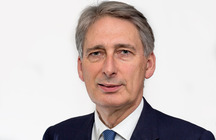
  • Philip Hammond – 2016 Comments at EU Foreign Affairs Council

    philiphammond

    Below is the text of the comments made by Philip Hammond, the Foreign Secretary, to journalists when he arrived at the EU Foreign Affairs Council in Brussels on 14 March 2016.

    I’d just like to start by offering my condolences to the people of Turkey and the people of Cote d’Ivoire for the terrible loss of life in the terrorist incidents there yesterday, and as you would expect, we stand firmly behind them, alongside the people of those countries and the people of all countries as they face and deal with the challenges of terrorism around the world.

    We’re going to be focusing here today on Russia, on Libya, and on Iran.

    On Russia, we need to be clear about how we manage the EU’s relations with Russia in the future. We have to have relationships with Russia but we can’t lose sight of the challenge that Russia represents to our values and to our security and we have to be robust in making our case and defending our principles, our values, and our borders in Europe.

    We also need in Syria, the Russians to get a grip on their Syrian clients, and make sure that they are delivering the obligations that Russia has made on their behalf in the International Syria Support Group which lie behind the current cessation of hostilities. We expect President Putin, who has backed President Assad with huge amounts of military and political commitment, we expect him to be able to get control of Assad, and at the moment it doesn’t look like he is in control of Assad.

    On Iran, we need to make sure that our approach is balanced so that while we exploit the opportunities that come from an opening of Iran and improved relationships between Iran and the West, we also have to be clear that Iran continues to carry out unacceptable behaviour, missile testings, aggressive behaviour in sponsorship of terrorism around the Gulf, and we shouldn’t in any way pull our punches about that kind of behaviour.

    And finally we’ll be talking about Libya with Martin Kobler, the UN Special Representative. We are obviously all very keen to see the full endorsement of the government of national accord and its installation in Tripoli as the de facto effective government of Libya. The EU has plans for a big collaboration with the Libyan government once it is properly installed and in place, and we mustn’t lose sight of the fact either that Libya remains an important irregular migration route into the European Union and as well as worrying about the situation in Turkey, we need to think about potential for continued migration flows through Libya.

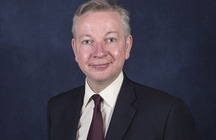
  • Michael Gove – 2016 Speech on Anti-Semitism

    michaelgove

    Below is the text of the speech made by Michael Gove, the Secretary of State for Justice, on 15 March 2016.

    Can I begin by thanking the Federal German Government, Chancellor Merkel, and my good friend, the British Labour MP John Mann, for the opportunity to speak here today.

    It has been a little over five years since leading politicians came together for the second Inter-parliamentary conference on Combating Anti-Semitism, in Canada.

    As we meet for the third such conference, our work is needed more than ever.

    Because anti-Semitism is not just the oldest hatred, it is also a virus which mutates.

    In the Middle Ages, anti-Semitism was focused on the religious identity of Jewish people and found its expression in forced conversion, ghetto-isation and expulsion.

    In the nineteenth and twentieth centuries, it was the physical identity of the Jewish people that came under sustained attack. Pogroms and racial laws culminated in the unique horror of the Holocaust – history’s greatest crime.

    The memory of that crime, and the appeal to all of us: ‘Never again’, generated a new determination to protect human rights and stood behind the creation of the state of Israel – a modern miracle.

    But now – after horrors that should have meant this hatred was banished forever from human hearts – anti-Semitism is resurgent.

    In the last year Jewish citizens of European nations have been targeted by fanatics simply because of their identity.

    They were slaughtered because they shopped in a kosher supermarket, or volunteered to protect a synagogue.

    One victim, Yoav Hattab, was the last of four hostages to die in the siege at a Jewish supermarket in eastern Paris, in January 2015.

    Yoav, the student son of the Chief Rabbi of Tunis, was just twenty-one years old when he was shot dead by a killer who claimed allegiance to so-called Islamic State.

    Witnesses said that this brave young man died trying to confront the gunman with a weapon he had discarded.

    There is a reason that I mention Yoav in particular. Tragically, this was not the first time his family had been targeted.

    In 1985, Yoav’s aunt was one of three worshippers shot dead in a synagogue on the Tunisian island of Djerba. She was just fourteen years old.

    The gunman, a local police officer, opened fire with a submachine gun on people as they prayed.

    Thirty years separate those deaths, and still Jews live in fear.

    In France, recorded anti-Semitic attacks soared by 84 per cent in the first quarter of 2015, according to Interior Ministry figures.

    In Britain, the number of anti-Semitic incidents recorded in 2015 was 924. This was the third-highest total ever, according to the Community Security Trust, a leading charity that protects British Jews from anti-Semitism and related threats.

    Today, anti-Semitism targets the collective identity of the Jewish people. Jewish citizens of European nations are targeted if they dare to assert the dignity of their difference.

    Synagogues and schools need security guards. Children wearing the kippah, or students meeting as the’ University Jewish Society’, face intimidation. And, of course, the most important expression of collective Jewish identity, the state of Israel, is faced with a campaign of prejudice against its very existence.

    The BDS movement – urging the use of boycott, disinvestment and sanctions against Israel – claims to draw inspiration from the struggle against apartheid.

    But the comparison is offensive. Israel is a democracy in which all citizens are equal: whether Jewish, Arab, Christian, Muslim, of Ethiopian heritage, Bedouin and Druze – all have the same votes and rights, which is why Arab Muslim politicians sit in the Knesset and a distinguished Arab lawyer sits on Israel’s Supreme Court.

    More than that – the BDS campaign indulges prejudice rather than fighting it. It calls for the shunning of Jewish academics, the boycott of Jewish goods, the de-legitimisation of Jewish commerce. We have seen these all before. And we know where it takes us.

    Modern anti-Semitism finds a home in far too many hearts. There are those on the radical left whose purported sympathy for Arab suffering never results in campaigning against Middle East autocrats, but always in opposition to Israel.

    There are those on the extreme right whose dark prejudices have never been extinguished and who now use opposition to globalisation to revive old anti-Semitic tropes.

    And there are Islamist extremists who want to undermine what they see as the Zionist-crusader state and rail against Jewish influence everywhere.

    We need to stand against them all – and any who might be persuaded by their arguments – in solidarity with the Jewish people – and in solidarity with their right to national self-determination.

    There is a duty on all of us in public life to speak out.

    And to watch out for those with whom we might align ourselves

    There is a particular duty on those of us charged with upholding justice to pursue justice in this cause.

    That means asking how those who threaten Jewish lives, Jewish work and the Jewish people’s rights to self-determination – whether in Tehran or Tower Hamlets – can be confronted and held to account.

    It also means – as the British Government has done – outlawing prejudice paid for by public money.

    We have made clear that local authorities and public bodies cannot adopt BDS policies aimed at Israel; they cannot use public resources to discriminate against Jewish people, Jewish goods and a Jewish state.

    The legal changes we have made follow a campaign led by the pioneering organisation, Jewish Human Rights Watch, which I wish to salute today. Its founding father Manny Weiss – the child of Holocaust survivors – has been a valiant campaigner against prejudice and his work has been recognised by our Government.

    The Prime Minister, David Cameron, is clear that this is a battle he is determined to win. ‘We will fight anti-Semitism with everything we have got,’ is his vow.

    ‘Together, we will make sure Britain remains a country that Jewish people are proud to call home – today, tomorrow and for every generation to come.’

    And I know that commitment to openness and tolerance – that belief in human equality and dignity – is shared by everyone here today.

  • James Duddridge – 2016 Speech at Chatham House

    jamesduddridge

    Below is the text of the speech made by James Duddridge, the Parliamentary Under Secretary of State at the Foreign and Commonwealth Office and Minister for Africa, at Chatham House in London on 15 March 2016.

    Good morning. Thank you Alex. I am delighted to be back at Chatham House. I have the best job, travelling to and from Africa. I am passionate about Africa and about the prosperity agenda.

    Last year I spoke to you about why Africa matters to the UK Government, and to me, personally, as a long time resident of the continent.

    Since then, as Minister for Africa, I have been lucky enough to revisit many of the African countries that are close to my heart. I have travelled across the continent, met people doing important work, and spoken at many events on the enormous economic potential and commercial opportunities that can be found right across Africa.

    It is unwise to generalise in a continent as diverse as Africa. But despite the global economic slowdown, growth across the continent has remained generally positive this year. While the IMF’s latest predictions are for a reduction in growth in sub-Saharan Africa to 3.8%, this is still above the predicted global growth rate of 3.1%. This is rather good: George Osborne would be very pleased with 3.8%. In fact, except for one small blip in the 1990s, as a region Sub-Saharan Africa has experienced consistent growth year-on-year. It is a great place for long-term investment.

    The situation is difficult for the few large oil producing economies, but experts believe that the majority of low income countries will continue to grow. Countries such as Cote D’Ivoire, where I’ll be in three weeks’ time, Mozambique and Tanzania, where I was last week, all High Level Prosperity Partners, hope to see growth of around 7% this year.

    We need action to create enabling environments that support economic growth in Africa. Action that encourages innovation, and unleashes the entrepreneurial spirit of the young. Action to meet the aspirations of the continent’s growing youth population.

    African governments have a crucial role to play, creating good governance mechanisms that encourage transparency and tackle corruption, regulatory frameworks that allow business to operate and invest responsibly, and strong and independent institutions that respect the rule of law.

    Looking ahead, the UN estimates that Africa’s population will double to 2.5 billion people by 2050 .

    The World Bank predicts that at least 600 million people will enter the job market in Africa in the next 15 years. That’s a massive opportunity.

    Huge investment is required to create jobs and improve infrastructure in order to meet the demands of a rapidly growing population. Infrastructure that facilitates trade rather than hinders it. So that it no longer takes more time for a container to cross a couple of African borders than it does for the same container to be shipped from Hong Kong to Dar es Salaam.

    Infrastructure is a pipeline for money. Airports, railways and roads are all pipelines for economic activity. This requires local knowledge and skills but also global expertise and help to get people and money moving.

    So the partnership theme of this year’s conference is highly appropriate.

    It is vital that we build partnerships between the private and public sector, working together in Africa; Working for the benefit of millions of Africans; Working to deliver the transformational change that the continent needs, to unlock growth and grow the taxation base.

    Such partnerships will be essential to help grow Africa out of poverty. So too are the partnerships between the UK and countries across Africa.

    The High Level Prosperity Partnerships forged between the UK and Angola, Cote D’Ivoire, Ghana, Mozambique and Tanzania emphasise that the UK wants to work more closely with these countries and to work with others across the continent.

    The prosperity partnerships place the private sector in the driving seat of economic transformation.

    Allowing the private sector to flourish creates jobs and generates taxes. Taxes fund vital services such as health and education. A better educated, healthier workforce will create the entrepreneurs and innovative business of tomorrow. This virtuous circle can sustain African growth and the UK is ready to play an important part.

    UK companies have skills and expertise from project design, through planning and implementation. British architects, professional services, legal firms and capital markets are among the best in the world and stand ready to support infrastructure development on the continent. And of course the City of London is the place in the world to raise capital and a repository of a great deal of wisdom on how to deliver successful partnerships between the public and private sectors.

    The UK’s extensive aid programme, part of our commitment to spending 0.7% of gross national income on overseas development, also recognises the importance of partnerships with the private sector to drive forward economic development.

    We have a new Prosperity Fund of £1.3 billion over five years with the aim of fostering economic growth. Part of this fund will be used to help Africa grow out of poverty.

    Just last week I was in Tanzania where I saw for myself how cities with weak infrastructure are crippled by events as mundane as heavy rain.

    The infrastructure deficit was clearly visible. The rapid transport system is sadly not yet up and running. There is no quick fix. I was talking to Paul Collier about urbanisation in Africa and the need for a flexible job market. Big infrastructure projects take time to implement. But it is good that the Department for International Development is supporting a Government of Tanzania programme with the World Bank to make the City of Dar Es Salaam more resilient to these extreme weather events.

    The problems of congestion and inefficiency at Dar es Salaam Port are well known.

    That is why the UK Government is helping Tanzania unlock the potential of this maritime gateway and supporting Trademark East Africa to work on the immediate congestion problems. We are supporting critical feasibility studies necessary for the Government of Tanzania to secure bigger finance through the World Bank. With greater funding, Tanzania can improve the port infrastructure and realise the regional trade benefits that will come from improved freight corridors across Tanzania.

    Of course I will continue to play my part too. Championing Africa as a place to trade and invest. Working together with business. Working with colleagues across Whitehall and in the City of London. Most importantly, working with my counterparts in Africa to support Africa’s continued economic transformation.

    This year the UK and Africa have continued to build on their enduring partnership. By working together, I firmly believe that this partnership, built on long standing political links, cultural connections and historical links, will go from strength to strength.

    Thank you.

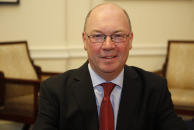
  • Alistair Burt – 2016 Speech on Mental Health Services for Young People

    alistairburt

    Below is the text of the speech made by Alistair Burt, the Minister for Community and Social Care, on 16 March 2016.

    I want to offer my sincere thanks and congratulations to everyone in the audience today.

    When I first came to the Department of Health, I wanted my priority to focus on the steady improvement of children’s mental health care, support the sector and bring in new and innovative ways of working – to improve care, to improve the way we work. It is down to your creativity, passion and drive that this priority was not only met but exceeded. So thank you.

    Today, we’re at one of our most recognised sporting landmarks, one of the homes of English cricket. I would say ‘the home’ of English cricket, but I think my local club – Blunham Cricket Club – might snatch that title, holding the Guinness World Record for the longest continuous game of cricket; 105 hours, day and night. More impressive than 171 years of cricket play, I’m sure you’ll agree.

    But the Oval is also home to one of Historic England’s newest Grade 2 buildings – the Victorian gasworks which overlooks the playing ground. It’s over 160 years old and will now stay intact – a part of the London skyline.

    It’s worth thinking about what life was like for a child when the gasworks was built in 1847. Child labour was the norm – children as young as 10 would be sent up chimneys and sent down mines. Put simply, they were denied a childhood. It was only just before the 1900s that children’s mental health was considered a priority by society; young people’s mental health had always existed but it was a 20th century ‘invention’.

    Fast forward to 2015: now children have access to education, they are protected from labour, they have their health needs met – children have a childhood. And yet their services still continue to improve.

    Almost to the day, we saw the publication of ‘Future in Mind’. It called for a fundamental shift in culture for children and young people’s services, a whole system approach focusing on preventing mental ill health, early intervention and recovery.

    You are a large part of this – perhaps the largest part of the solution. You make sure that, if a young person feels insecure, anxious, depressed or feels like they have nowhere to turn, they have a system that they can access, one that gives them the emotional support and mental wellbeing to get through their problems in the right place and the right time.

    You’re all enthusiastic, dedicated and passionate people. This enthusiasm has been so important, because even with all of our advancements in care, your job has, often, not been the easiest.

    Traditionally, you have been underfunded, under resourced, undervalued. There has been a huge data gap. You have had to deal with old prevalence data and, what’s more, there was no uniform detailed data about services. And the service has been difficult to improve – out of the 1 in 10 young people who have a diagnosable mental health condition, previous estimates state that only 1 in 4 are receiving treatment. Just more of the same is not an option available to us.

    We are radically improving all of these aspects of your work, which is what I’m here to talk about today. Since ‘Future in Mind’, we’ve had the all-age Mental Health Taskforce report, which brought this image in to further focus.

    It showed us that care needs to be more widely available and people struggle to get the help they need at the right time. Also, despite all our efforts, stigma still is a stain we cannot yet wash off; many people still experience discrimination for the mental ill-health they experience through no fault of their own.

    The recent Taskforce’s report put in place, for the first time, a national strategy designed in partnership across the health arm’s length bodies, for work across the system. This wasn’t a case of government deciding among itself what is best then setting the report loose among the sector. Not only does it draw on the experiences of sector leaders, it also focuses on the experiences of over 20,000 people who described the changes they wanted to see, so they could fulfil their ambitions and take their place as equal citizens in society.

    And, of course, a huge part of this improvement lies in how we treat children’s mental health. When I met with the Youth Parliament’s Select Committee, they were concerned about this, too. They consulted hundreds of young people across the country and made 17 recommendations on how we could improve care. They wanted doctors to engage more with them and they also wanted to be a part of the solution.

    I’m pleased that we have involved children and young people throughout our plans – they need to be included in the development of policy. And in many of the local transformation plans you delivered at the end of last year, it is clear that young people are being involved more than ever before.

    Through the plans, every area has committed to working collaboratively to make radical improvements in children and young people’s mental health. Like in Lambeth, they are helping young people with eating disorders. They’re teaching young children about healthy lifestyles as they enter secondary school, they are giving parents more support to understand what their child with an eating disorder might be going through and they’re putting more support in schools, with specially trained nurses to help young people cope.

    In Airedale, they are helping young women explain their experience in self-harming to the service through a theatre group. It helps the young people to share their experience in an empowering way, it helps often isolated young women to build friendships and it helps the local service improve the support they offer.

    And in North Lincolnshire, they are helping some of the most marginalised children in society get the support they need. There is a unique service helping children in care, working alongside social workers and foster care, to make sure that they get access to the high-quality mental health care they had previously missed. Now, almost two-thirds of children in care have support from CAMHS.

    This is exceptional, and shows not only the flexibility and ingenuity of the service but, also, that we continue to progress and improve care.

    I am committed to making sure children and young people are given the opportunity to participate at every stage of the transformation programme and, of course, in every aspect of their own individual care. What I am concerned with is making sure that we continue that stride towards progress and we need to approach this in 2 distinct ways. We need to support the workforce and we need to support young people.

    So, first, the workforce. Like I said, it’s no secret to anyone in this room that we have a high quality workforce. Through Children and Young People’s Improving Access to Psychological Therapies Programme, we have spread the use of evidence-based practice.

    However, despite the evident skills of each member of staff, young people are sometimes slow to come and seek you out. There are lots of reasons for this, but a large part of the trepidation comes from young people feeling like their needs won’t be understood. Perhaps they see the clinical setting at odds with their world, which is so focused on current culture and technology.

    Increasingly, the world they live in is a digital one. On average, young people spend 27 hours a week online – a full extra day – so they are as much a part of their digital world as they are the physical one. Increasingly, their concerns are founded in this digital world – online bullying, self-confidence issues, feelings of isolation. Some of you may have seen the story recently of a boy of 14 who sent an indecent photo of himself to a girl over Snapchat. He was added to a police database and was warned that the information might be disclosed when he applies for jobs.

    Even though that image only exists for a few second on the app, it will stay with him for a long time and there is no telling how this action would affect his mental health. Anyone admitting to something like this to their parents would be difficult, but admitting how that makes you feel to a relative stranger may fill him with great anxiety.

    The opposite would be true, though. Many practitioners are well versed in popular culture and current technology. But we need to make sure that all staff have the right tools to keep up to date with young people.

    Last year, I announced we were developing an expansion to the MindEd online learning resources, exploring the effect of the digital world on young people’s mental health. This was important to young people, as well as a main concern of the Youth Parliament and the Health Select Committee from 2014, who told us professionals do not always understand their digital world and that is was something we really need to do something about.

    Today, we are launching that MindEd module. It includes information about digital risks to mental health, such as the effect of cyberbullying, online gaming, and the creation of online identities. It also helps professionals build digital resilience, by referring to relevant services and helping young people identify where the digital world ends and the real world begins. It’s designed – by the MindEd consortium and by Xenzone – for people who work with children.

    But we also want to make sure that the service stays creative and cutting-edge. And how do we do this aside from new investment and improved training? We have said that just more of the same is not enough – and how do we get there?

    We get there through innovation, which is why we worked with Health Education England to set up an innovation fund especially for the children and young people’s workforce. We were overwhelmed by both the number and quality of applications and are investing over £3 million in over 30 exciting projects that have local, regional or national reach.

    The projects vary in size – but they are all unified by the fact they all will have an impact on young people’s lives. Like the Charlie Waller Memorial Trust in Reading, which supports young people with depression and their families. The award they received will help them increase its service to local schools, and provide early intervention and support for young people with mental health issues.

    Or the Hearing Services department of Sheffield Children’s Hospital, who will use the award to transform early intervention for mental health and wellbeing for children and young people with difficulties such as hearing loss. Or the Hampshire Children and Adult Mental Health Services, who will launch a new campaign called ‘Mind Your Head’, which involves taking health services out into the community, providing easy access for young people via a mobile health clinic.

    These are impressive innovations, and I look forward to seeing how they impact people’s lives. But I also want to make the very mechanics of your job easier. There are still large parts of mental health care that, if explained to the general public, would shock them – of very basic things you need but are managing to work around.

    Data is, perhaps, one of the biggest issues. I find it astonishing that you are able to do the good work you do with mental health prevalence data from a time before Facebook. So much in our society has changed since 2004.

    But the lack of this basic information means that most planning you do around the level of need of your services is, at best, guess work. I want to put a stop to that, and make sure you have the data you need to work effectively.

    We have commissioned a new national prevalence survey of children and young people’s mental health, the first since 2004. It will address that information gap extending to cover conditions and issues that have become more prominent since 2004, like eating disorders, self-harm and the impact of social media and cyberbullying.

    The new survey will deliver much-needed information about children and young people’s current mental health – and about their need for mental health services – by summer 2018.

    Which brings me on to my second and final point: giving more support directly to children and young people.

    It’s been clear to me ever since starting this role, talking to more and more children and young people about their care, is that they want to be involved but, also, they want more control. I am pleased to say that we are now giving them that control.

    Through a new online platform, called CO-OP, backed by £1 million of government funding, young people will be able to tell their story about their mental health history and host notes from the clinicians they encounter. This will mean that whenever they meet a new health professional, young people can give them individual access to their mental health history and the professional will be able to continue that person’s care in the most effective way.

    Young people will be in control of their data at every stage, and can agree exactly what to share, and with whom. Not only will young people give information to the platform, they will also have access to information about local mental health services and useful self-help apps.

    This is an important point – about being in control of their story. When I met with the Youth Select Committee, they wanted to feel more supported to tell their story, a way of making young people more comfortable to be open and honest.

    In light of this, the British Youth Council, the Association for Young People’s Health and Youth in Focus are working with us, PHE and NHS England to review the ‘You’re Welcome’ accreditation process and improve the standards. This was also something that the Youth Select Committee made clear to me, too, so we know it means a lot to young people.

    Our review is seeking the views of young people and professionals about how services can best support conversations about mental health and other health concerns. I would encourage you all to be a part of this review – your opinions on this matter greatly.

    By making our services more accessible and more friendly, we will go some way to tackling one of the biggest problems facing young people’s mental health – stigma.

    All of us are striving towards a society where mental health disorders are understood and people can live without stigma. But, in spite of the 91,000 people who have signed up, through Time to Change, to end mental health stigma, it is still far too common.

    We, too, are doing our best to tackle this. Last November we funded the largest ever anti stigma campaign for teenagers and the first for parents. Our initial evaluation indicated that the campaign exceeded reach targets and delivered evidence of intended and actual behaviour change.

    Teenagers were more likely to talk to their friends about mental health and these attitudes improvements were seen in young men too – who are perhaps the hardest group to reach. This is really encouraging.

    Parents, too, said they were more likely to talk to their children about mental health, especially dads. Winning this battle is so important; it is the biggest battle of them all.

    We hope that we can continue this important work to change attitudes in a younger age group, so that for the next generation, the taboo of mental ill health is removed.

    And, of course, all of you are a huge part of this fight. I have seen the value of your work, not only as a health minister, but as a local MP, too. You have achieved great things through the wide range of services you all represent in a relatively short space of time.

    The future of our children and young people’s mental health service is down to you – your work, your dedication, your ingenuity and, of course, your passion for the job, for helping people.

    I look forward to working alongside you to not only improve services for young people, to not only bring new and innovative ways of improving children and young people’s mental health and wellbeing, but to also make generations of young people secure and happy.

  • George Osborne – 2016 Budget Speech

    gosborne

    Below is the text of the Budget Speech made by George Osborne, the Chancellor of the Exchequer, in the House of Commons on 16 March 2016.

    Mr Deputy Speaker,

    Today I report on an economy set to grow faster than any other major advanced economy in the world.

    I report on a labour market delivering the highest employment in our history.

    And I report on a deficit down by two thirds, falling each year and – I can confirm today – on course for a budget surplus.

    The British economy is stronger because we confronted our country’s problems and took the difficult decisions.

    The British economy is growing because we didn’t seek short term fixes but pursued a long term economic plan.

    The British economy is resilient because whatever the challenge, however strong the headwinds, we have held to the course we set out.

    I must tell the House that we face such a challenge now.

    Financial markets are turbulent.

    Productivity growth across the west is too low.

    And the outlook for the global economy is weak.

    It makes for a dangerous cocktail of risks.

    But one that Britain is well-prepared to handle, if we act now so we don’t pay later.

    Mr Deputy Speaker,

    Britain has learnt to its cost what happens when you base your economic policy on the assumption you have abolished boom and bust.

    Britain is not immune to slowdowns and shocks.

    Nor as a nation are we powerless.

    We have a choice.

    We can choose to add to the risk and uncertainty, or we can be a force for stability.

    In this Budget we choose to put stability first.

    Britain can choose, as others are, short term fixes and more stimulus.

    Or we can lead the world with long term solutions to long term problems.

    In this Budget we choose the long term.

    We choose to put the next generation first.

    Sound public finances to deliver security,

    Lower taxes on business and enterprise to create jobs,

    Reform to improve schools, investment to build homes and infrastructure – because we know that’s the only way to deliver real opportunity and social mobility.

    And we know that the best way we can help working people is to help them to save and let them keep more of the money they earn.

    That is the path we followed over the past five years.

    And it’s given us one of the strongest economies in the world.

    And that is the path we will follow in the years ahead.

    In this Budget we redouble our efforts to make Britain fit for the future.

    Mr Deputy Speaker, let me turn to the economic forecasts.

    I want to thank Robert Chote and his team at the Office for Budget Responsibility.

    To make sure they have available to them the best statistics in the world I am today accepting all of the recommendations of Sir Charlie Bean’s excellent report.

    I also want to take this moment to thank another great public servant, Sir Nicholas Macpherson.

    He has served as Permanent Secretary to the Treasury for ten years, under three very different Chancellors, and throughout he has always demonstrated the great British civil service values of integrity and impartiality.

    He’s here today to watch the last of 34 Budgets he’s worked on, and on behalf of the House and the dedicated officials in the Treasury, I thank him for his service.

    Mr Deputy Speaker,

    The OBR tell us today that in every year of the forecast our economy grows and so too does our productivity.

    But they have revised down growth in the world economy and in world trade.

    In their words, the outlook is “materially weaker”.

    They point to the turbulence in financial markets, slower growth in emerging economies like China, and weak growth across the developed world.

    Around the globe, they note that monetary policy – instead of normalising this year as expected – has been further loosened.

    We’ve seen the Bank of Japan join Sweden, Denmark, Switzerland and the European Central Bank with unprecedented negative interest rates.

    The OBR also note that this reflects concerns across the West about low productivity growth.

    The Secretary General of the OECD said last month that “productivity growth… has been decelerating in a vast majority of countries”.

    As a result, the most significant change the OBR have made since their November forecast is their decision to revise down potential UK productivity growth.

    The OBR had thought that what they describe as the “drag from the financial crisis” on our productivity would have eased by now, but the latest data shows it has not.

    The OBR acknowledge today that this revision is, in their words, a “highly uncertain” judgement call.

    But I back them 100%.

    We saw under the last government what happened when a Chancellor of the Exchequer revised up the trend growth rate, spent money the country didn’t have, and left it to the next generation to pick up the bill.

    I’m not going to let that happen on my watch.

    These days, thanks to the fact we have established independent forecasts, our country is confronted with the truth as economic challenges emerge, and can act on them before it’s too late.

    We fix our plans to fit the figures; we don’t fix the figures to fit the plans.

    The IMF have warned us this month that the global economy is “at a delicate juncture” and faces a growing “risk of economic derailment”.

    Eight years ago, Britain was the worst prepared of any of the major economies for the crisis we then faced.

    Today, Britain is among the best prepared for whatever challenges may lie ahead.

    That is what our long term economic plan has been all about.

    When I became Chancellor we borrowed £1 in every £4 we spent. Next year it will be £1 in every £14. Our banks have doubled their capital ratios.

    And we have doubled our foreign exchange reserves.

    And we have a clear, consistent and accountable monetary policy framework, admired around the world.

    The hard work of fixing our economy is paying off.

    In 2014, we were the fastest growing major advanced economy in the world.

    In 2015, we were ahead of everyone but America.

    So let me give the OBR’s latest forecasts for our economic growth – in the face of the new assessment of productivity and the slowing global economy.

    Last year, GDP grew by 2.2%.

    The OBR now forecast it will grow by 2% this year, then 2.2% again in 2017, and then 2.1% in each of the three years after that.

    The House will want to know how this compares to other countries.

    I can confirm that, in these turbulent times, the latest international forecast expects Britain to grow faster this year than any other major advanced economy in the world.

    Mr Deputy Speaker, the OBR are explicit today that their forecasts are predicated on Britain remaining in the European Union.

    Over the next few months this country is going to debate the merits of leaving or remaining in the European Union, and I have many colleagues whom I respect greatly on both sides of this argument.

    The OBR correctly stay out of the political debate and do not assess the long term costs and benefits of EU membership.

    But they do say this, and I quote them directly: “a vote to leave in the forthcoming referendum could usher in an extended period of uncertainty regarding the precise terms of the UK’s future relationship with the EU.

    This could have negative implications for activity via business and consumer confidence and might result in greater volatility in financial and other asset markets”.

    Citing a number of external reports, the OBR say this:

    “There appears to be a greater consensus that a vote to leave would result in a period of potentially disruptive uncertainty while the precise details of the UK’s new relationship with the EU were negotiated.”

    Mr Deputy Speaker, the House knows my view.

    Britain will be stronger, safer and better off inside a reformed European Union.

    I believe we should not put at risk all the hard work that the British people have done to make our country strong again.

    Mr Deputy Speaker,

    Let me turn to the OBR forecast for the labour market.

    Since the Autumn Statement just four months ago, the businesses in our economy have created over 150,000 more jobs than the OBR expected.

    That’s 150,000 extra families with the security of work.

    That’s 150,000 reasons to support our long term economic plan.

    This morning unemployment fell again, employment reached the highest level ever, and the data confirms that we have the lowest proportion of people claiming out-of-work benefits since November 1974.

    Now the OBR are forecasting a million more jobs over this Parliament.

    Mr Deputy Speaker, in the last Parliament:

    They claimed a million jobs would be lost.

    Instead two million were created.

    When the jobs started coming we were told they’d be low skilled.

    But today we know almost 90% of the new jobs are in skilled occupations.

    We were told the jobs would be part time.

    But three quarters are full time.

    We were told the jobs would all be in London.

    But the unemployment rate is falling fastest in the North East.

    Youth unemployment is falling fastest in the West Midlands.

    Employment is growing fastest in the North West.

    And in today’s forecast real wages continue to grow and outstrip inflation in each and every year.

    The OBR forecasts lower inflation, at 0.7% this year and 1.6% next year.

    I am today confirming in a letter to the Governor of the Bank of England that the remit for the Monetary Policy Committee remains the symmetric CPI inflation target of 2%.

    I am also publishing the new remit for the Financial Policy Committee, the body we created to keep an eye on emerging long term risks in our financial system, asking them to be particularly vigilant in the face of current market turbulence.

    Because in this Budget we act now so we don’t pay later.

    Mr Deputy Speaker, that brings me to our approach to public spending and the OBR forecasts for our public finances.

    In every year since 2010, I have been told that now is not the right time to cut government spending.

    When the economy is growing, I’m told we can afford to spend more.

    When the economy isn’t growing, I’m told we can’t afford not to.

    Today, I’m publishing new analysis that shows that if we hadn’t taken the action we did in 2010, then cumulative borrowing would have been £930 billion more by the end of the decade than it is now forecast to be.

    If we’d taken the advice, Britain would not have been one of the best prepared economies for the current global uncertainties; we would have been one of the worst prepared.

    Now the very same people are saying to us we should spend more again.

    I reject that dangerous advice.

    The security of families and businesses depends on Britain living within its means.

    Last autumn’s Spending Review delivers a reduction in government consumption that is judged by the OBR to be the most sustained undertaken in the last hundred years of British history – barring the periods of demobilisation after the first and second world wars.

    My spending plans in the last parliament reduced the share of national income taken by the state from the unsustainable 45% we inherited, to 40% today.

    My spending plans in this Parliament will see it fall to 36.9% by the end of this decade.

    In other words, the country will be spending no more than the country raises in taxes.

    And we are achieving this while at the same time increasing resources for our NHS and schools, building new infrastructure and increasing our security at home and abroad.

    The OBR now tells us that the world has become more uncertain.

    So we have two options.

    We can ignore the latest information, and spend more than the country can afford.

    That’s precisely the mistake that was made a decade ago.

    Or we can live in the world as it is, and cut our cloth accordingly.

    I say we act now, so we don’t pay later.

    So I am asking my RHFs the Chief Secretary and the Paymaster General to undertake a further drive for efficiency and value for money.

    The aim is to save a further £3.5 billion in the year 2019-20.

    At less than half a percent of government spending in four years’ time, that is more than achievable while maintaining the protections we have set out.

    At the same time we will continue to deliver sensible reforms to keep Britain living within its means.

    On welfare, last week my RHF the Secretary of State for Work and Pensions set out changes that will ensure that within the rising disability budget, support is better targeted at those who need it most.

    Let me confirm that this means the disability budget will still rise by more than £1 billion, and we’ll be spending more in real terms supporting disabled people than at any point under the last government.

    On international aid, I am proud to be part of the government that was the first to honour Britain’s commitment to spend 0.7% of national income on development.

    We won’t spend more than that, so the budget will be readjusted, saving £650 million in 2019-20.

    We’re also going to keep public sector pensions sustainable.

    We reformed them in the last Parliament which will save over £400 billion in the long term.

    To ensure those pensions remain sustainable, we have carried out the regular revaluation of the discount rate and public sector employer contributions will rise as a result.

    This will not affect anyone’s pension, and will be affordable within spending plans that are benefitting from the fiscal windfall of lower inflation.

    Each of these decisions are a demonstration of our determination that the British economy will stay on course.

    We will not burden our children and grandchildren. This is a Budget for the next generation.

    Mr Deputy Speaker, let me now give the OBR’s forecasts for the debt and the deficit.

    The combination of our action to reduce borrowing this year, along with the revisions to our nominal GDP driven by lower inflation, have produced this paradoxical result.

    In cash terms the national debt is lower than it was forecast to be in the autumn, but so too is the nominal size of our economy.

    We measure the fiscal target against debt to GDP.

    So while debt as a percentage of GDP is above target and set to be higher in 2015-16 than the year before;

    Compared to the forecast, the actual level of our national debt in cash is £9 billion lower.

    In the future, debt falls to 82.6% next year, then 81.3% in 2017-18, then 79.9% the year after.

    In 2019-20, it falls again to 77.2%, then down again the year after to 74.7%.

    Let me turn to the forecast for the deficit.

    When I became Chancellor, the deficit was forecast to reach 11.1% of national income – the highest level in the peacetime history of Britain.

    Thanks to our sustained action, the deficit is forecast to fall next year to just over a quarter of that – at 2.9%. In 2017-18, it falls to 1.9%. Then it falls again to 1.0% in 2018-19.

    In cash terms, in 2010, Britain was borrowing a totally unsustainable £150 billion a year.

    This year we are expected to borrow less than half that, at £72.2 billion.

    Indeed our borrowing this year is actually lower than the OBR forecast at the Autumn Statement.

    Borrowing continues to fall – but not by as much as before – to £55.5 billion next year, £38.8 billion the year after that and £21.4 billion in 2018-19.

    I know there has been concern that the challenging economic times mean we would lose our surplus the following year.

    And that would have been the case if we had not taken further action today to control spending and make savings.

    But because we have acted decisively, in 2019-20 Britain is set to have a surplus of £10.4 billion.

    The surplus is then set to rise to £11.0 billion the year after. That’s 0.5% of GDP in both years.

    We said we would take the action necessary to give Britain’s families economic security.

    We said our country would not repeat the mistakes of the past – and instead live within its means.

    Today we maintain that commitment to long term stability in challenging times.

    Decisive action. To achieve a £10billion surplus.

    We act now, so we don’t pay later.

    We put the next generation first.

    Mr Deputy Speaker,

    In every Budget I’ve given, action against tax avoidance and evasion has contributed to the repair of our public finances.

    And this Budget is no different.

    In the Budget book we set out in detail the action we will take to:

    Shut down disguised remuneration schemes;

    Ensure that UK tax will be paid on UK property development;

    Change the treatment of freeplays for remote gaming providers;

    Limit capital gains tax treatment on performance rewards; and

    Cap exempt gains in the Employee Shareholder Status.

    Public sector organisations will have a new duty to ensure that those working for them pay the correct tax rather than giving a tax advantage to those who choose to contract their work through personal service companies.

    Loans to participators will be taxed at 32.5% to prevent tax avoidance.

    And we’ll tighten rules around the use of termination payments.

    Termination payments over £30,000 are already subject to income tax. From 2018, they will also attract employer national insurance.

    Taken altogether, the further steps in this Budget to stop tax evasion, prevent tax avoidance and tackle imbalances in the system will raise £12 billion for our country over this Parliament.

    People talked about social justice but left enormous loopholes in our tax system for the very richest to exploit.

    While the independent statistics confirm that since 2010:

    Child poverty is down;

    Pensioner poverty is down;

    Inequality is down;

    And the gender pay gap has never been smaller.

    The distributional analysis published today shows that the proportion of welfare and public services going to the poorest has been protected.

    And I can report that the latest figures confirm the richest 1% paid 28% of all income tax revenue. Proof that we are all in this together.

    So Mr Deputy Speaker

    I can report solid steady growth.

    More jobs.

    Lower inflation.

    An economy on course for a surplus.

    And all done in a fair way.

    A Britain prepared for whatever the world throws at us.

    Because we’ve stuck to our long term economic plan.

    Credible fiscal policy and effective monetary policy has only ever been part of our plan.

    A crucial ingredient has always been the lasting structural reforms needed to make our economy fit for the future.

    And with new risks on the horizon, and with all Western countries looking for ways to increase living standards, now is not the time to go easy on our structural reforms.

    It’s time to redouble our efforts.

    My Budgets last year delivered key improvements to productivity like the Apprenticeship Levy, lower corporation tax and the National Living Wage.

    My Budget this year sets out these further bold steps we need to take.

    One. Fundamental reform of the business tax system. Loopholes closed. Reliefs reduced but so too are rates. And the result: a huge boost for small business and enterprise.

    Two. A radical devolution of power so more of the responsibility and the rewards of economic growth are in the hands of local communities.

    Three. Major new commitments to the national infrastructure projects of the future.

    Four. Confronting the obstacles that stand in the way of important improvements to education and our children’s future.

    And five. Backing people who work hard and save.

    In short this Budget puts the next generation first.

    Let me take each step in turn.

    Mr Deputy Speaker,

    In the last Parliament I cut corporation tax dramatically. But I also introduced the Diverted Profits Tax, to catch those trying to shift profits overseas.

    As a result Britain went from one of the least competitive business tax regimes to the most competitive – and we raised much more money for public services.

    Today the Financial Secretary and I are publishing a roadmap to make Britain’s business tax system fit for the future.

    It will deliver a low tax regime that will attract the multinational businesses we want to see in Britain, but ensure that they pay taxes here too.

    And it will level the playing field, which has been tilted against our small firms.

    The approach we take is guided by the best practice set out by the OECD, work which Britain called for, Britain paid for and Britain will be among the very first to implement.

    First, some multinationals deliberately over-borrow in the UK to fund activities abroad, and then deduct the interest bills against their UK profits.

    So from April next year we will restrict interest deductibility for the largest companies at 30% of UK earnings, while making sure firms whose activities justify higher borrowing are protected with a group ratio rule.

    Next, we’re setting new hybrid mismatch rules to stop the complex structures that allow some multinationals to avoid paying any tax anywhere, or to deduct the same expenses in more than one country.

    Then, we’re going to strengthen our withholding tax on the royalty payments that allow some firms to shift money to tax havens.

    And lastly we’re going to modernise the way we treat losses. We’re going to allow firms to use losses more flexibly in a way that will help over 70,000 mostly British companies.

    But with these new flexibilities in place, we’ll do what other countries do and restrict the maximum amount of profits that can be offset using past losses to 50%.

    This will only apply to the less than 1% of firms making profits over £5m – and the existing rules for historic losses in the banking sector will be tightened to 25%.

    We’ll maintain our plans to align tax payment dates for the largest companies more closely to when profits are earned, but we will give firms longer to adjust to these changes which will now come into effect in April 2019.

    All of these reforms to corporation tax will help create a modern tax code that better reflects the reality of the global economy.

    Together, they raise £9 billion in extra revenue for the Exchequer.

    But our policy is not to raise taxes on business.

    Our policy is to lower taxes on business.

    So everything we collect from the largest firms who are trying to pay no tax will be used to help millions of firms who pay their fair share of tax.

    I can confirm today we’re going to reduce the rate of Corporation Tax even further.

    That’s the rate Britain’s profit-making companies – large and small – have to pay.

    And all the evidence shows it’s one of the most distortive and unproductive taxes there is.

    Corporation Tax was 28% at the start of the last Parliament and we reduced it so that it’s 20% at the start of this one.

    Last summer I set out a plan to cut it to 18% in coming years.

    Today I am going further. By April 2020 it will fall to 17%

    Britain is blazing a trail.

    Let the rest of the world catch up.

    Mr Deputy Speaker,

    Cutting corporation tax is only part of our plan for the future.

    I also want to address the great unfairness that many small businessmen and women feel when they compete against companies on the internet.

    Sites like Ebay and Amazon have provided an incredible platform for many new small British start-ups to reach large numbers of customers.

    But there’s been a big rise in overseas suppliers storing goods in Britain and selling them online without paying VAT.

    That unfairly undercuts British businesses both on the internet and on the high street, and today I can announce that we are taking action to stop it.

    That’s the first thing we do to help our small firms.

    Second, we’re going to help the new world of micro-entrepreneurs who sell services online or rent out their homes through the internet.

    Our tax system should be helping these people so I’m introducing two new tax-free allowances each worth £1,000 a year, for both trading and property income.

    There will be no forms to fill in, no tax to pay – it’s a tax break for the digital age and at least half a million people will benefit.

    On top of these two measures comes the biggest tax cut for business in this Budget.

    Business rates are the fixed cost that weigh down on many small enterprises.

    At present small business rate relief is only permanently available to firms with a rateable value of less than £6,000.

    In the past I’ve been able to double it for one year only.

    Today I am more than doubling it, and I’m more than doubling it permanently.

    The new threshold for small business rate relief will raise from £6,000 to a maximum threshold of £15,000.

    I’m also going to raise the threshold for the higher rate from £18,000 to £51,000.

    Let me explain to the House what this means.

    From April next year, 600,000 small businesses will pay no business rates at all.

    That’s an annual saving for them of up to nearly £6,000 – forever.

    A further quarter of a million businesses will see their rates cut.

    In total, half of all British properties will see their business rates fall or be abolished altogether.

    And to support all ratepayers, including larger stores who face tough competition and who employ so many people: we will radically simplify the administration of business rates, and from 2020, switch the uprating from the higher RPI to the lower CPI.

    That’s a permanent long term saving for all businesses in Britain.

    A typical corner shop in Barnstaple will pay no business rates.

    A typical hairdressers in Leeds will pay no business rates.

    A typical newsagents in Nuneaton will pay no business rates.

    Mr Deputy Speaker,

    This is a Budget which gets rid of loopholes for multinationals.

    And gets rid of tax for small businesses.

    A £7 billion tax cut, for our nation of shopkeepers.

    A tax system that says to the world: we’re open for business.

    A government that’s on your side.

    Mr Deputy Speaker,

    Just over a year ago, I reformed residential stamp duty. We moved from a distortive slab system to a much simpler slice system.

    And as a result 98% of homebuyers are paying the same or less, and revenues from the expensive properties have risen.

    The IMF welcomed the changes and suggest we do the same to commercial property.

    So that’s what we’re going to do – and in a way that helps our small firms.

    At the moment, a small firm can pay just £1 more for a property and face a tax bill three times as large. That makes no sense.

    So from now on, commercial stamp duty will have a zero rate band on purchases up to £150,000; a 2% rate on the next £100,000; and a 5% top rate above £250,000.

    There will also be a new 2% rate for those high value leases with a net present value above £5 million.

    This new tax regime comes into effect from midnight tonight. There are transitional rules for purchasers who have exchanged, but not completed contracts before midnight.

    These reforms raise £500 million a year. And while 9% will pay more; over 90% will see their tax bills cut or stay the same.

    So, if you buy a pub in the Midlands worth, say, £270,000, you would today pay over £8,000 in stamp duty.
    From tomorrow you will pay just £3,000.

    It’s a big tax cut for small firms. All in a Budget that backs small business.

    Mr Deputy Speaker,

    Businesses also want a simpler tax system.

    I’ve asked Angela Knight and John Whiting at the Office of Tax Simplification to look at what more we can do to make the tax system work better for small firms.

    And I’m funding a dramatic improvement in the service that HMRC offers.

    Many retailers have complained bitterly to me about the complexity of the Carbon Reduction Commitment. It’s not a commitment; it’s a tax.

    So I can tell the House: we’re not going to reform it.

    Instead I have decided to abolish it altogether.

    And to make good the lost revenue – the Climate Change Levy will rise from 2019.

    The most energy intensive industries like steel remain completely protected, and I’m extending the climate change agreements that help many others.

    The Energy Secretary and I are announcing £730 million in further auctions to back renewable technologies. And we’re now inviting bids to help develop the next generation of small modular reactors.

    We’re also going to help one of the most important and valued industries in our United Kingdom that has been severely affected by global events.

    The Oil and Gas sector employs hundreds of thousands of people in Scotland and across our country.

    In my Budget a year ago, I made major reductions to their taxes.

    But the oil price has continued to fall. So we need to act now for the long term.

    I am today cutting in half the Supplementary Charge on oil and gas from 20% to 10%.

    And I’m effectively abolishing Petroleum Revenue Tax too.

    Backing this key Scottish industry and supporting jobs right across Britain.

    Both of these major tax cuts will be backdated so they are effective from the 1st of January this year, and my HF the Exchequer Secretary will work with the industry to give them our full support.

    Mr Deputy Speaker,

    We are only able to provide this kind of support to our oil and gas industry because of the broad shoulders of the United Kingdom.

    None of this support would have been remotely affordable if, in just eight days’ time, Scotland had broken away from the rest of the UK, as the nationalists wanted.

    Their own audit of Scotland’s public finances confirms they would have struggled from the start with a fiscal crisis under the burden of the highest budget deficit in the western world.

    Thankfully, the Scottish people decided that we are better together in one United Kingdom.

    Mr Deputy Speaker, believing in our United Kingdom is not the same as believing that every decision should be taken here in London.

    That’s the next step in this Budget’s plan to make Britain fit for the future.

    Because we know that if you want local communities to take responsibility for local growth, they have to be able to reap the rewards.

    The government is delivering the most radical devolution of power in modern British history.

    We’re devolving power to our nations.

    The Scottish Secretary and I have agreed the new fiscal framework with Scotland.

    We’re also opening negotiations on a city deal with Edinburgh; we back the new V&A in Dundee.

    And in response to the powerful case made to me by Ruth Davidson we’re providing new community facilities for local people in Helensburgh and the Royal Navy personnel nearby at Faslane, paid for by LIBOR fines.

    In Wales, we’re committed to devolving new powers to the Assembly and yesterday my RHF the Welsh Secretary signed a new billion pound deal for the Cardiff region.

    We’re opening discussions on a city deal for Swansea and a growth deal for North Wales, so it’s better connected to our Northern Powerhouse.

    I’ve listened to the case made by Welsh colleagues and I can announce today that from 2018 we are going to halve the price of the tolls on the Severn Crossings.

    My RHF the Northern Ireland Secretary and I are working towards the devolution of corporation tax.

    I am also extending enhanced capital allowances to the enterprise zone in Coleraine and we will use over £4 million from LIBOR fines to help establish the first Air Ambulance service for Northern Ireland.

    Mr Deputy Speaker, in this Budget we make major further advances in the devolution of power within England too.

    It was less than two years ago that I called for the creation of strong elected mayors to help us build a Northern Powerhouse.

    Since then, powerful elected mayors have been agreed for Manchester, Liverpool, Tees Valley, the North East and Sheffield.

    Over half of the population of the Northern Powerhouse will be able to elect a mayor accountable to them next year.

    We will have an elected mayor for the West Midlands too.

    These new devolution arrangements evolve and grow stronger.

    Today I can tell the House that my RHF the Justice Secretary and I are transferring new powers over the criminal justice system to Greater Manchester.

    This is the kind of progressive social policy that this Government is proud to pioneer.

    And I can also announce to the House that today, for the first time, we have reached agreement to establish new elected mayors in our English counties and southern cities too.

    I want to thank my RHF the Communities Secretary and my Treasury colleague Jim O’Neill for their superhuman efforts.

    We’ve agreed a single powerful East Anglia combined authority, headed up by an elected Mayor and almost a billion pounds of new investment.

    We’ve also agreed a new West of England mayoral authority – and they too will see almost a billion pounds invested locally.

    And the authorities of Greater Lincolnshire will have new powers, new funding and a new mayor.

    North, South, East and West – the devolution revolution is taking hold.

    Mr Deputy Speaker

    When I became Chancellor, 80% of local government funding came in largely ring-fenced grants from central government. It was the illusion of local democracy.

    By the end of this Parliament, 100% of local government resources will come from local government – raised locally, spent locally, invested locally.

    Our great capital city wants to lead the way.

    The Mayor of London, and my HF for Richmond Park passionately argue for the devolution of business rates.

    I can confirm today that the Greater London Authority will move towards full retention of its business rates from next April, three years early.

    Michael Heseltine has accepted my invitation to lead a Thames Estuary Growth Commission and he will report to me with its ideas next year.

    Mr Deputy Speaker,

    In every international survey of our country, our failure for a generation to build new housing and new transport has been identified as a major problem.

    But we are the builders.

    Today we’re setting out measures to speed up our planning system, zone housing development and prepare the country for the arrival of 5G technology.

    My RHF the Business Secretary will be bringing forward our innovation proposals.

    And because we make savings in day to day spending we can accelerate capital investment and increase it as a share of GDP.

    All exactly the things that a country focussed on its long term future should be doing.

    Our new stamp duty rates on additional properties will come into effect next month. I’ve listened to colleagues and the rates will apply to large investors too.

    We’re going to use receipts to support community housing trusts, including £20 million to help young families onto the housing ladder in the South West of England.

    This is a brilliant idea from my HF for Truro and Falmouth, and other colleagues.

    And it’s proof that when the South West votes blue, their voice is heard loud in Westminster.

    And because under this government we’re not prepared to let people be left behind, I am also announcing a major new package of support worth over £115 million to support those who are homeless and reduce rough sleeping.

    Last year, Mr Deputy Speaker, I established a new National Infrastructure Commission to advise us all on the big long-term decisions we need to boost our productivity.

    I want to thank Andrew Adonis and his fellow Commissioners for getting off to such a strong start.

    They’ve already produced three impressive reports.

    They recommend much stronger links across northern England.

    So we are giving the green light to High Speed 3 between Manchester and Leeds; finding new money to create a 4-lane M62; and will develop the case for a new tunnelled road from Manchester to Sheffield.

    My HFs for Carlisle, Penrith and Hexham have told us not to neglect the North Pennines. So we’ll upgrade the A66 and A69 too.

    I said we would build the Northern Powerhouse

    We’ve put in place the mayors.

    We’re building the roads.

    We’re laying the track.

    We’re making the Northern Powerhouse a reality and rebalancing our country.

    I am also accepting the Infrastructure Commission’s recommendations on energy and on London transport.

    The Government that is delivering Crossrail 1 will now commission Crossrail 2.

    Mr Deputy Speaker,

    Across Britain this Budget invests in infrastructure – from a more resilient train line in the South West, to crossings at Ipswich and Lowestoft in the East – we are making our country stronger.

    To respond to the increasing extreme weather events our country is facing I am today proposing a further substantial increase in flood defences.

    That would not be affordable within existing budgets.

    So I am going to increase the standard rate of Insurance Premium Tax by just half a percentage point – and commit all the extra money we raise to flood defence spending.

    That’s a £700 million boost to our resilience and flood defences.

    The urgent review already underway by my RHFs the Environment Secretary and the Chancellor of the Duchy of Lancaster will determine how the money is best spent.

    But we can get started now. I have had many representations from colleagues across the House.

    So we are giving the go ahead to the schemes for York, Leeds, Calder Valley, Carlisle and across Cumbria.

    In this Budget we invest in our physical infrastructure and we invest in our cultural infrastructure too.

    I am supporting specific projects from the Hall for Cornwall in Truro, to £13 million for Hull to make a success as the City of Culture.

    Our Cathedral Repairs Fund has been enormously successful so I am extending it with an extra £20 million.

    And in the four hundredth anniversary of the great playwright’s death, I have heard the sonnets from the RHM for Knowsley and we commit to a new Shakespeare North theatre, there on the site of the first indoor theatre outside of our capital.

    While my HF for Newark has proposed that we introduce a new tax break for museums that develop exhibitions and take those exhibitions on tour.

    It’s a great idea and we add that to our collection today.

    Mr Deputy Speaker,

    We cut taxes for business.

    We devolve power.

    We develop our infrastructure.

    The next part of our plan to make Britain fit for the future is to improve the quality of our children’s’ education.

    Providing great schooling is the single most important thing we can do to help any child from a disadvantaged background succeed.

    It’s also the single most important thing we can do to boost the long-term productivity of our economy.

    Because our nation’s productivity is no more and no less than the combined talents and efforts of the people of these islands.

    That is why education reform has been so central to our mission.

    Today we take these further steps.

    First, I can announce that we are going to complete the task of setting schools free from local education bureaucracy, and we’re going to do it in this Parliament.

    I am today providing extra funding so that by 2020 every primary and secondary school in England will be, or be in the process of becoming, an academy.

    Second, we’re going to focus on the performance of schools in the north, where results have not been as strong as we’d like.

    London’s school system has been turned around; we can do the same in the Northern Powerhouse and I’ve asked outstanding Bradford head teacher Sir Nick Weller to provide us with a plan.

    Third, we are going to look at teaching maths to 18 for all pupils.

    And fourth, we are going to introduce a fair National Funding Formula – and I’m today committing half a billion pounds to speed up its introduction.

    We will consult, and our objective is to get over 90% of the schools that will benefit onto the new formula by the end of this parliament.

    The Government delivering on its promise of fair funding for our schools.

    Tomorrow my RHF the Education Secretary will publish a White Paper setting out further improvements we will make to the quality of education.

    We will put the next generation first.

    Doing the right thing for the next generation is what the government and this Budget is about, no matter how difficult and controversial it is.

    Mr Deputy Speaker,

    You cannot have a long term plan for the country unless you have a long term plan for our children’s healthcare. Here are the facts we know.

    5 year old children are consuming their body weight in sugar every year.

    Experts predict that within a generation over half of all boys, and 70% of girls could be overweight or obese.

    Here’s another fact that we all know.

    Obesity drives disease.

    It increases the risk of cancer, diabetes and heart disease – and it costs our economy £27 billion a year; that’s more than half the entire NHS paybill.

    And here’s another truth we all know.

    One of the biggest contributors to childhood obesity is sugary drinks.

    A can of cola typically has nine teaspoons of sugar in it. Some popular drinks have as many as 13.

    That can be more than double a child’s recommended added sugar intake.

    Let me give credit where credit is due.

    Many in the soft drinks industry recognise there’s a problem and have started to reformulate their products.

    Robinsons recently removed added sugar from many of their cordials and squashes.

    Sainsbury’s, Tesco and the Co-op have all committed to reduce sugar across their ranges.

    So industry can act, and with the right incentives I’m sure it will.

    Mr Deputy Speaker,

    I am not prepared to look back at my time here in this Parliament, doing this job and say to my children’s generation:

    I’m sorry. We knew there was a problem with sugary drinks. We knew it caused disease. But we ducked the difficult decisions and we did nothing.

    So today I can announce that we will introduce a new sugar levy on the soft drinks industry.

    Let me explain how it will work.

    It will be levied on the companies.

    It will be introduced in two years’ time to give companies plenty of space to change their product mix.

    It will be assessed on the volume of the sugar-sweetened drinks they produce or import.

    There will be two bands – one for total sugar content above 5 grams per 100 millilitres; a second, higher band for the most sugary drinks with more than 8 grams per 100 millilitres.

    Pure fruit juices and milk-based drinks will be excluded, and we’ll ensure the smallest producers are kept out of scope.

    We will of course consult on implementation.

    We’re introducing the levy on the industry which means they can reduce the sugar content of their products – as many already do.

    It means they can promote low-sugar or no sugar brands – as many already are.

    They can take these perfectly reasonable steps to help with children’s health.

    Of course, some may choose to pass the price onto consumers and that will be their decision, and this would have an impact on consumption too.

    We understand that tax affects behaviour. So let’s tax the things we want to reduce, not the things we want to encourage.

    The OBR estimate that this levy will raise £520 million.

    And this is tied directly to the second thing we’re going to do today to help children’s health and wellbeing.

    We’re going to use the money from this new levy to double the amount of funding we dedicate to sport in every primary school.

    And for secondary schools we’re going to fund longer school days for those that want to offer their pupils a wider range of activities, including extra sport.

    It will be voluntary for schools. Compulsory for the pupils.

    There will be enough resources for a quarter of secondary schools to take part – but that’s just a start.

    The devolved administrations will receive equivalent funding through the Barnett formula – and I hope they spend it on the next generation too.

    I’m also using the LIBOR funds specifically to help with children’s’ hospital services.

    Members across the House have asked for resources for children’s’ care in Manchester, Sheffield, Birmingham and Southampton and we provide those funds today.

    A determination to improve the health of our children.

    A new levy on excessive sugar in soft drinks.

    The money used to double sport in our schools.

    A Britain fit for the future.

    We’re not afraid to put the next generation first.

    Mr Deputy Speaker, let me now turn to indirect taxes.

    Last autumn I said that I would use all the VAT we collect from sanitary products to support women’s charities.

    I want to thank many Members here on all sides, for the impressive proposals they have put forward.

    Today we allocate £12 million from the Tampon Tax to these charities across the UK, from Breast Cancer Care to the White Ribbon Campaign.

    And we will make substantial donations to the Rosa Fund and to Comic Relief so we reach many more grassroots causes.

    Mr Deputy Speaker, I now turn excise duties.

    In 2010 plans would have seen fuel duty rise above inflation every year – and cost motorists 18 pence extra a litre.

    We wholeheartedly rejected those plans – and instead we took action to help working people.

    We froze fuel duty throughout the last Parliament – a tax cut worth nearly £7 billion a year.

    In the last twelve months, petrol prices have plummeted. That is why we pencilled in an inflation rise.

    But I know that fuel costs still make up a significant part of household budgets and weigh heavily on small firms.

    Families paid the cost when oil prices rocketed; they shouldn’t be penalised when oil prices fall.

    So I can announce that fuel duty will be frozen for the sixth year in a row.

    That’s a saving of £75 a year to the average driver; £270 a year to a small business with a van. It’s the tax boost that keeps Britain on the move.

    Mr Deputy Speaker,

    Tobacco duty will continue to rise as set out in previous Budgets, by 2% above inflation from 6pm tonight – while hand rolling tobacco will rise by an additional 3%.

    And to continue our drive to improve public health we will reform our tobacco regime to introduce an effective floor on the price of cigarettes and consult on increased sanctions for fraud.

    Mr Deputy Speaker,

    I’ve always been clear that I want to support responsible drinkers and our nation’s pubs.

    5 years ago we inherited tax plans that would have ruined that industry.

    Instead, the action we took in the last Parliament on beer duty saved hundreds of pubs and thousands of jobs.

    Today I back our pubs again. I am freezing beer duty and cider duty too.

    Scotch Whisky accounts for a fifth of all of the UK’s food and drink exports.

    So we back Scotland and back that vital industry too, with a freeze on whisky and other spirits duty this year.

    All other alcohol duties will rise by inflation as planned.

    Mr Deputy Speaker,

    There are some final measures we need to take to boost enterprise, back the next generation, and help working people keep more of the money they earn.

    All these have been the themes of this Budget.

    Let me start with Enterprise.

    We know that when it comes to growing the economy, alongside good infrastructure and great education we need to light the fires of enterprise.

    And our tax system can do more.

    To help the self-employed I’m going to fulfil the manifesto commitment we made, and from 2018 abolish Class 2 National Insurance Contributions altogether.

    That’s a simpler tax system and a tax cut of over £130 for each of Britain’s 3 million strong army of the self-employed.

    Next, we want people to invest in our businesses, and help them create jobs.

    The best way to encourage that is to let them keep more of the rewards when that investment is successful.

    Our Capital Gains Tax is now one of the highest in the developed world, when we want our taxes to be among the lowest.

    The headline rate of Capital Gains Tax currently stands at 28%

    Today I am cutting it to 20%.

    And I am cutting the Capital Gains Tax paid by basic rate taxpayers from 18% to just 10%.

    The rates will come into effect in three weeks’ time. The old rates will be kept in place for gains on residential property and carried interest.

    I am also introducing a brand new 10% rate on long term external investment in unlisted companies, up to a separate maximum of £10 million of lifetime gains.

    In this Budget we’re putting rocket boosters on the backs of enterprise and productive investment.

    Mr Deputy Speaker,

    In this Budget I also want to help the next generation build up assets and save.

    The fundamental problem is that far too many young people in their 20s and 30s have no pension and few savings.

    Ask them and they will tell you why.

    It’s because they find pensions too complicated and inflexible, and most young people face an agonising choice of either saving to buy a home or saving for their retirement.

    We can help by providing people with more information about the multiple pensions many have; and by providing more tax relief on financial advice and the Economic Secretary and I do both today.

    We can also help those on the lowest incomes save, and the Prime Minister announced our Help to Save plan on Monday.

    Over the past year we’ve consulted widely on whether we should make compulsory changes to the pension tax system.

    But it was clear there is no consensus.

    Mr Deputy Speaker,

    My pension reforms have always been about giving people more freedom and more choice.

    So faced with the truth that young people aren’t saving enough, I am today providing a different answer to the same problem.

    We know people like ISAs – because they are simple.

    You save out of taxed income; everything you earn on your savings is tax-free; then it’s tax-free when you withdraw it too.

    From April next year I am going to increase the ISA limit from just over £15,000 to £20,000 a year for everyone.

    And for those under 40, many of whom haven’t had such a good deal from the pension system, I am introducing a completely new flexible way for the next generation to save.

    It’s called the Lifetime ISA.

    Young people can put money in, get a government bonus, and use it either to buy their first home or save for their retirement.

    Here’s how it will work.

    From April 2017, anyone under the age of 40 will be able to open a Lifetime ISA and save up to £4,000 each year.

    And for every £4 you save, the government will give you £1.

    So put in £4,000 and the government will give you £1,000. Every year. Until you’re 50.

    You don’t have to choose between saving for your first home, or saving for your retirement.

    With the new Lifetime ISA the government is giving you money to do both.

    For the basic rate taxpayer, that is the equivalent of tax-free savings into a pension, and unlike a pension you won’t pay tax when you come to take your money out in retirement.

    For the self-employed, it’s the kind of support they simply cannot get from the pensions system today.

    Unlike a pension you can access your money anytime without the bonus and with a small charge.

    And we’re going to consult with the industry on whether, like the American 401K, you can return money to the account to reclaim the bonus – so it is both generous and completely flexible.

    Those who have already taken out our enormously popular Help to Buy ISAs will be able to roll it into the new Lifetime ISA – and keep the government match.

    Mr Deputy Speaker,

    A £20,000 ISA limit for everyone.

    A new Lifetime ISA.

    A Budget that puts the next generation first.
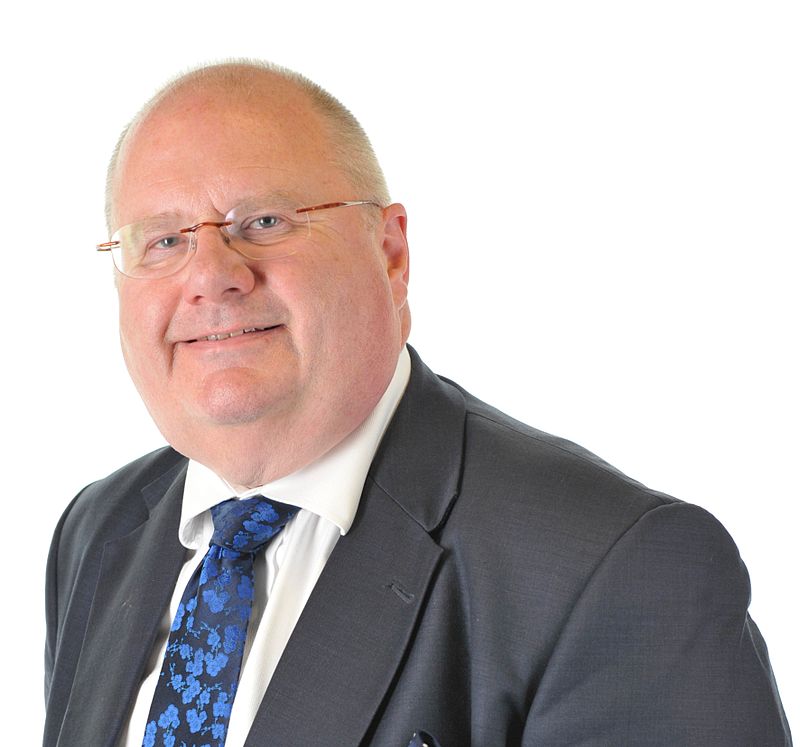
    Mr Deputy Speaker,

    I turn now to my final measures.

    The government was elected to back working people.

    And the best way to help working people is to let them keep more of the money they earn.

    When I became Chancellor, the tax-free personal allowance was less than £6,500.

    In two weeks’ time it will rise to £11,000.

    We committed that it would reach £12,500 by the end of this Parliament.

    And today we take a major step towards that goal.

    From April next year, I am raising the tax-free personal allowance to £11,500.

    That’s a tax cut for 31 million people.

    It means a typical basic rate taxpayer will be paying over £1,000 less income tax than five years ago.

    And it means another 1.3 million of the lowest paid taken out of tax altogether.

    Mr Deputy Speaker,

    We made another commitment in our manifesto and that was to increase the threshold at which people pay the higher rate of tax.

    That threshold stands at £42,385.

    I can tell the House that from April next year I’m going to increase the Higher Rate threshold to £45,000.

    That’s a tax cut of over £400 a year.

    It is going to lift over half a million people who should never have been paying the higher rate out of that higher tax band altogether.

    And it’s the biggest above inflation cash increase since Nigel Lawson introduced the 40p rate almost thirty years ago.

    Mr Deputy Speaker,

    A personal tax free allowance of £11,500.

    No one paying the 40p rate under £45,000.

    And we have delivered a budget for working people.

    Mr Deputy Speaker,

    Five years ago we set out on a long term plan.

    Because we wanted to make sure that Britain never again was powerless in the face of global storms.

    We said then that we would do the hard work to take control of our destiny and put our own house in order.

    5 years later our economy is strong, but the storm clouds are gathering again.

    Our response to this new challenge is clear.

    We act now so we don’t pay later.

    This is our Budget.

    One that reaches a surplus so the next generation doesn’t have to pay our debts.

    One that reforms our tax system so that the next generation inherits a strong economy.

    One that takes the imaginative steps so that the next generation is better educated.

    One that takes bold decisions so that our children grow up fit and healthy.

    This is a Budget that gets investors investing, savers saving, businesses doing business; so that we build for working people a low tax, enterprise Britain; secure at home, strong in the world.

    I commend to the House a Budget that puts the next generation first.