Tag: 2016

  • Stephen Crabb – 2016 Speech on Transforming Lives Through Welfare and Work

    Stephen Crabb
    Stephen Crabb

    Below is the text of the speech made by Stephen Crabb, the Secretary of State for Work and Pensions, on 12 April 2016.

    Good morning.

    Thank you Claire [Tickell, Chair, EIF] for that introduction.

    It’s a pleasure to be here today at the Early Intervention Foundation to make my first speech as the Secretary of State for Work and Pensions.

    I know EIF is absolutely committed to transforming the life chances of the most disadvantaged in our country. In that spirit, I’d like to thank you for the work you do to bring new thinking and a better understanding of the evidence of when and how it can be the right thing to intervene early to change lives.

    In particular, I know my department asked you to look at how relationships between parents can impact on children’s lives and what interventions might be effective to help improve those lives. That important review, published last month, contains powerful conclusions which demonstrate why we are making family stability a key part of our life chances strategy.

    So I look forward to your continued contributions and getting to know you better in the weeks, months and maybe years ahead.

    I thought I would use this important opportunity today to share some early thoughts with you about the kind of welfare system I believe in; and about the challenges that lie ahead as we continue the vital task of reforming welfare actually as part of a broader mission to build a society in which the life chances of everyone are improved.

    But let me first take a step back.

    One of the things that has struck me since taking over at DWP is the sheer size and scale of the department.

    There is no other Whitehall department which connects with as many people, at so many important moments in their lives; there’s no other department which spends as much taxpayers’ money.

    It accounts for nearly a quarter of all public sector spending in this country. The DWP budget is more than the entire GDP of the nation of Portugal!

    And it is therefore not surprising that it attracts strong and passionate views about how, where and why that money is being spent.

    The DWP is a department of big numbers; big data; big statistics.

    Each year it processes 5 million benefit claims….

    ….pays £170 billion in benefits and pensions to 22 million people…. ….receives 47 million calls from the public seeking advice and support…. ….and all of this happens in more than 700 jobcentres and contact centres in all parts of the United Kingdom.

    But, as I said in that very first statement in the House of Commons just 2 days after I was appointed, “Behind every statistic is a human being.” It’s something I remind myself of and remind my ministerial team of every day.

    Because my overriding vision for the Department for Work and Pensions is that, even amidst all of these big numbers, fundamentally, we should be in the business of people….of individuals….we should be in the business of families.

    From the very top of the organisation to the farthest flung jobcentre, the thousands of staff, advisers, Ministers – and especially me as the Secretary of State – should understand that we are in the people business.

    Welfare that focusses on people also means we must understand the human impact of decisions we take far better. It means that when we talk about the numbers of people receiving benefits or moving on or off of benefits, we also need to understand at a much deeper level the underlying factors for why those individuals find themselves in a set of circumstances that requires support from the state.

    A people business does mean providing financial assistance and support to protect people from poverty who, in their current circumstances, cannot provide for themselves. That I think is the mark of a decent society.

    But a people business also means recognising that for a great many of those individuals and their families, those circumstances can change; and those circumstances absolutely do need to change. So a welfare system that does not provide this support and basis for transformation in people’s lives falls far short of what a modern welfare system can achieve, I believe.

    So these twin objectives should be at the very heart of every reform and at the centre of our welfare system – vital social protection but also the incentives and support to bring meaningful and positive change to people’s lives.

    But our efforts to deliver welfare reform should be just one part of a much broader approach for strengthening society, creating opportunity, and breaking down barriers that entrench poverty and disadvantage.

    That’s exactly what we mean when we talk about life chances….a relentless focus – an all-out assault as the Prime Minister calls it – on tackling the root causes of poverty in Britain today….On tackling those things which are undermining social mobility and holding people back from reaching their full potential in life.

    This is an area which is really close to my heart.

    You see, I believe in a society where it should not matter what street you grew up on… how much your mum or dad earn… or where you go to school….

    ….the society I believe in is one where everyone has a decent set of opportunities to lead fruitful lives.

    Over the past few generations, we have seen some incredible and dramatic changes in society. In some ways, society is almost unrecognisable from just a few decades ago.

    Never before has so much information been at the fingertips of so many….

    the digital communications revolution has transformed people’s access to information and reduced the real life costs of information, it has broken down cultural barriers and made the world a smaller place.

    Never before has university been a realistic option for so many. What was the preserve enjoyed by a small privileged elite has been opened to millions.

    Never before have we seen such a decline of social deference.

    And the pace of this change has been astonishing. The impact this has had on people has been palpable.

    And so with these trends in the way people view society, in education, in the reach of digital communications, the revolution in technology….you could be forgiven for thinking that we should be living in a golden age of social mobility.

    But for many, that is simply not the case. Today, far too many people have their life chances determined before they have even had the chance to explore all that life has to offer.

    We cannot deliver true social mobility, we cannot help people live their lives to the fullest, without fighting the very real factors that hold people back from reaching their potential.

    Yes, we’ve seen some really encouraging progress, with record levels of employment, a huge expansion in apprenticeships – over 2 million since 2010 – and lower youth unemployment.

    But we need to do much more. So, during my time at the Department for Work and Pensions, 2 things will go hand in hand – reforming welfare, and a relentless focus on improving life chances.

    That means leading a life chances strategy that uses the entire machinery of government to break down some of these barriers to opportunity.

    So we will be:

    Regenerating estates so children have safe and secure homes where they can thrive.

    We’ll be using work experience much more creatively to give young people the encouragement they need to get into further education, employment or training when they leave school.

    We’re going to be investing in mental health services to tackle some of the debilitating disorders that can have such a devastating impact on young people’s life chances at a crucial stage in their lives.

    And we’ll be supporting those with drug and alcohol addictions to turn their lives around and fully recover.

    And I know that these are not new problems. But I think this is a new approach we are delivering. As Chair of the Social Justice Cabinet Committee, I will be leading a more coherent and collaborative government strategy….an approach that mobilises all parts of government to tackle poverty, and improve social mobility for the poorest in our society.

    At this point, I’d like to pay tribute to my predecessor, Iain Duncan Smith. Someone who I think will go down as one of the great social reformers of our time. Iain has helped to change the way we as a government look at poverty. He turned the lens on the root causes of poverty rather than just the symptoms and led many important reforms. He has been – and I’m sure will continue to be – a champion for improving the life chances of some of the country’s most disadvantaged people.

    All of our life chances work, from the health sector to schools, to decent places to live is vital, but I believe it is a stable home and a family life that gives children the best possible chance.

    It is hard to overstate the importance of family. Because no-one can doubt that from a young age, it is the family that helps to define us….

    ….that tells us who we are and where we’ve come from; it is where we derive our first identity.

    Perhaps most importantly, it is from the family that we are first loved and, in turn, we learn to love…

    …. where we first learn to fight and to make up….

    ….and where we first learn to make choices and see the consequences of those choices.

    I am not talking about some idealised model of a self-contained nuclear family – society is much more complex than that.

    But family is the training ground for life. And a good start provides a great platform for a fruitful life. In contrast, as you well know, family life which is chaotic, violent, broken, damaged, turbulent….

    leads so often to a life characterised by educational failure, crime, poverty, and where that cycle is then repeated in another generation. And the impact on the individual, on society, the economy and the welfare budget is massive.

    Some have estimated the overall costs of relationship breakdown in our society could be as high as £47 billion. And behind that figure, life chances are squandered.

    I know many MPs will see the real human cost of this every week at their surgeries – as I have – with breakdown of relationships often the backdrop to so many of our constituents’ problems.

    I don’t think it has to be this way. We believe in the vital and foundational role of the family.

    That’s why we have already doubled the funding for relationship support, we have increased the amount of free childcare to support parents and, of course, we are helping families move into work through Universal Credit, which I will come on to in a few moments.

    It’s why we have targeted those families that need the most help. Our Troubled Families programme has turned round 120,000 families that had complex and deep rooted problems and we’re extending this to 400,000 more families.

    And we’ll go even further, increasing support for new parents with an expanded parenting programme, which will build on the great work of EIF in this area.

    If stable family relationships provide the platform, then I believe it is work that provides the economic security and the essential role models which I believe children need to improve their life chances.

    Fundamentally, as human beings, we are hard-wired to derive satisfaction from meaningful, fruitful work. Work should be a place where we feel valued – in every sense, where we continue to learn and grow, where we are introduced to new and expanded social networks, a place which is fundamentally good for our physical and mental well-being.

    And of course I recognise that for a great many people their own experience of the workplace falls well short of that ideal – but this recognition of the value, the worth of work is very much at the heart of my outlook on welfare reform.

    A pound you earn can mean more than a pound provided in welfare.

    I have spoken elsewhere about my own personal background and I don’t intend to go over that again here today, but one point I would make about the home life I grew up with was the amazing role model I had of a mother who understood that central importance of work in all its dimensions – for herself personally and for the sons she was raising on her own. That understanding underpinned her own journey from a position of crisis and dependency to a position of ‘economic independence’ – a process which took years by the way.

    And I really do believe that a welfare system which does not elevate and reinforce that central understanding of how important work and fruitful activity is for us as human beings is actually very damaging for society.

    In 2010, far too many people were being denied those benefits of work. Nearly one in 5 households had nobody in work. Two million children did not see a mum or dad going out to work each day.

    There has been much progress since then to restore the value of work within our welfare system. The number of households where nobody works is down over 700,000. The workless households rate in the social rented sector is at its lowest level for 20 years.

    Half a million more children are benefiting from having the role model of a parent that works – and the outlook this brings.

    The value of this work and the dangers of dependency was something the architect of the welfare state, Sir William Beveridge, recognised and believed in.

    His blueprint for the modern welfare state in 1942 was clear about the relationship between welfare and work. Beveridge said:

    Getting work … may involve a change of habits, doing something that is unfamiliar or leaving one’s friends or making a painful effort of some other kind. The danger of providing benefits which are both adequate in amount and indefinite in duration, is that men as creatures who adapt themselves to circumstances, may settle down to them.

    And he stressed:

    The state in organising security should not stifle incentive, opportunity, responsibility

    But the welfare system we ended up with was one where: Incentives to work were being undermined. Opportunities to get on were being passed by.

    The sense of responsibility people had for their own lives was being eroded.

    Financial support for people facing poverty is vital – I always tell my colleagues….never, never underestimate the importance of a family in need getting that support in a timely and effective way – but on its own, cash support is rarely enough.

    As a result, people were often trapped in the unfair position of being better off staying put on benefits rather than taking the first steps back into work.

    The welfare system I believe in – and I want to see – is one that transforms lives rather than traps them.

    One that recognises and responds to the fact that people do have hopes, they do have aspirations, they do want to take opportunities to better themselves and their family.

    One that responds to the way real people behave in the real world.

    It was out of the destruction and devastation of the Second World War that Beveridge’s principles for welfare were forged.

    I want to restore and reinforce some of those founding principles of our welfare state that have maybe over the years have been forgotten or eroded.

    So my vision for jobcentres is that they should be far more than places where people sign on and receive out of work entitlements. I want jobcentres to be places of true transformation. Places where motivated and skilled teams are supporting positive change in people’s lives.

    And it’s already happening.

    One of my early visits in the role was to a Jobcentre Plus in Enfield in North London, where I saw

    ….work coaches helping young people avoid the clutches of gangs and build a more positive life through work….I saw work coaches supporting people with mental health conditions to get treatment and stay connected to the world of work.

    This is vital, life changing support on the front line.

    And as part of my vision for the organisation I want those skilled work coaches to be really valued in the public eye, in a similar way that nurses and firefighters are respected and valued – because in terms of life-changing interventions, or crises being tackled what our teams of work coaches are doing and achieving is remarkable.

    Whatever and wherever it may be in the department, I want everyone in DWP to go to work each day sharing in my twin objectives – protecting people from poverty and supporting people to transform their lives.

    And that is what our reforms are about. In particular, Universal Credit.

    Universal Credit is a very real human reform. It’s putting people at the very heart of the welfare system for the first time….It has, I believe, the potential to be the most important public sector change project for decades.

    It works with people, recognising that people’s lives and circumstances are different. Universal Credit doesn’t treat a person as a number. It’s about a human being in the jobcentre staying with you as you move into work and progress…. ….coaching you….mentoring you….supporting you.

    It also provides the right incentives for people to move into work. William Beveridge, I believe would have supported that.

    So I am absolutely committed to leading a continued, successful roll out of Universal Credit. That is a priority for me, as is continuing to embed it as the spine that runs through the welfare system.

    And to those who are sceptical of Universal Credit, I just say this: ‘look at the evidence so far’. When you compare those who are already receiving Universal Credit to a similar cohort receiving previous Jobseeker’s Allowance, you will see people on Universal Credit:

    are spending roughly 50% more time looking for work
    they are 8 percentage points more likely to be in work
    and when they are in work, they’re more likely to be earning a higher wage
    In the words of the chief executive of the Institute for Fiscal Studies, ‘it is a genuinely radical reform….that will clear up some of the most egregious complexities and disincentives that our benefit system has imposed for far too long’.

    This month, we will reach an important milestone. Universal Credit will be available in every single jobcentre in the country for single people making a new claim. The next stage will be the ambitious full rollout, so that every person, in every circumstance, who steps into a jobcentre to make a new claim will be on Universal Credit. That will be my focus in the months ahead.

    Universal Credit and our other reforms to support people into work are working.

    There are now more than 2 million more people in work than in 2010; with the number of workless households at a record low.

    But I know there is more to do to ensure the opportunities of work are available to everyone. The diversity of those in work should reflect the diversity of society.

    And that, finally, brings me to an area of reform that is another one of my priorities:

    And that is supporting disabled people and people with health conditions into work.

    We are making progress. Nearly 300,000 more disabled people have moved into work over the last 2 years.

    But despite this, there remains a very significant gap in the employment rate between disabled and non-disabled people. Whilst the employment rate for people who are not disabled is 80%, for disabled people it’s less than 50%.

    In the context of a very strong labour market and the millions of people that have moved into work over the last few years, I think that gap is simply unacceptable.

    I want to be clear. The employment gap isn’t because of a lack of aspiration on the part of sick and disabled people. We know the majority want to work or stay in work.

    Some attitudes held by society have stopped disabled people from moving into work for many decades. So I want to challenge health and care professionals, employers and wider society to break down those barriers.

    That’s why on my first day as Secretary of State, I announced to Parliament that I wanted to start a new conversation with disabled people, with their representatives, healthcare professionals and employers.

    We need to recognise the role that work plays in supporting good health. And importantly, that a health condition or disability needn’t be a barrier to work.

    To do that, the workplace, the welfare system, the health service will all need to work much better together….to help people stay healthy in the first place. If someone gets sick, they need the right support so they can stay close to the world of work and re-join it as quickly as possible.

    It’s already clear to me that there are lots of interesting ideas emerging. I look forward, with my ministerial team, to listening to all of the ideas and views and discussing them with disability groups, employers and the health, care and welfare sectors.

    Together we have an opportunity to do so much better for disabled people – to improve their health and their opportunities.

    And this opportunity to have a decent job and the economic security that comes with a regular wage – as well as all the other positive aspects of being in work I have set out today – I think this should be universal.

    As such, I want to make sure this opportunity is available in all communities, in all parts of the country, on every street and in every household, across all sections of society no matter what your background, especially for the poorest.

    That’s what our life chances strategy is about.

    Children growing up in families where there are healthy and strong relationships are the foundation from which they can be supported to step up and grasp those life opportunities.

    I am somebody that does believe the state also has an important role to help transform lives. And I am determined that a restless, innovating spirit of reform should continue to shape my department as we place people at the very centre of everything we do.

    Because there is still much more to do to create a welfare system that I think is true to its founding principles.

    A welfare system that does protect the most vulnerable.
    A welfare system that transforms lives rather than traps them.
    A system that treats people as human beings with hopes and aspirations and provides the right support and incentives for those to be realised.

    If my department isn’t transforming lives, helping people into work every day, it’s not doing its job.

    That’s the welfare system that I believe in. That’s the welfare system people deserve. Thank you.

  • Angus Robertson – 2016 Speech on Panama Papers

    angusrobertson

    Below is the text of the speech made by Angus Robertson in the House of Commons on 11 April 2016.

    Let me begin by welcoming the Prime Minister’s statement and the new measures that he has announced to deal with tax evasion and aggressive tax avoidance. I also welcome the publication of his tax information, and, indeed, his apology for the way in which he has handled it.

    It is estimated that between $21 trillion and $32 trillion of private financial wealth is located, untaxed or lightly taxed, in tax havens around the world. Illicit cross-border financial flows are estimated at more than $1 trillion per year, which is 10 times more than the global foreign aid budgets combined. The Panama papers leak is so large that if one printed the files, the final document would be 650 million pages long. It is right that a special taskforce has been set up to go through the leaked information, and the Prime Minister was right to say that charges will hopefully follow if criminality can be proven.

    The public are indignant here and around the world. People are rightly angered by the rules for normal taxpayers being different from those for a small ultra-rich elite, but we must ask ourselves whether the scale of the problem has been taken seriously, because it has quite patently not been thus far, domestically or internationally. The UK bears a particular responsibility given that the UK and its overseas territories and dependencies collectively sit at the top of the Tax Justice Network’s financial secrecy index.

    In Scotland, we are confronted by the reality of a small number of landowners owning huge swathes of the country, many through tax havens. From Perthshire to Jura and across Scotland, land is owned through non-transparent firms based in tax havens such as Panama and the British Virgin Islands.

    I want to ask the Prime Minister the following specific questions. Will he please revisit his decision not to co-operate fully with European Union partners on overseas trusts? To whom will the welcome register of beneficial owners across all British Crown dependencies and overseas territories be available and when? Will it be publicly available? If not, why not? Will the Prime Minister prioritise bilateral tax treaties with Panama and other tax havens as part of global efforts towards better co-ordination against tax avoidance, and will he regularly update this House on progress? Lastly, given that the UK Cabinet agrees Government policy on tax rules, potential loopholes and arrangements with tax havens, ​will he ensure that all his Cabinet colleagues confirm whether they have ever benefited through offshore financial dealings?

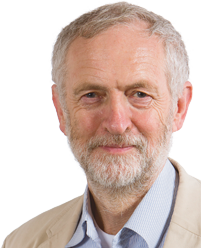
  • Jeremy Corbyn – 2016 Speech on Panama Papers

    jeremycorbyn

    Below is the text of the speech made by Jeremy Corbyn in the House of Commons on 11 April 2016.

    I thank the Prime Minister for advance sight of his statement—it is absolutely a master class in the art of distraction. I am sure that he will join me in welcoming the outstanding journalism that went into exposing the scandal of destructive global tax avoidance that was revealed by ​the Panama papers. Those papers have driven home what many people have increasingly felt: that there is now one rule for the super-rich, and another for the rest. I am honestly not sure that the Prime Minister fully appreciates the anger that is out there over this injustice. How can it be right that street cleaners, teaching assistants and nurses work and pay their taxes, yet some at the top think that the rules simply do not apply to them?

    What has been revealed in the past week goes far beyond what the Prime Minister has called his “private matters”, and today he needs to answer six questions to the House, and—perhaps equally importantly—to the public as a whole. First, why did he choose not to declare his offshore tax haven investment in the House of Commons Register of Members’ Financial Interests, given that there is a requirement to

    “provide information of any pecuniary interest”

    that might reasonably be thought to influence a Member’s actions? The Prime Minister said that he thinks he mishandled the events of the past week. Does he now realise how he mishandled his own non-declaration six years ago, when he decided not to register an offshore tax haven investment from which he has personally benefited?

    Secondly, can he clarify to the House and to the public that when he sold his stake in Blairmore Holdings in 2010, he also disposed of another offshore investment at that time? In particular, were any of the £72,000 of shares that he sold held in offshore tax havens?

    The “Ministerial Code” states that

    “Ministers must ensure that no conflict arises, or could reasonably be perceived to arise, between their public duties and their private interests, financial or otherwise,”

    and that all Ministers

    “must provide…a full list…of all interests which might be thought to give rise to a conflict,”

    including close family interests. So did the Prime Minister provide the permanent secretary with an account of his offshore interests and if not, did he not realise that he had a clear obligation to do so, when part of his personal wealth was tied up in offshore tax havens and he was now making policy decisions that had a direct bearing on their operation? For example, in 2013 the Prime Minister wrote to the President of the European Council opposing central public registers of beneficial ownership of offshore trusts. So, thirdly, does the Prime Minister now accept that transparency of beneficial ownership must be extended to offshore trusts?

    The Panama-based law firm Mossack Fonseca registered more than 100,000 secret firms in the British Virgin Islands. It is a scandal that UK overseas territories registered over half the shell companies set up by Mossack Fonseca. The truth is that the UK is at the heart of the global tax avoidance industry. It is a national scandal and it has got to end. Last year, this Government opposed the EU Tax Commissioner Pierre Moscovici’s blacklist of 30 un-co-operative tax havens. That blacklist included the Cayman Islands and the British Virgin Islands. So my fourth question is: will the Prime Minister now stop blocking European Commission plans for a blacklist of tax havens? It turns out that Lord Blencathra, the former Conservative Home Office Minister, was ​absolutely right when he wrote to the Cayman Islands Government in 2014 to reassure them that our Prime Minister was making a “purely political gesture” about cracking down on tax havens at the G8. It was designed, he said, to be

    “a false initiative which will divert other member states from pursuing their agenda.”

    Last June, Treasury officials lobbied Brussels not to take action against Bermuda’s tax secrecy. According to the European Union’s transparency register, the tech giant Google has no fewer than 10 employees lobbying Brussels. Bermuda is the tax haven favoured by Google to channel billions in profits. Conservative MEPs have been instructed on six occasions since the beginning of last year to vote against action to clamp down on aggressive tax avoidance. This is a party incapable of taking serious, internationally co-ordinated action to tackle tax dodging. Across the country and on the Opposition side of the House, there is a thirst for decisive action against global tax avoidance scams that suck revenues out of our public services, while ordinary taxpayers have to foot the bill. It undermines public trust in business, politics and public life. It can and must be brought to an end.

    We welcome the Prime Minister’s announcement today about new measures to make companies liable for employees who facilitate tax cheating, but it is also too little, too late. In fact, it was announced by the former Chief Secretary to the Treasury a year ago. People want a Government who act on behalf of those who pay their taxes, not those who dodge their taxes in offshore tax havens. Yesterday, my hon Friend the shadow Chancellor set out a clear plan for transparency. He is a Member of this House who has spent all his time in Parliament exposing tax havens and tax avoidance. His paper included a call for an immediate public inquiry into the Panama papers revelations to establish the harm done to our tax revenues and to bring forward serious proposals for reform.

    I say gently to the Prime Minister that a tax taskforce reporting to the Chancellor and the Home Secretary, both members of a party funded by donors implicated in the Panama leaks, will be neither independent nor credible. So will the Prime Minister back a credible and independent public inquiry into the abuses revealed by the leaks?

    Our task transparency plan called for a specialised tax enforcement unit to be properly resourced, which is key. Since 2010, there have been only 11 prosecutions over offshore tax evasion—a situation that the Public Accounts Committee described as “woefully inadequate”. Having slashed resources and cut 14,000 staff since 2010, will the Prime Minister today guarantee that resourcing to Her Majesty’s Revenue and Customs will increase in this Parliament?

    We support real action to end the abuses that allow the wealthy to dodge the rules that the rest of us have to follow. We need to ensure that trust and fairness are restored to our tax system and our politics and to end the sense and the reality that there is one rule for the richest and another for everybody else. The Prime Minister has attacked tax dodging as immoral, but he clearly failed to give a full account of his own involvement in offshore tax havens until this week and to take essential action to clean up the system, while at the same time ​blocking wider efforts to do so. There are clear steps that can be taken to bring tax havens and tax dodging under control—[Interruption.]

    Mr Speaker

    Order. There is a Minister standing at the Bar shrieking in an absurd manner. He must calm himself and either take a medicament if required or leave the Chamber.

    Jeremy Corbyn

    Thank you, Mr Speaker.

    I suggest that the Prime Minister’s record, particularly over the past week, shows that the public no longer have the trust in him to deal with these matters. Do he and Conservative Members realise why people are so angry? We have gone through six years—yes, six years—of crushing austerity, with families lining up at food banks to feed their children, disabled people losing their benefits, elderly care cut and slashed and living standards going down. Much of that could have been avoided if our country had not been ripped off by the super-rich refusing to pay their taxes.

    Let me say this to the Prime Minister: ordinary people in the country will simply not stand for this any more: they want real justice; they want the wealthy to pay their share of tax just as they have to pay when they work hard all the time.

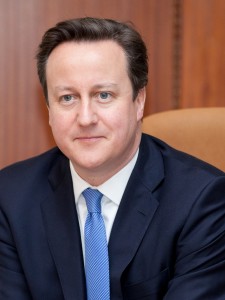
  • David Cameron – 2016 Statement on the Panama Papers

    davidcameron

    Below is the text of the statement made by David Cameron, the Prime Minister, in the House of Commons on 11 April 2016.

    With permission, I would like to make a statement on the Panama papers.

    Dealing with my own circumstances first, yesterday I published all the information in my tax returns not just for the last year, but for the last six years. I have also given additional information about money inherited and given to me by my family, so people can see the sources of income I have: my salary, the benefit in kind of living in No. 10 Downing Street, the support my wife and I have received as Leader of the Conservative party, the renting out of our home and the interest on the savings that I have. Since 2010, I have not owned any shares or any investments.

    The publication of a Prime Minister’s tax information in this way is unprecedented, but I think it is the right thing to do. But let me be clear: I am not suggesting that this should apply to all MPs. The Chancellor has today published information on his tax return, in a similar way to the shadow Chancellor and the First Minister for Scotland. This begs the question of how far the publication of tax information should go. I think there is a strong case for the Prime Minister and the Leader of the Opposition, and for the Chancellor and the shadow Chancellor, because they are people who are or who wish to be responsible for the nation’s finances. As for MPs, we already have robust rules on Members’ interests and their declaration, and I believe that is the model we should follow.

    We should think carefully before abandoning completely all taxpayer confidentiality in this House, as some have suggested. If this were to come in for MPs, people would also ask for a similar approach for those who ask us questions, those who run large public services or lead local government, or indeed those who edit news programmes or newspapers. I think this would be a very big step for our country. It certainly should not take place without a long and thoughtful debate, and it is not the approach that I would recommend.

    Let me deal specifically with the shares my wife and I held in an investment fund or unit trust called Blairmore Holdings, set up by my late father. The fund was registered with the UK’s Inland Revenue from the beginning. It was properly audited, and an annual return was submitted to the Inland Revenue every year. Its share price was listed in the Financial Times. It was not a family trust; it was a commercial investment fund for any investor to buy units in. UK investors paid all the same taxes as with any other share, including income tax on the dividends every year.

    There have been some deeply hurtful and profoundly untrue allegations made against my father, and if the House will let me, I want to put the record straight. This investment fund was set up overseas in the first place because it was going to be trading predominantly in dollar securities, so like very many other commercial investment funds, it made sense to be set up inside one of the main centres of dollar trading.

    There are thousands of these investment funds and many millions of people in Britain own shares, many of whom hold them through investment funds or unit trusts. Such funds, including those listed outside the ​UK, are included in the pension funds of local government, most of Britain’s largest companies and, indeed, even some trade unions. Even a quick look shows that the BBC, the Mirror Group, Guardian Newspapers and—to pick one council entirely at random—Islington all have these sorts of overseas investments. To give one further example, Trade Union Fund Managers Ltd, based in Congress House, has a portfolio of over £50 million of investment in the trade union unit trust, with 3% of its net assets based in Jersey. This is not to criticise what it does; it is to make the point that this an entirely standard practice, and it is not to avoid tax.

    One of the country’s leading tax lawyers, Graham Aaronson, QC, has stated unequivocally that this was

    “a perfectly normal type of collective investment fund”.

    This is the man who led the expert study group that developed the general anti-abuse rule—so much debated and demanded in this House—which Parliament finally enacted in 2013. He also chaired the 1997 examination of tax avoidance by the Tax Law Review Committee. He has said that it would be

    “quite wrong to describe the establishment of such funds as ‘tax avoidance’”

    and, further, that

    “it would be utterly ridiculous to suggest that establishing or investing in such funds would involve abusive tax avoidance”.

    That is why getting rid of unit trusts and other such investment funds that are listed overseas has not been part of any Labour policy review, any Conservative party policy review or any sensible proposals for addressing tax evasion or aggressive tax avoidance.

    Surely, it is said, investors in these funds benefit from their being set up in jurisdictions with low or no taxes. Again, this is a misunderstanding. Unit trusts do not exist to make profit for themselves; they exist to make a profit for the holders of the units. Those holders pay tax, and if they are UK citizens, they pay full UK taxes.

    It is right to tighten the law and change the culture around investment to further outlaw tax evasion and discourage aggressive tax avoidance, but as we do so, we should differentiate between schemes designed to artificially reduce tax and those that are encouraging investment. This is a Government—and this should be a country—who believe in aspiration and wealth creation. We should defend the right of every British citizen to make money lawfully. Aspiration and wealth creation are not somehow dirty words. They are the key engines of growth and prosperity in our country and we must always support those who want to own shares and make investments to support their families.

    Some people have asked, “If this trust was legitimate, why did you sell your shares in January 2010?” I sold all the shares in my portfolio that year because I did not want any issues about conflicts of interest—I did not want anyone to be able to suggest that, as Prime Minister, I had any other agendas or vested interests. Selling all my shares was the simplest and clearest way that I could achieve that.

    There are strict rules in this House for the registration of shareholdings. I have followed them in full. The Labour party has said it will refer me to the Parliamentary Commissioner for Standards. I have already given her the relevant information, and if there is more she believes I should say, I am very happy to say it.​
    I accept all of the criticisms for not responding more quickly to these issues last week, but, as I have said, I was angry about the way my father’s memory was being traduced. I know he was a hard-working man and a wonderful dad, and I am proud of everything he did to build a business and provide for his family.

    On the issue of inheritance tax, there is an established system in this country. I believe that, far from people being embarrassed about passing things to their children—for example, wanting to keep a family home within the family—it is a natural human instinct to do so, and is something that should be encouraged. As for parents passing money to their children while they are still alive, that is something that the tax rules fully recognise. Many parents want to help their children when they buy their first car, get a deposit for their first home or face the costs of starting a family. It is entirely natural that parents should want to do those things, and, again, something that we should not just defend but proudly support.

    Let me turn to the Panama papers and the actions that this Government are taking to deal with tax evasion, aggressive tax avoidance and international corruption more broadly. When we came into office, there were foreigners not paying capital gains tax when selling their UK homes, private equity managers paying a lower rate of tax than the people who cleaned their offices, and rich homebuyers getting away without paying stamp duty because houses were enveloped within companies. We have put an end to all those things. In the last Parliament alone we made an unprecedented 40 tax changes to close loopholes, raising £12 billion. In this Parliament we will legislate for more than 25 further measures, forecast to raise £16 billion by 2021. No British Government, Labour or Conservative, have ever taken so much robust action in this area.

    Through my chairmanship of the G8 at the summit at Lough Erne in 2013, I put tax, trade and transparency on the global agenda, and sought agreement on a global standard for the automatic exchange of information over who pays taxes and where. Many said it would never happen, but today 129 jurisdictions have committed to implementing the international standard for exchange of tax information on request, and over 95 jurisdictions have committed to implementing the new global common reporting standard on tax transparency. Under that new standard, we will receive information on accounts of UK taxpayers in all those jurisdictions. In June this year, Britain will become the first country in the G20 to have a public register of beneficial ownership, so everyone can see who really owns and controls each company. This Government are also consulting on requiring foreign companies that own property or bid on public contracts to provide their beneficial ownership information, and we are happy to offer technical support and assistance to any of the devolved Administrations also considering such measures.

    As the revelations in the Panama papers have made clear, we need to go even further. So we are taking three additional measures, to make it harder for people to hide the proceeds of corruption offshore, to make sure that those who smooth the way can no longer get away with it and to investigate wrongdoing.

    First, let me deal with our Crown dependencies and overseas territories that function as financial centres. They have already agreed to exchange taxpayer financial ​account information automatically, and will begin doing so from this September. That never happened before I became Prime Minister and got them round the Cabinet table and said, “This must happen.” We need to go further, however, and today I can tell the House that we have now agreed that they will provide UK law enforcement and tax agencies with full access to information on the beneficial ownership of companies. We have finalised arrangements with all of them except for Anguilla and Guernsey, both of which we believe will follow in the coming days and months. For the first time, UK police and law enforcement agencies will be able to see exactly who really owns and controls every company incorporated in those territories: the Cayman Islands, British Virgin Islands, Bermuda, the Isle of Man, Jersey—the lot. That is the result of a sustained campaign, building on the progress that we made at the G8, and I welcome the commitment of the Governments of those territories to work with us and implement those arrangements.

    The House should note that that will place our overseas territories and Crown dependencies well ahead of many other similar jurisdictions, and also—crucially—ahead of many of our major international partners, including some states in the United States of America. Next month we will seek to go further still, using our anti-corruption summit to encourage consensus not just on exchanging information, but on publishing such information and putting it into the public domain, as we are doing in the UK. We want everyone with a stake in fighting corruption—from law enforcement, to civil society and the media—to be able to use those data and help us to root out and deter wrongdoing.

    Next, we will take another major step forward in dealing with those who facilitate corruption. Under current legislation it is difficult to prosecute a company that assists with tax evasion, but we are going to change that. We will legislate this year for a new criminal offence to apply to corporations that fail to prevent their representatives from criminally facilitating tax evasion. Finally, we are providing initial new funding of up to £10 million for a new cross-agency taskforce to swiftly analyse all the information that has been made available from Panama, and to take rapid action. That taskforce will include analysts, compliance specialists, and investigators from across HMRC, the National Crime Agency, the Serious Fraud Office, and the Financial Conduct Authority.

    This Government will continue to lead the international agenda to crack down on tax evasion and aggressive tax avoidance. That battle is important and must be combined with the approach that we take in this country—low tax rates, but taxes that people and businesses pay. That is how we will tackle these issues and build a strong economy that can fund the public services we need. That strong economy, creating jobs and rewarding aspiration is the true focus of this Government—something that would never be safe under the Labour party—and I commend this statement to the House.

  • Sajid Javid – 2016 Statement on UK Steel Industry

    CBI Conference

    Below is the text of the statement made by Sajid Javid, the Business Secretary, in the House of Commons on 11 April 2016.

    All of us are by now familiar with the perfect storm of factors that has led to the global price of steel collapsing during 2015.

    But for all the economic challenges we face, the real tragedy is a human one.

    Over the past 11 months I’ve visited steelmaking communities right across the UK.

    They’re very different plants in very different places.

    But one thing unites them.

    The pride and dedication of the highly-skilled people I meet.

    All they want is to be able to carry on doing what they do so well.

    And I’m doing everything I can to help them do just that.

    I’ll talk first about Port Talbot.

    Since becoming Secretary of State for Business I have been in frequent contact with the senior management of Tata.

    This includes several meetings with the group’s chairman last year and this.

    Several weeks ago Tata told me, in confidence, that they were seriously considering an immediate closure of Port Talbot.

    Not a sale, a closure.

    That would have meant thousands of hard-working men and women could already be out of a job.

    Thousands more would be facing a bleak future.

    I was not prepared to let that happen.

    In the days that followed, I worked relentlessly to convince Tata that it was in everyone’s interests to keep the plant open and find a new buyer.

    I also made it very clear that the government is totally committed to supporting and facilitating that process.

    This work paid off.

    Last month Tata announced its intention to sell the plant and its wider UK assets rather than close it.

    Since then, I have continued to meet with its executives here and in Mumbai.

    I’ve been joined in this by my Right Honourable friend the Secretary of State for Wales.

    And we’ve secured assurances that Tata will be a responsible seller, and will allow appropriate time to find a buyer.

    The formal sale process begins today.

    I’ve been in contact with potential buyers, making clear that the government stands ready to help.

    This includes looking at the possibility of co-investing with a buyer on commercial terms.

    And we have appointed E&Y to act as financial advisors on behalf of the government.

    Commercial confidentiality means I cannot go into detail about ongoing discussions.

    However, I will update the House as soon as it is appropriate.

    And let me just thank the First Minister of Wales for all his work so far.

    His support in these talks has been invaluable.

    I’ll turn now to Tata’s Long Products division.

    I’m sure all members will join me in welcoming today’s news of a conditional agreement between Tata and Greybull.

    It’s an agreement that protects jobs and minimises the cost to taxpayers.

    We’ve been closely involved in the sale process from day one, including making a commercial offer on financing if required.

    And we’ll continue to work with them to get the deal done.

    Moving on to Scotland, on Friday we saw Liberty House receiving the keys to 2 Tata mills in Motherwell and Cambuslang.

    It’s a great result for the people of Scotland, and the Scottish government deserves thanks for helping to secure it.

    And finally, since January the global price of steel has started to recover, although it is still a long way from its pre-crisis peak.

    So there has been some positive news for Britain’s steelmakers.

    But our support for the industry and its supply chain continues.

    The Steel Council, which met for the first time early last month, is bringing together government and industry to find solutions.

    We’ve been working closely with the unions.

    And let me take this opportunity to thank Community, in particular, for its positive, constructive approach.

    We’ve taken action on power.

    £76 million has already been paid to steelmakers to compensate for high energy bills, and we expect to pay over £100 million this year alone.

    We’ve taken action on procurement.

    New rules make it easier for the public sector to buy British.

    And we’re leading calls for EU action against unfair trading practices.

    We voted in favour of anti-dumping measures on wire rod and on steel pipes in July and October last year.

    And we voted in favour of measures on rebar and cold-rolled products in February this year.

    These measures are having a real effect, with rebar imports from China down 99%.

    However, we’re still looking at ways of improving the EU tariff mechanism so we can help the steel industry without harming other sectors.

    I’m happy to hear any suggestions that Honourable Members have on that front.

    And let me make one thing very clear.

    We have repeatedly demanded and voted for tariffs on unfairly traded Chinese steel, and we will continue to do so.

    Mr Speaker, I would love to stand here today and declare the crisis over.

    To say that not one more job will be lost in Britain’s steel industry.

    That’s not a promise I, or anyone in this chamber, can make.

    But I can promise this.

    This government has consistently done all we can to support Britain’s steel industry.

    And that will continue.

    We know there are no easy answers.

    The challenges facing the industry are vast.

    Too many jobs have already been lost.

    Where that has happened, we have worked to ensure nobody is left behind.

    For example, we have committed up to £80 million to help those affected by the closure in Redcar.

    And we stand ready to support any steel community facing redundancies.

    But that’s something I am doing everything in my power to prevent.

    Britain’s steel industry is a vital part of our economy.

    I want to secure its long-term future.

    I want to see ‘Made in Britain’ stamped on steel used around the world.

    And I want to protect the jobs of the skilled men and women who work in the industry.

    The people of Port Talbot, of Scunthorpe, and of steelmaking communities across the UK deserve nothing less.

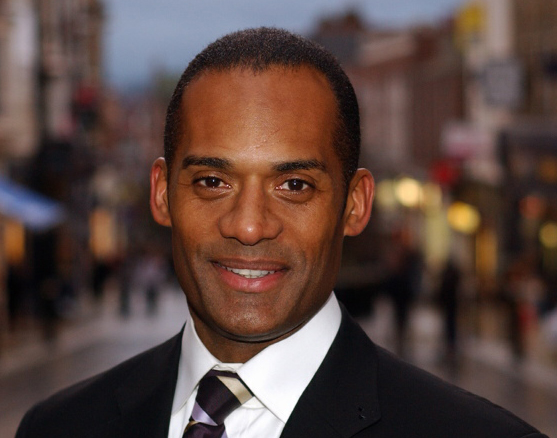
  • Adam Afriyie – 2016 Speech in Ghana

    afriyie

    Below is the text of the speech made by Adam Afriyie in Ghana on 4 April 2016.

    Honourable Ministers, distinguished guests, ladies and gentlemen,

    It is a great pleasure for me to visit Ghana, from where so much of my own family heritage comes, on my first official trip as the Prime Minister’s Trade Envoy to Ghana. I am looking forward to our discussions, understanding what your business and establishing how UK expertise can help your companies grow.

    Tonight I am proud to formally launch the Business is GREAT campaign in Ghana.

    Business is Great seeks to highlight the UK capabilities in Healthcare, Technology, Creative Industries, Education, Extractives (including mining and Oil and Gas), Agritechnology, Financial, Legal and Professional services. The UK has so much to offer in these sectors and we want Ghanaian companies to benefit.

    As part of this, we are running an exciting online campaign aimed at Ghanaian buyers and business owners interested in sourcing products and services from the UK to help them grow. The message is that the UK is open for business.

    I know that the UKTI team here at the British High Commission receive many enquiries from Ghanaian companies who are looking for innovative solutions. We want to build on that and provide a free digital service to buyers – to extend our outreach, and match UK and Ghanaian businesses more effectively. The demand is here. And UK companies can supply: there are over 20,000 suppliers in Healthcare, Creative Industries and Education alone. You can register your interest by accessing the link which is on the screen (point it out). Just outline the products and services you need and we will match them with the right British Businesses. It’s free, it’s easy and it’s online now. And for those who managed to register before 15 April I wish them luck in winning a sponsored visit to attend the International Festival for Business 2016 in Liverpool. The International Festival for Business 2016 will be a global marketplace of around 30,000 companies, with three weeks of expert-led seminars, large-scale networking, and multi-sector deal making. The festival will focus on manufacturing, energy, environment, creative and digital, and is fully supported by the British Prime Minister David Cameron and the UK Government.

    Ghana is a country that demands innovation. The UK can help provide that: it rightly has a reputation as a global centre for digital technologies, with world-leading academics and businesses working in media, internet, communications and cyber security. So it has one of the world’s strongest and most advance communications sectors. London has become the FinTech capital of the world with more people employed in the sector than any other city worldwide, including New York!

    In healthcare, the UK has one of the world’s most respected sectors, where the National Health Service (NHS) collaborates with the innovative healthcare companies and academia to provide innovative, integrated, high quality and cost effective systems of healthcare for all citizens. The UK has one of the most vibrant and productive life sciences sectors in the world, with over 5,000 companies.

    UK architects are sought after across the world for their increasingly original, cutting edge designs. 3Dried and AndArchitect are involved in the venue design for the 2016 Olympic and Paralympic Games. UK Games producers are internationally renowned for their genre-defining originality, creating world-class titles and franchises such as Grand Theft Auto, Batman: Arkham, Monument Valley, Total War and LEGO Games.

    Currently companies working in Ghana include Intellisence: energy and production efficiency through sensors, simulation and software; SolarCentury: solar and hybrid power solutions; Brinks/XL Catlin: Multi Asset Protection Insurance; Aggreko: innovative power solutions; BluePoint : Data and Communications Management and a company that was formed out of Southampton University; Drilling Systems UK: supplying Immersive Training Simulators for the Oil & Gas industry.

    With access to products and services such as these Ghanaian businesses have a wealth of choice that will benefit them immediately and transfer skills to drive their businesses.

    Although this online campaign focuses on just three sectors, we want to hear from you no matter what sector you operate in. The UK has vast experience in other areas such as consultancy, financial and legal services, education, power and argitech solutions. Exporters offer equipment, vehicles, chemicals, mining products, electrical and mechanical supplies. We can help you to take your business to the next level, to grow nationally, regionally and internationally.

    Thank you.

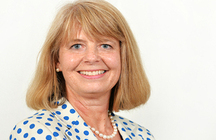
  • Harriett Baldwin – 2016 Speech at FinTech

    Harriett Baldwin
    Harriett Baldwin

    Below is the text of the speech made by Harriett Baldwin, the Economic Secretary to the Treasury, at the Guildhall in the City of London on 11 April 2016.

    Thank you for inviting me here today. It is a pleasure to speak at this key event in the FinTech calendar – a chance to bring the entire industry together to celebrate UK FinTech’s achievements, and ensure we continue to be the best place in the world to be a successful FinTech business.

    I’m delighted to see so many great speakers lined up for you today, covering such a broad range of subject matter – from blockchain and digital currencies, to alternative finance and expanding banking to the 2 billion unbanked people in the world.

    What is clear is that there is huge excitement about the potential for FinTech to make profound changes to the way we go about our financial affairs. It is right that the UK continues to be at the very heart of that.

    We are the global capital for FinTech. The recent EY report on FinTech, commissioned by HM Treasury, ranks us above other FinTech hotspots such as California, New York and Singapore.

    The UK FinTech sector generated £6.6 billion revenue in 2015. With a workforce of over 60,000 employees, more people work in UK FinTech than in Singapore, Hong Kong and Australia combined.

    This is a very strong start – but our ambitions are even greater. We need to ensure that the UK continues to be the best place in the world to be a FinTech company. That is why I am today delighted to be announcing a set of measures to deliver key FinTech initiatives.

    First, to ensure that we effectively deliver on our FinTech commitments, we will create an industry-led FinTech panel, working with Tech City UK as well as Innovate Finance and other key representatives of the FinTech community.

    This industry-led panel will oversee the overarching strategy for UK FinTech and ensure the delivery of key initiatives. It will also will have its very own delivery support function, which will monitor and drive initiatives to fruition. It will accelerate the time to market of government and industry initiatives, ensuring that they are targeted where they will add most value.

    One initiative that we particularly wish to see delivered is the implementation of an open banking standard. This will be great news for FinTechs and other innovators – it will allow them to use bank data to provide a range of value-added services to consumers, and will really shake up the way customers can access and use financial services.

    The Open Banking Working Group published its report on the open banking standard and we are now working closely with industry to agree the next steps.

    Through the Financial Advice Market Review too, there was overwhelming support for a Pensions Dashboard that would allow people to access their pension data easily, viewing all of their pension savings in one place. This could help them gain a better understanding of what actions they can take to ensure a comfortable income in retirement.

    That is why I am delighted to act as ministerial champion to support industry in designing and delivering the dashboard, and I hope that we can collaborate to bring this technology to consumers.

    We recognise that government will need to play a critical role in ensuring that we have the right framework within which customers’ data can be safely shared. And I very much hope that you, along with other parts of the financial sector, will join us in making it happen.

    As well as delivering key initiatives, we also want to take additional action to ensure that FinTechs thrive in the UK.

    I know that talent matters. The government has already committed to ensuring that we have the exceptional talent needed in the digital technology field through the UK visa system.

    After feedback from the digital community, The Tech Nation Visa Scheme was enhanced in October 2015 to include new qualifying criteria for digital experts. This will allow for a wider range of FinTech specialists to get a visa to work in the UK.

    Regulation matters too. Government has a key role in ensuring the right regulatory environment in which FinTechs can thrive. As the EY report acknowledges, we already have a world leading regulatory system in the Financial Conduct Authority (FCA) – known for its simplicity, transparency and industry-led approach.

    UK FinTechs have praised the role of the FCA in helping them to navigate regulatory complexity through Project Innovate. You know it must be working when regulators from around the world are replicating the innovative model of the Innovation Hub!

    The FCA is also looking into how to support the development and adoption of new technologies that facilitate the delivery of regulatory requirements, so called ‘RegTech’, and we’ve announced the creation of a regulatory sandbox to allow innovative businesses a ‘safe space’ to test innovative products and services.

    As I’m sure you are aware, the FCA announced that the sandbox will start accepting testing applications on 9 May, and Chris will be following me on stage shortly to take you through how the sandbox will work in greater detail.

    But we aren’t just focused on the regulatory sphere. We recognise that FinTechs start-ups can find other aspects of the existing landscape challenging, such as trying to find basic professional services, be those legal, accounting, human resources or regulatory compliance.

    To this end, we will make it easier for UK FinTechs to access the professional services they need.

    Drawing on Tech City UK’s deep understanding of the tech community, industry will build an information hub that makes it easier for FinTechs to navigate through the range of services providers and find the help that will benefit their businesses.

    We also recognise that professional services can be costly, particularly when FinTechs are first starting out. We will therefore work with industry to launch an initiative which will look to bring the major professional services providers together to provide FinTechs with practical and cost-effective basic services.

    This could be similar to existing programmes, such as EY’s FinTech talent program in which high performing staff are seconded directly into FinTechs on a pro-bono basis.

    We will look to ensure as many professional services firms as possible make their services available. EY have already indicated their interest in the programme, and I hope many more professional service providers will join up.

    Last but not least, we want FinTech to reach every part of the UK and have success overseas.

    The UK leads across a broad range of FinTech specialisms – from digital currencies to alternative lending, e-commerce and many others. There are few areas of FinTech that the UK does not have an interest in. But in a globalised world, there can also be benefits to specialisation. With specialisation comes a concentration of knowledge, efficiencies, and a potential market edge.

    That is why I am keen to see the continued growth of regional FinTech hubs around the UK and would like your thoughts on what else the government can do to encourage this.

    This could be about how best to encourage links between academia and industry, or to establish research hubs, or simply enlisting special envoys to further champion the development of FinTech in the regions.

    So I am today asking you, the industry, to share your experience and your ideas for how we can best ensure continued and sustainable growth of FinTechs all across the UK.

    Now one of the fascinating aspects of being a Treasury Minister is the sheer amount of jargon that comes across your desk. I’ve got used to the notion of research catapults and regulatory sandboxes – and it now gives me great pleasure to announce that the next way the UK will continue to maintain our leading global position is through the development of “FinTech bridges”.

    HM Treasury will work with UK Trade and Investment to establish “FinTech bridges” with priority markets. These bridges will help UK FinTech firms expand internationally, as well as attracting international FinTech companies and investors to the UK.

    This builds on the great work of the FCA’s Project Innovate, which promotes competition in the interests of consumers by helping put UK-based innovative business in touch with the right regulators, and also helps non-UK innovators in entering the UK market.

    I am delighted that, just over a month after EY delivered their report during FinTech week, we are making real progress on delivering against many of their recommendations.

    Today we announce a set of new measures: an industry-led FinTech panel; greater support to help UK FinTechs as they develop nationwide and FinTech bridges with priority export market.

    I hope that you, the industry, will help us drive them forward.

    But please be assured that this is just the start of our beautiful friendship – and that we will be announcing other ways we can help you help UK consumers.

    In the meantime, I look forward to continuing working with you to make sure the UK’s environment for FinTech is the best that it can possibly be.

    Thank you – and have a great summit.

  • Sir John Major – 2016 Speech on UK’s Membership of the EU

    johnmajor

    Below is the text of the speech made by Sir John Major, the former Prime Minister, in Hong Kong on 7 April 2016.

    During the last few days in Hong Kong I have been asked repeatedly whether the UK will leave the European Union.

    Almost without exception, the questioners – often investors in the UK – believe it is a bad idea. I will not quote their warnings given to me in private, but let the public remarks of Hong Kong’s Li Ka Shing, a large investor in the UK, speak for many:

    “If Brexit really happens”, he said on Bloomberg, “we will surely decrease our investments.”.

    Mr Li is not alone. As we move towards the referendum in June, the UK has been warned against exit by – amongst others – China, Japan, America, New Zealand and Australia; by the G20; the Governor of the Bank of England; our military leaders; our leading academics and scientists; and a majority of large and small businesses.

    In response, the advocates of Brexit accuse all these sources of “interfering” if they are foreign; or “scaremongering” if they are British.

    The “Out” campaign label such warnings – even from distinguished friends of the UK – as “Project Fear”. I disagree. In truth, it is Project Reality – and the British people have a right to be told what is likely to happen if the UK were to leave the EU.

    Let me set out my own position.

    As Prime Minister I refused to join the Euro currency. I believed it to be premature and risky. I also opted out of the Social Chapter since, at the time, it seemed to give rights to those in work, at the expense of denying work to the millions who were not. And – when it was first introduced – I refused to enter the Schengen agreement on open borders.

    I am, therefore, no starry-eyed European enthusiast. Yet I have not a shred of doubt that the UK should remain a Member of the EU.

    The case for remaining is most often seen in economic terms. But it is far wider than that. The outcome of the UK Referendum will decide what sort of country we are – and what our wider contribution to the world will be.

    When the UK joined the then Common Market our economy was the “sick man” of Europe: today, as a result of our domestic reforms, together with our membership of the European Single Market, we have the best performing economy in Europe.

    Within the next 20 years – on present policies and, crucially, with continuing full access to the Single Market – the UK is likely – not certain, but likely – to be the biggest economy in Europe: bigger than Germany.

    On issues such as the environment, climate change, internet costs and consumer protection, the UK can best progress – or sometimes, only progress – in unity with our fellow Europeans.

    The underlying mantra of the “Out” campaign is – and I use their words – “I want my country back”. It is an emotional appeal, but a bogus one. If emotion triumphs over reality, then all four British nations will lose out: England, Scotland, Wales and Northern Ireland. We will lose power, prestige, security and some of our future economic well-being.

    At present, our world is very disturbed. Uncertain. Across Europe, the scales have fallen from our eyes over President Putin. We see Russia threatening her neighbours with trade embargoes, cyber attacks, energy cut-offs, and encouraging pro-Russian minorities to ferment trouble. I am not, and never have been, a Cold War warrior, but we ignore what Russia is doing at our peril.

    A united Europe can help penalise and deter her: a disunited, shrivelled Europe cannot.

    The faults and frustrations of the EU are widely publicised in the UK: its achievements, less so. But they should be. Across Europe, ancient enemies of many years no longer fight against each other – they work alongside each other.

    The EU was the magnet that helped Spain, Portugal and Greece free themselves from fascist dictatorships. It helped the political climate that brought about the Northern Ireland Peace Process.

    It helped re-build and heal the Balkans after a terrible conflict. And enlargement of the EU has brought a new future to countries once
    imprisoned within the Soviet Empire. So, when we criticise the shortcomings of the EU, we should also remember its considerable successes.

    If the UK leaves the EU, the impact will be felt widely – and negatively – not only in the UK but across the EU.

    If the UK departs, the EU will lose:

    – its fastest growing economy;

    – one of only two nuclear powers; and

    – the country with the longest and deepest foreign policy reach.

    As a result, the EU would be gravely weakened, especially when set against the power of the US and China. Europe – the cradle of modern civilisation – would bow out of super-power influence.

    Does the UK really wish to be the cause of that? Does she really wish to abdicate her role in European and global influence? I truly think not – but many enthusiasts for exit either cannot see the danger – or are prepared to run that risk.

    The point is this: a UK departure would not only be a huge setback for my own country, but for many other nations too. It would have widespread repercussions – and no-one can be sure what they will be.

    For Europe, already facing internal and external crises, it could be one crisis too many. There are hard questions for the UK too, and it is more appropriate for me to raise these in detail at home, rather than overseas. But some are directly relevant to our global trading partners.

    Would external investors – China, Japan, America, be more or less likely to invest in the UK if she shrunk to a domestic market of under 65 million, rather than remaining inside a Europe-wide market of over 500 million?

    That is not a difficult question to answer. The UK would lose investment and jobs. How much, how many, and how soon is difficult to say – but there is no doubt that would happen.

    In the referendum debate, the advocates of leaving claim they can negotiate an arrangement to protect our trade relationship with the EU. After all, they say, the EU needs us because they – the EU – export more to the UK than the UK exports to them. It’s a beguiling soundbite, but they are deceiving themselves. Their argument is, to put it kindly, disingenuous: more accurately, it turns the
    truth on its head.

    UK exports to Europe are between 40-45% of all our exports: 14% of our overall wealth. On average, across the EU, the other 27 Members States only send 7% of their total exports to us: 2½% of their overall wealth.

    In the game of who needs who the most, the answer is clear. If the UK exits the EU, our partners will not be the demandeur in any negotiations on our future access to the single market – the UK will be.

    Moreover, it is blithe optimism on a Panglossian scale for the “Out” campaign to assume our partners – having been rebuffed, deserted and weakened – will still feel so well disposed toward the UK that they will be eager to accede to our demands.

    I fear the reverse will be true. A divorce, at the behest of one partner, is rarely harmonious – or cheap. Such a broken relationship is more likely to be full of rancour.

    The UK will have chosen to leave and, by so doing, will have gravely weakened the whole EU. Some countries will see fifty years of ambition imperilled – and our partners will hardly wish to reward us for that.

    Any trade deal the EU might eventually do with us would certainly not be a sweetheart deal: and it may be harder and harsher than the optimists believe.

    And if we wished such a deal to include services (and we do – since they represent 80% of the UK economy) – or the removal of hidden non-tariff barriers – it may be a long time coming, not least since it would need the approval of 27 other Member States – many of them angry and disappointed at our departure.

    And, of course, the UK would have to accept free movement of people. If we refuse that – there will be no trade deal at all – as Germany, for one, has already made clear.

    The UK will face another dilemma with its international trade.
    By leaving the EU, we would be withdrawing from Free Trade Agreements with 53 countries negotiated by the EU on behalf of all their Member States. These cover 60% of all UK trade. They will all need re-negotiation: a tough – and almost certainly lengthy – process. It is pure self-deception to believe that less than 65 million Britons will get the same favourable terms as 500 million Europeans.

    Nor will bilateral renegotiations of these Free Trade Agreements be a priority for other nations – as America, for one, has made clear. Our partners are more concerned with multilateral trade agreements, and will see the UK’s need for a speedy bilateral deal as a self-imposed own goal: we may well have to wait our turn to have any new deals agreed – and it could take many years.

    To brush aside such realities is to play Russian roulette with the economic future of the UK. The battle now joined over Europe has – on one side – the romantic nostalgia of an “Out” campaign that aches for a past that has long gone, in a world that has moved on.

    On the other side those – like me – who wish to remain are not European dreamers: we are realists who see an edgy, uncomfortable world, and believe that the UK is safer, more secure and better off remaining with our partners in Europe.

    In the Referendum, the easiest slogans inevitably lie with the “Out” campaign, and repudiating their often foolish and extreme claims is for a UK audience. Suffice to say, the “Out” advocates, whether in enthusiasm or ignorance, lace their argument with false statistics and unlikely scenarios.

    They promise negotiating gains that cannot – and will not – be delivered. They hail the purported gains of leaving Europe, whilst ignoring even the most obvious obstacles and drawbacks.

    Nor can they tell us how they actually see the UK outside of Europe. This is simply astonishing, not least since some of them – for over a quarter of a century – have made a career out of wishing to leave the EU. Yet now they have the opportunity to do so they seem bereft of any real detail.

    Some wish to have no relationship at all with the Single Market. Others can’t – or won’t – say what relationship they favour: 25 years of planning, and they still have no idea. Instead, they engage in shrill denunciation of what we have, with no indication of what would replace it.

    I understand the frustration that fuels the “Out” campaign, but have no doubt that an exit from the EU would harm our nation, now and in the future. We must not let an emotional spasm of faux-patriotism overcome the realities of the modern world and spin us out of Europe.

    We would soon regret it. And our children and grandchildren would regret it even more. That is why – between now and June – I will be doing all I can to persuade the British people that the consequences of our leaving the EU would be bad for the UK, bad for Europe, and bad for the wider world.

    I hope and believe that – on 23 June – good sense will prevail, and we can finally lay this particular ghost to rest. I have no doubt that, once it is, our international investors will breathe a large sigh of relief … as most definitely will I.

  • James Duddridge – 2016 Speech in Ghana

    jamesduddridge

    Below is the text of the speech made by James Duddridge, the Parliamentary Under Secretary of State at the Foreign and Commonwealth Office, in Ghana on 4 April 2016.

    Honourable Ministers, distinguished guests,

    The Africa I came to know in Swaziland, and later living in Cote D’Ivoire and Botswana, is a dynamic place of entrepreneurs, opportunities, an aspirant middle class and a vibrant youth culture. This is the Africa the UK Government wants to engage with.

    Traditional aid programmes building health, education and sanitation services in developing countries are vital. They make a real difference to millions of people. The UK Government will continue to provide this type of support including here in Ghana. I am proud of the extraordinary work DFID do in Ghana – and the way that well over £100m the UK spends by to support Ghana’s sustainable and inclusive economic growth and development.

    But aid never made a country rich. Indeed, aid alone will not eliminate poverty in Africa. In any case, aid inflows are now in most parts of the continent less than other capital flows, foreign direct investment and, in many cases, remittances from overseas diasporas. What is really needed not though is to unleash the power of the free market.

    The British government believes that it is the private sector that will grow Africa out of poverty. Because profitable businesses pay taxes and employ people who pay taxes. Which allows governments to invest in health, in education and in infrastructure. And it means less unemployment. Moreover, a broad tax base increases government accountability. The positive effects of a thriving economy are felt throughout society.

    I believe that when we look at Africa we look at opportunity. Yes, there are risks. Yes there are difficulties. Yes there are security challenges across the continent. We are never short of people who will talk about the negatives. Or of people who treat the continent as a monolith rather than an internally diverse grouping of over 50 countries. But there are also commercial opportunities and abundant resources – not least Africa’s people, and huge economic potential in the Africa that I know and love.

    We understand that while some countries in Africa still need aid, many more need investment, expertise, and financial services – the World Bank estimates that the continent as a whole needs an extra $90bn capital investment a year for infrastructure alone. So we want to champion Africa as an investment and trade destination of choice. Jobs, growth, and poverty reduction are all instrumental in addressing the drivers of conflict – and therefore key parts of the ‘Golden Thread’, a term that our Prime Minister coined, and which we have now enshrined in the UN’s new Sustainable Development Goals.

    African markets are truly the markets of tomorrow. While the economic outlook might be dampened in the short-term by the slump in commodity prices, the medium to longer-term outlook is still promising. By 2019, rising consumer demand from the emerging African middle class could present additional demand of almost 720 billion pounds. Looking further ahead, this consumer market is only set to grow as Africa’s population doubles to 2.5 billion people by 2050.

    This is what I think about when I think of Ghana. And when I do the word that comes to mind is “partnership”. Partnership to achieve the potential that Ghana has – to drive and support sustainable and inclusive economic growth and development in Ghana. For Ghanaians. At the same time – and I don’t want to hide this – I want to see potential benefits for UK companies who want to invest in Ghana or export to Ghana. But importantly – and this is a cornerstone of UK policy – any business won by UK companies will be won openly and transparently because corruption is not just a cancer that rots a country: for UK companies it is illegal anywhere. And far from a reason not to do business with British companies it’s the reason to do business with them – because what you see is what you get and there is no murky side negotiation. This is something that His Excellency President Mahama and I discussed today. I am delighted he is attending the Prime Ministers anti-corruption summit in May and hope that it will mark a domestic and international step change in Ghana’s fight against corruption.

    Earlier today I witnessed the official handover of the Dodowa District Hospital, the first of six new district hospitals that NMS Infrastructure is building for the Government of Ghana to invigorate regional and district health care throughout Ghana. I am proud that it was delivered for the Ghanaian people by a British company, NMS, with British expertise, British exports and UK financing support – and that as well as delivering a world class medical facility it also transferred skills, experience and technology to more than 2000 Ghanaians. That is exactly the sort of partnership that should lie at the heart of our bilateral relationship and I will make it a key part of my role to ensure that happens.

    Thank you.

  • David Cameron – 2016 Speech on Economic Security in the EU

    davidcameron

    Below is the text of the speech made by David Cameron, the Prime Minister, at PWC in Birmingham on 5 April 2016.

    Thank you. Thank you very much Ian. Thanks for that introduction. Thank you for the welcome. It’s great to be back in Birmingham, great to be with you at PwC.

    And, as Ian has just said, we’ve got 78 days to go before the most important political decision that most of us will make in our lifetimes: whether to stay in or to leave a reformed European Union. And it is in many ways bigger than a general election. If you don’t like the choice you make in a general election, you can change your mind in 5 years’ time and chuck them out. Obviously that’s not a bit that I particularly look forward to but nonetheless it’s a very powerful part of our system.

    But this choice about Europe, it is a choice for a generation, a choice for a lifetime: do we stay in or do we go? Now I’m very clear that the best answer is to stay in. I think we are better off in; I think we’re stronger in; I think we’re safer in, and I want to say a word about each of those.

    Safer, because of course what really ensures our safety is our police, our intelligence service, our relationships around the world, but there’s no doubt in my mind, having been your Prime Minister for 6 years, that the European Union, the work we do with our partners, the information we get about criminals, about terrorists, that helps to keep us safer.

    I believe we’re stronger in as a country because of course we’re the fifth biggest economy in the world. We get strength through our membership of NATO, through our membership of the Commonwealth, through our relationship with the United States of America where I was last week, but we do get strength as well by being part of the European Union. We’re there, able to make decisions, whether it’s putting sanctions on Iran, so they don’t have a nuclear weapon or whether it is having a united front against Putin and what he’s done in the Ukraine. We are stronger because we are in the European Union.

    I also think we have the best of both worlds. Our membership of European Union is not quite like anybody else’s. We’re in the single market but we’re out of the single currency. We can work and travel all over Europe, but we maintain our borders and we don’t have to let people into our country if we think they are a threat to us. So I think we have the best of both worlds and that has got better with my negotiation because I’ve made sure they cannot discriminate against the pound sterling, our currency. I’ve made sure we have targets for burden reduction. I’ve made sure that we’ll never be part of an ever closer political union.

    But I think the most powerful case for staying in and the one I want to mention the most before answering your questions, is that we are better off; we are wealthier; we’re more prosperous; we’ll create more jobs; we’ll create more livelihoods for people in our country if we stay in a reformed European Union.

    The European Union is effectively a market of 500 million people, and a market we can sell to without quotas, without tariffs, without taxes, without any impediment. And when you think of Britain, when you think of Birmingham, when you think of the West Midlands, we are a trading nation, we need those markets open. That is how we create jobs. Around a quarter of a million jobs here in the West Midlands are dependent on trade with Europe.

    Now of course that trade wouldn’t disappear altogether if we were to leave the European Union, but what would be in its place in terms of the rules? What sort of deal would we have? And here’s where I think your industries, and the industries you support, in the services sector need to think about this so carefully. Because the truth is this: services make up 80% of the British economy, 4 fifths of the British economy. And it’s absolutely vital for our services industries that we have full access to that European single market. Now if we leave the EU, we therefore have to have some sort of deal with the EU to give us access. Now here’s the absolutely key choice: if we went for a deal like Norway which is out of the European Union but almost a full member of the single market, you’d still have to pay into the EU, like Norway does, and accept the free movement of people from the EU, like Norway does, and yet you’d have no say over the rules that govern trade or services or standards or anything else. Now that’s not a good deal. And you don’t just have to take that from me; that is the view of the Norwegian Prime Minister as well. They say to us, ‘Don’t go for the Norway option.’

    So the alternative to that would be a free trade agreement. Now Canada has, or is about to have, the biggest free trade agreement there is with the European Union, and some of the principal proponents of Britain leaving the EU have said we should have a Canada-style deal. But here’s the rub: the Canada-style deal does not have really any good provisions about services.

    Let me just give you a couple of examples. A Canadian airline can fly between Canada and a European city, but it can’t fly within Europe. Well what would that mean for easyJet or for Ryanair, for companies like that, that are so vital in terms of the cheap air flights that we all enjoy? Let me give you another example. If you’re a television station, if you’re located in Britain, you can broadcast all the way through the European Union; not if you’re a Canadian television station under the deal. Think of financial services, and you help so many financial services companies. With our arrangements, inside the single market, if you’re located in Britain you can trade in any European country. If you’re Canada, your financial services companies won’t be able to do that. They’d have to set up in each and every European country.

    So here’s the truth; if we leave the European Union, and if we have a deal like a Canada free trade deal, it will be very bad for our economy. It will be bad for jobs. It will be bad for investment. And it will be particularly bad for services industries that need those markets open. We have a brilliant manufacturing sector in Britain; it’s important that we keep it going, not least with the huge success of Jaguar Land Rover not far away from here. But we’re also the people that design the building, that consult on the deal, that insure the premises, that provide those vital services, those sales and other services right throughout the European Union. And I think that above all is the reason why we should reject the idea of a free trade deal and recognise we are better off inside a European Union. And that’s how I hope you’ll vote in 78 days’ time.

    But I just want to make one final point before taking your questions, because I think a lot of these arguments can always be quite dry, quite technical. They’re about jobs and investment, vitally important, but there’s also something else we should always think about when we consider this question of in or out. And that is it may be 78 days until that referendum, but it is also only 70 years ago that the countries of Europe were fighting each other and killing each other’s citizens in huge numbers.

    And yes it’s frustrating, the European Union, and I can tell you, as the person who sits round that table till often 3 or 4 in the morning, negotiating complex deals, it can be incredibly frustrating. But the fact that we talk to each other, the fact that we work with each other, the fact that we try and collaborate and cooperate to tackle the problems and issues that we face as countries is so much better than what came before and we should never forget that, whereas our continent had been wracked by war and conflict, we have found a way now to talk to each other, to work together. And that is something, when we think about this vote – which is not just for our generation but it’s for our children and our grandchildren – something that I hope we’ll think about.

    Thank you again for the welcome. I look forward to the questions. Whatever you decide to do, please do vote in 78 days’ time. People say there’s a lot of issues of sovereignty at stake in this referendum. Well, this is a giant act of sovereignty. You, the British people, are going to decide: do we stay in or do we get out? I hope you vote to stay in, particularly after the negotiation I concluded, but it’s your choice. I will obey the orders you give me on 23 June. Thank you very much.

    Right, okay. Questions, points? We’ve got some from the press here as well. Let’s have the lady behind me. Here comes a microphone; you may not need it, but just so they get you all the way up there.

    Question

    Hi, Eleanor Perfect. I’m the EU grants lead for PwC UK, so I work with PwC clients to access Horizon 2020 funding. What’s the plan if we vote to leave, to mitigate the…?

    Prime Minister

    Very good point. In case everybody doesn’t know, the Horizon 2020 programme, that is the money particularly for universities, where Britain actually does extremely well out of science and technology and university funding. If we look at the West Midlands as a whole, I think there’s about £700 million worth of European regional funding coming into the West Midlands between now and 2020.

    Now of course, if we left the EU we would have to make sure we funded science in our universities, and we had the other regional funds equivalent to those things. But you know, we can’t guarantee what it would be. And in a way, it’s a question for the Out campaign to answer: would you replicate the very important funding that’s going into British universities or wouldn’t you? But it is interesting that British universities, by and large, are solidly behind staying in a reformed European Union.

    And also, there’s this point: if we left the EU, it’s pretty clear – and the Bank of England have said this – there would be a shock to our economy and we would suffer in terms of a fall in our currency, a fall in our GDP and our output, and we’d be less able to fund vital science and other projects like the Horizon programme. So if we stay in, we know what we’re going to get, and we know that we can keep on winning for British universities, for British science; if we get out, we can’t guarantee that.

    Let’s have a couple more before we go to the press. Gentleman here.

    Question

    Thank you very much. Phil Harrold, PwC. I lead our automotive practice in the UK, and the automotive industry is in the best health it’s been for over 40 years. What’s the government going to do to maintain conditions for that health?

    Prime Minister

    Well I think – look, it is a really big success story. If I think back to my childhood, and what was going on in the motor industry then and all the difficulties we had in the 70s, you can see a situation transformed. We are now the third largest manufacturer of automotive vehicles, of cars, in the European Union, after Germany and Spain. We actually make more cars in the North East of our country, principally Nissan, than they do in the whole of Italy.

    So this is a huge success story for Britain, and I would argue the success is based on great design and manufacturing skills, very good industrial relations. But it’s also based on the fact that we are part of the European Union, and so the companies that come and invest here – whether it’s an Indian company in the case of Jaguar Land Rover, or whether it is the Japanese companies Nissan and Honda and Toyota – they come and invest here knowing they have complete access to that single market.

    Now, if we went for a Canada‑style trade deal, we’d have to meet all sorts of rules about the origin of all the parts of our cars, and we wouldn’t necessarily get that tariff‑free access to the single market. So if you put yourself in the mind of the Japanese car company, or Tata’s future investment in terms of Jaguar Land Rover, what would be better? Is it better to stay in a reformed European Union, knowing you’ve got access to that market, or is it better to take a risk? It must be better to stay in. And I know if we vote to stay in, we’ll continue to support the car industry in the way that we have. I think that what we’re doing, particularly on apprenticeships and skills, is a really, really strong future for that industry, and I want to see it grow.

    And we – you know, you have to think through what would happen on 24 June and afterwards if we vote to come out. We’re then going to spend years trying to renegotiate our relationship with Europe, and that is going to lead to huge uncertainty. And if there’s one thing businesses hate, it is uncertainty and a lack of knowledge about what the access to the market is going to be. So I think it’s a good example of why we should vote to stay in on 23 June.

    Lady here.

    Question

    Sarah Marshall, PwC. The ‘Midlands Engine’ has been mentioned in the last 2 consecutive Budgets without a lot of detail being out there. If we stay in, how will you ensure that we remain top of the agenda?

    Prime Minister

    Very important point. Look, I would say – I sometimes think the West Midlands thinks that it’s going to miss out because of this thing called the Northern Powerhouse, and I think that’s mistaken thinking. I think for a long time in our country we’ve been too unbalanced in terms of too much of the economic activity has been in London and the south-east. And the Northern Powerhouse is not about favouring the north over the West Midlands, it’s about trying to rebalance the whole country, and to create an alternative centre of strength and excellence – in manufacturing, in universities, in transport and all the rest of it – to make us a more balanced country. And that actually is of huge benefit to the West Midlands, because West Midlands will then draw its strength not only from the fact that Birmingham is the country’s second city, but also its connectivity to London and the south, and to Manchester and Leeds and Liverpool in the north; it will draw strength from both.

    And at the same time, we are putting a lot of investment into Birmingham. If you think of one of the biggest investments this government’s made over the last 5 years, it’s actually the complete renewal of Birmingham New Street station; something that was absolutely vital for our country. The biggest project coming up next is HS2, which I think has got huge benefits for Birmingham, not just in terms of journey speed and capacity, but also big regeneration of key parts of Birmingham.

    So I think you’ll hear a lot more about the West Midlands Engine, and I think you’ll also see this coming‑together of the local authorities in the West Midlands to try and form one West Midlands authority with one mayoral figure, who I think will be able to help drive the investment that’s needed in the West Midlands. So I think it’s a very positive picture: if you put together transport, connectivity and the governance that’s going to change, I think it’s a very strong picture.

    Let’s have Faisal Islam from Sky News.

    Question

    Thank you, Prime Minister. The leader of the opposition has called for an investigation into your tax affairs for your own interests. Can you clarify for the record that you and your family have not derived any benefit in the past, and will not in the future, from the offshore Blairmore Holdings fund mentioned in the Panama Papers?

    Prime Minister

    Sure. Look, what we need – the investigation we need, first of all, is for HMRC, our tax authority, to use all the information that is coming out of Panama to make sure that everything is done to make sure that companies and individuals are paying their taxes properly. In many ways, what’s coming out of Panama is actually what we’re introducing in our own country, which is a register of beneficial ownership so everyone can see who owns what company.

    As for my – the 2 things I’m responsible for are my own financial affairs and for the tax system of the United Kingdom. In terms of my own financial affairs, I own no shares. I have a salary as Prime Minister, and I have some savings which I get some interest from, and I have a house which we used to live in which we now let out while we’re living in Downing Street. And that’s all I have; I have no shares, no offshore trusts, no offshore funds, nothing like that. And so that, I think, is a very clear description.

    The second thing I’m responsible for is, of course, our tax system and for international tax policy. And I would say that no government, no prime minister has done more to make sure we crack down on tax evasion, on aggressive tax avoidance, on aggressive tax planning, both here in the UK and internationally. So we have recovered billions of pounds in our country by changing tax regulations and rules in Budget after Budget, billions of pounds. But we’ve also led the world in making sure we have, which we’ll have in June, an open register of beneficial ownership so everyone can see who owns what in Britain.

    We haven’t just done that here in the UK, we’ve also pioneered that abroad. We’ve said, for instance, to the Overseas Territories and Crown Dependencies that they have to have the automatic exchange of tax information, they have to have a single standard for reporting company taxation, and they too need to do registers of beneficial ownership. And we’ve made huge progress on that with the Overseas Territories, with the Crown Dependencies, and other countries as well. I started this at the G8 summit in Northern Ireland, some years ago, and we’ve now got country after country sharing tax information, committing to beneficial ownership registers which we never had before.

    Is there more to do? Absolutely. Am I committed to doing it? Absolutely, and the anti‑corruption summit that we’re holding in London on 12 May will be yet another sort of mark along the way of making sure we deliver on this absolutely vital agenda. We have low taxes here in Britain, but low taxes that people must pay, and that is our agenda and we’re going to stick to it.

    Lady here?

    Question

    Thank you. Lauren McCafferty, PwC. Ian opened today talking about student talent and the importance of graduates to our business, and you’ve touched on some of the key arguments that would appeal to those. I work in student recruitment myself, so I am incredibly passionate about it. There are a lot of complex arguments coming out of both sides of the debate. What personal message would you want to give to students who are perhaps voting for the first time in their lives to summarise the key points for them that they should consider in staying in? Thank you.

    Prime Minister

    Well I think to young people it is all about the opportunities of the future. If we stay in a reformed European Union, you have the opportunity to work, to live, to travel, to study in all these different European countries, and I think that is an exciting and compelling world to live in.

    If, on the other hand, we leave, you start your working life with probably a decade of uncertainty. What is our relationship with the rest of Europe? What trade deals are we going to have with other countries in the world? What are my rights going to be if I want to go work in Spain or if I want to go travel or live in other countries?

    So I think you’re swapping the certainty of knowing that, however this – imperfect this organisation can be, there’s lots of opportunity within it, and particularly for a country like Britain that has a special status within it. You are swapping that for uncertainty and for something of a leap in the dark. And I think, for people who’ve been to university, who’ve got an opportunity or people coming through school who want to do an apprenticeship, we know that what we’ve got can work for you in this organisation. Don’t put that at risk.

    Because this is a decision – as I say, it is not a decision you take now and then you reverse in 4 or 5 years’ time if you don’t like it, like you can with a government; this is a decision for the next generation. So I think the younger generation need to think very carefully about what this all means.

    Let’s have the Express & Star. Sir.

    Question

    Thank you. Mr Cameron, have EU regulations harmed the British steel industry to the extent that we can’t compete with foreign import?

    Prime Minister

    No, I don’t believe they have. Look, we’ve got a very difficult situation with the steel industry in our country, just as other countries do, because we’ve got massive global over capacity, a collapse in global prices and this makes a real challenge for our steel industry. But we’ve got a government that’s determined to help in every way that we can. I met this morning with the Welsh First Minister to talk about all the things that we can do. We’ve already helped on energy. We’ve already helped on procurement. We now want to make sure that Tata are looking seriously at a potential buyer for this business, and all of the business; I think it’s very important to say that.

    And then you’d have to ask yourself the question, well would we be better off trying to do this if we were outside the European Union? And my answer is no, we wouldn’t. More than half of British steel goes to the European Union. We need those markets to be open for our steel. And if we were outside the European Union, we could be subject to those anti-dumping tariffs that the European Union is quite rightly applying to the Chinese and to other countries.

    So I think there is a certain strength in numbers when you’re dealing with other countries in this way. Britain is a big economy. Fifth largest in the world. But we are 60 million people, which, when added together with the other 440 million people in the European Union, means that we have serious power as a trading bloc, as a trading bloc in our negotiations with China or with America.

    And I think sometimes people can think that, just because you have friendly relations with a country, you automatically get a good trade deal from it. Now we have very friendly relations with the United States of America, no doubt about it. But right now, how much British beef or British lamb do you think they’re buying in America? Zero, none. They have put some sort of block on it for, I think, very phoney reasons. So even though you’ve got a friendly relationship, that doesn’t necessarily lead to friendly tariff and friendly trade regimes.

    It is a tough trading world out there. We need those European markets open. We need strength in numbers through Europe to make sure we crack down on the dumping of Chinese and other steel, and Britain is leading the way in making sure that happens.

    Let’s have, lady here.

    Question

    Hello. How diverse do you think the UK government is?

    Prime Minister

    Very good question. We were talking about this a bit earlier. Not as diverse as it should be, but I think we have made some important steps forward. We’ve now got – sitting around the cabinet table, one third of the people round the cabinet table are women, which is a big change from when I first came into politics. When I became leader of the Conservative party, I think we had 17 or 18 women MPs; we’ve now got over 70. So that’s a big change, but as we’ve got 300 – more than 300 MPs, it’s not enough.

    In terms of diversity in terms of the ethnic diversity of Parliament, that’s changed a lot in recent years and I think that is really positive. And if I look around my cabinet table, we were just talking about the steel industry, and my Business Secretary, his dad came from Pakistan to drive the buses in London, and in one generation his son is sitting around the cabinet table responsible for one of the most important portfolios in government.

    So I think we are becoming more diverse. I think we do need not positive discrimination but positive action, you need to make sure that people can make it right to the top and you need to demonstrate that, because I think role models are so important in this, and I’m sure you find this in PwC. It’s all very well saying we’re an equal opportunities employer, we’re all based on merit, you can go as high as your talent allows. That’s great, but if you open the door and all you see is a sea of white male faces, it’s not very encouraging.

    So I have always believed, if you want to have a more diverse workforce, have a more diverse leadership, change your country in that way, you need to take some quite strong positive action to make sure that we access all of the talent of the country. And that is the key point in the end.

    This is not about political correctness; this is about effectiveness. PwC would not be half as effective as it is if it locked out women and people from Britain’s ethnic minorities into its teams. My wife would say it would be considerably less than 50% efficient if that was the case.

    Question

    Say, for example, if we do end up having to leave the EU, people vote that they don’t want to stay, for European companies who’ve invested in the – invested in the UK, what impact would it have on them, and what incentive would they have to stay?

    Prime Minister

    Well, very good question. What – in case everyone didn’t hear, for the foreign companies that invested in the UK, if we were to leave the EU, what effect would it have on them? The short answer is that you can’t say for certain until you know what the alternative arrangements are that Britain would put in place. And so it’s really a question the Leave campaign have got to answer.

    But the truth is this: if we opted for a situation like Norway, which is basically almost a member of the single market, the situation wouldn’t change very much because those companies would still have access to European markets, but Norway pays into the EU about the same per head of population as we do. So the people who say I want to get out of Europe because I want to stop contributing to the budget, well the Norway solution doesn’t help. Ditto when it comes to the free movement of people. Norway has to sign up to the free movement of people, so anyone from another EU country can go and live and work in Norway. In fact, they won’t even have my welfare deal where, under my new arrangements, you don’t get full access to our welfare system if you come from another European country for 4 years.

    So that’s the Norway answer, which would be reassuring, I think, to foreign investors and other European investors who’ve come to build plants and businesses in Britain. But that’s not what the Leave campaigners say they want, because they don’t want to pay in to the EU, and they don’t want free movement of people.

    So therefore you have to look at a free trade deal. And the longer you look at these free trade deals, the more you can see, they take a very long time to come in. The Canada one has been 7 years in negotiation and still hasn’t been passed. So you’ve got 7 years of uncertainty; 7 years of the Japanese car company thinking, ‘Shall I put more investment in Britain or not?’; 7 years of, you know, the Indian company thinking, ‘Should I invest more in this great automotive business or should I put that money somewhere else?’

    And then if you do go for a Canada-style free trade deal, you may well find that you don’t have the access to the market that you used to have. So I was looking at this Canada free trade deal, and this is relevant, I think, to your business. They don’t have automatic access to all European markets for their accountancy businesses. Indeed, in France you have to have the permission, I think, of the Finance Ministry in order to set up a bookkeeping business in France.

    And you lay yourself open as a country, and as a group of companies, and as an economy, to putting yourself into a very difficult situation, where of course the French accountancy firms will be saying, ‘Well don’t let the Brits in. Let’s favour our own accountancy firms.’ You know, you’d get car manufacturers in Spain lobbying their government, saying, ‘Well don’t give them a good free trade deal. Let’s have more cars made in Spain.’

    These are all things that cannot happen now because we have this unimpeded access to this market of 500 million people. And that is why I think for us to vote to leave the European Union would be an act of economic and political self-harm to our country, which is why I am going to campaign very hard in the next 78 days to say that we really should not take this step.

    And I’ll say again what I’ve said before. I’m not standing to be your Prime Minister again at the next election. I’ve got no other agenda here than saying what I think after 6 years of being your Prime Minister is the best thing for our country, for our economy, for our businesses, for our families. And I have no hesitation in saying, yes, there are frustrations with this organisation, but we are better off, we are stronger, we are safer if we stay inside it.

    Let’s just take a couple more and then we’ll have one more from the press.

    Question

    I think you’ve touched a – thank you. I think you touched a little bit on diversity and [inaudible] as well. I know this is about EU, but Theresa May has been making it really hard for people from non-EU backgrounds to be working here. What is your stance on that?

    Prime Minister

    Well I agree with Theresa May. I mean, that’s – we’re in the cabinet together, so we’d have to agree with each other. But look, the point is this –

    Speaker

    You haven’t always though.

    Prime Minister

    I know. The point is this, we have had very big pressure in terms of migration into the UK. It’s been running at, you know, well over 100,000 a year, sometimes 200,000 a year or more going back for around a decade now. And people want us and I want us to control immigration. Immigration is good for the country. It is good that people come and work here and make their home here and contribute, but you do need to try and have a control over the numbers and a control over the pressures.

    And so what we’ve done is say, well we’re going to attack this – deal with this problem in 2 ways. First of all, for people coming from outside the EU, we put a cap on economic migration of some 20,000 a year, and we put in place some restrictions so that students can come, but they must be genuine students to genuine universities. We’ve closed down dozens of bogus colleges.

    So that’s how we’ve approached the issue of migration from outside the EU but I know it does sometimes cause frustrations inside the EU where there is the right to go and live and work in other European countries, just as we have the right to go and work in their countries. So the approach we’ve taken there is on welfare, which is we have a very generous in-work welfare system. People can earn as much as, you know, £8,000, £9,000, £10,000 of tax credits when they come to our country. So that’s why we’ve negotiated this unique ability for the next 7 years to be able to say you don’t get full access to our welfare system until you’ve been here for 4 years. And I think that’s a very positive way of saying, yes we want people to come but we want people to pay in before they get out. No something for nothing.

    So this does create difficulties and problems, and I know there can be pressures for more people who want to come, but I think both inside the EU and outside the EU, we need to have that controlled immigration, which is what we’re delivering.

    Question

    Prime Minister, as you can see we’re a people business, so how would an in vote benefit the employment market as we run up to 2020?

    Prime Minister

    The employment market? Well I mean, first of all the good news is over the last 6 years we’ve seen something like 2.3 million more people in work, so we are a job factory. We’ve been creating a lot of jobs in our country, and this has put on some of the immigration pressure. And I would say the best thing we can do is keep going with the economic plan that we’ve got. It’s a plan that’s working and one of the things that could upset the plan is creating uncertainty. And one of the ways we create jobs is having access to Europe’s markets, making sure we complete these trade deals with North America, with India, with China, and that I think is the best way to secure jobs and secure growth.

    Whereas the uncertainty of maybe 7, maybe 10 years of not knowing exactly what your relationship is with Europe, what your trade deals are with the rest of the world, companies wondering about whether they’re going to come in and invest here, companies that are already here thinking about should we grow more in Britain or should we go somewhere else, that is uncertainty that we do not need.

    And that is why, as I said, I think there are so many good arguments for staying in a reformed EU: the argument about safety and fighting terrorism, the argument about Britain’s strength in the world and being able to get things done. But I do think the strongest single argument is this issue of our economy, of jobs, of people’s prosperity, because, in the end, that is what I think people want to know. What is my best chance of securing a good future for myself and for my family, having a job, being able to contribute and deliver in that way? That’s the most important thing, and that’s the question I think people should have in their minds as they go into the polling booth.

    Can I say you’ve been a really brilliant audience? Thank you very much for the welcome, thank you for all you do at PwC. I can see you have achieved a very diverse and very strong workforce, and it’s been great to come here to Birmingham and join you today.

    Thank you very much indeed.

    Speaker

    Thank you, Prime Minister.