Tag: 2016

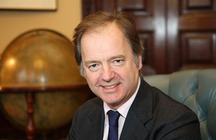
  • Hugo Swire – 2016 Speech on the EU and the Commonwealth

    hugoswire

    Below is the text of the speech made by Hugo Swire, the Minister of State at the Foreign and Commonwealth Office, at Chatham House on 25 May 2016.

    Introduction

    Excellencies, ladies and gentlemen, thank you for that kind introduction. I am delighted to be back at Chatham House. Given that Her Majesty the Queen is your Patron and Baroness Scotland is one of your Presidents, it is particularly appropriate that I am speaking to you today about the Commonwealth – and about why being in the EU complements our membership.

    Today I want to debunk a myth. The myth that UK membership of the EU somehow limits our engagement with the Commonwealth. I will argue that it enhances it. Some believe that if we left the EU, UK-Commonwealth trade would increase and migration flows rebalance in favour of Commonwealth countries. I maintain this is wishful thinking. Others suggest that we should choose between the two institutions. I maintain that they are complementary. It is not an either-or choice. The UK needs and can have both.

    Importance of the Commonwealth to the UK

    This Government has made clear that the Commonwealth is of immense importance to the United Kingdom. No matter how you look at the relationship – historic, cultural, or our personal ties – our connection with the Commonwealth is stronger now than ever. The fact that Commonwealth citizens resident in the UK have the right to vote in the forthcoming referendum shows just how close that connection is.

    Our commitment to the Commonwealth is clear. A large part of the UK’s aid budget is spent in Commonwealth countries – £1.88 billion in 2013-14. We remain the largest contributor to the Commonwealth Secretariat. And we are looking forward to hosting the first ever meeting of Commonwealth trade ministers in 2017 and the next CHOGM the year after that.

    And the Commonwealth itself is thriving. From eight member countries in 1949, it has grown to 53. It now covers nearly a quarter of the world’s land mass and more than a third of its people. It boasts a combined Gross National Income of $10.7 trillion. The Commonwealth thrives because of its great diversity. Whether large or small, developed or developing, frozen ice or tropical heat – the Commonwealth has it all. But it also thrives because, at heart, we have so much in common. Trade, for instance, is on average 19% cheaper between Commonwealth countries due to similarities in our legal systems and language. Being a core part of it is clearly in our national interest.

    Could Brexit benefit the Commonwealth?

    So, if we value the Commonwealth, and know that it is going from strength to strength, does this mean we should focus on it – to the exclusion of the EU? Let’s examine the arguments.

    Migration

    First, there’s the argument on migration. Some argue that leaving the EU would allow greater migration from the Commonwealth. Frankly, I believe it is naïve to think that the same people campaigning for Brexit would welcome this.

    And what possible basis do they have for making such an assertion? Because – let’s remember – it is up to the UK, not the EU, to decide who is allowed to come to this country from outside the EU. Our membership of the EU does not prevent Commonwealth citizens from coming to the UK. Anyone suggesting that it would be different or easier is just raising false hopes by suggesting we would water down those criteria. It is frankly irresponsible, misleading and unhelpful.

    Nor should we forget that, if we did leave the EU, keeping full and meaningful access to the Single Market would also mean accepting significant trade-offs, including the continued free movement of people. No other country has managed one without the other.

    Trade

    Secondly, there is the creeping narrative promoted by the Brexiteers that somehow the Commonwealth can replace the EU as the UK’s major trading partner. That is a leap of faith with no basis in fact. Access to the Single Market is a cornerstone of the UK’s prosperity. 44% of what we export goes to the European Union, with 3 million jobs in the UK dependent in some way on trade with the Single Market.

    And it ignores what our EU membership does to facilitate trade with the Commonwealth. Access to the Single Market doesn’t just matter to UK businesses and the UK’s economic future. It matters to the Commonwealth too.

    As businesses up and down the country will attest, we are a gateway to trade with the EU, as well as an important market in our own right. It’s the reason why Australia is a disproportionately large investor in the UK for the size of its economy. India too sees this gateway role as vital. Prime Minister Modi during his visit to the UK last November said “As far as India is concerned, if there is an entry point for us to the European Union that is the UK”. And the head of the Federation of Indian Chambers of Commerce and Industry agreed, adding that: “we firmly believe that leaving the EU would create considerable uncertainty for Indian businesses engaged with the UK and would possibly have an adverse impact on investment and movement of professionals to the UK.”

    A third argument centres around the idea of a Commonwealth Free Trade Area. It is certainly a fine aspiration. Ultimately, as a Conservative, I believe that free trade is the engine of global growth – and that a rising tide lifts all ships. But it is quite wrong to suggest that Commonwealth trade might be a substitute for the EU Single Market.

    UK Influence within the EU

    Rather than turn back the clock to the days of Imperial Preference, we should remind ourselves why the Commonwealth benefits from our close relationship with the EU. Our seat at the EU table gives the Commonwealth a voice – and it is a voice which brings results. UK membership of the EU is creating jobs and driving growth, in Britain and across the Commonwealth. That’s why our Commonwealth allies want us to stay in the EU.

    But don’t just take my word for it. A host of Commonwealth leaders have come out and said so. Canada’s Prime Minister Justin Trudeau has said that Britain’s clout is “obviously amplified by its strength as part of the EU”. New Zealand Prime Minister John Key has said: “We see Europe as an extremely important continent that needs strong leadership. We think Britain provides that leadership”. Whilst his Australian counterpart Malcolm Turnbull said: “Britain’s involvement in the European Union does provide us – and Australian firms particularly, many of whom are based in the UK – considerable access to that market. From our point of view it is an unalloyed plus for Britain to remain in the EU”.

    Trade

    Let’s look at the reasons why they feel so strongly. Beginning with trade. Today, the EU has, or is negotiating, trade deals with over 80% of Commonwealth countries. The benefits to the Commonwealth of these deals are significant – Canada is expected to benefit to the tune of £5.5 billion a year from CETA – the Comprehensive Economic and Trade Agreement with the EU.

    The United Kingdom has been at the forefront of efforts to deepen the EU’s trading relationships with Commonwealth countries. We were instrumental in getting the Commission’s agreement to begin negotiations on FTAs with Australia and New Zealand. We continue to push for an ambitious Free Trade Agreement with India. And the UK has consistently advocated a pro-development trade policy, arguing for generous market access to the EU market for developing countries in the Commonwealth and beyond.

    We strongly supported the granting of GSP+ status to Pakistan – which reduces duty on exports in exchange for progress on governance and human rights; Pakistan’s exports to the EU rose by 20% in the first year of this scheme.

    The UK is working with our EU partners to successfully conclude Economic Partnership Agreement negotiations in West Africa and with the East African and South African Development Communities. The EU is Ghana’s 2nd largest trading partner after China. And in South Africa the EU accounts for a quarter of total exports, and is its largest foreign direct investor, with 2,000 EU firms credited with creating 350,000 jobs.

    And 14 Commonwealth Least Developed Countries benefit from the EU’s “Everything but Arms” arrangement, which gives them duty-free and quota-free access to the EU for – as it says on the tin – all exports but arms and ammunition.

    Just think of the overall leveraging effect of all these deals – this isn’t just access to the UK, but to the whole EU, for all 2.1 billion citizens of the Commonwealth.

    Development

    And the benefits of our influence go well beyond trade.

    The EU is the world’s largest aid donor, promoting stability, human rights and good governance. The UK is seen by EU Member States as the expert on development, which gives us significant influence over EU development policy. We have used the powerful voice this gives us to shape EU development programmes and reinforce our own support for our Commonwealth partners. You only have to look at the numbers to see what this means in practice.

    The EU is one of the biggest development partners in Nigeria, with nearly €700 million committed under the last five year development programme, a further half a billion euros under the regional programme, and millions more to support peacekeeping, elections, vaccination programmes and communities affected by Boko Haram violence.

    In Kenya, it spends about €80m a year to support job creation and governance. It is South Africa’s main aid partner, accounting for 70% of development assistance and it complements our own cooperation, tackling climate change and sustainable development.

    In South Asia too, the EU reinforces UK human rights objectives – lobbying in Bangladesh on child marriage and restrictions on the media and civil society, and in Sri Lanka on the death penalty and LGBTI rights.

    In Australia, EU funding has helped UK researchers to collaborate with Australian and South African counterparts on the Square Kilometre Array radio telescope, worth €5 million. The EU recently established dialogues with Australia on Counter Terrorism and peacekeeping.

    Climate Change

    On climate change too the UK has used its influence within the EU to the benefit of the Commonwealth. Adapting to and preventing climate change is, of course, a core development issue. It is also an existential threat to some members of the Commonwealth. You only have to look at some of the Pacific island states like Tuvalu, Kiribati or Vanuatu to see how vulnerable they are to global warming.

    The EU has been at the forefront of action on climate change – and the UK has been at the forefront of the EU, helping to ensure greater momentum on the issue and a better outcome at the Paris conference. We led the way with climate legislation in 2008 and have blazed a path for others to follow – between 2000 and 2014 UK GDP grew by 27%, while carbon dioxide emissions fell by 20%.

    Acting as part of a 500 million-strong EU bloc increases our global influence. This benefits the entire Commonwealth, in particular Commonwealth Least Developed Countries and Small Island Developing States.

    So it is clear that, right across the Commonwealth, the EU is deploying its significant resources to good effect. And it is just as clear that the UK has played and continues to play a vital role in pivoting the EU towards the Commonwealth. All these examples demonstrate what our Commonwealth partners have to gain from the UK remaining an active member of the EU: defending open markets and pushing for effective action on poverty, climate change and other shared challenges.

    Voter registration

    So the outcome of the referendum will affect the lives and futures not just of British citizens, but of Commonwealth citizens too. Those of them with leave to remain in the UK have the right to vote in the referendum, and a say over that future. So my message to the 200,000 South Africans and Nigerians, the 160,000 Jamaicans and the 126,000 Australians – not to mention the more than 3 million members of our British South Asian communities – my message to you is: this referendum matters to you as well as to us. Your vote will make a difference: unlike in a general election, every vote will have equal weight. Please exercise your right. Please get out and vote.

    Conclusion

    To sum up, the UK is, and has always been, a nation of traders, reaching out to all corners of the world. The Commonwealth is a vibrant, impressive institution, with 2.1 billion people and enormous potential. The EU is a global trading powerhouse, with significant economic muscle. Our Commonwealth allies know that the UK – together with the other Commonwealth members of the EU – Malta and Cyprus – are influential partners within a powerful organisation. This has been reinforced to me throughout my travels across the Commonwealth. We are their voice on the inside.

    I have the words used by the Roman statesman Cicero inscribed on my pen: cui bono – who benefits? And here I readily admit that I leave myself open to accusations of pretentiousness but it is useful to pause and think before signing anything. And so I am here to ask you – would the Commonwealth benefit if we left the EU? The answer, to me, is a clear No. Because far from conflicting, these two great institutions are complementary. Far from solving problems on trade and migration, leaving the EU would create them. Far from having to make a compromise – we should be in both. As I have said many times – there is no need to choose.

    Ladies and Gentlemen, some have suggested that Brexit is a patriotic cause. And to argue for the UK to remain in the EU is somehow unpatriotic. I reject that entirely. I, as Britain’s Minister for the Commonwealth, believe that the patriotic thing to do is what is in our country’s long term interests. And I believe these interests are best served by re-committing to the Commonwealth and to a reformed EU.

    Thank you.

  • Andrea Leadsom – 2016 Speech on Shale Gas

    Andrea Leadsom
    Andrea Leadsom

    Below is the text of the speech made by Andrea Leadsom, the Minister of State at the Department of Energy and Climate Change, on 18 May 2016.

    Introduction

    Shale is a fantastic opportunity for the UK. It will create a significant number of local jobs meaning financial security for hard working people and their families, boost our economy and strengthen our energy security. But let me be clear, safety is absolutely my priority.

    The UK’s regulations are some of the strongest in the world, and with over 50 years of successful and safe onshore and offshore oil and gas extraction; I am confident that the protections in place for the environment and for people are totally rigorous.

    Shale will only ever be developed in a safe way – for people and the environment – and will only take place in appropriate locations.

    A few months ago, I visited a conventional gas drilling site in the countryside which, while not a fracking site, was very similar to how one would look in the future.

    I talked at length to local residents to find out what they thought about the site. They told me that while they had concerns when the site was proposed, in reality it was “practically invisible” and very quiet. Having visited the site I saw this for myself.

    You could walk along a nearby pathway and have no idea that this site was even there. The drill heads were only six feet high, very quiet and the entire site, which is gravelled, was only about the size of two football pitches.

    This site was welcomed by the local community because it was providing real benefits.

    As well as being a reliable site of home-grown gas for the UK; it was also providing skilled, long term jobs for local individuals – helping to boost economic growth and local investment.

    This gas site, while conventional, clearly illustrated the benefits a shale industry can bring to the UK in the future.

    Need for Gas

    Gas currently accounts for over 60% of household energy use. We use gas in our homes for heating and cooking, and it’s also used in factories up and down the country to produce products like soaps, paints and textiles for clothes, as well as the plastics found everywhere from our mobile phones and computers to sterile medical equipment.

    The choice the UK faces is not whether we want gas or don’t want gas. The choice we face is how much we want to rely on gas from abroad – some of which may or may not be reliable. Or whether we would prefer to extract more from the UK.

    Need for Shale – Energy Security

    Britain used to produce so much gas that we sold it to other countries. But today we are forced to import much of what we need, and that share will continue to rise unless we make the most of our home-grown energy supplies.

    Our energy security is absolutely vital.

    But it is also vital that our energy supply is safe, low cost and low carbon.

    Low Carbon Bridge

    The UK is currently dependent on coal for around 30% of our electricity needs. This is unsustainable if we want to move to a lower carbon world. We are therefore making a significant move away from coal in the coming years, aiming to remove it entirely from the mix by 2025.

    We will have to replace this energy capacity with lower carbon sources.

    Gas is the cleanest fossil fuel and shale gas can provide an effective “low Carbon Bridge” while we move to renewable energy.

    Jobs and Growth

    As a home grown energy source, shale gas will also provide a significant opportunity to create jobs in communities across Britain.

    Ernst & Young has estimated a thriving shale industry could mean 64,500 jobs nationally, with more than 6,000 highly skilled jobs on shale gas pads themselves.

    But we are not just talking about jobs for geologists, drilling specialists and chemical engineers.

    We are talking about jobs for construction workers, truck drivers, water treatment experts, and people working in local retail and service industries.

    Jobs that will make a real difference to local areas and provide new opportunities for communities.

    It is clear to me that the UK’s shale resources have the potential to bolster our energy security, create jobs and provide a bridge to a greener future. But to do this, two things are critical.

    Pre-requisites to a successful industry – Safety

    Firstly – safety. This must always be – and will always be – absolutely paramount.

    The UK has decades of experience in safely regulating oil and gas exploration and we are bringing this experience to bear on shale. We have world-class independent regulators who will not allow any operations which are dangerous to local communities or the environment.

    The Environment Agency will not grant operators a permit if the risks to the environment or groundwater are unacceptable. They will impose strict conditions to make sure there is proper protection of the environment, and to prohibit all activities which pose unacceptable risks.

    The Health and Safety Executive will make sure operations are safe – they will scrutinise well design and monitor its progress to make sure the operators manages risks effectively throughout the whole life cycle of operations.

    And now, through the Infrastructure Act, we are putting in place a range of further measures to provide the public with confidence that this industry is being taken forward in a balanced way, including measures on protected areas, environmental impact assessments and groundwater monitoring.

    Government has taken clear action to protect our most valuable areas.

    We have passed regulations to ensure that hydraulic fracturing cannot take place within 1,200 metres beneath the surface of National Parks, the Broads, Areas of Outstanding Natural Beauty, World Heritage Sites and areas that are most vulnerable to groundwater pollution.

    We are also committed to ensuring that hydraulic fracturing cannot be conducted from wells that are drilled at the surface of our most valuable areas, and have formally consulted with industry on how best to implement this commitment.

    Strong controls are also in place to mitigate seismic risks. Operators must monitor seismic activity – in real time – before, during and after operations. If a tremor of magnitude 0.5 is detected (which is similar to a door slamming) all operations will halt.

    I would like to stress that we have a very strong regulatory regime in place for exploratory activities and we will look to continuously improve it as the industry develops.

    I urge industry, academia, local authorities and NGOs to continue to work with us to develop world class protections that will make sure that shale is developed safely.

    Public Engagement

    But having a world class regulatory regime is not enough.

    We need to challenge the misinformation about the industry which is being spread, and clearly explain that shale exploration will always be conducted safely.

    Therefore the second critical factor in developing a successful UK shale industry is public engagement.

    The public need to receive objective and scientific information which explains how fracking occurs, how it is being regulated, and what it means for them. There is a role for everyone here today in providing this information.

    Government needs to provide scientific and objective information to the general public, which will inform the debate and allow individuals to form evidence-based views on shale. We are working hard to do this, regularly attending public meetings across the country to better understand local issues and where additional information would be helpful.

    Industry needs to engage early and often with local communities, answering questions and providing reassurance. I am therefore very pleased to hear that the industry body, UKOOG, has established a Community Engagement Charter where operators will engage local communities, residents and other stakeholders at each of three stages – exploration, appraisal and production. This is additional to the public consultation which is required through the planning application.

    Regulatory bodies need to continue to clearly explain the strong regulations which have been set up to make sure that the industry is developed in a safe way – for people and for the environment. I am pleased to hear that the major regulatory bodies have been visiting communities where shale applications have been lodged, and have been working with local authorities and industry to better communicate the regulatory regime.

    Local communities are at the heart of the developing shale gas operations which will bring benefits for the whole nation.

    We must all continue to engage with the general public about the actions we are taking to enable shale development, and to challenge the myths and misconceptions about shale.

    What we’ve done

    But this Government isn’t just talking about shale gas. We are taking action to make sure that the industry has the right conditions to succeed.

    Planning

    With the potential for shale gas to support our energy security and to help create jobs and growth, the Government is understandably keen to press ahead and get exploration underway so that we can determine how much shale gas there is and how much we may be to use.

    Doing this requires close partnership working between planning authorities, the industry, regulators and local communities.

    In August 2015 my Department and the Department for Communities and Local Government issued a joint policy statement stating that planning authorities should deal with applications for shale within the statutory time-frame of 16 weeks or risk being identified as underperforming.

    The Communities Secretary will actively consider calling in applications to make a decision if the local council does not do it within the timeframe, and all appeals for shale development will be prioritised and dealt with as quickly as possible.

    We need to tackle the issue of extensive planning delays head on if we are to reap the benefits which shale gas offers to our energy security, jobs and wider economy.

    And firms that want to explore for shale need to be confident that their applications will be processed in a timely way and examined purely on a planning basis.

    The new measures we’ve introduced will help make this happen. We are addressing a problem that causes unnecessary delays and benefits no-one.

    This does not change the processes that a shale application has to go through. There will still need to be strict environmental and health assessments. This is just about speeding up the initial stage.

    All this is on top of measures already in place to make sure that the UK has the most competitive tax regime in Europe for shale gas.

    Operators or potential operators have the regulatory and fiscal environment they need to enable developments.

    Community benefits & Shale Wealth Fund

    But while we make sure the shale industry has the tools it needs, we must also make sure that those that most affected by shale gas activities see benefits too.

    We strongly believe that communities hosting shale gas developments should share in the financial returns they generate.

    The Government welcomes the shale gas companies’ commitment to make set payments to these communities, which could be worth £5-10m for a typical 10-well site, and we want to go further.

    As announced by the Chancellor in the 2014 Autumn Statement, we are determined to make sure that local communities share more of the proceeds and feel more of the benefits, using a proportion of the tax revenues that are recouped from shale gas production.

    We will running a consultation later in the year on how this Shale Wealth Fund will be designed.

    And don’t forget that councils will also be able to retain 100% of the business rates – doubling the 50% rate retention previously allowed – which could be worth up to £1.7m a year for a typical 12 well site. It will be directly funded by central Government.

    Current status

    We know the shale industry is eager to press forward and the Government shares this desire for action.

    A clear demonstration of this enthusiasm can be seen in the results of the 14th Onshore Oil and Gas Licensing Round, where the Oil & Gas Authority announced that 159 onshore blocks, incorporated into 93 licenses were being formally offered to successful applicants.

    Around 75% of those 159 blocks offered relate to unconventional shale oil or gas.

    This is in addition to a number of companies which have existing licences in place and are in the process of seeking permissions to drill exploratory wells.

    Some 7,300 square miles of Great Britain is already under licence, including significant areas likely to contain shale.

    Conclusion

    To conclude, home-grown gas can secure our energy future in a time when our traditional sources are in declince and we are seeking to move away from expensive foreign imports.

    It can provide jobs for our people and tax revenues for our society.

    And it can help the UK to decarbonise while we move away from coal to lower-carbon energy sources.

    Secure energy.

    Economic growth and job creation.

    A bridge to a greener future.

    Unlocking the shale gas deep underground is too big an opportunity to pass up. It must be done safely and securely, but we can’t throw that opportunity away.

    Thank you very much.

  • Matt Hancock – 2016 Speech on Cyber Attacks

    Matt Hancock
    Matt Hancock

    Below is the text of the speech made by Matt Hancock, the Minister for the Cabinet Office, at the Grange Hotel in London on 25 May 2016.

    I’m very grateful to the Telegraph for asking me here to this crucial conference on cyber security.

    As we’re guests of the Telegraph, I want to start with a little story about the telegraph. Not the paper, but the technology.

    A century ago, the First World War was raging in Europe, and the Allies were desperate to bring America into the war on our side.

    Then, in January 1917, the German ambassador to Mexico received an encrypted telegram from Berlin.

    It instructed him to offer the Mexican government money and diplomatic support for an audacious invasion of the United States.

    But this message was subject to one of the first and perhaps most influential cyber security breaches in history.

    It didn’t matter that the idea was half-baked, that the Mexicans had no interest in invading Arizona. When the contents were revealed, American opinion was outraged.

    Shortly after, Congress voted to join the war.

    So why did the German high command entrust such a sensitive message to Western Union, then, as now, a wire transfer company?

    Because they had failed to appreciate an obvious network vulnerability.

    The subsea cable they were using did not travel directly from Europe.

    Instead it went through Britain, stopping off at Land’s End, where the signal was boosted before being transmitted to America.

    This meant it very easy for British Naval Intelligence to listen in on the traffic.

    Once war broke out, any diplomatic telegrams passing through were copied down and dispatched to Room 40, the forerunner of GCHQ.

    I mention this story as a warning against complacency.

    Telegraphy was the email of its day: trusted and widely used, familiar rather than cutting edge.

    People thought it was secure, but it wasn’t.

    A hundred years on, our trusted communications are wireless, instantaneous and virtually cost-free. Data is stored in the Cloud, not in filing cabinets.

    And this has changed the world beyond all recognition, in my view emphatically for the better.

    Vulnerability in cyber security

    From the little to the life-changing, remote robotic surgery to online box-sets. We are freer, more prosperous, more knowledgeable about the world than ever before.

    Yet this brings with it renewed vulnerability.

    Barriers to entry have come crashing down for companies and cyber-criminals alike.

    Unlike in 1917 you don’t need to be a state to inflict a massive data breach.

    When peoples’ cyber security isn’t up to scratch, you just need a laptop and an Internet connection.

    The tech may have got smarter, but the biggest weakness in any system is still the human being.

    In the last year, 2 thirds of large businesses in the UK experienced an cyber attack.

    Almost a quarter suffered a breach at least once a month.

    This matters because we are one of the world’s leading digital nations.

    Twelve and a half per cent of our economy is now online. No other country does more e-commerce.

    In government too we’ve begun to upload the state, using technology to build more responsive, user-centric public services.

    I call it the smartphone state.

    And we’re still only in the foothills.

    Smart energy, networked cities, quantum computing: these all have the potential to transform our lives and refashion our economy.

    But to deliver on that promise we have to be able to defend our digital society from those who wish it and us harm.

    A strong cyber defence requires three things.

    First, we – industry and government – together must recognise that this is a shared responsibility, a duty that we owe our fellow citizens.

    Second, that we deliver on that commitment by equipping them with the right skills.

    And third, that we can and must turn our vulnerabilities into a source of economic strength.

    Let me take each in turn.

    Shared responsibility

    First, it’s vital to recognise this is an issue for CEOs as well as spooks.

    The vast majority of the UK’s Critical National Infrastructure is operated by the private sector. Power, water and telecoms are all critical targets.

    Even outside that our digital lives are in your hands, everything from our life savings to our holiday snaps.

    I’m encouraged to see that two thirds of businesses say cyber security is now a priority for senior managers.

    Yet there remains a gap between awareness and action.

    Only half of the businesses we surveyed this year have taken steps to identify cyber risks.

    Make no mistake, the next data breach will happen. It’s your duty to make it’s not your company splashed across the papers when it does.

    But we don’t expect you to do it alone.

    We’ve created the UK’s first systematic National Cyber Security Programme, and we’re almost doubling the funding with £1.9 billion over the next five years.

    We’re setting up a National Cyber Security Centre under GCHQ.

    The centre will provide a single point of contact for businesses in need of advice and support.

    I want it to become a hub of world-class, user-friendly expertise: a global leader under the steady hand of Ciaran Martin, bridging the gap between the worlds of government and industry.

    And today I’m publishing the centre’s prospectus , setting out how it’ll work ahead of its full launch later this year.

    And we want to hear from you what you think and how it can help your business.

    I strongly recommend that you feed back to us, so we can design the National Cyber Security Centre around your needs.

    The right skills

    We already know that your number one need is for skills, and this is the second part of facing down the cyber threat.

    It’s not just that we need more skills. Computer security needs to become a basic life skill, like learning to drive.

    And while we want everyone to pass the test, we also need our elite Formula 1 drivers.

    So we’re growing the talent pool at every stage of the education system.

    Learning coding in schools, competitions to get more girls into cyber, residential courses for students in Years 12 and 13 – sponsorship for the most promising undergrads – all under the Government-backed Cyber First banner.

    We’ve opened new routes into cyber security, like the new Trailblazer apprenticeship.

    And I’m proud to give my support to the new Extended Project Qualification, which the Cyber Security Challenge just created.

    This level 3 qualification, equivalent to an AS Level, teaches the basics of cyber security in three months, and can be studied in schools, colleges or through the Challenge itself.

    But industry has to play its part too.

    We need more businesses to offer training, sponsorship apprenticeships: more breaks for the best minds.

    Because if we commit now, together, the struggle in cyberspace is Britain’s opportunity.

    That’s the third part of securing our cyber defences: not just protecting the digital economy but growing it.

    Turning risk into reward

    We’re already one of the top 5 exporters in the world, and the global market is growing by 20% a year.

    A strong cyber security industry means a safer Britain.

    So we’re funding test labs where cyber start-ups can refine their prototypes:

    – a cyber security fund to scale the established players

    – a cyber security innovation centre in Cheltenham.

    And today I can announce a new cyber security trade champion for the Gulf, to help UK companies win business in the region, while supporting the work of the UK Cyber Ambassador.

    This comes alongside our dedicated cyber specialist in Washington, who’s been supporting our engagement with cyber businesses in the US.

    Our goal is to create a commercial ecosystem where cutting-edge research is backed, start-ups get scaled, and British companies win business around the world.

    Conclusion

    So shared responsibility, the right skills, and boosting the cyber economy: get these 3 right and we can get across this challenge.

    Everyone has their part to play to close the chinks in our armour and the gaps in our capability.

    There is no doubt that cyber attacks are a serious and growing problem.

    But the history of technological advance – and with it of human progress – is the history of solving problems.

    After the First World War the Germans, determined that their codes would never again be cracked, built mechanical encryption machines.

    In turn we built the world’s first digital computers to break them.

    We can’t know what we’ll evolve in response to the current threat.

    But if we are honest about the threat, if we work together we can drive progress, power innovation, build better tech and a safer, more prosperous Britain.

    That is our task and I look forward to working with you to achieve it.

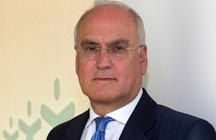
  • Michael Wilshaw – 2016 Speech at TES Leadership Conference

    michaelwilshaw

    Below is the text of the speech made by Sir Michael Wilshaw, the Chief Inspector of OFSTED, at Bedales School in Hampshire on 25 May 2016.

    Thank you for inviting me here to this beautiful school, Bedales. I believe the title of your conference is Liberating Leaders: A Leadership Conference with a Difference.

    And today I want to make the case for difference, for maverick teachers and school leaders. Why? Because we desperately need more mavericks in the classroom and in the headteacher’s office.

    A pretty ordinary education system – unfortunately we still have one – needs people who are flamboyant, colourful and yes, downright strange. In other words, we need extraordinary people. We need our awkward squad. The independent sector has always had them – our state system needs more of them.

    It may seem peculiar to argue for more mavericks in education. Schools, after all, are ordered, structured places with clear hierarchies – the teacher and the taught, those who have authority and those who look up to it. Yet in my estimation the best heads and teachers are often mavericks. And when I say ‘maverick’ I mean ‘odd’. I should know; I’m pretty odd myself.

    But I wasn’t born odd. I really had to work at it. I had to learn pretty quickly as a young teacher, that teaching, like it or not, was inevitably bound up with personality and character. Imparting knowledge is never going to be enough, especially when those at the receiving end are disinclined to receive it.

    After experiencing my first week of teaching, I learnt from the experience and resolved to be a teacher and person who could never again be taken at face value. I had to be a chameleon, changing my personality according to the circumstances. It wasn’t a question of giving students what they wanted; it was a question of reading them sufficiently well to give them what they needed. A good teacher, I came to realise, understood how children thought and how their perceptions of the teacher governed how well they learnt.

    Forty years later I saw exactly the same lesson on ‘The Merchant of Venice’ in the hands of a great teacher, Rebecca, who was universally recognised by other staff as a bit bonkers…

    And, as an apprentice headteacher I learnt from some of the best maverick leaders.

    Take Cecil Pocock, the headteacher of the school I attended. He used to arrive in class on a bicycle, gown flowing, moustache bristling. Dismounted he had to say only one word – “Pax” – and any hubbub in the class immediately ceased. There followed some of the best history lessons I have ever heard.

    Take Bridie Burns, headteacher of the first school I taught at in Bermondsey. She was a 4-foot dynamo who moved around the school as if on wheels. Everyone was terrified of her, although she had the warmest of hearts for the poor and the disadvantaged in East London. A raised eyebrow and a curt admonition were enough to silence the school thug or a tyro teacher like me who had the temerity to wear a short-sleeved shirt. You knew where she was in the school because a hush, a cloud of complete calm descended on her immediate vicinity.

    And then there was Paul Docherty, who taught me so much about headship. Paul elevated the art of the unexpected into an Oscar-winning performance. Informed that children were misbehaving on the local buses, he donned a disguise, lurked at the back and, when trouble erupted, leapt out to confront the astonished culprits. Trouble on the buses soon became a thing of the past, because students were never entirely sure if the passenger obscured by a hat or newspaper was demonic Docherty or not.

    All 3 of these teachers were very different people. But they were all as tough as hell. They all exuded authority and they all had a fierce moral conviction that all children, especially the poorest, deserved the best education — and woe betide anyone who got between them and that mission.

    They were also something else: they were accomplished actors. They weren’t odd for the sake of being odd. Out of school they were very normal, ordinary people. But in school it was different. They put on an act. They acted the maverick.

    A hint of menace helped – and so did an outsize personality. Truly great teachers like Cecil Pocock, Bridie Burns and Paul Docherty knew this. They read their students and created personae accordingly. They became towering characters who made incredible impressions in the class, in the corridors and, yes, on the buses.

    They weren’t mavericks because they wanted to be different. They were mavericks because they wanted to make a difference. It was calculated oddity, peculiarity with a purpose. To reach these children they had to get ‘in character’. And although their characters varied they had some traits in common.

    All commanded instant authority; nobody doubted who was in charge. All could be unnerving, though they managed to do the unexpected in a reassuringly familiar way. All were fair; there was nothing whimsical, cruel or capricious about their surprises. And all exuded a sense of optimism, which wasn’t necessarily sunny but left you in no doubt that defeat and disappointment were not on the menu. They were, if you like, part Rocky, part Henry V and part Mrs Doubtfire.

    Of course, at some level, everyone knew it was an act. I’m pretty sure that at home Cecil Pocock did not ride his bike into dinner or attempt to quell any domestic disturbances by uttering the word “Pax”. I can imagine what the result would have been if he had. Acting was reserved for the classroom.

    This, in no way, makes it bogus. School is theatre – everyone has a part to play – students as much as teachers. Children often put on a mask: the class clown, the school geek, the attention-seeker. They instinctively understand that teachers play a role, too. But as in the theatre, roles only work if people believe they are credible.

    The inauthentic performer

    The second invaluable lesson I learnt from my mavericks was this: a persona is essential but it will only work if it is believable. A teacher’s classroom act must connect in some way with who they really are. It’s no use, for instance, acting the authority figure if you can’t say boo to a goose, or if you are essentially anarchic.

    Children will sniff out the fake at 5 paces. To act in the classroom is to exaggerate some traits you actually possess and suppress others for the purpose of engaging children. It is not about fraud or fakery. It is about projection and imaginative editing. Your act must be an extension of yourself not a contradiction of it.

    To take a fantastical example – it’s pointless pretending you’re Superman if children can’t even glimpse a Clark Kent through your Frank Spencer. Actors are typecast for a reason. And there is a reason why John Wayne wasn’t known for his Hamlet.

    Children, the sternest of critics, are particularly unforgiving. They know so much is at stake – their futures are at stake. So they won’t hesitate to dismiss as a fraud any teacher who tries to play a part for which they are not suited.

    Students know that a teacher with only a passing acquaintance with the subject won’t get them through the exam. They suspect that a diffident or hesitant head won’t keep them safe and secure. The wise teacher and head adopts a persona that is tethered in some way to his or her personality – not unlike a good actor.

    The same can be said of teaching styles. A lot of hot air has been generated in recent years about the correct way to teach. When I was coming up through the ranks, progressive pedagogy was all the rage. Latterly, the traditionalists have been in the ascendancy. When it comes to content, I’m a traditionalist. But I have always been and remain an agnostic when it comes to teaching styles.

    What is right is what works for the teacher and the class. Two of the best teachers I ever employed had widely different teaching styles. One was a ‘sage on the stage’ who delivered lessons soberly, but engagingly and with great authority. The other bounded from desk to desk like some female Robin Williams, declaiming as she leapt. The results from both were outstanding.

    Why should I have attempted to force them to conform to teaching in a particular way? As a head, it was far better that I left them to stick to what they were, rather than tried to make them something they were not.

    Ofsted is not interested in prescribing a particular teaching style. If we were ever guilty of that – then I apologise now.

    The self-obsessed performer

    Worse than delusion, for me, is outright indulgence. Students must not only believe in you as a teacher and leader but also that you are performing on their behalf for the right reasons. To play the maverick for personal reasons rather than professional ones, or to be unorthodox just for the sake of it won’t work.

    Maverick teachers and heads aren’t cool or ‘down with the kids’. They aren’t non-conformist because it amuses their Twitter followers or does wonders for their public profile. They don’t get excited by the thousands of devotees they have on social media if their students can’t pass their GCSEs. They tend to the audience that matters – not the one that strokes their egos.

    The mavericks that had such a big influence on my education and career weren’t indulgent or self-obsessed. They cannily adapted a persona to suit a particular student or a school need, not because they wanted to express an inner yearning that demanded a public audience.

    If a head insists on wackiness for the hell of it, for instance, and without the proper culture and structures in place, the result will be chaos. If a head demands a course of action not because it is in the best interests of the children but because he or she is eager to please the council, the union, the government, and, yes, even Ofsted, then they are not doing their job.

    Maverick teachers or heads deploy the unconventional in the service of their students. They don’t adopt it for their own ambition or to indulge their own weaknesses. They use it to ignite curiosity, to excite the indifferent, to inspire the neglected, to confound vested interests and to keep the vulnerable safe.

    Never make the mistake that children won’t see through you. If you haven’t got their best interests first and foremost in your mind as a head, it will be as apparent to them as a receding hairline or visible roots. If you’re not there principally for them, they will know it.

    The adaptable performer

    The final lesson my trio of mavericks taught me was adaptability. At the start of my tenure as HMCI, I think I may have recommended Clint Eastwood as a role model that heads should follow. I recalled that scene in Pale Rider when the baddies are shooting up the town, the mists dissipate and Clint is there, the lone warrior fighting for righteousness.

    I also remember that the notion wasn’t universally welcomed. But I stand by Clint. If a head finds him or herself in the educational badlands, facing impossible odds and a hesitant posse – then Clint is what is needed. And for those of you who prefer Oklahoma to True Grit or Pale Rider when it comes to westerns, can I remind you that the song’s title is Annie Get Your Gun, not Annie Get in the Conciliation Service.

    Tough situations call for a tough act. But what I neglected to say at the time was that Clint is not suitable for every eventuality. What my mavericks taught me was that great teachers and heads weigh up their students and schools very quickly and adapt their teaching and leadership style to suit.

    Clint can be very useful in a special measures school, for instance, where you know that ‘steady as she goes’ won’t cut it. Where what is needed is decisive, highly visible and perhaps unconventional action. But he is less appropriate in a coasting school, where what is required is a bit of subterfuge and cajoling. In that situation what’s needed is a Machiavelli or a Frank Underwood, minus the body count of course.

    A maverick leader adapts. They refine their act. They appreciate, for instance, that what may work with unresponsive children won’t cut the mustard with implacable staff. The unconventional can be very effective. But even Clint, when the occasion demanded, swapped a rifle for a guitar.

    Conclusion

    Now you may be thinking, and what of Chief Inspectors? Has being a maverick served me well?

    Well I can tell you now that it hasn’t made me popular. What is interesting is that the catcalls have come from different parts of the audience as time has gone on.

    Initially, I was a government stooge and patsy. I wasn’t Wilshaw but Sure Will, eager to do ministers’ bidding. I haven’t heard that one for a while, mind.

    But however I’m perceived, my mission as far as I’m concerned has remained the same. I am still a maverick with a purpose. As important as the reorganisation of Ofsted was, being Chief Inspector was not and has never been a purely bureaucratic position. We are charged with holding schools to account and improving the lives of our youngest citizens, especially the poorest. And to do that, to get things done, it is sometimes necessary to challenge, to take a risk, to be awkward – to be a maverick.

    Do we need more mavericks in education? Yes we do – all the way to the top.

    Thank you.

  • Andrew Jones – 2016 Speech on Driverless Cars

    andrewjones

    Below is the text of the speech made by Andrew Jones, the Parliamentary Under Secretary of State for Transport, in Milton Keynes on 25 May 2016.

    Thank you for the chance to speak today.

    I must begin by complimenting the organisers’ impeccable sense of location and timing – in inviting me to make my first big speech on driverless cars, in Milton Keynes, home to a major driverless cars trial, and just a week after the world’s first driverless car insurance legislation was announced in the Queen’s Speech.

    My message this morning will be a clear one.

    Driverless cars are coming, and they are sooner than many people expect.

    They will be a great step forward in automotive history, and potentially add significantly to quality of life and human freedom.

    The UK is in a great position to lead their development.

    And our new insurance legislation, which this morning I will set out in more detail than the government has done before, will create space for insurers to innovate and meet the needs of a radically different market.

    Driverless cars not science fiction

    So let me talk about connected, autonomous vehicles, driverless cars, first.

    In recent times we’ve grown used to living with transport technologies that we consider to be basically mature.

    The chief characteristics of the modern car haven’t changed much since.

    From the Model T Ford to Aston Martin’s new DB11, being a four-wheeled, rubber-tyred vehicle navigated by a human driver, have remained constant for well over a century.

    Of course as things improve, the technology has been refined and improved over time.

    Yet it now seems clear that human-navigated cars have been just a stepping stone to the car’s ultimate form.

    It won’t happen overnight, but we will steadily hand more and more of the driving process over to the vehicle itself.

    Eventually, there will be virtually nothing left for the motorist to do.

    Those who can’t currently drive will gain the chance to take to the open road. that could transform the lives of many older people.

    Those of us who are already motorists will gain free time on our journeys to do other things; to work, read, watch television or socialise with our fellow passengers.

    After dropping us at our destination, our cars may well be able to return home on their own, to charge themselves, or perhaps make themselves available for other users.

    And all this should make travelling far safer.

    More than 9 in 10 of today’s road fatalities have an element of human error.

    The great hope for driverless cars is that they can eliminate those deaths, transform road safety in our country.

    These advances might sound like science fiction, but the early models are already in testing.

    Here, in Milton Keynes, pathfinder self-driving pods are now being trialled in pedestrianised areas.

    The government is spending £100 million to support trials such as these, including in Greenwich, Bristol and Coventry.

    But even that sum is dwarfed by what the big manufacturers are spending in the race to be first to make the technology commercially available.

    Volvo, working with Thatcham – the insurance research body – recently announced that it will start testing its driverless technologies in and around London next year, with a rollout of up to 100 cars in 2018.

    And the government believes that within 4 years it will be possible to buy cars that, under supervision, park on their own and pilot themselves on motorways.

    UK at forefront

    This is all good news for the UK.

    Because we have a regulatory environment that is more open to automated and driverless cars than any other country in Europe.

    This is a key government objective – to make the best place to do research and development.

    Our car industry is more productive than ever before, and we are already building cutting-edge cars – such as the all-electric Nissan LEAF. I went up recently to the Sunderland Nissan battery plant. That plant built more cars than all of Italy.

    So we have a great opportunity for the UK to become a pioneer in the design, manufacturer and use of driverless vehicle technologies.

    Insurance changes

    One other area where the UK has a lot of strength is the financial services industry.

    And we want the motor insurance industry to be part of that world-leading change

    So last week, in the Queen’s Speech, we became the first country in the world to announce our intention to legislate on insurance requirements for driverless cars.

    Now, there’s been a lot of speculation about what the advent of the driverless car means for the insurance industry.

    Some of the more excitable commentators have said that driverless cars will make motor insurance unnecessary.

    I believe that is a lot of pie in the sky.

    At least for the moment.

    You will know better than anyone the range of things that can lead to insurance claims, many of which will be unaffected by the coming of the driverless car.

    But what does seem certain is that insurance will need to change.

    Firstly, much of the data on which insurance is priced and sold will steadily become obsolete.

    Secondly, vast quantities of new kinds of data will become available, assessing not individual driver risk but vehicle behaviour and other factors.

    And thirdly, in the event of a serious collision when in driverless mode, it would be the vehicle at fault, instead of the human driver.

    In the legislation we will propose, we want to create space for the industry to lead these changes.

    And we will amend the Road Traffic Act 1988 motor insurance provisions.

    Compulsory motor insurance will be retained, but it will be extended to cover product liability, so that when a motorist has handed control to their vehicle, they can be reassured that their insurance will be there if anything goes wrong.

    Where the vehicle is at fault then the insurer will be able to seek reimbursement from the manufacturer.

    The vital point is that, for affected individuals, the insurance process will feel much the same.

    Motorists and victims of collisions won’t be forced to go to court to obtain compensation.

    They will have the benefit of fast and fair insurance compensation – just as they do today.

    We will consult on these changes over the summer.

    And we expect them to become law in time for applicable vehicles to come onto the market.

    So there’s a pretty rare window of opportunity. That opportunity’s for insurers to innovate, to develop new products, partnerships and approaches.

    Conclusion

    And in the meantime, the government is keen to work with you.

    We want to hear from the industry.

    How can we support you in supporting your customers through these changes?

    And above all, we want your views on the proposed legislation.

    Have we got it right?

    What more could we do?

    Please look out for our consultation this summer.

    We want to make sure that the benefits of automated cars by electric or hydrogen motors will be felt here. We want to be first in the world to grab opportunities. We can’t do this without industry who looks to the future. And we have a rare chance to shape the legislation of the future.

    Because we are moving into this unseen territory together.

    It’s an uncertain time.

    But also an exciting time.

    Thank you.

  • Lord Falconer – 2016 Speech on the Loyal Address

    charliefalconer

    Below is the text of the speech made by Lord Falconer in the House of Lords on 24 May 2016.

    My Lords, I thank the noble Lord, Lord Faulks, for his exposition of what was in the gracious Speech. He is a fine advocate on a sticky wicket. Looking at his profile on the Ministry of Justice’s website, I noticed that he used to work for the literary agents Curtis Brown. I am glad to say that my very good friend Ed Balls has chosen Curtis Brown as the agents to promote his new book, Speaking Out: Lessons in Life and Politics—available in all good bookshops from 16 September. I would be happy to arrange for the noble Lord a signed copy and the opportunity to learn whatever lessons are going. In exchange, I wonder whether he could get me a copy of another book currently being promoted by Curtis Brown—The Churchill Factor, by Boris Johnson.

    Moving on from works of fantasy, I turn to the gracious Speech. It seems a long time ago that it was delivered. Hardly was the ink dry on the vellum than the Government were willing to regret the contents of their own gracious Speech by agreeing the TTIP amendment. Historically, as noble Lords will know, the last time that a gracious Speech was amended was in 1924 and the then Tory Government, led by Baldwin, fell.

    That doomed gracious Speech has echoes of the speech that we debate today and included the following line:

    “You will be asked to develop the … system of dealing with offenders”.—[Official Report, 15/1/1924; col. 8.]

    The gracious Speech had a more direct tone in those days. That gracious Speech lasted just six days before being defeated on 21 January 1924. Three weeks later, Ramsay MacDonald, having deposed JR Clynes as the party leader after the general election, then became Prime Minister. I hope that this does not give political plotters on either side any ideas.

    I know that noble Lords in this House are sure that the Conservatives are currently entirely focused on the national interest and not on badmouthing each other. One should completely discount the Minister, quoted in today’s Sun, who said:

    “How the f*** are they going to put the party back together after all this?”,

    or the reports in today’s Daily Mail of a senior Back-Bencher who said:

    “People want a date when they know that he”—

    I believe that to be a reference to the Prime Minister—

    “will be gone. There is real anger”.

    I am sure that the Daily Mail has got it completely wrong this morning with its headline: “Knives out for Cameron”. It may well be that we are the only part of the political system that is taking the trouble to analyse this gracious Speech in any detail. I very much look forward to the winding-up speech from the noble Lord, Lord Bridges of Headley. I note from his website that he was the assistant political secretary to Mr John Major from 1994 to 1997, so he is a bit of an expert on blue-tinged civil war. He will know that his then boss between 1994 and 1997, the noble Lord, Lord Hill, the former Leader of this House, chose to leave the country in anticipation of what is happening.

    My final point in introduction is that it is so encouraging that the current Lord Chancellor, Mr Michael Gove, has remained above the fray. Take, for example, his claims that the European Court of Justice is undermining the security of the United Kingdom. Those were described by the former Conservative Attorney-General, Mr Dominic Grieve—who turns 60 today, so we wish him a happy birthday—as “unfounded and untenable”, “simply wrong”, and that the Lord Chancellor was,

    “labouring under a very serious misunderstanding”,

    of the way the European Union worked. Or take the Lord Chancellor’s claim that up to 5 million new immigrants would arrive in the European Union from Turkey and four other alleged new joiners by 2030. This was based upon the proposition that Turkey would have joined the European Union by 2020—a view to which nobody, apart from the Lord Chancellor and other committed Brexiteers, appears to subscribe.

    I turn to the gracious Speech.

    Noble Lords

    Oh!

    Lord Falconer of Thoroton

    I knew that noble Lords would be pleased.

    First, there was the reference to a British Bill of Rights, which has now featured in the gracious Speech for two years in a row, and in almost identical terms. The Human Rights Act 1998 has effected a fundamental change in the relationship between the overmighty state and its citizens. The effect of the incorporation of the convention into our domestic law has been to force Governments and state organisations to think about the citizen in a different way. Examples of this are legion. The second Hillsborough inquests would not have taken place without the Human Rights Act; the Government’s attempts to introduce oppressive security laws after 9/11 were struck down in the Belmarsh cases because of the Human Rights Act; and the decision of a local authority that tried to separate a couple who had been married for 60 years into separate care homes was struck down as contrary to their basic human rights.

    There can be no going back on the rebalancing of the relationship between citizen and state. The Tories have run a campaign against the Human Rights Act since it was introduced. They have found powerful allies in elements of the media who are happy for there to be human rights—but only for those people they like. If as a nation we are serious about human rights, there must be human rights for all, not just for those that the Executive wish to bestow them on or for those of whom the Daily Mail approves.

    The Tories came out of the general election in 2015 suggesting that they could leave the European Convention on Human Rights if that is what it took to reform the Human Rights Act. The Prime Minister appears to have retreated from that position, as evidenced by the briefing around this gracious Speech. Not so the Home Secretary, who gave a speech very recently saying that we should withdraw from the convention for the express purpose of reducing some people’s human rights.

    As for the Lord Chancellor, who knows? The noble Lord, Lord Faulks, was careful to give no insight into his thinking. The Lord Chancellor’s evidence to the European Union Justice Sub-Committee of this House led it to say:

    “The proposals the Secretary of State outlined did not appear to depart significantly from the Human Rights Act—we note in particular that all the rights contained within the ECHR are likely to be affirmed in any British Bill of Rights. His evidence left us unsure why a British Bill of Rights was really necessary”.

    So I invite the noble Lord, Lord Bridges of Headley, to give this House some clue—not in detail and not breaking any confidences—about what is proposed.

    It is a very strange concept: a British Bill of Rights that would be likely to be refused legislative consent by the Scottish Parliament, to be opposed by the Welsh Assembly and would frustrate and complicate the Good Friday agreement. It may be that those rights would remain unchanged; I do not know and the noble Lord, Lord Faulks, has not told us. It may be that the Government will say that the United Kingdom courts should be supreme in determining what the convention means in UK law. Of course, that is what the Human Rights Act already says. It may be that the so-called British Bill of Rights will declare the supremacy of the UK Parliament—but of course that is already the position under the Human Rights Act, as the prisoner voting rights issue demonstrates.

    We so damage ourselves as a country by the inability of our Government to accept human rights in a constitutional settlement that works. It goes without saying that the Lord Chancellor should be the champion of human rights within the Government. A commitment to the rule of law carries with it a commitment to defend people’s basic rights. It is a fundamental weakness in the Government that the champion of the law will not be straight in his defence of its most basic rights. My plea is that the Lord Chancellor and the Government make it clear that they accept that the rights that Winston Churchill insisted be agreed by Europe after the Second World War are now beyond argument both in their terms and in the fact that they will be enforced by our courts in this country. We on this side of the House stand by the Human Rights Act 1998 and we implore the Government to do the same.

    The prison and courts reform Bill contains many measures that we welcome. We welcome proposals to give prison governors more autonomy and to increase the focus on rehabilitation and prisoner education. I congratulate Dame Sally Coates for the impressive work she has done as part of her review into prisoner education and I welcome the Lord Chancellor’s commitment last week to review the plight of prisoners serving IPP sentences. But the prison reforms, billed as the centrepiece of the gracious Speech, have no prospect of success unless the fundamental crisis in the prison system is addressed.

    First, there is chronic understaffing in our prisons. Secondly, there is chronic overcrowding. Thirdly, there is a chronic rise in violence and self-harm, with 7,000 fewer officers and a prison population which has risen by nearly 3,000 since 2010. There have been six murders and 100 suicides in prisons across England and Wales in the past 12 months—the highest levels seen for at least 25 years. Assaults on staff are up by 36% from the previous year, and overcrowding in prisons is forcing inmates to double or even treble up in cells. I worry, as do many informed observers, that we are on a road which led 30 years ago to the Strangeways riots. I look forward to the speech later of the noble and learned Lord, Lord Woolf, who issued a seminal report after those riots.

    The Prime Minister lost his nerve the last time a Justice Secretary tried to reform our prisons and we ended up with Chris Grayling as a result. Until we tackle those issues and see a reduction in the prison population, these reforms are tinkering while Rome burns. I welcome the announcement today of an extra £10 million to spend on safety in prisons. The extra £10 million is to be made available,

    “to prison governors for extra prison staff; more training, including on suicide awareness; additional equipment, including body cameras and CCTV; and on additional drug testing, including for legal highs”.

    The announcement was no doubt timed to coincide with today’s debates in your Lordships’ House and the other place on prison reform. In the face of the scale of the prison crisis, the £10 million looks risibly small.

    If the Lord Chancellor is serious about prison reform, the first step he must take is to reduce the prison population—dealing with IPP prisoners as a matter of urgency. He can take two further steps: first, reduce the number of prisoners who are remanded in custody and then do not get custodial sentences; and, secondly, reduce the length of sentences for non-violent and non-sexual offenders. Not taking these steps makes me worried that prison reform—the centrepiece of the gracious Speech—is not serious but rather an eye-catching initiative designed to distract attention from the troubles of this Government.

    The Lord Chancellor speaks of his personal commitment to the issue of prison reform. He gave a detailed interview to the House magazine on 13 May of this year, which stretched over five pages—I have to say that one page was a very large photograph of the Lord Chancellor—but he did not mention the question of prison reform once.

    I turn now to court reform, and welcome the commitment to it. We should not underestimate the crisis in our courts. Lord Thomas, the Lord Chief Justice, wrote in January this year:

    “Our system of justice has become unaffordable to most”.

    He is right. What is more, this Government and the coalition Government before them presided over the decimation of our justice system. In 2009-10 more than 470,000 people received advice or assistance on social welfare issues. By 2013-14, the year after the Government’s reforms to legal aid came into force, that number had fallen to fewer than 53,000—a drop of nearly 90%.

    The Briggs report on the civil justice system puts it as follows:

    “The single, most pervasive and intractable weakness of our civil courts is that they simply do not provide reasonable access to justice for any but the most wealthy individuals, for that tiny minority still in receipt of Legal Aid … In short, most ordinary people and small businesses struggle to benefit from the strengths of our civil justice system … The civil courts are, by their procedure, their culture and the complexity of the law … places designed by lawyers for use by lawyers”.

    This is the crisis with which we need to deal. Access to justice depends on a level playing field. The cost of going to court needs to be reduced and the availability of legal aid needs to be increased. It must be wrong that abandoned spouses, whatever their means, cannot get legal aid to sort out their financial position or continued relationships with children unless they can meet stringent tests to prove that they are victims of domestic violence. The whole issue of legal aid needs to be properly reviewed. That is why my noble friend Lord Bach and his legal aid commission are asking hard questions about how to address these problems, including how technological change can be seen as a benefit to be grasped rather than something to be afraid of.

    I am surprised by the reappearance of an extremism Bill in the gracious Speech. The key issue there will be the definition of extremism. The Government must be very careful. We welcome the criminal finances Bill—better late than never. The Wales Bill is important. We need carefully to scrutinise the detail to determine whether it does propose the long-lasting settlement that we all want to see. Labour, as the party which established the Welsh Assembly, welcomes the devolution of further powers. That is why we opposed the disastrous draft Bill that was before us last year. The First Minister—I am glad to see him back in that role—was right to say that that process had been, “an avoidable mess” and that the Government,

    “need to get into the habit of treating Wales and the National Assembly for Wales with proper respect”.

    The Strathclyde proposals have all the hallmarks of the Government’s approach to human rights: “We say we like them but if they cause any difficulty we then try to take them away”.

    This is a gracious Speech overwhelmed by the sound of blue-on-blue gunfire, with the Lord Chancellor right in the thick of it. At a time when our prisons and our courts are in crisis and there is real suffering as a result, he is on a front line fighting a different war. I will give him, as will all on this side, full support for genuine and properly thought through proposals to reform our prisons and our courts. My goodness, we really need such proposals. Unfortunately, the proposals in the gracious Speech do not meet the hurdles either of genuineness or of being properly thought through. We do not know whether the Lord Chancellor will ever return from his current war—but if he does, I urge him to lay off human rights and devote his very considerable energies to the progressive reform that is so desperately needed.

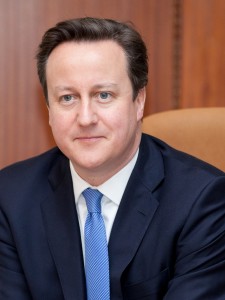
  • David Cameron – 2016 Speech at easyJet on Staying in EU

    davidcameron

    Below is the text of the speech made by David Cameron, the Prime Minister, at easyJet in Luton on 24 May 2016.

    Thank you, it’s great to be here with you here in Luton, and I am a proud easyJet passenger. You’ve flown me actually all over Europe: Portugal, Majorca, France, Spain, and almost always on time, although I have to admit that I’m not always on time. Actually, as I drove in here this morning, I remember once when I missed a flight altogether and had a lovely night in the Ibis hotel on the way into the airport. So I’ve let you down more often than you’ve let me down.

    But it is actually, funnily enough, interesting point: very few people have I stopped on the street to tell them that I think that they’ve done an amazing thing, but actually your founder is one of them. I did do that once, because I think easyJet was a fantastic creation. And today, with whatever it is: 800 routes, 70 million passengers, supporting around 10,000 jobs in our country, this is a fantastic great British success story. So it is a pleasure to be here, talking to you about this vital issue and taking your questions.

    Because on 23 June, we’ve got to make a really big decision for the future of our country. General elections are important, of course I believe that, but actually I think this is more important than a general election. If you don’t like the result of a general election, 5 years later you can make a different decision and have a different team running the country. Obviously not something I’m looking forward to, but nonetheless that’s the way the system works.

    But this is a really big choice about Britain, and I’m arguing very clearly that we are safer if we stay in, because we can fight terrorism better if we’re part of this team. I think we’ll be stronger, because I think Britain gains from being in these organisations rather than losing by being in them. But crucially, I think we’ll be better off. And it’s not a complicated argument to make. It’s because we’re part of a market of 500 million people; the biggest single market anywhere in the world. And that is good for jobs, it’s good for companies, it’s good for investment, it brings businesses here to Britain. It means great businesses like this one can expand throughout the single market. It’s good for our economy, and so if we were to leave, it would be bad for our economy. It would mean less growth, it would mean fewer jobs, it would mean higher prices. It would mean, as we set out yesterday, a recession for our economy. So we’re better off if we stay in this organisation.

    And it’s not a static thing, because of course the single market is still expanding. It’s good we’ve got a single market in aviation; that has massively helped your business. I can remember days, I’m old enough to remember, when flying off on holiday meant getting on a sort of state owned aeroplane and going to a state owned airport in another country, and paying a very high price for it. And as Carolyn has said, prices have come down 40% since the single market has come about, and since the radical transformation that companies like easyJet have brought about.

    So I’m quite convinced that when it comes to this economic argument, we are better off if we stay in and we’re worse off if we leave. And as I said, it’s not static, because the single market is going to go into energy, it’s going to go into digital, where we’re a real leader, and it’s going to go further into services industries, which actually make up 80% of our economy. So for those reasons I think we’ll be better off.

    And today we’re talking about some quite specific things, some quite ‘retail’ things, if you like, which is what would happen to the cost of a holiday if we were to leave. If we were to leave, and the pound were to fall, which is what most people expect and what the Treasury forecast, that would put up the cost of a typical holiday for a family of 4 to a European destination by £230. It could, as Carolyn has said, put up actually the cost of air travel, because if you’re outside the single market, which is what those who want us to leave think, then you’d face all sorts of bureaucracy and restrictions that you don’t face today.

    Another very retail thing that is happening in Europe, and there are a few people with mobile phones right now – don’t worry, film away, this is all live anyway. We’re abolishing roaming charges in the European Union. It’s one of the most annoying things: you’re on holiday, you use your mobile phone, you get an enormous bill. Getting rid of roaming charges could mean on a 10 minute call back to the UK, you’re saving almost £4 on that 10 minute call. So I think there’s some very strong retail arguments about the cost of a holiday, the cost of food, the cost of using your phone, for staying in the European Union.

    Now, before I take your questions, I just want to make one other argument, because I think in this debate it’s very important to talk about the specifics, and we have, about jobs and prices and costs of holidays and costs of phone calls. But there is also, in my view, a bigger argument. I don’t believe those people who say, ‘Well, my head says we ought to stay in the European Union but my heart says somehow, we would be a prouder and more patriotic country if we were outside.’ I don’t think that is right. I think this is an amazing country. We are the fifth biggest economy in the world. We’ve done great things in this world. We’re a very interconnected country. What happens on the other side of the world matters to us. We care about tackling climate change; we care about trying to alleviate poverty in Africa; we know we need to have the world’s trade lanes open for British business and enterprise. And I absolutely believe, if you want a big, bold, strong United Kingdom, then you want to be in organisations like a reformed European Union, rather than outside of them. Britain is part of the G7, we’re part of the G20, we’re part of NATO, which helps to keep our defences strong. We are a very important part of the Commonwealth, which brings about a third of humanity together in one organisation. And we’re members of the European Union. Being in these organisations doesn’t diminish our standing and our strength in the world, in my view. It enhances it. So I think the big, bold, patriotic case is to stay in a reformed European Union, to fight for the sort of world that we want, rather than to stand back and be on the outside.

    And in a way, that’s sort of what easyJet has done. Here you are, a British based business, but a business that has decided to take on the world in terms of being competitive, running routes all over Europe and beyond, and recognising that is in your interests, your passengers’ interests, your shareholders’ interests, all the people in this room’s interests.

    And that’s my argument about Britain: let’s be the big, bold strong Britain inside the reformed European Union rather than voting to leave, and that’s the case I’m going to make every day between now and 23 June, with just under a month to go.

  • Theresa May – 2016 Speech on Fire Reform

    theresamay

    Below is the text of the speech made by Theresa May, the Home Secretary, on 24 May 2016.

    Introduction

    Thank you very much, Andrew and Graham. It is a great pleasure to be here today to talk to one of Britain’s leading think tanks on public service reform. In my time as Home Secretary, Reform has consistently challenged government to be more radical and more urgent in its pursuit of accountability, value for money and transparency in public services. And it is a challenge I have taken to heart in my time at the Home Office, and I think our work to cut crime, control immigration, safeguard the vulnerable and protect against terrorism and extremism is more effective as a result.

    So today I would like to talk about reform of another public service essential to keeping people of this country out of harm’s way. One with a fine tradition and a proud record. And one made up of individuals who command profound affection from the communities they serve – the fire and rescue service – which I now have the privilege of overseeing in the Home Office. But before I talk about that, I want to go back to 2010, to when I was first appointed Home Secretary and when I first began my programme of reform in policing.

    The lessons of police reform

    Back then, the problems in policing were painfully apparent. Police forces beset by an opaque system of governance and diffuse accountability. Productivity held back by targets and the systems which officers relied upon were inefficient and ineffective. And a closed culture which insulated failure and rewarded the wrong things. There was no question of the need for reform, or the urgency with which it was needed.

    Yet when I first launched my programme of reform in policing, the response from Association of Chief Police Officers (ACPO) and the Police Federation was to deny the need for change. For many in policing in 2010, the word ‘reform’ could mean only one of 2 things, top-down reorganisation of the 43-force model or the establishment of a royal commission – and the fact I intended to do neither was heresy. When I set out the government’s plans to reduce police budgets by over a fifth over the course of a Parliament, they were united: the frontline would be ruined and crime would go shooting up. The Police Federation predicted “Christmas for criminals”.

    Today, those claims lie in tatters and no-one in policing can be in any doubt of the purpose of police reform. In the last 6 years, we have set about systematically reforming the institutions of policing – bringing real accountability for local people; modernising pay and conditions; transforming the approach to procurement and collaboration; and abolishing the system of targets and bureaucracy which undermined productivity and drove centralisation.

    And these reforms are bearing fruit. We now have a framework of institutions and processes that works properly to ensure accountability and operational integrity. Policing is more diverse, more professional, and better qualified than ever before. Public confidence has been maintained and the proportion of officers on the frontline is up. And crime is down by well over a quarter, according to the independent Crime Survey for England and Wales, even as police budgets have fallen.

    The experience of police reform shows what is possible. And over the course of this Parliament, I want to bring that same relentless focus to reform of the fire and rescue service – to improve the whole range of services provided to the public and to preserve the sustained falls in fire incidents and deaths we have seen in recent decades.

    The achievements of fire and rescue

    It is 15 years since the Home Office last oversaw fire and rescue services, and in that time the risk of fire has fallen considerably. Since 2001, the number of fires in England has been reduced by nearly two-thirds. Fire deaths have fallen by almost half and we have seen similar reductions in the number of non-fatal casualties. There are approaching 200,000 fewer false alarms each year, of which malicious incidents have fallen by nearly 90%. Buildings are safer, families and communities are more secure, and firefighters’ time is being wasted far less, freeing them up to focus on more effective activity locally.

    But what is striking about those achievements is that they were achieved not by change imposed from above, but by reform driven from below.

    Just as in policing before 2010, local services were weighed down by bureaucratic control, targets drove confusion and perverse outcomes, and taxpayers’ money was wasted. But unlike in policing, fire and rescue services seized the need for change at a local level and reformed themselves from the ground up. What began with the Bain Review in 2002 led to wholesale change in the culture and priorities of fire and rescue services, marshalled not by Whitehall but by chiefs and authorities themselves.

    Most importantly, as Andrew referred to, fire services embraced prevention over response. Today, prevention work in communities is second nature to every firefighter and core business in every local fire and rescue service. Over 600,000 homes were visited by fire personnel in England in 2014 and 2015 and nearly 59,000 businesses were checked for compliance with fire safety laws and given tailored advice on prevention and fire safety.

    At the same time, fire and rescue services worked to shift the balance of responsibility for fire protection onto industry and society more broadly. It is down to years of home safety visits, the successful Fire Kills awareness campaign and the continued pressure for building, furniture and fire safety regulations that fires are at an all time low and nearly 90% of all homes have a working smoke alarm, compared to only 8% a quarter of a century ago.

    By working in partnership with other local services and using data more systematically, fire and rescue services have developed a deep understanding of the needs and the risks of the communities they serve. The elderly residents at risk of falls. The families whose chaotic lifestyles make them a cause for concern. The buildings with construction shortcuts and poor management standards. By understanding these risks, fire and rescue services have been able to better manage them – saving countless lives as a result.

    And recent events remind us of the increasingly varied job that our fire and rescue services do. The crash at the Shoreham Air Show in August last year that left 11 dead and 16 injured. Widespread flooding in large parts of Cumbria and the Lake District in December. The collapse of part of Didcot Power station in March. Today firefighters do not just fight fire, they protect their communities from a range of dangerous situations.

    The continuing need for reform

    But as impressive as these achievements are, there remains much more to do. Families, businesses and property in this country remain at risk of fire. Last year there were more than 150,000 fire incidents in England. A total of 263 people lost their lives to fire and 7,500 more were injured. The insurance industry tell us that fire costs industry hundreds of millions a year, and we know that many businesses never recover from the ashes. These are not statistics we can or should ignore.

    Nor should we forget that, whilst fire does not discriminate, those most at risk are not those living in modern houses with expensive appliances and insurance to protect them when things go wrong. The victims of fire, too often, are the vulnerable within our society – older people, those living alone, and those whose behaviours, lifestyles or housing puts them at greater risk.

    And when I look at the fire and rescue service, I see a service that has succeeded in spite of the framework it operates in, not because of it. A fire and rescue landscape still beset by poor governance and structures. A workforce lacking diversity and still bound by many of the old ways of working. A service that requires further reform to improve accountability, bring independent scrutiny and drive transparency. And efficiencies and savings which could be made to improve the working lives of fire service employees and to reduce the burden on the taxpayer.

    So, over the course of this Parliament, I intend to work with fire and rescue services to deliver a programme of reform that is as radical and ambitious as I have delivered in policing since 2010. The job of police reform is not yet finished and I am not going to pretend that reform in fire and rescue will be easy or straightforward. Meaningful and lasting reform never is. But with fire and rescue in the Home Office and with – I sense – a real appetite for change, I believe now is the time to deliver the change that is needed.

    Efficiency and collaboration

    In the last 6 years, fire and rescue authorities have shouldered their fair share in delivering savings to bring the public finances back onto a sustainable footing. And over the next 4 years, further savings will need to be made, including a 1.6% cash reduction in spending power for single purpose fire authorities this financial year, as we continue to bring the public finances onto a sustainable footing.

    But we should be in no doubt that such efficiencies are possible. And nowhere is the scope for savings more apparent than in closer working between emergency services.

    The development of much closer collaboration between emergency services was one of the great unsung successes of the last Parliament. This takes many forms, from basic practical steps, like sharing headquarters or back office services, to radical reform, such as the integration of command and control or response teams, but those areas that have worked together have realised savings and operational benefits. The Joint Emergency Services Interoperability Programme has developed a common approach to how the 3 bluelight services are trained for, and respond to, major or complex incidents, such as flooding or terrorist attacks.

    And new ways of working between services have cut duplication and enhanced the response to incidents. Initiatives like the introduction of rural intervention vehicles, jointly crewed by police and fire officers, to serve hard to reach locations in Northamptonshire. Or the establishment of a joint station in Norfolk that houses not just police and fire, but ambulance crews and the coastguard too. Or the development of Community Risk Intervention Teams in Greater Manchester, which deliver prevention services on behalf of all bluelight services and respond to high volume, low priority calls. Since 2013, the government has invested over £88 million in fire transformation schemes such as these, with expected savings estimated in the hundreds of millions of pounds over the next 10 years.

    But progress is patchy and collaboration remains the exception, not the rule. In this Parliament, I want to see much deeper collaboration between fire and rescue and other local services, to improve the service to the public and deliver savings. And that is why we are legislating in the Policing and Crime Bill to put a statutory duty on the police, the emergency ambulance and fire and rescues services in England to collaborate whenever it is in the interests of their efficiency or their effectiveness to do so.

    And it is why I am committed to ending the narcissism of small differences between local fire and rescue services, which make no sense in principle and which frustrate joint working in practice.

    Two weeks ago, progress was made when the Chief Fire Officers’ Association, the Fire Service College, the Fire Industry Authority and others agreed to unify research and development so that equipment is only tested once, rather than by each local service. And I welcome the Chief Fire Officers’ Association’s proposals to develop a coherent and comprehensive set of professional standards, building on the work of the National Operational Guidance Programme. There are many legitimate reasons why collaboration can fail – competing aims, conflicts of leadership, differing financial positions – but a lack of consistent professional standards is not one of them.

    And to help services work together to buy equipment and services, I will publish comparable procurement data from every fire and rescue authority in England, to show how much each is paying for common items like uniform, operational kit, and vehicles. As we have seen in policing, local services can deliver significant savings just by pooling their purchasing power and buying the same equipment collectively – and there’s no good reason not to do so.

    Reform of the fire and rescue workforce

    These changes will lead to better use of resources and more thoughtful deployment of assets. But there is one resource, which comprises the majority of fire and rescue budgets, where there is still work to do: the fire and rescue workforce.

    In the last 10 years, the overall size of the fire workforce has not changed significantly despite the number of incidents attended falling by 42%. The challenge facing senior fire officers is therefore how to reform the workforce to meet a completely different risk and demand model, and how to build in the flexibility to deploy resources in different ways as demand changes again in the future. But, let me be clear, this does not and should not mean a reduction in the quality of frontline firefighting. Just as we have seen in policing, it is possible to protect the frontline and increase the proportion of officers deployed in frontline roles even as savings are made.

    These matters are rightly operational decisions for fire professionals, not for politicians. But already the characteristics of a future workforce are visible from changes the best chief fire officers have introduced. New and flexible shift patterns so that firefighters are available at times when risk or demand is greatest. The recruitment of dedicated fire prevention staff to conduct prevention work in communities and businesses and free up firefighters for specialist tasks. And increased use of on-call firefighters to increase flexibility and generate savings, not just in rural areas but in major metropolitan areas too, as Sir Ken Knight and the retained firefighters’ union have powerfully argued.

    Now I know there are those in the audience who will say that the National Joint Council (NJC) acts as a barrier to some of these changes and to a flexible workforce more broadly. The fact that, after 15 years of discussion and steadfast opposition from the Fire Brigades’ Union (FBU), the NJC has only recently reached agreement to pilot co-responding suggests to me that at least some of those complaints are well-founded. But the NJC is owned by fire and rescue, not by government, and fire authorities form one half of its membership. It is in your hands to change it, and my challenge to you is to deliver that change or have the courage of your convictions and withdraw.

    And reform must extend to chief fire officers too. There is widening disparity between the pay of chief fire officers in different parts of the country, with little relationship to their skills, performance or the size of the role. And it can never be justified for chief and principal fire officers to retire one day only to be rehired in the same job just a few days later with financial benefits that rank and file firefighters could never expect. It looks wrong; it erodes public confidence; it undermines the respect of firefighters and staff in their leadership; and it must stop.

    Just as the culture of bullying and harassment we have seen in some fire and rescue authorities can no longer be allowed to persist. There is no excusing this type of culture – which was described as “toxic” and “corrosive” by last year’s review of Essex Fire and Rescue Service. I know that there has been progress in Essex to put that right and I will be monitoring developments, but we must let it serve as a wider lesson too. In doing so, we must transform the diversity of a firefighter workforce that is 96% white and 95% male. Because it is not just professionalism and integrity that underpin the relationship with the public, it is also how representative fire and rescue services are of their communities and the communities they serve. I know this is something the FBU has championed in the past, and I hope we can work together to increase diversity in fire and rescue.

    And I can confirm that I intend to publish the Thomas review of the fire and rescue workforce as soon as is possible. This is an important piece of work, which I know has been a long time coming, but fire and rescue services should not wait for its conclusions to start reforming their workforce – you are the employers, not me or Adrian Thomas, and it’s up to you to drive the process of reform.

    A more accountable and transparent fire and rescue service
    And as you do, I will put in place the right framework of institutions and processes to ensure operational integrity and to restore the link between fire and rescue services and the communities they serve.

    Because governance in fire and rescue bears all the hallmarks of the flawed police authorities I abolished in 2012. Bureaucratic committees of appointed councillors without the direct democratic mandate to drive real change or the public profile to engage local people. In policing, I replaced police authorities with single, visible individuals held to account in the strongest possible way – at the ballot box. And 3 weeks ago, more than 9 million people did just that when they voted for a police and crime commissioner to oversee their local force on their behalf.

    So we will bring the same direct democratic mandate to oversight of fire and rescue services – by giving police and crime commissioners the ability to take on responsibility for fire and rescue services where a local case is made. This provision, which is already in the Policing and Crime Bill currently making its way through Parliament, will bring greater accountability to the work of local fire and rescue services where it is taken up and provide stronger leadership in keeping the public safe. And I encourage Police and Crime Commissioners (PCCs) to carefully consider the potential benefits and I hope fire and rescue authorities will work constructively with PCCs to realise them.

    But let me be clear, these proposals are not a police takeover of fire and rescue services, or a top-down merger of the roles of police officers and firefighters. The important distinction between operational policing and firefighting will be maintained – fire officers will not be given the power to arrest and the law will continue to prevent full-time police officers from training as firefighters. Funding streams for police and fire will not be merged and PCCs will raise a separate fire precept, so local people can hold them to account for how their money is spent.

    But there’s one problem – it is currently almost impossible to scrutinise your local fire and rescue service. There’s no independent inspectorate; no regular audit of performance; and only limited available data on performance over time or between areas. Instead, local fire and rescue services are examined by a system of peer challenge – which provides no assurance whatsoever to the public. It may serve a purpose as a tool for self-improvement, but in practice it means that chief fire officers handpick their own reviewer, set their own terms of reference, and decide whether or not to publish the results. It is not so much marking your own homework as setting your own exam paper and resolving that you’ve passed – and it has to change.

    To help fire and rescue authorities and PCCs hold their service to account and to drive closer scrutiny by taxpayers and communities, I intend to bring forward proposals to establish a rigorous and independent inspection regime for fire and rescue in England. I will shortly table amendments to the Policing and Crime Bill to strengthen the inspection powers in the Fire and Rescue Services Act 2004 to put beyond doubt the powers of fire inspectors to enter premises and access information, and to ensure the government has the power to commission inspections of particular issues or fire and rescue services. Because it is only by understanding problems and holding services accountable that we can begin to fix them.

    To support greater accountability, I will publish transparent fire and rescue information so that ordinary members of the public can compare fire and rescue services on performance, value for money and diversity, monitor that performance over time, and access useful fire safety information and advice. And if anyone doubts the public appetite for this information, just look at the success of Police.uk, which now receives 450,000 unique visits each month from interested members of the public.

    Conclusion

    I am sure there are those who question some of these reforms; who simply don’t accept the need for change; who, rightly, say that fire and rescue today does not share all the problems of policing in 2010. After years of falling risk of fire and even fewer incidents, it would have been easy for me to adopt the same mentality and let fire and rescue services stand still.

    But if we do that, if we choose to ignore the 263 people who lost their lives to fire last year and the thousands of business owners whose livelihoods went up in flames, we implicitly suggest that the institutions and structures of fire and rescue are good enough, not the unaccountable and inefficient framework we know them to be. And we brush aside, under the carpet, difficult questions about culture, leadership and diversity – which matter to those that work in fire and rescue just as much as the public they serve.

    The reforms I have set out today will make fire and rescue more accountable, more effective and more professional than ever before. They will build on the great strides in prevention and collaboration that fire and rescue services have already made. And if we get them right, they will benefit not just the public or the taxpayer, but firefighters too and I hope you will all work with me to deliver them.

    Thank you.

  • Tessa Jowell (Baroness Jowell) – 2016 Maiden Speech in House of Lords

    Below is the text of the maiden speech made by Tessa Jowell (Baroness Jowell) in the House of Lords on 23 May 2016.

    My Lords, I am delighted to have the opportunity to speak in this debate on the Loyal Address and to be doing so for the first time in your Lordships’ House. I thank the noble Lord for his kind introduction. This place throngs with noble Lords who have for years been my heroes and my heroines, as well as my very dear friends, so it is an honour to be able to listen to their speeches and to learn. What a pleasure to have been able to listen to the valedictory speech of the noble Baroness, Lady Perry, who I think is a woman with more than one more adventure inside her.

    I extend particular thanks to my two sponsors, my long-standing and dear noble and learned friend Lord Falconer of Thoroton and my noble friend Lady Lawrence of Clarendon, who has been a heroine of mine for many years and has deserved all the acclaim she has received as a campaigner against racism and for social justice. If only it had not been as a result of such a terrible personal loss. I also thank my mentor and dear noble friend Lady Jay of Paddington. There are so many more to whom I would like to pay tribute, but for the sake of your Lordships’ time and their blushes I will stop there. Of course, I would particularly like to thank all the staff of the House who have been so kind, welcoming and helpful since I arrived here. The doorkeepers, those in the Dining Room and those who welcome guests at the Peers’ Entrance have made me feel so welcome and have been so helpful.

    As I was preparing my contribution to the debate today, I consulted my noble friend Lord Hennessy of Nympsfield—who, in turn, recalled asking the late and much-loved Lord Peston in advance of his own maiden speech what happened here. “Gossip and the discussion of ailments”, came the reply. These topics no doubt do get their occasional airing, but I have been so impressed in the short time I have been a Member by the important contribution made by this House in confronting with uncompromising humanity some of the most difficult issues of this time. The campaign led by my noble friend Lord Dubs showed that a confident, optimistic country can indeed distinguish between the fear of a free-for-all in immigration and the chance to give back to a small number of unaccompanied refugee children who have suffered unimaginable trauma their childhood.

    Tax credits, support for disabled people and social housing are all causes that will change the lives of hundreds of thousands of people. They were all taken up by your Lordships in the short time that I have been a Member. So I would say to the Prime Minister, in the light of the proposals in the Loyal Address, that, however thwarted he may feel by this House, bad and unfair laws are not improved by curtailing the power of scrutiny in this place.

    I sat for 23 years in the other place, both as a Back-Bencher and in government. I do not think there was a single day in my 23 years as a Member of Parliament when I did not feel awe at the responsibility of representing 80,000 people and trying to meet their expectations of me. My former constituency of Dulwich and West Norwood, now so ably represented by my successor, Helen Hayes, represents all I most admire about our country—its diversity, the endless ingenuity of its people, their optimism and their belief in the possibility of change. All my constituents, rich and poor, benefited equally from the dedicated staff at King’s College Hospital. Over all those years we campaigned together with community organisations such as the Brixton Soup Kitchen, Centre 70 and 4ALL, along with many others, and with local parents, for secondary schools which are transforming the ambition of young people so often written off.

    My own first job was as a social worker in Brixton, tramping the same streets that I was later lucky enough to represent in Parliament and supporting families who had so much stacked against them. I hope that I will never become inured to what poverty smells like, nor forget the look of disappointment in a young person’s face when they realise that the great opportunity of London seems to be for others and not for them. Our new mayor, Sadiq Khan, carries on his shoulders such high expectations from those dispossessed. I congratulate him so warmly on his victory and pledge to help and support him in every possible way to be, as he wishes, the mayor for all Londoners.

    The great issue before this country today is, of course, our membership of the European Union—the focus of so much of today’s debate. I devoutly hope that we will remain in it as fully engaged partners, but with the self-confidence to continue to negotiate change. So a vote to remain is not a vote for the status quo. Amid the daily salvos from warring economists and the claims and counterclaims of the partisans, it is too easy to forget that the European Union is a union of 28 nations, in a continent that saw the deaths of 70 million from wars in the last century, that have bound themselves together by common commitments to standards of human rights, rights at work, democracy, the rule of law and peaceful coexistence. We should never take that for granted.

    Of course the EU institutions need to be improved. In many ways, this forthcoming referendum is a reproach to their slow response to public concern about this. Of course the EU faces enormous challenges, but we are not alone in wanting to shake up its inadequate institutions. But the founding optimism, its vision and its purpose are noble ones. We should stand up for them. Of course I respect the sincerely held views of those who want to leave, but behind the go-it-alone rhetoric I detect a deep pessimism. Those who wish to make this leap in the dark discount our importance to the rest of the European Union and the fact that our active engagement is a force for stability and good sense. It is a matter of vital national interest and it is a view which betrays a lack of confidence in our own country, in our ability to lead and win the argument for reform.

    Personally, I feel I have been here before. When I proposed that we bid for the 2012 Olympic Games in London, I was told by all sides, “I wouldn’t bother if I were you. Even if we try, we won’t win. The French have it all sewn up—and, if we do win, we won’t be able to host it properly”. “Best not get involved” was the general advice. Here I pay particular tribute to my dear friends, the noble Lords, Lord Coe and Lord Deighton, who always believed that we could do it and did so much to make sure that we did.

    And indeed we did. We did make a world-class venue out of a wasteland. We did inspire our young people not just in this country but around the world through International Inspiration. We did lead the world in sport after sport, and in that summer we found a renewed sense of our national identity, of who we are: self-confident and diverse. I think it took us a little by surprise. In those summer weeks four years ago, to recall Abraham Lincoln, we found,

    “the better angels of our nature”.

    I hope that in that same spirit the people of this country will renew their commitment to the European Union as an optimistic community of nations in which proud and distinct national identities are also the foundation of collective solidarity and open trade.

    What I wish for my country, I wish for my own beloved Labour Party. I hope it can embrace the energy of its new and growing membership, who all share a belief that we should help people achieve more together than they can alone. But my party can do that only when it governs. It fails when it becomes a sect of the elect, turning its back on those who are not true believers, and becoming obsessed with rooting out heresy.

    My Lords, I am truly honoured to join you. I hope to be useful and constructive, to learn from you and to offer help where I can. The great Seamus Heaney’s last injunction to his wife was, “Noli timere”—“Do not be afraid”. In holding the Executive to account, in defending a just cause even when it is unfashionable, in defending the weak against the strong and in forging our future proudly and confidently in a prosperous, peaceful Europe—in all these endeavours, we need not be afraid.

  • Baroness Perry – 2016 Valedictory Speech in House of Lords

    Below is the text of the speech made by Pauline Perry, Baroness Perry of Southwark, in the House of Lords on 23 May 2016.

    My Lords, I too look forward to the maiden speech of the noble Baroness, Lady Jowell, and I thank my colleagues for their kind support.

    Although education is not today’s topic, it is the target of much of our overseas aid and the foundation of everything which establishes this country’s place in the world order. Education changes lives and changes societies. I love what the writer Malinowski said, “In the life history of every individual, education is that which either bestows upon them the freedom of their culture, or else deprives them of it”. How right he was. Good education gives to our young people the freedom of our culture as a nation: an open mind, strong values and character, the richness of science, language, art, music, history, and so much more. But poor education, whether in the failing schools of our own country or in areas of extreme poverty in the wider world, indeed deprives the young of the freedom of their culture.

    I will say something about where my passion for education stems from. In my first teaching post in this country, and at my request, I was sent to a girls’ secondary modern school in the worst slum area of Wolverhampton. The height of ambition for those lovely girls was to get a job in what they called the “dirty room”—the acid room—of the Eveready factory near the school, because, although they knew that they would lose the ends of their fingers after a few years, it paid better than any other available job. They were bright, often clever girls, but were given no challenge in the curriculum on offer in the school, and no hope for a more ambitious future.

    I was expecting my second baby during my time as their teacher, and they made me promise to bring the baby to see them after I left. I kept my promise and brought my baby daughter to meet them. From their precious small resources those dear girls had clubbed together to present her, with huge solemnity, a small silver spoon they could ill afford—to remind her, they said, with good West Midlands humour, of, “the months she had to spend in this horrible place”. They had won my heart in my time as their teacher, but as I thought of the future that awaited them, my heart broke for them. From that day, I vowed to do what I could to see an offering of different education for young people like them—one which would raise their aspirations and their life chances.

    However, education gives more than the life chances of individuals; it is the necessary condition for the,

    “publick wealth, peace and tranquillity of the Realm”,

    in the lovely words of our daily Prayers. Economic growth and productivity depend on a well-educated and skilled population. Social cohesion and equality depend on the transforming power of education, and the advancement of technology, as well as our ability to deal with it, depend on education.

    I am happy that on all sides of this House we agree that those who teach are the single most crucial factor. Respect for the professionalism of teachers in school and lecturers in universities means giving them freedom to determine the best approach with their pupils and students, and helping them to gain the best results. Governments in free countries will always respect the limits of intrusion into this process, because academic freedom, like press freedom, is one of the cherished gifts of a free society.

    I have always been better at looking forward than looking back, but on this occasion it is surely right to look back over 25 years. I came into the House in 1991 on the honours list, not on a party list, and I am so proud that I chose to sit on the Conservative Benches. However, the friendships that I value have come from all parties and none. Of the many good and treasured memories of 25 years, the work of Select Committees will be the strongest. As a member of at least 10 different committees and a member of the Science and Technology Committee for over 15 years, I have enjoyed some great committee chairmen. Battles on the Floor of the House have brought some moments of triumph. In the 13 years of opposition, I have much for which to thank the noble Baroness, Lady Sharp, for the days when we collaborated in ensuring that education Bills were better when they left this House than when they arrived.

    These past six years—with my huge thanks to my noble friend Lady Anelay, who appointed me—I have enjoyed the privilege of working as a party Whip. I have worked with a splendidly loyal flock, who have become good friends. However, with my fellow Whips and my fellow party Whips, I found friendship and a wonderful team spirit, and I thank my team-mates for the collegiality and good fun which have made the long days and busy weekends almost a pleasure. I cannot praise too highly the leadership of our Chief Whip, who carries the great burden of that role with such a light touch and a great heart, and who makes those who work for him such a happy team. We are indeed fortunate to have as a chief someone who commands the respect of all sides of the House and the affection of those of us who work in his team.

    I have so much to be thankful for in the huge privilege of 25 years of membership of this noble House, and I leave with nothing but praise for the work done here: for the quality of debate; for the comradeship and laughter; for the influence it has over the Executive in scrutiny of legislation, and for the work that individual Lords do in liaison with the public over issues which might otherwise be ignored.

    Not only the Members but the wonderful staff throughout the House—the attendants here in the Chamber, the clerks in their many roles and the staff in the Library and the refreshment and banqueting departments—all maintain the best of tradition, and I salute them wholeheartedly for their professionalism and for their personal help and kindness to me throughout the years. I am both proud and humbled to have been a Member here.

    Some friends have asked me why I have chosen to retire from work I enjoy. I can reply only with a misquote of one US politician—that I would rather people asked me why I was retiring than wonder why I was not. More seriously, there are persuasive reasons why I have chosen to go. I believe it is important that your Lordships’ House is constantly refreshed with new and younger Members without the overall size of the House becoming too great. For the first 20 years after I entered the House, I headed first a university, then a Cambridge college, and then I was involved with local authorities and schools, so I was able, like many noble Lords, to bring first-hand experience to the work of the House. As that involvement declines, I am happy now to stand aside, knowing that others, on these and other Benches, will bring fresh and current experience to the work of the House, and I know it will be the richer for that.

    One other powerful reason is that I am, by God’s grace, still healthy enough in mind and body to build a life in retirement. I have a book to write—my fifth, although it is 10 years since my fourth was published—and I am excited about getting back to writing. I have a job to do to help my Cambridge college to raise funds for its teaching, and I have beloved family scattered around the world whom I want to visit. I do not want to wait to retire until these activities become less possible.

    Of the many gifts that my darling husband gave me, none is more important than his oft-repeated conviction that “there’s always one more adventure”. As we whisked across the Atlantic several times and across the North American continent, dropping babies as we went, he taught me always to embrace the anticipation of “one more adventure”. And so it is in that spirit that I look forward to life in retirement as the next great adventure.