Tag: 2016

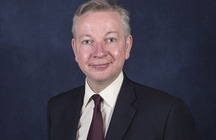
  • Michael Gove – 2016 Statement on the EU Referendum

    michaelgove

    Below is the text of the statement made by Michael Gove on 22 February 2016.

    For weeks now I have been wrestling with the most difficult decision of my political life. But taking difficult decisions is what politicians are paid to do. No-one is forced to stand for Parliament, no-one is compelled to become a minister. If you take on those roles, which are great privileges, you also take on big responsibilities.

    I was encouraged to stand for Parliament by David Cameron and he has given me the opportunity to serve in what I believe is a great, reforming Government. I think he is an outstanding Prime Minister. There is, as far as I can see, only one significant issue on which we have differed.

    And that is the future of the UK in the European Union.

    It pains me to have to disagree with the Prime Minister on any issue. My instinct is to support him through good times and bad.

    But I cannot duck the choice which the Prime Minister has given every one of us. In a few months time we will all have the opportunity to decide whether Britain should stay in the European Union or leave. I believe our country would be freer, fairer and better off outside the EU. And if, at this moment of decision, I didn’t say what I believe I would not be true to my convictions or my country.

    I don’t want to take anything away from the Prime Minister’s dedicated efforts to get a better deal for Britain. He has negotiated with courage and tenacity. But I think Britain would be stronger outside the EU.

    My starting point is simple. I believe that the decisions which govern all our lives, the laws we must all obey and the taxes we must all pay should be decided by people we choose and who we can throw out if we want change. If power is to be used wisely, if we are to avoid corruption and complacency in high office, then the public must have the right to change laws and Governments at election time.

    But our membership of the European Union prevents us being able to change huge swathes of law and stops us being able to choose who makes critical decisions which affect all our lives. Laws which govern citizens in this country are decided by politicians from other nations who we never elected and can’t throw out. We can take out our anger on elected representatives in Westminster but whoever is in Government in London cannot remove or reduce VAT, cannot support a steel plant through troubled times, cannot build the houses we need where they’re needed and cannot deport all the individuals who shouldn’t be in this country. I believe that needs to change. And I believe that both the lessons of our past and the shape of the future make the case for change compelling.

    The ability to choose who governs us, and the freedom to change laws we do not like, were secured for us in the past by radicals and liberals who took power from unaccountable elites and placed it in the hands of the people. As a result of their efforts we developed, and exported to nations like the US, India, Canada and Australia a system of democratic self-government which has brought prosperity and peace to millions.

    Our democracy stood the test of time. We showed the world what a free people could achieve if they were allowed to govern themselves.

    In Britain we established trial by jury in the modern world, we set up the first free parliament, we ensured no-one could be arbitrarily detained at the behest of the Government, we forced our rulers to recognise they ruled by consent not by right, we led the world in abolishing slavery, we established free education for all, national insurance, the National Health Service and a national broadcaster respected across the world.

    By way of contrast, the European Union, despite the undoubted idealism of its founders and the good intentions of so many leaders, has proved a failure on so many fronts. The euro has created economic misery for Europe’s poorest people. European Union regulation has entrenched mass unemployment. EU immigration policies have encouraged people traffickers and brought desperate refugee camps to our borders.

    Far from providing security in an uncertain world, the EU’s policies have become a source of instability and insecurity. Razor wire once more criss-crosses the continent, historic tensions between nations such as Greece and Germany have resurfaced in ugly ways and the EU is proving incapable of dealing with the current crises in Libya and Syria. The former head of Interpol says the EU’s internal borders policy is “like hanging a sign welcoming terrorists to Europe” and Scandinavian nations which once prided themselves on their openness are now turning in on themselves. All of these factors, combined with popular anger at the lack of political accountability, has encouraged extremism, to the extent that far-right parties are stronger across the continent than at any time since the 1930s.

    The EU is an institution rooted in the past and is proving incapable of reforming to meet the big technological, demographic and economic challenges of our time. It was developed in the 1950s and 1960s and like other institutions which seemed modern then, from tower blocks to telexes, it is now hopelessly out of date. The EU tries to standardise and regulate rather than encourage diversity and innovation. It is an analogue union in a digital age.

    The EU is built to keep power and control with the elites rather than the people. Even though we are outside the euro we are still subject to an unelected EU commission which is generating new laws every day and an unaccountable European Court in Luxembourg which is extending its reach every week, increasingly using the Charter of Fundamental Rights which in many ways gives the EU more power and reach than ever before. This growing EU bureaucracy holds us back in every area. EU rules dictate everything from the maximum size of containers in which olive oil may be sold (five litres) to the distance houses have to be from heathland to prevent cats chasing birds (five kilometres).

    Individually these rules may be comical. Collectively, and there are tens of thousands of them, they are inimical to creativity, growth and progress. Rules like the EU clinical trials directive have slowed down the creation of new drugs to cure terrible diseases and ECJ judgements on data protection issues hobble the growth of internet companies. As a minister I’ve seen hundreds of new EU rules cross my desk, none of which were requested by the UK Parliament, none of which I or any other British politician could alter in any way and none of which made us freer, richer or fairer.

    It is hard to overstate the degree to which the EU is a constraint on ministers’ ability to do the things they were elected to do, or to use their judgment about the right course of action for the people of this country. I have long had concerns about our membership of the EU but the experience of Government has only deepened my conviction that we need change. Every single day, every single minister is told: ‘Yes Minister, I understand, but I’m afraid that’s against EU rules’. I know it. My colleagues in government know it. And the British people ought to know it too: your government is not, ultimately, in control in hundreds of areas that matter.

    But by leaving the EU we can take control. Indeed we can show the rest of Europe the way to flourish. Instead of grumbling and complaining about the things we can’t change and growing resentful and bitter, we can shape an optimistic, forward-looking and genuinely internationalist alternative to the path the EU is going down. We can show leadership. Like the Americans who declared their independence and never looked back, we can become an exemplar of what an inclusive, open and innovative democracy can achieve.

    We can take back the billions we give to the EU, the money which is squandered on grand parliamentary buildings and bureaucratic follies, and invest it in science and technology, schools and apprenticeships. We can get rid of the regulations which big business uses to crush competition and instead support new start-up businesses and creative talent. We can forge trade deals and partnerships with nations across the globe, helping developing countries to grow and benefiting from faster and better access to new markets.

    We are the world’s fifth largest economy, with the best armed forces of any nation, more Nobel Prizes than any European country and more world-leading universities than any European country. Our economy is more dynamic than the Eurozone, we have the most attractive capital city on the globe, the greatest “soft power” and global influence of any state and a leadership role in NATO and the UN. Are we really too small, too weak and too powerless to make a success of self-rule? On the contrary, the reason the EU’s bureaucrats oppose us leaving is they fear that our success outside will only underline the scale of their failure.

    This chance may never come again in our lifetimes, which is why I will be true to my principles and take the opportunity this referendum provides to leave an EU mired in the past and embrace a better future.
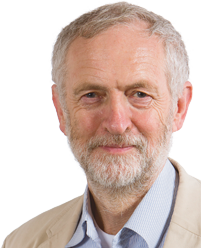
  • Jeremy Corbyn – 2016 Speech at Launch of the Chakrabarti Report

    jeremycorbyn

    Below is the text of the speech made by Jeremy Corbyn, the Leader of the Opposition, at the launch of the Chakrabarti Report in London on 30 June 2016.

    The Labour Party is built on the values of solidarity, social justice, equality, internationalism and human rights. That is why I have devoted my life to it, and why nine months ago, I was honoured to be elected leader by over a quarter of a million people. That is, by the way, substantially more than the entire electorate that will have the right to pick the Conservative Prime Minister this Autumn.

    After the tumultuous events of the past week in Britain, including the vote in last week’s referendum to leave the European Union, the need for us to unite around these values, to practice what we preach, and be judged by the highest of standards, is perhaps as great as it has ever been.

    So although I asked Shami Chakrabarti to carry out her inquiry after some disturbing and damaging incidents earlier this year, I believe that its findings and recommendations are of even more importance for our party, country and wider world today.

    Whatever your views on the outcome of the referendum campaign – and two thirds of Labour supporters voted Remain – we need to reflect for a few moments on some of the hateful language used by some of the most prominent participants in it.

    Boris Johnson, current favourite to lead the Tory party, compared Hitler’s murderous tyranny with the European project created from its ashes and questioned Barack Obama’s motives because of his “part-Kenyan heritage”.

    That was no dog whistle. That was a fog horn – a classic racist trope – casting doubt on someone’s motivation because of their race.

    The Justice Secretary Michael Gove compared pro-Remain economists to Nazi collaborators, a startling example of the way in which the Nazi regime and the Holocaust can be minimized, trivialized or even forgotten by ill-judged comparisons.

    And Nigel Farage warned of mass sex attacks should the Remain Campaign win, calling it the “nuclear bomb” of the Brexit campaign. Is it only me who just doesn’t find him funny any more?

    These are hateful comments – no question. They are unworthy of  the millions who voted to Leave, not out of xenophobia or racism, but often as a desperate response – yes to austerity, but also to years of being ignored and left behind by the Westminster elite.

    The people of Britain – and especially the young – need a strong, united, principled and kind Labour Party more than ever. They didn’t crash the banks, heat up the planet or start the wars of the past decade or so. But the risk is that they will have to work harder for longer, quite possibly for less pay, because of what the powerful have done in their name.

    Divide and rule is the oldest trick in the book – whether used by imperial powers abroad or hate-mongers at home. Turn people against each other. Use race or religion or anything else you can find and hope they will be too distracted or consumed to take on the great inequalities of wealth and power in the world.

    For over a hundred years, the Labour Party of Keir Hardie, Ellen Wilkinson and Manny Shinwell has existed to offer working people another way: solidarity instead of division, equality instead of injustice, inclusion instead of isolation, internationalism instead of narrow nationalism, and human rights for all.

    But we cannot do our duty, if we do not look at ourselves as well. Say what you like about me, but I’m no hypocrite. When I look in the mirror, it is less for sartorial elegance than to examine what’s in my own eye before pointing out the specks in others. I urge others in politics to do the same.

    This is why I asked Shami Chakrabarti and her colleagues to take on the vital work of looking into our own Party before we criticise others. That is what she and her team have done. And I’m here today to launch and recommend their work to our Party and to put my weight behind its immediate implementation.

    Under my leadership, the Labour Party will not allow hateful language or debate, in person, online or anywhere else. We will aim to set the gold standard, not just for anti-racism, but for a genuinely welcoming environment for all communities and for the right to disagreement as well.

    Racism is racism is racism. There is no hierarchy – no acceptable form of it. I have always fought it in all its forms and I always will. But while we respond to hate with universal principles we must also remember people’s particular experience, if we are too ensure that not one person feels vulnerable or excluded from their natural political home.

    The Jewish community has made an enormous contribution to our Party and our country – Jewish people have been at the heart of progressive and radical politics in Britain, as elsewhere, for well over a century.

    But they are also a minority amongst minorities and have had good cause to feel vulnerable and even threatened throughout history. This should never happen by accident or design in our Labour Party. Modern antisemitism may not always be about overt violence and persecution, though there is too much of that even to this day. We must also be vigilant against subtler and invidious manifestations of this nasty ancient hatred and avoid slipping into its traps by accident or intent.

    For the avoidance of doubt, I do not believe in name calling and I never have. “Zio” is a vile epithet that follows in a long line of earlier such terms that have no place in our Party. Nor should anyone indulge in the kind of stereotyping that can cause such hurt and harm.

    To assume that a Jewish friend or fellow member is wealthy, part of some kind of financial or media conspiracy, or takes a particular position on politics in general, or on Israel and Palestine in particular, is just wrong.

    Our Jewish friends are no more responsible for the actions of Israel or the Netanyahu Government than our Muslim friends are for those of various self-styled Islamic states or organisations. Nor should Muslims be regarded as sexist, antisemitic or otherwise suspect, as has become an ugly Islamophobic norm. We judge people on their individual values and actions, not en masse.

    No one should be expected either to condemn or defend the actions of foreign powers on account of their faith or race. At the same time, we should have the sensitivity to understand how upset many Labour party members and supporters are likely to feel about various human rights abuses around the world.

    Human rights language is so much more accurate and persuasive than the kind of language that was often resorted to in the Brexit debate. That is no doubt acceptable in other places and other parties, but it shouldn’t be here, on my watch, or in our name.

    I will continue – as Labour Leader – to pursue the causes of peace and justice in Israel-Palestine, the wider Middle East and all over the world. But those who claim to do so with hateful or inflammatory language do no service to anyone, especially dispossessed and oppressed people in need of better advocacy.

    Of course we as Labour Party members must all be free to criticise and oppose injustice and abuse wherever we find it. But as today’s Report recommends, can we please leave Hitler and Nazi metaphors alone (especially in the context of Israel). Why? Because the Shoah is still in people’s family experience. If every human rights atrocity is described as a Holocaust, Hitler’s attempted obliteration of the Jewish people is diminished or de-recognised in our history. Other human rights atrocities from African slavery to the killing fields of Cambodia, the Armenian and Rwandan Genocides are all of course to be remembered, but diluting their particularity or comparing degrees of evil does no good.

    Pursuing a more civil discourse does not in any way mean stifling free speech. I for one, will continue to meet, discuss and debate with all-comers in the cause of peace, progress, justice and human rights around the world. Though I acknowledge the need for the Party’s Leader to spread his or her time around a greater range of issues, I do not believe that anyone should be judged for the platforms they share or the human rights causes they take up, as long as they fight hate with every breath.

    And to those who have been afraid of so-called “witch-hunts” by the press in recent months, those who perhaps worry that debate and speech around difficult and important issues risks being shut down in our Party: I commend and endorse the Report’s recommendations about improving natural justice, transparency, consistency and accountability in the conduct of Party discipline.

    But not being racist and not being hateful is not enough for our Party to be the inclusive and vibrant political movement that Britain so sorely needs. If we are to unite and lead our country we must be the most welcoming and empowering place in which our diverse communities can prosper.

    I am very concerned about the Report’s findings on how too many black and minority ethnic members of our party have felt for too long. We must act against long term “special measures” placing local parties under limited democracy. I will also take action with colleagues to seek to improve the representation of black and minority people at every level of staffing and leadership within the Labour Party.

    We will work with our Trade Union affiliates and others to achieve the best programme of activist and leadership education possible. We will talk, read, learn and organise together. We will learn from each other’s personal experiences but also share each other’s considerable campaigning and political skills.

    The last year – with all of its highs and lows – has left me with every confidence that Labour is has the potential to be a powerful and transformatory movement, capable of winning the next General Election (whenever it comes), and many more elections after that.

    But my confidence and optimism are not naive. We all know that despite the overwhelming mandate I was given by Labour party members and supporters last year – we’ve all had a torrid few days.

    Whatever now takes place in our party, politics should be conducted in a decent manner. When I stood for the leadership last summer I called for a kinder, gentler politics, that’s still work in progress.

    Some people may equate “leadership” with nastiness. I disagree. Decency is no disqualification for leadership – in fact it should be a pre-requisite.

    Those loyal to my leadership, and to Labour’s core values, want to pursue the new politics with decency and civility, and see strength and not weakness in living those values.

    I ask Labour people to do as I do. To be kind and respectful to each other and our neighbours, and to be as courteous as we are courageous with our opponents.

    I believe that approach to be closer to the values of the British people than so much of what they have witnessed on the political stage over many recent years.

    I want to express huge thanks to Shami Chakrabarti, David Feldman and Jan Royall, as well as to Deok Joo Rhee and Godric Jolliffe – and all who submitted their views and took part in this comprehensive exercise.

    Britain deserves better – so let’s offer it. Come together as a party and then unite and lead our country through these incredibly challenging times.

  • Alex Chalk – 2016 Speech on Homicide Law Reform

    Below is the text of the speech made by Alex Chalk, the Conservative MP for Cheltenham, in Westminster Hall on 30 June 2016.

    I beg to move,

    That this House has considered the matter of reforming the law on homicide.

    It is a great pleasure to serve under your chairmanship, Mr Evans, on this auspicious day. I wish to make crystal clear that the debate is about the law of homicide, not fratricide.

    Putting that to one side, the real point is that the law of homicide is a mess. That was put more elegantly by the Law Commission in its 2006 report “Murder, Manslaughter and Infanticide”, in which it said that the law of homicide is

    “a rickety structure set upon shaky foundations.”

    In essence, the problem is that the law lacks a rational or defensible structure. It does not chime with common sense—and in this area of the law perhaps above all others, it should.

    As long ago as 1874, a Select Committee stated:

    “If there is any case in which the law should speak plainly, without sophism or evasion, it is where life is at stake; and it is on this very occasion that the law is most evasive and most sophistical.”

    That remains the case more than 100 years later, and that will not do. In the words of the Law Commission, the time has come to

    “promote certainty…in a way that non-lawyers can understand and accept.”

    But the problem is far more serious than mere opaqueness. The problem is that the law of homicide creates injustice—injustice to defendants and injustice to society—and that is something that we in this House must always stand ready to confront and resolve.

    What is the solution? It is very simple: to split the current offence of murder into two categories, one of first degree murder and another of second degree murder. Manslaughter should remain as before, albeit more tightly circumscribed.

    What, as a matter of law, is murder? It is committed when someone unlawfully kills another person with an intention to kill that person or to do them serious harm. That second element is really important. It means that someone who reasonably believed that no one would be killed by their conduct is placed in the same offence category as the contract or serial killer. That, in a nutshell, is the problem.

    Let me give an example. Imagine a retired colonel living in my constituency of Cheltenham. He is aged 65, has lived an utterly unblemished life and served his country with great distinction, and is known for his charitable work. He is upstanding in every way. He lives with his wife, who has Parkinson’s disease and for whom he is the sole carer. A neighbour moves in next door who has a string of convictions for antisocial behaviour. Every night, he holds noisy parties that go on into the small hours. Endless polite requests from the colonel are ignored. Endless local authority noise abatement notices are ignored. So, after the umpteenth such party, with his and his wife’s already poor health suffering, the colonel goes round at 3 o’clock in the morning to remonstrate with his neighbour. He takes with him—this is important—a cricket bat in case there is a violent confrontation. The neighbour, who is very drunk, becomes abusive and the colonel, overcome with anger and frustration and at the end of his tether, says, “Right, that’s it. Let’s see how you party when your big toe is broken,” and strikes the neighbour’s foot with the cricket bat. The neighbour falls back, hits his head on a crate of beer standing in the hallway and is knocked unconscious. The colonel immediately calls 999 and tries to resuscitate him, the police and ambulance arrive and the colonel tells them exactly what happened, but the neighbour is rushed to the local hospital, diagnosed with a bleed on the brain and dies.

    The post-mortem report reveals that the deceased’s toe was broken. When interviewed, the distraught colonel admits that he lost his temper. What happens in this case? The only charge that the law allows for is murder. That means that the only sentence that the judge can impose, despite the colonel pleading guilty at the first opportunity, is life imprisonment, because he intended to do grievous bodily harm by breaking the toe. It is because he took a weapon to the scene—the cricket bat—that the starting point for the minimum term that he must serve is 25 years imprisonment, and because the offence is murder, he must serve every last day of that term. In effect, the colonel goes to prison for the rest of his life—25 years. He has a mandatory life sentence.

    That is unjust. Although it is clear that a person who kills in such circumstances should be guilty of a serious homicide offence, it is equally clear that because he did not intend to kill, the offence should not be in the top tier or highest category. The current law does not chime with common sense. Academic research into public opinion tells us that, but frankly, we do not need academic research; we need simply to consult our common sense. The particularly daft thing—I hope that that is parliamentary language—is that when Parliament passed the Homicide Act 1957, it never intended a killing to amount to murder, which at that time was a capital offence, unless the defendant realised that his or her conduct may cause death. The law of murder was widened because of an unexpected judicial development immediately following the enactment of the 1957 legislation—the case of Vickers, which is about interpretation of the expression “malice aforethought”. In my view, that colonel should be guilty of second degree murder.

    The injustice is further underscored when we add the potential for what are known as secondary parties or accessories to be convicted of a murder. Imagine that before the colonel had set off, his frail wife had told him where the cricket bat was stored and in frustration said to him, “Now, go and use it. Teach him a lesson.” She, too, could find herself facing the punishment and disgrace of a murder conviction and the same 25-year minimum term. She should of course be guilty of an offence, but again, she should be guilty of second degree murder, with the judge having the discretion not to impose a mandatory life sentence.

    This issue is particularly topical because the Supreme Court has looked at the case of Jogee and more tightly circumscribing accessory liability—the so-called prosecutor’s friend—but still we are left with a situation in which the unsatisfactory law of homicide leads to manifest injustice.

    John Howell (Henley) (Con)

    I wonder whether my hon. Friend has in his mind what the range of sentences should be for second degree murder.

    Alex Chalk

    Certainly, on any view, life imprisonment must remain the maximum sentence—that is the maximum in the United States for federal offences where second degree murder is charged—but the key point is that the judge should have discretion. The Sentencing Council has done a terrific job of laying down guidelines—not tramlines—and the courts have shown themselves to be well able to dispense justice.

    The case for reform becomes even clearer when we consider manslaughter, another homicide offence. Whereas, as I have indicated, the law of murder creates injustice for defendants, the law of manslaughter creates injustice for society. What is manslaughter? It can be committed in one of four ways, but just two of those are relevant for these purposes: unlawful act manslaughter and gross negligence manslaughter. The latter largely speaks for itself for these purposes, but let me explain what happens when a killing is the result of a defendant’s unlawful act—that is, one that all reasonable people would realise would subject the victim to the risk of some physical harm, albeit not serious harm.

    Take this example. The defendant barges into a nightclub queue in Cheltenham. He has a string of criminal convictions for assault and criminal damage. In the queue, he is being drunk and obnoxious. He is insulting women for what they are wearing and telling them to get out of his way. The victim is the mother of two children. She works at nearby GCHQ and she is on a hen do. She politely asks the defendant to move to the back of the queue. His response is to say, “You silly cow; you need a slap.” He then strikes her repeatedly and hard to the side of the face with his open hand. She falls back, hits her head on the kerb and is knocked unconscious. The defendant runs off. The victim later dies, and the post-mortem shows that she suffered bruising—albeit no fracture—to her cheekbone and the fatal injury was caused by the impact on the kerb. The police arrest the defendant, who denies everything, but CCTV proves his guilt.

    Under the law at present, that defendant can be charged only with unlawful act manslaughter, because the harm that he caused falls short of grievous bodily harm. The net effect is that he will be convicted of an offence that carries a far lesser stigma than murder and for which there is no mandatory requirement for a life sentence, and if he gets a determinate sentence, he will serve only half of it. Is that thug, I ask rhetorically, less culpable than the retired colonel or his wife? The only distinction is that the colonel intended to break a toe and the thug intended to commit a marginally less serious assault. In my view, that is a distinction without a difference—it is a distinction that is completely lost on the general public and, frankly, on me.

    So, what needs to happen? This is not some academic exercise. Those two examples are not entirely artificial and they expose fundamental injustices. The first, as I have indicated, is to the victim, in the case of the colonel, and the second is to society in the case of the pub queue thug. The solution is clear: we need an offence of first degree murder that would encompass intentional killing only. I recognise the Law Commission, in 2006, wanted to add

    “killing through an intention to do serious injury with an awareness of a serious risk of causing death.”

    That is fine, and I understand it, but in my view it is a complexity that unnecessarily detracts from the simplicity of the proposal I put before the House.

    An offence of first degree murder would simply and coherently communicate to the public the particularly heinous nature of the crime of taking life and would attract the special condemnation and opprobrium that that deserves. To paraphrase Colonel Tim Collins’ famous eve-of-battle speech in 2003, anyone convicted of such an offence would truly live with the mark of Cain upon them. That offence should also, as at present, attract a mandatory life sentence.

    Under my proposal, second degree murder would encompass killing through an intention to do injury that is more than merely transient or trifling. In plain English: it would encompass killing through unacceptable violence and thuggery. That would include the colonel and the pub queue thug—people who committed a significant assault on others but who did not intend to kill. That category of offence would not require a mandatory life sentence. Instead, judges would be free to do justice, weighing in the balance all of the aggravating and mitigating factors. For clarity, that would not include the case of the most minor assault. Think of someone creeping up behind a person, playing a trick on them and flicking their ear as a piece of horseplay. That is technically an assault, of course, but is obviously very minor. If that person fell over and died that should remain as manslaughter.

    So, where does that leave manslaughter? Manslaughter would remain predominantly focused on cases of gross negligence. That is, offences in which there has been no unlawful assault or intention to kill, but in which the negligence has been so dreadful as to become criminal. The advantage of that is that people get it; people would understand that—it chimes with common sense.

    Those are not outlandish suggestions. Other jurisdictions—most obviously the United States—have two categories of murder. For murders in the US over which the federal Government have jurisdiction, life imprisonment is only mandatory for first degree murder. For second degree murder the mandatory sentence is described as

    “a term of years to life.”

    So why now? Because it is long overdue. The current distinction between murder and manslaughter is almost certainly more than 500 years old. No further general category of homicide has been developed in the intervening period, despite the fact that society, values and knowledge have changed out of all recognition.

    The need for modernisation was obvious to our Victorian forebears. In this place, William Gladstone himself indicated his willingness to rationalise the law but nothing came of it—it keeps getting put off. That approach led one cynical criminal lawyer to remark at the beginning of the 20th century that the hope of a criminal code being enacted by Parliament that would address the problems of the law on homicide was as remote as

    “expecting to find milk in a male tiger”.

    We cannot keep putting this off. Modernising this key area of law is, to borrow the words of the Law Commission

    “an essential task for criminal law reform.”

    It is time for this generation to take up the challenge and to create a law that is truly fit for the modern age.

  • Jo Johnson – 2016 Speech on Global Science

    jojohnson

    Below is the text of the speech made by Jo Johnson, the Minister of State for Universities and Science, at the Wellcome Trust in London on 30 June 2016.

    It is a pleasure to be here at the Wellcome Trust. This living monument to medical research sits at the heart of one of the world’s greatest knowledge quarters.

    It is a cluster that includes University College and its associated hospitals, the University of the Arts, the British Library, the Francis Crick and the Alan Turing Institutes and companies including Google and Facebook.

    This ‘knowledge quarter’, like many others around the country, embodies so much that is special about the UK as a research and innovation powerhouse as we face new challenges and ever stronger global competition.

    As the Prime Minister set out last Friday, the government will continue to take forward the important legislation that we set before Parliament in the Queen’s Speech.

    So my focus today, as we look ahead to the passage of the Higher Education and Research Bill, is to reflect on what underpins our strengths as a knowledge economy – and the steps we are now taking, and must take, to preserve them into the future.

    But first, a reflection on what the referendum result means for research and innovation in the UK.

    I am only too aware of the many questions that will be in your minds following the vote last Thursday. The academic and business communities were strong voices for Remain during the referendum campaign – and I want to thank you all for the role that you played.

    While it was not the outcome for which I and many of you campaigned, I accept this momentous decision by the British people and am committed to making it work.

    Now is the time to focus on the future, and with an optimistic mindset. We must look for the positives, while we deal with the challenges.

    Today is first an opportunity to remind ourselves that our economy is fundamentally strong and that UK research and innovation are world leading. And for me to give you my commitment to continue working with you to make the strongest possible case for higher education, research and innovation in the coming negotiation.

    In legal terms, nothing changed overnight last Thursday. We remain an EU member during the 2-year renegotiation period, with all the rights and obligations that derive from this. EU students studying here, or looking to start in the autumn, remain eligible for student finance for the full duration of their courses. We remain fully open to scientists and researchers from across the EU. We hugely value the contribution of EU and international staff. And there are no immediate changes to their rights to live and work in the UK.

    It is business as usual for Horizon 2020. I would be concerned about any discrimination against UK participants and am in close touch with Commissioner Moedas on these issues.

    The UK also continues to lead in major non-EU research collaborations – from CERN in Switzerland to the European Space Agency. Just this month we confirmed the UK’s application to become a full member of a major new particle accelerator, the European Spallation Source in Sweden.

    But the prospect of Brexit inevitably poses new challenges, at a time when research itself is becoming more collaborative, and more global.

    Our task now is to chart a course that protects the UK’s status as a full-spectrum scientific power.

    We have fundamental strengths on which we must now build.

    First and foremost we have a long established system that supports, and therefore attracts, the brightest minds, at all stages of their careers. We fund excellent science wherever it is found, and ensure there is the freedom to tackle important scientific questions.

    We recognise the talent pipeline is critical. So we are doing all we can to develop the next generation of researchers. This week we opened applications to our new Master’s loan. We are also developing for the first time a new Doctoral loan to complement existing Research Council funding. In this Parliament we will have utterly transformed the funding landscape for post-graduate study.

    As a government we recognise the contribution that our world-class research base makes to our economy and wellbeing, which is why at the Spending Review we committed to protect the science budget in real terms, and protect the funding that flows through Innovate UK in cash terms. These commitments remain.

    Second, we have excellent scientific infrastructure here in the UK – in universities, in existing research institutes, such as the MRC Laboratory for Molecular Biology and the Wellcome Trust Sanger Institute, and in new institutes like ‘The Crick’ and ‘Royce’. This is backed by a manifesto commitment of £6.9 billion capital funding up to 2021 – that’s record levels of investment in new equipment, new laboratories and new research institutes.

    Third, we have access to major research infrastructures across the world, such as the Large Hadron Collider, in which the UK plays a leading role. We are a major partner in building new infrastructure such as the Square Kilometre Array whose global headquarters will be based at Jodrell Bank; and in the LIGO Scientific Collaboration, which made the dramatic gravitational waves discovery. It was UK researchers, working with their counterparts, who made this discovery possible.

    And we are hugely successful at innovation – second in the latest Global Innovation Index and one of the most attractive countries in the OECD for international business R&D investment. Only last week the prestigious MacRobert Award of the Royal Academy of Engineering was awarded to Blatchford, a global leader in the development of prosthetic limbs. They have integrated robotics into a prosthetic limb for above-knee amputations – it’s a masterpiece of engineering that combines advanced materials with cutting edge deployment of ICT. Advances such as this are now being celebrated in the first ever UK Robotics Week.

    But, while we can be confident that our fundamentals are strong, we need to evaluate the consequences to UK science and innovation of leaving the EU. And ask why, following the decision to leave, it is even more necessary for us to implement the proposals in the White Paper and Bill, and deliver on our manifesto commitment to implement the Nurse review.

    So let me deal with each of these in turn.

    Europe and the world

    There is no doubt that UK researchers and businesses do extremely well in EU research funding programmes. And we helped to shape the European Research Council in our own image, with its emphasis on peer review and funding excellence.

    It is too early to say what a new settlement will look like and exactly what our relationship to successor framework programmes will be – but I am confident that we can continue to thrive.

    The UK has been a centre of scholarship for more than eight centuries. Our universities were knowledge hubs long before the EU ever came into existence. We are already extremely connected with the rest of the world – in 2012 nearly half of articles by UK researchers were co-authored by at least one non-UK researcher, second only to France amongst other leading research nations. These connections will continue. Our position as a science superpower, held since the dawn of the Enlightenment, can be maintained.

    But this will require a concerted effort from government, the research community and, importantly, from the new leadership of UK Research and Innovation, under John Kingman.

    The role of UK Research and Innovation (UKRI)

    I have no doubt that the formation of UKRI will provide indispensable support to our research and innovation leadership during this period of change in our relationship with the European Union. Now, more than ever, as these communities face new challenges, we need a strong and unified voice to represent your interests across government, across Europe and around the world.

    We are outstanding at discovery science – and are getting much better at turning those discoveries into economic benefit – but we must do even better.

    The government is already taking steps to strengthen the research and innovation landscape. We will shortly publish a new national innovation plan. We have already protected research funding. We have maintained innovation funding through Innovate UK, and the R&D Tax Credit is benefitting record numbers of businesses. We are also continuing to grow our Catapult network, where the very best of the UK’s businesses, scientists, clinicians and engineers work side-by-side. We are now developing a wider range of financial instruments to support innovative firms and better target public support.

    But for every one of our successes, there are examples where UK scientific discovery has been developed off-shore, lost to a competitor, exploited elsewhere. We know the stories – from the early days of computing to pioneering imaging techniques such as medical ultrasound and CT scanning.

    That’s why we need UKRI to strengthen our ability to spot technology trends and develop a much more strategic approach to research investment.

    Increasingly, innovation is occurring at the intersection between scientific disciplines and technologies – such as between biology, materials and computer sciences in the development of medical prosthetics. This means that many of the major problems that we face require inter- and multi- disciplinary solutions. We see this in the impact case studies collected for the REF, the Research Excellence Framework. And we know that many of the world’s emerging scientific powers are not just growing their scientific capabilities, but they are increasingly investing in collaborative research that crosses traditional discipline boundaries and national borders.

    Which brings us to the reasons that the government asked Sir Paul Nurse to conduct his review of the Research Councils. The Nurse Review powerfully made the case that while we are excellent at science, the collective research endeavour could be so much greater than the sum of its parts. It spelled out the gaps we need to fill:

    – a lack of strategic join-up between the disciplines and between the research base and policy-makers;

    – a fragmented approach to investment, that lacks the capability to address multi- and inter-disciplinary research as effectively as we might; and

    – historic weakness at commercialisation, with a need for a smoother pathway for innovation.

    We have also listened carefully to the NAO report which saw the need for a more joined-up and strategic approach to our science capital investments. We are investing in our research infrastructure on a record scale, but the NAO said that we should develop a more strategic process for identifying priorities and proposing projects, potentially through the integrated organisation recommended by Sir Paul Nurse.

    That is why we are legislating to establish UKRI, which will include the Research Councils, Innovate UK and a new Council – Research England.

    So what will UKRI accomplish?

    First and foremost, it will serve as a single, overarching and protective funding body that operates at arm’s length from government and provides a strong voice for the research and innovation community. Now, more than ever, as these communities face a unique set of global challenges, we need a powerful voice to represent UK research and innovation on the world stage and ensure we maximise opportunities from all our global research collaborations.

    Through UKRI, we have the promise of the best of both worlds – combining what works so well now, while ensuring we meet the challenges ahead.

    But as well as a strong, strategic voice in UKRI, the Higher Education and Research Bill clearly sets out how Council leaders will retain their autonomy to fund the very best research and innovation activity, employ the best staff, and serve their individual discipline communities. They will continue to manage their specialist centres and institutes, as the Research Councils do now.

    Whilst all staff will be employees of UKRI, recruitment and terms and conditions of staff in Councils and any associated institutes will be set by the Councils, in line with any flexibility granted by the government. And each UKRI Council will in the future enjoy greater freedom to develop their own delivery plans, working with their peers on the UKRI Board, at arm’s length from officials and at a further remove from ministers in Whitehall. This means a net gain in academic autonomy.

    Second, UKRI will ensure we have more consistent mechanisms to shape a national research and innovation strategy, with members of the research and innovation community in the driving seat. In the last Parliament, we made an important move in this direction – with David Willett’s ‘Eight Great Technologies’ and the further development of cross-Research Council programmes. But the arrangements so far have been ad hoc and reliant on top down ministerial intervention, rather than bottom-up and organic direction-setting by the science community itself. We could clone David, so all future science ministers can be as wise and far-sighted as him. Or we could develop a capability – within UKRI – for the systematic development of the kind of research and innovation strategy that will help us to compete in the world for decades to come.

    Through UKRI, we will have a national research and innovation strategy developed organically by the research and innovation community itself, helping to guide more than £6 billion in annual government investment and delivering greater coordination across the delivery plans of each of UKRI’s 9 autonomous Councils.

    Each part of UKRI will be able to work seamlessly with the others, supported by strong central infrastructure and analytical capability.

    The ability to work swiftly and strategically across disciplines will be critical to the new Global Challenges Research Fund. At present, it is not within the legal remit of any of the Research Councils to hold, manage or distribute the necessary multi- and inter-disciplinary grants from the Fund. Moving forward, we will be able to fund challenges directly through ‘common research funds’ in addition to government allocating budgets across different disciplines.

    Our reforms will ensure that the £1.5 billion Global Challenges Research Fund delivers the biggest bang for buck – strengthening the global impact of UK research.

    Now, more than ever, it is time to show that Britain is outward-looking and engaged with these global challenges. And that’s why I am pleased today to be able to make a further announcement about how we are investing to support this work. We are creating a new £1 million Newton Prize, starting next year. This will not be just a one off, but an annual prize – awarded for the best science or innovation projects that promote the economic development and social welfare of Newton partner countries or address the problems of poor people around the world. It will be awarded by an independent Newton Prize Committee. And I am very pleased to announce that Sir Venki Ramakrishnan, President of the Royal Society, has agreed to chair the Newton Prize Committee. Sir Venki brings a wealth of scientific and international experience and I am immensely grateful that he has agreed to do this.

    Third, UKRI will have a remit that spans discovery through to commercialisation. Innovate UK will continue to focus on business-led innovation. It will continue to have a separate budget and serve the business community. But it will also have a clearer remit to help drive innovation from within the research base, aligning its innovation strategy with the Research Councils.

    All of this will be underpinned by continued support for a sustainable, world class Higher Education sector. Research England will retain HEFCE’s research and knowledge exchange functions, including Higher Education Innovation Funding.

    HEIF is an essential mechanism to support universities in effectively contributing to UK growth. Research England and the new Office for Students will act together to deliver HEIF, as an example of the joint working between the two bodies and their shared remit to support business-university collaboration.

    And as I set out in a speech earlier this month, we are taking other steps to bring teaching and research closer together. Our proposals include provisions for joint working, cooperation and information sharing between the OfS and UKRI. An emphasis on working together will run through the leadership and management of both bodies, supported by a legal framework that will be sufficiently flexible to deal effectively with areas of shared interest.

    I also want the REF and the TEF to be mutually reinforcing. We will ask institutions to consider how they promote research-led teaching in their TEF submissions; and I have asked Lord Stern, as part of his review of the REF, to consider the impact of excellent research on teaching. We look forward to hearing the results of his review shortly.

    It will continue to be a matter for each of the devolved administrations to consider how to turn REF results into ‘dual support’ funding. We are working with them, and I was in Scotland earlier this week, to discuss the steps we can take to ensure UKRI works to fund excellent science across the UK, just as Research Councils do now. UKRI is just that: an integrated organisation with a remit to think and act strategically across the whole of the country.

    The balance of funding between the Councils will ultimately be decided by ministers, as it always has been. But, with the formation of UKRI, we will have a new mechanism for the whole research and innovation community to determine its own priorities, and to advise ministers as to their view on the optimal budget allocations.

    Conclusion: 5 tests

    By preserving the strengths of our research base, and building capability for the future, we have a real opportunity to ensure we are truly leading the world in this new era of global science and innovation.

    And with both the funding and the strategy in place, we have every reason to be optimistic.

    But we in government will need to continue to work closely with the research and innovation communities as we adjust to the realities of a new relationship with the rest of Europe.

    The country that inspired the steam engine, the double helix and the World Wide Web has no guaranteed pass to the scientific premier league in the next century, nor can protected funding alone guarantee success.

    The nature of the next scientific breakthroughs is changing, and we must adapt with it.

    Now, more than ever, and as the Parliamentary process moves forward in the months ahead, we must galvanise our national research and innovation effort, and make sure it is fit for the future.

    I have 5 tests for the success of these reforms:

    Are we training and attracting world-class scientists and engineers, who are in turn able to help shape a more cohesive national research and innovation strategy?

    Do we have a strong national champion for research and innovation, able to make a case in government, with the public and around the world in support of UK science and in pursuit of international collaboration?

    Are we fully exploiting economic opportunities from our research base, especially in new and emerging technologies, maintaining our reputation as a global innovation leader?

    Are we effectively targeting our efforts at society’s biggest challenges, with the ability to support more multi- and inter-disciplinary research, and success at winning global recognition for UK-led breakthroughs?

    And have we preserved for future generations the vital components of academic autonomy, made possible through the Haldane Principle and Dual Support, that underpin so much of what is great about UK academia?

    We can pass these tests, and seize the opportunity – not just to preserve what already works well, but also to turn the challenges we now face to our advantage.

    We must now work together to get this right. We have the chance both to maintain everything that is exceptional about UK research and innovation, and cement our unparalleled leadership in this new age of global science.

  • Lord Freud – 2016 Speech on Reforms to Support Social Sector Tenants

    lordfreud

    Below is the text of the speech made by Lord Freud, the Minister of State for Welfare Reform, in Manchester on 29 June 2016.

    Introduction

    It is a pleasure to be here in Manchester for the Chartered Institute of Housing’s conference in its centenary year.

    Over the last 100 years, the Chartered Institute of Housing (CIH) has been at the forefront of campaigning for and creating better homes and better lives for families across the UK.

    Your ambition to improve people’s lives and situations is one that is fundamental to welfare reform.

    When I spoke at your conference 4 years ago, I stressed the importance of the social housing sector to the success of welfare reform, and in particular to support people at the heart of your organisations – tenants.

    The welfare reforms we have delivered have been made with one purpose in mind: to get Britain back to work. We know that work is the best route out of poverty.

    Our reforms have sought to renew incentives to get a job and help people overcome the barriers they face.

    And our reforms are working. Since 2010, there are:

    – 764,000 fewer workless households
    – 36,000 fewer households where no member has ever worked
    – 449,000 fewer children living in workless households

    This is the fruit of our welfare reform: people re-engaging with the labour market and transforming their own and their family’s lives.

    Alongside this ambition, however, we recognise the importance of protecting the most vulnerable in our society.

    We have and are developing provisions to do this fairly in our housing reforms, through the benefit cap and in Universal Credit.

    Today I want to talk to you about these protections. And I also want to talk to you about how much I value the work you have done and that we continue to do together.

    Supported housing

    I have huge admiration for the work that the supported housing sector does. I also recognise the complexity of the sector, and the diversity of the services being delivered.

    I understand the concerns that many of you had following last year’s announcement that the local housing allowance caps would be extended to the social rented sector.

    That is why in March we put in place a one year deferral to the policy for supported housing.

    The supported housing sector is vital to the delivery of so many of the government’s policy objectives – not only in my own area of work and pensions. It plays a crucial role in ensuring:

    – that those with learning difficulties can live as independent a life as possible

    – that vulnerable elderly people have somewhere to grow old safely
    and that care leavers can make the transition to self-reliance

    For hundreds of thousands of people across the country – from those with mental health conditions, to ex-offenders, to those escaping domestic violence – the importance of supported housing cannot be overestimated.

    What is important now is that we make decisions on the future of the sector based on the best available evidence.

    And that we ensure support is focused on the most vulnerable, with appropriate safeguards.

    So that we can get the best provision possible, such as that provided by Riverside, Nacro, Anchor Trust and Richmond Fellowship here in Manchester – which provide support to rough sleepers, people addicted to alcohol, older people and those with mental health problems respectively.

    We recognise that the vast majority of providers deliver a genuine and valuable service, however, on the rare occasions where it does exist, we want to root out sub-standard treatment that does the most vulnerable of people in our society a great disservice.

    The need for long term reform in this sector was well established before the Local Housing Allowance caps announcement.

    The roll out of Universal Credit already meant we needed to think about how funding for supported housing is best delivered in the future.

    That is why my department – jointly with the Department for Communities and Local Government, who you will hear from later today – commissioned a supported housing evidence review, nearly 2 years ago.

    This will tell us much more about the shape, scale and cost of the sector. And it is the first such evidence review in over 20 years.

    The review is now nearing its end and we hope to be able to publish it shortly.

    This is of course an issue that affects many parts of government and our colleagues in the devolved administrations. I am working with a broad range of ministerial colleagues to find the policy solution to this issue.

    An important part of this policy work is talking to you, the sector. You are not just a vital sector but a diverse one.

    That makes it even more essential that we engage extensively with you ahead of bringing forward any proposals. So we fully understand how the system works at present on the ground.

    As part of the evidence and policy reviews, we have spoken with over two hundred stakeholders from all nations of Britain. This includes local authority commissioners, providers of supported housing, charities, sector membership organisations and individuals themselves living in supported housing.

    The insights and expertise that all these groups have brought to both the evidence review and the policy thinking have been immensely valuable. And we are continuing to listen.

    For me, answering the question of long term reform also offers us an opportunity to think about how this crucial sector operates. For example:

    – What can we do to ensure that quality and an outcomes focus are at the heart of what we do?

    – How can we ensure that the system allows for and indeed drives innovation to build on what we know already works?

    – We all know these are not simple questions. That is why we are working quickly to understand what the evidence is telling us.

    Building on this review, we will work with you to put in place appropriate protections. So that those who need supported accommodation – often the most vulnerable in our society – have appropriate and sustainable housing.

    Benefit cap

    Now let me turn to the benefit cap. We introduced the benefit cap to incentivise work, and that is exactly what we are seeing.

    Our research has shown that capped households are 41% more likely to enter work than similar uncapped households.

    The benefit cap has been in place for 3 years and of the 73,000 households who have been capped, around 53,000 households are no longer subject to it. Nearly 22,000 of these households have moved into work.

    The benefit cap is helping families to make positive behavioural changes. It is strengthening work incentives in the benefit system, and improving life chances.

    The lower and tiered cap coming in this autumn is a key part of our commitment to reduce long-term welfare dependency.

    My department is already proactively supporting people who will be affected by the new cap.

    We have written to local authorities and to people likely to be affected so that we can advise them of the support available. Support to move into work, as well as budgeting and housing assistance.

    There is a close partnership between jobcentres and local authorities focused on helping those affected by the benefit cap move into employment – and away from benefit dependency.

    This includes conducting home visits for the most vulnerable – in some cases jointly with housing associations.

    This activity will give people time to explore and take up support before the new cap comes in.

    Along with this support, we are continuing to provide funding for Discretionary Housing Payments and have committed to £870 million over this Parliament.

    This is for local authorities to be able to provide additional financial support for those who need it most.

    Along with our desire to support the most vulnerable to move in to employment, we also recognise and value the work that carers and guardians do across the country.

    That is why we have created new exemptions from the benefit cap for households entitled to Carer’s Allowance or Guardian’s Allowance. And these will take effect later this year.

    Universal Credit

    The roll-out of Universal Credit is a good example of government and the housing sector working together effectively.

    We have delivered welfare reform and together we have been able to make a positive difference to people’s lives.

    We have been continuing to improve the Universal Credit service and in particular our relationships with local authorities, landlords and housing representative groups.

    Taking on your feedback, we have developed a number of measures to make Universal Credit better for the sector and better for tenants.

    To name a few:

    – we have enabled social landlords to be notified when their tenants make a claim to Universal Credit, so that they can apply for Alternative Payment Arrangements for tenants in arrears

    – we have implemented an escalation line for landlords to contact the Universal Credit service centre to minimise the risk of evictions
    we have published a landlord support pack on GOV.UK to help landlords prepare their organisation, staff and tenants for Universal Credit

    Our Trusted Partner pilot is a further demonstration of our partnership working. We have worked with social landlords to allow them to identify tenants who would be unlikely to pay their rent when they started receiving Universal Credit. They were able to recommend that these tenants instead had an Alternative Payment Arrangement.

    However, the support did not end with putting in place a different method of payment. These landlords worked with their tenants to provide on-going support, so that in time, their tenants could pay their rent independently.

    Early evidence has shown positive outcomes and we will continue to review this over the coming months.

    Universal Support

    We are not content with stopping here but we are intent on supporting the most vulnerable of claimants.

    Our aim is to support the needs of anyone whose conditions are stopping them from finding and staying in work.

    Our work coaches now have the flexibility to tailor support for individuals in difficult circumstances. For example, they can remove work search requirements from people facing homelessness to allow them to sort out their housing situation.

    We know that for some people, managing their Universal Credit claim online and budgeting their award effectively may be difficult.

    That is why we have developed Universal Support to help people by improving their financial and digital capability. This is done through budgeting support and assistance with digital services, delivered by local partners.

    Universal Support is already transforming the way jobcentres work as part of their local communities. They are now more effective in tackling the barriers that harder to help people face in getting into sustainable employment.

    When I visit jobcentres across the country – from Southampton, to Grantham – what strikes me is the genuine enthusiasm of work coaches.

    Because of Universal Credit, for the first time they feel that the welfare system is coherent. And that they can help people to lead independent, fulfilling lives.

    Universal Support will take this even further, ensuring that we can truly help those who are the hardest to help.

    We are now considering how to expand Universal Support to cover a wide range of complex barriers. These are the barriers that ultimately lead to worklessness and poor life chances – including addiction, problem debt, homelessness, lack of basic skills and a history of offending.

    Expanded Universal Support aims to address these barriers by encouraging a system of joined-up services at a local level.

    For example the Working Well pilot here in Greater Manchester. Local services are working together to address people’s barriers to employment. They are tackling people’s health, housing and debt issues and providing employment and skills support. Because of this joined up approach, over 230 people of the hardest to help have been supported into employment.

    Through such locally designed and integrated services, we can better meet the needs of people with complex and multiple barriers. And help them into sustained employment.

    Housing sector

    What has struck me over the last 6 years, is that despite the scale of our welfare reforms, the housing sector has adapted in the interests of their tenants.

    Many housing providers have looked at their social obligations and have stepped up to support their tenants.

    They have identified the skills that their tenants are missing and developed ways to fill this. Whether that’s through helping tenants with budgeting support or providing employability courses, these initiatives are helping people to lead independent and fulfilling lives.

    I do not underestimate the commitment of you and your staff to achieve this goal. Nor do I underestimate the cultural and organisational change that many of you have invested in.

    I was very impressed by a visit I made to Bromford social housing in the Midlands. Through their “Bromford Deal” tenants make a commitment to invest in their own development in return for being a Bromford tenant.

    Bromford are using their relationship with tenants to get them ready for the world of work and away from benefit dependency.

    And there are many more examples.

    From the YMCA, which awards points towards moving into a self-contained flat for engaging with education, training and employment.

    To St Basils in the West Midlands, which is incentivising training with housing, working in partnership with the local NHS.

    Indeed, according to the National Housing Federation, over a third of housing associations offer employment and skills services – with more planning to do so.

    Conclusion

    Our ambition is to transform people’s lives by giving them the tools, incentives and support they need to get into work and stay in work.

    By doing this we are determined to move our country to a lower welfare society, where those who need support get it. And where we protect the most vulnerable.

    We have worked tirelessly to improve the economy, increase employment opportunities for all and achieve lasting welfare reform.

    Today we can see the results:

    – with the employment rate at a record high

    – with the number workless households in the social sector down from a peak of 49% in 2010, to 39% last year

    – with Universal Credit continuing to pull people out of benefit dependency and out of poverty traps

    We all have our part to play in this. And I am very encouraged by the support and resources that housing associations and other partners here today are providing for tenants.

    From supported housing, to the benefit cap, to Universal Credit, and now to Universal Support – we have shown we can work together to ensure that we protect and support vulnerable people.

    As the CIH celebrates its achievements over the last 100 years – and looks ahead to shaping the future of housing – I look forward to working with you to realise the vision of improving housing and improving people’s lives.

  • Ruth Smeeth – 2016 Statement on Chakrabarti Report

    Below is the text of the statement issued by Ruth Smeeth, the Labour MP for Stoke-on-Trent North and Kidsgrove, on 30 June 2016.

    This morning, at the launch of the Chakrabarti Inquiry into antisemitism, I was verbally attacked by a Momentum activist and Jeremy Corbyn supporter who used traditional antisemitic slurs to attack me for being part of a ‘media conspiracy’. It is beyond belief that someone could come to the launch of a report on antisemitism in the Labour Party and espouse such vile conspiracy theories about Jewish people, which were ironically highlighted as such in Ms Chakrabarti’s report, while the leader of my own party stood by and did absolutely nothing.

    People like this have no place in our party or our movement and must be opposed. Until today I had made no public comment about Jeremy’s ability to lead our party, but the fact that he failed to intervene is final proof for me that he is unfit to lead, and that a Labour Party under his stewardship cannot be a safe space for British Jews. I have written to the General Secretary of the Labour Party and the Chair of the Parliamentary Labour Party to formally complain about this morning’s events.

    No-one from the Leader’s office has contacted me since the event, which is itself a catastrophic failure of leadership. I call on Jeremy Corbyn to resign immediately and make way for someone with the backbone to confront racism and antisemitism in our party and in the country.

  • Michael Gove – 2016 Leadership Speech

    michaelgove

    Below is the text of the speech made by Michael Gove on 30 June 2016.

    The British people voted for change last Thursday. They sent us a clear instruction that they want Britain to leave the European Union and end the supremacy of EU law. They told us to restore democratic control of immigration policy and to spend their money on national priorities such as health, education and science instead of giving it to Brussels. They rejected politics as usual and government as usual. They want and need a new approach to running this country.

    There are huge challenges ahead for this country but also huge opportunities. We can make this country stronger and fairer. We have a unique chance to heal divisions, give everyone a stake in the future and set an example as the most creative, innovative and progressive country in the world.

    If we are to make the most of the opportunities ahead we need a bold break with the past.

    I have repeatedly said that I do not want to be Prime Minister. That has always been my view. But events since last Thursday have weighed heavily with me.

    I respect and admire all the candidates running for the leadership. In particular, I wanted to help build a team behind Boris Johnson so that a politician who argued for leaving the European Union could lead us to a better future.

    But I have come, reluctantly, to the conclusion that Boris cannot provide the leadership or build the team for the task ahead.

    I have, therefore, decided to put my name forward for the leadership. I want there to be an open and positive debate about the path the country will now take. Whatever the verdict of that debate I will respect it. In the next few days I will lay out my plan for the United Kingdom, which I hope can provide unity and change.

  • Karen Bradley – 2016 Speech on Hate Crime

    karenbradley

    Below is the text of the speech made by Karen Bradley, the Parliamentary Under-Secretary of State at the Home Office, in the House of Commons on 29 June 2016.

    Hate crime of any kind, directed against any community, race or religion, has absolutely no place in our society. As my right hon. Friend the Prime Minister told this House today, we are utterly committed to tackling hate crime, and we will provide extra funding in order to do so. We will also take steps to boost reporting of hate crime and to support victims, issue new Crown Prosecution Service guidance to prosecutors on racially aggravated crime, provide a new fund for protective security measures at potentially vulnerable institutions, and offer additional funding to community organisations so that they can tackle hate crime.

    The scenes and behaviour we have seen in recent days, including offensive graffiti and abuse hurled at people because they are members of ethnic minorities or because of their nationality, are despicable and shameful. We must stand together against such hate crime and ensure that it is stamped out. Over the past week, there has been a 57% increase in reporting to the police online reporting portal, True Vision, compared with this time last month, with 85 reports made between Thursday 23 June to Sunday 26 June compared with 54 reports in the corresponding four days four weeks ago. However, I would urge caution in drawing conclusions from these figures as a guide to the trend, as they are a small snapshot of reports rather than definitive statistics.

    Much of the reporting of these incidents has been through social media, including reports of xenophobic abuse of eastern Europeans in the UK, as well as attacks against members of the Muslim community. However, we have also seen messages of support and friendship on social media. I am sure the whole House will want to join me in commending those we have seen stand up for what is right and uphold the shared values that bring us together as a country, such as those who opposed the racist and hateful speech shown in the recent video taken on a tram in Manchester.

    These recent events are shocking, but sadly this is not a new phenomenon. Statistics from the Tell MAMA report, published today, show that in 2015 there was a 326% increase on 2014 figures in street-based anti-Muslim incidents reported directly to Tell MAMA, such as verbal abuse in the street and women’s veils being pulled away, with 437 such incidents reported.

    Worryingly, the report also finds that 45% of online hate crime perpetrators are supportive of the far right. In recent days, we have seen far-right groups engaged in organised marches and demonstrations, sowing divisions and fear in our communities. We have also seen far-right groups broadcasting extreme racist and anti-Semitic ideology online, along with despicable hate speech posted online following the shocking death of our colleague Jo Cox. Her appalling death just under two weeks ago shocked and sickened people not only in communities up and down this country, but in many other countries around the world. As we heard in the many moving tributes paid to her in this House, her loss is keenly felt, and we will always remember that a husband is now without his loving wife and two young children will grow up without a mother.

    The investigation of hate crimes is of course an operational matter for the police. I would urge anyone who has experienced hate crime to report it, whether directly to the police at a police station, by phoning the 101 hotline, or online through the True Vision website. In this country, we have some of the strongest legislation in the world to protect communities from hostility, violence, and bigotry. This includes specific offences for racially and religiously aggravated activity and offences of stirring up hatred on the grounds of race, religion, and sexual orientation. It is imperative that these laws are rigorously enforced.

    The national police lead for hate crime, Assistant Chief Constable Mark Hamilton, has issued a statement confirming that police forces are working closely with their communities to maintain unity and prevent any hate crime or abuse. Police forces will respond robustly to any incidents, and victims can be reassured that their concerns about hate crime will be taken seriously by the police and courts. Any decisions regarding resourcing of front-line policing are a matter for chief constables in conjunction with their police and crime commissioner.

    Since coming to office, the Government have worked with the police to improve our collective response to hate crime. The Home Secretary has asked the police to ensure that the recording of religious-based hate crime now includes the faith of the victim—a measure that came into effect this April. We have also established joint training between the police and the Crown Prosecution Service to improve the way the police identify and investigate hate crime. Alongside this training, the College of Policing, as the professional body for policing, has published national strategy and operational guidance in this area to ensure that policing deals with hate crime effectively.

    But we need to do more to understand the hate crime we are seeing and to tackle it. That is why we will be publishing a new hate crime action plan covering all forms of hate crime, including xenophobic attacks. We have developed the plan in partnership with communities and with Departments across Government. It will include measures to increase the reporting of hate incidents and crimes, including working with communities and police to develop third-party reporting centres. It will work to prevent hate crimes on transport, and to tackle attacks against Muslim women, which we recognise is an area of great concern to the community. The action plan will also provide stronger support for victims, helping to put a stop to this pernicious behaviour.

    We appreciate that places of worship are feeling particularly vulnerable at this time. That is why we have established funding for the security of places of worship, as announced by the Prime Minister last October. This will enable places of worship to bid for money to fund additional security measures such as CCTV cameras or fencing. We have also been working with communities to encourage them to come forward to report such crimes, and to give them the confidence that those crimes will be taken seriously by the police and courts. My noble Friends Lord Ahmad and Baroness Williams have today visited the Polish cultural centre in Hammersmith, which was a victim of disgusting graffiti, to express their support.

    We are working closely with organisations such as Tell MAMA and the Community Security Trust to monitor hate crime incidents and with the police national community tensions team to keep community tensions under review.

    The Government are clear that hate crime of any kind must be taken very seriously indeed. Our country is thriving, liberal and modern precisely because of the rich co-existence of people of different backgrounds, faiths and ethnicities, and we must treasure and strive to protect that rich co-existence. We must work together to protect that diversity, defeat hate crime and uphold the values that underpin the British way of life, and we must ensure that all those who seek to spread hatred and division in our communities are dealt with robustly by the police and the courts. I commend this statement to the House.

  • Michael Fallon – 2016 Speech at Defence Conference

    michaelfallon

    Below is the text of the speech made by Michael Fallon, the Secretary of State for Defence, at the RUSI Land Warfare Conference held in London on 29 June 2016.

    Just last week we marked Armed Forces Day

    …as literally thousands of people came together

    …from Cleethorpes… where I attended with the Prime Minister

    …to Caerphilly

    …and places in between

    …to applaud…as members of the public… the immense contribution of our Army.

    In a few days’ time

    …local communities up and down the land

    …will gather once more

    …this time not in celebration

    …but in commemoration

    …as we mark 100 years on

    …from that immense battle

    …fought in the trenches of the Somme.

    Today’s troops

    …are worlds apart from their WW1 counterparts

    …in terms of firepower, technology and protection

    …yet they do share the same commitment to service

    …the same passionate belief in the values of our nation

    …the values of justice and tolerance and freedom

    …that are worth fighting for now as they were worth fighting for then.

    Values under attack
    And they do have to be fought for now.

    100 years after the Somme, those values remain under attack.

    From Islamist extremists… who most recently wrought havoc in a concert hall in Paris and in a nightclub in Orlando.

    From aggressor states…like Russia… who continue to menace the Ukraine.

    From rogue nations like North Korea…who keep rattling their nuclear sabre.

    But just as our forefathers did 100 years ago, today we face those dangers head on.

    Last year we had almost 80,000 British soldiers deployed on more than 380 commitments in 69 different countries around the world.

    This year our troops have maintained that relentless pace.

    Today they are training tens of thousands of Iraqis and Kurds to counter Daesh.

    They are assisting Nigerian forces to take on Boko Haram.

    And they are providing essential support to our Ukrainian allies as they stand firm in defence of their nation’s territorial integrity.

    Our personnel…our service people… around the world are making a difference.

    And they deserve our heartfelt thanks.

    It is through their service that they remind us

    …that if we’re to continue protecting our own people

    …projecting our influence

    …promoting our national prosperity

    …then we have to have a strong Army out in front leading the way.

    Investing in a strong army

    Now not so very long ago, Malcolm, there were some who questioned this Government’s commitment to the Army.

    In fact, I now recall standing at this very lectern a year ago

    …fielding a barrage of questions

    …polite but firm

    …about forces being hollowed out

    …budgets being constrained

    …and continual retrenchment.

    Yet, barely a week after that conference…of course because of that Conference!…the Chancellor announced that we would not only meet our 2 per cent NATO target

    …but that our budget would grow for the first time this April in real terms and would go on growing for each of the next six years.

    And, as you have said, a few months after that the Strategic Defence and Security Review decided

    …to put us back on the map

    …by investing in stronger defence

    …in the shape of Joint Force 2025

    …an Air Group

    …a Maritime Taskforce

    …and a Land Force made up of 112,000 Regulars and Reserve

    …able to deploy more rapidly an expeditionary force of around 50,000

    …20,000 more on the equivalent review four or five years before

    And committed over the next five years to spend some 12bn on the Army’s equipment programme alone

    Some 28bn over the next 10 years up till 2025.

    That additional force will give us a war-fighting division

    …optimised for high intensity combat operations

    …including two new strike Brigades

    …able to deploy over long distances.

    It will give reconfigured infantry battalions

    …who will increasingly contribute to countering terrorism and building stability overseas.

    And it will give us firepower to match this additional manpower.

    …digitally-enhanced Ajax armoured vehicles

    …Mechanised Infantry Vehicles

    …Warrior Fighting vehicles

    …Challenger tanks

    …upgraded Apaches and Chinooks

    …and cutting edge Remotely Piloted Air Systems.

    And I can announce today that we’ve signed a £80m support contract with Thales

    …that will keep our Watchkeepers flying high for years to come

    …helping in the process to sustain 80 jobs and more in the supply chain. So we know now from the SDSR…what our future force… will look like.

    But the questions for today go much deeper. . And they return us, as you said Malcolm, to the theme of this conference, “adaptability”.

    How should the Army adapt to a much more complex age?

    How can we make sure, as you’ve already been discussing in earlier sessions, that the Army does have the ability to react to such a wide range of threats

    …whether simultaneously from the East or South

    …whether from conventional or from cyber warfare.

    In answering that question, I would like to set out my vision of Army 2025

    In my view, it should be a future force with three essential characteristics:

    1. INTEGRATION
    First, it should be an integrated Army.

    I don’t mean an Army structure that’s better integrated.

    I don’t mean an Army that’s better integrated with the Royal Navy and Royal Airforce – they’re already doing it.

    I mean an Army that is integrated with the “whole of Government”.

    Increasingly, the threats we face transcend departmental boundaries.

    Tomorrow’s Army is going to be working more closely than ever before with Intelligence Agencies, with the Police and Home Office to deter and respond to threats.

    It will joining up with key government departments to support national resilience contingency planning.

    It will be building stability overseas by improving our partners’ abilities to deal with terrorism, radicalisation and extremism.

    Now the Army, of course, always been more than just a blunt instrument.

    It’s always been an organisation with the skills, the intelligence and on-the-ground knowledge of how to make as well as how to break.

    And having fully absorbed CGS’s doctrine note on integrated action…that he released last year…I want to see Army 2025 fully utilise its in-depth expertise

    …not just in theatre but at the heart of our government

    …helping to shape and inform the decisions that are taken in government

    2. INFORMATION
    Secondly, I want to see Army 2025 dominate

    …not simply enter…the information space

    …in the way the Army currently masters the physical terrain.

    We can already see our adversaries waging war differently

    …using cyber to take down infrastructure

    …using social media to spread misinformation

    …using chat groups and rooms to radicalise followers.

    The Army of the future

    …will be plugged into the digital age.

    It will be able… in the words of those tech experts over at Silicon Valley

    … “to translate the virtual bits into physical atoms”

    …that emerge from multiple receptors

    …whether digital tanks…carriers…or the F35.

    And it will have the capability to deploy that real-time information

    …to disrupt and dismantle our adversaries’ capabilities

    …to help inform political decision making

    …and to deliver…above all…a faster truth to our public.

    So just as the pioneers of air support and tanks were to be found in the later stages of the battle of the Somme

    …so the pioneers of information warfare will now be found amongst our men and women of 77 Brigade and 1st Reconnaissance Brigade.

    They’re already learning ways to improve information…influence capabilities

    …counter hybrid warfare techniques

    …and improve battlefield intelligence.

    And along the way they are pioneering techniques that will undoubtedly be taken up throughout the rest of the Army.

    They’re discovering how to use more flexible terms-of-employment so we can do more to tap into the deeper wells of talent within our country.

    They’re breaking down barriers in the way we organise ourselves so that our intelligence analysts receive the information from unmanned aerial systems more swiftly.

    And they’re finding out how to give our deployed forces even greater access to the additional expertise and services that UK assets can provide worldwide.

    I believe that impact will in time be revolutionary.

    3. INTERNATIONAL-BY-DESIGN
    Third, Army 2025, as Malcolm reminded us, will be international-by-design.

    Thanks to the Army 2020 refine programme we will be a force to be reckoned with…with a full array of capabilities to operate alone if required.

    But we will also be in a much better position to work together with our global partners.

    And make no mistake…regardless of the result of the referendum… we will remain a major international power with global responsibilities.

    Leaving one particular union means we will have to work even harder with our commitment to others and to our key financial operations.

    We will continue to be leading members

    …of NATO …of the UN Security Council …of the Commonwealth …of the Organisation for Security and Cooperation in Europe …of the Northern Group of European nations …of the Five Power Defence Arrangements in the Far East …of the Five Eyes intelligence alliance

    And we will continue to be a country with strong and valued Defence relationships

    …with the United States

    …and with countries around the world.

    The result of the referendum does not change our global outlook.

    We will continue to fight terror with our partners

    …to support counter migration efforts

    …whether organised by NATO or the European Union…or the United Nations.

    We will continue to tackle counter-arms smuggling.

    We will continue to deepen and broaden those relationships we set out in the Strategic Defence and Security Review last year.

    That’s why Army 2025 is being configured to l operate predominantly in combined formations

    …as part of NATO’s VJTEF…which we lead next year

    …as part of our Joint Expeditionary Force of northern European nations.

    That combined formation in each case exemplifies the sort of relationship that international-design will forge and sustain.

    So Army 2025 will continue to stand shoulder-to-shoulder with our American allies …building on the strength of our existing partnership.

    …building on the regular joint exercises between our nations

    …and the recent agreement to integrate more effectively a UK division into a US corps.

    …and the fact we’re one of the few Armies in the world able to match the tempo of the US Higher Headquarters.

    And that’s why Army 2025 will also be there alongside our French colleagues.

    And this year we’re not just looking back

    …to the Anglo-French efforts on the Somme

    …but looking forward…with the successful testing of our Combined Joint Expeditionary Force.

    And beyond that, I want Army 2025 to be the partner of choice for smaller nations.

    …giving us greater options for a sharper and speedier response against our adversaries.

    That’s a network that is being strengthened and expanded all the time

    …through our Specialised Infantry Battalions

    …through our culturally-aware regional specialists

    …through our world renowned military courses

    …and the events we hold …such as the conference we’re in with you today

    Above all…through the routine engagements of our troops throughout the year… throughout the world.

    This year there have already been more than 100 such tasks ranging from Belize to Burkino Faso…from Ethiopia to Egypt…from Sierra Leone to Singapore.

    Just this week British troops deployed again on exercise in the Ukraine .

    Diversity
    So that’s my vision for Army 2025.

    And I need only add that this is a force whose diversity of allies

    …needs to be matched by the diversity of its own personnel.

    By 2020, as you know, we want 10 per cent of new soldiers to come from an ethnic minority background.

    We want more than 15 per cent to be women.

    And we want them…in both cases…not simply to make up numbers

    …not simply to meet a Government target

    …but to bring their skills and their talents to every part of the Army

    …and to every corner of the world in which our people serve.

    These are the people with the talent that takes them to the very top.

    And this will be a force

    …that represents the nation

    …that enjoys…as it did last week…the nation’s wholehearted support

    …and a force that is admired worldwide for the values that it embodies.

    Conclusion
    So let me conclude by saying…that is the Army 2025 that I want to see in the coming years.

    A stronger, forward leaning force, leading a more secure, more prosperous and more confident country into the future.

    And though we don’t know today…when and where the British Army will be deployed next… I do know that where it is deployed it will be used successfully.

    …not just because of the building blocks are already in place

    …not even just because we are now putting our money where our mouth is

    …but above all because of the iron will and determination

    …that once drove those heroes on the Somme

    …to preserve the freedoms we cherish against the forces of aggression and intolerance and injustice

    Because that determination and iron will

    …remains

    …after all these years

    …the driving force of our militarily today.

    Thank you.

  • Baroness Anelay – 2016 Speech on OPCAT Anniversary

    baronessanelay

    Below is the text of the speech made by Baroness Anelay at the Foreign and Commonwealth Office in London on 29 June 2016.

    Thank you, Malcolm, for that introduction.

    Today is the tenth anniversary of the entry into force of the Optional Protocol to the United Nations Convention against Torture, or OPCAT as it is commonly known.

    First, I would like to assure you that our multilateral work – particularly through the UN – is more important than ever for the future of the UK in the world. Following the EU Referendum vote last week, we remain absolutely determined to strengthen the UK’s voice in the international system, including on the important human rights priority of torture prevention.

    As I travel in regions of the world where human rights are under very much threat, I often hear from leaders grappling with a problem of widespread torture within their security services, prisons and detention facilities. I hear a range of explanations and possible approaches to the problem:

    “There is no torture here – we’ve made it illegal”

    “If there is any torture, we’ll catch those responsible”

    “We are facing terrible threats – terrorism, child abduction”

    Whilst I sympathise with all those views, it is clear that whatever we are doing together to end torture is not yet working well enough. For 30 years now, the UN Convention against Torture has outlawed any use or tolerance of that practice, without exception, without possibility of derogation. Almost all countries in the world would say that they comply with this ban. So how is it that Amnesty International last year received reports of torture from 141 countries – three quarters of the United Nations’ membership? If we are all so clear that torture is abhorrent – a denial of the humanity of all involved – how does it come to take place almost everywhere?

    The answer to this conundrum can be found, I believe, in the words of Lord Acton, a reforming 19th Century member of the House of the Lords, who famously said that “Power tends to corrupt and absolute power corrupts absolutely.” It is sadly the case that whenever one man – and it invariably is a man – has power over another: the power of arbitrary detention, the power of enforced helplessness, the power to act with impunity – there will always be a tendency, a base temptation to exploit that power.

    Torture thrives on secrecy and deniability; on lack of oversight. It thrives when prisoners are held alone, incommunicado, denied visits or representation. It thrives when convictions can be based on a forced confession alone, without investigation of the injuries the accused has acquired in custody.

    This is where the OPCAT comes in. It is a truly modern, 21st century instrument, which goes beyond a simple declaration that torture is wrong. The OPCAT recognises that all detention systems can become places where torture happens: either by means of the festering development of a policy of abuse; or because individuals exploit their unchecked power of control over a helpless inmate. To eliminate that tendency requires oversight, vigilance and monitoring. A prison officer will not torture an inmate who is about to meet a prison visitor. An interrogator will not give way to excess if his actions are being monitored and overseen. A legal system where due process is respected will not tolerate duress.

    The OPCAT’s focus on prevention is, of course, what potential future victims of torture worldwide would wish for. For Leopoldo Garcia, a victim of torture in Chile in the 1970s, there can never be complete remedy, as his suffering will never end. Mr Garcia recently told the organisation Redress – which I’m glad to say is represented here today – that:

    “I’m alive, but it feels like a living death. Every time I comb my hair or shave, I see my scar and the fact that I have no teeth, and I think of Pinochet. My head hurts. I need a hearing aid to hear properly. I have trouble walking because they almost fractured my spine.”

    We should work to prevent torture to ensure the next generation does not suffer what Mr Garcia has been through.

    I am looking forward to hearing later from John Wadham on how the UK is working to implement the OPCAT in this country. I would like to make an open offer to friends here from the diplomatic corps. If you are interested by what you hear about the UK’s National Preventative Mechanism and would see value in a visit to your country or any type of information exchange, my officials in the Human Rights and Democracy Department, who are well represented in this room, would be very happy to set that up.

    I am also keen to hear from Suzanne Jabour about her work promoting implementation and ratification of the OPCAT. On the basis of the UK’s positive experience of OPCAT, I call on all states that have not yet ratified or established a National Preventative Mechanism to do so.

    To stimulate that process I have just approved a number of torture prevention projects to be funded by the Magna Carta Fund for Human Rights and Democracy. That fund is spending around one and a half million pounds this year on initiatives to improve human rights within criminal justice systems globally. As part of that effort, an ambitious set of projects, which will be delivered in more than 20 countries, will work specifically to prevent torture and to promote the OPCAT. I am pleased that implementers of these projects are here today and that the total value of torture prevention work will be £725,000 this year, with more to follow next year. This is part of our commitment to the global rules based system, within which torture is neither tacitly condoned nor ignored, but is identified, rooted out and prevented.

    Thank you all for coming to the Foreign and Commonwealth office today for this very important event. I look forward to hearing from John and Suzanne, and then to answering your questions. I can reassure you today of the UK’s commitment to being a strong voice in the UN, and to promoting ratification of OPCAT around the world.