Tag: 2015

  • Patrick McLoughlin – 2015 Speech on Shipping

    Patrick McLoughlin
    Patrick McLoughlin

    Below is the text of the speech made by Patrick McLoughlin, the Secretary of State for Transport, at the Grosvenor Park Hotel in London on 10 September 2015.

    Thank you, ladies and gentlemen.

    It’s a pleasure to see so many of you here at this gala dinner.

    Just as it’s been a pleasure welcoming the world’s shipping industry to London this week.

    I hope you’ve found it productive and stimulating.

    And after all the meetings, trade shows, receptions and conferences.

    I’m delighted that over 800 of you are here tonight.

    For a well-earned chance to relax and enjoy the culmination of London International Shipping Week 2015.

    There have been many highlights for me.

    The international round table at 10 Downing Street.

    Where me and my ministerial colleagues welcomed key industry players from around the world.

    To discuss the most important issues faced by the sector today.

    The launch of the Maritime growth study.

    A hugely important document which sets out a future direction for how government and industry can work in partnership to boost maritime growth.

    And it was wonderful to have the royal patronage of Her Royal Highness the Princess Royal at the welcome reception on Tuesday.

    My mission as Transport Secretary has been to really position transport policy at the heart of government.

    Which means everything we do in transport must support sustainable economic growth.

    To create opportunity and prosperity.

    And maritime is an absolutely crucial part of that.

    That’s why we’ve seen billions going into UK ports.

    Felixstowe.

    Southampton.

    Dover.

    Liverpool.

    London Gateway.

    To name a few.

    And why we’re investing in better road and rail connections that supply these great shipping hubs.

    It’s why I’ve raised the profile of maritime within government.

    Why we’ve been cutting unnecessary red tape which holds this industry back.

    Why we’re investing in maritime training and apprenticeships.

    And why we strive to make London a fantastic place to do maritime business.

    But while domestic maritime policy is important.

    What really makes this industry unique is its global reach.

    Without international partnerships and collaboration, there is no maritime growth.

    This industry transcends national boundaries, national governments, and national economies.

    And that’s why this week is so important.

    We’ve been showing what London and the UK can offer.

    Efficient global trade needs strong and competitive maritime centres like London to access the full range of services and expertise.

    So we’re very proud to be a one-stop-shop for the global maritime industry.

    But London International Shipping Week is really about you.

    People from different countries coming together to talk, learn, and make new connections.

    And with more than 100 events going on this week, there’s been lots to talk about.

    Growing markets and the direction of the global economy.

    Maritime security, and international naval co-operation to improve the governance of the seas.

    And the safety of our seafarers.

    I’ve been really pleased that there’s been a lot of debate about the role of women in the maritime industry.

    To get more women pursuing maritime careers.

    And to support those women who are already involved.

    We’ve talked about international governance.

    New technologies.

    And the protection of the marine environment.

    Issues that affect every single maritime country.

    And that ultimately link us all.

    So really, this week has been a celebration of the global maritime industry.

    And what’s really made it successful is you.

    And thousands of other maritime professionals who have taken part.

    So on that note, I’d like to finish by saying thanks.

    Thank you all for coming.

    For making London International Shipping Week 2015 so special.

    And for making this gala dinner a fitting conclusion.

    Please, enjoy the rest of the evening.

    And I look forward to welcoming you back in 2017.

  • Amber Rudd – 2015 Speech on Climate Change

    amberrudd

    Below is the text of the speech made by Amber Rudd, the Secretary of State for Energy and Climate Change, to the Aviva Conference on 24 July 2015.

    Introduction

    Thank you Mark [WILSON – AVIVA CEO].

    I’m really pleased to be here with you at Aviva. And talking about climate change.

    The insurance industry deals in risk. It’s your stock in trade.

    You were one of first business sectors to really think about what climate change could mean for the people of the UK.

    And one of the first to argue unequivocally for action.

    Why?

    Because you have recognised that unchecked climate change is one of the greatest long-term economic risks this country faces.

    Famously, the Stern report estimated that climate change could mean losing at least 5% of global GDP – and left unchecked that could rise substantially.

    But the climate change risk assessment commissioned by the Foreign Office, and published last week by the University of Cambridge, concludes that, if anything, we have tended to underestimate the economic risk.

    The Economist Intelligence Unit report you are publishing today highlights the significant financial losses that could be faced.

    It is no surprise therefore, that the Bank of England has been taking climate change very seriously indeed.

    Their ‘One Bank’ research agenda recognises the significant effects that climate change could have on financial markets and institutions in years to come.

    Economic Security

    We are committed to taking action on climate change and we are clear that our long-term economic plan goes hand in hand with a long-term plan for climate action.

    Climate action is about security, plain and simple – economic security.

    If we don’t act, it will become increasingly hard to maintain our prosperity, protect our people and conserve our countryside.

    The economic impact of unchecked climate change would be profound.

    Lower growth, higher prices, a lower quality of life – not to mention many properties and businesses at higher risk from flooding and extreme weather.

    So I see climate action as a vital safety net for our families and businesses.

    Protecting our homes, our livelihoods, our prosperity.

    It is the ultimate insurance policy.

    That is why we are committed to meeting our climate change targets.

    And if we act in the right way by backing business and helping them grasp the opportunity that clean growth represents – we actually improve our economic security, improve our prosperity, improve our way of life.

    The bottom line is this – if we are acting on climate change to preserve our economic prosperity, we have to make sure that climate change action is pro-growth, pro-business.

    That is why our approach will keep the costs of bills down and encourage businesses to innovate, grow and create jobs.

    If we act in the right way, decarbonisation supports our other priorities.

    By focusing on storage and reducing energy demand, not just generating more energy, we also help to meet our energy security needs.

    By focusing on energy efficiency we help keep bills down for people and businesses.

    So what is this Government’s approach?

    We are committed to climate action; committed to economic security; committed to decarbonising at the least cost.

    Pro-growth climate action

    In December, world leaders will gather in Paris to finalise the first truly global agreement to limit greenhouse gas emissions.

    The UK is lined up with the progressive countries of the world on this.

    We want a strong, ambitious, rules-based agreement that makes the shift to a clean global economy irreversible.

    Why? Because that is the best way to convince the private sector and investors we mean business.

    Without the commitment, energy and innovation of private enterprise – across the world – we will not succeed in making the transformation to the global low-carbon economy we need.

    Governments can set the direction, set the vision, set the ambition.

    We can create the framework, create the rules, provide the support, predictability and stability needed.

    But that support must help technologies eventually stand on their own two feet, not to encourage a permanent reliance on subsidy.

    The best way to deliver on this is through the way we know the economics will work best.

    Using the markets.

    Using free enterprise and competition to drive down the costs of climate action.

    To develop new technologies.

    With business recognising the opportunity for growth, and yes profit too, that a clean economy represents.

    Just like our own economy at home, the global low-carbon economy needs to be a profitable economy of enterprise, competition, opportunity and growth.

    What I am not going to do as Energy and Climate Change Secretary is waste any time re-running old arguments about whether climate change is happening or not.

    Tuesday’s joint communique from the UK’s top academic institutions sets out the science clearly and the risks if we don’t act.

    World leaders in the US, Europe, China and elsewhere, are united.

    We need to act together. And we should be strong and decisive.

    But how we act is equally important.

    It cannot be left to one part of the political spectrum to dictate the solution and some of the loudest voices have approached climate action from a left wing perspective.

    So I can understand the suspicion of those who see climate action as some sort of cover for anti-growth, anti-capitalist, proto-socialism.

    But it was Margaret Thatcher who first put climate change on the international agenda.

    She told the World Climate Conference in 1990 that “The danger of global warming is real enough for us to make changes and sacrifices, so that we do not live at the expense of future generations.”

    I agree.

    This is equally an issue for those of us who believe a sustainable free-market delivers the best results for hard-working families.

    The Governor of the Bank of England, the President of the World Bank and the Managing Director of the IMF have all spoken out about the economic risks that climate change will bring.

    But in her 2002 book ‘Statecraft’, Margaret Thatcher was also sensible enough to ask the question “can global warming be checked at an acceptable price?”

    And that remains a live issue. So let’s deal with that now in the domestic context.

    Controlling costs

    The transition to a clean economy here in the UK does mean making up-front investment supported by the tax-payer – and in energy – from bill payers. Let’s not pretend it doesn’t.

    This is used to develop clean energy supplies and to help people cut their bills by cutting energy waste.

    For instance, the Coalition Government put in place the Levy Control Framework to support the growth of low-carbon energy – renewables, nuclear, biomass and other budding technologies such as carbon capture and storage.

    By 2020, this framework will have provided around £40bn to support a clean energy boom.

    Renewables, for instance, are likely to be providing over 30% of Britain’s electricity by the end of this Parliament – up from just 7% in 2010.

    But the Levy Control Framework is a capped pot of money, because it is paid for through energy bills.

    The burden is shouldered by the public – households and businesses.

    We have a duty to protect consumers and keep bills as low as possible while we reduce emissions.

    To work for everyone – and to maintain support for climate action – decarbonisation has to be sensitive to the impact it has on people’s pockets, and wider economic circumstances.

    And that means we have to control public subsidies – taking tough decisions on what schemes and projects are supported.

    The latest projections from the Office of Budget Responsibility show that we are likely to breach the Levy Control Framework cap by around £1.5bn by 2020.

    This is due to a number of factors including falling wholesale prices, technological improvements and increased deployment under “demand-led” support schemes.

    That is why this week have announced proposals to control costs including closing the Renewables Obligation early for small scale solar farms in the same way we have for onshore wind.

    We still need renewable energy to continue growing and I understand that the industry needs certainty so they can continue to invest in the UK, supporting jobs and growth.

    That is why existing investment has been protected.

    And we intend to set out plans for continuing support beyond 2020, providing a basis for electricity investment into the next decade.

    But we need to reduce our emissions in the most cost-effective way.

    This is a long term transformation.

    We have to pace ourselves so that energy bills remain affordable for households, business remains competitive, and the economy remains secure.

    We have to travel in step with what is happening in the rest of the world.

    And over the last decade a lot has been changing.

    Clean growth

    While we in the UK have been one of the pioneers, we are not a lone outrider.

    Globally, the pro-growth, pro-market, business community has seized the climate change agenda.

    The last 10 years has seen a dramatic boom in global clean energy investment.

    Renewables accounted for nearly half of all new power generation capacity in 2014 with investment reaching $270bn.

    The latest report from the New Climate Economy Commission published this month tracks the positive developments.

    Green bond investments tripled in the last year.

    40 countries have adopted or are planning carbon pricing.

    Over 150 multi-nationals, including oil companies are using carbon pricing to guide their investment decisions.

    One of the most positive developments is the momentum building to phase out inefficient fossil fuel subsidies that encourage consumption.

    As the Prime Minister told the UN last September, these fossil fuel subsidies are “economically and environmentally perverse”.

    The IEA have estimated that globally they run to almost $550bn a year.

    The UK does not subsidise fossil fuel consumption, and we are working with the G20 and others to bring them down.

    International action needs to be well co-ordinated and ambitious, which is why I am looking at ways of taking this forward.

    For instance, I can announce today the UK is throwing its weight behind the Friends of Fossil Fuel Subsidy Reform Communique to be launched at the climate change talks in Paris this year.

    All this pro-growth, pro-business climate action is now bearing fruit?

    For the first time in 40 years we have seen global economic growth without a rise in energy related carbon dioxide emissions.

    And that trend is being ably demonstrated here in the UK.

    Provisional figures show that while the UK economy grew by 2.6% in 2014, CO2 emissions fell by 10%.

    Indeed, the UK economy is becoming ever more energy efficient – even after adjusting for temperature we are consuming less energy for every pound earned.

    In 2014, the energy intensity of the economy fell by 5.6%, the highest fall in the last 10 years.

    The traditional link between economic growth and burning fossil fuels is being broken.

    And this is critically important for the Paris climate change talks.

    We need to convince developing countries that the agreement is not designed to hold them back, but to help them leap forward.

    So let me turn to those international talks.

    Paris 2015

    Getting a global deal on climate change in Paris in December is one of my highest priorities this year.

    And all the signs are that a deal is in reach. There is still a long way to go and there is no room for complacency.

    Key for me will be to ensure three things:

    • First – that the deal must keep the global 2 degrees goal within reach, because that is what the science tells us will avoid the worst effects of climate change – and so that must remain our ambition.
    • Second – the deal must include a set of legally binding rules that give us confidence that countries will deliver on their commitments.
    • Third – that we agree a process of regular five yearly reviews where we can increase our global ambition, taking account of what the science says is required and taking advantage of the increasingly lower costs of renewables and advances in technology.

    As a whole, the deal needs to send a clear signal that the future is low carbon.

    By doing that we will change investment incentives and unleash the private sector to lead the transformation that we need.

    Intended Nationally Determined Contributions have been received covering 46 countries responsible for over 58% of emissions, including the EU, US, China, South Korea, Mexico, Russia and Canada.

    And more are expected over the summer including from Australia, Brazil and India.

    In September the United Nations Environment Programme will report on the aggregate of individual proposals and at that point we can judge what more the world needs to do.

    And that will include helping vulnerable countries adapt to unavoidable climate change.

    Climate finance will form an important part of any deal and the UK has been playing a leading role in supporting private sector involvement in developing countries to help with climate change impacts.

    The insurance industry has a role to play here. The Africa Risk Capacity project helps countries lower premiums for farmers facing increasing drought conditions.

    Between now and December I will be working hard with my counterparts in the EU and with others, to land this deal.

    The conference in Paris is crucial. But it will not be the end of the process, nor the end of the story.

    I have no doubt further action will be needed beyond Paris to maintain the ambition we have set ourselves.

    That is why getting the right rules in place, and agreeing to ratchet up ambition as conditions allow will be so important.

    Conclusion

    Let me finish today on this note.

    The business community is engaged as never before as one of the leading voices for climate action.

    Because you recognise the risks and you recognise the rewards.

    And we need you to continue to speak up for a global deal, to continue to invest, to innovate, to drive the clean economy forward.

    To demonstrate that action to tackle climate change isn’t an indulgence. It makes cold hard economic sense.

  • Theresa Villiers – 2015 Speech to British-Irish Association Conference

    Theresa Villiers
    Theresa Villiers

    Below is the text of the speech made by Theresa Villiers, the Secretary of State for Northern Ireland, to the British-Irish Association Conference in Cambridge on 5 September 2015.


    I’m delighted to be able to speak once again at the BIA conference here in Cambridge … and I’d like to thank Hugo and Francesca for their kind invitation and for their warm welcome.

    The BIA conference is a unique event in the political calendar … bringing together politicians, civil servants, and academics from across these islands to discuss issues of common interest and concern.

    And this year is no exception.

    Yesterday the Taoiseach spoke about the strength of the modern UK-Irish relationship.

    And tomorrow my friend and colleague Charlie Flanagan will address you … with whom I spent many hours at the Stormont House talks.

    But this evening I would like to give the UK Government perspective on the current state of politics in Northern Ireland … the causes of the present political instability and what needs to be done to get things back on the right track.

    I start with where we were almost exactly a year ago when I last spoke at the BIA conference.

    Then I said that Northern Ireland’s politicians faced two choices.

    They could face the electorate in the 2016 Assembly elections against a backdrop of wrangling, paralysis and financial mismanagement … unable to deliver on the vital work of building a better future for Northern Ireland.

    Or they could take the tough choices needed to make progress on divisive legacy issues such as flags, parading and the past, as well as putting their public finances on a sustainable, long term footing.

    A few weeks later I gave my realistic assessment that the time had come for a fresh round of multi-party talks involving the Northern Ireland Executive parties and the Irish Government on matters for which they are responsible.

    And during those long weeks of negotiations Northern Ireland’s politicians did rise to the challenge I had set out in my speech to the BIA.

    The UK Government continues to believe firmly that the agreement reached at Stormont House on 23 December was a good deal for Northern Ireland.

    It sets out a clear path to putting the Executive’s finances on a sustainable footing.

    It offers a way forward on flags and parading.

    It would establish broad ranging new institutions to help deal with the legacies of the past.

    And it includes measures to help make devolution work better.

    All of this is underpinned by a generous financial package from the Government … which would have given the Executive £2 billion of additional spending power.

    In short the Stormont House Agreement still represents our best hope of building a brighter, more secure future for Northern Ireland.

    But for that to happen it is vital that the Agreement is implemented faithfully and in full by all the participants.

    The UK is committed to doing just that.

    Just before Parliament was dissolved in March for the General Election we managed to get legislation on to the statute book enabling the devolution of Corporation Tax powers.

    I am convinced that such a move could be an economic game changer for Northern Ireland, not least because of the land border it shares with a low corporation tax jurisdiction.

    We are making good progress on the legislation we set out in the Queen’s Speech to establish the new bodies to deal with the legacy of the past.

    We are on target to introduce the Bill at Westminster next month as planned.

    So there can be no doubt that we are doing out bit.

    The manifesto on which were elected commits us to working with all parties to ensure that everybody fulfils their obligations under the agreement.

    That has to include all those elements that deal with the Executive’s finances … including welfare reform.

    The UK Government’s position is clear and unequivocal.

    We will not fund a more generous welfare system in Northern Ireland than in other parts of the United Kingdom. ….. There is no more money.

    We have a duty to manage our finances responsibly.

    Northern Ireland gets a fair deal from the UK Government.

    In recognition of Northern Ireland’s unique circumstances, public spending per head remains 23 per cent higher than the UK average.

    The block grant is actually higher in cash terms today than it was in 2010.

    It has come down in real terms by only around 1% a year over the course of the spending review.

    Spending per head on benefits is around £3,000 in Northern Ireland compared with £2,500 in Great Britain.

    And of course people in Northern Ireland benefit from changes to personal allowances that are taking over 100,000 of the lowest paid out of tax and cutting tax for over 700,000 … and the introduction of the £9 an hour national living wage.

    Controlling welfare spending … and reforming the system to reward work … is a key part of our long term economic plan.

    These are not the ‘savage cuts’ our opponents try portray them as.

    Even with the reforms we have made, UK welfare spending will have increased from £195 billion in 2010 to around £217 billion this year.

    And by the end of this Parliament we expect the welfare bill to have risen to £222 billion.

    Sustainable budgets

    So this evening I want once again to urge the Executive to take action to repair their public finances.

    That means dealing with the in-year pressures in their budget in the next in-year monitoring round …

    … and it means implementing the welfare reform package agreed by the five parties during their Stormont Castle negotiations.

    Without these two crucial steps, the budget agreed by the Executive in June just does not add up …. and we face the alarming prospect of the Executive breaching its control totals and starting to run out of money.

    Those who continue to block welfare reform have a choice.

    They can do what virtually every responsible government across the world has had to do in recent years … including in the UK and Ireland … and that is to make difficult choices to live within their means.

    Or they can continue down a path of reckless irresponsibility … with the damaging consequences that will have for front line public services and the people who depend on them.

    The Government is firmly committed to the full implementation of the Stormont House Agreement and the financial package that underpins it.

    And we have come to the conclusion that if the Executive cannot reach agreement on implementing the budget and welfare aspects of the Stormont House Agreement, as a last resort the Government will have to step in and legislate at Westminster for welfare reform in Northern Ireland.

    We would do so reluctantly, and only if we had exhausted all the realistic alternatives.

    But we cannot stand by and let this situation drag on indefinitely with Stormont becoming less and less able to deliver crucial public services.

    If this situation is not resolved, then there will be increasing pressure on health, policing and other front line services as departments start to run out of money.

    The people who will suffer as a result include some of the most vulnerable in our society and in those circumstances, the Government would be left with no choice but to act.

    I believe that with determination, it is still possible for the parties to resolve these matters themselves and avoid this.

    Continued cross-party discussion could and should identify a way forward which would remove the need for the intervention I have outlined.

    Over the coming days, we will focus with single minded determination on securing that cross-party resolution both on welfare and on all aspects of implementing the Agreement.

    I can also announce this evening that we will take steps to ensure that another key element of the Agreement will proceed.

    We recognise the pressing need for public sector reform in Northern Ireland.

    We therefore believe that the voluntary exit scheme for public sector workers contained in the Agreement must go ahead.

    So I can announce this evening that we will release the funding to enable the scheme to come into operation this month as planned.

    Paramilitary organisations

    But as everyone in this room will be well aware, the impasse on welfare and the stalled implementation of the Stormont House Agreement is only one of two sources of major political instability in Northern Ireland today.

    The political fall-out from the recent murders in Belfast has once again highlighted the pressing need to see and end all paramilitary organisations and paramilitary activities in Northern Ireland.

    I am not going to comment on the specifics of the Kevin McGuigan case.

    It is essential that the PSNI are allowed to pursue their lines of inquiry without fear or favour and bring the perpetrators of that murder to justice … along with whomever was responsible for the killing of Gerard Davison.

    So let me be clear where the UK Government stands on this.

    There should be no place for any paramilitary group in a democratic society such as Northern Ireland.

    In the Government’s view politically motivated violence in Northern Ireland … from wherever it came … was never justified.

    Paramilitary organisations were responsible for huge levels of suffering inflicted during the Troubles.

    They left thousands of people devastated by bereavement and loss, many of whom live with the devastating consequences to this day.

    Terrorist groupings should never have existed in the first place … and they should not exist now.

    That includes the Provisional IRA, UDA, UVF, and the so-called dissident republicans, and any groupings that seek to control their communities through violence, gangsterism and criminality.

    Be in no doubt.

    This Government believes fundamentally in the rule of law.

    We will not compromise it.

    Where there is evidence of paramilitary activity … or membership of an illegal paramilitary organisation … it will be pursued by the police.

    And we will stand fully behind the Mitchell Principles of democracy and non-violence which are such a fundamental tenet of the political process in Northern Ireland.

    The principle that only parties committed to pursuing their objectives by exclusively democratic means can participate in Northern Ireland’s political institutions remains paramount.

    I believe that all the parties in the Northern Ireland Executive are committed to these principles and to the Pledge of Office which they have to take before they can become ministers … including support for the police and the rule of law.

    But I am also aware that assessment of the Chief Constable … which I fully share … regarding the continued existence of some PIRA organisational structures has caused grave concern …

    … as have the criminal activities of individuals associated with so-called loyalist paramilitary organisations.

    So that is why, after discussions with the Irish Government and the Northern Ireland parties, we have moved swiftly to convene a new talks process to grapple with these two very serious challenges

    … to secure the full implementation of the Stormont House Agreement … and to consider with urgency the issues arising from the continued existence of paramilitary organisations from whichever side of the community they come.

    I want that process to start without delay … and to be both focused and intensive.

    And that is why invitations have gone out to the Northern Ireland’s five largest political parties to come back to Stormont House on Tuesday to join me and Charlie Flanagan as we seek a way to ensure paramilitary groups disband once and for all and become a feature only of Northern Ireland’s past and not its present or its future.

    Conclusion

    Because let’s be honest.

    It doesn’t have to be like this.

    There is so much to celebrate in today’s Northern Ireland.

    Our long term economic plan is working … with over 30,000 more people working today than five years ago.

    Northern Ireland plays host to over 800 international companies employing more than 75,000 people.

    We have a number of world beating companies of our own exporting across the globe.

    Once again this year our GCSE students outperformed counterparts in England and Wales.

    These are just a few examples that offer a glimpse of the positive side of life in today’s Northern Ireland.

    The Government elected on 7th May is a One Nation Government.

    We want to bring the country together … and that is no less an ambition in Northern Ireland than anywhere else in the UK.

    We want to build a Northern Ireland where politics works, the economy grows and society is stronger and more united.

    So just as they did when I last addressed this conference … Northern Ireland’s leaders stand at a cross roads facing two alternative futures.

    One future that sees the devolved institutions increasingly dysfunctional and discredited … limping purposelessly to the next Assembly elections amidst and ever increasing levels of acrimony.

    Or another that sees all parties working together to resolve the current causes of instability with a renewed determination to build a brighter, more secure future for Northern Ireland.

    The UK Government firmly hopes that it is the second of these courses that prevails … and, as always, we will be striving ceaselessly in the coming weeks to achieve that goal.

    Thank you.


  • Iain Duncan Smith – 2015 Speech on Work and Disability

    ids

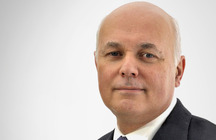
    Below is the text of the speech made by Iain Duncan Smith, the Secretary of State for Work and Pensions, on 24 August 2015 at an event held by Barclays and Reform.

    Today, I want to set out where our reforms of the last 5 years have taken us – and what I see as my priorities for the next 5.

    Let me start with the last Parliament.

    It was clear from the situation we inherited in 2010, that something had gone very wrong in this country.

    We had a welfare system where a life on benefits paid more than having a job.

    That wasn’t fair to the hardworking taxpayers who paid for it – and it wasn’t fair to the people who were trapped in a system with no hope for a brighter future.

    We lived in a country where:

    • nearly one in 5 households had no one working
    • the number of households where no one had ever worked had nearly doubled
    • 1.4 million people had been on benefits for most of the previous decade
    • and where close to half of all households in the social rented sector had no one in work

    This bleak picture was the reality just 5 years ago.

    Welfare spending had gone up 60% and the benefits system cost every household an extra £3,000 a year.

    Spending on tax credits increased by 335%.

    That’s £23 billion.

    Of course money has a role to play, but greater and greater handouts were not actually extending opportunity – they weren’t transforming lives – and they failed to improve people’s life chances.

    Government spending was poorly targeted and there was a focus on inputs rather than outcomes.

    The result was a country where worklessness had become engrained.

    A life without work, for many, had become ‘the norm’.

    It was taking root in families and starting to pass through the generations.

    This was a national scandal – and above all, a personal tragedy for each and every person and their family not in work.

    The sickness benefit culture in this country, I believe, is in dire need of reform – so that will be my focus in the coming months.

    And I want to be clear about the principles that will drive action as we move forward.

    Principles driving reform

    I have said many times that I believe work is the best route out of poverty.

    It provides purpose, responsibility, and role models for children.

    As a one nation government, we believe everyone in the country should have the chance to benefit from the security and sense of purpose that comes with being in work.

    That is why our guiding principle has been to place work at the heart of everything we do in our reforms.

    Getting people into work is more than just earning a salary and certainly more than balancing the public purse.

    These matter, of course, but they are not the primary reasons.

    For culturally and socially, work is the spine that runs through a stable society.

    We could not have continued with the situation we were left in 2010.

    Significant numbers of people saw work as something completely alien to them and their families.

    For many, work was something they simply didn’t do, and never had.

    It was something other people did.

    Many had fallen into a life of dependency.

    This is damaging for society.

    A dependent society is one that’s:

    • more likely to suffer crime
    • more likely to be ill
    • more likely to call on the health service
    • and more likely to increase the cost to the criminal justice system

    But critically, families where no-one works, lose their sense of self-worth.

    Children grow up without the aspiration to achieve and they become almost certain to repeat the difficult lives of their parents – following a path from dependency to despondency.

    I want those who remain trapped and isolated on welfare to move from dependence to independence.

    That is real social justice – giving people the power to decide their own lives – not live a life dictated by others.

    That’s why we are helping people back to work and to stay in work.

    Let’s take the Work Programme.

    The Work Programme is, I believe, the most successful back to work programme we’ve ever seen.

    By March this year:

    • over 1 million people – or 70% of all referrals – had spent some time off benefit
    • and over 430,000 people had moved into lasting employment

    Jobcentres are also now working in a more flexible way, providing that longer term support.

    And we are rolling out Universal Credit and our Fit for Work service – something I will return to later.

    But we can see the change that has been made since 2010:

    • nearly 2 million more people are in work
    • the number of workless households has reached a record low – down over 670,000
    • and the workless households rate in the social rented sector is also at its lowest on record

    But we know that we must not stop there.

    We need to be relentless in our efforts to get more people into work and off welfare.

    But work is more than just salaries, tax, numbers and statistics – it is what shapes us and helps us develop.

    In short, it is about self-esteem, self-confidence and self-worth.

    Work is good for health

    Yet there is one more area which we haven’t focused on enough – how work is also good for your health.

    Growing evidence over the last decade has shown work can keep people healthy as well as help promote recovery if someone falls ill.

    By contrast, there is a strong link between those not in work and poor health.

    So, it is right that we look at how the system supports people who are sick and helps them into work.

    Let me be clear – a decent society should always recognise that some people are unable to work because of physical or mental ill health – or both.

    It is right that we protect these most vulnerable people in our society.

    And that support is there.

    For despite the scaremongering, it is worth reflecting on the fact that we in this country spend more on sick and disabled people than the Organisation for Economic Co-operation and Development (OECD) average.

    To put that in perspective – and according to the OECD, the UK spends more on incapacity than France, Germany, or Japan.

    However, we are also ensuring that the resources are in place to support people into work.

    I’m proud that we are providing significant new funding for additional support to help claimants into work – £60 million in 2017 rising to an additional £100 million a year by 2020.

    We are seeing a continued rise in the number of disabled people getting into work.

    The latest figures show a rise of more than 200,000 disabled people who are now in work compared to the same time last year.

    That’s now over 3 million disabled people who are in employment.

    Yet, this is only the beginning.

    For we know there remains a gap between the employment rate of disabled and non-disabled people.

    We want to ensure everyone has the opportunity to transform their lives for the better by getting into work.

    That’s why, as part of our one nation approach, we have committed to halving this gap.

    On current figures, that means getting 1 million more disabled people into work.

    I want to be clear – this employment gap isn’t because of a lack of aspiration on the part of those receiving benefits – in fact, the majority want to work or stay in work, but I believe this gap exists because of 2 factors:

    First, some employers are reluctant to employ people with disabilities.

    That is why I have set up the Disability Confident campaign.

    This shows employers that the reality is quite different from the perception – in fact, that once employed, people with disabilities are in the vast majority of cases more productive than others.

    Second, the poor quality of support they receive leads too many sick and disabled people languishing in a life without work, when work is actually possible for them.

    Challenge to employers

    It is this support that I want to turn to now.

    I want to look at the support people receive right from the start when they first get sick – which can very often be from their employer.

    Too many businesses do not pay any attention to the health condition of an employee who has fallen ill – or make any attempt to understand what the problem is.

    The employee goes to their doctor, and after a short assessment, their doctor signs them off work.

    Too often, even early on, no one at work maintains regular contact with them.

    And after successive sick notes, their original condition then gets worse.

    An opportunity to keep the prospect of a return to work within sight is lost.

    Instead, they move onto sick pay, and then at some point are left to cascade onto sickness benefit.

    This has become a damaging cycle which affects everyone.

    Instead, employers need to recognise the importance of staying in touch with their staff when they get sick – and of providing early support to someone to stay in work or get back to work.

    This makes sense for 3 important reasons.

    First, it makes sense for businesses who invest a lot of money in their staff, not to lose that investment through illness and absence that could be avoided.

    Second, it makes sense for society by stopping people falling onto expensive sickness benefits and then into long term worklessness – we know each month a person is on sickness benefits, they become progressively less likely ever to work again.

    And third, perhaps most importantly of all, it makes sense to ensure that a fellow human being isn’t written off with all the negative consequences that follow for them and their families.

    Some companies understand this.

    They realise the benefits of investing in staff health and wellbeing – they have come to see that it improves productivity and reduces the costs of sickness absence.

    In these organisations, employees who fall sick:

    • will experience regular and direct communication;
    • they will receive a work-focussed health assessment to overcome any obstacles to a return to work – and review what work they can do and what support they need to do it
    • together with the employer, they also will agree a plan of action with timescales to support a return to work, taking into account their health condition and any workplace adjustments

    At every step, there is tailored support and a realistic expectation on both sides of a return to work.

    Importantly, and where possible, that vital link with work is not lost.

    Sadly, this is however, by no means common practice.

    Other countries do this better than us – and it’s something that both the private and public sector in Britain need to get much better at.

    Fit for Work service

    We know the personal and professional empowerment that is possible if the right support is provided at the right time.

    But employers can’t do it alone.

    GPs are also vital in this process.

    They need to see the health benefits for their patients of early support and a return to work.

    The good news is that now businesses and GPs will be able to use the new Fit for Work service that is being rolled out by us.

    So, instead of asking, ‘How sick are you?’ – the new service asks, ‘What help can we give you now that will help and keep you close to your job?’

    Sophisticated early support can have a positive effect on both health and employability.

    We are also working with the Department of Health so that GPs routinely send people to Fit for Work to get their Return to Work Plan.

    In fact, all GP practices in England have been sent a letter asking them to do just that.

    Focus on mental health

    I do want to take a moment to look at what is one of the biggest causes of work absence in the UK.

    One in 6 people have a common mental health condition – and you’re much more likely to fall out of work if you do.

    In fact, almost 1 in 4 people on Jobseeker’s Allowance has a mental health condition.

    The vast majority are related to anxiety and depression, which we know are treatable conditions – and the sooner someone gets treatment, the better.

    And we know the longer you are out of work, the more chance you have of worsening mental health, even if the original reason for your ill health was a physical one.

    So, every day matters.

    That is why our Fit for Work service includes professional experts skilled in helping people with mental health conditions.

    That is why this government is investing in psychological treatment services which are helping thousands of people return to work from a period of sickness absence.

    And that is why we are also investing and testing new ways of joining up health and employment services to improve access to treatment and support.

    Universal Credit

    So, I see the Fit for Work service as the first line of defence when someone falls sick – helping employers and GPs to step in early.

    But even when someone is out of work, it is critical that we have a modern and flexible benefit system that supports them – keeps them close to the labour market wherever possible.

    That’s what is so important about Universal Credit.

    The roll out is well under way – half of all jobcentres are now using Universal Credit.

    However, there is a tendency for people to focus on Universal Credit’s technical innovation.

    Today, I want to explain just how transformative Universal Credit is in a human sense.

    Under tax credits, once someone claims, they lose any human interface with the jobcentre.

    Under Universal Credit, people can expect early and continued support about what work they can do and what support they need to do it, until they leave the benefits system.

    As a result, work coaches will spend time working with claimants focussing them on what they need to do and how the system can help them progress.

    It is that human interface with the adviser – who through Universal Credit – will work on their plan and help motivate them and support their return to independence.

    Moreover, with Employment and Support Allowance (ESA) becoming part of Universal Credit – it is that access and human interface which opens the way for us to re-think the relationship between sickness benefits and work.

    Case for further reform – ESA and the Work Capability Assessment

    I spoke earlier about what good employers do when one of their staff goes off sick:

    • they keep in touch on a regular basis
    • through a clear action plan, they look at the obstacles that may be preventing a return to work and do everything they can to remove them

    However, what happens to a claimant on Employment and Support Allowance is very different.

    Under the existing system, there is a limited opportunity to work with the jobcentre.

    Instead, they receive an assessment of their condition that focuses on what they can’t do rather than on what they can do.

    That assessment will force them into a binary category saying they can be expected to work or they can’t.

    So it’s not surprising that over the last 2 decades, the number of people on sickness benefits has stayed at around 2.5 million.

    While the number of people on unemployment-related benefit has nearly halved since 2010, a fall of around 700,000 – the number of sickness benefit claimants has fallen by 88,000.

    The design of ESA as a short term benefit, where the vast majority of people are helped to return to work, simply hasn’t materialised in reality.

    ESA may have been designed with the right intentions, but at its heart lay a fundamental flaw.

    It is a system that decides that you are either capable of work or you are not.

    Two absolutes equating to one perverse incentive – a person has to be incapable of all work or available for all work.

    Surely, this needs to change.

    In the world beyond ESA, things are rarely that simplistic.

    Someone may be able to do some work for some hours, days or weeks, but not what they were doing previously.

    As ESA becomes part of Universal Credit, the 2 approaches seem at odds.

    We need to look at the system and in particular the assessment we use forESA.

    The more personalised approach under Universal Credit sits alongside a Work Capability Assessment, which sets the wrong incentives.

    That’s why I want to look at changing the system so that it comes into line with the positive functioning of Universal Credit.

    A system that is better geared towards helping people prepare for work they may be capable of, rather than parking them forever beyond work.

    We need a system focussed on what a claimant can do and the support they’ll need – and not just on what they can’t do.

    Conclusion

    So, whether it’s through Fit for Work, Universal Credit or an improved assessment – the more that people feel there’s someone with them, helping them get over the hurdles back to work and to stay in work – the more likely their lives will change for the better.

    I want to place people at the heart of the system, and make the system work around them, rather than the other way round.

    It was this back-to-front approach that we inherited – a system that people crashed into, and struggled to figure out.

    We are giving everyone in this country the chance of a better life – the chance to fulfil their potential.

    That is surely something we can all support.

    As part of our one nation approach, we are committed to continuing to reform the system – so that it travels with people through every step of their journey from dependence to independence.

    When we achieve that, we will finally have a welfare system fit for the 21st century – a welfare system that focuses on those most in need, and helps ensure that, people who can, become independent from the state and live better, more fulfilled lives.

     

  • Matt Hancock – 2015 Speech on Behavioural Exchange

    Matt Hancock

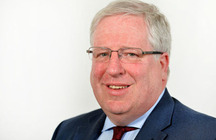
    Below is the text of the speech made by Matt Hancock, the Minister for the Cabinet Office, in London on 2 September 2015.

    It’s a great honour to open this conference.

    Ten years ago a conference on behavioural science would have been a much more modest affair. There wouldn’t have been a free lunch. Richard Thaler wouldn’t be signing any autographs. And let’s be honest, there wouldn’t have been much interest from government.

    Yet in a remarkably short space of time, this agenda has gone from the seminar table to the Cabinet table of governments around the world.

    I think a big catalyst for this was the crash. How did banks, policymakers and mainstream economic theory all fail so badly? It’s a question lots of people in this room have thought hard about.

    My own conclusion is that a whole edifice of economic policy was built on the belief that people always behave rationally, on an assumption of how they ought to behave, rather than observations of how they actually do.

    And it’s hard to model human behaviour. It’s hard to condense all our quirks and foibles into a neat mathematical formula and then to base a theory on it, so people didn’t bother. But life is hard.

    We set up the Behavioural Insights Team in 2010 because we wanted to correct that bias.

    It should not be controversial to say we’ve got to base policy on how people really behave. We’ve got to understand the context in which people act: the norms, behaviours and cognitive pressures that govern our decisions.

    And the era of fiscal restraint gave a new urgency to this work. With money tight, we had to be sure that our interventions would actually work.

    We gave the team an office in the heart of government, reporting to the Cabinet Office and Number 10, because we were intent on taking their findings seriously.

    But crucially, the point of the team was not to use its institutional position to tell other parts of government what to do. This was the Nudge Unit, not the Shove Unit. We knew the team had to take people with them, by showing rather than telling often sceptical policymakers how these ideas could help build better services.

    And that’s what they began to do.

    It started with the now famous tax letters. These showed that people are more likely to respond if you simplify the message and tell them – truly – that the vast majority of people pay on time.

    That trial, and variations on it, have now been replicated by colleagues from all over the world. In Australia, with the Government of New South Wales; in Singapore, with the Ministry of Manpower, and in Guatemala, with the World Bank.

    I’m delighted that many of the people responsible for that work are here today and I look forward to hearing where they’re heading next.

    And while the results are incredibly powerful, the methodology is just as the important as any specific findings.

    One of the central insights is that the human mind creates mental shortcuts: stories, cues and rules of thumb to make sense of a complex and uncertain world.

    Government behaves like this too. Faced with a difficult policy problem there is always a temptation to stick with the tried and familiar, rather than experiment.

    But let’s admit it, we can’t always predict what will work best. So we have to try out variations of a policy, throw out the ones that don’t work and iterate the rest. Policy based on observation rather than prediction, on controlled trials rather than assumption: it’s about applying the rigour of science to the art of government.

    After looking first at administrative processes, at the Prime Minister’s request the Behavioural Insights Team has now moved on to more complex areas of policy.

    We’ve applied behavioural insights to some of our toughest policy challenges: from supporting people back to work, to making our healthcare system more efficient, to helping improve young adults’ English and maths skills – something I was personally involved in as a minister.

    And as well as learning from failure, we can learn from other successes too.

    So at this conference you’ll hear from representatives from the White House, the German Chancellery, the European Commission, UNDP and theOECD. I’m grateful to those who’ve flown in from the United States, from Columbia, Brazil and Mexico, from the Finnish Prime Minister’s Office, from Israel, Canada, Austria, Italy and the Gulf.

    And we have representatives from across the UK government, including from the behavioural insight teams we’ve established in almost every department, often working in partnership with the BIT itself.

    And I’m delighted to welcome an incredible group of academics, again from all over the world. I’d like to highlight and personally thank colleagues from Harvard University, which will be hosting next year’s conference.

    And Richard Thaler of course, who’s been a long-time academic advisor to our own Behavioural Insights Team, for which we remain grateful.

    When the team first started in 2010, the UK government was seen as a first mover. We’re extremely proud of that but we’re also glad that this has become a global movement. Because the further it spreads, the more data and ideas we have to share, and the more we learn about how to use these insights to inform better public policy.

    So thank you for your time, and on behalf of the UK government I want to wish you a successful event and I look forward to hearing your conclusions.

    Because ultimately that’s what this is about. Making government work better, to help more citizens lead good and fulfilling lives.