Tag: 2015

  • Theresa Villiers – 2015 Speech to Conservative Party Conference

    Theresa Villiers
    Theresa Villiers

    Below is the text of the speech made by Theresa Villiers, the Secretary of State for Northern Ireland, on 7 October 2015 to the Conservative Party Conference.

    It’s a great privilege for me to deliver my fourth party conference speech as Secretary of State for Northern Ireland…

    … and of course I’m delighted that for the very first time, I’m addressing you as part of a majority Conservative government following the election victory which every single pundit and pollster said wasn’t going to happen.

    On the 7th May we were given a mandate to govern throughout the whole of our United Kingdom.

    We’re doing so as a One Nation government committed to bringing our country together.

    That includes Northern Ireland … where we will deliver our manifesto commitments and continue the political journey first begun by a Conservative Government twenty years ago.

    That’s a journey towards a more peaceful, stable and prosperous Northern Ireland … where working people have the chance to get on to the best of their ability, regardless of their community background…

    … a Northern Ireland which is secure within the UK on the basis of consent … and which we want to be a place no longer defined by its divided past, but instead by its shared future.

    This time last year I stood before you and acknowledged that the devolved institutions were in difficulty …

    … that political relationships were being damaged by disagreements on matters like flags, parading and the past

    … and that a budget dispute threatened the whole future of the Stormont Executive.

    My realistic assessment was the time had come for a fresh round of cross party talks …. and these began shortly afterwards with the five main Northern Ireland parties, and the Irish Government on matters falling within their responsibility.

    The talks ran for 11 weeks and there were many times when it seemed that a successful outcome was unachievable….

    … but after a final 25 hour long stretch of negotiations, the Stormont House Agreement was reached on 23rd December.

    That Agreement has been widely acknowledged as a landmark achievement, including by the President of the United States … and we can take pride in the fact that it was a Conservative-led Government which secured it.

    The Agreement sets out a way to make progress on some of the most difficult issues facing Northern Ireland today … many of which have eluded previous attempts at negotiation.

    It provides a clear path to putting the finances of the Stormont Executive on a sustainable footing for the future.

    It offers a way forward on flags and parades.

    It would establish broadly based institutions to help address the legacy of the past … offering better outcomes for victims and survivors … institutions which are to be rooted in principles of fairness, balance and impartiality.

    And it contains measures to make devolution work better … including an official opposition at Stormont for which we Conservatives have long argued.

    All of this was underpinned by a generous funding package that would give the Executive £2 billion in extra spending power.

    But as that great peace process veteran, George Mitchell, reminded me earlier this year … getting an agreement is about 20% of the job ….

    … the other eighty per cent is getting it implemented.

    For our part the Government is determined to do exactly that.

    We’ve passed legislation to enable the devolution of corporation tax powers.

    That’s a change that could have a genuinely transformative impact on jobs and prosperity in Northern Ireland because of the land border it shares with a low tax jurisdiction.

    To take forward much needed public sector reform, we’ve released funding for the voluntary redundancy scheme contained in the Agreement.

    And we will soon be introducing a Bill at Westminster to deliver the new institutions envisaged on the past.

    Today I want to give you these assurances in relation to that legislation.

    As our Northern Ireland manifesto made very clear …

    … as we look back at the history of the Troubles, we in this party will never accept any form of equivalence between the police officers and soldiers who put their lives on the line to protect people from harm and defend the rule of law… and the terrorists who waged a thirty year campaign of violence to inflict harm and subvert the rule of law.

    We will never accept any attempt to re-write history or legitimise the actions of those who pursued their aims by the bullet or the bomb.

    And we will not countenance any form of amnesty for those suspected of criminal behaviour.

    Under this Conservative Government the law will always take its course without fear or favour … and the Bill we introduce will be wholly consistent with that fundamental principle.

    And I have to say that many will view with grave concern the fact that, as recently as August, the leader the Labour Party have just elected was asked five times in an interview to condemn IRA terrorism and five times failed to do so.

    And while the Shadow Chancellor might have issued a carefully worded apology for the hurt caused by his comments on the IRA … I say it’s time he retracted in full his call to honour IRA terrorists and admit that he was entirely wrong ever to have made that statement in the first place.

    The Conservative manifesto commits us to working with all parties to ensure everyone fulfils their obligations under the Stormont House Agreement.

    But progress in the Northern Ireland Executive stalled in March when the two nationalist parties withdrew their support for crucial provisions on finance and welfare reform.

    We are clear … the Government will not fund a more generous welfare system in Northern Ireland than it does in the rest of the UK.

    There is no more money.

    Without welfare reform and efficiency measures to deal with in-year pressures, the Executive’s budget simply does not add up.

    Pouring millions of pounds every week into an unreformed, high cost, welfare system in Northern Ireland means less and less money available for front line public services.

    As a direct result … NHS waiting times are already getting longer and the pressure will only increase in the weeks to come.

    The Government cannot stand by and let this situation drag on indefinitely, with Stormont increasingly unable to deliver key public services.

    That’s why I have confirmed that we’re prepared to legislate at Westminster for welfare reform in Northern Ireland, if that becomes necessary.

    It would be a last resort…. it’s an outcome we’re striving to avoid.

    And that is one of the main reasons why we acted swiftly to reconvene the intensive cross party talks now underway once again to try to break the deadlock.

    It’s too early to say whether they’ll succeed … though I sense a genuine willingness on all sides to make progress.

    But time is short.

    Unlike last year, we simply don’t have the luxury of endless long hours of discussions stretching on and on until Christmas.

    What’s at stake is not just the credibility of devolved government in Northern Ireland but the survival of devolved government in Northern Ireland.

    One only has to look round Europe to see the problems caused when an administration cannot live within its budget and the harsh impact that can have on some of the most vulnerable in society.

    Replaying that scenario in Northern Ireland would stretch political relationships within the Executive well beyond breaking point.

    There’s a real risk that those taking a hard line against welfare reform will end up running the devolved institutions into collapse as collateral damage.

    A return to direct rule would be a severe setback after everything that’s been achieved over recent years … and we are doing all we can to prevent it.

    What Northern Ireland needs is an effective devolved power-sharing government that is capable of making the kind of difficult choices on spending priorities, welfare and public sector efficiency with which more or less every other administration in the developed world has had to grapple in the years since the crash of 2008.

    That’s what we’re striving to achieve.

    But these talks aren’t just about implementing the Agreement … crucial though that is.

    In recent months the fallout from two brutal murders in Belfast has highlighted the continued presence of paramilitary organisations … and the involvement of some of their members in criminality and organised crime.

    Let’s be clear.

    Paramilitary organisations have no place in a democratic society.

    They were never justified in the past.

    They are not justified today.

    And they should disband.

    So a key aim of the talks is to find a way to bring an end to this continuing blight on Northern Ireland society.

    These are very serious matters … as is the continuing terrorist threat from dissident republican groupings who maintain both lethal intent and the capacity to mount lethal attacks.

    And I would like to put on record today the deeply felt gratitude of this Government, and this party, for the outstanding work done by the Police Service of Northern Ireland in defending the community from terrorist attack.

    There is so much to be positive about in today’s Northern Ireland.

    After being hit hard by Labour’s great recession … the economy there is growing again … expanding opportunity for hard working people.

    There over 32,000 more people in work than when we came to office in 2010 … all now given the security of a pay packet to support their families.

    Belfast is one of the most attractive destinations in the country for Foreign Direct Investment.

    Year after year, Northern Ireland’s young people outperform England and Wales at GCSE and A level.

    And last month county Fermanagh was officially named as the happiest place in the United Kingdom.

    So in conclusion … I consider myself to be immensely lucky to have been given the chance to serve as Secretary of State for Northern Ireland….

    … and whilst there are times when the situation looks grim and the divisions seem impossible to bridge ….

    … there three reasons why I approach this latest round of cross party talks with hope … and even a glimmer of optimism.

    Firstly, I have an outstanding team around me … including Ben Wallace, Andrew Dunlop, Charles Elphicke and Rebecca Harris … who grapple with all the many challenges thrown at them with both dedication and enthusiasm.

    Secondly, I report to a Prime Minister whose very real affection for Northern Ireland and its people means that he has been unstinting in his support for all the painstaking work needed to keep the political process up and running despite the bumps in the road of the last few years.

    And thirdly … and most importantly of all … I believe that Northern Ireland’s leaders do want to make the political settlement work … and they do want to find a way to resolve the two crucial questions about which I have addressed this conference today.

    Success or failure over the coming days lies in their hands.

    They have rightly received praise around the world for all that they achieved in reaching the 1998 peace settlement which has transformed life in Northern Ireland for the better.

    If we are to build a brighter, more secure future for everyone, now is the time to show that same spirit again.

    I believe that they can do it … a resolution is possible … I will be working with perseverance and determination to see that happen.

    Thank you.

  • David Cameron – 2015 Speech to Conservative Party Conference

    davidcameron

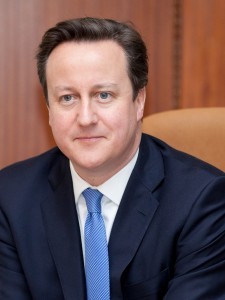
    Below is the text of the speech made by David Cameron, the Prime Minister, on 8 October 2015 to the Conservative Party Conference.

    I am so proud to be standing here in front of you today – back in government…

    …and not just any government – a majority Conservative Government.

    To the people in this hall, I want to say thank you.

    You are the greatest team a Prime Minister could ever have.

    And to the British people:

    When you put your cross in the Conservative box, you were putting your faith in us.

    To finish the job we started. To back working people. To deliver security for you and your family.

    And I’ll tell you now: we will not let you down.

    But just for a moment, think back to May 7th.

    I don’t know about you, but it only takes two words to make me smile. Exit poll.

    And then what happened that night:

    The Conservatives, winning across Wales; on the march in the Midlands.

    Bolton West, Derby North, Berwick, Wells – Conservative once more…

    …Gower for the first time ever.

    The North, more Tory; the South, the East, almost a clean sweep…

    …and Cornwall – that wonderful county – 100 per cent Conservative.

    As dawn rose, a new light – a bluer light – fell across our isles.

    And I will never forget that morning. Getting back to London. Seeing many of you. Then sitting down in the flat at No10 with Sam and the kids getting ready for school.

    There we were, surrounded by half-packed boxes and bin bags. Well, you have to be ready for anything.

    I was writing my speech and preparing to go and see Her Majesty. And I thought… I’ll just lie down and let it all sink in.

    As I shut my eyes, Ed Balls had gone. And when I woke up and I switched on the radio, Nigel Farage had gone too.

    There was a brief moment when I thought it was all a dream.

    But there’s a serious point.

    Why did all the pollsters and the pundits get it so wrong?

    Because, fundamentally, they didn’t understand the people who make up our country.

    The vast majority of people aren’t obsessives, arguing at the extremes of the debate.

    Let me put it as simply as I can: Britain and Twitter are not the same thing.

    The British people are decent, sensible, reasonable…

    …and they just want a government that supports the vulnerable, backs those who do the right thing and helps them get on in life.

    Good jobs; a decent home; better childcare; controlled immigration; lower taxes so there’s more money at the end of the month…

    …an NHS that’s there for them, 7 days a week; great schools; dignity in retirement…

    …that is what people want and that is what we will deliver.

    The party of working people, the party for working people – today, tomorrow, always.

    PARTY CHANGE

    Ten years ago, I stood on a stage just like this one and said if we changed our party we could change our country.

    We’ve done that – together.

    I didn’t campaign on the NHS alone – you joined me.

    It wasn’t just me who put social justice, equality for gay people, tackling climate change, and helping the world’s poorest at the centre of the Conservative Party’s mission – we all did.

    And I didn’t select our candidates – it was you.

    Look who was elected in May.

    Nusrat Ghani, whose parents, just a generation ago, were living in a small village in Kashmir.

    Seema Kennedy, who was five when she and her family were forced to flee revolutionary Iran.

    Five years ago, Johnny Mercer was on his third tour of duty in Afghanistan. Caught in an ambush, he was left cradling a dear comrade as he lay fatally wounded.

    Just days before the election, Scott Mann was doing his postal round in Cornwall – delivering not just his own campaign leaflets, but his rivals’ too.

    Different journeys, often difficult journeys, all leading here.

    So let us hear it for them now – the new generation of Conservative MPs.

    Round the cabinet table, a third of my colleagues are women.

    A few months ago, we were discussing childcare.

    It was introduced by the Black British son of a single parent, Sam Gyimah.

    He was backed up by the daughter of Gujarati immigrants who arrived in our country from East Africa with nothing except the clothes they stood up in, Priti Patel…

    …and the first speaker was Sajid Javid, whose father came here from Pakistan to drive the buses.

    This is what we’ve done together.

    And now with couples married because of us…

    …working people backed because of us…

    …the NHS safe because of us…

    …and children in the poorest parts of the world saved because of us…

    …everyone in this hall can be incredibly proud of our journey – the journey of the modern, compassionate, One Nation Conservative Party.

    GREATER BRITAIN

    So as five years of government stretch out before us, what do I see on the skyline?

    I love Britain. I love our history and what we’ve given to the world.

    I love our get-up-and-go; that whenever we’re down, we’re never out.

    I love our character; our decency; our sense of humour.

    I love every part of our country. England, Scotland, Wales, Northern Ireland – we are one nation and I will defend our Union with everything I have got.

    Every day, in every way, Great Britain lives up to its name.

    And I know this: we can make it greater still.

    A Greater Britain. Where people have greater hope, greater chances, greater security.

    I really believe we’re on the brink of something special in our country.

    This year, we’ve seen more people in work than at any time in our history…

    …more of our children starting university than ever before…

    …more British entrepreneurs setting up shop than anywhere else in Europe.

    Wages are rising. Hope is returning. We’re moving into the light.

    But we’re not there yet.

    We’re only half way through.

    For me, that has a very literal meaning.

    I can say something today that perhaps no Prime Minister has ever really been able to say before.

    I’m starting the second half of my time in this job.

    As you know, I am not going to fight another election as your leader. So I don’t have the luxury of unlimited time.

    Let me tell you: I am in just as much of a hurry as five years ago.

    Securing our country, growing our economy; jobs, exports, growth, infrastructure…

    …these are the stepping stones on the path to greatness for our country – and we’ve been laying them every day since we came to office.

    We will continue to do so.

    But to make Britain greater, we need to tackle some deep social problems…

    …problems we only just made a start on, as we focused on the economic emergency that faced us.

    The scourge of poverty.

    The brick wall of blocked opportunity.

    The shadow of extremism – hanging over every single one of us.

    A Greater Britain doesn’t just need a stronger economy – it needs a stronger society.

    And delivering this social reform is entirely fitting with the great history of the Conservative Party…

    …who have always been the optimists, the agents of hope and the leaders of change.

    That’s why I joined it.

    That’s why I wanted to lead it.

    And now, in my final term as Prime Minister, I say: let’s live up to the greatest traditions of Conservative social reform.

    CONSERVATIVE VALUES

    In all the challenges we face, we will be guided by our Conservative values.

    Our belief in strong defence and sound money.

    Our belief in an enterprise economy…

    …that if you set free the ambition that burns so deeply within the British people, they will strike out on their own, take on new workers, take on the world.

    Our belief in equality of opportunity, as opposed to equality of outcome…

    …not everyone ending up with the same exam results, the same salary, the same house – but everyone having the same shot at them.

    Now some people may argue these things are obvious.

    I have to tell you, they’re not.

    It becomes clearer by the day that the Labour Party has completely abandoned any notion of these ideas.

    So let us resolve here, at this conference, to do what we’ve always done: to prove our Conservative truths…

    …to save Britain from the danger of Labour…

    …and to rebuild Britain so it is greater still.

    A Greater Britain – that is our goal.

    NATIONAL SECURITY

    It begins by making the case for strong defence.

    My first duty as Prime Minister is to keep people safe.

    Some of the loneliest moments in this job are when you are reading intelligence reports about plots being planned against the British people.

    This summer I was told that Reyaad Khan and Junaid Hussain were in Syria planning terrorist attacks on UK soil.

    Of course, I asked all the proper questions.

    How do we stop them? Is there another way? Do we have that capability? Is it legal?

    I knew that whatever action I took would provoke a big debate.

    But my job as Prime Minister is quite simple, really: ultimately, it’s not to debate; it’s to decide.

    And the choice I faced was this:

    Act – and we could stop them carrying out their plans.

    Stall – and we could see innocent people murdered on our streets.

    So I took decisive action to keep Britain safe – and that’s what I will always do.


    LABOUR LEADER

    And on the subject of protecting our country from terrorism, let me just say this:

    Thousands of words have been written about the new Labour leader.

    But you only really need to know one thing: he thinks the death of Osama bin Laden was a “tragedy”.

    No.

    A tragedy is nearly 3,000 people murdered one morning in New York.

    A tragedy is the mums and dads who never came home from work that day.

    A tragedy is people jumping from the towers after the planes hit.

    My friends – we cannot let that man inflict his security-threatening, terrorist-sympathising, Britain-hating ideology on the country we love.

    MIGRATION

    Another big judgement call to make is when a refugee crisis confronts our world.

    Like most people, I found it impossible to get the image of that poor Syrian boy Aylan Kurdi out of my mind.

    We know in our hearts our responsibilities to help those fleeing for their lives.

    But we know, too, that we must keep our heads.

    Let’s start with a simple fact.

    Twelve million people have been made homeless by the conflict in Syria. And so far only 4 per cent of them have come to Europe.

    If we opened the door to every refugee, our country would be overwhelmed.

    The best thing Britain can do is help neighbouring countries, the Syrian people and the refugees in the camps …

    …and when we do take refugees, to take them from the region, rather than acting in a way that encourages more to make that dangerous journey.

    As we do this, let’s remember: we haven’t only just started caring about Syrians.

    We’ve been helping them over the past four years, giving more in aid to that part of the world than any other country except America.

    And we have been able to do that because this party made a promise and kept a promise – to spend 0.7 per cent of our national income on aid.

    Other countries also made that promise. But they didn’t keep it.

    I say to them: if Britain can keep her promises, so should you.

    But the real answer to the refugee crisis lies in helping countries like Syria become places where people actually want to live.

    That means having a government that’s not terrorising its people – and that’s why Assad must go.

    In its place, we need a government that can be our ally in the defeat of ISIL…

    …because we will never be safe here in Britain until we eradicate that death cult.

    Some think we can contract that out to America. We shouldn’t. We must play our part too.

    And we can, because of that commitment we made this summer: yes, we will spend two per cent of our GDP on defence – this year, next year, throughout this decade.

    In the coming years, we’ll be launching the biggest aircraft carriers in our history…

    …a new class of Hunter Killer submarines…

    …new Joint Strike Fighter jets; improved Apache helicopters; a new fleet of drones…

    …and because our independent nuclear deterrent is our ultimate insurance policy – this Government will order four new trident submarines.

    In government, I have a team who keep us safe at home and abroad…

    …Justine Greening, Michael Fallon, Philip Hammond and Theresa May.

    But above all, we have Britain’s Armed Forces.

    Let me tell you this:

    In the last year alone they tackled Ebola in West Africa; protected the skies over the Baltic; flew missions over Iraq.

    They built defences against ISIL in Lebanon; trained army officers in Afghanistan; and patrolled the seas around the Falklands.

    There they were, in the Pacific, flying supplies to cyclone victims; in the Atlantic, shipping assistance to those hit by hurricanes; in the Med, pulling people out of sinking dinghies.

    Little England? No. Never.

    Great Britain. And I’ll tell you what, with Armed Forces like this, we can be even greater still.

    So let’s stand and thank them for everything they do to keep us safe.

    EUROPE

    A Greater Britain is one that is strong in the world – and that should mean one that is strong in Europe, too.

    It comes back to those Conservative values: our belief in the nation state, but also in free trade.

    We all know what’s wrong with the EU – it’s got too big, too bossy, too interfering.

    But we also know what’s right about it – it’s the biggest single market in the world.

    Now, some people say: “take what we’ve got and put up with it”.

    Others say: “just walk away from the whole thing”.

    I say: no. This is Britain. We don’t duck fights. We get stuck in. We fix problems.

    That’s how we kept our border checkpoints when others decided to take theirs down.

    It’s how we kept the pound when others went head first into the Euro.

    Because we do things our way.

    We get rebates. We get out of bailouts.

    But do you know what? It’s not just what we get out of, it’s what we get Europe into.

    Who do you think got Europe to open trade talks with America, which would be the biggest trade deal in our history?

    Who do you think got Europe to agree to sanctions on Iran, which brought that country to the negotiating table?

    Us. Britain. We did.

    Believe me, I have no romantic attachment to the European Union and its institutions.

    I’m only interested in two things: Britain’s prosperity and Britain’s influence.

    That’s why I’m going to fight hard in this renegotiation – so we can get a better deal and the best of both worlds.

    Let me give you one example.

    When we joined the European Union we were told that it was about going into a common market, rather than the goal that some had for “ever closer union”.

    Let me put this very clearly: Britain is not interested in “ever closer union” – and I will put that right.


    ECONOMIC SECURITY

    A Greater Britain needs a dynamic economy.

    Today, it’s a beacon in an uncertain world…

    …we’ve got more foreign investment flooding into our country than anywhere else in Europe – anywhere in the world except for America and China.

    But if anyone thinks the battle on the economy is won, they need to think again. The battle has only just begun.

    We still need to find savings and produce more; still need to become more competitive; still need to make the most of our entire country – and build the Northern Powerhouse.

    And all at a time when our opponents have given up any sensible, reasonable, rational arguments on the economy.

    We live in a country where the main opposition party – let’s not forget, the alternative government – believes in nationalising industries without compensation, jacking up taxes to 60 per cent of people’s income, and printing money.

    There’s an academic called Richard Murphy. He’s the Labour Party’s new economics guru, and the man behind their plan to print more money.

    He gave an interview a few weeks ago. He was very frank. He admitted that Labour’s plan would cause a “sterling crisis”, but to be fair…

    …he did add, and I quote, that it “would pass very quickly”.

    Well, that’s alright then.

    His book is actually called “The Joy of Tax”. I’ve read it. It’s got 64 positions – and they’re all wrong.

    This is actually serious.

    I tell you: our party’s success in growing our economy and winning the economic arguments has never been more vital.

    Nothing less than the security of every single family in our country depends on it.

    And as we do that, I know that we will have on our side not just the British people, not just British business…

    …but our Iron Chancellor, George Osborne.

    You know what makes me most angry about Labour?

    It’s not just that their arguments are wrong; it’s the self-righteous way they make them.

    The deficit-deniers, who go around saying we’re hurting the poor.

    Hang on a second.

    Who gets hurt when governments lose control of spending and interest rates go through the roof?

    Who gets hurt when you waste money on debt interest and have to cut the NHS?

    Who gets hurt when taxes go up and businesses start firing rather than hiring?

    No – not the rich…

    …it’s poor people, working people.

    Yes, the very people Labour claim to be for.

    Well let’s just remember: Labour ideas don’t help the poor, they hurt the poor.

    That’s right, Labour: you’re not for working people, but hurting people.

    If you want a lecture about poverty, ask Labour.

    If you want something done about it, come to us, the Conservatives.

    There’s another argument we need to win.

    There are some people who understand the deficit needs to come down, but don’t get why we need a surplus.

    I’ll tell you why.

    I don’t stand here like a former Prime Minister once did and say I have abolished boom and bust.

    We can’t just be thinking about today, we should be thinking about the rainy days that could come – just like a family does.

    They put something aside, take out the insurance plan, pay off some of the mortgage when they have something spare.

    That’s what we should do as a country – making sure we are ready to cope with future crises.

    There’s a word for those who say live for today, forget about tomorrow: it’s selfish.

    I’m not here to mortgage our children’s future. I’m here to insure it.

    HOME OWNERSHIP

    But for me, there’s one big piece of unfinished business in our economy: housing.

    A Greater Britain must mean more families owning a home of their own.

    It goes back to those Conservative beliefs: reward for hard work.

    If you’ve worked hard and saved, I don’t want you just to have a roof over your head – I want you to have a roof of your own.

    In the last 5 years, 600,000 new homes have been built.

    More than 150 people a day are moving in thanks to our Help to Buy scheme.

    And in our manifesto, we announced a breakthrough policy: extending the Right to Buy to housing association tenants.

    Some people said this would be impossible. Housing associations would never stand for it. The legislation would never pass.

    Let me tell you something.

    Greg Clark, our brilliant Communities Secretary, has secured a deal with housing associations to give their tenants the Right to Buy their home.

    That will mean the first tenants can start to buy their homes from next year.

    Yes, as we said in our manifesto, 1.3 million to be given the chance to become homeowners. A promise made. A promise kept.

    But the challenge is far, far bigger.

    When a generation of hardworking men and women in their 20s and 30s are waking up each morning in their childhood bedrooms – that should be a wakeup call for us.

    We need a national crusade to get homes built.

    That means banks lending, government releasing land, and yes – planning being reformed.

    And in all these things I’ll be working with a great London Mayoral candidate – and, I hope, soon to be our London Mayor – Zac Goldsmith.

    But I want to single someone out. He’s served this country. He’s served this party. And there’s a huge amount more to come.

    So let’s hear it for the man who for two terms has been Mayor of the greatest capital city on earth: Boris Johnson.

    Increasing home ownership means something else.

    For years, politicians have been talking about building what they call “affordable homes” – but the phrase was deceptive.

    It basically meant homes that were only available to rent. What people want are homes they can actually own.

    After all, the officials who prepare the plans for the new homes, the developers who build them, the politicians who talk about them…

    …most of these people own the homes they live in.

    Don’t they realise other people want what they’ve got – a home of their own?

    So today, I can announce a dramatic shift in housing policy in our country.

    Those old rules which said to developers: you can build on this site, but only if you build affordable homes for rent…

    …we’re replacing them with new rules…

    …you can build here, and those affordable homes can be available to buy.

    Yes, from Generation Rent to Generation Buy…

    …our party, the Conservative party…

    …the party of home ownership in Britain today.


    SOCIAL REFORM

    A more prosperous Britain.

    But we must not stop there as we build a Greater Britain.

    We are not a one-trick party.

    For us, economic success – that’s not the finished article.

    It’s the foundation on which we can build a better society.

    Our patriotism has never been simply some grand notion of ruling the waves, or riding high in the money markets…

    …but a deep compulsion which says: “you make a country greater by making life better for its people.”

    And today, that means entering those no-go zones, where politicians often don’t dare to venture.

    It means taking on our big social problems…

    …entrenched poverty, blocked opportunity, the extremism that blights our communities.

    Why?

    So when the new mum looks at her new-born baby – the most precious thing she’s ever seen – and she vows to provide for it, she knows she actually can.

    When the schoolgirl sits in that classroom, she knows that her studies really can take her to the very top.

    When the child of immigrants sees our flag, he feels so loyal to this country – his country – he wants to put on a uniform and defend it.

    That is what fires me up. Not pounds and pence, plans and policies, but people.

    And to those who say: our social problems are too big and there’s no way you can sort them out.

    I say: You said our party wouldn’t change – we have.

    You said our long-term economic plan wouldn’t work – it is.

    You said we wouldn’t win the election – we did.

    So we are going to tackle those big social problems – just you watch us.

    POVERTY

    Central to that is an all-out assault on poverty.

    Conservatives understand that if we’re serious about solving the problem, we need to tackle the root causes of poverty.

    Homes where no-one works; children growing up in chaos; addiction, mental health problems, abuse, family breakdown.

    Today, a teenager sitting their GCSEs is more likely to own a smartphone than have a dad living with them.

    Think of your own child, think of the day they were born; how fragile they were…

    …and then think that, every day, three babies are born in Britain addicted to heroin.

    We’ll never deal with poverty unless we get to grips with these issues.

    We made a start in the last five years with our Troubled Families programme.

    It’s already turned around the lives of over 100,000 families.

    And do you know one of its central aims?

    It’s simple: get the adults a job.

    Because we know in this party that the best route out of poverty is work.

    That’s why we reformed welfare, introduced the cap and helped create 2.5 million jobs.

    But it’s not enough simply to have a job: work has got to pay.

    Nearly two-thirds of children in poverty have parents who are in jobs. For them, work hasn’t worked.

    That’s why we’ve cut taxes for the lowest paid and we’ll keep on doing that.

    And from next year, we’ll take a giant leap forward.

    Yes, a new National Living Wage.

    Over £9 an hour by the end of the decade.

    An £80-a-week pay rise for the lowest paid.

    Work paying for millions of people.

    So let the message go out: if you work hard, want to get on, want more money at the end of the month…

    …the party for you is right here in this hall.

    But being out of work is only one of the causes we must tackle.

    Children in care are today almost guaranteed to live in poverty.

    84 per cent leave school without five good GCSEs.

    70 per cent of prostitutes were once in care.

    And tragically, care leavers are four times more likely to commit suicide than anyone else.

    These children are in our care; we, the state, are their parents – and what are we setting them up for…

    …the dole, the streets, an early grave?

    I tell you: this shames our country and we will put it right.

    Just as we said to failing schools, “do a better job with our children or we will send new leaders in”, so we will say to poorly performing social services, “improve or be taken over”.

    Just as we got the best graduates teaching at our most difficult schools, let’s get our brightest and best to the frontline of social work.

    But we must also stop children needing to be in care at all.

    When we came to office, the adoption rate in our country was frankly a scandal.

    It has gone up. Our Adoption Bill will help it increase still further.

    But there’s so much more to do.

    So let us in this hall say to all those children desperate for a family, and all those families yearning for a child:

    We, the Conservatives, we are the ones who will bring you together.

    There’s another service run by the state that all too often fails and entrenches poverty.

    Prison.

    Now I believe if you’ve committed a crime, punishment must follow.

    And when it’s serious enough, that punishment must mean prison.

    Let’s not forget, since we came to office, crime is down by a quarter.

    But the system is still not working.

    Half of criminals offend within a year of being released.

    Nearly half go into prison with no qualifications; many come out with none either.

    And all the problems that may have led them to that life – drug addiction, mental health problems, childhood abuse – remain unchanged.

    We have got to get away from the sterile lock-em-up or let-em-out debate, and get smart about this.

    When prisoners are in jail, we have their full attention for months at a time – so let’s treat their problems, educate them, put them to work.

    When we restrict someone’s freedom outside prison, we can make sure they’re working and paying taxes, rather than spending £30,000 a year keeping them in a cell – so where it makes sense, let’s use electronic tags to help keep us safe and help people go clean.

    And when our prisons are relics from the time of Dickens – it’s time to sell them off and build new ones that actually work.

    This is going to be a big area of social reform in the next five years. And I have just the man for the job.

    The man who takes on every vested interest and gives everyone a chance…

    …the man who began the great transformation of our education system and is now going to do the same for prisons…

    …yes, the great Conservative reformer, Michael Gove.

    OPPORTUNITY

    If we tackle the causes of poverty, we can make our country greater.

    But there’s another big social problem we need to fix.

    In politicians’ speak: a “lack of social mobility”.

    In normal language: people unable to rise from the bottom to the top, or even from the middle to the top, because of their background.

    Listen to this: Britain has the lowest social mobility in the developed world.

    Here, the salary you earn is more linked to what your father got paid than in any other major country.

    I’m sorry, for us Conservatives, the party of aspiration, we cannot accept that.

    We know that education is the springboard to opportunity.

    Our reforms are already working.

    More children studying maths and science. More learning coding and engineering. More doing the extra-curricular activities that teach confidence and build character.

    Recently, I was at a school in Runcorn. Last year, 53 of their children went off to university. 52 of them were the first ever in their family to do so.

    That is why I’m so passionate about academies and free schools:

    Head teachers are growing in confidence as they throw off the shackles of local council control…

    …raising the aspirations of children, parents, communities.

    This movement is sweeping across our country.

    So my next ambition is this.

    500 new Free Schools.

    Every school an academy…

    …and yes – Local Authorities running schools a thing of the past.

    But let’s be honest.

    For too many people, even a good education isn’t enough.

    There are other barriers that stand in their way.

    Picture this.

    You’ve graduated with a good degree.

    You send out your CV far and wide.

    But you get rejection after rejection.

    What’s wrong? It’s not the qualifications or the previous experience.

    It’s just two words at the top: first name, surname.

    Do you know that in our country today: even if they have exactly the same qualifications, people with white-sounding names are nearly twice as likely to get call backs for jobs than people with ethnic-sounding names?

    This is a true story.

    One young black girl had to change her name to Elizabeth before she got any calls to interviews.

    That, in 21st century Britain, is disgraceful.

    We can talk all we want about opportunity, but it’s meaningless unless people are really judged equally.

    Think about it like this.

    Opportunity doesn’t mean much to a British Muslim if he walks down the street and is abused for his faith.

    Opportunity doesn’t mean much to a black person constantly stopped and searched by the police because of the colour of their skin.

    Opportunity doesn’t mean much to a gay person rejected for a job because of the person they love.

    It doesn’t mean much to a disabled person prevented from doing what they’re good at because of who they are.

    I’m a dad of two daughters – opportunity won’t mean anything to them if they grow up in a country where they get paid less because of their gender rather than how good they are at their work.

    The point is this: you can’t have true opportunity without real equality.

    And I want our party to get this right.

    Yes us, the party of the fair chance; the party of the equal shot…

    …the party that doesn’t care where you come from, but only where you’re going…

    …us, the Conservatives, I want us to end discrimination and finish the fight for real equality in our country today.

    EXTREMISM

    Tackling the causes of poverty. Fighting for real opportunity.

    And there’s one more big social reform in our mission to rebuild Britain as an even greater country.

    We need to confront – and I mean really confront – extremism.

    When I read what some young people born and brought up in this country are doing, it makes me feel sick to my stomach.

    Girls not much older than my eldest daughter, swapping loving family homes and straight-A futures for a life of servitude under ISIL, in a land of violence and oppression.

    Boys who could do anything they wanted in Britain – who have benefitted from all this country stands for – instead ending up in the desert wielding a knife.

    This ideology, this diseased view of the world, has become an epidemic – infecting minds from the mosques of Mogadishu to the bedrooms of Birmingham.

    And here’s what we need to do.

    One: tear up the narrative that says Muslims are persecuted and the West deserves what it gets.

    Never mind that it’s Britain and America behind the biggest effort to help the victims of Syria.

    Who is ISIL murdering more than anyone else? Muslims.

    No-one should get away with this politics of grievance anymore.

    Two: take on extremism in all its forms, the violent and non-violent.

    People don’t become terrorists from a standing start.

    It begins with preachers telling them that Christians and Muslims can’t live together.

    It moves to people in their community saying the security services were responsible for 7/7.

    It progresses to a website telling them how to wage jihad, fight in Syria, and defeat the West.

    And before you know it, a young British boy, barely 17, is strapping bombs to his body and blowing himself up in Iraq.

    We have to stop it at the start – stop this seed of hatred even being planted in people’s minds, let alone allowing it to grow.

    Three: we need to tackle segregation.

    There are parts of Britain today where you can get by without ever speaking English or meeting anyone from another culture.

    Zoom in and you’ll see some institutions that actually help incubate these divisions.

    Did you know, in our country, there are some children who spend several hours each day at a Madrassa?

    Let me be clear: there is nothing wrong with children learning about their faith, whether it’s at Madrassas, Sunday Schools or Jewish Yeshivas.

    But in some Madrassas we’ve got children being taught that they shouldn’t mix with people of other religions; being beaten; swallowing conspiracy theories about Jewish people.

    These children should be having their minds opened, their horizons broadened…

    …not having their heads filled with poison and their hearts filled with hate.

    So I can announce this today:

    If an institution is teaching children intensively, then whatever its religion, we will, like any other school, make it register so it can be inspected.

    And be in no doubt: if you are teaching intolerance, we will shut you down.

    This goes to a wider truth.

    For too long, we’ve been so frightened of causing offence that we haven’t looked hard enough at what is going on in our communities.

    This is passive tolerance. And I’ll tell you where it leads:

    To children, British children, going to Pakistan in the summer holidays, before they’ve even started their GCSEs, and forced to marry a man they’ve never met…

    …children, British children, having their genitals mutilated, not just in a clinic in Lagos but the backstreets in Britain.

    This passive tolerance has turned us into a less integrated country; it’s put our children in danger. It is unforgivable.

    So let me say it right here: no more passive tolerance in Britain.

    We’ve passed the laws – now I want them enforced.

    People who organise forced marriages – I want them prosecuted.

    Parents who take their children for FGM – I want them arrested.

    And as we do that, we shouldn’t just be saying what’s wrong with these practices; we should be saying what’s right with Britain.

    Freedom. Democracy. Equality. These are precious.

    People fought for them – many died for them…

    …in the trenches, a century ago; on the beaches, 30 years later…

    …in the Suffragettes; in Gay Pride.

    Half the world is crying out for these freedoms – they see what we’ve achieved with them.

    Free speech – and the best literature in the world.

    Freedom of religion – and many faiths living side by side, peacefully.

    Free thinking – and the endless advances in medicine and technology that has brought.

    A free economy – and a standard of living our grandparents could only have dreamed of.

    I want my children – I want all our children – to know they’re part of something big – the proudest multi-racial democracy on earth.

    That’s why we’re making sure they learn British history at school.

    That’s why we started National Citizen Service to bring different people together.

    I want them to grow up proud of our country.

    That’s right: less Britain-bashing, more national pride – our way, the Conservative way, the only way to greater days.


    CONSERVATIVES

    So big battles. Big arguments.  A Greater Britain.

    Keeping our head as Labour lose theirs.

    So I have a message for those who voted for us and those who never have:

    If you believe in strong defence, and helping the poorest, most desperate people in the world.

    If you want an NHS that’s there for everybody, and schools that stretch our children…

    …and you understand none of that is possible without a strong economy.

    If you believe we can become the enterprise capital of the world and beat poverty.

    If you believe that the fight against extremism is the fight for our existence; and you want this to be the generation that ends discrimination.

    If you want these things, the party you need is the party right here.

    And it’s never too late.

    Bernard Harris from Leicester wrote to me before polling day and said this.

    “Aged 82, this is possibly my last election.

    “In my life I have foolishly voted Labour, believing it served the working class.

    “How wrong I was. Labour is against all I aspire to.

    “I am 100 per cent for a United Kingdom, a sound economy, free enterprise, a trading Europe and a decent standard of living.

    “Only a Conservative Government will achieve this.”

    Bernard, you found the right party – and I want many more to follow in your footsteps.

    CONCLUSION

    So I believe that we can make this era – these 2010s – a defining decade for our country…

    …the turnaround decade…

    …one which people will look back on and say: “that’s the time when the tide turned…

    …when people no longer felt the current going against them, but working with them.”

    We can be that Greater Britain.

    Because we know this: nothing is written.

    We’ve proved it in schools across our country…

    …that the poorest children don’t have to get the worst results – they can get the best.

    Over the next five years we will show that the deep problems in our society – they are not inevitable.

    That a childhood in care doesn’t have to mean a life of struggle.

    That a stint in prison doesn’t mean you’ll get out and do the same thing all over again.

    That being black, or Asian, or female, or gay doesn’t mean you’ll be treated differently.

    Nothing is written.

    And if we’re to be the global success story of the 21st century, we need to write millions of individual success stories.

    A Greater Britain – made of greater expectations…

    …where renters become homeowners…

    …employees become employers…

    …a small island becomes an even bigger economy…

    …and where extremism is defeated once and for all.

    A Greater Britain…

    …no more, its people dragged down or held back…

    …no more, some children with their noses pressed to the window as they watch the world moving ahead without them.

    No – a country raising its sights, its people reaching new heights…

    …a Great British take-off – that leaves no-one behind.

    That’s our dream – to help you realise your dreams.

    A Greater Britain – made of greater hope, greater chances, greater security.

    So let’s get out there – all of us – and let’s make it happen.
     

  • Lord Falconer – 2015 Speech to Labour Party Conference

    charliefalconer

    Below is the text of the speech made by Lord Falconer, the Shadow Lord Chancellor, at the party’s conference in September 2015.

    Conference, it’s a huge privilege to be speaking to you today as the Shadow Secretary of State for Justice.

    I’m proud to have with me a fantastic team – Andy Slaughter, Jenny Chapman, Wayne David, Karl Turner, Willy Bach, Jeremy Beecham and Christina Rees.

    We’re all determined to fight the Tories every step of the way.

    Conference, it’s been nine years since I last addressed Conference.

    Back then, Jeremy was making speeches from the backbenches, David Cameron promised in his Tory Conference speech to repeal the Human Rights Act and I weighed in at 16 stone 6.

    Not a lot has changed from David Cameron.

    But Jeremy is now leader of the Labour Party.

    And I’ve lost five stone.

    It’s the Labour party that’s making progress there.

    Conference, Jeremy Corbyn has been criticised for appointing me to the Shadow Cabinet.

    People say that we’re too alike.

    We’re both thin men, in our 60s, from Islington.

    Actually – and I know many of you will be surprised by this – there are a few matter on which we disagree.

    But we share so much more.

    We share the view that politics should change.

    Conference, this summer, our party has had a transfusion of ideas, energy and drive.

    A transfusion that makes us stronger.

    We must harness that power to fight for the things Labour stands for.

    Every one of us has to make the case for what we believe and do all that we can to persuade the public to elect a Labour Government, Labour councillors, Labours mayors, Labour AMs, Labour MSPs and Labour MEPs.

    Conference, all of us want to see a justice system, which protects the poor and the vulnerable.

    We don’t need a debate on that.

    So many of us know that the justice system is breaking and it’s the poor and the vulnerable who suffer.

    Prisons in crisis with surging violence and overcrowding.

    Prison staff, who do a great job in hugely difficult circumstances, left to cope on their own with rising assaults and reduced numbers.

    People denied access to advice or legal representation in court, with thousands forced to represent themselves and local justice undermined.

    Victims, championed by Labour in Government and Opposition, ignored by the Tories.

    But Conference, there is worse to come.

    This week, it’s 15 years since the Human Rights Act came into force.

    The Tories call it “Labour’s Human Rights Act”.

    They think that’s an insult.

    It’s not.

    I am so proud that it was a Labour Government that passed the Human Rights Act.

    It’s protected the powerless – victims of crime, people in care – and, yes, sometimes also the unpopular – against the might of the strong  and the dictates of the State.

    Take the case of Corporal Anne-Marie Ellement.

    She was a member of the military police, who said she had been raped.

    She was bullied for making these allegations.

    She killed herself.

    There was an inquest. It barely scratched the surface.

    Her sisters were denied the truth.

    They went to court, seeking a proper investigation.

    They won. Only because of the Human Rights Act.

    The Tories’ proposals would deprive Anne-Marie’s sisters of this right.

    Well Conference, I say to the Tories: we won’t let these rights be taken away.

    We’ll block attempts to repeal the Human Rights Act and we won’t let them walk away from the European Convention on Human Rights.

    We stand by our human rights, no ifs, no buts.

    But Conference, it’s not just those rights we need to fight for.

    It’s people’s most basic rights.

    Law centres closing all over the country.

    Tribunal fees introduced and court fees increased.

    Legal aid cut to the bone.

    In the year we left office, over 470,000 cases received advice or assistance for social welfare issues.

    The year after the Tory legal aid Act came into force, that number fell to less than 53,000.

    Hundreds of thousands of people left without help.

    Victims of domestic abuse trapped with their abuser because the alternative is to face them in court.

    Small businesses facing bankruptcy because court fees mean they can’t chase unpaid debts.

    Children separated from their parents denied help and left vulnerable to exploitation and homelessness.

    The refugee crisis has led to many children being separated from their parents ending up in the UK alone.

    Tory reforms make it much harder for these children to get legal aid.

    Who says the Tory party isn’t still the nasty party?

    Conference, this assault on legal aid is hurting people across the country.

    Like a father fighting to keep contact with his children after their mother took them away but who can’t complete the court forms on his own because he can’t read or write.

    Like a woman employed on a zero-hours contract and who had her working hours cut because she took time off for a pregnancy-related illness but who couldn’t afford the £1,200 fees to take her employer to court.

    I’ve been to quite a few conferences in my time.

    Usually, justice issues aren’t at the top of people’s list of concerns– it’s the NHS or schools.

    But Conference this year so many people have come up to me and shared their stories – of friends, family members or colleagues being denied justice.

    Justice shouldn’t depend on where you’re from or how much you earn.

    But in Britain, in the 21st century, under this Tory Government, it does.

    We all accept that the State should provide decent standards of health care or education.

    The same should be true of access to justice.

    If you have a right to fair treatment at work or not to be discriminated against, you should be able to go to court to enforce that right.

    You should be protected from a bullying partner.

    You should be helped when it’s children’s interests that are at stake.

    So I’m delighted that we’ve appointed Willy Bach to immediately review legal aid.

    And over the next few months, Willy will talk to lawyers, trade unions and people up and down the country who’ve been affected by these cuts to look at how we restore minimum standards to legal help and advice, in an economically responsible way.

    We’ll build a justice system worthy of our country again.

    Conference, Michael Gove and David Cameron don’t care.

    But I know that you and millions of people across this country do.

    I urge you to share your stories, campaign in your communities and use this energy to fight for justice.

    We will fight for the Human Rights Act.

    We will fight against unfair court and tribunal fees.

    And we’ll fight for proper legal aid.

    But most of all Conference, we will fight this unjust, nasty Tory Government.

  • Jeremy Corbyn – 2015 Speech to Labour Party Conference

    jc-small

    Below is the text of the speech made by Jeremy Corbyn, the Leader of the Labour Party, at the party’s conference in September 2015.

    Friends, thank you so much for that incredible welcome and Rohi, thank you so much for that incredible welcome. Rohi, thank you so much for the way you introduced me and the way our family and you have contributed so much to our community. That was absolutely brilliant. Thank you very much.

    I am truly delighted to be invited to make this speech today, because for the past two weeks, as you’ve probably known I’ve had a very easy, relaxing time. Hardly anything of any importance at all has happened to me.

    You might have noticed in some of our newspapers they’ve taken a bit of an interest in me lately.

    Some of the things I’ve read are this. According to one headline “Jeremy Corbyn welcomed the prospect of an asteroid ‘wiping out’ humanity.”

    Now, asteroids are pretty controversial. It’s not the kind of policy I’d want this party to adopt without a full debate in conference. So can we have the debate later in the week!

    Another newspaper went even further and printed a ‘mini-novel’ that predicted how life would look if I were Prime Minister. It’s pretty scary I have to tell you.

    It tells us football’s Premier League would collapse, which makes sense, because it’s quite difficult to see how all our brilliant top 20 teams in the Premiership would cope with playing after an asteroid had wiped out humanity. So that’s a no-no for sure!

    And then the Daily Express informed readers that – I’m not quite sure how many greats there are here, but I think there are three or four – great-great-great grandfather, who I’d never heard of before was a very unpleasant sort of chap who apparently was involved in running a workhouse. I want to take this opportunity to apologise for not doing the decent thing and going back in time to have a chat with him about his appalling behaviour.

    But then there’s another journalist who had obviously been hanging around my street a great deal, who quotes: “Neighbours often see him riding a Chairman Mao style bicycle.” Less thorough journalists might just have referred to it as just a ‘bicycle’, but no.

    So we have to conclude that whenever we see someone on a bicycle from now on, there goes another supporter of Chairman Mao. Thus, the Daily Express has changed history.

    But seriously Conference it’s a huge honour and a privilege for me to speak to you today as Leader of the Labour Party.

    To welcome all our new members.

    More than 160,000 have joined the Labour party.

    And more than 50,000 have joined since the declaration of the leadership and deputy leadership election results.

    I’m very proud to say that in my own constituency, our membership as of last night had just gone over 3,000 individual members and 2,000 registered supporters. 5,000 people in my constituency.

    I want to say first of all thank you to all of the people of my constituency of Islington North and Islington North Labour party for their friendship, support and all the activities we’ve done and all the help and support they’ve given me in the past few weeks. I’m truly grateful to you. Thank you very much indeed to everyone in Islington.

    Above I want to welcome all our new members to this party, everyone who’s joined this party in this great endeavour. To change our party, change our country, change our politics and change the way we do things. Above all I want to speak to everyone in Britain about the tasks Labour has now turned to.

    Opposing and fighting the Tory government and the huge damage it is doing.

    Developing Labour’s alternative.

    Renewing our policies so we can reach out across the country and win.

    Starting next year.

    In Wales.

    In Scotland.

    In London.

    In Bristol.

    In local government elections across Britain.

    I want to repeat the thanks I gave after my election to all the people who have served the Labour Party so well in recent months and years.

    To Ed Miliband for the leadership he gave our party, and for the courage and dignity he showed in the face of tawdry media attacks.

    And also for the contribution I know he will be making in the future.

    Especially on the vital issues of the environment and climate change.

    Thank you Ed. Thank you so much for all you’ve done.

    And to Harriet Harman not just for her leadership and service, but for her commitment and passion for equality and the rights of women.

    The way she has changed attitudes and law through her courage and determination. The Equality Act is one of many testaments to her huge achievements. Thank you, Harriet, for everything you’ve done and everything you continue to do.

    I also want to say a big thank you to Iain McNicol, our General Secretary, and all our Party staff in London and Newcastle and all over the country for their dedication and hard work during the General Election and leadership election campaigns.

    And also to all the staff and volunteers who are doing such a great job here this week in Brighton at this incredible conference we’re holding. Thank you to all of them. They’re part of our movement and part of our conference.

    Also I want to say a special thank you to the fellow candidates who contested the leadership election for this party.

    It was an amazing three month experience for all of us.

    I want to say thank you to Liz Kendall, for her passion, her independence, determination and her great personal friendship to me throughout the campaign. Liz, thank you so much for that and all you contribute to the party.

    I want to say thank you to Yvette Cooper for the remarkable way in which she’s helped to change public attitudes towards the refugee crisis.

    And now for leading a taskforce on how Britain and Europe can do more to respond to this crisis. Yvette, thank you for that.

    And to Andy Burnham, our new Shadow Home Secretary, for everything he did as Health Secretary to defend our NHS – health service free at the point if use as a human right for all.

    I want to say thank you to all three for the spirit and friendship with which they contested the election.

    Thank you Liz.

    Thank you Yvette.

    Thank you Andy.

    I want to thank all those who took part in that election, at hustings and rallies all across the country. Our Party at its best, democratic, inclusive and growing.

    I’ve got new people to thank as well.

    The talented colleagues working with me in the Shadow Cabinet and on Labour’s front bench.

    An inclusive team from all political wings of our Party.

    From every part of our country.

    It gives us the right foundation for the open debate our Party must now have about the future.

    I am not leader who wants to impose leadership lines all the time.

    I don’t believe anyone of us has a monopoly on wisdom and ideas – we all have ideas and a vision of how things can be better.

    I want open debate in our party and our movement.

    I will listen to everyone.

    I firmly believe leadership is about listening.

    We will reach out to our new members and supporters.

    Involve people in our debates on policy and then our Party as a whole will decide.

    I’ve been given a huge mandate, by 59 per cent of the electorate who supported my campaign. I believe it is a mandate for change.

    I want to explain how.

    First and foremost it’s a vote for change in the way we do politics.

    In the Labour Party and in the country.

    Politics that’s kinder, more inclusive.

    Bottom up, not top down.

    In every community and workplace, not just in Westminster.

    Real debate, not necessarily message discipline all the time.

    But above all, straight talking. Honest.

    That’s the politics we’re going to have in the future in this party and in this movement.

    And it was a vote for political change in our party as well.

    Let me be clear under my leadership, and we discussed this yesterday in conference, Labour will be challenging austerity.

    It will be unapologetic about reforming our economy to challenge inequality and protect workers better.

    And internationally Labour will be a voice for engagement in partnership with those who share our values.

    Supporting the authority of international law and international institutions, not acting against them.

    The global environment is in peril.

    We need to be part of an international movement to cut emissions and pollution.

    To combat the environmental danger to our planet.

    These are crucial issues. But I also want to add this.

    I’ve been standing up for human rights, challenging oppressive regimes for 30 years as a backbench MP.

    And before that as an individual activist, just like everyone else in this hall.

    Just because I’ve become the leader of this party, I’m not going to stop standing up on those issues or being that activist.

    So for my first message to David Cameron, I say to him now a little message from our conference, I hope he’s listening – you never know:

    Intervene now personally with the Saudi Arabian regime to stop the beheading and crucifixion of Ali Mohammed al-Nimr, who is threatened with the death penalty, for taking part in a demonstration at the age of 17.

    And while you’re about it, terminate that bid made by our Ministry of Justice’s to provide services for Saudi Arabia – which would be required to carry out the sentence that would be put down on Mohammed Ali al-Nimr.

    We have to be very clear about what we stand for in human rights.

    A refusal to stand up is the kind of thing that really damages Britain’s standing in the world.

    I have huge admiration for human rights defenders all over the world. I’ve met hundreds of these very brave people during my lifetime working on international issues. I want to say a special mention to one group who’ve campaigned for the release of British resident Shaker Aamer from Guantanamo Bay.

    This was a campaign of ordinary people like you and me, standing on cold draughty streets, for many hours over many years.

    Together we secured this particular piece of justice.

    That’s how our human rights were won by ordinary people coming together. Ordinary people doing extraordinary things – that is how our rights and our human rights have been won.

    The Tories want to repeal the Human Rights Act and some want leave the European convention on Human Rights.

    Just to show what they’re made of, their new Trade Union Bill which we’re opposing very strongly in the House and the country, is also a fundamental attack on human rights and is in breach of both the ILO and the European Convention on Human Rights.

    Now I’ve been listening to a lot of advice about how to do this job.

    There’s plenty of advice around, believe me.

    Actually I quite like that.  I welcome that.

    I like to listen to advice, particularly the advice which is unwelcome. That is often the best advice you get. The people that tell you, “yes, you’re doing great, you’re brilliant, you’re wonderful”. Fine. Thank you, but what have I got wrong? “Oh, I haven’t got time for that.”

    I want to listen to people.

    But I do like to do things differently as well.

    I’ve been told never to repeat your opponents’ lines in a political debate.

    But I want to tackle one thing head on.

    The Tories talk about economic and family security being at risk from us the Labour party, or perhaps even more particularly, from me.

    I say this to them. How dare these people talk about security for families and people in Britain?

    Where’s the security for families shuttled around the private rented sector on six month tenancies – with children endlessly having to change schools?

    Where’s the security for those tenants afraid to ask a landlord to fix a dangerous structure in their own homes because they might be evicted because they’ve gone to the local authority to seek the justice they’re entitled to?

    Where’s the security for the carers struggling to support older family members as Tory local government cuts destroy social care and take away the help they need?

    Where’s the security for young people starting out on careers knowing they are locked out of any prospect of ever buying their own home by soaring house prices?

    Where’s the security for families driven away from their children’s schools, their community and family ties by these welfare cuts?

    Where’s the security for the hundreds of thousands taking on self-employment with uncertain income, no sick pay, no Maternity Pay, no paid leave, no pension now facing the loss of the tax credits that keep them and their families afloat?

    And there’s no security for the 2.8 million households in Britain forced into debt by stagnating wages and the Tory record of the longest fall in living standards since records began.

    And that’s the nub of it.

    Tory economic failure.

    An economy that works for the few, not for the many.

    Manufacturing still in decline.

    Look at the Tory failure to intervene to support our steel industry as the Italian government has done.

    So, as we did yesterday in conference, we stand with the people on Teesside fighting for their jobs, their industry and their community. The company has said that it will mothball the plant and lay the workers off, therefore it is not too late now, again, to call on the Prime Minister even at this late stage, this 12th hour, to step in and defend those people, like the Italian government has done. Why can’t the British government? What is wrong with them?

    There’s an investment crisis.

    Britain at the bottom of the international league on investment.

    Just below Madagascar and just above El Salvador.  So we’re doing quite well!

    Britain’s balance of payment deficit £100 billion last year.

    Loading our economy and every one of us with unsustainable debt for the future.

    And the shocks in world markets this summer have shown what a dangerous and fragile state the world economy is in.

    And how ill prepared the Tories have left us to face another crisis.

    It hasn’t been growing exports and a stronger manufacturing sector that have underpinned the feeble economic recovery.

    It’s house price inflation, asset inflation, more private debt.

    Unbalanced.

    Unsustainable.

    Dangerous.

    The real risk to economic and family security.

    To people who have had to stretch to take on mortgages.

    To people who have only kept their families afloat through relying on their credit cards, and payday loans.

    Fearful of how they will cope with a rise in interest rates.

    It’s not acceptable.

    The Tories’ austerity is the out-dated and failed approach of the past.

    So it’s for us, for Labour to develop our forward-looking alternative.

    That’s what John McDonnell started to do in his excellent speech to conference.

    At the heart of it is investing for the future.

    Every mainstream economist will tell you that with interest rates so low now is the time for public investment in our infrastructure.

    Investment in council housing, and for affordable homes to rent and to buy.

    John Healey’s plan for 100,000 new council and housing association homes a year.

    To tackle the housing crisis, drive down the spiralling housing benefit bill and so to make the taxpayer a profit. A profit for the taxpayer because the benefit bill falls when the cost of housing falls. It’s quite simple actually and quite a good idea.

    Investment in fast broadband to support new high technology jobs.

    A National Investment Bank to support investment in infrastructure.

    To provide finance to small and medium sized firms that our banks continue to starve of the money they need to grow.

    A Green New Deal investing in renewable energy and energy conservation to tackle the threat of climate change.

    The Tories of course are selling off the Green Investment Bank. They are simply not interested in this.

    This is the only way to a strong economic future for Britain.

    That’s sustainable.

    That turns round the terrible trade deficit.

    That supports high growth firms and businesses.

    That provides real economic security for our people.

    The economy of the future depends on the investment we make today in infrastructure, skills, and schools.

    I’m delighted that Lucy Powell is our new shadow Education Secretary.
    She has already set out how the education of every child and the quality of every school counts.

    Every school accountable to local government, not bringing back selection.
    We have aspirations for all children, not just a few.

    Now my first public engagement as Labour leader came within an hour of being elected.

    I was proud to speak at the ‘Refugees Welcome’ rally in London. I wanted to send out a message of the kinder politics we are pursuing and a caring society we want to achieve.

    I have been inspired by people across our country.

    Making collections for the refugees in Calais. Donating to charities.

    The work of Citizens UK to involve whole communities in this effort.

    These refugees are the victims of war – many the victims of the brutal conflict in Syria.

    It is a huge crisis, the worst humanitarian crisis in Europe since the Second World War. And globally it’s the biggest refugee crisis there has ever been.

    But the scale of the response from the government, Europe and the international community isn’t enough.

    And whilst the government is providing welcome aid to the region, especially in the Lebanon, we all know much more needs to be done. Because it’s a crisis of human beings just like you and just like me looking for security and looking for safety. Let’s reach out the hand of humanity and friendship to them.

    Now let me say something about national security.

    The best way to protect the British people against the threats we face to our safety at home and abroad is to work to resolve conflict.

    That isn’t easy, but it is unavoidable if we want real security.

    Our British values are internationalist and universal.

    They are not limited by borders.

    Britain does need strong, modern military and security forces to keep us safe.

    And to take a lead in humanitarian and peace keeping missions – working with and strengthening the United Nations.

    On my first day in Parliament as Labour Leader it was a privilege to meet the soldiers and medics who did such remarkable work in tackling the Ebola crisis in Sierra Leone.

    There is no contradiction between working for peace across the world and doing what is necessary to keep us safe.

    Today we face very different threats from the time of the Cold War which ended thirty years ago.

    That’s why I have asked our Shadow Defence Secretary, Maria Eagle, to lead a debate and review about how we deliver that strong, modern effective protection for the people of Britain.

    I’ve made my own position on one issue clear. And I believe I have a mandate from my election on it.

    I don’t believe £100 billion on a new generation of nuclear weapons taking up a quarter of our defence budget is the right way forward.

    I believe Britain should honour our obligations under the Non Proliferation Treaty and lead in making progress on international nuclear disarmament.

    But in developing our policy through the review we must make sure we all the jobs and skills of everyone in every aspect of the defence industry are fully protected and fully utilised so that we gain from this, we don’t lose from this. To me, that is very important.

    And on foreign policy we need to learn the lessons of the recent past.

    It didn’t help our national security that, at the same time I was protesting outside the Iraqi Embassy about Saddam Hussein’s brutality, Tory ministers were secretly conniving with illegal arms sales to his regime.

    It didn’t help our national security when we went to war with Iraq in defiance of the United Nations and on a false prospectus.

    It didn’t help our national security to endure the loss of hundreds of brave British soldiers in that war while making no proper preparation for what to do after the fall of the regime.

    Nor does it help our national security to give such fawning and uncritical support to regimes like Saudi Arabia and Bahrain – who abuse their own citizens and repress democratic rights. These are issues we have to stand up on and also recognise in some cases they are using British weapons in their assault on Yemen. We have got to be clear on where our objectives are.

    But there is a recent object lesson in how real leadership can resolve conflicts, prevent war and build real security.

    It’s the leadership, the clever and difficult diplomacy that has been shown by Barack Obama and others in reaching the historic deal with Iran. A deal that opens the way for new diplomatic efforts to resolve the conflict in Syria.

    The scale of the destruction and suffering in Syria is truly dreadful.

    More than a quarter of a million people killed.

    More than ten million driven from their homes.

    I yield to no-one in my opposition to the foul and despicable crimes committed by Isil and by the Assad government including barrel bombs being dropped on civilian targets.

    We all want the atrocities to stop and the Syrian people free to determine their own destiny.

    But the answer to this complex and tragic conflict can’t simply be found in a few more bombs.

    I agree with Paddy Ashdown when he says that military strikes against Isil aren’t succeeding, not because we do not have enough high explosives, but because we do not have a diplomatic strategy on Syria.

    That’s the challenge for leadership now, for us, for David Cameron.

    The clever, patient, difficult diplomacy Britain needs to play a leading role in.

    That’s why Hilary Benn and I together are calling for a new United Nations Security Council resolution that can underpin a political solution to the crisis.

    I believe the UN can yet bring about a process that leads to an end to the violence in Syria. Yesterday’s meetings in New York were very important.

    Social democracy itself was exhausted.

    Dead on its feet.

    Yet something new and invigorating, popular and authentic has exploded.

    To understand this all of us have to share our ideas and our contributions.

    Our common project must be to embrace the emergence of a modern left movement and harness it to build a society for the majority.

    Now some media commentators who’ve spent years complaining about how few people have engaged with political parties have sneered at our huge increase in membership.

    If they were sports reporters writing about a football team they’d be saying:

    “They’ve had a terrible summer. They’ve got 160,000 new fans. Season tickets are sold out. The new supporters are young and optimistic. I don’t know how this club can survive a crisis like this.”

    We celebrate the enthusiasm of so many people, old and young, from all communities.

    In every part of the country.

    Joining Labour as members and supporters.

    And we need to change in response to this movement.

    Our new members want to be active and involved.

    Want to have a say in our Labour Party’s policies.

    Want to lead local and national campaigns against injustice and the dreadful impact of Tory austerity.

    Want to work in their local communities to make people’s lives better.

    They don’t want to do things the old way.

    Young people and older people are fizzing with ideas. Let’s give them the space for that fizz to explode into the joy we want of a better society.

    They want a new politics of engagement and involvement.

    Many of them are already active in their communities, in voluntary organisations, in local campaigns.

    And we’ve convinced them now to take a further step and join our Labour Party.

    What a tremendous opportunity for our Labour Party to be the hub of every community.

    The place where people come together to campaign.

    To debate, to build friendships, to set up new community projects.

    To explain and talk to their neighbours about politics, about changing Britain for the better.

    That’s going to mean a lot of change for the way we’ve done our politics in the past.

    Our new Deputy Leader Tom Watson is well up for that challenge. He’s leading the charge and leading the change of the much greater use of digital media as a key resource.

    That is the way of communication, it is not just through broadsheet newspapers or tabloids, it’s social media that really is the point of communication of the future. We have got to get that.

    One firm commitment I make to people who join our Labour Party is that you have a real say, the final say in deciding on the policies of our party.

    No-one – not me as Leader, not the Shadow Cabinet, not the Parliamentary Labour Party – is going to impose policy or have a veto.

    The media commentariat don’t get it.

    They’ve been keen to report disagreements as splits: agreement and compromise as concessions and capitulation

    No.

    This is grown up politics.

    Where people put forward different views.

    We debate issues.

    We take a decision and we go forward together.

    We look to persuade each other.

    On occasions we might agree to disagree.

    But whatever the outcome we stand together, united as Labour, to put forward a better way to the misery on offer from the Conservatives.

    There’s another important thing about how we are going to do this.

    It’s a vital part of our new politics.

    I want to repeat what I said at the start of the leadership election.

    I do not believe in personal abuse of any sort.

    Treat people with respect.

    Treat people as you wish to be treated yourself.

    Listen to their views, agree or disagree but have that debate.

    There is going to be no rudeness from me.

    Maya Angelou said: “You may not control all the events that happen to you, but you can decide not to be reduced by them.”

    I want a kinder politics, a more caring society.

    Don’t let them reduce you to believing in anything less.

    So I say to all activists, whether Labour or not, cut out the personal attacks.

    The cyberbullying.

    And especially the misogynistic abuse online.

    And let’s get on with bringing values back into politics.

    So what are our first big campaigns?

    I want to start with a fundamental issue about democratic rights for Britain.

    Just before Parliament rose for the summer the Tories sneaked out a plan to strike millions of people off the electoral register this December.

    A year earlier than the advice of the independent Electoral Commission.

    It means two million or more people could lose their right to vote.

    That’s 400,000 people in London. It’s 70,000 people in Glasgow.

    Thousands in every town and city, village and hamlet all across the country

    That’s overwhelmingly students, people in insecure accommodation, and short stay private lets.

    We know why the Tories are doing it.

    They want to gerrymander next year’s Mayoral election in London by denying hundreds of thousands of Londoners their right to vote.

    They want to do the same for the Assembly elections in Wales.

    And they want to gerrymander electoral boundaries across the country.

    By ensuring new constituencies are decided on the basis of the missing registers when the Boundary Commission starts its work in April 2016.

    Conference we are going to do our best to stop them.

    We will highlight this issue in Parliament and outside.

    We will work with Labour councils across the country to get people back on the registers.

    And from today our Labour Party starts a nationwide campaign for all our members to work in every town and city, in every university as students start the new term, to stop the Tory gerrymander. To get people on the electoral register.

    It’s hard work – as I know from 10 years as the election agent for a marginal London constituency.

    But now we have new resources.

    The power of social media.

    The power of our huge new membership.

    Conference, let’s get to it. Get those people on the register to give us those victories but also to get fairness within our society.

    And, friends, we need to renew our party in Scotland. I want to pay tribute today to our leader in Scotland, Kezia Dugdale and her team of MSPs in the Scottish Parliament.

    I know that people in Scotland have been disappointed by the Labour Party.

    I know you feel we lost our way.

    I agree with you.

    Kezia has asked people to take another look at the Labour Party.

    And that’s what I want people across Scotland to do.

    Under Kezia and my leadership we will change.

    We will learn the lessons of the past.

    And we will again make Labour the great fighting force you expect us to be.

    We need to be investing in skills, investing in our young people – not cutting student numbers. Giving young people real hope and real opportunity.

    Conference, it is Labour that is the progressive voice for Scotland.

    There’s another big campaign we need to lead.

    David Cameron’s attack on the living standards of low paid workers and their families through the assault on tax credits.

    First, remind people over and over again David Cameron pledged during the election not to cut child tax credits.

    On the Question Time Leader’s debate he said he had rejected child tax credit cuts.

    It’s a shocking broken promise – and the Tories voted it through in Parliament just two weeks ago.

    How can it be right for a single mother working as a part time nurse earning just £18,000 to lose £2,000 to this broken promise?

    Some working families losing nearly £3,500 a year to this same broken promise.

    And how can it be right or fair to break this promise while handing out an inheritance tax cut to 60,000 of the wealthiest families in the country?  See the contrast

    So we’ll fight this every inch of the way.

    And we’ll campaign at the workplace, in every community against this Tory broken promise.

    And to expose the absurd lie that the Tories are on the side of working people, that they are giving Britain a pay rise.

    It was one of the proudest days of my life when cycling home from Parliament at 5 o’clock in the morning having voted for the national minimum wage legislation to go through.

    So of course it’s good to see a minimum wage.

    But the phoney rebranding of it as a living wage doesn’t do anyone any good.

    And the Institute of Fiscal Studies has shown Cameron’s broken promise mean millions of workers are still left far worse off.

    They can and must be changed.

    As I travelled the country during the leadership campaign it was wonderful to see the diversity of all the people in our country.

    And that is now being reflected in our membership with more black, Asian and ethnic minority members joining our party.

    Even more inspiring is the unity and unanimity of their values.

    A belief in coming together to achieve more than we can on our own.

    Fair play for all.

    Solidarity and not walking by on the other side of the street when people are in trouble.

    Respect for other people’s point of view.

    It is this sense of fair play, these shared majority British values that are the fundamental reason why I love this country and its people.

    These values are what I was elected on: a kinder politics and a more caring society.

    They are Labour values and our country’s values.

    We’re going to put these values back into politics.

    I want to rid Britain of injustice, to make it fairer, more decent, more equal.

    And I want all our citizens to benefit from prosperity and success.

    There is nothing good about cutting support to the children of supermarket workers and cleaners.

    There is nothing good about leaving hundreds of thousands unable to feed themselves, driving them to foodbanks that have almost become an institution.

    And there is nothing good about a Prime Minister wandering around Europe trying to bargain away the rights that protect our workers.

    As our Conference decided yesterday we will oppose that and stand up for the vision of a social Europe, a Europe of unity and solidarity, to defend those rights.

    I am proud of our history.

    It is a history of courageous people who defied overwhelming odds to fight for the rights and freedoms we enjoy today.

    The rights of women to vote.

    The rights and dignity of working people;

    Our welfare state.

    The NHS – rightly at the centre of Danny Boyle’s great Olympic opening ceremony.

    The BBC.

    Both great institutions.

    Both under attack by the Tories.

    Both threatened by the idea that profit comes first, not the needs and interests of our people. That’s the difference between us and the Tories.

    So let me make this commitment.

    Our Labour Party will always put people’s interests before profit.

    Now I want to say a bit more about policy – and the review that Angela Eagle has announced this week.

    Let’s start by recognising the huge amount of agreement we start from, thanks to the work that Angela led in the National Policy Forum.

    Then we need to be imaginative and recognise the ways our country is changing.

    In my leadership campaign I set out some ideas for how we should support small businesses and the self-employed.
    That’s because one in seven of the labour force now work for themselves.

    Some of them have been driven into it as their only response to keep an income coming in, insecure though it is.

    But many people like the independence and flexibility self-employment brings to their lives, the sense of being your own boss.

    And that’s a good thing.

    But with that independence comes insecurity and risk especially for those on the lowest and most volatile incomes.

    There’s no Statutory Sick Pay if they have an accident at work.

    There’s no Statutory Maternity Pay for women when they become pregnant

    They have to spend time chasing bigger firms to pay their invoices on time, so they don’t slip further into debt.

    They earn less than other workers.

    On average just £11,000 a year.

    And their incomes have been hit hardest by five years of Tory economic failure.

    So what are the Tories doing to help the self-employed, the entrepreneurs they claim to represent?

    They’re clobbering them with the tax credit cuts.

    And they are going to clobber them again harder as they bring in Universal Credit.

    So I want our policy review to tackle this in a really serious way. And be reflective of what modern Britain is actually like.

    Labour created the welfare state as an expression of a caring society – but all too often that safety net has holes in it, people fall through it, and it is not there for the self-employed.  It must be. That is the function of a universal welfare state.

    Consider opening up Statutory Maternity and Paternity Pay to the self-employed so all new born children can get the same level of care from their parents.

    I’ve asked Angela Eagle, our Shadow Business Secretary, and Owen Smith, our Shadow Work and Pensions Secretary, to look at all the ways we can we support self-employed people and help them to grow their businesses.

    And I want to thank Lillian Greenwood, our Shadow Transport Secretary for the speed and skill with which she has moved policy on the future of our railways forward.

    It was wonderful to see Conference this morning agree our new plan to bring private franchises into public ownership as they expire.

    Labour’s policy now is to deliver the fully integrated, publicly owned railway the British people want and need. That’s the Labour policy, that’s the one we’ll deliver on.

    Housing policy too is a top priority.

    Perhaps nowhere else has Tory failure been so complete and so damaging to our people.

    In the last parliament at least half a million fewer homes built than needed.

    Private rents out of control.

    A third of private rented homes not meeting basic standards of health and safety.

    The chance of owning a home a distant dream for the vast majority of young people.

    There’s no answer to this crisis that doesn’t start with a new council house-building programme.

    With new homes that are affordable to rent and to buy.

    As John Healey, our Shadow Housing Minister, has shown it can pay for itself and make the taxpayer a profit by cutting the housing benefit bill by having reasonable rents, not exorbitant rents

    And we need new ideas to tackle land hoarding and land speculation.

    These are issues that are so vital to how things go forward in this country.

    I want a kinder, more caring politics that does not tolerate more homelessness, more upheaval for families in temporary accommodation.

    A secure home is currently out of reach for millions.

    And John Healey has already made a great start on a fundamental review of our housing policies to achieve that.

    And we are going to make mental health a real priority.

    It’s an issue for all of us.

    Every one of us can have a mental health problem.

    So let’s end the stigma.

    End the discrimination.

    And with Luciana Berger, our Shadow Minister for Mental Health, I’m going to challenge the Tories to make parity of esteem for mental health a reality not a slogan.

    With increased funding – especially for services for children and young people.

    As three quarters of chronic mental health problems start before the age of 18.

    Yet only a quarter of those young people get the help they need.

    All our work on policy will be underpinned by Labour’s values.

    End the stigma, end the discrimination, treat people with mental health conditions as you would wish to be treated yourself. That’s our pledge.

    Let’s put them back into politics.

    Let’s build that kinder, more caring world.

    Since the dawn of history in virtually every human society there are some people who are given a great deal and many more people who are given little or nothing.

    Some people have property and power, class and capital, status and clout which are denied to the many.

    And time and time again, the people who receive a great deal tell the many to be grateful to be given anything at all.

    They say that the world cannot be changed and the many must accept the terms on which they are allowed to live in it.

    These days this attitude is justified by economic theory.

    The many with little or nothing are told they live in a global economy whose terms cannot be changed.

    They must accept the place assigned to them by competitive markets.

    By the way, isn’t it curious that globalisation always means low wages for poor people, but is used to justify massive payments to top chief executives.

    Our Labour Party came into being to fight that attitude.

    That is still what our Labour Party is all about. Labour is the voice that says to the many, at home and abroad: “you don’t have to take what you’re given.”

    Labour says:

    “You may be born poor but you don’t have to stay poor. You don’t have to live without power and without hope.

    “You don’t have to set limits on your talent and your ambition – or those of your children.

    “You don’t have to accept prejudice and discrimination, or sickness or poverty, or destruction and war.

    “You don’t have to be grateful to survive in a world made by others.

    No, you set the terms for the people in power over you, and you dismiss them when they fail you.”

    That’s what democracy is about.

    That has always been our Labour Party’s message.

    You don’t have to take what you’re given.

    It was the great Nigerian writer Ben Okri who perhaps put it best:

    “The most authentic thing about us is our capacity to create, to overcome, to endure, to transform, to love”.

    But they’re at it again.

    The people who want you to take what you’re given.

    This Tory government.

    This government which was made by the few – and paid for by the few.

    Since becoming leader David Cameron has received £55 million in donations from hedge funds. From people who have a lot and want to keep it all.

    That is why this pre-paid government came into being.

    To protect the few and tell all the rest of us to accept what we’re given.

    To deliver the £145 million tax break they have given the hedge funds in return.

    They want us to believe there is no alternative to cutting jobs.

    Slashing public services.

    Vandalising the NHS.

    Cutting junior doctor’s pay.

    Reducing care for the elderly.

    Destroying the hopes of young people for a college education or putting university graduates into massive debt.

    Putting half a million more children in poverty.

    They want the people of Britain to accept all of these things.

    They expect millions of people to work harder and longer for a lower quality of life on lower wages. Well, they’re not having it.

    Our Labour Party says no.
    The British people never have to take what they are given.

    And certainly not when it comes from Cameron and Osborne.

    So Conference, I come almost to the end of my first conference speech, and I think you for listening OK, alright, don’t worry. Listen, I’ve spoken at 37 meetings since Saturday afternoon, is that not enough? Well talk later.

    So I end conference with a quote.

    The last bearded man to lead the Labour Party was a wonderful great Scotsman, Keir Hardie who died about a century ago this weekend and we commemorated him with a book we launched on Sunday evening. Kier grew up in dreadful poverty and made so much of his life and founded our party.

    Stood up to be counted on votes for women, stood up for social justice, stood up to develop our political party.

    We own him and so many more so much. And he was asked once summaries what you are about, summarise what you really mean in your life. And he thought for a moment and he said this:

    “My work has consisted of trying to stir up a divine discontent with wrong”.

    Don’t accept injustice, stand up against prejudice.

    Let us build a kinder politics, a more caring society together.

    Let us put our values, the people’s values, back into politics.

    Thank you.

  • George Osborne – 2015 Budget Speech

    Below is the text of the speech made by George Osborne, the Chancellor of the Exchequer, to the House of Commons on 18 March 2015.

    Mr Deputy Speaker,

    Today, I report on a Britain that is growing, creating jobs and paying its way.

    We took difficult decisions in the teeth of opposition and it worked – Britain is walking tall again.

    Five years ago, our economy had suffered a collapse greater than almost any country.

    Today, I can confirm: in the last year we have grown faster than any other major advanced economy in the world.

    Five years ago, millions of people could not find work.

    Today, I can report: more people have jobs in Britain than ever before.

    Five years ago, living standards were set back years by the Great Recession.

    Today, the latest projections show that living standards will be higher than when we came to office.

    Five years ago, the deficit was out of control.

    Today, as a share of national income it is down by more than a half.

    Five years ago, we were bailing out the banks.

    Today, I can tell the House: we’re selling more bank shares and getting taxpayers’ money back.

    We set out a plan. That plan is working. Britain is walking tall again.

    So Mr Deputy Speaker, the critical choice facing the country now is this: do we return to the chaos of the past?

    Or do we say to the British people, let’s go on working through the plan that is delivering for you?

    Today we make that critical choice: we choose the future.

    We choose, as the central judgement of this Budget, to use whatever additional resources we have to get the deficit and the debt falling.

    No unfunded spending.

    No irresponsible extra borrowing.

    For no short term giveaway can ever begin to help people as much as the long term benefits of a recovering national economy.

    In the Emergency Budget I presented to this House 5 years ago I said we would turn Britain around – and in this last Budget of the Parliament we will not waiver from that task.

    For we choose the future.

    Our goal is for Britain to become the most prosperous major economy in the world, with that prosperity widely shared.

    So we choose economic security.

    This Budget commits us to the difficult decisions to eliminate our deficit and get our national debt share falling.

    We choose jobs.

    This Budget does more to back business and make work pay, so we create full employment.

    We choose the whole nation.

    The Budget makes new investments in manufacturing and science and the northern powerhouse for a truly national recovery.

    We choose responsibility.

    This Budget takes further action to support savers and pensioners.

    We choose aspiration.

    This Budget backs the self-employed, the small business-owner and the homebuyer.

    We choose families.

    This Budget helps hard-working people keep more of the money they have earned.

    This is a Budget that takes Britain one more big step on the road from austerity to prosperity.

    We have a plan that is working – and this is a Budget that works for you.

    Economic forecasts

    Mr Deputy Speaker, the British economy is fundamentally stronger than it was five years ago – and that is reflected in the latest forecasts from the Office for Budget Responsibility.

    Today, figures are produced with independence and integrity by Robert Chote and his team, and I thank them for their work.

    The OBR confirm today that at 2.6%, Britain grew faster than any other major advanced economy in the world last year.

    That is fifty per cent faster than Germany, three times faster than the euro-zone – and seven times faster than France.

    There are some who advise us to abandon our plan and pursue the French approach.

    I prefer to follow the advice the Secretary General of the OECD gave us all last month: “Britain has a long term economic plan – and it needs to stick with it”

    “A long term economic plan” – now there’s someone with a way with words.

    We need to stick with that plan at a time when global economic risks are rising.

    The biggest development since the Autumn Statement has been the further sharp fall in the world oil price.

    This is positive news for the global economy. But the overall boost this provides has not yet offset the rising geo-political uncertainty it causes.

    And the Eurozone continues to stagnate.

    So at this Budget, the OBR have once again revised down the growth of the world economy, revised down the growth of world trade and revised down the prospects for the Eurozone.

    And they warn us that the current stand-off with Greece could be very damaging to the British economy.

    I agree with that assessment.

    A disorderly Greek exit from the euro remains the greatest threat to Europe’s economic stability. It would be a serious mistake to underestimate its impact on the UK, and we urge our Eurozone colleagues to resolve the growing crisis.

    The problems in Europe remind us why Britain needs to expand our links with the faster growing parts of the world.

    We’ve made major progress this Parliament. I can report that the trade deficit figures published last week are the best for 15 years.

    And we will do even more – so today I am again increasing UKTI’s resources to double the support for British exporters to China.

    We have also decided to become the first major western nation to be a prospective founding member of the new Asian Infrastructure Investment Bank, because we think you should be present at the creation of these new international institutions.

    Mr Deputy Speaker, you would expect weaker world growth, weaker world trade and weaker European growth to lead to weaker growth here in the UK.

    However, the OBR haven’t revised down Britain’s economic forecasts – they have revised them up.

    A year ago, they forecast growth in 2015 at 2.3%.

    In the Autumn Statement that was revised up to 2.4%.

    Today, I can confirm GDP growth this year is forecast to be higher still, at 2.5%.

    It is also revised up next year, to 2.3%.

    That is where it remains for the following two years, before reaching 2.4% in 2019.

    So the OBR report growth revised up – and their numbers confirm that growth is broadly based.

    For we are replacing the disastrous economic model we inherited.

    Between 1997 and 2010, investment accounted for less than one fifth of Britain’s economic growth – four fifths came from debt-fuelled household consumption.

    Meanwhile manufacturing halved as a share of our national economy, and the gap between the North and South grew ever larger.

    I can report since 2010:

    Business investment has grown four times faster than household consumption.

    Britain’s manufacturing output has grown more than four and a half times faster than it did in the entire decade before the crisis.

    And over the last year, the North grew faster than the South.

    We are seeing a truly national recovery.

    Employment

    Mr Deputy Speaker let me turn now to the rest of the forecasts.

    This morning we saw the latest jobs numbers.

    It is a massive moment. Britain has the highest rate of employment in its history.

    A record number of people in work.

    More women in work than ever before.

    And the claimant count rate is at its lowest since 1975.

    For years governments have talked about full employment – the government is moving towards achieving it.

    Unemployment today has fallen by another 100,000.

    And compared to the Autumn Statement, the OBR now expect unemployment this year to be even lower.

    It is set to fall to 5.3% – down almost a whole 3 percentage points from 2010.

    When we set out our plan, people predicted that a million jobs would be lost.

    Instead, over 1.9 million new jobs have been gained.

    Because our long term plan is based on the premise that if you provide economic stability, if you reform welfare and make work pay, and if you back business, then you will create jobs too.

    Today’s figures show that since 2010, 1000 more jobs have been created every single day.

    The evidence is plain to see – Britain is working.

    And Mr Deputy Speaker, what about those who say “the jobs aren’t real jobs; they’re all part time; they’re all in London.”

    Nonsense.

    How many of the jobs are full time? 80%

    How many of the jobs are in skilled occupations? 80%

    And where is employment growing fastest? The North West.

    Where is a job being created every ten minutes? The Midlands.

    And which county has created more jobs than the whole of France? The great county of Yorkshire

    We are getting the whole of Britain back to work with a truly national recovery.

    Living standards

    Mr Deputy Speaker, it is only by growing our economy, dealing with our debts and creating jobs, that we can raise living standards.

    To the question of whether people are better off at the end of this Parliament than they were five years ago we can give the resounding answer “yes”

    You can measure it by GDP per capita, and the answer is yes – up by 5%

    Or you can use the most up-to-date and comprehensive measure of living standards which is Real Household Disposable Income per capita.

    In other words, how much money families have to spend after inflation and tax.

    It is the living standards measure used by the Office for National Statistics and by the OECD.

    On that measure I can confirm, on the latest OBR data today, living standards will be higher in 2015 than in 2010.

    And it confirms they are set to grow strongly every year for the rest of the decade.

    The British people for years paid the heavy price of the great recession.

    Now, the facts show households on average will be around £900 better off in 2015 than they were in 2010 – and immeasurably more secure for living in a country whose economy is not in crisis anymore, but is instead growing and creating jobs.

    Mr Deputy Speaker because we have strong growth and a strong economy we can also afford real increases in the National Minimum Wage.

    This week we accept the recommendations of the Low Pay Commission that the National Minimum Wage should rise to £6.70 this autumn, on course for a minimum wage that will be over £8 by the end of the decade.

    And we’ve agreed the biggest increase ever in the apprentice rate.

    It’s the oldest rule of economic policy. It’s the lowest paid who suffer most when the economy fails and it’s the lowest paid who benefit when you turn that economy around.

    Inflation

    Mr Deputy Speaker household incomes also go further because we now have the lowest inflation on record.

    The OBR today revise down their forecast for inflation this year to just 0.2%, and revise it down for the following three years.

    It is driven by falling world oil and food prices. Not by the kind of stagnation we have seen on the continent.

    But we will remain vigilant.

    I am today confirming that the remit for the Monetary Policy Committee for the coming year remains the 2% symmetric CPI inflation target.

    And I am also confirming the remit for our new Financial Policy Committee too, so that this time we spot the financial risks in advance.

    The fall in food prices is good for families; but it reminds us of the challenge our farmers face from volatile markets.

    The National Farmers Union have long argued they should be allowed to average their incomes for tax purposes over five years; I agree and in this Budget we will make that change.

    We will also use this opportunity to lock in the historically low interest rates for the long term.

    I can tell the House that we will increase the number of long-dated gilts that we sell.

    We’ll also redeem the last remaining undated British Government bonds in circulation.

    We’ll have paid off the debts incurred in the South Sea Bubble, the First World War, the debt issued by Henry Pelham, George Goschen and William Gladstone.

    And Mr Deputy Speaker, since the pound goes further these days, now is a good time to confirm the design of the new one pound coin.

    Based on the brilliant drawing submitted by 15 year old David Pearce, a school pupil from Walsall, the new 12 sided pound coin will incorporate emblems from all four nations – for we are all part of one United Kingdom.

    Banks and debt

    Mr Deputy Speaker, I now turn to the national debt.

    Lower unemployment means less welfare.

    Compared to the Autumn Statement, welfare bills are set to be an average of £3 billion a year lower.

    Lower inflation means lower interest charges on government gilts; those interest charges are now expected to be almost £35 billion lower than just a few months ago.

    Rising unemployment, and compounding debt interest, contributed to our national debt problem.

    But they weren’t the only cause.

    It sent the national debt rocketing up by a third.

    We have already sold the branches of Northern Rock; and raised £9 billion from Lloyds shares. Now we go further.

    Today I can announce that we are launching a sale of £13 billion of the mortgage assets we still hold from the bailouts of Northern Rock and of Bradford and Bingley.

    Lloyds bank has returned to profit and is paying a dividend – so we can continue our exit from that bailout too.

    We will sell at least a further £9 billion of Lloyds shares in the coming year.

    The bank sales, lower debt interest and lower welfare bills presents us with a choice.

    We could treat it as a windfall, even though we know the public finances need further repair.

    And with an election looming, some of my immediate predecessors may have been tempted to do this.

    But that would be deeply irresponsible.

    We’d be spending money we didn’t really have.

    Racking up borrowing our country couldn’t afford.

    We’d be repeating all the mistakes the last government made – instead of fixing those mistakes.

    So today, the central judgement of this Budget is this: we will use the resources from the bank sales and the lower interest payments and the lower welfare bills to pay down the national debt.

    We put economic security first.

    For higher national debt leaves our nation exposed, harms potential growth and costs taxpayers billions of pounds in debt interest.

    That would be throwing away billions of pounds we should be using to fund our public services and lower taxes.

    Five years ago, national debt was soaring.

    That’s why in my first Budget I set a target that we would have national debt falling as a share of GDP by 2015-16, the last year of this Parliament.

    The Eurozone crisis made that task here at home all the more difficult, and for much of the last five years it looked like we might fall short.

    I can announce this to the House:

    The hard work and sacrifice of the British people has paid off.

    The original debt target I set out in my first Budget has been met.

    We will end this Parliament with Britain’s national debt share falling

    The sun is starting to shine – and we are fixing the roof.

    So the OBR report today that debt as a share of GDP falls from 80.4% in 2014-15; to 80.2% in the year 2015-16.

    And it keeps falling to 79.8% in 2016-17; then down to 77.8% the following year, to 74.8% in 2018-19 before it reaches 71.6% in 2019-20.

    Mr Deputy Speaker, national debt as a share of our national income has been increasing every single year since 2001.

    Those thirteen years amount to the longest year-on-year rise in our national debt since the end of the seventeenth century.

    Today we bring that record to an end.

    And there’s a consequence for our fiscal plans.

    Because the national debt share is falling a year earlier than forecast at the Autumn Statement – the squeeze on public spending ends a year earlier too.

    In the final year of this decade, 2019-20, public spending will grow in line with the growth of the economy.

    We can do that while still running a healthy surplus to bear down on our debt.

    A state neither smaller than we need; nor bigger than we can afford.

    For those interested in the history of these things, that will mean state spending as a share of our national income the same size as Britain had in the year 2000.

    That’s the year before spending got out of control and the national debt started its inexorable rise.

    Deficit

    Mr Deputy Speaker, when we came to office, the deficit stood at more than ten per cent of our national income – one of the highest of any major advanced economy and the largest in our peacetime history.

    The IMF says we’ve achieved the largest, most sustained reduction in our structural deficit of any major economy.

    Today, the OBR confirm that it now stands at less than half of the deficit we inherited.

    But at 5% this year, it’s still far too high – and it must come down.

    With our plan it does.

    The deficit falls to 4% in 2015-16; then down to 2% the following year; and down again to 0.6% the year after that.

    The deficit is lower in every year than at the Autumn Statement.

    In 2018-19, Britain will have a budget surplus of 0.2%; followed by a forecast surplus of 0.3% in 2019-20.

    We will also comfortably meet our fiscal mandate and Britain will be running a surplus for the first time in 18 years.

    That leads to borrowing. Every one of the borrowing numbers is lower than at the Autumn Statement too.

    We inherited annual borrowing of over £150 billion from the last government.

    This year borrowing is set to fall to £90.2 billion; a billion lower than expected at the Autumn Statement.

    It falls again in 2015-16 to £75.3 billion; then £39.4 billion the year after that, before falling to £12.8 billion – in total that’s £5 billion less borrowing than we forecast just three months ago.

    In 2018-19, we reach an overall surplus of £5.2 billion – a £1 billion improvement compared to December.

    In 2019-20 we are forecast to run a surplus of £7 billion. So growth is up.

    Unemployment is down.

    Borrowing is down in every year of the forecast.

    We reach a surplus.

    All contributing to a national debt now falling as a share of national income. Out of the red and into the black – Britain is back paying its way in the world.

    Spending

    Mr Deputy Speaker, lower borrowing and falling debt as a share of GDP will only continue with a credible plan to control public spending and welfare.

    As we end the Parliament, we can measure the scale of the achievement.

    The administrative costs of central government will be down by 40%.

    We have legislated for welfare savings of over £21 billion a year.

    And because savings have been driven by efficiency and reform, the quality of public services has not gone down – it’s gone up.

    Satisfaction with the NHS is rising year on year.

    Crime is down 20%.

    One million more children attend good or outstanding schools.

    But the job of repairing our public finances is not done.

    And here’s a very important point the country needs to understand.

    National debt as a share of GDP is now falling.

    We’ll only keep it falling if we commit to the fiscal path set out in this Budget.

    If we deviate from this path, if we go slower or borrow more, the national debt share will not keep falling – it will start rising again.

    After all the hard work of the British people over the last 5 years to reach this point, that reversal would be a tragedy.

    Britain is on the right track; we mustn’t turn back

    And in order to deliver that falling debt share we need to achieve the £30 billion further savings that are necessary by 2017-18.

    I am clear exactly how that £30 billion can be achieved.

    £13 billion from government departments.

    £12 billion from welfare savings.

    £5 billion from tax avoidance, evasion and aggressive tax planning.

    We have done it in this Parliament; we can do it in the next.

    Fairness

    The distributional analysis we publish today confirms that that the decisions since 2010 mean the rich are making the biggest contribution to deficit reduction.

    I said we would all be in this together and here is the proof.

    Compared to five years ago:

    Inequality is lower.

    Child poverty is down.

    Youth unemployment is down.

    Pensioner poverty is at its lowest level ever.

    The gender pay gap has never been smaller.

    Payday loans are capped.

    And zero hours contracts regulated.

    Even more than this, opportunity has increased; the number of university students from disadvantaged backgrounds is at a record high, apprenticeships have doubled and there are fewer workless households than ever before.

    And in this Budget we are providing funding for a major expansion of mental health services for children and those suffering from maternal mental illness.

    Those who suffer from these illnesses have been forgotten for too long.

    Not anymore.

    We stand for opportunity for all.

    And we have created a fairer tax system. Further proof we are all in this together.

    The share of income tax paid by the top 1% of taxpayers is projected to rise from 25% in 2010 to over 27% this year – that is higher than any one of the thirteen years of the last government.

    We’re getting more money from the people paying the top rate of tax.

    Because we understand that if you back enterprise, you raise more revenue.

    And the House will also want to know this – the lower paid 50% of taxpayers now pay a smaller proportion of income tax than at any time under the previous government.

    We are delivering a truly national recovery.

    Tax avoidance

    Mr Deputy Speaker in this Budget everything we spend will be paid for and this requires the following decisions.

    We have already taken steps to curb the size of the very largest pension pots.

    But the gross cost of tax relief has continued to rise through this Parliament, up almost £4 billion. That is not sustainable.

    So from next year, we will further reduce the Lifetime Allowance from £1.25 million to £1 million.

    This will save around £600 million a year.

    Fewer than 4% of pension savers currently approaching retirement will be affected.

    However, I want to ensure those still building up their pension pots are protected from inflation, so from 2018 we will index the Lifetime Allowance.

    We have had representations that we should also restrict the Annual Allowance for pensions and use the money to cut tuition fees.

    I have examined this proposal.

    It involves penalising moderately-paid, long-serving public servants, including police officers, teachers and nurses, and instead rewarding higher paid graduates.

    In 2010, city bankers boasted of paying lower tax rates than their cleaners; the rich routinely avoided stamp duty; and foreigners paid no capital gains tax.

    We’ve changed all that – and it was this Prime Minister who put tackling international tax evasion at the top of the agenda at the G8.

    We will now legislate for the new Common Reporting Standard we have got agreed around the world.

    Our new Diverted Profits Tax is aimed at large multinationals who artificially shift their profits offshore.

    I can confirm that we will legislate for it next week and bring it into effect at the start of next month.

    I am also today amending corporation tax rules to prevent contrived loss arrangements.

    And we’ll no longer allow businesses to take account of foreign branches when reclaiming VAT on overheads – making the system simpler and fairer.

    We will close loopholes to make sure Entrepreneurs Relief is only available to those selling genuine stakes in businesses.

    We will issue more accelerated payments notices to those who hold out from paying the tax that is owed.

    And we will stop employment intermediaries exploiting the tax system to reduce their own costs by clamping down on the agencies and umbrella companies who abuse tax reliefs on travel and subsistence – while we protect those genuinely self-employed.

    Taken together, all the new measures against tax avoidance and evasion will raise £3.1 billion over the forecast period.

    I can also tell the House that we will conduct a review on the avoidance of inheritance tax through the use of deeds of variation. It will report by the autumn.

    We will seek a wide range of views.

    Mr Deputy Speaker, my RHF the Chief Secretary will tomorrow publish further details of our comprehensive plans for new criminal offences for tax evasion and new penalties for those professionals who assist them.

    Let the message go out: this country’s tolerance for those who will not pay their fair share of taxes has come to an end.

    Banks

    Because we seek a truly national recovery, today I also ask our banking sector to contribute more.

    Financial services are one of Britain’s most important and successful industries, employing people in every corner of the country.

    We take steps to promote competition, back FinTech and encourage new business like global reinsurance.

    But as our banking sector becomes more profitable again, I believe they can make a bigger contribution to the repair of our public finances.

    I am today raising the rate of the bank levy to 0.21 per cent. This will raise an additional £900 million a year.

    We will also stop banks from deducting from corporation tax the compensation they make to customers for products they have been mis-sold, like PPI. Taken together these new banking taxes will raise £5.3 billion across the forecast.

    The banks got support going into the crisis; now they must support the whole country as we recover from the crisis.

    Libor and charities

    Mr Deputy Speaker, in each Budget we have used the LIBOR fines paid by those who demonstrated the very worst values to support those who represent the very best of British values.

    Today I can announce a further £75 million of help.

    Last week’s service of commemoration reminded us all of the debt we owe to those brave British servicemen and women who served in Afghanistan.

    We will provide funds to the regimental charities of every regiment that fought in that conflict; and we will contribute funding to the permanent memorial to those who died there and in Iraq.

    And in the 75th anniversary year of the Battle of Britain we will help to renovate the RAF museum at Hendon, the Stow Maries Airfield and the Biggin Hill Chapel Memorial so future generations are reminded of the sacrifice of our airmen in all conflicts.

    We will provide £25 million to help our eldest veterans, including nuclear test veterans.

    Many members on this side have also written to me asking for support for their local air ambulances.

    We’ve backed brilliant local charities in the past, and we do so again today – with funds for new helicopters for the Essex & Herts, East Anglian, Welsh and Scottish air ambulances, and for the Lucy Air Ambulance that transports children requiring urgent care.

    Our blood bike charities also do an incredible job. I am today responding to the public campaign and refunding their VAT.

    We’ll also set aside £1 million to help buy defibrillators for public places, including schools, and support training in their use to save more lives.

    Talking about people who save lives, and who sometimes sacrifice their own life to do so, we will also correct the historic injustice to spouses of police officers, firefighters, and members of the intelligence services who lose their lives on duty.

    And there’s additional money today to support the fight against terrorism.

    The £15 million Church Roof Fund I set aside at the Autumn Statement to support church roof appeals has been heavily oversubscribed – so I am today more than trebling it.

    Apparently, we’re not the only people who want to fix the roof when the sun is shining.

    Every weekend thousands of people go out and raise sums for their local charities across Britain through sponsored events and high-street collections.

    I am significantly extending the scheme I introduced that allows charities to claim automatic gift-aid on those donations – increasing it from the first £5,000 they raise to £8,000.

    That will benefit over 6,500 small charities.

    And, Mr Deputy Speaker, we could not let the 600th anniversary of Agincourt pass without commemoration.

    The battle of Agincourt is, of course, celebrated by Shakespeare as a victory secured by a “band of brothers” It is also when a strong leader defeated an ill-judged alliance between the champion of a united Europe and a renegade force of Scottish nationalists.

    So it is well worth the £1 million we will provide to celebrate it.

    National recovery

    Mr Deputy Speaker

    Our country does not rest on its past glories.

    Within just fifteen years we have the potential to overtake Germany and have the largest economy in Europe.

    Five years ago, that would have seemed hopelessly unrealistic; economic rescue was the limit of our horizons.

    Today, our goal is for Britain to become the most prosperous of any major economy in the world in the coming generation, with that prosperity widely shared across our country.

    London is the global capital of the world, and we want it to grow stronger still.

    Today we confirm: new investment in transport; regeneration from Brent Cross to Croydon; new powers for the Mayor over skills and planning; and new funding for the London Land Commission to help address the acute housing shortage in the capital.

    For we don’t pull the rest of the country up, by pulling London down.

    Instead we will build on London’s success by building the Northern Powerhouse.

    Working across party lines, and in partnership with the councils of the north, we are this week publishing a comprehensive Transport Strategy for the North.

    We are funding the Health North initiative from the great teaching hospitals and universities there.

    We are promoting industries from chemicals in the North East to Tech in the North West

    And I can today confirm agreement with the West Yorkshire Combined Authority for a new city deal.

    Our agreement with Greater Manchester on an elected mayor is the most exciting development in civic leadership for a generation – with the devolution of power over skills, transport and now health budgets.

    I can announce today that we have now reached provisional agreement to allow Greater Manchester to keep 100% of the additional growth in local business rates as we build up the Northern Powerhouse.

    For where cities grow their economies through local initiatives, let me be clear: we will support and reward them.

    We will also offer the same business rates deal to Cambridge and the surrounding councils, and my door is open to other areas too.

    For our ambition for a truly national recovery is not limited to building a Northern Powerhouse. We back in full the long term economic plans we have for every region.

    The Midlands is an engine of manufacturing growth. So we are today giving the go-ahead to a £60 million investment in the new Energy Research Accelerator and confirming the new national energy catapult will be in Birmingham.

    And we’re going to back our brilliant automotive industry by investing £100 million to stay ahead in the race to driverless technology.

    And to encourage a new generation of low emission vehicles we will increase their company car tax more slowly than previously planned, while increasing other rates by 3% in 2019-20.

    We’re also connecting up the South West, with over £7 billion of transport investment, better roads, support for air links, and – I can confirm today – a new rail franchise which will bring new intercity express trains and greatly improved rail services.

    We are confirming the introduction of the first 20 Housing Zones that will keep Britain building, along with the extension of 8 enterprise zones across Britain, with new zones in Plymouth and Blackpool too.

    We’re giving more power to Wales. We’re working on a Cardiff city deal and we are opening negotiations on the Swansea Bay Tidal Lagoon.

    The Severn Crossings are a vital link for Wales. I can tell the House we will reduce the toll rates from 2018, and abolish the higher band for small vans and buses.

    It’s a boost for the drivers of white vans. The legislation devolving corporation tax to Northern Ireland passed the House of Lords yesterday. We now urge all parties to commit to the Stormont House agreement, of which it was part.

    In Scotland, we will continue working on the historic devolution agreement, implement the Glasgow City Deal, and open negotiations on new city deals for Aberdeen and Inverness.

    While the falling oil price is good news for families across the country, it brings with it challenges for hundreds of thousands whose jobs depend on the North Sea.

    Thanks to the field allowances we’ve introduced we saw a record £15 billion of capital investment last year in the North Sea.

    But it’s clear to me that the fall in the oil price poses a pressing danger to the future of our North Sea industry – unless we take bold and immediate action.

    I take that action today.

    First, I am introducing from the start of next month a single, simple and generous tax allowance to stimulate investment at all stages of the industry.

    Second, the government will invest in new seismic surveys in under-explored areas of the UK Continental Shelf.

    Third, from next year, the Petroleum Revenue Tax will be cut from 50% to 35% to support continued production in older fields.

    Fourth, I am with immediate effect cutting the Supplementary Charge from 30% to 20%, and backdating it to the beginning of January.

    It amounts to £1.3 billion of support for the industry.

    And the OBR assesses that it will boost expected North Sea oil production by 15% by the end of the decade.

    Mr Deputy Speaker, it goes without saying that an independent Scotland would never have been able to afford such a package of support.

    But it is one of the great strengths of our three-hundred year old union that just as we pool our resources, so too we share our challenges and find solutions together.

    For we are one United Kingdom.

    Science and innovation

    Mr Deputy Speaker, we back oil and gas and we back our heavy industry too, like steel and paper mills.

    I’ve listened to the Engineering Employers, and I will bring forward to this autumn part of our compensation for energy intensive plants.

    But since we aim to be the most prosperous major economy in the coming generation, then we must support the latest insurgent industries too.

    So we take steps to put Britain at the forefront of the on-line sharing economy.

    Our creative industries are already a huge contributor to the British economy – and today we make our TV and film tax credits more generous, expand our support for the video games industry and we launch our new tax credit for orchestras.

    Britain is a cultural centre of the world – and with these tax changes I’m determined we will stay in front.

    And in the week after Cheltenham, we support the British racing industry by introducing a new horse race betting right.

    Local newspapers are a vital part of community life – but they’ve had a tough time in recent years – so today we announce a consultation on how we can provide them with tax support too.

    Future economic success depends on future scientific success. So we’ll add to the financial support I announced at the Autumn Statement for postgraduates, with new support for PhDs and research-based masters degrees.

    We’re also committing almost £140 million to world class research across the UK into the infrastructure and cities of the future, and giving our national research institutes new budget freedoms.

    And we’ll invest in what is known as the Internet of Things. This is the next stage of the information revolution, connecting up everything from urban transport to medical devices to household appliances.

    So should – to use a ridiculous example – someone have two kitchens, they will be able to control both fridges from the same mobile phone.

    All these industries depend on fast broadband.

    We’ve transformed the digital infrastructure of Britain over the last five years.

    Over 80% of the population have access to superfast broadband and there are 6 million customers of 4G that our auction made possible.

    Today we set out a comprehensive strategy so we stay ahead.

    We’ll use up to £600 million to clear new spectrum bands for further auction, so we improve mobile networks.

    We’ll test the latest satellite technology so we reach the remotest communities.

    We’ll provide funding for Wi-Fi in our public libraries, and expand broadband vouchers to many more cities, so no-one is excluded.

    And we’re committing to a new national ambition to bring ultrafast broadband of at least 100 megabits per second to nearly all homes in the country, so Britain is out in front

    Small business

    Mr Deputy Speaker,

    You can’t create jobs without successful business. As well as the right infrastructure, businesses also need low, competitive taxes.

    In two weeks’ time, we will cut corporation tax to 20%, one of the lowest rates of any major economy in the world.

    There are those here who are committed to putting the rate of corporation tax up.

    They should know that this would be the first increase in this tax rate since 1973, and a job-destroying and retrograde step for this country to take.

    And rather than increasing the jobs tax as some propose, we’re going to go on cutting it.

    This April we will abolish National Insurance for employing under 21s;

    Next April we will abolish it for employing a young apprentice;

    And I can confirm today that 1 million small businesses have now claimed our new Employment Allowance.

    From this April we’re also extending our small business rate relief and our help for the high street.

    But in my view the current system of Business Rates has not kept pace with the needs of a modern economy and changes to our town centres, and needs far-reaching reform.

    Businesses large and small have asked for a major review of this tax – and this week that’s what we’ve agreed to do.

    The boost I provided to the Annual Investment Allowance comes to an end at the end of the year.

    A better time to address this is in the Autumn Statement.

    However, I am clear from my conversations with business groups that a reduction to £25,000 would not be remotely acceptable – and so it will be set at a much more generous rate.

    Today I’m announcing changes to the Enterprise Investment Schemes and Venture Capital Trusts to ensure they are compliant with the latest state aid rules and increasing support to high growth companies.

    Mr Deputy Speaker, businesses, like people, want their taxes to be low. They also want them to be simple to pay.

    We set up the Office of Tax Simplification at the start of this Parliament and I want to thank Michael Jack and John Whiting for the fantastic work they have done.

    To support five million people who are self-employed, and to make their tax affairs simpler, in the next Parliament we will abolish Class 2 National Insurance contributions for the self-employed entirely.

    And today we can bring simpler taxes to many more.

    12 million people and small businesses are forced to complete a self-assessment tax return every year. It is complex, costly and time-consuming.

    So, today I am announcing this.

    We will abolish the annual tax return altogether.

    Millions of individuals will have the information the Revenue needs automatically uploaded into new digital tax accounts.

    A minority with the most complex tax affairs will be able to manage their account on-line.

    Businesses will feel like they are paying a simple, single business tax – and again, for most, the information needed will be automatically received.

    A revolutionary simplification of tax collection. Starting next year.

    Because we believe people should be working for themselves, not working for the tax man.

    Tax really doesn’t have to be taxing, and this spells the death of the annual tax return.

    Duties

    Mr Deputy Speaker, we want to help families with simpler taxes – and with lower taxes too.

    So let me turn now to duties.

    I have no changes to make to the duties on tobacco and gaming already announced.

    Last year, I cut beer duty for the second year in a row and the industry estimates that helped create 16,000 jobs.

    Today I am cutting beer duty for the third year in a row – taking another penny off a pint.

    I am cutting cider duty by 2% – to support our producers in the West Country and elsewhere.

    And to back one of the UK’s biggest exports, the duty on Scotch whisky and other spirits will be cut by 2% as well.

    Wine duty will be frozen.

    More pubs saved, jobs created, families supported – and a penny off a pint for the third year in a row.

    Fuel

    Mr Deputy Speaker,

    I also want to help families with the cost of filling up a car.

    It’s a cost that bears heavily on small businesses too.

    The last government’s plans for a fuel duty escalator meant taxes would rise above inflation every year.

    But I want to make sure that the falling oil price is passed on at the pumps.

    So I am today cancelling the fuel duty increase scheduled for September.

    Petrol frozen again. It’s the longest duty freeze in over twenty years.

    It saves a family around £10 every time they fill up their car

    Personal Allowance

    Mr Deputy Speaker.

    We believe that work should pay – and families should keep more of the money they earn.

    When we came to office, the personal tax-free allowance stood at just £6,500.

    We set ourselves the goal – even in difficult times – of raising that allowance to £10,000 by the end of the parliament

    We have more than delivered on that promise.

    In two weeks’ time it will reach £10,600

    That’s a huge boost to the incomes of working people and one of the reasons we have a record number of people in work.

    Today I can announce that we go further.

    The personal tax-free allowance will rise to £10,800 next year – and then to £11,000 the year after.

    That’s £11,000 you can earn before paying any income tax at all.

    It means the typical working taxpayer will be over £900 a year better off.

    It’s a tax cut for 27 million people and means we’ve taken almost 4 million of the lowest paid out of income tax altogether.

    Because we pass on the full gains of this policy, I can make this announcement today

    For the first time in 7 years, the threshold at which people pay the higher tax rate will rise not just with inflation – but above inflation.

    It will rise from £42,385 this year to £43,300 by 2017-18.

    So an £11,000 personal allowance.

    An above inflation increase in the higher rate.

    A down-payment on our commitment to raise the personal allowance to £12,500 and raise the Higher Rate threshold to £50,000.

    An economic plan working for you.

    And in this Budget the rate of the new transferable tax allowance for married couples will rise to £1,100 too.

    That’s the allowance coming in just two weeks’ time to help over 4 million couples – help that they would take away, but we on this side are proud to provide.

    Savings

    Mr Deputy Speaker,

    This Budget takes another step to move Britain from a country built on debt, to a country built on savings and investment.

    Last year I unlocked pensions with freedom for millions of savers.

    But there is more to do to create a savings culture.

    Today I announce four major new steps in our savings revolution.

    They are based on the principles that cutting taxes increases the return on savings, and that people should have freedom to choose how they use those savings.

    First, we will give five million pensioners access to their annuity.

    For many an annuity is the right product, but for some it makes sense to access their annuity now.

    So we’re changing the law to make that possible.

    From next year the punitive tax charge of at least 55% will be abolished. Tax will be applied only at the marginal rate.

    And we’ll consult to ensure pensioners get the right guidance and advice.

    So freedom for five million people with an annuity.

    Second, we will introduce a radically more Flexible ISA.

    In 2 weeks’ time the changes I’ve already made mean people will be able to put £15,240 into an ISA.

    But if you take that money out – you lose your tax free entitlement, and so can’t put it back in.

    This restricts what people can do with their own savings – but I believe people should be trusted with their hard earned money.

    With the fully Flexible ISA people will have complete freedom to take money out, and put it back in later in the year, without losing any of their tax-free entitlement

    It will be available from this autumn and we will also expand the range of investments that are eligible.

    Third, we’re going to take two of our most successful policies and combine them to create a brand new Help to Buy ISA.

    And we do it to tackle two of the biggest challenges facing first time buyers – the low interest rates when you build up your savings, and the high deposits required by the banks.

    The Help to Buy ISA for first time buyers works like this.

    For every £200 you save for your deposit, the Government will top it up with £50 more.

    It’s as simple as this – we’ll work hand in hand to help you buy your first home.

    This is a Budget that works for you.

    A 10% deposit on the average first home costs £15,000, so if you put in up to £12,000 – we’ll put in up to £3,000 more.

    A 25% top-up is equivalent to saving for a deposit from your pre-tax income – it’s effectively a tax cut for first time buyers.

    We’ll work with industry so it’s ready for this autumn and we’ll make sure you can start saving for it right now.

    So Mr Deputy Speaker:

    Access for pensioners to their annuities.

    A new Flexible ISA.

    Backing home ownership with a first time buyer bonus.

    And one other reform.

    Today I introduce a new Personal Savings Allowance that will take 95% of taxpayers out of savings tax altogether.

    From April next year the first £1,000 of the interest you earn on all of your savings will be completely tax-free.

    To ensure higher rate taxpayers enjoy the same benefits, but no more, their allowance will be set at £500.

    People have already paid tax once on their money when they earn it. They shouldn’t have to pay tax a second time when they save it.

    With our new Personal Savings Allowance, 17 million people will see the tax on their savings not just cut, but abolished.

    An entire system of tax collection can be scrapped.

    At a stroke we create tax free banking for almost the entire population.

    And build the economy on savings not debt.

    Conclusion

    Mr Deputy Speaker, five years ago I had to present to this House an Emergency Budget.

    Today I present the Budget of an economy stronger in every way from the one we inherited.

    The Budget of an economy taking another big step from austerity to prosperity.

    We cut the deficit – and confidence is returning.

    We limited spending, made work pay, backed business – and growth is returning.

    We gave people control over their savings and helped people own their own homes – and optimism is returning.

    We have provided clear decisive economic leadership – and from the depths Britain is returning.

    The share of national income taken up by debt – falling.

    The deficit down.

    Growth up.

    Jobs up.

    Living standards on the rise.

    Britain on the rise.

    This is the Budget for Britain.

    The Comeback Country.

  • George Osborne – 2015 Speech to BDI Conference

    gosborne

    Below is the text of the speech made by George Osborne, the Chancellor of the Exchequer, to the BDI Conference in Berlin on 3 November 2015.

    I am very honoured to be asked to address this impressive gathering of German industry and ingenuity today.

    I’ve come to Berlin to talk to you about trade – for Britain and Germany trade €140 billion of goods and services every year.

    I’ve come to talk to you about investment – for Britain and Germany invest €1.9 trillion in each other’s economies.

    I’ve come to talk to you about business – for German companies like BMW, Bosch and Siemens are household names in Britain; while for British companies like Rolls Royce, GlaxoSmithKline and Vodafone, Germany is of course one of their biggest markets.

    Indeed I have just been to a Siemens factory in Berlin, which manufactures gas turbines which are sold into Britain but the fan blade is manufactured in Birmingham, exported to Germany and then exported again into Britain.

    So I’ve come to talk about the economic relationship, but I’ve also come to talk to you today about a friendship between our two countries that has brought peace and security to our continent for my entire lifetime.

    And I’ve come to talk to you about the shared values that we have together. The Wertegemeinschaft we both seek to build.

    A Wertegemeinschaft, a “community of shared values”, based on mutual respect and tolerance of differences; openness and a commitment to freedom.

    Each time I return to Berlin, I am reminded of what a beacon of freedom this city has been throughout my life.

    When I was a child, this city was divided, and so was my continent.

    And, like so many families in Europe, my family felt that division.

    My grandmother was Hungarian. She was born in Budapest, and she married an Englishman.

    And for most of her life she was not allowed to return to the country of her birth.

    And my mother remembers, as a child in 1956, her home in north London filling up with refugees from the Hungarian Uprising.

    She was telling me the other day about the extraordinary range of people who came through the door that autumn in 1956.

    One day they had a professor from Budapest University sleeping on a mattress on the floor.

    And then the next day there was a shepherd who had fled from the Hungarian countryside and made it to London.

    And of course as a young adult, I remember the lines of refugees crossing the Hungarian border again in 1989.

    And that night when we crowded around our TV screen to watch the Wall that ran through this city quite literally being torn down, remains the single most extraordinary and exciting and exhilarating political moment of my lifetime.

    I would never have imagined back then when I was just 18 that all these years later, 25 years later, as the British Finance Minister, I’d be working in partnership with Wolfgang Schauble – that remarkable man who negotiated and signed the Treaty to unify Germany.

    I had dinner last night with Wolfgang – he took me to an Italian restaurant – and we reflected on the fact that we are Europe’s two longest serving finance ministers.

    And while we have been sitting at the G7 table, we’ve seen 18 other finance ministers come and go.

    And in my many conversations over the years with Wolfgang, we’ve spoken of the history of Britain and Germany, of the deep links between our two cultures, and of the differences too of those shared values of tolerance and freedom – the Wertegemeinschaft I spoke about – that we apply today, each in our own way, to the challenges of our age.

    Those values are on display in Germany today as you deal with the mass of refugees seeking shelter and sanctuary in your country.

    And for all the challenges that represents, the whole world has been impressed by your generosity and your hospitality to those fleeing conflict and seeking a better life.

    Britain has a long tradition too of being a country that helps those in need.

    We are the home of Europe’s most multi-ethnic and diverse society, and we have a rapidly growing population within our shores.

    We are the only major country in the world that will spend 0.7% of our national income on overseas development assistance this year.

    We’re spending far more on aid in the region around Syria than any other European nation.

    Our military presence is greater there than any other European nation.

    And, because of this huge commitment of British resources and British military effort going in to help families on the Syrian border, it means more of them will feel they do not need to make that treacherous journey across the Mediterranean in the first place.

    Now we may not be part of Europe’s Schengen area. And that is true to our island’s story. But we will help you strengthen Europe’s external borders in countries like Greece.

    For Britain and Germany are both countries that do not shirk our responsibilities – but are ready to shoulder them.

    And today we both have a responsibility also to show economic leadership in Europe.

    For there is a simple truth: we are Europe’s engine for jobs and for growth.

    Since the economic crash 7 years ago, our two economies each expanded by the same 13%. The rest of Europe has grown by just 4%.

    We have together provided two-thirds of all the economic growth in Europe.

    And while we have together created over 3 million jobs, jobs have been lost across the rest of the European continent.

    Why have our two economies succeeded where too many others have struggled?

    I believe that’s because we have risen to the challenge of reform.

    We’ve both made difficult decisions to make our labour markets more flexible – not so it is easy to fire people, but because we wanted it to be easy to hire people.

    We’ve both made difficult decisions to fix our public finances and to live within our means.

    This year you have achieved a budget surplus; and I will be shortly setting out the measures required to achieve that surplus in Britain.

    For we both understand that without sound finances there is no economic security.

    We’re two countries that have reached out the hand of economic partnership to the new, great emerging economies of Asia.

    You are by far and away the largest European exporter to China.

    We attract more Chinese investment into Britain than France and Italy and Germany put together.

    We’re two societies that respect hard work, invest in science and embrace new technology.

    Four of the world’s top 10 universities are in Britain; and Germany tops the European league table for investment in research and development.

    This Anglo-German partnership is on display in the new Formula One Champion – the ingenuity of a British driver, Lewis Hamilton, powered to success by a German Mercedes car.

    I make this observation: The fastest car that Mercedes makes is the only car that they make in Britain.

    So we have driven economic reform in our own countries.

    And we have seen other countries like Spain and Ireland rewarded for their reform efforts.

    And now we need to drive economic reform together across our own continent, in the European Union.

    I said the friendship between our two countries was based on shared values.

    And one of those values is that we don’t insist on central uniformity, but instead we respect different histories and traditions and approaches.

    It is that respect for difference that has brought four nations together in one United Kingdom, and it’s the same respect for difference that united ancient kingdoms like Saxony and Bavaria with city states like Hamburg and Bremen in the great success of the Bundesrepublik.

    We should show the same respect to the difference of approaches our two countries take towards the European Union.

    I have huge respect for the leadership Germany has shown, alongside other countries like France and Italy and the Low Countries in first creating the European Union and now the effort you are making to ensure the common European borders work and the Eurozone is a strong and resilient currency area.

    And let me be absolutely clear. We want you to succeed in all these endeavours. It’s hugely in Britain’s interests, let alone Europe’s, that you do.

    And I know, in turn, you respect the fact that Britain has a different relationship with the European Union.

    We are not part of the single currency.

    Nor are we part of the Schengen single border area.

    But we are a huge part of the European economy.

    After you, we are the largest contributor to the European Budget.

    We – along with the French – provide the military capabilities to ensure Europe’s voice is heard on security and defence issues around the world.

    And in partnership with you, and our friends in Paris, we provide the diplomatic heft to help resolve crises the tragedy in Syria, and trying to bring Iran in from the cold.

    I think you would agree that Britain has been the strongest and most consistent voice in Europe for expanding the EU’s single market; for concluding free trade deals with other parts of the globe; for enlarging the borders of the EU to include first the countries of Central and Eastern Europe, and now the Balkans.

    And as you know, we’ve been arguing in favour of closer ties with Turkey for many years.

    So my country too has made a big contribution to the development of the European Union.

    The question now facing Britain is whether we remain in the EU, or we leave.

    It is the question that the law will require us to put to the British people in a referendum by the end of 2017, at the very latest.

    Remain or leave, it is the question our democracy has demanded we put because, quite frankly, the British people do not want to be part of an ever closer union.

    And we will not succeed as nations by ducking the big issues, or thinking we can avoid the key questions.

    We want Britain to remain in a reformed European Union.

    But it needs to be a European Union that works better for all the citizens of Europe – and works better for Britain too.

    It needs to be a Europe where we are not part of that ever closer union you are more comfortable with.

    In the UK, where this is widely interpreted as a commitment to ever-closer political integration, that concept is now supported by a tiny minority of voters.

    And I believe it is this that is the cause of some of the strains between Britain and our European partners. Ever closer union is not right for us any longer.

    And that is what the discussions we’re now having with the German government, other member states and the European Commission and European Parliament are all about. And they are getting more intensive now.

    So how do we build a better European Union?

    There are a number of changes needed to make that happen.

    If freedom of movement is to be sustainable, then our publics must see it as freedom to move to work, rather than freedom to choose the most generous benefits.

    If politicians are to be accountable then we’ll need to strengthen the role of national parliaments.

    And as Britain’s Chancellor, in charge of economic policy, speaking to German industry, I want to focus on two further specific changes today – and to ask for your support.

    For I believe these changes we seek are not just in our interests – they’re in the interests of the whole European Union, including Germany.

    And I very much welcome what Chancellor Merkel said on this stage just an hour ago, when she gave her support to our negotiations and she says when it comes to issues like competitiveness and making the EU work better, Britain’s plans are our plans too.

    So what are those changes? The first concerns the strength and competitiveness of the European economy.

    Europe is losing ground to the rest of the world, and the people who pay the price are our citizens.

    One fifth of young people in the European Union cannot get a job.

    US companies can get new products licensed and to market within days, yet it can take weeks or months in Europe.

    And a decade ago the Commission estimated a total administrative burden to EU businesses of €125 billion a year. Now, progress has been made, but only about a fourth of this cost has been reduced – much more needs to be done.

    Let’s be clear about what is at stake here.

    If the EU allows itself to be priced out of the world economy, the next generation will not get jobs, living standards will decline and the Union will lose the popular consent of the people of Europe.

    Now the decline of the European economy is not inevitable. Far from it. Our destiny is in our hands – and we have at our disposal today the tools to reverse it.

    The British government has fought hard, with others like you and the Dutch, to force the reduction of bureaucracy onto the EU’s agenda.

    Now, Jean-Claude Juncker and Frans Timmermans and others have succeeded in reducing the amount of new regulation coming out of the Commission by 80%.

    It’s a real achievement that we should acknowledge.

    But we need to tackle the existing body of European regulation – and I think we should set clear targets for doing so, and powerful mechanisms for delivering them.

    All of Europe’s citizens will benefit directly from the new agreement to cut mobile phone roaming charges – it is an example of the single market working for people.

    But where, in the age of the internet that Sigmar Gabriel talked about, where is the digital single market?

    I can buy a CD from a German music store with a British credit card while I’m here in Berlin, but I can’t log on to a German website with my British account and download a song.

    Now, we always, as Europeans, come together at conferences like this and lament the fact that the world’s biggest internet companies aren’t European companies; but that’s because we haven’t created the world’s largest market for them here in the European Union.

    Let’s do it, now – not in 2 years time or 5 years time.

    The Capital Markets Union has the potential to be a huge boost for Europe’s businesses, especially its small and medium sized businesses.

    And I congratulate Commissioner Jonathan Hill on what’s being achieved

    But let’s face it – some of Europe’s self-imposed regulations and rules have actually made this continent a less competitive place to run a financial services business.

    That’s not in Britain’s interests, as home to the world’s largest financial centre, but it is not in the interests of Germany either to see the centres of European finance move outside of Europe.

    We both have huge service economies – services make up 70% of Germany’s output, and 80% of Britain’s output.

    Yet trade in services in Europe is far too low.

    We’ve allowed the opponents of economic reform and the liberalisation of services to win the day.

    We should complete the single market for services and create millions of jobs in doing so.

    I welcome the Internal Market Strategy the Commission published last week.

    It reflects much of what Britain said it should. But now let’s turn a strategy document into reality.

    The free trade deal that the EU completed with South Korea is estimated to benefit the UK economy by £500 million a year alone.

    But there are trade deals with Japan and America, and an investment agreement with China, waiting to be concluded.

    Let Britain and Germany, whose cities were once at the heart of the great Hanseatic League, now meet in alliance to overcome the forces of protection – and make Europe the centre of a global network of free trade agreements.

    And I welcome Angela Merkel’s strong leadership on this, as on so many other things.

    So the policies and plans are all there. We’re making progress with them – but it’s all too slow.

    We need to pick up the pace.

    We need to make Europe more competitive, make this the place to start and grow a business, ensure the policies of the EU make us the home of jobs and growth and innovation.

    Do that and we will go a long way towards reconnecting the EU with the support of its citizens – including the citizens of Britain.

    That is the change we seek, and we want your help to achieve it.

    There is a second change to the EU we need to see – and that is we need to fix the relationship between the member states in the Eurozone and those outside the Eurozone, so it works better for everyone.

    And again, it is in Britain’s and Germany’s interests we succeed – so help us to achieve it.

    Today at this conference, Mr Grillo, as President of the BDI, you recognised that countries like Britain should not be forced into ever closer integration.

    I think it is a very strong example of the help you can provide – and I thank you for it.

    As many in Germany have recognised, the EU as currently constituted does not provide the strong legal and constitutional basis needed to make the euro the stronger currency you want it to be.

    Ideas like the Banking Union and the Single Resolution Mechanism have been real steps forward, but they have been put together through inter-governmental agreements and unsuitable single market provisions.

    And nor are you going to achieve the kind of binding commitment you want to see to improving competitiveness in other Eurozone countries if you rely on the current legal framework.

    In the end the inexorable logic of monetary union will mean the Treaties will have to be changed to support the financial and economic union required for a permanently stronger eurozone – the stronger eurozone we want you to build.

    At the same time, the current European Union arrangements are also not suitable for countries that aren’t in the euro, like Britain.

    Indeed, the fact that the Treaties simply assert that the euro is the currency of the EU shows that it does not reflect the reality of a Europe of many currencies today.

    As Wolfgang and I observed in an article we wrote together in the Financial Times last year:

    As the euro-area continues to integrate, it is important that countries outside the euro area are not at a systematic disadvantage in the EU.

    So future EU reform and treaty change, must include reform of the governance framework to put euro area integration on a sound legal basis, and guarantee fairness for those EU countries inside the single market, but outside the single currency.

    So let me be candid: there is a deal to be done and we can work together.

    Rather than stand in your way, or veto the Treaty amendments required, we, in Britain, can support you in the Eurozone make the lasting changes that you need to see strengthen the euro.

    In return, you can help us make the changes we need to safeguard the interests of those economies who are not in the Eurozone.

    What are those changes?

    Let me say more than we have done in public about what they are, and what they are not.

    We are not looking for a new opt-out for the UK in this area – we have the opt-out from the single currency we need.

    Nor are we looking for a veto over what you do in the Eurozone.

    Instead, what we seek are principles embedded in EU law and binding on EU institutions that safeguard the operation of the Union for all 28 member states.

    The principles must support the integrity of the European Single Market.

    That includes the recognition that the EU has more than one currency and we should not discriminate against any business on the basis of the currency of the country in which they reside.

    The principles must ensure that as the Eurozone chooses to integrate it does so in a way that does not damage the interests of non-euro members.

    And there will be cases where non-euro members want to participate in developments like the banking union. But that participation must be voluntary, and never compulsory.

    We must never let tax-payers in countries that are not in the euro bear the cost for supporting countries in the Eurozone.

    This is exactly what was attempted in July, when, out of the blue, in flagrant breach of the agreement we’d all signed up to, and without even the courtesy of a telephone call, we were informed we would have to pay to bail out Greece.

    That would have been grossly unfair.

    We have fought hard, with German help, to stop that happening – and we succeeded.

    But we shouldn’t have to fight a running battle on these issues.

    We should put things on an orderly basis with agreed principles.

    We need to recognise that just as financial stability and supervision have, rightly, become a key area of competence for Eurozone institutions like the European Central Bank – so financial stability and supervision are a key area of competence for national institutions like the Bank of England for countries not in the euro.

    We can achieve that at the same time as we go on building the single market in financial services.

    And these principles need to recognise that we are all partners in this European Union – when there are issues that affect all member states, they should be raised, discussed, and decided by all member states.

    We seek to make these principles permanent and legally binding – and we want to design a simple mechanism to ensure the principles are enforced. These are the kinds of checks and guarantees that exist in other parts of the EU’s governing rules.

    Today, for the first time I am spelling out more of the detail of the changes we need to stay in the European Union.

    And when it comes to the relationship between those who use the euro, and those who do not: here’s the deal.

    You get a Eurozone that works better.

    We get a guarantee that the Eurozone’s decisions and costs are not imposed on us

    You get a stronger Euro.

    We make sure the voice of the pound is heard when it should be.

    A deal that’s written into the law

    A deal that’s good for Britain.

    And a deal that’s good for Germany too.

    And the result will be a better European Union.

    Stronger economically – so it becomes more competitive in the world, and supports the creation of jobs and higher living standards for all its citizens.

    Stronger constitutionally – so it works better for the 19 countries of the Eurozone, and better for the 28 countries of the single market.

    I ask you to work with us to make these changes, and to form a partnership.

    A partnership of the two strongest economies in Europe.

    A partnership of two nations who respect difference and accommodate diversity.

    A partnership of two nations who share values of tolerance and openness and freedom.

    A partnership of two nations who will work together to build that Wertegemeinschaft – that community of shared values – in Europe.

    Let Britain and Germany work together as partners for a European Union that works better for all of us.

    And deliver that brighter and more secure future for all of our citizens.

    Danke schön.

  • Michael Gove – 2015 Speech on Making Prisons Work

    michaelgove

    Below is the text of the speech made by Michael Gove, the Lord Chancellor and Secretary of State for Justice, to the Prisoners Learners Alliance on 17 July 2015.

    Last Friday a journalist was anxiously trying to confirm a story with the Ministry of Justice. The reporter, a dogged fellow, wanted absolute confirmation from my own lips.

    I’m sorry, my departmental colleagues replied, the minister can’t speak, he’s in prison.

    Well, the journalist pleaded, I hope he gets out before my deadline for filing.

    Fortunately, I was out in time, but the multiple ironies of the situation were not lost on me.

    Not least that it was a distinguished alumnus of the tabloid press who was pleading most passionately for early release from prison.

    For anyone given ministerial responsibility for prisons, it doesn’t take long to appreciate there are many ironies, paradoxes and curiosities, in our approach towards incarceration.

    Or so it seems to me. I have only been in this post for two months, and I am still learning. So any judgements I make are inevitably tentative and provisional.

    I want to make sure that any firm policy proposals for reform I make are rooted in solid evidence, respectful of academic research and only developed after rigorous testing and study. But there are some observations I have made which I want to share today because they will form a guide to the kind of questions I am asking and the shape of policy I want to develop.

    The good that we find in prisons

    The first remarkable thing I’ve found about our approach towards incarceration in England and Wales is how many good people there are in prison.

    We are fortunate that we have so many good prison Governors and Directors who work extraordinary hours under great pressure to keep offenders securely and safely in custody while also preparing them for a new life outside.

    We are also lucky that we have so many dedicated prison officers who work in difficult and dangerous conditions, in an environment which by its nature is always potentially violent, and who nevertheless strive to help offenders lead better, safer and more fulfilling lives.

    The death earlier this month of the dedicated custody officer Lorraine Barwell was a tragic and poignant reminder of how much we owe those who undertake the necessary but difficult work of managing offenders, work on which our entire justice system depends.

    I want to underline today – as I tried to when I appeared before the House of Commons Justice Committee on Wednesday – my admiration and gratitude for those who serve in our courts and prisons.

    Indeed, in the prisons I have visited so far I have been struck, again and again, by the seriousness with which Governors take their responsibility for the souls in their care, and the combination of strict professionalism and humanity which marks the work of most prison officers. Few of us get to observe this work, fewer still would volunteer to do it, but all of us benefit from the dedicated service of those who work in our prisons, public and private.

    I should say at this stage that the quality of our Governors and the professionalism of so many staff is not an accident, but a consequence of the leadership shown by Michael Spurr, the quite outstanding public servant who runs the National Offender Management Service. There are few people in public service as dedicated, knowledgeable, hard-working, principled and decent as Michael, and few people who would blush so much to hear it said.

    And alongside those who are Governors and officers there are psychologists and chaplains, teachers and careers advisers, trained chefs and FE lecturers, volunteers from the arts and workers from charitable organisations who devote long hours, often for very little material reward, to help rehabilitate offenders.

    All of us owe them a debt, because their work is, by definition, hidden from public view, often hard and frustrating and challenging to the spirit.

    That so many people, from so many different professions, contribute to the work of rehabilitation in our prisons for so little reward or recognition is both humbling and inspiring.

    And while individuals of every background contribute in so many ways it is striking how many of those who do work in our prisons are people of faith, from a huge variety of backgrounds.

    The exhortation in St Matthew’s Gospel to help the hungry, the sick and the imprisoned is taken seriously, and lived out, by thousands of our fellow citizens every week. We should celebrate their example, and the faith which sustains them.

    But while there are so many good people in our prisons, we are still, as a society, failing to make prisons work as they should.

    And the failures which we lament

    Prisons do work in isolating dangerous offenders from the rest of society, contributing to safer homes and streets. Prisons also work by punishing those who defy the law and prey on the weak, by depriving them of their liberty. Civilization depends on clear sanctions being imposed by the state on those who challenge the rules which guarantee liberty for the law-abiding.

    But our prisons are not working in other – crucial – ways. Prisons are not playing their part in rehabilitating offenders as they should.

    While individuals are in custody the state is responsible for every aspect of their welfare. We can determine who prisoners see, how they eat, wash and sleep. We can decide how they spend their day, what influences they are exposed to, what expectations we will hold them to, what they can watch, read and hear, what behaviour is rewarded and what actions punished, who we expect them to admire and what we hope they will aspire to.

    And yet, despite this, 45% of adult prisoners re-offend within one year of release. For those prisoners serving shorter sentences – those of less than twelve months – the figure rises to 58%. And, saddest of all, more than two-thirds of offenders under the age of 18 re-offend within twelve months of release.

    The human cost of this propensity to re-offend is, of course, borne by those who are the most frequent victims of crime – the poorest in our society. It is those without high hedges and sophisticated alarms, those who live in communities blighted by drug dealing and gang culture, those who have little and aspire to only a little more, who are the principal victims of our collective failure to redeem and rehabilitate offenders.

    No government serious about building one nation, no minister concerned with greater social justice, can be anything other than horrified by our persistent failure to reduce re-offending.

    As I have already acknowledged, there are many good people working in our prisons today but they are working in conditions which make their commitment to rehabilitation more and more difficult to achieve.

    Our current prison estate is out-of-date, overcrowded and in far too many cases, insanitary and inadequate.

    The most conspicuous, most recent, example of the problem we face was outlined in the Chief Inspector of Prison’s report into Pentonville. A Victorian institution opened in 1842 which is supposed to hold 900 offenders now houses 1300. The Chief Inspector’s team found blood-stained walls, piles of rubbish and food waste, increasing levels of violence, an absence of purposeful activity and widespread drug-taking. Not only are measures to reduce drug-taking among prisoners admitted with an addiction unsuccessful overall, nearly one in ten previously clean prisoners reported that they acquired a drug habit while in Pentonville.

    Of course, Pentonville is the most dramatic example of failure within the prison estate, but its problems, while more acute than anywhere else, are very far from unique. Overall, across the prison estate, the number of prisoners in overcrowded cells is increasing.

    Violence towards prisoners and prison staff is increasing and incidences of self-harm and suicide are also increasing. In the last year serious assaults in prison have risen by a third. In 2014/15 there were 239 deaths in custody; around a third were self-inflicted.

    There are a number of factors driving these trends.

    As crime overall has fallen, convictions for serious crime have not, so a higher proportion of offenders in our jails are guilty of significant offences. And among younger offenders, many are involved in gangs, and especially difficult to manage because they are committed to a culture of violence and revenge whether on the streets or in custody.

    In addition, there has been a worrying increase in the availability of psycho-active substances, chemically-manufactured cannabinoids and other synthetic intoxicants, which are sometimes, misleadingly known as “legal highs”. As my colleague the Prisons Minister Andrew Selous has pointed out, they should, more accurately, be known as “lethal highs” because they can induce paranoia and psychotic episodes which lead to violent acts of self-harm and dreadful assaults on others.

    Dealing with these problems in our jails has to be the first priority of those of us charged with prison policy. Unless offenders are kept safe and secure, in decent surroundings, free from violence, disorder and drugs, then we cannot begin to prepare them for a better, more moral, life.

    My predecessors in this role, Ken Clarke and Chris Grayling, and Andrew’s predecessors as Prisons Minister, Crispin Blunt and Jeremy Wright knew this. And they also knew the work of change would not be easy.

    Thanks to their efforts steps are being taken to improve safety and security in our jails.

    New operational and legislative responses are being introduced to strengthen the efforts to keep illegal drugs out of prison and to tackle the threat posed by new psychoactive substances.

    We are trialling a new body scanner to prevent contraband from entering prison, strengthening our response to the threats posed by illicit mobile phones and taking measures to deal more effectively with those offenders who have links to organised crime networks outside prison.

    And as well as enhanced security measures there is an increased emphasis on educating prisoners, their visitors and prison staff on the dangers posed by these substances.

    But, as Ken and Chris knew, more needs to be done.

    That’s why I think we have to consider closing down the ageing and ineffective Victorian prisons in our major cities, reducing the crowding and ending the inefficiencies which blight the lives of everyone in them and building new prisons which embody higher standards in every way they operate. The money which could be raised from selling off inner city sites for development would be significant.

    It could be re-invested in a modern prison estate where prisoners do not have to share overcrowded accommodation but also where the dark corners that facilitate bullying, drug-taking and violence could increasingly be designed out.

    By getting the law right, getting operational practice right and getting the right, new, buildings we can significantly improve the security and safety of our prisons.

    But the most important transformation I think we need to make is not in the structure of the estate, it’s in the soul of its inmates.

    Who do we imprison?

    People go to prison because they have made bad choices. They have hurt others, wrecked their homes, deprived them of the things they cherish, violated innocence, broken lives and destroyed families. They have to be punished because no society can protect the weak and uphold virtue unless there is a clear bright line between civilised behaviour and criminality.

    But there is something curious about those who find themselves making bad choices, crossing that line, and ending up in prison.

    They are – overwhelmingly – drawn from the ranks of those who have grown up in circumstances of the greatest deprivation of all – moral deprivation – without the resources to reinforce virtue. And recognising that is critical to making prisons work.

    The temptation to do the wrong but convenient thing and the willingness to follow the right, but hard course, the propensity to lie and the determination to be honest, the tendency to cut moral corners and the inclination to serve rather than seize must be mixed in all of us. And it must be equally spread across tribes and classes, faiths and families. None has a monopoly on virtue.

    And yet the population in our prisons is drawn – overwhelmingly – from a particular set of backgrounds.

    Prisoners come – disproportionately – from backgrounds where they were deprived of proper parenting, where the home they first grew up in was violent, where they spent time in care, where they experienced disrupted and difficult schooling, where they failed to get the qualifications necessary to succeed in life and where they got drawn into drug-taking.

    Three quarters of young offenders had an absent father, one third had an absent mother, two-fifths have been on the child protection register because they were at risk of abuse and neglect.

    • 41% of prisoners observed domestic violence as a child
    • 24% of prisoners were taken into care as children. That compares with just 2% of the general population
    • 42% of those leaving prison had been expelled from school when children compared to 2% of general population
    • 47% have no school qualifications at all – not one single GCSE – this compares to 15% of the working age general population
    • Between 20 and 30% of prisoners have learning difficulties or disabilities and 64% have used Class A drugs

    Now, it must be said, that there are many young people who grow up in difficult circumstances, who experience poor parenting and who spend time in care who nevertheless lead successful and morally exemplary lives.

    But they deserve special praise because growing up in a home where love is absent or fleeting, violence is the norm and stability a dream is a poor preparation for adult life, for any life.

    Children who grow up in homes where there is no structure and stability, where parents are under pressure, mentally ill, in the grip of substance abuse or neglectful and abusive in other ways are less likely to succeed at school.

    Children who lack support when they’re learning, in particular boys who find difficulty in learning to read often mask their failure with shows of bravado and short-tempered aggression or just opt out of school life altogether. Boys start playing truant, become excluded and then find role models not in professional adults who achieve success through hard work but in gang leaders who operate without constraints in a world of violent, drug-fuelled, hedonism.

    It should not surprise us that young people who grow up in circumstances where the moral reinforcement the rest of us enjoy is absent are more likely to make bad choices.

    Why there must be punishment

    Now that should not lead us to weaken our attachment to the codes, rules and laws which keep our nation civilized, nor should we shy away from the punishment necessary to uphold those rules and protect the weak. The people who would, in any case, be hurt most by relaxing our laws against drugs, violence, abuse and cruelty would be those who have grown up in homes plagued by those evils, all too many of whom have themselves in turn been brutalised and coarsened into criminality. We must not, therefore, in the American phrase “define deviancy down”. We must not imagine that softening the laws on drugs, or shying away from exemplary penalties for violent conduct, will make life easier and safer for children growing up in disordered, abusive and neglectful surroundings.

    We can, of course, intervene earlier in the lives of these children. And the work led by my colleagues Nicky Morgan and Edward Timpson to improve child protection, support children in care better, speed up adoption and strengthen social work will all make a difference.

    As will the changes to school behaviour policy pioneered by Charlie Taylor and Nick Gibb and now being built on by Nick and Tom Bennett. Tighter rules on truancy, more sanctions for bad behaviour and improved services for children at risk of exclusion will all help. As indeed will welfare changes which support more people into work and provide the right incentives for the right choices.

    But even as these reforms are implemented at pace, and even as we strive for greater social justice we must also remember the imperatives of criminal justice.

    When individuals transgress then punishment should be swift and certain. The courts should ensure victims do not have to wait long months before criminals face trial and the sentences passed down should be applied proportionally and reflect the moral sentiments of the public in a democracy.

    Why there must be a new approach to prison

    Then, however, after an offender is caught, convicted and sentenced, when they are placed in custody they are placed in our care.

    Prison is a place where people are sent as a punishment, not for further punishments. And if we ensure that prisons are calm, orderly, purposeful places where offenders can learn the self-discipline, the skills and the habits which will prepare them for outside life then we can all benefit.

    Human beings whose lives have been reckoned so far in costs – to society, to the criminal justice system, to victims and to themselves – can become assets – citizens who can contribute and demonstrate the human capacity for redemption.

    And offenders whose irresponsibility has caused pain and grief can learn the importance of taking responsibility for their lives, becoming moral actors and better citizens.

    As Winston Churchill argued, there should be “a constant heart-searching by all charged with the duty of punishment, a desire and eagerness to rehabilitate in the world of industry all those who have paid their dues in the hard coinage of punishment, tireless efforts towards the discovery of curative and regenerating processes and an unfaltering faith that there is a treasure, if you can only find it, in the heart of every man.”

    Which is why in the reform programme our prisons need we must put a far greater emphasis on inculcating the virtues which are, in Churchill’s words, “curative and regenerating”, and which rehabilitate prisoners, as he argued for, “in the world of industry”.

    Liberating prisoners through learning

    That means an end to the idleness and futility of so many prisoners’ days. A fifth of prisoners are scarcely out of their cells for more than a couple of hours each day. As the Chief Inspector of Prisons argued so powerfully this week:

    Our judgement that purposeful activity outcomes were only good or reasonably good in 25% of the adult male prisons we inspected is of profound concern. It is hard to imagine anything less likely to rehabilitate prisoners than days spent lying on their bunks in squalid cells watching daytime TV.

    Ofsted inspection of prison education confirms that one in five prisons are inadequate for their standard of education and another two-fifths require improvement. Fewer than half are good, scarcely any outstanding. In prisons there is a – literally – captive population whose inability to read properly or master basic mathematics makes them prime candidates for re-offending. Ensuring those offenders become literate and numerate makes them employable and thus contributors to society, not a problem for our communities. Getting poorly-educated adults to a basic level of literacy and numeracy is straightforward, if tried and tested teaching models are followed, as the armed forces have demonstrated. So the failure to teach our prisoners a proper lesson is indefensible.

    I fear the reason for that is, as things stand, we do not have the right incentives for prisoners to learn or for prison staff to prioritise education. And that’s got to change.

    I am attracted to the idea of earned release for those offenders who make a commitment to serious educational activity, who show by their changed attitude that they wish to contribute to society and who work hard to acquire proper qualifications which are externally validated and respected by employers.

    I think more could be done to attach privileges in prison to attendance and achievement in education. But I believe the tools to drive that change need to be in the hands of Governors.

    At the moment I fear that one of the biggest brakes on progress in our prisons is the lack of operational autonomy and genuine independence enjoyed by Governors. Whether in state or private prisons, there are very tight, centrally-set, criteria on how every aspect of prison life should be managed. Yet we know from other public services – from the success of foundation hospitals and academy schools – that operational freedom for good professionals drives innovation and improvement. So we should explore how to give Governors greater freedom – and one of the areas ripest for innovation must be prison education.

    At the moment, Governors don’t determine who provides education in their prisons, they have little control over quality and few effective measures which allow them to hold education providers to account. If we gave Governors more control over educational provision they could be much more imaginative, and demanding, in what they expect of both teachers and prisoners.

    A more rigorous monitoring of offenders’ level of educational achievements on entry, and on release, would mean Governors could be held more accountable for outcomes and the best could be rewarded for their success.

    Giving Governors more autonomy overall would enable us to establish, and capture, good practice in a variety of areas and spread it more easily.

    Allowing Governors greater space for research into, and discussion of, practical penal policy reform would reinforce a culture of innovation and excellence which would benefit us all.

    As would welcoming more providers into the care and education of offenders. Just as visionary organisations like Harris and ARK have widened the range of organisations running great state schools in this country, and thanks to my predecessor Chris Grayling new organisations are helping to improve probation, so new providers have a role to play in helping us manage young offenders, improve educational outcomes in prison and indeed possibly manage some of the new prison provision we need to build.

    These are technical – and complex – policy questions. As I ask them I do so in a spirit of genuine inquiry – I am open to good ideas – from wherever they come – which will help us improve our prisons.

    But while I am open to all ideas, and keen to engage with the widest range of voices, there is a drive to change things, an urgent need to improve how we care for offenders, which will shape my response. We must be more demanding of our prisons, and more demanding of offenders, making those who run our prisons both more autonomous and more accountable while also giving prisoners new opportunities by expecting them to engage seriously and purposefully in education and work.

    Our streets will not be safer, our children will not be properly protected and our future will not be more secure unless we change the way we treat offenders and offenders then change their lives for the better. There is a treasure, if only you can find it, in the heart of every man, said Churchill. It is in that spirit we will work.

  • David Gauke – 2015 Speech to the ABI biennial conference

    davidgauke

    Below is the text of the speech made by David Gauke, the Financial Secretary to the Treasury, at the ABI Biennial Conference held in London on 3 November 2015.

    Good morning – I’m very pleased to be here with you today.

    UK insurance has a long and proud history, stretching back to the London coffee houses of the 17th century. But there is nothing old-fashioned about today’s industry. It is a great UK strength and an industry we are proud of.

    It is good news for everybody – your shareholders, your customers, and the wider economy – that British insurance is the best in Europe. Our ambition, as a government, is to do our utmost to keep it that way.

    The insurance industry has a dual social role.

    First of all, it is vital in helping businesses and individuals manage risks and plan for the future.

    But it is also a key contributor to national prosperity. You employ 300,000 people. You sell £20 billion a year in exports. In 2014, the industry held £1.9 trillion in invested assets and contributed £29bn to the country’s GDP.

    The past few years have had important developments on both fronts.

    We all remember the floods of 2012 and the winter of 2013-14.

    Flooding is a stark example of the importance of insurance, and I would like to thank the insurance industry and the ABI in particular, for their hard work and commitment to successfully progress Flood Re.

    It is a great example of government and the private sector working closely together. It will ensure available and affordable insurance for those at high flood risk and will make a real difference to people’s lives.

    I am delighted that the regulations introducing Flood Re have now been approved by both Houses in Parliament and that Flood Re will soon be designated. This means that Flood Re will shortly receive its powers and duties. Subject to Prudential Regulation Authority (PRA) approval, it will then have the legal authority to start operating.

    We’ve also had the most fundamental change to how people can access their pension savings in nearly a century. Adapting to these changes has required a great deal of work from the industry, and I have been impressed by the many providers that have stepped up to make these reforms a success.

    Over 200,000 people have taken advantage of the new flexibilities and I’m pleased that already over 90% of customers are being offered flexible options, and that a quarter of the largest providers are planning product launches in the next six months.

    The ABI has found that £5 billion was accessed by savers in the first six months of the freedoms. That represents a major step forward in creating a climate where individuals can take control of their own hard-earned savings, and enhance their retirements as they see fit.

    These are truly historic reforms, and the government will work closely with industry to ensure that they deliver real freedom and choice for consumers.

    We’ve also had major steps forward on the prosperity agenda.

    The Insurance Growth Action Plan tasked UK Trade and Investment to develop target market strategies for China, India, Brazil, Turkey, Indonesia – that is, some of the most rapidly growing markets in the world.

    These strategies were designed to sell the UK insurance markets’ comparative advantage in these emerging markets, and are already helping UK insurers to access those markets.

    Which means more revenue, more jobs, more growth.

    So there’s been no shortage of good news stories. But there are also important challenges ahead.

    Our changing society and our rapidly developing technological landscape means that there is a lot for the industry to adapt to.

    With challenges, of course, come opportunities. UK financial services are nothing if not adaptable – so I know that the industry will adapt to the changing environment, spot new opportunities – and continue growing, and serving their customers.

    So what are the key areas of change – and of opportunity – for the future?

    I would suggest three:

    The first, keeping up with a changing society;

    The second, making the market even more effective;

    And the third, staying competitive in the global race.

    Pensions are a vital part of the insurance industry. And it’s no secret that, as our society enjoys ever-greater longevity, the pensions system will require a new approach.

    We have two principles here:

    First, that people who have spent their working lives saving money into their pension pots should have the freedom to decide how to spend that money.

    And second, that pension products should meet the needs of different types of pensioners;

    The government’s policies are transforming retirement savings for the long-term, from top to bottom. The pension freedoms we have introduced mark an unprecedented shift of power, away from government and industry, and towards the consumer.

    Good progress has been made to date. But it is important that industry continues to innovate, and introduce new products that are tailored to consumers’ changing needs.

    In light of the recent reforms, this is a great time for the industry to reflect and consider what it can do to provide a better service and encourage more people to think about saving for retirement.

    Now that customers have more choices, they will also want more advice. And it is clear that new and emerging technologies have an important role to play here.

    New digital models to provide high-tech, low-cost, user-friendly advice are emerging in the industry all the time. These new technologies could have a significant role to play in meeting customers’ needs around financial advice.

    The Financial Advice Market Review, launched in August, is considering the opportunities and challenges presented by such technologies to provide cost-effective advice services. In particular, the review seeks to understand how the regulatory environment can support technology-based advice models. The review will report back at Budget 2016 and I would encourage all of you to engage with it.

    Looking to the future, the pensions tax consultation was an opportunity for insurers to take stock and consider how the industry can adapt and provide a better service

    It’s been really positive to see the ABI, who have been a key stakeholder, working closely with government to ensure pension provisions are improved.

    The consultation closed at the end of September, and we’ve already picked up on some of the key themes:

    1. the need for more effective communication around the importance of saving for a pension;
    2. the significance of having a stable system;
    3. the need for consistency in the system to tackle perceptions of unfairness.

    The ABI will be a great support to us in developing our policy over the coming months, and we look forward to working with them.

    But, of course, it’s not all about pensions. And the second area I’d like to touch on today – making the market even more effective – touches on all aspects of the insurance industry.

    Effectiveness comes from security.

    Insurance fraud is a significant problem, which comes at a great cost to consumers and industry. It’s a particular issue with motor insurance – and the government has taken a number of steps to tackle this problem.

    Earlier this year, the government set up the Insurance Fraud Taskforce. The group, made up of consumer and industry representatives, has been asked to investigate the causes of fraudulent behaviour and recommend solutions to reduce the level of insurance fraud. We hope to achieve a set of robust and ambitious proposals by the end of the year, ultimately aimed at reducing the cost of insurance fraud for consumers.

    We have also set up MedCo, which became operational in April 2015. It will facilitate the independent sourcing of medical reports in soft tissue injury claims, helping tackle fraudulent and unnecessary whiplash claims. And we’re reviewing the MedCo Portal, to make sure it’s meeting its objectives and tackle teething problems.

    Effectiveness also comes from making the most of new technology.

    I’ve already touched on how automated advice systems can help provide low-cost but high-quality advice on pensions.

    But there’s much more it can do. Financial technology helps the customer and – as a driver of innovation – it helps the industry’s competitiveness.

    That’s why we’re pulling out all the stops to foster the best investment environment, the right tax system, the appropriate regulatory framework and the best infrastructure for Fintech companies to flourish across the UK.

    We now have a “Special Envoy for Fintech” in the shape of Eileen Burbidge, whose role will be to promote the UK as a global Fintech hub and help develop our strategy.

    We’re launching an international benchmarking exercise to look at how we perform compared to other countries.

    And we’re working closely with the regulators to explore how we allow innovators to experiment with novel ideas early on, without having to worry about getting regulatory authorisation.

    It’s an exciting, rapidly growing area – so I look forward to your ideas on how we can make the most of it.

    To make the market work more efficiently, we also need to take action on tax measures where appropriate.

    I know, for instance, that concerns have been raised by several UK insurers that misuse of the EU status of Gibraltar by other UK insurers to avoid VAT was impacting on their ability to compete fairly.

    So at the Summer Budget we took action, and changed the VAT rules so that the supply of these insurance repairs services is deemed to be where the service is used and enjoyed – i.e. in the UK. The measure will level the playing field and deter possible expansion of this avoidance.

    And while we’re on the subject of tax, I would like to say a few words about the insurance premium tax – IPT for short.

    As you know, the UK standard rate of IPT remains lower than many other EU states, including Germany where the standard rate is 19%.

    As part of the Summer Budget, it was announced that the standard rate would be increased from 6% to 9.5% as of 1st November.

    We recognise the challenges insurance businesses have faced in implementing the IPT rate change this summer. I can assure you that HMT officials are in close communication with industry representatives, to see whether the HMG/ABI agreement on amending the rate needs to be reviewed.

    In addition, as part of a major exercise in digitalising the UK tax system, we are making operational changes to make it easier for insurers to submit their IPT returns.

    We would like to thank you for the cooperation we’ve had so far and hope that you will agree that the government’s work on e.g. tackling insurance fraud and VAT tax avoidance will help keep premiums down in the long run.

    The third area which I would like to talk about today is global competitiveness.

    We have made real progress in showcasing what we have to offer internationally. Already, we’re reaping the rewards.

    But we also have to be constantly on the lookout for opportunities to keep us one step ahead. And where we risk falling behind, we need to act.

    One such area is alternative risk transfer.

    Through Insurance Linked Securities (ILS), new ways have been found to share insurance risk with capital markets. ILS has helped to increase the capacity of the reinsurance sector, particularly for specialist or extreme types of risk, and investors have benefited from high performing assets which diversify portfolios.

    This is now a $60 billion market and growing fast. ILS looks here to stay.

    But crucially, the UK does not currently have the right framework to support the growth of ILS in the London market. So there is the risk that the expertise which ILS business requires could be drawn elsewhere.

    That is why the Chancellor announced in the March Budget that Treasury and the UK regulators, working closely with the London market, would design a regulatory and tax framework to support the domicile of ILS business in the UK.

    And as well as constantly refocusing ourselves, we also have to ensure we remain competitive within Europe.

    Europe, at its best, can bring good benefits. Put simply, our insurance firms tend to do very well in Europe.

    Our industry’s use of technology and experience of online sales gives us an edge in European markets where a large number of UK insurers already operate. And our continued role in the EU has helped us influence regulation to protect UK interests, such as the long-term guarantees package in Solvency 2.

    A few weeks ago, the commission launched its action plan for Capital Markets Union (CMU), a flagship project for the new commission. Its primary objective is to create deeper and more integrated capital markets in the EU, by breaking down the barriers to the free movement of capital.

    The action plan recognises that Europe requires significant long-term investment in assets such as infrastructure. Insurers, who often have long term liabilities, are the largest institutional investors in Europe and natural investors in such assets.

    So the CMU is good news for insurers, good news for the City, and good news for the UK.

    Having said that, there is a balance to be struck between regulation and competitiveness.

    We have been supportive of Solvency 2, for example, as it represents a major improvement on the patchwork of European insurance legislation under the previous Solvency 1.

    Solvency 2 is the global gold standard in insurance regulation and will bring opportunities for UK firms to expand to new markets, to innovate and to provide new products.

    We firmly believe Solvency 2 will help support financial stability across the financial system, while securing insurers’ central role as a stable, long term provider of finance through the “matching adjustment”.

    We recognise Solvency 2 will need time to bed in, and we will be monitoring its impact closely. In particular, we have pressed for consistent and proportionate implementation to ensure a level playing field across Europe. We will also be keeping a close eye on how Solvency 2 affects the competitiveness of UK firms outside the EU.

    So as can be seen, it’s been a busy time for the industry!

    But, I hope, also an exciting time.

    As the UK economy continues to go from strength to strength – and just last week, we had the news that we are now the top G7 country in terms of the ease of doing business – that will create fresh opportunities for UK businesses.

    We look forward to working with you to make the most of those opportunities.

    No doubt, there are challenges ahead; but I firmly believe that with a savvy approach and a flexible outlook, the UK insurance industry can continue to be a world leader for many years to come.

    Thank you.

  • Claire Perry – 2015 Speech on Women in Railways

    Below is the text of the speech made by Claire Perry, the Parliamentary Under Secretary of State for Transport, in London on 17 November 2015.

    Introduction

    Thank you for that introduction, Adeline (Ginn, Founder of Women in Rail).

    It’s a real pleasure to be here today, for what is becoming one of the most important events in the rail calendar.

    Since Women in Rail was established 3 years ago, it has shone new light on the rail sector.

    It has shown both the great opportunities that rail has for women.

    But it has also shown how the sector must change if it is to draw fully on women’s talent.

    I would like to say a little about each side of this story: the good, and the could-do-better.

    Rail renaissance

    To start with the good, we can say without contradiction today that Britain is experiencing a rail renaissance.

    In the 20 years since privatisation, customer numbers have more than doubled and rail freight has grown by 75%.

    Figures like these would be impressive in any industry.

    But for rail, they are a triumph.

    They are a triumph over the decades in which our railways were written off as the transport mode best left in the nineteenth century.

    And they are a triumph over the view that our railways had been rendered obsolete by the private car and the short haul flight.

    Now, with 20 years of growth behind us, we are making unprecedented investment in our networks as we create a world-class, state-of-the-art railway fit for the 21st century.

    Wherever you look, there’s growth and activity.

    The new Hitachi train plant has opened in the north-east.

    We’re getting on with electrifying the Transpennine, Great Western and Midland Mainlines.

    We have reopened Birmingham New Street and Manchester Victoria to a rapturous reception

    And looking ahead, we will open Crossrail and start HS2, before beginning a new round of investment projects that will take us up to 2025 and beyond.

    So these are great years for our railways and for everyone who is working to ensure their success.

    Room for improvement

    But it would be wrong for me to pretend to that I am wholly satisfied with the status quo.

    Because amid the successes the rail sector is facing two connected challenges.

    Skills challenge

    The first challenge is our need for more skilled rail workers of all kinds.

    More engineers, surveyors, construction workers, signallers and drivers.

    In all, we estimate that we need 10,000 new engineers to see through the improvements to the existing network.

    And we expect HS2 alone to create 25,000 jobs during construction and 3000 jobs when in operation.

    Yet as things stand today, parts of the rail industry are set to lose half their staff to retirement within the next 15 years.

    That’s unsustainable.

    So we are addressing this skills challenge through the establishment of new training institutions, our commitment to creating 3 million new apprentices, and by the appointment of Terry Morgan – Crossrail’s Chairman – to develop a transport skills strategy.

    But these are only part of the solution.

    We can’t hope to have the high performing rail industry that the country needs without first addressing the second great challenge facing the industry today: its dismal performance on gender equality.

    Insufficient progress on women in rail

    It’s not news to anyone in this room that the rail sector is not hiring or promoting sufficient numbers of women.

    We make up 51% of the population.

    47% of the national workforce.

    But only 15% of the rail workforce.

    The report published by Women in Rail today reveals that out of the 87,000 people working in rail, only 13,492 are women.

    Coincidentally, that is almost exactly the number of women who were working in rail in August 1914, at the dawn of the First World War.

    We can’t make precise comparisons between then and now.

    But it is significant that in absolute terms the number of women working in rail is no greater than it was 100 years ago.

    The result is that when it comes to gender equality the rail industry risks looking like the industry that time has left behind.

    And of those of us who do work in the rail sector, half work in the operational, customer-facing parts of the railway, such as catering, ticketing and station retail.

    I’m glad that women in customer-facing roles are leading the way for the rest of the sector.

    It means that we can look forward to a future in which, for customers, the face of the railway is as likely to be female as it is male.

    But it is wrong that only 19% of women in rail are in managerial roles.

    Or that women make up only 4% of rail engineers.

    Or that only 0.6% of women have progressed to director or executive level.

    For one thing, this lopsided distribution of women in rail does damage to equal pay.

    The starting salary for station assistants, part of the group in which women are disproportionately highly represented, starts at £12,500 a year, rising to around £17,000 after qualification.

    Meanwhile, Network Rail are currently advertising for engineers at salaries starting at just under £40,000 a year and rising far beyond that after promotion.

    So when women are prevented from taking the jobs they could at excel at just because they are women, they’re not just having their choices restricted.

    They are missing out economically.

    Of course, gender imbalance is a problem not just for women in rail.

    But for the rail industry itself, its customers, and everyone who depends on a thriving rail sector.

    Because as Women in Rail’s report reminds us, there’s good evidence that teams and boards that include women have richer skills and broader perspectives.

    As a result, they make better decisions.

    So as long as the rail industry fails to properly draw from the 50% of available talent represented by women, it is likely to be less innovative, less efficient and less productive than it ought to be.

    Other sectors learnt this lesson long ago.

    Among FTSE 100 firms, around a quarter of board members are women and there are no all-male boards left.

    Half of all solicitors and most GPs are female.

    And Mark Carne has spoken of the difference the visible presence of women has made to the oil and gas industry.

    Need for action in rail industry

    If other industries have made such progress, there is really no excuse for rail.

    There’s so much more to do.

    Shift patterns

    First, the industry should look at shift patterns.

    We know that working in rail can mean working unsociable hours.

    Trains run early-till-late and maintenance happens at night or on weekends.

    But for many women, particularly after having children, a rigid, inconsiderately-planned shift pattern just doesn’t work.

    It’s surely one reason that 22,000 qualified women have not returned to the engineering sector after a career- or maternity-break.

    It might take innovation, and a willingness to listen, but a few changes can make a big difference.

    Image of the industry

    Second, we need the industry to change how it presents itself.

    If, as the report says, our daughters are put off careers in rail by stereotypical images of burly men covered in coal dust, we need to use new, more accurate images.

    We need to explain the social value of the railway.

    How rail professionals improve the lives of millions of people.

    And how a rail engineer today is just as likely to go to work wielding a laptop as wielding a spanner.

    Value of engineering qualifications

    Finally, we need to teach girls the value of transport and engineering qualifications; how those skills are appreciated by employers across the economy.

    And how our rail renaissance can provide them with fantastic lifelong careers.

    Conclusion

    That’s why I am so pleased to support Women in Rail – for showing the rail industry what it misses when it misses out on women, and for inspiring women by showing them what a career in rail can offer.

    I am also grateful to every woman who has chosen a career in rail.

    You are building a better railway and a better industry.

    Women have proven before that they can keep our railways running and improving.

    100 years ago, we kept the railway running during the greatest challenge it had yet faced.

    We might have started the war with 13,000 women working in rail, but by its end there were 70,000.

    It shouldn’t take another World War to see change like that again.

    Thank you.

  • David Cameron – 2015 Press Conference at G20 Summit in Turkey

    davidcameron

    Below is the text of the speech made by David Cameron, the Prime Minister, at the G20 Summit in Turkey on 16 November 2015.

    Good morning and welcome. This has been an important summit.

    Five years ago, at the first G20 I attended as Prime Minister, the focus was on economic security.

    Today, the focus is national security.

    How we can work together.

    …to tackle the threat from terrorism…

    …to bring an end to the conflict in Syria…

    …and to deal with the long term threats to our security such as climate change.

    Let me say a few words on each.

    Terrorism

    First, terrorism.

    The horrific attacks in Paris on Friday night…

    …so soon after the Russian airline disaster, and following on from the Ankara bombings and the attacks in Tunisia and the attacks in Lebanon.

    …underline the threat we all face.

    A threat to our values and our way of life.

    …and a threat that we must defeat, together.

    Here at this summit, we have agreed to take further important steps.

    …to cut off the financing that terrorists rely upon…

    …to counter the extremist ideology and the terrorists’ propaganda.

    …and to better protect ourselves from the threat of foreign fighters, by sharing intelligence and stopping them from travelling.

    Importantly, for the first time ever, we have also agreed to work to strengthen global aviation security together.

    Almost 80% of all air travel worldwide is undertaken by citizens from G20 countries – so it is in our interest to take action to do all we can to keep it safe.

    We need robust and consistent standards of aviation security in every airport in the world.

    And we must provide technical and financial assistance to countries with particularly vulnerable locations.

    The UK will at least double its spending on aviation security this Parliament to ensure we can help tighten security worldwide.

    Syria

    On Syria, it is vital that we.

    …do more to help those in desperate humanitarian need.

    …that we find a political solution to the conflict.

    …and that we degrade and destroy ISIL.

    Britain is already the second largest contributor to the humanitarian crisis – providing £1.1 billion in vital life-saving assistance.

    Last week we committed a further £275 million to be spent here in Turkey, a country hosting over 2 million refugees.

    Today I can announce that, together with the leaders of Germany, Norway, Kuwait and the United Nations.

    …I will co-host a Syria donors conference in London early next year to raise significant new funding.

    But none of this is a substitute for the most urgent need of all – to find a political solution that brings peace to Syria and enables the millions of refugees to return home.

    This morning I held talks with President Putin and I urged him to work with the international community to support a transition in Syria, away from President Assad and his ruthless brutality.

    We need to find a way to work together to bring this fighting to an end and to focus on the aim we all share: destroying the evil death cult that is ISIL.

    That means continuing our efforts to degrade and destroy ISIL in Syria and Iraq.

    Together, coalition forces have damaged over 13,500 targets.

    We’ve helped local forces to regain 30% of ISIL territory in Iraq, retake Kobane and push ISIL back towards Raqqa.

    On Friday, Kurdish forces retook Sinjar.

    The UK is playing its part – training local forces, striking targets in Iraq and providing vital intelligence support.

    And seamless co-operation between the UK and the US is delivering results – as the strike against Emwazi showed last week.

    Global challenges

    Finally, we discussed longer term threats to global stability.

    In just 2 weeks’ time, we will gather in Paris to agree a global climate change deal.

    This time – unlike Kyoto – it will include the USA and China.

    Here at this summit, I urged leaders to keep up the ambition of limiting global warming by 2050 to less than 2 degrees above pre-industrial levels.

    Every country needs to put forward its own programme for reducing carbon emissions.

    And as G20 countries, we must also do more to provide the financing that is needed to help poorer countries around the world switch to greener forms of energy and adapt to the effects of climate change.

    Finally, we also agreed that we should do more to wipe out the corruption that chokes off development and to deal with anti-microbial resistance.

    If antibiotics stop working properly millions will die.

    We need to build on our successes this year – the new global goals for development and tackling Ebola where Sierra Leone was able to declare last week that it is Ebola-free – and focus on these new challenges.

    Thank you.