
Tag: 2015

  • Liam Fox – 2015 Speech on Syrian Air Strikes

    Below is the text of the speech made by Liam Fox, the former Secretary of State for Defence, in the House of Commons on 2 December 2015.

    It is very important that the whole House is clear about what this debate is not about. It is not about provoking a new confrontation with Daesh, given that it has already confronted peace, decency and humanity. We have seen what it is capable of—beheadings, crucifixions, mass rape; we have seen the refugee crisis it has provoked in the middle east, with its terrible human cost; and we have seen its willingness to export jihad whenever it can. It is also not about bombing Syria per se, as is being portrayed outside; it is the extension of a military campaign we are already pursuing in Iraq, across what is, in effect, a non-existent border in the sand. I am afraid that the Leader of the Opposition’s unwillingness to answer the question from my hon. Friend the Member for Enfield, Southgate (Mr Burrowes) will give the clear impression that he is not just against the extension of the bombing campaign into Syrian territory, but against bombing Daesh at all, which is a very serious position to hold.

    To understand the nature of the threat we face and why it requires a military response, we need to understand the mindset of the jihadists themselves. First, they take an extreme and distorted religious position; then they dehumanise their opponents by calling them infidels, heretics and apostates—let us remember that the majority of those they have killed were Muslims, not those of other religions; then they tell themselves it is God’s work and therefore they accept no man-made restraint—no laws, no borders; and then they deploy extreme violence in the prosecution of their self-appointed mission. We have seen that violence on the sands of Tunisia, and we heard it in the screams of the Jordanian pilot who was burned alive in a cage.

    We must be under no illusions about the nature of the threat we face. Daesh is not like the armed political terrorists we have seen in the past; it poses a fundamentally different threat. It is a group that seeks not accommodation but domination. We need to understand that before determining our response.

    Daniel Kawczynski (Shrewsbury and Atcham) (Con):

    My right hon. Friend will know of concerns that Daesh fighters are leaving Syria for Libya in greater numbers. Does he believe that when we are tackling Daesh in Syria, we will have to confront it in Libya at some stage as well?

    Dr Fox:

    My hon. Friend is absolutely right. As I said, we have not chosen this confrontation; Daesh has chosen to confront us—and the free world, and decency and humanity. It is a prerequisite for stability and peace in the future that we deal with the threat wherever it manifests itself.

    There are two elements to the motion: the military and the political. On the military question of whether British bombing, as part of an allied action in Syria, will be a game changer, I say, no, it will not, but it will make a significant and serious contribution to the alliance. The Prime Minister is absolutely correct that some of our weaponry enables us to minimise the number of civilian casualties, and that has a double importance: it is important in itself from a humanitarian point of view, as well as in not handing a propaganda weapon to our opponents in the region. Britain can contribute: we did it successfully in Libya, by minimising the number of civilian casualties, which is not an unimportant contribution to make.

    We must be rational and cautious about the wider implications. No war or conflict is ever won from the air alone, and the Prime Minister was right to point out that this is only a part of the wider response. If we degrade Daesh’s command and control, territory will need to be taken and held, so ultimately we will need an international coalition on the ground if this is to be successful in the long term. There may be as many Syrian fighters as the Joint Intelligence Committee has set out, and they may be co-ordinating with the international coalition, or be capable of doing so, but we must also recognise the need for a wider ability to take and hold territory. To those who oppose the motion, I say this: the longer we wait to act, the fewer our allies’ numbers and the less their capabilities are likely to be, as part of a wider coalition. If we do not have stability and security on the ground in Syria, there is no chance of peace, whatever happens in Vienna.

    On the political side, our allies think it is absurd for Britain to be part of a military campaign against Daesh in Iraq but not in Syria. It is a patently militarily absurd position, and we have a chance to correct it today. But we must not contract out the security of the United Kingdom to our allies. It is a national embarrassment that we are asking our allies to do what we believe is necessary to tackle a fundamental threat to the security of the United Kingdom, and this House of Commons should not stand for it. Finally on that point, when we do not act, it makes it much more difficult for us diplomatically to persuade other countries to continue their airstrikes, and the peeling off of the United Arab Emirates, then Jordan and then Saudi Arabia from the coalition attacking Daesh is of great significance. We have a chance to reverse that if we take a solid position today.

    This motion and the action it proposes will not in itself defeat Daesh, but it will help, and alongside the Vienna process it may help to bring peace in the long term to the Syrian people. Without the defeat of Daesh, there will be no peace. We have not chosen this conflict, but we cannot ignore it; to do nothing is a policy position which will have its own consequences. If we do act, that does not mean we will not see a terrorist atrocity in this country, but if we do not tackle Daesh at source over there, there will be an increasing risk that we have to face the consequences over here. That would be an abdication of the primary responsibility of this House of Commons, which is the protection and defence of the British people. That is what this debate is all about.

  • David Cameron – 2015 Speech on Climate Change

    davidcameron

    Below is the text of the speech made by David Cameron, the Prime Minister, in Paris on 30 November 2015.

    Thank you very much Mr President and can I start by thanking the French President and the French people for hosting us here in Paris.

    Now we’re at the stage of this conference, after a whole series of speeches, where I think we can safely say that every point that needs to be made has been made, although not by every single speaker.

    We all know exactly what is needed to make a good deal here in Paris.

    We need a deal that keeps 2 degrees alive.

    A deal with a binding legal mechanism.

    A deal that has a 5 year review so we can see how we are doing.

    A deal for the poorest and most vulnerable in terms of finance.

    A deal so that we can measure and verify what happens with the agreement that we make.

    And a deal that transfers technology from the richest countries to the poorest countries.

    So let me take this argument the other way around.

    Not what we need to succeed – we all know that – but what we would have to say to our grandchildren if we failed.

    We’d have to say, “it was all too difficult”, and they would reply, “well, what was so difficult?”

    What was it that was so difficult when the earth was in peril?

    When sea levels were rising in 2015?

    When crops were failing?

    When deserts were expanding?

    What was it that was so difficult?

    Was it difficult to agree on 2 degrees?

    Was it difficult when 97% of scientists the world over have said that climate change is urgent and man-made and must be addressed?

    When there are over 4,000 pieces of literature and reviews making exactly this point?

    Why was, they would ask us, sticking to 2 degrees above industrial levels so difficult?

    Presumably we might have to say: well it was difficult to reach a binding agreement.

    But they would ask us why is it difficult to reach a legally binding agreement when in 2015 there are already 75 countries – including countries across most of the continents of our world – that already have legally binding climate change legislation?

    Countries like Britain.

    And countries that aren’t suffering from having legally binding climate change legislation; countries that are thriving with that legislation.

    Perhaps we’d have to argue it was too difficult to have a review after 5 years.

    Why, they’d ask us, is it difficult to have a review after 5 years?

    No one is being asked to preordain what that review would say.

    No one is being asked to sign up to automatic decreases in their carbon emissions.

    If we are off track in 5 years’ time, a review isn’t difficult.

    Perhaps we’d have to say it was too difficult to reach an agreement about finance, too difficult to get to $100 billion of climate finance by 2020.

    But how could we argue to our grandchildren that it was difficult when we’ve already managed to generate £62 billion by 2014?

    How can we argue that it’s difficult when in London alone there’s 5 trillion of funds under management and we haven’t even really begun to generate the private finance that is possible to help in tackling climate change?

    They’ll ask us: was it really too difficult to agree to a mechanism to measure and verify what we’ve all signed up to?

    How can that be so difficult, that we agree that over time we must make sure that we are delivering on the things that we said we would deliver on here in Paris.

    And finally, would we really be able to argue that it was too difficult?

    Too difficult to transfer technology from rich countries to poorer countries?

    Our grandchildren would rightly ask us: what was so difficult?

    You had this technology, you knew it worked, you knew that if you gave it to poor and vulnerable countries they could protect themselves against climate change – why on earth didn’t you do it?

    What I’m saying is that instead of making excuses tomorrow to our children and grandchildren, we should be taking action against climate change today.

    What we are looking for is not difficult, it is doable and therefore we should come together and do it.

    Thank you.

  • Philip Hammond – 2015 Speech on Climate Change

    philiphammond

    Below is the text of the speech made by Philip Hammond, the Foreign Secretary, on 10 November 2015 at the American Enterprise Institute in Washington DC, USA.

    Thank you very much Dr Brooks for your kind introduction. I’m delighted to be here at the American Enterprise Institute.

    You are rightly regarded as one of the most influential think tanks. The work that you do here has a real-world impact. Papers become policy. In Republican and Democrat administrations.

    I also welcome the AEI board members who are here today. The fact that so many influential and busy individuals regularly take the time to hear not only from external speakers, but also from AEI scholars, is testament to your reputation for high quality and relevant work.

    I haven’t come here by chance. I have come here by choice – because I want to make an argument to a conservative audience: first, that it is wholly consistent with conservative values to tackle the challenge of climate change; and second, that those conservative values can show us how best to deal with that challenge.

    As I said in my speech in Boston last year, for too long, we’ve allowed the debate about climate change to be dominated by purists and idealists – many of whom operate on the left of the political spectrum – who actively promote the notion that they and only they, have the answers to the climate challenge; and that we have to sacrifice economic growth and prosperity in order to meet it.

    I reject those arguments. I reject them first of all because wanting to protect the world we inherit, to pass it on intact to the next generation is a fundamentally conservative instinct. As long ago as 1988 former Conservative Prime Minister, Margaret Thatcher said, “the last thing we want is to leave environmental debts for our children to clear up… No generation has a freehold on this earth. All we have is a life tenancy – with a full repairing lease.”

    And I reject those arguments secondly because I do not accept that we have to choose between our future prosperity and safeguarding the future of our planet. This is not a zero sum game. As conservatives, we choose both.

    The starting point for any discussion on climate change must be the threat it poses. Now of course, no-one is 100% certain of every aspect of the science. And no-one is 100% certain of the precise effects of man’s activity on our climate. But the evidence in favour of taking action to curb carbon emissions has been steadily mounting for decades. Uncertainty about the exact effects of climate change, or the role of man’s activity in delivering it, is not an excuse for inaction. In every other facet of life, we assess the risks and where the risk of occurrence is high and the impacts are potentially catastrophic, we act to mitigate and to prevent. Our approach to climate change should be no different.

    That is exactly the precautionary approach that President Reagan took decades ago when the world faced a similar challenge.

    In the 1980s, the majority of the world’s scientists were deeply concerned about the environment: in that case, about the depletion of the Ozone layer.

    There were some doubters, but President Reagan concluded that the risks of doing nothing were too great. It was a core part of his conservative principles to take bold action when necessary. He displayed leadership, galvanising business and the international community to agree what became the Montreal Protocol, to phase out the use of damaging CFCs.

    President Reagan described it as a “magnificent achievement”. And he was right to do so: we now know the worried scientists were right; and as a result of the Protocol, the ozone layer is now recovering.

    I recognise the concerns of those who worry that the costs of tackling climate change will prove too great; that the attempts to do so might ruin our economy.

    This is a reasonable concern.

    And if it really was a choice between economic growth on the one hand, or lower greenhouse gas emissions on the other, then I too would be cautious.

    But I shall argue that it is not.

    And in doing so, the first thing I need to stress is that the cost of doing nothing is not … nothing.

    Nearly a decade ago, the then UK government commissioned a review by one of our leading economists, Nicholas Stern, to ask what the cost of doing nothing might be. That Review estimated it could be equivalent to losing 20% of global consumption.

    Since then, as our knowledge has developed, we have come to see this as not only an underestimate, but also a narrow way of looking at the problem. Many of the losses caused by climate change could be irreversible, regardless of our resources.

    Unchecked climate change, even under the most likely scenario, could have catastrophic consequences – a rise in global temperatures similar to the difference between the last ice-age and today, leading in turn, to rising sea levels, huge movements of people fuelling conflict and instability, pressure on resources, and a multitude of new risks to global public health.

    The worst case is even more severe: a drastic change in our environment that could see heat stress in some areas surpass the limits of human tolerance, leaving as the legacy of our generation an unimaginably different and more dangerous world for our children and grandchildren.

    So the costs of doing nothing are, potentially, catastrophic – beyond anything that can easily be quantified in economic terms.

    But even that argument would be vulnerable if the immediate cost of taking the necessary actions was economically ruinous. So the second thing we need to consider is what really are the costs of the necessary action?

    And we should be honest. We should not pretend that acting on climate change does not involve hard choices. Even as the economy as a whole has more to gain than to lose from embracing the low-carbon agenda, there will be losers. Some sectors – particularly coal – are in for a difficult time, and we will need to think carefully about how we manage the impact on communities that have depended on these industries for generations. Their contribution to our economies has been a great one, and we should not abandon them now.

    However, the more we learn, the more the evidence is shifting in favour of action. Because that evidence is showing that many of the measures to reduce climate risk will, in fact, stimulate economic growth.

    Our experience in the UK bears this out. We have already reduced our emissions by more than a quarter since 1990. And over the same period of time, our economy has grown by more than 60%. Just last year, we registered a reduction in the carbon intensity of our economy of more than 10% – the steepest drop achieved by any country in the last six years. At the same time we had the fastest economic growth rate in the G7.

    Not only that, but the growth in the low carbon sector of the UK economy is now outpacing the growth rate of the economy as a whole. In the UK, firms engaged in low carbon goods and services employed over 460,000 people and contributed 45 billion pounds to the UK economy in 2013. This is an increase of almost 30% in just 3 years.

    And the global trends are in the same direction. The global low carbon economy is already worth 6 trillion US dollars, and is growing at between 4 and 5% a year. In 2013, additions to the world’s renewable energy generating capacity exceeded those to the fossil-fuelled capacity for the first time ever.

    And the price of renewable generation is falling fast: the price of solar panels has fallen by 80% since 2008, and the price of wind turbines has fallen by more than a quarter since 2009. This is increasingly allowing these energy sources to compete on cost with fossil fuelled power generation, without the need for subsidy.

    Our businesses in the UK are looking at these trends, and telling us that we should be a leader, not a back-marker; that we should be at the forefront of these developments, taking advantage of the opportunities.

    The final argument against tackling climate change that I want to address today is the argument that if we take action, it will put us at a disadvantage to competitors who don’t.

    Again, this is a perfectly reasonable concern. But, with countries representing 85% of the world’s emissions signed up to national contribution targets ahead of COP 21 in Paris, the reality is, all significant potential competitors are now headed in the same direction. And in any case, the UK’s experience so far is that a robust climate policy, even during a period when others have been uncommitted, has had no noticeable impact on our overall competitiveness. Businesses remain attracted to the UK’s openness to investment, flexible labour market, and highly skilled workforce.

    In fact, it is increasingly clear that the economy of the future will be a low carbon economy. Studies suggest that by stimulating greater innovation and efficiency, climate policies will increase our economic competitiveness.

    Two weeks ago, I was in the United Arab Emirates giving a speech on climate change as it happens. They have the world’s seventh largest reserves of gas and oil. Despite this, they are already planning for a future without hydrocarbons. They are investing in some of the world’s largest solar power plants, and are at the forefront of innovation in technologies such as high-efficiency solar-powered desalination.

    And that is not only happening in the Middle East. China is now the world’s leading investor in renewable energy. In the next five years alone, it will add more wind power than the entire generating capacity, from all sources, of the UK. China has efficiency standards for its vehicles similar to those of Europe and America, and woe betide the Chinese official who rigs the test, and is increasingly planning its cities to be low carbon and resource efficient. Seven regions of China are already putting a price on carbon and in another two years, this will spread to cover the whole of the country.

    So in summary, the world is moving towards a low carbon economy; I would suggest that there may now be more risk in being left behind than there is in taking the lead.

    The threat is great, and the costs of dealing with it are now manageable. But the question remains: how best to respond to the challenge?

    What are the appropriate mechanisms?

    What are the conservative solutions?

    How best can we tackle the principal cause of climate change: carbon emissions?

    Of course there are those on the left who have seen the need for action on climate change as a justification for large scale “mobilisation”; for a regulatory bonanza and a bigger state. And, if a purely regulatory approach was the answer, I have no doubt that economic growth would suffer.

    But it isn’t. The answer, as even the Chinese have realised, is to harness the power of the marketplace. To let the “hidden hand” of market forces loose on the challenge we are facing. And watch it deliver solutions – as it has delivered solutions to every other problem we have faced and resolved in our history.

    We should be well placed in this regard. Free markets have shaped both our countries. New York and London host the world’s two most important stock exchanges; London, New York and Chicago the world’s most important commodity exchanges.

    And it’s my confidence in markets that drives my approach to the economics of climate change.

    In the UK we placed a price on carbon. This is completely in line with conservative economic values: a carbon price corrects a market failure: that we have allowed CO2 emissions to be a “free good” to the polluter even though they impose costs on society. With any other waste, we pay for it to be taken away. We don’t let people just dump it in the street.

    Moreover, a market solution is simple and gives business the certainty that they’re asking for. Alongside 70 governments, over 1,000 businesses signed a declaration calling for carbon pricing last year. And rather than waiting for government, many businesses are taking matters in to their own hands by bringing in an internal carbon price to guide their investment decisions. The number of multinational businesses taking this approach has tripled over the past 12 months, tripled. Even oil companies, including BP, Shell, Statoil and Total, have come out in favour of carbon pricing. Major US companies that either already use internal carbon pricing, or intend to introduce it within the next two years, include Google, Microsoft, American Express, Coca-Cola, Monsanto, Wal-Mart, and Yahoo.

    And fundamental to a market-based approach is letting our entrepreneurs and our innovators show the way.

    Your organisation is dedicated to preserving and strengthening the foundations of a free society, including “competitive private enterprise”.

    I agree wholeheartedly with that aim. Far too often, business is cast in the role of villain when it comes to climate change. But as Margaret Thatcher said in her speech to the UN General Assembly back in 1989:

    “We must resist the simplistic tendency to blame modern multinational industry for the damage which is being done to the environment. Far from being the villains, it is them on whom we rely to do the research and find the solutions.” And she could have added: “make the investments”.

    And again, the UK and US are well-placed to lead. We have some of the most innovative businesses, and our entrepreneurs are already leading the way. For example, UK firms build more Formula 1 racing cars than any other country, and they are pushing the boundaries of technology to harness the energy from braking, and release it back into acceleration through electric motors. The US firm Tesla is leading the world in developing battery technology for road cars, and increasingly for homes too – giving them independence from the grid, and moving us closer to the time when renewable generation is matched by effective storage to give round-the-clock access to renewable power.

    We have the best research institutes in the world. If you look at a list of the top universities in the world, you will find that last year all of the top 10 were either British or American. (And, by the way, we think the 4/6 split UK/US is pretty reasonable, given your population is five times ours!).

    The UK leads the world in offshore wind energy: we have installed more capacity than any other country in the world, and this is increasingly creating jobs as firms export their products and services. Meanwhile, companies such as Google are leading in developing the big data capabilities which will allow the supply and demand for energy to be matched more intelligently, reducing waste and cost.

    I believe that our countries need to accelerate the pace of innovation in all of these technologies. In particular, we should focus on crossing the critical frontier of large-scale, high efficiency energy storage – giving the prospect of cost-effective renewable storage, not just round-the-clock, but through the seasons. If our innovators and entrepreneurs can solve this challenge, and bring the cost of clean energy with storage below the cost of fossil fuelled power generation, then the need for intervention will have passed and we can step back and leave the market to do the rest. Renewables will become the energy of choice – clean, competitive and secure.

    If we take all of this action, we will reduce the cost of energy and the risks of climate change. We will create jobs, and enhance our energy security.

    So if Britain and the US move ahead, we can reap the rewards. But of course, we cannot solve climate change alone. Only effective global action will achieve that.

    That’s why the international community is negotiating right now what I hope will be a strong, effective and binding deal at the Paris meeting next month.

    The Paris deal is important because it will give all countries confidence in the direction of travel. It will level the playing field, confirm once and for all that climate action does not create competitive disadvantage, catalyse investment, and spur innovation.

    Over 150 countries have already made commitments to reduce their emissions over time ahead of the Paris meeting. It is likely that every significant country in the world will have done so, by the end of this year. These are not just rhetorical commitments. Many include strong substantive elements, such as China’s commitment for clean energy sources to make up a fifth of its energy consumption by 2030. Independent analysis estimates that this commitment could give China a renewable energy capacity of a thousand gigawatts by 2030 – roughly equivalent to the United States’ total electricity generating capacity today. This huge increase will fundamentally change world energy markets by expanding economies of scale, and accelerating technological innovation.

    Our history shows us that when the US and the UK take a lead, we can persuade the world to follow. And we must take that lead.

    Through our world-beating innovation, our trust in markets and our leadership on the world stage, we can show the world how to counter the threat of climate change at the same time as growing our economies.

    As conservatives, we know the responsible thing to do is tackle threats when we see them, and to do so in ways which preserve our future security and prosperity.

    And we know the smart thing to do is harness the power of the market to tackle the challenges of climate change.

    Because if we do not lead, others will decide the way forward. And their solutions may not be conservative ones.

    But if we do take the lead, we can ensure the global response is founded on the force of markets, the power of technology, and the institutions of capitalism.

    To get there, leadership is required and not just that of Government. Think tanks, academia, businesses – all have a crucial role to play. The papers you write here at AEI; the policies you promote; the investments business make: all of these things together will determine whether and how we choose to address the challenge of climate change.

    Taking action to combat climate change is the right thing to do;

    The conservative thing to do.

    And we have the power to ensure that as the world embraces the challenge it does so by harnessing the power of markets and the institutions of capitalism – the very things that have delivered for us time and time again throughout history.

    I look forward to working with you to seize this opportunity.

    Thank you.

  • Elizabeth Truss – 2015 Speech at Launch of Great British Food

    Liz Truss
    Liz Truss

    Below is the text of a speech made by Elizabeth Truss, the Secretary of State for the Environment, Food and Rural Affairs, on 3 November 2015 at the launch of Great British Food.

    Thanks very much, Sam [Bompas]. It’s fantastic to be here this evening and to see what I hope is the start of a massive campaign to celebrate great British food.

    When I was growing up in Leeds, quite often I would be stuck in the city centre next to the bus stop at Briggate and I would look at the Chinese restaurant over the road and the sign in the window, which said: “Enjoy life. Dine here often”.

    That just struck me, it’s the philosophy I have now adopted for the way I live, because food is vitally important for all of us. It is what makes us tick, literally, and it is so vital to our lives, wherever we live, however long we live.

    And I think it is an important part of our society and our culture. It is fantastic to be here at the first ever Museum of Food and I understand that, Sam, you plan to open this for longer and maybe even find an even more exciting venue in the future for this museum.

    But I think the exuberance of this museum, the excitement of this museum, really conveys what it is that is so all-consuming about food. Yesterday, I was photographed in the butterfly enclosure, where I was sat upon by various butterflies as was Sam.

    And I am very pleased that they mentioned our National Pollinator Strategy, but it also shows how important food is to our environment and the interaction between food and the environment.

    We also have the chocolate room, we have the sensory experiences and also the menus. And if you get a chance, look at the menus that go back to Victorian times or the prisoner-of-war camps.

    And we have the Victorian food heroes. I have one here called Agnes Marshall, who was the Victorian Queen of Ices and who is celebrated at this museum.

    Now what we are doing today is we are saying that we have fantastic food pioneers who have gone out of their way to transform British food culture.

    We are here at Borough Market, which I think is an exemplar of that and I think the canapes have been wonderful this evening.

    These people have gone and taken on a culture and they have transformed it. What we want to do is harness those champions and to promote our food and our food culture not just here in Britain but right around the world.

    Next week, I’ll be in China with a group of Food Pioneers. But also I think there is a chance to talk more in our own country about what is fantastically special about British food.

    Next year’s food campaign is going to involve events, it is going to involve trade missions, pop-ups, even pop-ups in Defra, which we’ll be organising–but also linking together the parts of government that deal with food, so UKTI on the food promotion side, and Defra on food exports, to create a Great British Food Unit that really is a champion for food right across government.

    What we want to do is to challenge people’s perceptions about British food. If you ask people overseas what they think, they will mention fish and chips, that will be the number one thing.

    Again, people in Britain are not as proud of our food as maybe we should be. There is massive potential to grow the industry, which is already worth £100bn a year and I want to make sure that we help people understand the opportunities with food—the ability to cook it, the ability to enjoy it and the ability to work in it–today we have the government’s apprenticeships adviser, … we are going to triple the number of apprentices in British food and farming.

    But the fact is that British food did go through some Dark Ages between the Victorian pioneers we are talking about and the modern pioneers we are celebrating today.

    There was the era of the war and rationing, there was the post-war supply controls that we experienced. There was the food of the 1970s and 1980s, some of which I would rather forget, a lot of which came out of packets. You didn’t quite know if you couldn’t see the label on the packet what was in it.

    But we are now at a stage where we are beginning to connect with the food and where it comes from, we are beginning to understand that. And it’s really thanks to the people in this room and the people beyond this room who have made that change happen.

    And it is the Food Pioneers who have challenged the way we do things and they have not just revived the traditional techniques, they have actually invented new techniques. They have brought in cuisines from other cultures and they have made them British and they are now exporting them around the world.

    So we have Karan Bilimoria from Cobra, who is taking the chicken tikka masala, the British curry, to Delhi, to talk about how we can make curry.

    We have got Henry Dimbleby and John Vincent, who not only revolutionised the fast food industry, but also helped changed the way that our children eat food in schools and also created new cookery lessons.

    We have Jon Hammond, whose striking beetroot is being put into ready meals around the country.

    We have got Jessica Tucker, from [Urban Food Fest], who has got a new generation of millennials involved in food. Of course they have to spend most of the time taking photographs of the food rather than eating it, but that is the price that they pay.

    And we have many more people here today who are involved, who are making that change happen. If you have not had not the opportunity to visit Sipsmith and their fantastic gin stand, I highly recommend it.

    What we have done at Defra is we have released some of the food data going back to the 1940s, which shows how we have changed as a nation in terms of our attitude to food.

    We have gone from high levels of consumption of margarine to butter being revived. We have gone to tinned fruit through to fresh fruit and we have adopted all these new things, whether it’s Italian food or French influences.

    But now those foods that we once considered exotic are being produced in Britain. So we have chillies being grown in Devon, we have wasabi grown in Dorset, we are creating sweet potatoes, they are grown in Kent. And today we have got Cornerways from Norfolk, who are producing tomatoes virtually year-round using the heat created from a sugar factory.

    So these innovators are not just creating the traditional British dishes, they are creating a whole lot of new dishes that we can all enjoy.

    We are also seeing a celebration of our landscape, like Yorkshire Wensleydale—and Gary Verity of course who famously brought the chefs of France to Yorkshire to prove to them we could produce Michelin-starred cuisine better than they could and of course won the Tour de France for Yorkshire.

    And I think Gary is going to be doing a big event next year looking at how British food compares to French food at the Tour de France in France. And we have also got Jimmy Buchan showing how fantastic our coasts are and the great opportunities for fishing and seafood.

    I think the final thing I want to say tonight is that all the people in this room are deeply involved and deeply love and care about food. That is why we are here, we are passionate, we want to make progress, we want to share our love of such a fantastic product with everybody else.

    And I think the opportunity that we have got with the Great Year of British Food next year is to get that message across to a much wider audience, both here and overseas.

    In the past, I remember growing up and being told by people that it was places like Italy and France that had great food and that here in Britain it wasn’t really very much, and that if you wanted sophistication you ought to go to an Italian restaurant to get it.

    Now that is no longer true and people in this room changed what British food is, but what we now need to do is make that mainstream both here in Britain and overseas. And I think that is a massive opportunity. Thank you.

  • Justine Greening – 2015 Speech on International Aid

    justinegreening

    Below is the text of the speech made by Justine Greening, the Secretary of State for International Development, at Chatham House in London on 15 October 2015.

    Introduction: A changing world

    It’s great to be here at such a crucial time.

    The UK’s international development policy is not only the right thing to do but also the smart thing to do for Britain’s national interest.

    And I know some Secretaries of State for International Development would stand here and give you a speech on the importance of international development, predicated on why eradicating grinding poverty is the right thing to do.

    Some Secretaries of State for International Development would stand here and argue why the very same international development is the smart thing to do, and in Britain’s national interest – as if it were a totally different approach.

    I want to argue today that our approach can be – and is – both right and smart at the same time.

    I believe it’s a false choice to say we should either do the right thing OR the smart thing – because a strong, sensible international development approach will achieve both. That in responding to the needs of the poorest, we address our own too. That what benefits them, also benefits us.

    Which is why 3 years ago I began a fundamental shift in our approach to aid – a change which is proving its worth right now.

    As we approached the end of the Millennium Development Goals, it was clear we needed a changed approach.

    We faced a growing youth population, countries in conflict who weren’t delivering on any of the goals on health and education, and an increasing number of humanitarian crises. It was clear there were huge emerging challenges that DFID needed to up its game on.

    So when I made one of my very first speeches as International Development Secretary back in early 2013 I set out some key priorities. They were:

    • responding to crises and building resilience to disasters, while strengthening governance, peace and security – based on the knowledge that instability ends up on our own doorsteps, as the current refugee and migration crisis shows us only too vividly
    • boosting our work on economic development, because it is jobs and growth that enable countries to lift themselves out of poverty and aid dependency, while at the same time growing the markets and trading partners for Britain of the future
    • putting women and girls at the heart of everything we do, because no country can successfully develop if half its population is left behind and
    • a laser-like focus on better results and achieving much greater value for taxpayers’ hard-earned money.

    Running through all of these was an understanding that if we were to deal with the challenges we faced, we needed to deal with their root causes, and not just their symptoms.

    Then, as now, we faced a complex and dangerous world.

    In a changing world, we changed.

    Today, we are seeing how our investment in international development is playing a major role in the UK’s ability to respond to the issues of the moment – whether they are the migration and refugee crisis or the rise of extremist terrorism.

    I am going to talk to you about how this fundamental shift has not only benefitted the poorest and most in need across the world, but has benefitted Britain too.

    Building stability

    Tackling poverty and instability overseas means tackling the root causes of global problems that affect us here such as disease, migration, terrorism and climate change.

    Whether we like it or not, if we don’t help sort out other countries’ problems today they become our problem too – threatening our national security. That’s why when it comes to the Syria crisis – now 4 years old – we took the decision to be there from day one.

    So far we have given more than £1.1 billion, making us the largest single country donor to date, bar the US. This has paid for the basics: food, water, shelter, medical supplies.

    But I have also set up the No Lost Generation initiative to ensure Syrian children continued to get an education. And DFID is pioneering brand new ways to promote livelihoods in the Syria region with the World Bank. All things that have enabled the vast majority of displaced Syrians to stay in the region.

    To date, only around 4% of the total 12 million Syrians who have been displaced have sought asylum here in Europe. If that support wasn’t there many more would be attempting the perilous journey across the Mediterranean and turning up on our doorsteps.

    We were ahead of the curve in seeing the ramifications of not supporting those impacted by the conflict – and now we are staying the course, supporting those caught up in this crisis and the countries that are providing sanctuary to them.

    It’s the right thing to do for Syrians caught up in a senseless, brutal war. But let’s not beat around the bush – it’s also the smart thing to do for British people.

    Although at the beginning of the last Parliament we committed to invest 30% of our total spend in fragile states and conflict countries, we’ve gone beyond that and currently invest around 40%.

    And of course the reality is that percentage needs to continue growing to reflect the challenges we face.

    But stability is not only about war and conflict – it’s about working ‘upstream’ on a country’s underlying resilience too. It’s about the strength of their institutions – whether that’s the justice system or broader.

    It’s about driving out corruption.

    Corruption is bad for development, bad for the poorest, and bad for business. It corrodes the fabric of society and public institutions.

    So we have significantly stepped up our work to reduce the impact of corruption.

    We’re supporting justice systems, strengthening police forces.

    Investing in resilience

    Stability is also about ensuring countries are resilient when disaster strikes.

    So we are investing significantly to improve the quality and speed of humanitarian responses in countries that we know are most at risk – and crucially ensuring they are better prepared.

    For every £1 spent on disaster preparedness we save up to £7 on disaster clear-up. That’s why in Nepal we are ensuring schools are built to withstand earthquakes. In Africa we have helped countries pool together to get insurance against the impact of extreme weather.

    In West Africa we have tackled the Ebola epidemic. When a deadly epidemic threatened an entire continent, we sent brave British men and women from the military, our NHS and my own DFID staff to the frontline to fight the disease at source.

    In doing so we saved countless lives in Africa – and kept ourselves safe here too.

    And last month the Prime Minster announced a 50% increase in our global climate finance commitments, helping poor countries both mitigate climate change and adapt to it.

    We are able to do this because we’ve prioritised leading in emergencies, which has seen us create world-leading systems and expertise that are swift and flexible.

    Our humanitarian and resilience work is built on a proud British tradition of helping people in the world in their hour of need. But it is also firmly in Britain’s interest.

    Improving education and health

    And of course, stability is also about health and education – because healthy, educated people help build strong economies.

    That’s why we championed these areas in the last Parliament. For example, on malaria, the Chancellor made a commitment to up our game – from around £200 million to £500 million per year.

    And that’s why in our recent manifesto the Prime Minister committed the UK Government to:

    • immunising 76 million children by 2020, saving 1.4 million lives
    • helping at least 11 million children in the poorest countries gain a decent education and
    • leading a global programme to accelerate the development of vaccines and drugs to eliminate the world’s deadliest infectious diseases.

    It’s worth pointing out that malaria alone can consume 40% of a country’s healthcare bill. Imagine our NHS in that situation.

    Helping countries develop economically

    Alongside stability, what are the other challenges we needed to stay ahead of the curve on?

    Back in 2012 when I set out a new economic development strategy at the London Stock Exchange no one was talking about a ‘youth bulge’. But it was clear to me that what young people growing up around the world needed was a job.

    And in 2013 the World Bank predicted an extra 600 million jobs will be needed to absorb burgeoning working-age populations over the next 15 years.

    Wherever you are in the world, people – especially young people – tell me they want the same thing: a job and the dignity of work.

    In helping young people achieve their potential you help a country achieve its potential too. And it supports stability.

    That’s why we have:

    • doubled our investment in jobs and growth to £1.8 billion
    • streamlined our work into one directorate in DFID and
    • worked with key multilaterals like the World Bank.

    But there is more to be done.

    The migration and refugee crisis of the summer shows us why this is such an urgent issue – people need opportunities in their home countries.

    If we do not continue to invest in jobs and growth, more and more people will be driven to migrate, seeking work elsewhere, including in Europe. Countries will not be able to lift themselves out of poverty for good and ultimately they will remain reliant on the aid that we and others give.

    That’s why we will continue stepping up our game in this area and why we will continue to tie it into our work on stability.

    And I have two final points on economic development:

    Firstly, of course when I talk about rights for women and girls there is no doubt in my mind that it is the right thing to do.

    I believe women’s rights are the greatest unmet challenge of the 21st Century.

    When we hear about the number of 8-year-olds being forced into marriage, the proportion of young girls from Somalia being subjected to Female Genital Mutilation, the women being prevented from registering a business or even owning a mobile phone – no one can find those statistics acceptable.

    But we should also look at the economic case.

    How can a country successfully develop when half its population – its people, its most valuable asset – is excluded?

    For those who think this a human rights agenda – you are right. But is also a business agenda. The business case is clear.

    Investing in women and girls is one of our best buys. For example, every £1 spent on family planning can save governments up to £4 on healthcare spending, housing, water and other public services.

    That is why women and girls will continue to be one of my key priorities and at the heart of everything my department does.

    Secondly, there is a UK prosperity agenda here too. When we create jobs for others, in the end, that creates markets that can support UK jobs and UK exports.

    Value for money

    All of this means I am confident that we have been – and will continue to – spend on money on the right things. But as important is spending money in the right way.

    When I arrived in DFID 3 years ago, I came armed with my accountant’s eye. Value for money is what I focused my 15-year business career on and I see no reason to change that in politics.

    In those 3 years, I have created a more professional, accountable, transparent, value for money driven organisation – delivering for both the world’s poorest and the British taxpayer:

    There is now one named person in charge of every programme and clear and simple rules and processes so everyone knows what they’re responsible for.

    I’ve boosted the commercial capabilities of our staff – it is now mandatory for all senior civil servants to take a commercial leadership course.

    I’ve strengthened our internal audit – so we’re reviewing programmes far more frequently and cutting ones that don’t deliver.

    And I’ve expanded the use of by payment by results – with results-based aid now the norm for most of our contracts.

    I’m proud that DFID is now being recognised for this, winning Chartered Institute of Procurement and Supply awards for the last 3 years, beating public and private competition.

    And we’re making savings. In total, we have made more than £400 million in savings in the last 4 years thanks to more effective procurement. That’s £400 million now being spent on improving lives and saving lives.

    And we have increased scrutiny – not least from the online Development Tracker, our IDC select committee and the watchdog ICAI.

    In Britain’s interest

    So what does all of this mean for Britain?

    I’ve always been clear that everything we do in DFID is firmly rooted in the UK’s national interest. It is something I have been focused on from the outset.

    And I reject any argument that it’s somehow a choice between helping people overseas or helping people here in the UK.

    As I said at the beginning, the right international development strategy will achieve both.

    Our national interest has been served by having a long term economic plan – and sticking to it – because it’s enabled stronger investment, better healthcare and education, stronger institutions.

    Part of that long term economic plan for Britain surely has to be a stable world and a strong global economy. When we invest in jobs and growth overseas we’re not only helping people overseas today, we are creating long term growth that is in Britain’s national interest.

    When we’re supporting refugees in their home region or creating jobs, this government is tackling the root causes of migration.

    When we’re fighting Ebola, the UK is stopping the spread of the disease to our shores.

    When we’re fighting for women’s rights and education for girls, we are doubling the number of people who can build their own country’s future.

    I’ll be frank: when I first came to DFID it felt like quite an isolated department, it was even located away from the rest of Whitehall.

    Today that’s changed.

    DFID operates at the heart of government – based in Whitehall – and our work has never been more clearly in the national interest.

    And we’re working differently.

    We have pulled in all the talents across government, not just from the Foreign Office, to help us pursue our agenda.

    On any given day we’re working with:

    • HMRC tax inspectors
    • with the military to fight Ebola
    • with HMT to reform the international tax system
    • BIS on a joint trade policy
    • DECC and DEFRA to tackle climate change
    • The Met and City of London police to take on international corruption
    • or alongside the National Crime Agency to clamp down on the people traffickers operating in the Mediterranean.

    And we’re working with them all to instil DFID’s best practise on ODA reporting, value for money and accountability.

    That’s our new normal and DFID is stronger for the partnerships with other departments who are working alongside us.

    A less mentioned reality is that all of this work inevitably grows our influence abroad.

    Maybe that’s why when you look at the Soft Power Index – which looks at every country in the world and its intrinsic ability to influence – the UK comes out on top.

    Looking ahead

    Where do we go next?

    Well, it will be about looking ahead and staying ahead of the curve, staying ahead of the long term trends that can make or break security and prosperity.

    It’s about sensibly tackling the challenges of today.

    We will continue to work with flexibility and innovation and in a way that helps both the world’s poorest and most vulnerable and in doing so serves our national interest.

    Whether that is addressing the challenges that directly affect the UK, such as the ongoing crisis in Syria and the drivers of migration.

    Tackling instability and conflict in fragile states to prevent them becoming safe havens for terrorists.

    Building build jobs, growth and prosperity.

    And it makes sense for Britain to continue using its unique historical ties for the benefit of development and diplomacy.

    Conclusion

    Today we deliver one of the most pioneering, inventive, 21st Century approaches to development anywhere in the world.

    It’s an approach that improves the lives of millions of the poorest and most vulnerable.

    That makes the world a safer, healthier, more prosperous place.

    That projects British values and influence overseas.

    That serves the UK national interest.

    When it comes to development, right now there is no country doing as much as us, as flexibly, as swiftly, as smartly.

    Not just the right thing to do but also the smart thing for Britain, allowing us to stand tall in the world.

    Our investment of 0.7% of our national income is 100% in our national interest.

  • John Major – 2015 Speech in Singapore

    johnmajor

    Below is the text of Sir John Major’s speech at the Singapore at 50 Conference held at the Shangri-La Hotel in Singapore on 3 July 2015.

    It is now over 40 years since I first came to Singapore as a young Banker, and frequent visits since then have kept me abreast of the remarkable way in which it has developed.

    It has been an extraordinary evolution since independence, and especially since Singapore broke free of its relationship with Malaysia.

    It is sad that Lee Kuan Yew – such a magisterial figure in your history – is not here for your 50th Anniversary, but I’m delighted to share a platform with his successor – my good friend and colleague of many years, Goh Chok Tong.

    In this session we are looking at some of the new challenges faced by democratic governments. In the brief time available to us, I can only skim over the surface, but I hope to say enough to provoke debate.

    First, some context. We live in a new age, in which electors demand openness, freedom of information, and a swift response to public concerns. They are not remotely passive; they react swiftly and sharply to policies they dislike – sometimes even when they know those very policies are in the long-term interests of the country.  

    This points up a structural change – in politics and government. As individuals become more assertive, it is far more difficult for the political parties that form governments to obtain – and then retain – support.

    Partisan allegiance to political philosophies is fading in many countries and, as unquestioning philosophical support falls away, governments must rely on popular and successful policies to retain support.

    In principle, this is excellent – thoroughly democratic – but it has a downside: success may take a long time, and holding on to public affection can drive government to short-term policies. This is the antithesis of what Singapore has always done – and an unwelcome trend.

    An even bigger problem is that market forces are becoming more powerful and national governments less so. This is the effect of a truly global market. Globalisation has implications for domestic governments.

    If a country is to compete in our global economy, external rules and regulations may have to be adopted; every nation’s currency becomes more sensitive to events – sometimes events on the far side of the world; inward investment must be attracted in the face of global competition; the price of essentials to everyday life – food, energy – may rise or fall as a result of external factors. All this is unsettling.

    And international agreements can demand unpopular action in a Nation State – on climate change, for example. Singapore illustrates this: as a low lying island State, Singapore needs sensible policies on global warming from nearby States: notably China, India and Indonesia. But such policies are often unpopular in those countries.

    We could all extend this list in our world of inter-dependence. The plain truth is that – more now than in the past – governments are not in control of events – but are driven by them. Sometimes, election promises – made in good faith – have to be abandoned for reasons outside any national government’s control.

    All this can make for an uncomfortable democratic legitimacy. And it will not get any easier in the future.

    These dilemmas arise from a world changing faster than we have known. They leave governments struggling to keep up with new challenges – both domestically and in the wider world. They are expected to understand events, then analyse, and respond to them, but with the 24 hour professional media – they are rarely given much time to do so.

    This dilemma is more difficult for democracy than autocracy. Autocracy can make decisions and implement them speedily.  Democracy is slow, often painstaking, because it has to obtain consensus and agreement.

    This may be less efficient management, but it is what the majority of public opinion demands. In the longer-term, democracy – the imposition of public will – is bound to prevail in any country that has fair elections.

    It is 25 years since Sir Tim Berners-Lee set out an idea at Cern that developed into the World Wide Web: it has changed our world. Moreover, it is largely uncontrolled by government – and, probably, uncontrollable in a free society.

    The Web continues to develop in a manner that is bound to influence and change government. It is casting a light on how people think and what they do in their professional and personal lives. We know more about one another – our fears, our hopes, our quirks – than ever before.

    The Web influences behaviour – for good or ill. It can offer truth or lies. It affects what people do. It might encourage some to take up charity work – or seduce others to become suicide bombers for an extremist sect, as it recently has a boy from Dewsbury in England.

    It can post, as one foolish man has done, security information that puts governments at risk and lives in peril. Almost nothing is off limits. People react to peer pressure, and the Web enhances that pressure.

    We can’t dis-invent the Web – nor should we wish to do so: it is a magnificent invention. The question for government is: can its misuse be controlled, and can it be used to improve the quality of life?

    I believe it can – but controlling misuse begs the question: what is misuse? It can’t be misuse simply by embarrassing governments – but it must be misuse where it aids illegality and crime: governments cannot ignore that.

    The plain truth is that social media has added a new dimension to the opportunities and pitfalls of government. It can either help or hinder. It can help because a direct form of communication can aid government in understanding public needs and attitudes and responding to them.

    This is a valuable tool that governments have barely begun to explore – let alone implement. They should do so.

    But it has a negative side, too. Social media can whip up opposition to decisions that are demonstrably necessary – but may be unpopular in the short-term: it is a medium that can force democratic politicians into an ill-thought-out response, or one that is, frankly, wrong.

    It can put enormous pressure on governments for an early decision, and pre-frame public attitudes before facts are fully explored – or explained. This is a truly negative development for good governance.

    We saw the power of social media in the Arab Spring. It supported and encouraged uprisings that brought down autocratic governments and dismissed long-term despots but – in the absence of order – left behind chaos that continues to destabilise countries across the Middle East.

    Good government requires tolerance and understanding by Governors and Governed alike and, at the moment, that is not available in many countries. As it settles down – it is, at present, in its infancy – social media can enhance tolerance or inspire chaos:  hopefully, it will be the former.

    And, of course, it has highlighted the growing problem of terrorism which poses some acute dilemmas for democratic governments.

    Last year, there were over 13,000 terrorist attacks around the world – mostly in the Middle East, North Africa and South Asia. No other region had more than 1,000 incidents – but many countries were affected, and yet more will be.

    As this happens, it will create a friction between measures to protect the citizen – and measures to uphold civil rights. There is a delicate balance here.

    Secondary problems arise also for countries with no domestic terrorist threat – most obviously the problems of displaced persons and massive migration. No country dare be complacent.

    To many people in Singapore, the problems of the Middle East, of Syria and Iraq, may seem far away, but the ugly truth is that they are influencing jihadist groups worldwide.

    Nationals from the Philippines and Indonesia appear to be fighting in the Middle East. There are Maoist insurgents in Sri Lanka and jihadis in Pakistan and India. There are Muslim militants in Southern Thailand. The point is simple: no country is immune.

    Even Singapore – although serious counter-terrorism plans are in place – has had impressionable youths radicalised by Islamic State.

    A big question lies in front of government: how can they harness each aspect of modern technology – to improve governance and make life easier for the citizen.

    Some answers are obvious: technology and digital tools can target and deliver services better. They can improve access to services, ensure better traffic control and parking, be better informed on shortcomings to be corrected.

    All this is already being implemented in many parts of the world. “Smart” cities surely lie ahead – with digital advances enhancing urban living, using energy efficiently and engaging more actively with citizens. The scope here is obviously long-term – but almost infinite.

    One aspect of modern technology – cheap and easy communications – is already affecting human behaviour. I come from the age of the quill pen – but even I have come across Google Hangouts, Skype, Facetime, which can bring people together from every part of the world: on one level, this is a benevolent development that increases familiarity and can reduce or remove tensions.

    This is excellent – but again has risks attached to it: it can also be used to oppose, to frustrate, to magnify difficulties – all of which can complicate the exercise of government. And it can – indeed, is – being used to radicalise young minds.

    But I am optimistic that long-term advantages can outweigh short-term problems. Governments can use technology – and especially the Internet – to improve governance. The technological uses are frankly too wide and pervasive to mention here – except to note that they exist and are increasingly being implemented across the world.

    In nearly every aspect of our lives, technology can improve both business efficiency and services, although we have not yet remotely explored all the options.

    But we do know that the internet and social media is a valuable tool to obtain clarity about what electorates need and want.

    It can improve education enormously, and thus national economic wellbeing. The scope here – for young and old alike – is huge. The best lecturers – and minds – in the world can be available to everyone.

    This raises a mischievous question: in fifty years’ time, will we need universities? I hope so – believe so – but know others who take a different view!

    The internet can disseminate and receive information. “We didn’t know” – as an excuse for inaction by government or individuals – is on its way to becoming obsolete.

    It can cherry pick best practice from across the world.

    And, as it extracts information, it can spot trends – to plan policy for the future.

    One worry for government is whether social media can undermine or diminish them. The answer to that is that it can – and will – unless and until government becomes sufficiently familiar with it to regard it as an ally and not as a threat. Then it can – and, I believe, will – be a worthwhile ally.

    Let me summarise: in brief, social media will change the nature of government in ways we have not yet begun to realise. On the credit side, the information tools at its command will give government the ability and knowledge to target its policies more accurately, more inexpensively and more productively. It can help deliver better and more efficient government.

    Conversely, government will be under greater pressure to succeed, to be in touch, to reflect the public will. I suspect the impact of all these changes will be to make government more complex, and the public more demanding.

    One last question arises: why has Singapore – a small island State – been so successful in a world of many nations of greater size and with more resources?

    There are many reasons. But, at their heart, it is because Singapore has always judged what is in Singapore’s interest and acted with determination to implement it.

    Singapore looks to the future more rigorously than any nation I know. She has leveraged every opportunity to remain ahead of the curve: this conference illustrates that perfectly: each session celebrating fifty years of independence is geared to look to the future.

    That is why Singapore has succeeded in the past; and – I believe – why you will continue to succeed in the future.

  • John Major – 2015 Hinton Lecture Speech

    johnmajor

    Below is the text of Sir John Major’s speech at the Hinton Lecture held in London on 10 November 2015. The speech was entitled “A Nation at Ease With Itself”.

    I met Nick Hinton, but only briefly, so cannot claim to have known him. I wish I had. But this lecture, named in his honour, enables me to talk about what life is like for the poor and the near poor: and how civil society – together with Government – can help improve their quality of life. It is, I hope, a theme that would have appealed to him.

    Twenty five years ago, at the door of Downing Street, I set out my ambition for “a nation at ease with itself”. At the heart of this was my wish to tackle inequality.

    That day I had the power, but the economy was failing and there was no money. By the time the economy was mended and I had the money, I lost the power.

    Even so, the solution is not only money. Education is the high road out of poverty. I began to implement reforms that were at first discontinued by my successors, then reinstated and carried so much further.

    I broke the binary link between universities and polytechnics – a divide that, to me, reeked of class distinction.

    I introduced a Citizen’s Charter to improve the standard of public services and make it more personal. Since people paid for them, in advance, through their taxes, I believed they deserved the same quality of service as if they had paid in cash. Often, it seemed to me, the poorest – perhaps cowed by authority – didn’t receive this.

    But these and other measures could not arrest the powerful forces that were – and are – driving inequality and so, overall, I failed.

    With age comes reflection, and I have begun to reflect more and more on inequality. Sixty years ago, my family’s circumstances were not easy. But in a country now immensely more wealthy, life is still not easy for many others.

    Let me first state what is obvious but often ignored: there is a gap between what our nations need in social provision and what the taxpayer can afford.

    Rich as we are, our nation isn’t rich enough to rescue all those left behind while, at the same time, it has to meet the soaring social costs of a population that is living longer and growing in number.

    For a long time, civil society has bridged much of this gap – helped, in recent years, by tax reliefs to encourage giving, and State funding to carry out statutory social work.

    But, inevitably, there are gaps, and I wish to set out how we might bridge them – and why we must.

    The why is easy: as a country, we are one of the richest in the world – and yet some of our communities are among the poorest in all Northern Europe.

    Even in areas that are recognised as wealthy, there are families or individuals who have fallen behind.

    And, in communities where traditional jobs have gone, too many are on low incomes – or no income at all. A minority can move elsewhere to find work. But the majority can’t: not through disinclination, but because – even if they have sufficient savings – it is tough to uproot to find a job and a home. For the penniless, or for those with families, or who act as carers, it can – literally – be impossible.

    Policy-makers must understand how hard it is to escape from such circumstances. It is not inertia that keeps the unemployed immobile: it is simply that, without help, they are trapped.

    And let us cast aside a common misconception. Everyone out of work is not an idler. Everyone in receipt of benefits is not a scrounger. Of course idlers and scroungers exist – and Governments are entirely right to root out the cheats who rip off the taxpayer. But the focus must not be only on those who abuse the system; we need equal concentration on those who are failed by the system.

    Although borderline poverty is far less than it was, it is still more than it should be. And it cannot be ended by benefits alone. Where benefits are necessary – and they always will be – we should never begrudge them. But they are a palliative, not a cure. The cure, in areas left behind, is more jobs that pay a living wage.

    We can raise living standards: we have been doing so for decades. At the turn of the 20th Century, millions struggled to eat. In London, one in three lived below the poverty line; in York, one in four ate less well than the wretches in the poor house.

    Over the decades, mass poverty has shrunk back. The quality of life has risen across all income groups – but much less evenly than is healthy. Politicians and charities and churches and the free market can all take a mini-bow for what has been achieved. But there is no cause for complacency: a hard core of relative poverty still remains.

    Among the many attractive qualities of the British is an enduring belief in fairness. As Colonel Rainsborough observed in the Putney Debates over 250 years ago: “… the poorest he that is in England has a life to live, as [has] the greatest he…”. So had he then, and so has he now. The Colonel was a Leveller – I am a Conservative. But, upon this, we agree. We may never achieve a perfect society, but we can surely create a fairer one.

    To do so, we need to level the playing field. We are not all born equal: the raw ingredients of an impoverished life often start in childhood. Many are fit. Able. Intelligent. Lucky.

    Others are not.

    Many are vulnerable. Unequipped with skills. Trapped by circumstance. Often old. Perhaps sick or disabled. For them, a comfortable life seems a fantasy. Often the week lasts longer than the money.

    I have never forgotten living in such circumstances. There is no security. No peace of mind. The pain of every day is the fear of what might happen tomorrow. It is terrifying – and it never leaves you.

    In our society, we see poverty as a social evil – which, of course, it is: but it is far more than that. It is an economic evil. It wastes talent. It destroys ambition. It lowers national output. It cuts competitiveness. It creates dependency. It leaves families in despair and communities in decline.

    And inequality – poverty amid plenty – is corrosive. It alienates and breeds resentment. It undermines national cohesion. The human spirit can endure great hardship: but inequality gives it a bitter edge.

    Poverty isn’t only about empty pockets. The poorest among us not only live meaner lives – but shorter lives. In some of our great cities – Glasgow and Westminster among them – the lifespan of the poorest is twenty years shorter than that of the most wealthy. I have no doubt that much of this disparity is caused by poor lifestyle, poor choices, poor diet – but poor environment, poor housing and poor education must surely be contributory factors. Whatever the reasons, this is a shocking situation in 2015.

    Some think the solution is easy. Penalise the rich. Cut defence, overseas aid, industrial support and much else. Then, borrow more and spend more. But this just doesn’t work. It is simplistic and naïve.

    The arguments against such an approach are so comprehensive, so compelling, I won’t waste any time on them, except to note they are a recipe for ruin. Easy promises, with no hard policy in place to support them, are unsustainable – and those who claim otherwise are simply posturing.

    And that is of no help to the poor. Good intentions don’t fill empty bellies, or provide shelter for the homeless, or jobs for the unemployed. What does help is national wealth – created by financial, commercial and industrial success. The richer we are as a nation, the more we can do. If the Good Samaritan is in debt, he can be of no help to others. That is why the repair of our national finances – which is clearly a Government responsibility – is the essential pre-requisite to ending poverty.

    So – as the Rowntree and Fry families taught us so many years ago – are better living conditions. Housing is a huge driver of inequality. If house prices rise, so do rents. We need to stop stimulating demand and squeezing supply. This will require strong political willpower, but is absolutely necessary.

    We have too few homes for a population that is growing. That’s a bad mix. Not only does it leave too many poorly housed, but a shortage of houses puts property prices up – and beyond the capacity of the young. Would-be home owners are frustrated, and – more relevant to my focus this evening – so are those whose aspiration is not necessarily for ownership, but simply for somewhere decent to live.

    So, although they are controversial, I warmly welcome the Prime Minister’s plans to accelerate low-cost building, ease planning on brown-field sites, and speed up our inefficient (and costly) planning system.

    And surely it is right to bring unfit and neglected properties back into use: and where they are wilfully left empty for years, to use compulsory powers so that local authorities or the private sector can renovate them.

    If we are to make up the shortfall in housing – and make social mobility a reality, and not an aspiration – then plans must include social housing and a vibrant private rented sector. Owner-occupation is an ambition for most, but not all – and we need homes for those for whom ownership is not an option.

    I bow to no-one in my affection for the green belt, for our wonderful woodlands, moorlands and wide open spaces. We protect them for all to enjoy, and I hope we always will. But, as we do so, we cannot regard every piece of open land as sacrosanct, when so many are living in sub-standard housing, and there is a growing shortage of single-person accommodation.

    Here we have a paradox. Although few deny we need more homes, many oppose new building. Sometimes their opposition is justified – but not always. We must decide to whom we listen: opponents of more housing, or those who hope – and deserve – a home of their own.

    Job creation is crucial too: over recent years, we have seen surprisingly high employment growth, but often not enough in areas that have fallen behind. To correct this, we need continuing investment in better information technology, in roads, in airport capacity, in rail investment. And, as North Sea Oil fades, we need to accept fracking, so that on-shore energy can make us more self-sufficient – and competitive.

    Much of this is underway, but many of these schemes are unpopular.

    Some will instinctively oppose all of them. I do understand this. But such critics must understand there is a link between investment and jobs and well-being: if our infrastructure is not upgraded, we will condemn many to remain poor – now, and in the future. It cannot be right to deny the homeless or jobless the hope that better times are ahead.

    *******

    There are many things that make me proud of our country – but none more so than the scale of philanthropic, voluntary and charitable work that is the daily labour of many in every corner of the UK. Volunteers and the faith community can be proud of what they have done. We should all be proud of our open-heartedness: over 180,000 Charities, one million Trustees, and countless voluntary workers is incontrovertible evidence that the British soul and conscience is in good working order.

    But – a reality check: we cannot be complacent about our charitable sector. There are negatives: we have all seen the publicity generated by bad fundraising practices and poor governance. I won’t dwell on these shortcomings, except to note that all charities have a duty to protect their reputation. Unless they are seen as efficient and well run, donations will fall away. Giving is not a given.

    History tells us donations collapsed when the Fabians argued that social care was the – presumably sole – responsibility of the State.

    In 1948, when the NHS was formed, 90% of the public told opinion polls there would no longer be any need for charity. The act of giving also falls when taxes are too onerous: as a former Lord Mayor of London put it: “much as I would like to give … The Government has taken all my money.”

    This may seem perverse – but politicians should be careful not to claim too much success in meeting social need: if they do, they may cut off the voluntary impulse without which we would all be poorer.

    Charitable activity has a long and proud history in our country. The 1601 Statute of Charitable Uses – together with its contemporary Statute for the Relief of the Poor – were intended to encourage the rich to supplement contributions from rate and tax payers. They have done so ever since. Had they not, our social conditions would be incomparably worse.

    The House of Commons Library tells me the UK now has over 100 Sterling billionaires, and many thousands of millionaires. Is this growing wealth a source of additional funding? Almost certainly – whether it be lifetime giving, lifetime loans or legacies. I need not elaborate – fundraisers are well aware of the opportunities of tapping into rising wealth.

    The role of charities has long been one of the glories of our way of life. They promote human nature at its best … care of the very sick; the terminally ill; research into cures; help for those with learning or physical disabilities … the list is both magnificent and almost unending. Our society would be very bleak indeed without them.

    And charities can be innovative.

    Take the Prince’s Charity, which has done so much to regenerate deprived areas. It has been the catalyst in bringing together a range of charitable organisations to work with both the public and private sectors. This approach was pioneered in Burnley in 2007, and has since spread to Burslem, Middlesbrough and Tottenham.

    An independent evaluation by Dr Peter Grant of Cass Business School reports that this has been a hugely successful partnership. The pioneer of the programme, Burnley, was named in 2013 as the most enterprising place in the UK by the Department of Business, Innovation and Skills. During the past year, they have had the largest percentage increase in private sector jobs in the UK. Surely this form of approach could be more widely developed?

    “Give us the tools,” pleaded Churchill, in a moment of national crisis, “and we will finish the job”. In our lesser crisis of helping the poorest among us, one essential tool is money: it is the root of much progress.

    As Chancellor, in 1990, I sought to accelerate charitable income by introducing Gift Aid: since then, this tax change has generated £13.5 billion in additional revenue for charities, and is the gift that keeps on giving – at over £1 billion a year.

    In the late 1980s – as Social Security Minister, with responsibility for the Disabled, and then Chief Secretary to the Treasury, responsible for the allocation of the public purse – I saw raw need, often unmet. I realised it was impossible for even the best causes to compete for public money against the demands of pensions, health, education, social security and defence.

    So, as Prime Minister, my solution was the Lottery – money from the public … for the public, and – to protect the independence of charities – from a source other than the State. It was controversial.

    Some denounced it for promoting gambling. The Church was restless, but underwent a miraculous conversion that enabled many a leaking church roof to be mended. The Treasury was conflicted. Officials realised that the Lottery would ease demands for public money – and approved. But equally, they knew it would be out of their control – and disapproved. Even worse, the Lottery promoted fun – which the community of killjoys absolutely hated.

    The critics are silent now. As of today, the Lottery has distributed over £34 billion to good causes: nearly £8 billion to charities alone, and the balance to other causes – sports, the arts, heritage – that enhance the lives of everyone and, most importantly to me, those who have little else.

    And, as intended, most of this money has gone to small local schemes: to village halls, arts centres, playgrounds for children, parks and open spaces, sports equipment, and instruments for orchestras and bands.

    I admit to paternal affection for the Lottery, but worry for its future. It was designed as a National Lottery – in effect, a monopoly – to maximise returns for the designated good causes. But its success has attracted rivals. In recent years, so-called “Umbrella” society lotteries have emerged, that have circumvented the original legislation, and pay a far smaller proportion of their income back to worthy causes.

    “Betting on lottery” operators have also expanded, blurring the line between lotteries and gambling. If these rivals grow or multiply in number, they will threaten the future of the National Lottery.

    Charities should all be concerned about this.

    In a nation at ease with itself, business, too, has a role. Of course, its main purpose is to make profits – but, as it does so, it can do more for social development than paying taxes and creating jobs.

    In a recent visit to Liverpool, I learned that local building companies – Carillion were one – were actively seeking out former Servicemen and women, the long-term unemployed, the homeless and ex-offenders.

    They are employing them and teaching them skills from which they can benefit for the rest of their lives. It is an idea that should be adopted more widely.

    Business can – and does – help charities. I am the Chairman of The Queen Elizabeth Diamond Jubilee Trust, set up to provide a legacy for Her Majesty’s many years as our Monarch.

    The Trust is seeking to end forms of avoidable blindness across the nations of the Commonwealth and our principal private sector supporter has been Standard Chartered Bank. Other Banks have dedicated departments advising on philanthropy. Many private sector companies sponsor named charities each year, or contribute to them, or collect for them among their employees. Some newly rich private sector benefactors are proving to be enormously generous: this, I believe, is an area that can and should grow dramatically.

    Their contribution is in stark contrast to the activities of pay-day lenders that offer loans at extortionate rates of 1500% or more. They are not helping the poor: they are helping themselves at the expense of the poor. That’s not a free market, it’s an exploitative market. And morally reprehensible.

    Let me offer some closing thoughts:

    During my preparations for this evening, I have sought the views of many specialists on the work of civil society.

    Some suggested that we have too many charities, and that it would be less wasteful, more efficient, and minimise duplication of effort, if they merged.

    There is a logic to that suggestion – but I have reservations about how desirable it is. The urge to set up a charity is surely driven by the heart, not the head, and I would be disinclined to discourage that. In any case, I fancy small charities dip into a different pool for funding – and it would be folly to lose their enthusiasm. In my experience, they also offer small, anonymous acts of kindness, vital to the recipient, that may be overlooked by their larger brethren.

    Others – with an eye to the reputation of charities – have argued there is a strong case for charities to make a sound business case before they are formally registered. This I do agree with.

    As a general principle, I am not an admirer of regulators. I am therefore surprised to have reached the conclusion that we would be wise to expand the remit, and the funding, of the Charity Commissioners.

    I believe, in so doing, we can improve the chance of eliminating malpractice and scandals in a charity sector that has an annual income of nearly £70 billion. I see advantages in the Commission engaging with more charities and encouraging “friendly” mergers. They could act as a catalyst for change by encouraging charities to become transformative as well as palliative. If this is beyond their remit and resources now, then we need to change their remit and increase their resources.

    Today, I have no power and no public money at my disposal, but I care no less now than I did then. I also have a voice which – by and large – the poor don’t.

    And I wish to say – 25 years on – that we are still not a nation at ease with itself. Much has been done – is being done – to ease inequality, but we can do so much more.

    As the world becomes richer, inequality becomes less tolerable, and the case for reducing it more urgent. A crusade to widen prosperity more equally will not only ease hardship, it will build our national wealth – and health.

    I grew up in a community that had very little. I have been lucky, very lucky. But not everyone is. And it is for us – all of us – upon whose lives good fortune has shone, to do whatever we can, big or small, to ensure it shines on others, too.

    If you think this is a fanciful notion – and that nothing you can do will make a difference – think of Burnley. Think of Carillion in Liverpool.

    Think of those left behind. And you will realise that much can be done if the will is there.

    We have a choice. We can leave it all to Government – or we can all contribute, and ease inequality more comprehensively and more swiftly.

    It is up to us. It is our choice and I, for one, am clear about what that choice should be.
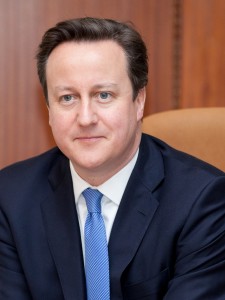
  • Greg Clark – 2015 Speech to National House Building Council

    gregclark

    Below is the text of the speech made by Greg Clark, the Secretary of State for Communities and Local Government, to the NHBC at Church House in London on 26 November 2015.

    A turnaround decade for housing

    Thank you, it’s an honour to speak to so many of you today – in a momentous week for housing, especially at an event hosted by the NHBC. Your timing couldn’t be better after the Spending Review, so that I couldn’t possibly come empty handed.

    The NHBC is a credit to the industry – an example of how standards can be raised and maintained independently of government.

    Not only does the NHBC certify houses, it also helps insure them – providing warranties on around 80 per cent of all the new homes built in this country:

    A model of taking direct responsibility that ought to be applied more widely.

    We can be proud that as other countries seek to establish similar organisations, it is to this country that they look for inspiration.

    The same cannot be said for every aspect of our country’s record on housing.

    The first decade of the 21st century was not our finest hour:

    • housing bubble that burst with devastating consequences
    • industry in debt
    • sites mothballed
    • workers laid off
    • skills lost
    • the lowest level of peacetime house building since the 1920s
    • post-war low in house building by the private sector – and by councils
    • shrinkage in the stock of affordable housing
    • sustained fall in home ownership
    • chaos in the regulation of lending
    • and a planning system grinding to a halt

    The roots of this failure run deep.

    Through decades of a complacency about different components of the housing market.

    Decades of political inertia.

    And decades in which this country consistently failed to build enough homes.

    The Prime Minister has spoken of his determination to make this our turnaround decade.

    A decade in which we eliminate the budget deficit. But also the housing deficit.

    This may not be a familiar term, but if the level of house building falls below the level of household formation then a housing deficit is exactly what we have.

    And, furthermore, a housing deficit that builds up into a housing debt – one that cashes out not just in house price inflation and falling ownership, but contributes to economic instability, social inequality and stunted opportunities.

    For the good of us all – and especially of the younger generation – we must, and will, put this right.

    Progress to date

    So, five years into this turnaround decade, what progress have we made?

    Most importantly, there’s been a significant recovery in the level of house building.

    This can be seen across of a variety of measures, there’s no shortage of competition for housing statistics on any given week, but on this occasion let me refer to NHBC figures.

    In 2009, they registered 81,000 new homes; this year they expect to register 160,000.

    This is based on a pretty consistent 80 per cent share of the market and approximates to a doubling of building levels during this period.

    And good progress continues to be made. The most recent year of figures shows a ten per cent increase in registrations.

    In fact, the net supply of housing has shown the biggest annual increase in almost three decades.

    This hasn’t happened by accident. From the start, we did what was needed to get the house building industry back on its feet:

    • by stabilising the banking system
    • through financial guarantees for development; and in helping first time buyers
    • over 230,000 households have been helped into home ownership through government schemes
    • over 100,000 through the various strands of Help to Buy
    • the number of first time buyers is at a seven-year high – and now stands at double the low established in the previous decade
    • crucially, we’ve increased the stock of affordable homes. Over 263,000 affordable homes have been provided in England since April 2010 – nearly one third of them in London.

    I might also add that twice as many council homes were built in these five years than during the previous 13 years.

    We reformed the planning system. I want to express my gratitude to many people in this room who supported us in this reform.

    They said it couldn’t be done, but the National Planning Policy Framework is now four years old – and bearing fruit.

    In 2010, most local authorities didn’t even have a Local Plan. Instead they had 1,300 pages of central planning guidance. And thousands more from the Regional Spatial Strategies.

    We removed this smothering blanket of verbiage and replaced it with the NPPF – a clear and accessible document of just 52 pages.

    Now, the great majority of local authorities do have a Local Plan – and we will ensure that the rest are in place by 2017. Moreover, these are better Local Plans.

    Those adopted since the NPPF set targets equivalent to 109 per cent of national household projections – versus 86 per cent for pre-NPPF plans.

    Planning permissions in the year to the 31 March 2015 were up 13 per cent on the previous year and 64 per cent on the year to March 2010.

    Overall, we now permit around a quarter of a million new homes every year; which, if built out, would be enough to close the housing deficit.

    The ongoing challenge

    But there’s more to do.

    Of course, planning for all the homes we need isn’t enough. We have to build them too.

    We must therefore go further and faster to ensure that this happens.

    Since the election this year, my department has continued with the most effective measures of the previous parliament.

    We’ve pressed ahead with the release of publicly-owned land for development.

    And we’ve introduced the Housing and Planning Bill, which is in committee stage as we speak.

    This Bill includes:

    • provision for 200,000 Starter Homes by 2020
    • an automatic register of brownfield land
    • and measures to speed up the CPO process
    • measures to support the extension of the Right to Buy from council tenants to housing association tenants

    Instead, we’ve agreed a deal with the housing associations to get on with the job without delay. In return, the government will ensure that the proceeds of Right to Buy sales are used to build new affordable homes for rent and purchase.

    The housing associations have set an example here for the whole industry:

    • a willingness to move forward in order to build the homes we need; a readiness to be part of the progress we all hope to benefit from
    • to get to where we need to be, we must give something in return
    • and all parts of the industry do have something to give

    We need to see a re-diversification of the sector. A big role not only for the housing associations, but also for councils, self builders, custom builders, small-and-medium-sized enterprises and overseas companies in that sector.

    This doesn’t mean a smaller role for the biggest players in the industry.

    Quite the opposite.

    To house a growing population we need more houses from everyone.

    This is not a zero-sum game.

    If we tried to play it that way, zero would be the sum of the progress made.

    The Spending Review

    Of course, a government shouldn’t ask others to move out of their comfort zones if it isn’t willing to do the same.

    For any Chancellor of the Exchequer, Chief Secretary to the Treasury, or Conservative government, intervening in the market and committing public money is not something done lightly.

    Yet we are determined to invest in what matters most to Britain’s future.

    As the Chancellor said yesterday in the Commons: “in this Spending Review we choose housing.”

    Specifically, we have secured over £20 billion from the Spending Review to support our wider ambitions to deliver one million new homes and to double the number of first time buyers.

    Individual measures include:

    • extend the Help to Buy: equity loan scheme to 2021 – supporting the purchase of more homes
    • in London, a doubling of equity loans to 40%, providing the capital’s aspiring home owners with a better chance to buy
    • and a £1 billion Housing Delivery Fund to support small and custom builders
    • there will be £8 billion for a total of over 400,000 affordable homes – the largest affordable housebuilding programme for many decades
    • and we’re making major investments in large-scale projects – including Ebbsfleet Garden City, Bicester, Barking Riverside and Northstowe

    So, while the Chancellor has made clear his determination to close the budgetary deficit, he was equally clear that this will go hand in hand with action on the housing deficit.

    Both are required to make this the turnaround decade.

    Both more and better

    Ladies and gentlemen, in the last five years both we and you have pulled house building up from the record lows of the previous decade.

    In the next five years we intend to push it up further, to levels not sustained for many decades.

    But this is not the limit of our ambitions.

    The challenges that I’ve described in this speech were many decades in the making.

    And so, as our focus moves from rescue to reform, we must address the deep structural weaknesses in the way that this country plans and builds for the future.

    This work is already underway through reforms like the NPPF, and the work must go on.

    Though the investment announced in the spending review is vital and necessary – we must also move to a future in which we which we can provide new homes without constant intervention from the centre.

    In which demand for housing can be met as readily as demand for other goods in our society.

    This goes beyond numbers alone.

    As well as building more homes, we must build better homes.

    Indeed, better streets and neighbourhoods too.

    I am proud that we have made – and will continue to make – such progress together on quantity.

    But let’s not waste the chance to also make progress together on quality.

    We must redouble our efforts.

    To achieve our objectives we don’t just need the commitment of the government and the industry, but of the nation as a whole.

    Ultimately that means convincing people that development is a force for making places better not worse.

    Therefore, the task before us is build both more and better.

    And, together, we will.

    Thank you.

  • Patrick McLoughlin – 2015 Speech on the Midlands

    Patrick McLoughlin
    Patrick McLoughlin

    Below is the text of the speech made by Patrick McLoughlin, the Secretary of State for Transport, at Derbyshire County Cricket Club on 27 November 2015.

    Introduction

    Thank you.

    It’s good to be back with you at this ground.

    This visit has become an annual highlight for me.

    It’s the third year in a row I’ve addressed the forum.

    A run like that is rare for a Transport Secretary.

    Before my appointment in 2012, there had been 7 Transport Secretaries in 7 years.

    When you are in charge of long-term infrastructure projects, change like that doesn’t always help.

    Rail, in particular, needs the perspective that comes with experience.

    So I am delighted to be back.

    Yet there has been one change since I was last here.

    And that’s to the forum itself.

    No longer the Derby and Derbyshire Rail Forum.

    But now the East Midlands Rail Forum.

    To me, that’s a statement of intent.

    Since the forum was established in 1993 it has grown in numbers, stature and influence.

    Now it’s the largest cluster of rail firms in the world

    And the new name reflects the forum’s ambition as it increasingly represents firms across our whole region.

    Growth in the East Midlands

    In June, the Chancellor visited the premises of a member of this forum.

    Garrandale – a great rail engineering firm.

    In his speech then, he said that five years ago our country was on the brink.

    We were borrowing £1 in every £4 that we spent.

    Midlands businesses were going under at a rate of over a hundred every day.

    And nearly half a million people in the Midlands were looking for work.

    If we were to save our economy, we had to act.

    And so we took some tough decisions.

    We cut spending.

    Cut corporation tax.

    And cut red tape.

    Five years on, our economy is growing strongly again, nationally and locally.

    The East Midlands is now home to 20,000 more businesses than in 2010.

    There are more people in work here than at any time since 1992.

    And on Wednesday the Chancellor reported that the Midlands is creating jobs at a rate three times faster than London and the south east.

    So our region is making great progress.

    Rail investment

    And one of the things giving this region its edge is its great concentration of rail expertise.

    Rail supply firms in this region are benefiting as we put more money into our rail sector than at any time since the Victorian era.

    Since the forum was established in 1993, passenger numbers have more than doubled.

    Rail freight is up 75%.

    The government is investing more than £38 billion in the rail network.

    And following Wednesday’s spending review transport capital spending in this Parliament will increase by 50% to a total of £61 billion; the biggest increase in a generation.

    That’s a great settlement for transport.

    And it’s a great opportunity for the rail supply chain.

    Hendy report

    But after so many years in which rail was underfunded, investment on this scale was never going to be easy.

    In June, I announced that Network Rail’s performance on the electrification of the TransPennine and Midland Main Lines had not been good enough.

    I asked Sir Peter Hendy to review Network Rail’s programme of works.

    And alongside the spending review, Sir Peter set out his plans to put its programme back on track.

    I can say today that I have accepted Sir Peter’s plan.

    It reaffirms our commitment to our railways.

    And shows how we will achieve our aim of transforming rail journeys for passengers.

    So we are pressing ahead with Crossrail.

    HS2.

    Thameslink.

    New InterCity Express trains on the East Coast and Great Western mainlines.

    North West and Yorkshire train lengthening.

    East-West Rail.

    Cornwall re-signalling.

    Wessex and Waterloo capacity enhancements.

    West Anglia main line capacity improvements.

    And the electrification and enhancement of the Great Western, Northern Hub, TransPennine, and Midland main lines.

    No infrastructure projects have been cancelled.

    But the report shows that the need for tough decisions is not yet over.

    Some projects will take longer and cost more than originally planned.

    As we put Network Rail’s focus firmly on its core task of delivery, some of that extra cost will be covered by Network Rail asset sales and new efficiencies.

    Skills

    But innovation and efficiency isn’t the only challenge for the rail supply chain.

    We are also facing a shortage of skills.

    Our country needs more rail workers of all kinds.

    More civil engineers.

    Mechanical engineers.

    Construction workers.

    Surveyors.

    Signallers.

    And even drivers.

    In all, we need 10,000 new engineers to improve the existing network, while HS2 alone will create 25,000 jobs during construction and 3000 jobs in operation.

    Yet as things stand today, parts of the industry will lose half their staff to retirement within 15 years.

    With our plans for investment, that’s unsustainable.

    So the government is addressing this skills challenge through new training institutions, such as the flagship National Training Academy for Rail in Northampton.

    Through creating 3 million new apprentices in this Parliament.

    And through the appointment of Terry Morgan, the Chairman of Crossrail, to develop a transport skills strategy.

    But, ultimately, we need the rail industry to invest in skills in new staff and new training.

    Because although government can make plans and provide some of the funding, it will be the rail industry who will deliver for the country.

    Midlands Engine for Growth

    But while we are working to secure our economy and to transform our transport we have a clear principle.

    Wherever possible, decisions about planning, spending and services should be taken by the people who will be most affected by those decisions.

    For that, we need to devolve power from London and out to the regions.

    So last month I was pleased by the launch of the newly-strengthened Midlands Connect Partnership

    Midlands Connect is a collaboration between the Midlands’ Local Enterprise Partnerships and local authorities.

    Over the months ahead Midlands Connect will work with HS2 Ltd, with Network Rail, and with Highways England to develop investment plans for the Midlands.

    They will look at maximising the economic growth from HS2, reducing journey times between our towns and cities, and making better connections to international gateways.

    There’s no better way to make the case for investment than for it to be informed by local people.

    Local businesses.

    Local representatives.

    And that is how we will make the Midlands an engine for growth.

    Conclusion

    So in conclusion, it’s great to be back.

    As Transport Secretary.

    At this event.

    And on home turf.

    For our nation’s railways, these are rare days.

    Customer numbers have never been higher.

    Investment has never been higher.

    Expectations have never been higher.

    And so it’s an opportunity.

    But also a challenge.

    I said at the beginning that rail needs the perspective that comes with experience.

    Looking around this room I can see 176 years of rail experience and the expertise to match.

    So I’m confident that we will succeed as we build the rail network our country deserves.

    Thank you.

  • Nicky Morgan – 2015 Speech on London Schools

    nickymorgan

    Below is the text of a speech made by Nicky Morgan, the Secretary of State for Education, made at City Hall in London on 27 November 2015.

    Thank you, Munira [Mirza, Deputy Mayor of London] for that introduction. And thank you, Boris [Johnson, Mayor of London], for organising and hosting this fantastic conference.

    It really is a pleasure to be here at a conference with such a sense of energy and purpose – and such a sense of pride in the work you do and the difference you make.

    I want to talk about educational excellence. About how London schools are already giving thousands of children an excellent education.

    About what we need to do if we’re serious about excellence everywhere. And I want to speak directly to you – the current and future leaders of education in London and beyond – about the opportunity for, and the importance of, leadership.

    I want to make a reality of educational excellence everywhere. This is more than an easy phrase. We spent a lot of the last 5 years talking about what we mean by and how we realise educational excellence. For the next 5 years, my focus is on what it takes to make this happen everywhere, across the country from Barking to Blackburn, and from Westminster to Wiltshire.

    The reforms of the last Parliament re-introduced rigour to our education system and placed high expectations back at the heart of our all schools.

    We removed qualifications from the performance tables that weren’t respected by employers and universities and instead began the process of introducing gold-standard qualifications that would equip young people to succeed in the modern world, and on the world stage.

    We introduced the EBacc to encourage more schools to offer pupils a rigorous academic core – and I’m struck and impressed that London secondary schools are leading the way.

    Because as your pupils grow up, they will need to stand their own with their peers from Shenzen and Chennai. And from Kraków, and from Frankfurt. And more.

    For some people, this is a scary prospect – but it’s also an exciting one, and I have confidence and pride in the talent and potential of our young people.

    And education is just as much about instilling those virtues and values, and allowing young people to develop their own unique talents, as it is about the grades they receive at the end of school.

    A well-educated child or young person should be well rounded, with a range of interests, a real sense of character and grit, equipped for adult life.

    Since I took up this role, I’ve visited almost 80 schools and met over 1,000 teachers – and I know that this is something we all agree on.

    Sally [Coates] dedicates a whole chapter of her book [‘Headstrong: 11 lessons of school leadership’ (2015)] to the importance of developing the whole child. She describes how “our pursuit of academic excellence can never be extricated from the challenge of developing responsible, mature, compassionate citizens who are able to channel their talents towards healthy, productive ends”. I entirely agree with her.

    So I’ve taken every opportunity to champion this broader education, through awards and grants for schools and projects that help to develop character; by promoting cadets in schools and the National Citizen Service.

    And I’m pleased and proud to make a point of celebrating and backing the work that schools do – such as at Goldbeaters Primary School, School 21 or Mulberry School for Girls and many other schools I’ve visited. These schools debunk completely the notion that there is somehow any tension between academic success and character education – in fact they demonstrate that the 2 are mutually dependent and inextricably intertwined.

    So, after 5 years of reform and challenge, we know what educational excellence looks like and how it can be unlocked. Our challenge is to make a reality of excellent education everywhere. And London schools show what can be done – including in some of the most disadvantaged neighbourhoods and communities in the country.

    Schools across London prove that there is no place for the old excuses about ‘kids like these’. And you make that point more powerfully than any politician could. We all know about schools like King Solomon Academy and Mossbourne – they’re famous nationally for the quality of the education they offer.

    But I’m sure that each of you will know other schools that achieve just as much. You show working hard not only gives children from every background the best possible start in life, but also power to transform whole communities, leading the way in instilling a culture of aspiration, ambition and refusing to settle for second best.

    London’s academies and chains of schools demonstrate this transformative power of this approach in everything they do.

    Groups of schools like the Ark and Harris academies are spreading excellence, and at the same time providing the structures so that teachers and heads can focus on the core of their jobs, allowing us to open new career paths and opportunities for great teachers, and for great school leaders.

    Just as there isn’t a ‘one-size-fits-all’ school, so there shouldn’t be a ‘one-size-fits-all’ career path for teachers. And, again, Sally – your career is a great example of some of the opportunities that being a teacher opens.

    And, of course, the London Challenge model and legacy lives on. Education in London has been transformed over the last 15 to 20 years. Important networks and ideas are now owned by schools yourselves, like the Challenge Partners.

    And the core elements are now the basis for the self-improving school-led system we want to spread across the rest of the country – with the expansion of Teach First, and the networks of teaching schools and of national and local leaders of education.

    But a strong school system requires sound funding. We know that there can be no better investment in the future of our country than a good education.

    That’s why, thanks to the difficult decisions we’ve taken elsewhere, the Chancellor was able to confirm in the Spending Review that we would meet our manifesto commitments to protect core spending per pupil and to maintain the pupil premium at current rates – and that the core school budget will be protected in real terms to 2019-2020.

    We have been able to go beyond that, and similarly protect the base-rate funding received for every 16-to-19 student, at its current level, to the end of this Parliament.

    None of this is to say that schools will not have to find efficiencies. Despite being more generously protected than most of the public sector, you as school leaders will be challenged to make your budgets go further. We will help you to do that – supporting smarter procurement and better sharing of best practice.

    The introduction of a national funding formula will also mean change. It is clearly unfair that a school in one part of the country can attract over 50% more funding than an identical school, with pupils who have identical characteristics but in another part of the country. We need to rectify that.

    This is about transparency, and about fairness – and so schools in London which have very high levels of deprivation or other additional needs will be funded to meet those needs.

    Let me be clear, that while we will consult on the exact formula, we will keep a very close watch to make sure that we are earmarking the right level of funding for deprivation, to ensure that those needs can continue to be met. And, of course, there will also be a geographical element to the formula that will recognise the higher wage costs that London faces.

    Before I finish, I want to say a few words to you as school leaders.

    You do a phenomenal job. Your work is important and inspiring. Although I’m sure there are days – and weeks – when everything feels like a grind, you lead schools that transform lives. In your schools, children grow up. You are their teachers and their role models, and you guide and support them through towards adulthood. You have a lot to be proud about.

    I am delighted that this month’s data shows teacher recruitment starting to rise with over 1,000 more post-graduates starting training this year, compared to last.

    There’s a lot more to do to make sure we’re recruiting, training and retaining the teachers that we need, especially in key subjects and in some areas of the country. But I take these figures as a good sign, and I hope that they reflect a greater recognition that teaching is a fantastic profession and an exciting career to join.

    You will know that I recently announced the National Teaching Service – it’s a new programme to recruit and deploy our best teachers and middle leaders into underperforming schools in areas where they are needed most.

    The programme will launch next September, with a pilot of 100 teachers and middle leaders in the North West of England. By 2020 it will have deployed 1,500 outstanding teachers and middle leaders to underperforming schools in areas of the country that struggle to attract, recruit and retain high quality teachers.

    And I want to encourage each of you to think about the leadership role that you play with pride and with ambition. I know you want the best for your own school and pupils, and that you work hard to make a reality of your goals.

    If you haven’t already done so, I’d encourage each of you to think about the opportunities to share more widely and take a lead in the school-led system. You could form a partnership with one or more other schools. You might take a leading role within your existing chain. Or you might think about how you could share what works here with schools and emerging chains beyond London.

    Deputy heads – your heads won’t thank me for this – but you too should be thinking about when and how you want to take the next step.

    In addition to those of you here at this fantastic conference, I also want us all to do more to nurture and develop the leaders of the future. I want to encourage talented teachers – and especially those from under-represented groups – to take this step, and to tackle the real or perceived barriers that hold them back.

    This is the right thing to do for individuals, and for the profession as a whole. And, more importantly, it’s essential if we want to make a reality of educational excellence everywhere.

    I know that these aren’t easy jobs. I see and hear the challenges you face when I visit schools, talk to school leaders, and when I respond to emails and letters from teachers and heads. We shouldn’t pretend that leadership like yours is easy, because it isn’t. But it is important, valuable and rewarding.

    I will continue to challenge schools to do better. It’s what parents rightly expect of me. I will challenge you to give more pupils an excellent start – and especially to do so for those pupils who we currently fail. I simply wouldn’t be doing my job if I didn’t.

    But I can promise you that I will do it with respect, and with a recognition that it isn’t an easy thing to ask. And I’ll do it because we all share a fundamental belief that every child deserves an excellent education.

    As London schools show – great teachers, great heads and great groups of schools can achieve phenomenal things. Thank you, for all that you do.