Tag: 2015

  • Caroline Lucas – 2015 Speech on Syrian Air Strikes

    Below is the text of the speech made by Caroline Lucas to the House of Commons on 2 December 2015.

    I am pleased to follow the hon. Member for Plymouth, Moor View (Johnny Mercer). Although I do not agree with the position he put forward, I think he put it very clearly and passionately, for which I thank him. I thank the armed forces for the work they do.

    I share the horror and revulsion at recent atrocities in Paris, Beirut, Syria itself and elsewhere. yet I have still to hear convincing evidence to suggest that UK bombing of ISIS targets in Syria is likely to increase our security in Britain or help to bring about a lasting peace in the region. On the contrary, the evidence appears to suggest that it would make matters worse. I want to highlight that in the few minutes available.

    If we are interested in evidence, a good place to start might be to examine the effect of the US-led bombing campaign so far, explore whether it has been successful and see whether our contribution would make a real difference. From what I have seen, the sustained bombings to date have not done much to push Daesh into retreat. According to the latest figures from the US Department of Defence, US-led forces have flown some 57,000 sorties, while completing 8,300 airstrikes over a 17-month period, but they have relatively little to show for it. While the air war has so far killed an estimated 20,000 ISIS supporters, the number of fighters ISIS can still deploy—between 20,000 and 30,000—remains unchanged.

    Moreover, there are very real dangers that airstrikes on Syria have become increasingly western-driven. All four of the middle eastern states previously involved—Jordan, Bahrain, Saudi Arabia and the United Arab Emirates—have now withdrawn. That risks feeding the Daesh propaganda, in which it presents itself as the true guardian of Islam under attack from the crusader west. Although utterly pernicious and wrong, precisely that message is being reinforced by western bombings, with every indication that the attacks are an incredibly effective recruiting sergeant. According to US intelligence sources, last September, 15,000 recruits were reported to have joined Daesh from 80 countries; a year later, the figure has risen to 30,000 recruits from 100 countries. I have had no reassurance that western military action would not simply drive more recruitment.

    I have not heard any evidence to contradict the conclusion of the Foreign Affairs Committee’s report about the military challenges. The report very clearly stated that its witnesses did not consider that extending air strikes into Syria

    “would have anything other than a marginal effect.”

    Indeed, as other Members have pointed out, far from the issue being a lack of allied aircraft above Syria, the real problem is actually a shortage of viable targets on the ground. The dangers are compounded by ISIS’s deeply cruel use of human shields, which makes targeting more difficult and will add to the civilian death toll.

    There is much talk of focusing on Raqqa, but according to recent exiles, many in the ISIS leadership have gone to ground in places such as Mosul. They suggest that to get rid of ISIS in a city like Mosul, which has 1.5 million people and perhaps 150,000 ISIS terrorists, we would literally have to flatten the entire city.

    Those of us who are sceptical about the use of air strikes are often accused of saying that we do not want anything to happen and that we want inaction. Nothing could be further from the truth. The Government can and should be playing a role in brokering peace and stability in the region. The Prime Minister could be redoubling his commendable efforts to find a diplomatic solution. The civil war is inextricably linked to the rise of ISIS in Syria, as the Foreign Affairs Committee report emphasised repeatedly. ISIS flourishes where chaos reigns, so renewed efforts are needed to end the Syrian civil war.

    Lady Hermon (North Down) (Ind):

    Is the hon. Lady inviting the House to ignore completely UN Security Council resolution 2249?

    Caroline Lucas:

    That resolution calls on us to use “all means”. I want to make sure that we are using all of the means short of military action. [Interruption.] I do not believe that we are doing that and I do not believe that we should use military action unless there is evidence that it would make things better. There is laughter on the Government Benches at the idea that we might not want to take military action if there is no evidence that it will work.

    One reason I do not want to use military action is that there are no ground forces. We have heard again and again that air strikes will not work without ground forces, yet when we ask where the ground forces will come from, it turns out that they are mythical—they are “bogus battalions”, as the Chair of the Defence Committee said.

    Let us not suggest that those of us who do not think that there is an instant military answer are not just as committed to seeing an end to ISIS as those on the other side of the House who seem to think that there is a military answer. All of us are committed to getting rid of ISIS. Some of us are more committed than others to looking at the full range of measures in front of us and to looking at the evidence that suggests that bombing, to date, has not been successful.

    I was talking about the other measures that I would like to see taken forward. I talked about the diplomatic efforts, building on the Vienna peace talks. The diplomatic effort must extend to Iraq, where the Abadi Government must be encouraged to reach out to the neglected Sunni minority, especially in those parts of the country where ISIS is recruiting.

    Why are we not applying sanctions to Saudi Arabia and other Gulf states that have turned a blind eye and allowed the flow of finance to ISIS and, potentially, other terrorist groups? Why are we still selling weapons to Saudi Arabia, when they are then used in a vicious and destabilising war in Yemen that has killed thousands and made millions homeless, and that is creating yet more chaos in which al-Qaeda can thrive? Why are we not putting pressure on Turkey over the oil sales and the transit of fighters across its border?

    Why are we not doing more on refugees? We should have more refugees here in the UK—of course we should—but we should also put more pressure on our allies to put more resources into the refugee camps in the region. I appreciate that the Prime Minister has done a lot on that. This country has been good on that issue. Let us make sure that our allies do the same, because those refugee camps are becoming absolutely desperate. It is cold, there is more poverty and desperation, and we can be sure that ISIS will be recruiting in those refugee camps too.

  • Caroline Spelman – 2015 Speech on Syrian Air Strikes

    Below is the text of the speech made by Caroline Spelman in the House of Commons on 2 December 2015.

    There is an important religious dimension to this debate and faith leaders shape public opinion, so I thought it might be helpful if I shared with the House the views expressed by the Church of England on the subject.

    At a meeting of the General Synod last week, a motion on the migrant crisis called unanimously upon the Government

    “to work with international partners in Europe and elsewhere to help establish safe and legal routes to places of safety, including this country, for refugees who are vulnerable and at severe risk.”

    That motion passed with 333 votes and none opposing. The Archbishop of Canterbury made it clear that, in his view, force might be necessary to keep the refugees safe. He also said that the Church would not be forgiven if it turned inwards at this time of crisis. Rather, it must face the fact that extremism is now a feature of every major faith, including Christianity.

    Cardinal Vincent Nichols has backed proportionate military intervention to tackle Daesh, and he cites Pope Francis saying that where aggression is unjust, aggression is licit against the aggressor. These are views which I share, which is why I will support the motion.

    As the Prime Minister has said, this is not a war against Islam. Religious extremism is global and the key to solving this is the determination of people of faith to overcome it, not just in Syria, but right around the world. The Church is well placed to help, as the conflict is both theological and ideological. By reaching out to other people of faith and showing common cause in tackling extremism, we can demonstrate to a fearful secular world that faith leaders hold one of the keys to finding a solution. Where religion is being hijacked for political ends, we should say so.

    The Anglican Communion offers a worldwide network of churches to deploy in the joint global endeavour to stamp out extremism. Together, the integration of hard and soft power is likely to produce a better outcome. I urge my right hon. Friend the Foreign Secretary, who will be replying to the debate, to consider this question: to combat Daesh, it is important that prominent theological and ideological strategy is alongside any potential military humanitarian intervention. Unless we understand our enemy and those we choose as our allies in the region, we are unlikely to properly understand the conflict. I hope he will be able to inform the House what thought the Government have given to this advice as they develop their strategy.

    The Church can also play an important practical role in offering hospitality, accommodation, support and friendship to refugees, whatever their religious tradition, and advocacy for those who are being persecuted because of their faith. Hospitality is seen as a spiritual gift by the Church and explains why this country, with its Judeo-Christian roots, has a long tradition of providing safe haven to successive waves of migrants. We need to recognise that the conflict may affect the number of migrants and displaced people, and the Prime Minister is therefore right to convene a donors conference early in 2016.

    We should also recognise that international development aid agencies, many of which are Christian in origin, would emphasise that it is better to help refugees in their own region, so that once it is safe they can more easily return and rebuild their country. My local imam, who is from Syria and has family still there, is very anxious about the safety of civilians and the need to avoid a power vacuum.

    The public will need continuous assurance and transparency about why action is being taken and what outcomes are being achieved, so I welcome the commitment to quarterly updates for the House.

    It is all important how we give our international aid, during and post-conflict, and how we ensure that the voice of the displaced is heard in the post-conflict planning. As we know, it is the most vulnerable, and often the women, who have no voice at all in war. We have a duty to ensure that they are heard.

  • Dan Jarvis – 2015 Speech on Syrian Air Strikes

    Below is the text of the speech made by Dan Jarvis in the House of Commons on 2 December 2015.

    It is a great pleasure to follow the hon. Member for South West Wiltshire (Dr Murrison).

    These are always the most difficult judgments—there is never a perfect solution. I have reflected with the utmost care on the case for extending our airstrikes to target Daesh’s stronghold in Syria, conscious of what I heard at the National Security Council, and mindful of what is best for my constituents and our country. I support the motion, but before I set out why, let me say something about the way in which the debate has been conducted outside the Chamber. Let us be clear: there is principle in opposing military action, as there is principle in supporting it. Everyone must have freedom, either in the House or outside, to say what they believe to be right without fear of recrimination.

    The question before us is not whether our country enters into a new conflict—it is whether we extend our existing commitment in a conflict that we cannot hide from. We are already engaged in a struggle with Daesh. Just over a year ago, the House voted overwhelmingly to support airstrikes against Daesh in Iraq. We did so because of the direct threat that it posed to our safety and to global security. Any idea that these fanatical terrorists will leave us alone if we leave them alone is simply misguided. The action that is taking place in Iraq is working.

    There is no logic in opposing Daesh only in that country, as it does not recognise any border between its bases in Iraq and its stronghold in Syria. We must confront it over the same territory from which it is plotting attacks against us. The dangers projected from Daesh’s stronghold in Syria have multiplied, and we will not overcome it with piecemeal interventions. That is why I have made it clear that I would only support the extension of military action against Daesh if it was framed in a wider strategy that leveraged all the tools at our disposal.

    There is agreement across the House that diplomacy to broker an end to the Syrian civil war must play an essential role. In an ideal world, we would perhaps wait for the transition timetable agreed at the Vienna conference to be concluded, but I do not believe the scale of the threat that we face affords us that luxury. I understand the voices cautioning against our broader engagement, but the test for all of us must be hastening the defeat of Daesh. There is no realistic strategy for bringing about Daesh’s defeat without degrading its command and control structures in Raqqa.

    When will we begin that task, if not now? We have a firm legal basis in the UN resolution, and our allies have asked for our help and the capabilities that our brave Royal Air Force pilots can offer in precision targeting. In the words of the French socialist Defence Minister,

    “The use of these capabilities over Syria would put additional and extreme pressure on the ISIS terror network.”

    If we ignore those calls today, when will we answer them in the future?

    I understand hon. Members who have listened to the case for extending airstrikes but who are reluctant to proceed without greater assurances from the Prime Minister about the strategy he is pursuing. In this sense I agree with them. The proposals before us are constructive and, in my view, meet the basic test for extending our action, but they need to be developed if we are ultimately to succeed in overcoming Daesh and restoring peace for the Syrian people. Let me say this to the Government Front Bench: on post-conflict reconstruction, the guarantee of a further £1 billion in humanitarian relief is significant, but we need to hold the international community to its responsibilities to Syria and refugees at the upcoming donors conference in London.

    In conclusion, my party, the Labour party, has a long and proud tradition of standing up for the national interest when our country is under threat. When the War Cabinet met in 1940, it was the Labour Ministers Clement Attlee and Arthur Greenwood who tipped the balance in favour of resisting Nazism. Daesh are the fascists of our time. I believe there is still a dignity in uniting with our allies in common cause against a common enemy in defence of our common humanity. That is what I hope we will do.

  • Gisela Stuart – 2015 Speech on Syrian Air Strikes

    Below is the text of the speech made by Gisela Stuart in the House of Commons on 2 December 2015.

    It is easy to be brief at this point, because I can honestly say that I agreed with every word of two speeches made by Labour Members. Both my right hon. Friend the Member for Derby South (Margaret Beckett) and my right hon. Friend the Member for Kingston upon Hull West and Hessle (Alan Johnson) made an extraordinary case in explaining why action was necessary, and also why inaction would be so difficult to defend.

    The decision that we are being asked to make is particularly important in the light of the social media that now exist. Our email inboxes are full of messages saying, “Don’t do it.” I am relieved that I am being asked not to do it, because I would be deeply troubled if my inbox was full of gung-ho messages saying, “Go and get them.” We have come here to make an extremely careful judgment, and we can only ever make the judgment that is best at any one time.

    There are many unanswered questions about the part of the world that we are discussing, and none of us can claim to know what the next steps will be. However, there are some things that we do know, and one of them is that just as actions have consequences, so does inaction. The danger for Governments is not knowing when not to act; given that it is always possible for them to act, they must always ask whether it is the right thing to do. The danger for Oppositions is in thinking that because they are in opposition, it is appropriate always to oppose. Occasionally it is right to do things, and occasionally it is right for an Opposition to support a Government, even when they do not entirely agree with a motion on the Order Paper.

    I will support the motion tonight because it is good enough, and it is good enough for three reasons that are closely intertwined. We face a conflict with Daesh, because they are terrorists and bad people with, in my view, no redeeming features. We also face a potential civil war with Assad, and—this has not been mentioned so far—a very difficult conflict involving Turkey and Russia. However, the fact that the situation is complicated does not mean that we should not do anything.

    Four things persuaded me that it was, on balance, better to do something than to do nothing. The starting point was the United Nations resolution, which was supremely important. Then there was the fact that our airstrikes are adding capacity, which will enhance the actions that we are already taking in Iraq. If we extend those actions to Syria, we will not only bring something to the table, but strengthen the coalition. As the motion rightly points out, we are looking at a political process. Anyone who has been involved in negotiations knows that military actions will not succeed on their own without a political process. The two go hand in hand, and each enhances the other. That political process will be vital.

    There is one mistake that I hope we will not make again. We must not take our eye off the fact that we need functioning state institutions when we take military action. That was one of the errors that we made in Iraq. I hope that it will be different in Syria, because of the work that the Department for International Development is doing, and the work we are doing with the coalition to retain the state structures. We all know we cannot predict what will happen next, but we also know that, whatever happens next, we will be acting with our allies, because countries such as France are calling on us. If the situation had been reversed and the same thing had happened in London, and we asked France for help and it said no, we would have been appalled.

    Finally, we have to answer the question: why now? Why do we not wait a few weeks? The dynamic changed when Russia entered the theatre, but most importantly, action is in the national interest, because Daesh’s ability to both operate in Syria and organise terrorist attacks on mainland Europe has increased tremendously. We must act now, because if we want to stop that war, this may not be the perfect first step, but at this stage, it is certainly the best first step that I am being asked to support.

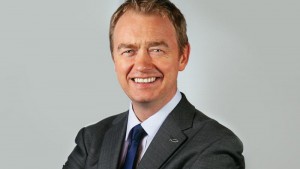
  • Tim Farron – 2015 Speech on Syrian Air Strikes

    timfarron

    Below is the text of the speech made by Tim Farron, the Leader of the Liberal Democrats, in the House of Commons on 2 December 2015.

    As has been mentioned already, the spectre of the 2003 Iraq war hangs over the debate in this House and in the whole country. In 2003, the late and very great Charles Kennedy led the opposition to the Iraq war and he did so proudly. That was a counterproductive and illegal war, and Daesh is a consequence of the foolish decision taken then. Charles Kennedy was also right, however, in calling, in the 1990s, for military intervention in Bosnia to end a genocide there. I am proud of Charles on both counts.

    My instincts, like those of others, are always to be anti-war and anti-conflict. In many cases, the automatic instinct will be that we should react straightaway and go straight in. Others will say that under no terms, and not in my name, should there ever be intervention. It is right to look at this through the prism of what is humanitarian, what is internationalist, what is liberal, what is right and what will be effective. I set out five principles that I have put to the Prime Minister. I will not go into all of them here, with the time I have available, but they are available on the website and people can go and have a look at them. My very clear sense is that any reasonable person would judge them to have been broadly met.

    James Berry (Kingston and Surbiton) (Con):

    Will the hon. Gentleman confirm that, unlike the Leader of the Opposition, he and his party supported airstrikes against Daesh in Iraq and that today’s vote is about extending those airstrikes across the border that Daesh itself does not recognise, into Syria, to degrade Daesh as far as possible?

    Tim Farron:

    I am happy to confirm that.

    For me, and probably for many other Members, this has been one of the toughest decisions, if not the toughest decision, I have had to take in my time in this place. The five principles that we have set out have been broadly met, but I will not give unconditional support to the Government as I vote with them tonight. There are huge questions on the financing of Daesh by states such as Turkey, with the trade that is going on there. There are huge questions on the protection of civilians. Yes, a ceasefire, as discussed in Vienna, is the ultimate civilian protection, but we absolutely must continue to press for safe zones to be established in Syria. I continue to be very concerned about the lack of political and state involvement, notwithstanding what the King of Jordan said overnight, by close-by regional states, such as Saudi Arabia, Qatar and the United Arab Emirates. I continue to be concerned about our failure to take our fair share of refugees, as part of the overall EU plan. I welcome what the Prime Minister said earlier, but I want a lot more than just “looking into” taking 3,000 orphan children from refugee camps. I want them here in Britain.

    Stuart C. McDonald (Cumbernauld, Kilsyth and Kirkintilloch East) (SNP):

    I am very grateful to the Liberal Democrat leader for giving way. Given that he has pressed so hard for the Government to take more refugees, why is he content to bomb that country when the Prime Minister has refused to give that assurance? This is ridiculous.

    Tim Farron:

    I will come to that in a moment. The reality is that this is a very tough—an incredibly tough—call.

    A final point I wanted to press the Prime Minister on concerns the funding of Daesh from within UK sources. I am very pleased to hear that there will now be a full public and open inquiry. It must cut off that which fuels this evil, evil death cult.

    This is the toughest call I have ever had to make, certainly in this House. What pushes me in the direction of voting for action is, above all, United Nations resolution 2249, which calls for us to eradicate the safe haven that Daesh has in Syria. The resolution does not just permit, but urges this country and all members capable of doing so, to take all necessary action to get rid of Daesh. If we had just been asked to bomb Syria, I would be voting no: I would be out there demonstrating in between speeches and signing up to emails from the Stop the War coalition. This is not, however, a case of just bombing; this is standing with the United Nations and the international community to do what is right by people who are the most beleaguered of all. I was so proud and moved to tears when I watched at Wembley the other week English fans singing La Marseillaise—probably very badly indeed, but doing it with gusto—and standing shoulder to shoulder with our closest friends and allies. How could we then not act today, when asked to put our money where our mouth is?

    What has really pushed me into the position where I feel, on balance, that we have to back military action against Daesh is my personal experiences in the refugee camps this summer. I cannot pretend not to have been utterly and personally moved and affected by what I saw. I could give anecdote after anecdote that would break Members’ hearts, but let me give just one in particular. A seven-year-old lad was lifted from a dinghy on the beach at Lesbos. My Arabic interpreter said to me, “That lad has just said to his dad, ‘Daddy are ISIL here? Daddy are ISIL here?’” I cannot stand in this House and castigate the Prime Minister for not taking enough refugees and for Britain not standing as tall as it should in the world, opening its arms to the desperate as we have done so proudly for many, many decades and throughout our history, if we do not also do everything in our power to eradicate that which is the source of the terror from which people are feeling.

    We are absolutely under the spectre of a shocking, illegal and counterproductive war in Iraq. It is a lesson from history that we must learn from. The danger today is that too many people will be learning the wrong lessons from history if we choose not to stand with those refugees and not to stand as part of the international community of nations. This is a very tough call, but on balance it is right to take military action to degrade and to defeat this evil death cult.

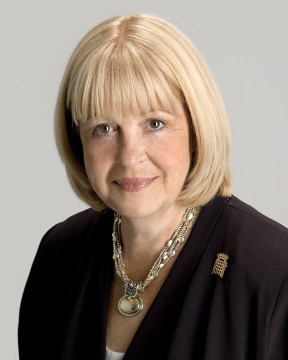
  • Cheryl Gillan – 2015 Speech on Syrian Air Strikes

    cherylgillan

    Below is the text of the speech made by Cheryl Gillan in the House of Commons on 2 December 2015.

    A dangerous and deadly cult is operating within this country, within Europe, and on Europe’s doorstep, and today we will decide whether we duck our responsibilities and do nothing, or whether we extend our military operations and widen our attack on the territories that that cult has taken over. To widen our airstrikes to include Daesh-held areas in Syria is only a small extension of current military activity, and I honestly do not think that this House has ever seen a Prime Minister set out so clearly the detailed options before us today, and his reasons for asking us to support the motion.

    In my view, to vote for this motion is to respond positively to the requests of our closest allies in France and the USA. It will add value to current military operations by providing the precision bombing capability and reconnaissance needed to degrade Daesh’s capabilities and remove its leadership, thereby reducing the direct threat to our citizens. That threat is real, present and extreme, and goes from beheading aid workers, to slaughtering holidaymakers on a Tunisian beach, not to mention the seven foiled terrorist attacks from which the brave men and women of our intelligence services and operations have saved us.

    Anyone saying that a positive vote tonight will increase the danger here in the UK needs to wake up and realise that the threat is already here, and controlled by Daesh leaders, mostly in Syria. If we add to the forces trying to eliminate that Daesh leadership, we will increase the odds of removing those who orchestrate violence, terrorism and wholesale murder.

    I could not support the Government today if I thought that airstrikes would form our strategy on Syria and Daesh in its entirety. However, with the Vienna process and a reasonable estimate of the ground forces that should be available to back up more efficient air activity, I believe that focused diplomacy and military action will complement each other in moving us forward to what we all want, which is a negotiated and peaceful settlement in Syria. Although I admit it is likely that airstrikes will not be enough to eliminate the threat of Daesh, it is important to recognise the role that they can play at this exact time.

    Like many hon. Members, I have received representations from my constituents in Chesham and Amersham on both sides of the argument, but after that attack in Paris and the wholesale slaughter of many young people, it has resonated even more with the general public that Daesh is a dangerous force that must be defeated at its roots. As it stands, I think that the best course of action is for Britain to increase its commitment to this complex, difficult and continuing conflict, and thereby increase the odds of improving the safety of our country and of the British people wherever they are in the world.

    The Prime Minister knows that we must constantly revise our plan for post-conflict Syria and the whole region, and if we want to see peace in our time, we will need to address that. Tonight I will be putting our security into the hands of our armed services, and I will support the motion.

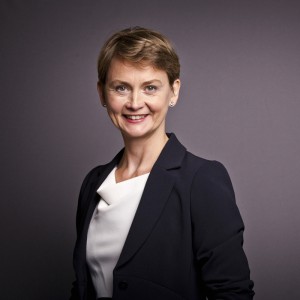
  • Yvette Cooper – 2015 Speech on Syrian Air Strikes

    cooper-300x300

    Below is the text of the speech made by Yvette Cooper in the House of Commons on 2 December 2015.

    No Parliament ever takes a more serious decision than what we should do to protect the security and safety of our nation and whether to put our forces in harm’s way. I know that every Member of the House will be weighing that decision very seriously, not least because the truth is that we have got those decisions wrong before, and our Governments have got those decisions wrong before, when we went into Iraq in 2003, but also when we failed to intervene early enough in Bosnia a decade before that.

    Since the Prime Minister made his case last Thursday, I have raised a series of questions and sought a series of assurances, some of which I have received and some of which I have not. I do not believe that the Prime Minister has made the most effective case, and so I understand why many in this House feel that they are not yet convinced, but I also feel that I cannot say that the coalition airstrikes that are already under way in both Syria and Iraq should stop. If they are not going to stop, and France has asked for our help, I do not think that we can say no. I think that changes need to be made to the Government’s approach, and I will argue for them. I think that there are more limits in the approach they need to take, but I will also vote with the Government on the motion tonight, even though I recognise how difficult that is for so many of us.

    The whole House, I think, agrees that we need a strategy that delivers peace and defeats ISIS/Daesh, but I disagree with any suggestion that this can be done as an ISIS-first, or Daesh-first, approach, because that simply will not work. In the end, we know that the Vienna process—the process to replace the Assad regime, which is dropping barrel bombs on so many innocent people across Syria—is crucial to preventing recruitment for ISIS. If we or the coalition are seen somehow to be siding with Assad or strengthening Assad, that will increase recruitment for Daesh as well.

    I disagree with the suggestion that there are 70,000 troops who are going to step in and that the purpose of the airstrikes is to provide air cover for those troops to be able to take on and defeat Daesh, because that is not going to happen any time soon. We know that there are not such forces anywhere near Raqqa. We know too that those forces are divided. The airstrikes will not be part of an imminent decisive military campaign.

    But I also disagree with those who say that instead of “ISIS first”, we should have “Vienna first”, and wait until the peace process is completed in order to take airstrike action against Daesh. I think the coalition airstrikes are still needed. We know that ISIS is not going to be part of the peace process: it will not negotiate; it is a death cult that glorifies suicide and slaughter. We know too that it has continuous ambitions to expand and continuous ambitions to attack us and attack our allies—to have terror threats not just in Paris, not just in Tunisia, but all over the world, anywhere that it gets the chance. It holds oil, territory and communications that it wants to use to expand. The coalition cannot simply stand back and give it free rein while we work on that vital peace process.

    Coalition airstrikes already involve France, Turkey, Jordan, the US, Morocco, Bahrain and Australia. If we have evidence that communication networks are being used to plan attacks in Paris, Berlin, Brussels or London, can we really say that such coalition airstrikes should not take place to take out those communication networks? If we have evidence that supply routes are being used by this barbaric regime to plan to take over more territory and expand into a wider area, do we really think that coalition airstrikes should not take out those supply routes? If we think that coalition airstrikes should continue, can we really say no, when France, having gone through the terrible ordeal of Paris, says it wants our help in continuing the airstrikes now?

    I have continually argued in this place and elsewhere for our country to do far more to share in the international support for refugees fleeing the conflict. I still think we should do much more, not just leave it to other countries. The argument about sanctuary also applies to security. I do not think that we can leave it to other countries to take the strain. I cannot ignore the advice from security experts that without coalition airstrikes over the next 12 months, the threat from Daesh—in the region, but also in Europe and in Britain—will be much greater.

    I think we have to do our bit to contain the threat from Daesh: not to promise that we can defeat or overthrow it in the short term, because we cannot do so, but at least to contain it. It is also important to ensure we degrade its capacity to obliterate the remaining moderate and opposition forces, however big they may be. When the Vienna process gets moving properly, there must be some opposition forces; the peace debate cannot simply involve Assad and Daesh as the only forces left standing, because that will never bring peace and security to the region.

    If we are to do our bit and to take the strain, we need more limited objectives than those the Prime Minister has set out—to act in self-defence and to support the peace process, but not just to create a vacuum for Assad to sweep into. That makes the imperative to avoid civilian casualties even greater. Where there is any risk that people are being used as human shields to cover targets, such airstrikes should not go ahead however important the targets. It makes the imperative of civilian protection even greater, but that is not mentioned in the Government’s motion. It should be the central objective not just for humanitarian reasons—to end the refugee crisis—but to prevent the recruitment that fuels ISIS.

    I also think there should be time limits, because I do not support an open-ended commitment to airstrikes until Daesh is defeated—the Foreign Secretary raised that yesterday—because if it is not working in six months or if it proves counterproductive, we should be ready to review this, and we should also be ready to withdraw. We will need to review this. I think we should lend the Government support tonight and keep it under review, not give them an open-ended commitment that this should carry on whatever the consequences.

    Finally, I say to the Government that I accept their argument that if we want coalition airstrikes on an international basis, we should be part of that, but I urge them to accept my argument that we should do more to be part of providing sanctuary for refugees fleeing the conflict. There are no easy answers, but I also say, in the interests of cohesion in our politics and in our country, that the way in which we conduct this debate is immensely important. However we vote tonight, none of us is a terrorist sympathiser and none of us will have blood on our hands. The blood has been drawn by ISIS/Daesh in Paris and across the world, and that is who we must stand against.

  • Alan Johnson – 2015 Speech on Syrian Air Strikes

    Below is the text of the speech made by Alan Johnson, the former Home Secretary, in the House of Commons on 2 December 2015.

    It is a pleasure to follow the hon. Member for Basildon and Billericay (Mr Baron). During my time in Parliament, it has become a convention that this House authorises military action, whereas previously it was for a Prime Minister to do so under the guise of royal prerogative. Sometimes they would involve the House of Commons; most often they did not. This new convention places a responsibility on Members of Parliament to weigh up the arguments and vote according to their conscience, rather than a parliamentary Whip.

    I am not sure if other parties are whipped on this vote or not, but I am pretty sure that nobody in any part of this House would seek to justify their vote tonight by pleading that although they disagreed or agreed with the proposition, the Whip forced them to vote the way they did. On votes such as this, the Whip is irrelevant, except to Front Benchers, perhaps. Although I am grateful to the shadow Cabinet for the free vote my party has been afforded, I do not think it will make the slightest difference to the way we make our decision.

    I intend to vote for the motion this evening for one basic reason: I believe that ISIL/Daesh poses a real and present danger to British citizens, and that its dedicated external operations unit is based not in Iraq, where the RAF is already fully engaged, but in Syria. This external operations unit is already responsible for killing 30 British holidaymakers on a beach in Sousse, and a British rock fan who perished along with 129 others in the Paris atrocity a few weeks ago.

    It is true that this unit could have moved out of Raqqa, but that is not what the intelligence services believe. The fact is that just as al-Qaeda needed the safe haven it created for itself in Afghanistan to plan 9/11 and other atrocities, so ISIL/Daesh needs its self-declared caliphate to finance, train, organise and recruit to its wicked cause. Yes, there may be cells elsewhere, but there is little doubt that the nerve centre is in Raqqa. Just over 14 months ago, this House sanctioned military action in Iraq against ISIL/Daesh by 524 votes to 43. Nobody expected that action to bring about a swift end to the threat from ISIL; indeed, the Prime Minister, responding to an intervention, said that

    “this mission will take not just months, but years”—[Official Report, 26 September 2014; Vol. 585, c. 1257.]

    Many right hon. and hon. Members felt at that time that it was illogical to allow the effectiveness of our action to be diminished by a border that ISIL/Daesh did not recognise. We were inhibited by the absence of a specific UN resolution, so there was some justification for this House confining its response to one part of ISIL-held territory in September 2014. There can surely be no such justification in December 2015—no such justification after Paris, given the request for help from our nearest continental neighbour and close ally in response to the murderous attack that took place on 13 November; and no such justification after UN Security Council resolution 2249.

    Paragraph 5 of the resolution, which was unanimously agreed,

    “Calls upon Member States that have the capacity to do so to take all necessary measures…to eradicate the safe haven they”—

    ISIL-Daesh—

    “have established over significant parts of Iraq and Syria”.

    George Kerevan:

    I put to the right hon. Gentleman the point that I would have put to the right hon. Member for Derby South (Margaret Beckett): a similar call from France was met by Germany, which sent reconnaissance aircraft but refused to bomb.

    Alan Johnson:

    Germany is constrained by its history. The point I am making is that we in this Parliament, having authorised military action by the RAF in Iraq, can no longer justify not responding to recent events by extending our operations to Syria. If we ignore the part of resolution 2249 that I have just read out, we will be left supporting only the pieties contained in the other paragraphs; we will unequivocally condemn, express deepest sympathy, and reaffirm that those responsible must be held to account. In other words, this country will be expressing indignation while doing nothing to implement the action unanimously agreed in a motion that we, in our role as chair of the Security Council, helped formulate.

    Furthermore, there is no argument against our involvement in attacking ISIL/Daesh in Syria that cannot be made against our action in Iraq, where we have helped to prevent ISIL’s expansion and to reclaim 30% of the territory it occupied. As the Prime Minister set out in his response to the Foreign Affairs Committee, that means that RAF Tornadoes, with the special pods that are so sophisticated that they gather 60% of the coalition’s tactical reconnaissance information in Iraq, can be used to similar effect in Syria, so long as another country then comes in to complete the strike. That is a ridiculous situation for this country to be in.

    Mr David Anderson (Blaydon) (Lab):

    Is not the different between Iraq and Syria the fact that we have on the ground in Iraq a long-established ally, the Kurdish peshmerga, who want to work with us? We do not have that in Syria; we have there what the Prime Minister is now describing as a patchwork.

    Alan Johnson:

    My hon. Friend, as always, makes an important point. I have just re-read the Hansard report of our debate in September 2014, and this point was not raised by anyone. The question of what comes next, which is a very important consideration—concerns have been expressed on both sides of the House—must not stop us responding to what happened in Paris and to the UN resolution’s request for all countries with the capability to act now. The resolution did not say to delay; it said to act now.

    I do not think that anybody in this House believes that defeating the motion tonight will somehow remove us from the line of fire—that ISIL/Daesh and its allies will consider us no longer a legitimate target for its barbaric activities. The 102 people murdered in Ankara were attending a peace rally. The seven plots foiled by our security services so far this year were all planned before this motion was even conceived. Our decision tonight will not alter ISIL/Daesh’s contempt for this country and our way of life by one iota, but it could affect its ability to plan and execute attacks. If our decision does not destroy ISIL/Daesh’s capability in Syria, it will force its external operations unit to move and, in so doing, make it more exposed and less effective.

    The motion presents a package of measures that will be taken forward by the international community to bring about the transformation in Syria that we all want to see, and it promised regular updates on that aspect. Furthermore, I believe that the motion meets the criteria that many Members will have set for endorsing military action now that the convention applies: is it a just cause? Is the proposed action a last resort? Is it proportionate? Does it have a reasonable prospect of success? Does it have broad regional support? Does it have a clear legal base? I think that it meets all those criteria.

    I find this decision as difficult to make as anyone. Frankly, I wish I had the self-righteous certitude of the finger-jabbing representatives of our new and kinder type of politics, who will no doubt soon be contacting those of us who support the motion tonight. I believe that ISIL/Daesh must be confronted and destroyed if we are properly to defend our country and our way of life, and I believe that this motion provides the best way to achieve that objective.

  • Margaret Beckett – 2015 Speech on Syrian Air Strikes

    MargaretBeckett

    Below is the text of the speech made by Margaret Beckett, the former Foreign Secretary, in the House of Commons on 2 December 2015.

    This debate centres on national security and the safety of our constituents. There will be differences of view within and between every party in this House. In good faith and conscience, Members will reach different conclusions. Anyone who approaches today’s debate without the gravest doubts, reservations and anxieties simply has not been paying attention. We are sent here by our constituents to exercise our best judgment—each our own best judgment. This is a debate of contradictions.

    The terms of today’s motion, echoing the UN resolution are stern, almost apocalyptic, about the threat, which is described as

    “an unprecedented threat to international peace and security”.

    As my right hon. Friend the Member for Manchester, Gorton (Sir Gerald Kaufman) said, the proposal before us amounts to only a relatively minor extension of the action that we are already undertaking. We have been asked to agree to act in both Iraq and Syria, precisely because that is what Daesh does, and its headquarters are in Syria. We have been asked to make a further contribution to an existing international effort to contain Daesh from extending the mayhem and bloodshed that accompany its every move even more widely across the middle east.

    Serious questions have been raised, and I respect those who raise them. There is unease about ground forces. There is proper concern about the strategy and endgame, about the aftermath, and about rebuilding. Some say simply that innocent people are more likely to be killed. Military action creates casualties, however much we try to minimise them. Should we, on those grounds, abandon action in Iraq, although we undertake it at the request of the Iraqi Government, and it seems to have made a difference? Should we take no further action against Daesh, which is killing innocent people, and striving to kill more, every day of the week, or should we simply leave that to others? Would we make ourselves a bigger target for a Daesh attack? We are a target; we will remain a target. There is no need to wonder about it—Daesh has told us so, and continues to tell us so with every day that passes. We may as well take it not just at its word but, indeed, at its deeds. It has sought out our fellow countrymen and women to kill, including aid workers and other innocents. Whatever we decide today there is no doubt that it will do so again, nor is the consequence of inaction simply Daesh controlling more territory and land. We have seen what happens when it takes control. The treatment, for example, of groups such as the Yazidis, in all its horror, should surely make us unwilling to contemplate any further extension of Daesh-controlled territory. Inaction too leads to death and destruction.

    Quite separately, there are those, not opposed in principle to action, who doubt the efficacy of what is proposed: coalition action which rests almost wholly on bombing, they say, will have little effect. Well, tell that to the Kosovans, and do not forget that if there had not been any bombing in Kosovo perhaps 1 million Albanian Muslim refugees would be seeking refuge in Europe. Tell that to the Kurds in Kobane who, if memory serves, pleaded for international air support, without which they felt they would lose control to Daesh. Tell them in Sierra Leone that military action should always be avoided because there would be casualties. Their state and their peace were almost destroyed. It was British military action that brought them back from the brink.

    Of course, that military action took place in conjunction with political and diplomatic activity, and I share the view that it is vital that such activity is substantially strengthened. I was heartened by what the Prime Minister told us today. Our conference called for a United Nations resolution before further action, and we now have a unanimous Security Council resolution. Moreover, that resolution calls on member states in explicit and unmistakeable terms to combat the Daesh threat “by all means” and

    “to eradicate the safe haven they have established”

    in Iraq and Syria.

    Although it speaks of the need to pursue the peace process, the UN resolution calls on member states to act now. Moreover, our French allies have explicitly asked us for such support. I invite the House to consider how we would feel, and what we would say, if what took place in Paris had happened in London and if we explicitly asked France for support and France refused.

    George Kerevan:

    Will the right hon. Lady give way?

    Margaret Beckett (Derby South) (Lab):

    I am sorry, no.

    These are genuinely extremely difficult as well as extremely serious decisions, but it is the urgings of the United Nations and of the socialist Government in France that, for me, have been the tipping point in my decision to support military action.

  • Sir Gerald Kaufman – 2015 Speech on Syrian Air Strikes

    Below is the text of the speech made by Sir Gerald Kaufman in the House of Commons on 2 December 2015.

    There is of course absolutely no doubt that Daesh/IS is a vile, loathsome, murderous organisation, and the attack in Paris—the murder of 130 innocent people—could just as well have been in London. The choice of Paris was a retaliation against French activity in its region, but that does not justify our taking action unless it were appropriate, relevant and, above all, successful. These people claim to call themselves Islamic, and the Prime Minister talked about reclaiming Islam from them—they do not own Islam. Hundreds of millions of Muslims throughout the world are appalled by their murders, their beheadings, their kidnappings—all the abominable things they do. But our loathing of IS and our wish to get rid of it, to defeat it, to stop it is not the issue here today. The issue here is: what action could be taken to stop IS and get rid of it? I have to say that I do not see such an action.

    The Prime Minister spoke about getting a transitional Government in Syria and about the situation in Syria. I have been to Syria many times. I did so with some distaste as shadow Foreign Secretary, as I met leading officials in the Syrian Administration—I knew they were murderers. They murder their own people. They murdered 10,000 people in Hama alone. I would be delighted to see them got rid of, but they are not going to go. There is talk about negotiations in Vienna, but the assumption that somehow or other they are going to result in getting rid of Assad and the Administration is a delusion. Putin, one of the most detestable leaders of any state in the world, will make sure that because they are his allies and they suit him, action against them is not going to be successful.

    What is the issue today? It is not about changing the regime in Syria, which would make me very happy indeed. It is not about getting rid of Daesh, which would also make me very happy indeed. It is about what practical action can result in some way in damaging Daesh, stopping its atrocities, stopping the flood of people who are fleeing from it and stopping the people who are flocking to it, including, sadly, a small number of people from this country. If what the Government were proposing today would in any way not simply or totally get rid of Daesh but weaken it significantly so that it would not go on behaving in this abominable fashion, I would not have any difficulty in voting for this motion. But there is absolutely no evidence of any kind that bombing Daesh—bombing Raqqa—will result in an upsurge of other people in the region to get rid of Daesh. It might cause some damage, but it will not undermine them. What it will undoubtedly do, despite the Prime Minister’s assurance, which I am sure he gave in good faith, is kill innocent civilians. I am not going to be a party to killing innocent civilians for what will simply be a gesture.

    I am not interested in gesture politics and I am not interested in gesture military activity; I am interested in effective military activity, and if that is brought before this House, I vote for it. When the previous Conservative Government came to us asking for our support to get rid of Saddam Hussein from Kuwait, I, as shadow Foreign Secretary, formulated the policy that led Labour Members of Parliament into the Lobby to vote for that. I am not interested in gestures; I am interested in effective activity. This Government’s motion and the activity that will follow, including military action from the air, will not change the situation on the ground. I am not interested in making a show. I am not interested in Members of this House putting their hands up for something that in their own hearts they know will not work, and for that reason I shall vote against the Government motion this evening.