Tag: 2015

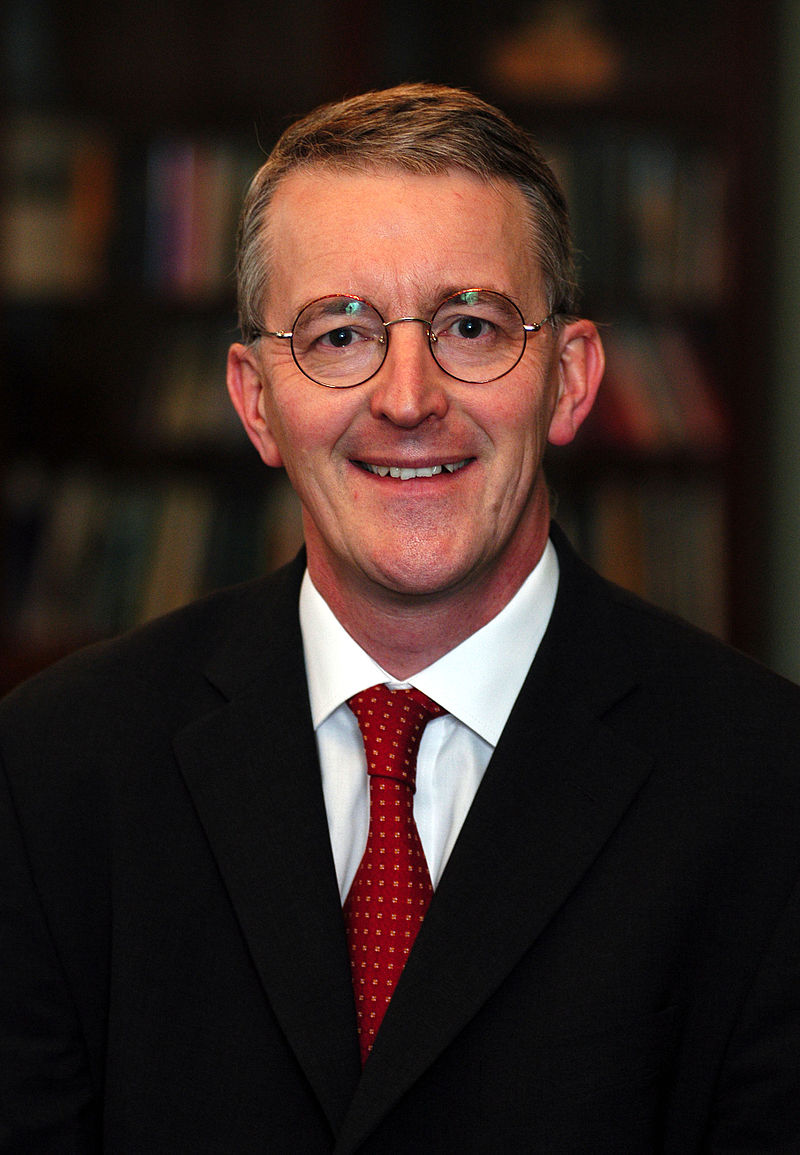
  • Hilary Benn – 2015 Speech on Syrian Air Strikes

    hilarybenn

    Below is the text of the speech made by Hilary Benn, the Shadow Foreign Secretary, in the House of Commons on 2 December 2015.

    Before I respond to the debate, I would like to say this directly to the Prime Minister: although my right hon. Friend the Leader of the Opposition and I will walk into different Division Lobbies tonight, I am proud to speak from the same Dispatch Box as him. He is not a terrorist sympathiser. He is an honest, principled, decent and good man, and I think the Prime Minister must now regret what he said yesterday and his failure to do what he should have done today, which is simply to say, “I am sorry.”

    We have had an intense and impassioned debate, and rightly so given the clear and present threat from Daesh, the gravity of the decision that rests on the shoulders and the conscience of every single one of us, and the lives that we hold in our hands tonight. Whatever decision we reach, I hope that we will treat one another with respect.

    We have heard a number of outstanding speeches. Sadly, time will prevent me from acknowledging them all. I would just like to single out the contributions, both for and against the motion, from my right hon. Friends the Members for Derby South (Margaret Beckett), for Kingston upon Hull West and Hessle (Alan Johnson) and for Normanton, Pontefract and Castleford (Yvette Cooper); my hon. Friends the Members for Barnsley Central (Dan Jarvis) and for Wakefield (Mary Creagh); my right hon. Friend the Member for Wolverhampton South East (Mr McFadden); my hon. Friends the Members for Brent North (Barry Gardiner), for Liverpool, West Derby (Stephen Twigg), for Wirral West (Margaret Greenwood), for Stoke-on-Trent North (Ruth Smeeth) and for Birmingham, Ladywood (Shabana Mahmood); the hon. Members for Reigate (Crispin Blunt), for South West Wiltshire (Dr Murrison), and for Tonbridge and Malling (Tom Tugendhat); the right hon. Member for Chichester (Mr Tyrie); and the hon. Member for Wells (James Heappey).

    The question that confronts us in a very complex conflict is, at its heart, very simple. What should we do with others to confront this threat to our citizens, our nation, other nations and the people who suffer under the cruel yoke of Daesh? The carnage in Paris brought home to us the clear and present danger that we face from Daesh. It could just as easily have been London, Glasgow, Leeds, or Birmingham and it could still be. I believe that we have a moral and practical duty to extend the action that we are already taking in Iraq to Syria. I am also clear—and I say this to my colleagues—that the conditions set out in the emergency resolution passed at the Labour party conference in September have been met. We now have a clear and unambiguous UN Security Council resolution 2249, paragraph 5 of which specifically calls on member states

    “to take all necessary measures…to redouble and coordinate their efforts to prevent and suppress terrorist acts committed specifically by ISIL… and to eradicate the safe haven they have established over significant parts of Iraq and Syria”.

    The United Nations is asking us to do something; it is asking us to do something now; it is asking us to act in Syria as well as in Iraq.

    Mr Baron

    rose—

    Hilary Benn:

    If the hon. Gentleman will bear with me, it was a Labour Government who helped to found the United Nations at the end of the second world war. Why did we do so? It was because we wanted the nations of the world working together to deal with threats to international peace and security, and Daesh is unquestionably that. Given that the United Nations has passed this resolution, and that such action would be lawful under article 51 of the UN charter—because every state has the right to defend itself—why would we not uphold the settled will of the United Nations, particularly when there is such support from within the region, including from Iraq? We are part of a coalition of more than 60 countries, standing together shoulder to shoulder to oppose the ideology and brutality of Daesh.

    We all understand the importance of bringing an end to the Syrian civil war, and there is now some progress on a peace plan because of the Vienna talks. Those are our best hope of achieving a ceasefire—now that would bring an end to Assad’s bombing— leading to a transitional Government and elections. That is vital, both because it would help in the defeat of Daesh and because it would enable millions of Syrians who have been forced to flee to do what every refugee dreams of—they just want to be able to go home.

    No one in the debate doubts the deadly serious threat that we face from Daesh and what it does, although we sometimes find it hard to live with the reality. In June, four gay men were thrown off the fifth storey of a building in the Syrian city of Deir ez-Zor. In August, the 82-year-old guardian of the antiquities of Palmyra, Professor Khaled al-Asaad, was beheaded, and his headless body was hung from a traffic light. In recent weeks, mass graves in Sinjar have been discovered, one said to contain the bodies of older Yazidi women murdered by Daesh because they were judged too old to be sold for sex. Daesh has killed 30 British tourists in Tunisia; 224 Russian holidaymakers on a plane; 178 people in suicide bombings in Beirut, Ankara and Suruç; 130 people in Paris, including those young people in the Bataclan, whom Daesh, in trying to justify its bloody slaughter, called apostates engaged in prostitution and vice. If it had happened here they could have been our children.

    Daesh is plotting more attacks, so the question for each of us and for our national security is this: given that we know what it is doing, can we really stand aside and refuse to act fully in self-defence against those who are planning these attacks? Can we really leave to others the responsibility for defending our national security? If we do not act, what message will that send about our solidarity with those countries that have suffered so much, including Iraq and our ally, France? France wants us to stand with it, and President Hollande, the leader of our sister Socialist party, has asked for our assistance and help. As we are undertaking airstrikes in Iraq, where Daesh’s hold has been reduced, and as we are doing everything but engaging in airstrikes in Syria, should we not play our full part?

    It has been argued in the debate that airstrikes achieve nothing. Not so: the House should look at how Daesh’s forward march has been halted in Iraq. It will remember that 14 months ago, people were saying that it was almost at the gates of Baghdad, which is why we voted to respond to the Iraqi Government’s request for help to defeat it. Its military capacity and freedom of movement have been put under pressure. Ask the Kurds about Sinjar and Kobane. Of course, airstrikes alone will not defeat Daesh, but they make a difference, because they give it a hard time, making it more difficult for it to expand its territory. I share the concerns that have been expressed this evening about potential civilian casualties. However, unlike Daesh, none of us today acts with the intent to harm civilians. Rather, we act to protect civilians from Daesh, which targets innocent people.

    On the subject of ground troops to defeat Daesh, there has been much debate about the figure of 70,000, and the Government must explain that better. But we know that most of those troops are engaged in fighting President Assad. I will tell Members what else we know: whatever the number—70,000, 40,000, 80,000—the current size of the opposition forces means that the longer we leave it to take action, the longer Daesh will have to decrease that number. So to suggest that airstrikes should not take place until the Syrian civil war has come to an end is to miss the urgency of the terrorist threat that Daesh poses to us and others, and to misunderstand the nature and objectives of the extension to airstrikes that is proposed.

    Of course we should take action—there is no contradiction between the two—to cut off Daesh’s support in the form of money, fighters and weapons, of course we should give humanitarian aid, of course we should offer shelter to more refugees, including in this country, and yes, we should commit to play our full part in helping to rebuild Syria when the war is over.

    I accept that there are legitimate arguments, and we have heard them in the debate, for not taking this form of action now. It is also clear that many Members have wrestled and, who knows, in the time that is left may still be wrestling with their conscience about what is the right thing to do. But I say the threat is now and there are rarely, if ever, perfect circumstances in which to deploy military forces.

    We heard powerful testimony earlier from the hon. Member for Eddisbury (Antoinette Sandbach) when she quoted that passage. Karwan Jamal Tahir, the Kurdistan Regional Government High Representative in London, said last week:

    “Last June, Daesh captured one third of Iraq overnight and a few months later attacked the Kurdistan Region. Swift airstrikes by Britain, America and France and the actions of our own Peshmerga saved us… We now have a border of 650 miles with Daesh. We have pushed them back and recently captured Sinjar …Again Western airstrikes were vital. But the old border between Iraq and Syria does not exist. Daesh fighters come and go across this fictional boundary.”

    That is the argument for treating the two countries as one if we are serious about defeating Daesh.

    I hope the House will bear with me if I direct my closing remarks to my Labour friends and colleagues. As a party we have always been defined by our internationalism. We believe we have a responsibility one to another. We never have and we never should walk by on the other side of the road. We are faced by fascists—not just their calculated brutality, but their belief that they are superior to every single one of us in this Chamber tonight and all the people we represent. They hold us in contempt. They hold our values in contempt. They hold our belief in tolerance and decency in contempt. They hold our democracy—the means by which we will make our decision tonight—in contempt.

    What we know about fascists is that they need to be defeated. It is why, as we have heard tonight, socialists, trade unionists and others joined the International Brigade in the 1930s to fight against Franco. It is why this entire House stood up against Hitler and Mussolini. It is why our party has always stood up against the denial of human rights and for justice. My view is that we must now confront this evil. It is now time for us to do our bit in Syria. That is why I ask my colleagues to vote for the motion tonight. [Applause.]

  • Liam Byrne – 2015 Speech on Syrian Air Strikes

    Below is the text of the speech made by Liam Byrne in the House of Commons on 2 December 2015.

    It is a pleasure to follow the hon. Member for Aldridge-Brownhills (Wendy Morton). She is right that this is a serious debate. It is one I have considered, too, and I am sorry, but I have come to a different conclusion from her.

    I speak against this motion, and I speak with a great sense of frustration. I am frustrated because I agree with the Prime Minister that we are at war; we are under attack, and we face an enemy the like of which we have never faced before. We are fighting against shadowy networks and nebulous states. Today’s debate is about the theatre of Syria, but we all know there are other theatres. We know there is conflict that we may need to come to in Yemen, on the border of Afghanistan and Pakistan, in the Khorasan region, in Libya and in parts of Nigeria. The enemy we are debating tonight is Daesh, but we all know there are other enemies. We know there is the core of al-Qaeda still present somewhere around Afghanistan and Pakistan. We know there is al-Qaeda in the Arabian Peninsula. We know there is the Khorasan group at work against us. We know there is Jabhat al-Nusra in Iraq, and its allies.

    What this reveals to us is that this will be a long march. As my hon. Friend the Member for Birmingham, Hall Green (Mr Godsiff) said, we must maintain solidarity and unity of purpose at home for what will be a very long fight. That is why we cannot afford in this House to put forward strategies that we think carry too great a risk of failure, as I am afraid the Government strategy does.

    I was grateful to hear the Prime Minister put such emphasis on this being a joint struggle for both western and Islamic freedom. We can see that in the refugee camps of northern Iraq. We know that Daesh has acquired the capability to plan attacks here in Europe. That is why what I wanted today was sustained, short-term action to take out that external planning capability of ISIS, whether that needs air cover or boots on the ground. In the longer term, like the Chair of the Defence Committee, I want to see an overwhelming coalition brought to bear, to smash Daesh into history. That needs Vienna first, not Vienna second.

    We dare not risk defeat. That would hand our enemies a propaganda victory that we would hear about for years to come. However, victory means bringing together air cover, ground forces and politics—and, heavens above, if we cannot sustain that combination to take back Mosul, how on earth will we take back Raqqa in Syria? That is why I was disappointed that the Prime Minister was not able to specify this afternoon just what the ground forces are that will help us take back Raqqa under the air cover of the RAF. That is the difference between Iraq and Syria. In Iraq, there are ground forces; in Syria, frankly, there are not. I do not want a half-hearted fight; I want a full-on fight, and we did not have a plan for that from the Government today.

  • James Heappey – 2015 Speech on Syrian Air Strikes

    Below is the text of the speech made by James Heappey in the House of Commons on 2 December 2015.

    On three occasions, I left my family and boarded a plane bound for Afghanistan or Iraq. As the plane went through the clouds, I took what could have been my final look out of the window at this country. When you do that, you cannot help wondering whether the people who have stood in this place have made the right decision, whether the nation is with you, and whether what you are going to do is worthwhile.

    Today, I rise to contribute to that decision-making process, and I can tell the House that the responsibility weighs heavily on my shoulders. However, I am certain that the motion should be supported. It clearly states that the continuation of airstrikes in Syria is just one part of the solution that is required to defeat Daesh, and to secure a peace both there and in Iraq. Bombing, diplomacy, aid, and countering radicalisation at home and abroad are not mutually exclusive. Indeed, in Iraq, Afghanistan and Libya, we have surely seen that they are utterly interdependent. Today, we must decide on whether to take military action, and I want to speak briefly about four themes in support of that action.

    First, we are being asked to join a coalition—a coalition of our closest allies and some of our most important partners in the region—and we must answer their call. Secondly, our contribution does enhance the capability of the coalition. Difficult targets present themselves only fleetingly, and prosecuting those targets requires constant air cover involving highly skilled pilots and deadly accurate munitions. Our Royal Air Force offers that. Thirdly, there is the necessity for indigenous ground manoeuvre. In Basra, my battle group was fighting an insurgency that existed almost entirely because we were there. The 70,000 Syrians and 20,000 Kurds under arms could, and should, become a cohesive and capable force, but the bombing campaign will buy the time for them to be manoeuvred into the place where we need them to be, so that we can co-ordinate their efforts in support of the airstrikes.

    It is, of course, important to note that those airstrikes degrade Daesh in the meantime. They have a military effect of their own. It is clear to me from today’s debate—this is my final point—that the House agrees on the ends that we seek to achieve, and that most of us agree on the means by which we seek to achieve them, diplomatic, humanitarian and military. The disagreement is on when, and in what order. I say from personal experience that when we are trying to buy time in a combat zone, we need to suppress the enemy. We need to keep their head down, and deny them any freedom of action. Nothing in a combat zone is perfect—the timing is never right—but we must get on with this, because we are required to do to help the Syrian people.

  • Mary Creagh – 2015 Speech on Syrian Air Strikes

    Below is the text of the speech made by Mary Creagh in the House of Commons on 2 December 2015.

    It is a pleasure to follow the hon. Member for Cleethorpes (Martin Vickers), although I disagree with the position he takes. I pay tribute to the hon. and gallant Member for Tonbridge and Malling (Tom Tugendhat), my hon. and gallant Friend the Member for Barnsley Central (Dan Jarvis) and the hon. and gallant Member for Plymouth, Moor View (Johnny Mercer) for their thoughtful speeches, and also to my right hon. Friends the Members for Wolverhampton South East (Mr McFadden), for Kingston upon Hull West and Hessle (Alan Johnson) and for Derby South (Margaret Beckett), with whom I agree entirely.

    This is one of the most important decisions an MP can make, and it is not one I have taken lightly. As a Labour MP, I believe we have to choose and shape Britain’s place in the world if we are to create a world in which power, wealth and opportunity are in the hands of the many, not the few. ISIL poses a clear threat to Britain. Thirty British holidaymakers were murdered on the beach in Tunisia in July, and we know that seven ISIL-related terror attacks against British people have been stopped in the past year. Paris could have happened in London.

    There is no hope of negotiating with ISIL. We must stop the flow of fighters, finance and arms to its headquarters in Raqqa. We need military action to stop it murdering Syrians and Iraqis, and to disrupt its propaganda machine, which poisons the minds of our young people and leads them to commit appalling acts at home and abroad. For the past 14 months, UK forces have carried out airstrikes against ISIL in Iraq, with no civilian casualties, so for me it makes no sense to turn back our planes at the Syrian border and allow ISIL to regroup in Syria.

    In September, as Labour’s shadow International Development Secretary, I visited Lebanon, where 1.5 million Syrian refugees have sought sanctuary. One in four people in Lebanon is a Syrian refugee. The Department for International Development has made a huge contribution to the aid effort there, opening up Lebanese schools to Syrian children so that they can continue their education and have some form of normality after witnessing the horrors of that war.

    I met Iman, a 65-year-old grandmother from Aleppo, who was imprisoned by President Assad for two weeks when she bravely returned from Lebanon to Syria, after her son was killed, to rescue her five orphaned grandchildren. She lives in a shack made of breeze blocks in the port city of Sidon. Hadia told me how her husband, a Red Cross volunteer, was killed in Syria, and how her four older children are still trapped in Homs. She did not want to go to Germany under a resettlement programme, because she could not take her elderly mother with her and did not want to leave her alone to die in a camp. I met Ahmed from Raqqa and 10-year-old girls working in the fields as agricultural labourers—their childhoods stolen from them—after ISIL had taken over their town, although that is still better than staying in Raqqa and being enslaved there.

    There is a massive humanitarian crisis in Syria: 250,000 people have been killed, there are 4.7 million refugees outside the country and 6 million have been internally displaced.

    George Kerevan:

    Will the hon. Lady give way?

    Mary Creagh:

    I will not. I want other Members to have the chance to speak, as we have all been waiting to do.

    The UK has given aid to Jordan and Syria, but aid is not the answer to the problems of Syria. Peace is the answer, and we need a fresh diplomatic effort to bring peace to that country. The Vienna talks offer real hope of that, with Russia, Saudi Arabia and Iran all around the table for the first time.

    We voted against action in 2013, after the sarin gas attacks—a vote I regret and now believe to be wrong. We now have the largest refugee crisis since world war two. The war in Syria has no end and no laws, and ISIL is expanding its caliphate there. We have had no strategy for Syria, and now we have no easy choices. We need a ceasefire, a political settlement and a path to democratic elections, which is why I shall support the Government tonight.

  • Stephen Twigg – 2015 Speech on Syrian Air Strikes

    Below is the text of the speech made by Stephen Twigg in the House of Commons on 2 December 2015.

    I congratulate the hon. Member for Tonbridge and Malling (Tom Tugendhat) on a powerful speech. I have reached a different conclusion from him, but he made a powerful case none the less.

    May I draw the House’s attention to my entry in the Register of Members’ Financial Interests? I visited Jordan in October, with my right hon. Friend the shadow Foreign Secretary. The visit was arranged by Oxfam so that we could meet Syrian refugees in the Zaatari camp and living in host communities.

    I welcome the Government motion’s renewed commitment

    “to providing humanitarian support to Syrian refugees”.

    Members from all parts of this House can be proud of the role played by our country, particularly the Department for International Development, alongside civil society, in the humanitarian effort. I also pay tribute to the countries in the region that have welcomed very large numbers of refugees from Syria, notably Jordan, Lebanon and Turkey. It is vital that we maintain our support for those neighbouring countries, but it is also increasingly important that we focus on the needs of people displaced within Syria itself. It is estimated that just in October about 120,000 Syrians fled their homes in Aleppo, Hama and Idlib. Our support for multilateral organisations such as the World Food Programme and UNICEF is therefore crucial. The International Development Committee is looking at the Syrian refugee crisis and we plan to publish our report in early January. We are examining both the challenges in the region and what more our country can do to help refugees.

    The people at the Zaatari refugee camp told us that they wanted to return home to Syria but they live in fear of their own Government and their barrel bombs. That is part of the context of today’s debate. As the Prime Minister said, our debate today is not about whether we want to defeat Daesh—we all want that. The evil actions of that organisation are well documented and have been covered during his debate. The question is: how do we do it? Last year, I supported the decision to join airstrikes against Daesh in Iraq. I agree with those on both sides of today’s argument who have said that our airstrikes have played an important role in helping the Iraqi Government forces and the peshmerga to take territory from Daesh in Iraq. But I also agree with those colleagues on both sides of the House who have said that the situation on the ground in Raqqa is very different from the one in Iraq. I do not necessarily question the 70,000 figure. The issue for me is where those troops are. They are Syrian opposition forces who are typically in other parts of Syria and fighting the Assad regime. It is fanciful to suppose that they will provide a ground force for an operation combined with airstrikes in Raqqa. I am not convinced, therefore, that there is a credible ground force for Raqqa.

    After the Prime Minister’s statement last Thursday, I went back to Liverpool, where I met a Syrian doctor who lives there. He expressed the view of many Syrians living in exile when he said that for them the biggest threat comes from Assad. Indeed, the moderate forces that we seem to be relying on are currently bombed by Assad and by Russia. I fear that the lack of ground forces will limit the effectiveness of airstrikes and that the strategy the Prime Minister set out last week of ISIL-first—in other words, Daesh-first—will have the unintended consequence of strengthening the brutal and murderous Assad regime. For those reasons, I will vote against the Government tonight.

  • Hywel Williams – 2015 Speech on Syrian Air Strikes

    Below is the text of the speech made by Hywel Williams in the House of Commons on 2 December 2015.

    I will be voting for the amendment tonight, as will my colleagues in Plaid Cymru.

    Earlier this afternoon, the hon. Member for The Wrekin (Mark Pritchard)—he is no longer in his place—referred, with a magisterial wave, to parties on these Opposition Benches as the “pacifist parties.” Plaid Cymru is not a pacifist party, as was confirmed only yesterday by our leader in the national Assembly. We opposed military action in Iraq, but we supported it in Libya, although now I have my doubts.

    I have many concerns about the Government’s proposals, but I will not list them all. The Prime Minister said that 70,000 moderate Syrian fighters would supply the boots on the ground that he—rightly, in my view—will not commit to himself. That assertion is absent from the motion, and my impression is that supporters of the bombing have become increasingly coy on that matter. No surprise there.

    We have been presented many times with a false choice, a false dichotomy. We have heard that we must either bomb or do nothing, but surely we can either bomb or do things that, in my view, are reasonable, proportionate and effective. For example, we could provide further support for the peshmerga—the force that has proved itself to be so effective against Daesh, against the odds and with very few resources. Pressure could be put on Turkey to desist from attacking the Kurds so that they can both concentrate on defeating Daesh.

    What can we do to secure a future for the Kurds in southern and western Kurdistan, and to secure a settlement for the Kurds in eastern Anatolia? No one has yet made that point this afternoon, but it is a small but essential part of the jigsaw. Daesh does not act alone, and it is abundantly clear that they are killers, not talkers. Daesh has international sponsors who provide it with money and material. What further pressure can we put on the Gulf states and their citizens, and on Turkey, to stop the supply of resources that Daesh needs to wage its evil war?

    Syria is not some distant land of which we know little. Daesh and its supporters are eager to wage war on the streets of western Europe, but those who perpetrated that foul work in Paris were home-grown, as were those who bombed London. Terrorists are being trained in Syria, but they are radicalised through the specious arguments of those who see oppression everywhere and who misuse distortions of Islam to inspire mayhem and murder. That is being done here and on the internet, and we could take steps in that respect. I will not speak about the Vienna process because of pressure on time.

    Members have asked whether bombing will make us safer, and some have said that we are proposing to keep our heads down. In terms of more bombings in the west, if we bomb Syria, we will be sowing a further 1,000 dragons’ teeth. Not bombing is also a serious security consideration, however. It is not just a matter of keeping our heads down.

    I was in this House when Tony Blair, at his persuasive best, convinced a majority that Britain was in imminent danger of attack and that we should wage war in Iraq. As has already been said, 2003 is not 2015, but we are still waiting for the Chilcot report. I am not starry-eyed about the prospects for that report, but I believe its earlier publication would have been valuable in informing this debate. The delay is deeply regrettable.

  • Dominic Grieve – 2015 Speech on Syrian Air Strikes

    Below is the text of the speech made by Dominic Grieve in the House of Commons on 2 December 2015.

    It is a pleasure to follow and my right hon. Friend the Member for Chichester (Mr Tyrie) and the hon. Member for Newport West (Paul Flynn). I shall have to endeavour to explain to them why I think they are both mistaken in their conclusions.

    All of us in this House have acknowledged, and indeed it is a legitimate subject of debate, that the condition of the middle east is frankly pretty close to being catastrophic. There are powerful forces at work pulling civil society apart. There is sectarian conflict. There are a whole variety of grievances that have been exploited by various dictators throughout the ages, and that is regularly being repeated. All the signs are that in many places the structure is extremely fragile, and we are very fortunate that in one or two areas it is subsisting.

    We can all agree on that, and I also agree that the situation is not amenable to any easy solution, or we would have found it a long time ago, but none of that explains to me logically why some hon. Members in this House consider that action in extending our military operations against Daesh into Syria is wrong. If it is indeed wrong, then our intervention in Iraq 12 months ago was wrong, whereas all the analysis that I have seen suggests to me that it is the one thing that has prevented the situation from wholly spinning out of control. We have a remarkable tendency in this House—perhaps it is a good thing in a democracy—to look at our shortcomings and not look at the benefits of what we may have achieved. It seems to me that if we had not intervened, there was a serious risk that generalised war would have broken out in the middle east, with Iranian intervention in Iraq to prop up the Iraqi regime and, ultimately, intervention by Saudi Arabia as well. We ought to look on the bright side of what has been achieved and then consider whether the limited steps that have been proposed are reasonable. It seems to me that they are. They are not a solution to the problem, and to that extent, the challenge remaining for my right hon. Friends through the Vienna process is a very real one. It does not seem to me that those limited steps will make matters worse. What they show is a comity of interest with our allies, to whom we are committed, to try to do something to address this problem and to keep it under control until better solutions can be found. That seems to me to be a legitimate and proportionate response to the problem that we face.

    It has been suggested that this will all in some way run away with itself. It will not do so if the House is vigilant. The legal basis for intervention is very limited: every action that is taken hereafter will have to be necessary and proportionate to achieve a legitimate aim that is severely circumscribed. I have every confidence that my right hon. and learned Friend and my hon. and learned Friend the Law Officers will be able to deal with that, and every confidence that my colleagues in the Government will observe the limits.

    It has been suggested that we will not be able to engage in diplomacy. I have to say I was staggered to hear my hon. Friend the Member for Basildon and Billericay (Mr Baron) say that we ought to emulate the Chinese in this matter, rather than the French. I find that an extraordinary notion.

    Stephen Gethins:

    As a member of the Foreign Affairs Committee, the hon. Member for Basildon and Billericay (Mr Baron) quite rightly made the point that the UK can maintain its influence without taking military action that will have a marginal effect.

    Mr Grieve:

    If I may say so, the question that should be asked is a different one: does our involvement diminish our ability to exercise diplomatic influence? The hon. Gentleman fails to take into account that by withdrawing from the military process entirely, as he is clearly advocating, we diminish our ability to influence the allies who share our values in this matter. That is why I found the suggestion that we should emulate China so astonishing.

    Finally, there is an issue of great importance about Islamophobia and the structures of our own society. The hon. Member for Newport West touched on it, and he has my very considerable sympathy; he probably knows that I have had an interest in this matter for many years. I have absolutely no doubt that Islamophobia is on the rise in this country and, indeed, that the backwash coming out of the middle east threatens to undermine our civil society. That is a very real challenge that everybody in the House ought to address. In that regard, my criticisms of the Prevent strategy are well known. I must say that I do not believe what we are doing in Syria undermines that one jot. On the contrary, I would have thought that a sense of powerlessness in the face of the murderous cruelty of Daesh is one of the most likely causes fuelling Islamophobia in this country. A rational policy enacted and proceeded with by the Government—with, I hope, the support of many Members of the House—seems to me to be a better way forward.

  • Paul Flynn – 2015 Speech on Syrian Air Strikes

    Below is the text of the speech made by Paul Flynn in the House of Commons on 2 December 2015.

    We are fighting and losing the wrong war. This is a war of hearts and minds that can never be won with bombs and bullets. The situation is truly terrifying, and we underestimate it if we imagine that it is confined to a couple of countries. People who have been brought up in this country, gone to our schools and absorbed our culture and values find themselves seduced by the message of Daesh. Two such people went to Syria from Cardiff and are now dead. They gave their lives to this mad, murderous cult. We must examine why they did that.

    The reason is that Daesh’s narrative is very cleverly conceived to appeal to adolescents. It offers danger, adventure in foreign parts and martyrdom. It also deepens the sense of victimhood by churning up all the stories from the middle ages about how the wicked Christian crusaders slaughtered without mercy the Muslims. We must challenge that dialogue of hate. We must have a different narrative. There is a good narrative for us to take up, because in the past 200 years we have had great success in places like Cardiff and Newport in building up mixed communities of races and religions.

    We must not imagine that anything will be over as a result of what happens in Syria or Iraq. This has spread throughout the world—throughout Asia and throughout South America. There is hardly a country in the world where Daesh does not want to spread its hatred. It has a worldwide plan to divide the world into Muslim communities and Christian communities that are at war. In other countries there is great suffering in many of the Christian communities that are being persecuted. We are falling into the trap it designed in Sharm el-Sheikh, Tunisia and Paris to pull us on to the punch. It is saying, “This is the way to get a world war going. This is the way to incite the west to send in military people and have a world war.” This is precisely what it wants—it has said so. It wants a world war and we must not fall into the trap.

    We have heard today throughout this House some very good, sincere speeches, but I believe that the combination of two dangerous views, “Something must be done” and “Give war a chance”, leads us to the position that we are now in. Those of us who were in the House when we went to war in Iraq were told, by the same people who are telling us now that there are 70,000 friendly troops, that there were definitely weapons of mass destruction there. There were not. In 2006, we were told that we could go into Helmand with no chance of a shot being fired. We lost 454 of our soldiers there. Little has been achieved. Because of decisions taken in this House in the past 20 years, we have lost the lives of 633 of our soldiers. I believe that if we go in now, nothing much will happen. There will be no improvement—we will rearrange the rubble, perhaps—but we will strengthen the antagonism and deepen the sense of victimhood among Muslims worldwide; they will have another excuse. We must not fall into that trap. We need to have a counter-dialogue, and get it into the media and on to the world wide web, to say that there is a great story to be told of harmony in our country. We must put that forward as a genuine alternative.

  • Daniel Poulter – 2015 Speech on Syrian Air Strikes

    Below is the text of the speech made by Daniel Poulter in the House of Commons on 2 December 2015.

    It is a pleasure to follow the hon. Member for Birmingham, Northfield (Richard Burden), who made some thoughtful remarks. I have come to a different conclusion from him about how to vote, but it is worth reflecting that no Government or MP takes lightly decisions about committing UK forces to combat. Our debate has highlighted the fact that there are no easy answers or solutions to the complex questions raised by the conflict in Syria and the fight with Daesh.

    In broad terms, there are three issues that we are considering. First, we are considering the issue of combating extremism at home and the impact that airstrikes may have on that. Secondly, is it right to engage in airstrikes against Daesh, given concerns about our ability to engage in ground combat in an effective and co-ordinated manner, or to support troops in Syria? I believe that the answer is yes, and I shall come on to that. Thirdly, we are considering the issue of protecting civilians and refugees.

    On the issue of extremism at home, ISIS, I think we all agree, presents a clear and present danger to the UK and our national security as things stand before the vote. To those who say that we will become a focus for attack if we vote for airstrikes, I would say that it is clear that we are already a target for attack. We have heard that there have been seven plots in the UK linked to ISIS in Syria that have been foiled by the UK police and security services. There is a fundamental threat to our national security, as is self-evident in the information that was passed to the Prime Minister, as he explained today. The answer to the question of whether ISIS presents a threat to our national security at home is clearly yes. In my view, given such a threat, it is in the interests of my constituents and of all hon. Members’ constituents to deal with it and strike ISIS at its heart in Syria and protect British citizens in the process.

    On the issue of committing to airstrikes, there are concerns about capability on the ground and support for ground troops. We have heard that there is a patchwork of troops working to fight ISIS on the ground. Military action against ISIS has been taken by a number of our UN allies and other countries and concurrently the Vienna process is under way to build a broader diplomatic alliance. That is work in progress, both in diplomatic terms and in terms of supporting ground troops. The fact that we do not have a perfect solution on the ground and do not have absolutely the right capability to tackle ISIS and support the fight against it in a ground war by various Syrian forces is not a barrier to supporting airstrikes. This is an evolving process, and ISIS poses a threat not just to the UK but to other citizens.

    Finally, on the issue of refugees and civilians, the biggest threat to civilian life in Syria is Daesh/ISIS. There is a refugee crisis in Syria because of Daesh/ISIS acts. On those three points, I support the Government, and I urge colleagues to do the same.

  • Gerald Howarth – 2015 Speech on Syrian Air Strikes

    Below is the text of the speech made by Gerald Howarth in the House of Commons on 2 December 2015.

    No one who has taken part in the debate today has approached it lightly and I think that we would all agree that anyone who suffers recriminations as a result of whatever decision they reach should have the sympathy of the House. There can be no recriminations and we must be free to express our views as we think fit. We are accountable to our constituents for what we say and what we do.

    Notwithstanding the enormous media hype about today’s debate, it is not about a decision to go to war. As my right hon. Friend the Member for North Somerset (Dr Fox) said, this is essentially an extension of the operations we have been carrying out in Iraq since the House decided last year by 524 votes to 43 that the Government should take that action.

    It is important to make the point that our intervention in Iraq has been critical. Without that intervention, there is no doubt that ISIL/Daesh would have taken control of the whole country. Had they taken control of Iraq, the consequences for the entire region, let alone us, would have been catastrophic. They would have been in charge of the entire oil output of Iraq and would have caused absolute mayhem. Since we joined the coalition partners in Iraq, at least 30% of the land taken by Daesh has been recovered. The contribution has been worth while and, as so many have said, it clearly makes no sense for Tornado aircraft and the Royal Air Force to have to turn back at the border.

    Many people have made the point—most effectively the Prime Minister, if I might say so—about the unique capability that the UK has and that France and the United States have asked us to contribute to this operation. I say to the right hon. Member for Gordon (Alex Salmond), who is no longer in his place, and to my hon. Friend the Member for Gainsborough (Sir Edward Leigh), with whom I am normally in agreement but am not on this occasion, that the Brimstone missile is a unique capability that only the United Kingdom can deploy. One other country has it, but the United Kingdom is the only one that currently can deploy it. That missile has been proven to have a precision strike that reduces the likelihood of civilian casualties to a minimum. Of course there will never be a complete absence of civilian casualties, but Daesh is attacking people every day of the week.

    It is also important to note that the United Kingdom has some of the most stringent rules of engagement. I know that from personal experience. I was a Defence Minister involved in the Libyan operations and the painstaking extent to which the military and the politicians act to ensure that the target is legitimate, that it is an important military target and that there is an absence of civilians is extraordinary. The House should be under no illusions: there is no cavalier approach to this. I make that point to the wider public as well.

    This is a complex issue but there are some simple truths. First, Daesh’s medieval barbarity is a threat to the region and to us. Secondly, the United Nations Security Council has called unanimously on all states to take all necessary measures. Thirdly, we have that unique additional capability to which I have just referred. Fourthly, we are working flat out on the diplomatic front, through the International Syria Support Group, and there is more that could be done, as my right hon. Friend the Member for Haltemprice and Howden (Mr Davis) said. However, Daesh will carry on killing, beheading and raping until we stop them doing it to innocent people, and it would be immoral for us to stand aside.