Tag: 2015

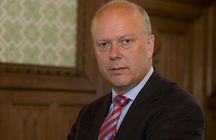
  • Chris Grayling – 2015 Speech at Global Law Summit

    chrisgrayling

    Below is the text of the speech made by Chris Grayling, the then Lord Chancellor and Secretary of State for Justice, to the Global Law Summit held in London on 23 February 2015.

    Your excellencies, distinguished guests, my lords, ladies, gentleman, can I start by extending a very warm welcome to all of you at the start of the Global Law Summit.

    Today, in this room, we have representatives from 110 countries around the world; over 100 ministers, attorneys general, chief justices and other leading international legal figures are here. In total, over 2000 delegates are taking part. I don’t think there has ever been a legal summit quite on this scale before, and I am pleased that the UK is hosting what is a very important and truly international event.

    More formally, on behalf of Her Majesty’s Government, I would like to welcome you to London and thank you for taking the time to attend this event. And a particular thank you to those who have left far warmer climates to come to London in February.

    I would also like to give a welcome and thank you to my fellow speakers: Sir David Wootton, the co-chair of this Summit, Lord Thomas, the Lord Chief Justice.

    And in particular our visiting speakers: Attorney General Holder, the Prime Minister of Kazakhstan, Angel Gurria from the OECD. That you have made time in your no doubt busy schedules, and travelled many thousands of miles to be here is a testament not only to how important Magna Carta is around the world, but also to your own commitment to its values of justice and the rule of law.

    Before going on, I should also welcome leading legal figures for whom the UK is home, from the judiciary, bar, leading city firms and also regional firms representing interests not just from London but across the country.

    And whilst I don’t want to spoil the surprise, we will shortly be hearing from a very talented British actress, an Oscar nominee, but not here with tales of Hollywood, instead talking about the work that she does with a fantastic organisation that helps children in some of the most difficult and dangerous circumstances around the world. I am delighted that the Global Law Summit is supporting War Child, I am equally delighted that Carey Mulligan is with us today, and I would like to thank her for her commitment to such an important cause.

    This event is the beginning of a whole year of celebrations to mark 800 years of what is quite a remarkable document – the Magna Carta.

    That document, signed on the fields by the Thames at Runnymede in 1215, as part of a truce between King John and his feuding barons, has become a foundation stone not just for our legal system, but for many other countries too. Nation after nation now derive their legal traditions from that piece of parchment.

    Within that document you will find cornerstones of our legal system.

    No official shall place a man on trial upon his own unsupported statement, without producing credible witnesses to the truth of it. The principle of a fair trial that survives to this day.

    We will appoint as justices, constables, sheriffs or other officials only men that know the law of the realm and are minded to keep it well – a principle that still underlies our system for appointing our judges today.

    To no one will we sell, to no one deny or delay right or justice. A pledge to keep a corruption-free system that remains vital to this day.

    However, ladies and gentlemen, not everything stands the test of time. Some of the provisions are definitely a bit time expired.

    Like the promise by the King that he will stop taking firewood from his subjects without their permission. Or that he will remove fish weirs from the River Thames.

    But those core principles agreed 800 years ago are still the heart of the legal values and traditions of this country. Indeed, one of most remarkable legal minds of last century, Lord Denning, described Magna Carta as “the greatest constitutional document of all times – the foundation of the freedom of the individual against the arbitrary authority of the despot”.

    I am proud that Magna Carta has been one of the UK’s greatest exports: it has inspired and formed the basis of so many legal systems and it is cited and invoked whenever and wherever basic freedoms come under threat.

    I am also proud that the great legal tradition continues. The United Kingdom is respected throughout the world for the strength of its legal system, for the skills and knowledge of its judiciary and courts, for its consistency and stability as a legal jurisdiction.

    And I am clear, as the Lord Chief Justice has said – a thriving legal system and respect for the rule of law go hand in hand with economic prosperity. In fact, they are the necessary foundations on which a strong and resilient economy is built.

    In the UK, the legal sector contributes over £20 billion to our GDP, employing over 300,000 people. And UK law firms play an important role in the success of international businesses worldwide.

    In London, we have a centre of legal excellence that is rival to any other great city in the world. I would like it to stay that way.

    I believe that this is best achieved by continuing to innovate, developing our legal system to keep pace with the world around us; continuing to grapple with difficult issues, learning from others and their experiences; but always remaining firmly rooted in the principles of Magna Carta that have served us so well to date.

    That is why I am pleased to endorse this summit as a forum for leaders and legal experts from around the world to share ideas, knowledge, make contacts and develop their legal systems, businesses and economies.

    The next 3 days will provide an opportunity for debate and discussion about the future shape of the law. You will hear a whole range of different perspectives from within the UK and elsewhere. You will hear from those who want change, and from those who want no change.

    But what’s clear to me looking back at the history of our legal system in the UK is that no change is seldom an option. Change can be driven by conflict, by economic reality, by social change and enlightenment – and when it comes it is often profoundly unwelcome. But whatever the needs for change, those principles from 1215 remain as central and important today as they have ever been.

    I would therefore encourage you to all embrace and make best use of this unique opportunity to debate the future shape of the law, and I hope also enjoy some of the great sights and venues of this great city.

    I’d now like to hand over the floor to a man who has been one of the most distinguished holders of his office. A man who is respected internationally for the work he has done. And someone who has been a good friend to the United Kingdom throughout his years of office.

    Ladies and gentlemen, please welcome the Attorney General of the United States, Eric Holder.

  • Michael Gove – 2015 Speech on One Nation Justice

    michaelgove

    Below is the text of the speech made by Michael Gove, the Secretary of State for Justice and the Lord Chancellor, to the Legatum Institute in London on 23 June 2015.

    I would like to begin by thanking The Legatum Institute for giving me a platform today.

    The Legatum Institute, and its formidable leadership troika of Sian Hansen, Cristina Odone and Anne Applebaum have been inspirational in their commitment to 2 principles close to my heart – principles essential to the argument I want to make today.

    They have been brave and consistent champions of the rule of law. The Legatum Institute has done fantastic work showing how establishing the institutions which safeguard the rule of law is the best way to rescue disadvantaged and developing societies from misgovernment and poverty. Sian, Cristina and Anne have also been visionary in helping to establish The Good Right – with my friend Tim Montgomerie. The Good Right is designed to show how conservative politics can be progressive and emancipatory.

    Making the case for the rule of law as an institution which safeguards progressive values is my mission. And I am here to talk about how we make the justice system work for everyone in this country.

    Yesterday, the Prime Minister set out his vision for a one nation Britain. He explained how this government will extend opportunity across the country. Today, I want to begin to outline – and I stress begin – what a one nation justice policy should look like.

    When the country handed us the responsibility of governing just over a month ago, we wanted to make sure every citizen of the United Kingdom felt they were equal partners in one nation.

    It is on that basis that the Prime Minister asked me to lead a programme of reform at the Ministry of Justice (MOJ) – to make our justice system work better for victims; to deliver faster and fairer justice for all citizens; to make sure our system of family justice safeguards children, especially those at risk of abuse and neglect, more effectively than ever; to make sure the laws we pass provide protection for the weakest; to make our prisons places of rehabilitation which give those who have made the wrong choices opportunities for redemption; to help offenders when they leave custody to make the right choices and contribute to society; to rescue young offenders, and those who may be on the path to offending, from a life of crime; and to reform our human rights legislation better to protect the fundamental freedoms we all cherish.

    But before saying a little more about what I think may need to change, it is critically important that I stress what needs to be protected, preserved and enhanced.

    And I should – in particular – express my thanks to my 2 immediate predecessors in this role for the work they have already done to reform our justice system.

    Ken Clarke and Chris Grayling introduced changes to family and criminal justice, prisons and probation which have seen the time children wait to be taken into care reduced, crime fall, prisons become better managed and rehabilitation modernised. I am in their debt.

    And I am conscious – as they always were – that there is something distinctive about the role of Lord Chancellor, different from other Cabinet posts.

    The most important thing I need to defend in this job – at all costs – is not a specific political position – but the rule of law.

    The rule of law
    The rule of law is the most precious asset of any civilised society. It is the rule of law which protects the weak from the assault of the strong; which safeguards the private property on which all prosperity depends; which makes sure that when those who hold power abuse it, they can be checked; which protects family life and personal relations from coercion and aggression; which underpins the free speech on which all progress – scientific and cultural – depends; and which guarantees the essential liberty that allows us all as individuals to flourish.

    In these islands we are fortunate that the rule of law is embedded in our way of life. An Englishman’s word is his bond, his home is his castle and Jack’s as good as his master. The principles that contracts should be honoured, property rights respected and all are equal before the law are customary – the deep fabric of our culture.

    And woven into that fabric have been the events in our history when the principles of the rule of law have been asserted by the heroes and heroines who are the makers of our nation.

    The sealing of Magna Carta, the calling of the first Parliament by Simon de Montfort, the establishment of habeas corpus, the challenge to the operation of the Star Chamber in early Stuart times, the fight by Parliament against the Crown under Charles the First, the Glorious Revolution, the Bill of Rights, the judgement of Lord Mansfield that affirmed the air of England too pure for any slave to breathe, Catholic Emancipation, the removal of discrimination against Jewish citizens, universal suffrage, the principle of judicial review of the executive – all of these are acts which have contributed to making us who we are – a people bound by rules and guided by precedent who settle issues by debate in Parliament and argument in courts, and who afford equal protection to all and cherish liberty as a birthright. These historic acts are what constitute our nation – they are our constitution. And it is my duty, as Lord Chancellor, to safeguard the principles that underlie that constitution.

    The rule of law is so precious, and so powerful, in our eyes because of our history. But it is also a precious, and powerful, asset for a modern nation seeking to maximise its citizens’ welfare in a fast-changing world.

    We are fortunate in England and Wales that the world, again and again, chooses our courts to resolve its disputes. We are fortunate that the reputation of our independent judiciary, the quality of our barristers and solicitors, the centuries-old respect for due process that characterises our legal system and the total absence of corruption in our courts and tribunals, have all made England and Wales the best place in the world when it comes to resolving matters by law.

    As a result of that global leadership we as a nation earn over £20 billion a year from the provision of legal services.

    So both as a matter of enlightened economic self-interest, and as a matter of deep democratic principle, it is vital that the institutions which sustain and uphold the rule of law are defended and strengthened.

    That means vigilance to make sure the judiciary maintain their independence and their insulation from politics. It requires understanding of the importance of a healthy independent bar, to make sure high quality advocacy. It means awareness of the special virtues of an adversarial criminal justice system, with arguments tested in open court and guilt having to be proven beyond reasonable doubt before an individual’s liberty is curtailed.

    It also means appreciation of the scrupulous patience, intellectual diligence and culture of excellence which characterises the work of those solicitors and barristers who support commercial endeavour and innovation.

    Our position of world leadership in the provision of legal services will only become more important as innovation gathers pace, new patents are developed, new companies are created, new deals are struck, new mergers and acquisitions take place, new enterprises grow and new opportunities arise. Making sure that we retain that position of global pre-eminence is one of my responsibilities.

    But even as we can – collectively – take pride in the fact that our traditions of liberty are generating future prosperity we must also acknowledge that there is a need to do much more. Despite our deserved global reputation for legal services, not every element of our justice system is world-beating.

    While those with money can secure the finest legal provision in the world, the reality in our courts for many of our citizens is that the justice system is failing them. Badly.

    A dangerous inequality at the heart of our system
    There are 2 nations in our justice system at present. On the one hand, the wealthy, international class who can, for example, choose to settle cases in London with the gold standard of British justice. And then everyone else, who has to put up with a creaking, outdated system to see justice done in their own lives. The people who are let down most badly by our justice system are those who must take part in it through no fault or desire of their own: victims and witnesses of crime, and children who have been neglected.

    While it is right that we should respect the traditions that underpin our legal system, that help guarantee respect for individual freedom and equality before the law, it is also undeniable that our courts are trapped in antiquated ways of working that leave individuals at the mercy of grotesque inefficiencies and reinforce indefensible inequalities. Her Majesty’s Courts and Tribunals Service (HMCTS) is exactly what its name implies – a service, available for public use. And like any other public service, it must be subject to reform, so that we can deliver value-for-money for taxpayers and fair treatment for all citizens.

    That is not happening at the moment. I have seen barristers struggle to explain why a young woman who had the courage to press a rape charge should have had to wait nearly 2 years before her case was heard. Reporting these offences in the first place must be a traumatic experience – made worse still by having to relive it in court 2 years later. I have watched as judges question advocates about the most basic procedural preliminaries in what should be straightforward cases and find that no-one in court can provide satisfactory answers. I have heard too many accounts of cases derailed by the late arrival of prisoners, broken video links or missing paperwork. I have seen both prosecution and defence barristers in a case that touched on an individual’s most precious rights acknowledge that each had only received the massive bundles in front of them hours before and – through no fault of their own – were very far from being able to make the best case possible.

    And thinking of those huge bundles, those snowdrifts of paper held in place by delicate pink ribbons, indeed thinking of the mounds of paper forming palisades around the hard-pressed staff who try to bring some sense and order to the administration of justice, it is impossible not to wonder what century our courts are in. Were Mr Tulkinghorn to step from the pages of Bleak House or Mr Jaggers to be transported from the chapters of Great Expectations into a Crown Court today, they would find little had changed since Dickens satirised the tortuously slow progress of justice in Victorian times.

    It is hardly defensible any more – indeed I cannot think of anyone who would want to defend the protracted series of full-dress court appearances required before really quite straightforward criminal cases are tried.

    In our criminal courts barristers, judges, clerks and ushers all must be present – indeed must be physically convened together – for a preliminary hearing – perhaps often delayed – and then a plea and case management hearing – perhaps also further delayed – before the case itself has any chance to be heard. Along the way it is not uncommon that papers or other evidence that should have been served by the Crown Prosecution Service (CPS) will be late, or missing. Interviews may not have been transcribed. Arrangements to call witnesses may be uncertain.

    And then when the trial itself is due to begin it is entirely possible that pleas may change at the last minute, witnesses may not turn up, the whole protracted, expensive, bewildering enterprise may end with no justice being done and nothing but confusion seen to be done.

    The number of trials that collapse before going ahead – or collapse as they proceed – is huge. Across both magistrates and Crown Courts, almost 1 in 5 trials – 17% – are “ineffective” – meaning the required court hearing does not happen on the day, often due to administrative issues, and needs to be rearranged. Last year, there were more than 33,000 ineffective trials in our criminal courts.

    Almost 2 in 5 trials – 37% – are “cracked” – meaning the case concludes unexpectedly without a planned court hearing. Of course, it is often preferable to resolve cases before they reach court – but when guilty pleas are only entered on the day, you have to ask whether the matter could have been resolved sooner, and taken up less time, money and resource.

    That leaves less than half of cases – 46% – which are “effective”. We must do better.

    The people who experience this inefficiency every day are the staff who work in our courts and tribunals and valiantly keep the system working, despite its flaws. Across England and Wales, dedicated court staff cope with those snow drifts of paper, archaic IT systems and cumbersome processes. We would have no justice without them and they feel the frustrations of the current system most keenly and understand the case for reform most powerfully.

    The waste and inefficiency inherent in such a system are obvious. But perhaps even more unforgivable is the human cost. It is the poorest in our society who are disproportionately the victims of crime, and who find themselves at the mercy of this creaking and dysfunctional system.

    Women who have the bravery to report domestic violence, assault and rape. Our neighbours who live in those parts of our cities scarred by drug abuse, gangs and people trafficking. These are the people who suffer twice – at the hands of criminals and as a result of our current criminal justice system.

    A slow system is bad not just for the lawyers, court staff and judiciary who handle these cases, or for victims of crime who have suffered terrible abuse, it is also disruptive – and in some cases life-destroying – for those who are subsequently found not guilty, but only after they have lost months if not years of their lives in legal limbo.

    We urgently need to reform our criminal courts. We need to make sure prosecutions are brought more efficiently, unnecessary procedures are stripped out, information is exchanged by e-mail or conference call rather than in a series of hearings and evidence is served in a timely and effective way. Then we can make sure that more time can be spent on ensuring the court hears high quality advocacy rather than excuses for failure.

    The case for reform is overwhelming. Which should not surprise us, because it is made most powerfully and clearly by the judiciary themselves.

    The Lord Chief Justice and his colleagues who provide leadership to our justice system are all convinced of, and convincing on, the case for reform. They have commissioned work which makes the case for quite radical change. Should anyone doubt the need for dramatic steps, Sir Brian Leveson’s report on the need for change in our criminal justice system makes the case compellingly. He argues with great authority and makes a series of wise recommendations. They need to be implemented with all speed.

    It is my intention to do everything I can to support the Lord Chief Justice, Sir Brian and his colleagues in their work. Not for the first time in our history, it is our judges who see most clearly what needs to be done to help the vulnerable, the overlooked and the victimised in our society.

    Reforming civil justice
    But it is not just in the criminal courts that the case for reform is clear, and the judiciary are leading the way. Outside of our criminal courts, millions of individuals every year use our courts to deal with injustice in their everyday lives. Whether challenging unscrupulous landlords; reaching custody arrangements after divorce; agreeing liability of a failed contract; or settling a dispute over intellectual property rights worth everything to the parties involved – our courts matter. Without our civil and family courts, or our tribunal services, our contracts are unenforceable, and individuals left with no recourse when deprived of their rights. But it astonishes businesses and individuals alike that they cannot easily file their case online. And it astounds them that they cannot be asked questions online and in plain English, rather than on paper and in opaque and circumlocutory jargon.

    The current system adds to stress at times of need, and restricts access to high quality resolution of disputes by simply being too complex, too bureaucratic and too slow. Across our court and tribunal system we need to challenge whether formal hearings are needed at all in many cases, speed up decision making, give all parties the ability to submit and consider information online, and consider simple issues far more proportionately.

    Thanks to pioneering work the judiciary have commissioned from reformers like Professor Richard Susskind, there is now a huge opportunity to take many of these disputes online. Questions which have previously required expensive court time and have often as a result been marked by acrimony, bitterness and depleted family resources can now be resolved more quickly, efficiently and harmoniously.

    Sir James Munby, the President of the Family Division, envisages that the complex, sometimes fraught and certainly disorientating process of applying for probate, or dealing with family separation or divorce could be far more quickly and sensitively handled. By using plain English rather than legalese, replacing paper forms with simple questions online, and automating much of the administrative process, many issues could be resolved far more quickly, often without the involvement of administrators or the judiciary.

    That would free the time of Sir James and his colleagues for the most vital work of the Family Court – deciding whether it is in the best interests of children, who have suffered neglect or abuse, to remain with their birth families or to be placed in the care of foster or adoptive parents.

    The reform programme which the judiciary want to implement is being planned now. We have already committed to invest in the technology which will underpin it. This reform programme could liberate tens of thousands of individuals from injustice and free hundreds of thousands of hours of professional time. Online solutions and telephone and video hearings can make justice easier to access and reduce the need for long – and often multiple – journeys to court. And we can reduce our dependence on an ageing and ailing court estate which costs around one third of the entire Courts and Tribunals budget.

    Inevitably, that means looking again at the court estate. It is still the case that many of our courts stand idle for days and weeks on end. Last year over a third of courts and tribunals sat for less than 50% of their available hours (10am – 4pm). At a time when every government department has to find savings it makes more sense to deliver a more efficient court estate than, for example, make further big changes to the legal aid system.

    Social justice at the heart of our justice system
    Legal aid is a vital element in any fair justice system. There is a responsibility on government to make sure that those in the greatest hardship – at times of real need – are provided with the resources to secure access to justice.

    So, I know how controversial the changes we have had to make to legal aid have been. But I also believe that those changes need to be judged fairly. The coalition government sought to make sure legal aid remained available for critically important cases – where people’s life or liberty is at stake, where they face the loss of their home, in cases of domestic violence, or where their children may be taken into care.

    And when I came to office I made sure that the changes my predecessor had put in place to guarantee access to legal advice across the country were implemented. I also made sure that the criminal bar were protected from further cuts so that the high quality advocacy they provide could be supported.

    Change was required to save money – no minister in this government can avoid thinking hard about how to deal with the massive deficit. But I am also committed to making sure that we protect access to justice for everyone accused of a crime, and safeguard and improve the quality of the legal advice and advocacy in our criminal courts.

    I am particularly keen to make sure that the highest quality advocates are instructed in all cases, and have set in train immediate work to address the problems described in Sir Bill Jeffrey’s report on criminal advocacy last year.

    And I want to make sure that once these changes to criminal legal aid are in place, we will monitor their effects to make sure that justice and fairness are served.

    That is why we will review the impact of these changes both on the quality of advocacy and access to justice and why I am determined to do everything I can to protect and enhance both.

    A one nation justice policy requires no less.

    But a one nation approach to justice cannot be blind to the fact that while resources are rationed at one end of our justice system rewards are growing at the other end.

    The global leadership in legal services I referred to, and took vicarious pride in, at the beginning of my speech has made a large number of organisations, and individuals, in this country very successful.

    There is no doubt that in the market for legal expertise, we are reaping the benefits of Britain’s huge competitive advantage. But the law is more than a marketplace, it is a community; the legal profession is more than a commercial enterprise, it is a vocation for those who believe in justice being done.

    The belief in the rule of law, and the commitment to its traditions, which enables this country to succeed so handsomely in providing legal services is rooted in a fundamental commitment to equality for all before the law. So those who have benefited financially from our legal culture need to invest in its roots.

    That is why I believe that more could – and should – be done by the most successful in the legal profession to help protect access to justice for all.

    I know that many of the most prestigious chambers at the Bar and many of the top solicitors’ firms already contribute to pro bono work and invest in improving access to the profession. Many of our leading law firms have committed to give 25 hours pro bono on average per fee earner each year.

    That is welcome, but much more needs to be done.

    Last year, according to a survey by the Law Society, 16% of solicitors in commerce and industry provided an hour or more pro bono work. When it comes to investing in access to justice then it is clear to me that it is fairer to ask our most successful legal professionals to contribute a little more rather than taking more in tax from someone on the minimum wage.

    I want to work with leaders in the profession to examine what the fairest way forward might be. But I cannot accept that the status quo is defensible.

    A refusal to accept that the status quo is acceptable – in our courts, in our prisons, indeed when it comes to our liberties – is the essential characteristic of a one nation justice policy.

    In future speeches I hope to outline what we need to do to make sure our prisons work much better, to explain what needs to change in our youth justice system, to explore how we can prevent individuals falling into crime and how we can rescue them from a life of crime. I also want to make clear how we can better protect our rights, not least to freedom of speech and to freedom of association.

    What will guide me is what guides our government – a belief in the principles of One Nation – respect for the traditions which make our country liberal, tolerant and resilient – a belief that every citizen has a role to play, views that deserve respect and an essential dignity none should compromise – a belief that opportunity should be more equal, background should be no barrier to success and extremes of wealth and poverty scar us all – and a commitment above all to helping those who have been held back by prejudice, accident or circumstance to achieve the fulfilment and happiness of rewarding work, security at home and flourishing relationships.

    Thank you.

  • Michael Gove – 2015 Speech to the Magistrates Association

    michaelgove

    Below is the text of the speech made by Michael Gove, the Lord Chancellor and Secretary of State for Justice, to the Magistrates Association on 3 December 2015.

    Sometimes it’s the most innocent questions which are the most difficult.

    Just last month I was speaking to a politically engaged but friendly audience and I was asked one straightforward – indeed generous – question which had me – temporarily – incapable of answering.

    For fear of the consequences.

    You were explicit as Education Secretary that you wanted to learn from other high-performing jurisdictions such as Finland and Poland, Singapore and Shanghai, which countries are models for you as Justice Secretary?

    I paused – for what must have seemed an uncomfortably long time – before confessing my terrible secret,

    Well actually, the country I think I can learn most from about justice is England.

    In making my confession I fear I may have been guilty of a double sin.

    Any Scot acknowledging the pre-eminence of England in any field is clearly opening himself to criticism.

    And any politician who wants to make the case for reform must necessarily run a risk if he draws inspiration from England – a country caricatured as hog-tied by traditions, circumscribed by precedents and held back by its old-fashioned institutions.

    But far from believing progress towards a more just society is impeded by too much respect for our traditions, I think it’s enhanced by more respect for our traditions.

    Traditions such as freedom from arbitrary detention and freedom of speech, the presumption of innocence and an adversarial justice system, respect for parliamentary sovereignty and trust in a healthy, independent, locally-rooted and powerful magistracy.

    Which is why it is such a pleasure to be here today.

    Because I want to communicate a very simple message – thank you.

    I am deeply grateful for the service you all give.

    The country owes you all an enormous amount. You choose to use your precious spare time to serve the public. Your dedication, commitment to upholding the rule of law and commitment to justice, make our country a better, safer, fairer place. And the sheer diversity of backgrounds from which you come is a great strength.

    I am a great admirer of our country’s legal professionals.

    Whether solicitors or barristers, judges sitting in courts or tribunals, civil servants in HMCTS HQ or legal advisers in the field, we all benefit from the professionalism of those who have made a career of the law.

    But the rule of law depends on more than just good lawyers, justice rests on more than just a tradition of professional excellence. The involvement of lay people in the administration of justice is critical. The principle that guilt or innocence should be decided in Crown Court trials by a jury of our peers is an essential safeguard of liberty. And the principle that justice should be dispensed from the magistrates bench by representatives of the local community, not employees of the central state, is an equally important guarantor of our traditional freedoms.

    That is why I want to make sure that magistrates play the strongest possible role in the delivery of justice. And I want to work with you and the senior judiciary to look at how we can make the most of the opportunities for reform that lie ahead.

    Last week, you will have seen the Spending Review announcement that my department has received a £700m investment towards reforming and modernising our courts and tribunals system.

    This is the biggest investment in our courts service for a generation. It also comes despite the continuing need for fiscal consolidation. It gives us the opportunity to ensure the magistracy enjoy not just new facilities but new powers. And I want you to be fully engaged in shaping those facilities and those powers.

    Now of course some of you might say – we’ve heard this sort of flannel before – where’s the evidence this guy actually listens.

    Well, all I can say is that, in the six months I’ve been in office so far, when the magistracy has made its views on particular policies crystal clear I have been listening hard.

    Take the Criminal Courts Charge.

    The intention behind the policy was honourable – to make sure that those who impose costs on the criminal justice system make a contribution to those costs wherever possible.

    If you’ve deliberately broken the law, if the taxpayer has to shell out to ensure justice is done, then there can clearly be a case for the court imposing a financial order.

    But whenever I have had the opportunity to talk to magistrates over the last six months the Criminal Courts Charge has been raised and in almost every case it has been criticised.

    I won’t rehearse or repeat all the criticisms now. You know the arguments well. They were very effectively summarised in a typically thoughtful report by the Justice Select Committee.

    So I have today laid in Parliament an amending statutory instrument which will mean that – from the 24th of December – the criminal courts charge will no longer be imposed.

    It is, however, important to stress that I have not taken this decision in isolation from consideration of the whole range of penalties, fines and charges imposed in our courts.

    So, today I can also announce that the Ministry of Justice will be reviewing the entire structure, and purpose, of court-ordered financial impositions for offenders, with a view to considering options for simplification and improvement.

    The current array of sanctions and penalties is complex and confusing.

    I would therefore like to bring greater simplicity and clarity and I would also like to achieve three other goals.

    Firstly, I would like to give the judiciary – including of course the magistracy – greater discretion in setting financial orders.

    Second I would like to explore how we can make financial penalties a more effective tool in helping to deliver improved non-custodial sentences.

    And my third hope is that we can properly – and fairly – ensure that money raised through financial penalties plays an appropriate – and sustainable – role in supporting taxpayers to meet the costs of running the courts.

    This review of course sits alongside the broader programme of reform we are bringing to the courts.

    The central aim of our reforms is to make justice swifter and more certain.

    In nearly every area of life, we’ve come to expect that transactions which used to take weeks can be accomplished in seconds. Cheques and paper documents have been replaced by contactless payment cards and smartphone apps. Protracted meetings and endless correspondence have been supplanted by email and sms exchanges.

    People, businesses and organisations have transformed the way they work and the expectations people have of public services have also altered. If we’re going to serve the public properly, and maintain the precious advantages our legal traditions give us, then we need to modernise the way our courts work.

    HMCTS has already begun to change how our courts work, not least through the increased use of video links, but we must go further, faster.

    We need to make far better use of technology and buildings to provide easier access to a more responsive system – with swifter processes and more proportionate services.

    We also need to explore how technology can help us provide justice in a wider range of buildings that we currently use. Temporary and community courts can help us bring justice closer to people and I would welcome your thoughts about how we can be much more flexible in where we dispense justice.

    We have a duty to offer more convenient, less intimidating ways for citizens to interact with the justice system whilst maintaining the authority of the court for serious cases.

    I know there has been much recent discussion, and indeed much previous work, looking at magistrates’ sentencing powers. I am interested in these proposals and would welcome your views.

    And I would also welcome your views on how we can enhance the power of courts to help rehabilitate offenders.

    I recently visited the US to look at the innovative ways in which the judiciary were taking an active role in overseeing the rehabilitation of the offenders they had sentenced.

    I was impressed by the potential of these “problem solving” courts to contribute to crime reduction and personal redemption.

    I know all of you care a great deal about the rehabilitation of the people who appear in front of you in court and want to play a bigger part in that process.

    The Lord Chief Justice and I have discussed how we can learn from the experience of problem solving courts in other jurisdictions and we are both keen to look at what more we can do in this area.

    But even as I am eager to press ahead with reform, I am, as I said at the beginning of my remarks, aware that change has to be introduced in a way that respects our best traditions.

    It’s a great honour – and a heavy responsibility – to be Secretary of State for Justice and Lord Chancellor in the country with the best justice system in the world. I can make that claim because of the very special quality of the people who administer justice in this country every day. That is why I – and indeed all the citizens of this country – are in your debt.

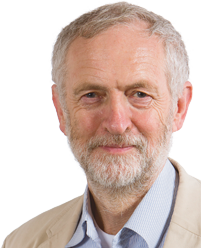
  • Jeremy Corbyn – 2015 Speech at Whittington Hospital

    jeremycorbyn

    Below is the text of the speech made by Jeremy Corbyn, the Leader of the Opposition, at Whittington Hospital on 18 December 2015.

    The NHS is facing its worst crisis since it was founded. The NHS will be over £2 billion in debt by the end of the year.

    The government is failing to meet its own targets: on A&E waiting times, cancelled operations, and cancer treatment times.

    Add in the impact of George Osborne’s social care cuts, which result in longer and needless stays in hospital, and the human consequences are all too clear.

    This week we’ve learned there are some hospitals that are so broke they are having to borrow money to buy medicines for patients and pay wages over Christmas.

    Through all this, NHS staff are doing a fantastic job and I want to thank them for their hard work, dedication and incredible professionalism.

    The Labour Party I lead will hold this government to account for their shocking failure to support and protect the world’s best health care service – our NHS.

  • Nick Gibb – 2015 Speech on Reforming Education

    nickgibb

    Below is the text of the speech made by Nick Gibb, the Minister of State for Schools, at the BIS Conference Centre in London on 22 January 2015.

    Introduction

    Thank you for that introduction [Richard Yelland].

    It is a great pleasure to be here at the launch of the first ever Education Policy Outlook.

    For well over a decade, the OECD has been at the forefront of producing high-quality international indicators which have been instrumental in informing education reforms in countries around the world – including this country.

    PISA, PIAAC and TALIS have all given us vital data on our education performance relative to other jurisdictions. The Education Policy Outlook being launched today is a welcome addition to OECD analysis.

    These surveys tell a story of remarkable improvement in some countries, and highlight complacency and stagnation in others. This can sometimes be uncomfortable. But it is essential, because understanding why some countries’ education systems succeed and others do not is the best stimulus for improvement.

    Here in England, we had our own story of stagnation. PISA and other benchmarks consistently showed that our schools were failing to progress, while those elsewhere – in Poland, Italy and Portugal for example – were rapidly improving. This was of huge concern to this country.

    Our long term economic prosperity depends upon an education system with the very highest standards. As research by Hanushek and Woessmann has found, a 25 point increase in PISA scores could raise the UK’s GDP growth rate by 0.5% every year.

    Analysis by my own department has shown that the increase in the number of pupils achieving good GCSE grades since 2010 is estimated to add around £1.3 billion to the country’s economy in the long run .

    Better schools are the single greatest step we can take towards an economy which is more productive, creates more jobs, and which equips young people with the knowledge they need to succeed in modern Britain.

    Our plan

    So, what was our response to PISA? Well, since coming to power in 2010, this government has implemented the most significant reform plan for a generation – and learning from the most successful education systems around the world has been central to that plan.

    Three key principles which draw on the best international evidence have consistently guided our approach:

    – increased autonomy for schools, coupled with

    – strong accountability

    – all underpinned by a rigorous academic curriculum

    This plan is working. Today, a million more pupils are in good or outstanding schools, as judged by Ofsted – England’s schools inspectorate.

    The English Baccalaureate – a new performance measure which encourages pupils to take core academic GCSEs, has seen a 64% increase in pupils being entered for those subjects

    And 102,000 more 6-year-olds are on track to becoming good readers following our focus on phonics teaching and the introduction of a phonics screening check in primary schools.

    But if we are to sustain these improvements, we must stay the course, and continue to learn from the best international practice.

    English complacency

    I first encountered PISA in 2002, shortly after the results were published for the very first time.

    I recall a former Permanent Secretary of the Department for Education telling me at a Public Accounts Committee hearing that the UK had just come fourth in science, seventh in reading, and eighth in mathematics out of 32 participating OECD countries.

    It was an apparently remarkable performance that confounded not just my expectations, but those of the late Professor Sig Prais of the National Institute of Economic and Social Research.

    As an expert on education systems around the world, Professor Prais was puzzled that reading and science performance in the UK was so far ahead of countries like Switzerland, a system he knew very well.

    Of course, after a tightening of OECD procedures for establishing the quality of the data, which saw the UK’s exclusion from the 2003 PISA study, we began to understand why the UK had looked so good. Analysis of England’s samples for 2000 and 2003 revealed an under-representation of lower performing schools and pupils, which had skewed results.

    Then in 2007, like Germany in 2001, we had our own ‘Pisa-Schock’.

    It was a bombshell. It saw our mean scores shift decidedly lower than the rosy picture painted in 2001. We ranked 14th out of 57 countries in science, 17th in reading, and 24th in mathematics.

    In PISA 2009, the UK mean score hardly changed. With even more countries joining and others improving faster than we were, the UK’s relative position looked even worse, placing us 25th out of 65 in reading, 28th in maths and 16th in science.

    But whilst we stagnated internationally, KS2 test scores were rising, and GCSE grades were inflating.

    In 1994, the first year in which the A* was awarded at GCSE, 10.5% of grades were either A* or A. By 2013, 22.6% of grades were A or A*.

    This steady rise gave us a false confidence that standards had improved, when the reality was quite different – and PISA gave us the evidence.

    All this was despite unprecedented levels of public spending. UK expenditure on education increased from 4.9% of GDP in 2000, to 6.4% in 2011, above the OECD average.

    So we knew that we had a more fundamental problem with our approach to education than simply spending.

    Autonomy

    Increased autonomy has been at the heart of this government’s plan for education.

    Our academies programme has freed schools from local authority control, and our free schools programme has given successful schools and dedicated groups of individuals the opportunity to establish new schools where they are most needed.

    These reforms build on previous education policy in England, but also draw on international evidence. Andreas Schleicher has been very clear – including to our own Education Select Committee – that the evidence from PISA shows that local flexibility and discretion for schools is linked to higher results and standards.

    We have taken lessons from 2 countries in particular.

    Sweden’s friskola’s have been shown to improve grades, and increase progression to universities.

    And parents of friskola children are more satisfied with their children’s education than those with children in municipal schools.

    American charter schools enjoy greater freedoms to set the curriculum and hold themselves to account, and have influenced our academies programme.

    Schools in England such as the King Solomon Academy, sponsored by Ark, have drawn on the charter school chain KIPP, the Knowledge is Power Programme – and produced excellent results.

    King Solomon, like KIPP, serves some of the poorest students, and has reported that last year 93% of students gained 5 or more GCSEs at grades A* to C grades, including English and Maths, proving that with the right methods, the background of a child is, and should be, no barrier to achievement.

    It has been one of my greatest privileges as School Reform Minister to visit many wonderful schools which have been created by talented and dedicated teachers, influenced by the international community, and enabled by government policy.

    Just 2 weeks ago, I went to visit Michaela Community free school, which opened in September 2014 and is located in the ethnically and economically diverse area of Wembley, north London. Over half of the students speak English as a second language. Nearly a third of students receive free school meals.

    I saw a rigorous academic curriculum, superb discipline, and pupils required to answer questions in class in full sentences. I have no doubt that this will become one of the best comprehensive schools in the country.

    And the academies programme has turned round hundreds of schools which were previously failing to deliver the quality of education which pupils need and parents rightly expect.

    Some of these are truly remarkable success stories. Ryecroft Primary Academy in Bradford, which opened in September 2012, Where 70.3% of their pupils are eligible for free school meals – that’s 3-and-a-half-times the national average. In 2012, just 26% of Ryecroft pupils achieved the expected level in reading, writing and mathematics at key stage 2. Last year, this had risen to 70%, and the school was judged as ‘outstanding’ by Ofsted, the schools inspectorate.

    Accountability

    Since 2010, over 4000 schools have become academies and 255 free schools have opened, all benefiting from additional freedoms but also held to account through an improved framework.

    England has, for some time, had a relatively effective accountability framework. Key stage 2 assessments and GCSEs are well embedded in our education system. Despite some problems – particularly the inexorable grade inflation. It has proved valuable to have broad and consistent measures with which to measure pupil attainment and school performance.

    But we recognised that we could go further. As Poland has demonstrated in their far-reaching and successful reforms, stronger accountability leads to better results for pupils.

    So our new key stage 2 assessments, coming into force 2016, will reflect the more challenging national curriculum and will report a precise scaled score at the end of the key stage rather than so called levels.

    We are also reforming GCSEs, making them more rigorous and ensuring they teach the core knowledge demanded by employers, and by further and higher education.

    And the new Progress 8 performance measures will shift the focus from students on the C/D borderline, to supporting students of all abilities.

    Ofsted, our schools inspectorate, abolished the rating they called ‘satisfactory’ replaced it with the rating ‘requires improvement’. These schools are now monitored and re-inspected within 2 years, not 3, and are improving more quickly than before the change.

    Academic curriculum

    As the most successful international jurisdictions show, autonomy and accountability are vital elements in a successful education system. But perhaps the part of our plan which has drawn most from best practice overseas has been our programme of reforms to the curriculum.

    As we came into government in 2010, Tim Oates, the curriculum expert from Cambridge Assessment, produced a paper entitled ‘Could Do Better’. It provided an extensive survey of the challenges we faced. Tim found that our curriculum lacked clarification, teachers were overloaded, and assessment practices were overbearing. The demands of the national curriculum were so vague that it had become impossible to decipher what children should actually be learning.

    For too long, our school curriculum lacked the basic essentials that a good education affords. The 2007 secondary curriculum, produced 3 years before we came into office, featured 29 bullet points on the curriculum aims which barely touched upon what pupils should be doing or learning. Students were being awarded the equivalent of 4 GCSEs for 1 subject, despite some of these courses being far less challenging than a single GCSE, and their options for post-16 study limited.

    There was a marked hostility towards knowledge, and an obsession with so-called transferable skills.

    The 2 schools of thought – progressivism as opposed to a rigorous focus on knowledge – are represented clearly by Michael Fullan and Daisy Christodoulou.

    In Fullan’s ‘A Rich Seam,’ he suggests that education for the 21st century should be led by curiosity and ‘new system economies.’ But his thesis, in my view, is a wolf in sheep’s clothing. Although it is not entirely clear, I think he is describing a new version of the disastrous ‘child-centred’ approach of yesterday.

    I think Christodoulou captures the position we should all subscribe to: ‘To be an active citizen’ she says ‘of a democratic society you have to know about history, the world, sciences, the arts. You have to know about things that most people do not bring to the classroom and which they cannot pick up through experience.’

    The work of academics such as ED Hirsch and cognitive psychologist Daniel Willingham has shown that teaching core knowledge must be central to any effective curriculum. Previous attempts to teach skills without knowledge, or to develop proficiency without practice, were always doomed to failure. Listening to this evidence, we recognised that a new national curriculum was essential in order to restore rigour and to drive up standards in our schools.

    And in developing this new, academic, knowledge-based curriculum, we looked overseas to find the best evidence of what works.

    The Massachusetts Miracle, as it has come to be known, has demonstrated that a rich knowledge content improves educational achievement and it improves social mobility.

    The Common Core State Standards in Massachusetts have helped to place their teenagers above those of other States’ in the US, and equal to those in South Korea, Hong Kong, and other high performing jurisdictions.

    Since the early 2000s, the Florida State Literacy Plan has sought to improve reading through phonics and phonemic awareness. They also increased accountability by publicly grading state schools.

    Between 1998 and 2013, Florida’s fourth-grade reading and math scores went from below the national average to above it.

    Since Shanghai entered PISA for the first time with the 2009 study, they have consistently outperformed every other system in reading, maths and science. Their maths performance is particularly impressive, with 15-year-olds outperforming our own by an average of 3 years.

    In September last year, we flew 71 British teachers to Shanghai to see for themselves the quality of Chinese primary-level maths lessons. They saw first-hand the 35-minute, whole-class lessons that place high expectations on every child to follow and learn the content, while providing quick catch up sessions for those who struggle.

    And in November last year, 29 Shanghai teachers made the trip to England, to demonstrate how they teach maths to young children.

    The large majority of Shanghai pupils progress through the curriculum content at the same pace. Differentiation is achieved by emphasising deeper knowledge and through individual support and intervention. The trend for differentiation in England , by contrast, encourages classrooms being divided into groups, with each group taught a separate curriculum.

    Another country in the East – Singapore – has been the inspiration behind our call for UK publishers to produce a higher standard of textbook. TALIS data shows that English teachers are 10 times more likely to feel they are lacking good resources than teachers in Singapore where good textbooks – which provide a systematic approach to building knowledge – are a standard fixture both in the class and at home.

    Our recently established maths hubs are implementing the mastery approach of East Asian countries and are also now trialling Singapore-style textbooks. Inspire Maths, published by Oxford University Press (OUP) and Maths No Problem, are now being used in some primary schools to provide structure and support to the new national curriculum.

    We aren’t the only ones influenced by East Asia. Tennessee has looked to Shanghai to inform its Teacher Peer Excellence Group project.

    Progress in the UK

    I am pleased to say that, while we have been keen scholars of international education methods, we can happily share some of our great successes too.

    As I have already mentioned, phonics teaching is having a positive impact on literacy.

    74% of state school pupils passed the phonics check last year, compared with just 58% in 2012.

    Tom Bennett and his excellent ResearchED conferences are packed with teachers demanding to know ‘what is the evidence’ behind teaching methods.

    More students are studying core academic subjects: A level maths is now the number one choice at A level, and we have seen an increase in exam entries for further maths and all the science subjects.

    And crucially, we have more girls taking science and maths subjects compared with 2010: 1,000 more taking physics A level, 2,000 more studying maths A level, and 13,000 more girls are taking physics GCSE than in 2010.

    Computing has been completely overhauled, so that pupils will now be taught the fundamentals of coding before they leave primary school.

    This will provide children with the knowledge and skills required for rewarding careers which are currently deprived of qualified candidates.

    Conclusion

    These changes are ensuring that every child leaves school prepared for life in modern Britain.

    For me, however, there is 1 litmus test that we have yet to pass.

    Professor Zhang, of Shanghai Normal University, and an expert in comparative education, believes that the key to improving is to look at one’s own system through an international prism.

    According to Professor Zhang, one of the most important reforms of the past 30 years in China has been the establishment of an ‘open door policy and learning from the world.’

    This has enabled scholars and professors, as well as ordinary school teachers, to study in other countries, bringing new educational ideas, knowledge, and approaches to teacher education and training.

    Andreas Schleicher has said that if you were to ask any East Asian educationalist the top 10 Western academics, they would be able to do so straight off.

    I fear that too few Western educationalists could do the same about their East Asian peers.

    It is not until we can do this, and adopt the best teaching methods and systems from around the world, that we can expect the UK to climb those international tables, and implement long-lasting change for the next generation.

    Thank you.

  • Nick Gibb – 2015 Speech at Music Education Expo

    nickgibb

    Below is the text of the speech made by Nick Gibb, the Minister of State for Schools, at the Music Education Expo in London on 12 March 2015.

    Good morning. It is a great pleasure to be here today at the Music Education Expo in the Barbican, home to world-class music, theatre, art, dance and film.

    And it is a fitting venue in which to be speaking about the importance of music education. As music teachers and others involved in music education, your work helps to build a love of music among pupils.

    Building this love of music in schools is crucial. Because music shouldn’t be the preserve of those who can afford it, whose parents play instruments themselves or listen to music at home. This government’s plan for education has focused on raising standards for all and narrowing the gap between disadvantaged students and their peers. In the same way that high-quality schools are essential to meet this goal, so too is high-quality music education in schools.

    Music is an important subject in its own right, combining intellectual rigour with creativity. The academic opportunities offered by music are clear – in 2009, 18.6% of pupils who achieved an A grade for music A level went to Oxbridge. Only 5 subjects had a higher progression rate.

    The wider educational and social benefits of music are also clear. ‘The Power of Music’, recently published by Professor Susan Hallam, points to the positive effects of different aspects of music teaching and training on verbal instruction, reading and comprehension, motivation, communication and behaviour.

    Senior teachers and heads in schools often speak of these benefits. As the assistant headteacher of Hackney New School, which offers all children music lessons, recently said:

    Music has undoubtedly had a huge impact. Not only are pupils enjoying school more, but almost without realising it they are gaining confidence, resilience and team working skills which they then bring into other subject areas.

    The ABRSM Making Music survey in 2014 found that there are particular disparities in music: children from less well-off backgrounds are less likely to play a musical instrument and less likely to have had music lessons. 40% of children from lower socio-economic groups who have never played an instrument said they had no opportunity to learn at school.

    That is why when we came into government in 2010 we set out high aspirations. In the remit of the ‘Review of Music Education in England’ by Darren Henley, we stated that “every child should receive a strong, knowledge-based cultural education and should have the opportunity to learn and play a musical instrument and to sing”. Music education was patchy across the country and we wanted to change that so every pupil could benefit. The Henley Review and the subsequent National Plan for Music Education were the starting point for our approach, and set out the direction of our reforms.

    Through our curriculum review, music remained a statutory subject in the national curriculum, so every child in maintained schools must study it from age 5 to 14. The new national curriculum, introduced in September, is particularly important to tackle disadvantage as the focus is on setting high expectations for everyone and ensuring that children have access to all of the national curriculum.

    Alongside the new national curriculum, we have also reformed GCSEs, A levels and vocational qualifications. The greater rigour and focus on knowledge and skills in the study of music throughout key stages 1 to 3, including exposure to a wide range of music and composers, and teaching children how to read and write music using standard staff notation, will mean that music is an option for more pupils at GCSE. And the new more rigorous GCSE will in turn better prepare students for progression to A level and beyond.

    Across all subjects, the importance of high-quality teaching is known to be the crucial factor in delivering better outcomes for pupils. We are fortunate to have some excellent music teachers working in our schools and I was lucky enough to present Classic FM’s primary school music teacher of the year award to Katie Crozier last year. Katie teaches at 2 schools in Huntingdonshire and has delivered significant improvement for pupils there. At her school, where she has taught since 2008, she has transformed the approach to music: the school has gone from having no orchestra and a choir of 8 members to a 50-member orchestra and a choir of 100 singers.

    While there is already a great deal of good practice, we also want to make sure there is support available for teachers who may need it – in particular, practical help for non-specialist primary school teachers. I am delighted that Classic FM and the ISM are going to compile, and give schools access to, a new list of 100 pieces of classical music that every child should be familiar with by the time they leave primary school.

    Being familiar with the best known classical works is as important as reading the canon. Music has been important to me personally and my suggestions for pieces to include would range from Beethoven’s Fifth Symphony to Parry’s setting of ‘I was glad’ and Allegri’s ‘Miserere’, which I still remember singing as a choirboy. I very much hope there will be strong engagement from those within music teaching with ISM and Classic FM as they develop the list.

    These initiatives highlight that our ambitions cannot be achieved by acting alone. That is one of the key reasons behind the music hubs which we established in 2012 as part of the national plan. The hubs are helping to ensure that every child has the opportunity to learn instruments through whole class teaching, that there are clear progression routes available and affordable to all young people, opportunities to play in ensembles and to sing regularly, including in choirs or vocal ensembles.

    In their first year, the hubs gave nearly half a million children the opportunity to learn an instrument for the first time, as well as working with almost 15,000 school choirs, orchestras and bands. 80,000 disadvantaged pupils took part in instrumental ensembles and choirs. Last year, the hubs were working with more than 60% of primary schools and more than 50% of secondary schools on their singing strategy, and 50,000 more children were receiving whole-class ensemble music teaching as a result of the hubs’ work.

    On a recent school visit to Redbridge Primary School, I was able to see first-hand their whole-class ensemble teaching programme, which they offer to pupils for 3 years, first hand.

    The positive impact the hubs are having is clear. That’s why in July last year we announced further funding for music hubs – an extra £18 million for music programmes, bringing the government’s investment in music education to more than £270 million since 2012.

    Government support also continues for the Music and Dance Scheme, that supports the exceptionally talented at 21 music and dance centres of advanced training and 8 specialist schools, including the Royal Ballet School, which I visited recently, the Purcell School and the Yehudi Menuhin School. Programmes such as the National Youth Music Organisations, Music for Youth and In Harmony, a national scheme which focuses on offering children in 6 deprived communities an intensive orchestra experience, also give important opportunities to children up and down the country.

    I was fortunate enough to attend the schools prom series, run by Music for Youth, at the Royal Albert Hall back in November, and enjoyed listening to performances by a wide range of ensembles, from the Glantaf Duo from South Glamorgan to the Wessex Youth Orchestra from Dorset.

    In addition to government-funded schemes, I am pleased to see other organisations working in this area to increase opportunities in music for young people – such as the National Orchestra for All. NOFA was founded by a Teach First participant in 2011 and takes 150 musicians each year from schools in London and the west Midlands to form a full orchestra, which rehearses and performs in venues such as the Southbank Centre and the Royal Academy of Music.

    The government’s free school programme has also unleashed innovation in music teaching, with a number of schools offering a specialism or focus in music such as West London Free School, East London Academy of Music and Hackney New School.

    There is a great deal to celebrate and to be proud of in our performance in music – from the great classical composers of past and present, to the string of UK artists who top the charts worldwide. And in 2 years’ time, Sir Simon Rattle will return to England to the London Symphony Orchestra here at the Barbican.

    A strong and rigorous music education is as important a part of being well educated as learning about science, history and literature. I hope our commitment to music education in schools is clear. We want to ensure this success in music continues and I am confident that our reforms have set us off in the right direction.

  • Nick Gibb – 2015 Speech on Core Academic Curriculum

    nickgibb

    Below is the text of the speech made by Nick Gibb, the Minister for Schools, at the Policy Exchange in London on 11 June 2015.

    When introducing the second reading of his great Education Act in January 1944, Rab Butler addressed a common objection of the time to the expansion of secondary education which he was about to oversee: ‘Who will do the work if everybody is educated?’

    Butler’s response was characteristically uncompromising: that ‘education itself will oil the wheels of industry and will bring a new efficiency, the fruit of modern knowledge, to aid the ancient skill of farm and field’.

    The view he was standing against – that a rich education for all is unnecessary, and perhaps even undesirable – is one which has sadly been repeated many times over the past 70 years in different forms. Today, it is more likely to be heard as a denial of the value of rigorous, academic subjects for the most disadvantaged students.

    This is an idea which those of us committed to social justice should reject. If we are to deliver a fairer, more socially mobile society, we must secure the highest standards of academic achievement for all young people, and especially those from the least advantaged backgrounds.

    Academic decline

    Many of us have always seen this denial of the value of academic disciplines for the dangerous falsehood that it is. The data shows, however, that this was not sufficient to prevent a precipitous decline in the study of academic subjects in the years prior to 2010.

    By 2010, just 43% of the cohort took a GCSE in a foreign language. In history, the figure had fallen to 31%, and in geography to 26%.

    Instead, schools had been tempted to teach qualifications which attracted the most points in the performance tables – not the qualifications that would support young people to progress. The number of so called ‘equivalent’ qualifications taken in schools up to age 16 exploded from 15,000 in 2004 to 575,000 in 2010.

    Year after year, disadvantaged young people were encouraged to take less demanding qualifications so that the ‘powers that be’ in the education world could congratulate themselves on their performance whilst failing to prepare pupils for success in later life.

    In 2011, we asked Professor Alison Wolf to conduct a review into vocational education. Her findings were stark: that many young people had previously been encouraged to take vocational qualifications which were of no, or even negative, value in the labour market. What’s more, the students being let down in this way by our education system were disproportionately from poorer backgrounds.

    Progress

    Since 2010, we have made rapid and significant progress to address this decline in academic standards.

    We introduced the new English Baccalaureate performance measure, showing the proportion of pupils in a school entering and achieving a good GCSE in English, maths, science, history or geography, and a foreign language. Schools have risen to this challenge. The proportion of pupils entering the EBacc has risen from 23% in 2012 to 39% today, and the percentage achieving it has increased from 16% to 24% over the same period. Last year, almost 90,000 more pupils were entered for the EBacc compared to 2010.

    We have also acted swiftly to implement Professor Wolf’s recommendations. To ensure that vocational qualifications are demanding and high quality, we have removed over 3,000 low-value qualifications from performance tables and introduced rigorous new standards and qualifications. Recognising the vital importance of GCSE English and maths, we have introduced a requirement for young people who fail to secure a C in GCSE English or maths at 16 to continue studying those subjects as part of their course in further education.

    But the scale of the challenge we inherited in 2010, and the importance of these academic subjects to the future strength of our culture and economy, means that we need to do more.

    Overall, disadvantaged pupils remain half as likely to be entered for the EBacc as their non-disadvantaged peers. 23% of pupils eligible for the pupil premium were entered for the EBacc, compared with 45% of all other pupils.

    This gap persists even among the most able pupils. Just last week, the Sutton Trust published analysis which looked at the GCSE performance of pupils who had previously scored in the top 10% nationally at the end of primary school. They found that, even within this group, pupils who had received free school meals were significantly less likely to be taking history, geography, a language, or triple science at GCSE than their peers.

    These children, who showed such early promise, have been let down by our failure to offer every pupil the chance to benefit from a core academic curriculum.

    This culture of low expectations has afflicted whole local authority areas. Despite our reforms, fewer than 10% of pupils in Knowsley achieve the EBacc, compared to 30% in Halton in the north-west, 35% in Westminster and 34% in Hackney. These disparities are not simply explained by social circumstance – in all 4 local authorities, the proportion of pupils identified as disadvantaged is between 40 and 56%. This is simply unacceptable.

    Today, I would like to set out this government’s plan to address this challenge by strengthening academic standards further.

    But first I want to defend our emphasis on academic subjects against 4 criticisms.

    Low expectations

    Some have argued that we cannot expect disadvantaged pupils to take academic subjects, or to be motivated by their study. In 2011, an Associate Director of the Institute of Public Policy Research said that:

    The problem [with the EBacc] is that very few students from disadvantaged backgrounds actually take those subjects, they won’t be motivated to take them. Ministers are now [effectively] incentivising schools to focus their efforts on middle-class children who do well in these subjects.

    This is a concern which was difficult to sustain in 2011, and has now decisively been proved wrong. ‘Outstanding’ schools across the country are demonstrating that a rigorous academic curriculum is the way to overcome educational disadvantage, not an inevitable victim of it.

    King Solomon Academy, situated in the heart of a disadvantaged community in Paddington, is one of these schools. 67% of GCSE pupils at King Solomon Academy are eligible for the pupil premium, but despite this, 93% of pupils entered the EBacc, and 76% of pupils achieved it in 2014.

    Rushey Mead School in Leicester is yet another example of an ‘outstanding’ school where they have high expectations for all their pupils. 33% of the school’s intake is eligible for the pupil premium, 72%, are entered for the EBacc, and 42% achieve it, well above the national average.

    These schools show that all pupils, including those from disadvantaged backgrounds, can find academic subjects motivating.

    We should never lower our expectations because too many young people are failing to reach them. Rather, we must raise standards by supporting teachers and turning around schools which are struggling. The government is determined to rise to this challenge.

    A broad curriculum

    It has also been suggested that our emphasis on academic subjects in the national curriculum, and especially the introduction of the EBacc, ‘crowds out’ the study of other important subjects, particularly the arts.

    We should acknowledge that the curriculum always involves trade-offs: more time on one subject means less time on others. Over the years, I’ve been asked to add scores of subjects – from intellectual property, to Esperanto, to den building – to the national curriculum. Many of these are important and interesting.

    The question, though, is always whether they are sufficiently important to justify reducing the time available for the existing subjects in the curriculum, and I make no apology for protecting space for the English Baccalaureate subjects wherever possible.

    That is not to say, of course, that subjects outside the English Baccalaureate have no place in schools. The EBacc is a specific, limited measure consisting of only 5 subject areas and up to 8 GCSEs. Whilst this means that there are several valuable subjects which are not included, it also means that there is time for most pupils to study other subjects in addition to the EBacc, including vocational and technical disciplines which are also vital to future economic growth. The vast majority of pupils will rightly continue to take the opportunity to study further academic GCSEs or high value, approved vocational qualifications at KS4 alongside EBacc subjects.

    Indeed, the government has consistently promoted high-quality arts and cultural education. Music and art are statutory subjects in the national curriculum, and we are spending over £270 million in music education programmes between 2012 and 2016. And we’re spending in this period over £113 million on the Music and Dance Scheme, and over £19 million on a range of cultural education programmes.

    The supposed choice between a core academic curriculum on the one hand, and the study of a broad range of subjects on the other, is a false one. Before they begin to specialise, we have to ensure that all pupils have the chance to establish a solid academic foundation upon which they can build their future. Several high-performing countries, including South Korea, Japan and the Netherlands, ensure that a core curriculum of academic subjects is studied and then examined at the age of 16.

    Success in the modern economy

    Others have argued that, in today’s economy, when we cannot predict the jobs of tomorrow, a core academic curriculum is no longer relevant. In his new book, ‘Creative Schools’, the educationalist Sir Ken Robinson writes:

    The old systems of education were not designed with this world in mind. Improving them by raising conventional standards will not meet the challenges we now face.

    This argument – that the world today is fundamentally different, so high standards in academic subjects are now less important – is not new. As the American education historian Diane Ravitch has pointed out, educationalists such as William Heard Kilpatrick were predicting the same decline in relevance of academic subjects a hundred years ago:

    There is nothing new in the proposals of the 21st century skills movement… If there was one cause that animated the schools of education in the 20th century, it was the search for the ultimate breakthrough that would finally loosen the shackles of subject matter and content.

    Sir Ken is correct to recognise the value of flexibility and creativity to success in life and the labour market. But he is wrong to suggest that the best way to foster these attributes is to reduce the emphasis on core academic subjects. As Tom Bennett, a teacher and founder of the superb ResearchEd conferences, put it in his excoriating review of Sir Ken’s latest book:

    Is there anything more sad than the sight of someone denying children the right to an academic curriculum and the fruits thereof, than from someone who is the very pinnacle of such an education?

    By contrast, the best preparation for securing a good job is a solid grounding in core academic subjects: Professor Wolf describes achieving at least a C at GCSE in English and maths as of ‘critical importance’ to employment. And University College London ‘considers experience of learning a foreign language a vital element of a broad and balanced education’.

    This isn’t a debate between academic subjects on the one hand, and vocational qualifications on the other. It’s about ensuring that all school children up to the age of 16 are properly educated in those academic subjects that best equip them for their future; either for high-quality vocational education after 16, or further academic education until ultimately going on to engage in training for a vocation.

    Anti-intellectualism

    Finally, and perhaps most perniciously, some even suggest that a core academic curriculum represents a kind of elitism – as if the study of Wordsworth’s poetry or Rutherford’s Standard Model is for some people, not others.

    Paulo Freire was a Brazilian educationalist with a commitment to the education of the poor. But his vision of an effective curriculum differs sharply from my own. He believed that the traditional model of education, in which a teacher communicates knowledge to his or her pupils, is oppressive because this deprives them of the opportunity to challenge received wisdom and develop their own contrary perspective.

    Freire was of course right that society’s culture and body of knowledge is disproportionately the product of those who have themselves benefited from a rigorous academic education. And in the past, unequal access to such an education has meant that the leading lights of literature, science and the arts have often come disproportionately from advantaged backgrounds.

    But it is exactly for this reason that we now need to extend the benefits of a rigorous academic education to all. The body of academic knowledge belongs to everyone, regardless of background, circumstance or job.

    This is not a political issue of left and right, but rather a choice whether to stand behind aspiration and social justice, or to take the easier route of excuses and low expectations.

    It is striking, therefore, that the government’s commitment to academic rigour receives support from many politicians across the political spectrum. Diane Abbott has proved to be one of the most eloquent supporters of our approach, and has spoken out powerfully in favour of a core academic curriculum:

    Precisely if someone is the first in their family to stay on past school leaving age, precisely if someone’s family does not [have] social capital, and precisely if someone does not have parents who can put in a word for them in a difficult job market, they need the assurance of rigorous qualifications and, if at all possible, core academic qualifications.

    This view is reflected in parents’ hopes for their children. In 2010, the Millennium Cohort Study found that 97% of new mothers wanted their child to go to university. A core academic education remains an aspiration for all, and the government is determined to stand with parents and teachers to make it a reality.

    To those who criticise our focus on academic subjects, or suggest that the EBacc is a Gradgrindian anachronism, I have a simple question: would you want your child to be denied the opportunity to study a science, history or geography, and a foreign language?

    Next steps

    It is for these reasons that the government will take further steps to restore academic subjects to the heart of the curriculum in all schools.

    We are reforming GCSEs and A levels so that they are more rigorous, and provide better preparation for employment and further study. GCSE students taking modern languages will now have to translate into the target language accurately, applying grammatical knowledge of language and structures in context. GCSE students in maths will have to know how to develop clear mathematical arguments and solve realistic mathematical problems.

    A level maths students are now required to study both statistics and mechanics. For both A level maths and further maths, there is a greater focus on mathematical problem solving and modelling, and language and proofs to ensure students understand the underlying mathematical concepts.

    We are working with teachers and publishers to increase the use and availability of high-quality textbooks in schools. Good textbooks provide a structured, well-honed progression through a subject’s content. They also ease workload for teachers, who no longer need to spend whole evenings and weekends preparing ad-hoc resources. Despite these benefits, textbooks are now a rare sight in English classrooms: only 10% of primary maths teachers here use a textbook as the basis for their teaching, compared to 70% in Singapore and 95% in Finland. I have challenged textbook publishers to do better, and am determined that we will secure high-quality resources to underpin an academic curriculum.

    We are improving standards of mathematics by supporting schools to adopt the proven mastery approach to teaching maths. The mastery model emphasises whole class teaching, systematic progression, and – crucially – the expectation that every child can succeed in mathematics. This approach is informed by teaching methods in Shanghai, where 15-year-olds significantly outperform their English peers. Shanghai tops the PISA table for performance in maths and students there are on average 3 years ahead of their counterparts in England.

    And just to emphasise its importance for success in later life, Shanghai also came top in the PISA table in financial literacy, scoring significantly higher than the second-placed Flemish community in Belgium.

    All of these measures will continue to raise academic standards, so that every pupil receives the education to which they are entitled. In due course, we will also set out details of our expectation that secondary school pupils should take English Baccalaureate subjects at age 16. In doing so, we will listen closely to the views of teachers, headteachers, and parents on how best to implement this commitment. And we will ensure that schools have adequate lead in time to prepare for any major changes.

    For some schools already leading the way, such as King Solomon Academy and Rushey Mead School, this change will pass by unnoticed. But for others, where only a small minority currently achieve the EBacc, there is no doubt that this will be a significant challenge. We will support these schools to raise standards, but make no apology for expecting every child to receive a high-quality core academic education.

    Together, these measures will give more pupils the preparation they need to succeed – whether that’s getting a place at a good university, starting an apprenticeship, or finding their first job. They will provide the foundations of an education system with social justice at its heart, in which every young person reaches their potential.

  • Nick Gibb – 2015 Speech on Phonics

    nickgibb

    Below is the text of the speech made by Nick Gibb, the Minister of State for Schools, on 28 March 2015.

    In To Kill a Mockingbird, after being scolded by her teacher for knowing how to read before she has been taught at school, 6-year-old Scout is consoled by her brother. Jem explains:

    Don’t worry… Our teacher says Miss Caroline’s introducing a new way of teaching. She learned about it in college. It’ll be in all the grades soon. You don’t have to learn much out of books that way – it’s like if you wanta learn about cows, you go milk one, see?

    Jem continues:

    I’m just trying to tell you the new way they’re teachin’ the first grade, stubborn. It’s the Dewey Decimal System.

    Scout goes on to reflect that:

    The Dewey Decimal System consisted, in part, of Miss Caroline waving cards at us on which were printed ‘the,’ ‘cat,’ ‘rat,’ ‘man,’ and ‘you.’ No comment seemed to be expected of us, and the class received these impressionistic revelations in silence.

    While Jem may be confusing the Dewey Decimal library classification system with John Dewey, the progressive educationalist, Harper Lee is of course satirising the ideology that gripped the US (and then, alas the UK) education system particularly from the mid-20th century onwards. Confidence in direct instruction was lost and replaced with a misguided belief in children’s ability to discover knowledge for themselves. One aspect of this was a move away from systematically teaching children to read through phonics and the introduction of learning to read by looking at words – what we all know now as ‘look and say’.

    It took Rudolf Flesch and his seminal book Why Johnny Can’t Read to call into question this approach in the 1950s. As Flesch wrote in the introduction to the book:

    Do you know that the teaching of reading never was a problem anywhere in the world until the United States switched to the present method around about 1925?

    He continued:

    ever since 1500 BC people all over the world – wherever an alphabetic system of writing was used – learned how to read and write by the simple process of memorising the sound of each letter in the alphabet.

    The success of phonics versus ‘look and say’ has been contested since and that is why it’s so important that we are here today. I am grateful to the Reading Reform Foundation for convening this discussion and for your work advancing phonics in the UK since the late 1980s. I would also like to take the opportunity to thank all of the experts in this field who continue to contribute to the debate in support of phonics and who have taught me so much over the last 10 years – Ruth Miskin, Jennifer Chew, Sue Lloyd, Debbie Hepplewhite and Marlynne Grant to name but a few.

    What I came to appreciate from you and from my experiences is the importance of teaching reading. This was highlighted to me on many occasions but one which stands out was a visit to a primary school in 2009 where I observed a one-to-one reading lesson with a girl in her last year of primary school, aged 11. The teacher showed the pupil simple words on flashcards, but the girl struggled with most of them. When she managed the word ‘even’, I asked if she could still read the word with the first ‘e’ covered up; she could not. The problem was clear. For the same reason that “Johnny couldn’t read … for the simple reason that nobody ever showed him how”, this girl could not read because she had never been taught to read. Instead, she had been drilled to recognise the word ‘even’.

    Sadly, this case was not an anomaly. Too many other pupils had similar experiences and expectations that were set far too low. In 2010, 1 in 5 children left primary school unable to read at the expected standard and 1 in 11 children left primary school with a reading ability no better than would be expected of a 7-year-old.

    This was inexcusable. Poor literacy disadvantages young people during the course of their education and continues to hold them back throughout adult life. The OECD Survey of Adult Skills published in 2013 showed that unemployed adults are twice as likely to have poor level of literacy as those who are in full-time employment. In their summary of England and Northern Ireland’s results, the OECD highlighted the fact that England was the only country that participated in the survey where young adults did not have better literacy skills than those approaching retirement age.

    It is also concerning that the UK ranked 47th out of 65 OECD countries on a measure of the number of young people who read for enjoyment. Six out of 10 teenagers in the UK regularly read for pleasure, compared to levels as high as 90% in countries like Kazakhstan, Albania, China and Thailand. The difference in reading ability between those pupils who never read for enjoyment, and those who read for even half an hour a day, is equivalent to a whole year of schooling at age 15. That is why the initiatives we announced on World Book Day earlier this month to encourage reading for pleasure – from book clubs to library membership – are so important.

    But to address the root cause of these challenges, the effective teaching of reading in our schools is crucial. In government, as we have delivered far-reaching reforms to our education system, we have made sure that these are grounded firmly in evidence. And with regard to the effective teaching of reading and raising standards of literacy, a substantial body of evidence shows that systematic synthetic phonics is the most effective way to teach all children to read, and that’s why we changed the national curriculum to make the requirements for phonics clearer.

    To quote one report from the Australian National Inquiry into the Teaching of Literacy:

    The evidence is clear […] that direct systematic instruction in phonics during the early years of schooling is an essential foundation for teaching children to read. […] Moreover, where there is unsystematic or no phonics instruction, children’s literacy progress is significantly impeded, inhibiting their initial and subsequent growth in reading accuracy, fluency, writing, spelling and comprehension.

    We have made significant progress, with an increasing number of schools recognising that phonics teaching is the most effective approach. The new national curriculum, introduced in September last year highlights the importance of phonic knowledge and the decoding of words. Between 2011 and 2013, the government provided match funding to schools for phonics training and resources. More than 14,000 schools benefited from the £23.7 million we made available. We have published core criteria for effective phonics programmes and the catch up premium, worth £500 per pupil, also supports secondary schools to support pupils who did not attain level 4 or above in reading at the end of key stage 2. I would like to thank Gordon Askew for all the work he did in that period to support the department.

    One of the most important developments has been the introduction of the phonics screening check for pupils at the end of year 1 in 2012. The check measures how many of 40 words and non-words pupils can decode successfully and helps to identify who may need further support. In 2012, 58% of pupils taking the check met the national standard. In 2013, it was 69% and by 2014, the proportion of pupils meeting the standard had risen to 74%: equivalent to 102,000 more 6-year-old children on track to read more effectively.

    These results are encouraging. In 611 primary schools, some in the most deprived parts of the country, at least 95% of pupils met the expected standard in 2014, and many schools have recognised the positive impact the teaching of phonics has on reading and literacy. For example, Ark academy chain has set itself a target of “100% of pupils being proficient early readers” and in 2014 2 Ark schools achieved a 100% success rate – Ark Conway and Ark Globe. I have seen some of the strengths of the Ark approach for myself. On a recent visit to Ark Priory Primary in Ealing, I was impressed that the year 1 pupils were reading novels such as Horrid Henry.

    Despite the improvements that have been made, there is significant disparity between local authorities, with some achieving a success rate of more than 81% in 2014 – from Darlington and Harrow to Solihull, and others not reaching even 70% – including Derby, Leicester, Norfolk and Nottingham. Additionally, children who do not meet the national standard in year 1 retake the check at the end of year 2 and in 2014, 12% of pupils had still not met the expected standard of decoding by the end of year 2 – 71,000 children.

    That is why we are determined to do more. The Phonics Partnership Grant Programme, announced in February, will see 12 to 15 networks established. Led by schools excelling at phonics teaching, the groups will work across schools to improve the quality of phonics teaching. Given the value of the phonics screening check as a diagnostic tool to identify whether pupils need further support, this week we said that we will run a pilot to extend the retake to year 3. This will be a voluntary pilot working with 300 schools, including some junior schools. Year 3 pupils will retake the check if they have not achieved the expected standard at the end of year 2 in summer 2015 (having initially taken the check at the end of year 1 in 2014). I hope this pilot will help us to understand why pupils still do not meet the standard, and the kind of support and interventions schools offer pupils who don’t meet the standard by the end of year 2.

    I am confident that the pilot will help us to further develop our evidence-based approach to policy-making and the successful implementation of teaching phonics in schools.

    With success in the basics of decoding words, pupils will be able to move on to reading with increased fluency and speed, which will enable them to develop a love of reading for pleasure and the habit of reading for pleasure. At key stage 2 I want us to reach a position where every child is routinely reading 5 children’s books a month. In short, we will continue to champion the importance of what could not be a more worthwhile objective: fluent reading.

    Thank you.

  • Nick Gibb – 2015 Speech on Maths Reforms

    nickgibb

    Below is the text of the speech made by Nick Gibb, the Minister of State for Schools, on 27 March 2015.

    Good morning.

    It’s a pleasure to be here today at the Harris Primary maths conference. This government’s education reforms have been the most radical for a generation. And the growth of the Harris Federation of academies and free schools to a chain of 36 primary and secondary schools has been one of the great successes of the last 5 years. Our approach to deliver greater autonomy for schools through academisation was based on clear evidence from around the world that in the most successful school systems schools are autonomous and accountable.

    The Harris Federation is also part of another of the evidence-based approaches we have put at the heart of our education reforms – mathematics for mastery. In early years teaching, Harris schools use Singapore maths and beyond the early years, Harris primary schools have adopted the effective mathematics curriculum, which combines Singapore and Shanghai approaches, and use maths no problem textbooks.

    As part of the second wave of the Shanghai teacher exchange, last week I was fortunate enough to observe a lesson at the Harris Primary Academy in Chafford Hundred, Essex, led by Lin Lei. In a 35 minute lesson, with all pupils facing the teacher and engaged throughout, Lin taught all of the pupils to carry out complex types of long multiplication through clear explanation of calculation methods.

    Some of you may have already heard me tell that story (perhaps even more than once) since I observed the lesson last week! But I think that reflects something truly positive – that we are undergoing a transformation in our approach to maths and how it is taught in schools.

    That transformation is so important, because our performance in maths had been stagnating over a number of years. From 2005 to 2010, while in opposition I visited hundreds of schools across the country. What I learnt from these visits was that few pupils at primary or secondary school knew their times tables. Long multiplication and long division were rarely taught, with inefficient methods such as the grid method for multiplication and chunking for long division commonplace in classrooms, neither of which are used in the Far East. When I showed visiting members of the Shanghai Municipal Education Commission they were bemused.

    I have also spent time reviewing grade E and F scripts of all 3 main exam boards maths GCSEs. What this exercise revealed was that most of the problems came down to a lack of knowledge of how to carry out basic arithmetic: pupils couldn’t multiply numbers of more than 1 digit. This was a result of the approach to teaching maths.

    For too long we set expectations too low for pupils. An approach of differentiation in primary schools saw classes being taught in different groups, pupils expected to progress at different rates and acceleration on to new topics for those doing well rather than consolidation. An over-emphasis on concepts at the expense of practice, fluency and, through that, understanding meant that too many pupils simply did not know how to perform calculations. Using textbooks became unpopular, with only 10% of maths teachers in England using a textbook for core teaching, compared to 70% in Singapore and 95% in Finland according to TIMSS 2011.

    This stagnation was reflected in our international performance in maths. Coming 24th in the PISA maths tables in 2012 was equivalent to a 3 year difference between the performance of our 15-year-olds and those at the top of the table – in Shanghai. And take up of the study of maths post-15 in England was among the lowest throughout the OECD.

    Education was failing pupils – too often those from poorer backgrounds – and denying them the opportunities that come with the study of maths. Only a solid grounding in the basics of maths will allow pupils to do well at the next level and proceed to further study such as A level. People with an A level in maths go on to earn 7 to 10% more than similarly educated people without the qualification and it opens doors to a whole range of interesting careers. We want to inspire young people to recognise the importance of maths and the opportunities it can offer, and continue studying it to the highest level so that they can compete with the best in the world and succeed throughout their education and careers.

    That is why we have attached such importance to maths, along with STEM subjects more widely. We have introduced the 34 new maths hubs and £67 million announced by the Prime Minister for STEM teaching will improve the skills of 15,000 existing teachers, and recruit an additional 2,500 specialist maths and physics teachers over the next Parliament.

    We have come a long way already. Here we are today talking about mastery – which embodies the idea that every pupil can do well and achieve high standards in maths. Mastery is the model of the high-performing Asian systems such as Shanghai, Singapore and South Korea. It delivers a meticulous approach to arithmetic, whole class teaching and focused 35 minute lessons. Frequent practice allows pupils to consolidate their understanding, and pupils are assisted through immediate and tailored in-class questioning and scaffolding techniques. Homework is frequent, and simply and quickly marked.

    The mastery approach also uses high quality resources and teaching tools – especially textbooks. Great effort and collaboration goes towards perfecting lesson design, with close attention to effective teaching methods. Whole lessons are devoted to thorough teaching of small steps of calculation – the use of the zero, for example in long multiplication.

    We have introduced a new national curriculum, which is more detailed and more demanding, to reflect the mastery approach. Year 1 pupils are introduced to all 4 functions and to basic fractions. In year 2, basic columnar addition and subtraction is studied, with carrying and borrowing in year 3. In year 2 the teaching of times tables begins, and pupils are expected to know all of the times tables up to 12 x 12 by year 4.

    Instant recall of facts like times tables is crucial because the working memory is small and so they need to be committed to long term memory, as explained by Daniel Willingham in his book ‘Why don’t students like school’. Such recall from long term memory is essential to be able to add fractions, and perform long multiplication and division, which pupils will be taught in year 5 and year 6. The year by year approach sets out greater clarity and the focus on fluency in the essentials of maths allows time for pupils to practise more to ensure deep knowledge. We are also expecting the majority of pupils to move through programmes of study at roughly the same pace.

    We have made important changes to testing. The new key stage 2 tests will assess pupils’ mastery of mathematics and the first of these new tests will be taken in summer 2016. At secondary level, reformed maths GCSEs will be more challenging qualifications, sat for the first time in 2017, with teaching beginning in September this year. While A levels will only introduce a small amount of new content, students will be required to have a deeper understanding of the mathematics they are taught. We have also focused on progression to A level, which has increased by 13% since 2010, meaning maths is now the most popular A level.

    There is no doubt that we could not be delivering these reforms to maths without the work and dedication of schools and school groups like Harris and others who are also here today.

    Through the maths hubs programme, you have been taking part in the Shanghai teacher exchange, which provides an important opportunity to learn from teachers in one of the best systems in the world, as you implement teaching for mastery in your schools. The most recent exchange came to an end on Friday, and was a resounding success. Across the maths hubs, schools are also trialling Singapore textbooks, which provide a coherent, structured programme and benefit teachers, pupils and parents.

    The next step to help spread and embed mastery is to develop a cadre of 140 primary mastery experts, who will support 3,500 teachers across primary schools to introduce teaching for mastery of mathematics effectively.

    I am grateful to all of you for being part of these reforms. They are an important example of how we have looked to the evidence of what works to deliver better outcomes to inform our policymaking. I am confident that the reward we reap from this approach will be a better quality maths teaching in our schools, higher standards of attainment among pupils and greater opportunities for them as a result.

    Thank you.

  • Edward Davey – 2015 Speech at the Association of British Insurers

    eddavey

    Below is the text of the speech made by Ed Davey, the then Secretary of State for Energy and Climate Change, at Association of Brfitish Insurers on 24 March 2015.

    Introduction

    Thank you for inviting me here today to your climate change conference.

    You may have noticed. But we’re just a few weeks away from a general election.

    For many MPs this is what Sir Alex Ferguson referred to as ‘squeaky bum time’.

    So maybe it’s appropriate I’m at the Association of British Insurers.

    Businesses can of course take out insurance against the possibility that a change in political conditions will result in a loss.

    But I’ve not yet seen a premium to insure an MP against losing their seat.

    Maybe you’ve missed a gap in the market for political life insurance.

    Though the premia would be high in this General Election – because it’s easily the most difficult to predict in living memory.

    Interestingly though your industry is getting ready for insuring the risks of climate change.

    As you look ahead at the big long-term issues for global insurance, climate change is increasingly one of the biggest risks you’re considering. And I’ve been impressed by the leadership your sector has and is showing.

    So in my speech today I want to look ahead – to one of the immediate challenges the new Government will face – the Climate Change Conference in Paris in December.

    But first I want to begin by reflecting on what has been achieved in this Parliament here in the UK to meet this climate change challenge.

    Consensus on climate change

    In 2010, the Coalition inherited ‘a number of difficulties’ from the last administration.

    The economic crisis being the most pressing.

    But credit where credit is due, on climate change, the 2008 Climate Change Act passed by the previous Government positioned the UK as one of the leading nations for pressing for action.

    And this position is supported by a wide political consensus.

    Labour, the Conservatives and the Liberal Democrats all voted in favour of the 2008 Act.

    It’s a consensus based on hard scientific evidence.

    We are on course, at present, for a world far hotter than the 2 degrees or less rise that scientists tell us should avoid the most catastrophic outcomes.

    Outcomes that will damage our prosperity, our security and our health.

    Only yesterday, public health experts warned that climate change could see tropical diseases such as malaria establish themselves in Britain in a few short decades.

    With climate change, our children and their children will face a harsher and more brutal world.

    That is why the Climate Change Act remains a key feature of the UK’s energy policies today – rightly – because it ensures that, alongside energy security and price, low carbon energy is a core objective.

    So in 2010, the Coalition did have the benefit of the Climate Change Act – and that’s helped people like me – both domestically and internationally – to argue for low carbon policies from a position of strength.

    But there was still a major weakness in the position we inherited.

    The 2008 Climate Change Act may have put in law the objective – a low-carbon economy and a decarbonised energy supply.

    But no long-term, cost-effective policy framework to meet the Carbon Budgets.

    We had a destination – but no credible road-map or vehicles to get there.

    To make matters worse the coalition faced a legacy of under-investment in energy infrastructure – particularly in low-carbon electricity generation and networks.

    No new nuclear for a generation. Renewables generating less than 7% of our electricity needs.

    So radical action has been required, to maintain energy security while we decarbonise – and at the lowest possible cost.

    Progress at home

    The solution has been green growth. With a road map to reduce emissions, and provide much needed economic development and jobs too. And with not just one vehicle, but a garage and a cycle rack full of vehicles for low carbon growth.

    First – in 2011 – our comprehensive Carbon Plan to set the strategy out to 2050. A strategy for the transition to a low-carbon economy based on the meeting the Carbon Budget System of the Climate Change Act. A practical plan.

    And second, this plan came hand in hand with a trebling of the support available to 2020 for low-carbon, as part of the Levy Control Framework. Indeed, one of my proudest achievements was negotiating the Levy Control Framework with the Treasury – because we won that negotiation!

    Third, in 2012, we set up the world’s first Green Investment Bank, dedicated to greening the economy, capitalised to the tune of £3.8bn, which is already transforming the way we look at long term climate friendly investment.

    Fourth, we also remodelled the energy efficiency landscape, primarily with a tough new legal regulation on big energy firms – the Energy Company Obligation – to boost energy efficiency investment, especially for the most vulnerable people and the hardest to heat homes, but also with the UK’s first comprehensive “whole home” assessment system and ‘pay as you save’ mechanism – the Green Deal.

    And, most important of all, Electricity Market Reform – with the 2013 Energy Act. This puts in place the world’s first low carbon electricity market, with long-term financial and legal structures to drive investment in low-carbon power generation.

    And the results of this focus on green growth have been pretty spectacular.

    Average annual investment in renewable power is now running at over twice the level of the last parliament, with 2014 a record year.

    Since 2010, renewable electricity capacity has more than doubled: in fact it’s risen by over 165%!

    Renewables now supply almost a fifth of the UK’s electricity – powering the equivalent of over 14 million homes every year.

    Britain’s low-carbon economy as a whole grew at 7% last year – outstripping growth in the economy as a whole and now supporting 460,000 jobs.

    And the insurance industry has played a vital part in all this – by developing risk management solutions for renewables and other low carbon projects.

    Thanks to green growth, the UK now has one of the least carbon intensive economies in the developed world.

    Over this parliament the UK economy has become almost 13% more carbon-efficient. With more growth not leading to more emissions.

    Proving that going green and economic development can go hand in hand.

    And, as Jeremy Oppenheim from the New Climate Economy Project, explained to you, the global opportunity for green growth is huge.

    And through our actions we have put Britain in the leading pack.

    Greenest government ever

    But the billion dollar question is this:

    What has all this action meant for UK greenhouse gas emissions?

    No other measure matters more for the climate.

    The latest stats show that between 2010 and 2013, UK carbon emission fell by 7%.

    That’s good. But I think we’ll have done even better than that – once we see the full Parliament picture.

    Official statistics setting out the 2014 provisional position will be published in the next few days. Rightly, I am not privy to the detail.

    But if you look at those 2014 indicators already published, they are pointing in the same carbon reducing direction.

    Over the last year energy consumption fell by 7%.

    Coal use for power stations fell by almost a quarter.

    Electricity from wind up by 11%

    The carbon intensity of our economy dropped by almost 6% – even as growth began to pick up over the year.

    So I can confidently predict – 2014 will have been a bumper year for cutting our emissions.

    So – when people ask me – has this been the greenest Government ever? – I answer – unequivocally – yes. Based on the evidence. Based on the stats.

    And better still – by our actions over the last 5 years, the next Government is set to be even greener still. Assuming of course it doesn’t totally mess things up.

    For the 2013 Energy Act puts in place the ‘how’ to the Climate Change Act’s “what”.

    With cross-party consensus, providing stability for investment in the low-carbon economy.

    A beacon for others to follow.

    As the Chief Economist at the International Energy Agency, Fatih Birol, has said:

    “UK energy policies are moving in the right direction and can be an example for many countries to get inspiration from”

    So the Coalition in the UK has put a lot of the policies needed to deliver on our own domestic climate targets.

    But being a green Government in the UK is no good for the global climate, if we can’t take other countries with us.

    And as a proud pro-European I was determined to take the UK’s leadership position and work with other leading nations in the EU – from the Nordics to the Germans – to build greater ambition across Europe.

    So in February 2013, I set up the Green Growth Group – of Ministers from the EU’s Environment Council. My aim was to build consensus and drive more ambitious policy around a low-carbon, pro-growth position.

    This Green Growth Group now boasts 13 member states representing 75% of Europe’s population, 85% of Europe’s GDP and 60% of the votes in the Council of Ministers.

    And it’s partly down to the Green Growth Group that the EU rediscovered its leadership on climate.

    Above all, with the new 2030 energy and climate change package.

    Based on our British blueprint, the 2030 climate framework is ambitious – but it’s also realistic and fully achievable.

    A target to reduce Europe’s domestic greenhouse gas emissions by at least 40% by 2030. At least 40%.

    Backed up by a European-wide renewables target of 27%.

    So combining the British wish for flexibility for member states to judge their own power mix, with a German and Danish demand for a strong long term signal for the industry. Which I thoroughly support.

    It’s not a deal you could strike if you were out of Europe. Or even threatening to leave Europe.

    Frankly, without nearly two years of determined EU climate diplomacy, that 2030 package would not have happened.

    But it has put the EU in a strong leadership position in the run up to this December’s key Paris UN climate summit.

    The second part of the international picture.

    Prospects for Paris

    People ask me. Will Paris be another Copenhagen – when we’re forced to agree to disagree?

    My firm answer is no.

    For the world has changed since Copenhagen. Momentum has definitively shifted.

    Almost 500 climate laws have been passed in 66 of the world’s largest emitting countries.

    Carbon markets have now been put in place in over 36 countries.

    Many of the mechanisms and concepts we will need to implement a global climate deal already exist.

    And all this action is having an impact.

    The IEA estimate that last year, for the first time in 40 years – in the absence of a serious economic crisis – global emissions did not rise.

    Of course, we actually need drastic cuts in emissions. Stopping them growing is just a first stage. But it’s a big plus.

    And for the deal, the signs are increasingly positive: in the EU, in China, in the US – together responsible for over half of global emissions – action is happening.

    In China, President Xi Jinping has embedded climate action directly into the national planning process.

    In the United States, the commitment of the White House to achieve a global climate deal has never been so strong.

    And I’m still hopeful that the new Prime Minister of India, Nahendra Modi, will lead his country to a more climate ambitious position.

    How will the negotiations go?

    Well, the EU’s 2030 Framework has placed Europe at the forefront.

    We have been one of the first to publish our Intended Nationally Determined Contributions – or INDC in the jargon. And it’s easily the most ambitious of any large country or block.

    And yet it is the UK position – fought for by me in this Coalition – that the EU should be ready to commit to go further – if there’s a comprehensive global climate deal.

    That’s why I fought for an EU target of “at least” 40% reduction.

    The words “at least” ensure the 40% target will be the floor of EU action – not the ceiling.

    So I’m pressing for the EU to develop credible options to deliver more, for instance, through using international credits.

    But it will be impossible to increase the EU’s offer – unless we see real ambition – indeed a step up in ambition – from other countries too.

    We have been the first to put our cards on the table – the spotlight must rightly now shift to other countries – as EU Leaders made clear at Friday’s European Council.

    Path to Paris

    So there is so much still to do.

    At Lima we agreed that INDCs would be progression in ambition compared to what is currently on offer.

    But the Lima decision did not set out any formal way of assessing the fairness and ambition of individual INDCs.

    And it is highly likely – probably certain now – that the aggregate of INDCs will not reflect what is needed globally to achieve our below 2 degree objective.

    So we need to use the time available between now and Paris to mobilise global civil society to up the pressure. Carrying out objective assessments. Making judgements about who is and who is not pulling their weight.

    You here at the ABI have been at the forefront of arguing for action on climate change – articulating both the risks to the UK from climate change – as well as the opportunity that low carbon growth provides.

    It is great to see leading insurers teaming up with academics and green groups to press the case for such action with today’s open letter.

    And it great to see institutions like the National Trust throwing their weight behind climate change action.

    But we are looking at an intensive year of climate diplomacy – and we look to the progressive business community and wider civil society to help us in this effort.

    Paris will not be the end of the story.

    A strong, rules based agreement in Paris must include a long term signal of where the international community is headed.

    And a strong mechanism for increasing climate ambition over time – as trust is built, as costs fall and as technological innovations rise.

    We will need to make sure we continue to help the most vulnerable countries adapt to the effects of climate change.

    The UK’s International Climate Fund, worth almost £4bn, is part of the global effort to mobilise $100bn a year by 2020 from public and private sources to help with both mitigation and adaptation in developing countries.

    I can announce today that DECC plans to create a new pilot joint venture with the UK Green Investment Bank worth £200m over three years to assist in investment of the UK’s International Climate Fund .

    It will focus on renewable energy and energy efficiency projects in developing countries; delivering significant emissions reductions and poverty reduction by supporting economic growth, job creation, and the development of reliable energy infrastructure.

    And by working with the Green Investment Bank, we can maximise the commercial viability, impact and effectiveness of UK climate finance.

    And this work has to go hand in hand with reducing incentives for high-carbon energy.

    That is why, in November 2013, I announced that the UK will end support for public financing of new coal-fired power plants overseas.

    And why we are working with the US to change the rules on OECD export credit support to effectively rule out unabated coal.

    One of the long-term issues we also need to tackle is that of stranded assets in fossil fuels.

    We know that in the absence of Carbon Capture and Storage, a great deal of the world’s current fossil fuel reserves are unburnable if we are to limit global warming to 2 degrees.

    Coal reserves, in particular, are a cause of concern.

    Research suggests that over 80% of global coal reserves should remain untouched.

    That is why DECC is supporting the climate analysis work of the Bank of England – including the impact of climate change on the insurance sector expected later in the year.

    We are providing data on emissions pathways and investments to track how investment allocations are already changing. It’s why I’m so keen on the work done by the Carbon Tracker Initiative.

    It’s why we do need to look at disinvestment from coal assets.

    But let me also be clear – we will still need a lot of oil and gas over the next few decades, as we decarbonise rapidly.

    So the policy question is – how, during this historic energy transition from high to low carbon, do we maintain the financial system’s strength, given it’s highly exposed to fossil fuels assets?

    I’m arguing for disclosure. Transparency. Reporting requirements on firms and financial institutions – to force them to set out the future income they expect from their fossil fuel assets. To give long term investors more information on which to base their decisions.

    This will help smooth the transition to a low-carbon economy.

    As Paul Fisher from the Bank of England, said this month:

    “Even though the full impacts of climate change often may not be visible in the short-term, it is well worth insurers being alert to emerging risks, including those from policy makers”

    Not that politically subtle for a central banker!

    So let me conclude by looking at what the General Election could hold here in the UK.

    Conclusion

    I’m pleased to say that the political consensus I spoke about at the beginning remains healthy today.

    The Valentine’s Day pledge by the leaders of the three main UK parties on Climate Change demonstrates this.

    A pledge to stick to the Climate Change Act and its Carbon budgets system.

    To continue the drive towards a low-carbon, energy efficient economy, and ending the use of unabated coal.

    And to work for a legally binding deal in Paris that limits temperatures rises to below the 2 degree threshold that will avoid the worst effects of climate change.

    The next Government will face an intense six months of climate diplomacy.

    But how that Government acts will inevitably impact on our ability to make a difference in Paris.

    And while the Valentine’s Day pledge gives us some confidence, I do see difficulties.

    [political content removed]

    So the General Election does bring uncertainty at a critical time.

    But I remain an optimist.

    With the world-leading platform built by successive UK Governments.

    Especially the significant achievements of the last 5 years, at home and abroad.

    With the wide coalition of the willing. Not just in politics, not just in the UK – but across global civil society. The business community. And here, our financial community.

    I do believe the prospects for a comprehensive and binding global deal to tackle climate change are the best in a generation.

    Yes, the deal won’t be perfect.

    Of course, Paris will not be the last word.

    You bet, we’ll need climate talks after Paris.

    But we cannot let this this moment slip by.

    In Paris, the world has to act. And Britain has to lead.