Tag: 2015

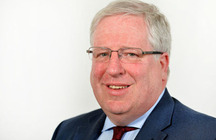
  • Patrick McLoughlin – 2015 Statement on the Future of Rail

    Below is the text of the speech made by Patrick McLoughlin, the Secretary of State for Transport, in the House of Commons on 26 November 2015.

    I wish to inform the House of the latest developments on rail investment and the recent publication of Sir Peter Hendy’s re-plan in resetting the rail upgrade programme, which can be found on Network Rail website.

    In June, I announced that important aspects of Network Rail’s investment programme were costing more and taking longer. I also announced the appointment of Sir Peter Hendy as the new Chair of Network Rail, and asked him to develop proposals for how the rail upgrade programme could be put on a more realistic and sustainable footing.

    Sir Peter Hendy has now provided me with his proposal for how to re-plan our rail upgrades, following his advice to un-pause works on TransPennine and Midland Main Line in September. I have accepted his recommendations, subject to a short period of consultation with relevant stakeholders. His report was published on Wednesday 25 November 2015 as part of the spending review announcements. I placed a copy of his report in the libraries of both Houses yesterday.

    Firstly, I want to be absolutely clear that no infrastructure schemes have been cancelled. Flagship improvement works to build a Northern Powerhouse in the north and the Midlands are underway, helping to rebalance our country’s economy by creating an engine for growth. Electrification of the TransPennine and Midland Main Line has already resumed and will completely transform the railways by improving city to city connectivity.

    Radical schemes such as Crossrail, Thameslink and works on the Great Western will make journeys better, simpler, faster and more reliable throughout the south-east and south-west. Britain’s railways are truly on the road to recovery, despite years of underinvestment by successive governments.

    Sir Peter and I are both absolutely resolute in our drive to fix the problems in the planning process for rail enhancements. That is why I asked Dame Colette Bowe to look at lessons learned from the planning processes used for the 2014 to 2019 enhancements programme, and to make recommendations for better investment planning in future. I published her report on Wednesday 25 November, which I have laid as a command paper in the House and copies of the report have been placed in the libraries of both Houses.

    I have accepted all of Dame Colette Bowe’s recommendations. My department, together with Network Rail and the Office of Rail and Road, are taking urgent steps to develop and implement a number of actions following her recommendations. These will ensure that an improved approach to planning and delivering rail infrastructure enhancements is put in place. I have placed a copy of my response to the Bowe report in the libraries of the House and on my department’s website.

    Building the infrastructure our country needs is incredibly challenging. It depends on hard work and good design and thousands of people working night after night, sometimes in very difficult conditions. Over Christmas and New Year alone, over 20,000 members of Network Rail will be working to deliver the railway upgrade plan. This is a £150 million investment, which will provide new station facilities, longer platforms, extra tracks, new junctions and thousands of pieces of new, more reliable equipment to make journeys better.

    We must continue to invest. Our railways matter, not just helping people get around, but helping them get on. It is absolutely crucial that our infrastructure is delivered efficiently and continues to represent the best value for money.

  • Patrick McLoughlin – 2015 Speech on Northern and TransPennine Express Rail Franchises

    Below is the text of the statement made by Patrick McLoughlin, the Secretary of State for Transport, in the House of Commons on 9 December 2015.

    I am pleased to inform the House of the award of 2 new passenger rail franchises. Following separate, rigorous competitions I intend to award the Northern franchise to Arriva, and the TransPennine Express (TPE) franchise to First. These awards will be confirmed subject to successful completion of a standstill period of at least 10 days.

    Both franchises are due to start on 1 April 2016. The Northern franchise will run for 9 years, until 31 March 2025, with an extension of 1 year callable at my discretion. The TPE franchise will run for 7 years, until 31 March 2023, with an extension of 2 years callable at my discretion.

    My department set out ambitious plans for the new franchises in our invitations to tender earlier this year and both Arriva and First have gone well beyond them; exceeding our requirements. This means that these franchises will oversee the biggest transformation of rail journeys in the north of England in decades, with an unprecedented package of improvements for passengers.

    Together, these operators will oversee a massive £1.2 billion boost to rail services with brand-new modern trains, more seats, more services and a host of improvements to deliver a modern, 21st century passenger experience. This one nation government is committed to closing the economic gap between north and south, and these new franchises will help to bring the Northern Powerhouse to life. They will play key roles in rebalancing the economy, creating jobs, opportunity and growth, and will provide significantly better journeys across the region. Crucially, in a key step towards full devolution, these contracts will be managed in Leeds by a joint team from the Department for Transport and Rail North, which represents the region’s 29 local transport authorities.

    Across both franchises, Arriva and First will provide much needed new-build trains, with the introduction of more than 500 brand-new carriages. They will also remove the outdated and unpopular Pacer trains from across the north. These plans will create space for more than 40,000 extra passengers at the busiest times across the north and bring in thousands of extra services a week for passengers. Alongside these investments the franchises performance will be improved to meet challenging targets to reduce cancellations and short-formations.

    There will also be significant improvements for passengers’ experience, with the roll out of free Wi-Fi on trains and at stations and the installation of on-board media servers providing on-train entertainment and real-time passenger information to smartphones and tablets. Automatic delay compensation for season and advance purchase ticket-holders will be introduced across the region. First and Arriva will also invest more than £55 million in improving stations and bring them into the 21st century.

    The new franchises will also mean significant returns to the government and better value for the taxpayer. On TransPennine Express, First will pay premium to the government of around £400 million over the life of the new franchise, taking the franchise out of subsidy for the first time. On the Northern franchise, Arriva will reduce the amount of annual government subsidy required by around £140 million over 9 years.

    The award of these franchises is a hugely positive story for rail in the north of England. They are further proof that private sector competition is good for passengers, local communities and taxpayers. This government promised passengers we would give them the premium-quality rail services that a Northern Powerhouse deserves. I am delighted that these awards will deliver exactly that.

  • Patrick McLoughlin – 2015 Statement on HS2

    Below is the text of the statement made by Patrick McLoughlin, the Secretary of State for Transport, on 30 November 2015.

    HS2 and the Northern Powerhouse

    Good strategic transport links are central to the success of our country. This government — more than any before — is committed to making sure we have the infrastructure we need to deliver economic growth and rebalance the country’s economy, not just in the immediate future, but for the long term.

    I am therefore making announcements today (30 November 2015) on how transport is continuing to deliver the Northern Powerhouse through HS2 and the Northern transport strategy.

    HS2

    HS2 is a key part of the future of our country’s railways. Last week’s Spending Review announcement confirmed the government’s commitment to the scheme. This is a big step forward for HS2 and the creation of a Northern Powerhouse. This gives funding certainty to HS2. It also gives more certainty to the towns and cities that would be served by HS2 that they can plan for its arrival, and to the private sector that there will be future investment opportunities.

    HS2 will not be a separate, standalone railway. It will be the new backbone of our national rail network, with HS2 services running from London and Birmingham to cities in the north of England including Manchester, Leeds, Liverpool, Newcastle and on to Scotland. It will not only deliver significant journey time savings, but also much needed additional capacity and increased connectivity. Private sector companies will be able to bid to run HS2 services, and will also be able to use this capacity to offer a wider range of services.

    We are making good progress with HS2 Phase One (from London to Birmingham). The hybrid Bill for this part of the railway is proceeding through Parliament and we are aiming to achieve Royal Assent by the end of 2016, so that construction can begin in 2017.

    In his reports, ‘HS2 plus’ (March 2014) and ‘Rebalancing Britain’ (October 2014), Sir David Higgins recommended that we seek to build the section of the route to Crewe more quickly to deliver further benefits to the north sooner. We agree that we should realise the benefits of HS2 as soon as possible. I am therefore announcing today my decision on the section of the route from Fradley in the West Midlands to Crewe — now referred to as ‘Phase 2a’. We intend to accelerate Phase 2a so that it opens 6 years earlier than planned, in 2027. This will bring more capacity and faster HS2 services to the north-west of England, including Crewe, Liverpool, Manchester and Scotland much sooner than originally planned. Our plans will help to support growth and deliver jobs more quickly.

    Powers to build this section of the route will be sought through a separate hybrid Bill which I intend to introduce to Parliament in 2017. HS2 Ltd have now procured Professional Services Consultants (PSCs), for the purposes of supporting the hybrid Bill development.

    In the light of my decision on the HS2 route from the West Midlands to Crewe I am also today issuing safeguarding directions for that part of the route, having considered responses to the November 2014 consultation on this. The directions will ensure that new developments in this corridor do not affect the ability to build or operate Phase 2a or lead to excessive additional costs. Safeguarding also triggers the statutory blight regime. Qualifying owner-occupiers whose property is within the safeguarded zone will have the right to ask the government to buy their property by serving a blight notice. We are committed to assisting people affected by HS2. All those living within the safeguarding zone will receive a letter informing them about potential entitlements. And I am also today launching a consultation on a wider package of assistance measures for owner-occupiers, which go well beyond what we are required to do by law, for those living along this section of the route, as we have already done for Phase One.

    We set out our initial preferred route for Phase Two of HS2 in January 2013 and later that year conducted a public consultation exercise seeking the public’s views on the route. Today, we have published the independent analysis by Ipsos MORI of all the responses to the 2013 Phase Two route consultation. My route decision on Phase 2a takes account of the consultation responses regarding that section of the route; and the command paper also responds to the cross-cutting issues raised.

    We continue to progress plans for the rest of the HS2 Phase Two route. I welcome the way local authorities, most recently those in Leeds, the Northern Gateway Partnership and the East Midlands, have come together to support HS2 plans in their areas. Further work is needed on the remainder of the Phase Two route before a decision can be taken. I intend to make a decision in autumn 2016, but today I can update the House on my thinking as follows:

    Leeds: We have now received Sir David Higgins’ report on Leeds Station — which is also published today. It recommends an integrated design for the HS2 station, while maintaining a southerly route into the city. I am minded to agree with Sir David’s proposal.

    South Yorkshire: Sheffield Meadowhall was the government’s preferred station location in the Phase Two route consultation. The evidence continues to suggest that this is likely to be the best way of serving the wider South Yorkshire region and we are working with the National Infrastructure Commission and Transport for the North on the possible interfaces with Northern Powerhouse rail. However, we acknowledge there are arguments in favour of a city centre location and continue to examine relevant analysis.

    East Midlands: Sir David Higgins has confirmed that HS2 Limited recommends a hub station should be located at Toton. Toton is also supported by the East Midlands local authorities who are united behind this proposed location. The government therefore continues to support Toton as the best location for an East Midlands Hub. Last week the Chancellor announced growth funding to allow the area to start its planning for HS2. Part of this will be released this year, and the remainder would be released when a decision is made.

    Manchester: Manchester Piccadilly continues to look like the right location for HS2’s Manchester terminus. To maximise its potential to support economic growth in the region, it will be important to ensure effective co-ordination with the development of Northern Powerhouse rail to transform east-west links across the north of England. We are continuing our work through Transport for the North, and with the National Infrastructure Commission, to explore synergies and integration between the schemes, in order to develop the right rail infrastructure that delivers growth across the whole of the north of England.

    We also remain of the view that a Manchester Airport station is likely to be the right option, subject to agreeing an appropriate third party funding contribution to the costs.

    In 2014, Sir David Higgins recommended that HS2 serve a north-west hub station at Crewe. While I am not taking decisions on Crewe hub today, I do support the vision for a Crewe hub. Work is ongoing I intend to make further announcements in 2016, and any Crewe hub scheme will be subject to consultation. To support the work that the Northern Gateway Partnership is doing to develop growth and regeneration plans ahead of a decision I am releasing part of this funding this year.

    I have asked HS2 Ltd to explore options for how we might best serve Stoke and Macclesfield, including through classic-compatible trains via Handsacre Junction. Handsacre Junction is part of Phase One and will allow HS2 trains to serve Stafford.

    Scotland will benefit from reduced journey times as soon as Phase One opens (3 hours 56 minutes from London to Glasgow, compared with a typical journey time of 4 hours 31 minutes at present). Accelerating delivery of Phase 2a between the West Midlands and Crewe will further reduce the journey time from London to Glasgow to 3 hours 43 minutes. The full “Y” network will provide faster services from London to both Glasgow (3 hours 38 minutes) and Edinburgh (3 hours 39 minutes). The UK government and the Scottish government are working closely together to consider options to further reduce journey times. We hope to make a statement on next steps in the New Year.

    I have not taken any decision on the remainder of the Phase Two route. We will respond in full to consultation responses relating to the rest of the Phase Two route when a route decision is taken in 2016.

    Copies of the command Paper: High Speed Two: east and west — the next steps to Crewe and beyond and other accompanying documents have been made available in the libraries of both Houses and can be found on GOV.UK.

    – High Speed Two: east and west — the next steps to Crewe and beyond command paper

    – HS2 Phase Two: from the West Midlands to Leeds and Manchester document collection

    – HS2: government response to the Phase 2a safeguarding consultation command paper

    – HS2 Phase 2a: strategic case

    – HS2 Phase 2a: economic case

    – HS2: supplement to the October 2013 strategic case

    – HS2: rail alternatives to Phase 2a

    – High speed rail expenditure report 2014 to 2015

    The cost of HS2 has not changed since the Spending Review 2013. The Spending Review 2015 confirmed an overall budget of £55.7 billion in 2015 prices. This is consistent with the £50.1 billion (in 2011 prices) set in 2013, but has been uprated to take account of inflation.

    Transport for the North and the northern transport strategy
    Today, jointly with Transport for the North, we are publishing a progress report on the Northern Transport Strategy, which includes updates on our progress across the full range of the strategy, including international connectivity, freight, smart and integrated ticketing, strategic roads and Northern Powerhouse rail. The fast, frequent, reliable and comfortable rail service we plan will underpin the Northern Powerhouse economy. Copies of the report The northern transport strategy: autumn report have been placed in the libraries of both Houses and can be found on GOV.UK.

    The government has also taken steps to support the development of Transport for the North as an organisation that represents the whole of the north of England and can speak to government with one voice on the region’s transport priorities.

    Last week’s spending review committed £50 million of funding over this Parliament to help Transport for the North drive forward plans to transform the north’s transport links and build a single regional economy.

    Today, I am delighted to announce, jointly with Transport for the North, the appointment of John Cridland as the new independent Chair of the Transport for the North Partnership Board. Together with his Chief Executive, David Brown, John Cridland will have the responsibility for delivering the Northern Transport Strategy, working closely in partnership with Lord Adonis and the National Infrastructure Commission.

    Following advice from the National Infrastructure Commission in March 2016, schemes such as Northern Powerhouse rail will have access to a brand new £300 million national Transport Development Fund.

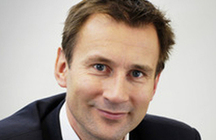
  • Jeremy Hunt – 2015 Statement on Junior Doctors

    jeremyhunt

    Below is the text of the speech made by Jeremy Hunt, the Secretary of State for Health, in the House of Commons on 30 November 2015.

    With permission Mr Speaker I would like to update the House on the junior doctors strike.

    Earlier this month, the union representing doctors, the BMA, balloted for industrial action over contract reform. Because the first strike is tomorrow I wish to update the House on contingency plans being made.

    Following last week’s spending review, no one can be in any doubt about this government’s commitment to the NHS, but additional resources have to be matched with even safer services for patients. That is why, on the back of mounting academic evidence that mortality rates are higher at weekends than in the week, we made a manifesto commitment to deliver truly 7-day hospital services for urgent and emergency care.

    However, it is important to note that 7-day services are not just about junior doctor contract reform. The Academy of Medical Royal Colleges noted that “the weekend effect is very likely attributable to deficiencies in care processes linked to the absence of skilled and empowered senior staff in a system which is not configured to provide full diagnostic and support services 7 days a week.” So our plans will support the many junior doctors who already work weekends with better consultant cover at weekends, 7-day diagnostics and other support services, and the ability to discharge at weekends into other parts of the NHS and the social care system.

    But reforming both the consultants’ and junior doctor contracts is a key part of the mix because the current contracts have the unintended consequence of making it too hard for hospitals to roster urgent and emergency care evenly across 7 days. Our plans are deliberately intended to be good for doctors – they will see more generous rates for weekend work than those offered to police officers, fire officers and pilots. They protect pay for all junior doctors working within their legal, contracted hours, compensating for a reduction in anti-social hours with a basic pay rise averaging 11%. They reduce the maximum hours a doctor can work in any one week from 91 to 72 and stop altogether the practice of asking doctors to work 5 nights in a row. Most of all they will improve the experience of doctors working over the weekend by making it easier for them to deliver the care they would like to be able to deliver to their patients.

    Our preference has always been a negotiated solution but, as the house knows, the BMA have refused to enter negotiations since June. However, last week I agreed for officials to meet them under the auspices of the ACAS conciliation service. I am pleased to report to the house that, after working through the weekend, discussions led to a potential agreement early this afternoon between the BMA leadership and the government. This agreement would allow a time-limited period during which negotiations can take place, and during which the BMA agrees to suspend strike action and the government agrees not to proceed unilaterally with implementing a new contract. This agreement is now sitting with the BMA junior doctors’ executive committee, who will decide later today if they are able to support it.

    However, it is important for the house to know that right now strikes are still planned to start at 8am, so I will now turn to the contingency planning we have undertaken. The government’s first responsibility is to keep its citizens safe. This particularly applies to those needing care in our hospitals so we are making every effort to minimise any harm or risks caused by the strike.

    I have chaired three contingency planning meetings to date and will continue to chair further such meetings for the duration of any strikes. NHS England are currently collating feedback from all trusts but currently we estimate the planned action will mean up to 20,000 patients may have vital operations cancelled, including approximately 1,500 cataracts operations, 900 skin lesion removals, 630 hip and knee operations, 400 spine operations, 250 gall bladder removals and nearly 300 tonsil and grommets operations.

    NHS England has also written to all trusts asking for detailed information on the impact of the strikes planned for 8 and 16 December which will involve not just the withdrawal of elective care, but the withdrawal of urgent and emergency care as well. We are giving particular emphasis to the staffing at major trauma centres and are drawing up a list of trusts where we concerns about patient safety. All trusts will have to cancel considerable quantities of elective care in order to free up consultant capacity and beds. So far, the BMA has not been willing to provide assurances they will ask their members to provide urgent and emergency cover in areas where patients may be at risk and will continue to press for such assurance.

    It is regrettable that this strike was called even before the BMA had seen the government’s offer, and the whole house will be hoping today that the strike is called off so that talks can resume. But whether or not there is a strike, providing safe services for patients will remain the priority of this government as we work towards our long term ambition to make NHS care the safest and highest quality in the world. I commend this statement to the house.

  • David Cameron – 2015 Statement to Parliament on Military Action in Syria

    davidcameron

    Below is the text of the statement made by David Cameron, the Prime Minister, in the House of Commons on 2 December 2015.

    Introduction

    Mr Speaker, I beg to move the motion on the order paper in my name and that of my Rt Hon Friends.

    The question before the House today is how we keep the British people safe from the threat posed by ISIL.

    And Mr Speaker, let me be clear from the outset, this is not about whether we want to fight terrorism, it’s about how best we do that.

    I respect that governments of all political colours in this country have had to fight terrorism and have had to take the people with them as they do so.

    And I respect people who come to a different view from the government and from the one I’ll set out in the House today, and those who vote accordingly.

    And I hope that provides some reassurance to Members right across the House.

    Mr Speaker, in moving this motion, I am not pretending that the answers are simple.

    The situation in Syria is incredibly complex.

    I am not overstating the contribution that our incredible servicemen and women can make.

    Neither am I ignoring the risks of military action nor am I pretending that military action is any more than one part of the answer.

    I am absolutely clear that we must pursue a comprehensive strategy that also includes political, diplomatic and humanitarian action.

    And I know that the long-term solution in Syria – as in Iraq – must ultimately be a government that represents all of its people and one that can work with us to defeat the evil organisation of ISIL for good.

    But Mr Speaker, notwithstanding all of this, there is a simple question at the heart of the debate today.

    We face a fundamental threat to our security.

    ISIL have brutally murdered British hostages.

    They’ve inspired the worst terrorist attack against British people since 7/7 on the beaches of Tunisia and they’ve plotted atrocity after atrocity on the streets here at home.

    Since November last year our security services have foiled no fewer than 7 different plots against our people.

    So this threat is very real.

    And the question is this: do we work with our allies to degrade and destroy this threat?

    And do we go after these terrorists in their heartlands from where they are plotting to kill British people or do we sit back and wait for them to attack us?

    In answering this question we should remember that 15 months ago facing a threat from ISIL in Iraq this House voted 524 to 43 to authorise airstrikes in Iraq.

    Since then our brilliant RAF pilots have helped local forces to halt ISIL’s advance and recover 30% of the territory ISIL had captured.

    On Monday I spoke to the President of Iraq in Paris and he expressed his gratitude for the vital work our forces are doing.

    And yet when our planes reach the border with Syria, a border that ISIL themselves do not recognise, we can no longer act to defend either his country – or our indeed country.

    Even when we know that ISIL’s headquarters are in Raqqah in Syria and it is from here that many of the plots against our country are formed.

    Mr Speaker, we possess the capabilities to reduce this threat to our security.

    And my argument today is that we should not wait any longer before doing so.

    We should answer the call from our allies.

    The action we propose to take is legal, it is necessary and it is the right thing to do to keep our country safe.

    And my strong view is that this House should make clear that we will take up our responsibilities rather than pass them off and put our own national security in the hands of others.

    Key questions to answer

    Now Mr Speaker, since my statement last week, the House has had an opportunity to ask questions of our security experts.

    I have arranged a briefing for all Members as well as more detailed briefings for Privy Councillors.

    I have spoken further to our allies – including President Obama, Chancellor Merkel, President Hollande and the King of Jordan.

    The King of Jordan has written in The Daily Telegraph today expressing his wish for Britain to stand with Jordan in eliminating this global threat.

    I have also listened carefully to the questions asked by Members on all sides of this House and I hope that Honourable Members can see the influence this House has had on the motion that stands before us.

    The stress on post-conflict stabilisation and reconstruction, the importance of standing by our allies, the importance of only targeting ISIL, not deploying ground troops in combat operations, to avoid civilian casualties, the importance of ceasefires and a political settlement, a commitment to regular updates to this House.

    I’ve drawn these points from across the House and put them in the motion because I want as many people as possible to feel able to support this action.

    In my remarks, I want to address the most important points raised and I will of course take as many interventions as I can.

    Mr Speaker, the key questions that have been raised are these.

    First, could acting in this way actually increase the risk to our security by making an attack on Britain more likely?

    Second, does Britain really have the capability to make a significant difference?

    Third, the question asked by a number of Members – including the Hon Member for Gordon – is why don’t we just increase our level of air strikes in Iraq to free up capacity amongst other members of the coalition, so they can carry out more air strikes in Syria.

    Fourth, will there really be the ground forces needed to make this operation a success?

    Fifth, what is the strategy for defeating ISIL and securing a lasting political settlement in Syria?

    And sixth, is there a proper reconstruction, post conflict stabilisation plan for Syria?

    I want to try in the time I’ve got available to answer all of these in turn.

    Isil or Daesh

    But before we get on to all these things, Mr Speaker, I want to say a word about the terminology we use to describe this evil death cult.

    Having carefully considered the strong representations made to me by the Hon Member for Gillingham and Rainham and having listened to many Members of Parliament from across the House, I feel it is time to join our key ally France, the Arab League, and other members of the international community in using as frequently as possible the terminology Daesh rather than ISIL.

    Because frankly this evil death cult is neither a true representation of Islam nor is it a state.

    Let me turn to the important questions.

    Could acting increase the risk to our security?

    First, could acting increase the risk to our security?

    This is one of the most important questions we have to answer.

    Mr Speaker, Privy Councillors and Members from across the House have had a full briefing from the Chair of the independent Joint Intelligence Committee.

    Obviously I can’t share all the classified material but I can say this.

    Paris wasn’t just different because it was so close to us, or because it was so horrific in scale; as different because it showed the extent of terror planning from Daesh in Syria and the approach of sending people back from Syria to Europe.

    This was if you like, the head of the snake in Raqqa in action.

    So it’s not surprising in my view that the judgement of the Chair of the Joint Intelligence Committee and the judgement of the Director General of the Security Service is that the risk of a similar attack in the UK is real and that that the UK is already in the top tier of countries on ISIL’s target list.

    So let me be frank, Mr Speaker.

    If there is an attack on the UK in the coming weeks or months, there will be those who try to say it has happened because of our airstrikes.

    I do not believe that would be the case.

    Daesh have been trying to attack us for the last year – as we know from the 7 different plots that our security services have foiled.

    The terrorist threat level to the UK was raised to severe last August in the light of the threat from Daesh, meaning an attack is highly likely.

    Eight hundred people – including families and children – have been radicalised to such an extent that they have travelled to this so-called caliphate.

    The House should be under no illusion: these terrorists are plotting to kill us, and to radicalise our children, right now.

    They attack us because of who we are, not because of what we do.

    But when it comes to the risks of taking military action the risks of inaction are far greater thank the risks of what I propose.

    Would British airstrikes in Syria really make a difference?

    Next, there are those who ask whether Britain conducting strikes in Syria will really make a difference.

    This is a question that came up.

    I believe we can make a difference.

    I told the House last week about our dynamic targeting about our Brimstone missiles, about the RAPTOR pod on our tornadoes, and the intelligence gathering work of our REAPER drones.

    But there is another way of putting this which I think is equally powerful.

    There is, of course, in the coalition a lot of strike capability but when it comes to precision strike capability – whether covering Iraq or Syria – last week, the whole international coalition had some 26 aircraft available.

    Eight of those were British tornadoes.

    So typically, the UK actually represents between a quarter and a third of the international coalition’s precision bombing capability.

    And we also have about a quarter of the unmanned strike capability flying in the region.

    So we do have a significant proportion of high precision strike capability.

    That’s why this decision is so important.

    So the argument I was making is one reason why members of the international coalition – including President Obama and President Hollande who made these points to me personally – they believe that British planes would make a real difference in Syria, just as they are already doing in Iraq.

    Why not just increase our level of airstrikes in Iraq?

    In many way, what I’ve just said I believe helps to answer the next question that some Members have asked about why we do not simply increase our level of air strikes in Iraq to free up other coalition capacity for strikes in Syria.

    We have these capabilities that other Members of the coalition want to benefit from.

    And it makes absolutely no sense to stop using these capabilities at a border between Iraq and Syria that Daesh simply do not recognise or respect.

    In fact, there was a recent incident in which Syrian opposition forces needed urgent support in their fight against Daesh.

    British tornadoes were 8 minutes away just over the border in Iraq, no-one else was close.

    But Britain couldn’t help, so the Syrian opposition forces had to wait 40 minutes in a perilous situation while other coalition forces were scrambled.

    Now that sort of delay, it endangers the lives of those fighting Daesh on the ground and frankly does nothing for our reputation with our vital allies.

    There is a much more fundamental answer as to why we should carry out air strikes in Syria ourselves.

    And it’s this.

    It is Raqqa in Syria that is the headquarters of this threat to our security.

    It is in Syria where they pump and sell the oil that does so much to help finance their evil acts.

    And as I’ve said, it is in Syria where many of the plots against our country are formed.

    Will there really be the ground forces to make the operation a success?

    Let me turn to the question of whether there will be the ground forces to make this operation a success.

    Those who say there aren’t as many ground troops as we would like and that they are not all in the right place, they are correct.

    We are not dealing with an ideal situation but let me make a series of, I think, important points.

    First, we should be clear what air strikes alone can achieve.

    We don’t need ground troops to target the supply of oil which Daesh uses to fund terrorism.

    We don’t need ground troops to hit Daesh’s headquarters, their infrastructure, their supply routes, their training facilities, their weapons supplies.

    It’s clear that airstrikes can have an effect, as I’ve just said, with the issue of Khan and Hussain.

    So irrespective of ground forces, our RAF can do serious damage to Daesh’s ability right now to bring terror to our streets and we should give them our support.

    As I said last week, the full answer to the question of ground forces can’t be achieved until there is a new Syrian government that represents all the Syrian people, not just Sunni, Shia and Alawite, but Christian, Druze and others.

    And it is this new government who will be the natural partners for our forces in defeating Daesh for good.

    But there are some ground forces that we can work with in the meantime.

    Last week I told the House that we believe there are around 70,000 Syrian opposition fighters who do not belong to extremist groups and with whom we can co-ordinate attacks on Daesh.

    The House will appreciate there are some limits on what I can say about these groups.

    Not least because I can’t risk the safety of these courageous people – who are being targeted daily by the regime, or by Daesh, or by both.

    But I know this is an area of great interest and concern for the House, so let me try and say a little more.

    The 70,000 is an estimate from our independent Joint Intelligence Committee based on a detailed analysis, updated on a daily basis, and drawing on a wide range of open source and intelligence.

    Of these 70,000, the majority are from the Free Syrian Army.

    Alongside the 70,000, there are some 20,000 Kurdish fighters with whom we can also work.

    Now I’m not arguing – this is a crucial point – I am not arguing that all of these 70,000 are somehow ideal partners. Some though, left the Syrian army because of Assad’s brutality and they clearly can play a role in the future of Syria.

    And that is actually a view that is taken by the Russians as well, who are prepared to talk to these people.

    And those figures do not include a further 25,000 actual extremist fighters in groups which reject political participation and any co-ordination with non-Muslims.

    So although they fight Daesh, they cannot and will not be our partners.

    But, Mr Speaker, there are ground forces who will take the fight to Daesh and in many cases we can work with them and we can assist them.

    Third, if we don’t act now, we should be clear that there will be even fewer ground forces over time as Daesh will get even stronger.

    My view, we simply cannot afford to wait.

    Is there a proper strategy?

    Let me turn to our overall strategy.

    Again I set this out in the House last week.

    But let me say a little more about each of the non-military elements – counter-terrorism, counter-extremism, the political and diplomatic process and the vital humanitarian work that my Rt Hon Friend just referred to.

    Our counter-terrorism strategy gives Britain a comprehensive plan to prevent and foil plots at home and also to address the poisonous extremist ideology that is the root cause of the threat that we face.

    As part of this I can announce today that we will establish a comprehensive review to root out any remaining funding of extremism within the UK.

    This will examine specifically the nature, scale and origin of the funding of Islamist extremist activity in the UK including any overseas sources.

    And it will report to myself and My Rt Hon Friend the Home Secretary next spring.

    Mr Speaker, I know there are some who suggest that military action could in some way undermine our counter-extremism strategy by radicalising British Muslims.

    So let me take this head on.

    British Muslims are appalled by Daesh.

    These women-raping, Muslim-murdering, mediaeval monsters – are hijacking the peaceful religion of Islam for their warped ends.

    As the King of Jordan says in his article today: these people are not Muslims they are outlaws from Islam.

    And we must stand with our Muslim friends here and around the world as they reclaim their religion from these terrorists.

    So far from an attack on Islam, we are engaged in a defence of Islam.

    And far from a risk of radicalising British Muslims by acting failing to act would actually be to betray British Muslims and the wider religion of Islam in its very hour of need.

    The second part of our strategy is our support for the diplomatic and political process.

    Let me say a word about how this process can lead to the ceasefires between the regime and opposition that are so essential for the next stages of this political transition.

    It begins with identifying the right people to put around the table.

    Next week we expect the Syrian regime to nominate a team of people to negotiate under the auspices of the United Nations.

    Over the last 18 months political and armed opposition positions have converged.

    We know the main groups and their ideas.

    And in the coming days Saudi Arabia will host a meeting for opposition representatives in Riyadh. And the United Nations will take forwards discussions on steps towards a ceasefire, including at the next meeting of the International Syria Support Group which we expect to take place before Christmas.

    The aim is clear as I’ve said, a transitional government in 6 months, a new constitution and free elections within 18 months so I would argue that the key elements of a deal are emerging.

    Ceasefires, opposition groups coming together, the regime looking at negotiations, the key players – America and Russia, Saudi Arabia and Iran and key regional players like Turkey all in the room together.

    And my argument is this, hitting Daesh doesn’t hurt this process, it helps this process which is the eventual goal.

    I set out for the House last week our support for refugees in the region and the extra £1 billion that we would be prepared to commit to Syria’s reconstruction and the broad international alliance that we would work with in that rebuilding phase.

    But Mr Speaker, let us be clear.

    People will not return to Syria, if part of it is under the control of an organisation that enslaves Yazidis, throws gay people off buildings, beheads aid workers and forces children to marry before they are even 10 years old.

    So we cannot separate the humanitarian work and the reconstruction work from dealing with Daesh itself.

    Is there a proper plan for post-conflict reconstruction?

    Let me turn in more detail to the plan for post conflict reconstruction to support a new Syrian government when it emerges.

    I have said we would be prepared to commit at least £1 billion to Syria’s reconstruction.

    The initial priorities would be protection, security, stabilisation and confidence-building measures including meeting basic humanitarian needs, such as education, health and shelter, and of course helping refugees to return.

    Now over time the focus would shift to longer-term rebuilding of Syria’s shattered infrastructure, harnessing the expertise of the international financial institutions and the private sector.

    As I said last week, we are not in the business of trying to dismantle the Syrian state, or its institutions.

    We would aim to allocate reconstruction funds against a plan agreed between a new inclusive Syrian government and the international community, once the conflict has ended.

    That is the absolute key.

    Conclusion

    Mr Speaker, let me conclude. This is not 2003.

    We must not use past mistakes as an excuse for indifference or inaction.

    And let’s be clear Mr Speaker, inaction does not amount to a strategy for our security or for the Syrian people.

    But inaction is a choice. I believe it’s the wrong choice.

    We face a clear threat.

    We have listened to our allies.

    We have taken legal advice.

    We have a unanimous United Nations Resolution.

    We have discussed our proposed action extensively at meetings of the National Security Council and Cabinet.

    I have responded personally to the detailed report of the Foreign Affairs Select Committee.

    We have a proper motion before the House.

    And we are having a 10 and a half hour debate today.

    Now in that spirit I look forward to the rest of the debate. I look forward to listening to the contributions of Members on all sides of the House.

    But I hope that at the end of it all, the House will come together in large numbers for Britain to play its part in defeating these evil extremists and taking the action that is needed now to keep our country safe.

    In doing so, I pay tribute to the extraordinary bravery and service of our inspirational armed forces who will once again put themselves in harm’s way to protect our values and our way of life.

    And I commend this motion to the House.

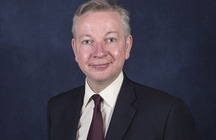
  • Michael Gove – 2015 Statement on Harris Review

    michaelgove

    Below is the text of the statement made by Michael Gove, the Lord Chancellor and Secretary of State for Justice, in the House of Commons on 17 December 2015.

    I will today publish the government’s response to the Harris Review into self-inflicted deaths in custody of 18-24 year olds.

    The government is grateful to Lord Harris of Haringey and the Harris Review panel for their report on this important review.

    We must never simply accept self-harm and self-inflicted deaths as an inevitable feature of prison life. Reducing the rates of violence, self-harm and deaths in custody is a priority for the National Offender Management Service. I have already made clear that our prison system needs urgent reform. I have also asked Charlie Taylor to review the current system of youth justice. We will be setting out more detail on our plans for reform in due course.

    The government’s response to the Harris review sets out the wide range of action we are taking to reduce self-harm and self-inflicted deaths in custody, including giving greater support to those with mental health vulnerabilities who come into contact with the criminal justice system and improving the management of “Safer Cells” in prisons. We are also increasing the number of prison staff. Over the last year we recruited 2,340 prison officers, a net increase of 540.

    The Harris Review, and our response, will help to address the serious problems of self-harm and self-inflicted deaths as we develop our wider reforms to make prisons places of decency, hope and rehabilitation.

    The response will be laid today and copies will be available in the Vote and Printed Paper Offices. The response will also be published online at www.gov.uk.

  • Suella Fernandes – 2015 Maiden Speech to the House of Commons

    suellaf

    Below is the text of the maiden speech made by Suella Fernandes to the House of Commons on 1 June 2015.

    feel a real sense of humility speaking after the hon. Member for Islington North (Jeremy Corbyn), who gave an accomplished speech in the best traditions of this House. I congratulate him.

    On a cold February morning in 1968, a young man, not yet 21, stepped off a plane at Heathrow airport, nervously folding away his one-way ticket from Kenya. He had no family, no friends and was clutching only his most valuable possession, his British passport. His homeland was in political turmoil. Kenya had kicked him out for being British. My father never returned. He made his life here in Britain, starting on the shop floor of a paint factory. My mother, recruited by the NHS in Mauritius as a girl of 18, passed her 45th year of service last year.

    My family had nothing but hopes and dedication. They were so proud to be British and so proud to make our country even better. If I succeed in making some small contribution during my time in this place, it will reflect only a fraction of my gratitude to this country for the abundance of education, culture and traditions that have made Britain great, for the tolerance and fellowship of the British people, and for the opportunity and liberty that we all enjoy.

    Before I turn to the subject of today’s debate, I should like to pay tribute to my predecessor, Mark Hoban. Mark served for 14 years in this House and during that time set an example as a conscientious constituency MP and a principled member of the Government. I have met many constituents for whom Mark was an indefatigable campaigner. He set a standard that it would be difficult to match. Mark played an invaluable part in the previous Government, initially as Financial Secretary to the Treasury and latterly as Minister for Employment. His brief covered financial services in the aftermath of the credit crunch and he embraced the challenge of banking reform. As Minister for Employment, he was responsible for Universal Jobmatch, an excellent service matching jobseekers and employers online.

    Following Mark is not only daunting but inspiring. I will be a strong voice for Fareham. More than 1,000 young people travel too far for A-levels, and I hope to see more sixth-form provision within the constituency. As an increasing and ageing population puts pressure on local GP services, schools and roads, I plan to be an advocate for all my constituents as we face the challenge of building more homes.

    Fareham is nestled on the Solent coastline between Portsmouth and Southampton. In the south of the constituency lies Titchfield, famous for its abbey. It is on the route to the Isle of Wight, and monarchs often visited. In 1625, Charles I, just married, arrived with his new bride, the French Princess Henrietta Maria. It was the 17th century equivalent of a honeymoon. However, all was not well between the newlyweds: instead of their enjoying the first days of a new life together, arguments that had been brewing between the French and English courts came to a head in Titchfield. Disputes about status, religion and money culminated in melodramatic outbursts between Charles and his new wife, altercations and even the attempted murder of the local vicar. It is fair to say that that European union was not going so well. Thankfully, all was lovingly resolved and the Hampshire honeymoon marked the beginning of a decade of marital bliss for Charles and his wife. No doubt the European renegotiation that this Conservative Government are driving forward will be judged successful if our marriage remains happy and prosperous in the decades ahead.

    It is fitting that I make my maiden speech during the debate about Britain in the world because if you take away only one fact about Fareham today, Mr Speaker, let it be the bravery of the men and women who gave so much in the name of freedom. Warsash on the Hamble river was the disembarkation point from which hundreds of British and allied naval and commando units sailed for the D-Day landings on the Normandy beaches. It was an ambitious operation. Just before he left for Normandy, one officer wrote:

    “the local rector arrived in the camp and there was a parade. We all attended and knelt in the main road coming into the camp, the rector stood on a box and gave a short speech ‘God teach us not to show cowardice, God give us the strength to face the enemy’”.

    At times of threat and in the face of evil, Fareham was courageous. We will never forget.

    As the new MP for Fareham, I hope to build on a legacy of enterprise, for Fareham is at the forefront of technology in the aerospace and marine sectors, with companies such as Eaton Aerospace, National Air Traffic Services and Raymarine headquartered locally.

    It is a stroke of luck to be born British, and my indebtedness goes to the heart of why I am a Conservative. Our party rewards endeavour, enables compassion and liberates people from the shackles of the state. Our party says, “It doesn’t matter where you start. You can make your life and that of others better by taking responsibility and through self-empowerment and generosity.” I will do all I can to serve the people of Fareham with humility, integrity and warmth.

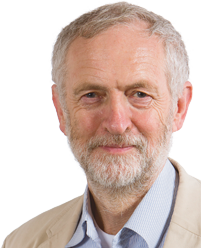
  • Jeremy Corbyn – 2015 Speech on the Queen’s Speech

    jeremycorbyn

    Below is the text of the speech made by Jeremy Corbyn in the House of Commons on 1 June 2015.

    I congratulate you, Mr Speaker, on your re-election as Speaker of the House. I also put on record my deep thanks to the people of Islington North for electing me to Parliament for the eighth time and for their support. I pledge to represent them on all issues, and I hope that in this Parliament we begin to see some justice for them, particularly on issues relating to housing and to the poverty levels that are sadly so rife and serious in much of inner-city Britain.

    This debate is on the sections of the Queen’s Speech covering international affairs, and I pay tribute to my right hon. Friend the Member for Leeds Central (Hilary Benn), particularly for the latter part of his speech in which he pointed out the issues facing the globe. The wars of the future will largely be about resources, water, food and food security. We have to face up to global inequality and the widening chasm between the wealth of the minority in the wealthiest countries and the poverty of the majority in the poorest countries of the world. If we are complaining about refugee flows at the present time—awful as the conditions from which those people are escaping are, and tragic as the deaths in the Mediterranean, the Andaman sea and elsewhere are—the situation will get worse as global inequality becomes greater, particularly on issues of food and environmental security. We have to be far more serious about how we approach inequality.

    The right hon. Member for New Forest East (Dr Lewis) and I have a slightly different view of the way in which the world should be run, as I think he would be the first to acknowledge. Is he, and anyone else who proposes this measure, really serious in saying that the most important thing facing Britain is not only to get up to spending 2% of gross national income on defence but, in some cases, to consider going above that level and to insist that every other NATO country does the same? We would then have a built-in accelerator of arms expenditure in a world that is already a very dangerous place. Can we not think of a way of solving the world’s problems other than more weapons and more wars, and more disasters that follow from them? Can we not pursue a serious agenda for peace?

    I heard on the radio this morning that the US Defence Secretary is very concerned about Britain’s position in the world and that we might be becoming a laggard—he wants us to boost our expenditure. Presumably, the US is giving the same message everywhere else, so that it can carry on influencing NATO policies, including in Europe, while building up its military might all over the Asia-Pacific region, which in turn encourages China to do exactly the same, just as NATO expansion eastwards has been paralleled by increasing Russian expenditure. Surely we need a world dedicated to disarmament and rolling down the security threat rather than increasing it. I see a huge danger developing in the current military thinking.

    My hon. Friend the Member for Ilford South (Mike Gapes) made a point about Labour’s strategic defence review, which largely included a foreign policy review. I agree that we do not just need a strategic defence review; we need a serious foreign policy review to apprise ourselves as to what our position and status in the world actually is. We once had an empire, but we no longer have one—that might be news to some Government Members, but I can let them know it in the confidence of this Chamber. Our influence in the world ought to be for good, peace, human rights, environmental protection and narrowing global inequality. We might delude ourselves that the rest of the world love us—they do not. They think we have a predilection towards arms, intervention and wars, as we did in Afghanistan, Iraq and Libya.

    Let us think about what influence in the world is about. Last week or the week before, I was in New York for the last two days of the nuclear non-proliferation treaty review conference. It was a desperately sad occasion, as Britain and the other permanent members of the Security Council lined up together to protect their expenditure on and the holding of nuclear weapons. They did not do anything positive to bring about a good resolution of that conference, and no good resolution has come out of it. A conference on a weapons of mass destruction-free zone in the middle east, first called for more than a decade ago, still has not happened. Because it has not happened, encouragement is given to proliferation by other wealthy countries in the region that could afford to buy nuclear technology and develop it. Why is the UK not helpful on this issue? Why do we not accept that, as my right hon. Friend the Member for Manchester, Gorton (Sir Gerald Kaufman) pointed out, the non-proliferation treaty is the most supported treaty anywhere in the world?

    That treaty has reduced the spread of nuclear weapons. It has not completely eliminated it, as India, Pakistan, North Korea and Israel have nuclear weapons outside that treaty, but the countries that gave up nuclear weapons have some clout in the world. The respect with which South Africa was listened to at the conference because it is the most industrialised country to have specifically given up nuclear weapons was interesting. Abdul Minty, its representative at the conference, was treated with enormous respect. He pointed out that the conferences on the humanitarian effects of war held in Vienna, Mexico and Norway had all shown exactly how dangerous nuclear weapons are. So why are we proposing to spend £100 billion replacing the Trident nuclear missile system when we could be doing something far more useful in the world?

    I do not have much time, so I shall briefly cover the other points I want to mention. I have talked about intervention and wars in Iraq, Afghanistan and Libya, and I ask the Foreign Secretary or, as he is not in his place, the Foreign Office to reply. When are we going to see the Chilcot report published? When are we going to know the truth of the Iraq war? This is the third Parliament since there was, tragically, a vote to go to war in Iraq, and we need to learn the lessons. We need to learn the lessons of the abuses of human rights in Afghanistan, Iraq and Libya and of the tragedy of the victims of war—all the wars—who have fled, tried to find a place of safety and been greeted with brutal intolerance in many of the places in which they have arrived. There is a refugee crisis around the world that has to be addressed very quickly.

    My right hon. Friend the Member for Manchester, Gorton talked about the situation in Palestine. Some of those people dying in the Mediterranean are Palestinians; they are the ones who have managed to get out of Gaza or the west bank. There must be serious concern that, after all the horrors that have happened in Gaza—I have been there a number of times—there is still no real rebuilding going on. What message does that send to the poor and unemployed young people of Gaza? They sit amidst the rubble of their existence, watching the rest of the world on their television screens or computers. Surely, real pressure must be put on both Israel and Egypt to lift the blockade of Gaza so at least the rebuilding can take place and there can be some sort of process there for the future.

    I want to draw the Foreign Secretary’s attention to two specific cases. I was on an all-party delegation to the USA—it was a very strange delegation because it included the right hon. Members for Haltemprice and Howden (Mr Davis) and for Sutton Coldfield (Mr Mitchell), my hon. Friend the Member for Hammersmith (Andy Slaughter) and me—to plead the case of Shaker Aamer. It was with some interest that we were received by Senator John McCain who realised that there truly was a breadth of agreement on Shaker Aamer if the four of us could enter his office, as we did the offices of Senator Feinstein and a number of other senators, and make the point that this House of Commons voted with no opposition that we should press for the return of Shaker Aamer to this country.

    Shaker Aamer has been in Guantanamo Bay since 2001. He was sold to bounty hunters in 2001, brutally treated in Bagram airbase, and taken by a rendition process to Guantanamo Bay. He has been there on hunger strike and been making other forms of protest ever since. He has never been charged, never been prosecuted and never been through any legal process. He has twice been cleared for release by President Bush and later by President Obama. He has never seen his 13-year-old son whom I had the pleasure to meet when he came to Parliament. I also met him last Friday evening at a meeting in Battersea, at which we called for his father’s return and release. The meeting was also attended by the hon. Member for Battersea (Jane Ellison). Will the Foreign Office undertake to follow up our visit with real vigour and press the Obama Administration to name the date when Shaker Aamer will be able to come home and join his family in this country? That is the least it can do at the present time.

    The other case involves my constituent, Andargachew Tsige, who was an opposition figure from Ethiopia. He was kidnapped at Sana’a airport in Yemen and taken to Addis Ababa and has been in prison ever since. He was tried in absentia, sentenced to death and is on death row in an Ethiopian prison. He could not have been extradited there because of the death penalty. No extradition process was ever sought or followed. He is an entirely peaceful person who wants to see peace, democracy and development in Ethiopia. I know that he has been visited by the British ambassador on a couple of occasions. I hope that the Foreign Office will be able to inform me that it is making real progress on his release.

    We live in a time when there are serious human rights abuses all around the world. I have been an officer of the all-party human rights group ever since I was first elected to this House. The abuse of human rights is legion all around the world; we know that because we all take up many, many such cases. If we as a country leave the European convention on human rights, which is the human rights system in Europe, what message will that send to the rest of the world—that we do not care about human rights and that we do not think they are important? How could we proselytise against human rights abuses or call on countries to improve their human rights process if we are walking away from the international process ourselves? We need a world of peace, not of war. We need a world of human rights and justice, not of injustice and imprisonment. We achieve those things not by greater militarisation but by trying to promote peace, human rights and justice all over the world.

  • John Whittingdale – 2015 Statement on Sepp Blatter and FIFA

    johnwhittingdale

    Below is the text of the speech made by John Whittingdale, the Secretary of State for Culture, Media and Sport in the House of Commons on 1 June 2015.

    Last Friday, FIFA’s members had the opportunity to embrace the overwhelming call for change that is coming from football fans around the world. They failed to do so. FIFA’s support for its discredited president was incredibly disappointing, but it will not have surprised the footballing public who have become increasingly cynical as the allegations of misconduct and malfeasance have piled up. FIFA needs to change—and to change now. I can assure the House that the Government will do all in their power to help bring change about.

    I have just spoken to Football Association chairman, Greg Dyke, and assured him that we stand behind the English FA’s efforts to end the culture of kickbacks and corruption that risk ruining international football for a generation. I agreed with him that no options should be ruled out at this stage.

    Let me also reiterate the Government’s support for the action of the American and Swiss authorities. Earlier today, I spoke with the Attorney General. We agreed that the British authorities will offer full co-operation with American and Swiss investigators, and that if any evidence of criminal wrongdoing in the UK emerges, we will fully the support the Serious Fraud Office in pursuing those involved.

    FIFA’s voting system is designed to support the incumbent, and it returned a predictable result, but there is no doubt that what remained of Sepp Blatter’s credibility has been utterly destroyed. The mere fact that more than 70 national associations felt able to back a rival candidate shows that momentum against him is building. We must now increase that pressure still further. It is up to everyone who cares about football to use whatever influence they have to make this possible.

    I am sure that fans the world over will be increasingly vocal in their condemnation of the Blatter regime, and FIFA’s sponsors need to think long and hard about whether they want to be associated with such a discredited and disgraced organisation. For the good of the game, we must work together to bring about change. For the good of the game, it is time for Sepp Blatter to go.

  • Michael Fallon – 2015 Speech on Reforming Defence

    michaelfallon

    Below is the text of the speech made by Michael Fallon, the Secretary of State for Defence, at the Institute for Government in London on 28 January 2015.

    This last year has seen huge upheaval across the world.

    We’ve seen sponsored aggression by Russia in Crimea and Ukraine.

    We’ve seen non-state actors like ISIL and Boko Haram attempting to usurp existing territory.

    We’ve seen Islamist terrorists striking in Canada, Australia, Pakistan, Brussels and Paris.

    These uncertain times underline why the defence of the realm is the first duty of government.

    And that agile, well equipped, armed forces, properly funded, are not a luxury but a necessity.

    But, defence is better placed to respond to the threats we face now because over the past four and half years we have delivered one of the biggest defence transformation programmes undertaken in the western world.

    And because of our economic plan, as you can only have strong defence with a strong economy.

    Today I want to look at what we’ve achieved so far in transformation, the lessons we’ve learned from it, and how we must keep greater efficiency as a continuous process.

    Scale of the problem

    First we need to go back to 2010 and the chaotic legacy we inherited. Not just the £38 billion black hole, not just contracts like the carrier where the penalty for going over budget was largely to be shouldered by the taxpayer.

    But a culture beset by an inability to take tough, timely decisions and an institutional focus on short-term affordability at the expense of longer term planning, exacerbated by self-defeating competition between the three services for resources.

    As Lord Levene’s original report indicated MOD was reaching breaking point.

    Making savings

    So we had to act decisively to sort out this mess.

    We had to scrap much-loved capabilities such as the Harriers and HMS Ark Royal.

    We cancelled out of control procurement programmes like Nimrod.

    We’ve sorted out the rebasing of our troops.

    And yes, we’ve made some tough choices about the size of the armed forces.

    Although we did so in a way that has preserved our front line clout.

    Maximising assets

    Making short-term savings was tough.

    But a tougher challenge was finding new ways to maximise our assets.

    Until I became Defence Secretary last July I certainly didn’t fully appreciate the sheer scale of MOD.

    We own 1% of the UK landmass, our budget is £34 billion, we have assets worth £120 billion, we have a quarter of a million strong workforce and more than 4,000 separate sites.

    If the MOD were a listed company it would easily be placed towards the top of the FTSE 100.

    But the diversity of our portfolio:

    – having to provide armed forces able to conduct campaigns across the world

    – managing scientific establishments, police and fire services

    – providing specialist medical care and pensions

    Puts the MOD in a league of one in the UK.

    And we recognised that if the department was to provide the military capability our country needs it had to become both more effective and more efficient. That meant adopting a bold approach more commonly associated with the best of the private sector to get the most of our valuable assets.

    Our more strategic Defence Board, including the Chief and Vice Chief of the Defence Staff, civilian officials as well as now 4 highly experienced non-executives from business, provided the necessary leadership, while Lord Levene’s blueprint was a guide as we drove through a clear strategy based on three imperatives that I want to share with you this morning

    Making MOD an intelligent customer

    First, it was about turning MOD into a more intelligent customer.

    You get more out of people, of course, by giving them more responsibility, yet, in MOD, the centre held on too tightly to the reigns of financial power.

    So we devolved budgets to frontline commands, meaning the service chiefs effectively became chief executives of multi-billion pound organisations. Three of them now based with their commands rather than at head office.

    And with far greater control over spending and how they meet their outputs they now have a vested interest in knowing the cost and the value of everything.

    We’ve seen just this week how the new Chief of the General Staff has the freedom to propose structural changes to the army command.

    We created Joint Forces Command as the glue that binds the capabilities of the single services together.

    That’s an organisation of 20,000 people and annual budget of over £4 billion run by a headquarters of around 300 people.

    Similarly we’ve created a more strategic head office, with 25% fewer posts than we had in 2010

    We’ve cut the red tape that can bog down any large organisation.

    250,000 computer users used to have to print out and re-sign a form every year to use the IT system.

    No longer.

    We’re also giving staff better tools to do their job.

    We’ve improved our management information.

    It was staggering that such a large organisation could fail to produce such a single version of the truth…

    Before every Board meeting now I have a comprehensive report on my desk…with an exhaustive overview of what’s going on including the readiness of each of our ships, aircraft and units.

    Commissioning services

    Making MOD a more intelligent customer was only half the battle.

    Some areas of activity, such as the delivery of military force, are kept within the public sector for good reason.

    But it is often more effective, more cost-effective, to draw on the private sector to support our core activities.

    Our long deployment in Afghanistan…where, at their peak, contractors accounted for 40% of the UK force deployed …provides a prime example.

    So instead of accepting the status quo we asked whether another organisation could do a better job?

    We brought in a strategic partner to get to grips with the sprawling defence property estate.

    This innovative contract will save a total of £3 billion over its ten year lifetime.

    We’re already seeing wholesale changes to the way we occupy space. We’ve collapsed 3 buildings in London into one, savings millions in running costs and releasing the Old War Office for redevelopment.

    And we’re not immune in Main Building from this since we now plan to share part of the 626 thousand square feet of MOD’s main building with other parts of government.

    By concentrating resources around a significantly smaller estate we can deliver improvements as well as releasing land and buildings for housing and commercial use.

    The strategic partner option wasn’t the only approach to commissioning services.

    We’ve also looked at what each service can learn from each other. Why did the army still repair and overhaul much its fleet of vehicles, through the Defence Support Group, when the RAF and the Royal Navy had already outsourced this activity? There was no good reason for that, so this month we sold the Defence Support Group for £140 million.

    A 10 year contract with the buyers will generate savings to the army of around £500 million.

    Now if there was one area where private sector expertise was really needed it was, of course, in procurement.

    We’ve been trying to get this right since the days of Samuel Pepys, the Chief Secretary of the Admiralty in the 1670s.

    Procurement accounts for around 40% of our spend.

    Yet Bernard Gray’s 2009 review of acquisition and Defence Equipment and Support (DE&S) highlighted a toxic cocktail of problems:

    – equipment ordered without any idea of how to pay for it

    – a lack of clear boundaries between the military customer and Defence Equipment and Support

    – and programmes that on average overran by 80% with cost increases of 40%

    So we turned DE&S into a bespoke central government trading entity.

    It now has its own board with a chief executive…as well as significant flexibilities, agreed with the Treasury and Cabinet Office, to recruit, reward, and manage staff along more commercial lines.

    The new organisation not only has a far more business-like relationship with its military customers but it’s a more effective counterpart to industry as well.

    One area I am focused on is where we have to award contracts without competition either for national security reasons or because there is essentially only one supplier. We spent around £6 billion a year in this way.

    That’s why we’ve now set up the Single Source Regulations Office as an independent regulator to implement the legal framework that came into force in December to ensure that our contracts do deliver value for money. And I will be setting out further thoughts on how to encourage companies to think of themselves as partners rather than suppliers in the coming weeks.

    3. Getting more out of the whole force

    Thirdly, how do we get more out of our whole force.

    Reform relies on professional, adaptable and committed people.

    In defence we don’t just depend on excellent military and civilian personnel but a whole force of Reserves, contractors and industry.

    And we knew we could do more to integrate this wider defence community.

    Our fleet of voyagers provides a good case study of excellent practice.

    The most modern tanker and strategic personnel transport on the market:

    – is owned by a private contractor

    – it is tasked by the MOD

    – it is operated by the RAF

    – alongside civilian crews who can then become sponsored Reserves if required

    – with a contract that’s overseen by MOD civilians and the RAF

    A truly collaborative framework.

    We’re also making better use of the whole force by aligning our interests.

    By working with 3 main prime contractors we’re committed to delivering £900 million of savings over the next 10 years on our submarine programme.

    On Apache helicopters, we have a 5 year support contract that will generate savings of £149 million.

    Our three new naval basing contracts signed last October not only support, manage and maintain our bases and warships but will deliver savings totalling £350 million over the next 5 years.

    And an innovative approach to complex weapons, land and maritime anti air missiles, and future anti-surface guided missiles, is putting us on track to yield financial benefits of £1.2 billion from the period between 2010 to 2019.

    Results

    So the results of that reform programme, I suggest to you, speak for themselves.

    Four and a half years ago we were in a dire financial situation.

    Today we have earned a strong reputation across Whitehall for competence.

    We get rid of old property that we don’t need.

    Whether it’s an old barracks, a country house, polo fields in Edinburgh, or Brompton Road tube station sold for £53 million.

    That approach has generated nearly £380 million.

    We’ve taken the same tack with equipment including selling, for example, 123 surplus armoured vehicles to the Latvian army, bringing in almost £40 million and strengthening friendship with a critical NATO ally.

    Our reforms have put us on track to deliver the £4.3 billion of efficiencies agreed in the 2010 spending review…as well as a further £1.1 billion agreed in the 2013 spending review.

    A recent NAO report showed we have reduced costs by almost £400 million in our major projects, our best performance on cost since 2005 and our best performance on time since 2001.

    As a result, the Treasury has granted us the largest delegated budget of any Whitehall department.

    According to Lord Levene in his 2014 report, and I quote > MOD is now a very different animal from that which I left some 20 years ago, especially in terms of showing that they can be trusted to manage the money. A leopard really can change its spots.

    Equipment

    But the truest measure of our success for me is what it means for the frontline.

    Our 10-year £163 billion equipment plan is now allowing us to invest in every domain.

    From the Queen Elizabeth carriers to the F35s that will fly off them

    From the highly advanced Scout armoured vehicles, the biggest army order in a generation, to hunter killer submarines as sophisticated as the space shuttle.

    Such investments augment the utility of our armed forces.

    They create highly skilled jobs across our country.

    Becoming permanently fit

    So we have replaced chaos with competence. Where there was a deficit, there is now a balanced budget; where there were cost overruns, there are now cost savings; and where equipment programmes were late and over-budget, they are now overwhelmingly on time.

    And there is more to come.

    We’re looking to bring in commercial partners this year to run our military port Marchwood and are selling the government pipeline and storage system.

    We plan to announce the preferred bidders by the end of March.

    We’re also reforming our logistics and supplies organisation so that those who performed the Herculean task of drawing down equipment in Afghanistan won’t find themselves bogged down by aging infrastructure and IT.

    There’s an in-house and two industry delivery partner proposals on the table.

    And next month, I will announce the outcome.

    That’s three more privatisations before the end of this Parliament.

    But the job is far from over.

    With continuing demands on our resources, with the cost of manpower and equipment rising, with competition from emerging nations increasing, efficiency in defence cannot be a one-off.

    As in any big, mature, organisation MOD must not merely be match-fit. For any spending review it must be permanently fit.

    Every year we should be looking to take out unnecessary cost, to improve productivity, to sweat our assets so that we can better support the frontline.

    And not every contract or programme has or will be successful, so we must act decisively where there are failings or contracting models that aren’t working.

    But we’re in a better place, we understand how to drive efficiency.

    Whether that means maximising our property portfolio while supporting the target of 150,000 homes over the next Parliament.

    Whether that means giving greater freedom to service chiefs to incentivise innovation and deliver the structures to achieve military results.

    Whether that means benchmarking to ensure that our military productivity matches up to that of other countries.

    Or whether ensuring we are focused on maximising our assets. The private sector pays interest on the capital it borrows to invest. That’s a pretty strong incentive not to hoard assets. Regardless of whether something similar is appropriate for the public sector, for a department with assets worth around £120 billion, managing the balance sheet should be as important as hitting the annual budget.

    For example:

    – do we need 57 separate sites within the M25?

    – what’s the right number of airfields?

    – what lessons can we learn from consolidating the number of submarine bases to one?

    – how many cars and vehicles does the MOD and the armed forces really need?

    – And does MOD really need to own 15 golf courses?

    Conclusion

    So as we work towards the next Strategic defence and security review we will do so neither as victims resigned to further budget cuts; nor as fanatics opposed to any reforms at all. But as a large, mature, properly run organisation that is up for the challenge.

    Over the past four and a half years we have shaken up the system, we’ve made big savings, and we’ve delivered new capabilities.

    All this while meeting NATO’s 2% and 20% targets.

    So we’ve proved efficiency is nothing to fear.

    Whatever the challenges we now face we do so from a position of strength with the confidence and the agility to respond.

    Today defence is fighting fit with a balanced budget able to invest in the kit and people that we need to keep Britain safe.

    Unlike the chaotic mess left by the last administration, that is a legacy for everyone in defence to be proud of.