Tag: 2015

  • Chuka Umunna – 2015 Comments on David Cameron and the Living Wage

    Chuka Umunna – 2015 Comments on David Cameron and the Living Wage

    The comments made by Chuka Umunna, the then Shadow Business Secretary, on 22 April 2015.

    David Cameron has shown again that he’s completely out of touch. It’s no wonder the Tories have nothing to offer working people. And unlike the Tories who have done nothing to promote it, Labour will help employers pay a living wage with new incentives through Make Work Pay contracts.

  • Yvette Cooper – 2015 Comments on Migrants in Mediterranean

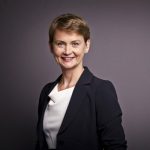
    Yvette Cooper – 2015 Comments on Migrants in Mediterranean

    The comments made by Yvette Cooper, the then Shadow Home Secretary, on 23 April 2015.

    This summit must urgently restore full search and rescue. The British Government and all of Europe must stop turning its back on people drowning on Europe’s shores.

    David Cameron and Theresa May were very wrong to oppose search and rescue, immoral to argue removing rescues would end the ‘pull factor’ and wrong to turn their backs since October in the face of continued tragedy. They must reverse their position this week.

    Refusing search and rescue means letting people drown to try to deter others and it is immoral. As we have argued for six months, search and rescue must be restored and Europe must work together to help those in peril.

    And while it is welcome that Europol is increasing its investigations and operations against the traffickers profiting from death, this Council must ensure the full weight of the EU is put behind a drive to end these criminal operations which are capitalising on the instability in Libya and conflicts in the region. That also means a much more effective long-term strategy for managing EU external borders – to ease the burden on countries managing the seas and the land borders to the east.

    This summit is the result of a serious moral failure in British and other European Governments. It needs to generate a plan that puts European leadership back on the right path.

  • Andy Burnham – 2015 Comments on NHS Finances

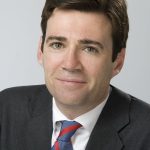
    Andy Burnham – 2015 Comments on NHS Finances

    The comments made by Andy Burnham, the then Shadow Health Secretary, on 23 April 2015. The comments were made in response to a report published by the King’s Fund on NHS finances.

    This report shows how far the NHS has fallen on David Cameron’s watch and lays bare the scale of the crisis it is facing. It confirms that, at this Election, its future hangs in the balance. The NHS can’t take five more years like the five it has just had.

    David Cameron promised to protect the NHS but it’s gone backwards on his watch with a crisis in A&E, waiting lists at their highest for six years and one in four patients unable to see their GP within a week.

    Cameron promised to cut the deficit, not the NHS. But we now know that, in reality, he has created a large deficit in the NHS. The financial crisis in the NHS is biting this year, with patients seeing treatments rationed, services closed and hospitals without enough staff.

    Labour’s first Budget will bring in a mansion tax to get the funds flowing into the NHS this year and next. The NHS is in crisis now and Labour is the only Party facing up to it, with a fully-funded Rescue Plan. It stands in clear contrast to the Tories who caused the crisis and have extreme spending plans that will put the NHS at risk.

    The NHS was forced to spend £1 billion on agency staff last year because of the shortage of nurses under David Cameron. Only Labour’s plan to recruit 20,000 extra nurses – paid for with a £2.5 billion a year Time to Care Fund – will allow hospitals to break the hold of the staffing agencies and get their finances into better shape.

  • Ed Miliband – 2015 Comments on Conservative Spending Cuts

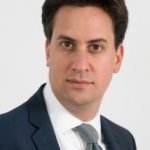
    Ed Miliband – 2015 Comments on Conservative Spending Cuts

    The comments made by Ed Miliband, the then Leader of the Opposition, on 23 April 2015.

    This General Election is coming down to a straight choice about who will stand up for working families: a choice between another five years of a recovery just reaching big firms in the City of London with the Tories – or Labour’s better plan to ensure the recovery reaches the front doors of working people across Britain.

    And, with two weeks to go, it’s time that choice was made plain and clear. The Tories want to pretend that another five years of their failing plan is the route to the good life. But the truth is they are engaged in a grand deception.

    David Cameron is running a desperate campaign, talking about anything but their record of failure or their plans for the future. They might not want to talk it, but we will.

    The Tories are committed to the most extreme spending plans of any political party in generations.

    It is a plan so extreme that IMF figures show Britain would be facing the deepest cuts over the next three years of any advanced country in the world.

    It is a plan so extreme that far from protecting the NHS they would end up cutting the NHS.

    It is a plan so extreme that it wouldn’t mean three years of the good life, it would mean three years of hard times.

    Maybe not for some of the rich and powerful, who have done so well with the last five years of the Tories.

    But it would mean hard times for the working families of Britain, who put in the hours, pay their taxes and play their part.

    It would mean hard times for young people just starting out in life and wondering if they will ever be given a decent chance.

    And it will mean hard times for the NHS that we all rely on. David Cameron has broken all those promises he made before the last election.

    He promised there would be no more top-down re-organisations and then wasted billions on the biggest the NHS has ever seen.

    He stood outside a hospital with a sign that said there would be no cuts and no closures – only to shut that very same A&E.

    He said there would be no return to people waiting hours on end in A&E. But under his government, A&E targets are in tatters and patients are waiting longer and longer to be seen.

    He promised extra money for frontline services like cancer treatment but ended up cutting cancer budgets.

    And now in this campaign, he’s at it again. After five years of failure, he wants us to believe the NHS is safe in his hands. He wants us to believe he’s going to increase funding for the NHS. When he can’t tell us where a single penny of the money is coming from. You can’t save the NHS with an IOU and you can’t trust the Tories with the NHS.

  • Chris Leslie – 2015 Comments on the Risk of Brexit

    Chris Leslie – 2015 Comments on the Risk of Brexit

    The comments made by Chris Leslie, the then Shadow Chief Secretary to the Treasury, on 23 April 2015. The comments were made with reference to an interview with George Gillespie, the Chief Executive of MIRA, the text of which is at the base of this page.

    This is an embarrassing start to the day for George Osborne. The chief executive of the company he is visiting has warned of the ‘danger’ of Tory policy on the European Union, which risks ‘destroying’ Britain’s alliances with our trading partners.

    As Citi warns in its election briefing today, a Conservative government after the election ‘would raise Brexit risk’ which ‘would be highly damaging for the UK economy’.

    And the Tories would not only endanger jobs and investment by risking exit from Europe, their plans to double the spending cuts next year would hit working families hard and damage our NHS.


    Transcript of Dr George Gillespie, Chief Executive of MIRA, Today Programme, Thursday, 23 April 2015

    John Humphrys:
    But you’re successful, you’re optimistic, we’ve got a new government coming, what worries you about the next 5 years?

    George Gillespie:
    We’ve talked about skills; I guess another major issue for me would be Europe. One of the reasons that MIRA has been very successful is that the UK is seen around the world as a good place to set up business, it has a very good legal system, we have reasonable employment laws, a good balance between employee and employer and we are a landing strip for Europe. If we cut ourselves from Europe all of a sudden that whole reason for coming to the UK starts to disappear and that makes that much more difficult to attract foreign investment in the UK.

    JH:
    If we cut ourselves off from Europe do you think there is a danger of that?

    GG:
    The perception around the world even as we discuss it now, before we even get to having a referendum and the consequences of that, I’m in China, I’m having to explain that no, the UK is not leaving Europe right now but even the discussion that are going on are already having ripple effects around the world. In terms of the perception that the UK is moving away from Europe.

    JH:
    So your message to them is what, the Chancellor will be sitting in the very chair you’re occupying in an hour from now.

    GG:
    My message would be to think very, very carefully that we don’t accidently don’t end up destroying one of our key industrial allies which is to be part of Europe, the largest European market.

    JH:
    Destroying is a big word?

    GG:
    I think we need think very carefully about stepping out of Europe. I’m quite passionate about it and I have said that many times.

    JH:
    But you think there is a real danger?

    GG:
    I think there is a danger that other factors other than, let’s say economics or industrial development drive a decision and the population vote for something that perhaps has longer terms consequences…

    JH:
    In other words a kind of emotional knee-jerk response…

    GG:
    Potentially yes…

    JH:
    And that worries you?

    GG:
    That does yes. If looking forward into the next government period that is one of the issues that definitely concerns me.

  • Ed Balls – 2015 Comments on IFS and Conservative Spending Cuts

    Ed Balls – 2015 Comments on IFS and Conservative Spending Cuts

    The comments made by Ed Balls, the then Shadow Chancellor of the Exchequer, on 23 April 2015.

    The IFS has confirmed that the Tories are committed to the most extreme spending plans of any political party, with bigger cuts than any other advanced economy in the next three years.

    And the IFS condemns the Tories for being ‘misleading’ about their plans for cuts to public services. The truth the Tories won’t admit is their plans are so extreme they would end up cutting the NHS. Countries which have cut spending on this scale have cut their health service by an average of one per cent of GDP – the equivalent of £7 billion.

    The IFS also warns that Tory plans would mean radical changes to tax credits and child benefit. George Osborne must now come clean on his secret plans to take money away from millions of working families.

    With Labour’s plan the IFS confirms that both the deficit and national debt will fall and that we have given more detail on how we will achieve this.

    But the IFS’ numbers wrongly assume that Labour will get the current budget only into balance. Our manifesto pledge is to get the current budget not only into balance but into surplus as soon as possible in the next Parliament. How big that surplus will be, and how quickly we can achieve that in the next Parliament, will depend on what happens to wages and the economy.

    The Tories might be able to make the cuts but the last five years show they will fail to cut the deficit as they claim. They have borrowed £200 billion more than they planned because their failure to boost living standards has led to tax revenues falling short.

  • Yvette Cooper – 2015 Comments on Rising Crime Under David Cameron

    Yvette Cooper – 2015 Comments on Rising Crime Under David Cameron

    The comments made by Yvette Cooper, the then Shadow Home Secretary, on 22 April 2015.

    These figures show the first rise in recorded crime for ten years and expose the shocking complacency of David Cameron and Theresa May over crime and policing.

    And it shows the risk posed by the Tories who the IFS have this morning confirmed have the most extreme plans for cuts of any political party – cuts which risk thousands more police officers being lost the next three years than in the last five.

    Reports of violence against the person have increased by a fifth in the last year, sexual offences by over 30 per cent and reports of rape by 40 per cent. Yet the police are unable to cope and more criminals are getting away with these serious crimes.

    Proceedings against violent criminals are down, prosecutions and convictions for rape are down, prosecutions and convictions in child abuse offences are down. That means more criminals are getting away with it under this Tory-Lib Dem Government because the police can’t keep up.

    And crime is changing. Fraud, much of it online, continues to grow and much of it is still not recorded.

    Under the Tories we’ve seen almost 17,000 police cut, longer waits for 999 calls and less justice for victims. Now they plan even more extreme cuts to policing in the next Parliament even though the police are already struggling to keep up. Chief Constables are warning that neighbourhood policing will cease to exist and that they will not be able to keep up with serious growing crimes.

    At a time when the terrorist threat is rising, more crime is being reported and thousands more police officers are under threat – Labour is the only party with a plan to guarantee neighbourhood policing, by protecting over 10,000 police officers from Tory cuts in the next three years.

    The Tories are no longer the party of law and order – Labour is the only party with a plan for community safety.

  • Jeremy Corbyn – 2015 Comments on Winning in 2020

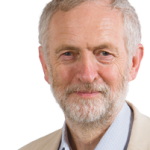
    Jeremy Corbyn – 2015 Comments on Winning in 2020

    The text of the comments made by Jeremy Corbyn, the then Leader of the Labour Party, on 31 July 2015.

    Labour has many challenges to win in 2020. But the first challenge we must meet is for us as a party. We need to be united in our identity and our values – proud of what we stand for, and confident and credible that we can deliver a better society.

    To do that, we have to be a movement again. Our party was founded to stand up to injustice, but too often we have lost our way, ignored our supporters or been cowed by powerful commercial interests and the press.

    We lose our way when we don’t listen to our people and our communities. Our local parties, trade unions branches, councillors, constituency MPs and members know their communities. They know the people and the issues they face. We need strong networks in every constituency, built from the bottom up, not dictated to from the top down.

    They are the people who will deliver our message. But because we are a movement they are also creators of our message too. Their wisdom, their insight is what will ensure we have the right policies to win.

    The more we exclude our people, the weaker we are. The more we involve them, the stronger we will be. So to win, our party must draw on its greatest strength: our people.

    A movement mobilises people and the most overlooked group within the electorate is those who, at the 2015 election, didn’t vote – 34% of the electorate. They are more likely to be young, from an ethnic minority background and to be working class – as are the hundreds of thousands who are not registered to vote at all.

    These are the people who would benefit most from the sort of Labour government I know we all believe in: that stands up against discrimination, that reduces inequality and poverty, that creates a fairer society for all.

    If we had convinced just one in five of those who didn’t vote then today we might have a Labour government. And I know too that we can win back the trust and support of many of those who left us in 2015 for the Conservatives, UKIP, the Greens or SNP.

    The endorsement of my campaign by so many people and by so many of our affiliates is not an endorsement of me, but of an approach: one that stands up for our values in an inclusive, participatory and democratic way.

    Electing a leader in September 2015 won’t win us the election in May 2020. What we need to do is build a movement that involves people in setting out a shared vision for a more prosperous future for all. The election will then be ours for the taking.

    If you share that vision then join my campaign.

  • Rishi Sunak – 2015 Maiden Speech in the House of Commons

    Below is the text of the maiden speech made by Rishi Sunak, the Conservative MP for Richmond, in the House of Commons on 11 June 2015.

    Thank you, Madam Deputy Speaker, for allowing me to make my first contribution to this House, and may I take this opportunity to commend all the excellent maiden speeches we have heard today on both sides of the House?

    It may surprise my hon. Friends to learn that part of me is a little sad to be here, because the fact that I am standing here means that this Chamber has said goodbye to one of its finest parliamentarians, my predecessor the right hon. William Hague.

    William enjoyed a distinguished career over 26 years. He oversaw a landmark Bill to improve rights for the disabled, led our party and served as Foreign Secretary. But his true mark can be found at home in Richmond. He was an outstanding local MP, as well as an outstanding Yorkshireman.​

    I once arranged a visit to a tiny, remote village and imagined that, for once, I might outdo my predecessor. On arrival, I was told that not only had he held a surgery in the village recently, but that the Foreign Secretary had arrived in a Harrier jet having flown in from a meeting with the President of the United States.

    Some have wondered about William Hague’s future. Perhaps he will heed the advice of his Prime Minister who suggested he ought to become the new James Bond. In the Prime Minister’s own words:

    “he’s fit, he’s healthy, he does Yoga, he can probably crack a man’s skull between his knee caps.”

    That is hard to beat, but I did find a scintilla of encouragement on the campaign trail. Wandering through an auction market, I was introduced to a farmer as “the new William Hague”. He looked at me, quizzically, then said, “Ah yes, Haguey! Good bloke. I like him. Bit pale, though. This one’s got a better tan.”

    In today’s debate on Europe, we should remember that, as leader, William Hague campaigned to prevent Britain from joining the single European currency and instead to keep the pound. His judgment looks even more excellent today than it did then.

    We will miss his oratory, wit and intelligence, and I know that the whole House will join me in wishing him well. [Hon. Members: “Hear, hear!”]

    Sadly, William Hague’s predecessor, the late Lord Brittan, is no longer with us. Fortunately, however, Lord Brittan’s predecessor, Sir Timothy Kitson, still lives locally and his years of dedicated service are remembered fondly.

    The constituency of Richmond is known for its remarkable natural beauty. In the east lie the North Yorkshire moors and in the west sit the Yorkshire dales, with their distinctive dry stone walls, stone barns and softly rolling valleys. In fact, admiration for my constituency has even spread to the other side of the English channel, which is why, last year, the remote splendour of Wensleydale and Swaledale became part of the Tour de France.

    Interlaced with this natural beauty is a constant reminder of our nation’s heritage. Richmond castle sits magnificently at the heart of the constituency. Built by William the Conqueror, it has witnessed centuries of our nation’s history unfolding. Further afield in Great Ayton, Captain James Cook grew up and left Yorkshire to explore the world.

    I am also deeply honoured to represent our soldiers, airmen and their families living at RAF Leeming and at Catterick garrison, our largest Army base. We are home to the historic Green Howards, who served in the Napoleonic Wars, the Normandy landings and Afghanistan. I will never forget that so many of my constituents have risked their lives to protect our nation so that we may debate here in peace today.

    In spite of all this, the most remarkable aspect of my constituency is the strength, warmth and independent spirit of our communities. I am fiercely proud to represent them. And although I am not from Yorkshire, they were immensely relieved to learn I was not from Lancashire either!

    I intend to be a champion for the causes of the countryside. I want my hard-working rural constituents to have the strong public services they deserve and every opportunity to prosper.​

    Our excellent hospital, the Friarage, serves a sparse area of 1,000 square miles, with some patients travelling over an hour and a half to reach it. I shall be a loud voice for ensuring that our local hospital remains strong.

    Our rural schools require fair education funding so that they can remain the beating hearts of our villages. I shall be relentless in pushing for better broadband and better mobile phone coverage. The farmers who feed us, proud stewards of our landscape, are too often taken for granted and left alone to battle regulation. Many of our small businesses are making significant exports, and I am determined to help them to give Yorkshire an even bigger place on the map of the world than it already has—if that is possible!

    My grandparents arrived in this country with little. My parents, now a GP and a pharmacist, grew up wanting a better future for their children. Today, I have the enormous privilege of standing here as a Member of Parliament. I owe a great debt to our country for what it has done for my family: showing tolerance, providing opportunities and rewarding their hard work.

    A great man once remarked that “some of you might not be here in 30 or 40 years” before reminding his audience that decisions made today shape the future for the next generation.

    I believe in a compassionate Britain that provides opportunity and values freedom. I hope I can play a small part in ensuring that our great nation continues to hold to those enduring values.
  • Kate Osamor – 2015 Maiden Speech to the House of Commons

    Below is the text of the maiden speech made by Kate Osamor, the Labour MP for Edmonton, in the House of Commons on 2 June 2015.

    I am most grateful to you, Mr Speaker, for calling me during today’s debate to deliver my maiden speech.

    I have dedicated 15 years of my life to the NHS, working as a practice manager in a GP surgery—so I have seen at first hand how hard it is to get an appointment—and as an administrator in an out-of-hours GP co-operative. I will be proud to apply the same principles and values as an MP. I stood for election as a Labour and Co-operative candidate, and now I have the privilege of representing the Co-operative movement in the House. With my colleagues, I hope to bring its principles, values and experience to bear on Members’ deliberations.

    Among the distinguished list of my Labour predecessors, I pay tribute to Lord Graham of Edmonton, but my immediate predecessor was Andy Love. He was the eighth Member of Parliament for the constituency and all his predecessors were men, but I have broken that tradition as the first woman to represent Edmonton. I feel most honoured and proud of the responsibility bestowed upon me. It is a measure of the regard in which he was held that Andy Love served for 18 years in this House, and I pay tribute to him. I have big shoes to fill: he was a tireless representative of constituents, and he will be particularly remembered in the House for his advocacy on behalf of Cypriot communities both here and abroad.

    The name Edmonton is of Anglo-Saxon origin. The medieval parish was centred on the church of All Saints, the oldest building in the borough of Enfield, which is still in use. There are several other listed buildings in Church Street, such as Lamb’s Cottage, the Charity School Hall, the former Charles Lamb Institute, and some Georgian houses. In the 1970s it was designated the first conservation area in Edmonton and there are now three others. In 1996 the Montagu cemeteries, comprising the Tottenham Park and Jewish cemeteries, were also designated because of their unique landscape qualities.

    Fore Street, an historic main road leading north from London, attracted rapid development in the 17th century. As some of the buildings survive, it was designated a conservation area in 2002. The Crescent in Hertford Road was added to the borough’s list of conservation areas in 2008. Besides the buildings in these special areas, there are other listed buildings—St Michael’s church and vicarage in Bury Street, Salisbury House in Bury Street West, and St Aldhelm’s church and Millfield House in Silver Street.

    Since the 1960s Edmonton has been transformed from a predominantly white, working-class industrial suburb into a multicultural area through Commonwealth immigration, asylum seekers and the expansion of the European Union in May 2004. Edmonton Green ward has been identified as having one of the highest numbers of working-age adults living on state benefits in the UK. Much of the industry for which Edmonton was famous—furniture making, electrical goods and electronics —has disappeared or moved to greenfield sites. We do not have one dominant employer to bring an end to adult worklessness in Edmonton, but despite the lack of low-skilled jobs on offer, Edmonton has a growing entrepreneurial spirit. A hub of small and medium-sized businesses along Fore Street make the best of things, whatever the circumstances. True community spirit is fostered and rewarded and we see this in the numbers of small businesses within the constituency.

    Edmonton is a community of many contrasts. Alongside increasing prosperity, many people suffer considerable hardship and deprivation. Edmonton is a priority regeneration area. Edmonton Green and Angel Edmonton have been identified as town centres that need improvements to make them look and feel like much better places to shop. There are a wide variety of schemes and projects happening in Edmonton under a Labour-run council to ensure that these priorities are delivered.

    Regenerating the wider Edmonton area is focused on improving the shopping centres, creating access to new jobs, and improving the education and health of our local people. These plans will also deliver improvements to transport facilities and links to other areas, such as central London. They will improve the quality of and access to open spaces and parks, as well as restoring and maintaining connections with all the historical sites.

    Up to 5,000 new homes and 3,000 new jobs will be created by the £1.5 billion Meridian Water redevelopment on a former industrial site. This should be completed by 2026. The improvements to the wider Edmonton area and the plans for Edmonton Green will all come under a Labour-led council. I am happy to report that only yesterday Transport for London appointed London Overground as the train operator to run local train services out of Liverpool Street to north-east London. TfL’s presence will bring immediate improvements to Edmonton Green station, improving security and safety for passengers and disability access. This will improve standards for everybody.

    It is a great honour to represent the people of Edmonton and I thank them for electing me as their Member of Parliament. I would like to thank all those who campaigned for me and worked hard to achieve a Labour victory in Edmonton.