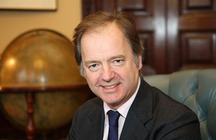
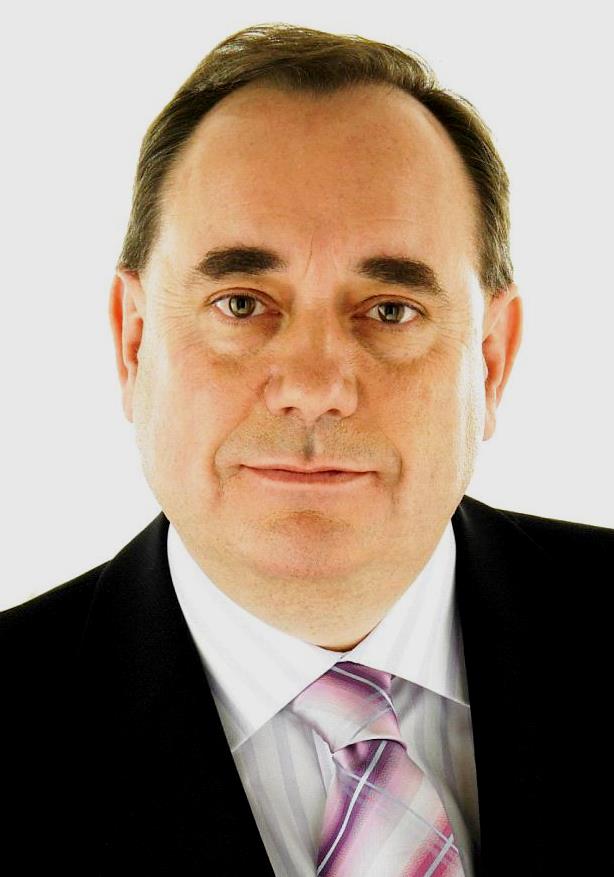
Below is the text of the speech made by Hugo Swire on 3rd March 2014.
Madam Vice President, Madam Deputy High Commissioner, Excellencies, it is an honour to be here today to address the Human Rights Council in this distinguished company.
The United Kingdom is committed to strengthening the work of this vital forum; to supporting countries in improving their human rights records; and to holding to account those who commit serious and systematic violations of their citizen’s rights.
People around the world look to this Council to defend their fundamental rights, freedoms and dignity. I am delighted that the United Kingdom has once again been afforded the opportunity to contribute to this vital work. I would like to thank all those who supported our candidacy and I look forward to working with other members of the Council, and the wider international community, in protecting the most vulnerable and championing global causes including ending sexual violence in conflict, the need for the full participation of women in peace-building, and the universal right to freedom of expression and freedom of religion or belief.
Without action – if we let human rights abuses go unchecked and ignored – we sow the seeds of future instability, conflict and humanitarian crisis. That is why the Secretary General’s “Rights up Front” Initiative to strengthen the UN’s ability to tackle human rights abuses early and effectively is so important and why this Council must be at the forefront of that effort.
When countries show they are willing to engage seriously with the Human Rights Council, we can and should work with them in a spirit of partnership and collaboration. This can produce real change, as we know from working with Somalia. The United Kingdom has played a leading role in mobilising international support for Somalia. The London Conference we co-hosted in 2013 recognised the immense importance of human rights in the peace process and in September we co-sponsored, with the Somali government, a resolution of this Council, calling for increased UN support to help end human rights abuses and combat impunity.
In many other countries too, concrete and positive change is underway and I pay tribute to all those who make this progress possible. I thank the High Commissioner for Human Rights for her leadership and the valuable work of her Office; the Treaty Bodies, the Special Rapporteurs and Commissions of Inquiry for providing us with crucial information on human rights situations across the world. I thank all those dedicated men and women in the field working to help states and civil society to strengthen protection for human rights. Through the Universal Periodic Review, our countries also have a valuable opportunity to learn from each other and discuss together the human rights challenges we face.
But while we strive for partnership and collaboration, we cannot stay silent if countries fail to live up to their human rights obligations.
A year ago, this Council asked the High Commissioner to report on the human rights situation in Sri Lanka. That report, received by members of this Council in recent days, is unambiguous. The Government of Sri Lanka has failed to ensure independent and credible investigations into alleged violations and abuses committed by both parties during the conflict in Sri Lanka. The majority of recommendations from successive Human Rights Council resolutions remain unimplemented, nor has the Sri Lankan Government accepted offers of technical assistance from the UN. The time has now clearly come for international action with regard to Sri Lanka. This Council has a duty to act on the findings of the report we collectively commissioned and to establish the truth. If we fail to do so, where does that leave us? I hope the Human Rights Council can unite to support the call for an independent investigation into alleged human rights violations and abuses on both sides. This will help pave the way for lasting reconciliation.
I believe that the support and technical assistance of the Office of the High Commissioner and the collective concern expressed in the resolutions of this Council have a valuable role to play in ensuring progress towards lasting peace and reconciliation in Sri Lanka.
The Commission of Inquiry on Syria has collected vital evidence on the worsening human rights situation. We condemn all violations and abuses, regardless of who commits them. But I want to be clear. States have a primary duty to protect their populations, but instead the Syrian government terrorises its people with barbaric attacks, besiegement, rape, torture, systematic executions and disappearances.
Here in the Human Rights Council we should confront the appalling human rights situation in Syria and agree a resolution. To ensure our credibility, this Council must show the Syrian people that their suffering will not be ignored, and we must renew the mandate of the Commission of Inquiry. We need to be clear that those who commit horrendous and appalling crimes will be brought to justice, and we must ensure that the Commission of Inquiry has full access inside Syria, because the Assad government cannot be allowed to hide its crimes.
Two weeks ago, this Council received the report of the Commission of Inquiry on Human Rights in the Democratic People’s Republic of Korea (DPRK). Their findings indicate widespread, state sanctioned, horrific violations. They include: torture; rape; summary executions; disappearances; and using starvation as a means of control and punishment. The UK strongly believes there should be no impunity for human rights violators. The DPRK has for too long refused to comply with its international obligations or engage properly with this Council or its mechanisms. We must take action. We cannot stand by.
Elsewhere, the UK is extremely concerned by events in Ukraine. Just last night the British Foreign Secretary visited Kyiv and called on Russia to respect the sovereignty, independence and territorial integrity of Ukraine. He also spoke to the UN Secretary General to encourage international efforts to de-escalate tensions in the region. The UK supports Ukraine’s new government and calls on all parties to ensure that the rights of all Ukraine’s citizens, including from minority groups, are respected.
Mr President, we believe that the international community must address all forms of discrimination, not least on the basis of sexual orientation and gender identity, and we must also promote respect for diversity. We must work through the UN to address discriminatory laws which criminalise the LGBT community.
Sexual violence has marked every conflict in our lifetime and shattered the lives of women, girls, men and boys on every continent. For too long, these crimes have been treated as secondary issues, as inevitable consequences of war, and only a tiny number of perpetrators have ever been held to account.
This is unacceptable. Ending these horrors is a moral cause for our generation. All of us, Governments, civil society and the UN must work together to shed light on these crimes, to shatter the culture of impunity, and support, protect and reintegrate survivors.
140 countries have now signed the historic declaration of commitment to end sexual violence in conflict which we launched at the General Assembly in September last year. But that is only the beginning. We must now turn those commitments into lasting practical action, raise awareness and build partnerships worldwide. That is why the Foreign Secretary has convened a global summit in London in June this year, the largest ever on this issue, which he will co-host with the Special Envoy of the UN High Commissioner for Refugees, Angelina Jolie.
They will bring together governments, their militaries, law enforcement agencies, legal experts, international organisations and civil society to agree the necessary steps that will put an end to sexual violence in conflict. I hope that all the countries in this room today will join us in this effort to remove these abhorrent crimes from the world’s arsenal of cruelty. In the 21st century, the world will not understand why countries cannot support such an initiative.
Mr President, together we can make an enormous contribution. We should not underestimate the impact we can have if we work collectively. So, I hope that we can work closely in the Human Rights Council to improve respect and protection for human rights worldwide, to respond quickly and robustly to serious violations and to create lasting change in support of international peace and security. And eradicate injustices that affect people – often the most vulnerable – in the world.
Below is the text of the speech made by Hugo Swire, the Minister of State at the Foreign and Commonwealth Office, in Rangoon on 30th January 2014.
Introduction
This is my second visit to your fascinating and beautiful country as a Foreign Office Minister. I first visited just over one year ago, shortly after I took up my current ministerial post. I am delighted to be back, and grateful to all those who have welcomed me so warmly throughout my travels this week.
Over the last three years, the world has watched with admiration and, frankly, surprise, the remarkable changes that have taken place here.
Over one thousand political prisoners released. A thriving and active new Parliament. An end to fighting across much of the country. A human rights commission established. Trades unions formed. Emerging economic liberalisation. Freedom of the press. These are just some of the most obvious examples.
I am proud that the British Government has been swift to welcome these reforms, and to recognise the courage and leadership of those who have made those changes happen.
In 2012, Prime Minister David Cameron was the first western leader to visit here since the reforms began, and during his visit he paid tribute to the leadership of President Thein Sein and Daw Aung San Suu Kyi. In 2013 the UK played a central role in moving the EU’s relationship with this country beyond sanctions. This year, we have increased our development aid to around $100m per year. We have also opened a trade and investment office, and are actively encouraging responsible investment from British companies.
It is no exaggeration to say that the relationship between our two countries is being transformed. We are re-building a friendship based on mutual respect, founded in our deep and enduring shared history and in the long-standing support of the British people for your struggle for democracy.
The two key challenges
It is therefore as a friend – a frank and constructive, but critical friend- that I speak to you today at the start of a decisive year for this country’s future.
You face many challenges on the path of reform, but there are two areas in particular where you have arrived at a critical juncture: democratic reform, and the peace process.
On both fronts, further progress will require extraordinary courage. But success will create a legacy lasting for generations, and form the bedrock for Burma’s future stability and prosperity.
Democratic reform
Let me speak first of democratic reform. Put bluntly, continued democratic reform in this country requires constitutional change. Constitutional change is important for two main reasons: to ensure that this country’s political system moves fully into line with democratic standards, and to ensure that this political system reflects the aspirations of the people.
This week, all eyes here are on the Constitutional Review Committee, which should submit its report to Parliament tomorrow.
Speaking to people throughout my visit, it has been absolutely clear to me that there is overwhelming support amongst ordinary people for constitutional change. Change that brings the constitution in line with international democratic standards. Change that delivers greater devolution of powers to states and divisions through a strengthened federal system. Change that cements the independence of the judiciary. Change that removes the military’s veto over democratic reform and gives citizens greater control over their own destinies.
Many of these reforms are complex, and will require careful consideration. For now, I would like to highlight one amendment that is very simple, and very important. I refer to ‘59f’- the Presidency clause.
Central to any modern democracy is the principle that citizens should have the right to choose who governs them. Yet under this country’s present constitution, Daw Aung San Suu Kyi, the leader of the main opposition party, is blocked from becoming President, even if her party wins a majority of seats in the 2015 elections. Why? Because her two adult sons have British citizenship.
The 2008 Constitution is perhaps unique. I can think of no other constitution that makes an individual citizen’s eligibility to become President conditional on the nationality of their adult children. This unreasonable restriction was not included in Burma’s previous constitutions, in 1947 and 1974. I can only assume that the restriction was written into the 2008 constitution in order to prevent one particular individual from ever becoming President. This is surely no way to write a constitution.
As Prime Minister David Cameron has made clear, it is time for this restriction to be removed. It is a hangover from a very different era. It is fundamentally undemocratic. And it is fundamentally wrong. Without amendments to allow all citizens to contest the Presidency, the 2015 general elections cannot and will not be fair elections. And without fair elections, the credibility of Burma’s democratic reforms will be cast into doubt.
I welcome President Thein Sein’s recent comment that all citizens should have the right to run for President- but I urge him to follow this up with active support to make this a reality.
The two major groups in Parliament clearly also have a central responsibility for determining whether constitutional amendments can happen. I refer to the MPs of the USDP party, and the Tatmadaw. And the moment has arrived when both of these groups must clearly set out their stance.
As leader of the USDP party, Thura U Shwe Mann has stated his personal support for amending the presidency clause. His stance is admirable, and reflects a strong sense of fair play.
But I am concerned by the recent suggestions of some USDP members that Daw Suu’s eligibility should be conditional on her adult sons renouncing their existing citizenship. As far as I am aware, there is simply no other modern constitution in the world that makes such demands of the adult children of political leaders. I urge all USDP MPs to take the honourable approach, and be prepared to compete on a level and democratic playing field in 2015, through serious amendments to 59f.
The second key group within Parliament is of course the military MPs. The 2008 Constitution can be amended only with the support of the Tatmadaw. This gives the Tatmadaw leadership a unique power, and a unique responsibility.
But it also places the Tatmadaw’s stance under heavy scrutiny, including in the UK, where our military engagement in your country is subject to intense interest. A constructive approach by the Tatmadaw to constitutional reform will send the strongest possible message of commitment to change and help to convince the sceptics that our engagement is right. It will be recognised and welcomed both inside this country and in the wider international community. Senior General Min Aung Hlaing today has the opportunity to secure a unique legacy: to be the Commander-in-Chief whose courage enabled his army to break free of the shackles of the past.
Longer term, I and many others hope that this country will follow the example of other states in the region, where the military has progressively moved out of the legislature, and taken its proper place as a professional modern institution under the control of the civilian government. As Daw Aung San Suu Kyi herself noted when she visited Sandhurst Military Academy in the UK last year, the strongest and most respected militaries are found in the most robust democracies.
The peace process
This brings me to the second great challenge facing this country in 2014: the peace process.
For over sixty years since independence, this country has seen terrible internal conflicts. Millions of people, particularly in the ethnic minority border areas, have suffered unimaginable traumas. But in a sense, everyone here has been a victim, having lived under the shadow of a military dictatorship that justified its very existence on the grounds that the country risked breaking apart without it.
Yesterday I visited Kachin State, the first visit by an international minister since the latest outbreak of conflict three years ago. I held discussions with the State Government, representatives from the Kachin Independence Organisation, and religious leaders. I was also humbled to meet veterans of World War Two, and I was proud to recognise their magnificent contribution.
I visited camps near Myitkyina, where I spoke to families who had lost everything: their homes, their farms, and, in some cases, their friends and relatives. Most had been living in temporary shelters for almost three years. Their message was consistent: they wanted a sustainable and just peace, so that they could return in confidence to their homes, and rebuild their lives.
The international community today fully recognises the importance of the peace process, and its centrality to this country’s future. Without a fair and equitable peace settlement that reflects the aspirations of its diverse communities, the potential to become a prosperous, stable and democratic country will never be realised.
That is why the UK firmly supports the efforts of the government, political parties and armed groups to reach a nationwide ceasefire and establish an inclusive nationwide political dialogue. The precise shape of this dialogue, and its outcomes will be determined by the parties involved. But the broad guiding principle seems clear: that Burma must evolve towards a political system that truly enshrines equality and greater self-determination for its many minority ethnicities.
We are under no illusions as to the scale of the challenge. Before I became a Foreign Office Minister, I was Minister for Northern Ireland. And long before that, I served as a British Army officer. I know from personal experience the difficulties of resolving a long-running conflict. But as our own Northern Ireland experience has shown, real progress can be made even in the most apparently-intractable conflicts. Ultimately, it takes a combination of extraordinary hard work, and courageous leadership.
In this respect, your country has been very fortunate indeed. Today ceasefires are in place across most of the country. A nationwide ceasefire is within reach. This stage could never have been reached without the remarkable courage and perseverance of leaders on all sides. It is an extraordinary collective achievement.
It is, of course, only a first step. But it is an essential first step towards building trust and creating conditions for the political dialogue that must follow.
The UK will do our part to support this process in whatever way we can. On the diplomatic front, we will continue to engage with all parties. This week I have discussed with government, Tatmadaw, and ethnic leaders the British Government’s readiness to play a helpful role at future rounds of peace talks, subject to agreement by all sides.
At the same time, I am pleased that we have been able to share our own experiences from the Northern Ireland peace process. Over the last year, Daw Aung San Suu Kyi, Minister U Aung Min, the United Nationalities Federation Council, the Karen National Union, and the 88 Generation have all visited London and Belfast, drawing lessons from what we did right, and what we got wrong. We have also been running workshops for ethnic armed groups focused on security sector reform. And we stand ready to provide further technical support and funding for the political dialogue itself.
We also remain firmly committed to supporting the victims of conflict. The British Government has been the largest bilateral donor of humanitarian aid in Kachin State, committing $20m over a two-year period. Our support to refugees on the Thai border continues. And we will expand our health, education and livelihoods programmes into ceasefire areas, bringing tangible benefits to villagers who have lived in dire insecurity and without access to basic services.
We will also remain unceasing in our efforts to address human rights violations in conflict and post-conflict areas. I have been particularly concerned by reports of ongoing sexual violence by Tatmadaw soldiers against women and girls in ethnic minority areas. The British Government, led by our Foreign Secretary, has established the Preventing Sexual Violence Initiative. In Naypyidaw this week, in meetings with government and the Commander-in-Chief, I have lobbied for this country to join 138 others, including six of its ASEAN partners, in endorsing the Declaration launched at the UN General Assembly. This year we are funding projects worth nearly half a million dollars focused on Preventing Sexual Violence here, including training women in basic legal skills and counselling.
The military
In discussing both constitutional change and the peace process, I have already touched on the critical role of the Tatmadaw, and I want to briefly expand on this. In 2012, the British Government took the decision to re-establish relations between our two countries’ militaries. Last year, we appointed a Defence Attaché for the first time in twenty years. We made these moves after consultation with opposition, ethnic and civil society leaders, the vast majority of whom firmly supported cautious and calibrated engagement.
Earlier this month, the UK’s Defence Academy delivered a classroom-based course to the Tatmadaw for the first time, covering topics including the role of the military in a democracy, security sector reform, governance, accountability, and the rule of law. It did not enhance the Tatmadaw’s military capacity or capabilities. The training aimed to expose future senior officers to new thinking, and encourage the Tatmadaw to prepare for a new role. I very much welcome that this course, dealing with such challenging subjects, was able to take place and that those attending engaged frankly and openly. The fact that senior officers attended the opening and closing ceremonies clearly demonstrated the value they attached to it, and I welcome their willingness to have a dialogue over issues like human rights and humanitarian law. I was also pleased that Daw Aung San Suu Kyi could be there in person at the closing reception.
The fact that we are engaging with the Tatmadaw does not mean we will shy away from raising very real and continued concerns. Sexual violence and humanitarian access are two concerns I have already mentioned. Child soldiers is a further example: I welcome the recent release of 96 child soldiers, but I have made clear that there is an urgent need for the existing Joint Action Plan with the UN to be extended, to address a problem that, despite encouraging progress, remains far from resolved.
But let me be clear; I am convinced that cautious engagement with the Tatmadaw is the right thing to be doing, and that now is the right time to be doing it.
Rakhine State and Anti-Muslim Violence
Every democratic transition has its challenges- some common, some unique. Here, the constitution and the peace process are rightly seen as the biggest of those challenges. But it is also essential, at a time of change, to stay alert to the wider risks and threats. We must, for example, ensure that the new space for media freedoms is firmly protected, that the right to peaceful protest is consistently defended, that land rights are addressed fairly and transparently.
Yet there are two areas of concern that I wish to highlight in particular, as I believe that they risk gravely undermining the wider reform process. I refer to the situation in Rakhine State, and the violence targeted towards the wider Muslim community.
One year ago I visited Rakhine State. I was the first European Minister to do so. I heard directly the grievances, fears and concerns of both the Muslim and the Buddhist communities. I went to a mosque as well as to a Buddhist monastery. I saw the terrible conditions of the Muslim camps. Twelve months on from my visit, there has been little progress in addressing either the humanitarian situation or underlying intercommunal relations. I have been appalled to hear of further tragic deaths this month in Northern Rakhine, and we have called for a credible investigation into these allegations.
On the humanitarian front, the rise in intimidation and threats towards UN and international staff attempting to deliver life-saving food and medical supplies to vulnerable displaced communities is utterly unacceptable, and actually quite shocking. I urge Rakhine community leaders to tackle this trend urgently, as a matter of conscience. I also reiterate the responsibility of the authorities, both at state and Union level, to facilitate full and unimpeded humanitarian access to those in need, and to address robustly any efforts to block such access.
To the Union government, I further urge rapid action to address the citizenship status and basic rights of the Rohingya. The government has committed to running a full citizenship verification exercise, and this should be conducted without further delay. The continuation of the status quo is unacceptable, and presents growing risks to the country’s long-term stability.
I recognize the desperate poverty that afflicts all communities in Rakhine State, the result of many decades of chronic underinvestment in the country’s second-poorest region. The international community must be committed to poverty alleviation programmes in every township in Rakhine state. And on the part of the government, the state’s rich natural resources revenues must be shared equitably, including with the local population.
Beyond Rakhine State, over the last 12 months attacks against Muslim communities in Meiktila and elsewhere have also been of deep concern across the world. The violent actions and aggressive rhetoric of a small minority of extremists is harming the reputation of this country, and raising serious questions about religious tolerance and rule of law.
Rule of law is clearly the responsibility of the government, judiciary and security forces, and I welcome the swifter and more balanced actions taken in response to the latest outbreaks of violence. Those carrying out violence, and those inciting it, must be held accountable, in line with the government’s pledge for ‘zero tolerance’. Police must also learn how to respond effectively, and I am pleased that British police officers have played a central role in the EU’s police training programme over recent months, aimed at improving the handling of relations with communities.
Religious tolerance is a responsibility for everyone in this room, but I am heartened by the united call from major religious leaders for dialogue, understanding and empathy. All too often around the world we have seen fragile new freedoms tragically shattered by divisive ideologies that prey on fear and rumour. It is my fervent hope that your country does not suffer this fate, and that the voices of moderation and wisdom prevail, such that you can realize your vast potential as a peaceful democratic and diverse country.
UK support to Burma’s development, including Rangoon General Hospital, and our trade relationship
It is on this note that I want to end. Your country is at a crossroads, so inevitably my speech today has focused on the very real challenges ahead. Yet if those political challenges can be overcome- and I do believe that they can- then this is a country of vast potential. With a large young population, plentiful natural resources, and a strategic location between some of the world’s biggest markets, your economic prospects ought to be bright. And don’t underestimate the international community’s goodwill towards you.
The British government’s policy is clear. We are encouraging responsible investment, and we are encouraging trade relations. We believe that British investment can bring benefits to all parties- through sharing of knowledge and technical expertise, through job creation and vocational training, and through improving labour standards. British businesses are interested. We are already seeing some early success stories: for example, JCB selling over 50 machines in their first year of operations here, and Aggreko delivering their first power supply project for the Ministry of Energy, on budget and ahead of time.
At the same time, we are working with the government to help create the right conditions for investment that benefits all, not least the poorest. Above all, this means strong rule of law and transparency, and that is why the UK is supporting government and civil society in signing up to the Extractive Industries Transparency Initiative and the Open Government Partnership, and working with ministries on improving public financial management.
At the same time, British aid is improving the health and education of this country’s poorest people. This year we are further increasing our annual aid budget for Burma to $100m. We are funding the treatment of diseases like malaria and tuberculosis, providing life-saving healthcare for mothers and their babies, and supporting improvements to the standards of basic education. UK-funded livelihoods programmes are helping rural farmers to increase agricultural production, and giving villagers access to credit. And we are supporting the regeneration of the historic Rangoon General Hospital, which has for many decades played a central role in the healthcare system.
Conclusion
Through development, through trade, and through ever-closer links between our two peoples, we want to be an active partner working with you over the years ahead to realise your country’s undoubted potential. But ultimately the effectiveness of development aid, the eradication of poverty, the boosting of trade and investment – all of this rests on political foundations. And in the year ahead you have the opportunity, through leadership and through dialogue, to set the political foundations for a stable and prosperous future.
This is a moment that calls for courage and for vision. But the progress that your country has already made over the last three years has surely shown that it is the bravest actions that reap the greatest rewards. Today, Burma can take great strides forward on the path of peace and on the path of reconciliation. And there can be no going back from the path on which you are embarked. Thank you.
Below is the text of the speech made by Anna Soubry, the Minister for Defence Personnel, Welfare and Veterans, on the 19th March 2014.
Introduction
It’s somehow fitting that the MOD Main Building is our venue today, since this was once the site of the Palace of Whitehall and the former residence of Queen Elizabeth I.
The Virgin Queen once said: “God has given such brave soldiers to this Crown that, if they do not frighten our neighbours, at least they prevent us from being frightened by them.”
And it was she who first introduced a groundbreaking statute ensuring disabled army veterans “should at their return be relieved and rewarded to the end that they may reap the fruit of their good deservings and others may be encouraged to perform the like endeavours.”
More than 4 centuries on and the sense of the duty we owe to those who lay their lives on the line remains undiminished. If anything it has grown stronger with the passing of every campaign from Iraq and Libya to Afghanistan.
The Covenant
We all know that reintegrating into society after life on the frontline isn’t easy. It’s testament to how good our people are that our employment statistics are so good.
But we owe it to our service personnel to do everything we can to help, whether that means continuing their medical care after they leave the service, helping their children find a place in school or enabling to get a foot on the housing ladder.
That is why the government has enshrined its covenant with the armed services in law.
It means that no current or former member of the armed forces, or their families should be disadvantaged compared to other citizens in the provision of public and commercial services.
We honour the covenant in a variety of ways.
Not just by putting our money where our mouth is and providing, from next spring, a permanent £10 million financial commitment in perpetuity.
But through a comprehensive welfare package.
Aside from all the statutory support available from other departments, devolved administrations and local authorities…we are introducing the New Employment Model…giving service personnel an expectation of being stationed in the same part of the country for significantly longer periods
– we’ll soon be bringing in the Forces Help to Buy scheme, to address the low rate of home ownership in the armed forces
– we’ve put £1.8 billion into the new Army Basing Plan so we can make best use of our estate across the UK from Catterick to Colchester
– and we will be spending £1 billion on brand new accommodation, meaning almost 2,000 new family homes are built as well as nearly 8,000 new homes for single soldiers.
Society must back armed forces
But my first point today is that the covenant isn’t just about MOD or even the rest of government. It is about society’s commitment as a whole to our armed forces.
We’re looking to business and local authorities to offer employment support and improved access to local amenities. That’s why we introduced the corporate and community covenant to garner their support.
But, above all we’re looking to our charities, many in this room. You know how important it is that people should stop thinking of all veterans as victims and celebrate their success in wider society.
And from talking, as I do, to many of our veterans, especially the younger ones, I have discovered that some don’t know that help is out there.
There is clearly, for some, a disconnect.
You know how important it is that they get the help to help themselves.
You know how to intervene to make that possible. And you know how to deliver.
As Lord Ashcroft pointed out in his transition report there ‘is no shortage of provision for service leavers and most do well’.
What is significant about the charity approach in these cash strapped times is that you’ve discovered collaboration is the mother of invention.
Look at the way the third sector has become increasingly adept at harmonising their activities.
From the pitch perfect Military Wives Choir Foundation.
To the work of Sorted! and COBSEO’s forces in mind, assisting veterans’ transition to civvie street. Look too at how charities and government are working hand in glove whether on Personnel Recovery Centres or putting Libor funds to work.
And so far those funds have supported hundreds of projects across the country with more than £45 million of grants.
I recently saw this for myself when I went down to Brighton to visit Blind Veterans UK.
They are using a £1 million Libor grant to refurbish accommodation for current and future residents.
And I was delighted to announce a further £40 million for this financial year to fund accommodation for veterans with a housing need across the UK.
Need for increased collaboration
But this brings me to my second key point. All this collaboration that we see at a local level or on individual projects must become the rule not the exception.
It must be more integrated on a national scale.
Some will say this means more work we don’t need.
But…as we drawdown from Afghanistan and Germany…with larger numbers of veterans returning from extended periods abroad
…as the spotlight once trained on our armed forces, turns away again, casting a shadow on your future funding …we will struggle to provide our ex-service personnel with the same high quality service unless we collaborate.
And by co-ordinating efforts nationally, sharing understanding and best practice
– preventing duplication of resource
– seeing the woods for the trees
– we can make best use of what we’ve got
We’re already moving in the right direction.
At a charity summit in October last year the penny dropped.
We collectively agreed to create a National Veterans Strategy with a shared vision for veterans.
This work continues apace.
Admiral Williams met key charities to agree the plan and set out ambitious schedule to deliver a revised Nat Vets Strategy by the Autumn.
It’s a pretty tight timescale but COBSEO is planning workshops for end of April make, look out for them and make sure your voice is heard.
Conclusion
So we’ve achieved an immense amount already.
But veterans is only one aspect of our welfare agenda.
Our challenge today is to map out what else we can do to support the armed forces community.
We’ve got all the right elements in place.
The right people, the right motivation and, in this former palace of Whitehall, a touch of royal inspiration.
So let’s be ambitious.
Let’s think big.
And make sure our wonderful service men and women get everything they deserve.
Below is the text of the speech made by Iain Duncan Smith, the Secretary of State for Work and Pensions, at Business for Britain on 7th April 2014.
Introduction
Thank you for coming to Pimlico today, and my thanks both to Pimlico Plumbers and Business for Britain for their efforts in making this event happen.
It is a pleasure to be here…at the site of a real British success story.
What better setting to discuss the turnaround in our country’s fortunes, as the Chancellor set out last week.
The recession slashed 7.2% off our economy and cost 750,000 people their jobs.
Following the crash we heard gloomy forecasts of a million jobs disappearing from the private sector, mass unemployment, lost generations…
…yet they could not have proved more wrong.
Britain’s economic recovery is established and taking hold faster than forecast – and nowhere are the signs of this recovery clearer than in our labour market.
Logical process
Whilst others have questioned and puzzled over the record employment Britain is now seeing…
… as the Work and Pensions Secretary, I have long believed that the strength of our labour market would both drive Britain’s economic recovery, and increase as a result.
Let me explain.
The logic behind that belief is twofold – you will know most about the first step, and the second is my area of responsibility – but the two are linked.
First, this government created the conditions for growth, and gave businesses the freedom and confidence to create jobs… which is precisely what you have done.
Second, we drove a programme of welfare reform where every change was designed to get Britain back to work…
… giving people previously left to languish out of work, the skills and the incentive to take those jobs.
In doing so, welfare reform is, at its heart, about breaking the chains of dependency and supporting people to achieve their potential…
… giving them the freedom to secure a better future for themselves and their families.
Getting Britain working
In reforming a broken welfare system, I have had one overriding intention – to get Britain working again.
Now, the results are clear to see:
we have more people working in the private sector than ever before, up over 1.7 million since the election
we have record employment – more than half a million higher than its pre-recession peak
and – less known – we have falling numbers of people absent from the labour market… falling long-term unemployment… and, perhaps most importantly of all, falling numbers of workless households
It is easy to get lost in what feel like abstract numbers – so let me make clear what this means.
The increase in employment is equivalent to the cities of Manchester, Liverpool and Bolton now all in work.
It means individuals in jobs, really feeling the impact of the recovery.
Families able to feel secure about their futures…
…. breadwinners able to feel proud that they can support them…
… and children with that all-important role model to look up to, offering hope and self-worth, with aspirations for their own future transformed.
Human capital
At last year’s Budget, and so too this year, the Office for Budget Responsibility has revised its estimates for employment up and unemployment down.
Yet even still, the labour market has continued to outperform the forecasts.
In looking to explain this trend, there is much to be said of the labour market reforms that took place in the UK many decades ago – freeing up the labour market and ensuring flexibility, even to this day…
… and particularly in contrast to rigid and uncompetitive markets that continue to plague some of our neighbours in Europe.
Yet, I believe there is even more to this recovery than economics alone – which is why, to my mind, the latest labour market statistics are not a source of confusion – but make logical sense.
On entering office in 2010, I was not only determined to get Britain working, but more than that: I was determined that economic reform should be matched by social reform…
… taking action, not only to rebuild our finances, but also to restore our nation’s greatest asset – that is, the British people.
Legacy
Too often in the past, when Britain recovered from an economic crash, the poorest were left behind.
I was determined that would not happen here.
When I arrived in office, too many people had been left to languish in dependency…
… not only an unsustainable drain on productivity… but a tragic waste of human potential.
Under the last government, millions of people were stuck on out of work benefits – a million for a decade or more.
Unemployment had risen by half a million, and youth unemployment by nearly half.
1 in 5 households was workless, and the number where no one had ever worked doubled – from 184,000 to over 350,000 – rising even during the boom years.
Essentially, I found a persistent and sizeable group of people who were inactive – having dropped out of the labour force altogether – neither in work nor looking for work, even when jobs were available.
Migrant workers
With so many trapped on the sidelines, British business looked to migrant workers to fill the jobs which British people didn’t want or couldn’t get.
In just 5 years between 2005 and 2010, the number of British people in jobs fell by over 300,000, while the number of foreigners in British jobs soared by more than 650,000.
Clearly there is a powerful argument to be made here about immigration – but actually, this an issue of supply and demand, as much as it is about borders.
That is why when British business found British people were unwilling or unable to work in the UK, they quickly looked elsewhere.
Taxpayers paid a financial cost for rising welfare payments, and society paid the cost as well – with too many of our own fellow citizens falling into dependency, hopelessness, and despair.
No one knows this better than employers – like yourselves – those wanting to expand but struggling to find workers to fill their vacancies… or whose staff turn down extra hours for fear of losing their benefits.
But even apart from being bad business, it was also damaging people’s lives…
… destroying the ethos of a whole section of our society, left behind in workless households where no one knew what it was to hold down a job.
In too many cases, it was a combination of the welfare system trapping people in dependency and removing the drive to go to work… and the open door immigration policy which meant they were so easily replaced by foreign workers coming in.
Social recovery
Surely common sense should tell us that Britain cannot run a modern flexible economy, if at the same time, so many of the people who service that economy are trapped in dependency on the state, unwilling or unable to play a productive part.
That is why I knew that welfare reform needed to play a vital part in Britain’s recovery: a stable economy matched by a strong society where people are ready and capable of work.
Unlike in the past, when economic recovery meant all too little for those furthest from the labour force…
… now, the evidence of a linked social and economic recovery is clear to see – in an improving jobs market where no one is being left behind.
This is the greatest marker of how successful our welfare reforms have been:
inactivity is at its lowest on record excluding those in education, down by nearly half a million since 2010… driven by falling numbers claiming inactive benefits – down by 350,000, and falling in every single local area of Britain
there are a lower proportion of workless households than at any time on record, down 450,000 since 2010
and we are now seeing promising signs that the trend of more migrant than British workers gaining jobs is being reversed…
… with the latest data showing that of the rise in employment over the past year, nearly 90% went to UK nationals
As the economy improves, this is where the real effect of our reforms is felt: British people reengaging with the workforce and regaining the opportunity to access the jobs being created…
… ensuring everyone who is able can play a part and realise their potential.
Life change
But for me, the drive and the energy has been about ensuring that behind each of these statistics, the recovery reaches those previously at the very bottom of the career ladder.
For, in every case, these statistics represent massive life change for individuals and families.
For the young person: once with bleak prospects, but now one of a growing proportion in employment or education… who has their foot on the first rung of the ladder, able to move onwards and upwards.
For the lone parent – more of whom are now in work than ever before – which we know is the best route to lift their family out of poverty… with children in workless families 3 times more likely to be poor.
For the long-term unemployed, and those for whom worklessness had become a way of life – too often written off in the past, but now receiving meaningful help to overcome the problems that hold them back.
Already, the number of people stuck on Jobseeker’s Allowance for a year or more is down by almost a fifth…
… and the Work Programme is succeeding, helping those further from the labour market into work.
Half a million people have started a job so far – including 22,000 people who might once have been left unseen on sickness benefits, cut off from any real support – and outcomes are ever improving.
Just think of the transformation for someone whose life was one of dependency on the state, but who now has hope for a life they are able to shape for themselves and their family.
Instead of being trapped in that vicious circle – be it crime, addiction, debt – now we are seeing individuals on a journey from dependency to independence…
… regaining control over their own lives and security for their futures.
Welfare reform
Britain will only be great again if all in our society – every disadvantaged group, every deprived community – are part of our nation’s prosperity.
Since coming into office, it has been this belief that has underpinned my programme of welfare reform, arguably the most significant in a generation.
Across all these changes… every day, every policy decision, every visit, every instruction… my purpose has been to get Britain working…
…. restoring the incentive for British people to get back to work and removing the barriers in their way…
… in doing so, transforming the lives of those locked out of the labour market for too long, so that we all benefit as one nation from Britain’s recovery.
Early intervention
Yet powerful as that may be, alone it will not be enough. We also need to go further back and intervene before families fall into dependency and disadvantage in the first place.
For that process of life change to be as effective as possible, it must start at the first opportunity – which is why I am getting involved earlier than ever before…
… working alongside my colleague Michael Gove, who is leading the vital changes in the education system… to prevent the next generation of young people from facing entrenched problems.
I set up the Innovation Fund – a £30 million investment – which catalyses cutting-edge programmes to improve the employment prospects of our most disadvantaged young people… intervening as early as 14 to avoid wasted life chances.
Such has been our success in testing new schemes, that now we’re taking a pioneering approach into the jobcentres too…
… ending a situation where, for too long, jobcentres have been unable to support young people who fall out of school at too young an age.
For 16 and 17 year olds – locked out of both the classroom and the jobcentre – the wage scar caused by being out of work can damage their prospects for years to come.
Now, by opening the jobcentre door to these teenagers, and trialling what works best in helping them, we can do a huge amount to secure their futures.
Support into work
When it comes to my department’s employment programmes, I am using every tool at my disposal to get people into work.
But – equally deliberate – from start to finish, that is the purpose of welfare reform as well.
That is why:
I have fought so hard to create and introduce Universal Credit, now running in England, Scotland and Wales, and set to roll out further across the north west.
The old benefit system too often rewarded the decision to turn down work and for too many, the decision to move into work left them worse off. For too many, to take a job was not seen as the logical choice.
Universal Credit is the great reform that changes this: ensuring that at each and every hour, work always pays.
Already, as we roll it out, the behavioural effect of this reform is striking, with those on Universal Credit spending twice as long looking for work, better understanding their requirements, and working harder to meet them.
That is why:
We took the decision to invest in childcare in Universal Credit, so that families could take that job and earn their way out of poverty.
That is why:
We have capped benefits at average earnings and restricted housing benefit, so that families on benefits face the same choices about where they live and what they can afford as everyone else.
This is putting an end to the something for nothing culture that too often meant work wasn’t worthwhile – meaning welfare became a lifestyle choice.
And if these are the reforms which restore strong work incentives, together with raising the threshold so people now pay no tax on their first £10,000 of income…
… our conditionality system is designed to send a clear message that we expect every effort to be made to find and take work.
We have set clear requirements in return for state support, and are making sure that if someone fails to meet their responsibilities, they face the consequences…
… getting the balance right again in the welfare system, just as for those in work…
… and ensuring fairness for the taxpayers who fund it.
Conditionality and sanctions
Our reforms make this deal unequivocal.
We are requiring everyone to sign up to a Claimant Commitment as a condition of entitlement to benefit – it is deliberately set to mimic a contract of employment… setting out what individuals must do in return for state support.
From this month, we are going further still – the final nail in the coffin for the old ‘something for nothing’ culture.
A more stringent regime will require claimants to do all they can to get work-ready even before they sign on – taking the initiative and showing they are serious about finding work…
… as well as attending the jobcentre weekly, rather than fortnightly, if they need more intensive supervision.
This will be backed up by increased support – no one will be overlooked or left without help… but we are saying to everyone that there is no longer any opt-out from a tough jobseeking regime.
If individuals fail to meet their requirements without good reason, they must face the consequences… with a robust set of sanctions that mean for the most serious offences, they lose their benefit for 3 months for the first time, 6 months for the second and 3 years for the third.
Yes, it is challenging and there is still much more to do if we are to finish the job… but already, it is working… which is why I am baffled when commentators cannot understand the jobs figures.
In response to those who were puzzled by such a strong fall in unemployment, it was the Bank of England which said:
“a tightening in the eligibility requirements for some state benefits might also have led to an intensification of job search.”
In other words, it is this process – everything we have been doing, every reform we have implemented – which has been about getting Britain working.
Access to benefits
Yet in striking the right balance between give and take in Britain’s welfare system, there is still one final issue we must confront.
We have ended the something-for-nothing culture for those already living in Britain…
… and, equally, I believe it is only fair and reasonable to say to those coming into our country: if you haven’t made a contribution, you shouldn’t be able to claim benefits.
So we have also had to reform the way our benefits system works for those, arriving on our shores.
Here too the same principle of fairness must apply.
That is why for those migrants who do come here, we’re ensuing our benefit system is no longer an easy target for abuse…
… limiting access, to prevent migrants from taking unfair advantage of our system by accessing benefits as soon as they arrive.
We have introduced a tougher test that stops individuals from getting jobseeking benefits until they have been living in the UK for at least 3 months…
… ending that entitlement after 6 months unless the person has genuine prospects of finding work.
Those prospects are severely hampered if someone can’t speak English – so, from this month, jobseekers who struggle to speak English will now be mandated to English language courses, and their benefits stopped if they don’t attend.
Banning new migrants from claiming Housing Benefit altogether, we have also clamped down on those trying to manipulate the tax credits system…
… for too long a source of income for those in bogus jobs or falsely declaring themselves self-employed.
Now, until those who come here start paying National Insurance contributions, individuals must prove to us that they are working in a real job.
And we want to go further still – the right to say to migrants that we require a much longer record of commitment before you get benefits…
… restoring the principle that nation states run their own national welfare arrangements…
… something the UK is not prepared to change.
Together, these new immigration and benefit checks will clamp down on those trying to exploit the system…
… ensuring that Britain’s growing economy and dynamic jobs market deliver for those who work hard and play by the rules.
As we reshape our economy, and revitalise the entrepreneurial spirit that our great nation has always shown, we cannot shut the door on the rest of the world.
But those who come here should know that we will not compromise when it comes to protecting the principles on which our welfare state is based.
We must do right by those born here, living here and working here, whose contributions fund the system. That is only fair.
Chancellor’s commitment
It was just last week that the Chancellor talked about a commitment to fight for full employment in Britain – as he put it, to have the highest employment rate in the G7.
And he is right.
We must no longer limit our ambition, nor avoid facing up to a challenge that would improve so many lives.
Indeed, it is my belief that this should be, perhaps, the most vital aim: with help and support, everyone contributing as far as they possibly can.
We’ve done a lot already, and will continue to make progress…
… our long-term economic plan ensuring we help businesses like yours to create new jobs and generate opportunities.
Yet we must go further still, following the recession, to seize a real opportunity: ensuring that our social settlement offers all in our society a fair chance of securing those jobs.
Progression in work
For too long, the prevailing attitude was that a bit more money paid out to those on the sidelines would make their lives a bit better.
Yet the reality is that whilst this approach might have pacified the problem in the short-term…
… the long-term consequence has been a state of even more entrenched dependency.
Given the chance, I believe people will want to make the most of their talents – but instead, what this did was trap them, with little opportunity to take control of their own lives.
Locked into dependency on the state, people’s talents were too often wasted…
… either in trying to get more money from the state…
… or in dodging the state, as individuals were pushed into the shadow economy or a dark world of petty crime.
Still now, some commentators fail to recognise the damage that worklessness and dependency can inflict on people’s life chances and aspirations…
… persisting with the same misguided thinking, through an argument that denigrates those who are taking the first steps into the labour market
The way our opponents would seem to have it, people are better off in dependency than taking a part time or entry level job.
It is hardly an argument many of those on Jobseeker’s Allowance would recognise, desperate to get a job and start earning their way in the world.
Nor does it reflect the dynamic nature of our labour market.
The way I see it, securing a job is the first step – the beginning of a process in which people are able to take control of their futures.
Make the first step too difficult or too high, and a person may never get there.
But help them to take that step, make that positive move, and the rest is in their hands.
Conclusion
Our purpose must be to release people from the trap and so that they can break free from dependency, participating equally as our economy improves.
That is the aim of the reforms we are pushing through.
It is hardly a small undertaking – for it requires a huge cultural change, both within government and for those caught in the system for so long.
And it is not easy, as attacks from all quarters seek to misrepresent what we are doing…
…. angling for a return to failed and expensive policies, when welfare was about how much money was paid out to people, rather than how their lives were improved.
Yet I believe this task is vital – and without it, we risk Britain slipping behind, as growing levels of dependency hinder our progress.
Whilst our critics persist in arguing that a minimum wage job is stepping into a hole…
… I believe, quite the contrary, that it can be the first step on the ladder to an independent life.
Below is the text of the speech made by Jeremy Hunt, the Secretary of State for Health, at the Virginia Mason Hospital in Seattle on 26th March 2014.
Introduction
Let me start by saying what a huge pleasure it is to be here in Seattle, and how grateful I am to Gary Kaplan and Virginia Mason for hosting us today.
This hospital is one of those remarkable and special places that faced deep tragedy and yet somehow turned things round to achieve something extraordinary. Under Gary’s inspired leadership you are now rightly regarded as one of the safest hospitals in the world.
Which is why I wanted to come here to see it for myself.
The same transformation happened on much larger scale in a number of safety critical industries. Those names now familiar to us all – Bhopal, Chernobyl, Three Mile Island, Piper Alpha, Exxon Valdez – have become bywords in their industries as turning points which heralded a profound change in culture.
Yet strangely the healthcare sector itself has not collectively embraced that change.
Too often it has been a byword for an endeavour where avoidable safety failings end up being accepted as unavoidable. “These things happen” and “we did everything we could” seem to be acceptable responses, even though they would be intolerable in other contexts.
This makes your achievements here at Virginia Mason even more impressive.
Here the tragic death of Mrs Mary McClinton ten years ago – and its impact on her family, her doctors, the hospital and the wider community – became a turning point. Your resolve in choosing to learn and change as a response is an inspiration for healthcare professionals the world over. Just as in aviation or automobile manufacturing, when something goes wrong, you “stop the line”. And as a result much harm has been avoided and many lives saved.
We too, in the UK National Health Service, face our own turning point.
The appalling cruelty and neglect that happened between 2005 and 2009 at Mid Staffordshire hospital – and failings in care subsequently uncovered at other hospitals – have profoundly shocked our nation.
Just as Mrs McClinton’s death was a turning point for this one hospital, I want to make Mid Staffs a turning point for an entire health economy.
Not for one second do I underestimate the challenge of delivering change in 260 hospital Trusts employing 1.3 million staff across the system. But I believe we can do it.
As Professor Don Berwick – who wrote an outstanding report on improving safety in the NHS last year – said, in a unified system you have the ability to make systematic change on a national scale.
We also have something else: the extraordinary dedication of the NHS staff I meet every week, who have shown in the last year a profound commitment to learning the lessons of Mid Staffs and making our care world-class in its safety, effectiveness and compassion.
And we have good foundations to build on too, with impressive improvements already made in areas like cardiac surgery, hospital infections and the safe use of medicines.
What Price Safety?
“Fine words” say the sceptics, “but where’s the money? With all the pressures we face, it is simply not affordable to raise safety standards in way you ask”.
Nothing could be more wrong.
Wrong ethically, because it can never be right to condone a system in which patients suffer harm unnecessarily.
But wrong economically too.
Because our starting point must be to recognise that unsafe care ends up being more – not less – expensive, particularly if you look at the costs to the healthcare system as a whole.
Every year the NHS spends around £1.3 bn on litigation claims, money that could and should be spent on frontline staff. At a hospital level the figures are even more startling: in recent years North Cumbria paid £3.6m to just one individual. Bromley paid £7m to another. Tameside paid a staggering £44m in compensation over just four years.
System-wide, the financial impact is much greater than simply litigation awards. Whether in England, the US, Canada, France or Germany we know about one in ten patients experience harm when they are in hospital. For England one study found that this added three million bed days a year at a cost of £1 billion, with consequential costs adding a further billion pounds – and according to that same study around half of that harm is preventable.
The best hospitals deliver safe care on tight budgets not because the two contradict each other – but because gripping safety is an essential part of gripping budgets.
At Salford Royal, they estimate they have saved £5m per annum and 25,000 hospital bed days by the introduction of safer care. Here in Virginia Mason, I understand that you have saved as much as $15m through your improvements to patient safety.
More than a financial cost
Money matters, of course, but look at the impact on staff – and above all patients and their families.
There can be no greater breach of the trust between clinician and patient than when a patient is harmed unnecessarily. There may be a profit motive in no-fault manufacturing but there is a moral motive for zero-harm healthcare. And we should welcome that – because that is what healthcare is: the privilege of helping human beings at their most vulnerable, the noble purpose that motivates doctors and nurses the world over.
And the effect on frontline healthcare workers is profound if unsafe care is not checked.
Not only does it take up huge amounts of clinical time when mistakes have to be corrected and hospital stays prolonged. It has – as I have seen for myself – a devastating effect on staff morale and self-confidence. Avoidable harm does more than damage institutional reputations – it is a violation of the values and ideals that unite everyone in the provision of health.
Financially, reputationally and morally unsafe care carries a price – a price we cannot and should not pay.
Sign up to Safety Movement
So today, I sign up to safety.
I want today to mark the start of a new movement within the NHS in which each and every part of our remarkable healthcare system signs up to safety, heart and soul, board to ward.
Professor Berwick said the heart of safe care is a culture of learning.
So the engine room of this new movement will be a new national network housed in NHS England, a collaboration of all NHS organisations and local patients, who share, learn and improve ideas for reducing harm and saving lives.
The first 12 vanguard hospitals signed up to the movement this week. Within the next few months I will write to every NHS organisation in England, inviting them to join and sign up to safety. I hope over time that every hospital in England will rise to the challenge and join the campaign.
Every hospital Trust that chooses to join will commit to a new ambition: to reduce avoidable harm by a half, reduce the costs of harm by one half, and in doing so contribute to saving up to 6,000 lives nationally over the next three years.
I have asked NHS England, Monitor and the Trust Development Authority to work together to put in place support for hospitals to develop their plans to do this. They will provide advice to ensure that each plan takes full account of the international evidence as to what measures have the most impact. For those hospitals that sign up, The Chief Inspector of Hospitals will include progress against these plans as important evidence to inform the inspection and ratings regime. They will also be reviewed by the NHS Litigation Authority, which indemnifies trusts against law suits, and, when approved, they will reduce the premiums paid by all hospitals successfully implementing them.
Starting this year, the campaign will recruit 5,000 safety champions as local change agents and experts – safety ambassadors, safety agitators, safety evangelists – a grassroots safety insurgency across England which will seek out harm, confront it and help to fix it.
We will go beyond institutions to seek to sign as many staff in the NHS as we can to the safety campaign. Just as more than 500,000 people this month made individual pledges to improve care for patients on NHS Change Day, the movement will seek to harness that great well of values and expertise in the NHS to a common endeavour on safety.
Members of the campaign, which will be formally launched in June, will be supported by a new team, Safety Action For England, consisting of senior clinicians, managers and patients with a proven track record in tackling unsafe care – people frontline staff will respect, listen to and work with. They will ensure fast, flexible and intensive support when the line needs to be stopped and a lesson needs to be learned in England.
A whole system will be wired together so that where unsafe practice is detected at one end of the country, the lesson is learned at the other end as well.
An Open Culture
Critical to the success of this movement will be a culture of openness and transparency.
Again, though, “easy to say”.
Because being open when something is going wrong demands change. It challenges established practices to which people are attached. It shakes up the consensus that develops in some places that poor care is normal – the “normalisation of cruelty” as I have called it.
Openness acknowledges problems, studies them and fixes them. It doesn’t shrug. It “stops the line”.
So we must start by acknowledging that the NHS has not always done the right thing by people who speak out about poor care. Relatives like Julie Bailey and James Titcombe, campaigning after the loss of a loved one. Whistle-blowers like Helene Donnelly and Kay Sheldon. And politicians like Ann Clywd and Andrew Davies who have spoken out about poor care in Wales. Never should speaking out be confused with a lack of commitment to NHS values or “running down the NHS”. The highest form of commitment to our NHS is surely the courage to speak out against the system when the system gets it wrong.
So we have already taken a number of important steps to nurture an open and transparent culture.
First, I have implemented a series of measures to help staff speak up when they have concerns about poor care. I have banned “gagging clauses” in severance agreements when staff leave their employers, which prevent them from talking about harm to patients. There will be a new duty of candour in professional codes, making clear the need for all doctors and nurses to come clean quickly when things go wrong – and to encourage a blame-free culture, agreement that early candour should act as a clear mitigating factor in any investigation of misconduct.
I am also introducing a new statutory duty of candour on organisations, giving them a clear legal duty to tell patients when they have been harmed. Today I can announce the start of a consultation to include all significant harm – death, serious and moderate harm – in the new duty, as recommended by Professor Norman Williams, President of the Royal College of Surgeons and Sir David Dalton, Chief Executive of Salford Royal NHS Foundation Trust. This will help to make English NHS hospitals amongst the most open and transparent in the world and mark the start of a transformation in our safety culture.
Legislation, however, is not enough. We also need to equip staff with the skills and confidence to speak up. So today I am announcing two important additional measures. First, I have asked Health Education England to work with brave whistleblower Helene Donnelly to ensure that raising concerns about patient care and safety becomes part of mandatory training requirements for all NHS staff – her current role at Staffordshire and Stoke on Trent Partnership Trust, incidentally, is a model for what the new cohort of safety ambassadors should aspire to. And secondly, we will also ensure that the new Care Certificate we are introducing for healthcare assistants includes training on how to raise concerns about poor patient care.
Safety in Numbers
To support that drive for openness, we have overhauled our national regulator, the Care Quality Commission, to underline its independence and reinstate thorough and expert inspection of hospitals to ensure the quality of their care. The safety and culture of a hospital will be critical subjects of the scrutiny, as will complaints handling, incident reporting, falls, pressure sores, staffing levels and so forth.
The inspectors are also listening to staff and patients and the board to get a proper feel for a place – and make an expert judgment about whether its leaders really are alert to safety and keen to learn when things go wrong.
I suspect Virginia Mason would be assessed by our regulators as “outstanding”.
Whilst I suspect it, I think you know it – because you have the numbers to prove it. Once we have our culture in the right place, the next thing we reach for is the data. It allows us to manage improvement. It allows us to ring alarm bells. And it provides evidence to patients that they can place their trust in us when they are at their most vulnerable.
So for many organisations, the first step will be to collect safety data more reliably. And as that happens, the level of reported harm will increase. Not because avoidable harm is actually increasing – but because it is being properly reported for the first time. Indeed, halving avoidable harm may mean doubling reported harm.
I am pleased that Professor Sir Bruce Keogh is currently working with senior clinicians across the system to develop an indicator so that we can properly understand whether particular reporting levels indicate the right reporting culture in an organisation.
And from June a dedicated section of the NHS Choices website – “How Safe is my Hospital” – will allow the public to compare hospitals in England on a range of safety indicators. For safe staffing, from this June it will be at ward level, every month, allowing the public to check the wards used by their own loved-ones.
They will also be able to check incident reporting levels, MRSA and C difficile rates, pressure ulcers, falls, and compliance with patient safety alerts. Here, the power of peer pressure should spur hospitals to ever higher standards of safety and patient care.
But I intend to go further still. We need to ensure that unsafe care has nowhere to hide.
We need a much more reliable measure of actual harm that allows proper comparisons. So NHS England are developing a new system based on external reviews of the case notes of where people have died or experienced harm. Together with new independent Medical Examiners, this will give us, for the first time, a more reliable national average of avoidable hospital deaths and a more effective “smoke alarm”, triggering closer scrutiny of the outliers.
Conclusion
Let me finish on an optimistic note. Because progress on safety has not gone unnoticed.
In our latest annual survey of public opinion on the NHS, public confidence dipped a little: unsurprising in the wake of the Mid Staffs scandal. But 77% of the public agreed with the statement: “if I was ill I would feel safe in an NHS hospital”, the highest level ever recorded. And 73% agreed that people are treated with dignity and respect in the NHS, again the highest ever.
We still have further to go, but this is real progress and a sign of what can be achieved if we really focus our efforts.
Today, 12 hospitals in England have ‘Signed up to Safety’. They are the pioneers. Throughout this year, the movement will be signing up more champions, more hospitals and more staff.
So let us make today the moment we stopped the line on wasteful and unsafe care in the NHS and reaffirmed our conviction in everything it stands for. Let today mark the moment when we resolved the NHS should not only be the fairest healthcare system in the world, but also the safest.
Below is the text of the speech made by Simon Hughes at the Manchester Central Convention Centre on 3rd March 2014.
Thank you Chris (Graham) for your kind introduction and to the ICO for inviting me to speak today.
Can I begin by congratulating you on your reappointment as Information Commissioner for a further two years and I very much look forward to working with you.
It is great to see so many people here. I understand from our hosts that this conference was oversubscribed. I think this is both a reflection of the growing importance of information rights to the public and the growing importance of the Information Commissioner’s Office in promoting and protecting those rights.
I have effectively been given a free rein on what to speak about today. Given this, I thought I would give you my reflections on my first two months as Minister of State for Justice and Civil Liberties and to set out what I see as the priorities in the field of information rights between now and the general election. These priorities include strengthening individuals’ information rights, guaranteeing the effective enforcement of these rights and making progress with the proposed EU data protection Regulation.
Data protection and the powers of the Information Commissioner
The whole concept of privacy and personal data has changed dramatically over the past 20 years. Individuals now share personal data on an unprecedented scale and modern data processing allows companies to provide increasingly personalised services to their customers.
In 2011, the World Economic Forum estimated that individuals around the world send about 47 billion non-spam emails, submit 95 million tweets on Twitter, and share 30 billion pieces of content on Facebook every day. Indeed the ICO’s twitter feed is pretty busy itself, with over 9000 followers and 1700 tweets sent.
A thriving information economy is essential for enhancing our competitiveness and driving economic growth. This is why the Government has published an Information Economy Strategy which looks at how Government, industry and academia can work together to exploit the many opportunities available in this sphere.
Linked to this is the need to maximise the economic and social value of data sharing both within government and between the public and private sectors.
To support this, the Government is embarking on an open policy making process to look at current thinking on data sharing of government held data. We are keen to bring together relevant parts of government with stakeholders who have an interest in the use of data for delivering better public services.
We recognise that the views and opinions in relation to data sharing are diverse, as are the benefits and potential downsides. But I am confident that we can assuage any fears by making sure that our approach is open, honest and positve. Our ambition with this work is to listen to, and understand the arguments put forward and to work with all sides within and outside of government to reach a workable solution for data sharing that will help deliver necessary changes and result in improvements to public service delivery and the lives of people across the United Kingdom.
Given the changing nature of how we share and process personal data, it is essential that we provide for strong rights for data subject in order to protect against abuses and appropriate sanctions for those who breach the Data Protection Act.
As you know, one way we plan to strengthen the rights of data subjects is to make the practice of enforced subject access illegal. This practice has long been considered undesirable by the Information Commissioner and others as it runs contrary to the intention behind the right to subject access in the DPA. The DPA gives individuals the right of access to personal data held about them by a person or organisation by making a subject access request.
The Government will commence s56 of the DPA as part of a package of reforms to the Rehabilitation of Offenders Act and criminal records disclosure. This will prohibit a person from requiring someone else to produce certain records as a condition of employment, or for providing a service, other than where the relevant record is required by law or where it is justified in the public interest.
We are also committed to guaranteeing that the ICO has sufficient powers to enforce compliance amongst organisations and to punish those who commit serious breaches of the Data Protection Act.
On this point, I would like to pay tribute to the Information Commissioner who has been a vigorous campaigner in making sure that the rogue individuals who trade illegally in personal data are brought to justice.
He continues to argue eloquently for the introduction of custodial penalties for breaches of s55 of the DPA. As you know, this is an issue that has been mentioned as part of the wider Leveson press regulation debate. But, in truth, and perhaps more importantly this issue goes far beyond the issue of press regulation. Serious misuse of personal data by any sector causes significant distress and damage to ordinary citizens and undermines public trust in public institutions and business which in turn can undermine economic growth.
That is why in the last few weeks we have begun to review the sanctions available for breaches of the Act so we can decide whether to increase the penalties as the law permits.
The Government is also determined to tackle the scourge of nuisance calls. I know how frustrating nuisance calls are for many people and how they can create fear and anxiety for the elderly and others. Although I have only been a Minister for two months, I have already started to take action against the organisations responsible for making nuisance calls.
Since 2010, the Government has increased the level of penalties that can be levied against those breaking the law. In 2010, the maximum penalty that Ofcom could issue for silent and abandoned calls was increased from £50,000 to £2 million. Similarly, in May 2011 a maximum penalty of £500,000 was introduced to allow the ICO to issue higher penalties in relation to unsolicited calls and texts under the Privacy and Electronic Communications Regulation.
But we are determined to do more and, I’m pleased to say, we are doing more. We are working closely with the Department for Culture, Media and Sport, the ICO, OfCom, Which? and others to deal effectively with the root causes of these calls and those organisations that break the law.
We are positively considering a proposal by the Information Commissioner to lower the threshold at which he can issue civil monetary penalties for breaches of PECR from the very high bar of proving substantial damage and distress to a lower bar of irritation and nuisance. My ministerial colleague Ed Vaizey and I have asked the Information Commissioner, working with OfCom, Which? and others, to consider what would need to be done to set up a common portal for the reporting of nuisances calls. We will publish an action plan in the coming weeks that will set out current and further plans in this area.
Finally, we have recently conducted a consultation on extending the ICO’s powers of compulsory audit to NHS bodies. This requires secondary legislation which we plan to introduce before the summer recess so that the power can come into effect by the autumn.
We have chosen the NHS as it is one of the largest data controllers in the UK, processing huge amounts of sensitive personal data on a daily basis. We will work closely with the ICO to monitor the effectiveness of these powers before considering whether we might extend them to other sectors that process large amounts of personal data in their day to day business.
EU Data Protection Regulation
Of course, the issue of Data Protection and personal privacy is a global issue. For the past two years, the Government has been working with our European Partners on a new EU data protection framework. This is following the European Commission’s publication of proposals back in January 2012. We recognise that the current legislation needs to be updated to reflect the realities of data processing in the 21st century.
An immense amount of work has gone in to the negotiations to get the proposed Regulation right over the last 2 years. I would like to pay tribute to my Sarah Ludford, who has worked tirelessly in the European Parliament to scrutinise and improve these regulations. Her hard work has had a considerable effect, and I know that the whole of the Government is grateful for the efforts she has made. I would also like to pay tribute to the important work of the Information Commissioner who has played a pivotal role as vice-chair of the Article 29 Working Party.
How we achieve a balance between growth and data protection rights is the key question that we have been working to resolve. The UK carried out its own Impact Assessment of the proposals. This concluded that the Regulation in its original form could have a net cost to the UK economy of £100- £360 million per annum.
The Government wants to see EU data protection legislation that protects the civil liberties of individuals while allowing for economic growth and innovation. We are clear that these should be achieved in tandem and not at the expense of one another.
It should give everyone the right that their personal data will be protected , whilst allowing for the free flow of data which is crucial to underpinning the digital economy.
So how do we go about achieving this balance? We have already seen since the draft Regulation was published that there has been a tangible shift in perception as to what the best approach should be to balancing individuals’ data protection rights against the obligations on controllers.
When the Commission first published the draft Regulation, many concerns were raised about the how prescriptive the text was; that one size does not necessarily fit all; and that the burdens placed on data controllers and of course our regulators, may not always be in proportion to the protection conferred on data subjects.
There is now a growing consensus in the negotiations around the importance of not placing disproportionate burdens on small and medium enterprises which form the backbone of the European Economy. These SMEs are particularly well suited to taking advantage of the opportunities that technological developments will provide; we do not want to force innovative enterprises to look outside the EU to better realise their ambitions.
Bearing this in mind, the emergence of the risk-based approach has been a welcome development during the course of the negotiations. This continues to be a key element of our negotiating strategy under the Greek Presidency. This approach should be accompanied by effective enforcement so that data controllers remain accountable for the processing decision they make and the safeguards they put in place.
The Government continues to support a Directive, rather than a Regulation. This would provide consistency across Member States where it is beneficial but would give Member States flexibility to transpose the legislation with regard to their national traditions and practices.
I cannot predict what will happen under the Greek Presidency; or whether the European Parliament will be able to come to a conclusion on the text of the Regulation before the European Parliamentary Elections. However, we are clear that the quality of the text should take precedence over a rush to conclude the negotiations. If the negotiations are rushed, we risk a complicated and prescriptive instrument that could damage growth and employment prospects for years to come.
I know you will be interested in this process as it develops, and I will ensure that the Coalition Government continues to work openly with stakeholders and other member states throughout the development of this legislation.
Conclusion
So it is clear that a lot has been achieved over the last few years, but there is clearly a lot more still to do. I am looking forward to working closely with the Information Commissioner and others over the next 15 months on driving forward the information rights agenda. Thank you.
Below is the text of the speech made by Tristram Hunt, the Shadow Secretary of State for Education, on 12th February 2014.
THE VALUE OF SCHOOLING
Thank you.
I would like to begin by thanking Andrew and AQA for organising this conference on a very important theme. They are at the forefront of developing new ways to make assessment imaginative, rigorous and deliverable – which, as we know, can sometimes be challenging in the creative subjects.
It is also a great pleasure to be here at the Institute of Education, an institution established in that golden period of London’s history – the heroic phase of municipal socialism under the LCC.
Dockers’ leader and London County Councillor John Burns put it best, when he said that what he and his fellow Progressives were struggling for was ‘a revived municipal ideal’; the goals of the LCC were ‘to do for all what private enterprise does for a few. It is the conscious ordering of the city, through ownership of public services, of its own comfort, happiness, and destiny.’
For with the nuts and bolts of municipal socialism – the trams and the public health – came a commitment to learning, art and recreation. By 1907 over £10,000 p.a. was spent on some 1,200 summer concerts. The LCC Chair, Lord Meath, thought the council should offer music ‘of a high and noble character’, because such music served an educational purpose and could ‘be brought to bear in a very agreeable manner on large masses of people.’
These themes of education, creativity and character are what I want to touch on today.
In recent weeks I have been setting out how teaching and learning fits in with the Labour Party’s wider purpose of building a strong society and a growing economy.
From Michael Barber to Andreas Schleicher, respected educationalists have repeatedly pointed out that no education system can exceed the quality of its teachers.
So that is our starting point: we believe that raising the status, elevating the standing and enhancing the standards of the teaching profession is the surest way to improve our children’s attainment and give them the start in life they deserve.
However, today I want to talk to you about the institutions of change – schools – and argue that the demands of the 21st century will require charting a markedly different approach to schooling.
Because though my first priority as Education Secretary in the next Labour Government would be to make sure we have ‘a world class teacher in every classroom’ I realise that it will not be enough just to raise the quality of individual teachers.
Evidence from disciplines such as organisational psychology and economic geography shows that collaboration is crucial to innovation and creativity.
So I begin from the premise that we should celebrate the fact we educate our children in a supportive social environment; that there is something intrinsically valuable in schools as dedicated learning communities – where young people learn from each other in addition to the foundations of knowledge from teachers.
This is not a banal declaration – such is the awesome technological power being unleashed by the internet that it will not be too long before somebody proposes an institution-less model of schooling.
Indeed, one only has to look at the popularity of Massive Open Online Courses to imagine how that might look.
Yet one of the many attractions of Ed Miliband’s ‘One Nation’ approach to our politics is a revival of an older argument that everything of value is not reducible to price.
Real value, as John Ruskin wrote in Unto this Last, “depends on the moral sign attached…. There is no wealth but life”.
And for the Labour Party, the value of schooling, its social ethos and its moral purpose, is immeasurable.
What is more, this is far more important than the name emblazoned upon the school gates. Indeed, beyond some fundamental prerequisites necessary to raise standards – autonomy with local oversight, good leadership, financial transparency and qualified teachers – we are not overly interested in passing judgement on different school types.
What exercises us is a school’s quality, its ethos and the values of schooling we want our education system to embody.
Yet to preserve these values in our brave new, digitally enhanced world we need to re-emphasise two fundamental educational capabilities that are in serious danger of being crowded out.
These qualities are, I believe, vitally important in preparing young people for the economy of the future.
They are important in our push to raise academic attainment and deliver educational excellence for all.
But most of all they are important because they are valuable in terms of the type of education we want our young people to enjoy in order to reach their fullest potential.
They are: character and creativity.
CHARACTER IN THE CLASSROOM
Let me start first with character. And not just because, “The historian’s first task is the elucidation of character”.
No rather I start with character because I believe that is where schools should also start.
Because it seems to me that sometimes the managerial, target-driven performance culture that has permeated our education system in recent years, can threaten the social ethos of schooling we hold so dear.
Do not mistake me: I am zealot for minimum standards, rigorous assessment and intelligent accountability.
I am supportive of a dynamic and interventionist Ofsted, tasked with a commitment to rooting out underperformance wherever it lies.
But as with so many things we need to strike a balance.
And if we choose to focus upon exam results and league tables to the detriment of everything else, then surely we are guilty of misunderstanding the purpose and nature of education?
We should begin then with a deeper question: what do we want for and from our young people?
First and foremost, the Labour Party wants young people who are equipped with the academic or vocational skills they require to succeed in an ever more competitive global market-place.
More than that, we want young people who are confident, determined and resilient; young people who display courage, compassion, honesty, integrity, fairness, perseverance, emotional intelligence, grit and self-discipline.
We want our young people to have a sense of moral purpose and character, as well as to be enquiring, reflective and passionate learners.
Of course saying that character should be the focus of schooling is the easy part. The trickier question is how do we deliver it?
However, this is where it gets really interesting. Because emerging research from people like Professor James Heckman at the University of Chicago and Professor James Arthur at the University of Birmingham clearly demonstrates that character can be taught.
And as the excellent manifesto published yesterday by the All Party Group for Social Mobility demonstrates, there is a burgeoning debate about how best we can do that.
But what is clear is that this is about more than bolting-on some music lessons or sports clubs to the school day. “No, this is about learning from the rigorous academic discipline that is character education and implementing a holistic approach that goes beyond extra-curricular activities and into the classroom.
So I am calling upon initial teacher training providers to include character education in initial teacher training.
And we should encourage all schools to embed character education and resilience across their curriculum.
Of course this focus harks back to some ancient educational ideals. From the Stoics, Plato and Aristotle, to Milton, Samuel Smiles and the Arnolds; for more than 2000 years schooling has been primarily concerned with the formation of character.
‘The noblest heraldry of Man,’ as Smiles called it – ‘that which forms the conscience of society, and creates and forms its best motive power.’
As Matthew Arnold – a truly independent schools inspector – wrote, schools should be seen “not as a mere machine for teaching, reading, writing and arithmetic, but as a living whole with complex functions, religious, moral and intellectual.”
Indeed, the 2002 Education Act required the National Curriculum to “promote the spiritual, moral, cultural, mental and physical development of pupils at the school and of society”.
So we do not have to look too far into the distant past to a find a time when such values were promoted.
Yet, I would argue that the contemporary context makes the cultivation of character even more important.
One only has to look at, for example, the research of Professor Avner Offer at Oxford University, to find a persuasive argument that ‘the flow of novelty’ in contemporary society is so strong that higher levels of commitment, discipline and self-control are needed to ensure that long-term wellbeing is not repeatedly sacrificed upon the altar of short-term gratification.
Our young people grow up in complex times. Incidents of mental illness appear to be rising, technology and social media appear to be making it more difficult to concentrate for long periods, whilst some might argue that respect for education itself is in decline.
The benefits of delayed gratification, attentiveness and patience must be more clearly articulated.
Moreover, research clearly shows that vulnerable and disadvantaged young people are far more likely to deal with the consequences of failure and setbacks in a negative way.
Character is not best taught through adversity – its study belongs in the supportive, dedicated and aspirational communities that the best schools provide.
Now I am not the kind of politician to tell professionals how to do their job – how many lines pupils should write or litter they should pick up.
But what I hope I am doing is using my position as a democratically elected politician – and aspirant Secretary of State – to indicate what matters to a forthcoming Labour government and what evidence is available to endorse it.
By prioritising character, moral purpose and the education of well-rounded individuals as well as academic attainment, the Labour Party is demonstrating its commitment to taking some of those deeper cultural challenges head on.
CREATIVITY IN THE CURRICULUM
But character is not the only virtue we need to re-emphasise in a contemporary vision of schooling.
We need to keep working on developing creativity in our schools too.
Let’s start with some cold hard economic facts.
Our creative industries are worth £36 billion a year to our economy, employing 1.5m people, and generating around 10% of our total exports.
Moreover, they currently represent the fastest growing sector in the economy; they are a vital conduit of our soft-power right around the world.
We are the country of Danny Boyle, Harry Potter, Adele, Robbie Williams, EL James and Stella McCartney.
We have remarkable reservoirs of creativity in our DNA. And so there is a pretty basic economic argument for encouraging creativity in the curriculum.
However, once more it is technology that makes this increasingly imperative.
We know that digital revolution has made the entire history of human achievement.
We know too that this globalisation of knowledge that opens up enormous possibilities for creativity and innovation both economically and educationally.
But what might not be so well known is that this is already changing the way we work – a recent study by Princeton University showed a sharp increase in the workplace demand for non-routine analytic and interactive skills. Employers reported that they needed people who were innovative, flexible, creative team-players.
We have seen this too in the emergence of the STEAM agenda, which recognises the economic importance of the arts in education as well as science, technology, engineering and maths.
As Steve Jobs famously said: “It is in Apple’s DNA that technology alone is not enough. It’s technology married with liberal arts, married with the humanities that yields the results that make our hearts sing”.
And whilst I do not agree with everything Sir Ken Robinson says, his definition of creativity – that it is “the process of having original ideas that have value” – makes it crystal clear why it is so relevant to a modern economy.
Yet the truth is that preparing our children for the jobs of the future is an even more daunting challenge. As Andreas Schleicher of the OECD has said:
“Because of rapid economic and social change, schools have to prepare students for jobs that have not yet been created, technologies that have not yet been invented and problems that we don’t yet know will arise.”
That is why from 2015 the OECD will start testing collaborative problem-solving alongside reading, maths and science in the next round of PISA assessments.
Of course that does not mean undermining the importance of knowledge.
I want to make it absolutely clear that I would never give an inch on getting the academic basics right.
Literacy and numeracy skills are vital 21st century skills, fundamental to the life chances of all young people. Particularly the disadvantaged.
Furthermore, as the work of Daniel T Willingham from the University of Virginia has shown, there is a vital relationship between critical thinking and knowledge.
Thought processes are intertwined with what is being thought about. Knowledge enhances cognitive processes like problem solving and reasoning.
However, again it is question of striking the right balance. And in practically every other country, ‘broad’ educational frameworks are currently being drawn up that, in the words of former US Secretary of State Condoleeza Rice, “combine a mix of ‘old-fashioned skills and knowledge’, such as numeracy and literacy, with ‘twenty-first-century’ skills”.
And uppermost in the vast majority of 21st century skill frameworks? Creativity and innovation.
So, I am encouraged that the Government has made a step in the right direction with its focus on the ‘Best Eight’ of subjects for GCSE bench-marking.
However, right across the new curriculum proposals we are seeing a narrowing of assessment criteria, with an emphasis on the theoretical over the practical and the creative.
Geography fieldwork, practical lab-work in science, extended projects; the speaking and listening component of English GCSE; and the practical elements of music and art – all of these are under threat, which can only impact negatively upon young people’s development as rounded, inquiring, creative individuals.
However, what really concerns me with this narrowing of the scope of education may actually begin to affect attainment in core subjects such as English and Maths.
Because there is a growing body of evidence to suggest that not only do creative subjects have a positive impact on young person’s overall development but that they actually boost attainment across the board.
The imagination and visualisation skills inherent in drawing, painting and the visual arts have been shown to help writing skills and the interpretation of texts.
Representing Stoke-on-Trent I am particularly taken by studies showing that the dexterity of medical surgeons benefit from working with clay.
Music has been found to have strong connections to improving spatial reasoning and understanding complex mathematical concepts.
This should not surprise us – in the real world information is interwoven, layered and sophisticated. It is not experienced in isolated subject blocks.
So, just as with character, a broad and balanced education requires that creativity is embedded right across the curriculum.
NO SURRENDER ON STANDARDS
Of course absolutely vital to delivering on this promise will be a highly qualified, self-motivating and dedicated teaching profession.
And the changing economic and educational necessities only further demonstrate the importance of regular professional development, of making sure that teachers’ skills and knowledge are up-to-date with the latest pedagogical and technological expertise.
That, as I have said, is the surest way to raise standards in our schools.
Nevertheless, there may be those who say that a contemporary vision of schooling which stresses character and creativity alongside attainment is a surrender on standards.
Let me say very clearly: I see absolutely no reason why we need to make a choice between taking academic rigour seriously or developing character and creativity.
As Andreas Schleicher from the OECD made clear when he presented the PISA survey in December, success in the 21st century will depend as much upon what you can do with what you know, as what you know.
And I have seen this creativity at work in the sports ethos of Sir Thomas Telford City Technology College; the Hairspray rehearsals at the Ormiston Sir Stanley Matthews Academy; and the rich, glorious displays of children’s artwork on the walls of St Mary’s Redcliffe, Bristol and Divine Mercy Roman Catholic School, Manchester.
They have shown the ethos, excellence and culture of high expectations we want to see spread to all schools.
And as any employer will tell you – outstanding qualifications, on their own, are no guarantee of the wider aptitudes required for the world of work.
So preparing our young people, equipping them with the character and creativity needed to succeed in this most demanding and competitive of centuries, is an essential partner to raising standards.
Literacy and numeracy, creativity and character – these are the themes we want to pursue in office.
It speaks to our tradition within the Labour movement and to the modern demands of a global economy.
And it has been done in the past. Let me end by returning to the past.
In 1936, the Mayor of West Ham looked back on the great era of municipal socialism in London: In my early days there were no municipal recreation grounds or playing fields: no municipal college, secondary, central, special, open air or nursery schools; no municipal libraries, baths, tramways or electricity undertakings; no municipal hospitals, maternity and child welfare clinics or school medical clinics. Truly there has been a wonderful growth of educational and public health services: those twin handmaidens, which have brought to our citizens healthier, happier and longer lives.
Education as the handmaiden of a healthier, happier and longer life – that seems to me a worthy ambition.
Below is the text of the speech made by Alex Salmond, the Scottish First Minister, in Aberdeen on 12th April 2014.
We meet here in this conference centre in Aberdeen as ordinary members of the Scottish National Party.
But also the most privileged members of the SNP in our 80 year history.
For this generation has the opportunity our forebears could only dream about.
But we are no longer just members of a political party.
We are also now part of a greater movement.
A movement of young and old, of women and men, of trade unionists and businesspeople, of writers and artists.
A movement of glorious diversity, reflecting our country’s rich spirit.
Dedicated to a common goal:
To build a better Scotland.
To create a fairer society.
To become an independence country.
Make no mistake – momentum is with this campaign.
The people are coming towards us.
Political public meetings are being revived.
Halls have been crowded across Scotland as we discuss our nation’s future.
The messages from these meetings of hundreds are amplified a hundred times through social media and the campaign momentum continues.
Can the No campaign match this?
Well not really. To do it you have to first organise meetings and then you have to have people wanting to turn up.
Last month the BBC finally discovered this grassroots campaign and tried to cover both sides of the debate.
Their problem was that the No campaign struggled to find them any grassroots group to film – or even a single grassroot.
It is rather like what happened a few weeks back when the UK and Scottish cabinets met on the same day here in Aberdeen.
What a contrast.
We met in Portlethen church hall in a public meeting with hundreds of people.
The London Cabinet met in private behind the security screen in the HQ of Shell Oil.
Big oil meets big government with small ideas.
So let me repeat my offer to David Cameron. Prime Minister we can drum up a crowd for you in Scotland.
All you have to do is say ‘yes’ to a debate.
I mean what can you possibly be frightened of. Just think how well your deputy did debating UKIP!
And if the fourth and fifth parties in Scotland can have a TV debate then why not the First Minister and Prime Minister?
So let us at last have that debate about the future of this country in a proper open and democratic way.
And let us agree to do it now.
Of course not everyone is feart on the no side.
One man is still game.
Alistair Carmichael is still fighting hard for the Westminster establishment.
Last month Alistair was on home turf in Shetland – a safe distance, he must have felt from Nicola Sturgeon.
Reading the Shetland News – which has the motto: “Great is the Truth and it will prevail,” I saw that Alistair had not lost his touch.
After a debate with Mike Mackenzie MSP and local activist Danus Skene, the Shetland News reported:
“A show of hands revealed that Mackenzie and Skene had succeeded in widening the gap between yes and no from a single vote to 22.”
Great is the truth and it will prevail.
The trouble for the No campaign is this:
The more the people of Scotland hear the case for No, the more likely they are to vote Yes.
And no wonder.
They are the most miserable, negative, depressing and thoroughly boring campaign in modern political history.
They are already out of touch with the people and are now losing touch with reality.
Lord Robertson told a startled Washington that the “forces of darkness” are getting ready to celebrate a Yes vote.
The “forces of darkness”!
Darth Vader, Ming the Merciless, the Klingons and Lex Luthor must all be watching the campaign closely.
The Daleks though are not so happy.
Word has reached them that Dr Who is to be banned from an independent Scotland.
That’s the no campaign – totally laughable and completely ludicrous.
There is though this serious point.
We are engaged in a consensual constitutional process which will be decided at the ballot box. Not a unique process – but rare in this world – and something which should be cherished.
The referendum in Scotland is being held up to the world as an example of best practice. We should do everything in our power to keep it that way and each and every one of us carries that individual responsibility.
A people exercising their right to self-determination in a lawful, agreed, respectful, democratic manner is not a threat but a noble thing.
The Yes campaign is positive, uplifting, hopeful and must always stay that way.
That is the basis on which we will win this referendum and our country’s independence.
There was something else that caught my eye in the report of that Shetland debate.
It was this passage:
“Local architect Iain Malcolmson said he had never been an SNP voter but would vote yes in September.
“Half his family are Geordies, and on a recent trip south for his grandmother’s 90th birthday he had asked for their views.”
Their response: “Of course you should vote yes.”
This touches on a fundamental truth.
Many people who have never voted for our party will be voting Yes.
This referendum is not about this Party, or this First Minister, or even the wider Yes campaign.
It’s about putting Scotland’s future in Scotland’s hands.
A Yes vote in September is not a vote for an SNP government in 2016.
It’s a vote for a government in Scotland that the people of Scotland choose, pursuing policies the people of Scotland support.
A government in control of tax, the economy, social security, employment, immigration, oil and gas revenues, European policy and a range of other areas currently under Westminster control.
That may be the SNP. It may be Labour. It may be a coalition.
I tell you what it won’t be.
It won’t be a government led by a party with just a single MP in Scotland.
A government dismantling our welfare state.
Privatising public services.
In an independent Scotland we can give this guarantee:
The era of Tory Governments unelected by the people of Scotland handing out punishment to the poor and the disabled will be gone and gone for good.
The Westminster establishment is fighting hard to maintain its grip on Scotland.
David Cameron’s government has produced edict after edict opposing independence.
Members of the House of Lords have given us their unelected, distilled, wisdom from beneath their ermine robes.
All of it designed to tell Scots how impossibly difficult it would be to run our own country.
Backed up all the way by a Labour Party leadership that has totally lost its way.
That has lost touch with the values of Labour voters.
That supports illegal wars, a cuts commission to roll back the gains of devolution and the Tory assault on social security.
Independence will be good for Scottish Labour.
The Labour Party, freed from Westminster control, will have the chance to return to its core values: many of which we in this party agree with and share.
But there is something the Scottish National Party will never agree to – will never be a part of.
Something we will campaign against with every fibre of our being.
The leadership of the Labour Party are hand in glove with the Tories in a shameful attempt to run Scotland and its people down.
Let us look at the reality.
Scotland’s contribution to mankind has been immense.
Great enlightenment philosophers.
Our commitment to science and medical advancement.
Innovators, industrialists, educators and inventors.
I’m just back from Scotland Week in New York. There is enormous interest in Scotland – huge profile. It helped us gain over a thousand jobs this week alone.
In the opinion of American historians, Scotland ”invented the modern world” – something we wouldn’t claim for ourselves but don’t mind repeating as often as possible!
But still today in modern Scotland:
More top universities, per head, than any other country.
A hot bed of life sciences.
Brilliance in creative industries.
A world-class food and drink industry.
Manufacturers exporting across the world.
25 per cent of Europe’s off-shore wind and tidal potential.
60 per cent of the EU’s oil reserves.
A Government 100 per cent committed to building a better future.
We will not let anyone tell the people of Scotland that we’re not good enough to run our own country.
Friends,
A short distance from this conference centre is a vibrant, busy harbour.
It’s full of vessels servicing Scotland’s thriving oil and gas industry.
They will be here for many decades to come.
The oil – and the tax revenue – will continue to flow.
What a shock this scene must be for the opponents of independence.
In the 1970s they said No to self-government because they told us the oil would all be gone by now.
In the 1980s they said No even though the Tories were laying waste to our steel industry, car industry and coal mines.
In the 1990s the doom-sayers were still saying No because they said we weren’t capable of running our schools and hospitals.
Delegates,
Scotland’s has got what it takes.
Our Parliament working together, introduced free personal care for the elderly.
And this party in government has restored free education.
We’ve kept Scottish Water in public hands.
And there is no better example of why decisions about Scotland are best taken in Scotland than the future of our National Health Service.
At Westminster the NHS is being softened up for privatisation.
The Tories are forcing through a costly, confusing and harmful top-down re-organisation.
Nurses are being denied the pay rise they deserve.
Scotland has gone down a better route.
We reject the free market in health.
We’ve abolished prescription charges.
And nurses in Scotland are getting their recommended pay-rise.
Let us be absolutely clear conference.
It is because we have control of the health service we can give this pledge : Scotland’s NHS will never be up for sale.
Scotland is a wealthy country. We more than pay our way.
As an independent nation we would be the 14th richest country in the developed world.
The UK are 18th.
Is anyone seriously meant to believe that the 14th most prosperous country in the developed world cannot sustain itself as an independent country?
Of course they don’t, which is why the ratings agency Standard & Poors – not known for their unbridled optimism on any country’s prospects – said in February:
“Even excluding North Sea output……. Scotland would qualify for our highest economic assessment.”
And so in September the people of this wealthy country will face a choice between two futures.
One future is to put our faith in Westminster.
In a system where the five richest families own more wealth than the poorest 12 and a half million people.
Where charities are warning of a “poverty storm engulfing Scotland.”
Where families with children need emergency food aid.
Delegates,
These aren’t reasons to put our faith in the Westminster system.
These are reasons to get rid of the Westminster system.
All of us campaigning for Yes know an independent Scotland won’t get every decision right.
There will be choices to be made and challenges to face.
The point is to be equipped with the powers we need to meet those challenges.
Not to shrug our shoulders and accept Scotland as a region of a grossly unequal country.
But to take responsibility.
To build a more resilient economy.
To create jobs and opportunities.
We can do this by capturing a sense of shared national purpose, a shared national mission to build a fairer and more prosperous country.
By giving our companies a competitive edge in taxation, by reindustrialising Scotland and by building a lasting social partnership.
But more than anything: whether we succeed or fail in our ambition will be down to one factor: the talents and abilities of our people.
So the days of wasting talent and denying opportunity must end.
And yet charities tell us up to 100,000 more Scottish children are set to grow up in poverty because of the Westminster government’s actions.
So we will stop the poverty-creating policies.
The minimum wage will rise at least in line with inflation.
And in the first year of an independent Scotland we will abolish the bedroom tax.
To release potential of all of the people we must do more.
That is why we will put into action our independence plan to transform childcare – a plan put to me first by the late Professor Ailsa McKay of Glasgow Caledonian University whose motto is “For the Common Weal” – and a woman who was passionate in her belief that independence could change Scotland for the better.
We will start the process by transferring money from
Westminster’s priorities to Scotland’s priorities.
We will save £50 million a year because we won’t be paying for the House of Lords, sending MPs to the Commons or funding the Scotland Office.
In a time of tight resources we do not believe it is right to go ahead with David Cameron’s married couples tax allowance: a policy that discriminates against widows, single parent families and which only benefits one-third of married couples.
For us, childcare for all families is the priority: not tax breaks for a few.
And we will have another priority.
Spending £100 billion over a generation on a new generation of nuclear weapons is obscene.
We give this cast iron guarantee.
A Yes vote on September 18th is a vote to remove these weapons of mass destruction from Scotland once and for all.
This then is what we mean by a choice between two futures.
Westminster wants to renew a weapons system that can destroy the world.
In an independent Scotland we will build a system of childcare that will be the envy of the world.
Let me tell you why this is so important.
It is about changing the destiny of Scotland’s poorest children.
Early years’ education and childcare benefits the most – those families who have the least.
For many parents, childcare costs can be crippling.
These costs are a barrier to work, the real route out of poverty.
With devolution we are investing more than a quarter of a billion pounds over the next two years to expand childcare.
But to transform childcare, we need the powers of independence.
Some people say that it could be done under devolution. But under devolution nearly 90 per cent of the tax generated on women’s employment earnings go straight to the Westminster Exchequer not to Scotland.
In an independent Scotland, with control of our budget, our resources and taxation, we can invest far more in our children’s future.
High quality universal childcare and early learning – for all of Scotland’s children, that’s the independence pledge.
Delegates,
Transforming childcare will open up opportunities for many more women in Scotland.
But our ambitions must go further.
An equal opportunity to join the workforce – and an equal opportunity within the workforce.
In an independent Scotland we will want our companies to aspire to at least 40 per cent female participation on their boards.
And we will have the power to enforce the Equal Pay Act.
This issue of equality, of equal opportunities, is of the highest importance.
Shona Robison is the minister in charge of equality in the Scottish Government so today I have asked Shona to join the Scottish Cabinet as a full member and to also take on a specific brief on pensioners’ rights.
The Scotland we are seeking to build will be an equal Scotland.
A Scotland where everyone has the opportunity to make the most of their talents.
Youth unemployment is the single biggest challenge we face in meeting that goal.
The Scottish Government is working hard to tackle this blight of joblessness among the young.
25,000 Modern Apprenticeships, working with the voluntary sector, and the guarantee of work or training place for every 16-19 year old.
Sir Ian Wood’s Commission is producing exciting proposals which will align our education and training systems ever closer to the work place.
This work has been overseen by Angela Constance as the only Minister for Youth Employment in Europe.
Today I have also asked Angela to become a full member of the Scottish Cabinet and to take full policy responsibility for work training and the implementation of the Wood Commission.
These appointments underline our commitment to equality, to pensioners and to helping the young people of Scotland into the workplace.
And, subject to Parliamentary approval, with these two outstanding ministers in the Scottish Cabinet, we practice what we preach.
The Cabinet is our board as a country and women will make up 40% of the members of the Scottish Cabinet.
In this speech I have stressed that an independent Scotland will be an inclusive Scotland.
There are many different colours and threads woven in to the Scottish tartan and we celebrate them all.
We need to mobilise all the talents and the potential of all of our people.
And we have to reflect that in how we will proceed after September the 18th , in the approach we will take to bring Scotland together as we prepare to move forward.
With a Yes vote on September 18, that work will begin.
An all-party “Team Scotland” negotiating group, including non-SNP members will be convened.
It will secure expertise from across the political spectrum and beyond and indeed from Scotland and beyond.
That group will begin negotiations with Westminster before the end of September.
The discussions will be held in accordance with the principles of the Edinburgh Agreement.
That means with respect and in the interests of everyone in Scotland and indeed the rest of the UK.
The campaigning rhetoric will be over. The real work will begin.
And in March 2016 Scotland will become an independent country and join the international family of nations.
Delegates,
Last week as the great life of Margo MacDonald was celebrated, many pictures were posted showing Margo out campaigning for independence down the years.
In one, which is on the cover of Holyrood Magazine, a young
Margo was outside the old Royal High School in Edinburgh, holding a big poster of a loveheart with the words: “Yes, We Love you Scotland.”
In this referendum debate we often hear that same sentiment.
For some it will be a love of the astounding natural beauty of our country.
The rich diversity of the life and the landscape.
But our cause is about more than the landscape, the history and the legends, no matter how romantic or moving.
The historian J D Mackie once wrote of Scotland’s significance and vitality as a human community.
That’s what the campaign for Scottish independence is about.
Our human community.
I think that it what it was for Margo. She didn’t just love Scotland. She loved Scots. She loved people.
And she held the unshakable conviction that we can do better for and by our people.
And this referendum will be won when we, as a people, no longer feel the need to ask of others: “tell me what will happen to us.”
It will be won when we, as the people of Scotland say: “ We are going to take our future into our own hands.”
The eyes of the world will be on Scotland in September – watching, intently, to see how we will vote.
When the polls are closed and the voting has been done, let’s resolve this.
Let’s keep the eyes of the world on Scotland.
Not to see how we are voting but to watch in admiration at what we will be building.
Building a new and better Scotland.
Let’s take all our ideals, all our talent, all our commitment and our energy.
Let us build a nation that carries itself with pride and humility in equal measure.
That looks to its own but which gives of itself to the world as much as it possibly can.
Which yields to no one in compassion and to no-one in ambition.
And that, come independence day, walks tall among the nations of the Earth – on that day, and on every day thereafter.
Below is the text of the speech made by David Lidington, the Minister of State at the Foreign Office, in London on 8th May 2014.
Good afternoon. Guten tag. Grüß Gott!
I’d like to welcome you to an area of London with stronger links to Germany than you might imagine.
Over two hundred years ago, Pall Mall became the first public street in the world to be artificially lit with gas. And it was a German inventor we have to thank for that.
Frederick Albert Winsor, using old musket barrels for his piping, lit the way to St James’ Palace to celebrate the birthday of George III, who was then King of Great Britain and Ireland, but also King of Hanover.
Even today, the partnership between Germany and the UK, both titans in innovation, research and manufacturing, has remained one of the driving forces behind our continued prosperity.
This partnership matters not just in terms of our bilateral ties, but also because of our two countries’ leading positions within the European Union.
I have been asked here tonight to talk about British voters and how they see the EU, less than two weeks ahead of elections for the new European Parliament.
And it may be of interest to you that underlying sentiment about Europe has been changing in Britain.
Over a series of polls since March this year, more people said they wanted to stay in the European Union than to leave, reversing a pattern that had been in place for over four years.
I think that part of the reason has to be the crisis in Ukraine that jolted us into re-examining the big questions about what our Union is for.
As ten Member States celebrate ten years of EU membership, many have commented on the transformative changes in those countries’ economies. In Poland, for example, trade with the UK has trebled to £5.7 billion a year and incomes within the country have risen three-fold. A country that in 1989 had bare shop shelves and 500% inflation is now the sixth biggest economy in the EU.
For the UK, it was certainly the promise of trade that drew us in to the EEC in 1973.
But it’s about more than trade. When Chancellor Merkel came to London in February, she spoke movingly about her experiences 25 years ago.
Chancellor Merkel said that for her personally, as for millions of people behind the Iron Curtain, the fall of the Berlin Wall in 1989 had been a moment of incredible happiness. And that she had learned first-hand: change – change for the better – was possible.
This “change for the better” is what people still look to the EU to achieve. In the wider world, and right now to Europe’s east, we are aware that it is not just Europe’s prosperity that attracts countries from outside. It is our shared values.
The rule of law. A commitment to democracy. Freedom as a guiding principle. Order. Decency.
These are values that we must protect.
I think this chimes well with the ethos and objectives of the Baden-Baden Entrepreneur Talks. They seek to prepare a future generation of business leaders not merely for their roles in business, but also for their roles in society.
Let me turn now to the situation in Ukraine.
Russia’s actions have cast a chill across the whole of Europe, and recalled a time which we had hoped we would not see again.
The people of Ukraine have lived together as a unified nation for the past 70 years. In a matter of weeks they will go to the polls to decide their future.
We believe it is very important that those elections are able to go ahead without disruption and without interference from outside and we hope that President Putin’s statement yesterday leads to a change of direction from the Russian side.
Up until this point Russia has done its utmost to disrupt this democratic process.
We have seen provocation after provocation aimed at undermining Ukraine’s peace, security, stability, sovereignty, and territorial integrity.
Over the weekend, German OSCE monitors and their colleagues were held by Russia’s proxies in Slovyansk – though, thankfully, they were later released. Journalists were detained and beaten, bodies found in rivers and a BBC journalist had to flee after having a gun put to her head.
It is an enormous shame that it has come to this. The UK, alongside partners in the European Union and across the Atlantic, has expended a great deal of effort over the past twenty years to create what we hoped was a positive working relationship with Russian leaders.
But Russia should be in no doubt that the international will is there to deepen the sanctions that are already hitting their economy hard if that is what we have to do. Some things are more important than pounds, Euros or dollars.
I have been struck by the unity shown by the West in dealing with the crisis. When the values that we share have been confronted, we have taken a long look at our priorities and at who our friends really are. In the long term, this makes us much stronger.
Over the next six months, there are two areas where I suggest we should focus this.
First, we should look very closely at energy security. How can we diminish the dependency of European Union Member States on Russian gas? And, equally, how can we do so while maintaining our strong record on tackling greenhouse emissions, while not burdening citizens in Member States with higher bills?
Second, we should seek to ensure that the European model remains a potent and a powerful force in the world. This means ensuring that we make the necessary reforms to bolster our economic effectiveness.
Our strength in the world relies on the strength of our economies, and we should never take this for granted.
This takes me back to the theme of the talk: what do British voters expect from the European Union?
Well, as businesses, it is always good to focus on the figures.
I mentioned at the start of this talk that in the UK, support for Europe had grown.
According to a YouGov poll, at the end of April, 40% of British people would stay in the EU if they were asked to vote now, as against 37% who would choose to leave. Those figures have been much the same in every YouGov poll since March.
Moreover, the same polls show if you reform Europe – making it more flexible, competitive and democratically accountable, then the number that would vote to stay in rises dramatically. Under that scenario, British voters by a margin of two to one would want to stay in.
Business associations are even more positive towards the EU.
In September, the Institute of Directors – based in this building – polled its members, and found that six out of ten would want to stay in an EU with improved terms of membership. So it is incorrect to say “Britain simply wants out”. That’s one myth.
There is a second myth that it is only the British who are dissatisfied with the European status quo.
Eurobarometer recently asked people in all 28 Member States whether they thought their voice counted in the EU.
In 26 out of 28 Member States, including Germany, a majority of people did not think their voice counted. In the UK, the number was 74%. And in nine other Member States, it was even greater.
There are other points of similarity. According to an Open Europe poll, seven out of ten Britons and six out of ten Germans think that national parliaments should be able to block proposed new EU laws.
The third myth is that people in the UK are obsessed with Europe. They’re not. Surveys frequently ask the British population what they think matters to them personally. As of February, Europe wasn’t even on the top ten.
What people do care about is not much of a surprise. The economy. Jobs. Pensions. Tax. Healthcare. Housing. Immigration.
You will notice that many of these issues are within the lead competence of Member States, not Brussels.
The United Kingdom’s position is therefore that the EU should change, and start concentrating on where it can best add value. Implementing policies at a European level which boost competitiveness, reduce regulatory burdens, improve the economy, generate new jobs, and in so doing, put more money into people’s pockets.
So what is the UK doing?
In January last year, the Prime Minister set out his vision for a reformed European Union, looking at what changes would benefit not just the UK but all Member States.
He talked about reforms which would make Europe more competitive, in a world where emerging economies are quickly catching up.
More flexible – getting rid of the old one-size-fits-all mentality and setting policies which take into account the diversity of 28 Member States.
More democratically accountable – recognising that the default answer towards solving the democratic deficit is not “more Europe”, but that a greater role for national parliaments and governments can help.
And what we see is a growing consensus among the Member States that yes, Europe does need to change; and yes, there is sense in the reforms we have proposed.
On competitiveness, the UK and Germany are allies. As Chancellor Merkel said: “The European Union must become stronger, more stable and more competitive than it is today.”
Seven EU leaders, including from the UK and Germany, alongside Commission President Barroso, got together last October to discuss how the EU can get rid of unnecessary regulation that burdens businesses and holds back growth and employment.
On flexibility, British Chancellor Osborne and German Finance Minister Schäuble have set out how the Eurozone can develop a common fiscal and economic policy – with corresponding improved governance, but without disadvantaging non-euro countries.
On democratic accountability, we agreed with the Dutch that where action is taken, it should be “Europe where necessary, national where possible”. Our very strong belief is that decisions should be taken close to the people they affect – as with the German Länder system. We’re not alone. For instance, Dutch Foreign Minister Timmermans has been vocal in articulating his support for national parliaments to have a red card through which they can stop EU legislation where it violates the subsidiarity principle.
We are already making progress. But much more needs to be done.
Though we are seeing tentative economic recovery in Europe, nobody can pretend that we are in great health.
We have a duty to lead the way in shaping the reformed and competitive Europe our citizens – and our businesses need.
The institutional changes taking place this year in Europe – elections in the European Parliament and a new College of Commissioners – give us the opportunity to start making those changes.
If you look at Europe through the eyes of businesspeople, some of the answers are obvious.
You need to keep down the overheads. Last year, the UK and Germany worked with partners to cut the EU’s budget for the first time. We need to be clinical in examining where we can reduce costs yet further.
You need to knock down barriers to growth. Member states stand to gain billions from the Transatlantic Trade and Investment Partnership: in Germany, the Bertelsmann Foundation estimated last year 181,000 new German jobs could be expected, as well as a boost in per-capita income across the EU of 4.68 %. So let’s make it happen.
You need to seek new openings. The digital market is fragmented. Though 60% of EU internet users shop online, last year only 9% of Europeans did so across borders – surely this is an opportunity waiting to be seized. Meanwhile, full implementation of the Services Directive could add 2.6% to EU GDP – more than the GDP of Austria.
You need to tailor yourself to your market. This means having European-level regulation when you need it – not to set the working hours of junior doctors in Baden-Baden, or to stipulate the kind of jug a restaurant can use in Birmingham. Let’s be very clear on when it is suitable for Europe to act, and establish that where it isn’t, it won’t.
And you need to advertise your strengths. From July 2014, the reduced roaming charges for customers using their mobile phone in another EU country will represent savings of 90% on the 2007 prices. That’s a good example of the kind of cost-cutting, growth-enabling policy the EU is good for. So let us concentrate on more of those sorts of policies.
I know that in the United Kingdom, we have a very vocal debate on the European Union.
This is healthy. Recent events in Ukraine have made us all the more aware of our shared values…
… and all the more aware that these are values which need to be protected and strengthened.
The EU reform agenda is more relevant than ever.
And I am confident that Britain, Germany and our European partners will rise to the challenge, work together, and set in motion strategies for growth and prosperity which will benefit the whole of Europe.
Below is the text of the speech made by Brandon Lewis, the Fire Minister, to the LGA Conference on 12th March 2014.
I am delighted to be here with you today on the second day of the Local Government Association’s annual fire conference. I understand that yesterday’s sessions and workshops were informative, engaging and that the day overall was a huge success. I hope to live up to your standards for day 2 of the conference!
Over the last 6 months you will have heard me say that the publication of the government’s response to the Knight review is imminent, and I can tell you today that it is still imminent.
I have to say I was pleased to see that the sessions and workshops at this year’s conference have in the main been focused on the findings of Sir Ken’s independent review, Facing the future. I know you are eagerly awaiting the response, but the journey of travel will be very much outside of a document that will sit on a shelf. Transformation will be what you make it; it will be about more targeted prevention, it will be about better collaboration between and across services, with blue lights services and other public bodies, it will be about more flexible resourcing such as increasing on-call fire fighters, and it will be about better procurement – which I know you are already committed to.
It’s been an interesting year and we’ve all seen some fairly interesting events. The first national firefighter strike in over 10 years and major flooding incidents across the country have tested fire and rescue authorities, and while there will be important lessons learned from the preparation for events, I believe that fire and rescue authorities across the board have responded very well to both the industrial action and the recent severe weather.
I was pleased to see that there was almost a ‘business as usual’ service, during strike action and that many chief fire officers, if they spotted gaps, trained up resilience staff to fill them.
I commend those who used innovative measures to boost their resilience – I was really impressed by those fire and rescue authorities who ‘looked outside of the box’ in improving their resilience. I particularly wish to commend those firefighters and support workers who continued to work and protect their communities. I received letters from some who, despite pressure from union officials, felt protecting thier communities was the right thing to do. They deserve our profound gratitude, and thanks.
A further sustained challenge to the continuity of service was provided by the severe weather and major flooding incidents that began late last year and continued through the first couple of months of this year.
Fire and rescue authorities from Northumberland to Kent worked with their partners to protect people in their communities from the potential devastation of an east coast tidal surge, evacuating homes, and, sending in boats and rafts to rescue people from flooded properties.
More than 1,000 fully equipped fire fighters from across the country assisted with the flood response over December, January and February. They did an incredible job working in shifts to reduce water levels and help communities deal with the flooding. They gave support wherever and whenever it was needed and there were still plenty of fire engines in local areas to respond to non-flood emergencies.
I wholeheartedly praise the great work that fire and rescue authorities across the country have done in supporting not only their communities through the sustained flooding events but also supporting other fire and rescue authorities. Fire and rescue authority staff should be congratulated on their professionalism throughout this period and thanks given to those who worked tirelessly and continuously at this time.
While your response activity rightly grabs the headlines, it’s the work you do on prevention and protection that is the bread and butter, it is front line.
Fire calls, fire deaths and injuries have fallen significantly over the past 10 years. I believe that this trend can and will continue downwards.
You play an important part in achieving this and I know there will be more we can do to prevent fires and many other emergencies occurring in the first place. This means that fire prevention should not be a soft option when it comes to looking for savings. There are efficiencies to be made but the determination to address fire and accident risk, must remain at the forefront of each authority’s activity. While I know many of you are taking great steps to address this, there is still more headway in reducing the number of false alarms, which still account for over half of calls.
This is why the government, in partnership with fire and rescue authorities, continues to run the Fire Kills Campaign. Today is too good an opportunity to remind everyone that 30 March is clock change day. So Tick Tock Test your smoke alarms and persuade as many people as possible to follow your example. Our latest analysis suggests you are at least 4 times more likely to die in a fire in your home if there is no working smoke alarm.
Sadly more than half the people still dying are aged 65 or over. We are encouraging everyone to test for family, friends or neighbours who need help. As it’s Mother’s Day too, what better way to show you care. Please spread the Fire Kills messages via all the channels you have. In October, you supported the campaign through website reminders, tweets, press releases and in many other ways. One in 8 householders tested – let’s do even better this time.
In the coming year we want to explore how we can reduce the number of deaths among older people. What other campaigns could include our simple testing message? What local services could help test and make sure that older people have enough smoke alarms installed to give them the best chance of escaping a deadly fire? Why do some people never test? Together we need to make testing smoke alarms regularly and installing them at least on every level, the right thing to do, the social ‘norm’.
I would like to take this opportunity to thank Sir Ken for his thought provoking review – he is an expert in his field and I was delighted with the breadth and scope of his report. I am very grateful to him for starting a debate on the challenges and opportunities facing fire and rescue authorities. Sir Ken has set us all on a direction of travel, throwing out the challenge for radical and rapid transformation in line with public expectations.
So rather than waiting for the government to publish its response, you, as leaders need to and want to get on and deliver. We do not have the answers, you as leaders of your sector are in the driving seat. And given the theme chosen for today’s conference I am pleased that the responsibility to transform is a responsibility that you seem to relish.
And we as government will support you, starting with a £75 million fund available to fire and rescue authorities – on a bid for basis – to drive transformation.
£30 million of the fund is resource funding, and £45 million is a capital fire efficiency fund. Both will be allocated on a bid for basis so that it can be put to use where it will make the most difference.
I encourage you to bid for this fund. In particular I am keen to see bids that encourage some of the key themes in the Knight review; greater collaboration; initiatives that support improving local delivery; initiatives that increase on call arrangements; innovations that prioritise prevention and protection and ones which promote asset transformation.
While I am not yet in a position to publish the government response to the Knight review, I thought I would take this opportunity to talk about my own personal thinking on the direction of travel. None of this will be a surprise I guess, it’s all of the things I have been talking about since Sir Ken published his review. My thinking picks up on some of the key challenges Ken mentioned.
One thing is for sure, fire in rescue in 10 years time will be totally different from 10 years ago. The fall in calls generally means that there is now a great opportunity to significantly review both the number of on-call firefighters and on-call stations with a view to putting in place more modern and flexible arrangements. On-call firefighters are a vital and important part of how authorities deliver services and in times where call outs are falling, you as leaders must recognise the enormous potential they offer.
Can you really afford not to review each station, and identify if that station or one of its pumps, can be devoted to on-call activity?
Will you just keep doing the same thing hoping for a different outcome or will you transform your services in this way both in urban as well as rural areas?
Sir Ken Knight highlighted the importance of collaboration with other local services in helping fire and rescue authorities to transform the way they run to meet the changing needs of communities.
I firmly agree.
Local collaboration between local services – including fire, police and ambulance – is the future of public service delivery, and I want to be in a position to award you transformation funding for innovative bids in this area.
I believe that the relationship with the other emergency services is the most untapped route and needs to be pursued at all levels. The best fire and rescue authorities are already beginning to collaborate with police and ambulance services and local authorities – through co-location of stations and services, through sharing back office functions, including sharing senior staff, and through co-responding and joining up on service delivery. They are achieving better outcomes for the public and getting more from their resources in the process.
For example:
In Hampshire, fire, police and the council are joining up back office services and expect to save up to £4 million a year.
In Merseyside fire and police are working together to create a new, combined command and control centre, saving them £3.5 million and allowing them to share information and expertise, and, ultimately, provide a more integrated emergency service.
In Lincolnshire, fire and ambulance services provide an integrated service, with on-call firefighters delivering emergency medical support and transport. This is an extension of their existing excellent work and they have been awarded £500,000 through the recent Transformational Challenge Award.
However, progress across the country is patchy and I want to make sure that every authority and community can benefit from collaboration. This good practice needs to become standard practice and the public need the emergency services to consider collaboration first in all they do.
Alongside the transformation fund is of course the new police innovation fund, and I know that some of you have already received funding from the Home Office. From 2014/15 the next police innovation fund will incentivise transformation, collaboration and other innovative delivery approaches, including greater collaboration across forces and other emergency services.
I want to see all of the emergency services working together to deliver world class services that match the needs of today and tomorrow’s communities – collaboration really is the future for local public services.
A further area the Knight Report highlighted as being in need of greater collaboration was procurement. Sir Ken found widespread duplication of effort in the design, commissioning and evaluation of fire specific products and suggested that fire and rescue authorities should focus their efforts on improving procurement under these areas.
Fire and rescue authorities should – without doubt – be exploring collaborative procurement with other fire and rescue authorities and emergency services to drive efficiencies – especially given that the requirements of individual fire and rescue authorities across England are not different enough to warrant going it alone.
We are publishing the fire and rescue procurement aggregation and collaboration report, a joint research project with the Chief Fire Officers’ Association. The report found that there is a compelling case for collaborative procurement. The sector spends £127 million very year on fire and rescue specific products such as clothing and vehicles; that collaboration alone could achieve huge savings of at least £18 million.
In addition if products were standardised more it is likely that even bigger savings could be realised and further potential efficiencies made not least if non-fire specific goods and services were bought together with other public bodies.
Twelve months on from my last speech here we have a lot to celebrate; our collective success in making our communities safer from fire; the key role that fire and rescue authorities played in responding to the worst floods since 2007 and successful business continuity arrangements during severe weather and industrial action.
We’ve also got a lot to look forward to, including the opportunities presented by transformation. I encourage you to use the success of the past year as motivation to tap into opportunities for reform and take steps that will make your fire and rescue authorities more efficient and more able to meet the demands of your communities in the future.