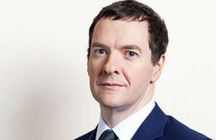
Tag: 2013

  • George Osborne – 2013 Speech on Benefits

    gosborne

    Below is the text of the speech made by the Chancellor of the Exchequer, George Osborne, on the subject of welfare and benefits made on 2nd April 2013.

    Good afternoon, thank you for inviting me to be here at Morrison’s today.

    One of your company slogans – “every penny matters” – is a very fitting catchphrase for what I want to talk about.

    I want to talk about the major changes we’re making to our tax and welfare system this month.

    Changes that are all about making sure that we use every penny we can to back hard working people who want to get on in life.

    Changes that are all about backing people like you.

    For too long, we’ve had a system where people who did the right thing – who get up in the morning and work hard – felt penalised for it, while people who did the wrong thing got rewarded for it.

    That’s wrong.

    So this month we’re going to put things right.

    This month, 9 out of 10 working households will be better off as a result of the changes we are making.

    This month we will make work pay.

    Now, those who defend the current benefit system are going to complain loudly.

    These vested interests always complain, with depressingly predictable outrage, about every change to a system which is failing.

    I want to take the argument to them.

    Because defending every line item of welfare spending isn’t credible in the current economic environment.

    Because defending benefits that trap people in poverty and penalise work is defending the indefensible.

    The benefit system is broken; it penalises those who try to do the right thing; and the British people badly want it fixed.

    We agree – and those who don’t are on the wrong side of the British public.

    But this isn’t just an argument about whether these changes are fair or not.

    It’s really about the future of our country.

    When I think about the future, I think about the kind of country my kids and your kids are going to grow up in.

    The world is going to be quite a different place.

    We’re facing more and more competition from vast new economies like China and India.

    There are quite literally billions of people who are joining the world economy.

    That’s human progress.

    If we’re not careful, Britain risks being out-worked, out-competed and out-smarted by those hungry for a better life.

    Fortunately, this country has a lot of strengths. British people are some of the hardest workers in Europe.

    Our companies produce some of the best inventions in the world.

    But we aren’t going be able to compete if politicians waste your money or we rack up debts we can’t afford to pay off.

    When I became Chancellor, we were forecast to have the biggest deficit of any major economy in the world.

    The deficit is the gap between what the Government spends and what it raises – and in Britain that gap got bigger than almost anywhere else.

    By taking hard decisions in the last few years to save money, this government has cut that deficit by a third.

    But it’s still too high.

    Because of that deficit six pence in every pound of tax you pay is going to be wasted.

    It will have to be spent not even on paying off the national debt – but just servicing the interest on that debt.

    You spend hours here working hard.

    You pay your taxes out of your earnings.

    I want every penny of that money to be spent on the things that matter to you and your family: a better NHS, good schools and policing, strong defence, and decent pensions.

    Not on paying the interest bills on the national debt.

    Some politicians seem to think we can just wish away Britain’s debt problem.

    They want to take the cowardly way out, let the debt rise and rise and just dump the costs onto our children to pay off.

    I don’t think that would be fair.

    And I don’t think we’d get away with it.

    The interest charges would soar.

    Interest rates would rocket.

    People with mortgages would struggle.

    Businesses with loans would go bust.

    Jobs would be lost.

    So we are making changes to our tax and benefit system so this country can live within its means and compete in the global race the Prime Minister has spoken of.

    That’s what this speech is about – that’s what the changes we are making this month are about.

    It’s about making the country fairer – and protecting our future.

    And there are three things we are doing.

    First, reforming the welfare system so it’s fair on people like you who pay for it, and fair on people who need help to look for work.

    Second, creating jobs in our economy.

    And third making sure when people are in work, they can keep more of what you earn.

    Let me take each in turn.

    Let’s start with the welfare system.

    I think people in this country understand that the welfare system needs to change.

    In 2010 alone, payments to working age families cost £90 billion.

    That means about one in every seven pounds of tax that working people like you pay was going on working age benefits.

    To put that into perspective – that’s more than we spend on our schools.

    That’s one reason why we’ve got such a big deficit.

    But the system was not just unaffordable.

    It was fundamentally broken.

    The system became so complicated, and benefits so generous, that people found they were better off on the dole than they were in work.

    And the figures show what happened as a result.

    Even at the end of the economic boom in 2008 there were more than four million working age people on out of work benefits.

    And here’s the saddest fact of all.

    We had nearly two million of our children living in families where no-one worked – the highest proportion of any country in the European Union, including countries much poorer than us.

    That’s a worry for the future.

    Once it becomes the norm in an area not to work, welfare dependency can become deeply entrenched, handed on from one generation to the next.

    And governments of all colours let too many unemployed people get parked on disability benefits, and told they’d never work again.

    Why?

    Because people on disability benefits don’t get counted in unemployment figures that could embarrass politicians.

    It was quick fix politics of the worst kind – and the people who lost out were you, hard working taxpayers who had to pay for all this…

    …and those on disability benefits who could have worked but were denied the opportunity to do so.

    What this government is trying to do is put things right.

    We’re trying to make the system fair on people like you, who get up, go to work, and expect your taxes to be spent wisely.

    And we’re trying to restore hope in those communities who have been let down by generations of politicians by getting them back into work.

    So our reforms have one simple principle at their heart – making sure people are better off in work than on benefits.

    Take Housing Benefit.

    When I took this job, I discovered there were some people who got £100,000 pounds a year in Housing Benefit.

    £100,000 a year in benefit.

    No family on an ordinary income could ever dream of affording a rent like that.

    And you can imagine what that does for someone’s incentives to get a better paid job – because almost everything extra they earn will just be taken away from them in lower housing benefit.

    We can’t have a system that penalises you for going out to work and wanting to get on.

    So we’ve put a stop to those staggering payments and put a cap on housing benefit.

    We’ve made sure that you can’t get more than £400 pounds of Housing Benefit a week in this country.

    That’s still a pretty generous amount.

    And yet when we did the pressure groups and welfare lobby attacked it as not enough.

    They still say that people should get more than £400 a week housing benefit.

    They don’t seem to realise that the money to pay these benefits comes from people who work hard, who pay their taxes, and many of whom can’t afford £400 a week in rent.

    This week, we’re bringing in further common sense changes to benefits.

    We’re making savings to council tax benefit – that’s a benefit that went up by 50% under the last Government.

    And we’re also changing the housing benefit rules.

    We’re saying that if you continue to live in a council house that’s bigger than you need, you’ll need to make a contribution towards the extra bedroom.

    We’ve got 1.8 million families waiting for social housing, and yet there are a million spare rooms across the sector.

    If you live in private rented accommodation and receive Housing Benefit – these rules already apply – and have done for nearly 20 years.

    You don’t get money for a spare room.

    Treating both groups of people the same regardless of which landlord owns their house is only fair.

    Another change is taking place too.

    Next week, on April 8th, we’re also making sure that benefits, in the economic jargon, are only uprated by one percent.

    What this means in reality is that benefits won’t increase more than many people’s wages.

    In these difficult economic times, many people in jobs haven’t seen their incomes rise by much, if at all.

    Some have even seen it cut.

    And we’re also having to impose a one percent salary increase on people in the public services like nurses and teachers.

    So it’s only fair and right that the same rules apply to people on benefits.

    Fair to you, people in work.

    There’s another, even more significant change we’re making this month.

    Families out of work can claim various different benefits – and they can end up with an income far higher than an average working family.

    Why on earth would someone go out to work if that’s the case?

    So this April we’re introducing the new Benefit Cap.

    The Benefit Cap has a very simple principle at its heart: no family that’s out of work should receive more in total benefits than the average family gets in work.

    The cap will be set at £500 pounds for a couple, or someone with children, and £350 a week for a single adult.

    That’s £26,000 pounds a year for a family, or £18,000 for a single adult.

    Most working people think frankly that’s pretty high – yet still the pressure groups complain it’s not high enough.

    The opposition oppose any cap at all.

    Who here, who pays their taxes, and pays for the benefit bills of others thinks £500 a week in benefits is too little.

    Who here, who goes to work and sends money to the government, thinks families that aren’t working should get more than £26,000 a year.

    Exactly.

    Those who campaign against a cap on benefits for families who aren’t working are completely out of touch with how the millions of working families, who pay the taxes to fund these benefits, feel about this.

    We are on your side.

    The new Benefit Cap will be introduced in parts of London from 15th April – before we roll it out across the country this summer.

    With all our welfare changes, we’re simply asking people on benefits to make some of the same choices working families have to make every day.

    To live in a less expensive house.

    To live in a house without a spare bedroom unless they can afford it.

    To get by on the average family income.

    These are the realities of life for working people.

    They should be the reality for everyone else too.

    And we’re going to go further – replacing all those complicated benefits and tax credits with a single, simple Universal Credit which ensures you’re always better off working.

    We’re trialling it in the North West of England this month – to make sure it’s ready for national roll out later this year.

    Be in no doubt: reforming the welfare system is a big job, and it’s hard.

    But I’m proud of what we’re doing to restore some common sense and control on costs.

    In recent days we have heard a lot of, frankly, ill-informed rubbish about these welfare reforms.

    Some have said it’s the end of the welfare state.

    That is shrill, headline-seeking nonsense.

    I will tell you what is true.

    Taxpayers don’t think the welfare state works properly anymore.

    When did this start to happen?

    When we created a system that encouraged people to stay out of work rather than find a job.

    Our reforms are returning to welfare to its most fundamental principles – always helping the most vulnerable, but giving people ladders out of poverty.

    And the politicians who should have to explain themselves are those who have given up on trying to get people working again.

    In reality there’s nothing “kind” about parking people who could work on benefits. There’s nothing fair about a something for nothing culture.

    The pundits and politicians who are spending this week firing off letters to newspapers, or touring the television studios, are missing what people actually want.

    People don’t want a welfare system that keeps them in poverty.

    Most people on benefits want to work.

    They want a welfare system that helps them into work, that lifts them up, that gives them pride, self-worth and dignity.

    That’s why we’re building a benefits system that means you’re always better off in work.

    And that’s why we’re building an economy that creates real, lasting jobs.

    For it wasn’t just our benefits system that was broken.

    Our economy broke too.

    Fixing that economy has been a hard, difficult process.

    And yes, it’s taken longer than anyone hoped.

    But we’re getting there.

    We’re fundamentally rebalancing our economy, away from debt, away from the public sector, away from relying on a select few industries like the banks, away from being dependent on the City of London…

    …to an economy where prosperity and businesses are shared across the country; an economy that invests in the industries of the future; an economy which makes things again and where there are good, well paid jobs not just for this generation – but for our children too, in that competitive world I told you about.

    And we’re delivering results.

    Over one million private sector jobs have been created in our economy over the last three years.

    The rate of employment has risen faster here than in the US and three times as fast as in Germany.

    Last year, more businesses started in this country than in any other year before.

    And in industries like car manufacturing, Britain is now back to being a world leader.

    So as well as all the benefit changes this April we’re also doing even more this month to make sure Britain competes and thrives and jobs are created here instead overseas.

    Yesterday, corporation tax was cut to 23 percent – that means it’s lower here than in the other largest economies in the world.

    And we will get it lower still, to 20%.

    This week we are also introducing new research and development tax breaks so companies can invest in the high technology and intellectual property that are the future of the British economy.

    And we’ll be abolishing the jobs taxes altogether on many hundreds of thousands of our small businesses in the coming year.

    To help people who work in construction, and support families who want to own their own home but can’t afford the deposits these days, we’re launching our new Help to Buy scheme this week.

    And here’s another change we’re making.

    On Saturday, the top rate of tax will be reduced from 50p to 45p.

    I know this is controversial – but if we’re serious about Britain succeeding in the world, it’s an economic essential.

    In a modern global economy, where people can move anywhere in the world, we cannot have a top rate of tax that discourages people from living here, setting up businesses here, investing here, creating jobs here.

    If you don’t believe me, ask France.

    They’re planning to whack up their top rate of tax – and you know what’s happening?

    Job creation is down as people are leaving the country.

    The opposite is happening here because we are welcoming entrepreneurs and wealth creators – and the jobs they bring with them.

    Let’s be clear.

    The 50p tax was a big tax con.

    The Labour Government brought it in just weeks before they were kicked out.

    They pretended it would raise more money from the rich.

    But when the 50p rate was introduced, the amount collected in income tax fell by billions of pounds as the wealthy paid less.

    So we got the worst of both worlds: a tax rate that discouraged enterprise and didn’t raise more money from the rich.

    You can’t pay down the deficit with that.

    You can’t fund the health service with money that never arrives.

    Giving Britain a sensible top rate of tax may not be a popular decision – but my job is not to take decisions that please everyone.

    My job is to take the hard decisions that are right for the economy and the country – decisions that help create jobs and help Britain get ahead in this world and help gives all our kids a brighter future.

    So we’re reforming welfare to encourage work.

    We’re boosting the private sector to create jobs so that those who want to work, can work.

    The third part of our plan is to make sure when people are in work, they get to keep more of what they earn.

    In other words to make sure you get to keep more of what you earn.

    I’m a low tax Conservative.

    I believe what you earn is your money, not the government’s money.

    So I want to take away less of it in tax, and leave you to spend it how you wish.

    Give me the choice between people choosing how to spend their own money, or a politician choosing how to spend it, and I know who I would pick.

    That’s good for the economy.

    That’s good for society – the more people get to keep from what they earn, they more likely they are to work, the more independent and responsible they will be.

    And it also simplifies the system.

    Today, we have the bizarre situation where hundreds of thousands of people on low incomes pay tax, only to have to apply to get their money back again in benefits.

    But it has to be a real tax cut – paid for by doing the hard working of cutting back government spending.

    Not a tax cut paid for with borrowed money – borrowed money that is paid for with higher taxes in the future.

    This week – because we’ve done the hard work on spending – we’re bringing in the largest tax cut in a generation.

    And it’s paid for.

    From this Saturday, the personal allowance – the amount of money you can earn before you start to pay tax – will rise from £8,105 to £9,440.

    Nine out of ten working households will be better off as a result of the reforms we’re making this month.

    And the average working household will be better off by over £300 a year.

    That’s roughly equivalent to an average monthly shop here at Morrison’s.

    And next year, we’re going further.

    We’re going to increase the personal allowance to £10,000.

    Let me repeat that– from next April, you won’t pay any income tax at all on the first £10,000 you earn.

    This will mean nearly three million more people will pay no income tax at all.

    That’s £700 pounds less in tax for working families than when we came into office.

    And let me make clear: we’re not doing it by borrowing more money – meaning you’ll pay for it down the road.

    No, we can afford this because as a country we have taken some difficult decisions together on public spending– and it’s only right that the British taxpayer gets rewarded for that.

    Let me end by saying this.

    You sitting here know that there’s no easy way out of the problems that had built up in this country.

    We’re going through some tough times.

    The last government spent a decade putting everything on the national credit card, and now we’re having to cut up the cards and start living within our means.

    I said at the start that there would be a big political fight this week.

    And we will hear plenty from the people who want to say there’s no debt problem.

    People who say that there’s no benefits problem either.

    That the changes we are making are unnecessary and unfair.

    But remember.

    These are the people who wasted your hard earned money.

    Who left massive debts behind for other people to clear up.

    Who created a welfare system that penalised hard working people who played by the rules and rewarded those who didn’t.

    What’s fair about that?

    What we’re doing this coming week is making welfare fairer, helping to create jobs, and making sure all of you can keep more of what you earn.

    We’re supporting hard working people.

    That’s the way to protect our future, and make the country fairer too.

    Thank you.

  • George Osborne – 2013 Budget

    gosborne

    Below is the text of the Budget Speech made by the Chancellor of the Exchequer, George Osborne, in the House of Commons on 20th March 2013.

    Mr Deputy Speaker, this is a Budget for people who aspire to work hard and get on.

    It’s a Budget for people who realise there are no easy answers to problems built up over many years.

    Just the painstaking work of putting right what went so badly wrong.

    And together with the British people we are, slowly but surely, fixing our country’s economic problems.

    We’ve now cut the deficit not by a quarter, but by a third.

    We’ve helped business create not a million new jobs, but one and a quarter million new jobs.

    We’ve kept interest rates at record lows.

    But Mr Deputy Speaker, despite the progress we’ve made, there’s much more to do.

    Today, I’m going to level with people about the difficult economic circumstances we still face and the hard decisions required to deal with them.

    It is taking longer than anyone hoped, but we must hold to the right track.

    And by setting free the aspirations of the nation, we will get there.

    Our economic plan combines monetary activism with fiscal responsibility and supply side reform.

    And today we go further on all three components of that plan: monetary, fiscal, and supply side reform.

    But we also understand something else more fundamental.

    Our nation is in a global race – competing alongside new centres of enterprise around the world for investment and jobs that can move anywhere.

    Building a modern reformed state we can afford.

    Bringing businesses to our shores with competitive taxes.

    Fixing the banks.

    Improving our schools, our skills, our infrastructure, and our industry.

    For years people have felt that the whole system was tilted against those who did the right thing: who worked, who saved, who aspired.

    These are the very people we must support if Britain is to have a prosperous future.

    This is a Budget for those who aspire to own their own home; who aspire to get their first job; or start their own business;

    A Budget for those who want to save for their retirement and provide for their children.

    It is a Budget for our Aspiration Nation.

    Mr Deputy Speaker, the forecast from the independent Office for Budget Responsibility today reminds us of the economic challenge at home and abroad.

    But it also reminds us that job creation and employment remain brighter spots.

    Since the Autumn Statement, the OBR has revised down again its forecast for global economic growth and sharply revised down its forecast for world trade.

    Growth in the US and Japan was flat in the last quarter, while the eurozone shrank by 0.6 per cent – the largest fall since the height of the financial crisis.

    The problems in Cyprus this week are further evidence that the crisis is not over, and the situation remains very worrying.

    I can confirm that people sent to Cyprus to serve our country, in our military or government, will be protected in full from any tax on their deposits.

    The OBR have today sharply revised down their future growth forecast for the eurozone, and expect it will remain in recession throughout this year.

    In their words, the “underlying situation remains very fragile”.

    I will be straight with the country: another bout of economic storms in the eurozone would hit Britain’s economic fortunes hard again.

    40 per cent of all we export, we export to the eurozone.

    There is a huge effort across this government to grow Britain’s trade with the fast growing parts of the world – and exports to Brazil, India and China are up almost two thirds.

    UK firms now export more goods to non-EU countries than to EU countries: the first time this has happened in over two decades.

    But we are still very exposed to what happens on the continent.

    Indeed last year, domestic demand was actually stronger than forecast; but it was the weakness of net trade that helps account for much of the weakness in GDP.

    As the OBR make clear, “the unexpectedly poor performance of exports is more than sufficient on its own to explain the shortfall”.

    GDP for last year has turned out to be a little higher than the OBR forecast in December, but this year, their output forecast is reduced to 0.6 per cent growth.

    Despite the recession in the eurozone, the OBR’s central forecast today is that we avoid a second quarter of negative growth here in the UK.

    While less than we would like, our growth this year and next year is forecast by the IMF to be higher than France and Germany.

    It is a reminder that all western nations live in very challenging economic times.

    The OBR then expect the recovery to pick up to 1.8 per cent in 2014, 2.3 per cent in 2015, 2.7 per cent in 2016 and 2.8 per cent in 2017.

    Crucially, jobs are being created.

    Indeed, in the words of the OBR, the picture on employment “continues to surprise on the upside” in this forecast.

    Mr Deputy Speaker, when we started the unavoidable task of reducing the size of the public sector workforce, some in this House expressed doubts that the private sector would be able to make up the difference.

    I’m glad to report to the House, that their lack of confidence in British businesses has proved misplaced.

    It is a tribute to the energy and enterprise of British companies that for every one job lost in the public sector in the last year, six jobs have been created in the private sector.

    The employment rate has been growing faster than in the US and three times as fast as in Germany.

    And so despite the weaker GDP, at this Budget the OBR have now revised up further their forecasts for employment.

    Compared to this time last year, the OBR now expect 600,000 more jobs in 2013 – and there will be 60,000 fewer people claiming unemployment benefit.

    We’ve seen more people in work than ever before – including a record number of women.

    A quarter of a million fewer workless households than two years ago.

    And the unemployment rate is lower than when we came to office.

    Mr Deputy Speaker, the deficit continues to come down.

    We have taken many tough decisions to bring that deficit down – and we will continue to do so.

    The deficit has fallen from 11.2 per cent of GDP in 2009-10, to a forecast of 7.4 per cent this year.

    That is a fall of a third.

    It then falls further to 6.8 per cent next year, 5.9 per cent in 2014-15.

    5 per cent in 2015-16.

    Then 3.4 per cent the following year – reaching 2.2 per cent by 2017-18.

    These numbers all exclude the transfer of the Royal Mail pension fund to the government which reduces the deficit still further for this year alone.

    Borrowing then falls from £108 billion next year and falls again to £97 billion in 2014-15.

    Then £87 billion in the last year of this Parliament.

    Before falling again to £61 billion and £42 billion in the following two years.

    And to ensure complete transparency, the OBR publish the numbers without the APF cash transfers.

    They show, that on that measure too, borrowing is just forecast to fall.

    We committed at the start of this Parliament to a fiscal mandate that said we would aim to balance the cyclically adjusted current budget over the following rolling five years.

    I can confirm that the OBR says we are on course to meet our fiscal mandate – and meet it one year early.

    However, the likelihood of meeting the supplementary debt target has deteriorated.

    Public sector net debt is forecast to be 75.9 per cent of GDP this year.

    79.2 per cent next year, and 82.6 per cent the year after.

    85.1 per cent in 2015-16.

    85.6 per cent in the year after.

    Before falling to 84.8 per cent in 2017-18.

    In response, there are those who would want to cut much more than we are planning to – and chase the debt target.

    I said in December that I thought that with the current weak economic conditions across Europe that would be a mistake.

    We’ve got a plan to cut our structural deficit.

    And our country’s credibility comes from delivering that plan, not altering it with every forecast.

    And that’s why interest rates remain so low.

    Our judgement has since been supported by the IMF, the OECD and the Governor of the Bank of England.

    I don’t propose to change that judgement three months later. Mr Deputy Speaker, I’ve also had representations at this Budget for measures that would add £33 billion a year extra to borrowing on top of the figures I’ve announced.

    It’s from people who seem to think that the way to borrow less is to borrow more.

    That would pose a huge risk to the stability of the British economy, threaten a sharp rise in interest rates and leave the burden of debts to our children and grandchildren.

    I will not take that gamble with the future of this country.

    Mr Deputy Speaker, the spending reductions we promised have been more than delivered.

    Welfare reforms have been legislated for and are taking place.

    And here’s a clear sign of progress: the proportion of national income spent by the state has fallen from 47.4 per cent three years ago to 43.6 per cent today; and it’s on course to reach 40.5 per cent at the end of the period.

    We’ve set out the deficit plan – and we’re delivering that plan.

    Taken together, the measures I will announce today are fiscally neutral overall.

    Ask the British people and they’ll tell you: our problem as a country is not that we’re taxed too little but that the government spends too much.

    I agree with them.

    So the tax cuts in this Budget aren’t borrowed; they are paid for.

    That’s our way – and it’s the only responsible way to lower taxes.

    Mr Deputy Speaker, it is the central plank of our economic plan that a tough and credible fiscal policy creates the space for an active monetary policy.

    Recovering from the financial crisis has exposed the shortcomings of conventional monetary tools.

    We in Britain have had to innovate and develop new tools.

    So have other countries.

    I confirm today that the Asset Purchase Facility will remain in place for the coming year.

    We are now actively considering with the Bank of England whether there are potential extensions to the successful Funding for Lending Scheme that will boost lending still further.

    And we are also setting out our plans for lending from our new Business Bank.

    But I want to make sure that an active monetary policy plays a full role in supporting the economy.

    So I am today setting out an updated remit for the Monetary Policy Committee.

    Alongside it, we’re publishing a review of the monetary policy framework.

    This Budget confirms the primacy of price stability and the inflation target in Britain’s monetary policy framework.

    The updated remit reaffirms the inflation target as two per cent as measured by the twelve month increase in the Consumer Prices Index.

    The target will apply at all times.

    But as we’ve seen over the last five years, low and stable inflation is a necessary but not sufficient condition for prosperity.

    The new remit explicitly tasks the MPC with setting out clearly the tradeoffs it has made in deciding how long it will be before inflation returns to target.

    To ensure a fuller communication between the Bank and the Treasury, I am changing the timing of the open letter system so that when inflation is above target, the Governor will write to me on the day the minutes of the next MPC meeting are published to allow for a more substantive exchange of views.

    The new remit also recognises that the Monetary Policy Committee may need to use unconventional monetary instruments to support the economy while keeping inflation stable.

    And it makes clear that the Committee may wish to issue explicit forward guidance, including using intermediate thresholds in order to influence expectations on the future path of interest rates.

    For example, that is what the US Federal Reserve has now done – making a commitment to keep interest rates low while unemployment is high, provided inflation is not expected to rise too much.

    This can help the economy because it gives families planning their futures, and businesses wondering whether to invest, more confidence that interest rates will stay lower for longer.

    So I am asking the MPC to provide an assessment of how intermediate thresholds might work in Britain, and to give that assessment in its August 2013 Inflation Report.

    That Report will be the first issued under the Governorship of Mark Carney.

    Whether intermediate thresholds are used will be an operational matter for the independent MPC.

    I can confirm Mervyn King and Mark Carney have both seen the new remit and they have both agreed it.

    Mr Deputy Speaker, active monetary policy can only operate freely when securely anchored by credible fiscal policy.

    That is the next component of our economic plan.

    We have instituted new public spending controls in government.

    When money is short, we make no excuses for the rigorous financial management we have run across Whitehall.

    Let me be clear with the House: that is one of the reasons why we have got forecast borrowing falling in this year and next.

    The traditional splurge of cash by departments at the end of the financial year, just to get the money spent, has been curtailed.

    And thanks to the tough financial control of my RHF the Chief Secretary, government departments are forecast to underspend their budgets by more than £11 billion this year.

    If you want to bring borrowing down, then you have to control spending – and that is what we have done.

    Now we want to ensure departments have budgets that are more closely aligned to what they actually spend.

    So both next year and the year after, we will reduce resource departmental expenditure limits by the equivalent to a 1 per cent reduction for most departments.

    The schools and health budgets will remain protected – because our promise to our NHS is a promise we will keep.

    Local government and police allocations for 2013-14 have already been set out and will not be affected.

    We also deliver in this coming year on this nation’s long-standing commitment to the world’s poorest to spend 0.7 per cent of our national income on international development.

    We should all take pride, as I do, in this historic achievement for our country.

    As previously, the DfID budget will be adjusted to ensure we don’t spend more than 0.7 per cent.

    Mr Deputy Speaker, departmental budgets have yet to be set for the year 2015-16, which starts before the end of this Parliament.

    This will done in the Spending Round that will be set out on 26th June.

    I said last Autumn that we would require around £10 billion of savings for that Spending Round.

    I confirm today that we will instead be seeking £11.5 billion of current savings.

    We’ve got to go on making difficult decisions so Britain can live within its means.

    And because we make those decisions – we can get our deficit down and focus on our nation’s economic priorities.

    Total Managed Expenditure for 2015-16 will be set at £745 billion.

    How the savings will be achieved will be a matter for the Spending Round, but existing protections apply.

    We’re also taking steps to help all departments achieve the savings required.

    Together, my RHFs the Chief Secretary and the Minister for the Cabinet Office have indentified that a further £5 billion of savings in efficiency and cutting the cost of administration can be made.

    This will go a huge way towards delivering the Spending Round in a way that saves money but protects services.

    So too will action on pay.

    The Government will extend the restraint on public sector pay for a further year by limiting increases to an average of up to 1 per cent in 2015-16.

    This will apply to the civil service and workforces with Pay Review Bodies.

    Local government and devolved administration budgets will be adjusted accordingly in the Spending Round.

    We will also seek substantial savings from what is called progression pay.

    These are the annual increases in the pay of some parts of the public sector.

    I think they are difficult to justify when others in the public sector, and millions more in the private sector, have seen pay frozen or even cut.

    I know that is tough but it is fair.

    In difficult times with the inevitable trade off between paying people more and saving jobs, we should put jobs first.

    However, there is one area of pay where we should be more generous.

    Today is also the tenth anniversary of the start of the Iraq War.

    The awarding of a posthumous Victoria Cross to Lance Corporal James Ashworth this week reminds us of the courage and sacrifice that all who serve in our armed forces are still making to defend our country.

    We will exempt our military from changes to progression pay.

    We are also accepting in full from 1st May this year the Armed Forces Pay Review Body’s recommended increase in the so-called X Factor payment made to military personnel to recognise the particular sacrifices they make.

    And I can also announce that further awards from the LIBOR banking fines have gone to good military causes, with money for Combat Stress to help veterans with mental health issues and funds for Christmas boxes for all our troops on operations this year and next.

    Those who have paid fines in our financial sector because they demonstrated the very worst values are paying to support those in our armed forces who demonstrate the very best of British values.

    Mr Deputy Speaker,

    Ultimately as a country we will not be able to spend more on the services we all value, from our NHS to our armed forces, or invest in our infrastructure, unless we go on tackling the growth of spending of welfare budgets.

    The public spending framework introduced by the previous government divided government spending into two halves: fixed departmental budgets and what is called Annually Managed Expenditure.

    Except in practice it was annually unmanaged expenditure – and it includes almost the entire welfare budget as well as items like debt interest and payments to the EU.

    I can tell the House that according to the OBR forecast today, the European Budget deal secured by my RHF the Prime Minister has saved Britain a total of £3.5 billion.

    We will now introduce a new limit on a significant proportion of Annually Managed Expenditure.

    It will be set out in a way that allows the automatic stabilisers to operate – but will bring real control to areas of public spending that had been out of control.

    We will set out how more detail on how this new spending limit will work at the Spending Round.

    All decisions, on welfare, pay and departments are tough.

    And they affect many people.

    But if we didn’t take them then what is a difficult situation for them and for the whole country would be very much worse.

    Mr Deputy Speaker, active monetary policy and a responsible fiscal policy are two components of our economic plan.

    We also need supply side reform – to throw the full weight of our efforts behind the entrepreneurial forces in our society.

    Our fundamental overhaul of the planning laws are now helping homes to be built and businesses to expand.

    Our reform of schools, universities and apprenticeships is probably the single most important long-term economic policy we’re pursuing.

    Our support for European free trade agreements with India, Japan and the US is a priority of our foreign policy.

    And we’re building the most competitive tax system in the world.

    We now need to do more.

    First, we can provide the economy with the infrastructure it needs.

    We’re already supporting the largest programme of investment in our railways since Victorian times – and spending more on new roads than in a generation.

    We’re giving Britain the fastest broadband and mobile telephony in Europe.

    And the Treasury is now writing guarantees to major projects from supporting the regeneration of the old Battersea Power Station site to building the new Power Stations of tomorrow.

    We’ve switched billions of pounds from current to capital spending since the spending review.

    But on existing plans, capital spending is still due to fall back in 2015-16.

    I don’t think that’s sensible.

    So by using our extra savings from government departments, we will boost our infrastructure plans by £3 billion a year from 2015-16.

    That’s £15 billion of extra capital spending over the next decade.

    Because by investing in the economic arteries of this country, we will get growth flowing to every part of it.

    And public investment will now be higher on average as a percentage of our national income under our plans than it was in the whole period of the last Government.

    In June, we will set out long term spending plans for that long term capital budget.

    And we will use the expertise of Paul Deighton, the man who delivered the Olympics and who now serves in the Treasury, to improve the capacity of Whitehall to deliver big projects and make greater use of independent advice.

    The second thing we can do to support enterprise is to give our great regional cities and other local areas much greater control over their economic destiny – and back sectors that are global successes.

    Private sector employment has been growing more quickly in the North East, North West and Yorkshire than across the country as a whole.

    But we can do more.

    So I accept Michael Heseltine’s excellent idea of a single competitive pot of funding for local enterprise.

    I also fully endorse the report of Doug Richard to make the most our apprenticeships.

    We have the second largest aerospace industry in the world.

    For the first time in forty years we manufacture for export more cars than we import.

    Our agritech business is at the global cutting edge.

    We’re backing international successes like these with £1.6 billion of long-term funding for the industrial strategy the Business Secretary launched this week.

    And today we build on our new tax reliefs coming in this year for the creative industries like high-end television and animation with new support for our world-class visual effects sector.

    To help small firms, we’ll increase by fivefold the value of government procurement budgets spent through the Small Business Research Initiative.

    We will fund the proposal to make growth vouchers available to small firms seeking advice on how to expand.

    And we’re putting new controls on what regulators can charge, and giving the Pensions Regulator a new requirement to have a regard for the growth prospects of employers.

    Mr Deputy Speaker, a vital sector for our economy, and a cost of doing business for everyone, is energy.

    Creating a low carbon economy should be done in a way that creates jobs rather than costing them.

    The granting of planning permission yesterday at Hinkley Point was a major step forward for new nuclear.

    Today, with the help of my HF the Energy Minister, we also announce our intention to take two major carbon capture and storage projects to the next stage of development.

    We’ll support the manufacture of ultra low emission vehicles in Britain with new tax incentives.

    The HM for Stoke on Trent Central has argued passionately and in a non-partisan way about the damage energy costs are doing to his city’s famous ceramics industry – and he’s persuaded me.

    So we will exempt from next year the industrial processes for that industry and some others from the Climate Change Levy.

    And in the Spending Round we will provide support for energy intensive industries beyond 2015.

    For the North Sea we will this year sign contracts for future decommissioning relief, the expectation of which is already increasing investment there.

    But I also want Britain to tap into new sources of low cost energy like shale gas.

    So I am introducing a generous new tax regime, including a shale gas field allowance, to promote early investment.

    And by the summer, new planning guidance will be available alongside specific proposals to allow local communities to benefit.

    Shale gas is part of the future.

    And we will make it happen.

    Mr Deputy Speaker, we can help companies grow and succeed by building infrastructure, backing local enterprise and supporting successful sectors.

    But nothing beats having the most competitive business tax system of any major economy in the world.

    That is what this government set out to achieve.

    That is what we’re delivering.

    The accountants KPMG do a survey of investors that ranks the most competitive tax regimes in the world.

    Three years ago, we were near the bottom of that table.

    Now we’re at the top.

    But in this global race, we cannot stand still.

    So today, we step up the pace.

    Our Seed Enterprise Investment Scheme offers generous incentives to investors in start ups.

    My HF for Braintree and David Young have done a great job helping promote it around the country.

    They have asked me to extend the CGT holiday – and I will.

    Employee ownership helps create an enterprise culture.

    So we’re making our new employee shareholder status more generous, with NICs and income tax relief.

    And we’re introducing capital gains tax relief for sales of businesses to their employees.

    Companies that look after their employees, and help them return to work after periods of sickness, will get new help through the tax system too.

    And we’re going to double to £10,000 the size of the loans that employers can offer tax free to pay for items such as season tickets for commuters.

    This is a great idea from my HF for Witham, and I’m happy to put it into practice.

    My HR for Enfield North and others have put forward proposals to help investment in social enterprises.

    I have listened and we will introduce a new tax relief to encourage private investment in these social enterprises.

    Research and development is absolutely central to Britain’s economic future.

    So today I’m increasing the rate of the above the line R & D credit to 10 per cent.

    Along with our new 10 per cent corporation tax rate on profits from patents coming in next month, this will help make us one of the most internationally attractive places to innovate.

    I also want Britain to be the place where people raise money and invest.

    Financial services are about much more than banking.

    In places like Edinburgh and London, we have a world beating asset management industry.

    But they are losing business to other places in Europe.

    We act now with a package of measures to reverse this decline – and we will abolish the schedule 19 tax which is only payable by UK domiciled funds.

    Many medium sized firms and start-ups use the Alternative Investment Market to raise funds to help them grow.

    Many observers of the British tax system complain that it has long biased debt financing over equity investment.

    So today I am abolishing altogether stamp duty on shares traded on growth markets such as AIM.

    In parts of Europe they’re introducing a financial transaction tax.

    Here in Britain we’re getting rid of one.

    From April next year, this will directly benefit hundreds of medium-sized UK firms, lowering their cost of capital and supporting jobs and growth across the UK.

    Mr Deputy Speaker, we also out compete the world with our headline rate of corporation tax.

    In Germany, the corporate tax rate is 29 per cent.

    In France it is 33 per cent.

    In the United States its 40 per cent.

    Here in Britain we’ve cut corporation tax from the 28 per cent we inherited to 21 per cent next year.

    But I want to go further.

    Today, I want us to send a message to anyone who wants to invest here, to create jobs here, that Britain is open for business.

    So in April 2015 we will reduce the main rate of corporation tax by another 1 per cent.

    Britain will have a 20 per cent rate of corporation tax – the lowest business tax of any major economy in the world.

    That’s a tax cut for jobs and growth.

    We will have achieved in one Parliament in these difficult times the largest reduction in the burden of corporation tax in our nation’s history.

    And with it we will achieve major simplification of our business tax system.

    By merging the small company and main rates at 20p, we will abolish the complex marginal relief calculations between them, and give Britain a single rate of corporation tax for the first time since 1973.

    As with previous reductions in the corporate tax rate, I do not intend to pass the benefit onto to the banking sector – so I will offset this reduction by increasing the Bank Levy rate next year to 0.142 per cent.

    Mr Deputy Speaker,

    Britain is moving to low and competitive taxes.

    But we should insist people and business pay those taxes, not aggressively avoid them or evade them.

    That’s the right way to succeed in the global race.

    Today, I am unveiling one of the largest ever packages of tax avoidance and evasion measures presented at a Budget.

    The details are set out in this Red Book.

    They include agreements with the Isle of Man, Guernsey, and Jersey to bring in over a billion pounds of unpaid taxes.

    New rules to stop the abuse of partnership rules, corporate tax losses and offshore employment intermediaries.

    That’s another two billion pounds.

    This year we’re giving Britain its first ever General Anti-Abuse Rule.

    And we will name and shame the promoters of tax avoidance scheme.

    My message to those who make a living advising other people how aggressively to avoid their taxes is this:

    This Government is not going to let you get away with it.

    And this year, we are leading international action on tax avoidance, through our Presidency of the G8, with the OECD and at the G20.

    We want the global rules governing the taxation of multinational firms to be updated from the 1920s when they were first written, and made relevant to the global internet economy of the twenty first century.

    This is the right and fair thing to do.

    Mr Deputy Speaker, a tax system where people and businesses pay what is expected of them is part of the glue that holds society together.

    So too is the expectation that those who work hard, who play by the rules, who save for their future and try to be independent of the state are not undermined but supported.

    So to the working parents struggling with the costs of childcare, and the mother wondering whether it makes financial sense to get a job, we offer this:

    Tax free childcare.

    The plans were set out yesterday.

    New tax-free childcare vouchers for working families: 20 per cent off the first £6,000 of your childcare costs for each child.

    And increased childcare support for those low income working families on universal credit.

    And for those who aspire to put aside money for their retirement: we offer this.

    A simple, flat rate pension accessible to everyone and worth £144 a week.

    Any one pound you save, will be a pound you can keep.

    We’re bringing forward the introduction of the new Single Tier Pension to 2016.

    It will help the low paid, the self-employed and millions of women most of all.

    Of course, if there’s no longer the old state second pension, there’s no longer anything to contract out of.

    For employers that means paying the same employer national insurance as those without defined benefit schemes.

    Private sector employers can adjust their pension benefits to accommodate the extra cost;

    Public sector employers will have to absorb the burden, as is always the case with tax changes.

    Any spending review in the next Parliament will, of course, take the £3.3 billion cost into account.

    As we have already made clear, public sector employees, and the relatively small number of private sector employees in defined benefit schemes, will from 2016 pay more national insurance then they do today.

    So they will pay the same rate of national insurance as the rest of the working population, and in return, they will get a larger state pension than before.

    For example, someone who is 40 years old when the single tier pension is introduced, and who has always been contracted out, will pay an extra £6,000 in national insurance over the rest of their working life – and in return get an extra £24,000 in state pension over the course of their retirement.

    That’s a fair deal.

    And it’s a progressive pension reform.

    We’ve also made clear before that the extra £1.6 billion raised in employee national insurance will not be kept by the Treasury.

    Mr Deputy Speaker, there’s another group of savers I want to talk about today.

    I am proud to be part of a government that has helped compensate the policy holders of Equitable Life who had suffered a great injustice.

    But we’ve not extended help to those who bought their With Profits Annuity before 1992.

    Now we can.

    I’d like to acknowledge the work of my HF for Harrow East on behalf of these people.

    We will make ex-gratia payments of £5,000 to those elderly policyholders; and we’ll make an extra £5,000 available to those on the lowest incomes who are on pension credit.

    We’re not doing this because we’re legally obliged to; we’re doing it because quite simply it’s the right thing to do.

    Helping with aspiration also means helping those who want to keep their homes instead of having to sell it to pay for the costs of social care.

    That’s what our new cap will deliver – as Andrew Dilnot recommended.

    It’ll also come in in 2016.

    It will be set to protect savings above £72,000, and we’ll raise the threshold for the means test on residential care from just over £23,000 to £118,000 that year too.

    For decades politicians have talked of doing something for savers and those who have to sell their homes to pay for care; and yet nothing has been done.

    Until this week.

    And I want to do much more.

    For unless we fire up the aspirations of the British people, light the fires of ambition within our nation, we are going to be out-smarted, out-competed and out-performed by others in the world who are prepared to work harder for success than we are.

    So this Budget makes a new offer to the aspiration nation.

    And what symbolises that more than the desire to own your own home.

    Today I can announce Help to Buy.

    The deposits demanded for a mortgage these days have put home ownership beyond the great majority who cannot turn to their parents for a contribution.

    That’s not just a blow to the most human of aspirations – it’s set back social mobility and it’s been hard for the construction industry.

    This Budget proposes to put that right – and put it right in a dramatic way.

    Help to Buy has two components.

    First, we’re going to commit £3.5 billion of capital spending over the next three years to shared equity loans.

    From the beginning of next month, we will offer an equity loan worth up to 20 per cent of the value of a new build home – to anyone looking to move up the housing ladder.

    You put down a five per cent deposit from your savings, and the government will loan you a further 20 per cent.

    The loan is interest free for the first five years.

    It is repaid when the home is sold.

    Previous help was only available to those who were first time buyers, and who had family incomes below £60,000.

    Now help is available to all buyers of newly built homes on all incomes.

    Available to anyone looking to get on or move up the housing ladder.

    The only constraint will be that the home can’t be worth more than £600,000 – but this covers well over 90 per cent of all homes.

    It’s a great deal for homebuyers.

    It’s a great support for home builders.

    And because it’s a financial transaction, with the taxpayer making an investment and getting a return, it won’t hit our deficit.

    The second part of Help to Buy is even bolder – and has not been seen before in this country.

    We’re going to help families who want a mortgage for any home they’re buying, old or new, but who cannot begin to afford the kind of deposits being demanded today.

    We will offer a new Mortgage Guarantee.

    This will be available to lenders to help them provide more mortgages to people who can’t afford a big deposit.

    These guaranteed mortgages will be available to all homeowners, subject to the usual checks on responsible lending.

    Using the government’s balance sheet to back these higher loan to value mortgages will dramatically increase their availability.

    We’ve worked with some of the biggest mortgage lenders to get this right.

    And we’re offering guarantees sufficient to support £130 billion of mortgages.

    It will be available from start of 2014 – and run for three years.

    And a future Government would need the agreement of the Bank of England’s Financial Policy Committee if they wanted to extend it.

    Help to Buy is a dramatic intervention to get our housing market moving:

    For newly built housing, Government will put up a fifth of the cost.

    And for anyone who can afford a mortgage but can’t afford a big deposit, our Mortgage Guarantee will help you buy your own home.

    That is a good use of this Government’s fiscal credibility.

    In the Budget Book, we also set out more plans for housing:

    – Plans to build 15,000 more affordable homes

    – Plans to increase fivefold the funds available for building for Rent

    – And plans to extend the Right to Buy so more tenants can buy their own home.

    Mr Deputy Speaker,

    People also have the aspiration to keep more of what they earn.

    That’s a difficult aspiration for any Chancellor to help with – when economic times are tough and money is short.

    But we’re doing the hard work to reduce current spending.

    We’ve set out a tough package to raise money from tax avoiders.

    And that means that with this Budget we can stick to the path of deficit reduction, increase capital spending, and still find ways to help families.

    Let me turn to duties.

    We inherited a fuel duty escalator that would have seen above inflation increases in every year of this Parliament.

    We abolished the escalator and we’ve now frozen fuel duty for two years.

    This has not easy.

    The government has forgone £6 billion in revenues to date.

    But oil prices have risen again.

    Families budgets are squeezed.

    And I hear those who want me to do more to help them get by.

    My HF for Harlow has again spoken up for his hard working constituents.

    He’s been joined by many other HFs, like the Member for Argyll and Bute.

    We’ve all listened to the people we represent.

    Today, I am cancelling this September’s fuel duty increase altogether.

    Petrol will now be 13 pence per litre cheaper than if we had not acted over these last two years to freeze fuel duty.

    For a Vauxhall Astra or a Ford Focus that’s £7 less every time you fill up.

    Mr Deputy Speaker, there’s another duty escalator – the annual two percent above inflation increases in alcohol.

    We’re looking at plans to stop the biggest discounts of cheap alcohol at retailers.

    But responsible drinkers – and our pubs – should not pay the price for the problems caused by others.

    The sad fact is that we’ve lost 10,000 pubs in the UK over the last decade.

    Many HM’s have raised their concerns with me like my HF for Bristol North West.

    My HF for Burton and Uttoxeter in particular has been a committed champion of the famous brewing industry that employs many of his constituents.

    I intend to maintain the planned rise for all alcohol duties – with the exception of beer.

    We will now scrap the beer duty escalator altogether.

    And instead of the 3p rise in beer duty tax planned for this year I am cancelling it altogether.

    That’s the freeze people have been campaigning for.

    But I’m going to go one step further and I am going to cut beer duty by 1p.

    We’re taking a penny off a pint.

    The cut will take effect this Sunday night and I expect it to be passed on in full to customers.

    All other duties will remain as previously announced.

    Mr Deputy Speaker,

    Of course, freezing petrol duty and cutting beer duty will not transform the finances of any family.

    But it helps a little to have some bills that aren’t going up.

    And it helps a lot to be able to keep more of the money you earn before you pay tax on it.

    This Government supports people who work hard and want to get on.

    When we came to office, the personal income tax allowance stood at under six and a half thousand pounds.

    In two weeks time, the allowance will reach £9,440 with the single largest cash increase in its history.

    24 million taxpayers will see their income tax bill cut by an extra £200.

    Over 2 million of the lowest paid will be taken out of tax altogether.

    In this Budget, the Government reconfirms its commitment to raising the personal allowance to £10,000.

    In fact, we go one better.

    Mr Deputy Speaker, we said we would raise the personal allowance to £10,000 by the end of the Parliament.

    Today I can confirm we will get there next year.

    From 2014, there will be no income tax at all on the first £10,000 of your salary.

    £10,000 of tax free earning.

    That’s £700 less in tax for working families than when this Government came to office.

    Almost three million more of the lowest paid will pay no income tax at all.

    It’s a historic achievement for this government and for hard working families across the country.

    Mr Deputy Speaker, there is one final tax change I want to tell the House about.

    And it’s about jobs.

    For in the end, aspiration is about living in a country where people can get jobs and fulfil their dreams.

    The ending of contracting out that I talked about generates extra employee national insurance revenues for the Exchequer.

    I want to put those revenues to good use.

    I want to support jobs and the small businesses that create them.

    And I want to do it with a reforming tax cut – in fact it’s the largest tax cut in the Budget.

    The cost of employing people is a burden on small firms.

    And it is a real barrier to taking an extra person on.

    To help create jobs and back small businesses in this country I am today creating the Employment Allowance.

    The Employment Allowance will work by taking the first two thousand pounds off the employer National Insurance bill of every company.

    It’s a tax off jobs.

    It’s worth up to £2,000 to every business in the country.

    And it will mean that 450,000 small businesses – one third of all employers in the country – will pay no jobs tax at all.

    For the person who’s set up their own business, and is thinking about taking on their first employee – a huge barrier will be removed.

    They can hire someone on £22,000, or four people on the minimum wage, and pay no jobs tax.

    98 per cent of the benefit of this new Employment Allowance will go to SMEs.

    It will become available in April next year once the legislation is passed.

    And we’ll also make it available to charities and community sports clubs.

    Today this Government is taking tax off jobs.

    Mr Deputy Speaker, a new Employment Allowance.

    A 20 per cent rate of Corporation Tax.

    A £10,000 Personal Allowance.

    Major achievements delivered by this Government in difficult times.

    We understand that the way to restore our economic prosperity is to energise the aspirations of the British people.

    If you want to own your own home;

    If you want help with your childcare bills;

    If you want to start your own business;

    Or give someone a job;

    If you want to save for your retirement;

    And leave your home to your children;

    If you want to work hard and get on – we are on your side.

    This is a Budget that doesn’t duck our nation’s problems.

    It confronts them head on.

    It is a Budget for an aspiration nation.

    It is a Budget for a Britain that wants to be prosperous, solvent and free.

    And I commend it to the House.
  • George Osborne – 2013 Speech on Banking Reform

    gosborne

    Below is the text of a speech made by the Chancellor of the Exchequer, George Osborne, on the subject of banking reform. The speech was made in Bournemouth on 4th February 2013.

    Thank you for welcoming me to JP Morgan here in Bournemouth.

    When you think about where to give a speech on culture and ethics and the future of British banking, the offices of one of the world’s largest American investment banks may seem like an odd choice of venue.

    But it’s a deliberate one.

    For the four thousand people who work here are, each one of you, a reminder that when banking works, it works for the families and communities of the whole of Britain.

    You, each one of you, are a reminder that when we attract international firms to our country – firms that could go anywhere in the world to do their business – those firms bring jobs, and investment and prosperity.

    That for every one of the people employed here at the largest business in Dorset, there are many more employed in the businesses that support this office, in the shops that take your custom, and in the local economy that has grown stronger on your back.

    I’m going to see two of those businesses after I speak here – a catering company and a landscaping business called Stewarts.

    Four of the employees at that landscaping business work full time on JP Morgan site, jobs that wouldn’t exist without your presence.

    From JP Morgan, one of the world’s biggest companies, to Stewarts landscaping, Bournemouth teaches us that Britain should continue to aspire to be a home to the world’s financial services.

    And what is true for Bournemouth is also true of Bristol, and Edinburgh, Leeds, Cardiff, Birmingham and Manchester.

    In all these cities, financial services are some of our largest and most innovative employers.

    And it’s true about London too – and the City of London.

    Generations have created in the City something extraordinary – a global centre of finance.

    The global centre of finance.

    Whether its insurance and accountancy, shipping and legal services, hedge funds, private equity, asset management or investment banking, when the world wants to transact – it wants to transact through London.

    And we want to keep it that way in the years ahead.

    That’s why it’s been good to see Britain and London maintain its number one spot as the home of global financial services.

    That’s why it’s been exciting to see the first Renminbi bond issued anywhere in the world outside of Chinese sovereign territory issued in London in the last twelve months.

    For that is not just good for their future, it’s good for ours too.

    It’s how we will win in the global race.

    It’s what I am personally determined to achieve.

    And part of having a successful financial services industry is having successful British banks, who want to lend at home and compete around the world.

    Think of some of the most important moments in your life.

    When you bought your own home with a mortgage.

    When you took the plunge and started your own business.

    When you retired and drew on your pension.

    On each of those occasions, you relied on the financial system and put your trust in them

    That is why it’s so important to have that trust reciprocated and a banking system that works for you.

    And that is what I’m working night and day to deliver for you.

    Like all this Government’s reform – to welfare, to the economy, to schools and to banking – we want to back aspiration and be on the side of those who want to work hard and get on.

    Our principles are simple: if you do the right thing, government should support and help you, and remove the barriers in your way.

    If you do the wrong thing, you should take responsibility for your actions.

    And sadly, nowhere have these simple principles been broken more clearly and indefensibly than in our banking system over the last decade.

    Irresponsible behaviour was rewarded, failure was bailed out, and the innocent – people who have nothing whatsoever to do with the banks – suffered.

    For many, the financial crash was confirmation of what they felt about our society: that those who are only out for themselves get away with it; and those who work hard and play by the rules get punished.

    That is why, five years on from that crash, people are still so angry.

    And when people discover more about what went so wrong:

    – the mis-selling of interest rate swaps to small firms who went bust as a result;

    – the greed and corruption on the LIBOR trading floor.

    They get angrier still.

    I understand that anger.

    I feel it too.

    But anger can be a negative, destructive thing if it is not channelled into change.

    Change for the good.

    Any bunch of politicians can bash the banks, chase the headlines, court the populist streak.

    But what good would that do our country?

    The jobs, the investment, the banking system we all need would go with it.

    Let’s take the anger we feel about the banks and turn it into change to build the banking system that works for us all.

    That is precisely what we are doing.

    And through the work we’ve done, the expert help we’ve enlisted, we can make 2013 the year of change in our banking system.

    2013 is the year when we re-set our banking system.

    So the banks work for their customers – and not the other way round.

    So that those who guard over the banks to keep our economy safe are the right people with the right weapons to do the job.

    And so that when mistakes are made, it’s the banks and not the taxpayer that picks up the bill.

    Let me explain how.

    Let me tell you about the four concrete things that are going to change this year.

    First, we’ve got a brand new watchdog with new powers to keep our banks safe so they don’t bring down the economy.

    Second, we’ve got a new law to separate the branch on the high street from the dealing floor in the city to protect taxpayers when mistakes are made.

    Third, we’re going to start, with the industry, changing the whole culture and ethics of the business, so they work for you.

    Fourth, we’re going to give customers the most powerful weapon of all: choice.

    Real choice about who you bank with – and choice to change who you bank with if you want a better deal.

    Let me take each in turn.

    First, protecting our economy by keeping our banks safe.

    The decision taken by the last government to divide responsibility for financial stability from banking supervision was one of the worst economy policy mistakes of the modern era.

    The Bank of England was stripped of its responsibility for keeping the banking system safe.

    The Financial Services Authority was only focussed on compliance, with a myriad of individual rules, and missed the wood for the trees.

    The Treasury’s banking division was run down.

    No-one saw it as their job to monitor risks across the whole system.

    So no-one spotted the increase of debt.

    Staggeringly, total debt reached five times the size of the entire economy.

    The fire alarm was ringing when Northern Rock handed out 120 per cent mortgages.

    The fire alarm was ringing when the Royal Bank of Scotland made its reckless purchase of ABN AMRO, after the credit markets had already seized up.

    The fire alarm was ringing, but no-one was listening.

    And when the crisis hit, the fire was then so great that the whole economy was sacrificed to put it out.

    Ten per cent of the entire wealth of this country was lost.

    Hundreds of thousands of people lost their jobs and their livelihoods.

    Yes, those responsible should be held to account.

    But British people need to know that lessons have been learnt.

    And they have.

    This April, the FSA is being abolished.

    This April, the Bank of England will be in charge of keeping our financial system safe.

    With the authority that comes from its history, and the new powers we have given it for the future, the Bank of England will be the super cop of our financial system.

    The Bank is ready.

    The logistics are in place.

    And from day one, we will have a powerful new watchdog with real teeth.

    Not just to intervene and stop individual wrong doing.

    But the power to make a judgement call about the whole system – the power to spot increases in debt or warn of risky practices.

    The power to call time before the party gets out of control.

    But also the power to support the economy if credit conditions get too tight.

    The Bank of England won’t be just empowered to protect us from the excesses of a banking boom, but also to help the bank support us in a bust.

    And we’re also creating from April a strong new conduct regulator, the FCA, to ensure London and the UK have the best, most open, and transparently policed markets in the world.

    That will win business for Britain, attract investment.

    And through the Funding for Lending scheme, we’re giving banks incentives to boost lending to families and businesses.

    We’ve already seen the availability and cost of borrowing coming down, but we are monitoring it closely to ensure that rates and availability continue to improve.

    Good regulation.

    Watchdogs with real teeth.

    Open markets with clear rules, properly policed.

    These support innovation.

    For the industry that suffers most when something goes wrong in finance – is finance itself.

    Second, this year we’re going to start separating the high street banking we all depend on from the City trading floor.

    When the RBS failed, my predecessor Alistair Darling felt he had no option but to bail the entire thing out.

    Not just the RBS on Britain’s high streets, but the trading positions in Asia, the mortgage books in sub-prime America, the property punts in Dubai.

    I want to make sure that the next time a Chancellor faces that decision they have a choice.

    To keep the bank branches going, the cash machines operating, while letting the investment arm fail.

    No more rewards for failure.

    No more too big to fail.

    No more taxpayers forking out for the mistakes of others.

    The same rules for the banking business as any other business in a free market.

    When the Government came into office, there was no agreement about how this massive task would be achieved.

    That’s why we spent two and a half years painstakingly building a consensus on the future structure of our banking industry, working with leading experts and Members of Parliament and I want to thank Vince Cable for his help in doing that with me.

    The work that Sir John Vickers and his Commission has done has won respect all around the world, and has already influenced the European debate.

    Today, we are published the legislation that will turn their ideas and this consensus for change into law.

    A law for the first time ever, to separate the retail and investment arms of banks, and erect a ring fence around the retail bank so its essential operations continue even if the whole bank fails.

    I’m sending the legislation to the House of Commons today and I expect them to be passed by Parliament this time next year.

    It won’t mean banks won’t make mistakes.

    But it does mean that if they do, those parts of the banking system that are vital for families and businesses can continue without resort to the taxpayer.

    Today, we will go further than previously announced, enshrining in law these simple principles.

    I can announce that your high street bank will have different bosses from its investment bank.

    Your high street bank will manage its own risks, but not the risks of the investment bank.

    And the investment bank won’t be able to use your savings to fund their inherently risky investments.

    My message to the banks is clear: if a bank flouts the rules, the regulator and the Treasury will have the power to break it up altogether – full separation, not just a ring fence.

    We’re not going to repeat the mistakes of the past.

    In America and elsewhere, banks found ways to undermine and get around the rules.

    Greed overcame good governance.

    We could see that again – so we are going to arm ourselves in advance.

    In the jargon, we will “electrify the ring fence”.

    I want to thank Andrew Tyrie and the fellow members of the Banking Commission we established for help developing this important new idea.

    Let’s get on and pass it all into law.

    Let me turn to the third force for change – a change in the culture and ethics of the banking industry itself.

    I have to say nowhere is this more keenly appreciated than in the responsible parts of the financial community itself.

    You here work hard in a great business.

    You service customers all over the world.

    You don’t want the name of your whole industry to be besmirched because of the crimes of a few.

    And nor do I.

    That’s why the LIBOR scandal is about far more than atoning for the mistakes of the past.

    It’s about becoming a catalyst for change in the future.

    We know what happened.

    From 2005, traders, brokers and bank officials attempted manipulation of one of the most important reference rates in our economy – a rate which affects the mortgage payments and loan rates of millions of families and hundreds of thousands of firms, large and small.

    Deliberately submitting false rates for no motive other than greed.

    “Lowballing” their Libor submissions to conceal how vulnerable their banks really were.

    Years of manipulation, in twenty banks on three continents.

    Over a billion pounds of fines have already been applied worldwide.

    And we still haven’t seen the full extent of it – more revelations will come.

    We’re expecting reports into what happened at RBS very shortly.

    I expect there will be even more public anger – if that’s possible.

    But anger is not enough – we need to channel the anger into change.

    And I want to do the right thing for the hundreds of thousands of people in the banking sector – like you – in all parts of our country who do conduct themselves with professionalism – and make sure the reputation and standards of the industry are restored.

    LIBOR manipulation happened in many countries.

    But no country has responded as quickly as decisively as we have now done.

    Where people have broken the law, the authorities will have all the resources they need to make sure they are punished.

    I’ve changed the system I inherited so that fines paid by banks for wrongdoing got to good causes not back to the industry – I have already announced that £35 million pounds of Barclay’s fines will go to British Armed Forces charities to help those who fight on all our behalves.

    The first million has been allocated to the Fisher House Project, which will help the families of wounded soldiers being treated at the Queen Elizabeth Hospital in Birmingham to stay close by.

    And we’re now stepping in to regulate previously unregulated markets and we’re making it a criminal offence to make misleading statements about LIBOR.

    Shockingly that was not the case before.

    And as we approach bonus season let me say this.

    This country now has the toughest and most transparent pay regime of any major financial centre in the world.

    City bonuses fell by almost two thirds last year, and are less than a quarter of their peak before the crash.

    Everyone should exercise restraint and responsibility, but it’s important to remember that the vast majority of people in the banking sector – like the people in this room – do not receive million pound bonuses.

    We all know there are Libor investigations ongoing into RBS in both the UK and the US.

    Any UK fine will benefit the public.

    And when it comes to RBS, I am clear that the bill for any US fine related to this investigation should on this occasion be paid for by the bankers, and not the taxpayer.

    But the change to the culture and ethics of banking go beyond bonuses and fines.

    I believe we need proper professional standards in the banking sector – just as we have for doctors and lawyers.

    I want to see the industry take pride in those standards, as our medical and legal professions do.

    And I want to see how we can strengthen the sanctions regime for senior bankers – for example, should there be a presumption that the directors of failed banks do not work in the sector again?

    I have asked the Parliamentary Commission to look at how to improve the professional standards and culture of the banking sector.

    Their work is underway and will report in the spring.

    I would encourage the Commission to come forward with far reaching proposals.

    The fourth and final change we need to banking is more choice.

    Choice is the most powerful tool we have to improve markets and customer service, reward good companies and penalise poor ones.

    Yes, our new regulator can pick up the pieces from the interest swap mis-selling or PPI.

    Yes, I believe we must do much more to expose hidden charges and remove the conflicts of interest that plague too much so called independent financial advice.

    But I also want to see more banks on the high street, so customers have more choice.

    One of the prices we’re paying for the financial crisis is that our banking sector is now dominated by a few big banks.

    It verges on an oligopoly.

    75% of all personal current accounts are in the hands of just four companies.

    I want new faces on the high street.

    I want upstart challengers offering new and better services that shake up the established players.

    We’ve made a start: with the sale of Northern Rock to Virgin Money, and the proposed sale of Lloyds branches to Co-op.

    We’re seeing new banks like Metro Bank on our high streets – but I want to make it easier to start a small bank and grow the business.

    This year, in 2013, we’re taking a huge step towards making that happen – by making it easier for customers to move banks if they can get a better deal elsewhere.

    From September this year, every customer of every bank in Britain will be able to switch their bank account from their existing bank to another one in seven days.

    All they will have to do is sign up to a new bank – and the rest will follow.

    All the direct debits, the standing orders, everything will be switched for you with no hassle.

    This is a revolution in customer choice.

    But today, we will go further.

    Payments systems sit at the heart of the banking system.

    They are the hidden from view wirings that operate every time you get wages paid into your bank account, deposit a cheque or withdraw money from an ATM.

    It’s how the money flows around the system.

    And it’s a bit like the electricity grid, every person and every business needs to be plugged into them to enter the banking market.

    At the moment, a new player in the industry has to go to one of the existing big banks to use the payment system.

    Asking your rival to provide you with the essential services you need at a reasonable price is not a recipe for success.

    And it other walks of life, like telecoms, we don’t operate like that.

    There are no incentives on the big banks to deliver new and better services for users – like saving the cheque or creating new services like mobile payments.

    Why, in the age of instant communication, do small businesses have to wait for several days before they get their money from a credit or debit card payment?

    It should be much quicker.

    Why do cheques take six days to clear?

    Customers and businesses should be able to move their money round the system much more quickly.

    Why is it that big banks can move their money around instantly, but when a small business wants to make a payment it takes days?

    The system isn’t working for customers, so we will change it.

    I can announce today that the Government will bring forward detailed proposals to open up the payment systems.

    We will make sure that new players in the market can access these systems in a fair and transparent way.

    The last Government let the established players off the hook by failing to implement the conclusions of the review they themselves commissioned, and allowing the big existing banks to regulate themselves.

    This Government will make sure payment systems serve the needs of consumers, not the needs of the established banks.

    Bank working for their customers, not themselves.

    Taxpayers’ money protected.

    The guardians of financial stability with the tools they need to keep us safe.

    On all these fronts, we are making major changes.

    A financial industry that is strong, successful and inspires the pride of all those who work for it.

    That’s what Government should be about – taking the big tough decisions because they’re right for the long-term good of our country.

    Our country has paid a higher price than any other major economy for what went so badly wrong in our banking system.

    The anger people feel is very real.

    Let’s turn that anger from a force of destruction into a force for change.

    Change that will give us a banking system that will work for us all.

    In 2013, thanks to the changes we are making, that goal is in sight.

  • Frances O’Grady – 2013 Speech on Blacklisting

    Below is the text of the speech made by Frances O’Grady against blacklisting on 20th November 2013.

    Brothers and sisters,

    I am proud to bring greetings and solidarity from the TUC.

    Proud to be part of this historic Day of Action.

    And proud to demand justice for thousands of blacklisted workers.

    Today we are joining together to speak with one voice.

    And from Westminster to Cardiff to Edinburgh ­we are speaking up for the thousands of ordinary men and women whose lives have been devastated by this disgusting practice.

    Denied the fundamental human right to work, to provide for their families, to enjoy any kind of standard of living.

    Let’s be clear.

    Penalising workers for their union activities or raising health and safety concerns has no place in any democratic or civilised society.

    We need action to stamp out the scourge of blacklisting – and we need it now.

    Brothers and sisters, this terrible practice has disfigured too many of our workplaces.

    And it continues to do so.

    Not just in the construction industry, where we know 40 firms have blacklisted workers.

    But also in rail engineering, in entertainment and in offshore oil and gas, where the letters NRB – not required back – still send a shiver down the spine.

    And there’s a real risk this Tory-led government could make matters worse.

    Because provisions in their rotten Lobbying Bill to make union membership lists open to scrutiny amount to little more than a Blacklisters’ Charter.

    Instead of giving the green light to unscrupulous employers, we need to show them the red card.

    Now is the time for them to own up, clean up and above all pay up.

    It’s a disgrace that none of the companies involved have faced any criminal sanctions.

    It’s an abomination that many continue to use blacklists.

    And it’s an outrage that not a single penny has been paid to the victims.

    So what can we do to put right these fundamental wrongs?

    Well, here’s a few suggestions from me.

    One: let’s have a full public inquiry into the scandal along the lines of the Leveson Inquiry into press behaviour.

    If celebrities and politicians have the right to find out the truth, then so too do ordinary working-class men and women.

    Two: let’s have legislation to stop blacklisting, with full legal protection for workers and proper penalties for employers found guilty of the practice.

    Three: let’s blacklist the blacklisters, encouraging organisations to follow the brilliant example of those 30 councils and public bodies who are preventing contracts being awarded to firms who blacklist workers.

    In plain English, it’s time to beat the bastards at their own game.

    And fourth: let’s ensure the voice of blacklisted workers is heard loud and clear in the corridors of power.

    I’m delighted to be speaking alongside Chuka, and I look forward to a future Labour government eradicating the blacklist once and for all.

    But I’m humbled to share this platform with workers who have lived with the consequences for years.

    And I want to finish by saying this to them.

    The TUC will keep fighting for justice.

    We stand with you in solidarity.

    We will work with you in the weeks and months ahead.

    And will not rest until this battle is won.

    Thanks for listening.

  • Frances O’Grady – 2013 Speech to TUC Conference

    Below is the text of the speech made by Frances O’Grady on 9th September 2013.

    President, Congress.

    Frances O’Grady, TUC, giving my first speech as General Secretary. And after seeing that film, ever more determined that our movement should help build a stronger, fairer Britain.

    We are now just 18 months away from a General Election. And the choice that the British people make could shape the kind of country we live in for generations.

    If we’ve learned anything since the financial crash, then it’s this: politics is too important to be left to the politicians.

    People don’t need us to tell them how tough life is for them. They want to hear the alternative. They want hope. And they want action.

    It was five years ago this month, Lehman Brothers filed for bankruptcy in New York, citing debt of over 600 billion dollars. A price tag on obscene greed and monumental stupidity that sent shock waves around the world.

    But the roots of the crash go deeper still – more than three decades to the election of Margaret Thatcher’s government. When the Right set out to break the post-war consensus.

    Once, it seemed everyone agreed that the State should provide decent public services and social security as a human shield against boom-bust capitalism. Everyone saw the value of a mixed economy that put the brakes on private monopolies and guaranteed a public realm.

    But no longer. What followed became the articles of a new economic faith. A fire-sale of public assets. Deregulation of the City. Weaker worker rights.

    And trade unions, once respected across the political spectrum for our role in fighting fascism and as a pillar of any free and democratic society, now treated with disdain.

    The values of a mythical middle England came to dominate, stretching the United Kingdom to breaking point.

    The City and the new kids on the block – private equity, hedge funds and share traders – increasingly called the shots. And they unleashed an escalation of greed and inequality that ultimately led to the financial crash. Creating a new Anglo-American model that was a kind of capitalism on crack cocaine.

    A legacy we’re living with today.

    But it hasn’t always been like this. Whatever happened to the Conservative Party that, over 100 years ago, backed Winston Churchill’s proposal for tripartite wages councils, so that every worker would be guaranteed a living wage? Whatever happened to the Conservative Party of John Major who at least felt obliged to promise voters a ‘Classless Society’?

    And whatever happened to the Conservative Party of Theresa May who once warned against becoming the Nasty Party. But who, just this summer, sent government funded vans onto the streets of multiracial London brandishing a slogan last used by the National Front?

    This Government seems intent on dividing Britain, Thatcher-style. Between those in work and those out of it. Between the tax top rate payers and everyone else. Between the metropolitan elite, with their country retreats in Chipping Norton, and the so-called desolate North.

    Governments may have had no choice about bailing out the banks. But they have got a political choice about what went wrong, and about where we go next.

    After all, the rest of continental Europe did not deliberately de-industrialise and make a fetish of financial services in the way that 1980s Britain did.

    And today, while workers in many countries have also seen their living standards fall, they have not taken the same hit we have, and trade unionism is not vilified in the same way.

    Even from the European engine room of austerity, the German Chancellor still defends co-determination. And her finance minister has called on business to meet union wage demands as a way to boost consumer demand.

    Here in the UK, more thoughtful Conservatives are nervous that this war on working people will lose votes. They admit that the Conservatives are seen as the party of the privileged.

    They worry that attacks on the unions of ordinary decent working men and women look high handed, cold-hearted and out of touch. To paraphrase Rex Harrison in My Fair Lady, why can’t David Cameron be more like Angela Merkel?

    But instead of listening to his moderates, and perhaps against his own better judgement, the Prime Minister is in hock to those who demand an ever more uncompromising stance. ‘Plenty of ugly talk about a crackdown on migrants. But no crackdown on those bosses who use cheap labour to cut costs.

    Tough on welfare fraud for sure. But no sympathy for those unlucky enough to fall on hard times or lose their job.

    Freedom to raise prices for big business. But no pay rise for ordinary working families.

    Decent families up and down the land; facing worries that the Eton educated elite, with their serial holidays, hired help and inherited millions, simply haven’t got a clue about.

    And beyond the rhetoric, what has this government actually done to recover and rebalance Britain’s economy?

    Invest for the future in greening Britain’s infrastructure? No. Leave the banks alone and slash state capital investment by £22bn.

    Back Britain’s advanced manufacturing base? No. Hand out government contracts to the cheapest bidder regardless of the cost to local business and jobs.

    Build affordable housing? No. Launch a lending scheme that risks the very same perfect storm that got us into the mess in the first place. And then slap on a cruel bedroom tax.

    The government is rehearsing the same old arguments, repeating the same old mistakes, rehashing the same old bust model of an economy built on sand.

    I know Conservatives are fond of referring to PR man Lynton Crosby as their very own Wizard of Oz. But what does that make Cameron, Osborne and Clegg? When it comes to any vision for a new economy, they are the Scarecrow, the Tin Man and the Cowardly Lion: No brain, no heart and no courage.

    In many ways it is a testimony to the enduring strength our trade union values of care, compassion and fairness that the Right has chosen to put us in the firing line.

    It explains why this week they are debating a Lobbying Bill that, far from dealing with the real dirt in politics, is designed to deny us a political voice.

    Now, debating the internal arrangements of the Labour Party and the role of its affiliated unions is not the business of Westminster, nor, indeed, of this Congress. And in the hall today we also have unions who are just as proud of their party political independence.

    But one thing is for sure. We are united in defending the basic democratic principle that ordinary people have the right to a political voice. That union money – the few pence freely given every week, by nurses, shop workers and truck drivers – is the cleanest cash in politics today. And that whether unions set up a political fund is a matter for members, not ministers.

    Because for too long, politics has been controlled by those who already have far too much money and far too much power.

    Half of the Conservative Party’s funding comes from the City. One third of their new intake of MPs are drawn from the banking industry alone. And we know what happens when the super-rich get to run the tax system.

    In contrast, unions are Britain’s biggest democratic membership movement of ordinary people. We are already required by law to report our membership records every year.

    We have more than ten times the membership of all of Britain’s political parties put together. It may even be more. The truth is, we simply don’t know. Because political parties don’t have to account for their members, in the way that we have to account for ours. In fact, the Conservative Party refuses point blank to say how many members it has.

    But, I’m pretty sure that David Cameron has fewer members than our very own Sally Hunt or Mike Clancy. And maybe even Bob Crow. So before he starts lecturing unions about transparency, the Prime Minister should take a long hard look in the mirror. We already publish our numbers. I challenge David Cameron to publish his.

    But more than all this. And here is the democratic bottom line.

    If unions were denied a political voice: We wouldn’t have had the 1944 Education Act; we wouldn’t have the NHS; we wouldn’t have equal pay for women; we wouldn’t have a minimum wage. And remember who first exposed the scandal of tax avoidance?

    Who first raised the alarm about falling living standards? And who first blew the whistle on zero-hours? You can see why some people want to shut us up.

    That is why we must now stand up for our rights. Not just union rights. Civil rights. People’s rights.

    ‘The government has attacked the union link to Labour. A link that, of course, will evolve and change over time. But their real aim is to discredit all unions.

    And the reason is clear: we stand for popular policies to shift wealth and power from the few to the many.

    So if they can’t win the policy argument, then attack them as ‘trade union demands’. If they don’t like what we say, call us ‘union paymasters’. And if all else fails, then try the old trick of smears.

    The government may be preparing for a humiliating climb down on some of the worst parts of the lobbying bill. But don’t be fooled into thinking the battle for civil liberties has been won. Unions still will be hit by cuts in funding limits. Many charities could still find themselves clobbered. And, shockingly, one thing is sure, this Bill will virtually close down Hope not Hate and Unite Against Fascism in what amounts to a free gift to the BNP. This government should be ashamed of themselves.

    Congress, this is an anti-democratic, dangerous bill, and it must be defeated.

    But delegates I also need to issue a challenge to the cynics within our own ranks too. We’ve all heard those who tell us that the next election does not matter. You don’t have to go far to hear people say there’s no difference between the parties, it doesn’t matter who wins, they’re all in it for themselves.

    I respect their right to an opinion but I must tell you they are wrong. The result of the next election does matter. It matters a lot. To the unemployed teenager, desperate for a decent job. To the young family, hoping for a decent home. And to the elderly, the disabled and their carers, who know there must be a better way.

    For trade unionists to argue that voting is a waste of time is a dangerous game that plays into the hands of our opponents.

    Because ever since the Chartists first lifted their banners, the democratic voice of the people has always been our best weapon against rule by the markets, the rich and the powerful. To deny that would be a betrayal of the millions of our members whose jobs, living standards and pay depends on it.

    I am not arguing that we should button up and keep quiet in the run up to the election. Nor that we should be put up with a vanilla version of austerity. On the contrary.

    But it does mean that we have to roll up our sleeves and help shape the choices on offer. We need to win public opinion to our policies. And we need to prove that they are election winners.

    Remember when we first campaigned for a minimum wage?

    The business lobby said it would wreck the economy and politicians trembled. Now it’s as much part of the mainstream British culture as curry and chips.

    It’s time for us to push the same kind of ambitious policies – to transform our economy, improve working lives and change the country for the better. A popular programme that can inspire voter confidence. A test of both values and valour.

    I’m going to tell you what should go on a pledge card. And, today, I challenge politicians from all parties to say where they stand on it.

    First, decent jobs.

    It’s time to restore that goal of full employment, and give a cast iron jobs guarantee for the young. Full employment is the best way to boost the economy, drive up living standards and generate the tax that we need to pay down the deficit.

    And let’s be clear, the reason why low-paid jobs are growing is because people have no choice but to take them. That is wrong. Employers should compete for staff. Not the other way around.

    Now, George Osborne will say – but how are you going to pay for it? Well, of course the best way to pay for it is by getting economic growth. That’s why we need to invest in an intelligent industrial strategy for the future. But if the Chancellor wants to talk numbers here’s a big one. According to the Rich List, since the crash, the 1,000 richest people in Britain increased their wealth by no less than £190bn. That’s nearly double the entire budget for the NHS.

    So when they ask how we’ll pay for it, let’s tell them. Fair taxes – that’s how.

    One of the best ways to create jobs and apprenticeships would be to build new houses. And that’s pledge number two. One million new council and affordable homes. Our country has a desperate shortage of housing. That means landlords rake it in and the housing benefit bill rockets. It drives up the cost of a buying a home, and puts people in more debt.

    So cut the waiting lists, stop another bubble and let’s build the homes young families need.

    Pledge number three: fair pay – and new wages councils to back it up. Of course the national minimum wage should go up and we need tough enforcement. But take one look at company profits and you’ll see that there are plenty of industries that could, and should, pay more.

    That’s why we need new wages councils, so unions and employers get around the table and negotiate.

    That’s the way to guarantee not just a minimum wage, not just a living wage but a fair wage, and fair shares of the wealth workers help create.

    And pledge number four could be the most popular one of all. Let’s pledge that the NHS will once again be a public service run for people and not for profit.

    Let’s make adult social care a community responsibility by bringing it together with the NHS. That would save money because good social care helps elderly people stay at home when they want to be, instead of in hospital when they don’t. And while we’re about it, let’s have a proper system of care for our children too.

    So instead of shrinking the welfare state, let’s strengthen it. That’s the way to build a stronger economy too.

    And five – fair rights at work. No more union busting. No more blacklisting. And no more zero hours.

    Instead we need decent employment rights; strong unions with the freedom to organise, and a bit more economic democracy. We already work with the best employers, keeping workers healthy and safe, giving them the chance to learn new skills, guaranteeing fair pay and fair treatment.

    Through the worst of the recession, we made thousands of agreements to save jobs and keep plants open.

    And let me say this, I believe there isn’t a boardroom in Britain that wouldn’t benefit from giving ordinary workers a voice.

    Of course these aren’t the only issues on which we campaign. We oppose the creeping privatisation of our education system. We want our railways returned to public ownership. And let’s send a strong message from this Congress – we will fight this latest senseless, sell-off of the family silver – hands off our Royal Mail.

    We’ve got sensible policies. Good policies. Popular policies. And their importance is that, together, they make a promise of a better future. They cut through the pessimism, and give people confidence.

    So I want to end not just by asking Congress to back the General Council statement that I move today.

    But more importantly: To unite. To organise. And to campaign.

    As the late, great poet Seamus Heaney, wrote: ‘Move lips, move minds and let new meanings flare’.

    For the people we saw on that film. For a new economy that puts the interests of working people at its heart. For our values of equality, solidarity and democracy.

    So that, together, we build a Britain of which we can be proud.

  • William Hague – 2013 Speech on Children in Conflicts

    williamhague

    Below is the text of the speech made by the Foreign Secretary, William Hague, on protecting children in conflict. The speech was made at the BAFTA Members’ Club in Piccadilly in London on 23rd October 2013.

    It is a great pleasure to be here to congratulate War Child on its 20th Anniversary and take part in your discussion.

    For two decades you have helped to protect and educate over 800,000 vulnerable children in some of the world’s most brutal conflicts; and you have ensured that their suffering is not forgotten by the world.

    The plight of children in war is particularly heart-rending: because they are entirely innocent, extremely vulnerable and disproportionately affected by conflict, and because no-one can restore to them the childhoods stolen by war.

    In Syria today a million child refugees have lost their homes, have been traumatised, have had their education violently disrupted and are facing yet another cold and hungry winter. Their situation is one reason why the United Kingdom is the second largest humanitarian donor to the Syrian conflict and why we are pressing so hard to get unfettered access for aid to the besieged areas of the country where some people are literally starving.

    It is shocking that almost half of the world’s forcibly displaced people are children, who will probably spend their entire childhood in that condition. They must always be at the forefront of our efforts to end conflict, and the UK has a strong record. But we can always do more and do better, and organisations like War Child often point the way to doing so.

    Conflict prevention is one of the top priorities of the Foreign and Commonwealth Office I lead, from the Horn of Africa to the Philippines. We have hosted two global peace-building conferences on Somalia in the last two years for example, and today Somalia has the best chance in twenty years of turning a corner and giving its children a better future.

    The sad lesson of history is that there will be other conflicts over the next twenty years, despite our best efforts.

    But although we may not be able to prevent them all, we can influence the environment in which conflicts take place, so that their worst consequences are mitigated and the gravest crimes are prevented.

    And one of my personal priorities is to try to ensure that rape and sexual violence can no longer be a feature of conflict in the 21st century.

    Millions of women, children and men have been raped in conflicts of our lifetimes, in a climate of almost complete impunity, with only a handful of successful prosecutions ever taking place.

    This is sexual violence used to advance military and political objectives – to terrorise innocent people, to cause displacement, to change the ethnic composition of communities, or as a means of torture – and it is one of the greatest and most neglected injustices in history.

    It is usually directed at the most vulnerable people in society, and sadly that often means children.

    In the DRC in April I met a mother whose five-year-old daughter had been raped outside a police station – just one of countless cases where children have been targeted in the most sickening and depraved manner possible, precisely in order to inflict the maximum psychological torture on families and whole communities.

    It is only one aspect of the suffering caused by conflict, but its long-term impact on children is impossible to understate. It can cause severe physical injury to growing bodies; infection from life-threatening diseases; psychological trauma that lasts a lifetime; it result in girls often being unable to bear children; causes others to fall pregnant and drop out of school; and leads to many being ostracised or forced to marry their attacker.

    Because of taboo and social stigma, we have not talked about it enough as governments and nor have we shouldered our responsibilities as we should.

    I am trying to change this, by putting sexual violence in conflict at the top table of international diplomacy in a way that it never has been before.

    For just as we have come together as an international community to abolish the use of landmines, to curb the trade in conflict diamonds, to prohibit the use of cluster munitions and to adopt an International Arms Trade Treaty, so I believe we can and must end the use of rape as a weapon of war in our generation.

    In May last year I launched my Preventing Sexual Violence Initiative, with the Special Representative for the UN High Commissioner for Refugees Angelina Jolie.

    At the G8 in London in April this year we secured a historic declaration from the G8 group of leading economies, promising practical action.

    In June, we secured a landmark UN Security Council Resolution, which received unprecedented support from UN member states.

    And last month, to my immense pride, 134 countries from Afghanistan to Vietnam endorsed a historic Declaration at the UN General Assembly promising to end rape as a weapon of war.

    In this Declaration, we recognised rape and serious sexual violence in conflict as grave breaches of the Geneva Conventions and of their first Protocol, so that suspects can be apprehended wherever they are in the world.

    We pledged not to allow amnesties for sexual violence in peace agreements, so that these crimes can no longer be swept under the carpet.

    We promised to adopt a new International Protocol in 2014, to help ensure that evidence is collected that can stand up in court.

    And we pledged to help victims to gain access justice and long-term support, and to protect civil society organisations, including women’s groups and human rights defenders.

    Children are at the centre of our efforts, with both the G8 and UNGA Declarations recognising that appropriate health, psycho-social, legal and economic support must be provided to children.

    Our campaign is also backed with practical action. We have created a UK team of Experts which has been deployed five times this year alone to the Syrian border, the DRC and Mali, where they have trained health professionals, strengthened the capacity of the armed forces, and helped raise local investigation standards; in each case focussing on the specific needs of that country and complementing the work of the UN and other agencies on the ground. Further deployments to the Syrian borders, to Kosovo and to Bosnia-Herzegovina will take place in the coming months.

    In little over a year we have laid the basis at least for eroding impunity worldwide, for eradicating safe havens, providing greater protection for civilians, improving the help given to victims and working to increase the number of prosecutions including through setting an example ourselves of what can be done.

    The task now is to turn this political commitments and diplomatic progress into lasting practical action – and we need your help to do it.

    Next June I will host a conference in London that will bring together the 134 states that have endorsed the Declaration, along with representatives from civil society, judiciaries and militaries from around the world. It will be the biggest summit ever held on this issue and it will be used to launch our new International Protocol and to seek agreement to practical steps that we hope will end the impunity for war zone rape once and for all. Our goal must be to change the entire global attitude to these crimes – and I believe we can.

    I hope you and your members can help us expand further the group of countries that have pledged their support for this campaign – we have 2/3 of the United Nations so far, but we want them all to come on board.

    And I hope you will work with us to look at how we can improve further the support and care that is given to survivors, particularly children.

    Albert Einstein once said that “the world is a dangerous place, not because of those who do evil, but because of those who look on and do nothing.”

    Whatever the conflicts to come – and our goal must always be to prevent them all – we have in it on power to prevent millions of lives being destroyed by sexual violence. That is a goal worth fighting for, and I hope we can join forces to achieve it.

  • William Hague – 2013 Conservative Party Conference Speech

    williamhague

    Below is the text of the speech made by the Foreign Secretary, William Hague, to the 2013 Conservative Party Conference in Manchester.

    I want to thank our outstanding Ministers in the Foreign Office:

    Sayeeda Warsi, a foremost champion of freedom of religion;

    David Lidington, the best Europe Minister Britain has had in decades;

    Hugo Swire, pioneering new Embassies in Latin America;

    Alistair Burt, a picture of calm whatever the storm in the Middle East;

    Mark Simmonds, bringing new energy to Britain’s ties in Africa;

    And Stephen Green, revolutionising our support to British exporters.

    And I thank all our PPSs: the inimitable Keith Simpson, the irrepressible Tobias Ellwood, the urbane Richard Graham, the tenacious Margot James and the unflappable Eric Ollerenshaw.

    This is a great team that deserves a great round of applause.

    My team and I returned yesterday from the UN General Assembly in New York.  We have fanned out across the corridors and chambers of the United Nations, working on dozens of issues from building up Libya’s security forces to helping Lebanon cope with refugees; from aiding Burma on the path to democracy to promoting peace in Sudan; and from combating religious intolerance to preserving Africa’s wildlife. Across the full breadth of Britain’s global diplomacy we are injecting the energy and commitment abroad that keeps British people safer at home.

    Above all in New York this week we have been seeking a peaceful solution to some of the world’s most intractable problems: the Israeli-Palestinian conflict, the nuclear programme of Iran and the tragic bloodshed in Syria, and on each we have made progress.

    We have urged Israelis and Palestinians on towards a permanent peace, and given our steadfast support to their negotiations. I want our conference to pay tribute to the bold leadership of Secretary Kerry, Prime Minister Netanyahu and President Abbas. This is the best chance in a decade, perhaps the last chance, of ending this conflict and Britain will be with them every step of the way.

    We have stepped up the pressure on Assad and his regime, and given new help to save the lives of innocent victims of their oppression. On Friday night at the UN Security Council I cast Britain’s vote for a resolution requiring the destruction of Syria’s chemical weapons. Working with the Foreign Ministers of the other permanent members of the Security Council, we agreed to convene a peace conference by mid-November. Millions of bereaved and displaced people deserve every effort by the leading countries of the world to bring this tragic conflict to an end.

    We have set a date too for new negotiations with Iran over its nuclear programme. Twice last week I sat down with the Iranian Foreign Minister. We welcome the new and positive message from the Iranian government that they are ready to negotiate. It is vital that these promising words are matched with genuine action. We will test Iran’s sincerity to the full and we will take steps ourselves. The talks which we agreed on improving our bilateral relations have already begun. We are not naïve and will never be starry-eyed. But we will miss no opportunity for diplomacy to prevail and the spread of nuclear weapons peacefully to be prevented.

    We must never understate the great dangers to peace and security these challenges bring, but nor should we underestimate what can be achieved through resolute diplomacy.

    Diplomatic success often follows a readiness to use power that is hard as well as persuasive.

    The reason that Iran is at the negotiating table is because we have imposed and maintained the toughest sanctions in modern times on its nuclear programme.

    The reason that Syria now wants to hand over its chemical weapons is because the United States threatened military action.

    To do our utmost to resolve these conflicts is in our national interest, and so is sticking up for British nationals around the world and for Britain’s Overseas Territories.

    You would think that was obvious.

    Later today I will be proud to speak alongside the Chief Minister of Gibraltar. But the last Labour government was prepared to negotiate away British sovereignty over Gibraltar against its people’s wishes – this government will never do that.

    The Leader of the Labour Party didn’t mention the European Union once in his speech last week. Our Prime Minister set out our plan in January – renegotiate a new deal in Europe and then put the decision to stay in the EU or leave to the British people in a referendum.

    It is the referendum James Wharton, our youngest MP and one of our best, is with all his skill and energy taking through Parliament and that your Conservative MPs are doing everything they can to make the law of the land.

    It is the right course for the country because democratic consent for Britain’s membership of the European Union is now wafer thin, and that is above all because Labour in Government signed away power after power in Treaties without ever giving the British people the say they need and deserve.

    So now the EU has a bigger place in our national life than most people in Britain ever wanted or will ever want and it has that place without their permission. The British people want change and they want a choice and we will give them that choice.

    Cosmetic change is not enough; we want real change to how the EU works: an end to never-ending centralisation, a Europe that understands the global race we’re all in, a Europe which isn’t about ever more rules, regulations and interference from Brussels but lets power go back to parliaments and to voters. That is the Europe we want.

    This change must go to the heart of what the European Union is for and where it is heading.

    To take one key principle, the EU Treaties commit every single member of the EU to ‘lay the foundations of an ever closer union among the peoples of Europe’.  From the signing of the original Treaty of Rome this phrase has been part of the EU’s fundamental framework.

    But, as our Prime Minister has said, for Britain that is not the objective and it has never been. Nation states working together with common rules, yes. But Britain as part of a superstate, never.

    If some countries want ever closer union they can go ahead. But for those like us that don’t want it and don’t believe in it, it should go.

    The Dutch have also said enough to ever closer union. They propose ‘Europe where necessary, national where possible’. That would be a far superior principle for Europe, so let’s write that into the EU’s rules – that wherever possible it shouldn’t be about more power for the EU; decisions should belong to each nation state. That would be a fundamentally different approach for Europe.

    To those in Brussels who say that nothing should or need be changed, Edmund Burke taught us an organisation without the means of some change is without the means of its conservation.

    When David Cameron set out his vision for real change in Europe he warned that he’d be denounced as a heretic.

    But I can tell you that Europe needs heresy and his heresy is spreading.

    People used to think there was only one destination – a federal Europe – and the only question was whether you got there in the fast lane or slow lane. They don’t think that any more.

    Governments across Europe are talking about power coming back to the countries of Europe.

    That is something new.

    Even now, some people say that real change in Europe isn’t possible – often the Labour Party, who never tried to change anything at all.

    But just look at what we’ve achieved in three years in Government:

    A referendum lock in law, now accepted by the other Parties, so that never again can treaties shift power from Britain to Brussels without the British people’s consent.

    No more of the Eurozone bail outs that Labour signed us up to – the first time a power has ever been returned from Brussels to Britain.

    The EU budget cut for the first time; and unlike Labour, not an inch given on the rebate hard won by Margaret Thatcher.

    A treaty against our national interest – vetoed.

    An EU military headquarters – vetoed.

    Dramatic reform of that long-running, wasteful and indefensible disaster, the Common Fisheries Policy.

    An agreement that there should be no new EU red tape for the smallest businesses.

    Free trade agreed with Korea and Singapore. And talks opened on free trade with Japan, the world’s third largest economy, and on a transatlantic free trade deal with the United States, which we as a nation dedicated to free trade will do our utmost to achieve.

    And all that in a Coalition. Just think what we could accomplish on our own.

    Everything we have achieved and everything we want to achieve comes from active diplomacy and hard work.

    No single Labour Europe minister even bothered to visit every EU country. David Lidington has been to all of them and is over half way round his second lap.

    We have made our security and foreign policy alliance with France stronger than it has ever been.

    The last government neglected our friendship with Germany. We have invested in it and, by the way, we saw in Chancellor Merkel’s great election victory what happens when a conservative party that understands the global race meets a party of the left that doesn’t.

    And it is not just in Europe that this government is reviving British diplomacy, we are doing so across the globe because we know that a world without British influence would be a less safe, less free, less prosperous and crueller place.

    Our greatest leaders Disraeli, Salisbury, Churchill, and Thatcher have always known that to be secure and successful at home Britain must exert itself abroad. Standing as we do on the shoulders of these giants, we know it can never be part of a Conservative foreign policy to understate or reduce our influence. Withdrawing from the world has never been the creed of the Conservative Party.

    We cannot pull up the drawbridge to our islands. We will only get the best for Britain if we go out and work for it all over the world.

    And we have more to work with than perhaps any other country on earth. As we speak, soldiers in Sierra Leone are being trained by the British Army, pirates are being held at bay in the Gulf of Aden by the Royal Navy; terrorist plots are being tracked and foiled by our Intelligence Agencies; war criminals are being brought to account by British lawyers in courts from the Netherlands to Cambodia; human rights defenders languishing in the prisons of repressive regimes are not forgotten because of British NGOs; half a million people are being taught English by the British Council in 49 countries; families in 800 million homes around the globe are tuning in to watch the Premier League; 400,000 overseas students are being educated at British Universities, 500,000 are studying for British degrees on campuses from Malaysia to Manhattan; hundreds of thousands of girls in Pakistan and Yemen are going to school thanks to British development funding; and every two seconds, somewhere in the word, a child is saved from life-threatening diseases by vaccines provided by the United Kingdom. All these things and more British people are doing every day. Quite something for a small island, isn’t it?

    We are able to keep ourselves and others safe because of our fine diplomats, our dedicated aid workers and our unmatched Intelligence Agencies, and because our Armed Forces are second to none.

    And when British companies sell beer to Germany; wine to France; teapots to China, salmon to Russia and clothes to India, it is not only because their products are among the very best in the world, it is because British diplomats and trade representatives are active in 270 overseas posts working for every person in this room and in our country, and the Prime Minster and I expect every Minister travelling overseas to do the same.

    We can all be proud of what Britain accomplishes in the world.

    We can be proud that British people pioneered the Arms Trade Treaty, that we were one of the first countries to sign it.

    We should be proud that British development aid is saving lives and helping to create opportunity for millions of impoverished people.

    And I am proud that at the United Nations last week 120 countries promised for the first time to join me in my campaign to shatter impunity for warzone rape and sexual violence. Next year we will hold a global conference in London and ask people of all parties and all nations to say that we will not accept that rape can be used as a weapon of war against millions of innocent women, men and children, and that those who commit these crimes will never again be allowed to go unpunished. We must change the entire global attitude to these crimes, and we must attain that great strategic prize of the 21st century – full economic, social and political rights for women everywhere.

    We should be inspired that when our campaigns are based on British democratic values we can stir the conscience of the world and change the lives of millions of people.

    Let us be clear that it is unambiguously in our national interest that Britain plays a global role, and under this government we will never turn away from it.

    Most of what we achieve is through our diplomacy, our culture and our generosity. Yet we should never shirk our tougher responsibilities or allow any country to think for a moment that Britain will not defend itself – and yes, the Falkland Islands will be British and be defended by Britain for as long as the Falkland Islanders wish it.

    But this is not a government that is trigger-happy with our Armed Forces. As we reduce our forces in Afghanistan the only major deployment of the British Armed Forces we have authorised was to save thousands of lives in Libya two years ago, which we did without ground troops or the loss of a single British life in combat.

    In Somalia and Mali we are using diplomatic and development power to stabilise fragile states, supporting African troops fighting on the ground, and the appalling terrorist attack in Kenya last week shows why our resolve to continue that work must never be shaken.

    We will keep on expanding our influence in the world. The BBC World Service has more listeners than at any time in its history – up by 26 million in the last two years. We have six of the world’s top 20 universities. We must open the sluice gates of our soft power – those rivers of ideas, diversity, ingenuity, knowledge and values – and let them flow across the world, cultivating influence that flows rather than power that jars.

    Ours foreign policy supports that objective.

    Remember this: the last Labour government closed 43 British diplomatic missions overseas, and retreated from 17 countries altogether. They left our country less able to defend our national interest. We are opening up to twenty new Embassies and consulates in Asia, Latin America and Africa. We are doing more with a smaller budget, and Britain is better represented across the world.

    Remember too that we are the only European country enlarging our diplomacy in this way. Britain led by us is going to be more active in more places, helping our businesses in more places, and it is going to look after British nationals more at the same time. The rudderless retreat of the Labour years is over.

    Remember that under the last Government, there were British posts overseas that did no trade promotion work whatsoever. Now it is clear to every Embassy, High Commission and Consulate that they must create opportunity for hardworking British businesses which brings jobs and prosperity at home.

    Remember as well that in 2009, UK exports were going down. Now they are going up. Last year, exports to Russia were up by more than 11%, to China up by more than 13%, to Thailand up by 41% and to South Korea up by 83%. Far beyond Europe we are working in every corner of the globe to create growth in the British economy. It is by expanding British trade that we will escape the debt-fuelled false boom of the Labour years and secure our country’s future.

    Remember that last year, foreign direct investment in the world economy fell by a fifth, but in the UK it rose by a fifth. That is because we are pursuing George Osborne’s tax policies, Michael Gove’s education policies and Iain Duncan Smith’s welfare reform that are making Britain competitive once more.

    Remember that in 13 years, no Labour Foreign Secretary made a bilateral visit to our cousin-countries Canada, Australia or New Zealand. I have visited over 70 countries on behalf of Britain, including some where no British Foreign Secretary had set foot for years or at all.

    Remember that the last Government ran down and sidelined the Foreign and Commonwealth Office, but we are building it up again. They closed the Foreign Office’s language school. Last month I opened a new one. And now I will open a new Diplomatic Academy to seal the revival of the Foreign Office. When it comes to negotiation, language and diplomacy British diplomats will be beyond doubt the very best in the world. We will never rely on anyone else to look after our national interest.

    And remember finally that we have a Prime Minister who leads all of this from the front and who I can see every day is respected throughout the world for being unshakeable in his conviction and always representing his country with pride, determination and toughness. He always stays the course and he always thinks about the next generation.

    We are not going back to the days of a drifting, left-wing, union-dominated, debt-laden, heavy-handed, conniving, in-fighting, back-stabbing, unrepentant Labour leadership who have learnt nothing from their errors, never apologised for their disasters and left our country weaker in the world.

    So it is the policy of this government to work with other nations in shaping a more peaceful and prosperous common future, making full use of the ingenuity and inventiveness of the British people and our unique vantage point at the crossroads of Commonwealth, NATO, European alliances and our Special Relationship with the United States.

    We have brought and will continue to bring an energy and determination to our dealings with the rest of the world and will always retain and expand our influence abroad to the benefit of hardworking people here at home.

  • William Hague – 2013 Speech on Western Diplomacy

    williamhague

    Below is the text of the speech made by the Foreign Secretary, William Hague, at the Ronald Reagan Presidential Library in California in June 2013.

    In 2011 Nancy Reagan invited me to take part in the celebrations of the centenary of the birth of President Reagan.

    On a beautiful summer morning, with Condoleezza Rice and with Bob Tuttle, I helped to unveil a statue to him in London’s Grosvenor Square.

    I am proud we found a home in our capital city for Ronald Reagan – a great American hero, one of America’s finest sons, and a giant of 20th Century history.

    He was the President, who restored American confidence with inspirational leadership abroad and economic revival at home.

    A man of conviction, who knew it was right to go to Berlin and say “Mr Gorbachev, tear down this wall”, when that seemed impossible.

    The statesman who won the Cold War, Margaret Thatcher said, “by inviting enemies out of their fortress and turning them into friends”.

    And the man of warmth and compassion, whose words live on in our memories and will be remembered for generations.

    Having taken part in that moving occasion, it was an even greater honour when Nancy Reagan invited me to speak here, at the Presidential Library they built together.

    I thank her, and pay tribute to her: the equal partner in all President Reagan’s endeavours, and the person he said could make him lonely just by leaving the room.

    We also remember Ronald Reagan gratefully for his friendship and warmth towards the United Kingdom.

    We are immensely proud of our alliance with the United States, and what our two nations stand for and have achieved together.

    We remember Churchill and Roosevelt, and the triumph over Nazi tyranny.

    And we think of Thatcher and Reagan, when the fall of the Berlin Wall unleashed the 20th century’s single greatest advance in human freedom.

    As a teenager I was motivated to come into politics by Margaret Thatcher’s vision and leadership. In one decade, and with the indomitable will of one woman, she confronted multiple dangers facing Britain, and, put simply, she rescued our country.

    Two months ago, we mourned her passing. But I know that here in the Reagan Presidential Library her memory will always be preserved and cherished.

    President Reagan and Prime Minister Margaret Thatcher were often controversial leaders, and both had bitter enemies as well as devoted followers.

    But both stood up fearlessly for their countries and raised them in the estimation of other nations.

    These qualities and this leadership will forever make them stand out in history.

    And millions of people who still say they object to their policies, nevertheless still benefit from the prosperity and security they stood for and assured.

    A few minutes ago I saw the piece of the Berlin Wall on display here.

    Today, communism is like that piece of masonry: an artefact of a failed ideology, torn down and discarded – although we should never forget the gulags and deprivation in North Korea, where it clings on in isolation and decay.

    I’m told of one family visiting here with their small daughter, who turned to her parents and asked, “what is communism?

    It is because we stood firm in the Cold War that today’s children can ask that question in tranquillity.

    This Library is a place to be inspired by how that dangerous era – that long repression of the human spirit for the sake of a soulless and drab uniformity – was finally ended.

    We live now in a world of almost unlimited access to information, at least in democratic societies.

    But we need our libraries just as much as in distant times when they were the only storehouses of knowledge. And we need to take time to absorb the lessons they hold for us.

    This Library reminds us of fundamental truths about humanity.

    This place tells us that individual men and women can change the course of history through their ideas, example and constancy – as we all remember today as our thoughts dwell on Nelson Mandela and his family. We are not merely the victims of socio-economic trends; through our own will and determination we can accelerate positive change and avert disasters.

    These walls remind us that change for the better does not simply arise in the world; it comes from powerful exertion and example. Millions of people can have good intentions but their efforts may be disconnected, ineffective or accidentally destructive without transformational leadership.

    And this Library testifies that it is not enough to believe in our values, we have to defend them and be a beacon of them – all the more so in periods where those values are threatened.

    Not all countries are willing to exert themselves to defend the freedoms they enjoy, but in the United Kingdom and the United States of America we are.

    President Reagan in his Farewell Address to the nation told the story of an American sailor on the carrier Midway, patrolling in the South China Sea, in the 1980s. The sailor spied a small leaky boat full of refugees, hoping to get to America. Then one of the refugees stood up, and called out “hello, American sailor. Hello, freedom man.” Freedom man. That the United States still stands as a beacon of freedom in the world should be a cause of immense pride.

    There is no greater bastion of freedom than the Transatlantic Alliance, and within it the Special Relationship, always solid but never slavish.

    Our alliance is strong and enduring because it is built on the belief in human freedom, in democracy and in free markets and individual enterprise.

    The ability to channel our power and ingenuity in defence of our values has led to many of our greatest achievements over the generations: the liberation of Europe, the Berlin Airlift, the founding of NATO, the end of the Cold War and our efforts side by side, even when dogged by controversy, in Kuwait, Kosovo, Iraq, Afghanistan and in Libya.

    This is not nostalgia for the past or starry-eyed idealism: it is our hard-headed national interest.

    And it is undiminished by the fact that both of our countries are adapting our foreign policy to the 21st century.

    Some say it is not possible to build up our countries’ ties in other parts of the world without weakening those ties between us. But I say these things go together.

    The stronger our relationships are elsewhere in the world the more we can do to support each other and our allies.

    Foreign policy is not a zero-sum game – we can pursue parallel efforts keeping our alliance as Western nations at the centre of our thinking and endeavours.

    The foundations of the Special Relationship are sunk deep on both sides of the Atlantic, like those of a mighty building: invisible to the naked eye, but forming an immensely strong and unshakeable structure.

    Anyone holding office in Britain or the US feels the strength of those foundations beneath their feet:It is there as a mainstay of our economies – and will be an even greater source of prosperity if we can fulfil the immense promise of a Transatlantic Trade and Investment Partnership.

    It is a pillar of our Armed Forces, who train together, plan operations together, and fight together.

    It is there in our unique nuclear cooperation, and the trust between the Foreign Office and the State Department.

    It is that fortifying source of mutual strength at times of decision and crisis; what Margaret Thatcher called the “two o’clock in the morning courage”, that only a friend or ally can furnish.

    And it is the fundamental underpinning of our security.

    We should have nothing but pride in the unique and indispensable intelligence-sharing relationship between Britain and the United States.

    In recent weeks this has been a subject of some discussion. Let us be clear about it.

    In both our countries intelligence work takes place within a strong legal framework. We operate under the rule of law and are accountable for it. In some countries secret intelligence is used to control their people – in ours, it only exists to protect their freedoms.

    We should always remember that terrorists plan to harm us in secret, criminal networks plan to steal from us in secret, foreign intelligence agencies plot to spy on us in secret, and new weapons systems are devised in secret. So we cannot protect the people of our countries without devising some of the response to those threats in secret.

    Because we share such strong habits of working together, political leaders in our countries can always share their thinking about how to maintain clear leadership, bold thinking and decisive foreign policy in a shifting world.

    It is in that spirit that I speak here tonight, offering my thoughts about the lessons of foreign policy in recent years and how we should apply them for the future: being confident without being arrogant; leading without monopolising; and taking pride in own societies while deepening our understanding of others; in keeping with the finest qualities of our open societies.

    We are living through sobering hours in world affairs.

    Many Western nations face an immense economic challenge, accelerated by the financial crisis. We need to strengthen our enterprise economies, to educate our young people, and make new advances in competiveness, or we risk being left behind in the global race taking place around us.

    This economic challenge is intensified by the surge forward of many emerging economies – which brings with it a challenge to our values.

    We see this in modern kleptocracies, where those in power take the benefits for themselves within an imitation of a free-market economy.

    Or in today’s crony capitalist systems which discredit or damage free enterprise.

    Or in those countries pursuing state capitalism without political freedom.

    By failing to develop the open democracies or opportunity for all that go with a stable free enterprise economy, each of these is storing up social discontent for the future and will prove to be unsustainable.

    We know that capitalism and free markets only work properly when there are safeguards against monopoly of power, when information is freely available and everyone who works hard or has a brilliant idea can share in success, underpinned by strong, independent political institutions.

    Alongside these challenges in the world we can see the geopolitical landscape shifting and old certainties changing.

    We see the diffusion of power away from governments and into the hands of citizens, speeded by technology.

    We see the spreading of economic power and influence around the world to many more countries, many of which do not fully share our values.

    This makes it harder in the short term to deal with the many crises and problems confronting us, which include a much more fragmented but still dangerous terrorist threat, on a wider front, from Afghanistan to the Horn of Africa and the Sahel.

    Those problems also include an even more unsettled Middle East, where to old sores new dangers are being added: social and political turmoil, new variants of terrorism and extremism, dangerous sectarian tensions, growing humanitarian crises and the threat of nuclear proliferation.

    Taken together, we are living through an exceptionally turbulent and unpredictable period in world affairs, which may endure for decades to come.

    Facing all these threats and changes some people think and argue that Western nations face more pressures than they can cope with and must be less ambitious.

    I draw the opposite conclusion – that it is time to reenergise and extend our diplomacy and seek to lead and work with others in new ways, and I want to set out five principles which should guide us through the turbulent decades ahead.

    First, we must reject the idea that Western nations face inevitable decline.

    Some predict gloomily that as emerging powers rise, so we in the West must fall.

    But our free and open societies are better placed to make the most of changes in the world; to adjust to it and to cope with turbulence.

    We are not threatened fundamentally by the interconnected world with its flow of information and the empowerment of citizens.

    The demand for openness and change has hit autocratic states in North Africa and the Middle East so hard because they were so obviously failing to provide democracy, dignity, accountability and economic opportunity for their people.

    But in different ways the same demand for accountability will make itself felt in many other countries, and is doing so already on several continents.

    If these trends sometimes put us under pressure, think how worried it makes the autocratic regime that relies on keeping its people in the dark in order to stay in power.

    And if state capitalism is an economic challenge, our response should be to revitalise our own countries through extending our lead in human capital, by reinforcing a culture of work, and by releasing to the full the ingenuity, dedication, loyalty and diversity that only a truly free society can fully benefit from and mobilise.

    That is why in the United Kingdom in the last three years under our Coalition Government we have begun the biggest education reforms in our modern history; we are making it pay to work by reforming our welfare system; and have reduced jobs in the public sector by half a million already while creating a million and a quarter new jobs in the private sector.

    We do not need to accept sleepwalking into decline any more than Reagan and Thatcher did before us. We need to remind ourselves of the advantages that we possess.

    I sometimes urge British diplomats to imagine that we had just woken up today to find our country had been planted in the world overnight, and that we’d been given 60 million industrious citizens, a language that is spoken throughout the world, a seat on the UN Security Council, membership of the European Union, NATO and the Commonwealth, a diplomatic network that is the envy of many nations, a nuclear deterrent, some of the finest Armed Forces in the world and one of the largest development programmes in the world, all of which we have in the United Kingdom. And on top of that, we had all the ingenuity, creativity and resilience that is such an ingrained part of our national character. We would rejoice in our good fortune, not be filled with gloom that others have strengths as well.

    Much the same and more could be said of the United States.

    We have centuries of experience in building up democratic institutions – from our courts to our free media – that other countries wish to draw on and adapt from Burma to North Africa.

    We have the soft power and cultural appeal to attract and influence others and win over global opinion.

    We have our entrepreneurs, lawyers, scientists, journalists, academics, artists and activists sharing their knowledge and connecting with other nations, outside of government but forming part of our international contribution.

    We have not yet exhausted all the means of building up and extending our influence.

    It is not so much the relative size of our power that matters in the 21st century, but the nature of it, and how agile and effective we can be in exerting it.

    So while it will inevitably be a time of anxiety about dangers and our collective place in the world, it is also a time to be fired by a sense of optimism and opportunity, and to extend our connections across the globe and use the inherent strengths of our societies to the full.

    This leads to my second point: that in this turbulent and interconnected environment we need more engagement with the world, not less; and we must build more connections with other countries, adapting our global role, not pulling back from it.

    At a time of spending reductions and financial pressures in the United Kingdom we have decided to do what some might feel is counter-intuitive and which has not yet been noticed by everyone.

    And indeed we are the only European country to take this approach.

    We have embarked on re-opening Embassies and consulates we once closed and opening new ones – up to 20 in total at the moment – spreading British diplomacy to places that have not felt it in decades, while significantly strengthening our presence in many other locations.

    When I stood in Mogadishu two months ago and watched our flag being raised for the first time in 22 years, we were the first European country to open an Embassy there since all the calamities in Somalia of recent years.

    Our diplomats at our new Embassy in Haiti, which opened two weeks ago, are our first there since the 1960s.

    From El Salvador to Paraguay, and from Côte d’Ivoire to Kyrgyzstan, British Embassies are opening instead of closing.

    We are reversing our retreat from Latin America.

    We now have more diplomatic posts in India than any other nation.

    And we now have an Embassy in every ASEAN country, one of the world’s largest new markets.

    We already have one of the most extensive diplomatic networks in the world, but we have decided to enlarge it.

    We do this in part to facilitate the export of British goods and services, because it is only through the growth of trade that we will lift up the world economy.

    But it is also because over the coming decades we need to do more to promote our values rather than assume we can impose them.

    It is also because we understand that there are more centres of decision-making than ever before and we need to be present in them.

    This reflects one of the paradoxes of the globalised world, which is that while retail products become more homogenised, people are also freer to be different, and we need to deepen our understanding of, not neglect, the culture, politics and identity of other nations and work with the grain of them.

    That is why in the reform of my department I have brought back historians to the centre of the work of the Foreign Office, and am opening a new language school this summer, and we are investing much more in geographic knowledge, cutting-edge diplomatic skills and economic understanding.

    We will all have to go further afield for our prosperity. We all face threats which if we do not address them at their source will affect us at home, and so we are extending our cooperation in countering terrorism to new partners.

    Not only is it not profitable to shrink away in the world, it is not safe to do so, for no nation or group of nations is going to increase the protection they offer to us. So we have to resist the temptation to turn inwards.

    Our vision for Britain in the world is of a nation committed to an international, global role.

    An outward-looking and reliable partner; that values and nourishes its traditional alliances with United States with European Countries but also with Canada, Australia, New Zealand, France, and the Gulf states.

    A country that makes the most of every network it is part of, including the Commonwealth, and that makes the case for a reformed European Union that is more competitive, more responsive to the needs of its citizens and more effective in using its weight in the world.

    And a nation that is expanding its diplomatic reach; a powerful force for development and human rights with a renewed ability to make the most of a world, not of blocs, but of networks.

    This leads naturally to my third point, that we must be willing to create more overlapping networks of countries that work together on specific issues even when they differ with us on others.

    That is to take nothing away from the importance of NATO, the cornerstone of our security. Multilateral diplomacy is vastly important in a world of 200 countries with so many connections between them.

    But the ability of groups of countries to work together on the basis of strong bilateral relationships with each other is now more, not less, important.

    Despite globalisation it is still nations, their leaders and their people who take the decisions that determine their futures.

    And the problems of the world are now so complex and centres of decision-making now so diverse that we have to move on fully from the idea that we live in a world of blocs of allies who agree with each other about everything.

    Instead, we will find that there are countries we need to work with us on some issues even though we disagree strongly on others.

    Whether it is our close and successful cooperation with Liberia and Indonesia to move beyond the Millennium Development Goals;

    Our work with Mexico on climate change;

    Our successful efforts with the Russian, Indian and Chinese navies to counter piracy off the Horn of Africa;

    Our work with Nordic-Baltic nations to promote freedom of expression on the internet;

    Or our burgeoning cooperation with Brazil and China on international development.

    While NATO played a vital role in the military intervention in Libya, the network of relationships between the UK, France, US, Qatar and the UAE was fundamental to its success. And now that Libya needs to move to the next stage of its stability, we formed a partnership last week at the G8 with France and Italy for our countries to collaborate on security reform.

    So this new global reality requires Western countries to build up bilateral relationships not weaken them, open Embassies not close them, and deepen the skills of their diplomats not to rely on others to do it for them.

    We need to be able to create new partnerships at speed, and few nations are better placed than ours to do so.

    I believe that any country that does not invest in this way in bilateral diplomacy in this way is making a major error, and will be at a strategic disadvantage when it comes to defending their national interests over the long term.

    Building these networks does not mean turning away from our traditional alliances – far from it. Doing so is essential to our security and success.

    Fourth, we should always show leadership based on the values of our own societies, and all Western nations should be ready to join in doing so.

    I am not one of those people who expect the US to do everything in the world.

    I subscribe to the view that reliance on the US for security has become too great in some countries.

    We have continued in the UK to spend 2% of our GDP on defence, and have never shirked our responsibilities in NATO and to wider peace and security. We retain the fourth largest defence budget in the world and have some of the best-equipped and deployable Armed Forces. We will continue to be a robust ally of the U.S. for the future and a first rate military power.

    But I believe some European countries and others who are part of our transatlantic alliance yet have reduced their spending below that level, will ultimately have to increase it again.

    When President Obama decided that the US would do certain things in Libya but leave it to others to take the lead, I thought it was a fair policy and an effective one.

    Nevertheless there will be issues, and there are some now, on which only the US has the leverage and can deliver the resources to do what is essential.

    It is an immense credit to the US that under different administrations it has been prepared to do so.

    The single most positive fact in world affairs is that the United States – that has within it such a vast range of cities and states far removed from the most troubled parts of the world – is prepared to stir itself in the face of serious international crises because it has an intelligent understanding that it is not secure if its allies are not secure.

    We have welcomed and supported for years the efforts by successive administrations to settle the Israel-Palestinian conflict, and I pay tribute to Secretary Kerry now for his efforts.

    But other countries also have to show leadership on difficult issues, as our Prime Minister did at the G8 last week with new agreements on tax, trade and transparency; and as we have shown by leading a major effort over two years to turn around Somalia.

    And in the networked, highly connected world, it is more important than ever to demonstrate leadership in upholding our values.

    I am proud that I have come here having presided over the UN Security Council where I was pursuing our global campaign to end the use of rape as a weapon of war. Foreign policy is not just about resolving today’s crises, but also about improving the condition of humanity.

    When our campaigns are based on our values we can stir the conscience of the world and change the lives of millions, and we should be inspired that we retain that capacity.

    And I believe we need to particularly apply this to that great moral battleground and strategic prize of the 21st century – the advancement of full economic, social and political rights for women everywhere.

    The United Kingdom and United States share an interest in making the most of the restless activism of our democracies. We will find that millions, indeed billions of people in other countries will aspire to do the same.

    We must never water down our convictions in the face of a more complicated global landscape.

    Far from it, we must strive at all times to live up to them ourselves so that we retain and strengthen our moral authority – an indispensable component of future influence and security.

    Fifth, we must work over the long term to persuade other nations to share our values and develop the willingness to act to defend and promote them.

    The truth is that many ‘emerging powers’, as we have come to call them, still have foreign policies based on non-intervention or driven by what we would consider a narrow definition of national interest, which limits their contribution to international peace and security.

    They do not share our sense of a Responsibility to Protect, or readiness to intervene militarily as a last resort when human rights are violated on a massive scale.

    We will not change this by lecturing them, or forgetting to develop our understanding of their cultures and societies. We will change it by inspiring them and their citizens to join us over time.

    This requires not the exercise of tough lectures and hard power but allowing our soft power – those rivers of ideas, diversity, ingenuity and knowledge – to flow freely in their direction.

    And in return we should be open to their own good ideas, understanding that we have no monopoly of wisdom, and indeed it is our greatest strength that we start from that assumption.

    Our challenge is to find a way to accommodate new voices within international institutions while also increasing their effectiveness and strengthening a rules-based world and universal values – an expanded United Nations Security Council would only work if we can achieve this goal.

    So we need to open the sluice gates of our language and values and let them flow across the networked world, drawing on all our immense assets and the advantages of the English language, to spread the best of our ideas across the world, and to bring talented young people into our countries.

    Our two countries are the top destinations in the world for international students and the numbers in Britain are rising. The British Council is teaching English in more than 50 countries, and the BBC World Service has added 26 million to its audience figures in the last two year, reaching its highest ever levels – our influence in the world is expanding, not declining.

    So these are my five proposals for Western nations:

    Reject the psychology of decline, deliberately increase your engagement with the world, construct strong overlapping networks, do not be afraid to show leadership in the world based on our values, and persuade without lecturing more countries to work with us in defending and advancing these values. If we do all of these things we will possess influence that flows rather than power that jars.

    We need to bring all this activism, resolve and understanding to bear on the pressing problems we face today.

    We need to make every effort to persuade a new Government in Iran to pursue diplomacy over its nuclear programme, while not weakening our resolve to prevent proliferation.

    We must take what may be the last opportunity to achieve a two state solution in the Middle East Peace Process. The region will be immeasurably more dangerous and unstable – for Israelis and Palestinians themselves – if we do not succeed.

    Despite all the dangers, we should not lose faith in the aspirations of the people of the Arab world, and help those countries to make a success of their long transitions.

    We need to press on with the new phase in our support for Afghanistan, so that the Afghan lead in security is underpinned by real progress in political reconciliation.

    And all the time we must maintain our commitment to the development of poorer nations. In the UK we are proud that we are living up to our commitment to spend 0.7% of GDP on international development, for that way lies long-term security and prosperity for us all.

    But of course the most pressing international crisis of all today is Syria, which presents a growing threat to the region and to our own security.

    In Syria the demand for democracy and accountability has been met with state violence, murder and torture, destroying whatever legitimacy the Assad regime once enjoyed.

    The tragedy of Syria’s people, millions of whom are now in desperate need, is the most complex and difficult crisis yet thrown up by the Arab revolutions but it is not one from which we can turn aside.

    On its current trajectory, it is a crisis that will lead to even more death and suffering, a humanitarian catastrophe, the growth of extremism and the destabilising of neighbouring countries.

    The answer, sooner or later, can only be a political solution, in which a transitional government is agreed in a settlement bringing peace and rights for all Syrians. That is what we hope for from a second Geneva Conference.

    Yet there will be no such solution if the regime believes they can destroy legitimate opposition by force. That places a duty on nations dedicated to international peace and security, to bolster that opposition, saving lives and promoting a transition in the process.

    Whether in Syria today or new conflicts in the future, we have to set a lead in confronting dangers and seizing the opportunities just as we did in the days of Thatcher and Reagan.

    And we should do so not out of a sense of nostalgia or excessive idealism, but because that is the only way we ensure our safety and protect our values.

    Winston Churchill once said, “the future is unknowable, but the past should give us hope”.

    When we look at all that has been achieved since President Reagan held office, and remember the great advantages we have and the capabilities and freedom our nations have created over centuries, we should be fired with the confidence to build up our economies, adapt our foreign policy and renew our strength.

    Never surrendering to events, but retaining our belief in our ability to shape them.

    Never talking ourselves into decline, but confidently working to expand our diplomacy and prosperity.

    Not returning to the past, but renewing our thinking, purpose and confidence in our values.

    In the 21st century we must have the same breadth of mind to apply the best of the lessons of Ronald Reagan’s time: that decline is not inevitable, that global problems can be solved and that democratic values can prevail, and that even in the face of new threats and dangers, our countries can look, and go, confidently outwards to the rest of the world.

  • William Hague – 2013 Speech on Scottish Independence

    williamhague

    Below is the text of the speech made by the Foreign Secretary, William Hague, during a visit to Edinburgh on 20th June 2013.

    After three years as Foreign Secretary and visits to more than 70 countries, I am in no doubt whatsoever that we are safer together, stronger together and that we achieve more in the world together as the United Kingdom.

    And in this speech today, I want to describe the foreign policy issues that the Scottish people will need to carefully consider, given that the one certainty of a vote for independence is that it wouldn’t be business as usual: it would be a vote for substantial change.

    Travelling from Afghanistan to Brazil, and from Canada to Australia, I encounter bafflement that anyone would try to break up a union that has been so resilient, so successful and so admired as ours.

    When outsiders look at the United Kingdom, they see one of the world’s most successful examples of stable democratic government, economic development and diplomatic influence.

    They speak in awe of our institutions, our civil service, and our legal systems. The admire the richness and diversity of our culture, language, history, sport and traditions, and indeed we were ranked number one in the world for ‘soft’ power in one recent global survey.

    It is of course up to people in Scotland to decide in 2014 which way they want to go. It is my sincerest hope that Scotland votes to remain in the United Kingdom. But I am not here to make dire predictions or to issue dark warnings. However I do believe that this decision involves a clear choice in foreign policy:

    On the one hand, is continued membership of the world’s sixth largest economy, represented at the G7, G8 and G20, with a permanent seat of the UN Security Council, and an established, influential and growing diplomatic network that is increasingly focused on trade and building up links with the Commonwealth and the fastest-growing parts of the world economy.

    On the other is an uncertain future where Scots would have to face the inconvenience and tremendous burden of having to start again in world affairs, with a different passport for future generations, without that global network and enviable diplomatic position in the world, and without automatic entry to NATO and the EU.

    The G8 Summit in Northern Ireland this week is tangible proof that the United Kingdom’s seat at the top table of international decision-making matters. We have a voice on the major issues of the day: from international trade to human rights and counter-terrorism.

    The UK is not a passive observer. We are active players. We are at the heart of global events. We help shape the world we live in, and our voice matters and it is listened to.

    Our Embassies promote the whole of the UK – that means Scottish architectural companies, Scottish environmentally-friendly products, Scottish agricultural equipment and Scottish food, in some surprising destinations, such as the 1,000 tonnes of Scottish salmon imported into Lebanon each year with the active support of our Embassy.

    And when adventure turns to misadventure for UK nationals overseas – when there is a terrorist attack or a natural disaster, when criminals strike or British children are forced into marriage overseas – that is when we all feel the benefits of being able to turn to one of our missions in 267 posts in 154 countries and twelve territories worldwide.

    As part of the United Kingdom Scotland derives – and will continue to derive – many benefits from being part of this global diplomatic network, instead of having to rely on inevitably fewer, smaller Embassies which would take time and resources to establish.

    The United Kingdom is one of the few nations in the world with the global reach and influence that means that we can ‘turn the dial’ on major global issues, as we have done in recent years in Somalia.

    For foreign policy is not just about dealing with the crises of the moment, it is about improving the condition of humanity, something we are engaged in together as a global player, and we would be less able to do that if we were not the UK.

    In all these areas the UK should stay together because we achieve more together.

    The cost of creating new institutions would place an enormous burden on the Scottish taxpayer; it would also take years to develop the infrastructure and qualified personnel that are needed to deal effectively with the array of threats that we all face. And Scotland would lose the benefits that come from having some of the most capable and professional armed forces and intelligence services in the world. Within the United Kingdom we have one set of intelligence services and one set of armed forces, benefitting from significant economies of scale and years of institutional development now provide a far higher level of security for the Scottish people.

    So not only is Scotland safer in the UK, but the UK is one of the world’s leading nations in human rights, development and trade because we stand strongly together: a force for good in the world, with the ability to protect the interests of our citizens at home and abroad.

  • William Hague – 2013 Speech on EU – US Free Trade Agreement

    williamhague

    Below is the text of the speech made by the Foreign Secretary, William Hague, on free trade between the EU and the US. The speech was made at Lancaster House in London on 18th March 2013.

    Good evening ladies and gentlemen and welcome to Lancaster House. This Reception comes at the start of what I hope will be a successful but obviously challenging journey towards the historic prize of a transatlantic trade agreement, and I am particularly pleased that so many leaders from the business community are able to join us – as it is essential that we listen and understand your priorities before the negotiations with the United States begin. Senior officials from the FCO, UKTI and BIS are here so please give your opinions to them in order for us to be able to understand your priorities.

    We are still grappling with the effects of the biggest economic crisis since the Great Depression, and there are significant challenges that all European economies must overcome before they can return to the path of sustainable and long-term economic growth. But that growth has to be built on the strong foundation of expanding trade, and not a mountain of debt.

    So we need a competitive and open European market, one that attracts significant overseas investment and is committed to free and fair trade. The conclusion of ambitious trade agreements that unlock commerce, jobs and investment are vital to that process.

    Since the 18th Century, this country has been leading the fight for free trade across the globe. From Adam Smith’s Wealth of Nations and the repeal of the Corn Laws, to Bretton Woods and the completion of the European Single Market, we have been at the forefront for most of the last 250 years in calling for the removal of trade barriers. Our argument is simple: open markets mean that people can sell their products to the highest bidder. By reducing tariffs, subsidies and quotas, and making sure that regulations are kept to a minimum, you can improve the lives of billions of people now, including those in developing countries.

    And the conclusion of a Transatlantic Trade and Investment Partnership would be the biggest possible milestone in the progress to a more open global trading system.

    Now of course we have a mountain to climb. Previous efforts between the EU and US Administrations have failed: President Clinton’s New Transatlantic Agenda was swept aside by pressing security issues in the Balkans; President Bush’s Transatlantic Economic Council has been weighed down by technical disputes.

    But an agreement has never been so necessary, or as achievable, as it is now. National leaders on both sides want it, CEOs of major companies are calling for it, and the people of America and the EU need it more than ever. And if this moment is not seized, then it could pass quickly and not be seen again for a generation.

    We need to work hard to ensure that this opportunity is not lost, as the benefits of an agreement between the world’s two largest economies, which account for half of global GDP and almost a third of global trade, are too big to ignore:

    First, a successful agreement should add over £100bn a year to the economies of the EU, secure millions of jobs on both sides of the Atlantic, and give a much needed boost to global growth.

    Although the UK and Britain alone have almost one trillion dollars invested in each other’s economies, supporting over 1 million jobs in both countries, we should not underestimate the obstacles that some British businesses face when trying to enter the US market. This is especially true for those that operate in sectors where the states set the rules. And so each barrier removed will help British companies export more goods and services to America.

    Second, an ambitious agreement would also send a powerful message to the rest of the world that we are willing to show leadership on trade liberalisation and to shape global economic governance in line with our values. We could agree common standards and rules fit for the 21st century – particularly in new and emerging areas such as online intellectual property – and these would set an example that could inspire others to follow, generating much needed momentum for broader trade liberalisation around the world.

    Third, a trade deal with the United States would be a step towards demonstrating that the EU is relentlessly focused on delivering prosperity for its people, and responding to what they need the most: jobs and growth. It would also show that the collective weight of the EU enables us to negotiate trade deals that bring benefits to British people, thereby contributing to a more positive achievement of the EU in this country.

    And finally, a Trading Partnership would reinvigorate the historic transatlantic ties and put the EU’s relationship with the United States on a more modern footing, one that is fit for this Century. We have always had close trading relations, but a proper agreement that integrates our markets further and is ambitious in scope would show that the relationship is capable of adapting to the most urgent needs of our people.

    There will be significant obstacles along the way, such as agriculture, and the convergence of standards and regulations. But we have comparable markets and should be able to trust each other’s rules and standards.

    Now is the best chance to reach a deal, and we must sustain the current political momentum, work hard to overcome our differences, and take bold decisions. This Government will do everything we can to ensure a successful outcome. Our diplomatic network across the US and Europe will be lobbying and negotiating, and the promotion of trade is one of the main objectives of our G8 Presidency, which we will use to build even greater momentum.

    We also want the business community in the UK to be as involved as possible. An agreement will only be good for Britain if it is good for British business. So tell us what would be in your interests; what would benefit you the most; and we will work hard to meet those needs.

    We need an agreement that removes shackles of regulation and eliminates unnecessary barriers to trade, injects energy into the British and European economies at a critical time. This would be a historic and transformative deal, one that shows the world that the EU and US are serious about opening markets and liberating business, and could provide an impetus for new free trade initiatives worldwide. We need to work together to grasp this opportunity. If we concentrate our effort, overcome obstacles, and focus on the end goal, then I am confident that we will succeed.