Tag: 2013

  • PRESS RELEASE : Unemployment figures – Under David Cameron, Britain’s cost of living crisis is not improving, its intensifying – Liam Byrne [September 2013]

    PRESS RELEASE : Unemployment figures – Under David Cameron, Britain’s cost of living crisis is not improving, its intensifying – Liam Byrne [September 2013]

    The press release issued by the Labour Party on 11 September 2013.

    Liam Byrne MP, Labour’s Shadow Work and Pensions Secretary, responding to Labour Market Statistics, said:

    “Today’s headline fall in unemployment is welcome, but what today’s figures expose is that while out of touch ministers are boasting, families are battling. They’re battling another fall in wages, another rise in youth unemployment and yet another rise in long term unemployment. There is simply not enough work to go round and the proof is a record high in the number of part-time workers looking for full-time jobs.

    “Real wages fell yet again by £12 a week; unemployment went up across half of Britain; the youth jobless rate rose by 9,400 and long term unemployment rose yet again. There’s now been an incredible rise of 364,000 part time workers looking for full time jobs since the election.

    “We can’t go on like this. Under David Cameron, Britain’s cost of living crisis is not improving, it’s intensifying.

    “We need a recovery that benefits everyone, not just a few at the top. That is why Labour wants to help to make work pay by introducing a lower 10p starting rate of tax, paid for by a mansion tax, and to repeat the tax on bank bonuses to pay for a compulsory jobs guarantee for young people.”

  • PRESS RELEASE : Politically-motivated fire sale of Royal Mail to fill hole left by Osborne’s failed plan – Umunna [September 2013]

    PRESS RELEASE : Politically-motivated fire sale of Royal Mail to fill hole left by Osborne’s failed plan – Umunna [September 2013]

    The press release issued by the Labour Party on 12 September 2013.

    Chuka Umunna MP, Labour’s Shadow Business Secretary, commenting on the Government’s announcement of an Initial Public Offering to the London Stock Exchange on Royal Mail, said:

    “Ministers are pushing ahead with this politically-motivated fire sale of Royal Mail to fill the hole left by George Osborne’s failed plan. This is taking place despite opposition from a huge coalition including the Conservative Bow Group, the Countryside Alliance, the National Federation of Subpostmasters, the cross party BIS Select Committee as well as Royal Mail employees themselves.

    “The Government has not addressed the huge concerns which remain on the impact the Royal Mail sale will have on consumers, businesses and communities, but ministers are ploughing on regardless.”

  • PRESS RELEASE : Right that Assad be judged by actions more than simply by words – Douglas Alexander [September 2013]

    PRESS RELEASE : Right that Assad be judged by actions more than simply by words – Douglas Alexander [September 2013]

    The press release issued by the Labour Party on 12 September 2013.

    Douglas Alexander MP, Labour’s Shadow Foreign Secretary, responding to President al-Assad’s assurances that Syria’s chemical weapons will be placed under international control, said:

    “No one should be in any doubt as to the murderous nature of the Assad regime and so it is right that Assad be judged by his actions more than simply by his words.

    “The challenge confronting Secretary Kerry and Foreign Minister Lavrov today in Geneva is to agree a means to identify, verify, secure and ultimately remove from Assad’s possession those weapons – with the final goal of destroying them altogether.

    “Their task over the coming days is to prove that a goal that is desirable, is also doable.”

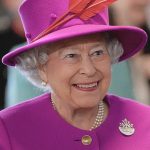
  • Queen Elizabeth II – 2013 Christmas Broadcast

    Queen Elizabeth II – 2013 Christmas Broadcast

    The Christmas broadcast made by HM Queen Elizabeth II on 25 December 2013.

    I once knew someone who spent a year in a plaster cast recovering from an operation on his back. He read a lot, and thought a lot, and felt miserable.

    Later, he realised this time of forced retreat from the world had helped him to understand the world more clearly.

    We all need to get the balance right between action and reflection. With so many distractions, it is easy to forget to pause and take stock. Be it through contemplation, prayer, or even keeping a diary, many have found the practice of quiet personal reflection surprisingly rewarding, even discovering greater spiritual depth to their lives.

    Reflection can take many forms. When families and friends come together at Christmas, it’s often a time for happy memories and reminiscing. Our thoughts are with those we have loved who are no longer with us. We also remember those who through doing their duty cannot be at home for Christmas, such as workers in essential or emergency services.

    And especially at this time of year we think of the men and women serving overseas in our armed forces. We are forever grateful to all those who put themselves at risk to keep us safe.

    Service and duty are not just the guiding principles of yesteryear; they have an enduring value which spans the generations.

    I myself had cause to reflect this year, at Westminster Abbey, on my own pledge of service made in that great church on Coronation Day sixty years earlier.

    The anniversary reminded me of the remarkable changes that have occurred since the Coronation, many of them for the better; and of the things that have remained constant, such as the importance of family, friendship and good neighbourliness.

    But reflection is not just about looking back. I and many others are looking forward to the Commonwealth Games in Glasgow next year.

    The baton relay left London in October and is now the other side of the world, on its way across seventy nations and territories before arriving in Scotland next summer. Its journey is a reminder that the Commonwealth can offer us a fresh view of life.

    My son Charles summed this up at the recent meeting in Sri Lanka. He spoke of the Commonwealth’s “family ties” that are a source of encouragement to many. Like any family there can be differences of opinion. But however strongly they’re expressed they are held within the common bond of friendship and shared experiences.

    Here at home my own family is a little larger this Christmas.

    As so many of you will know, the arrival of a baby gives everyone the chance to contemplate the future with renewed happiness and hope. For the new parents, life will never be quite the same again!

    As with all who are christened, George was baptised into a joyful faith of Christian duty and service. After the christening, we gathered for the traditional photograph.

    It was a happy occasion, bringing together four generations.

    In the year ahead, I hope you will have time to pause for moments of quiet reflection. As the man in the plaster cast discovered, the results can sometimes be surprising.

    For Christians, as for all people of faith, reflection, meditation and prayer help us to renew ourselves in God’s love, as we strive daily to become better people. The Christmas message shows us that this love is for everyone. There is no one beyond its reach.

    On the first Christmas, in the fields above Bethlehem, as they sat in the cold of night watching their resting sheep, the local shepherds must have had no shortage of time for reflection. Suddenly all this was to change. These humble shepherds were the first to hear and ponder the wondrous news of the birth of Christ – the first noel – the joy of which we celebrate today.

    I wish you all a very happy Christmas.

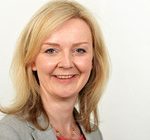
  • Liz Truss – 2013 Comments on the Teach First Development Programme

    Liz Truss – 2013 Comments on the Teach First Development Programme

    The comments made by Liz Truss, the then Education Minister, on 10 April 2013.

    Parents want and deserve high-quality early education for their young children. The extension of the Teach First Leadership Development Programme into the early years will mean talented individuals will be even more attracted to this important profession which makes all the difference to young lives. I hope it will encourage bright graduates who otherwise may not have considered working with young children.

    Teach First has an excellent reputation for delivering high-quality teachers. This announcement will help to capitalise on this expertise for the early years profession to get the status it deserves. It will also drive up early education quality in poorer areas where it is most needed.

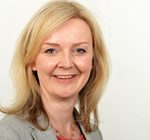
  • Liz Truss – 2013 Comments on the Further Maths A Level

    Liz Truss – 2013 Comments on the Further Maths A Level

    The comments made by Liz Truss, the then Education Minister, on 8 April 2013.

    It is not good enough that only 60 per cent of state-funded schools and colleges offering A level Maths also offer further maths A level. These students are potentially missing out on a place at a top university to study maths and science.

    That is why we are making £25 million available over five years to enhance the Further Mathematics Support Programme (FMSP). This programme targets schools and colleges where no students are currently taking further maths A level, helping them to improve and extend their maths provision. It is an excellent programme which will enable more students to study further maths A level.

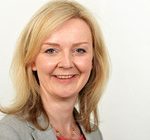
  • Liz Truss – 2013 Speech to the Fellowship Commission

    Liz Truss – 2013 Speech to the Fellowship Commission

    The speech made by Liz Truss, the then Education Minister, on 18 March 2013.

    Thank you very much. I am really pleased to be here and to have the chance to outline our thinking on the curriculum. I am also looking forward to hearing policy recommendations from National Leaders of Education. The Fellowship Commission and the hard work that flows from it are not merely greatly appreciated but invaluable.

    NLEs were posed the following Challenge Question for the 2013 Fellowship Commission: “How can the proposed curriculum and qualification reforms be successfully implemented across all schools, within scarce resources?”

    I would like to focus today on the School Curriculum, as opposed to the National Curriculum. The two are related, of course, but quite distinct.

    The National Curriculum is our framework for education, which we launched six weeks ago. There has been much debate about what should be in it.

    That debate will doubtless continue. But what really matters is that this is a new approach to education, one that gives head teachers and schools far greater freedom. How they implement the National Curriculum is down to them.

    The School Curriculum is best described as the life within the National Curriculum. Government has a part to play in setting out the trellises and marking out the footpaths. How the garden grows is for schools to decide. And in order for teachers to be able to give life to the garden, government has to give them freedom: freedom from excessively prescriptive top-down diktats and the freedom to innovate.

    There will be no new statutory document telling teachers how to do their job. No national strategies telling teachers everything that they have to do. No national roll-out. This is a huge cultural shift. And it is complemented by more money going to the front line.

    It is a massive opportunity for teachers, and especially head teachers. We know that many will grab it with great gusto and be eager to share best practice.

    The reason we are proposing to disapply the National Curriculum next year is so that head teachers will have a year to decide how to maximise this opportunity.

    There are many existing examples of energetic, engaged schools. Pimlico Academy has written a curriculum that is being promoted nationwide by Civitas. Based on the Core Knowledge Curriculum developed by E.D Hirsch in the United States, it is being marketed to other schools.

    Woodberry Down Community Primary School in Hackney has brilliant teachers whose pupils work with advanced fractions, multiplication and division in a fun way that will stick with them for life.

    The Prince’s Teaching Institute works in partnership with Cambridge University to develop Continuing Professional Development courses and run a network of schools that participate in a Schools Programme and help organise Regional Events.

    This sort of exchange of information and ideas will be typical of education systems that succeed in the 21st Century. Happily, modern technology makes such exchanges simpler and faster.

    The flip-side of this is that the advanced nature of technology provides a particularly strong imperative for creating an up-to-date, flexible education system. It is both an opportunity and a challenge: technology can be immensely helpful in delivering the curriculum but it also raises the stakes – we will fall hopelessly behind in the global race if we do not equip successive generations with contemporary skills.

    Our draft programmes of study for design and technology are very deliberately less prescriptive and more widely focused than the status-quo. This will be a broader, more practical, activity-based curriculum. Schools are free to teach elements such as CAD-CAM even if they not directly prescribed. Further input from experts during the consultation period will help us finesse this further.

    The interaction of different subjects

    Design and technology offer a reminder of the interaction between subjects. Computers have a central role in design and technology these days and our new, more challenging computing programme of study is designed to prepare pupils to work in the cutting-edge industries of the future. Small mathematical calculations can cause mechanical failure on a grand and disastrous scale. And reading the great works of literature can be one of the most enjoyable ways of learning about history.

    I do not believe in blurring subject lines altogether, but plainly teachers will often want to show pupils how skills can be useful in a variety of contexts. I visited a school near my constituency that begins lessons by looking at the Stock Exchange, which is both an excellent way of demonstrating the importance of maths and may create a few multi-millionaires!

    Repetition and practice will always be integral to effective learning, but a well-rounded, inspirational education is about much more than that. For example, in history we want to make sure that children have a clear sense of chronology and of Britain’s place in the world, but then we want them to learn how to navigate their way around that knowledge.

    Previous national strategies stifled such innovation and inhibited lateral thinking on the part of teachers. Contrastingly, the likes of the Institute of Physics and the National Centre for Excellence in the Teaching of Mathematics have really helped schools to shape learning. Such organisations will feed into a new School Curriculum – or rather large number of School Curricula – which government does not control.

    But nor is government abdicating responsibility. At the same time as giving head teachers and schools much greater flexibility, we are adopting a very tough approach to accountability. We expect head teachers to take a lead in ensuring that their staff are well-trained and able to deliver the new curriculum.

    Ofsted’s inspection evaluation schedule requires inspectors to consider the accuracy with which best practice is identified and modelled, as part of the assessment of leadership.

    And where schools are failing we will say so publicly, and take action.

    The point is that we don’t want schools to fail because they haven’t had a chance to succeed. Central control and uniformity mean sclerosis. And, perhaps counter-intuitively, they actually make it harder for teachers to learn from and adopt best practice – because no-one has the freedom to develop best practice in the first place.

    Evidence based education

    Dr Ben Goldacre, Research Fellow in Epidemiology at London School of Hygiene and Tropical Medicine, has just published a paper commissioned by the DfE. It is about how evidence and research are used in education and I encourage you all to read it. I know that such an emphasis on rigour and expertise is very much at the heart of what the Fellowship Commission does too.

    Dr Goldacre persuasively makes the case in his paper that just as medicine has benefitted enormously from trials, so too can education. He writes:

    There are many differences between medicine and teaching, but they also have a lot in common. Both involve craft and personal expertise, learnt over years of experience. Both work best when we learn from the experiences of others, and what worked best for them. Every child is different, of course, and every patient is different too; but we are all similar enough that research can help find out which interventions will work best overall, and which strategies should be tried first, second or third, to help everyone achieve the best outcome.

    He also eloquently spells out why an evidence based approach is liberating rather than restrictive, writing:

    Evidence based practice isn’t about telling teachers what to do: in fact, quite the opposite. This is about empowering teachers, and setting a profession free from governments, ministers and civil servants who are often overly keen on sending out edicts, insisting that their new idea is the best in town.

    Simply put, it is government’s job to set the “what” but not the “how”.

    The case for school autonomy is proven – but depends on effective sharing. The OECD’s education expert Andreas Schleicher has written:

    Global educational comparisons like PISA show consistently that schools in high performing education systems tend to have considerable discretion with regard to how they set their academic direction and how they manage their resources… Our PISA data show that if you have a school system in which knowledge is shared effectively and you are a school with significant autonomy, your students are likely to perform better on PISA than students in a school with limited autonomy, on average across OECD countries at least. But if you are in a system without a culture of peer-learning and accountability, autonomy can actually work against you.

    As Dr Goldacre has highlighted, there are parts of the world where a proper grasp of how research can improve teaching practice is essential for career progression. Teachers in Shanghai and Singapore take part in “Journal Clubs”, where they talk about and assess a new piece of research, and debate whether it could be usefully applied in the classroom. They then report back on shortcomings and scope for improvement.

    Research and teaching schools

    Universities provide an excellent template for how ideas can be explored and exchanged. Many of the most celebrated ones in the country are research universities. There is no reason why we shouldn’t also come to boast about our world-class research schools.

    The Sir Isaac Newton Free School in Norfolk, which opens in September, will be a sixth form specialising in maths and science, and link in closely with Norfolk’s world-class engineering and science industries, as well as being a beacon for maths and science teaching.

    We already have 363 Teaching Schools in 136 local authority areas, and two-thirds of all schools work with other schools in leadership development clusters. Academy chains operate along similar lines. This is a very good platform on which we can build.

    Chains do not have to mean uniformity. The most appealing chain restaurants allow their proprietors a great deal of flexibility, so whilst there may be old favourites on the menu, the decor can vary considerably and customers may be treated to live jazz (or forced to endure it, according to taste). That said, if you hit on a genuinely winning formula, there’s no shame in sticking to it. It just shouldn’t be dictated from central HQ.

    Conclusion

    We want to give head teachers and teachers the opportunity to be brilliant, and the chance to dazzle and inspire. That inspiration should extend further than their pupils and reach their peers in the teaching profession.

    Random controlled trials have their place in education. But instead of random controlled trials we have had the merely random. It is a curiously unambitious and unimaginative attitude to what schools can be – and ignores what the best schools already are.

    So diktats are out and evidence based education, innovation and shared best practice are in. I am very grateful for your involvement in this exciting process – and extremely optimistic about what we can achieve.

    Thank you.

  • Liz Truss – 2013 Speech at the Institute of Education

    Liz Truss – 2013 Speech at the Institute of Education

    The speech made by Liz Truss, the then Minister of Education, on 7 March 2013.

    Introduction

    Thank you very much. I am really pleased to be back at the Institute of Education and to have the opportunity to talk with you about the government’s plans to reform A-levels, and also about our specific plans for mathematics.

    English children will not just be competing with each other when they leave school or university but with their peers all over the world. So we need to be well-versed in the most successful methods from abroad. Our pupils should not get away with being plagiarists – but our teachers and politicians should be shameless ones.

    So I salute the Institute of Education’s international outlook. The Confucius Centre, for example, is doing great work in training more Mandarin teachers.

    LiLanqing, the Vice Premier of China from 1993 to 2003 who led their education reforms, published a book with the title Education For 1.3 Billion – a salutary reminder of the sheer scale we are talking about 1.

    He grasped the fact that every country, even if they are among the most powerful, is in a global race. His observation that “We are striving for modernization at the dawn of a knowledge economy and in the midst of intensifying global competition” could have been uttered by me or one of my ministerial colleagues.

    We do not do things in quite the same way as LiLanqing, though. He reflects in his memoirs, “I remember during my first few months on the new job in 1993, I called over 20 meetings of one kind or another.”

    This was before the age of the BlackBerry!

    Of course discussions about the growing educational capacity of China and India have been going on for some time. But they are joined by many more countries who appreciate that education is critical for the future. From Poland, who have reformed their system and improved their rankings, to Australia, who now have a national target to be a top-five country in PISA.

    1. The need for reform

    I have no idea what the jobs of the future will be – and nor does anyone else. But we do know that they will demand people with even greater powers of thought, innovation and skill. As the middle is squeezed from the hourglass economy, it will no longer be enough to be able to process – instead much more flexibility and greater cognitive skills will be required.

    And along with this ability to think, the demand for specialist skills is rising, particularly for quantitative and mathematical skills and for effective communication skills – ideally in more than one language.

    a) The ability to think deeply and analyse

    Universities and employers tell us that they want highly numerate people with an excellent facility with words and first-rate analytical skills.

    Basic levels of comprehension are necessary but not sufficient. The CBI / Pearson education and skills survey found that far more businesses expect to increase the number of jobs requiring higher skills in the next three to five years than expect to reduce them – a positive balance of 61 per cent 2. They were not confident about meeting this need, with a negative balance of 15 per cent 3. The report unsurprisingly made clear that “businesses attach particular value to people with science, technology, engineering and maths (STEM) skills” 4.

    Of course it takes us all a while to build up those skills. I remember at my first job at Shell having everything rewritten because I couldn’t put a succinct case.

    But it is important that we have courses and qualifications that reward these capabilities. Research that Ipsos Mori undertook for Ofqual in 2012 shows that the modularisation of the A-level has left many students unable to demonstrate deep synoptic understanding and incapable of making connections between topics – skills which are crucial to success in higher education and employment 5. That is why we want a return to open-ended questions and a two-year course with opportunities for reflection.

    b) The need for mathematical skills

    The demand for mathematics is growing rapidly. It is now the most popular A-level – it has the highest earnings premium at both A-level and degree. Courses in history and biology that would have previously not had any need for quantitative skills now want people who understand statistics and methods.

    Maths is for everyone: boys, girls and – I’m afraid – people who don’t like maths – or say they don’t – I can’t believe that’s really true! A facility with maths is a core component of maximising one’s life prospects. If there ever was a time when being bad with numbers didn’t matter, it has long gone.

    That is why we want people to achieve at least a core proficiency in it, and to keep studying maths after the age of 16 if they have not yet succeeded.

    We will do young people no favours if we allow them to believe that being innumerate is a trivial matter, let alone a source of perverse pride. Core maths is essential for handling one’s own finances, for making all sorts of life decisions, and for progressing in a wide variety of careers.

    People who take A-level maths earn on average 10 per cent more than their peers 6.

    And the CAYT British Cohort Study, to be published tomorrow, has found that higher attainment at age ten in reading and / or maths has significant benefits in terms of earnings at ages 30, 34 and 38.

    No wonder, then, that industry and universities are imploring us to boost the number of people who study mathematics to 18. The House of Lords Select Committee thinks it should be compulsory. And the Nuffield Foundation argues that all students in England should have access to mathematics through appropriate upper secondary pathways.

    Social mobility – which the Institute of Education correctly cares about a great deal – provides another imperative. The attainment gap at GCSE between students on free school meals and others is greater than that for English, history and the sciences. Just 46 per cent of FSM students get a good pass, as opposed to 70 per cent of others. Comprehensive school pupils are half as likely to take maths A-level as those at grammar or independent schools.

    In 2012, 54 per cent of A-level entries were from girls and 46 per cent from boys – a gap that has remained static for five years. And yet 60 per cent of 2012 A-level maths entrants were male. For further maths it was 70 per cent, and for physics an appalling 79 per cent.

    You don’t have to be a fields medallist to appreciate how damning those figures are.

    c) The need for written communication and presentation skills

    We also know that good written and verbal communication is a prerequisite for success in modern life. It’s no longer just politicians who have to be able to get their point across; communications technology means that everyone has to be able to make their case.

    50 per cent of employers say that literacy skills should be a key priority for 14-19 education 7. That is twice the number asking for better vocational qualifications and three times more than those wanting better skills in entrepreneurship. As the UK Commission for Employment and Skills put it, poor communication “is a deal breaker for many employers”.

    This goes beyond good basic literacy skills and confidence and fluency in spoken communication, though these are critical. In an economy increasingly based on high-value products and services, the ability to express ideas powerfully and succinctly when writing and speaking, and to make arguments in convincing ways, is at a premium.

    d) The need for better links with universities

    A-levels must also be dynamic – the world is changing ever faster. Biology has gone from being about cells and microscopes to molecular methods and bioinformatics. And it is vital that our qualifications that set the standard for the end of school keep up. Over a number of years universities – the bodies that once set up examining boards – are not as core a part of the process of qualification development as they once were.

    The best way of ensuring that A-levels keep up is to respond to what universities are looking for. A-levels exist to prepare students for what comes next: either university – as is the case for 80 per cent of A-level students – or the workplace. And at both destinations independent learning and thinking for oneself are of critical importance.

    Losing touch with universities has meant that A-levels are not always adequate for those embarking on a degree in our selective universities; many private schools offer their own courses – such as sixth term extension papers and indeed Cambridge’s Pre-U. A-level reform is vital in order that the state sector can catch up.

    2. A long road

    So qualifications from 16-18 must be broad and deep and high, a seemingly impossible conundrum. Universities want the depth of study, yet from history to languages to technology they want the quantitative and communication skills that will help students analyse, assess and explain.

    This is a big task and history is littered with post-16 reforms that tried to achieve this balance and didn’t succeed.

    Vertical AS in late 1990s: The Advanced Supplementary (AS) level examination was introduced and examined first in 1989 with the purpose of increasing breadth of study post-16. Between 1991 and 1995 A and AS cores were developed in 19 subjects as two-year ‘vertical’ courses. But few schools offered more than two subjects, so it failed to achieve its main purpose.

    Curriculum 2000 was another attempt to create breadth by having an AS staging post where students could try a subject for a year. Curriculum 2000 saw a shift to modular A-levels with a loss of a final assessment that reflected what the student had studied, and the understanding they had built, over two years. It placed unnecessary assessment burdens on students and teachers and led to a dive in, for example, the number of students taking A-level Mathematics and MFLs. We ended up with a system where there were exams at 11, 16, 17 and 18.

    The claim that this change widened participation is not true. The biggest increases in A-level participation took place from 1988 to 1993 8.

    The 14-19 Diploma: It was a good idea in theory to bring together academic and vocational study with employment placements, but proved impossible to deliver in practice.

    3. Overall vision – deeper, broader, higher A-levels -especially in maths and English

    We want to learn from the reforms of the past to make incremental change that builds on the credibility A-level has in the system.

    The reforms we are making from 16-18 build on the reforms to the national curriculum and GCSES. Until the age of 16 we want the vast majority of students to be studying a common core of subjects – reflected in the new best eight accountability measure.

    Our proposals – out for consultation until 1 May – are to publish an average point score measure and value add progress measure covering English and mathematics, three EBacc subjects, and three slots for other EBacc subjects, or any other high value arts, academic,or vocational qualifications. The progress measure would be part of the floor standard.

    There will be a particular focus on success in English and maths. This is in line with HPJs, who ensure that students do not close off options too early and have a rounded knowledge of sciences, languages, humanities and the arts. There is a much stronger emphasis on computer science and programming.

    In January we added Computer Science to the list of EBacc subjects, and we have reformed the out-of-date ICT curriculum in schools, launching a rigorous and exciting computing curriculum across primary and secondary.

    From 16-18 we also think there is a common core of knowledge it is desirable for students to have whether they are studying A-levels or vocational qualifications. We expect specialist study to be increasingly complemented by a maths qualification and further English language through an extended project qualification (EPQ). In addition we want to deepen the reach of A-levels by modifications to the course and assessment structure. We also want to ensure that content and quality assurance keeps pace with the latest research developments by re-establishing closer links to higher education.

    a) Deeper

    A-levels will become linear again, taken over two years with exams at the end. This will promote a deeper understanding of a subject. Ofqual has – quite rightly – decided to remove January exams.

    It can take time for the penny to drop, not least in demanding subjects like physics and maths. Curriculum 2000 was put in place with the best of intentions, but it didn’t work. Many students dropped out of A-levels, particularly maths but also others like physics and computing. We are behind many other countries in our take-up of foreign languages too. This is a real shame – taking a bit longer to click with a subject does not inevitably mean that a student could not go on to excel at it.

    Pupils must have time to get to really know and love a discipline in a way that will endure throughout their life. And the best teachers must be allowed to achieve that masterly synthesis of essential facts and inspiration that makes for great lessons.

    Although the AS qualification will remain, it will be redeveloped as a stand-alone qualification covering half the content of an A-level. Some pupils – especially those who have not been encouraged to study at home – may not be ready to take an AS exam at the end of Year 12.

    Some universities may have to adjust their admissions processes, and whilst universities will naturally want to look at students’ latest academic achievement, admissions offices take into account a range of information.

    They look at predicted grades and attainment at GCSEs, as well as students’ personal statements. By reforming GCSEs we will be making these grades a more reliable predictor for university admissions teams.

    b) Broader structure – common core maths and EPQ

    Through the EPQ students have the opportunity to demonstrate their extended writing skills by producing a comprehensive research report (up to 5000) words on a research question, or a shorter written report to supplement a product they have produced, such as a photography portfolio or a drama performance.

    EPQs allow students to develop skills beyond the A-level and help prepare them for university. The EPQ is a flexible qualification – a compulsory part of the level 3 diploma, but also something students can take as an extension of other Level 3 qualifications or as part of modern apprenticeships or other vocational qualifications. It is part of the AQA Bacc too and can even be taken by itself.

    But the real flexibility comes in the scope it gives students to design their own project – either alone or as part of a group. It develops and rewards creative and independent thought as well as research and planning. It represents the best of education, in that it is rigorous and demanding as well as adaptable and fun.

    Universities speak positively about the EPQ, and recognise it gives applicants the chance to develop research and academic skills that are highly relevant for study at higher education.

    We want the vast majority of pupils to study maths to the age of 18, and we believe that this can be achieved in the next ten years.

    There has been an increase since the drop-off from Curriculum 2000 – indeed maths A-levels had the greatest increase between 2011 and 2012 9 and maths is now the most popular A-level 10 – but fewer 16- to 18-year-olds study maths in England than in most other OECD countries – a mere 20 per cent.

    The Nuffield Foundation found that we are behind any of the 24 countries it measured – and well behind countries as diverse as France, Estonia, Russia, Australia, the USA, Germany, Ireland, New Zealand and China. In Japan 85 per cent of students study the equivalent of A-level maths.

    It is unsurprising that England does worse in international tests in maths than in reading and science tests. There is also a bigger gap between the highest and lowest performers in maths than in reading.

    A report by King’s College London published in September found that attainment in algebra and ratio had not improved over the last years and in algebra, number and ratio, the proportion of students at the lowest level of attainment had increased significantly 11.

    From September, 16-year-olds who failed to achieve a C or better in GCSE maths will need to keep studying for a level 2 qualification in the subject as a condition of funding.

    The Department for Education is funding the organisation Mathematics in Education and Industry (MEI) to devise a new course. They will work with Cambridge Professor Tim Gowers, who won the aforementioned fields medal.

    The course will focus on the solving of real-life problems using mathematical rules and techniques and will encourage pupils to think about the world in a mathematical way. MEI’s Further Mathematics Support Programme is being expanded too. Many top universities now ask for further mathematics when students apply to study STEM-related subjects, making this all the more critical.

    We are also funding Cambridge University’s maths department so that it can create a first-class curriculum for advanced maths, with an emphasis on ideas like complex numbers and trigonometry. And Imperial College is getting money to develop and pilot a one-year course for A-level maths teachers to bolster their knowledge.

    International best practice

    We have looked to other countries to get ideas about best practice. Those that have a high maths take-up between 16 and 18 typically offer mid-level qualifications. Nuffield’s Towards universal participation in post-16 mathematics 12 found that the availability of advanced maths matters too, and indeed is “crucial to increasing participation”.

    New Zealand is a particularly interesting example. 66 per cent of students take advanced maths beyond the age of 16, compared to 22 per cent in Hong Kong and Singapore – and a paltry 13 per cent in the UK.

    The increase in participation in New Zealand is thought to be largely attributable to the statistics and modelling course which has fired students’ imaginations and interest. Interestingly, New Zealand treats maths and statistics as related but distinct disciplines.

    Statistics and modelling in New Zealand is no walk in the park. Students are expected to employ the statistical enquiry cycle to undertake investigations. This means becoming expert in things like linear regression for bivariate data and additive models for time series data.

    When considering situations that involve an element of chance, students must identify and apply appropriate distribution models such as poisson, binomial and normal.

    Announcement on UKMT

    I am very happy to be able to announce some further funding. The United Kingdom Mathematics Trust will develop mathematics summer schools and mathematical circles for state school pupils. UKMT has already had massive success with its summer schools – giving many young people the inclination and confidence to study the subject at top universities.

    Mathematical circles are a newer innovation, where local students follow a similarly demanding and enjoyable but non-residential programme over a shorter timeframe.

    The DfE will make £30,000 available for two summer schools and £48,000 for twelve mathematical circles in 2013-14. In 2014-15 we will maintain that funding for summer schools and provide £60,000 so that there can be three additional mathematical circles.

    The summer schools will be open to pupils from all sectors, but all Department funding will go to state school pupils. Six of the twelve mathematical circles will be for state school pupils, and again departmental funding will only apply to them.

    These may not be the biggest programmes that government funds, but their impact on those who take them is incalculable – even by the best mathematicians.A chance to go on a course like these in their mid-teens can have a profound effect on someone. Several leading professors went to one of UKMT’s Summer Schools.

    c) Higher quality assurance by universities

    Having set this basic framework, the government wants to give universities a more significant role in the development of A-levels. Focusing on facilitating subjects, the Russell Group will lead the process and offer advice to Ofqual, drawing on other representative groups and universities.

    Conclusion

    Ultimately, education is about far more than formal qualifications, important though they are. It is about more than the accumulation of knowledge, as vital and sometimes overlooked a building block as that is. Education is about empowerment.

    It is about letting a girl believe that she can become a high-performance car mechanic. It is about persuading a teenager at an inner-city comprehensive that he has every right to find a place among the ivory towers of Oxford. It is about giving someone the tools they need to organise their life and recognise the difference between a solid offer and something that’s too good to be true. It is about producing informed citizens who have the confidence and wherewithal to hold their political servants to account.

    As Leo, the chief-of-staff in The West Wing, tells President Bartlet, “There’s no such thing as too smart.”

    It is unreasonable of our generation to demand that members of the next generation have high ambitions for themselves if we do not have high ambitions for them too. That is the motivation behind our A-level reforms. We want far more people to develop core abilities in a way that is at once demanding, enjoyable, rigorous and inspirational.

    I am certain that it’s possible. Thank you.

    —–

    1 Education For 1.3 Billion, LiLanqing, former Chinese Vice Premier (with responsibility for education), 2004, p.238.

    2 CBI: Learning to grow: what employers need from education and skills, Education and skill survey 2012, p7.

    3 CBI: Learning to grow: what employers need from education and skills, Education and skill survey 2012, p7.

    4 CBI: Learning to grow: what employers need from education and skills, Education and skill survey 2012, p10.

    5 http://www.ofqual.gov.uk/files/2012-04-03-fit-for-purpose-a-levels.pdf

    6 Reform, Value of mathematics, June 2008, citing Wolf, A (2002), Does education matter? Myths about education and economic growth, pp. 35 and 36.

    7 CBI, 2012.CBI, 2012.

    8 Reform, A new level, Dale Basset, Thomas Cawston, Laurie Thraves, Elizabeth Truss, June 2009, p. 23.

    9 Guardian Data Blog, 16 August 2012, http://www.guardian.co.uk/news/datablog/2012/aug/16/a-level-results-data-gender-region-subject

    10 The Joint Council for Qualifications data (provisional A-level data for June 2012) shows the number of students in England sitting exams. The top three are English (83,721, 10.6%), Maths (78,951, 10%), Biology (56,720, 7.2%). But English includes English Literature and English Language, and Maths does not include Further Maths.

    11 King’s College London, http://www.kcl.ac.uk/newsevents/news/newsrecords/2012/09-Sept/Pupils-maths-performance-similar-to-1970s.aspx

    12 The full title is Towards universal participation in post-16 mathematics: lessons from high-performing countries.

  • Liz Truss – 2013 Comments on High Quality Childcare

    Liz Truss – 2013 Comments on High Quality Childcare

    The comments made by Liz Truss, the then Education Minister, on 29 January 2013.

    It is right that the government does everything it can to ensure the provision delivering early education is of the highest quality, staff are paid better, and childcare is affordable to parents.

    When parents hand their child over to the care of a childminder or nursery they are not just entrusting them with their child’s physical safety; they are also entrusting their child’s brain. With this in mind it is no longer acceptable that childcare professionals are not required to have a GCSE grade C or above in English and maths.

    Parents want a choice of quality home-based care, quality nursery care or a combination of both. Our proposals for overhauling childcare qualifications, having early years teachers, and child-minding agencies, underpinned by a robust inspection regime, will provide this.

    At the moment, many nursery and private, voluntary and independent settings do not use full ratios. We think teacher-led settings with full ratios and structured activities are a good thing. Ofsted will favour this too. We do not mean to stipulate how all settings should behave, but we want parents to have the choice.

  • Liz Truss – 2013 Speech at the North of England Education Conference

    Liz Truss – 2013 Speech at the North of England Education Conference

    The speech made by Liz Truss, the then Education Minister, on 18 January 2013.

    Introduction

    2012 marked the centenary of the birth of one of this country’s great heroes – Alan Turing. Through his groundbreaking work in computing and computer science, cryptography, artificial intelligence and, perhaps most importantly of all, the mathematical theory of computability – Alan Turing shaped the world we live in today and continues to shape our unfurling future.

    Less than a century on, we are all, more than we even realise, Turing’s heirs.

    Language and logic

    We live in a world governed and ruled by maths. Algorithms are woven into the architecture of our lives, directing the cars through our streets and the planes through our skies; bringing shopping to the door and the world to our desks.

    Whatever subject and job you do, it is there.

    Just over 50 years ago, the scientist and novelist CP Snow claimed that science and the humanities had become ‘two cultures’ – divided, alienated and mutually suspicious. A famous squabble with literary critic FR Leavis, who contemptuously described Snow as ‘intellectually as undistinguished as it is possible to be’, only seemed to confirm his theory.

    What I think is so interesting, half a century on, the Cold War between science and art is over. Last summer’s Olympics opening ceremony seamlessly combined Isambard Kingdom Brunel and William Shakespeare, Tim Berners-Lee and Mary Poppins.

    Our greatest living artists like David Hockney and Alison Lapper have found new inspiration and impetus by creating work on the iPhone and iPad and through digital imaging. Historians like Niall Ferguson analyse sweeping historical trends and the march of human progress through statistics, technological innovation and the growth of so-called ‘killer apps’.

    In other words, understanding the language and logic and structure of mathematics is no longer a narrow discipline practiced by removed specialists. It is universal.

    That is why we are so determined to make sure that the next generation is fluent in the language of maths, the universal language of the modern world. The increasing earnings premium for maths at A Level, degree level and beyond shows its draw.

    We are changing our curriculum to reflect the demands of the 21st century.

    Students will be starting languages at age 7 – because language proficiency is increasingly important in a more open world.

    Children will also be learning programming at primary school so they can ‘speak computer’ as well as using it.

    But the growing importance of maths shows we need to do more to make sure children speak that language too. That is why we are redesigning the primary maths curriculum to focus on mastery and fluency of the vital building block of mathematics, which is arithmetic.

    Last year, the Secretary of State set out his ambition that within a decade the vast majority of young people will be studying maths right through to 18.

    No longer can these skills be considered a minority pursuit – maths has gone mass market.

    We are not there yet

    We know that is the aspiration, unfortunately we are not there yet.

    According to the Nuffield Foundation, we have the smallest proportion of 16- to 18-year-olds studying maths of any of the 24 countries examined: far less than nations like France, the US, Ireland, New Zealand, Russia, Australia, Estonia, Spain, Germany or China. 85 per cent of Japanese students are studying the equivalent of A Level maths – in England it’s just 12 per cent of young people.

    New data from TIMSS 2011 shows that England’s maths performance has not improved since 2007 either at age 10 or at age 14. Put together with PISA 2009 data, it does show a worrying lack of progress – while the East Asian nations are extending their lead.

    When we delve into the detail of these studies it’s even more worrying. The gap at age 10 between our strongest and weakest maths performers is one of the widest in TIMSS – with fewer of our pupils overall reaching the very highest levels. A growing number of our students don’t even reach the lowest benchmark on that scale – 12 per cent at age 14, three times as many pupils falling behind in this country as in the US.

    OECD maths results in PISA 2009 also showed that the gap in achievement between English boys and girls was one of the widest in the world – with boys 20 points ahead, equivalent to around half a year of formal schooling.

    Girls are less likely than boys to study maths beyond 16 and less confident about their ability overall. Independent research has found that ‘girls rate their own ability (in maths) as lower than that of boys as early as the first year of primary school, even when their actual performance does not differ from that of boys’.

    Lower income pupils are also falling behind, particularly in maths. At 16, the attainment gap between children on free school meals and the rest of the population is wider in maths than in English, history, or the sciences. Only 46 per cent of pupils on free school meals achieve GCSE maths at A* to C, compared with 70 per cent of the rest of the population.

    At A Level, comprehensive students are half as likely to study maths as their colleagues at independent or grammar school – whereas they are equally likely to study history or English.

    Why is this?

    When considering this problem it’s quite hard to pin down exactly why there are greater issues in maths than other subjects. There are deep seated cultural issues with maths in this country which need to be challenged – in our culture where, inexplicably, it is completely acceptable for adults and children to shrug their shoulders and say, laughing, ‘I’m rubbish at maths’. It would be unthinkable for anyone to say, almost proudly, ‘I can’t read’, or ‘I’ve never quite got to grips with writing’.

    But as well as a cultural block – there are also problems with the level of attainment and the architecture of our system which have not helped maths to flourish.

    On Monday, Nuffield followed up their blockbuster Outliers study with another major report with King’s College London, examining universal participation in post-16 maths.

    It found that one of the most important factors in determining whether or not young people continue with maths after 16 is prior attainment. In other words, if we get maths teaching right from the start of primary right through to GCSE, more young people will finish GCSE feeling confident and comfortable in maths – and participation after 16 will naturally increase.

    Strengthening the primary curriculum

    A new primary curriculum will focus on mastering essential arithmetic at an early stage. This doesn’t mean a pick and mix approach, but a deeper, richer, stronger curriculum with a new emphasis on problem-solving, practice and fluency, ensuring that children are properly prepared for secondary school and beyond.

    To ensure that children build up their mathematical fluency and become comfortable with basic calculations, we’re removing calculators from primary tests from 2014. Rather than requiring children to know the 10 times table by the end of year 6, pupils will learn all of their multiplication (including the 12 times tables) earlier, by the end of year 4.

    And, crucially, we are putting arithmetic, numbers, fractions, decimals and percentages at the heart of our new curriculum.

    These essential skills are the bedrock of the subject, vital for almost every higher-level specialism and essential if children are to feel confident and capable as they move on to secondary school. The countries which regularly out-perform us in international tests like TIMSS or PISA – East Asian nations, in particular – make sure that every pupil masters arithmetic and number, gaining a rock-solid grasp of these fundamental mathematical skills before moving on to more advanced topics.

    But as last year’s TIMSS results showed only too clearly, where East Asian nations perform extremely well in arithmetic, our children do relatively poorly. By contrast, English children achieve comparatively high marks in data at an earlier age, than in high performing nations.

    The issue is that data does not provide such a solid foundation for further study as arithmetic. No wonder, therefore, that English pupils perform relatively poorly at age 14 in PISA tests on the topics at the core of the curriculum, algebra and geometry – both heavily dependent on arithmetic.

    Our reforms to the curriculum will enable our country to be on a par with the highest-performing nations. That means shifting the balance away from data and towards arithmetic, so that children become secure and confident in the basics of the subject when they leave primary school. There is a role for statistics when these fundamentals have been mastered.

    Practice makes perfect

    A vital part of that mastery is practice.

    The truth is that high-quality, productive practice is essential in learning any skill whether penalty shootouts or piano playing, manipulating Spanish verbs or sine and cosine. As the legendary golfer Gary Player said, ‘the more I practice, the luckier I get’.

    No one can predict what will make the ‘light bulb’ ping above a child’s head – converting fragile insight into secure, confident understanding. So pupils need plenty of opportunities to practise a technique in a wide variety of contexts, working through increasingly demanding problems on their own and with a teacher.

    Research by King’s College has shown that the number of young people in this country with a poor grasp of basic calculation has more than doubled over the last 30 years. 15 per cent of children today cannot successfully solve even the most basic problems – questions involving simple arithmetic like doubling, trebling and halving – compared with just seven per cent in the mid-1970s.

    I think this question of practice is one of the most important differences between top-performing countries and here. As well as focusing on arithmetic and number, pupils in South East Asia spend more time than English children on high-quality, productive practice – and end up with deeper, stronger mathematical understanding.

    Teaching the most efficient calculation methods

    Another essential reform to the primary curriculum is to ensure that all pupils are taught efficient calculation methods – rather than spending too much time on confusing, time-consuming methods like chunking and gridding.

    These tortured techniques have been the trend in recent years. Instead of simple, efficient columnar long multiplication and division, children have been taught to rely on intermediate methods, splitting numbers into smaller chunks and parts, working them out separately and repeatedly adding numbers together, or taking them away.

    Supporters of these methods say that they are useful in helping children to understand the concept behind the calculation. But all these methods are slow and simplistic, only effective on the most basic sums. Children cannot progress to more advanced maths without learning the efficient, written methods; and the shift between the two leaves children more confused than ever.

    Parents are often utterly baffled, and complain that they have no idea how to help children with their homework – even one of my colleagues with a maths degree; while education experts from other countries are even more befuddled, unable to fathom why the British education system has adopted an untried method for teaching maths, which holds back the most able and confuses everyone else.

    High-performing jurisdictions like Singapore, Japan and Hong Kong leave out gridding or chunking from their textbooks entirely – and the best schools in this country don’t use them either. Ofsted research looking at 20 high-achieving primary schools found that the maths teachers avoided chunking because, as they put it, it confused pupils, particularly the low attainers. The National Centre for Excellence in the Teaching of Mathematics agrees – developing new guidance which makes it clear that children should learn efficient calculation methods as quickly as possible, with no encouragement for chunking or gridding whatsoever.

    So the new National Curriculum will specify that children should learn efficient calculation methods like columnar addition and subtraction and short and long multiplication; and KS2 tests will be designed to reward pupils whose working shows they have used the efficient methods.

    In other words, if children get the right answer, they get the marks. If they get the wrong answer, but their working shows that they were using the most efficient methods, they will still be rewarded.

    Qualifications at 16

    Fixing weaknesses in the curriculum will be vital in driving up standards in the classroom. But we also need to make sure that assessment and qualifications are right.

    In maths, one of the most serious problems in recent years has been the steep rise in the number of schools choosing to enter pupils for maths GCSE early. In 2005, 1 per cent of pupils took maths GCSE early. In 2010, the figure had leaped to 27 per cent.

    Of course, there will always be a small number of high-fliers who take exams early as part of a planned programme of accelerated progression.

    But disturbingly, many schools seem to be choosing to enter pupils of all abilities early as a way of performing well in league tables – choosing to ‘bank’ a C grade at age 13 or 14, even if the child could have achieved an A or A* at age 16. Department for Education research has shown that these candidates achieve worse grades overall than those who sit the exam at the normal time, even after re-sits are taken into account.

    We are talking to Ofsted about how to tackle this problem and will also consider it in the imminent accountability review. In every case, and every school, the best interests of pupils should and must come first.

    This is particularly worrying because attainment at 16 is very closely linked to whether young people go on to study maths at A Level or beyond. By entering pupils early, schools are effectively limiting pupils’ achievements and ending their maths careers five years early.

    The new maths core at 16-19

    All the evidence from international tests and league tables suggests that high performing countries put core academic subjects at the centre of their curriculum for longer than we do in this country. Nowhere is this more striking than in 16-18 maths.

    The introduction of Curriculum 2000 sent the numbers studying maths plummeting – from 56,000 before the introduction of it to 44,000 afterwards. More than a decade on, I’m delighted that the number of young people taking maths A Level is increasing – indeed, maths and further maths exam entries have risen 50 per cent since 2000 – and degree entries are also rising fast.

    But there’s still much further to go – and we’ll be saying more about our plans in the next few months.

    Last year we announced that maths will be compulsory for students up to the age of 19 who have not achieved a C at GCSE – a decision supported by this week’s Nuffield report.

    That doesn’t mean that young people who have achieved a C or above at GCSE should wave maths goodbye. On the contrary, we want many more students to study maths after 16 – whether they are doing arts or sciences in the rest of their options.

    Countries with higher maths uptake between 16 and 18 tend to offer mid-level qualifications at this age – what I describe as core maths – effectively as an alternative to A Level. The Nuffield report found that the availability of appropriate qualifications in advanced mathematics is absolutely ‘crucial to increasing participation’.

    We are keen to see a range of approved qualifications that can provide rigorous, respected mathematical options for 16- to 19-year-olds who have achieved at least C at GCSE. For example, these could be a subset of a more traditional maths course or a statistics and probability qualification – like one which has increased take-up in New Zealand.

    We are also funding maths in education and industry to work with Professor Tim Gowers, professor at the Department of Pure Mathematics and Mathematical Statistics at Cambridge University and Fields Medallist, devising a whole new problem-solving course. The course will be based on considering intriguing, real-life questions using mathematical rules and techniques – learning to think about the world in a mathematical way.

    It will give young people studying literature an insight into logic, aspiring politicians an understanding of probability – and show thousands of young people how mathematical rules shape and govern our world.

    Tim Gowers wrote a brilliant explanation of his approach on his blog, and later in ‘Should Alice Marry Bob?’ in the Spectator, and I urge you to read them if you haven’t already. They really illustrate a new way of looking at maths. If those early outlines are anything to go by, this course will appeal to students of all disciplines.

    What I’m doing at the moment is talking to higher education and working with organisations like the Advisory Committee for Mathematics Education to look at other possibilities for new post-16 courses. The critical point is that these qualifications must be respected by higher education and employers.

    We are also working to improve existing 16-19 maths courses and stretch top students. At the moment, even the brightest 18-year-olds at this country’s top universities are struggling. Academics warn that too many students are arriving to study maths or mathematics-related degrees without the basic mastery they need – which inevitably means that they struggle with the demands of a university course.

    Cambridge University’s maths department is developing a rigorous, top-quality curriculum and teaching materials for advanced maths, focusing on key mathematical ideas such as complex numbers and trigonometry. Cambridge is a world-leader, with some of the best mathematicians in the world – and this work will give many more students the deep knowledge and skills needed for further study or employment.

    Led by Cambridge professors and the University’s Millennium Mathematics Project, the programme will provide free online materials for students and teachers, helping them to explore connections between different areas of mathematics and to develop key mathematical skills and clarity of thought.

    We have also expanded the work of the Further Mathematics Support Programme delivered by MEI. The programme is a huge success story, largely responsible for further maths becoming the fastest-growing A level subject last year. So we have increased its funding, helping to support every schools and college that wants to offer its pupils further maths.

    In 2011, the Chancellor announced funding for specialist maths Free Schools for 16- to 18-year-olds, supported by strong university mathematics departments and academics, and giving our most talented young mathematicians the best possible preparation for university.

    And I’m delighted that King’s College London is planning to open the first in September 2014 – giving promising 16- to 18-year-olds the benefit of their inspirational teaching and global reputation.

    Supporting current teachers

    The quality and skills of the workforce will be vital in driving up standards – and all of these schemes have excellent professional development and comprehensive training and teaching resources at their heart.

    We are continuing to fund high-quality CPD for primary, secondary and post-16 teachers through the National Centre for the Excellence in the teaching of mathematics. And we are encouraging CPD providers to learn from what we already know does and doesn’t work – for example, ensuring that great textbooks and enrichment material (from Tony Gardiner’s books on maths to the world-renowned Russian textbooks) become more widely known and used.

    I can also announce today that we are funding Imperial College to develop and pilot a one year course for teachers of A level mathematics to improve their factual mathematical knowledge, confidence and fluency. Like Cambridge, Imperial College is a world leader, with a global reputation. Its experience will improve the quality of advanced maths teaching in schools and colleges, and the skills of students entering university.

    And recruiting higher calibre candidates

    For new teaching recruits in every subject, we have increased the level of numeracy required – ensuring that every new teacher is able to pass a test equivalent to a B grade at GCSE maths.

    We’ve introduced prestigious £20,000 scholarships for aspiring maths teachers, led by the Institute of Mathematics and its Applications, the London Mathematical Society and the Royal Statistical Society for Maths.

    And although most primary ITT courses prepare generalist teachers who teach across the curriculum, we want primary schools to have the opportunity to employ maths specialists.

    So the first trainees will be starting our new primary maths specialist programme in September this year – and an extra £2000 bursary for those with at least a B in A level maths will help to attract the brightest and best into our primary schools.

    Conclusion

    This country can be proud of our mathematical heritage. From Sir Isaac Newton to Charles Babbage to Ada Lovelace to Alan Turing – English mathematicians have shaped the world we live in and will shape the future still to come.

    But what was once the domain of the exceptionally gifted has become the currency of how we live. Maths is the universal language of the modern world – and across every career and every discipline, its importance will only grow.

    That is why I want to see more girls taking maths, more comprehensive schools offering advanced maths and more students across the whole country studying and enjoying this great subject.

    Because unless we make maths universal, our young people will never be able to reach their full potential. And, critically, we will fail to compete against those countries where maths is considered a birthright – the Asian nations beating us in the international league tables and pulling further ahead every year.

    By redesigning the curriculum and assessment, improving the standard of teaching and expanding the range of qualifications, we can make sure that every young person in the country – male or female, rich or poor, dreaming artist or single-minded scientist – masters maths early, and studies it for longer.

    Because the only way to create the next generation of Turings and Lovelaces is to make fluency in the universal language of maths our top priority.

    Thank you.