Tag: 2012

  • Caroline Flint – Speech to 2012 Labour Party Conference

    Below is the text of the speech made by Caroline Flint to the Labour Party conference on 1st October 2012.

    Conference it was my birthday the other week.

    Apart from them arriving too quickly these days – I find myself reflecting on times gone by when life seemed simpler, but also on the amazing scientific advances that have changed our lives for the better.

    Over the past year I have been inspired by the opportunities for jobs and growth new low carbon technologies can deliver for all our futures.

    But some changes we have all experienced don’t seem that great. Technology was meant to put you in control and make life easier.

    So why do so many of us feel less in control than ever before?

    Do you remember a time when you knew what your bank manager looked like?

    When you didn’t have to press ten numbers before you spoke to a human being?

    When you didn’t have enough passwords to fill a small notebook?

    Even buying something as simple as gas and electricity is bewildering today.

    We all have to heat our homes and buy gas and electricity from somebody.

    And I know that companies that keep the hospitals warm, factories working, and the lights on in 22 million homes are doing a pretty fundamental job for the British economy.

    But even the big six energy giants know that something has gone badly wrong when the poorest people pay the most for energy and nearly everyone pays more than they need to.

    When fewer than ever trust their energy company to help them.

    Fewer than ever switch supplier.

    And fewer than ever believe the Government will help.

    Energy bills have gone through the roof in the past two years.

    Up by £200.

    And more price hikes heading our way this winter.

    The Government tells people to shop around for a better deal.

    It’s down to you they say.

    You’re on your own.

    That’s not the Labour way. We believe in co-operation.

    We know that by the strength of our common endeavour we achieve more together than we do alone.

    Turning the clock back isn’t the answer.

    But we don’t have to accept things the way they are.

    I want to tell you and everyone at home, that Labour may not run the country but we can help you cut your bills today.

    In America, co-operatives, local councils and community organisations are bringing people together to strike a better deal for their custom.

    Our sister parties in Belgium and Holland have delivered cheaper energy prices for thousands of people through collective switching.

    We can do the same.

    I am proud to announce the launch of Labour’s SwitchTogether campaign.

    We will ask people to sign up to Labour’s SwitchTogether to get a better energy deal.

    And if the energy companies want our business they need to name the price.

    Stand together. Buy energy together. Switch together.

    Not giving up because we are in opposition but rolling up our sleeves and getting down to work.

    Our strength is in our local organisation, our community links, our councillors, our members, our supporters.

    I am asking you – knock on doors, deliver leaflets, organise community meetings, make the calls and the tweets.

    We can reach out to people who are paying too much but alone can’t change that, and we can make a difference.

    The next time someone tells you all political parties are the same – and they will – tell them Labour is buying energy on behalf of many people, as one customer to get a better deal.

    Tell them about the first political party in British history to run a collective switch.

    We may be in opposition.

    We may not run the country.

    But we can help people right now when this Government won’t.

    There are of course things only Government can do, and the British people deserve to know Labour’s plans for the way our energy is sold.

    Whenever bills go up, the energy companies always tell us they’re only passing on their costs.

    So why, when prices rise do bills go up like a rocket but when they come down they fall like a feather – if at all?

    The reason is – they’re allowed to run their businesses in such a complicated way that it’s almost impossible to know what the true cost of energy is.

    This must end.

    So we’re calling time on Ofgem.

    Too often, Ofgem has ducked the opportunity to get tough with the energy giants, failed to enforce its own rules and let energy companies get away with ripping off hard pressed families and pensioners.

    The time has come to say goodbye to Ofgem and create a tough new regulator that people can trust.

    We will open the books of the energy giants.

    Stop the backroom deals and end the secret contracts.

    And if they don’t do it first, we will force the energy companies to pass on price cuts.

    An energy market that is simpler and works in the public interest.

    An energy market which delivers fair prices, protects the most vulnerable.

    An energy market that people trust.

    That is our pledge.

    I am proud that it was a Labour Government that faced the future – stood by the science and faced the threat of our planet overheating.

    We beat our Kyoto target and doubled renewable energy generation.

    Ed Miliband delivered the Climate Change Act, a world first, placing Britain at the forefront of global action on carbon and sending out a clear message that Britain was open for green business.

    When Labour left Government the UK was ranked third in the world for investment in green growth with £7billion of private money driving new energy and clean technology.

    We are now seventh.

    David Cameron’s promise to be the greenest government ever lies in tatters.

    But let’s not forget the Liberal Democrats

    It was Chris Huhne who took the axe to Britain’s solar industry.

    It was Ed Davey who fired the starting gun on the next dash for gas.

    Tories and Liberal Democrats.

    Creating uncertainty.

    Deterring investment.

    Costing us jobs.

    Britain must be part of an energy revolution just as important to this country’s prosperity as the Victorian railways, and the internet in the 20th century.

    A cleaner future in a radically different, fairer energy market.

    Britain needs:

    New jobs.

    New growth.

    New hope.

    And in 2015 – a Labour Government.

  • Jim Paice – 2012 Speech at the Dairy UK Dinner

    Below is the text of the speech made by Jim Paice at the Dairy UK Dinner on the 15th June 2012.

    Thank you, as ever to Dairy UK, for the invitation to speak for the third year running. We seem to have a long-running contract despite our ups and downs.

    This last year has been quite active in the industry, regrettably some closures in hard economic times but also many investments, new ventures, take-overs and now mergers afoot.

    I will always welcome and congratulate those who have invested in the British dairy industry. It has to be a good sign for the future for British dairying that such huge sums of money are being ploughed-in.

    Isn’t this the kind of positive sign that shows at least some have got a strategic plan – and plans should bring confidence – which is so important for this industry – if you are ‘down’ you are really ‘down’ – but if you can be ‘up’, you can really be ‘up’.

    This is very different to what I inherited over 2 years ago. There was no clear, common, ground – beyond perhaps the Dairy Roadmap as it now is. As an industry you are building collaboration. We now have Dairy 2020 and I know you are edging closer to a voluntary Code of Practice.

    That was one of the challenges I laid down last year, but I’d like to look at the others first.

    I am committed through my Dairy Supply Chain Forum to get the most appropriate senior industry representatives around the table – it is the place where the industry can debate key issues with me and set the course for ‘what industry can do for itself’.

    I have been really encouraged by the commitment the industry has shown to work together since I took over and how far it has come already, with links to the growing Dairy2020 industry sustainability initiative – which I wholeheartedly support – and work on the Green Food Project which will report in July.

    However, I have also noticed how important it is to have the active engagement from everyone at the Forum if it is to develop solutions to key issues and see them delivered to secure the future of British dairying.

    A future for the hugely important UK dairy sector – it is our single largest agricultural sector, and part of our very fabric – and yet we import a quarter of our needs and we barely export our quality products.

    Why, when we have one of the best climates for grass-based production in the EU, do we have a £1.27 Billion dairy trade deficit?

    You know I have banged the table about import substitution. We’re only about 80% self sufficient and have room to expand against quota whilst it lasts for three more years. Let’s put more British products on British shelves.

    And let’s export: there are huge opportunities out there for the dairy industry – some of which I saw recently for myself in China.

    It demonstrated to me that the UK has many competitive advantages in its high quality and safe produce which is exactly what Chinese consumers want.

    Current consumption in China is just one quarter of the global average, but it is rapidly catching up. Just think what that means in terms of the extra volumes of dairy products. Yet when two of my team from the IGD visited 16 Chinese retail outlets – no UK produce. Only Dutch, Danish and Irish!

    I asked last year – what are the barriers to taking advantage of these opportunities? Over time everyone has blamed everyone but themselves. Can’t we take strength from our domestic market for liquid milk, but stop it dominating our thoughts, and use it instead as the constant from which to explore other exciting markets?

    Maybe these investments that have been going on over the last year will start to unlock some of this potential.

    Before I move to what was the key challenge, I should touch on one or two other issues of relevance to you all.

    I cannot make a speech on dairying without mentioning TB. The coalition Government committed, as part of a package of measures, to developing affordable options for a carefully managed, science-led badger control policy in areas of high and persistent levels of TB in cattle.

    But badger control is only one part of the package needed to rid us of this disease. Cattle measures are absolutely essential and it is vital that every single farmer plays their part by fully adhering to the cattle testing and movement requirements and we will come down hard on anyone who does not and who risks spreading TB within their and other people’s stock.

    Measures to reduce the risk of bovine TB being spread between cattle are to be strengthened as part of the Government’s plan to eradicate the disease in England.

    From 1 July amendments to the rules on cattle movements will come into force, alongside changes to compensation policy, including reduced payments for owners of TB affected herds with overdue tests.

    You will all be aware that the CAP reform negotiations are progressing following the publication last October of Commission’s proposals for CAP post 2013.

    We are seeking a CAP that delivers improved value for money through the provision of public goods such as protection of the natural environment and climate mitigation.

    We are also seeking a CAP that is able to increase the competitiveness of EU agriculture, with the scope to encourage a real improvement in productivity and innovation in the agriculture sector, in order to prepare for a future without income support.

    Pillar 2 plays a pivotal role in delivering environmental benefits, improving agricultural competitiveness and supporting rural vitality across the EU.

    This is why we are arguing that Pillar 2 should receive an increased share of a smaller CAP budget and should be allocated more objectively. This could open the door to funding to improve farm infrastructure and performance, to provide farm business development and advisory services and perhaps even the setting-up of producer groups.

    And whilst I speak of environmental benefits, I’ve said before how much I welcome your sector’s leadership on sustainability.  With Rio +20 coming up,  we’ve an opportunity to show how dynamic food and farming businesses are meeting the challenges of climate change and working through their supply chains to reduce emissions.  Agriculture can’t meet its aim to reduce GHGs without the active support of your businesses, and I’m counting on you within both Dairy UK and your own supply chains to collaborate and deliver on the GHG Action Plan.

    I’m confident that you’ll rise to the challenge of climate change, just as you’ve adapted and responded in your contribution to the sector’s Dairy Roadmap since it was first launched four years ago.  Continue to be a model for other sectors and other industries in both celebrating your achievements and pushing yourself further.

    The Dairy Roadmap shows the potential that exists for achieving real progress and recognition as an industry in dealing with the pressing environmental issues of the day.  I don’t know of any group that hasn’t welcomed what you’ve achieved, and I look forward to welcoming in the autumn the new goals you’ve set for yourself.

    I had also sincerely hoped to be welcoming today the adoption of your own voluntary Code of Practice on contractual relationships. I know that processor and producer representatives have met today but that you are not quite there yet.

    Whilst the EU Dairy Package brings farmers some hope of stronger contracts and bargaining power, processors fear it will unsettle the supply chain and threaten competitiveness. You will know in any case that we prefer not to legislate. Indeed under MacDonald we’re seeking to reduce the burden of legislation where possible.

    And you as processors and farmers will all know that I believe that a code of practice is the best solution to current relationship problems.

    It would allow the industry to find an agreed way forward on a number of issues which the Dairy Package will not, including the management of price changes and notice periods for contracts, which are critical to both producers and processors. The code can also deal with exclusivity of supply.

    But it cannot and will not affect prices specifically. However, it should improve the trust in your relationships to a point where you are genuinely working together.

    I am not aware of anyone disagreeing just now that a voluntary code is preferable to where we are today and is the best solution.

    I have been impressed by and would like to recognise tonight the degree of engagement and commitment that industry representatives involved in these negotiations have shown in driving this forward for themselves.

    I know that it is not easy achieving such changes at industry level, but I also recognise the need for the entire supply chain to achieve a successful outcome.

    You are not quite there yet – but I implore you all to recognise the benefit you could bring this iconic British industry if you can just reach agreement on a sensible compromise.

    We all know, from recent weeks, that market prices are a real concern – but volatility of world markets will affect both processors and farmers in the UK.

    Price peaks don’t reach us because we don’t trade enough internationally, but price drops do hit us because of the risk of cheaper imports of any tradable products – albeit we see less impact than elsewhere in the EU, thanks in particular to our strong domestic liquid market.

    But the real problem in contractual relationships isn’t the price, it is really about the terms and conditions of contracts – and particularly the manner of any changes to them which can be hard to justify.

    As I understand it, what farmers really need is a contract that is fair and a price that is more transparent. It doesn’t have to be a formula or static price – it simply has to be something they can understand, believe in and can trust.

    Farmers understand that more revenue could be secured by trading more broadly. We know farmers would love more income – but they also understand that the market in which we trade will be the major influence.

    They can however have far more say on achieving a better balance to contractual terms, but need to be realistic about what this will achieve.

    A key element which farmers seek is the ability to resign from contracts within a reasonably short timeframe, particularly in the event that they don’t like a price change.

    This room is full of milk processors. In all your time, how many of you have received resignations from farmers because of a price change?

    All of you and lots of resignations I expect. But how many of those farmers who put in their resignations actually moved?

    Very few – and why? Quite simply because the prevailing market didn’t offer them anything better to go to.

    Greater freedom to move between processors does not guarantee farmers a significantly better price. Nobody likes being told they’re going to be paid less, but ultimately, if the prevailing price goes down, are farmers going to be able to secure a better price elsewhere? Frankly, no.

    How come businesses have succeeded in keeping the vast majority of their farmers despite operating with the shortest notice periods amongst major processors?

    Given this history, I ask you – why is there so much concern about farmers changing their processors? Is it not rather more simple?

    It is a two way street – I know processors need to be able to respond to market conditions such as changes in market prices or demand, but you also need security of supply.

    Processors who treat farmers properly have nothing to worry about. And this is what you should be aiming to achieve through the voluntary Code of Practice.

    The dairy industry is important to Britain’s rural economy and the manner of recent cuts to farm gate milk prices has been a real concern for many people.

    However, in a volatile market everybody knows prices will go up and down. The key is for us to build trust and transparency, so that farmers and processors can work together and take advantage of the huge business opportunities both here and abroad.

    A voluntary code of practice will mean people having to do things slightly differently – but it will ultimately benefit the industry as a whole – and I implore all sides to make a final push and agree a workable compromise.

  • George Osborne – 2012 Speech at Speaker’s House

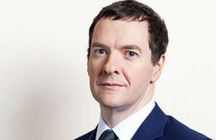
    gosborne

    Below is the text of a speech made by the Chancellor of the Exchequer, George Osborne, at Speaker’s House on 22nd October 2012.

    Thank you Mr Speaker for that kind introduction and for inviting me to give this evening’s lecture.

    Many of your previous speakers have talked about their experiences in Government and the changes they have seen over their long careers.

    I certainly hope that it’s a little too early in my career for a retrospective, and since this series features those who have occupied great Offices of State, I’d like to talk about the long history of the Office I occupy and add a few of my own observations of its modern role.

    Of all the Great Offices of State and all the Departments, few evoke such strong feelings as Chancellor of the Exchequer and the Treasury.

    The late Sir Alistair Morton, whose role as Chief Executive of the Channel Tunnel put him at loggerheads with the holder of his purse strings, accused the Treasury of doing “more damage to the British economy than the Luftwaffe…”

    Even that former Treasury official, John Maynard Keynes said the department is “an essential bulwark against overwhelming wickedness”.

    A central Treasury has been a part of our national life since at least the time of the Norman Conquest.

    The Domesday book can be seen as our first national tax register.

    A brisk tour through Treasury’s highs and lows takes in the full sweep of Britain’s social, economic and political history – few institutions could claim their interests and decisions are more deeply ingrained in our national life.

    Of course, not only is the Treasury a part of our history; it continues to play a central role on our nation’s behalf.

    Or should I say “roles”, because the Treasury performs a number of different functions.

    Tonight, I’d like to say something about the origins of those functions and about how they are performed today.

    Let me start in a rather unexpected place: in Llantrisant in South Wales.

    There is the home of the Royal Mint – a small part of the Treasury family that is more ancient than the Treasury itself.

    It was established in the second half of the ninth century, and has been minting coins on behalf of the Crown ever since.

    Its job has always been to provide confidence in the nation’s money – a job these days more than shared with the rest of the Treasury and the Bank of England, who print our banknotes.

    The Master of the Mint is the Chancellor of the Exchequer, and has been since Victorian times.

    Every year in the City, the Trial of the Pyx takes place.

    It is our country’s most ancient judicial ceremony.

    First held in 1248, it is the annual occasion when the Master of the Mint is held to account for the quality of the coinage.

    So I can say, hopefully without eliciting headlines that I have been put on trial twice.

    In former ages, it was an essential occasion.

    Unscrupulous medieval governments would debase the money supply by diluting the quality of the precious metal.

    In the last century, the Treasury found more sophisticated ways to achieve the same thing.

    When coins were made of silver or gold, they were constantly subject to counterfeiting or clipping by unscrupulous citizens.

    Successive Masters of the Mint tried to tackle the problem – the most successful Master at doing so was Sir Isaac Newton.

    He rebased the entire medieval coinage, because it had become so debased.

    And he would personally inspect the coins in the taverns of Westminster to police the quality of the coinage.

    These days, the Treasury officials are known to undertake similar field work in the Westminster Arms and the Red Lion.

    When I first came to office I made the foolish error of thinking that since I was Master of the Mint, I could have some say over coin design.

    After all, I regularly write to Her Majesty to ask her permission for new coin designs.

    But when it comes to those designs, I have discovered I have little influence.

    The true power lies with the Royal Mint Advisory committee.

    Indeed, when early on I tried to reject one coin design I didn’t much like, I was told in a roundabout way that I couldn’t – and then discovered that Alistair Darling has also tried and failed to reject exactly the same coin design.

    One of my first decisions as Chancellor that did stick was to reject plans to privatise the Mint.

    When something has been part of your State for eleven centuries, you should think twice before getting rid of it.

    And indeed, these days the Royal Mint leads the world in modern designs and technology – replacing our 5p and 10p coins with nickel-plated steel versions, producing new commemorative coins with colour in them – including a red poppy for Remembrance Day, minting this summer’s Olympic and Paralympic medals and making coins for over 60 countries.

    I am happy to say that because of its overseas sales, it makes a handsome profit for the British taxpayer, and that money flows into the Exchequer.

    Which is appropriate as after the Mint, the oldest part of the Treasury is the exchequer, which collected and issued money on behalf of the Crown.

    The name “exchequer” comes from the chequered table – a sort of medieval excel spreadsheet – used from the beginning of the 1100s for calculating expenditure and receipts.

    The Exchequer was overseen by a Lord High Treasurer and a Lord Chancellor.

    The Lord High Treasurer was responsible for superintending all spending, while the Lord Chancellor acted as a check upon the accounts of the Treasurer.

    By the 13th Century, the Treasurer and the Lord Chancellor had delegated most of their duties to an Under Treasurer and the Chancellor’s clerk – so in the reign of Henry III, the Clerk became an officer of the Court as the “Chancellor of the Exchequer”.

    Exchequers were held twice a year when the Chief Justice, the Lord Chancellor, and the Treasurer sat round the chequered table, auditing the accounts of each local Sheriff who collected and spent money on behalf of the Crown.

    A historical remnant of that event is that today, the Chancellor still has a role in the appointment of Sheriffs.

    The money received by the Treasury in medieval taxes was recorded using tallies – eight inch long sticks, with notches to indicate the amount of money involved.

    The stick would be cut in two, and one half given to the Sheriff as a receipt for the money.

    These tallies were stored in vast quantities until 1834 when they caught fire and destroyed the Palace of Westminster – an early example of the sometimes incendiary relationship between the Treasury and Parliament.

    Until the 17th century, a succession of Lord Treasurers had used their role in the Exchequer to consolidate their family’s personal power and wealth.

    This reached its zenith when Sir Robert Cecil used his position as Queen Elizabeth I’s Treasurer to control not only the public purse but even to pay a network of spies to smooth the succession of his favoured candidate, King James I.

    That’s why exactly 400 years ago this year, on Robert Cecil’s death in 1612, King James replaced the Lord Treasurer with the Treasury Board, to ensure that no one person could hold that level of power and influence over the Monarch.

    That Treasury Board still exists today – and it is from the seat on this Board that the modern role of the Chancellor of the Exchequer began.

    The most senior Board Member is, of course, the First Lord of the Treasury and by the 18th century was seen as the natural head of the Government – or the “Prime Minister”.

    The door of 10 Downing Street still to this day bears the plaque “First Lord of the Treasury”.

    And from 1827, the Second Lord of the Treasury was always the job of the Chancellor of the Exchequer.

    At around this time, it also became tradition for the Chancellor to live at No.11 Downing Street, a tradition only overturned by Tony Blair when he realised the living quarters in No.11 were bigger and kicked the Chancellor next door.

    As well as the First and Second Lords of the Treasury Board, there were three other Lord Commissioners, who have evolved into the modern Government Whips.

    They still play a key role today, signing around 200 documents a year on behalf of Treasury, at any time of day or night.

    To celebrate its 400th anniversary, we convened a very brief meeting of the Treasury Board this summer, for the first time in twenty nine years, and only the second time in a hundred years.

    The First and Second Lords attended, along with the remaining Lords Commissioners, the Financial Secretary and the Permanent Secretary.

    We held the meeting in the Treasury Boardroom, a magnificent eighteenth century room in the Cabinet Office.

    A throne is still there in case Her Majesty wishes to attend a meeting, although a monarch has not done so for over 200 years.

    And by what romantic name is this historic Treasury boardroom at the heart of Government now called?

    Conference Room A.

    Not that the Treasury can complain.

    Winston Churchill’s war time bedroom on the ground floor of the Treasury building is named “Ground floor 18”.

    When we held our Treasury Board meeting earlier this year, the agenda reflected both the enduring and new functions of the Treasury.

    First, the enduring: the Board approved a Warrant under the Duchy of Cornwall Management Act, permitting the Duchy to borrow £900,000 for an extension to a Chocolate Factory at Poundbury.

    Oversight of royal expenditure is still a modern function of the Treasury and the Chancellor is a Trustee of the Royal Household.

    The second item on our agenda reflected the new functions of the Treasury: the Board signed a number of Asset-Freezing regulations against individuals hostile to the interests of the UK– a reminder of the vital but little known role the modern Treasury plays in helping to keep our country safe and upholding international law – implementing financial sanctions against the Taliban and Al Qaeda, and regimes such as Iran and North Korea.

    That evening, we celebrated with a dinner at the Guildhall– attended by over 150 present and former Treasury Board members and Treasury Ministers – including those who had served in the Wilson and Heath administrations, and one who earned his invitation four times over – as a Lord Commissioner, as Chief Secretary, and as Second Lord and First Lord of the Treasury – Sir John Major.

    But before you raise an eyebrow at such a lavish affair in these austere times – please be assured that when the Treasury throws a party, we get someone else to pay for it – on this occasion; the Corporation of London generously paid the Bill.

    So what does the Exchequer part of the Treasury look like today?

    Since Pitt the Younger’s day, there really is a single government bank account – it’s called the “Consolidated Fund”.

    It was – and remains – a fundamental part of expenditure control

    As William Pitt put it: “one fund into which shall flow every stream of public revenue, and from which shall come the supply for every service”.

    Tax revenues, fines, penalties and other receipts come in.

    And most payments to government departments flow out.

    Last year, £514 billion pounds flowed through the Fund.

    These days, it’s the job of the 19 civil servants in the Exchequer Funds team in the Treasury to make sure things run smoothly.

    If you were looking for the irreducible core of the Treasury, this would be it: the cash register of the Government.

    Every banking day, they essentially “write the cheques” so that millions of welfare payments, pensions and interest on government debt are paid out, and our schools and hospitals and other public services have money in the bank when they need it to pay salaries or buy supplies.

    There is careful contingency planning to ensure this can always happen, whatever the circumstances.

    To make the best use of taxpayers’ money, every day Treasury officials estimate how much cash the Government has, how much it needs and how much it has to borrow overnight from the markets.

    It’s known as the Swing.

    Most days, it’s easier to forecast what’s going to happen.

    Some days it is more difficult.

    This summer, the Treasury civil servant operating the Swing on Black Wednesday retired.

    In fact, he wasn’t supposed to be on the Swing at all – the normal operator was off having had a heart bypass operation.

    It is probably the largest number of transactions ever in a single day of Government operations, and things that had never been an issue before – like the fact that the Bank of England’s system could only cope with transactions of less than £100 million – suddenly caused problems.

    Of course, if you pay out then you have to collect in – and tax collection has been a function of government since the birth of the English State.

    Even before 1066, the Anglo-Saxon Treasury collected taxes – such as the “danegeld”, which was first levied as a tribute to the Vikings to persuade them – sometimes unsuccessfully – to stay away.

    These days there is a whole international division of the Treasury tasked with dealing with our troublesome neighbours.

    The foundations of Parliament itself in 1254 owes itself to King Henry III’s need to seek consent from the nobles of England for taxes he wished to impose.

    The nobles advised the king to summon knights from each shire to help and advise and consent to the new tax.

    In the 1260s, men from the towns were included with the knights, forming the beginnings of the House of Commons.

    In those days, tax collection was done by a few local sheriffs – who were usually local judges or crown officials – who had to submit their accounts to the Exchequer.

    These days, under Permanent Secretary Lin Homer’s leadership, 66,000 people at Her Majesty’s Revenue and Customs collect around half a trillion pounds from 33 million people.

    Just under 10 years ago, the historic departments of the Inland Revenue and Customs and Excise were merged into this single non-ministerial department operating at arm’s length from government and focussed on collecting taxes and administering benefits, but very much part of the Treasury family.

    At the same time, responsibility for strategic tax policymaking was transferred to the Treasury itself.

    That brought the risk that those who knew how to actually collect taxes were no longer involved in designing the taxes.

    I have sought to improve the relationship between the Revenue and the Treasury.

    This year, we appointed as second permanent secretary at HMRC the most senior official on tax at the Treasury, and asked him to remain on the Treasury’s Board.

    I would like to develop the relationship still further over the next few years, with the Treasury leading on the strategy, but informed by HMRC’s deep knowledge of the operational challenges.

    This brings me onto the Treasury’s role in devising tax policy.

    Every time you walk past a beautiful Georgian house and see a wall where a window used to be, you’re witnessing a visible sign of the Treasury’s well thought through tax policies in action.

    When the Window tax was introduced in 1696, it was designed to make sure the wealthy paid more in tax.

    These fine motives were soon undermined by as a new form of avoidance emerged.

    Simply brick up the window.

    Luckily we don’t have to deal with these sorts of issues today.

    The window tax was hugely unpopular because it was seen as a tax on light and air – and nothing can be more essential than that.

    Except as I discovered this year, the British people’s attachment to hot takeaway snacks.

    In 1799, when William Pitt the Younger needed to fund the Napoleonic wars, he introduced a simple temporary tax to pay for it – called the “income tax”.

    212 years later it is still temporary – and requires the annual Finance Bill to renew it.

    The Napoleonic Wars meant the share of the nation’s wealth taken in tax almost doubled, from 12 per cent to 23 per cent of national income – and at the same time, the national debt ballooned from five per cent of national income in 1688 to twice the national income in 1815.

    War has always been a consistent driver of the Treasury’s rising power, since the Treasury’s success at financing wars was inextricably linked with British victories.

    William Pitt created the income tax and the consolidated fund, but it was William Gladstone who created the modern job of the Chancellor.

    That is the reason his painting hangs in the Chancellor’s study in No.11 Downing Street.

    It was Gladstone’s force of character, and his compelling vision of free trade, simple taxation and sound public finances which established not only his own place as one of the towering political figures of the 19th century – but also the annual Budget’s place in the UK’s political economy.

    It was Gladstone who initiated the Northcote-Trevelyan report which ushered in recruitment of civil servants by open competition and promotion on merit in the Treasury and other departments of government.

    It was Gladstone who created the Public Accounts Committee, increasing Parliament’s role in scrutinising waste and corruption in the use of public money.

    And of course, almost every Chancellor is reminded of Gladstone’s instrumental role in the Treasury when they hold up his red box on Budget day.

    When I took office, I was told the red box was too fragile to use.

    But I insisted on using it one last time for my first Budget, before consigning the original to a display cabinet in the House of Commons and reluctantly commissioning a replica.

    To an outsider, the theatre of Budget day can seem like just another strange English tradition.

    But I believe it is more than that.

    It is an annual reminder of what Gladstone instilled in us like no other – that sound public finances are the bedrock of stability on which our country is built, and that what government spends has to be paid for.

    These days around 750 Treasury civil servants – almost three quarters of the department – are involved in ensuring all the various policies come together on the day.

    Although for all the innovations and endless tax rates announced in modern Budgets – it’s worth remembering this fact: of the £470 odd billion pounds of revenue collected last year, £350 billion came from just three taxes: income tax, national insurance and VAT – taxes that have been in place since 1799, 1911, and 1973.

    Of course, tax isn’t the only way of raising money – at least in the short term.

    The other method is debt – and managing the public debt is another vital function of the Treasury.

    Medieval kings had always borrowed money to fight wars.

    But the first UK government debt dates from 1694, money borrowed to rebuild the navy after a crushing defeat by the French at the Battle of Beachy Head.

    A 1.2 million pound loan, at 8% interest with no fixed repayment dates was arranged with a collection of financiers.

    This, incidentally, was the origin of the Bank of England – since the subscribers were incorporated by the name of the Governor and Company of the Bank of England – in exchange for giving the bank exclusive possession of the government’s balances, and was the only limited-liability corporation allowed to issue bank-notes.

    The costs of borrowing grew as the Government’s fiscal credibility deteriorated, and in 1711, the Chancellor at the time, Robert Harley, unveiled an ingenious scheme to reduce the cost of the national debt.

    He offered people the option to buy stock in the South Sea Company.

    The expectation of vast wealth from trade with the South Sea was used to encourage the public to buy shares at hugely inflated prices, while the founders of the scheme engaged in insider trading to amass a vast personal fortune.

    Thankfully, nothing like that happens these days…..

    When the South Sea Bubble finally burst in 1720, thousands of investors lost their money, and the whole country suffered.

    It’s a reminder that dealing with the consequences of financial speculation and banking failure can do enormous damage to the real economy.

    The Chancellor of the time was sent to the Tower – a reminder to modern Treasury officials that there was a fate worse than the P.A.C.

    These days, as we pick up the pieces of perhaps the greatest banking collapse in our history, the Treasury has over a hundred officials devoted to financial services policy.

    Since becoming Chancellor, I’ve had to make the difficult decision to allow one bank to fail.

    The 250 depositors received protection under the Financial Services Compensation Scheme up to the insured limit of £85,000, but not beyond this level.

    And do you know the name of the bank I allowed to fail?

    The South Sea Mortgages and Investment Company.

    Thankfully, no government debt was invested with this particular South Sea Company.

    Since 1998, a part of the Treasury called the Debt Management Office is responsible for raising money on the Government’s behalf.

    You could argue that the 100 strong team at the DMO do the single most important job in the British civil service.

    Without their gilt auctions and overnight money operations, the Government would literally run out of money.

    As the scale of the UK’s debts has risen, so too has the scale of the challenge for the DMO.

    In the entire period between 1694 and 1998, the Bank of England sold some £355 billion of government debt.

    Last year, just thirteen years into its existence, the Debt Management Office sold its trillionth pound of debt.

    Of course, one of the present Government’s overriding objectives is to ensure those debt sales are reduced sharply as we bring the public finances back under control.

    And because of the market’s confidence in the credibility of government policies, I have established a new record – 1.9% today.

    I am currently borrowing money at a lower rate than anyone who has done my job in its 800 year history.

    It’s more than a record.

    It saves Britain billions of pounds a year – and it’s a reminder that when the Treasury loses the confidence of investors, debt interest can quickly squeeze out all other spending in government.

    This brings me to spending control – a function of the Treasury that employs a huge amount of time and effort.

    It was naval humiliation which laid the foundation of modern public expenditure control.

    Naval spending dwarfed everything else in those days, but King Charles II was so poor that the English Navy was seriously underfunded, culminating in the humiliating seizure of the navy’s flagship by the Dutch in 1667.

    So in that same year, with George Downing as Secretary, the Treasury Board obtained the powers over public spending it holds today.

    The Treasury Board ordered that individual Treasurers – the forerunners of departments “do forebear making any payments without directions from the Commissioners of his Majesty’s Treasury”.

    So the Chancellor of the Exchequer owes George Downing not only his or her home, but also their ability to control expenditure.

    That principle – that all public money must have specific Treasury’s approval, even if it has already been voted for by Parliament – still largely holds – today.

    In 1961, the job of Chief Secretary was created to give the Treasury a Cabinet Minister focussed exclusively on spending control.

    That brings the total number of Treasury Ministers in the Cabinet to four – if you include the Prime Minister and the Chief Whip.

    The military remained the biggest item of spending until the early twentieth century – when what you can describe as the modern welfare state was founded.

    In 1900 the British state consumed around 15 per cent of national income.

    Today, it consumes 46 per cent – a number I regard as far too high.

    If one Chancellor could claim more responsibility for this trend than any other, it would of course be David Lloyd George – the third Chancellor whose portrait hangs in No.11 Downing Street, alongside Gladstone and his rival Disraeli.

    Lloyd George’s famous People’s Budget of 1909 introduced social insurance for the first time, funded by taxes on cars, on petrol, and a new tax on land and property.

    Though those tempted by a modern version of a property tax should note Lloyd George’s land tax was eventually abandoned when it cost more money to collect than it raised.

    The 1909 Budget and the row that followed increased the power of the Treasury – it could not fail to do so as more of national income came under Government control while the power of the House of Lords to scrutinise bills was removed.

    But it was about more than just money.

    For the first time, Lloyd George expressed the intent to redistribute wealth among the British public – using tax and spending to deliver the Government’s social objectives in a way that we now take for granted.

    He said of himself: “I am the only Chancellor who ever began by saying and meaning to spend money”.

    Quantity of spending matters a lot to the Treasury.

    So should quality.

    In today’s Treasury, spending teams shadow each of the main Whitehall departments – so there is a Treasury health team, an education team, a defence team and so on, providing scrutiny and challenge to departments, and advice to the Chief Secretary and I on decisions requiring Treasury approval.

    And as we’ve both discovered, we are constantly bombarded with requests for more money – with everyone arguing that their area should have a bigger slice of the pie – and everyone devising ingenious schemes that you’re told pay for themselves if only the Treasury would pay a little money upfront.

    There is a never ending stream of vested interests, trade unions, pressure groups and politicians all defending every line item of government spending and asking for more.

    But for every lobby group or trade union that appears on the Today programme, there are millions of normal hard working people who never appear on the radio, but have to pay for the demands of those who do.

    So I am proud that the only vested interest that my Treasury defends is the taxpayer.

    As Sir Thomas Heath, permanent secretary to the Treasury during World War One put it, someone must “stand between the country and national bankruptcy”.

    You cannot talk these days about the modern Treasury and the public finances without a mention of the Office for Budget Responsibility.

    I believe its creation can already be seen as a major milestone in the long evolution of the Treasury.

    As Chancellor, I have renounced the power over the economic and public finance forecasts that all my predecessors held in one form or another over the centuries.

    That power was ultimately illusory – Treasury forecasts and the temptation to fiddle them, doesn’t alter the economic reality the Chancellor has to confront.

    Indeed, I would argue that because the OBR strengthens the credibility of the macro-economic framework – it in turn strengthens the credibility of the Treasury.

    We may have lost the role of making forecasts – but the Treasury is very much in the business of improving the performance of the economy that stands behind them.

    The final role I’d like to touch on is the Treasury’s role not just as a finance ministry, but as an economics ministry too.

    The Second World War changed everything in this respect.

    Coordination of the economy had been vital to Britain’s military success, and the devastation of Britain’s economy meant there could be no return to business as usual once the war ended – direct control of imports, control of consumption and savings all remained in force for years to come.

    It was by no means a foregone conclusion that this economics ministry job would fall to HMT.

    During the war, the Cabinet Office had held the reins on central economic planning.

    It was only when Sir Stafford Cripps’, who had been Minister for Economic Affairs under Atlee, became Chancellor in 1947 and brought his portfolio with him that the Treasury gained this job.

    Harold Wilson attempted to split the roles again in 1964, giving responsibility for economic planning and growth to a newly formed Department for Economic Affairs.

    His rationale was primarily political – he had a George Brown problem– and was delighted with the opportunity to give his rival a post appropriate to his status, without actually giving him control of the nation’s finances.

    But it also partly reflected Wilson’s view that a commitment to controlling public spending was somehow antithetical to the promotion of economic growth.

    Five years later, the new Department of Economic Affairs was abolished and I remember as a new backbench MP many a happy conversation with the last junior Minister in the department and then Father of the House, Alan Williams, about how it lost its fight for survival against the mighty Treasury of Jim Callaghan and Roy Jenkins.

    But the debate about whether to split economics and finances did not die with the Department of Economic Affairs.

    But my experiences at the Treasury have made me even more convinced that Wilson was wrong to think that finance ministry objectives and economic growth are natural enemies.

    The Treasury must be more than just a finance ministry – it must be the driver of economic reform across the government.

    And that is my priority today.

    I think the Chancellor before me who best understood that was Nigel Lawson.

    He combined a finance ministry with a strong economics ministry, reforming taxation, reducing marginal tax rates and abolishing ineffective taxes not simply for reasons of revenue but to promote enterprise and economic performance.

    Nigel made his Treasury the powerhouse of ideas in Margaret Thatcher’s government championing privatisation and economic deregulation.

    Today, the Treasury is focussed on both the public finances and economic performance.

    When I look back at the decisions I have taken, I ask myself.

    Would a finance ministry faced with a huge budget deficit have reduced corporation tax to boost growth?

    Would a finance ministry looking for Whitehall budgets to cut have protected science spending, even though it’s one of the easiest taps to turn off?

    I believe it would have been more, not less difficult to make these tradeoffs if there was an institutional split – and it’s right that the Chancellor of the Exchequer is accountable for getting that balance right.

    In the Treasury today, we seek to integrate all the functions: whether on European policy and tax, or the supply side and spending, or banking and growth.

    And when my excellent Permanent Secretary, Sir Nick Macpherson and I have found barriers between different parts of the Treasury, we have broken them down.

    We have reflected this in the organisation of the Treasury, abolishing baronial directorates of 200 or so staff and replacing them with more flexible groups of 70 or so officials, supported by a flexible team which can move resources to where they are most needed.

    We have brought HMRC officials more closely into the policy making process – if tax policy is to be effective, it must be deliverable.

    The Treasury of the future needs to be sufficiently flexible to deal with the great issues of the day – the recovery from a banking crash, the global race in competition, the problems with the euro, the renewal of our nation’s infrastructure, even Scotland’s role in that nation.

    I want the Treasury to be the challenge to conventional wisdom in Whitehall and the source of new ideas.

    And I want it to retain sufficient hard-headed expertise to fulfil its enduring role as the nation’s economics and finance ministry.

    In the long history of the Treasury, there have seldom been more challenging times – as we recover from the greatest banking crisis, deal with the largest deficit in our peace time history and the continuing economic crisis across the globe.

    I am proud to serve as Chancellor of the Exchequer, and of what the Treasury has achieved over the last two and a half years and I’ve been fortunate enough to hold this Great Office of State.

    But I’m just as proud to work alongside the brilliant Treasury officials who perform a vital role on behalf of our country – as they have done for a thousand years – and it is to them we all really owe a huge debt of gratitude.

  • George Osborne – 2012 Speech to the Scottish CBI

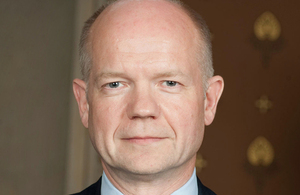
    gosborne

    The below speech was made by the Chancellor of the Exchequer, George Osborne, on the 6th September 2012.

    Thank you Nosheena, for your introduction and may I say it’s a real pleasure to be here.

    I would like to begin by congratulating the CBI and the Scottish business community.

    Over the last few years you have achieved amazing things in difficult economic times.

    Of the 900,000 new private sector jobs created in the UK over the last 2 years, 85,000 have been here in Scotland.

    Of the 15,000 net new manufacturing jobs created in the UK over the last year, 4,000 – almost one third – have been here in Scotland.

    That is the fastest increase in the number of Scottish manufacturing jobs since records began.

    Politicians often claim that their Government has “created” thousands of jobs.

    But I know that’s not true.

    Governments don’t create jobs – you do.

    The people in this room and beyond, who take risks, have the ambition and drive to build businesses.

    And our job is to create the conditions to help you do it.

    That’s why the message of all the changes we have made this week is simple: this Government means business.

    In my own department I’m particularly delighted that Paul Deighton, the man who delivered the best Olympic Games ever, has agreed to join the Government as the Minister responsible for delivering the economic infrastructure that the whole United Kingdom needs if we are to remain competitive.

    The economic outlook remains uncertain but there are some positive signs.

    Our economy is healing – jobs are being created, manufacturing and exports have grown as a share of our economy, our trade with the emerging world is soaring, inflation is down, much of the necessary deleveraging in our banking system has been achieved, and the world is once again investing in Britain.

    But the scale of the challenge is so great that there are no quick fixes or easy routes to recovery.

    The debts built up in our economy over the last decade will take time to unwind.

    Added to that was a steady decline in competitiveness, the full extent of which was masked by the tide of the borrowing boom but which has been exposed once that tide receded.

    None of this has been made easier by the eurozone crisis, which first flared up the weekend before this Coalition Government was formed and has cast a long shadow of uncertainty over our economy ever since.

    Our strategy remains the same one set out at the beginning of this Government.

    Fiscal responsibility to show the world that we will deal with our debts and keep interest rates low.

    Monetary activism to support demand and spread the benefits of those low interest rates through the economy.

    And a far-reaching programme of supply side reform to restore our lost competitiveness and deliver real prosperity for the future instead of the illusion of prosperity built on debt.

    Despite strong headwinds that strategy is already delivering results.

    The deficit is down by a quarter in just two years, and the safe haven status that our credibility has earned is delivering record low interest rates.

    That is a direct benefit to the taxpayer, our private sector and our indebted banking sector – and without it our economic future would be bleak.

    Imagine what a sharp rise in interest rates would do now to Scottish businesses and Scottish families.

    Monetary policy has supported demand and steered a steady path through a series of external price shocks so that inflation is coming back towards target.

    But monetary activism means much more than this.

    Last month the Treasury and Bank of England launched the multi-billion pound Funding for Lending Scheme.

    It is already having an impact through reducing the price of mortgages and business lending and it is a perfect example of the firepower that the UK as a whole is able to deploy.

    And this week we are introducing a new Bill in the Westminster Parliament that will allow us to use our hard-won fiscal credibility to provide guarantees for new infrastructure projects right across the UK.

    The full benefits of our programme of supply side reform will only come in the medium term but it is already having an impact.

    Yesterday the World Economic Forum confirmed that the UK has improved its global competitiveness ranking for the second year in a row, from 11th to 10th and now to 8th in the world.

    As they put it, “The United Kingdom continues to make up lost ground in the rankings this year, rising by two more places and now settling firmly back in the top 10.”

    We have already embarked on radical reforms right across government, not least in welfare where we are tackling deeply entrenched problems to ensure that work always pays.

    We have already made our corporate tax system one of the most competitive in the world with a commitment to get to a 22p headline rate – the lowest of any major western economy – and a clear ambition to go further.

    So much so that global companies like WPP, who left the UK only a few years ago, are now returning to our shores.

    And the changes this year to the taxation regime in the North Sea, with new certainty on decommissioning costs and a new gas field allowance, are forecast by the industry to generate billions of pounds of new investment.

    I will be making new announcements about the North Sea tax regime tomorrow that should bring more investment and more jobs here in Scotland.

    We are already reducing regulatory burdens and reforming employment law, with an extension of the qualifying period for unfair dismissal from one year to two years and the introduction of fees for employment tribunals.
    But now, in all these areas and more, I am determined that we will go further, deliver more and make our competitive edge even sharper.

    That is precisely what the Scottish economy needs in order to deliver prosperity for the Scottish people.

    Now I know there are those on both sides who call for a change of course.

    Some say cut more; others say “no”, spend more.

    We are pushing for more economic reform and faster delivery..

    But nobody is offering a credible or convincing alternative economic strategy.

    There is no easy path to recovery and prosperity.

    We in Britain have to confront our problems head on, be honest about the scale of the challenge, and be consistent in our determination to succeed.

    Of course the challenges we face are not simply economic and financial.

    Last year the Scottish Government won a mandate to hold an independence referendum.

    As a result Scotland is facing its biggest decision for three centuries.

    My sense is that people want the referendum process settled quickly so we can move on to the real debate about Scotland’s future.

    Scots rightly want to know where they stand on a whole host of issues – business prospects, jobs, pensions, public services…

    That’s why the UK Government is committed to facilitating the process and ending the uncertainty that is disruptive for UK and Scottish business alike.

    There’s a deal to be done.

    We’re ready to do it.

    And we can do it – if the Scottish Government is serious about honouring its election promise to let the Scottish people have their say.

    Respect for the right of the Scottish Government to hold an independence referendum should not be misinterpreted as indifference about the outcome.

    This Government passionately believes that Scotland is stronger as part of the UK and the UK is stronger with Scotland in it.

    As the Prime Minister has already said, our argument is not that Scotland can’t go it alone as a separate country should Scots choose to do so.

    It’s why would you want to?

    Why would you want to, when as a United Kingdom we’ve already achieved so much?

    And when – by pooling our talents and resources across the UK – we can achieve so much more.

    I spoke earlier about the unprecedented economic challenges we face.

    I’ve spent many, many hours discussing with my fellow Finance Ministers within the European Union how best to respond to the continuing hangover from the financial crisis and the decade of debt.

    As the members of the Eurozone strive to come closer together, the world would be rightly puzzled if Britain’s response was to break apart one of the most successful political and economic unions there has ever been.

    The British union – and its success – is as much a Scottish creation as it is the creation of any other part of the UK.

    Scots were among the first – and most successful – in taking advantage of the new trading opportunities opened up by union.

    Glance at any atlas and you’ll find Scottish place names on every continent.

    The influence of Scots has been felt in economic development across the globe.

    David Dunbar Buick – born in Arbroath – who founded the famous Detroit car company.

    Thomas Glover – an important figure in Mitsubishi’s history – who made an immense contribution to the modernisation and industrialisation of Japan.

    And William McKinnon whose businesses – forerunners of Inchcape – spanned the shores of the Indian Ocean, from the coast of East Africa to the new lands of Australia.

    Today the advocates of independence argue that Britain’s value to Scotland is spent.

    That union is no longer in Scotland’s economic interests.

    And that those who continue to believe in Britain are wallowing in nostalgia.

    I want to take this argument head-on.

    I make no apology for sharing all of the instinctive emotional attachment to Scotland’s place within the UK.

    Our shared history and culture.

    Distinct yet intertwined identities.

    A whole greater than the sum of its individual parts.

    And I reject the idea that while Britain has a glorious history, it has little relevance in tackling the challenges and grasping the opportunities of the modern world.

    300 years of working together means that today the hard-headed economic interests of Scotland and the rest of the UK are inextricably bound up together.

    Our economic integration and interdependence runs wide and deep.

    Working people, investment, goods and services all move freely across the UK.

    There are more than 800,000 Scots who live and work in other parts of the UK and half a million people from other parts of the UK who live and work in Scotland.

    Each year around 50,000 people move to Scotland from the rest of the UK, and nearly as many people move the other way.

    High levels of investment come from the rest of the UK into Scotland, with UK firms employing one in five Scottish workers and contributing around a quarter of Scottish turnover in 2010.

    Just as there are Scottish firms, like Scottish and Southern Energy, First Group and RBS who are significant employers in other parts of the UK.

    This deep integration means, for example, that Scottish manufacturers can produce goods in factories financed through capital in the City of London and built by Scottish engineers.

    Goods that combine raw materials from Wales and components built in England, powered by electricity from Scotland’s offshore wind industry.

    And goods which are sold to the rest of the UK and across the world through the UK’s road, rail and port infrastructure.

    Each year Scotland exports around £45bn worth of goods and services to the rest of the UK – equivalent to 40 per cent of Scotland’s total output.

    This is more than twice as much as Scotland exports to the rest of the world put together.

    And what better illustration of our shared economic interests and mutual dependence could there be than two of Scotland’s most important sectors – renewable energy and financial services.

    The energy that Scotland generates helps us to meet demand across the whole of the UK.

    It is the larger UK consumer base that ensures the significant investment costs required for this infrastructure are widely spread and do not fall on Scots alone.

    And then there is Scotland’s 90,000 strong financial services industry with its distinct contribution to the overall strength of the UK’s world-leading financial services sector.

    Scotland is renowned for the expertise of its investment managers and life companies – the Alliance Trust, Baillie Gifford and Standard Life to name but a few.

    Those working in the industry would be the first to acknowledge the benefits they derive from the close ties with the rest of the UK industry and, in particular the City of London.

    Just as those in the City will recognise the historic role and expertise within the financial centres of Edinburgh, Glasgow, Aberdeen and Dundee.

    It’s little wonder that the economic fundamentals of the Scottish economy are so aligned with the rest of the UK, and that its structure and movements are similar.

    Productivity in Scotland is 99 per cent of the UK average, the closest of any nation or region within the UK to the overall UK average.

    The employment rate in Scotland is 101 per cent of the UK average, again the closest of any nation or region.

    And earnings are now 97 per cent of the UK average, rising in recent years.

    These facts reflect the hard work – including by many of you in this room – who have strengthened the Scottish economy and fostered enterprise.

    So I am clear: full political and economic union across the UK – a source of many of our past successes – continues to underpin the UK’s and Scotland’s strength and credibility today and into the future.

    At the heart of the UK’s strength are the institutions and frameworks we share.

    It’s these institutions that support our fully integrated domestic market – more deeply integrated than any single market between separate states could ever be – and help to drive our prosperity.

    Now I know that the proponents of independence – applying the most reassuring bed-side manner – say that an independent Scotland would retain everything from the pound and the Bank of England to UK financial services regulation.

    However, I simply don’t think it’s credible to suggest simultaneously that in an independent Scotland everything will change and nothing will change.

    For one thing, although Scotland has always shared the benefit of the UK’s interest rates, which are now at record lows, it’s very unlikely that the government of an independent Scotland could borrow as cheaply.

    And it’s the interest rate on government bonds that is one of the key determinants underpinning the cost of all credit in the economy.

    So there would be higher interest rates: a sobering thought for all Scottish households with mortgages and all Scottish businesses.

    And let’s be clear:  independence would change the UK’s current institutional arrangements for ever.

    Scotland and the rest of the UK would become separate, foreign countries.

    What’s the point otherwise?

    Let me take one of our oldest institutions, our single UK currency, the pound Sterling.

    A single currency that has supported more than three centuries of economic and social integration.

    How can we foresee what effect abandoning this 300 year-old commitment – or even talk of abandoning it – could have on confidence and prosperity?

    After flirting with the Euro and floating other possible arrangements, the Scottish Government’s  latest position is that an independent Scotland would seek to enter a formal monetary union within a sterling zone.

    But the conundrum of the Eurozone crisis is how difficult it is to combine currency union with full fiscal and political independence.

    The members of the Eurozone are now faced with what I’ve described as the “remorseless logic” – the very lesson of the Eurozone crisis – that you can’t have monetary union without greater fiscal and political integration.

    Greater fiscal integration – because membership of a monetary union means greater interdependence, not greater independence.

    That’s why the eurozone are developing plans to control the fiscal positions of individual member states so that they can avoid the risks of contagion for all members of the union.

    Greater political integration – because sharing a currency – and perhaps a central bank – means policies that are consistent not divergent.

    Members must be prepared to forgo individual interests and circumstances for the interests of the union as a whole.

    So it’s difficult to argue for establishing a monetary union while pursuing fiscal and political separation.

    In a world in which a separate, independent Scotland wished to pursue divergent economic policies, what mechanism could there be for the Bank of England to set monetary policy, as it does now, to suit conditions in both Scotland and the rest of the UK?

    As Chancellor of the Exchequer, I have seen no such credible mechanisms proposed by those advocating independence.

    I am not clear they exist.

    If the Scottish Government cannot provide answers to these basic questions about Scotland’s currency then the Scottish people are entitled to ask this basic question in return: what path is the Scottish Government leading them down?

    We’re better together.

    And what about regulation of key sectors of the economy such as financial services or energy?

    Do the separatists propose to dismantle established regulatory regimes for markets that are highly integrated on a UK-wide basis?

    Or are they saying that the point of achieving independence is to surrender regulatory authority over key sectors in the Scottish economy to what would become a foreign sovereign authority?

    These are choices independence forces upon you, with consequences that are unknown – and unknowable – at the time you make them.

    Again, if the Scottish Government cannot provide answers to these questions, then the Scottish people are entitled to question what path the Scottish Government is leading them down.

    By contrast devolution within the UK provides Scotland with the best of both worlds.

    Substantial control over its own national affairs combined with the strength that flows from being an important part of a much larger entity.

    In a globalised economy the UK’s scale matters.

    Far from holding Scotland back, the UK provides Scotland with a strong, stable and secure platform.

    The UK has broad shoulders.

    When Alistair Darling was doing my job, UK taxpayers spent £45bn recapitalising RBS – and the bank also received £275bn of state support in the form of guarantees and funding.

    This support is equivalent to around two years of Scotland’s total output on any measure.

    A disorderly collapse of Scotland’s banks would have been devastating for depositors, jobs and growth in Scotland.

    That’s why I argue that the whole of the UK benefits from having a Government with the necessary fiscal firepower, backed by a credible central bank, which can deliver an effective co-ordinated response to a major bank failure.

    The UK has a large and diversified economy supported by a broad tax base of 30 million individual taxpayers and nearly 2 million registered businesses.

    We’re better together.

    And together our voice is heard abroad.

    However broad our shoulders, future prosperity depends – as it has always done – on our success as a trading nation.

    I particularly want to thank the CBI for all the work they are doing to push Scottish exports.

    Scots have never been parochial in their view of the world.

    You have always lifted your gaze beyond the horizon.

    At a time when the global community is striving to remove barriers to trade, I don’t believe it’s in anyone’s interests here at home to erect new borders and barriers to Scotland’s ability to compete in the world market.

    Being part of the UK opens doors for Scotland and Scottish business.

    There are enormous advantages to being part of one of the biggest and best Embassy, Consular and trade networks anywhere in the world.

    14,000 people in nearly 270 diplomatic offices, backed by a further 10,000 locals in the 170 countries in which we operate.

    This is just one example of a broader and fundamental point.

    Britain’s influence – and Scotland’s reach – is truly global.

    Scotland walks taller and shouts louder as part of the United Kingdom.

    So here in Glasgow tonight – a City that has played and continues to play such an important part in the story of Scotland and Britain.

    Let’s remember the great contributions of the past.

    Celebrate the great work being done today by businesses the length and breadth of this country.

    And look forward to what we can achieve together in the days, months and years to come.

    For our vision for Britain is of an economy, open to trade …

    …a Britain that extends choice and opportunities for all the people of the UK…

    …a Britain that cherishes the rich diversity of these islands…

    …a Britain that taps into the talents to be found in every part of our country to build a more prosperous future for us all.

    Scotland has played and continues to play a central role in making Britain the country it is today.

    A country attractive to inward investment.

    A country exporting around the globe.

    One of the best places in the world to do business.

    And I hope that when the Scottish people come to deliver their verdict, Scotland will continue to play that central role within the United Kingdom in shaping our country’s future.

    We are better together.

  • Frances O’Grady – 2012 Speech to TUC Conference

    Below is the text of the speech made by Frances O’Grady to the TUC Conference in Brighton on 11th September 2012.

    Well Brothers. You’ve been thinking about this for 144 years. Now….I don’t want to rush you but… Are you really sure?

    And, sisters, will you join me in giving notice to anyone who still thinks that women are the weaker sex – you better think again.

    I want to thank you and your unions for nominating me to become General Secretary of the TUC. There is no greater honour.

    And I also want to give my personal thanks to Brendan. Brendan has always shown me respect. He has always consulted me and encouraged me. And, when times were tough, he has always backed me.

    He has taught me that we work best when we work as a team. And for that I also want to thank our TUC staff, whose talent and commitment is second to none. Brendan – I couldn’t have wished for a better boss or a better friend. Thank you.

    Delegates, we are the voice of millions of working people, men and women, black and white, migrant worker or British-born, including many who are not yet our members. Millions of ordinary families who are under unprecedented pressure but who want hope for the future.

    I will make sure that our voice is heard day in day out. That our concerns can’t be ignored, dismissed or marginalised. I will not let any government, or any party, take us for granted.

    Of course our movement must be open to change. And change we will in the months and years ahead.

    Not just talking to ourselves, about ourselves. But reaching out more. Campaigning more. And, if needs be, fighting back more.

    I will put the TUC, Congress House and our regions at the heart of the values, hopes and campaigns that you – our affiliated unions – all share.

    Change must mean a banking system that serves the real economy, not just itself. Change must mean a green industrial strategy that puts Britain back to work. Change must mean public services, publicly owned – not just our precious NHS but child care, elder care. And our railways too. And change must mean not just a minimum wage, not just a living wage, but a fair wage for the people of this country.

    That means finding new ways to rebuild the scope and coverage of collective bargaining, our bread and butter work. New ways to humanise work, recognising we all have a right to family life. And it means new ways to win more democracy for ordinary people at work.

    Because no one has a greater interest in the future success of the workplace than those whose livelihoods depend on it.

    That collective strength has never been more needed in Britain today. It is our only protection against greed, injustice and the abuse of power.

    There are many ways to tackle the obscenity of inequality. But there is none more effective than strong trade unions.

    Weak unions mean wider inequality. Strong unions are the surest measure of a fairer society.

    On October 20th I will be proud to stand at the head of what must be a truly mass demonstration – the TUC giving expression to the fears and hopes of the British people in a way that no other organisation, no other movement could do.

    We are still the biggest organisation in civil society, our tens of thousands of elected representatives – people like you – are the Big Society.

    Our values represent everything that is best in our society. Decency. Democracy. Fairness. These are my values – our values, trade union values. Together we can win, we will build for a future that works.

  • William Hague – 2012 Speech at Bletchley Park

    williamhague

    Below is the text of the speech made by the Foreign Secretary, William Hague, on 18th October 2012 at Bletchley Park.

    It is truly an honour to be here at Bletchley Park. I am very grateful to Sir John Scarlett, the Trustees and Bletchley staff; to the many volunteers who have given their time here over the years; and to Iain Lobban and all our guests today.

    But I am most grateful of all to the Bletchley Park veterans who have joined us. I have just had an inspirational tour of some of the huts and blocks that you worked in. And I am not going to forget being guided through the workings of the Bombe machines by two of your colleagues. I believe I speak for many of us working in government and politics today when I say that we strive to live up to and build on your generation’s achievements on behalf of our country.

    Bletchley Park was the scene of one of the finest achievements in our nation’s history: the systematic deciphering of encrypted enemy communications throughout the Second World War – including the supposedly ‘unbreakable’ Enigma cipher and the even more challenging Lorenz machine – through mathematical genius, technological innovation and sheer hard work.

    This Park was the nerve centre of all British code breaking activities during War. Communications intercepted here in Britain and as far away as Australia and India were brought here for decoding and deciphering, and then sent in great secrecy to the government in London and all over the world to support British and Allied military planning.

    The Chief of SIS, “C”, personally delivered boxes of intercepts to Winston Churchill throughout the war. And the connection with the Foreign Office was particularly close.  On average more than 1,000 decrypted reports were sent to the Foreign Office each month on scores of countries from Abyssinia to Yugoslavia, many of them to be read directly by the Foreign Secretary Anthony Eden.

    Today we are releasing for the first time a letter Eden sent to “C” marked “personal and most secret” after he read particular telegrams enciphered in the German diplomatic code. They had just been broken after months of effort. From the warmth of the message and his decision to write immediately you gain a strong sense of just how important Bletchley’s work was to the war effort.

    And it was done here, in cold, cramped and unheated huts, in the most Spartan of conditions, in utter secrecy, and while the whole country was engaged in a struggle for national survival.

    1943, for example, was the year in which Montgomery’s Eighth Army defeated Rommel’s forces in North Africa and invaded Sicily and Italy; when the Battle of the Atlantic between British merchant ships and German U-Boats reached its climax; when RAF 617 Squadron launched the ‘Dambuster’ Raids; when British midget submarines crippled the battleship Tirpitz at anchor in Norway, and when Churchill, Roosevelt and Stalin met in Tehran to agree plans for the invasion of Europe. During that time more than 14,000 cables were decrypted for the Foreign Office while a much greater number of people were working here against the Axis military targets.

    We can only imagine what it must have been like for everyone who laboured to break codes under the intense pressure of those events, knowing that the encrypted messages they held in their hands contained information that could save British and Allied lives if only they could decipher it in time. And we can only marvel at the skill needed to adapt the information obtained into a form that would enable it to be used without giving away the fact that the codes had been broken.

    The men and women of Bletchley truly are heroes for our nation; and for those of us looking back on their achievements they will always be giants in our history.

    Without the code-breaking geniuses of Bletchley Park our country would have been at a devastating disadvantage during the war. And without the men and women of GCHQ and our other intelligence agencies we could not protect Britain today. There is an unbroken chain connecting their achievements.

    The story of Bletchley is only really now being told in full because it was shrouded in secrecy for so long. More than 30,000 people in total had worked in Sigint or had received ULTRA intelligence by the end of the war, but not a single one of them breathed a word of Bletchley’s secrets in the thirty years that followed. That is another measure of their ethos and their service to our country, and one that can never be measured in codes broken and telegrams deciphered.

    But it is also equally true of the men and women of GCHQ and of our other intelligence agencies today.

    I have the immense privilege of being responsible for GCHQ and SIS as Foreign Secretary.  I know that their dedication, technical brilliance and remarkable achievements more than live up to the accomplishments of Bletchley Park, and that they too keep vital secrets of behalf of our nation.

    Today, Bletchley Park’s wartime achievement symbolise our country’s ability to draw on the very best intelligence-gathering capability, individual creative genius, cutting-edge technology and international partnerships to overcome serious threats to our country.

    The patient accumulation of ideas, experience and analysis including from partners in Poland and France; the constant improvement of technology; the gradual modifying of approach and scaling up our effort with the United States; and of course flashes of sheer inspiration; these were the things that lay at the heart of Bletchley Park’s success.

    And such accumulation of expertise is indeed the foundation of all that our country excels at in the world; in diplomacy, security and defence as much as in science or culture.

    Our Government believes that we must value and take pride in British history, and ensure that that where Britain has built up a strategic advantage or capability in the world we invest in it, to be absolutely sure that we retain it for the future.
    It is part of the living legacy of Bletchley Park that Britain today is an international leader in cyber security.

    In the years since the Second World War GCHQ’s international reputation and technological capabilities have grown to embrace a world in which we are dependent on computer and communications networks in every area of life, and in which we face constant and growing threats from crime and attacks in cyberspace.

    So in celebrating Bletchley and our past we are also celebrating world-beating skills and capabilities which continue today and Britain’s international role. Our Government is determined to preserve this and to build on it for the future.

    In early March we announced the establishment of Academic Centres of Excellence in Cyber Security Research and in September the first Research Institute for the Science of Cyber Security was established.

    We have decided to give £480,000 in Foreign Office funding for the preservation and restoration of Bletchley Park for the nation. This has unlocked £5 million of Heritage Lottery Funding, which will allow the Trust to restore many more of the code-breaking buildings and exhibit more of the work that was done here, and provide an even richer educational experience for the thousands of people that come to Bletchley Park today.

    And we are launching or intensifying three schemes to ensure that our country invests in the next generation of young mathematical and computer science geniuses.

    In the year in which we celebrate the centenary of the birth of Alan Turing, one of the finest mathematical minds our country has ever known and a leading light at Bletchley, we want to step up our efforts to find the most talented people to help sustain and secure the UK’s code-breaking and cyber expertise for the future.

    Young people are the key to our country’s future success, just as they were during the War. When Churchill visited Bletchley after the war and addressed staff on the front lawn he said “I knew you were all mad but I didn’t realise you were quite so young”.  It will be the young innovators of this generation who will help keep our country safe in years to come against threats which are every bit as serious as some of those confronted in the Second World War.

    Today we are not at war, but I see evidence every day of deliberate, organised attacks against intellectual property and government networks in the United Kingdom from cyber criminals or foreign actors with the potential to undermine our security and economic competitiveness. This is one of the great challenges of our time, and we must confront it to ensure that Britain remains a world leader in cyber security and a preeminent safe space for e-commerce and intellectual property online.

    So today, I am announcing a new development programme for Apprentices, which will help to identify and develop talent in school and university age students and give opportunities to 70 new recruits for GCHQ and our other Intelligence Agencies.

    Second, this year’s National Cipher Challenge starts today, an annual competition run by the University of Southampton and sponsored by GCHQ for schools to get involved in learning about cyber skills, including ciphers and code-breaking.

    Third, GHCQ will introduce a new recruitment policy aimed at attracting a wider pool of cyber expertise by moving to an open-door and continuous recruitment strategy. GCHQ will no longer only recruit annually, and it will be looking not only for those with a university degree but those with relevant experience or vocational qualifications so that we attract a wider pool of cyber talent.

    One of my favourite stories about Bletchley Park, which Iain drew to my attention, was the decision by the Admiralty to post one Geoffrey Tandy here because he was believed to be an expert in cryptograms or messages signalled in code. In fact, he was an expert in cryptogams, which are plants like mosses, ferns and seaweeds. Happily he turned out to have excellent advice on preserving documents rescued at sea, which just goes to show how useful wide expertise can be. Although it has to be said that of all the issues Iain has raised with me over the last two years, a shortage of seaweed experts at GCHQ has not been among them.

    And as a symbol of the contribution that GCHQ makes to our international relationships today as well as of our pride in the past, I have decided that the Enigma machine which they have kindly agreed to give to the Foreign Office will be displayed in the Ambassador’s Waiting Room next to my own office, where every guest who comes to see me will be able to see it.

    This all comes on top of our continuing work to protect the United Kingdom’s networks from threats in cyberspace including cyber attack and cyber crime through our National Cyber Security Strategy, and our diplomatic efforts to secure international agreement on behaviour in cyberspace which began with the London Conference on cyberspace last year and continued in Budapest earlier this month. We are investing in ways of sharing our cyber capability with countries with weaker defences than our own, and we are calling for a new consensus about protecting human rights and freedom of expression online.

    So we are working to draw on the UK’s history and reputation, on our skills and capabilities in cyberspace, on our talented young people, on our operational intelligence partnerships with other countries, and on our ability to give international diplomatic leadership to keep our country safe, secure and prosperous in the long term. By doing this we can confidently preserve and build on all that the men and women of Bletchley Park worked so hard themselves to secure for our nation.

  • William Hague – 2012 Speech at Launch of New Crisis Centre

    williamhague

    The below speech was made by the Foreign Secretary, William Hague, on 16th October 2012 at the Foreign Office and Commonwealth Office in London.

    It gives me great pleasure to be able to join you here today for the opening of our new Crisis Centre here at the Foreign and Commonwealth Office.

    I would like to start by paying tribute to the work of the Crisis Management Department and our whole Consular Team. They work tirelessly, day in and day out, in the evening and at weekends, to make sure that when Britons are in trouble overseas, their safety and security remains our central priority.

    As Foreign Secretary, my objective is to strengthen the Foreign Office as an institution; striving to achieve excellence in every area of our work. We have launched the biggest drive to enhance cutting edge abilities and diplomatic skills that this Department has ever seen. We are re-opening the language school next year, and spending £1 million pounds more each year teaching languages to our staff. It is why we are strengthening our diplomatic network and, at a time when many countries are closing posts we are opening new Embassies and Consulates around the world and the launch of the new Crisis Centre is another example of that constant drive to be the best at what we do.

    The way that most members of the public come into contact with the Foreign Office is through our consular service. These services really matter to members of the public, who find themselves in difficult and unfamiliar circumstances. That is why we have made the provision of modern and efficient consular services to British nationals around the world one of the FCO’s three central objectives.

    It is also why we are trying to make sure that the consular service that we provide is constantly evolving, even if that evolution comes from crisis and sometimes even tragedy.

    Just a few days ago, on the 10th anniversary of the bombings in Bali, the families and relatives of the victims of that terrible crime, met at the memorial outside the Foreign Office to remember those who were injured and lost their lives. That horrific tragedy led to the creation of our Rapid Deployment Teams; trained volunteers who are prepared to deploy anywhere in the world at a moment’s notice.

    Over the last ten years they have been deployed more than 50 times to support our staff at post; helping locate missing people, printing emergency travel documents and providing a safe route home for hundreds of nationals who have found themselves caught up in events beyond their control.

    In the last year our staff, both here in the UK as well as overseas have done their utmost to help those in trouble. For example, they worked painstakingly alongside local authorities to identify the seven Britons who were amongst those killed in the plane crash in Kathmandu.

    They made sure that when a fire broke out on a cruise ship in Germany with 106 British nationals on board, that the injured were visited in hospital and emergency passports were issued so that everyone could travel home.

    And when 22 British and Commonwealth nationals were trapped by civil unrest in Tajikistan we worked with other European missions to organise an international convoy to make the difficult 15-hour road journey to safety and ensure that everyone was successfully evacuated.

    These are just a few of many examples.

    The opening of the crisis centre here today is indicative of the effort and drive that we put into ensuring that we have one of the most complete and advanced consular services in the world.

    By their very nature crises are unpredictable events. Last year the Foreign Office experienced a perfect storm of international incidents that required a crisis response. The earthquake in New Zealand, Tsunami in Japan and the events of the Arab Spring all occurred within three months of each other and all of the consequences took place at the same time.

    All of these events have been described as once in a lifetime. None of these events were predictable. All involved large numbers of British nationals and all presented their own unique issues and challenges.

    These challenges, however, provided us with an invaluable opportunity to learn the necessary lessons and refine our approach in crisis management, so that in the future, we are better able to cope with the huge demands that such events place on the Foreign Office, and offer the best possible service to British nationals in trouble overseas.

    Following the evacuation of our nationals from Libya I launched a review of our evacuation procedures to make a thorough and objective assessment of what had gone well and what we could do to further improve.

    From that review there were two main areas in which we felt we could strengthen our crisis response. The first was in procedures and preparedness and the second was in resource and capacity.

    On procedures and preparedness we have adopted a crisis response system used by the emergency services that offers more agile and clearer decision making in a crisis.

    We have also raised our game on training, running 13 live exercises over the past 12 months at some of our most high risk posts. Set alongside the launch of new guidance for handling a crisis and better support for our diplomatic posts on how to handle a crisis, we are better prepared for when the unexpected happens.

    On resource and capacity, we have created a new Rapid Deployment Team for the Middle East and South Asia and now have more than 170 trained volunteers who we can deploy, across the globe, to deal with any unfolding crisis. We have increased the number of staff in the Foreign Office dedicated to crisis work from 16 to 26 and have increased the capacity of the crisis centre more than 50% to 110 people.

    With this new Crisis Centre, for the first time we will be able handle two large scale events simultaneously; operating a centralised command structure, bringing different departments from across Government into a single place, with the right technology available, so that we can help those in trouble overseas.

    The launch of the Crisis Centre today is another step in a cycle of continuous improvement in the way that we deliver services to the British public. With increasing numbers of British nationals living, working and travelling abroad, and to a more and more diverse range of places, we’ve got to ensure that we are innovative and make the most of emerging tools of communication, such as Twitter and Facebook, so that we can reach and help as many people as possible in a crisis.

    In the last year alone, these new approaches and our new capacity has been tested no fewer than thirteen times, including evacuating our diplomats and their families from Tehran, helping those involved in the sinking of the Costa Concordia and dealing with the coach crash in France earlier this year. They are proving to be flexible and resilient procedures so far. I hope that we can continue to improve the services and support that we provide, supporting the public when they need us and moving towards our objective of becoming the best diplomatic service in the world.

  • William Hague – 2012 Speech at the Budapest Conference on Cyberspace

    williamhague

    Below is the text of a speech made by the Foreign Secretary, William Hague, at the 2012 Speech Budapest Conference on Cyberspace on 4th October 2012.

    I congratulate the Government of Hungary for hosting this conference. Prime Minister Orbán, Hungary has provided important leadership to maintain the momentum from the London Conference on cyberspace, and I also thank the Korean Government for agreeing to build on our efforts in 2013.

    We are here to address one of the greatest global and strategic challenges of our time: how to preserve and expand the benefits of the digital age.

    We should never be pessimistic about this. The internet has been an unprecedented engine for growth, for social progress and for innovation, across the globe and in all areas of human endeavour.

    But there is a darker side to it, and in the United Kingdom we believe it is time to shine a strong light on those shadows.

    We are calling for a new international consensus on rules of the road to guide future behaviour in cyberspace, and to combat the worst abuses of it.

    We are not calling for a new Treaty between governments which would be cumbersome to agree, hard to enforce and too narrow in its focus.

    Instead, last year I proposed a set of seven principles as a basis for more effective cooperation between states, business and organisations. These are:

    •        The need for governments to act proportionately in cyberspace and in accordance with international law;

    •        The need for everyone to have the ability to access cyberspace, including the skills, technology, confidence and opportunity to do so;

    •        The need for users of cyberspace to show tolerance and respect for diversity of language, culture and ideas;

    •        The need to ensure that cyberspace remains open to innovation and the free flow of ideas, information and expression;

    •        The need to respect individual rights of privacy and to provide proper protection to intellectual property;

    •        The need for us all to work together collectively to tackle the threat from criminals acting online;

    •        And the promotion of a competitive environment which ensures a fair return on investment in networks, services and content.

    There are three reasons why we believe this remains an urgent, unavoidable and essential task.

    One is that cyberspace is emerging as a new dimension in conflicts of the future. Many nations simply do not yet have the defences or the resources to counter state-sponsored cyber attack. If we do not find ways of agreeing principles to moderate such behaviour and to deal with its consequences, then some countries could find themselves vulnerable to a wholly new strategic threat: effectively held to ransom by hostile states.

    The second, and currently much larger threat, is from organised cyber crime. It has never been easier to become a cyber criminal than it is today. It is now possible to buy off-the-shelf malicious software, designed to steal bank details, for as little as £3,000, including access to a 24-hour technical support line.

    As Foreign Secretary I see frequent evidence of deliberate and organised attacks against intellectual property and government networks in the United Kingdom.

    Earlier this year, a well-protected international company was breached via a foreign subsidiary. Hackers used a spear-phishing email attack to gain access to the subsidiary’s network. From there, they stole many thousands of passwords, including those for the parent company’s file servers. From that file server, they were able to steal 100GB of the parent company’s sensitive intellectual property, roughly equivalent to a document made up of 20 million pages of A4.

    In another case, a large international manufacturer was targeted during a period of negotiation with a foreign government. We do not know how the company’s networks were initially penetrated. But the company later identified that the hackers had accessed the accounts of the company’s entire leadership team during the negotiations. Their significant commercial interests were clearly threatened by this loss of confidentiality.

    Attacks of such scale and severity continue to compromise many millions of pounds of investment in research and development, damaging a company’s ability to defend its Intellectual Property Rights and wiping away years of sensitive negotiations and commercial positioning. If these attacks are left unchecked they could have a devastating impact on the future earning potential of many major companies and the economic wellbeing of countries.

    These attacks are not aimed solely at commercial organisations. This summer one particular group targeted over 200 email accounts at 30 of the UK’s 47 government departments, in a single attack. They too sent a spear-phishing email with a malicious attachment which, if opened, would install malware on the user’s machine.  Without good protective security the attackers might have gained unfettered access to sensitive government information.

    Such attacks are criss-crossing the globe from North to South, East to West, in all directions, recognising no borders, and with all countries in the firing line.

    In the UK we are determined to remain a world leader in cyber security. We want to our country to be a pre-eminent safe space for e-commerce and intellectual property online. We are significantly increasing our cyber capabilities and have committed an extra £650 million of government funding over a four year period. We successfully defended our core networks against a range of threats throughout the Olympics and Paralympics, working seamlessly across the government and private sector to do so.

    And last month we shared for the first time detailed information about cyber attacks against British companies with the CEOs of our major firms, launching new guidance for British businesses developed with our Security and Intelligence Agency GCHQ, to help them to comprehend the scale of the problem and to secure their networks.

    But some countries lack the infrastructure and expertise to police their cyberspace and we need to do more to increase the capabilities of others. Cyber criminals and terrorists should have no refuge online, just as they should have no sanctuary off-line.

    I can therefore announce today that the UK is developing a new Centre for Global Cyber-Security Capacity Building in the United Kingdom, and we will be investing £2m a year to offer countries independent advice on how to build secure and resilient cyberspace, improving co-ordination and promoting good governance online.

    This practical initiative will help close the gap between supply and demand for capacity building and to ensure we make better use of the skills and resources available internationally. My colleague Francis Maude will discuss the full details of this announcement shortly.

    I also welcome the work that has been done since the London conference on creating a framework of norms to help reduce the threat of conflict in cyberspace, in the OSCE, in the ASEAN Regional Forum and at the UN.  We need to be able to communicate in this area with more than just our closest allies. As the importance of cyberspace grows and the threats are magnified we will all need cyber hotlines to each other.

    A great deal can be achieved through relatively simple measures such as improved crisis communications, greater cooperation between national computer emergency response teams and collaboration on tackling e-crime and responding to cyber attacks.

    These two reasons of crime and state sponsored cyber attack should be reason enough for states to come together. But there is a third factor, in itself part of the problem, which makes our task more urgent. This is the growing divergence of opinion and action between those countries seeking an open future for the internet and those who are inching down the path of state control.

    We believe that it is not simply enough to address economic and security threats on the internet without also taking steps to preserve the openness and freedom which is the root of its success.

    We see growing evidence of some countries drawing the opposite conclusion. Some appear to be going down the path of state control of the internet: pulling the plug at times of political unrest, invading the privacy of net users, and criminalising and legislating against legitimate expression online.

    We are all aware of the countries where YouTube is permanently blocked as are webpages mentioning ‘democracy’ or ‘human rights’. In some countries the websites of human rights organisations have come under cyber attack themselves. Some countries are considering going down the route of build their own national, ghettoised internets for a variety of reasons. And following the Arab Spring, we see growing numbers of people ending up in jail for blogging and tweeting about issues we would consider to be legitimate political debate and freedom of expression.

    We believe that efforts to suppress the internet are wrong and are bound to fail over time. Governments who attempt this are erecting barricades against an unstoppable tide, and acting against their own long term economic interests and their security. This debate needs to be part of international efforts to protect the future of cyberspace.

    We accept that no country has a perfect record. And we are under no illusions about how difficult these issues can be when they flare up as crises, even in established democracies.

    The protests around the world against the anti-Islam trailer were a compelling example of this. This was a contemptible piece of work, designed to provoke outrage and we deplore the fact that innocent people died in the violence that followed.

    But democratic governments must resist the calls to censor a wide range of content just because they or others find it offensive or objectionable. If we go down that path, we begin to erode the hard won rights of freedom of expression. We will always argue that is its necessary to err on the side of freedom.

    So in the United Kingdom we aspire to a future cyberspace that is characterised by openness and transparency. A future where safe, trusted and reliable access to the internet is the norm irrespective of where you are born, in which we are able to harness the power of new technologies to close the digital divide, to spur growth and innovation, to protect cultural diversity and to increase accountability and transparency. A future where the flow of business and ideas drives down barriers to trade and increases choice for citizens. A future where human rights are respected online as well as offline. And a future where cooperation between nations makes it harder for people to abuse the internet for crime, terrorism, cyber attack or political ends. This is what we hope the process begun in London and taken forward in Budapest and Korea can take us closer to agreeing.

    And we will do all we can in Britain to support such agreement: promoting the social and economic benefits of the internet and human rights and freedom online; developing our own skills, capabilities and defences at home, sharing that expertise with others abroad, and working with our allies to help win the argument that an open internet is the only way to support security and prosperity for all.

  • Michael Gove – 2012 Speech on Child Protection

    michaelgove

    Below is the text of a speech made by the Secretary of State for Education, Michael Gove, on 16th November 2012.

    I am very grateful to the Institute of Public Policy Research (IPPR) for giving me a platform today. The IPPR has been one of the most influential organisations in shaping social policy in Britain over the last two decades. The work you have done has ensured the case for greater social justice has been prosecuted with both passion and rigour. And under Nick Pearce’s directorship and James Purnell’s chairmanship your intellectual energy has never been greater.

    I want to talk today about a theme I have touched on before – the way in which our society has put the interests of adults before the needs of children.

    In other speeches I have given and articles I’ve written I’ve argued that the interests of adults in our education system have too often been given precedence over the needs of children.

    I have argued that the interests of trades unions in protecting outdated working practices, the interests of academic ideologues in defending theoretical positions and the interests of politicians in preserving their power networks have all worked against the flexible, empirically-based, child-centred education policy we need.

    A genuinely progressive education system, I have argued, should be judged on how effectively it helps children transcend the circumstances of their birth and how comprehensively it equips them to take control of their own lives.

    That is why I believe in school league tables based on externally set – and marked – exams, because while they may be uncomfortable reading for some adults they help us identify the teaching practices which are best for our children.

    That is why I believe in breaking open local monopolies of educational provision – because while that may challenge the arrangements that suit adults in power it creates a dynamic which ensures we all do better for children.

    And it’s why I believe we need to make it easier to remove bad teachers, and pay good teachers more based on proven performance – because while that may disrupt assumptions adults have got used to, it guarantees that we reward those who put children first.

    Today, however, I want to talk about another – if anything more important – area where the interests of adults have come before the needs of children.

    The failure of our current child protection system

    I want to talk about child protection.

    Specifically, how we care for the most vulnerable children – those at risk of neglect or abuse – those who come into the care of others because their families cannot care for them.

    And I want to begin with an admission.

    The state is currently failing in its duty to keep our children safe.

    It may seem hard to believe – after the killing of Victoria Climbie, after the torture of Peter Connelly, after the cruel death of Khyra Ishaq – surely  as a society, as a state, we must have got the message.

    But, I fear, we haven’t.

    We are not asking the tough questions, and taking the necessary actions, to prevent thousands of children growing up in squalor, enduring neglect in their infancy, witnessing violence throughout their lives and being exposed to emotional, physical and sexual abuse during the years which should be their happiest.

    The facts are deeply depressing.

    Too many local authorities are failing to meet acceptable standards for child safeguarding.

    Too many children are left for far too long in homes where they are exposed to appalling neglect and criminal mistreatment.

    We put the rights of biological parents ahead of vulnerable children – even when those parents are incapable of leading their own lives safely and with dignity never mind bringing up children.

    When we do intervene it is often too late.

    When children are removed from homes where they’re at risk they’re often returned prematurely and exposed to danger all over again.

    Instead of concentrating properly on the appalling neglect and abuse visited on children by those they know or who are in the family’s immediate circle we have been pre-occupied by the much smaller risk of strangers causing harm and in so doing have established an intrusive and inefficient bureaucracy which creates a false feeling of security for parents while alienating volunteers and eroding personal responsibility.

    When things go wrong and children suffer we are not transparent about the mistakes which were made.

    We do not learn properly from what went wrong to improve matters in the future.

    We do not support the social work profession properly, nor have we modernised its ways of working in line with other professions.

    When children are taken into care we take far too long to find them a secure and loving home.

    We don’t recruit enough foster parents for children with very challenging needs – especially from more economically secure homes.

    We don’t recruit enough adoptive parents – and those heroic adults who do wish to adopt are treated consistently poorly by a system which does not put children’s interests first.

    For those children who are placed in residential care homes, we don’t provide sufficient support or security.

    For older children in their teenage years who are neglected or who are vulnerable to exploitation we don’t provide enough respect or protection.

    And for all those who leave care we don’t provide a sufficiently clear and secure path to the future.

    Today I want to lay out a path to a better future for children in need, at risk and in care.

    In so doing I will be explicitly challenging, deliberately uncompromising, blunt.

    I am sure there will be criticism, counter-arguments and equally blunt reaction.

    Good.

    Because unless we have this discussion in the open – free of cant, obfuscation, emulsifying jargon and euphemism – we will not be able to arrive at a clear and enduring consensus about how we can better protect our children.

    The interests of adults – their desire to escape criticism, avoid controversy and carry on much as before – cannot be allowed to take precedence over the needs of our most vulnerable children.

    A failure of leadership

    Which is why it is necessary to highlight how poorly some parts of local government are discharging their responsibilities.

    After 160 Ofsted inspections of local authorities to see how effectively they safeguarded children less than 40 per cent got to a level we could be happy with – only three per cent of local authorities were considered outstanding and just 36 per cent good. 45 per cent were ranked at Ofsted grade three – what we call adequate but everyone now recognises is a situation which is not good enough and requires improvement – while 16 per cent were inadequate – simply nowhere near good enough.

    And lest you think those judgements were unduly harsh, it should be pointed out that Ofsted revised its inspection framework in June this year to sharpen the focus on practice – the nitty-gritty of child protection. With the three inspection reports being published today 12 local authorities have been inspected under this framework. Six are at level three – adequate and therefore requiring improvement. And five are inadequate. What is also clear is that local authorities can get it right, and I congratulate Redbridge, whose inspection report is published today, for their good child protection services and wish them well on their journey to outstanding.

    Also published today is Ofsted’s latest inspection of child protection in Doncaster. The local authority, despite valiant efforts by many well-intentioned professionals, is found, after having improved slightly, to have slipped back to being inadequate.

    I’ve taken a particular interest in child protection in Doncaster because I, like many, was horrified by the events a few years ago in Edlington, a village within the Doncaster local authority area, which resulted in two innocent children being horrifically abused by other children who were themselves the victims of parental abuse and neglect. I had the opportunity to meet the parents of those victims and was deeply moved by their courage and also determined that lessons be learned. I asked the distinguished lawyer Lord Carlile, the author of a very well-received investigation into child abuse in Ealing Abbey, to investigate and his report is published today. It should be read alongside the Ofsted report into Doncaster to give a full picture of the child protection problems Doncaster has faced.

    Anyone reading both reports will appreciate that the problems Doncaster faces are not amenable to a quick fix. Nor is there any single individual – or group – whom we can say are alone responsible for the problems Doncaster faces. But the situation is unacceptable, and needs radical change and improvement.

    I travelled to Doncaster to talk to the parents of the victims in the Edlington case, and earlier this month I visited Doncaster again to talk to the Chief Executive and the Director of Children’s Services. I hope to meet the town’s MPs next week, and will announce – after that meeting – the action I intend to take.

    I asked Lord Carlile to look at the situation in Doncaster because there were problems specific to the town which required expert external analysis. But in asking him to take on this work I was keen not just that we should learn lessons specific to Doncaster – but also that he should make recommendations about wider changes we needed to make to improve child protection.

    Reading his report, I have found his overall argument compelling. There are a series of specific recommendations, many of which I am instinctively drawn to and all of which deserve careful consideration. The Government will respond formally to all the recommendations in due course.

    But I want there to be a time for debate before the time of decision. Because one of the reasons why I like Lord Carlile’s approach so much is that he issues tough challenges – as I hope to today – and if we speak plainly then in fairness we need to hear how others respond before acting.

    A child’s need for protection trumps the adult’s interests in the child

    And one of the first arguments where I want to hear how people respond is the case Lord Carlile makes that we should be much more assertive in taking children out of homes where they are at risk.

    Lord Carlile’s thinking chimes with the Education Select Committee’s recommendation in its report last week on child protection. It’s another excellent analysis which richly repays reading and it makes the point that the “balance of evidence is heavily in favour of care” for vulnerable children being considered “at an earlier stage for many children”. The report asks that ministers should encourage public awareness of that fact.

    Let me try to do so now.

    I firmly believe more children should be taken into care more quickly, and that too many children are allowed to stay too long with parents whose behaviour is unacceptable.

    I want social workers to be more assertive with dysfunctional parents, courts to be less indulgent of poor parents, and the care system to expand to deal with the consequences.

    I know there are passionate voices on the other side of the debate.

    They express sincere concerns about children being separated from loving parents in stable and secure families and heart-breaking battles to bring those children home.

    I don’t deny that such cases exist. But there is no evidence that they are anything other than a truly tiny number.

    Whereas there is mounting evidence that all too many children are left at risk and in squalor – physical and moral – for far too long.

    Giving evidence to the House of Commons Select Committee, Martin Narey, the former chief executive of Barnardo’s, underlined that he had never come across a case of a child being taken wrongly into care but he had come across all too many cases where he was “astonished that we have not intervened”.

    Martin cited a report – commissioned by the last Government – which showed that “Thresholds of entry to care were often high. 92 per cent of children in the study had experienced two or more forms of maltreatment, including neglect, emotional abuse, physical abuse and sexual abuse. In a number of cases, the abuse or neglect of children had persisted for many years without decisive action by children’s services or the courts.”

    Recent academic research is consistent in underlining the damage done by delaying intervention and The Home or Care?, the Neglected Children Reunification and the Significant Harm of Infants Studies found extensive evidence of the consequences of abuse in children’s delayed development, poor speech and language, poor school performance, decayed teeth and untreated medical conditions, as well as in numerous emotional and behavioural problems, particularly violence and aggression.

    And when Professor Elaine Farmer and colleagues carried out a five year follow up study of neglected children returned home, they found that even when we do intervene we still return children to abusive homes too early – and in too many cases. She studied 138 neglected children who had been returned to their families. After two years, 59 per cent of children returned home had been abused or neglected, and after five years, 65 per cent of returns home had ended.

    In half of the families, children had experienced two or more failed returns home, with some children repeatedly returned home to circumstances that remained unchanged and about which social workers had concerns.

    But dry numbers alone cannot convey the real – enduring – pain we cause children when we leave them in danger.

    You need to read the serious case review into the case of Peter Connelly to confront the reality of a child left, uncared for and neglected, to soil himself and starve and then, when he cried out in his anguish, the people who should have cared for him allowed him to be violently assaulted.

    You need to read the serious case reviews of children in Southampton and Bristol whose substance-abusing parents were so incapacitated their own children died from ingesting their parents’ methadone.

    You need to read the words of Sylvie Carver in last week’s Times, when she wrote of her own experience.

    The neglected child can sit in a soiled nappy for hours, piss-soaked vests are not changed but just turned inside out and the nappy rash never quite goes away. As a toddler this baby learns to take its own nappy off when it can’t bear the pain of the full nappy rubbing against the rash. He also learns to shove as much food as is offered into his mouth because living with a neglectful parent means, for many reasons, regular mealtimes don’t exist. Life is chaotic and food turns up as unexpectedly as your absent dad wanting the child benefit to drink up in the pub. Your parent might only sort out a meal when they feel hungry and anyone on drink and drugs doesn’t do three meals a day. When parents are wrecked you might get some money for sweets or a swig of the medicine that seems to make them happy, but when they are bored with you they ignore you. The house is so chaotic and out of control that even when you’re old enough to bath yourself you can never get clean. You run a bath in a scummy tub and when you get out you dry yourself with a mouldy towel and get into dirty clothes.

    In all too many cases when we decide to leave children in need with their biological parents we are leaving them to endure a life of soiled nappies and scummy baths, chaos and hunger, hopelessness and despair. These children need to be rescued, just as much as the victims of any other natural disaster.

    But because of what has been called optimism bias – the belief that with a little more help and support the family will, at last, at long, long, last mend its ways – we leave children in danger for too long.

    Social workers are encouraged to develop relationships with adults who are careless of their own welfare and dignity. And for perfectly understandable reasons sometimes professionals are reluctant to directly and robustly challenge the behaviour of people whose trust they are trying to win. But all the time, while adults are trusted, children continue to suffer.

    Social workers – partly because so much of their time is spent in uniquely difficult circumstances many of us will never encounter – can become desensitised to the squalor they encounter and less shockable overall.

    Which is why it’s up to the rest of us to show leadership. That means supporting social workers who are prepared to take children into care when parents are in the grip of drug or alcohol abuse, backing social workers who rescue children from homes where they are left in their own urine and faeces for days, left to forage for scraps of food and drink and denied warm, clean bedding and clothing.

    It also means being clear that the presence of a sequence of males in a relationship with vulnerable women when those men are not the biological fathers of children in the house is a danger sign. Especially if there is the slightest evidence that either adult is a substance abuser or the man has any record of domestic violence. Refraining from passing judgement on adult lifestyles in these circumstances is condemning children to an unacceptable level of risk.

    It is putting our fear of offending adults ahead of the needs of children in need.

    I know the counter-arguments.

    There are already too many children in care, some say.

    Well the current number of around 67,000 is lower than the number in 1981 when it was 92,000 – and there is in any case no such thing as a right number overall – only a right solution for every child in need.

    Precisely, say others, and care is itself damaging – look at the numbers of care leavers who are unemployed, whose health is severely impaired or who are in prison. Care is a terrible misnomer. Looked after children are really passed over children.

    Well I won’t deny there are many things we must do – urgently – to improve the treatment of and prospects for children and young people in care. Not least, to improve the education they receive, to make sure that they leave school and college with good, valuable qualifications, ready to progress into higher education (HE), work and adult life.

    But those who point to the numbers in prison, or suffering mental health problems, or in poor schools, or without qualifications, or who are unemployed and who are, or have been in care, and conclude that it is always care that is responsible for these terrible outcomes are making a terrible error.

    They are confusing correlation and causation. It’s as foolish as concluding that because so many die in hospital, hospitals are bad for your health.

    These children do not face difficulties later in life because they have been in care.

    These children are in care because of the terrible circumstances they have endured already in their lives.

    They are, in all too many cases, damaged young people. And while care is far from perfect it is much, much better than neglect, let alone the risk, or reality, of abuse.

    So – again – I hope I am clear. A rising number of young people in care is not a cause for concern in itself. What is a cause for concern is the horrific neglect and abuse that care can be a rescue from.

    We have been looking for danger in the wrong places

    And – as I hope I have also made clear – because the neglect and abuse children face is – tragically – generally visited on them by those they already know – parents, mum’s new boyfriend, members of an extended family as in the Matthew’s case or with Peter Connelly – we have been guilty of a tragic misallocation of effort and energy recently in concentrating so much on stranger danger.

    Yes, there are predators targeting children for sexual abuse, as well as those who traffic vulnerable young people. And we have already taken steps to tackle these problems. My colleague Tim Loughton developed and published the first Child Sexual Exploitation Action Plan – bringing together those most engaged in fighting this evil. The Deputy Children’s Commissioner, Sue Berelowitz, will shortly publish her interim report on child sexual exploitation by gangs and groups and it will also help us make the changes we need to keep children safe. I will turn in a moment to how we protect those most at risk from organised exploitation.

    But while the threat of criminally organised paedophilia is real, the balance of recent media coverage might lead some to believe that the greatest present danger to children is from powerful strangers who hide their abuse behind a cloak of celebrity or in the dark recesses of the corridors of power.

    The majority of perpetrators sexually assault children known to them, with about 80 per cent of offences taking place in the home of either the offender or the victim, and, by definition, almost all neglect occurs at the hands of the parent or care giver.

    And that is why the huge panoply of regulation which started with CRB checks and culminated under the last Government in an Act of Parliament requiring eleven million of us to register before we could even help at a Sunday school or drive a minibus from one sporting venue to another was an over-reaction. Thankfully, my colleague Theresa May has restored matters to a far more common sense position. From 2013, organisations can use just one check for any adult working with children, and the numbers requiring a check have been cut back to sensible proportions so writers visiting school classrooms don’t have to be vetted by the state for their suitability.

    But it is still the case, I feel, that by putting so much stress on a CRB regime that sought to limit the danger from strangers and gave some the false comfort that we could regulate and license sin out of all our lives, we actually only ended up damaging the voluntary spirit and introducing suspicion into perfectly normal and healthy interactions between children and adults. Music teachers were told never to touch young violinists. Teachers were afraid to comfort young children in pain with a consolatory hug or restrain violent youngsters when they were a danger to themselves and others.

    This misdirection of attention risked making normal adult child contact seem suspect while at the same time, as I have pointed out, the criminal neglect and abuse of children by irresponsible adults was accepted far beyond what any of us should have considered tolerable.

    This regrettable state of affairs has been a consequence of failing to follow the data, and instead succumbing to lurid fears which lurk in our psyches and take hold of the public imagination after particularly turbulent news cycles.

    Home office data shows of the 56 children murdered, 16 in 2011, 77 per cent, knew the person suspected and 64 per cent were killed by a parent or step-parent.

    The debate about how we improve child protection needs – like all policy debate – to be informed by evidence and open examination of what the data tell us.

    Transparency when adults get it wrong helps us get it right for children in the future

    That is why I have been determined to ensure that when things do go wrong – as they always will – we must make sure we are rigorous in analysing our errors and clear about how everyone may learn the appropriate lessons.

    After every child death – or indeed any serious case of abuse or neglect – the law states there should be a full Serious Case Review – a dispassionate assessment of what went wrong and why, so we can all improve practice in the future.

    But, under the last Government, SCRs were kept secret and all that was published were bland and uninformative executive summaries drafted in vapid jargonese, risking the wrong lessons being drawn.

    It seemed to me that – once again – we were getting our child protection system wrong by putting the interests of adults before those of children.

    It suited adults who had made mistakes – the police, lawyers, doctors and others who had, for example, failed Peter Connelly – to have their errors kept hidden behind a veil of confidentiality. No real sense of what went wrong could be divined from a bland exec summary. So no action which would make the lives of those who had made errors more uncomfortable could be taken.

    That is why, in Opposition, I campaigned for the publication of Serious Case Reviews and in Government we have insisted on their being made public.

    After catastrophic incidents in other areas – for example air crashes – the entire aviation industry has an interest in learning what went wrong and incorporating lessons from the disaster into future good practice. The aircraft’s black box yields information about precisely what went wrong – that is shared across the industry entirely openly – and professionals can then improve their operations by learning from others errors.

    But in child protection, professionals have fought greater transparency, often citing the adverse effects publication might have on surviving victims of abuse or neglect, or even on the perpetrators as they are rehabilitated.

    I find these arguments are – more often than not – spurious. Families of victims – like those I talked to in Doncaster – want the fullest possible transparency – not only so they can achieve what psychologists call closure but also because they are determined that some good come from the suffering visited on them – and they believe good can only come if lessons are learned. As for publication of past crimes impeding rehabilitation, that is not an argument we have heard with respect to, say, the Hillsborough Panel’s Report and it is not an argument anyone who believes in open justice or free speech can ever be comfortable with. Especially when non-publication so clearly serves the interests of those professionals who have failed.

    That is why I am glad that some local authorities have responded to our call for greater transparency by publishing SCRs – such as Leicester, North Somerset and Nottinghamshire.

    But I am still – frankly – frustrated that only 28 SCRs have been published since June 2010 of the 147 initiated and of which 80 have completed. I know in some cases we wait on the termination of legal proceedings before SCRs can be published but this still leaves a large proportion, well over half, unpublished.

    Lord Carlile – in his report – makes a series of suggestions about how we might reform the SCR process. And I am open to arguments about how to reform and refine the process. But at the moment there is too much foot-dragging, prevarication and obfuscation. There is a lot of media noise about inquiries these days, some of it frankly misdirected. But if there is any spare outrage going around it should be directed at those who are not publishing – in full – the current crop of SCRs – the robust inquiries required into the real tragedies of child death, abuse and neglect which deserve genuine investigation.

    We need rapid progress towards greater transparency. If that doesn’t happen soon, we may need to legislate – for example to ensure that lessons learned investigations are carried out by investigators with a clear remit to publish the truth in full as rapidly as possible.

    Because at the moment there are real structural impediments to greater open-ness. One of the biggest is the way in which those responsible for child protection are held accountable. The body which commissions an SCR in relevant cases is the Local Safeguarding Children Board. But the members of the LSCB are generally representatives of those very organisations – the local authority, the local police force, the NHS and others – who have made mistakes in child protection and whose errors need exposing. And the Chair of the LSCB – the principal watchdog – will be appointed by the Director of Children’s Services – the figure in the local authority with direct responsibility for child protection. There is a clear potential conflict of interest. Which is why – at the very least – we need to change the way we appoint chairs of LSCBs. I am open to suggestions and arguments about the future approach, provided we can ensure that it creates more pressure for accountability, transparency and more energetic action to protect children.

    The structures adults hide behind need to be reformed in children’s interests.

    But this change can only be a first step. The whole structure we inherited – a tangled web of trusts, partnerships, committees and boards pulling professionals away from their core responsibilities – has not made children safer. We need to ensure there is clarity about who is responsible for what in child protection. And clarity over the steps required to keep children safe.

    The last Government’s guidance in these matters, including Working Together to Safeguard Children, was over 700 pages long. Impossible to digest, let alone remember, for any hard-working teacher or police borough commander pulled in every direction by the many competing demands on their time.

    Even at that length – perhaps indeed because of that length – professionals were still left confused and uncertain about basic principles of child protection.

    Professionals today – as serious case reviews I have read have revealed – still do not know what facts they can share with other professionals about children in need because there is no clarity in their minds over how data protection laws operate.

    We are working in Government to simplify – and clarify – the rules in all of these areas. We are fortunate that directors of children’s services, the royal colleges and others are working with us.

    But let me again be frank. The over-complicated bureaucratic machinery we inherited diffuses accountability rather than clarifying it, makes sharing information more difficult, not easier, privileges process over results and committee attendance over action. We are taking steps to improve things as quickly as possible – following on from Eileen Munro’s superb work on how we improve children’s experience of child protection. But there is still much to do.

    I still believe that the best people to help lead improvements in children’s services are those from local government who have outstanding track records in child protection. That is why I have committed to funding the work done by the Local Government Association, the ADCS and SOLACE for another year. Their approach teams strong councils with weaker councils to improve child protection. But we need to see rapid progress if that support is to continue in the future.

    And critical to improvement – as Eileen’s own work so clearly demonstrates – is improving the quality of social work practice.

    Learning from education when it comes to reforming the profession

    One of the reasons why there has been so much bureaucratic intervention intended to regulate the social work profession into better performance is because previous governments had a fundamental lack of confidence in social workers themselves.

    As Andrew Adonis has pointed out – what was done for teachers now needs to be done for social workers. They too need support to improve their practice. That is why the College of Social Work has been set up and we are planning to establish the office of Chief Social Worker. More requires to be done – both in improving initial training and enhancing leadership – but the recognition is there – among ministers and social workers – that we need to work harder to improve how the profession operates. And one of the most promising developments in improving how the profession operates is the idea – first floated here at the IPPR by a Teach First alumnus Josh McAllister – that we support a charity doing for Social Work what TeachFirst did for teaching.

    Frontline – the proposition Josh has advanced with such care, thought and passion – is a brilliant idea. It offers more talented graduates the chance to make a dramatic difference to the lives of our most vulnerable citizens. The same idealism which drew TeachFirst alumnae into the nation’s most challenging classrooms can now be harnessed to get committed, intelligent, compassionate leaders into the homes where children need most help. By providing a shorter and more focussed training programme – just as TeachFirst does with its recruits – one of the biggest barriers to entry for gifted graduates contemplating social work has been cleared.

    That is why I intend – on receipt of a proper business plan in the next few months – to support Frontline’s establishment and get it up and running as soon as possible.

    But if we are to improve the lives of vulnerable children it is not just more high quality social workers we need to recruit.

    Finding the right adults to care for children

    We also need to recruit more foster parents. And more adoptive parents.

    We know that one of the surest foundations for any child’s progress through life is a secure attachment with an adult who loves them in their earliest years.

    And we know that for damaged children who’ve grown up in households where love is absent, fitful or glimpsed only occasionally when the haze of intoxication clears, the search for love – indeed for almost any display of affection or even attention – can dominate their later years.

    Every child needs to be somewhere they are genuinely cared for, protected, and where the adults looking after them love them and aspire for them to succeed in school and as they grow into adulthood.  When children are in an environment where they know they are loved they are also more ready to accept boundaries and limitations, because they know curtailments of their liberty or restraints on their wilfulness are being imposed by someone whose heart is committed to them rather than someone who is simply discharging a responsibility.

    Adoption means taking a child not just into your home but into your heart – it is a relationship for good in every sense of the word. It means committing to another person for life in a way which as profound, indeed even more so, than marriage.

    That is why it is such a daunting responsibility.

    But also such a wonderful gift.

    And because I have benefitted from that gift so much I am determined to ensure more and more vulnerable children also find loving homes for good.

    If adoption is right for a child who is taken into care, we are doing everything we can to ensure that he or she is placed for adoption as soon as possible.

    That is why we’ve published data on the performance of local authorities in helping children find adoptive parents – so we can learn from the best and challenge others to improve.

    It’s also why we’ve changed rules to make it easier for children to move out of the care system more quickly and into the arms of loving parents.

    We’re legislating to ensure BME children are not left in care for many months longer than average because adults believe they need to find a perfect or even a partial ethnic match.

    We’re changing the rules so that approved adopters can foster the child they hope to adopt at an early stage – thus building attachment and security.

    We are also exploring changes to allow siblings to be adopted separately – and to strictly limit or prevent contact between birth parents and adopted children.

    In both cases the wishes of adults and children to keep siblings together – or to maintain historic relationships – can work against the interests of children – who may best be served by being adopted as quickly as possible and forming as secure an attachment as possible with their new parents. Waiting until two or more siblings can be adopted together can limit the speed with which either might find a loving home. Allowing inappropriate contact with a birth parent could impede a child’s ability to settle in a new family without any gains for either child or parents.

    I am open to making whatever other changes are necessary to speed this process – but as reform bites so it becomes even more imperative that we accelerate and increase the numbers becoming approved adopters.

    That is why I am open to changing how we recruit new parents, giving voluntary adoption agencies a bigger role, with costs and payments reflecting their ability, indeed determination, to recruit more parents.

    Local authorities have little incentive at the moment to recruit beyond the numbers they may consider appropriate for their own area – while voluntary adoption agencies want to work across localities to recruit more parents. I don’t have any ideological preference as to who recruits more parents as long as more parents are recruited. As that thoughtful advocate of competition in the provision of public services, Deng Xiaoping, once said, it doesn’t matter whether the cat is black or white as long as it catches mice. And I don’t mind it if it’s a council or an agency recruiting adoptive parents as long as they don’t ask unnecessary and intrusive questions about faith or sexual politics, as long as they don’t keep compassionate volunteers waiting for long weeks and months to be assessed, as long as they don’t impose irrelevant class, race or lifestyle tests on prospective parents and as long as they work hard to make sure that sooner or later every prospective parent is given the chance to adopt. But unless I can see a change in attitude, quickening of the pace and a raising of the level of ambition, again, we are prepared to act.

    And just as I want a wider range of people encouraged to become adopters so I want to help an even wider range of people to become foster parents. We need in particular to encourage more foster parents from a wider range of homes. Edward Timpson – the Children’s Minister – grew up with a total of 89 foster siblings. He is used to people saying “you must be a very special person to do this” but he and his parents disagree. You don’t have to be special – there are lots of people who could foster children.  We need more aspirational and engaged parents who can introduce looked-after children to a wider range of experiences and opportunities would be hugely powerful in improving the prospects of our most vulnerable children. Other EU nations tend to recruit foster parents from an even broader pool than we do and we are looking at just how we can extend both the number, and the diversity, of those who foster.

    And I should add, of course, that the growth in special guardianship provides another route for children who cannot be cared for by their birth parents to enjoy the security of a home in which they are loved and cherished.

    All of these options together provide an opportunity for children who have known only upheaval and neglect to enjoy permanence and love – and thanks to the generosity of adopters, fosters parents and special guardians the number of children and young people in residential care homes has diminished during my lifetime.

    Holding adults to account for children in their care

    Of course there are some children and young people who simply cannot function in the family environment of foster care, and they need the framework and intensive professional help to be found in good children’s homes. I know that many children recognise and respond to the warm and sympathetic care they then receive. The best residential care homes are very good indeed – warm and caring environments where the highest professional standards help young people find stability after years of abuse or neglect.

    It is, however, very sadly the case that there are residential care homes where these high standards are not maintained. Homes where facilities are poor, supervision ineffective, affection absent and support for the young person either scanty or misdirected. Worse, many of these homes are located in parts of the country where other facilities for young people are poor. Worse still, many local authorities deliberately send their looked after children many miles from their friends and families to care homes in distant areas. Worse still, some of these homes are located in high-risk areas with large numbers of sexual offenders or organised criminal activity which can ensnare vulnerable young people.

    Now, no Director of Children’s Services or Council Chief Executive would willingly put vulnerable young people in harm’s way – but that is what happens.

    In places such as East Kent and East Lancashire there are vulnerable children from all over the United Kingdom, at risk of exploitation and vulnerable to criminal activity. They have been sent there by professionals charged with protecting them.

    How can this happen?

    In order to establish why good-hearted and well-intentioned people are not just allowing this to happen – but directing this activity – my colleague Tim Loughton established detailed work to consider how we could improve provision. That work will be completed shortly.

    We know that many of the young people who have found themselves in these homes – and whose lives will already have been characterised by neglect and abuse, the withholding of affection and the manipulation of their emotions – are being targeted by adults intent on sexual exploitation.

    Thanks to the determined work of Times journalist Andrew Norfolk, we know that the targeting, grooming and horrific mistreatment of young girls is facilitated by the failures of our residential care system.

    Indeed our care system overall.

    Policing the boundary between children and adults

    For a disproportionate number of young people who have been sexually exploited are or have been in care. And as Sylvie Carver’s Times article also made clear children who have been neglected early in their lives are uniquely vulnerable to sexual exploitation later.

    We need to ensure all adults recognise this vulnerability. That means tackling head on the attitudes of these professionals reported to have dismissed many of these young girls as “difficult”, “drawn to danger”, “risk-fuelled” “asking for it” or “sexually available”.

    It is chilling to read how nominally responsible adults treated the sexual activity of children in Rochdale. Because of an attitude that may have begun as exasperation with damaged young people but ended in acceptance of their abuse by adults, we let those children down.

    We let them down because we did not – for them – and for others – uphold the principle that laws are there to protect the innocent. The law of consent is there precisely to protect young people – children in fact and in law – from exploitation by their elders. When anyone – anyone – interprets children’s sexual activity – or availability – as a matter of free choice, or evidence of their appetite for risk and danger, or behaviour just too difficult to handle, they are acquiescing in abuse.

    Because the girls exploited in Rochdale are not an isolated and wholly unrepresentative group. According to data from the Health Protection Agency approximately 3000 children – children – attended a genitourinary medicine clinic on more than one occasion between April 2010 and March 2011. The Department of Health confirms that in 2011 there were 84 terminations of pregnancy for children under the age of 16 – who had already had at least one previous termination.

    Now I am absolutely convinced that we must have good sexual health services for every citizen. I know that health professionals must always – always – act to alleviate harm and never seek to pass personal judgement – and I am not one of those who wishes to see any reduction in women’s reproductive rights or undermining of women’s health and well-being.

    But while I do not wish to see the NHS be any less responsive to those in need, I have to ask – can we as a society be happy with the exposure to risk – to physical and mental health, to social and emotional maturity – revealed by this evidence of early sexual activity?

    I think we all need to ensure the importance of 16 as the age of consent is appreciated by every one who has responsibility for young people. As Anne-Marie Carrie says, no child can consent to their own abuse. They deserve our protection.

    And to help combat the erosion of that safeguard, and the exploitation of the vulnerable, I think we should erect more – not less – protection around childhood.

    That is why I applaud the campaigning efforts of organisations like Mumsnet with their “Let Girls be Girls” campaign, and why the Government commissioned the Bailey Review into the premature sexualisation and commercialisation of children.

    It is also why I think we need to recognise that all the pressures put on young people to grow up faster need to be resisted.

    That is why I think we should do all we can to discourage young people in care from leaving care before they are 18.

    We are – rightly raising the age of compulsory participation in education. We believe young people should carry on learning until they are at least 18, in preparation for adult responsibilities and opportunities.

    And I think – in line with the steps we are taking to raise the participation age – we should ensure looked after children are expected to remain in care until they are 18. And, much more often, to stay with their former foster carers until into their early twenties.

    We should not be allowing vulnerable young people at 16 or 17, before they are ready, to be placed in additional risk.

    We know that the prospects for many care leavers across the country are poor. The circumstances some of them find themselves in are desperate. Even when they are in suitable accommodation in a foyer or supported lodgings they may be vulnerable to exploitation from drug dealers, pimps and other predators who may live in the area. So we need to ensure children are not leaving foster or residential care only to have their whole futures endangered.

    And because local authorities have a specific duty of care here I want to ensure we hold them accountable for what happens to these young people. We are holding our schools more effectively to account by recording the number of their students who go onto university, college, proper apprenticeships or satisfying jobs. This destination data will complement other performance measures to ensure schools prepare students for all the challenges of adult life. I believe we should hold local authorities similarly to account for the destinations of looked after children. We should be able to plot where children in care progress to, local authority by local authority, so councils have an even more powerful incentive to ensure care leavers are prepared and supported for all the risks, and opportunities, of adult life.

    Conclusion

    The proposals I have put forward today are, I hope, the start of a debate, not the summing-up; the beginning of a conversation, not a conclusion.

    I have spoken as honestly as possible today because I want there to be no excused for inaction in the days ahead. I want those of us entrusted with responsibility at this time – in central and local Government – in social work, schools, the police, the health service – to work together to improve our child protection system. I want us to ensure that – at last – ahead of the interests of adults – we put the needs of children.

  • Michael Gove – 2012 Speech to the Spectator Conference

    michaelgove

    Below is the text of a speech made by the Education Secretary, Michael Gove, at the Spectator Conference held in London on the 26th June 2012.

    It is a pleasure to be here at this Spectator Conference – and to have the chance to debate the future of our children’s education – not least because the Spectator is intimately involved in shaping that future.

    One Spectator writer – the editor Fraser Nelson – has been the most powerful advocate in Britain today for educational reform and, in particular, for learning from other nations like Sweden which have pioneered disruptive innovation.

    And talking of disruptive innovators – another Spectator writer, Toby Young, has shaken up education provision in London by doing what so few writers dare to do and testing his ideas in the real world – by setting up in Hammersmith the sort of school he has long argued for in the Spectator.

    That school has been a runaway success, offering a rigorous academic education to a socially comprehensive intake, and has become – just months after being established – one of the most over-subscribed schools in the country. Even more popular than schools blessed by the good luck to have Fiona Millar as a governor.

    And today’s conference affirms the importance of two principles the Spectator has consistently championed.

    Demanding higher standards for all children.

    And learning from those nations which have the best performing schools – and the societies in which opportunity is most equal.

    Learning from others

    So I’ve been eager to find out more about educational transformation in Sweden and Finland, in Singapore and Shanghai, in Australia and New Zealand, in Jeb Bush’s Florida and Michelle Rhee’s DC.

    But perhaps the most powerful lesson from abroad that I’ve learned in this job comes from Kenya – from the Masai people of that nation.

    Whenever one Masai greets another they ask a question – Kasserian Ingera? Not “how do you do” or “how’s it going”, but “how are the children”? It’s wonderfully revealing about the values of Masai society – their first concern is the next generation.

    And the hoped-for reply is equally revealing: “all the children are well”. Not my children. Not some of the children. All the children are well. For the Masai, society cannot be well unless all the children are well.

    The question the Masai ask each other is revealing not just of their society – but of ours.

    Whatever tests we set ourselves – and whatever achievements we boast of – the question that goes to the heart of the health of our society should be the same – how are the children?

    Our failure to our children

    Well, all the children are not well.

    We are not putting our children first, not respecting the first duty any generation must discharge – to leave the world a better place for those who follow us.

    We should be seeking to leave our children an inheritance enriched by our efforts – designed to be shared among all.

    But we have been doing precisely the opposite.

    We have been depriving our children – depriving them of the share of our nation’s wealth that is properly theirs, depriving them of the protection from abuse and neglect they deserve, depriving them of the opportunities for fulfilment that should be theirs by right and depriving them of the education they need to make them masters of their own fate.

    The economic deprivation adults have inflicted on children

    The first deprivation we have inflicted on our children is economic.

    It is a tragedy that so many children still grow up in poverty – in households without work or the prospect of work.

    It is a reproach to all of us that so many children grow up in communities where they are destined to be dependent on the state rather than enjoying the dignity of independence.

    And it is unforgivable that our children’s future income has already been taken from them – by a generation who robbed those they claimed to live for.

    The extent of worklessness and welfare dependency in our society is a moral issue. Unemployment doesn’t just undermine self-worth and erode self-confidence; it acts against every noble human impulse. It makes it more difficult to save for the future, to marry and bring up children, to buy a house and put down roots, to devote time and resources to others. It is a waste of both talent, and potential.

    Which is why the Prime Minister and Iain Duncan Smith are so right to reform our welfare system to encourage and incentivise work. And it is why we have to ask of any Government policy – will it make easier for people to find employment, or does it raise the cost of giving someone a job?

    In a world of competing priorities we have to put our children first – and that means setting aside other, perhaps desirable goals, which make it harder for companies to give young people jobs and hope.

    That is why the review of bureaucracy in the workplace that Vince Cable and his team are undertaking is so vital – to liberate the private sector to deliver the greatest public good, fighting unemployment.

    There is of course one drag on job creation even greater than over-regulation and a dysfunctional welfare system.

    Debt.

    As Kenneth Rogoff and Carmen Rheinhart have persuasively demonstrated in their comprehensive analysis of economic crashes – This Time is Different – when a nation’s debt gets beyond a certain level it acts as a powerful and, historically, often catastrophic brake on growth. Unless nations can show they are bringing their deficits (and then their debts) under control then growth will continue to elude them.

    That was the lesson the Clinton Democrats and the Canadian Liberals recognised in the 90s but some on the centre-left forget today – reducing Government debt is a core progressive mission. Unless you bring debt under control you will not have the climate in which new jobs are created; you will not have an economy that serves the people.

    But there is an even more powerfully progressive reason why we need to tackle our debt problems. Because Governments which borrow money are basically financing their current consumption by saying others will pay more for it later. And those others are our children.

    A Government – and indeed individuals – who borrow at the levels we’ve seen in the last decade are asking the next generation to pick up the bill – loading up either bigger future tax increases, which steal their income, or requiring greater future spending cuts. No-one I know could defend the act of stealing from children – but that is what the economic policy of the last decade of debt has meant.

    Which is why if we want all our children to be well – to inherit an economy that provides opportunity not permanent austerity – we need to reduce our deficit now – and cut debt back.

    The failure to protect the most vulnerable

    As well as depriving all our children economically, we have also been depriving many of them of the security they need in their earliest years.

    One of the saddest parts of my job is reading the serious case reviews which follow incidents when children have been dreadfully abused or neglected.

    They are haunting records of blighted lives, in many cases the dreadful final chapter of lives cut short by unspeakable cruelty.

    They cover tragedies as disparate as babies like Peter Connelly, killed by those who should have cared for him, or the young woman stabbed in Rotherham by one of the men who sexually abused her because years of neglect had left her vulnerable to exploitation.

    But while the cases cover so many tragedies, one lesson comes through relentlessly.

    We have failed to be anything like assertive enough in challenging bad parents and supporting good ones.

    Critically, we have left children in the hands of adults who are incapable of caring effectively, who either abuse or acquiesce in the abuse of innocents, who inhabit homes where violence is an everyday visitor and love never enters.

    And when generous adults have come forward to offer these children a home, instead of doing everything to rescue these children and place them in loving arms we have placed a series of bureaucratic barriers and politically correct protocols in their way.

    The children we have left to grow up in squalor – physical and moral – become the adults without hope, the recruits for gangs, the victims of sexual exploitation, the saddest casualties of selfishness in our whole society.

    That is why it is so important that we reform our care system, to get more children out of abusive homes and placed with adoptive parents, ensure social workers challenge poor parenting and neglect and get everyone who works with children working better together to help the vulnerable escape from abuse. And the work my colleagues Tim Loughton and Sarah Teather have done alongside Martin Narey has ensured that those children most in need will be protected in the future.

    We cannot claim all our children are well when so many suffer so terribly – that is why the State must act to put right what selfish and abusive individuals have done wrong.

    The State must also act – clearly, assertively, determinedly – to ensure not just security for every child in the earliest years – but also opportunity.

    The historic failure to make opportunity truly equal

    Sadly, the test which our nation has most clearly failed – generation after generation – is the extension of educational opportunity to all our children.

    England boasts some of the very best educational institutions in the world – whether universities, fee-paying schools or state schools.

    Oxford, Cambridge, Imperial and UCL are world class.

    As are Eton, St Paul’s, Wellington and Winchester.

    As are the academies of the Harris and Ark chains, faith schools like Cardinal Vaughan and Hasmonean and comprehensives like Perry Beeches and Arthur Terry in Birmingham.

    But while we should celebrate excellence – wherever it occurs – and take encouragement from the improvements in our education system put in place over the years by Kenneth Baker, David Blunkett, Tony Blair, Michael Barber and Andrew Adonis – we have to recognise that the fundamental problem with our schools is that not enough of them are good enough – and hundreds of thousands of our children are suffering as a result.

    We have one of the most segregated and stratified education systems in the developed world – only the USA and Luxembourg are more unequal.

    We suffer from assumptions formed in the past that only a minority were ever able to attain academic excellence.

    We used to have a system which educated the top 25%, the A stream, those favoured by wealth or exceptional talent, exceptionally well. But which failed to stretch, develop and challenge the majority.

    I don’t believe an educational system which fails to give every child the chance to excel is morally defensible.

    Whether you are on the left or right – a believer in social justice or natural law – a fighter for social solidarity or a believer in the worth of every individual soul – it cannot be right to deny any child access to excellence, to the best that has been thought and written.

    That is every child’s inheritance, which none should be denied.

    But even if you think that vision is too idealistic…

    – and if you do, you will have to tell me which parents and which children you will bar from access to excellence –

    …it is now, beyond doubt, an act of economic idiocy to perpetuate a system of educational inequality.

    The nature of the globalised economy means that individuals and societies will only flourish if they become ever more highly educated.

    Over the last twenty years the economic return to skills – the premium earned by the educated – has soared.

    And at the same time the number of routine jobs in developed economies – manual, clerical and managerial – has declined. These jobs have either been exported offshore or have been rendered permanently redundant by technology.

    Manufacturing businesses which once required assembly lines thickly populated by workers bashing metal now rely on one highly skilled technician using advanced robotics.

    An education system which itself produces only a few highly skilled graduates and bashes out many more unskilled or low skilled school leavers will only cripple any country’s competitiveness. Not to reform education is to settle for stagnation.

    The ironclad link between educational failure and youth unemployment

    And it is in those parts of our country where education has been least reformed where economic stagnation is most prevalent.

    The parts of our country most scarred by youth unemployment, where hope for the future is most elusive, are those with our worst schools.

    Where there are poorly performing local authorities, and hundreds and thousands of children go to schools which consistently underperform, year after year.

    And the reason those children have been failed is the persistence of a fatalistic culture of low expectations and shop-worn excuses.

    We have failed to hold these children’s schools to the highest standards, failed to demand they educate children as well here as they are educated in other nations, failed to ensure that children come first in every thing we do.

    In America the assumption that some children are bound to do less well academically because of their background has been styled “the soft bigotry of low expectations”.

    In this country we have had a similar attitude at work – the persistent prejudice against excellence which makes everything an excuse for failure and never demands or expects success.

    Adults blame children’s home backgrounds, or economic circumstances, for the failure to teach them properly and rigorously.

    Adults – when confronted with children’s poor performance – say, “well, what can you expect with these sort of children?”

    Adults – when schools are indisciplined and disorderly – blame the children instead of asking who is responsible for establishing authority in the first place.

    Adults – when asked why children aren’t achieving good academic results – shift the conversation away from individual children and on to their own ideology – we are a creative school here, or a community hub, or at the centre of a multi-agency approach to delivering public services

    Well, these may all be things adults like to boast about – but what about the children? Are they being introduced to excellence, are their minds being stretched, are they learning self-discipline, deferred gratification and the importance of hard work?

    Are they on course to get the qualifications which will allow them to choose whether they go into work, go onto further education or opt for university? Or will they be denied those qualifications, denied their own choice over their futures, denied the chance to succeed? Because adults have preferred to settle for a quiet life rather than give children a better life.

    I think it’s time we put children first.

    All our children.

    And that must begin by setting higher than ever expectations for every child.

    And if you doubt the corrosive, life-impairing impact of low expectations, consider the state of our school qualifications system.

    The errors of the past – entrenching low expectations for a generation

    For a decade now we have steered hundreds of thousands of young people towards courses and qualifications which are called vocational even though employers don’t rate them and which have been judged to be equivalent in league tables to one – or sometimes more – GCSEs, even though no-one really imagines they were in any way equivalent.

    Whether they were called Level 2 Btecs or Diplomas, these qualifications and courses lacked rigour, they were not externally assessed, they did not provide a route onto other qualifications, they did not confer skills which employers valued and they were overwhelmingly taught to those students marked down at an early age as under-achievers.

    The students were told these qualifications would equal up to 4 GCSEs – but employers regarded them as worth much less than a single GCSE.

    Indeed, as Professor Alison Wolf pointed out in her universally-praised study of vocational education, possession of some of these qualifications actually lowered the earning power of students by marking them down as under-performing and under-achieving before they even entered the labour market.

    But even though these qualifications held children back they were taught by adults because they counted in league tables. Adults who wanted to keep their positions, and keep their schools’ league table positions, used these qualifications to inflate their schools’ performance in these tables. Adults put their own interests before children.

    When the last Government opted for a welcome reform of these league tables – and insisted that English and Maths be included in the five GCSE passes by which schools would be measured – there was a predictable outcry from the usual suspects: this was going back to the 1950s, this was squeezing creativity out of the curriculum, this was denigrating alternative ways of learning, this was creating a new hierarchy of subjects, this was recreating an old hierarchy of subjects, this was unfair on students whose backgrounds did not conform to bourgeois expectations and so on…

    But while adults complained, at least more children were taught to acquire qualifications which mattered. It was a step forward – but it was still progress made on fundamentally unsound foundations.

    Because GCSEs themselves – including those in English, Maths and Science – had been losing their value over time.

    Authoritative voices had given warning. Sir Michael Barber feared GCSEs were becoming less rigorous. Durham University showed that GCSEs had become less demanding by a whole grade between 1996 and 2006. The Royal Society of Chemistry noted there had been a catastrophic slippage in science standards in GCSE in 2009. Sir Terry Leahy described GCSE standards as “woefully low” in 2009. The independent exams regulator Ofqual confirmed that questions in maths and science papers had become less demanding over the years.

    As other nations asked more of their schools we asked less, as other countries gave their children more knowledge, we gave ours less.

    But for the adults who were running our political system – and our exams – there was nothing wrong with this situation. Politicians took the credit for ever rising exam performance – and exam boards took the profits from a system which incentivised dumbing down.

    Exam boards competed for custom on the basis that their exams were easier to pass than others. They got round the demand for rigour – for example the requirement to include questions on Shakespeare’s dramas – by letting schools know which act and which lines would be examined, whole terms in advance of the papers being sat. They organised seminars in which examiners tipped off teachers on the questions to be asked. They sold study aids which coached students in the exam strategies and mark schemes required to secure good passes. They made a virtue out of helping adults game the system – cheating children of their futures.

    And a culture of low expectations was further reinforced by the creation of two different kinds of GCSE – one which explicitly placed a cap on aspiration.

    Important GCSEs like English, Maths and the Sciences were split into two tiers, Foundation and Higher.

    The Foundation paper was designed to limit students’ success. It is impossible for students entered for Foundation tier papers to achieve higher than a grade C.

    Impossible, in other words, for thousands of students to achieve the most basic grade which is respected by employers, which counts in league tables; impossible for them to achieve the grade B or above which many colleges require to allow progress to A Level.

    The very act of entering a child for a Foundation Tier paper is a way of saying – don’t get above yourself – A levels are not for you.

    Even colleges which set grade C as an entry requirement often demand a grade C from a higher tier paper – because they treat higher and lower tier GCSEs as separate examinations.

    And while the division of exams between Foundation and Higher tiers incarnated low expectations, that was far from the only problem with the structure of these qualifications.

    The exam system encouraged rote learning of isolated gobbets of information and schooling in narrow exam techniques rather than deep understanding.

    Ministers allowed modules and resits to proliferate, conniving at this reduction in demand. The exam boards made even more money. And our children were even less stretched, challenged or excited.

    That is why we have to reform our whole discredited curriculum and examination system. It has worked against excellence and ambition, just when we need more excellence and greater ambition.

    Steps towards greater rigour

    We have already taken some steps to improve things – ending modules and resits, insisting there be proper marks given once more for correct spelling, punctuation and grammar, ending corrupt coaching sessions and insisting we look beyond our shores for meaningful comparisons of an examination’s rigour.

    It is not good enough to measure ourselves against the past – especially when that measure has been debased and devalued – we have to measure ourselves against the best and be as ambitious for our children as other countries are.

    We need to have a system where exam boards compete to show their tests are the most ambitious, not the easiest. We need to replace rote learning and lessons in exam technique with deep knowledge and questions which test understanding. We need to have English tests which require fluent composition, a proper knowledge of syntax and grammar and familiarity with literature beyond the twentieth century. We need to have maths tests which provide students and employers with a guarantee of basic numeracy and the knowledge to progress down both technical and academic routes. We need science tests which require students to understand the forces, laws and reactions which govern our world and to use the scientific reasoning which tests hypotheses and establishes the strength of theories.

    I know some will say that it is too ambitious to aim this high.

    But we have to be ambitious because we are living through a revolution in learning. Knowledge is being democratised as never before. And if our young people are to benefit they need to be stretched as never before.

    The best universities in the world, from Stanford, Harvard and MIT in America to Oxford and Cambridge in England are allowing many more people to benefit from the teaching which was once restricted to the privileged few who lived on campus.

    Professor Michael Sandel – the brilliant Harvard academic who argues that some of the most important things in life are those which money can’t buy – has put his moral philosophy where his mouth is by putting his lectures online for free. And his lectures are just one of many academic resources and interactive courses which universities are putting free online.

    Such developments are shaking the foundations of traditional universities and schools. They give everybody on earth the chance to learn from the best teachers and the best materials.

    This means that establishing strong foundations in English, Maths and Science are particularly important. With such foundations, pupils will have the tools to access this new world; without them, this new world will be shut off to them.

    Many children who now do not think of themselves as academic will be excited by online courses in computer science and coding – they will want to access the programmes in personal fabrication run by MIT – but they will only be able to enjoy these opportunities if we have ensured they have good foundations in English and Maths in the first place.

    Setting the bar higher

    I want us to ensure that in the next ten years at least 80% of our young people are on course to securing good passes in properly testing exams in Maths, English and Science – more rigorous than those our children sit now.

    This goal, while explicitly ambitious, is also entirely achievable. In Singapore the exams designed for 16-year-olds embody all those virtues and are taken successfully by 80% – and rising – of the population.

    Those exams – O-levels, as it happens, drawn up by examiners in this country – set a level of aspiration for every child which helps ensure Singapore remains a world leader in education.

    But there is nothing intrinsic to Singapore schools – or Singapore children – which means that we cannot do the same here. The schools there are not better funded. The class sizes are not smaller. The children are not innately more intelligent.

    The culture, however, is orientated towards excellence, demanding of every child, and democratic in its determination that every child should be expected to succeed.

    For those who say it can’t happen here – I would ask why our children are worth less of our care and less worthy of our ambitions than children in Singapore?

    And for those who say it would take years for any such culture change to occur here – I say – we can’t wait. Our children only have one chance at education and we need to ensure they can succeed now.

    And for those who say performance like that can only occur in states, societies or neighbourhoods favoured by the privileged and insulated by wealth – I say – come to Hackney.

    As Arne Duncan did.

    When the US Education Secretary came to London he was encouraged to visit Hackney at the instigation of Sir Michael Barber, and Mossbourne Community Academy at the invitation of Sir Michael Wilshaw.

    Mossbourne – like Singapore – gets 80% of its children to attain a clutch of good exam passes at 16. Many of those children are on the special educational needs register, come from the poorest families or homes where English is scarcely spoken. And yet they outperform our national average by a massive margin.

    When the US Education Secretary had finished visiting Mossbourne – and seen the children from the poorest backgrounds mastering foreign languages with ease, enjoying discussions of history and literature, rehearsing for classical music performances and conducting sophisticated scientific experiments – he gave me a simple piece of advice:

    You should ask yourself why isn’t every school as good as this – and you should ask every principal you meet when their school is going to be as good as this.

    That is the question our new Chief Inspector (the former headmaster of Mossbourne) has been asking over the last six months. There have been all sorts of excuses from all manner of adults as to why they haven’t been able to match his performance. But every excuse is another justification for letting children down.

    Because we know that it is possible – in the most challenging circumstances – to match what Mossbourne has achieved. The Harris Academies, ARK academies such as Burlington Danes and Walworth Academy, schools in Birmingham such as Perry Beeches or Arthur Terry, the Ormiston Victory Academy outside Norwich, Paddington Academy, Outwood Grange near Leeds – they all show that academic excellence is possible if we are sufficiently ambitious.

    Consider the case of Crystal Palace City Academy, part of the Harris Federation. In its final year as a LEA school, only 9% of pupils achieved 5 GCSEs at A*-C. Last year, 100% did (95% with English and Maths). Or another Harris school – South Norwood – where 29% of pupils reached that measure in its last year as an LEA school; 100% last year.

    If you doubt transformative change is possible reflect on the example of the ARK Academies, which have seen an average increase of 23 percentage points over the last two years in the number of pupils achieving 5 good GCSEs including English and Maths.

    And dramatically higher expectations can be set at primary as well as secondary.

    There are existing primaries – Thomas Jones in West London, Woodpecker Hall in North London, Durand Academy in South London and Old Ford in East London – which draw children overwhelmingly from poorer homes and ensure that every child meets the necessary standards in literacy and numeracy, with many children soaring above national expectations.

    Zero tolerance for school failure

    Given these successes, I have to ask: why is it that there are hundreds of secondary schools where more than half of children fail to get even five current GCSE passes including English and maths?

    Why did more than one in ten pupils not achieve a single GCSE last year at grade D or above?

    And why are there more than one thousand primaries where more than forty per cent of children fail to reach acceptable standards in literacy and numeracy?

    How can we accept so many children being failed?

    Well, I can’t.

    Which is why we are acting with all the urgency we can to save the children in those schools from more years of failure.

    We are accelerating the academies programme as fast as we can – taking chronically under-performing schools out of the control of the bureaucracies which have failed them, either removing their leadership or providing their leaders with new support, and placing the schools in the hands of those with a track record of educational success.

    We are asking existing academy groups like ARK and Harris to take over more under-performing schools. And we are getting more existing high-performing schools to become academies and take over under-performing neighbours. So our best school leaders are taking over the management of our weakest schools.

    They’re achieving amazing things.

    Like E-ACT Blackley Academy, in Manchester. Formerly a community primary school in a deprived area, in and out of special measures, poorly led and unpopular with parents, the new Academy is now oversubscribed and hugely popular, with better attendance, better ethos, better teachers (50% of whom are new) and better relations with the community.

    Or Horizon Primary Academy in Swanley, backed by the strong sponsorship of the Kemnal Academies Trust – which has now got a grip of its mismanaged finances, transformed its underperforming workforce, and seen pupil attainment soaring, with some children making more than double the expected annual progress.

    Overall, research shows that academies are improving at twice the rate of other schools, and have been doing so for a decade.

    New research released today by the Department for Education shows the staggering impact of academy status on some of the poorest schools in the country.

    It shows that, between 2005/06 and 2010/11, results for pupils in Sponsored Academies improved by 27.7 percentage points – a faster rate than in other state-funded schools (14.2%) and a faster rate than in a group of similar schools (21.3%).

    The longer sponsored academies had been open – and therefore the longer their pupils had been taught in the academy, rather than in the old, failing school – the greater the improvement in pupils’ results.

    These increases are particularly impressive for the most vulnerable pupils.

    Pupils eligible for Free School Meals or with Special Educational Needs perform better in sponsored academies, and are improving faster, than similar pupils in other state-funded schools.

    In attainment and in pupil progress, for pupils from the most deprived backgrounds and for those with the most challenging needs, sponsored academies score more highly across the board than other state-funded schools. The longer the academy had been open, the larger and more secure these improvements became.

    So far in this parliament we have allowed 1513 schools to convert to academy status – all of them pledged to help under-performing schools.

    135 under-performing secondary schools have been fully taken over and re-opened as new academies and the numbers are set to rise further in September.

    We have also extended the academy programme to primary schools. At the beginning of this year I set a target to ensure 200 of the weakest primary schools were taken over and became new academies. Some of those schools – like Downhills in Haringey – attracted attention. Others did not.

    But thanks to the amazing work of a dedicated team of officials, 220 of the most chronic underperforming primary schools – more than our target – now have agreements in place to become sponsored academies. Just last week saw the decision that Downhills will become an academy in the high-performing Harris chain.

    34 of these new sponsored academies are already open, and a further 166 are on track to open by the end of 2012.

    It seems to me that having reached that milestone, now is the time to accelerate – and in particular to increase our ambition for those areas of our country where concentrations of poor schools are failing communities of poor children.

    So in the next year I want to extend our academies programme to tackle the entrenched culture of under-achievement in parts of the country where children are being failed.

    We will seek sponsors for every primary school in the country which is in Special Measures or the Ofsted category “Notice to Improve”.

    And we are inviting more new sponsors to come forward. Brilliant schools, and strong dioceses; existing academy sponsor organisations, and new federations.

    I can today announce a new fund to help create the Harris and ARK sponsors of the future – by funding charities, schools, colleges and others to become Academy sponsors.

    They are the engine of school improvement – and we want to take off the brakes, so they can go further, faster.

    We will also identify the areas with the highest concentration of underperforming schools.

    These are parts of the country where children are being let down, year after year after year – and where the alternative options available to parents are poor, or non-existent.

    It would be morally reprehensible to allow this situation to continue any longer, and we will not allow it. We need to intervene at every point to help those children.

    We need to ensure they have a high quality nursery education – and my colleague Sarah Teather is leading that work. We need to attract more talented graduates into teaching – especially in the poorest areas – and the new head of the Teaching Agency, former head Charlie Taylor, will look at designing incentives to do just that. We need to expand programmes that bring talented people into teaching – like Teach First – and Brett Wigdortz and his team are doing just that. We need to set more demanding targets in our primary curriculum – and my colleague Nick Gibb has outlined how we can do that. We need a funding system which helps the poorest most – and Nick Clegg, Danny Alexander and David Laws have helped design a pupil premium which does just that. We need to give high quality teachers even better opportunities to improve the work they do – and the new network of Teaching schools set up by the National College’s Steve Munby is delivering that support. And we need to create more new schools to generate innovation, raise expectations, give parents choice and drive up standards through competition  – and thanks to my colleague Jonathan Hill and hundreds of idealistic groups planning to set up new free schools, we can offer many more children many more opportunities.

    But it is critical that we become even more ambitious for these children – improving the qualifications they take at 16, entrenching a culture of higher expectations, insisting that those who don’t secure decent passes in subjects like maths at 16 carry on studying maths until the age of 18, developing new programmes of study and curricula driven by great schools and top academics which deploy new technology to make new demands.

    That is why exams and curriculum reform is so important.

    But these necessary changes – driven from the centre but created on the ground – will require schools to be built around children.

    That is why the academies movement is so important. Because as Tony Blair pointed out an academy exists not to fit into a council’s plans, not to meet a bureaucracy’s needs and not to provide adults with a platform for their ideology but for children.

    In academies staff are not held back by the terms and conditions, the restrictive practices, which work against children’s welfare. The school day can be longer – built around children’s needs. The petty rules which prevent teachers in other schools putting up wall displays or covering for absent staff can be set aside in academies – so the whole culture puts children first.

    And that is what our whole society needs to do – what our politics must achieve – putting children first.

    Making sure every child grows up in safety, has an education which makes demands of them and then liberates them to enjoy the degree, the job, the future which they choose.

    That is the driving moral purpose of the whole coalition Government – to use the unique opportunity of two parties coming together to make decisions for the long term – for our children. All our children.

    Freeing them from the crushing burden of debt which threatens their employment.

    Liberating them from the forces which risk keeping them in idleness and dependence.

    And raising the expectations of what they must achieve.

    So when any people asks us – how are the children – we can answer with confidence and pride – all the children are well.