Tag: 2012

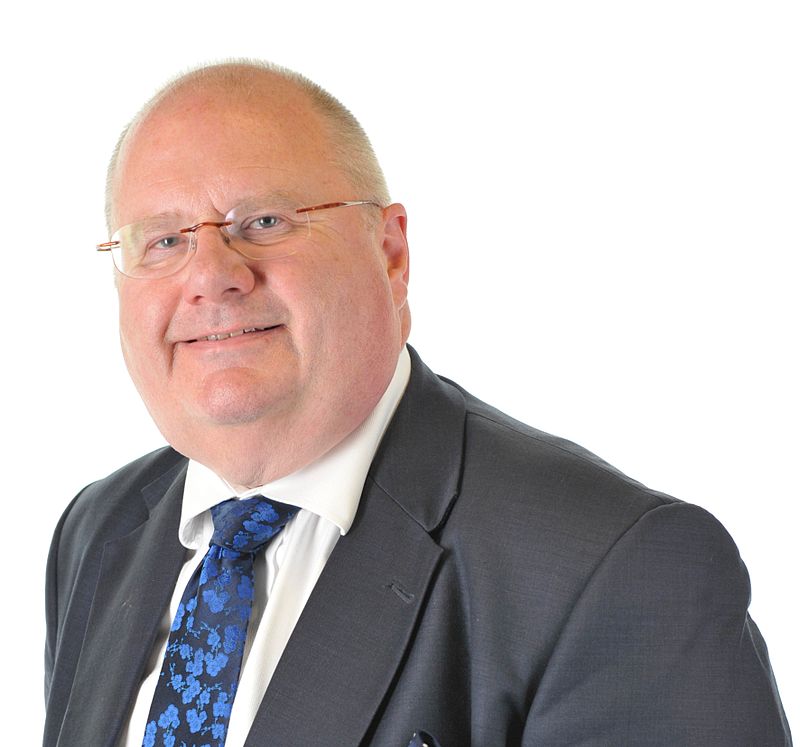
  • Eric Pickles – 2012 Speech at Local Government Summit

    ericpickles

    Below is the text of the speech made by Eric Pickles, the then Secretary of State for Communities and Local Government, at the Queen Elizabeth II Conference Centre in London on 16 January 2012.

    There is no greater responsibility, no higher priority for this Government than to get the nation back on track towards renewed, long-term, sustainable growth.

    Growth puts people in jobs, keeps families in homes, makes our towns and cities great places to live.

    Getting public spending under control has been vital and non-negotiable.

    We’ve strained every sinew to do it in a way that protects the most vulnerable.

    Today is Blue Monday – officially the most depressing day of the year, as people look ahead to months of chilly weather and paying back their Christmas bills.

    This year, it will be tough for many people – facing pay freezes at work, be it in the public or private sector, as well as a rising cost of living.

    This is why it’s essential in February and March, as town hall budgets are set, that councils sign up to the council tax freeze.

    It’s practical help every councillor can offer to their ward constituents. A vote against the council tax freeze is a vote for punishing tax-rises. Local taxpayers will remember that decision next time they cast their vote at the ballot box.

    Councillors have a moral duty to sign up to keep down the cost of living – anything less is a kick in the teeth to hard-working, decent taxpayers.

    But cutting the deficit is only the first step.

    We want to give investors confidence to invest.

    Make it easy for entrepreneurs to bring their ideas to market.

    Make Britain one of the best places in Europe, if not the world, to start and grow and business.

    Now in the past, supporting growth might have been seen as a job for the Treasury and Business Department.

    But we simply don’t have that luxury today.

    This is a job for every part of Government.

    Including my Department.

    I am determined that the Department for Communities and Local Government should be at the forefront of creating the right conditions for local economies to thrive.

    Not least because localism and growth are two sides of the same coin.

    Localism and Growth

    You can’t engineer, can’t manufacture growth through nationally-dictated plans and blueprints.

    However well-meaning, however expertly devised, Regional Development Agencies simply didn’t deliver.

    Even in the five years to 2008, before the crunch really bit, the number of private sector jobs fell in Birmingham, in Nottingham, in Sheffield, Bradford, Croydon and Leicester.

    Instead of trying to impose growth from Whitehall, we want to encourage and celebrate local leadership, ingenuity, and enterprise.

    Instead of the public sector going solo, we want to get councils and entrepreneurs working together.

    So we’re creating the conditions for local leadership.

    Local Enterprise Partnerships put civic leaders and local entrepreneurs in the driving seat as never before.

    Partnerships now host two dozen Enterprise Zones – with tax breaks and simple planning rules to attract new firms.

    Partnerships have advised firms bidding for the two point four billion pounds available under Regional Growth Fund – helping safeguard jobs everywhere from steelyards in Redcar, to biotechnology start-ups in Plymouth.

    And now we’re reforming business rates, so that councils see a direct benefit to their own finances from boosting the local economy…

    …and this will give every council every possible reason to work with businesses and entrepreneurs.

    But perhaps the policy that best encapsulates the new approach is the Growing Places Fund.

    Half a billion quid is up for grabs for local leaders to support enterprise, encourage businesses, create the conditions for local growth.

    What have we asked Local Enterprise Partnerships to do to get their hands on it?

    Not complete a form the size of a telephone directory…

    Not report every five minutes on every step along the way…

    But set out they want to do with the cash, and what they aim to deliver, in terms as simple as we could possibly make them.

    It’s a process that is based on our trust in local leaders to deliver.

    This means making tough decisions and putting the cash where it can make the biggest difference – not where it’s most expedient, or will appease the most people.

    Get this right, vindicate our trust, and this could be the shape of things to come.

    Get it wrong, and well – we’re back to the strings and guidelines, the gentle breath of the overseer tickling the hairs on the back of your neck.

    Over to You

    So the spotlight falls on you.

    To a great extent, what happens in your area next is in your hands.

    We’ve binned the guidance, the strictures, the blueprints.

    As local leaders – whether in business or the Town Hall – for the first time in decades – you’ve got a clear run.

    Your communities are looking to you to lead. To shape the future of your local economies.

    Now after a little over a year of Local Enterprise Partnerships, there has been good progress.

    Coventry and Warwickshire have worked with local banks to unlock finance for start-ups.

    Tees Valley Unlimited are working with the UK’s Trade and Investment service to draw in foreign investment.

    Places with Enterprise Zones, from Harlow to Hull, are getting on with the necessary to make them a success.

    Manchester, for example, have unveiled their detailed plans for Airport City, with the potential to create twenty thousand new jobs, and dozens of firms are already keen to move in.

    So on the one hand there’s a huge amount going on.

    But on the other there’s absolutely no room for complacency – especially when we can all feel the chill winds blowing from the Continent.

    So use today to galvanise your approach.

    Some people have said, “we’d love to do our bit but we’d really like some more instruction.”

    It’s a play: Waiting for Guidance.

    But the best aren’t hanging around.

    Look at the West of England.

    They’ve not only secured an Enterprise Zone…

    They’re also setting up “Enterprise Areas” too, with similar, straightforward planning rules, the better to attract new firms.

    They didn’t wait to be told. They thought, “what can we do?” and they did it.

    Some have said, “there’s money coming in but it’s going to our neighbours, or the upper tier, or the lower tier.”

    Well then – cut a deal.

    If you’re going to make the most of localism, you can’t waste time bickering.

    The best will join forces.

    Some will consider pooling their business rate incomes under the new system…

    …sharing the risks and rewards, and helping everyone plan ahead.

    If you’re not quite there yet – if you know in your heart of hearts that’s more you could be doing…

    Really use today.

    Look at your contemporaries in the room.

    Learn from each other.

    Challenge each other.

    If there are people here you don’t know yet – get stuck in.

    Who knows if that stranger isn’t the person who can make the links between your universities and business, between your exporters and new markets, between your entrepreneurs and lenders.

    Above all, there is no point clinging to the old levers and approaches.

    The world has changed.

    Nobody’s going to try and force a solution on you.

    Nobody’s going to stop you pursuing your own.

    Be creative, be ambitious. Do what it takes to create the conditions for your economy to grow.

    What it Means

    I want to end by thinking about what’s at stake here.

    Not too far from my constituency is the Ford plant at Dagenham.

    As British engineering faltered towards the end of the last century, it became a symbol of decline.

    Of glories past.

    The kind of place that motorists snatch in glimpses as they hurtle past on the A13.

    Now of course there are still challenges for British automotive industry.

    But believe me, it’s on the way back.

    In the year to last October…despite the tough conditions…despite the uncertainty in the markets…this country increased exports of vehicles by nearly twenty per cent.

    Who’d have dreamt that ten years ago.

    Dagenham, meanwhile, now produces a million engines each year, and employs four thousand people.

    Creating the conditions for growth is about turning places like Dagenham from symbols of decline, to symbols of hope.

    It’s about making space for new industries that give places a sense of purpose.

    And about giving the people who look to you a reason to feel proud.

    It goes back to why you’re here today.

    I doubt very much that anyone gets into public affairs purely for the love of a beautiful spreadsheet, a snappy minute or a well-chaired committee.

    We do it because we want to make change happen.

    Today, you’ve got a golden opportunity to be the people who create growth, support jobs, underpin the prosperity and quality of life of the communities you work in.

    It’s up to you to make the most of it.

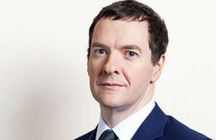
  • George Osborne – 2012 Speech to Asia Financial Forum

    gosborne

    Below is the text of the speech made by George Osborne, the Chancellor of the Exchequer, in Hong Kong on 16 January 2012.

    I am delighted to have the opportunity to address this Forum, to speak with such a distinguished audience and to do so here in Hong Kong.

    I had a very useful discussion earlier today with Chief Executive Donald Tsang. He deserves our thanks for the excellent job he has done in his years as Chief Executive.

    Later today I will fly to Beijing and then Tokyo.

    It is no surprise or coincidence that my first trip abroad in 2012 should be to Asia.

    It reflects instead the deliberate, conscious effort that the British Government places on deepening Britain’s partnership with Asia.

    This Asian partnership is not a substitute for our close working relationship with our neighbours in the European Union, our strong links with North America. It is an essential complement to those friendships.

    For Asia will be the engine of world growth in this year and the years ahead.

    I have spent much of my time in Office in talks about the eurozone.

    The eurozone has made progress in recent months, in particular the provision of liquidity to banks by the ECB.

    But of course there remains more to do, as the euro area itself acknowledges.

    No one likes to see credit ratings downgraded, but what matters much more are the actions western countries take to restore their own fiscal sustainability and take the structural reforms necessary to ensure productive, competitive economies.

    All European economies need to tackle the structural obstacles to growth that we’ve simply not had the political will to address in recent years.

    It is good news that these issues of growth and competitiveness will be the focus of European leaders’ discussions later this month.

    Britain is taking all these problems head on.

    Yes, we’re reducing our deficit with a strong, credible and comprehensive deficit-reduction plan.

    But we’re also reforming welfare entitlements, removing regulation, making it easier to employ people and create businesses, overhauling education, reducing our corporate taxes to some of the lowest in the world, and championing within the EU a deepening of the single market and leading across the world the cause of greater free trade.

    That’s why, as we look to this difficult year ahead, I want to focus today on three reasons to be optimistic for the future.

    Three reasons for Britain to be bold.

    The first reason is this:

    A richer, stronger Asia is an opportunity for the world, not a threat – we should be bold enough to say it and to explain it to our own populations.

    Second, we in Britain can build on our position as the home of Asian investment and Asian finance in Europe – provided we’re bold enough to do what it takes to make that happen, and we will.

    And third, with a new alliance between Britain and our friends in Asia, we can be bold in defeating the forces of protectionism and make global finance a force for good, not instability.

    First, a richer, stronger Asia.

    There is no doubt that this is one of the most remarkable achievements in our modern history, and you’ll know the story far better than I do. The Chinese economy is 15 times larger than it was when I first visited China as a student two decades ago. In 1960, South Korea had the same income per head as those in Sub-Saharan Africa. Today, South Koreans enjoy an average income of $23,000.

    What is the human story behind all these statistics? The desire of people to have a better life and to leave to their children more than they were born with.

    It is the most powerful force for progress we have ever known – and here in Asia it has driven an economic transformation.

    That hasn’t always been easy for those in the west.

    I do not believe, as some argue, that the rise of the east is a threat to the west.

    It is the strength of Asian economies which mean world growth in this decade and the next will be higher than the past 30 years.

    Of course there are challenges as we adjust to sharp shifts in economic growth and power.

    These adjustments can be painful when unemployment is a challenge in many countries across the world, and where competition for scarce resources affects the prices of key commodities.

    In the past, when developed economies were weak, oil prices were self-correcting forces.

    In the current crisis, demand from Emerging Economies has kept prices high.

    But these problems are the problems of success – the problems of a stronger world economy.

    Globalisation is a force for good.

    Not only has it been a force for poverty reduction far greater than all the aid programmes across the world put together.

    Not only has it allowed people here to have aspirations and ambitions beyond the dreams of their parents and grandparents.

    But it also provides huge opportunities to trade and invest for countries who seize them, and I believe that we can make Britain the home of Asian investment and Asian finance in Europe.

    This is my second reason for optimism.

    If we take the right steps, if we’re bold, then growth in Asia means growth in Britain.

    It is precisely as Asian economies become richer and become nations of consumers that hundreds of millions of people will want to buy the things that British companies can sell them.

    They will want to buy modern medicines for the first time – and when they do so, I want to make sure it is from pharmaceutical firms like Glaxo SmithKline and Astra Zeneca, the largest employer in the constituency I represent.

    They will need modern insurance, banking, and accountancy services, and when they seek those services I want them to do so from companies like HSBC, Prudential, Barclays and Standard Chartered.

    The wealthiest will become consumers of Rolls-Royces made in Sussex, and Bentleys made in Crewe, dressed in Burberry clothes manufactured in Yorkshire.

    And – like a generation of Japanese tourists before them – they will want to travel.

    And when they do, I want them to go on holiday to Britain. I want them to go this year, the year of the spectacular London Olympics and the Queen’s Diamond Jubilee celebrations.

    And when they go I want them to fly here on the wings of Airbus planes made in North Wales, powered by Rolls Royce engines assembled in Derby. For Britain is one of the top ten manufacturers in the world as well as a global financial centre.

    If we are going to make the most of what the growing economies of Asia have to offer Britain, then we need make sure we have dealt with the problems in Britain’s economy.

    And we are.

    For one of the illusions of globalisation has been that the countries of the west could live indefinitely on the cheap credit and low inflation that the emerging economies of the East provided for us – that we could go on forever borrowing money from hard-working Chinese savers to buy the things those Chinese workers were making for us.

    The financial crisis and the deep recessions has been the toughest of reminders of the simple truth that you have to earn your living in this world.

    And the lesson of the past year has been that global confidence in a country depends on its determination to deal decisively with the challenges it faces – and by getting to grip with our debts, Britain has shown it is determined to do that.

    As I’ve said, we are undertaking major reforms to increase Britain’s competitiveness.

    Cutting business tax rates to among the lowest in the developed world, scrapping regulation on small firms, reforming welfare and education, and creating the most flexible workforce in Europe.

    The UK is already one of the most open economies in the world – with a stable political system, a commitment to the rule of law and free trade.

    Even more than it already is, we want Britain to become one of the easiest places to invest, to raise capital, to start a business, to expand and to export from.

    And our links with Asia grow stronger and stronger.

    The UK is now the largest source of foreign direct investment to China from within the whole EU and UK goods exports to China rose by 20% last year, and 40% the year before that.

    UK goods exports to Hong Kong rose by 19%.

    This is largely driven by the ingenuity and innovation of the Asian and British private sectors.

    But we have got to do more if we are to be the home of Asian investment in Europe.

    The British Government needs to roll up its sleeves and make it happen.

    Let me tell you how.

    Last year, my colleague William Hague, the British Foreign Secretary, spoke at this very Forum and said he wanted to refocus Britain’s diplomatic efforts on the East.

    He has been good to his promises. Our embassy in China has expanded significantly and the work of our trade promotion agency, UKTI, has increased its presence across China.

    As well promoting British investment in Asia, we are actively seeking Asian investment in Britain and its infrastructure.

    We are investing in a new generation of transport, energy and communication networks for our country. Last week alone, we committed to a new high speed rail link to connect our largest cities. The Olympic Park is the largest urban regeneration scheme in Western Europe.

    Here and in Beijing I will be promoting infrastructure as just one of the opportunities the UK brings for Chinese investors, following the lead taken by Hong Kong’s own Cheung Kong Group, the largest overseas owner of UK infrastructure.

    And there is the potential for a new and fruitful partnership that would bring benefits to the people of China, Hong Kong and Britain.

    Last September, at the UK-China Economic and Financial Dialogue, I agreed with Vice Premier Wang that “both sides welcomed the private sector interest in developing the offshore RMB market in London” and we agreed to “engaging in bilateral dialogue and dialogue with other authorities, as necessary, to support the market’s future development”.

    My visit furthers that dialogue with the Chinese authorities, together with Chinese and British banks, on establishing London as a new hub for the RMB market, as a complement to Hong Kong and other financial centres.

    The recent history of the growth of the RMB market is well known to all of you.

    It is clear that there is scope for substantial expansion of the RMB market in the coming years.

    In June last year, RMB had a world foreign exchange market share of 0.9 per cent.

    This compares to China’s share in world trade in 2010 at 11 per cent.

    London is perfectly placed to act as a gateway for Asian banking and investment in Europe, and a bridge to the US.

    This is not just an accident of time-zone, or our language, although both are important.

    It reflects London’s strength in product development, its regulatory structure and the depth, breadth and international reach of its financial markets. We are by some distance the world’s largest foreign exchange market; and the growing use of RMB in those global markets will bring substantial benefit to Chinese economic development and the wider world economy.

    It is a reflection of China’s increase in influence and share of global GDP, and is a step towards greater capital convertibility.

    I welcome the Donald Tsang’s comments on the importance of the joint private sector forum announced today, facilitated by the Treasury and the Hong Kong Monetary Authority, to promote closer cooperation between the London and Hong Kong on the development of global RMB business.

    I also welcome Hong Kong’s decision to extend the operating hours of its RMB settlement system, which London is the key beneficiary of.

    Our objective is simple: we want to expand the amount of business and trade we do with each other, so that the citizens of China, Hong Kong and Britain all benefit from the prosperity and jobs that will bring.

    And it leads me to my third and final point today.

    I believe we can be bold in forging a new alliance between Britain and our Asia partners to defeat the forces of protectionism and make global finance a force for good.

    I have been doing this job for just short of two years now.

    One of the things that have struck me in the thirteen IMF and G20 meetings I’ve attended is how often the British and Chinese agendas are very similar.

    You might not expect it, given our different history, cultures and traditions.

    But very often, around the table, China and the UK are some of the most forthright advocates of free global and open markets.

    China is the world’s second largest manufacturing exporter in the world, while the UK is the world’s second largest services exporter.

    I would like to set out what I think should be our shared agenda in 2012.

    First, we need to resist a return to protectionism.

    The December World Trade Organisation ministerial meeting highlighted that Doha is at a significant impasse.

    We need to look at new and innovative alternative approaches to taking forward trade liberalisation, consistent with WTO rules.

    That means continuing to push ahead with ambitious free trade agreements with key partners.

    Britain is pushing hard to complete EU free trade deals with India and Singapore this year, as well as maintaining momentum towards an ambitious agreement with Japan.

    Second, we need must ensure a reformed and more representative IMF has the tools and resources to do its job.

    The reforms agreed at the Seoul G20 summit in 2010, which the UK was one of the first countries to ratify, will ensure the IMF is more representative of its whole membership.

    The IMF does not belong to any one region of the world.

    Its role is to support countries which get into difficulty, not currencies.

    Its resources should be drawn from its members and available on an equal basis to all.

    But its members also have a responsibility to ensure the IMF has the resources it needs to promote the global economic stability from which we all benefit.

    The risks faced by the global economy have increased significantly over the past year.

    The capacity of the IMF may also need to rise to ensure those risks can be addressed, but this cannot be a substitute for action by the eurozone.

    Britain stands ready to play its part.

    Third, we must also ensure global capital markets are underpinned by global rules for financial regulation enforced by strong global institutions.

    As home to two of the world’s major financial centres, Hong Kong and Britain share an interest in a truly global approach to financial regulation that maximises the benefits, while reducing the risks, of open financial markets.

    It is because we favour a global approach that we oppose an EU-only FTT.

    At the heart of these new global rules are the Basel III prudential requirements for banks, which must now be rigorously implemented around the globe.

    We must also push ahead with the agreed G20 reforms of derivatives, remuneration and systemic financial institutions and I would like to take this opportunity to acknowledge what Michel Barnier – who will speak at this Forum after me – is doing to help advance issues in Europe.

    These new global rules – high standards, globally applied – must be overseen and enforced by a stronger Financial Stability Board as the global financial watchdog, building on the reforms made at the Cannes G20 summit.

    These are all long-lasting reforms that will make global finance a force for good rather than a source of instability, intermediating to put to work the savings of millions to create new jobs and new investments for millions more.

    And working with partners in Asia we can do just that.

    Ladies and Gentlemen, these are challenging times for the world.

    But there are also opportunities to build a more balanced, sustainable global economy if we take them.

    A strong Asia.

    A strong British-Asian relationship.

    And strong multi-lateral organizations that support open markets and global stability.

    In a challenging and difficult year, these are three reasons to be positive about our future.

    Together, let’s build a more prosperous economy for everyone.

    Thank you.

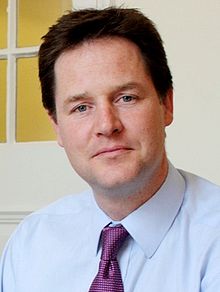
  • Nick Clegg – 2012 Speech at Mansion House

    nickclegg

    Below is the text of the speech made by Nick Clegg, the then Deputy Prime Minister, at the Mansion House in London on 16 January 2012.

    Another week, another speech about the evils of capitalism. Let me start by asking: who here is in favour of irresponsible capitalism? Because you won’t find many people arguing for more recklessness, more short-termism or greater rewards at the top. On the contrary – the growing consensus is that we need the opposite: a more sustainable economy; a more balanced economy, where rewards are proportionate and relate to real success.

    That consensus, emerging among the political parties, has attracted a little cynicism.

    I can understand that. It is, after all, bonus season in our banks. But there is a more generous interpretation of the shifting political mood. One that says: perhaps the penny has finally dropped.

    As this debate moves forward, we need to be clear about what we mean. Because, whether you call it a new economy, an ethical economy, moral markets, responsible capitalism, there is a big difference between having strong views on bonus culture or excessive top pay and wanting real change in the practices and principles that guide corporate life. A bit of wrist slapping or moralising at the worst offenders will not be enough. This should not be a war of words but a real contest of ideas about how to reform our economy.

    So this morning I want to offer a liberal diagnosis of what’s wrong; and then a liberal remedy.

    First, diagnosis. Why is our capitalism in crisis? I will argue that this is, at root, a crisis of power.

    That we now have an economy driven by immensely powerful vested interests. Interests that politicians have abjectly failed to stand up to.

    The remedy, put most simply, is a redistribution of power. Last month I set out my vision for an Open Society and I talked about the need to disperse political power to create strong citizens. Today I want to talk about dispersing economic power to that same end.

    Before I say any more, I want to make one thing clear: Capitalism may be today’s political punchbag, but let’s take a long view: it’s one of history’s great success stories. No other human innovation has driven progress – and raised living standards – so consistently. Markets catalyse ideas, invention and experimentation. When they work well, they are meritocratic and liberating.
    And they generate the wealth to support the most vulnerable and needy in society.

    Liberals believe strongly in the virtues of the market. But only if it is a market for the many, not a market for the few. Our economy is in danger of becoming the latter, monopolised by a minority, serving narrow and sectional interests.

    I am not here to take a cheap shot at big business – this would hardly be the right crowd.

    Big British firms are the backbone of our economy: our employers, our wealth generators, leaders in our society. And I am grateful to many of our major firms, particularly, for the commitment they are showing to greater corporate and social responsibility.

    Just last week over 100 large companies signed up to the Coalition’s Business Compact, opening their doors to young people from all backgrounds in order to improve social mobility. I’m delighted to see some of them represented here today.

    And I know many people in this room will agree: our economy is now seriously out of whack. It simply cannot be right that, right now, because of the crash and the recession, millions of ordinary people are struggling to get by. Yet relatively little has changed for those at the top.

    It cannot be right that for most people, on average, wages are falling by around 3% a year, yet executive pay is rising – on average by 13%. Over the last 25 years, top chief exec pay has shot up by 1200%.

    That is a gross imbalance, with wealth and influence hoarded among the few. It’s socially destabilising. Morally, it cannot be justified. And it’s bad for the economy too.

    Our problem is what Jesse Norman has called crony capitalism. It’s easy to throw rhetorical rocks at directors, bankers and businesses. But, if we are honest, this is as much a failure of politicians and regulators, the authorities too often cowed by corporate power. Whether that is political parties of all stripes in hock to vested interests or regulators struggling to stop supermarkets from putting the squeeze on small suppliers, whether it’s politicians kow-towing to media barons, the problem is endemic.

    There’s nothing new about it. Kings have always bestowed privileges on their favourite merchants. Corporations will naturally seek a dominant market position. It’s one of the reasons liberals from John Bright to the present day have been such fierce advocates of free trade. The agricultural landlords of the 19th century and early 20th century were happy for working people to pay more for their food because of protective tariffs. What Lloyd George in 1906 memorably called ‘stomach taxes’. So long as their own profits were protected.

    This has always been capitalism’s greatest danger: a tendency for the rule makers and the money makers to get too close. And we saw the consequences of that closeness play out in the most dramatic fashion right here, in the City, just three years ago. It was a political failure; a regulatory failure; and a market failure too.

    Political failure, because Whitehall became so dependent on City revenues. That politicians would not see the problems that were brewing. Instead, they hoped the goose would keep laying golden eggs.

    Regulatory failure, because the Financial Services Authority failed spectacularly in its duties. Regulators are meant to guard vigilantly against industry excesses. But they turned soft – either captured by or intimidated by those they were supposed to keep in check. And, just like the politicians, just like the industry, the FSA ignored the alarm bells ringing. And market failure, as short-termism and recklessness eventually consumed our banks, taking the whole economy to the edge of a cliff.

    Politicians in the pockets of vested interests, regulators asleep at the wheel, an unrestrained economic elite. The primary symptoms of crony capitalism.

    For liberals – from Gladstone to Grimond – the role of the state has always been to break up unaccountable, opaque concentrations of power, to protect the national interest from those vested interests. That is why, as well as the moves the Coalition Government is making to bring greater transparency to government contracting and lobbying, we need real reform of party funding to reduce the influence of those interests in politics. We need tougher border controls between the political class and the corporate world, and we need a better distribution of power within our economy.

    That’s why, for example we want new rules to stop an executive serving in one company from sitting on the pay board at another, so that directors’ salaries are no longer, effectively, decided by their mates. And we see an extremely important role for the state in redistributing wealth through income tax. In fact, one of the Coalition’s most significant reforms is our changes to income tax. Making it more progressive – so that lower earners keep more of what they earn.

    But liberals also recognise that narrowing wage inequality is not solely a task for the state. We also need to put much more power in the hands of other stakeholders in the economy – shareholders and employees – when it comes to setting top pay. Trusting not the unfettered market, nor the interventionist state, but trusting people.

    That is the core of a more responsible capitalism: power in the hands of people. Strong economic citizens able to keep vested interests in check. So let me say a word on the Coalition’s approach to empowering two groups in particular: shareholders and employees.

    First, shareholders. Part of the challenge is getting more of them to behave like business owners rather than absentee landlords. If they are unhappy, we don’t want them just to sell up and move on, we want them to throw their weight around so that the company improves: but we need to make sure they have the right tools at their disposal and they know how to use them.

    The Coalition has said we will introduce binding shareholder votes to curb executive pay as part of a package of measures to moderate boardroom behaviour. Vince Cable will set out that package next week but I can tell you today that we are going to overhaul the way shareholders – and others – can access information.

    Often, the reason investors are passive is because they can’t see the reasons to act. Take annual and pay reports. Shareholders should be able to use them as a kind of report card so they can see how well their money is being spent. But, you’ve read them, many – not all, but many – are impenetrable texts: obscuring rather than illuminating. Hundreds and hundreds of pages of facts, figures, charts and graphs. Plenty of information but nowhere – nowhere – a simple, clear single figure showing who gets paid what; Or a simple summary of where the money goes – how much is spent on directors, how much on dividends, or re-invested into the business.

    That information is absolutely essential for any investor trying to calculate value for money. Some companies do much better on making it transparent and easy to understand, but not enough. And where companies bury it – that is deeply cynical.

    So the Coalition will force companies to open up their books, so that investors don’t need an accountancy degree to decipher them. We are looking at a range of ways of increasing transparency, but here are two very simple changes:

    One: shareholders will only need to look at one number, not a dozen, to see how generously top executives are being paid, and they will need a clear policy in place for departing CEOs so that, if they deviate from that policy, and if a hefty payment is made for failure, that decision is up in lights.

    Two: the way money is spent will need to be crystal clear. So if a company is spending too much on boardroom pay compared to the amount being reinvested in the business, they will have to explain why: show investors where their money is going. That’s how to unlock shareholder power.

    But it’s not just shareholder power that matters. Ultimately investors seek profits, just like executives expect high pay. Some enlightened shareholders might see the benefits of a well-rewarded workforce, but the people best placed to look after the interests of staff are staff. And that is what, so far, has been missing from this debate: ordinary people.

    In an open society, a liberal society, people don’t just hold more power in politics, but in the economy too. And, over time, empowering workers can have a hugely transformative effect over corporate culture. People want to work in companies which are dynamic, but they also value stability. They want firms that secure big profits, but not at any cost. They believe that effort and achievement should be rewarded above all else.

    Aren’t those precisely the values everyone is now clamouring for businesses to hold?

    There are, of course, a range of ways employees can be given a louder voice.

    More rights, for example: like the new right to request flexible working and more flexible parental leave – to name just two.

    But today I want to focus specifically on employee ownership, a touchstone of liberal economic thought for a century and a half.

    John Stuart Mill hoped that employee-owned firms could end what he called the ‘standing feud between capital and labour’, and liberals have been championing it ever since. Because we don’t believe our problem is too much capitalism: we think it’s that too few people have capital. We need more individuals to have a real stake in their firms.

    More of a John Lewis economy, if you like.

    And, what many people don’t realise about employee ownership is that it is a hugely underused tool in unlocking growth.

    I don’t value employee ownership because I believe it is somehow “nicer” – a more pleasant alternative to the rest of the corporate world. Those are lazy stereotypes. Firms that have engaged employees, who own a chunk of their company, are just as dynamic, just as savvy, as their competitors. In fact, they often perform better: lower absenteeism, less staff turnover, lower production costs. In general, higher productivity and higher wages. They weathered the economic downturn better than other companies.

    Is employee ownership a panacea? No. Does it guarantee a company will thrive? Of course not. But the evidence and success stories cannot be ignored, and we have to tap this well if we are serious about growth. The 80s was the decade of share ownership. I want this to be the decade of employee share ownership.

    Now that’s a big ambition, I know. And it won’t happen overnight. But it won’t happen at all without Government taking a lead, so I am kickstarting a drive in Government to get employee ownership into the bloodstream of the British economy.

    We’re already doing this in the public sector, though the work of the Mutuals Taskforce, under Julian le Grand, and work being led by Francis Maude. And, of course, the radical reform of the Royal Mail – on that, I’d like to pay special tribute to Ed Davey. Governments have been grappling with the future of the Royal Mail for decades. Under Ed’s stewardship it will finally be transformed into an organisation in which staff have a meaningful stake. And now I’ve asked Ed to turn his hand to employee ownership in the private sector too.

    Working with professional bodies and businesses, the Coalition is going to find out where the barriers are, so that we can knock them down. Do staff and business owners know enough about employee ownership? Are the accountants and lawyers who advise them taught enough about it? Is there red tape we can cut? Does the tax system treat these firms fairly? Do we need an off-the-peg model so that more ordinary people take this up?

    We’ll appoint an independent adviser – an expert in the field – to help us find the answers and solutions to these kinds of questions, which will be brought together at a Summit I will chair in the summer.

    Crucial to all of this, of course, will be encouraging take up. One option, to give you an idea, could be giving employees a new, universal “Right to Request” shares.

    Imagine: an automatic opportunity for every employee to seek to enter into a share scheme, enjoying the tax benefits that come with it, taking what for many people might seem out of their reach, and turning it into a routine decision. Clearly the details of that kind of policy need to be properly thought through. We need to establish which companies would and wouldn’t benefit – it might not be feasible for microbusiness, for example.

    But we need to start by thinking big: not asking ‘why?’, but asking ‘why not?’ Looking across the board – tax, regulation, simplicity, awareness – to help more of these companies flourish, in order to put more employees at the helm.

    And that brings me to the thought I want to end on today: economic power in more hands.

    As the debate on a more responsible capitalism moves forward, Liberals will remain set on that goal:

    An end to crony capitalism, where vested interests trump the national interest. A better balance of power, in the economy – and between politics and business. That is the route to a safer, more stable, more prosperous economic future. This is how we will spread wealth and share rewards.

    A more responsible capitalism. A more liberal capitalism.

    Thank you.

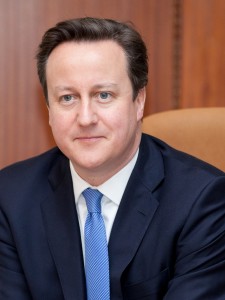
  • David Cameron – 2012 Speech with President Mahmoud Abbas

    davidcameronold

    Below is the text of the speech made by David Cameron, the Prime Minister, on 16 January 2012.

    Well, it’s a great pleasure to welcome President Abbas back to Number 10 Downing Street. Britain and the Palestinian Authority have very good and strong relations and last year we upgraded our diplomatic relations with the Palestinian Authority.

    Britain wants to see a two-state solution come about. We are passionate about this; we do everything we can to push and promote this agenda at every available opportunity. I spoke to the Israeli Prime Minister after the New Year and I am delighted to have the Palestinian President here today.

    We believe the peace talks that have begun in Jordan do provide an opportunity – an opportunity we hope that both sides will pursue. We think this is absolutely vital.

    Obviously, as a friend of Israel and a friend of the Palestinian Authority and the Palestinian people, we want to see a strong, democratic, peaceful Israel alongside a strong, democratic and peaceful Palestine. We believe that is achievable, but we can’t achieve it without the two parties coming together and talking and discussing. In the end, this two-state solution can only come about from the two parties talking to each other. We cannot want it more than you want it.

    So, we wish you well. We will do everything we can to help promote these discussions. We think that time, in some ways, is running out for the two‑state solution unless we can push forward now, because otherwise the facts on the ground will make it more and more difficult, which is why the settlement issue remains so important.

    But we wish you well; we hope the talks can continue and we hope that the two-state solution that we strongly support can be achieved and we say that as a friend of Israel but also a very strong friend of the Palestinian people, the Palestinian Authority, and indeed as major donors to the Palestinian Authority and the institutions that you are so successfully building up. But President Abbas, you are very welcome here again.”

    President Mahmoud Abbas (via interpreter):

    Thank you. Thank you very much. Thank you very much Prime Minister. We are indeed very happy to be here and I would like to thank you for the invitation. And I would like to thank you also on behalf of the populace, on your stance vis-a-vis Palestine, on your support for the solution which we also – the two-state solution.

    You have indeed played a very, very important role in building our Palestinian institutions and this we can witness through the assistance that you have been offering us.

    Of course, nothing can be achieved without negotiations. As you know, there are negotiations going on right now because of the initiative that King Abdullah II of Jordan has taken. We are optimistic about those negotiations and at the same time we hope that there will be something tangible as a result of these negotiations.

    Of course, time is of the essence; there must be speed, we must be fast in achieving those things because the settlements and the whole thing will go on – seeing the settlements going on, is going to help everything; it’s what stands in the face of everything at the same time. So, settlements have to stop. Settlements have to stop in order for us to be able to continue our negotiations; to come to some sort of solution and a solution which will encompass the vision of the Palestinian state to come in the future.

    I personally know very well that you have a very balanced relationship, be that towards Israel or the Palestinian Authority. This at the same time is of great importance because you could play a political role, so to speak, so that we can find the balance that we all want to seek. We always need your help, sir. As we need your help and I am indeed very happy to be here with you.

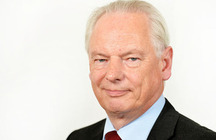
  • Francis Maude – 2012 Speech on the Big Society

    Francis Maude
    Francis Maude

    Below is the text of the speech made by Francis Maude, the then Minister for the Cabinet Office and Paymaster General, on 17 January 2012.

    Everyone is a localist now. But Localism is not just letting go of power, as if all you would have to do is open your hands and it will flow away. You have to push it away. With localism you really have to mean it.

    We need a culture change, that’s not just about how politicians and Ministers behave. We have done a great deal – we are giving more freedom to local government. There is less money but you get more freedom in what you do with it. But we’re always pushing power beyond local government and right down to communities. This doesn’t happen overnight, it’s a long term movement. We need to encourage and support people.

    We have one of the most centralised Western democracies in the world.

    I don’t need convincing that people care about what their neighbourhood looks like; the quality of their local services; and the future of their high streets. That’s why we have Neighbourhood Watches, local campaigns, residents’ associations.

    But Whitehall has stifled local enterprise over the years. And people are frustrated about not being able to make a difference in communities in which they live – especially in deprived areas.

    Our role in central government is to free and empower individuals, communities and councils to find local solutions to local problems, instead of trying to impose uniform solutions on different communities with no understanding of their unique issues.

    We have recruited the first of 5000 people to be trained as Community Organisers to tackle problems on the ground.

    They are being trained to learn the skills they need to identify local leaders and bring people together to act on what matters to them.

    And this summer 12 National Citizen Service pilots gave over 8000 16-year-olds across the country the opportunity to engage deliver social action projects which they were most passionate about.

    NCS empowers young people to take ownership and make a genuine difference within their local communities, whilst arming them with essential life skills.

    This year up to 30,000 young people will have the chance to get involved and by 2014 – 90,000 places will be available.

    We have also set up an £80million Community First fund to provide small grants to community groups and local social action projects.

  • Chloe Smith – 2012 Speech to ResPublica

    chloesmith

    Below is the text of the speech made by Chloe Smith, the Economic Secretary to the Treasury, to ResPublica on 17 January 2012.

    Good morning and thank you for inviting me to speak here today about Charities and Philanthropy.

    It’s a subject of deep interest to me in my role in the Treasury and one that is vital to realising the Government’s vision of a Big Society.

    And I’m pleased to be speaking about this issue here at ResPublica, as it is you that have led and shaped that debate in recent years.

    It’s your innovative insights on public service delivery, emphasising the virtue and the potential of an associative society, that have set the agenda for ambitious reform across public services.

    When we came to Government we knew that we were at a watershed for how we provide public goods and meet public need. Over the previous decade, under the previous Government, power was continuously hoarded to the centre, to Whitehall.

    It became all about central levers and targets.

    But over that decade, the very nature of society itself was changing, becoming less hierarchical in every sector.

    The internet has been the great leveller and across every sphere it gave individuals the tools to take action for themselves, to produce their own solutions, to share their ideas with a wider community.

    And across the board, businesses, pressure groups, social entrepreneurs, and charities seized the opportunity to grow with renewed vigour. And at the same time, or perhaps as a result of this change, there has been a profound shift in attitudes across society.

    Whilst there are still those who point to Government and say “You do it”, there is an ever growing tide of people who are saying “We’ll do it.”

    A wave of people who have the knowledge, tools, and support to take on responsibility not only for their own needs and their family, but the community that they live in.

    A wave of change that brings irresistible pressure to reform at the very heart of Whitehall.

    Big society

    At its heart, the Big Society is about putting more power in people’s hands – a massive transfer of power from Whitehall to local communities.

    Giving local councils and neighbourhoods more power to take decisions and shape their area.

    Encouraging and enabling people to play a more active part in society

    And opening up public services to enable charities, social enterprises, private companies and employee-owned co-operatives to compete to offer high quality services

    We have made some excellent progress towards realising these ambitions. Not least in supporting the charities that drive volunteering and social action across the UK.

    Steps taken to support charities

    We have already taken steps to reduce the administrative burdens which can be a great weight on charities and distract them from their primary purpose and their primary love.

    At Budget we committed to an online filing system for charities to claim Gift Aid, to be introduced during 2012/13. I know from feedback to the announcement that this will make a big difference across the sector.

    And we have already delivered a significant first step with the introduction in April of intelligent forms for charities to apply for and claim Gift Aid.

    These forms contain automatic checks so will considerably reduce the number of mistakes made, the need for manual checking and so speed up the claiming process.

    HMRC will also be working with the sector to develop a Gift Aid database for charities. We have also taken steps to develop new fundraising opportunities for charities.

    We opened a £100m Transition Fund to help charities, voluntary groups and social enterprises affected by reductions as part of the Government’s Spending Review.

    This was part of a £470 million support for the sector, demonstrating the Government’s commitment to building the resilience of voluntary sector organisations.

    We are developing new funding streams like the Big Society Bank, which will draw on money in dormant bank accounts to provide wholesale finance for charities and other groups.

    But we are also working with charities to develop ways and means to galvanise greater giving across society.

    Creating incentives for people to donate more to charities like those represented here so that they can continue and expand their programmes. It’s about identifying what Government can do to incentivise people in to giving more.

    Budget and Autumn Statement 2011

    We want to make it easier for people to give in a range of ways and at different life stages.

    Tax reliefs for charities and charitable giving are an important way to do that, and though they cost over £3bn a year, they are a vital source of support for charities.

    And over the last year we have taken important steps to improve the effectiveness of reliefs, and also expand opportunities for giving.

    We are reducing the rate of inheritance tax from 40% to 36% for those individuals who leave 10% or more of their estate to charity. This will reduce the cost of giving to charity through bequests. We consulted on the detail of this proposal last summer, and will put legislation into place through Finance Bill 2012.

    We have also made changes to encourage greater lifetime giving of pre-eminent works of art to the nation in return for a tax reduction.

    At the Autumn Statement we announced an increase in the annual limit for both tax reductions under the Gifts of Pre-eminent Object scheme and taxes offset under the existing Acceptance in Lieu Scheme, from £20m to £30m.

    And more than that, companies as well as individuals will be able to access the new scheme.

    We have also announced an increase in the Gift Aid benefit limit from £500 to £2,500 to enable charities to better recognise the generosity of their significant donors.

    We have not forgotten smaller charities or donations from those less well off. We are introducing a new Gift Aid Small Donations Scheme from April 2013.

    This will be a big help for those charities collecting so called ‘bucket donations’, allowing them to claim a Gift Aid style payment on small donations up to £10 without collecting Gift Aid declarations.

    Qualifying charities will be able to claim up to £1,250 in repayments on total donations capped at £5,000 per year.

    These measures add up to a significant pack to support charities and charitable giving. But at the same time, there is no cause for complacency.

    Payroll Giving

    Last year’s Government White Paper on Giving demonstrated our commitment to encouraging more people to donate.

    It included a commitment to raise support for Payroll Giving – a tax effective method for employees to make regular donations to charity.

    Payroll giving provides a sustainable and predictable income stream for charities, and I have asked my officials to work with Cabinet Office to seek out ways to improve take-up.

    We know that we have to do much more to raise awareness of the scheme, and ensure that awareness leads to action. Together with the charity sector and with employers we need to change behavioural attitudes to embed giving, in this case payroll giving, as the social norm.

    Conclusion

    At a time when we are having to cope with the worst fiscal deficit in our history, I hope you will agree that the Government has made an excellent start at supporting the charitable sector.

    That said I believe that we are merely at the outset of a period of huge innovation and change for the charitable and wider third sector.

    Not only in terms of finance and philanthropic support, but also for how charities and third sector will be increasingly intertwined with how we deliver public services for the future.

    It is vital that we continue to engage with policy makers, the charities, and service users to ensure that we get these reforms right, and meet public need and efficient and effective way.

    I look forward to our discussion and learning what more we can do working together in the years to come.

    Thank you.

  • David Cameron – 2012 Speech to Headteachers

    davidcameron

    Below is the text of the speech made by David Cameron, the Prime Minister, on 17 January 2012.

    Well welcome everyone. It’s great to have you here at Number 10 Downing Street. I’m always – bit terrified with Queen Elizabeth I looking down on me, prove that anything is possible in life. But a very warm welcome. We’ve got some extremely talented head teachers here, we’ve got my policy aide here. We’ve got Michael Barber who spent many years in this building working for a previous government and is helping us now, also working at Pearson. And obviously we’ve got the Secretary of State for Education on my right. Sir Michael Wilshaw who has kindly agreed to become Head of Ofsted and take on one of the toughest jobs there is in public life, but I think one of the most important and I’m really looking forward to working with you.

    The subject we’re going to look at today which I’m very passionate about is the issue of coasting schools. I think we’d all agree that the last government and this government taking very, very strong action to try to turn around schools that are failing. Also, I think this government is doing a lot to celebrate the excellence there is in the secondary state sector and the primary state sectors, really good schools that are powering ahead to show what can be done. But I think there’s a danger in all of this to miss what is in the middle in terms of some schools that are just above failing – they get left for too long – and also, I think this is a subject that doesn’t get addressed enough, schools that might be ranked as satisfactory or even actually might be ranked as good schools but that could actually do so much better.

    And I think one of the consequences of recent years where we’ve seen some extraordinary stories of turnarounds and new schools in relatively deprived areas and of course Michael for many years ran the Mossbourne Academy in Hackney which is a classic example – a brilliant example – of this. We’ve seen schools that were previously failing turned around with incredible results at GSCE and A-level. And that’s prompted me – but I’m sure many others as well – to ask the question: if you can do that in Hackney, if you can do that in inner city Manchester or inner city Birmingham, why aren’t we doing that everywhere across the country and actually striving for better results?

    Now it’s not just a question of the aspiration of head teachers, or the aspirations of teachers, it’s also about the aspirations of parents and I think our great allies in this agenda as well as – and we’ll hear about Ofsted inspections and what teachers and heads should do – I think our great allies in this should be well-informed parents who want their schools to do more and I think try to raise the rate of… the level of aspiration not just in schools but actually in the home and in society about schools is a very big part of this agenda. That’s enough from me.

    I’m going to ask Michael to set out what he’s talking about today and the proposal he’s making and then perhaps Michael will come in and we’ll open it up and please feel free to agree, disagree, challenge, promote, argue or indeed anything else. Mike, over to you.

  • David Cameron – 2012 Speech at Street League Reception

    davidcameron

    Below is the text of the speech made by David Cameron, the Prime Minister, at the Street League Reception on 17 January 2012.

    Good evening. Please come on through. Good evening and a very warm welcome to Number 10 Downing Street. It gives me real pleasure to welcome Street League here after such a successful year, but I am very, very nervous tonight because the last time we had a Street League party here at Number 10 Downing Street, I was standing next to Cesc Fabregas and I said, ‘I know what’s going to happen? It’s going to be the curse of Cameron. Five minutes after this party, you’re going to be off back to Spain.’ He said, ‘No, I’m not going to be off back to Spain.’ Five minutes after the party, he was. So, Robin – great to have Robin van Persie. I’ve told him he’s not allowed – I know it was a difficult day yesterday. Some pretty tidy football from Swansea, but I wasn’t going to mention that. But anyway, you’re not allowed to go anywhere after this, but thank you very much for what you’re going to do to help support Street League.

    That’s really what I want to say tonight, is just what a fantastic charitable organisation I think this is. I think it brings three really brilliant things together. The first is the idea of using the power of football and the power of sport to do real good in our country and to turn people’s lives around. I think it’s a brilliant idea and listening to some of the people who have been involved this year, some of the graduates – these are really inspiring stories about how Street League has come to town, it’s inspired people, it’s taken them on, it’s given them new hope. So, I think it’s a fantastic idea because it’s harnessing something that we are mad about in this country, football, and turning it to good use.

    The second thing I love about it is that it is also about social action, social enterprise. I’m really proud of the fact that Number 10 Downing Street, in spite of the fact that this can be quite a busy place, that around 40 people in Number 10 have taken part, partnering with Street League and put their time and their effort in to help young people. I said I wanted to help and everyone pointed out that I was completely rubbish at football, but I did a little bit of interview training, some mock interviews for people, and what was great about it was you would think that if you came to Number 10 Downing Street for a mock interview and your mock interviewer was the Prime Minister, it might just be a little bit intimidating, but actually it worked incredibly well. We had some great sessions and it was a huge privilege to take part.

    I think the third and the really key reason why this is such a great idea is what you really get from listening to the – there are, I think, 40 graduates here tonight, but there are 400 overall this year – is just hearing their stories about how this organisation gave them confidence and a chance to go on and do better things. I think that, in the end, is what it is all about: confidence and turning people’s lives around, and giving them a fresh start. It’s a brilliant idea and it’s a charity I’m very proud to be associated with. I want to thank all of the backers, and there are many of them here tonight. I want to thank all the staff who have been involved with Street League. I want to thank also the FA and everyone involved in football that has also partnered Street League. The FA have had a slightly better – and the football league, a slightly better record in terms of luck, because of course there was the first Street League international, which was when England played Spain in a friendly, and we won. It was probably because I wasn’t there, so I didn’t bring my normal curse. But thank you to everyone who has been involved.

    I think this is a fantastic organisation. I think it’s a great idea and it is turning young people’s lives around – 400 people this year, building on 370 last year. So, the question is: what are you going to do next year? How can you go on growing and expanding and building, and getting to more parts of our country? I am absolutely committed to doing what I can to help, as is everyone in Number 10 Downing Street and your other partner organisations. So, a very, very big thank you for what you do, and now I am going to hand over to the man of the match, who did, in spite, scored yesterday – Robin van Persie. Thank you very much.

  • Mark Hoban – 2012 Speech to the London Stock Exchange

    markhoban

    Below is the text of the speech made by Mark Hoban, the then Financial Secretary to the Treasury, at MiFID on 18 January 2012.

    Good morning and thank you for inviting me to speak at the here today. It’s a pleasure to speak to many leading figures from across the financial system, and from across Europe, and do so here at one of the world’s oldest stock exchanges.

    From the earliest coffee houses surrounding the Royal Exchange to its formation over two hundred years ago, and through to the global powerhouse that it is today, the London Stock Exchange has always been the beating heart of the city.

    The LSE has been critical to the growth of financial markets in the UK that have enabled UK companies to raise £445bn in funds since 2005.

    With financial and professional services firms that employ almost 2 million people across the UK, with more than two thirds employed outside of London.

    As home to 230 foreign banks, channelling more FDI to the UK than any other sector, but also facilitating a huge amount of foreign investment right across the EU.

    And as the Chancellor said on Monday we are committed to working with the Hong Kong Monetary Authority to promote the development of a strong RMB market here in London.

    Of course as well as growth, over the last 300 years the stock exchange has also borne witness to a fair few crises, most recently, the financial crisis of 2008.

    We still live under the shadow of those events just over four years ago, as what was once a crisis of private and banking debt has transformed into one of sovereign debt.

    As everyone here knows, the instability in the Eurozone continues to undermine confidence and growth across all our economies. Not just across Europe, but across the world.

    Resolving the Eurozone sovereign debt storm is the immediate crisis that we all have to deal with, and we are as eager as our Euro area counterparts to see a comprehensive resolution to the crisis.

    European regulatory reform – challenge

    But over the longer term, we have the equally substantial task of financial sector reform correcting the regulatory failures of the last decade, and ensuring that regulation keeps pace with evolving markets.

    In driving forward regulatory reform, we need to learn the lesson of yesterday, but also recognise that today’s markets could trigger tomorrow’s financial crisis.

    So in the UK, we are reforming the structure and approach of our regulation, looking ahead as well as behind.

    There are those who argue that regulatory reform is the enemy of growth – that we should postpone reform.

    But we reject that argument – ineffective regulation and supervision of banking led to a massive contraction in our economy.

    A stable and resilient financial system provides sustainable economic growth. But we must understand the impact that reform can have on growth – disproportionate regulation can restrict investment, lead to higher costs for investors and lower returns for business.

    Growth is aided by open and competitive markets and we must be aware of those who will use reform to fragment markets – reform must be consistent and non-discriminatory. Reform should not erect barriers either within or around Europe.

    To allow that to happen would be to diminish the opportunities available to businesses and investors of all types.

    That is why we are vigorously guarding against that retreat. A free and open Single Market has brought huge benefits to the whole of the EU and is the most powerful tool that we have to foster renewed growth as we recover from the financial crisis.

    European regulatory reform – principles

    We will support the Commission wholeheartedly in its duty to protect and promote the Single Market in financial services even as we embark on vast regulatory reform.

    Now more than ever, it is critical that Member States are able to have confidence and trust in EU institutions to see through regulatory reform in full and to stand up for the Single Market.

    That means ensuring full and consistent implementation of high minimum regulation standards across the EU, whilst allowing member states to impose higher requirements where needed to ensure financial stability.

    It means protecting the integrity of the single market, ensuring that regulation does not fragment the Single Market by currency, geography or firm.

    And it means applying one of Europe’s core principles – the free movement of capital – to countries outside Europe’s boundaries and as much as to those within it.

    London and Europe thrives because of our freedoms – erecting barriers around Europe impoverishes everyone by denying opportunities for European firms to grow using capital from outside Europe and restricts out opportunity to support growth in Africa and Asia.

    It was because of the value we attach to the Single Market, the maintaining and Open Europe and protecting taxpayers and consumers alike by backing tougher regulation and supervision that the Prime Ministers sought safeguards at last month’s European Council.

    That approach characterises our robust approach to regulation reform at home and abroad.

    In the same way, we cannot afford to impose a Financial Transaction Tax if it is not going to be applied globally.

    Without global consistency, those transactions covered by the tax would merely relocate to countries not applying the tax.

    As the Commission’s own impact assessment shows, a unilateral European tax could reduce EU GDP by as much as 3.4%, or €422bn.

    European regulatory reform – UK leadership

    Even as we embark on a period of unprecedented regulatory reform, we rightly have to have to protect European competitiveness globally, and promote the Single Market within.

    On the Capital Requirements Directive, we continue to press for full and consistent implementation of Basel III as a minimum not a maximum basis.

    High, common and consistently applied minimum standards for capital, liquidity and leverage are vital for stability, reducing fiscal risk and protecting a Single, un-fragmented market.

    On EMIR we have worked hard to ensure a clear recognition of the principle of non-discrimination in the Council and it’s why we are challenging the ECB’s location policy in the ECJ.

    We have also secured a commitment to close loopholes with respect to the clearing obligation, and to ensure fair and open access in future legislation.

    And it’s exactly the same commitment that we are taking on negotiations on MiFID.

    MiFID

    The MIFID Review offers a huge opportunity to promote competition and the Single Market in financial services.

    We have already seen the beneficial impact that MiFID has had in lowering costs and spurring growth in equities markets, and it is right that we seek to update the directive for the significant changes in the market since its original implementation.

    But any reform of MiFID has to be driven by evidence not political whim.

    It is vital that the Commission undertakes the necessary analysis and deliberation to understand the impact of reform, and considers any unintended consequences.

    For instance, whilst it is clear that greater transparency has had a positive effect in equity markets, it is not necessarily the case that that precisely the same measures are directly transferrable to other market classes.

    Both bond and derivative markets are considerably less liquid than equity markets, and extreme care is needed to ensure that transparency requirements are carefully designed to work for each asset class.

    For example, the component bonds that make up Markit’s iBoxx bond indices are some of the most actively traded bonds in Europe. But looking at over 9000 of these bonds, only 52% actually traded at least once in a six month sample period in 2010.

    It is because of this complexity that the Commission must undertake rigorous impact assessments to fully understand the costs and benefits of increased transparency.

    Likewise, the Commission must undertake the same analysis when it comes to updating MiFID to reflect changes in the commodities market.

    The Commission cannot succumb to knee jerk reactions which may only serve to increase costs for European citizens.

    It is vital to remember that the commodities derivatives market serves a critical economic function in allowing end users to mitigate commercial risk.

    That is why we are sceptical about blanket position limits across all markets – they have a role to play in defined circumstances.

    But more often than not active position management by exchanges and authorities will be much more effective in tackling market abuse and indeed provide a more rigorous approach.

    It is incorrect to think that blanket limits will enable governments to control prices as some would seem to suggest.

    Furthermore the Commission must resist pressure to use MiFID to raise barriers against third countries seeking to trade with the EU.

    Across EU dossiers there has been an increasing and worrying tendency to try to implement strict equivalence or reciprocity provisions through EU legislation. It’s an approach that could serve to effectively close EU financial markets to third country firms.

    For instance, it seems that no third country would meet the standards as set out under the current MiFID proposal.

    From the moment that MiFID is passed and until equivalence decisions are taken, it would close the EU market entirely to any new third country firm.

    And barriers would be placed in the way of outward investment flows too, for example restricting access to emerging markets.

    At a time when we have to do everything we can to attract ever more investment within but also beyond the EU’s borders, it’s an approach that merely undermines our growth ambitions.

    Emerging economies are already taking steps to meet global standards of regulation, but change will take time.

    We gain nothing by browbeating emerging economies and their most successful firms and sovereign wealth funds with additional and unnecessary burdens.

    These are all complex debates and underline just how important it is to get the evidence base right to ensure that reform is effective and doesn’t undermine free, competitive and open markets.

    In a post-crisis market where we have seen extensive consolidation across the board, we cannot afford to sit back and sacrifice competition and customer welfare.

    DG Competition in particular has a fierce reputation for objective and rigorous economic and competition analysis, and a record of upholding their Single Market obligations in the European Treaty.

    It is vital that DG Competition lives up to those duties in the weeks and months to come, without political interference.

    To protect and promote the Single Market as we implement a vast agenda of reform.

    Across the European financial services agenda, the Commission must not let political expediency trump economic evidence.

    Responsibility of the European Commission

    I fully understand nonetheless that the Commission faces a huge challenge to resist pressure to delay, obfuscate and pander to vested interests in the EU.

    We see the Commission as parties in our commitment to protect and promote the Single Market in financial services…to meet its responsibility to secure regulation in the interest of all 27 members of the EU.

    Regulatory reform that is ambitious, effective and based on rigorous economic analysis.

    Domestic regulation – supervision

    It’s exactly the same approach that we have taken in our domestic reforms.

    It’s no exaggeration to say that the UK has been leading the way on regulatory and banking reform, taking tough and far reaching decisions to remedy the failures that preceded the crisis.

    We are fundamentally reforming our system of financial supervision, remedying the failures of the Tripartite system.

    Putting the Bank of England back in charge of prudential regulation;

    Creating the Financial Policy Committee to monitor risks across the financial system, whilst also requiring the FPC to take economic growth considerations into account when pursuing financial stability;

    And we are creating a Financial Conduct Authority to oversee the conduct and operation of firms and markets, putting the consumer protection at the heart of the financial system.

    We have also introduced a permanent bank levy on wholesale funding that is higher in relative terms than any other major European jurisdiction, targeting short term funding in particular.

    And we have introduced the toughest and most transparent pay regime of any major financial centre in the world.

    Domestic regulation – ICB

    But even with such ambitious reforms, there is no room for complacency.

    We are also learning the lessons of the crisis to implement radical reform to the structure of the banking system itself on the basis of recommendations from the Independent Commission on Banking.

    Recommendations which seek to answer how to create successful but stable financial services sector.

    Recommendations that seek to preserve the innovation that fuels the sector’s success without putting the wider economy at risk.

    As the Chancellor set out last year, we will separate retail and investment banking through a ring fence, ensuring that services that are vital to families, businesses and the whole economy can continue without resort to taxpayer money.

    We will also ensure that banks have bigger cushions to absorb losses without recourse to the taxpayer.

    That means requiring ring fenced retail banks hold equity capital of at least 10%, more than required under the Basel III agreement, with minimum loss absorbing capacity for the bigger banks of at least 17%.

    Through these proposals on loss absorbency, and through our initiative on Recovery and Resolution Plans, we are tackling the perceived implicit taxpayer guarantee for UK banks.

    That perceived guarantee for banks not just in the UK, but across the UK, is one of the greatest distortions to the Single Market.

    We are tackling that distortion at home, and we will continue to work with the Commission to reconcile that distortion at the international level through the Crisis Management Framework.

    Conclusion

    It is the UK that has been at the vanguard of regulatory reform.

    Our domestic reforms strengthen regulation of the banking sector, promote competition and protect the interests of the taxpayer.

    Our willingness to act on capital and liquidity in delivering the international consensus has strengthened and protected our banking sector at a time of stress in European markets.

    It is the UK that has been leading the way to ensure that we implement tough, consistent and non-discriminatory reforms that safeguard the stability, openness and competitiveness of the European financial system.

    But on all these fronts, we need the support and the evidence base of the industry. We need to hear your voices not just here in London, not only in Brussels, but right across the EU.

    It’s no easy task in the current environment, but we remain committed to working tirelessly to protect the Single Market, and we will continue to press the European Commission to resist vested interests that would seek to undermine it.

    It is only by working with the likes of yourselves here today that we can embed reform that is credible, effective, and protects the open competition which has allowed financial services to support growth across all 27 members of the EU.

    I look forward to working with you in that task in the months and years to come

    Thank you.

  • Justine Greening – 2012 Speech at the Association of Directors of Environment, Economy, Planning and Transport Annual Dinner

    justinegreening

    Below is the text of the speech made by Justine Greening, the then Secretary of State for Transport, on 18 January 2012.

    Thank-you Matthew for that introduction [Matthew Lugg – ADEPT President].

    And thank you also for inviting me along.

    ADEPT and its members don’t just help to shape the transport debate in this country – you also help to set the transport agenda, so it’s a real pleasure to be with you this evening.

    Now there are 2 important lessons I’ve learned since going into politics.

    The first is that the words, “I wish the minister had gone on longer…” are rarely on the lips of an audience at the end of a speech.

    And the second is that you don’t win applause, or for that matter any votes, by keeping people from their well-earned dinner.

    So, with both of those lessons in mind, I promise to keep my speech brief.

    Good transport equals good economics

    I am honoured and proud to be the Transport Secretary, just as I was honoured and proud to serve as a Treasury minister.

    And, in each of these roles, I have come to understand the crucial importance of a certain equation.

    Now, as equations go, it’s a pretty straightforward one. But it drives my policy approach at DfT.

    The equation I’m talking about is this: good transport equals good economics:

    – cutting commuting times and speeding up journey times

    – moving people and products faster

    – connecting our businesses and wealth creators with the global economy

    That’s how you generate growth and put people back to work. That’s how you make Britain’s competitive edge razor sharp.

    The plain truth is that we cannot afford to sit back and look on while other countries invest in world class transport networks.

    In the emerging economies of Asia and Latin America, In the Middle East and Africa, and even in the United States and the European Union, nation after nation is upgrading and expanding their infrastructure.

    They are our competition in the international marketplace, in the race to win the future.

    Every bridge they repair and every road they improve, every rail track they lay and every global gateway they open drives their growth and increases their prosperity.

    So, if Britain is to out-produce, out-innovate and out-compete the rest of the world, then we too must update our transport infrastructure and make it fit for the 21st century.

    And that’s precisely what this government is doing.

    A different choice

    We know that ageing, past their best transport links are a tax on British businesses and British families. They cost them time and money.

    Which is why we made a different choice.

    Instead of taking the axe to capital investment, as previous governments did when the fiscal going got tough, we looked long-term and chose to invest in transport.

    Take last year’s spending review – over £30 billion for road, rail and local transport across the country.

    We set up the £560 million Local Sustainable Transport Fund – a fund to give local communities more power to design and deliver local transport schemes.

    We put in place a Growing Places Fund – half a billion pounds worth of support to help kick-start infrastructure projects.

    And, in the Chancellor’s ‘Autumn statement’, a multi-billion pound investment package in which transport took centre-stage – everything from electrifying more of our rail network, to easing congestion on our motorways.

    HS2 decision

    This government made a different choice about transport investment because we were looking well beyond the horizon.

    Taking decisions to improve our national well-being, not just for the next four or five years, but for the next four or five decades. And not in spite of the economic challenges we face, but as a means to overcome them. And it’s that same long-term national interest which motivated my recent decision to give the go-ahead to HS2 – a national high speed rail network

    HS2 will slash journey times, shrink our country and radically improve the connections between our cities and regions.

    It will help to create jobs and generate growth, promote social mobility and spread prosperity.

    That’s why I am absolutely convinced that pushing this project over the finishing line is the right thing to do for our country’s success and our children’s future.

    Local matters

    But it’s not just the big-ticket national projects that can make a difference.

    Improving our quality of life and enhancing our economic prospects also means investing in transport at the local level.

    Nearly all journeys start, or end, on local transport networks. And those journeys can shape your entire day, for better or for worse.

    It only takes a late bus, a packed train or a congested road and a short commute becomes an endurance test and a good day turns into a bad one.

    So, as the members of ADEPT know better than anyone, local matters.

    And, because it matters so much, not only did we announce 20 local transport schemes in the ‘Autumn statement’, just before Christmas I gave the green light for a further 21 local major transport schemes. That’s an investment package worth £854 million.

    Smart localism

    Modernising local transport networks, getting the very best out of them, isn’t simply about putting in the resources, as crucial as that is.

    It’s also about devolving power – giving local people a real say over the transport services and issues that affect their lives.

    It’s what I call smart localism.

    Smart because it recognises that a one size fits all approach cannot work in the modern, consumer focused world.

    Smart because it enables local services, like transport, to be tailored to local needs.

    And let me walk you through just a few of the ways we’re making smart localism an everyday reality. We’ve simplified funding, cutting the number of separate local transport grant streams from 26 to just 4 and transferring some funding into formula grant.

    And the end result of this radical reform? Local communities will have greater flexibility and freedom to decide their own priorities.

    We are cutting red tape and ending pointless top-down bureaucracy.

    One practical example: after the biggest review into Britain’s traffic signing system for 40 years we published a new framework that will free up local councils to remove expensive and unsightly clutter from our roads – a reform that will save money and improve the local environment.

    We’re looking at ways to devolve more responsibility for commissioning local and regional rail services – a move that could increase transparency, strengthen accountability and, by doing so, improve the passenger experience.

    And we are also committed to implementing a more devolved system for local major schemes beyond 2015 – enabling local communities and businesses to take real decisions about the transport improvements in their areas; constructing a system that’s much more responsive to local economic conditions and needs.

    And with greater devolution must follow greater local accountability.

    For example making sure new schemes achieve genuine value for money. We are ready to work with individual transport bodies to put in place a system that works for them.

    I hope to publish a paper soon and invite views on early proposals for a new system and I look forward to seeing your response.

    Concluding remarks – productive partnership

    Investment, reform, localism.

    These are all important ways of transforming our country’s prospects by transforming its transport system.

    But so is productive partnership – government and stakeholders coming together and working together, pulling in the same direction to bring about real and positive change.

    And I’m pleased to say that partnerships don’t come more productive than the one between my department and this association.

    Whether it’s helping us improve winter resilience in the transport sector; leading work streams in the highways maintenance efficiency programme; or assisting us to review future options for the integrated transport block allocation, ADEPT and its members have shown that they are sector leaders as well as productive partners.

    So, before I conclude, and more importantly, fulfil my pledge not to keep you from dinner for too long, there’s one final thing I’d like to do – and that’s pay tribute to the work you do and the difference you make.

    For decades, you have been at the forefront of the transport debate, both as the County Surveyors’ Society, and more recently, as ADEPT.

    In particular, you have played a vital role in managing and maintaining our infrastructure, and strengthening the links between transport and other drivers of sustainable growth and development.

    Today, you are helping to shape the agenda on many key areas of government policy – including planning, waste management, housing, and climate change, as well as transport.

    And it is precisely because these issues are all closely connected that makes your work so valuable, and your contribution so appreciated.

    Thank you for listening and I look forward to taking some questions.